
The train is the part of the dress you never see yourself wearing. Everyone behind you does, and that includes the photographer for most of the ceremony. So I treat train length as a practical question first: how long is the aisle, what is the floor made of, and how soon do you want to dance? The 20 looks below run from a sweep that barely brushes the ground to a cathedral and royal length, with basque waists, corsetry, detachable layers and cape-like Watteau trains along the way. Your height and the venue surface matter as much as the style. Plan the bustle or a removable train from the start, not as an afterthought.
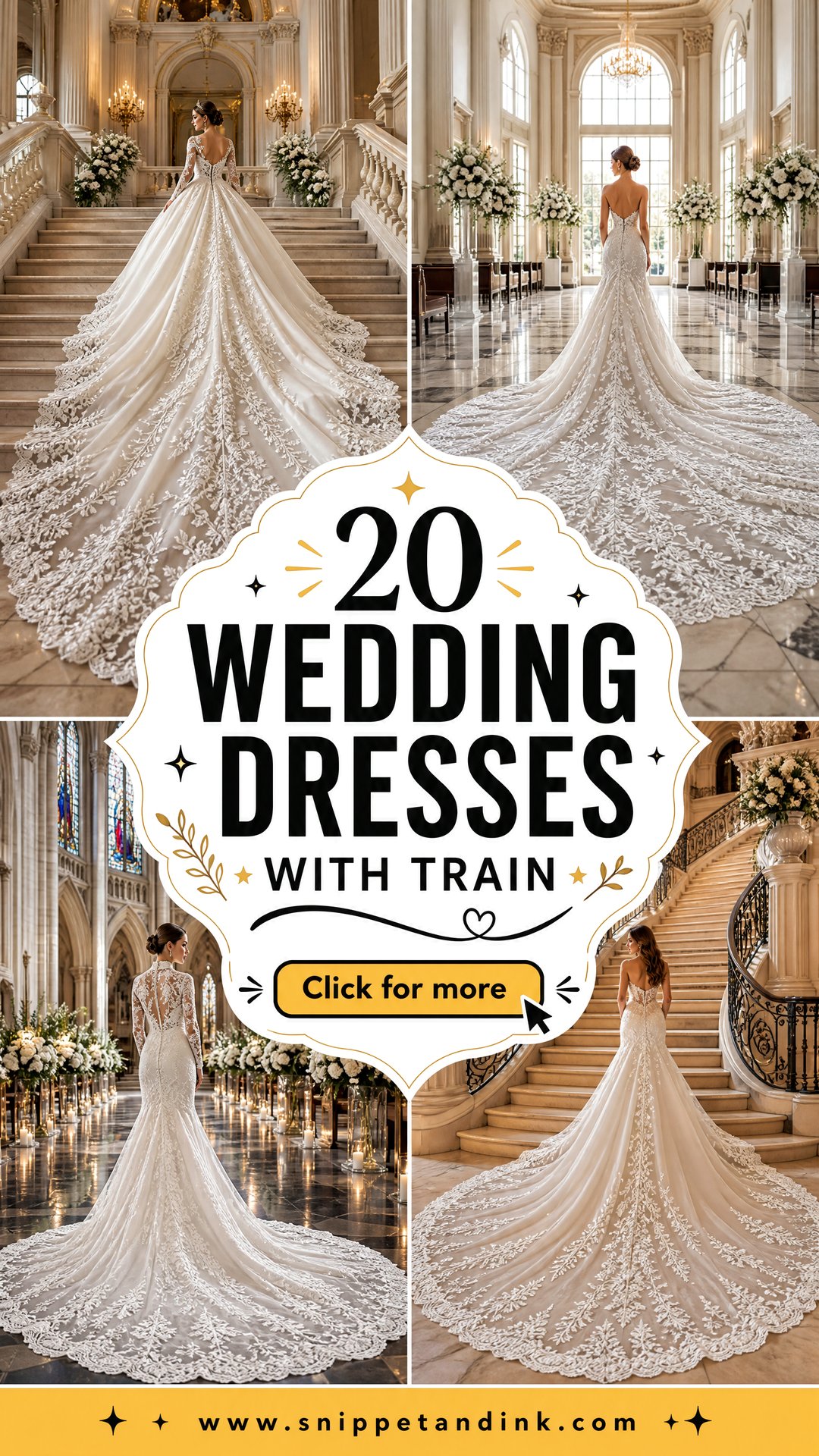
Sweep to Royal, Measured Against Your Aisle
Train names sound precise, but designers measure them differently. Some count from the waist, others from where the hem touches the floor. These are the rough lengths I use when I’m matching a train to a venue:
- Sweep: just brushes the floor, often well under a foot. Fine for any aisle and any surface.
- Court: about a foot past the hem. Still easy to walk without help.
- Chapel: roughly three to four feet. The most popular length, and it needs a bustle for dancing.
- Cathedral: around six to seven feet. Wants a long aisle and someone to arrange it.
- Royal or monarch: longer still. Only for big, formal spaces, and almost always detachable or heavily bustled.
Then think about the floor. Polished stone and carpet are kind to any train. Grass leaves damp marks and catches tulle; gravel and sand drag and collect. Tight spiral stairs, narrow doorways or a short aisle where guests sit close all argue for a shorter train or a detachable one. If you can, walk the aisle before your final fitting and count the steps. A train needs a little runway to settle behind you, and a cathedral length on a ten-step aisle never fully spreads out.
1. A-Line Wedding Dress With Chapel Train
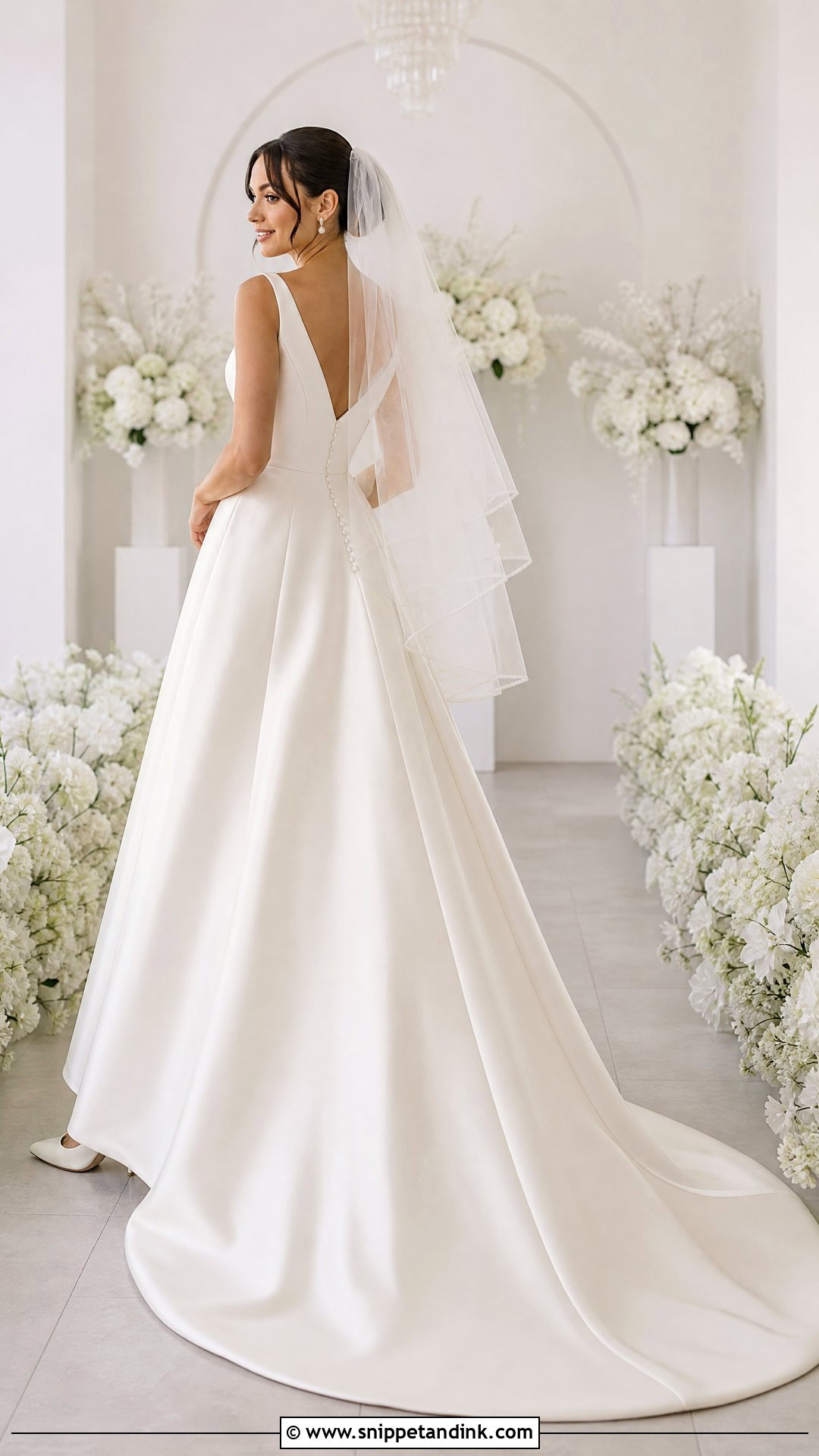
If a bride is unsure about length, this is where I start her. The A-line skirt widens gently from a fitted bodice, so there’s no heavy volume to manage, and a chapel-length train gives a proper sweep behind you without needing a helper at every step. Satin looks polished; layered tulle softer. Pointed ivory pumps, pearl drops and a fingertip veil keep the train visible rather than buried under tulle. Ask for the bustle at your first alteration appointment. A chapel train usually lifts neatly with three to five hooks, and you want to see how it looks bustled before the hem is finished.
2. Ball Gown Wedding Dress With Cathedral Train
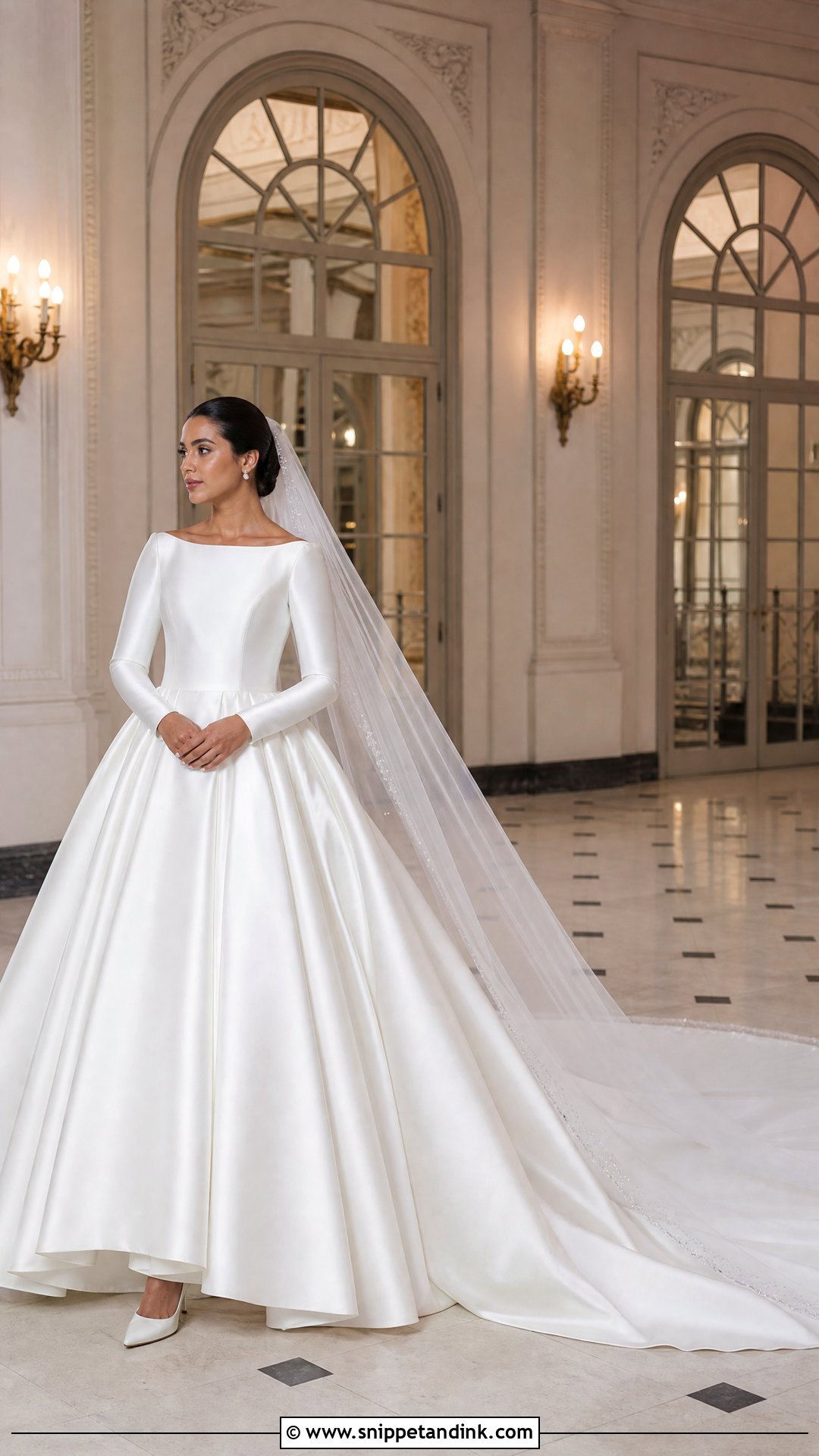
A ball gown with a cathedral train is the full entrance: structured bodice, wide skirt and metres of fabric following you. Mikado, satin or layered organza hold that shape without needing much beading; if you want sparkle, put it on the bodice and leave the skirt clean. Wear a cathedral veil, crystal studs and closed-toe satin heels. The weight is real, though. On a long train, the fabric pulls back against your shoulders and waist, so practise walking and, harder, turning around at the altar. A multi-point bustle spreads that weight across several hooks. One single point carrying a cathedral train will sag and can tear the fabric by the evening.
3. Mermaid Wedding Dress With Court Train
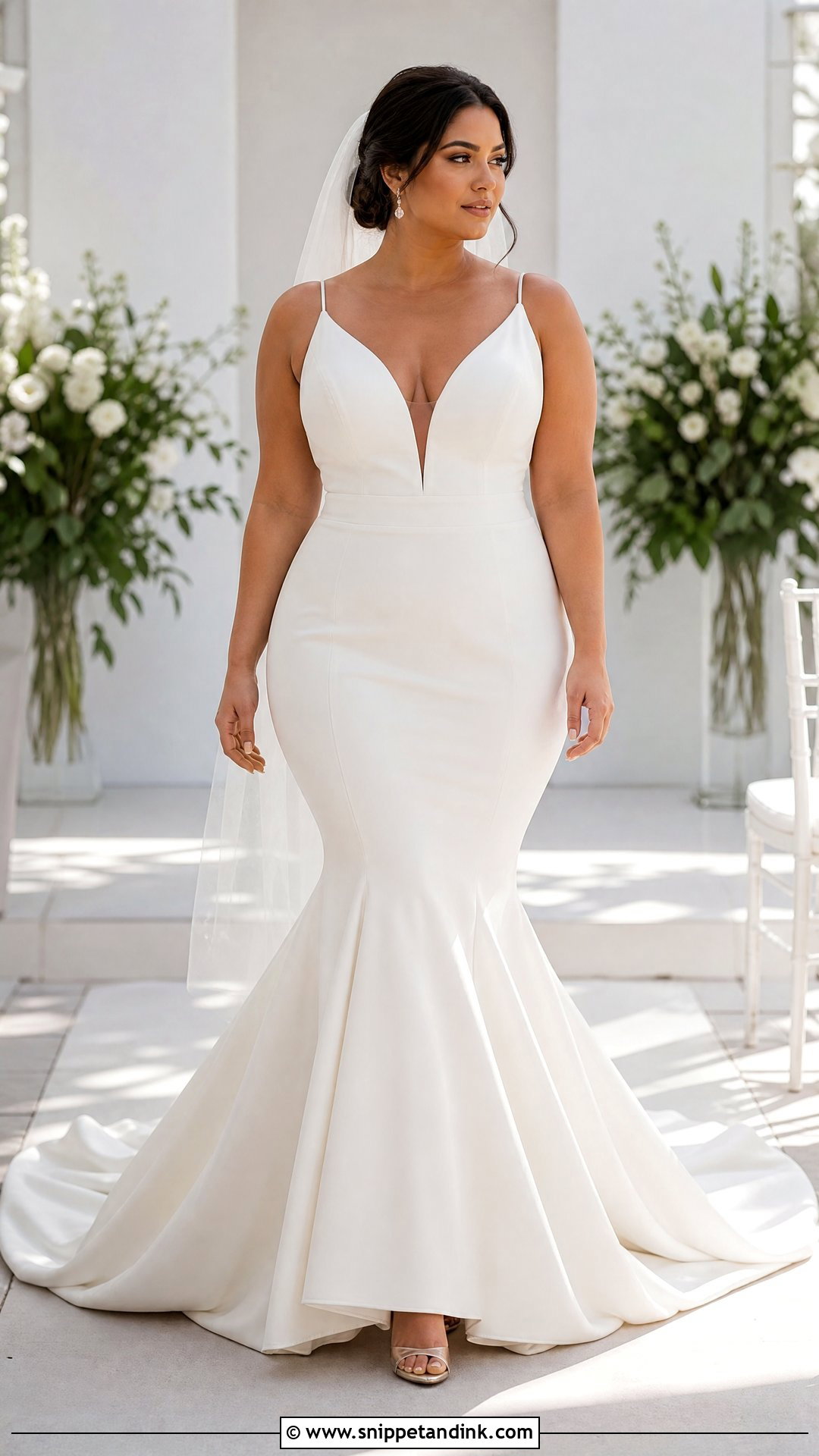
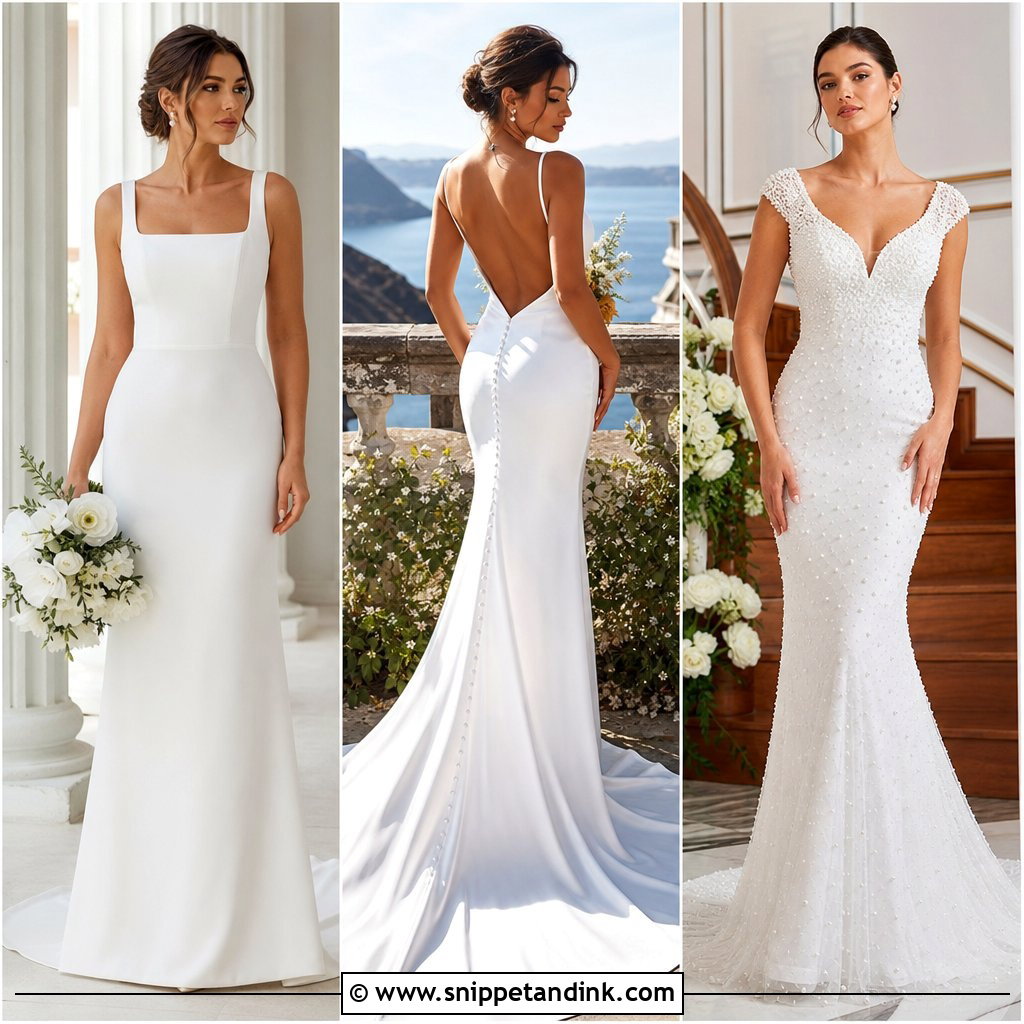
Mermaid gowns follow the body to the knee and then flare. A court train extends that flare just slightly behind you. It’s the length I’d pick for this cut, because a longer train on top of a tight skirt makes walking twice as hard. Stretch crepe gives a clean modern line; lace adds texture. Slim metallic heels, delicate earrings and a chapel veil set beneath a low bun keep it sleek. Test stairs at your fittings, and climb them, don’t just walk. Mermaid skirts restrict your stride, and stepping up a curb or onto a stage is where brides discover it. The bustle should lift the train while leaving the flare intact.
4. Satin Wedding Dress With Sweep Train
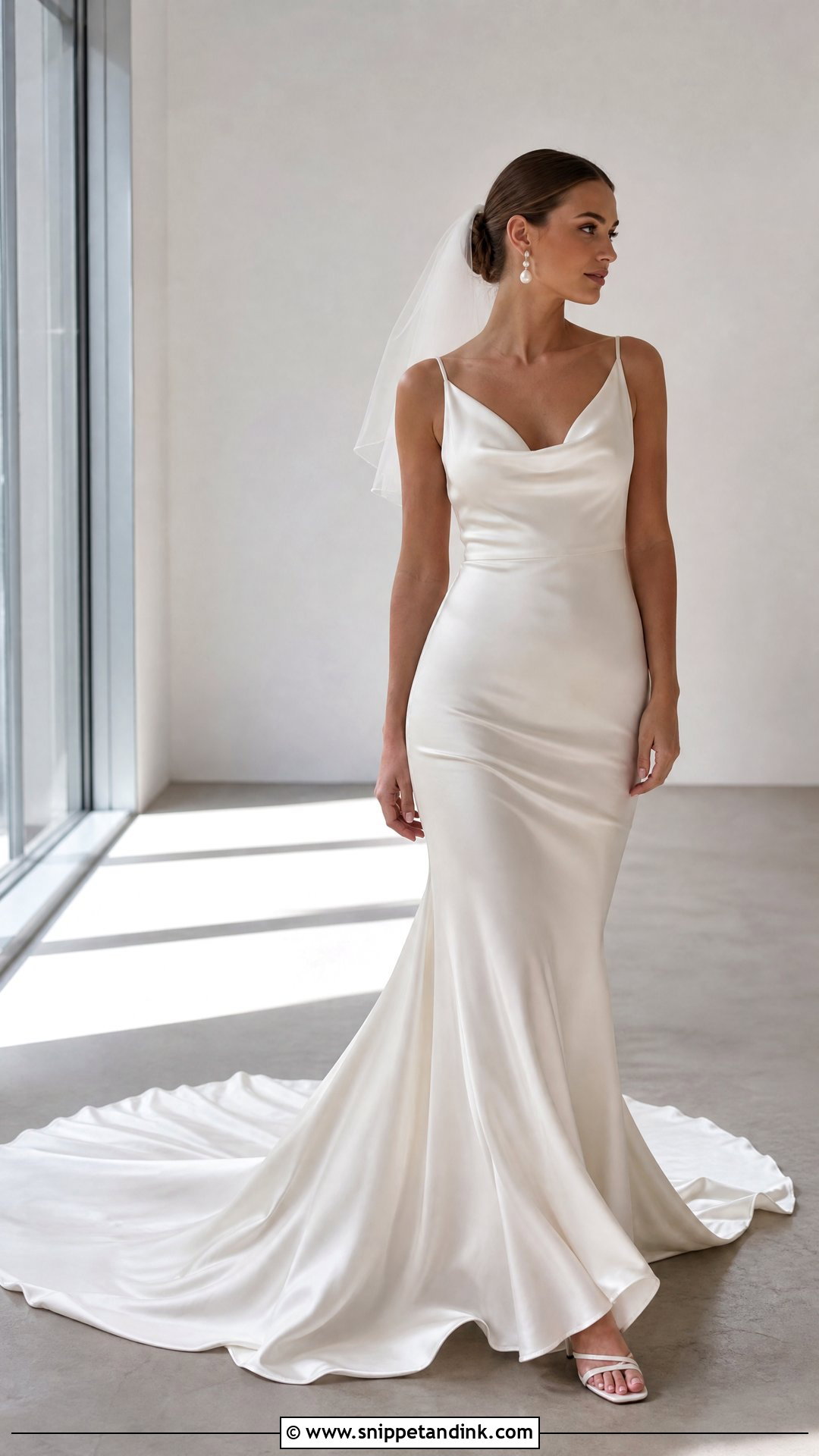
A sweep train only just brushes the floor behind you, so you get a finished, bridal back view with almost nothing to manage. It suits small venues, courthouse weddings and ceremonies where the aisle is short or crowded. A bias-cut or lightly structured satin catches light on its own, without lace or beading. Satin is honest about fit, though. Every pulled seam and every undergarment edge shows, so tailoring matters more here than on a busier dress. Choose smooth-edged underwear and have the hem set while you wear your actual shoes. Ivory slingbacks, sculptural pearls, a sleek bun and a short veil or bow finish it.
5. Lace Wedding Dress With Chapel Train
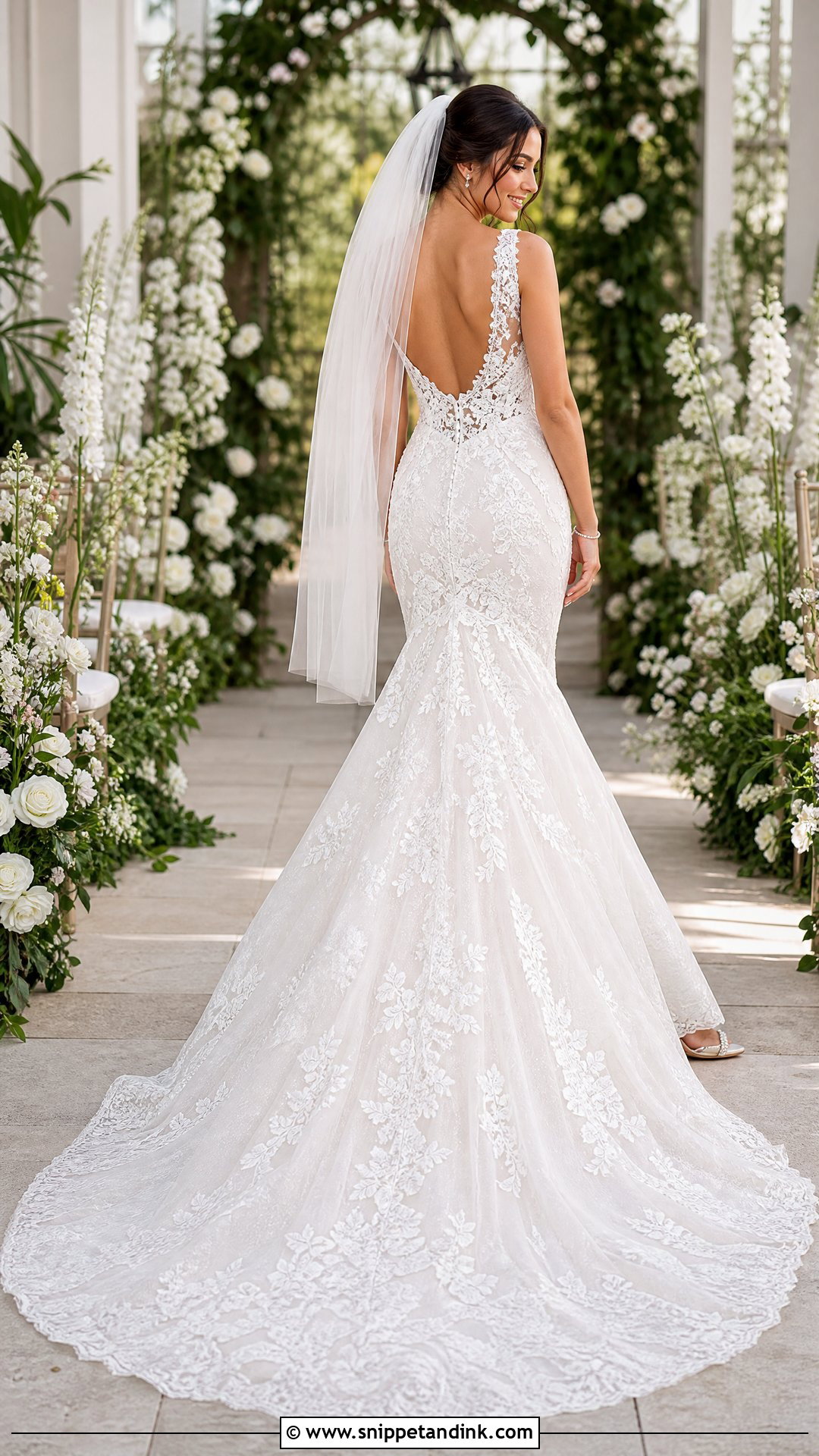
Lace on a chapel train shows its pattern best when it’s spread out behind you, so the motif placement near the hem is worth looking at closely. Lace can cover the whole gown or sit as appliqués on the bodice, skirt and train; a fit-and-flare keeps the shape defined, with a soft lining under open lacework. For outdoor portraits, choose lace with firm embroidery. Fine Chantilly-style lace can snag on grass and gravel. Pearl-trimmed shoes, a narrow bracelet and a plain tulle veil let the pattern lead. For the bustle, ask your seamstress to hide the hooks behind motifs, so the lifted train looks like part of the design.
6. Off-Shoulder Wedding Dress With Cathedral Train
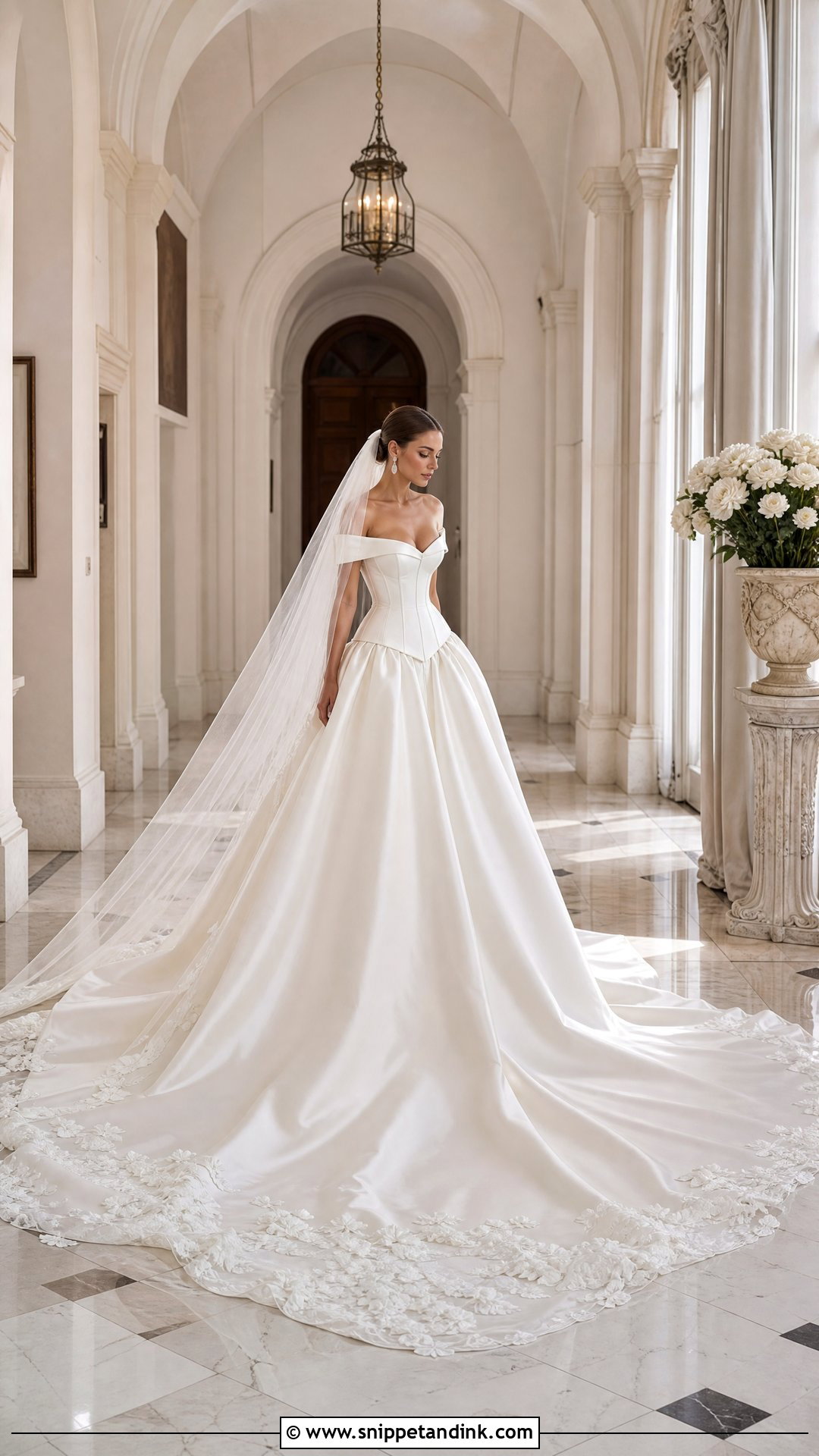
Off the shoulder with a cathedral train is classic and a bit dramatic. The neckline frames the shoulders while the train does the work behind. A boned or corseted bodice is essential here: the train pulls backward and the neckline has nothing on the shoulders to hold it, so without structure it slips. A basque waist and full satin skirt make it current. A fine necklace, teardrop earrings and pointed pumps hidden under the hem are enough, with a long sheer veil that echoes the train. Lift your arms and sit at the fitting. And on the day, name one person whose job is to straighten the train before the walk and before each set of photos.
7. Long Sleeve Wedding Dress With Royal Train
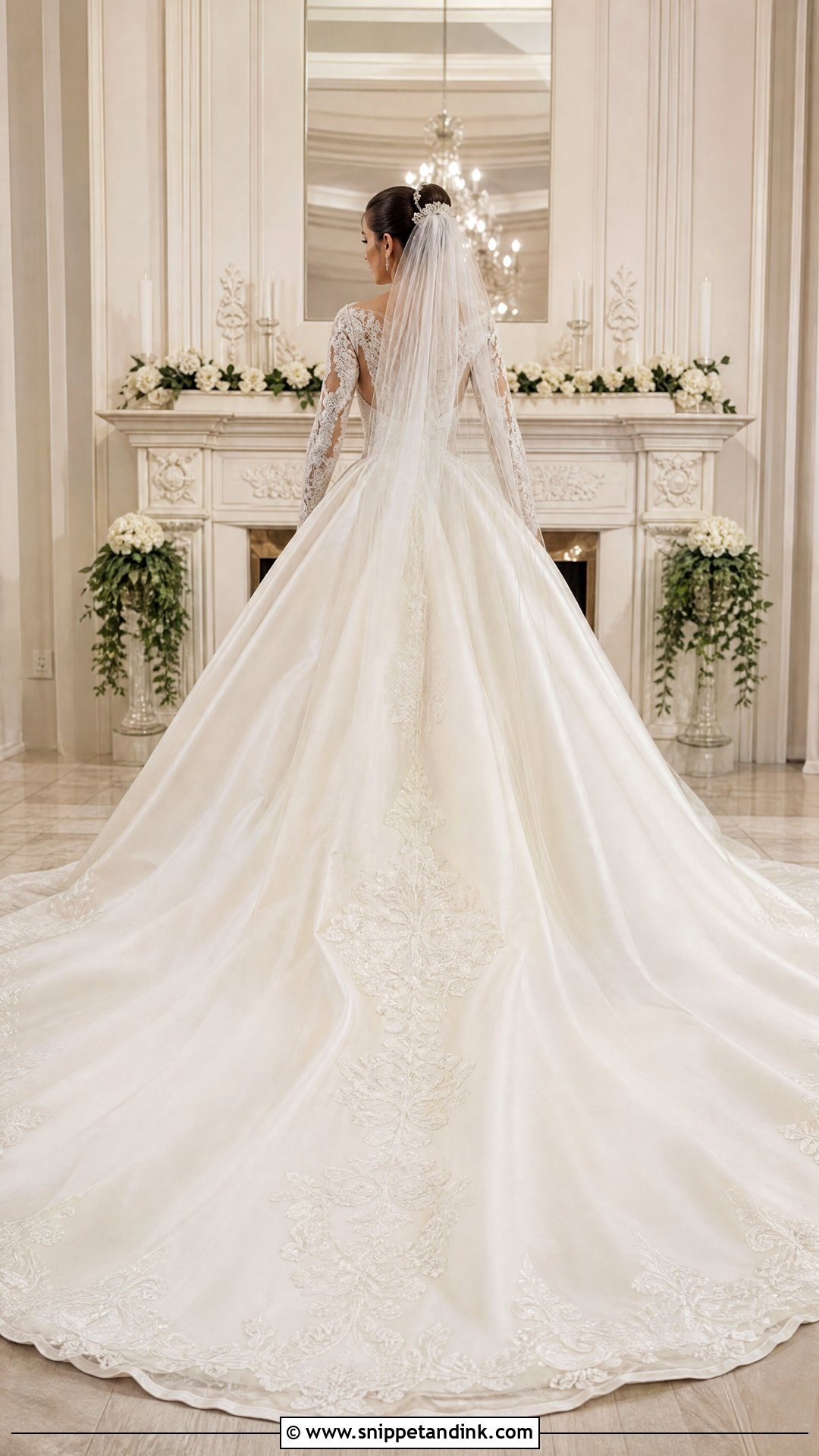
A royal train spreads far behind the gown, so I only recommend it when the aisle is wide and the venue is big enough to show it. Sheer lace sleeves soften the scale of a full skirt; covered satin sleeves look architectural. The construction matters more than the styling: the weight should rest on the waist, not hang from the shoulders, which needs strong internal support. Keep accessories classic with simple earrings, comfortable platform heels and a long veil with a plain edge. Think about logistics too. Getting into a car, posing on steps, moving through a reception. Ask about a detachable section or a detailed bustle, and rehearse the walk with your helper.
8. Strapless Wedding Dress With Chapel Train
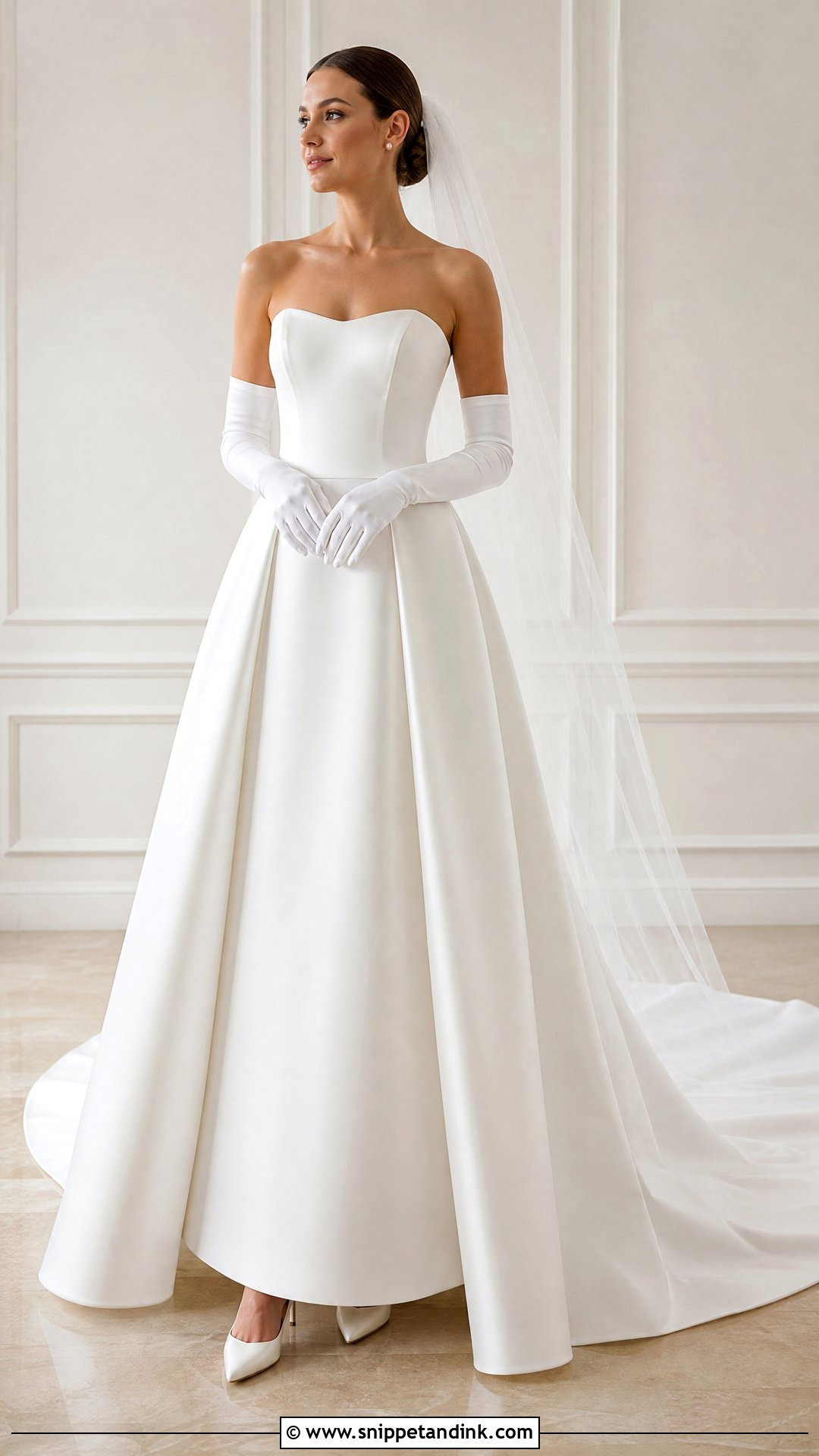
A strapless bodice with a chapel train is easy to personalise and easy to wear, provided the bodice stays put. I want a structured Mikado bodice with a straight or softly curved neckline, internal boning, a waist stay and well-placed cups, so you’re not tugging it up all night. Box pleats in the skirt add fullness and keep the surface crisp. Style it with a collar-length necklace, pearl studs, ivory pumps and a removable tulle veil; long gloves give a minimal gown ceremony impact without changing the dress. A simple bustle lifts the train for the reception and keeps the clean lines intact.
9. Square Neck Wedding Dress With Court Train
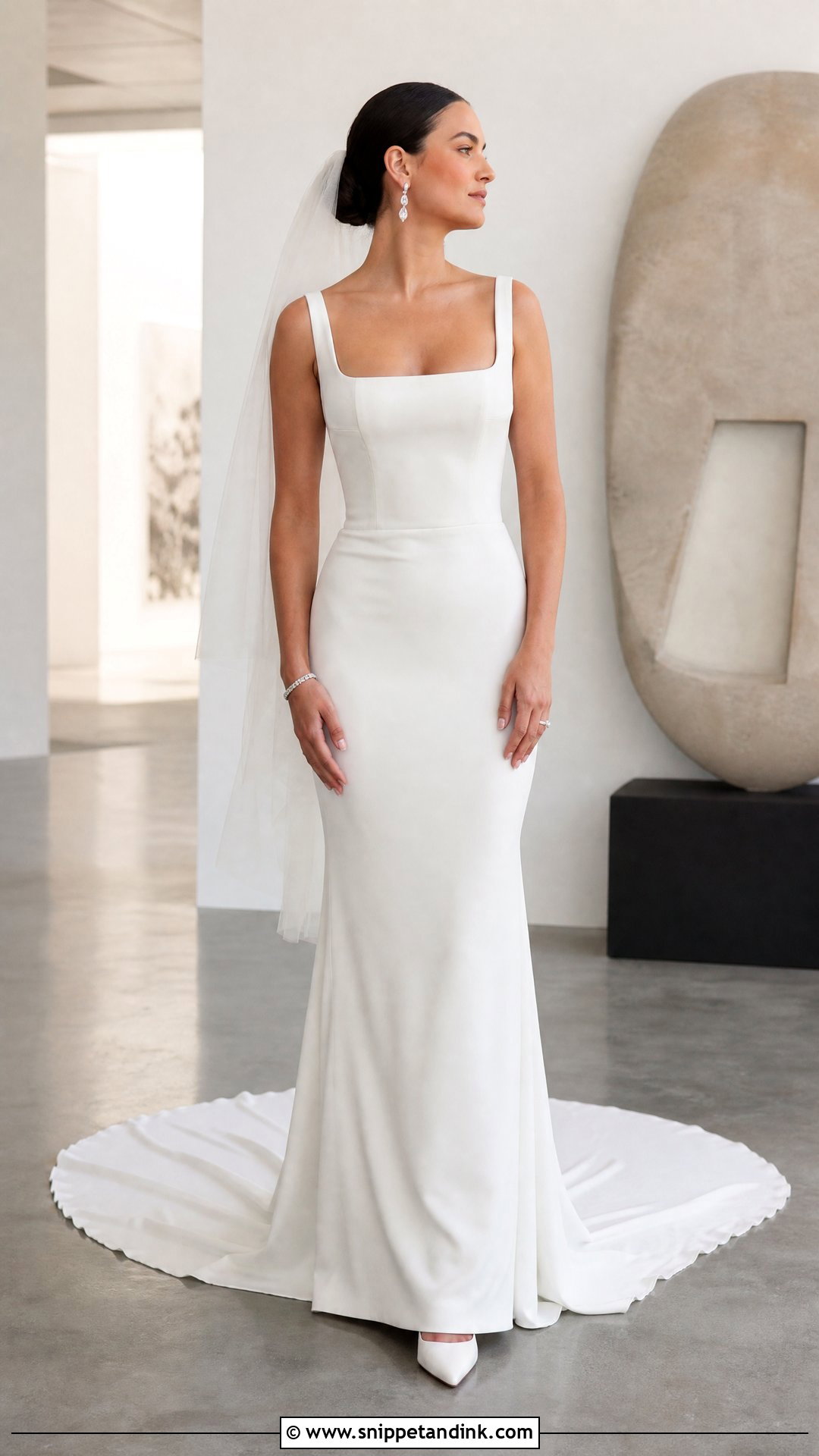
A square neck gives a strong, clean frame, and a court train keeps the back simple to match. Wide straps or fitted short sleeves suit the angular neckline. Choose a substantial crepe for a smooth column or satin for more structure and shine. Court length adds a graceful rear view without taking over. A low chignon, drop earrings, pointed heels and a sheer shoulder-length veil finish it; skip a big necklace. Crepe and satin both show fit problems clearly, so book your final alteration close to the date. Even a small change in weight shows at a square neckline first, where the edge starts to stand away from the skin.
10. Halter Wedding Dress With Watteau Train
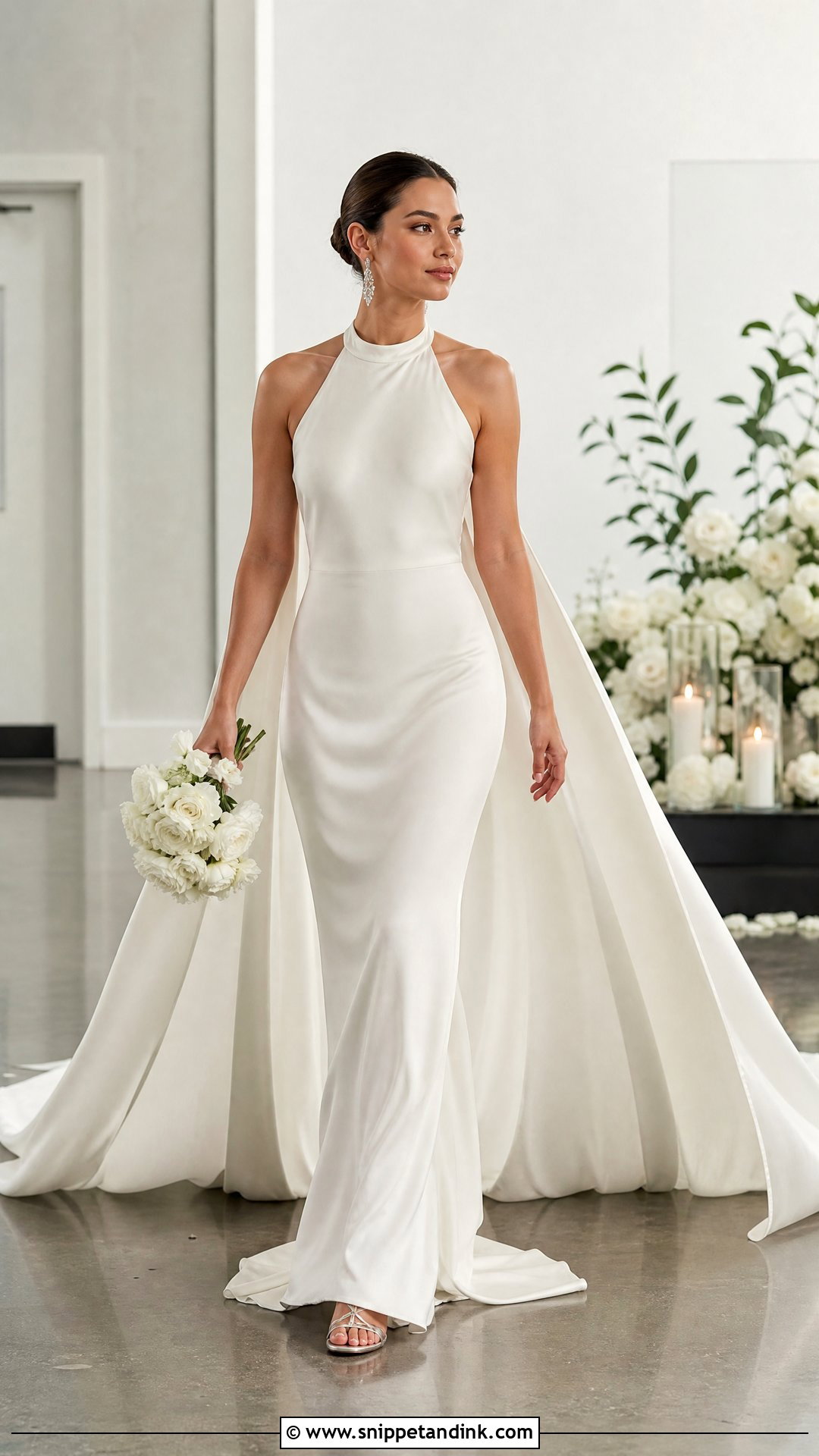
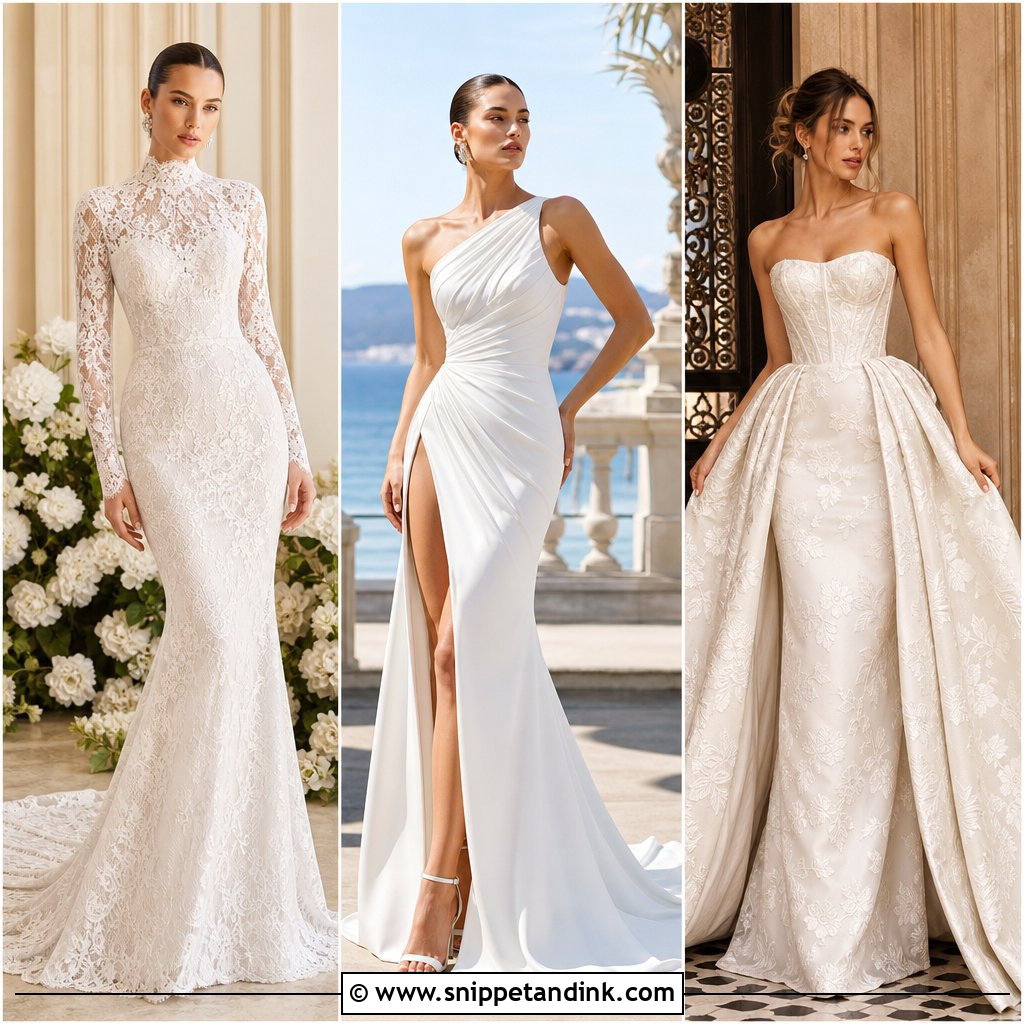
A Watteau train doesn’t start at the waist or hem. It falls from the shoulders or upper back like a cape, which makes it a fashion-led alternative to a skirt train. Pair it with a sleek satin column and a halter neck so the floating fabric has room to move. Lightweight chiffon, organza or tulle move far better than heavy satin here, since anything heavy pulls on the halter strap all day. Small crystal earrings, metallic sandals and a smooth updo that shows the neckline are enough. Skip a separate veil unless the train is narrow or detachable. Check how it’s attached and whether it comes off after portraits.
11. High Neck Wedding Dress With Chapel Train
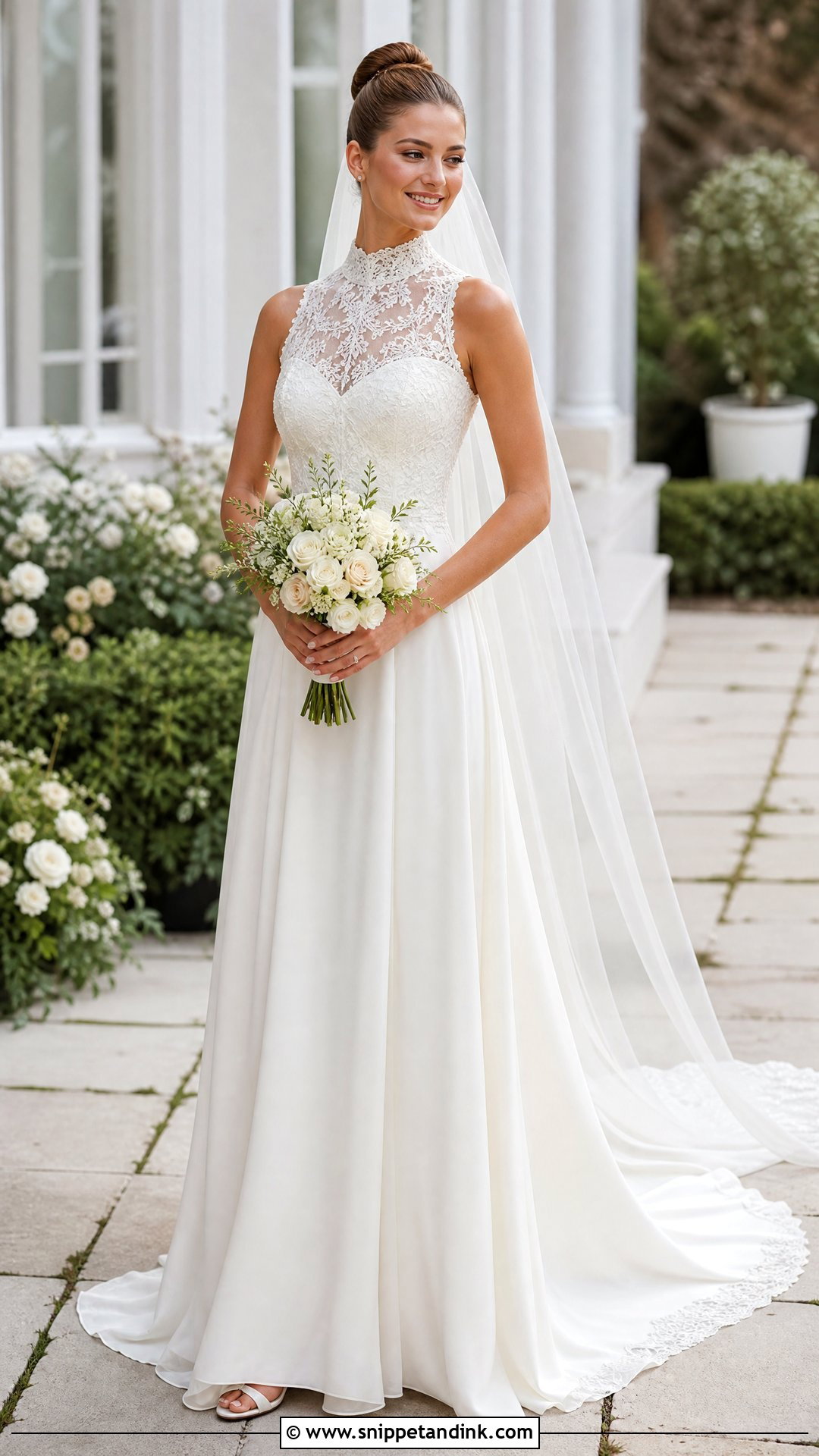
A high neck gives coverage and puts the focus on lace, embroidery or tailoring. A fitted lace bodice into a flowing chiffon skirt is soft but still defined at the waist; a smooth crepe version is cleaner and more modern. Delicate studs, a polished bun and simple ivory heels are all it needs. No necklace. Fix the veil beneath the bun so it doesn’t hide the back detail. Turn your head at the fitting to check the collar doesn’t rub. If the back has covered buttons or continuous lace, ask for a bustle that blends in. A row of hooks across a clean lace back is very visible from the dance floor.
12. Sweetheart Wedding Dress With Cathedral Train
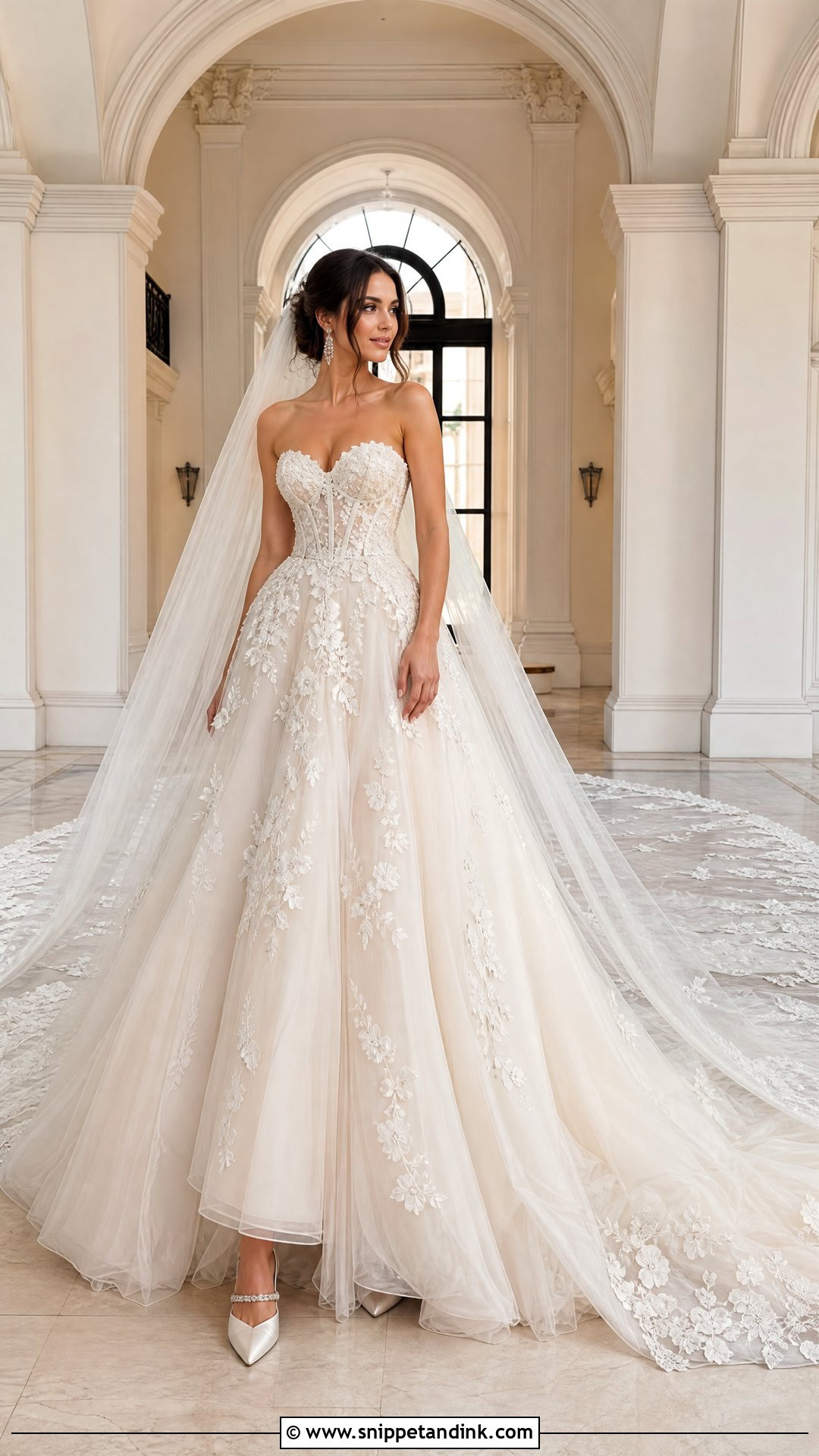
The sweetheart curve softens a structured corset bodice, and a layered tulle skirt with a cathedral train gives it scale. Floral appliqués starting on the bodice and scattering across the train connect front and back. Crystal earrings, satin heels and a cathedral veil with a narrow finished edge complete it. Detachable off-shoulder straps or sheer sleeves add coverage for the ceremony if you want it. Bend and sit at the fitting to check the neckline stays put. Tulle is the train fabric most likely to snag on rough ground or catch on a heel, so have an attendant lift and carry the layers between photo spots.
13. Column Wedding Dress With Detachable Train
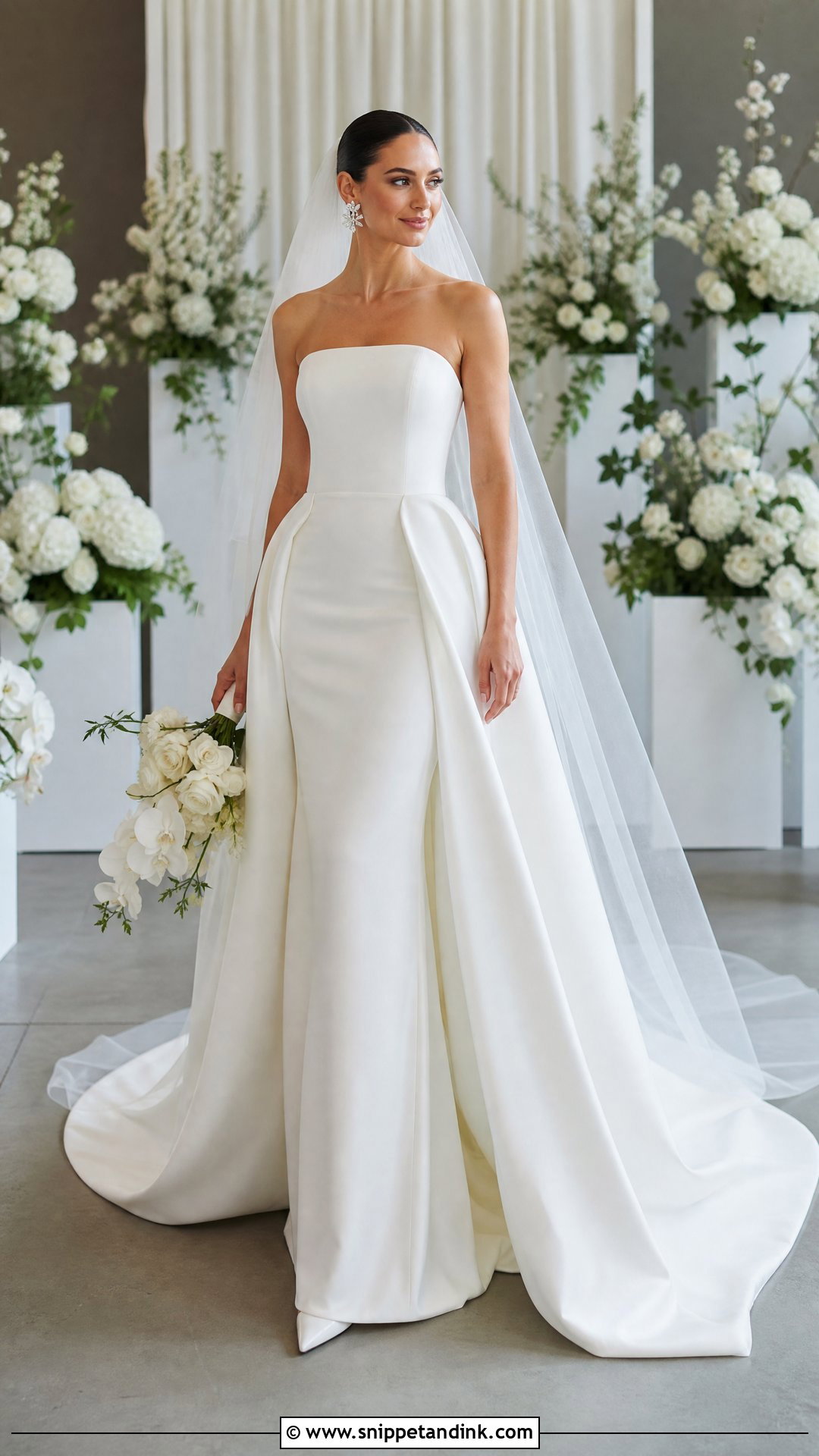
A detachable train is my favourite answer if you want both a ceremony gown and a dance dress. Start with a fitted crepe or satin column that falls straight from the hips, then add an overskirt or train that fastens at the waist, sides or lower back, depending on the dress. Wear a long veil, statement earrings and pointed heels for the ceremony, then swap the veil for a sleek hair piece later. During alterations, check the attachment points from the side and behind. Hooks and snaps should be invisible once the train is off. Practise removing it with your helper at least once; a rushed pull can wrinkle or tear the base gown.
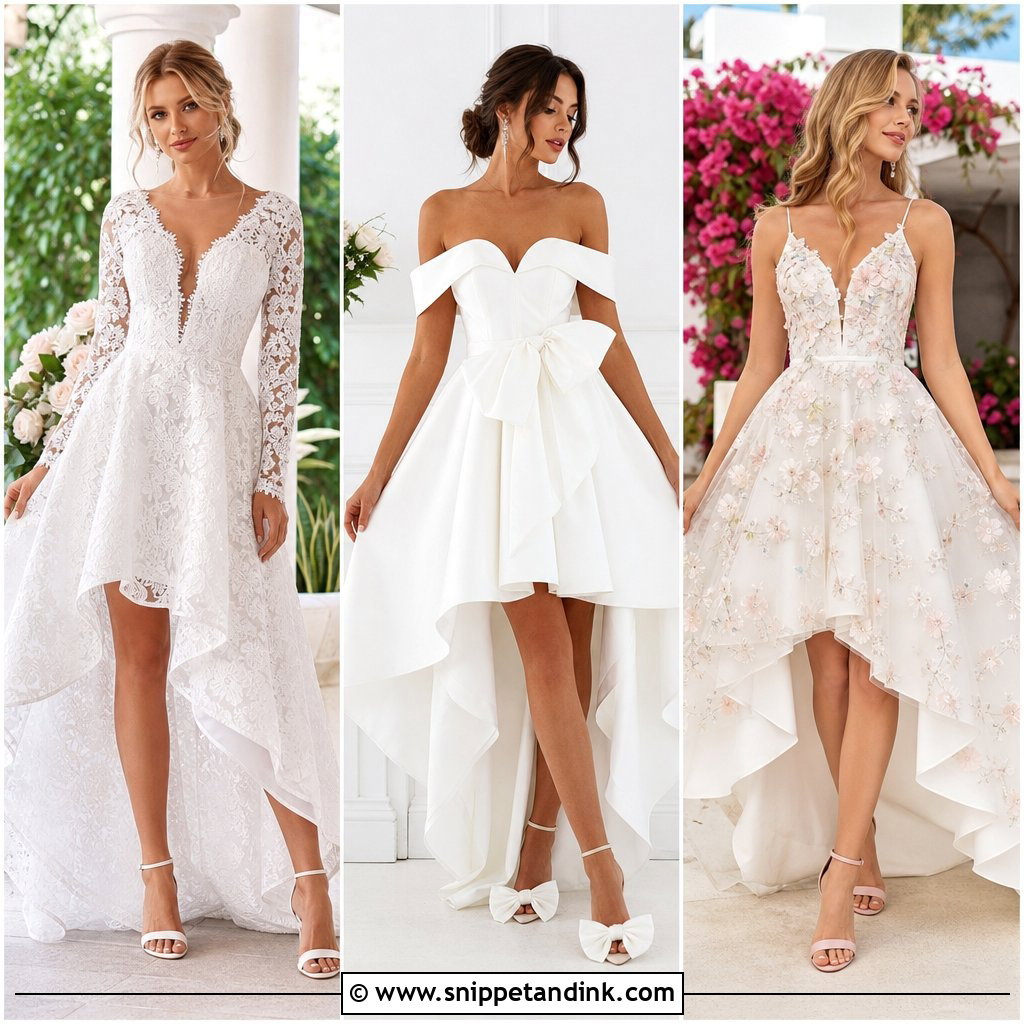
14. Short Wedding Dress With Detachable Train
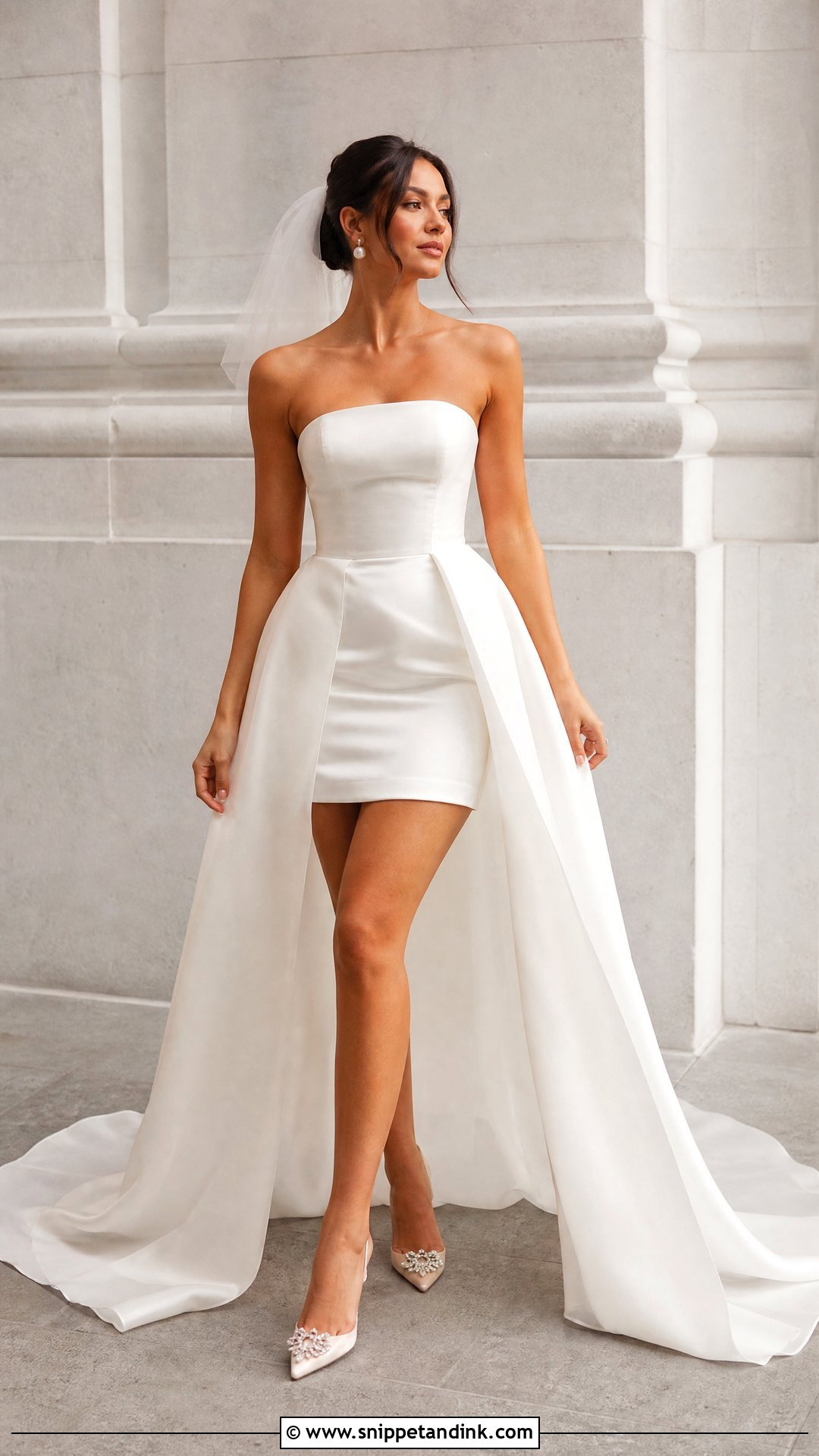
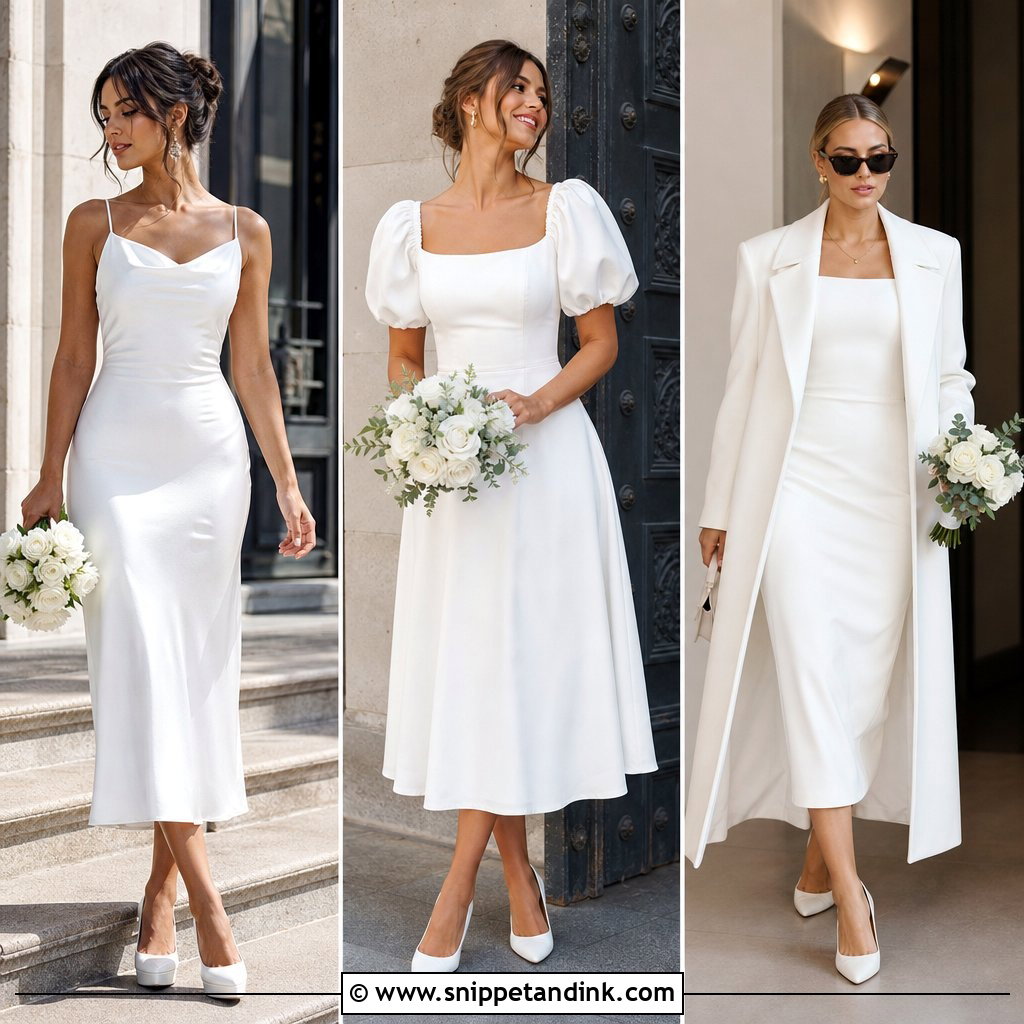
A short dress with a long removable train is playful and still has the entrance. Choose a structured mini or tea-length dress with a clean neckline, defined waist and a secure overskirt attachment. A long organza or satin train frames the shorter hem without hiding it. Embellished pumps, pearl earrings and a compact veil keep the proportions right. Once the train comes off, your shoes and legs are the outfit, so choose a pair you can stand in for hours. Look at the waistband from every angle. On a short dress, any attachment hardware sits at eye level with seated guests.
15. Plus Size Wedding Dress With Chapel Train
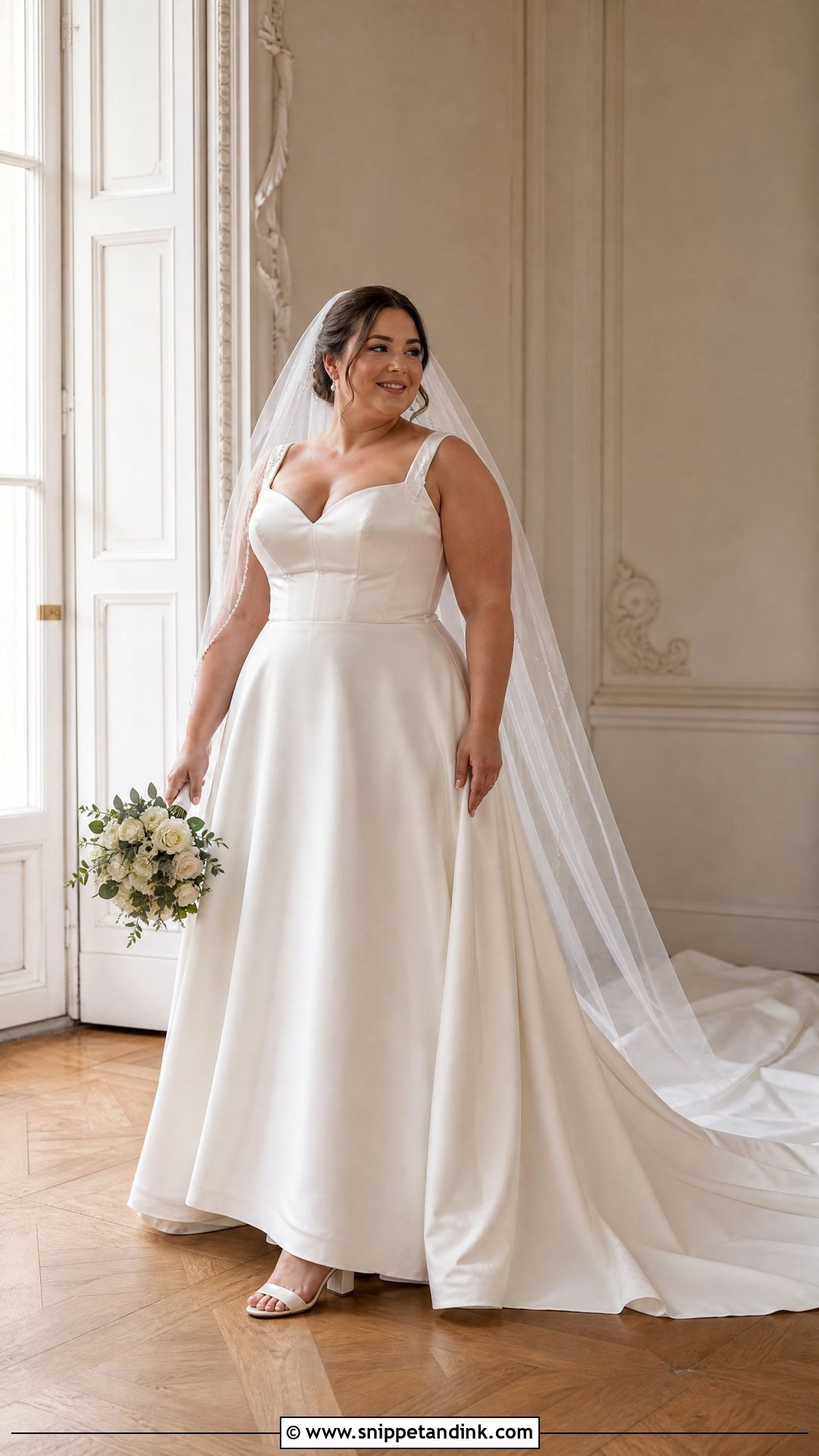
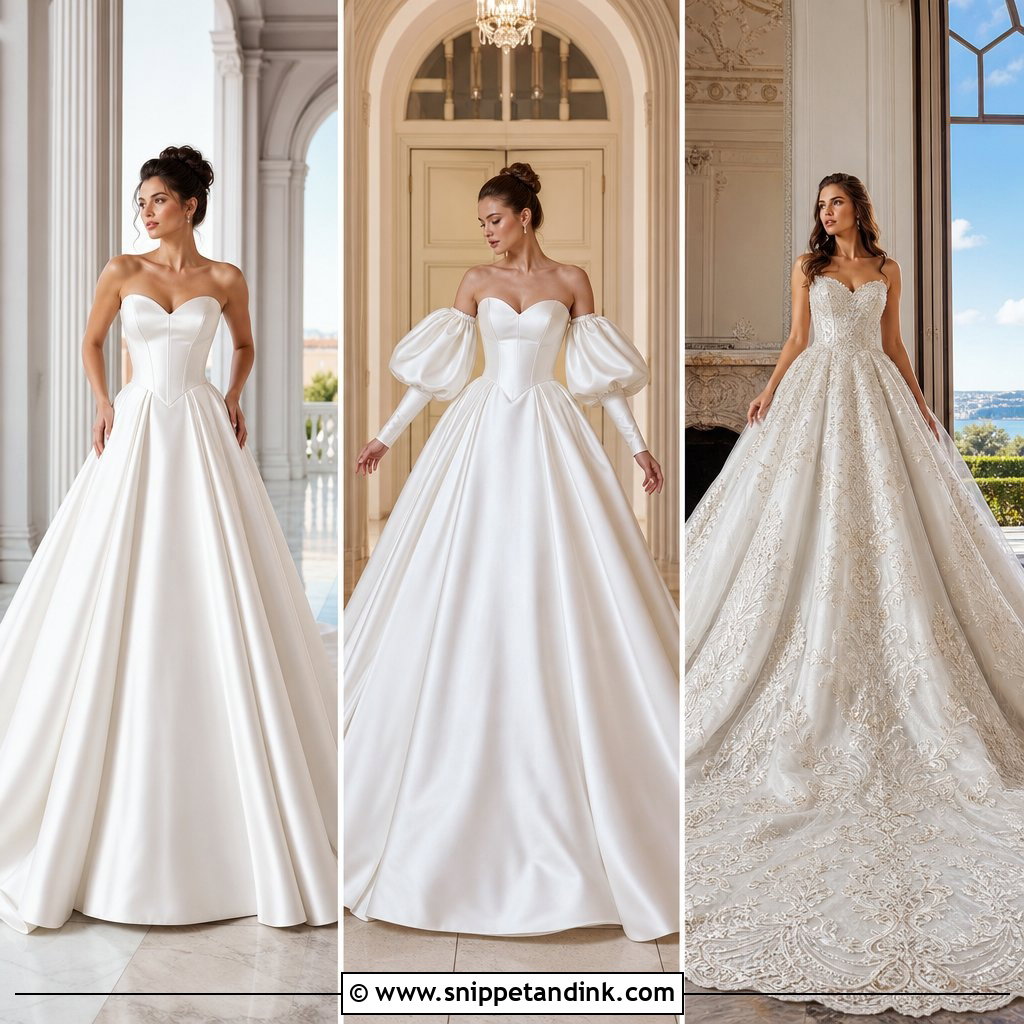
For a plus size bride, a chapel train is often the right balance: plenty of drama, without the weight of a cathedral or royal length dragging on the waist. A corseted A-line defines the waist and lets the skirt fall smoothly over the hips. Look for wider straps, supportive cups, good boning and a waist stay to stop the bodice from shifting. Comfortable block heels, pearl earrings and a soft fingertip veil complete it. Don’t choose by the label; bridal sizes run very differently from everyday ones, and alterations make the final fit. Sit, walk, bend and raise your arms at appointments. Ask for a reinforced bustle with several points so no single hook takes the strain.
16. Petite Wedding Dress With Sweep Train
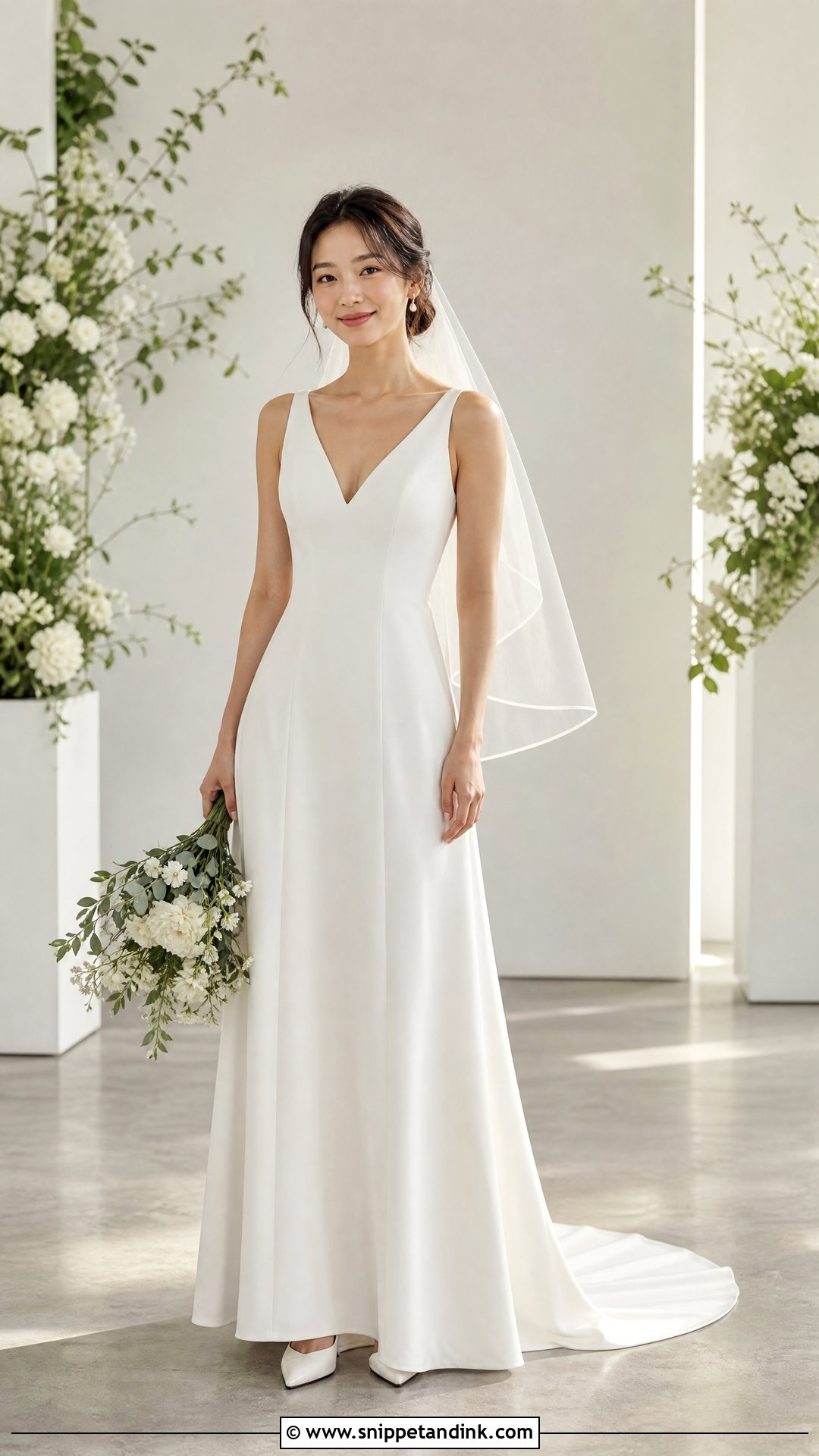
Petite brides often think a train will swallow them. A sweep train does the opposite: it extends the line just past your feet, which makes you look a little taller. An empire or natural waist with a narrow A-line keeps proportions clean, and vertical seams, a slight V-neck and unbroken fabric draw the eye up and down. Choose lightweight crepe, chiffon or soft satin rather than bulky layers. Pointed heels, small drops and a fingertip veil finish it. Have it altered to your actual proportions. Just chopping the hem can move lace motifs and pleats out of place or lose the flare, so ask about petite construction.
17. Boho Wedding Dress With Sweep Train
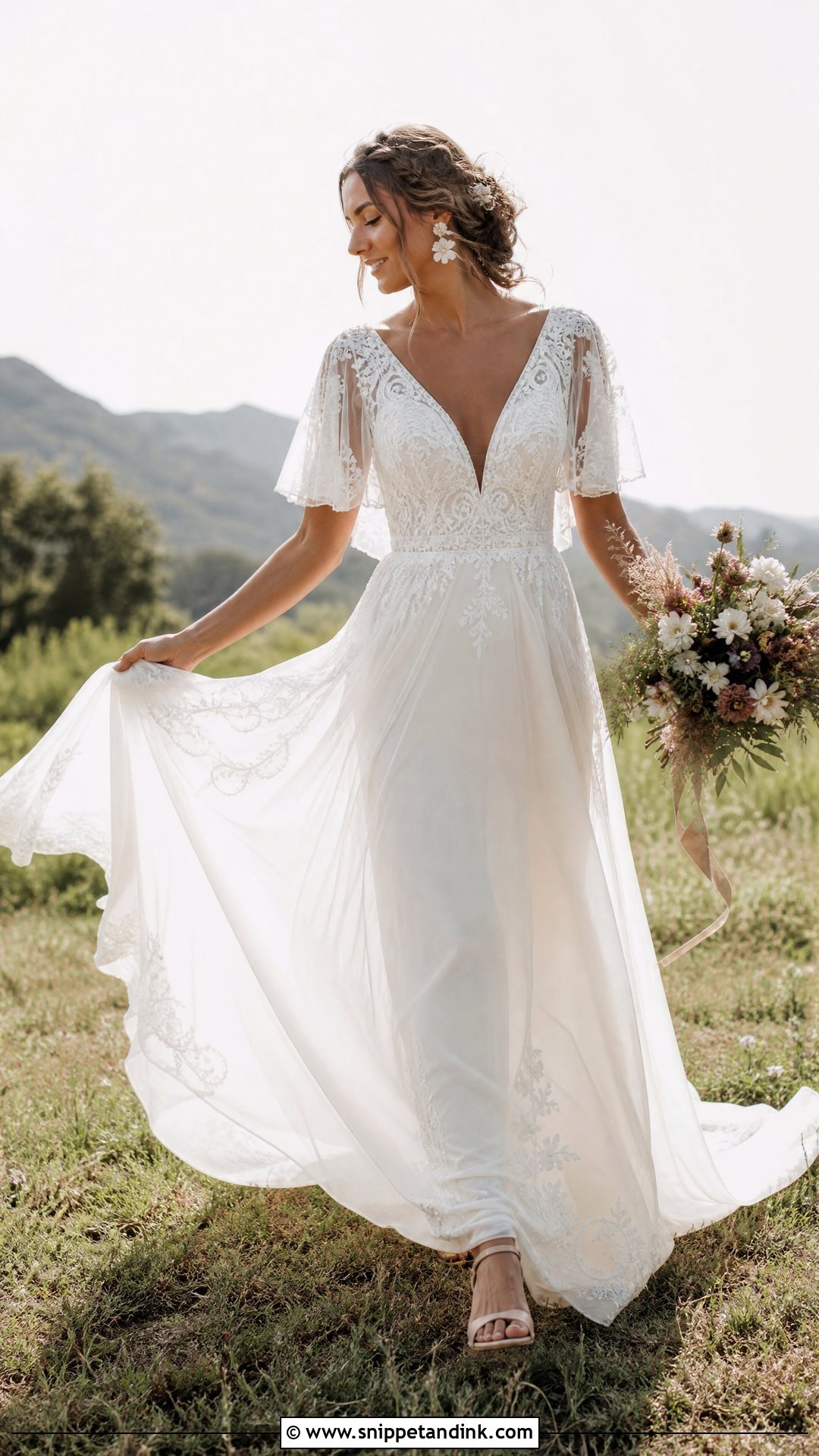
A boho gown with a sweep train is relaxed but still feels bridal. Airy chiffon, embroidered lace or soft tulle should move freely, and a defined waistband stops loose fabric looking shapeless. Flutter sleeves or a simple V-neck add detail. Low block-heel sandals, small floral earrings and a loose braided updo set the mood; a light veil or narrow chiffon cape adds movement. A short train is easier on grass, since there’s less fabric to collect leaves and damp. Even so, add a hidden wrist loop or simple bustle so you can lift it walking from ceremony to reception.
18. Beach Wedding Dress With Sweep Train
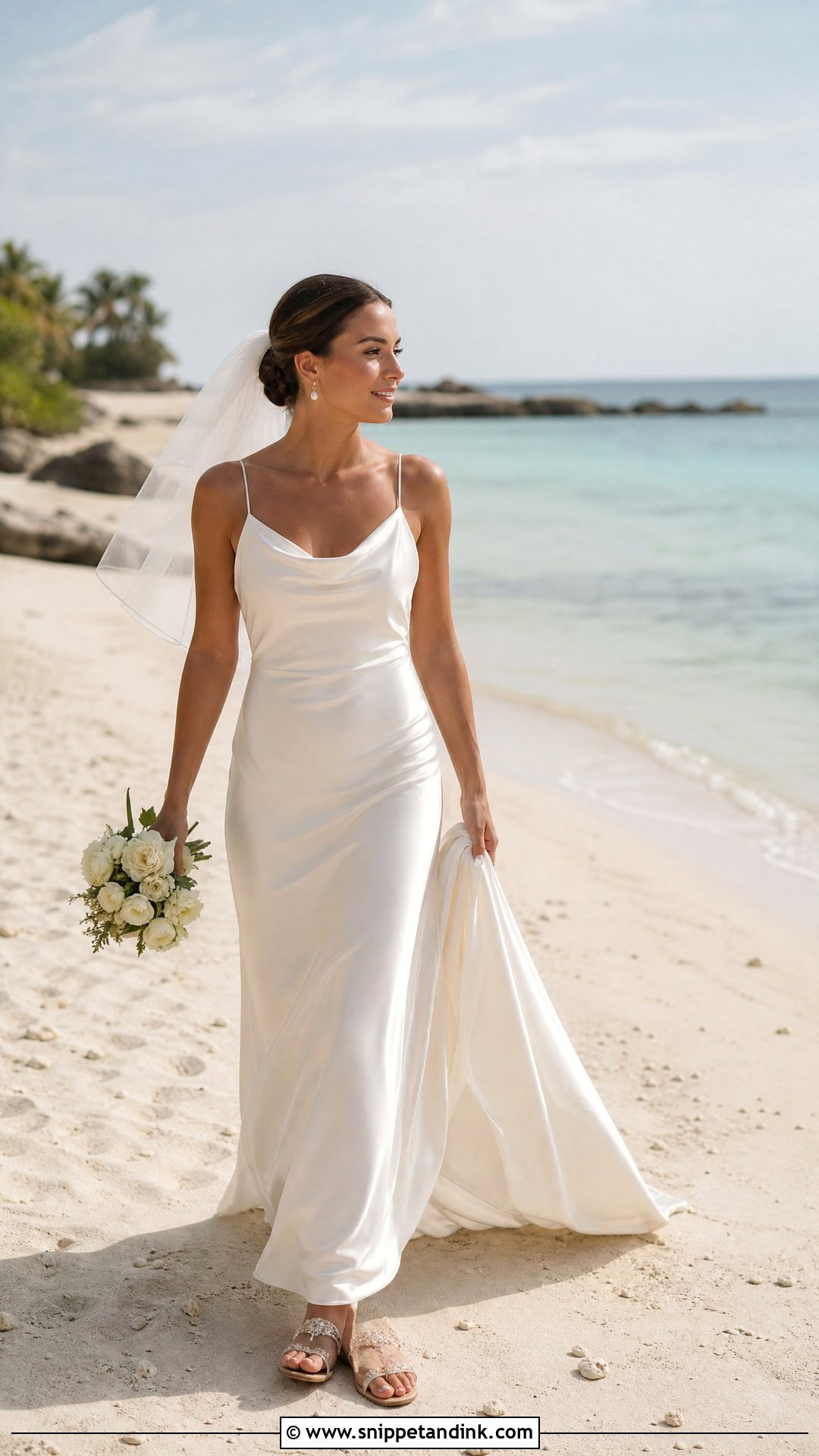
On sand, every inch of train turns into a scoop, so for a beach wedding I keep it to a sweep that barely extends past the hem. A satin slip, chiffon A-line or light crepe moves well in a breeze. Flat embellished sandals, pearl earrings and a low bun pinned firmly against the wind suit the setting; a short veil or sheer shoulder drape is much easier than a cathedral veil that turns into a sail. Skip thick underskirts and rigid corsetry in humid heat. Have the hem set in your exact shoes. A wrist loop lets you lift the train near the water or over uneven ground.
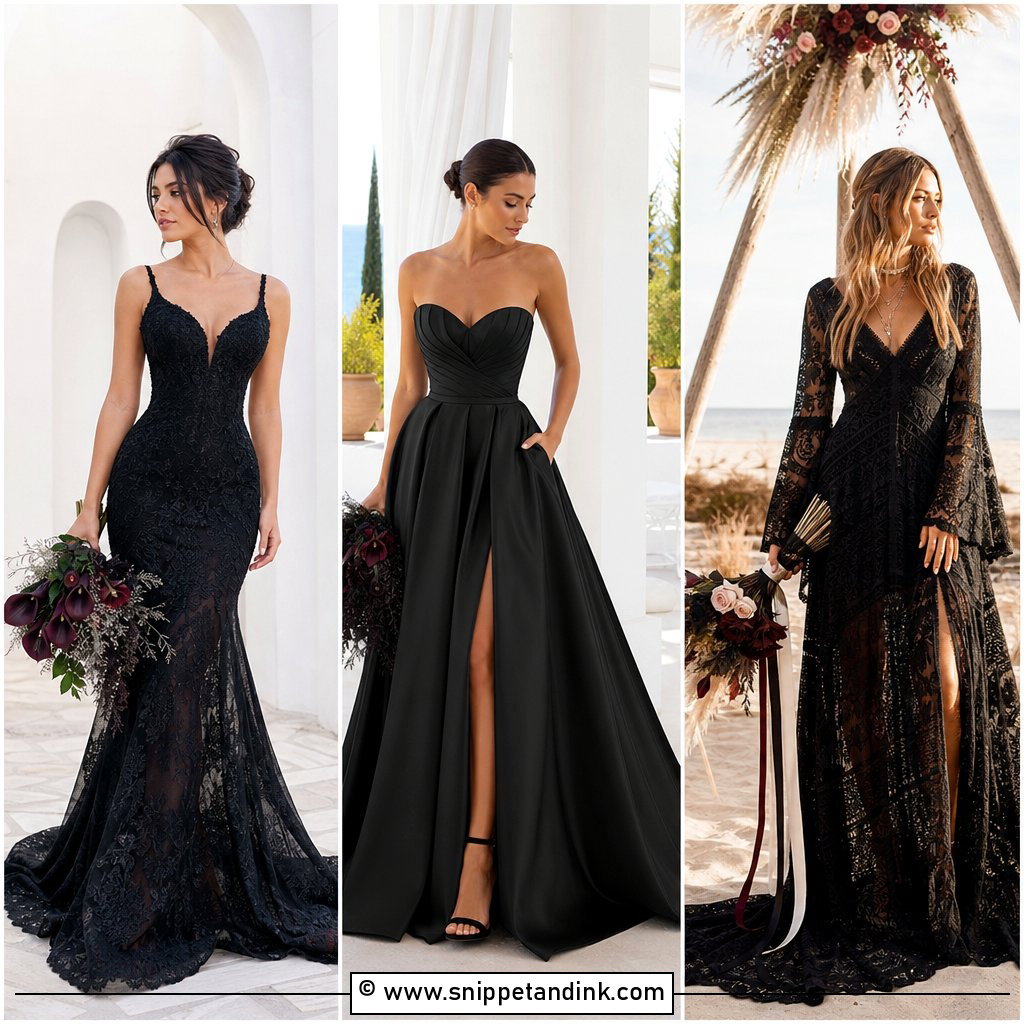
19. Black Wedding Dress With Cathedral Train
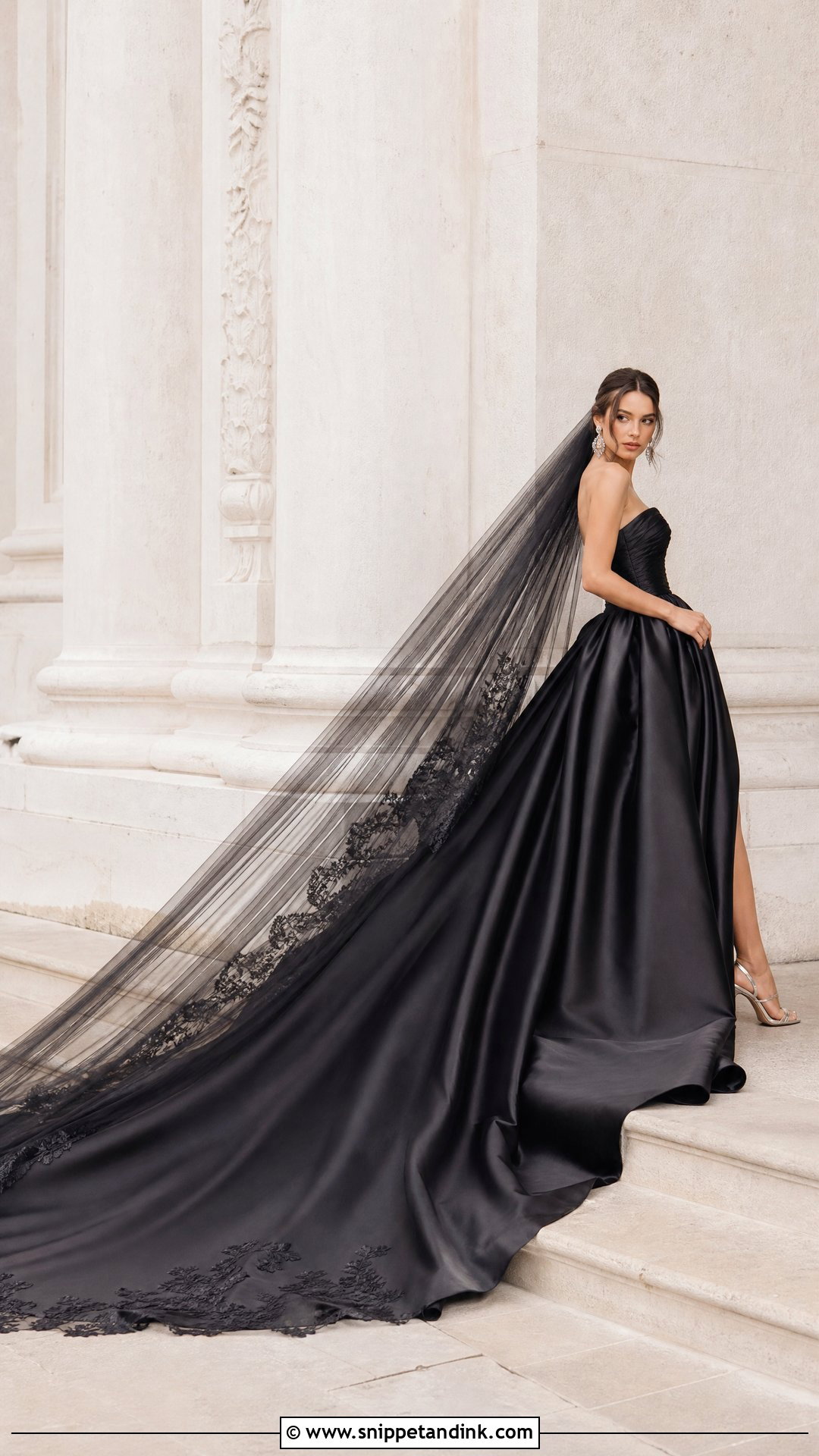
Black with a cathedral train is formal and very bold. Structured satin gives a smooth finish; black lace over a matching lining gives depth. Choose an A-line or ball gown so the train spreads out clearly behind you. Black or metallic heels, crystal earrings and a sheer black veil with a clean edge are enough. Black’s challenge is photography: dark fabric loses its detail, especially indoors. Satin with some sheen or raised appliqué helps. Talk to your photographer about lighting, and for the train shot, lay it out over a pale floor, stone steps or grass so its full shape reads.


20. Blush Wedding Dress With Floral Train
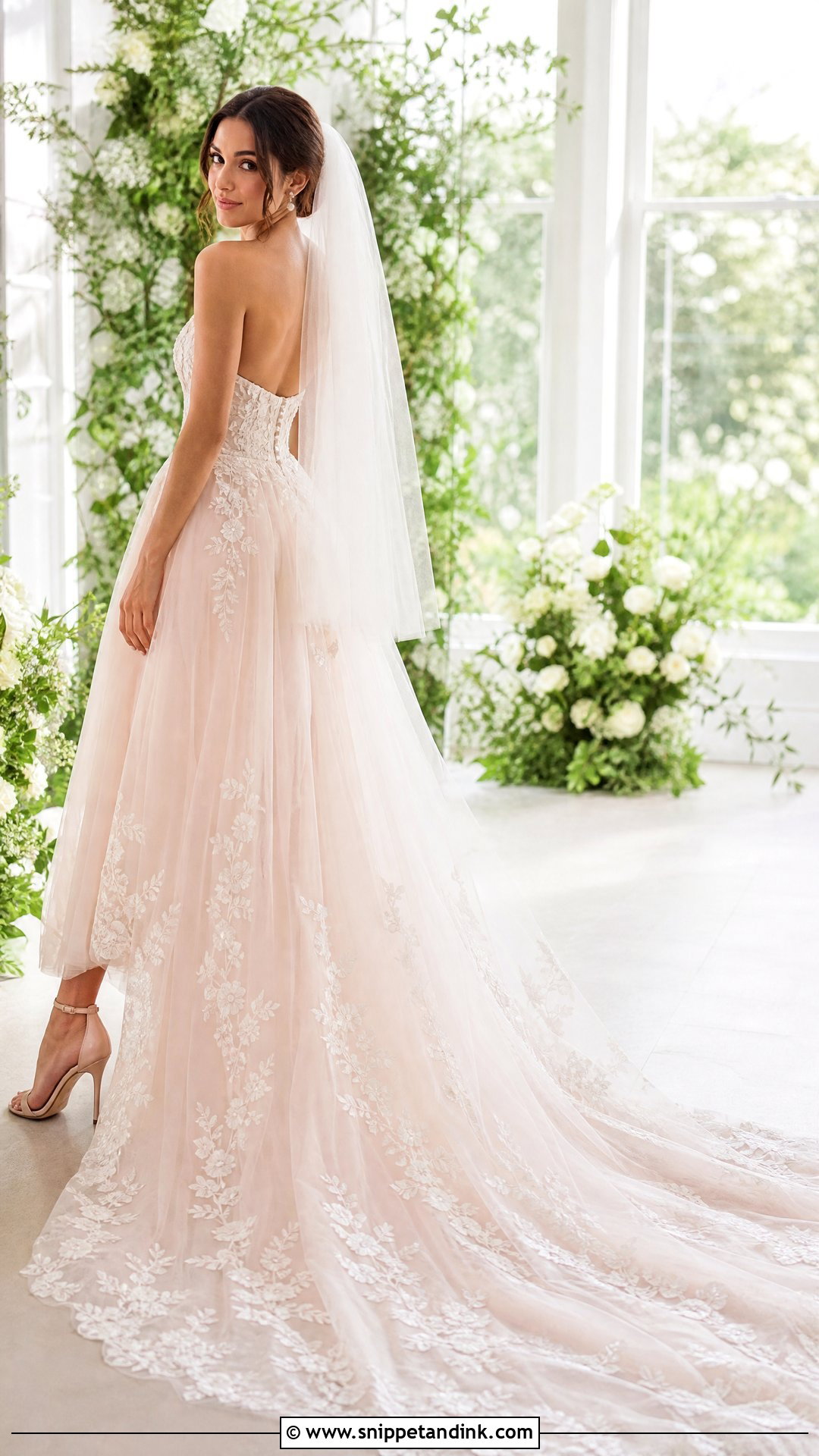
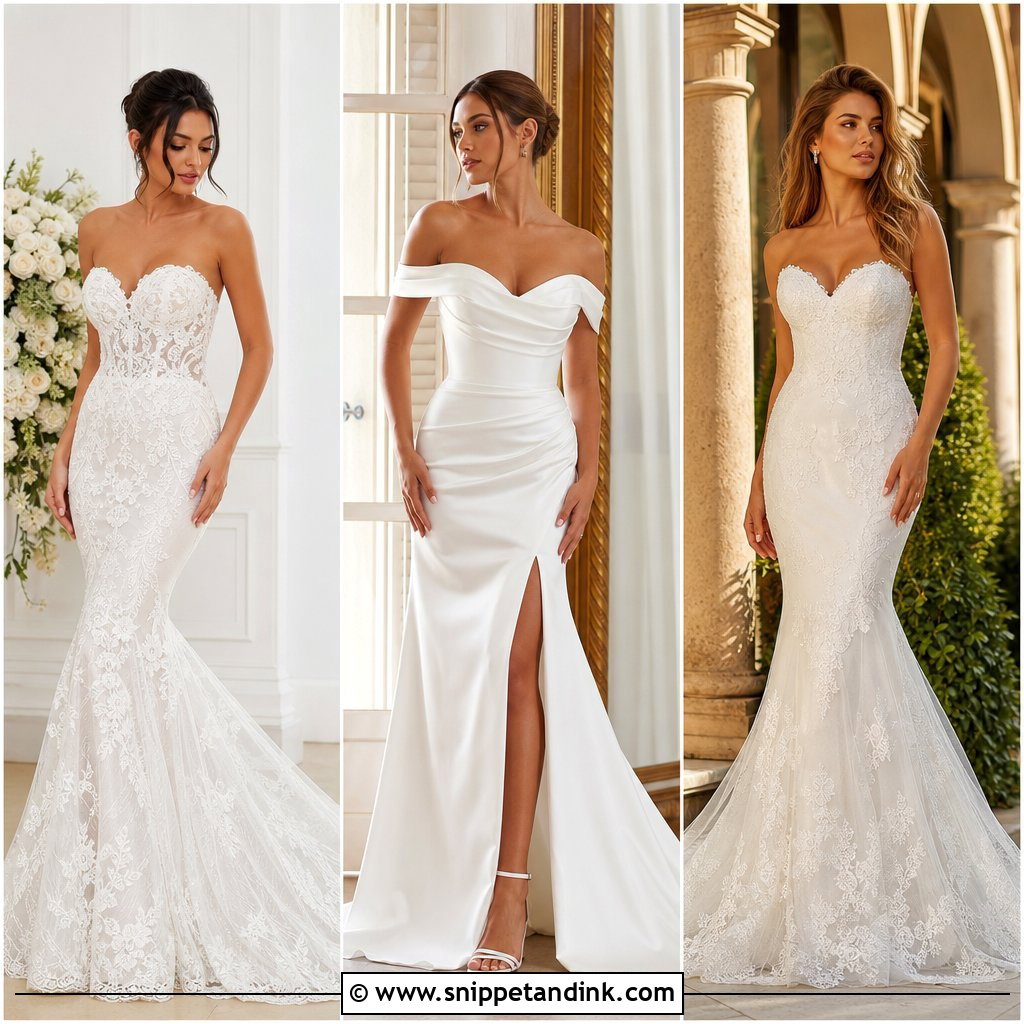
A blush lining under ivory tulle and floral appliqué gives soft colour without committing to a coloured gown. An A-line lets the embroidered flowers run from the bodice down into a chapel train. Rose-toned heels, pearl drops and a plain ivory veil that doesn’t cover the appliqué complete it; keep the bouquet simple next to all that pattern. Look at every motif during alterations, especially near seams and bustle points, because a cut through a flower is hard to hide. The most graceful versions space the appliqués out toward the hem, so the train fades rather than stops.
Give One Person the Job of Your Train
Any train past court length needs a helper, and it works best when it’s one named person, a bridesmaid, your mum or your planner, rather than whoever happens to be nearby. Bring them to your last fitting so the seamstress can show them the bustle. Bustle hooks and ribbon loops can be confusing, and many seamstresses colour-code or number them for exactly this reason.
When the train needs a hand
- Just before you walk: they spread it out behind you, then step away so the aisle shot is clean.
- At the altar: a quick straighten once you’ve stopped, because it twists as you turn to face your partner.
- Before each set of portraits, and any time you climb steps or get in and out of a car.
- Before the first dance: they bustle the gown. Allow ten minutes and do it somewhere with good light.
Give them a small kit too: safety pins, a lint roller and a white cloth for any grass or dust on the hem. Most marks on a train come from it being dragged across a floor, and dabbing them early is far easier than dealing with them after the wedding.
How Much Train Can Your Day Handle?
A train looks best when it fits the place you’re wearing it. From a subtle sweep to a royal length, with detachable and Watteau options in between, the right one depends on the aisle, the floor and how long you want to wear it before dancing. Test more than the standing view. Walk, sit, turn, climb a few steps and feel the weight during fittings. Ask your seamstress which bustle suits your fabric. Then choose the dress you feel most like yourself in; a good fit, sensible shoes and a train you can manage will carry you through the rest.
You'll Like These Ideas:








Leave a Reply