
A plain wedding gown hides nothing. With no lace or beading to pull the eye away, every seam, dart and hemline is on show, which is why I spend more fitting time on simple dresses than on heavily decorated ones. The twenty gowns below run from bias-cut silk slips to structured mikado ball gowns and modest long-sleeve crepe, and each is styled head to toe so you can see how shoes, veil, earrings and flowers carry a quiet dress. Simple doesn’t have to mean plain, though. A sculpted neckline, a clean train or a row of covered buttons gives the eye somewhere to rest.
Reading a Plain Gown in the Sample Room
Most sample gowns are clipped onto you with big clamps at the back, so the shape you see in the mirror is only half the story. With a simple dress, the fabric and construction are what you’re really buying, and those you can judge even in a sample that doesn’t fit.
- Pinch a fold of the skirt and let it go. Good crepe and satin spring back; thin polyester holds the crease.
- Stand near a window. Daylight shows puckered seams and shiny press marks that boutique spotlights hide.
- Look inside the bodice. Boning sewn into channels and a full lining mean the outside will stay smooth.
- Sit down, then lift both arms as if you’re hugging someone tall. Watch where the bodice moves.
- Ask how many fittings are included. A plain gown usually needs two or three, starting roughly two to three months before the wedding.
I’d rather a bride fall for a well-made fabric than a perfect sample fit, because fit can be altered and cloth can’t.
1. Satin A-Line Wedding Gown
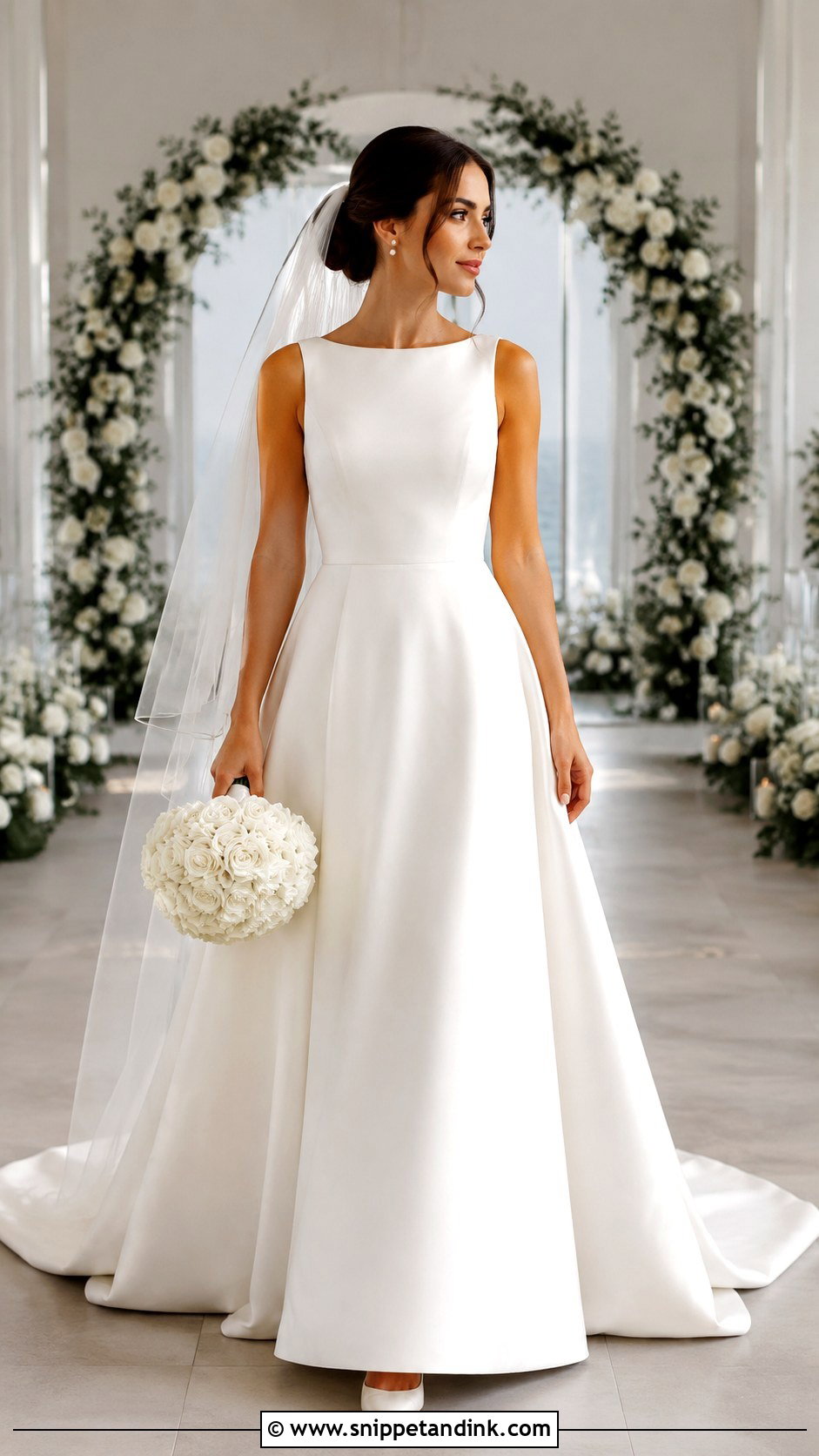
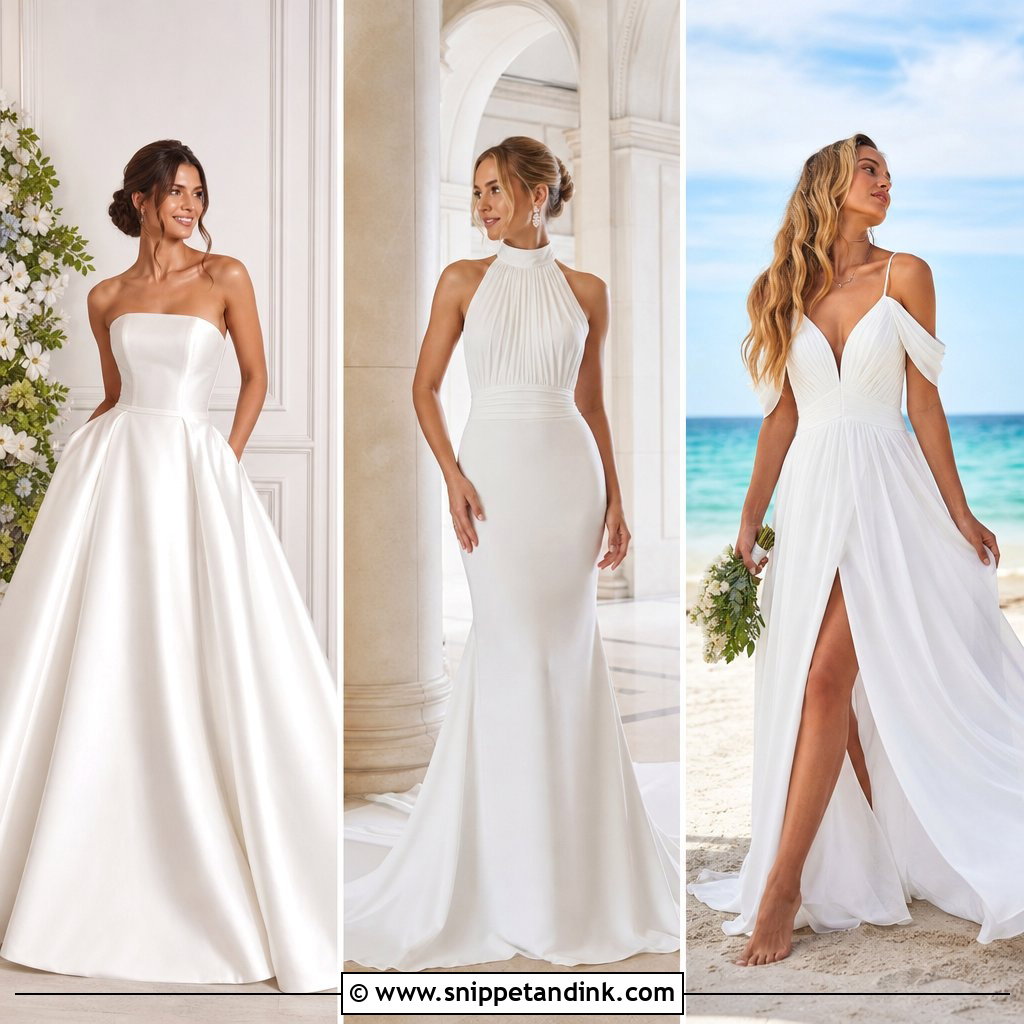
Satin is honest fabric: it shows every pull line across the bodice and every crease across the lap. A softly structured bodice with a natural waist and a skirt that falls away from the hips is the easiest version to wear, and it sits comfortably in a ballroom, a garden or a modern indoor space. I style it with pointed ivory pumps, pearl studs and a fingertip veil with a plain cut edge, plus a low bun so the neckline stays clear. White roses or calla lilies in a compact bouquet finish it. Because satin catches the light on its own, I keep jewelry to a minimum. At the final fitting I ask the bride to sit for five minutes, then stand, so we can see exactly where the creases will form before the photographer does.
2. Square Neck Crepe Wedding Gown
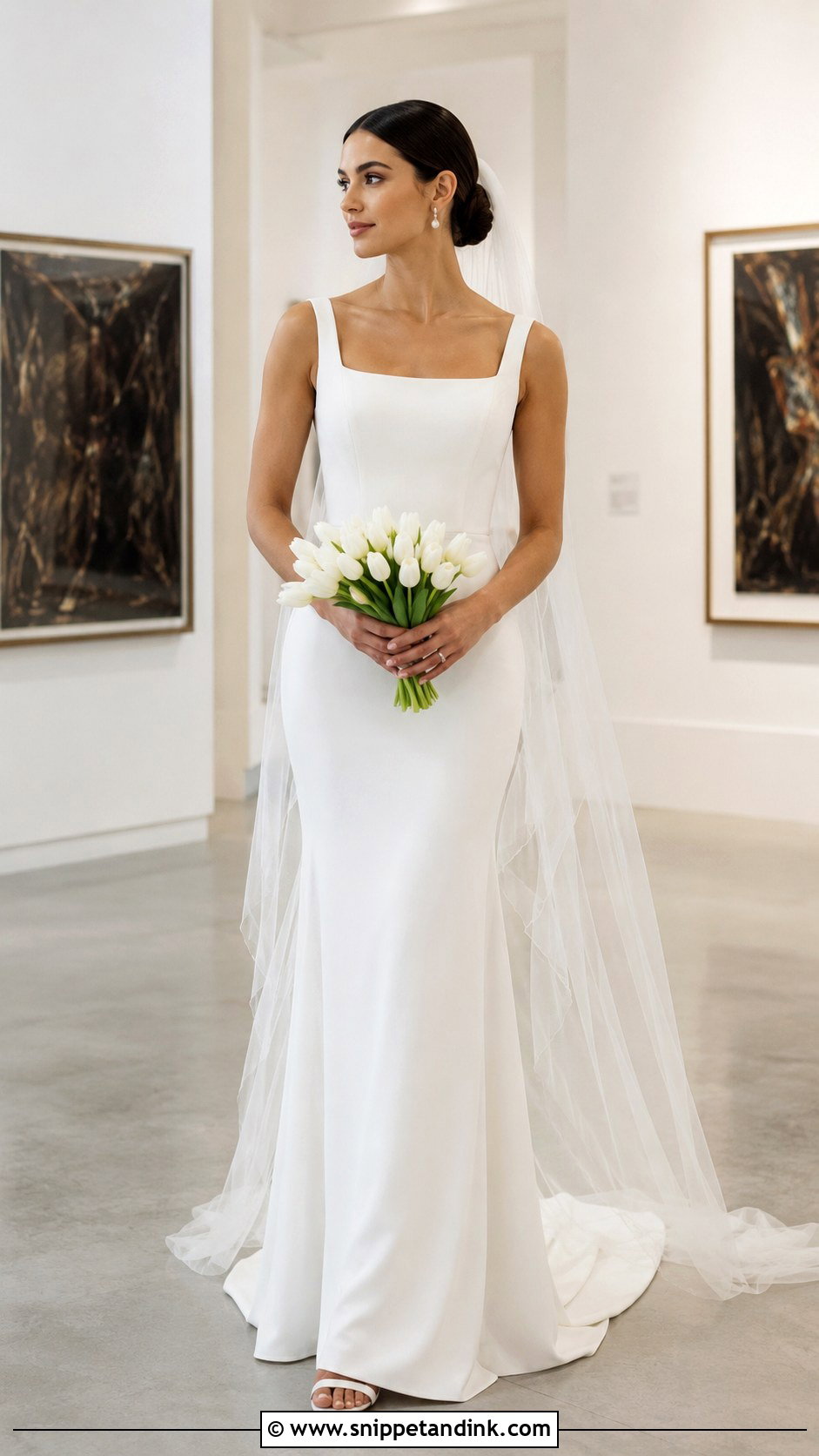
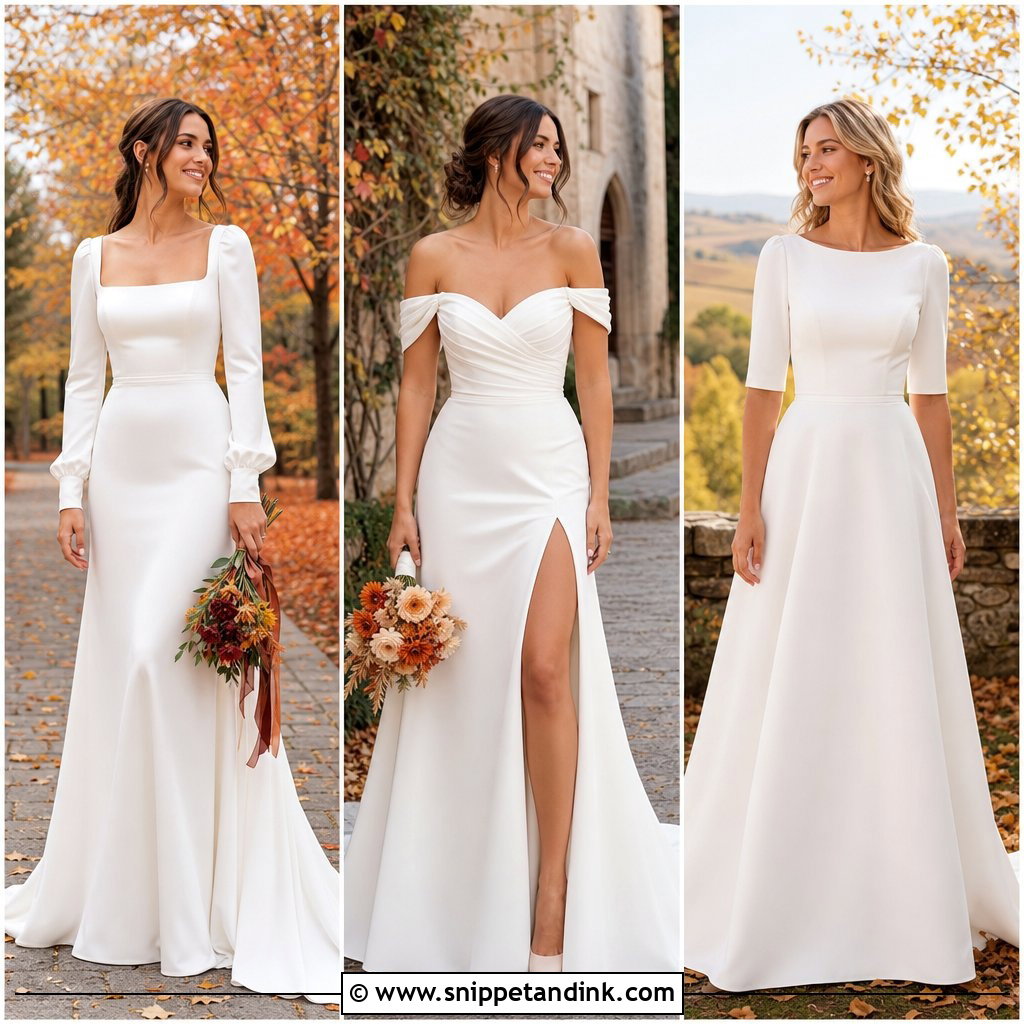
Crepe is my favourite fabric for a clean modern line, and also the least forgiving. A dense crepe with a smooth lining will hide underwear seams; a thin one shows every edge, so I always check the lining weight before anything else. The square neckline frames the collarbone, and wider straps leave room for a proper bra if you need one. A defined waist and gently fitted skirt keep it modern. Pearl drop earrings, a sleek low chignon, white leather heels and a long sheer veil give it ceremony weight without any lace, and white tulips with very little greenery keep the line uncluttered. Want more coverage? Ask for a higher square neckline or a matching crepe wrap. Budget for proper alterations, because on this fabric a small fit problem reads as a large one.
3. Strapless Column Wedding Gown
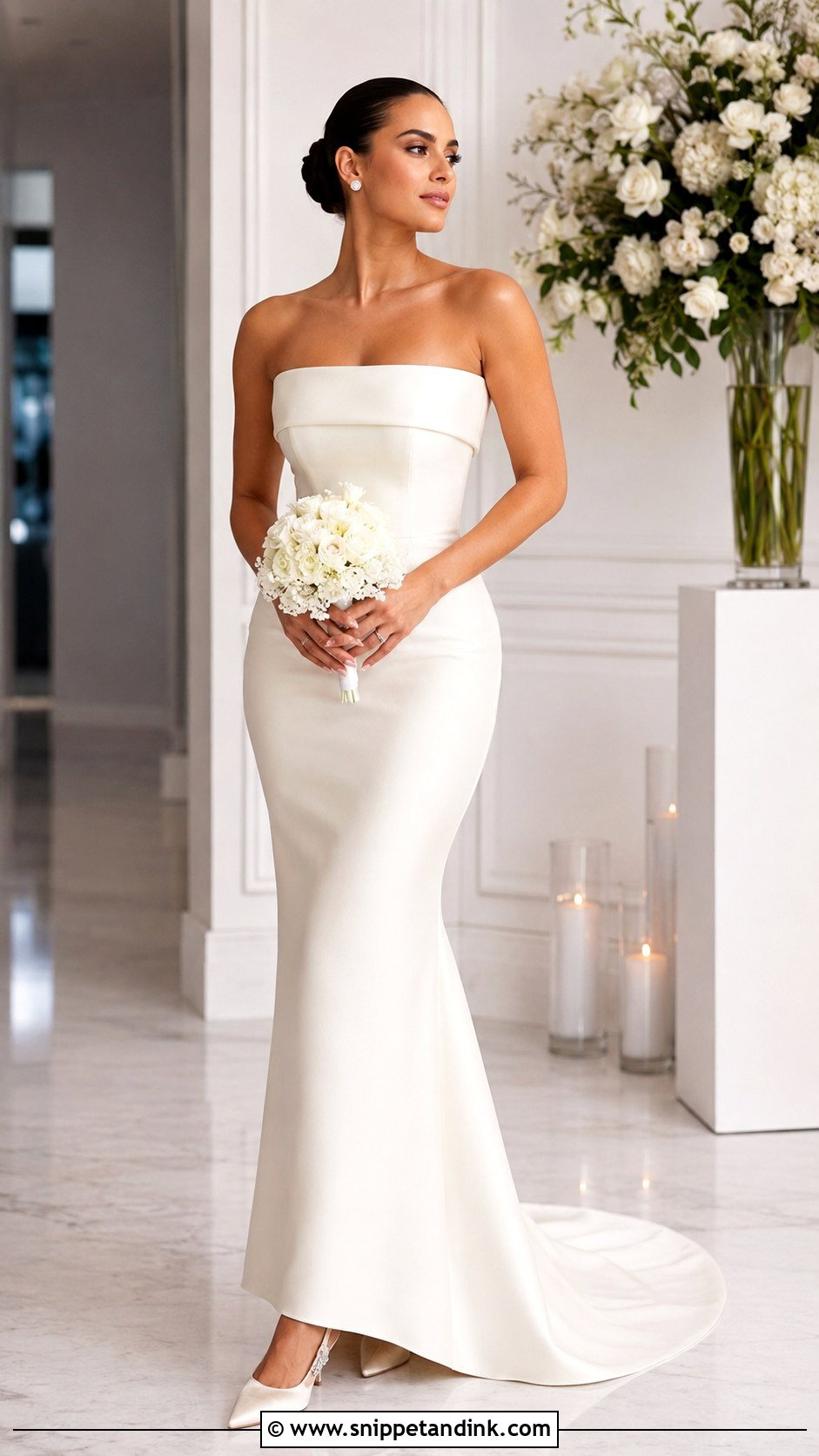
A strapless column lives or dies on its bodice. The internal boning should hold the shape on its own, and the gown needs to be fitted snugly at the ribcage, not just the bust, or it slides down the first time you hug someone. I have every strapless bride lift her arms and lean forward in the fitting room before I sign off on the bodice. Keep the neckline straight or softly curved, and let the narrow skirt skim rather than grip so you can sit and walk. Pointed slingbacks, small diamond or crystal studs, a structured mini bouquet and a polished updo keep the shoulders clean. If your ceremony needs coverage, a detachable satin stole or a sheer cathedral veil comes off later. A subtle back slit or short train helps you move without breaking the minimal line.
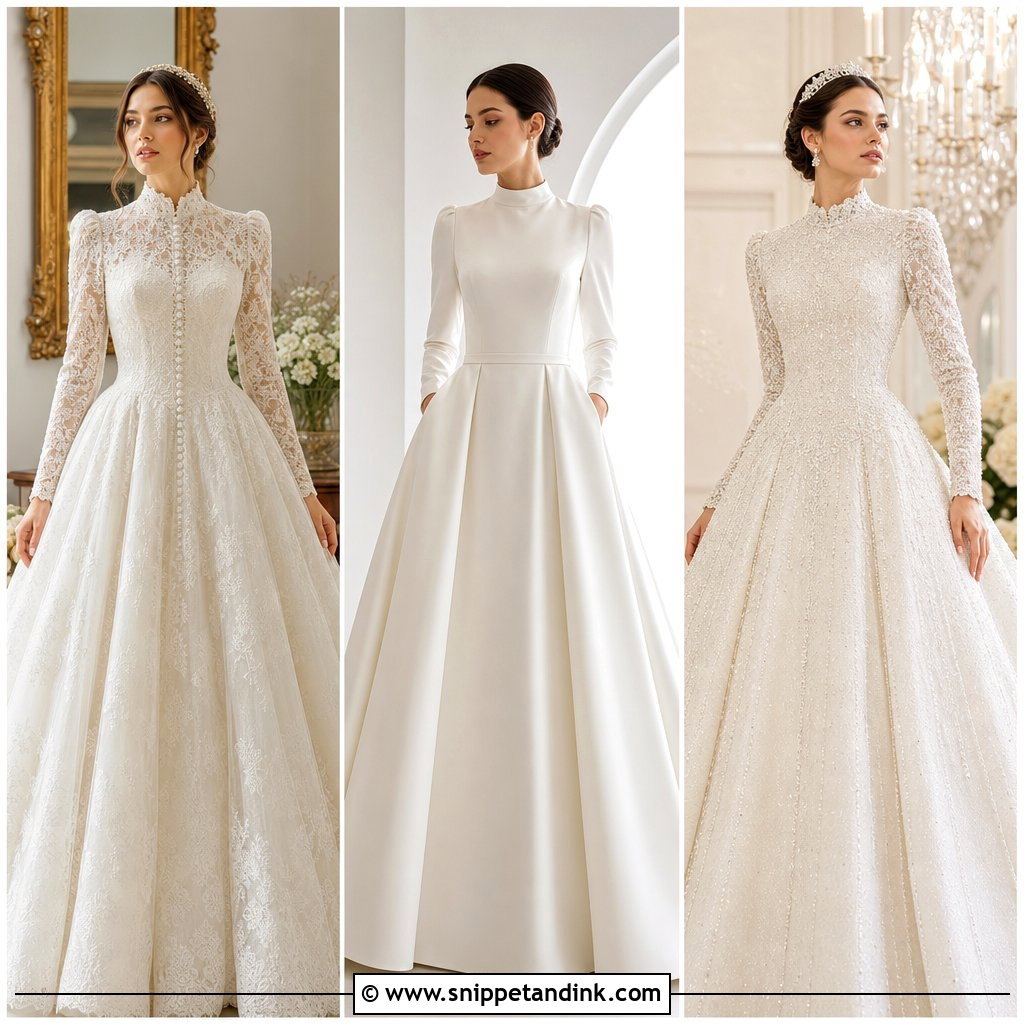
4. Long Sleeve Modest Wedding Gown
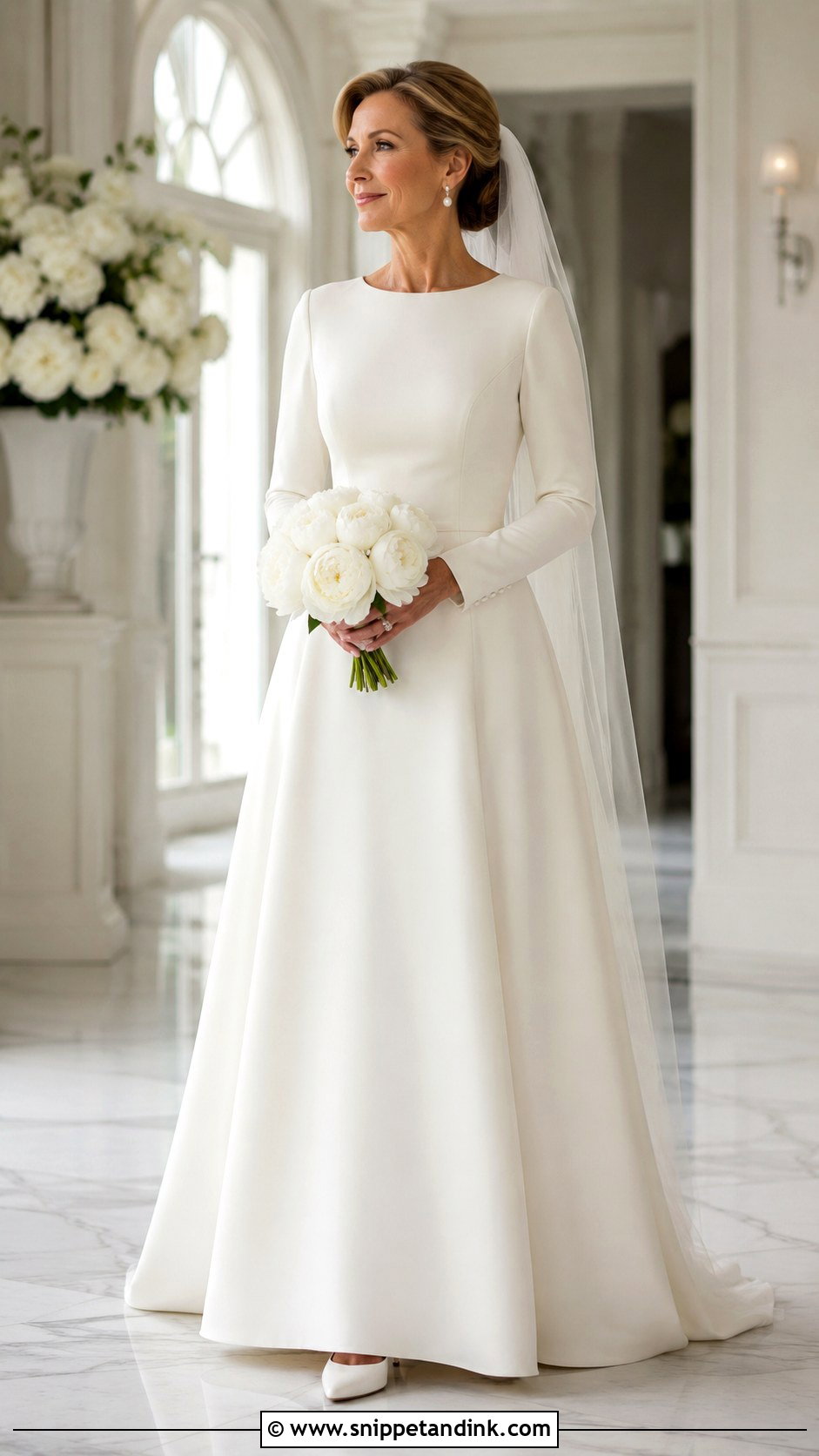
Long sleeves are where I see the most regret, and it’s almost always about movement. Smooth crepe or matte satin with a softly fitted bodice, a defined waist and a flowing A-line skirt is the classic combination, and fabric-covered buttons at the cuffs add one quiet detail. A bateau, jewel or shallow V-neckline gives coverage without feeling heavy. Ivory closed-toe pumps, pearl earrings, a simple veil tucked beneath a low bun and white peonies with soft greenery soften the structure. A tailored wrap in the same fabric helps in cooler months. Before the sleeves are finished, raise your arms above your head and reach forward as if to hug someone. If the bodice lifts with you, the sleeve head needs more room, and that’s a tailoring fix, not something to live with on the dance floor.
5. Silk Slip Wedding Gown
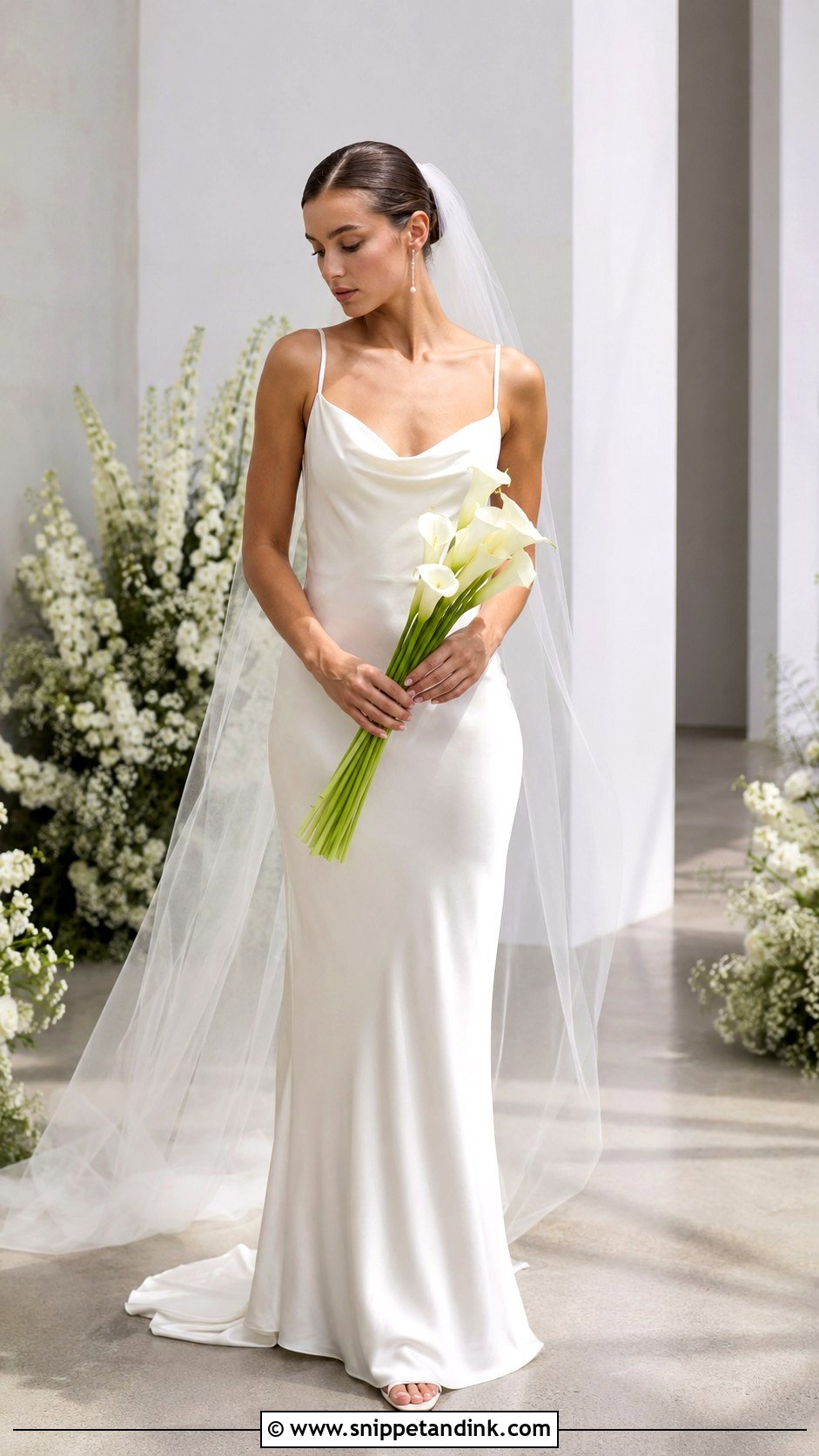
Silk cut on the bias follows the body instead of holding a shape, which is exactly why it moves so well. It’s also why I never mark a bias hem until the gown has hung for a day or two; the fabric drops, and a hem pinned too early ends up uneven. A softly scooped or draped neckline and a low back give it interest. I’d pair it with minimalist sandals, delicate drop earrings and either a smooth bun or glossy waves tucked behind the ears, then add a sheer floor-length veil so the slip reads unmistakably bridal. Calla lilies or orchids in a narrow arrangement echo the line. Choose smooth, skin-tone underwear, because lightweight silk shows every edge. If you need more support, look for wider straps, built-in cups or a properly lined bodice.
6. Off Shoulder A-Line Wedding Gown
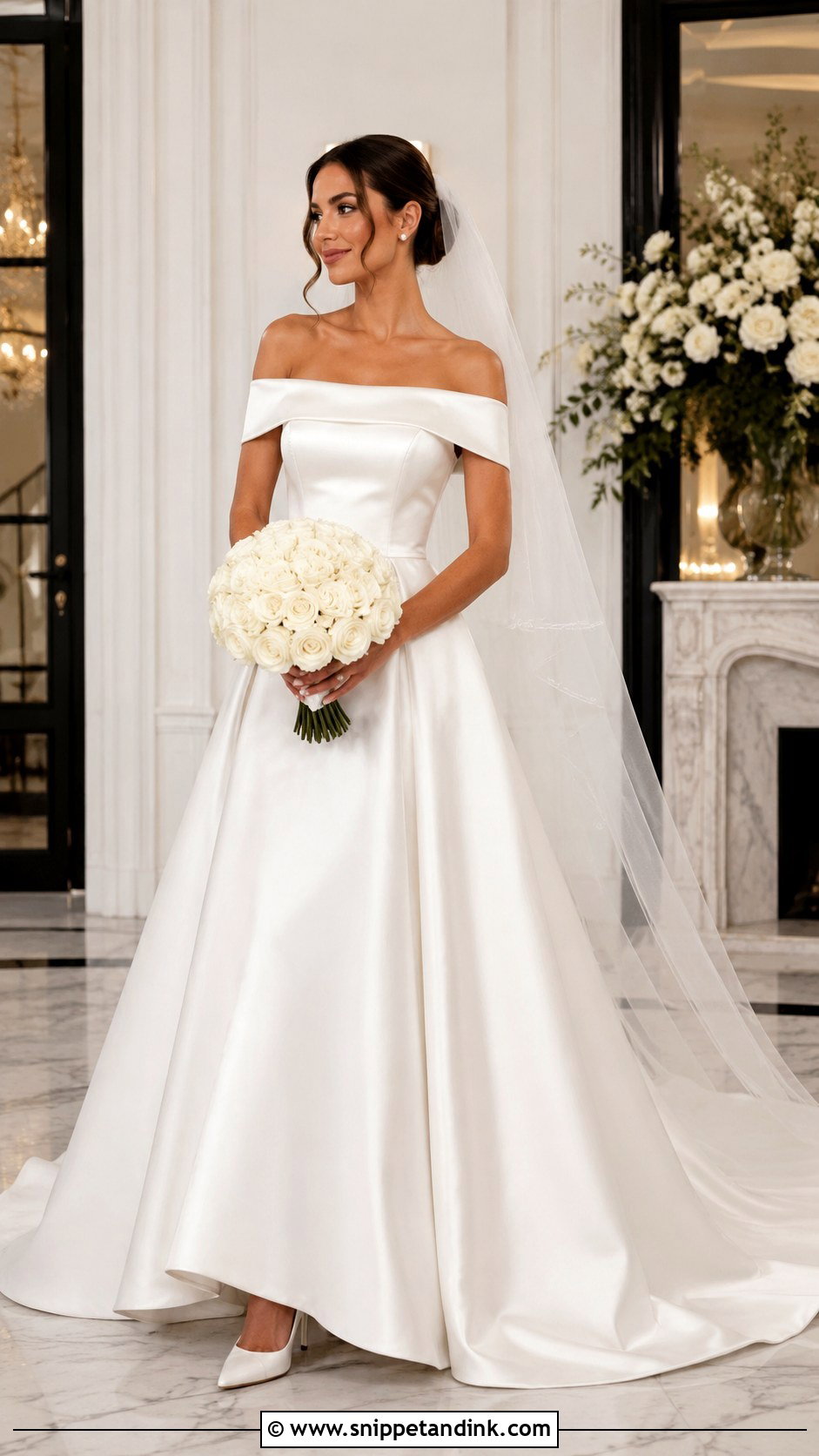
The weak point of any off-shoulder neckline is the moment you raise your arms. A folded band that rests securely across the upper arms behaves far better than a heavily gathered one, and a strip of silicone gripper or hidden elastic inside the band keeps it from creeping down during hugs. Underneath, a fitted bodice and smooth A-line skirt define the waist and let you move. I’d wear it with pearl or crystal studs, a neat low bun and pointed satin pumps, and skip the necklace entirely, since the neckline already frames the collarbone. A plain cathedral veil adds formality, and a rounded bouquet of white roses balances the wide shoulder line. Practise sitting and reaching at every fitting.
7. High Neck Halter Wedding Gown
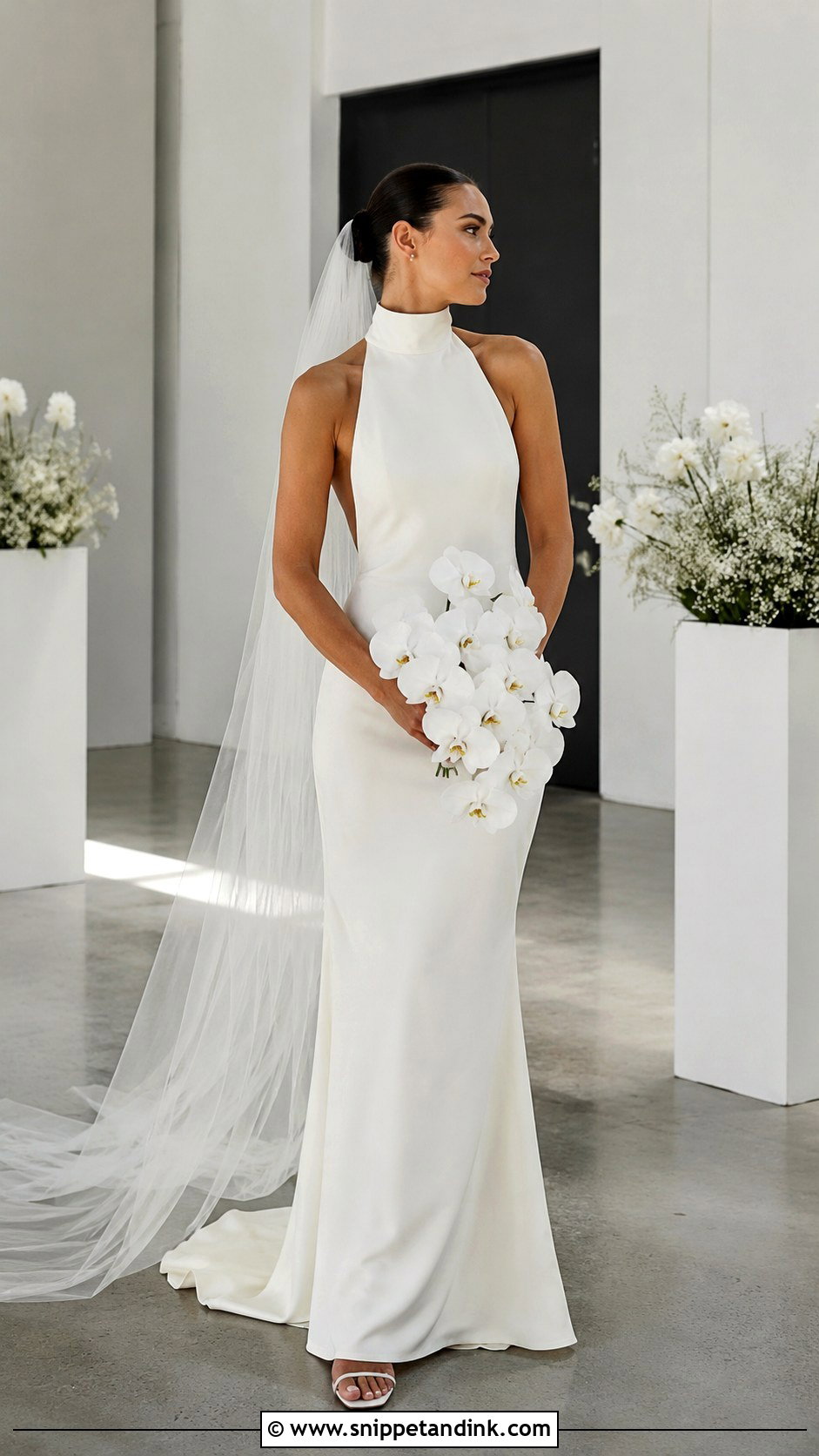
A high neck halter puts all the attention on the shoulders and draws a long vertical line down the body. Fluid crepe, silk or satin with a softly fitted waist and a column or gentle A-line skirt keeps it fashion-forward rather than fussy. My one warning: the whole bodice hangs from the closure at the back of the neck, and a heavy gown pulls on that point for hours. Check the fastening is a sturdy hook or button, not a thin tie, and that the bust has internal cups so the neck isn’t doing all the work. Small hoops, a smooth updo and barely visible ivory sandals are enough; a necklace would fight the neckline. Attach the veil below the bun so any open back or row of buttons stays visible, and carry a slender bouquet of white orchids.
8. Boat Neck Wedding Gown
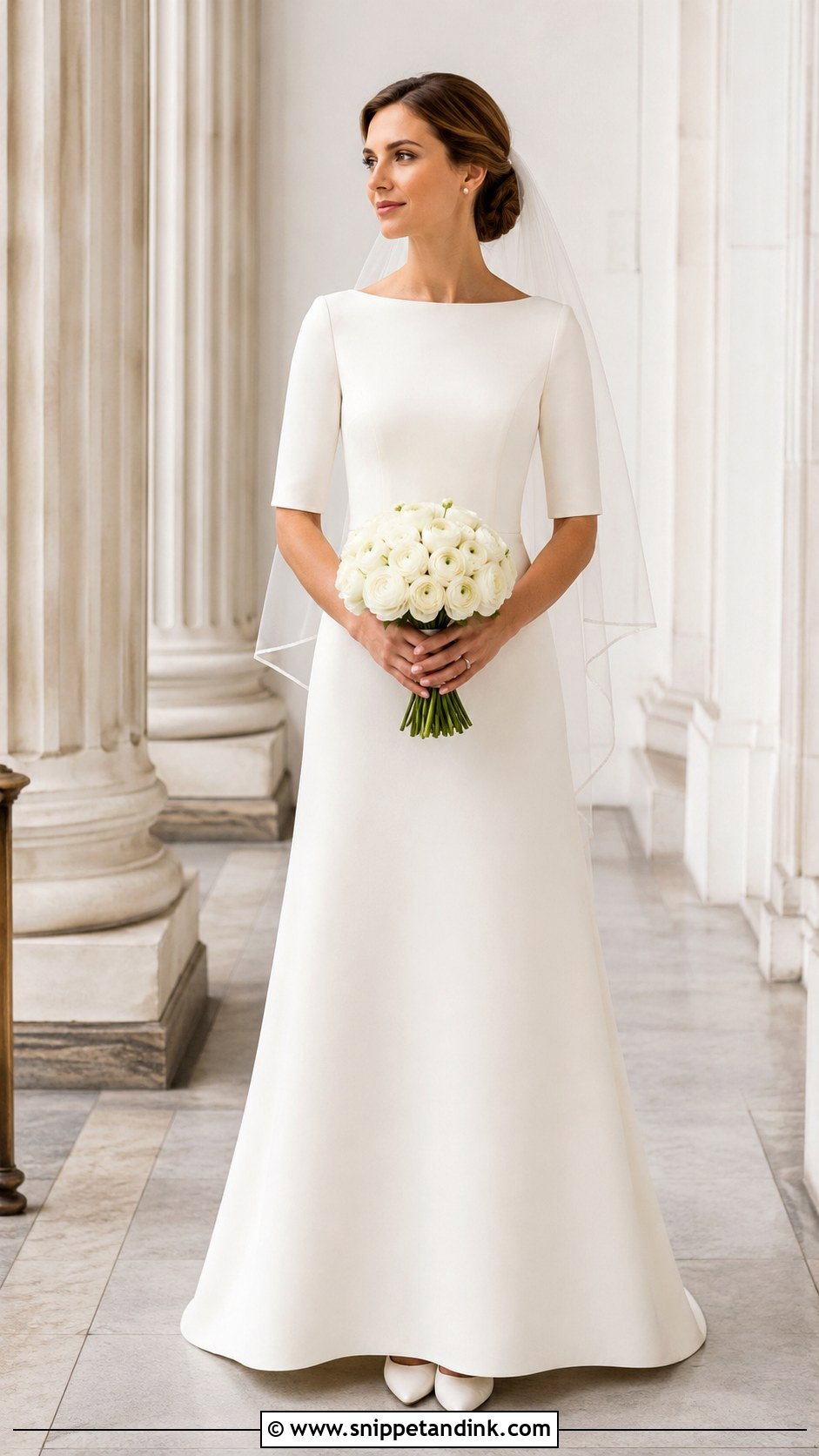
Few silhouettes look as quietly polished as a boat neck wedding gown with a smooth, uninterrupted bodice. The wide neckline follows the collarbone and suits cap sleeves, elbow sleeves or a sleeveless cut. I reach for structured crepe or mikado here, because a stiffer fabric holds the line straight instead of collapsing toward the shoulders. The catch is bra straps, which sit right where the neckline ends, so plan for a strapless bra or built-in cups. Pearl studs, a low twisted bun, closed-toe pumps and a waist-length or fingertip veil keep the neckline in view, with white ranunculus and a little greenery in hand. Add a back vent if the skirt is fitted. Shorter brides usually look better in a slightly narrower boat neck and a minimal train.
9. Cap Sleeve Wedding Gown
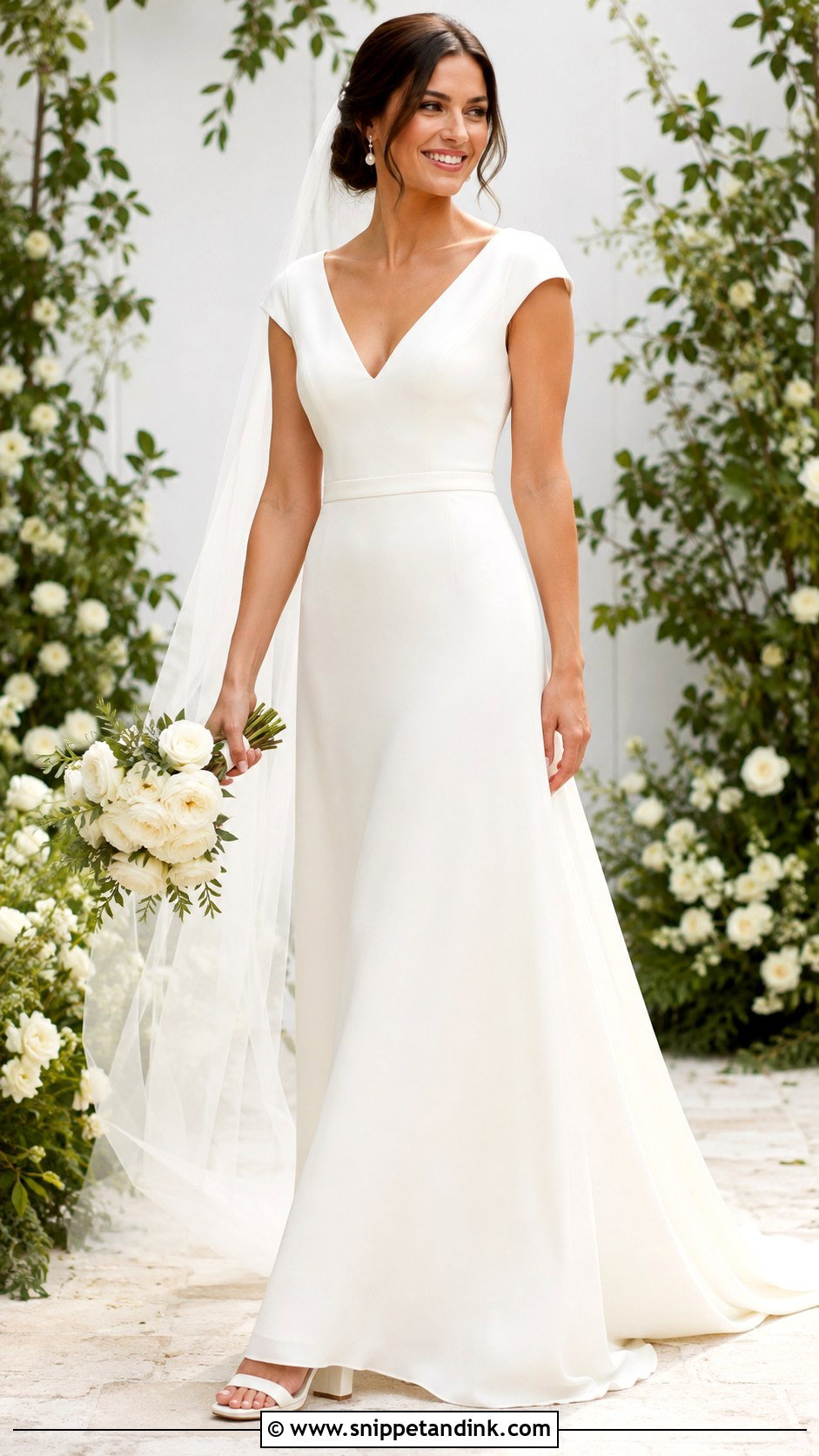
A cap sleeve that’s a few millimetres too tight will cut into the arm every time you hug someone. That’s the first thing I check, because a tailor can open the armhole easily before the wedding and not at all during it. Choose a clean crepe bodice with slim sleeves that sit flat rather than puff out, and a V-neck or softly rounded neckline to lengthen the upper body. An A-line or fitted skirt keeps the outline neat. Pearl drop earrings, a plain tulle veil and ivory block heels give stability for a long day, and a softly pinned updo shows off the sleeve without looking severe. White garden roses tied with a plain satin ribbon finish it.
10. Empire Waist Chiffon Wedding Gown
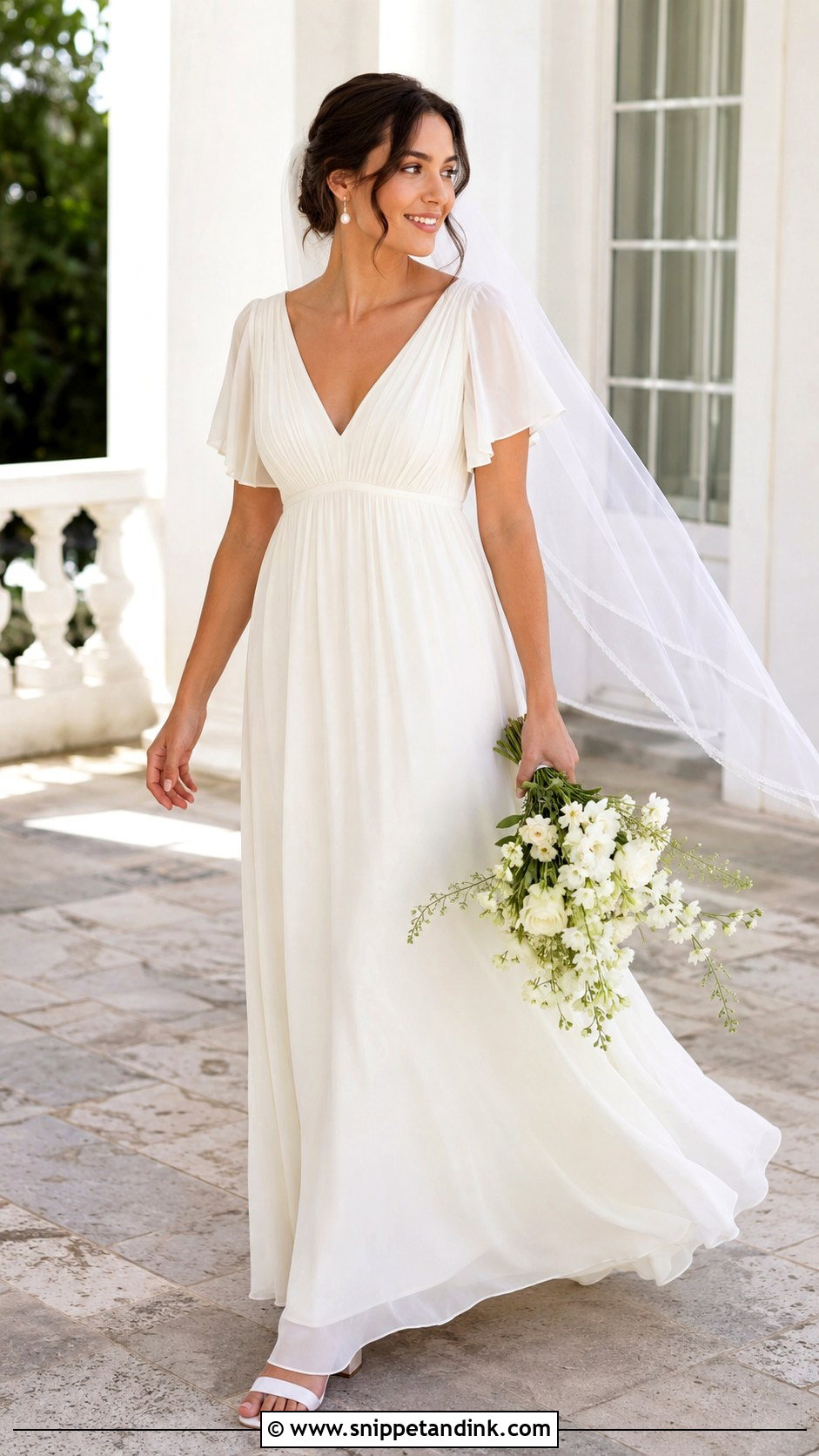
Chiffon is light, breathable and very good in heat, which makes an empire waist gown a sensible pick for outdoor and warm-weather weddings. The waist sits just below the bust and the skirt falls loosely, so there’s nothing pressing on the stomach all day. Choose a lined design with a modest V-neck, slim straps or short flutter sleeves. Be ready for wind: chiffon lifts and wraps around the legs, so I’d skip a long veil outdoors and go for a light fingertip length that won’t tangle with the skirt. Low block-heel sandals, small pearl earrings and loose waves or a relaxed low bun suit the movement, and white sweet peas with fine greenery keep the flowers just as soft. Petite brides do best with a narrow skirt and limited gathering; taller brides can carry extra volume and a sweeping train.
11. Simple Ball Gown Wedding Dress
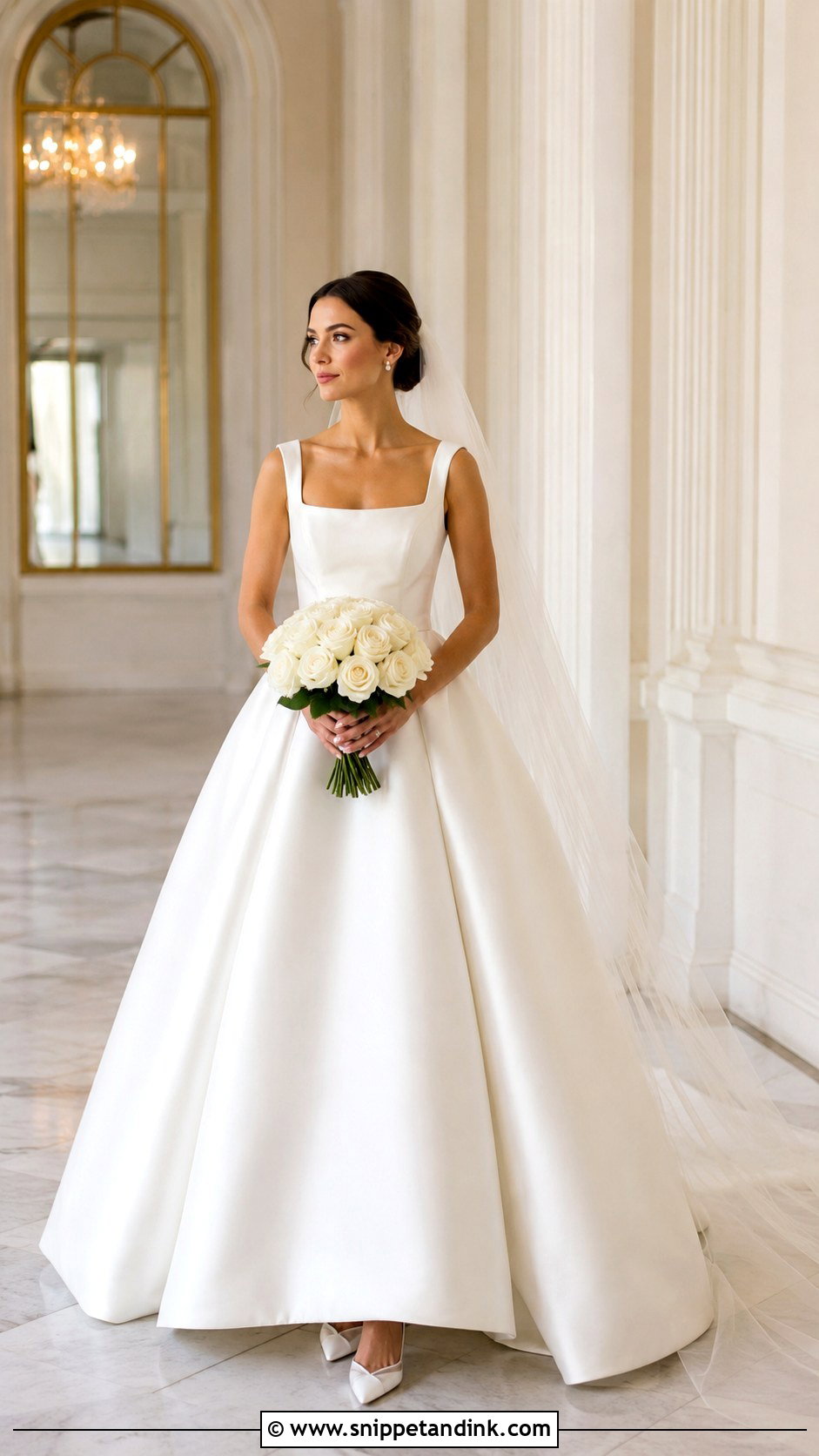
A plain ball gown gets its drama from shape alone, so the fabric has to hold that shape by itself. Look for smooth mikado or satin with a structured bodice, a defined waist and a full skirt, and a strapless, square or bateau neckline that lets the volume do the talking. Classic pumps, pearl studs, a long veil with an unembellished edge and a sleek bun balance the skirt. Keep the bouquet medium-sized, white roses for example, so it doesn’t vanish against all that fabric. Hidden pockets are worth asking for. I always tell ball gown brides to rehearse two practical things: getting into the car and using the bathroom. Then take your exact wedding shoes to the hem fitting, because the skirt should float just above the floor, not bunch at your toes.
12. Tea Length Wedding Gown
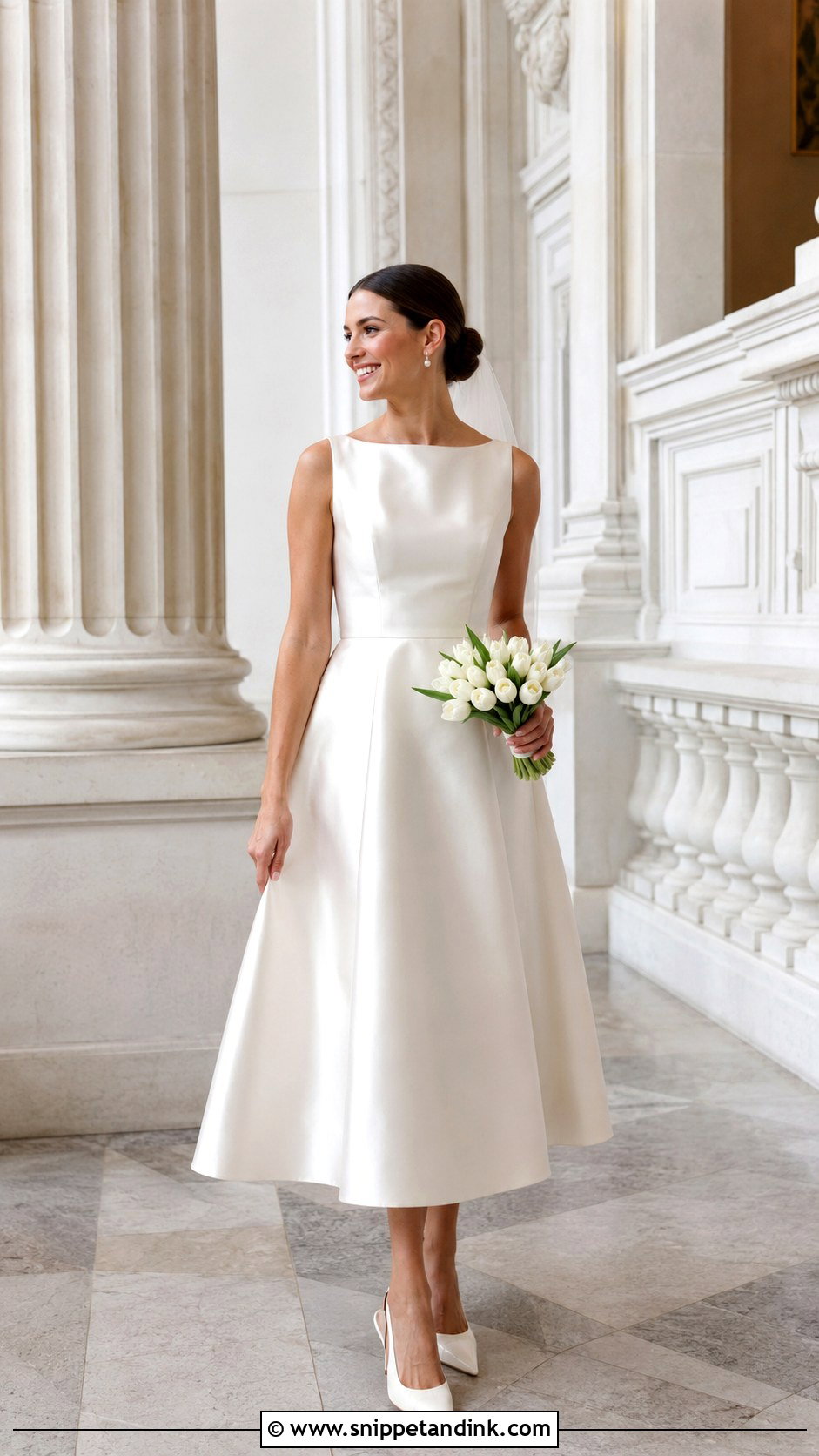
Tea length works for a courthouse ceremony, an intimate reception or a relaxed daytime wedding, and it’s the one silhouette where your shoes are fully part of the outfit. That means they need to be pairs you can actually walk in, and that the hem point matters more than usual. Structured satin or crepe with a fitted bodice and a skirt ending between knee and ankle gives the clean vintage feel, and a square, scoop or bateau neckline keeps it from tipping into costume. I’d choose ivory pointed pumps, slingbacks or ankle straps, pearl earrings, short gloves if you like them and a birdcage or shoulder-length veil. A smooth bun or a softly waved bob and a small bunch of tulips or roses complete it. Stand in front of a full-length mirror at the hem fitting and move the pin up and down an inch until the leg looks longest.
13. Low Back Satin Wedding Gown
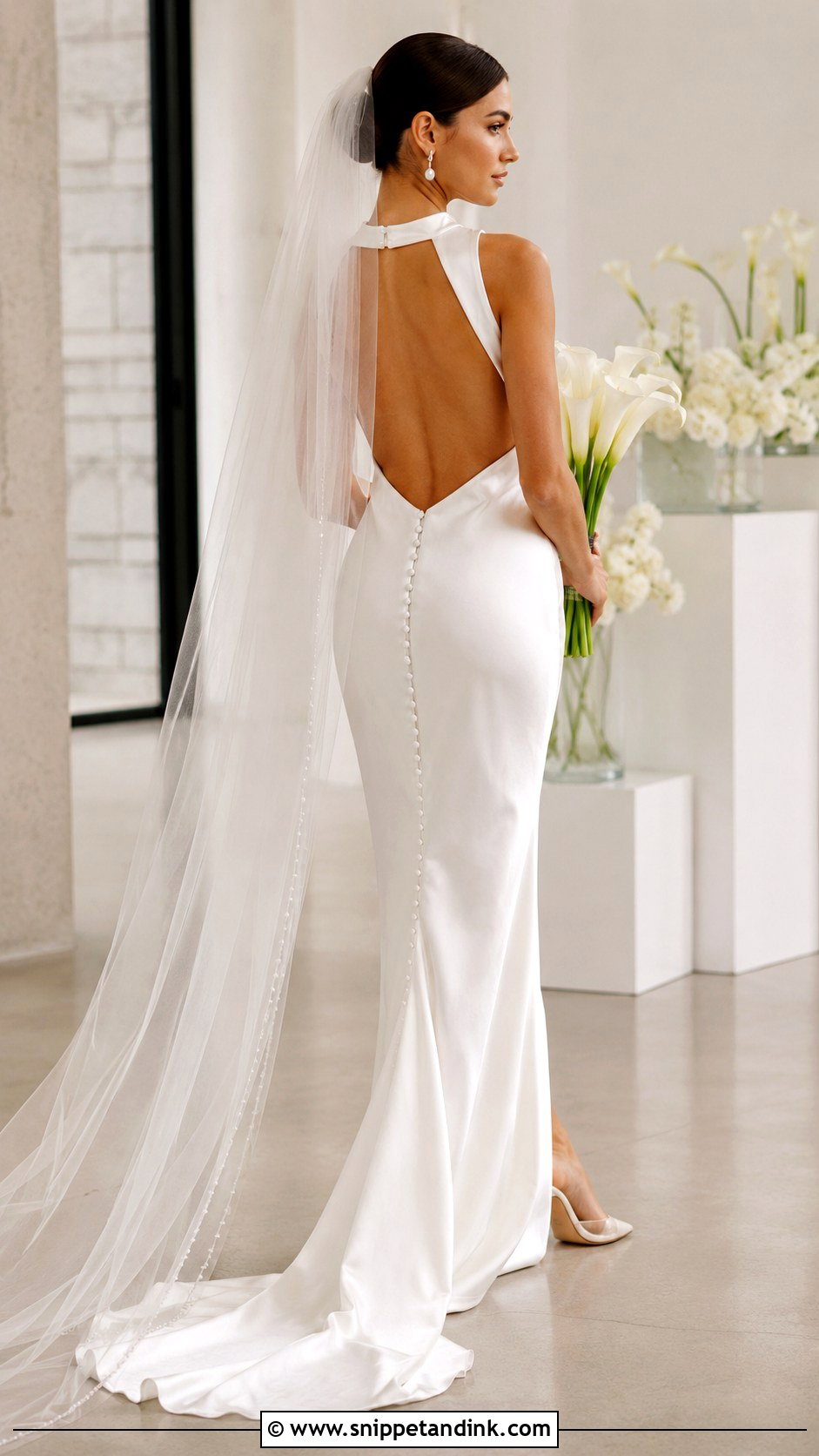
With a low back satin gown, your guests see the back for the entire ceremony, so that’s the side I fit first. A high front neckline or narrow straps balance the opening, and a column, sheath or gentle A-line cut with fabric-covered buttons and a short train keeps it simple. Normal bras rarely work here. Ask for built-in cups during alterations, and check the back edge doesn’t gape when you lean forward to sign the register or sit at dinner. Fashion tape helps, but structure inside the bodice does more. Delicate earrings, a sleek bun and pointed ivory heels finish the look; pin a sheer veil beneath the hair so the back stays visible, and carry calla lilies to repeat the long clean lines.
14. Cowl Neck Wedding Gown
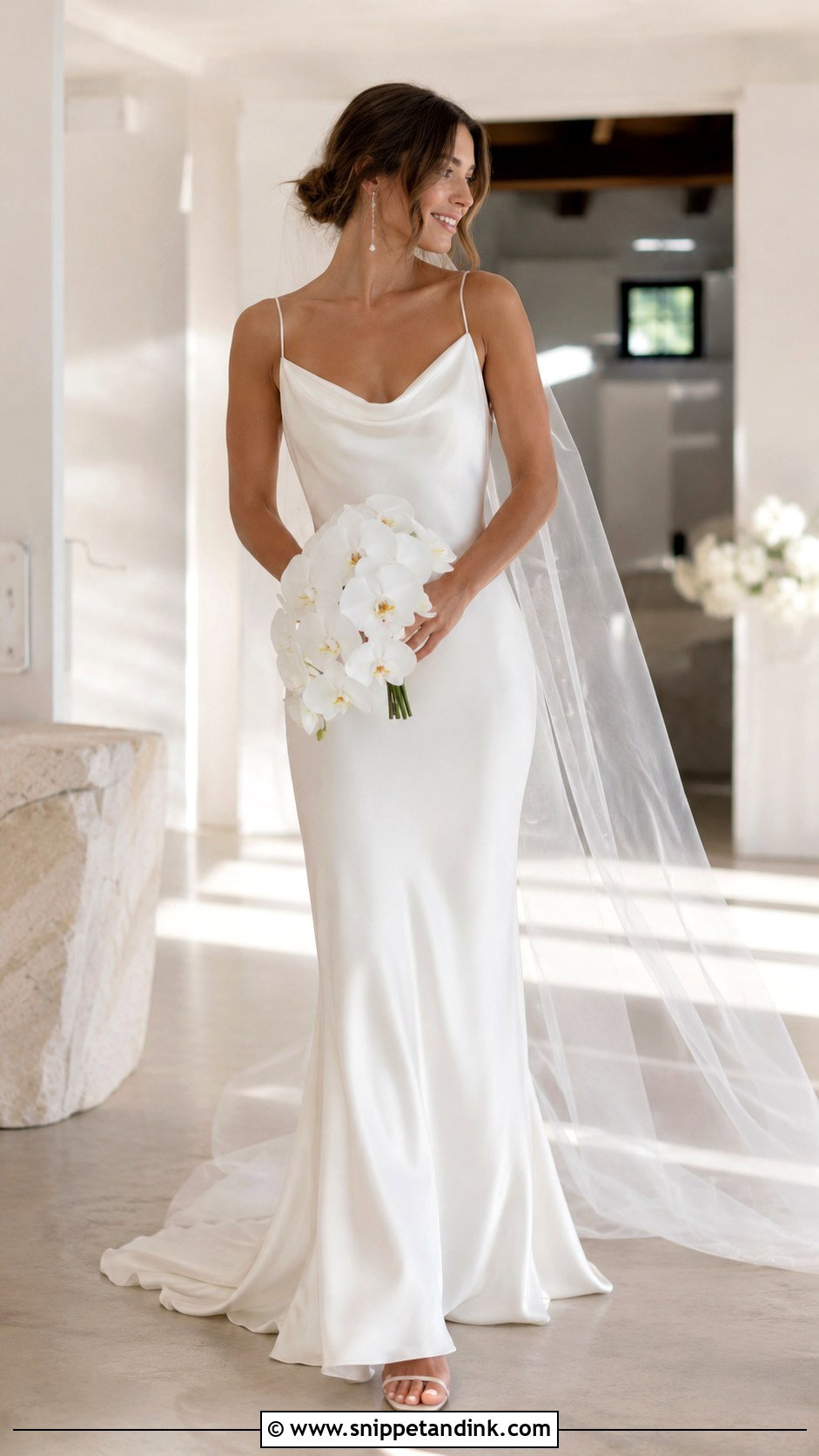
A cowl neck wedding gown gets all its interest from drape. Silk satin is the fabric I’d choose because it falls in soft folds and catches light along the neckline. Pair the cowl with a bias-cut skirt, slim straps and a lightly defined waist. The thing nobody warns you about: a deep cowl falls open when you lean forward. Ask your seamstress to tack the folds or add a small weight inside so the drape stays put while you hug guests and bend to sit. Delicate drop earrings, barely-there sandals and a simple veil reaching just past the train keep everything quiet, with a loose bun or controlled waves and a narrow bouquet of white orchids. A higher cowl or wider straps give extra coverage.
15. One Shoulder Wedding Gown
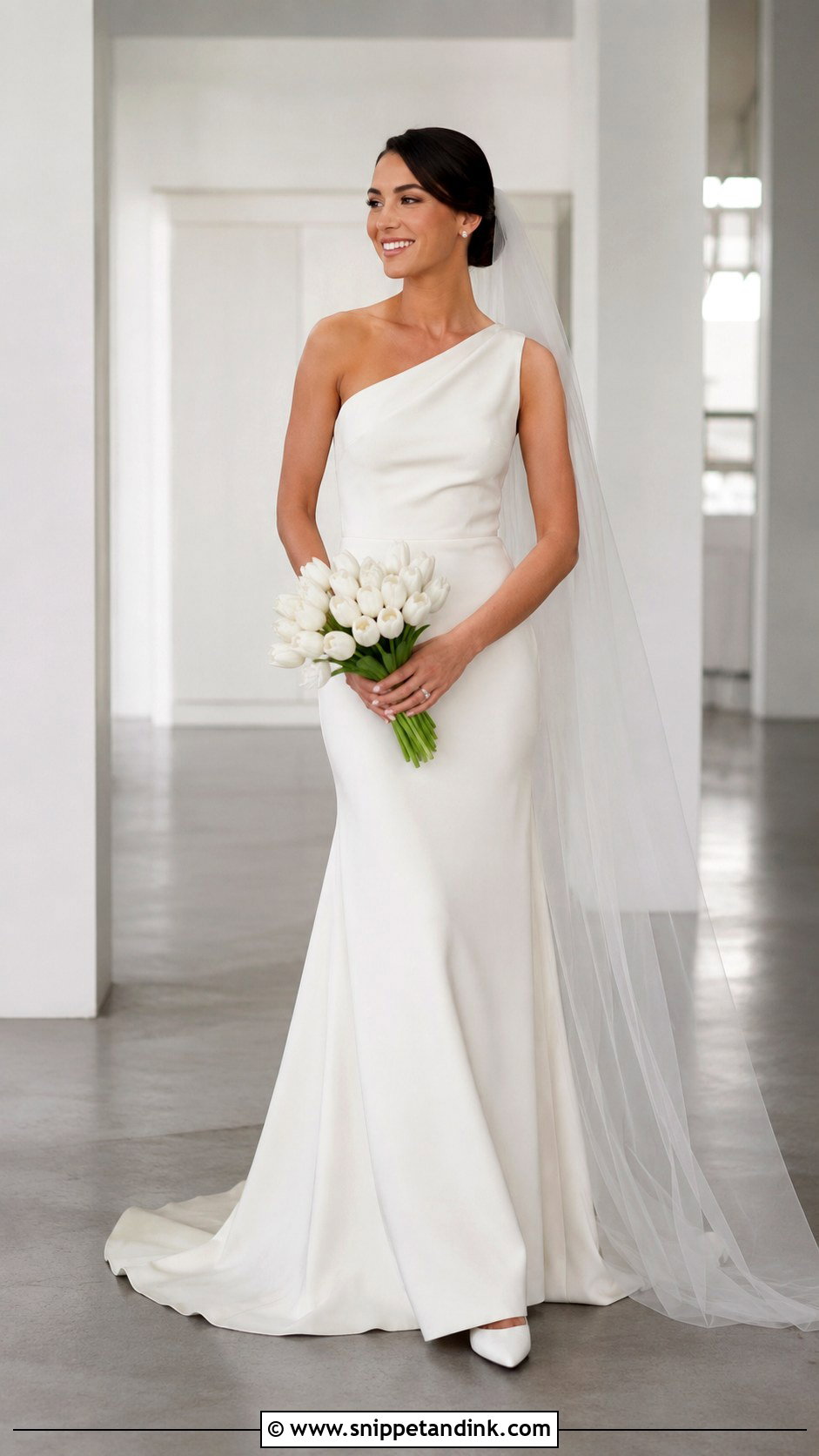
Asymmetry is modern, but a single strap has to carry the bodice on its own. Smooth crepe or satin with a fitted waist and a column, trumpet or A-line skirt is the clean way to wear it, and the strap can be slim and tailored or softly draped. Small studs only; a necklace competes with the line. A sleek ponytail, low bun or side-parted updo keeps the shoulder visible, and pointed pumps plus a floor-length veil attached at the back of the hair keep it bridal. Carry a compact bunch of white roses or tulips. When I fit one-shoulder bodices, I watch the bare side as the bride walks and dances; if the neckline tips or the bodice twists, it needs more internal support before anything else.
16. Corset Bodice Satin Wedding Gown
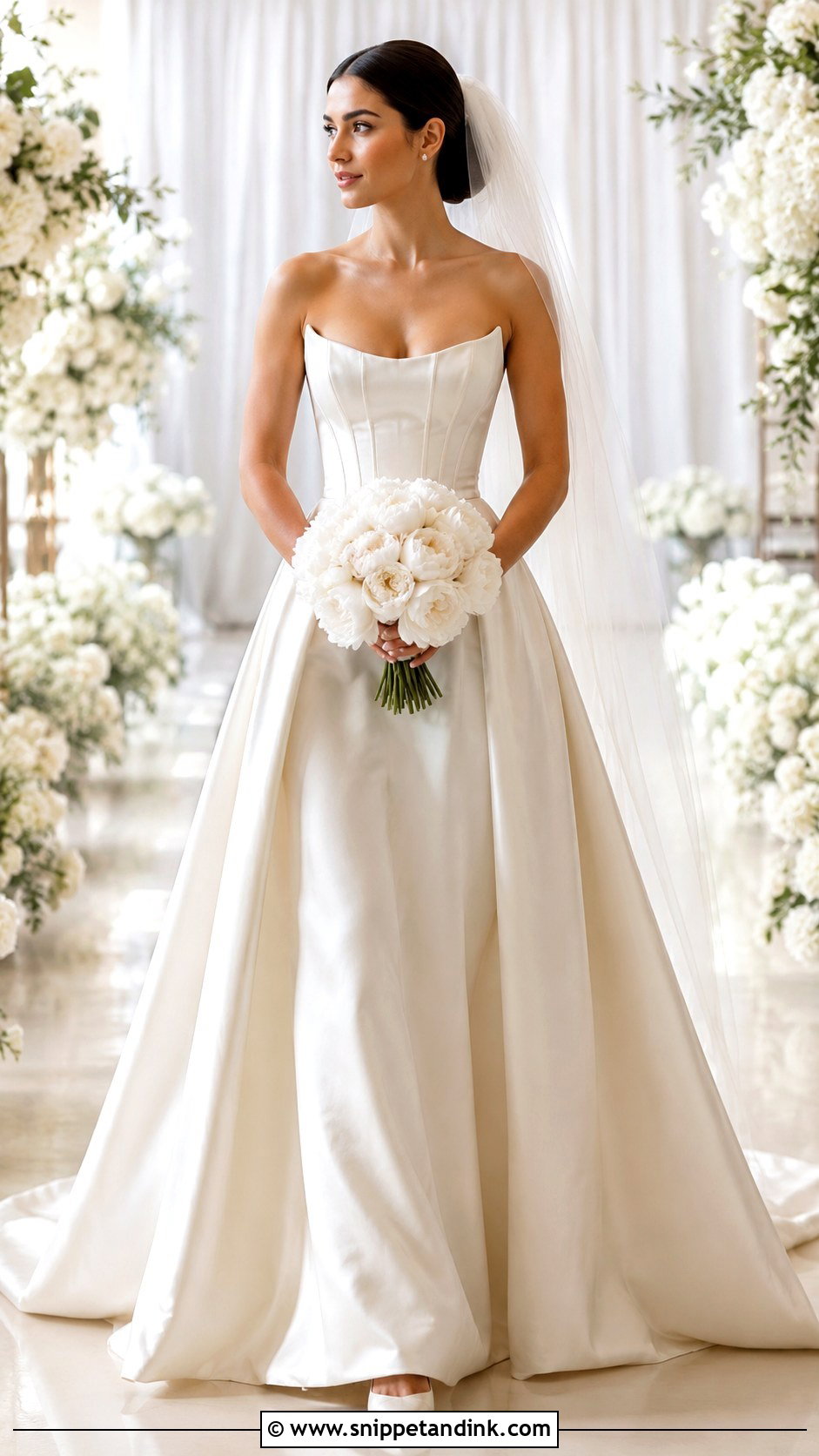
A corset bodice can still look minimal if the seams are smooth and the boning stays invisible from the outside. Choose a softly curved or straight neckline, a natural waist and an A-line or full satin skirt for balance. Pearl studs, closed-toe pumps, a sheer veil with a plain edge and a smooth low bun keep the styling restrained, while white peonies add a little texture. I’m firm about one thing: you must be able to breathe, eat and laugh in it. Sit, walk and take a full breath at every fitting, and if the back is laced, ask your maid of honour to learn how to loosen it slightly after dinner. Detachable off-shoulder straps or a matching satin wrap add coverage without changing the character of the dress.
17. Draped Waist Crepe Wedding Gown
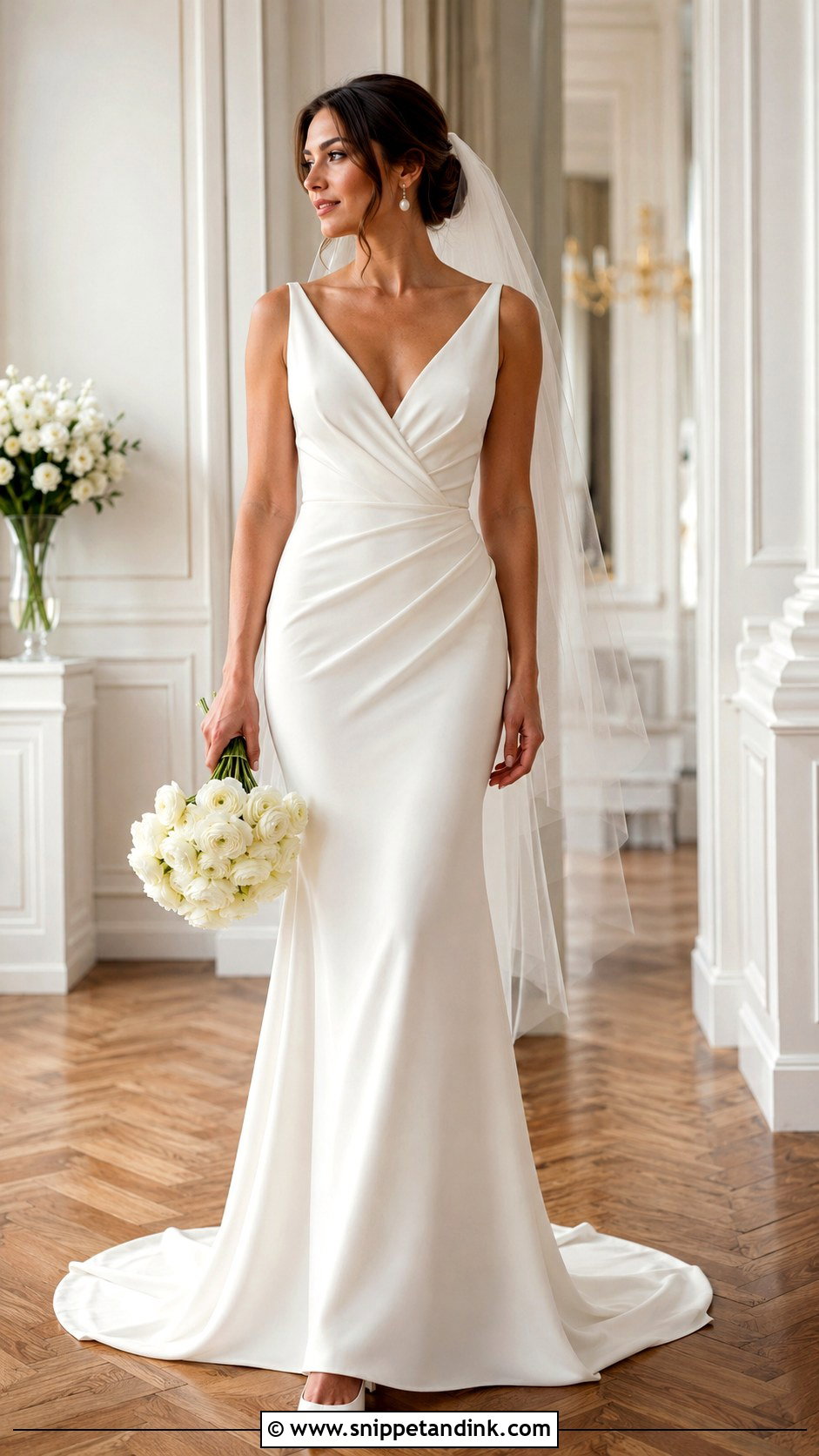
Draping is one of the most flattering tricks in a simple crepe gown, but only when the folds land in the right place. Soft folds crossing the waist or gathered at one side give definition without heavy ruching, and they can offer comfortable coverage over the stomach and hips. A V-neck, scoop or asymmetric neckline pairs well with a straight or softly flared skirt. Keep the accessories light: pearl drop earrings, pointed pumps, a low textured bun and a veil that doesn’t cover the waist detail, plus white ranunculus or roses with minimal foliage. I look at drape from the front, the side and seated, because folds that sit perfectly while standing often bunch at the hip once you sit down. Your tailor can re-tack them so they lie flat in both positions.
18. Minimal Lace Wedding Gown
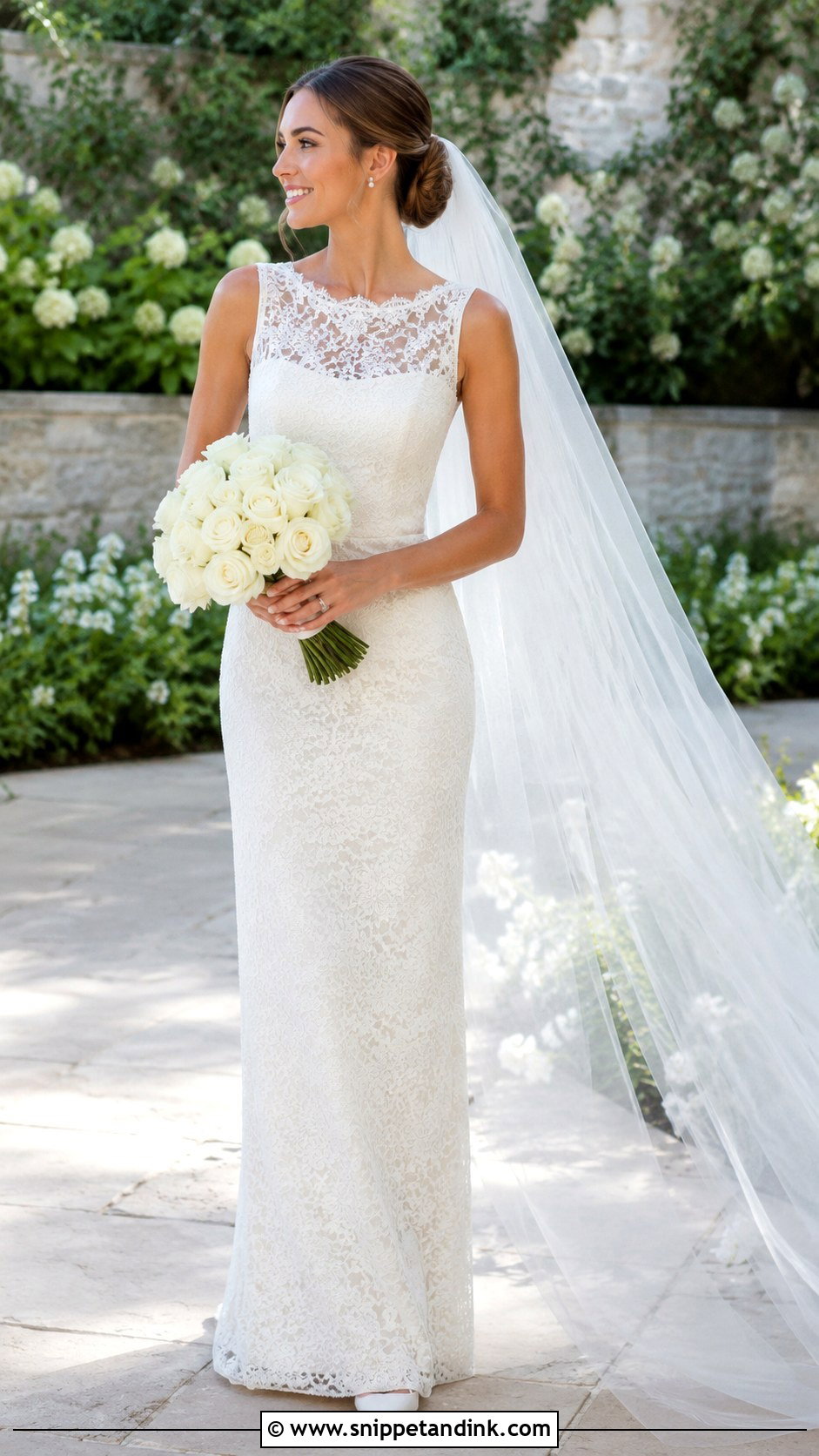
Lace still belongs in a simple look if you pick one pattern and let it be. A lace bodice over a smooth crepe skirt gives balance, while an allover lace column adds texture without volume. Check that the motifs line up at the side seams and the centre back; badly matched lace is the clearest sign of a cheaply made gown. Lining colour matters too, since ivory, nude and white linings change how the lace reads. Plain satin pumps, pearl studs, an untrimmed tulle veil and a neat, understated hairstyle let the lace show. White roses and greenery finish it. I’d avoid mixing several lace motifs with sequins or heavy appliqués, because one texture is what keeps the gown feeling simple.
19. Cape Sleeve Wedding Gown
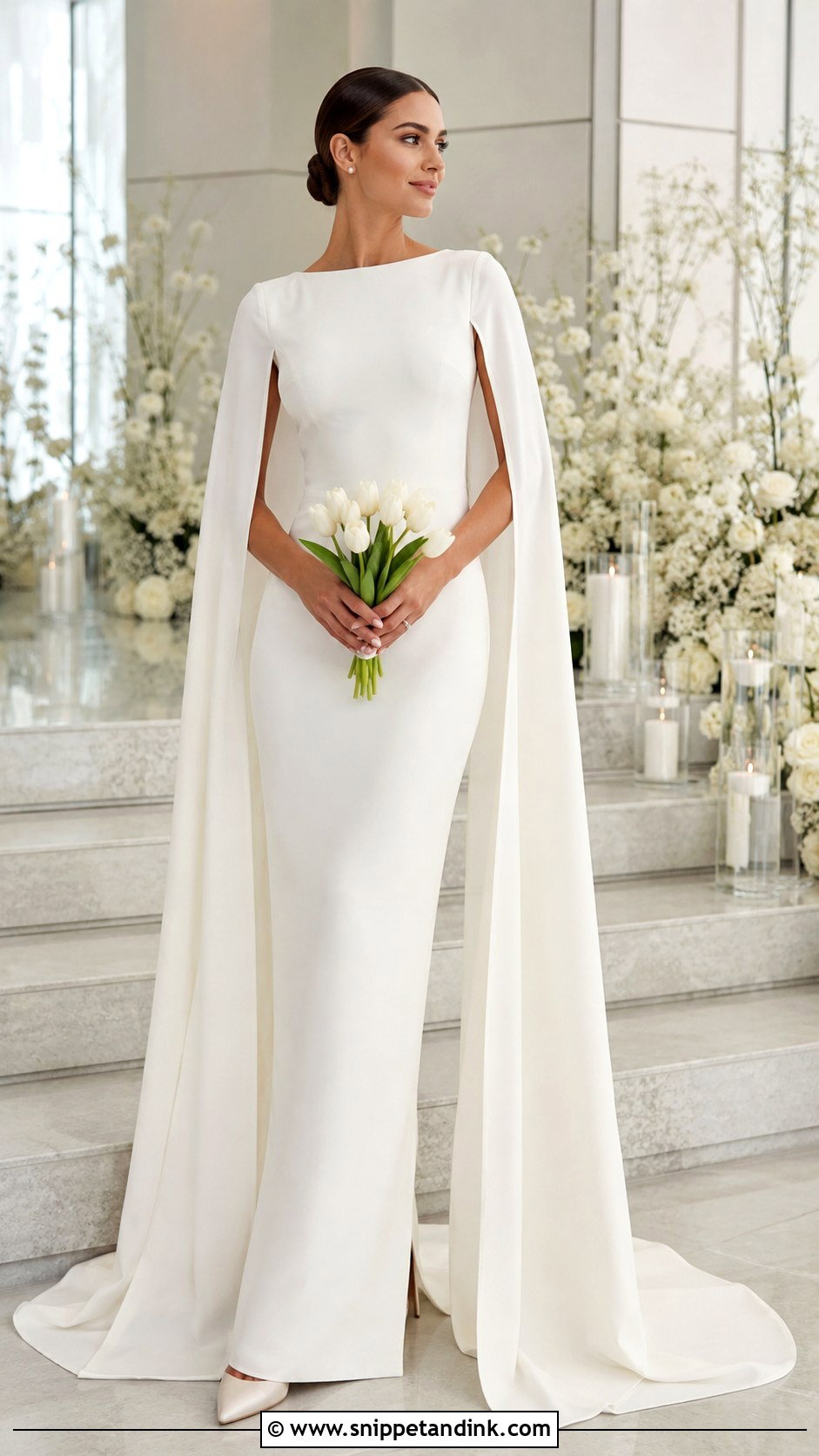
A cape gives movement and coverage without the stiffness of a jacket. It can attach at the shoulders or the neckline over a fitted crepe or satin base with a column or gentle A-line skirt. Short capelets feel modern and light; floor-length panels make the walk down the aisle. Small studs, pointed heels and a smooth low bun are all it needs, and I’d skip the veil entirely if the cape reaches the floor, since the two will compete. White tulips in a neat bouquet suit the clean structure. In fittings, hold your bouquet and walk: long capes get caught under the elbow or pinned against the flowers more often than you’d expect. Detachable capes on snaps or hidden hooks let you take it off for the reception.
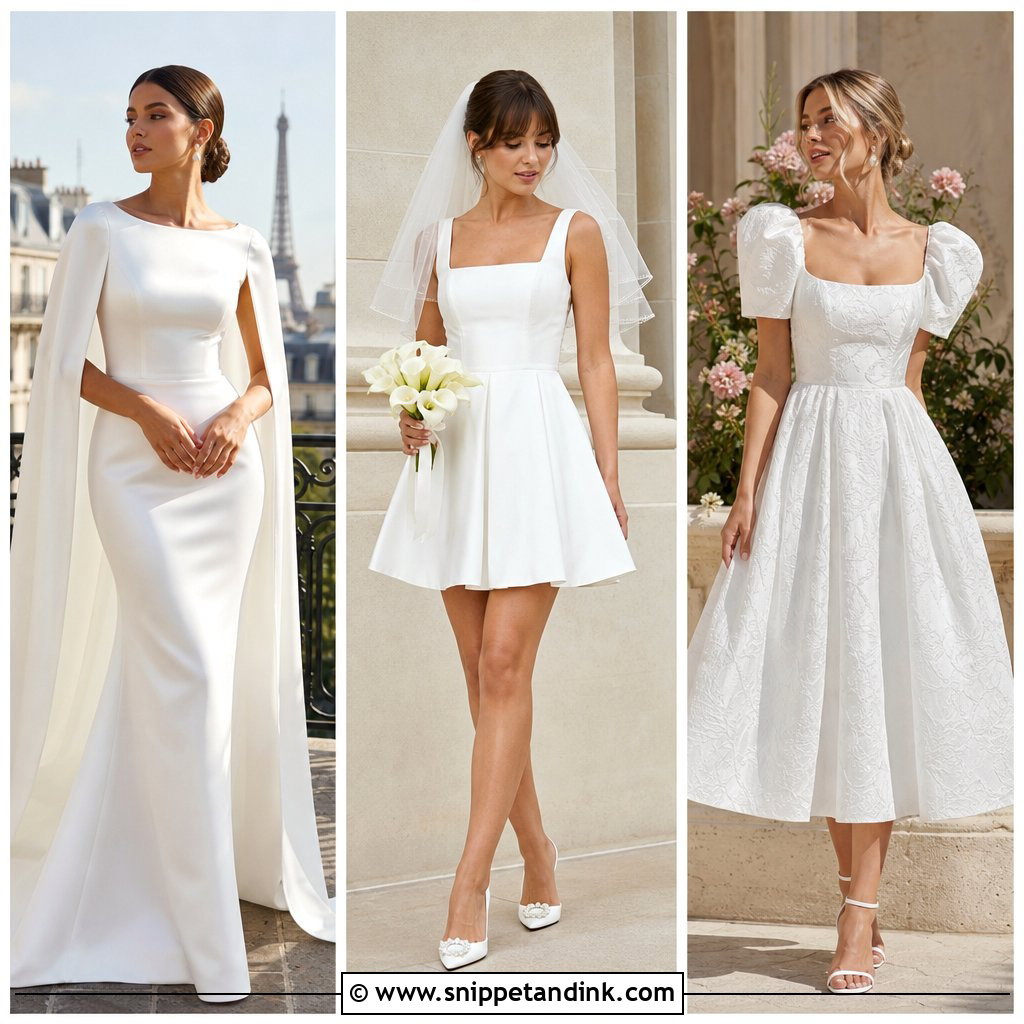


20. Simple Plus Size Wedding Gown
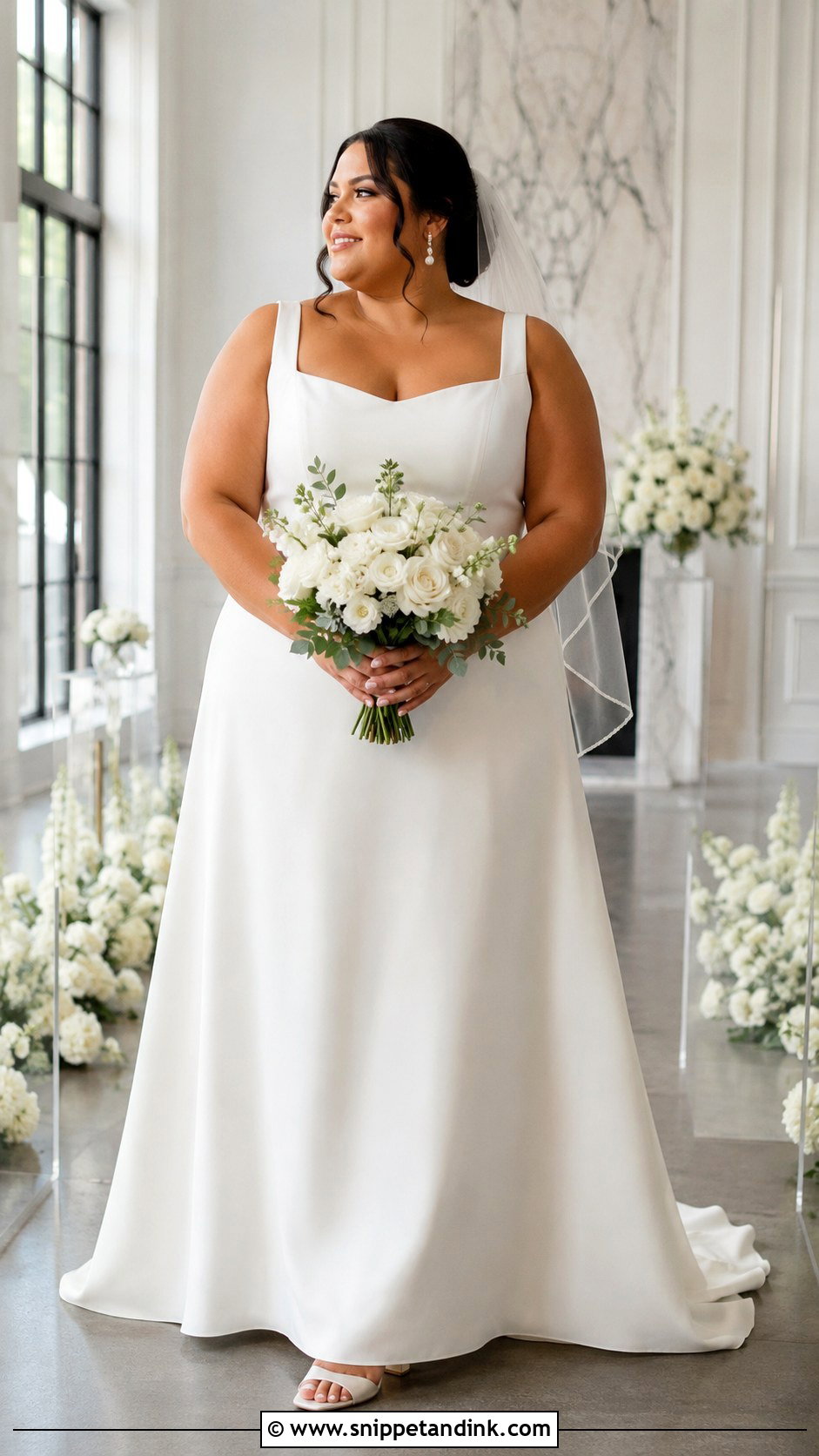
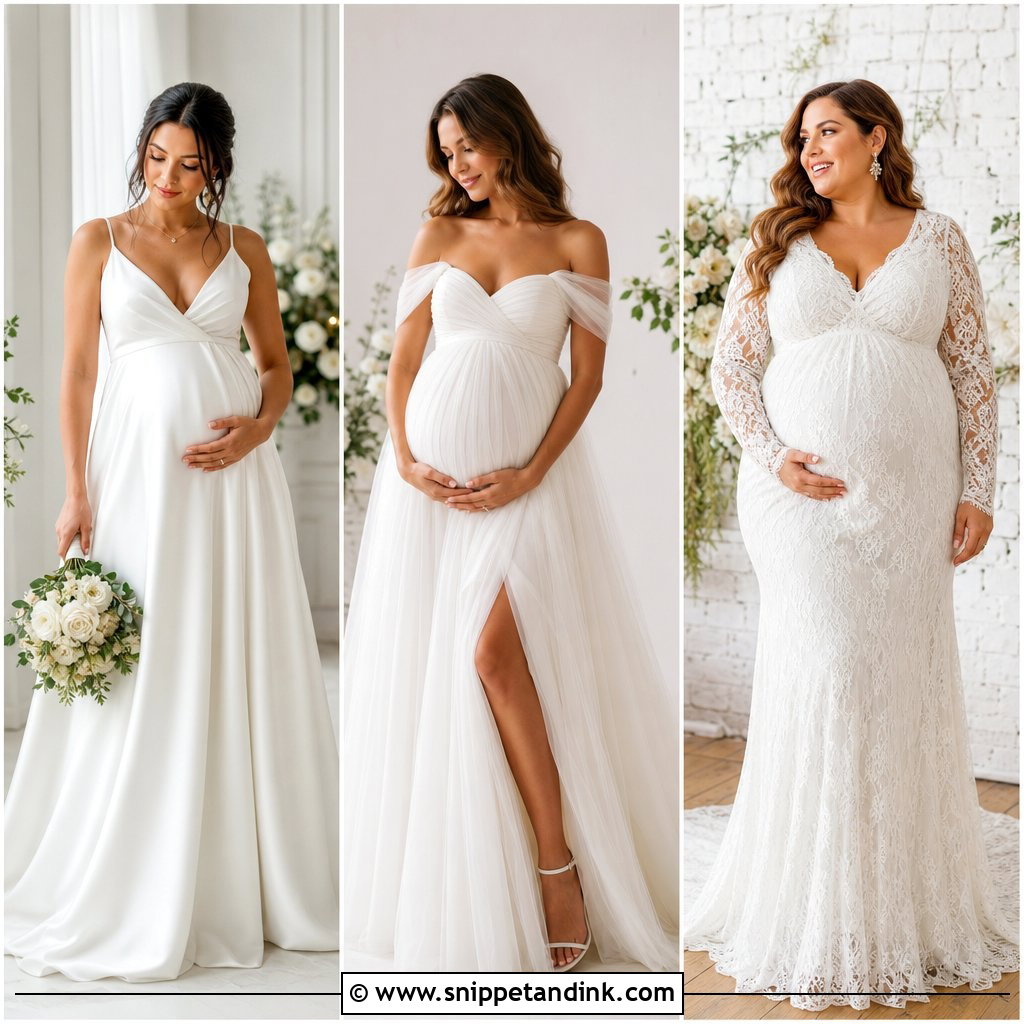
Support comes first in a simple plus size gown, and decoration was never meant to hide anything. A structured A-line, a smooth fit-and-flare or a draped crepe silhouette with a secure neckline and well-placed seams all work. Wider straps, internal boning and a firm lining shape the bodice while letting you move. Comfortable block heels, pearl earrings and a fingertip or cathedral veil keep the styling clean, and a polished bun or soft waves frame the face, with a medium bouquet of white flowers in proportion to the skirt. Try to shop where the samples come in a real range of sizes; clipping a gown that’s three sizes too small tells you very little about how it will sit. I’d ignore any rule about which shapes curvy brides should wear and choose the silhouette you feel most yourself in.
A Bustle for a Train With No Lace to Hide the Hooks
On a beaded gown, bustle hooks disappear into the pattern. On plain satin or crepe, every pickup point shows, so the style of bustle matters. An over bustle lifts the train up to buttons at the waist and suits light trains. An under or French bustle tucks the fabric beneath itself with ribbon ties, which hides the mechanism better on smooth fabric but takes longer to do.
Ask your seamstress to colour-code the ties and show whoever will be helping you at the last fitting, not on the day. A bustle done in a hurry by someone guessing is how a clean train ends up lopsided in the first-dance photos.
Creases, Shine and a Grubby Hem on a Dress With Nowhere to Hide
The morning of
Hang the gown from its inner loops as soon as it arrives at the venue and steam it from the inside, keeping the nozzle moving. I never put an iron directly on satin; it leaves shiny patches that don’t come out. Keep silk away from the steamer’s drips, because water can leave a ring on it.
During the day
Resist stain pens and wet napkins on silk; blotting with something clean and dry does less harm. Pack a small kit with white chalk for light marks on matte fabric, fashion tape and a lint roller.
Afterwards
Get it to a specialist cleaner within a few weeks. Champagne and sugar spills often look invisible at first, then turn yellow-brown in storage. Store it folded in acid-free tissue in a breathable box, never in the plastic cover it came home in.
Where the Detail Goes When the Dress Is Plain
Satin, silk, crepe, chiffon and a little restrained lace can each carry a minimal gown, but only when the fit is right from the back and side as well as the front. Keep accessories in proportion to the neckline: one pair of earrings, shoes you can stand in for hours, a veil that doesn’t swallow the dress and flowers sized to the skirt. I’d take a perfectly altered plain dress over an elaborate one that pulls at the bust every time you move. Pick the gown you forget you’re wearing by the second hour of the reception; that comfort shows in every photo.
You'll Like These Ideas:






Leave a Reply