
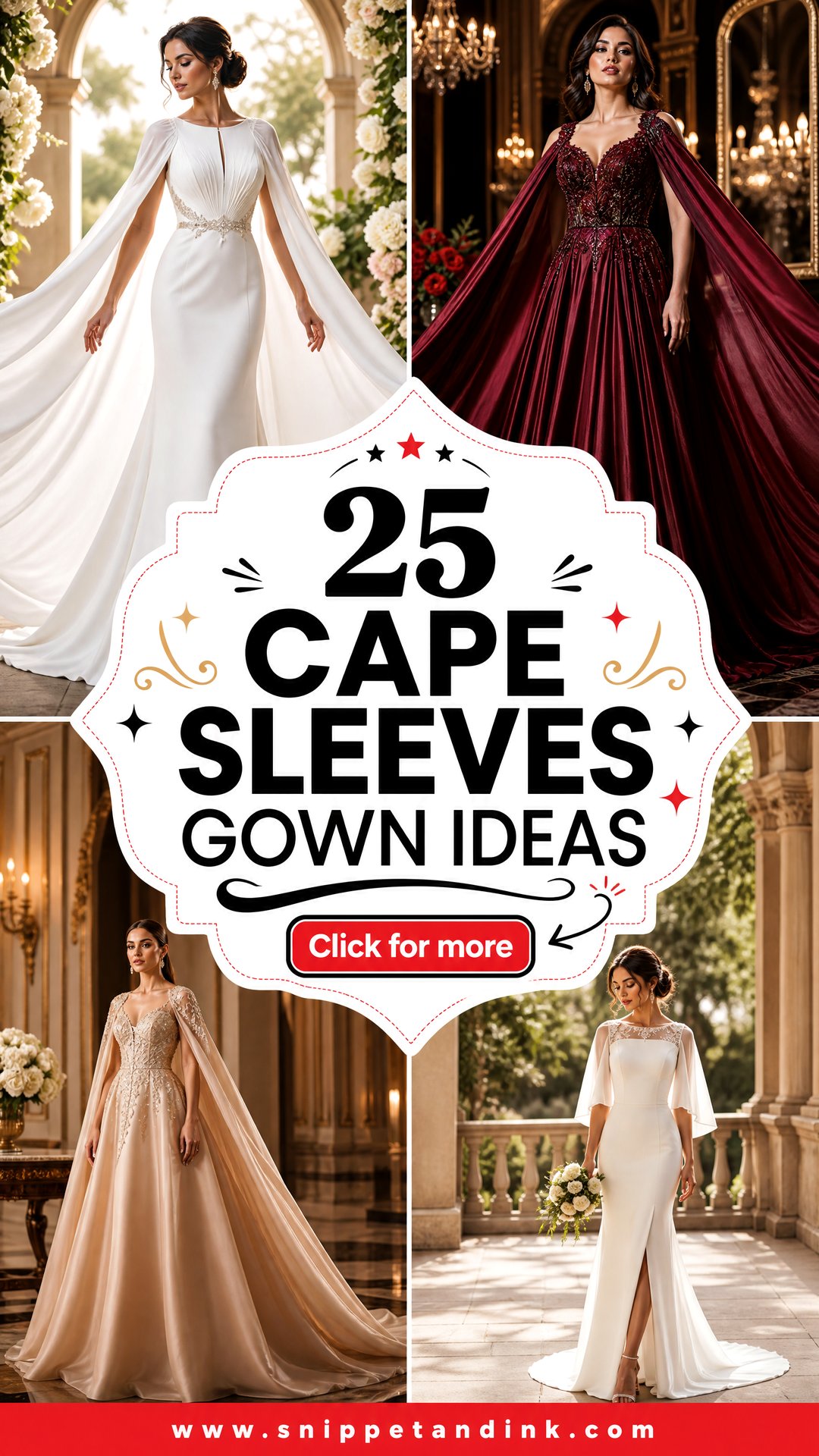
A cape sleeve is really a second, lighter garment stitched to the shoulder seam, and that is why it changes a gown so much. It moves a half beat after you do, it covers the upper arm without the tightness of a fitted sleeve, and it gives a plain column a silhouette from the back as well as the front. I reach for capes when a client wants coverage but hates the feeling of fabric gripping her arms. Below are 25 head-to-toe outfits, with the fitting and styling notes I give at appointments for each colour, fabric and body shape.
What I Test at a Fitting Before Saying Yes to a Cape
Capes look effortless on a hanger and behave very differently on a moving body. These are the checks I run with every client before we talk colour or accessories.
- Arms forward, as if hugging someone. If the bodice pulls up or the cape seam digs into the back of the arm, the attachment point is too low.
- Arms raised to shoulder height. A split cape will open at the side; decide now if you can live with that much arm showing.
- Sit down for a minute. A long cape bunches behind you on a chair, and stiff fabrics crease in a line that shows in every reception photo.
- Turn quickly. The cape should follow and settle. If it flips over the shoulder or clings to the skirt, ask about a weighted hem or a lighter fabric.
- Check the length against your height. Wrist length suits most people; floor length is a gala choice and needs someone to watch it on stairs.
I also ask whether the cape is sewn in or detachable. A detachable cape on hidden snaps or a clasp lets you wear the drama for the ceremony and lose it for dancing, and it’s much easier for a seamstress to adjust.
1. Black Cape Sleeves Gown
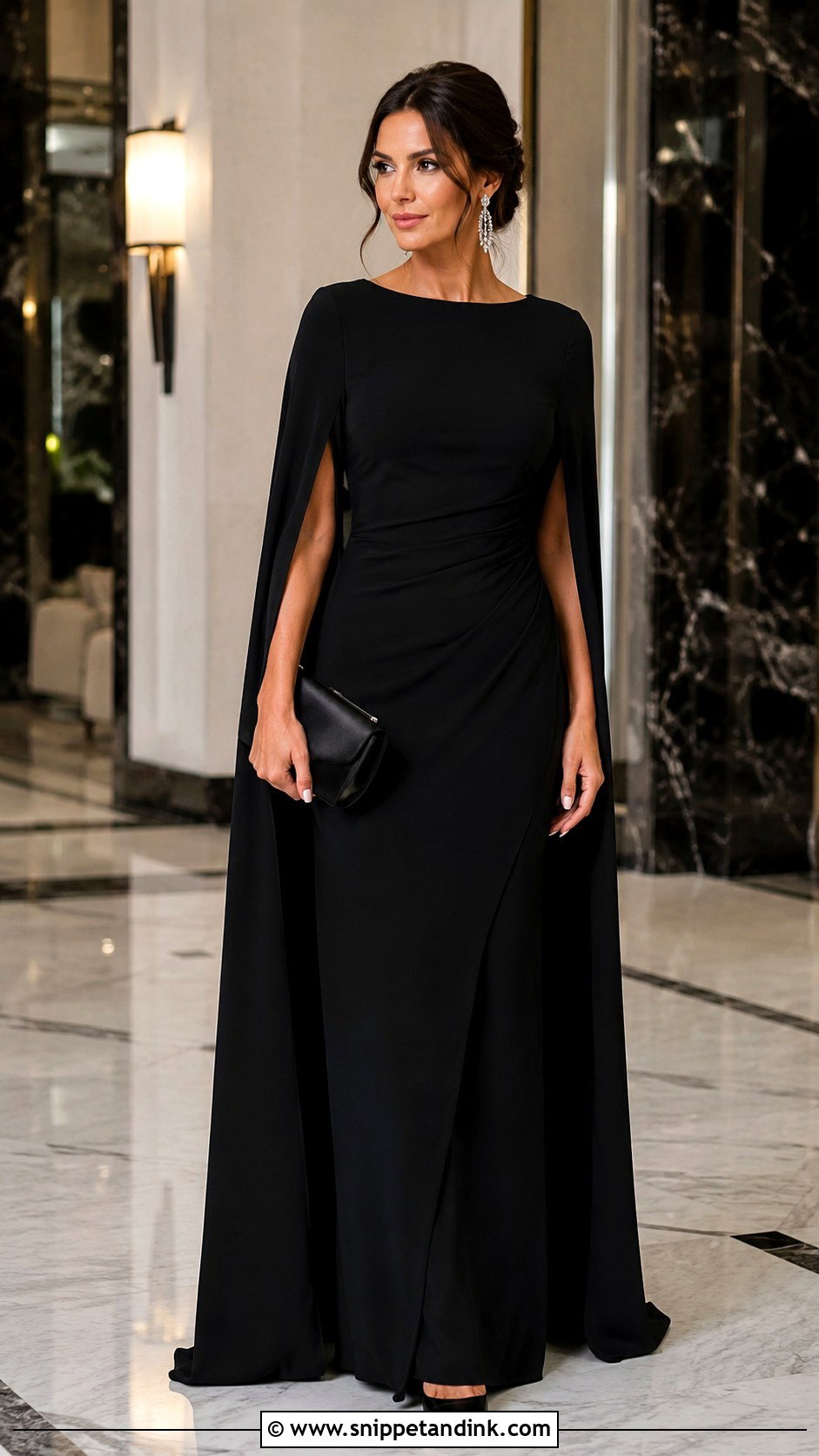
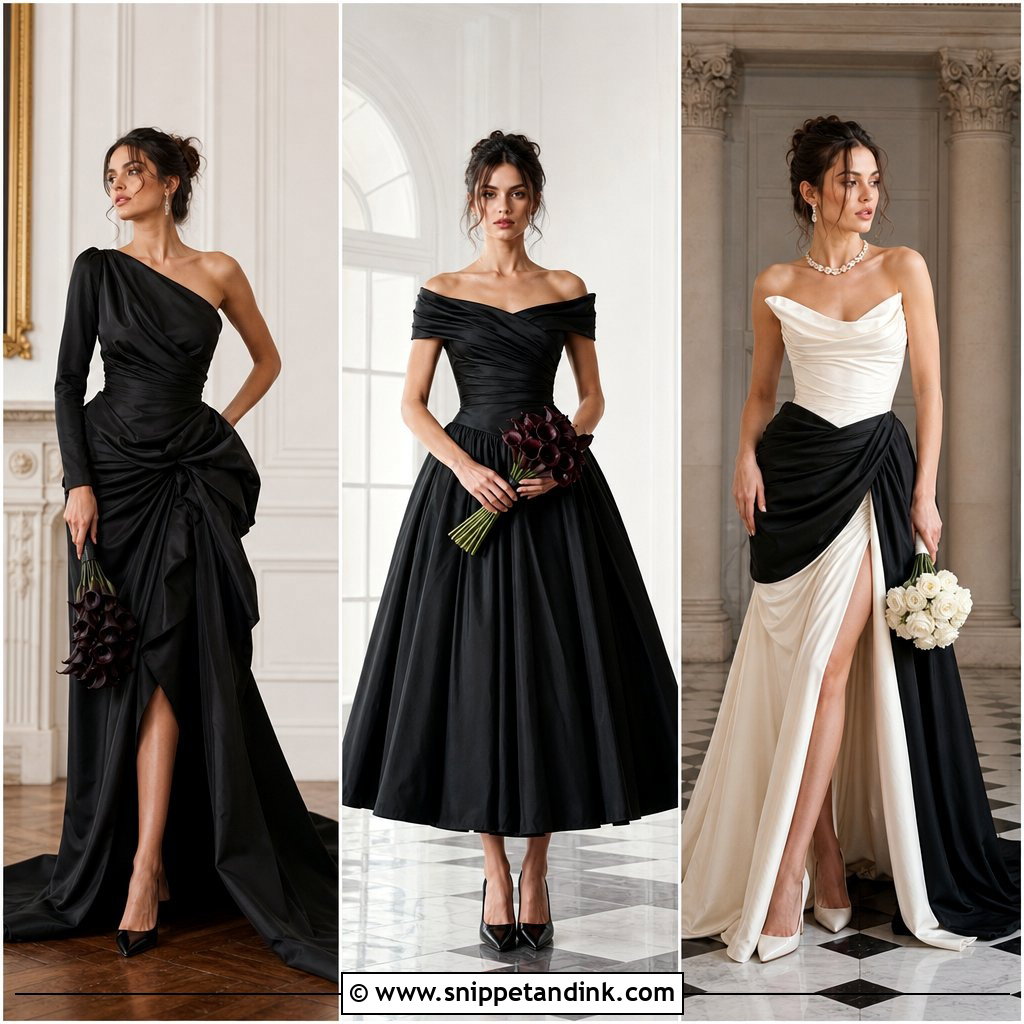
Black is where I start anyone who is nervous about a cape, because the dark colour hides the seam where the cape joins the bodice and keeps the eye on the outline. A crepe or satin column with a cape falling from the shoulder needs almost nothing added. If the neckline sits high, skip the necklace entirely and let the cape frame the face. Pointed heels, a structured clutch and one pair of crystal drops finish it for any black-tie reception.
2. White Cape Sleeves Gown
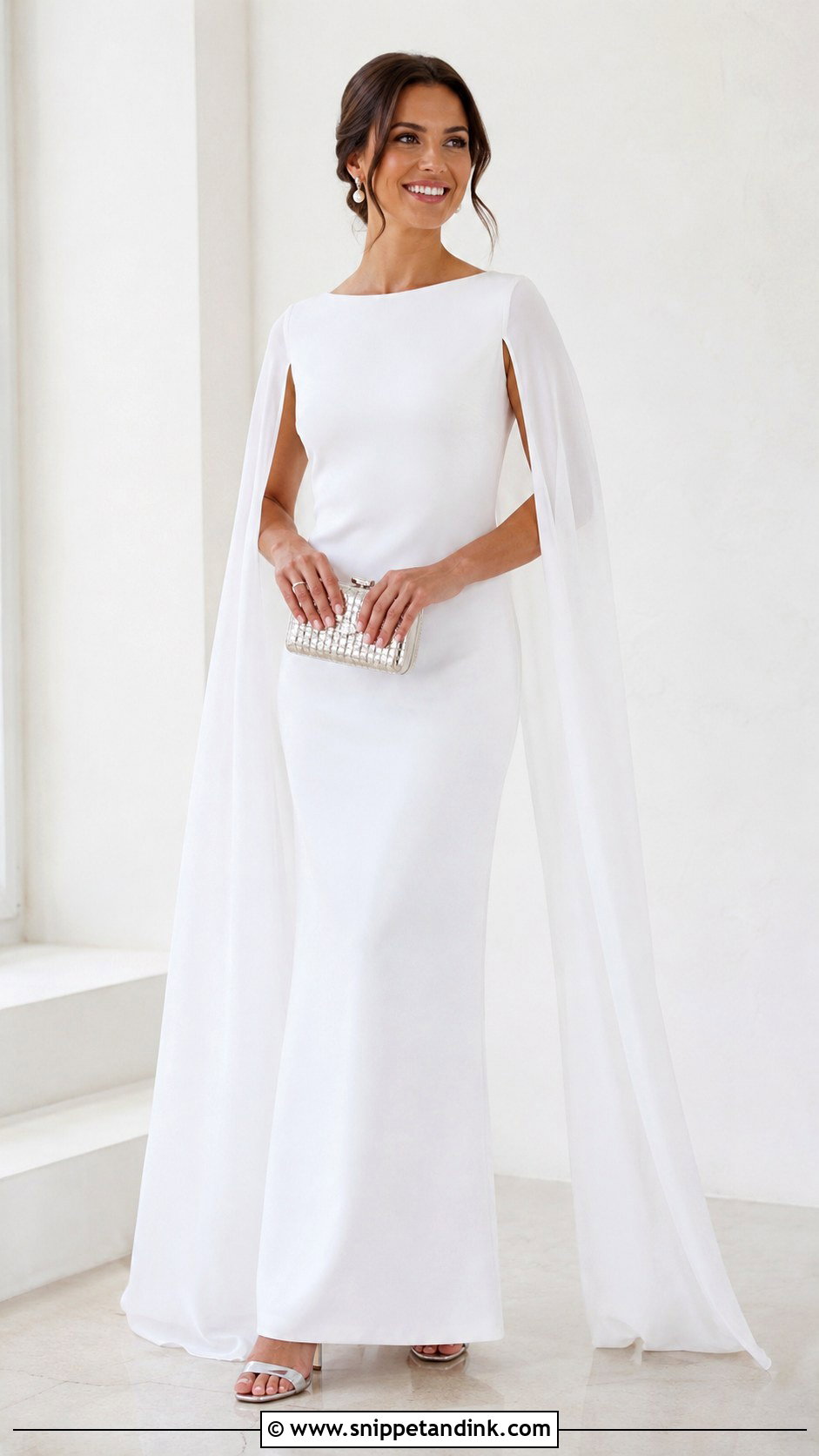
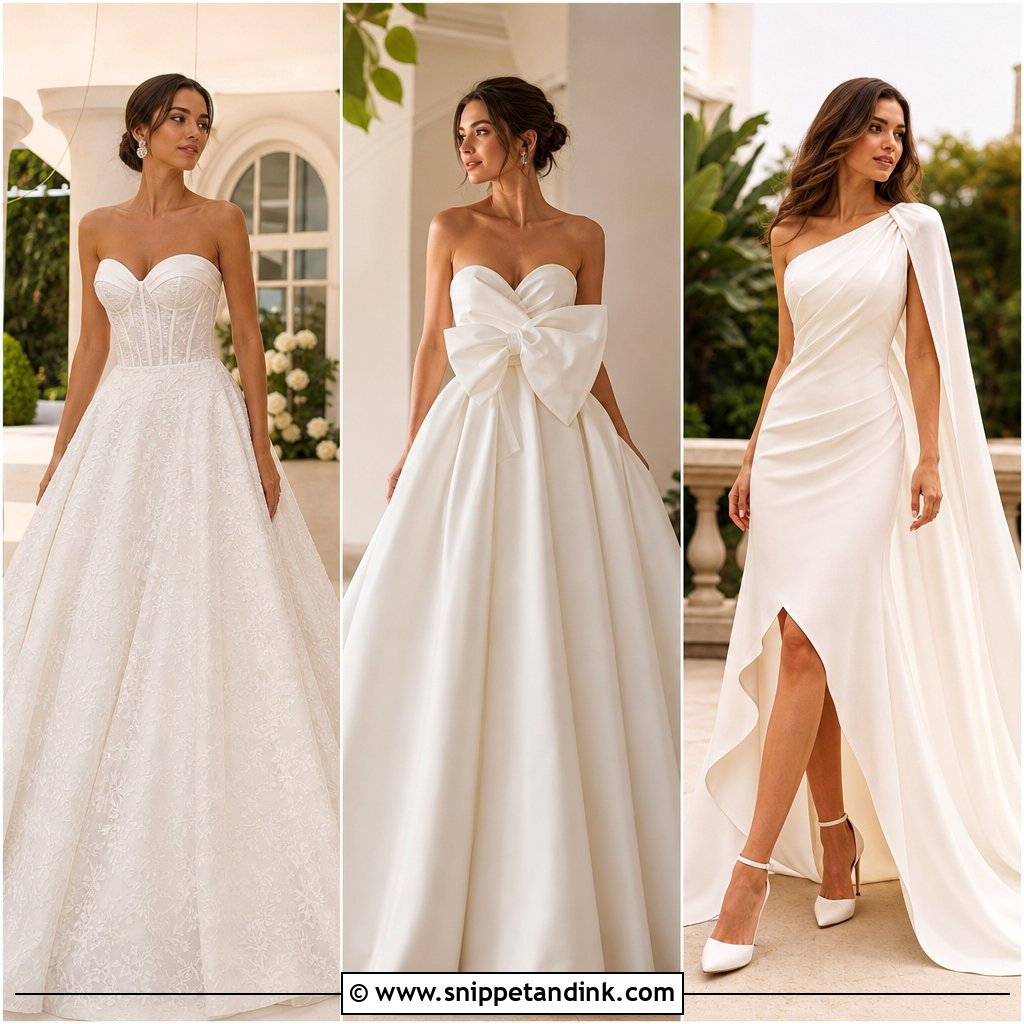
White shows everything, so fabric quality matters more here than in any other colour on this list. Cheap polyester chiffon turns slightly blue under flash, while silk-blend chiffon or a good crepe stays warm. I pair a white cape with a fitted waist or gentle A-line so the floating sleeve has something structured to contrast with. Silver heels, pearl studs and a small metallic clutch are enough; add a crystal bracelet only if the gown itself is completely plain.
3. Red Cape Sleeves Gown
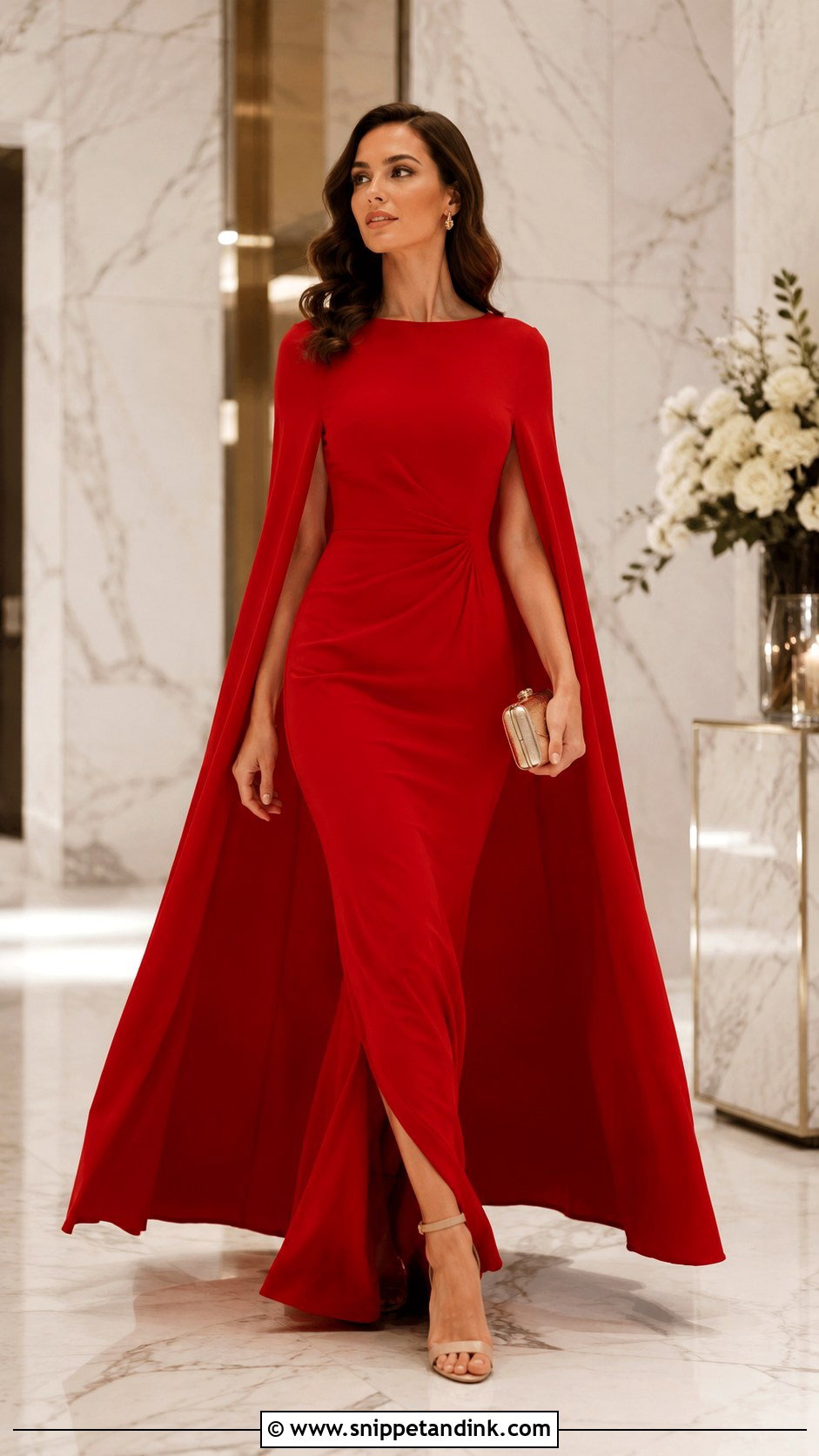
Red does the talking, so the cut should be quiet: a sheath, a slim mermaid or a soft flare. I prefer the cape in chiffon or georgette with red, because a heavy satin cape on top of a saturated colour starts to feel like a costume. Nude or gold sandals keep the line long. One statement piece is the limit, and for gala dinners I usually make that piece the earrings, since a cape covers most of where a bracelet would show.
4. Navy Cape Sleeves Gown
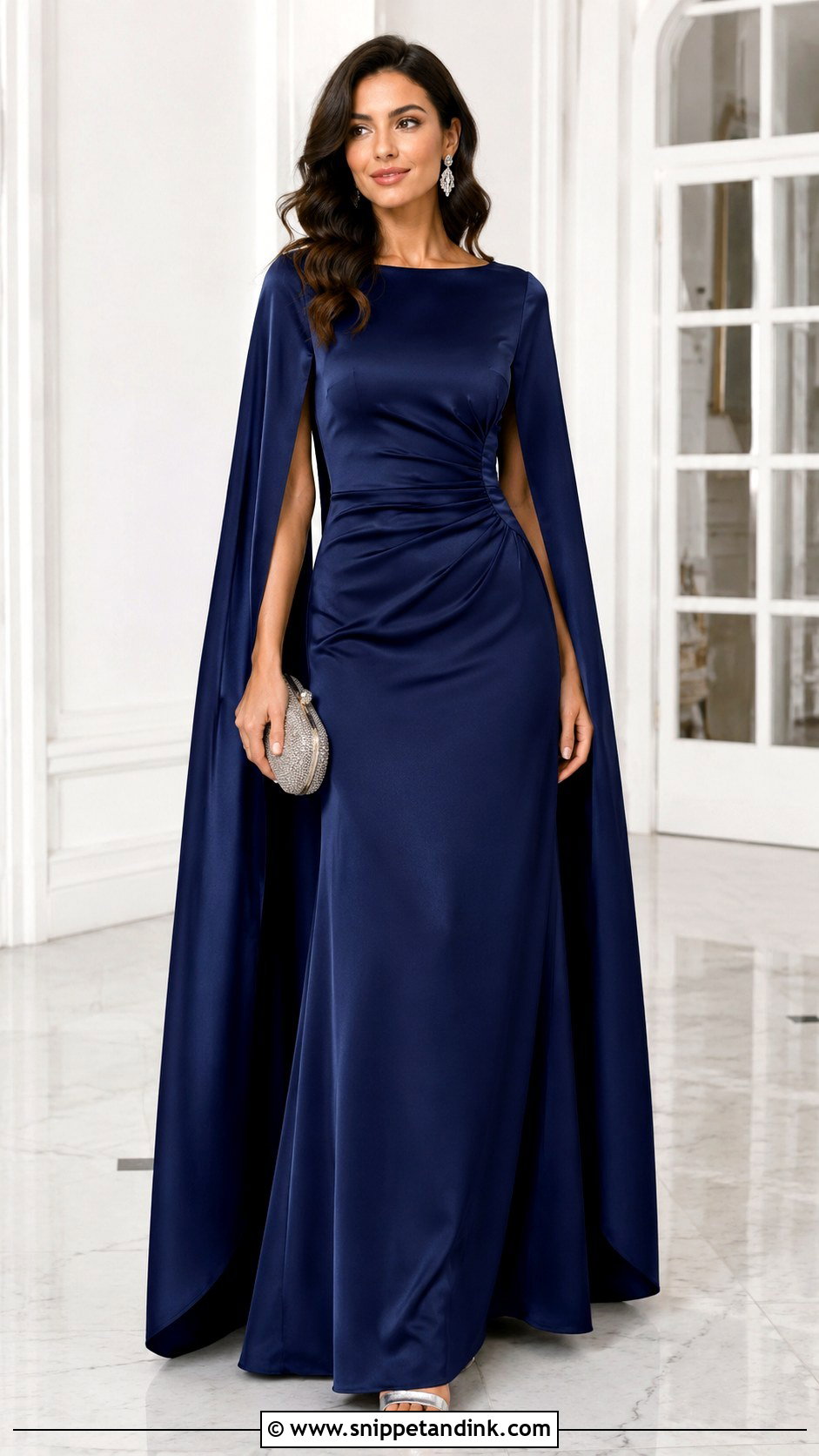
Navy is my quiet recommendation for anyone who finds black too severe against her skin. It reads almost black by candlelight but softens in daylight photos, and it looks particularly rich in satin and velvet. Because a cape adds no weight at the waist, navy stretch jersey versions stay comfortable for a five-hour evening. Silver heels or champagne sandals, a crystal clutch and a slim bracelet balance it.
5. Emerald Green Cape Sleeves Gown
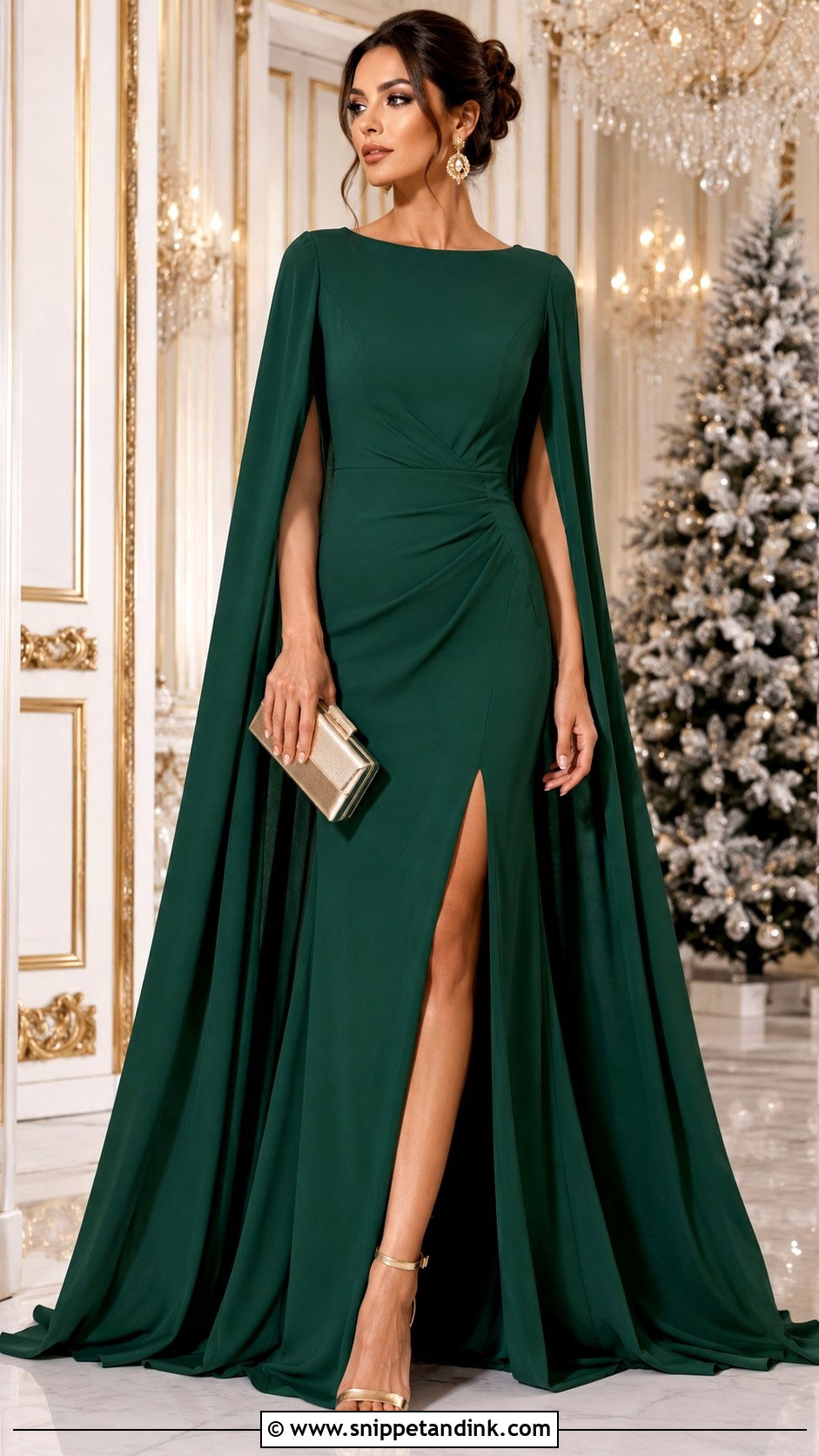
Emerald is a jewel tone that photographs deeper than it looks in the fitting room mirror, so I always check it under warm light before a client commits. A fitted bodice with a flowing skirt carries the colour well, and so does a sleek column with soft cape panels. Gold heels and a metallic clutch warm it up. Keep makeup polished rather than busy and the green stays the point of the outfit at a winter gala or evening reception.
6. Blush Pink Cape Sleeves Gown
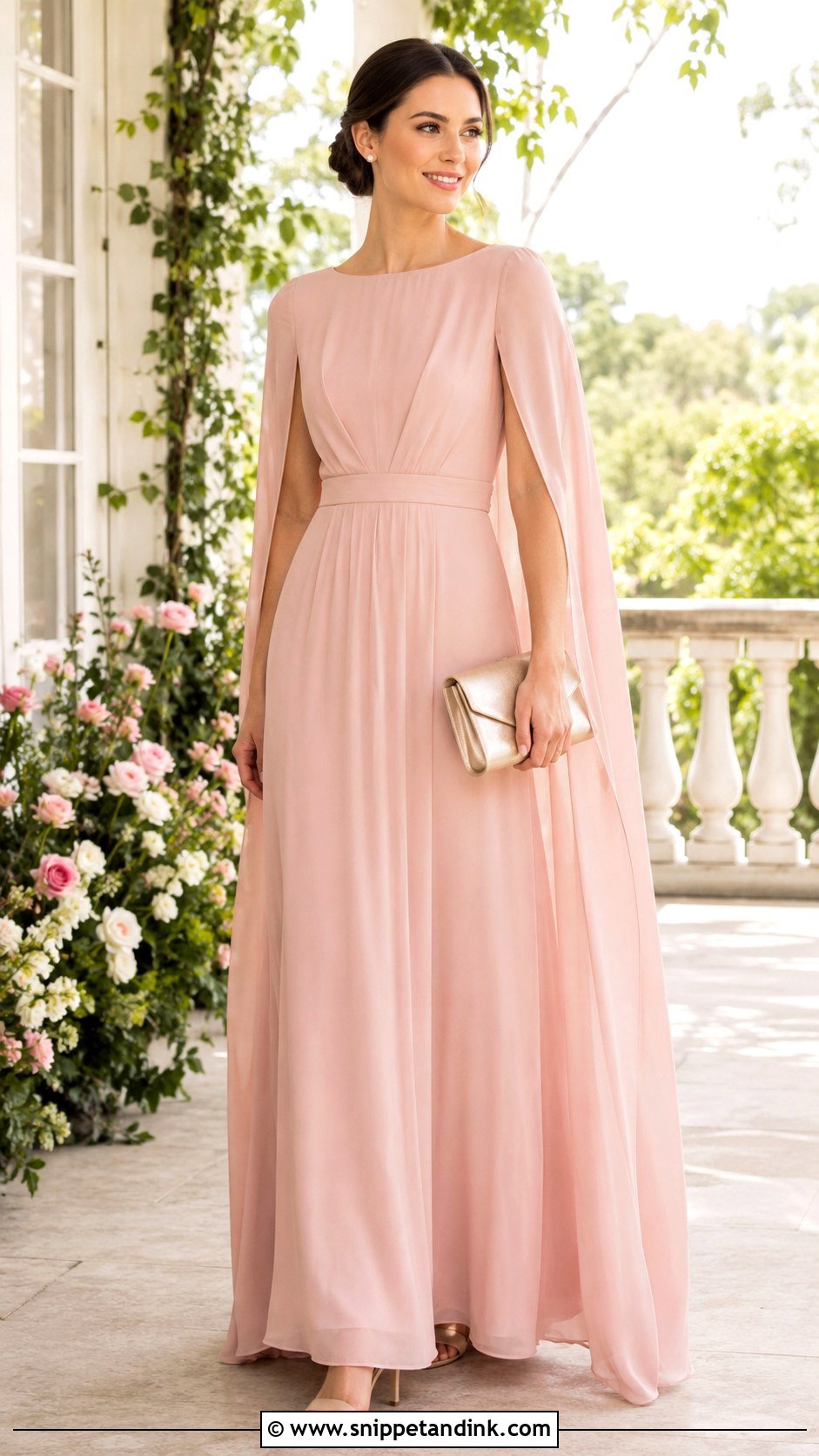
Blush can tip into sugary very quickly, and the cape is what decides it. A fluid chiffon or tulle cape over a clean neckline keeps it grown-up; add a big bow or heavy sparkle and it starts reading like a bridesmaid from another decade. I check blush against the wearer’s skin first, since some shades wash fair skin out completely. Nude heels, pearl studs and rose gold jewelry suit it for spring events, engagement parties and daytime receptions.
7. Champagne Cape Sleeves Gown
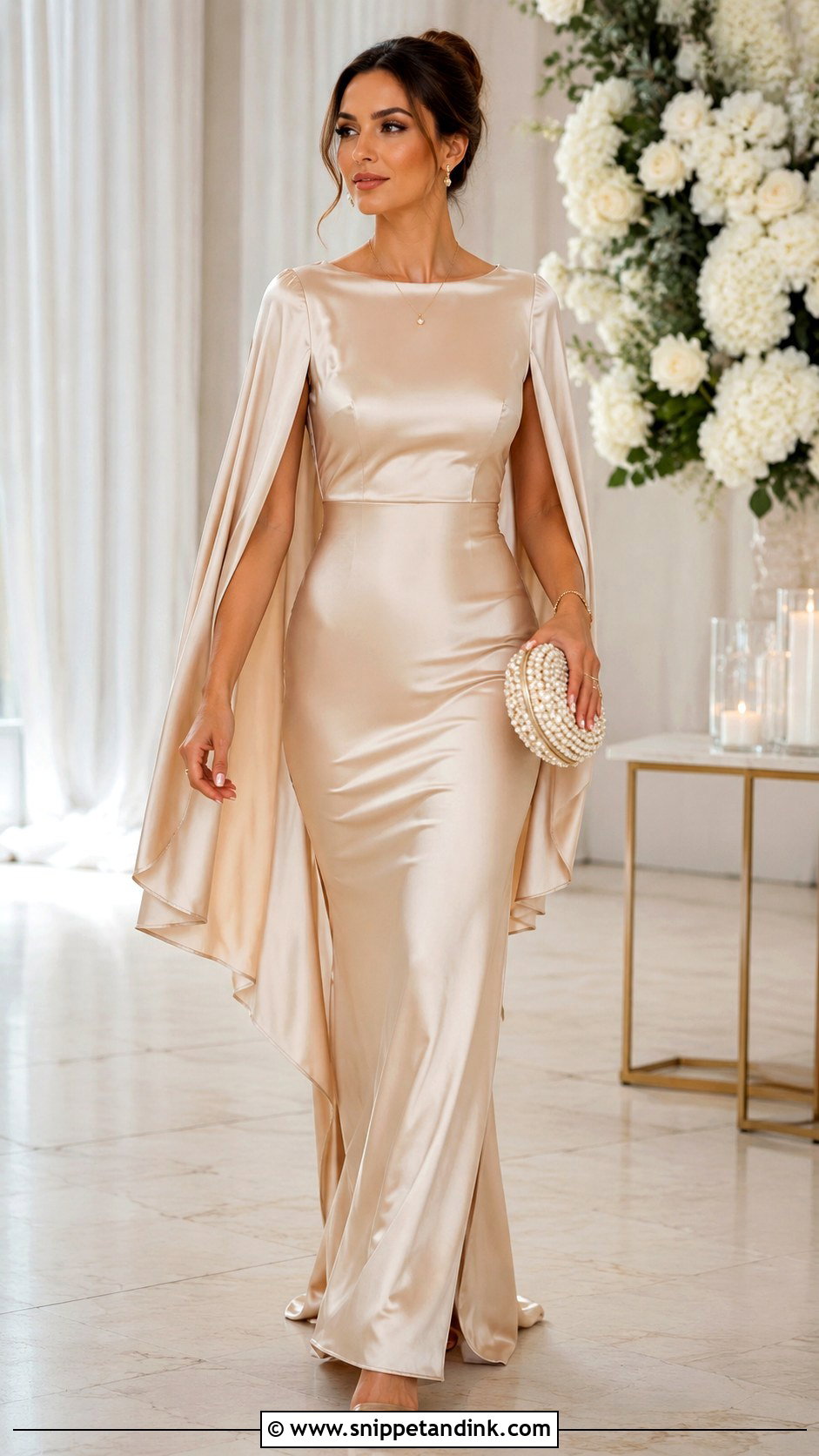
Champagne relies on sheen rather than colour, so the fabric choice is everything. Satin, silk blends and beaded mesh give it depth, whereas a flat matte champagne can look beige on camera. I keep the cape light so it floats while the gown stays sleek. If the dress already shimmers, choose simple earrings; if it’s plain satin, a crystal hair clip adds the one bit of light it needs for a formal banquet or evening reception.
8. Silver Cape Sleeves Gown
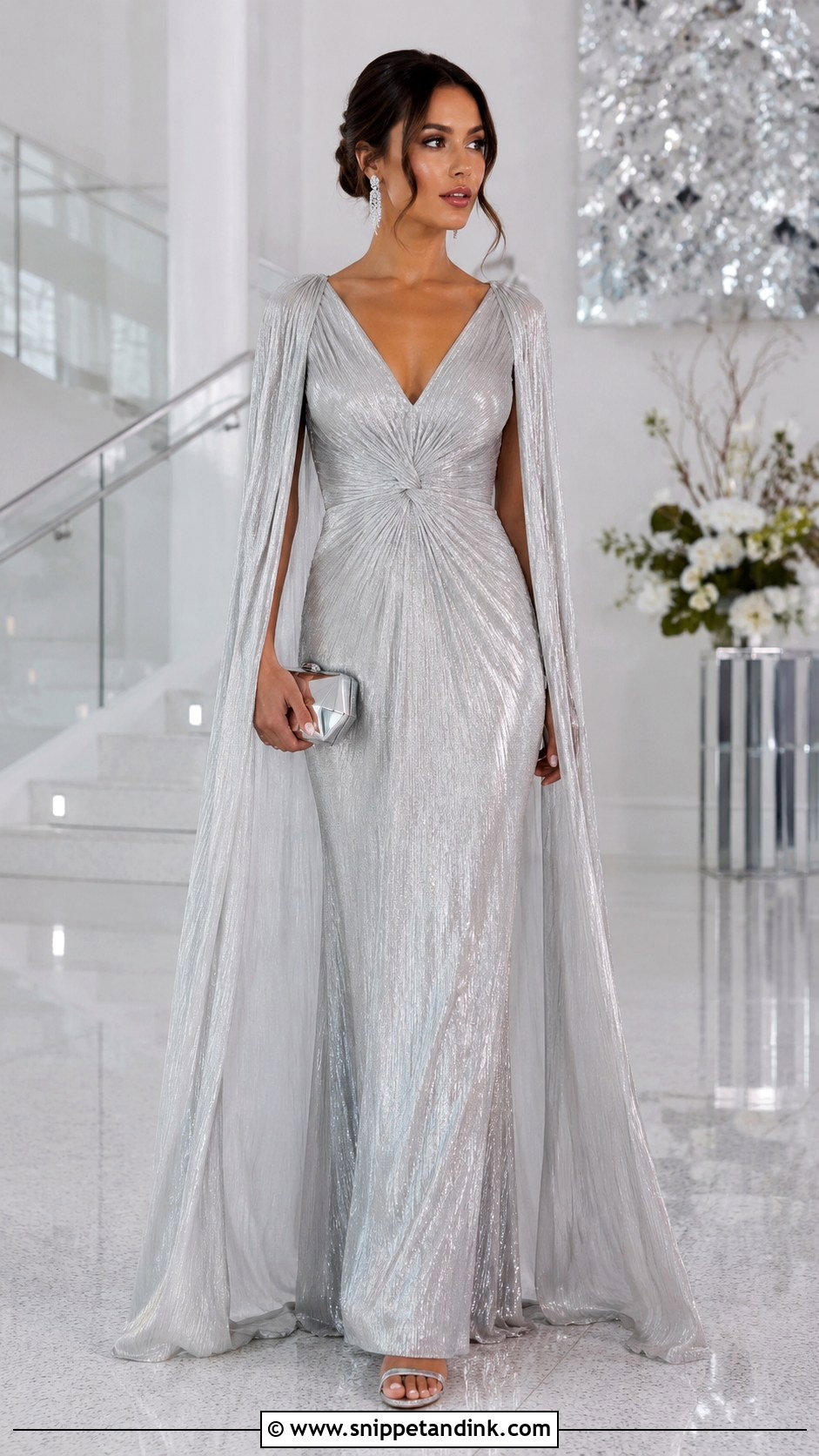
Silver is the colour where a cape earns its keep. On a fitted metallic gown alone, every movement shows as a hard reflection; the cape breaks that up into softer folds as you walk. Choose metallic satin for polish, sequins for full glamour, or grey-silver chiffon if you want it subtler. Sleek or softly waved hair and clear crystal earrings keep the mood cool and modern for galas and ballroom evenings.
9. Gold Cape Sleeves Gown
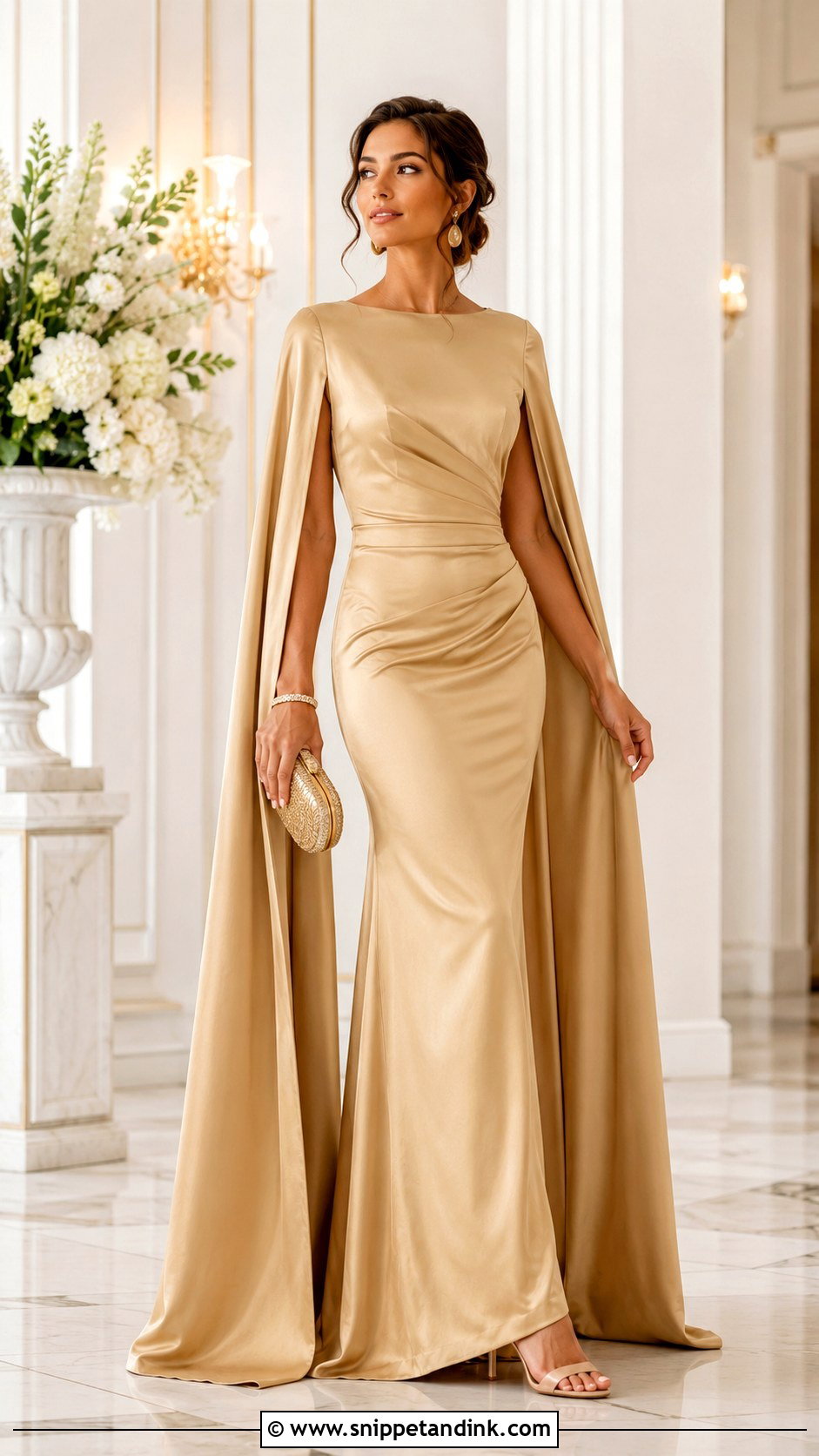
Gold needs the right tone more than the right cut. Antique gold sits close to skin and reads refined; bright yellow gold is louder and harder to wear in daylight. In satin, lamé or embellished mesh, I’d pair it with nude heels or gold sandals and a compact clutch, then stop. Small hoops or a slim bracelet are plenty, because a gold cape already throws light onto the face and collarbone.
10. Burgundy Cape Sleeves Gown
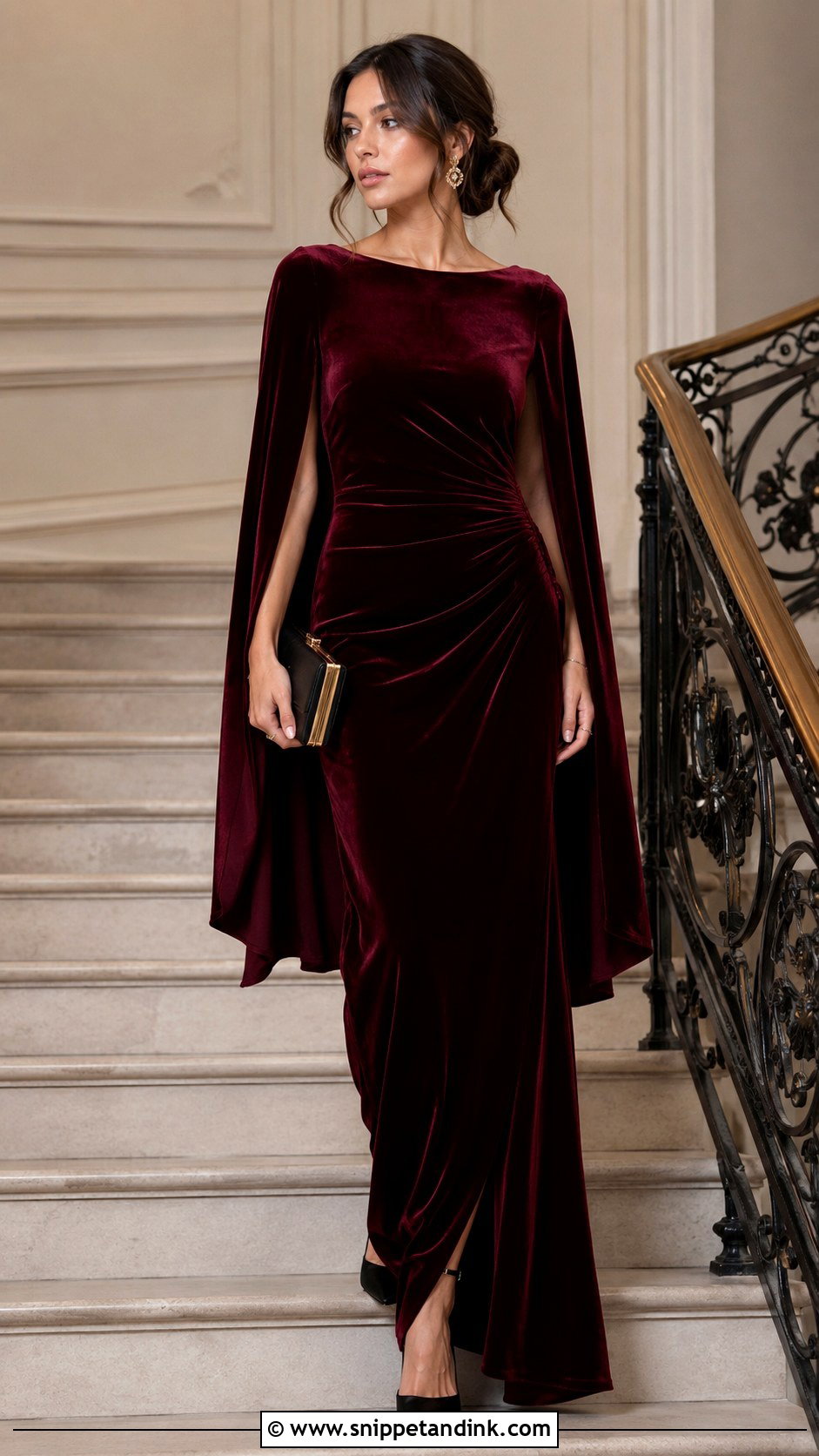
Burgundy is the deep red I suggest to people who love red but don’t want it to dominate the room. Velvet makes it plush, crepe keeps it sleek and chiffon gives it movement. Gold earrings warm it, silver cools it, and black or nude heels both work. The cape gives graceful coverage that suits autumn and winter weddings, especially in venues that get cold after dark.
11. Royal Blue Cape Sleeves Gown
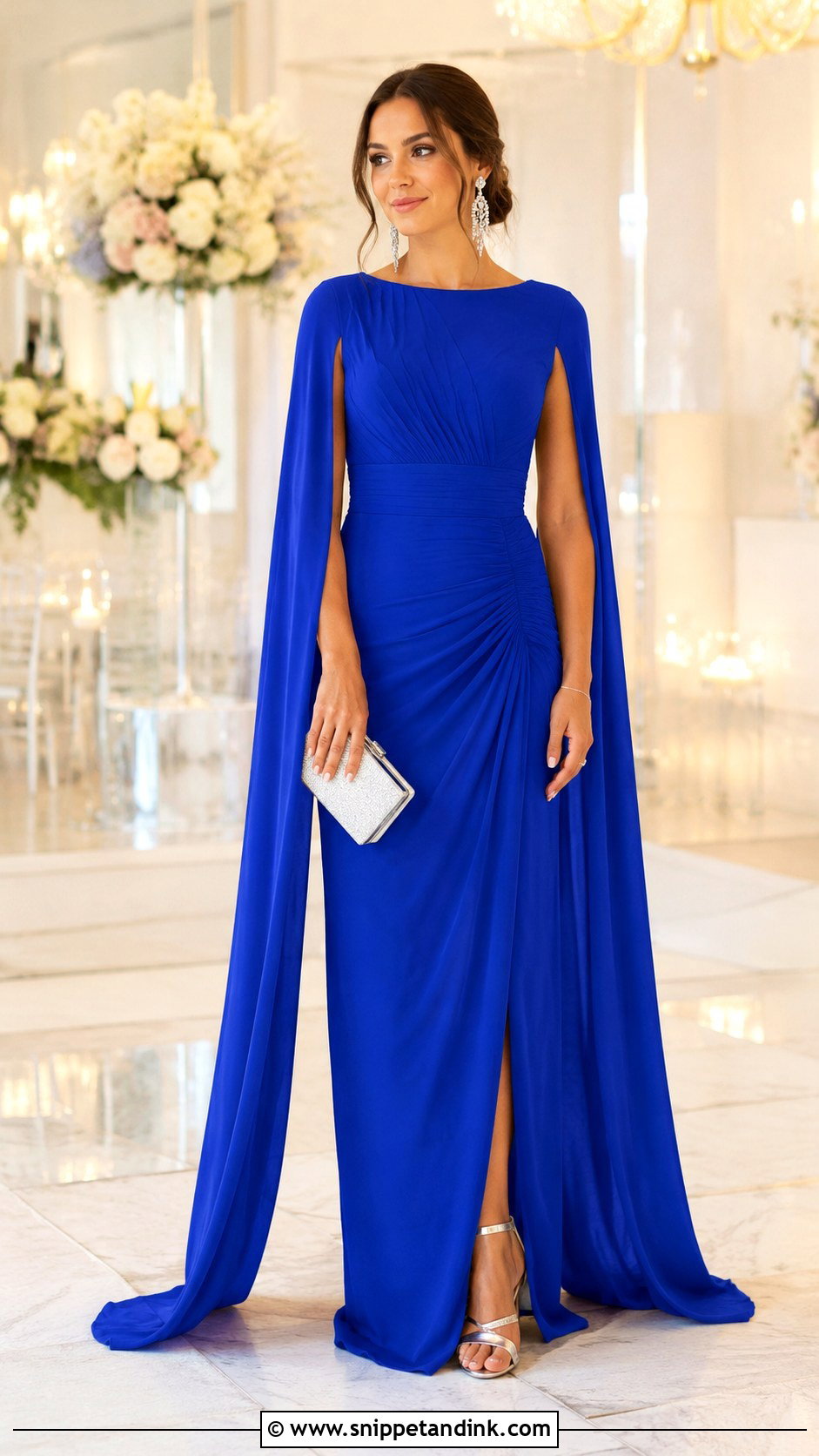
Royal blue is bright enough that I treat it like a print: one bold element, then calm everything else. A fitted waist with a flowing skirt or a sleek column keeps it balanced. Silver heels and crystal earrings are classic; champagne accessories warm it if blue tends to drain your skin. Because the cape covers the arms, you won’t need a wrap over it, which is useful at evening receptions and cultural celebrations where coverage is expected.
12. Purple Cape Sleeves Gown
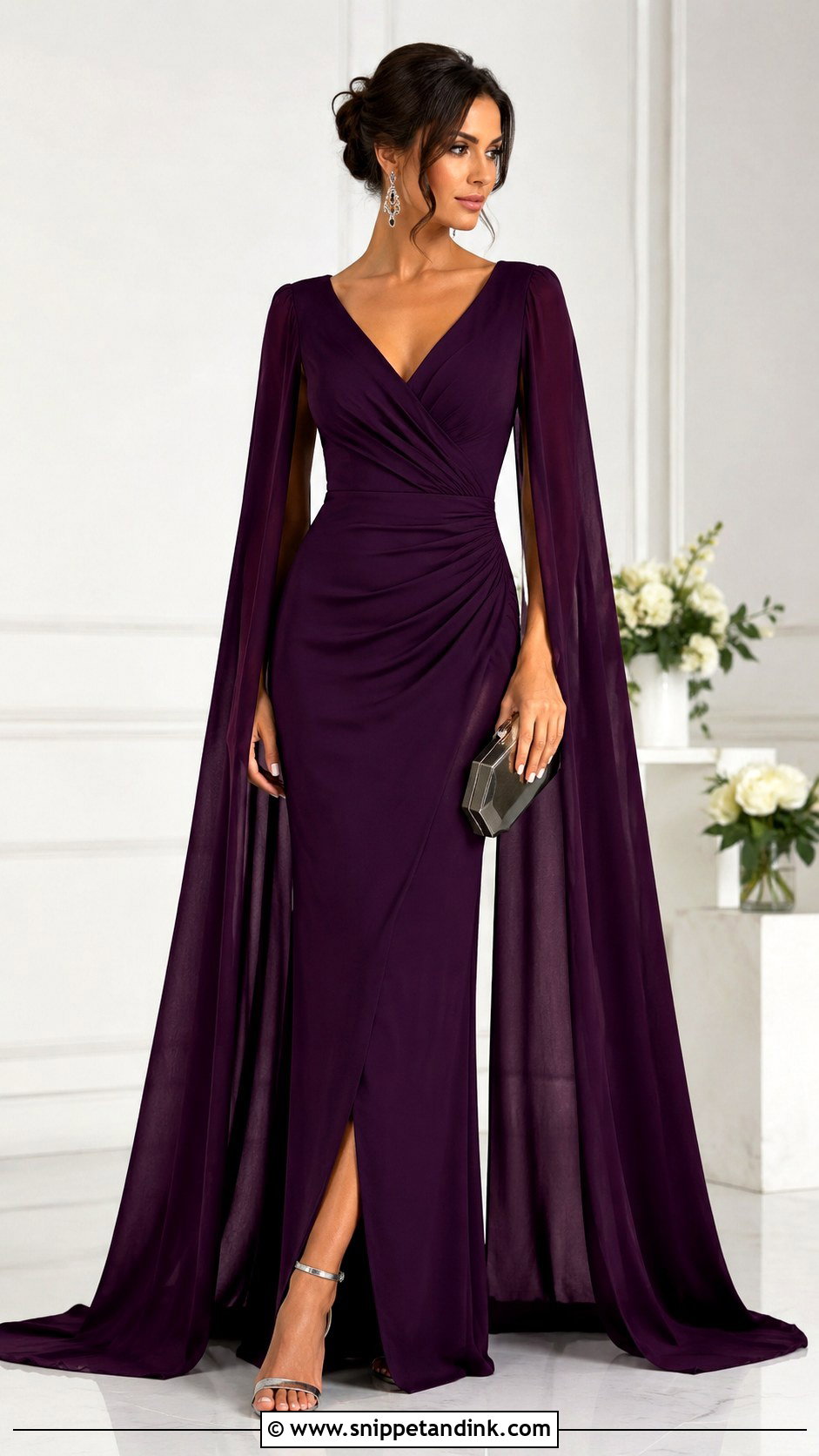
Purple changes personality completely by shade. Plum is dramatic, lavender soft, violet bold. Whatever the shade, the cape has to be in a fabric with real drape, because a stiff purple cape sticks out from the shoulders in a way that’s hard to unsee. Silver or gunmetal suits deep purple; nude and pearl suit the pale ones. Don’t add a second strong colour, since purple already holds the room.
13. Satin Cape Sleeves Gown
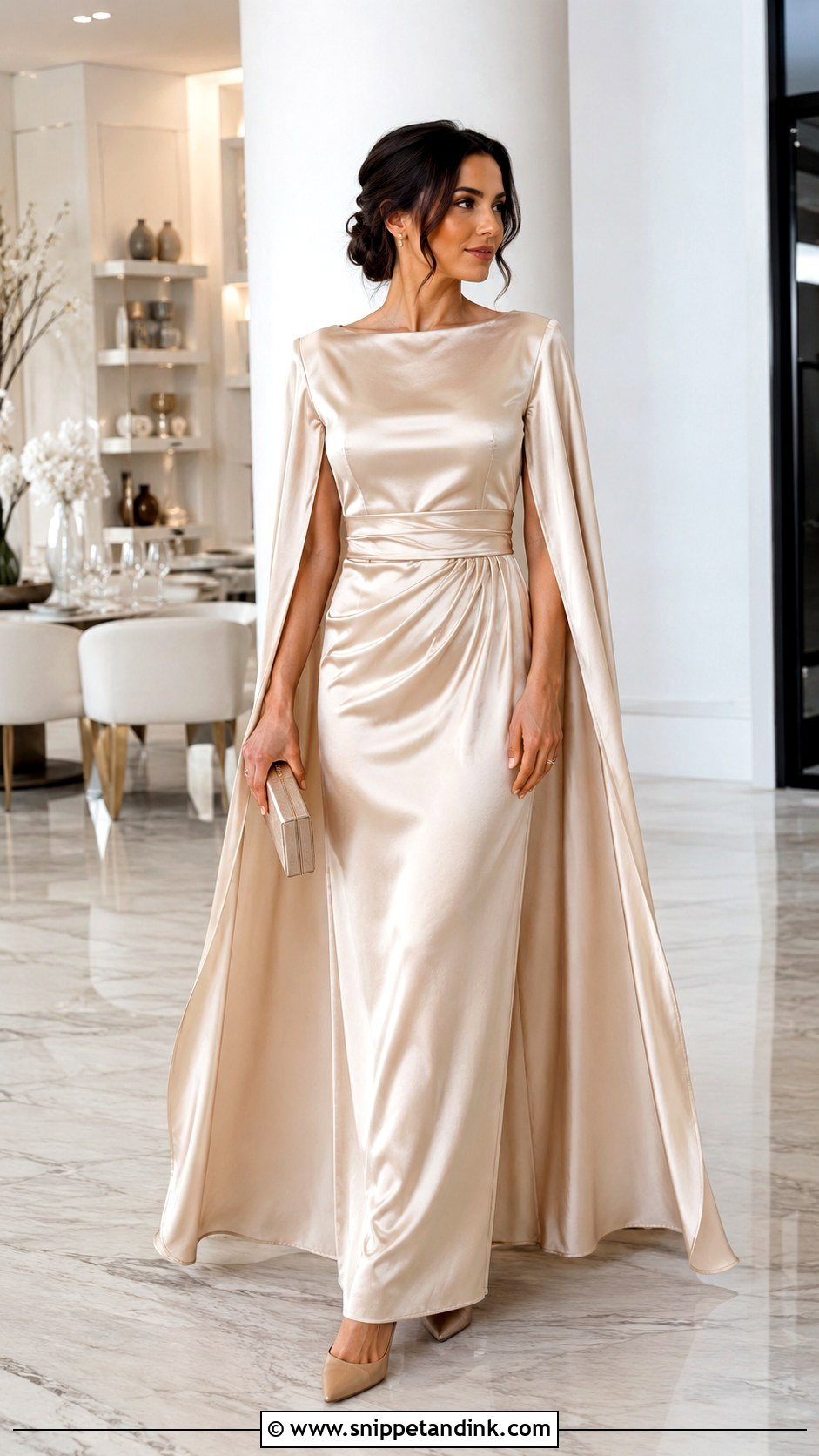
Satin catches light on every curve and every crease, which is its appeal and its risk. I steer satin clients to a simple silhouette with a defined waist, because a detailed satin gown can look busy under flash. The fabric also reveals underwear lines more than anything else on this list, so smooth, seam-free underwear are a fitting-day requirement, not an afterthought. Pointed heels, a structured clutch and minimal jewelry keep it sleek.
14. Chiffon Cape Sleeves Gown
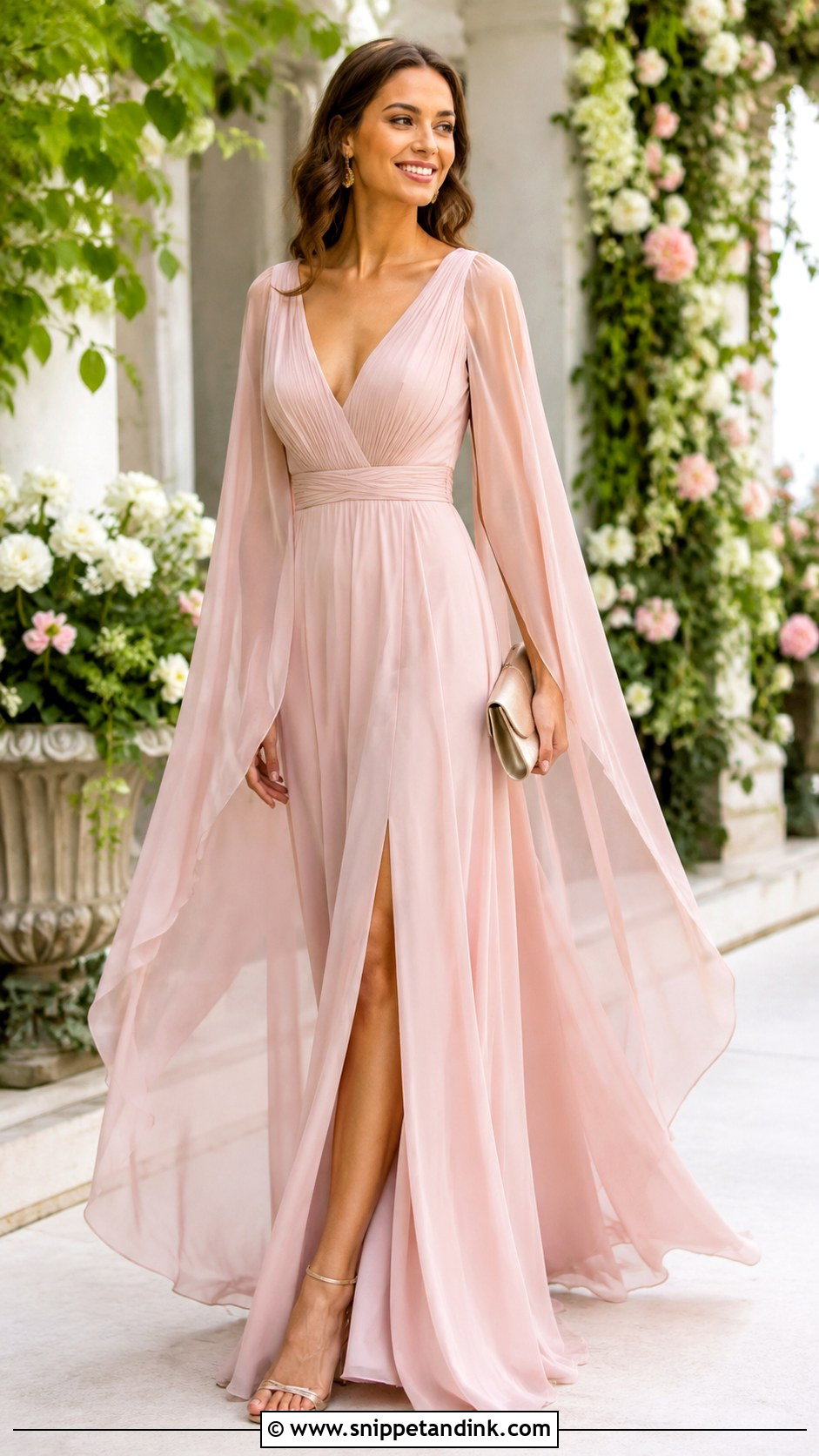
Chiffon is what I recommend for long outdoor days and warm venues. It breathes, it’s light on the shoulders, and the cape moves even when you’re barely walking. The one condition is a proper lining under the bodice and skirt, since unlined chiffon goes see-through in afternoon sun. Pastel chiffon reads romantic, darker shades more formal, and a satin clutch with delicate heels suits either.
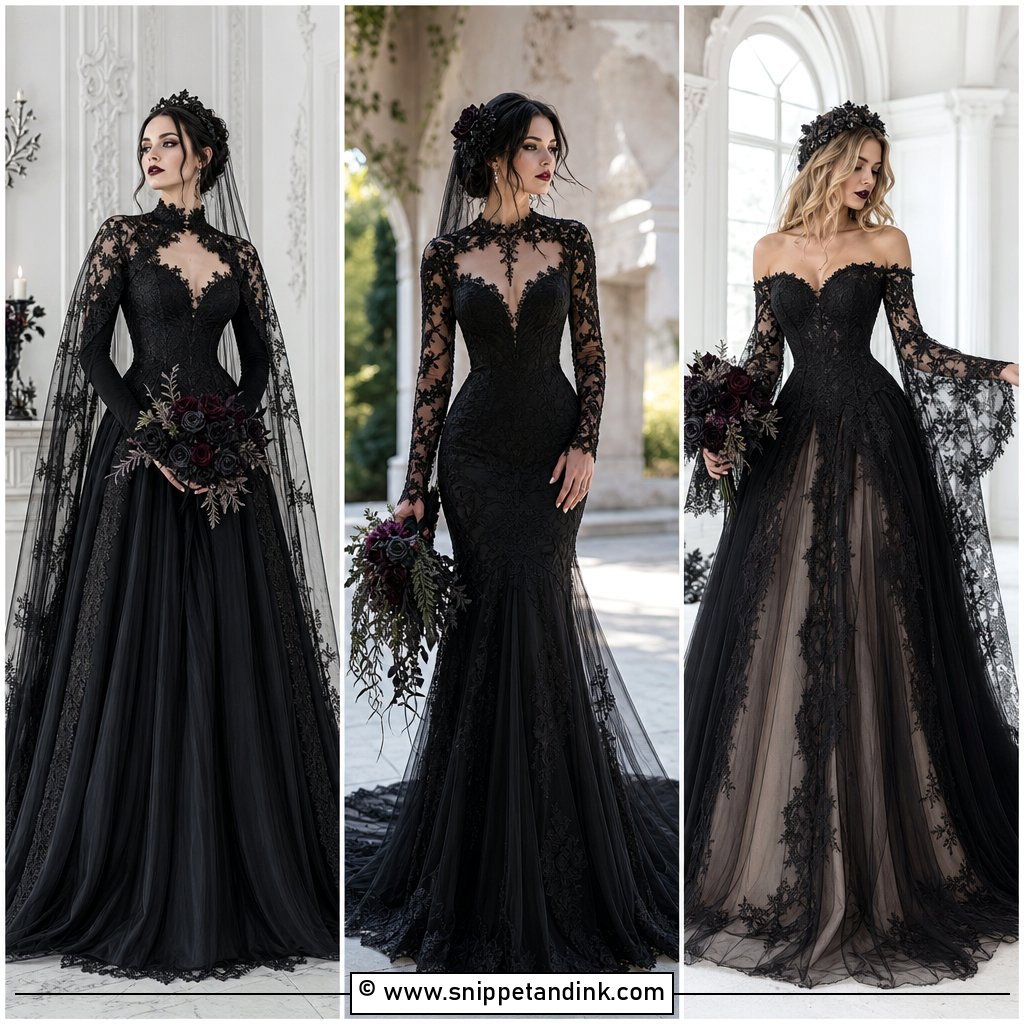
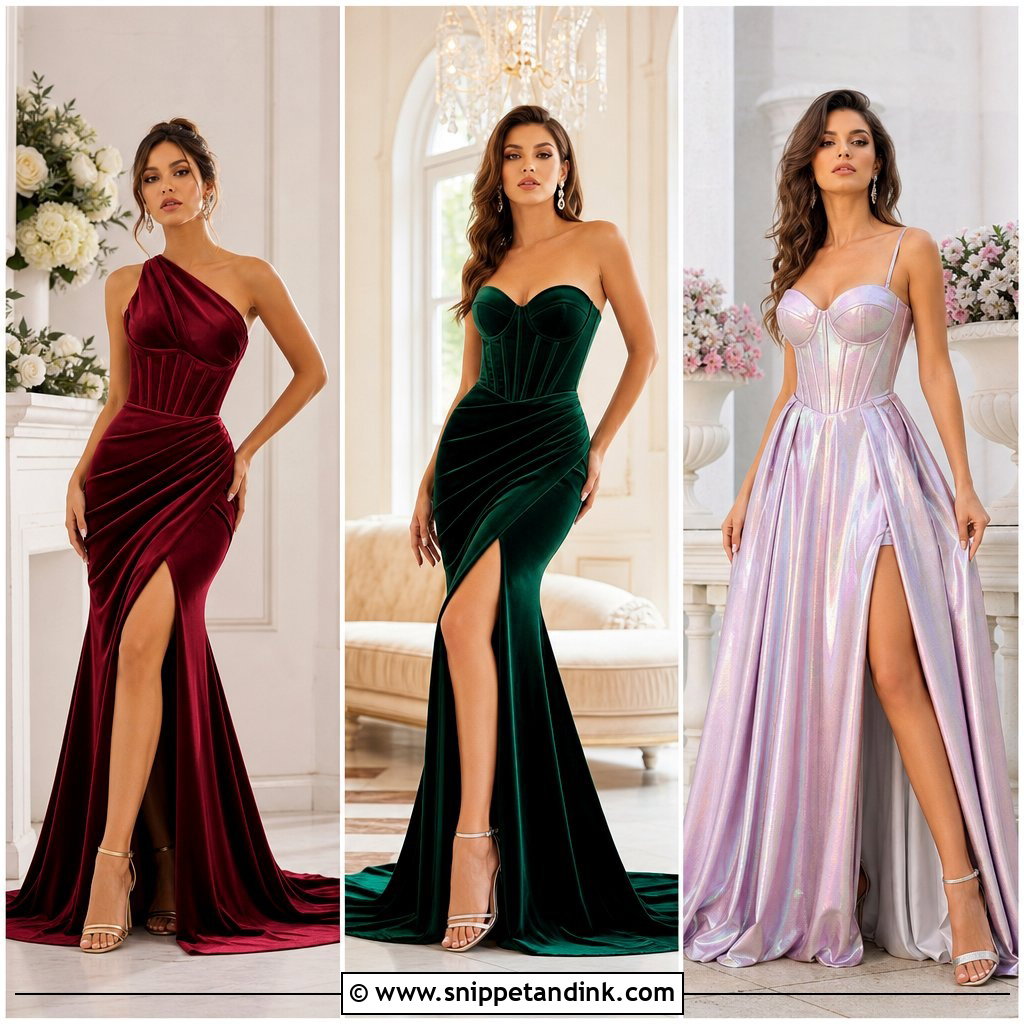
15. Velvet Cape Sleeves Gown
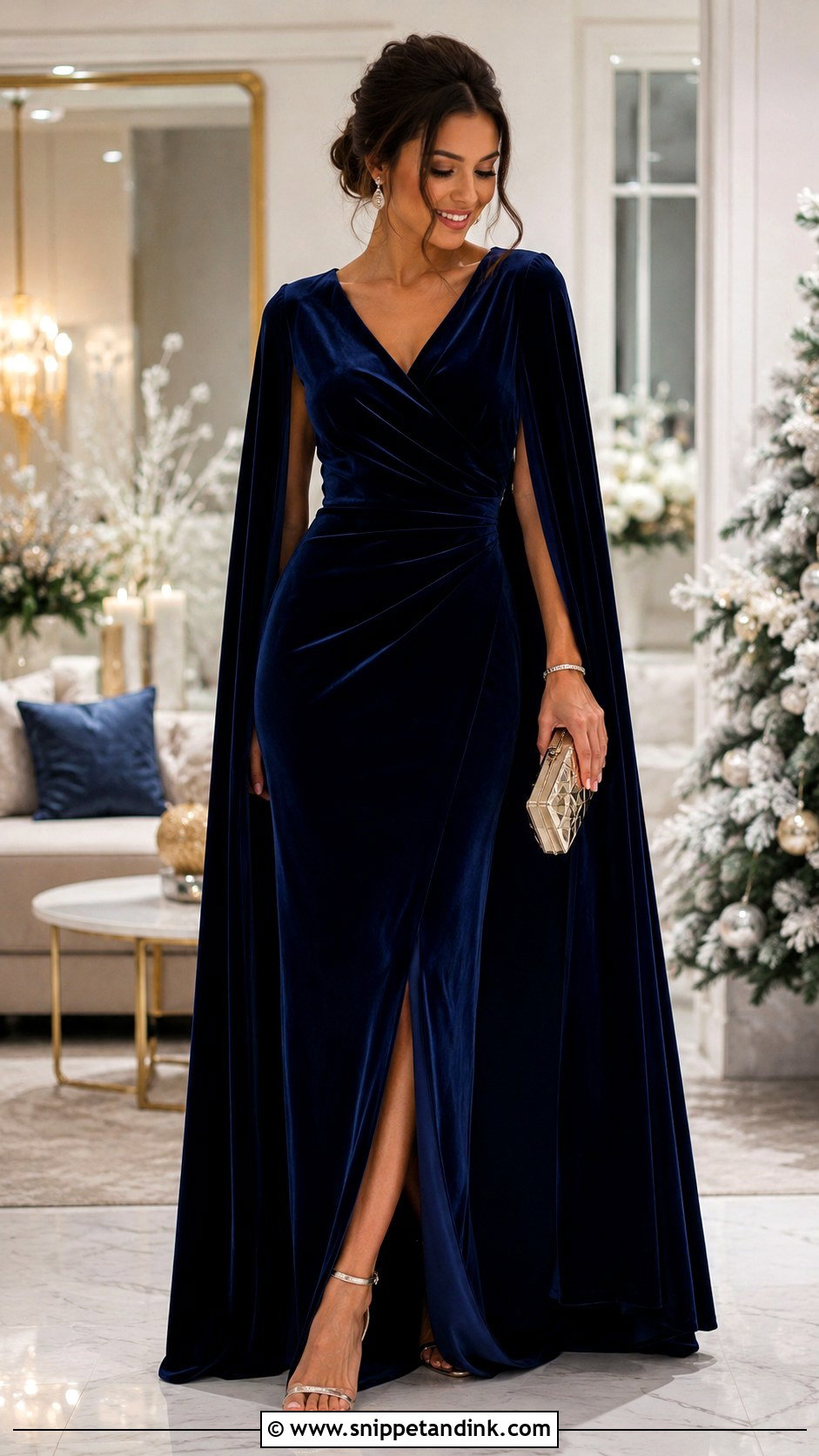
Velvet is heavy, and that weight hangs from the shoulder seam all evening, so I check how a velvet cape sits after the client has worn it for ten minutes rather than the first second. Deep shades suit it best: black, navy, emerald, burgundy, plum. The pile already has its own glow, so go easy on sparkle. It’s my first suggestion for cold-season galas and indoor evening banquets.
16. Lace Cape Sleeves Gown
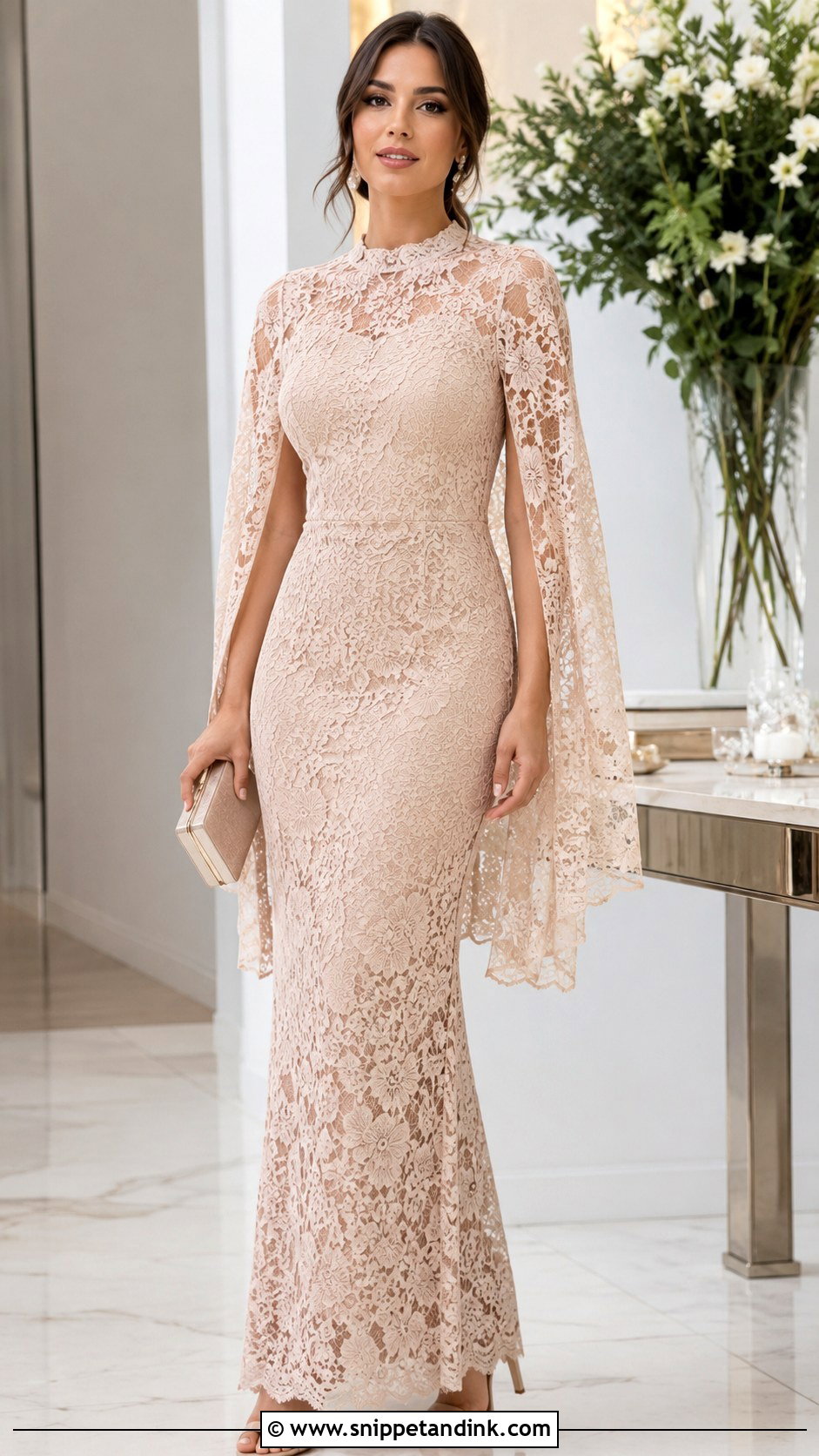
With lace, what sits underneath matters as much as the lace itself. A nude lining makes it skin-close and modern, ivory makes it bridal, black makes it formal and graphic. Look at the cape edge closely: a scalloped lace finish falls cleanly, while a cut edge can fray and catch on bracelets. Keep accessories light because the lace already carries the texture.
17. Sequin Cape Sleeves Gown
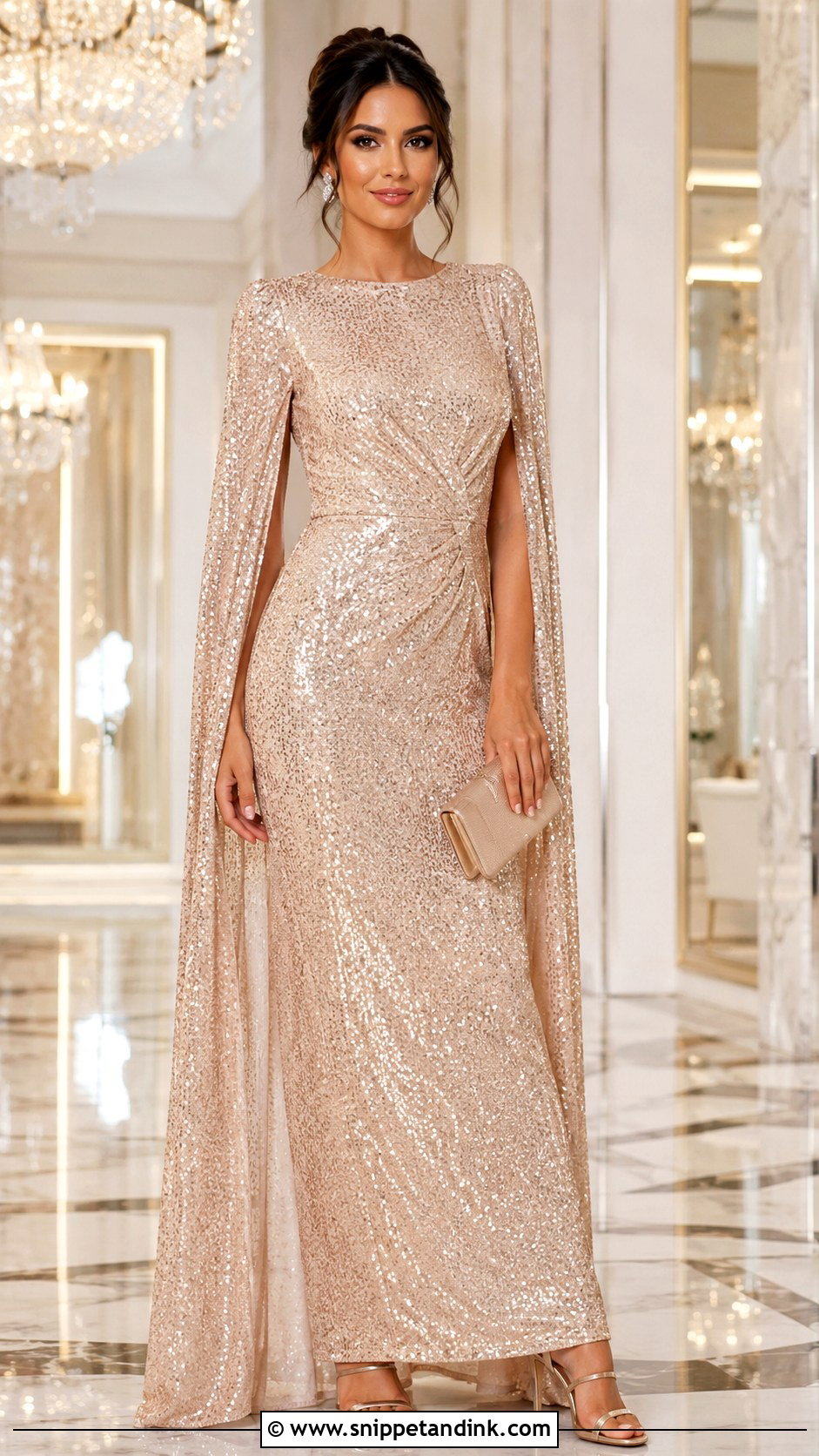
A sequin cape sleeves gown needs restraint everywhere else. I keep the shape sleek so the sequins and the cape aren’t fighting, and I check the inside seams, because sequinned capes can scratch the inner arm over a long night. Black, silver, champagne, navy and emerald are the easiest sequin colours to wear. Plain metallic heels, a plain clutch and small earrings; no necklace if the neckline is embellished.
18. Mermaid Cape Sleeves Gown
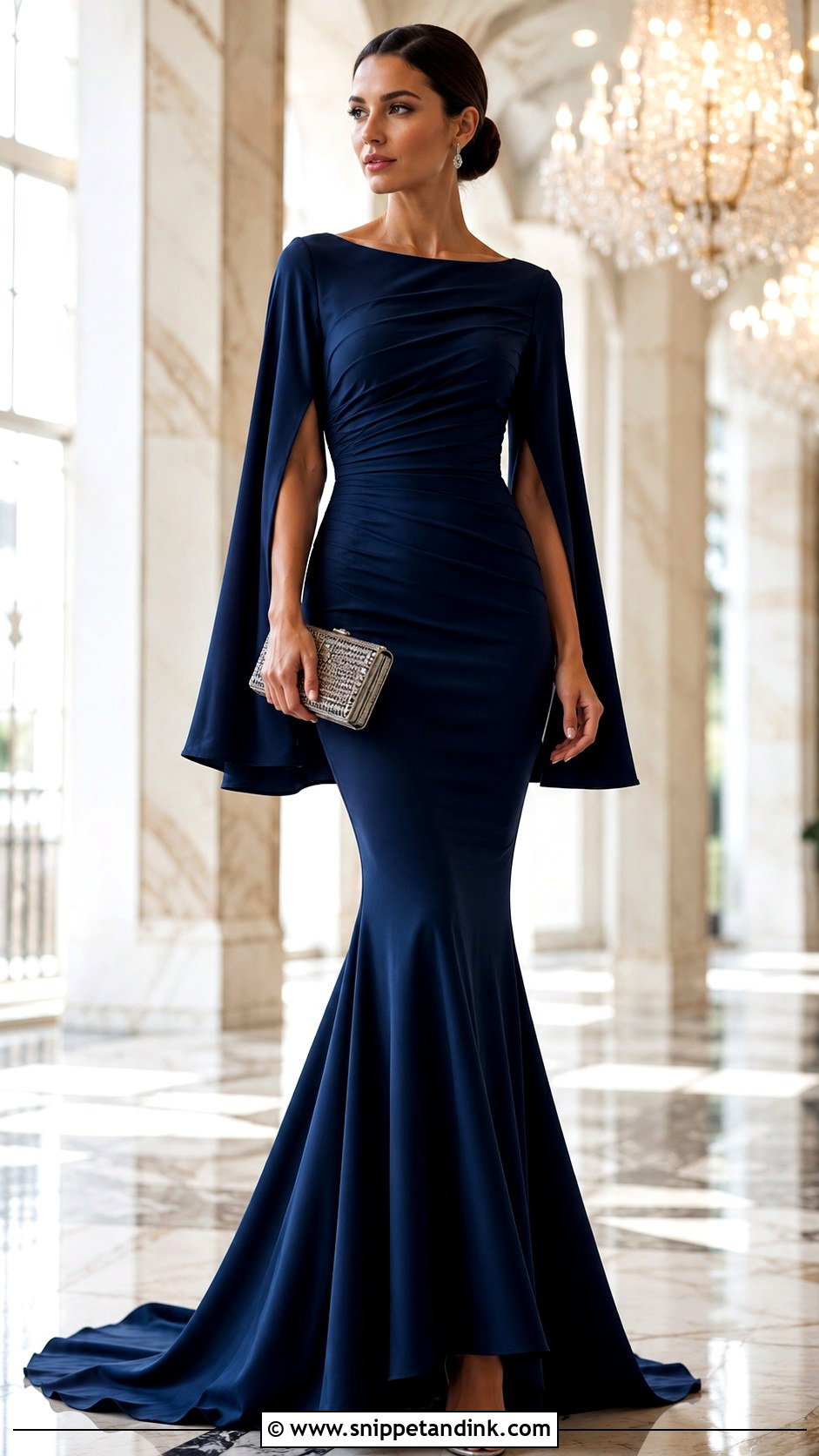
The mermaid shape grips from bust to knee, so the cape is doing an important job: it softens the upper body and moves while the fitted part stays still. Choose stretch crepe, satin or a structured jersey so you can actually sit. Hem the gown in the heels you’ll wear, because a mermaid flare sits wrong by even an inch of difference. Deep neckline, add a fine necklace; high neckline, let the cape stand alone.
19. A Line Cape Sleeves Gown
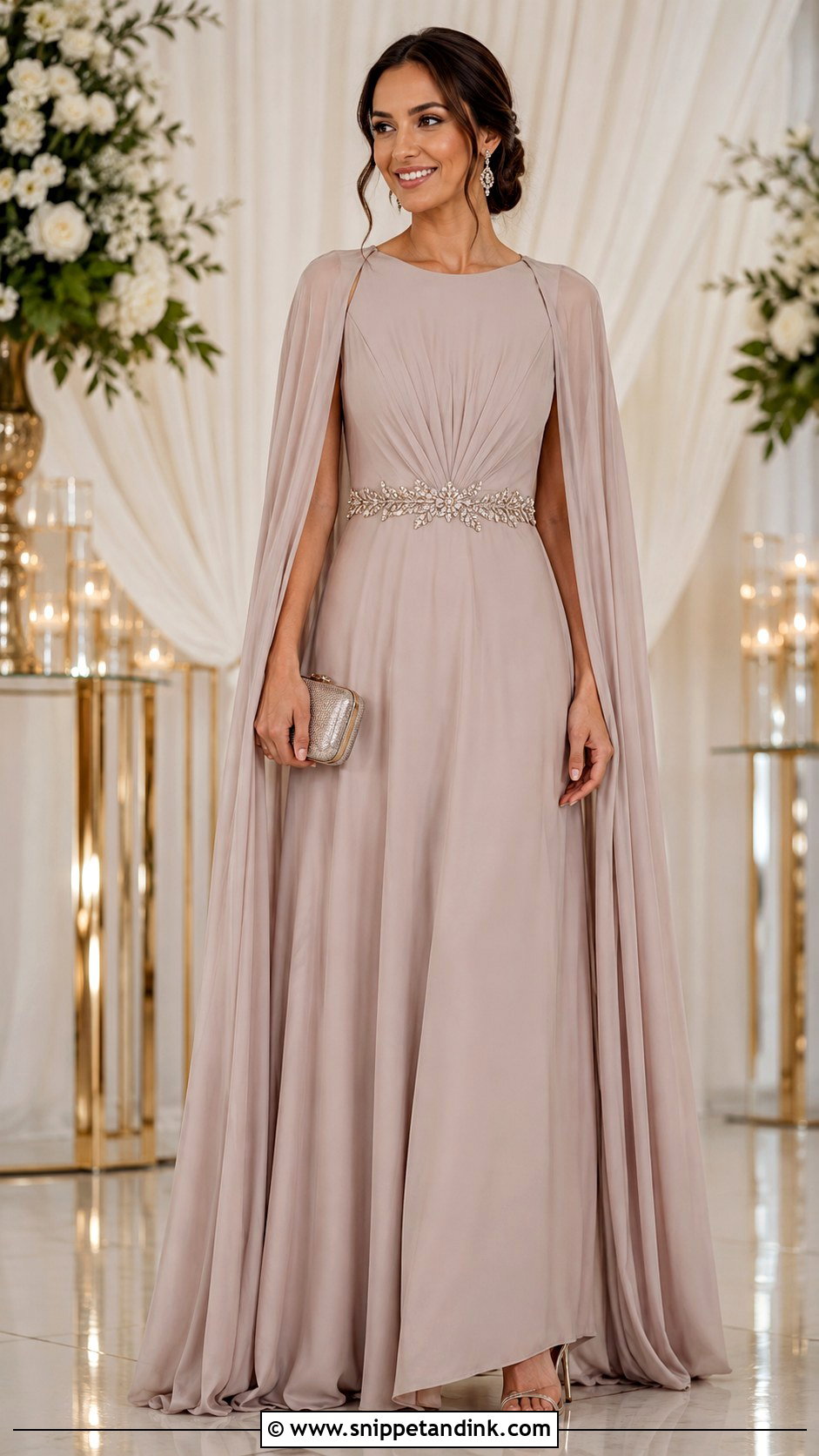
An A-line with a cape is the shape I put on clients who want to eat, dance and sit comfortably without thinking about their dress. The fitted top and widening skirt flatter most figures, and the cape adds coverage with no tight armhole. Chiffon keeps it soft, satin polished, crepe modern. Comfortable heels, a small clutch and earrings chosen for the neckline suit weddings, banquets and long family celebrations.
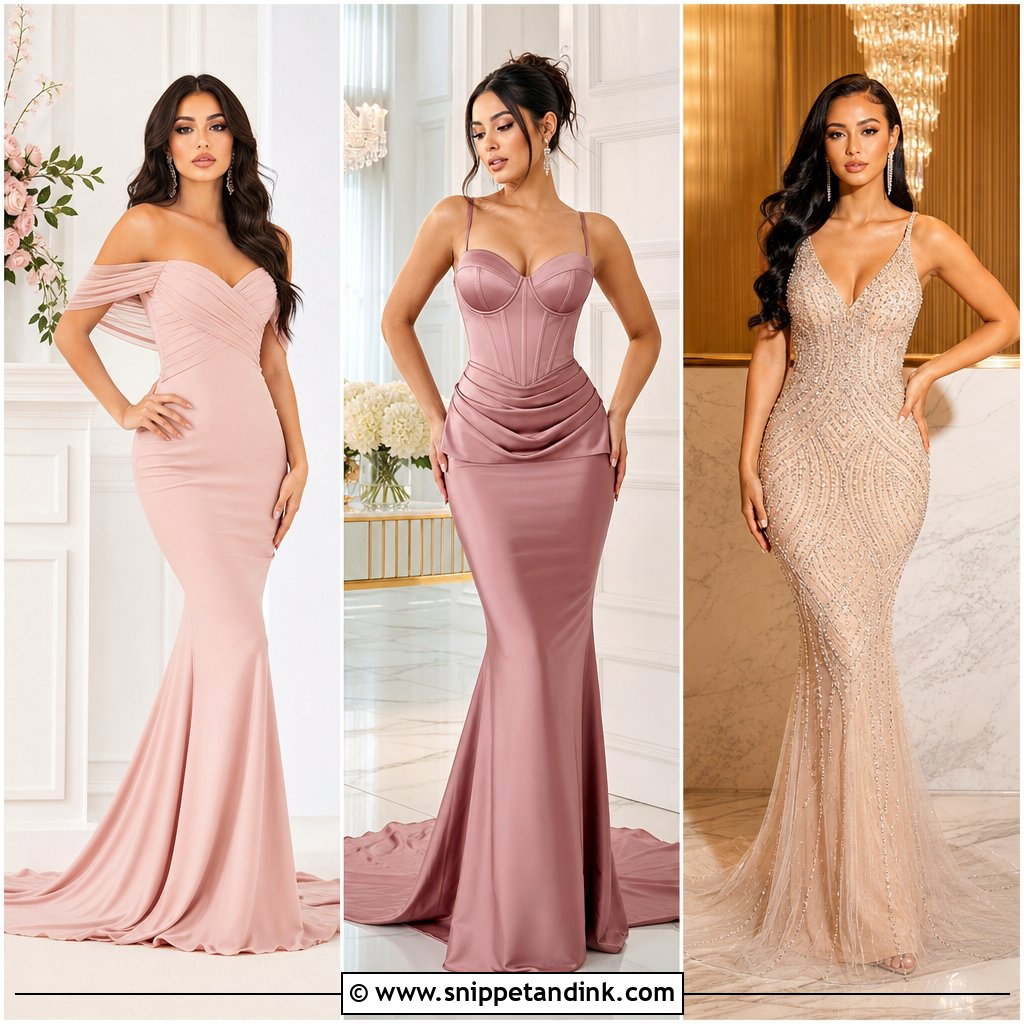
20. Plus Size Cape Sleeves Gown
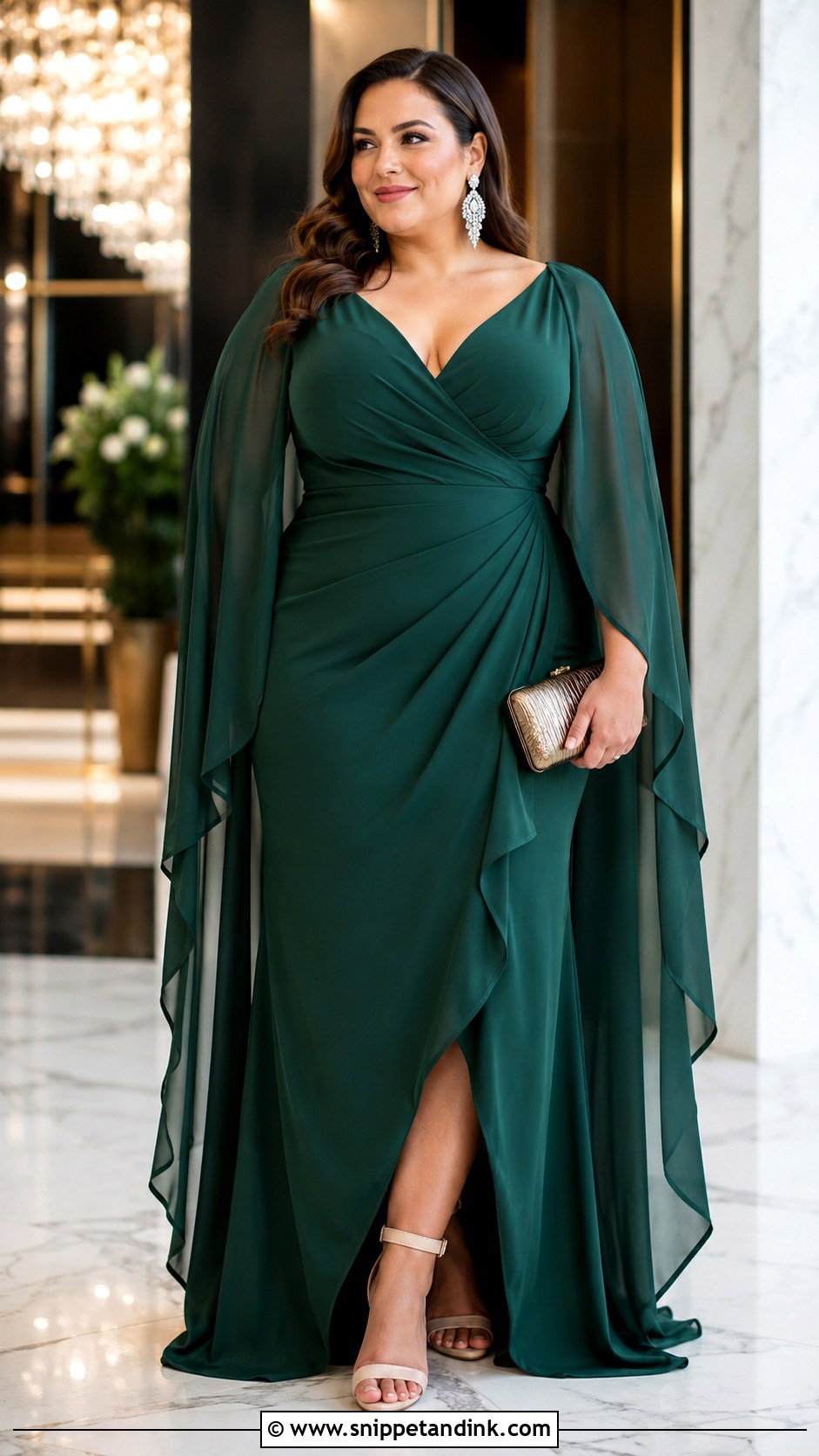
A good plus size cape gown supports the body rather than hiding it under extra fabric. I look for a defined waist, smooth lining and a cape that drapes cleanly from the shoulder seam instead of puffing outward, which can add width. Wrap bodices, V-necklines, empire waists and A-line skirts all work. Chiffon, crepe and stretch satin move well, and supportive heels plus statement earrings keep the eye moving upward.
21. Petite Cape Sleeves Gown
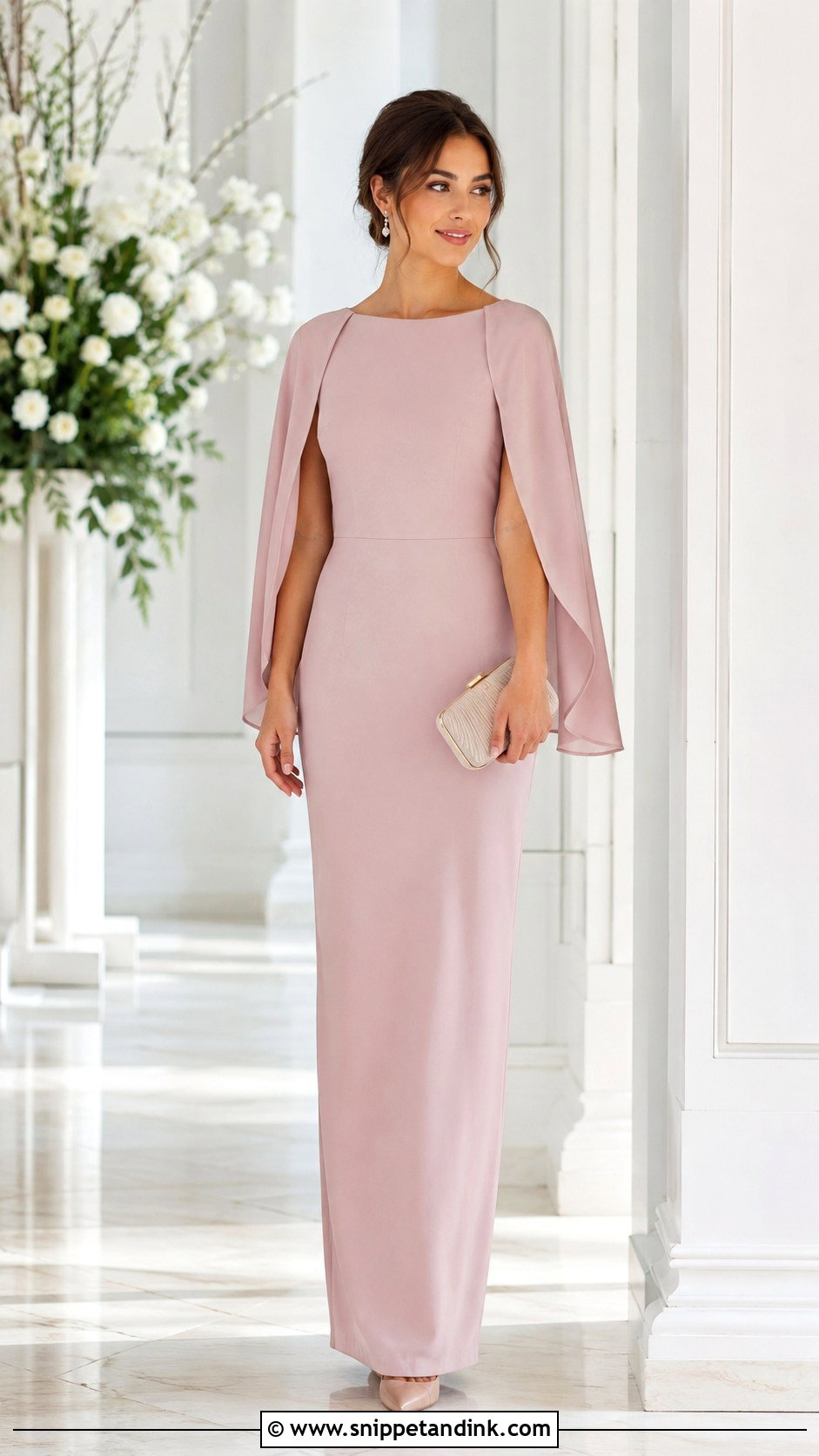
On a petite frame, the cape length decides everything. A cape that drops past the knee swallows a short wearer, so I usually have it shortened to hip or mid-thigh before anything else. A higher waistline, vertical seams or a slim column add length, and dressing in one colour, heels included, makes you look taller. Small clutches, delicate earrings and pointed heels keep the proportions right.
22. Modest Cape Sleeves Gown
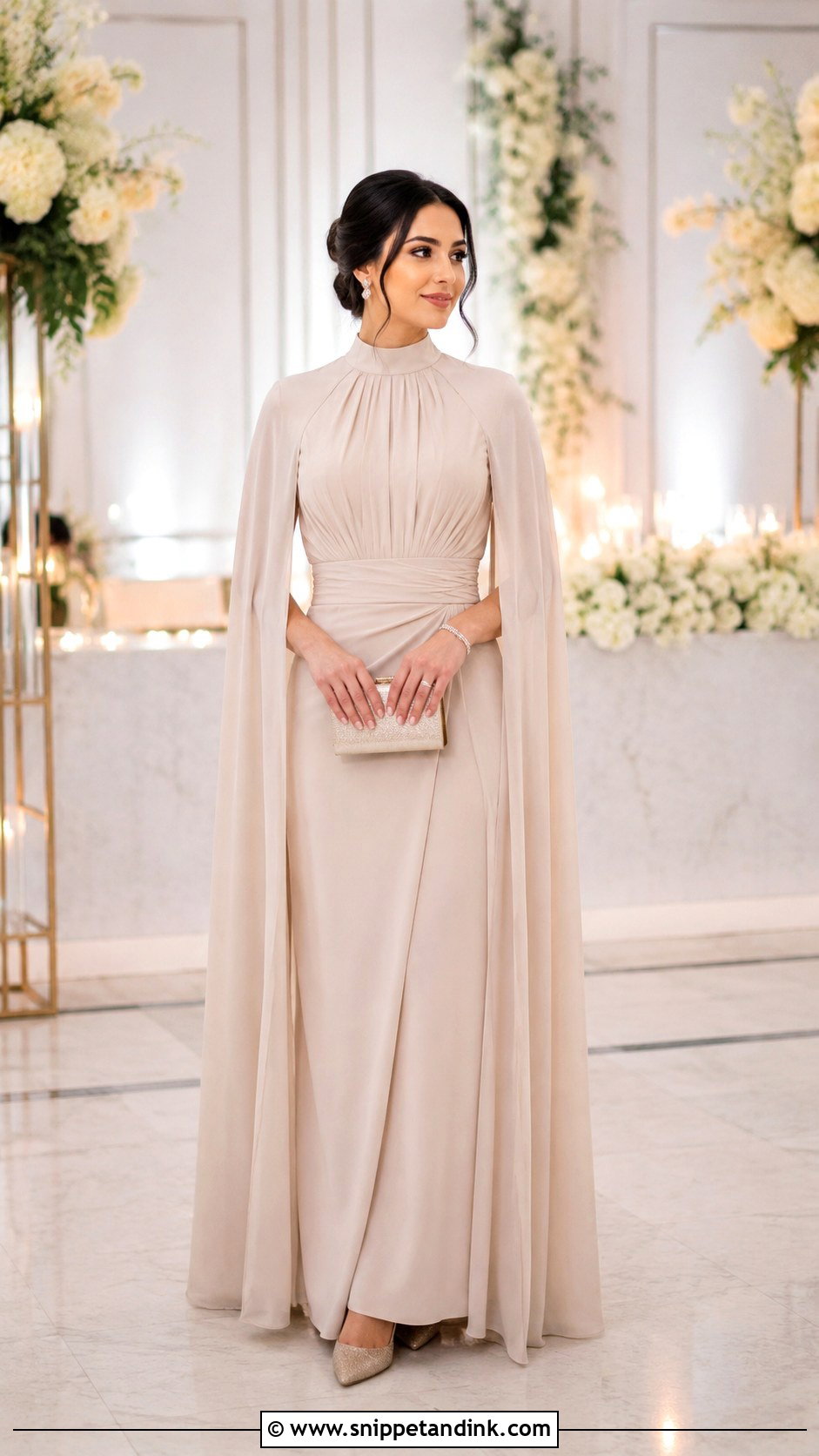
For modest dressing, the cape solves the sleeve problem better than almost anything. It covers the upper arm or falls to the wrist without the tight cuff of a fitted sleeve, which is far easier to wear in a warm hall. Look for a high neckline, full lining and a long hem. I check coverage with arms raised at the fitting, because a split cape opens at the side when you hug or wave. Navy, emerald, burgundy and black suit formal family events.
23. Wedding Guest Cape Sleeves Gown
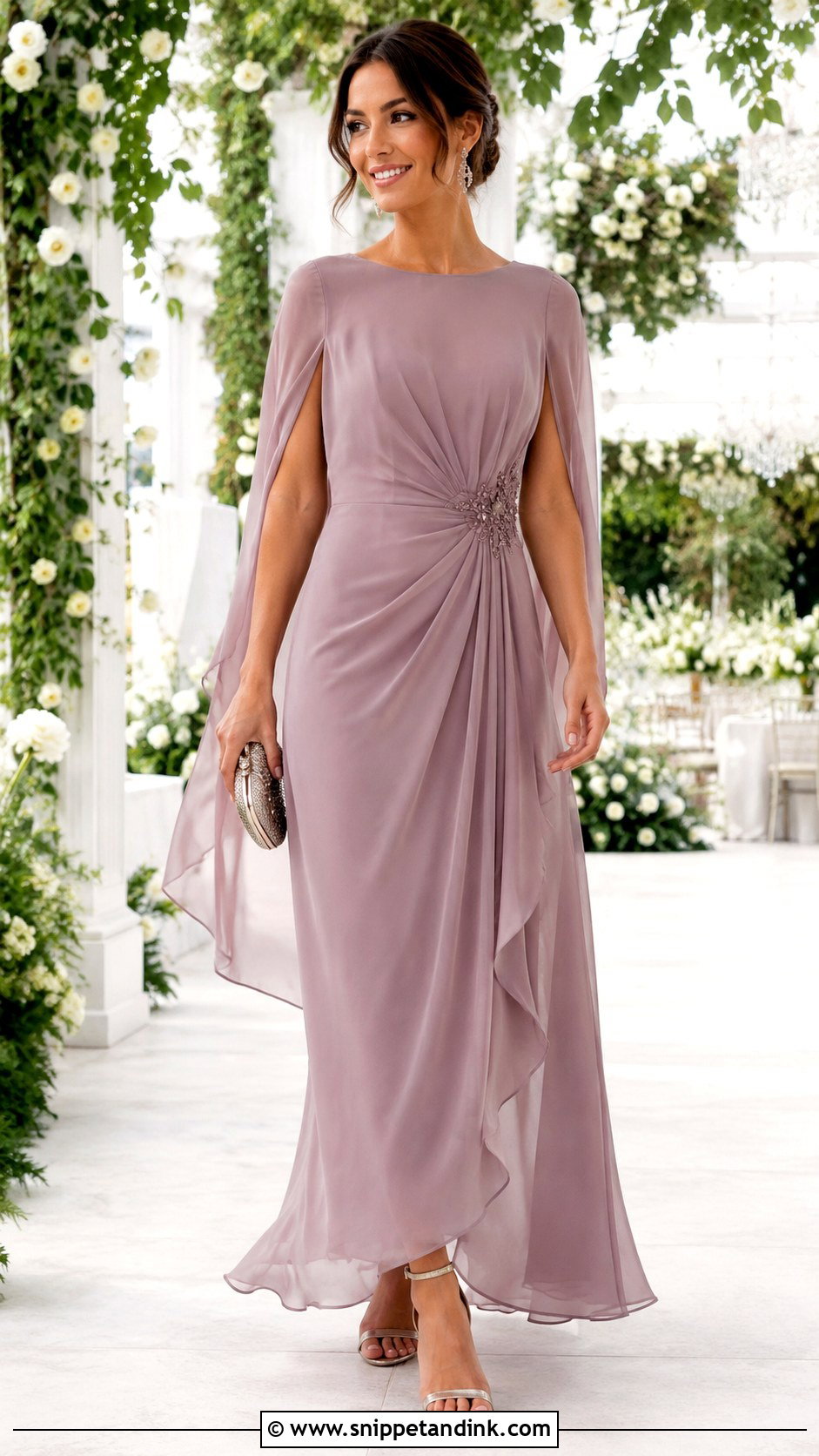
A wedding guest cape sleeves gown should look dressed up without competing with the couple. Navy, sage, mauve, teal and burgundy are safe; skip white and anything ivory or champagne that might read bridal unless the invitation says otherwise. I’d pick chiffon or crepe for a guest, since you’ll sit through a ceremony, a meal and speeches. Dressy heels, a small clutch and tasteful jewelry are enough.
24. Mother Of The Bride Cape Sleeves Gown
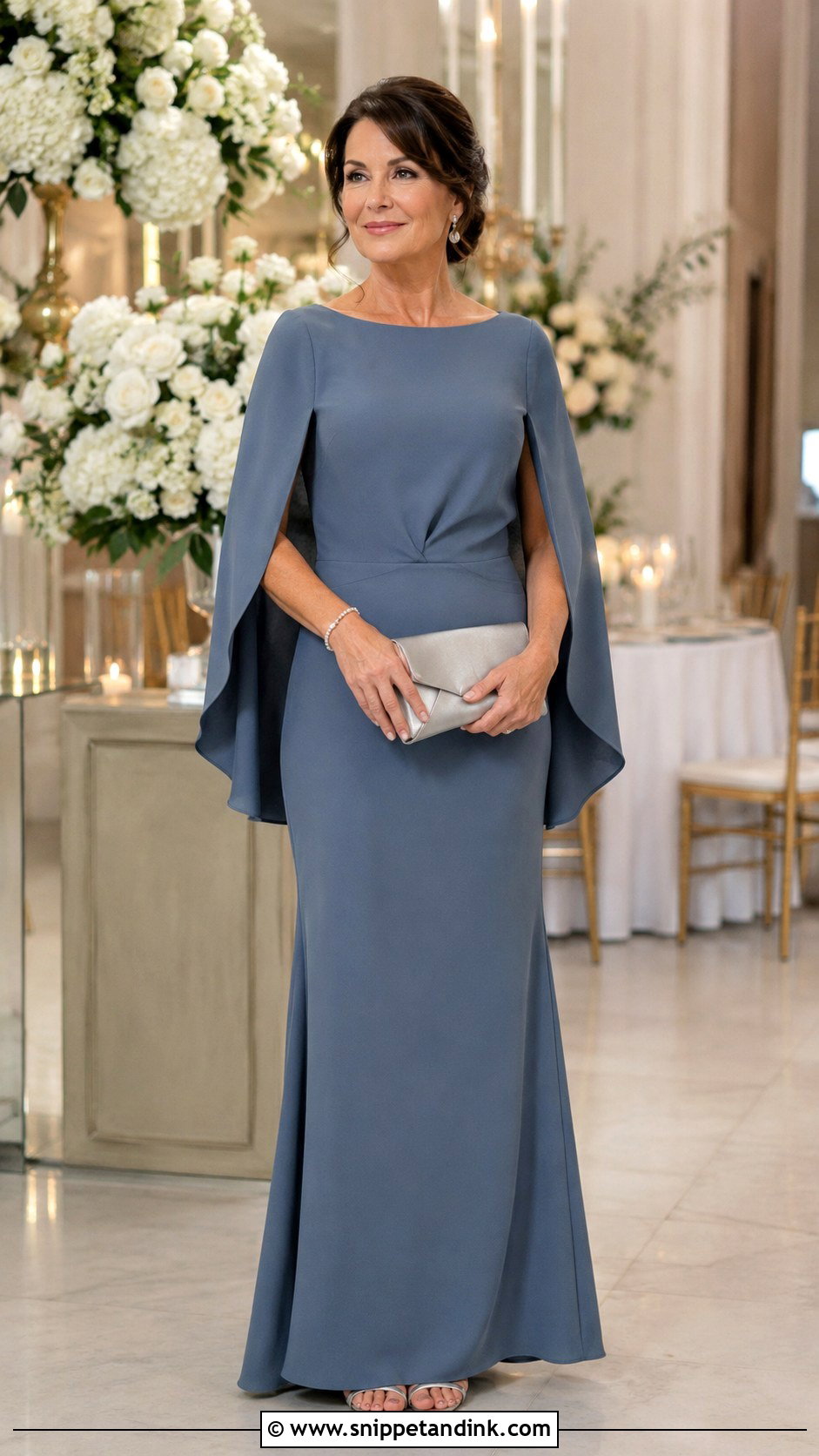
Mothers of the bride ask me for cape sleeves more than almost anyone, because it gives arm coverage without the matronly feel of a bolero. Refined colours like navy, slate blue, mauve, champagne, rose and deep green all photograph well beside a bridal party. Crepe, chiffon, lace and beaded mesh hold up over a long day. Tailoring is where this outfit succeeds or fails: have the shoulders, waist and hem fitted properly, and wear comfortable formal heels.

25. Gala Cape Sleeves Gown
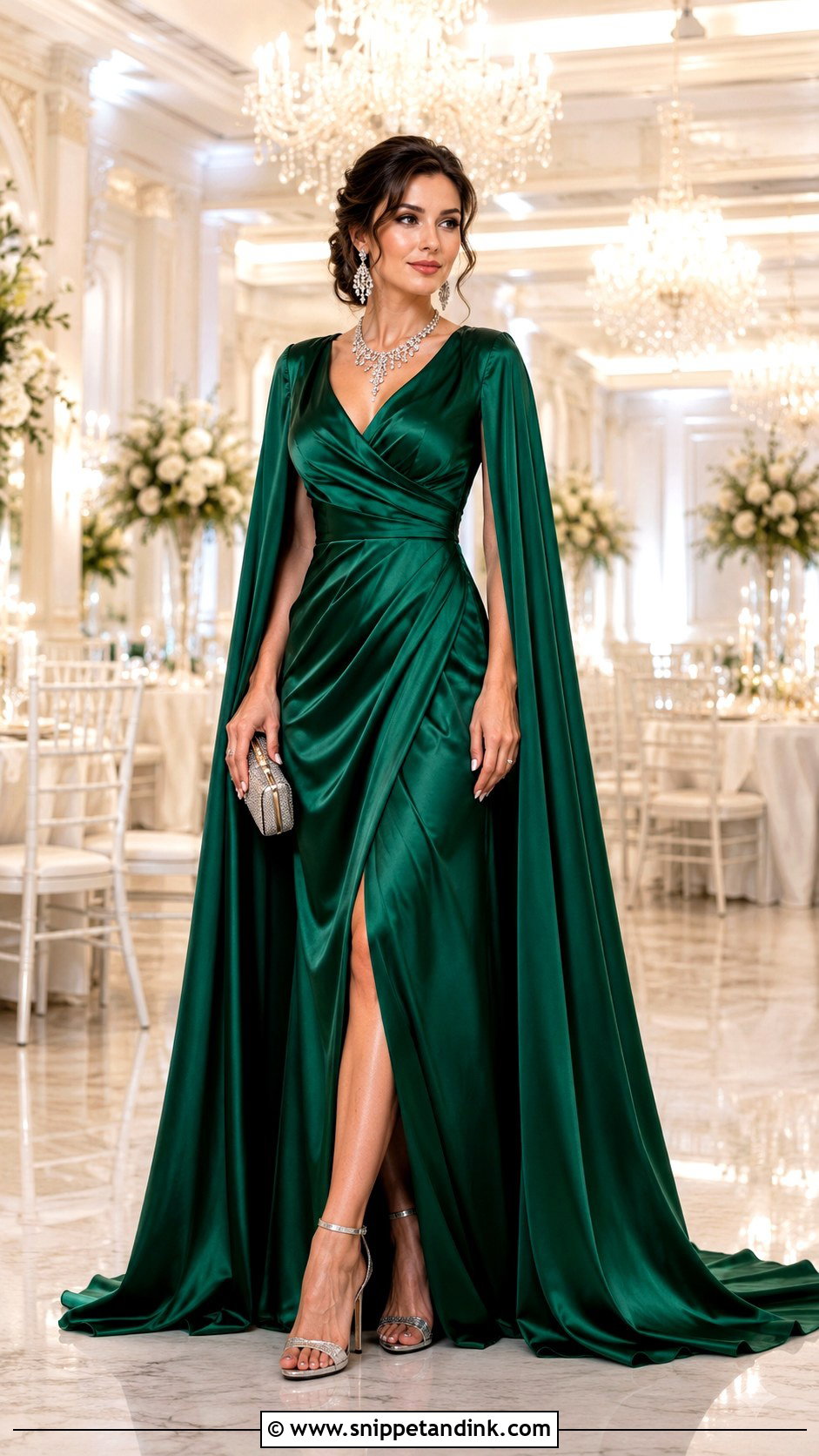
Gala dressing is where the most dramatic capes belong: floor-sweeping chiffon, structured shoulders, velvet trains. Pick one source of drama and keep the palette controlled. Black, emerald, navy, silver, gold and burgundy all hold up under ballroom lighting. Match the jewelry to the formality of the evening, high heels to carry the length, and a refined evening clutch.
Alterations, Steaming and Storing a Cape Gown
Most of the cape gowns I see need some work. The common ones are shortening the cape for a petite frame, moving the shoulder attachment a little forward so it stops sliding back, and adding a thread loop or tiny snap at the shoulder so the cape stays put when you carry a clutch. Bring your shoes and the underwear you’ll actually wear to every fitting.
On the day
Steam chiffon and georgette capes from the inside on low heat, and never press them flat, because an ironed crease in sheer fabric rarely relaxes. Velvet should only ever be steamed, never ironed. When you sit, lift the cape and drape it over the chair back rather than sitting on it. A floor-length cape needs a friend on staircases.
Afterwards
Hang the gown from its inner loops, not the shoulders, so the cape’s weight doesn’t stretch the seam over months. Store it in a breathable cotton bag rather than plastic, and fold a sequinned or beaded cape with tissue between layers so the embellishment doesn’t snag on itself.
A Cape Is Only as Good as Its Shoulder Seam
Every outfit above depends on the same thing: a cape that sits flat on the shoulder, moves freely and doesn’t lift the gown when you raise your arms. Get that right at the fitting and the colour, fabric and accessories become the fun part. Match the silhouette to how you’ll spend the day, keep the jewelry simpler than you think, and from wedding guest looks to gala nights, a cape gown will carry you through without fuss.
You'll Like These Ideas:





Leave a Reply