
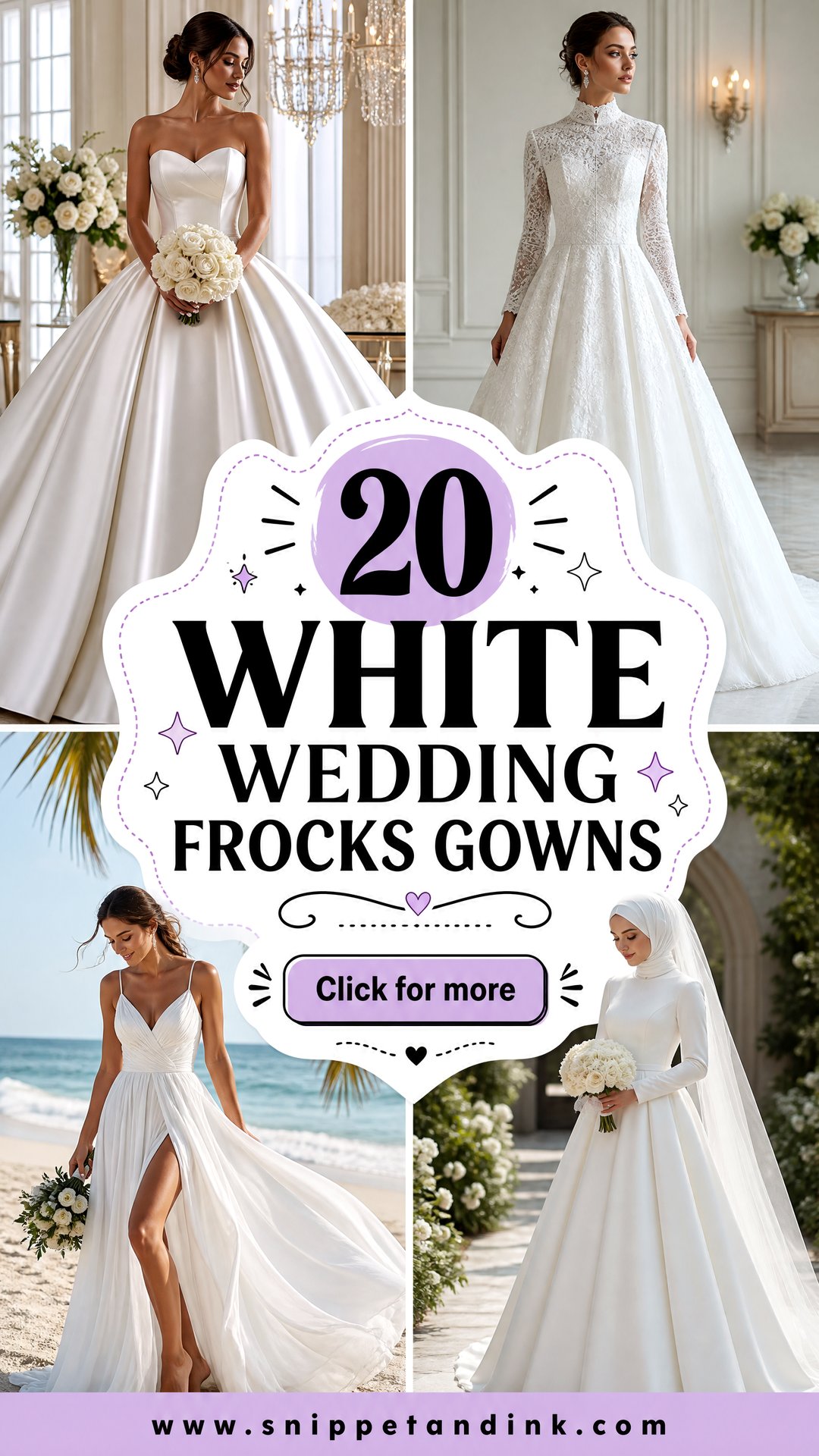
A gown only makes sense once you see it with the veil, shoes and flowers it will actually be worn with, so every look below is styled as a complete outfit. There’s lace, satin, chiffon and mikado here, plus beading, corsetry and some very plain finishes. Bridal collections still lean on basque and drop waists, raised flowers and pieces that come off after the ceremony, and traditional lace hasn’t gone anywhere. When I dress a bride, I care less about how a gown hangs on the rail and more about what it does when she sits, climbs a step or hugs her grandmother. A companion roundup, complete 20 White Wedding Frocks Gowns, is worth opening alongside this one.
Ivory, Diamond White or Natural? Reading White Under Real Light
Every gown here is called white, but bridal white comes in several shades, and the difference shows up the moment you stand next to your bridesmaids or a white tablecloth. Optic or bright white is the coolest, with a faint blue cast that suits deeper skin tones and looks crisp in midday sun. Diamond or soft white has a touch of warmth and is the safest choice for most brides. Ivory sits warmer again and makes lace look richer; natural or silk white is the shade undyed silk has, close to cream.
I always take a dress to a window before a bride decides. Salon lighting is warm and flattering, and it hides how a fabric will look in grey outdoor light or under a flash. Hold the sample against your face in daylight. If your skin looks sallow, go warmer; if the dress looks yellow next to you, go cooler.
- Order your veil in the same shade family as the gown. A bright white veil over an ivory dress makes the dress look dirty in photos.
- Satin and silk show colour differences more than matte crepe, so match fabrics with extra care.
- Ask for a fabric swatch to take home; most salons can cut one from the bolt.
1. A-Line Lace White Wedding Gown
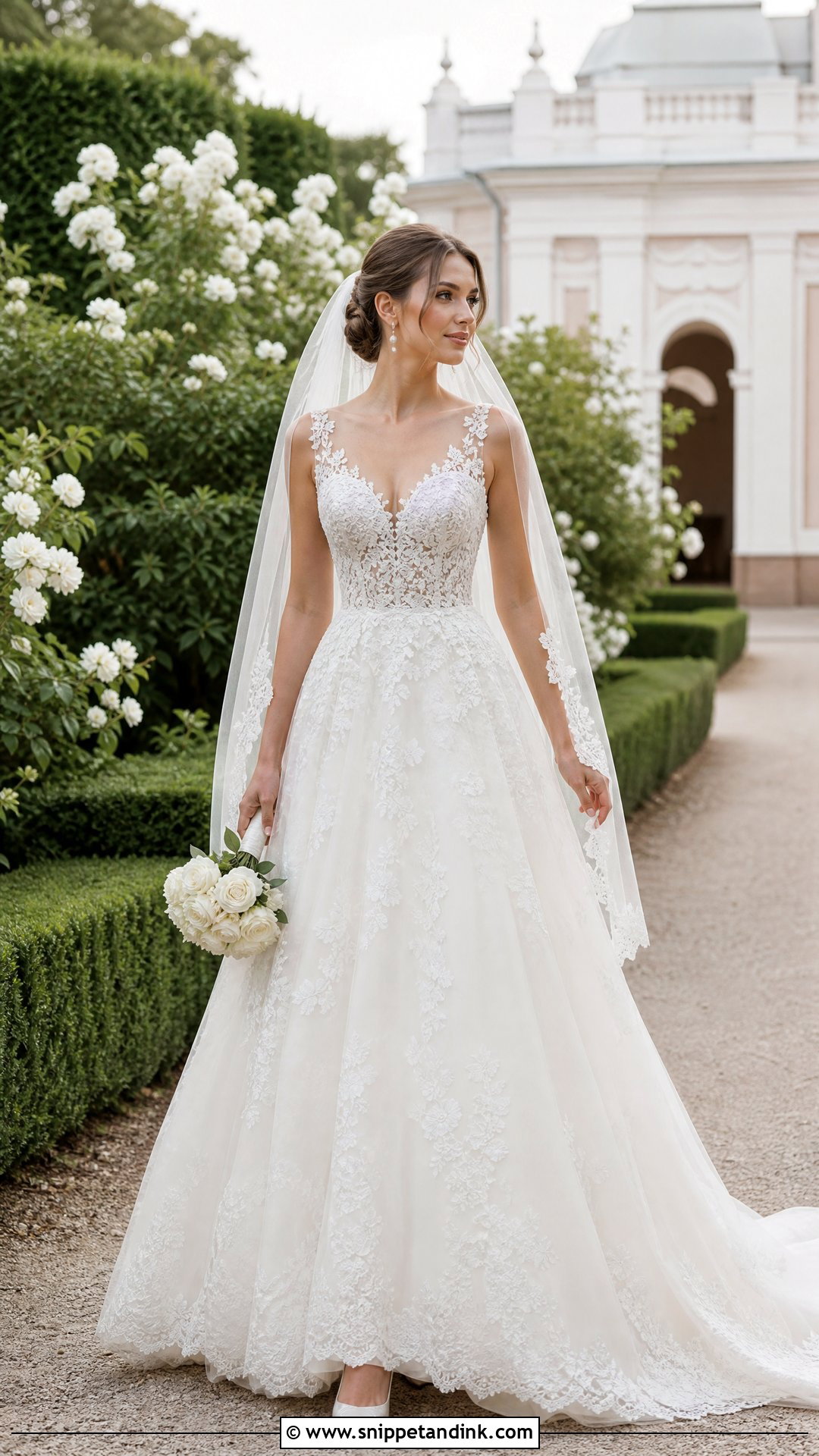
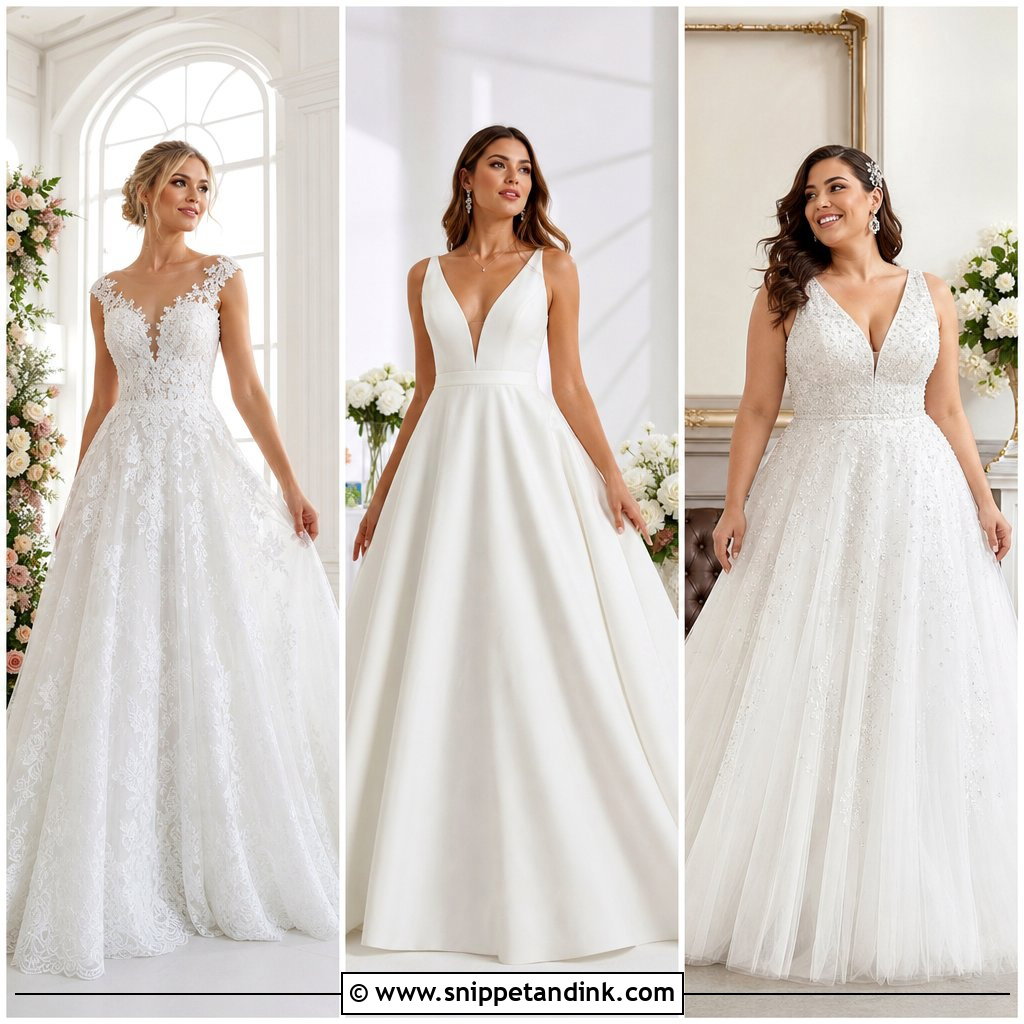
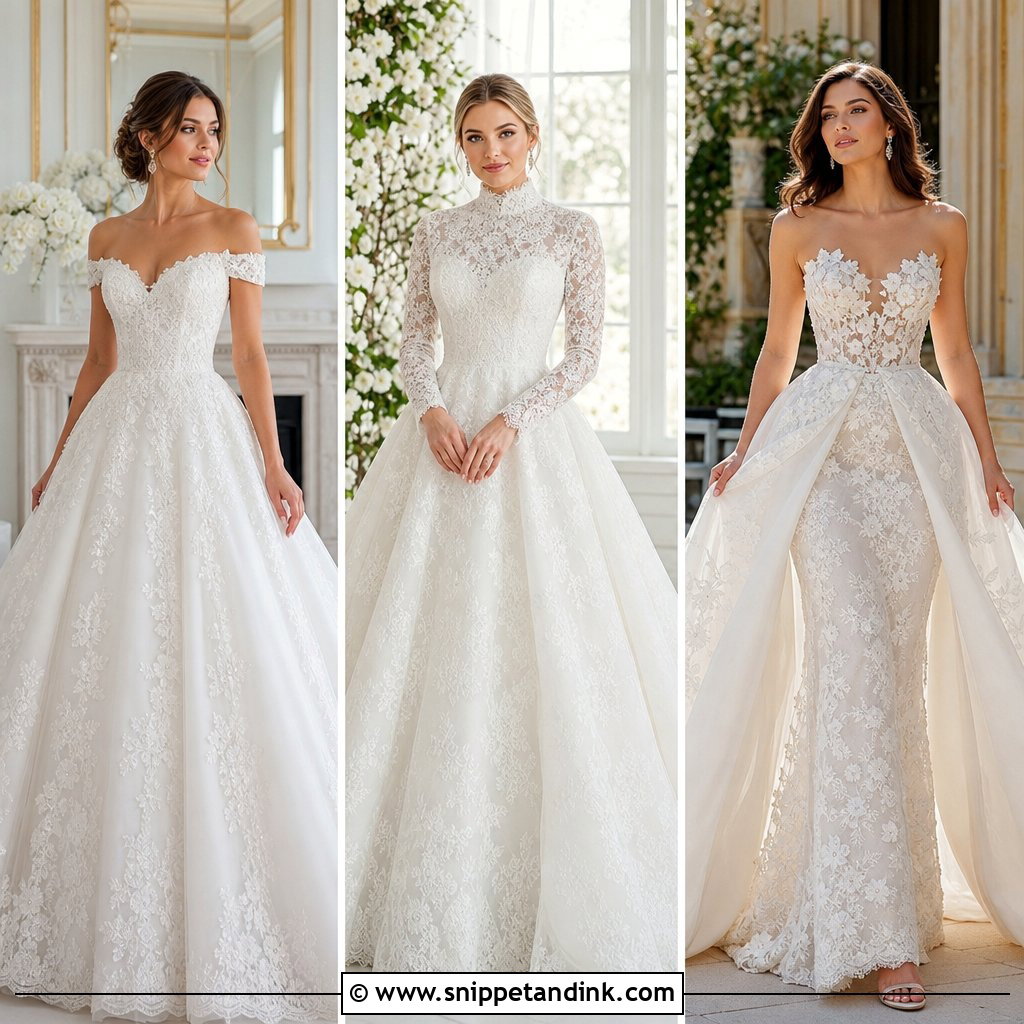
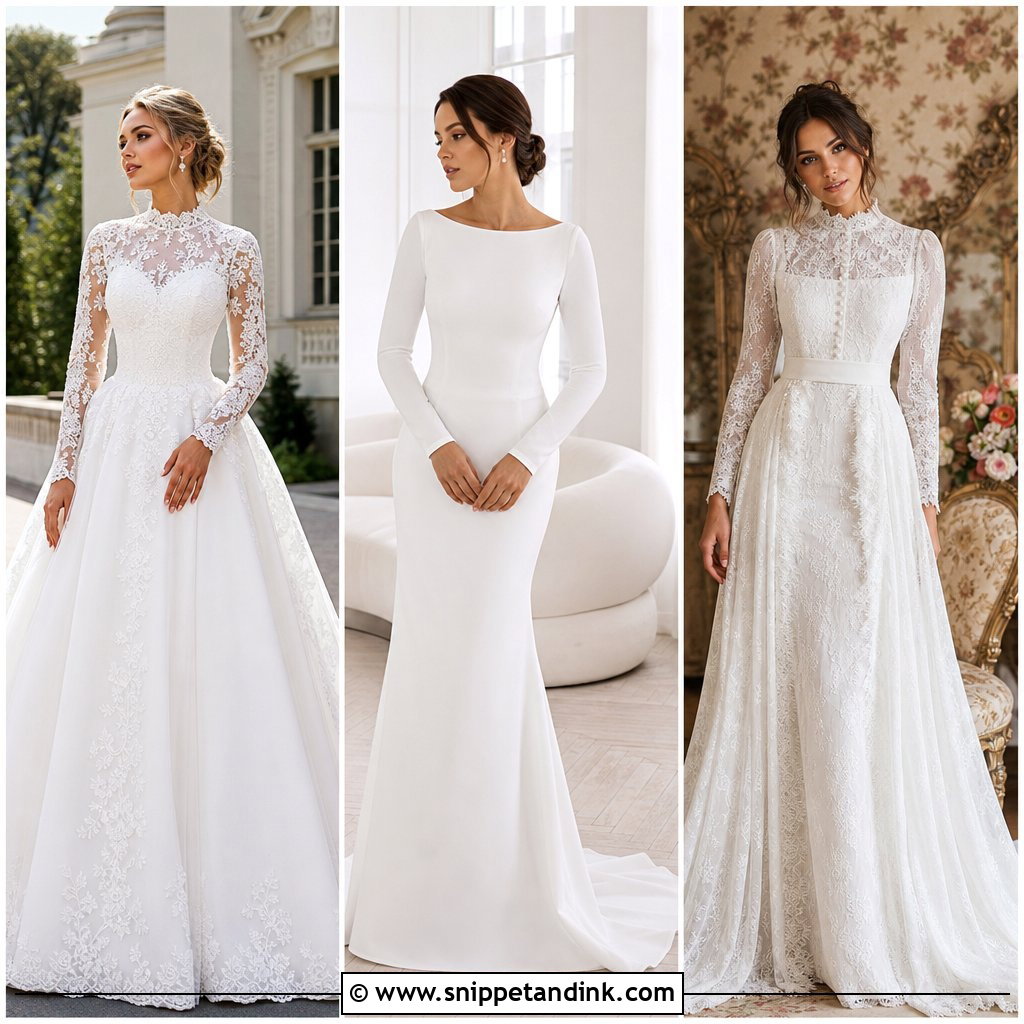
Lace A-lines are the dress I pull first for a bride who doesn’t yet know what she likes, because the skirt forgives almost every body and almost every venue. The bodice needs real inner structure and the waist should sit at your natural waist, not an inch above it. Floral lace over an ivory lining reads as depth rather than weight. I’d style it with a fingertip veil, pearl drops, ivory pointed pumps and a small bunch of white roses with greenery. Scale matters with lace: petite brides look best in smaller motifs, and a tall bride can carry a deep scalloped border at the hem. Have the length set while you’re wearing the actual wedding shoes, never a stand-in pair.
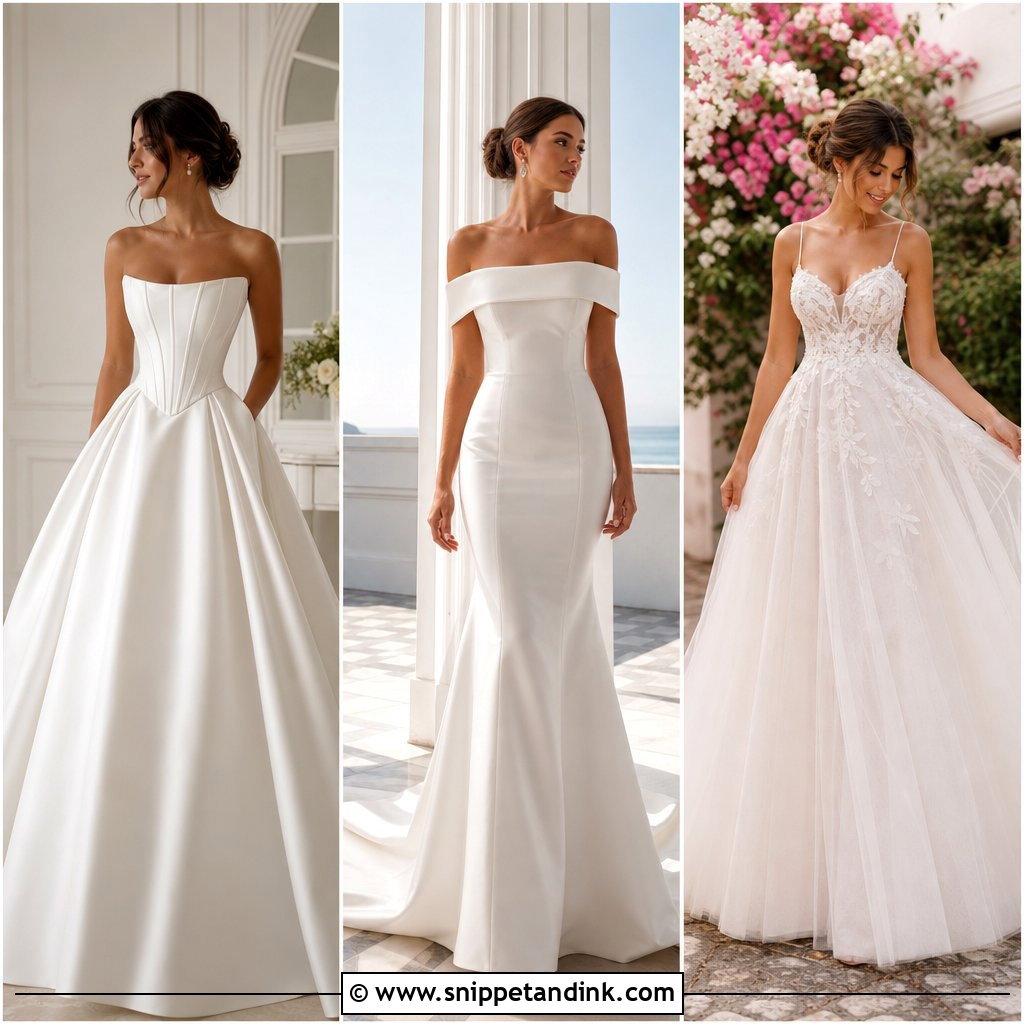
2. Satin Ball Gown White Wedding Dress
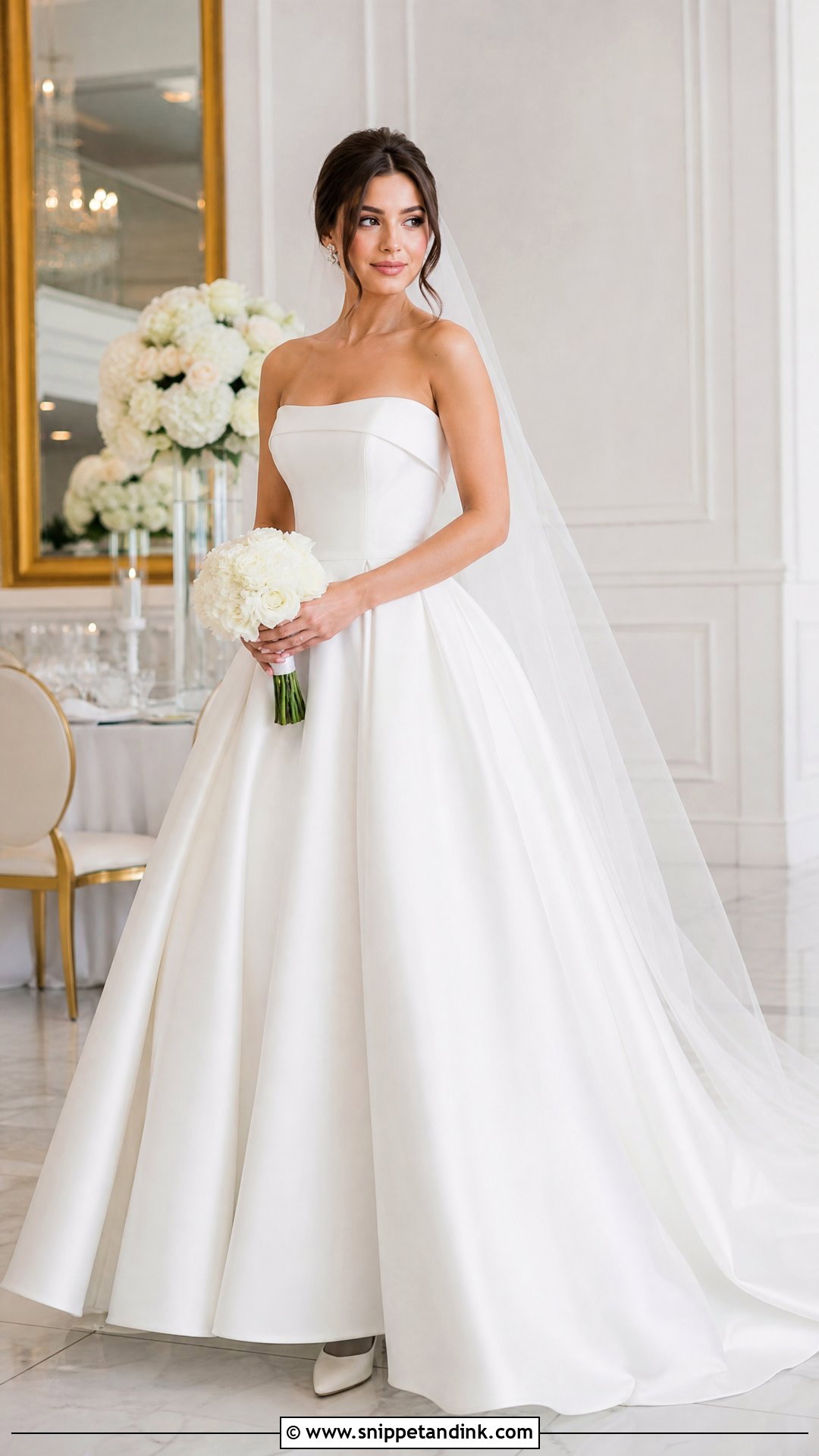
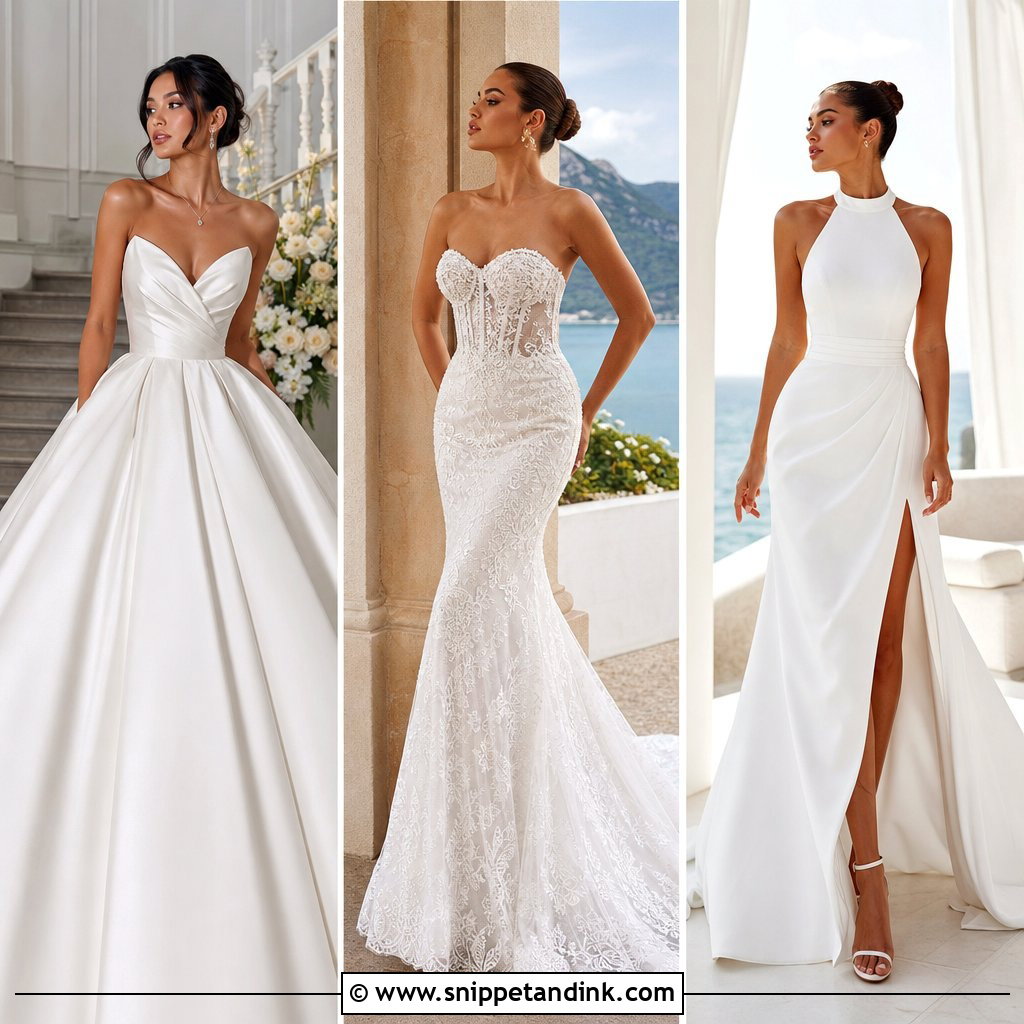
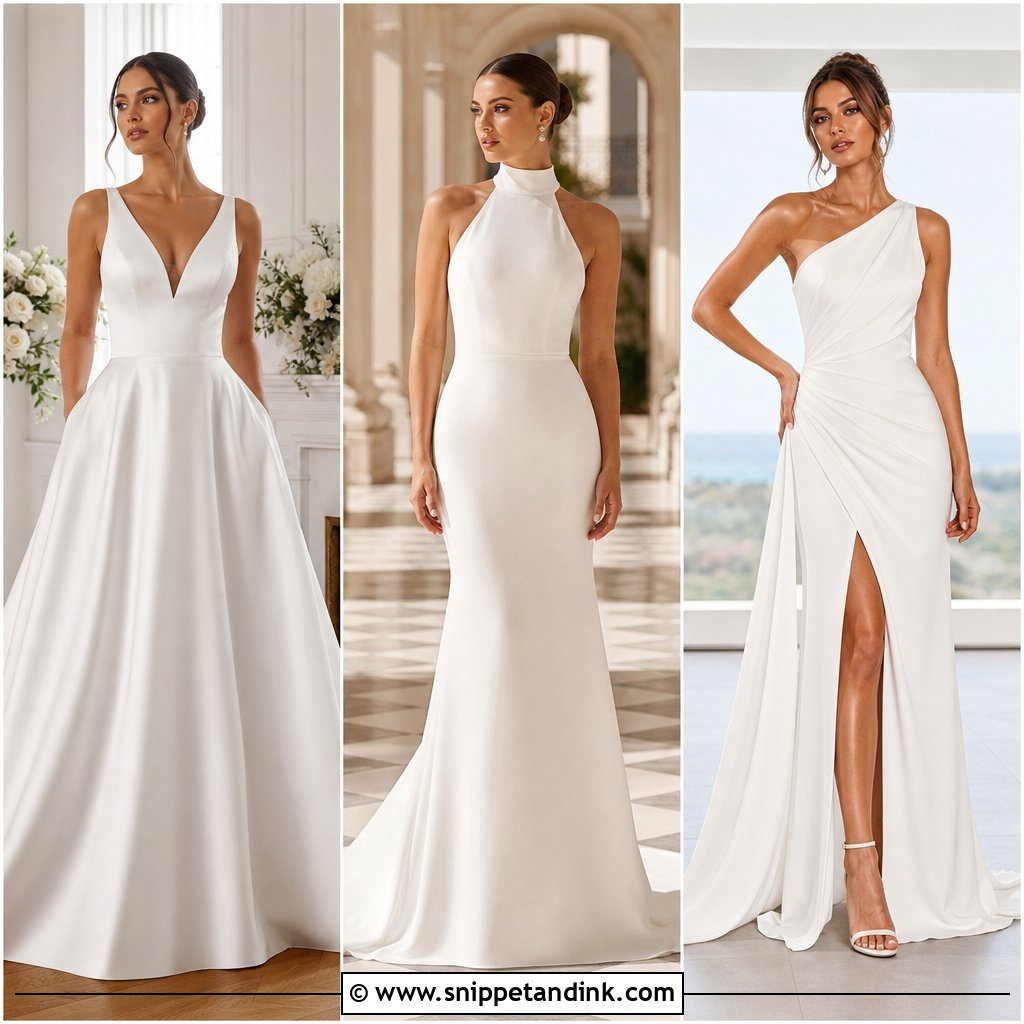
A satin ball gown is about volume held in check by a firm waist. The pleated skirt gives your hips and legs plenty of room, which is why these are more comfortable than they look. Satin or mikado both reflect light cleanly in photos, though satin shows every crease from the car ride, so I keep a steamer close. Pair it with a cathedral veil, crystal studs and block heels nobody will see. Keep the bouquet plain or the whole silhouette starts to look decorated. Ask for internal boning and a waist stay if you want the bodice to stay put through dinner, and plan on adding a bustle early so the train lifts neatly once the ceremony is done.
3. Long Sleeve Lace White Wedding Gown
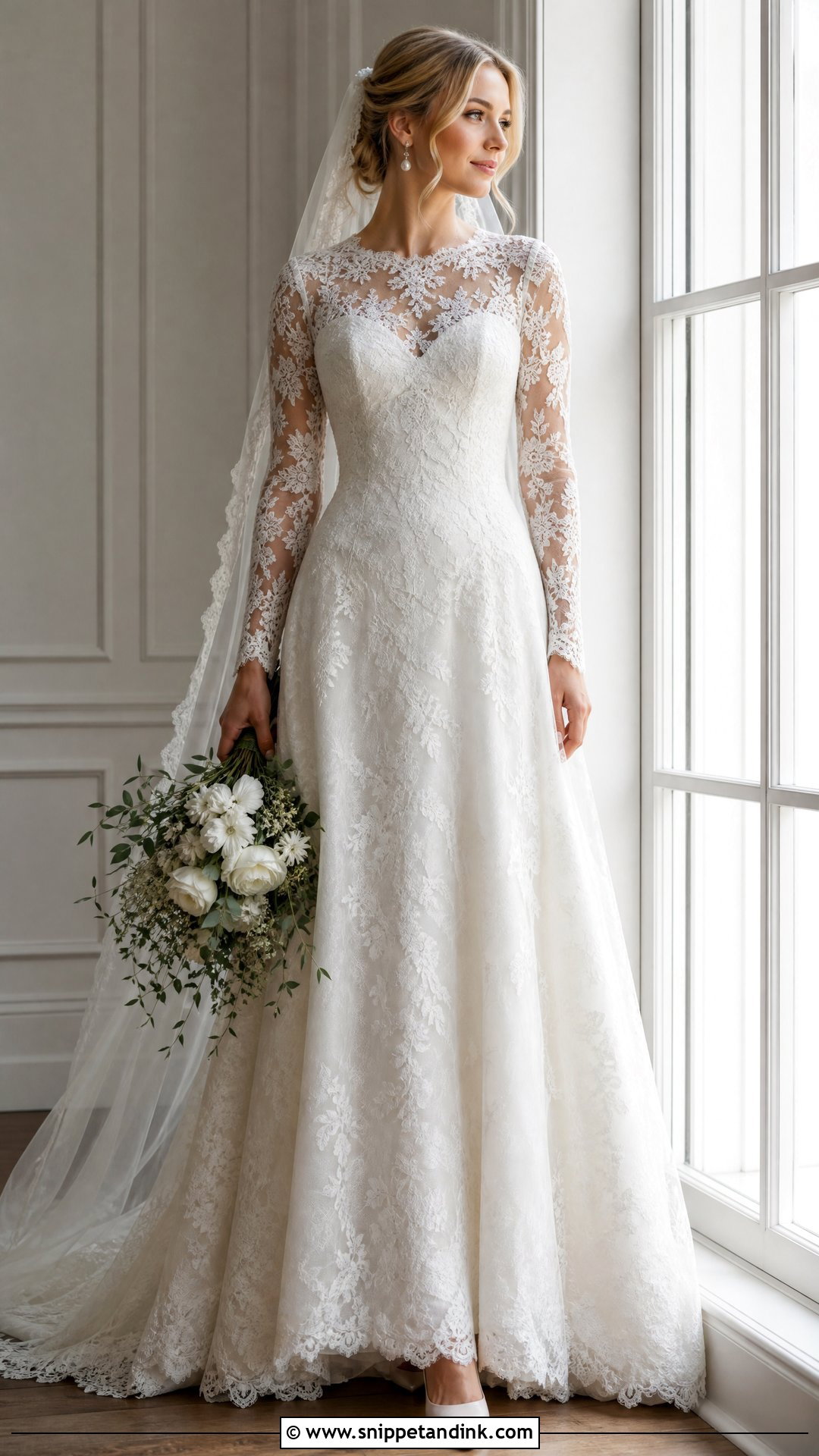
Sleeves are where lace dresses either work or pinch. A sheer lace sleeve over a lined, fitted bodice gives coverage without hiding your shape, and covered buttons or a scalloped cuff finish the wrist. The A-line skirt keeps it easy to wear for a full day. I’d go with a low chignon, a narrow lace-edged veil, pearl earrings, closed-toe heels and a loose white bouquet. At every fitting, I ask the bride to reach up as if hugging someone taller; if the lace pulls across the back or rides up at the armhole, the sleeve head needs work. A skin-tone mesh panel can quietly secure a deep neckline.
4. Strapless Mikado White Wedding Gown
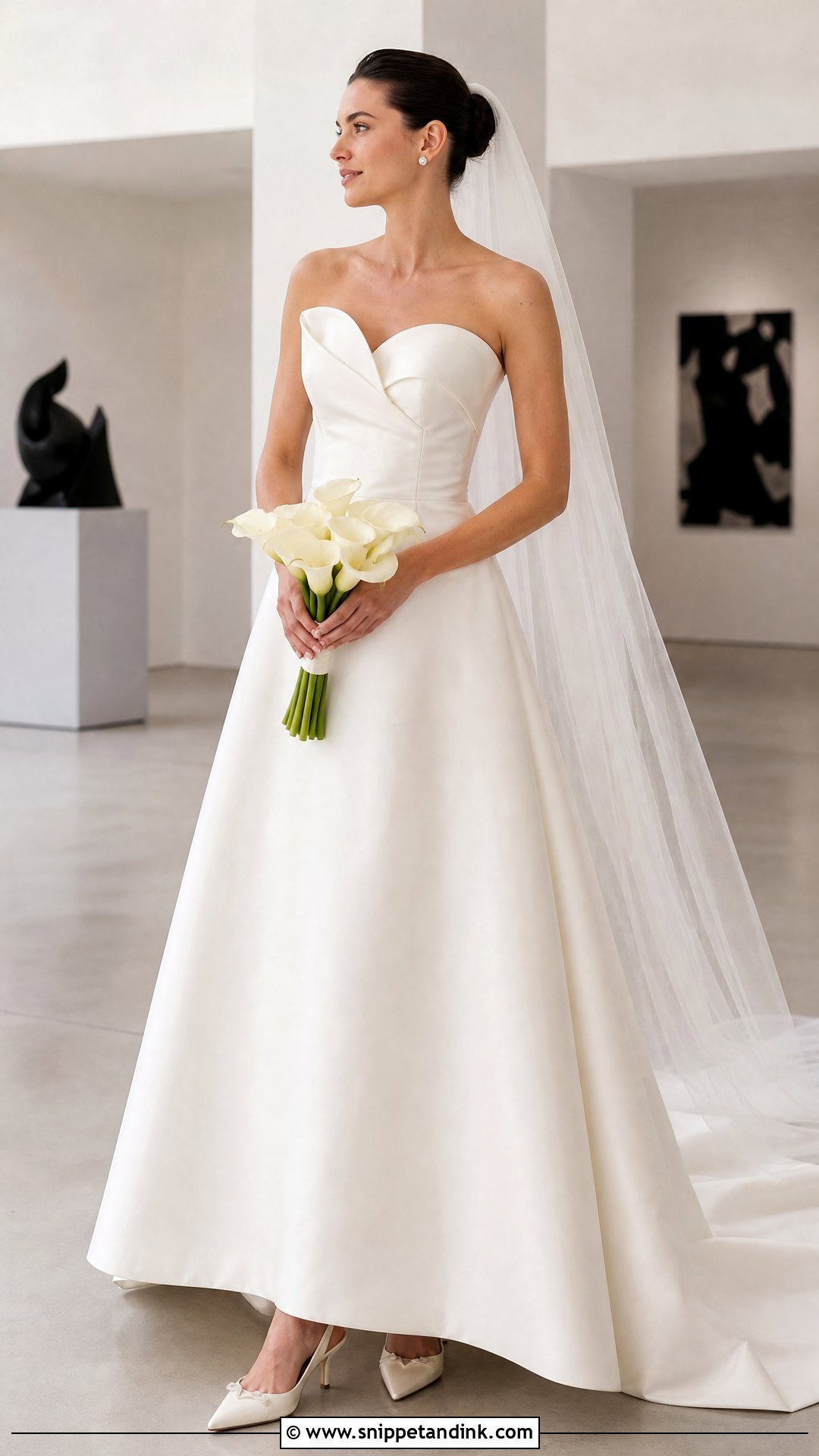
Strapless mikado has no lace to hide behind, so the fit carries the whole look. Mikado is a heavier silk blend with a slight sheen, and it holds sculpted pleats and folds that softer satin can’t. That makes it a strong pick for a formal ballroom or a cathedral. Add a smooth cathedral veil, diamond-style studs, ivory slingbacks and a structured bouquet of callas or roses. The real question with strapless is grip. A good bodice stays up because of cups, boning and a waist stay, not because it’s tight at the top, and you should be able to bend to pick something up without tugging it back into place. Detachable off-the-shoulder straps are a sensible backup for a church ceremony.
5. Mermaid White Wedding Gown With Train
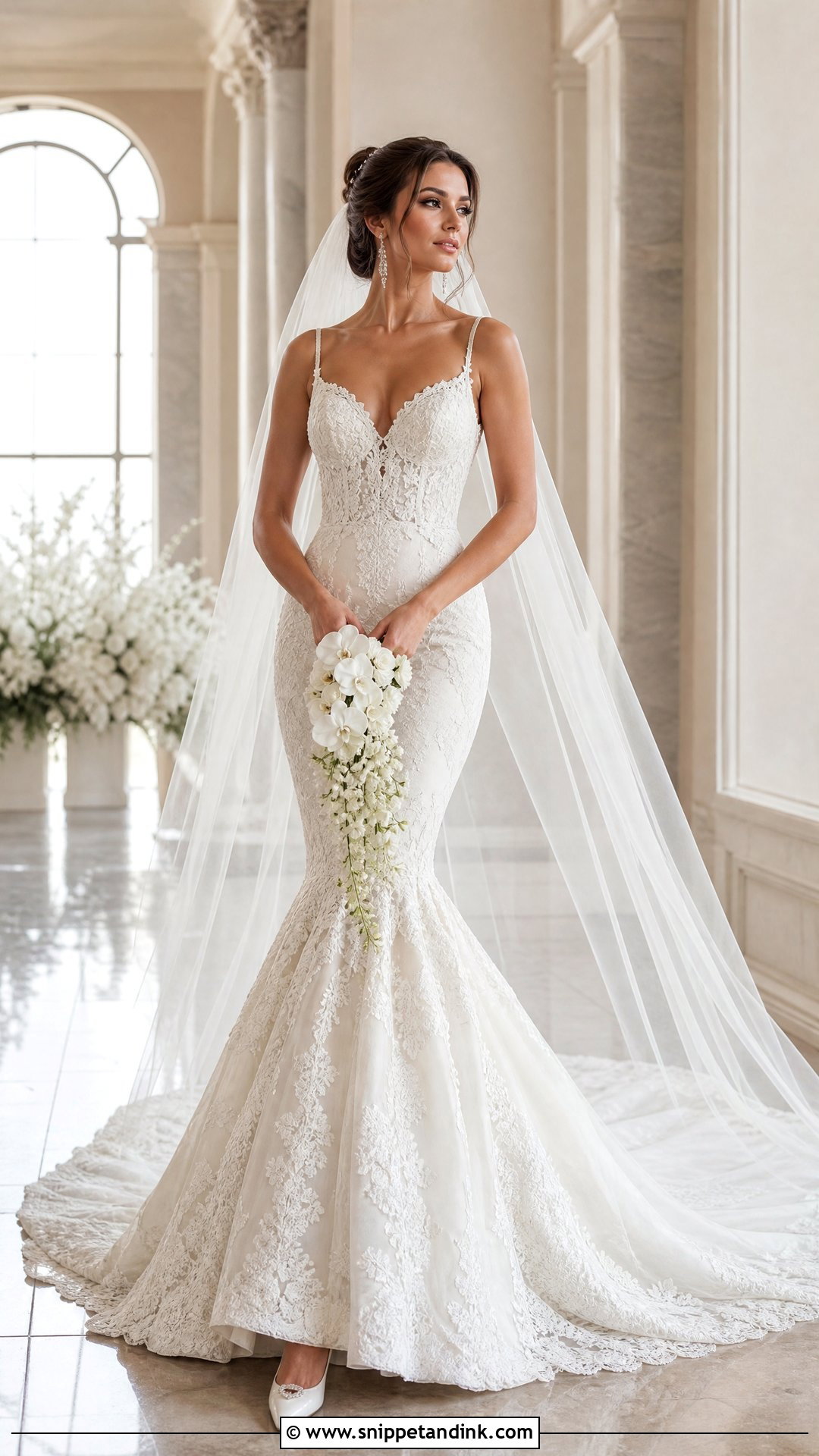
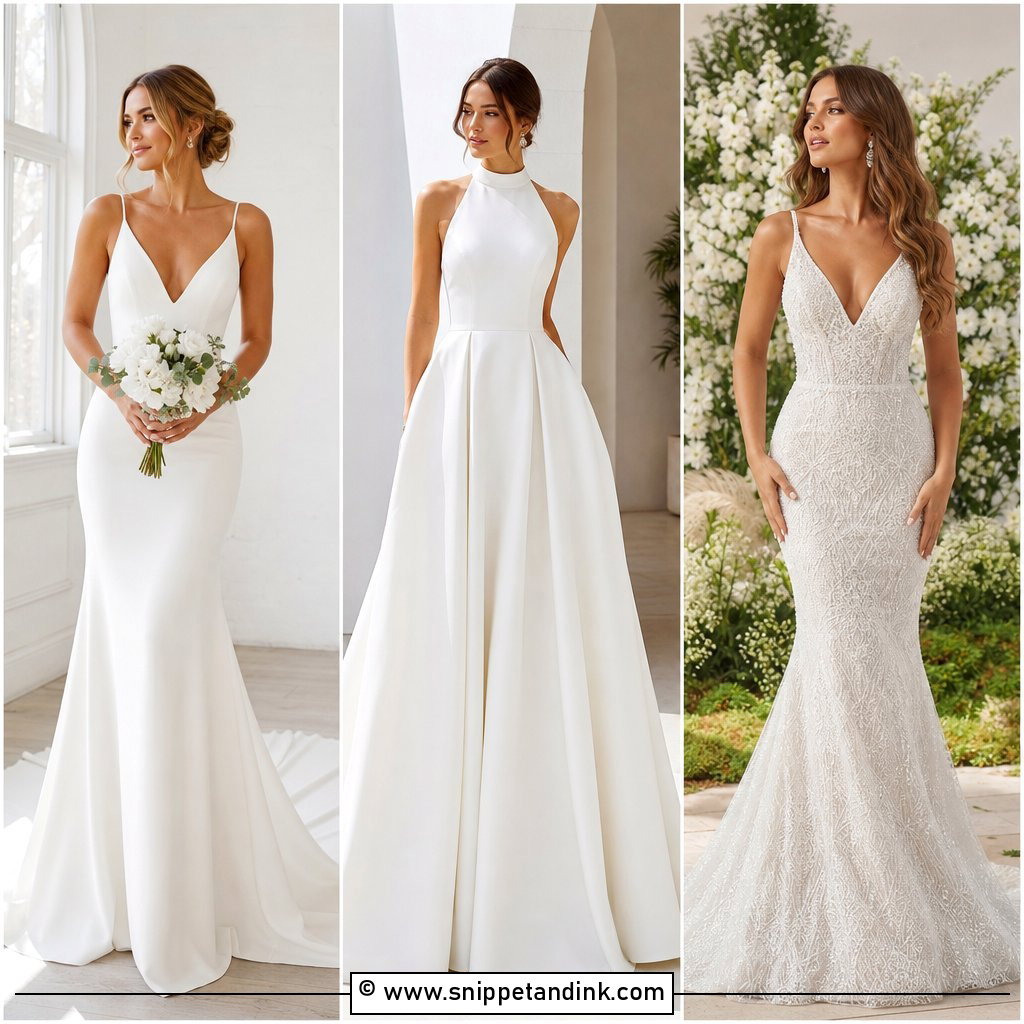
Mermaid gowns live or die on where the flare starts. Set it slightly above the knee and you can walk and dance; set it at or below the knee and you’ll shuffle all night. Stretch crepe keeps the line clean, while lace or beaded tulle adds detail. Balance the tight shape with a long sheer veil, small drops, pointed heels and a narrow cascade bouquet that doesn’t block the body. I’d steer you to a fit-and-flare cut if you need more room through the thighs. And plan the bustle carefully, because a mermaid train bustled badly looks like a lump behind your knees.
6. Square Neck White Wedding Gown
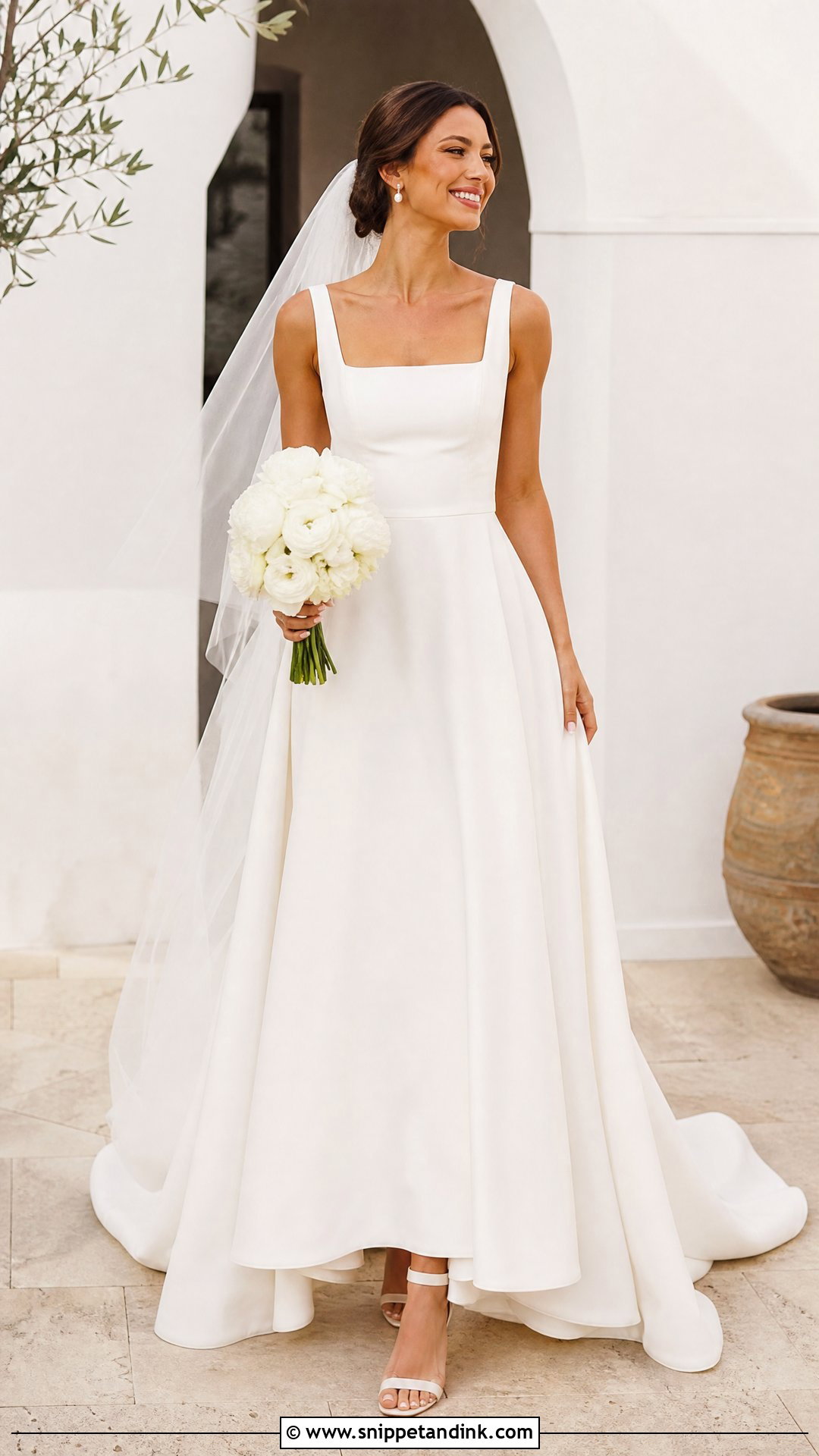
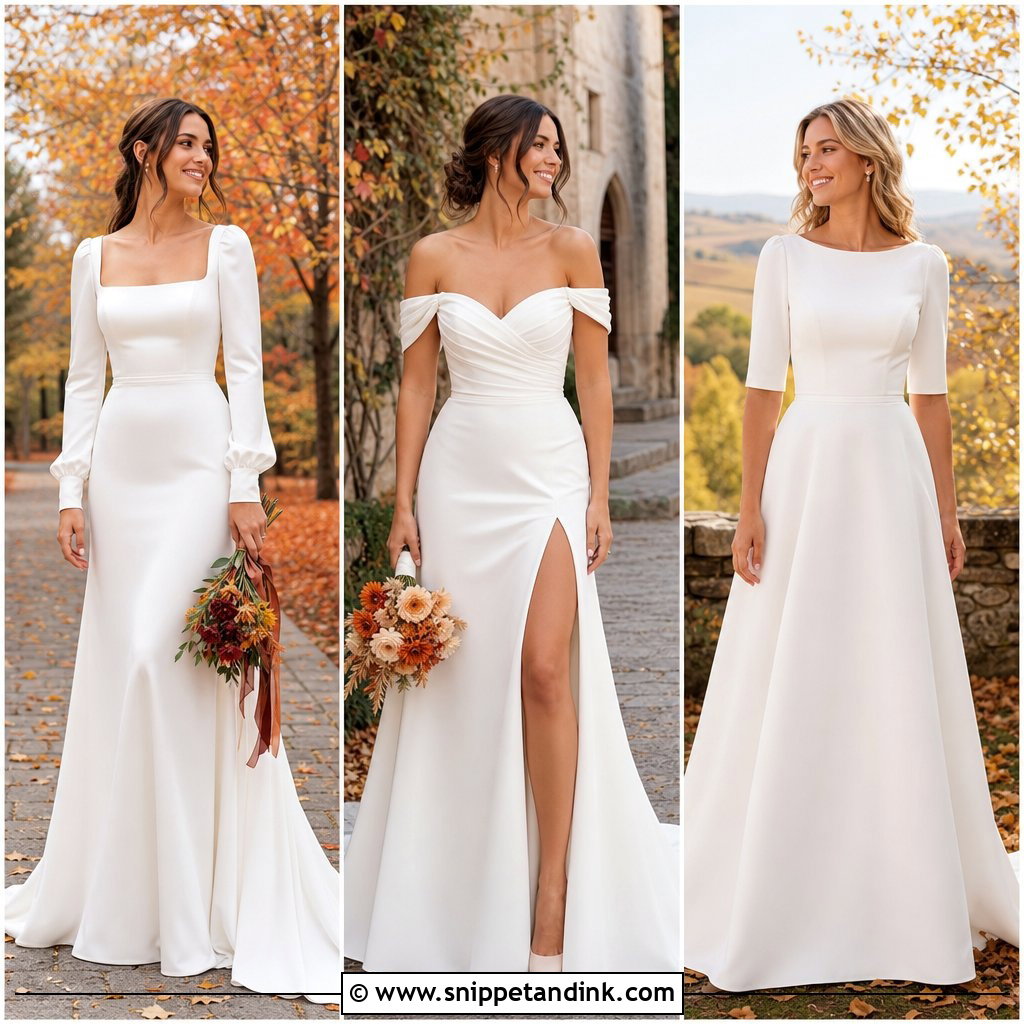
Square necklines frame the collarbone and give a gown a tidy, architectural top. Wide straps are the practical choice here, holding the neckline straight without any tape. Crepe makes it quieter; satin makes it more formal. I’d keep the hair in a low bun with a plain tulle veil, pearl earrings, ankle-strap heels and a round bouquet of white ranunculus. Neckline depth can be changed in alterations, so try it at a couple of heights before you decide. Fuller busts usually want built-in cups with the wider straps, and a petite frame often looks better with the square narrowed slightly.
7. Basque Waist White Wedding Gown
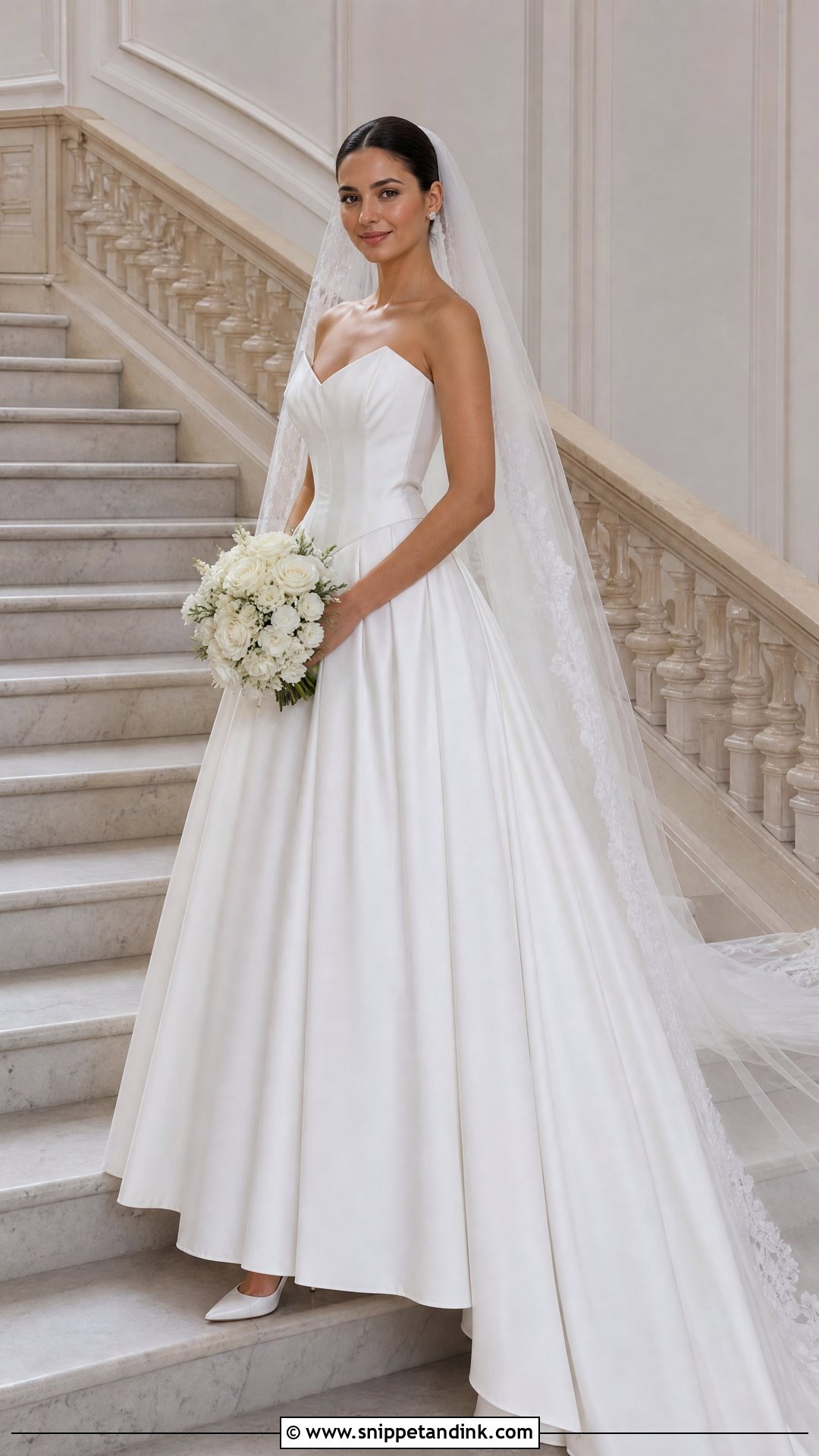
A basque waist white wedding gown dips into a point below the natural waist, which stretches the torso before the skirt opens out. Smooth satin makes it regal; embroidered fabric adds texture. Style it with a chapel veil, studs, pointed pumps and a medium bouquet held low. That last part is my own rule: carry the flowers below the point, or they cover the one detail the dress is built around. The point should lie flat when you sit. If it buckles or folds forward in a chair, the bodice is too long for your torso and needs shortening.
8. Drop Waist White Wedding Gown
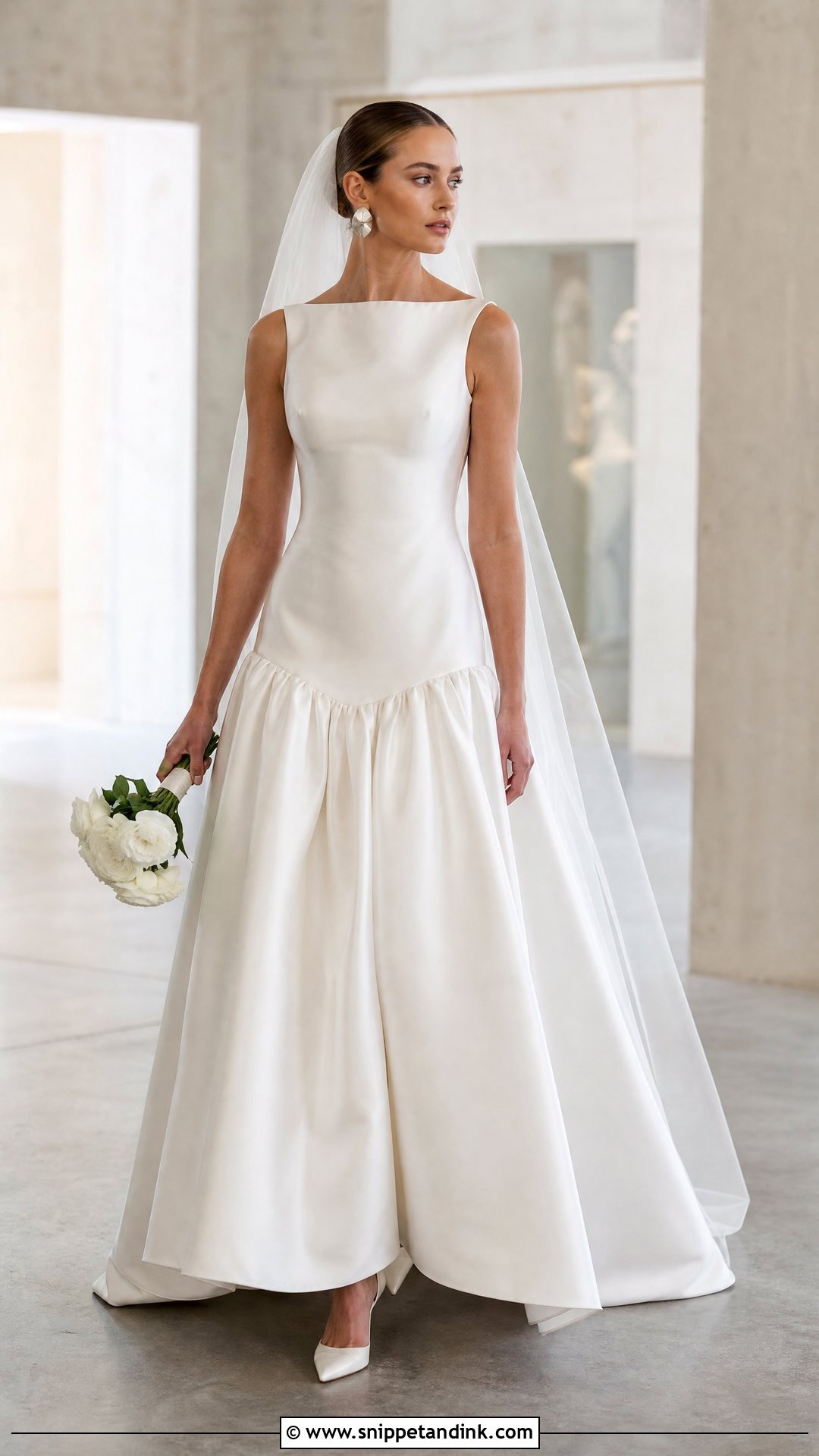
Drop waists start the skirt near the top of the hip, so the bodice becomes long and sleek. Full satin skirts make it formal, a narrower crepe skirt keeps it understated, and both can lean vintage or modern depending on the fabric. Plain veil, sculptural earrings, streamlined heels and a small bouquet keep that long line uninterrupted. This silhouette is less forgiving than an A-line because the seam has to land exactly where your hip is widest or slightly above. At the appointment, climb a few steps and sit down. Any bunching across the stomach tells you the seam is in the wrong place.
9. Off Shoulder White Wedding Gown
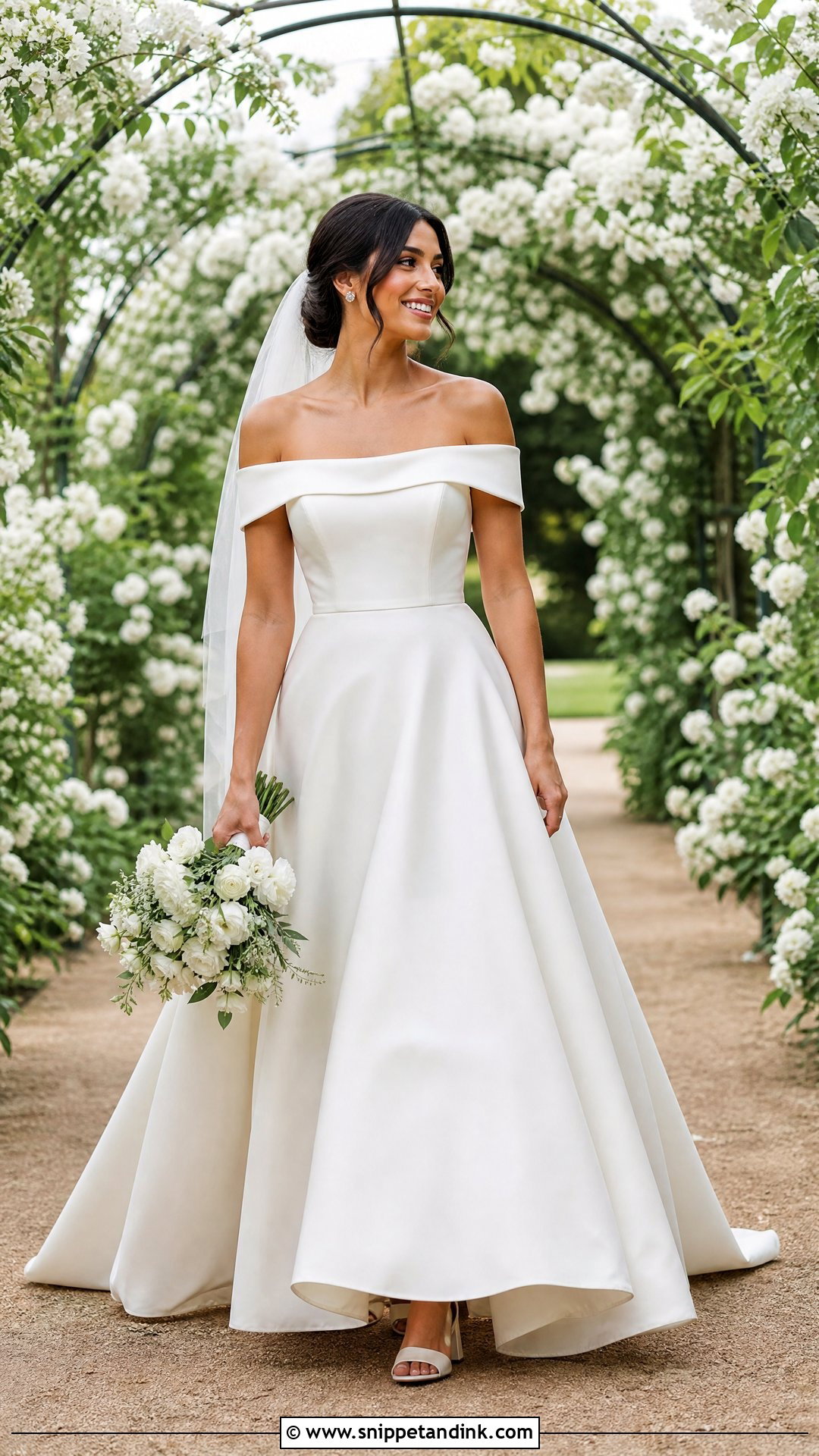
Off-shoulder necklines show off the collarbones and shoulders, but the band is a mechanical problem as much as a style one. A folded satin band gives structure; lace sleeves feel lighter. On a fitted bodice and A-line skirt, the shape suits almost any setting. I put the veil under a low updo so it doesn’t fight the bare shoulders, and keep the earrings small and the bouquet loose. Watch where the band sits. Too low and you can’t lift your arms past your chest, which you’ll notice the moment you try to cut the cake. Detachable sleeves solve this neatly for the reception.
10. High Neck White Wedding Gown
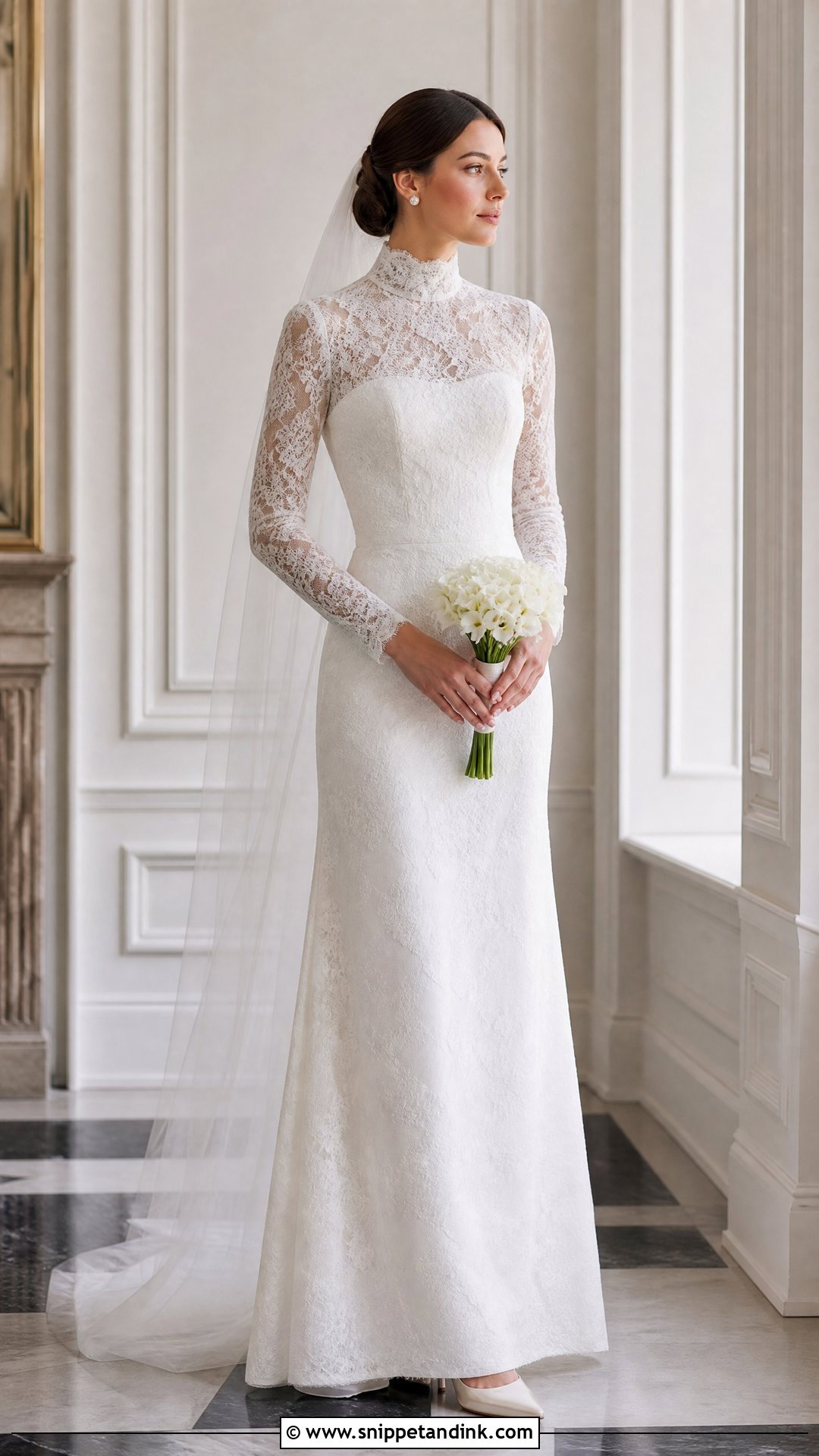
A high neck pulls attention up to the face. Sheer lace keeps it airy, while crepe or satin makes it crisp and minimal. Pair the covered bodice with a column or soft A-line skirt. Skip the necklace entirely and wear pearl studs, a sleek bun and a simple veil fixed at the back of the hair, with closed-toe pumps and a slim bouquet. The collar should lie flat with no rubbing; I check it when the bride turns her head fully to each side. Shorter necks often do better with the collar lowered a touch or an illusion lace panel. Covered buttons down the back add interest without clutter.
11. Chiffon Beach White Wedding Gown
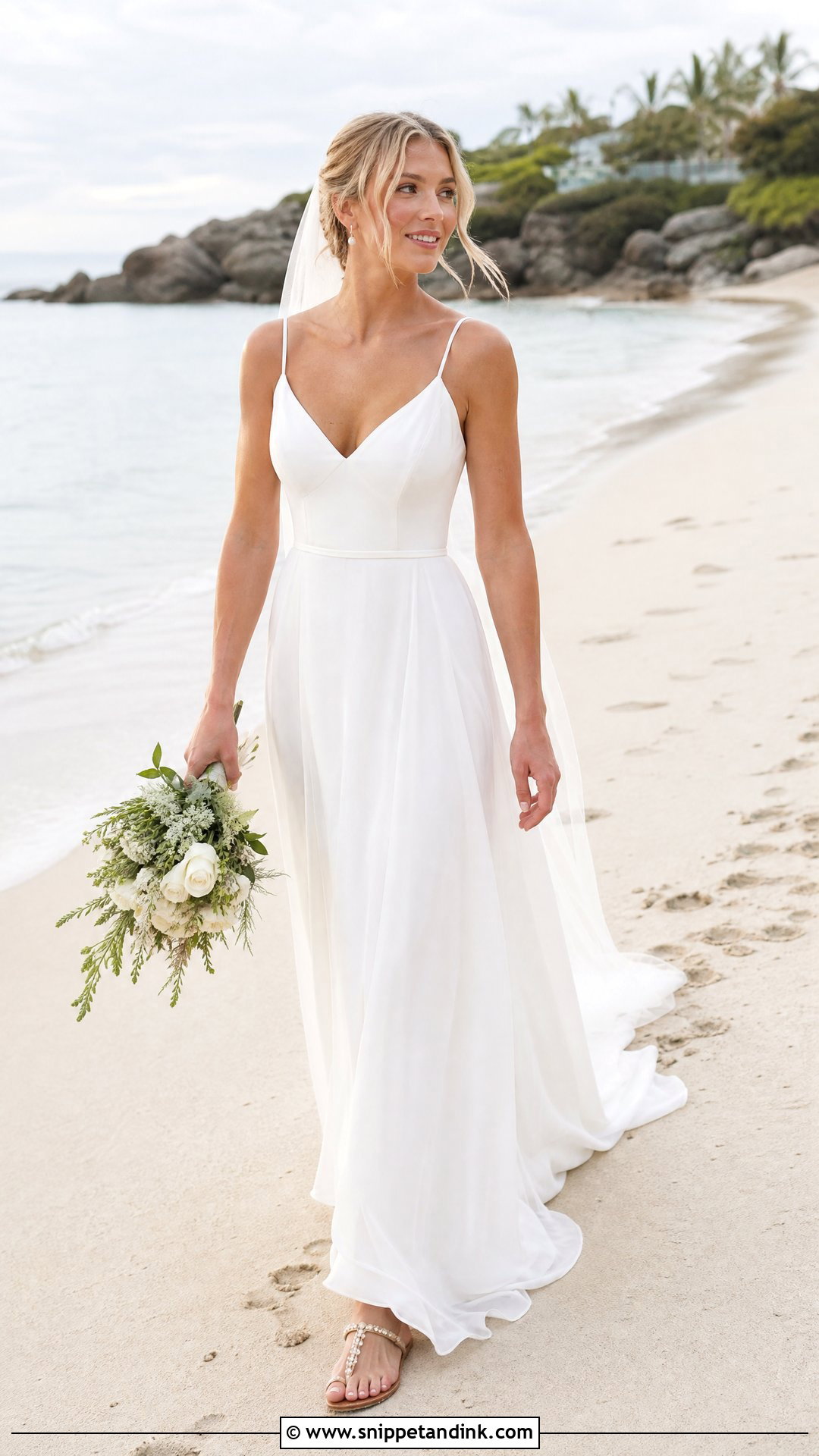
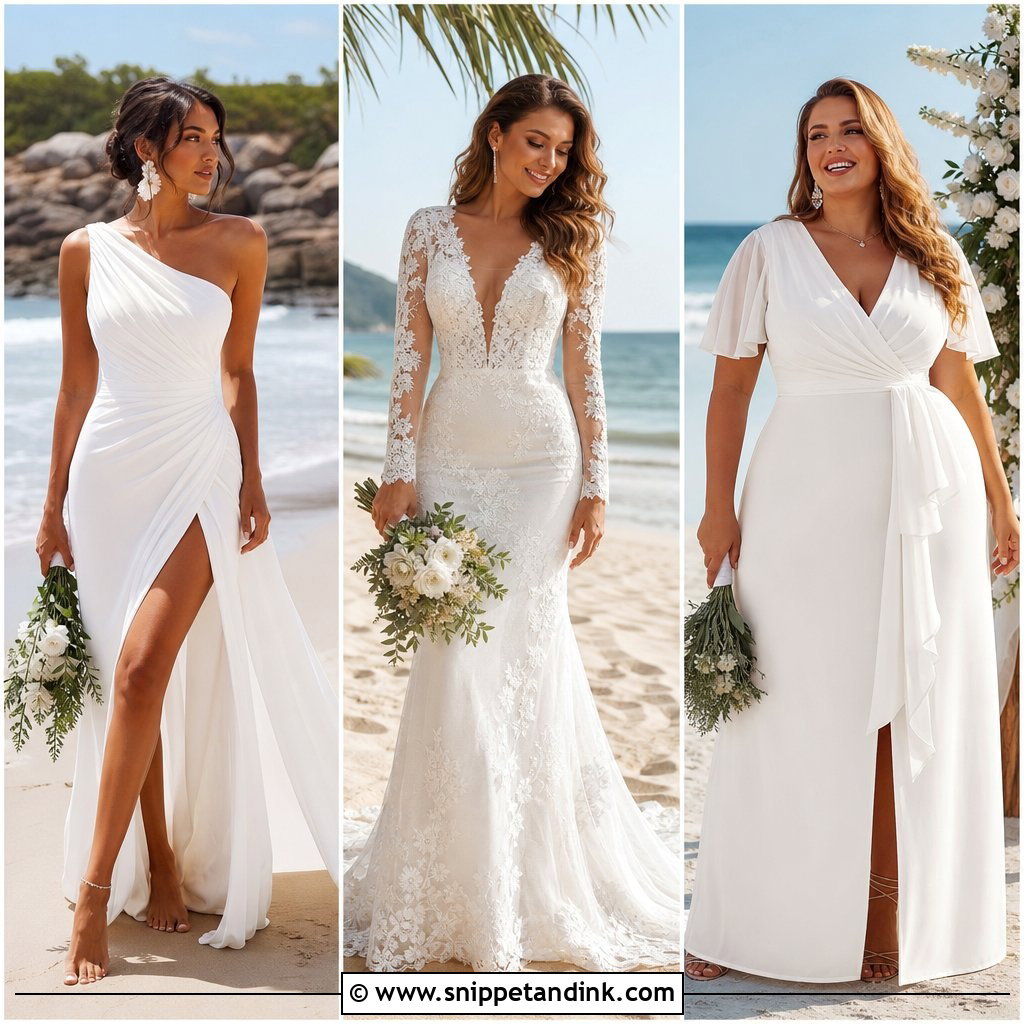
Chiffon is the fabric I reach for at the water because it moves in a breeze instead of fighting it. Choose a lined gown with a supportive bodice, slim straps and a light skirt. Keep the train to a short sweep; a cathedral train on sand fills with grit and turns grey at the hem within the hour. Style it with a light veil, small pearl hoops, flat embellished sandals and a loose bouquet with greenery. Wind changes the hair plan too, so an updo or controlled waves will last longer than loose curls. Check the lining in full sun, since chiffon turns transparent faster than you’d expect, and have the hem set for your sandals on the actual ground you’ll walk.
12. Tea Length White Wedding Frock
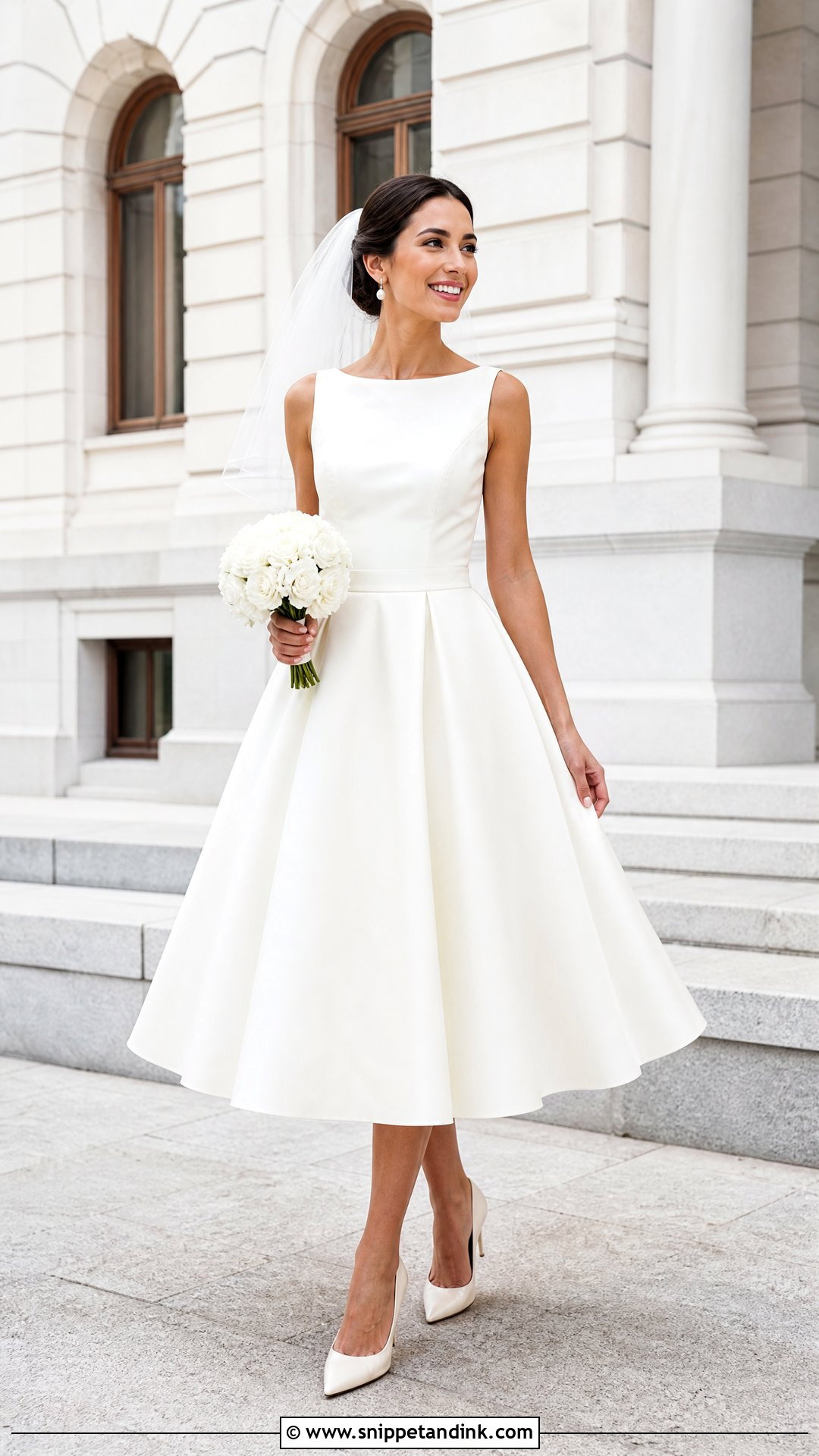
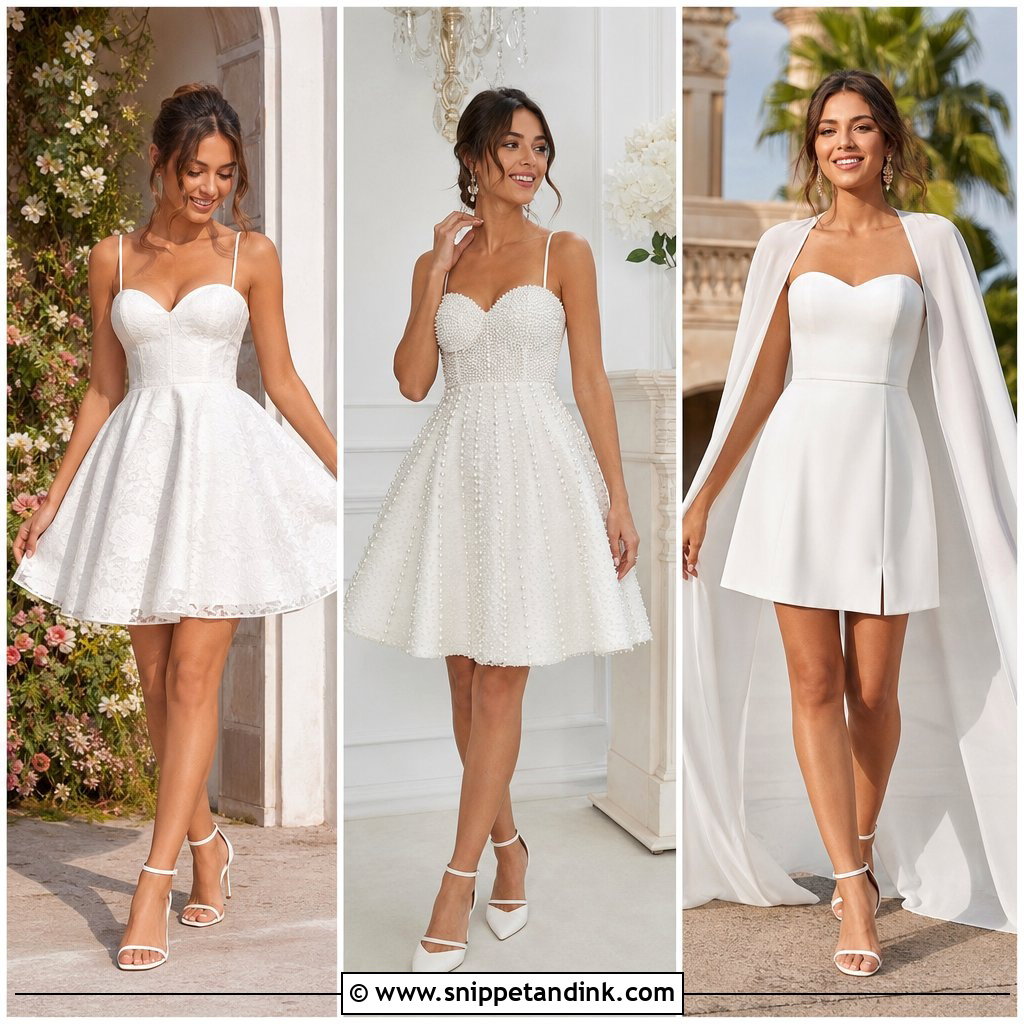
Tea length ends between knee and ankle, and suddenly the shoes are part of the outfit. A fitted bodice and full skirt is the classic shape. Satin gives it body, lace leans vintage and layered tulle bounces. Add a short veil or a neat bow, pearl earrings and pointed pumps or low slingbacks, with a compact bouquet to match the shorter proportion. I love this length for civil ceremonies, daytime parties and anyone who wants to dance without a bustle. The catch: an exposed hem shows every wobble, so I check it from all sides with the bride standing on a flat floor.
13. Minimal White Slip Wedding Gown
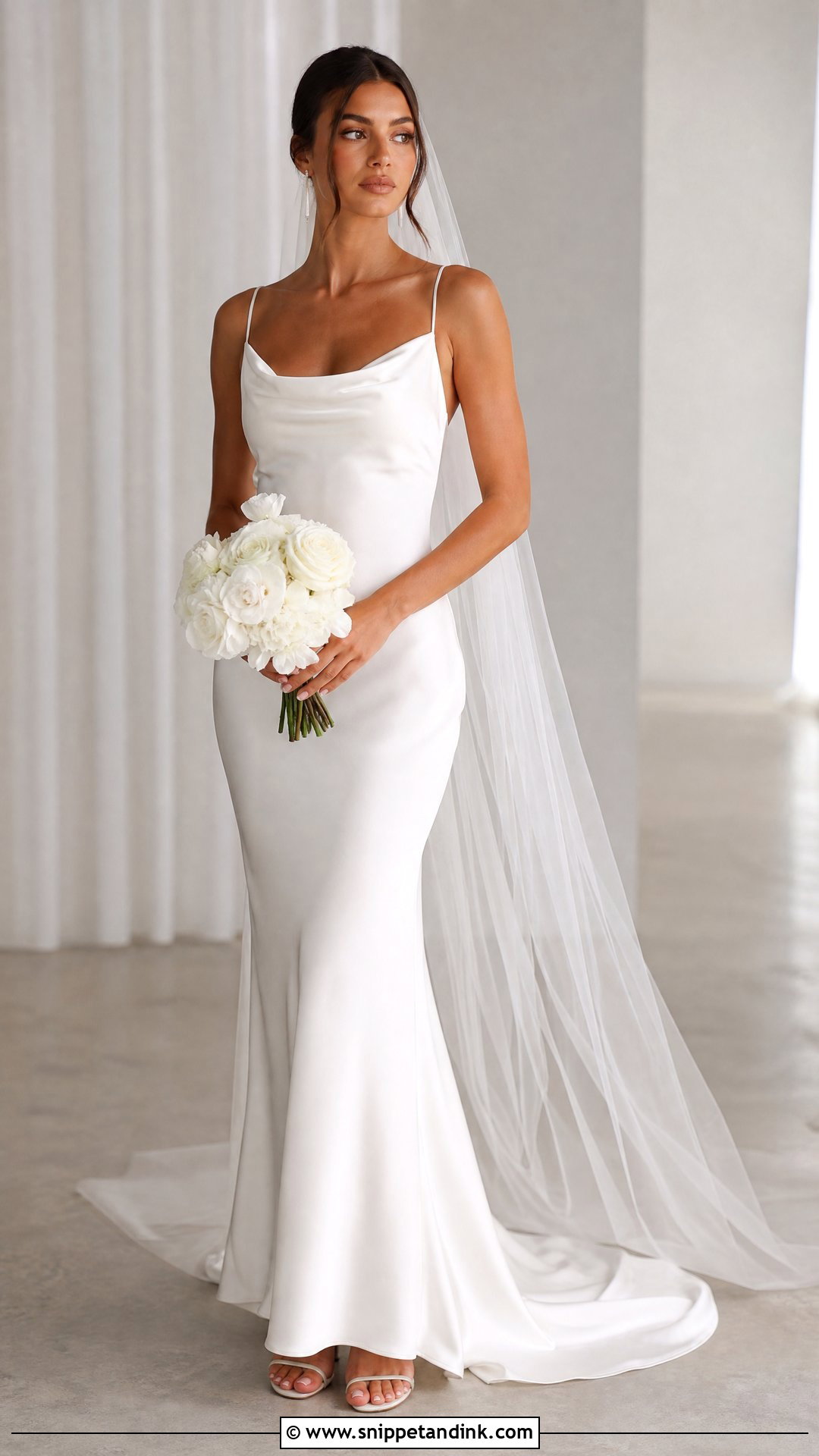
A slip gown has almost no structure, which means the fit has to be exact. Bias-cut satin or silk drapes over the body, and the neckline, cowl, scoop or straight, is the only real detail. A long sheer veil, fine drops, strappy heels and a single-flower bouquet suit it. Undergarments are the main worry: bias satin shows every seam, edge and line, so bring the exact pieces you’ll wear. View it in daylight as well as indoors before the final fitting, because daylight is far less kind to a thin fabric. A satin scarf or wrap gives coverage for a religious ceremony without altering the dress.
14. Floral Applique White Wedding Gown
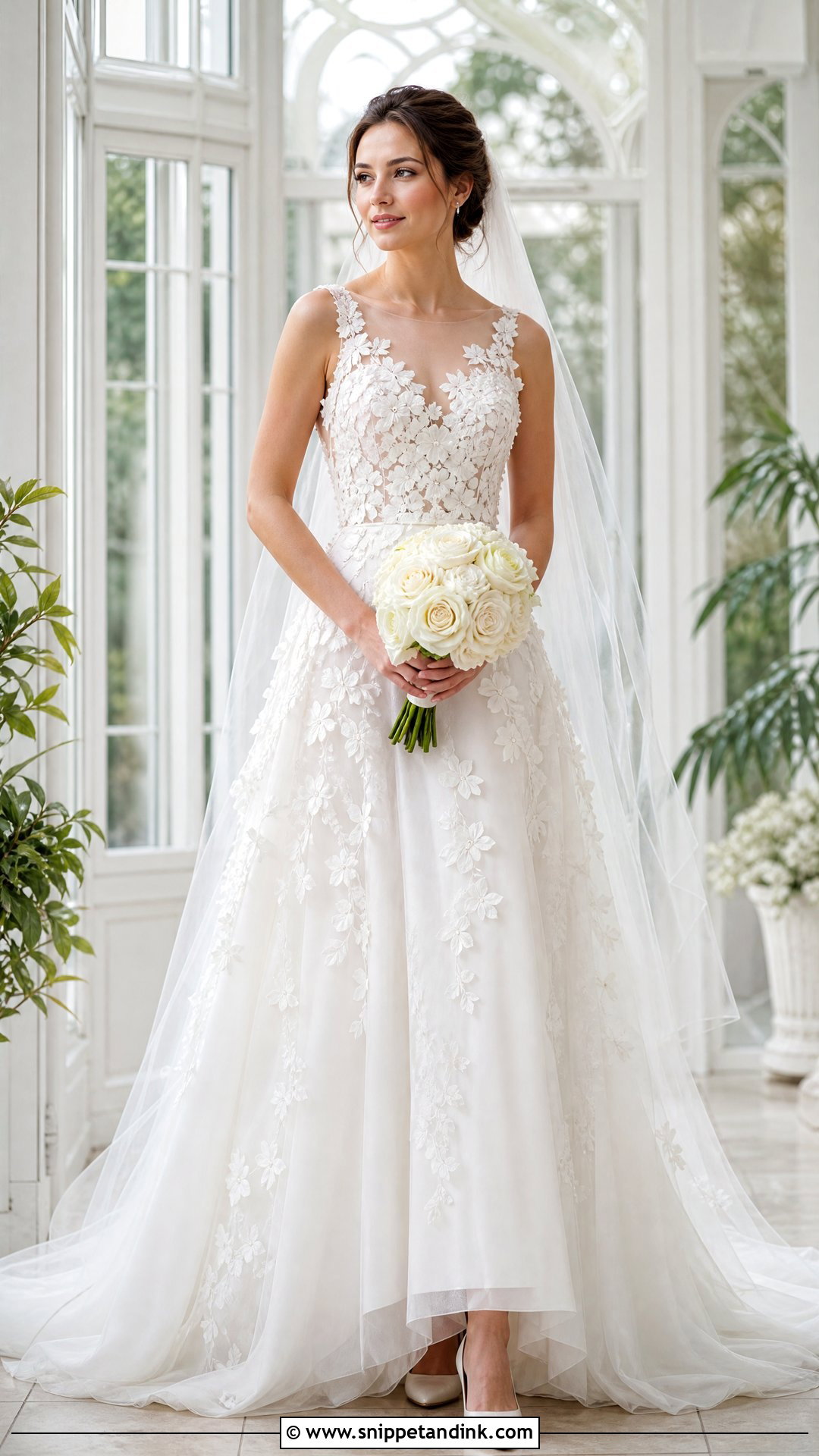
Raised floral appliqués give a gown texture, especially when they’re dense on the bodice and scatter down the skirt. A lined tulle base lets the flowers stand out without making the dress see-through. Because the dress is already busy, I keep everything else quiet: plain veil, small studs, ivory pumps and a bouquet of one or two flower types. Flat lace flowers are subtle; raised petals are not. Alterations are the risk with appliqué, since any flowers removed at a seam need sewing back where the pattern still looks intended. A clean, simple hairstyle stops the head from competing with the bodice.
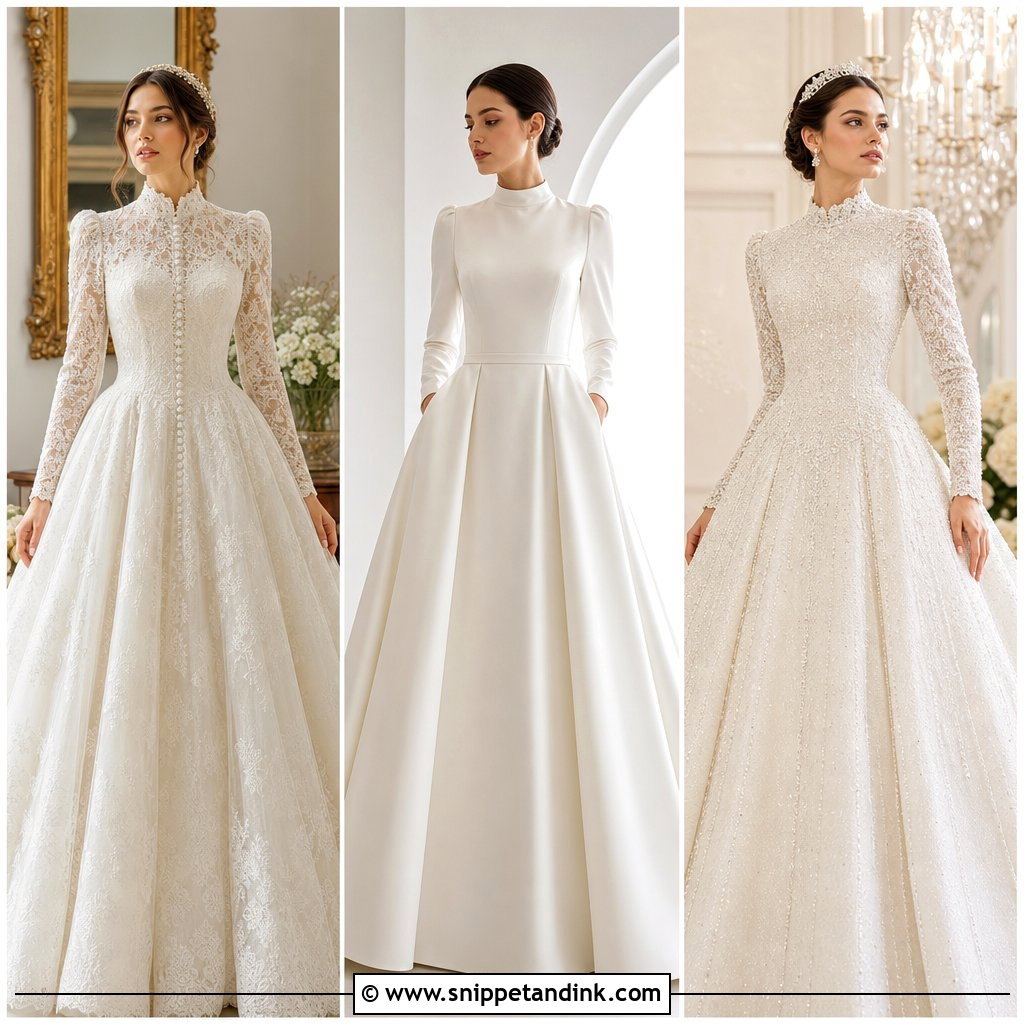

15. Pearl Beaded White Wedding Gown
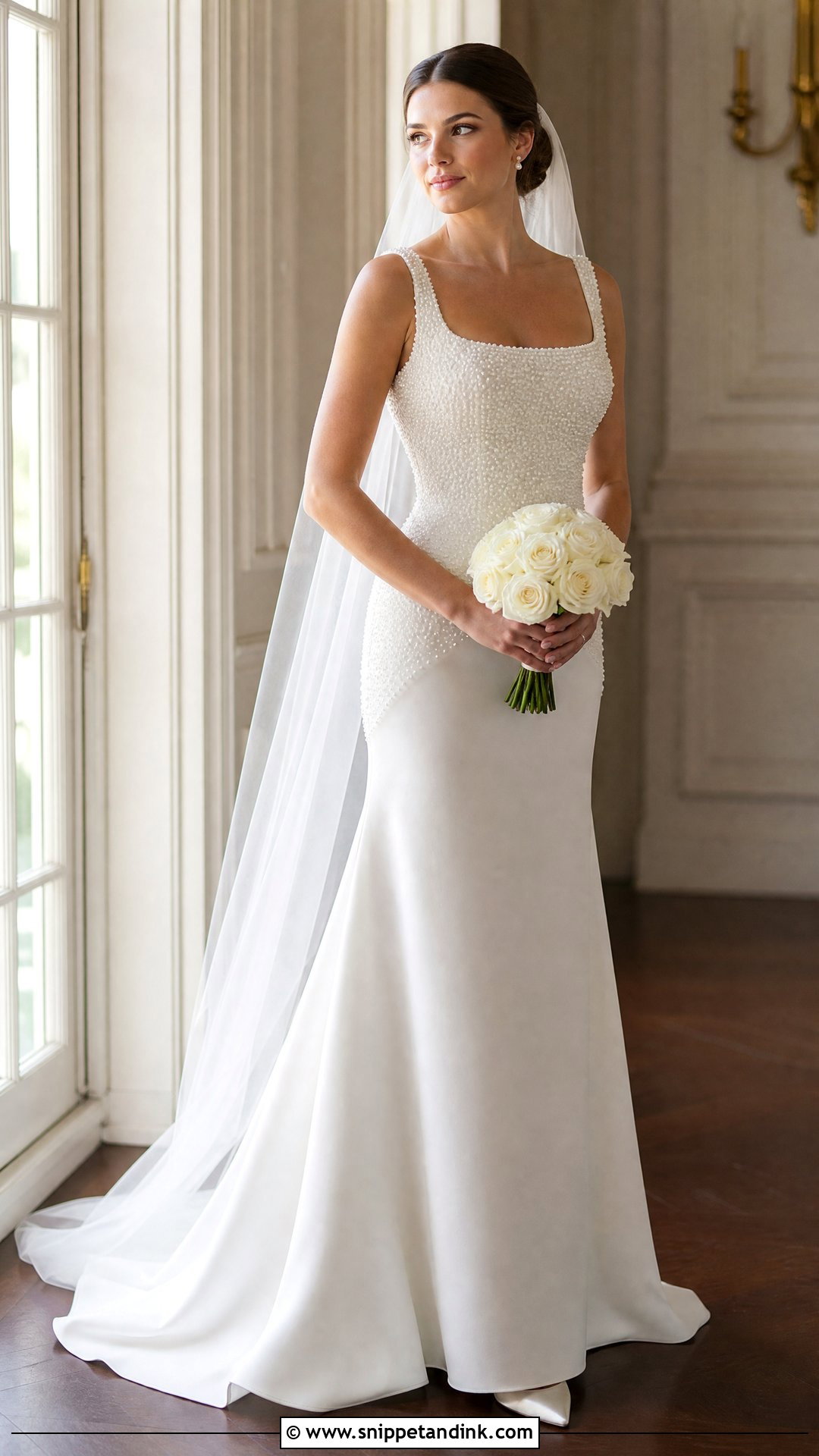
Pearl beading glows rather than sparkles, which suits brides who find crystals too flashy. Look for pearls spaced evenly on tulle, lace or a structured bodice, with a smooth skirt to calm things down. Pearl studs, a plain fingertip veil, satin pumps and a small rose bouquet finish it; skip any necklace if the neckline is already beaded. Beaded gowns are heavy. Walk around the fitting room for a few minutes before deciding, and ask whether the bodice is lined so beads don’t scratch the skin. After every alteration, check for loose threads, and keep a small packet of matching pearls for last-minute repairs.
16. Corset White Wedding Gown
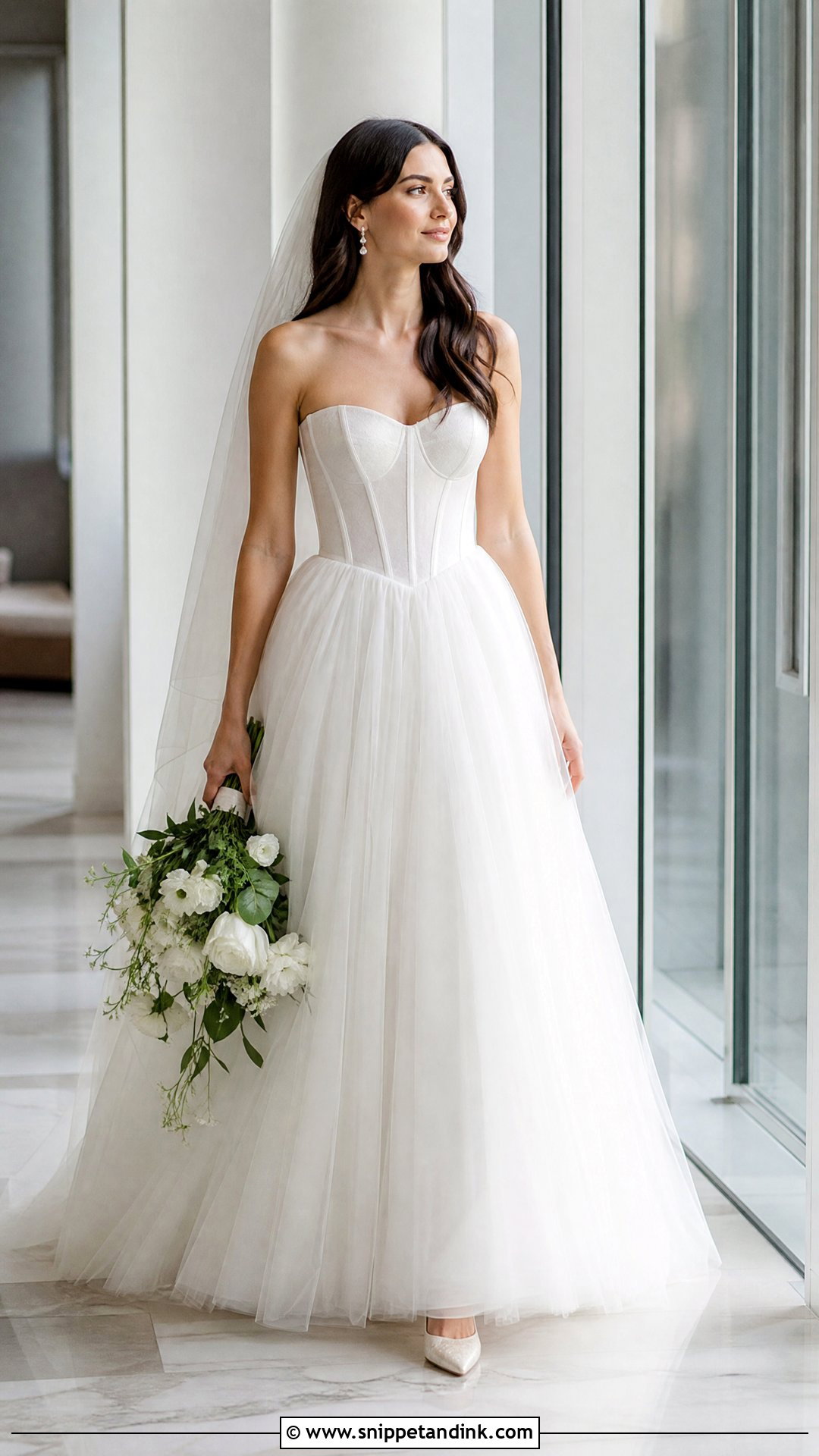
Corset bodices give real shape, and the boning does most of the work. Look for proper boning, secure cups and either lace-up or hidden back closure. Pair it with a full satin skirt for drama or flowing tulle to soften the structure. A simple veil, delicate drops, pointed heels and a loose bouquet keep it romantic. If visible boning feels too exposed, a lined bodice keeps the shape with more coverage. I always tell brides: supported, not squeezed. If you can’t take a full breath or sit to eat, it’s too tight, and a corset that’s too tight will dig in at the top edge by evening.
17. Cape Sleeve White Wedding Gown
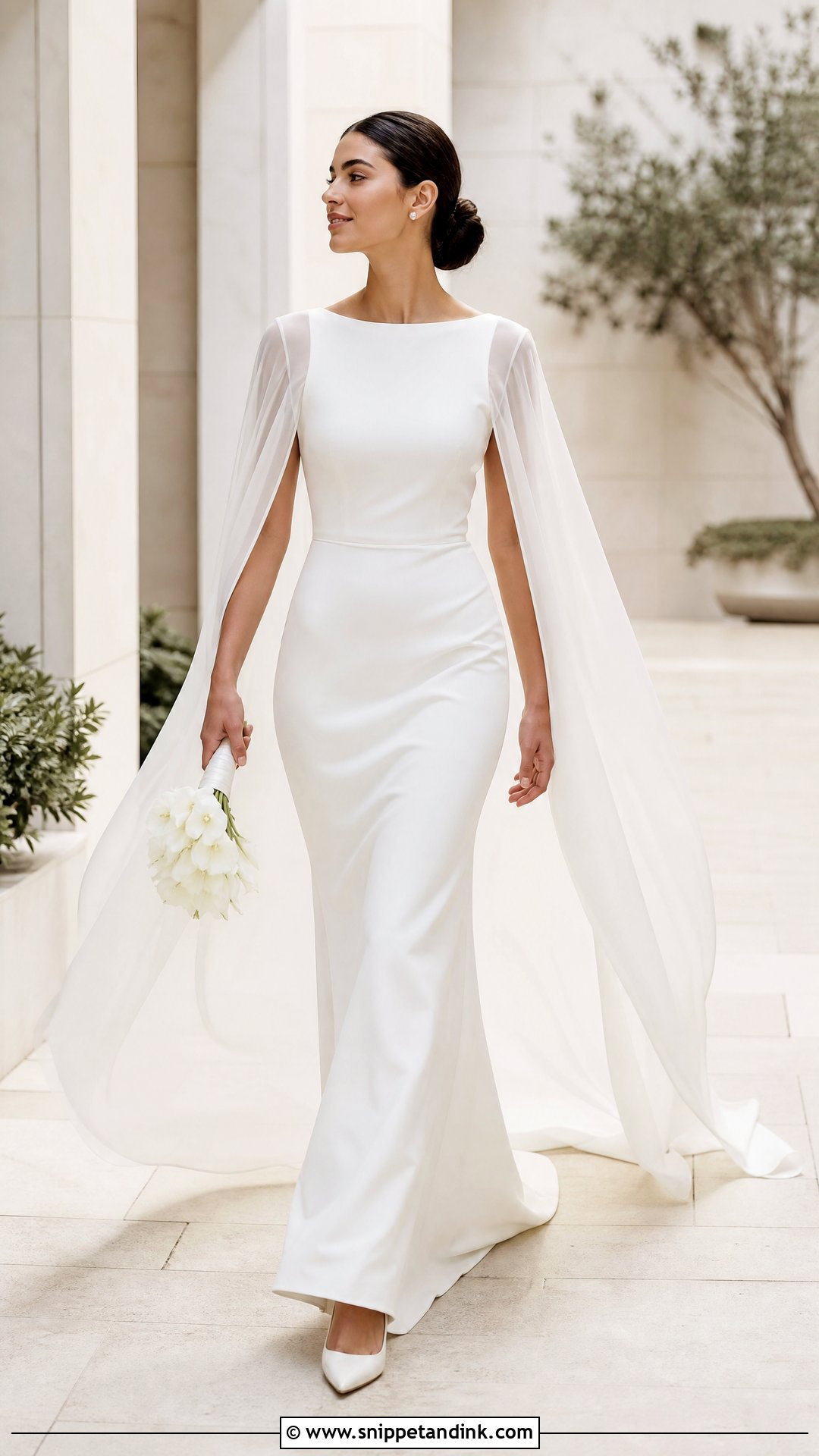
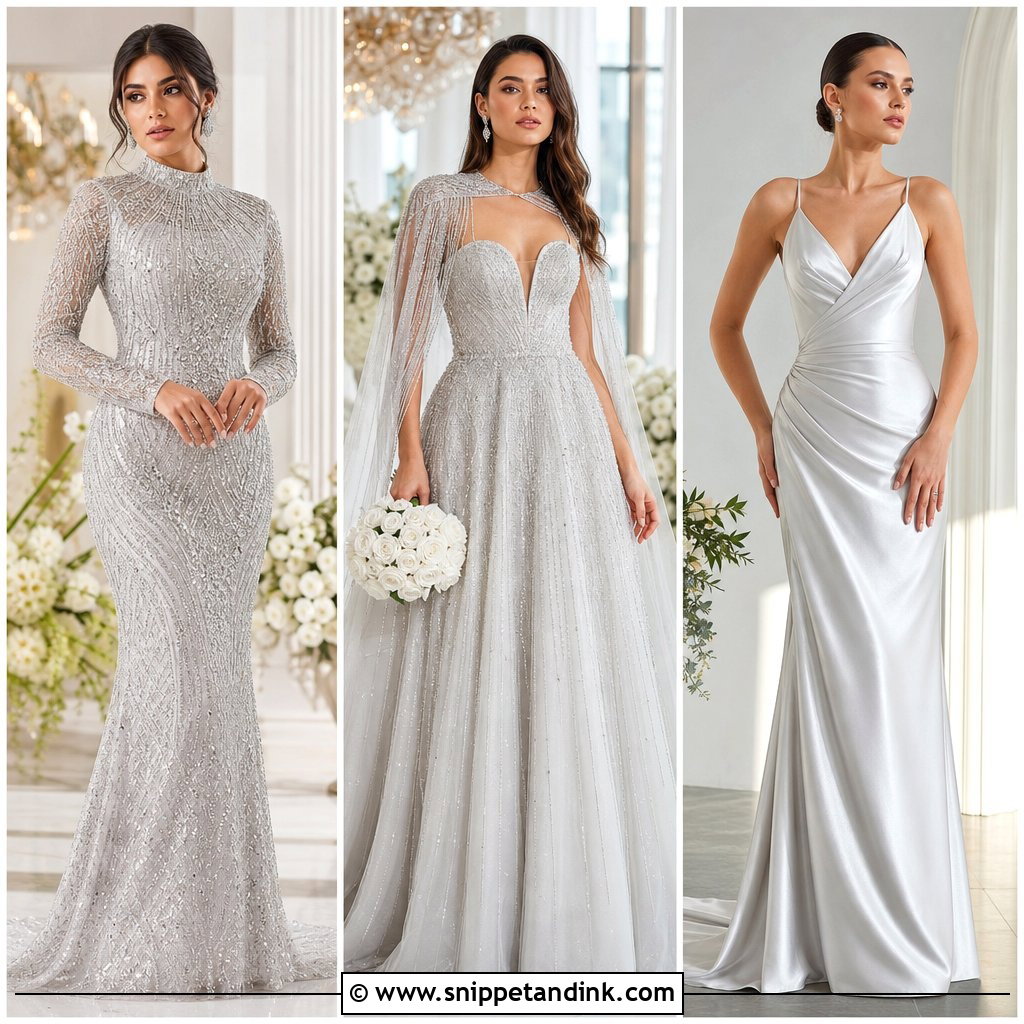
A cape gives coverage over the shoulders and arms and moves every time you turn. A crepe column under a sheer chiffon cape feels modern; lace cape sleeves on an A-line skirt feel more traditional. Keep accessories streamlined with a low bun, small earrings, ivory pumps and a narrow bouquet. A floor-length cape often makes a veil unnecessary, though a short plain veil works with a shoulder-length cape. Look at how it attaches before you buy. Buttons or hidden snaps let it come off for the reception, and during alterations make sure the fabric doesn’t bunch under the arms when you lift your bouquet.
18. Detachable Overskirt White Wedding Gown
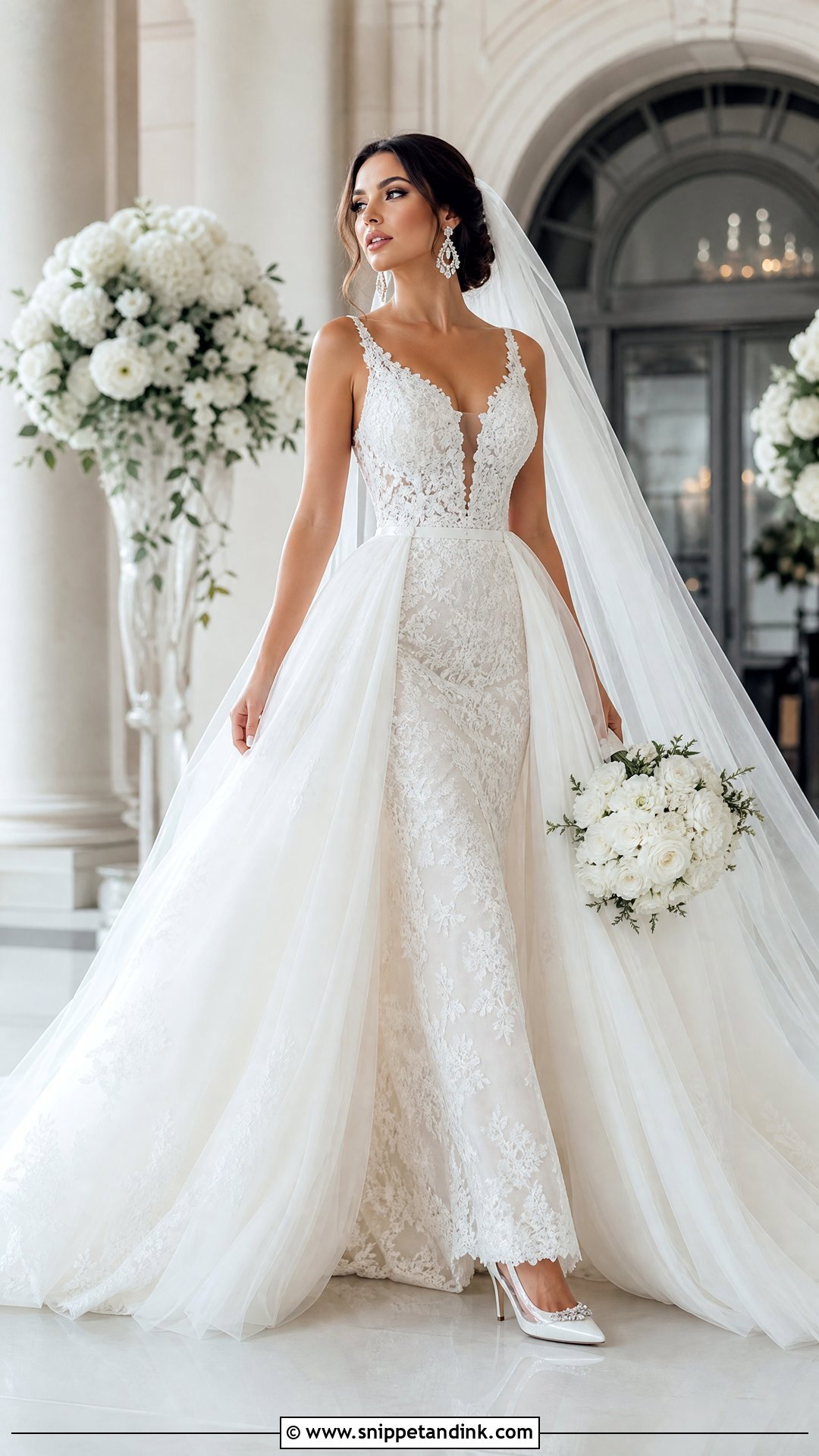
With a detachable overskirt, one gown becomes two outfits. Start with a fitted crepe, satin or lace base, then add a full tulle or mikado overskirt for the ceremony with a long veil, statement earrings, classic heels and a structured bouquet. After the ceremony, the overskirt and veil come off and you’re in a slimmer dress for dancing. The base gown has to look finished on its own, with clean seams and a good waistline, not like a slip waiting for its skirt. Hooks and snaps at the waist and back must be secure. I have a bridesmaid practise removing and refitting it at the last fitting, because doing it for the first time in a bathroom at the venue never goes smoothly.
19. Plus Size White Wedding Gown
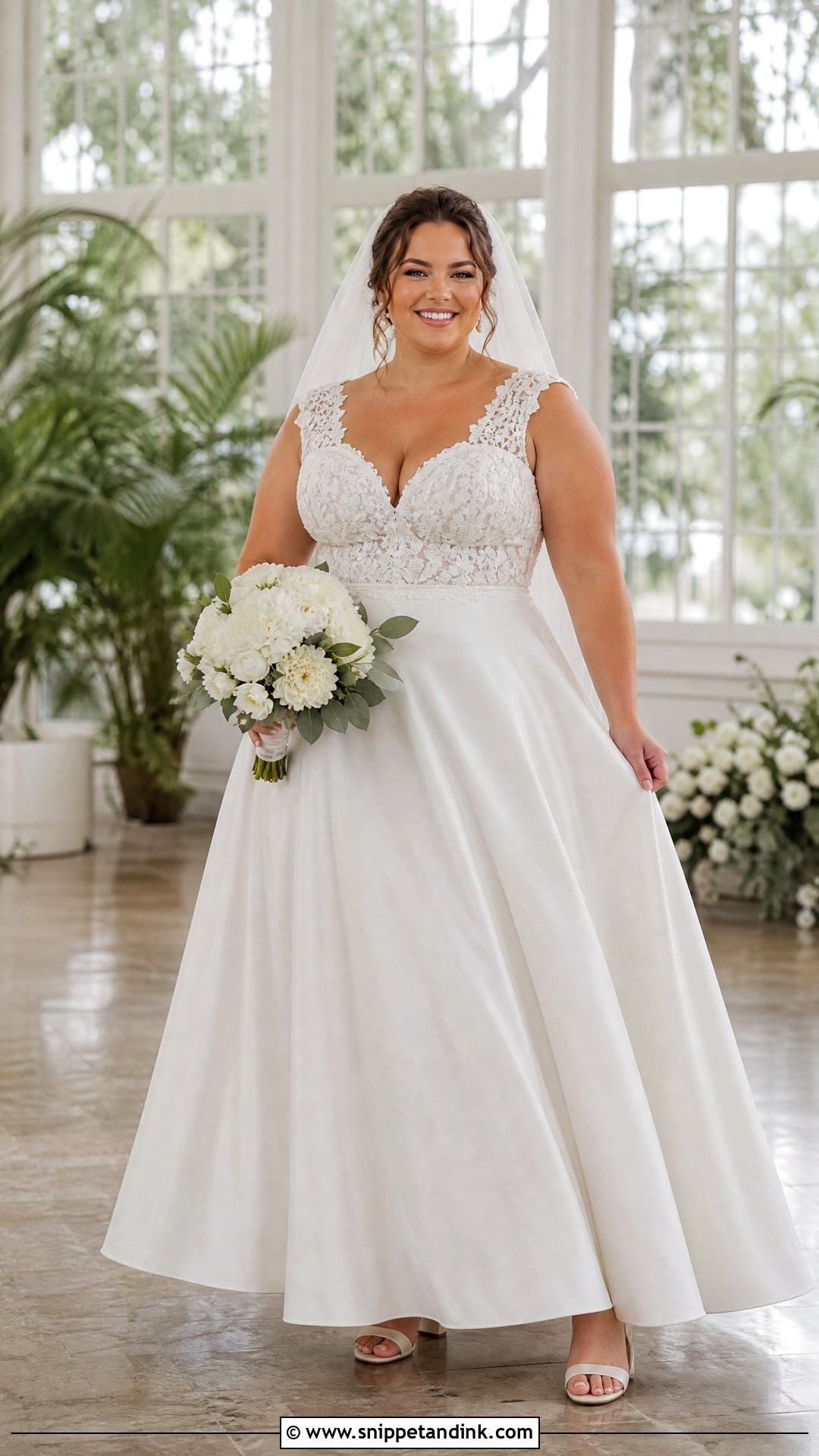
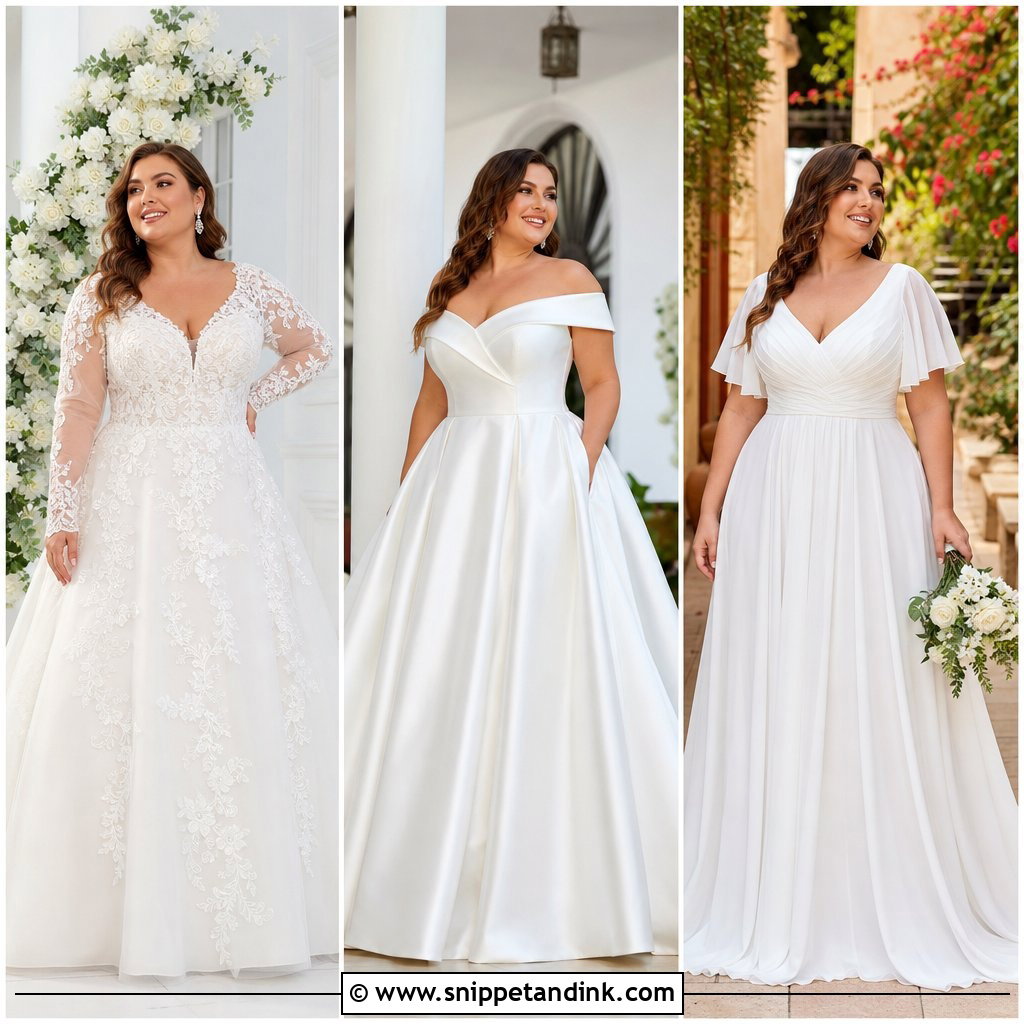
A well-cut plus size white wedding gown should give support and proportion without boxing you into one style. A-line or fit-and-flare shapes with a structured bodice, wider straps and a gently defined waist are a good start. Satin keeps lines clean; lace panels add texture. A medium veil, supportive block heels, balanced earrings and a bouquet scaled to the skirt complete it. Before booking, ask the salon which sample sizes they carry so you’re trying on dresses that actually fit. Good alterations reshape the dress to you rather than just pulling it tighter. Sit, walk, raise your arms and test the neckline at every fitting.

20. Modest White Wedding Gown
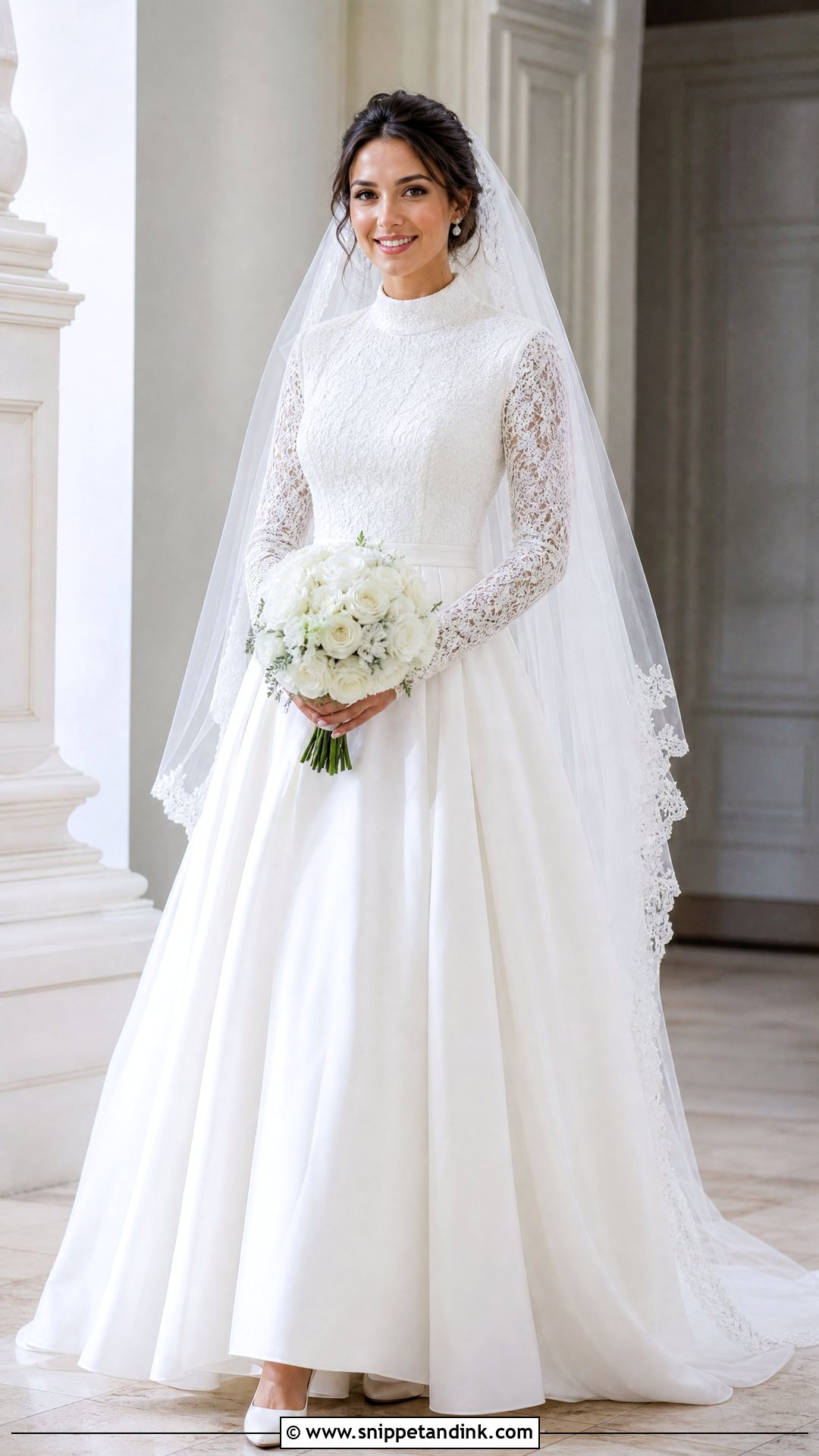
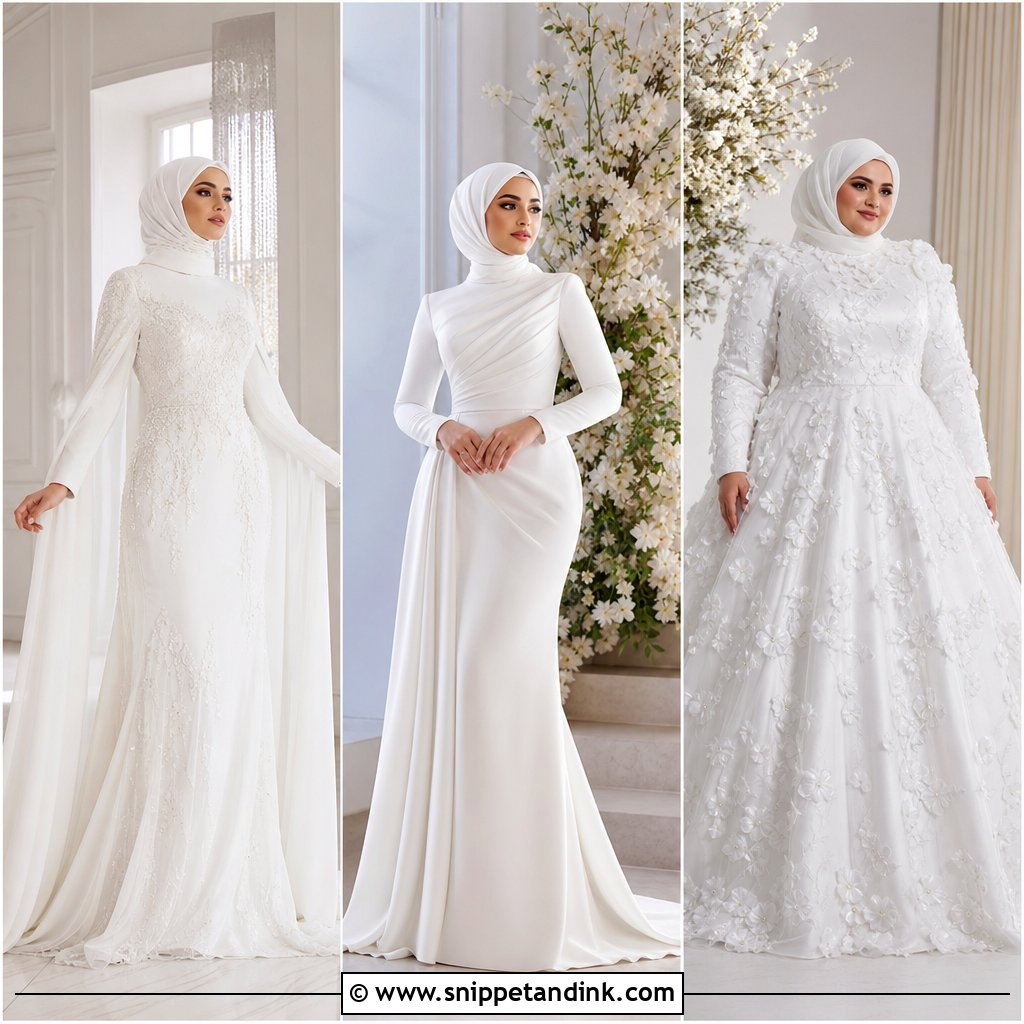
Modest gowns can look current while giving full coverage. A higher neckline, lined bodice, full sleeves and an A-line or softly gathered skirt is the usual base; crepe feels modern, while lace on the sleeves and upper bodice feels traditional. Wear a chapel veil, pearl earrings, closed-toe heels and a round bouquet. Covered buttons down the back add detail without exposing anything. The lining needs checking under strong light, as some fabrics that look opaque in a salon go sheer under a photographer’s flash. Make sure armholes allow movement and cuffs aren’t tight. A narrow satin belt or waist seam gives shape while staying modest.
From Final Fitting to the Hanger: Pressing, Bustling and Storing Your Gown
Most salons ask you to order around eight to ten months ahead, and alterations usually need two or three fittings over the last couple of months. Book the final fitting about two weeks out, close enough that your body won’t change much, far enough that there’s time to fix a problem. Take whoever will bustle you on the day to that fitting so they can learn the hooks and ribbons by hand.
The week of the wedding
Collect the gown pressed, then hang it from the inner loops, not the shoulders, which stretch under the weight of a heavy skirt. Keep it in a breathable cotton bag rather than plastic. On the morning, a hand steamer held a few inches away takes out travel creases in satin and chiffon; never let the steamer touch beading or appliqué. Pack a small kit: white chalk for marks, fashion tape, safety pins, a few spare pearls or beads and a white cloth for drips.
After it’s all over
Get it to a specialist cleaner within a few weeks. Sugar from champagne or cake dries clear, then oxidises into brown marks months later, even on a dress that looks clean. Once cleaned, store it flat or loosely folded in acid-free tissue in a cool, dark place, not the attic or basement. Refold it along different lines once a year so permanent creases don’t set into the fabric.
Bring Your Shoes to Every Fitting
No single fabric or silhouette makes a bride. What matters is that the gown fits your personality and your venue, and that you can move freely in it for twelve hours or more. Save the pictures that pull you in, but try a few necklines and fabrics in person, because the dress you circle online is often not the one that wins in the mirror. Take your wedding shoes and undergarments to every fitting. Sit, walk and lift your arms in each gown. Careful alterations, restrained accessories and a hem set to your real shoes are what turn a dress into an outfit that feels like yours.
You'll Like These Ideas:




Leave a Reply