
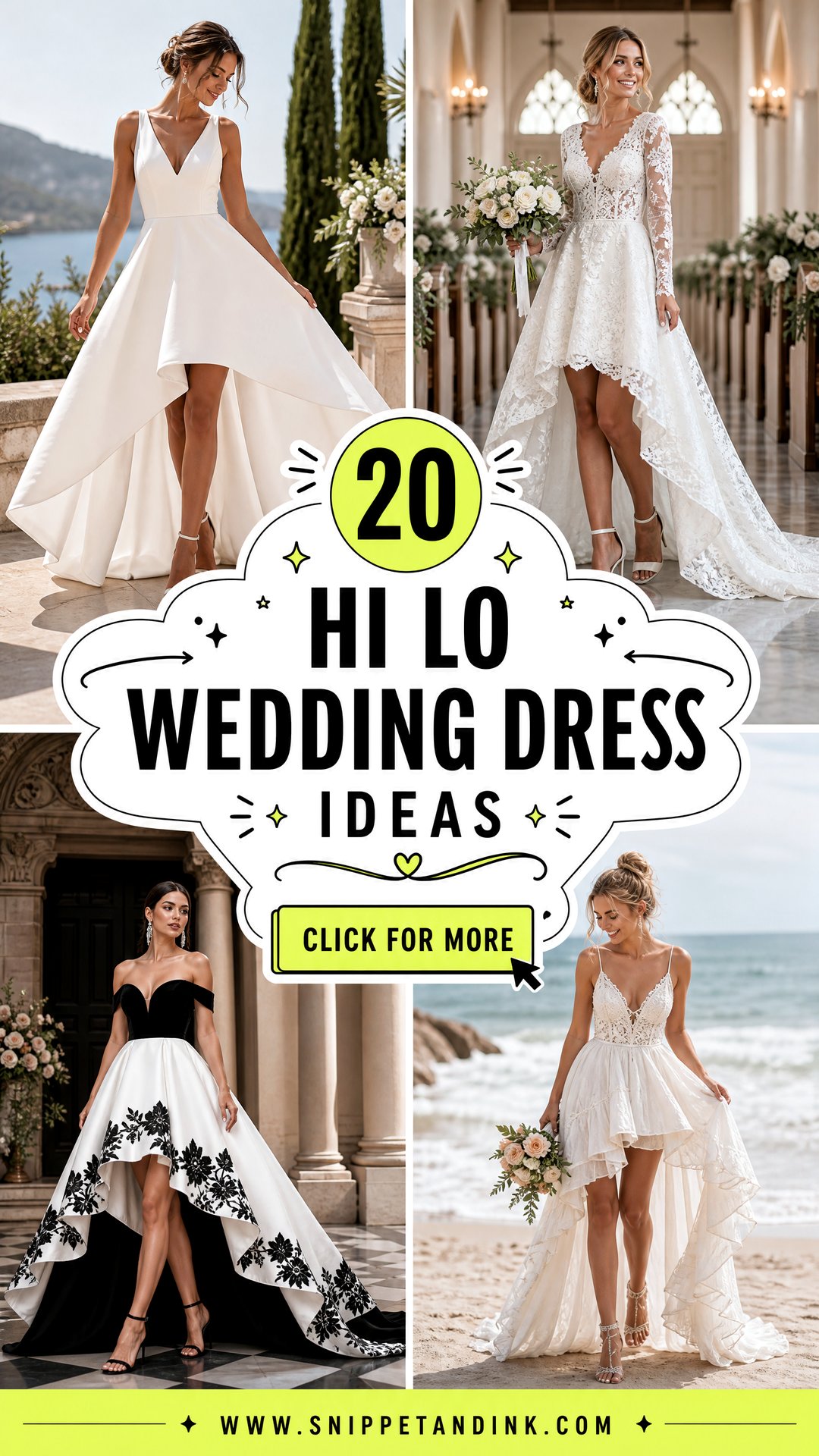
A high-low hem gives you a gown’s drama at the back and your legs free at the front. The front can stop anywhere from above the knee to the ankle, while the back sweeps to the floor or into a train. Styling one is different from styling a full-length dress, because your shoes, ankles and the inside of the hem are suddenly on show. I’ve built twenty complete looks below in satin, lace, tulle, chiffon, crepe and organza, for formal ballrooms, courthouses, beaches and everything between.
Where the Front Hem Should Stop on Your Leg
The front length is the decision that makes or breaks a high-low dress, and it’s easy to get wrong because you only see yourself standing in a mirror. I set it with the bride sitting, then standing, then walking toward me.
- Just above or at the knee feels playful and works best with a fairly gentle drop to the back, so the dress doesn’t look split in two.
- Mid-calf is the most forgiving length for most heights. On petite brides, I sometimes take it a little higher so the leg doesn’t look cut off.
- Ankle length with a long back reads closest to a traditional gown and shows only the shoes.
- Sit on a chair at your fitting. A knee-length front can ride several inches higher when seated, which matters for a ceremony with a front row.
The curve between front and back matters too. A gradual slope suits soft fabrics like chiffon and tulle; a sharper drop needs a stiffer fabric like satin or mikado to look intentional.
1. Strapless Satin Hi Lo Wedding Dress
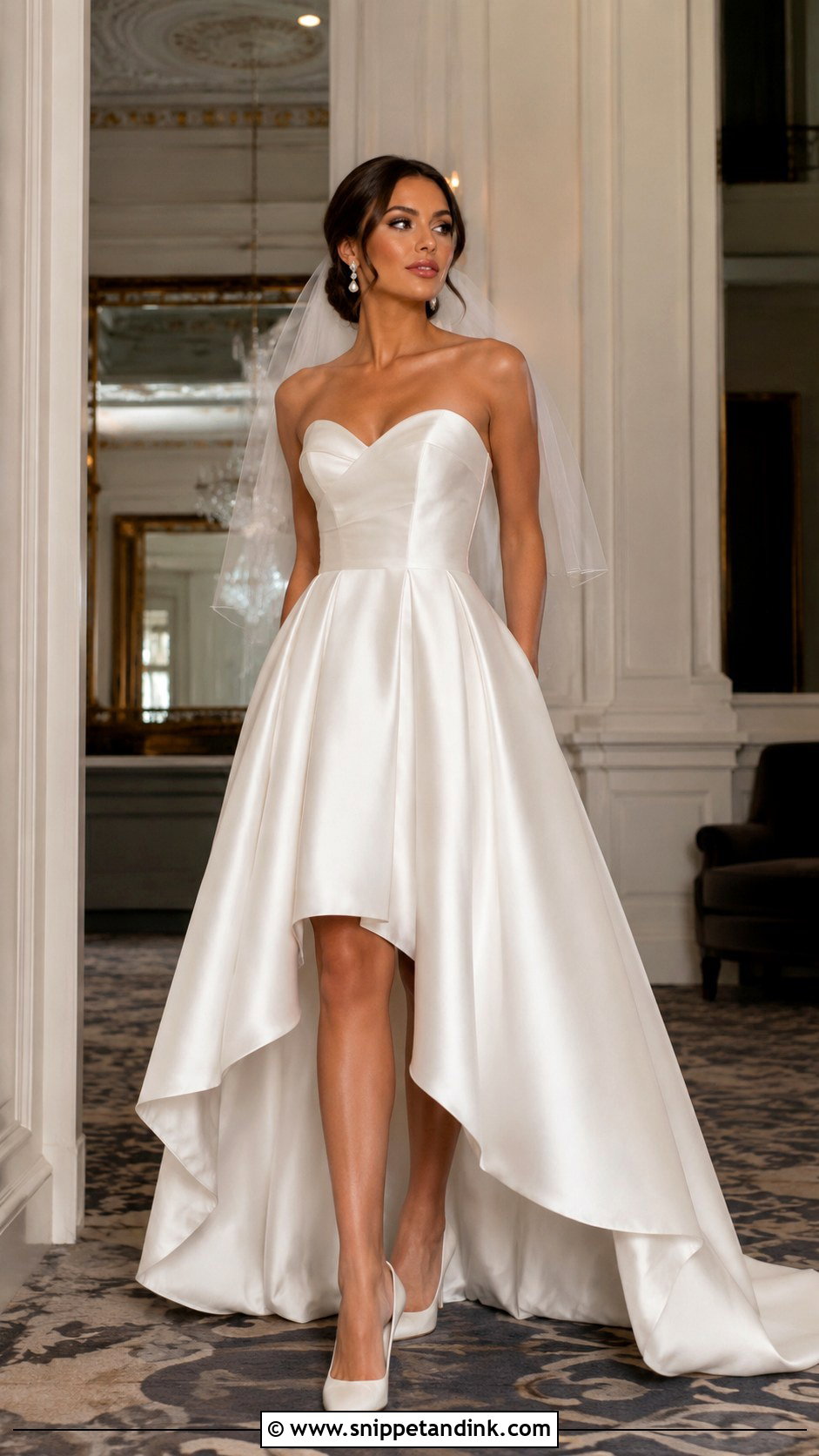
Satin is the fabric that makes a high-low hem look deliberate instead of unfinished, because its weight lets the curve hang cleanly. Choose a fitted sweetheart or straight-across bodice with proper internal boning, and a softly pleated skirt. Pointed ivory pumps are the classic choice; embellished slingbacks add more sparkle. Pearl drops, a sleek low bun and a fingertip veil short enough to stay clear of the back hem finish it, with a small satin clutch. Hotels and modern event spaces suit it.
2. Lace V Neck Hi Lo Wedding Dress
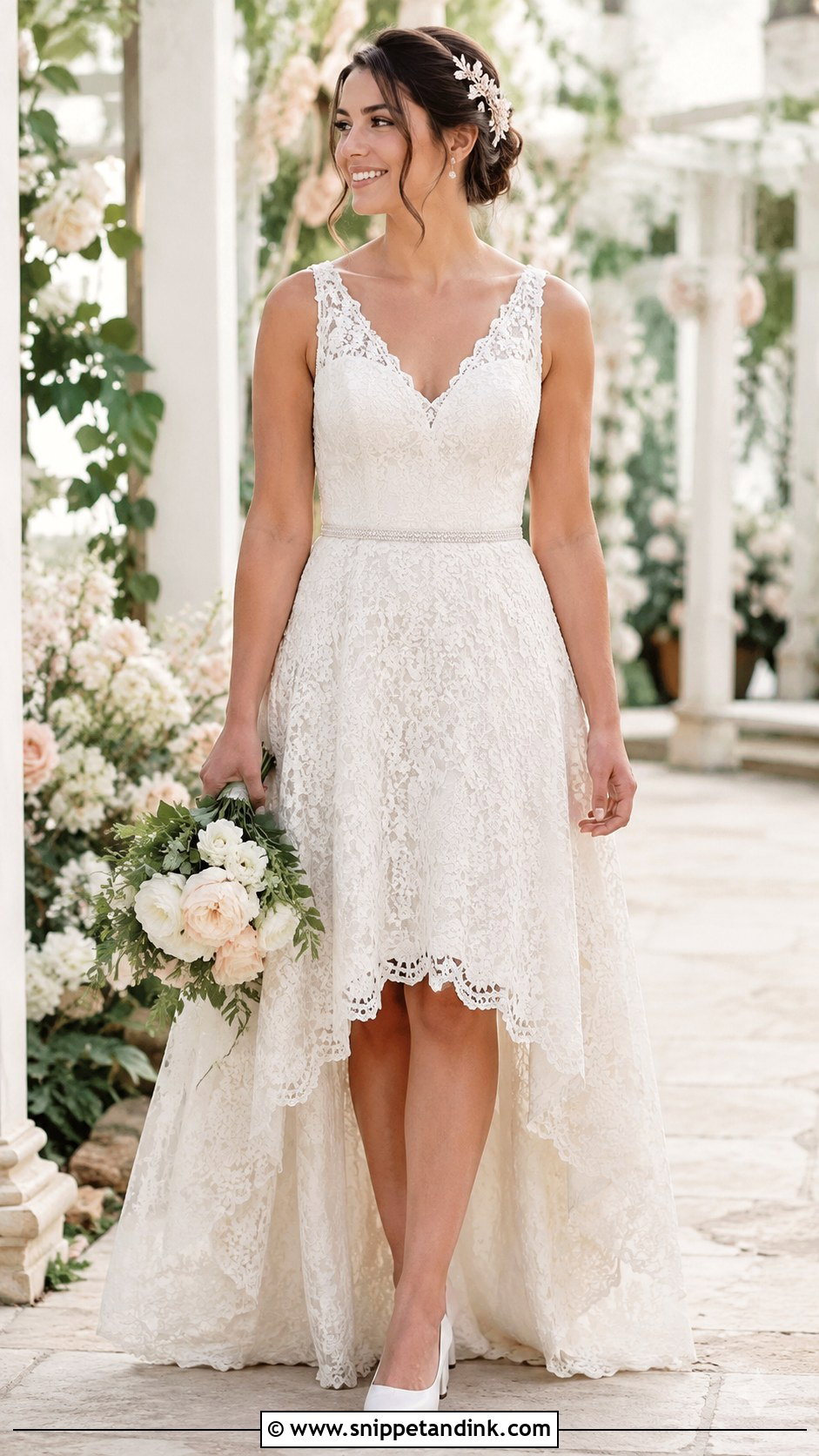
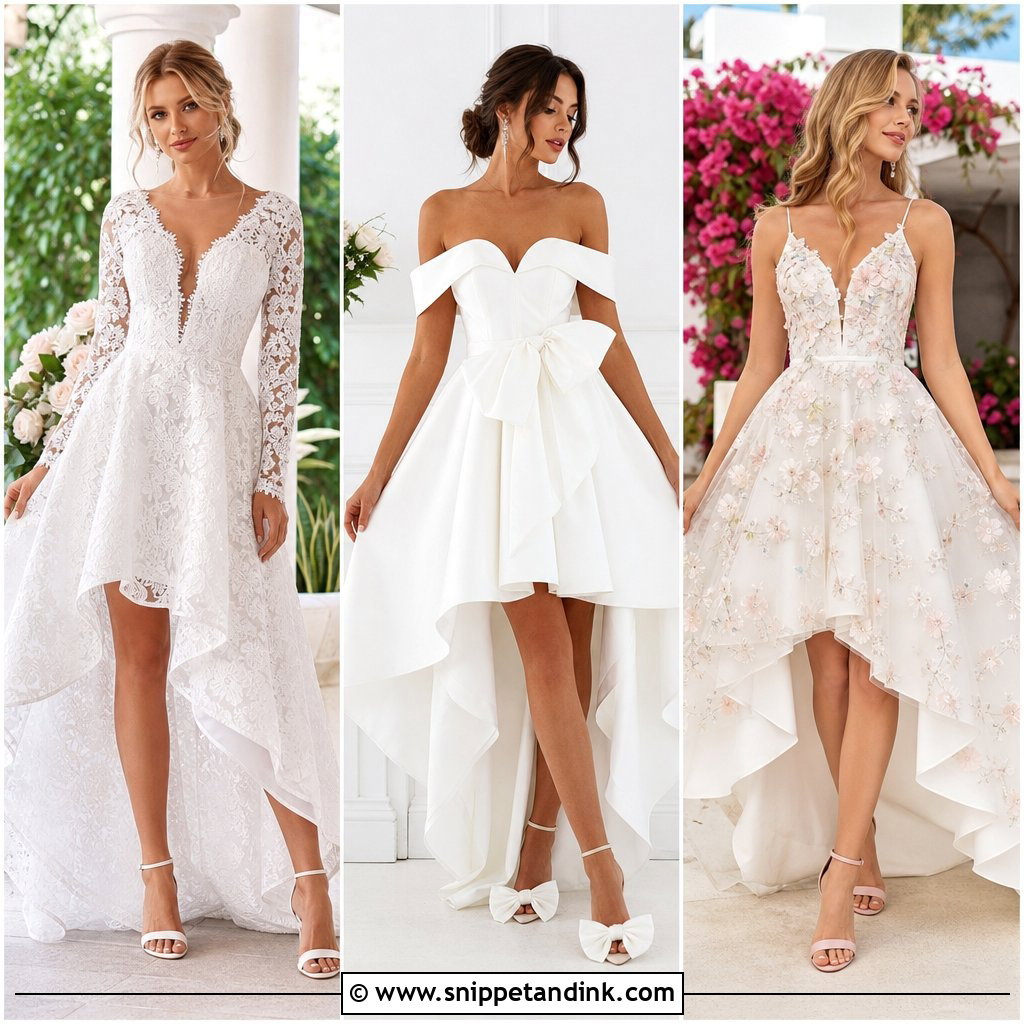
Lace on an uneven hem only looks right with a finished scalloped edge following the curve. A straight-cut lace hem frays and looks like an alteration. Look for a V-neck bodice with supportive straps, a defined waist and a skirt lined right to the front edge, so the lining doesn’t peek out. Closed-toe block heels keep you steady outdoors. Pearl studs, a slim bracelet and a floral comb add detail. Wear a loose chignon or soft waves, and bring an ivory wrap for cool evenings at gardens or historic homes.
3. Off Shoulder Hi Lo Ball Gown
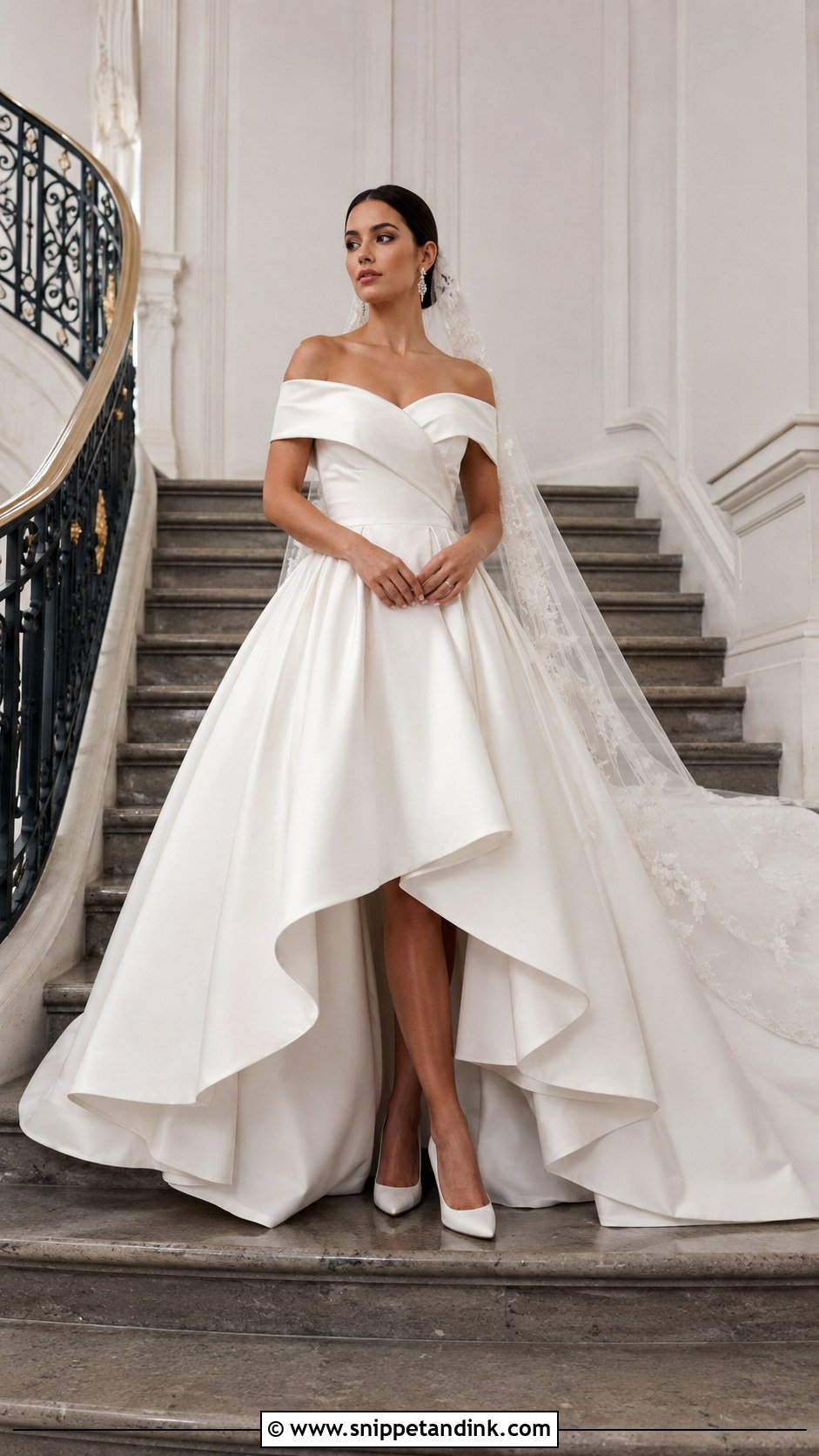
Want ball-gown grandeur without hiding your shoes? An off-shoulder high-low skirt gives the drama at the back and freedom at the front, but only in a fabric stiff enough to hold the cut. Soft fabrics just look uneven. Mikado, satin or heavy organza work. Choose a structured bodice with a folded neckline or short draped sleeves. Simple pointed pumps, crystal earrings and a neat updo balance the volume. If you wear a cathedral veil, it should run past the train so the two layers don’t blur. Skip the necklace. Grand staircases and formal halls show it off.
4. Tulle Hi Lo Wedding Dress
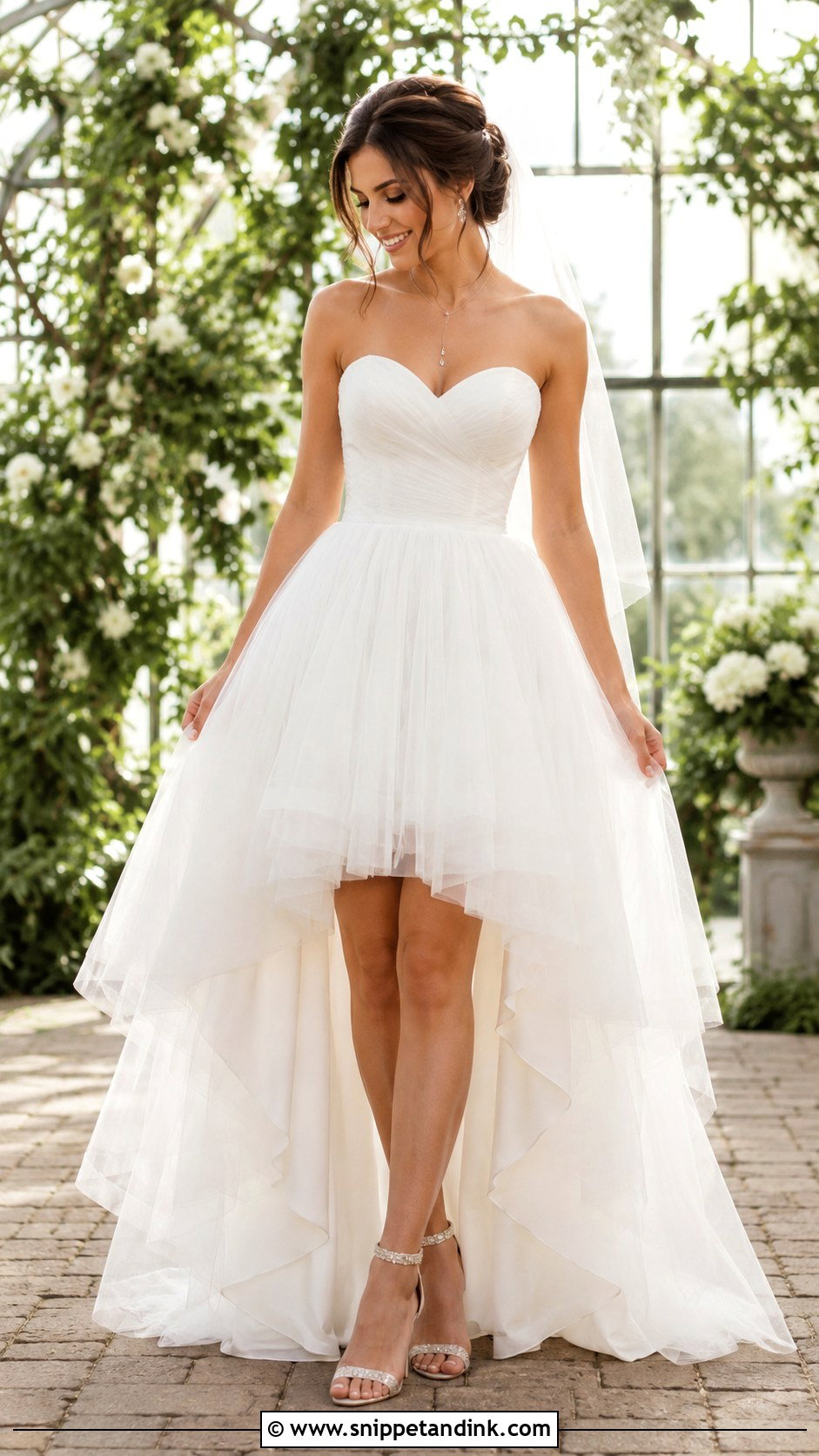
Tulle makes the softest high-low, but it’s also where I see the messiest hems: each layer has to be cut to its own curve or they stack unevenly at the side. I prefer a tea-length front that falls gradually to the floor at the back. A fitted bodice keeps the top defined over a gathered or tiered skirt. Crystal ankle-strap heels tie the visible shoes to the airy fabric. A fine pendant, small earrings, a simple tulle veil and a low textured bun finish it. Ask your tailor to shape each layer for a clean, flowing hemline.
5. Minimalist Crepe Hi Lo Wedding Dress
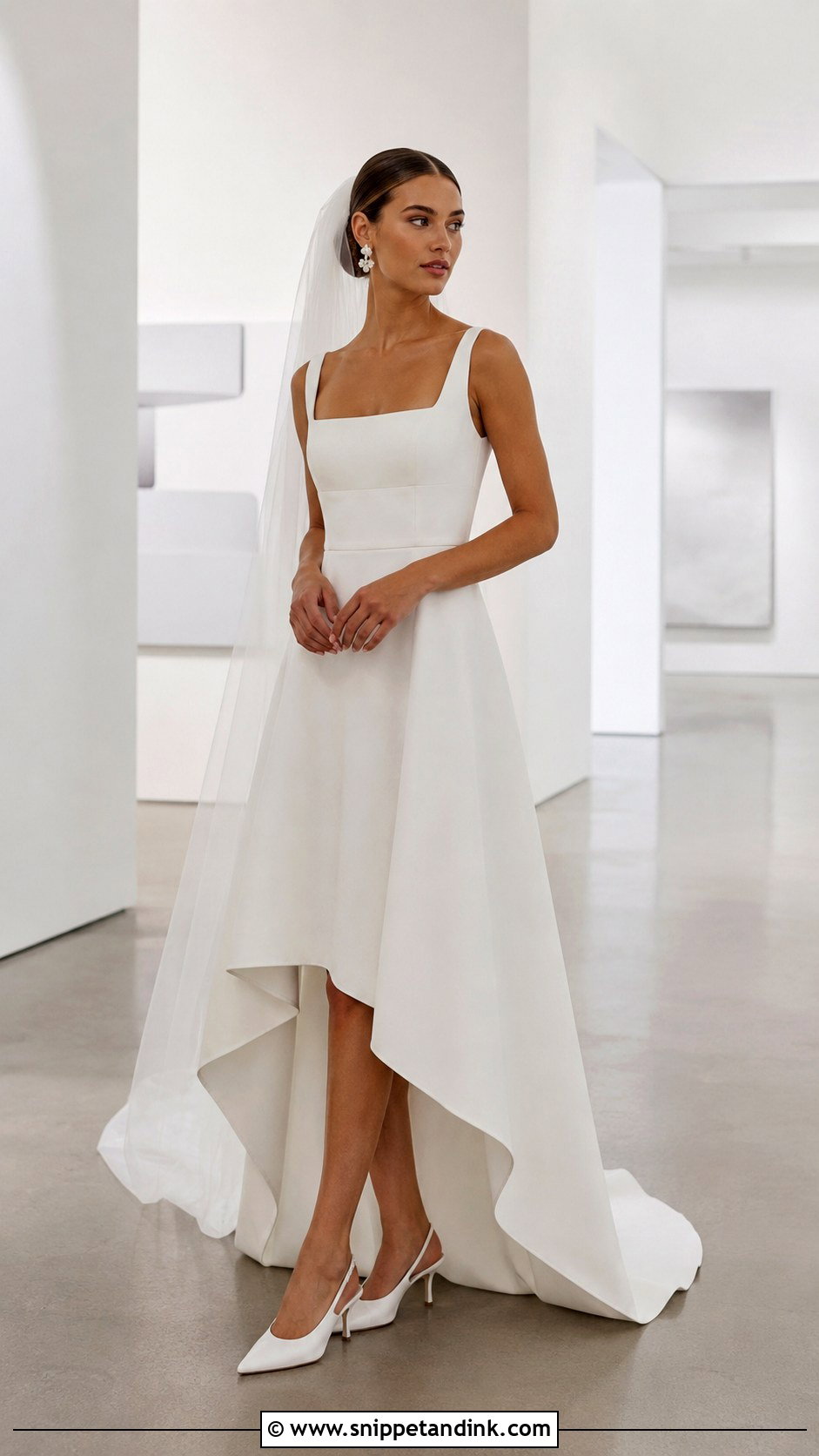
On a crepe gown the hemline is the decoration, so it has to be cut precisely. Smooth crepe with a sleeveless, square or bateau bodice and almost no embellishment lets the curve do the talking. Crepe clings if it’s taken in too tight, so I fit it to skim the waist and hip with a little ease. Pointed slingbacks, sculptural earrings and a structured mini bag keep it modern. A sleek ponytail or low bun, plus a plain chapel veil or small birdcage veil, suit galleries, rooftops and city hotels.
6. Corset Hi Lo Wedding Dress
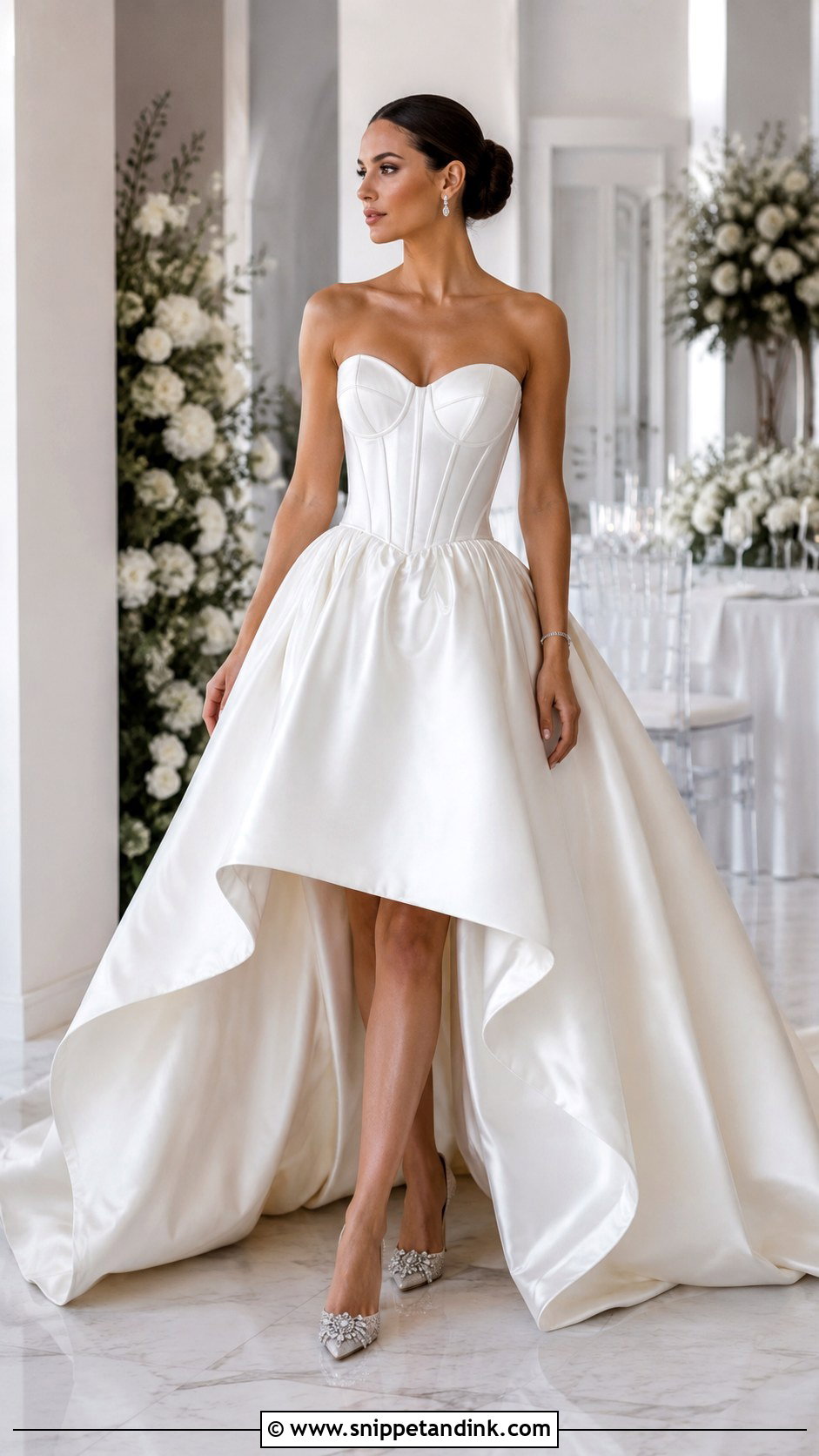
A corset bodice over a high-low skirt needs a waist that stays put, because the uneven hem pulls backward as you walk. If the waist drifts, the whole skirt tilts. Look for strong boning, secure cups and a back closure that’s comfortable seated. A basque or slightly dropped waist eases the move into satin or tulle. Embellished pumps, a tennis bracelet and drop earrings are enough with a polished bun and a light veil. At fittings, climb steps and sit down. The front should move freely without riding up.
7. Floral Applique Hi Lo Wedding Dress
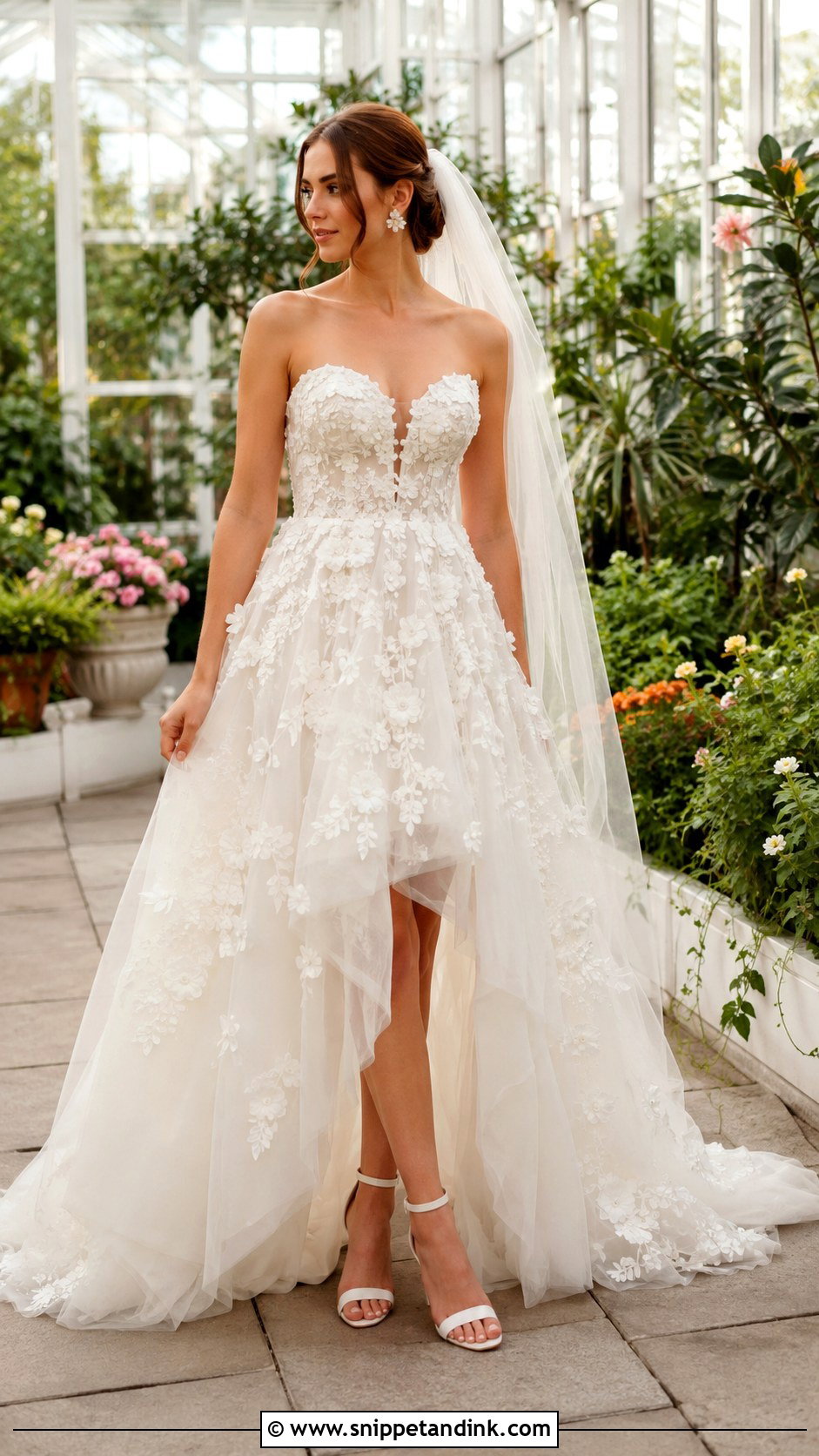
Raised appliqués add weight, and on a high-low hem the weight pulls the shorter front unevenly if flowers are clustered there. I want them dense on the bodice and scattered lightly down the skirt. A strapless or thin-strap neckline keeps them visible. Ivory ankle-strap sandals, floral earrings and a sheer veil with minimal edging suit it, with soft waves or a low twisted updo. Keep the bouquet small. Pastel flowers add a little color; all white feels traditional. Greenhouses and spring gardens fit it.
8. Ruffle Organza Hi Lo Wedding Dress
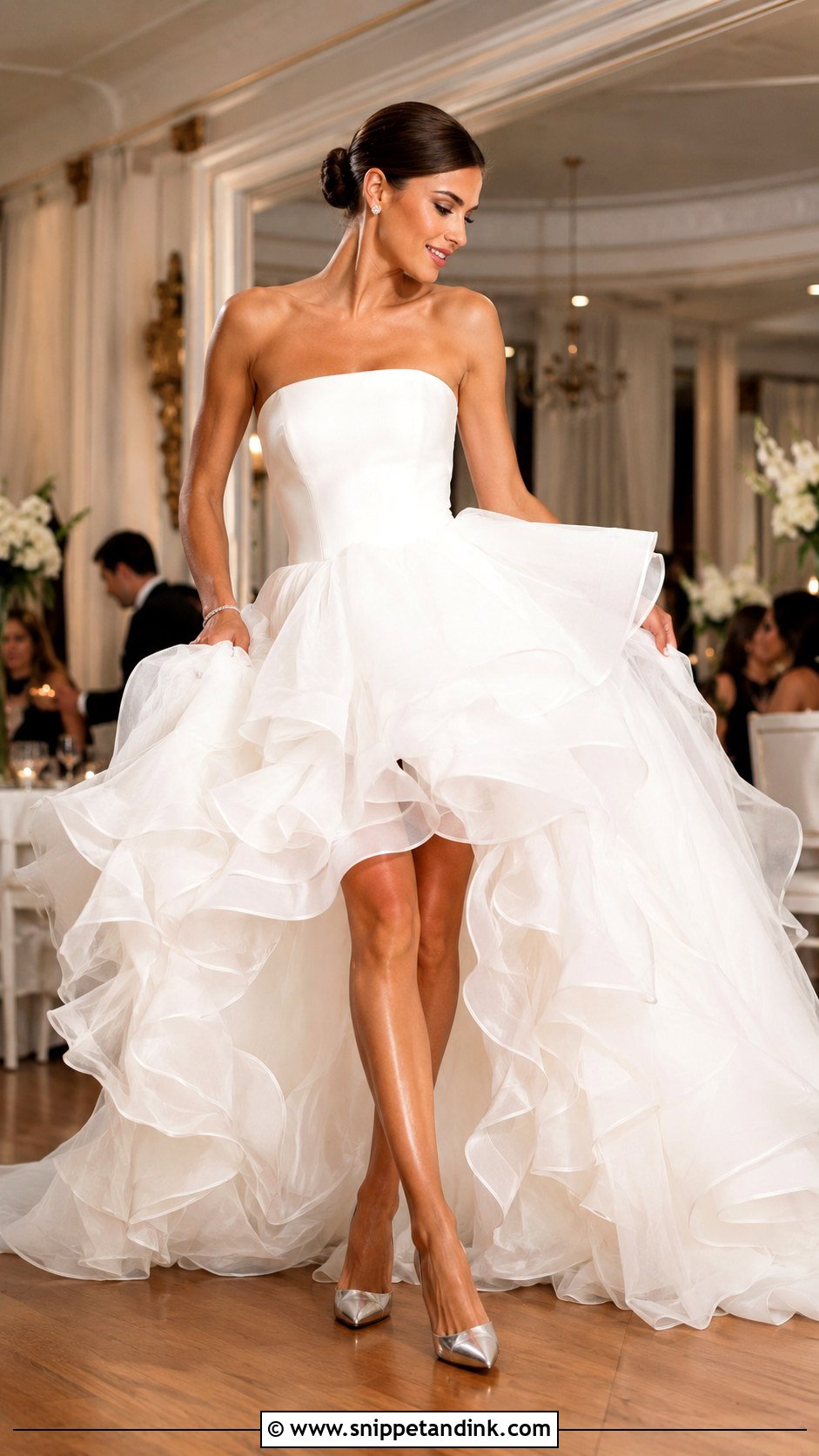
Organza ruffles hold their volume, which is exactly what you want here, as long as they follow the hem’s curve. Ruffles that run straight around the skirt hide the high-low shape completely. Pair a plain fitted bodice with tiered or spiral ruffles. Metallic or crystal pumps will be seen clearly, so pick a pair that’s special and still wearable for hours. Small studs, a slim bracelet and a smooth updo stop the look getting busy, and a short veil or a hair bow is plenty. Big indoor venues and lively receptions suit it.
9. Boho Chiffon Hi Lo Wedding Dress
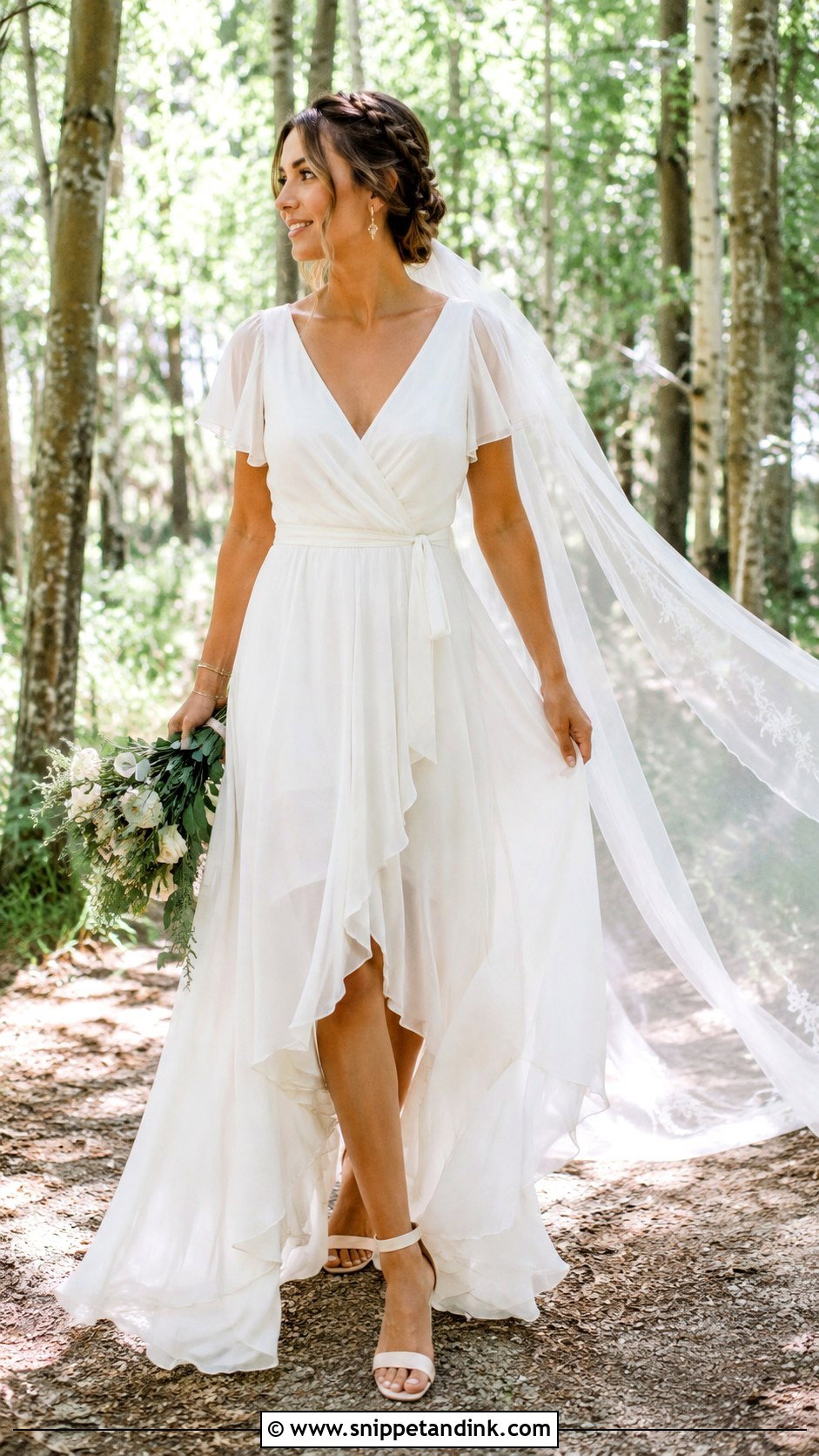
Chiffon moves beautifully outdoors, but it’s thin, and a sharp hem drop can make it look like a skirt that’s slipped. A gradual difference between front and back suits the fabric much better. Look for a wrap-style bodice, flutter sleeves or a halter with a gathered skirt. Block-heel sandals or bridal boots depend on the ground. Layered necklaces only on a plain neckline, with a braided updo and a light cape veil. Insist on a lined skirt; unlined chiffon goes see-through in strong sun.
10. Long Sleeve Lace Hi Lo Wedding Dress
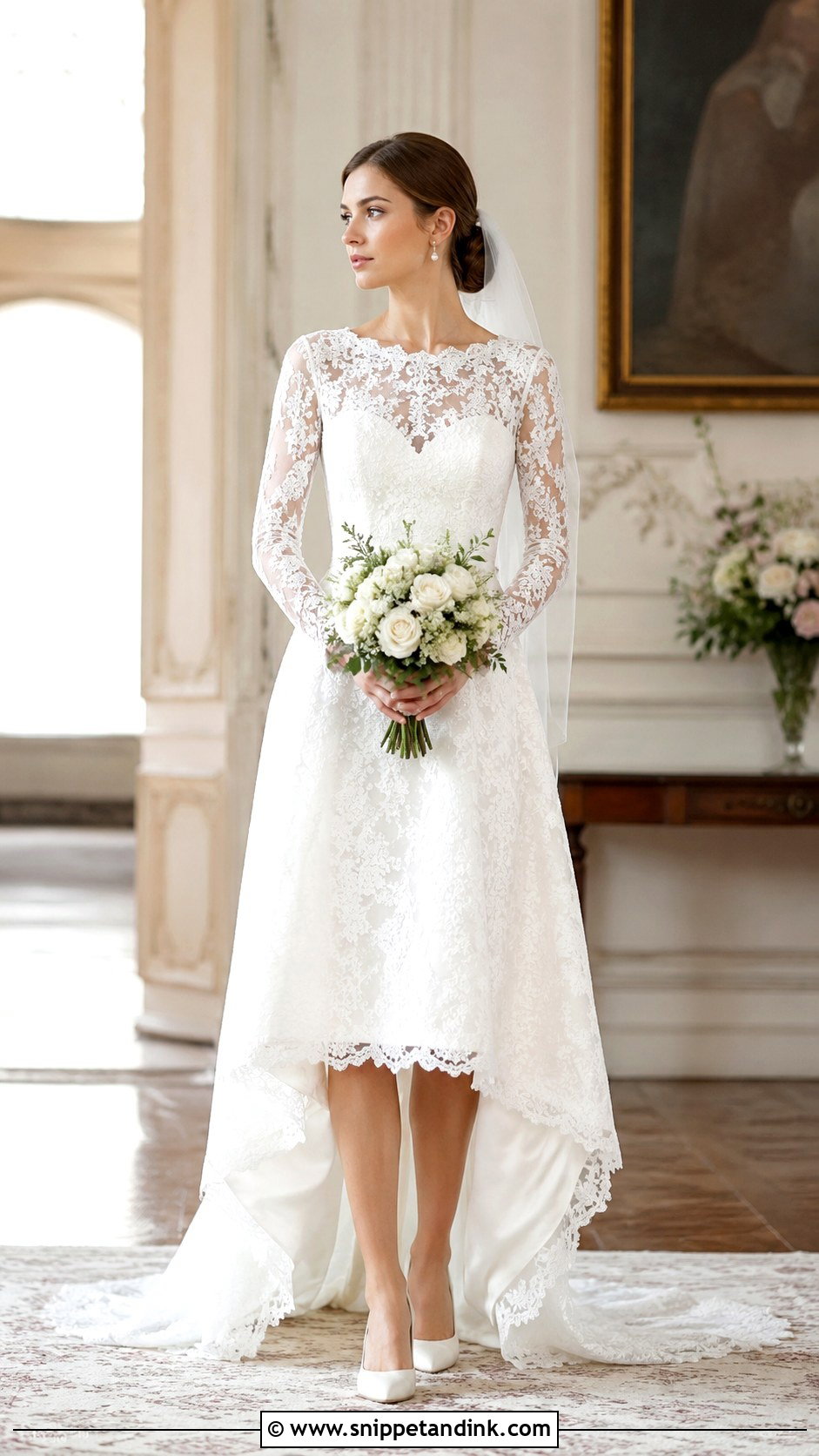
Long lace sleeves and a short front hem are a nice tension for autumn and winter: covered arms, visible shoes. I’d keep the front below the knee and let the back run into a chapel train. Fitted illusion sleeves with finished cuffs and a lined bodice give comfortable coverage. Velvet or closed-toe satin heels feel seasonal. Pearl earrings, a low bun and a comb above the veil finish it. For warmth, wear a tailored ivory coat between locations instead of covering the gown during the ceremony. Check that you can lift your arms freely.
11. Halter Neck Hi Lo Wedding Dress
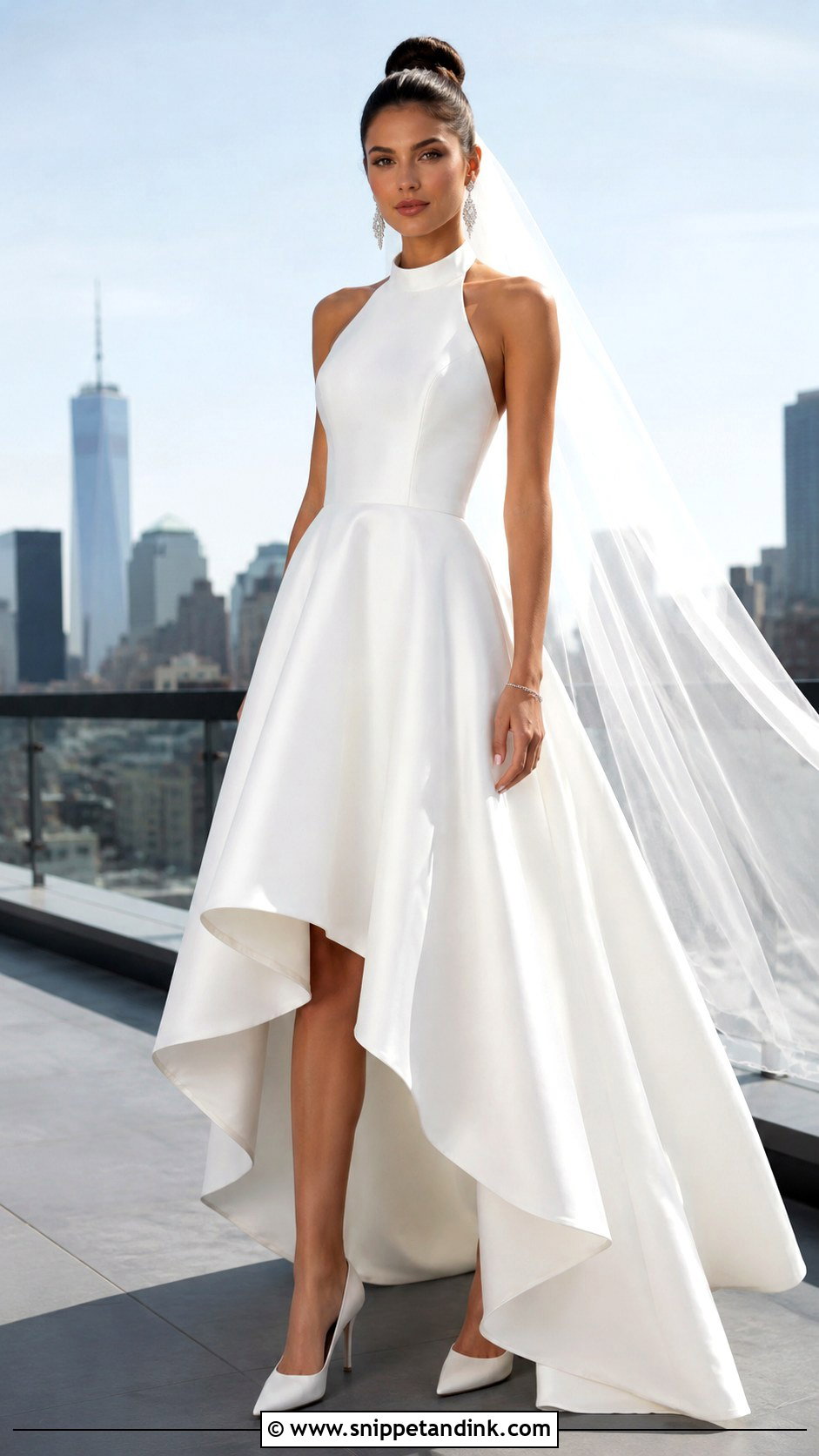
A halter puts the shoulders forward, and with a high-low skirt the eye runs from shoulder straight down to the shoes, so the pumps matter more here than usual. Choose a secure heel with real cushioning; you’ll be on them for hours. A fitted waist and flared skirt in satin, crepe or light mikado work well. Skip the necklace and wear statement earrings instead. A high bun, sleek ponytail or braided updo keeps the neck clear, with a narrow bracelet and a plain veil tucked beneath the hair. Modern venues and destination weddings suit it.
12. One Shoulder Hi Lo Wedding Dress
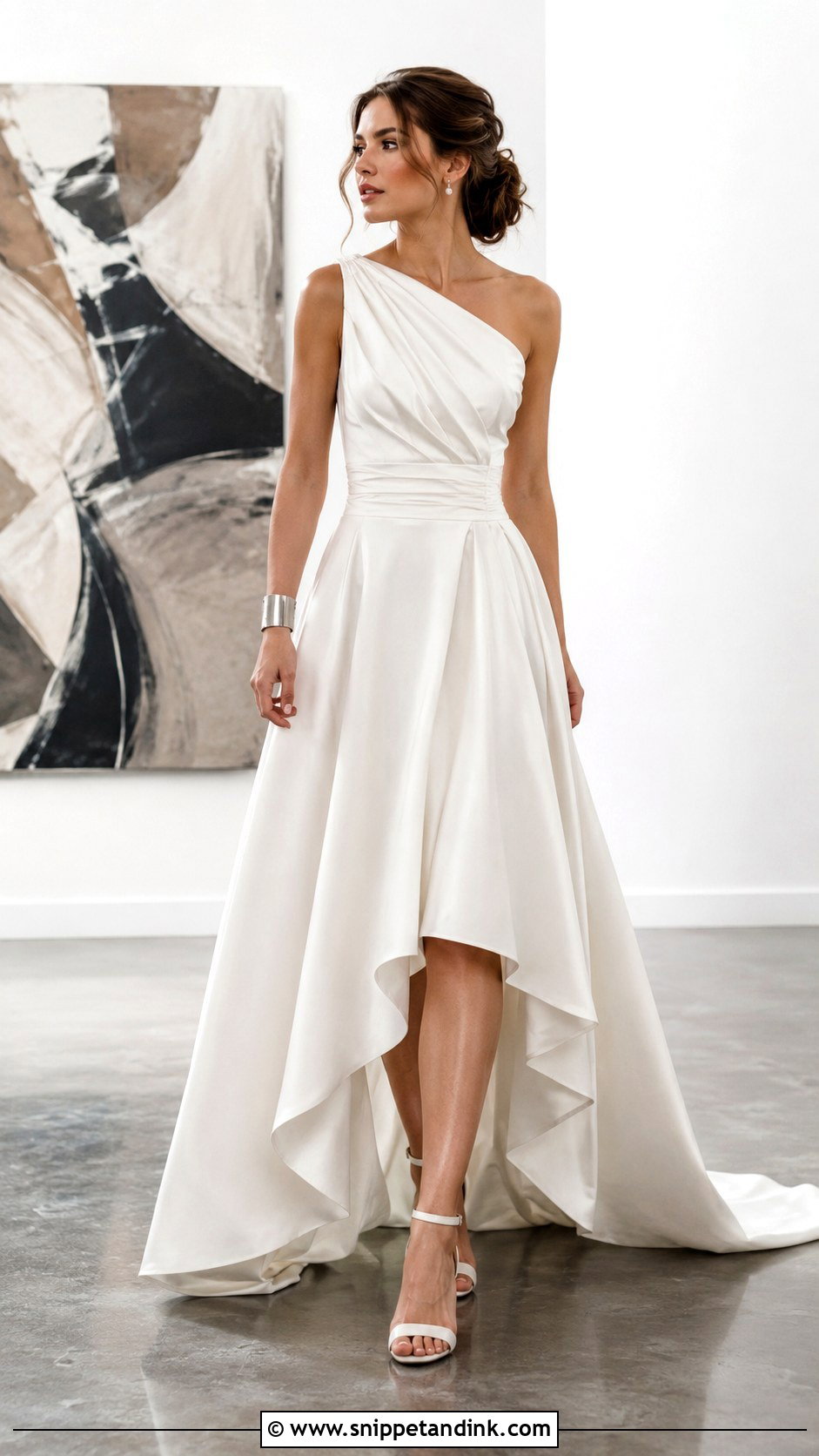
One-shoulder necklines and high-low hems both run on the diagonal, and when the two lines go in opposite directions, the dress looks balanced. Choose a one-shoulder bodice with controlled draping and a fitted waist over a satin or chiffon skirt. No necklace; a cuff bracelet, small crystal earrings and ankle-strap heels are enough. I’d put the updo on the side opposite the strap so the neckline stays clear. A shoulder bow or narrow back panel adds drama. Keep the veil simple, or use a hair comb, for rooftops and galleries.
13. Detachable Overskirt Hi Lo Wedding Dress
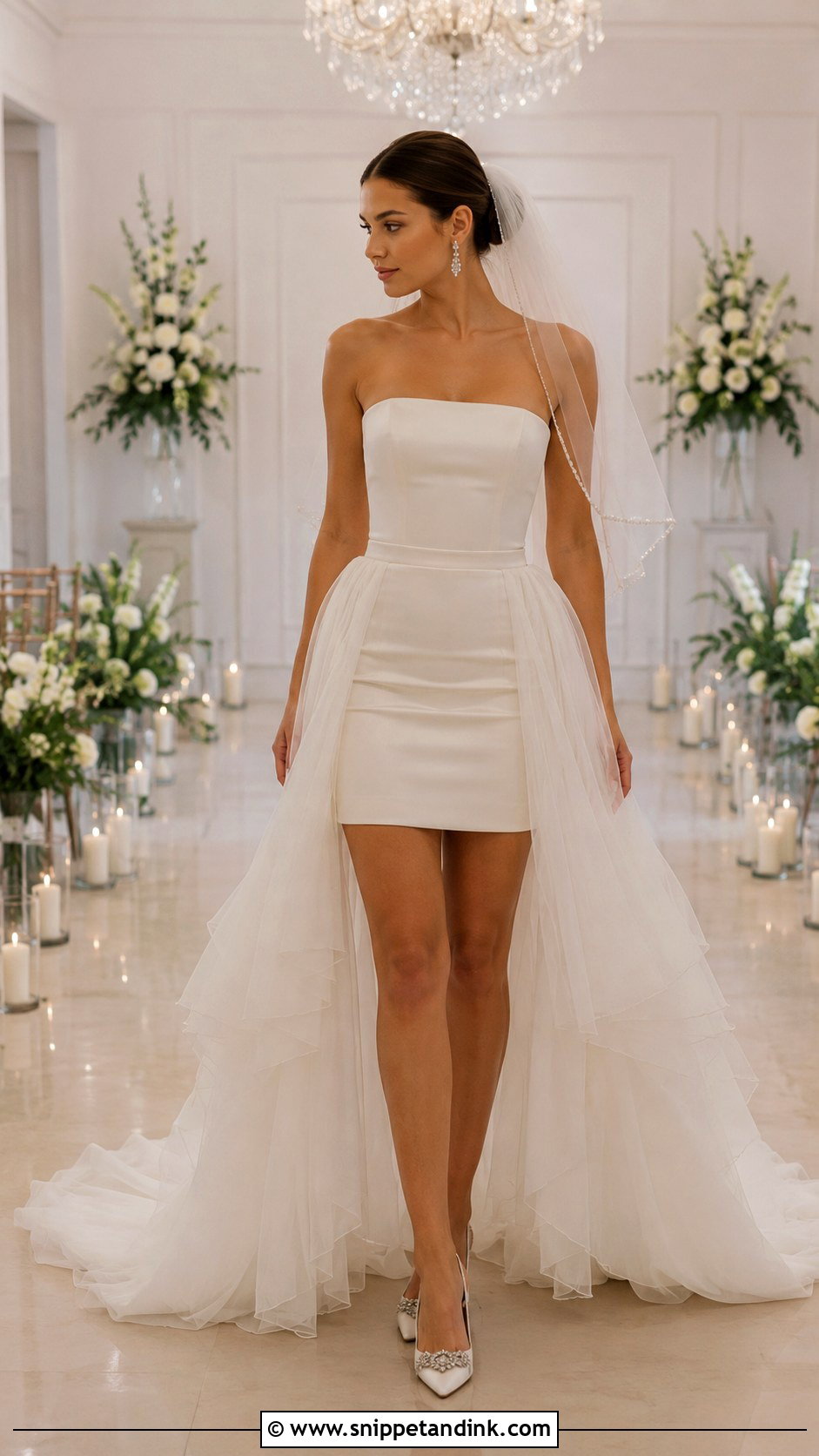
A detachable overskirt turns a mini or midi dress into a high-low gown for the ceremony. The overskirt opens at the front and falls to a long train. Tulle feels soft; satin or mikado looks architectural. Because your legs show all ceremony, polished pumps or decorated slingbacks are a must. Crystal earrings, a clean updo and a fingertip veil finish the formal version. Later, take off the overskirt and veil and add a beaded bag. The waistband should lie flat, with closures that are easy to find and open.
14. Bow Back Hi Lo Wedding Dress
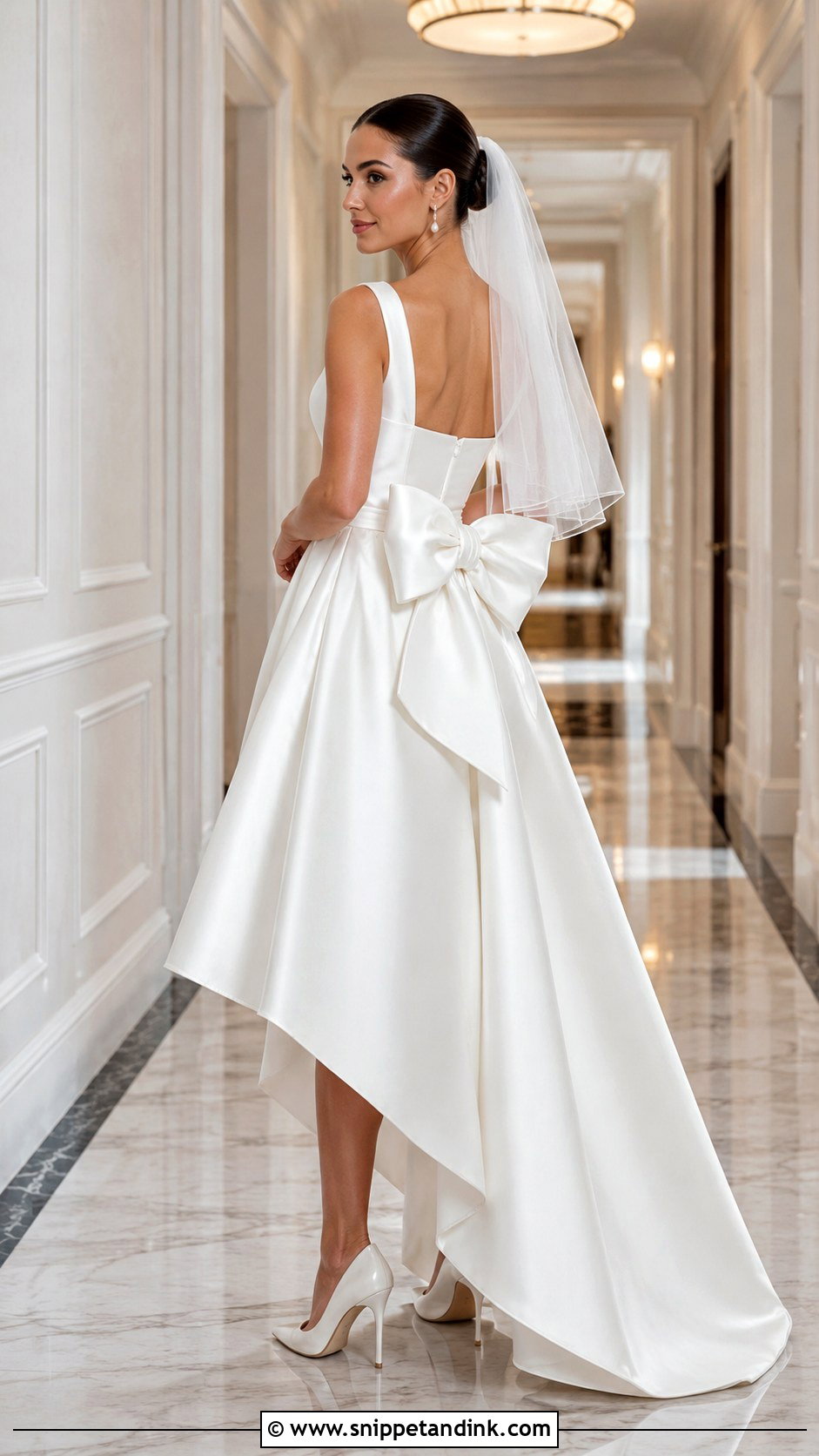
A back bow on a high-low dress is seen as you walk away, which is most of the aisle photos, so it pays to get it right. I ask for interfacing inside the loops so the bow keeps its shape after hours of sitting. A strapless or square-neck bodice and smooth skirt let the bow lead; it can sit at the waist, above the train or on one shoulder. Satin pointed heels, pearl drops and a sleek bun suit it. Use a short veil, or remove a long one for portraits, and keep the bouquet small.


15. Beaded Hi Lo Wedding Dress
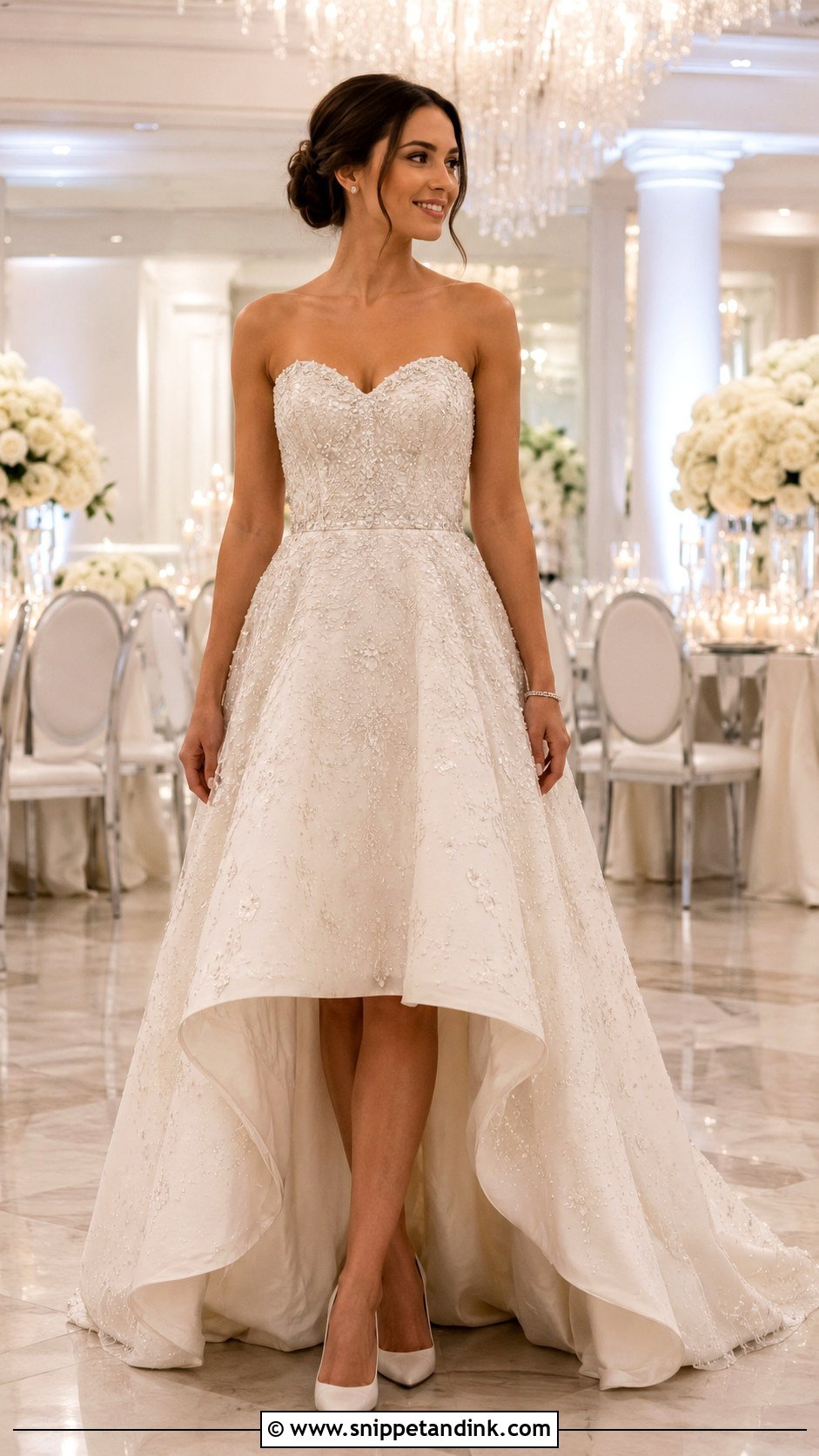
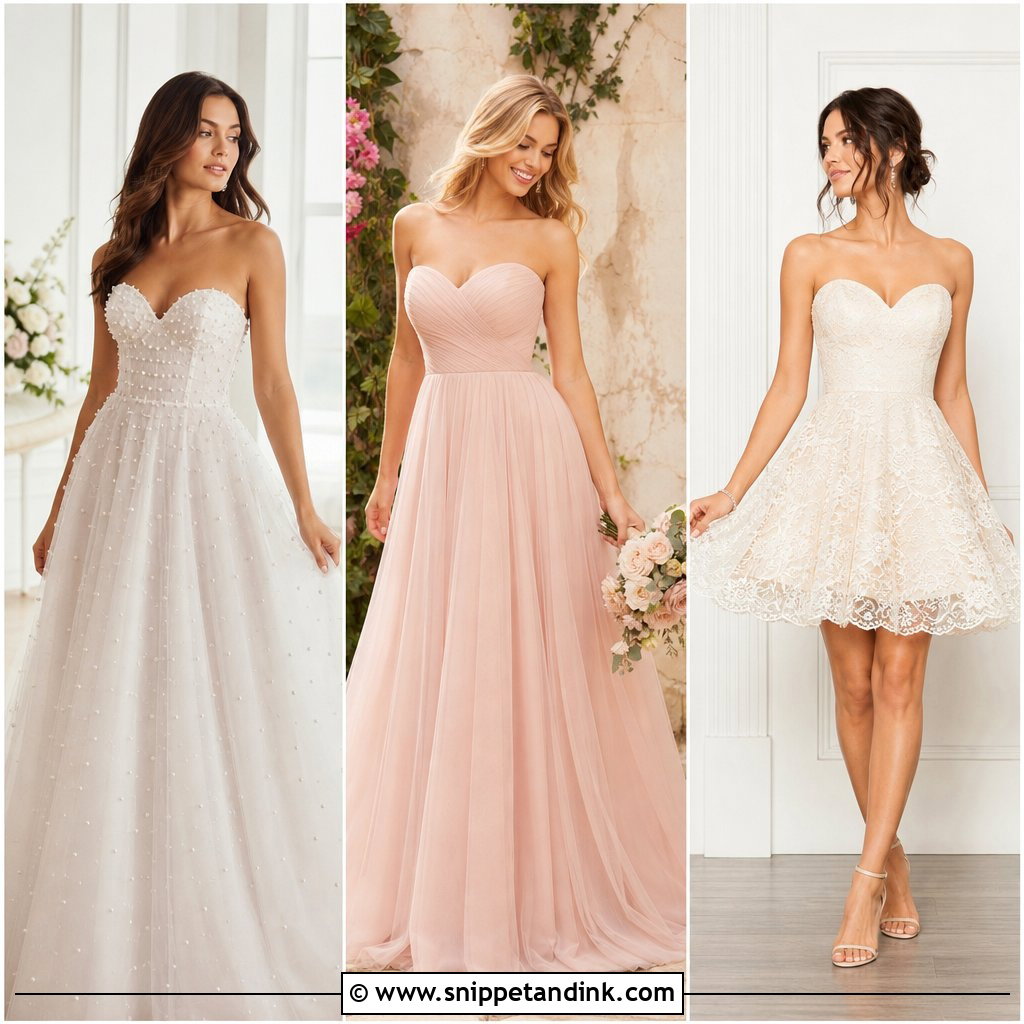
Beading on the inside of the arm and at the waist scratches over a long evening, so before buying, I run my hand along the underside of the armholes and the side seams. Rough spots can be backed or removed. Choose pearl, clear crystal or fine sequins spread evenly over a fitted bodice and lightly flared skirt, with a front hem around knee or calf. Simple satin pumps keep the shoes from competing. Small studs, a plain bracelet, soft waves and a minimal veil finish it, for evening receptions and glamorous rooms.
16. Blush Hi Lo Wedding Dress
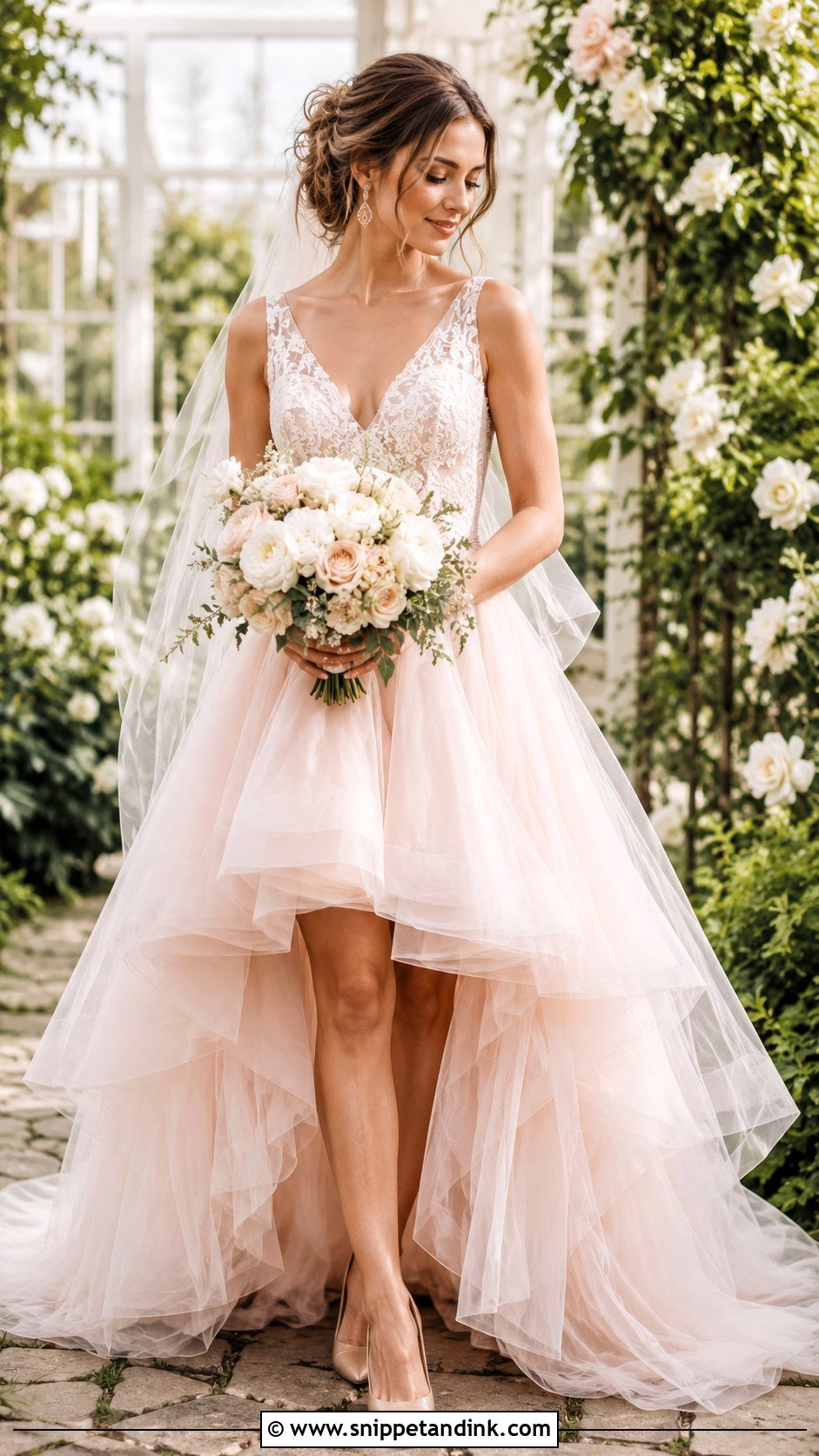
Blush ranges from barely pink to nude, and it can look completely different in daylight and under warm lamps, so compare the fabric in both before ordering. An ivory lace bodice over blush tulle gives gentle contrast; all-blush satin is cleaner. Champagne pumps and rose-gold earrings suit the color, with a veil matched to the dress’s undertone. A loose updo and balanced makeup keep the shade bridal. Keep the bouquet mostly neutral so the gown stays the color story at garden ceremonies or indoor weddings.
17. Black And White Hi Lo Wedding Dress
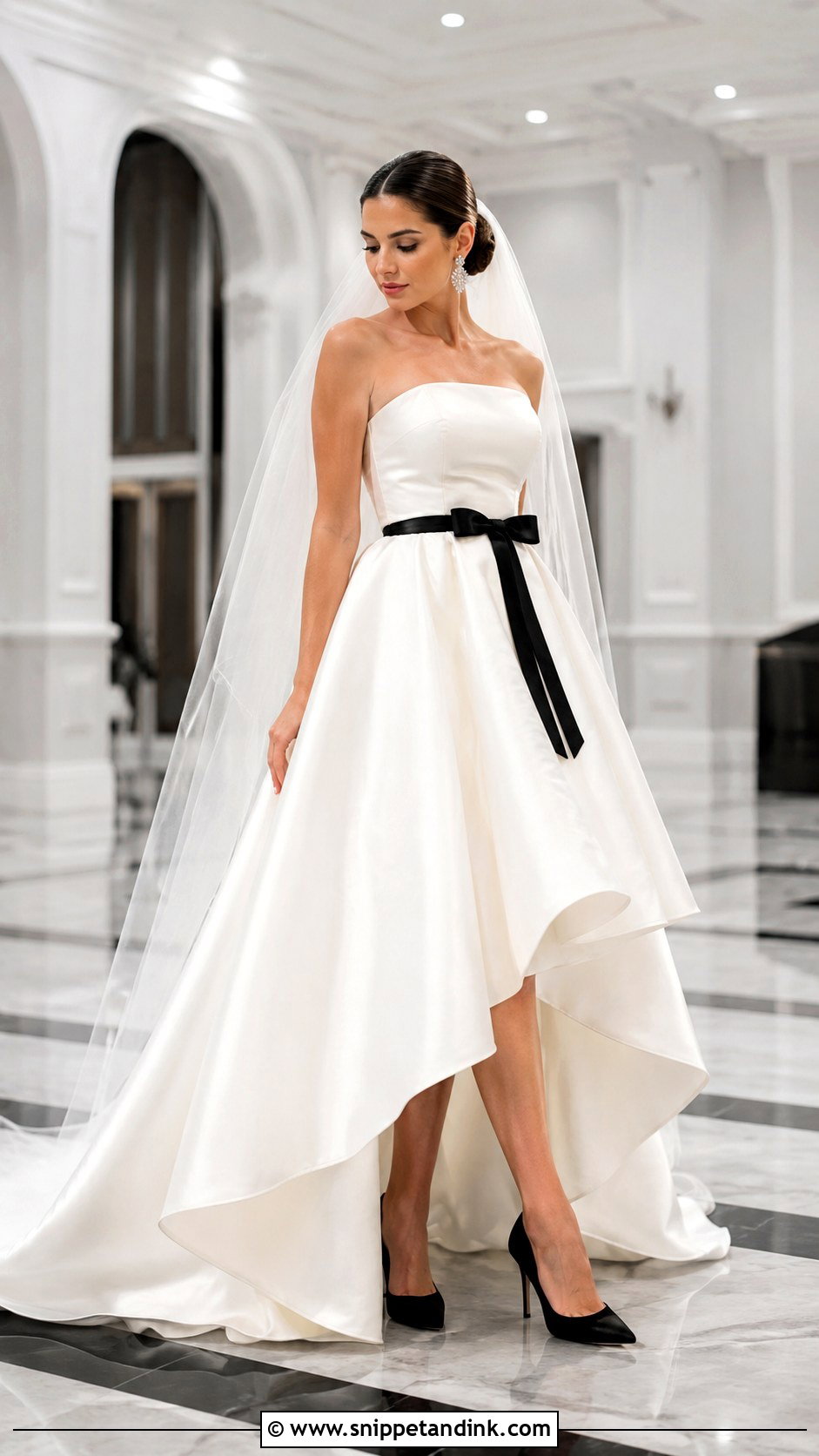
Black on a wedding dress works when there are only one or two black notes. More than that and it reads as costume. I’d pick a narrow waist bow, a black skirt border, gloves or the shoes, not all of them. A strapless satin bodice with a full asymmetric skirt is a strong base. Black pointed pumps, crystal earrings and a smooth updo keep it graphic, while a plain white veil softens the contrast. Avoid mixing patterns or extra dark accessories. Modern ballrooms and monochrome celebrations suit it.
18. Beach Hi Lo Wedding Dress
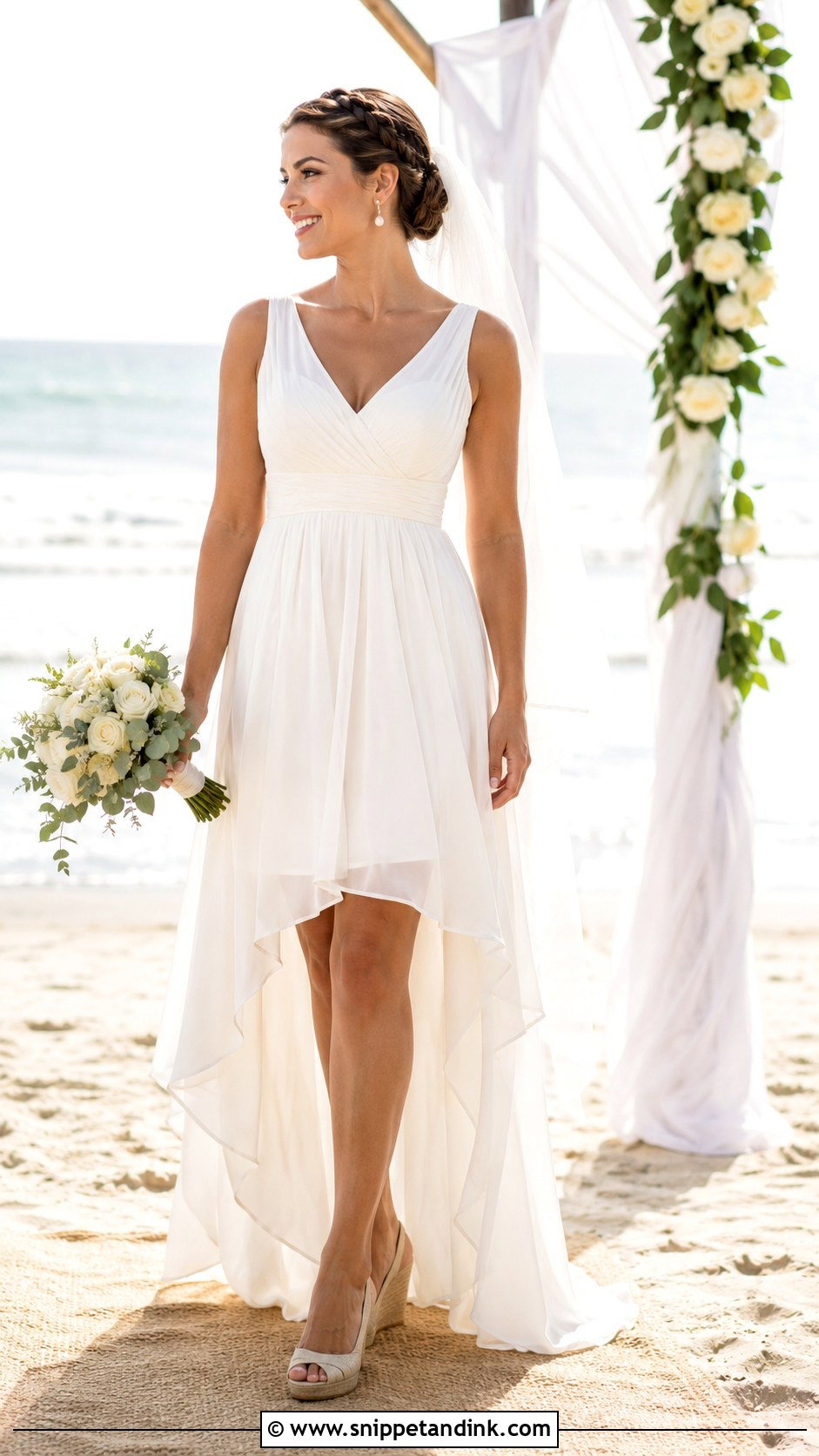
On sand, a long train fills with grit and drags, which is one of the best arguments for a high-low dress at the beach. Keep the back hem short of a full train. Chiffon or soft tulle with a secure bodice is right, and a V-neck, halter, or wide-strap design stays put in wind. Bridal flats, low wedges or barefoot sandals suit the ground. Pearl earrings and a braided updo hold up in humidity better than loose waves, and the veil needs pinning firmly. Choose fabric that recovers after travel.
19. Courthouse Hi Lo Wedding Dress
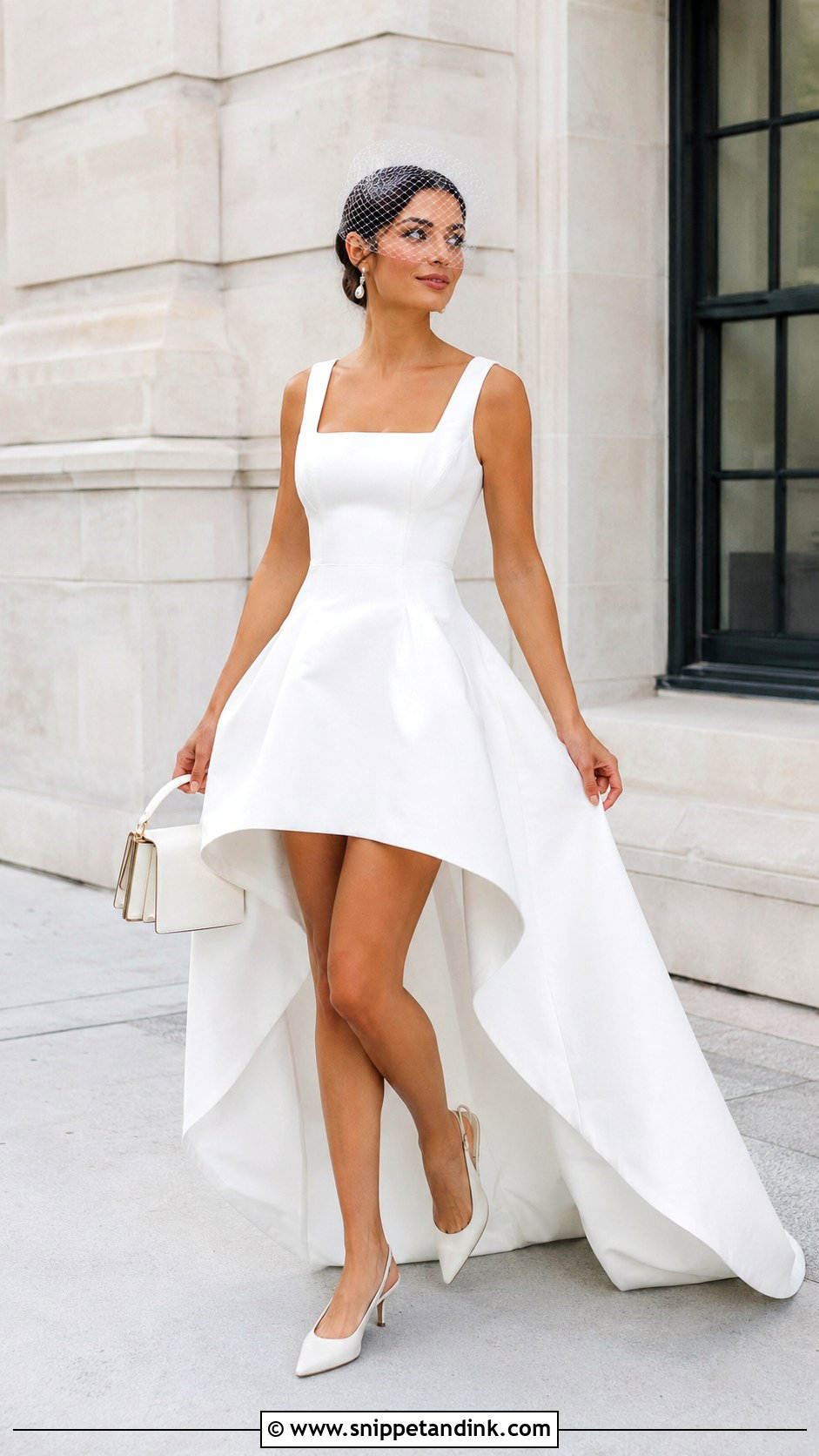
A courthouse ceremony suits a compact high-low: a short front with a midi or ankle-length back in crepe, satin or jacquard. A square neckline, tailored waist and a little pleating give polish without volume. Pointed slingbacks, pearl earrings and a small top-handle bag keep it neat, and a birdcage veil or headband marks you out as the bride on city streets. Bring a fitted ivory blazer if it’s cool. With so little fabric, clean seams and a precisely placed hem are what make it look expensive.

20. Plus Size Hi Lo Wedding Dress
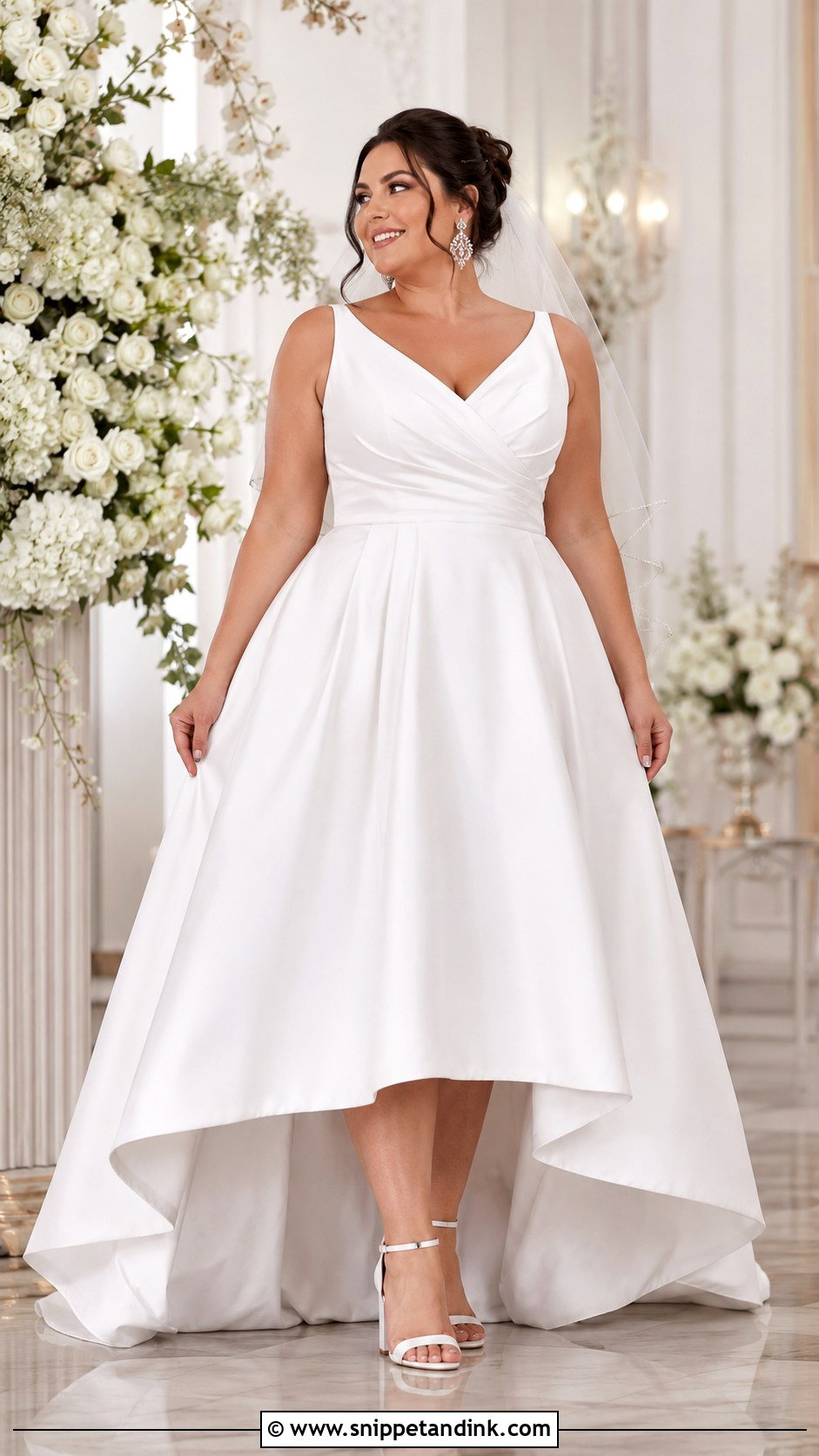
For curvy brides, I start with support and proportion and ignore any rule that begins with “never wear”. A structured bodice with comfortable boning, wide straps or real sleeves holds everything securely. An A-line skirt flows from the waist, and a wrap bodice gives adjustable definition. Choose a front hem below the knee or at mid-calf, depending on how much leg you want to show. Stable block heels, chandelier earrings and a soft updo work well, and a fingertip veil leaves the back visible. Have the hem marked while you wear your wedding shoes.
Your Shoes Are Now Part of the Dress
With a full-length gown, nobody sees whether you swapped your heels for flats after dinner. With this hem, they will, so I treat the shoes as seriously as the veil.
Buy them before the first fitting
The front hem is marked to your exact heel height. Change shoes later and the curve shifts. Wear them around the house for short spells beforehand, and scuff the soles lightly with sandpaper so they grip polished floors.
Plan the second pair
If you’ll change into flats for dancing, choose a pair in the same color family and a similar finish so the photos still look like one outfit. Satin shoes can usually be dyed to match the dress.
The inside of the hem shows
When a high-low skirt swings, the underside and lining flash at the sides. Ask your seamstress how the hem is finished. A horsehair braid stitched into the edge keeps satin and organza curves crisp, and a neat lining matters more here than on any other shape.
A Hem That Looks Right From the Side, Too
Satin, lace, chiffon, corsets or detachable overskirts, the high-low shape works across a wide range of styles when the short front and long back are treated as one design. Your shoes are part of the outfit now, your jewelry should follow the neckline, and your veil shouldn’t hide the hem. Let the fabric’s weight, your venue and the weather steer you. Then try the gown walking, sitting and turning before the last fitting, because this shape is judged from every side.
You'll Like These Ideas:






Leave a Reply