
A mermaid gown hugs the body through the bodice and hips and only releases near the knee, so it is the most honest silhouette in a bridal salon: it shows the cut, the fabric and the tailoring with nowhere to hide. That is exactly why I love dressing brides in one, and why I’m careful about it. Today’s designers have moved well past all-over lace into sculpted crepe, heavy satin, convertible overskirts, corsetry and removable bows, and each of those changes how the dress moves, sits and photographs. Below are twenty versions I’d happily put a bride in, with notes on what I check at the fitting and what I’d pair with each one so the accessories support the shape instead of crowding it.
Mermaid, Trumpet or Fit-and-Flare? Where the Skirt Opens Matters
Salons use these words loosely, so I go by where the skirt starts to flare. A true mermaid opens at or just below the knee. A trumpet opens around mid-thigh. A fit-and-flare opens at the hip or waist. The lower the flare, the more dramatic the shape and the shorter your stride.
That stride is the thing nobody warns you about. In a true mermaid you will take small steps, climb stairs sideways and need help getting in and out of a car. Brides with long ceremonies, outdoor aisles over grass or a lot of dancing planned are often happier in a trumpet, which still looks fitted in photos.
- Walk the length of the salon at your normal pace. If you shorten your step, the flare is too low or the knee is too tight.
- Sit on a hard chair for a full minute and stand without using your hands.
- Lift both arms above your head. The bodice should not move.
- Ask to see the gown from behind in a three-way mirror; the flare should open evenly, not twist to one side.
If a sample is close but not right, remember that the knee point can often be adjusted a few centimetres during alterations. Changing it completely usually cannot.
1. Strapless Satin Mermaid Bridal Gown
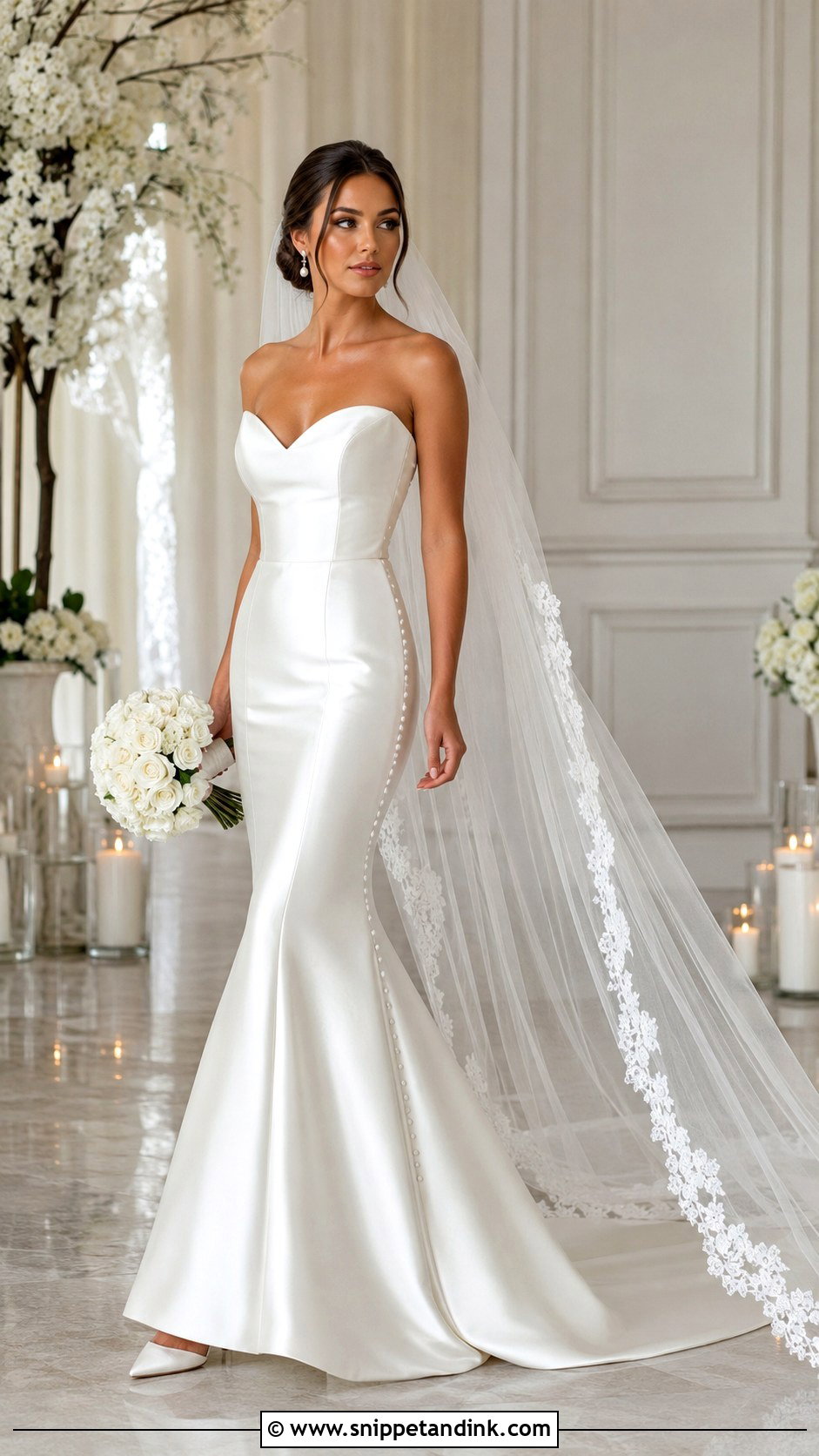
Satin has nowhere to hide a poorly placed seam, so a strapless satin mermaid bridal gown lives or dies on its inner corset. The first thing I do at a fitting is ask the bride to raise both arms and hug someone; if the bodice slips even a centimetre, it needs grip tape or a tighter internal waist stay. A straight or softly curved sweetheart edge keeps the shoulders clean. I’d keep the rest simple: pearl drops, pointed ivory pumps, a plain cathedral veil and a low chignon. Covered buttons down the back give the satin a little texture without adding sparkle it doesn’t need.
2. Lace Long Sleeve Mermaid Bridal Gown
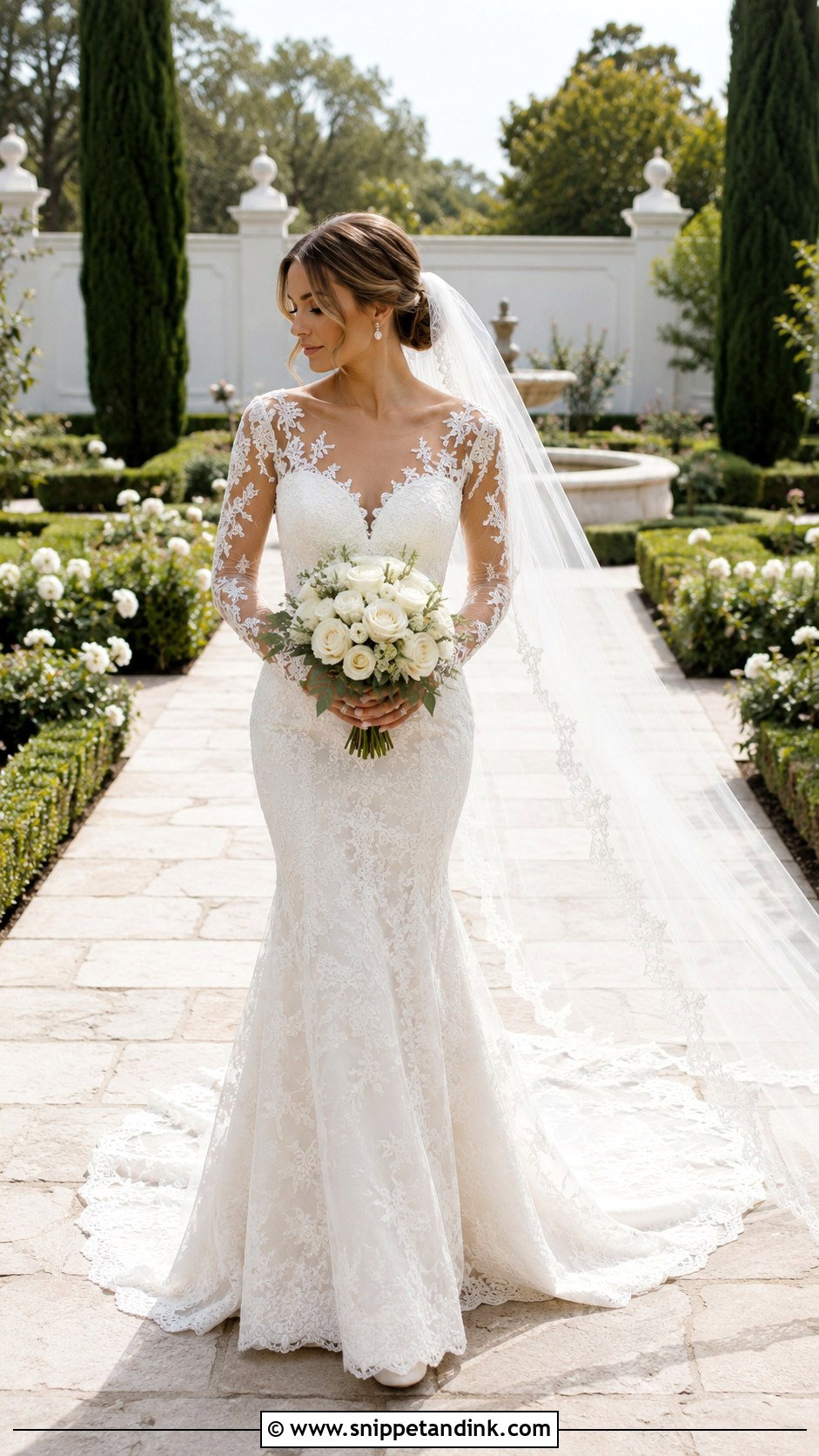
Lace sleeves soften the hard outline of a mermaid skirt, and I find brides who feel exposed in a strapless dress relax the moment they try one on. Look for illusion sleeves where the appliqués are placed by hand rather than cut from a continuous lace sheet; you can tell because the motifs end cleanly at the wrist instead of being sliced through. Fitted sleeves need room at the elbow, so I always ask for a full bend test before the seamstress takes them in. A scalloped train, small studs and a lace-edged fingertip veil finish it. Keep hair low and smooth, because a high-neck lace bodice plus big curls reads crowded in photos.
3. Off The Shoulder Mermaid Bridal Gown
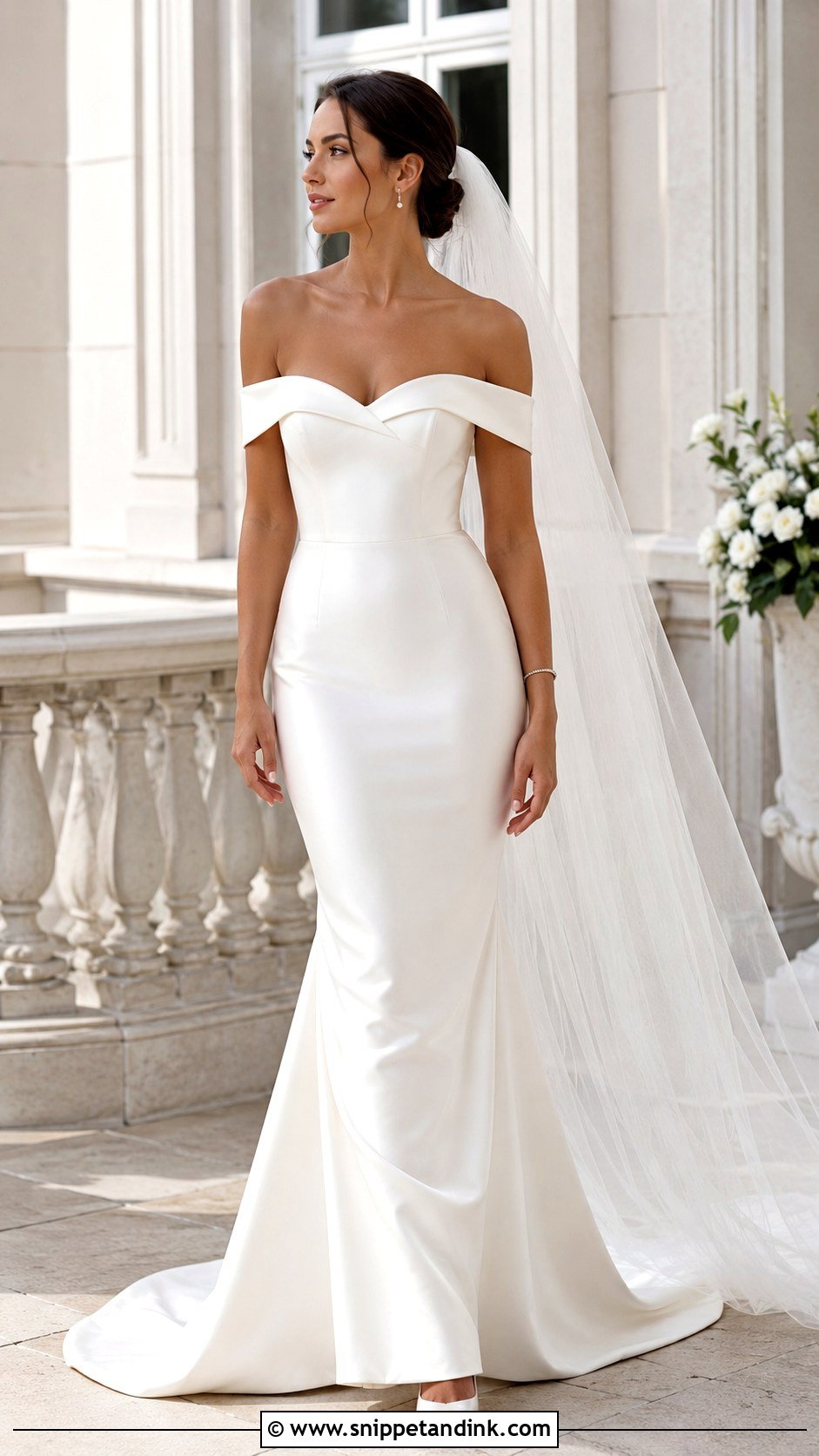
Off-the-shoulder straps sit on the upper arm, which means they move every time you lift a glass or hug a guest. I prefer a structured folded cuff over a loose drape for exactly that reason: it holds its line through the day, while soft draped straps slowly creep up toward the shoulder. Crepe gives the cleanest collarbone frame. With the neckline doing the work, I’d wear hair in a low twist, add a thin bracelet and a simple long veil, and hold the bouquet lower than usual so it doesn’t block the shoulder detail.
4. Sweetheart Neck Mermaid Bridal Gown
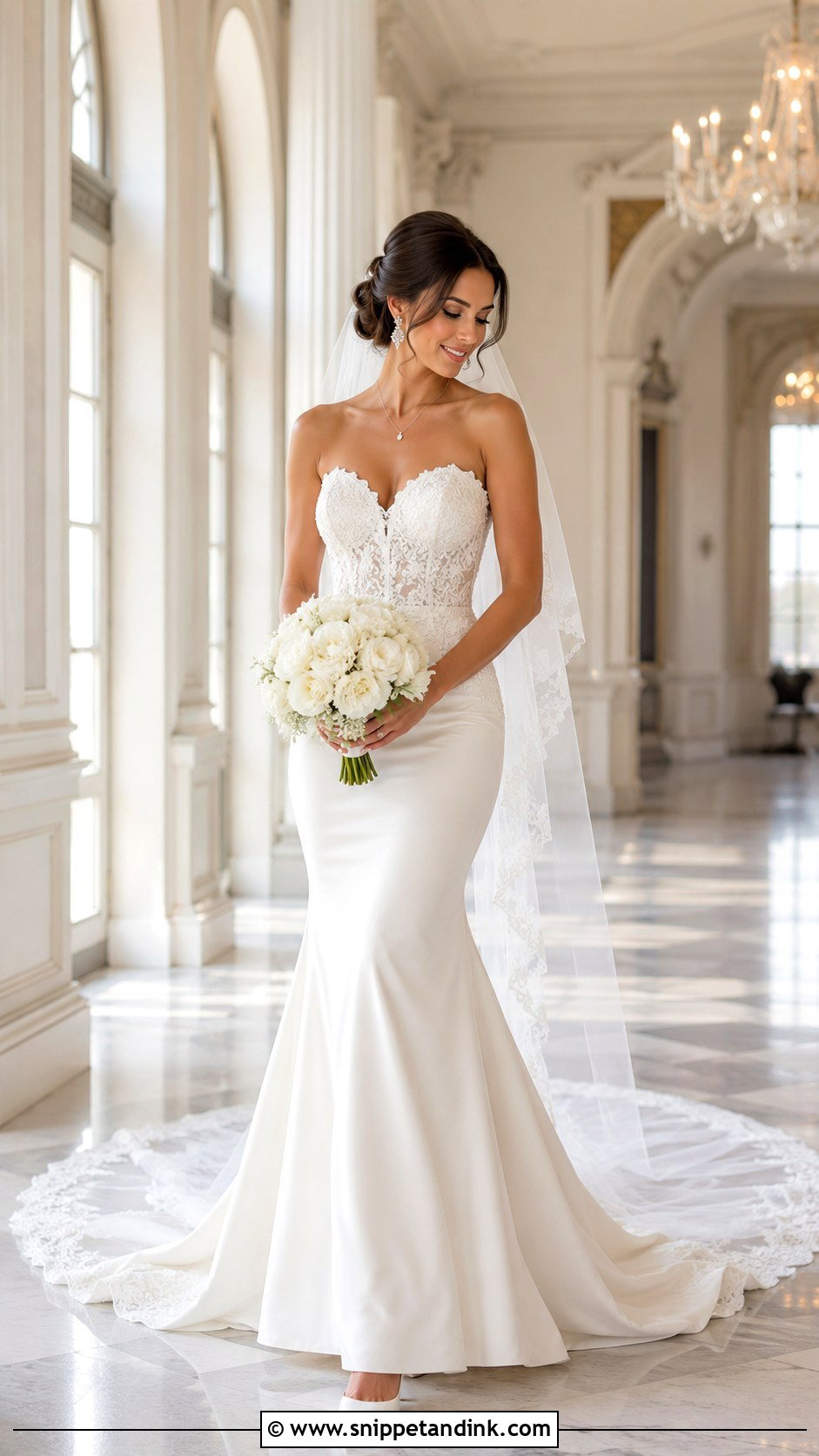
A sweetheart neckline is the easiest one to fit on a mermaid body because the dip naturally echoes the curve of the hips. What I watch for is the centre point: if it sits too low it gapes when you sit, and if it is too high the bust looks flattened. Good boning and a smooth lining fix most of that. A fine pendant fits neatly into the dip, and a chapel veil keeps the proportions balanced. For a church that expects covered shoulders, ask for removable sheer straps or a lace topper rather than choosing a different dress.
5. Square Neck Mermaid Bridal Gown
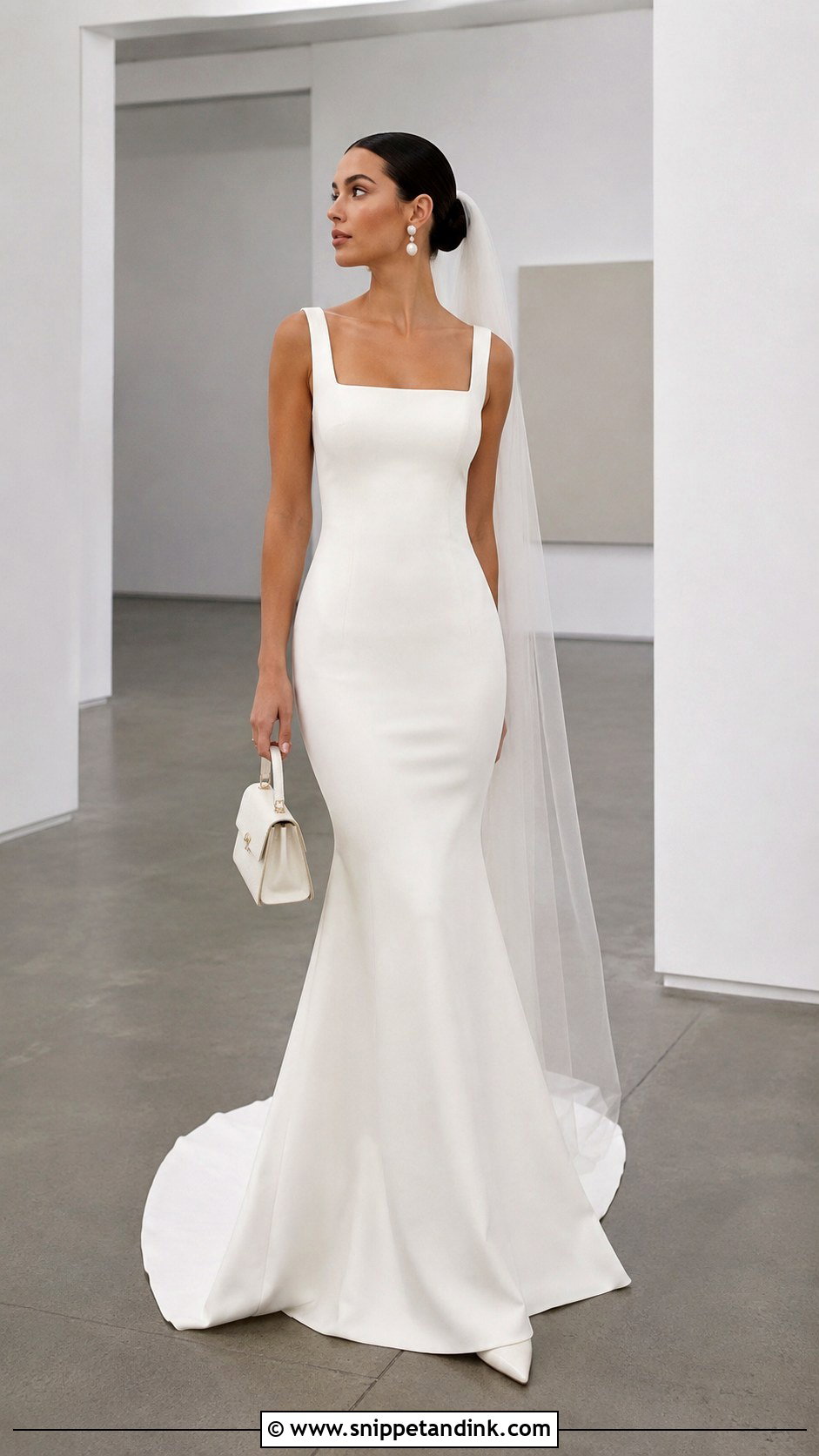
Square necklines are the architectural option, and they need fabric with some body to hold the straight edge. On a thin satin the corners can collapse inward, so I steer brides toward heavy crepe or matte satin here. Wide straps help the line run cleanly from shoulder to bodice and give real support. I’d pair it with geometric pearl earrings and pointed pumps, then attach the veil beneath a low bun so the neckline stays open. If a veil feels like too much with something this clean, a satin bow or a polished comb does the same job with less fuss.
6. V Neck Mermaid Bridal Gown
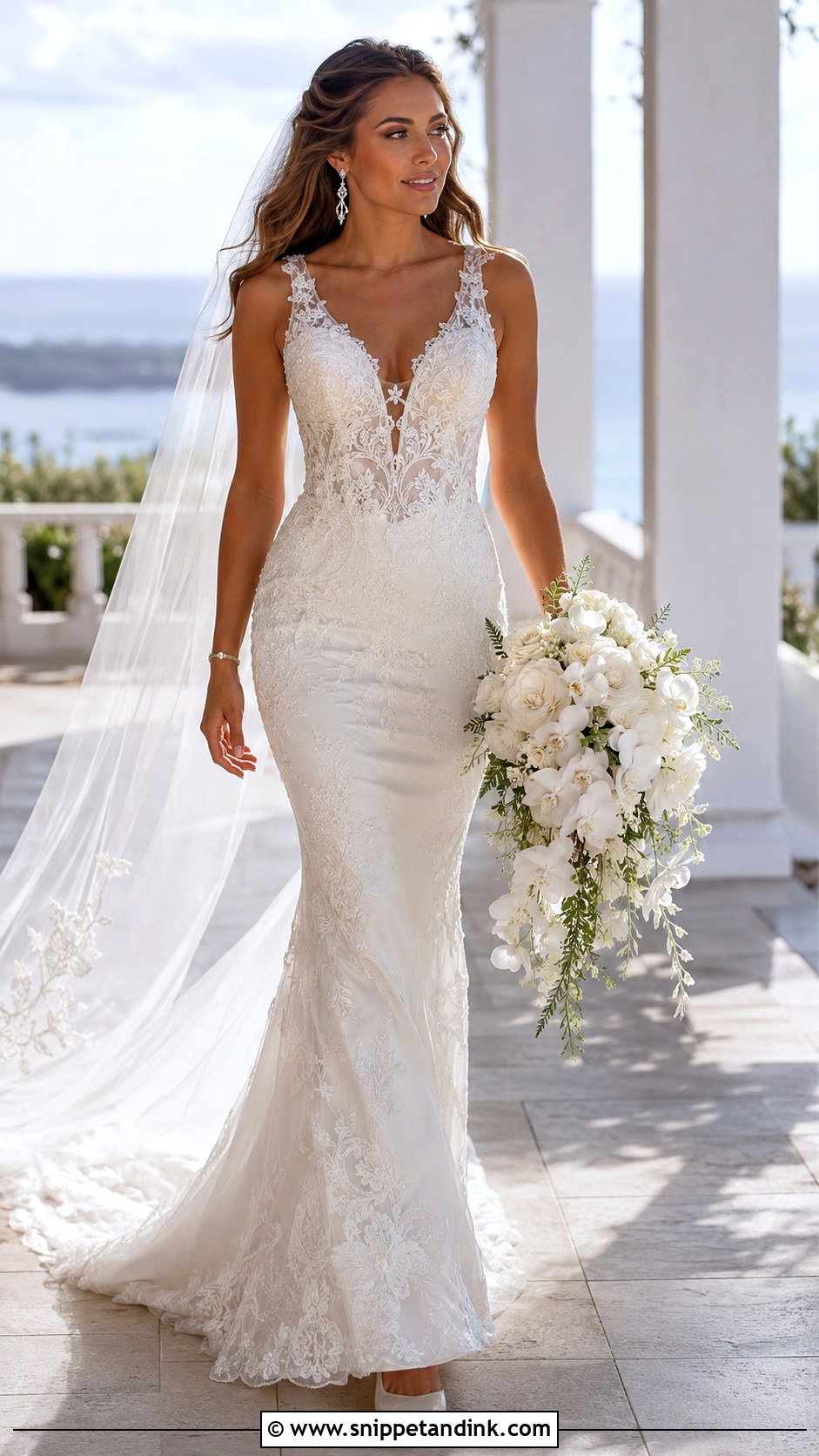
A V neck draws the eye straight down into the fitted waist, which is why it makes almost every body look longer in a mermaid cut. The deeper the V, the more I rely on a strip of skin-tone illusion mesh between the cups; it is invisible in photos and stops any adjusting during the ceremony. Choose either a slim pendant or long earrings, not both. Soft waves tucked behind the ears work well, and a bouquet with a little trailing greenery repeats that vertical line.
7. High Neck Mermaid Bridal Gown
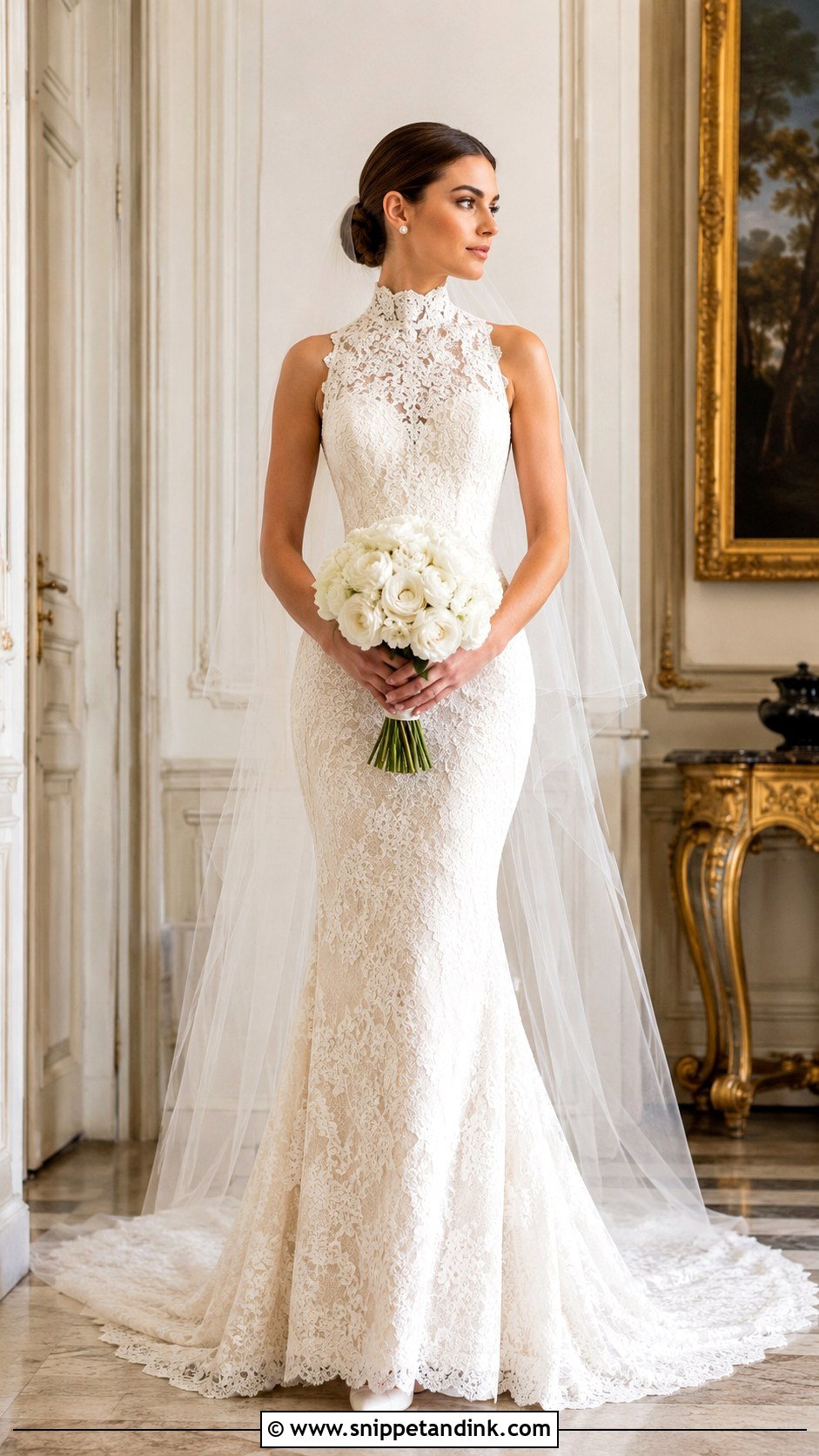
High necklines are the one place I say no to a necklace outright. The bodice is already busy at the throat, so small pearl or crystal studs are enough. Sleeveless versions feel cleaner and cooler; long fitted sleeves feel more traditional but warmer, which matters at a summer reception. At the fitting I ask the bride to turn her head fully both ways, because a collar taken in too tightly will rub by the second hour. Pair it with a plain veil, a low bun and closed-toe satin heels.
8. Corset Mermaid Bridal Gown
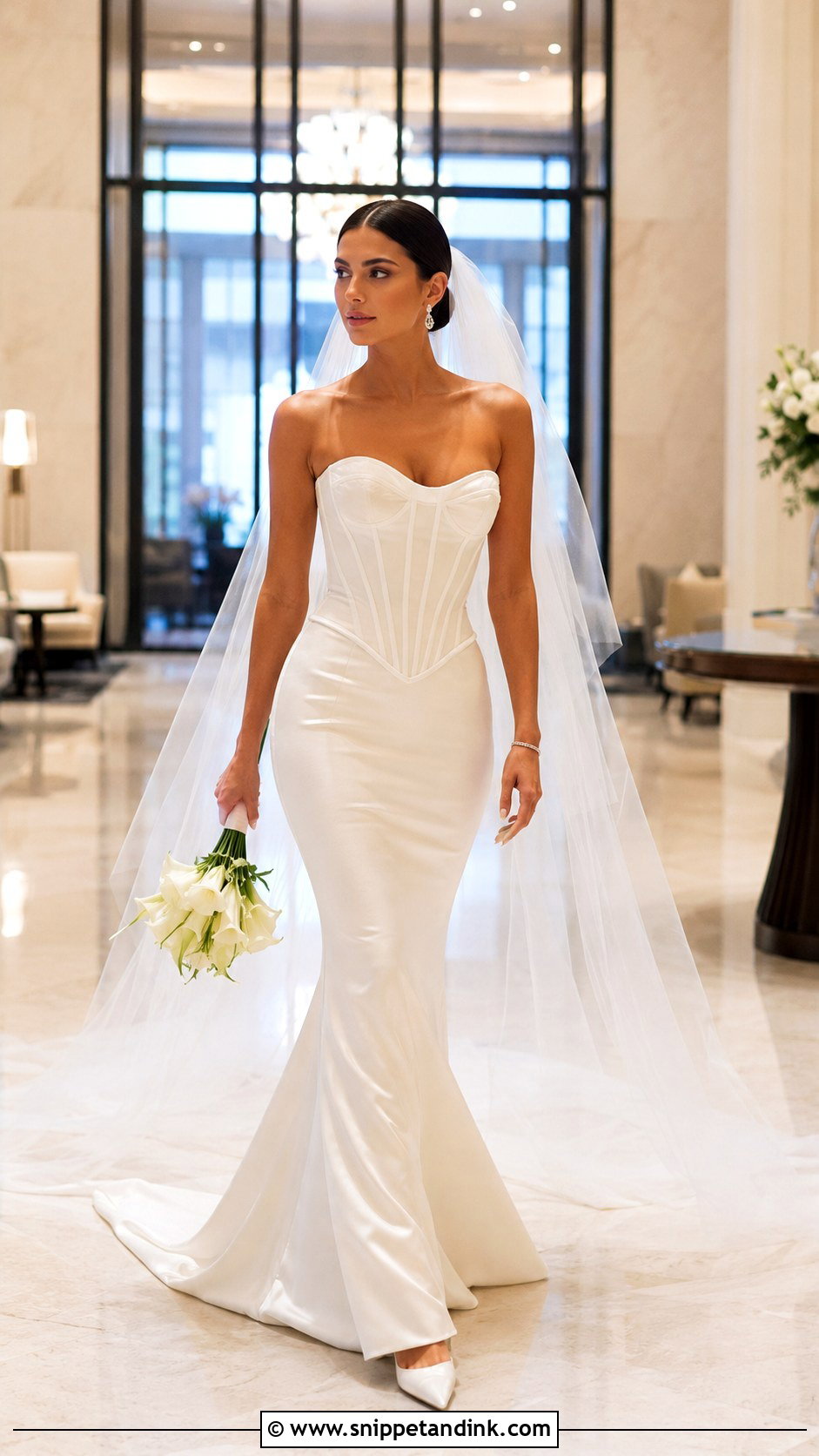
Visible corsetry is fitted to the millimetre, so I’d never order this one without at least three fittings booked. Look for evenly spaced boning, built-in cups and a basque or softly pointed waist that flows into the skirt without a ridge. Sheer panels look modern but show any shapewear underneath, so bring the exact undergarment you’ll wear. Slim drop earrings, a tennis bracelet and a plain cathedral veil let the bodice stay the focus. Keep the bouquet narrow so it doesn’t cover the waist the gown was built to show.
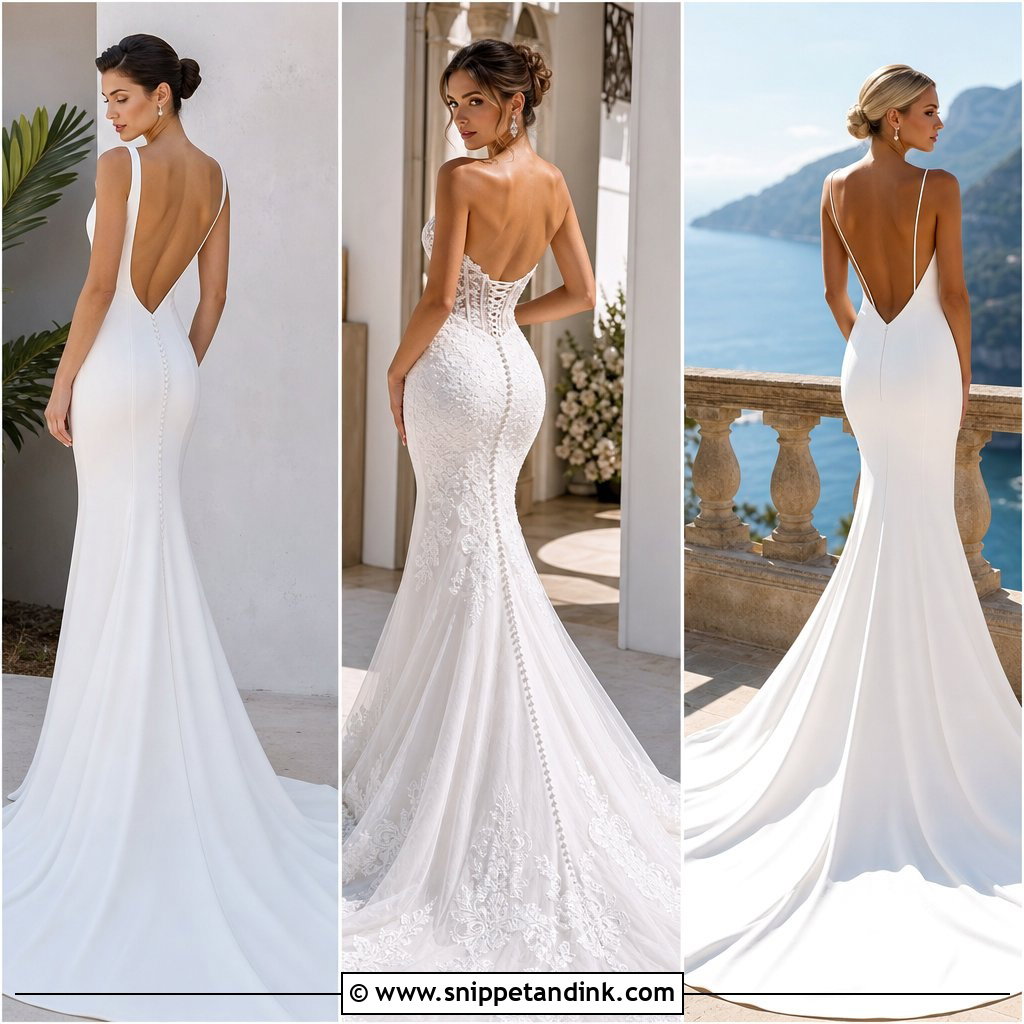
9. Minimalist Crepe Mermaid Bridal Gown
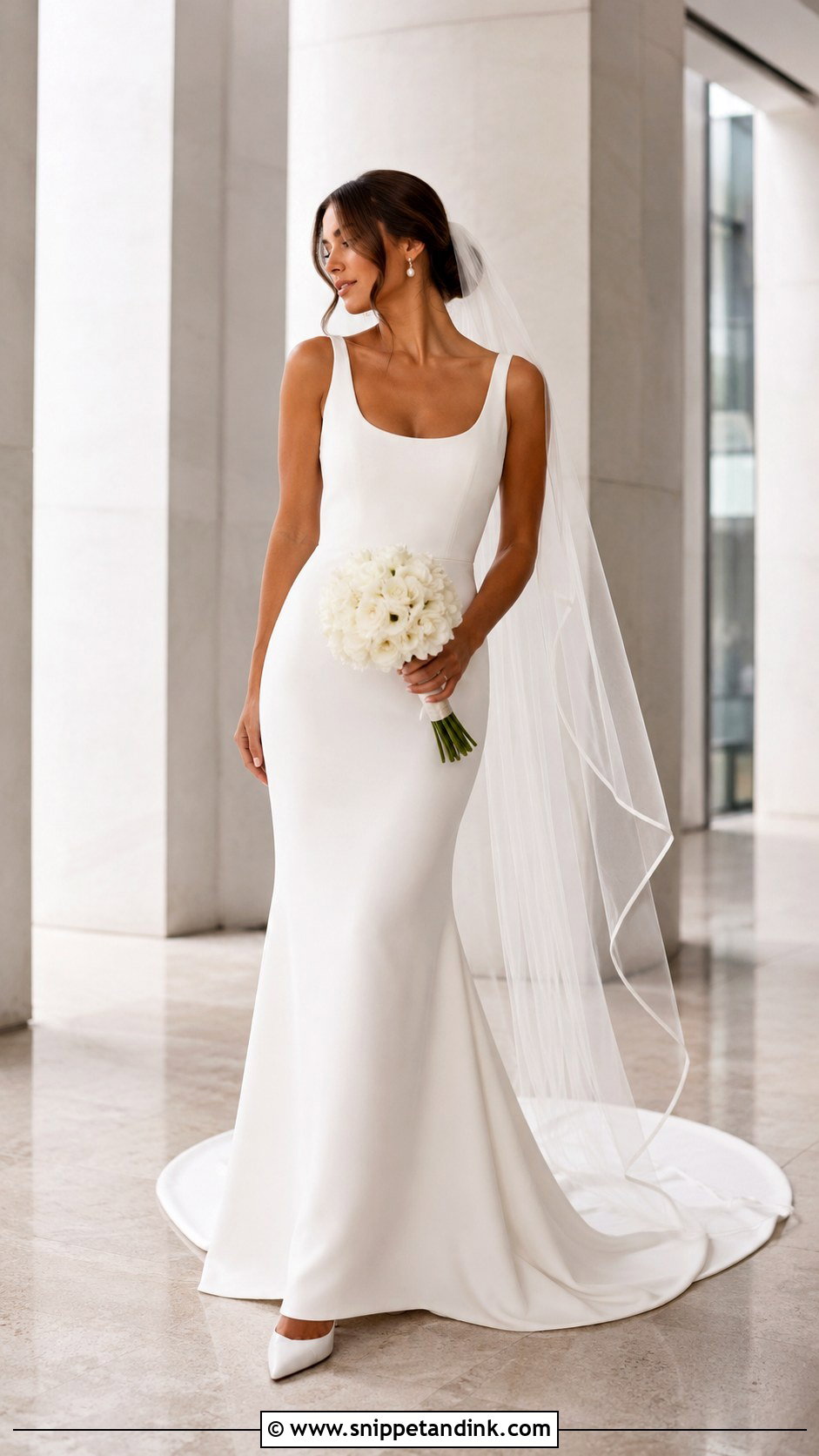
Crepe has almost no surface decoration, so every seam is visible and the tailoring has to be very good. I check two things: that the side seams run straight down rather than twisting toward the back, and that the flare lets you take a normal stride. A bateau or soft scoop neck suits the quiet fabric. Pearl earrings, ivory pumps and a thin-edged veil are plenty. If you want one bold detail, pick a long veil or sculptural earrings or a back bow, never all three, because crepe looks cheap the moment it is over-accessorised.
10. Beaded Mermaid Bridal Gown
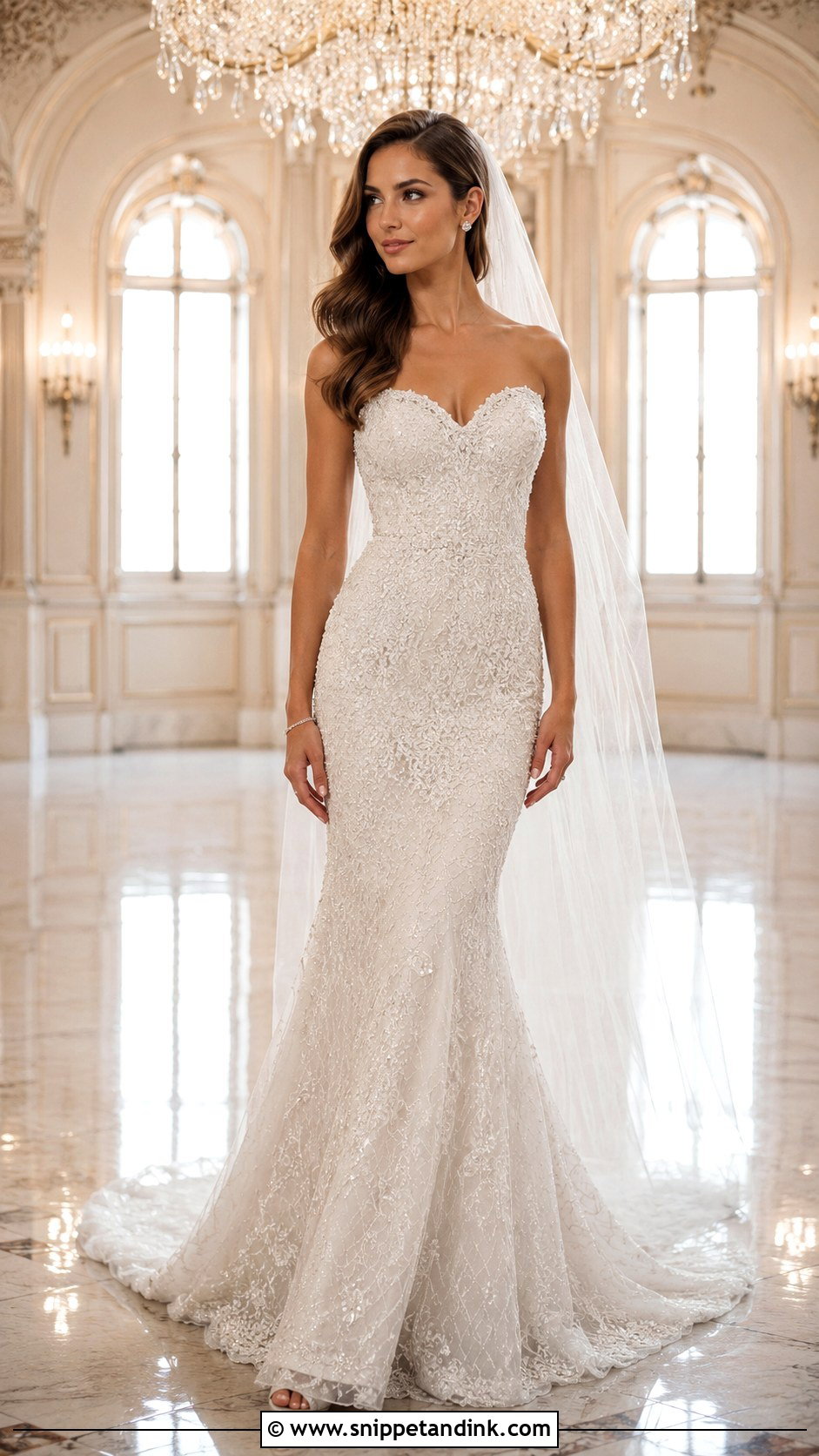
Beading adds real weight, sometimes a lot of it, and that changes how a mermaid skirt hangs. Tonal beads and small crystals stitched over lace look dimensional; heavy sequins across the whole skirt can drag the flare down and pull at the knee. At the fitting I ask the bride to sit for a full minute, because beads under the seat press into the skin and can snag when you stand. Keep accessories quiet: crystal studs, a narrow bracelet and a plain tulle veil so the beadwork stays the only sparkle.
11. Floral Appliqué Mermaid Bridal Gown
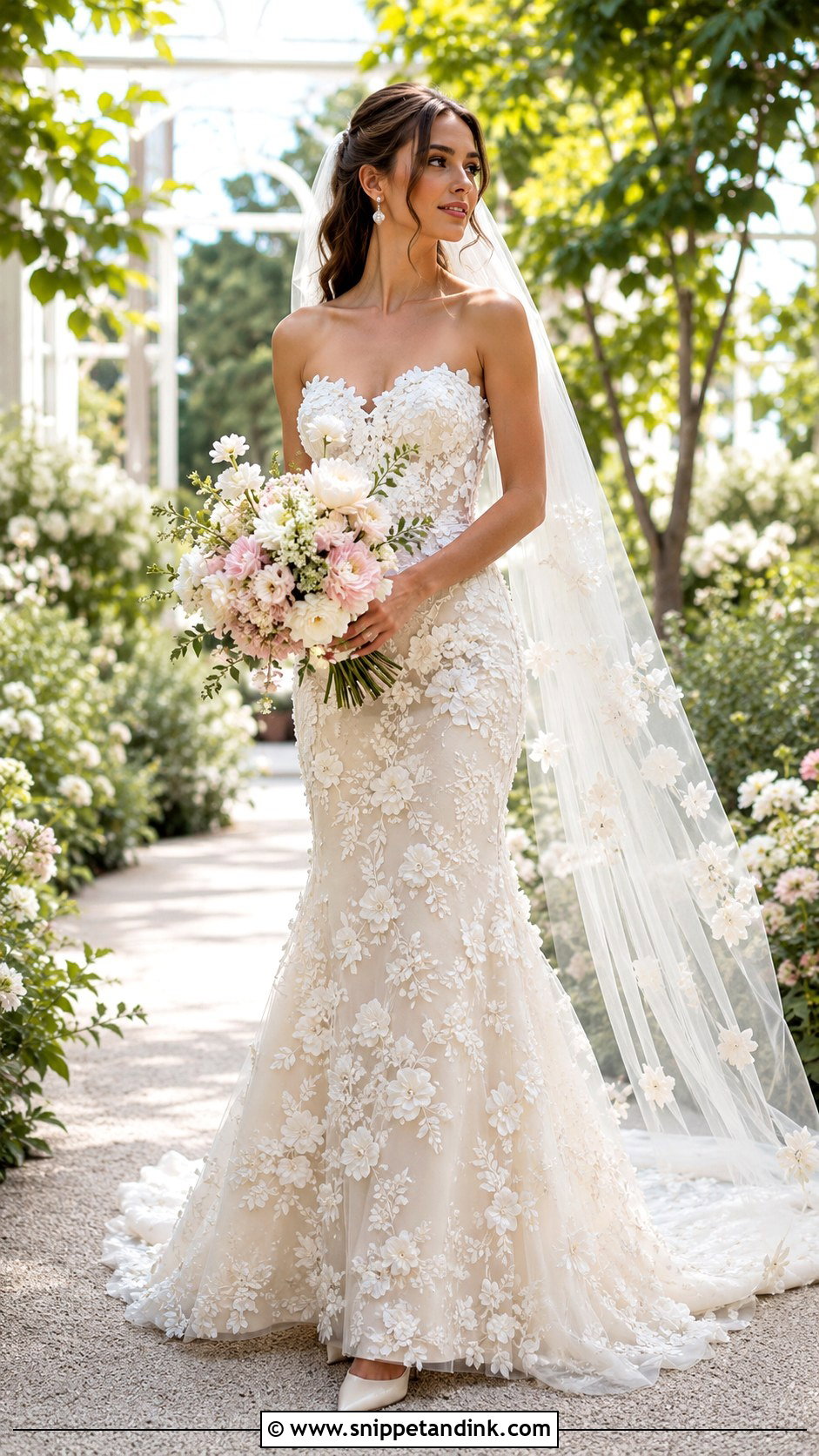
Three-dimensional flowers look best when they are dense at the bodice and thin out as they travel down the skirt, almost like petals falling. Small blossoms read as delicate; large petals read as editorial and are harder to sit in, since they crush. I’d add only a few matching appliqués near the veil edge, not a full border. A soft updo or half-up style suits the mood. The bouquet should stay loose and moderate in size; a huge cascade will flatten the flowers on the bodice every time you hold it close.
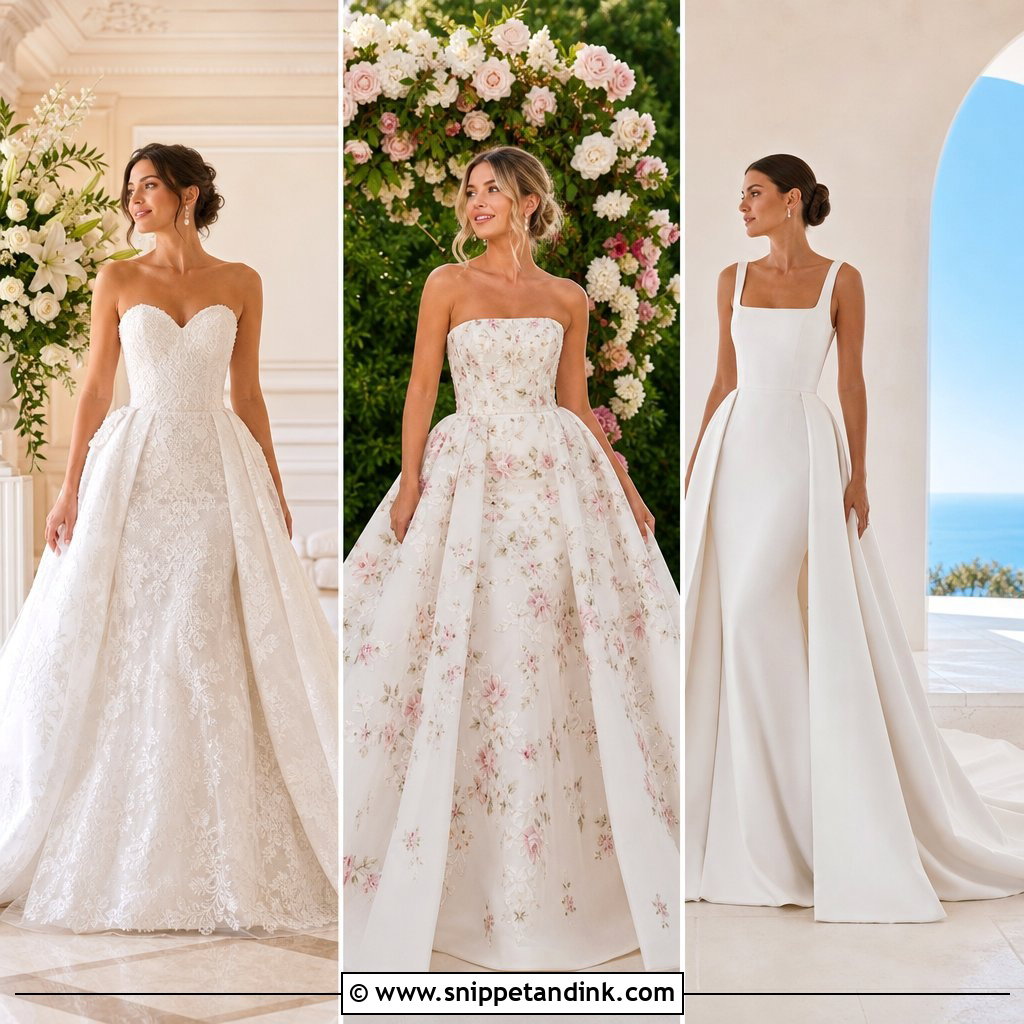
12. Detachable Overskirt Mermaid Bridal Gown
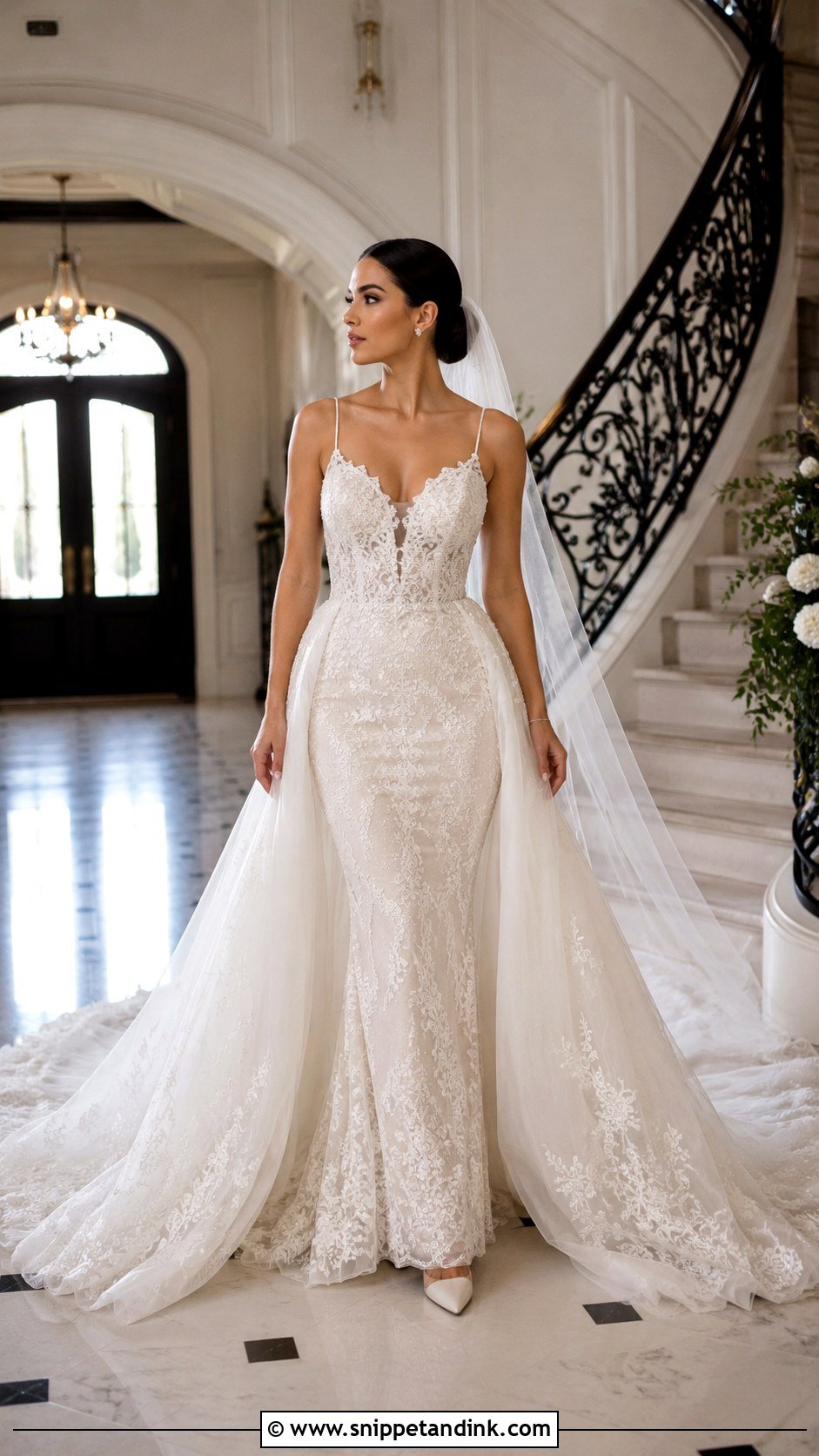
A detachable overskirt is the most practical answer I know to a bride who wants a big ceremony entrance and freedom to dance. Tulle is light and easy to remove; satin and mikado look grander but weigh more and need a firmer waistband. The waistband is the weak point, so make sure it sits flush with the bodice and closes with hooks or snaps you can undo in a minute. Have your seamstress show your maid of honour how to take it off, not just you. Pair it with a long simple veil, studs and a neat bun.
13. Detachable Bow Mermaid Bridal Gown
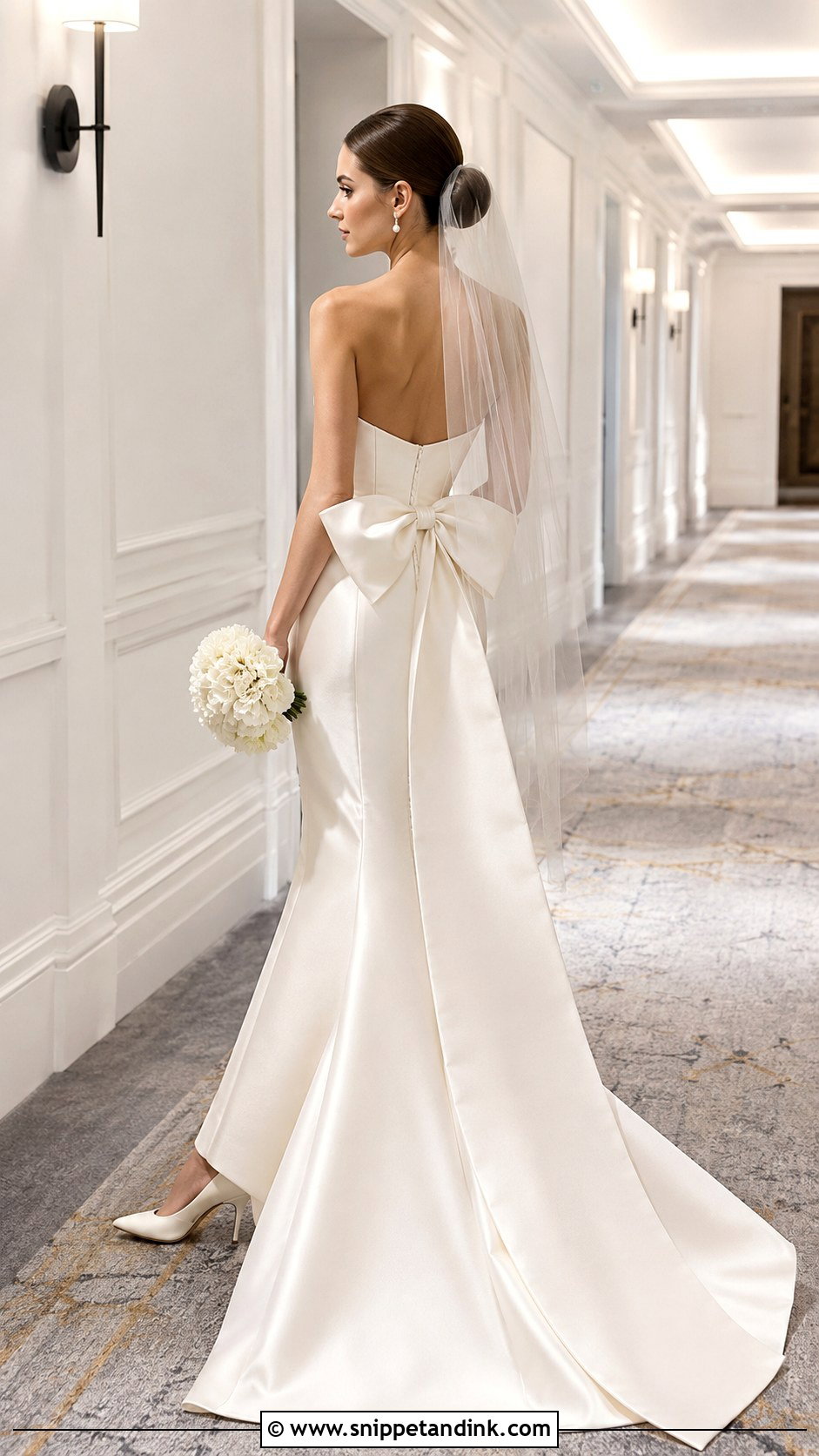
Bows are heavier than they look, and a big satin bow can tug the back of a fitted gown down and open the neckline at the front. I check that it is anchored to the bodice’s internal structure, not just stitched to the outer fabric. Crisp satin holds its shape; tulle bows move more but flatten when you sit against a chair. The front should stay plain, with small earrings and no necklace. Once the photos are done, unclip it for an easier evening.
14. Open Back Mermaid Bridal Gown
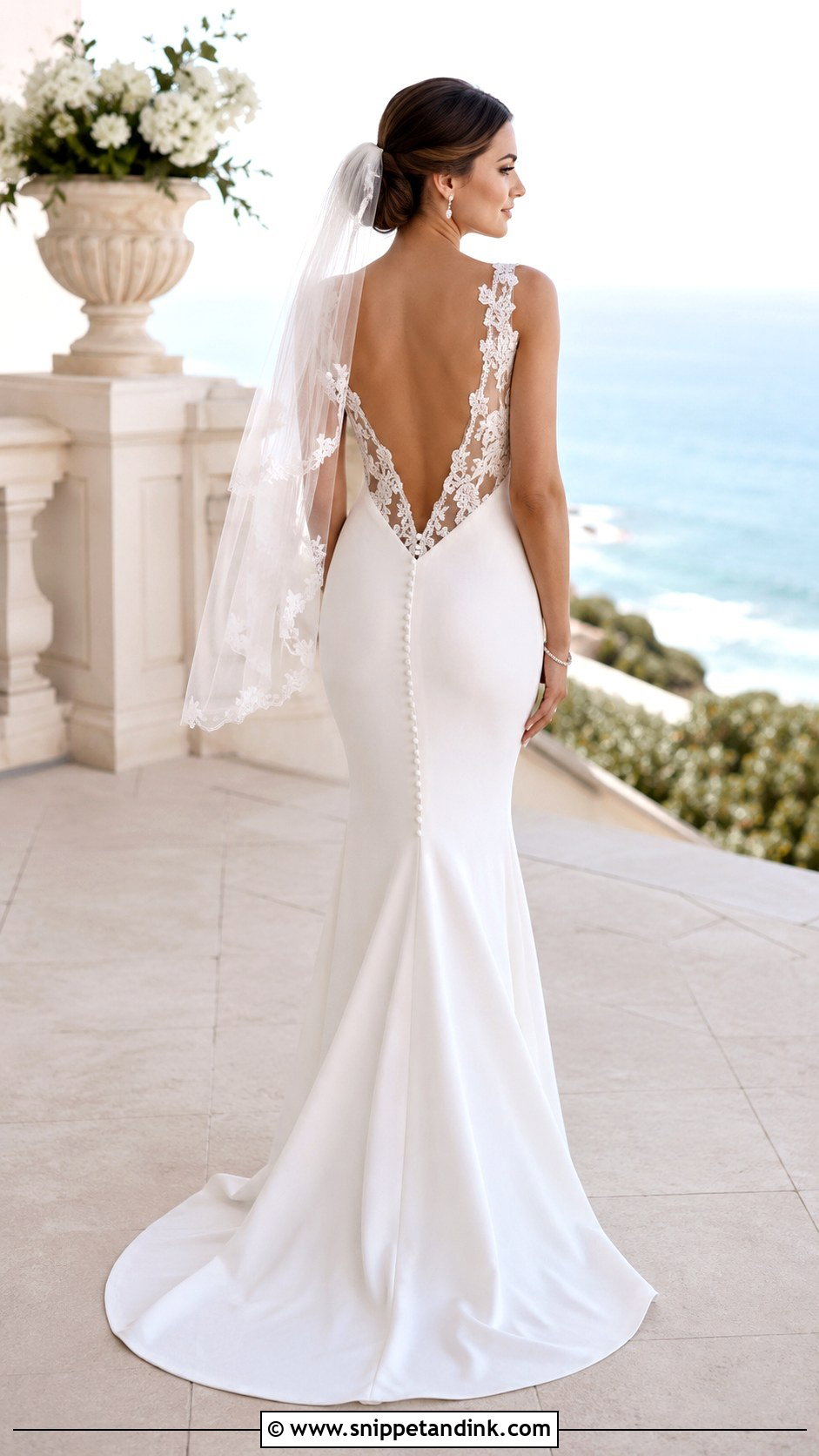
The open back is the part guests see during the entire ceremony, so I give it more fitting time than the front. A deep scoop or V needs a firm waist stay inside, otherwise the edges gape the moment you lean forward. Crossing straps are the most forgiving option on a bride who moves a lot. Wear hair up or swept to one side, choose drop earrings and ankle-strap heels for stability, and place the veil either above or below the bun so it frames the back instead of covering it.
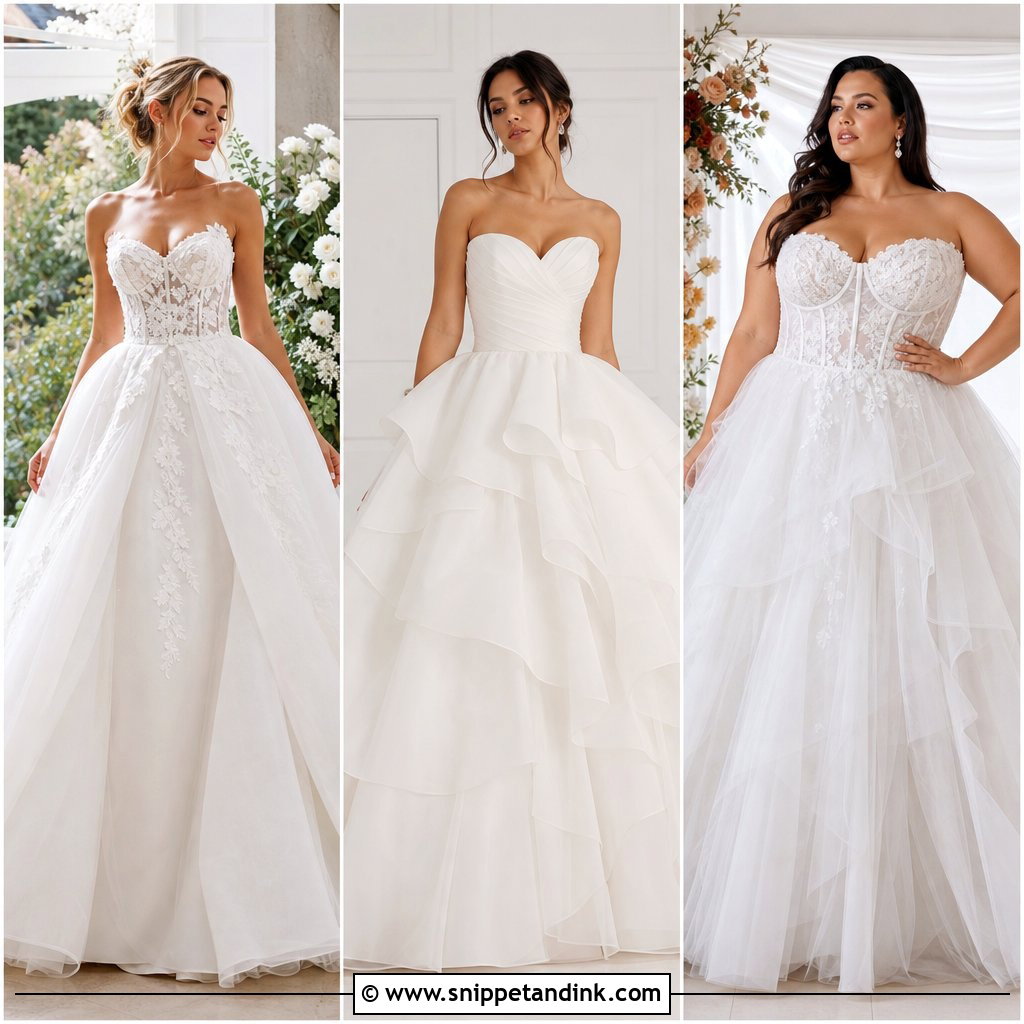

15. Illusion Sleeve Mermaid Bridal Gown
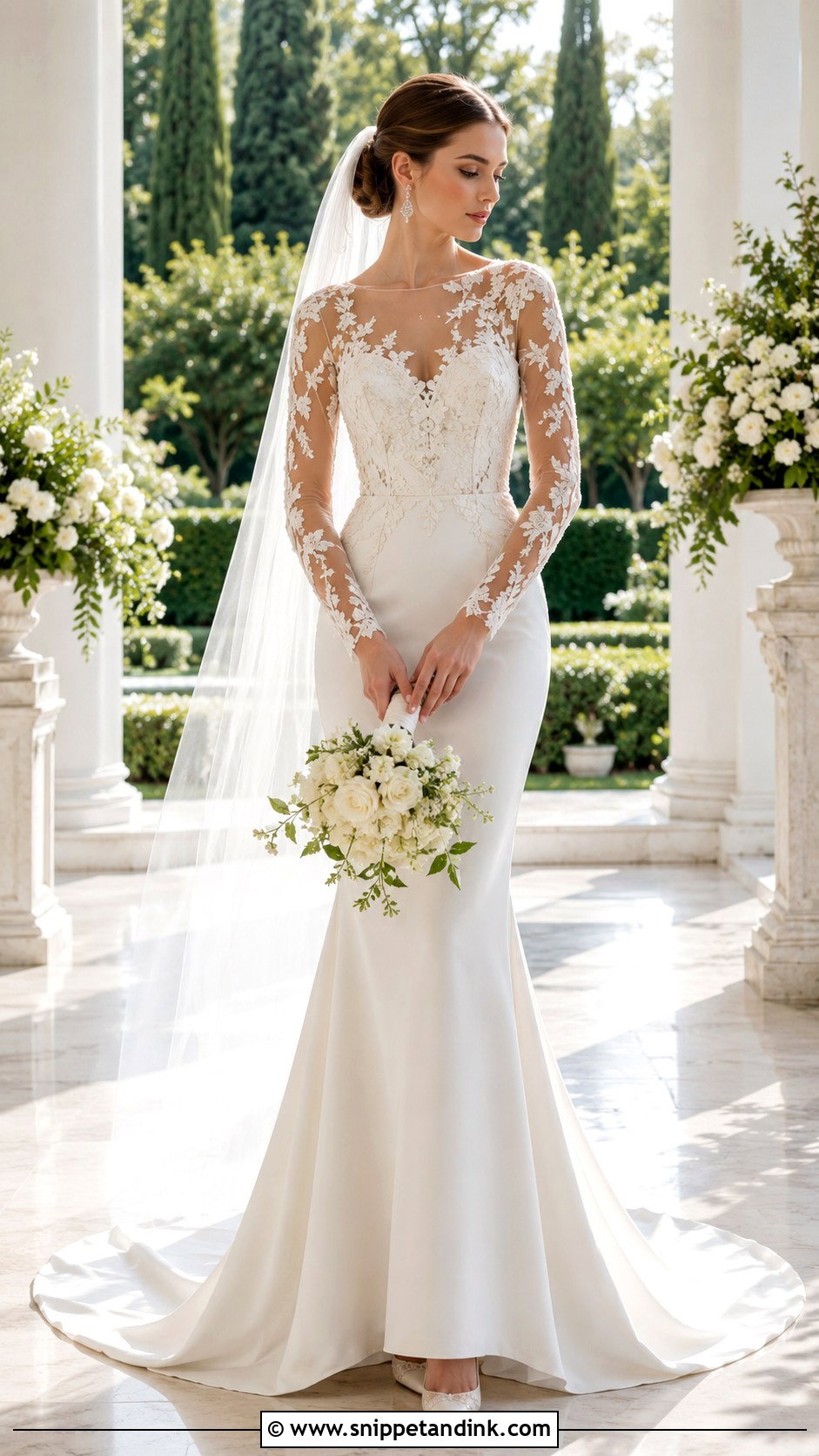
Illusion sleeves are tulle with lace motifs placed over it, and the tulle colour has to match the bride’s skin closely or the effect disappears. I always hold the sample against the inner wrist in daylight. A neckline that flows straight into the sleeve, such as a bateau, V neck, or soft scoop, looks the most natural. At fittings, check the armhole and elbow: tulle doesn’t stretch, so a tight armhole stops you lifting your arms for the first dance. Small crystal earrings and a low chignon keep the shoulder lace visible.
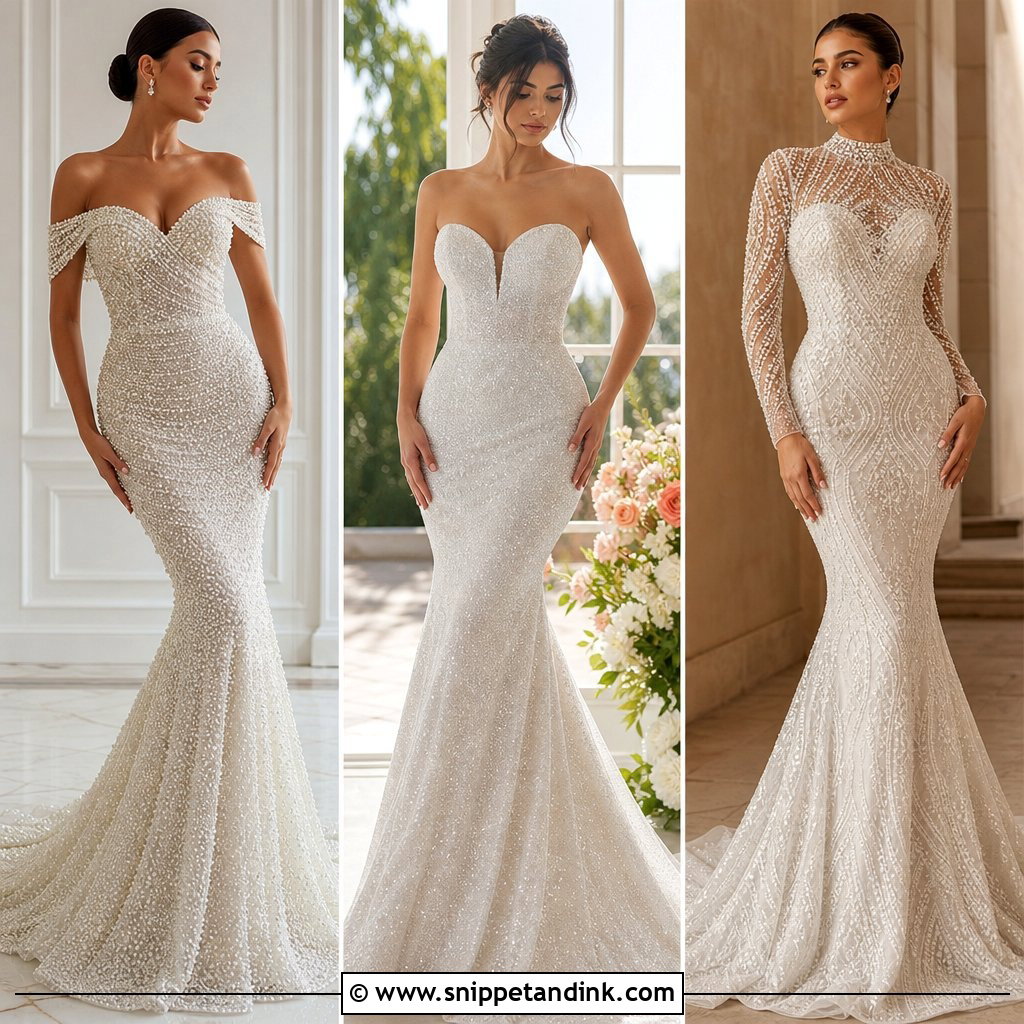
16. Pearl Mermaid Bridal Gown
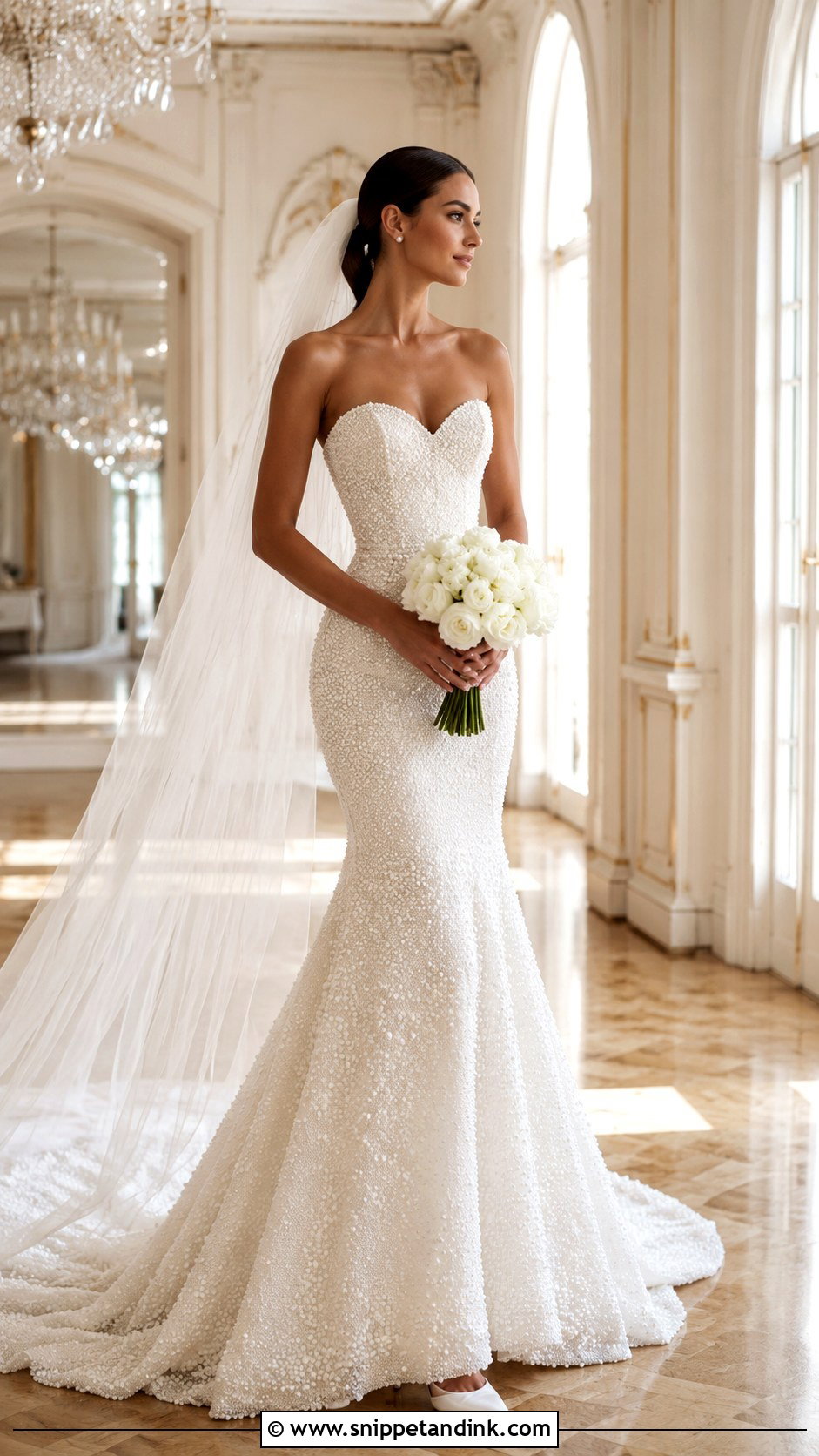
Pearls look soft from a distance and slightly textured up close, which is lovely, but they come loose more often than beads because many are glued or single-stitched. Before the final fitting I run my hand over the bodice and skirt to check for anything wobbling. Keep pearl sizes and tones consistent so the dress reads luminous rather than busy. Simple pearl studs, satin pumps, a plain veil and a sleek low bun or ponytail are all it needs.
17. Ruffle Skirt Mermaid Bridal Gown
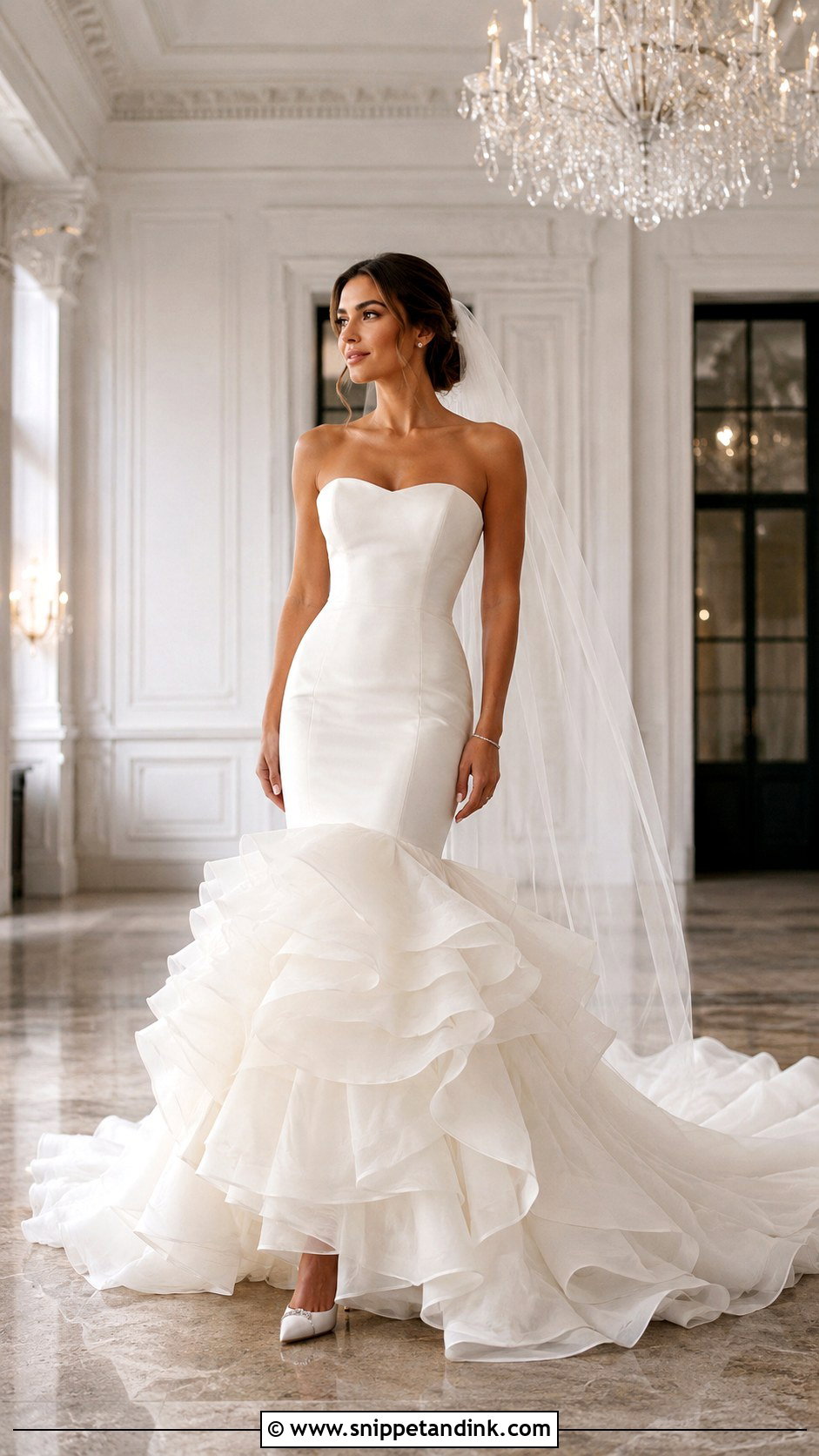
Ruffles make the lower half of a mermaid gown move, but they also make it wide, so the venue needs room. Horsehair-trimmed organza holds a sculptural edge; soft tulle ruffles look airier but flatten faster after hours of sitting. Balance the volume with a clean bodice, like a strapless sweetheart or simple off-the-shoulder line. I tell brides the veil can be short here, since a fingertip length is enough when the train is this busy. Choose secure heels; nobody will see them, but you’ll be walking through layers of fabric all night.
18. Blush Mermaid Bridal Gown
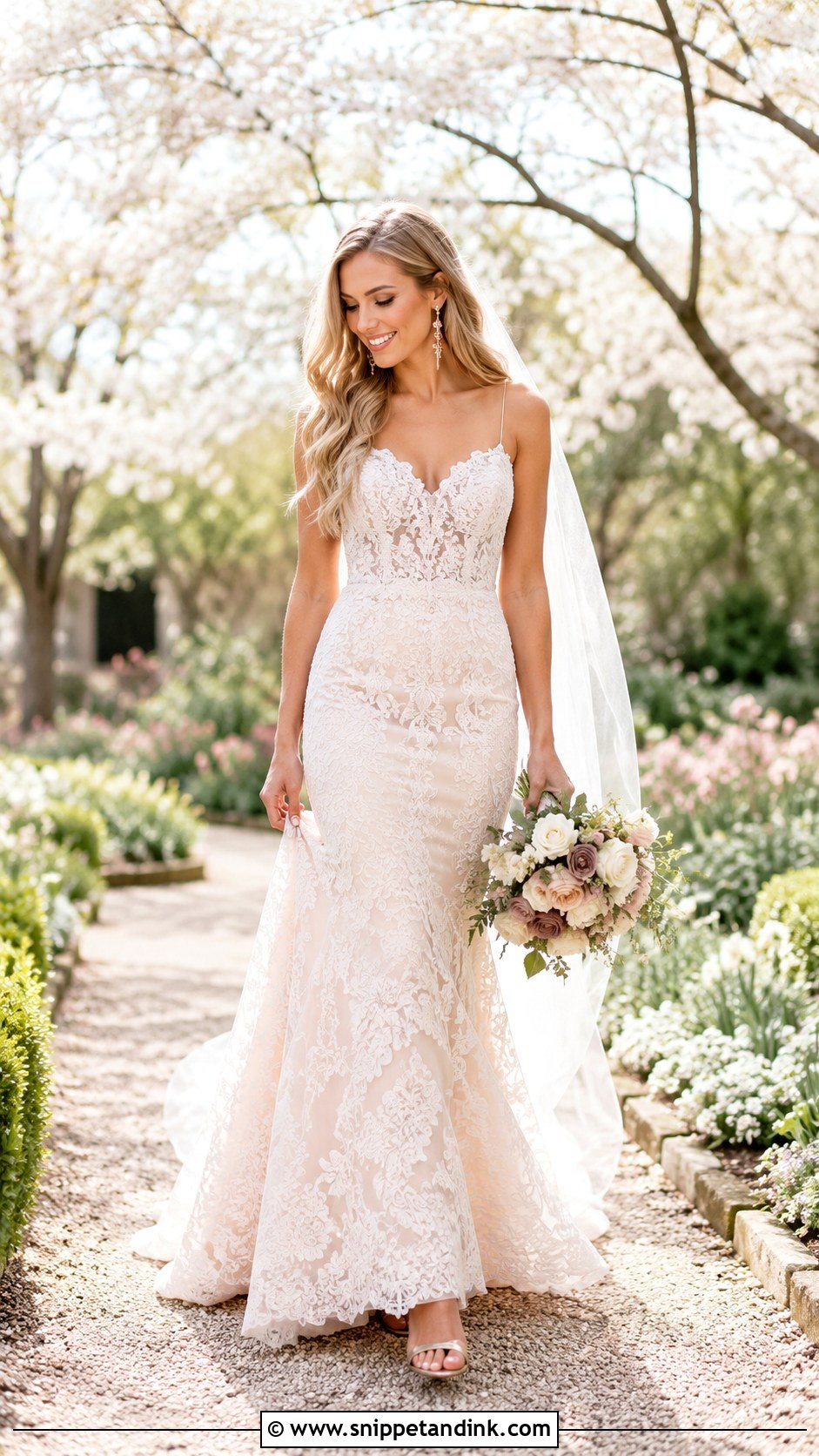
Blush comes in two forms: a pale pink lining under ivory lace, or blush fabric through the whole gown. The lining version is subtler and easier to wear. Either way, I check the shade against the bride’s skin in window light and under warm indoor bulbs, because some blush tones turn peachy or grey under tungsten. An ivory veil gives gentle contrast. Champagne heels and rose-gold or pearl earrings sit nicely with it, and a bouquet of white and muted pink flowers keeps the palette from looking too matched.
19. Plus Size Mermaid Bridal Gown
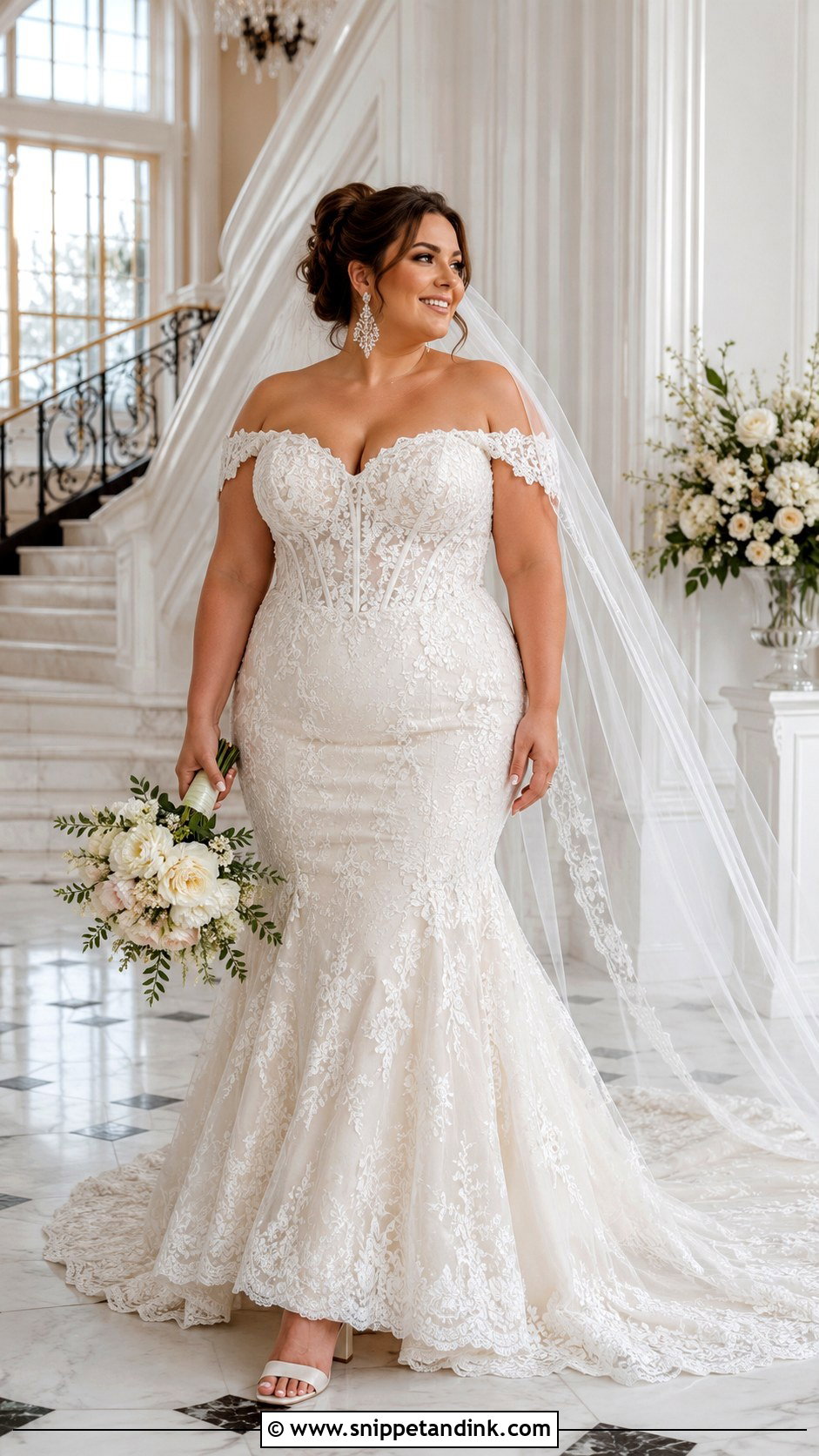
On a plus size bride, a mermaid gown is mostly about engineering. I look for firm internal boning, real cups instead of foam pads, and seams that follow her own curves rather than a standard pattern. The flare point matters more here: set it a little lower and walking gets harder, so I often suggest a trumpet flare that opens at mid-thigh. Sweetheart, V and off-the-shoulder bodices all work. Ignore the size label and judge the gown on how it feels when you walk, sit and turn. Block heels or cushioned pumps will save your feet by the reception.

20. Modest Mermaid Bridal Gown
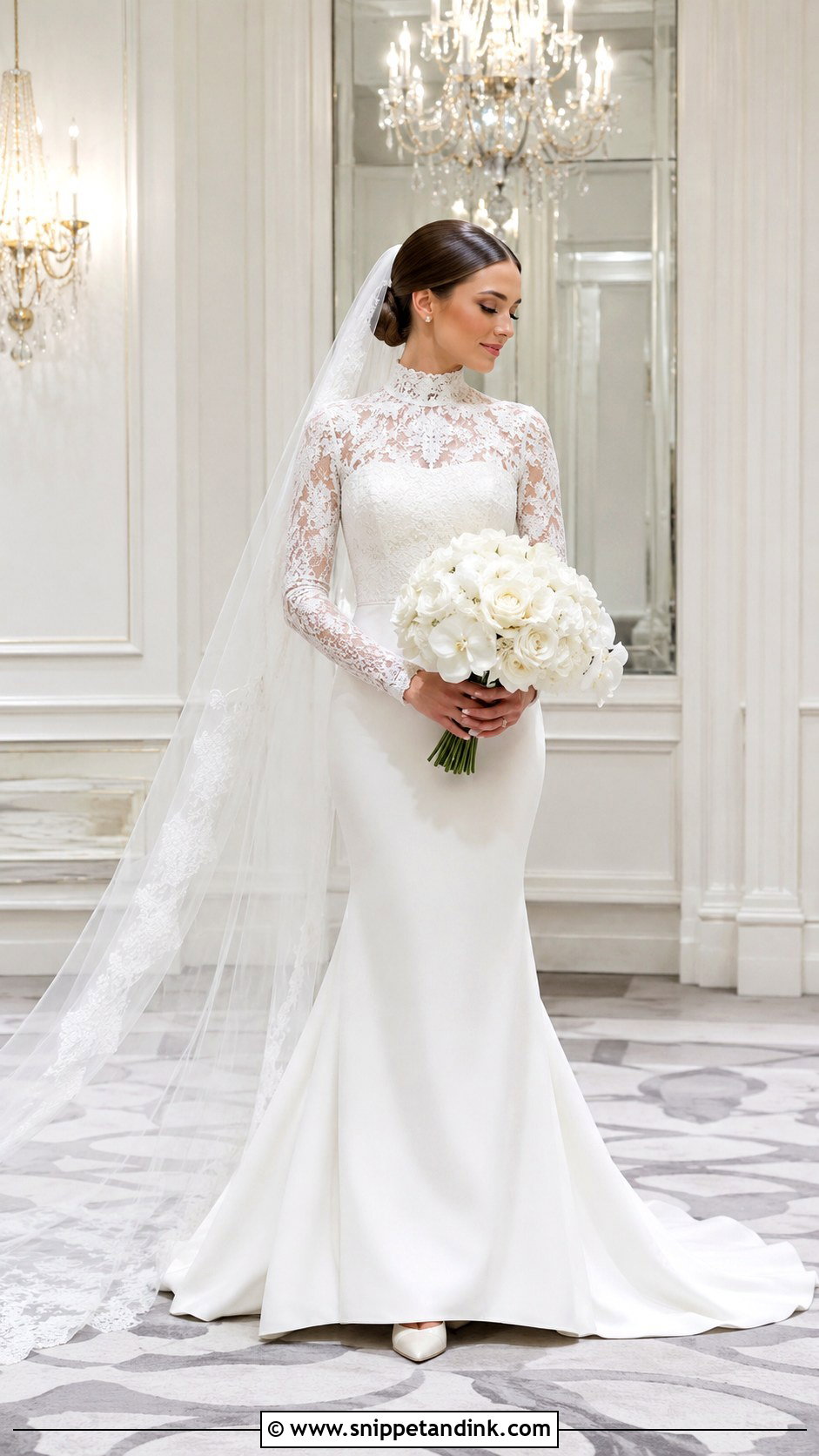
Coverage and a fitted skirt are not opposites. A high lace neck, lined long sleeves or a bateau neckline in opaque crepe all keep the shape defined without sheer panels. The risk I watch for is bulk: extra lining layers can thicken the waist, so ask the seamstress to trim inner seams flat. Closed-toe satin heels, pearl earrings and a chapel or cathedral veil suit this look. A matching detachable overskirt gives extra drama for a traditional ceremony and comes off for the family celebration afterward.
Alteration Timelines for a Gown This Fitted
Mermaid gowns usually need more tailoring than looser silhouettes, because every change in your body shows. Most made-to-order bridal gowns take several months to arrive, often four to six or more, so I tell brides to order around eight to ten months before the wedding and confirm timing with the shop, as it varies by designer.
- First fitting about eight to ten weeks out: hem, side seams and the knee point are set.
- Second fitting roughly four weeks later: bodice, straps and sleeves are refined, and the bustle is planned.
- Final fitting one to two weeks before: you check movement, practise the bustle and take the dress home.
Bring the same shoes and undergarments to every appointment. A change of heel height after the hem is cut means the skirt either drags or shows too much ankle, and on a mermaid that difference is obvious.
How a Mermaid Train Gets Lifted for the Reception
A long train on a fitted skirt has to go somewhere once the dancing starts. The common options are an over bustle, where the train hooks up onto the back of the skirt, and an under or French bustle, where it tucks underneath and ties. Heavy satin usually suits an over bustle; soft lace and tulle often look better tucked under.
I always ask for the bustle to be practised by whoever will actually do it on the day, ideally twice. Colour-coded ribbons help in a dim reception room. And if your train is very light, a simple wrist loop may be enough, which saves time and fitting costs.
The Sit-Down Test Every Mermaid Gown Has to Pass
Before you fall for a neckline or a fabric, sit on a chair in the dress, climb two steps and turn around quickly. If any of those feels like a struggle in the salon, it will feel worse ten hours later. Then build everything else around the silhouette: shoes, jewellery, hair and veil should support the shape, not compete with it. Book alterations early and wear your actual shoes and undergarments to every fitting. From plain crepe to floral lace and convertible overskirts, there is a mermaid gown here for most venues, seasons and bodies; pick the one you can move in.
You'll Like These Ideas:




Leave a Reply