
A marriage hairstyle gets judged three ways: in the room, in the photographs, and by how it feels at hour eight. Right now the brides I work with are split between floral buns, sleek low buns, pearl braids, soft waves and half-up styles, often wearing two of them across the same weekend. Which one suits you comes down to the neckline, where the dupatta will sit, the weight of your jewelry, your hair length and the event. A heavy lehenga usually needs a bun to balance it, while mehendi or the reception can take waves, curls or a braid.
Adjusting the Looks Above for Coily, Heavy or Cropped Hair
Most reference photos show long, straight, medium-thick hair. Yours may not be, and that is fine; it just changes the method.
Very curly or coily hair
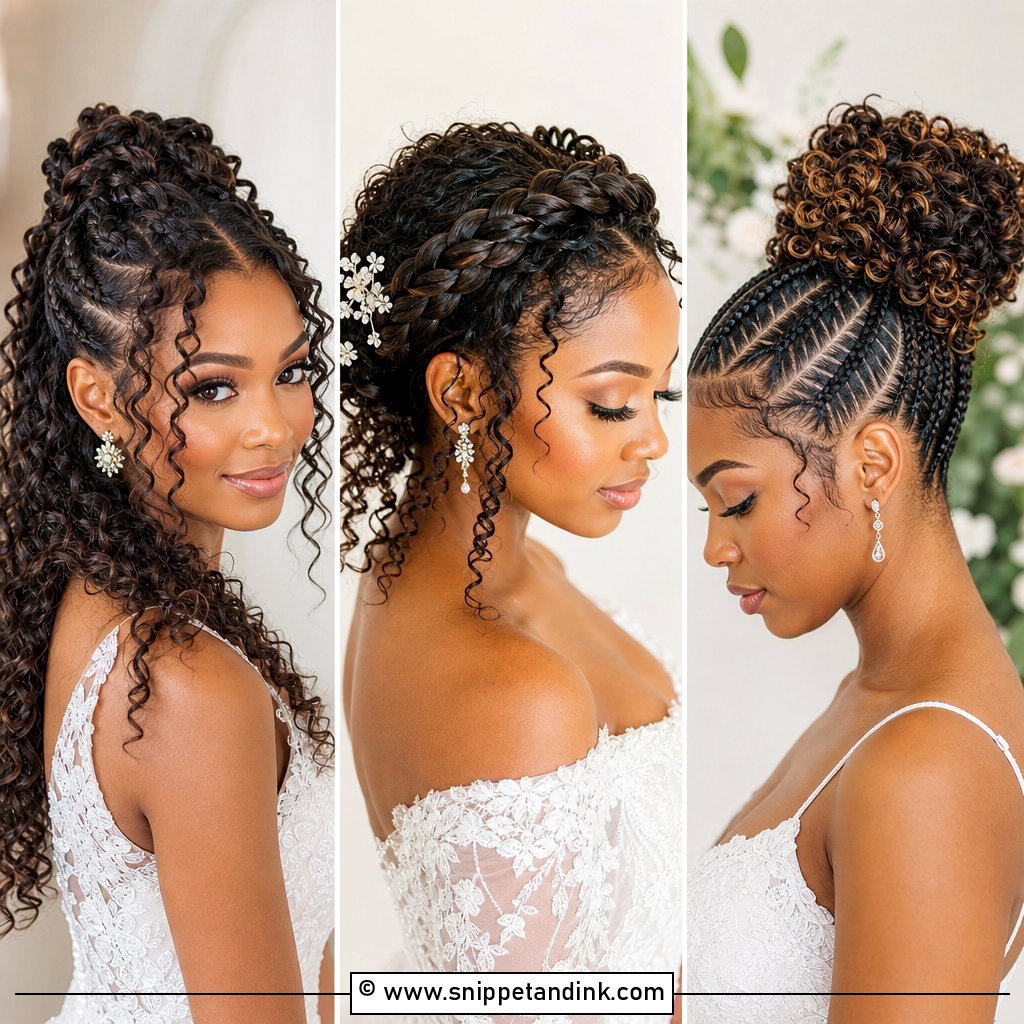
Curly hair holds pins far better than straight hair, so buns and braids last for hours. I either work with the natural texture for a defined bun or blow it out smooth a day ahead. Don’t ask for a silk press and a set of curls on the same morning; that is two hours of heat and a lot of breakage.
Waist-long, heavy hair
Weight is the problem. A bun of very long hair can drag on the scalp, so I thin it into a wider, flatter shape or braid part of the length first. Half-up and ponytails need extra anchoring underneath.
Bobs and pixies
A short cut can take a low bun with a filler and a gajra wrapped around to hide the edges, or simply sculpted waves with a jeweled pin. Avoid long braids built entirely from extensions unless you’ve tried them at the trial; the join shows when the hair above is short.
1. Indian Bridal Bun With Gajra
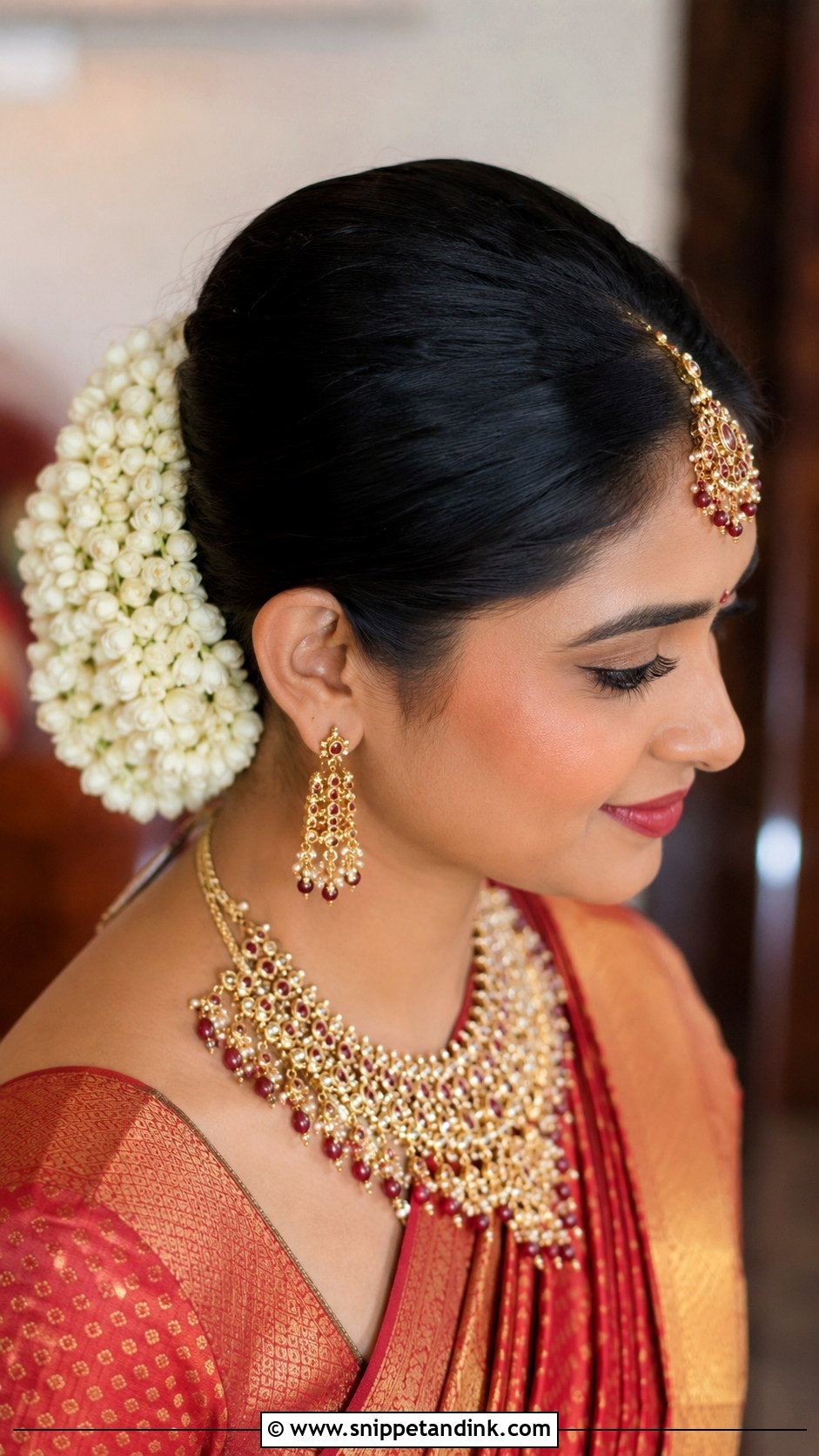
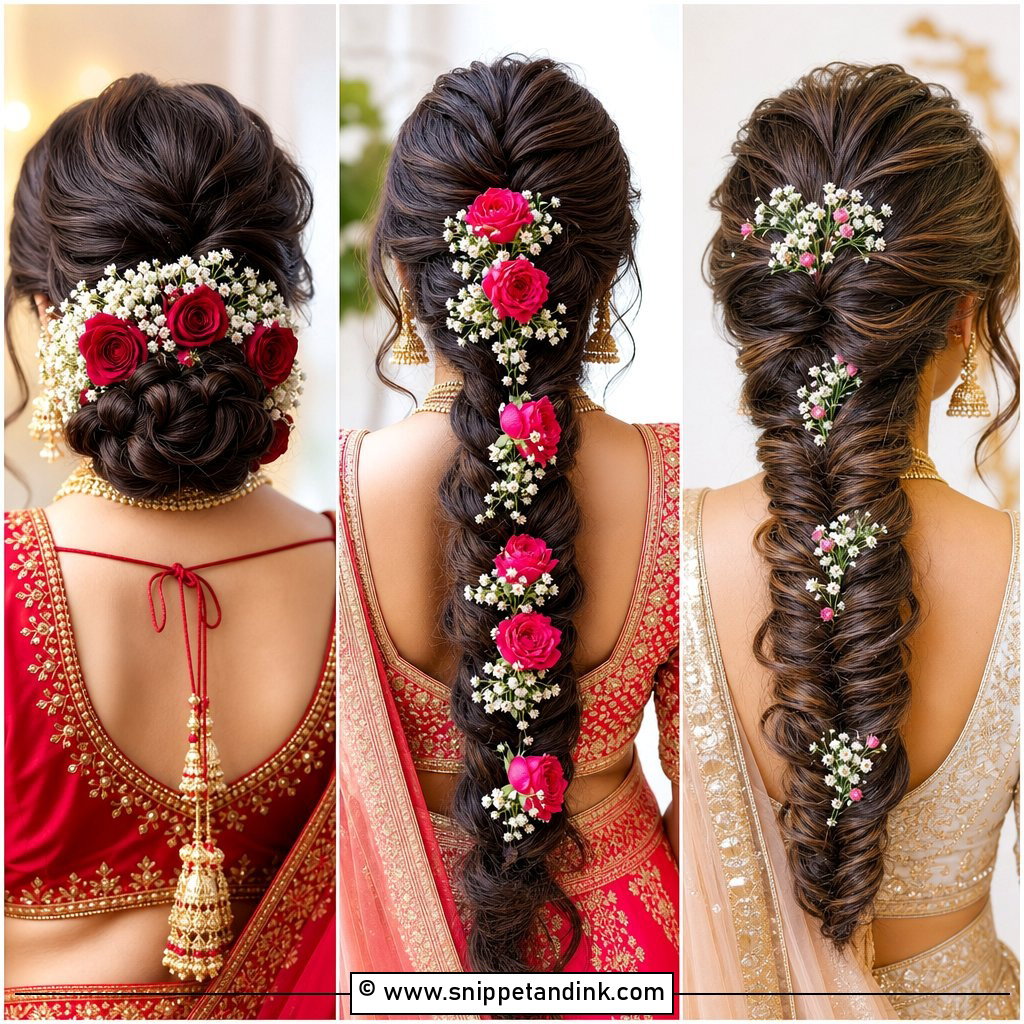
The Indian bridal bun with gajra holds up a dupatta, a maang tikka, a matha patti and heavy earrings all at once, which is why I trust it for the main ceremony. I place it low or at the middle of the back of the head depending on where the dupatta needs to sit. The jasmine softens the shape and scents the whole room. With fine hair, a bun filler in your shade gives the size without stretching the hair thin over it. Ask for a smooth crown and every pin hidden.
2. South Indian Bridal Braid With Flowers
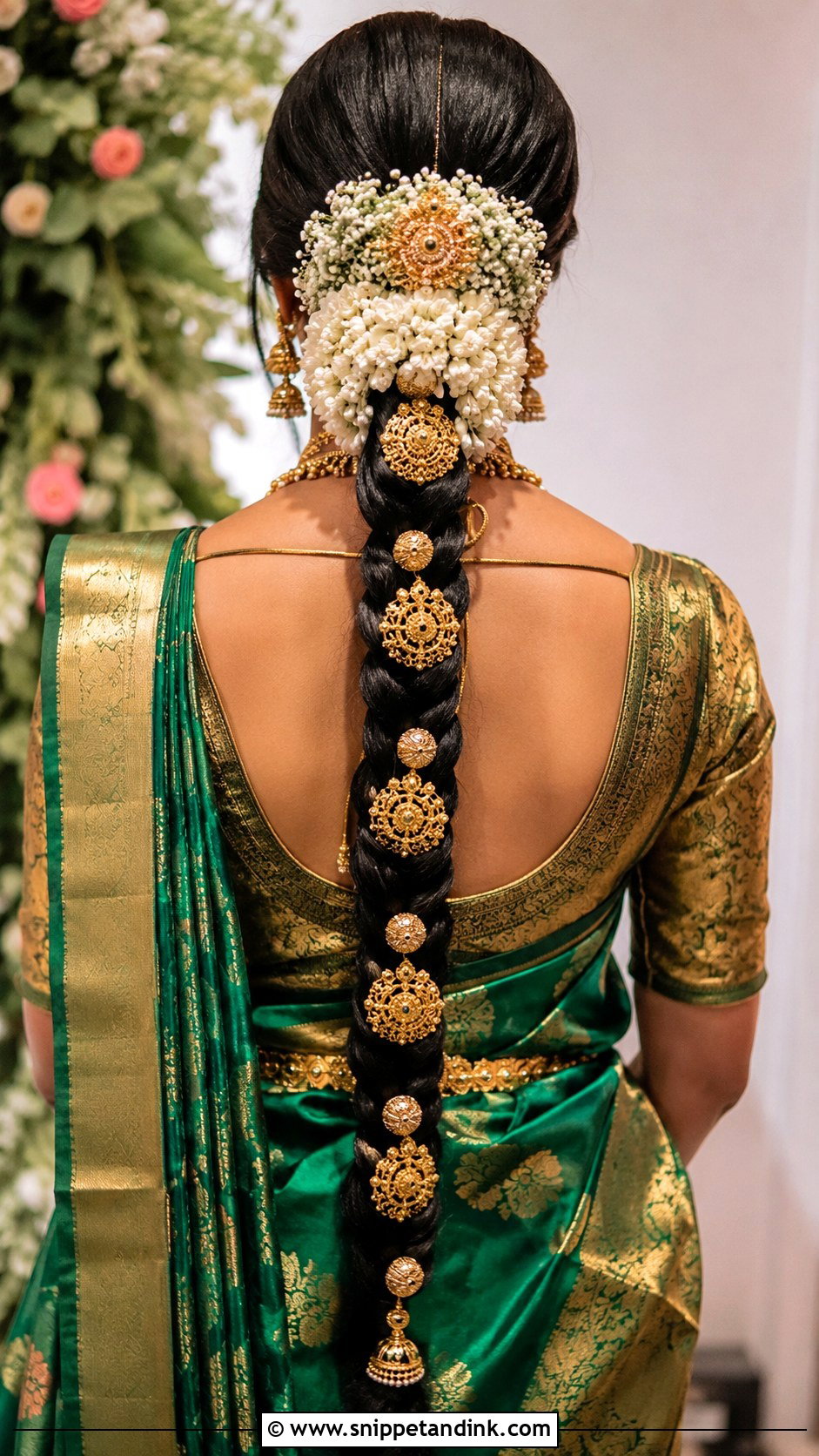
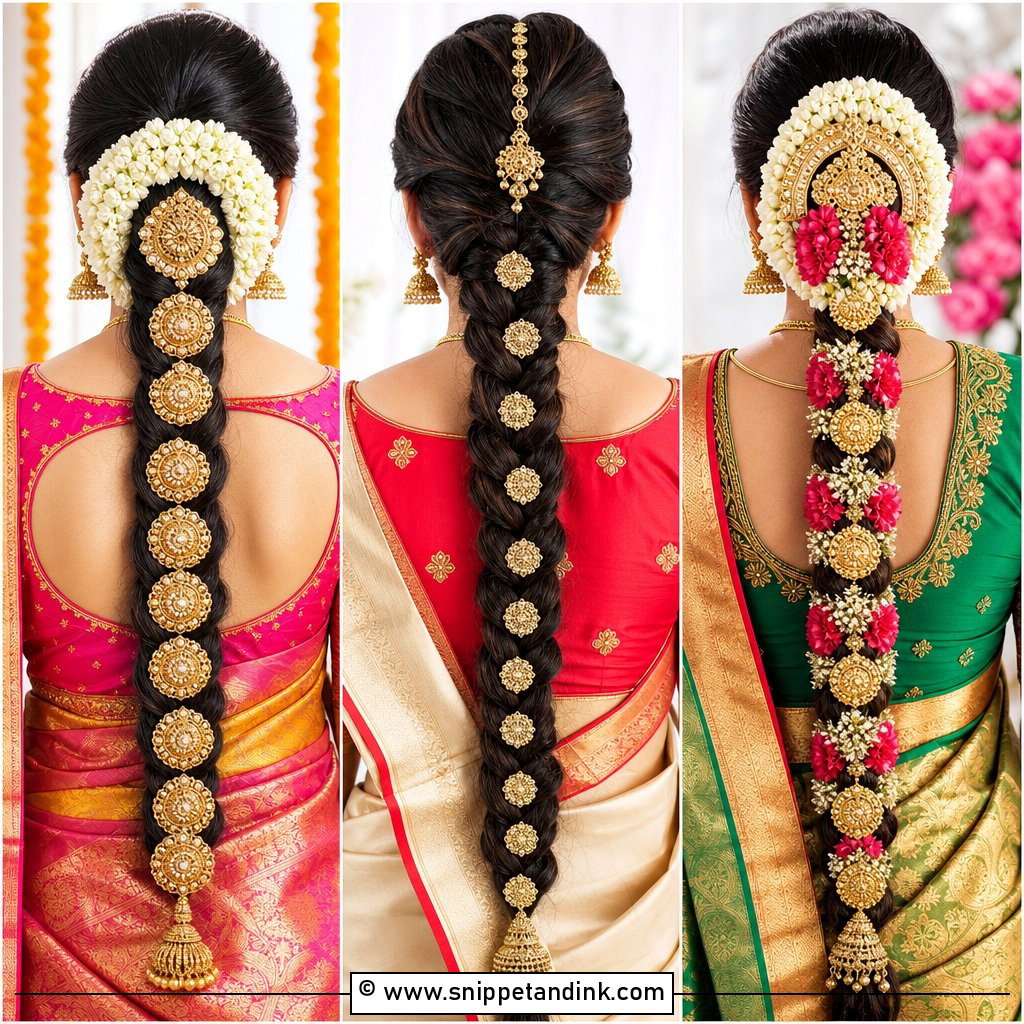
With a kanjeevaram saree, a South Indian bridal braid is close to essential. It runs sleek at the crown and full through the length, dressed with fresh flowers, jada billalu or temple jewelry. That ornament set is heavy, and it is the part I worry about: each piece gets its own pin, sewn through the braid with a thread or anchored with a U-pin, never just clipped on. Shorter or thinner hair needs an extension braided in from the nape. In return, the braid keeps every strand controlled through hours of ritual.
3. Indian Wedding Low Bun
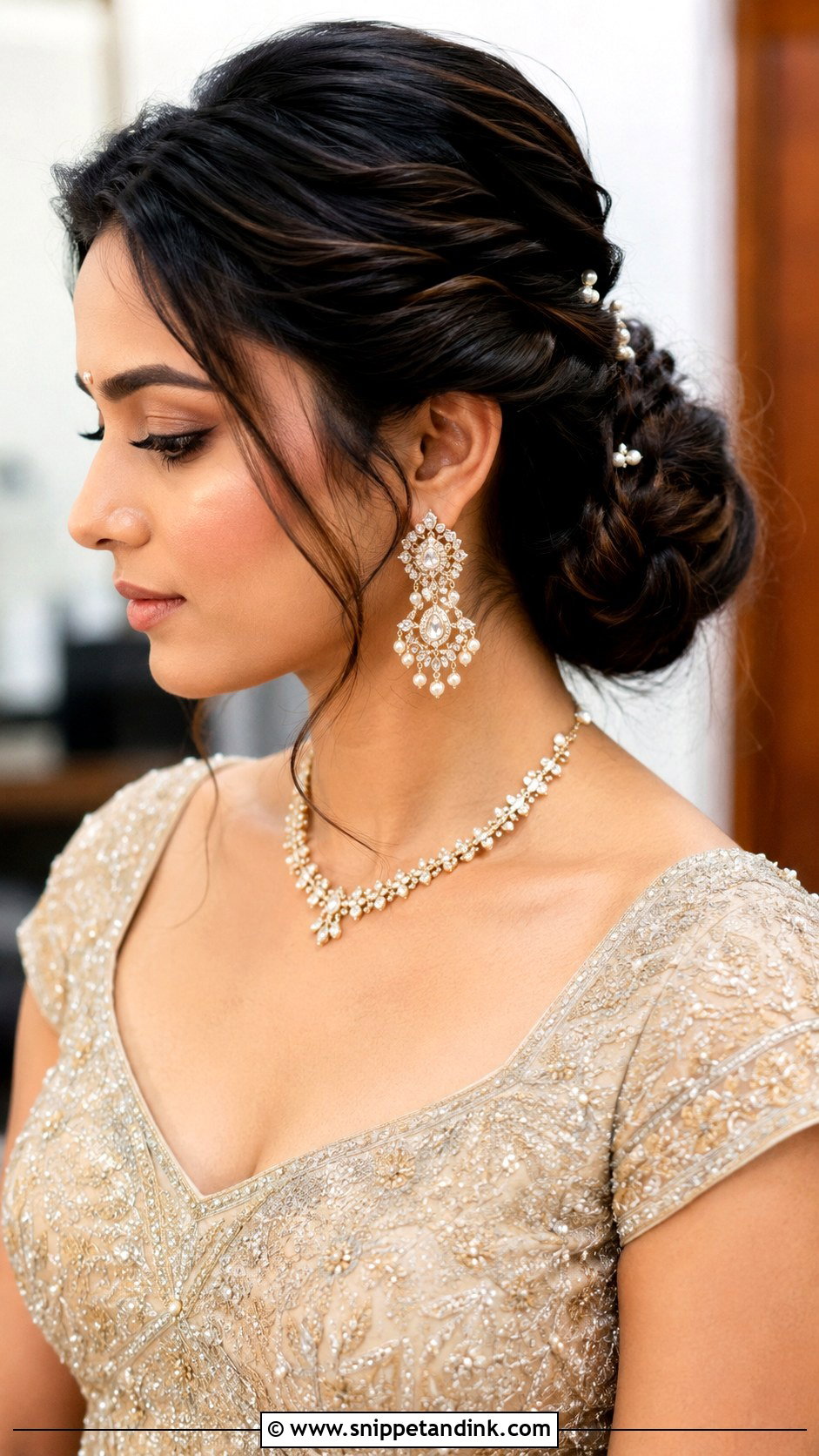
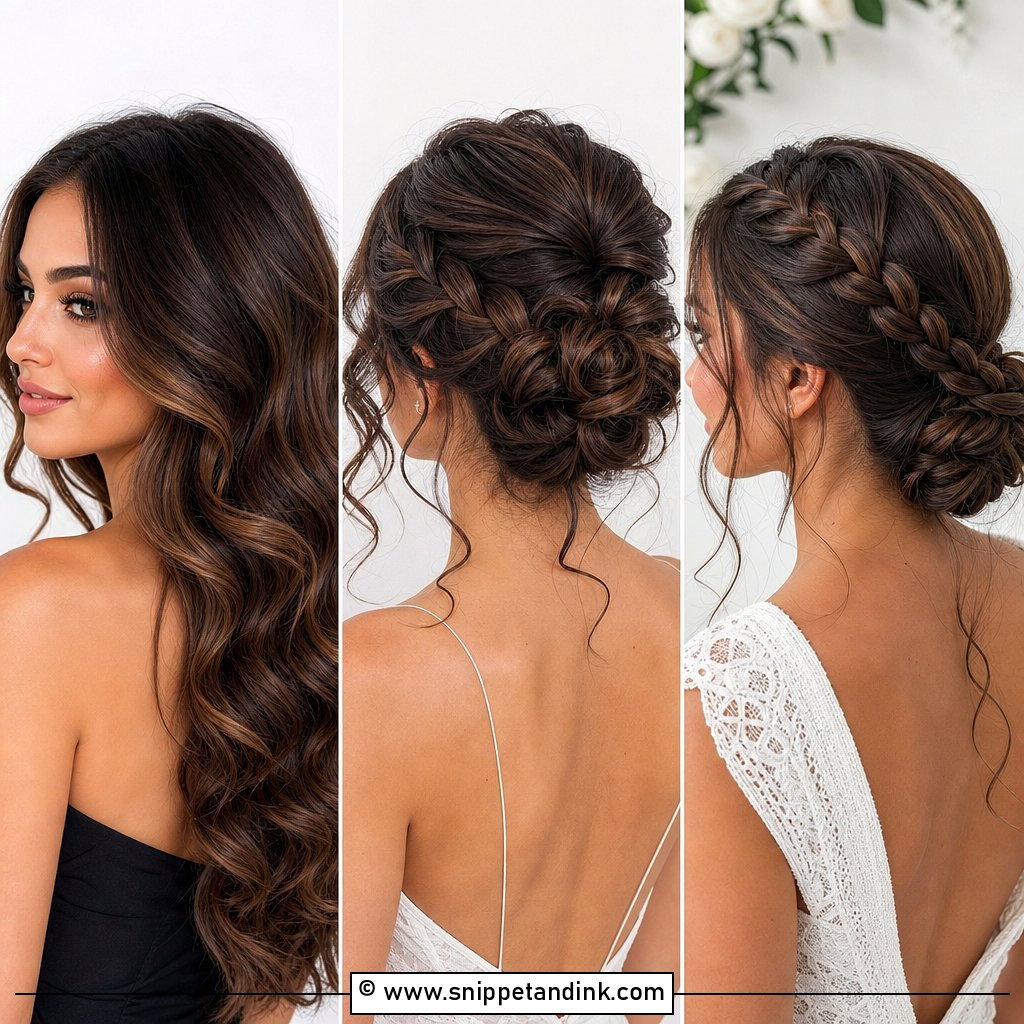
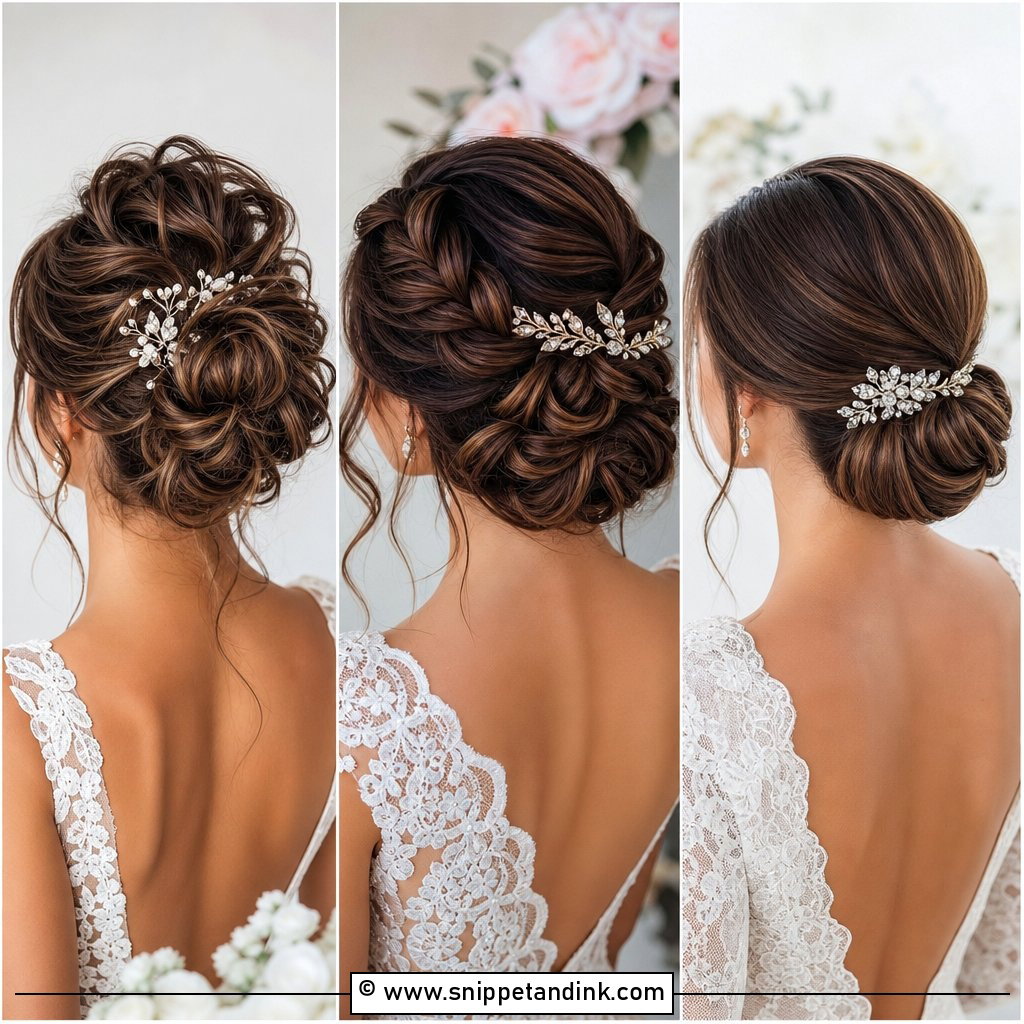
When the outfit is the star, I suggest a low bun at the nape and nothing fancy. It sits comfortably under veils and dupattas and leaves the jewelry alone. Sleek reads royal; a few face-framing strands make it modern. It is also the style I’d give sisters and bridesmaids, since it suits lehengas, sarees and gowns equally. Go easy on the shine spray, because too much starts to look oily under lights, and get the parting and front section neat before you worry about the bun.
4. Indian Bridal Messy Bun
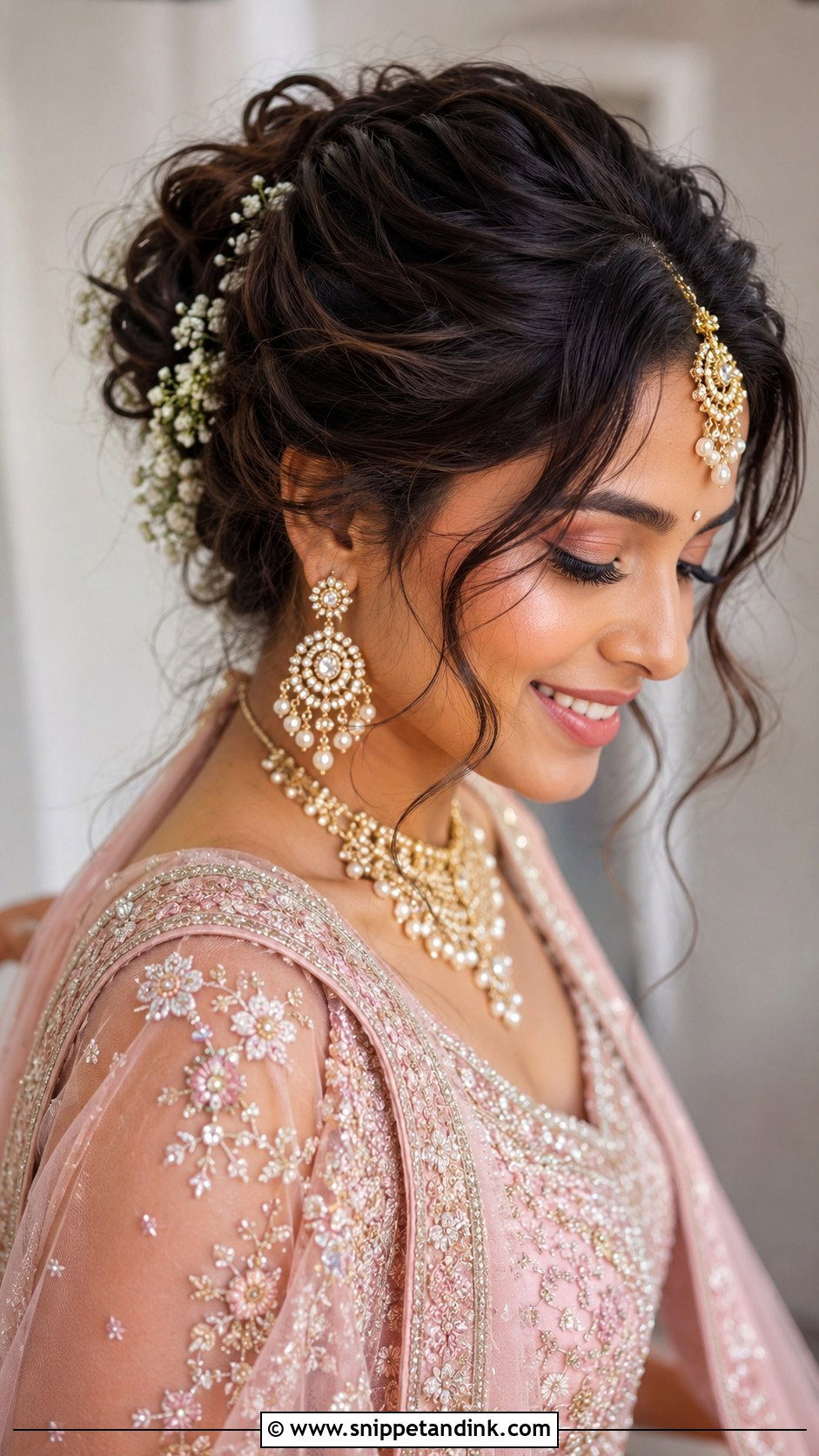
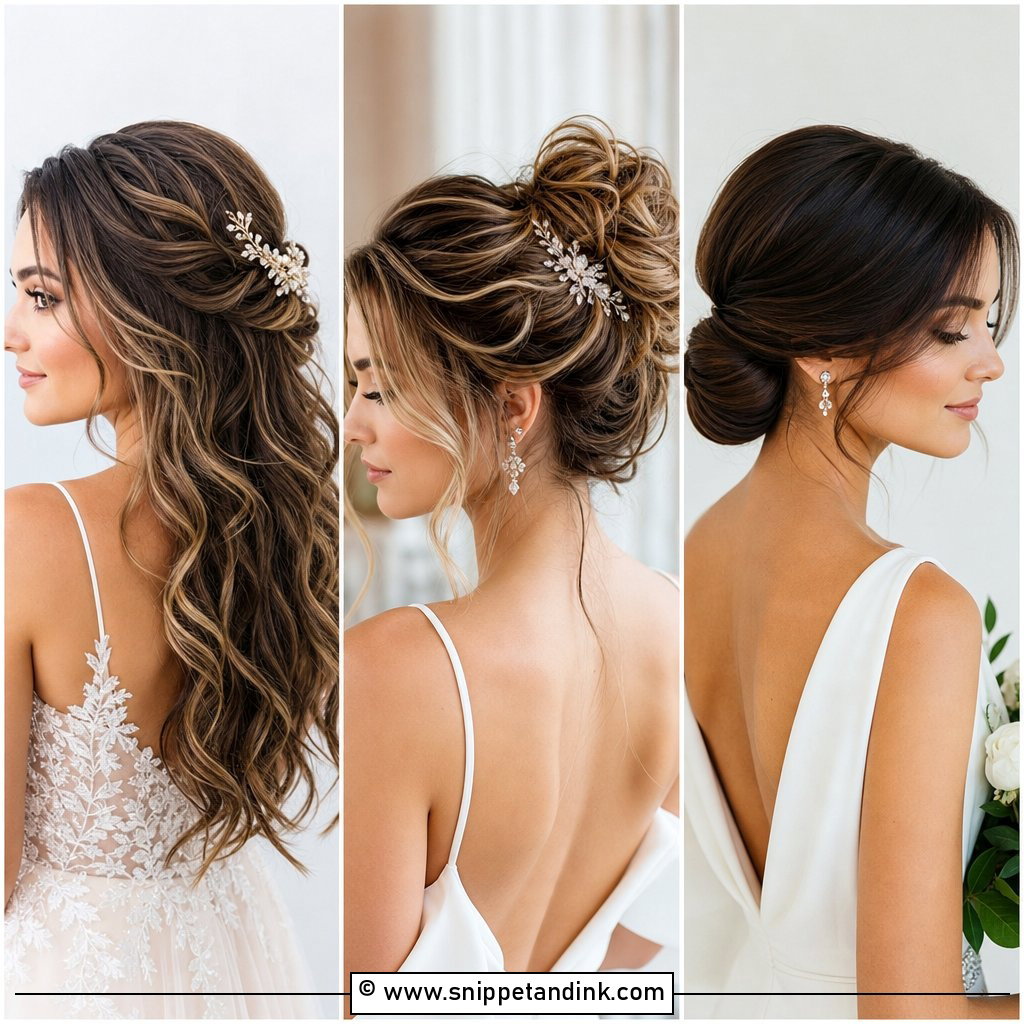
This bun is built, not tossed. I set the hair with a curling iron, pin it in loose sections, then pull out a few controlled pieces around the face, so a messy bun at a marriage function still looks dressed. It belongs with engagement, mehendi, haldi or a modern ceremony, and with pastel lehengas, floral sarees and lighter jewelry. Baby’s breath or a small gajra finishes it. Keep the crown lifted and the loose strands smooth; frizzy pieces make it read as tired rather than soft.
5. Indian Bridal Open Hair With Maang Tikka
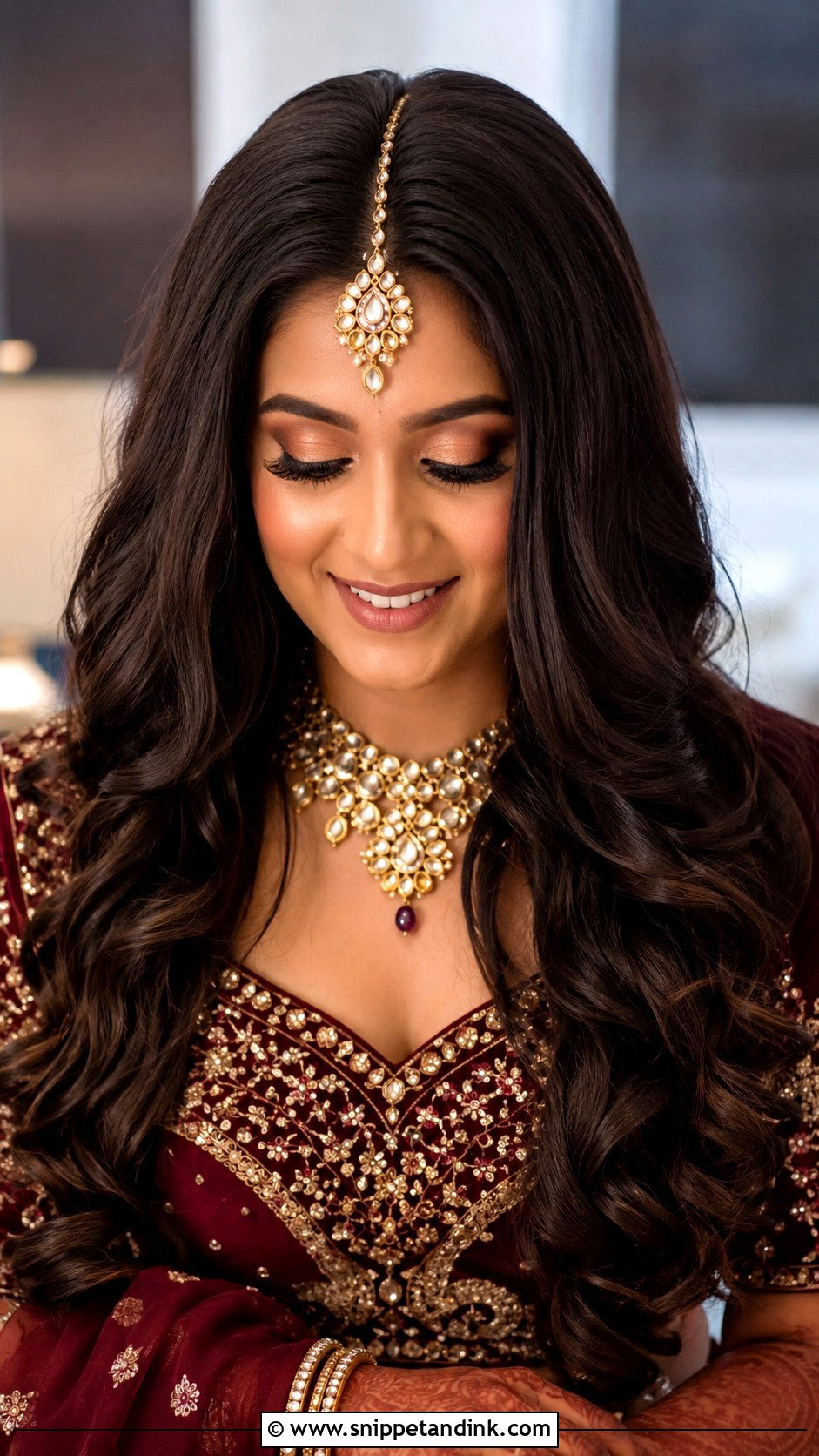
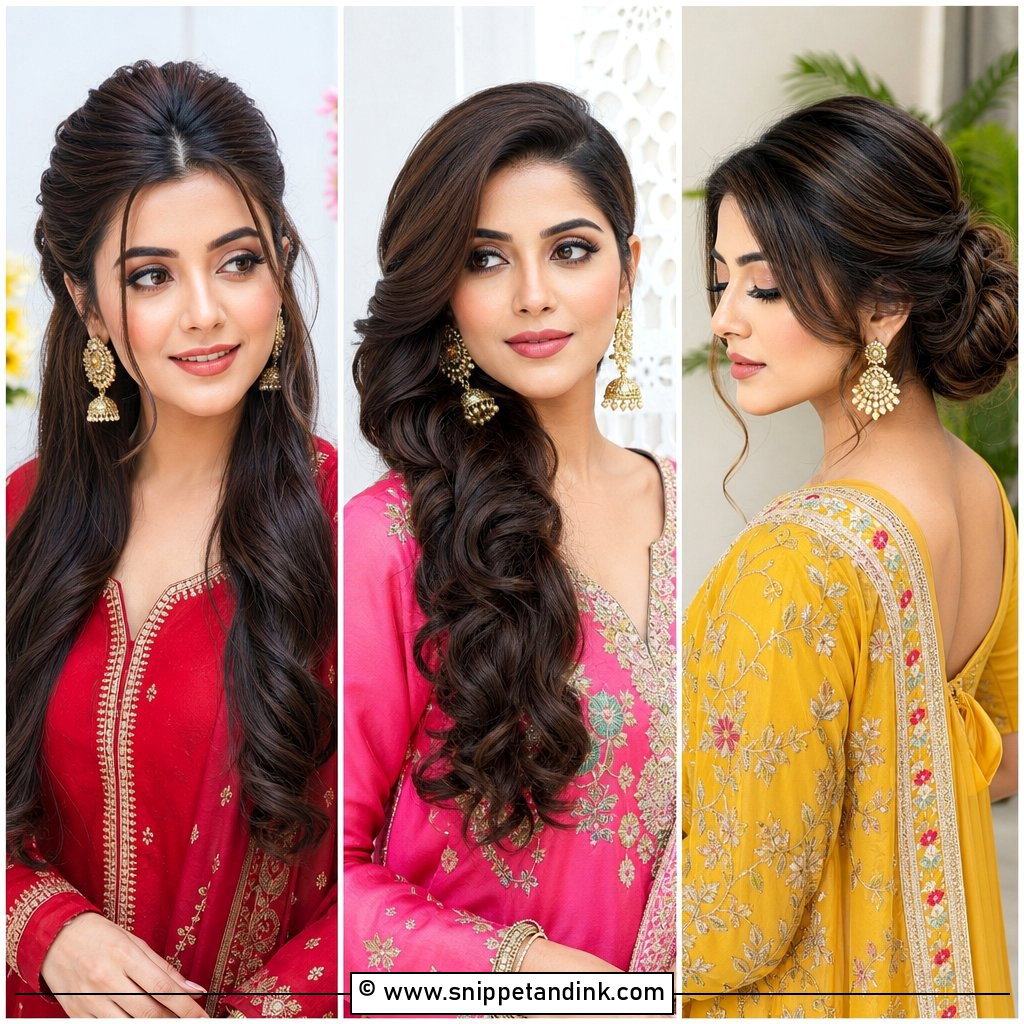
Open hair with a maang tikka is harder than it looks, because the tikka chain needs something to hold. I make a small hidden base at the crown, a tiny twist pinned flat, and hook the tikka into that rather than into loose hair. Then the rest is set in smooth waves or loose curls. Receptions, engagements and portraits suit it best. Without that base, the tikka slides sideways within an hour, so ask your stylist how she plans to anchor it.
6. Indian Wedding Half Up Half Down Hair
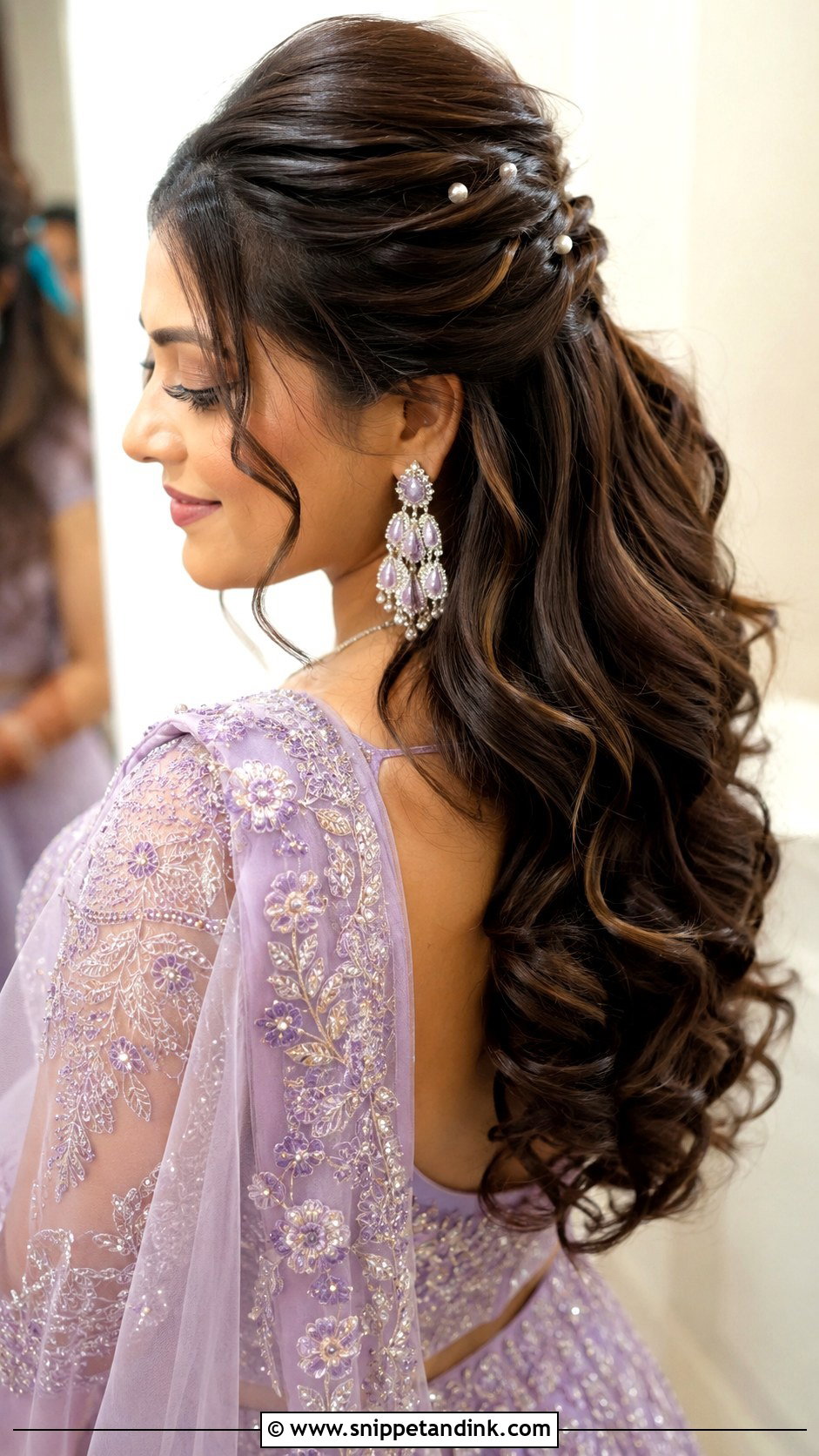
Half up, half down keeps hair open while giving a dupatta, tikka or pins a structured place to sit. Twists, small braids or a soft puff at the crown make up the top section; curls or waves fall below. Bridesmaids and guests can wear it too without looking overdressed. I brush the curls out smooth and set the upper section first, because pinning it after curling drags the waves flat. It holds its shape from the front, side and back, which matters with photographers moving around you.
7. Indian Bridal Fishtail Braid
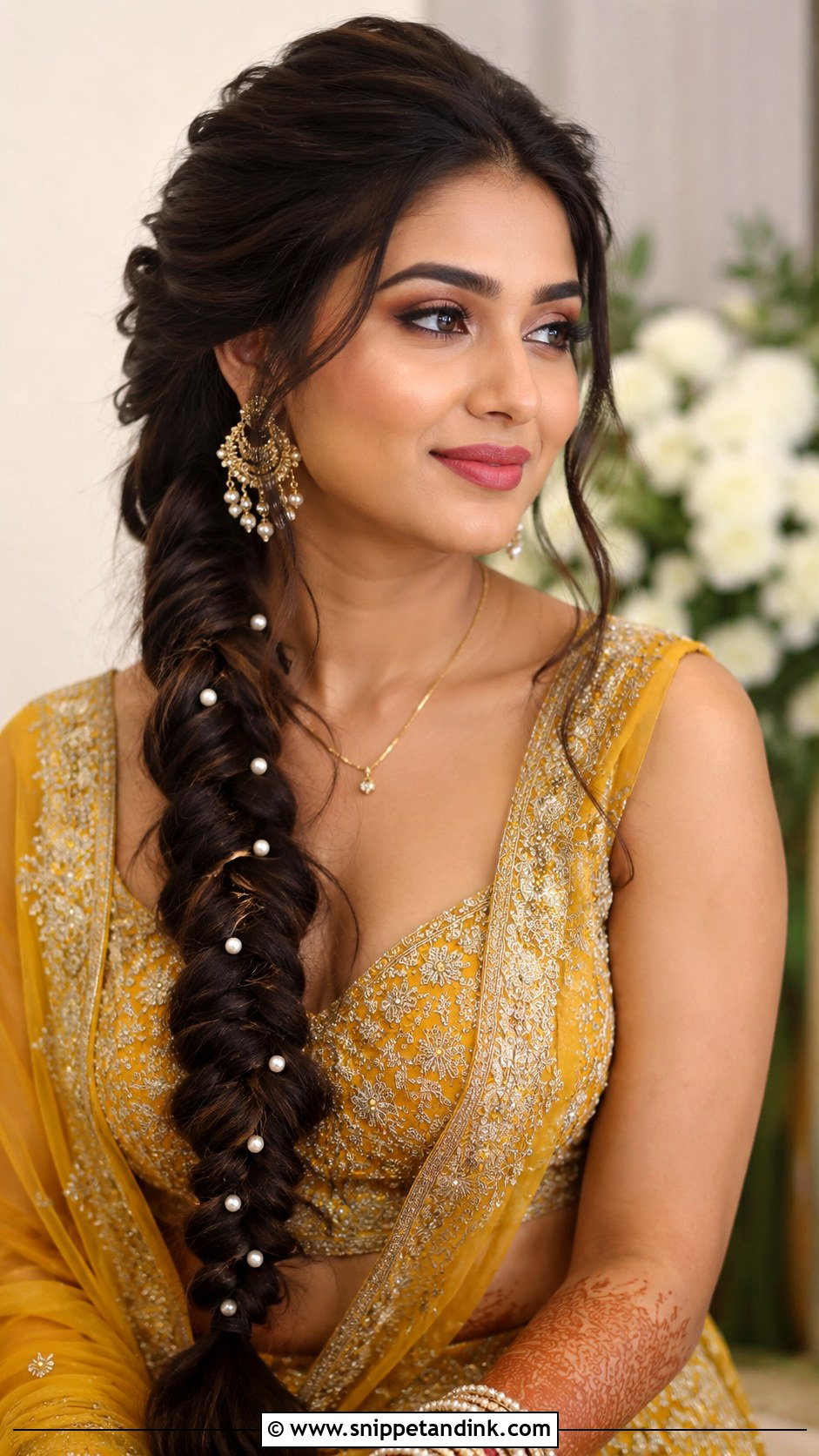
Pulling a fishtail apart gently makes it look nearly twice as full, which is why I reach for it when a bride asks for detail without the weight of a bun. Wear it down the back or over one shoulder with lehengas, shararas or sarees for mehendi, sangeet and the reception. Pearls, tiny flowers or gold thread tucked between the sections look bridal. The ends are where it fails: a thin tail looks unfinished, so I trim the extension or tuck the last inch under and pin it.
8. Indian Bridal Side Braid
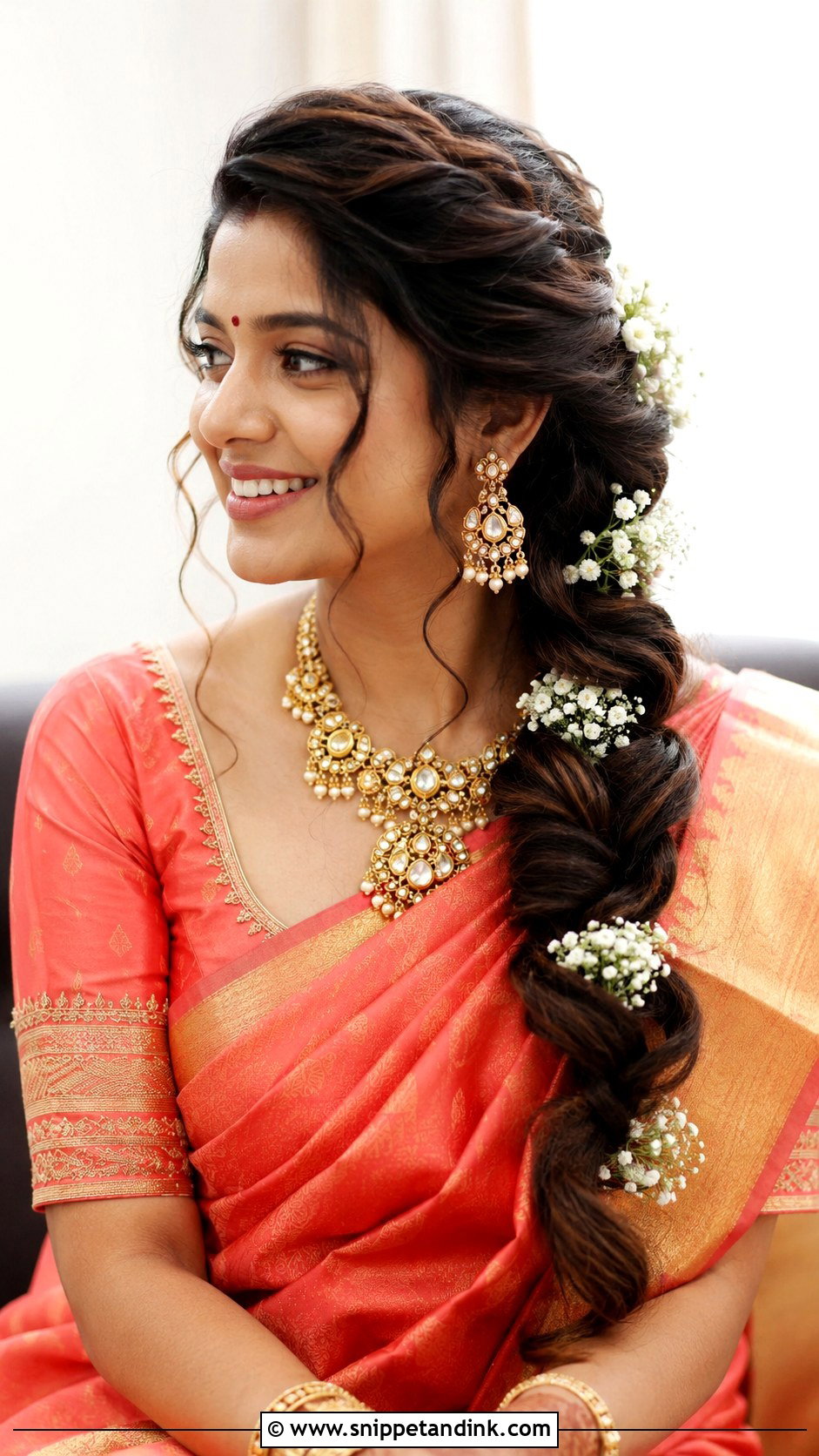
If your hair should show in front-facing photos, a side braid is the way to do it. It lies over one shoulder, carrying flowers, pearls or hair jewelry where the camera can see them. I like it for mehendi, haldi, sangeet and smaller ceremonies, and with an asymmetric dupatta drape it balances the outfit nicely. Extensions add fullness if needed. The base must be pinned firmly behind the ear; otherwise dancing pulls the whole braid toward the back.
9. Indian Bridal High Bun
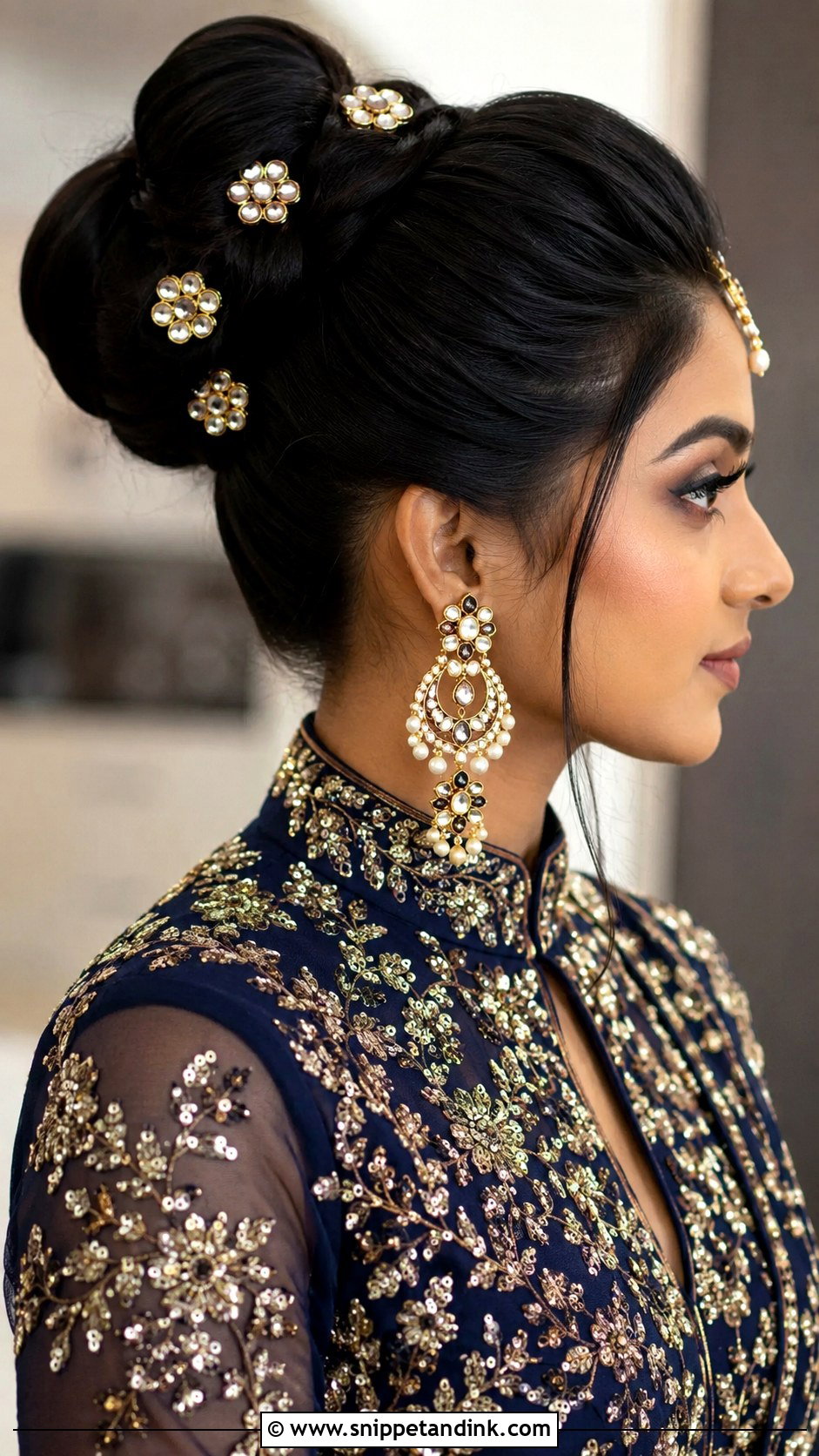
High-neck blouses push a low bun out of shape, so this is where the high bun earns its place. It lifts and sculpts the face and keeps the hair right off the shoulders, which you’ll appreciate in warm weather. It can be sleek and round, textured and full, or dressed with flowers and pins. Height costs comfort, though. A tall bun pinned badly pulls on the scalp and becomes painful by the reception, so I build it on a padding and spread the pins across a wide base.
10. Indian Wedding Ponytail
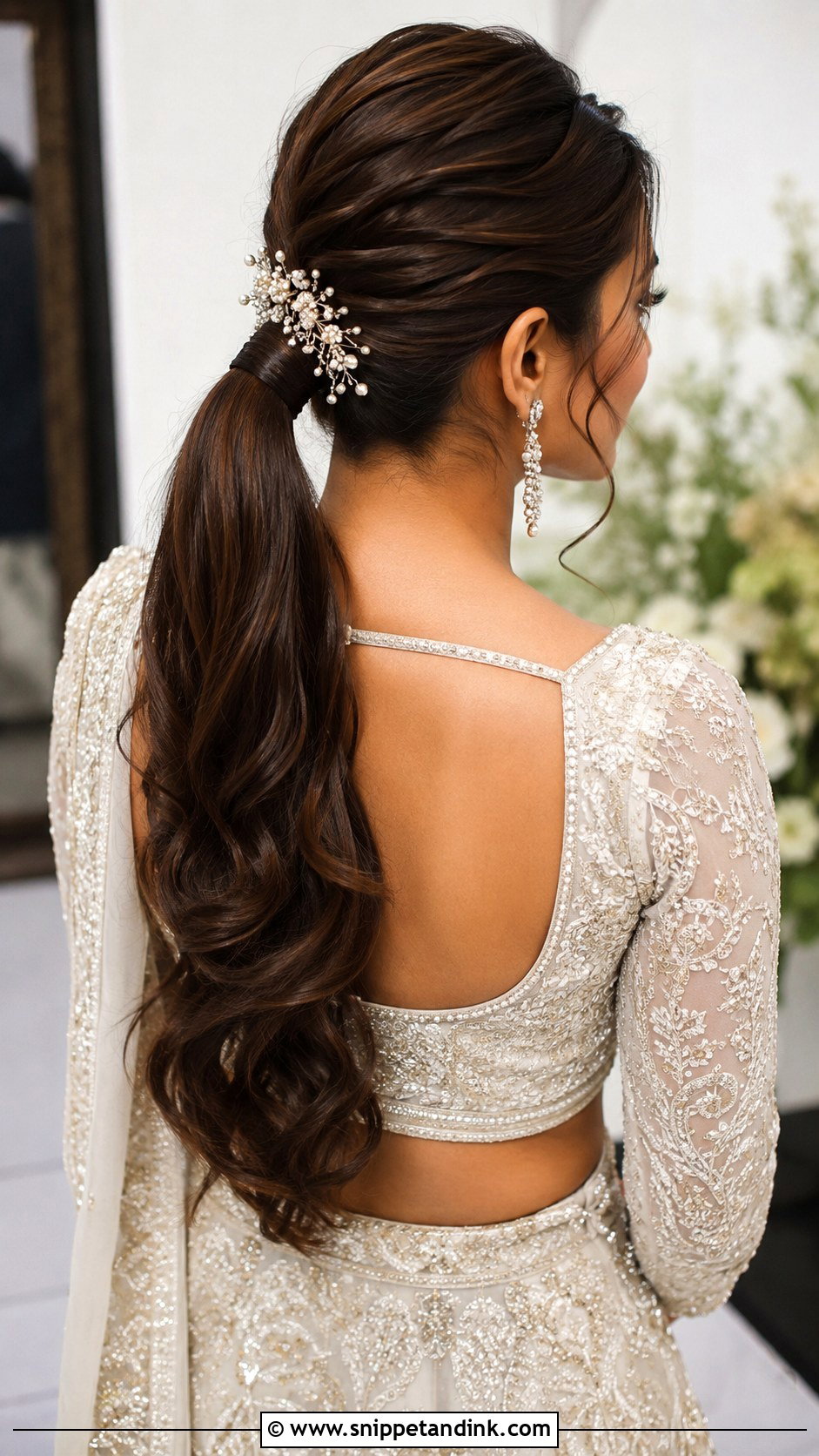
A ponytail reads modern, and I suggest it for receptions and cocktails rather than the main ceremony. Low or mid with waves looks elegant; sleek suits a contemporary lehenga or saree gown. Wrapping hair around the base, a jeweled clip or a braided crown detail dresses it up. Flatness is the thing to avoid, so build volume at the crown and add extensions if you want the tail longer and fuller. Bridesmaids and guests can wear it too.
11. Indian Bridal Braided Bun
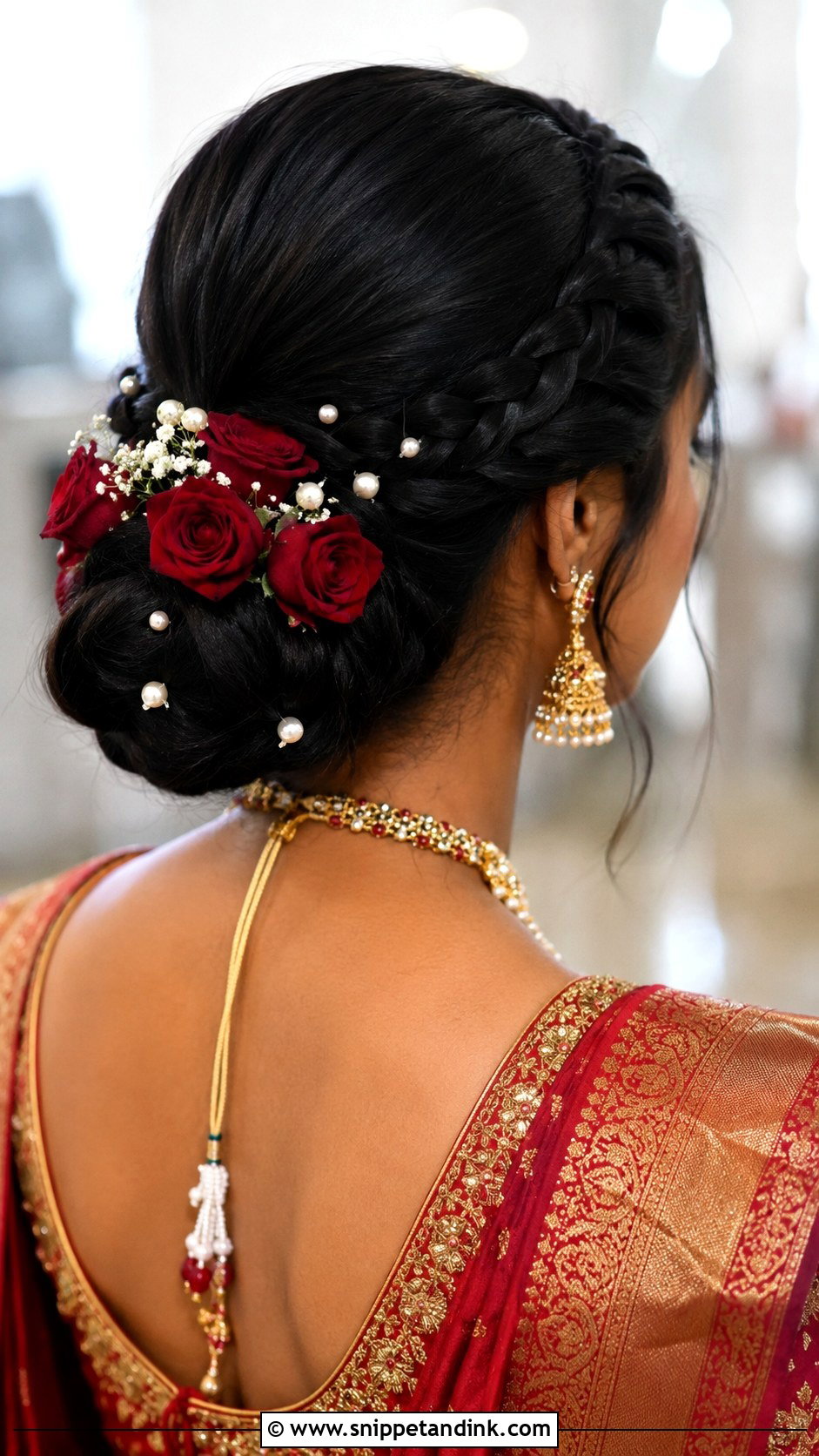
Braids wrapped around a bun hold through rituals, photos and dancing better than almost anything else on this list. The braid can circle the bun, start at the crown or form a pattern at the back. Gajra, pearls, kundan pins or fresh roses all suit it, with traditional or modern lehengas. I ask the bride to sit and stand a few times at the trial, because a braided bun pinned in front of a mirror sometimes sags when you sit back against a chair.
12. Indian Wedding Loose Curls
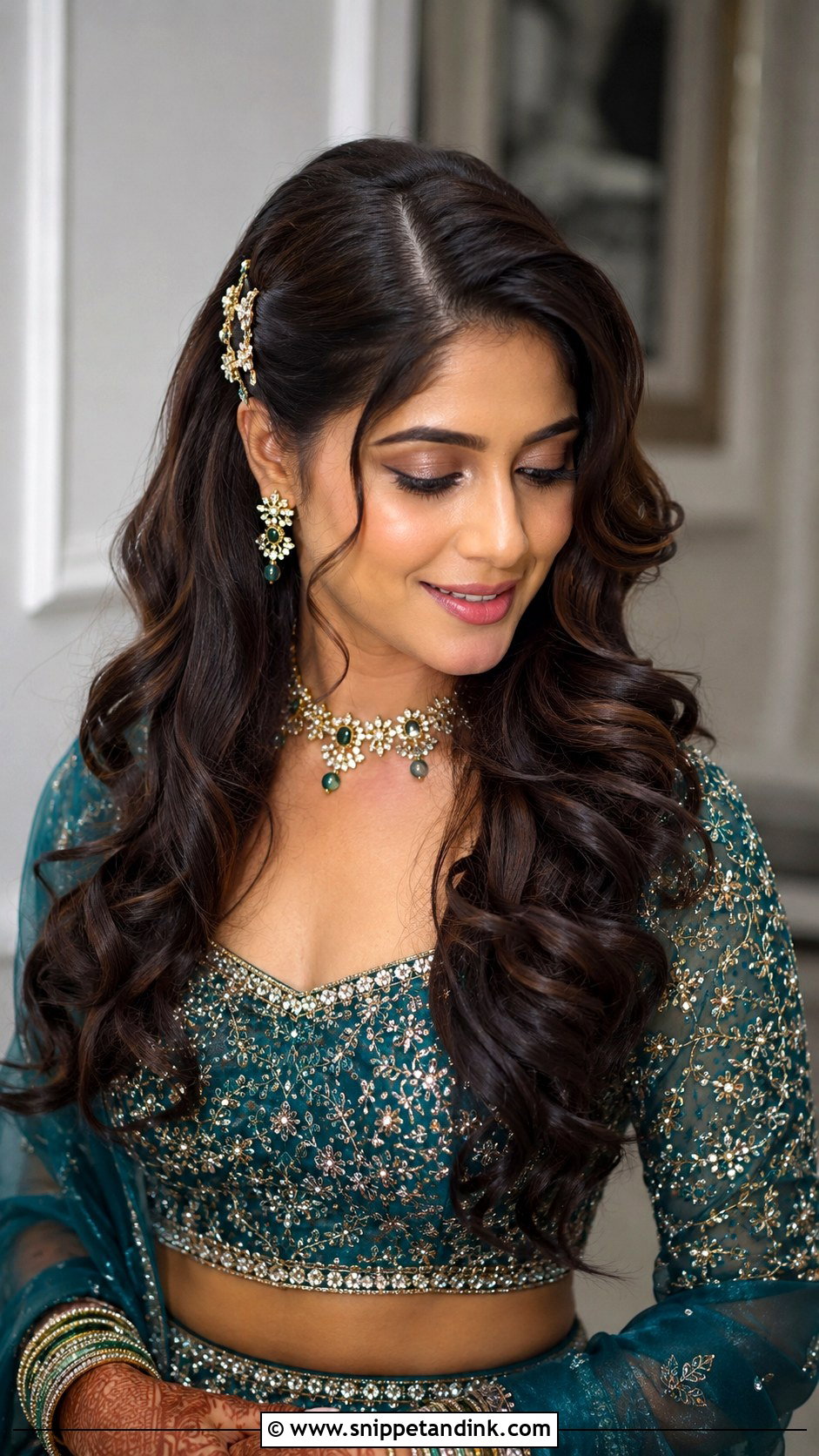
Loose curls are a reception and sangeet favourite, worn with a middle or side part, a tikka, a headband or decorative pins. Layered hair suits them best, since the layers spread the curls around the face. If your hair drops quickly, ask for a tighter curl set and pinned to cool, then brushed out an hour later. A flexible spray beats a stiff one here; curls that crunch when touched look worse in close-ups.
13. Indian Bridal Front Puff Bun
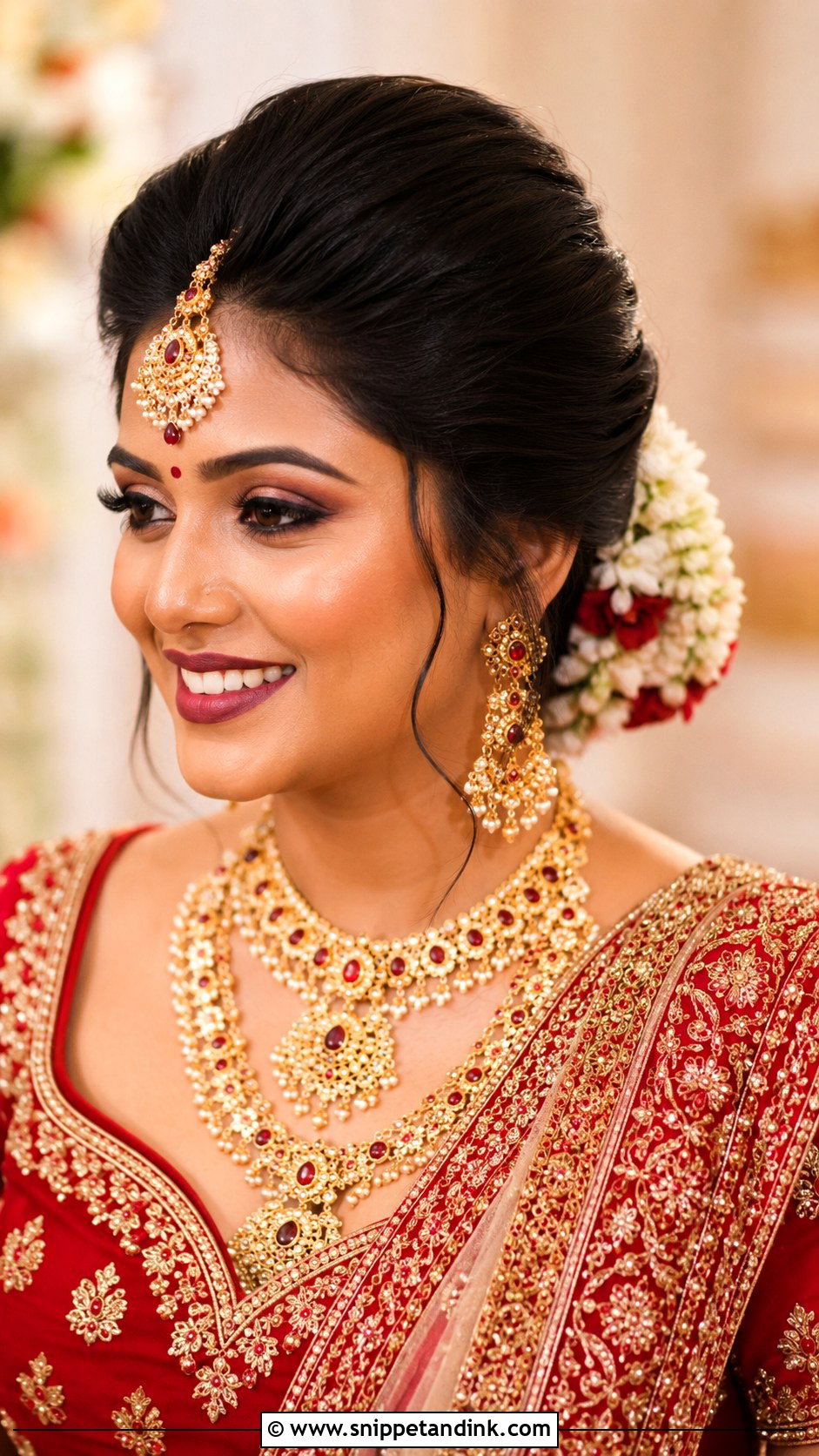
An Indian bridal front puff bun gives crown height and makes room for a maang tikka, matha patti or passa. The back is finished in a bun with flowers or jeweled pins. With a heavy bridal outfit, the extra height balances the volume of the lehenga. I tease underneath and keep the outer layer polished, and I keep the puff low. A puff that sits too high looks dated and fights the tikka for space.
14. Indian Wedding Sleek Bun
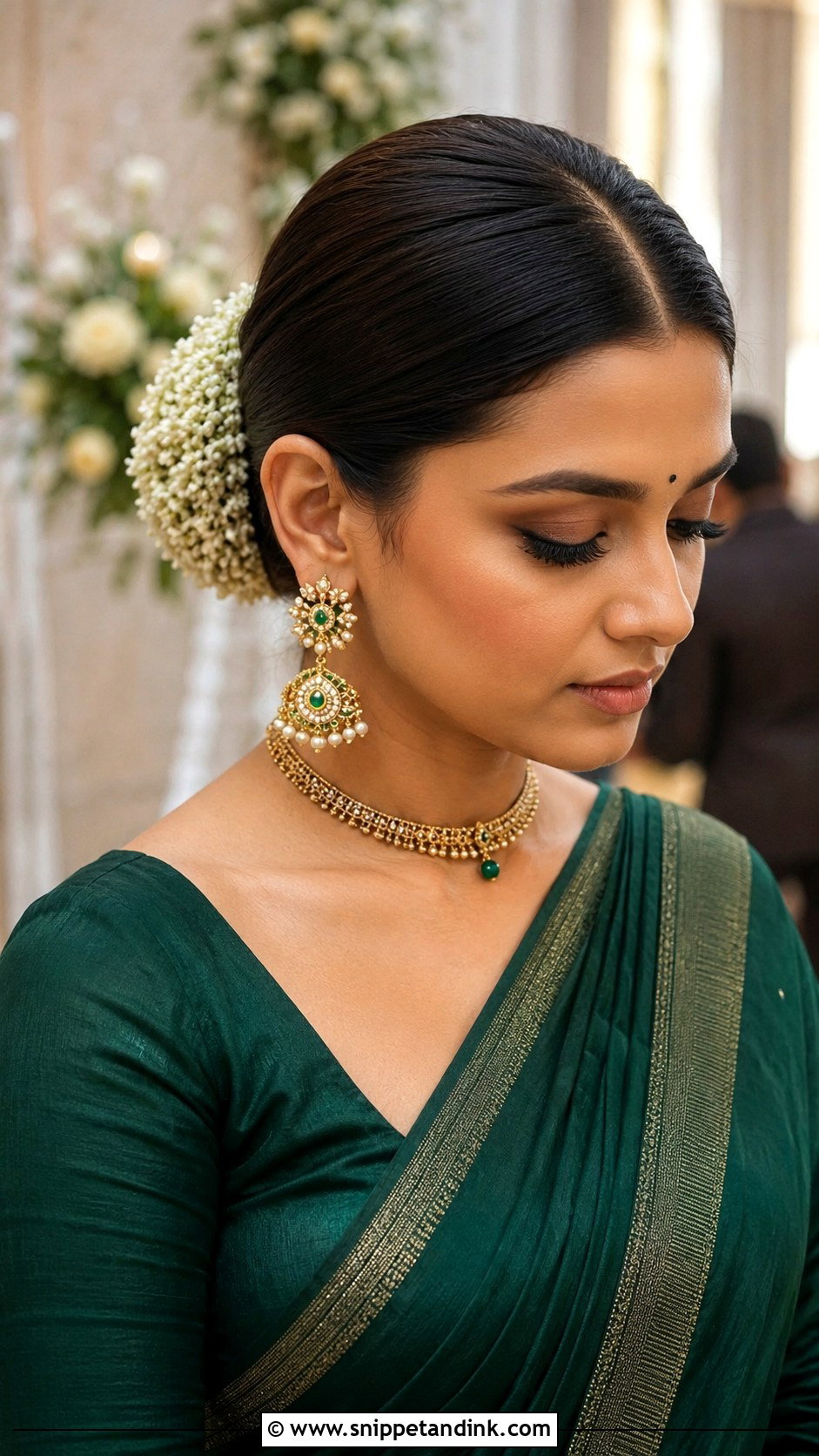
A sleek bun takes about the same time as a soft one, but it shows mistakes. The hair is parted in the middle or to the side, smoothed back and pinned low or mid, so your jewelry, outfit and makeup carry the look. Bold earrings, chokers and structured lehengas look sharp against it, and nothing hides the face in photographs. Smoothing cream and strong pins control flyaways. If the parting wanders or the hairline has breakage, the camera will find it, so I spend more time on the front than on the bun.
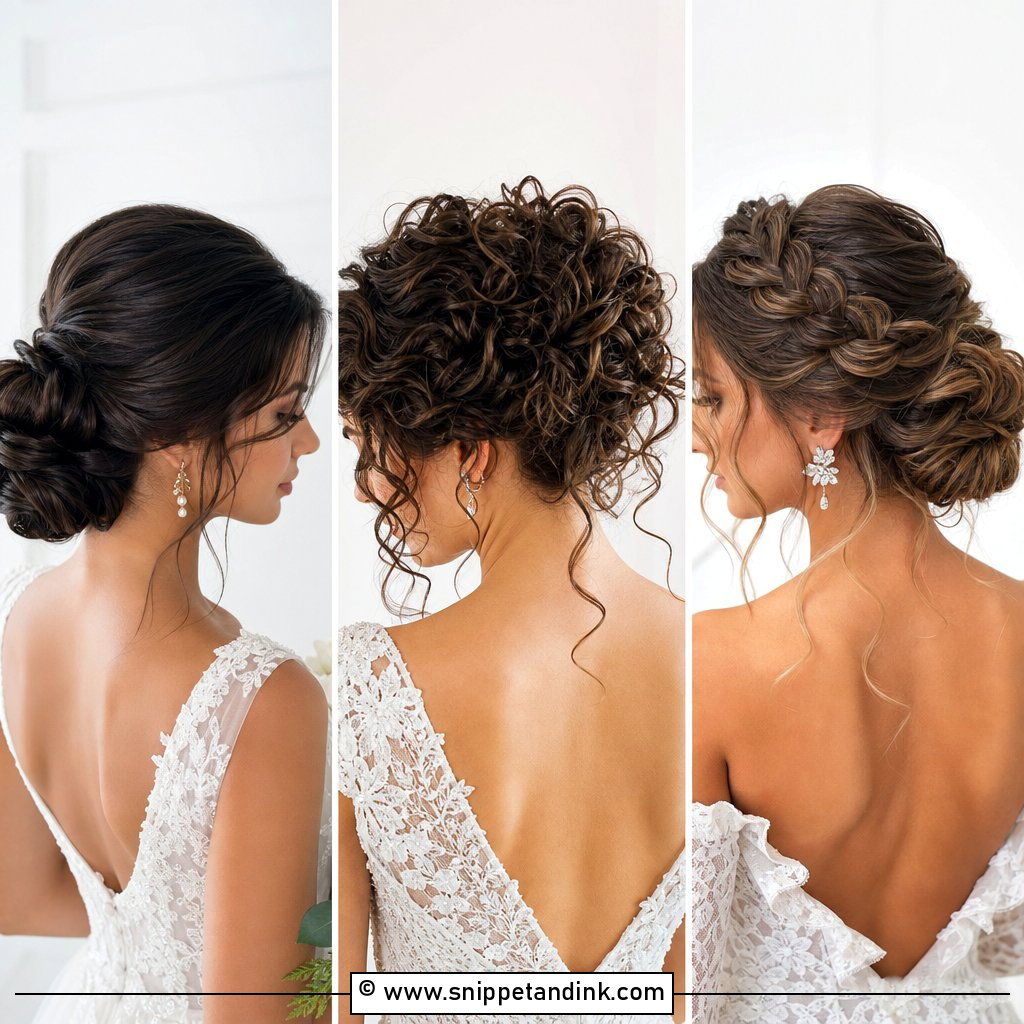
15. Indian Bridal Hollywood Waves
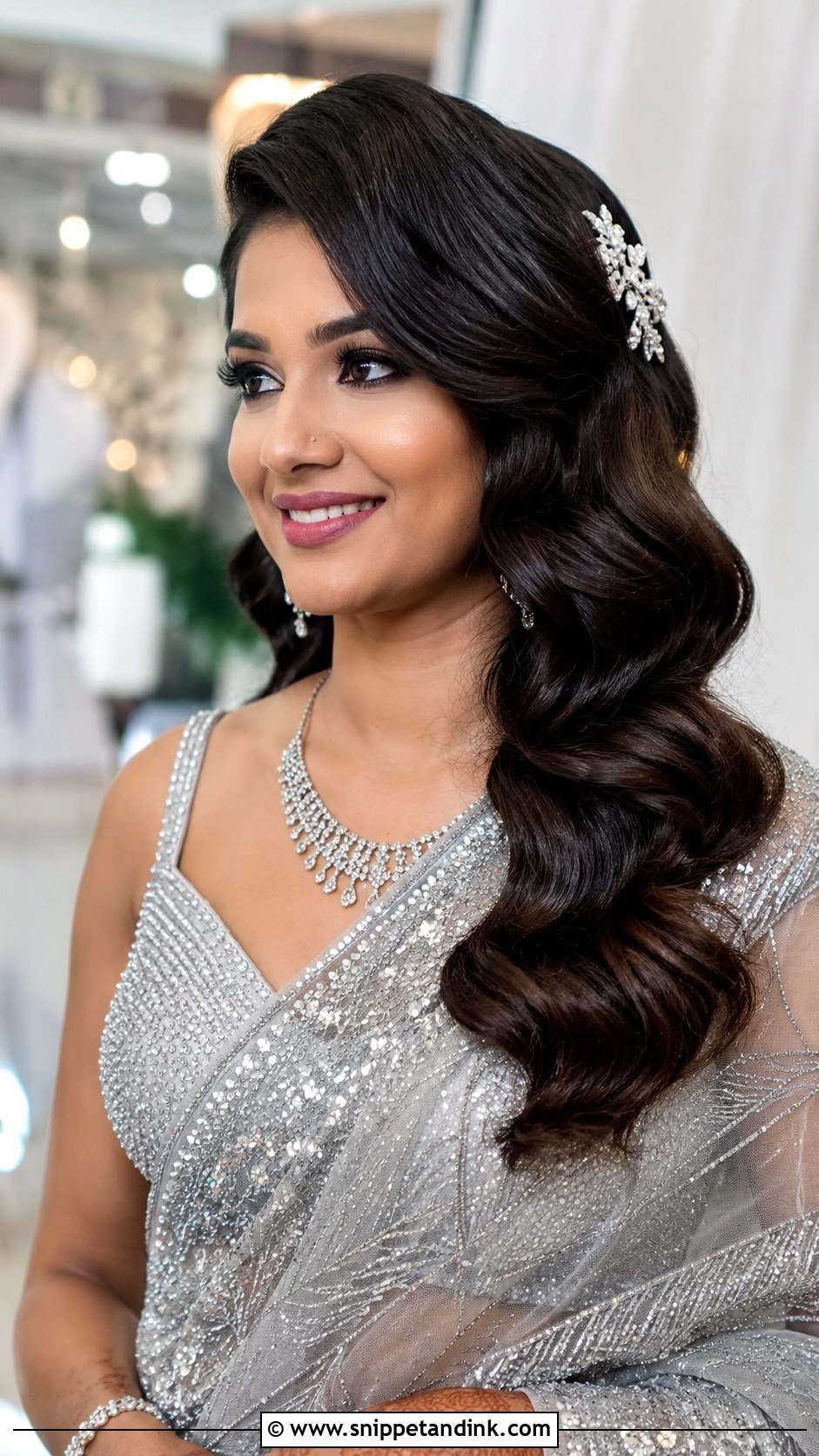
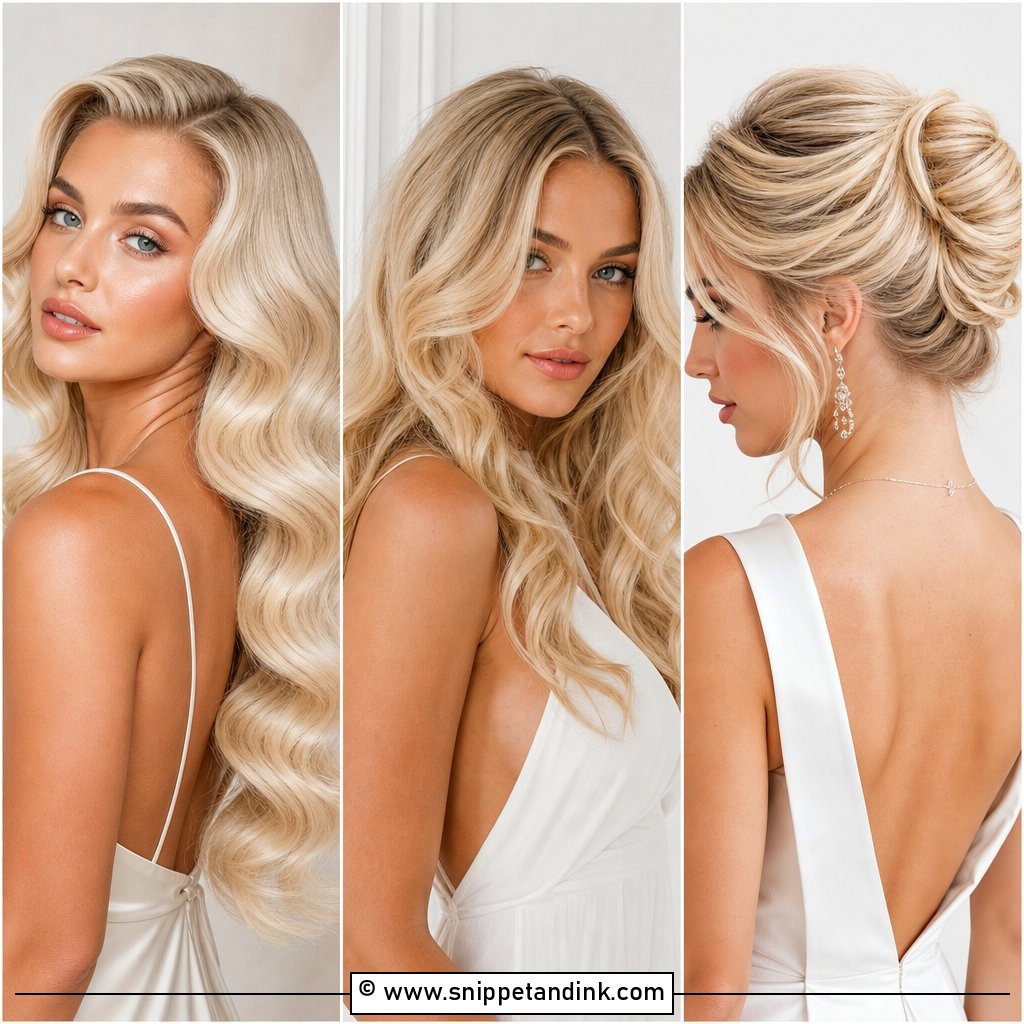
Hollywood waves need more control than beach waves: smooth, glossy and set in one direction. I curl, clip each section to cool, then brush the whole side into a sculpted wave and pin it. They suit gowns, saree gowns, modern lehengas and cocktail evenings, with diamond jewelry, a side part and soft glam makeup. Humidity softens the ridges faster than anything, so in a hot venue I’d choose loose curls instead, which look fine as they relax.
A Cousin, a Comb and Twenty Pins for Running Repairs
Unless your stylist stays all day, nobody is watching your hair after the pheras start. I always ask the bride to name one person, a sister or cousin with steady hands, and I show her at the trial how the dupatta is pinned and where the anchor pins sit.
Give her a small pouch with:
- Bobby pins and U-pins in your hair colour, about twenty of each.
- A travel hairspray and a fine-tooth tail comb.
- Two or three safety pins for the dupatta.
- A spare gajra kept cool in a damp cloth, since fresh jasmine browns as the evening goes on.
- Blotting paper, because sweat at the hairline is what loosens the front first.
If you change from the ceremony look into a reception style, book that change with your stylist at the outset. Turning a bun into waves takes real time, and curls done on hair flattened by a bun need fresh heat to look right.
Ceremony Hair First, Then Let the Reception Play
The best Indian hairstyle for marriage fits the outfit, the jewelry, your comfort and the schedule. For the ceremony, a gajra bun, a South Indian braid or a braided bun holds up longest and supports accessories. Mehendi, the engagement and the reception leave room for curls, Hollywood waves, a side braid or a ponytail. Weigh where the dupatta goes, the weather, your hair thickness and how long each event runs. Show your stylist two or three reference photos, not twenty, and do a trial if you can.
You'll Like These Ideas:


Leave a Reply