
A bridal blouse sets the mood of a wedding saree or lehenga more than most brides expect. It frames the jewelry, carries the drape, decides the silhouette, and it is the piece the camera sits closest to in every portrait. When I style a bride, I look at the back, the sleeves, the padding and the closures long before I talk about the front neckline, because those are the parts that make or break a ten-hour day. The ideas below run from maggam and temple borders to corset cuts, capes and jackets, with notes on how each one actually wears.
How Long a Hand-Embroidered Blouse Really Takes to Make
The most common problem I see is a bride ordering an embroidered blouse as if it were a plain tailoring job. Maggam, zardozi and Aari are done by hand on a frame, and a heavily worked back and sleeves can keep a karigar busy for weeks. Workshops also fill up fast in the main wedding months, so the queue matters as much as the stitching.
This is the order I plan a blouse in:
- Settle the saree or lehenga first. The blouse fabric, border and metal tone all follow from it.
- Get measured wearing the bra you’ll wear on the day. A padded or strapless bra changes the bust line by enough to throw off a fitted blouse.
- Approve the embroidery on a paper trace or a small sample before work starts, because unpicking hand embroidery damages silk.
- Ask for the first fitting before the embroidery is stitched onto the panels, when the shape can still be changed.
- Leave a final fitting about two weeks out, with room for small weight changes. Many brides lose a little in the last month.
For heavy hand work, I’d start the conversation two to three months ahead. Lighter thread work or a woven Banarasi blouse can be turned around faster, but rush fees and tired workmanship are what you get when you leave it late.
1. Red Bridal Blouse With Heavy Zari Work
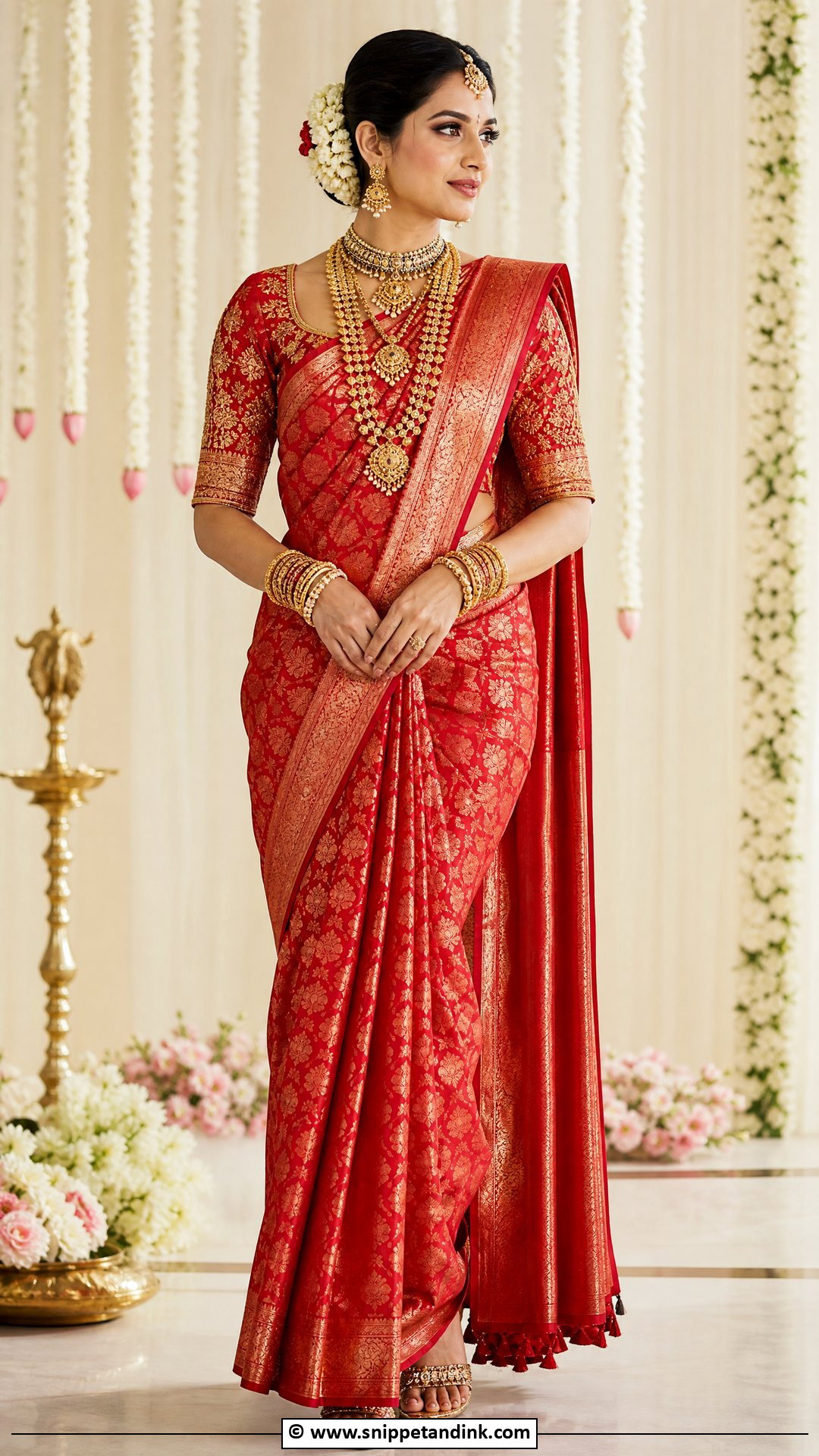
Red with heavy zari is the classic for a reason: gold metal thread on a red silk base reads as bridal from across a hall and still holds detail in close-ups. It sits naturally with a red silk saree, a Banarasi lehenga or a gold-bordered drape. I usually suggest elbow sleeves here, since dense zari on a full sleeve gets stiff at the inner elbow, and full sleeves only if the venue is cool. Keep the neck round, sweetheart or a modest square so layered necklaces have somewhere to sit. A structured bun keeps the back embroidery in view.
2. Bridal Blouse With Maggam Work
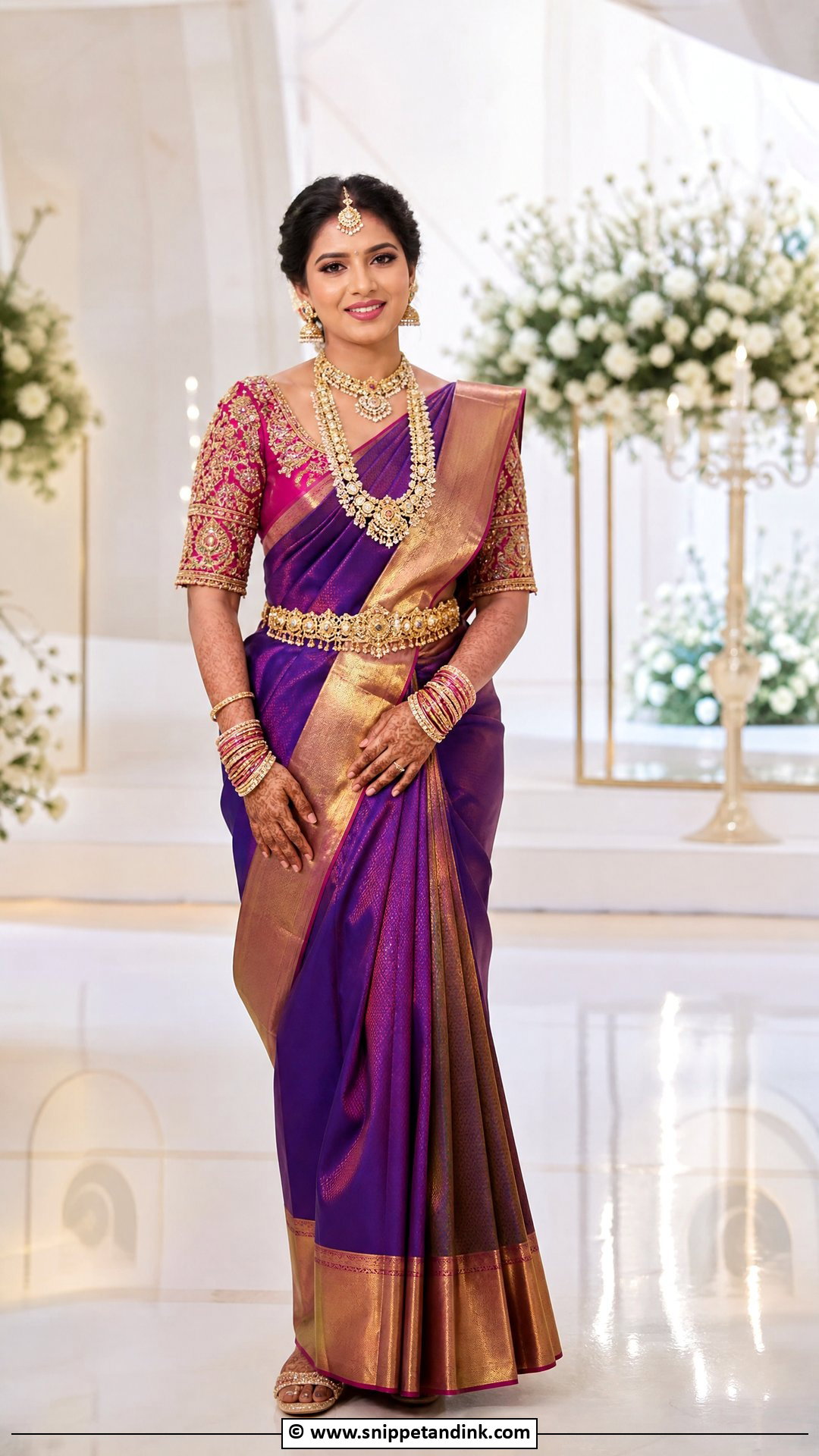
Maggam work is built up by hand on a frame with beads, stones, cutdana, pearls and metallic thread, so it has real weight and a raised, handcrafted surface. It belongs with South Indian silk sarees and traditional ceremonies, and it glows on maroon, emerald, rani pink, mustard and royal blue. The thing I insist on is a soft cotton lining behind the embroidery, because the back of maggam work is knotted and scratchy against skin. Ask for sleeves cut with a little ease so the beadwork doesn’t drag when you lift your arms. Temple jewelry, a waist belt and fresh flowers in the hair finish it.
3. Bridal Blouse With Aari Work
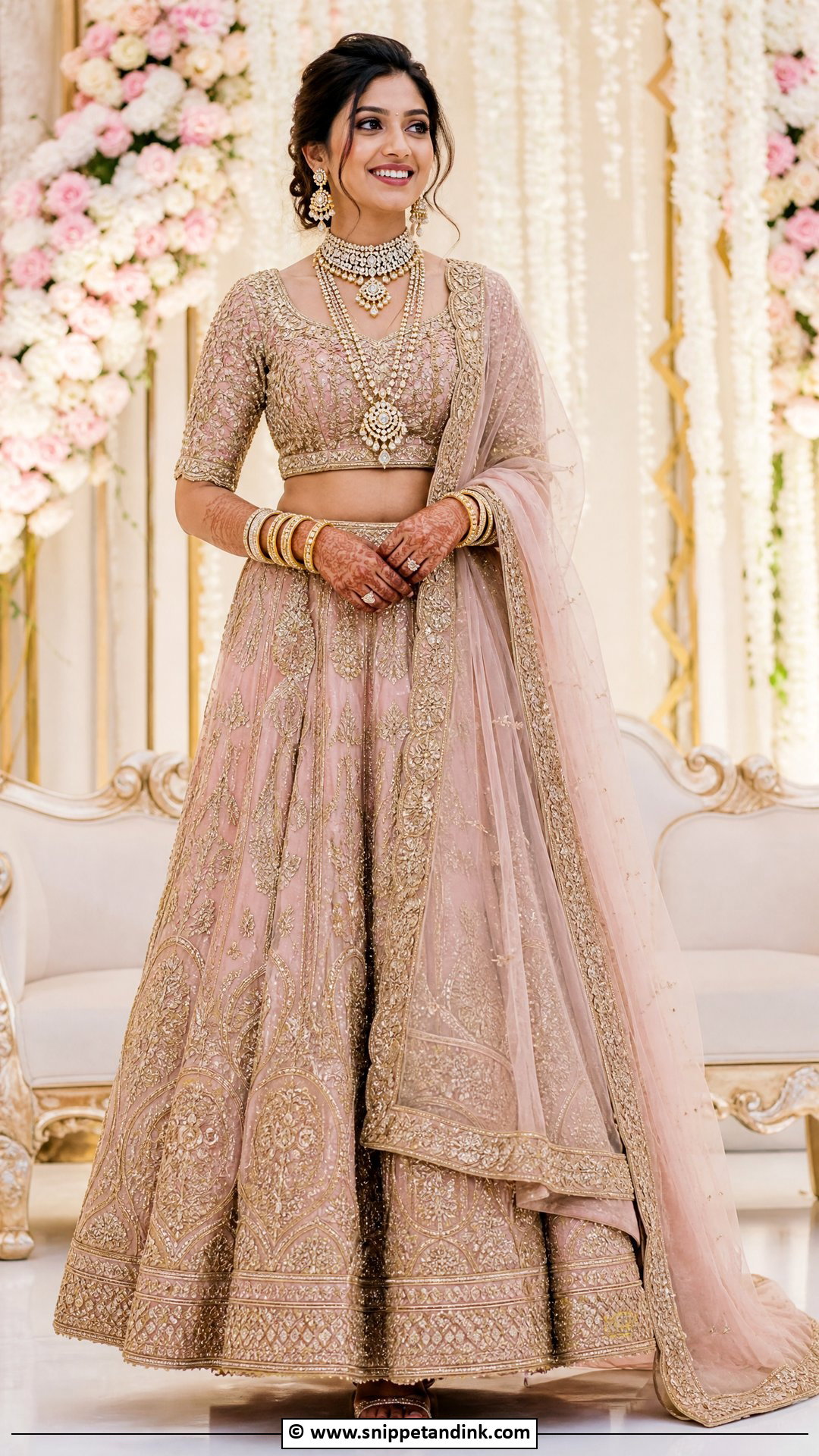
Aari is chain stitch made with a hooked needle, which is why it can draw fine vines, paisleys, peacocks and lotus shapes without the bulk of heavier work. I reach for it when the saree is already heavy and the blouse needs detail that stays flat. With a dense silk, keep the Aari to the neckline, sleeves and back; with a plain georgette drape, all-over work is fine. A contrast pallu or dupatta brings the embroidery forward. Wear comfortable heels or embellished flats, since the ceremony will keep you standing longer than you think.
4. Bridal Blouse With Peacock Design
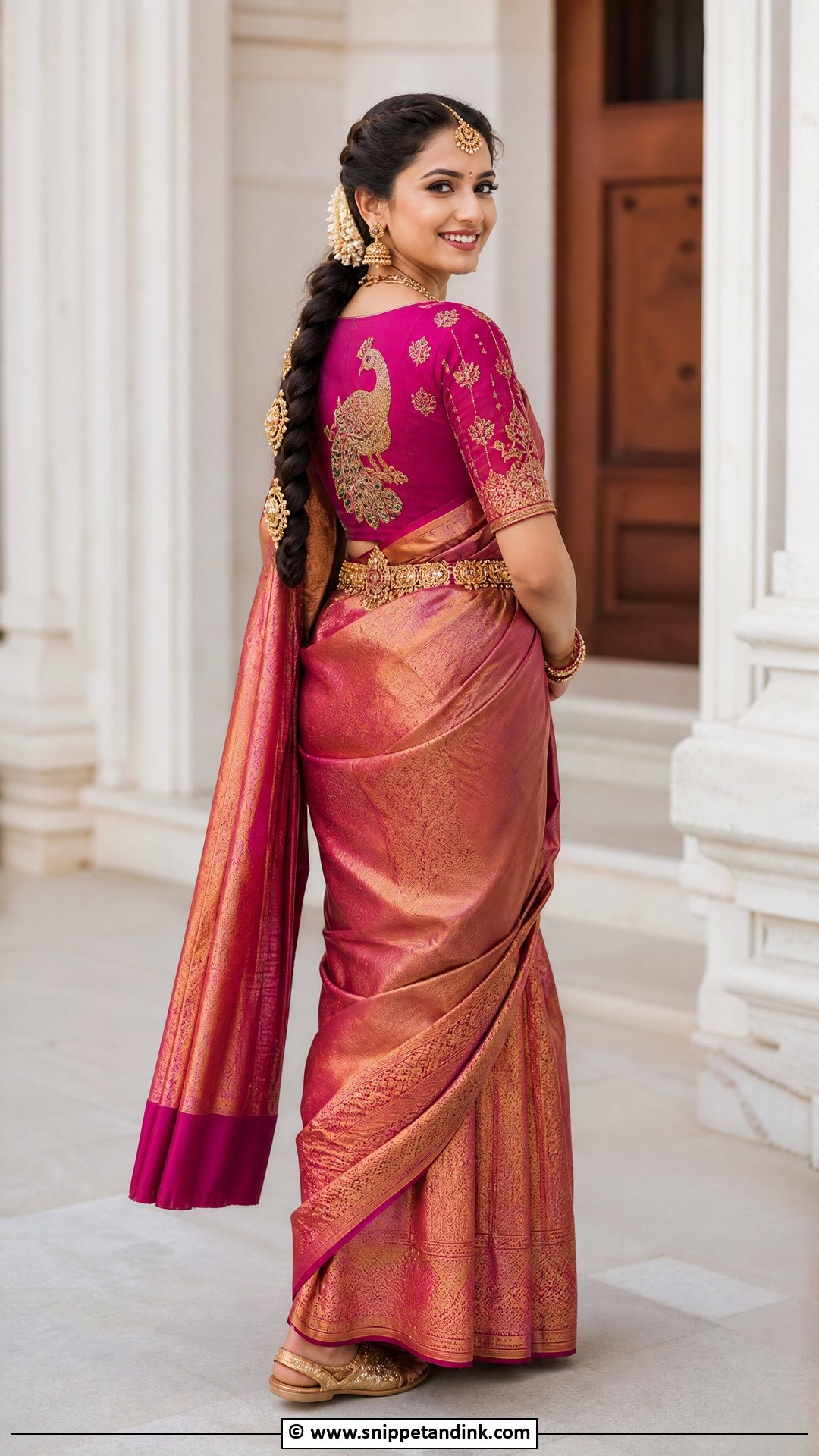
Peacock motifs need a stage, and the best one is the blouse back or the shoulder, where the bird can spread across a single panel and give photographers a clear focal point. Thread work keeps it soft; stones, sequins and zari push it toward a heavy bridal finish. Magenta, teal, purple, emerald and deep blue let the feathers read properly, while pastels tend to flatten them. Kanjivaram sarees and rich lehenga skirts carry it best. A long braid can cover a back motif, so if you love the braid, put the peacock on the sleeves instead.
5. Bridal Blouse With Lotus Embroidery
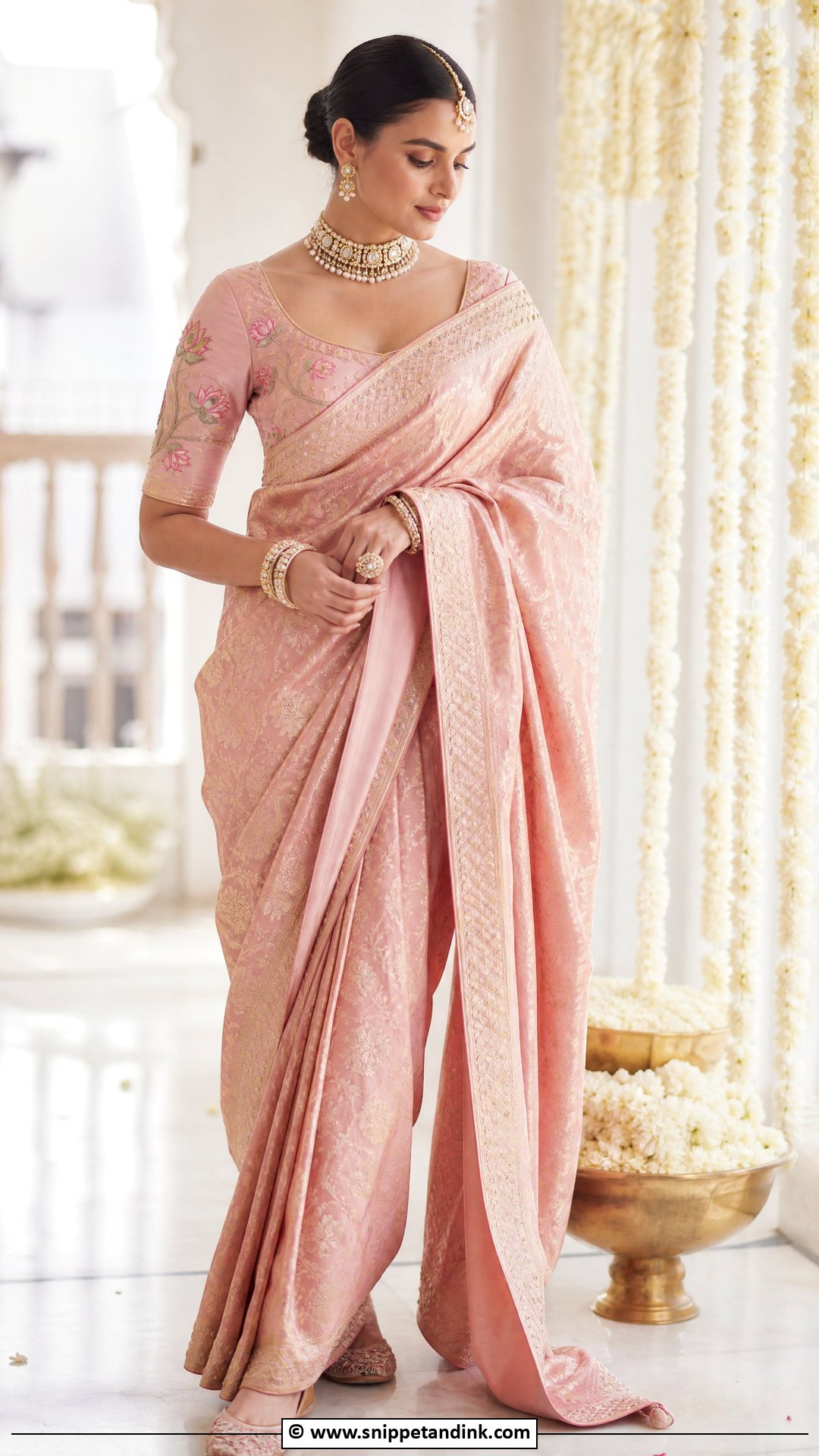
Lotus embroidery gives you traditional meaning with a cleaner layout than dense all-over work, because each flower can sit on its own with space around it. Place it along the sleeves, neckline, hem or back. On raw silk and velvet the motif stands up nicely; on brocade it can get lost in the woven pattern, so I’d keep it on a plainer fabric. Soft pink, ivory, gold, red and sage green all work. Pearl jewelry, kundan earrings, glass bangles and a sleek bun keep the whole outfit balanced.
6. Bridal Blouse With Temple Border
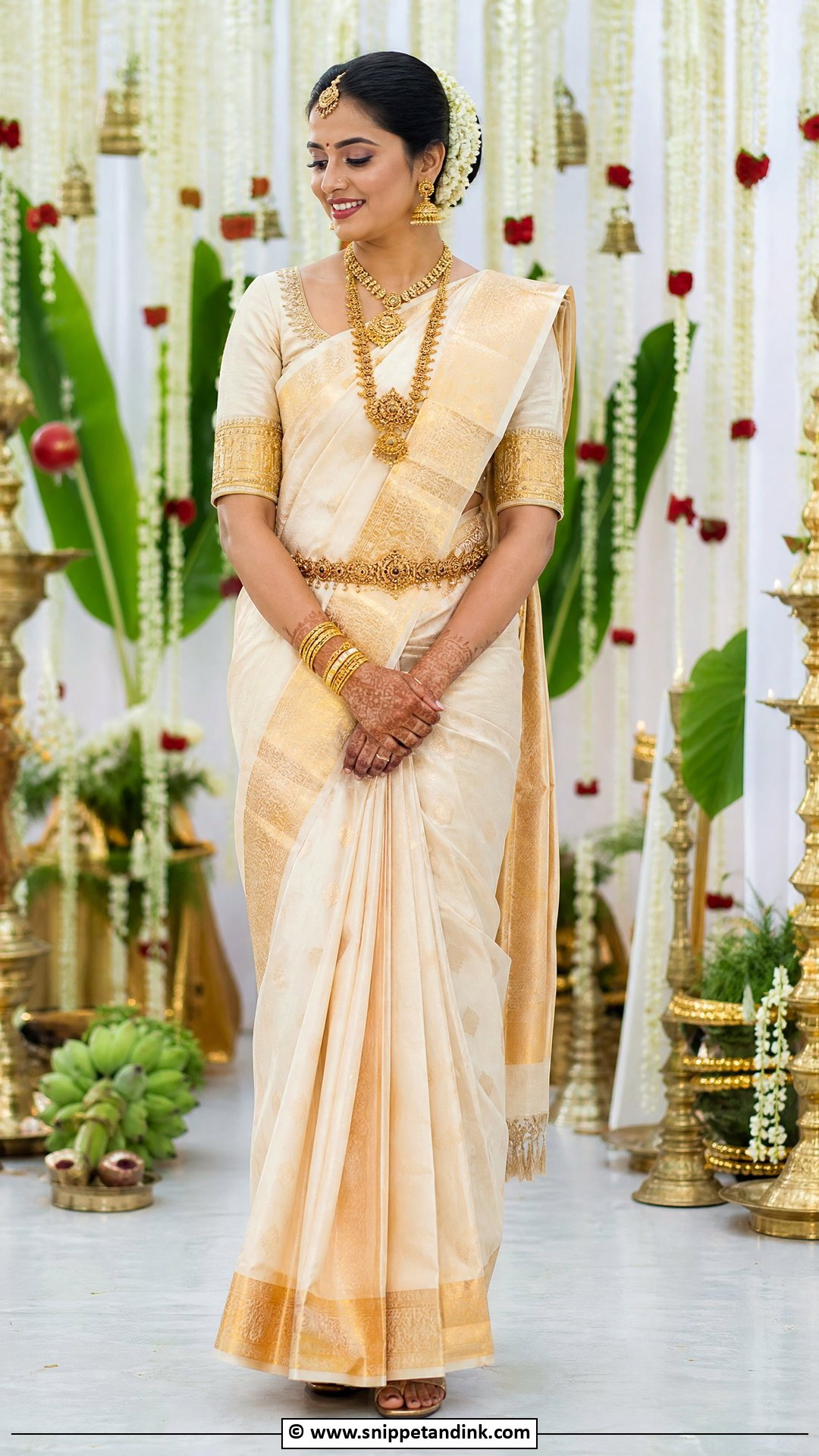
A bridal blouse with temple border borrows the stepped gopuram shapes of South Indian sarees and runs them along the sleeve ends, neckline, waistline or back cutout. It is at home with Kanjivaram, Banarasi, Paithani and traditional silks. My rule is to match the border to the saree’s own border in metal tone, antique zari next to antique zari, because bright gold beside old gold looks like a mistake on camera. A simple round or square neck lets the border lead. Temple jewelry, a waist belt and jasmine finish the ceremony look.
7. Bridal Blouse With Full Sleeves
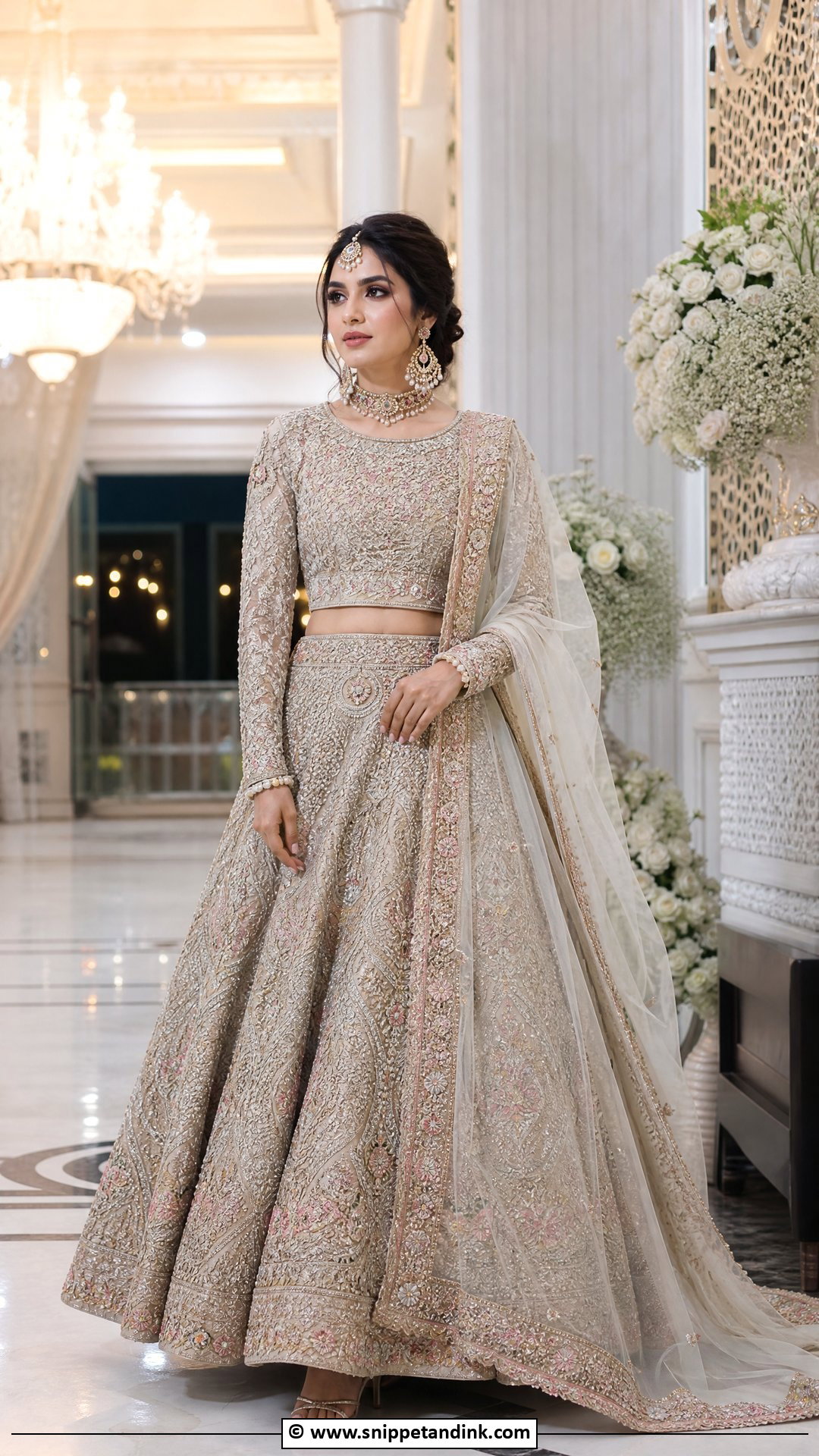
Full sleeves give a regal, covered look, but they need more care in cutting than any other sleeve. I ask for the sleeve to be fitted with the arm bent, not straight, so you can still raise a garland or hold a plate during rituals. Silk, net, velvet, brocade and embroidered fabrics all work. On a heavy saree, keep the sleeve embroidery delicate; on a simple one, pearl, zari or sequin work can travel the full length. A high neck, boat neck or sweetheart neck pairs well, and drape the dupatta so the sleeve stays visible.
8. Bridal Blouse With Puff Sleeves
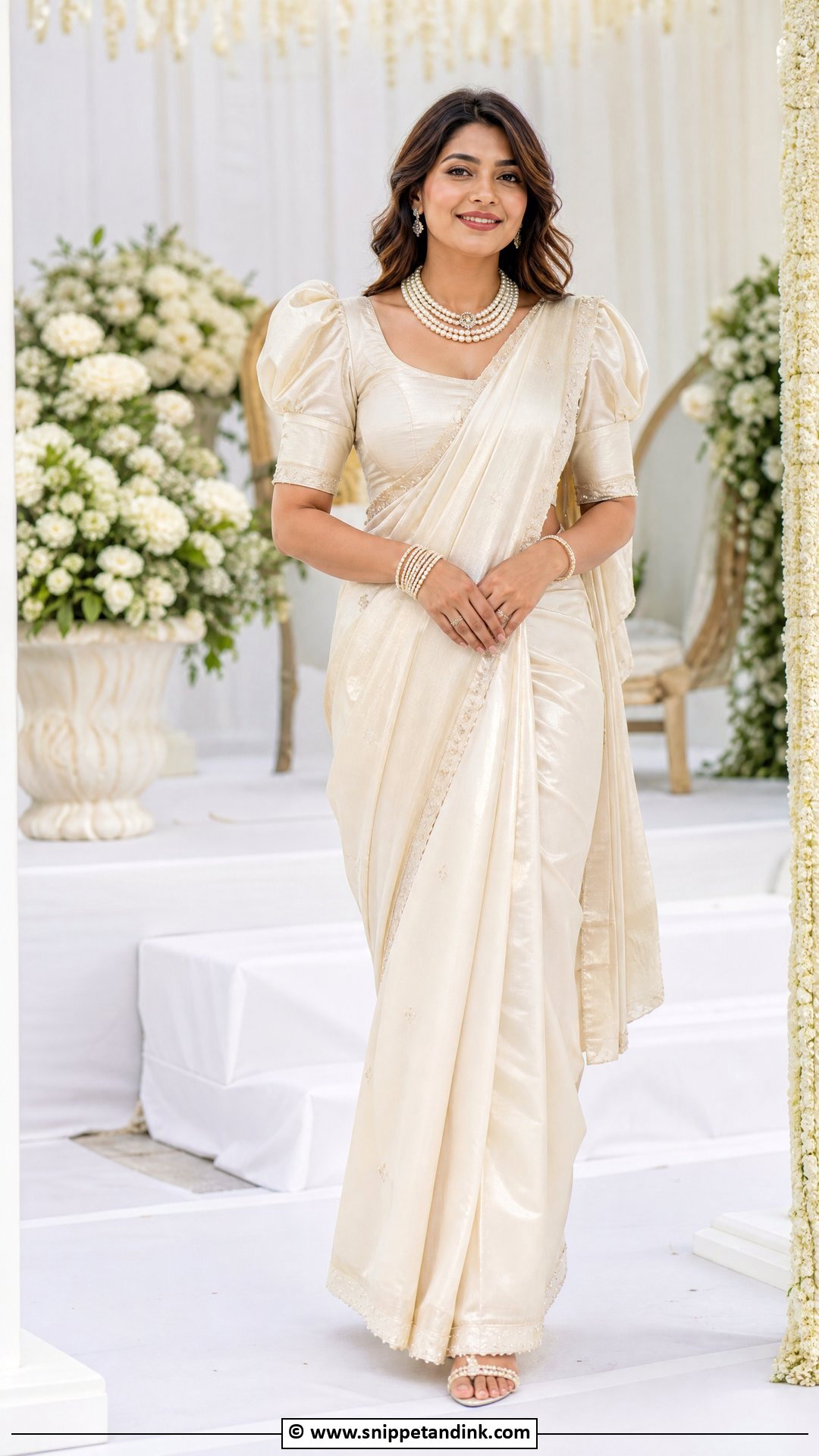
Puff sleeves add a soft, slightly vintage shape without making the blouse revealing. Small puffs sit nicely with silk sarees; bigger structured ones need a lehenga or reception outfit to balance them. The detail that matters is the gathering at the sleeve head: in stiff silk it holds, but in soft georgette it collapses by the afternoon unless the tailor adds net underneath. Keep the sleeve plain on a heavy saree or embroider only the cuff. Square, sweetheart and modest V necks work, with a light dupatta that won’t crush the puff.
9. Bridal Blouse With Elbow Sleeves
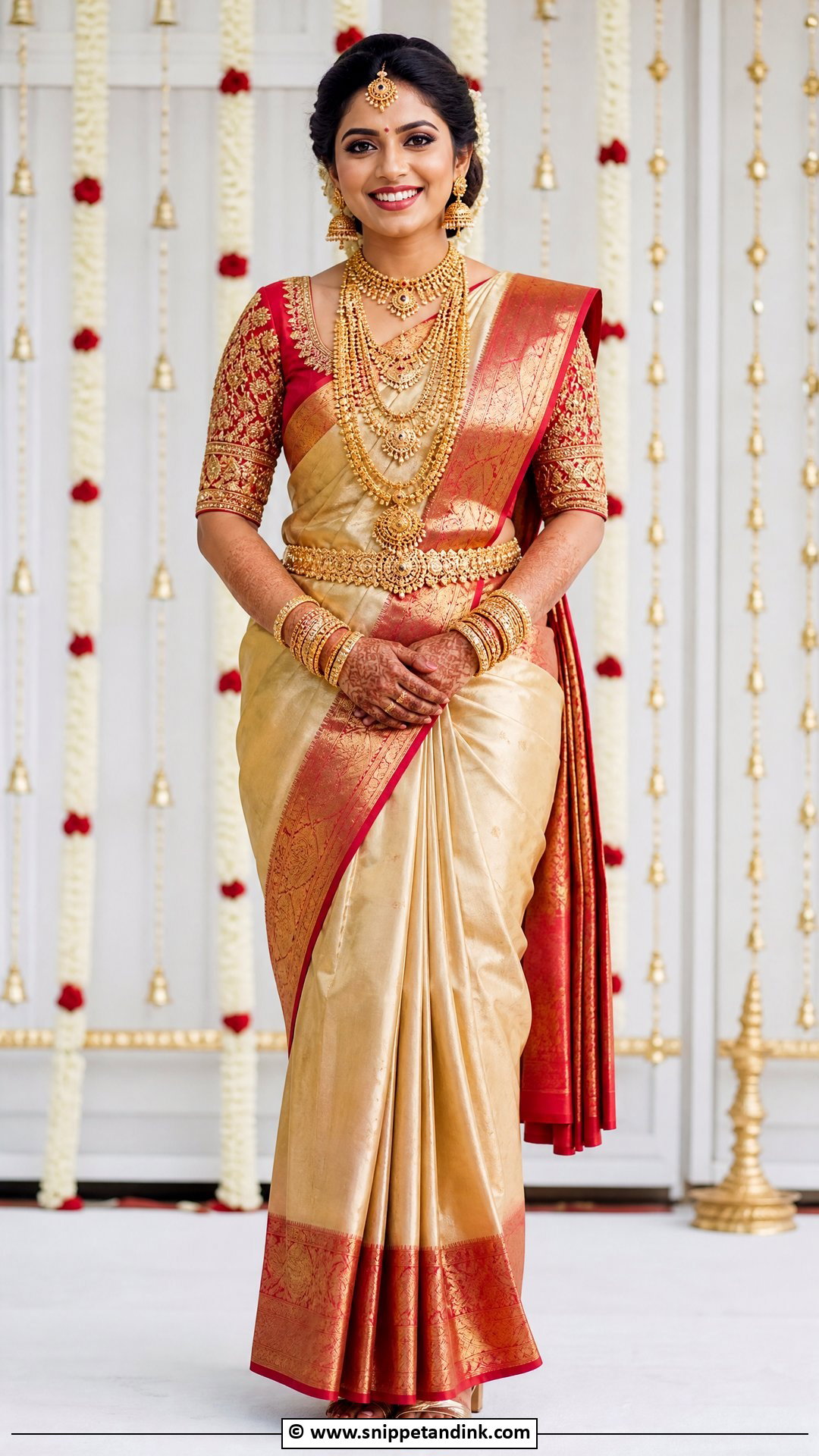
Elbow sleeves are the length I recommend most, because they leave room for embroidery and keep the arms free through long rituals. They suit almost every bridal saree, from silk and Banarasi to organza and georgette. Put zari borders, stones or thread motifs near the hem, where they meet your bangles. Elbow sleeves also leave the forearm clear for arm jewelry and stacked bangles. Pick the neckline from your jewelry plan: a round neck for layered necklaces, a deep back if you want the drama behind you.
10. Bridal Blouse With Bell Sleeves
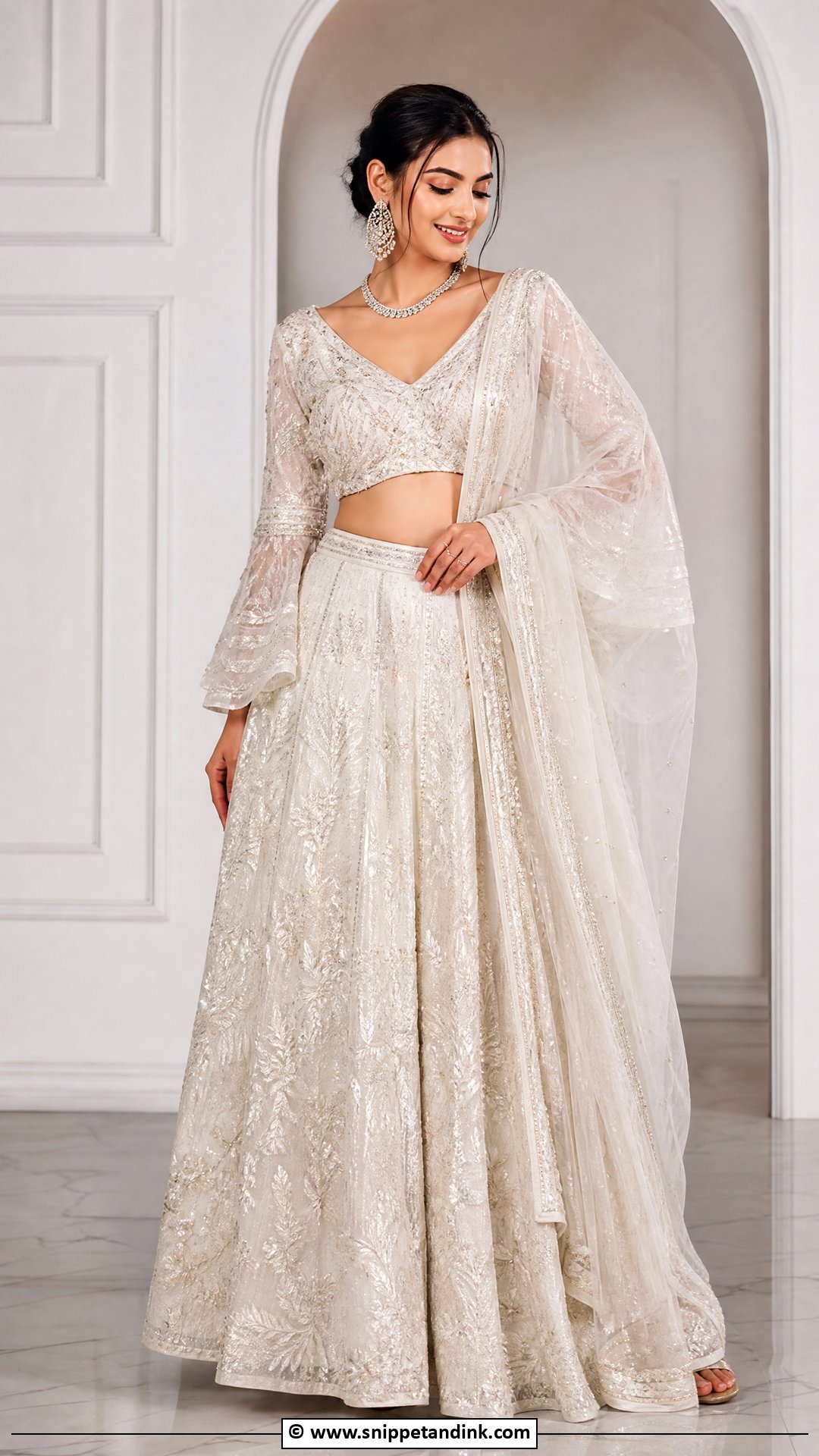
Bell sleeves bring movement, so they belong on lighter sarees, pre-draped sarees and modern lehengas rather than on a heavy silk. Embroidered cuffs, pearl edging, scalloped borders or sheer net with beadwork give the flare a bridal finish. I keep the blouse body close-fitted so the sleeve doesn’t swallow the frame. One practical warning: a wide bell sleeve drifts into food and into the havan fire during rituals, so I’d save it for the engagement or reception. Skip heavy wrist stacks, which fight the flare.
11. Bridal Blouse With Sheer Sleeves
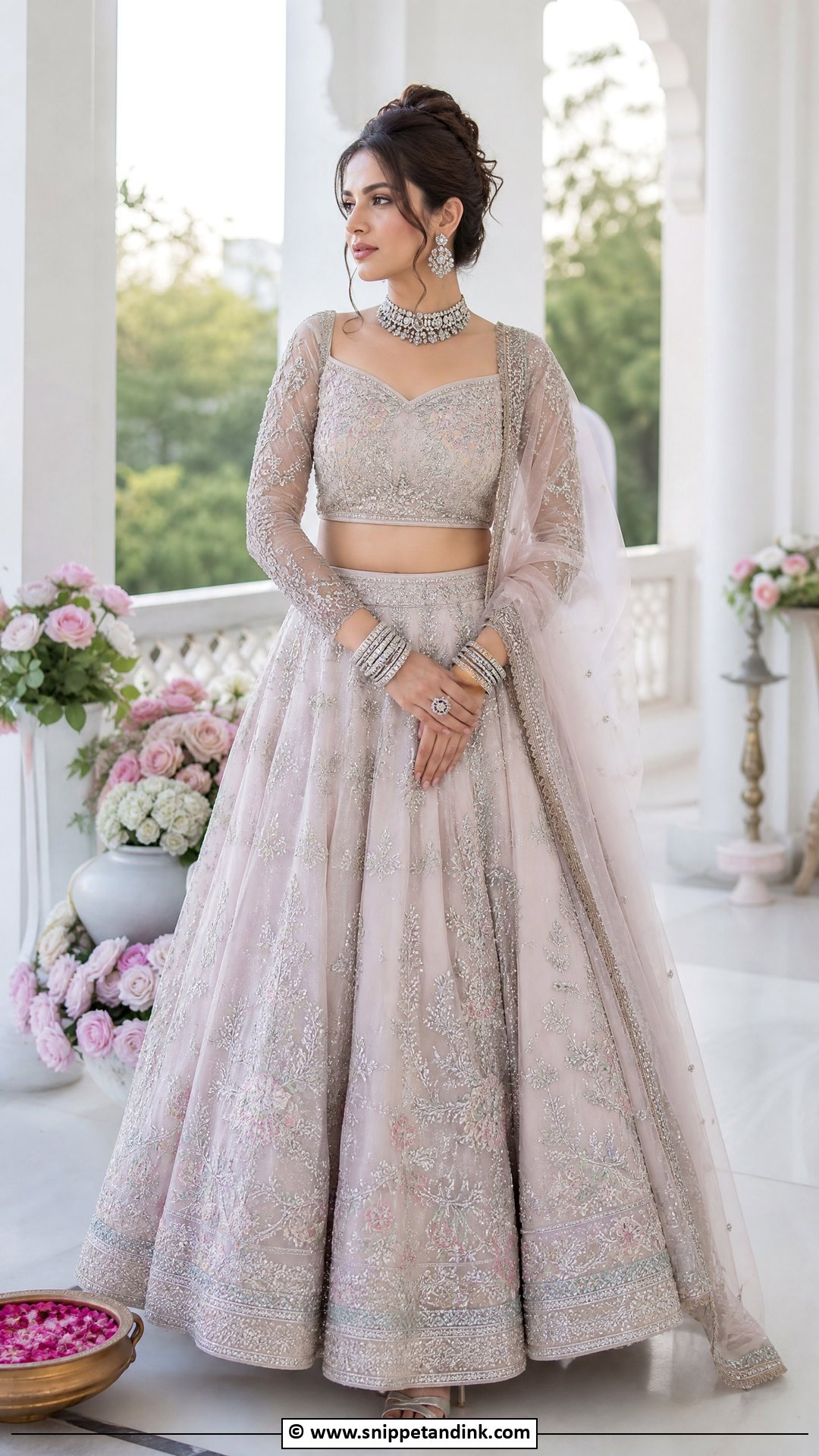
Sheer sleeves give coverage with very little weight. Net, organza or tulle can carry pearls, sequins, floral thread work or tiny crystals for a soft shimmer, and they suit pastel lehengas, ivory sarees and reception outfits. The weak point is the armhole: sheer fabric frays and tears where it joins a heavier bodice, so I ask the tailor to bind that seam and add a skin-tone lining at the underarm. Pair it with a matching dupatta, crystal jewelry and a soft updo.
12. Bridal Blouse With Pearl Work
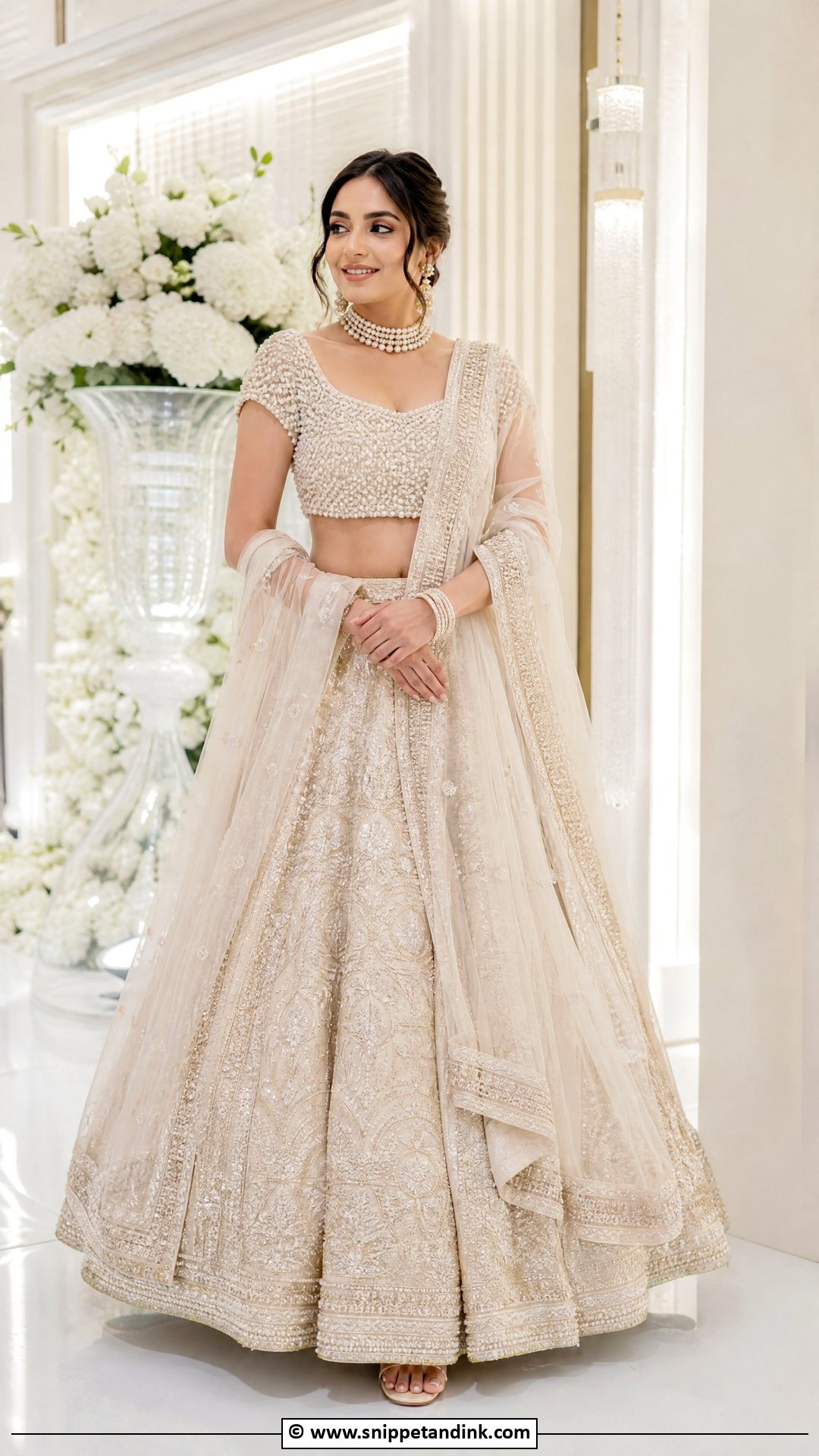
Pearl work gives you richness without metallic glare, which makes it a good choice for daytime weddings and receptions. Use it around the neckline, sleeves and back tie, or all over if you want a dramatic surface. Ivory, blush, champagne, gold, mint and pastel pink suit it best. Check how the pearls are fixed: individually stitched pearls survive a long day, but glued-on pearls pop off where the arm rubs the bodice. Pearl chokers or kundan pieces, a low bun and a light dupatta keep the outfit calm.
13. Bridal Blouse With Mirror Work
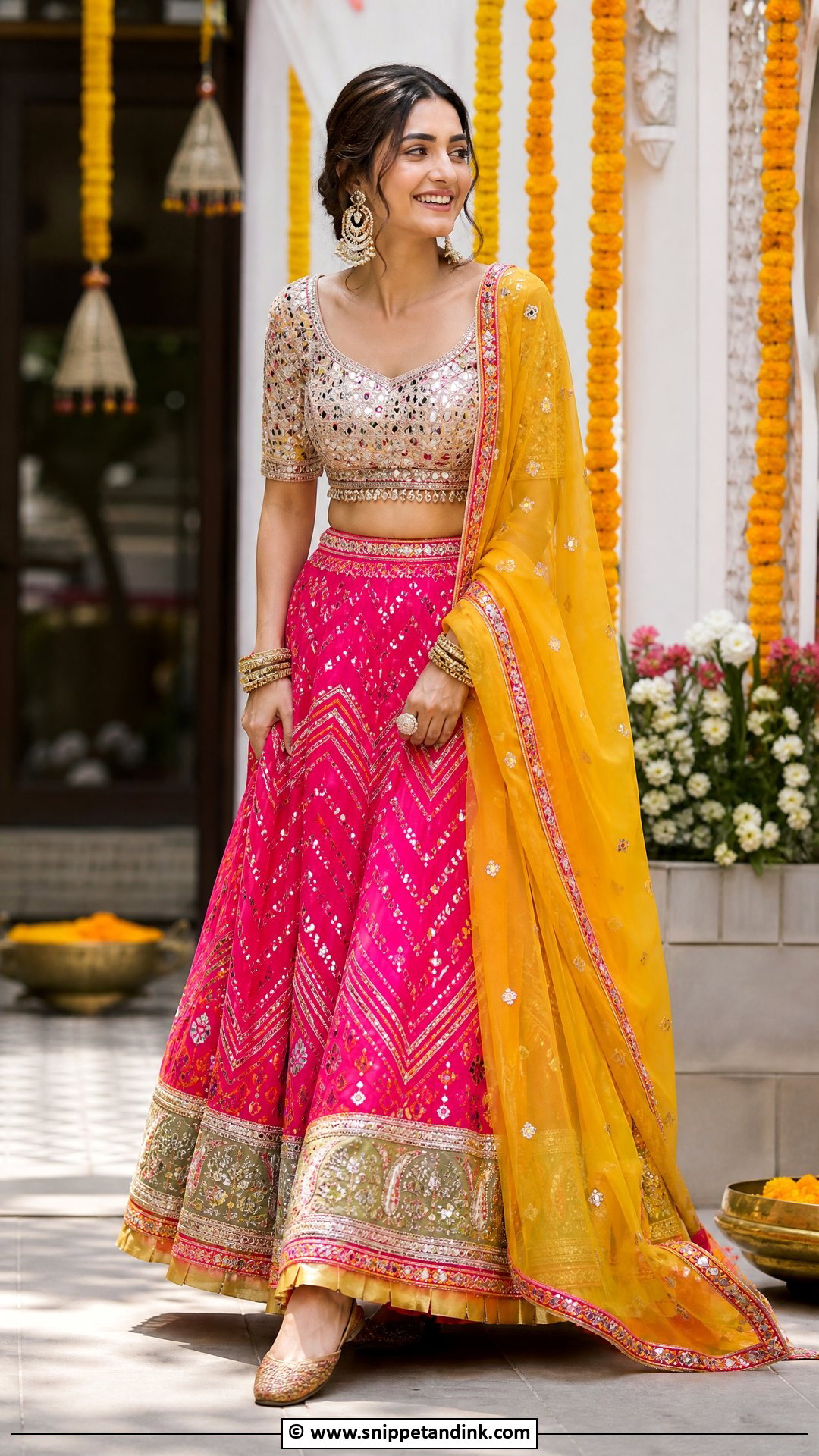
Mirror work catches every light source in the room, which is why I love it for haldi, mehndi and daytime ceremonies and for vibrant lehenga looks. It shines on yellow, fuchsia, orange, turquoise, green and royal blue. For the main bridal outfit, smaller mirrors mixed with zari or thread look more refined than large ones. Under a camera flash, big mirrors bounce hot white spots into photos, so I warn brides about that before they commit. Keep the necklace simple if the neckline is heavily worked.
14. Bridal Blouse With Sequin Work
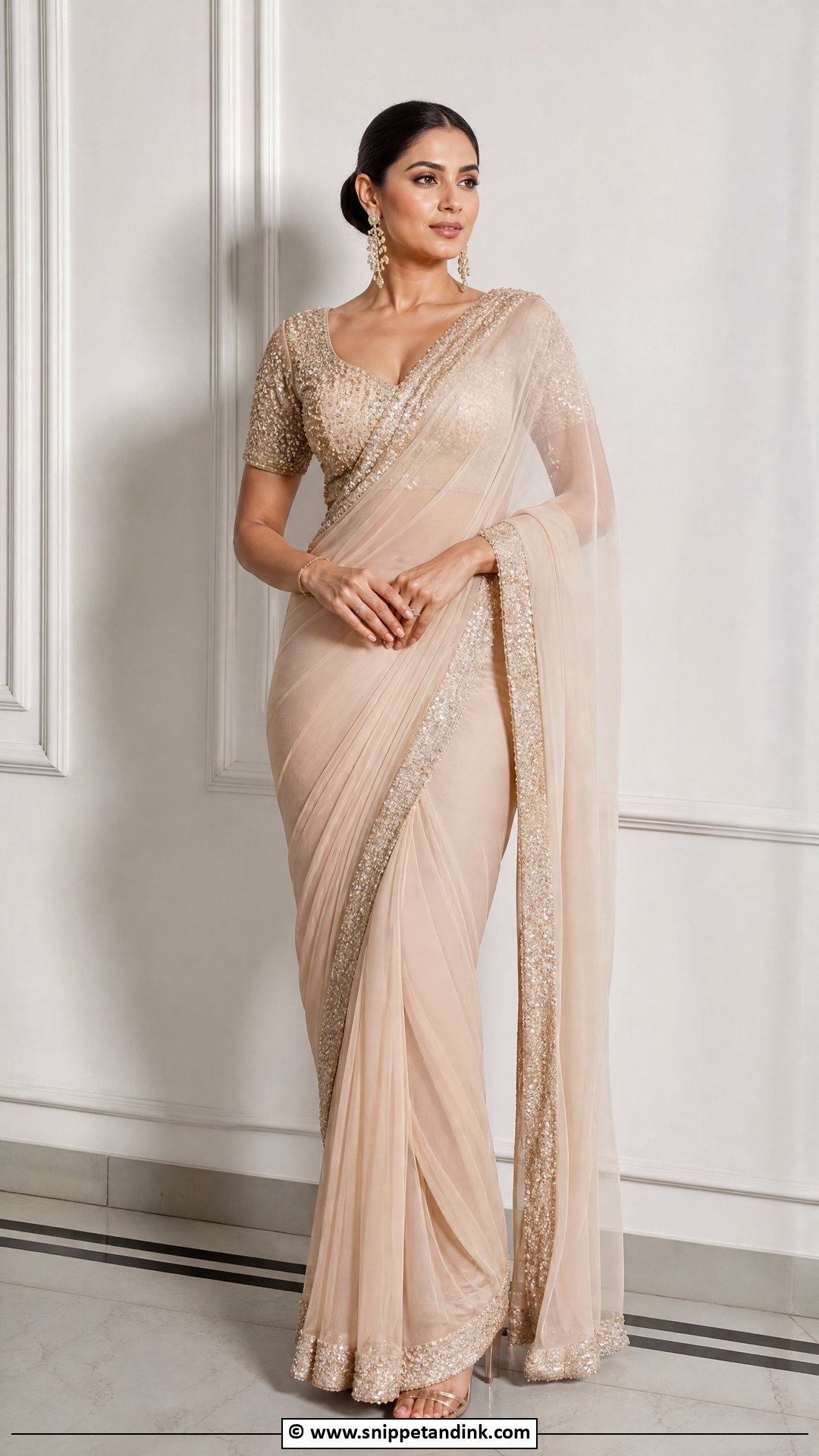
Sequins are the easy route to glamour, either scattered for a subtle glint or packed densely for a reception look. Tonal sequins in gold, champagne, blush, silver or deep red feel more polished than mixed colours. They suit georgette and net sarees, shimmer lehengas and cocktail-style outfits, and they come alive under evening and indoor lighting. The catch is the inner arm: dense sequins scratch and snag a chiffon pallu, so I keep the underarm panel plain. Sleeveless, full-sleeve or boat-neck cuts all work with a clean drape and minimal jewelry.

15. Bridal Blouse With Stone Work
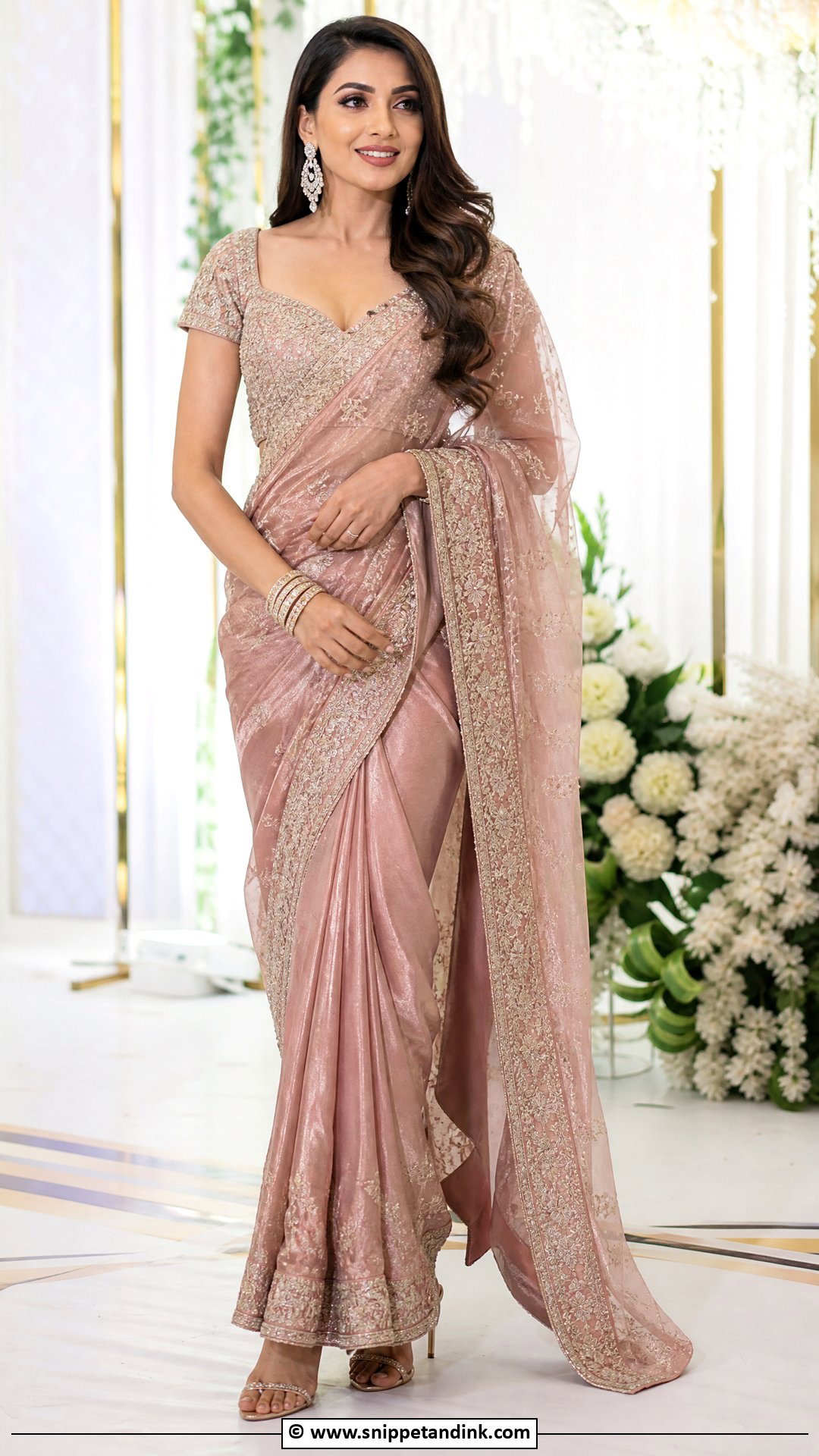
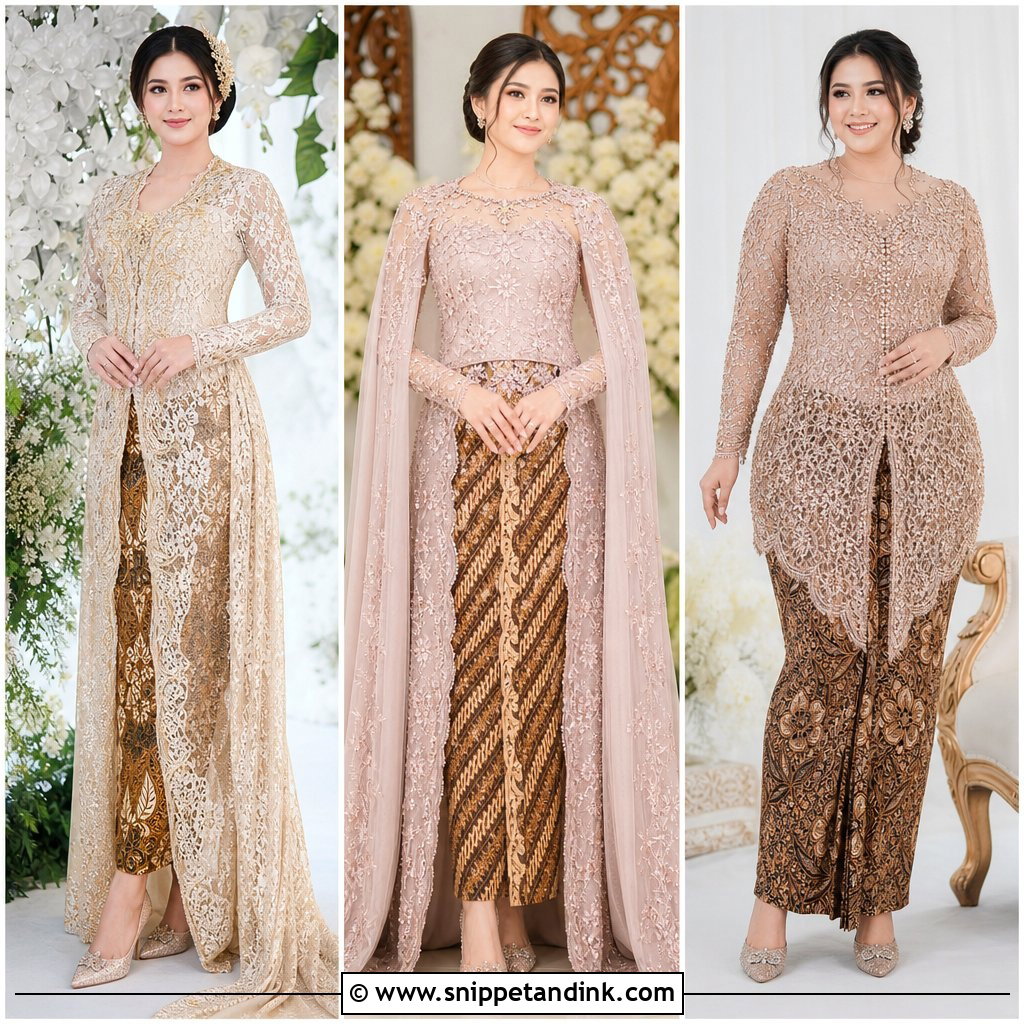
Stone work brings sparkle along the neckline, sleeves, border or back cutout. Clear stones read like diamonds, coloured stones look royal, and kundan-style stones push it toward tradition. It suits bridal lehengas, net sarees, velvet sarees and reception outfits. Stones add surprising weight, so the fit has to be secure and the lining soft. The other problem is snagging: set stones grab a net dupatta, which is why I keep the drape smooth and pin it away from the most heavily worked panels.
16. Bridal Blouse With Kundan Work
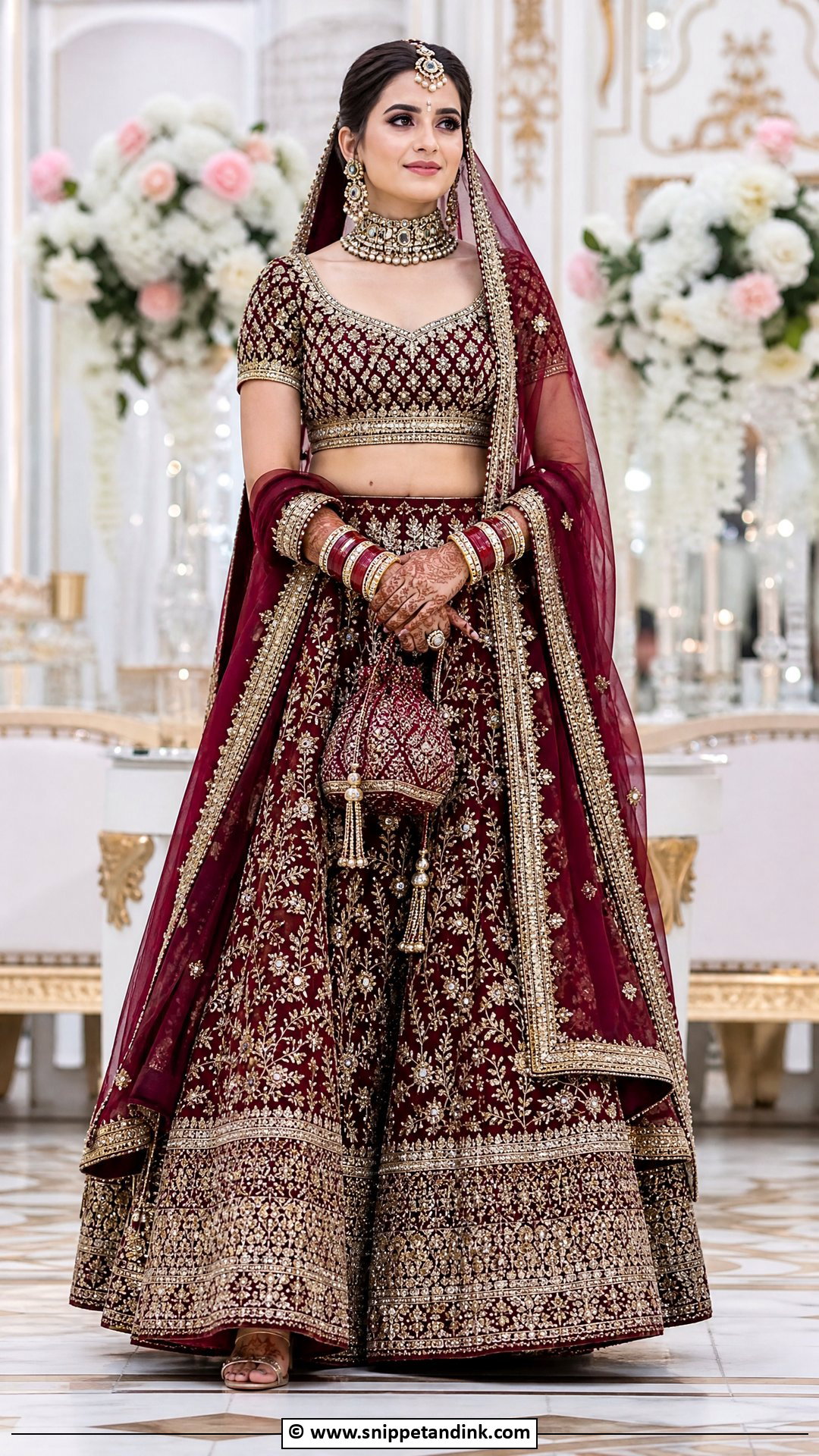
Kundan detailing already looks like jewelry, so the real styling job is avoiding a clash with the jewelry you actually wear. It sits best on maroon, bottle green, navy, plum and red, around the neckline or across sleeves and back panels. Silk and velvet lehengas, Banarasi sarees and ornate dupattas carry it well. I match the stone colours of the blouse to the choker and maang tikka, or the two sets compete. A neat hairstyle and a securely pinned dupatta keep the blouse visible.
17. Bridal Blouse With Zardozi Work
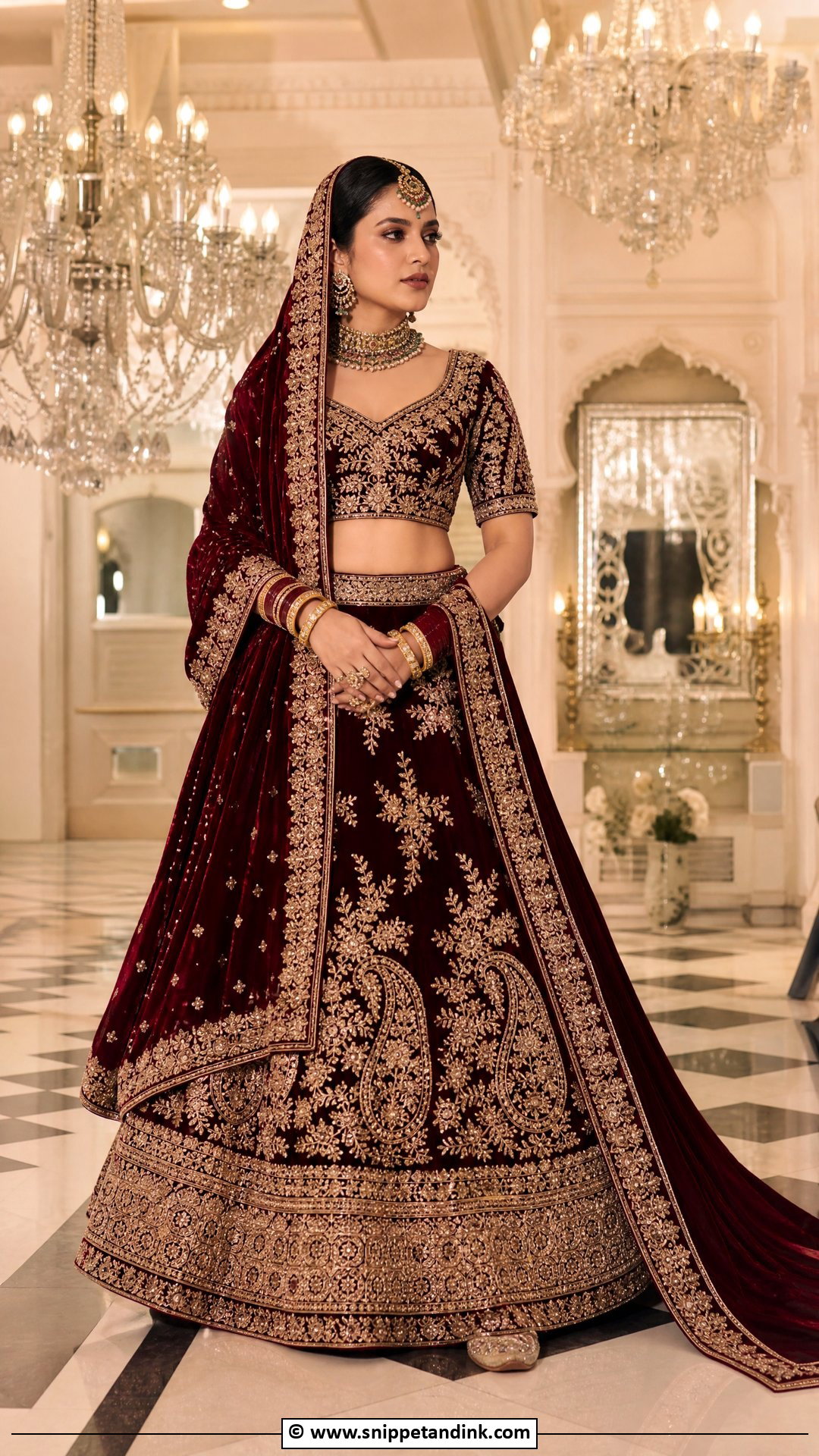
A bridal blouse with zardozi work is old-world luxury: metal threads couched over padding so the design stands up off the fabric. It needs a sturdy base like velvet, silk, raw silk or brocade, and it belongs at the main ceremony with a heavy lehenga or traditional saree. Floral vines, paisleys and royal borders are the classic layouts. Zardozi is heavy, so I check that the tailor reinforces the shoulder seams and uses a firm lining. Antique jewelry and balanced makeup complete it.
18. Bridal Blouse With Cutwork Back
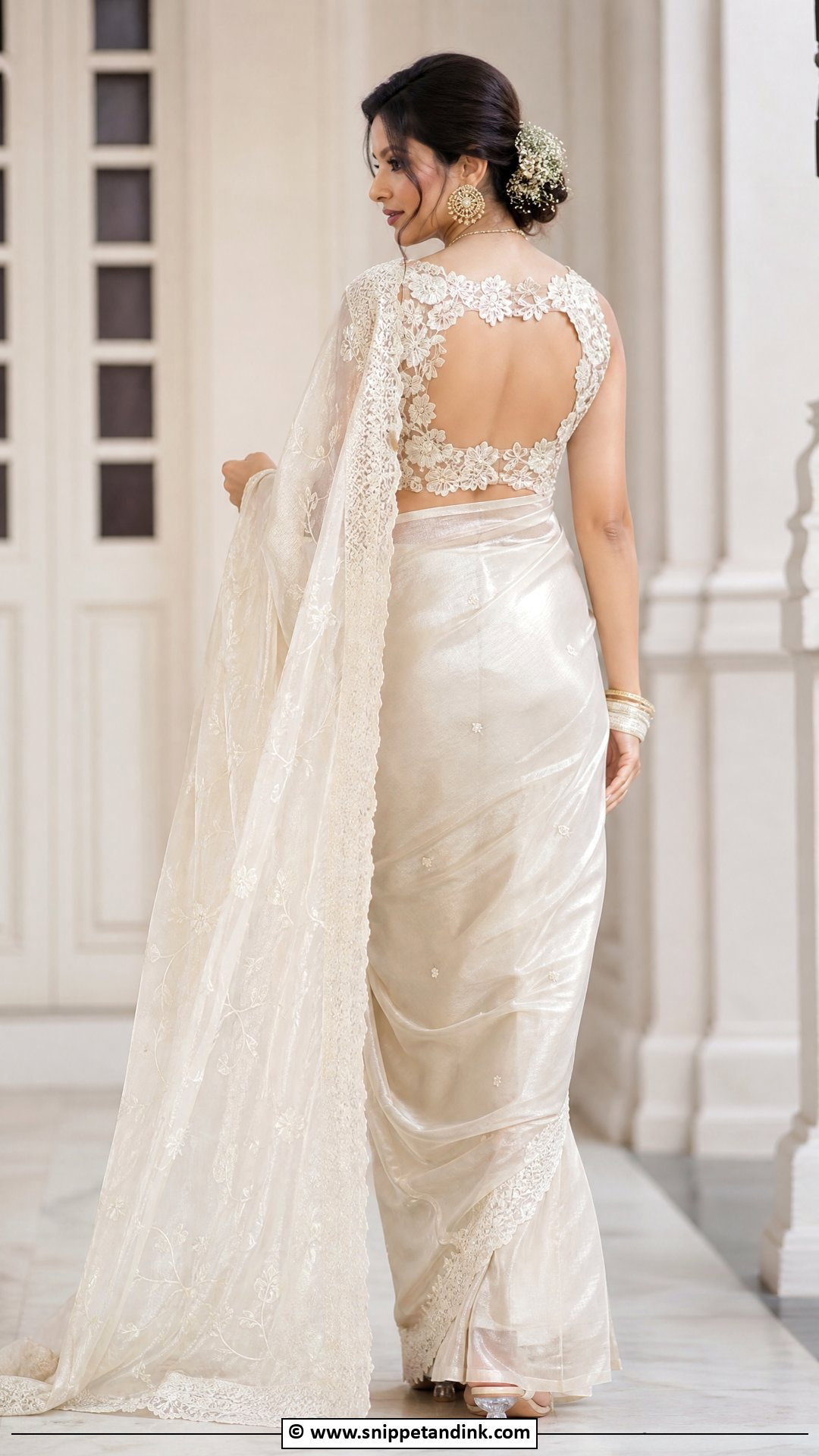
Cutwork turns the back into the main event, with floral shapes, scallops, geometric panels or temple-inspired openings. It earns its place during the ceremony moments when guests and the camera see you from behind, and it works best when the front stays modest. The edges of each cut need firm finishing, because loosely bound cutwork stretches out of shape after a few hours of movement. Tie strings, tassels or pearl drops add charm. A sheer dupatta and a neat bun keep the back on show.
19. Bridal Blouse With Deep Back
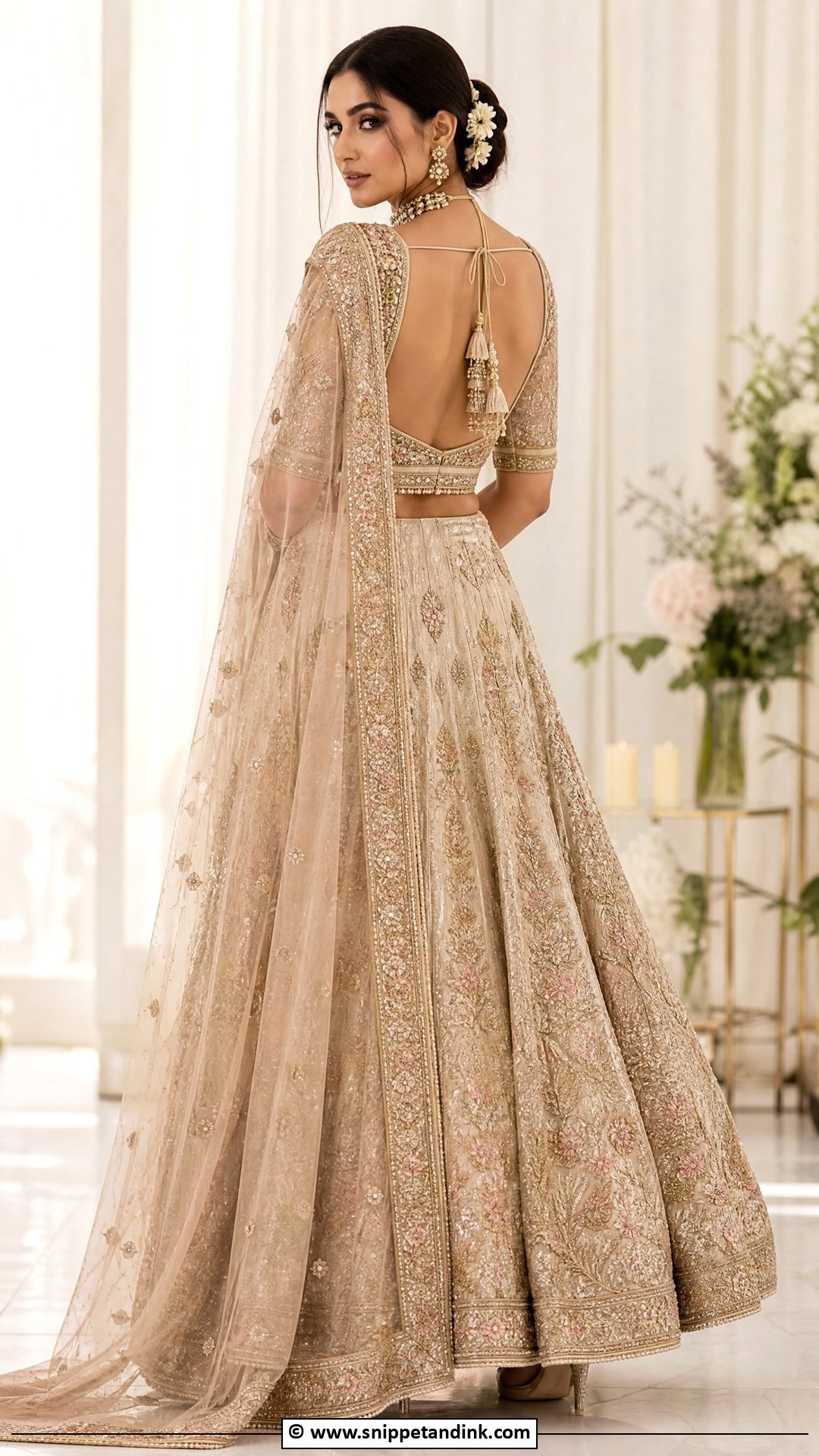
A deep back gives drama in photos while the front neckline stays quiet. It looks finished with tie strings, latkans, pearl tassels or embroidered borders, but only if the fit across the shoulders and bust is exact. When the back drops low, the blouse loses its anchor, so I ask for hidden cups and strong side closures every time. Drape the saree to reveal the back, or place a lehenga dupatta lightly on one side. A choker, earrings and a sleek bun keep the line clean.
20. Bridal Blouse With Dori Back
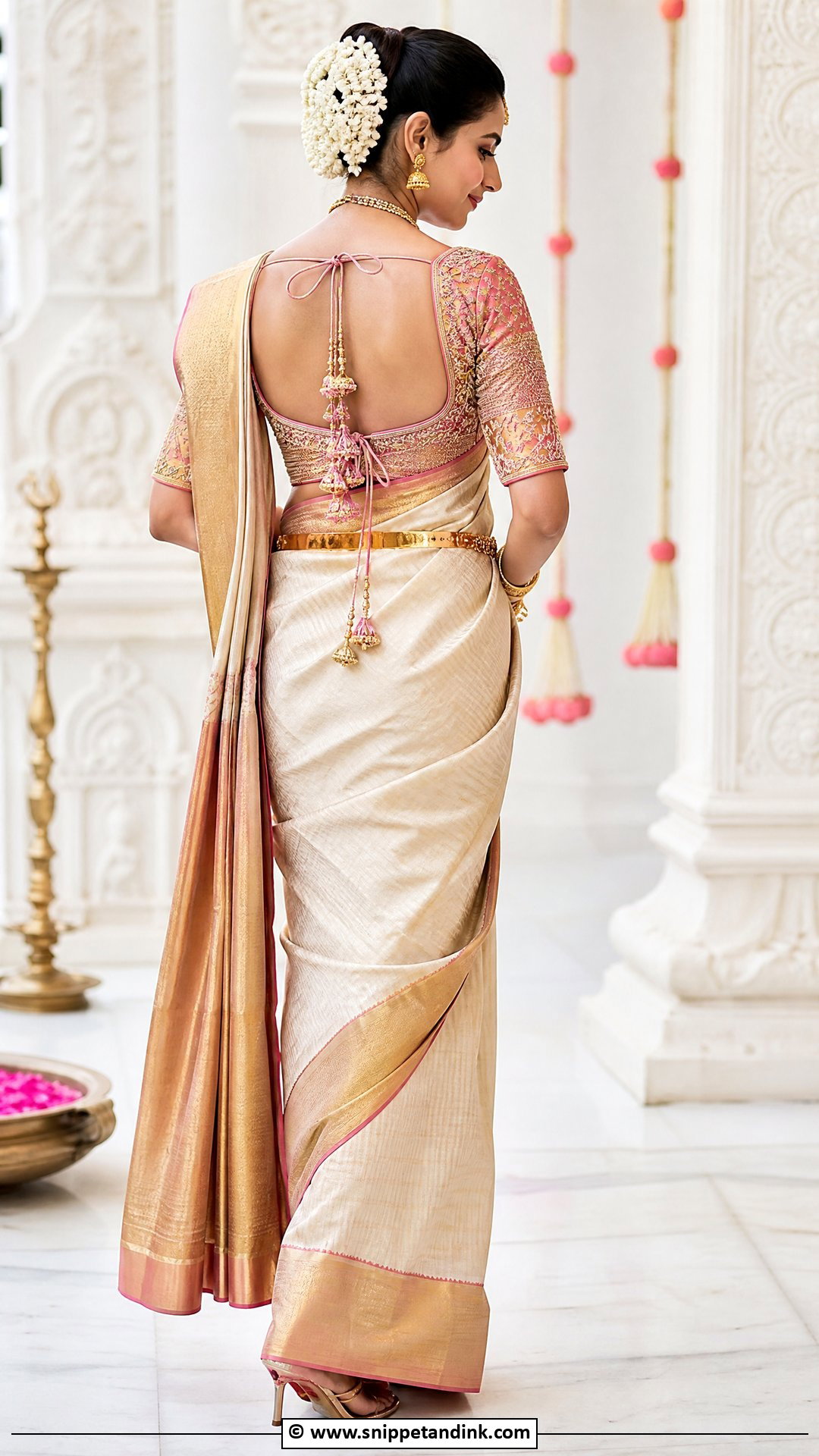
Dori backs are traditional and a little playful, and the tie-up gives you somewhere to hang tassels, beads, pearls, shells, fabric balls or custom latkans. Pair them with a deep U-back, round back, keyhole or square back. The doris also do real work: they let a tailor or your sister tighten the fit on the day if you’ve lost weight in the last weeks. Set the ties where they won’t pull during long ceremonies, and match the latkans to your saree border or lehenga embroidery.
21. Bridal Blouse With Latkan Back
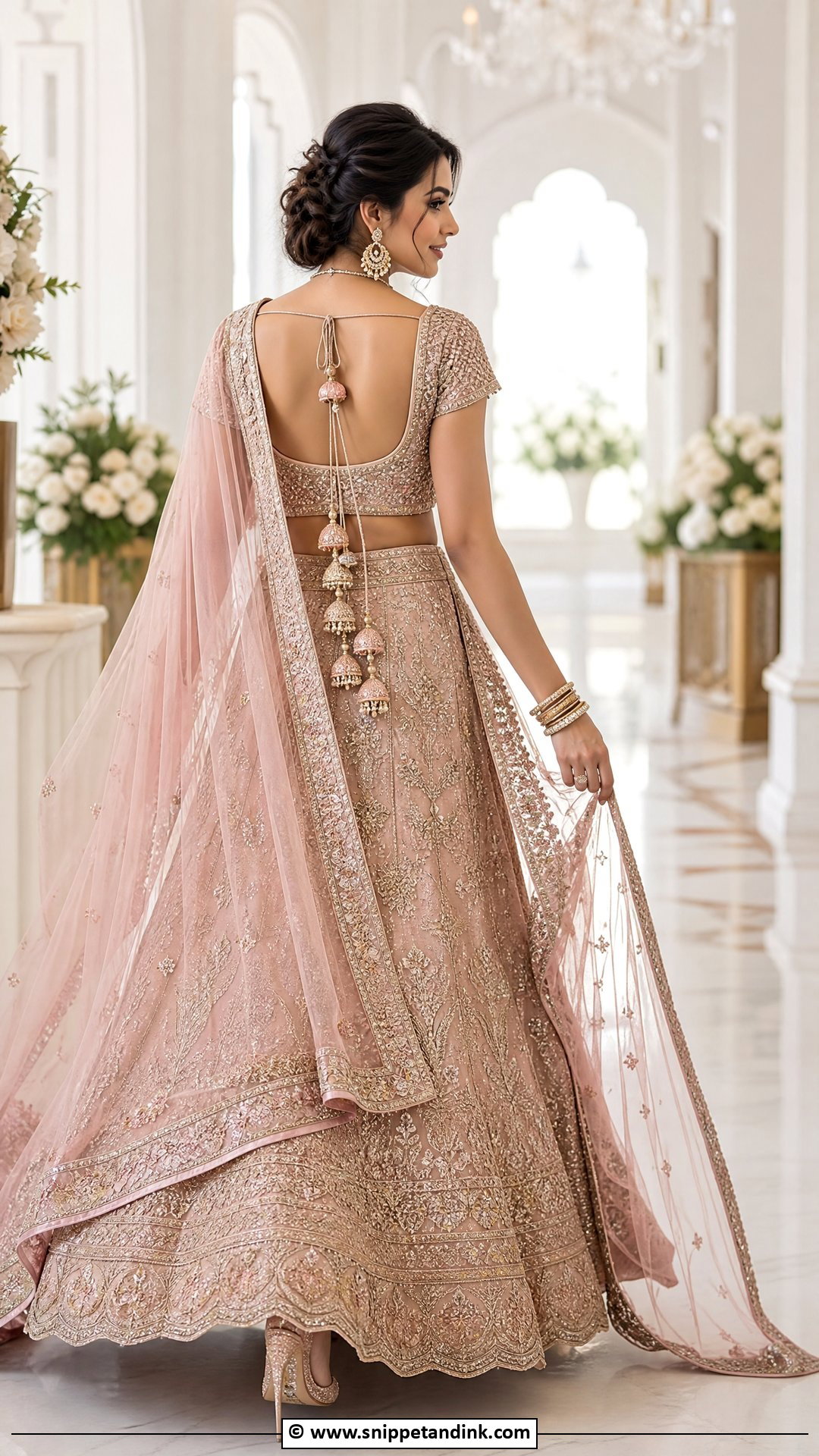
Latkans swing as you walk, which is why they look so good in back-facing portraits. They can be simple fabric tassels, pearl drops, beaded bunches, mirror charms or heavy embroidered hangings. Weight matters more than style here: heavy latkans drag the back of the blouse down and open the neckline at the front, while tiny ones vanish in photos. I hold them up against the blouse at the fitting to judge. A deep or tie-up back, a soft bun and a dupatta draped to one side complete the look.
22. Bridal Blouse With Keyhole Back
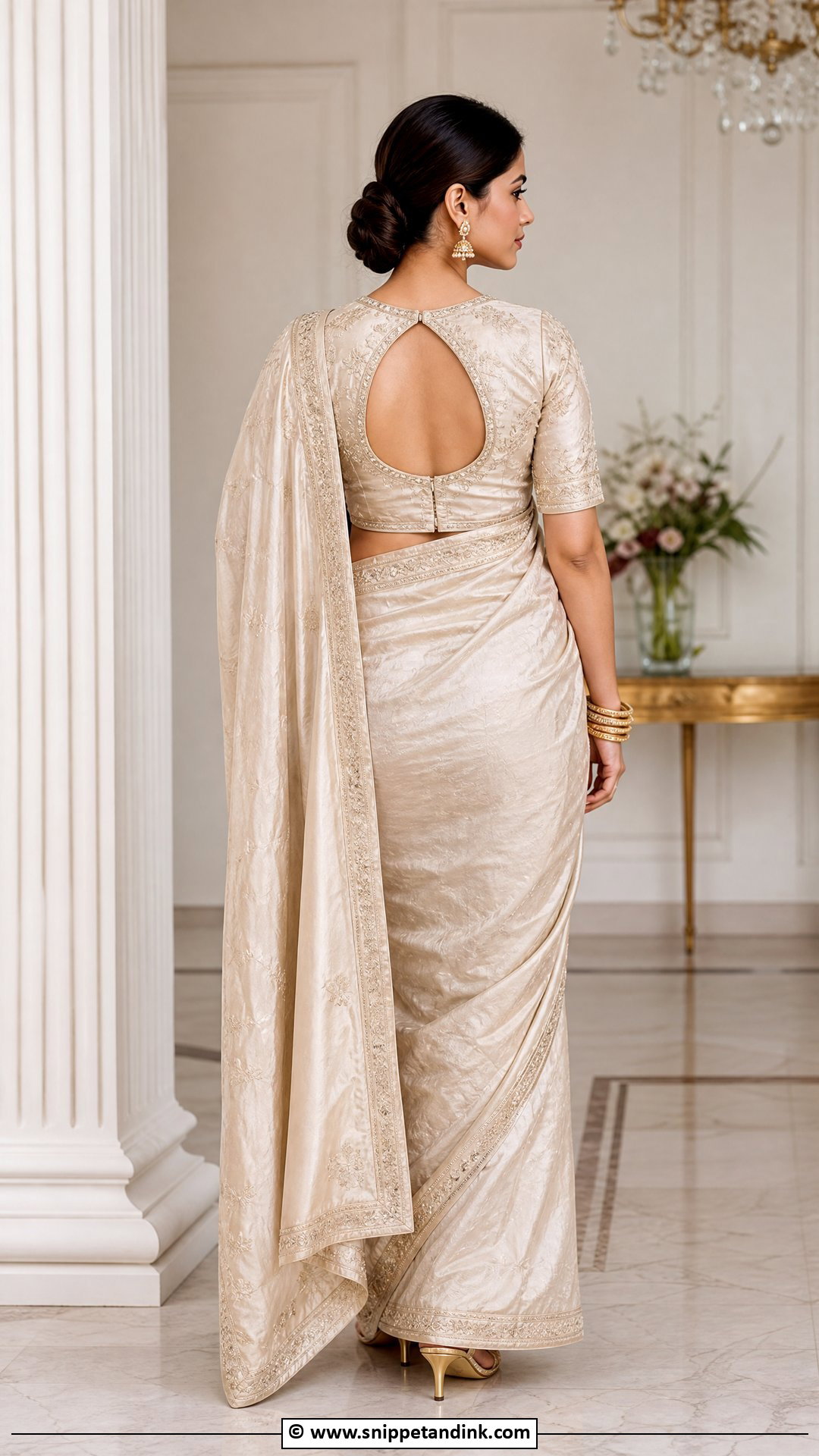
The keyhole back sits between modest and statement: a decorative opening without much skin. It can be round, teardrop, oval or heart-shaped, edged with embroidery, pearls, stones or a dori closure. Because the shoulders stay covered, it holds up well for brides who move a lot during rituals. Keep the keyhole above the bra line, or straps will show the moment you lean forward. It suits silk sarees, lighter lehengas and reception sarees, with a low bun and a neatly pinned dupatta.
23. Bridal Blouse With Boat Neck
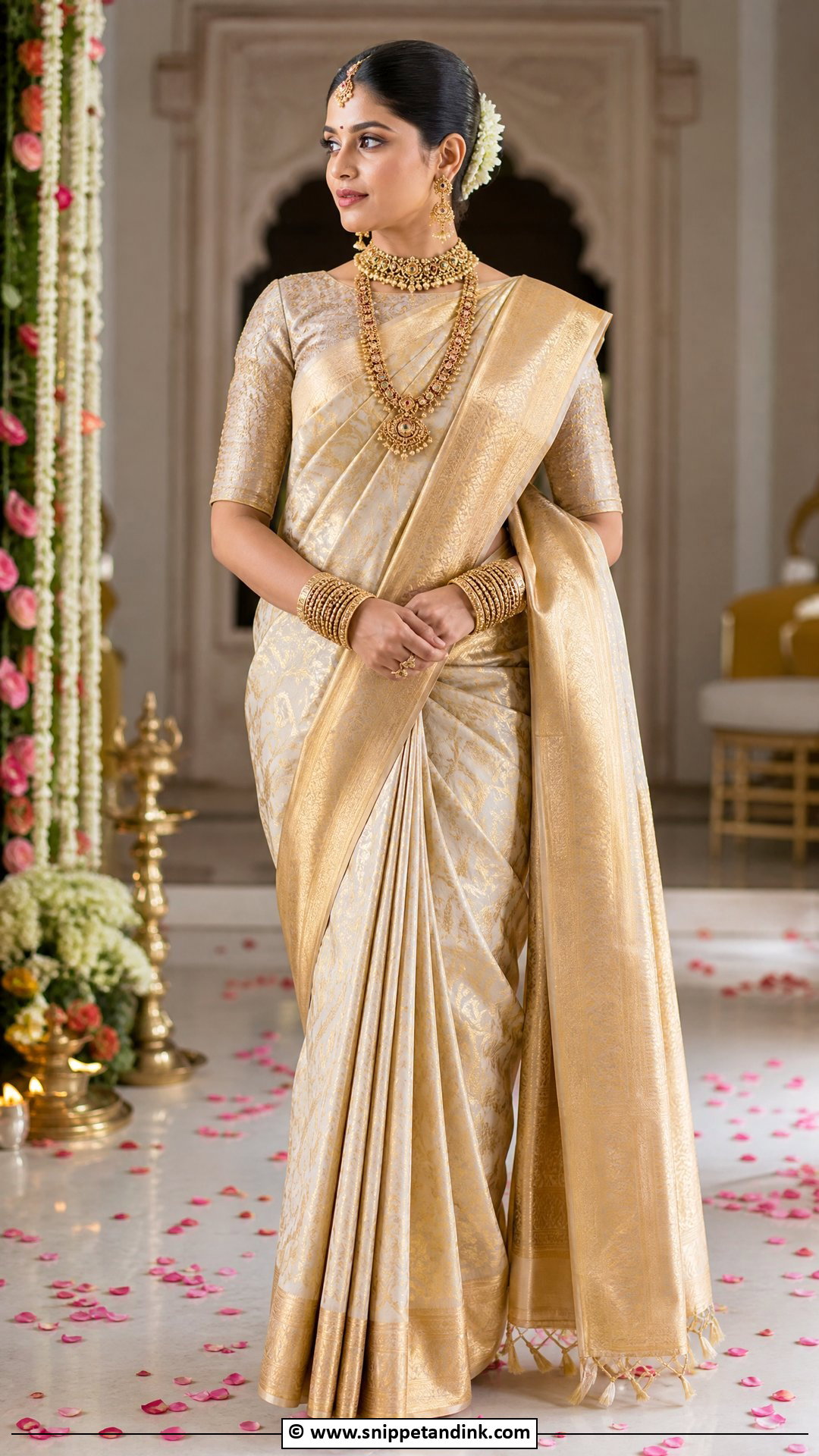
Boat necks run wide and shallow across the collarbone, which gives a clean, modest frame for long necklaces, chokers or layered temple jewelry. They pair well with silk and Banarasi sarees and with lehengas under heavy dupattas, because the wide line stays put through movement. If you have narrow shoulders, ask the tailor to keep the neck a little narrower than the pattern, or the blouse slides off one shoulder all day. Elbow, full or sheer sleeves all work, with embroidery along the neckline for definition.
24. Bridal Blouse With Sweetheart Neck
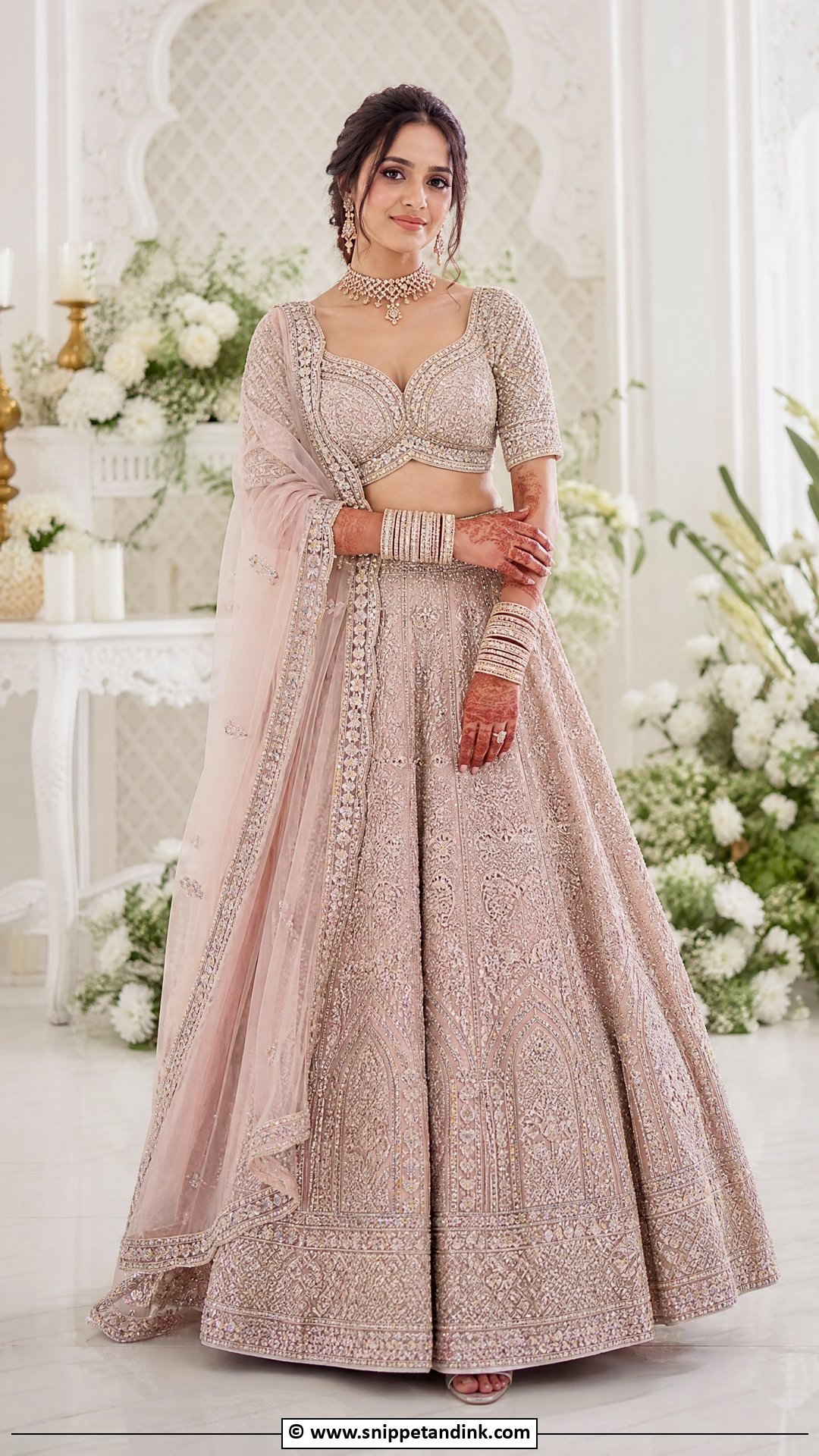
The sweetheart neck curves over the bust and softens a heavily styled outfit. It works with lehengas, sarees and pre-draped bridal outfits, either edged with embroidery or finished with stones. Chokers, short necklaces and statement earrings suit it because they don’t cut across the curve. A heavy dupatta pinned on the shoulder will drag a strapless sweetheart down, so I add straps or sleeves for those brides. Silk, velvet, brocade or embroidered net all hold the shape.
25. Bridal Blouse With Square Neck
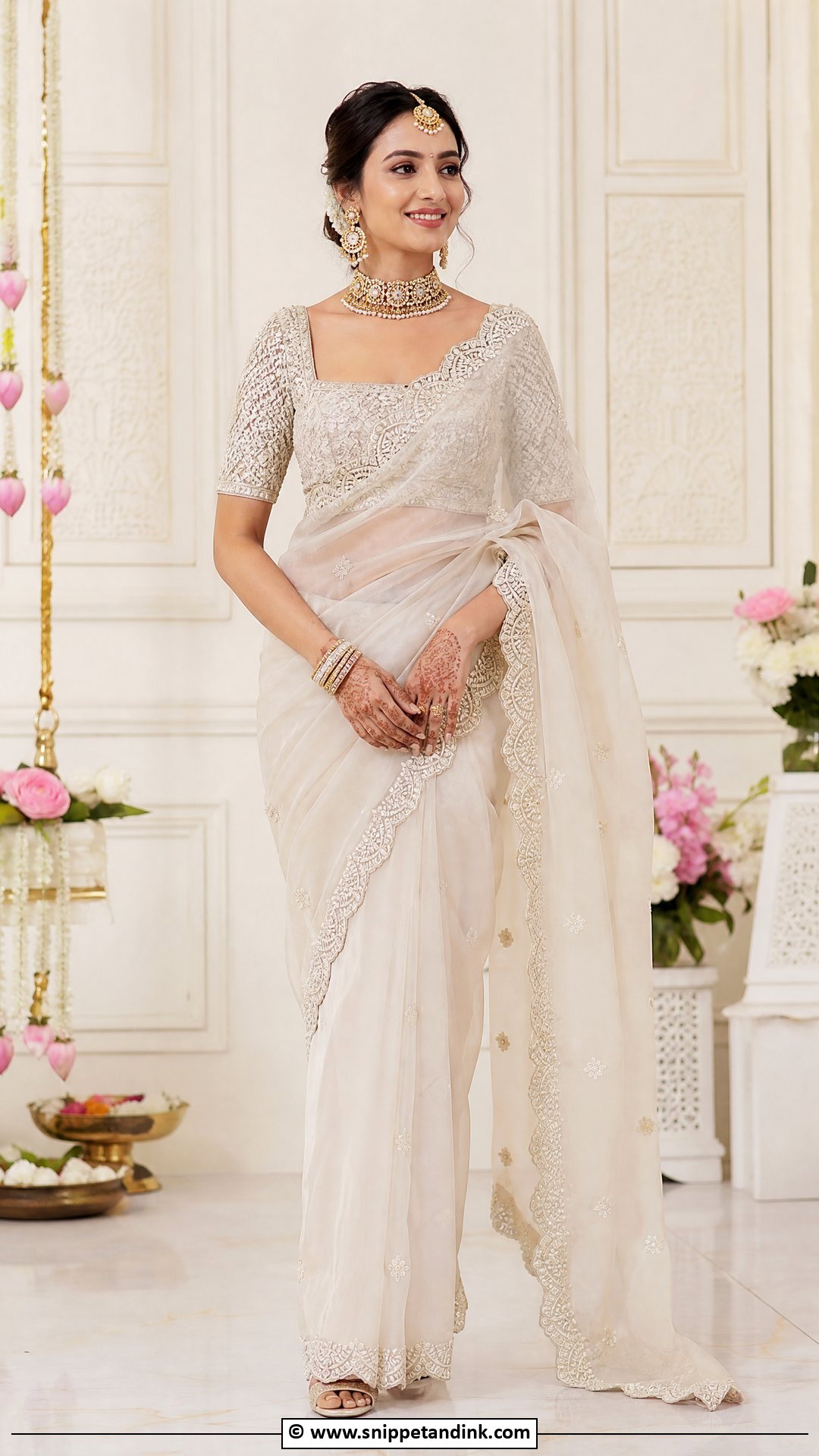
A square neck is structured and easy, and its straight line leaves a clean space for a choker. It pairs with puff, elbow, full or sleeveless cuts and suits silk and organza sarees and lehengas with detailed borders. The corners are where tailoring shows: they should be sharp and slightly reinforced, or they curve and gape by evening. Embroidery along the neckline makes it bridal. A clean drape, statement earrings and soft makeup keep it simple without looking plain.
26. Bridal Blouse With High Neck
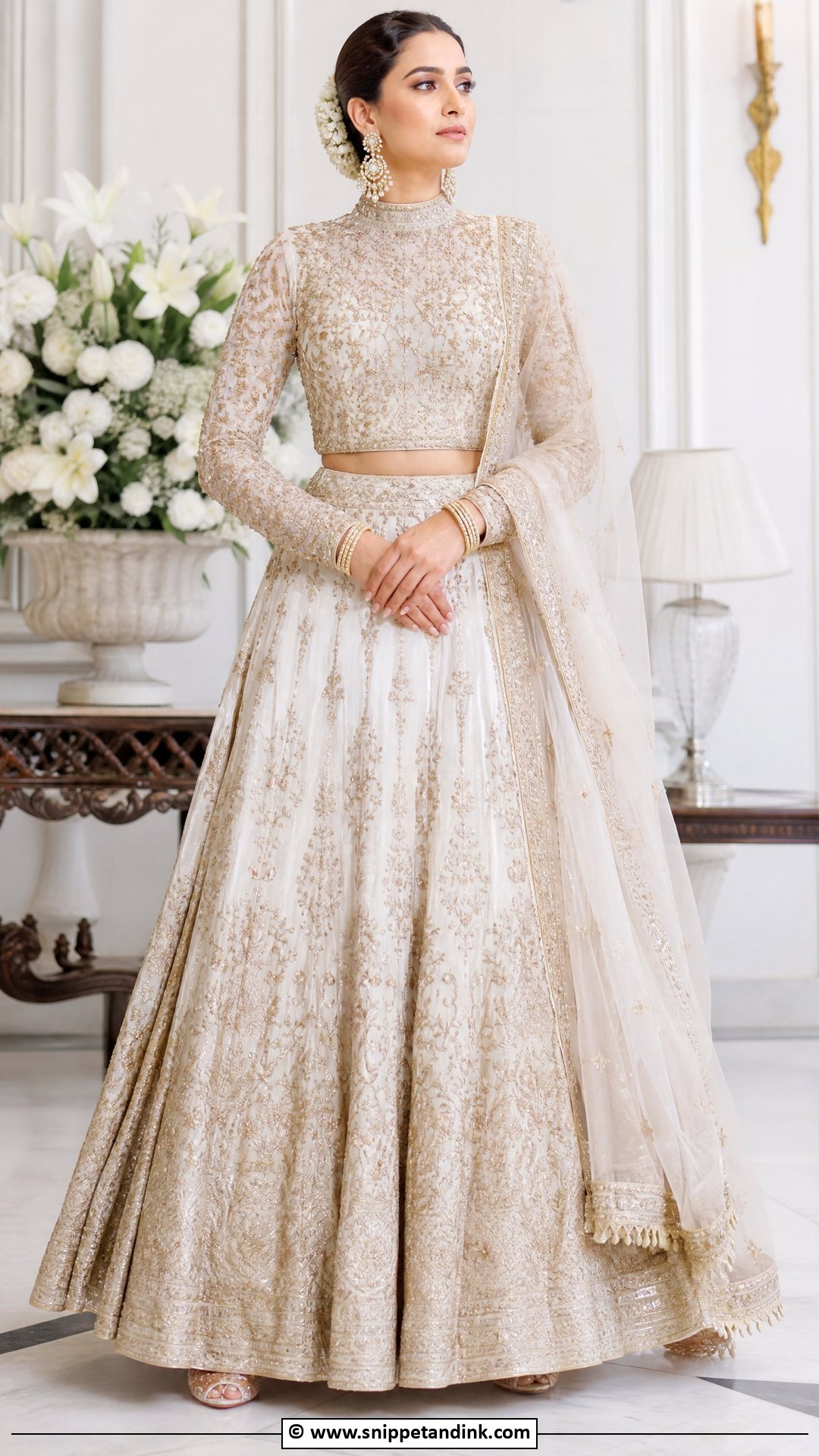
A high neck covers the collarbone and sends attention straight to your face, earrings and hairstyle. It works with full, sheer or sleeveless cuts, with embroidery around the collar, shoulders and cuffs. Because the neckline is covered, swap the heavy necklace for statement earrings. I’d be cautious with a stiff high neck in summer heat or with a very short neck, where it can feel tight and push up against the chin. Drape or pin the dupatta lightly to one side and finish with a sleek bun and layered bangles.
27. Bridal Blouse With Collar Neck
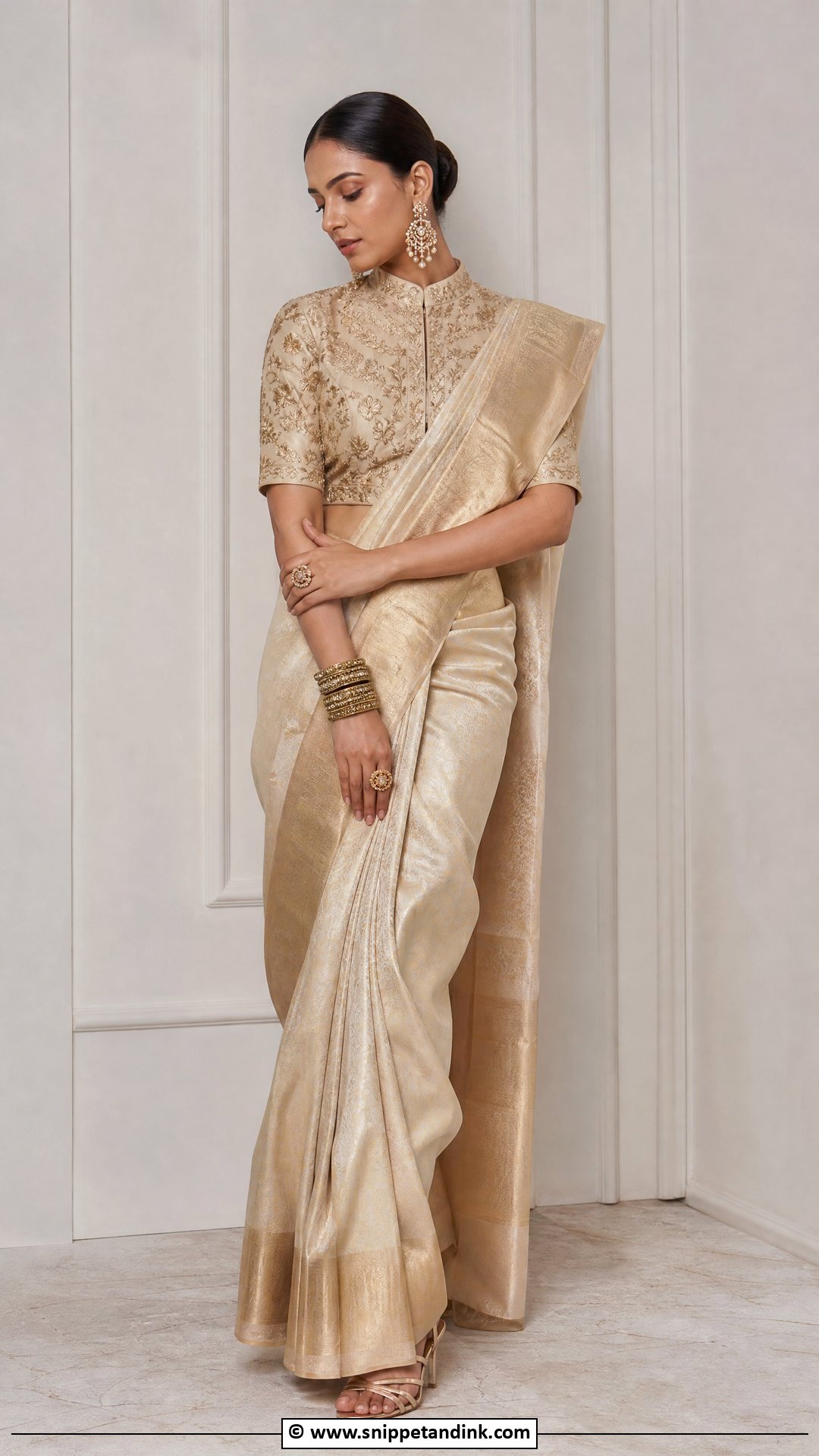
Collar necks bring a smart, slightly fusion edge. A mandarin collar reads traditional, a shirt-style collar more contemporary, and zari, pearls or thread embroidery soften the structure. Silk, handloom sarees and modern lehengas carry it. I keep jewelry away from the neck here and move it to earrings, rings and bangles, since a necklace on top of a collar looks crowded. A low bun or sleek ponytail shows off the clean line, and it suits engagement and reception styling too.
28. Bridal Blouse With V Neck
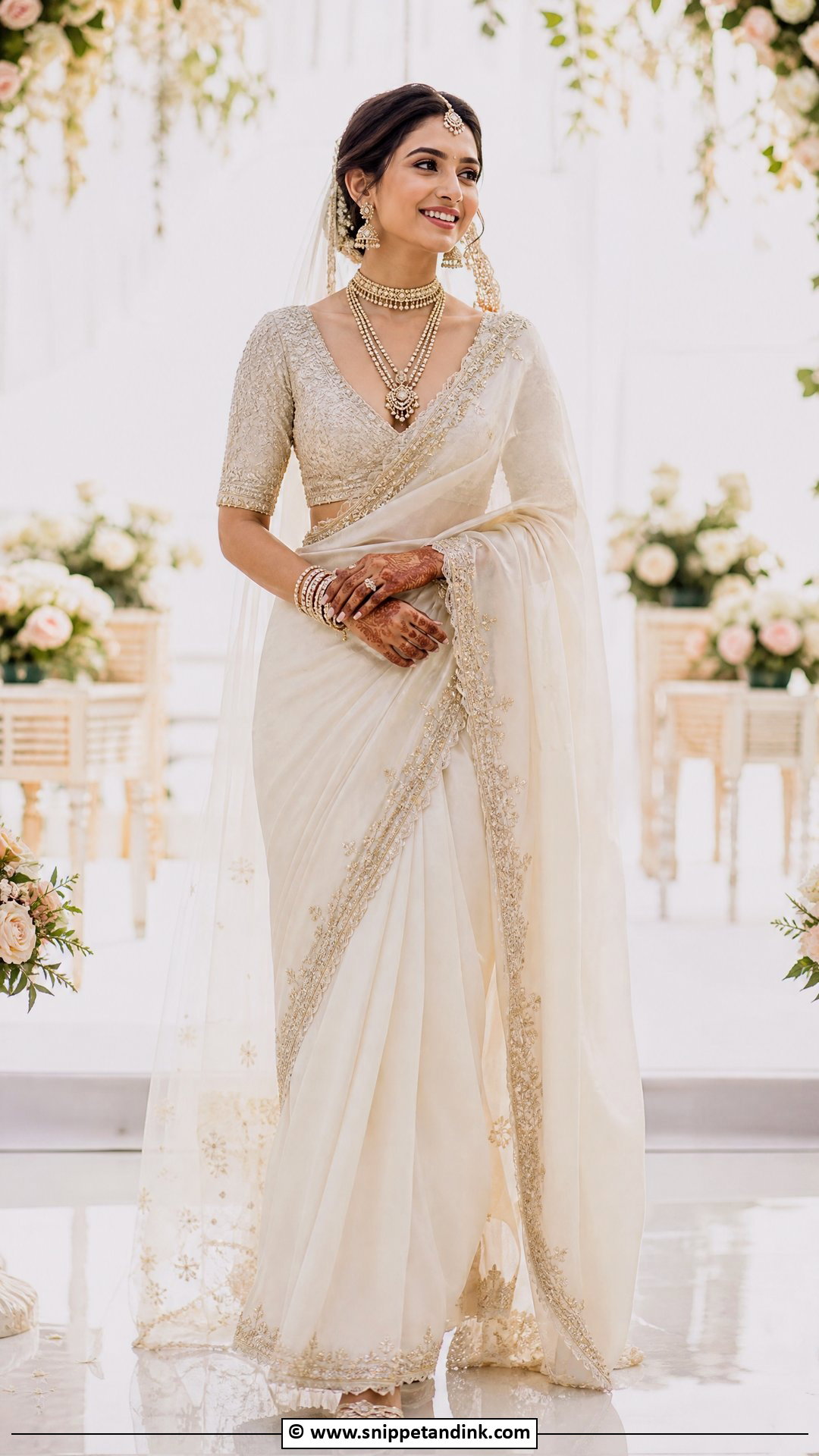
V necks lengthen the neck and give layered jewelry a natural path to follow. A shallow V stays modest; a deeper one feels modern. Edge it with embroidery, stones or scallops. The V is the neckline that pairs best with long rani haars and kundan chokers worn together, because each piece finds its own level. Elbow or full sleeves balance a deep V, and a flowy dupatta with embellished footwear keeps the overall look soft.
29. Bridal Blouse With Off Shoulder Neck
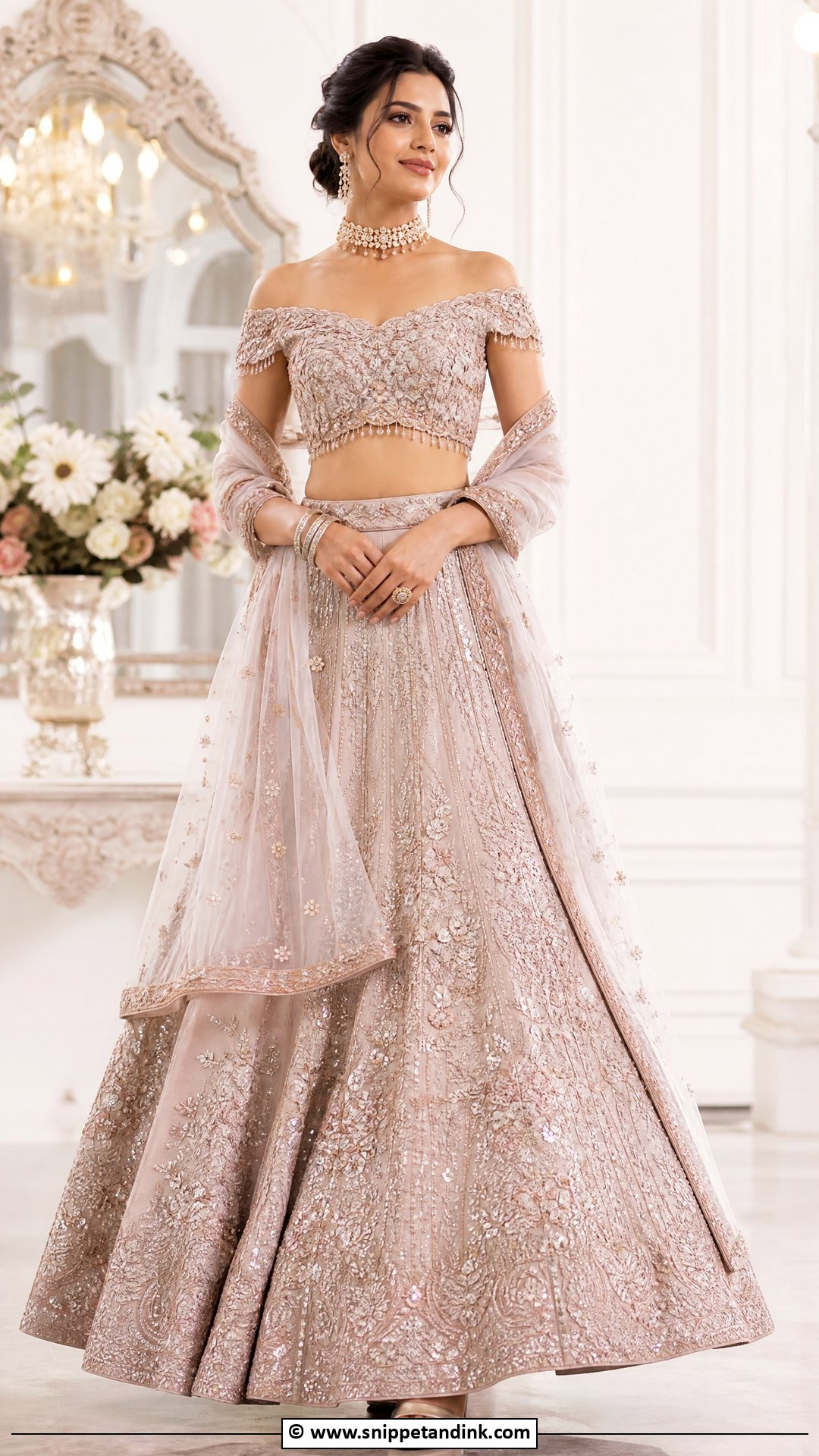
An off-shoulder blouse is a reception or engagement choice for brides who like a fashion-forward look. It works with lehengas, pre-draped sarees or lighter bridal sarees, with embroidery concentrated on the bust, sleeves or bodice. This is the cut that depends most on the tailor: it needs boning, silicone grip tape at the edge and solid closures, or you’ll spend the evening pulling it up. A choker, drop earrings and a soft updo suit it, with a light dupatta that won’t hide the neckline.
30. Bridal Blouse With Corset Design
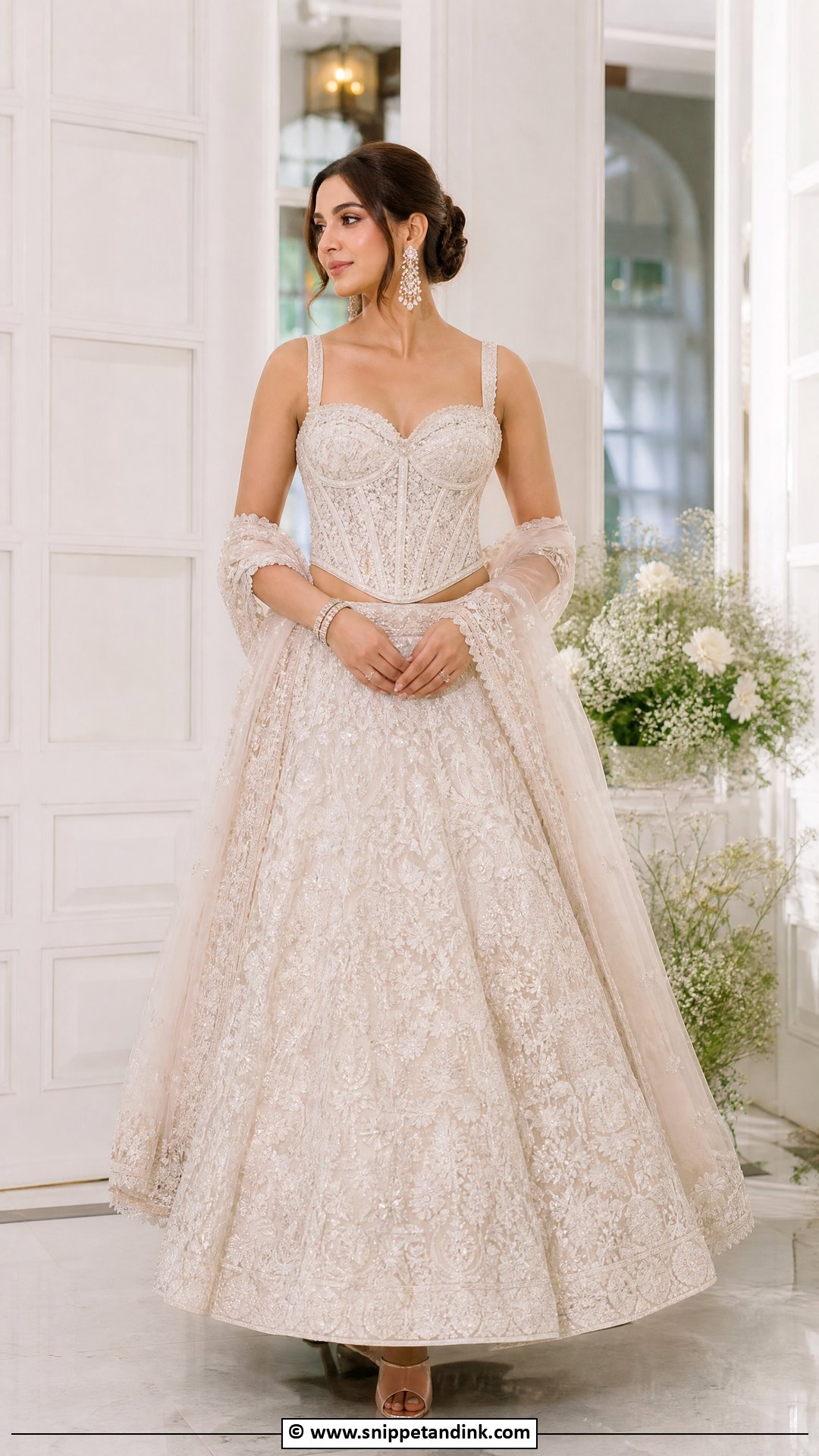
A corset blouse gives a defined waist and a structured, modern silhouette that pairs well with lehenga skirts, pre-draped sarees and contemporary looks. Visible boning feels fashion-forward; hidden boning reads softer. Embroidery, pearls, sequins or zardozi make it wedding-ready. Sit down in it at the fitting, and eat something if you can, because a corset that feels fine standing can dig in under the ribs once you’re seated at the mandap. Style it with a flared lehenga, sheer dupatta and statement earrings.
31. Bridal Blouse With Jacket
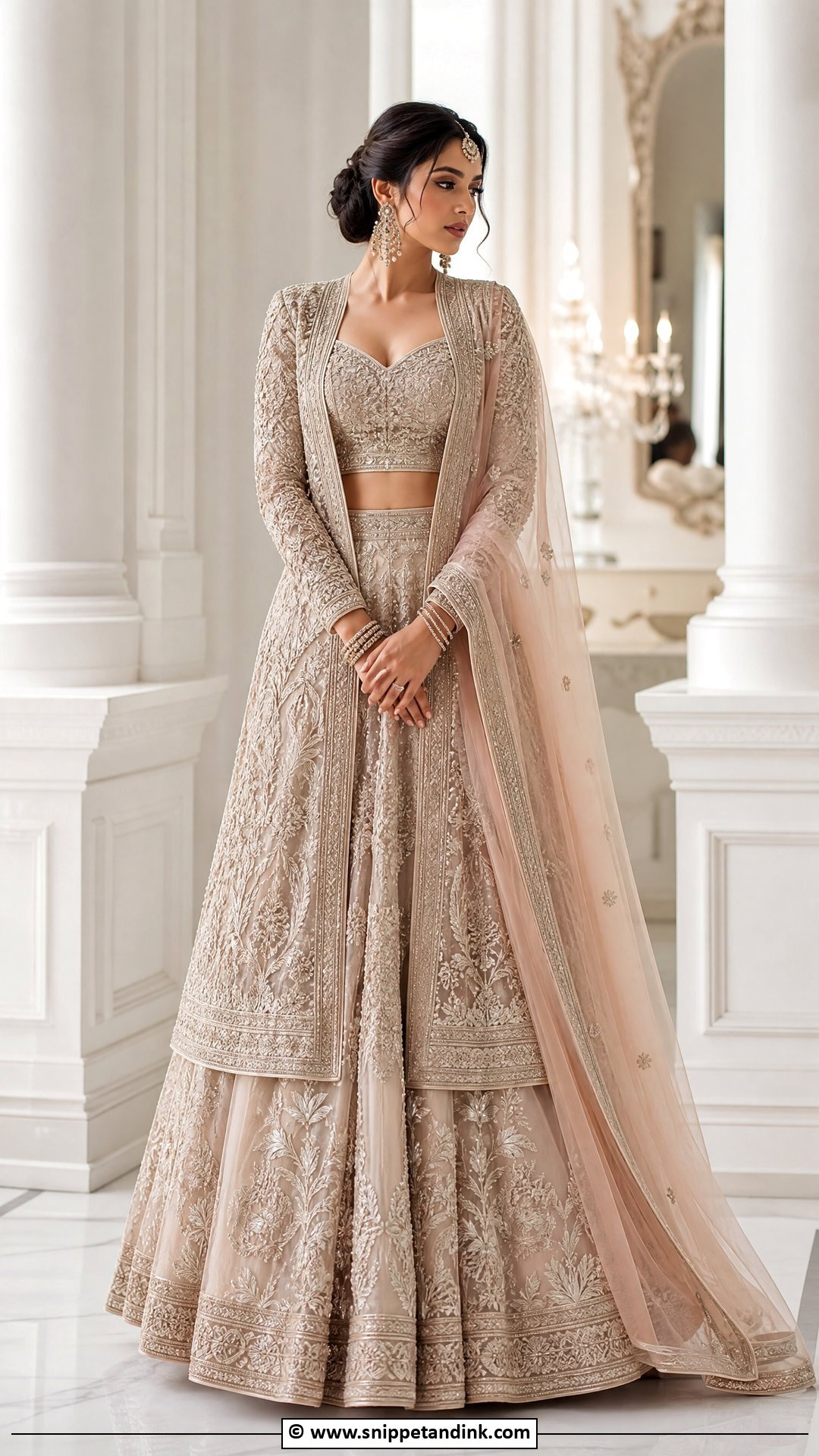
A jacket layered over the blouse gives presence from every angle and extra coverage without relying on jewelry. The jacket can be short, waist-length, long, sheer, embroidered or brocade, over a lehenga, saree or fusion set. I let the jacket carry the embroidery and keep the inner blouse fitted and fairly plain, or the layers fight. It’s especially useful for winter weddings and big venues. Try it on with the arms lifted, since a stiff brocade jacket can restrict reaching for garlands.
32. Bridal Blouse With Cape
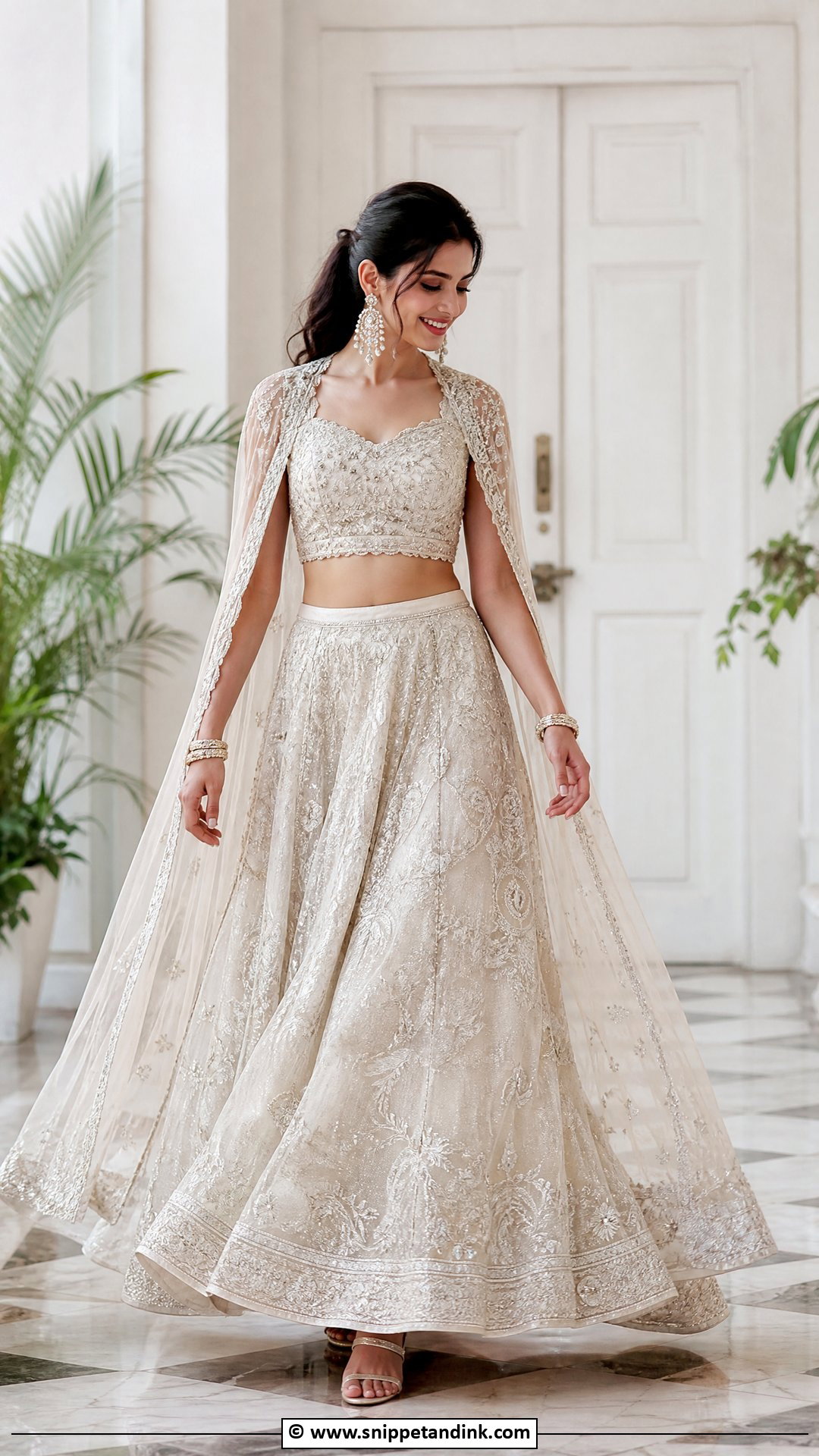
A cape gives flowing movement and can replace the dupatta entirely, which many brides find easier to manage than a heavy pinned drape. Sheer net, organza, chiffon or tulle can carry pearl, sequin or thread embroidery, and the cape moves well in walking shots. Keep the blouse underneath fitted so the volume doesn’t swamp you. The cape needs a firm attachment at the shoulder seam, not a few hooks, because someone will step on the hem. It suits receptions and engagement outfits with soft waves or a bun.
33. Bridal Blouse With Velvet Fabric
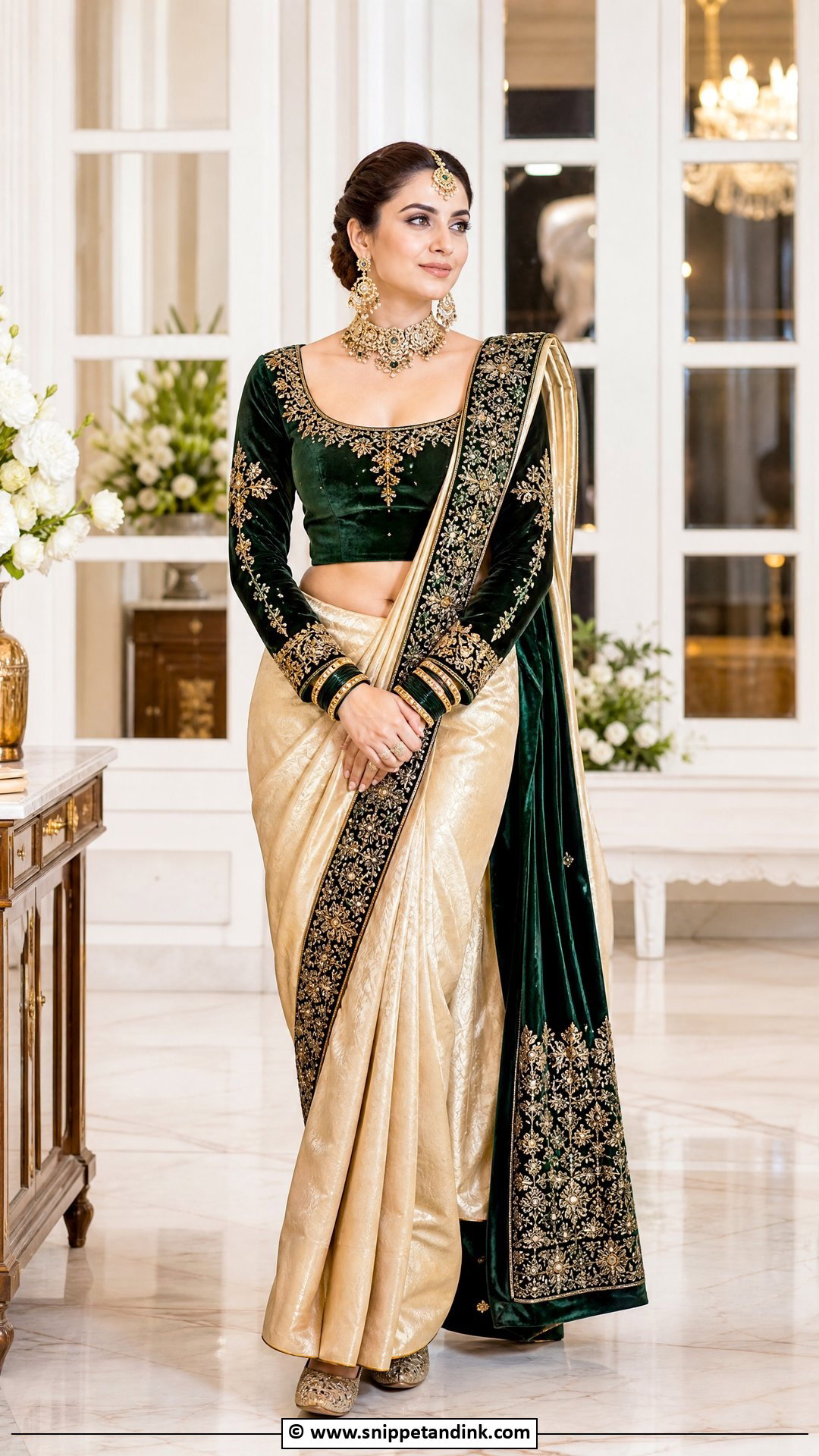
Velvet is warm, deep and rich, which makes it right for winter weddings, evening ceremonies and royal-inspired bridal looks. Maroon, wine, emerald, navy, blackened purple and deep red show off its pile, and even simple embroidery looks costly on it. Zardozi, kundan, pearl or antique gold work give a grand finish. Velvet shows every bump of loose tailoring and it is hot, so I’d avoid it for a daytime summer ceremony. Antique jewelry and embellished heels complete it.
34. Bridal Blouse With Banarasi Fabric
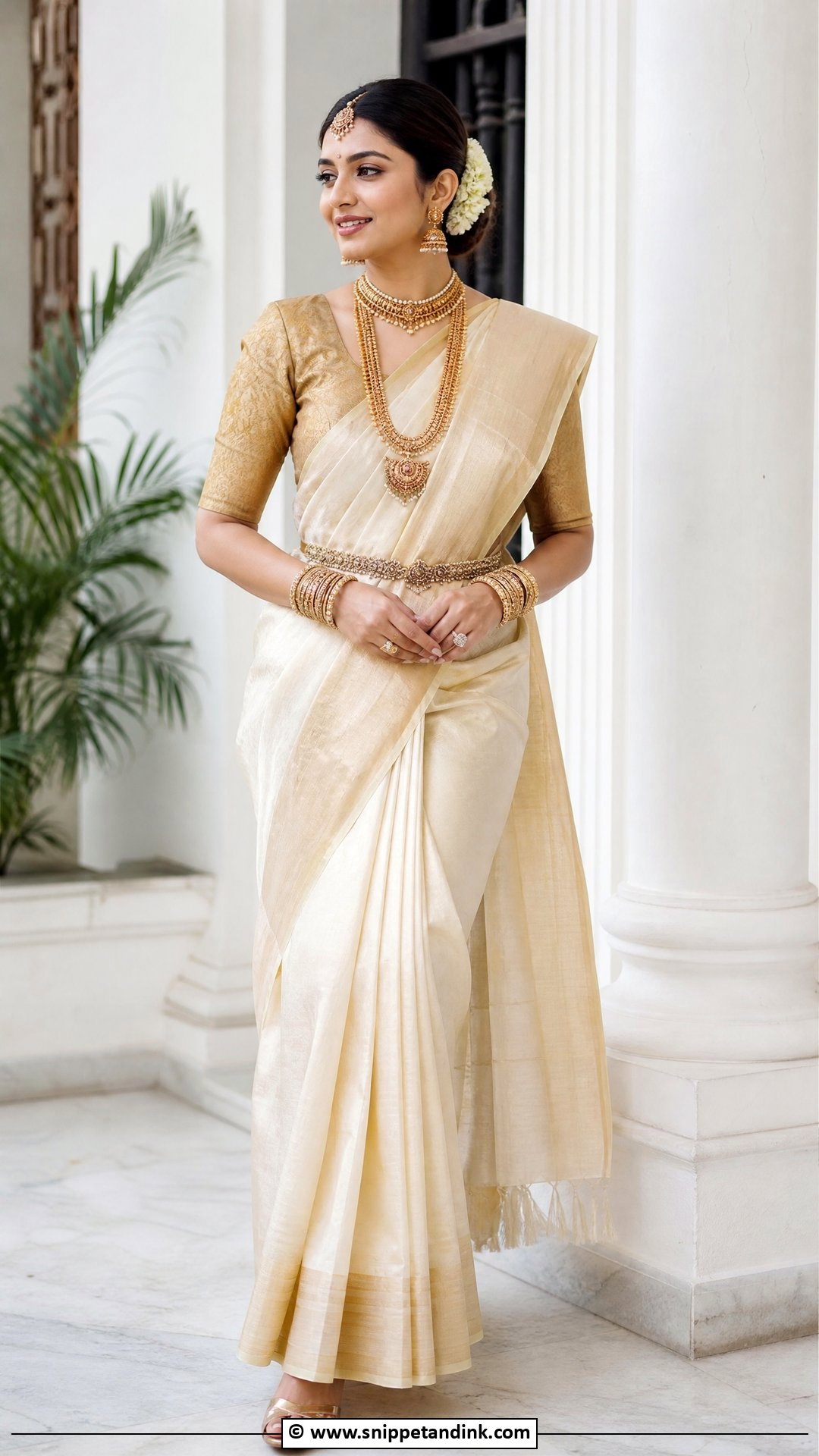
Banarasi fabric arrives with its own zari motifs, florals or brocade pattern, so the blouse looks festive without added embroidery. It pairs with plain silk sarees, contrast lehengas, organza sarees or even another Banarasi drape. Keep the neckline simple, a square or boat neck with elbow sleeves, so the weave isn’t cut up by seams. When a bride brings an heirloom piece, I check the fabric strength first, because old silk can split along the zari lines when a tailor stitches through it. Gold jewelry and a neatly pleated pallu finish it.
35. Bridal Blouse With Contrast Color
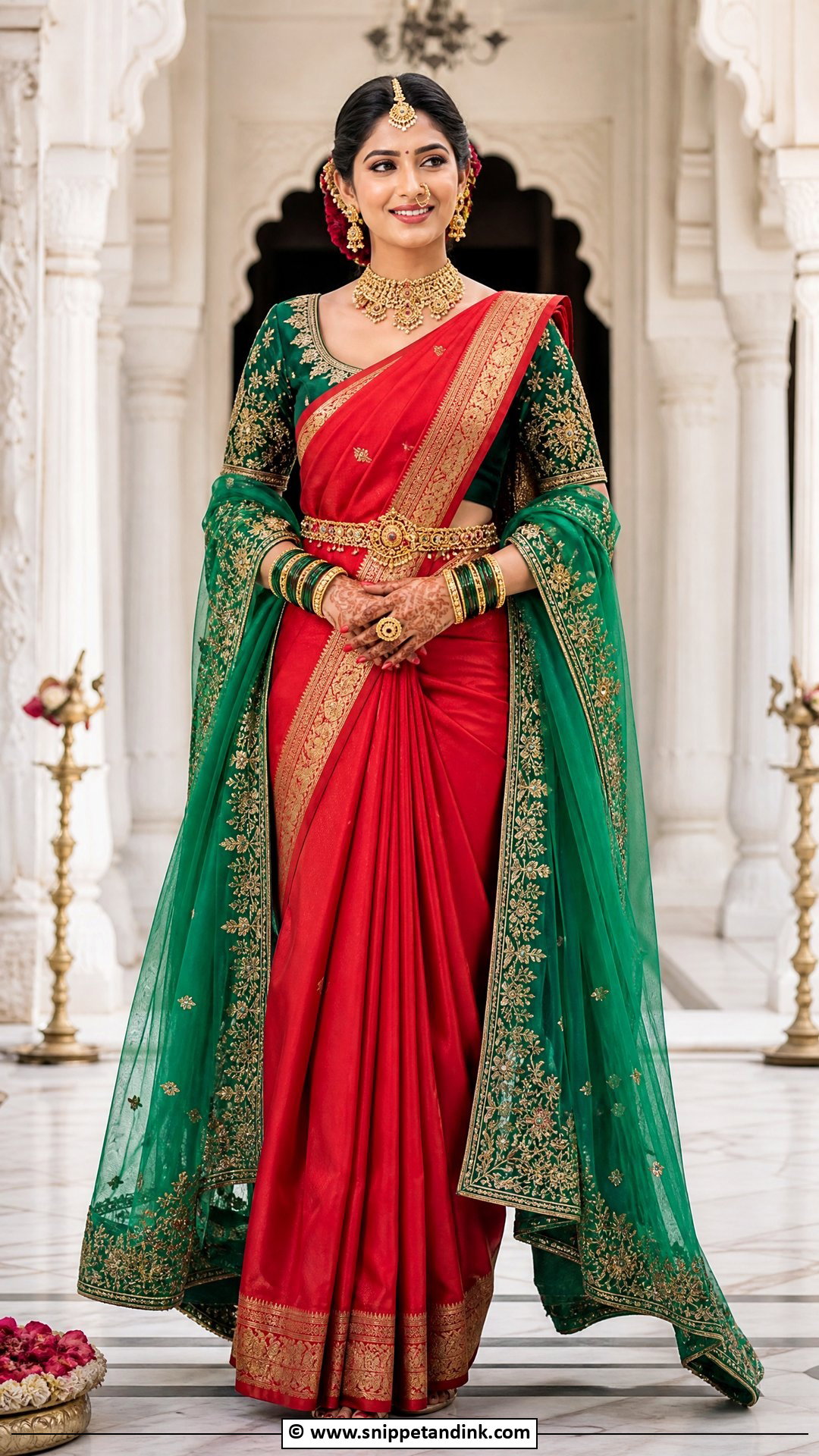
A contrast blouse makes the outfit personal: emerald with red, pink with orange, gold with ivory, purple with green or navy with silver. It’s also the quickest way to refresh a traditional saree or lift a simple lehenga. Keep one colour dominant and let the second appear in the embroidery, border or dupatta. I always test contrast pairs in daylight and under warm indoor bulbs, because some greens and purples shift badly at night. Match your jewelry metal to the embroidery.
Sitting at the Mandap for Three Hours: What Your Blouse Has to Survive
A blouse that looks right on a hanger can fail in the ceremony. You’ll sit cross-legged or on a low seat, lean forward for rituals, lift your arms for garlands, hug every relative, and do all of it under warm lights. These are the checks I run at the final fitting:
- Raise both arms above your head. If the hem rides up past the lehenga waistband, the armholes are cut too low.
- Sit down and lean forward. A deep back or a keyhole should not show your bra straps.
- Ask for hooks backed by a hidden zip or a second row of hooks on heavy blouses, since single hooks pop under the weight of embroidery.
- Have the tailor add small loops inside the shoulder so the dupatta can be pinned to fabric rather than skin.
- Use a cotton lining in summer. Satin and polyester linings trap heat and show sweat marks at the underarm.
After the Wedding: Storing Zari, Pearls and Stones
Embroidered blouses should go to a dry cleaner who handles bridal wear, never into a washing machine. At home, fold the blouse with acid-free tissue or plain muslin between the layers and lay it flat. Hanging a heavy maggam or zardozi blouse stretches the shoulders. Keep it out of plastic, which traps moisture, and away from rubber bands or newspaper, which speed up tarnish on metallic zari. Refold it along new lines every few months so the creases don’t crack the threads.
The Saree Decides More Than the Sketch Does
The right blouse supports the outfit, suits the ceremony and stays comfortable from the first photo to the last ritual. Some brides want the richness of zardozi, maggam, kundan and temple borders; others want corset cuts, capes, pearl sleeves or a clean high neck. Before you sign off on a design, wear the trial blouse with the actual jewelry, sit down in it, raise your arms and walk with the dupatta pinned. If it still feels secure after that, you’ve found it.
You'll Like These Ideas:



Leave a Reply