
A dress on a hanger tells you very little. Shape, weight and how it moves only show once it’s on a body with shoes, a veil and the right underwear, which is why I always style the whole look in an appointment rather than judging the gown alone. The 25 options below run from clean satin and lace sleeves to courthouse minis, garden florals, soft ball gowns and tailored bridal suits. For each one I’ve noted the venue and season it suits, what to pair it with, and the practical catch I’d mention before you buy. Below that you’ll find a realistic ordering timeline and a season-by-season fabric guide.
Counting Back From the Wedding Date
Brides are often surprised by how long a made-to-order gown takes. Timelines vary by designer and shop, but this is roughly how I’d plan it:
- Nine to twelve months out: start trying on. Most bridal gowns are cut to order once you choose, and production commonly takes several months.
- Six to eight months out: order. Later than this and you may pay rush fees or be limited to off-the-rack and sample dresses.
- Two to three months out: first alteration fitting. Expect two or three fittings in total, a little more if the dress has beading or lace at the seams.
- Two to four weeks out: final fitting, with your actual shoes, underwear and the person who will help you dress on the day.
Short on time? Minis, slips, suits and jumpsuits are often available ready to wear and need less alteration than a structured gown.
What to bring to the first appointment
Wear smooth, nude underwear and bring a strapless bra if you own one, plus shoes close to the heel height you expect to wear. Photos of your venue help more than mood boards, because I can judge scale from them: a full ball gown can swallow a small registry office, and a plain slip can look underdressed in a grand ballroom. Bring one or two people whose opinion you trust, not six. Too many voices make it harder to notice how you feel in the dress.
1. Simple Satin Wedding Dress
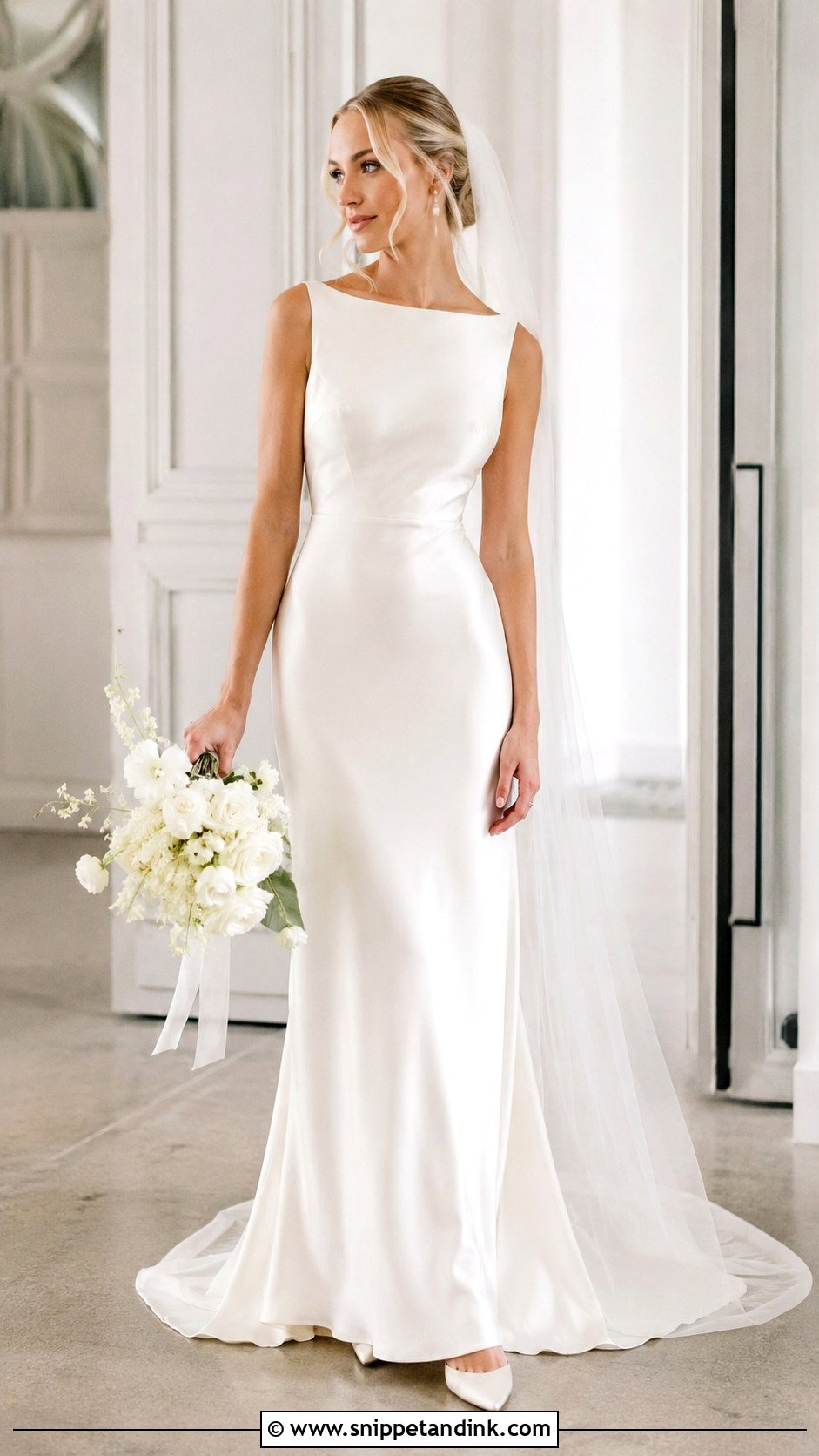
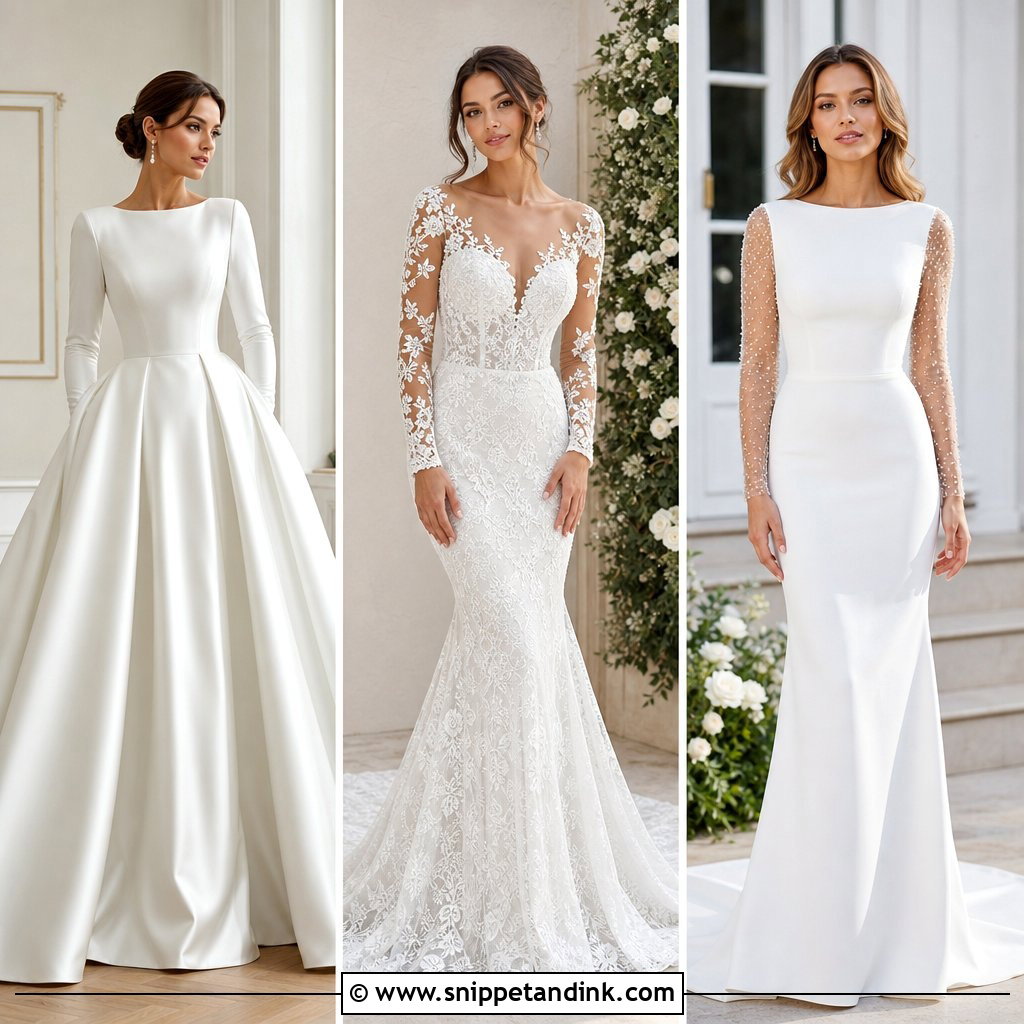
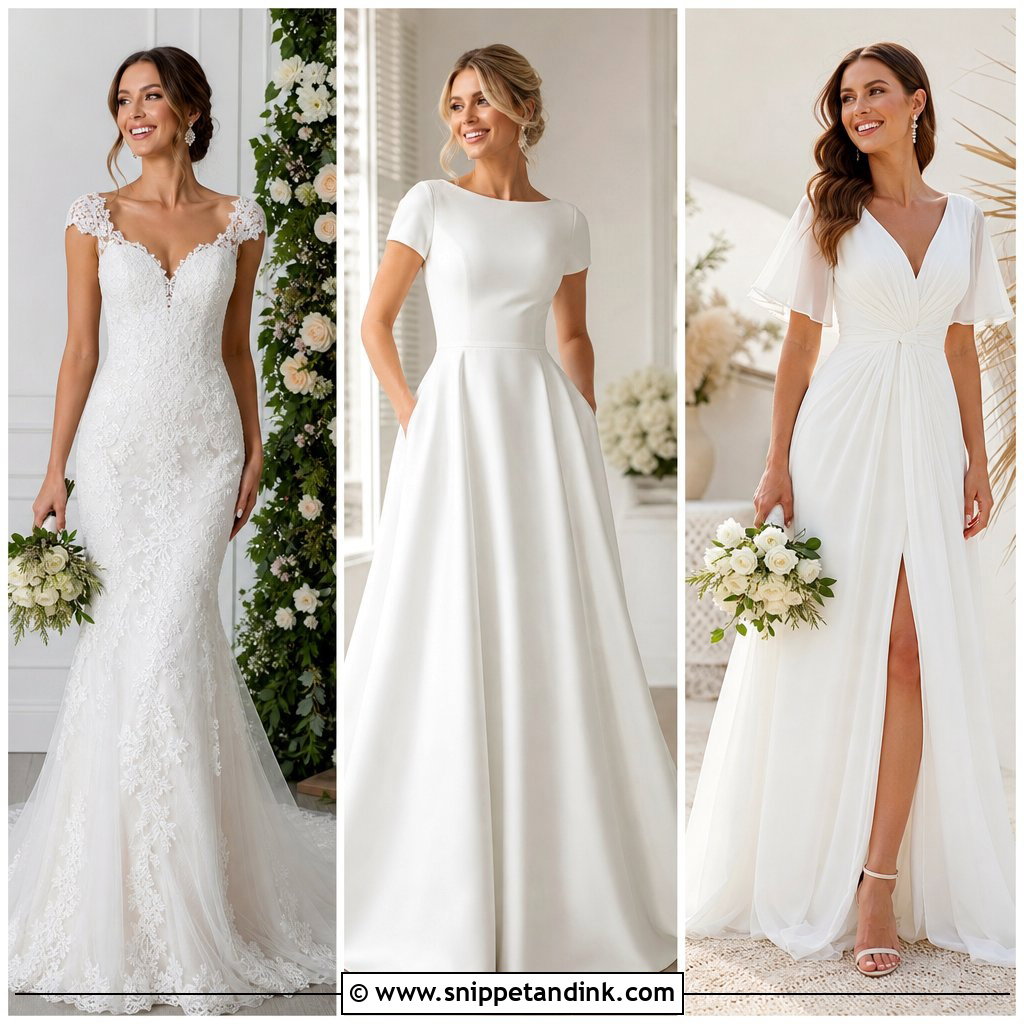
Satin without decoration is the hardest dress to get right and the easiest to love once you do. Because there’s nothing to distract the eye, every wrinkle and every badly placed seam shows, so the fit at the bust and hip has to be exact. Bias-cut, A-line or column, in ivory, pearl or soft white. Pointed satin heels, pearl drop earrings, a sleek low bun and a long plain veil complete it. A structured bodice or soft draping at the waist adds shape if a pure column feels too bare.
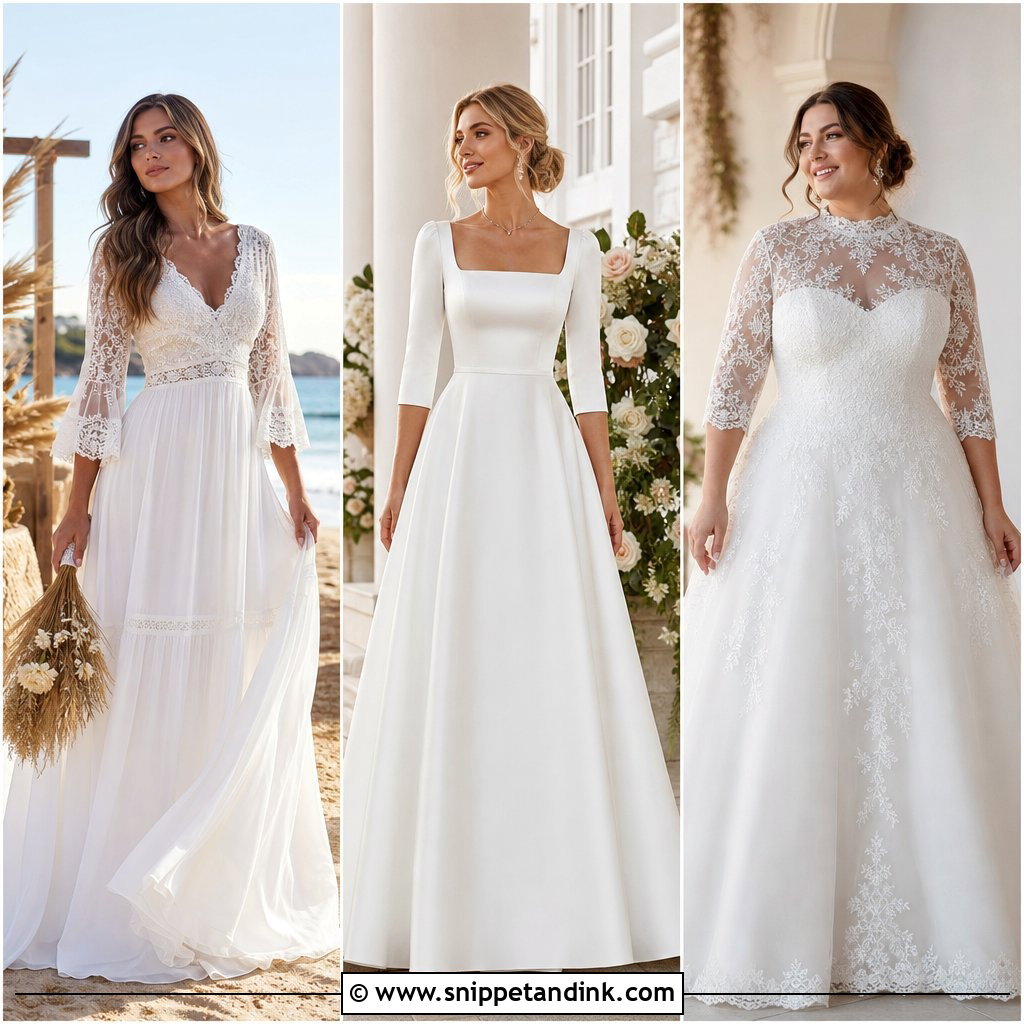
2. Lace Sleeve Wedding Dress
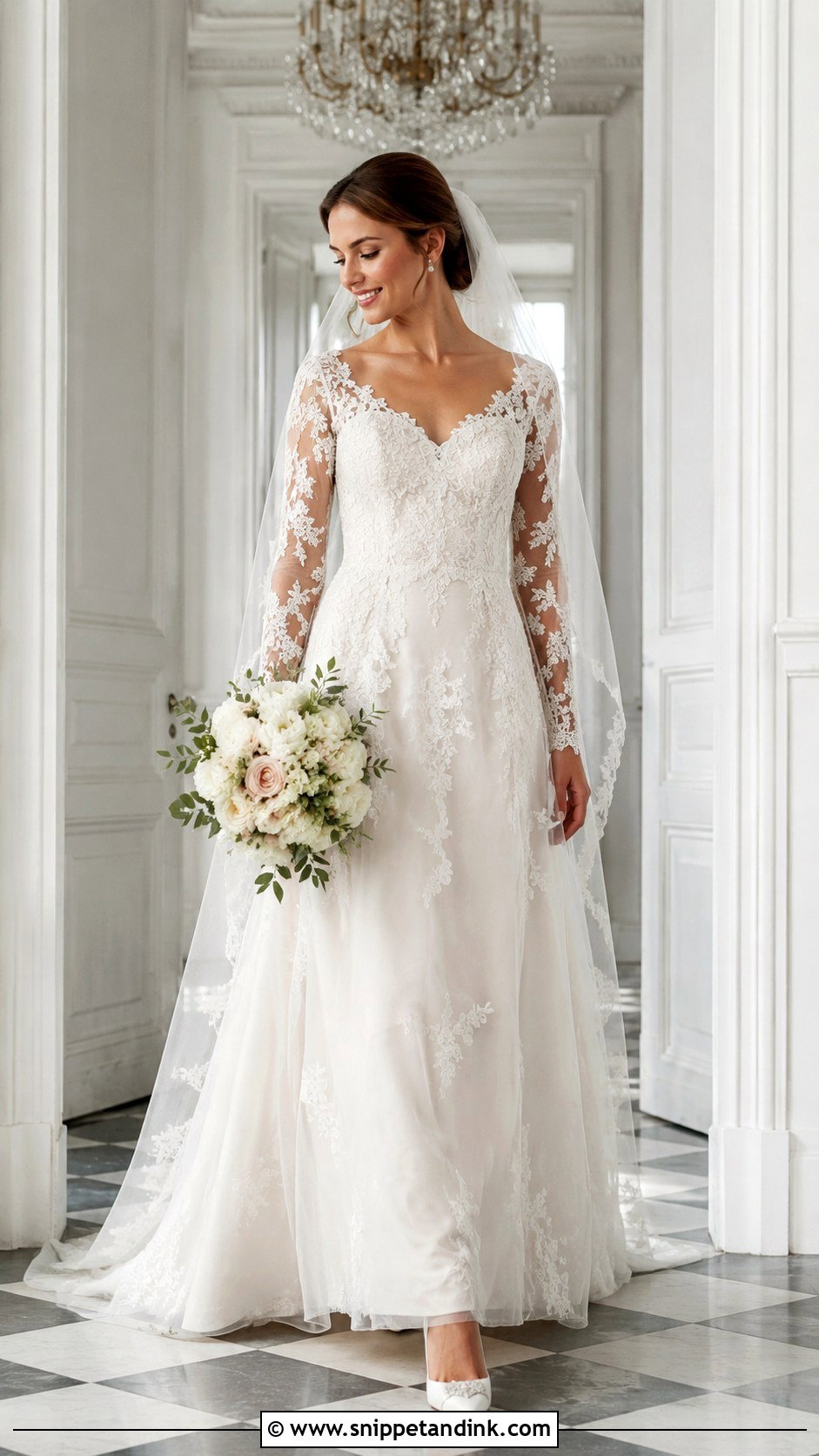
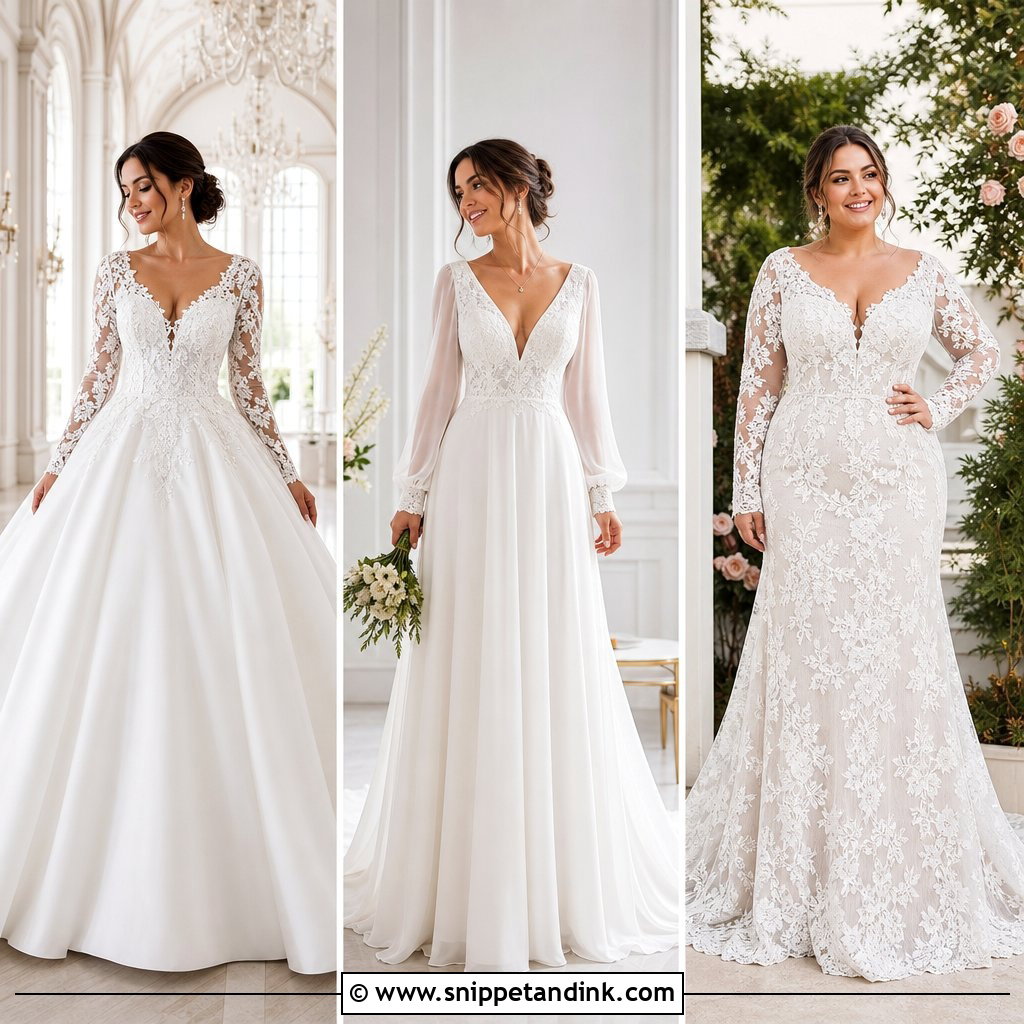
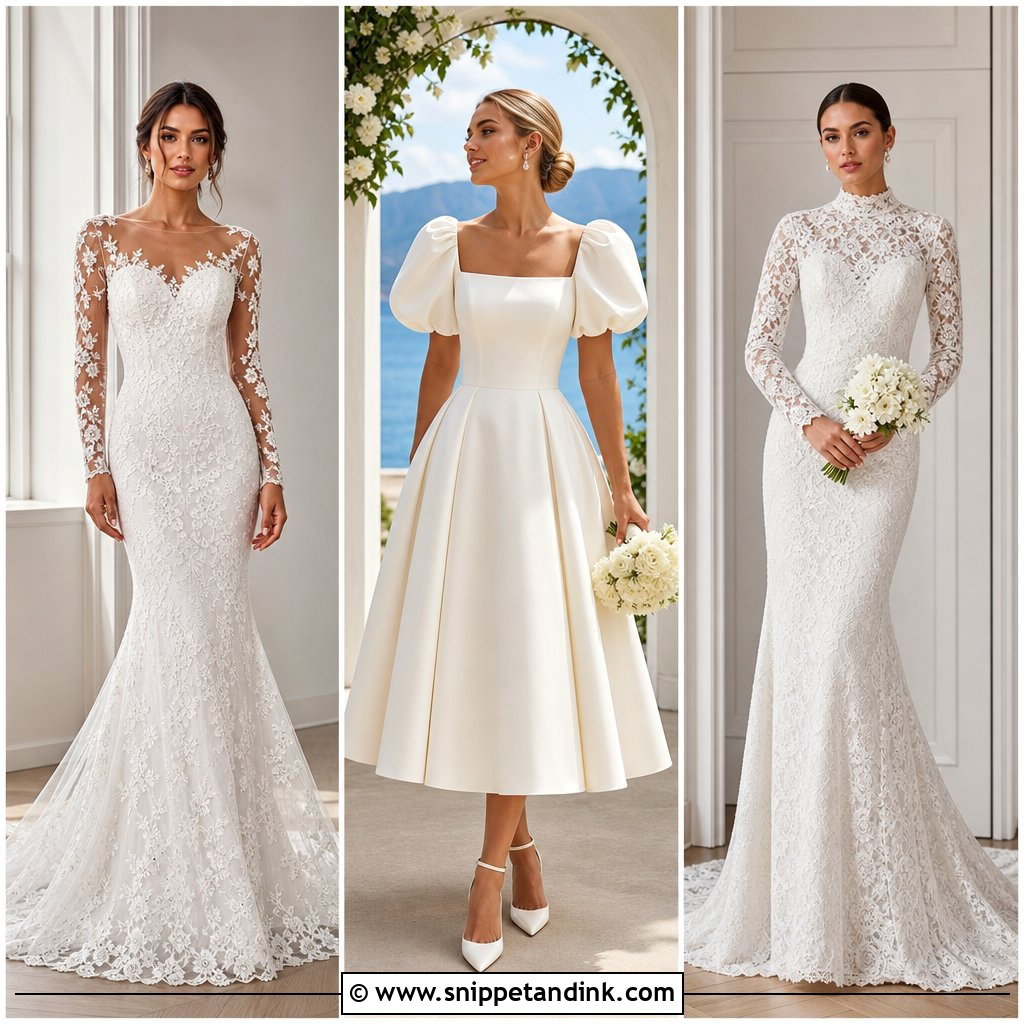
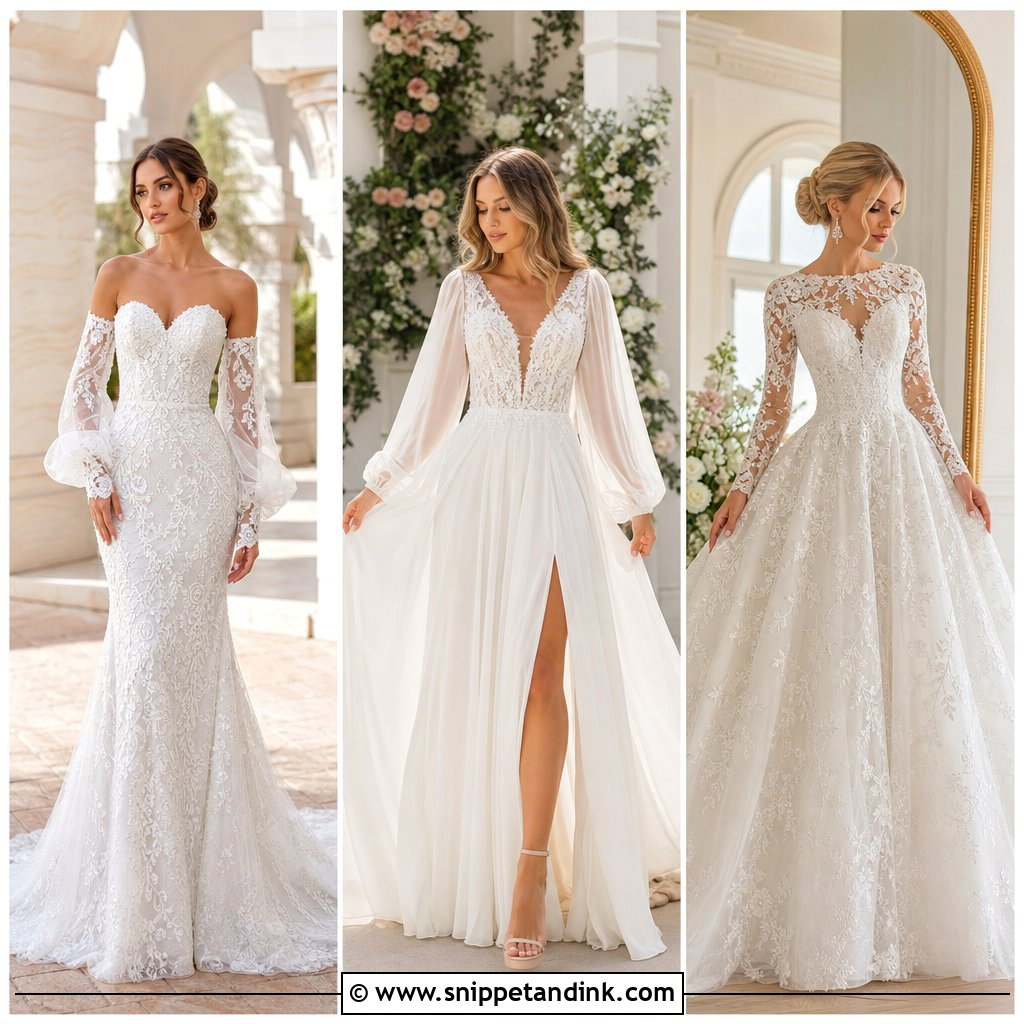
Sheer long sleeves in floral lace give coverage that still feels light, and the trick to keeping them modern is a fine, flat lace rather than a heavy corded one. Try them on and reach forward; lace sleeves without stretch can pull at the elbow. A fitted bodice with an A-line or sheath skirt balances the detail. Nude or ivory heels, a fingertip veil and pearl studs are all it needs, with a simple bouquet of white flowers and greenery. It suits cooler seasons and traditional venues.
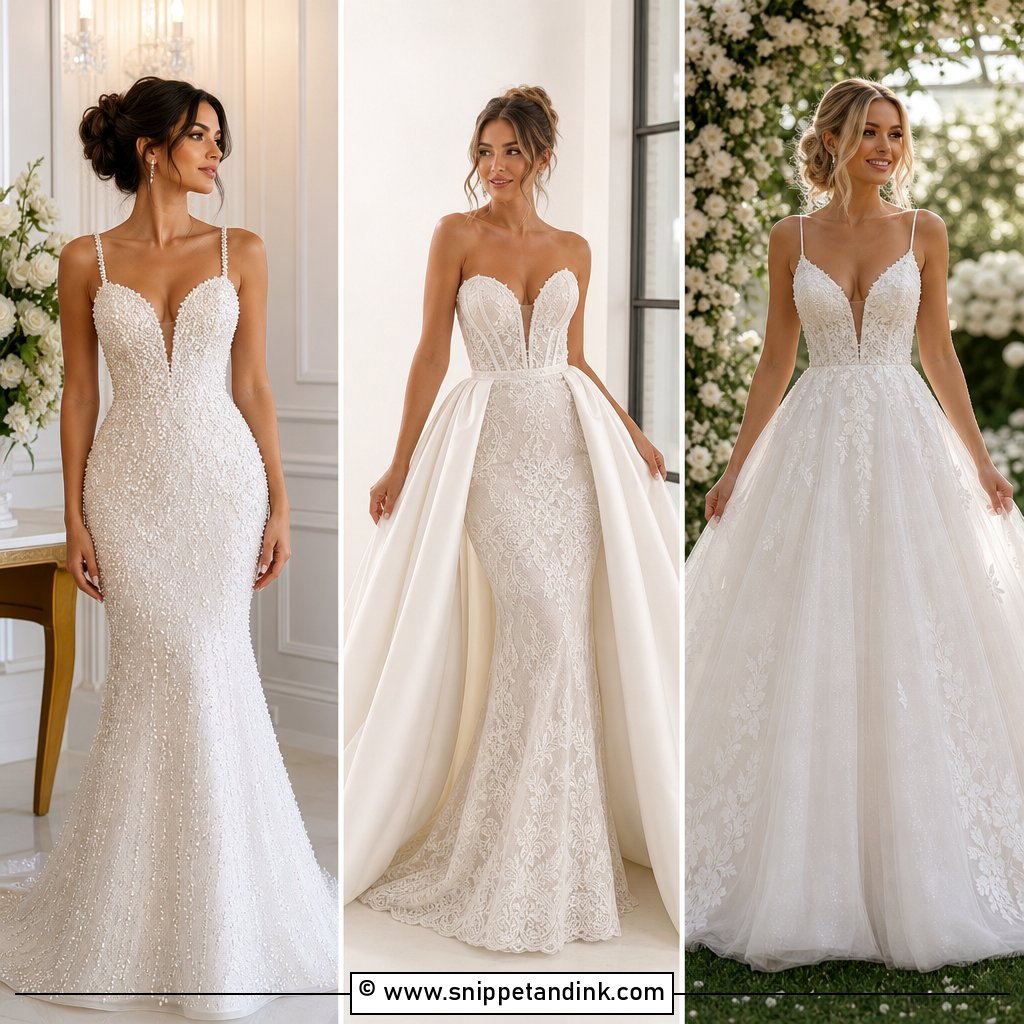
3. Strapless Ball Gown Wedding Dress
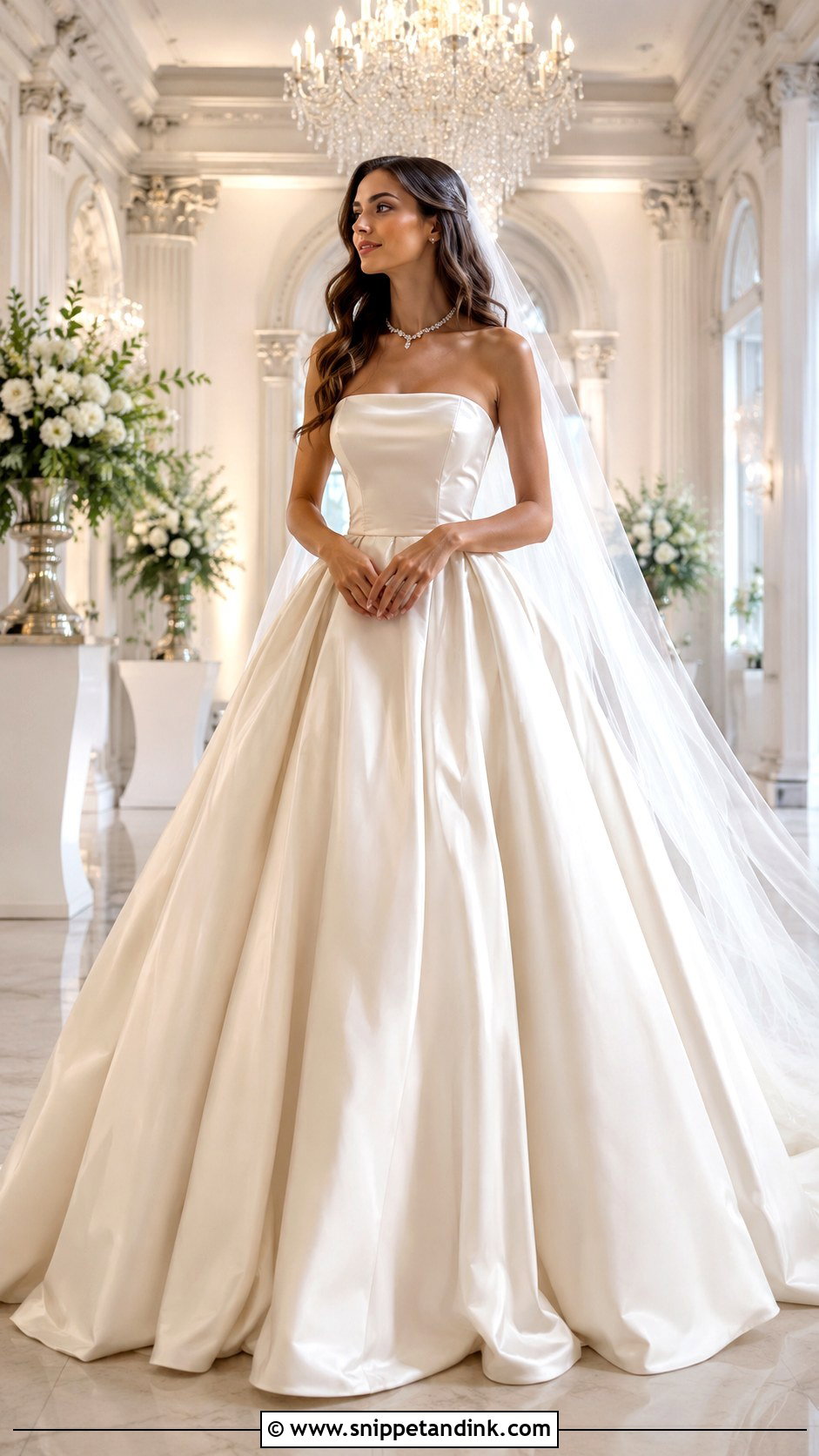
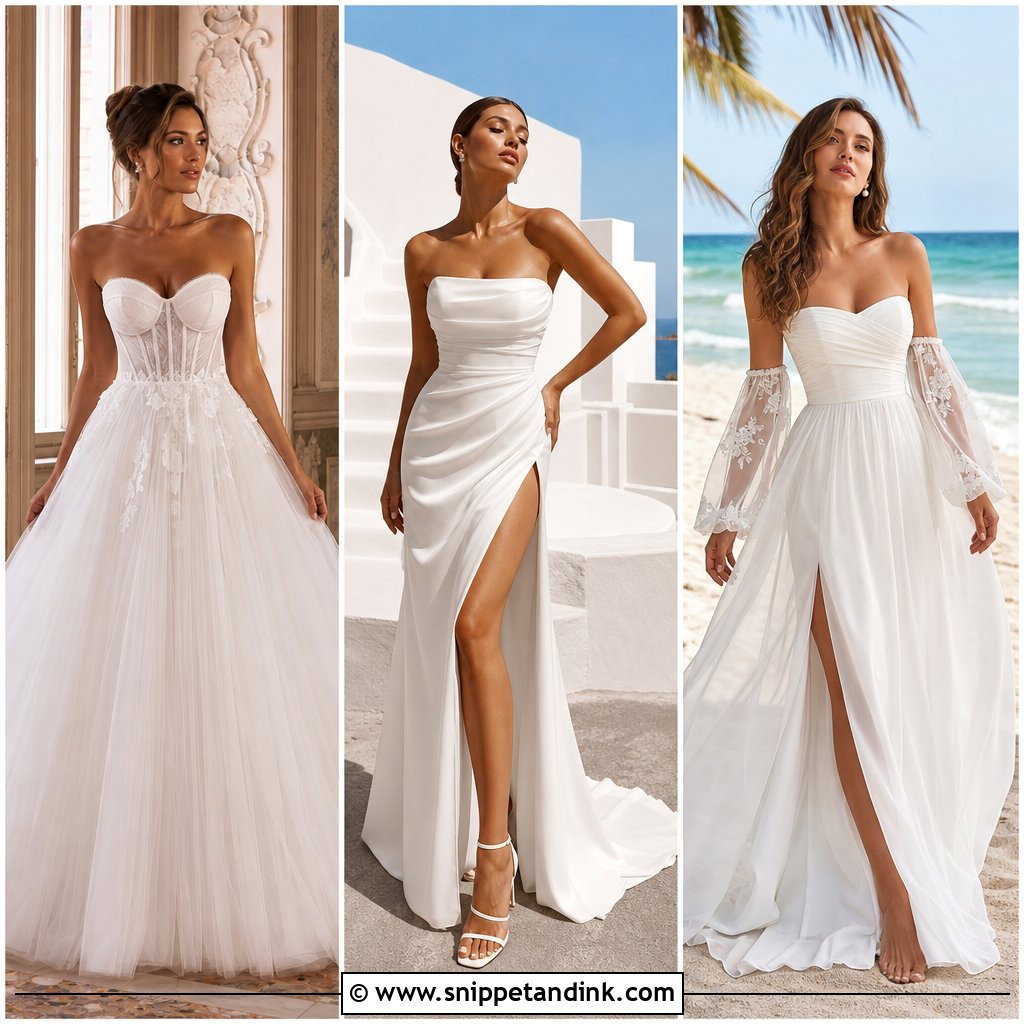
This is the classic bridal entrance: full skirt, bare shoulders, long veil. Whether it works for you depends on the bodice, because a strapless gown is held up by its internal structure, and that structure needs to fit you before anything else. Smooth satin, mikado or organza feels more current than layers of netting. Wear block heels or hidden platforms under the skirt; nobody will see them and you’ll stand comfortably for hours. A crystal necklace and soft waves suit a ballroom or evening celebration.
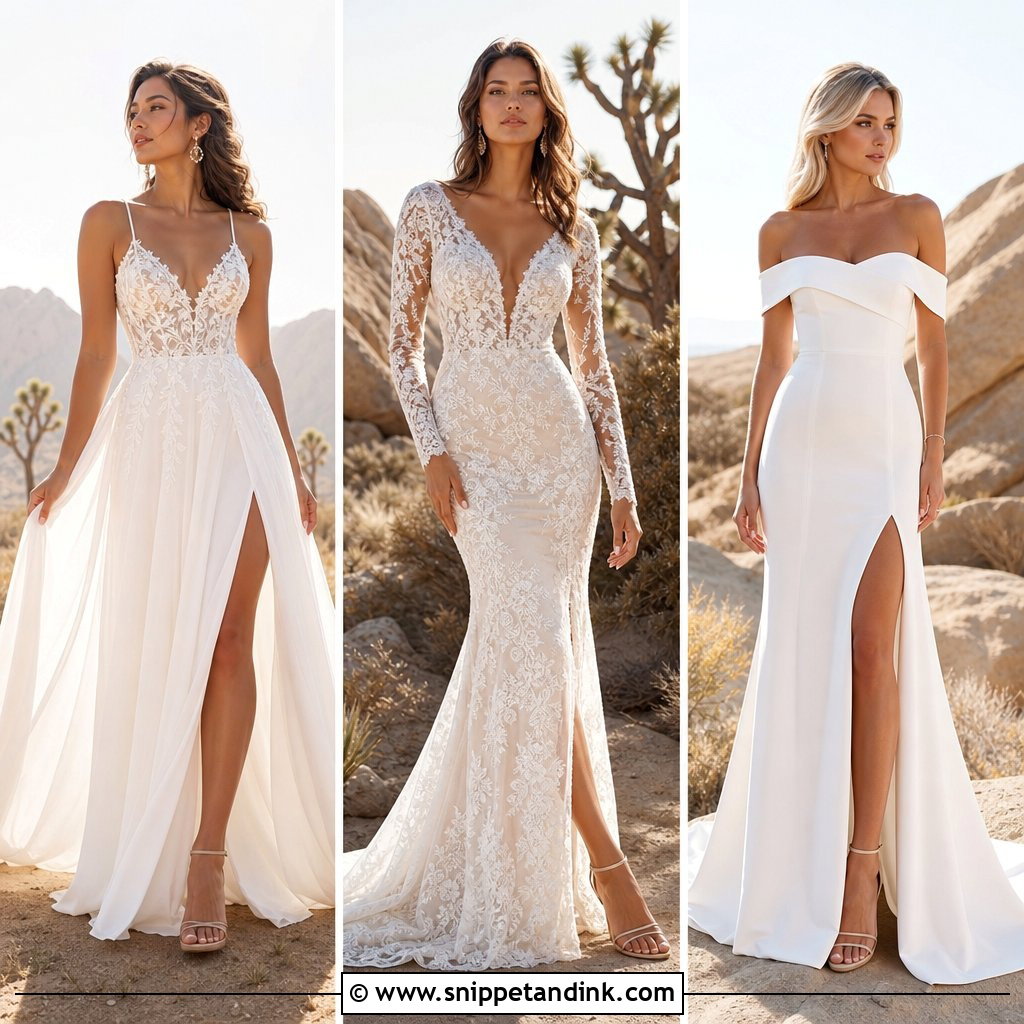
4. Off Shoulder Wedding Dress
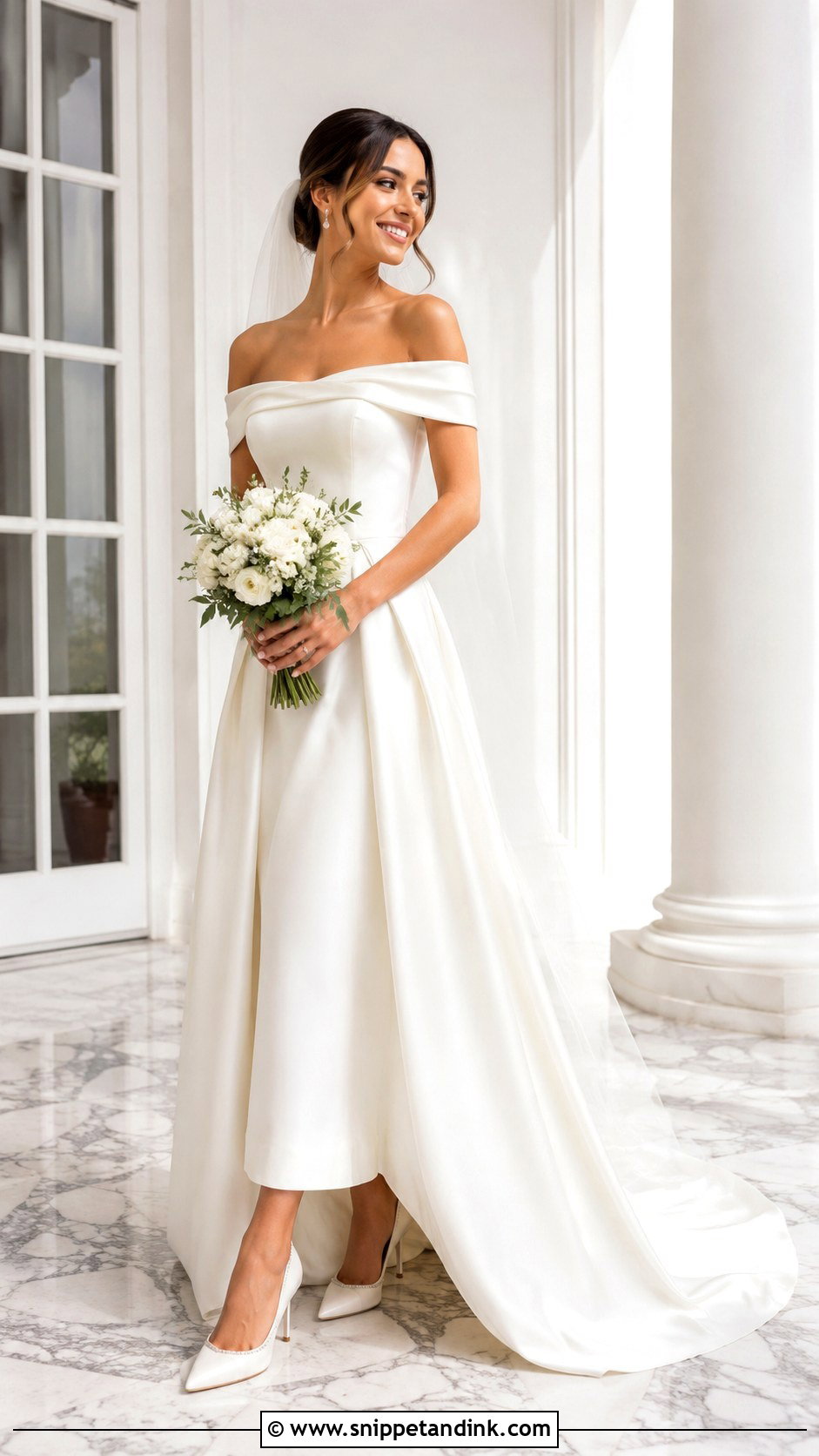
Draped across the upper arms, the off shoulder neckline frames the collarbones and suits mermaid, A-line and soft ball gown shapes alike. I’d test arm movement at every fitting. Most off shoulder bands restrict how high you can lift your arms, which matters for hugging and dancing. A delicate choker or pearl earrings, or nothing at the neck at all, keeps the focus on the shoulders. A loose updo shows the line, with ivory heels and a simple veil.
5. Long Sleeve Crepe Wedding Dress
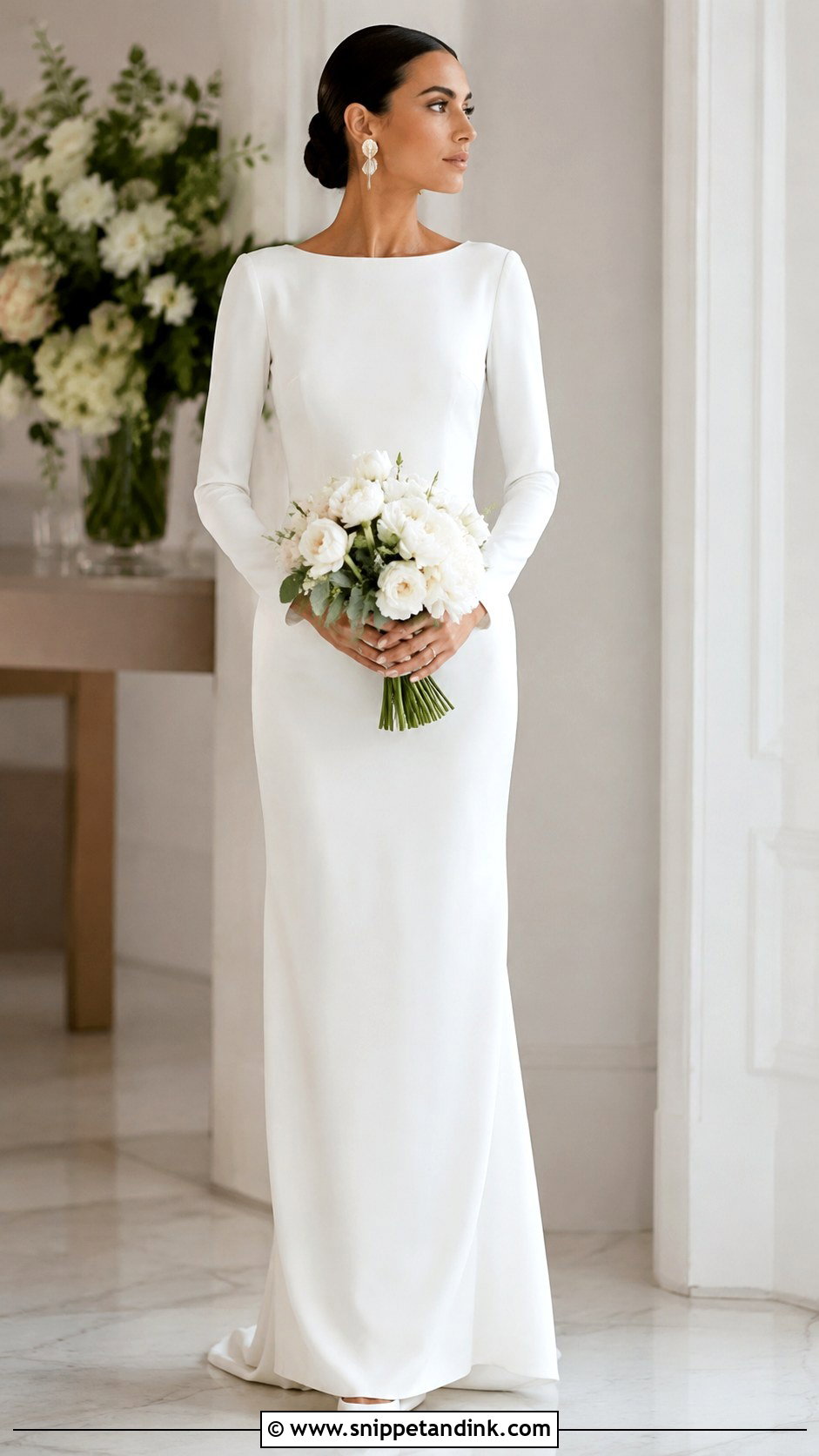
Crepe is matte, has a slight stretch and skims the body without clinging, so it feels lighter than an embellished gown of the same length. A fitted column or sheath with a high, bateau or deep V neckline gives clean lines. Pointed pumps, a smooth bun and sculptural earrings make it modern. Crepe does show lumps from seams and underwear, so bring your actual shapewear to fittings. It sits well at a city or winter wedding; a cathedral veil softens it if the dress is very bare.
6. Floral Applique Wedding Dress
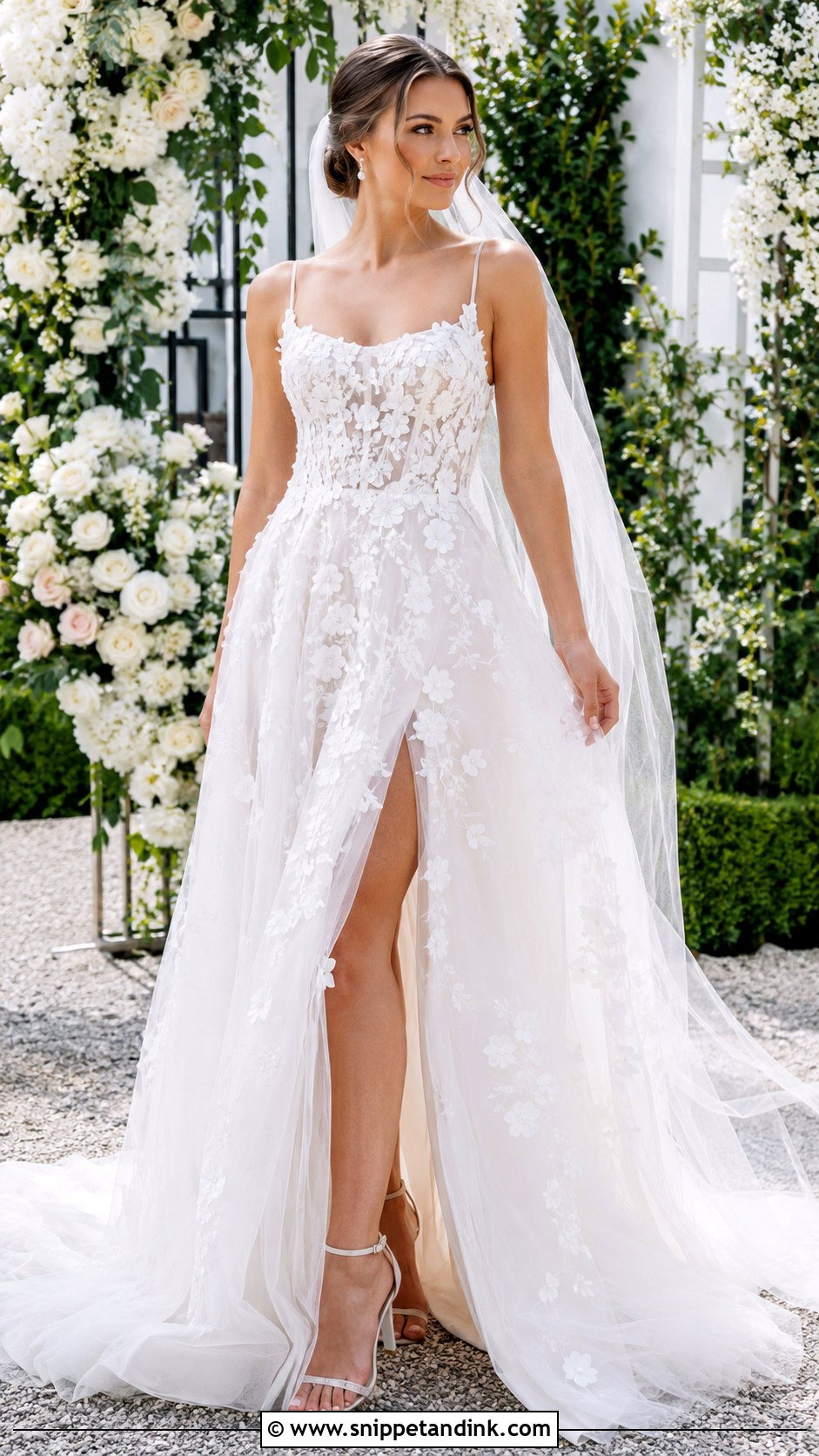
Three-dimensional flowers on tulle, organza or lace add texture you can see from across a room. I’d look at how densely they’re placed: a light scatter across the bodice and skirt feels modern; heavy all-over coverage can look costume-like and adds real weight. Thin-strap heels, pearl earrings and a sheer veil keep accessories gentle, and a bouquet using similar blooms links the outfit. It belongs at a spring wedding, greenhouse or garden venue.
7. Square Neck Wedding Dress
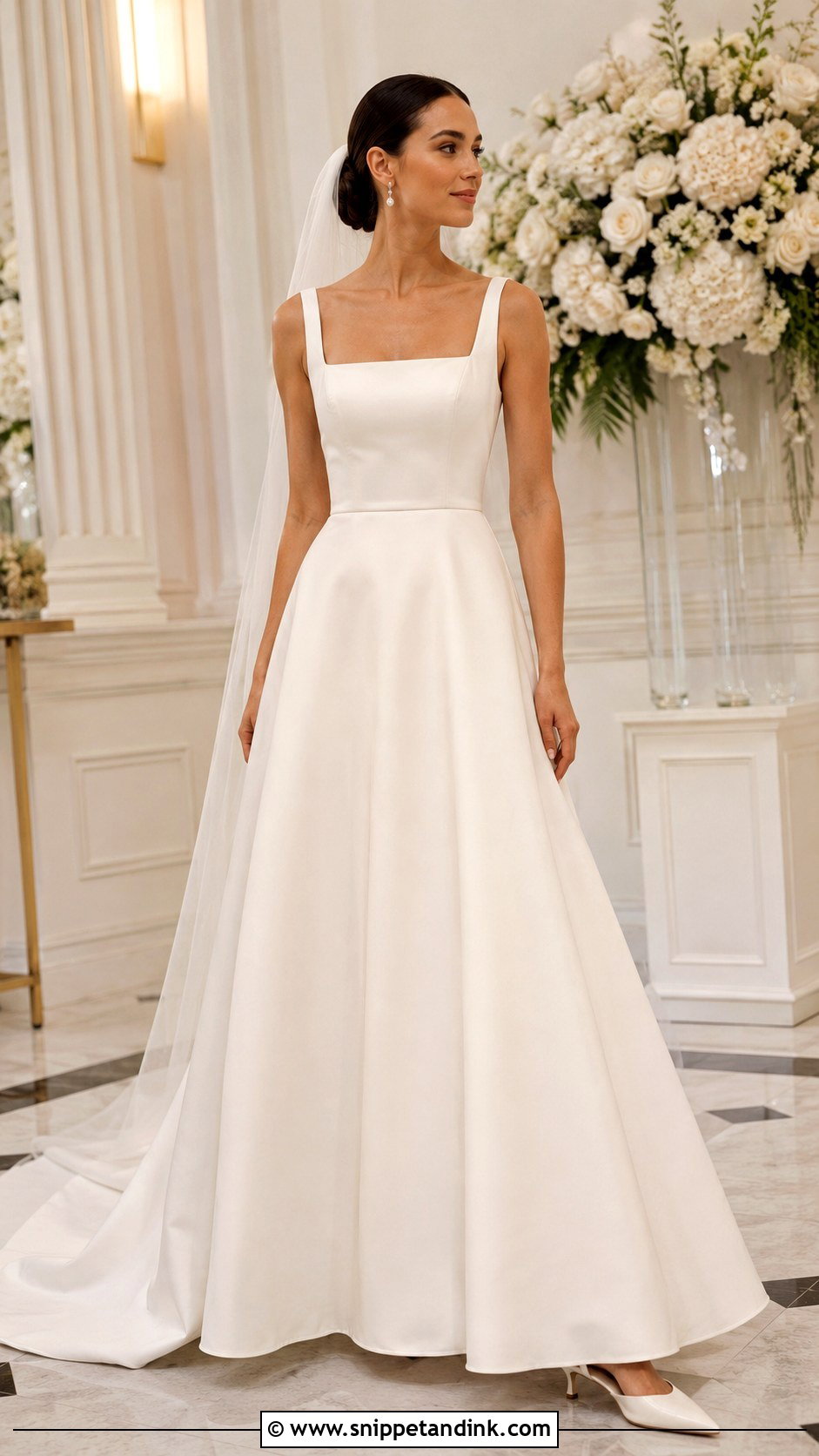
Clean and quietly modern. The straight line across the chest gives structure while lengthening the neck, and it works in satin, crepe, lace or tulle. The neckline needs to sit flat against the chest; if it lifts when you lean forward, ask for it to be taken in at the side seams. Drop earrings, a low bun and a simple veil suit it, with ivory pumps, strappy heels or flats if comfort comes first. An A-line version feels classic, a column version more fashion-led.
8. Corset Bodice Wedding Dress
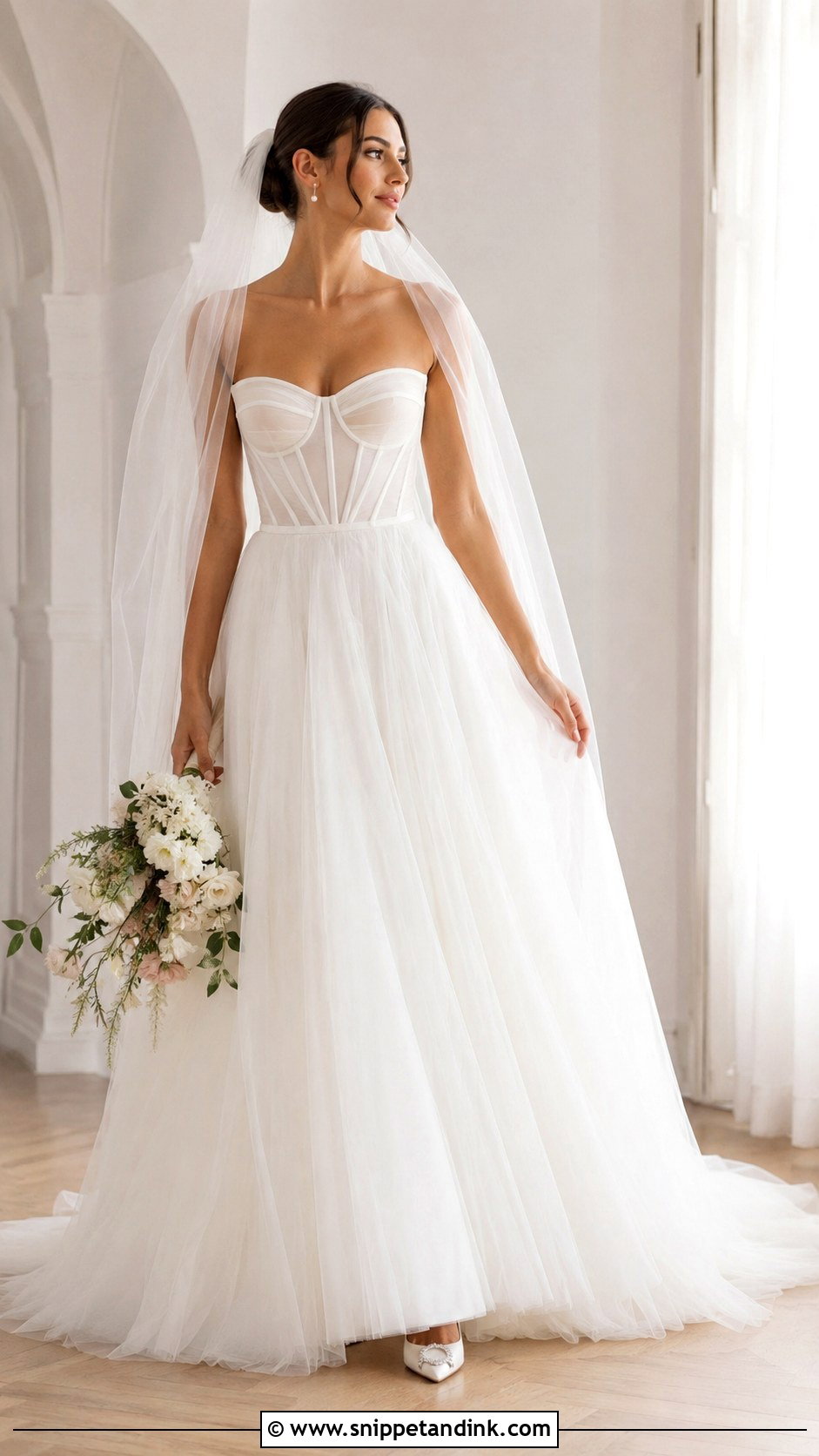
A corset gives support and a defined waist, which means many brides can skip a bra entirely. Exposed boning under tulle looks delicate; a satin corset bodice reads more structured. Sit down for ten minutes during a fitting before you judge it, because boning that feels fine standing can press on the hips once you’re seated. A flowing A-line skirt, soft curls, pearl or crystal earrings, pointed heels and a sheer veil finish it. Skip the necklace if the bodice is detailed.
9. Minimal Column Wedding Dress
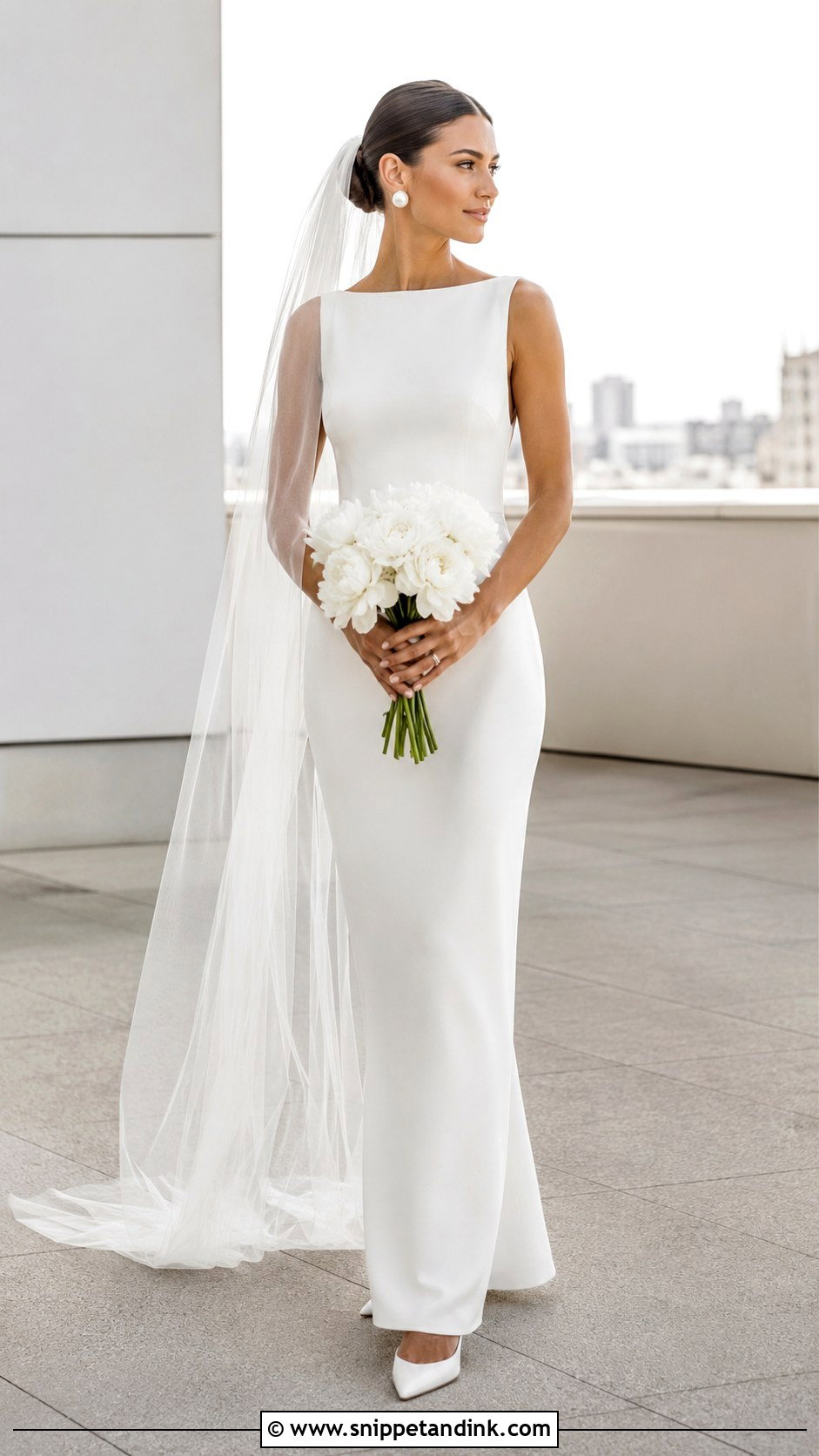
Straight up and down, with nothing to hide behind, the column is all about tailoring. Matte crepe, silk, satin or a structured fabric in ivory or warm white all work, and a great fit through the bust, waist and hips is what makes it look expensive. Walk in it before you commit; a narrow column without a slit or kick pleat can shorten your stride. Sleek heels, bold pearl studs, a low bun or smooth waves and a long veil suit a rooftop, gallery or intimate hotel ceremony.
10. Tea Length Wedding Dress
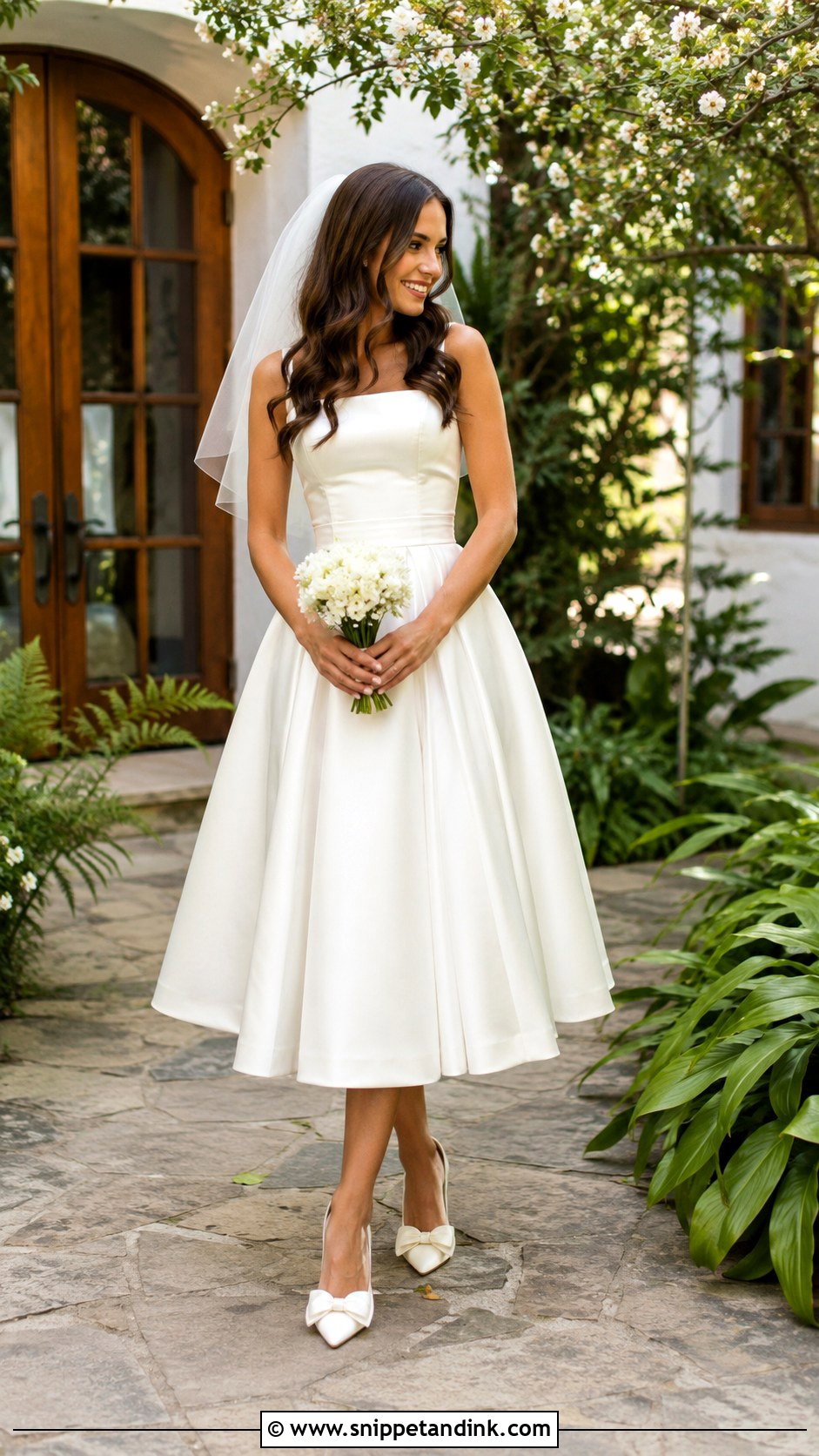
With the hem between knee and ankle, your shoes become part of the dress. Pointed slingbacks, bow heels or pearl-embellished pumps are worth choosing carefully, and break them in, since everyone will see them. Satin reads classic, lace romantic and tulle playful. A short veil, soft curls and a small structured bouquet finish it. Tea length is the easiest dress here to dance in, and it suits a courthouse, garden party, brunch or vintage-themed celebration.
11. Mini Wedding Dress
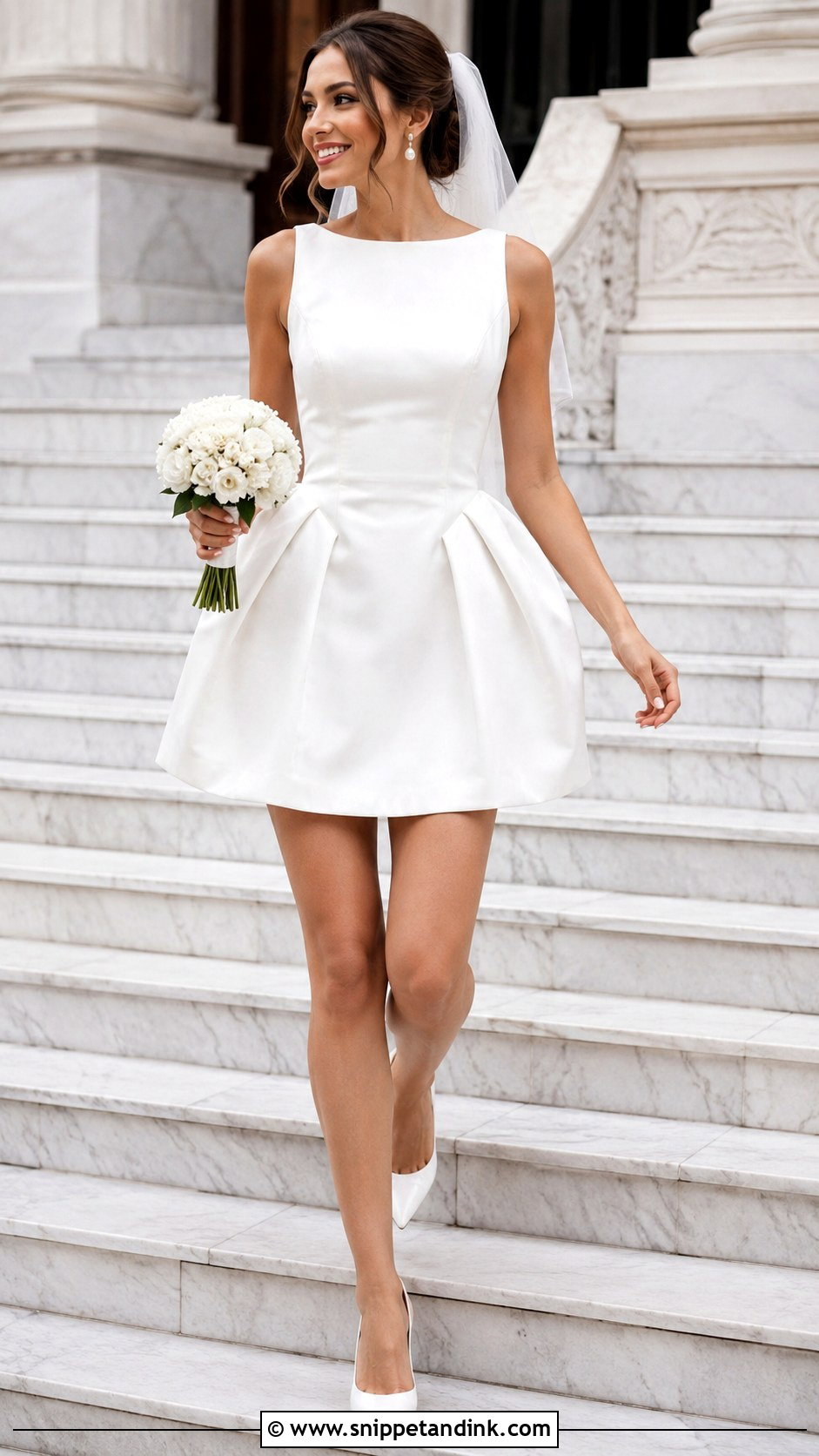
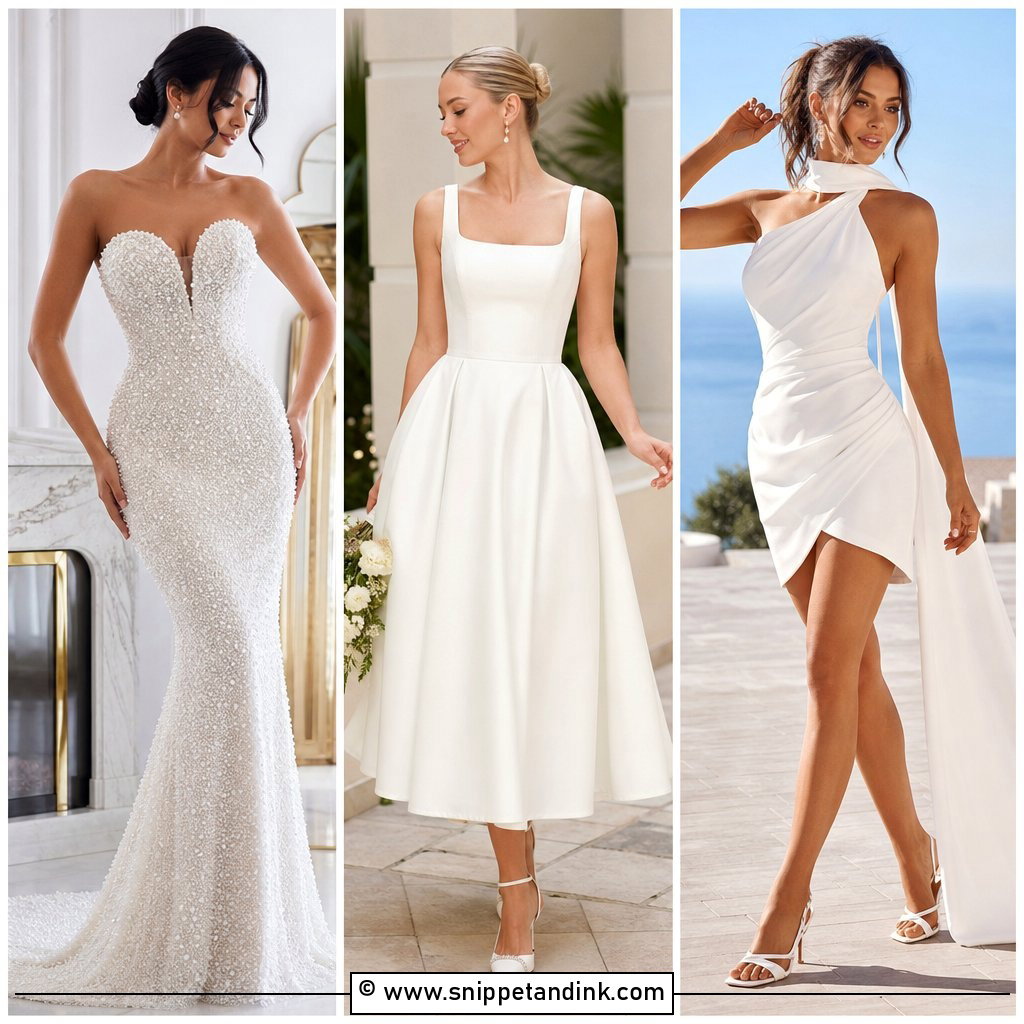
Short dresses need deliberate styling to stay bridal. A tailored mini, feather-trim hem, satin shift or structured bow detail all hold their shape well. Pair it with sleek pumps, sheer tights in cold months, and a small veil or headband. Sit and bend in it at the fitting; a mini that’s an inch too short standing becomes very short seated. Pearl earrings, a small bouquet and white or metallic shoes complete a courthouse, after-party or welcome-event look.
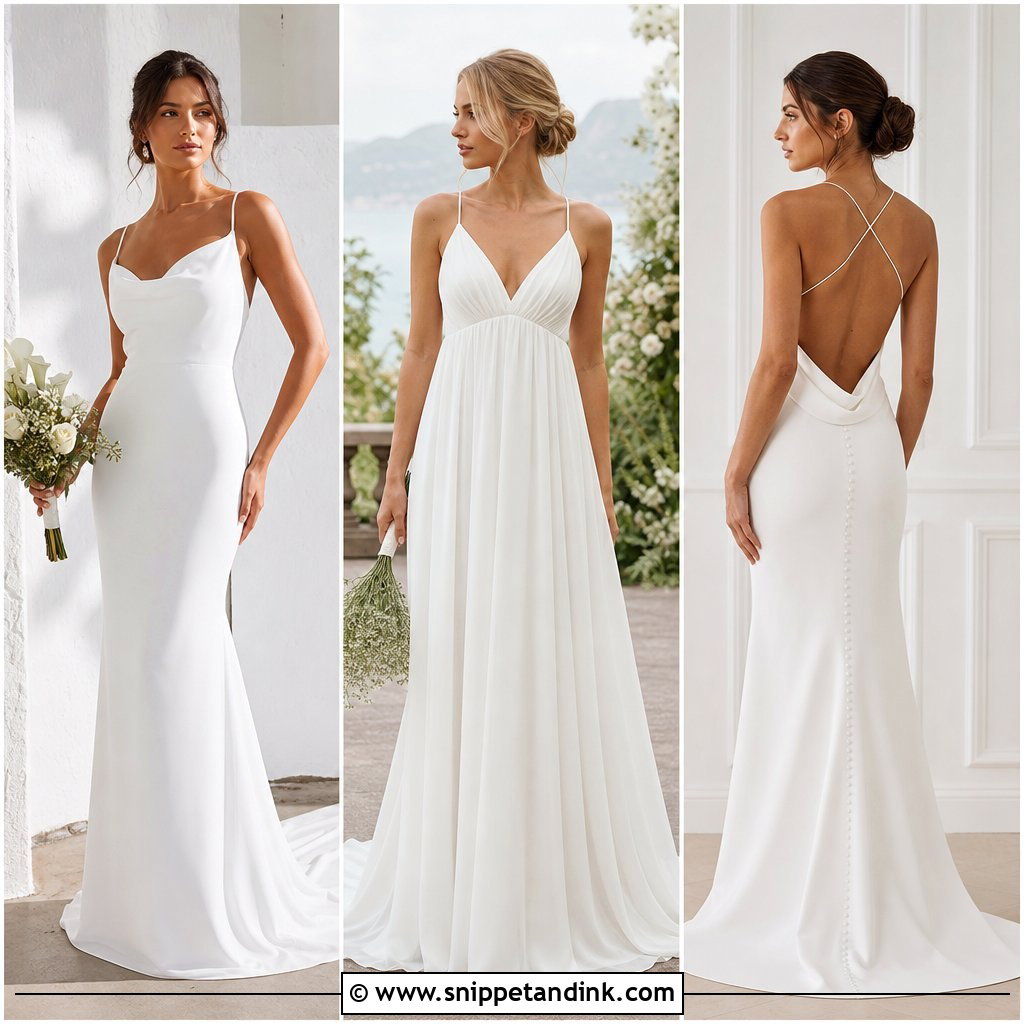
12. Slip Wedding Dress
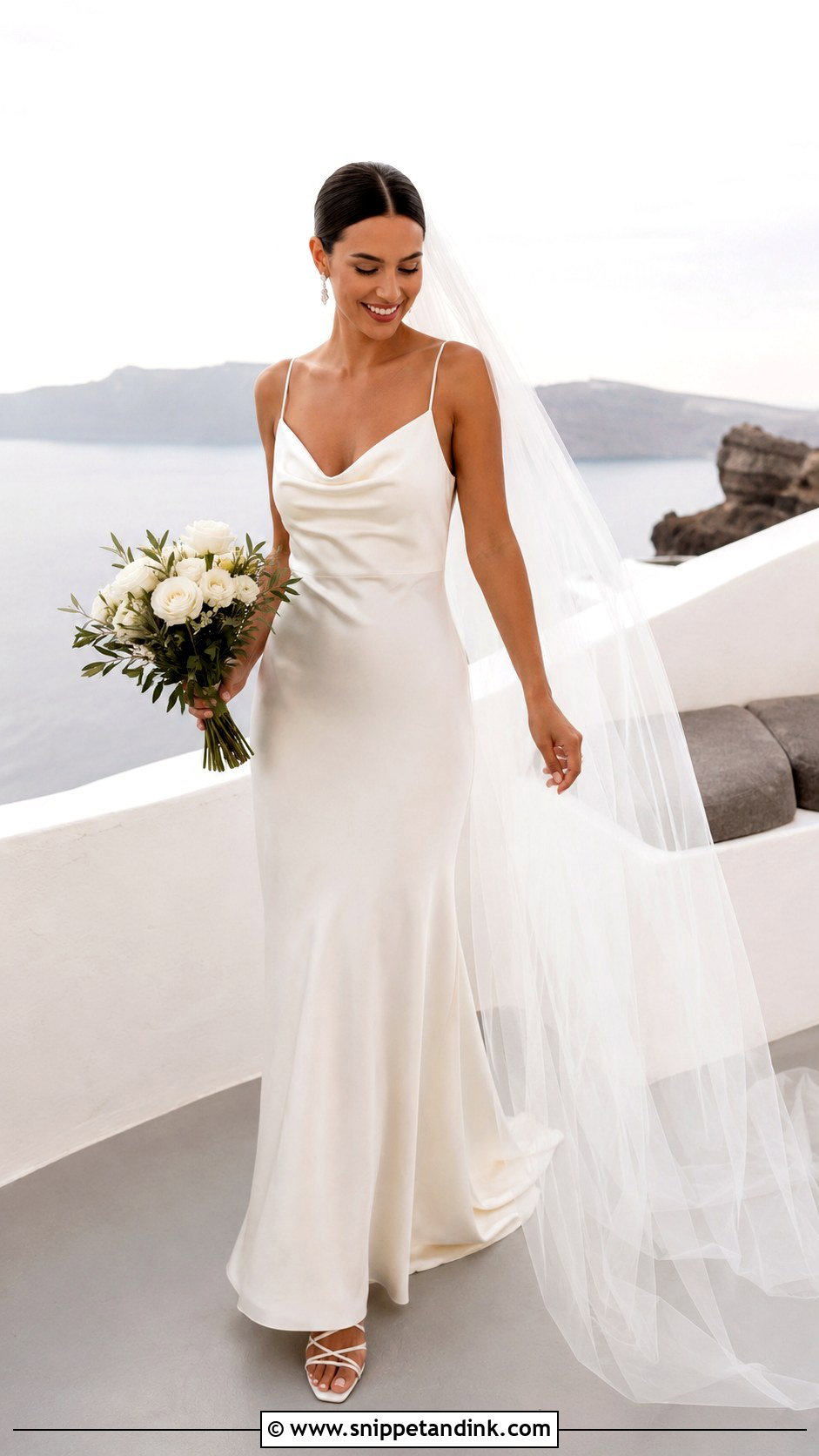
Silk, satin or charmeuse cut to skim the body. A cowl neckline, thin straps or a low back give a slip its interest without extra decoration. It’s the least forgiving fabric choice for underwear and for water marks, so plan undergarments early and keep drinks well away. Strappy heels, delicate earrings and smooth hair suit it, and a long sheer veil makes it unmistakably bridal for a beach, city elopement or destination ceremony.
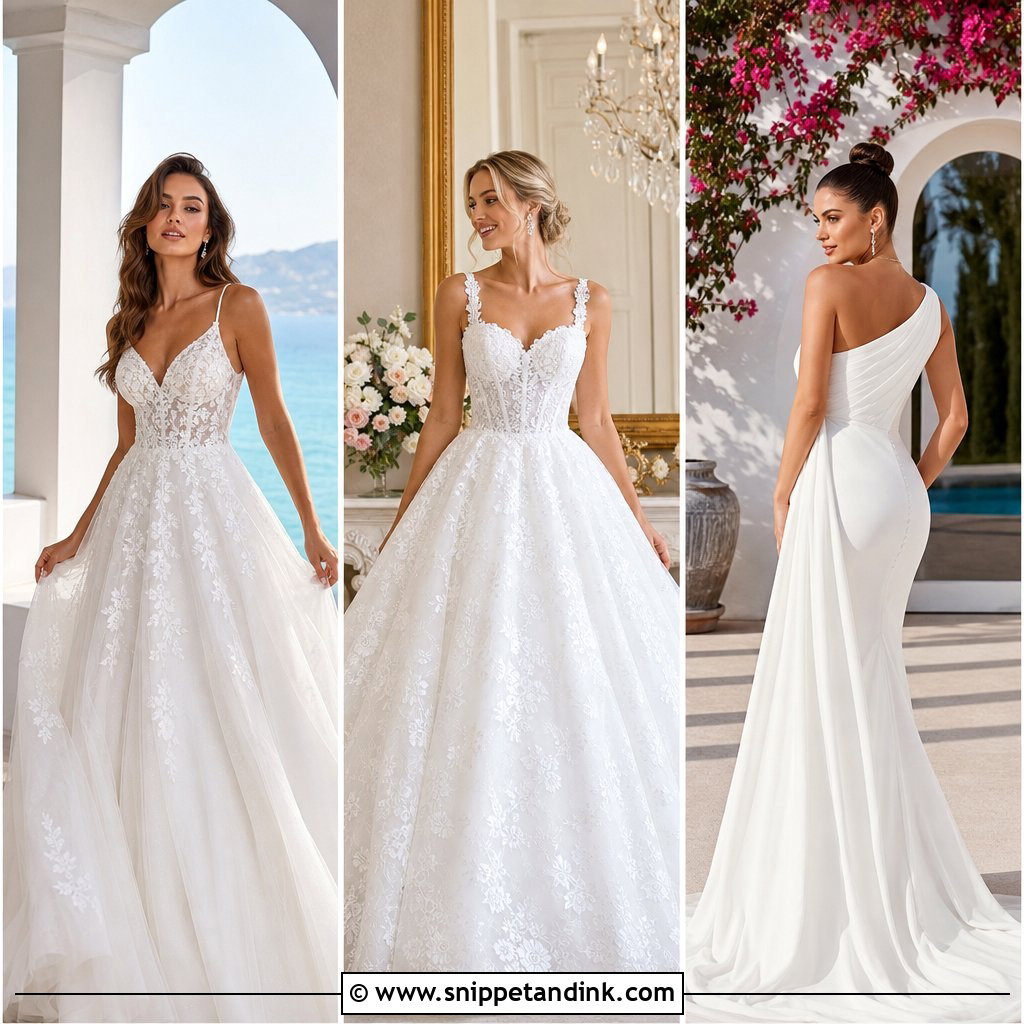
13. Tulle A Line Wedding Dress
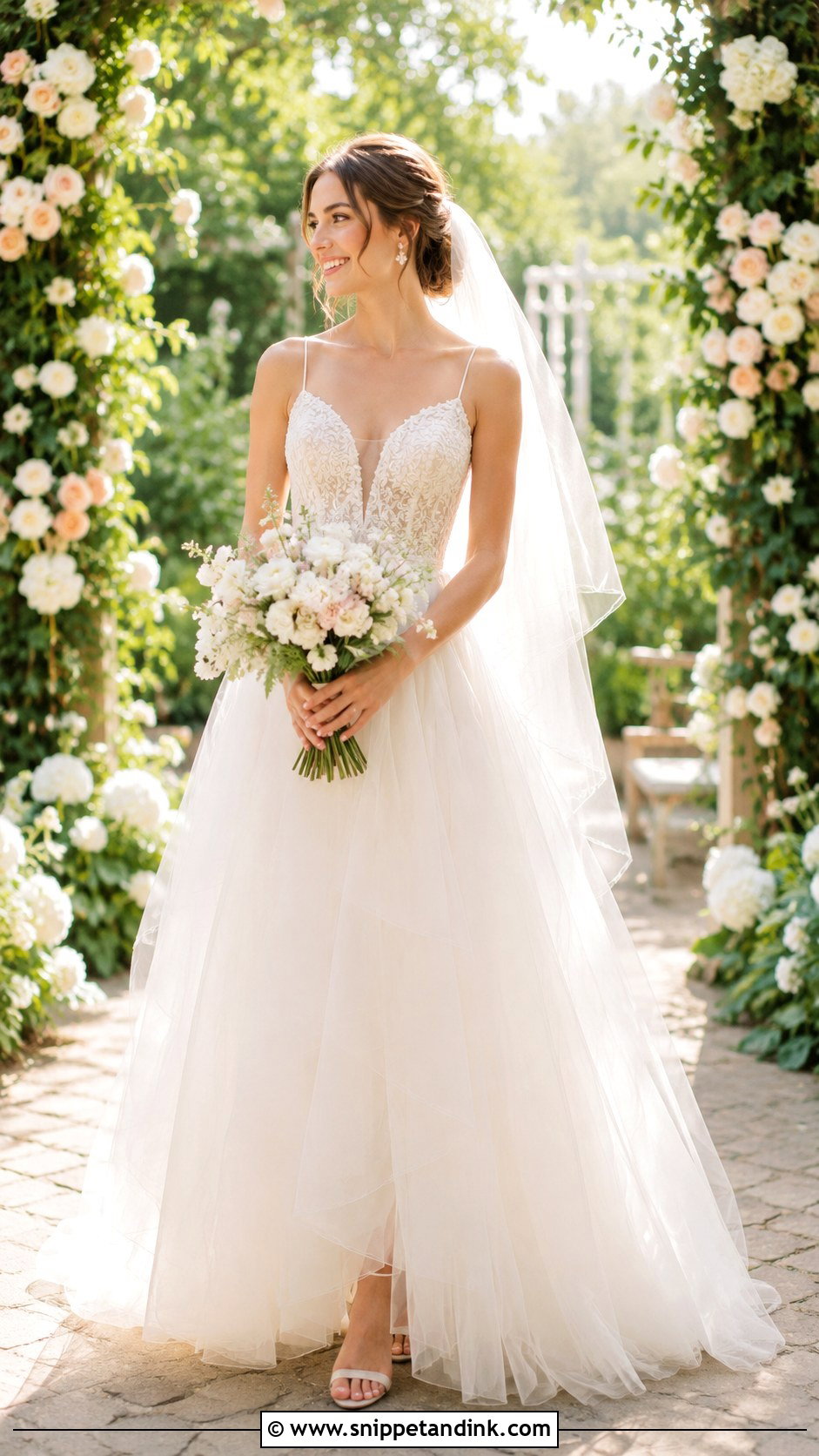
Tulle gives the skirt volume without the weight of a full ball gown, which is why this shape suits so many body types and is comfortable for a long day. Plain tulle feels minimal; layered tulle with lace adds detail. Watch for snags from rings, bouquet wire and rough stone floors. A fingertip veil blends with the skirt, and dainty earrings, soft makeup and comfortable heels suit a garden venue, outdoor ceremony or romantic indoor room.
14. Pearl Beaded Wedding Dress
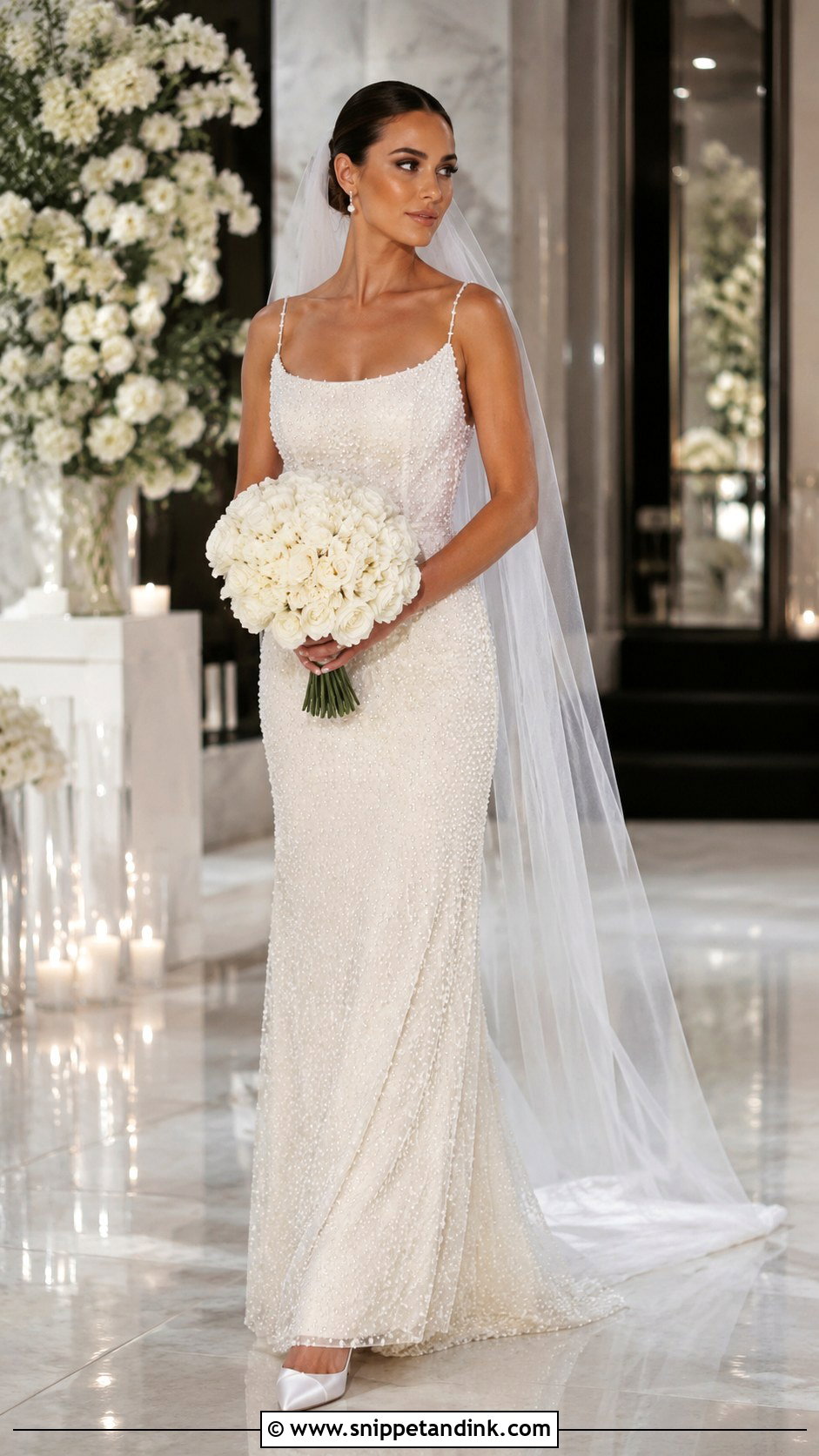
Pearls catch light softly instead of flashing, so a pearl beaded gown glows in photos rather than sparkling. They can sit across the bodice, sleeves, straps or skirt; a fitted sheath feels glamorous, an A-line softer. Most bridal pearls are coated glass or plastic, and hairspray and perfume dull that coating, so apply both before dressing. Pearl earrings, satin heels and a simple veil keep the beadwork the focus, with a clean bouquet of white flowers.
15. High Neck Wedding Dress
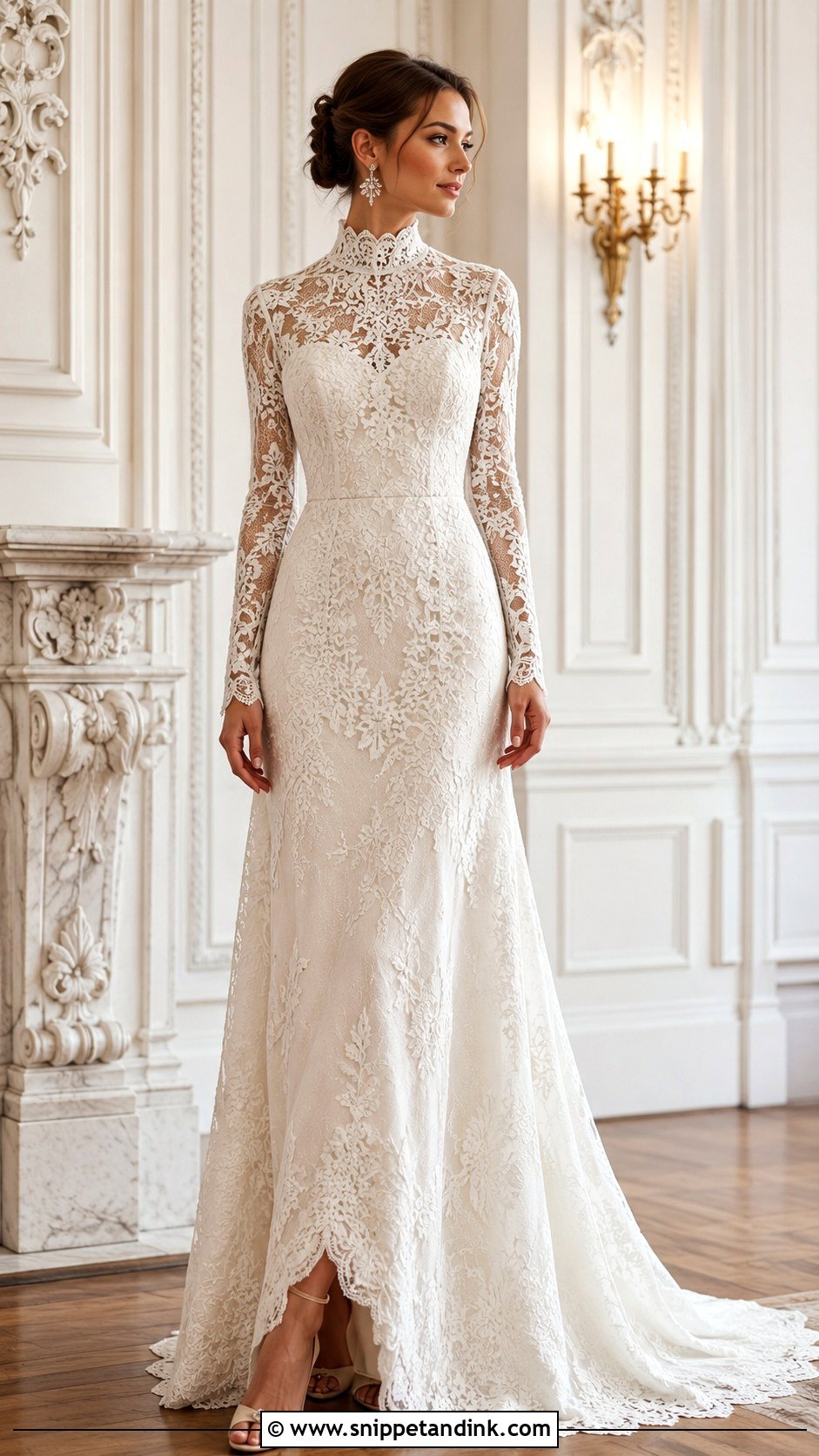
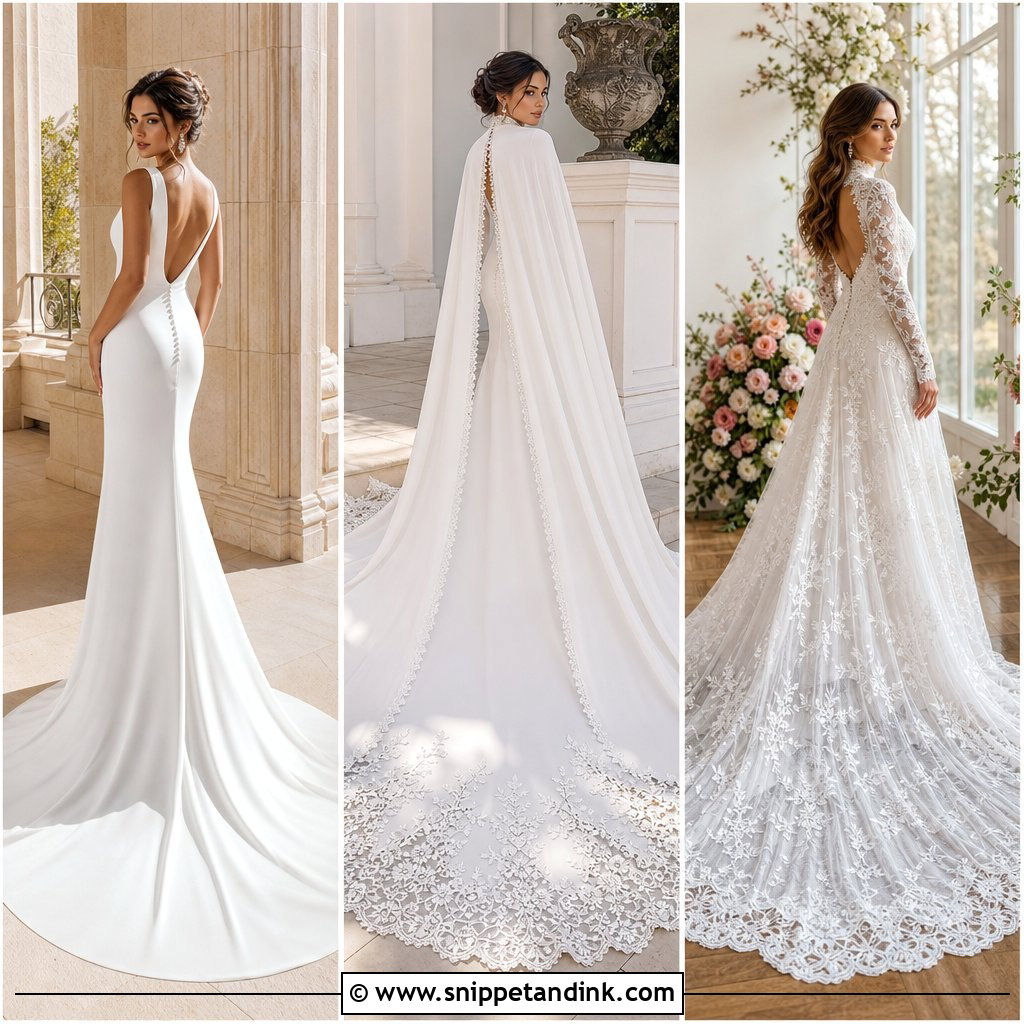
More coverage up top means you can play with the back or the skirt. Lace, crepe, satin or illusion fabric all work, balanced by an open back, a fitted waist or a flowing skirt. Skip the necklace; wear an updo and statement earrings instead so nothing crowds the collar. A long veil softens the structure. I’d try speaking and turning your head in it at a fitting, because a high neck that’s even slightly tight gets uncomfortable by the speeches. It suits a formal ceremony and cooler months.
16. Backless Wedding Dress
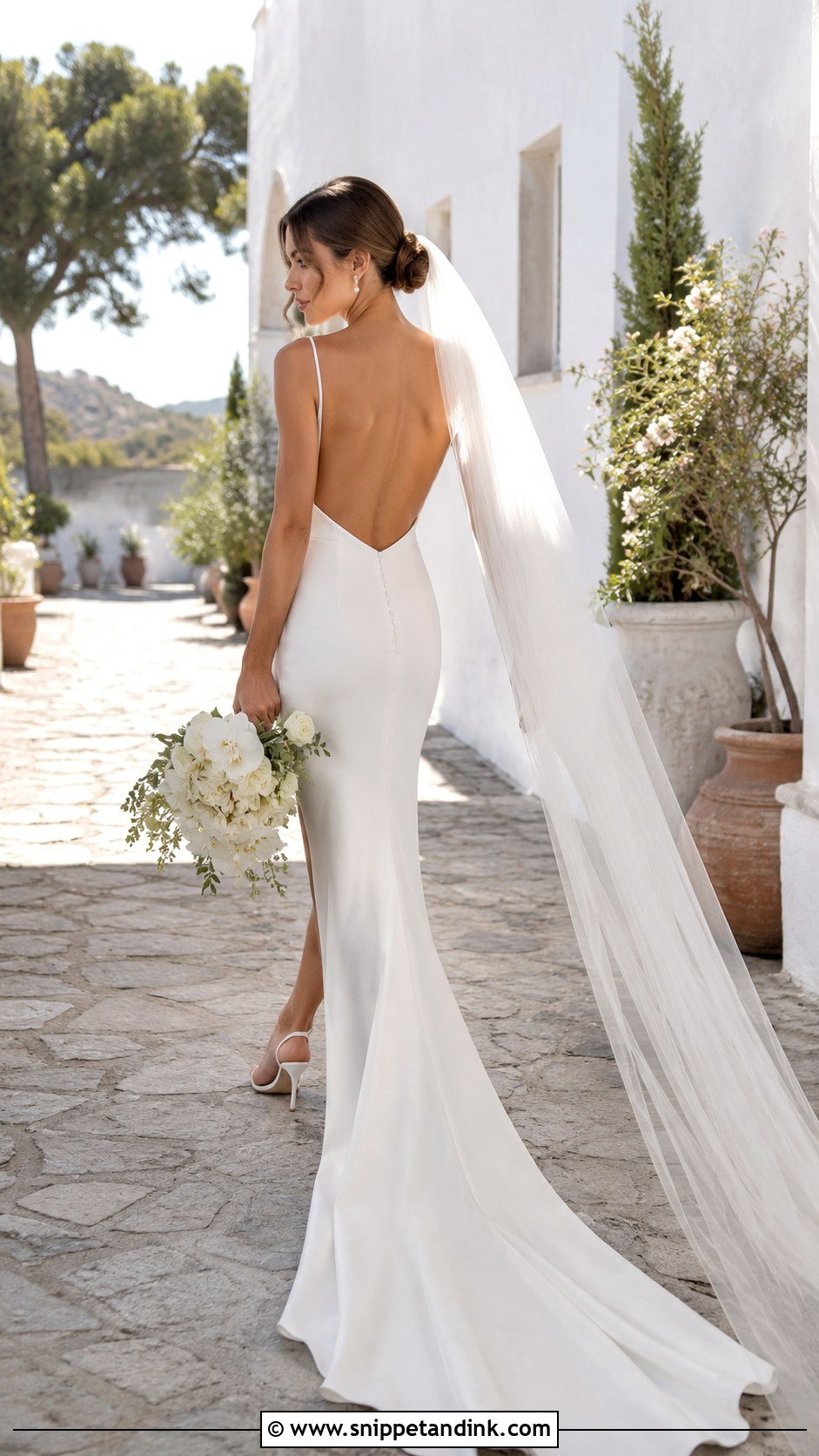
The reveal is behind you, so the front can stay simple: a clean neckline in front with a low open back, lace trim or fine straps. The hard part is support. Most bras won’t work, so decide on built-in cups, adhesive options or a low-back longline early and bring them to every fitting. Drop earrings, a low bun and a veil attached below the hairstyle show the back off. Strappy heels finish it, and it’s a natural fit for warm-weather or destination weddings.
17. Mermaid Wedding Dress
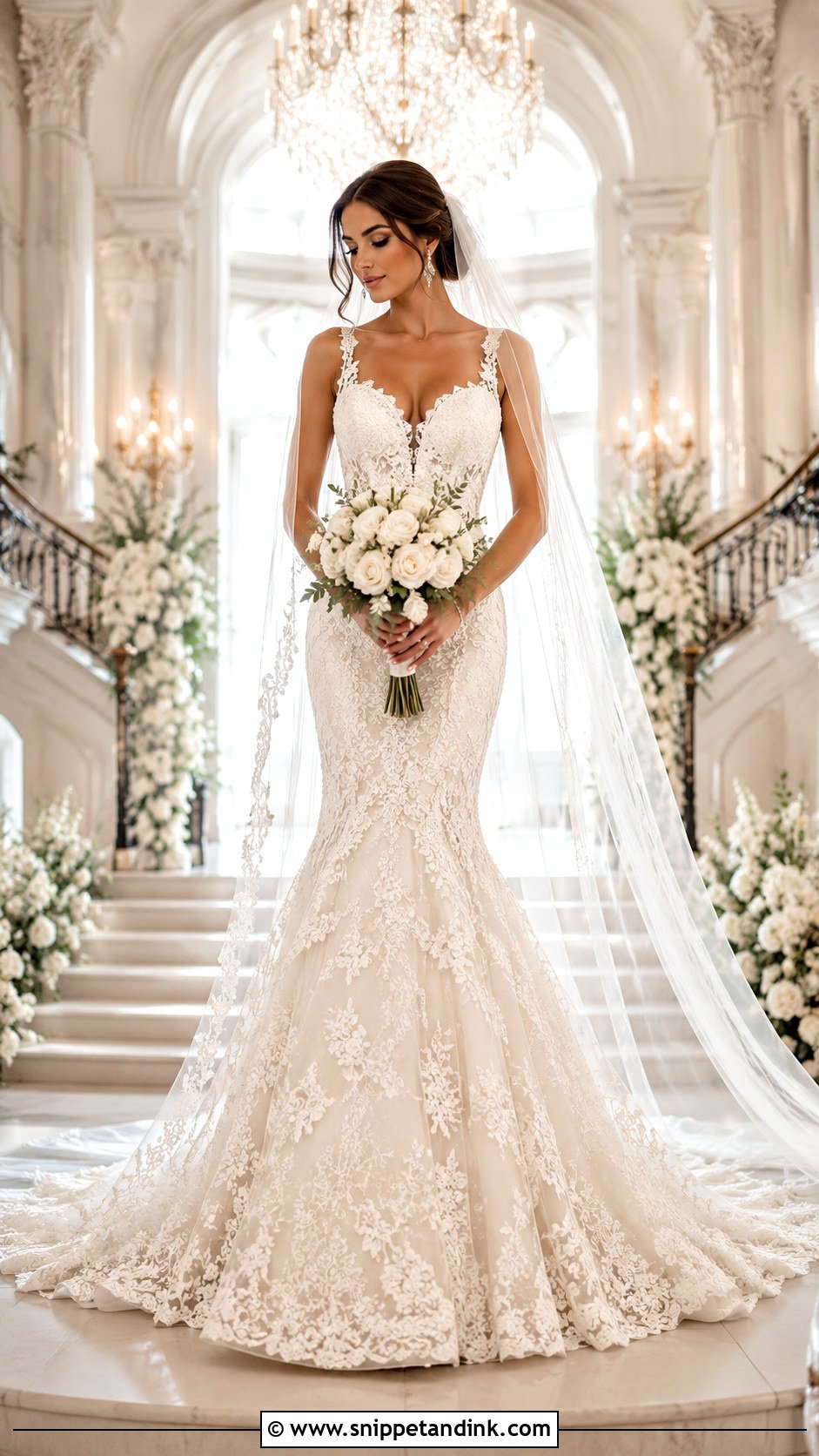
Fitted through the bust, waist and hips, flaring near the knee: the mermaid is the most sculpted shape here and the least forgiving to walk in. Where the flare begins matters. Too high and it looks dropped; too low and you’ll shuffle. Practise walking, sitting and climbing a step at fittings. Lace reads romantic, satin glamorous, crepe sleek. High heels, a long veil, face-framing earrings and a neat, balanced bouquet suit an evening reception with a long aisle.
18. Drop Waist Wedding Dress
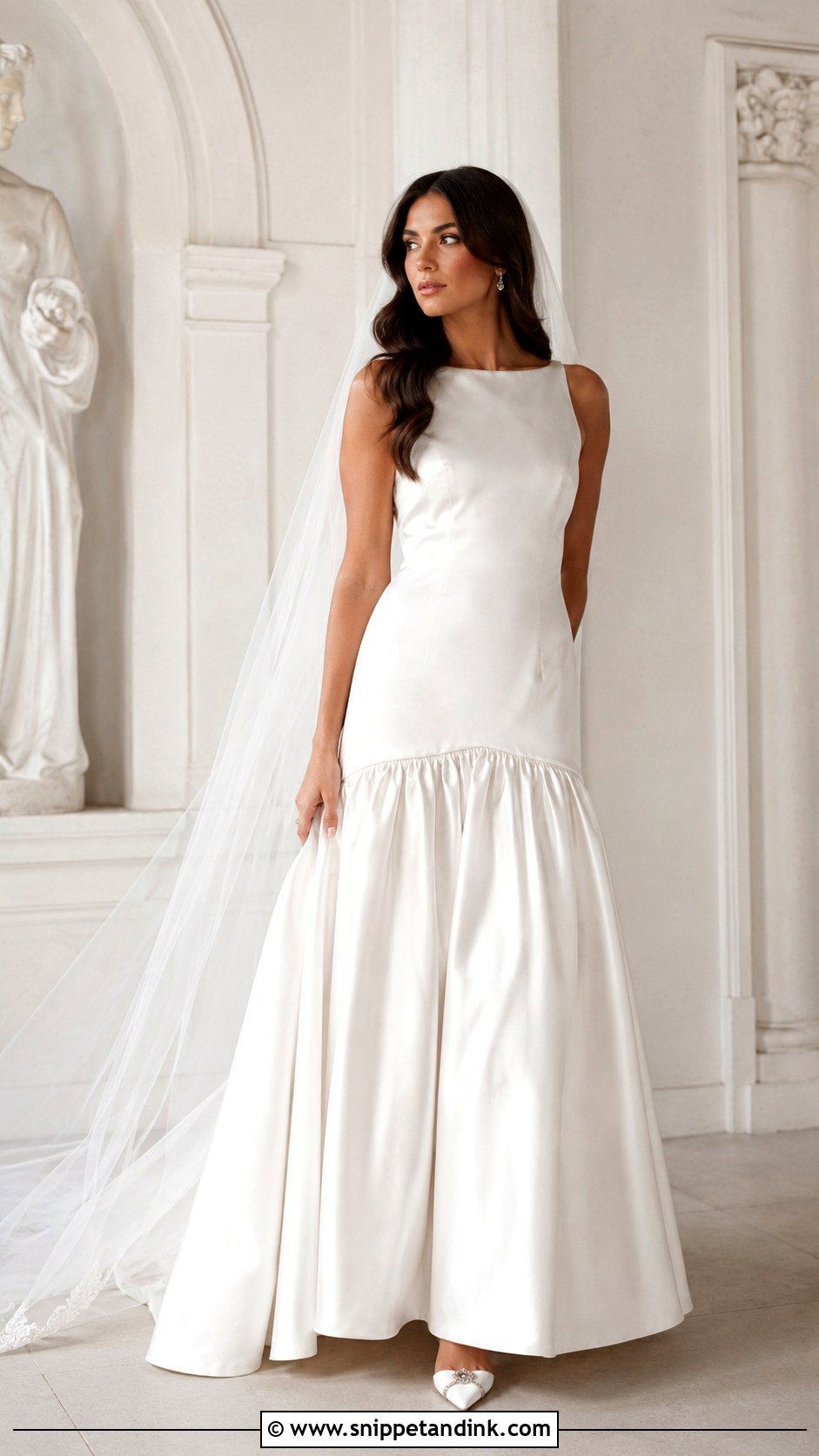
Part of why the drop waist wedding dress is trending is that it feels vintage and modern at once. The bodice extends below the natural waist before the skirt opens, creating a long line. It suits taller brides and those with a straighter frame most easily; on a shorter torso, ask for the seam to sit just below the hip bone rather than lower. Satin looks sleek, tulle softer. Pointed heels, a long veil, polished waves and simple jewelry finish it.
19. One Shoulder Wedding Dress
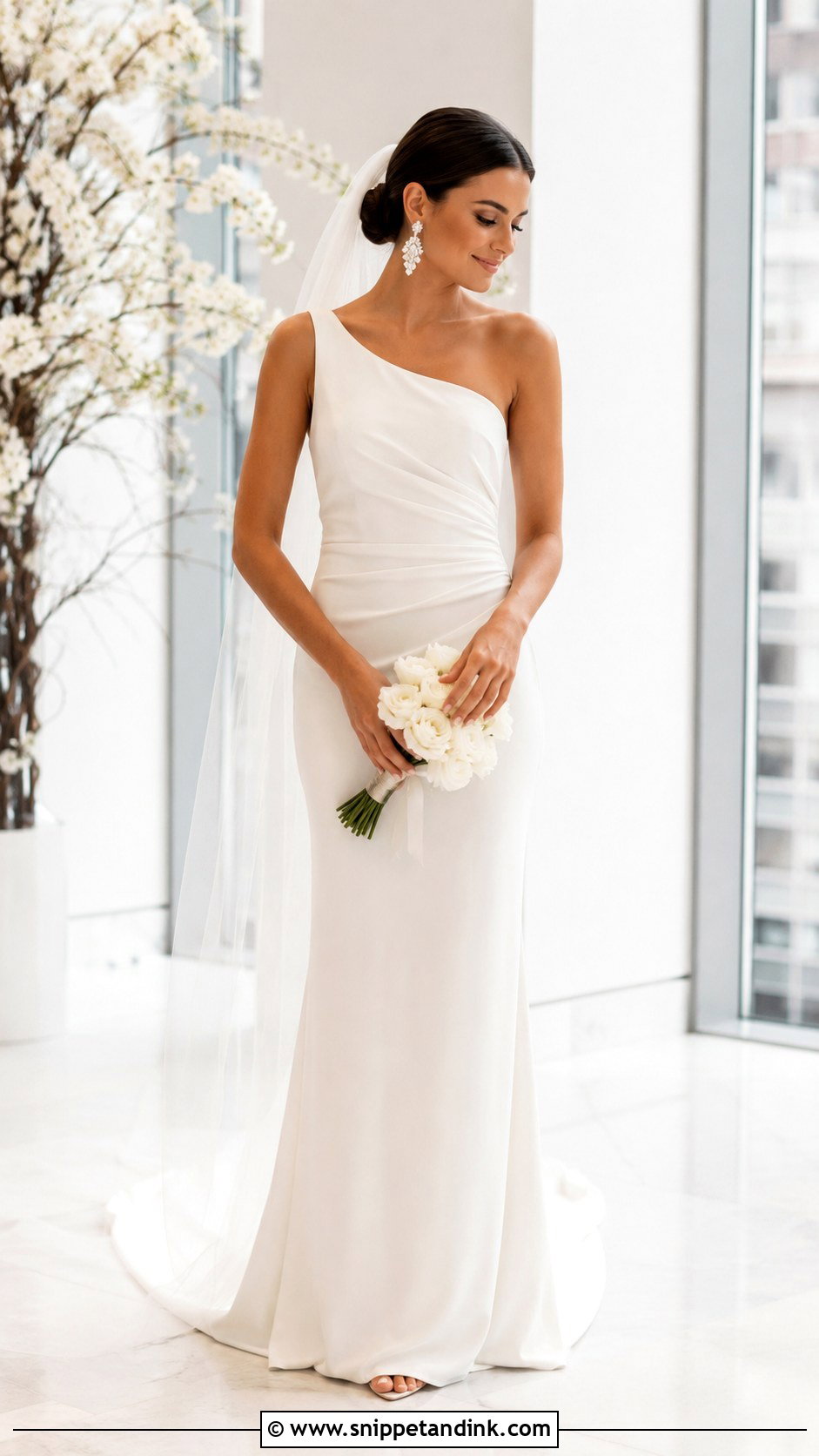
Asymmetry draws the eye up and across, which gives a one shoulder neckline a modern edge without much decoration. A sleek crepe column, satin A-line or draped chiffon gown all suit it. Skip the necklace and choose earrings with some presence, plus a smooth bun and minimal heels. The single strap carries more of the dress’s weight than two would, so check that it doesn’t dig in after an hour. A simple veil, or none, suits a city, resort or modern indoor wedding.
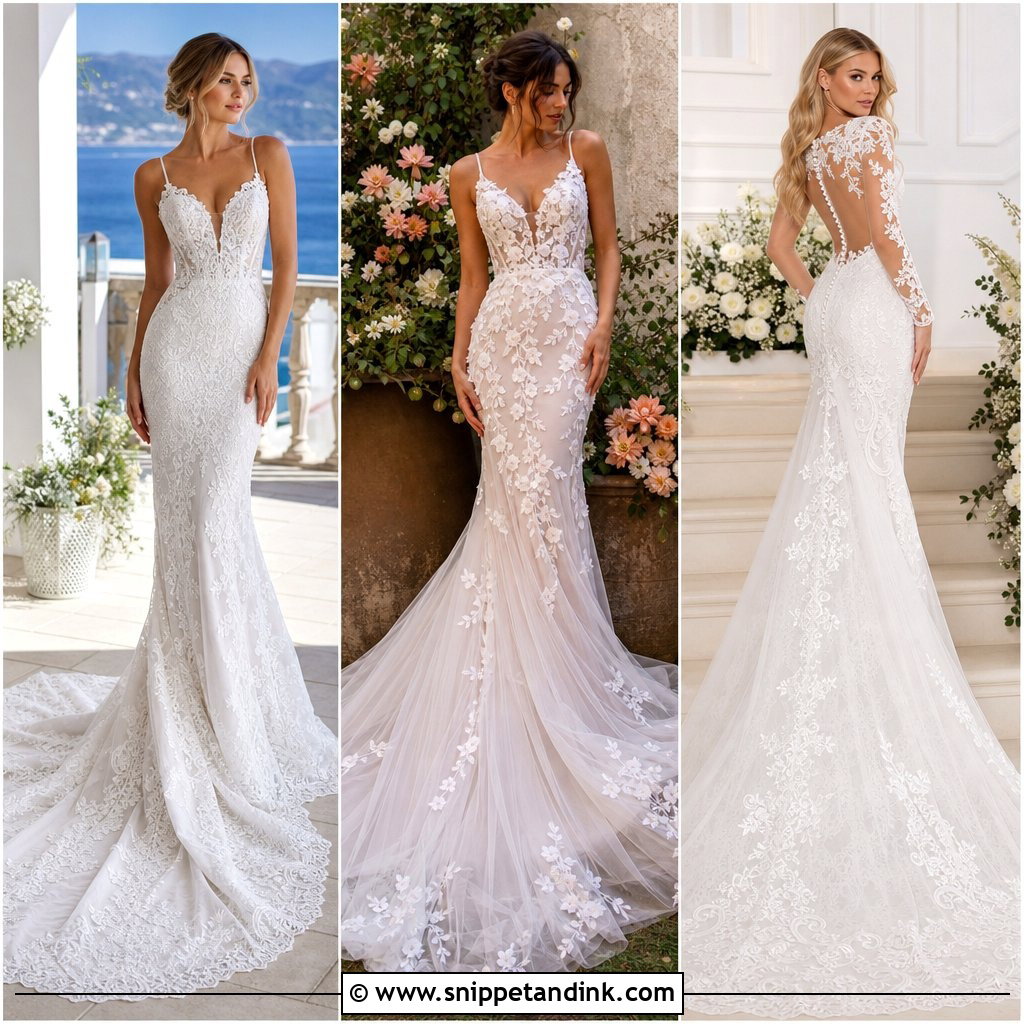
20. Bow Detail Wedding Dress
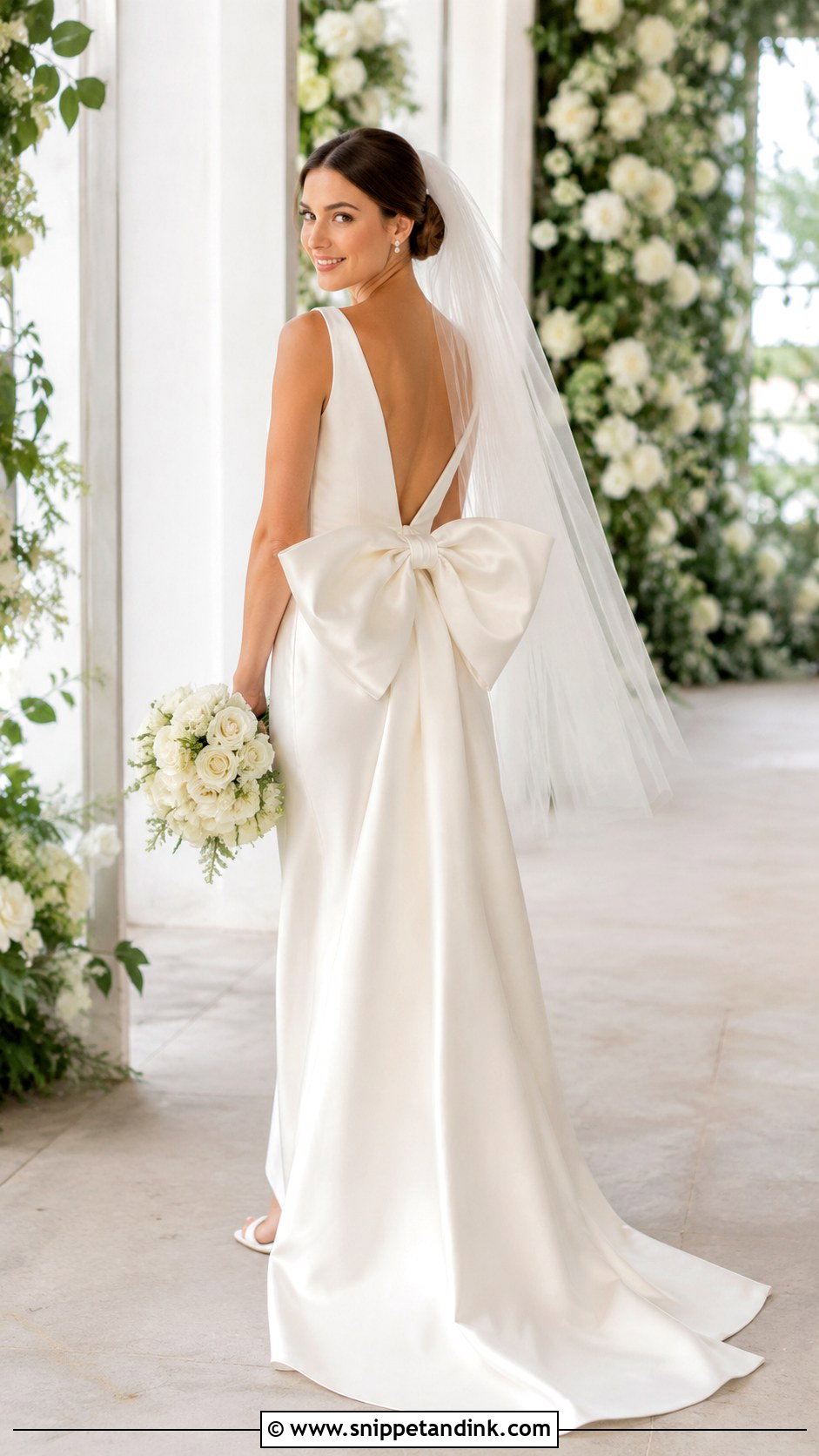
Proportion decides whether a bow looks charming or childish. A large back bow on satin is classic; small shoulder bows on tulle feel softer. The bow can sit at the back, waist, shoulder, neckline or train, and wherever it is, it should be the only big detail. Large satin bows get crushed when you sit against a chair back, so ask whether it’s stiffened or detachable. Simple heels, pearl studs and a clean veil suit a garden or romantic wedding.
21. Short Sleeve Wedding Dress
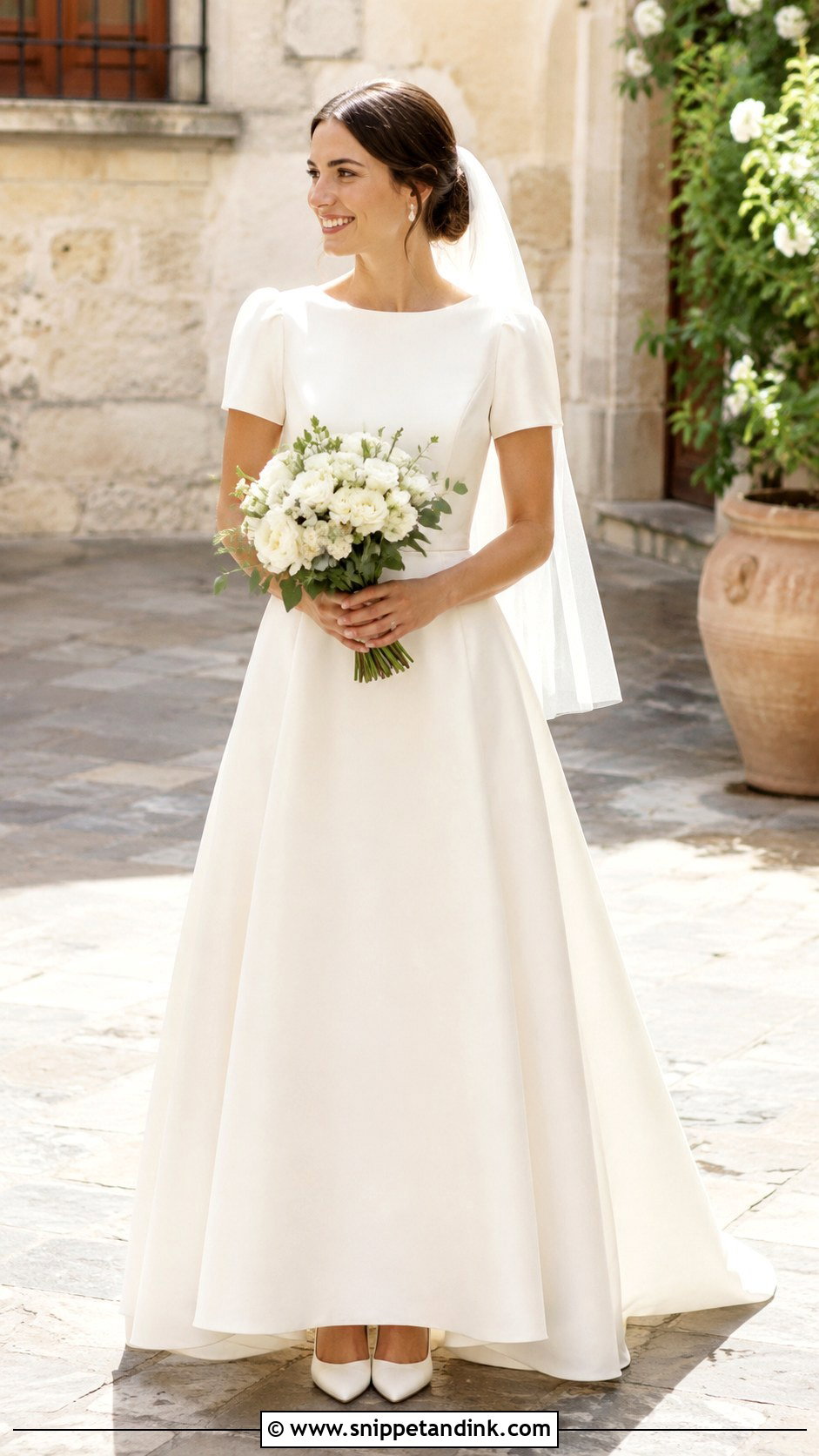
A little sleeve gives coverage while staying cool, which makes it practical for spring, summer and daytime weddings. Puff sleeves read romantic, cap sleeves soft and tailored sleeves clean. Check the sleeve hem doesn’t cut across the widest part of your upper arm; a centimeter shorter or longer can change how it looks in photos. An A-line or tea length shape keeps it fresh, with classic pumps, small earrings and a veil that matches the dress’s mood.
22. Wedding Dress With Overskirt
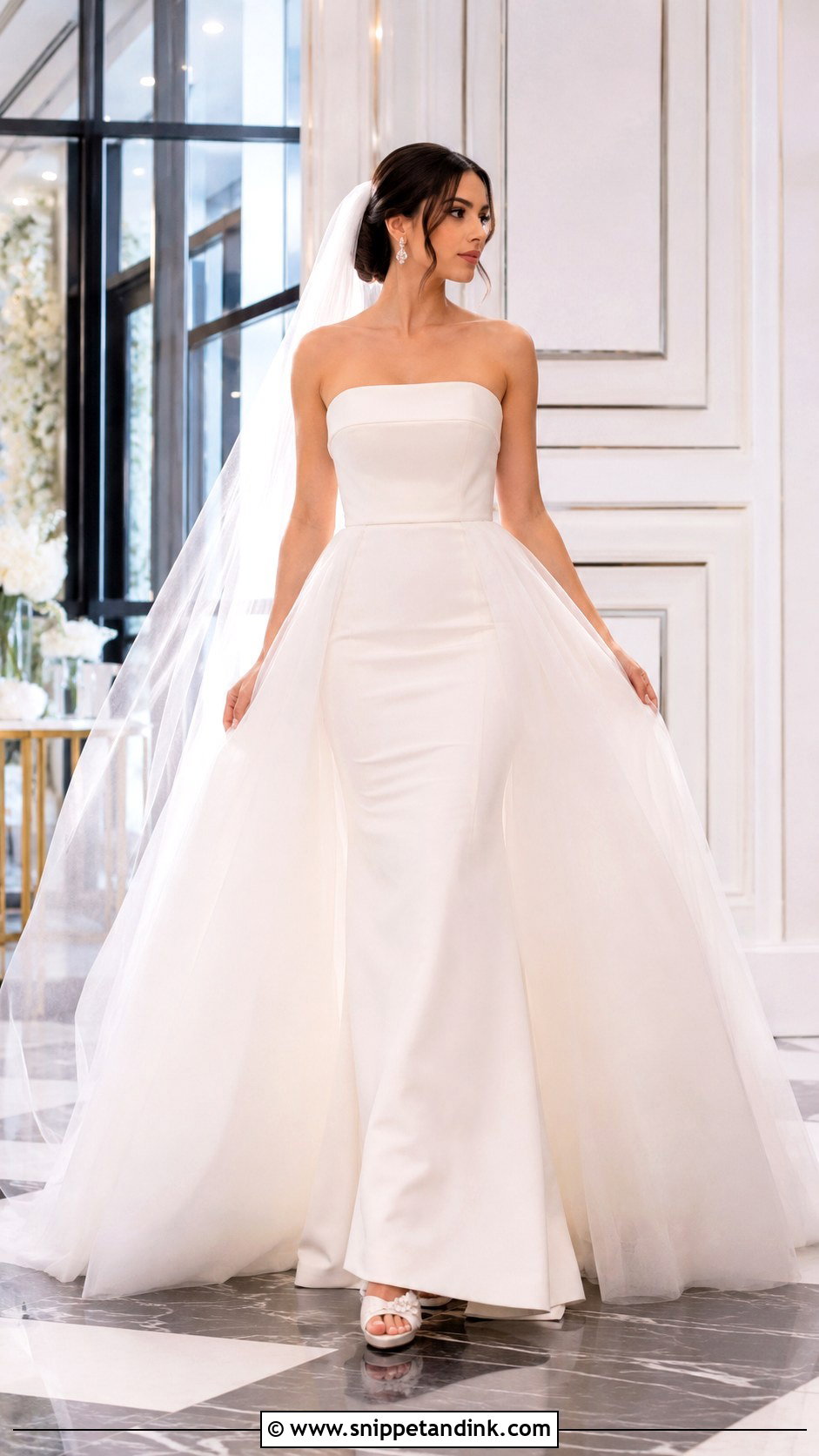
Two dresses in one. A wedding dress with an overskirt gives you volume for the ceremony and a slimmer silhouette for dancing once you unclip it. A fitted sheath, mermaid or mini underneath makes the change feel like a reveal. Satin holds structure, tulle is soft and organza floats. Ask how it fastens; hooks or a hidden snap band come off in seconds, while a tie belt needs a helper. Heels, a long veil and simple earrings complete the ceremony look.
23. Bridal Jumpsuit Wedding Outfit
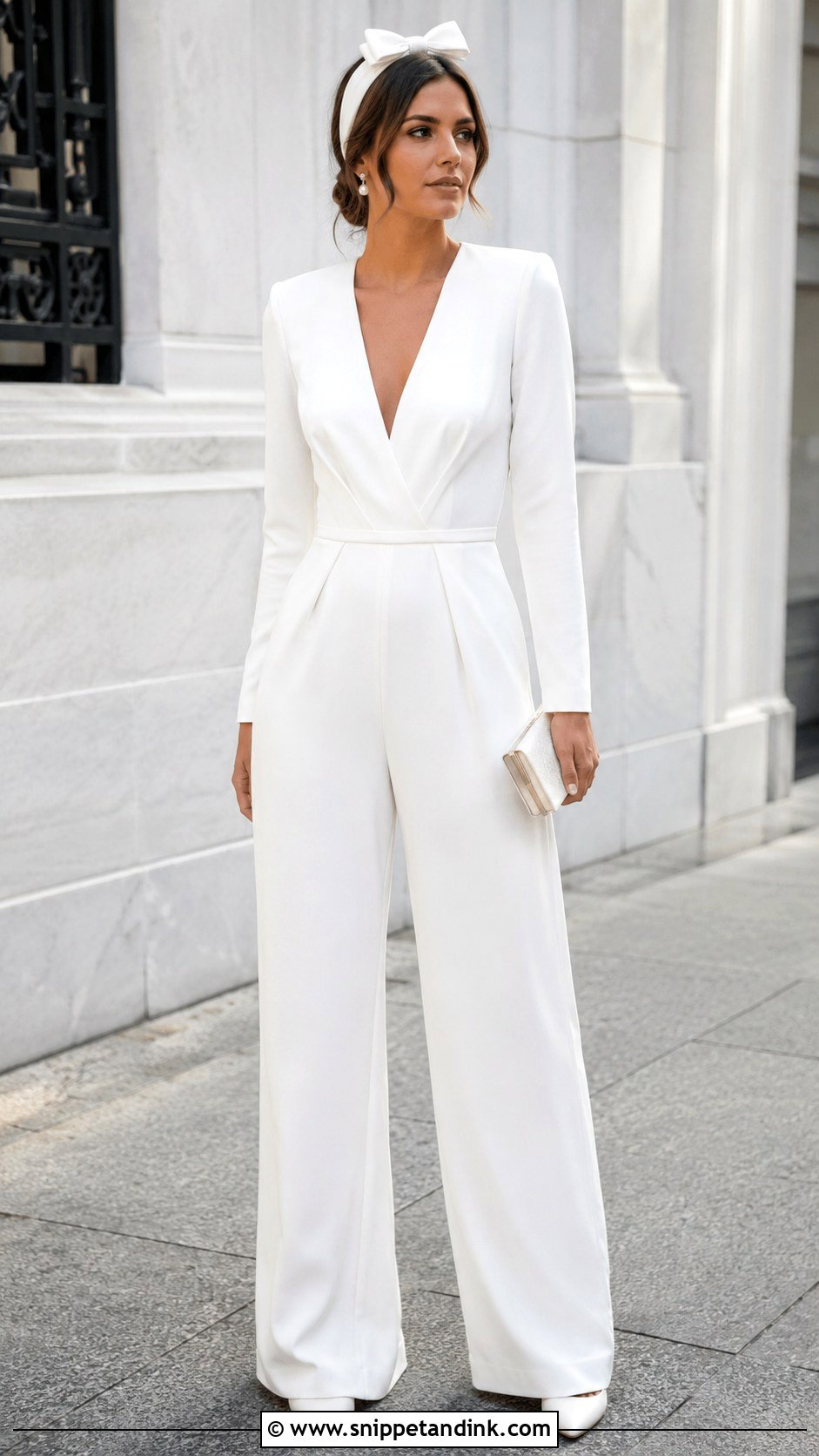
Some brides simply feel more themselves in trousers, and a jumpsuit gives them a single clean line from shoulder to floor. A white tailored version with a fitted waist, wide legs or a cape detail looks considered. Think about the bathroom before you buy: a back zip on a one-piece needs a helper every time, so a side zip or a separating style is worth asking for. Crepe, satin or structured suiting look polished. Pointed heels, pearl earrings and a birdcage veil, bow headband or detachable cape make it bridal.
24. Bridal Suit Wedding Outfit
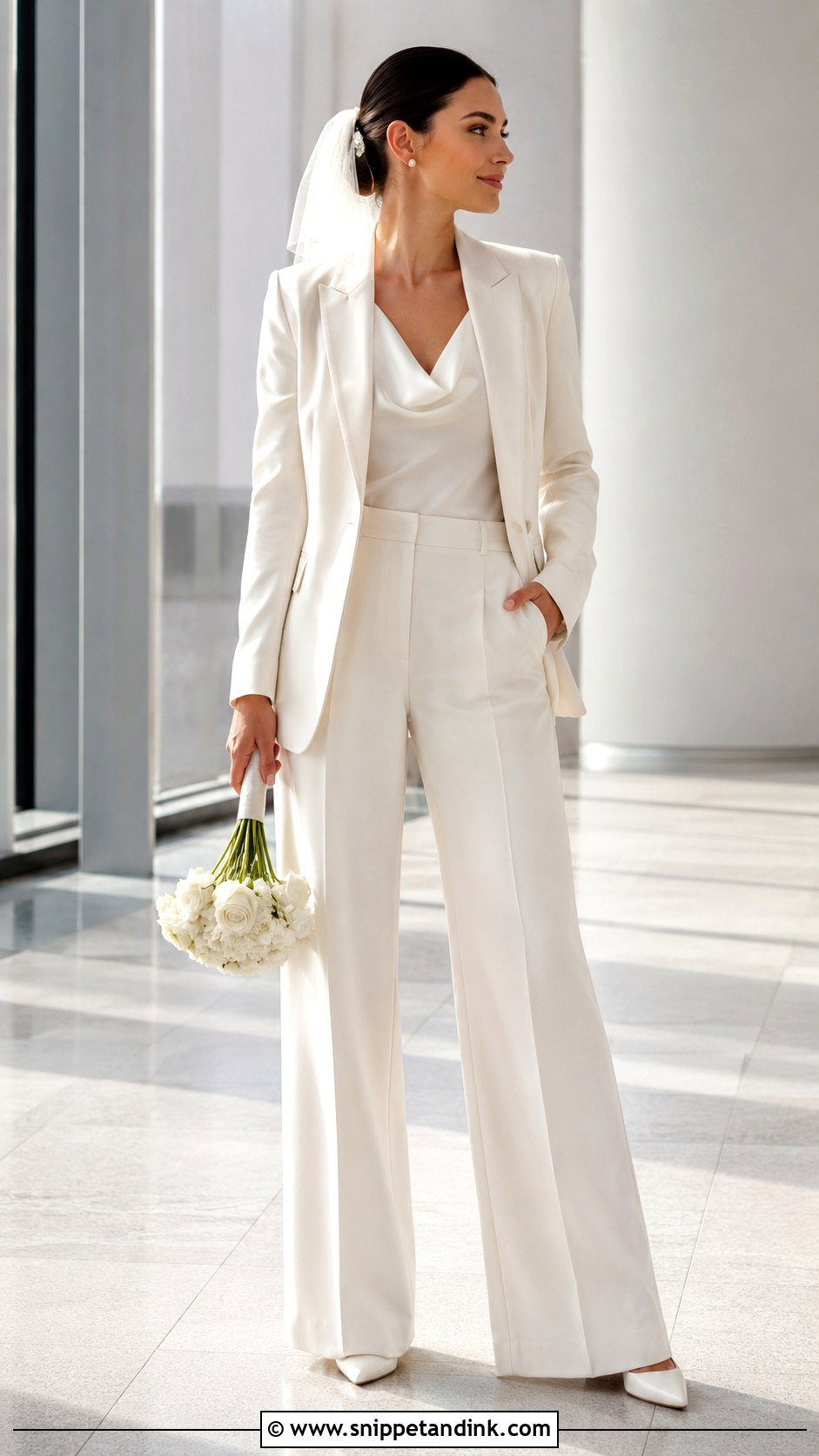
Tailoring makes or breaks a suit. Choose an ivory blazer with matching trousers, with a lace camisole or silk blouse underneath. Wide-leg trousers feel elegant; slim ones crisp. The jacket sleeve should end at the wrist bone and the trouser hem should be set with the exact shoes you’ll wear, so bring them to the fitting. Pointed pumps, pearl studs and a low bun complete it, and a short veil or hair accessory softens the tailoring for a courthouse or city wedding.
25. Colored Wedding Dress
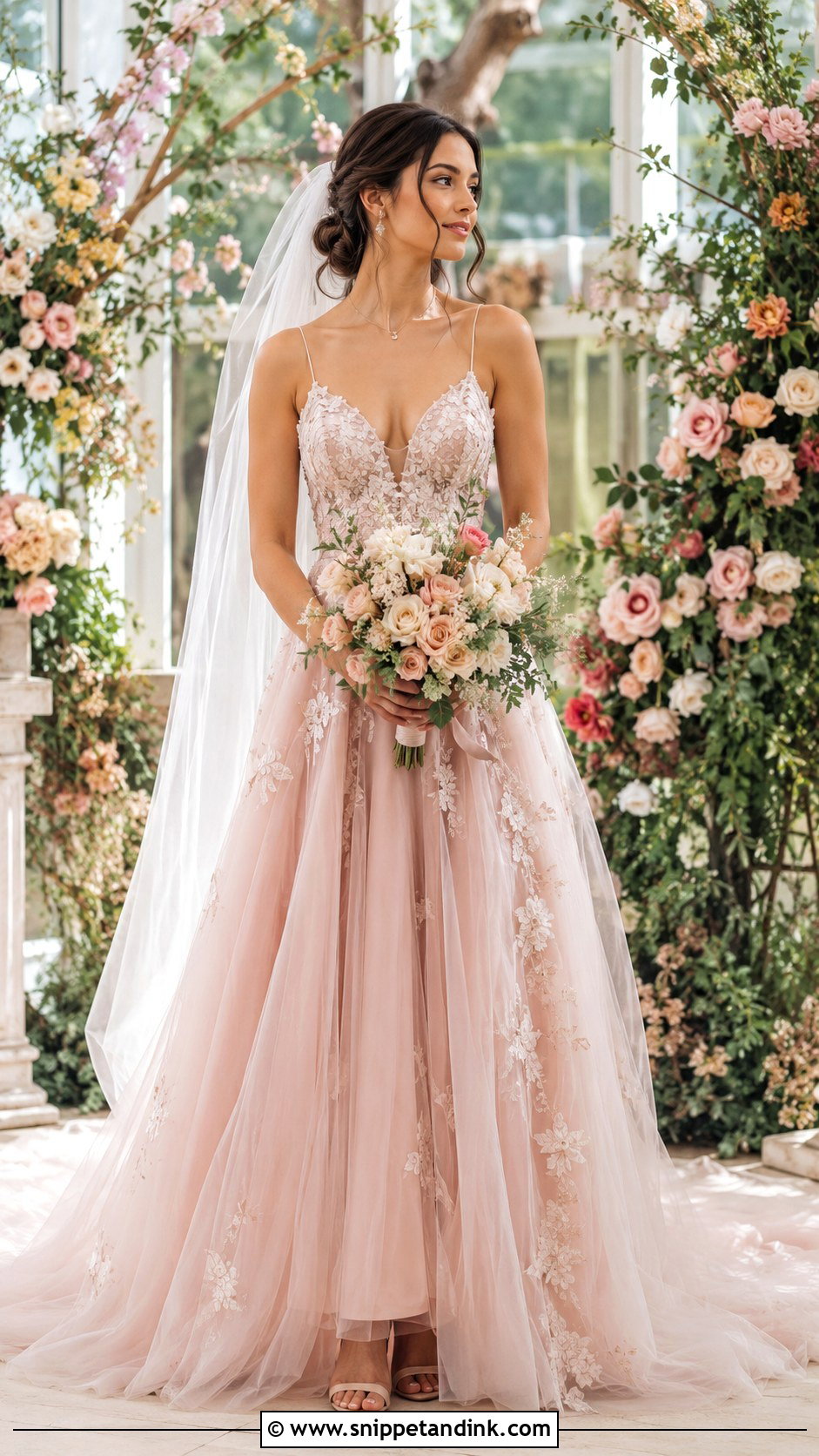
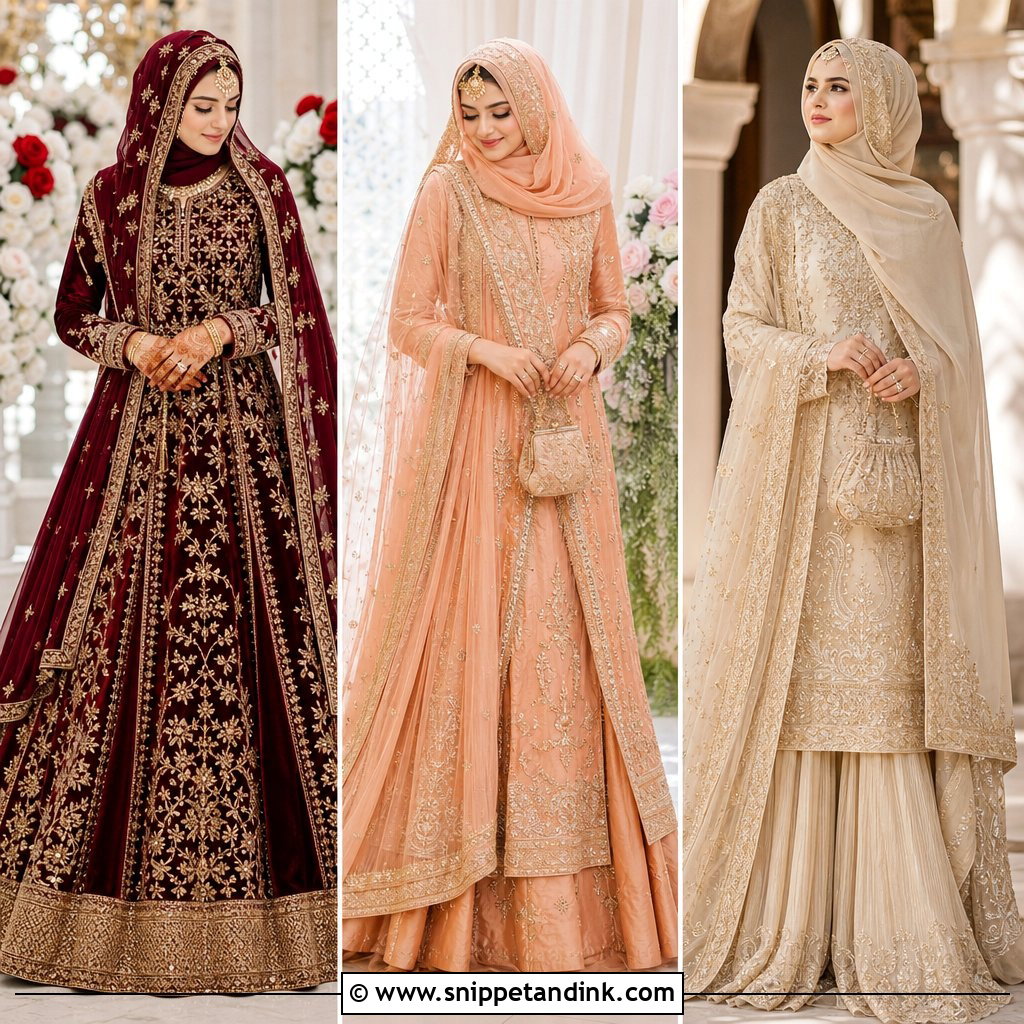
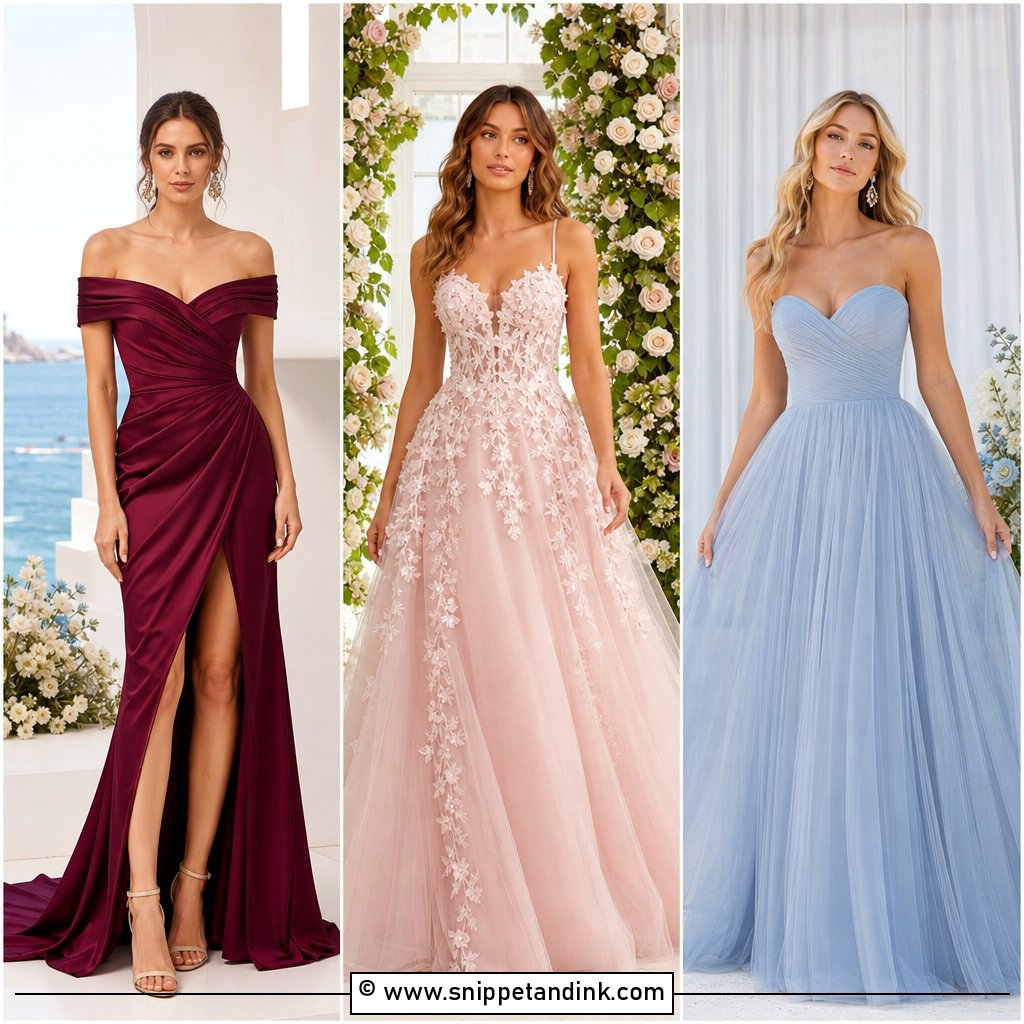
Soft blush, champagne, pale blue, light gold and barely-there lavender all stay bridal while looking more personal than white. Pick the color in a silhouette you already know suits you, then hold the fabric up to your face in daylight; some pale shades flatter warm skin and drain cool skin, and the reverse. Neutral heels, delicate jewelry and a bouquet that complements the shade keep the color the highlight. It suits a garden, destination or creative venue, and brides who don’t feel right in bright white.
Matching the Fabric to the Month
The silhouette is your style; the fabric should be your season. A heavy dress in August or a floaty chiffon in January makes for a long day.
Hot and humid months
Chiffon, organza, light tulle and crepe breathe best. Silk and thin satin show sweat marks quickly, especially under the arms and at the back, so test with a damp hand on a swatch if you can. Keep the skirt layers to what the shape truly needs.
Cold months
Mikado, heavy satin, crepe and long lace sleeves all hold warmth and structure. They also handle a crush of winter coats and car journeys better, since thicker fabrics crease less than thin ones.
Spring and autumn
These seasons swing between warm afternoons and cool evenings, so plan a cover-up. A tailored jacket, a cape or a long-sleeve bolero lets you wear a lighter dress without shivering through the outdoor photos.
The Dress You Didn’t Plan to Try On
The right bridal outfit fits your body, your venue and how you actually like to dress. For some brides that’s plain satin; for others it’s lace sleeves, a full ball gown, a short dress, a jumpsuit or a soft color. Weigh comfort, movement, weather and photographs, and style each one with the shoes and veil you’d really wear. Try at least one silhouette you’re sure you’ll dislike. More often than you’d think, that’s the one that feels right, and the rest of the outfit can be built around it.
You'll Like These Ideas:





Leave a Reply