
Most brides arrive at their first appointment with a neckline in mind and leave in a different silhouette altogether, because a gown on the hanger tells you very little about how it behaves on a body. That’s why I’ve grouped these twenty dresses by what they actually do: how they hold their shape, how they move, and how much support is built in. You’ll see classic ball gowns next to basque waists, dimensional lace, convertible layers and short reception dresses. For each one I’ve paired the veil, shoes and jewelry I’d reach for, so you can judge the whole outfit and not just the dress on its own.
The Calendar Behind a Made-to-Order Gown
Most bridal gowns aren’t sitting in a stockroom. When you order, the boutique sends your measurements to the designer and the dress is cut for you, which usually takes several months before it even reaches the shop. Then alterations start. I plan backwards from the wedding date, and I’d rather a bride order early and wait than panic over rush fees.
- Nine to twelve months out: shop, compare silhouettes and place the order. Many designers quote four to six months of production, and some lace or couture lines take longer.
- Three months out: the gown arrives and you book fittings. Bring the shoes and undergarments you’ll actually wear.
- Six to eight weeks out: second fitting, where the hem and bustle are set.
- Two to three weeks out: final fitting and pickup. Ask the seamstress to show your maid of honour how the bustle fastens.
Short on time? Sample gowns, off-the-rack collections and simpler crepe styles can work in a few weeks, though you’ll have less choice on size and colour. I’d avoid heavily beaded or lace-appliquéd designs on a tight schedule, because altering them means moving the beadwork by hand.
1. A-Line Wedding Dress With Pearl Veil
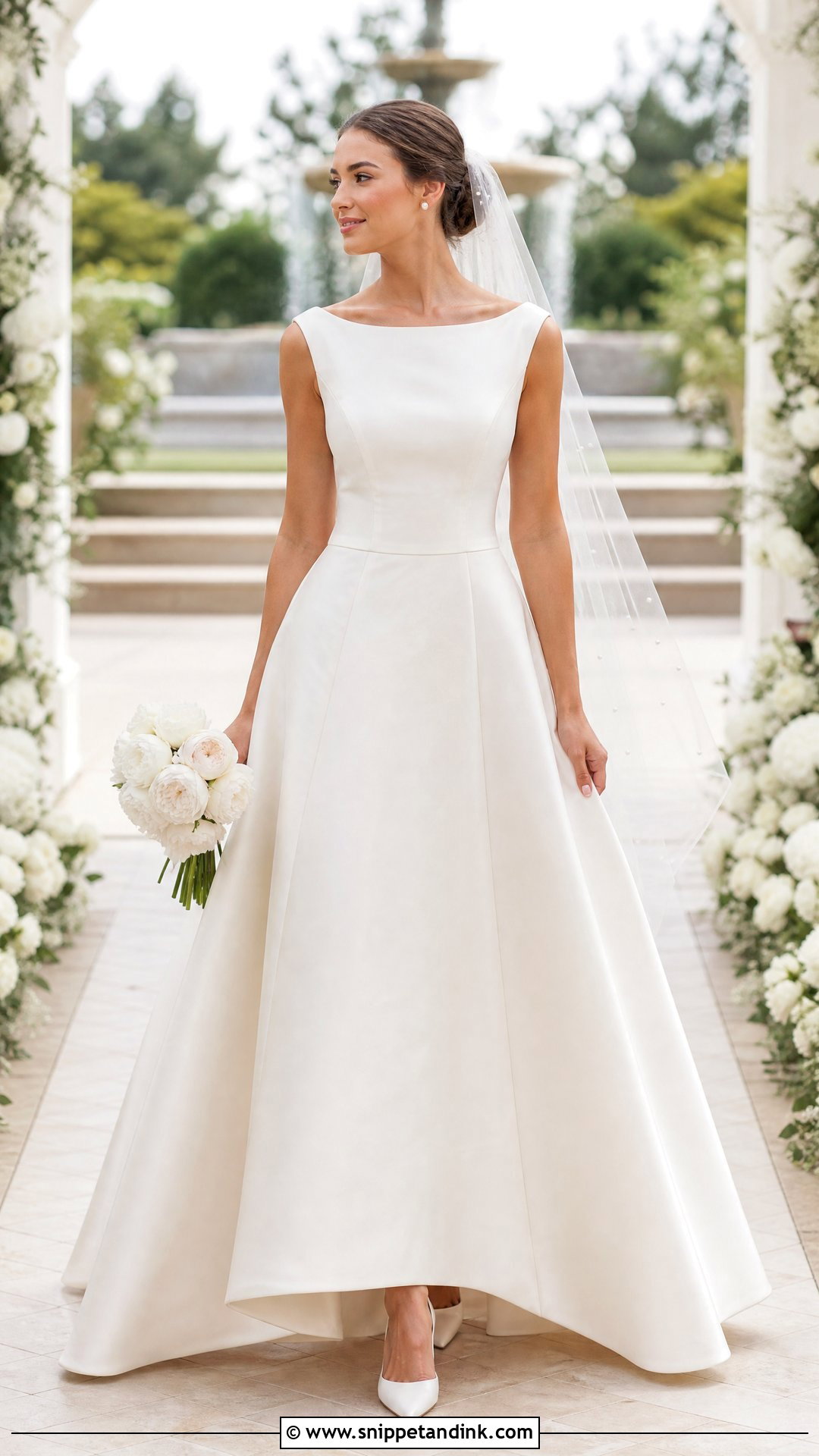
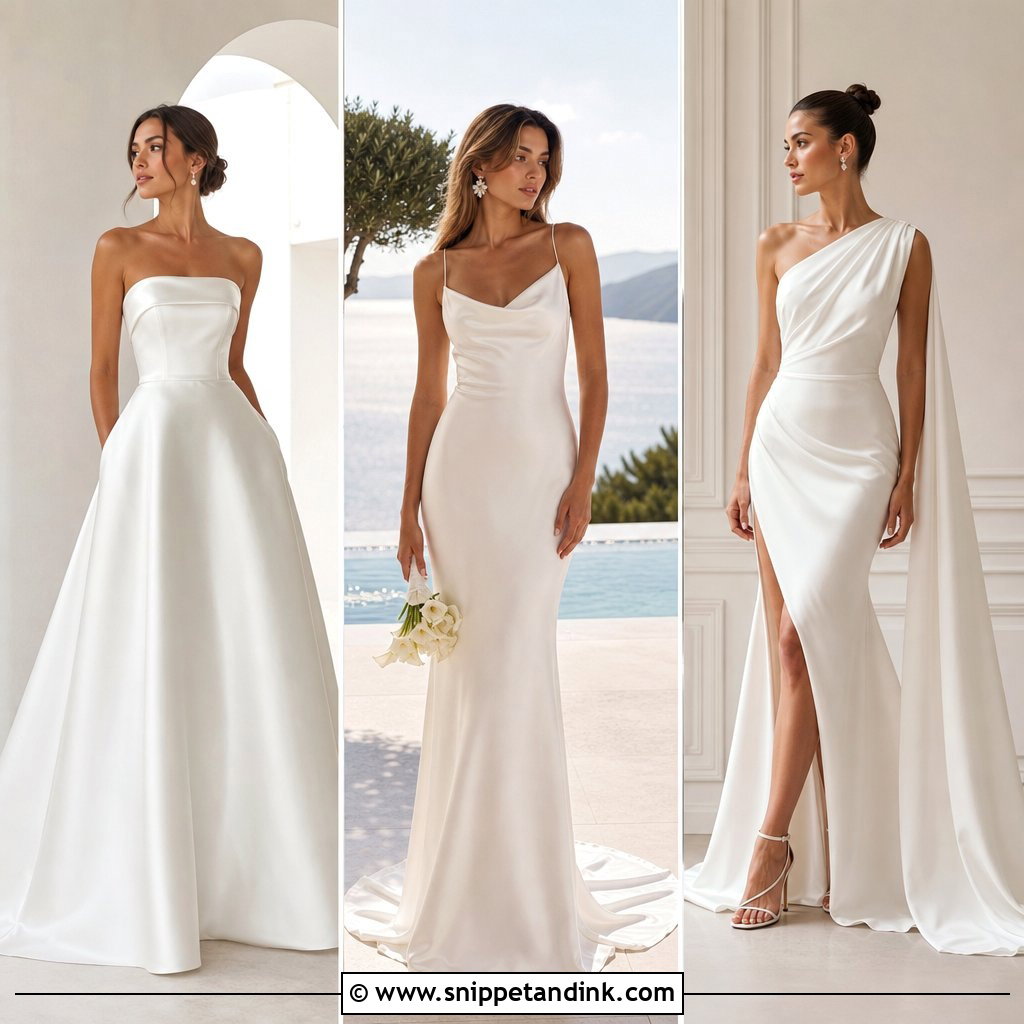
An A-line is the gown I pull first for a bride who isn’t sure yet, because the skirt widens gradually from a defined waist and forgives a lot. Satin gives it clean structure; chiffon or tulle lets it move. I finish it with a fingertip pearl veil, pointed ivory pumps and small pearl studs, plus a loose bouquet so it doesn’t tip into formal. The shape adjusts well for petite, tall, curvy, and plus-size brides, since a seamstress can take the waist up or the hem in without redrawing the whole line. Ask for side-seam pockets at the first fitting; they’re far easier to add then than after the skirt is hemmed.
2. Satin Ball Gown Wedding Dress With Cathedral Veil
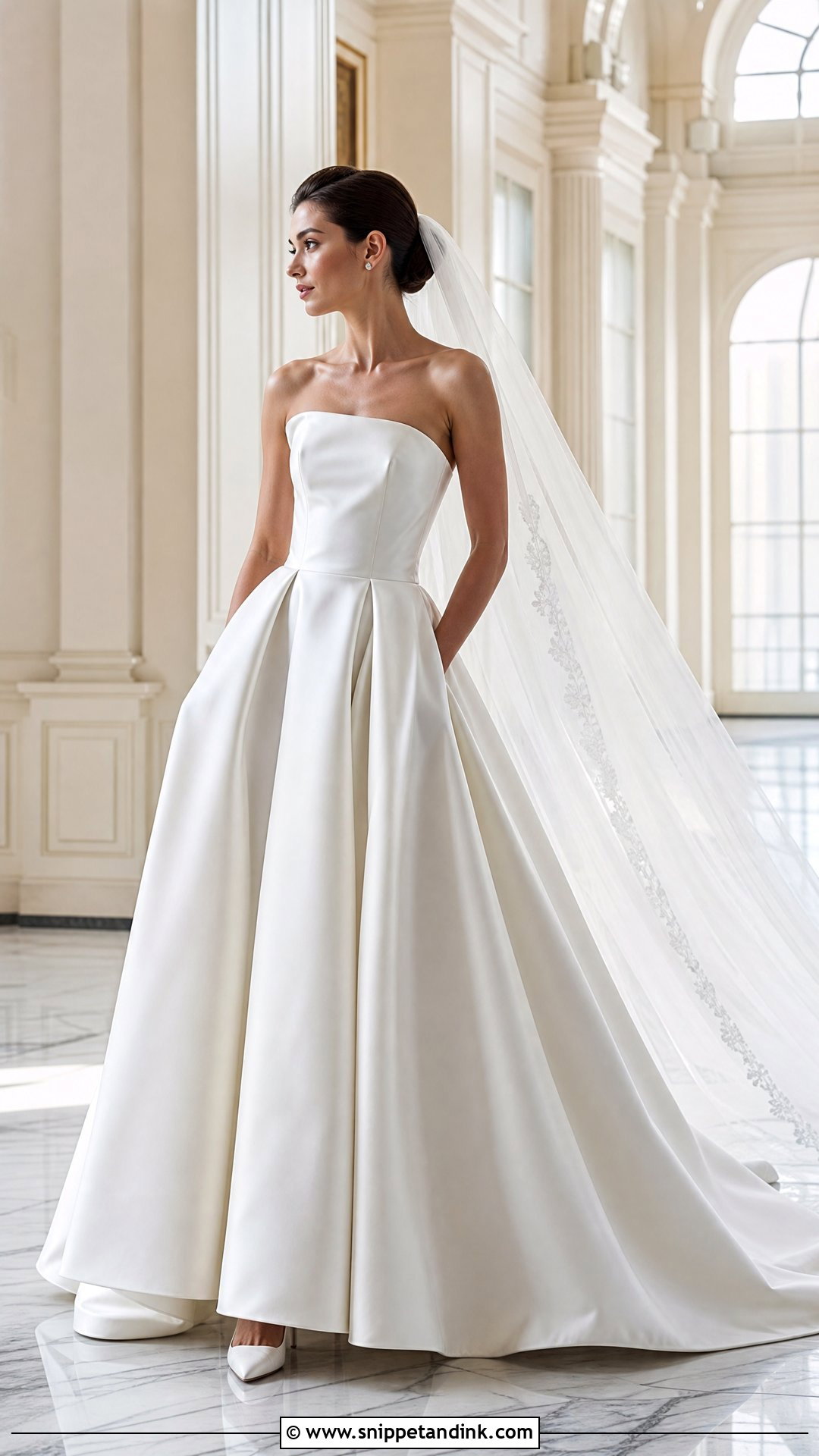
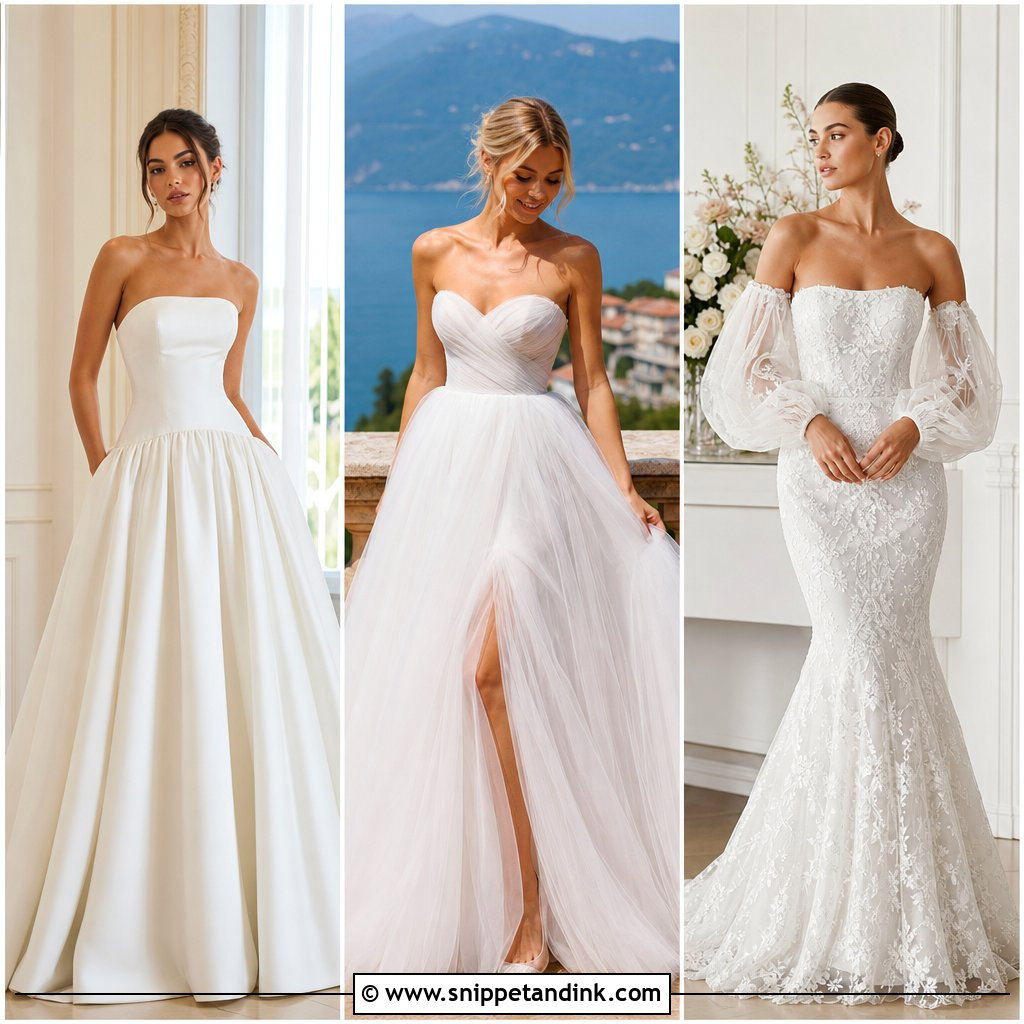
Nothing fills an aisle like a satin ball gown. The structured bodice and full skirt give a sharp waist, and mikado or duchess satin are the fabrics I trust here because they stand away from the body instead of collapsing at the hip. A cathedral veil, crystal studs and closed-toe satin heels complete it, with a sleek bun so the volume stays in the skirt. On a petite frame I scale the skirt down a layer of crinoline. Plan the bustle before the final fitting: a heavy satin train needs several strong attachment points, or it drops by the second dance.
3. Lace Mermaid Wedding Dress With Drop Earrings
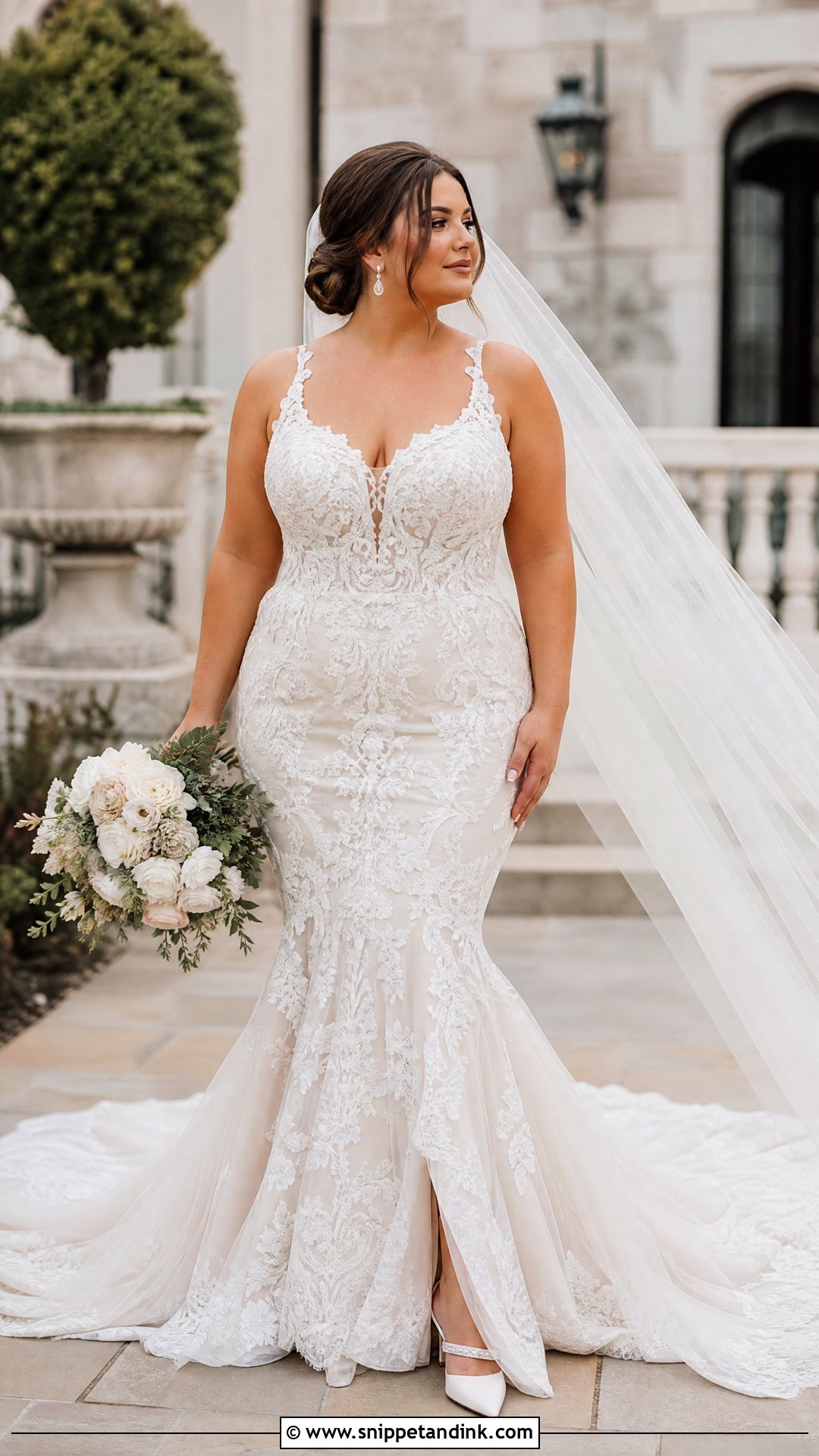
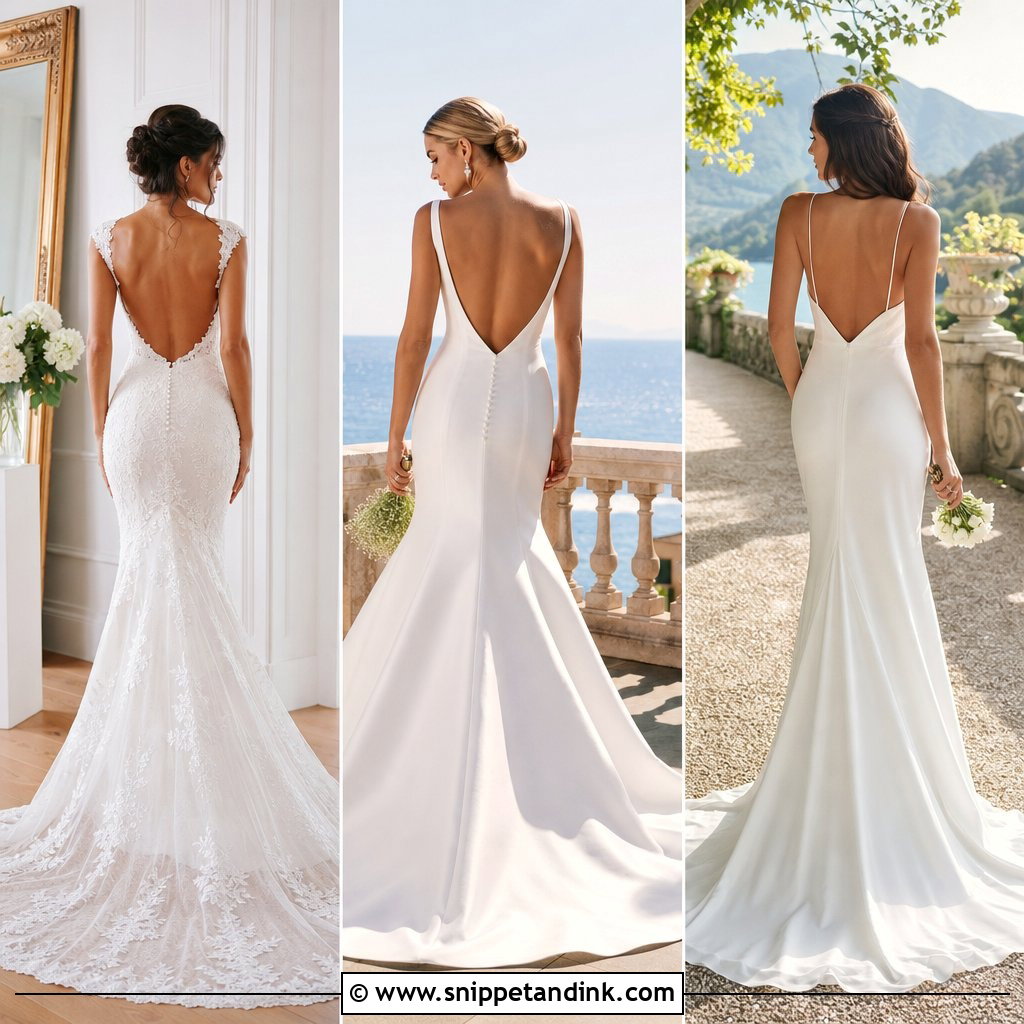
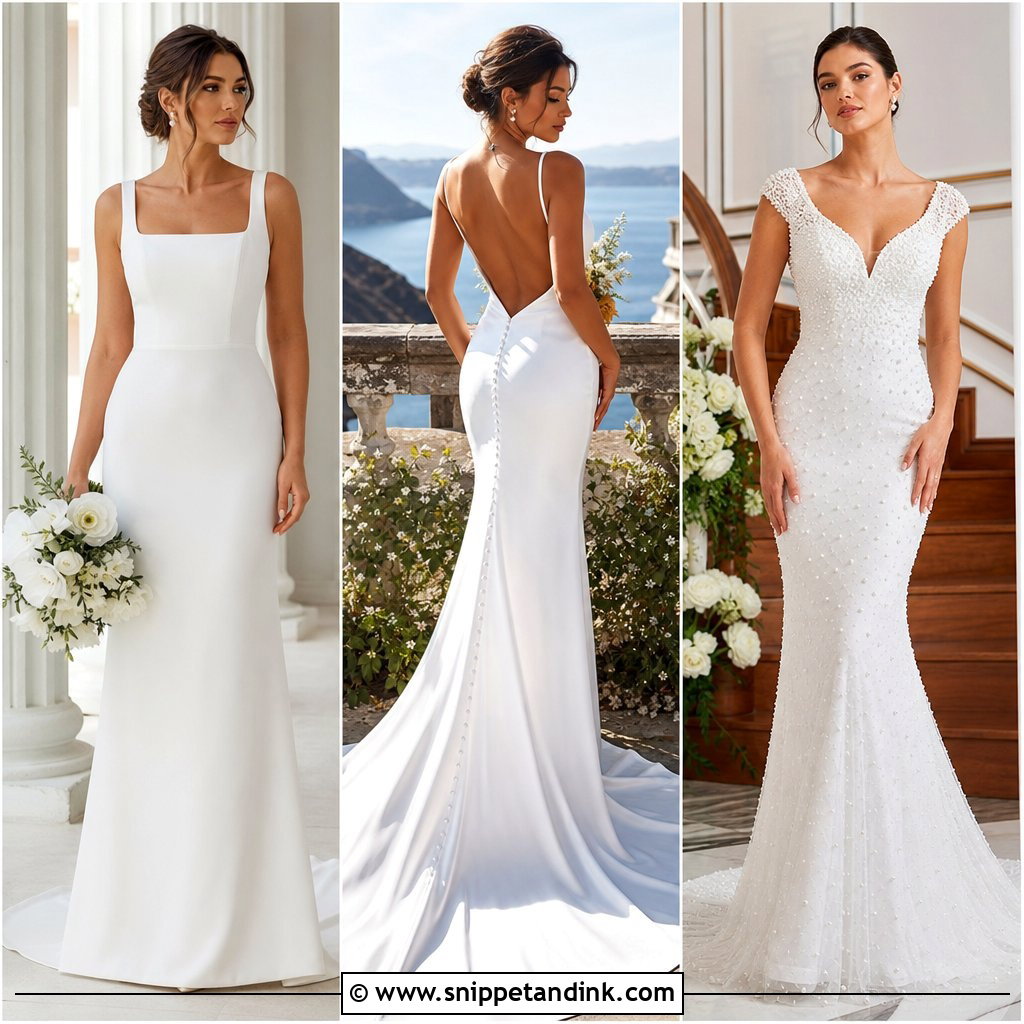
The lace mermaid hugs the body and flares near the knee, and vertical lace motifs lengthen the line nicely. The catch is movement. I have every mermaid bride sit, climb a step and walk briskly in the fitting room, and if her stride is cut short we ask the seamstress to raise the flare an inch or two. Look for real boning in the bodice and some stretch through the hip. Keep accessories quiet: drop earrings, a plain tulle veil, pointed slingbacks. A low chignon shows off an open back without fighting the lace.
4. Square Neck Wedding Dress With Low Bun
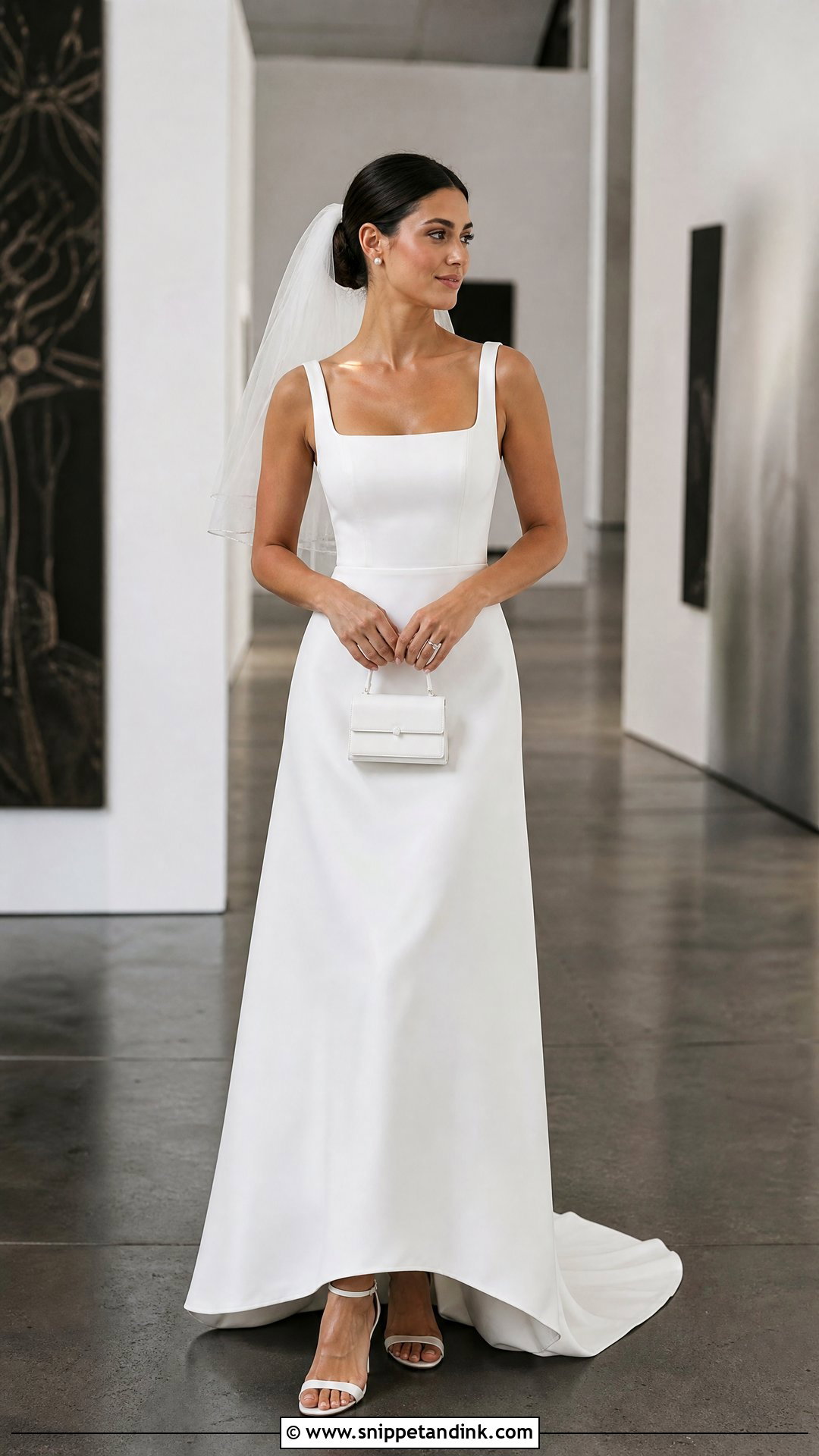
A square neckline frames the collarbone with straight lines, and it reads cleanly on wide straps above a column or gentle A-line skirt. Matte crepe stays understated; satin gives a soft sheen. I style it with a smooth low bun, a short tulle veil, pearl studs and slim ankle-strap heels. Because there’s no lace or beading to hide behind, the tailoring has to be exact. I check that the neckline corners sit flat when the bride breathes in, since a square edge that gapes even slightly is the first thing a camera catches. Brides wanting more coverage can raise the line or widen the straps without losing the shape.
5. Off-Shoulder Wedding Dress With Crystal Hair Comb
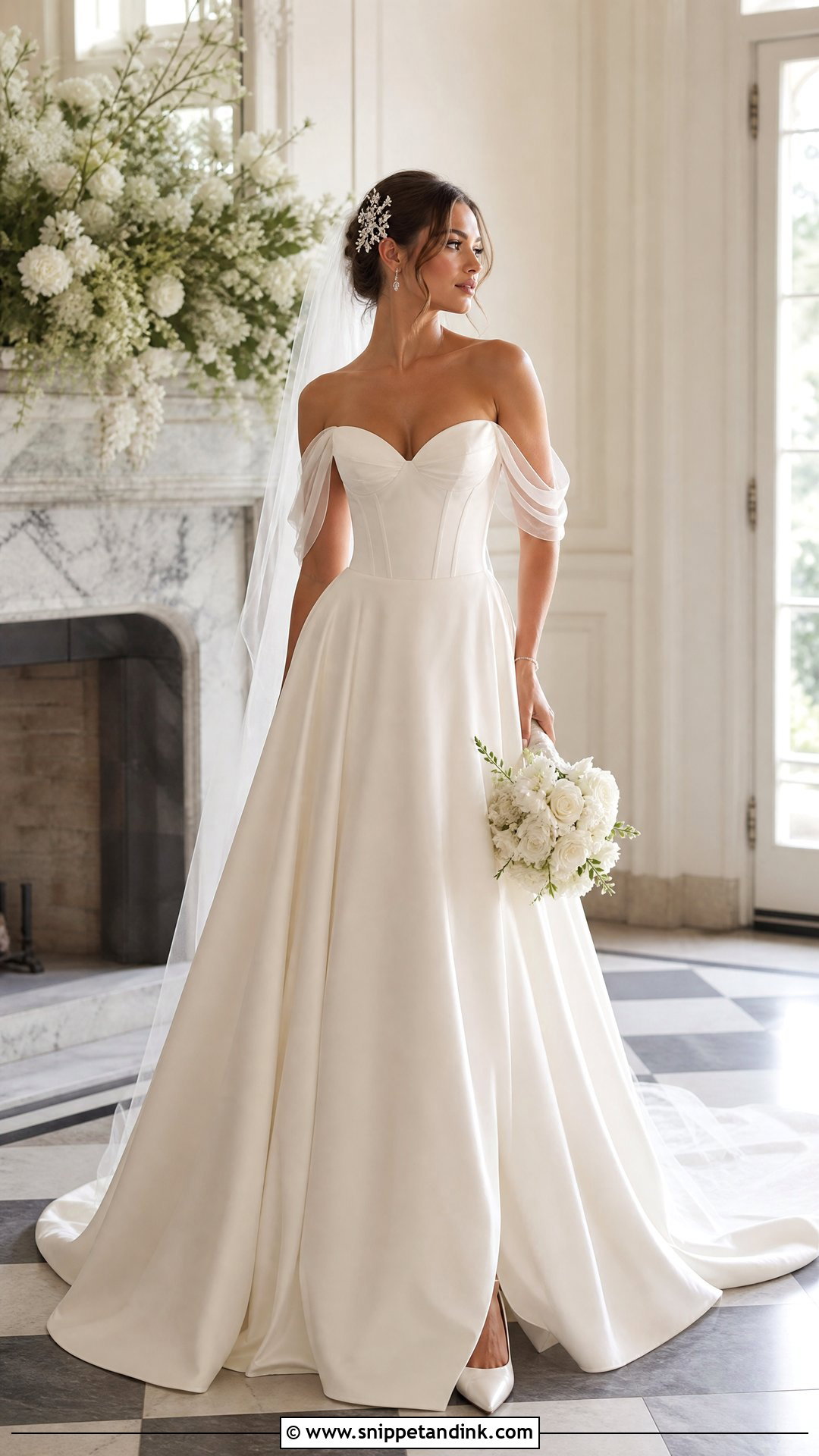
Off-shoulder sleeves look easy and are actually one of the fussier fits I deal with. The structured bodice has to do all the holding, because the sleeves themselves will slide if you rely on them. Pair it with a full A-line skirt or a fitted crepe one, then add a crystal hair comb, small earrings, pointed satin pumps and a chapel veil fixed below the hairstyle. Skip the necklace. At the fitting, hug someone and lift your arms to shoulder height. If the sleeves ride up or dig in, have them repositioned now, or look at removable sleeves you can drop after the ceremony.
6. Long Sleeve Lace Wedding Dress With Chapel Veil
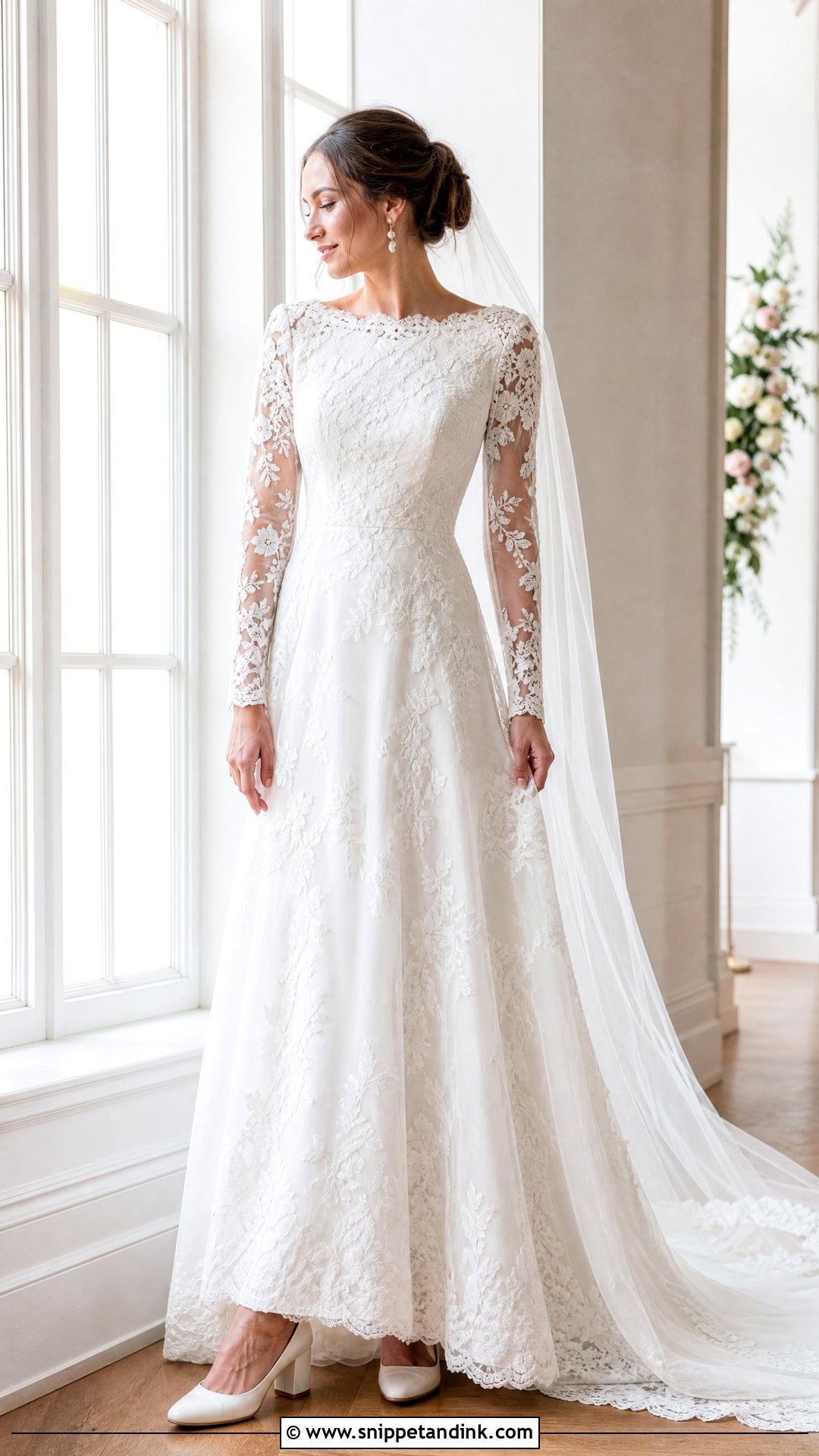
Long lace sleeves give coverage without weight when they’re cut from unlined illusion tulle, which is why I suggest them for autumn and church ceremonies more than heavy satin sleeves. Balance the detailed bodice with a flowing A-line skirt, then add a chapel veil, pearl drops and closed-toe block heels. A loosely pinned bun suits the texture. For a more current feel, choose lace with larger botanical motifs instead of tiny repeats; small patterns can blur into a grey haze in photographs. Brides who want full opacity can ask for a matching lining through the bodice and sleeves, and covered buttons at the cuffs finish it quietly.
7. Basque Waist Wedding Dress With Opera Gloves
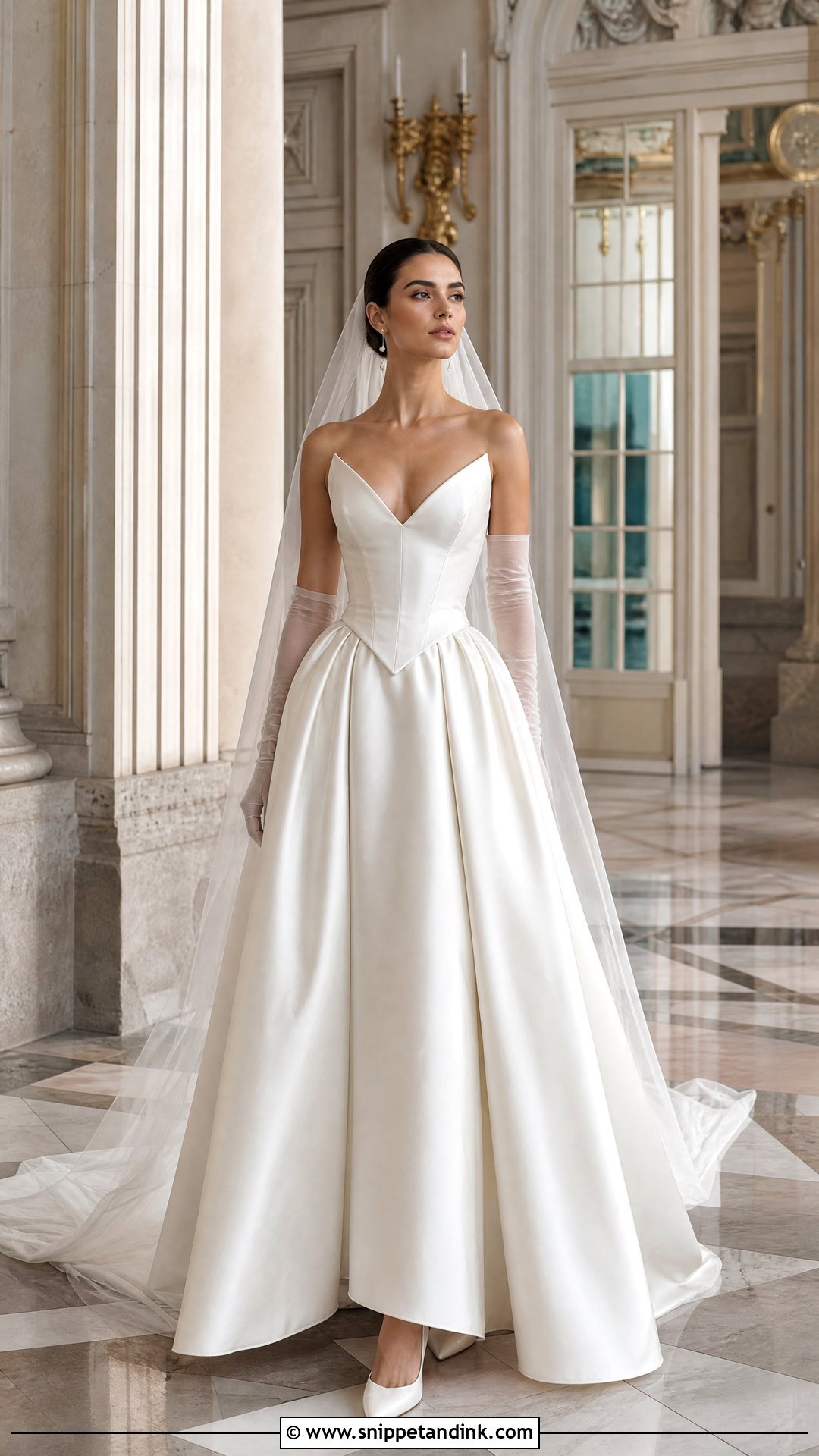
A basque waist dips into a V below the natural waist and makes the torso look long and sculpted. I pair it with a full satin or tulle skirt so the point stays obvious, then add sheer opera gloves, pearl earrings and pointed ivory heels. Keep the veil plain. The depth of the V should be set to your torso: on a short-waisted bride I bring the point up so it doesn’t cut the hip. Internal boning is non-negotiable here. For the reception, gloves off and smaller earrings, and the dress still has its drama while being easier to dance in.
8. Minimalist Crepe Wedding Dress With Statement Earrings
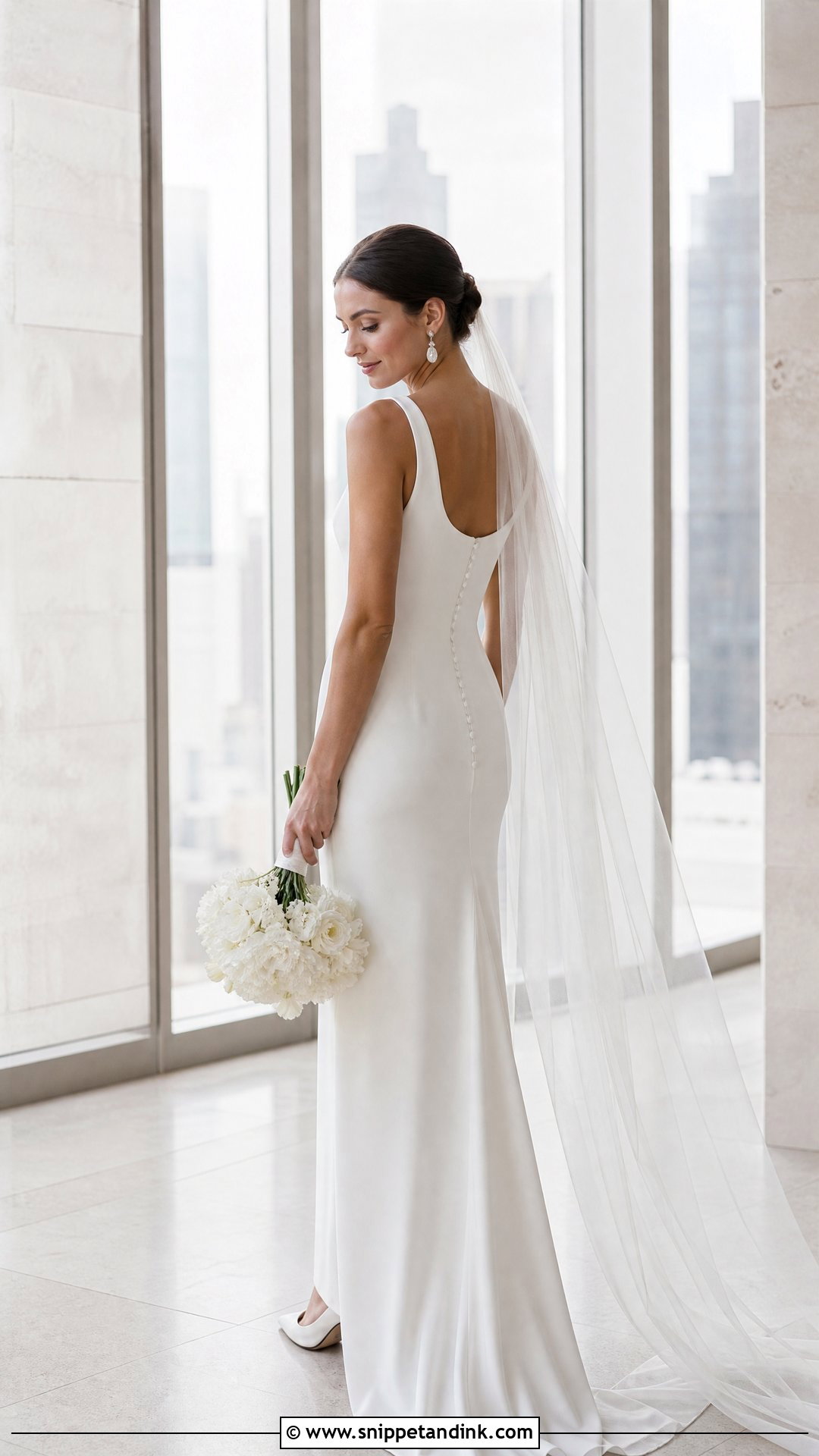
Crepe is honest fabric. It drapes smoothly, but it shows every pucker in a seam and every ridge of underwear, so a minimalist gown lives or dies at the fitting. I like a sheath or fit-and-flare silhouette with a bateau or soft scoop neckline, statement earrings, a sleek bun, pointed pumps and a single-layer veil. A structured bouquet gives shape without clutter. If you need support, ask for internal corsetry. Pack a fabric-safe stain pen too, because marks show more plainly on a smooth matte surface than on lace.
9. Boho Chiffon Wedding Dress With Floral Hairpiece
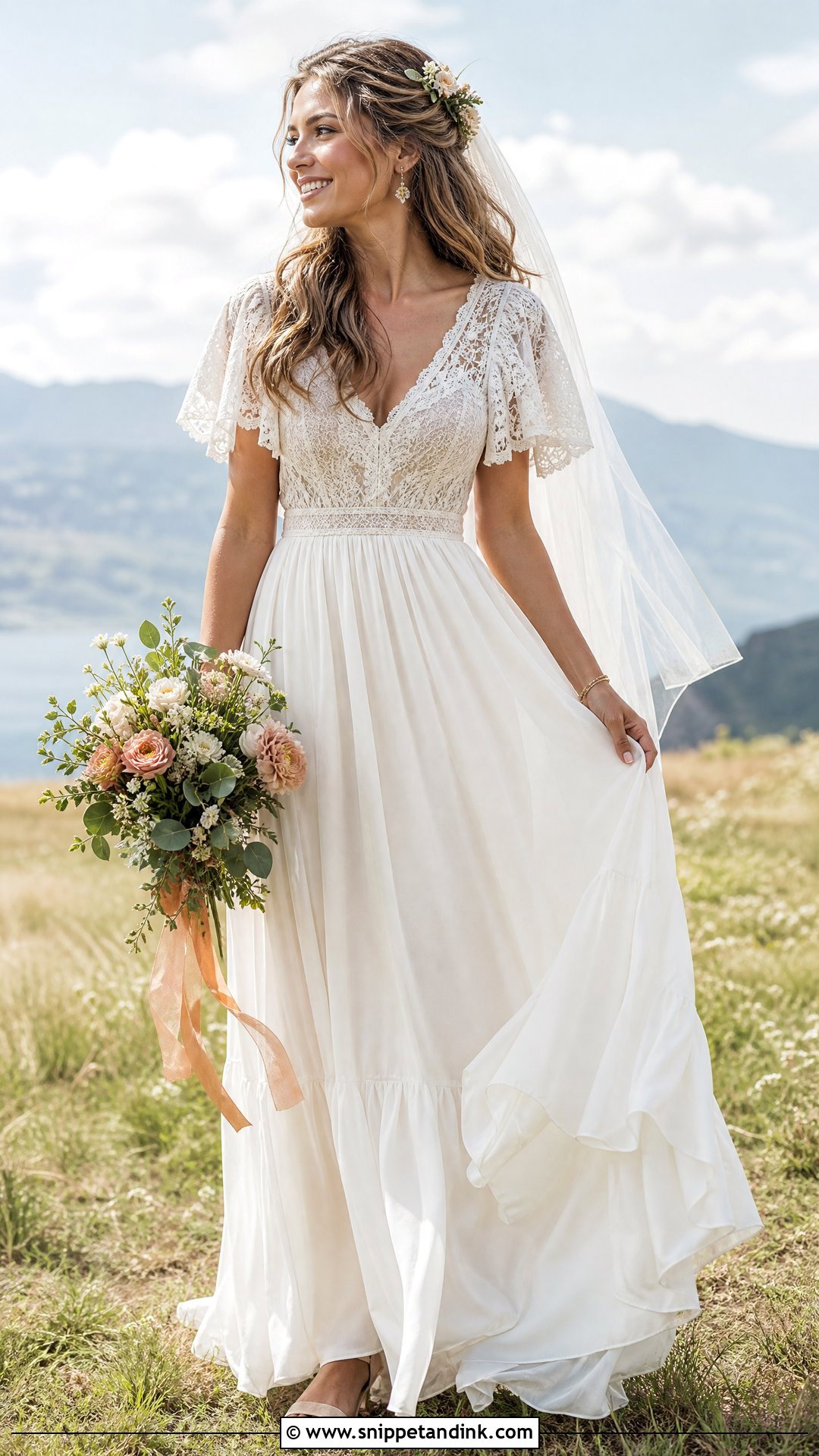
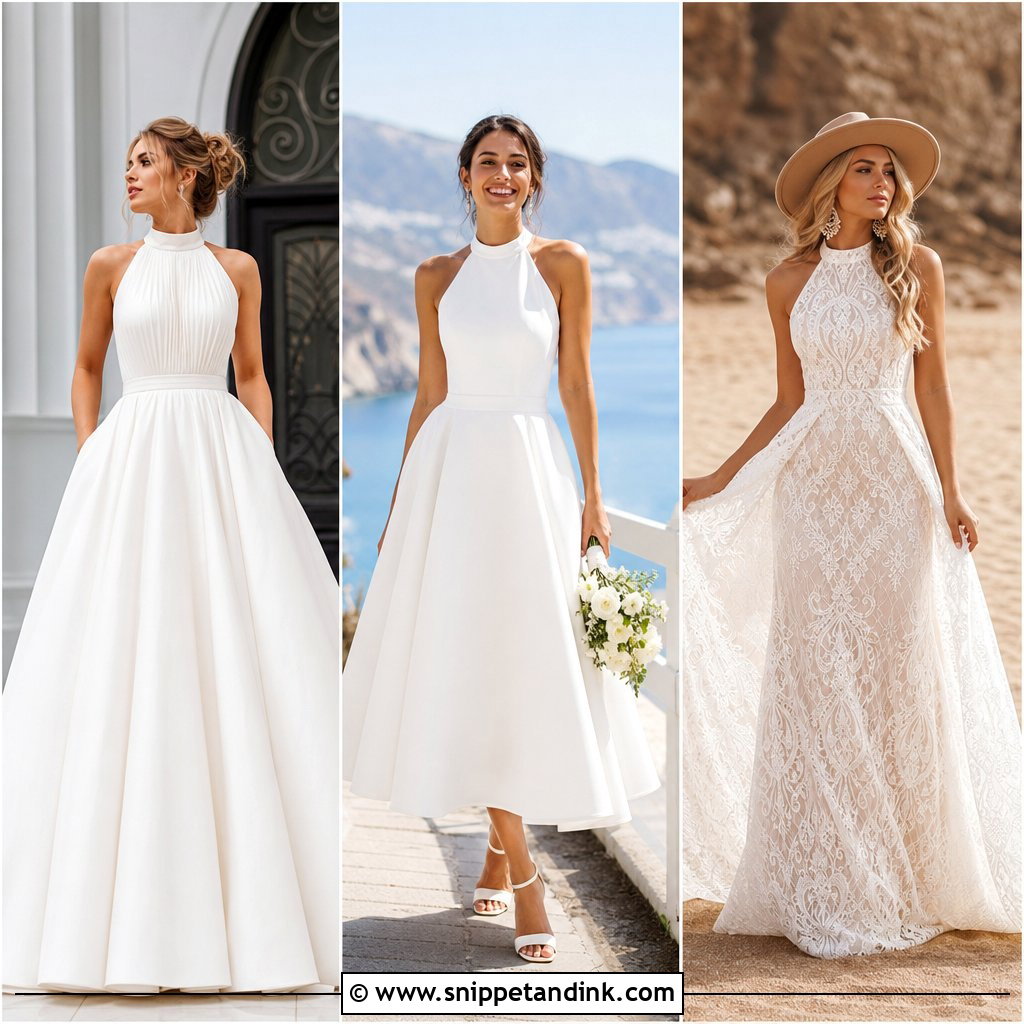
Chiffon moves with the slightest breeze, which is exactly what makes a boho dress feel right outdoors. I look for a light bodice with soft lace or flutter sleeves, and an empire or natural waist depending on where the bride wants definition. Loose waves, a floral hairpiece, delicate earrings and low block-heel sandals keep it grounded; heavy shoes make the whole thing look bottom-heavy. One thing to test in daylight: unlined or thinly lined chiffon can turn sheer in full sun, so stand by a window at your fitting before you sign off on the lining.
10. Tea-Length Wedding Dress With Block Heels
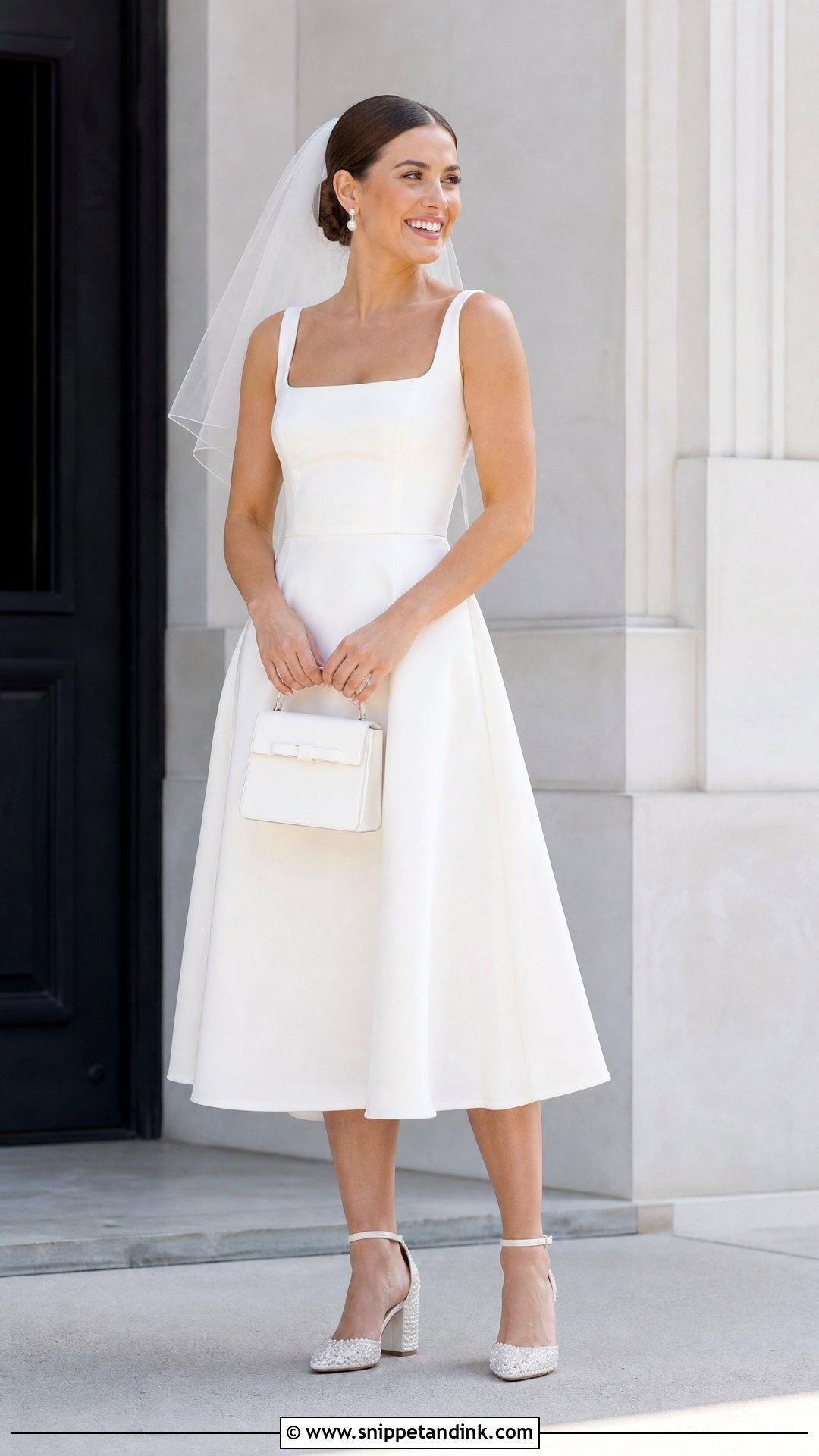
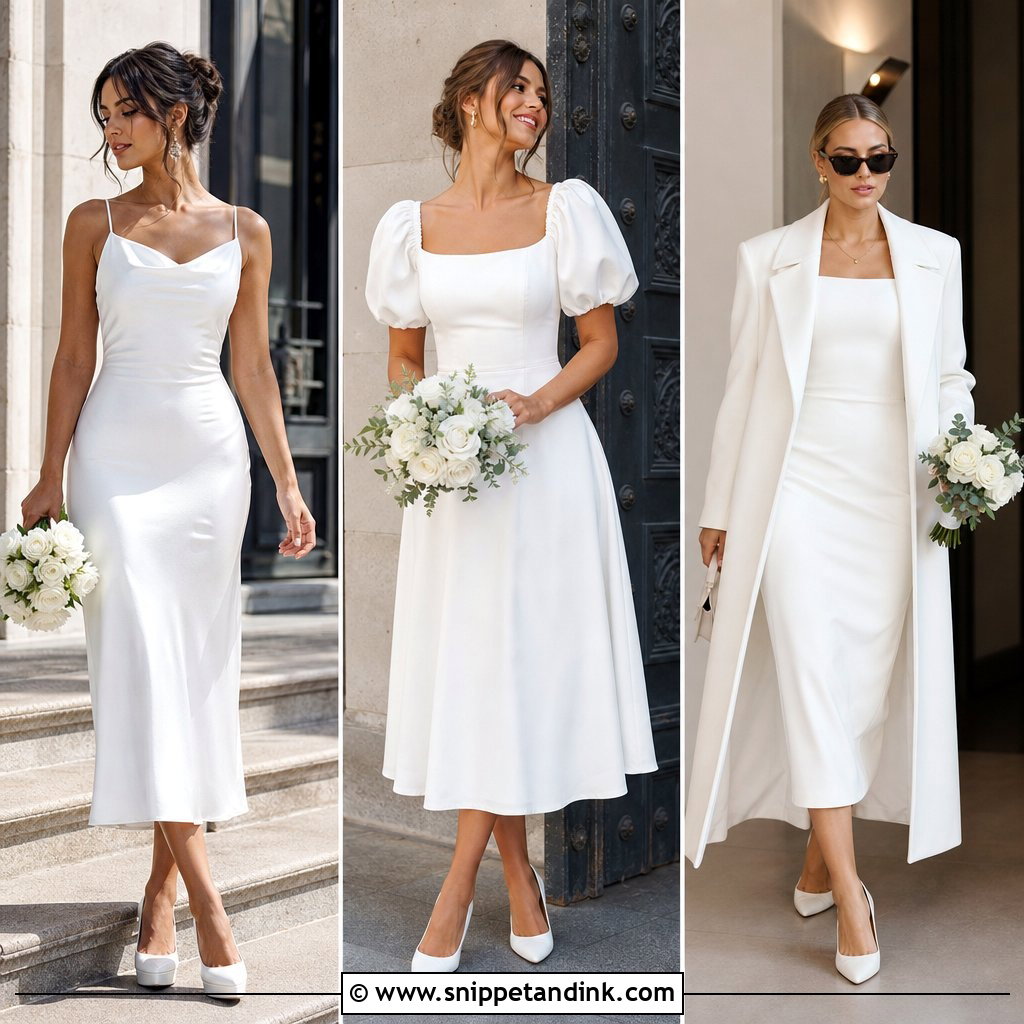
Tea length shows the shoes, so choose them as carefully as the dress. The hem lands between knee and ankle, and a fitted bodice over a softly flared skirt gives that vintage outline. I add pearl earrings, a short veil, embellished block heels and a small structured bag. There’s no train, which makes this my usual suggestion for courthouse weddings and brides who are travelling with their dress. Hem length is personal: I mark it with the actual wedding shoes on, because two centimetres of extra ankle changes the whole proportion. Pockets or detachable sleeves are easy additions.
11. Floral Appliqué Wedding Dress With Tulle Veil
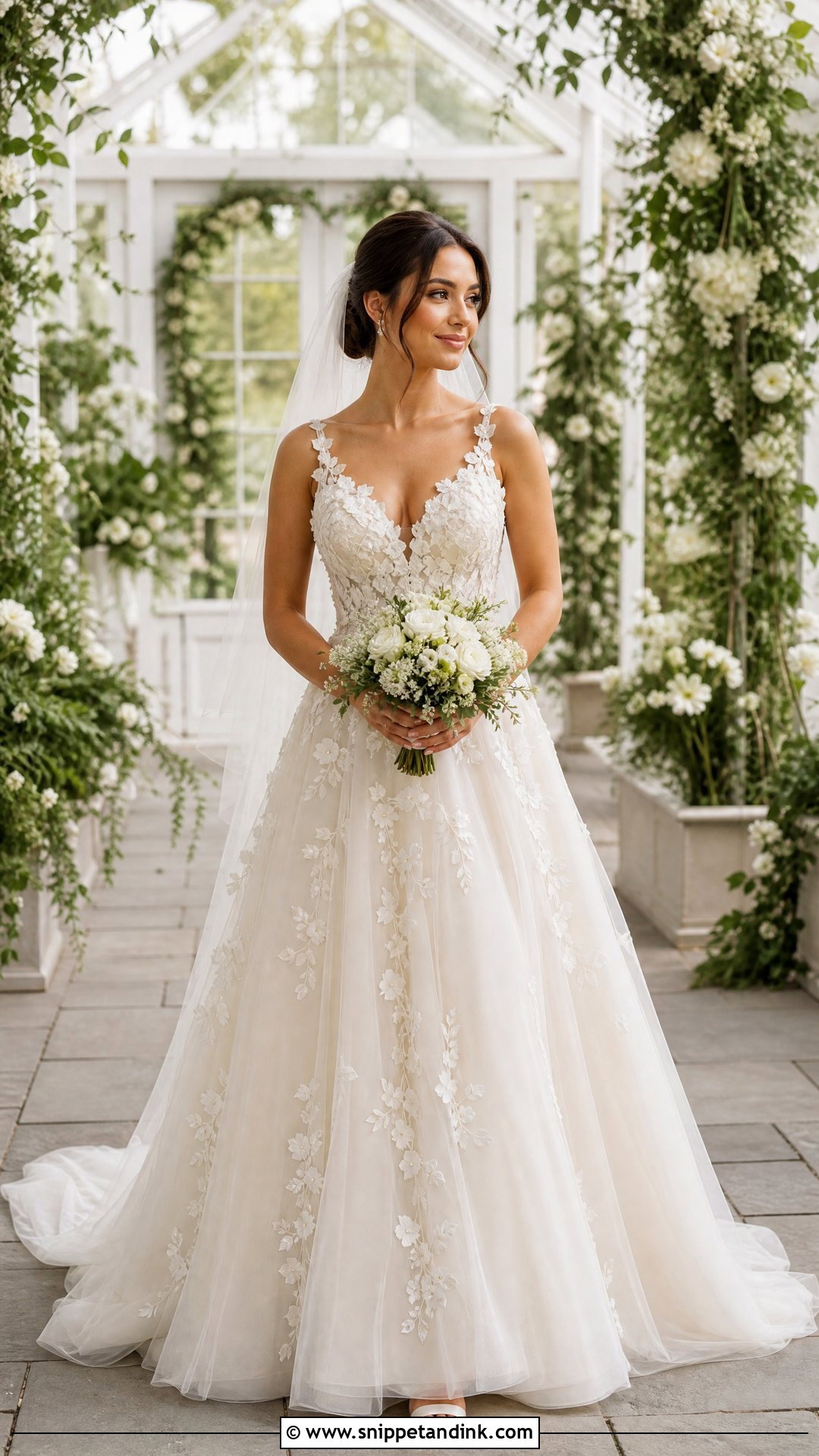
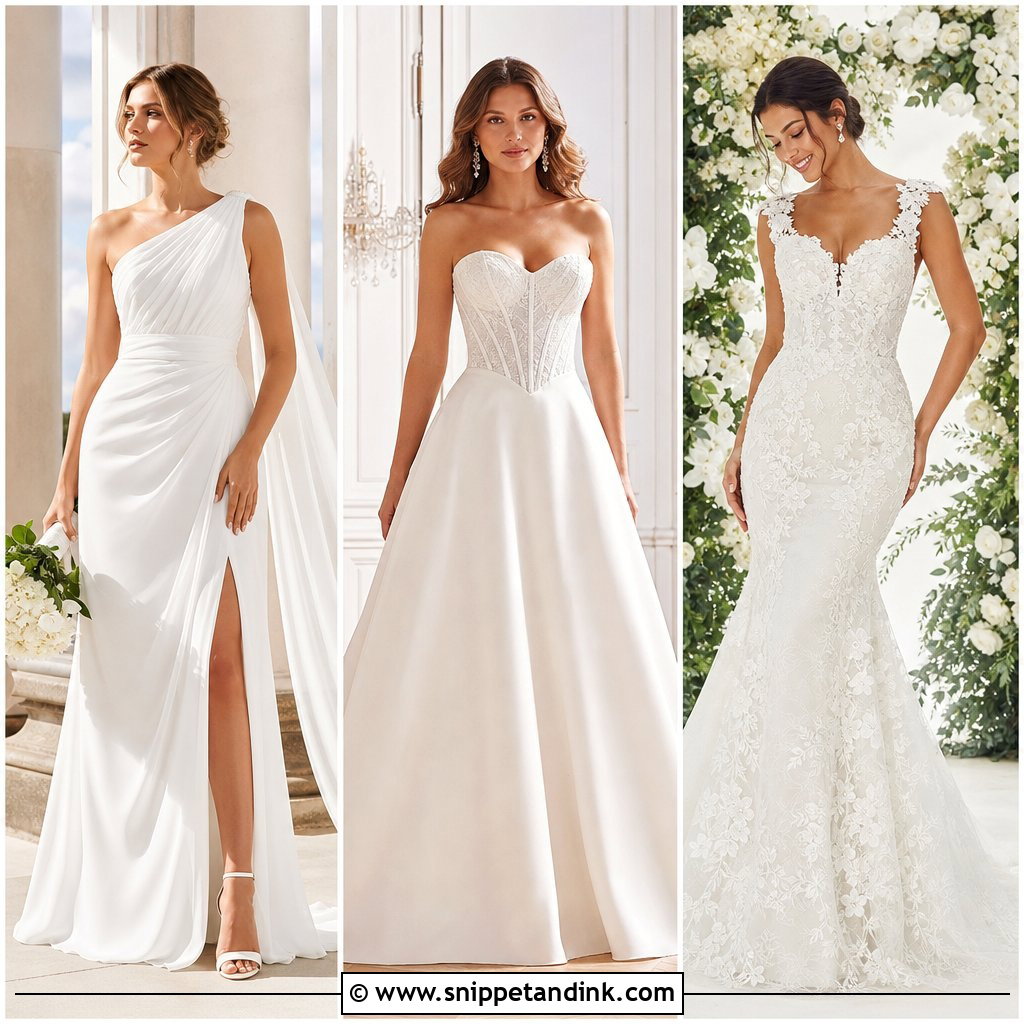
Floral appliqué gives texture you can almost touch. The best versions cluster the flowers on the bodice and scatter them down an A-line or ball gown skirt so the density fades. Accessories stay simple: a plain tulle veil, small crystal studs and satin heels. I always check the inner arm. Large raised flowers placed right under the arms rub skin raw over a long day, and that’s an easy fix if it’s caught at the first fitting. Pale blush, champagne or light blue embroidery adds a hint of colour. These suit garden and estate venues, but they soften a formal room too.
12. Pearl Beaded Wedding Dress With Satin Pumps
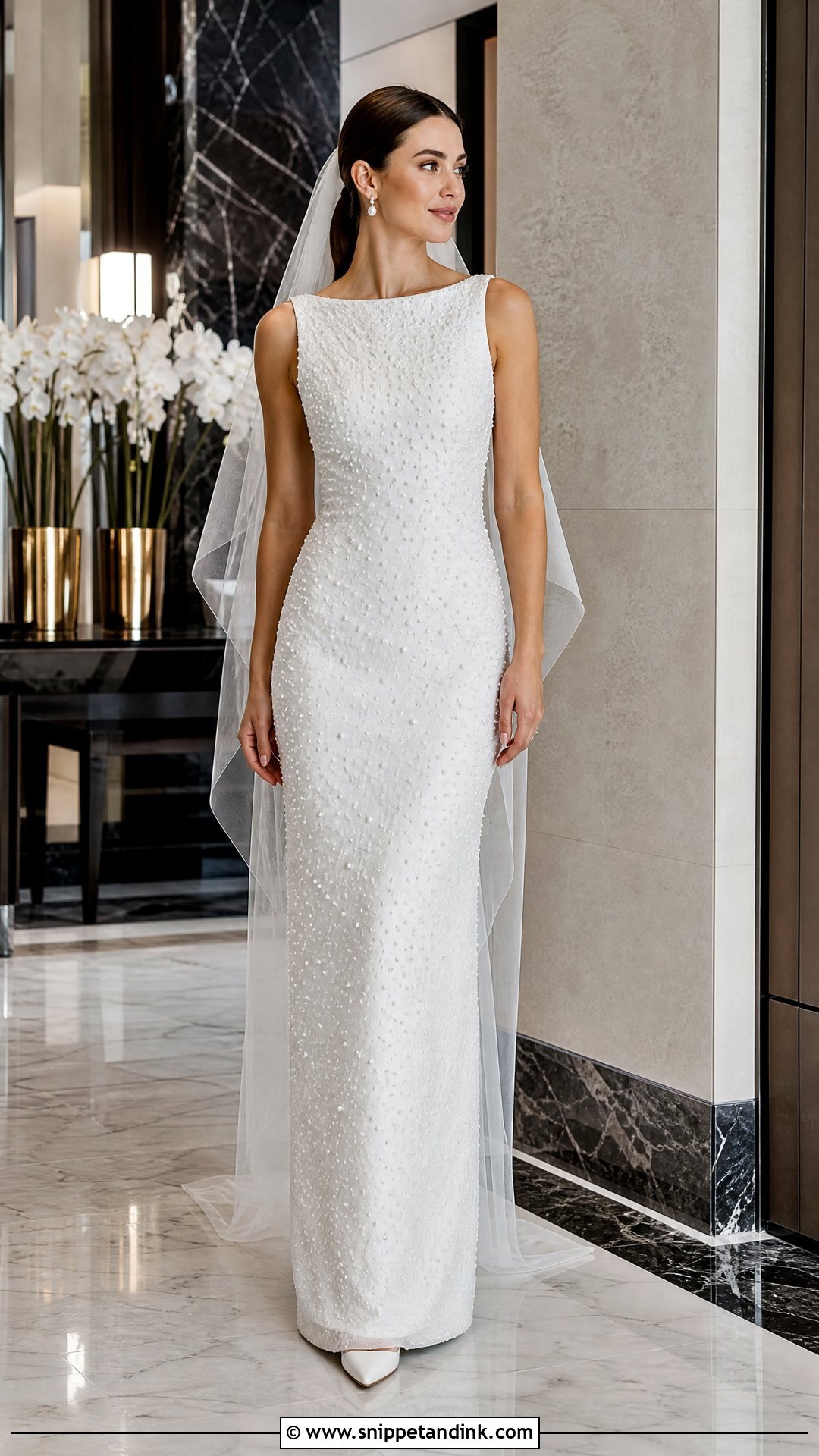
Pearls catch the light softly where crystals flash, so a pearl-beaded gown photographs warm rather than sparkly. I prefer the beading concentrated around the neckline and bodice of a column or fitted A-line, finished with satin pumps, pearl earrings and a plain fingertip veil. A low ponytail or smooth chignon keeps the work visible. Turn the bodice inside out before you commit: heavy beading needs a full lining or it scratches. Weigh the dress in your hands too. A fully beaded skirt can be surprisingly heavy by evening, so for summer I steer brides toward scattered pearls and a reinforced bustle.
13. Corset Bodice Wedding Dress With Bow Veil
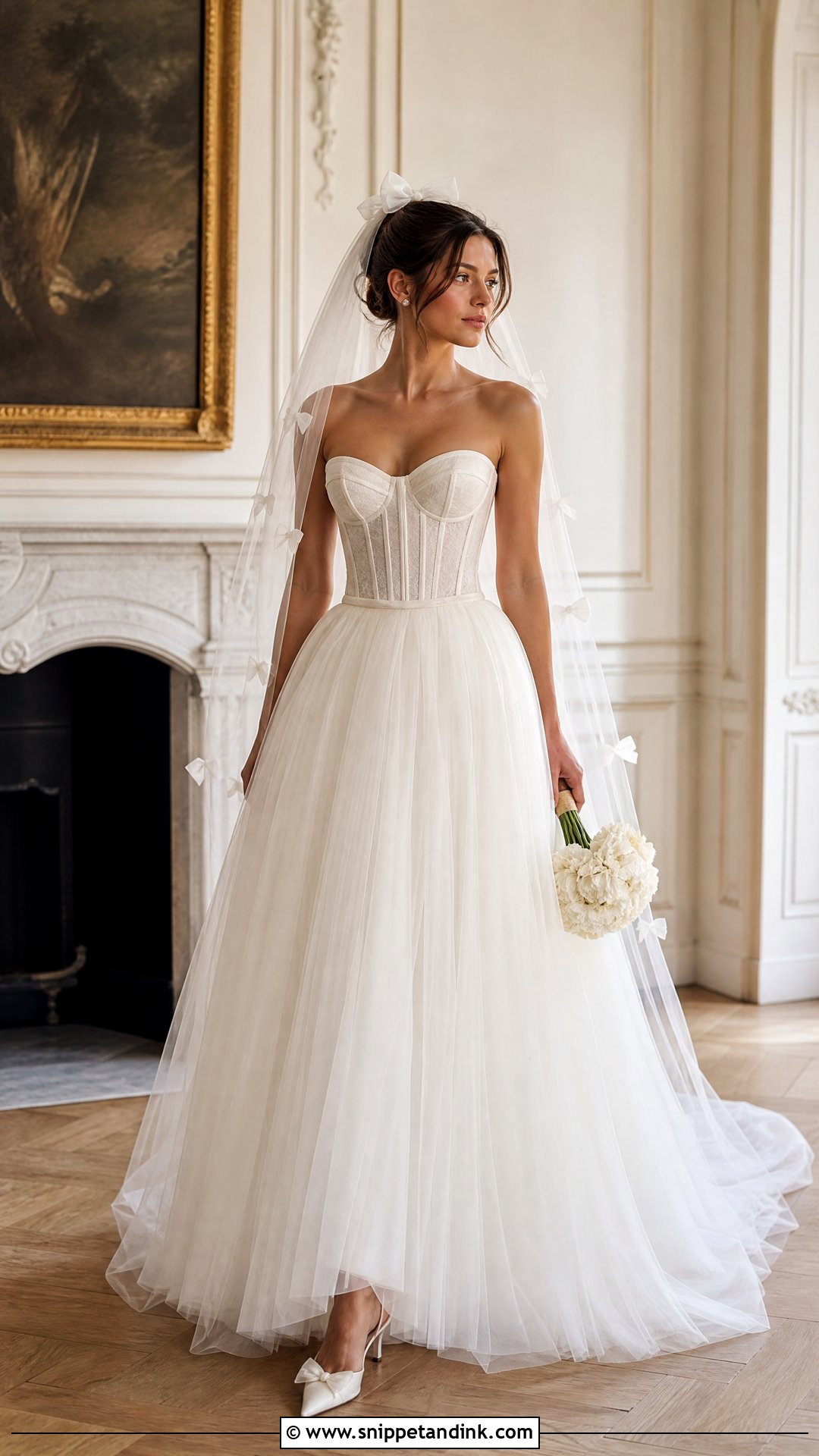
A corset bodice should support you, never pinch. Fitted properly, it shapes the waist and adjusts on the day. I pair it with an A-line satin skirt or layered tulle, a bow-trimmed veil, small studs and pointed slingbacks; the bow adds character without hiding the boning. If the bones show, a full lining gives coverage and illusion panels keep it light. My test is to sit, bend forward and lift both arms. The neckline must stay put. A lace-up back gives some flexibility if your weight shifts before the wedding, while a zip looks cleaner.
14. Drop Waist Wedding Dress With Long Veil
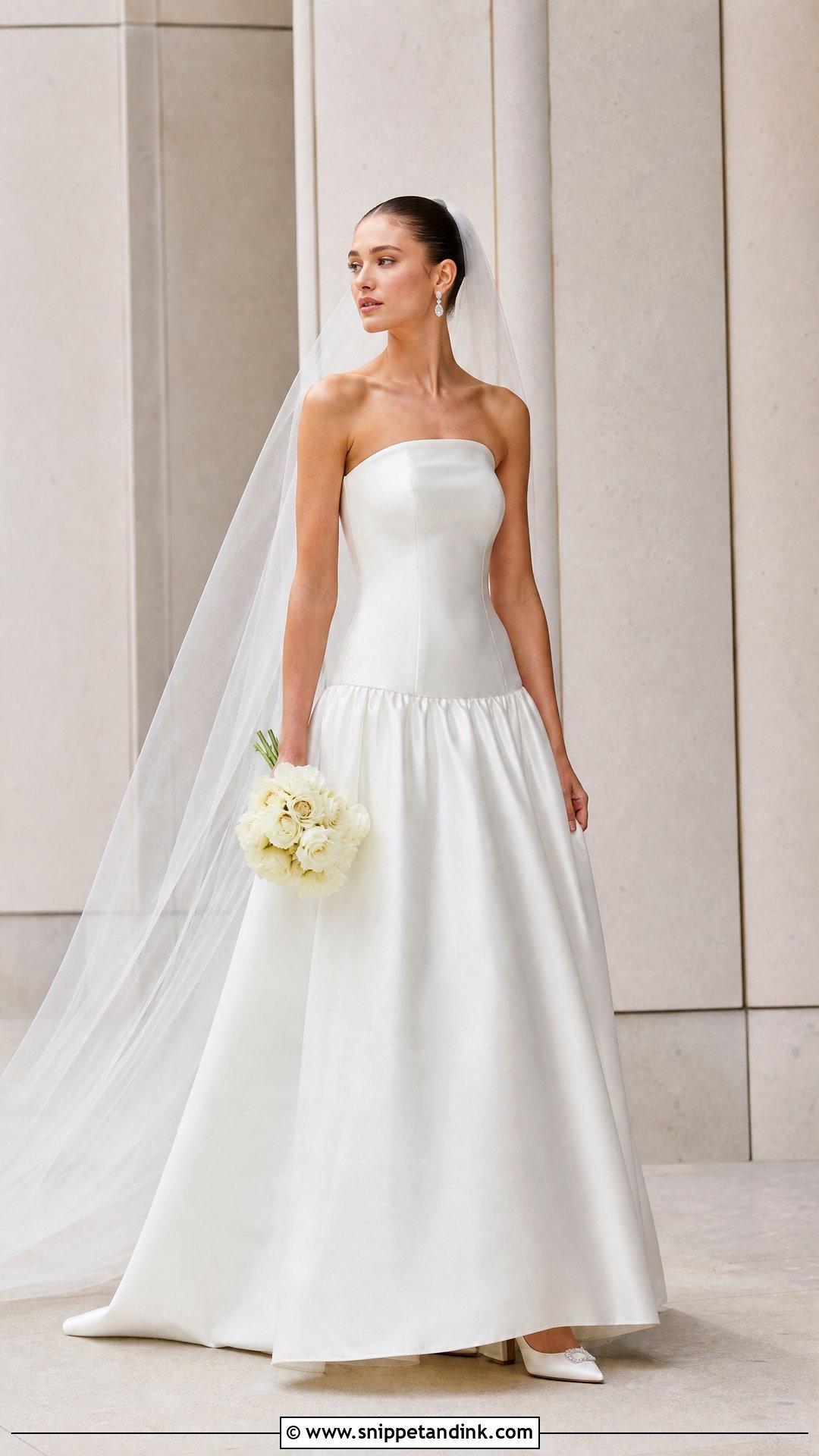
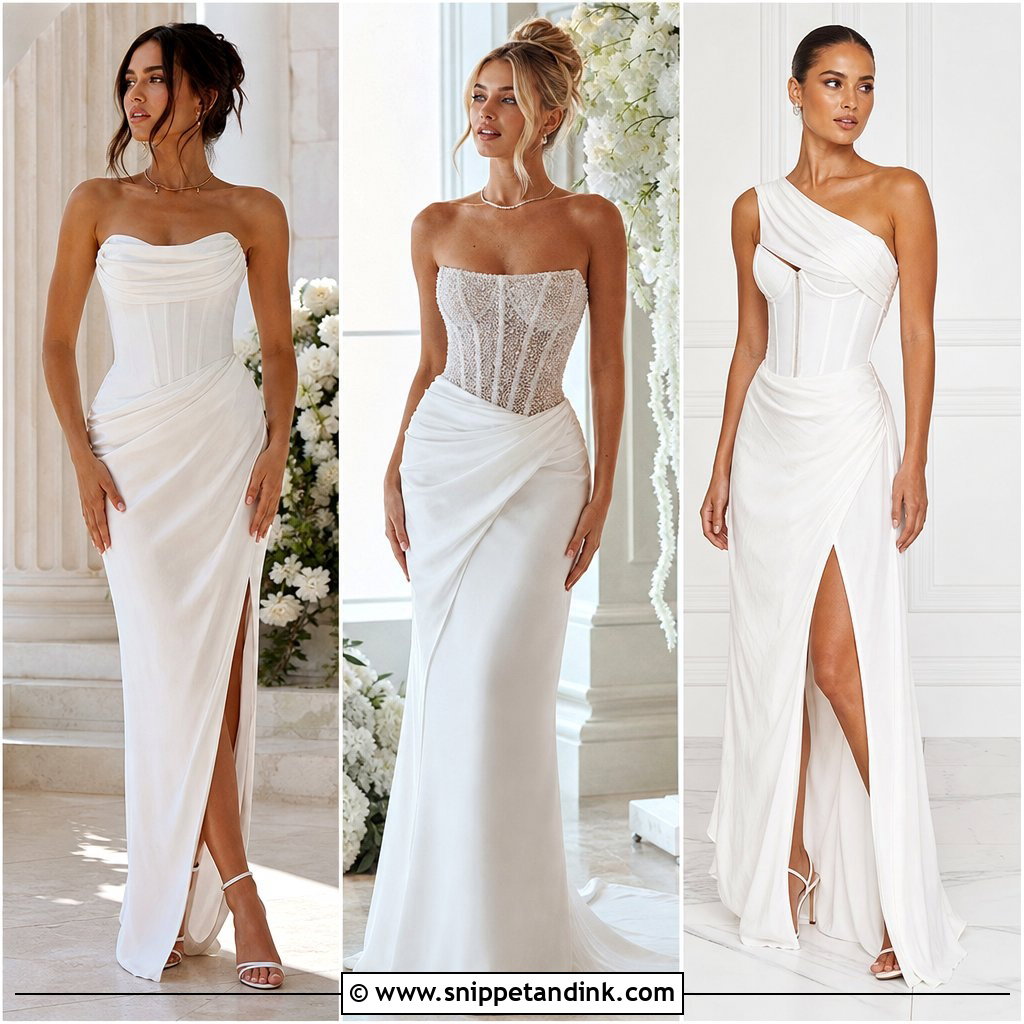
A drop waist starts the skirt below the natural waist, so the bodice runs long and sleek. Structured satin makes it sculptural; tulle softens it. Strapless or square necklines suit the extended line, finished with a long sheer veil, crystal earrings and slim closed-toe heels. Keep the bouquet compact or it covers the seam. Longer torsos carry this most easily, though the seam can be moved. Sitting is the issue I check most, since the fitted section reaches the hip; a hidden waist stay helps, and a removable overskirt gives ceremony volume you can drop later.
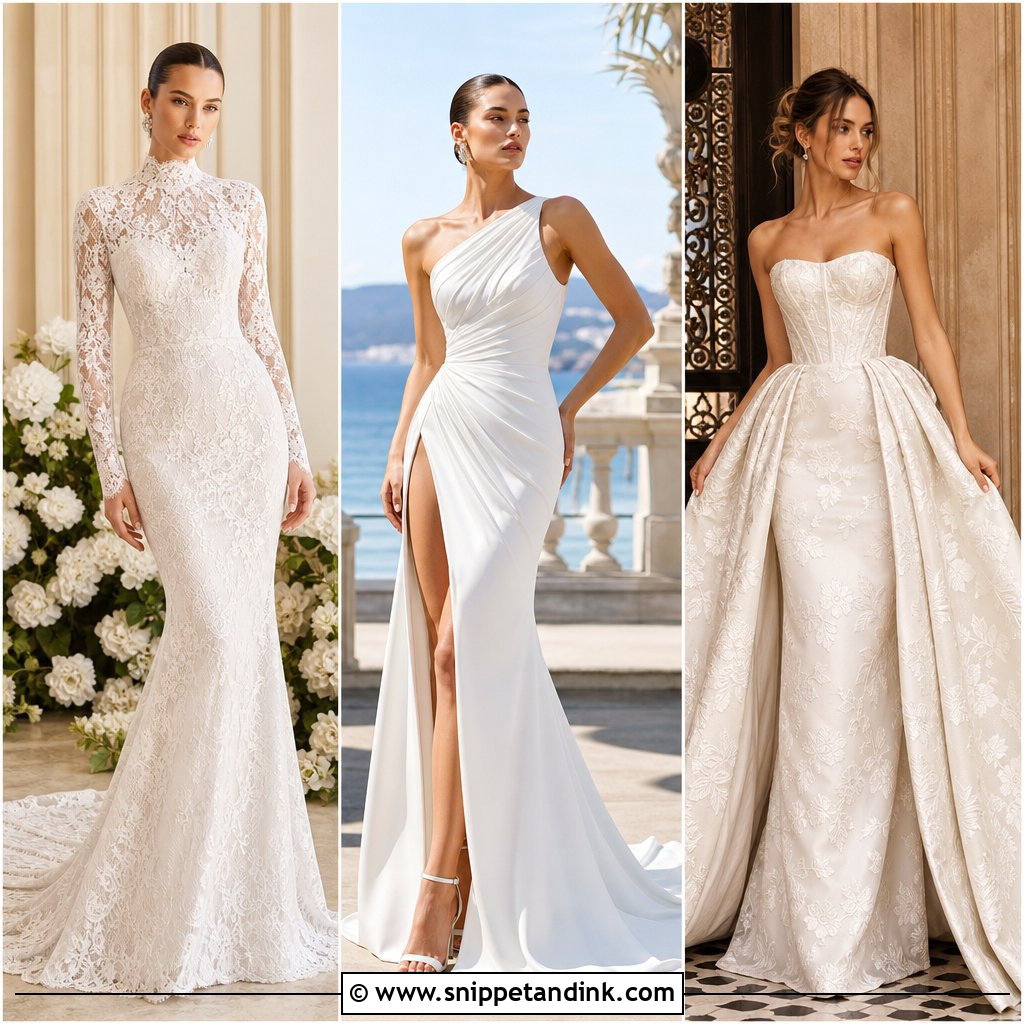


15. High Neck Wedding Dress With Pearl Hair Pins
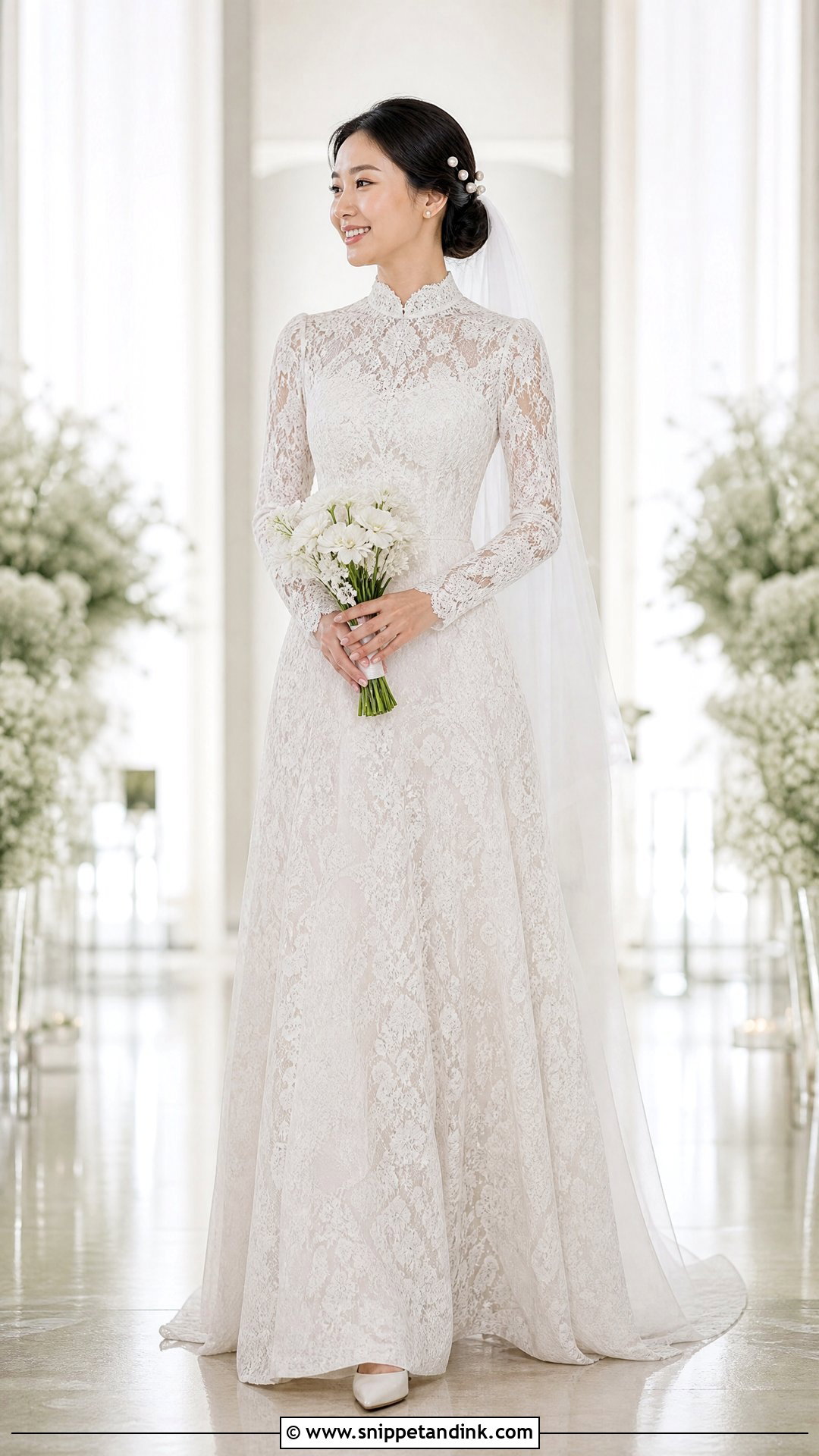
A high neck pulls the eye up to the face, which is why I love it with a low bun and pearl hair pins. Sheer lace, soft crepe or light satin keep it from feeling heavy, and a fitted bodice over a flowing skirt balances the coverage. Add small earrings and pointed ivory heels, and skip the necklace entirely. Fix the veil under the bun so the back detail shows. On a shorter neck I suggest a narrow stand collar or a sheer lace panel instead of a full mock neck. Watch the shoulders at fittings: any pull across the chest shows up as diagonal folds below the collar.
16. One-Shoulder Wedding Dress With Metallic Heels
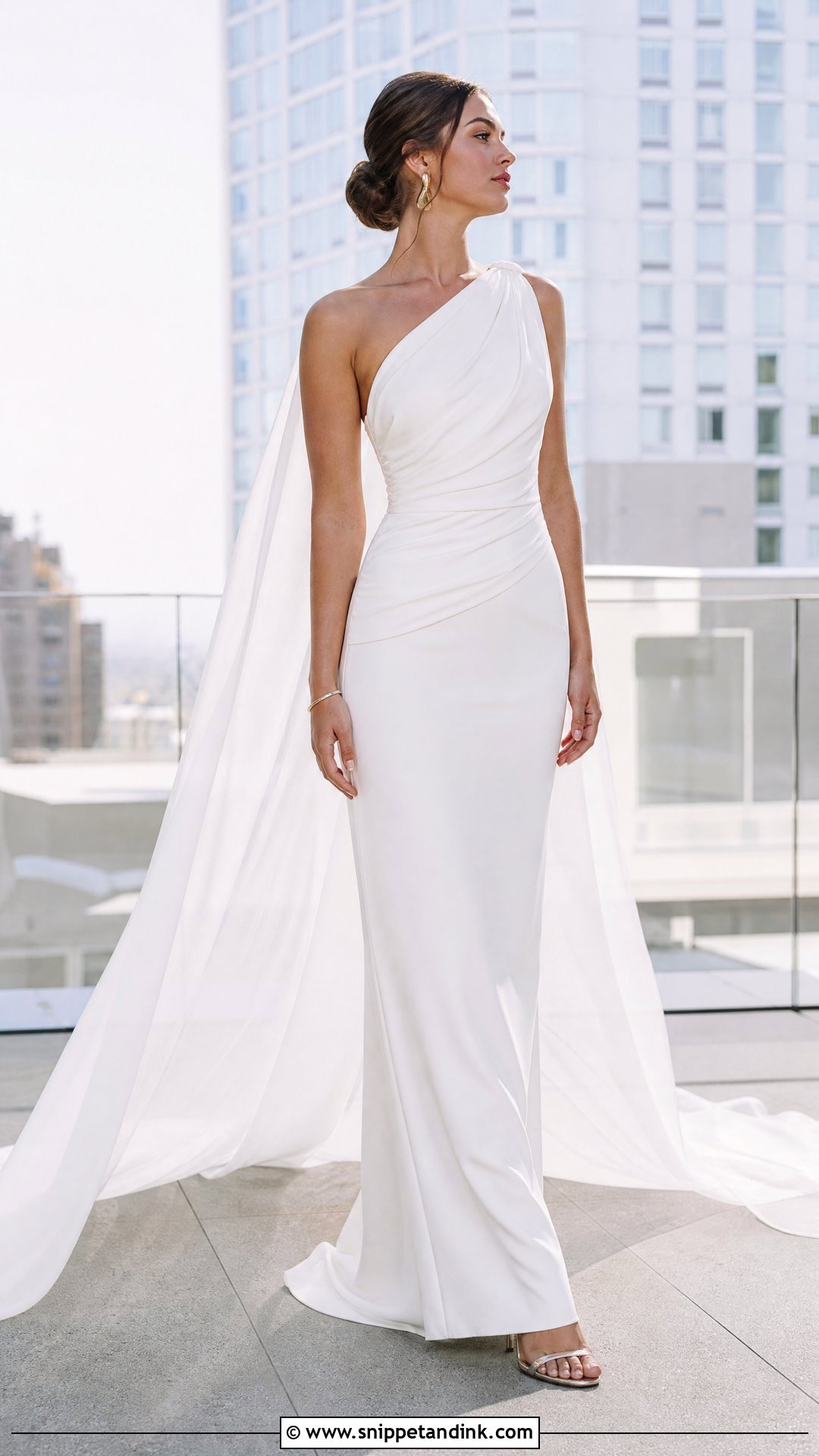
One bare shoulder gives instant modernity with almost no embellishment. Draped crepe makes a smooth column; structured satin can carry a fuller skirt. I add metallic heels, one slim bracelet and earrings with clean lines, and take the hair into a low side bun or sleek ponytail so the neckline stays clear. A cape-style veil attached at the back keeps the asymmetry intact, where a traditional veil would cover it. The single strap carries more load than you’d think, so I ask for internal boning or a grip tape along the bodice edge. It suits rooftops, galleries and hotel ballrooms.
17. Cape Sleeve Wedding Dress With Pointed Heels
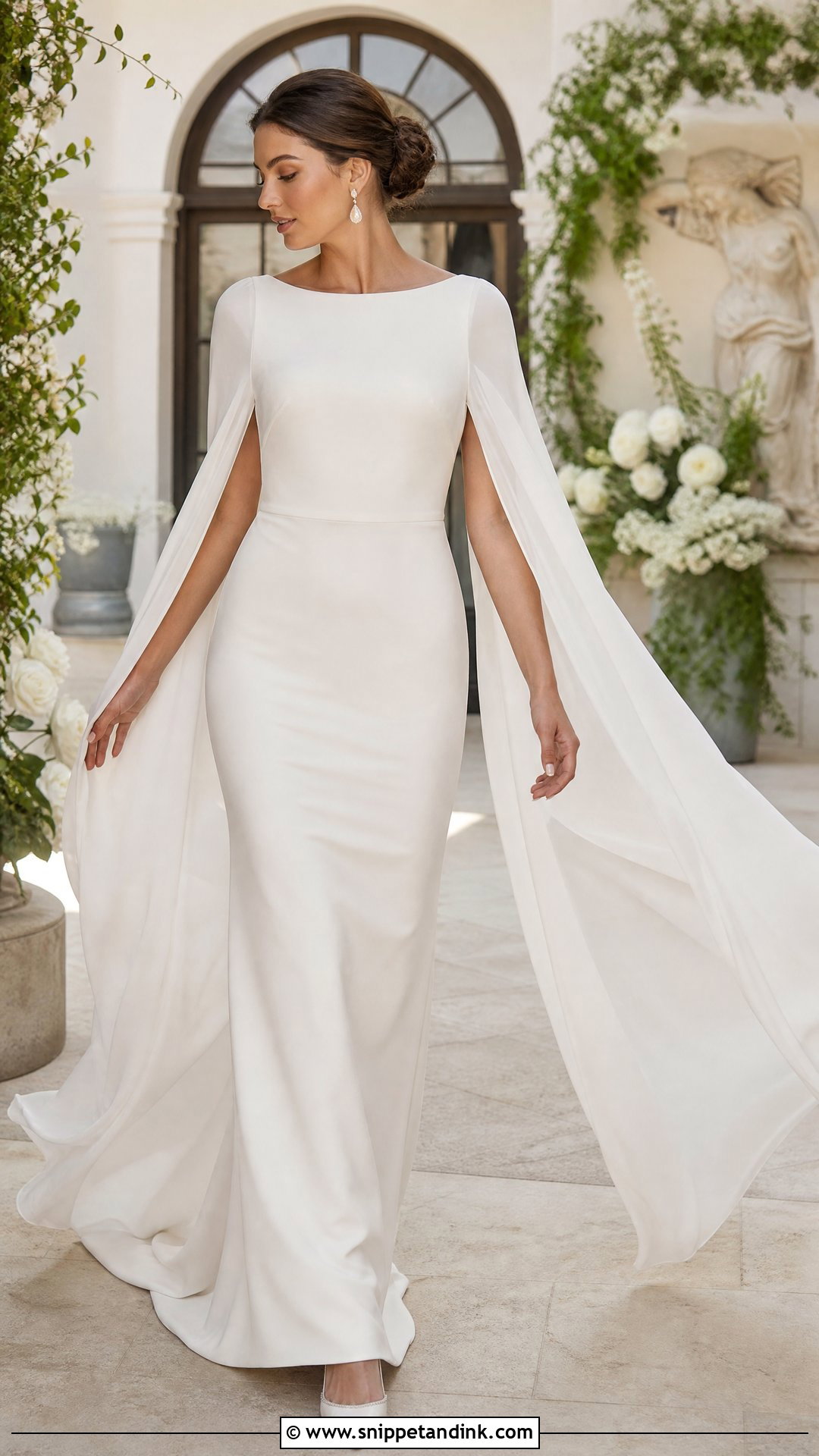
A cape sleeve gives coverage and movement without the tight feeling of a fitted sleeve. Chiffon or sheer tulle panels can fall from the shoulder to the floor around a simple sheath or A-line. Pointed heels, small drop earrings and a polished updo are all it needs. The cape already reads a bit like a veil, so a separate one is optional; if you want both, keep the veil short and plain under the hairstyle. Lightweight fabric matters here, since a heavy cape drags on the shoulder seams all night. I’d ask for it to be detachable so the reception look is the sleek dress underneath.
18. Wedding Dress With Detachable Overskirt And Veil
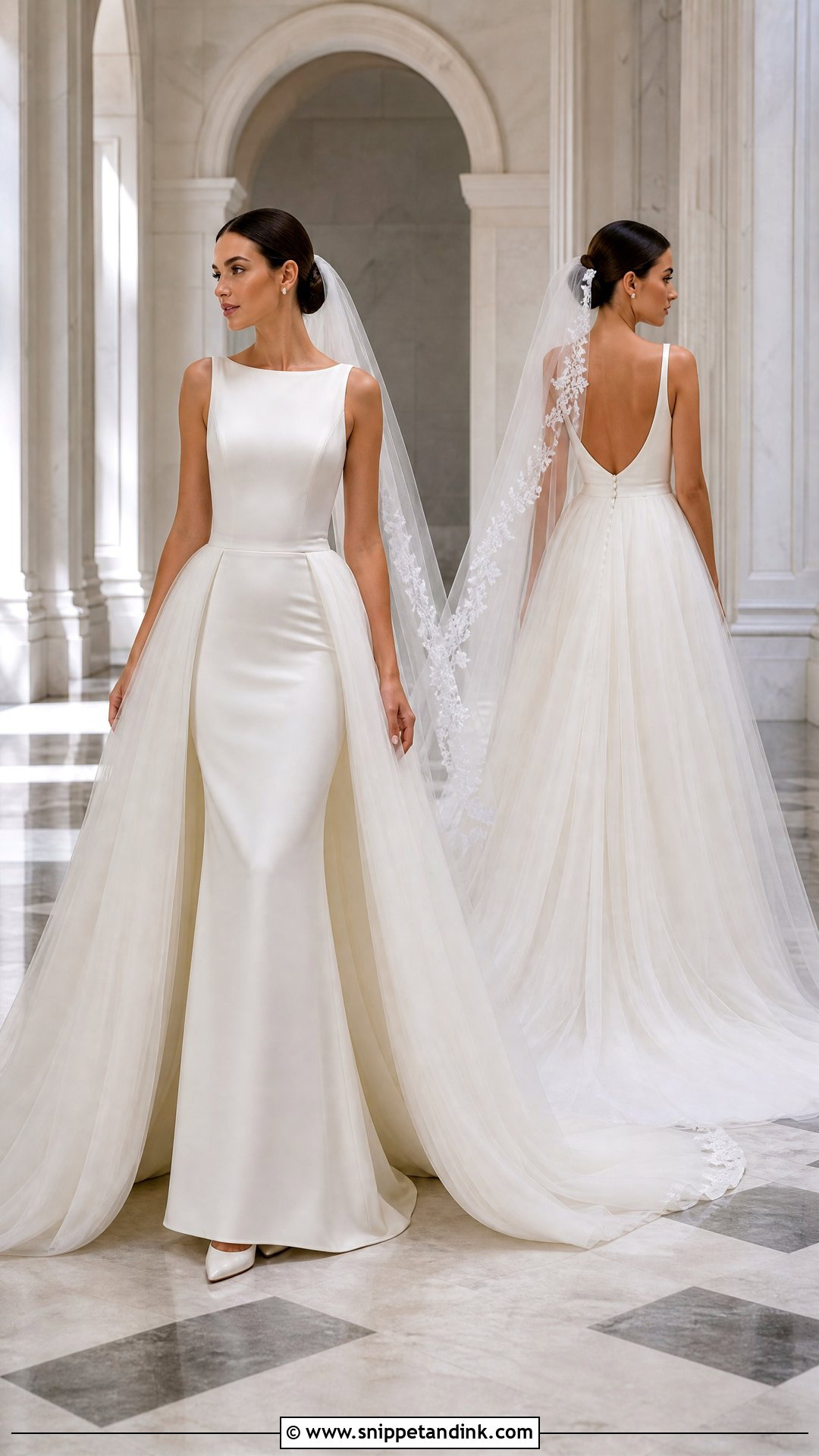
A detachable overskirt gives you two looks from one fitting schedule. The ceremony version is a fitted crepe, lace or satin gown under a full tulle or structured overskirt, with a cathedral veil, crystal studs and pointed pumps. After portraits, both come off and the slim silhouette appears, which means easy dancing without a complete clothing change. Ask your seamstress to hide the attachment points so the base gown looks finished. Then hold both layers up to a window. Bright white, ivory and champagne can look identical under shop lights and clearly mismatched outdoors.
19. Plus-Size Empire Waist Wedding Dress With Block Heels
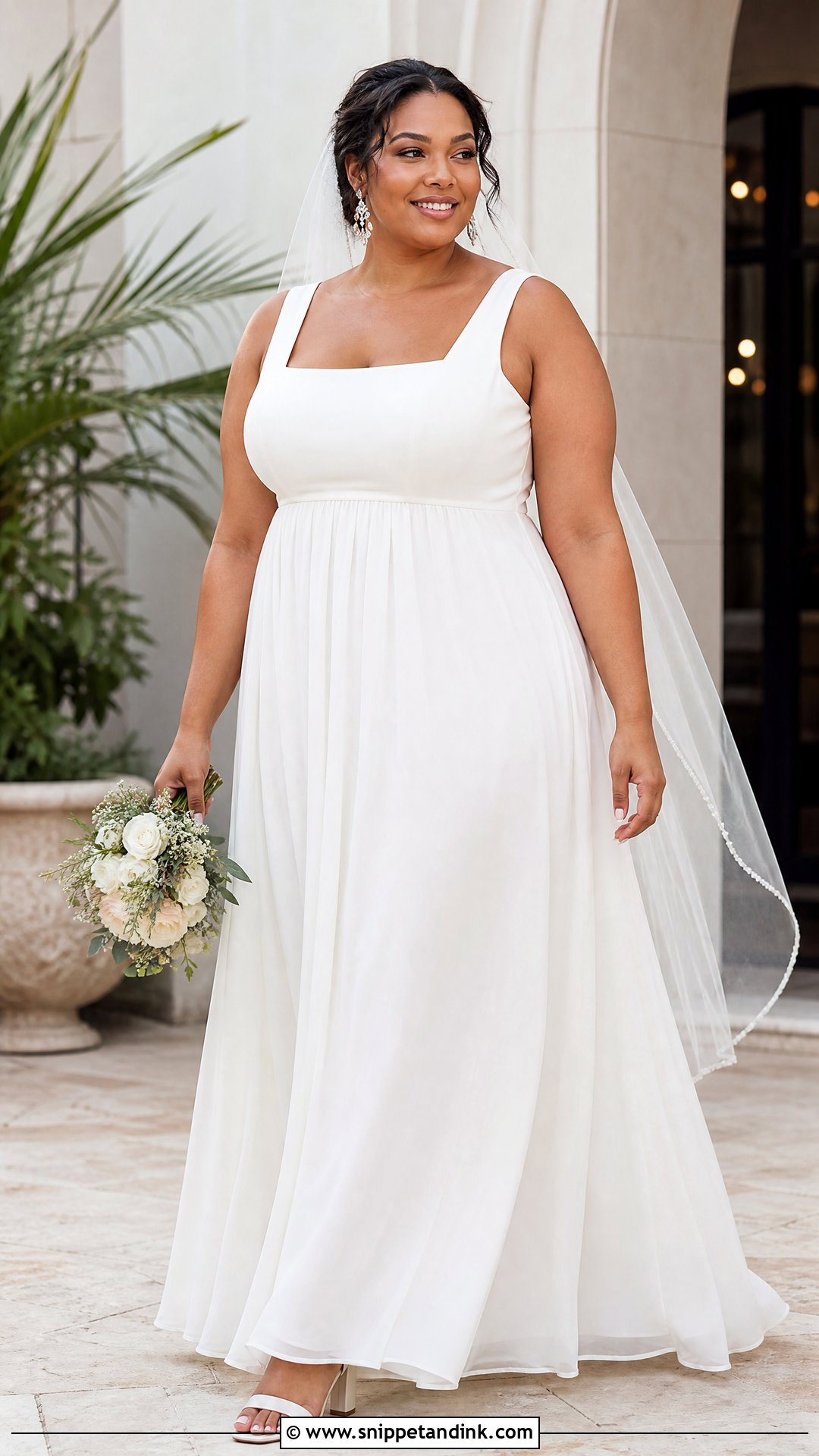
Support has to be designed into a plus-size gown, not patched in later. An empire waist defines the body just under the bust and falls into soft chiffon or tulle; I pair that with wide straps, a lined supportive bodice and seams placed where they lift rather than flatten. A soft V or square neckline frames the upper body. Block heels, statement earrings and a fingertip veil finish it. One habit I discourage is ordering a size up to fit one area; a good alterations team takes in what’s loose far more cleanly than it can let out. Choose a breathable lining so the skirt doesn’t cling.

20. Short Reception Wedding Dress With Embellished Flats
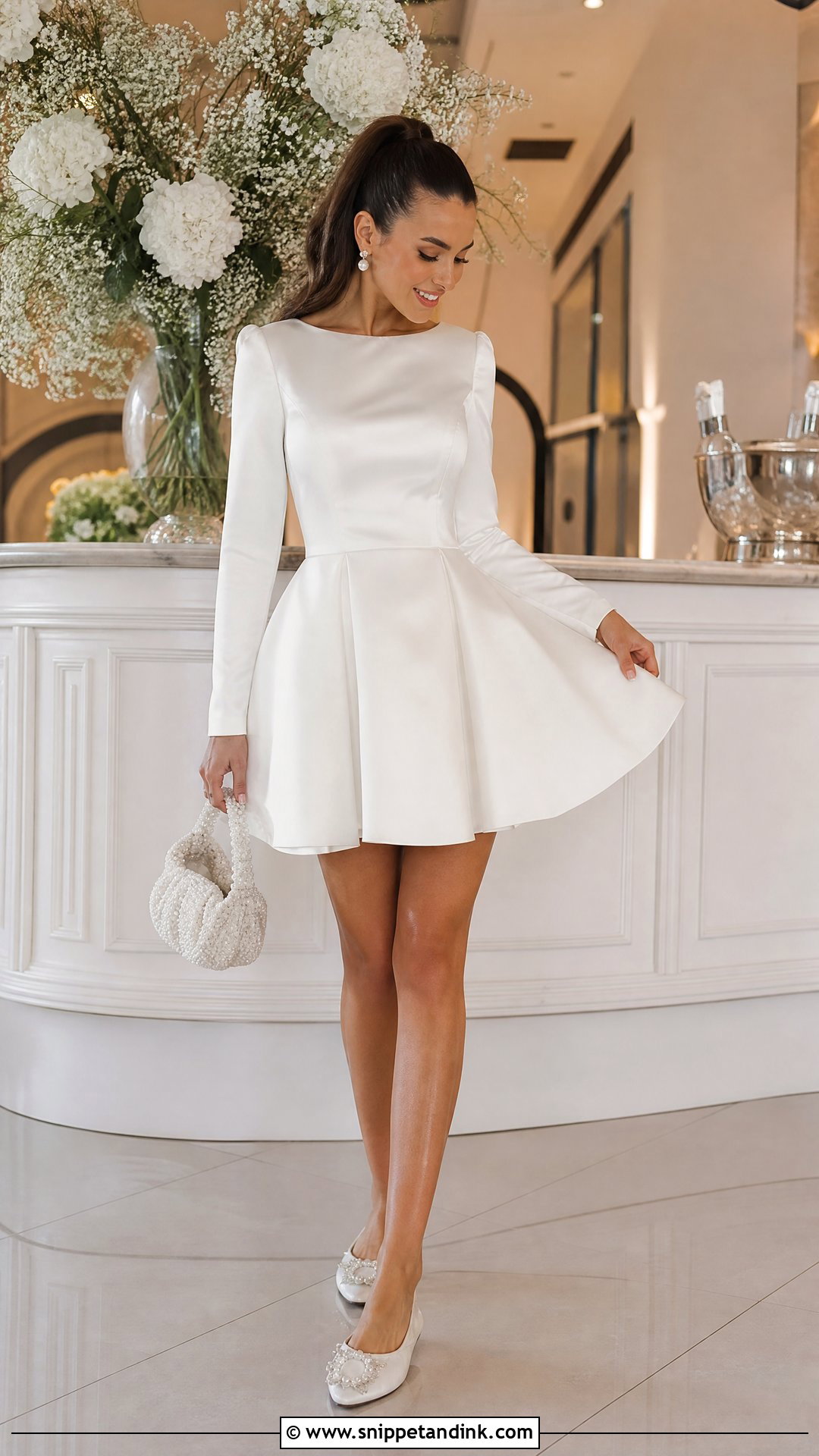
Once the portraits are done, a short reception wedding dress gives you your legs back. I like a structured mini or knee-length cut with a fitted bodice and flared skirt, worn with embellished flats, pearl drops and a small bag. A ponytail or loose waves signals the change of pace. Fabric is what keeps it bridal: satin, crepe, lace or beading, never a party-dress polyester. Wear your ceremony earrings again to tie the two looks together. Practise the change itself once; if you can’t get into it alone in five minutes, choose a simpler closure.
Which Bustle Holds Up Your Train
Almost every gown with a train needs a bustle for the reception, and the style changes how the back of the dress looks for the rest of the night. It’s one of the questions I make sure gets answered at the second fitting, not the last one.
Over bustle
Hooks or buttons lift the train up to the waist, creating soft swags. It’s quick and suits satin and tulle, but a very heavy train puts strain on a single point, so I ask for several.
French bustle
Ribbons inside the skirt tie the train underneath, making a tucked, layered effect. It’s secure and pretty on ball gowns. The ribbons are colour coded, which matters, because someone other than you will be tying them in a dim corridor.
Ballroom bustle
The train folds up invisibly so the skirt looks floor length all around. It takes more fastening points and more time to tie, but on lace mermaids and A-lines it hides the train almost completely.
What Goes Under the Dress Changes the Fit
A fitting that was right can go wrong on the day with a different bra. Decide your underpinnings before the first alteration appointment and wear the same pieces every time. A sewn-in cup suits many strapless and corset bodices; a smooth longline bra with a low back band suits backless designs; crepe and satin need knickers with no visible edges. Shapewear is optional, but if you plan to wear it, it has to be at every fitting, because it changes your measurements by more than people expect.
Sit Down, Raise Your Arms, Then Decide
The right gown isn’t the most fashionable one on the rail; it’s the one that fits your body, suits the room and still feels like you at midnight. Start with silhouette, because that narrows things fastest, then move to fabric, neckline, train and how much support you need. Try each contender with shoes close to your real pair. Walk, sit, hug, lift your arms and have someone pin up the train as a bustle would. Good alterations turn a dress that’s nearly right into yours, so leave room for them in your schedule and your budget.
You'll Like These Ideas:




Leave a Reply