
A Pakistani wedding is rarely one outfit. It’s a Mayun, a Mehndi, a Nikah, a Barat and a Walima, each with its own mood, and the bride’s family is dressing for all of them too. When I plan Pakistani wedding dresses for a family, I start with practical questions before colors: how long is each event, will you sit on the floor or on a stage, and how warm will the venue be? Fabrics are lighter now and cuts cleaner, and more people want pieces they can wear again. The outfits below cover brides, sisters, cousins and guests, with notes on where each one actually belongs.
Planning a Wardrobe Across Mayun, Mehndi, Nikah, Barat and Walima
When a bride brings me five functions, I sketch them on one page before we look at a single outfit. Seeing them together stops two events ending up in the same color, and shows where the money should go.
- Put the Barat outfit first. It has the longest making time and usually the biggest budget, so its color decides what the others shouldn’t repeat.
- Make Mayun and Mehndi the comfortable ones. Floor seating, dancing and turmeric all argue for lighter fabric and cheaper pieces.
- Keep Nikah and Walima light against the Barat. If the Barat is deep red, an ivory Nikah and a pastel Walima give every photo album a clear change.
- Book fittings so the heaviest outfit gets two of them, the last one in your wedding shoes with your jewelry on.
- Write down which dupatta, shoes and jewelry go with which day, and pack each set separately. Mix-ups happen most on back-to-back nights.
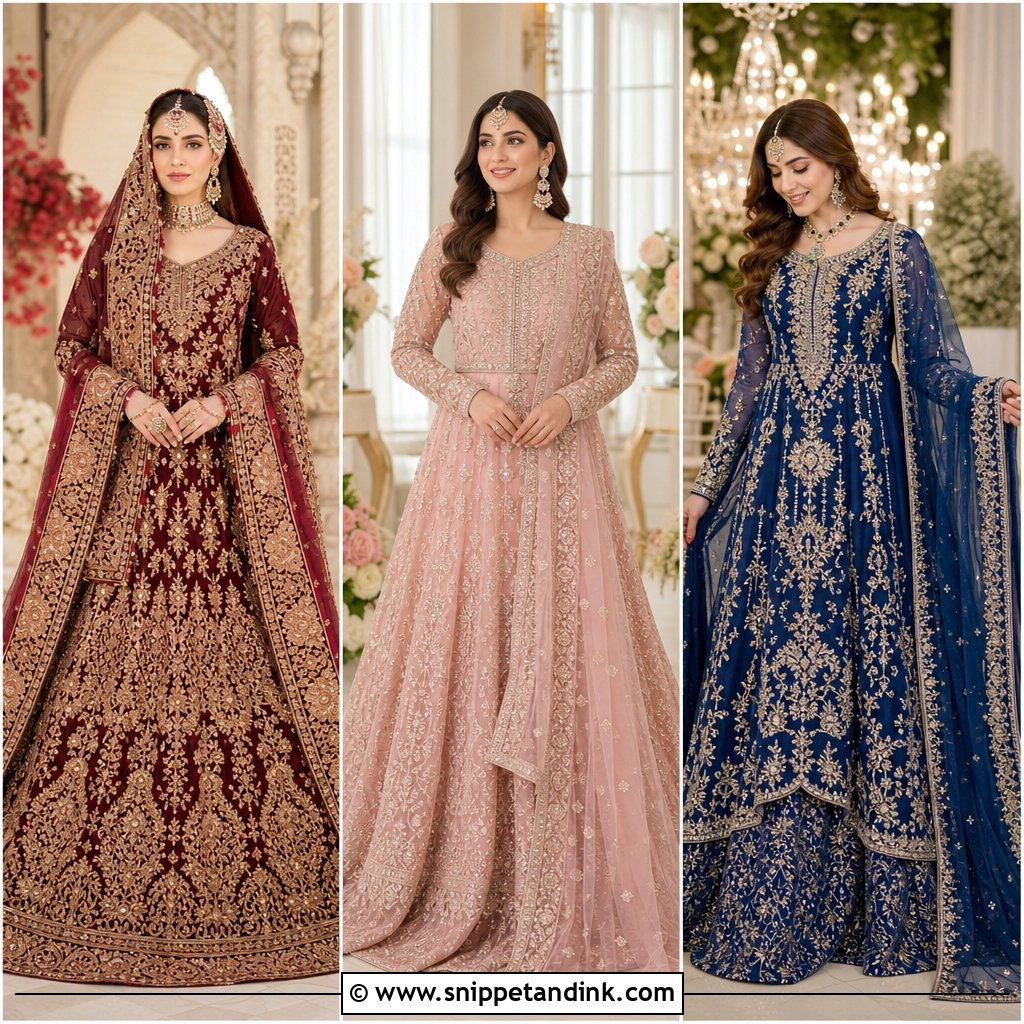
1. Red Pakistani Bridal Lehenga
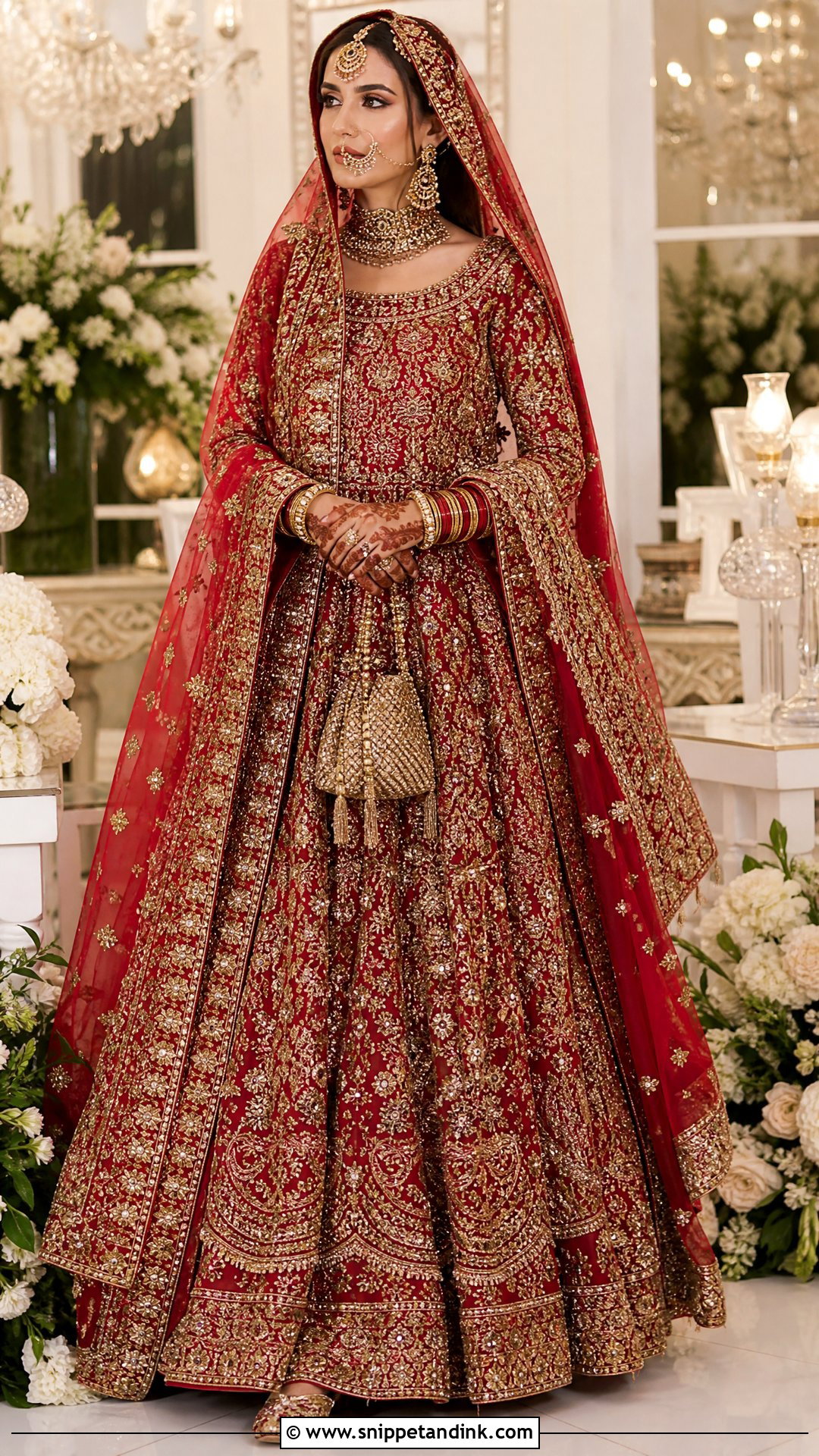
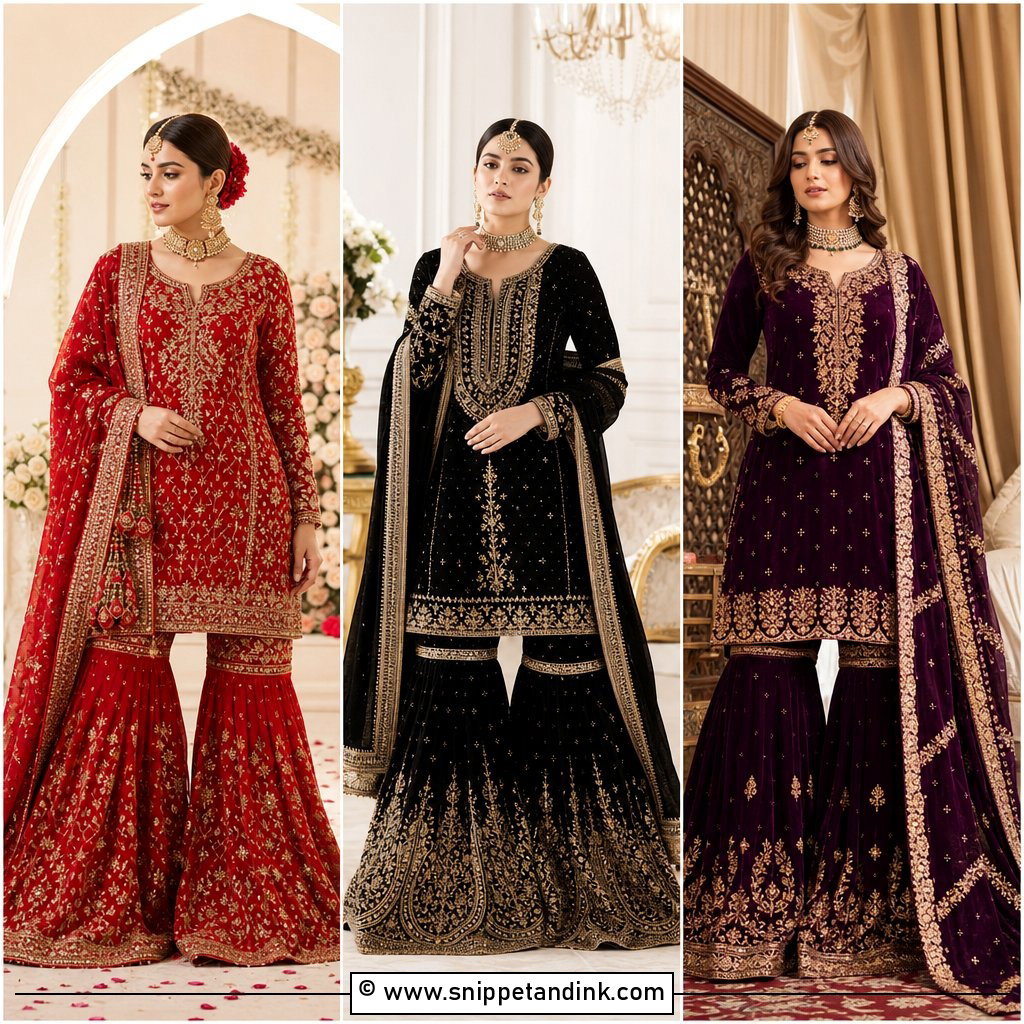
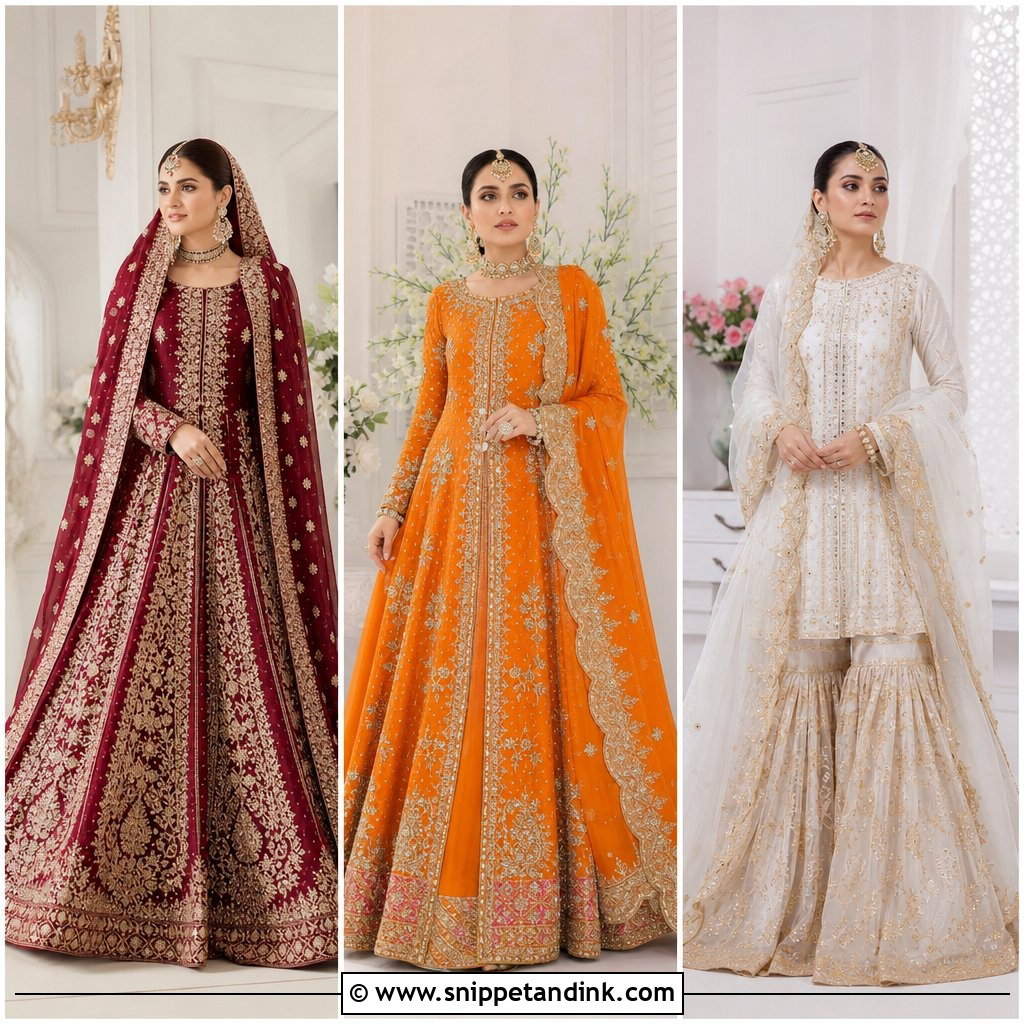
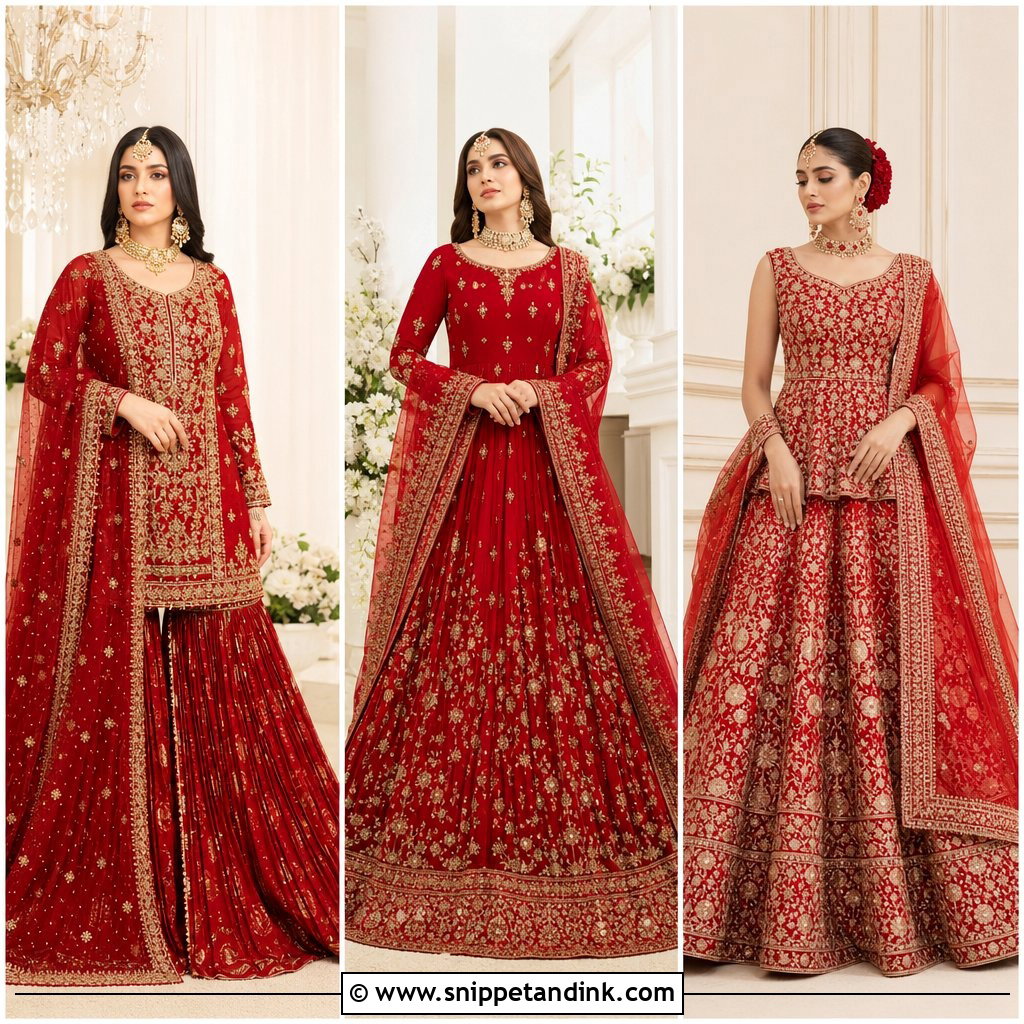
Deep red or maroon with zardozi, dabka, gota and sequins is still the Barat outfit most families expect, and I’d never talk a bride out of it if it’s what she’s pictured. The fitting detail that matters is balance: the embroidery has to be spread across skirt, blouse and dupatta, or one piece ends up carrying all the weight. A heavy bordered dupatta goes over the head, with a lighter second one at the shoulders if you want layers. Gold jewelry, matha patti, jhumkas, bangles and embellished khussas finish it.
2. Maroon Pakistani Wedding Lehenga
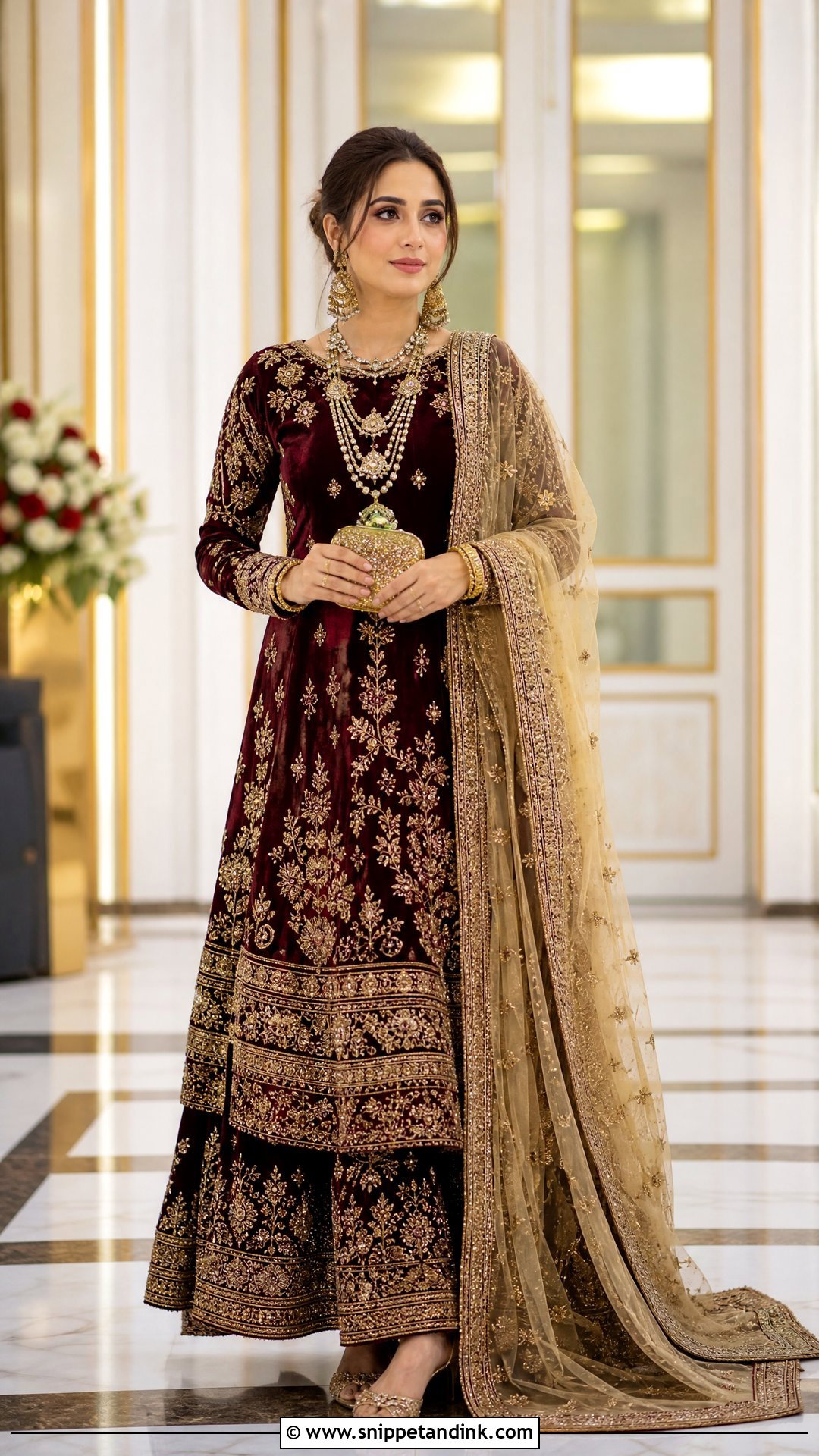
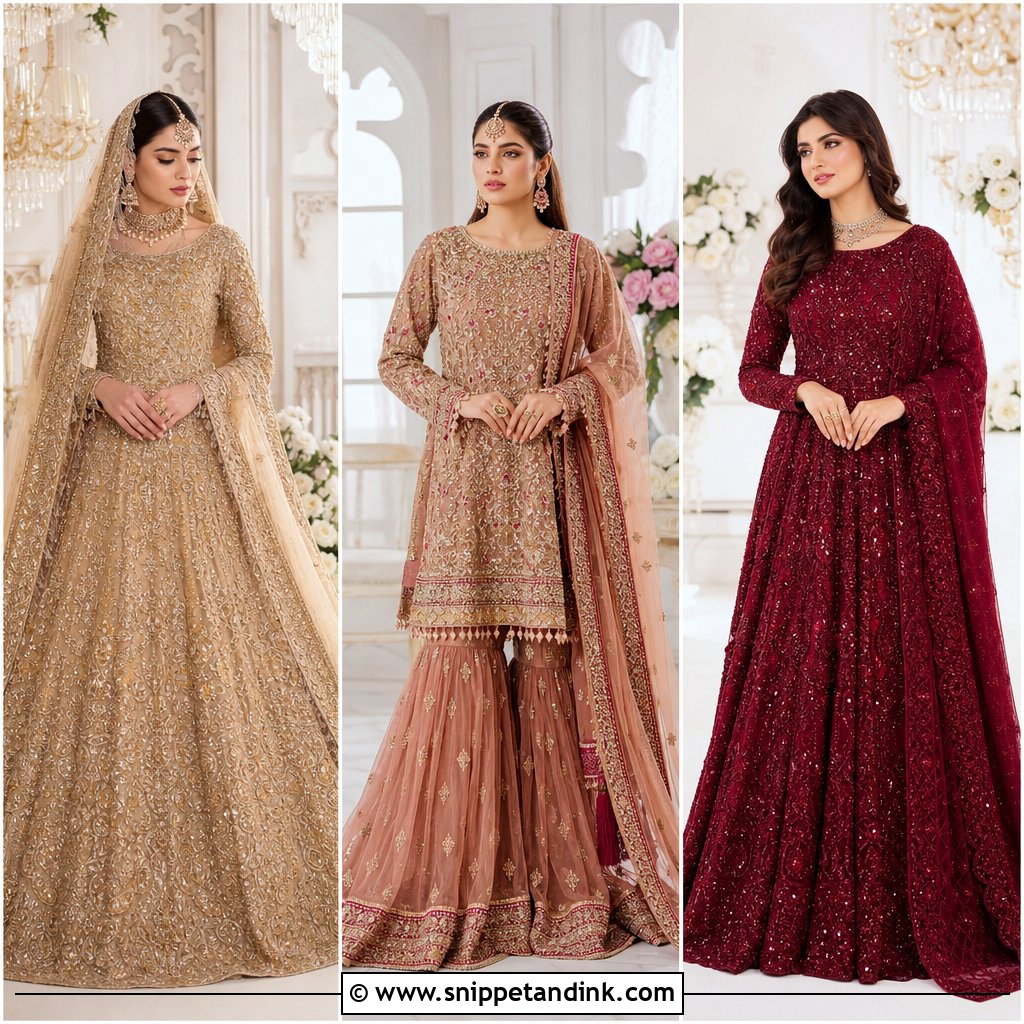
Maroon is the quieter, older sister of bridal red. On velvet, raw silk or jamawar with antique gold work, it reads rich in the low, warm lighting of evening halls, where bright red can go flat. A short choli keeps the classic bridal shape; a longer kameez-style top adds coverage. Pair a maroon or dull gold dupatta, layered necklaces and embroidered heels or khussas. I steer winter brides toward maroon velvet and summer brides away from it, because the fabric is genuinely warm.
3. Ivory Pakistani Nikah Dress
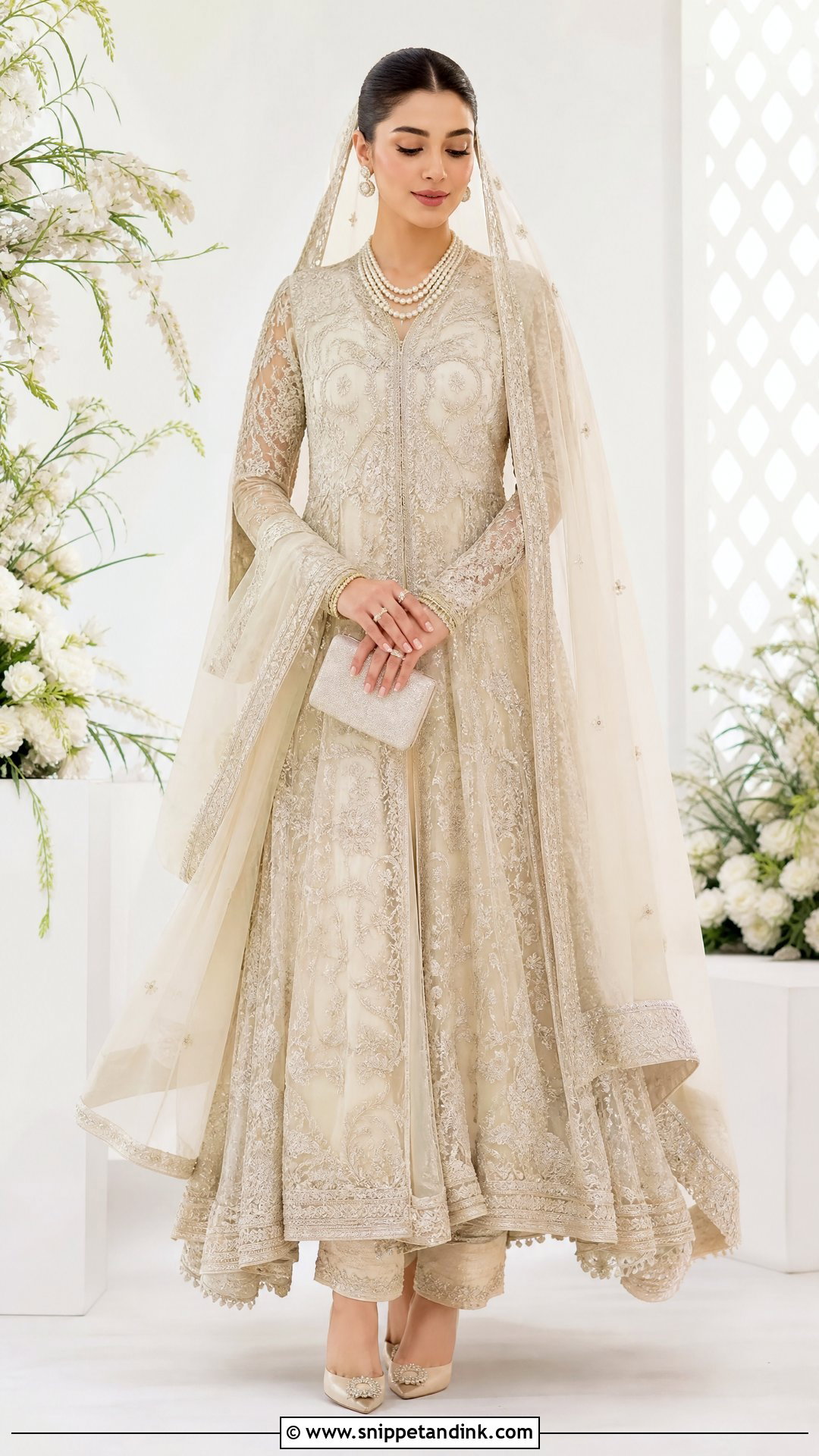
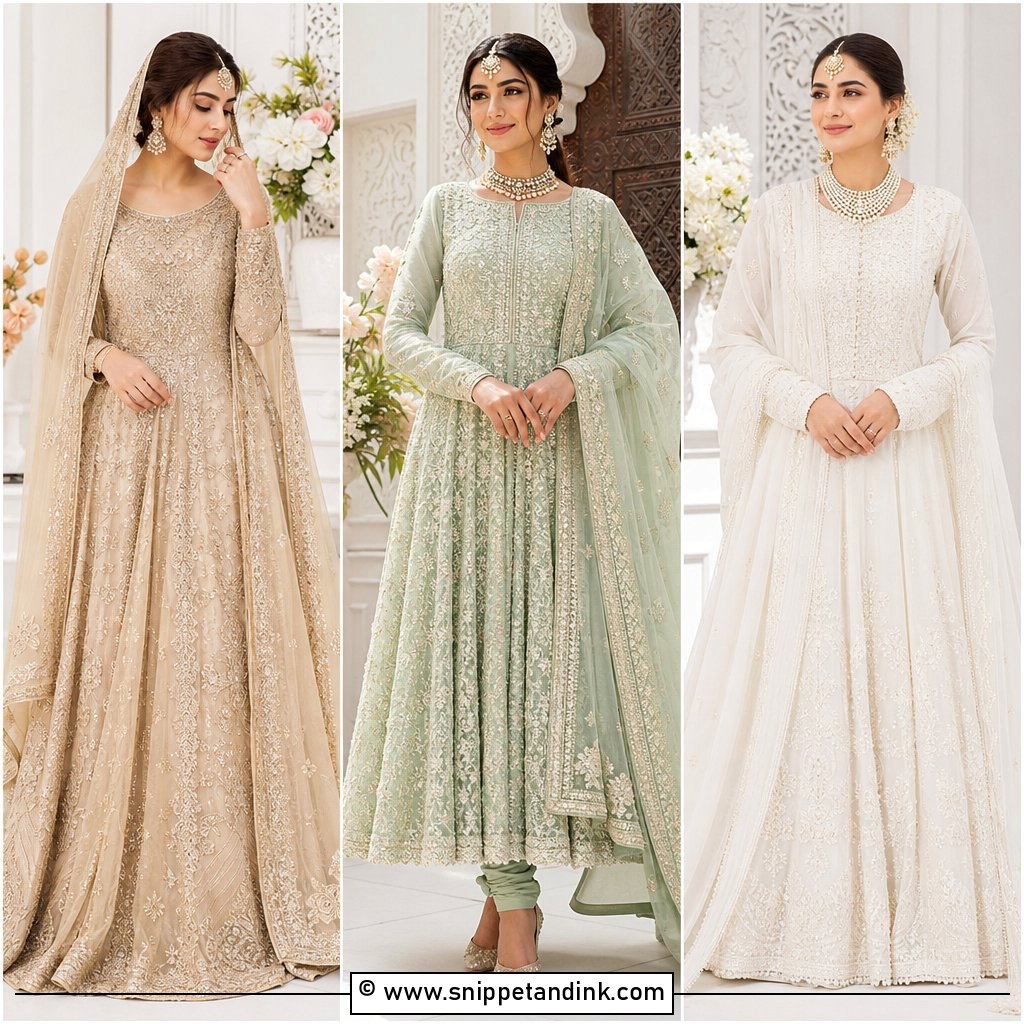
Ivory is the color I see most at Nikahs now, in a pishwas, a straight kameez with trousers or a light lehenga. Contrast is the risk: dark or heavy embroidery on ivory looks harsh, so I use silver, pearl, champagne or pale gold. A sheer dupatta with a fine border, pearls and soft waves or a sleek bun keep it serene. Ivory shows every mark, so keep a stain pen in the bag and eat before you dress. Close family can wear it too, with lighter work than the bride.
4. Pastel Pakistani Walima Gown
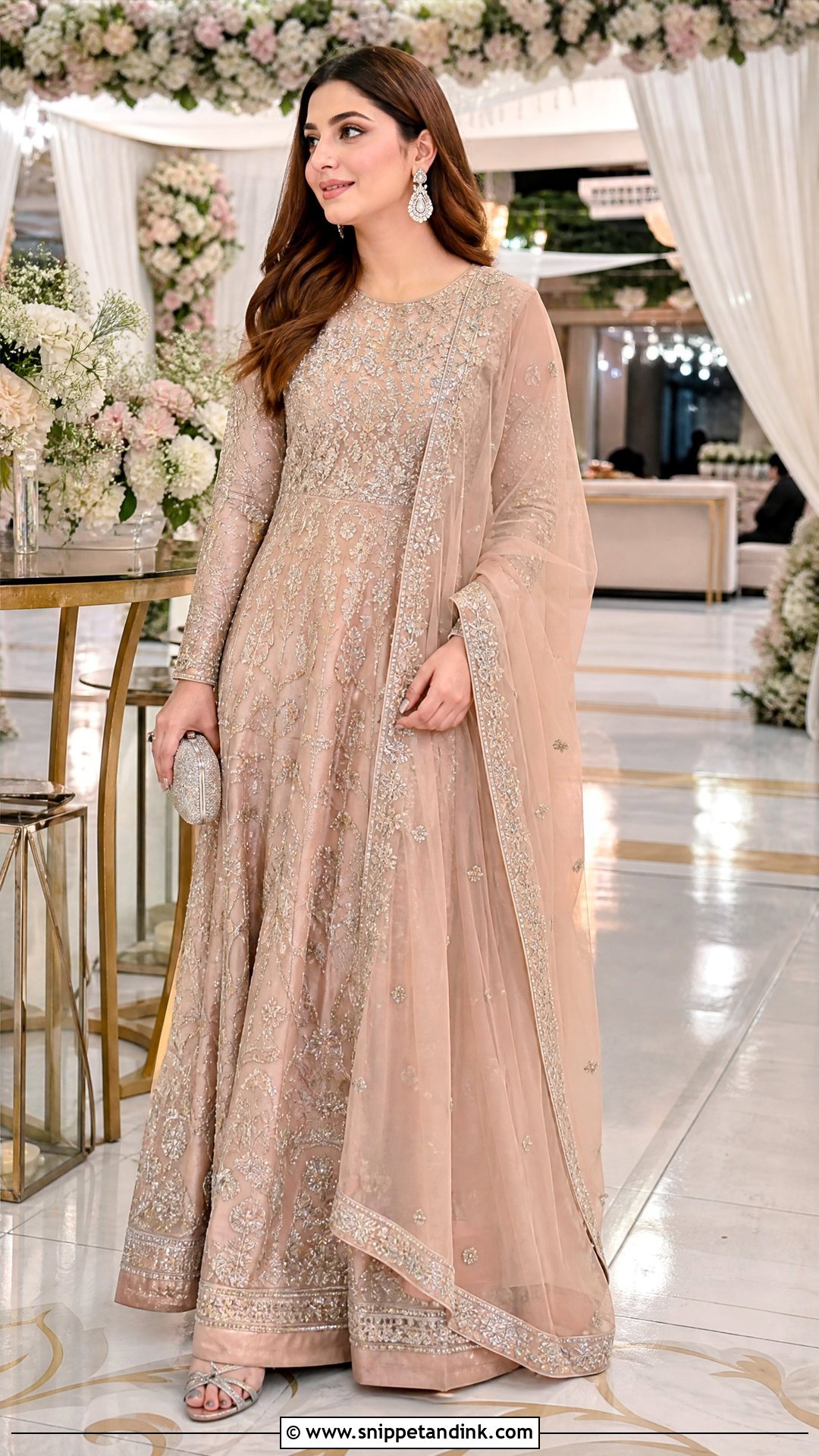
Walima is where gowns make sense. Blush, powder blue, mint, lilac, champagne and dusty peach all suit reception lighting, and beadwork, crystals or fine threadwork catch it gently without glare. A defined waist with a soft flare flatters most figures. Pin the dupatta on one shoulder for a clean line or drape it loosely if the family is more traditional. Silver jewelry and crystal earrings suit pastels better than yellow gold, which can look heavy beside them.
5. Green Pakistani Mehndi Sharara
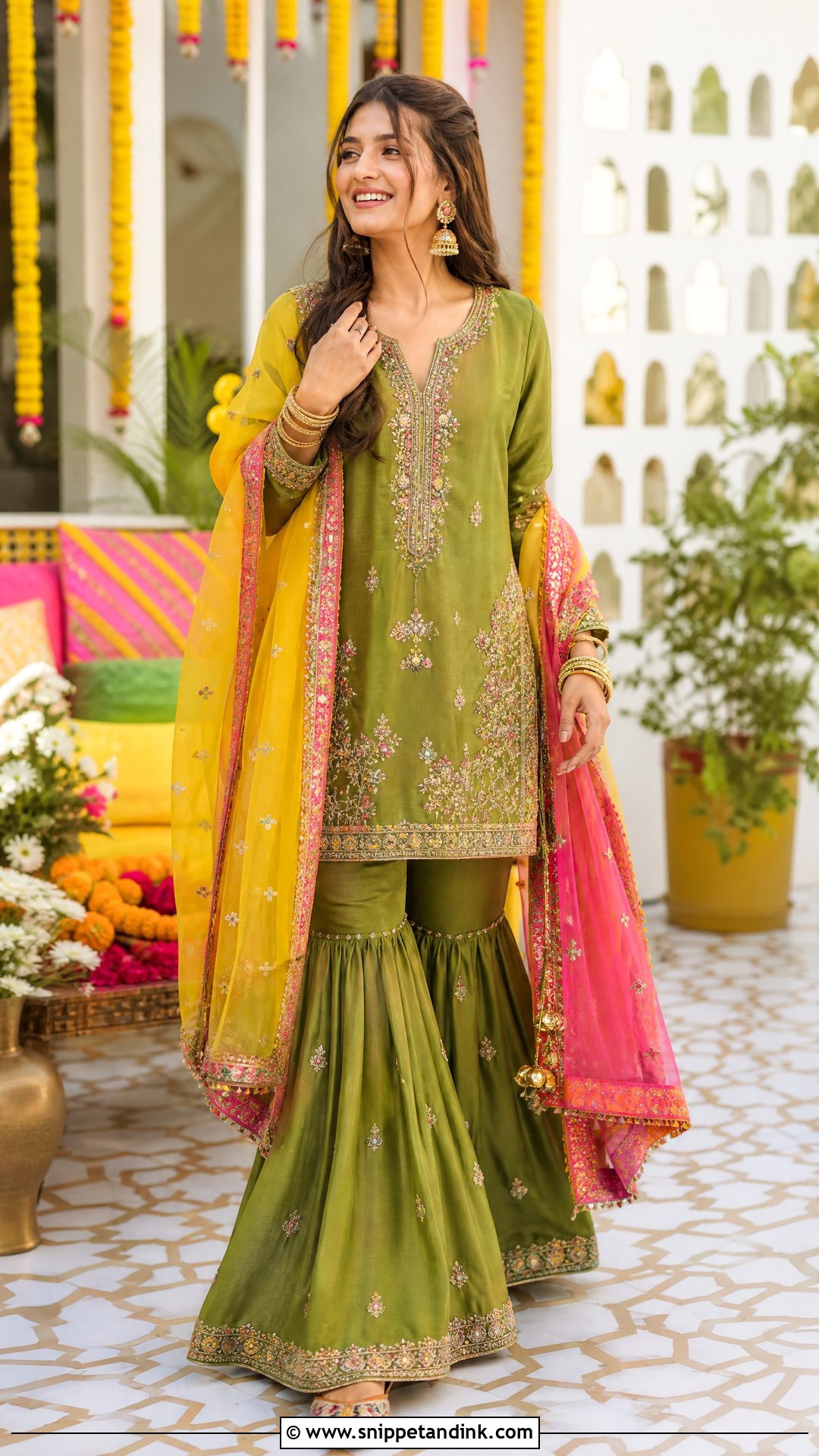
Mehndi is a dancing night, so a green sharara earns its place by moving well. Emerald, mehndi green, parrot green and olive all pair with yellow, orange or pink accents. A short or mid-length kameez over a flared sharara, with a bright gota or mirror-trimmed dupatta, is the classic. My one change from older styles is fabric: choose georgette or chiffon over stiff silks, since stiff shararas bunch when you sit on the floor for the rasm. Bangles, jhumkas, a parandi and khussas finish it.
6. Yellow Pakistani Mayun Gharara
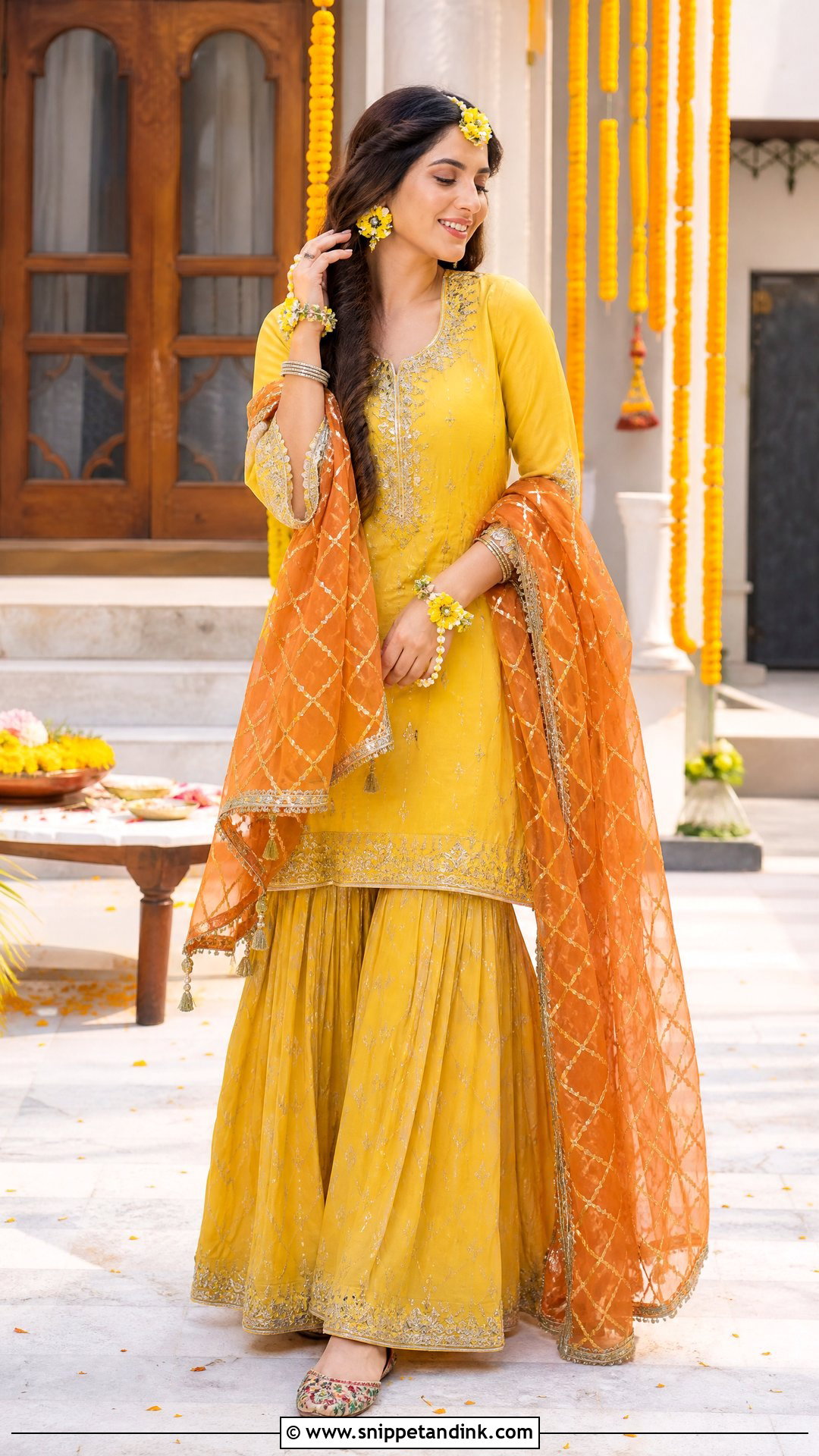
Mayun yellow covers mustard, turmeric and soft mango, and a short kameez over a wide gharara is the traditional shape. Gota, lace or mirror details suit it. Add an orange, green or hot pink dupatta for contrast. Here’s what experience teaches about Mayun: someone will put ubtan on you, and turmeric stains. I’d never put a bride in an expensive piece for this event. Choose breathable cotton or lawn blends, floral jewelry and embroidered flats, and accept that the outfit may not come back the same color.
7. Pakistani Pishwas With Lehenga
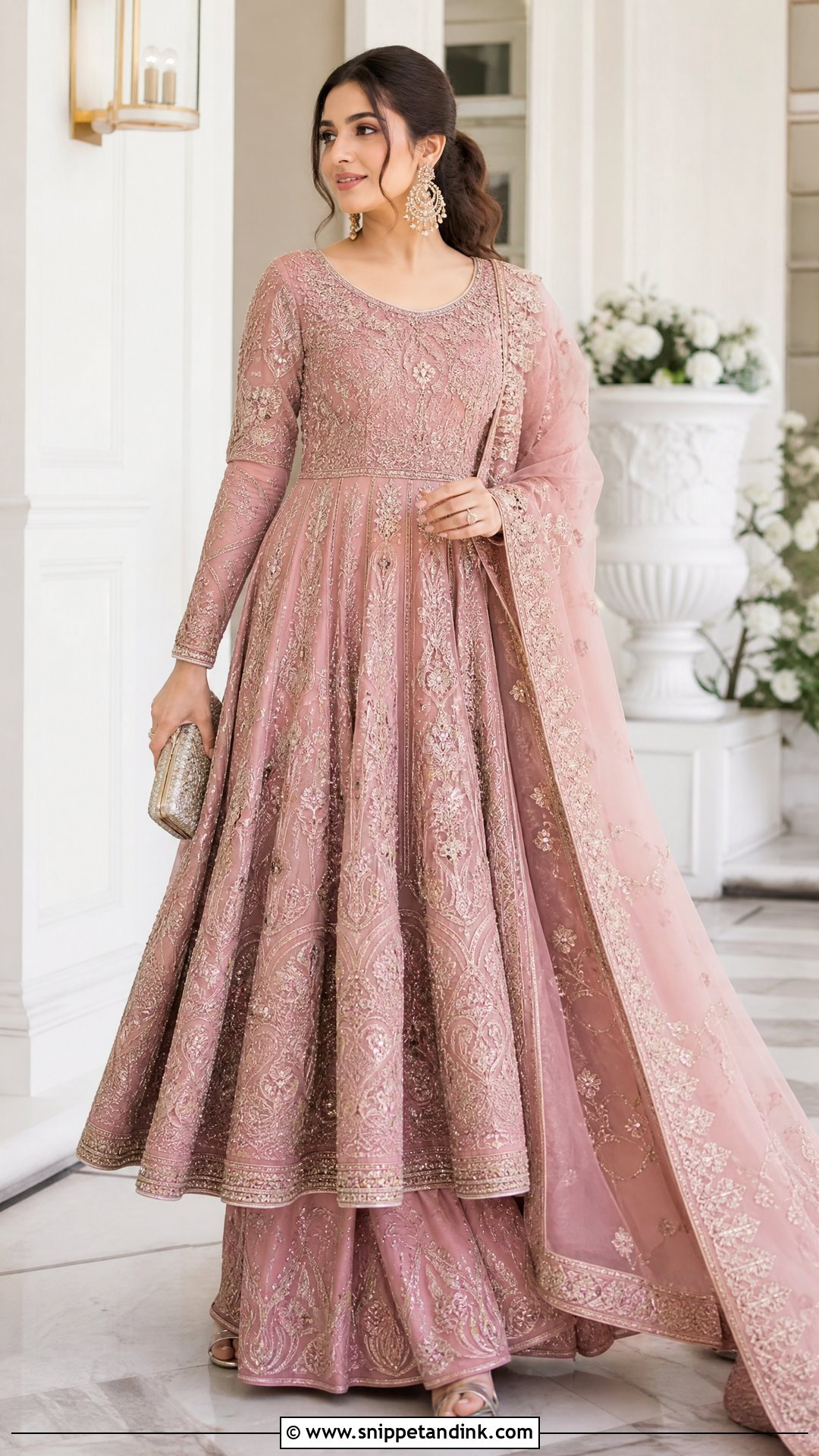
Pishwas over a lehenga is one of the most graceful silhouettes on this list, and one of the most adaptable. The fitted bodice and flared panels give shape, and the lehenga underneath adds body. In deep red, gold, maroon or ivory with heavy handwork it’s bridal; in dusty rose, sage, teal or peach with lighter embroidery it’s a guest outfit. The weight of two layers adds up, so I check the waistband is comfortable after a full hour of sitting at the last fitting. A dupatta over both shoulders, jhumkas and khussas.
8. Pakistani Angrakha Wedding Dress
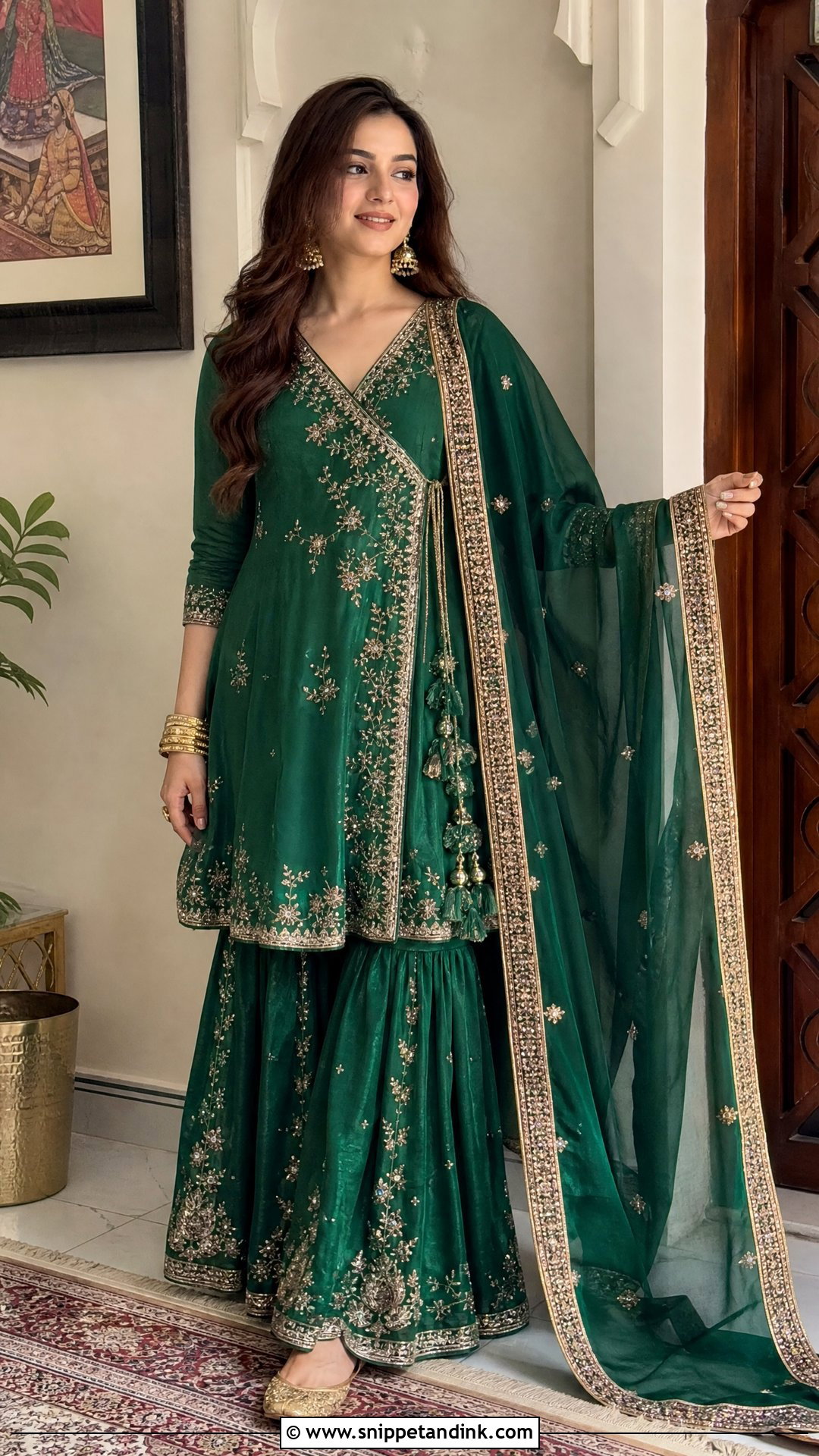
A Pakistani angrakha wedding dress gets its character from the overlapping front and tie detail, and in chiffon, silk, organza or jamawar it flares nicely. The angled wrap defines the waist without tightness, which is why it flatters so many figures. The fit point I check is that overlap: it must lie flat with the ties done, without gaping when you lean forward. Soft gold, rust, emerald, navy and ivory all suit it, with a sharara, gharara or lehenga. Good for Mehndi, dholki or a family wedding dinner.
9. Pakistani Saree Wedding Look
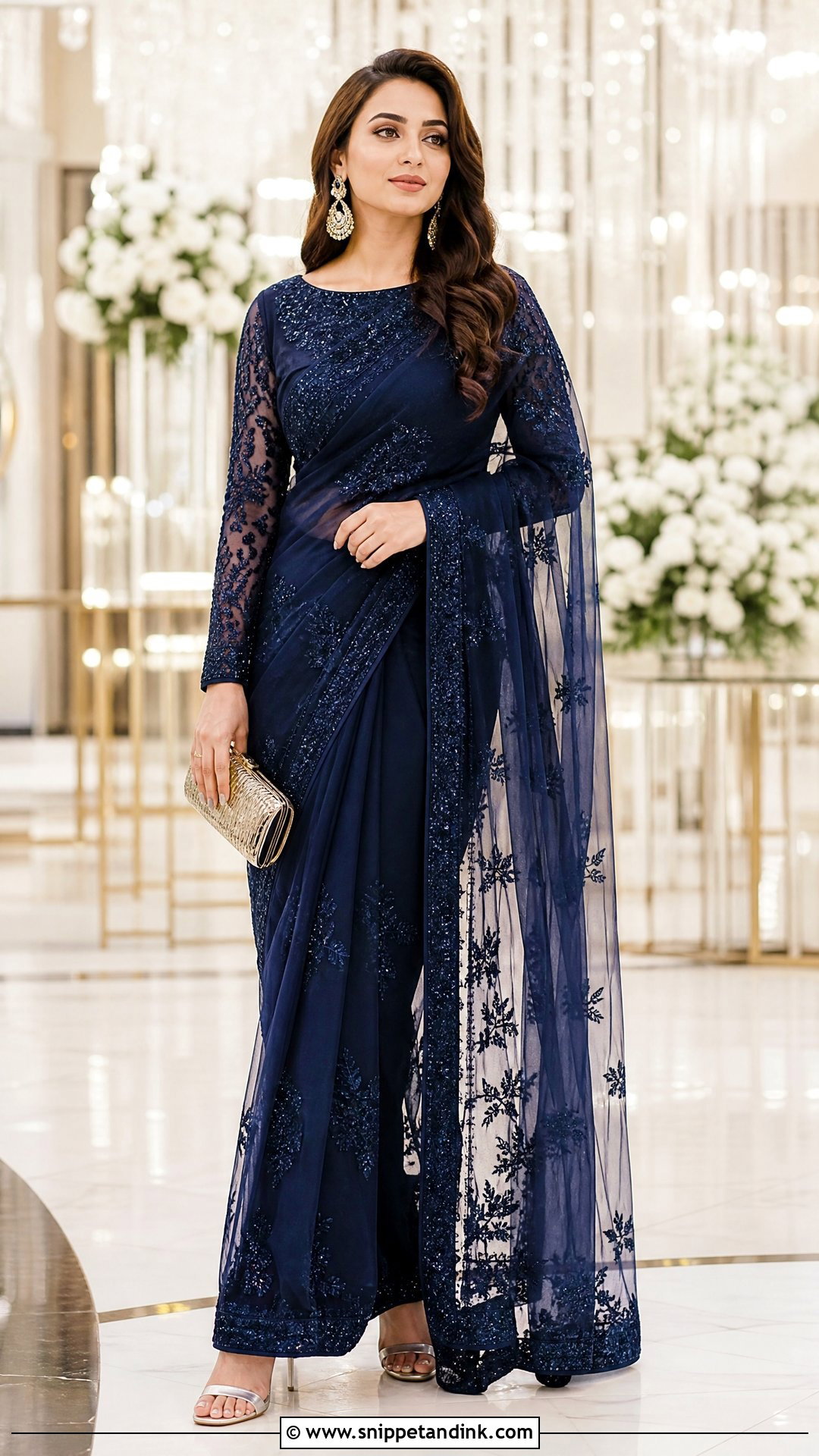
Pakistani saree styling tends to be more covered than you’d see elsewhere: longer blouses, full sleeves, neatly pinned drapes. Chiffon, tissue, silk or organza with an embroidered border and pallu suit formal dinners. Jewel tones like emerald, navy, maroon and plum feel formal; champagne or blush is softer for Walima. A structured blouse holds everything in place, and a belt secures the drape and defines the waist. I only recommend a saree to someone who’s comfortable walking in one for hours.
10. Pakistani Organza Lehenga Dress
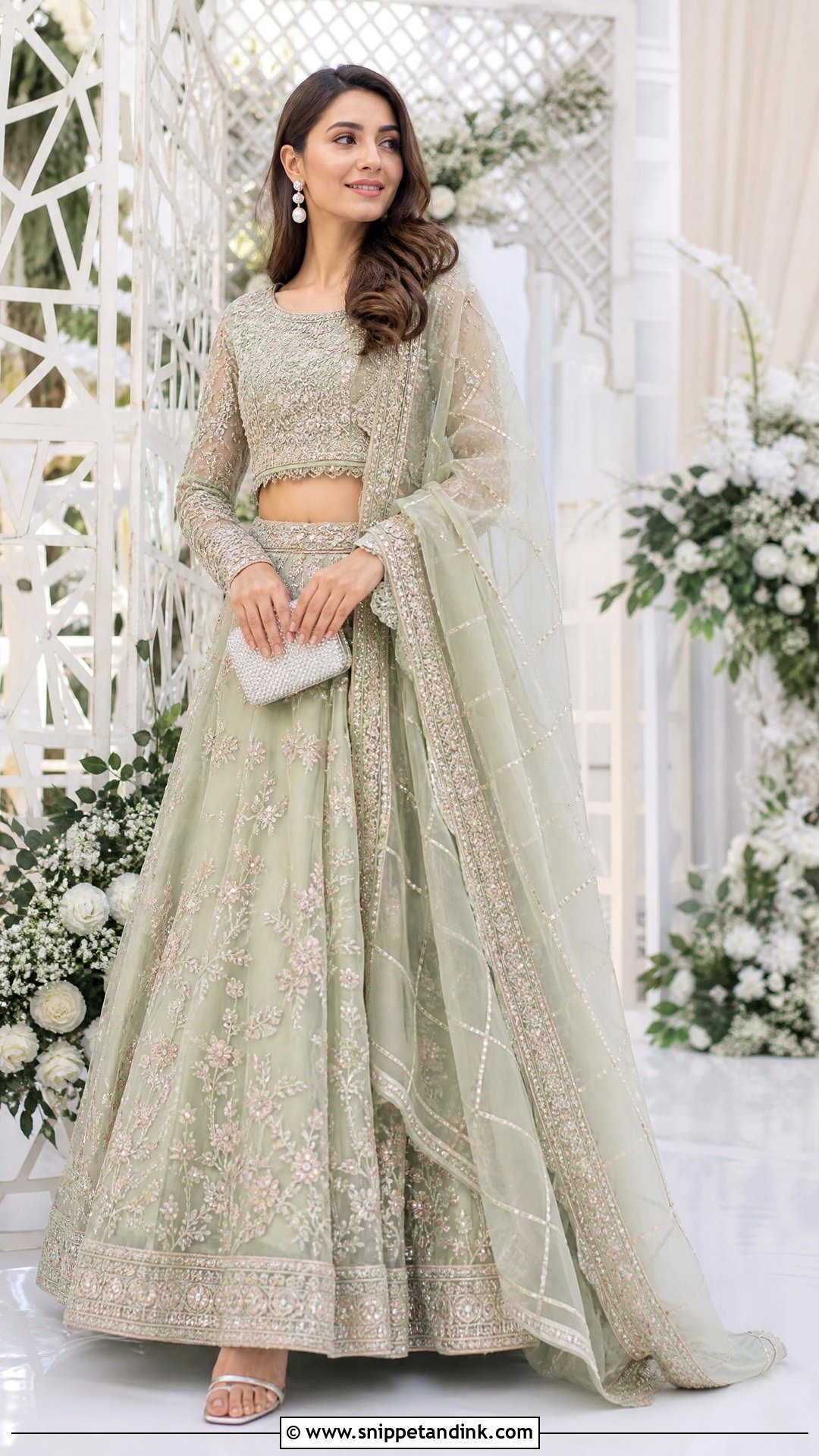
Organza holds its shape without weight, which is why an organza lehenga feels light and still looks full. Pastel, ivory, pistachio, mauve and champagne with delicate embroidery, pearls or sequins suit daytime events and Walima. A fitted blouse or short kameez balances the skirt’s volume. The one drawback is creasing: organza marks where it’s folded, so it has to travel on a hanger and be steamed before you dress. Pearl earrings, a small clutch and slim heels keep it refined.
11. Pakistani Velvet Wedding Dress
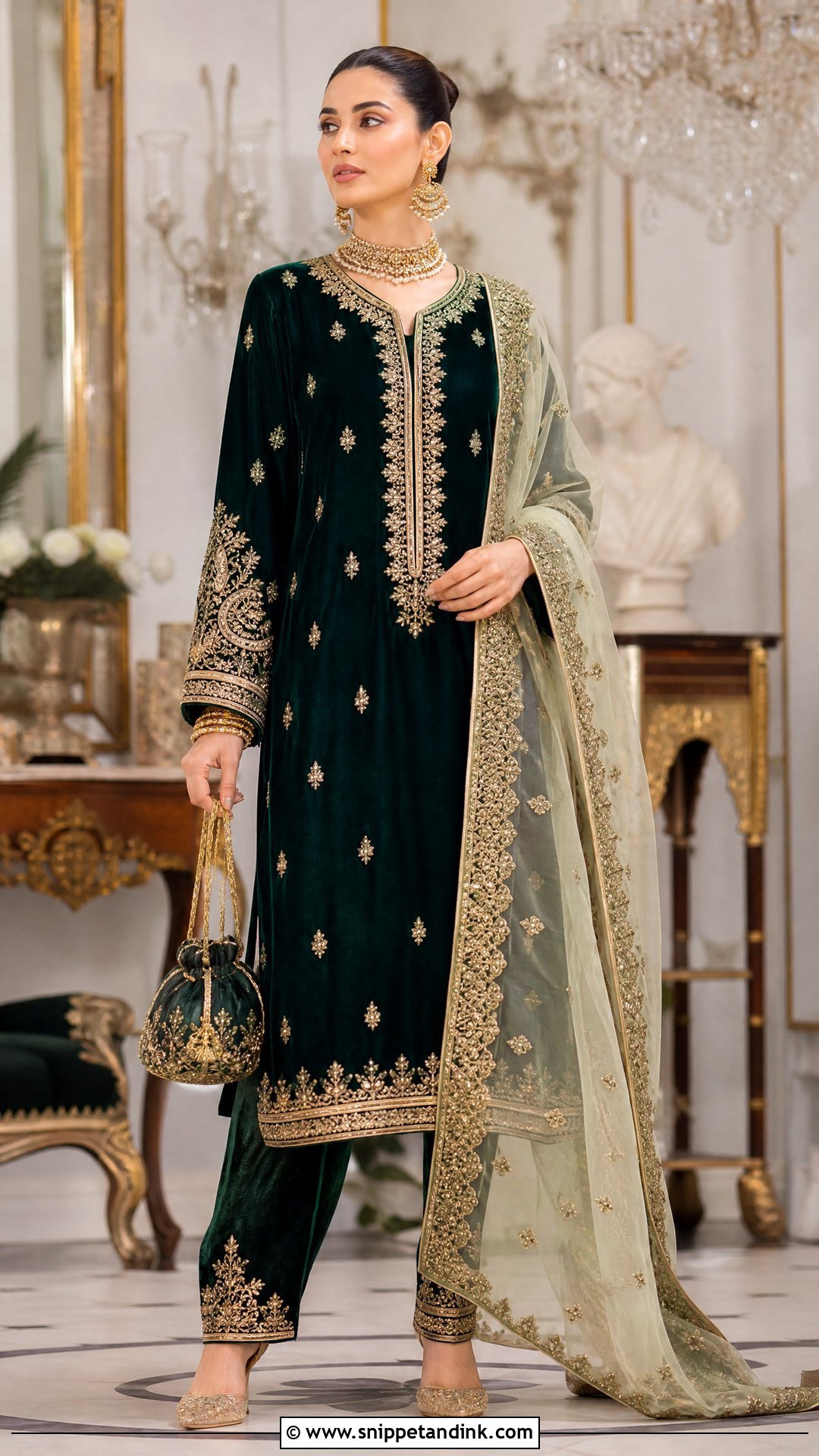
A Pakistani velvet wedding dress belongs in winter. Velvet deepens maroon, emerald, navy, bottle green, plum and, where the family allows it, black. A velvet long shirt with gharara, straight pants or lehenga looks regal with antique gold embroidery and heavy borders. Since velvet is already substantial, I always pair a chiffon, net or organza dupatta to keep the top half light. Gold jewelry and a potli bag. Mothers and sisters of the bride wear this well.
12. Pakistani Long Shirt With Gharara
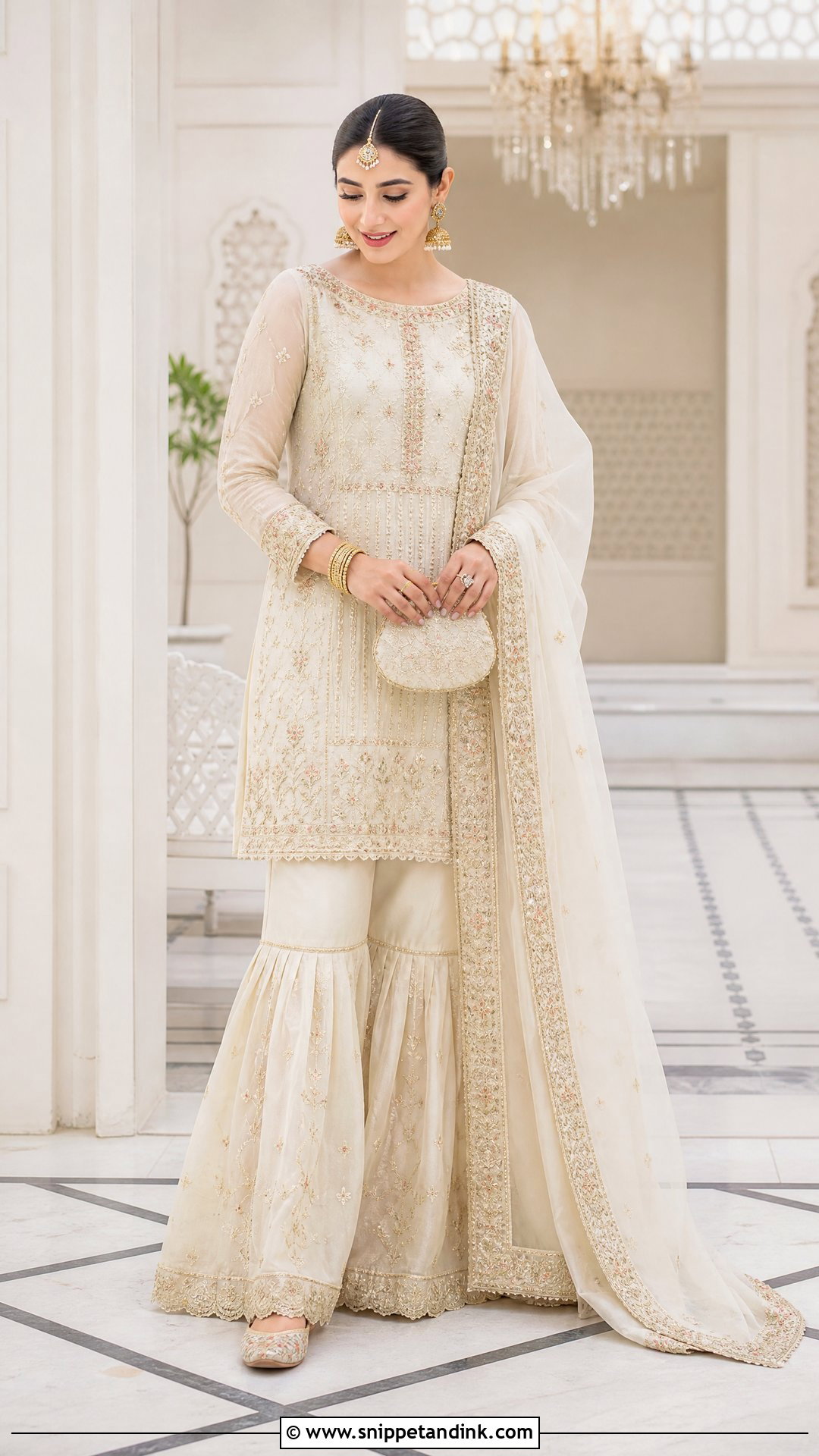
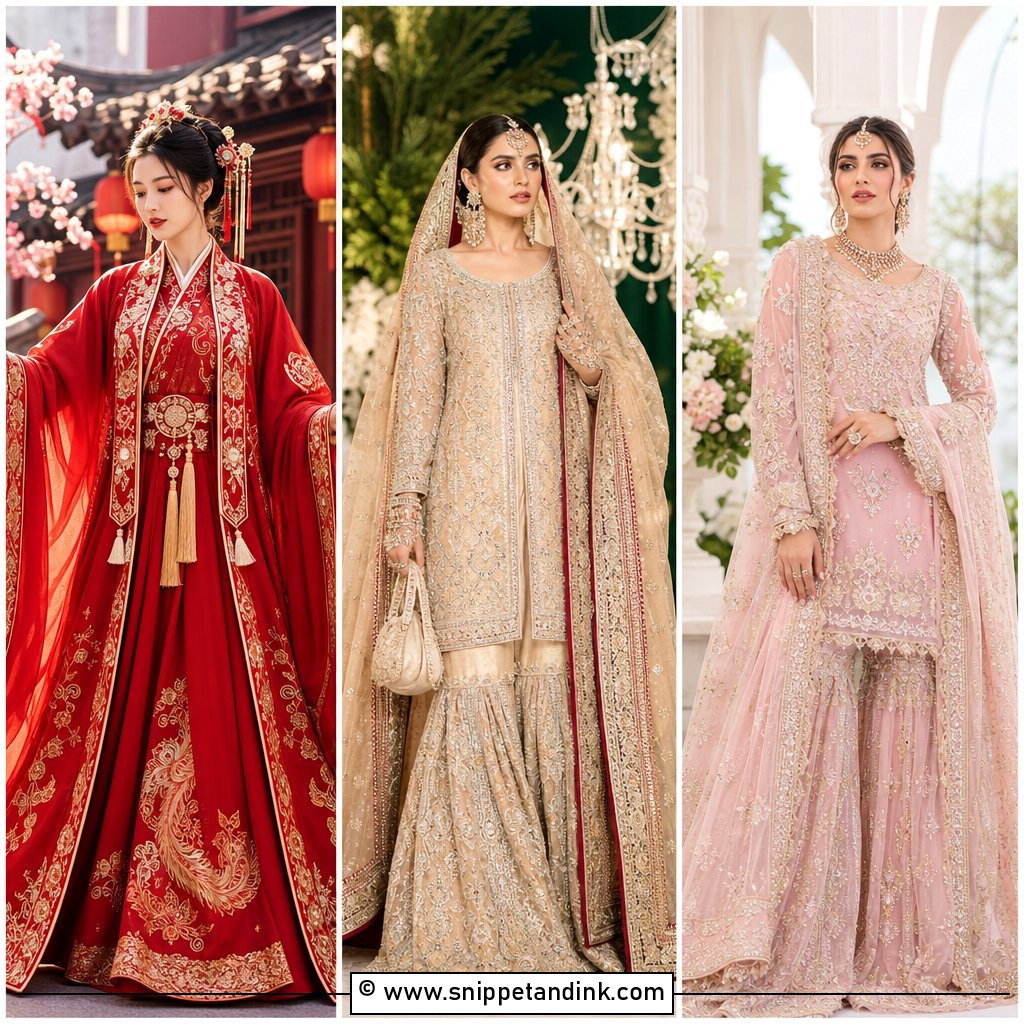
The long shirt with gharara is one of the most traditional silhouettes in Pakistani wedding dress, and it’s modest without trying. The long kameez covers, the gharara adds drama. Silk, chiffon, jamawar or organza depending on season, with embroidery at the neckline, sleeves, hem and gharara panels. The shirt should end just above the gharara’s knee band so that band shows. Ivory, maroon, teal, rust, gold and dusty pink all suit it. It’s dependable for Nikah, Barat or close-family events.
13. Pakistani Short Shirt With Sharara
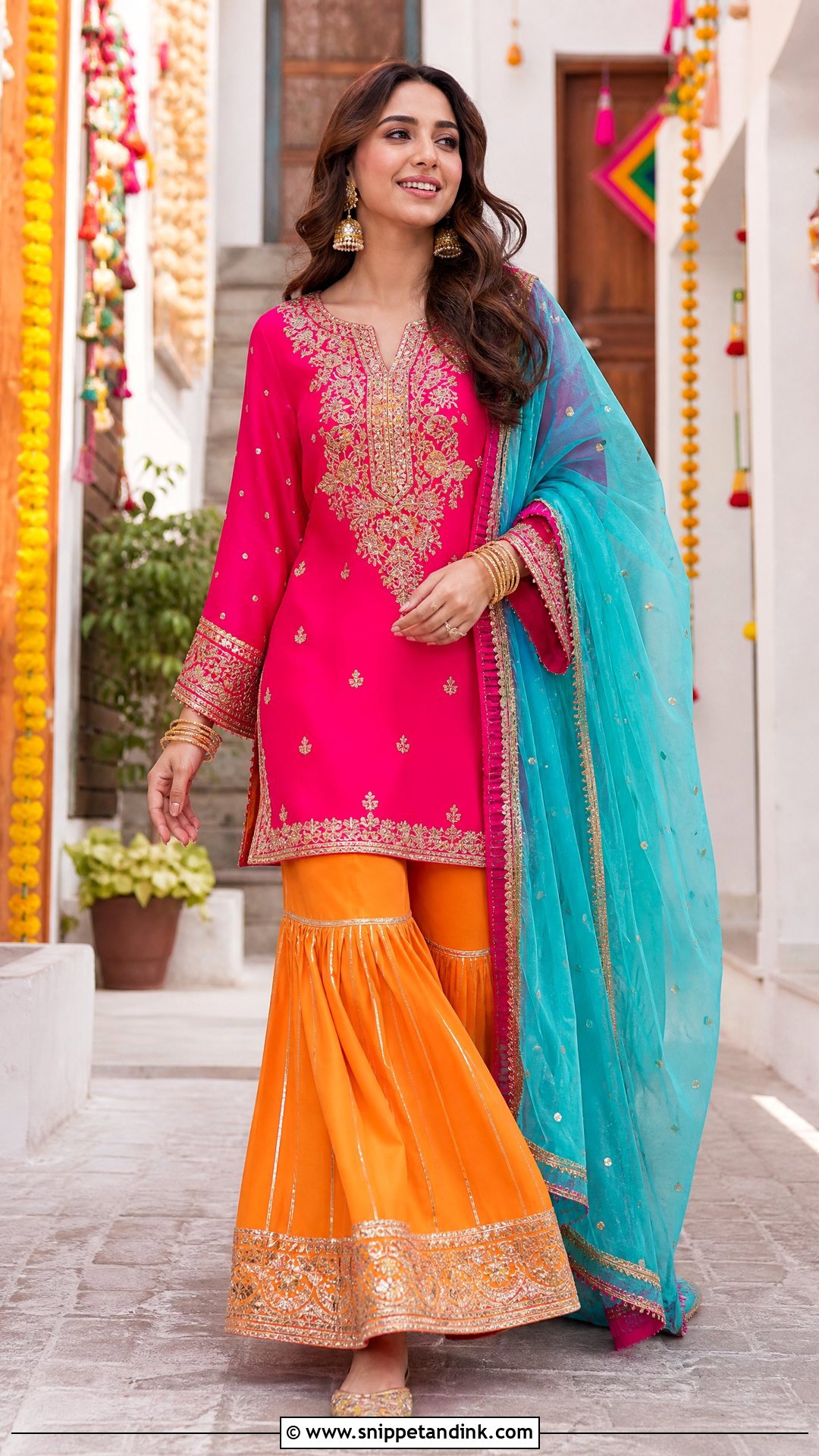
A short shirt with sharara is the dholki and Mehndi uniform for good reason: the wide sharara swings when you dance, and the short shirt keeps the proportion right. Bright pairs like green and yellow, pink and orange, or turquoise and gold suit pre-wedding nights; ivory with gold or sage with champagne is quieter. The sharara should sit high on the waist so the legs look long. Pin the dupatta at both shoulders if you’ll dance, and wear khussas you’ve already broken in.
14. Pakistani Peplum Lehenga Dress
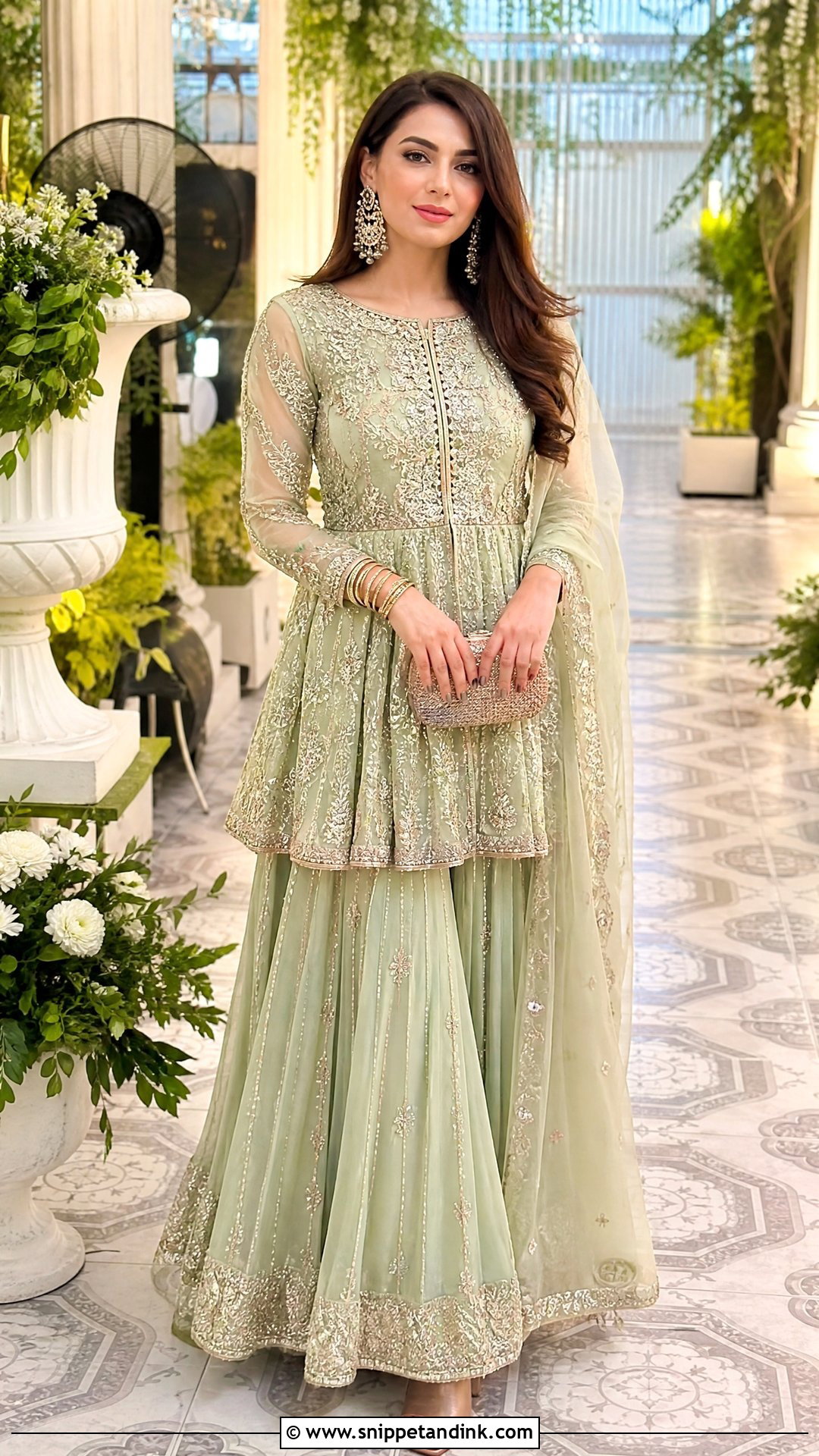
A peplum top over a lehenga covers the midsection while defining the waist, which is why sisters and younger guests ask me for it so often. Mirror work, gota, thread embroidery or sequins set the formality. Bright shades suit Mehndi, while soft metallics and pastels fit Walima or engagements. I keep the peplum flare short so it doesn’t compete with the skirt. Drape the dupatta across one shoulder or pin it on both sides. Chandelier earrings, bangles and block heels.
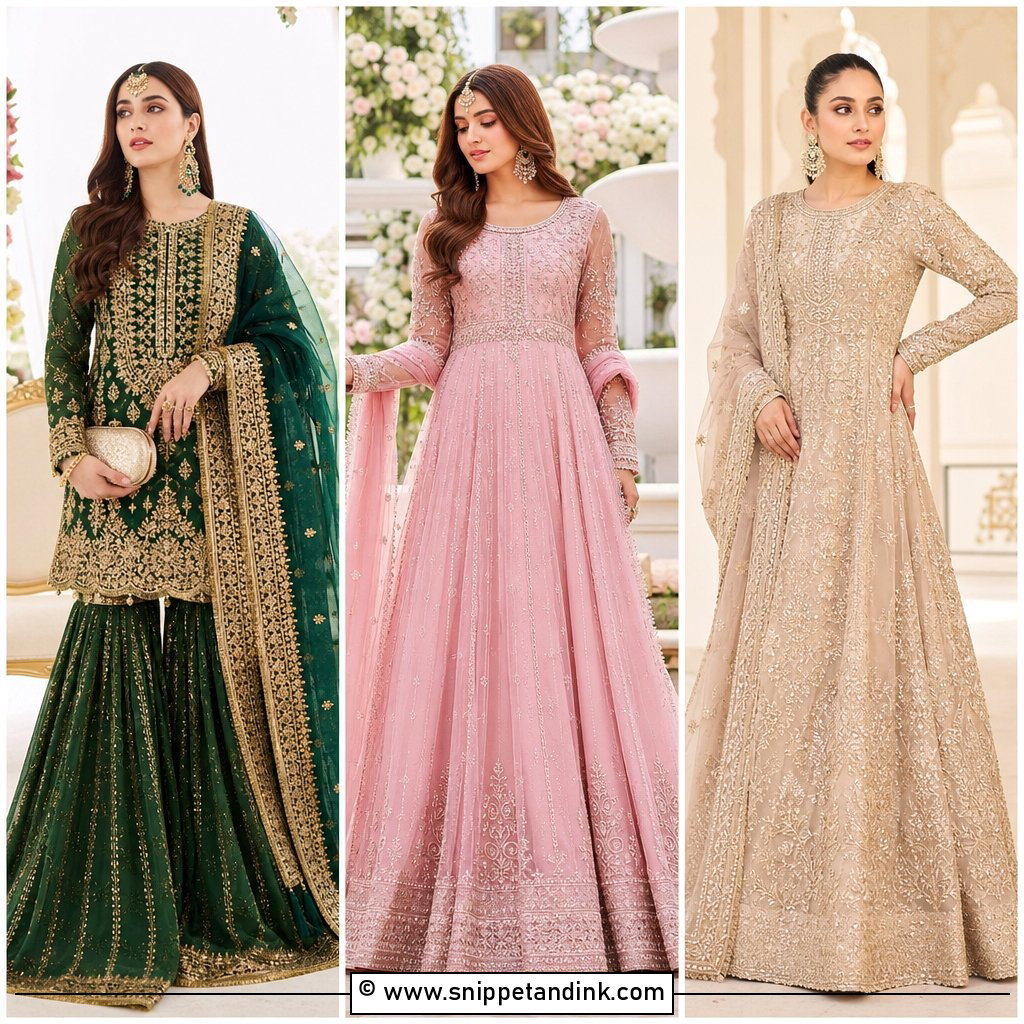
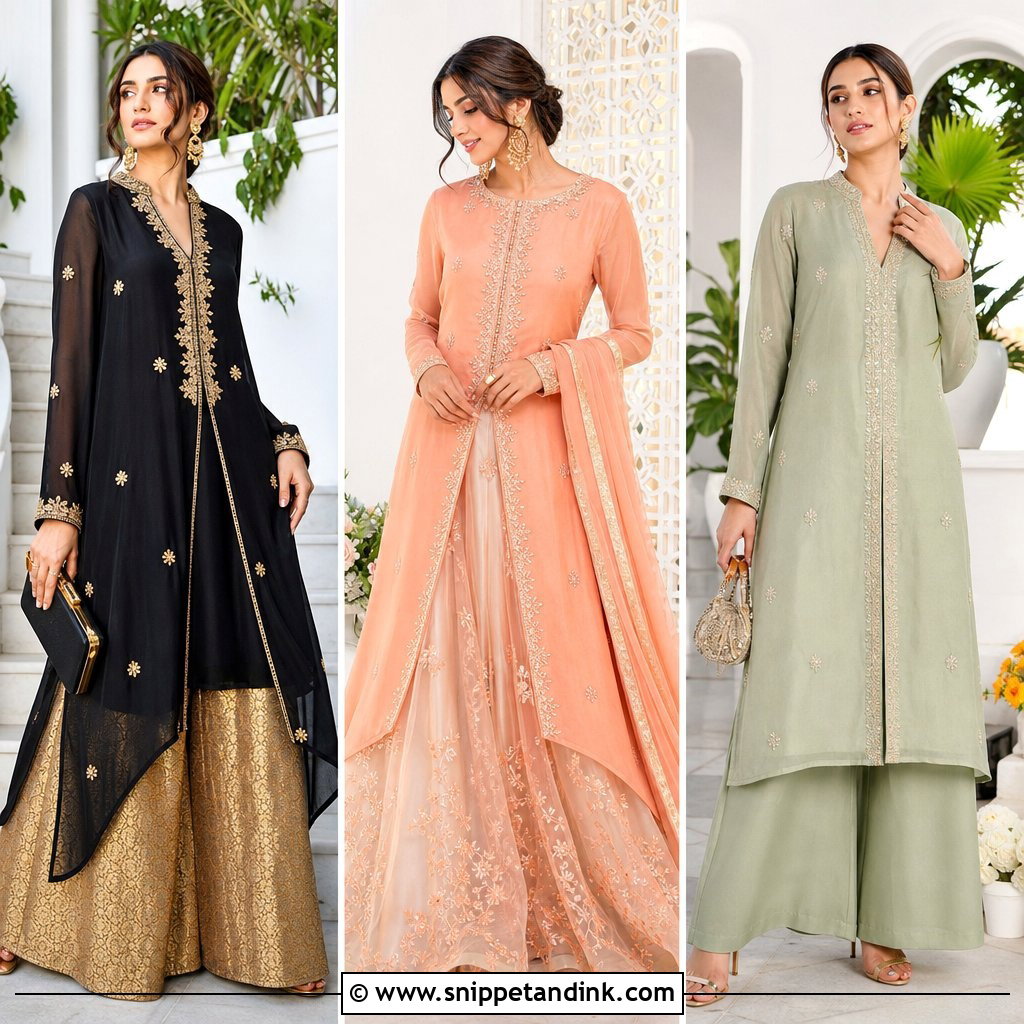
15. Pakistani Anarkali Wedding Dress
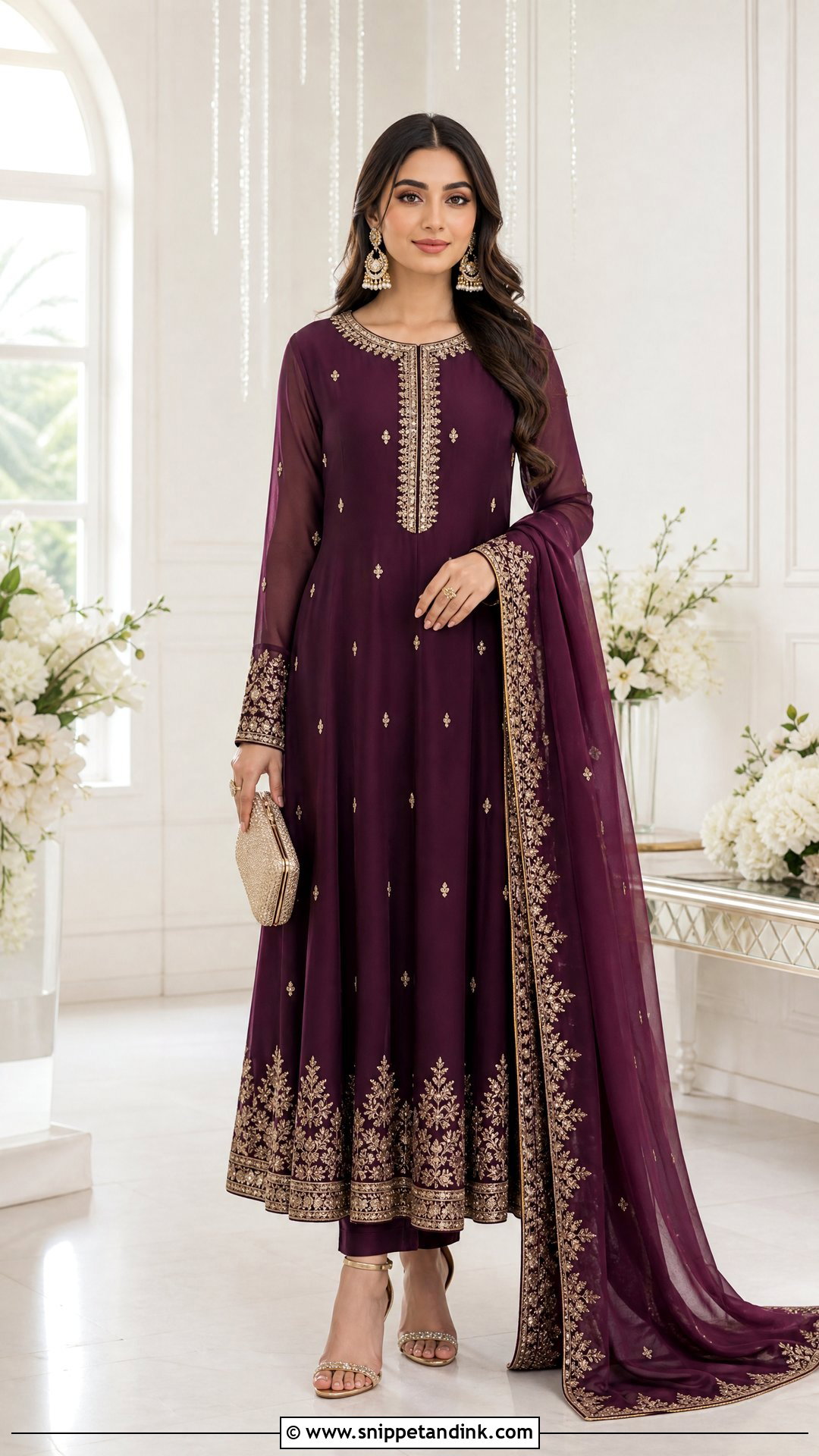
An Anarkali gives coverage and movement in one long shape. Floor-length chiffon, net, silk or georgette with embroidery at the neckline, sleeves and hem looks graceful; add a heavily worked dupatta and churidar or slim trousers for formal events. Jewel tones read regal and pastels softer. The waist seam has to sit at your natural waist; too low and the flare starts at the hips and adds bulk. Heels for height, a clutch and traditional earrings for engagements, Nikahs and formal guest dressing.
16. Pakistani Maxi Wedding Dress
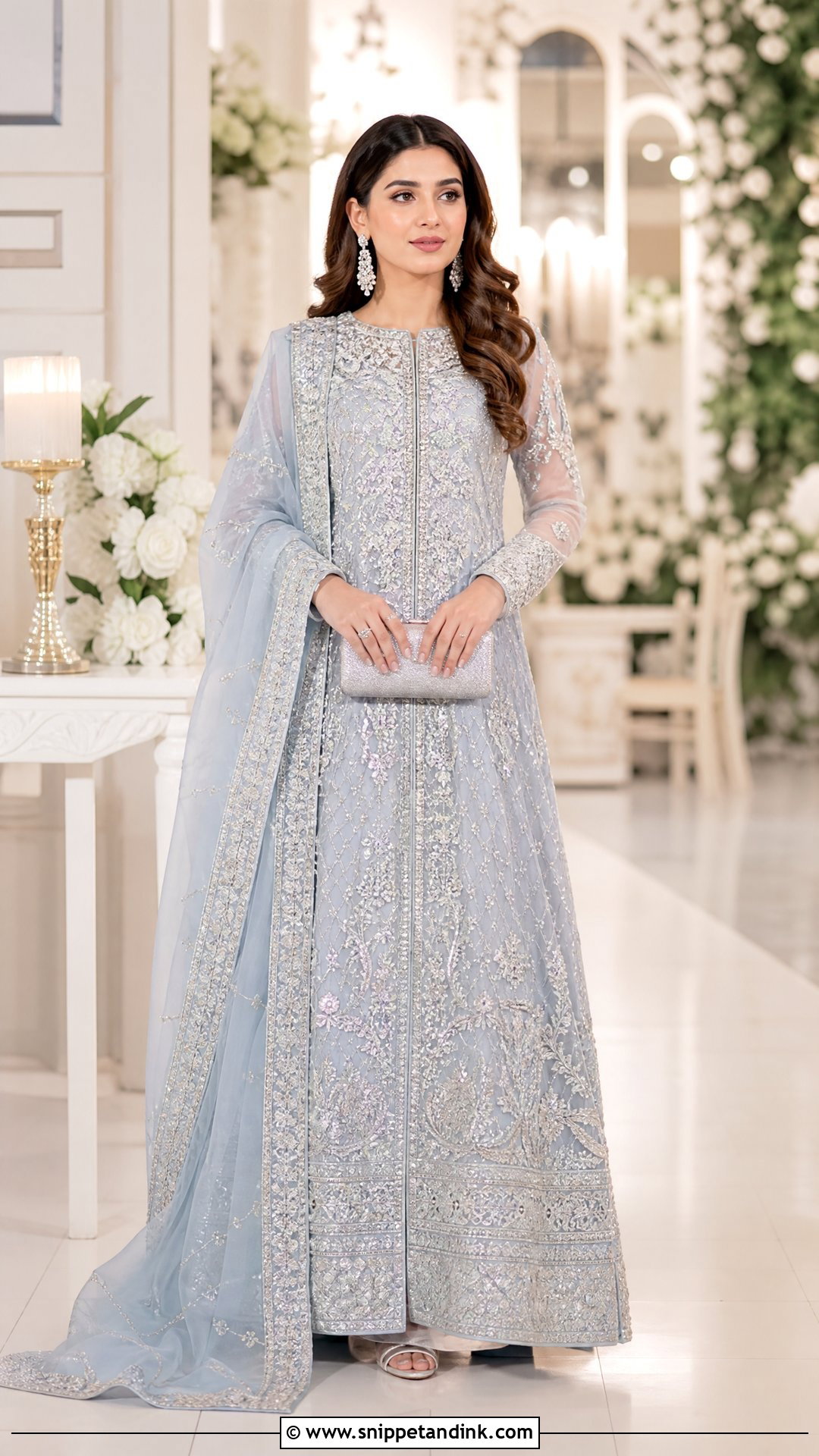
A maxi gives the line of a gown while the embroidery, dupatta and jewelry keep it South Asian. A fitted bodice with a soft flare is the most flattering version. Pastel pink, ice blue, champagne, silver, lavender and mint suit receptions, and heavier ones carry crystals, pearls and threadwork. Keep the dupatta sheer and light so it doesn’t hide the shape. It looks good from every angle in photos, which matters at Walima, where you’ll be photographed from all sides on stage.
17. Pakistani Chiffon Wedding Suit
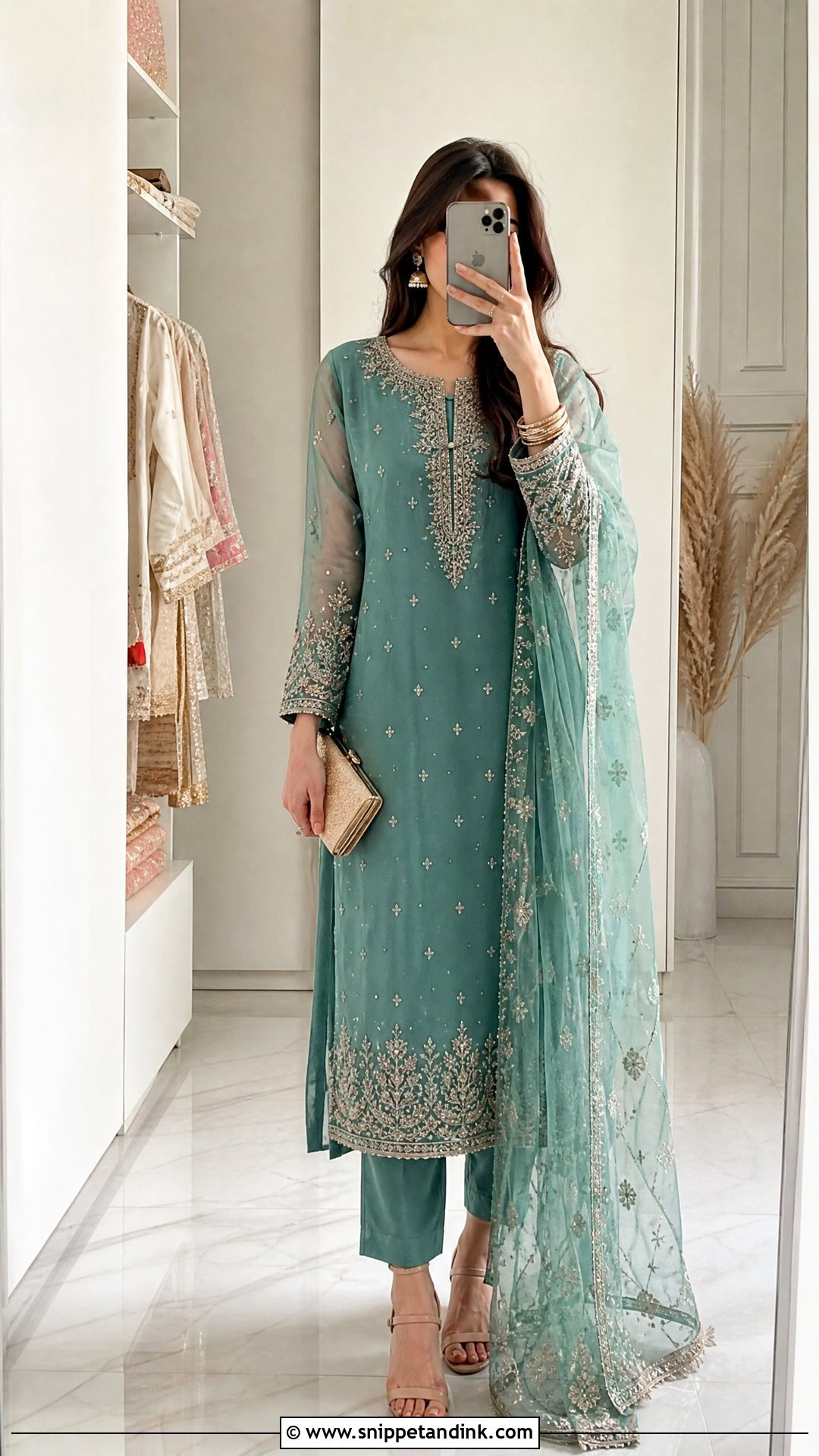
Chiffon suits are formal without weight, and they’re what I recommend to guests attending three or four functions in a row. A straight or slightly flared kameez, embroidered trousers and a matching chiffon dupatta. Mauve, teal, navy, peach, emerald and beige suit guests; close family can go heavier on the embroidery. Chiffon is also easy to wear modestly with longer sleeves and higher necklines, and it rewears well for Eid and dinners. It does snag, so check bangles for rough edges.
18. Pakistani Silk Wedding Suit
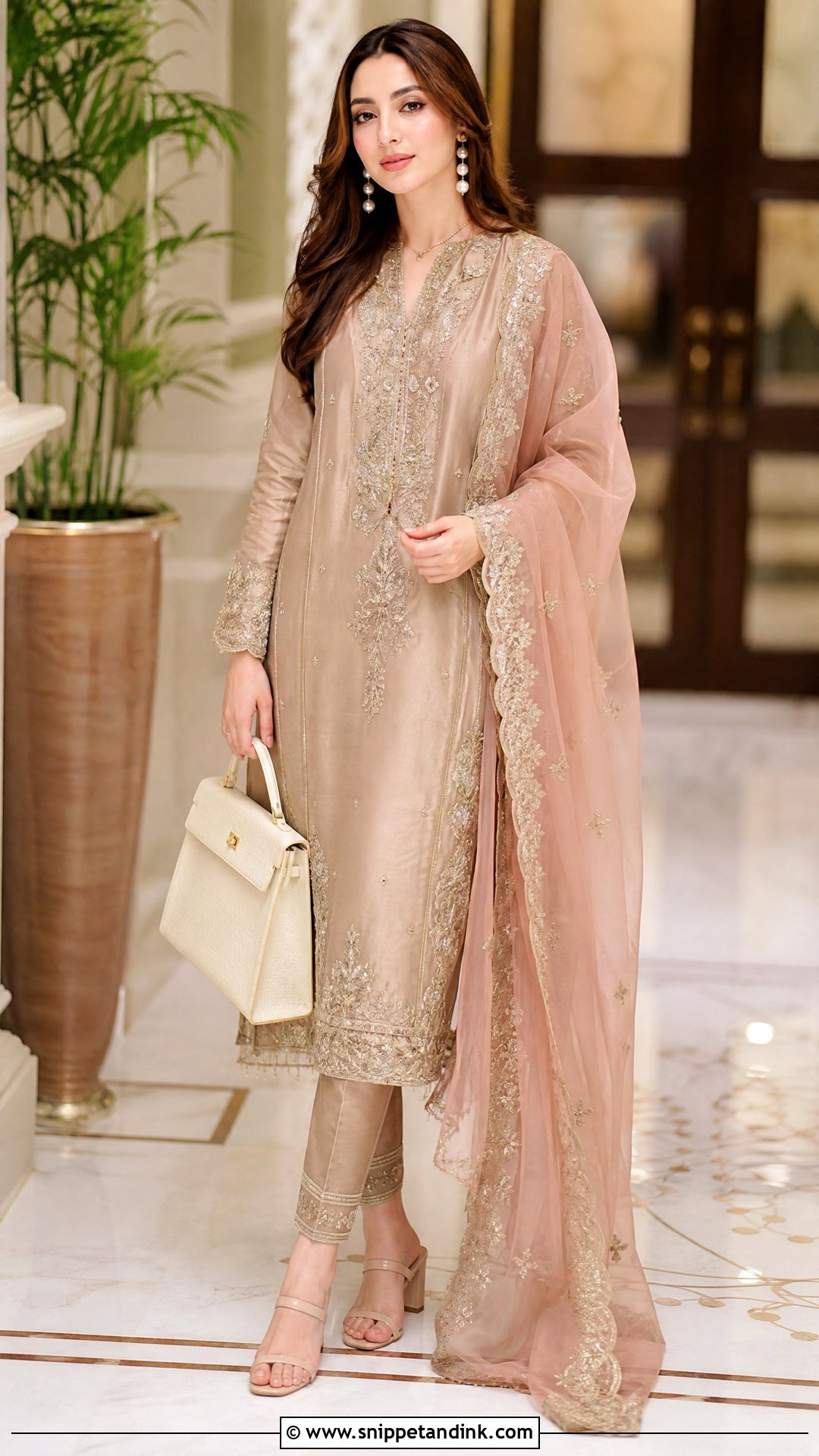
A good silk suit looks rich with very little help. Raw silk, Korean silk and blends have enough body to hold a clean line without heavy embroidery. A long straight shirt with cigarette pants looks sleek; a gharara adds drama. Jewel buttons, embroidered cuffs and border detailing make it wedding-ready, and a contrasting organza dupatta adds dimension. Mothers and older guests often prefer this kind of understated outfit. Raw silk does wrinkle at the lap when you sit, so stand for the family photos.
19. Pakistani Mirror Work Mehndi Dress
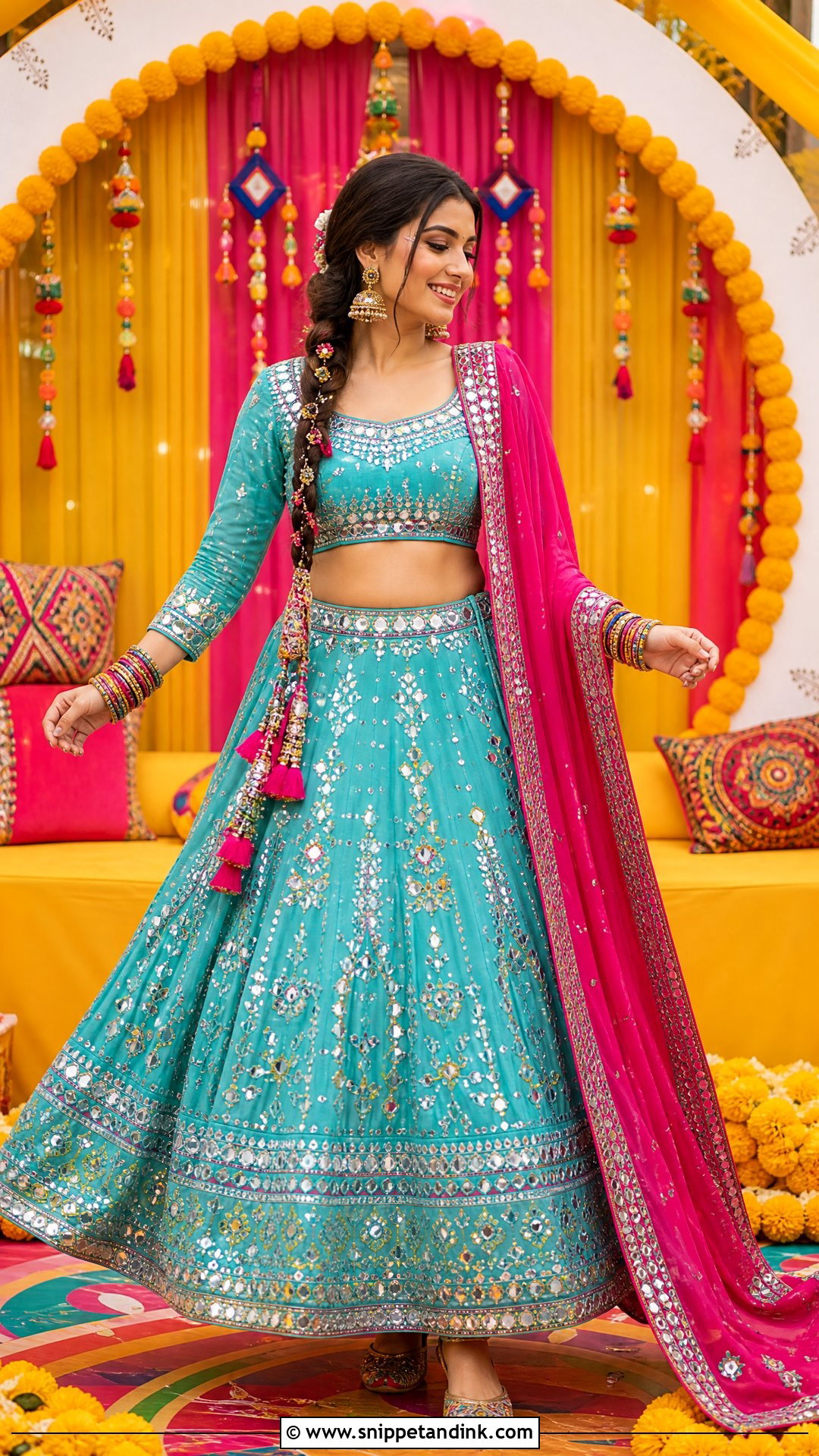
A Pakistani mirror work Mehndi dress is built for music and dancing, since mirrors catch the light every time you move. A lehenga choli, sharara set or short kameez with mirrors at the neckline, sleeves, hem and dupatta, in fuchsia, orange, yellow, green or turquoise. The outfit already sparkles, so jewelry can be bold but not heavy. I check that each mirror is stitched with a thread surround; glued mirrors pop off on the dance floor. Jhumkas, bangles, a parandi and khussas.




20. Pakistani Gota Work Wedding Dress
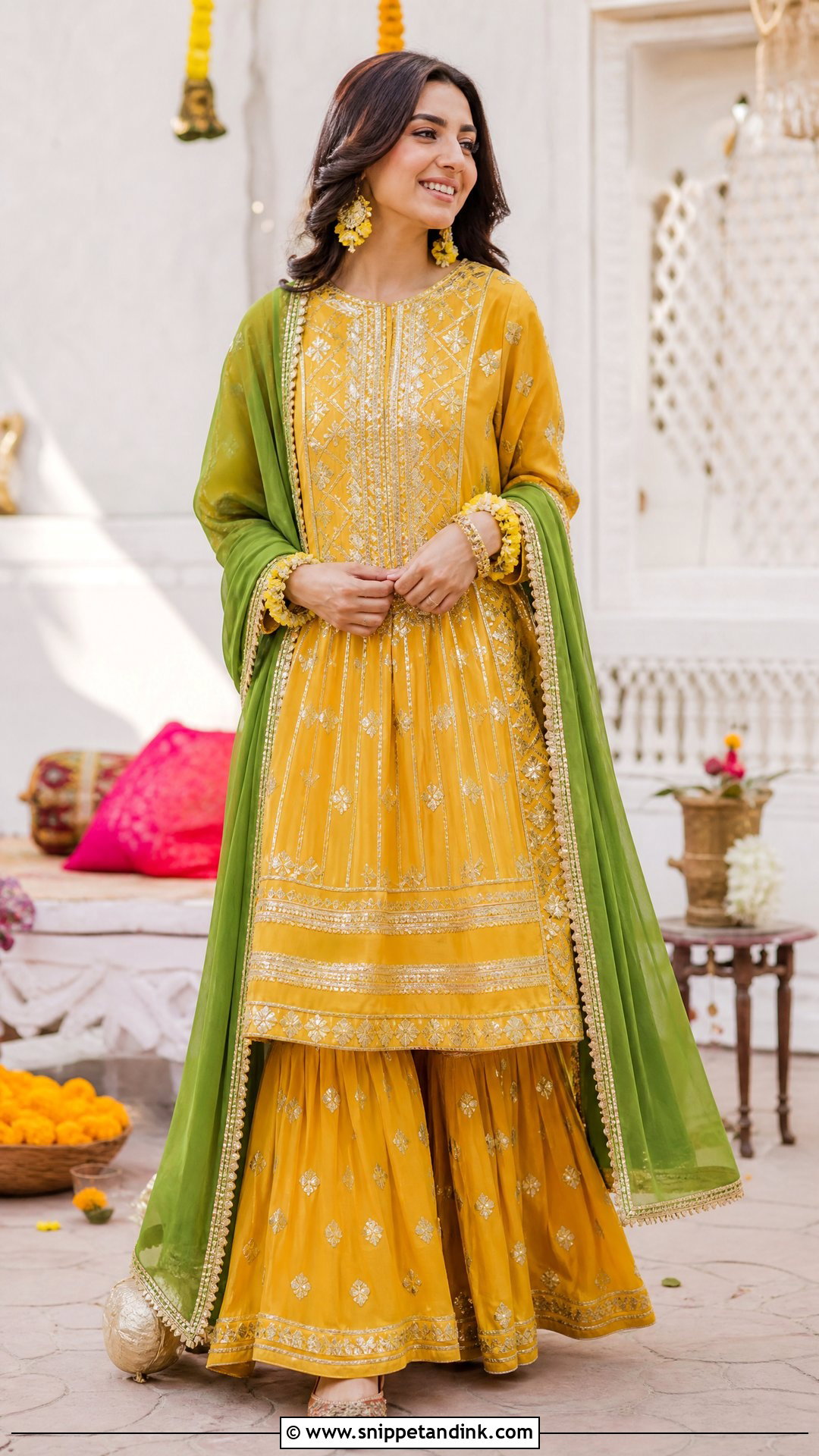
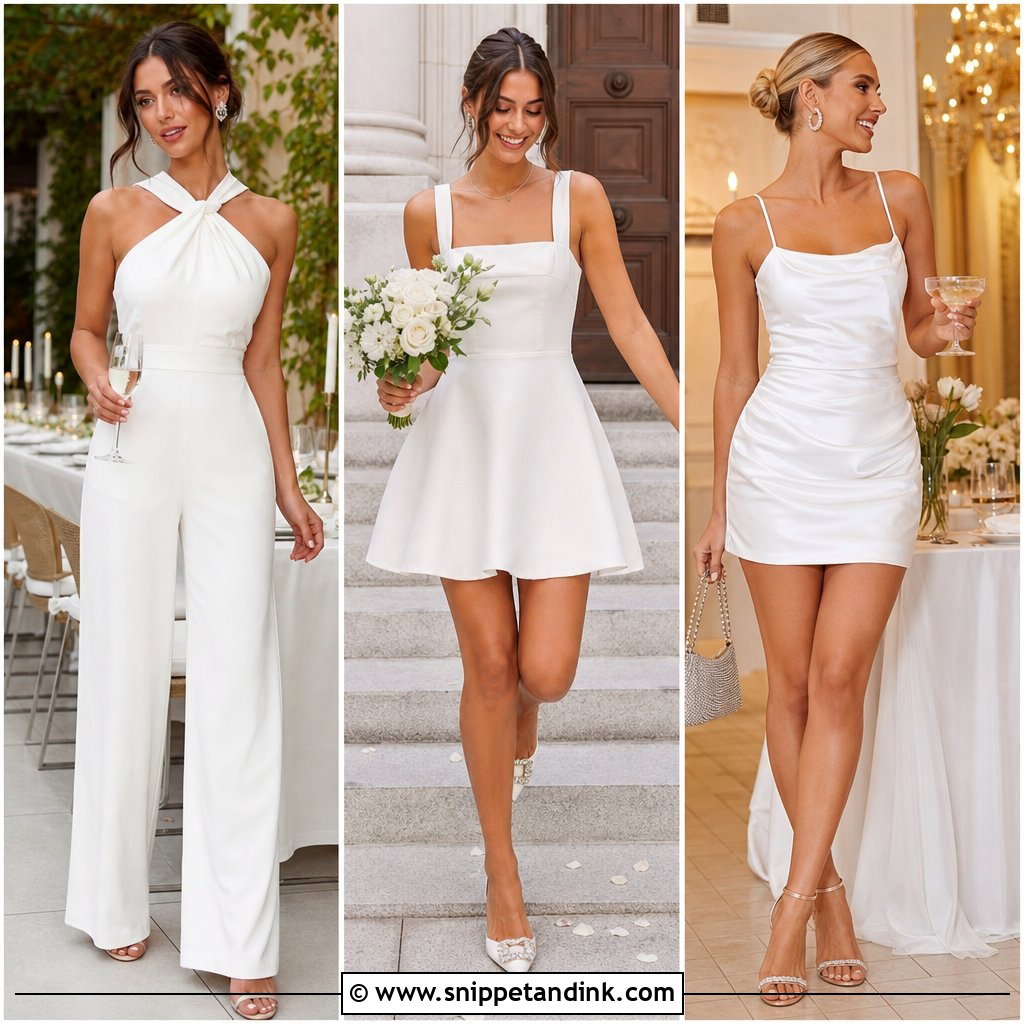
A Pakistani gota work wedding dress gives shine without the weight of dense beading, which is why it suits long pre-wedding days. Gota borders and small motifs on a gharara, sharara, lehenga or pishwas, in yellow, green, orange, pink or ivory, fit Mayun and Mehndi. A gota-trimmed dupatta finishes it. Brides wear heavier gota and guests lighter. Traditional metallic gota darkens over the years, while newer synthetic gota stays bright, so ask which kind is on the piece.
21. Pakistani Net Dupatta Lehenga
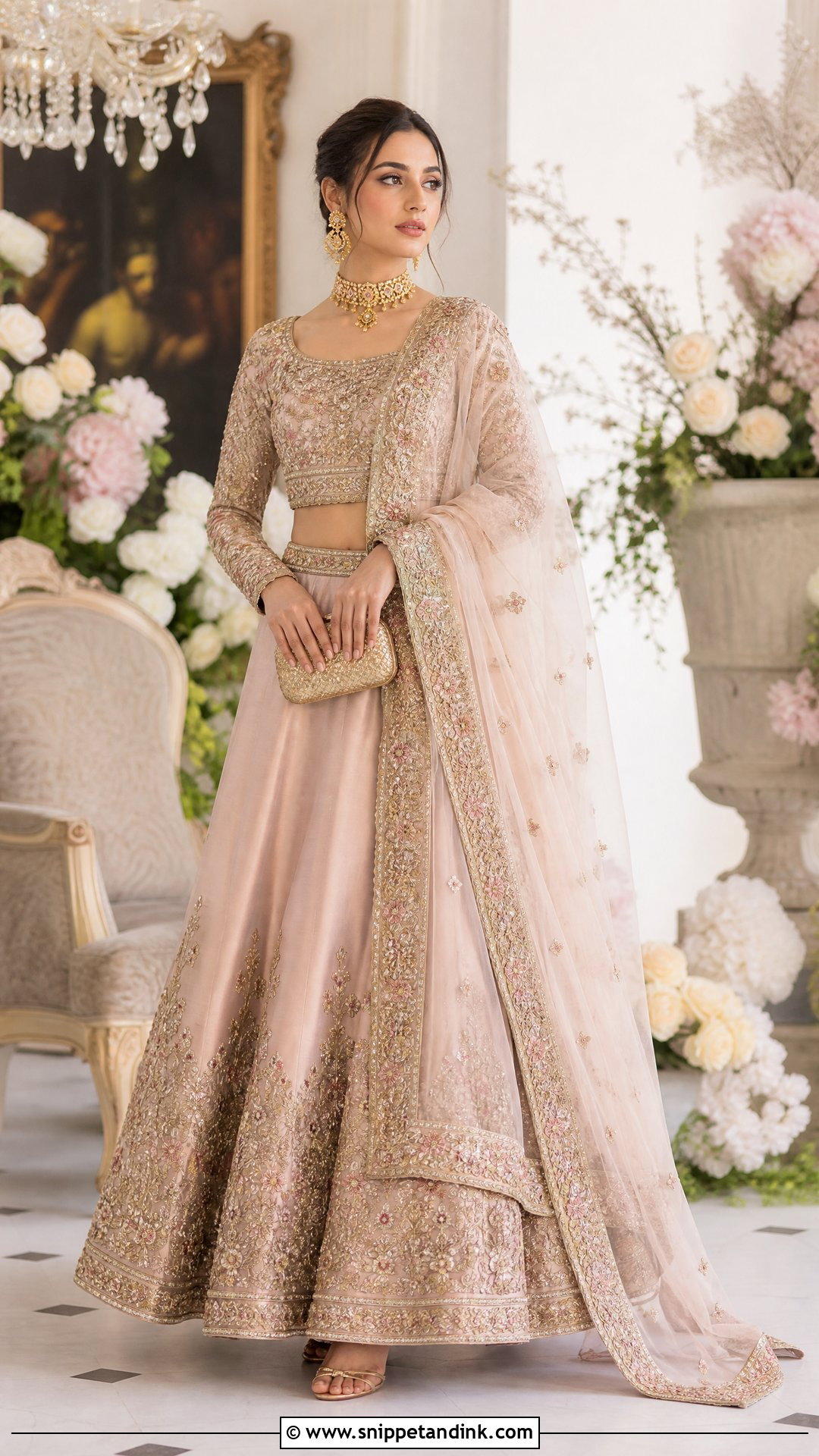
The net dupatta lehenga works because it puts structure and softness side by side. The lehenga can be silk, organza, velvet or jamawar, and a sheer net dupatta with an embroidered border, scattered sequins or delicate motifs lightens the whole look. Brides drape it over the head; guests pin it on one shoulder. Match jewelry to the embroidery metal, gold, silver or antique. Net catches on earring backs and bangles, so I always use pins with smooth heads and keep the dupatta clear of rough jewelry.
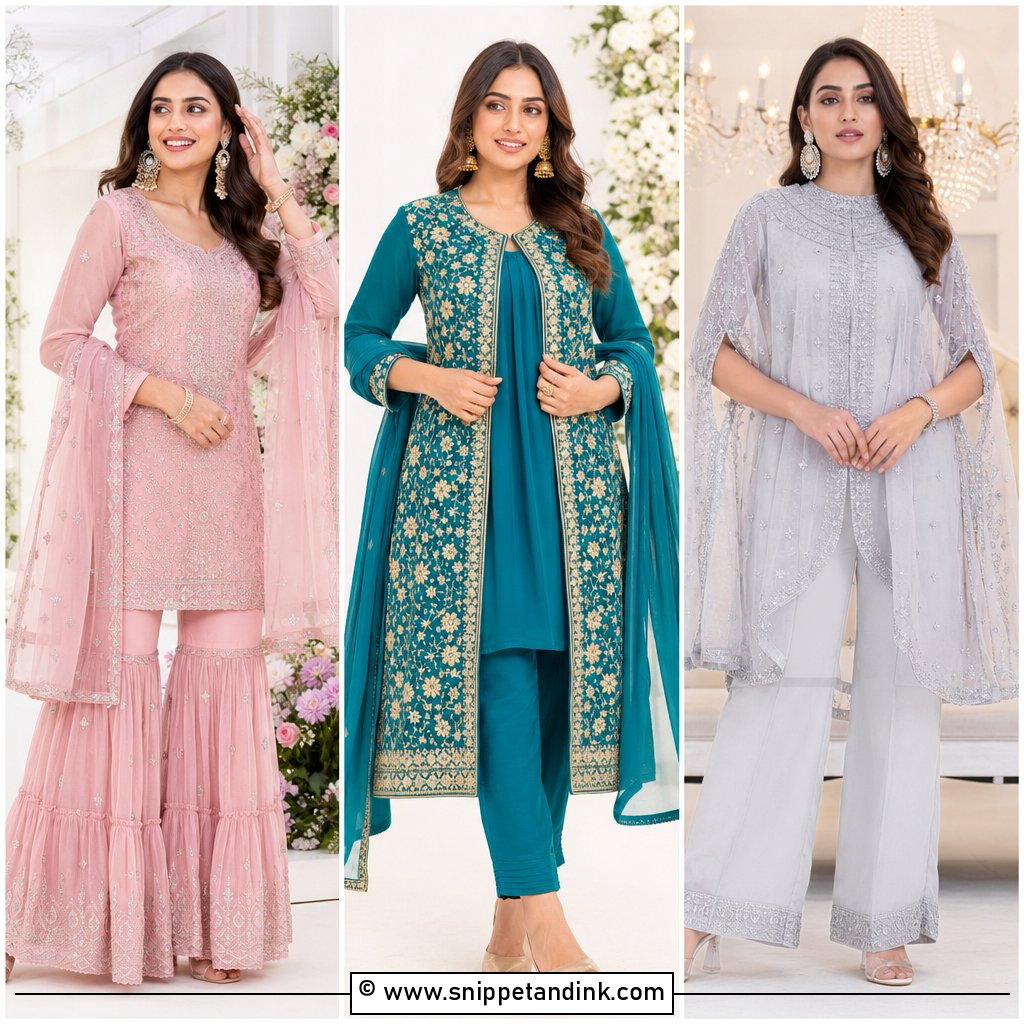
22. Pakistani Cape Dupatta Dress
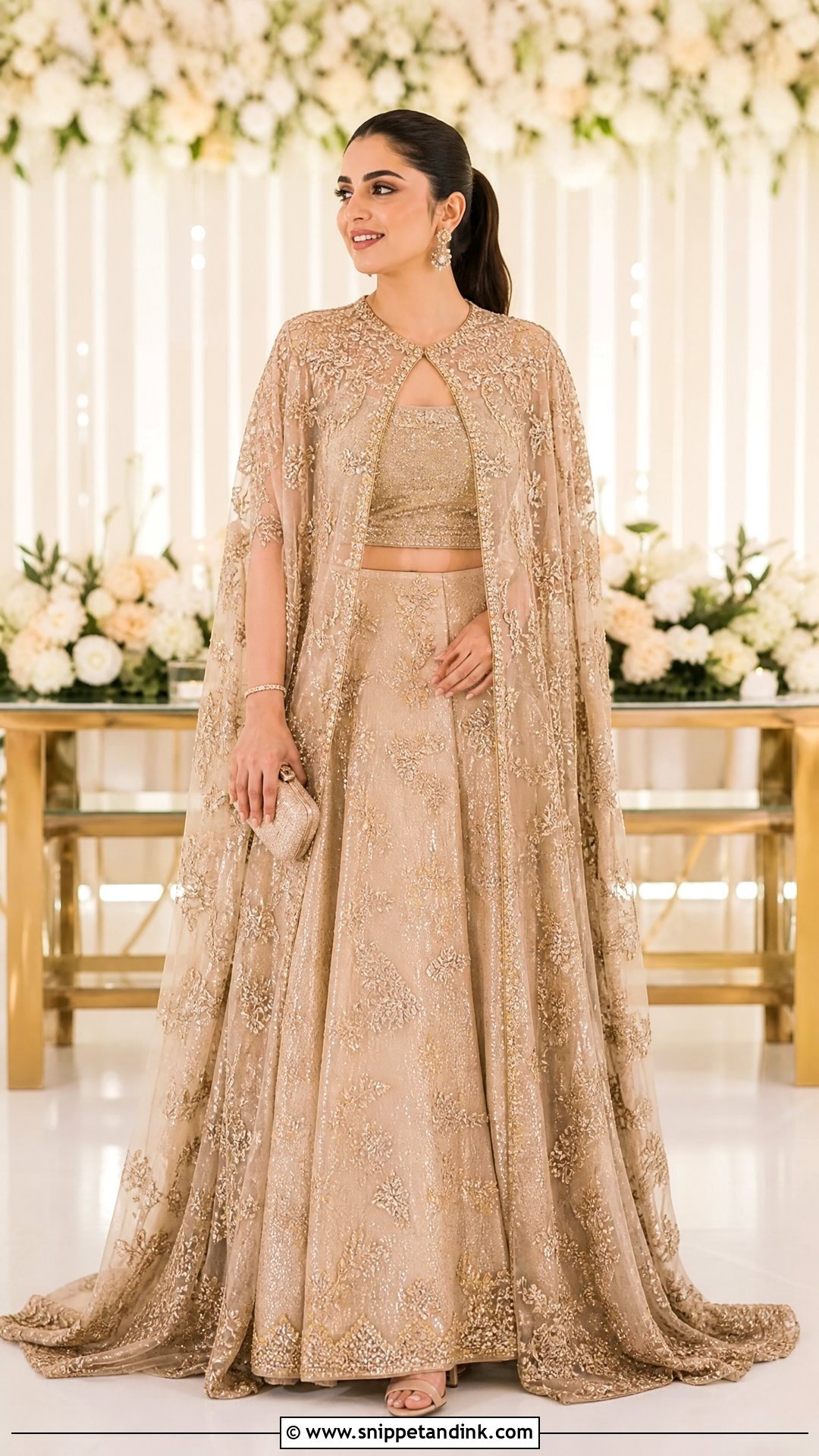
A cape dupatta replaces the traditional drape, or sits over a lehenga, sharara or gown, and covers shoulders and arms with a clean outline. Soft embroidery, pearls or sequins along the cape frame the outfit. It suits Walima, engagement events and guests who want something modern. Pair it with a fitted blouse, flared skirt, heels and minimal jewelry; the cape is already the statement, so the bag stays simple. Capes also stay put, which is a relief after a night of re-pinning dupattas.
23. Pakistani Front Open Wedding Dress
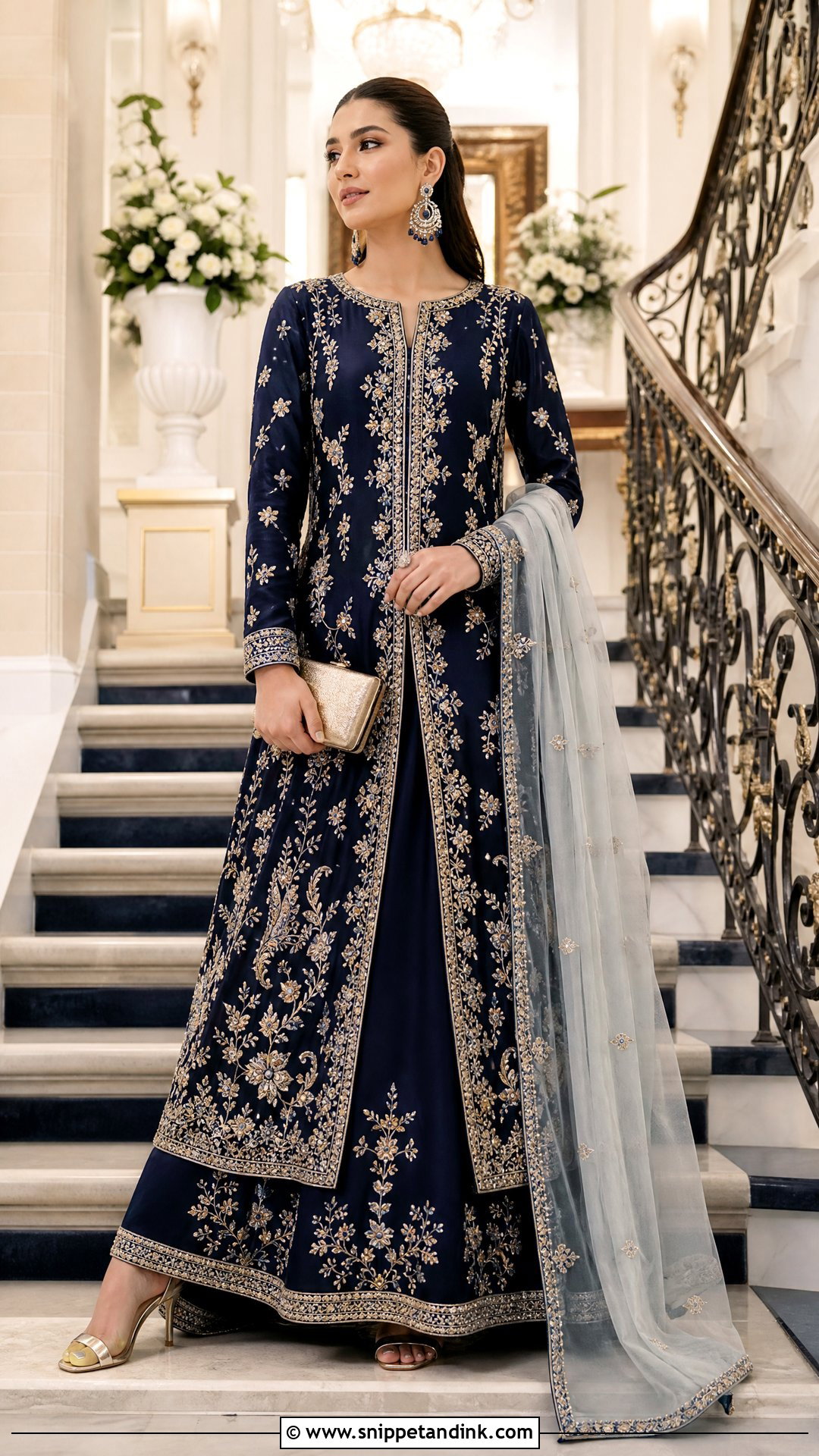
A front-open dress is a long open jacket or gown layered over a lehenga, gharara or straight pants. The open front creates height, and the inner layer adds color. Embroidered borders along the opening, sleeves and hem finish it. Ivory with gold, maroon, emerald, navy and blush are all good. The open edges must hang straight when you stand, so I ask tailors to weight the hem slightly if the fabric is light. A light dupatta for traditional events, heels and statement earrings.
24. Pakistani Jacket Lehenga Dress
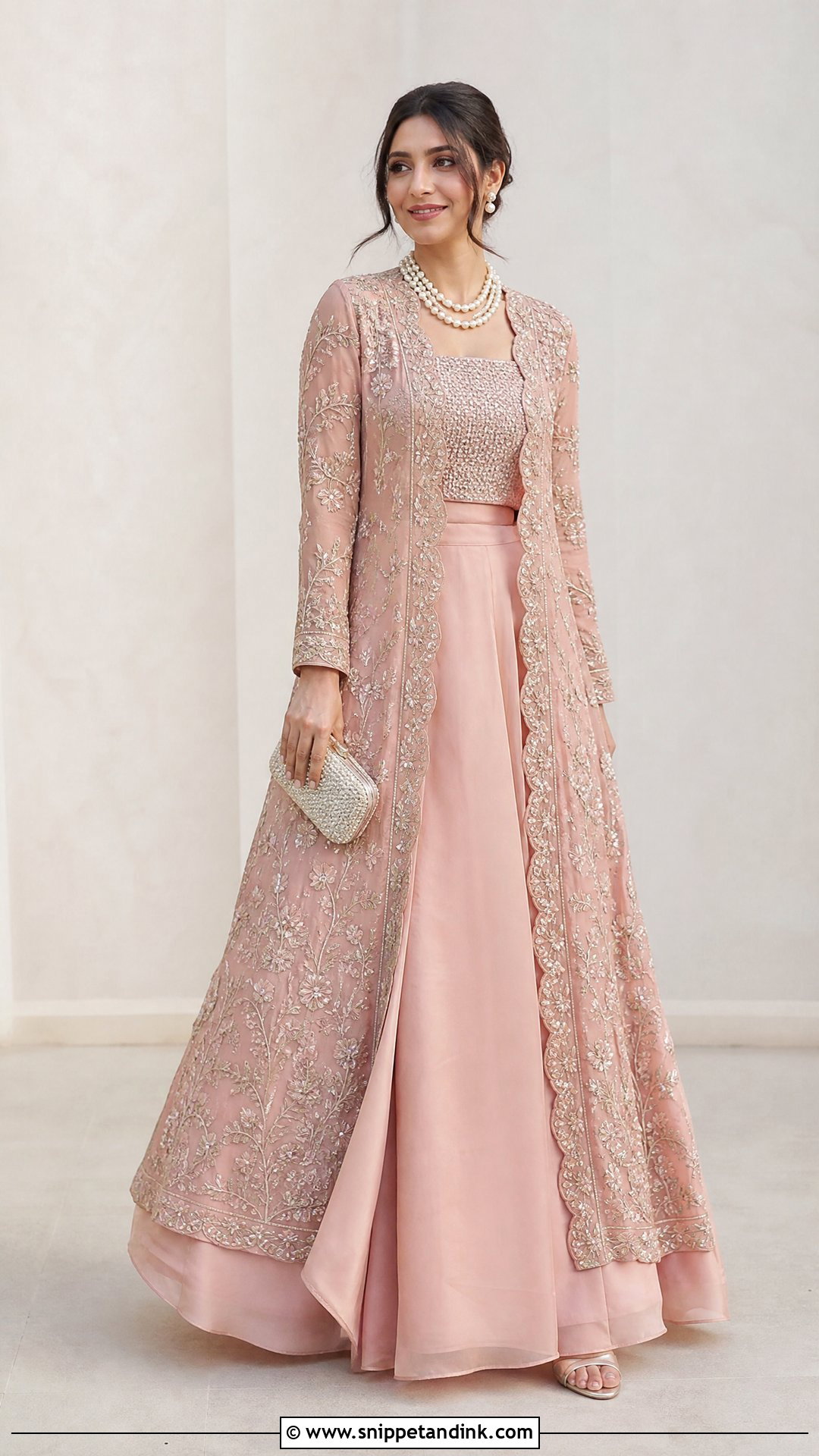
A jacket over a lehenga adds coverage and structure, and it means you need less jewelry. The jacket can be short, waist-length or long depending on formality. A heavily worked jacket over a simpler lehenga feels modern. Jamawar, zari or dabka details lean traditional, while pastel organza with pearls suits Walima. Watch the shoulder seam and sleeve length at the fitting; a jacket that’s even slightly wide in the shoulder looks borrowed. Heels, a clutch and soft waves or a bun.
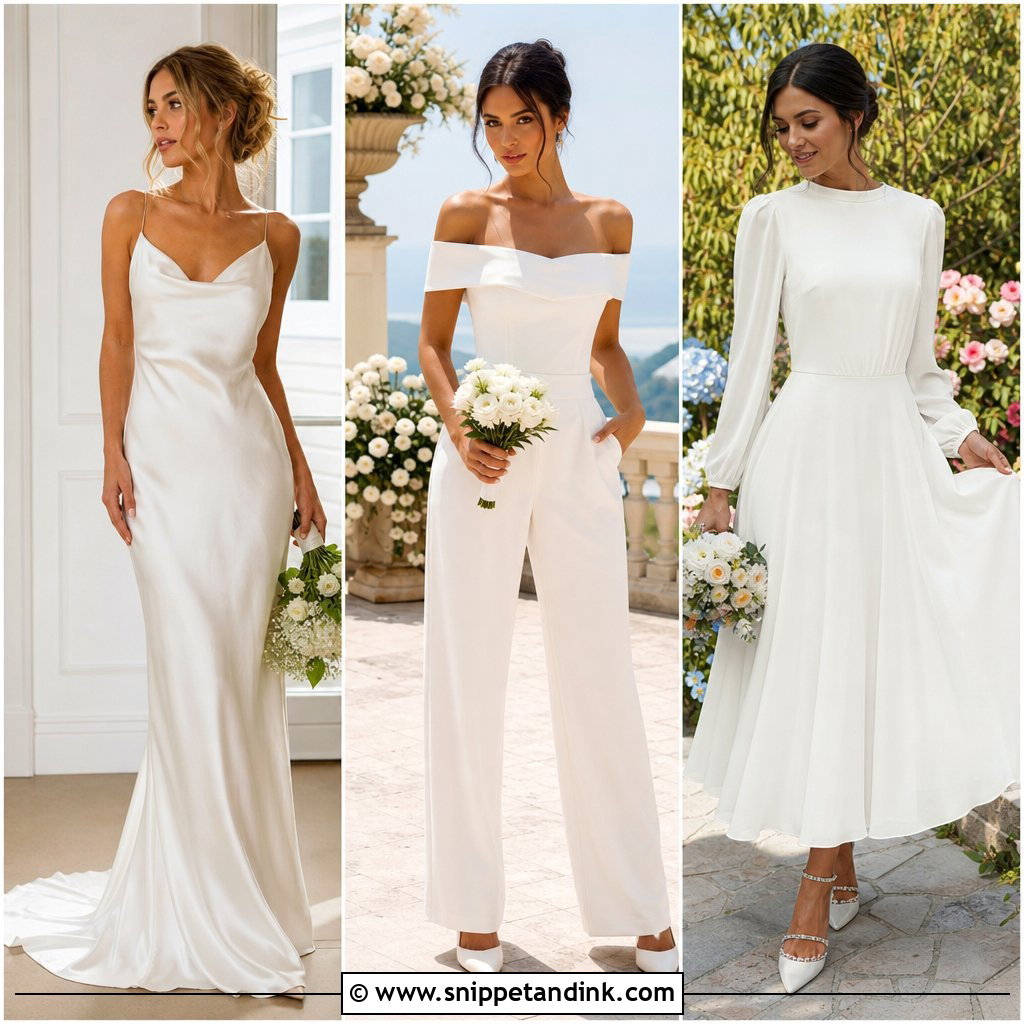

25. Pakistani Bridal Saree Gown
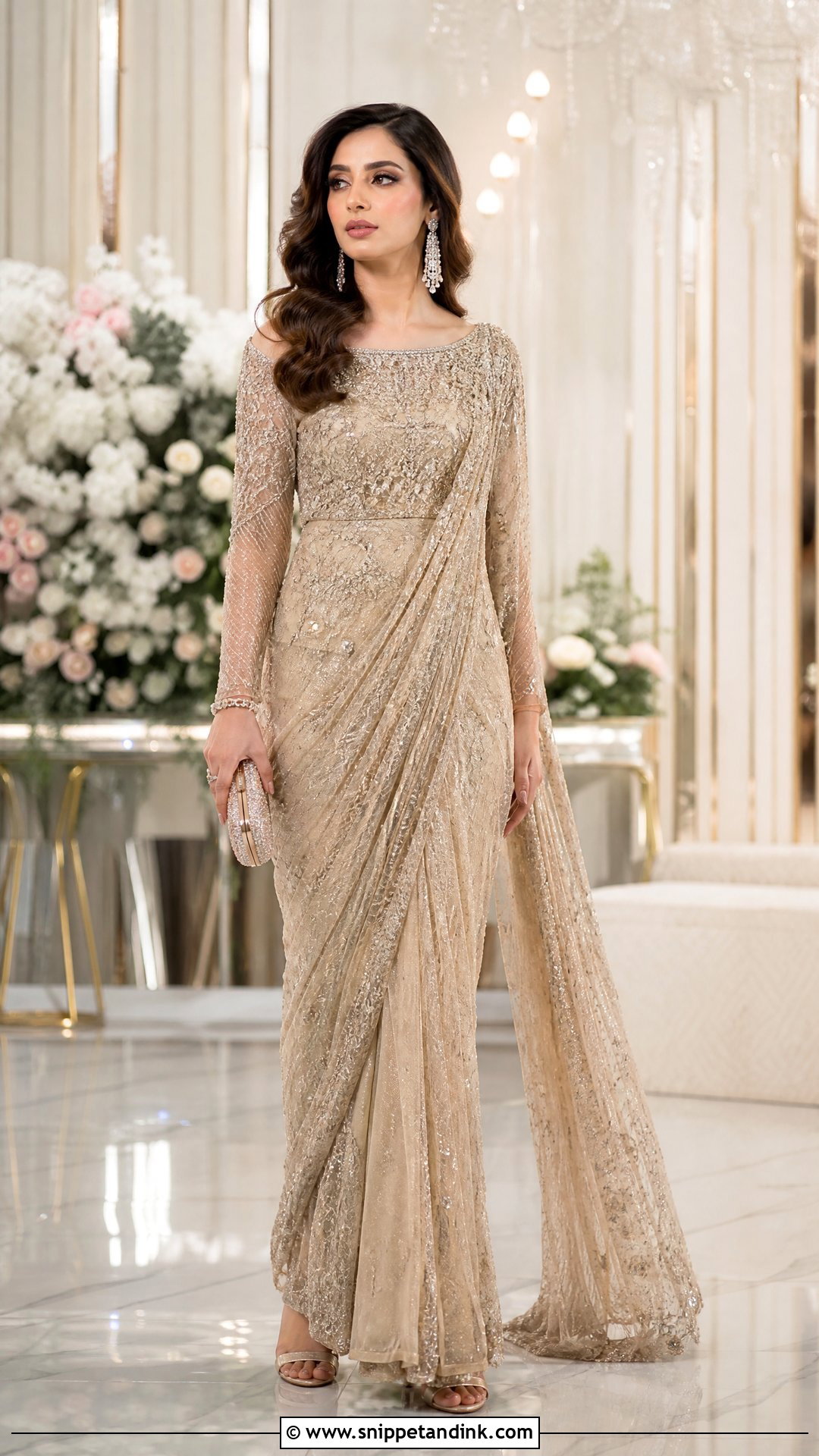
A saree gown is stitched with a pre-draped pallu, so you get the saree line without the constant adjusting. The fitted bodice and flowing skirt keep everything in place through a long evening. Champagne, silver, blush, ivory, emerald or maroon with crystal, pearl or zari detail suit Walima and formal evenings. A longer blouse or full-sleeve bodice keeps it modest. I suggest it to anyone who loves sarees but hasn’t worn one all night before.
Ready-to-Wear, Designer Order or Your Own Tailor
There are three ways to get a Pakistani wedding outfit, and I’ve seen each one go well and badly. Ready-to-wear is fastest, but sizing runs differently between labels, so try before you buy and check the seam allowance; you want enough fabric inside the side seams to let them out a little. Designer orders give you the most control, but heavy handwork takes months rather than weeks, and you should agree on fitting dates in writing at the start. Unstitched fabric with your own tailor costs least, and it’s where I’d use the most caution.
Whichever route you take, turn the embroidery over. Hand zardozi and dabka show small knots and uneven stitches on the back, while machine embroidery shows a regular backing mesh. Both have a place, but you should know which one you’re paying for. And plan the final fitting at least two weeks before the first function, so there’s still time to take in a waist or lift a hem without a panic.
Four Functions, Four Outfits, and Room to Breathe in Each
Pakistani wedding dress runs from deeply traditional bridal lehengas to pastel gowns, festive shararas, elegant ghararas and saree-style outfits. What decides it is the event, the season, your comfort and how formal the family celebration is. Barat still suits reds, maroons and golds. Nikah and Walima suit ivory, blush, mint, champagne and powder blue. Mehndi and Mayun come alive in yellow, green, orange and pink. Plan the dupatta, jewelry, shoes and bag with the outfit, not after it, and every function will feel finished.
You'll Like These Ideas:





Leave a Reply