
A Rajput bridal look is built in layers, and each one has a name. The Rajputi poshak usually brings together a fitted kanchli, a full ghagra and a long odhni draped over the head, and the jewelry adds a borla or rakhdi at the hairline, the broad Aad at the throat, a nath, bajuband on the upper arm, haath phool across the hand, bangles and anklets. The details of drape, color and ornament change from family to family and region to region, so treat everything here as a starting point for that conversation, not a rulebook. When I style Rajputana bridal dressing, I plan the whole outfit around comfort over a long ceremony. The twenty looks below move from classic red through Bandhani, gota patti, velvet, jewel tones and pastels.
Pinning the Odhni So It Stays Put Through the Pheras
The odhni is the piece that slips, and when it slips it drags the borla with it. I build the head in a fixed order so each layer has something solid underneath.
- Make a firm bun first, set low or at mid-height depending on the family’s drape. It is the anchor for everything that follows.
- Set the borla at the center parting and secure its chain or thread into the hair behind it, so the weight is held by the bun rather than the hairline.
- Lay the odhni over the head with the border falling where the family wants it, usually framing the face, and pin it at the bun with a few strong U-pins pushed in through the fabric.
- Pin the shoulder and waist points to the kanchli or ghagra so a step or a bow can’t pull the odhni back.
Avoid pinning through gota or heavy embroidery; the metal ribbon can tear. Pin through the plain fabric beside it. Then walk several slow circles around a chair at the trial, the way you will around the fire, sitting and standing at the end. If the borla shifts, the bun needs to be tighter.
1. Royal Red Rajput Bridal Poshak
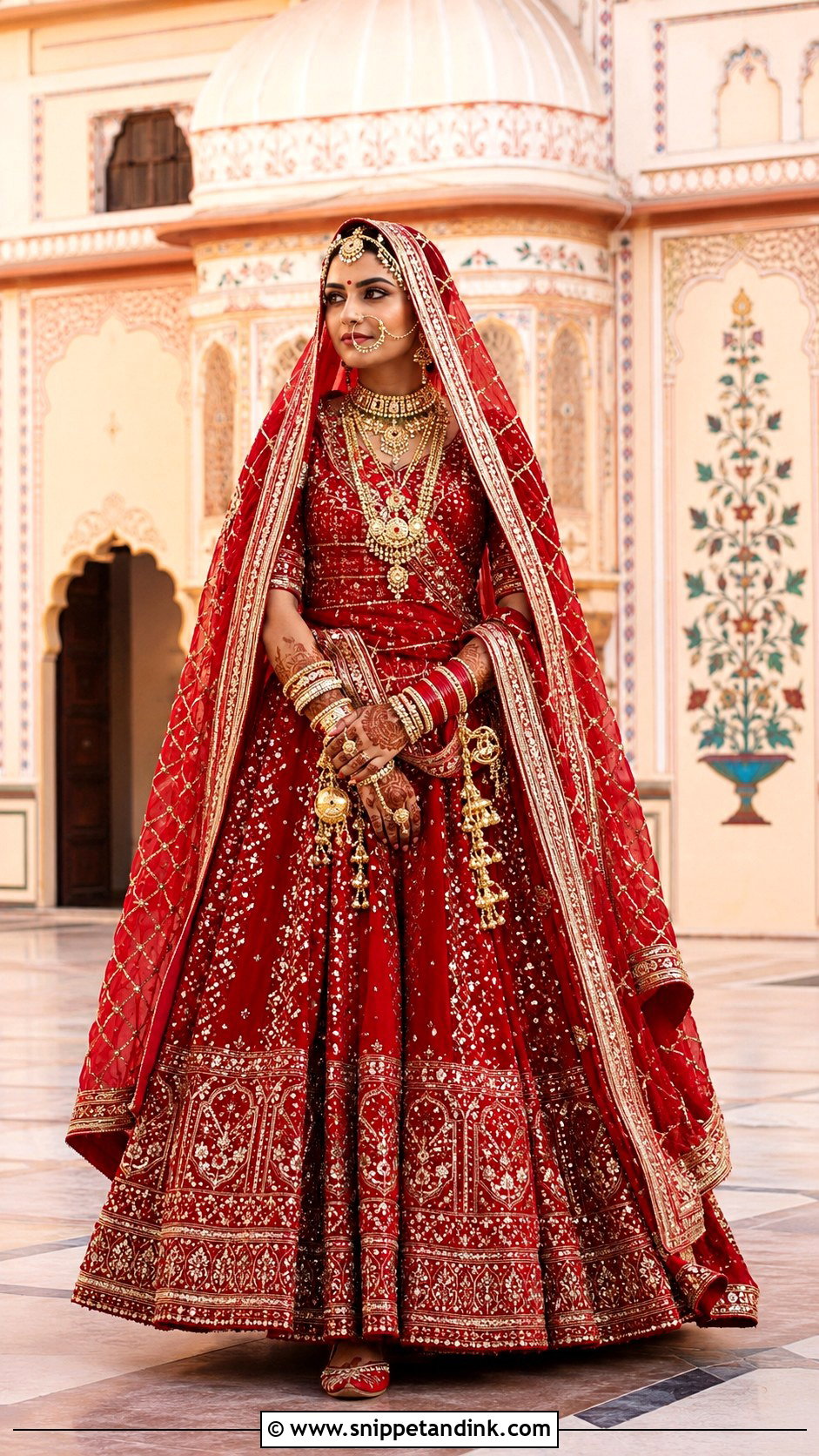
Classic red with dense gold gota patti is the look most people picture, and it earns that place. A full ghagra, fitted kanchli and a long odhni over the head carry the color; a gold borla, broad Aad, layered haar, nath, bajuband, haath phool and bangles do the rest. Red or gold embroidered juttis keep your feet comfortable through hours of standing. Soft gold lids, defined liner and a red lip balance the jewelry. The first thing I ask is how the family drapes the odhni for the pheras, because the answer decides where every pin goes.
2. Maroon Velvet Rajput Bridal Poshak
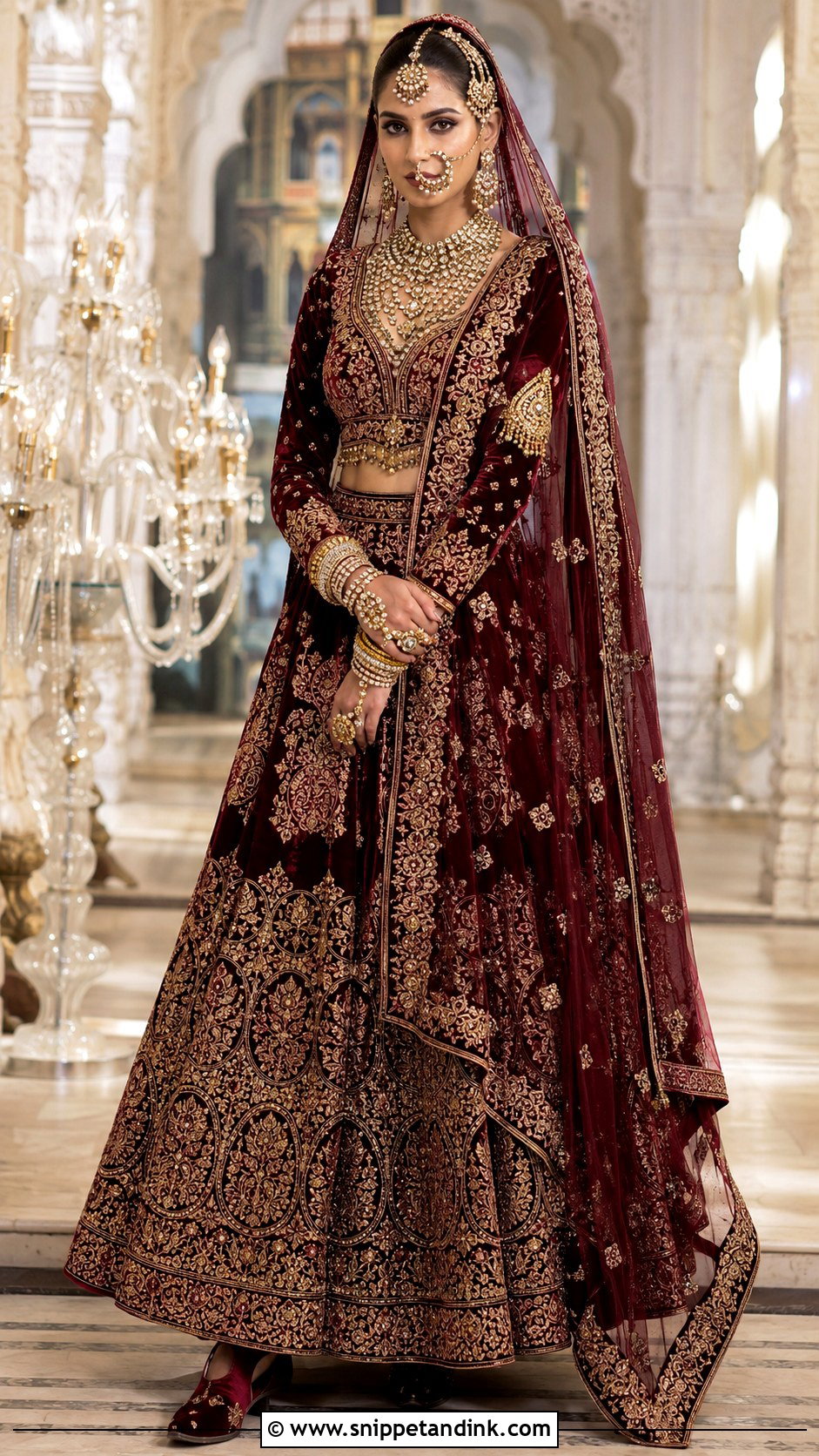
Velvet is heavy and warm, which makes maroon velvet a winter or night ceremony choice rather than a summer afternoon one. To stop the whole outfit becoming weighty, pair the structured velvet ghagra and kanchli, edged in antique-gold zardozi, with a much lighter organza or silk-georgette odhni. Leave some plain velvet between embroidered panels so the skirt still swings. An antique-gold Aad, layered kundan, borla, a large nath, armlets, stacked bangles and maroon velvet juttis complete it. Velvet drinks light, so I keep the skin luminous instead of matte, with soft smoked eyes and a berry lip.
3. Rani Pink Rajput Bridal Poshak
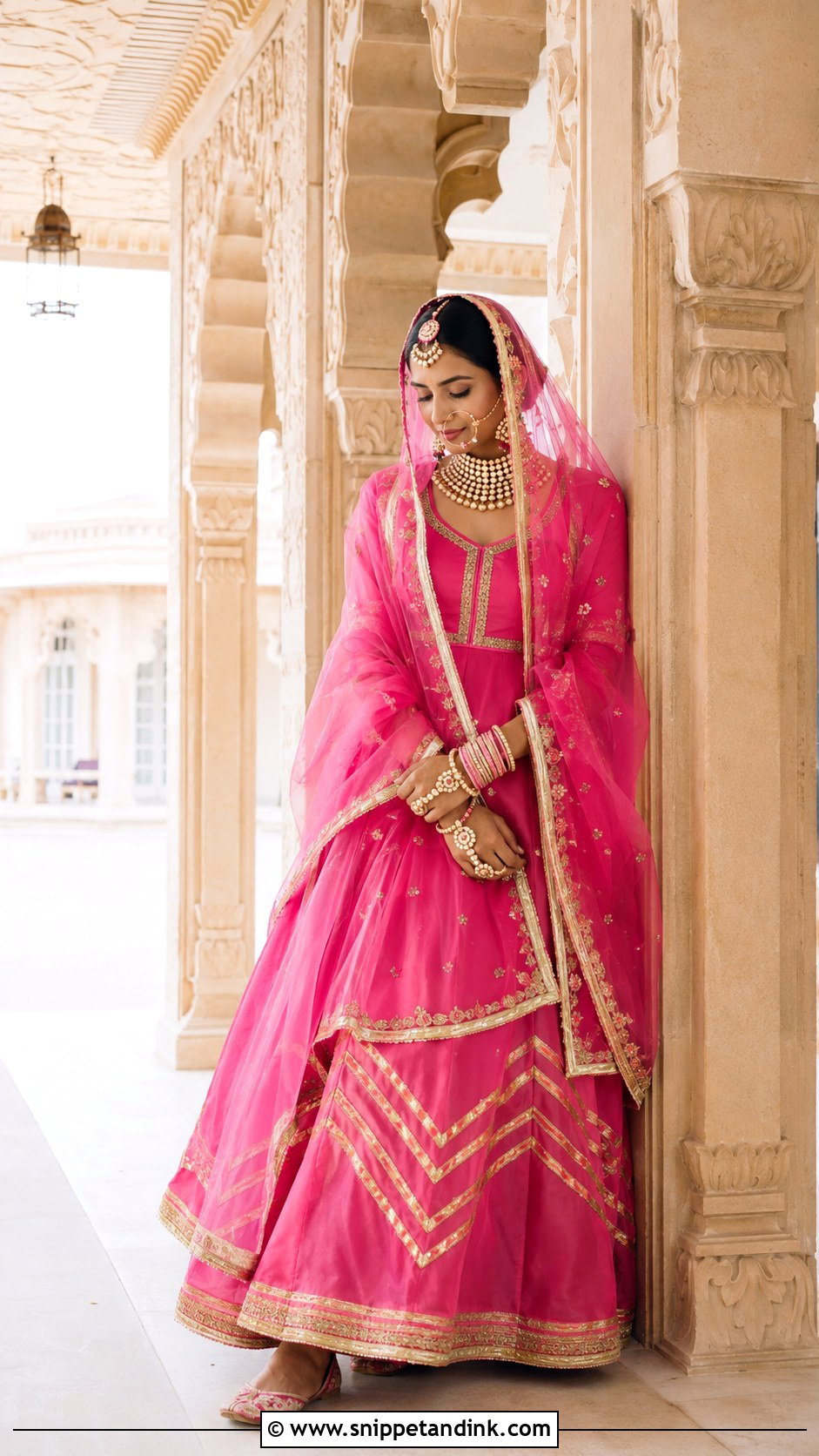
Rani pink is bright enough to hold its own against heavy gold, which is why a silk or georgette ghagra with gota borders needs very little else. A matching kanchli and a sheer pink odhni with small motifs keep the color consistent from head to hem. Kundan Aad, layered pearls, gold borla, nath, jhumkas, haath phool and pink-and-gold bangles complete the traditional set. Rosy makeup with soft eyes and a muted rose lip suits the shade; a bright pink lip on top tends to fight it. A center-parted bun gives the borla a clean line to sit on.
4. Red Bandhani Rajput Bridal Poshak
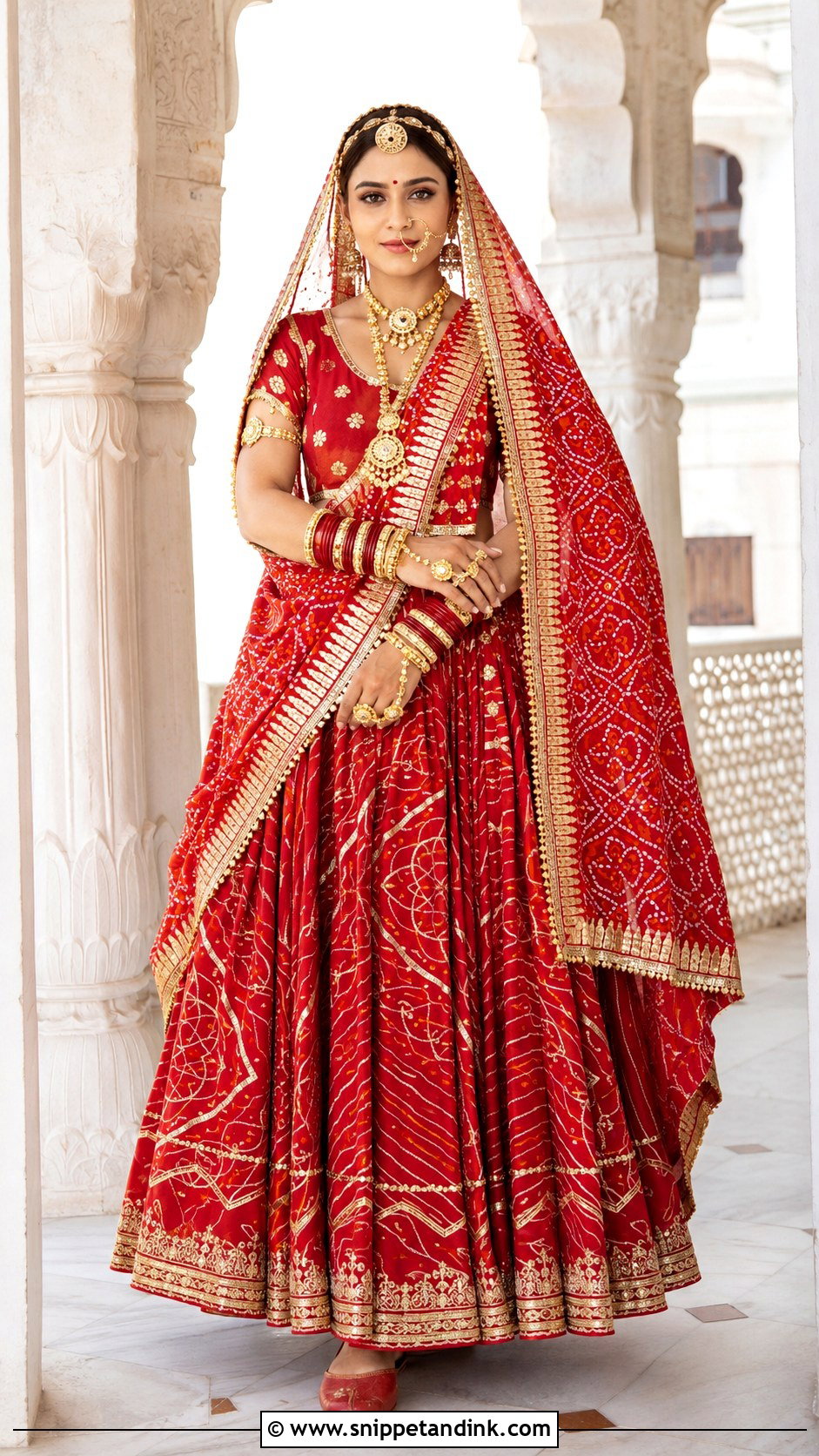
Bandhani is tie-dyed by pinching and binding tiny points of cloth before dyeing, and those dots give a red odhni texture you can see across a courtyard. In parts of Mewar a red Bandhani odhni is closely tied to the bride, so ask the family whether it’s expected. Wear it with a broad gota border over a plain or lightly patterned silk ghagra and fitted kanchli, so the dots have room. A round borla, Aad, long gold necklace, nath, bajuband, bangles, haath phool and red leather juttis with gold stitching are classic. Real Bandhani can bleed dye if it gets damp, so keep it away from wet henna and rain.
5. Crimson Gota Patti Rajput Bridal Poshak
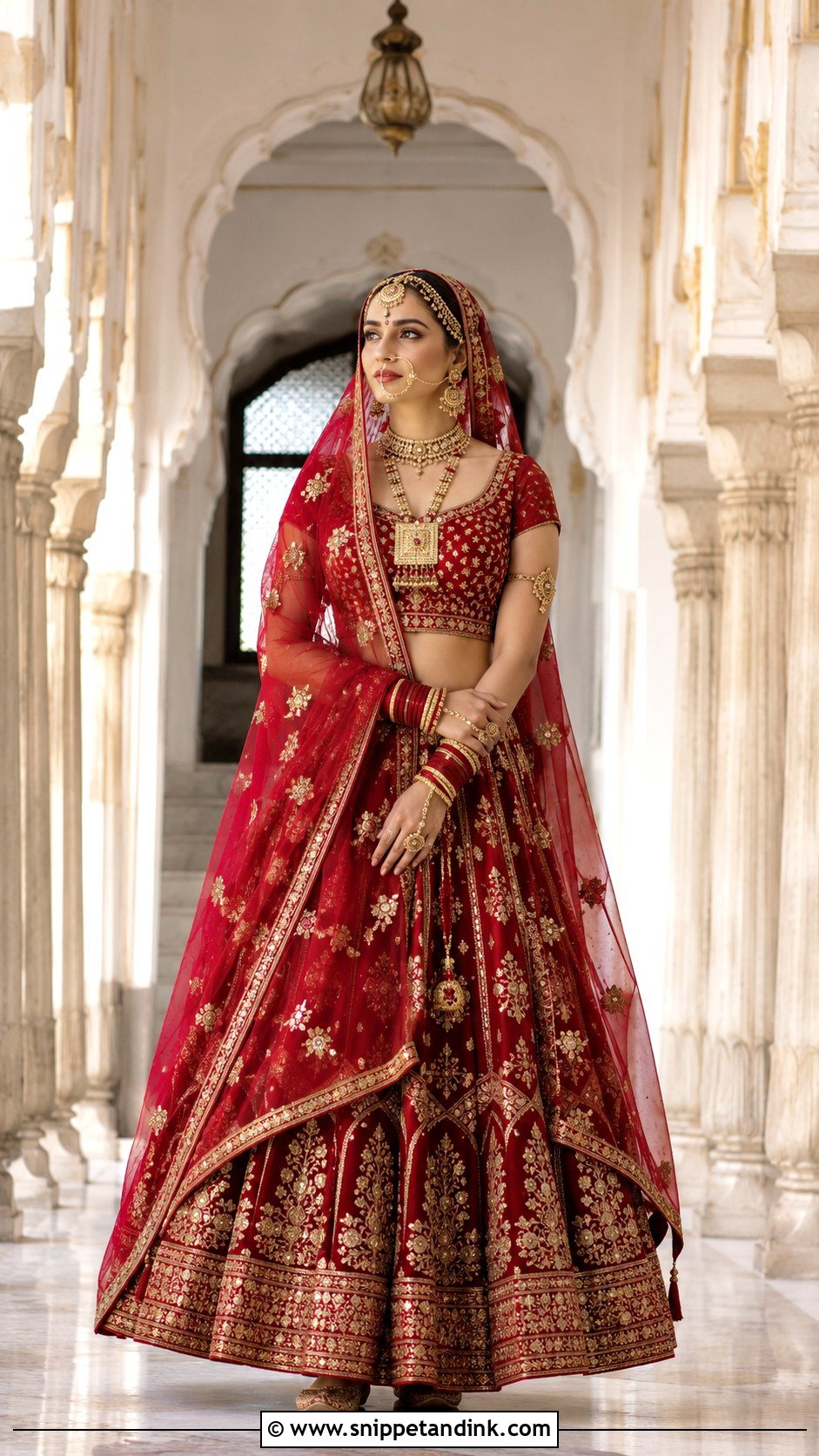
Crimson with carefully placed gota patti shines through metal ribbon work rather than crystals or sequins. A flared ghagra with broad borders and scattered florals, a matching kanchli, and a sheer odhni whose decorated edge frames the face form the base. Kundan borla, rectangular Aad, earrings, a large nath, bajuband, haath phool and layered red bangles add up quickly in weight, so I always suggest gold juttis with a cushioned sole. Bronze lids, gently sculpted cheeks and a deep rose lip keep the face warm. A sleek center-parted bun leaves the jewelry readable.
6. Emerald Green Rajput Bridal Poshak
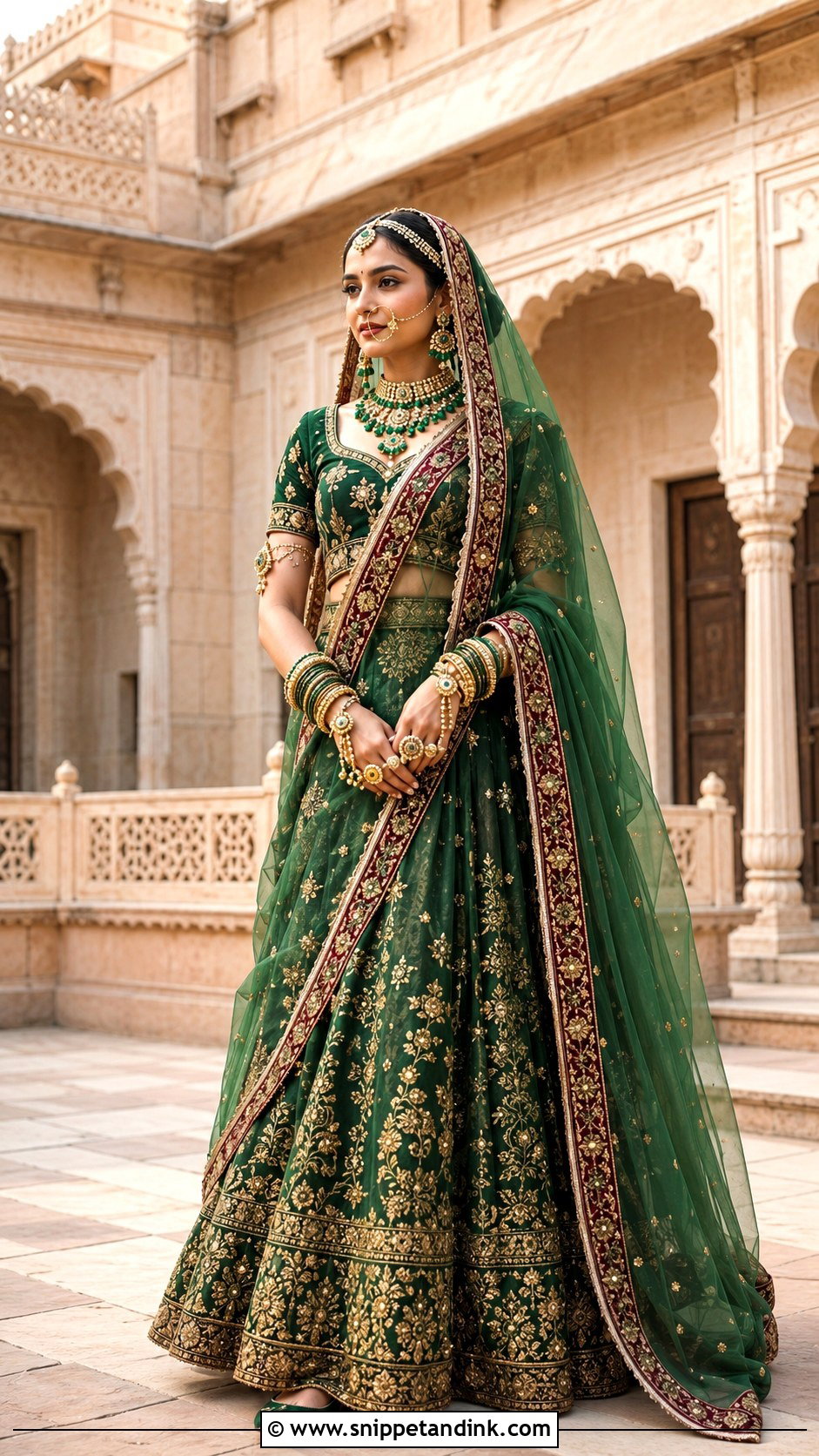
Emerald is a rich alternative to red that still looks ceremonial, especially when the odhni carries a red or maroon border to tie it back to bridal tradition. A silk ghagra with antique-gold embroidery kept near the borders lets the green itself show. Green-stone kundan, a gold Aad, borla, nath, earrings, armlets, haath phool and mixed green-and-gold bangles suit it, with dark green juttis. Soft brown eyes, precise kohl and a brick-red lip balance the cool fabric. A small, quiet floral accent in a low bun softens the jewelry.
7. Saffron Yellow Rajput Bridal Poshak
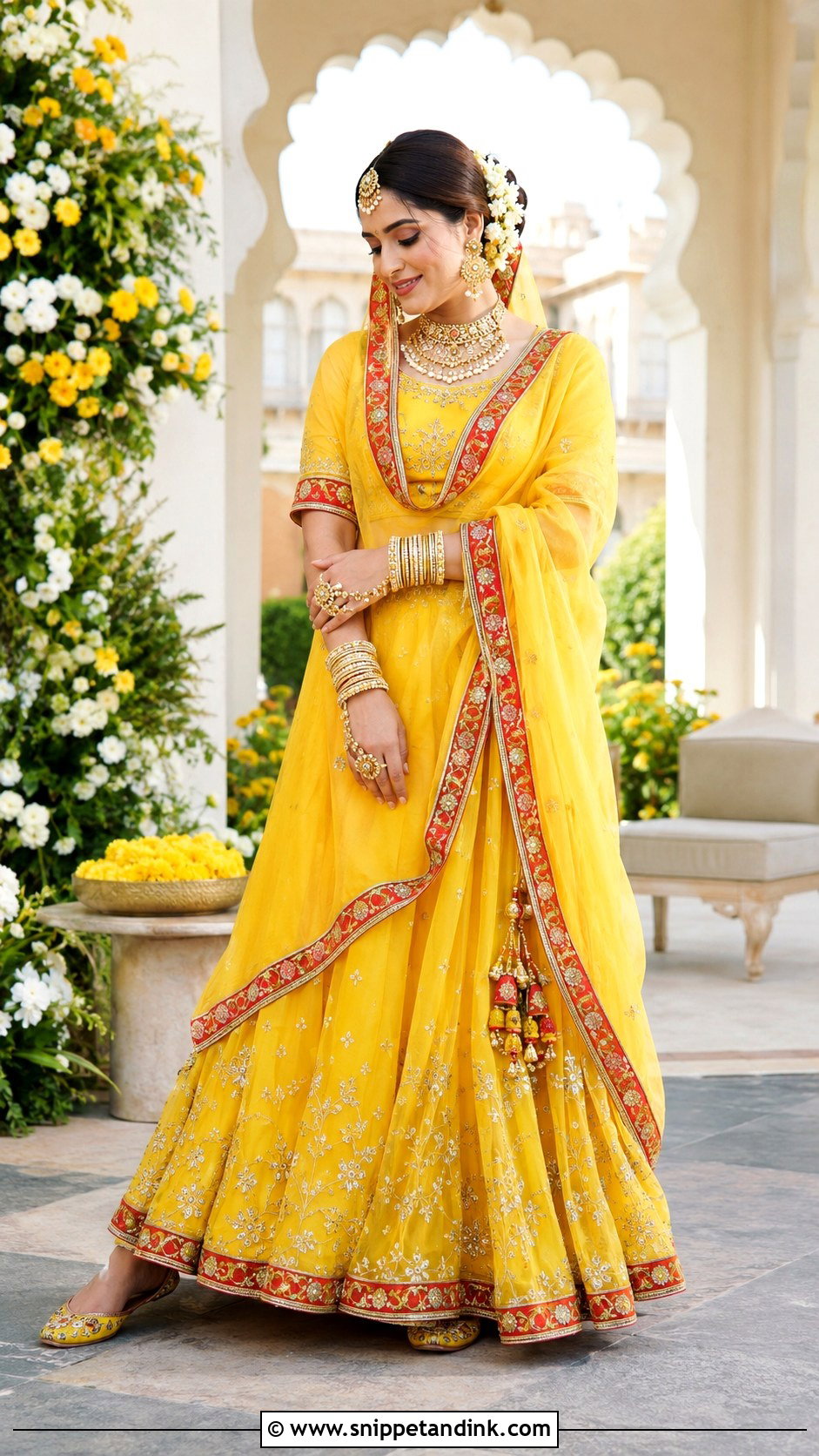
Saffron yellow belongs to daytime rituals. Yellow is widely connected with the haldi and other pre-wedding customs in many Rajasthani families, though practice varies, so it’s often worn before the main ceremony rather than at it. Keep it light: a silk or georgette ghagra with delicate gota, a matching kanchli and a yellow odhni edged in red. A modest borla, a medium Aad, jhumkas, bangles and haath phool are enough when you’re moving around. Fresh flowers in a neat bun suit the mood. Turmeric stains, so I tell brides to dress after the haldi paste, not before.
8. Ivory Gold Rajput Bridal Poshak
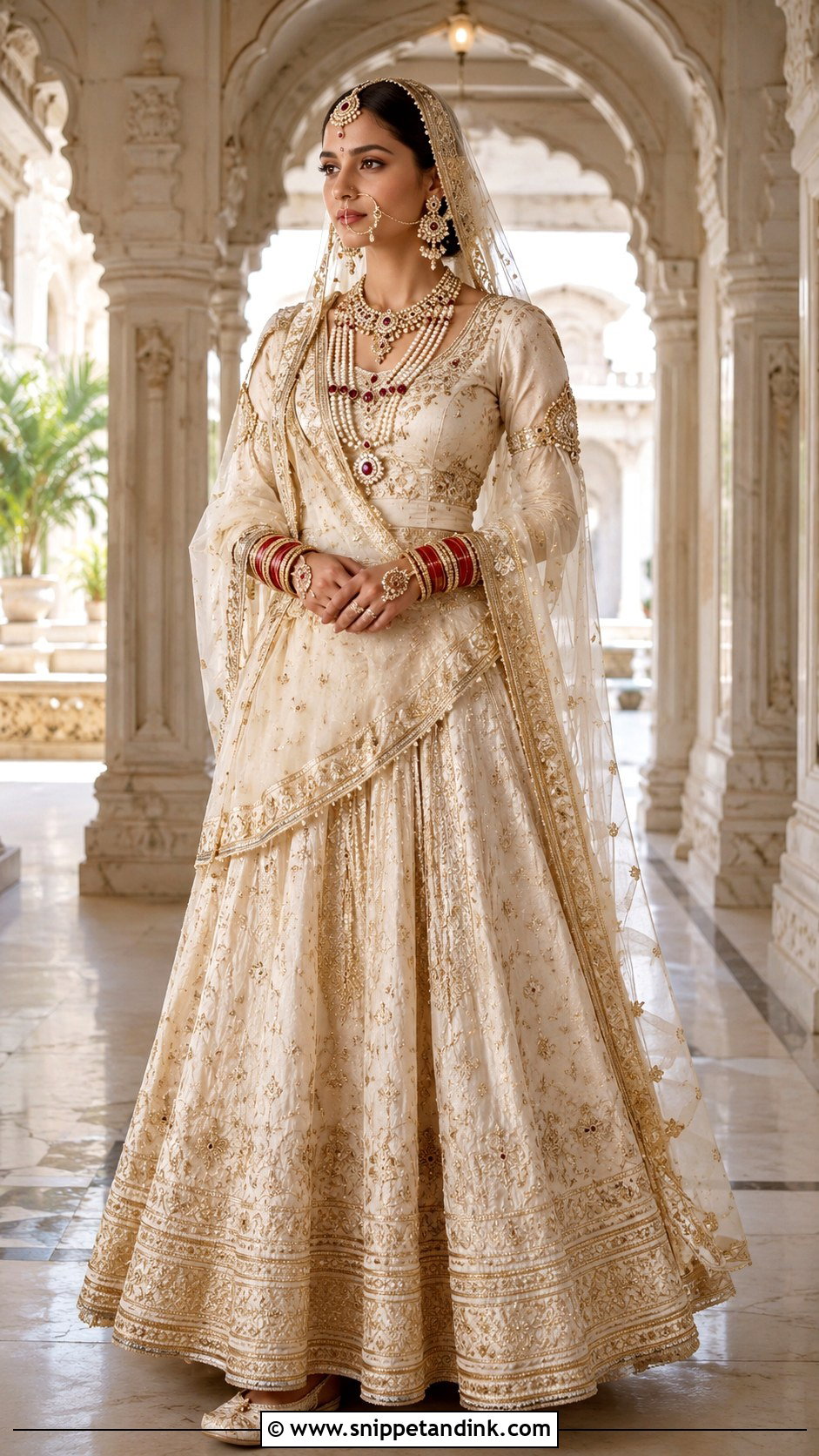
An ivory-and-gold Rajputi poshak glows in a bright courtyard, but some families expect red somewhere on a bride, so I bring it in through ruby jewelry, red bangles or a thin red edge on the odhni. Muted gold zardozi or gota on ivory silk, a fitted kanchli and a translucent odhni with a well-finished border form the outfit. Gold borla, kundan Aad, layered pearls, nath, bajuband and haath phool add depth. Avoid silver-toned embellishment; it clashes with warm gold ornaments. Ivory juttis, champagne eyes and a muted red lip photograph well in daylight.
9. Royal Blue Rajput Bridal Poshak
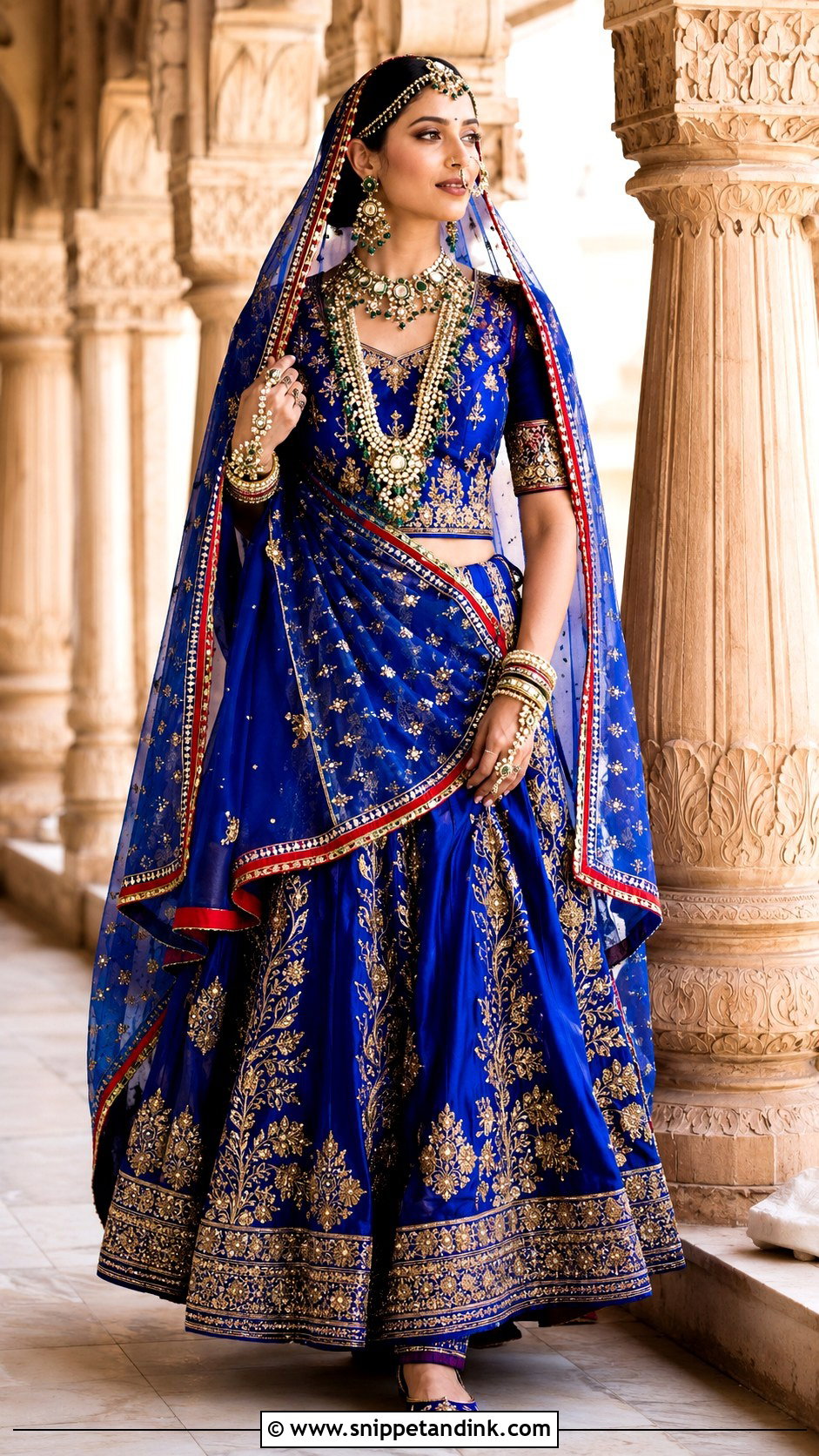
Royal blue against sandstone is a combination I love, but it can drain color from the face. Bronze lids, crisp black liner, warm blush and a deep berry lip fix that. A full silk ghagra with gold embroidery, a fitted kanchli and an odhni light enough to sit comfortably on the head form the base, and a maroon or red border on the odhni adds warmth. Antique-gold Aad, long kundan, borla, nath, bangles, armlets, detailed haath phool and blue velvet juttis complete it. Keep the bun low and smooth so the borla sits centered.
10. Orange Red Rajput Bridal Poshak
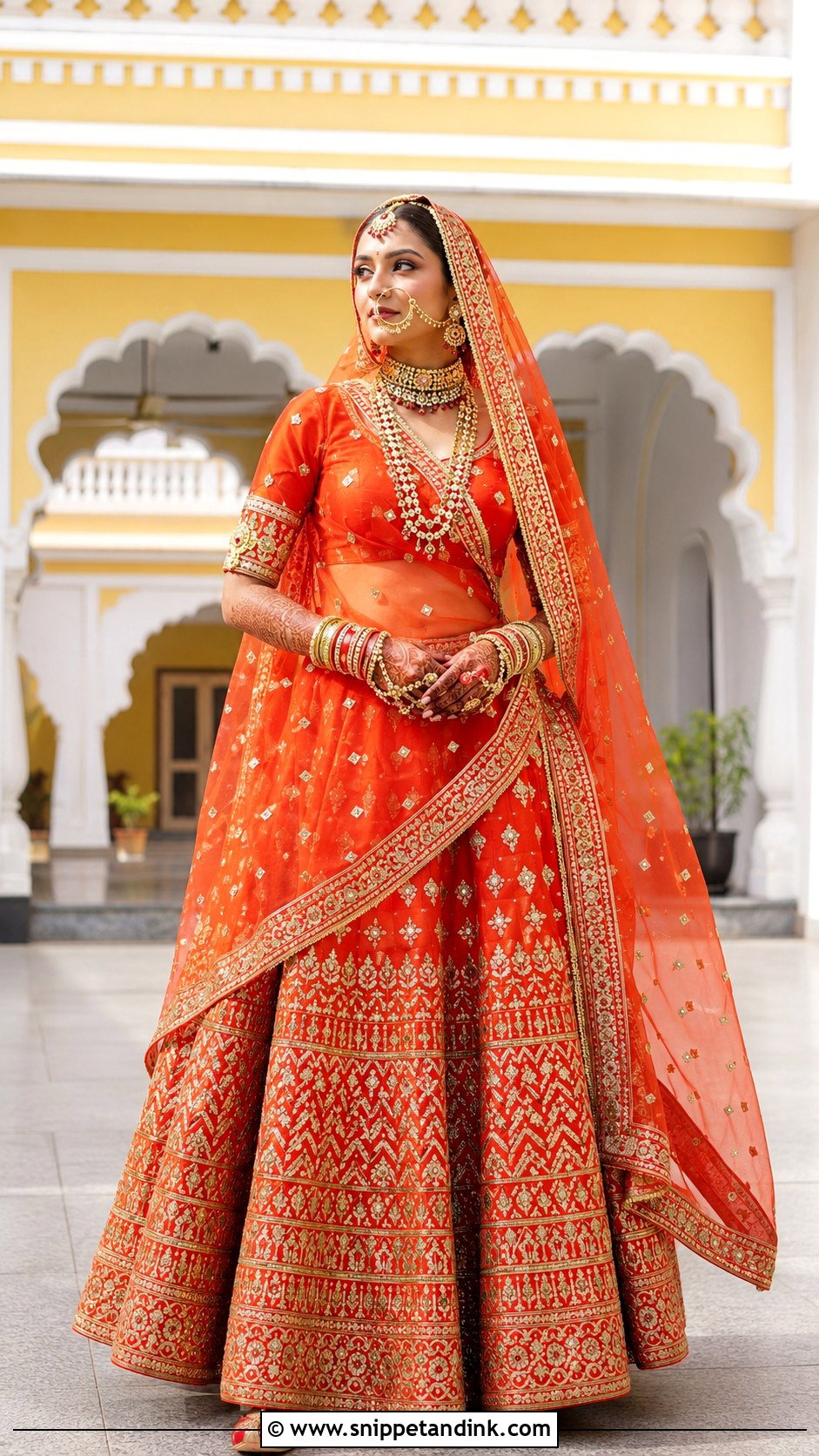
Orange-red has warm undertones that come alive in daylight, so it’s a strong choice for an outdoor heritage ceremony. A silk ghagra on a red base with orange undertones and gota at the hem, a matching kanchli and a sheer odhni with small gold motifs suit traditional gold jewelry naturally. Borla, Aad, layered haar, nath, earrings, bajuband, haath phool, bangles and slim anklets, with red-and-gold juttis. Copper eyes and a red-coral lip keep it warm without going orange. Pin the odhni so its border frames the jewelry instead of covering it.
11. Burgundy Polki Rajput Bridal Poshak
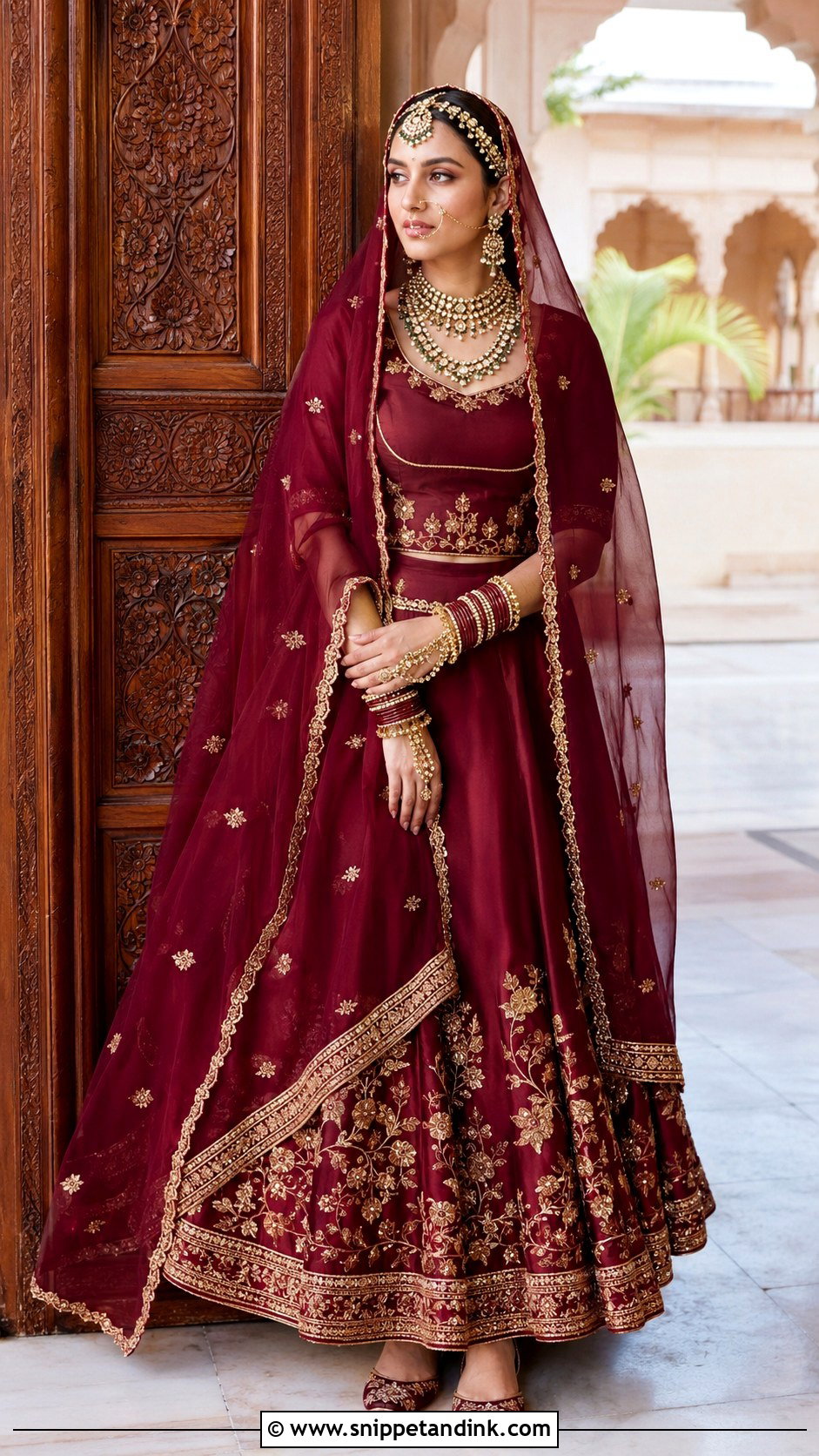
Polki uses uncut diamonds set in gold, which gives a softer, older shine than cut stones, and it suits burgundy perfectly. Dress a satin-silk or velvet ghagra in dull-gold embroidery with a fitted kanchli and a light burgundy odhni, and let one coordinated polki set lead: broad Aad, a longer necklace, round borla, statement earrings, nath, haath phool and bangles. Burgundy juttis in antique-gold thread keep the palette tonal. Dark colors can disappear in evening photos, so make sure the fabric has some reflective gold. Smoked brown eyes and a wine-rose lip suit it.
12. Blush Pink Rajput Bridal Poshak
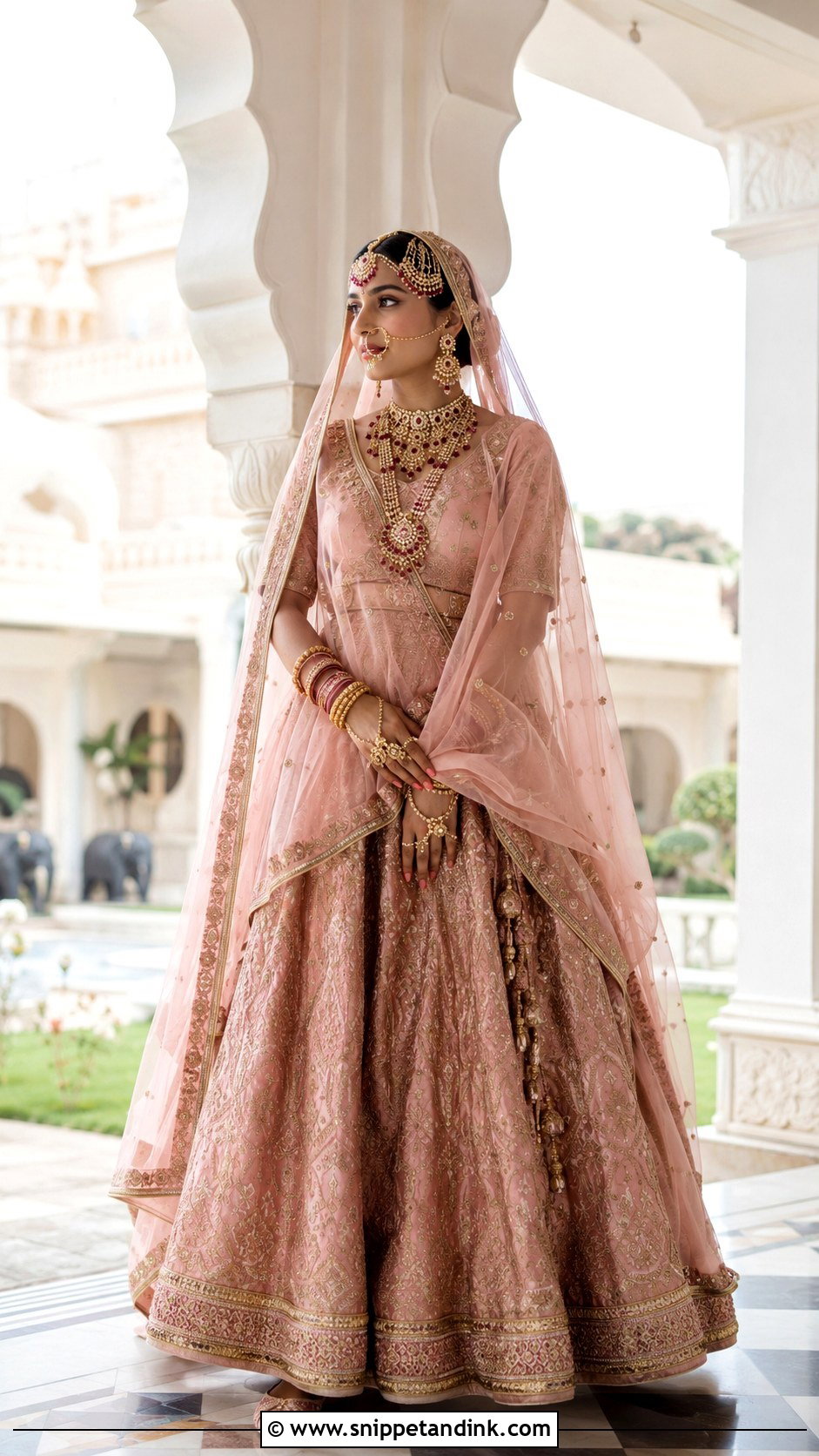
Blush pink softens the silhouette, and the jewelry has to bring back the ceremony. Ruby, emerald or deep red stones in the necklace give contrast against the pale base. A silk-organza or georgette ghagra with fine gota, a matching kanchli and a translucent blush odhni form the outfit, with a detailed borla, medium Aad, layered kundan, nath, haath phool and gold bangles. Stick with embroidered juttis over heels; ceremonies involve a lot of standing and sitting on the floor. Luminous skin, rose-gold lids and a rosewood lip keep it fresh.
13. Purple Zardozi Rajput Bridal Poshak
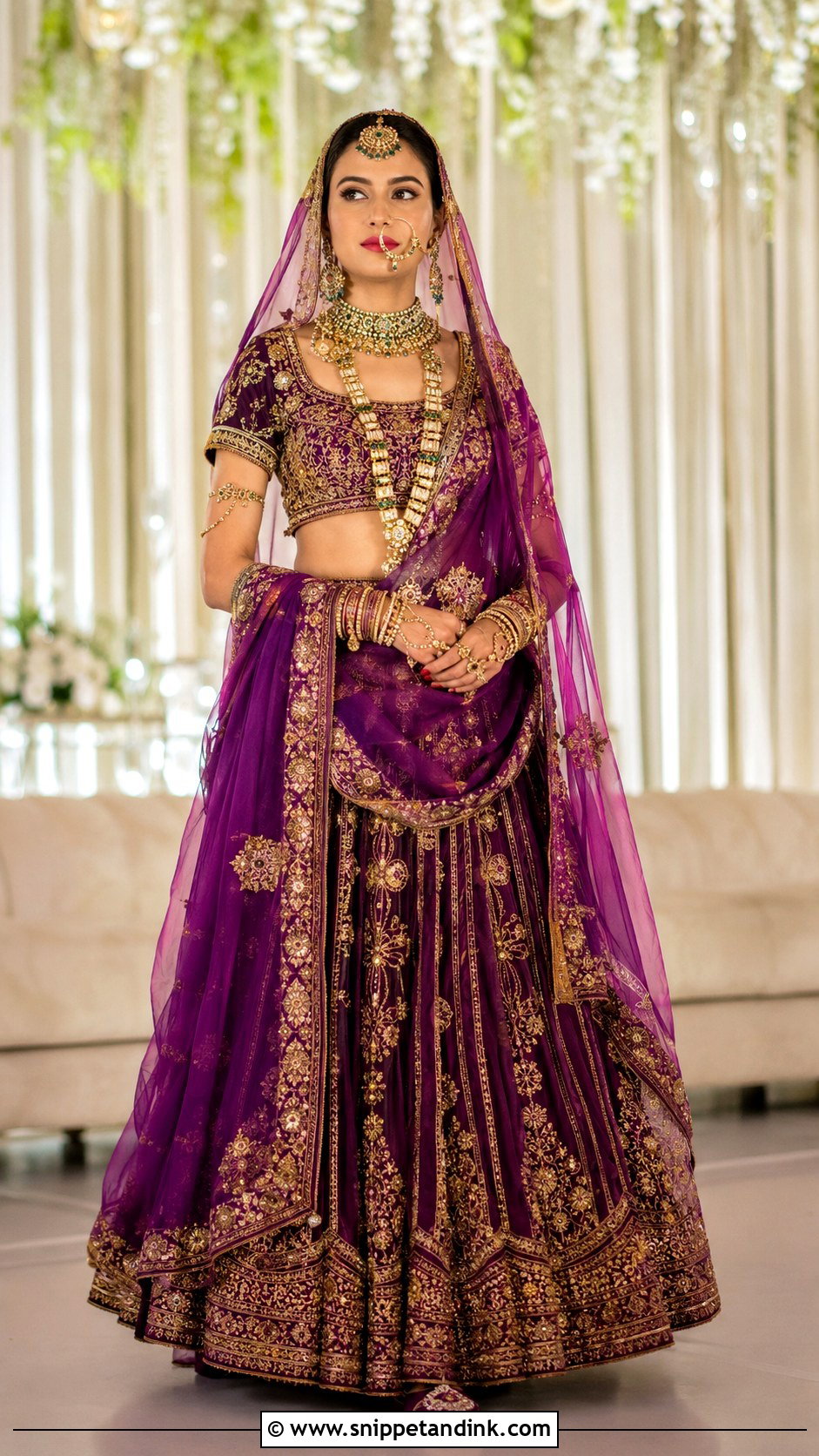
Deep purple with zardozi reads as an evening outfit. Keep the embroidery around the hem and side panels of a jewel-toned silk ghagra, with a matching kanchli and a sheer purple odhni, which is far easier to carry than a heavily worked veil. Add a traditional gold borla, a structured Aad, long kundan, nath, armlets, bangles and haath phool, plus purple velvet juttis. Purple and gold already contrast strongly, so limit extra colors to small ruby or emerald stones. Plum-brown eyes and a muted berry lip suit the shade.
14. Peach Rajput Bridal Poshak
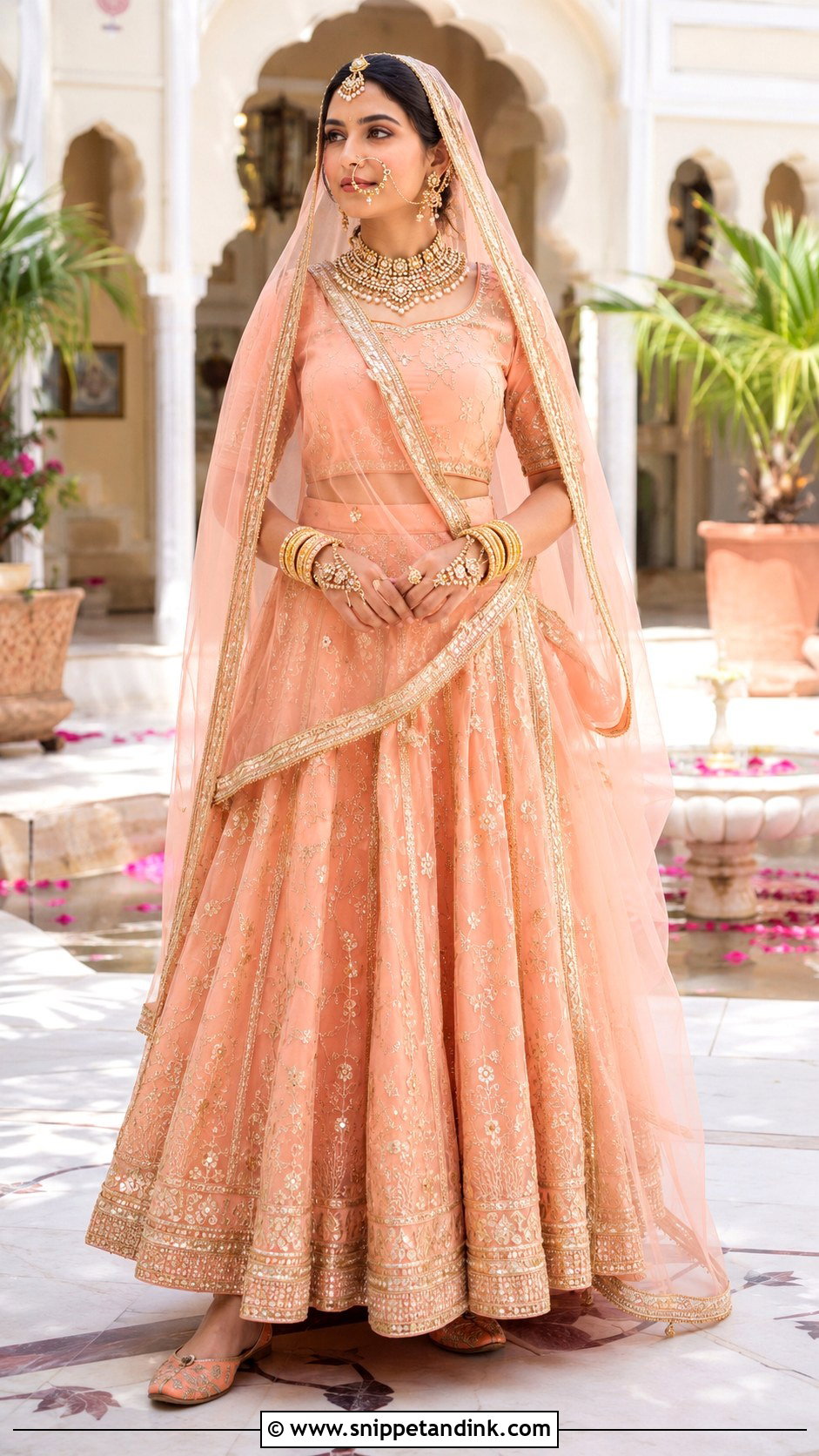
Peach suits a daytime celebration for a bride who wants something lighter than red. A peach georgette ghagra with gold gota, a comfortable kanchli and an airy odhni with a scalloped or bordered edge make the base, and antique gold brings definition: Aad, pearl-and-kundan necklace, borla, nath, bangles and haath phool. Georgette in pale shades can be see-through in bright sun, so check the lining of the skirt and kanchli outdoors; keep the sheerness for the odhni. Champagne lids, peach blush and a terracotta-rose lip suit the color.
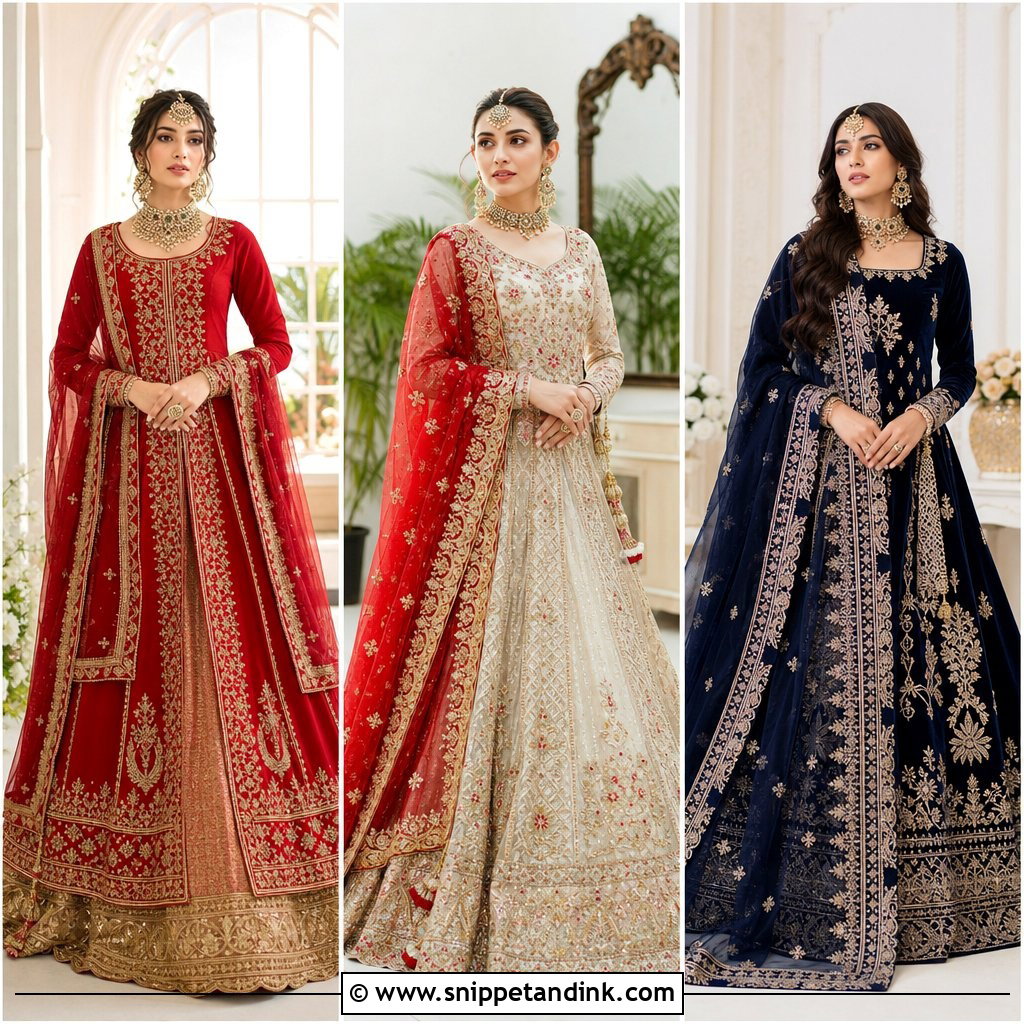


15. Magenta Meenakari Rajput Bridal Poshak
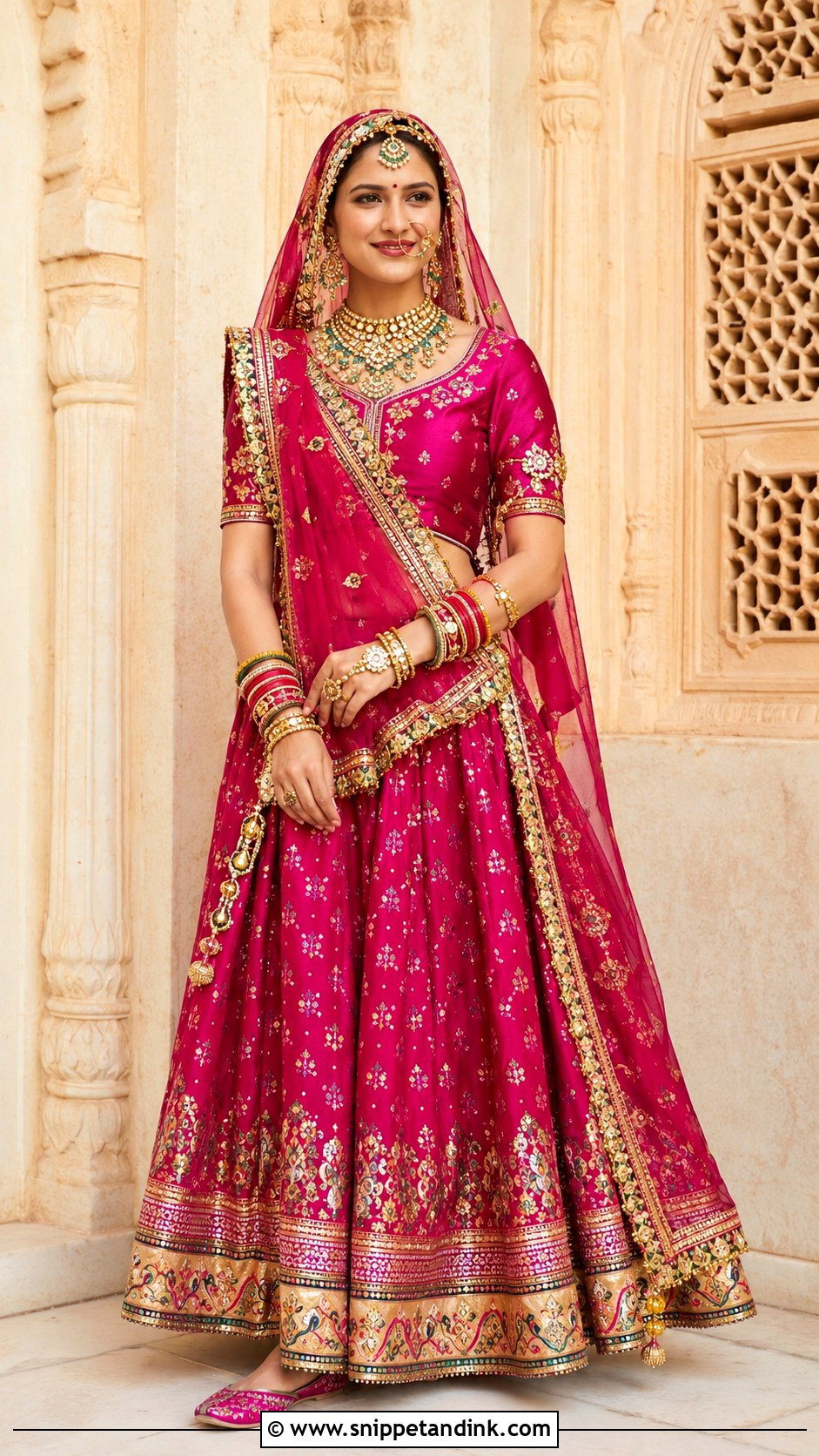
Meenakari is enamel work on gold, often in red, green, blue and white, and it gives a magenta poshak a lot of color to coordinate. Start with a magenta silk ghagra, matching kanchli and gold-bordered odhni, then pick enamel jewelry whose colors echo the fabric: borla, gold Aad, layered necklace, nath, bajuband, haath phool and mixed bangles. Repeat each accent color only once or twice, or the outfit starts to look scattered. Plain magenta juttis help. Warm neutral eyes and a berry-pink lip keep the face calm against so much color.
16. Red Double Odhni Rajput Bridal Poshak
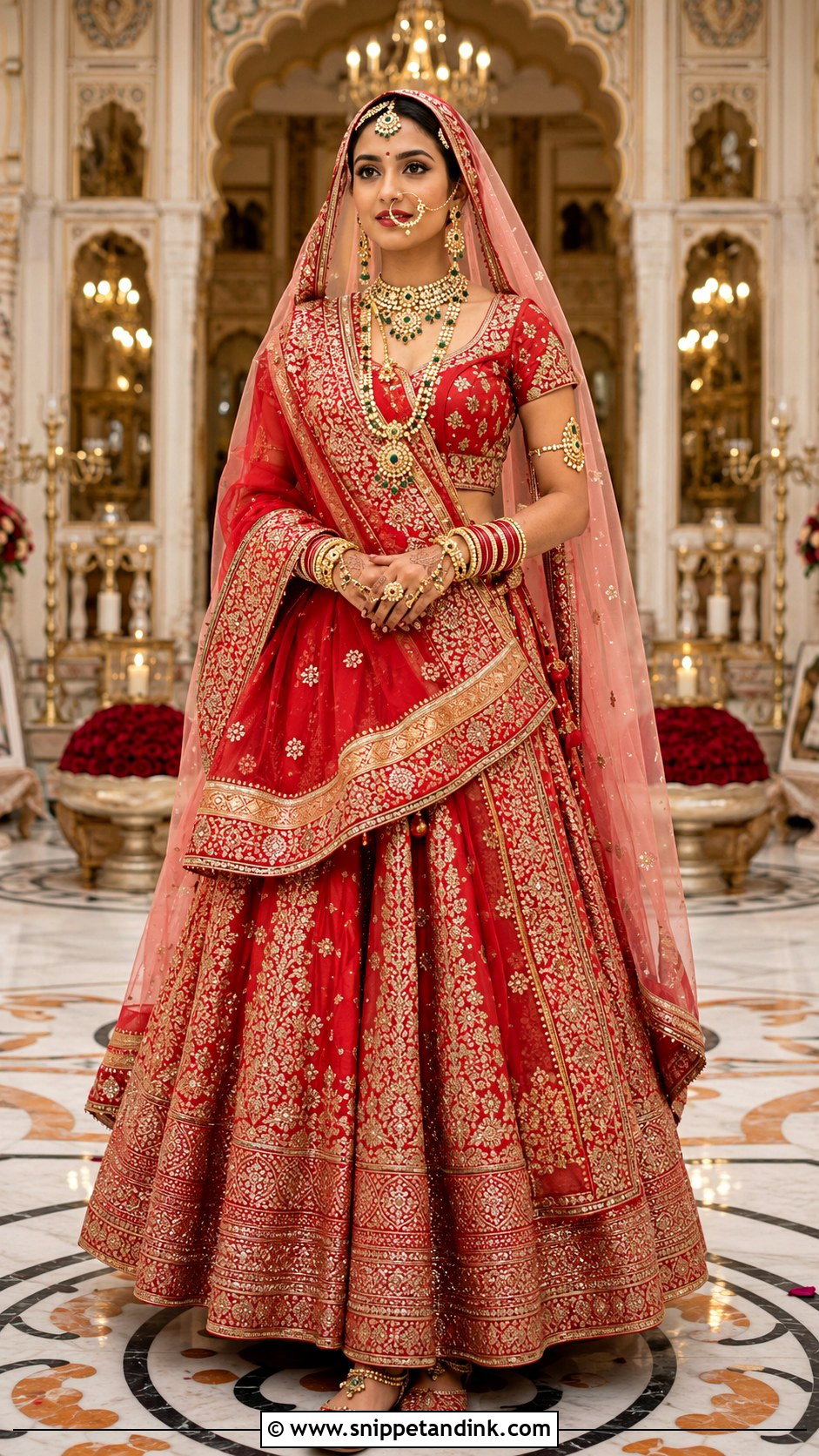
A double odhni gives real coverage and depth: a heavier embroidered odhni across the body, and a lighter sheer one over the head so you can still move and see. Match the borders of the two without making them identical. A red silk ghagra and kanchli, borla, Aad, long kundan, nath, bajuband, haath phool, bangles, anklets and red juttis complete it. Two odhnis need a firm low bun to anchor both sets of pins. Do a full trial in advance; I check the combined weight on the head and whether the bride can see her feet on steps.
17. Heirloom Gold Rajput Bridal Poshak
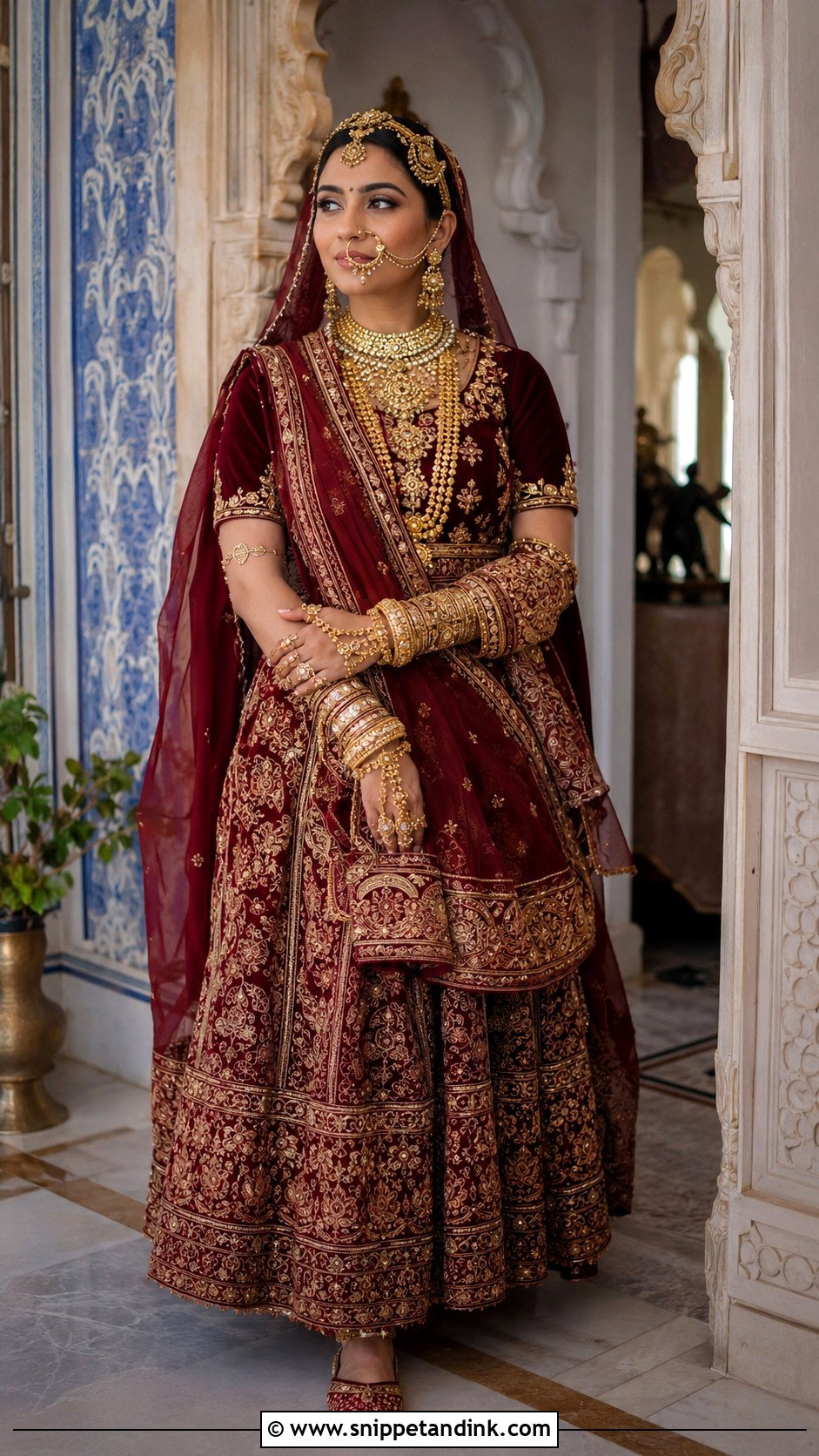
Heirloom jewelry often dictates the whole Rajput bridal outfit, and I’d plan the poshak around it rather than the other way round. A red or maroon poshak that suits the age, gold tone and stones of the family pieces is the usual answer. Inherited Aad, borla or rakhdi, necklaces, armlets or nath are deeply tied to Rajasthani bridal dress, though their names and shapes vary between families. Keep the embroidery restrained and the juttis plain. Have older pieces checked by a jeweler weeks ahead; worn clasps, stretched threads and loose stones are common.
18. Pearl Kundan Rajput Bridal Poshak
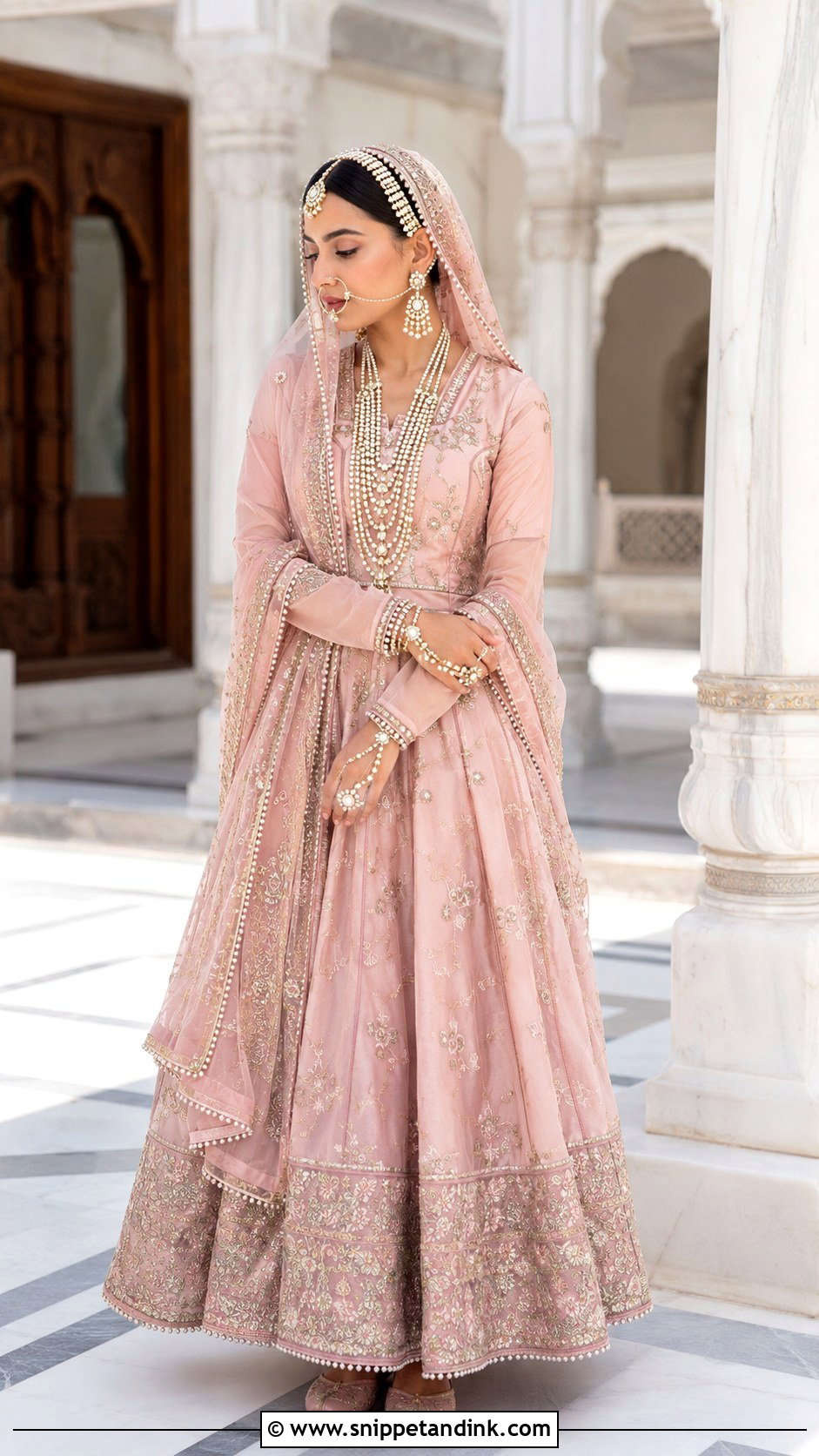
Pearls quiet the sparkle of kundan, which makes this pairing work so well on rose, ivory or pale pink. A full silk ghagra with fine gold embroidery, a matching kanchli and an airy odhni with pearl details make the base. Pearl-bordered borla, kundan Aad, long layered pearls, earrings, nath, bangles and delicate haath phool follow, with ivory or blush juttis. Lay all the pearl pieces together in daylight before the wedding: bright white, cream and grey-toned pearls look noticeably different side by side, and the camera exaggerates it. Fresh skin and a muted berry lip suit the palette.
19. Minimal Gold Rajput Bridal Poshak
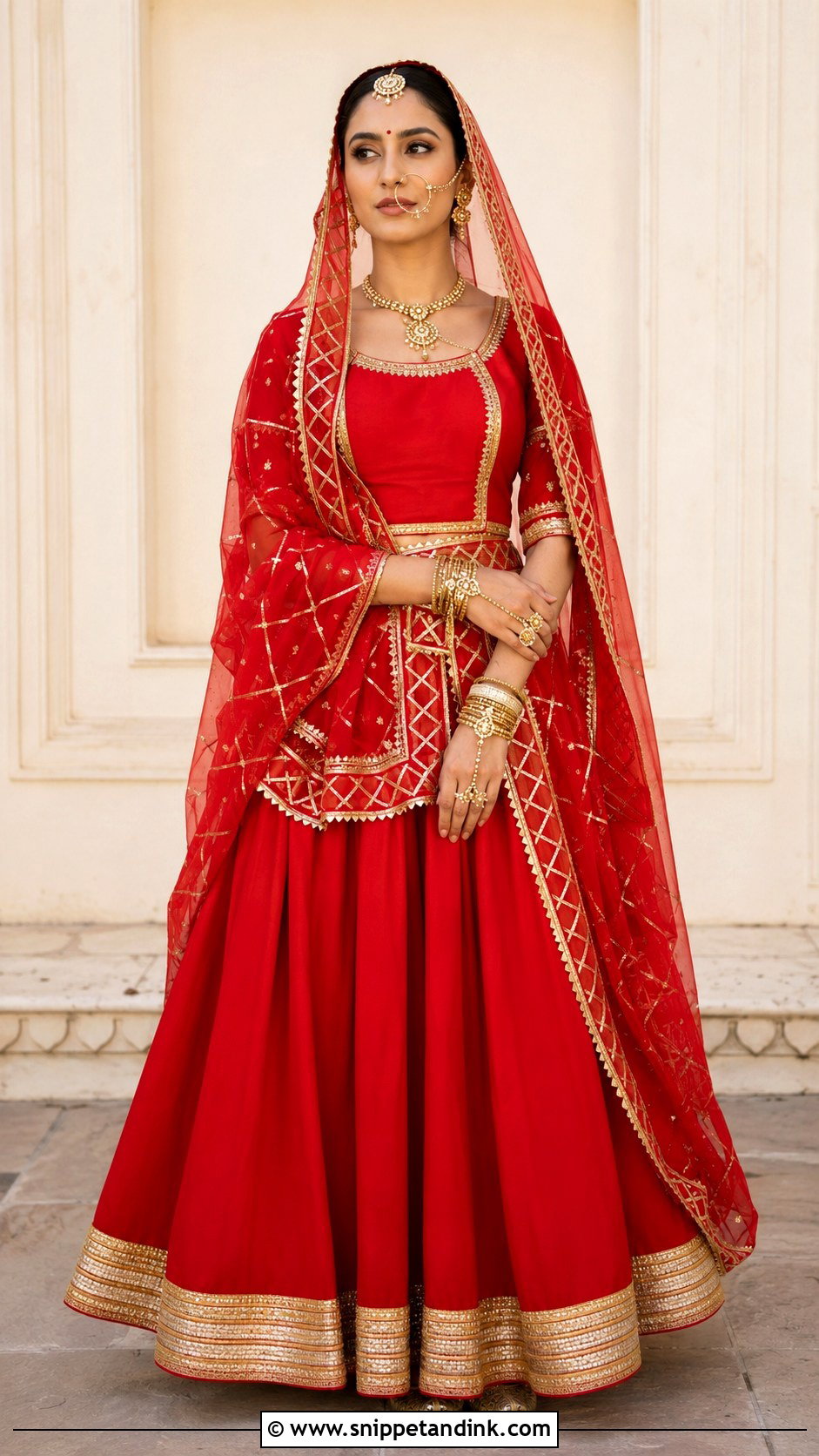
Minimal doesn’t have to mean less traditional. A red, maroon or rani-pink poshak with one strong gota border instead of all-over embroidery, a fitted kanchli and a clean ghagra already reads as Rajput. Choose a statement Aad and borla, then keep the rest moderate: medium earrings, a nath you can comfortably wear through dinner, bangles and simple haath phool. Drop extra necklace layers if they hide the kanchli. Plain metallic juttis, natural makeup and a rose-red lip suit it. I suggest this for brides with a long day of ceremonies or anyone sensitive to heavy jewelry.

20. Contemporary Rajput Bridal Poshak
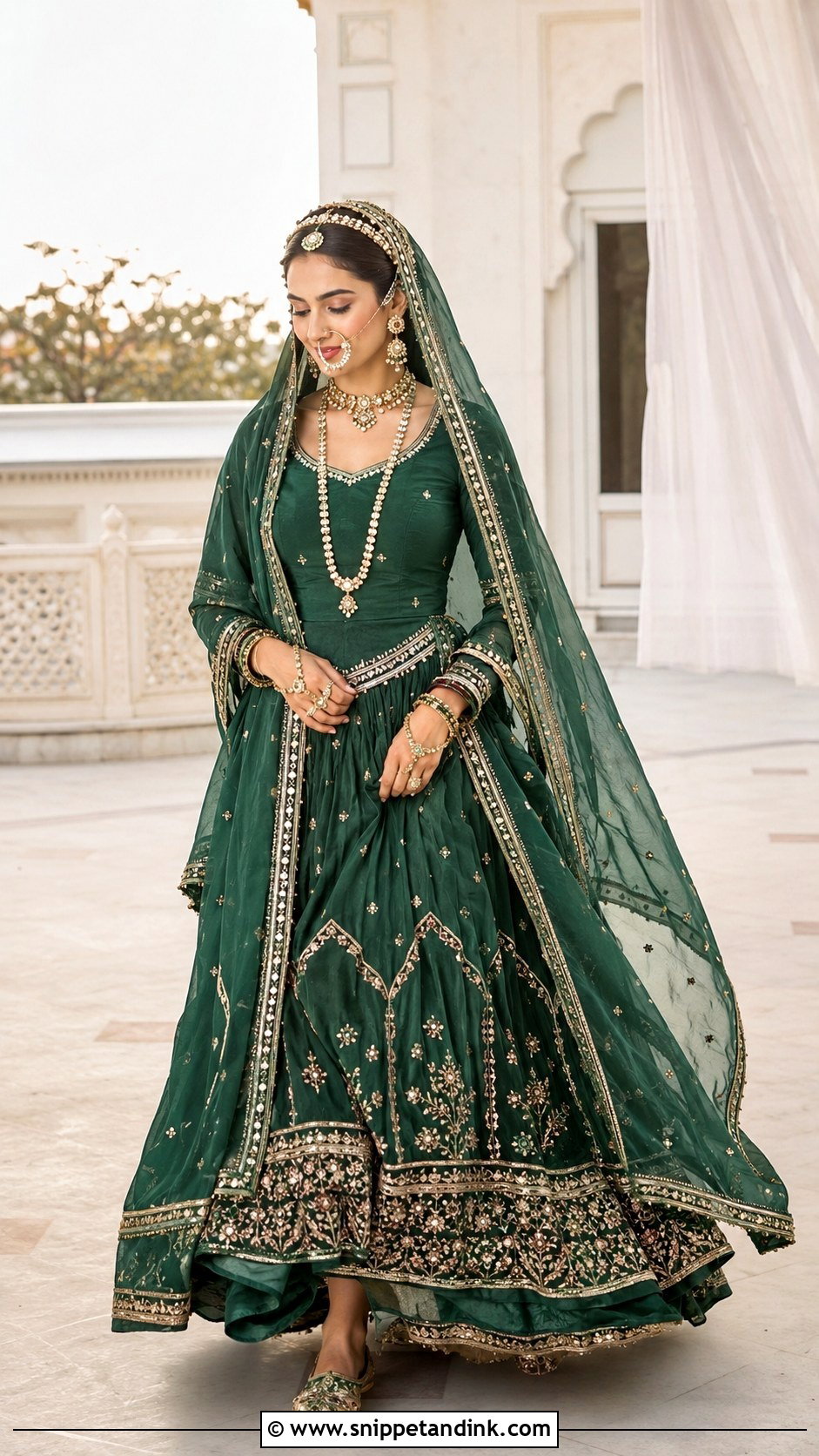
A contemporary poshak keeps the ghagra, kanchli and odhni structure and changes the weight and finish. Silk-georgette, organza and other breathable fabrics feel lighter than heavy silk, and gota or zardozi in spaced panels looks fresher than full coverage. Many brides now also simplify jewelry layering while keeping the silhouette intact. A streamlined borla, medium Aad, one long haar, earrings, nath, bangles, haath phool and embroidered juttis complete it. Drape the odhni traditionally for the ceremony and loosen it later. Talk any big changes through with family before ordering; it saves hurt feelings later.
Caring for Gota and Zardozi Once the Wedding Is Over
Metallic embroidery tarnishes when it meets damp, perfume and plastic. A poshak packed away in a plastic garment bag can come out years later with dull, darkened gota. A few habits keep it bright enough to pass on.
- Spray perfume on skin before dressing, never onto the outfit itself.
- Air the poshak for a day after the wedding before packing it, so any sweat dries out.
- Wrap it in soft cotton or muslin rather than plastic, with acid-free tissue between folds of embroidery.
- Refold along different lines every few months; creases in zardozi can crack the metallic thread.
- Send it to a cleaner who handles heavy Indian embroidery, and point out any stains rather than letting them guess.
Velvet is the exception: it crushes in folds, so hang a velvet ghagra from its waistband loops if you have the space. Jewelry is best stored in separate soft pouches so kundan and polki settings don’t scratch each other.
The Poshak Belongs to the Family as Much as the Bride
A Rajput bridal look works when every piece supports one clear story and the bride can still move, sit and see. Red and maroon remain powerful, while emerald, royal blue, saffron, ivory, peach and blush give distinct alternatives. Whether you build around Bandhani, gota patti, zardozi, velvet, pearls, kundan, polki or heirloom gold, test the odhni drape, jewelry weight, juttis and hair together before the day. Customs differ between families and regions, so talk to elders and the artisans making the outfit early. That conversation keeps the result respectful and personal.
You'll Like These Ideas:








Leave a Reply