
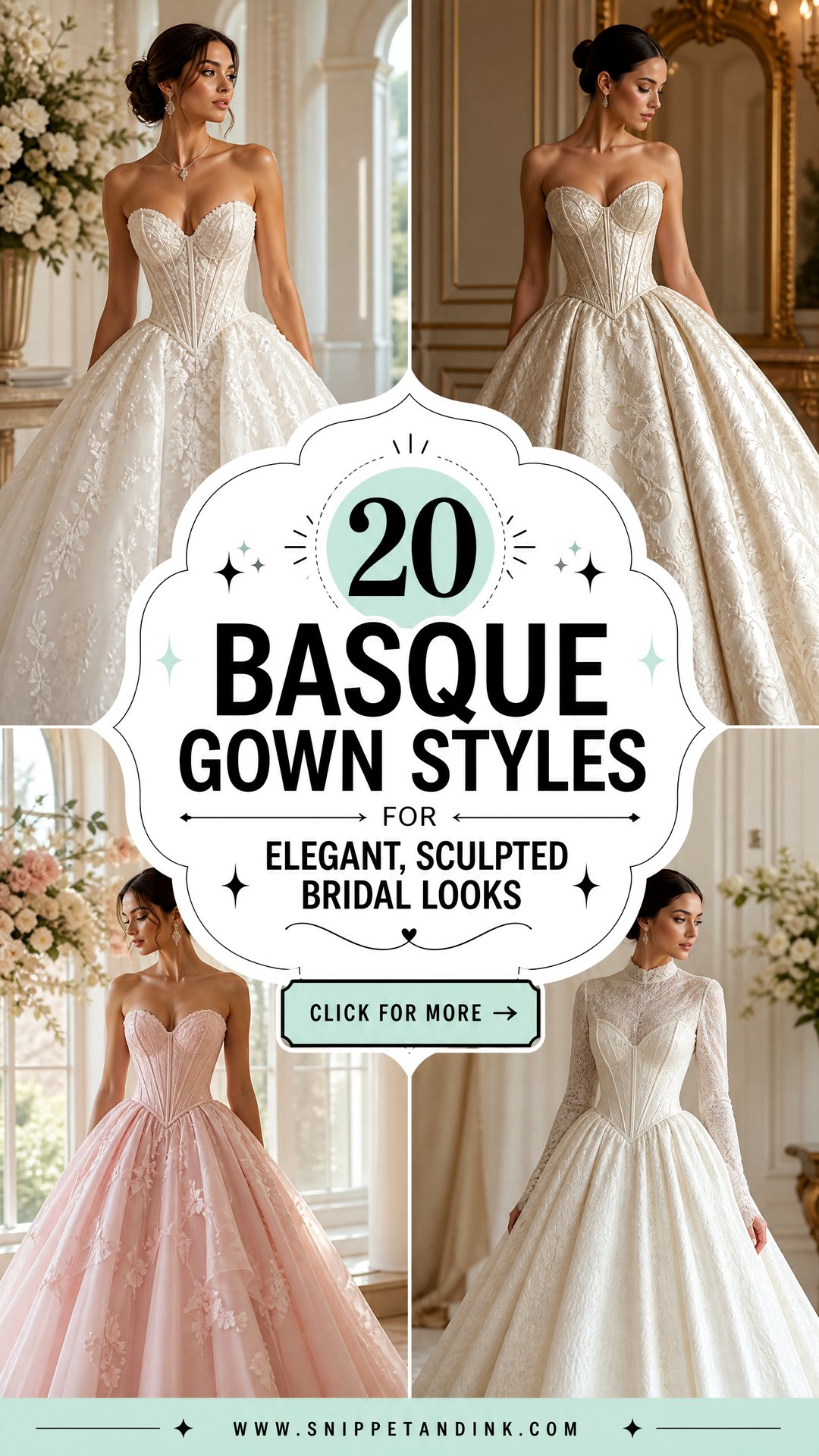
A Basque waist carries the fitted bodice below your natural waist and finishes it in a V or a soft curved point. Done well, it lengthens the torso and gives a gown real structure; done badly, it pokes into your stomach every time you sit. I’ve dressed brides in nearly every version of it, from big satin ball gowns to slim mermaid cuts, lace, and strong colors for evening guests. What decides whether it flatters you is how deep the point goes, how the bodice is supported, and how heavy the skirt is that hangs from that seam. Below are twenty complete looks, each with the fitting detail I’d look at first.
Measuring Your Torso Before You Fall for a Deep V
A Basque point is cut for an imagined torso, and most of us don’t have it. Before trying anything on, I have brides stand sideways and find two spots: the narrowest part of the waist and the top of the hip bone. The distance between them tells you how much room a point has to travel.
Short torso
If those two spots are close, a deep V will end on your hip bone and push into it whenever you sit. A shallow curve or a point that stops a few centimeters below the natural waist still gives you the lengthening line, without the discomfort.
Long torso
With more space between waist and hip, you can carry a sharper, lower V, and it often looks more balanced than a straight seam would. Just keep the skirt full enough below it, or the long bodice starts to look like a tunic.
Either way, wear the undergarment you’ll marry in. A longline bra pushes flesh downward and can shift where your waist actually sits by a surprising amount.
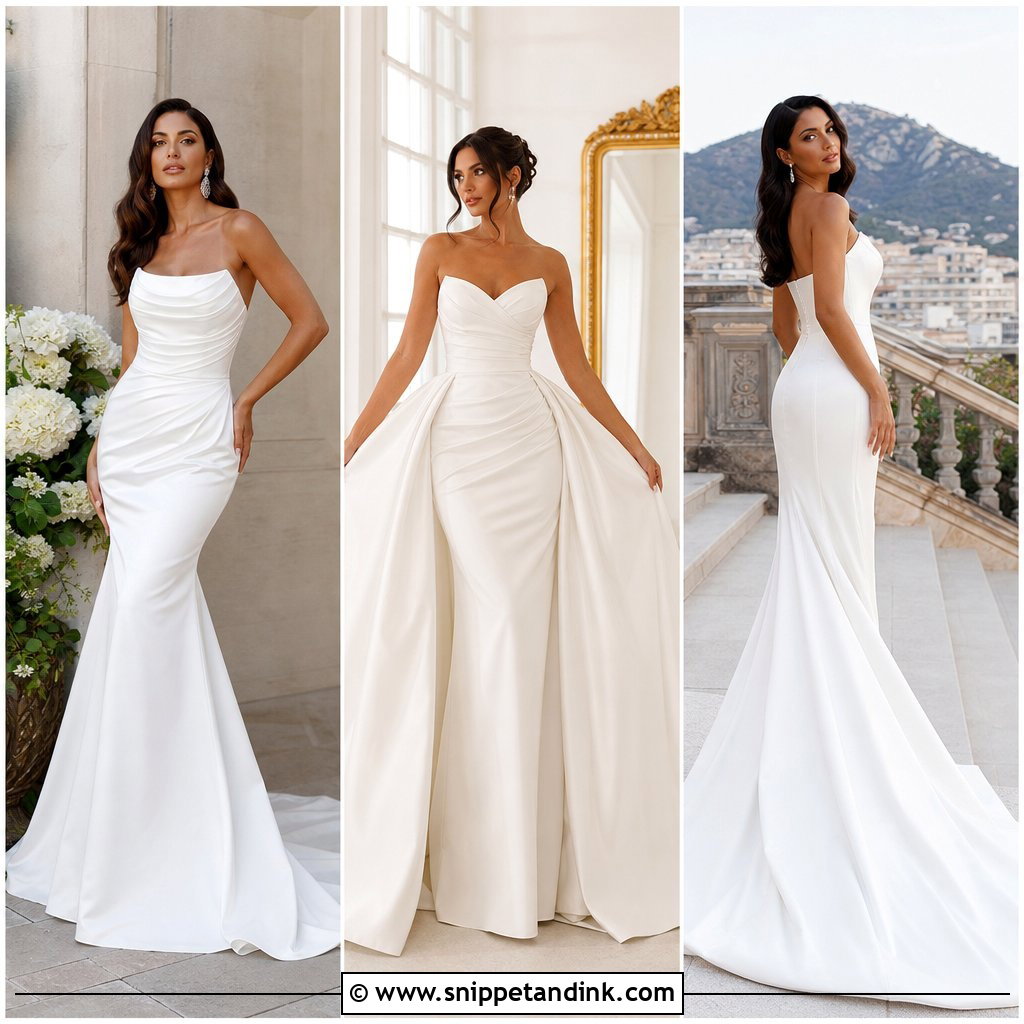
1. Strapless Satin Basque Gown
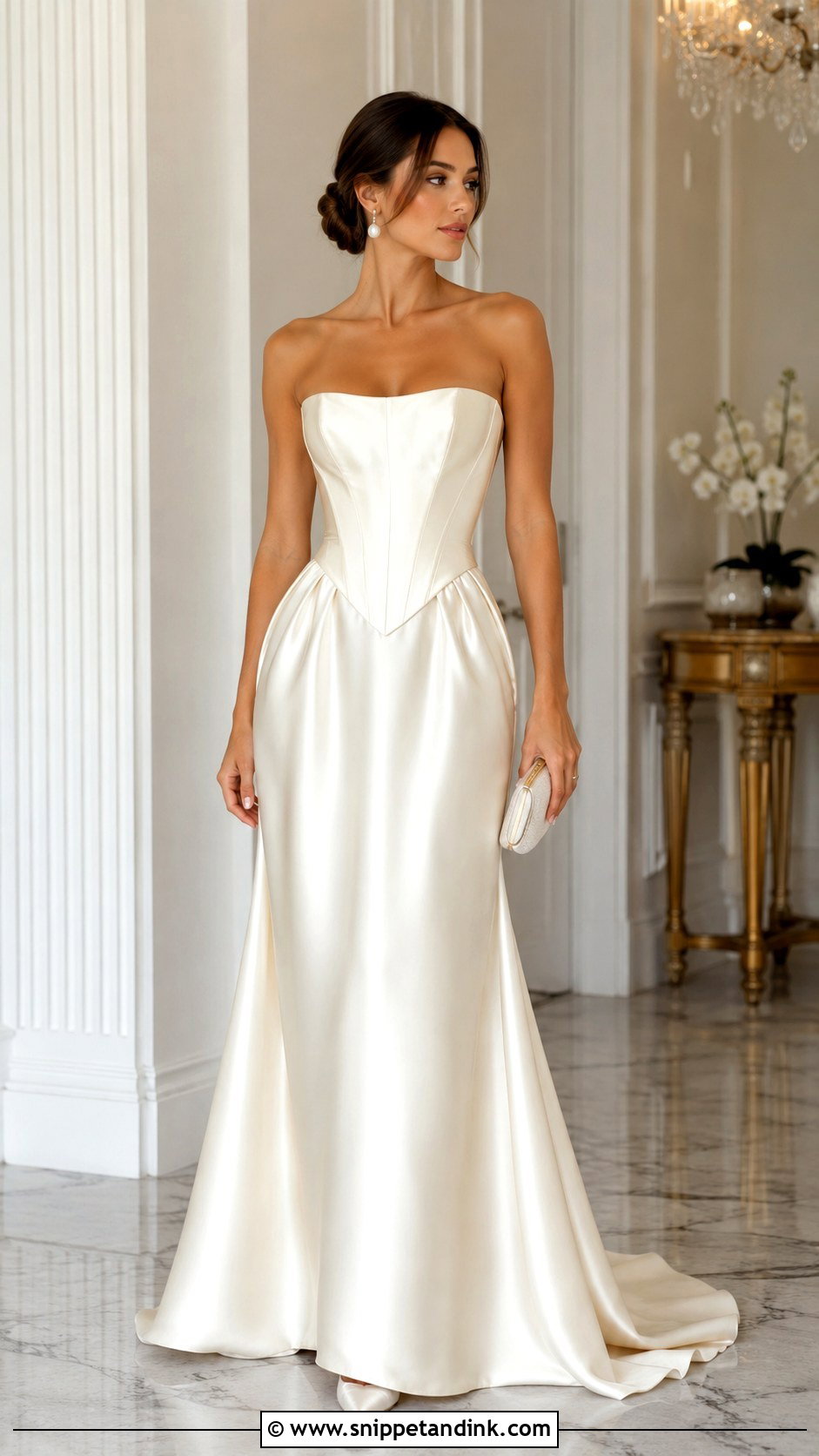
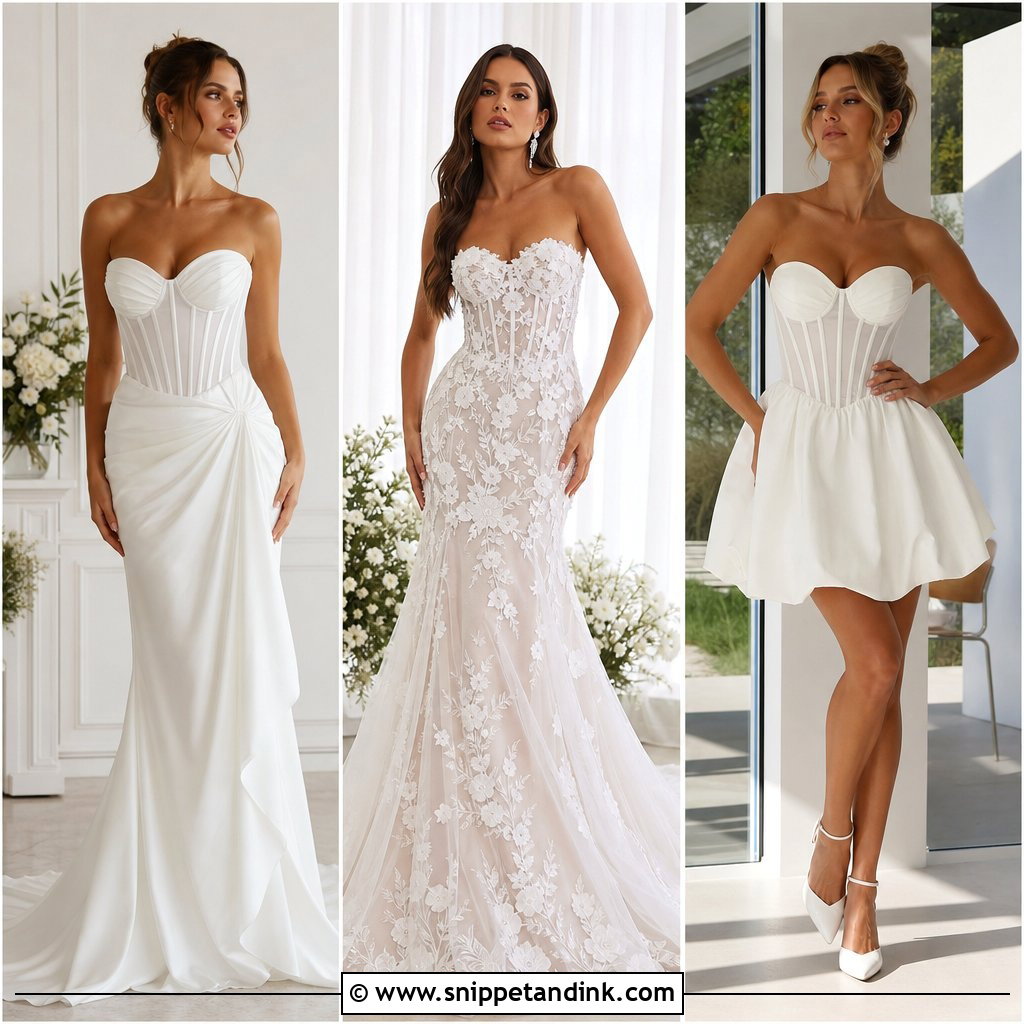
Strapless satin with almost no decoration is the purest version, so the seam has nowhere to hide. Look for a softly curved neckline, a crisp V at the waist and a full floor-length skirt. Satin in ivory, champagne, black, emerald or navy all hold the shape. The boning has to run right down into the point, otherwise the extended bodice folds in half the first time you sit. Pointed pumps, a satin clutch, drop earrings and a sleek low bun are all you need.
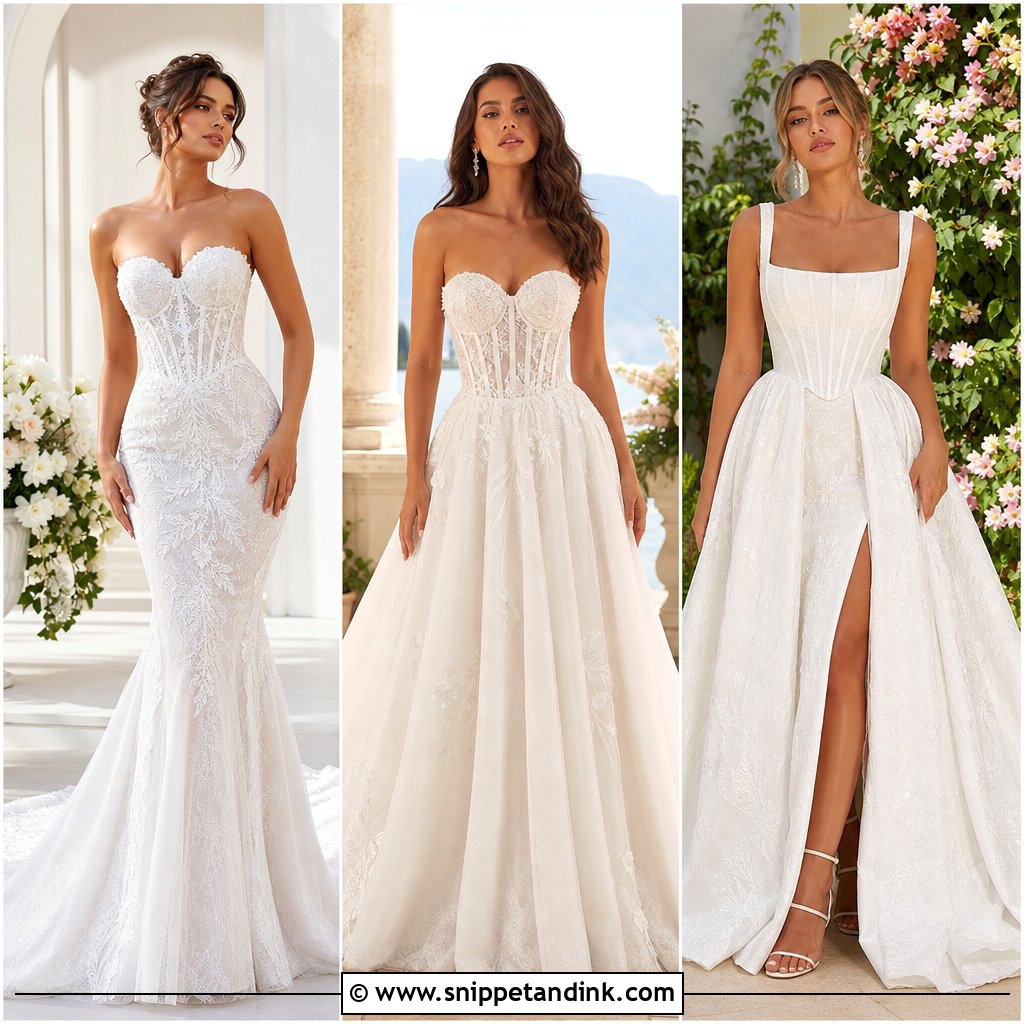
2. Lace Corset Basque Gown
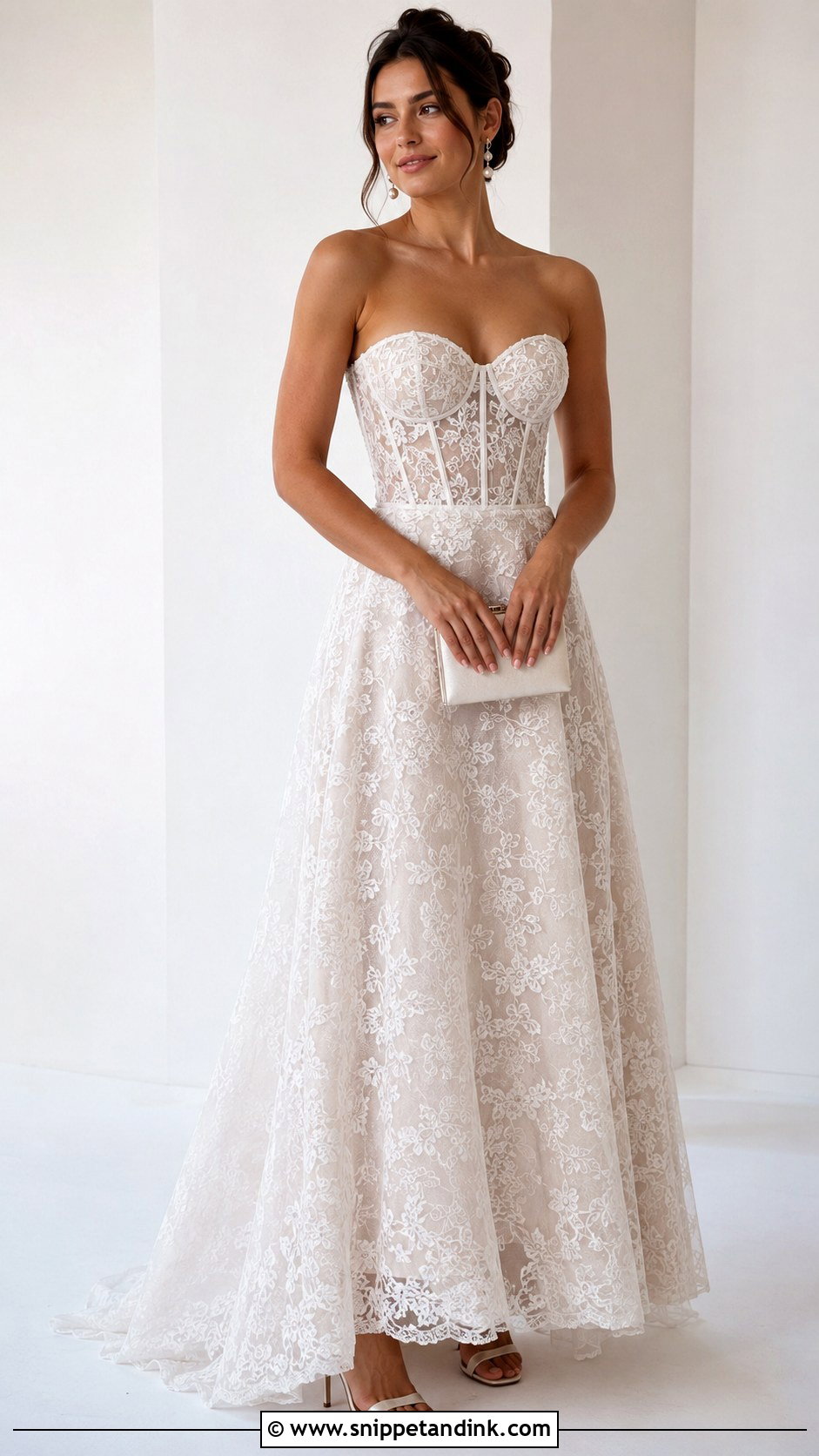
Lace gets sharper when it sits over a structured Basque corset. I prefer gowns where the lace runs continuously from bodice onto skirt, because a lace break right at the point draws a line across your hips. Pick a medium-scale motif. Big flowers get chopped in half by the V and the seam starts to look like a mistake. Keep the accessories simple with pearl earrings and satin heels, add a neat chignon and, for a bride, a sheer fingertip veil.
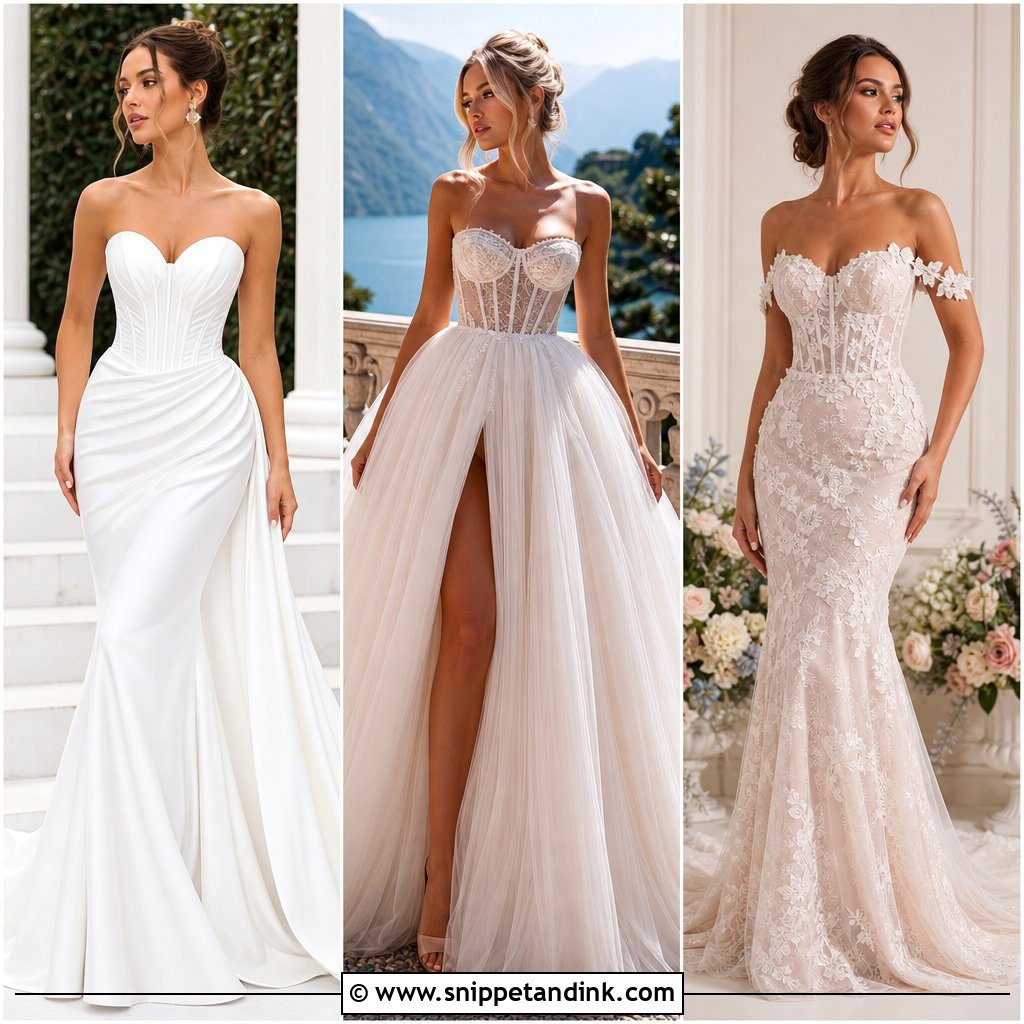
3. Off-the-Shoulder Basque Gown
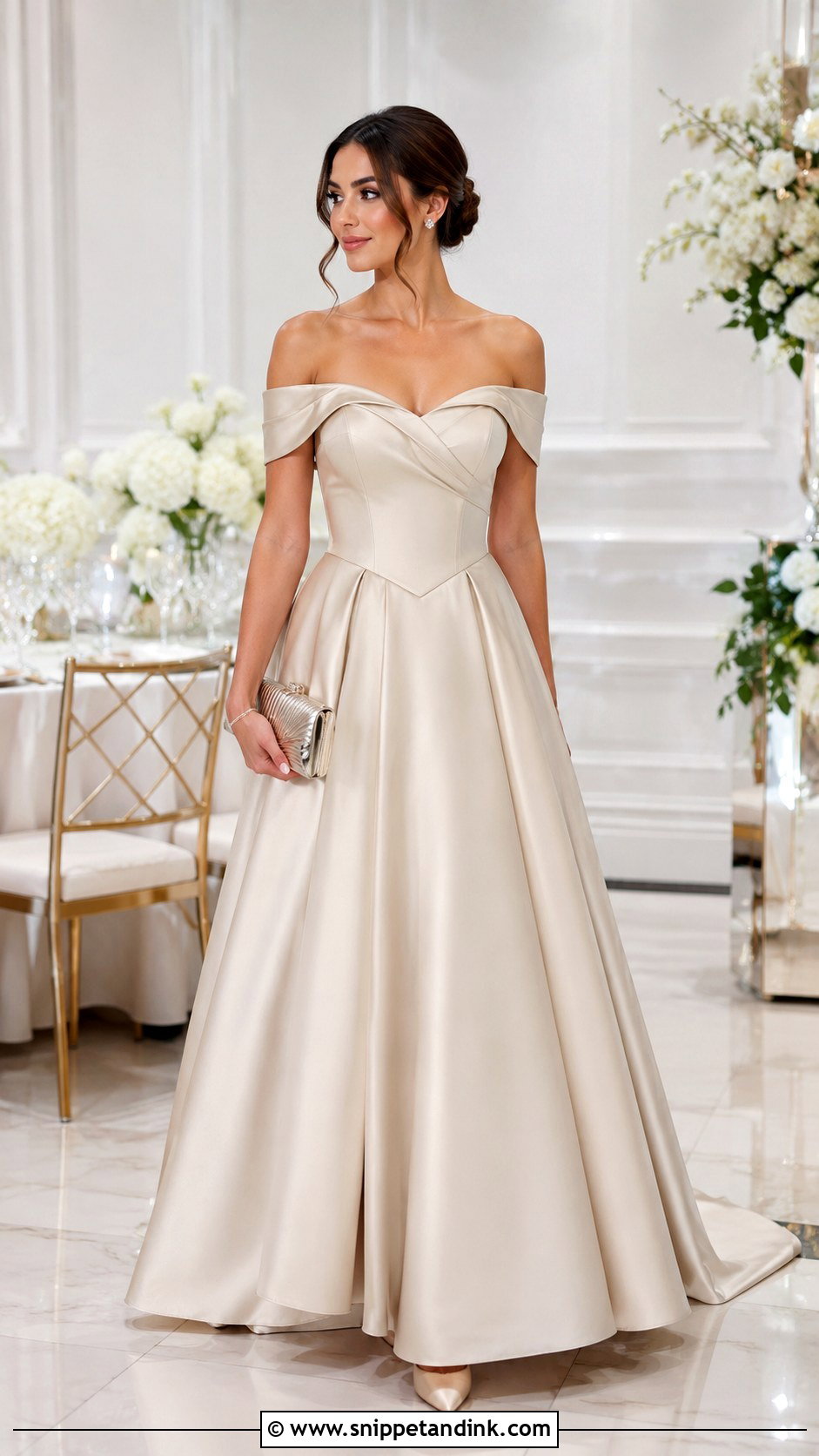
An off-the-shoulder Basque gown opens the collarbone while the dipped waist pulls the eye down the center. The bands are what I fit first. If they’re cut tight to stay up, you won’t be able to raise your arms above shoulder height, so do a full stretch in the fitting room. Mikado or satin gives the skirt body, chiffon keeps it light. Wear a short necklace or sparkly studs, never both, and keep your hair up or swept back so the neckline reads clearly.
4. Sweetheart Basque Ball Gown
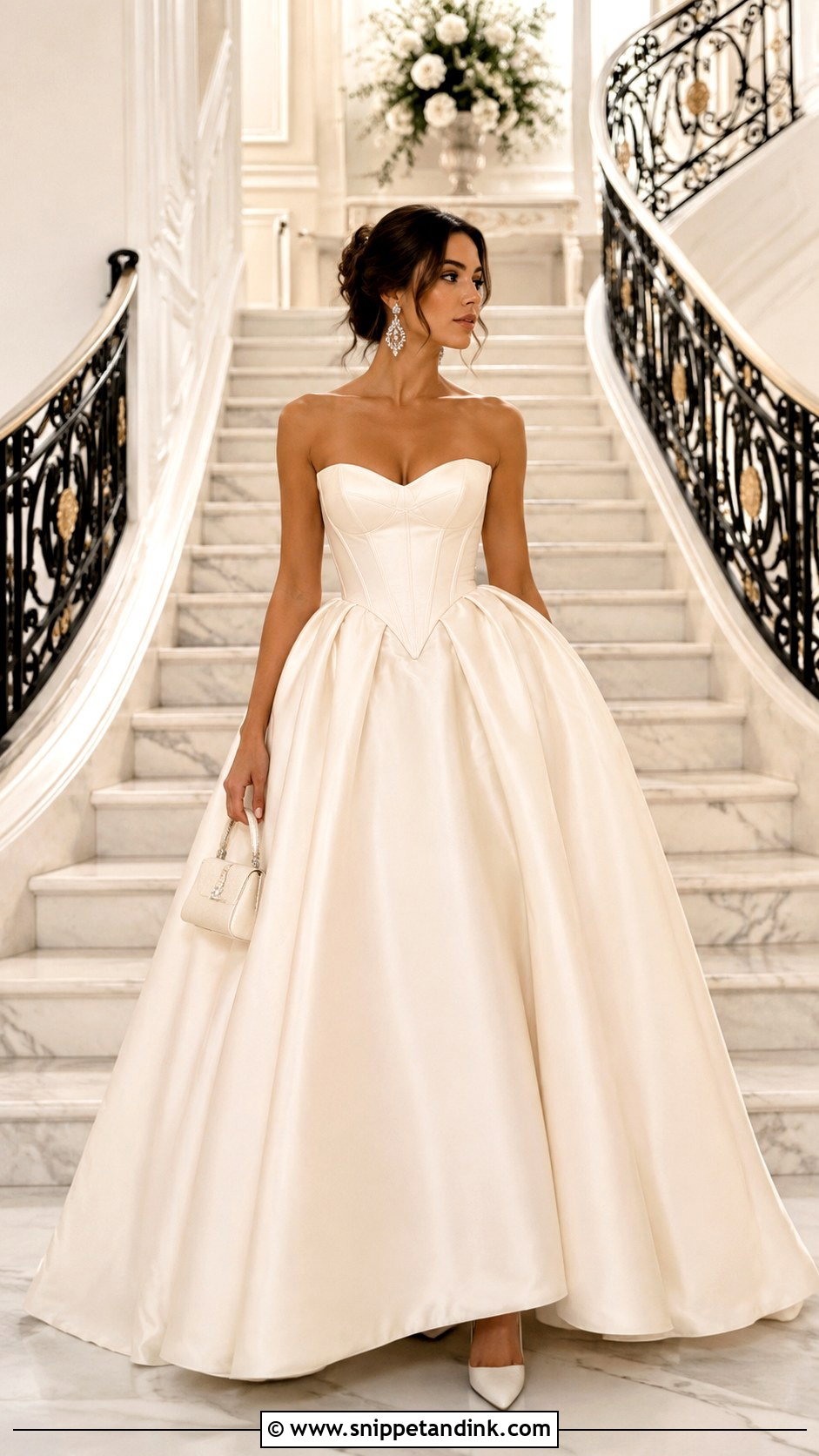
The curve of a sweetheart neckline answers the point of the waist, which is why this pairing looks so settled. Under a voluminous ball gown skirt, crisp satin, taffeta or Mikado holds the volume best. Watch the petticoat: too much gathered net right under the point makes the seam look thick. If you’re petite, I’d go for a shorter point and a moderately full skirt, because a deep V plus a huge skirt can swallow a small frame. Classic pumps, crystal drops and a polished half-up style finish it.
5. Long-Sleeve Basque Gown
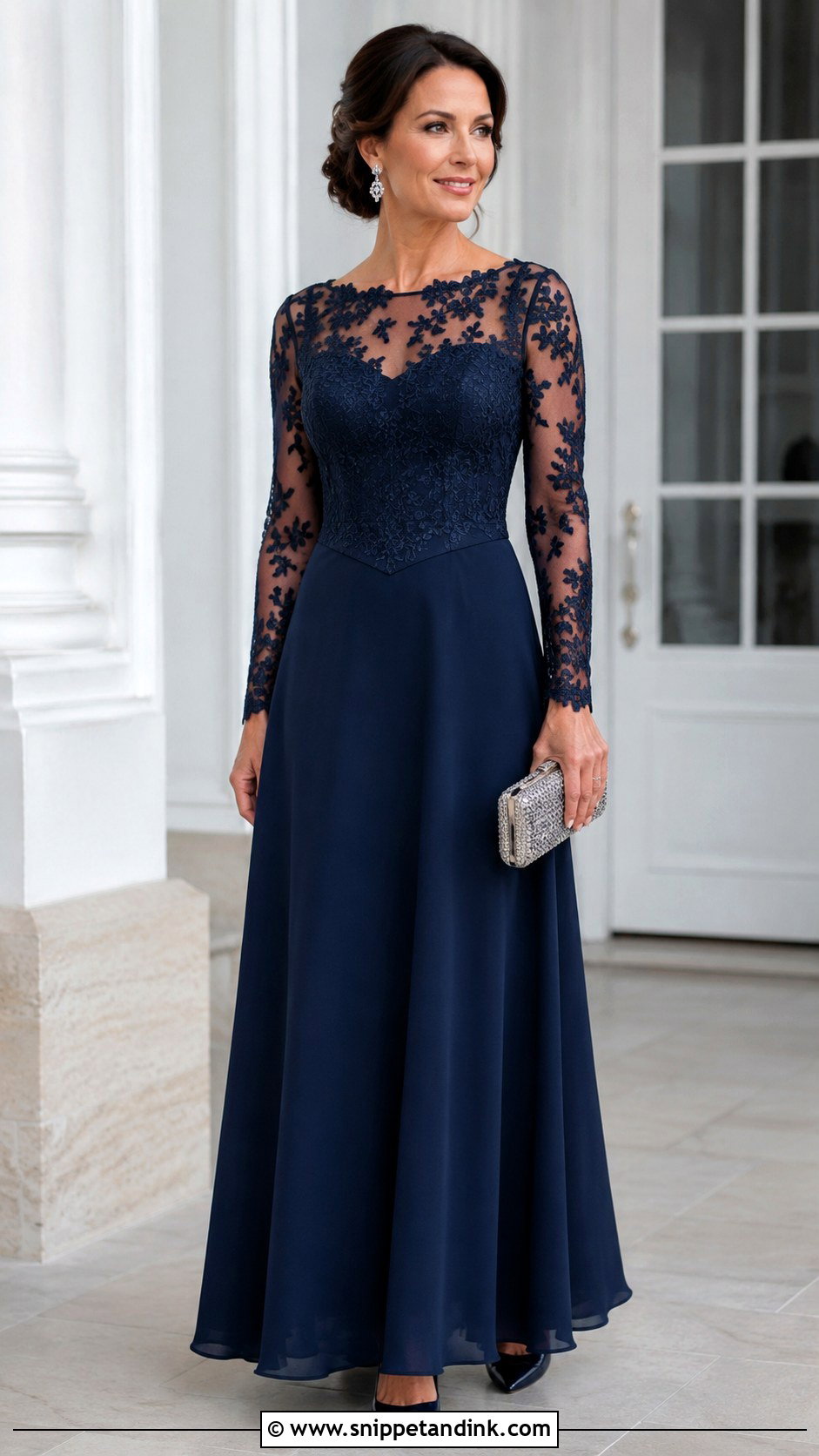
Long sleeves are the right answer for a cold-weather date, and the shoulder seam decides whether they’re comfortable. Ask the seamstress to check it with your arms forward, as if hugging, since a sleeve set too far back pulls across the upper arm all day. Sheer lace feels delicate, while fitted crepe or satin looks cleaner. With this much coverage, skip the necklace and let earrings carry the sparkle. If the sleeves are beaded, run your fingers along the inside seams; scratchy finishing is common and it’s worth having lined.
6. Square-Neck Basque Gown
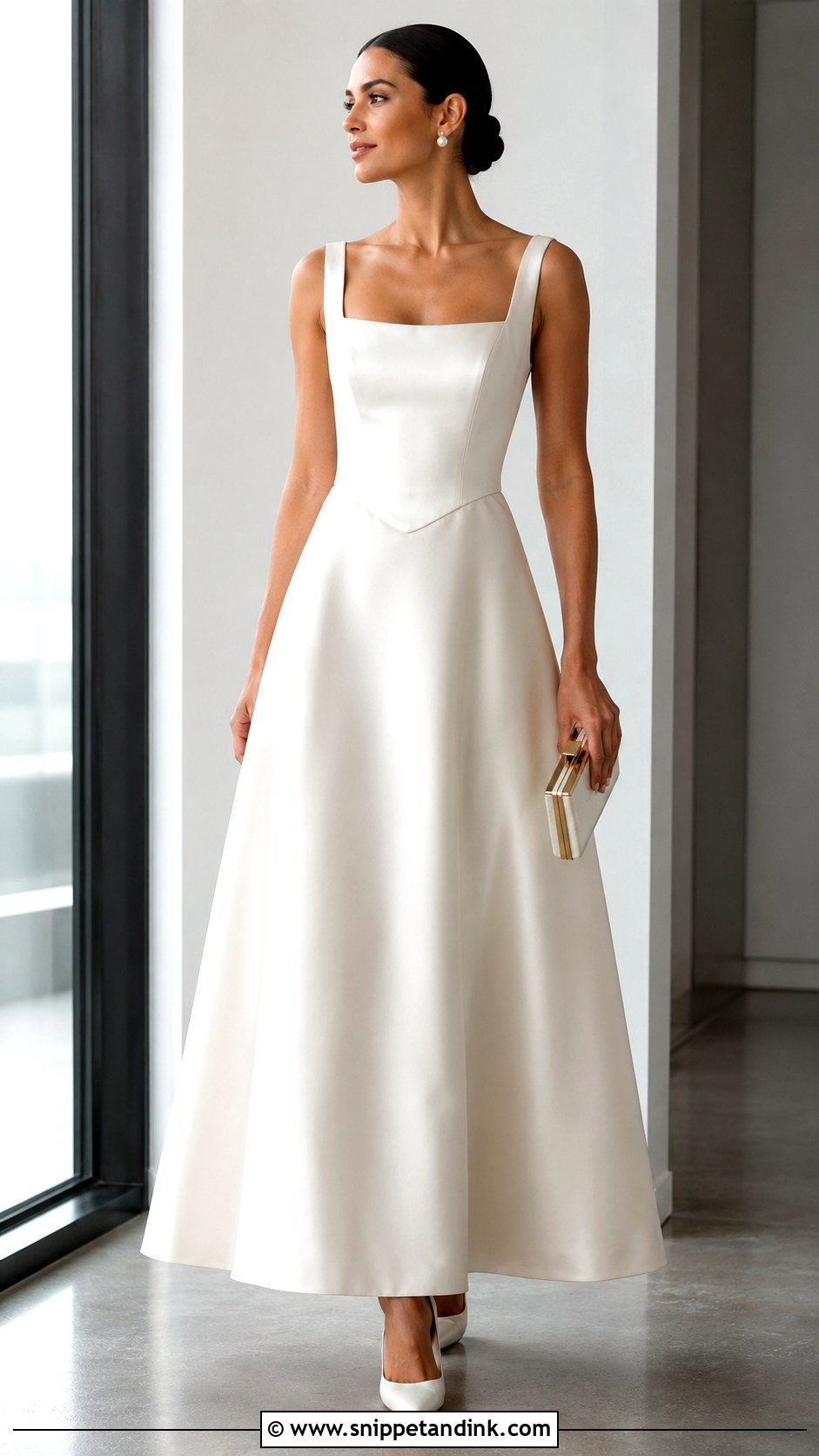
Square necklines suit the Basque cut because both are about straight lines and angles. Wide straps let you wear a proper supportive bra, which is a relief for fuller busts. What I fit closely is the corners. The neckline should lie flat against your chest, and if the corners lift or gape when you lean forward, the fix is taking in the side seams, not shortening the straps. Pearl studs, pointed pumps, a box clutch and a smooth bun keep everything crisp.
7. Scoop-Neck Basque Gown
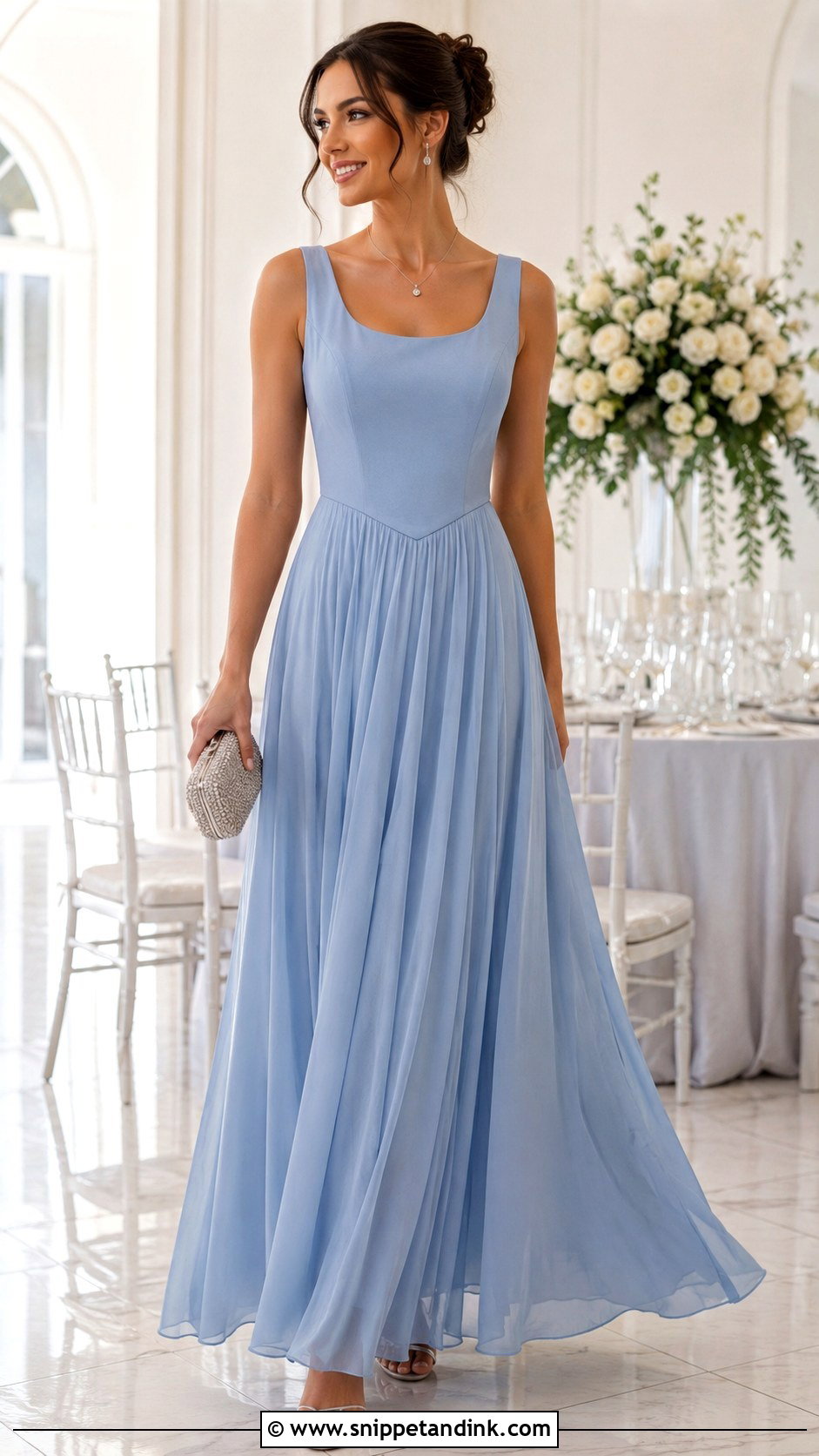
This is the gentle version: a rounded scoop, a softly dipped front and a satin or chiffon skirt that moves rather than stands out. It’s comfortable through a long ceremony and dinner, which is why I suggest it to brides who dread structured gowns. The one thing to check is how far the center point extends. If it reaches too low, it bends against your lower stomach when seated, and you’ll feel it by dessert. A small pendant, a beaded clutch and low or mid heels keep it relaxed.
8. Halter-Neck Basque Gown
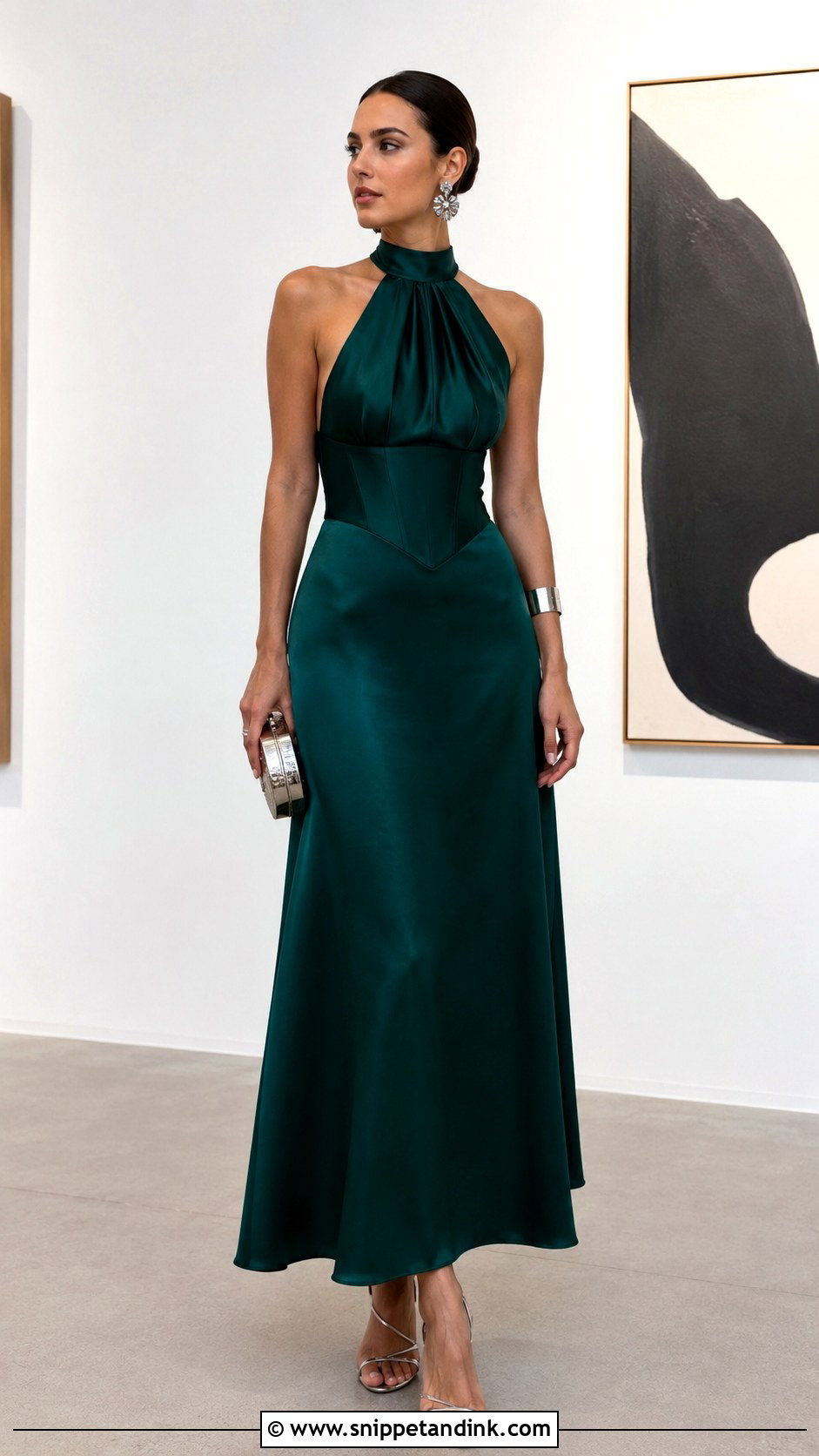
A halter-neck Basque gown reads sleek rather than romantic. A high halter looks sharp; a draped one moves more. Here’s my caution: a heavily boned Basque bodice hanging from a neck strap puts real weight on the back of your neck, so the gown should have its own internal support and the halter should mostly be decorative. Statement earrings, a cuff and metallic heels suit it, with a high bun to show off the shoulders. Skip the necklace.
9. Basque Mermaid Gown
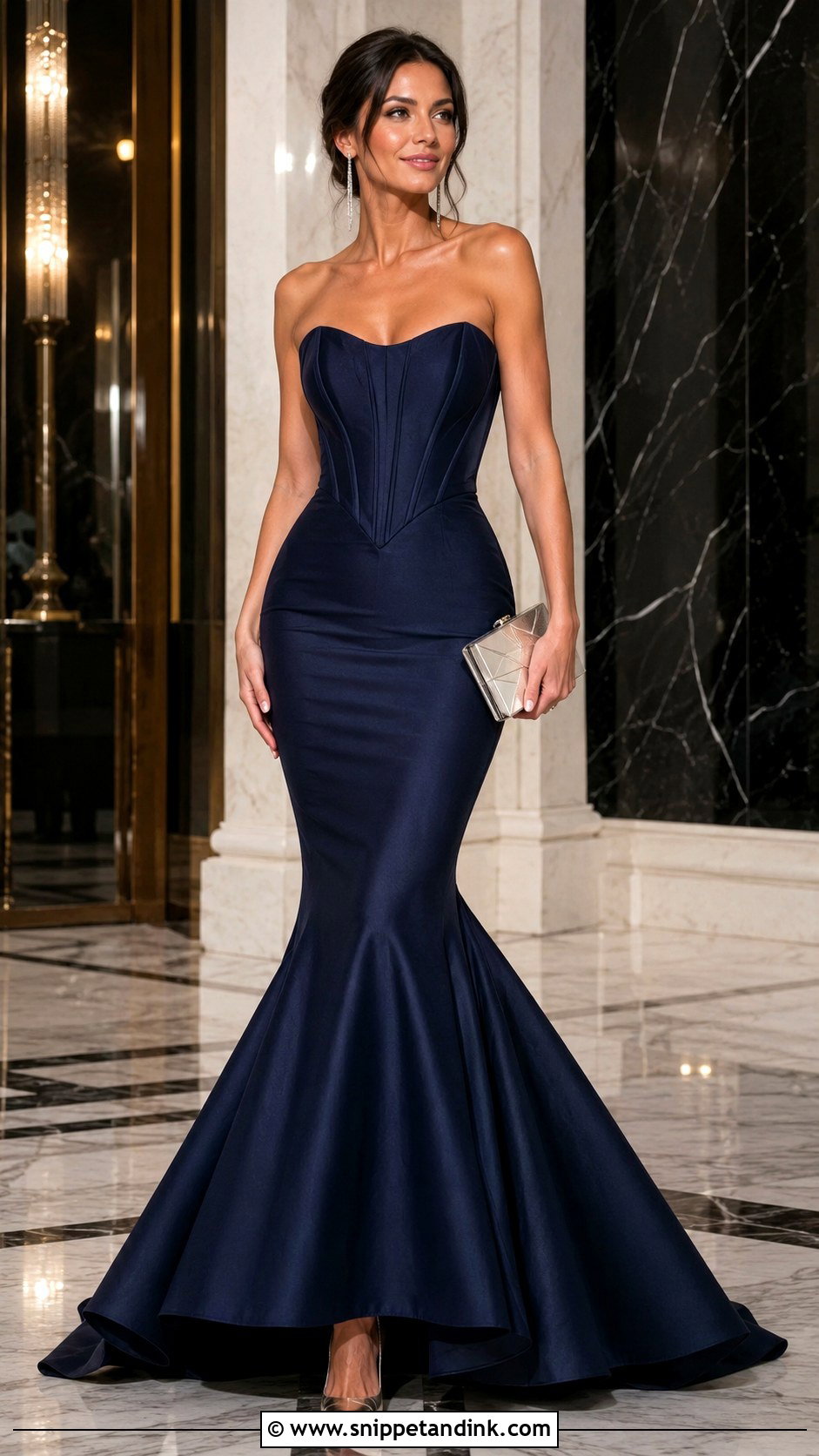
Want a gown that follows the body and then opens at the hem? The pointed waist leads straight into a fitted hip and thigh before the flare at the knee. The flare placement is where I spend fitting time. Set too high, it cuts the leg short; set too low, you’ll shuffle. Stretch crepe, satin or lined lace gives some give for walking and sitting. Choose a strapless, off-the-shoulder or sleeveless neckline based on support, then add narrow heels and long earrings. An overly tight fit through the hips actually distorts the Basque point, so take normal steps and sit down before approving it.
10. Basque A-Line Gown
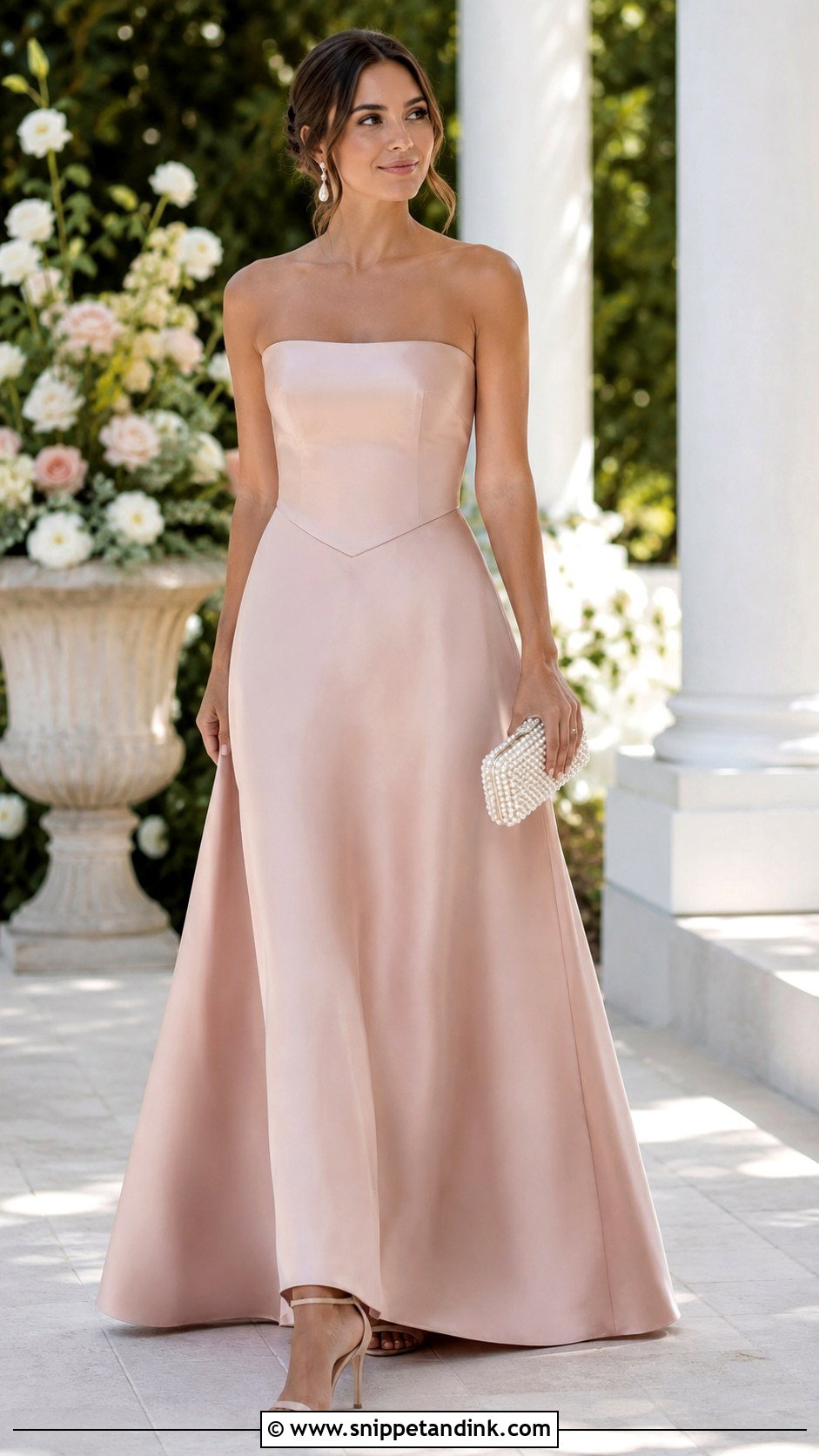
The A-line version gives you the waist definition without the weight of a ball gown, and it’s the cut I’d point most body types toward first. The skirt widens gradually from the hips, so it skims rather than gathers. Matte satin, chiffon or lace all work. If you’re having the side seams taken in, ask the tailor to keep the center point centered; it’s easy for it to drift when one side is altered more than the other. Ankle-strap heels and soft pinned hair complete it.
11. Basque Sheath Gown
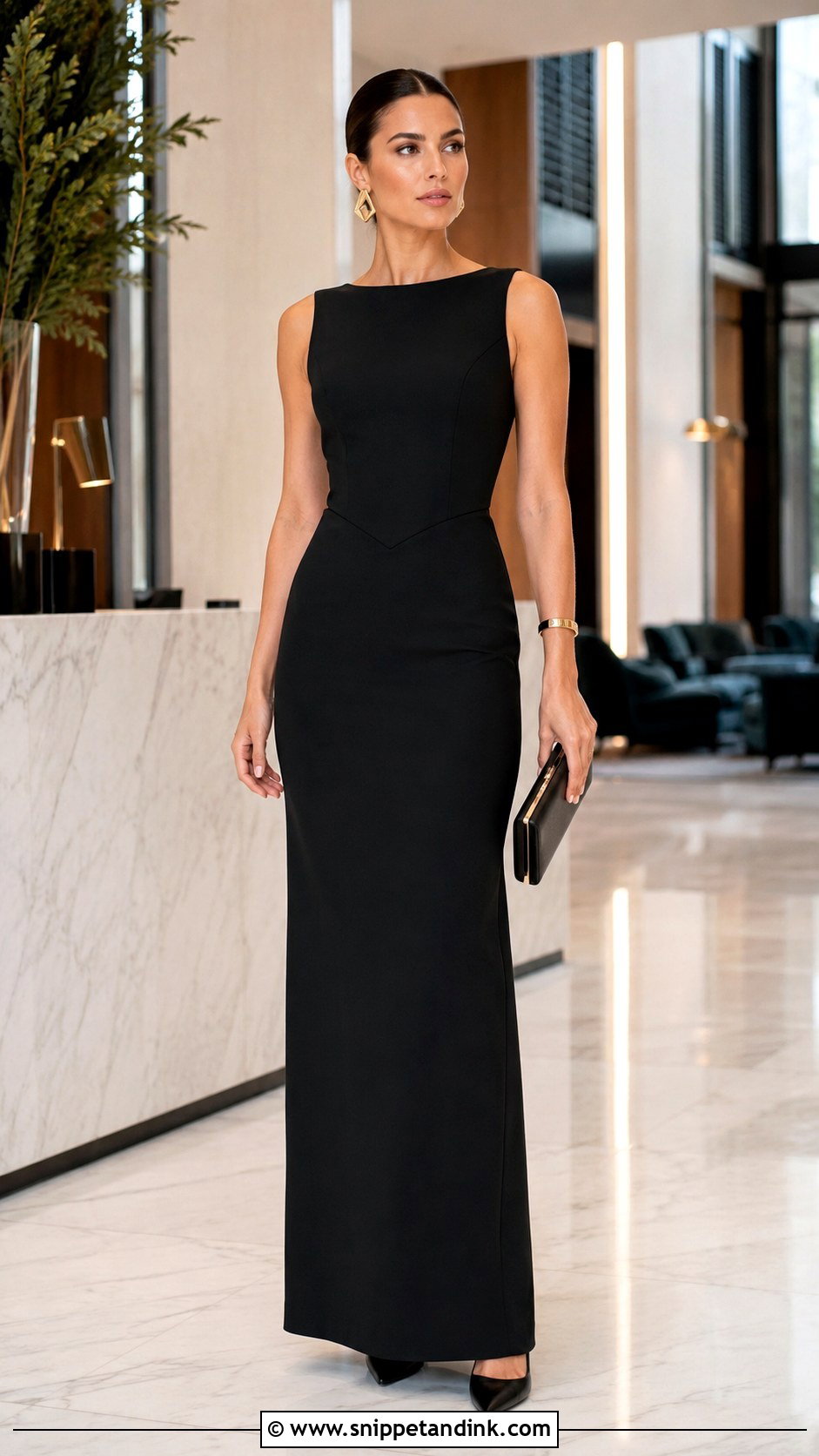
For minimalists, a sheath with a slim skirt and restrained details keeps only the essentials. I’d choose a shallow V or curved seam here; a dramatic point on a skirt this narrow looks like an arrow. Crepe and stretch satin show a clean surface, which also means they show your underwear, so test smooth shapewear under the corsetry before your last fitting. Check the back view in a second mirror. That’s where sheaths most often pull and lift the hem unevenly.
12. Beaded Basque Gown
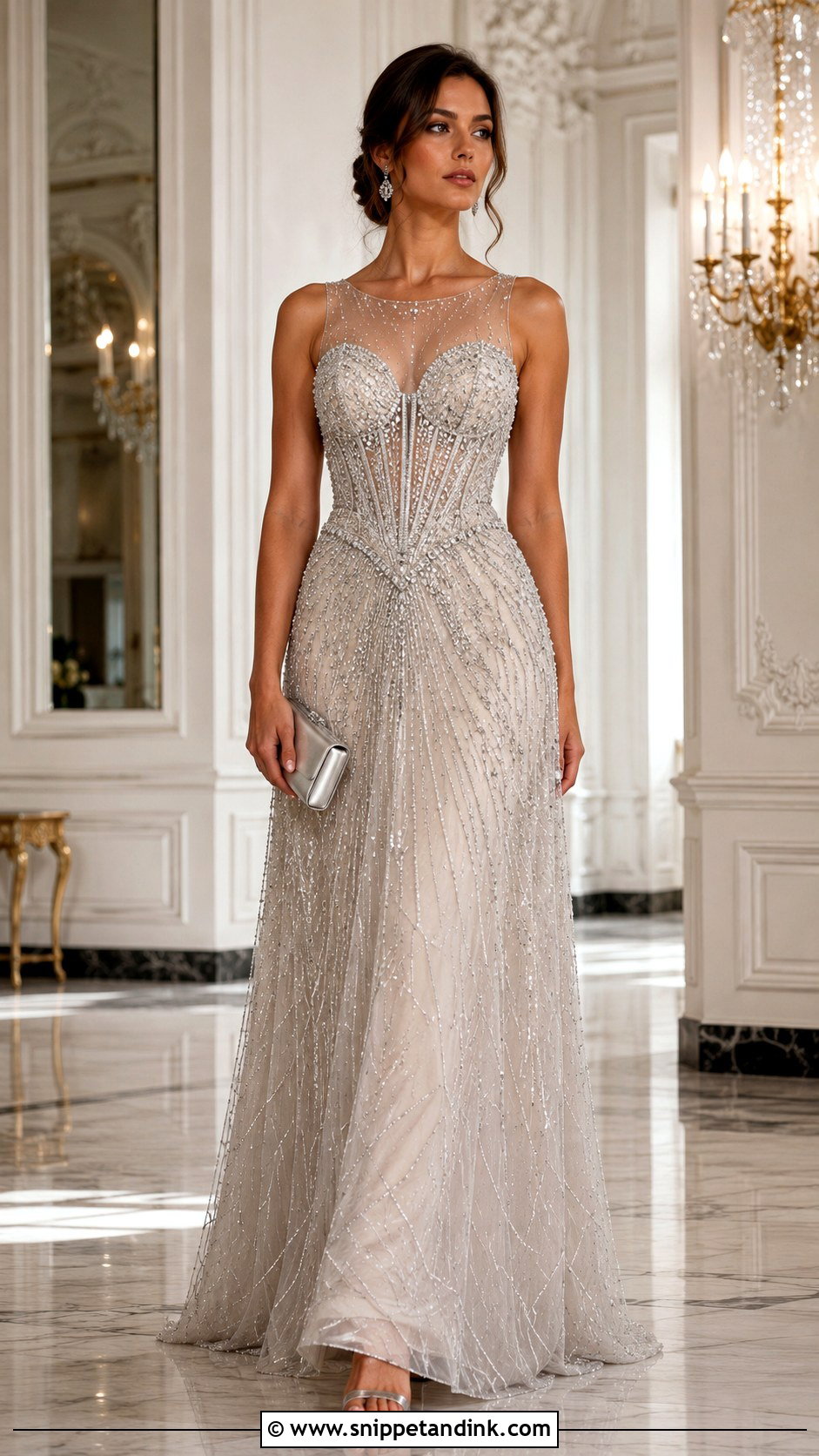
Light catches every step in this one, which makes it a natural evening gown. The best versions concentrate beading on the bodice and thin it out across the skirt, so the waist stays the focus and the gown doesn’t weigh a tonne. Weight is real here. Ask the shop to put it on a scale, or at least hold it up by the shoulders for a minute. A good lining keeps beads off your skin, and an updo keeps hair from snagging on them. Plain satin heels and small crystal earrings are enough.
13. Floral Appliqué Basque Gown
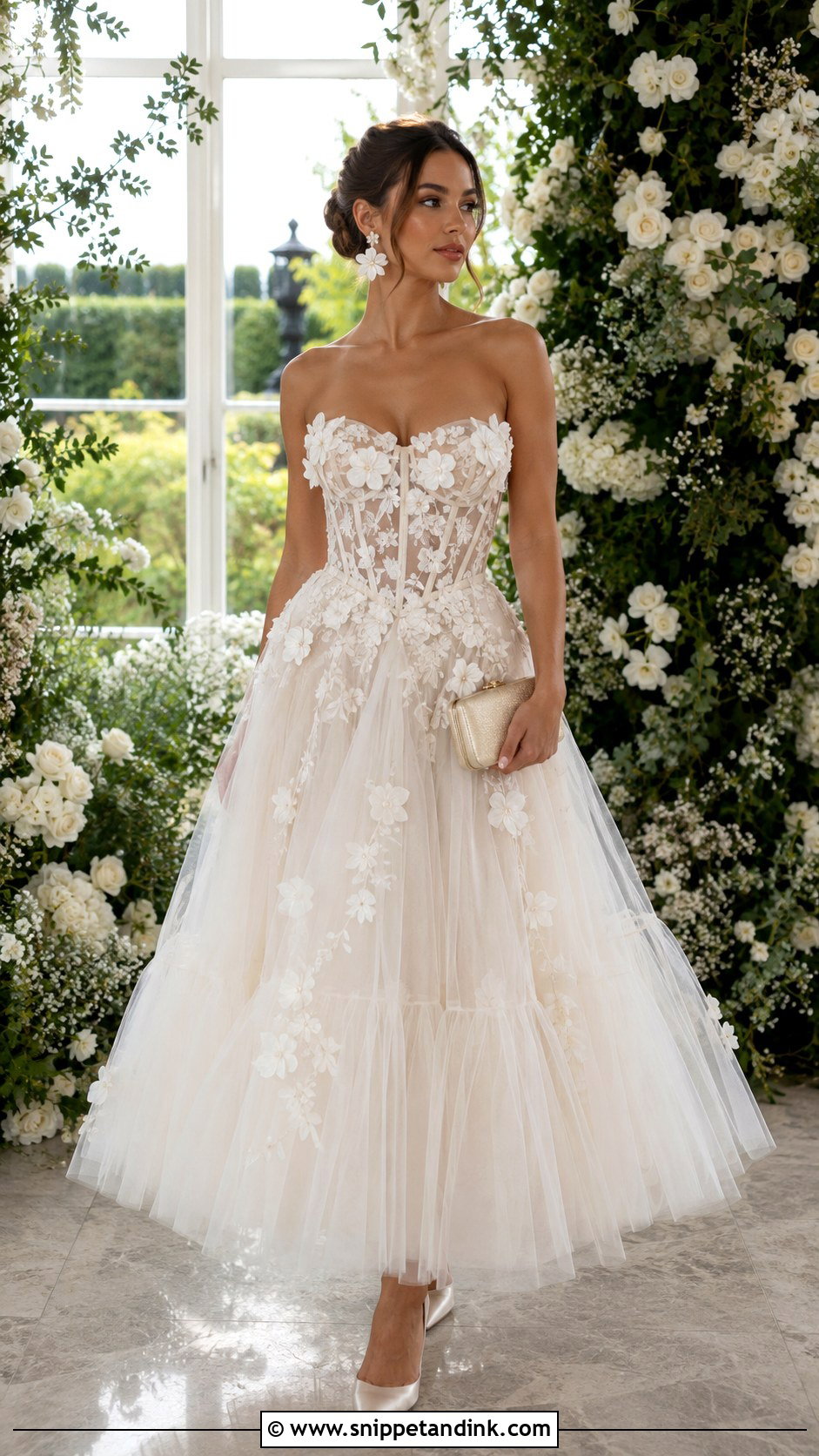
Raised flowers soften the strong lines of the cut, as long as they’re placed to follow the construction: along the neckline, down to the point and spilling into the skirt. A sheer corset base makes the flowers look like they’re floating; a lined bodice gives more cover. My usual check is under the arms and at the waist, since appliqués there can scratch or fold when you move. A tulle skirt, satin pumps and a loose low bun keep it romantic without overloading.
14. Pleated Tulle Basque Gown
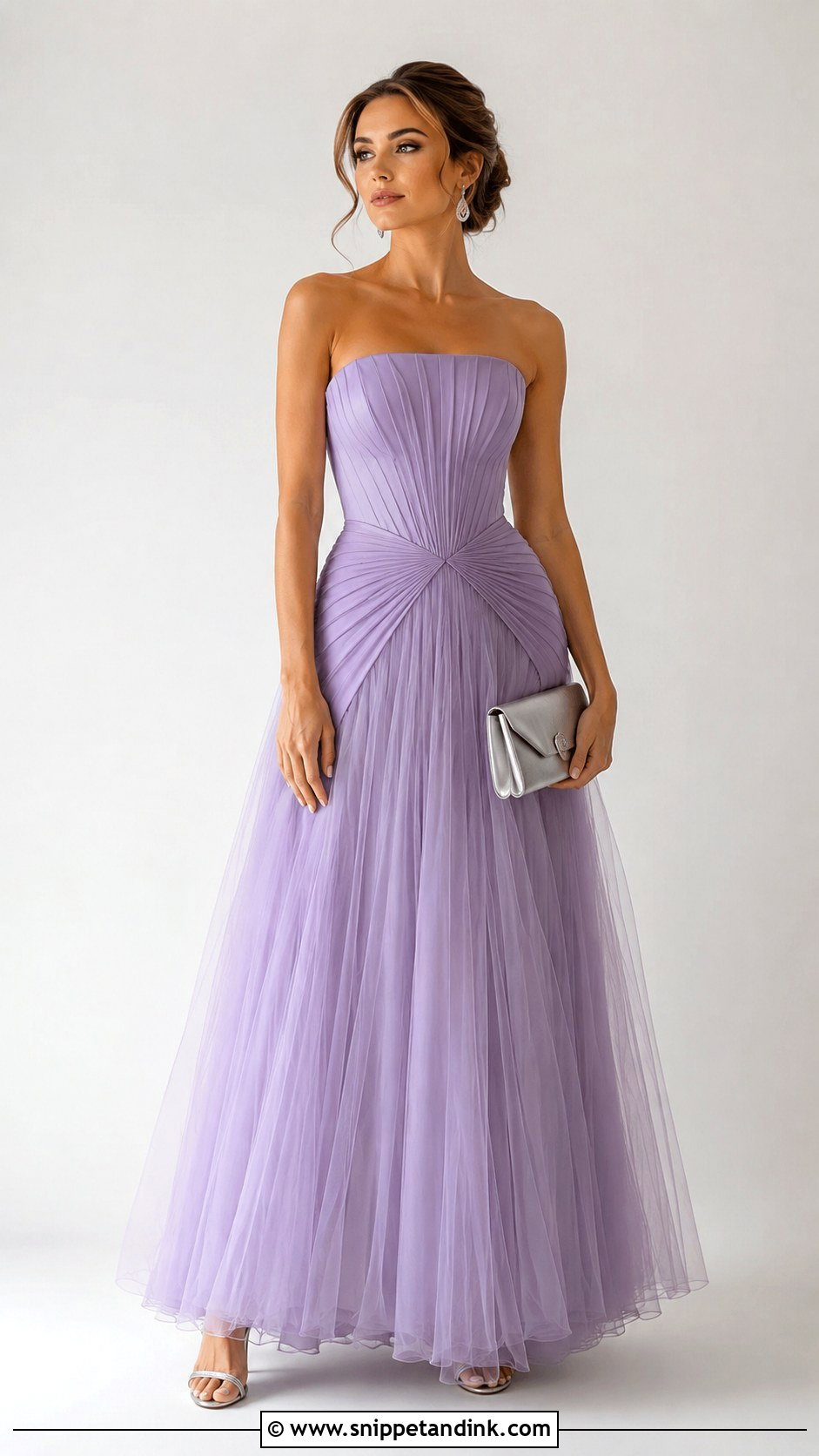
Tulle can make a structured bodice look almost weightless. The pleating looks best when it radiates out from the point instead of starting at a straight line. The bodice underneath must be firm, or the soft outer layer wrinkles over the boning. A tonal lining is quiet; a slightly contrasting one shows the pleats. Avoid bags or bracelets with sharp edges, since tulle snags at the slightest catch. And have the hem set with enough clearance that you’re not stepping on four layers at once.

15. Jacquard Basque Gown
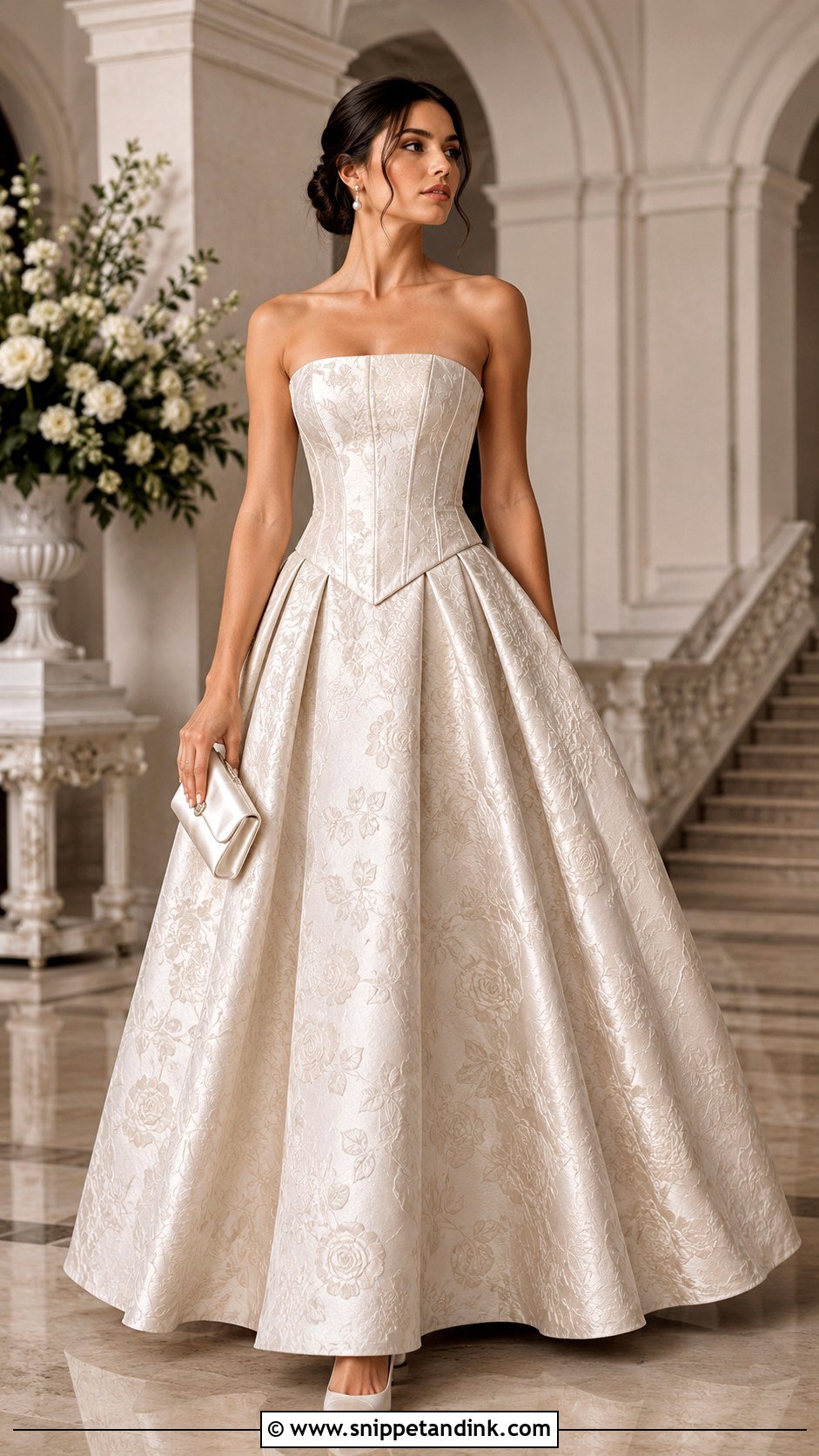
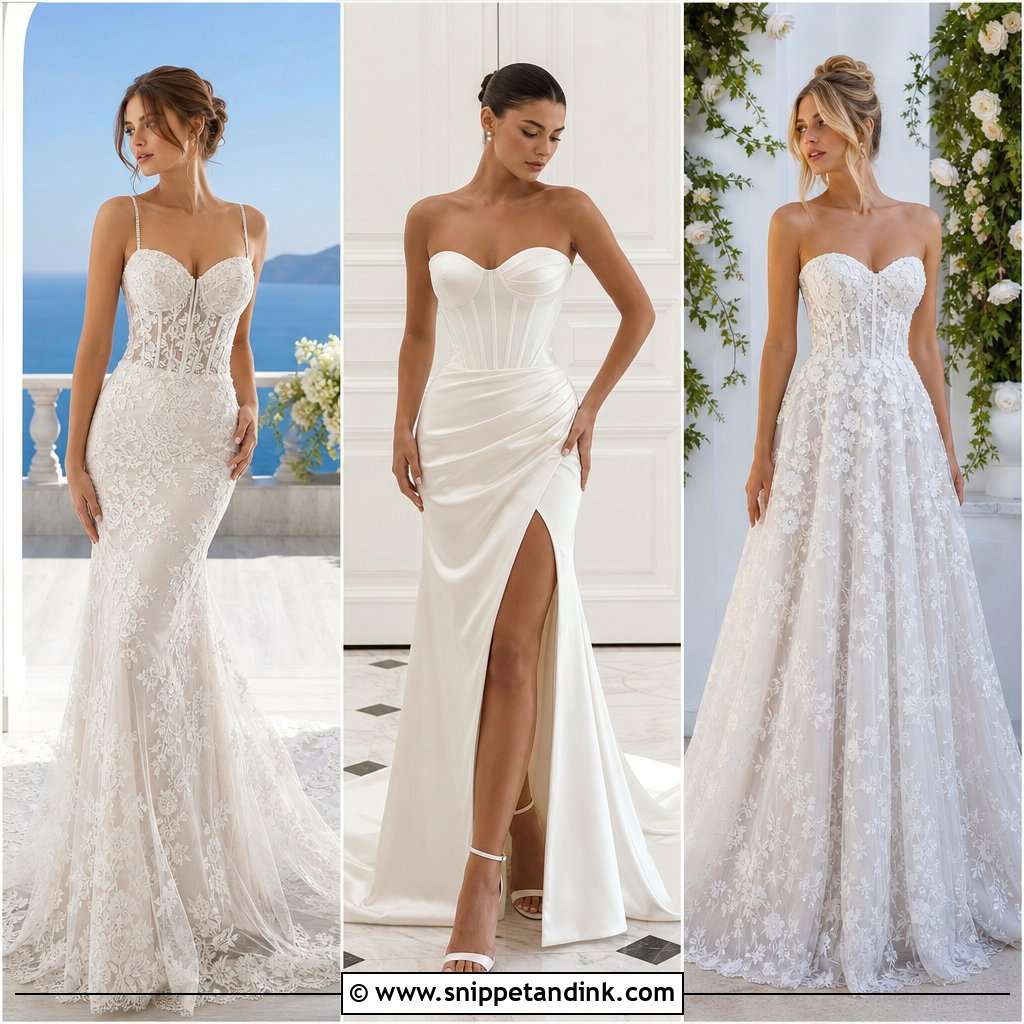
A jacquard Basque gown gets its interest from woven texture rather than anything added on. Because the fabric is heavy, it suits a firm strapless bodice and a controlled full skirt. The thing I inspect most is pattern placement. A well-made jacquard gown centers the motif at the point and mirrors it down both sides; a cheaper one cuts the pattern randomly and the seam looks crooked even when it isn’t. Plain pumps, a solid clutch and pearl earrings let the weave speak.
16. Black Basque Evening Gown
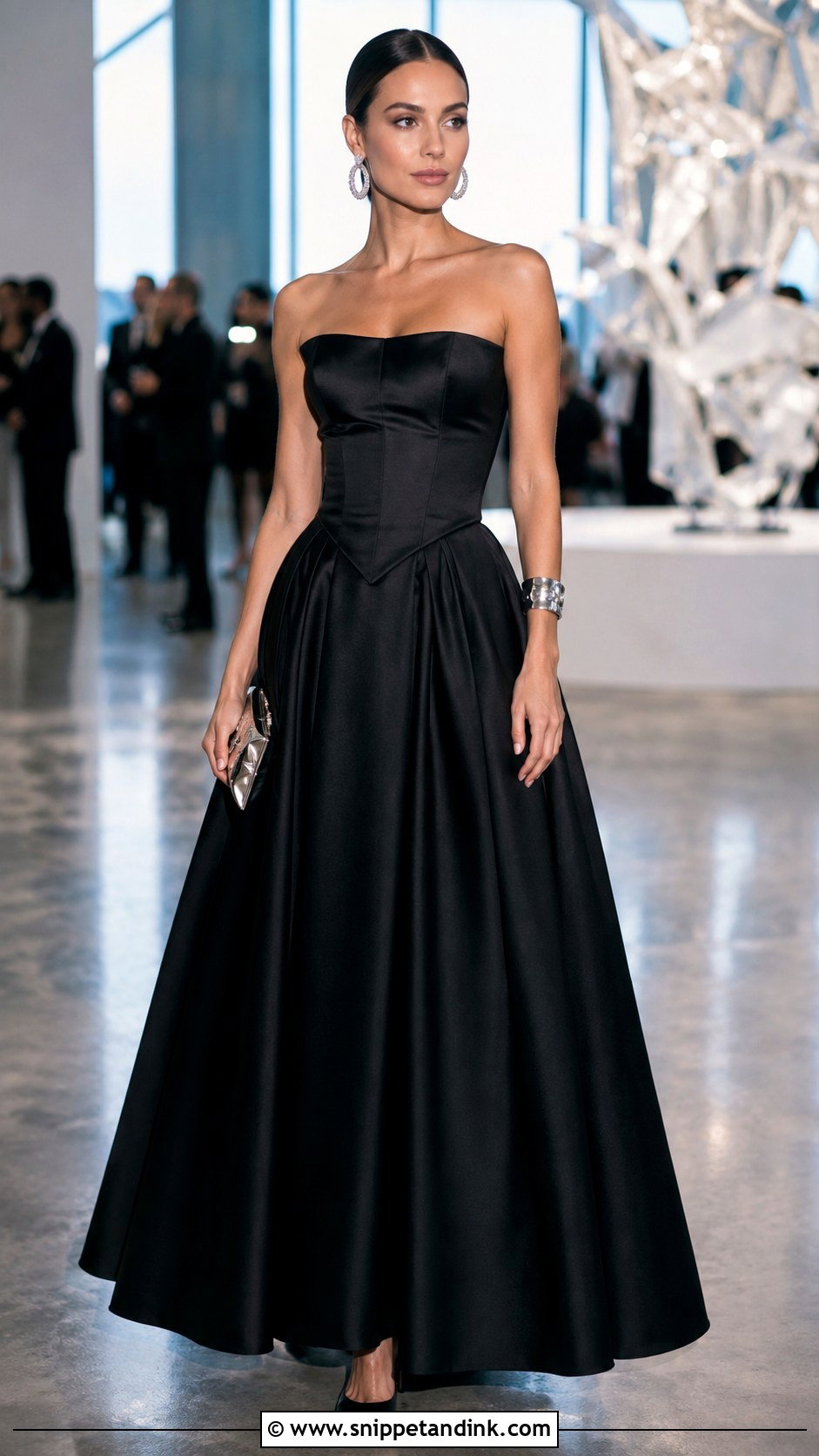
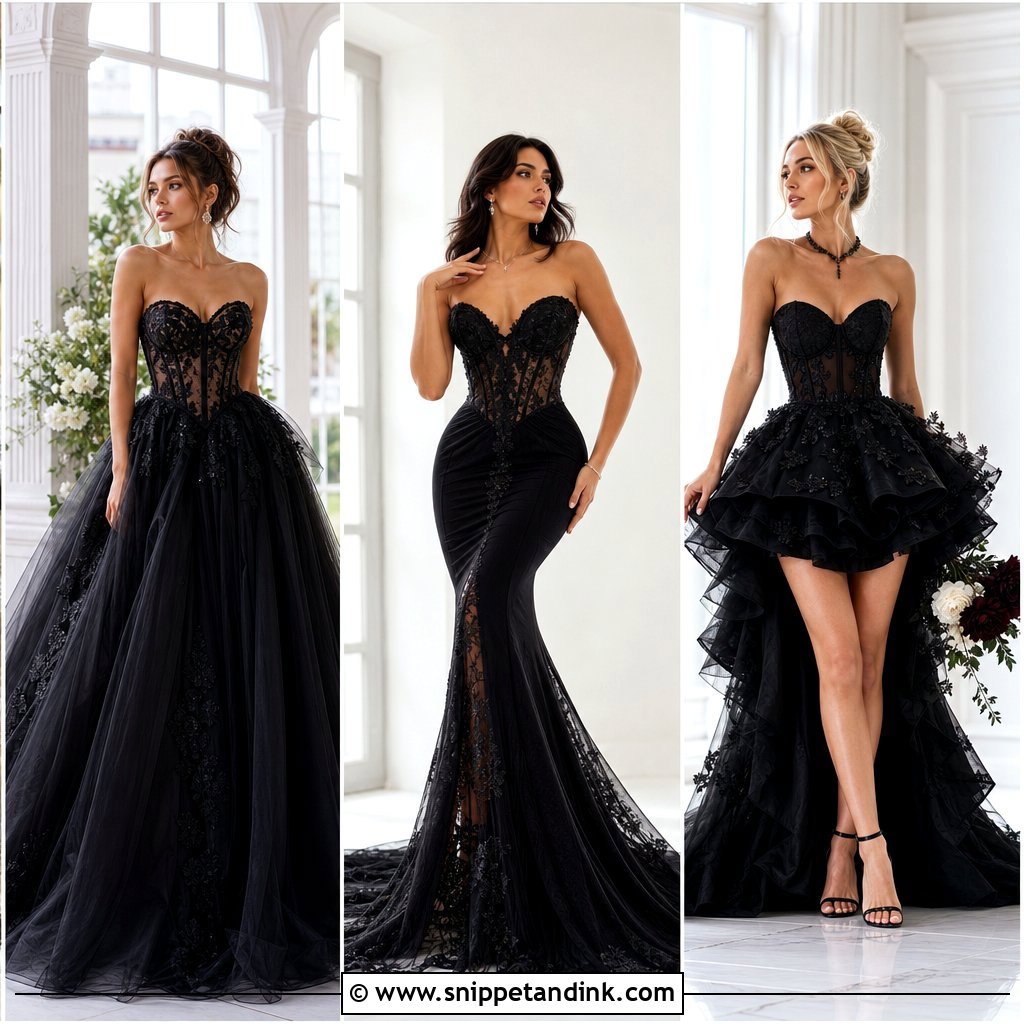
Black is easy to wear and hard to read. The fabric swallows seams, so the Basque shape you see on the hanger can disappear in photos. I look for piping along the waist seam, tonal panels or draping that crosses the point to bring the line back. Satin reflects, velvet absorbs, crepe sits flat. A deep point suits a full skirt, a shallow one suits a fitted cut. Silver or crystal earrings, black pumps and a sleek updo keep it formal.
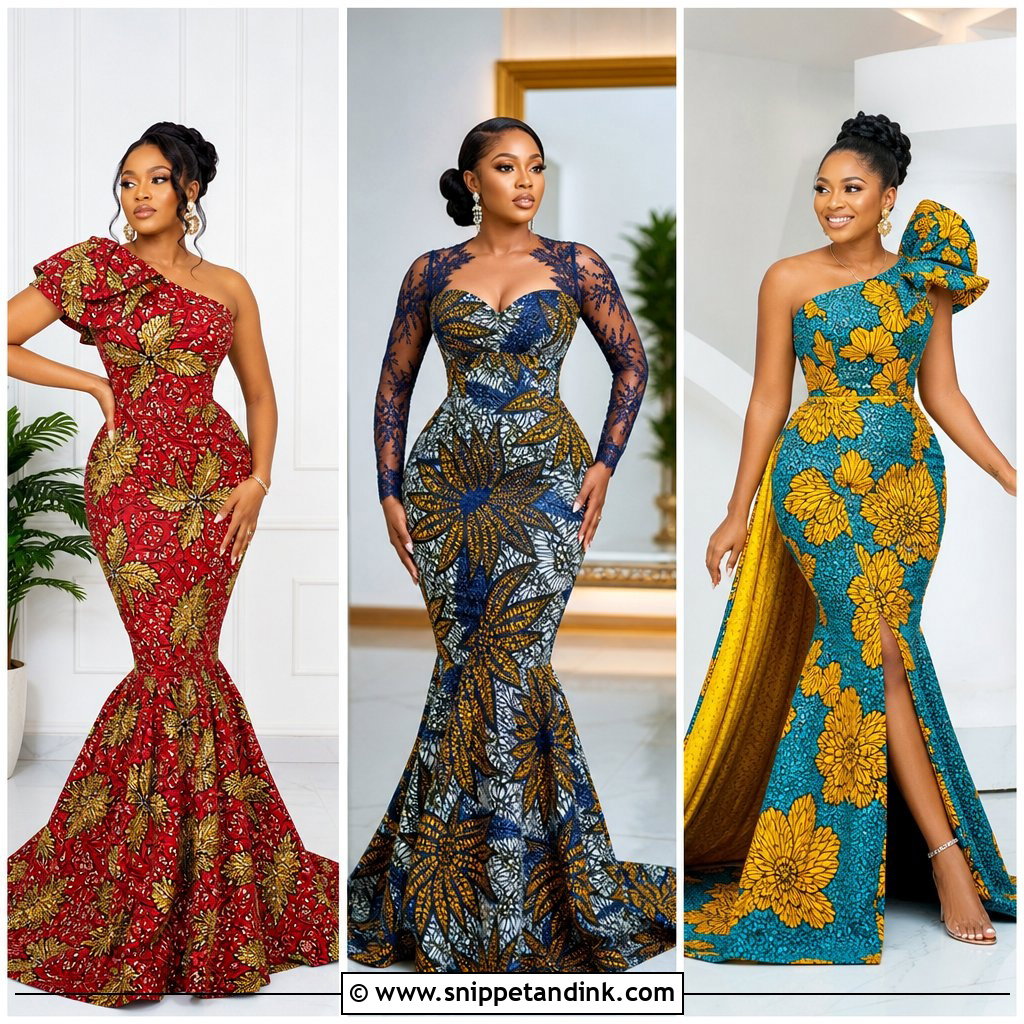
17. Red Basque Formal Gown
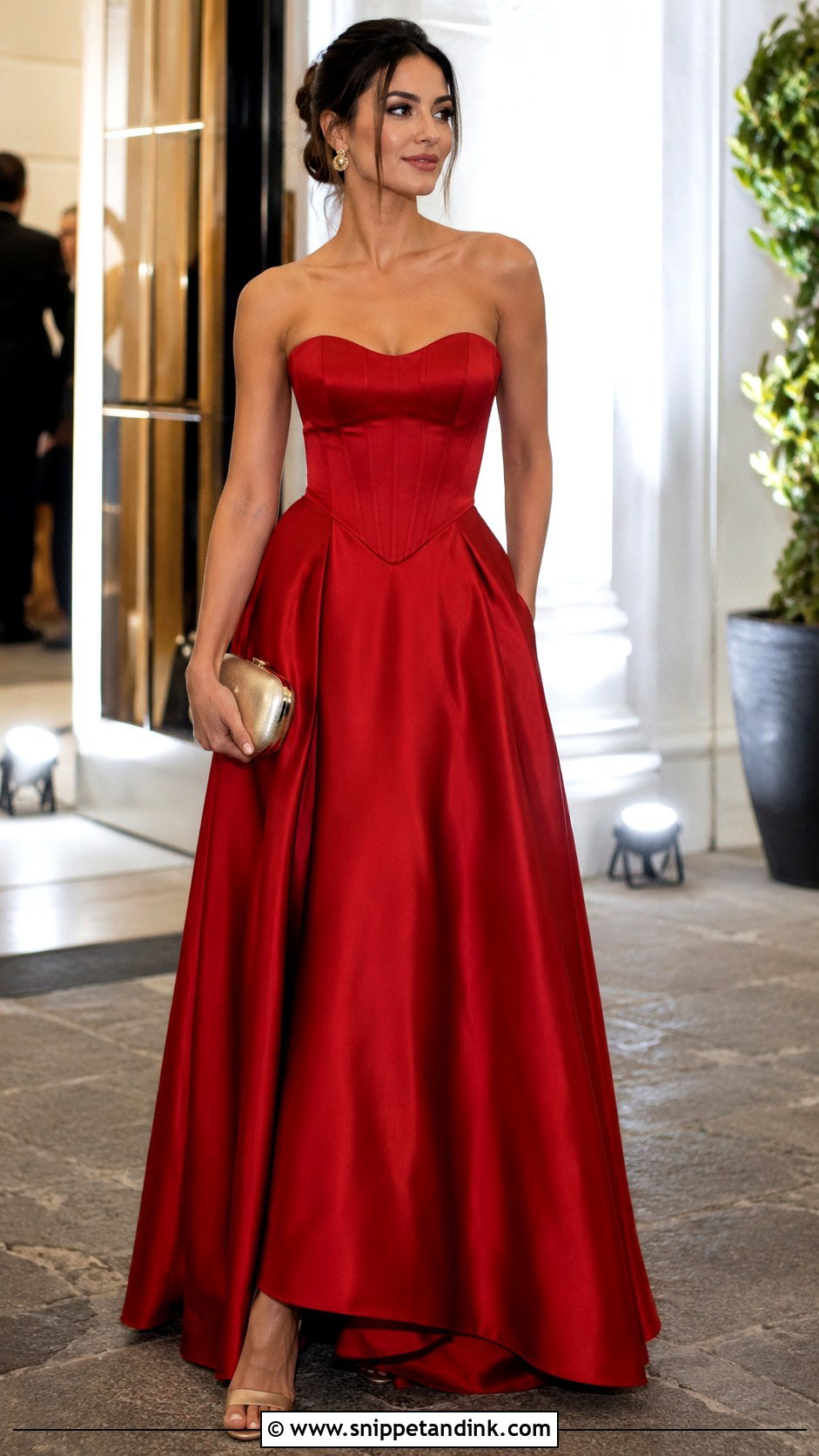
Few colors make a stronger entrance, so choose the shade by your undertone first: bright true red, berry, burgundy or blue-based crimson all land differently. A satin ball gown is full drama; fitted crepe is quieter. Don’t match every accessory to the exact red, since it ends up looking like a costume. Metallic or neutral heels and clean gold or silver jewelry are better. Pick defined lips or defined eyes, not both, and steam the satin on site because red shows every crease.
18. Pastel Basque Gown
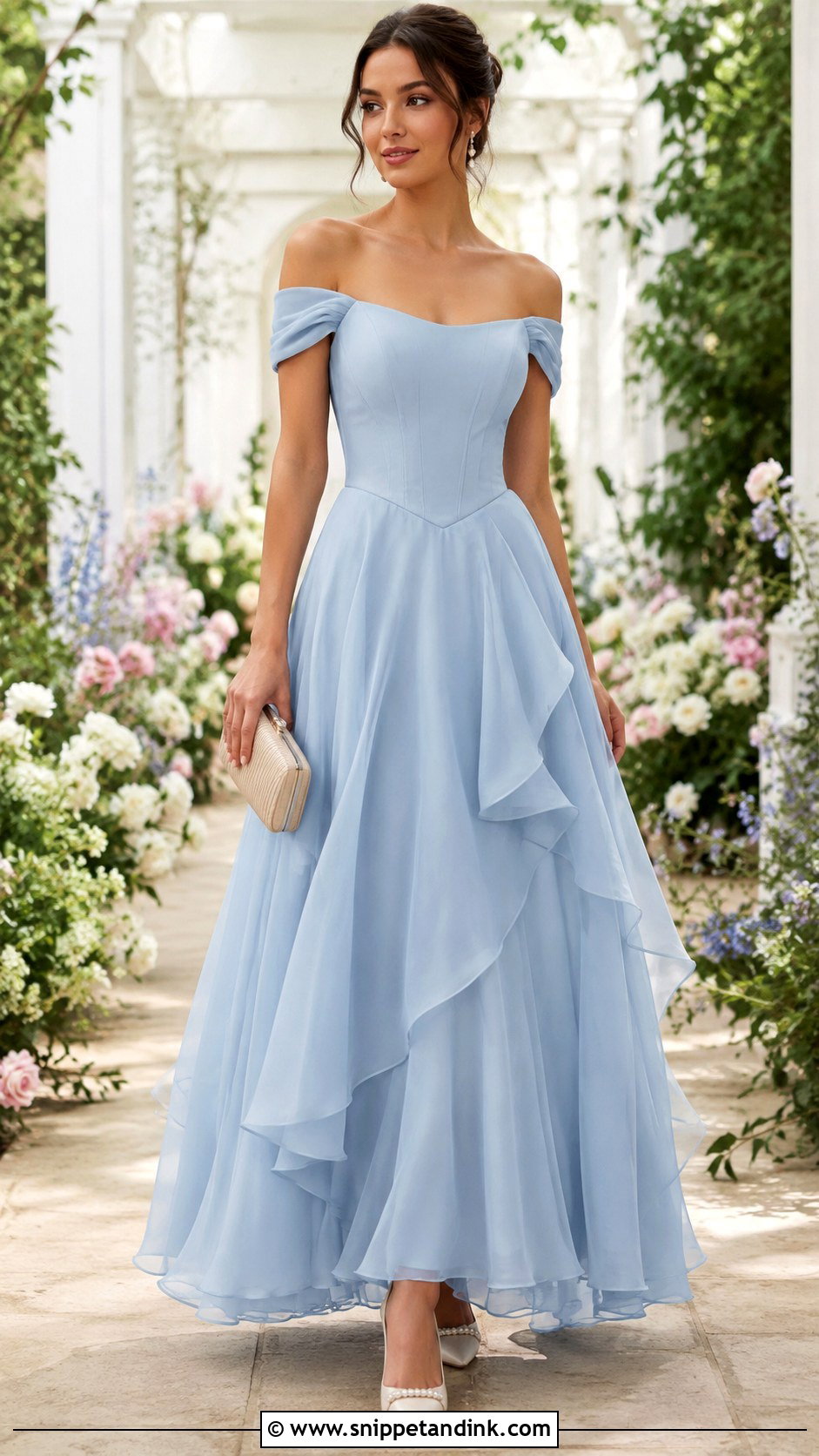
Soft color takes the edge off the dramatic shape. Powder blue, blush, lavender, mint or pale yellow suit daytime and spring or summer events. Tulle and chiffon move, satin holds. Always look at a pastel in daylight before buying, since shop lighting often warms it or drains it entirely. The lining matters too: a lining a shade off your skin tone can make the outer color look muddy. Nude, silver or pearl heels and soft hair keep the whole look airy.
19. Plus-Size Basque Ball Gown
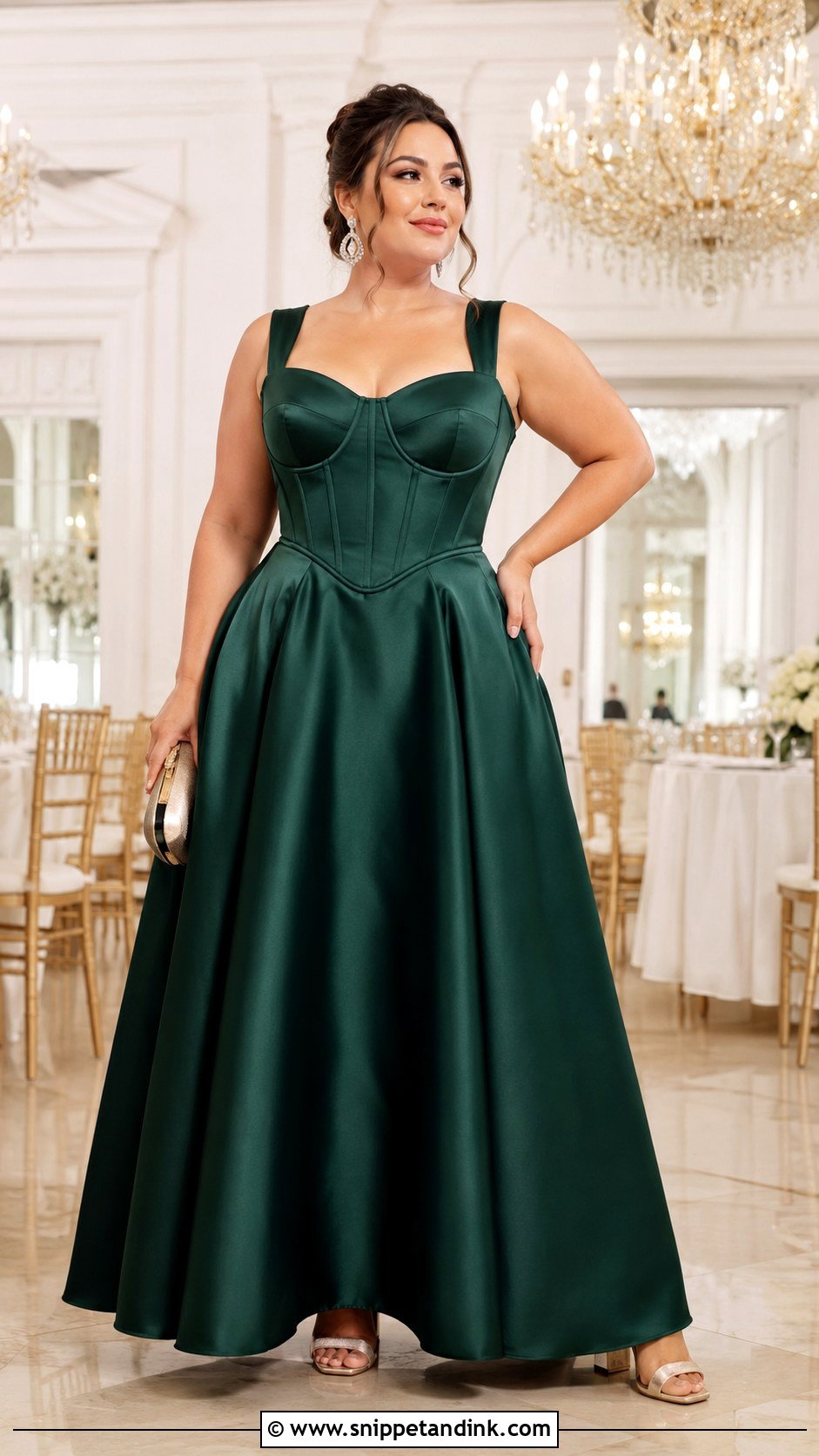
A plus-size Basque ball gown needs a bodice built for weight, not one scaled up from a sample size. Look for spiral steel boning, secure cups and a point placed for your torso length, not the pattern’s. A full skirt should drop smoothly from the lower bodice instead of gathering at the center front. I’d never size down to get more compression. It pushes the point outward and makes the waist look shorter, which defeats the purpose. Stable block heels or cushioned pumps make a heavy skirt easier to manage.

20. Modest Basque Gown With Sleeves
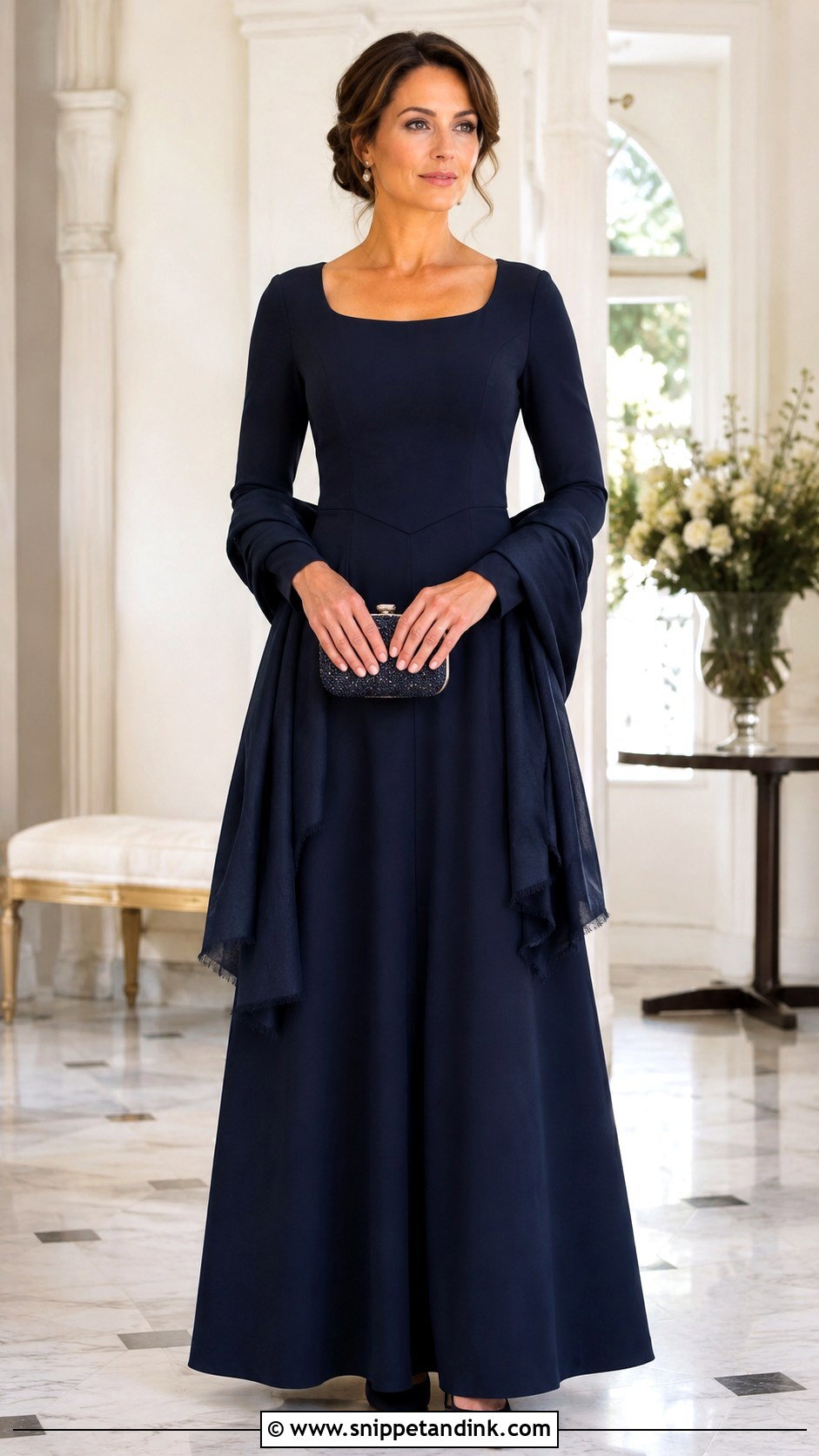
Full coverage and a Basque waist work well together. Pair a bateau, jewel or soft square neckline with fitted long sleeves and an opaque lining, then a gently pointed waist and a floor-length A-line skirt in satin, crepe or layered chiffon. A deep point looks out of step with a modest neckline, so keep it gentle. Sleeves are the fitting priority: lift your arms, sit and turn, and make sure the bodice doesn’t pull up with them. Closed-toe pumps, pearl earrings and a low bun complete it, with a coordinating wrap if you want more cover.
Why Altering a Basque Seam Costs More Than a Hem
On most gowns, the skirt is gathered or pleated into the V seam, so moving the point means taking the skirt off, recutting the bodice edge and resetting every gather. Seamstresses can do it, but it’s slow, specialist work, and prices for it vary a lot. That’s why I’d rather you find a point that already fits than plan to fix it later.
Roughly, here is how the usual requests compare:
- Taking in or letting out the side seams: routine, as long as the point stays centered.
- Hemming a plain skirt: simple. Hemming lace or horsehair-edged tulle: slower, and worth asking about up front.
- Raising or lowering the point: major work, and on beaded or jacquard gowns the pattern may not line up again.
- Adding a waist stay or extra boning: usually quick and one of the best things you can ask for.
Start alterations roughly two to three months out for a structured gown, and expect two or three fittings. Bring your shoes to each one, because heel height changes where the skirt breaks and where the point lands on your body.
Is the Point Sitting Where Your Waist Really Is?
Every gown in this list works or fails at the same spot, the seam where bodice meets skirt. Look at the depth of the point, your torso length, the skirt weight and the fabric together, rather than falling for one photo. Satin and jacquard show the shape most clearly, while lace, chiffon and tulle soften it. Let accessories stay quiet so the waistline stays the focus. Then book professional alterations and test the gown properly, walking, sitting and raising your arms, before you sign off.
You'll Like These Ideas:










Leave a Reply