
Judging a Sample Gown That Isn’t Cut for You
Most boutiques carry designer gowns as samples in one or two sizes, so what you try on is rarely your fit. I clip the back, add a cape or a stole if the sample is too small to close, and ask the bride to judge three things only: the neckline, the skirt shape and how the fabric feels after ten minutes. Everything else is tailoring.
Bridal sizing usually runs smaller than high-street sizing, so don’t be thrown by the number on the order. The boutique measures bust, waist and hips and orders by the largest of the three, because taking a gown in is far easier than letting it out. Made-to-order gowns can take several months to arrive, and alterations need their own window after that. Ask for the expected delivery date in writing at the time you order.
- Wear the bra or shapewear you plan to use on the day, or something close to it.
- Bring shoes at your real heel height, since hem length depends on it.
- Sit down in every sample you’re serious about. Standing hides most fit problems.
- Take photos from the back and the side, not just the front mirror view.
1. Allure Satin Ball Gown With Basque Waist
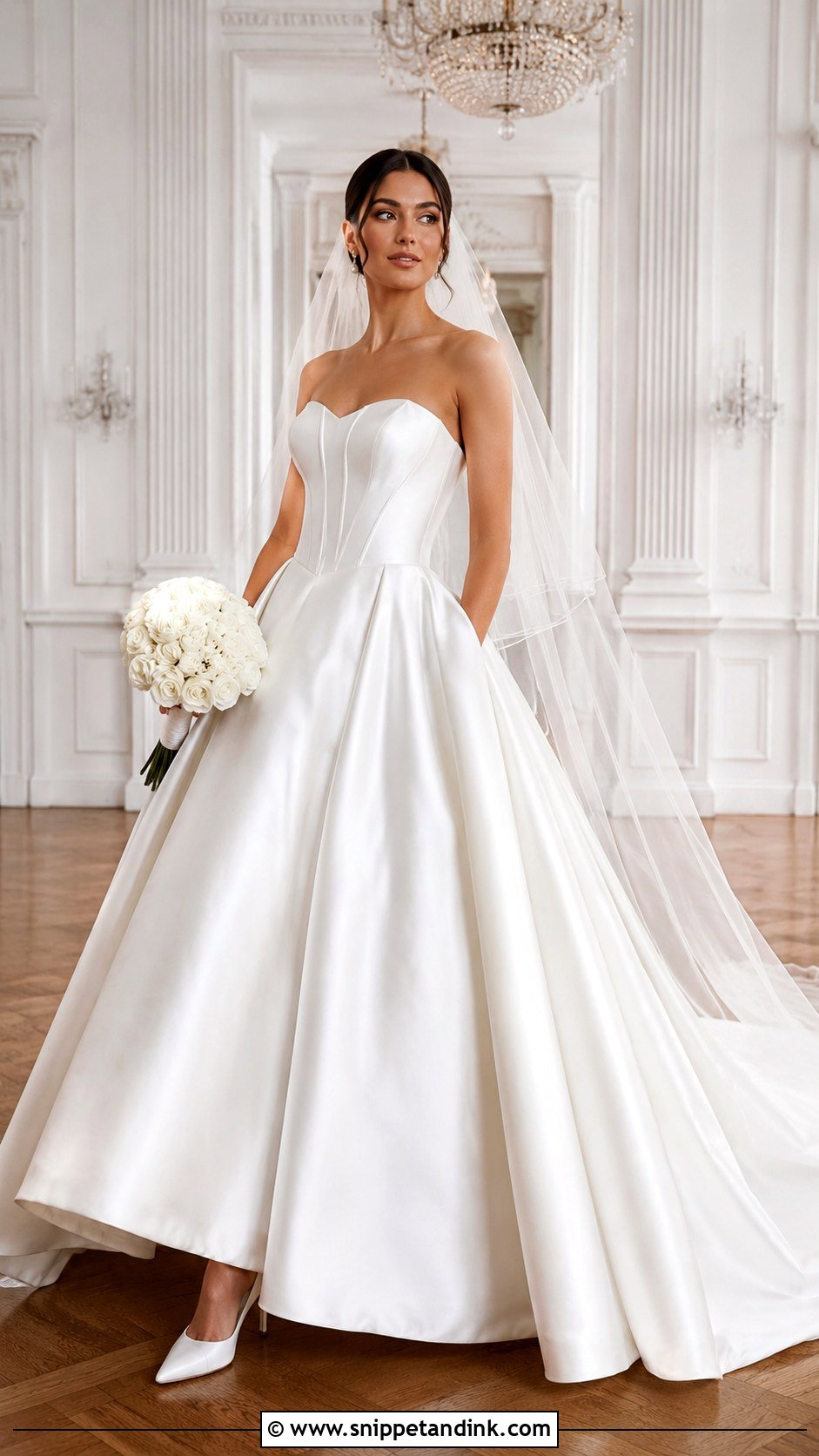
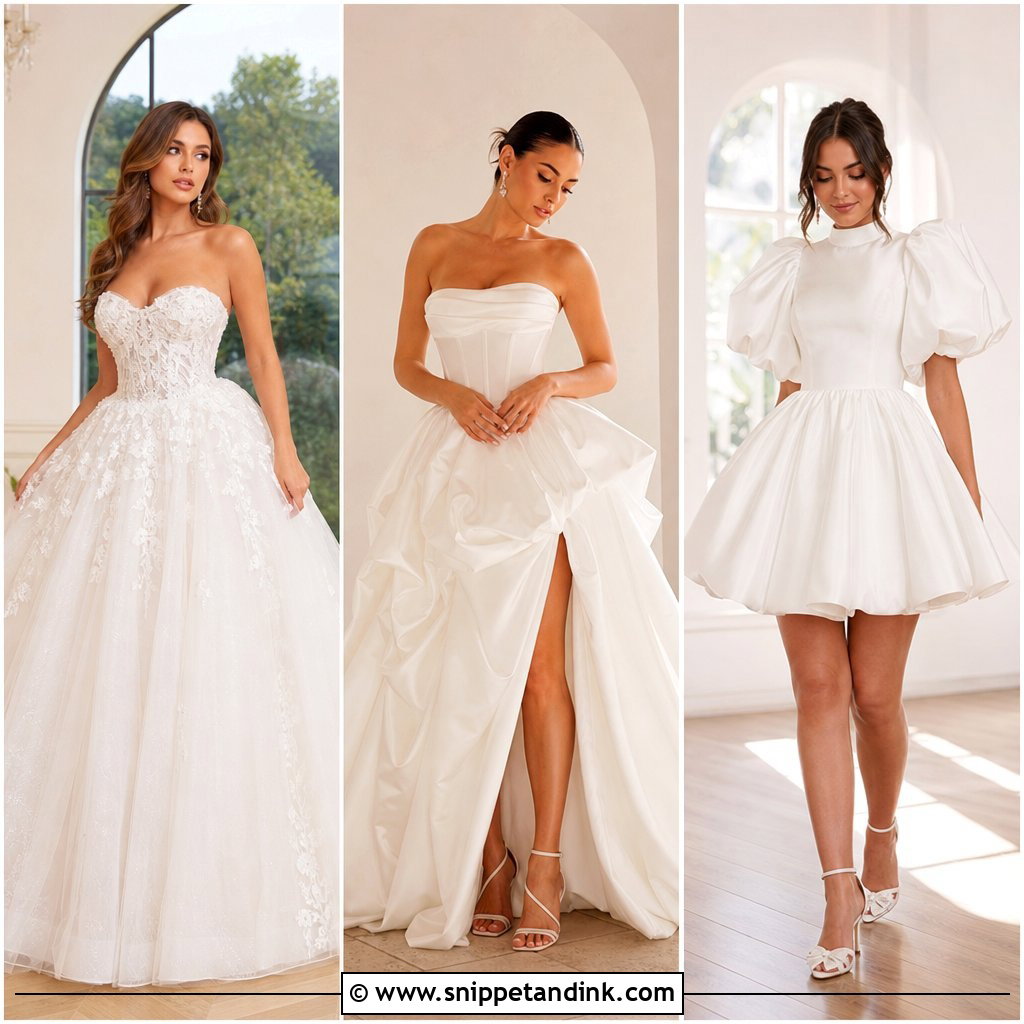
A satin ball gown with a basque waist is the most formal shape on this list. The V point at the front drops below the natural waist, which lengthens a short torso and lets the full skirt start lower, so the volume reads as grand rather than wide. I check one thing before anything else here: where the point lands when you sit. If it digs into the hips, it needs to be shortened a touch. Keep the extras plain, a cathedral veil, pearl drops and ivory pumps, plus a sleek low bun so the satin carries the look. Ask for a bustle with several pickup points, because a heavy satin train will tear a single loop by the second dance.
2. Allure Lace A-Line Gown With Square Neckline
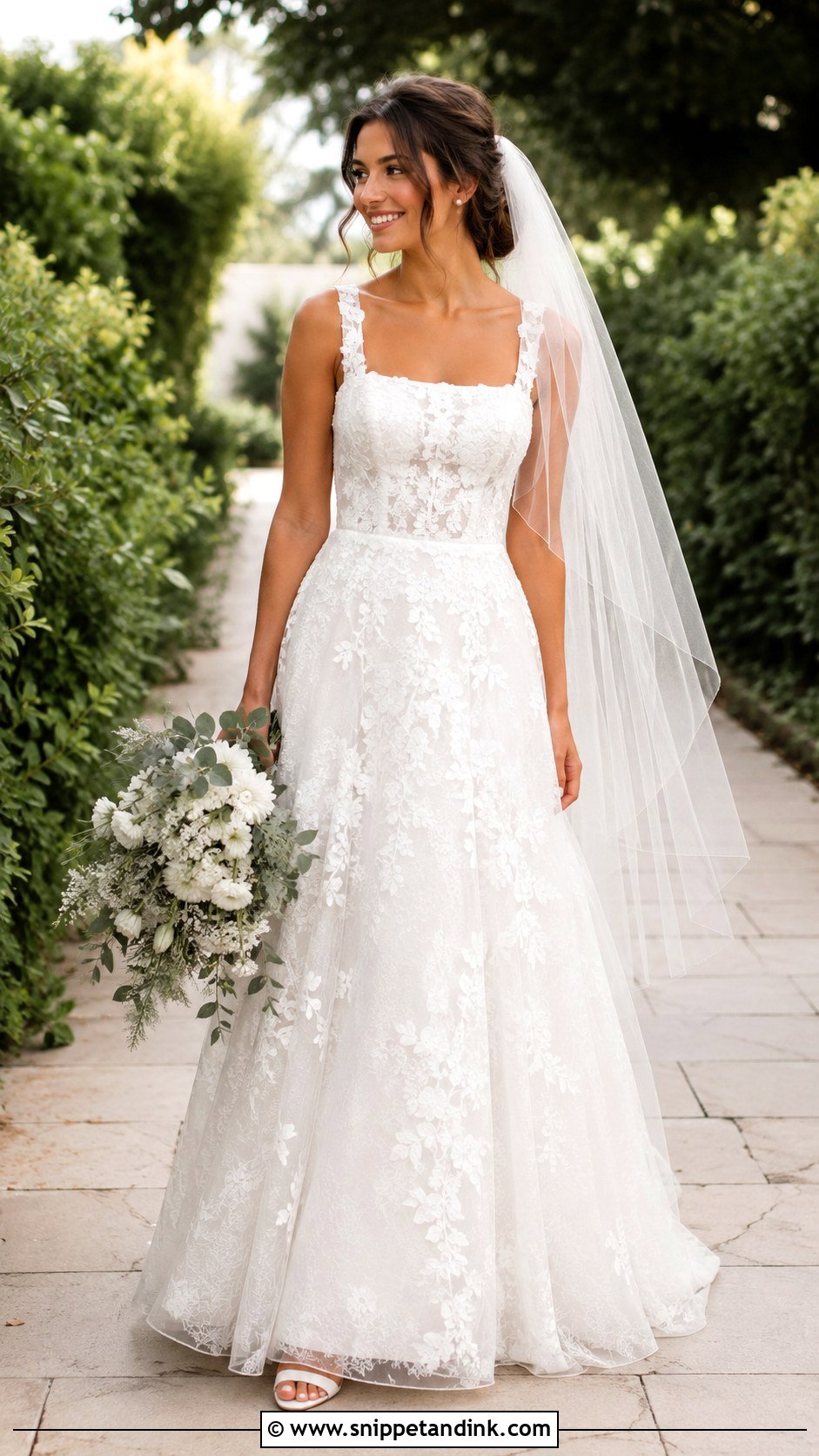
Lace over an A-line skirt is the gown I see brides relax in fastest, and the square neckline gives the shoulders a clean frame that suits outdoor light. Wide straps are the honest choice if you hate hitching a bodice up all evening. I look closely at a sheer bodice under daylight: the lining should be matched to your skin, not to the lace, or it shows as a pale panel in every photo. A fingertip veil with a plain tulle edge keeps the lace pattern visible. Block heels earn their place on lawn or gravel, and a half-up style with few pins keeps the look loose.
3. Allure Mermaid Gown With Detachable Overskirt
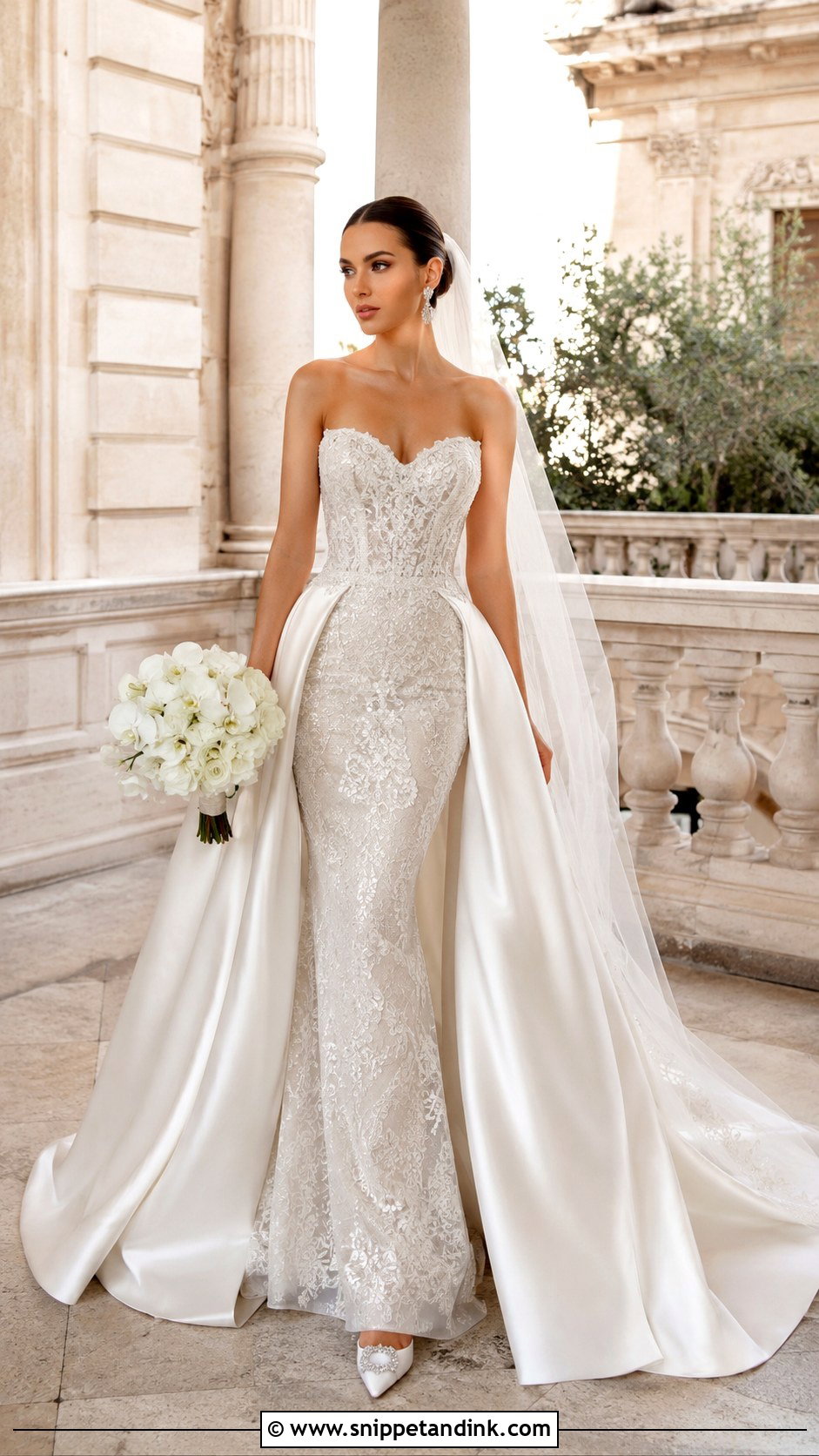
Some brides want the sweep of a ball gown at the ceremony and the freedom of a fitted shape by dinner. A mermaid base with a detachable overskirt gives you both. The part that fails is almost always the waistband the overskirt hangs from: if it’s too bulky, it shows as a ridge under a fitted bodice once the skirt comes off. At the fitting I have the bride remove it herself, with no help, then put it back on. Crystal studs, satin heels and a high bun or smooth waves keep the fitted shape the focus once the reception starts.
4. Allure Long-Sleeve Lace Wedding Gown
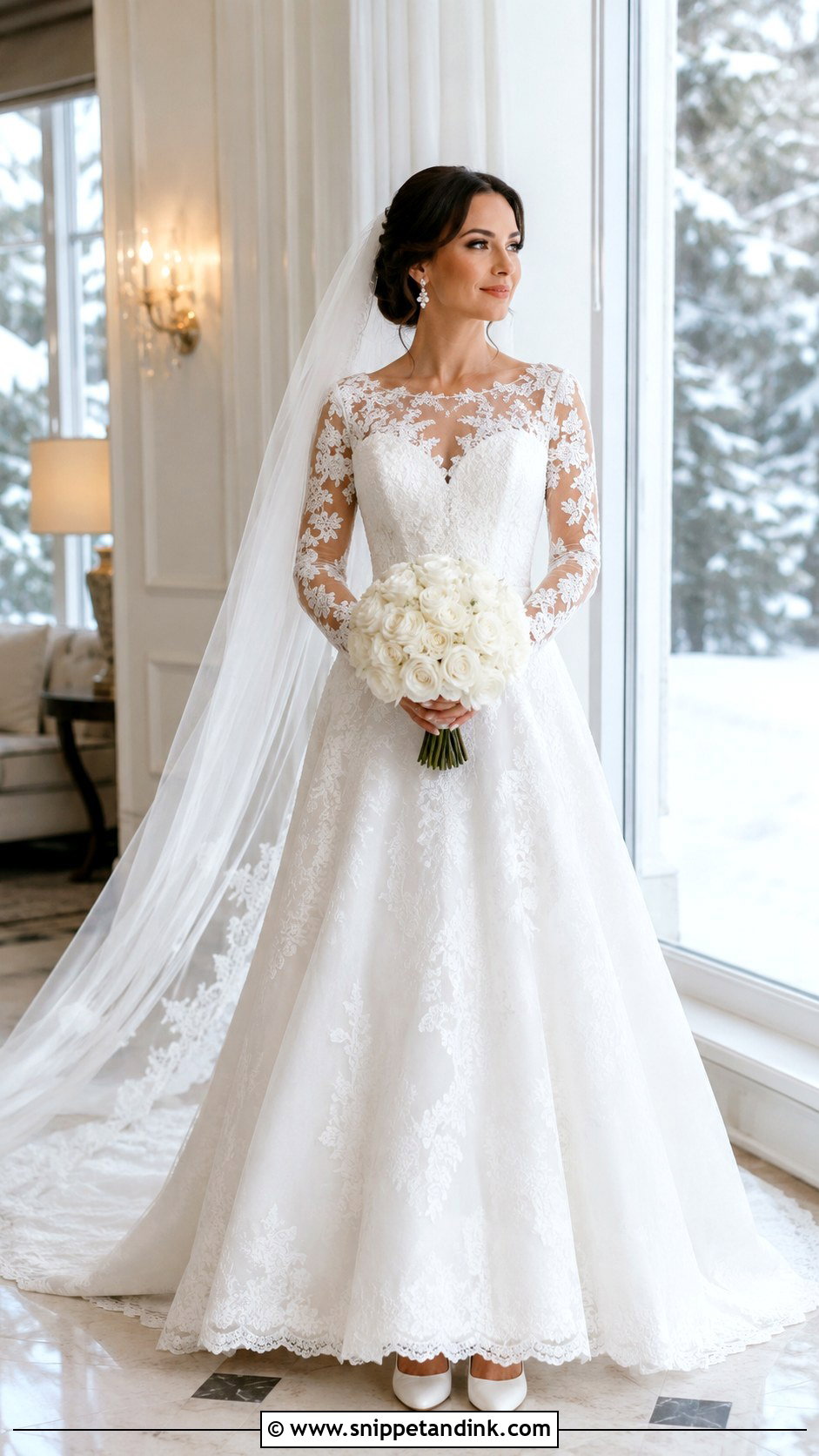
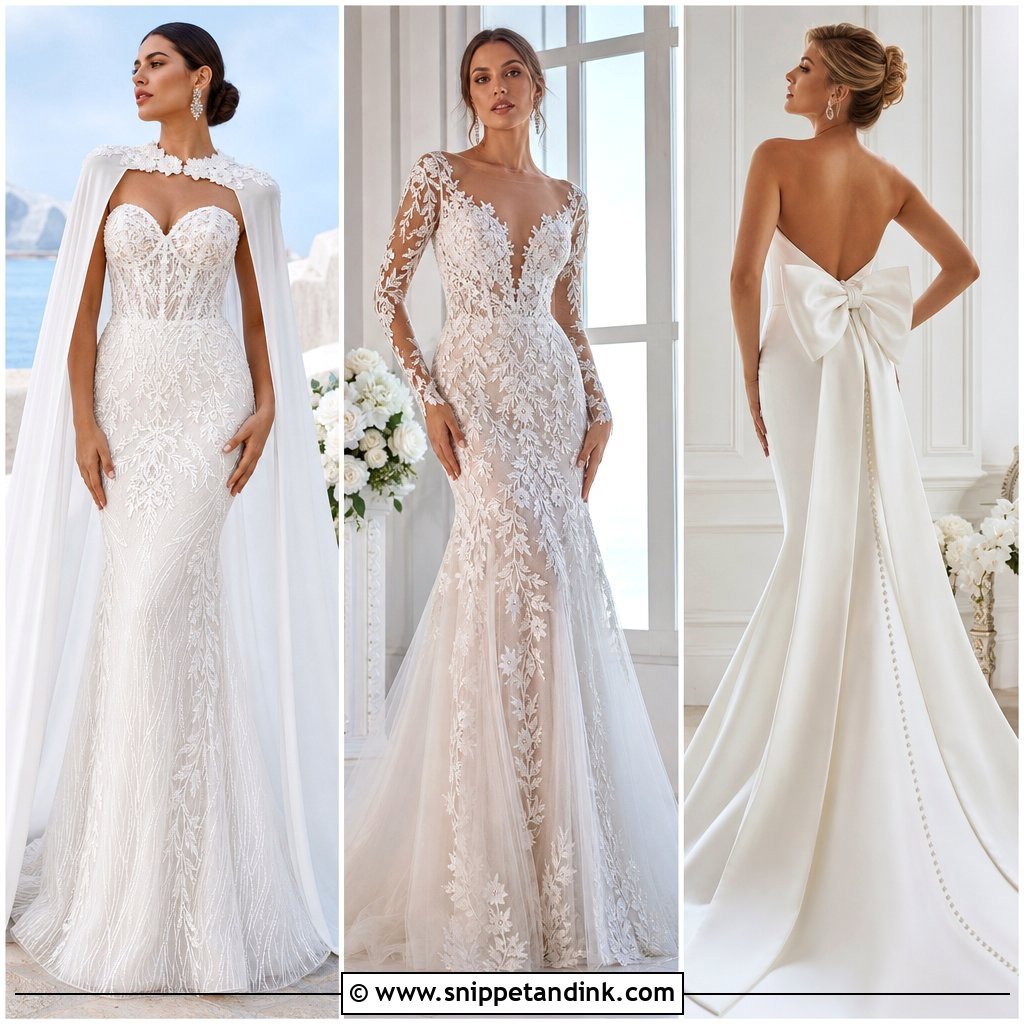
Long lace sleeves suit autumn and winter, and illusion sleeves with scattered appliqués give coverage that still looks light. The sleeve is where this gown succeeds or fails. Lace has very little stretch, so a sleeve cut close for photos can stop you raising your arms for a hug. I always ask the bride to reach forward, then overhead, and to sit down at a table. If the shoulder seam pulls, the sleeve head needs letting out, not the sleeve narrowing. A low chignon keeps loose hair from snagging on the lace, and a chapel veil without trim stays out of the pattern’s way.
5. Allure Strapless Mikado Wedding Gown
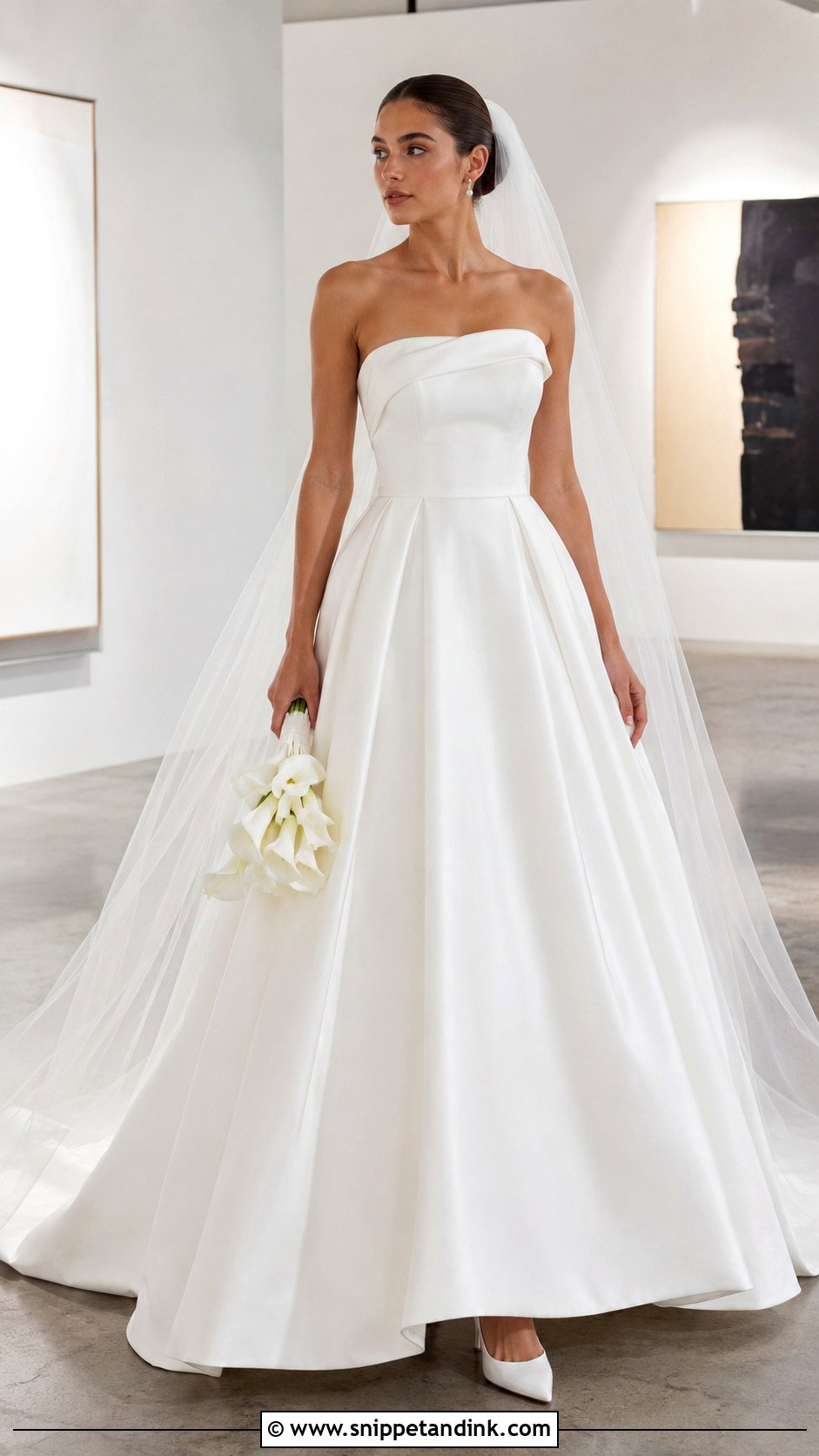
Crisp Mikado fabric is a heavy silk or silk-blend weave that holds a pleat and a sharp neckline better than almost any other bridal fabric. That structure is the appeal and the warning: it shows every fitting flaw, and a strapless Mikado bodice that’s even slightly loose will slide by evening. I ask the seamstress to check the boning channels and whether there’s a waist stay inside, a grosgrain band that anchors the bodice to your body rather than your bust. Keep accessories minimal, a smooth chignon and calla lilies, and let the pleats do the talking.
6. Allure Off-the-Shoulder Lace Gown
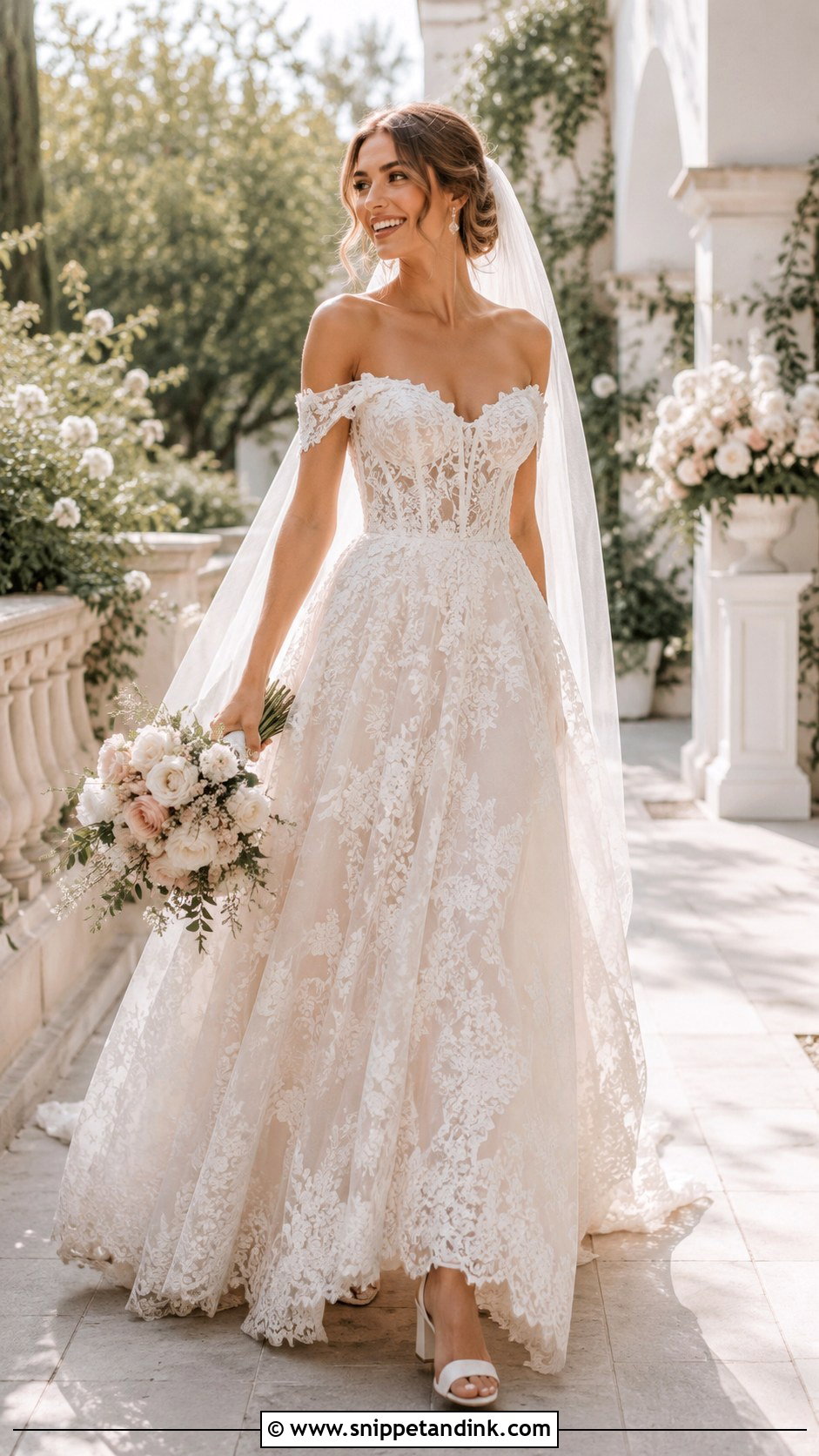
An off-the-shoulder lace bodice frames the collarbone well, but it’s the neckline brides most often regret not testing. The straps sit on the upper arm, so they move every time you lift a glass. A properly built bodice holds the neckline up from the inside, with the straps only resting there. I’d skip this style if you plan to dance hard or carry a heavy bouquet in one arm for a long ceremony. When it fits, keep jewelry fine, add block heels for garden paths and pin the veil beneath a low bun so it doesn’t fight the shoulder line.
7. Allure Minimalist Crepe Wedding Gown
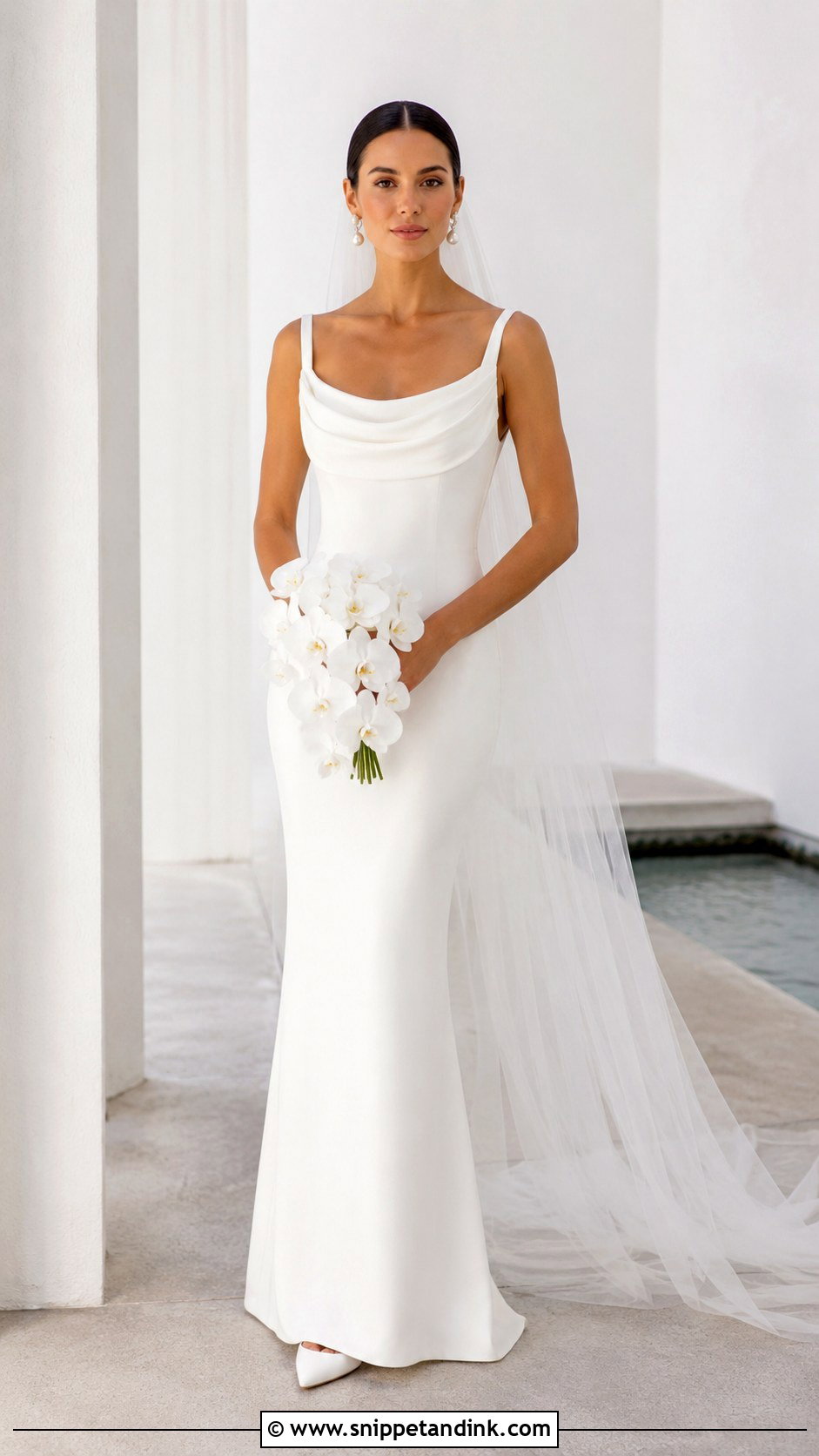
Crepe is the honest fabric: smooth, matte and completely unforgiving of what’s underneath. A column or soft fit-and-flare in crepe shows the body’s line, so the undergarments decide the result more than the dress itself. I plan them before the first alteration, seam-free shorts or a smooth bodysuit in a skin-matched tone, and the bride wears the same pieces to every fitting. A square back or a single precise seam gives the eye somewhere to go. Pointed heels, a long plain veil and a small orchid arrangement suit the modern direction better than a loose garden bouquet.
8. Allure Floral Appliqué Tulle Gown
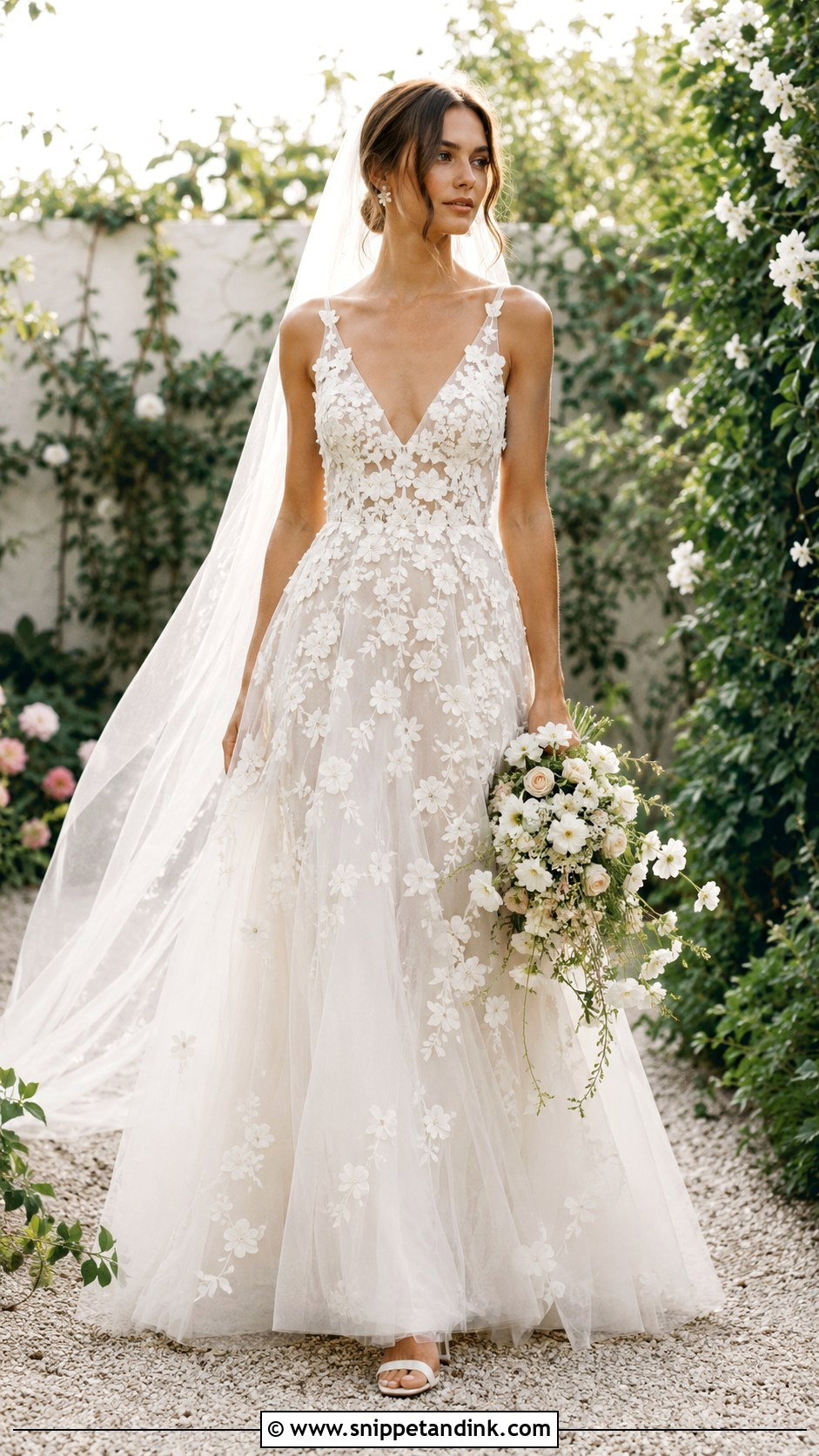
Raised floral appliqués turn a light tulle gown into the detail people lean in to see. Look at the placement in a full mirror, front and back, because flowers that stop abruptly at the hip make a skirt look unfinished. Good appliqué trails down into the skirt and thins out gradually. Tulle is soft but catches on everything: rough bouquet wire, a beaded bag, a groom’s cufflink. I’d keep earrings small, choose a raw-edge veil and pick sandals with a sturdy heel for grass. A bouquet of sweet peas and loose greenery echoes the flowers without copying them.
9. Allure Beaded Fit-and-Flare Gown
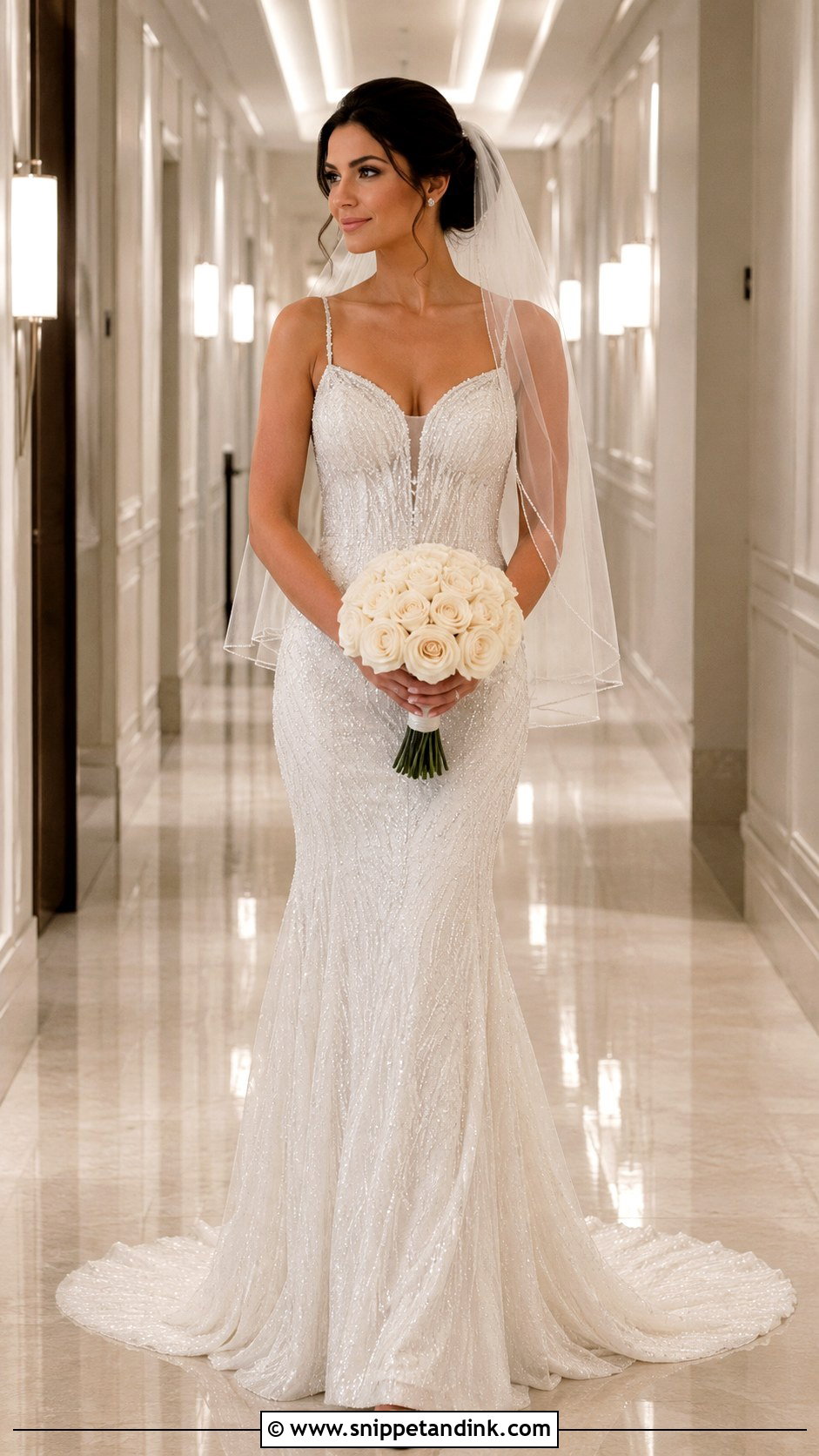
Beaded fit-and-flare gowns are heavier than they look on the hanger, sometimes noticeably so, and that weight hangs from the shoulders and hips for the whole day. Try the gown on for at least ten minutes at the appointment, not two. I check the underarm edge for scratchy beading, since that’s where it rubs raw by the evening, and ask whether the bustle can carry the train without pulling on the beadwork. Balance the sparkle with a plain fingertip veil and simple studs. A necklace on top of a beaded bodice just looks crowded.
10. Allure Sweetheart Neckline Ball Gown
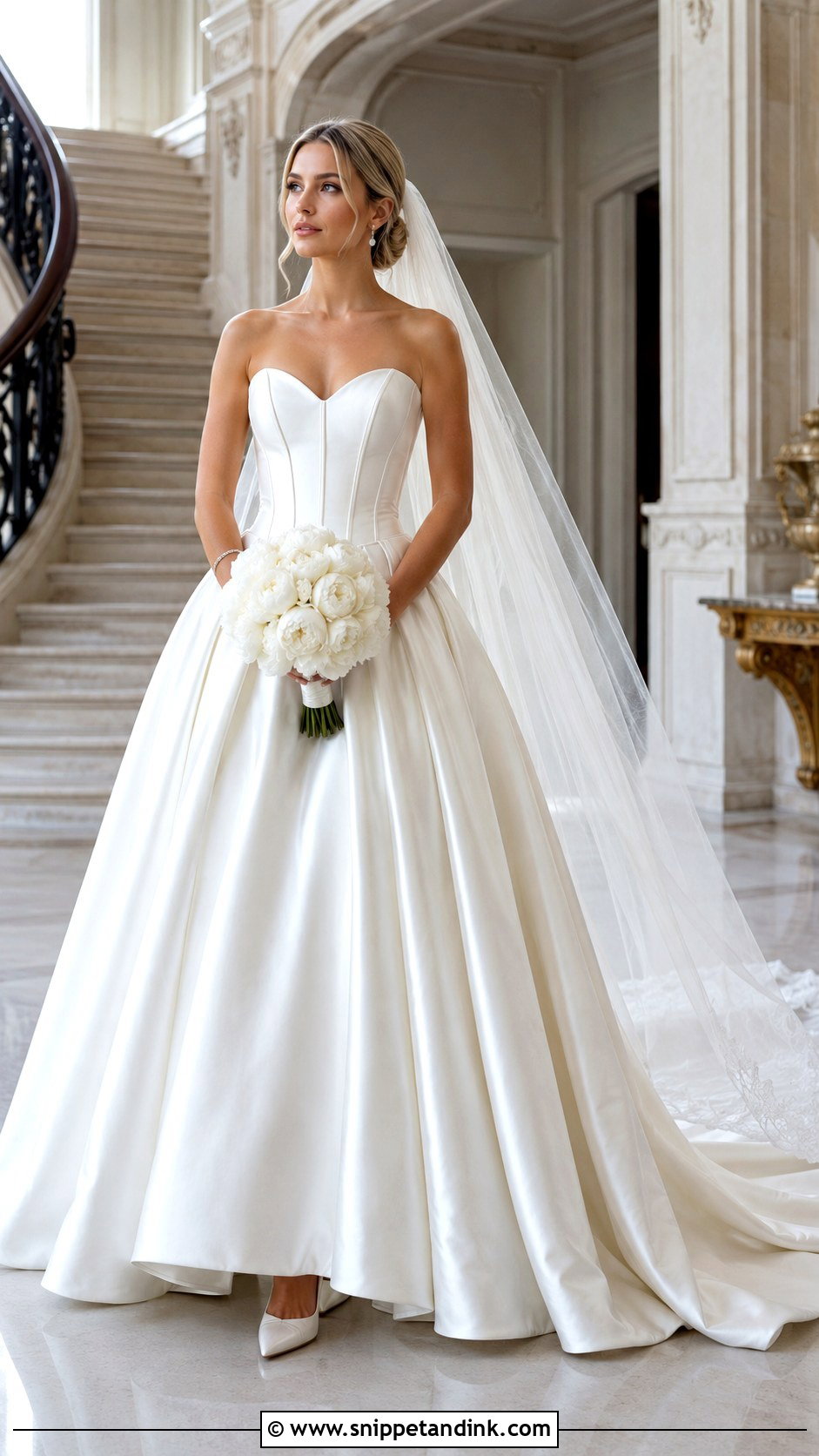
A sweetheart neckline softens the strict geometry of a ball gown, and it suits satin, lace or layered tulle. The curve needs real support underneath, usually a corset-style bodice with boning, so the dips don’t gape when you lean forward to sign the register. That’s my test at fittings: lean, then look down. A cathedral veil, pearl drops and a tennis bracelet are enough jewelry. If you want more coverage for a religious ceremony, detachable straps or sleeves can go on and come off, but have them made from the same fabric lot so the whites match exactly.
11. Allure V-Neck Chiffon Wedding Gown
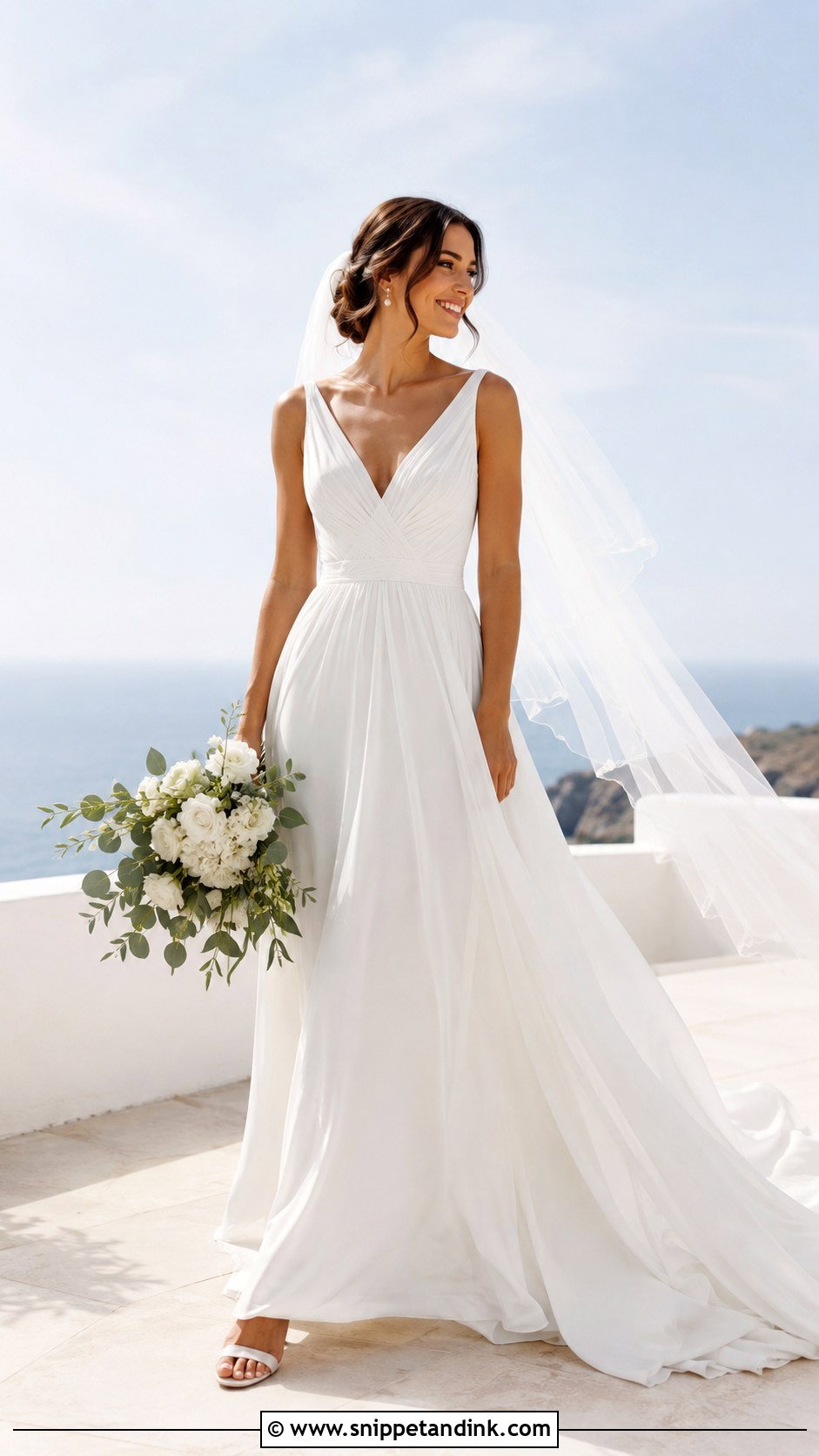
Chiffon is the fabric I’d send to a beach or a hot garden. It’s light, it breathes and it moves in a breeze. That same breeze is the problem, because chiffon and a fingertip veil will both blow across your face in portraits. I ask brides marrying outdoors to stand by an open door at the fitting and watch what the skirt does. A supportive V-neck bodice keeps shape where chiffon alone can’t, and a weighted comb helps the veil sit down. Fine gold or pearl earrings, low block-heel sandals and a loose bouquet suit the relaxed mood.
12. Allure High-Neck Modest Wedding Gown
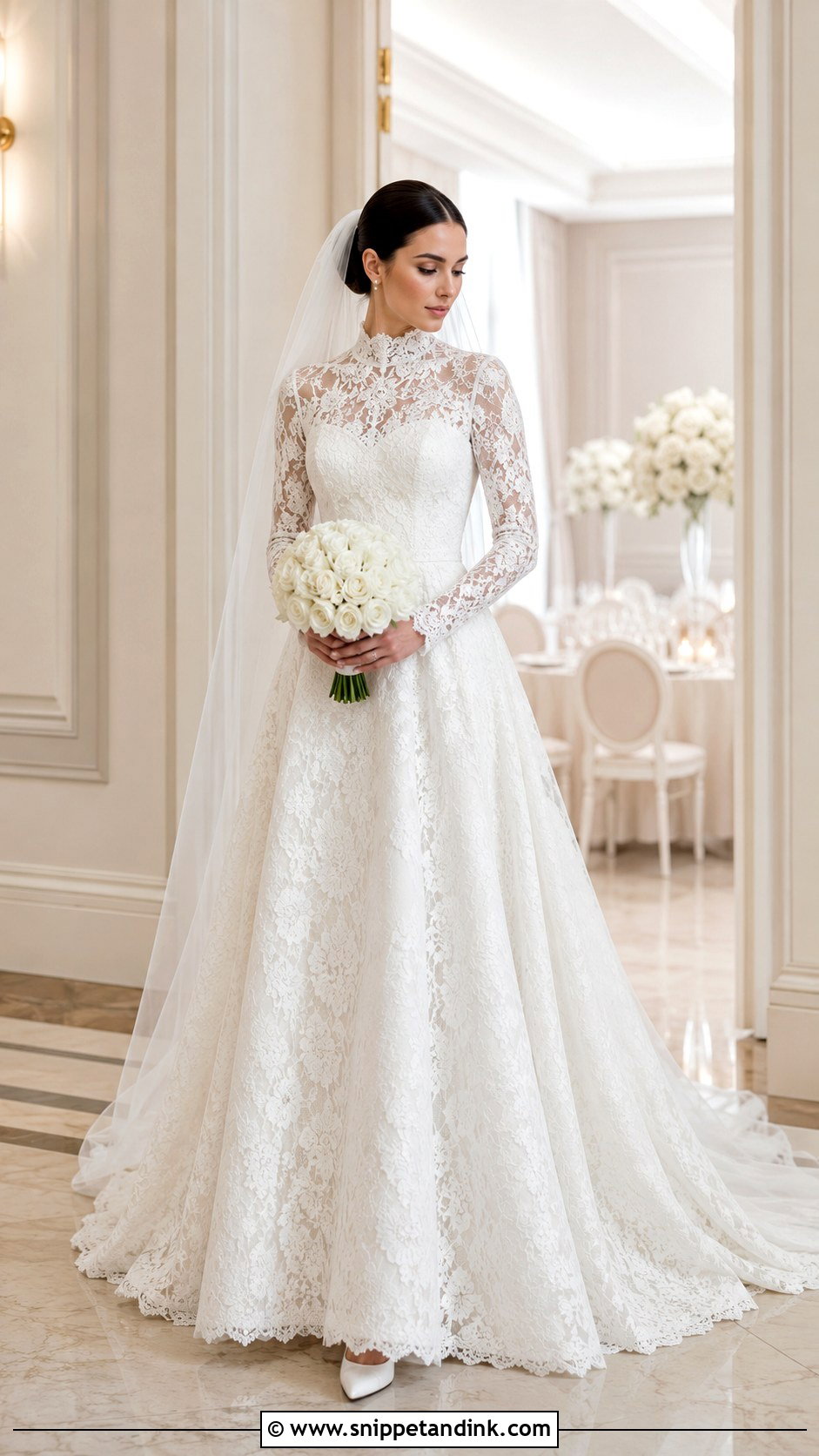
A high neck gives full coverage while still looking current, especially in lace with fitted long sleeves and an A-line or ball-gown skirt. Shape comes from the waist, so the bodice has to be tailored precisely there. The collar is the fiddly part: it should lie flat at the back of the neck when you turn your head, with no gap and no choking. I leave necklaces off entirely with this neckline. A smooth bun and pearl button earrings let the collar frame the face, and a chapel veil sitting below the bun keeps the high back visible.
13. Allure Square-Neck Satin A-Line Gown
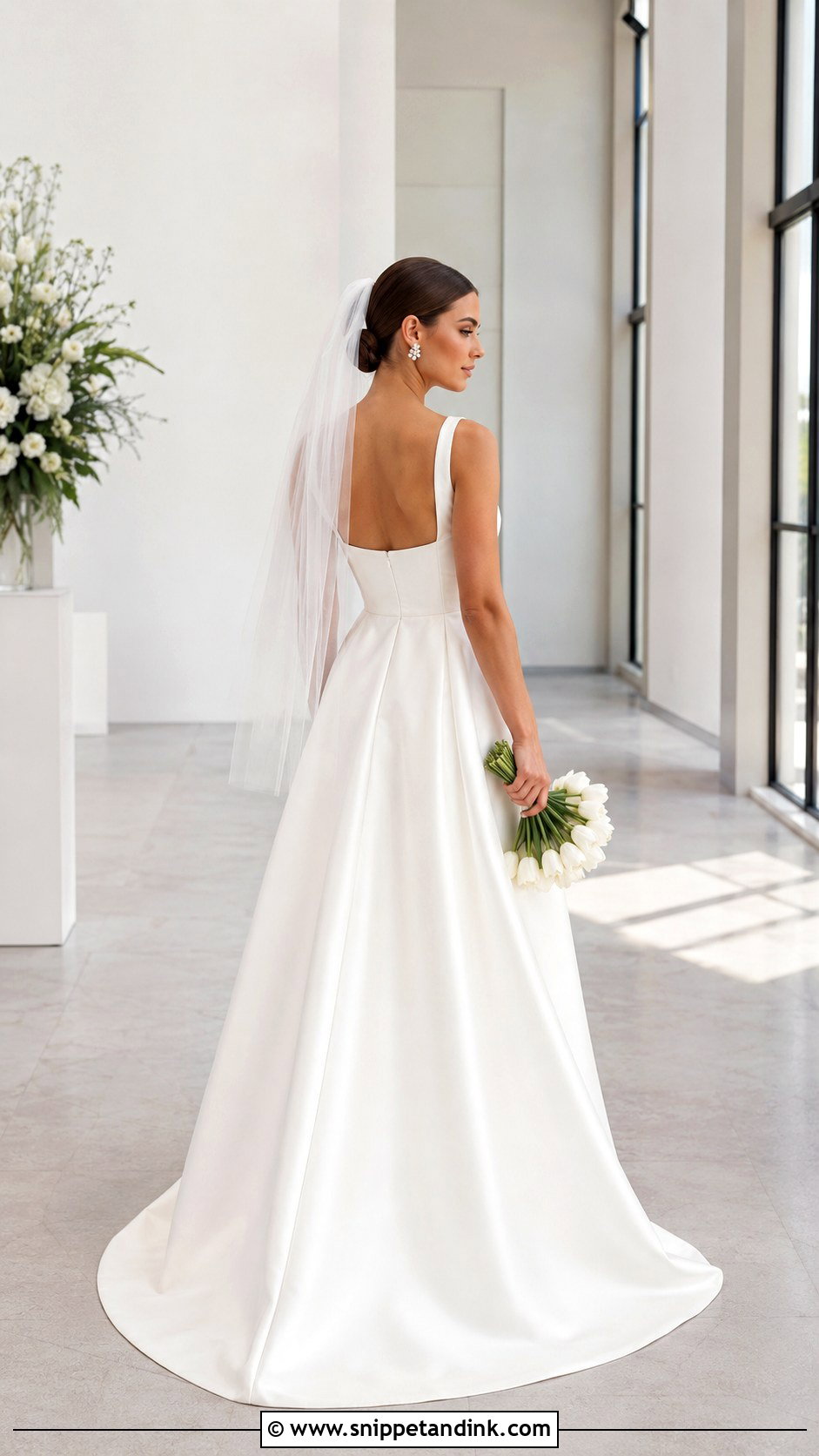
Square-neck satin has clean lines without the size of a full ball gown, and wide straps make it one of the more supportive strapless alternatives. The risk is a neckline that dips at the corners when you sit. That’s an easy alteration if it’s caught early, and an annoying one if it isn’t. I’d ask about adjustable internal cups if the back is cut low. Satin block heels, pearl clusters and a compact bouquet of tulips keep the look uncluttered, and a structured top-handle bag holds the lipstick and the phone you’ll actually need at the reception.
14. Allure Corset Bodice Wedding Gown
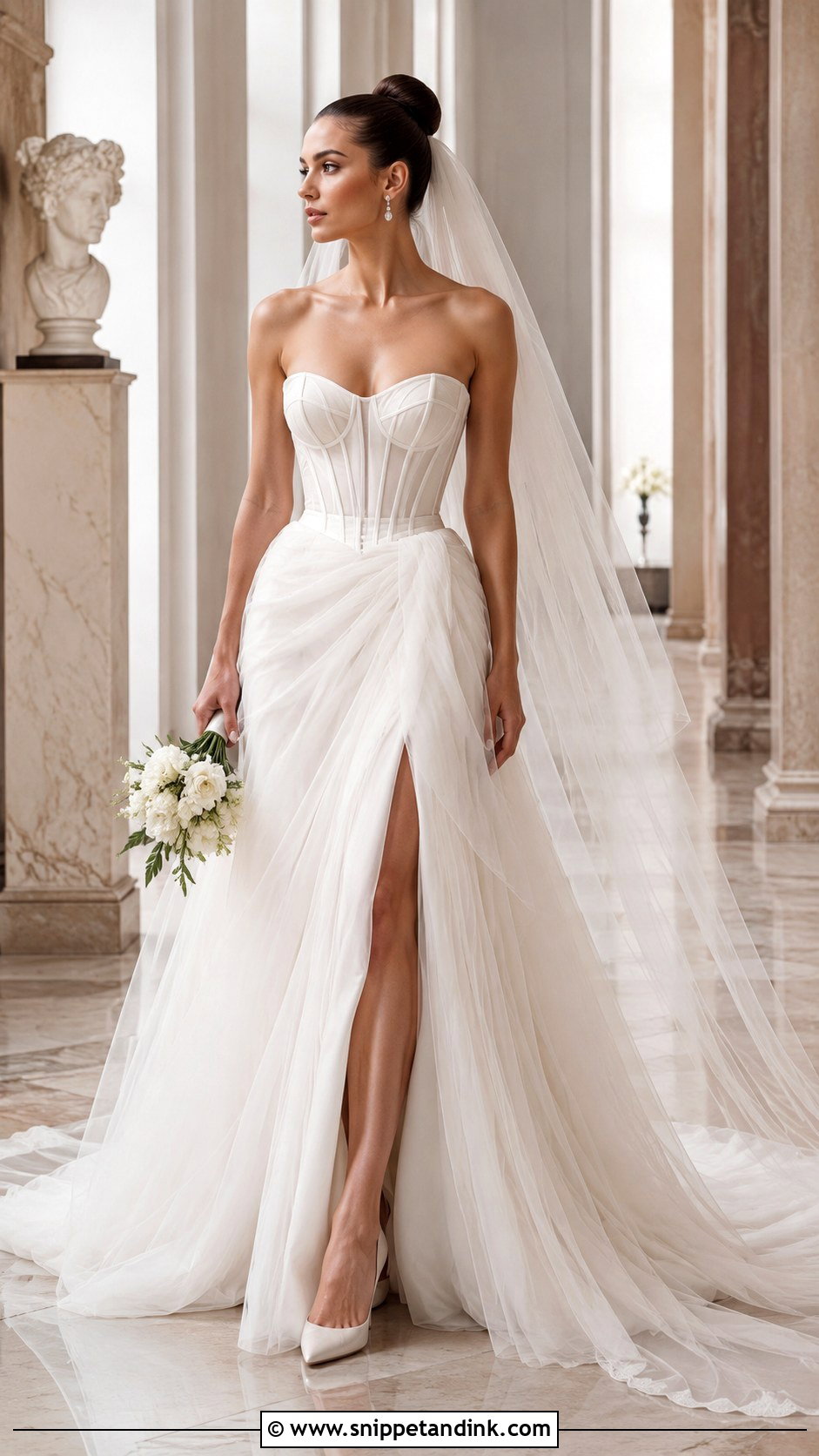
Visible boning makes the structure part of the design, so the bodice doesn’t need much decoration. Paired with a soft tulle or organza skirt, it balances firm and floaty, and a basque waist adds length through the torso. The fit question I care about is where the support comes from. A good corset takes the load at the waist and ribs, so the neckline only rests against the bust instead of pressing on it. Sit, breathe deeply and eat a bite of something at the fitting. If you can’t, it needs letting out. A raw-edge cathedral veil and crystal drops finish it.
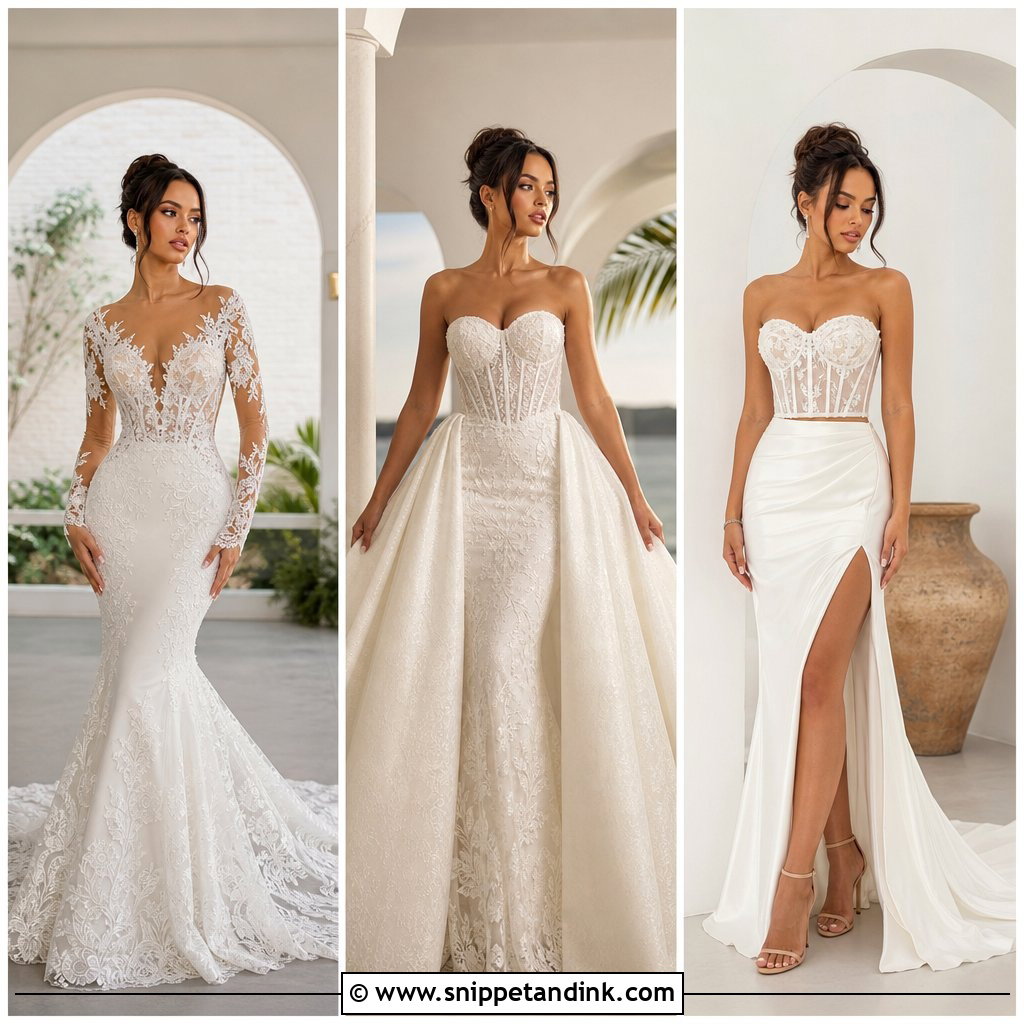

15. Allure Organza Ruffle Wedding Gown
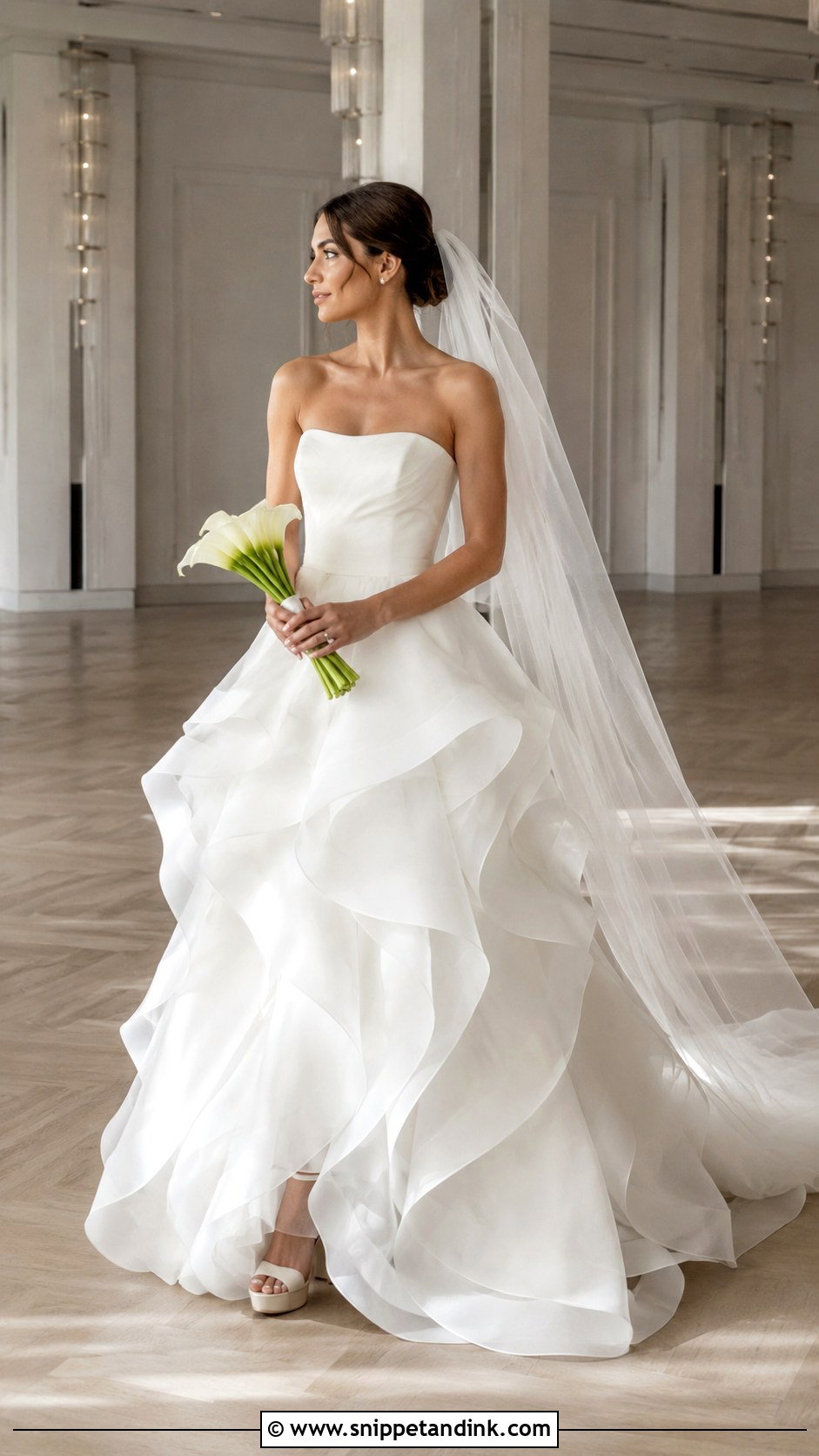
Layers of organza ruffles give big volume without the weight of satin, which makes them easier to carry through a long day. Keep the bodice plain, a strapless top or simple V, or the gown starts to look like it’s wearing you. Organza creases sharply when crushed, so the transport matters: the skirt should travel loosely bagged and hung, never folded into a car boot. I ask the boutique to show the bride’s helper how the bustle works on ruffles specifically, since tiers hide the hooks. Hidden platform sandals and a high bun keep the outline neat.
16. Allure Lace Sheath Gown With Open Back
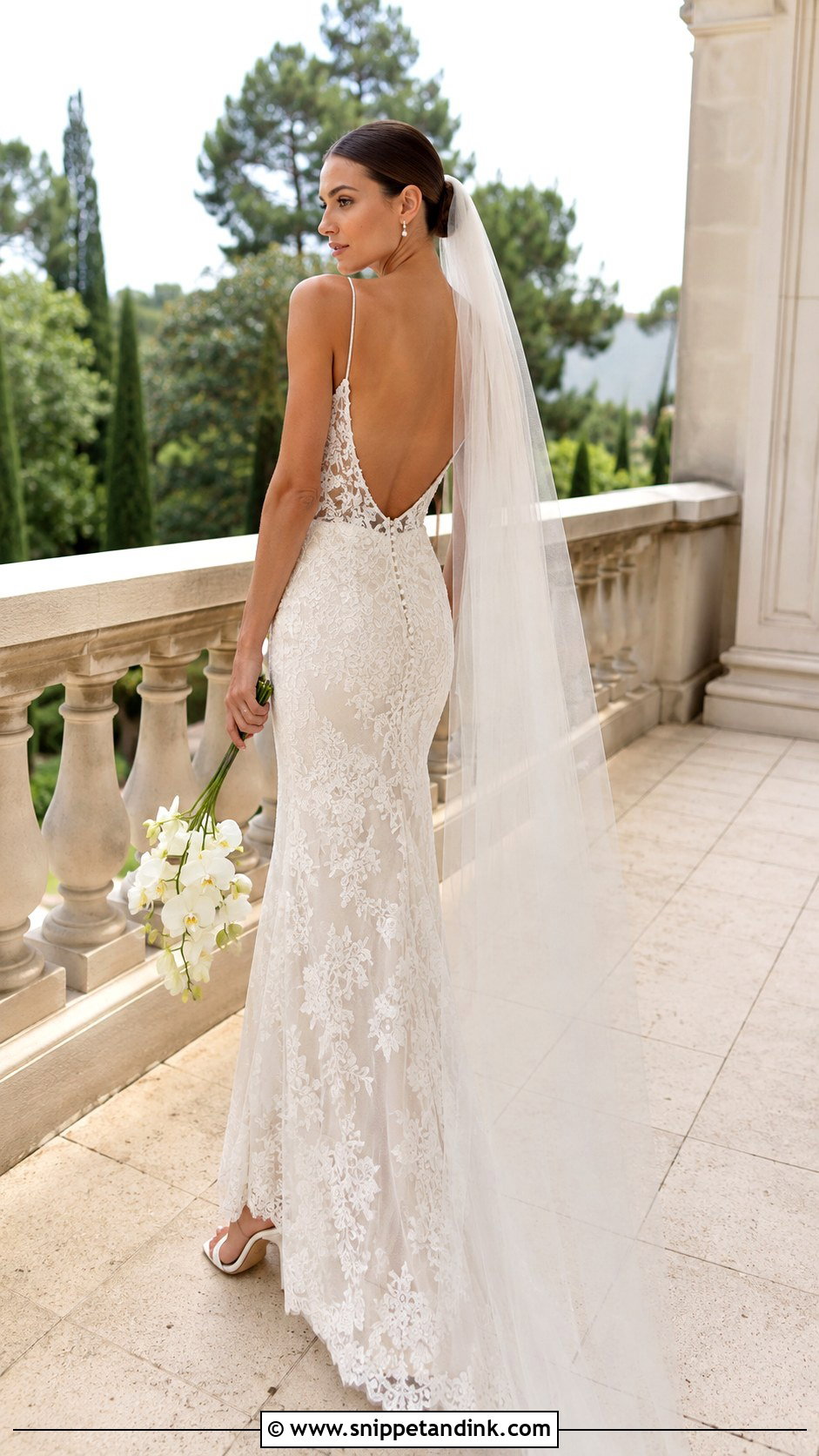
A lace sheath gown follows the body with far less volume than an A-line, and an open back makes the walk away from the guests the moment people notice. The engineering is in the support. With no back band, the bust has to be held by sewn-in cups, fine mesh or a custom-built bodice, and I’d sort that before any other alteration. I watch the back edges when the bride sits and reaches: they should stay flat against the skin. Set the veil below a textured updo so the back still shows.
17. Allure Pearl Embellished Wedding Gown
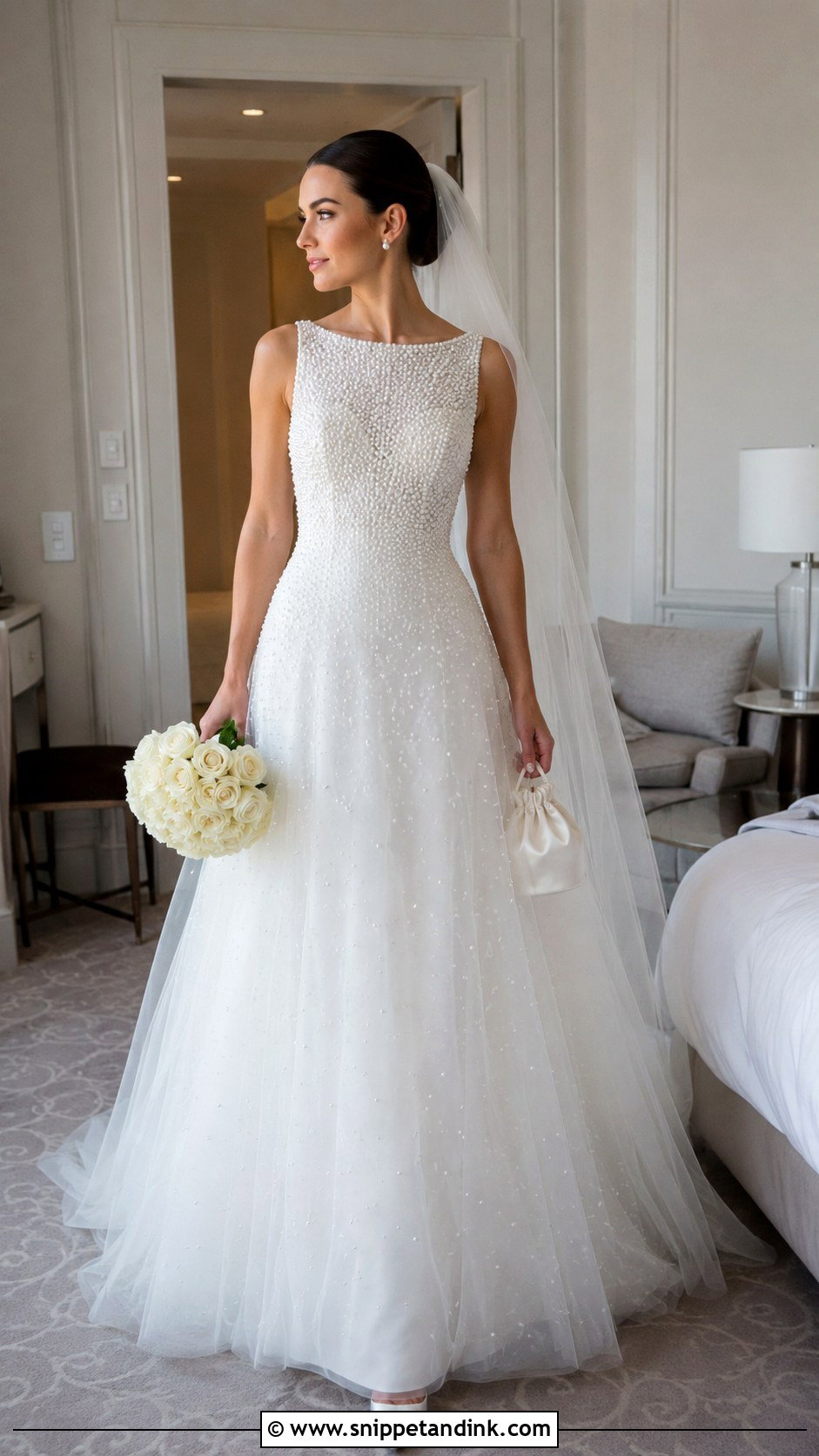
Pearls give a soft glow rather than sparkle, which suits daytime ceremonies and low light alike. They can cover a sheer bodice, trace the lace or scatter thinly across tulle. Sewn pearls are hard little beads, and on straps or sleeves they press into the underarm after a few hours, so I check that spot first and ask for a soft lining behind them if needed. Keep the rest plain: pearl studs, satin pumps and a veil with no extra beading. A textured bag will snag on the embellishment, so carry a smooth satin pouch instead.
18. Allure Detachable Sleeve Wedding Gown
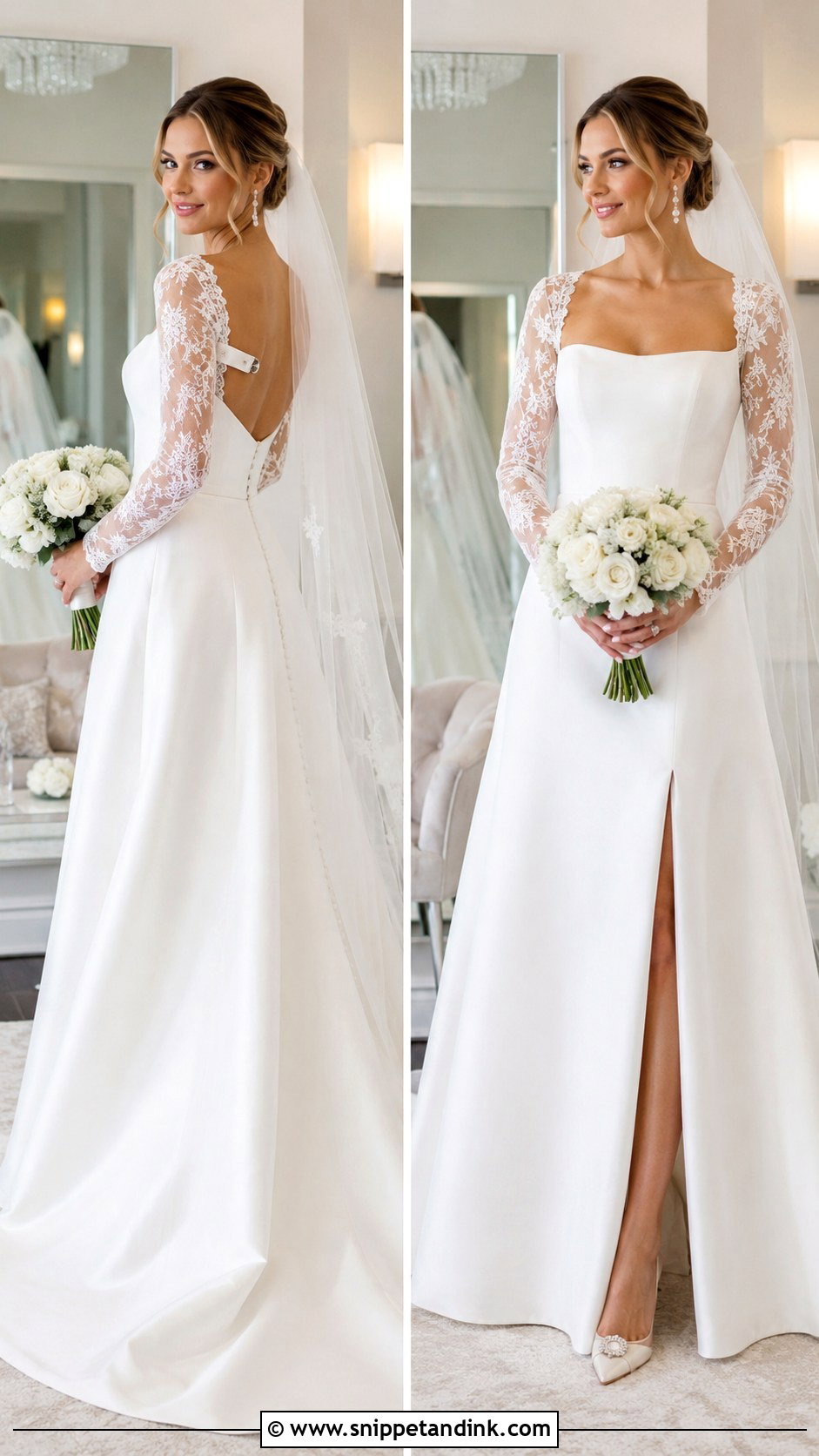
Detachable sleeves let you change the gown’s mood without buying a second dress. Fitted lace, puffed tulle or draped off-the-shoulder pieces for the ceremony, then a clean strapless look for the party. The fastenings decide whether this works. Snaps and hooks should sit under the bodice edge where nobody sees them, and someone other than the bride should practise the change before the day. I time it at the last fitting: it ought to take a few minutes and never need the dress unzipped. A low bun keeps the neckline visible in both versions.
19. Allure Bow Back Satin Wedding Gown
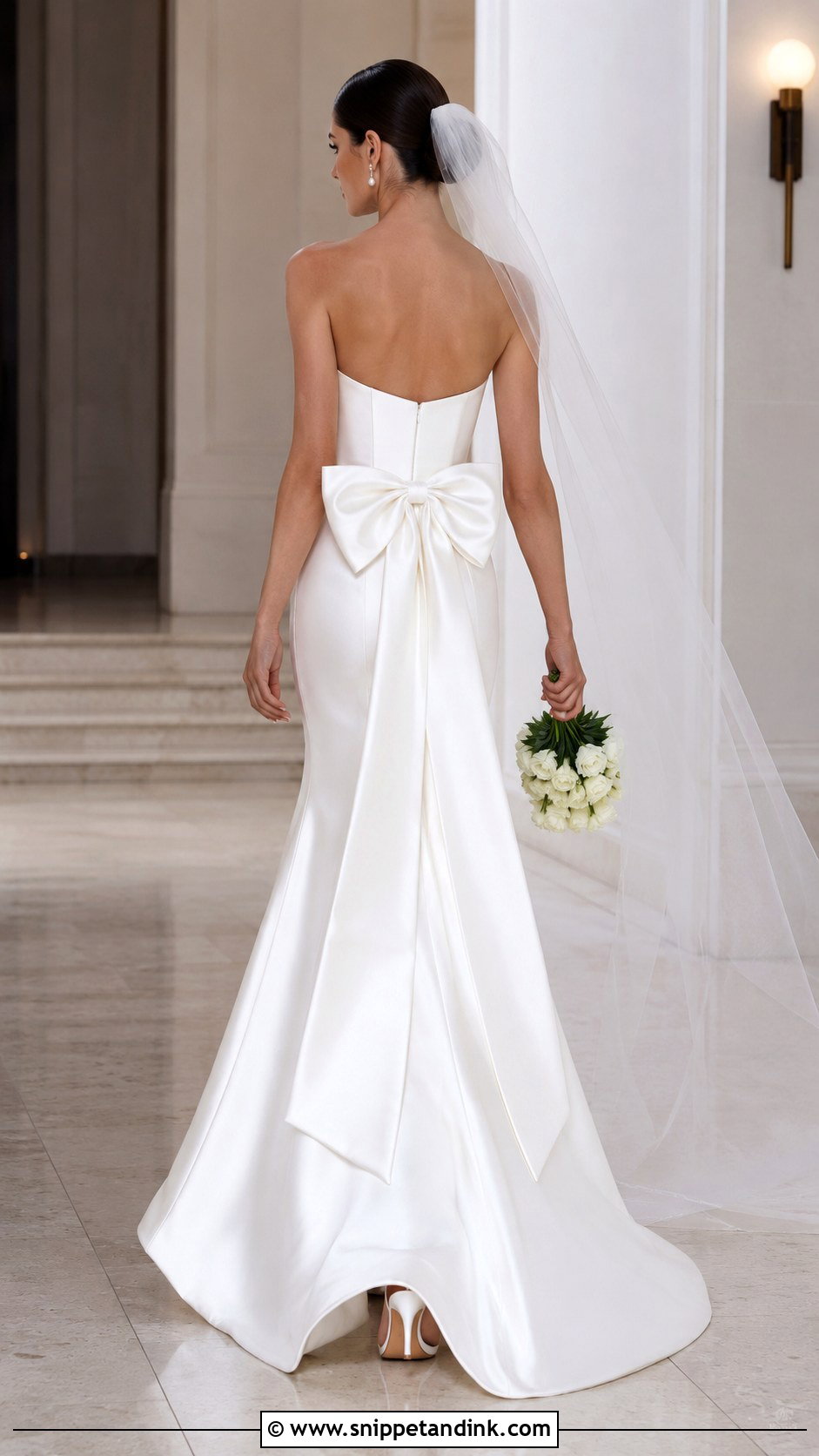
A bow-back satin gown keeps the front simple and puts all the drama on the back. The bow may sit at the waist, trail into long tails or come off for the reception. Big satin bows are heavy, and I check that the weight doesn’t drag the waistline down at the back, which shows as a dip in side profile photos. The loops crush in transit, so they need steaming on the morning, filled out from the inside. A sheer veil that doesn’t hide the bow, pearl earrings and a neat low bun finish it.


20. Allure Colorful Floral Wedding Gown
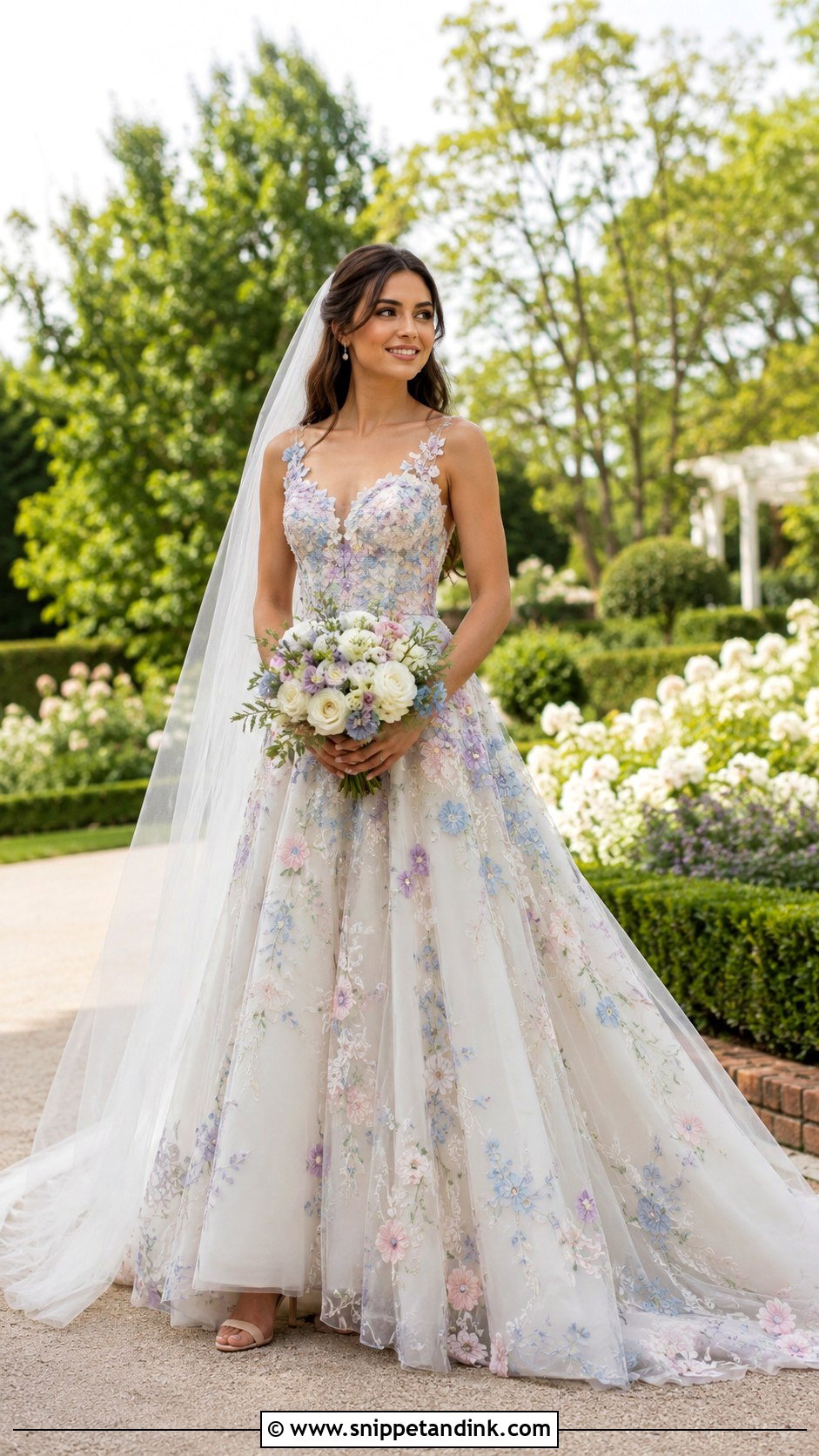
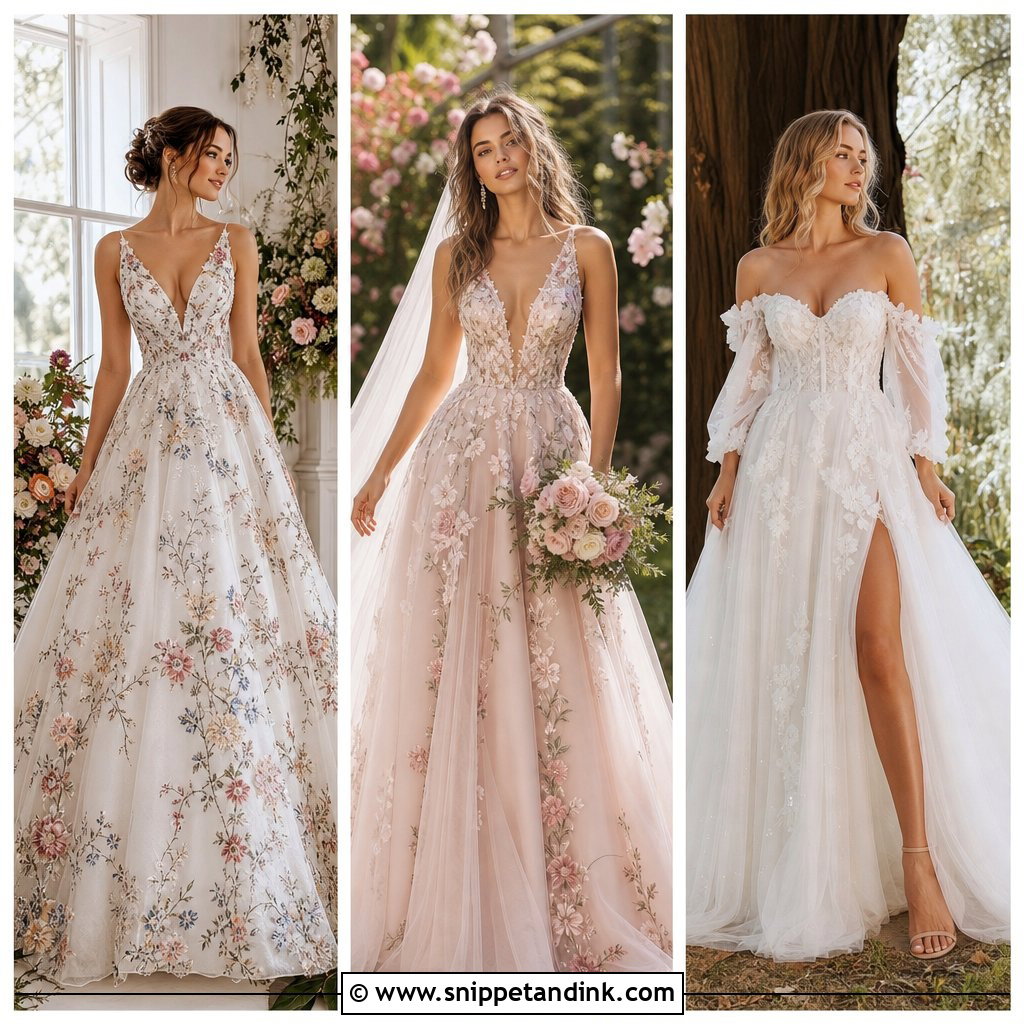
Colour on a wedding gown is a personal decision, and a floral design with blue, blush or lavender appliqués over ivory still reads as bridal. An A-line skirt gives the pattern room to spread out. The surprise is how thread colours shift between boutique lighting, daylight and a camera’s flash, so I always ask to see the gown by a window before ordering. Echo one of the flower shades in your earrings rather than matching them all. Keep the bouquet restrained and the veil plain ivory, or the eye has nowhere to rest.
Bustles and Removable Pieces on the Night
Half the gowns here have something that changes during the day: an overskirt, sleeves, a bow or a long train that has to come up for dancing. That change happens in a hurry, often in a corridor, so it has to be simple for whoever is helping.
Over or under
An over bustle hooks the train up onto the back of the skirt and shows a gathered swag. An under bustle tucks the train beneath, using ribbons that are tied in a sequence. Heavy satin and Mikado usually need several pickup points to spread the weight. Lace and tulle can often manage with fewer. I ask the seamstress to number or colour-code the ribbons, because ribbon ties are where helpers get muddled.
Who does it
Pick one person to come to your final fitting and learn the bustle and any detachable pieces there. Have them do it twice while you stand still. A mother or a bridesmaid who has practised once will do it in a couple of minutes, while someone seeing the hooks for the first time can take a quarter of an hour.
Steaming Satin, Organza and Crepe the Morning Of
Every gown arrives at the venue with creases from the bag. How you treat them depends on the fabric, and getting it wrong is hard to undo on the morning.
- Satin and Mikado: steam from the inside or from a hand’s width away. Drips of water can leave marks on silk satin, so empty the steamer’s first burst into a towel.
- Organza and tulle: hang the gown in a steamy bathroom for twenty minutes first, then touch up the worst creases. Organza can scorch, so never press it with an iron.
- Crepe: steam lightly and let it hang, because pressing leaves shiny marks on matte crepe.
- Lace and beading: steam the lining underneath, not the beads, which can loosen if the threads get hot and wet.
Hang the gown at full length as soon as you reach the venue, with the train off the floor. A door frame or a tall hook works. Then leave it alone until you dress. The less it’s handled, the better it looks when you walk out.
Let the Fabric Settle the Rest of the Outfit
Twenty gowns, and the fabric settles more of the decision than the neckline does. Satin and Mikado give structure and need a strong bodice underneath. Lace and tulle move and forgive, chiffon breathes in heat, and crepe shows everything. Bring your actual shoes and undergarments to every fitting, test each removable piece yourself and look at the back in a full mirror. The right gown is the one you forget you’re wearing by the speeches, which tells you it fits and still looks like you.
You'll Like These Ideas:












Leave a Reply