
Most brides I dress arrive with a saved folder of gowns that have almost nothing in common, and that’s normal. The work is spotting the details you keep coming back to: a neckline, a fabric, the way a skirt leaves the hip. Below are 25 bridal looks, from structured satin and lace sleeves to beach chiffon, courthouse midis and a lighter dress for the party. I’ve styled each one as a full outfit, because a gown only reads properly once the veil, shoes, hair and flowers agree with it. Use the list to find your own pattern, then take that pattern into the fitting room.
What I’m Watching While You Try Gowns On
At an appointment, I’m not only looking at how a gown hangs while you stand still. I’m watching your shoulders when you reach, the bodice when you sit and the hem when you take a step. Most of the problems brides discover on the wedding day were visible in the fitting room, if someone had asked them to move.
- Sit down in every finalist. A bodice that gapes or digs in when you sit will do it all through dinner.
- Raise both arms as if hugging someone taller than you. Off shoulder necklines and fitted lace sleeves show their limits straight away.
- Wear shoes close to your wedding heel height. The hem is cut to the shoe, so changing heels later means another alteration.
- Settle the shape before the detail. Beading, bows and lace are easy to fall for on a silhouette that doesn’t suit you.
How long ordering and alterations really take
Made-to-order gowns commonly take several months to arrive, often four to six and sometimes longer, so I suggest ordering eight to ten months out when you can. Alterations usually run over two or three fittings, starting roughly two to three months before the date, with the last one a couple of weeks out in your actual underwear and shoes. Every designer and seamstress works to different dates, so ask both for theirs before you sign anything.
1. Satin A Line Wedding Dress
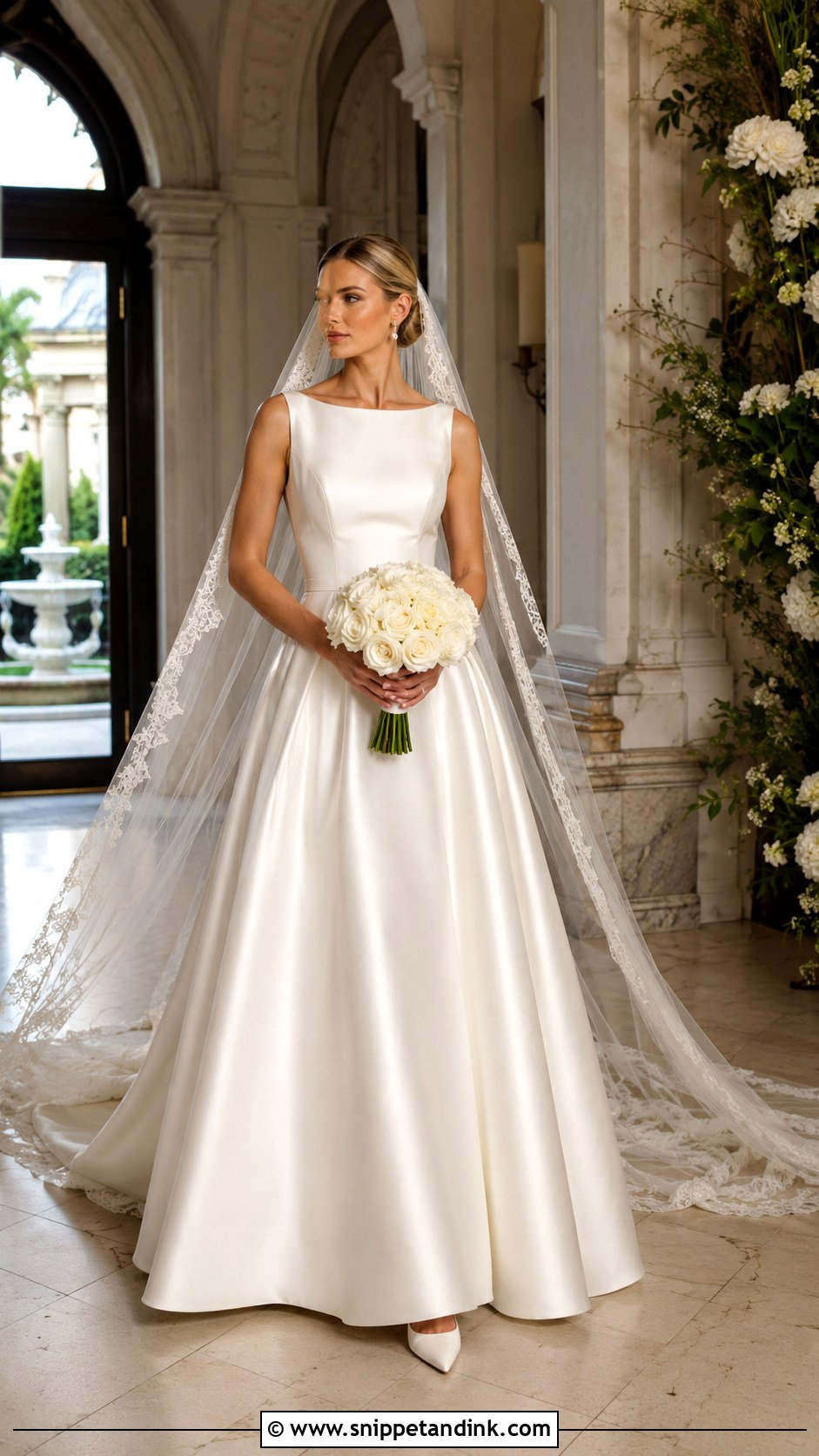
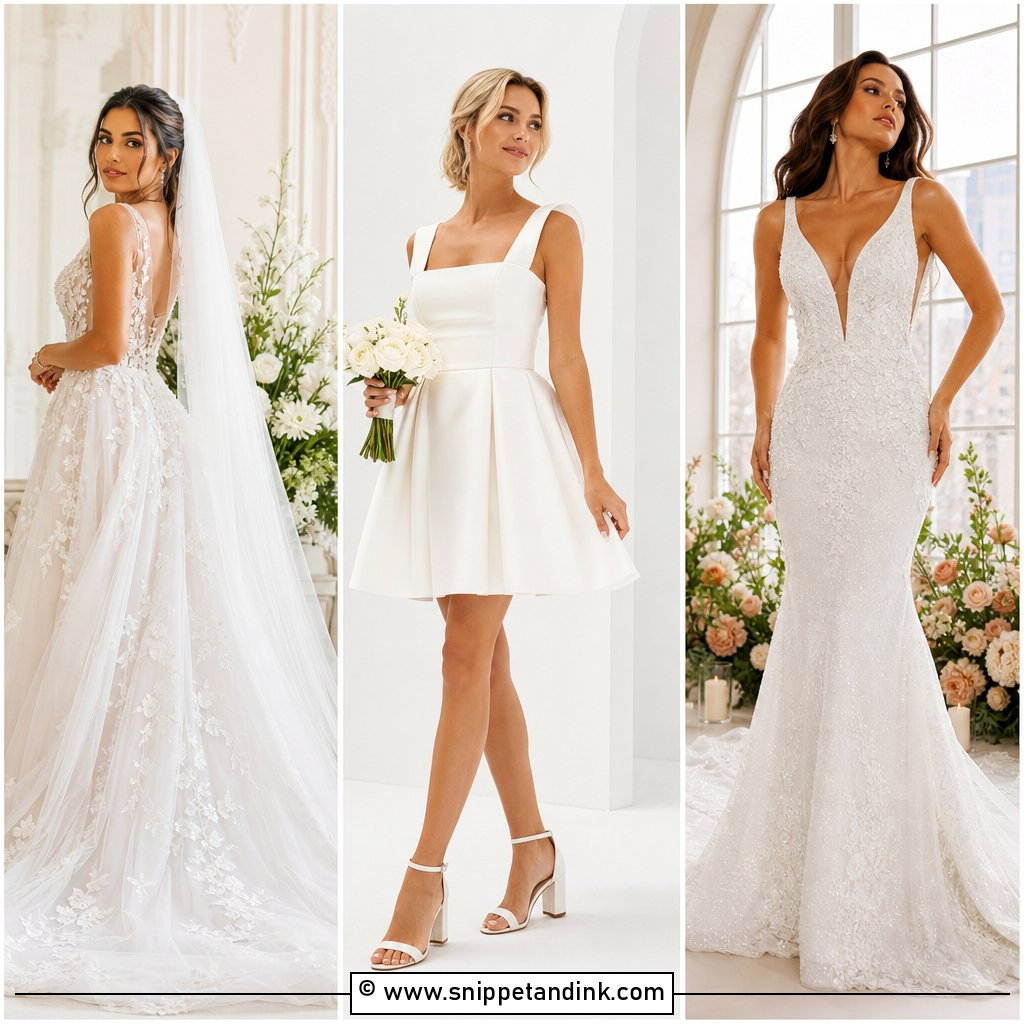
Satin A lines are the gowns I reach for when a bride wants structure without a heavy skirt. The bodice does the shaping at the waist and the skirt falls away from the hip, so the shape forgives a lot. What satin won’t forgive is sitting: an hour in a car or a long dinner leaves creases across the lap, so I always have it steamed at the venue rather than at home. Ivory is the classic shade, while champagne satin warms fair and olive skin under evening light. A cathedral veil, pearl earrings, pointed heels and a neat low bun keep it formal for a ballroom, and a simple bouquet of white roses or calla lilies lets the sheen stay the focus.
2. Lace Long Sleeve Wedding Dress
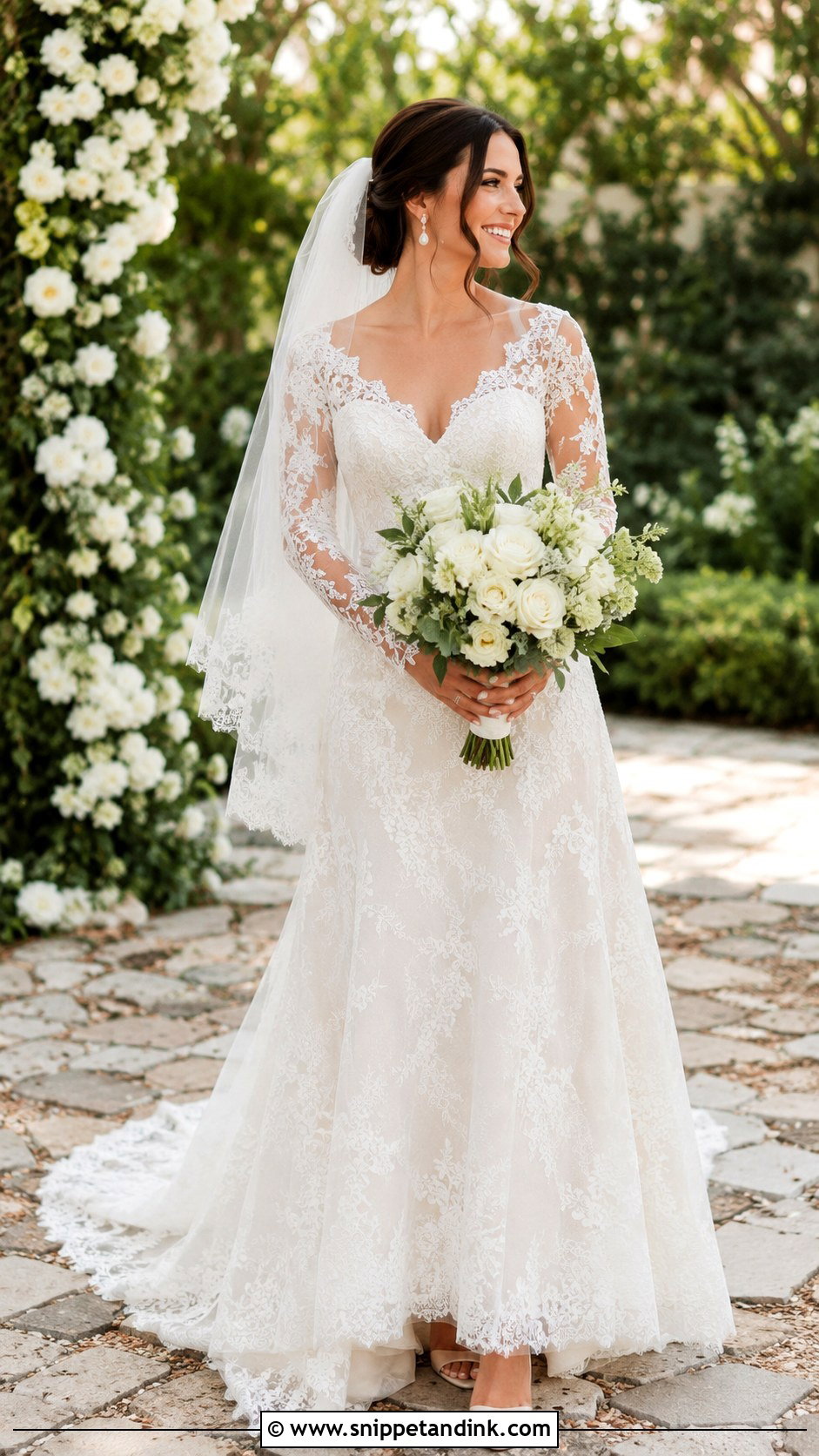
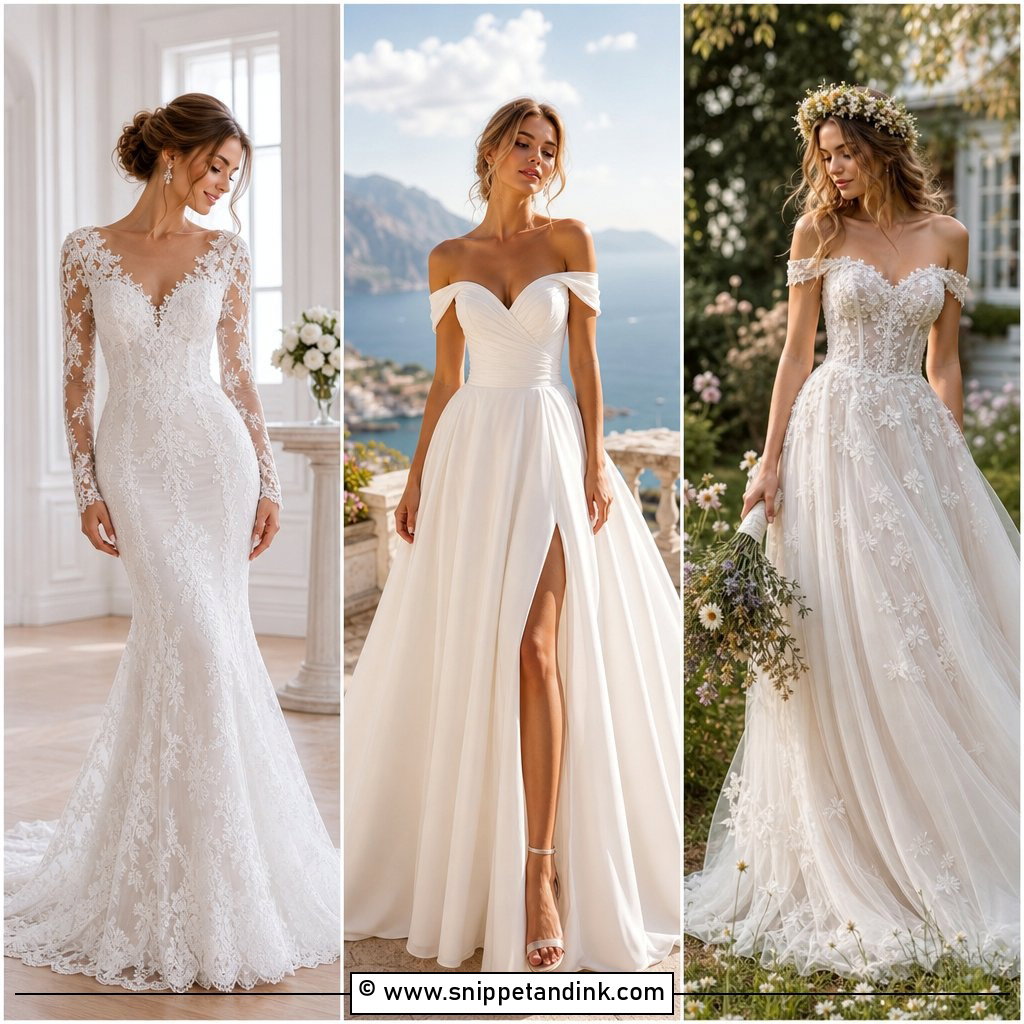
Lace sleeves are where I spend the most time at fittings. A sleeve cut close to the arm looks sleek standing still, but if it’s tight through the upper arm you can’t hug anyone or lift a glass, so I ask brides to reach forward and overhead before anything is pinned. Sheer lace over a fitted bodice with a soft A line or sheath skirt gives coverage without weight, and the texture shows clearly in photos. I’d style it with pearl drops, a fingertip veil and soft waves or a tucked chignon, plus nude or ivory heels. It suits fall weddings and estate gardens, though on a hot afternoon a lined lace sleeve gets warm fast, so ask whether the sleeves can be left sheer.
3. Off Shoulder Wedding Dress
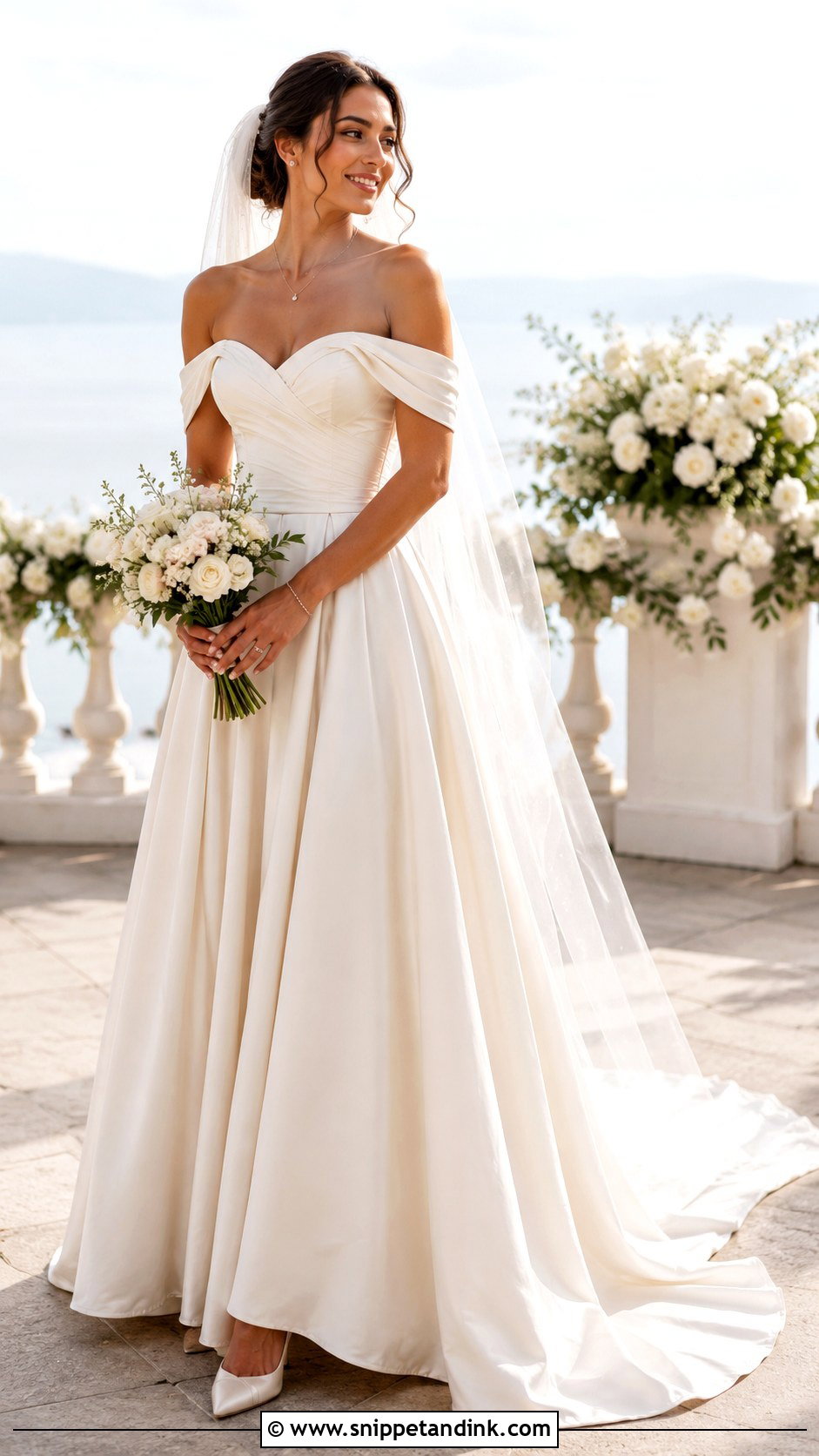
The off shoulder line frames the collarbones, which is why it flatters so many brides. It has one practical catch: the straps sit on the upper arm, so lifting your arms high is limited, and I test that by having a bride mime a bouquet toss. With a fitted bodice and a flowing skirt in smooth satin or crepe, the silhouette stays balanced. A delicate necklace or just pearl studs, a long veil and hair swept back keep the neckline clear. Ivory block heels cope with lawns at outdoor ceremonies; classic pumps suit a formal reception.
4. Strapless Ball Gown Wedding Dress
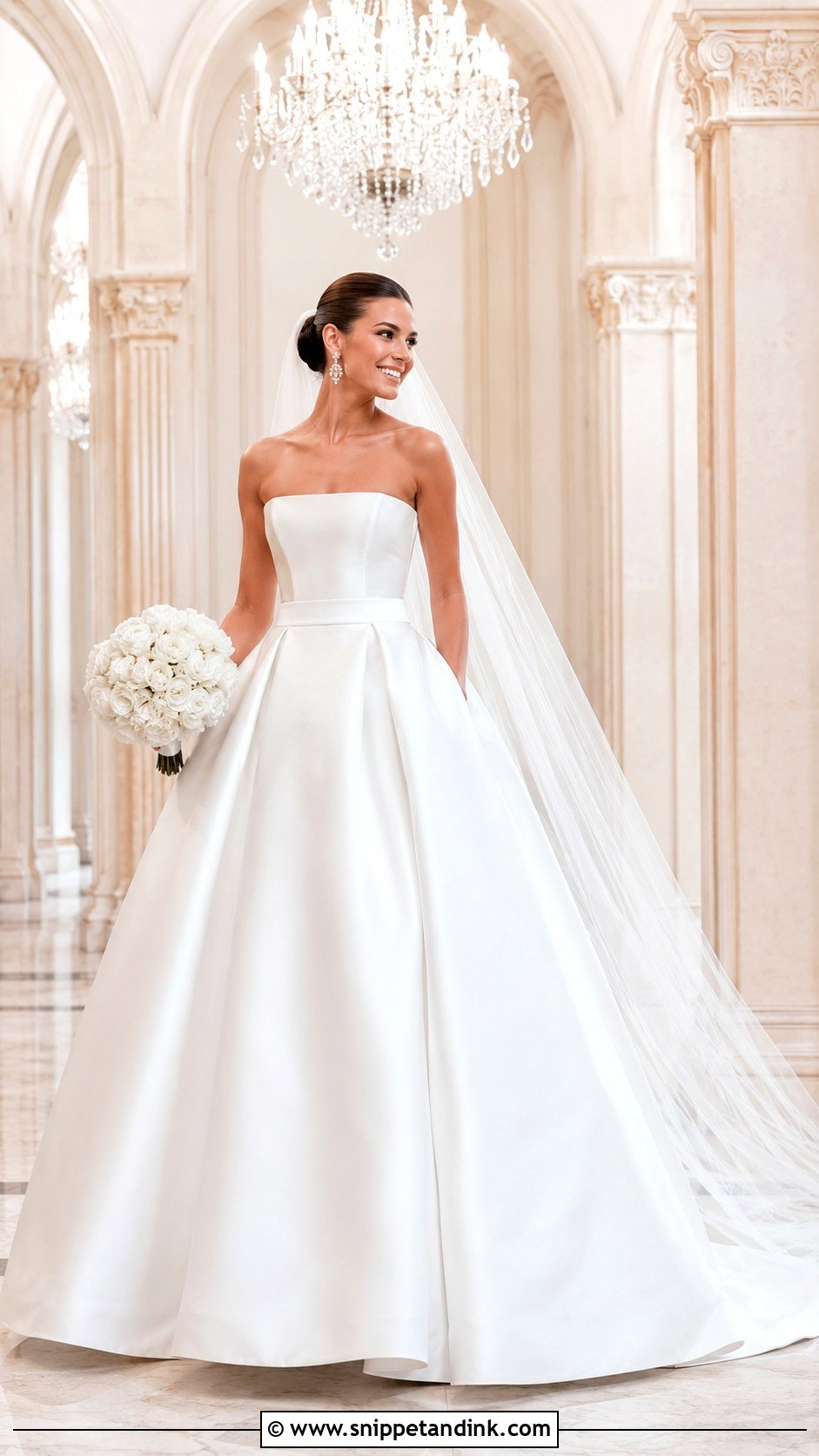
A strapless ball gown wedding dress is the entrance gown, and I’m honest with brides about what it asks of them. A strapless bodice stays up because of internal boning and a snug waist, not because of the bust, so the final fitting has to be close; if it’s loose, you’ll be hitching it up all night. Mikado holds a crisp shape, satin softens it, and layered tulle makes it lighter to carry. Keep the styling quiet with a simple veil, crystal earrings and a polished updo. Platform heels or embellished pumps hidden under the skirt are fine, but remember the hem is set to that exact heel height. Save this one for large venues and black-tie rooms where the skirt has space to move.
5. Minimalist Crepe Wedding Dress
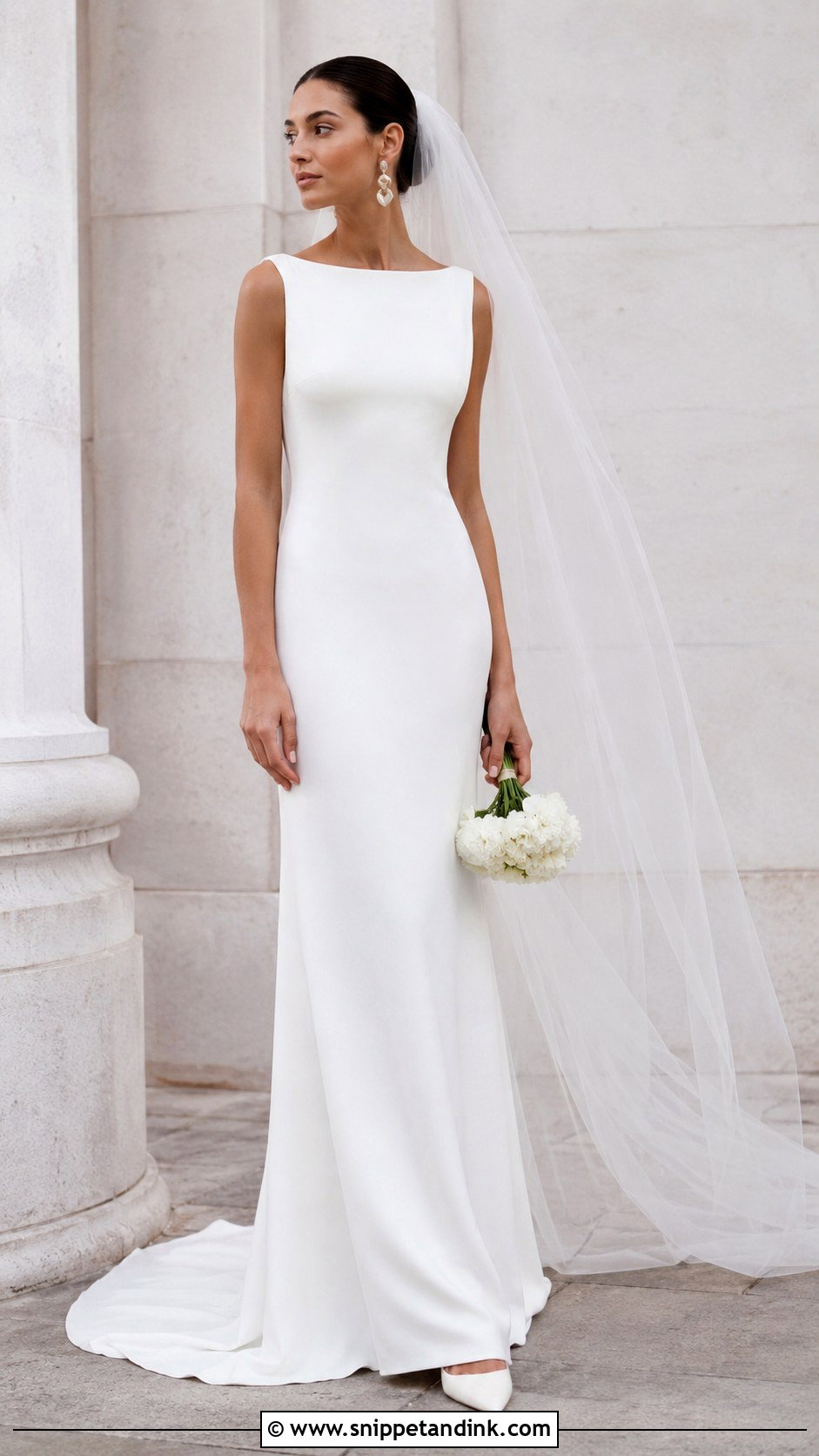
Crepe is the fabric I suggest when a bride wants nothing to distract from the cut. It has a matte surface and enough weight to drape close to the body. That same honesty means it shows underwear lines and uneven seams, so the right shapewear and a careful fit through the hip matter more here than with any embellished gown. A square, bateau or scoop neckline suits it. Pair it with a sleek bun, sculptural earrings, a plain veil, pointed ivory heels and a single stem for city venues and courthouse ceremonies.
6. Pearl Embellished Wedding Dress
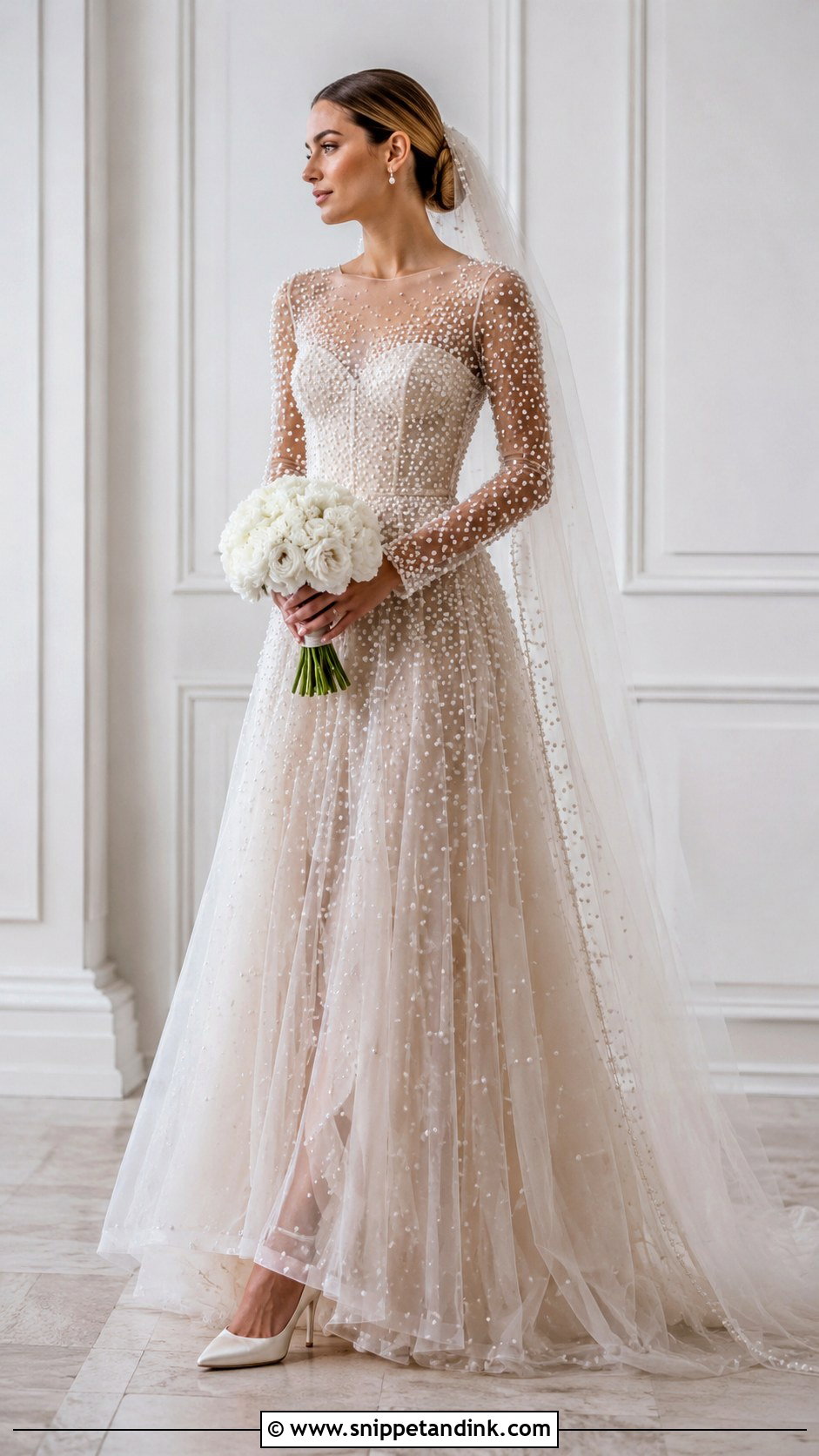
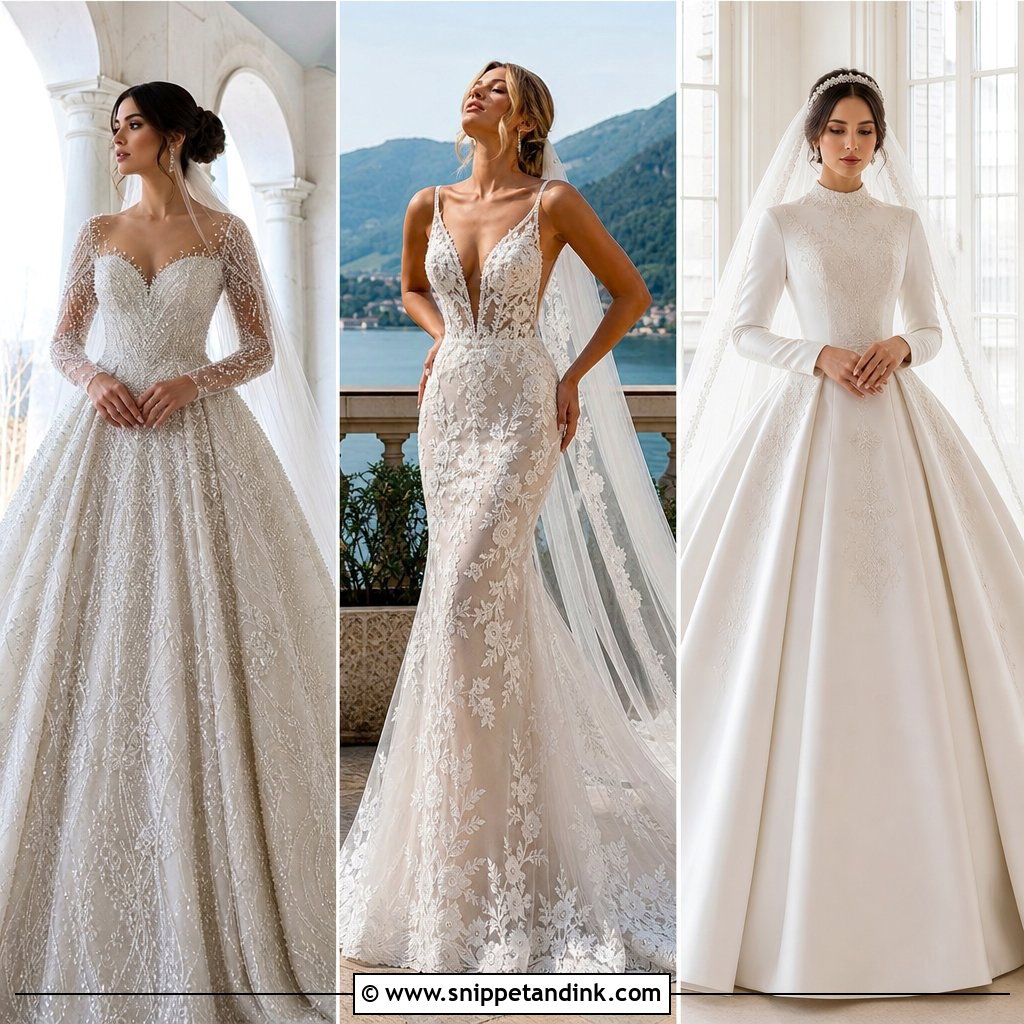
Pearl scattering on tulle, lace or sheer sleeves gives a soft glow rather than sparkle, which is why I like it for daytime. Before ordering, I check how the pearls are attached. Individually stitched pearls survive a long day, while glued ones can pop off where the sleeve rubs the bodice or the bouquet. A fitted bodice with a flowing skirt keeps it romantic; a slim sheath makes it more modern. Pearl earrings, satin heels and a veil with subtle pearl edging tie it together. Keep the hair clean, a low bun or soft half-up waves, so it doesn’t fight the texture in a garden or at a candlelit reception.
7. Corset Wedding Dress
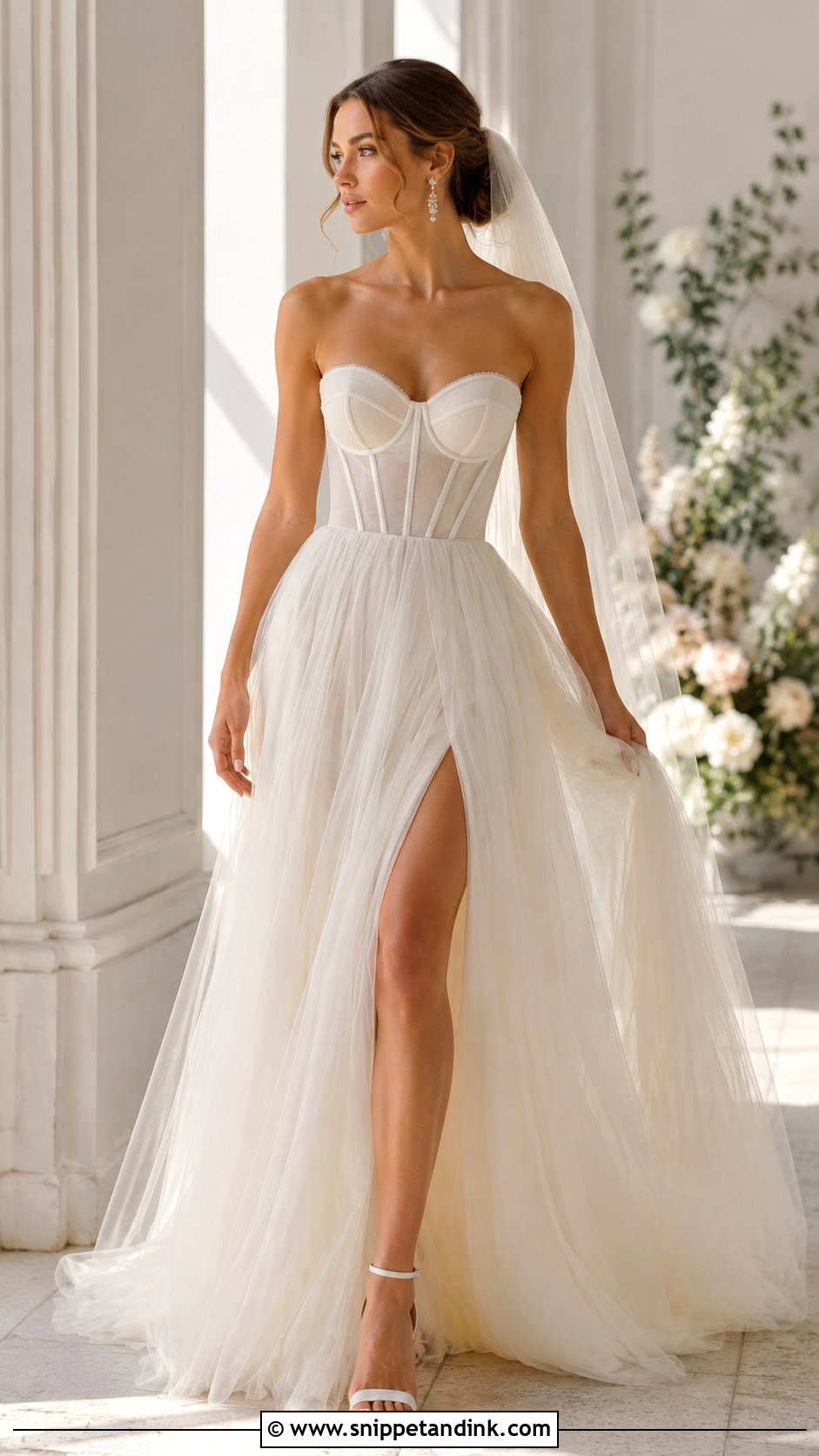
A corset wedding dress does a lot of the shaping for you, but only if it’s built properly. I look for real boning and a firm waist stay inside; a decorative corset wrinkles across the stomach the first time you sit. Exposed boning over a full skirt reads romantic, and a smooth corset bodice with a clean column skirt reads modern, with tulle, satin, lace or crepe below. Drop earrings, a simple veil and elegant heels are enough, with hair in soft waves or a polished bun. If you’ve never worn boning for a full day, sit in the gown for a while at a fitting before you decide.
8. Floral Embroidery Wedding Dress
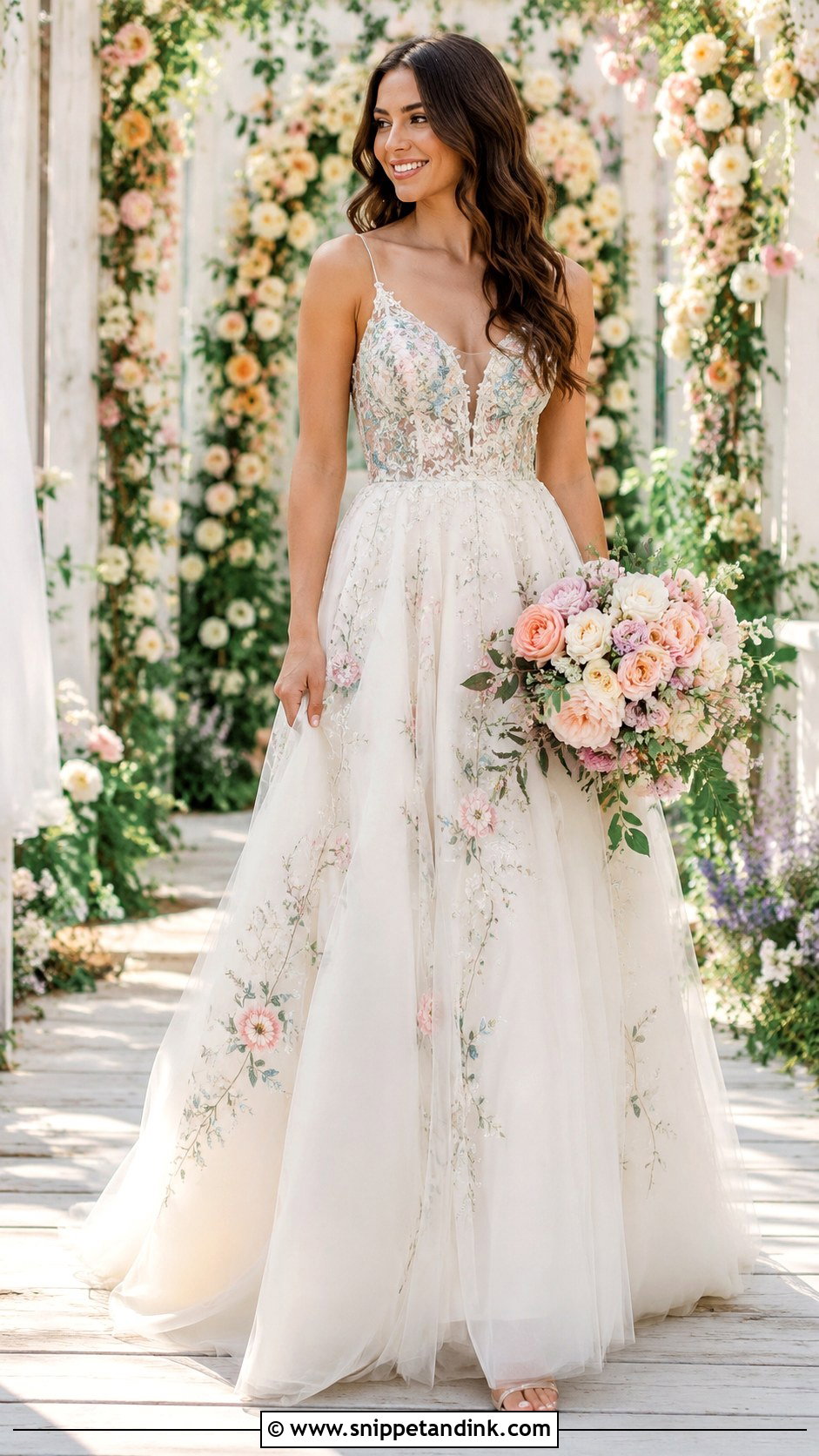
A floral embroidery wedding dress has a handmade quality that lace can’t quite copy. Ivory thread stays subtle, while blush, pale blue or green accents show clearly in photos, especially outdoors in spring. I always ask how the embroidery is backed, because dense stitching on fine tulle can pucker if the base isn’t stabilized, and direct sun shows every ripple. I’d echo one embroidered flower in the bouquet rather than matching every colour. Delicate earrings, soft curls, sheer heels and a plain veil keep the dress as the star, and a slimmer skirt makes the stitching look more modern than a full one.
9. Square Neck Wedding Dress
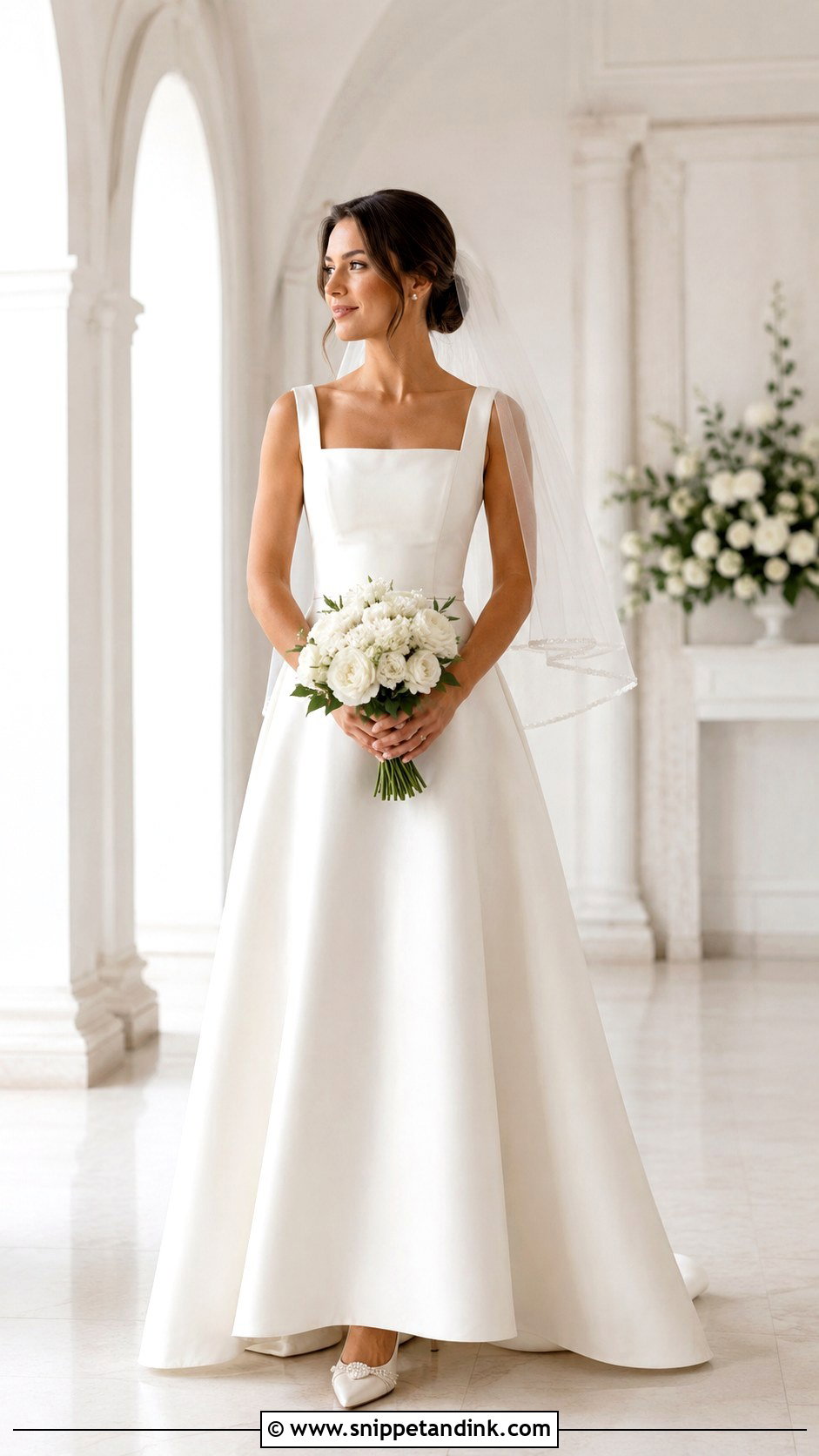
Square necklines are one of the easiest shapes I fit. The straight line across the chest is forgiving on most busts and works in satin, crepe, lace or mikado, over A line, sheath and ball gown skirts alike. The detail I watch is strap width: very thin straps on a square neck can make broad shoulders look wider, while a slightly wider strap balances them. A smooth low bun, pearl studs, a medium veil and pointed heels give a classic outfit with a modern edge. If the neckline feels too bare, add a tennis bracelet or a fine pendant. It suits almost any venue or season.
10. High Neck Wedding Dress
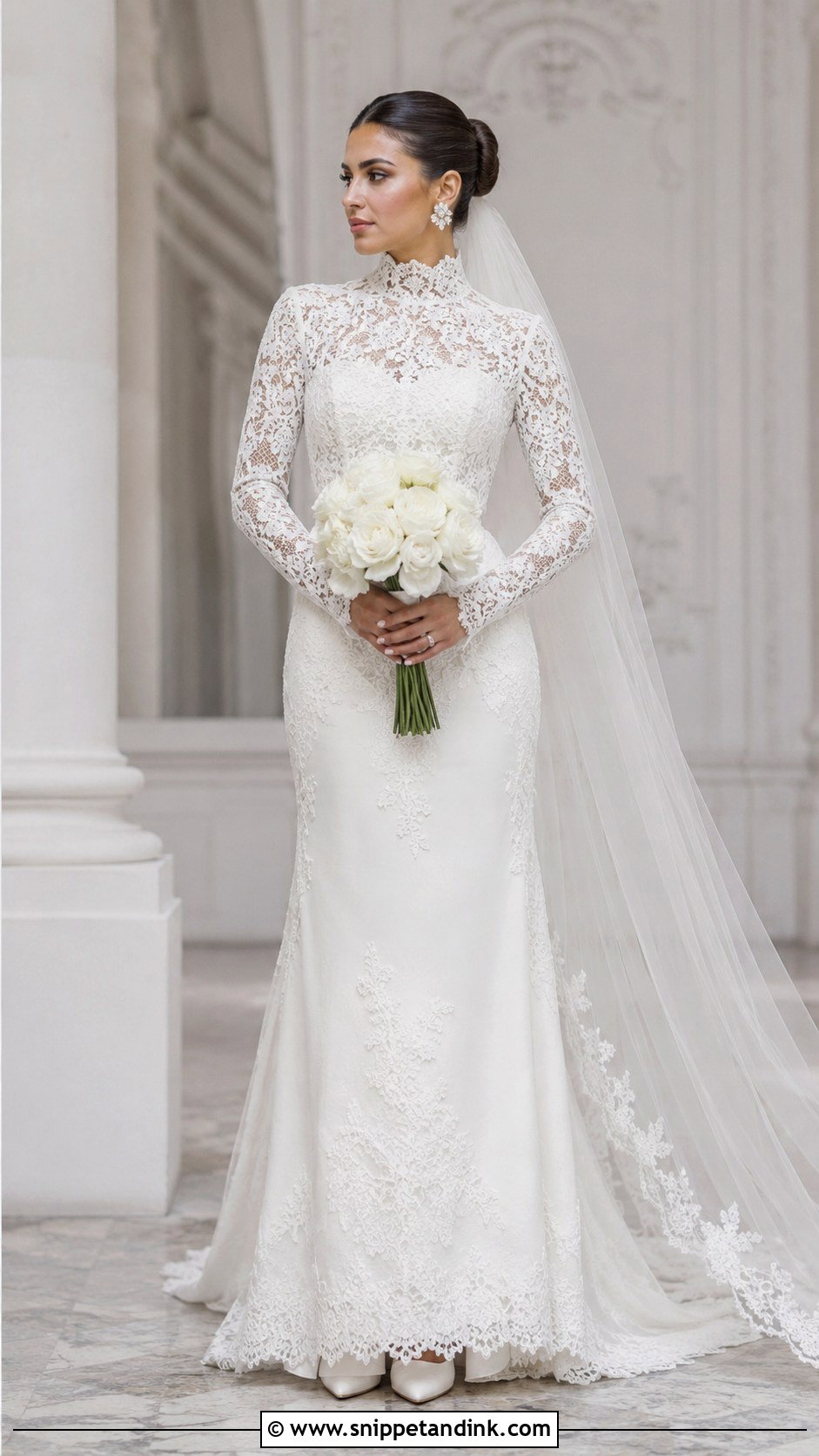
With a high neck, the fit at the throat matters more than anything else. Too tight and you’ll feel it all day; too loose and it gapes every time you turn your head. Lace high necks feel vintage, crepe looks clean and modern, and satin sits between the two. Since the neck is covered, I skip the necklace and move the jewellery to statement earrings. A sleek bun shows the line best, with soft makeup and closed-toe heels, and a long veil adds movement without crowding the top. Winter weddings and formal indoor venues are where this neckline feels most at home.
11. Mermaid Wedding Dress
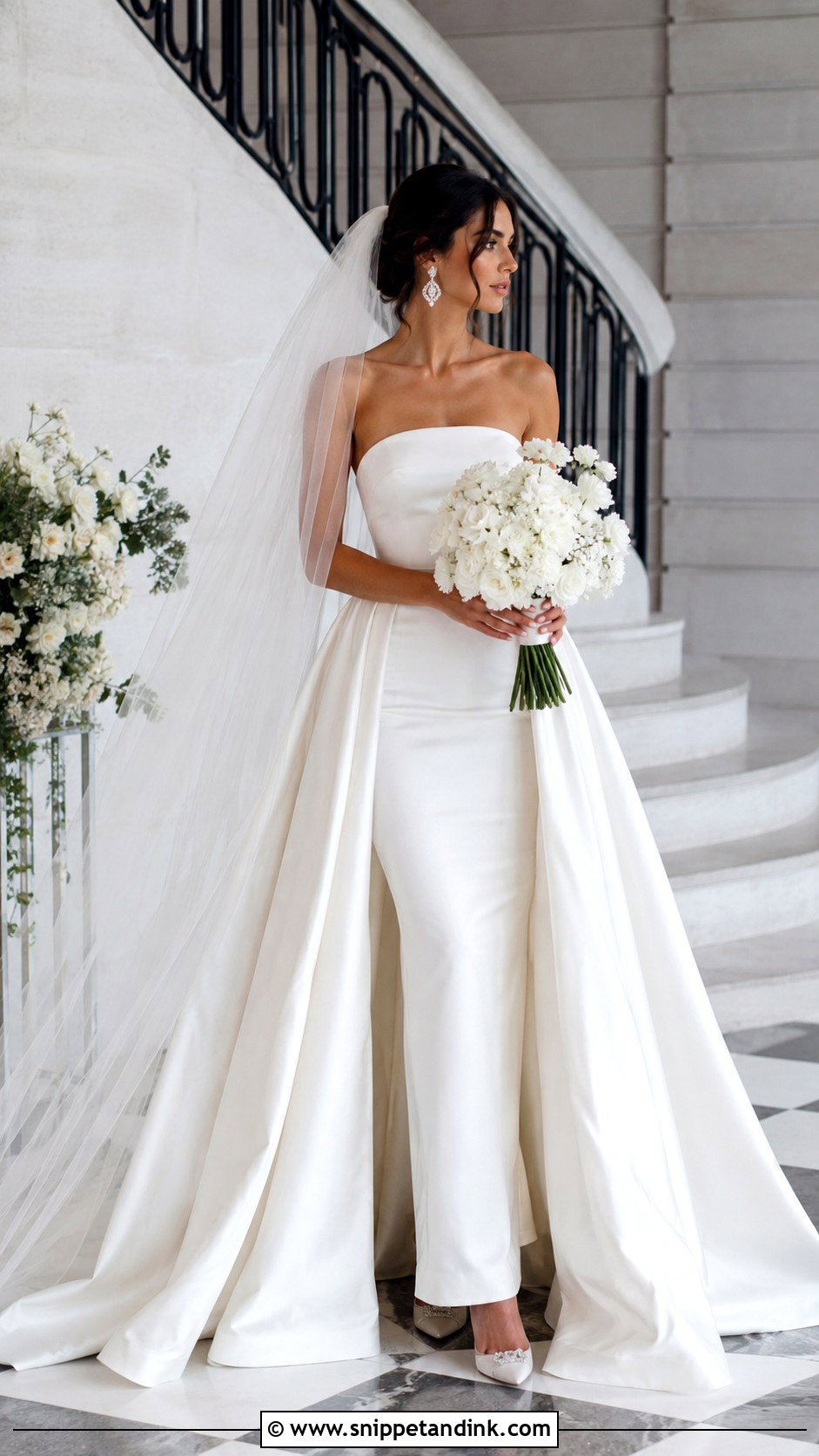
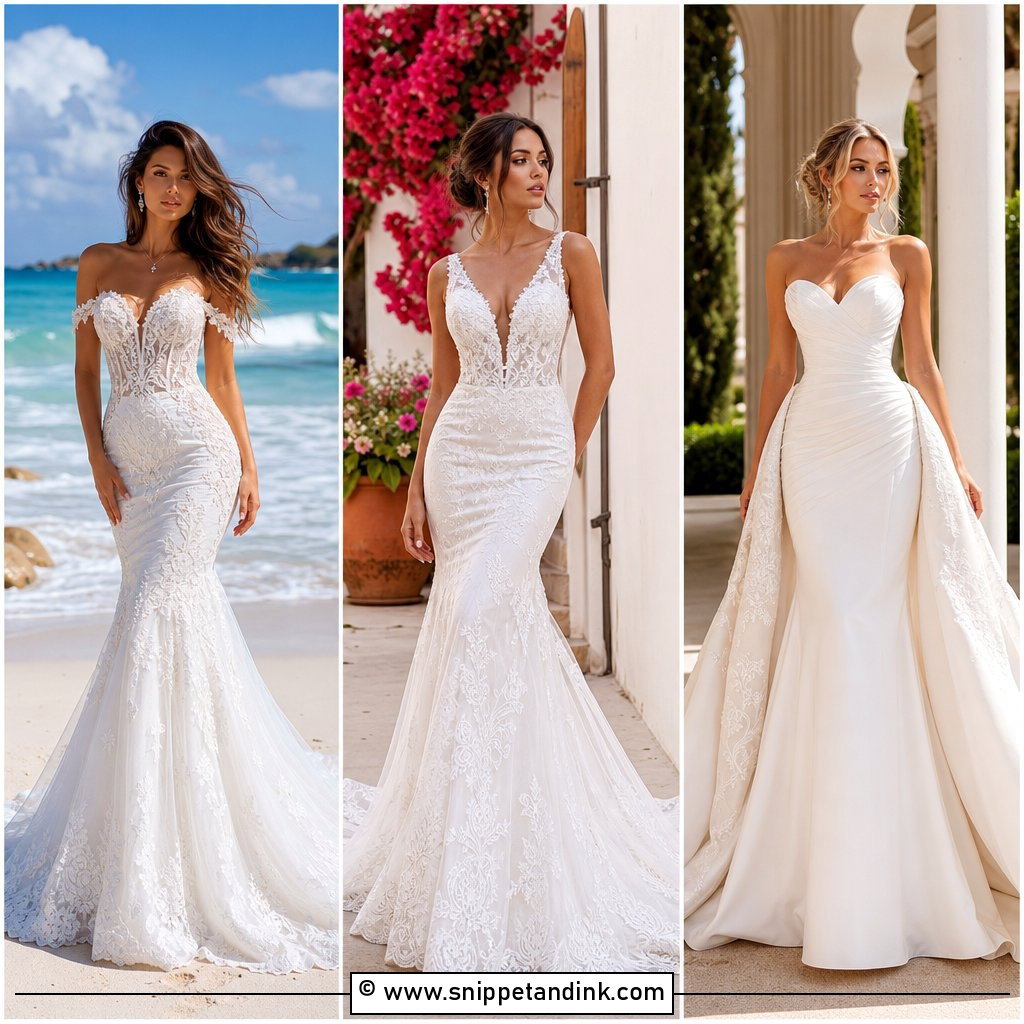
A mermaid wedding dress fits close through the bodice, waist and hips and flares near the knee, and where that flare starts decides how well you walk. I have brides climb stairs and sit at the fitting. If the flare begins too low, your stride shortens and dinner becomes a negotiation with the seams. Lace, crepe, satin and beading all suit the shape. A long veil, drop earrings and heels with comfortable height work well, with Hollywood waves or a smooth updo. The silhouette is bold already, so keep the bouquet compact.
12. Tea Length Wedding Dress
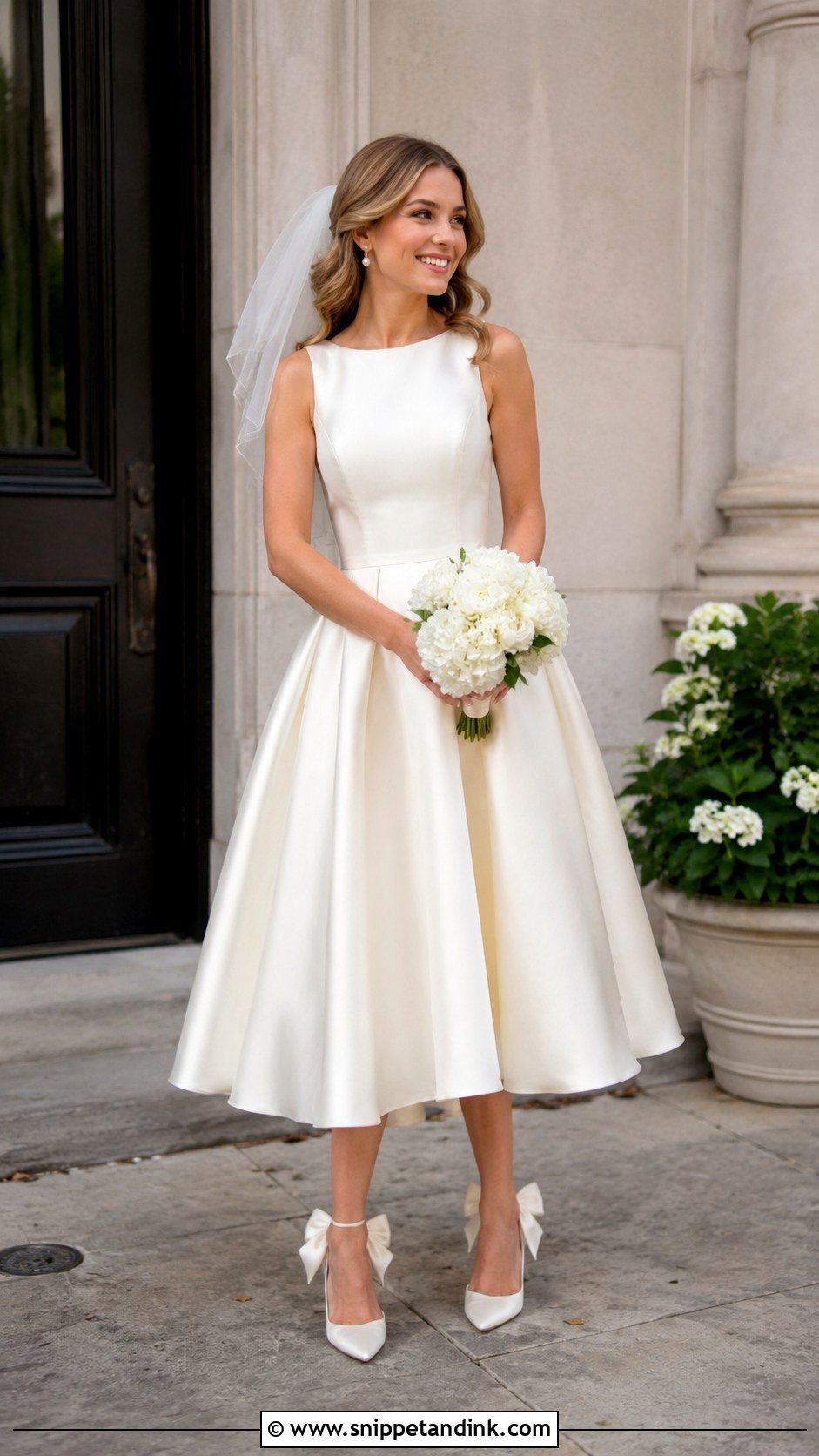
A tea length wedding dress ends between knee and ankle, so your shoes appear in every photo. That’s the fun of it, and also the catch: everyone sees whether you can walk in them. Satin looks polished, tulle and organza feel whimsical, and lace sits in the middle. I style it with bow heels, pearl earrings, a short veil and soft curls for a vintage feel, finished with a structured mini bouquet. Courthouse weddings, brunch receptions and garden ceremonies all suit it, and you’ll move easily all day.
13. Beach Wedding Dress
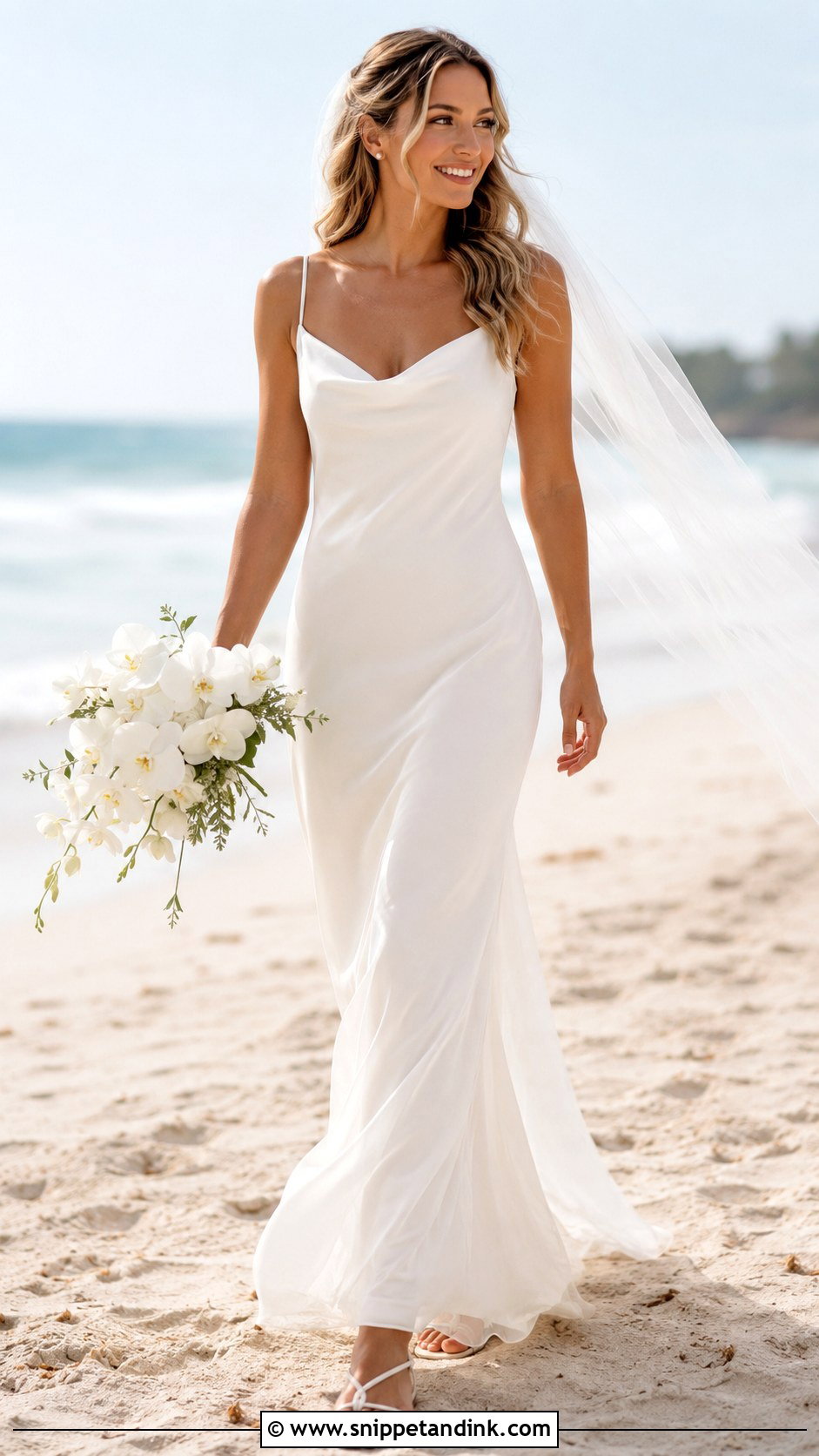
On sand, weight is the enemy. A heavy satin skirt or a long train collects sand and drags, so I steer beach brides toward chiffon, crepe or lightweight lace in a simple A line, sheath or slip. Chiffon moves nicely in a breeze but also flips up, so I sometimes have a few small weights sewn into the hem. Flat sandals are the practical choice, and plenty of brides go barefoot for the ceremony itself. Pearl studs, loose waves and a sheer veil or floral clip finish it, with a relaxed bouquet of white orchids and greenery for a coastal or destination wedding.
14. Boho Wedding Dress
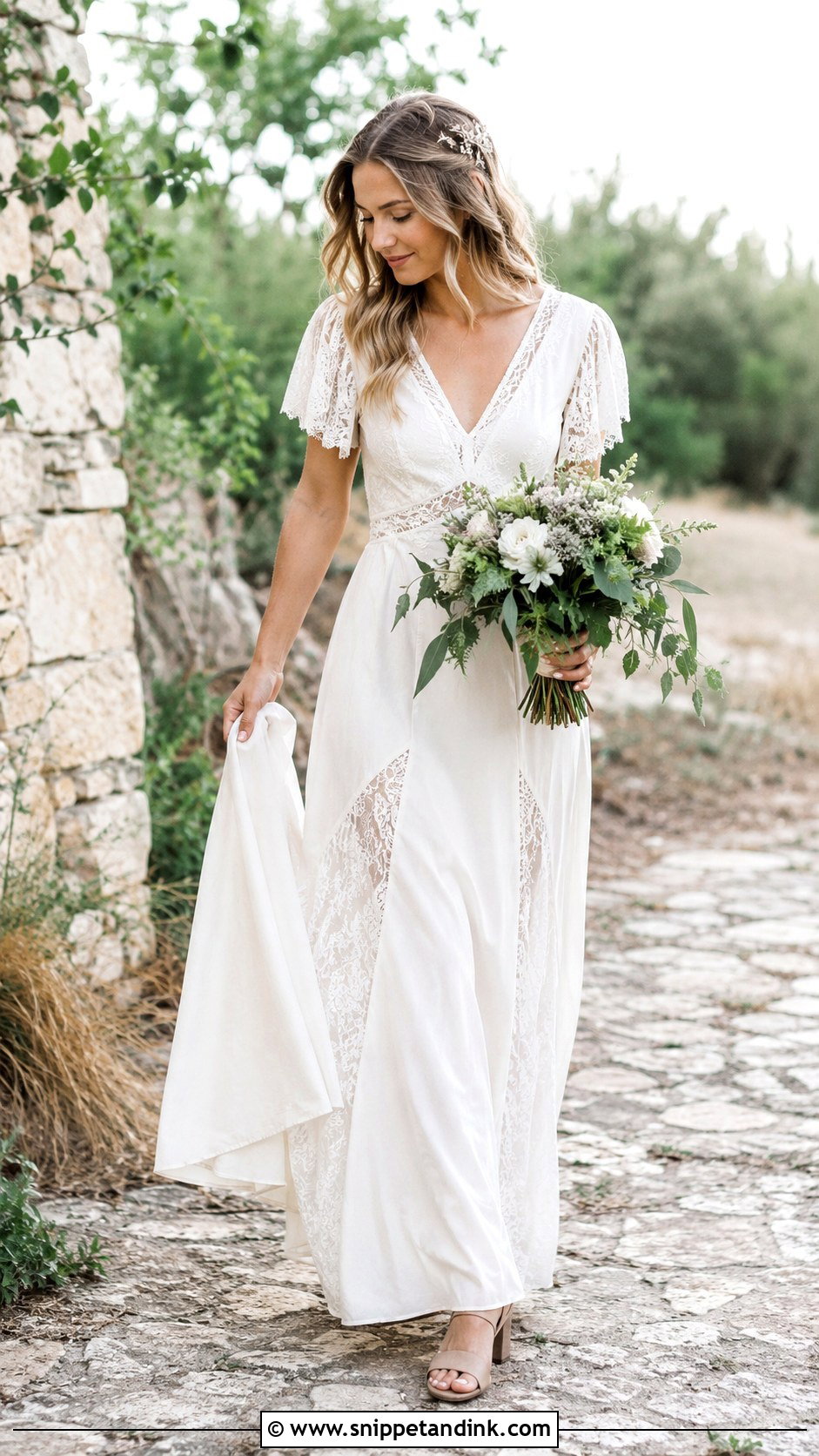
Boho dresses are where I see brides overdo it most. Lace panels, flutter sleeves, fringe and a flower crown all at once start to look like a costume, so I usually let one texture lead. Ivory or warm white suits this mood better than bright white. Loose waves, delicate hair pins, low block heels or sandals and a bouquet of greenery with airy flowers keep it relaxed. A simple veil works, or a flower comb if you want less fabric around your face at a desert, garden or small outdoor wedding.
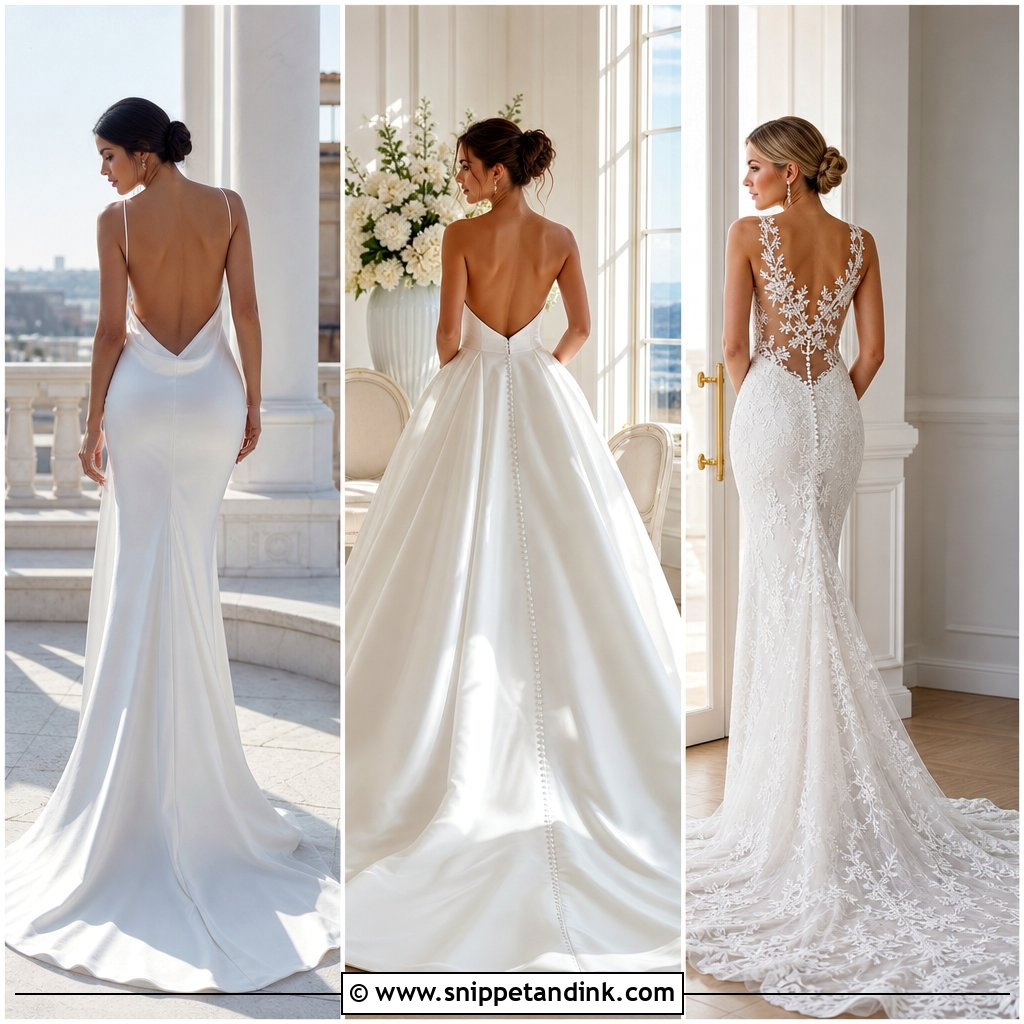
15. Courthouse Wedding Dress
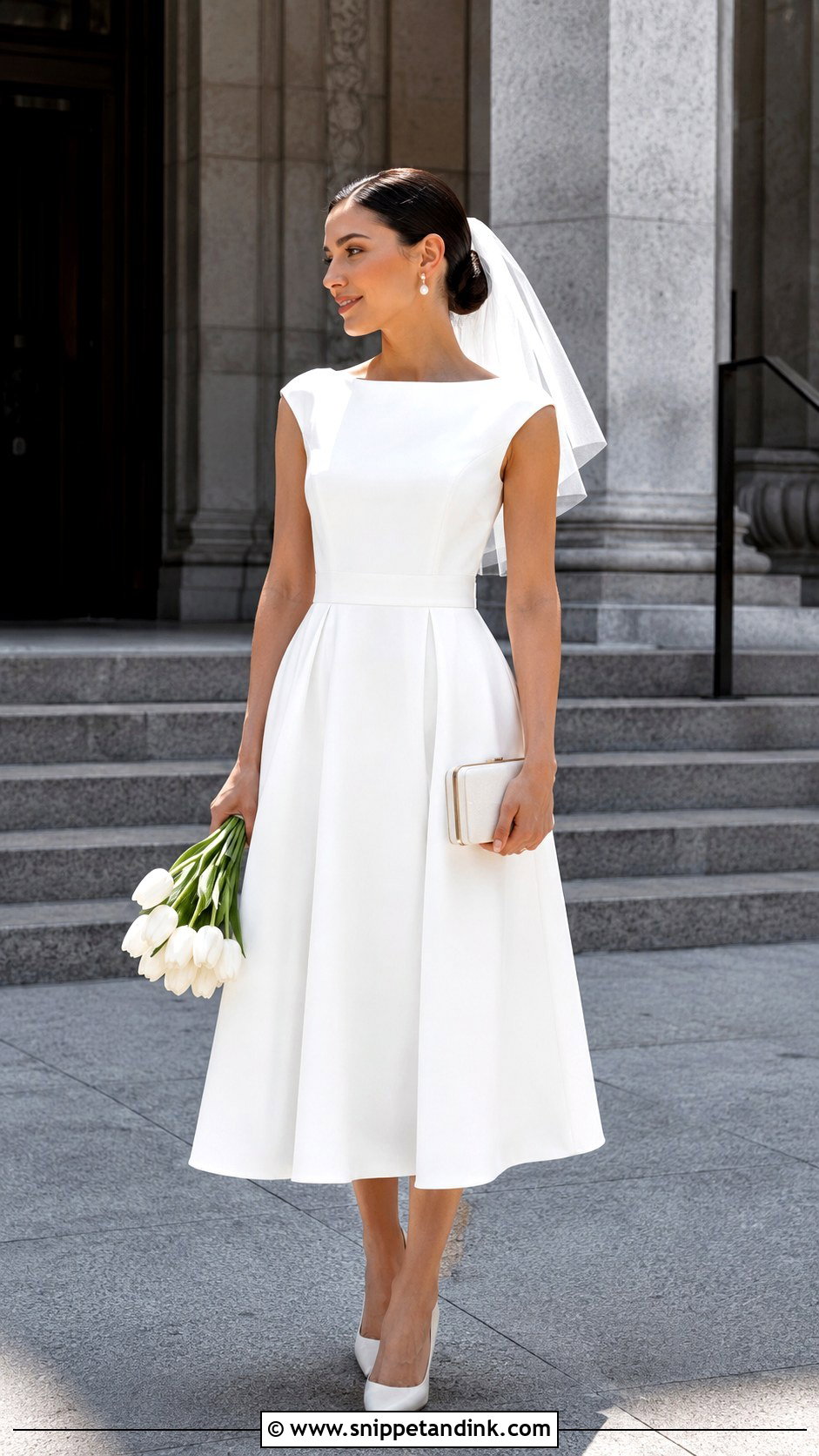
For a courthouse wedding, the dress has to look special while you wait in a corridor, sign papers and cross a city street. A white midi, a tailored mini dress or a sleek column gown all suit. I check one practical thing: can you sit on a hard bench without the skirt riding up or creasing badly? Pointed pumps, a structured clutch, pearl or gold earrings and a short veil or hair bow complete it, and a blazer adds a sharp layer. A small bouquet of white tulips or roses is enough, and the building’s steps make an easy backdrop afterwards.
16. Simple Slip Wedding Dress
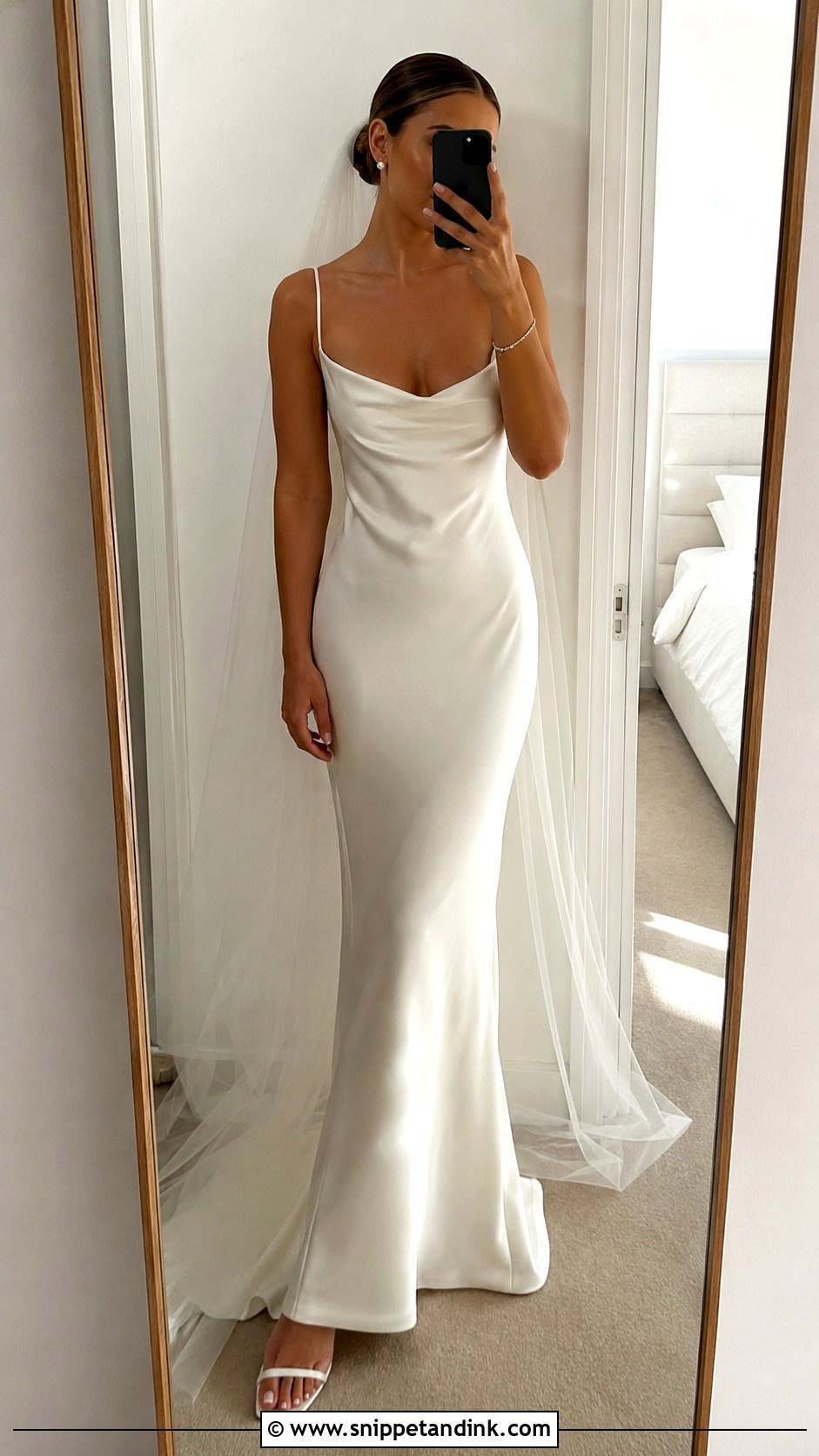
Slip dresses look simple, which is exactly why they’re hard to get right. Satin or silk-like fabric cut on the bias skims the body and shows everything underneath, so smooth, edge-free underwear and a final fitting in those exact undergarments are non-negotiable. A cowl or straight neckline adds polish. I’d style it with strappy heels, pearl earrings, a smooth bun and a sheer veil, with a wrap or tailored blazer for cooler evenings. On a beach, in a city or as a second look, it’s the accessories that make it read bridal rather than evening wear.
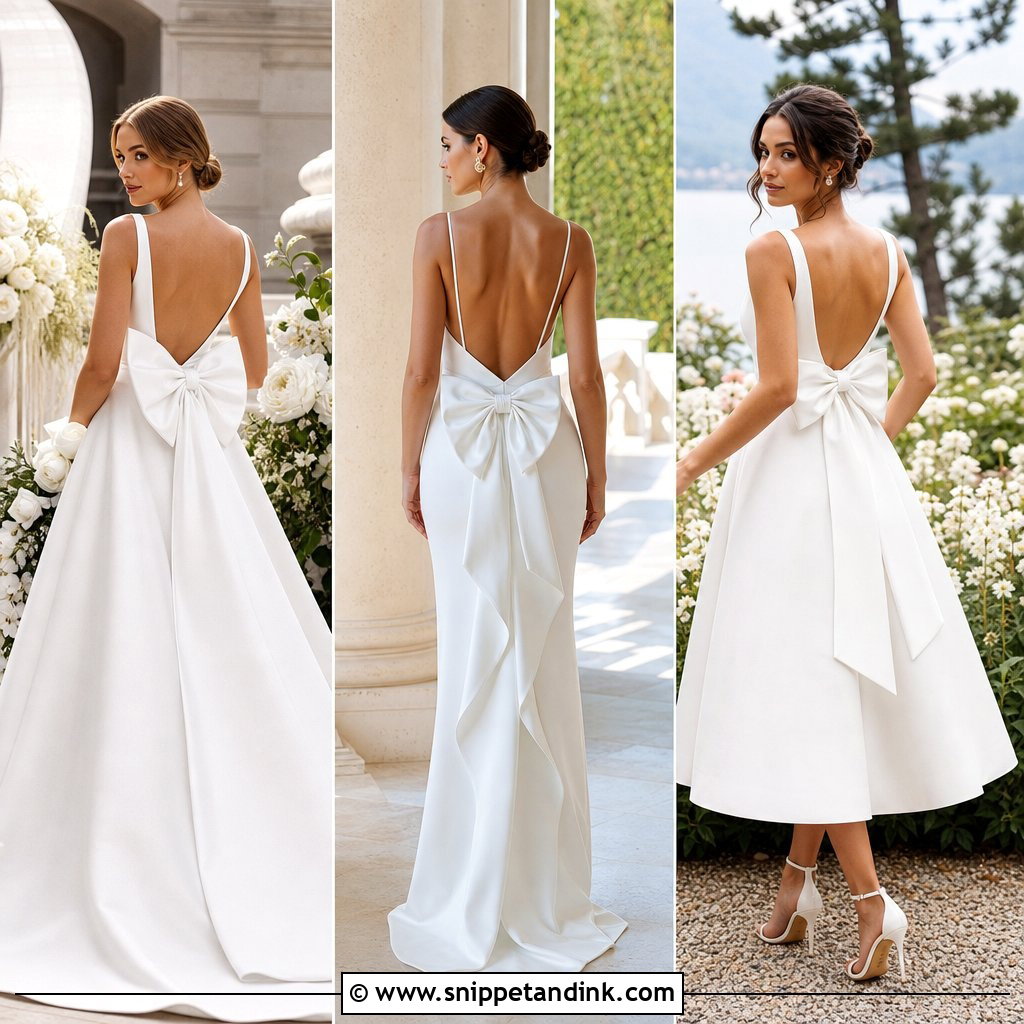
17. Bow Back Wedding Dress
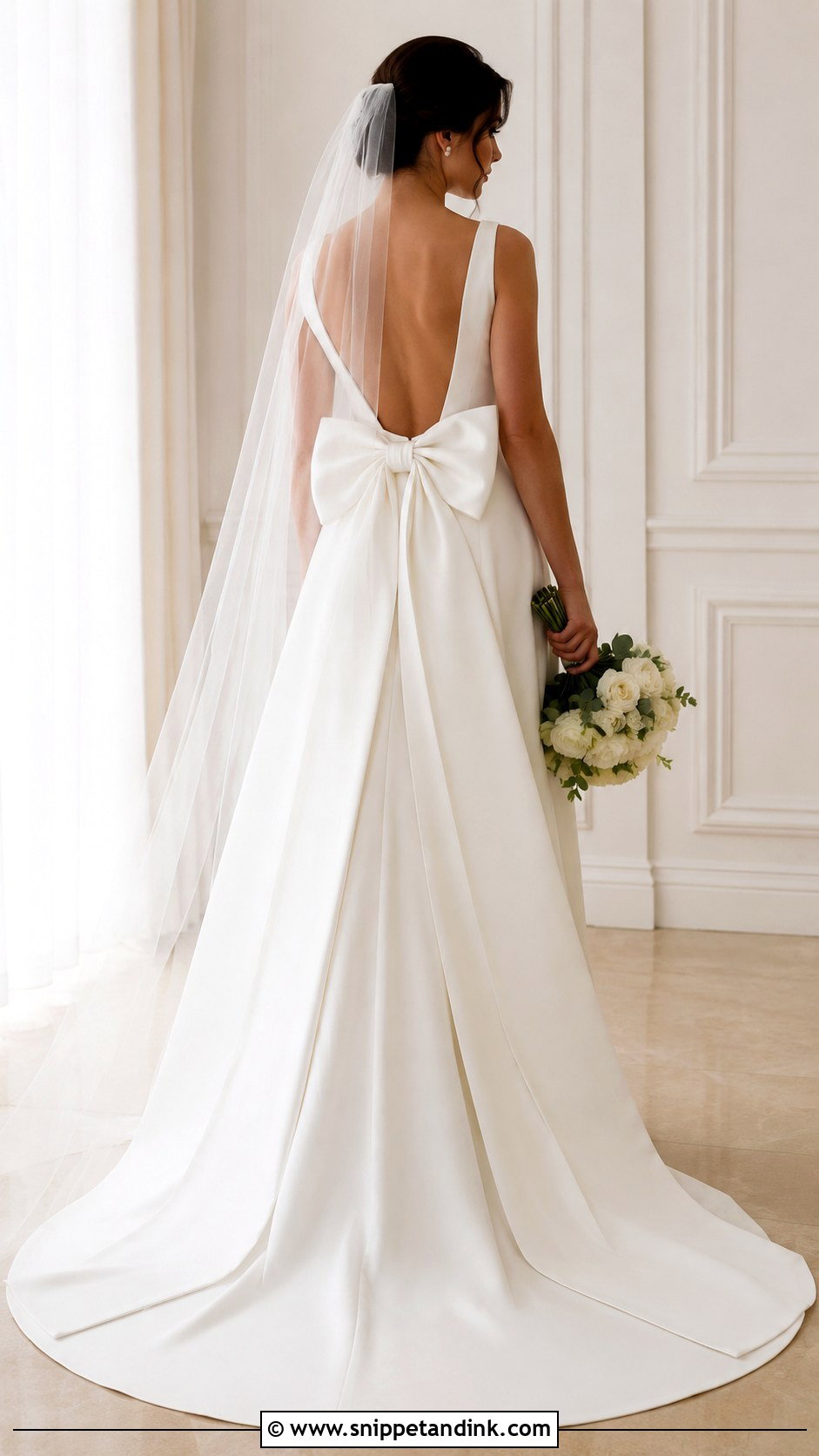
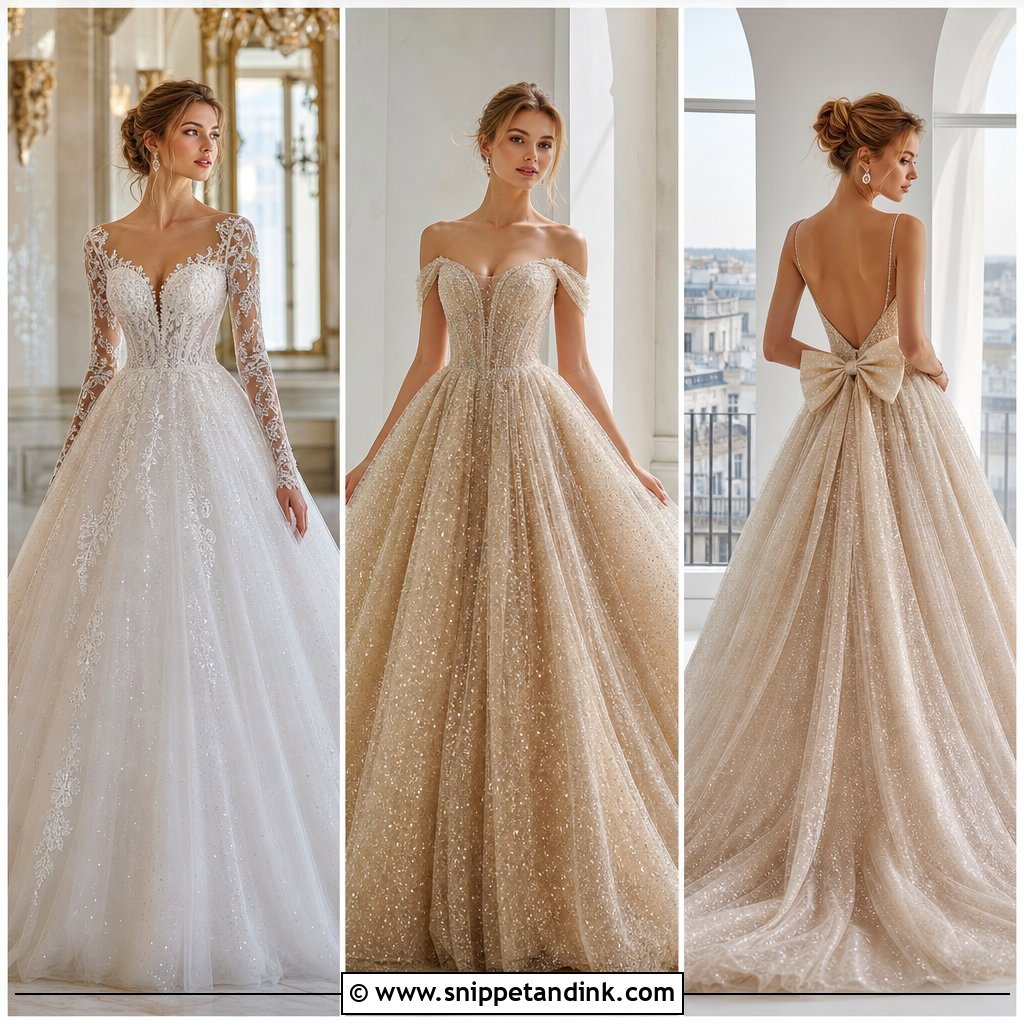
Bow back gowns put the drama behind you, which makes sense when guests spend most of the ceremony looking at your back. The front stays clean while the back carries a large bow, ties or soft ribbon. Watch the veil here. A long, dense veil hides the bow completely, so choose a sheer single layer or plan to take the veil off for portraits. Big bows also crush when you sit, so ask your seamstress whether it can be lightly interfaced to hold its shape. Pearl studs, classic heels and a low bun or side-parted waves keep the back on show.
18. Detachable Overskirt Wedding Dress
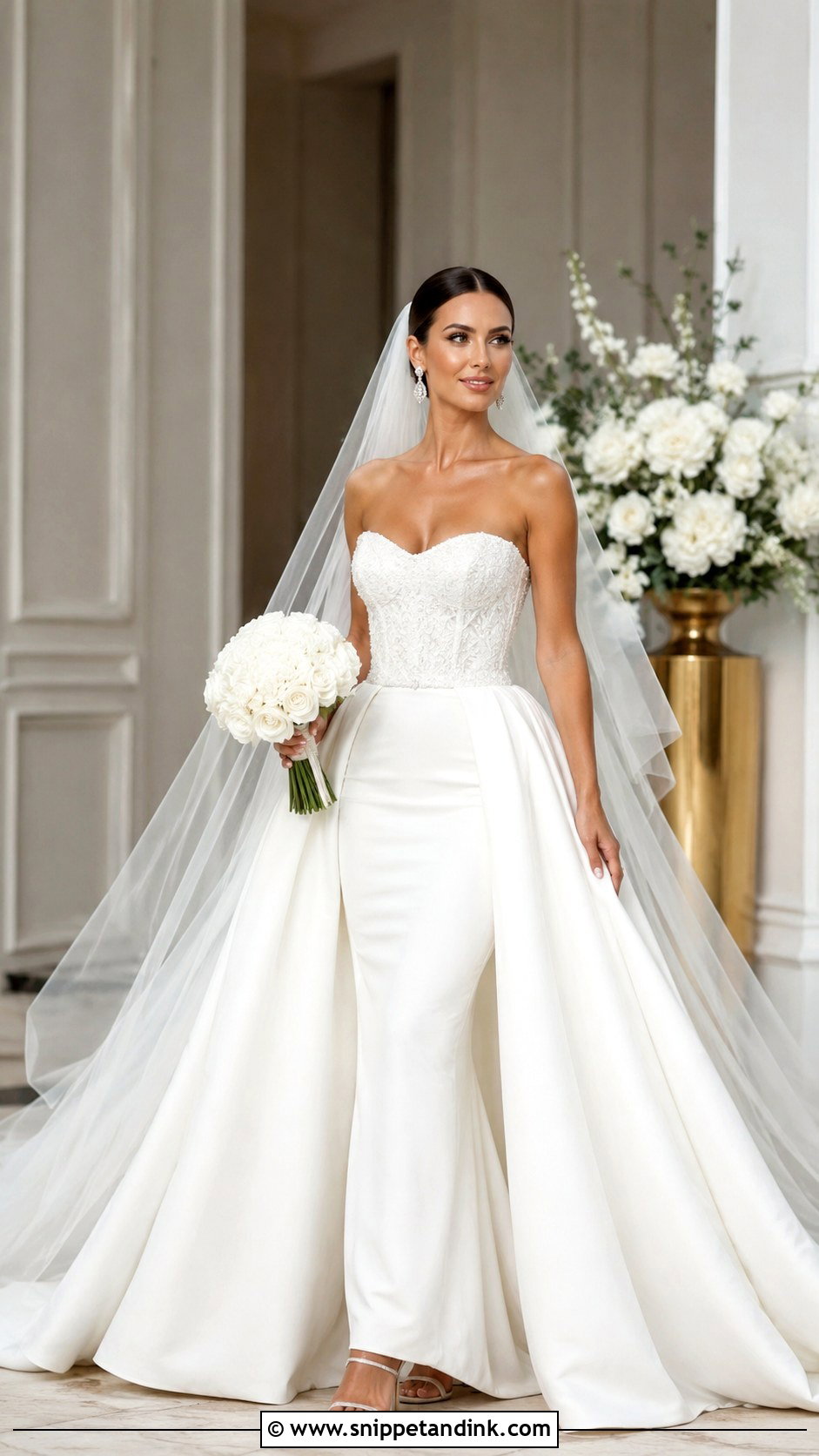
A detachable overskirt gives you two looks in one: a full skirt over a fitted sheath, mermaid or mini for the ceremony, then a lighter dress for walking and dancing. The part brides forget is the removal itself. It needs a practised hand and a few minutes somewhere private, so I show a bridesmaid how the hooks or snaps release at the final fitting. For the ceremony, wear a long veil, crystal earrings and elegant heels; afterwards, swap to a shorter veil or a hair accessory. Decide in advance who will bag the overskirt, because it’s bulky and creases easily.
19. Cape Wedding Dress
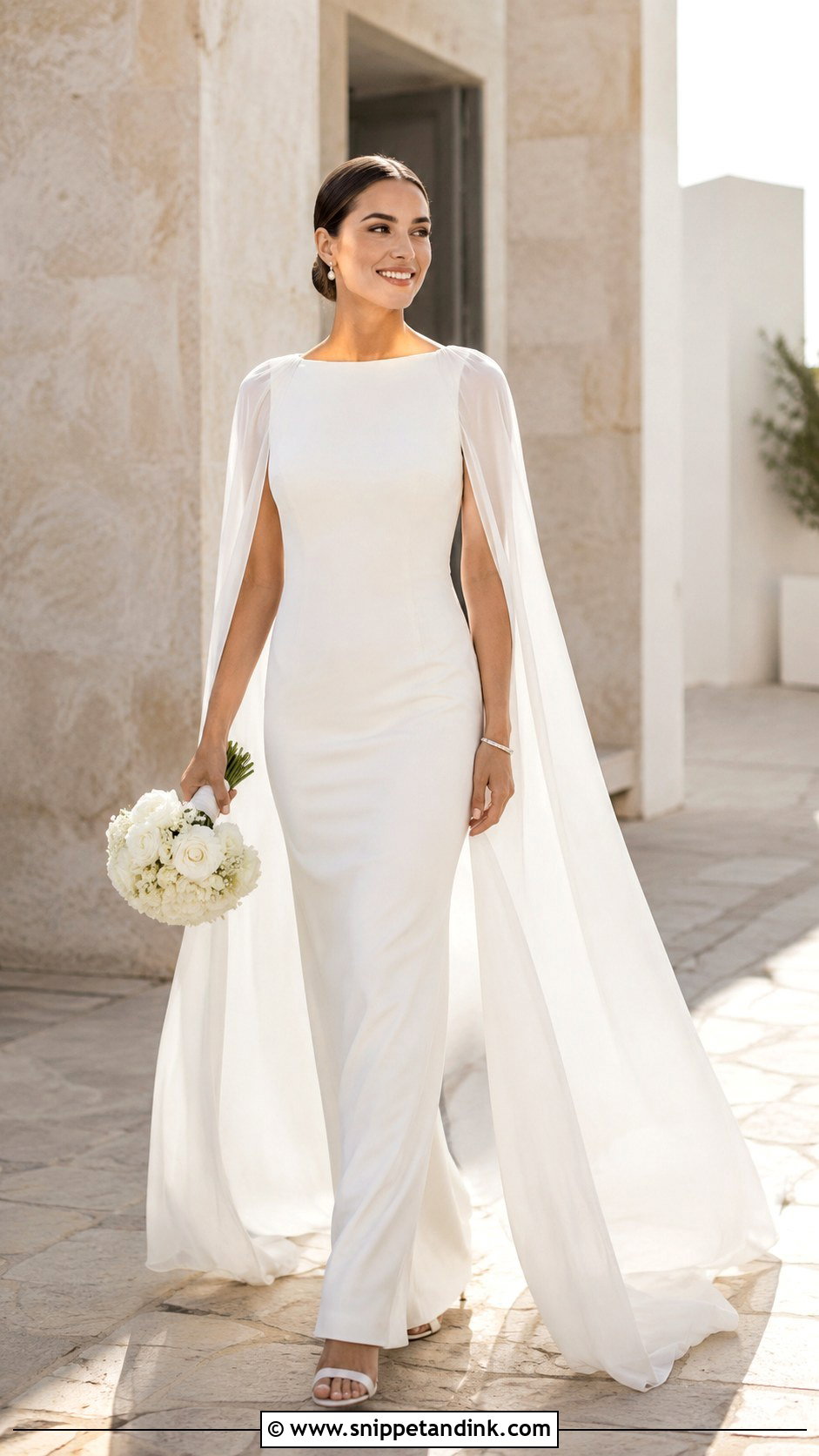
A cape replaces the veil and gives you movement and shoulder coverage in one piece. Sheer and lace capes float, while structured shoulder capes look sharper. Pair one with a minimalist crepe gown, a fitted column or a simple satin A line. The fit point I check is where the cape attaches: sewn too far back on the shoulder, it pulls whenever you raise your arms. Keep accessories small, with fine earrings, a slim bracelet and classic heels, and wear hair pulled back so the neckline stays visible. It’s at its best from behind, during walking portraits and the exit.


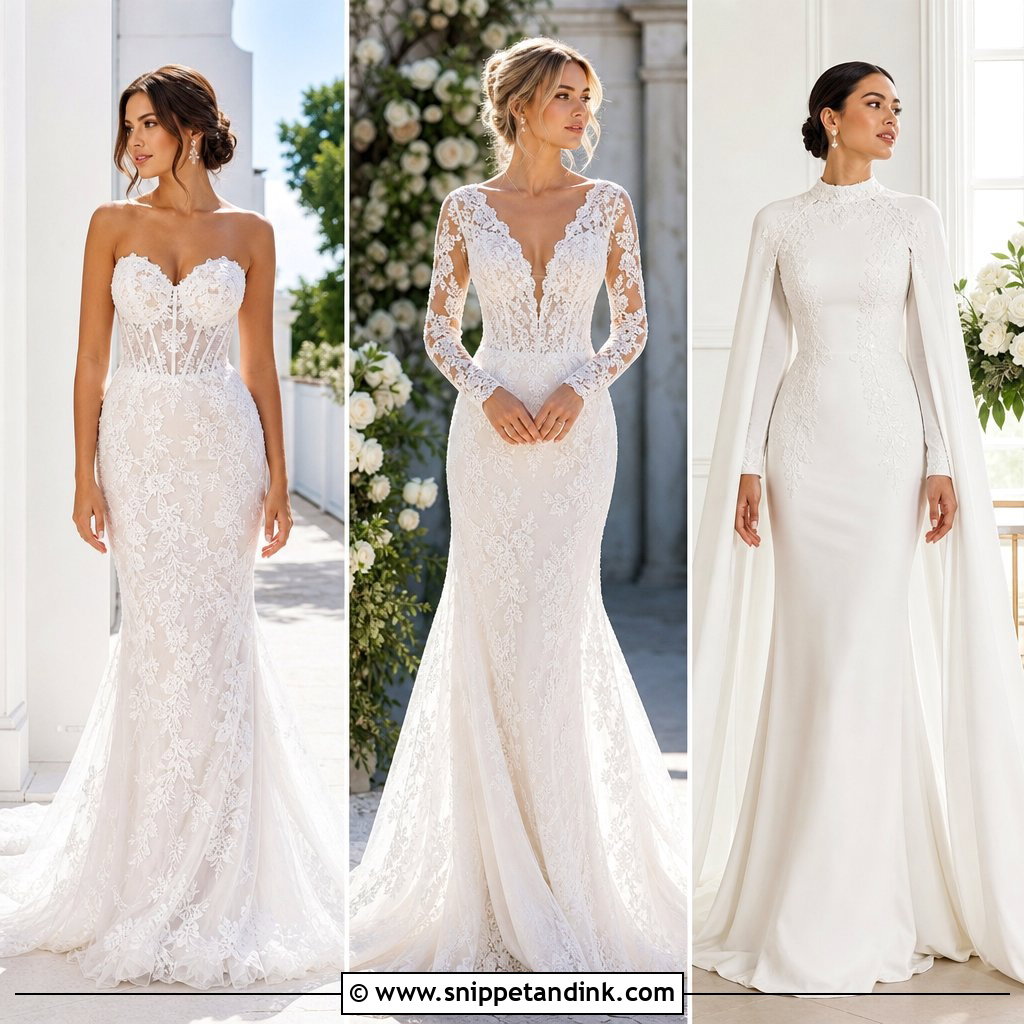

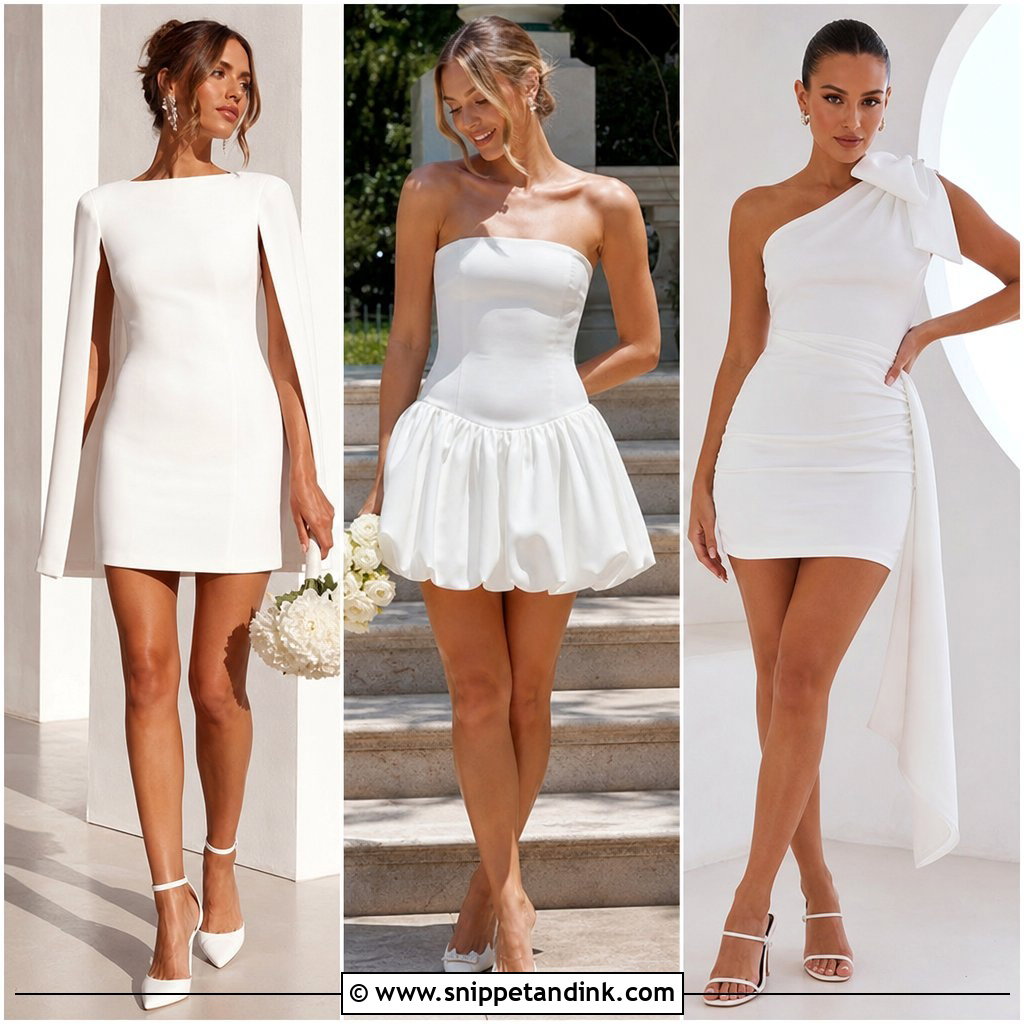
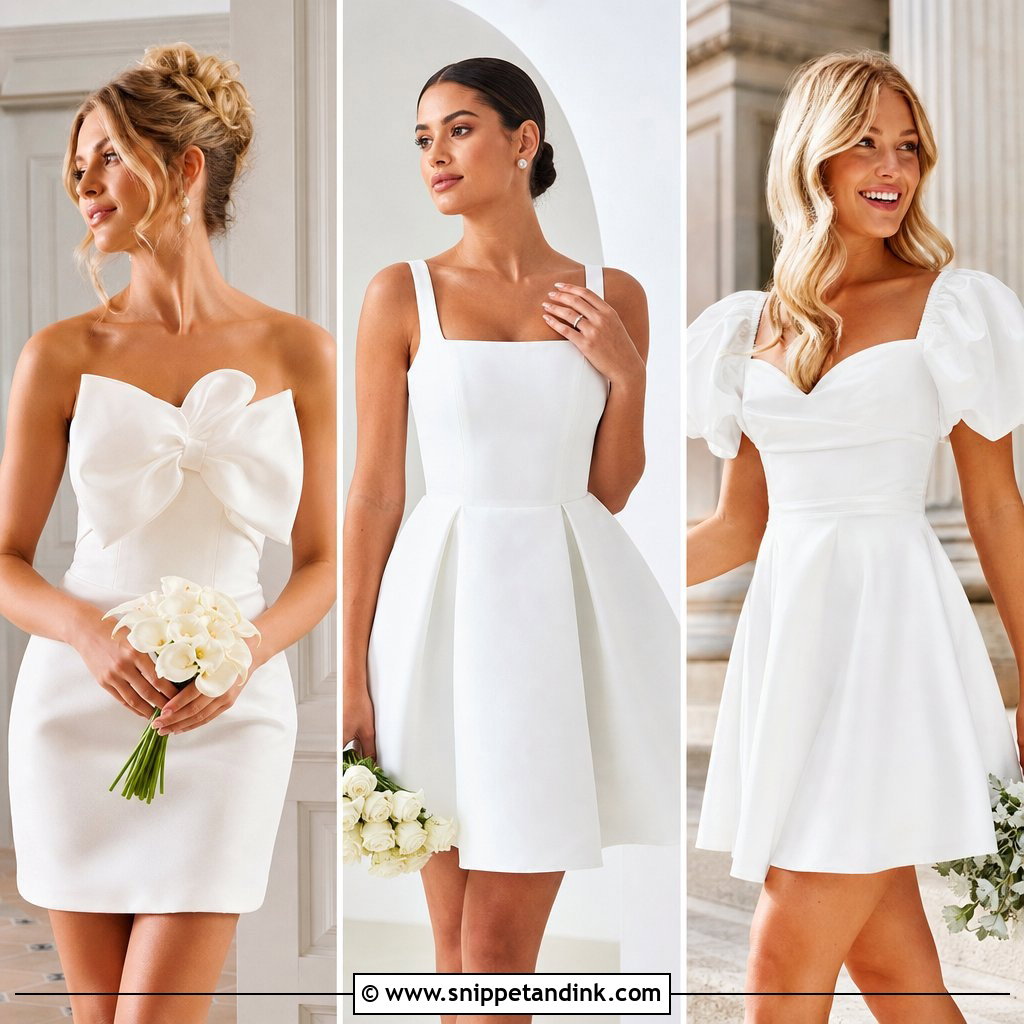
20. Short Wedding Dress
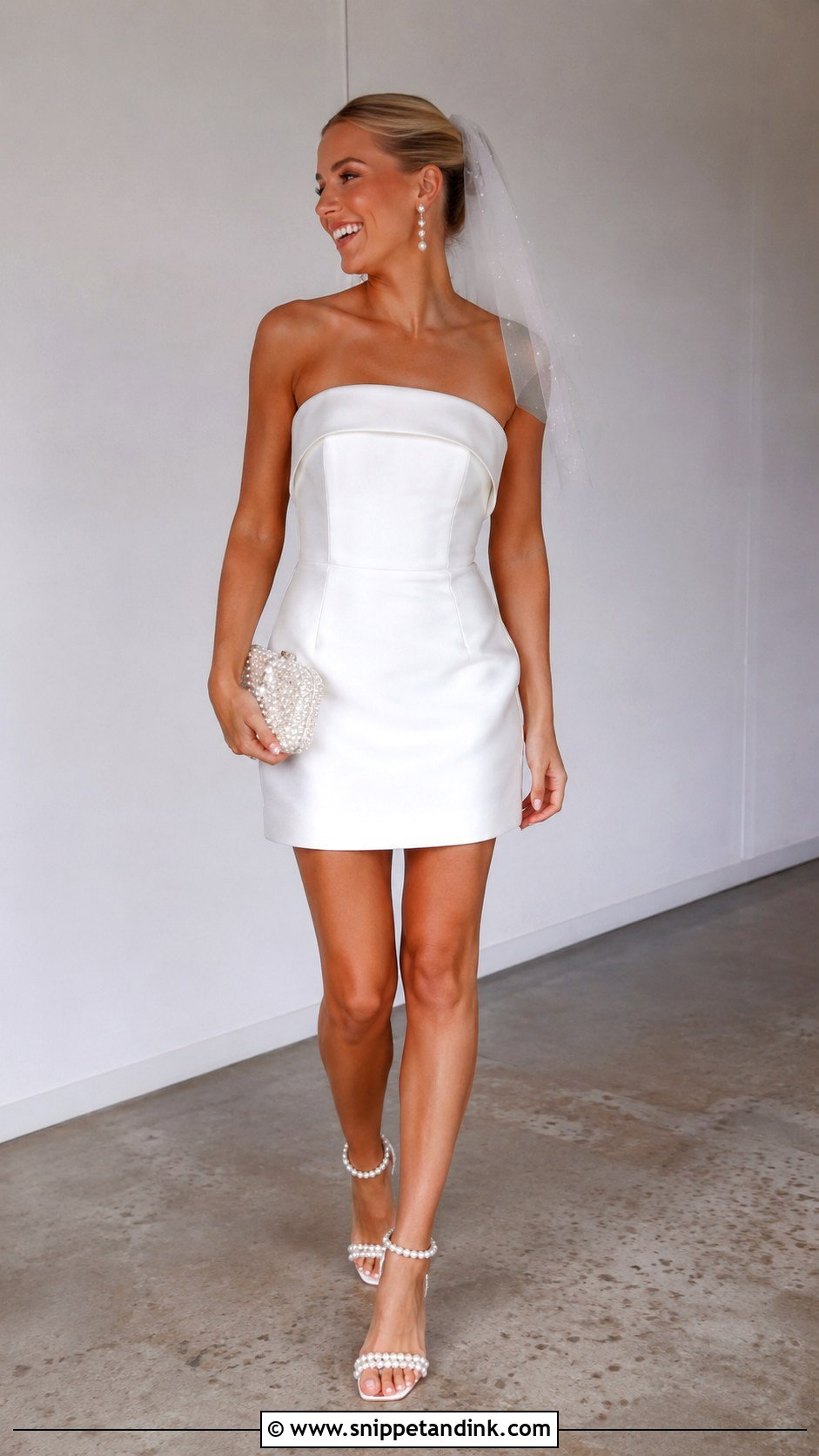
Short dresses are the easiest bridal outfits to dance in. A structured mini with a clean neckline feels sharp, lace feels softer, and a tulle mini feels playful. With your legs on show, the shoes carry more of the outfit, so pick a special pair and break them in at home first. A small clutch, pearl earrings and a short veil or bridal headband make it unmistakably bridal at a courthouse, a city ceremony or an after-party.
21. Beaded Wedding Dress
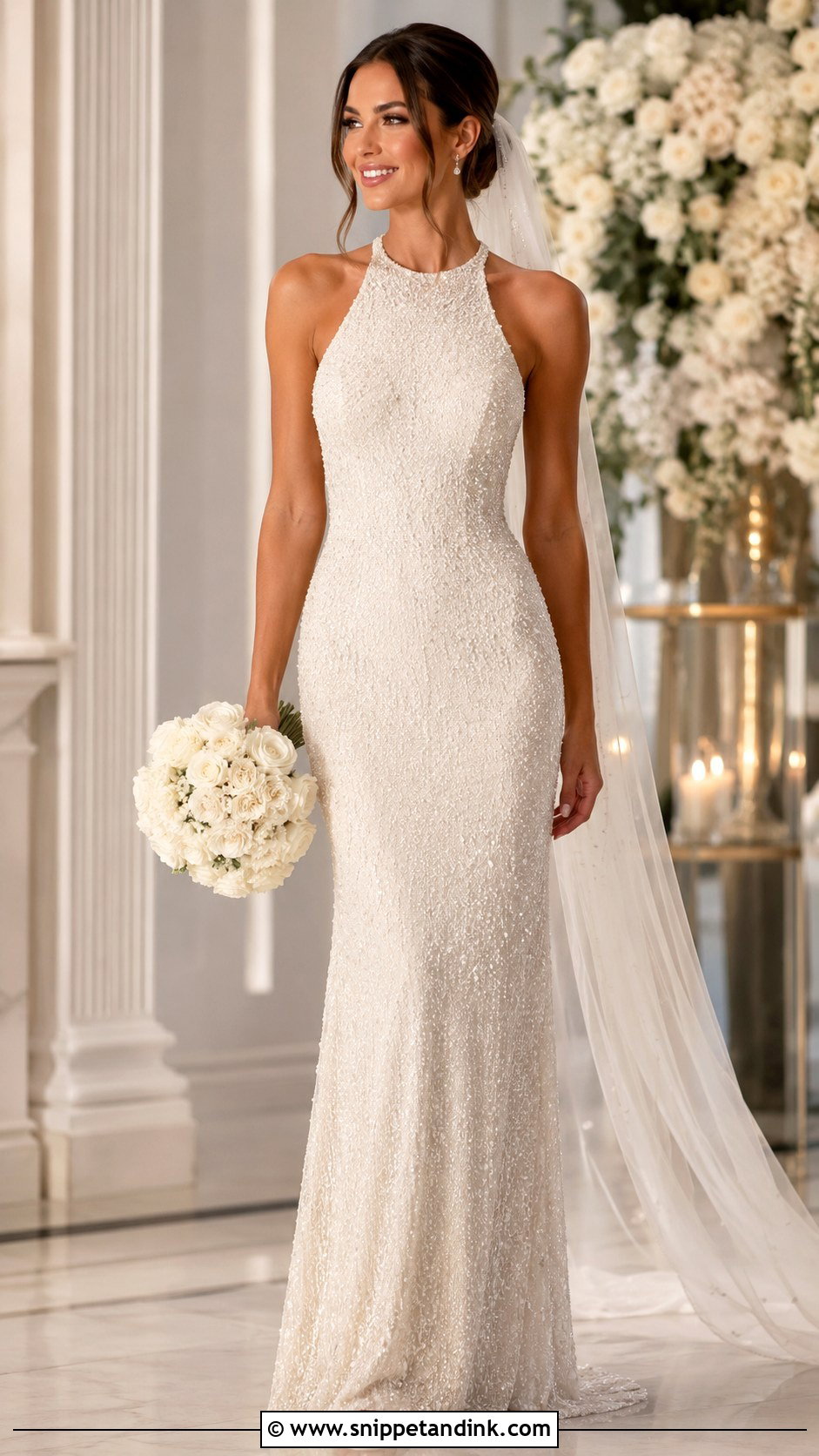
Beading catches candlelight better than any other finish, which is why I suggest it for evening weddings. Allover beading glows softly. Heavier beading looks more glamorous but adds real weight, sometimes enough to drag a sheer bodice down over a long day, so ask how the gown is supported inside. A sheath or fitted gown keeps it sleek; a beaded A line feels more romantic. With that much shine, keep the earrings small, the heels clean and the veil soft, with a neat white or ivory bouquet for a hotel ballroom or a rooftop at night.
22. Tulle Ball Gown Wedding Dress
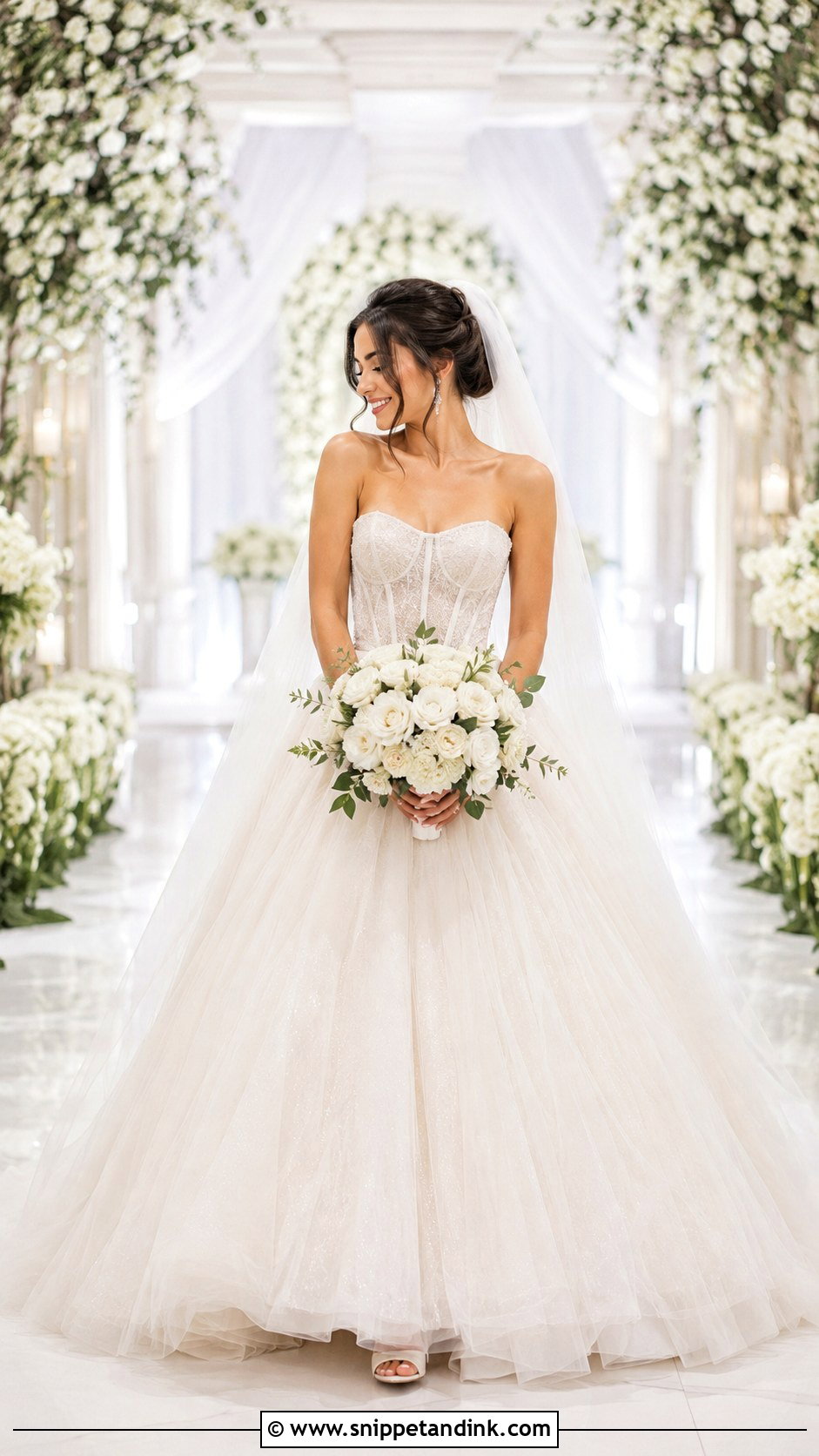
Tulle gives volume without the weight of mikado or satin, so a tulle ball gown feels lighter to wear than it looks. It does snag on stone steps, wooden benches and bouquet wire, and the layers flatten if the skirt is crushed in a car, so I transport it loosely and fluff the layers by hand on arrival. A corset bodice, sweetheart or off shoulder neckline balances the full skirt. Delicate earrings, a long veil, comfortable heels hidden under the hem and a bouquet of roses, peonies or lisianthus suit the fairytale mood of a garden venue or a grand staircase.
23. Boat Neck Wedding Dress
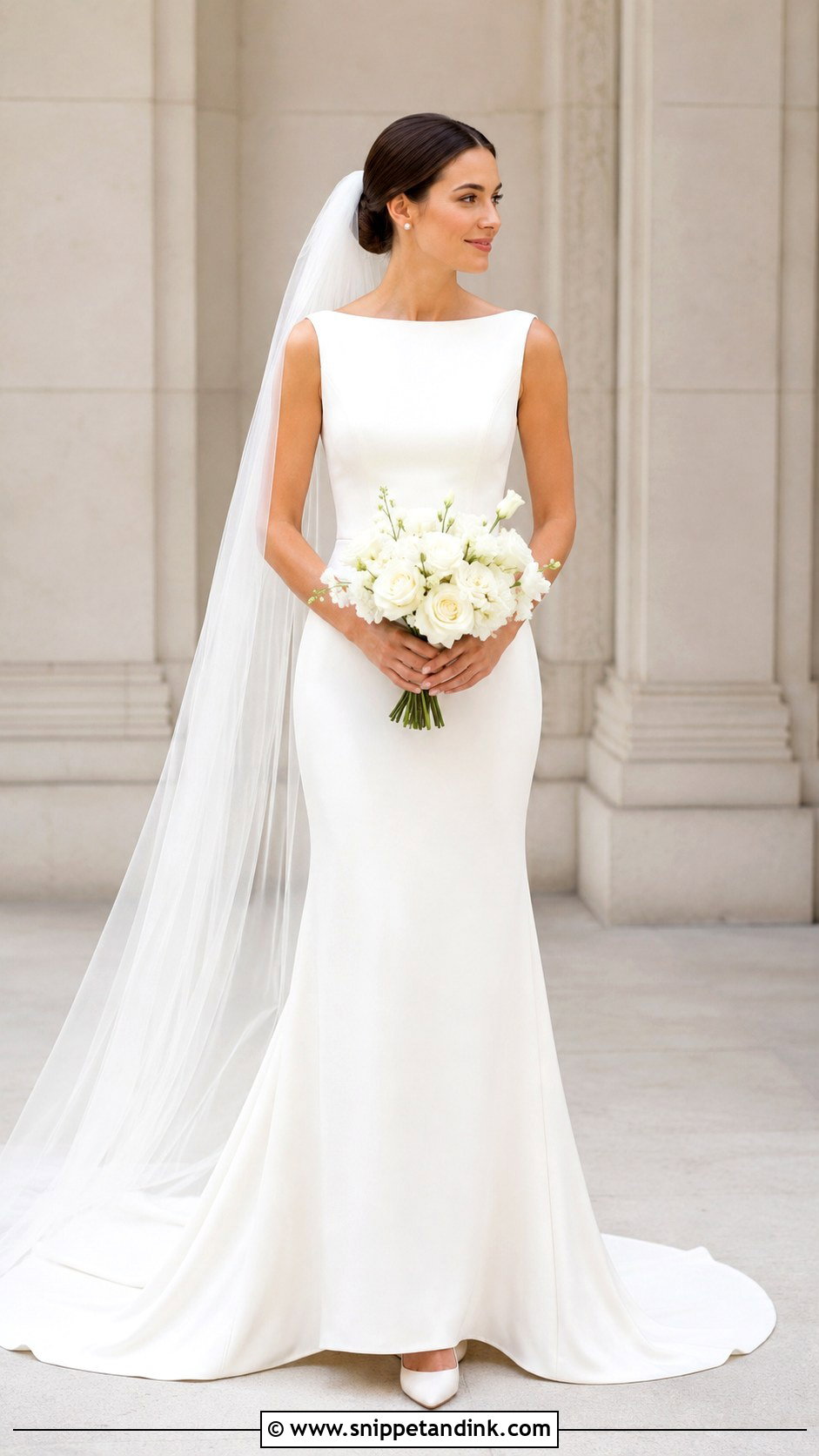
A boat neck runs straight from shoulder to shoulder, close under the collarbones, and it’s one of the most modest necklines that still looks fashionable. On narrow shoulders it adds width; on very broad shoulders I usually suggest a softer scoop instead. Crepe and satin versions look tailored, and lace feels more traditional. A low bun, pearl studs, a smooth veil and simple pumps are all it needs. Skip necklaces so the line stays crisp in a city venue or formal indoor ceremony.
24. Blush Wedding Dress
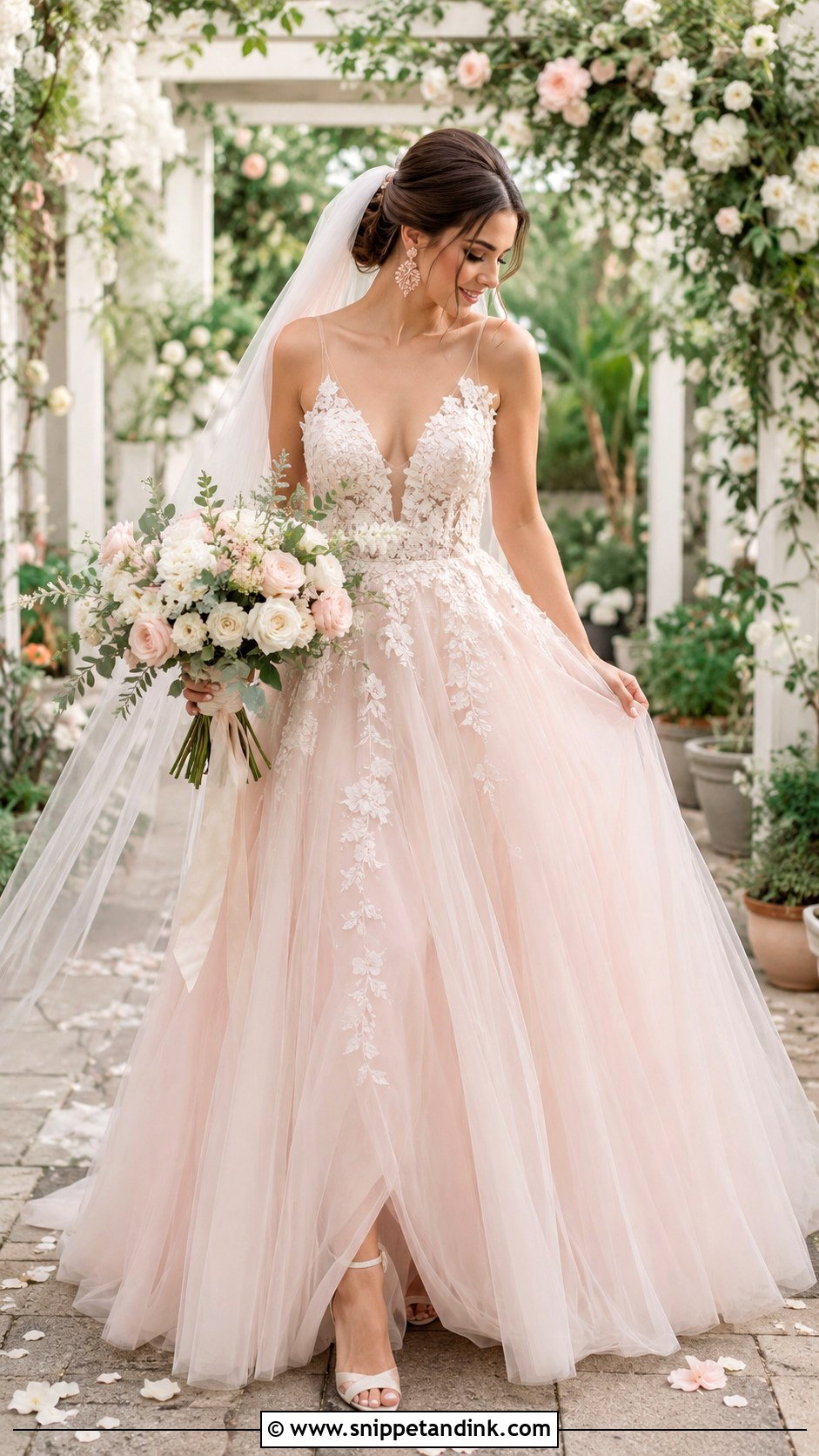
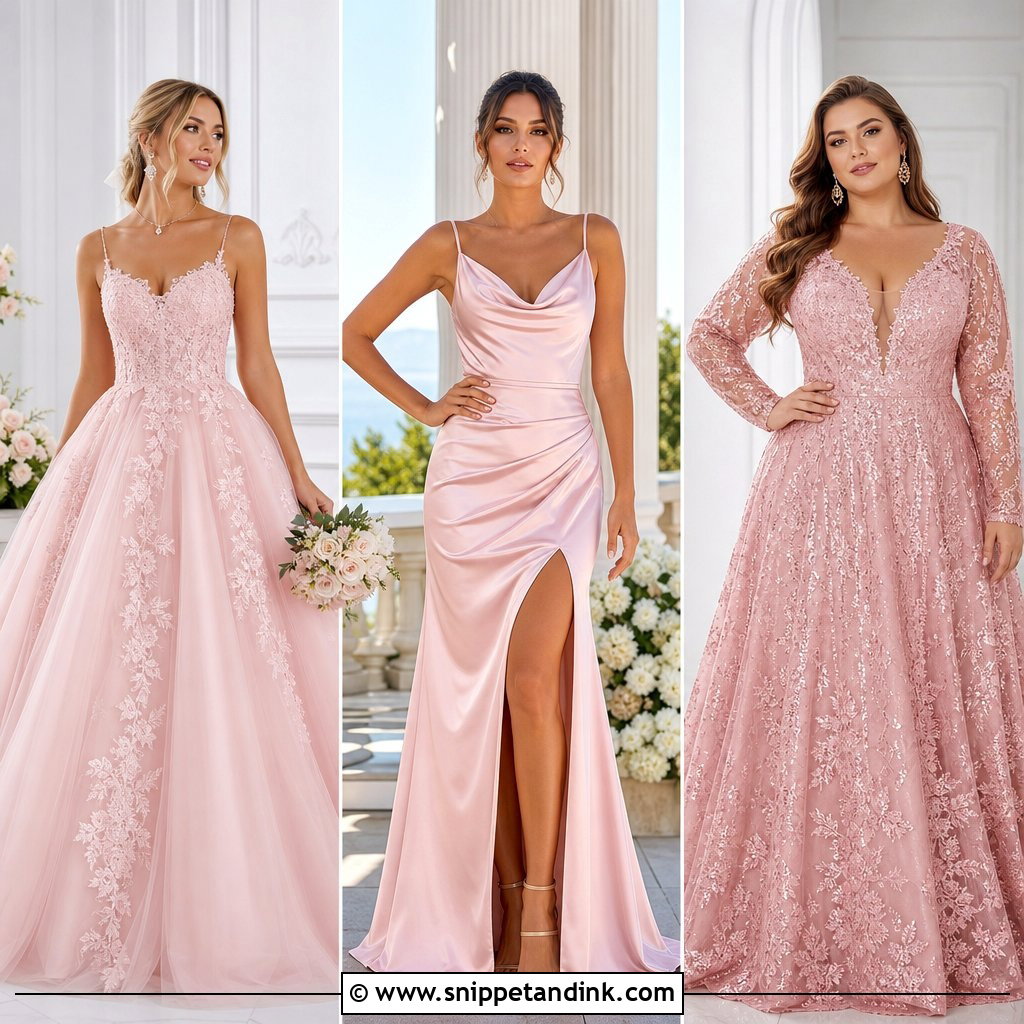
Blush is the colour I test most carefully against skin. Soft pink, nude and champagne blush can all warm a complexion, but the wrong undertone makes skin look sallow, so I hold the fabric near the face in daylight before anyone commits. Tulle, lace and floral appliqué carry the shade well. Ivory or nude heels, rose-gold earrings and a soft veil keep it bridal, and a bouquet of white, cream and pale pink flowers pulls it together for a spring garden or an indoor ceremony that’s still fully formal.
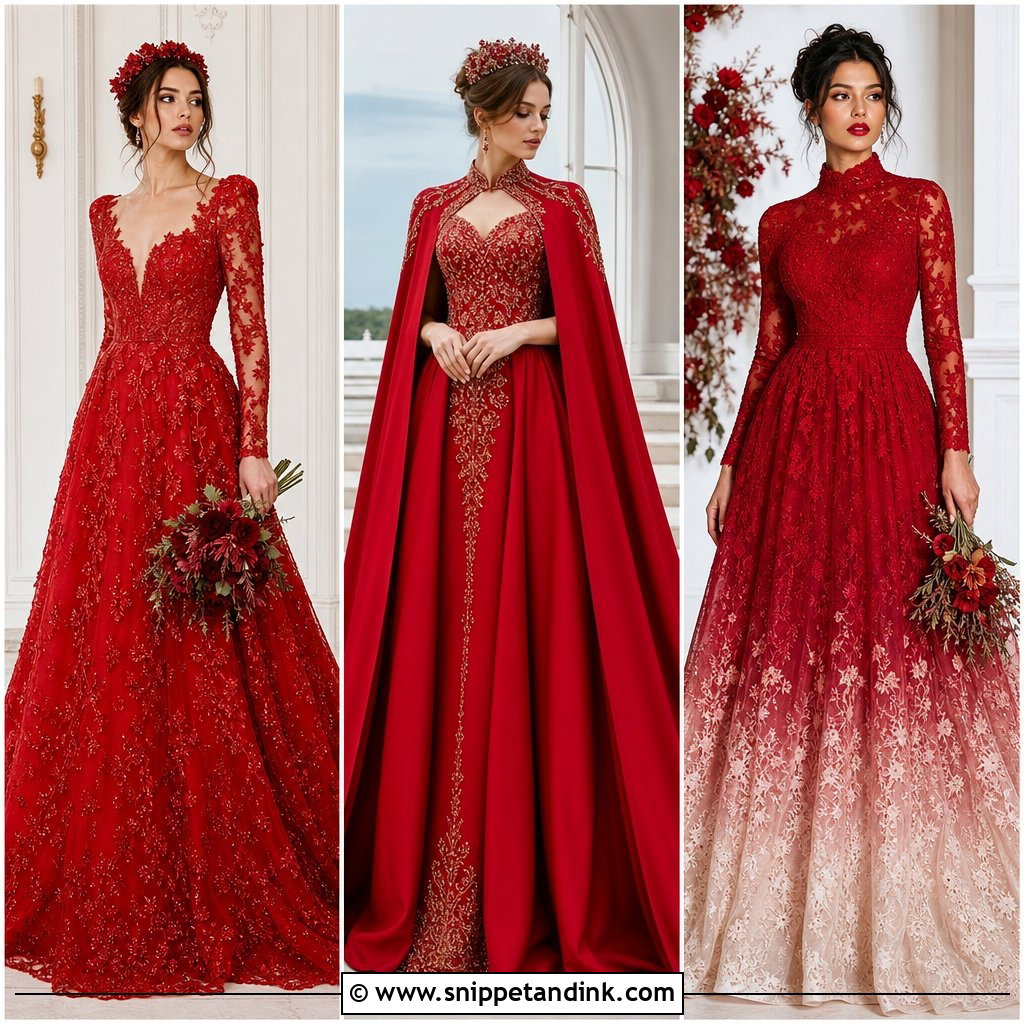
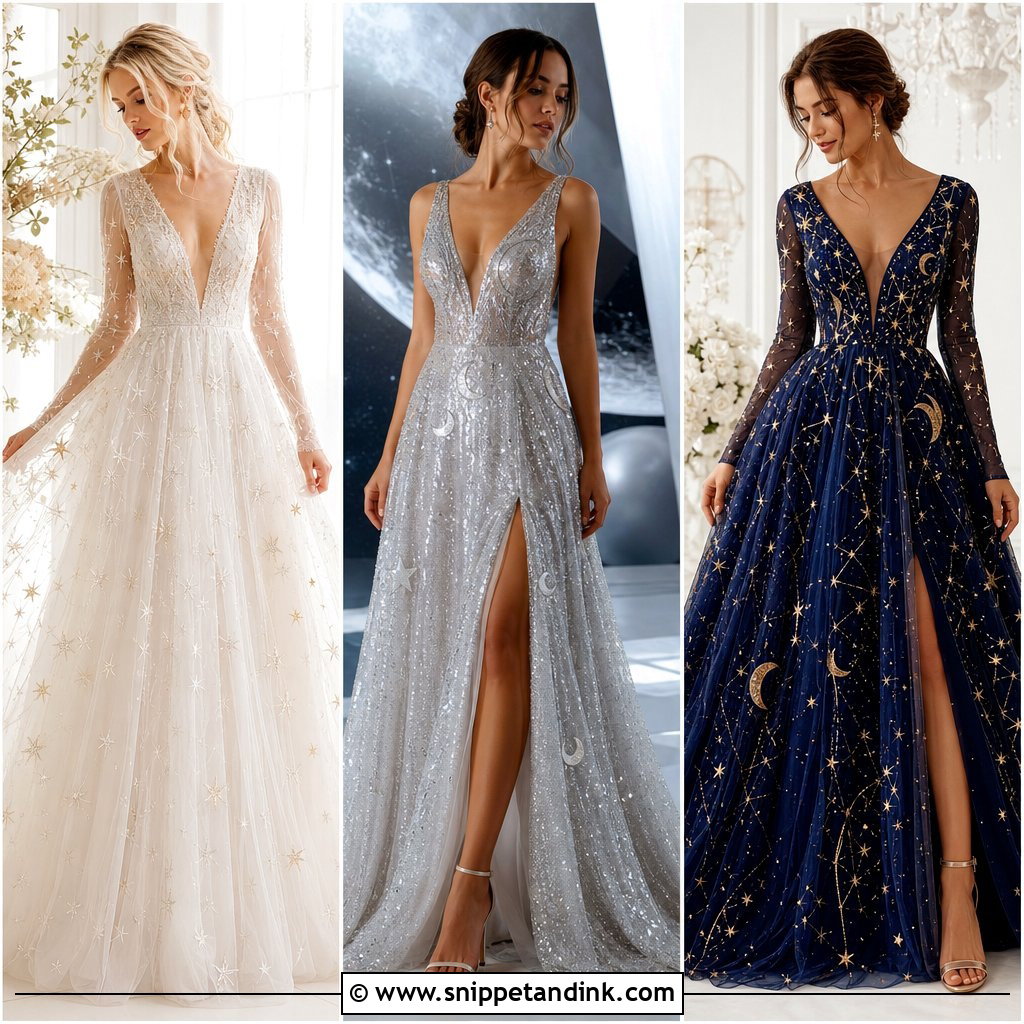

25. Reception Wedding Dress
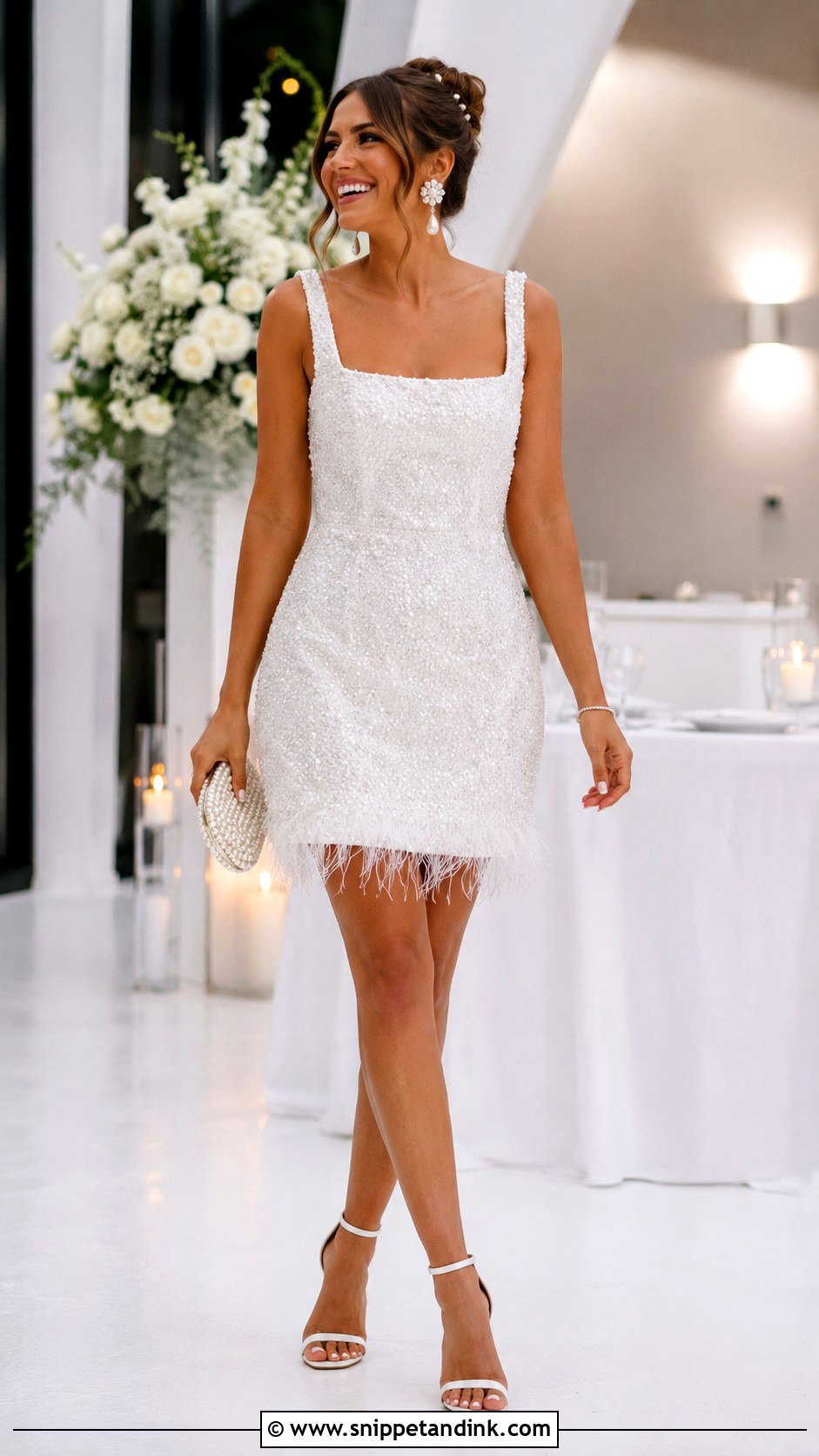
The reception dress is the one you’ll actually live in for hours, so I put movement and sitting ahead of everything else. A fitted midi, a feather-trim mini, a sleek slip or a beaded short gown all work. Plan the change too: a private room, a few minutes and someone who knows how the ceremony gown’s closures open. Comfortable heels, statement earrings and a small clutch are plenty, and the long veil can give way to a bow, a headband or pearl hair pins. It can be more playful than the ceremony gown and still clearly bridal for the first dance and late-night photos.
Bustles, Steamers and the Hours After the Ceremony
Any gown with a train needs a bustle for the reception, and it’s worth choosing the type at your fitting rather than accepting whatever your seamstress does by default.
- An over bustle hooks the train up onto the back of the skirt. It’s quick to do and suits lighter fabrics.
- A French or under bustle tucks the train underneath with ribbon ties. It suits satin and heavier skirts and looks cleaner from behind.
- Ask for colour-coded ties or numbered loops, and teach one bridesmaid at the last fitting. A corridor full of people guessing at hooks is one of the most common reception delays I see.
Steam the gown at the venue, not the night before at home, because the drive puts creases straight back into satin and crepe. I keep a small kit of safety pins, white chalk for minor marks on ivory and clear nail polish to stop a snagged tulle edge from running.
Have the Dress Cleaned Before Hidden Stains Show
Take the gown to a specialist wedding dress cleaner within a few weeks. Champagne, sweat and sugary drinks often dry invisibly, then oxidise into yellow or brown marks months later, so a dress that looks clean usually isn’t. Point out every spill you can remember.
For storage, I use acid-free tissue in the folds and an acid-free box or a breathable cotton garment bag, kept somewhere cool, dark and dry. Skip the plastic bag from the shop, which traps moisture, and never leave a heavy beaded or ball gown hanging by its straps for months, since the weight stretches the shoulders. Use the inner hanger loops, or lay it flat in the box.
Your Gown Has to Last the Whole Day, Not Just the Aisle
The right gown fits your body, your venue and your personality at once, and you only find that out by trying shapes on and moving in them. Use these 25 looks, from classic satin and courthouse midis to beach chiffon and a lighter reception change, to see which neckline and fabric keep pulling you back. Then let the accessories support the dress instead of competing with it. How you feel when you sit, walk and hug people should count as much as what the mirror shows you on the first try.
You'll Like These Ideas:




Leave a Reply