
Regency romance translates into bridalwear better than almost any other period. Empire waists, square necklines, puff sleeves, floral embroidery, corset bodices and airy skirts all come from it, and modern construction keeps them from looking like a costume. Here are twenty gowns that take the Bridgerton look in different directions: quiet satin, full ball gowns, pastel colour, size-inclusive shapes, and dresses that work in a garden, a ballroom, an estate or a registry office. Whether you lean towards Daphne’s simplicity or Queen Charlotte’s grandeur, I’d say the same thing at the first appointment: pick the silhouette for your body and venue first, and add the period details second.
An Empire Waist Starts With the Right Bra
Nobody tells you this about Regency shapes: the whole dress hangs from the bust. With an empire waist, the seam sits right under it, so if your bust sits lower than the seam, the dress pulls and the skirt tips forward. I ask brides to bring the bra or longline they plan to wear to the very first appointment, not the last one.
A few honest notes on who each period shape suits:
- High empire waist: flattering on smaller busts and long legs. On a full bust it needs a built-in cup or it looks like the seam has slipped.
- Square neckline: suits most bodies, but it gapes when you lean forward if the corners aren’t cut close. Bend down in it at the fitting.
- Puff sleeves: they add width at the shoulder. Flattering on narrow shoulders; on broad ones, choose a smaller puff placed lower.
- Corset bodice: shapes almost any figure, but only when it’s fitted to you. A standard size rarely sits right without alterations.
Fluid fabric under a high seam can also cling to the stomach when you sit, which some brides love and some don’t. Sit down in the fitting room before you decide.
1. Empire Waist Wedding Dress With Puff Sleeves
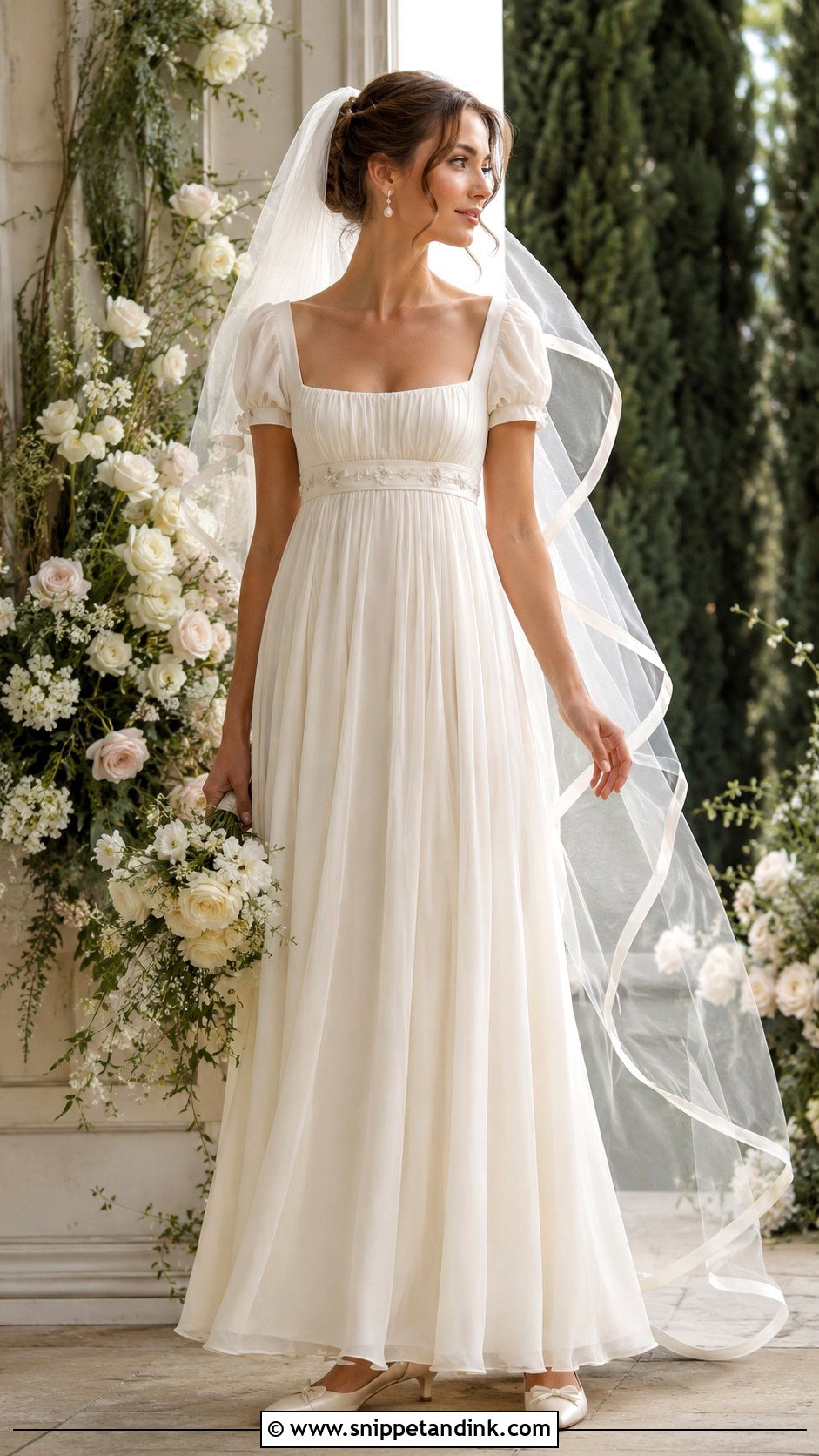
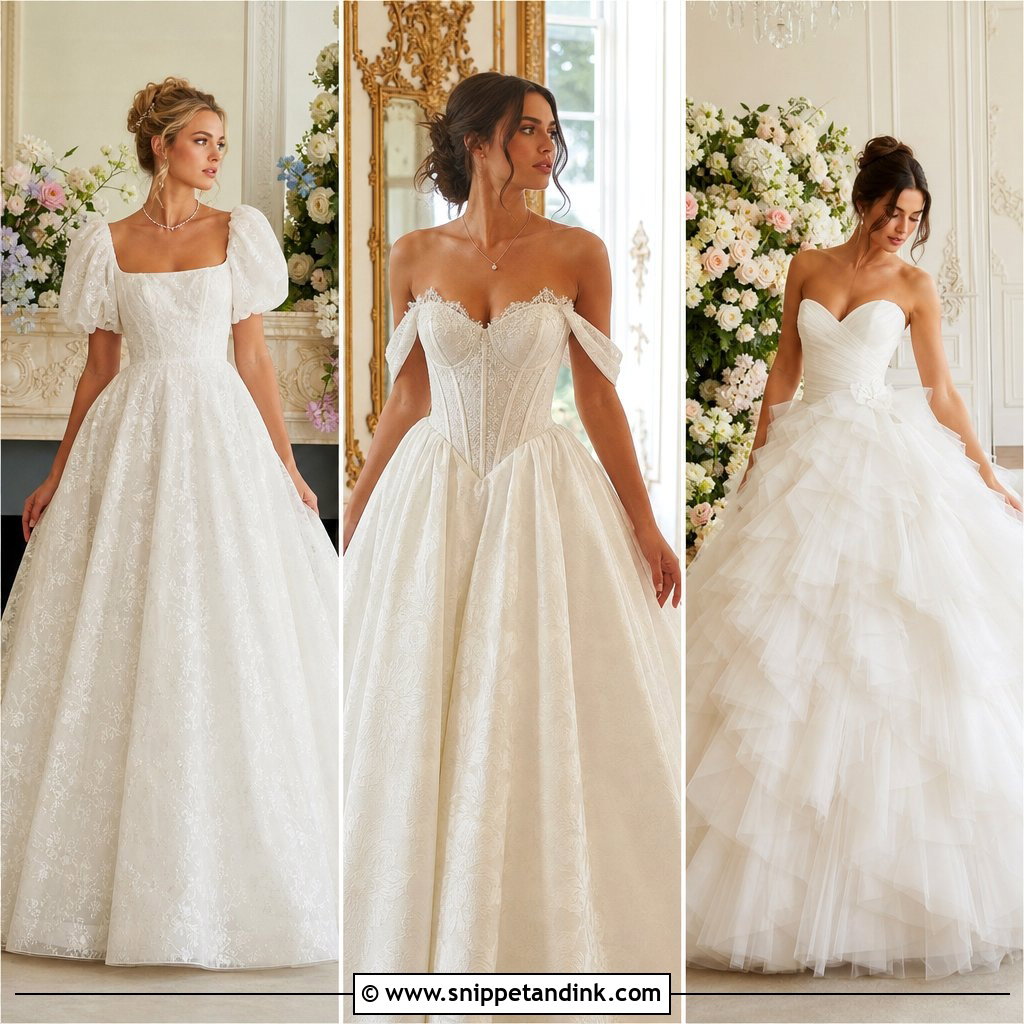
This is the shape everyone pictures. The waist seam sits just under the bust and a gathered skirt falls straight from it, so the fabric has to be light: chiffon, silk crepe or fine tulle. Short puff sleeves balance the long skirt, and a square neck frames the collarbone. Pearl drops, ivory kitten heels and a ribbon-trimmed veil. Subtle floral embroidery on the bodice is a nice extra. I’d steer petite brides with a long torso away from the highest empire seams, because they can make the whole body read as skirt; dropping the seam an inch or so fixes it. Gardens, historic venues and warm weather suit it.
2. Square Neck Satin Wedding Dress
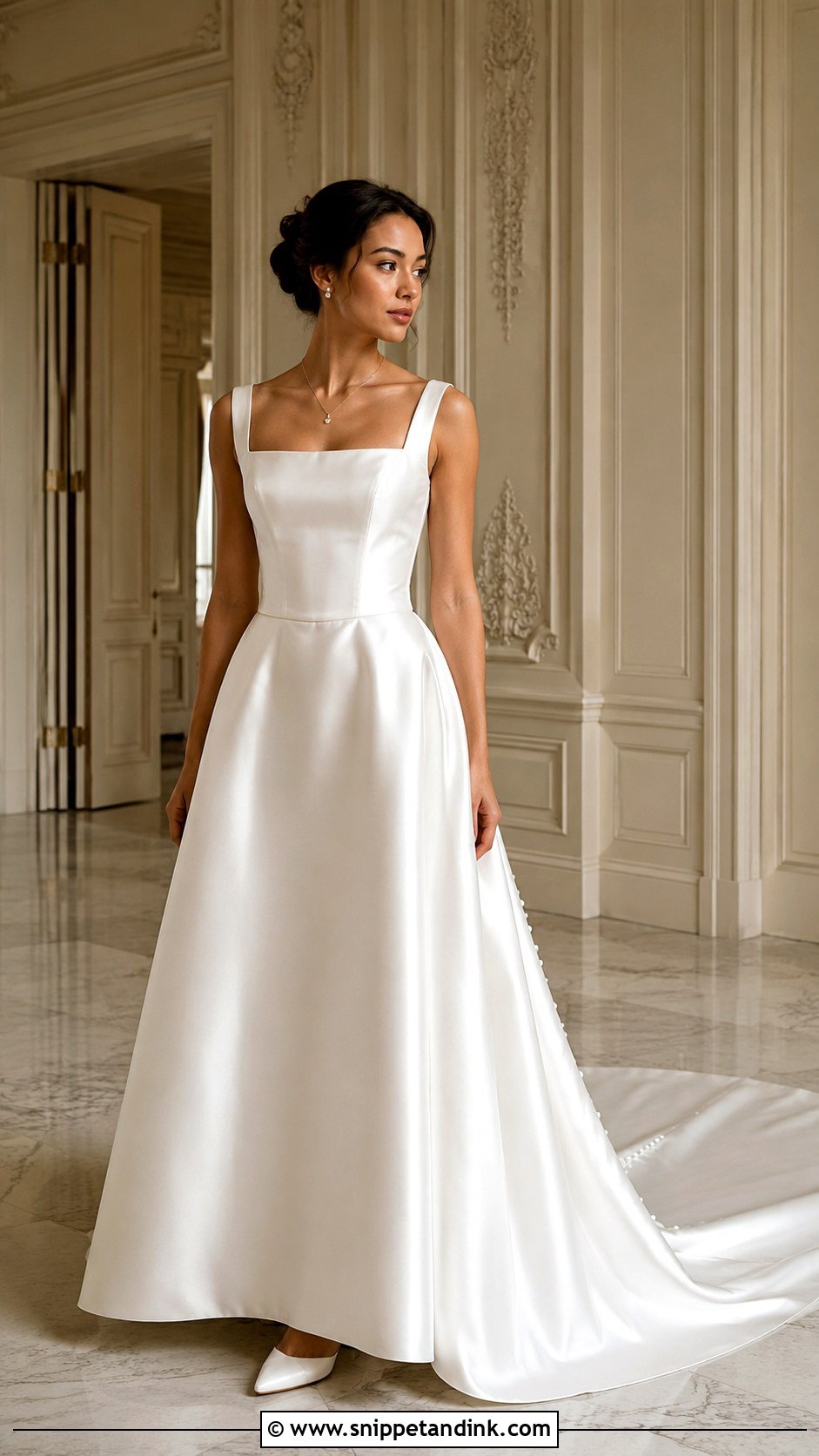
Satin and a square neck: clean, luminous, and the closest thing to a modern gown on this list. Look for a structured bodice that supports the bust without visible boning lines, then an empire or natural waist into an A-line skirt with a chapel train. It nods to Regency fashion without asking guests to notice. Elbow gloves if you want drama, pearl studs and a fine pendant if not. Pointed satin pumps and a top-handle bag. Satin shows everything, including lumpy seams and the edge of shapewear, so keep embellishment minimal and have your fitter check the gown with the exact underwear you’ll wear. Covered buttons down the back add quiet detail.
3. Floral Embroidered Wedding Dress
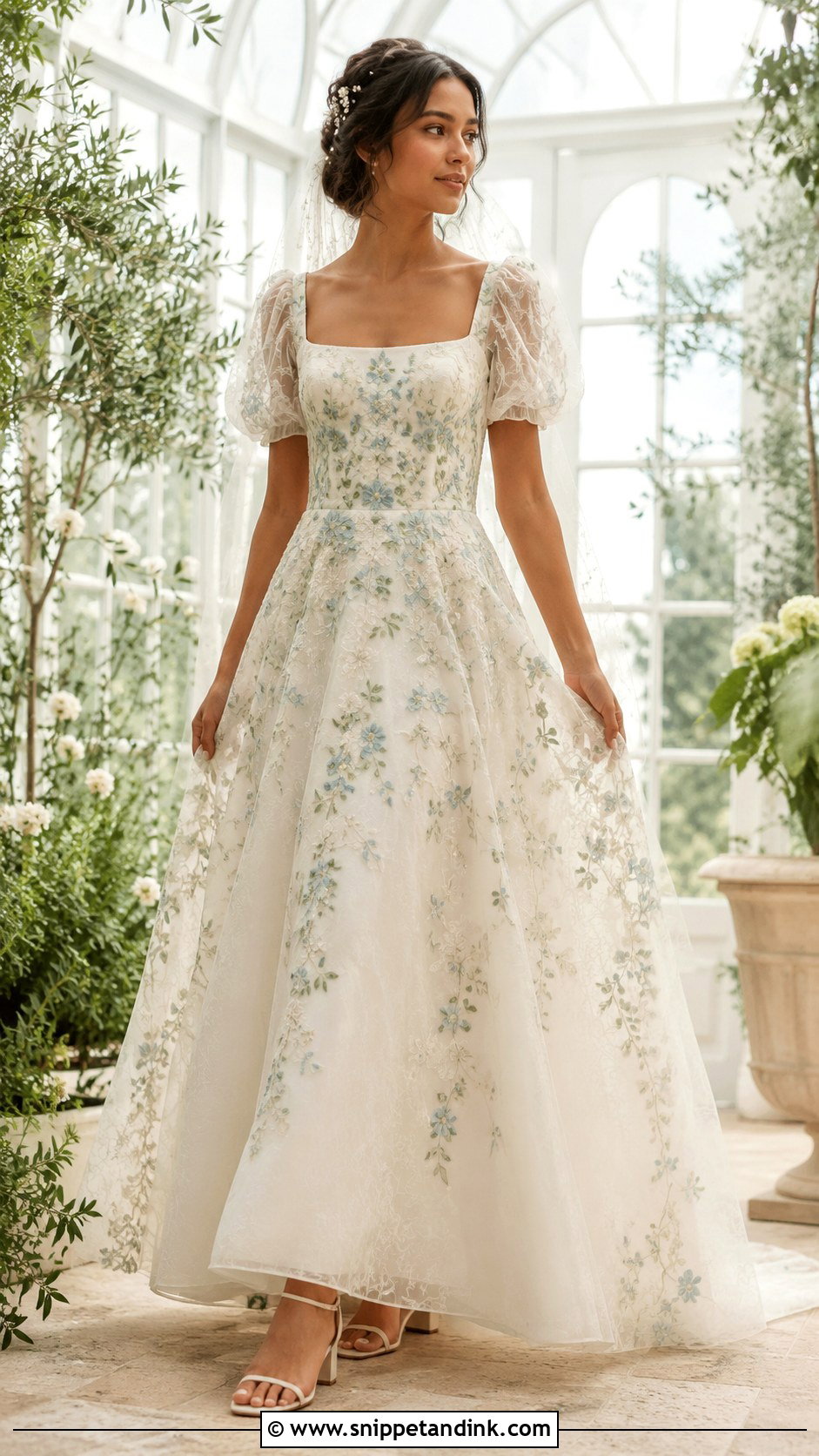
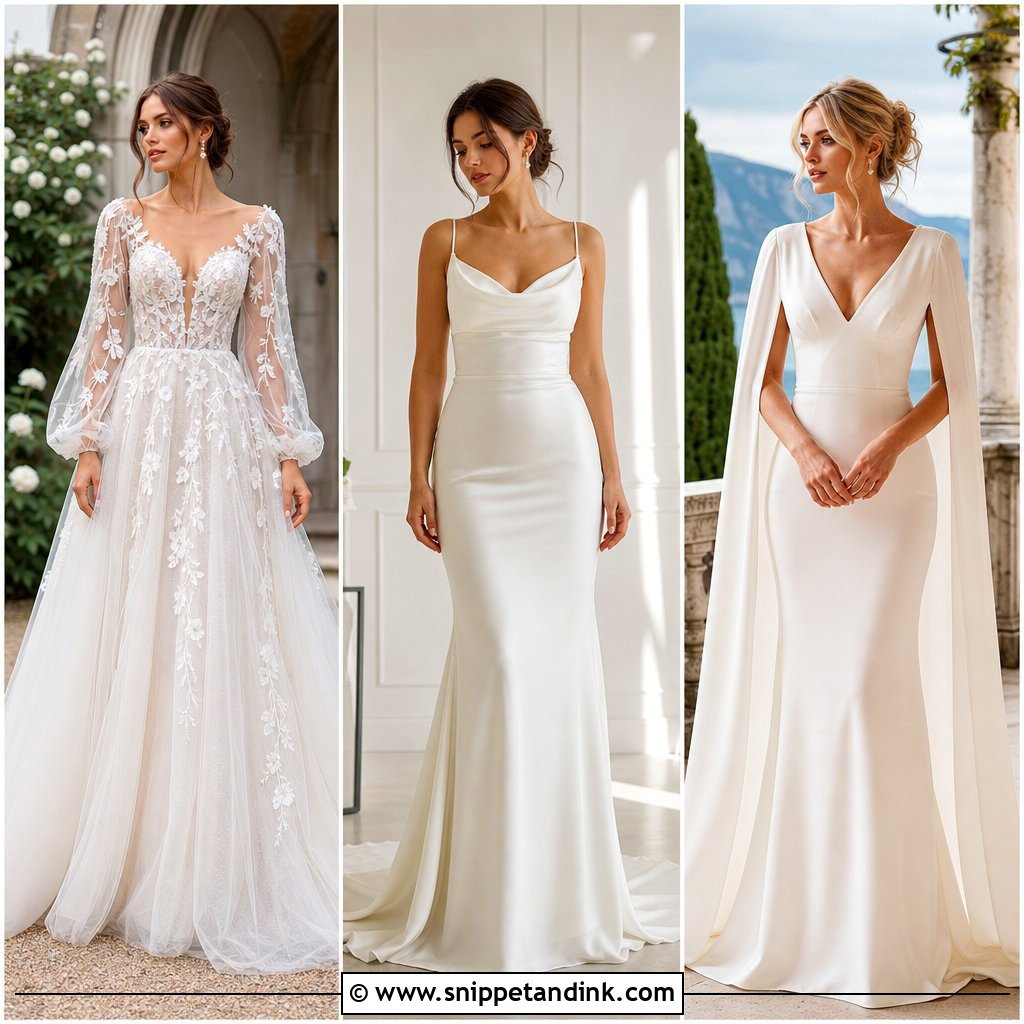
Embroidered flowers scattered over ivory bring the garden scenes straight into the dress. White, pale blue, blush or soft green thread keeps it subtle. A sheer embroidered overlay over a fitted bodice and A-line skirt, with puff or embroidered cap sleeves. Pearl hairpins, a fingertip veil and low block-heel sandals for lawns. I like a small bouquet that repeats one flower from the embroidery. Ask how dense the embroidery is on the back of the skirt. Heavy stitching on sheer tulle pulls it downwards and puckers over a long day, and that’s hard to fix later. Keep the necklace minimal; the bodice is the focus.
4. Corset Bodice Ball Gown Wedding Dress
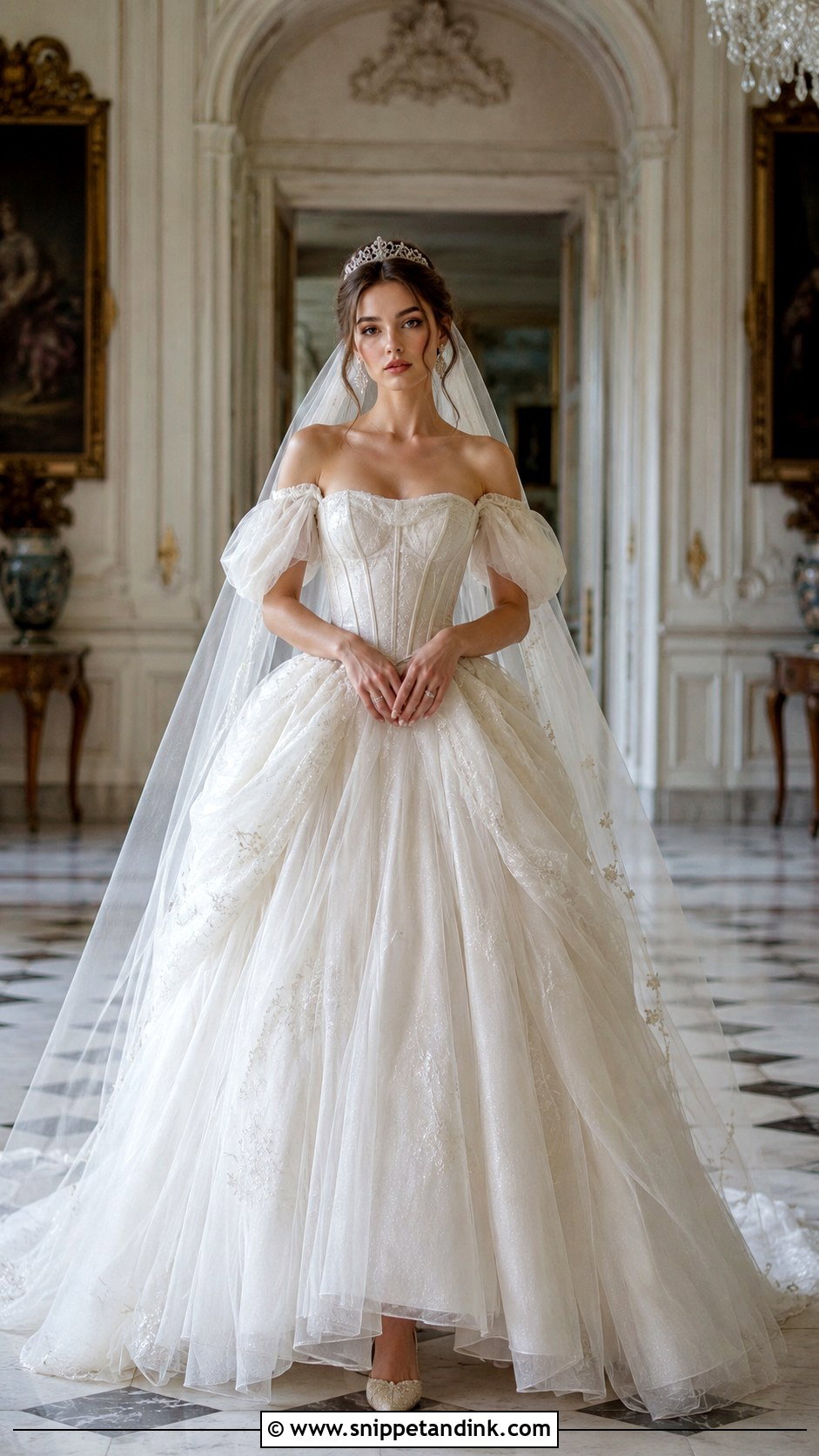
A corset ball gown is the grand entrance. A visible lace-up back or softly boned bodice for definition, layers of tulle for volume, and a square or scooped neckline to keep the Regency link. Detachable puff sleeves give you two looks, ceremony and reception, without a second dress. Crystal earrings, a slim tiara, pointed heels and a long veil past the train. That’s plenty. Before buying, sit in it for ten minutes; a corset that’s comfortable standing can dig in hard at the hip when you sit for a long dinner. Ballrooms, formal estates and big guest lists suit its scale.
5. Long Puff Sleeve Wedding Dress
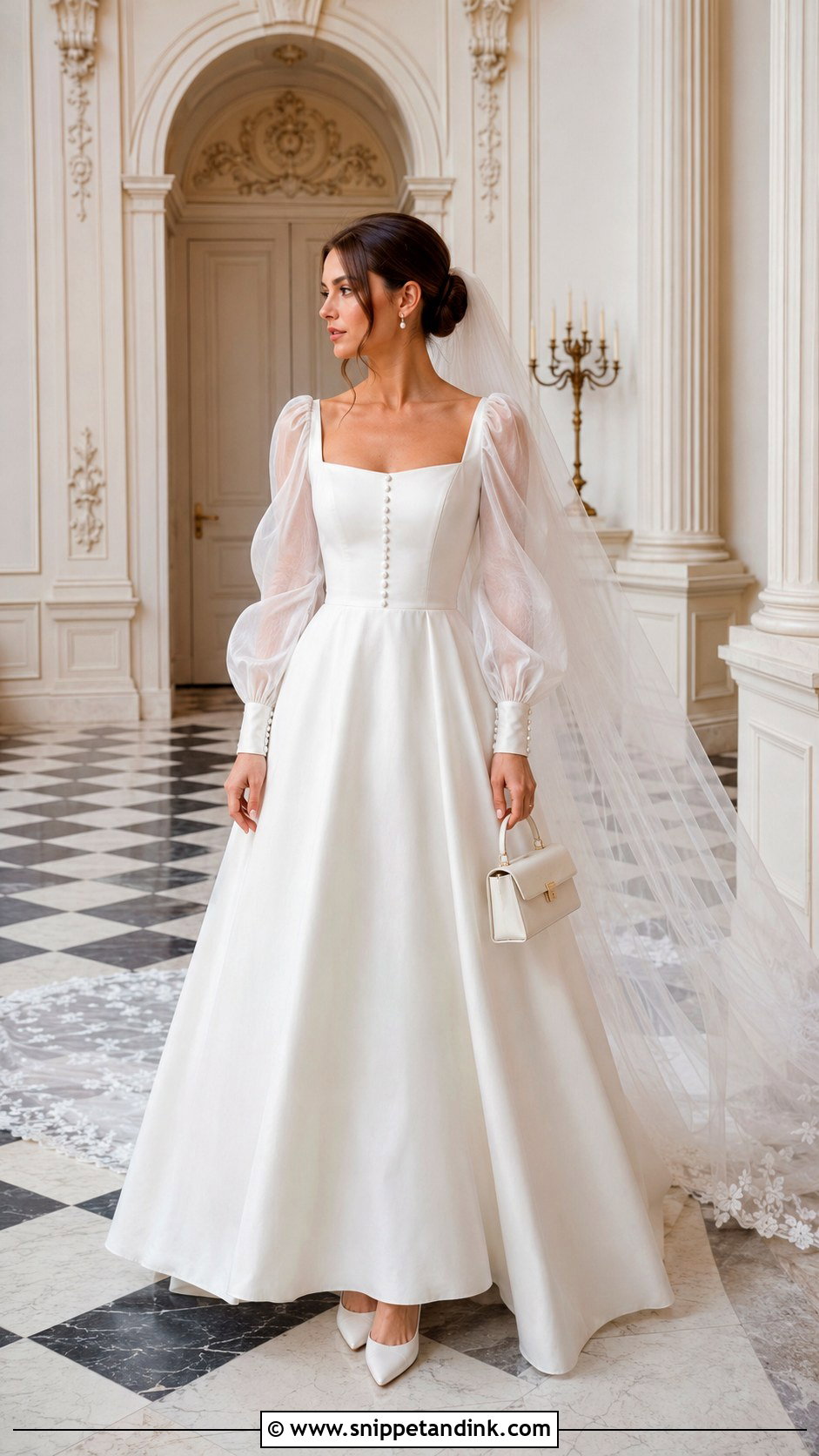
For a fall or winter ceremony, long puff sleeves bring warmth and character at the same time. They should gather at the shoulder and taper to fitted cuffs. Sheer organza, dotted tulle or fine lace keeps the volume from feeling heavy. Pair them with a square neck and a streamlined A-line skirt so the proportions stay balanced. Pearl buttons at the cuffs and back are a lovely detail. Closed-toe pumps, a cathedral veil and a structured mini bag. If you’re broad-shouldered, I’d go for sleeves gathered lower on the arm rather than at the shoulder point, which keeps the frame from widening. Historic homes and museum venues suit it.
6. Regency Lace Wedding Dress
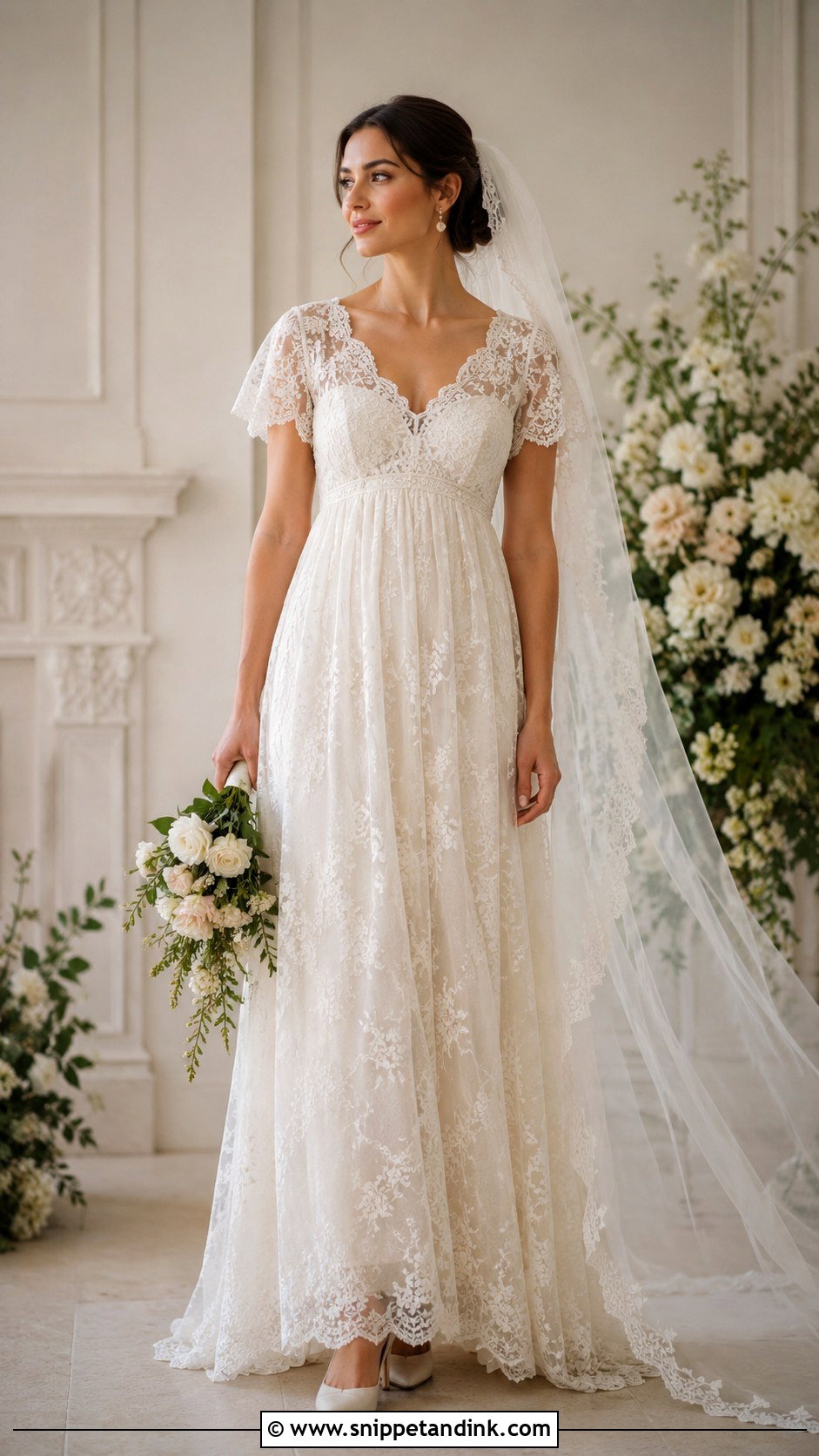
Lace makes a Regency gown feel like an heirloom, if the lace is fine enough. Botanical lace, fine Chantilly patterns or delicate vines suit the period far better than big heavy appliqués. An empire waist and flowing skirt, with a fitted lining as a smooth base. Scalloped short sleeves make it a warm-weather dress. Pearl earrings, ivory slingbacks and a lace-edged veil, plus a low bun or pinned curls. Chantilly is fragile; it snags on bracelets and watch clasps, so I’d leave anything with prongs off your wrists. Skip a big necklace and let the lace do the work.
7. Blue Bridgerton Wedding Dress
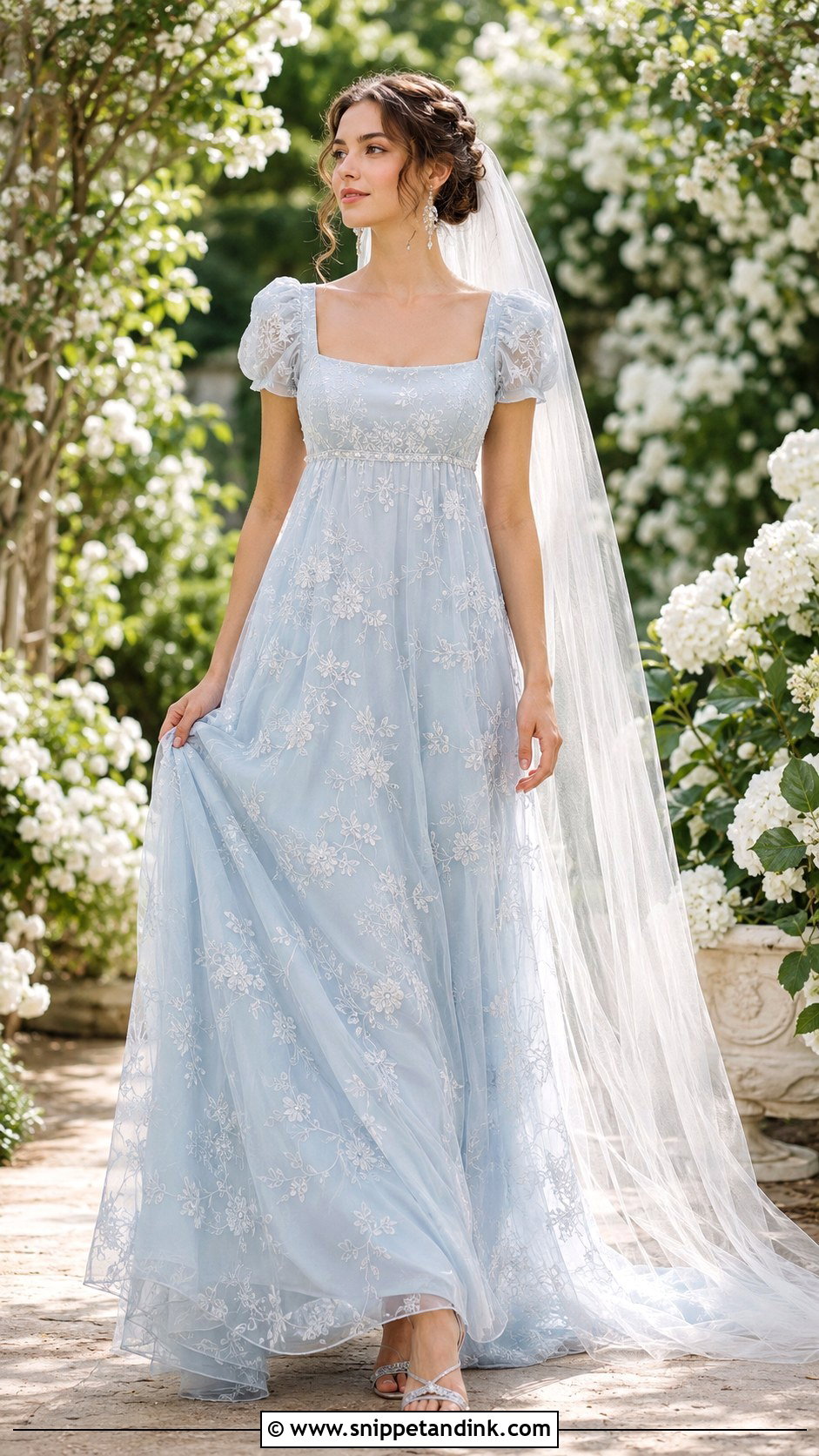
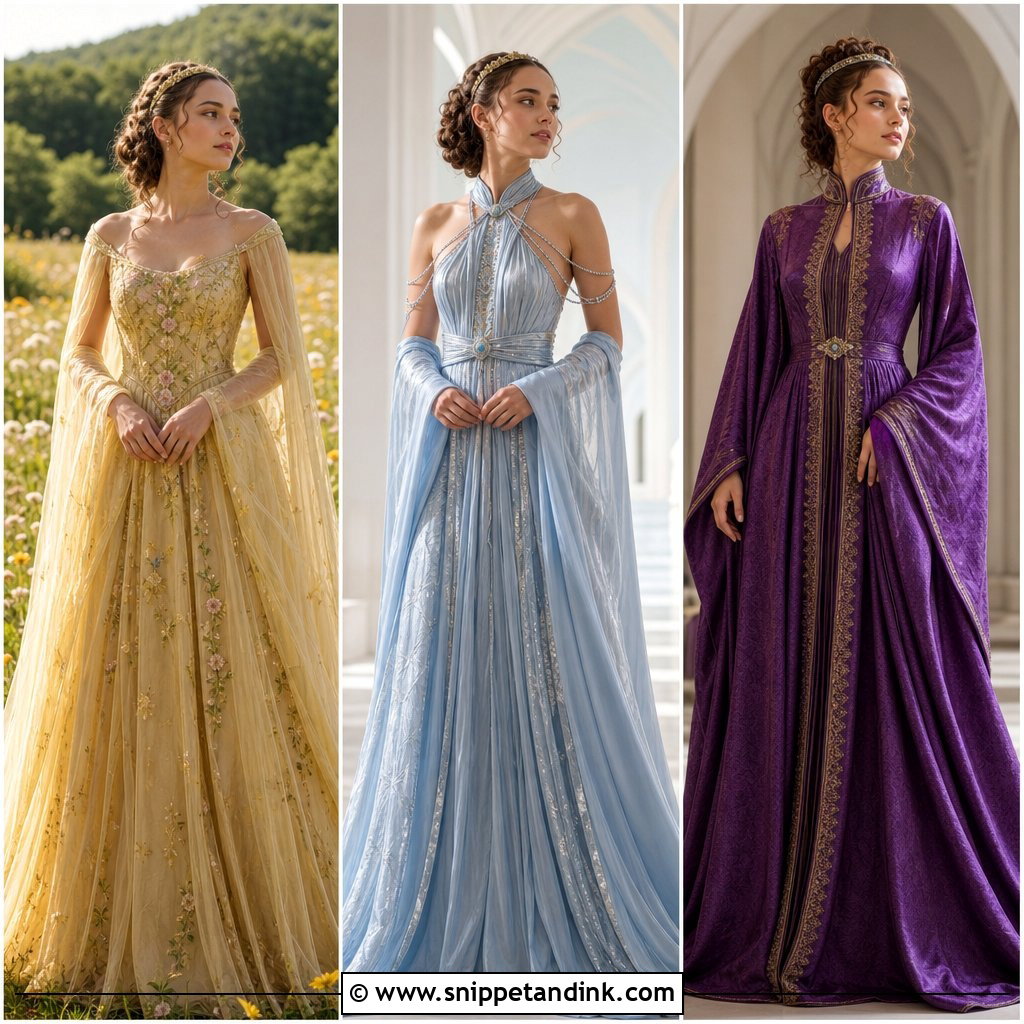
Pale blue is the colour of the series, and it’s a genuine alternative to ivory. Powder blue, misty blue or barely tinted silk. A square neck, fitted bodice and empire waist set the period; a long chiffon or organza skirt keeps it airy. White embroidery adds contrast, tonal embellishment softens it. Silver heels, pearl and crystal earrings, and a translucent ivory veil. Keep the bouquet white. Blue shifts more than any other colour between shop lighting and daylight, so I always take a swatch outside and next to your face before ordering. It’s a whole-dress version of something blue.
8. Blush Pink Wedding Dress With Empire Waist
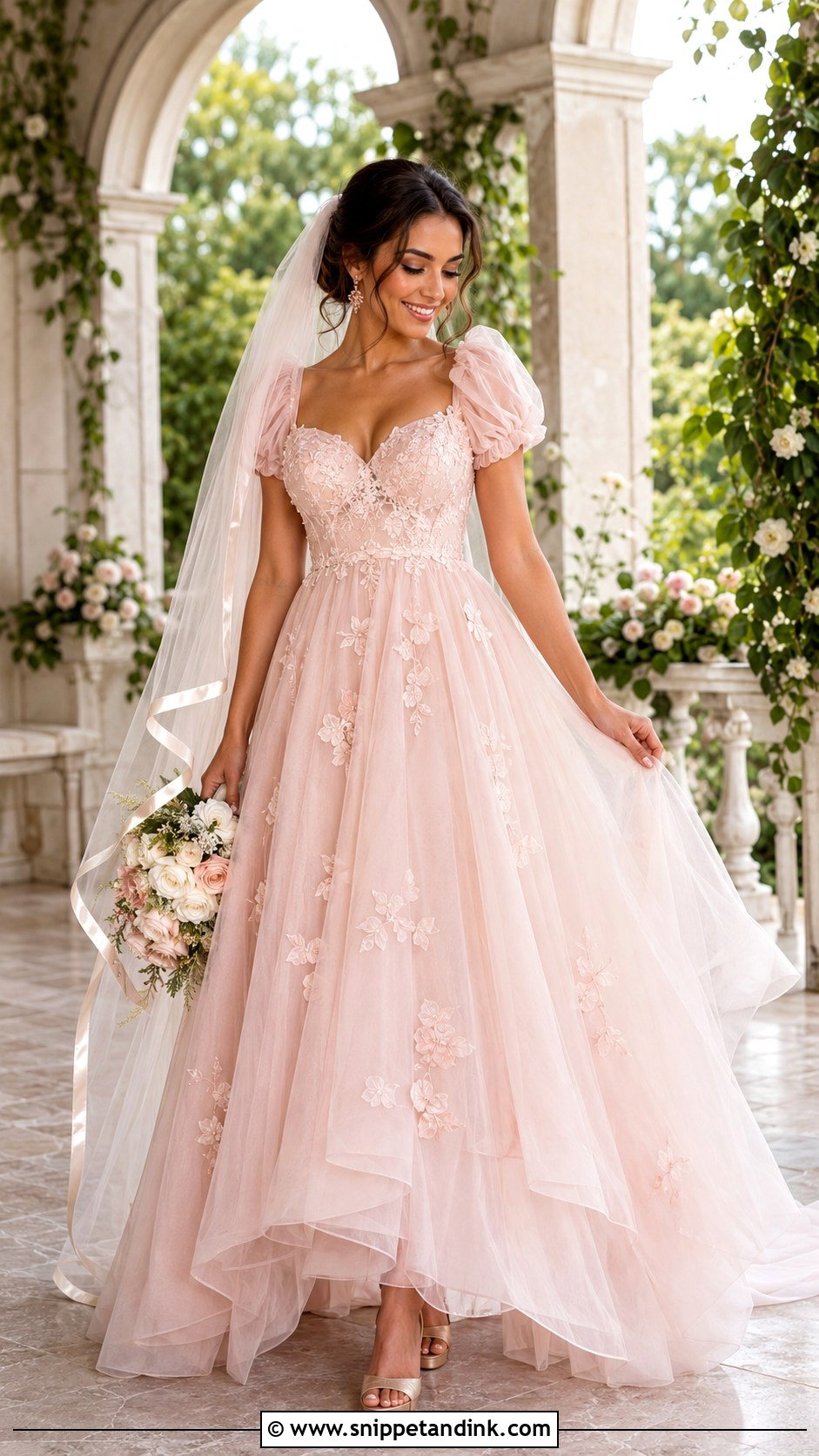
Blush is gentle, and it works with Regency shapes because it softens them. An empire gown with a fitted bodice, gathered skirt and short sleeves. Layers of blush tulle over a neutral lining give depth without going bright. Small pearls or tonal floral appliqués around the neckline add texture. Champagne heels, rose-gold earrings and an ivory veil with a narrow satin edge. Cream, blush and pale green flowers coordinate while keeping contrast. Undertone is everything with this colour. On olive or golden skin, a peachy blush tends to glow; a cool, grey-pink blush can make the same skin look tired. Try both before you decide.
9. Off Shoulder Regency Wedding Dress
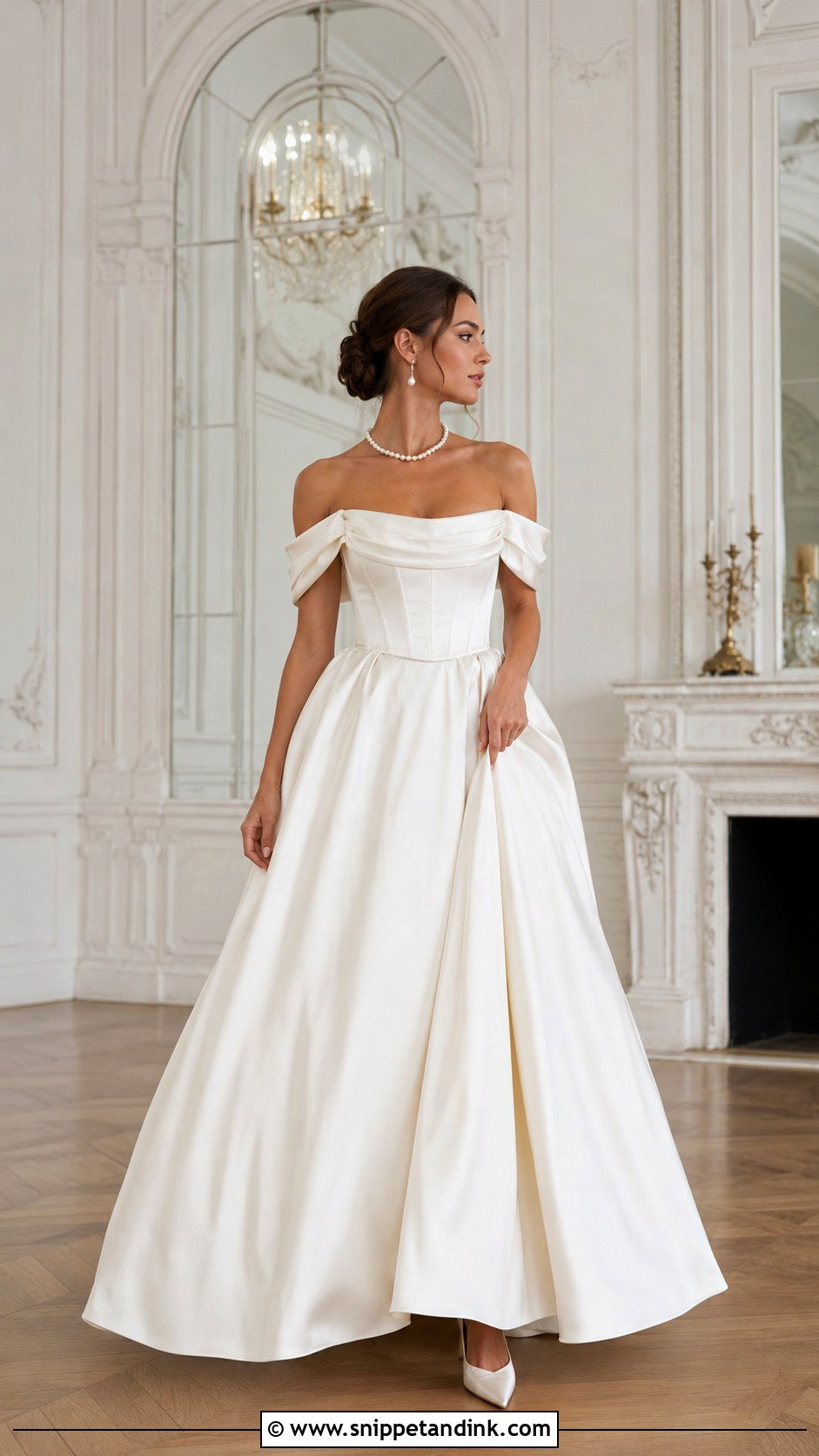
Off-the-shoulder brings courtly romance with a modern neckline. A fitted bodice and soft draped sleeves resting on the upper arm, with a full A-line or ball gown skirt to balance the open shoulders. Satin gives structure; layered tulle is softer. A thin ribbon under the bust suggests an empire waist. Short pearl necklace, drop earrings, pointed pumps and a low chignon. The problem with this neckline is that the sleeves slide down every time you lift your arms. Hidden silicone grip tape or a firm internal bodice fixes it, so make sure your fitter checks it with your arms raised as if hugging. Indoor ceremonies and mild weather suit it.
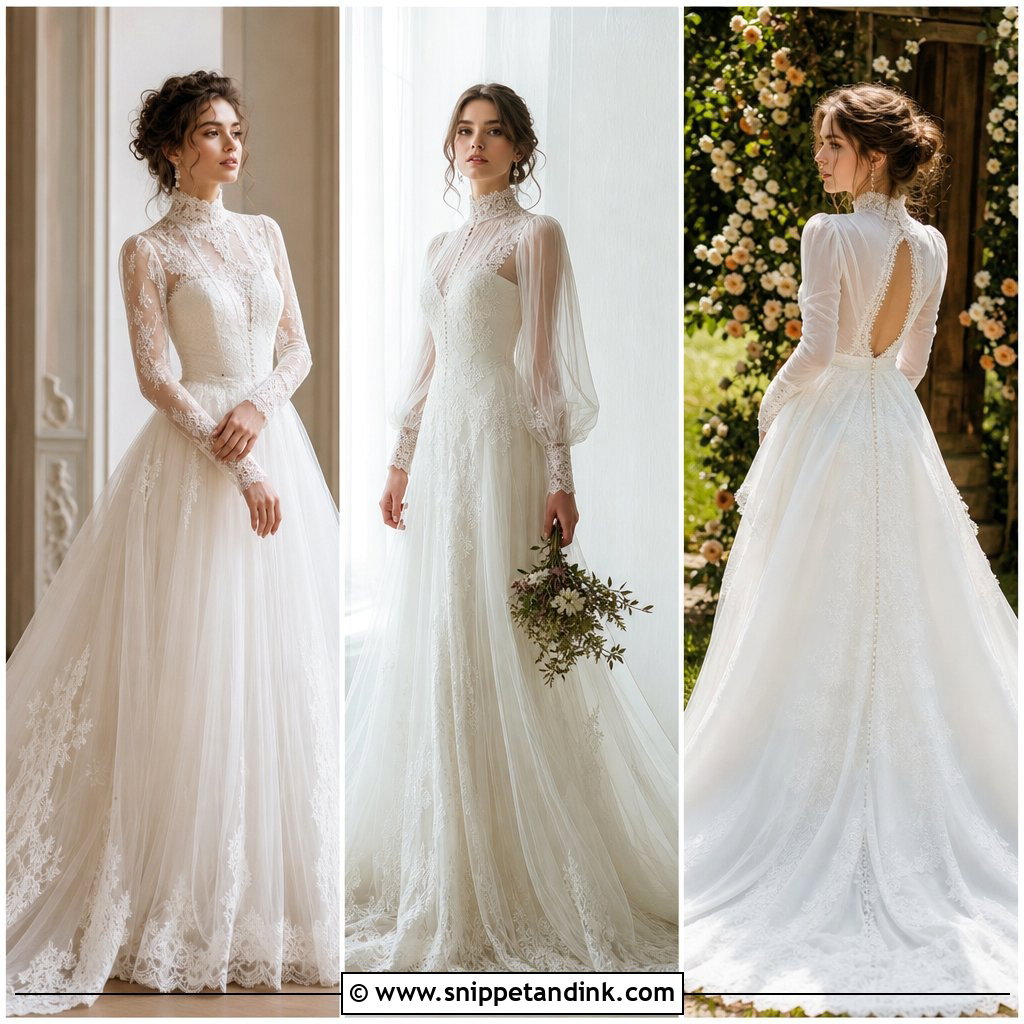
10. High Neck Regency Wedding Dress
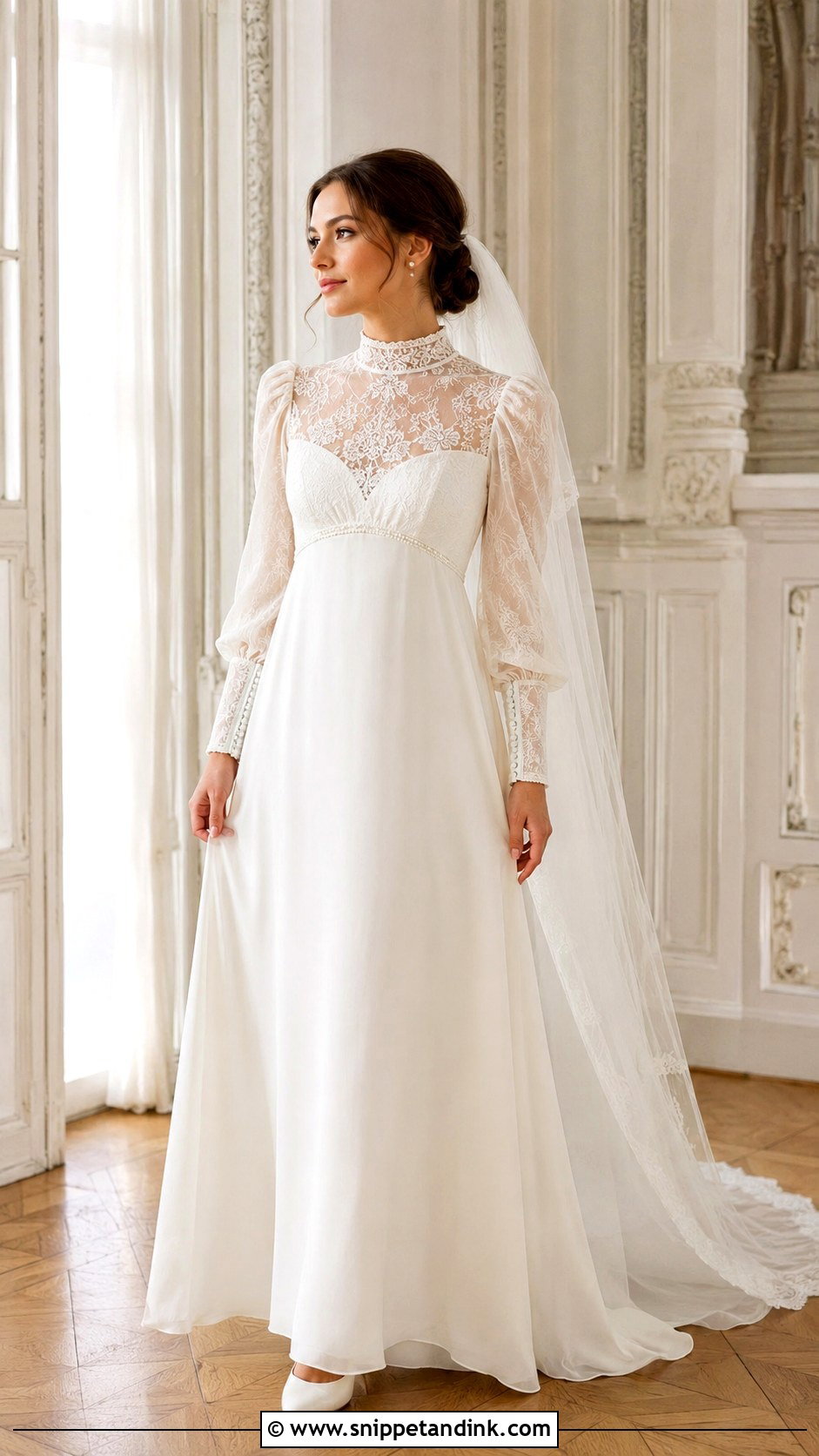
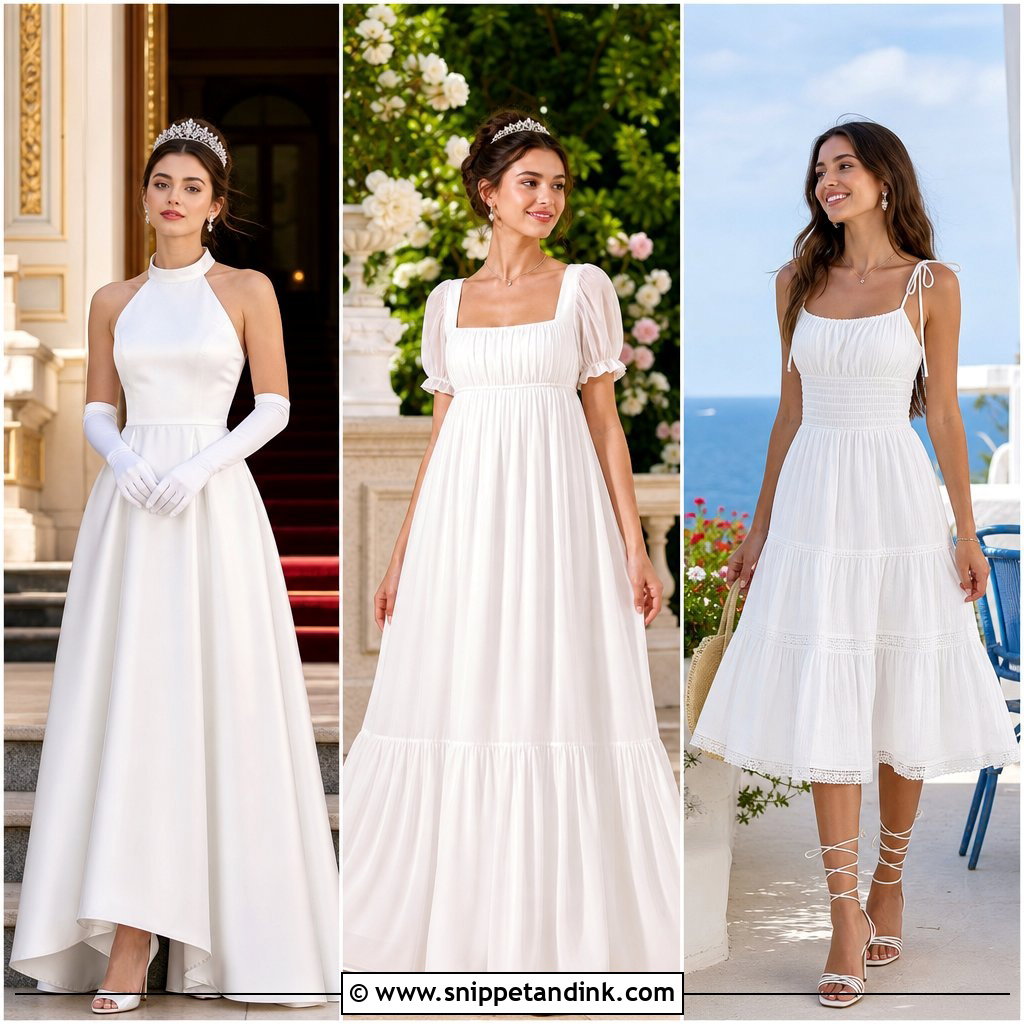
Modest and still delicate: that’s the high-neck Regency gown. Choose a sheer lace yoke, a fitted collar and lightly puffed sleeves rather than a heavy solid neckline. The bodice meets an empire waist and opens into a fluid chiffon or crepe skirt. Covered buttons down the back and cuffs. Pearl studs, a smooth low bun and a veil fixed below the hair. Closed-toe heels or embellished flats. A high collar must not touch your throat when you look down; I check it by asking the bride to read her vows from a card. Cooler seasons and formal ceremonies suit it, and a simple, structured bouquet keeps the detailed top clear.
11. Short Puff Sleeve A-Line Wedding Dress
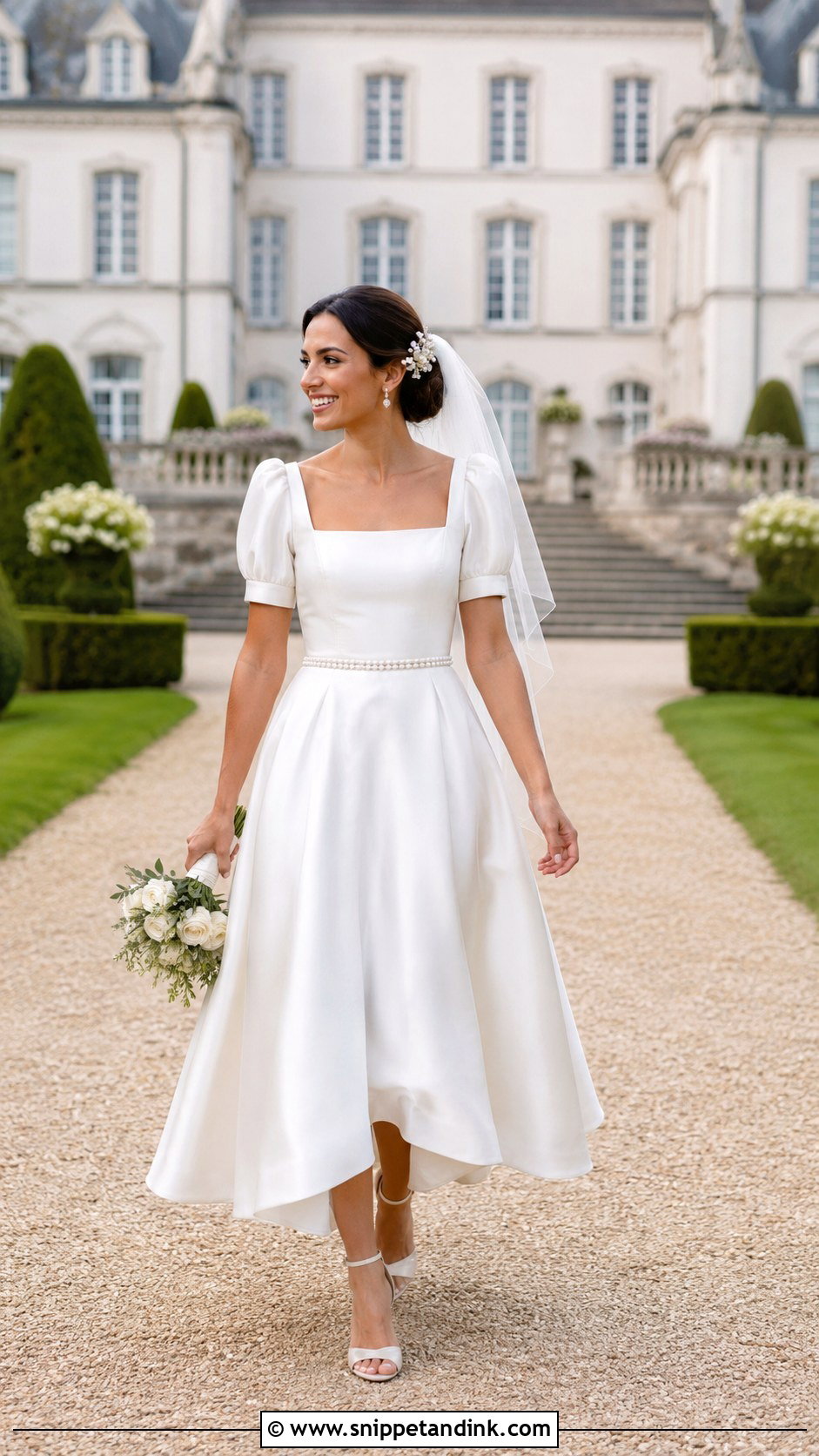
A short puff sleeve A-line is the easiest way into the theme. Fitted bodice, a skirt that widens gradually from the waist, a square neck and gathered sleeves, without tipping into fancy dress. Silk mikado gives crisp structure; chiffon or organza is softer. A narrow pearl belt adds definition if needed. Ankle-strap heels, a fingertip veil and a small floral comb. Puff sleeves in organza crush easily, so I keep them stuffed with tissue in the garment bag until the last minute. It suits nearly any setting, and fabric, sleeve volume and train length make it yours.
12. Pearl Beaded Bridgerton Wedding Dress
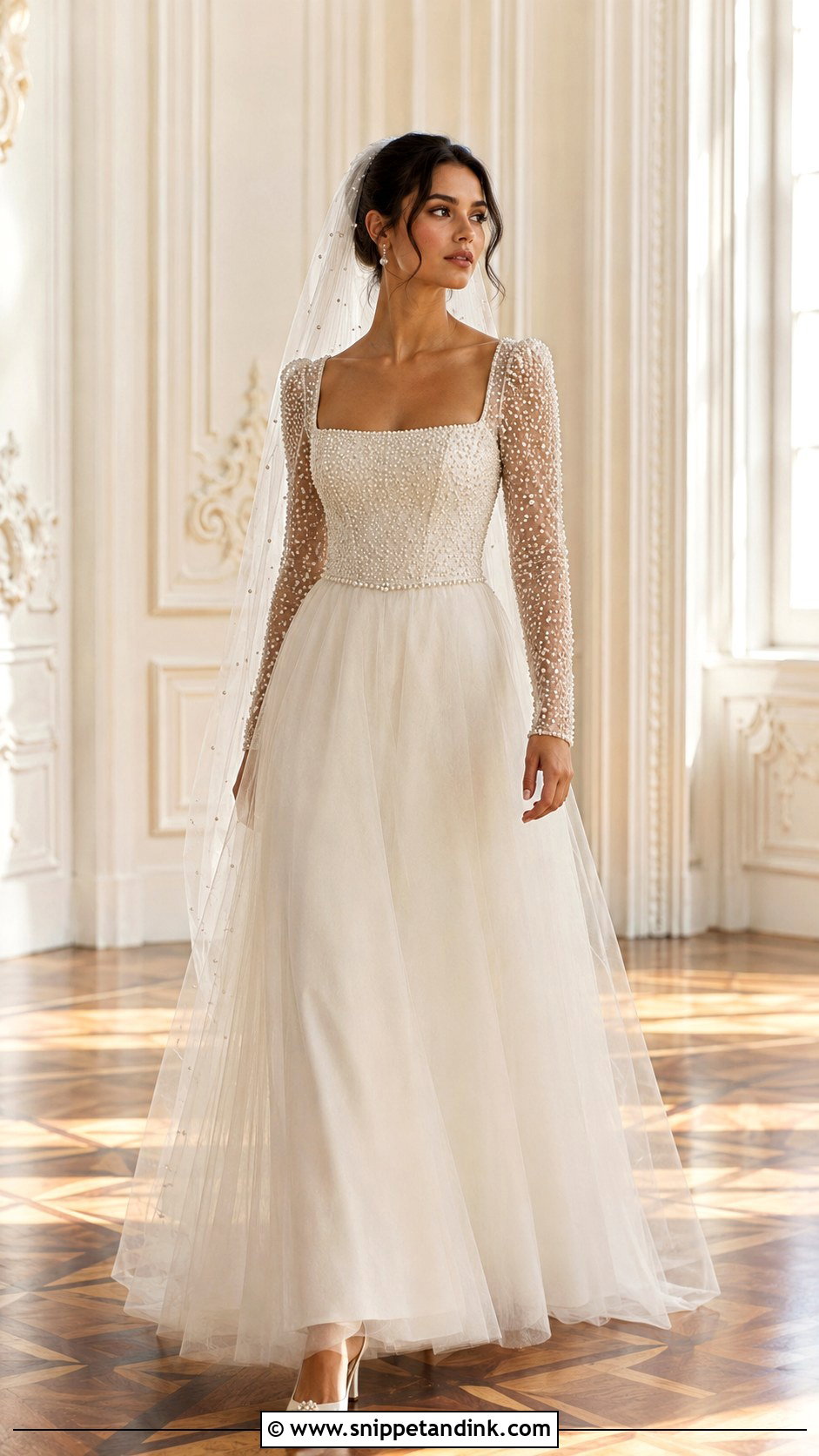
Pearl beading gives luxury without hardness. Choose small pearls scattered over the bodice, sleeves or overlay rather than covering everything, with a structured square neck and empire waist underneath. A plain satin or tulle skirt balances the beaded top. Pearl earrings, ivory pumps and a veil with a few matching pearls. Skip the big necklace. Under the arms is where beading causes trouble, since it rubs bare skin raw over a long day, so ask your seamstress to remove or flatten any beads there. It suits elegant indoor venues with good light.
13. Ruffle Trim Empire Wedding Dress
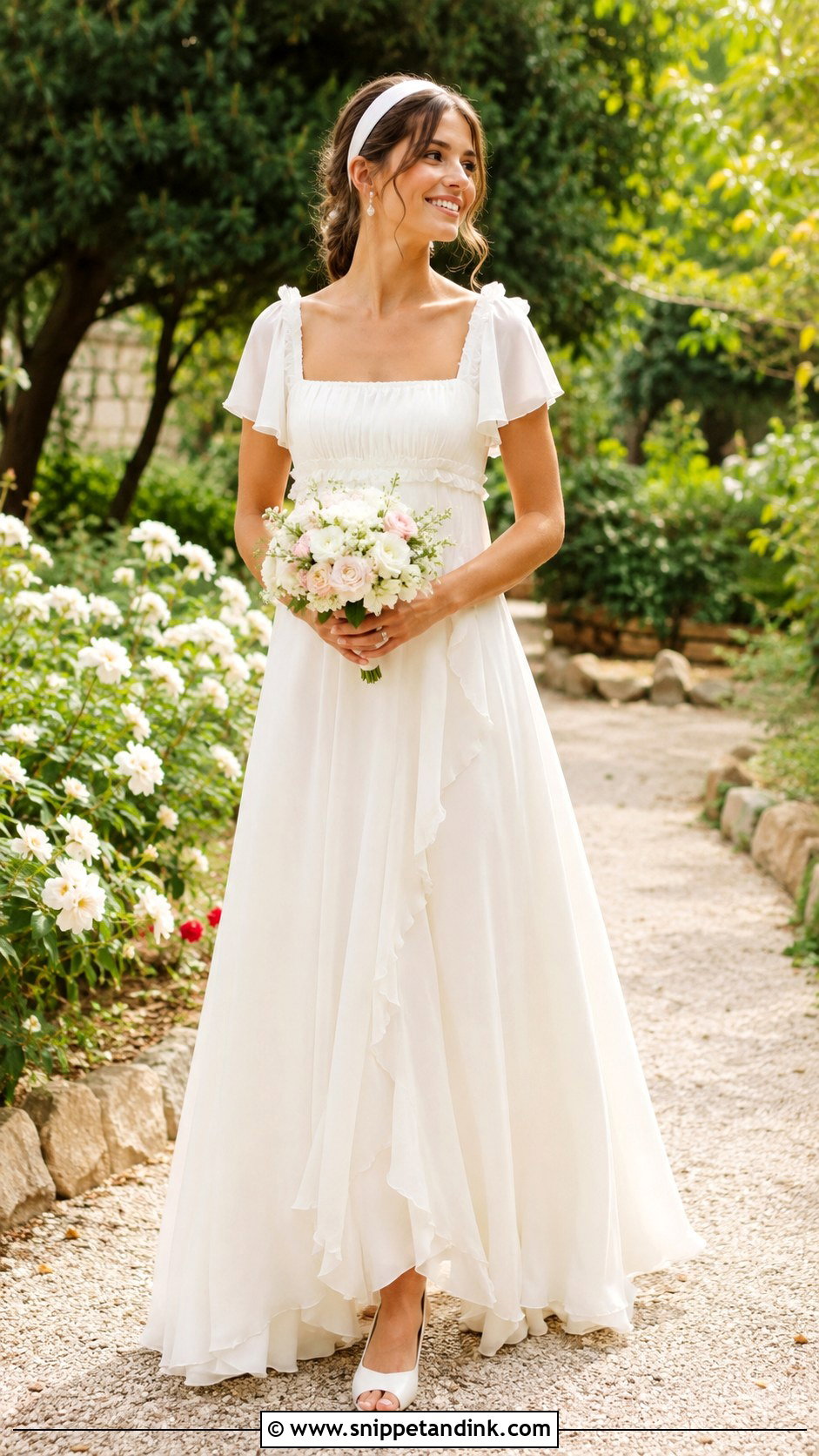
Narrow ruffles give an empire wedding dress movement and a playful finish. Trim around the square neck, sleeves or skirt tiers, kept small so it stays refined. Chiffon and organza let each ruffle float instead of sitting flat. Delicate earrings, low heels and a ribbon headband or simple veil. A firm underbust seam holds the shape under all that softness. Ruffles at the neckline collect foundation and bronzer more than plain fabric does, so I always ask the makeup artist to set the chest and neck well and dress the bride after makeup. Carry a compact bouquet so the neckline stays visible.
14. Cape Sleeve Bridgerton Wedding Dress
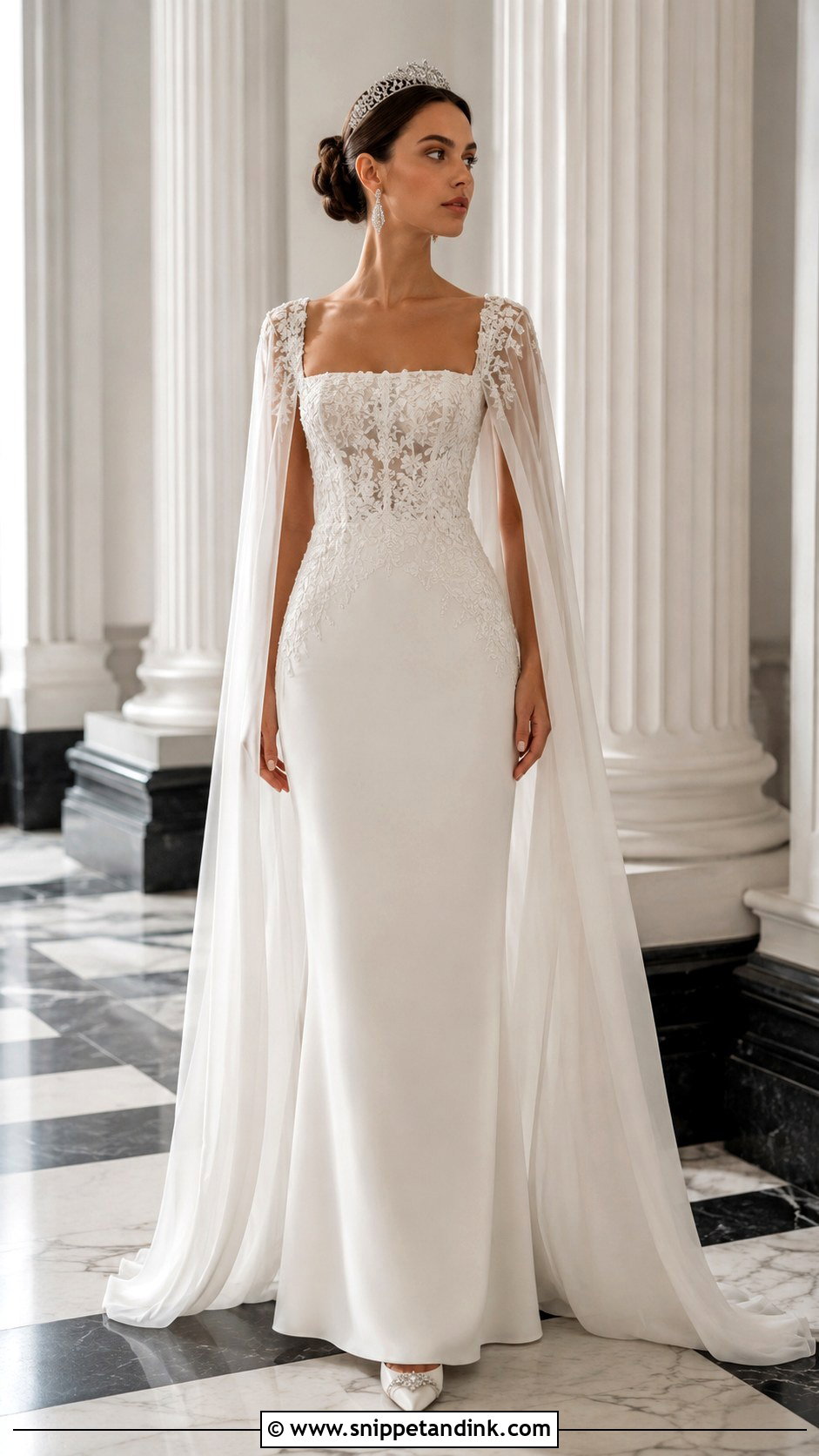
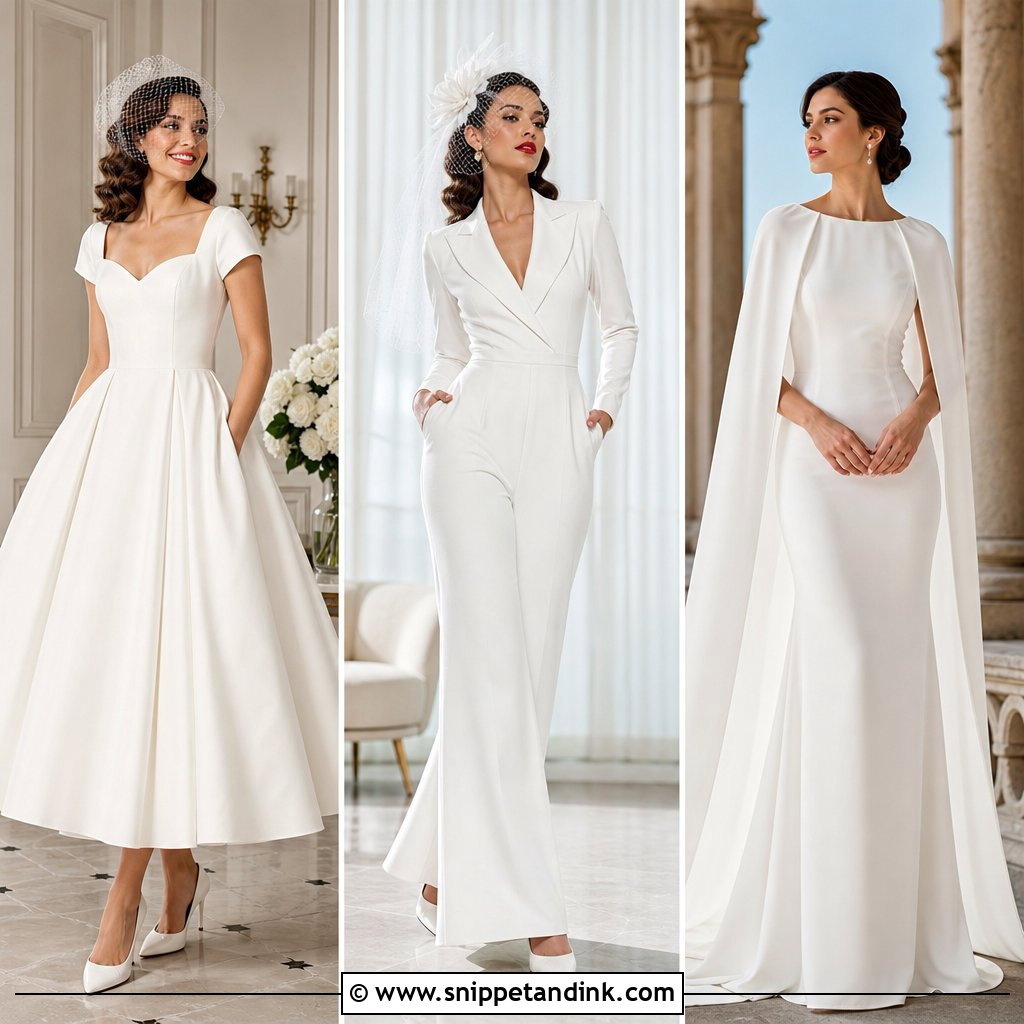
Cape sleeves give the impression of a royal layer without a separate cape. Sheer chiffon panels fall from the shoulders beside a fitted column or A-line gown, with a square neck, empire seam or floral lace bodice for the Bridgerton link. The panels should move but never touch the ground. Pointed heels, crystal drops, a sleek low bun. Skip a long veil, which competes with the panels; a small comb or delicate tiara is enough. Long panels catch on chairs and get trodden on during a first dance, so I always add a small hidden loop to slip over the wrist. Spacious venues show off the movement.
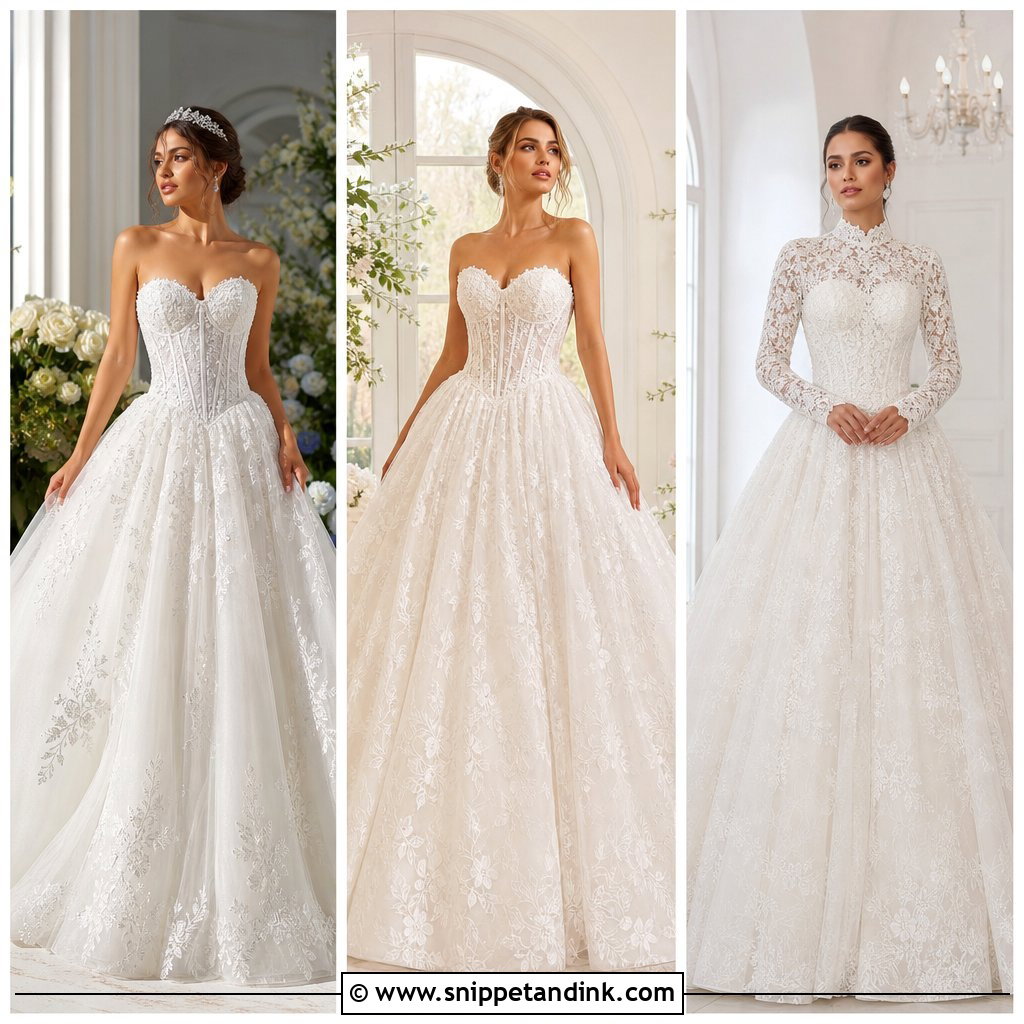
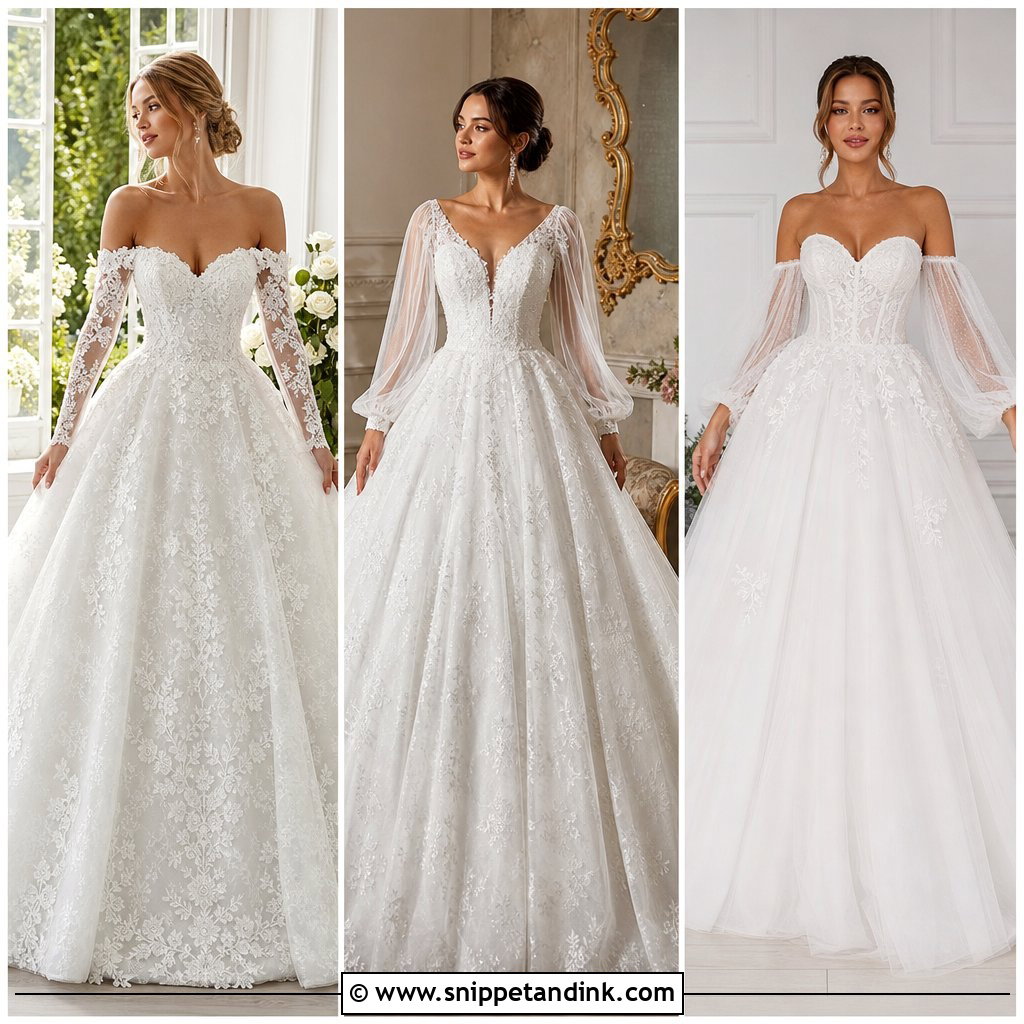
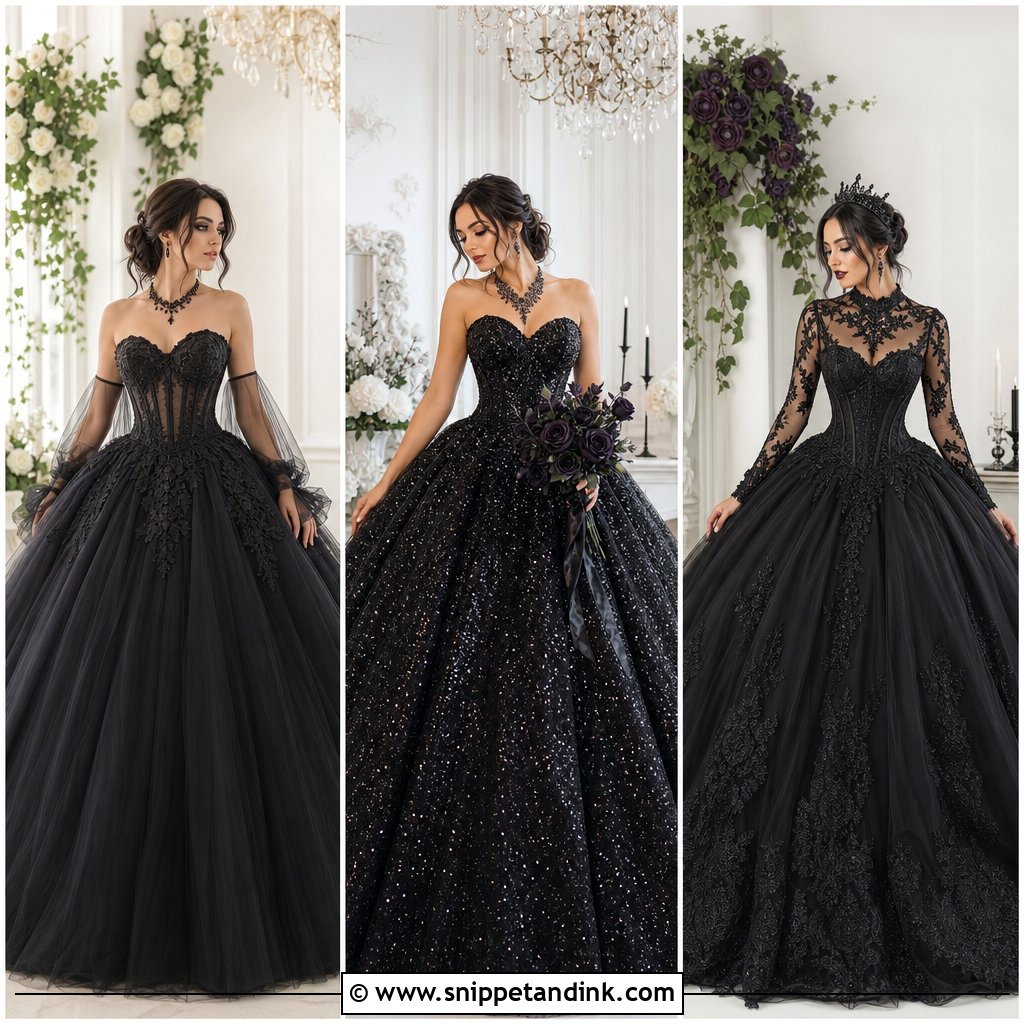
15. Tea Length Bridgerton Wedding Dress
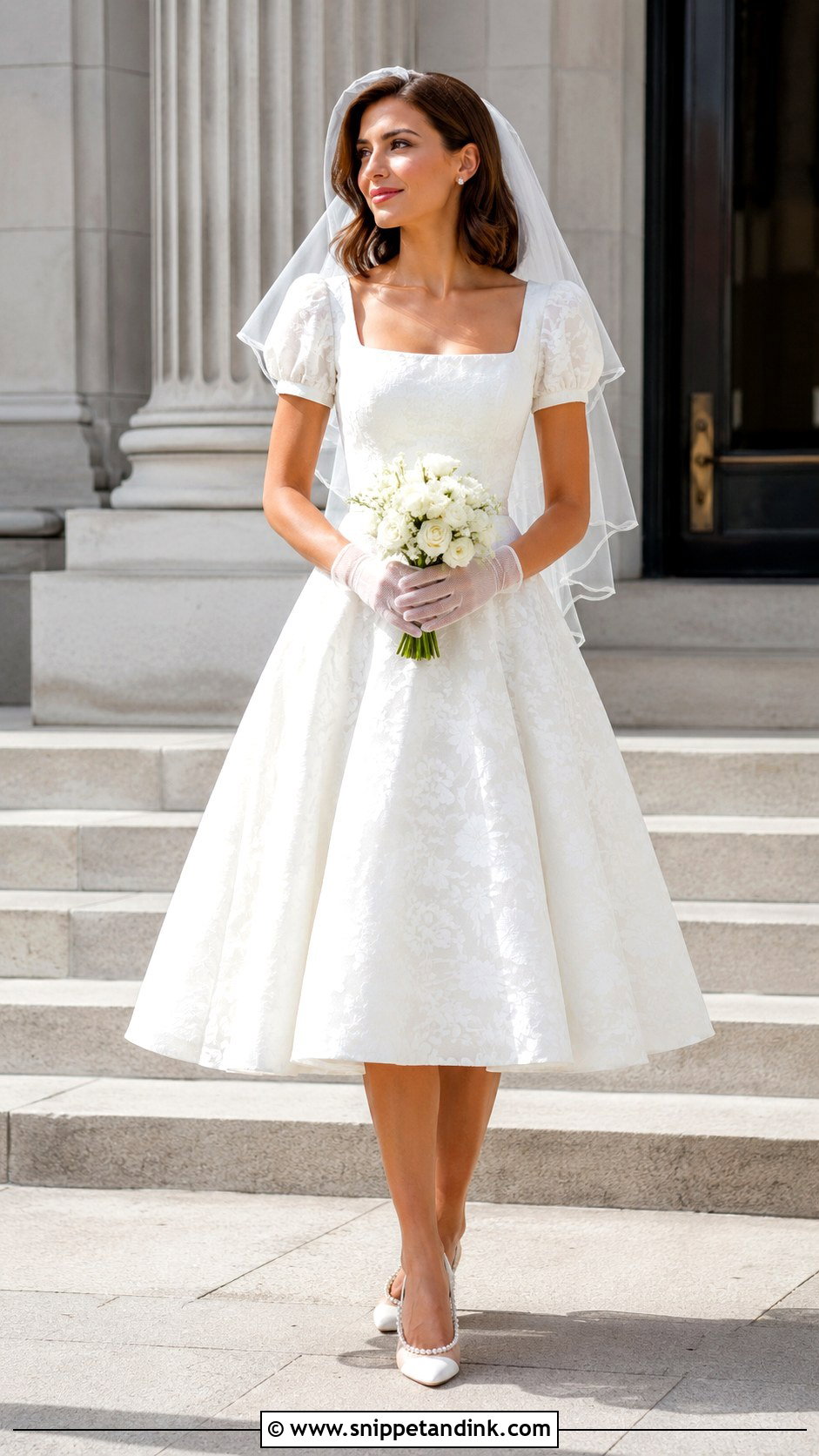
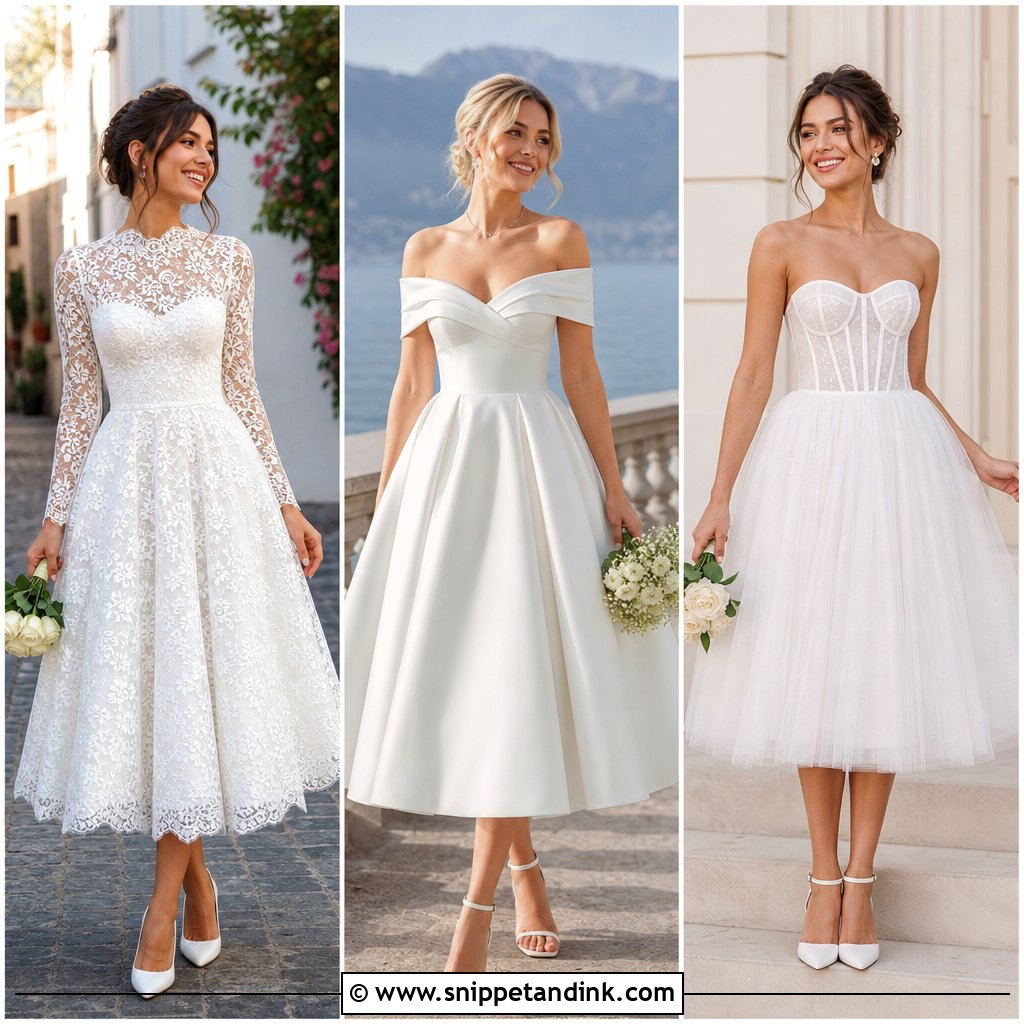
Tea length is the practical Regency option, for courthouse ceremonies, small celebrations or anyone who just wants to move freely. A fitted bodice, square neck and short puff sleeves with a full skirt ending between knee and ankle. Floral jacquard, embroidered tulle or crisp silk keeps it formal. Shoes are on show, so pearl-trimmed pumps, satin slingbacks or low embellished heels. Short gloves, studs and a shoulder veil. The skirt needs body to hold its shape, which usually means a petticoat. Tailoring matters more at this length because the shorter hem draws the eye to proportions.
16. Floral Jacquard Ball Gown Wedding Dress
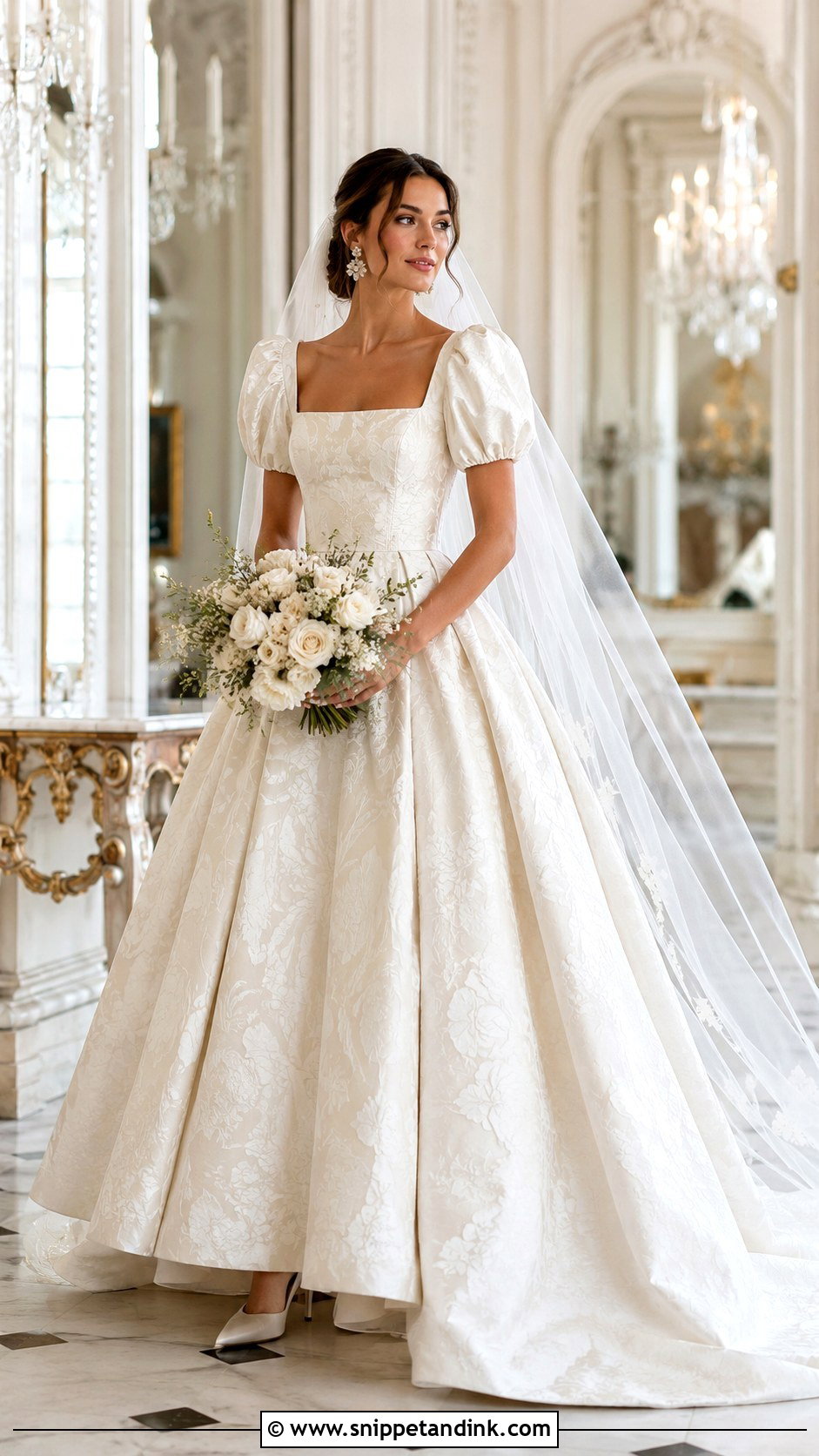
Jacquard gets its flowers from the weave, not from anything stitched on top. An ivory cloth with a subtle botanical pattern that only shows as light moves across the skirt. A square neck and structured puff sleeves for the period, a fitted bodice holding up the volume. Satin pumps, floral earrings, a simple cathedral veil and a structured bouquet. Jacquard has much more body than chiffon, which makes it warm, so I’d keep this for estates, hotel ballrooms and cooler months. In July heat, it’s heavy. Keep other accessories minimal.
17. Sheer Sleeve Corset Wedding Dress
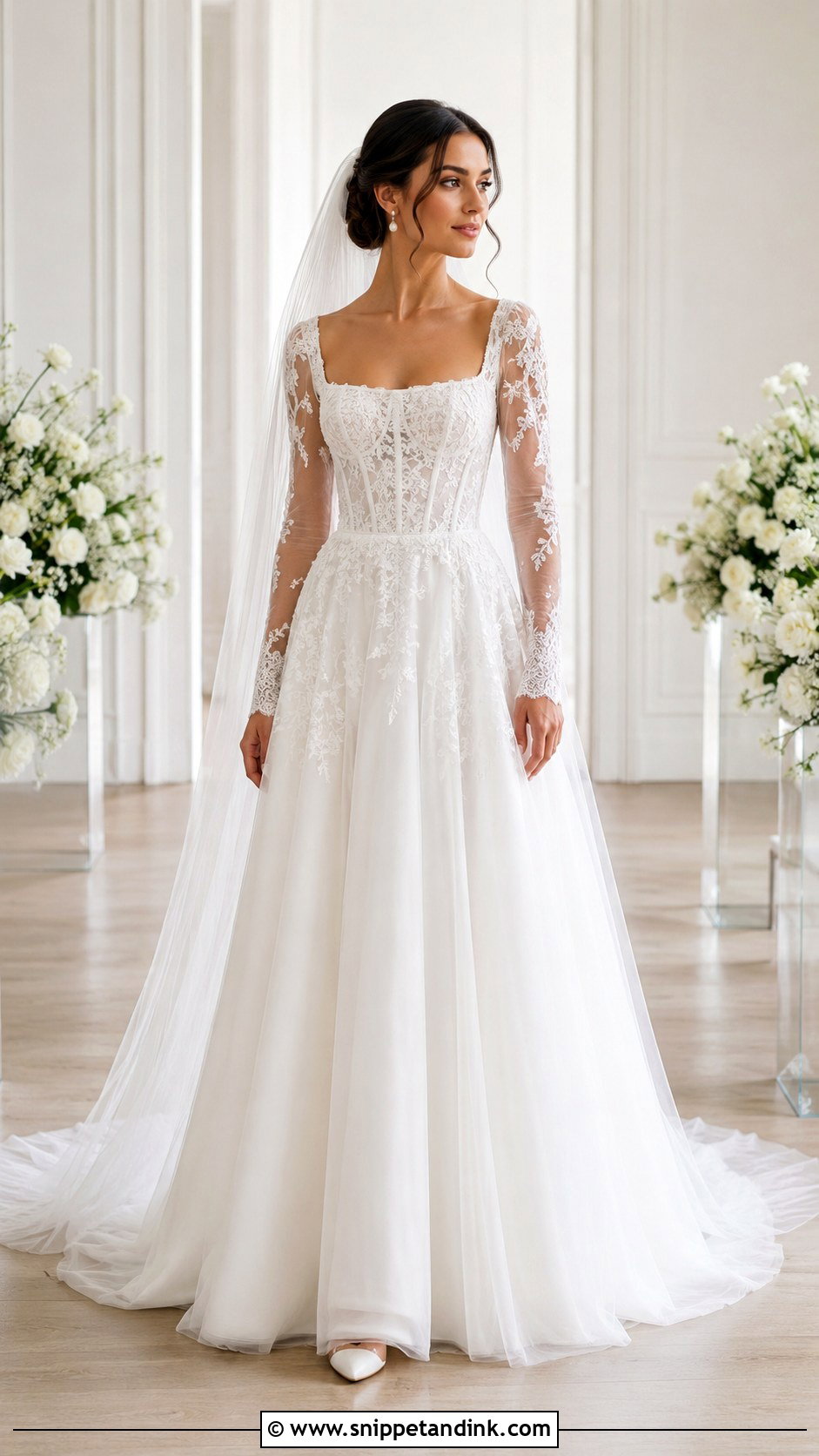
Sheer sleeves soften what a corset does underneath. Look for boning covered in lace or satin so the lines look intentional. Long sheer sleeves with embroidered cuffs, an A-line skirt and a square or gently curved neckline. Pearl drop earrings, closed-toe heels and a plain tulle veil. If the bodice is lace-heavy, keep the skirt plain. Corsets need precise fitting. A corset sitting even half an inch too low lets the bust spill over the top, and too high and it presses into the ribs. Book a proper fitting. It suits formal ceremonies year round.
18. Minimalist Empire Waist Wedding Dress
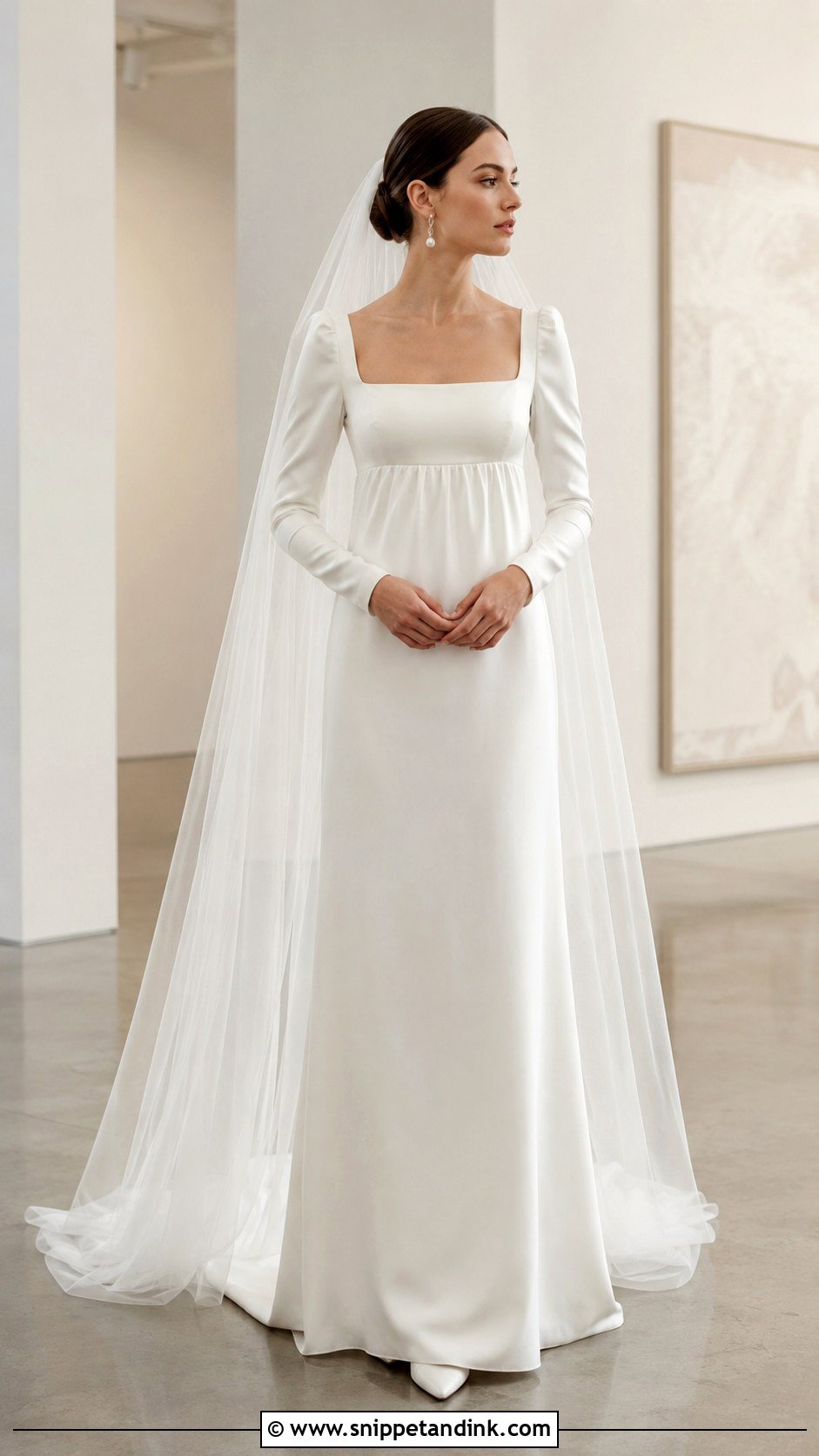
No lace, no pearls, no embroidery; just the silhouette doing the talking. Matte silk, fluid crepe or light satin with a clean underbust seam and a long column skirt. A square neck and narrow short sleeves add history quietly. Sculptural pearl earrings, pointed ivory shoes and a plain chapel veil, with a sleek bun or smooth half-up style. Plain fabric reveals every seam, so this is the gown I’d spend the alteration budget on. Add a discreet bustle for the reception. Modern venues and courthouse ceremonies suit it.
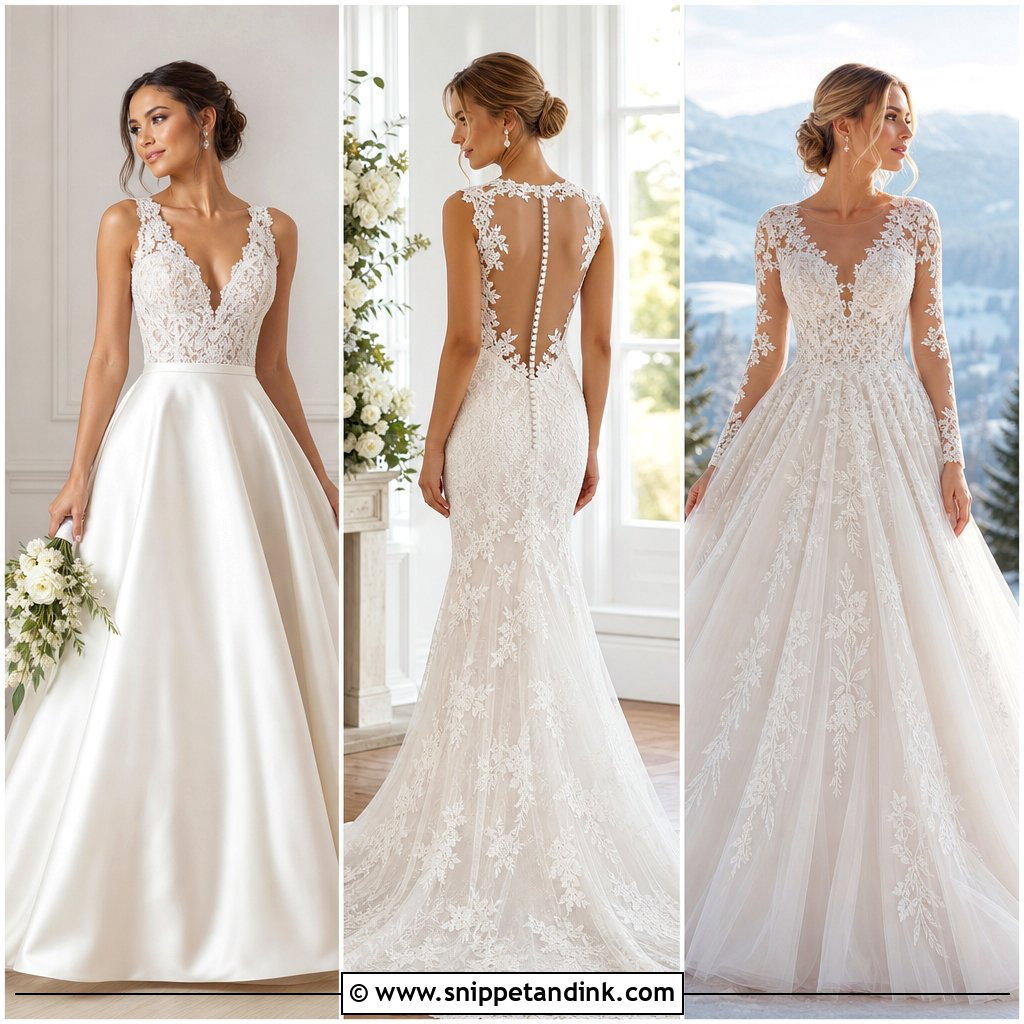
19. Plus Size Bridgerton Wedding Dress
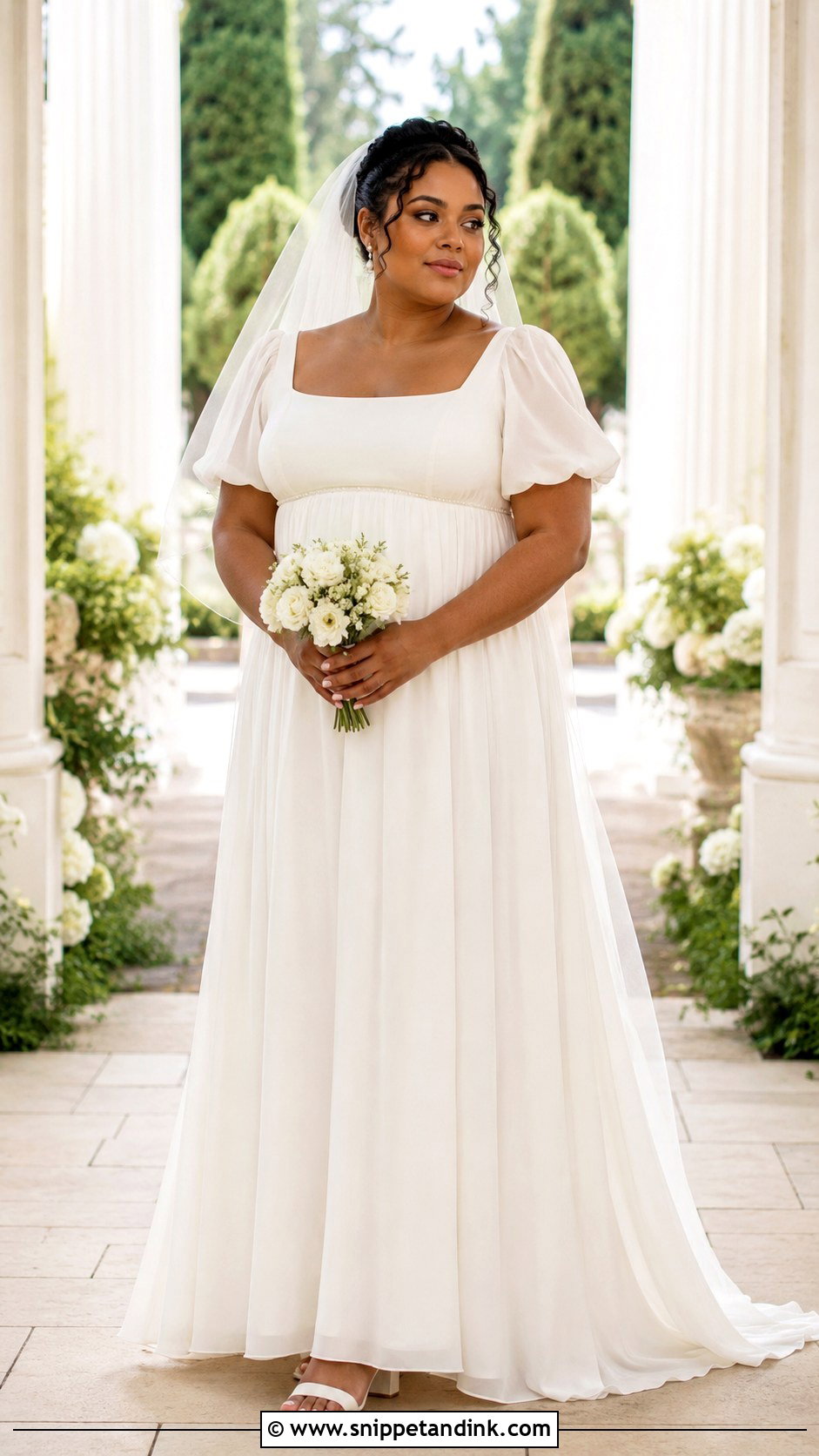
A plus size Bridgerton wedding dress needs real support built in, not added as an afterthought. A softly structured square-neck bodice, supportive straps hidden under puff sleeves, and an empire or slightly raised waist set to your proportions. An A-line skirt in chiffon, tulle or silk moves well without excess volume. Strategic boning and a secure back closure. Block heels, statement pearl earrings and a light veil. Sleeves are your choice, fitted, sheer or puffed. The empire seam is the most important adjustment; I place it right under the bust fold, not where the pattern says, because a seam that lands on the bust itself looks wrong on every size.

20. Detachable Sleeve Bridgerton Wedding Dress
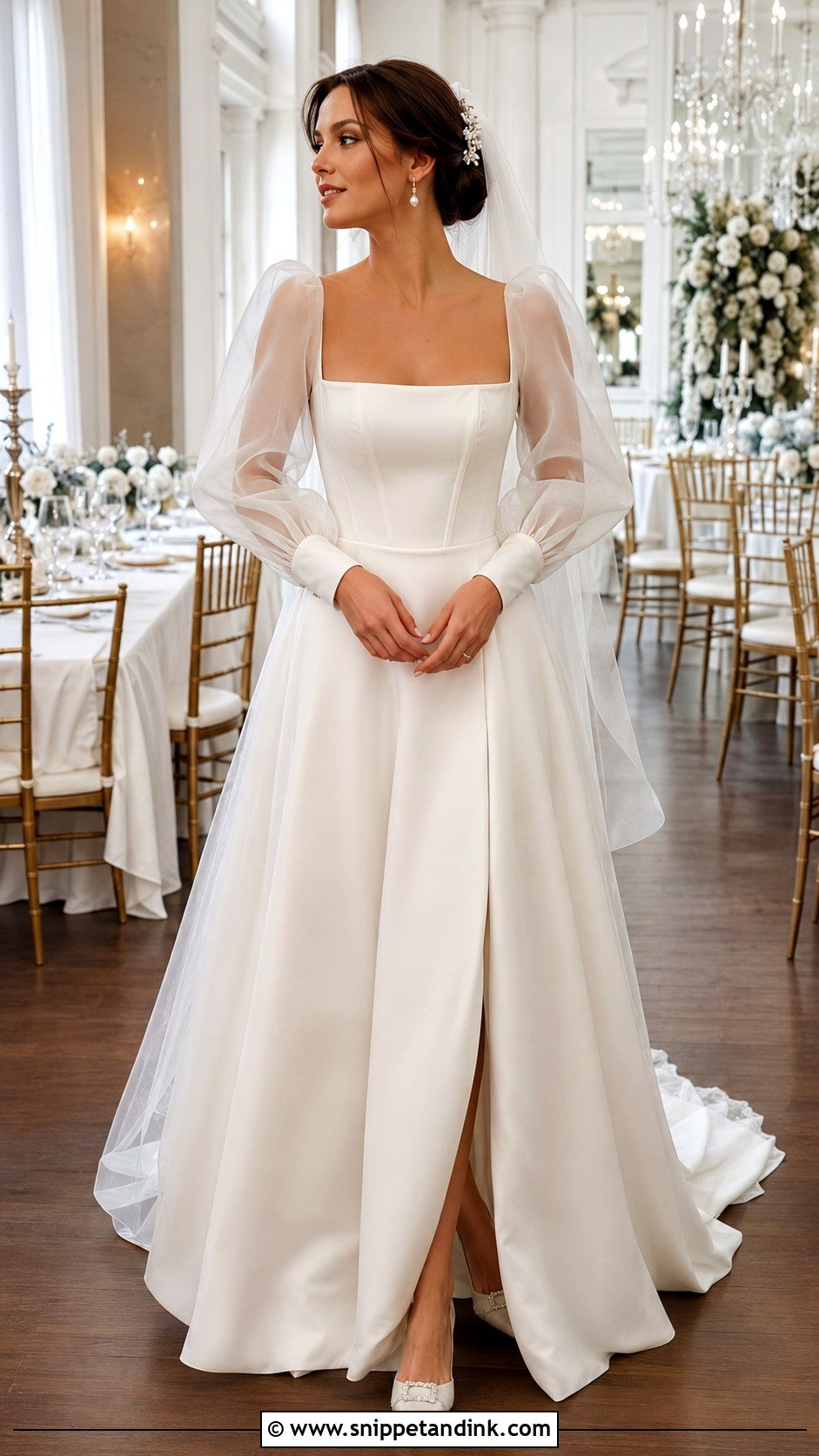
Detachable sleeves make one dress work as two. Start with a square-neck corset or empire gown and add puff sleeves for the ceremony. Hidden snaps, soft elastic or discreet buttons keep them steady while you walk. After the vows, take them off for a lighter sleeveless or strapless reception look. Swap the veil for a jewelled comb and a small bag. Try the gown without the sleeves at your fitting. If the neckline or armholes look unfinished, that’s a problem, and I always ask for a clean binding where the sleeves attach. Practise the swap once with whoever is helping.
Ordering a Regency Gown Without a Last-Minute Panic
Period details take longer to make and longer to alter than a plain gown. Hand embroidery, covered buttons and a corset are all labour, and labour means time. Timings vary by designer and season, but most bridal shops suggest ordering somewhere around eight to twelve months before the wedding, with alterations starting about two to three months out.
Things I bring up with the seamstress
- Where the underbust seam should sit, measured on your body in your real bra.
- Whether the puff sleeves have netting inside to hold their shape, or will flatten by evening.
- How the train bustles. Empire skirts are gathered, so a long train needs several bustle points or it hangs unevenly.
- How detachable pieces fasten, and who on the day knows how to remove them.
Getting it to the venue in one piece
Transport the gown hanging, never folded, with tissue stuffed into the sleeves and through the bodice. Steam chiffon and organza on low from a distance; satin should be steamed from the inside to avoid water marks. If you’re travelling, carry the dress on board rather than checking it, and ask the airline in advance whether they can hang it.
One Regency Detail Is Usually Enough
A Bridgerton bridal look works when the recognisable Regency details are matched by a fit that suits your body and your plans for the day. Empire waists, square necks, puff sleeves, corsets, floral fabric and pastels all belong to the theme, but they don’t all need to appear in one gown. Pick one or two signature details and build around them with comfortable shoes, refined jewellery and a veil or hair accessory that doesn’t compete. Fabric and tailoring decide whether it reads as elegant or as dress-up. A minimalist satin gown and an embroidered ball gown can both get there, in any season or venue.
You'll Like These Ideas:





Leave a Reply