
Full-skirted princess gowns are back, and the brides who ask me for one usually know the picture already: a fitted bodice, a skirt that fills the aisle, and an entrance people remember. What they rarely know yet is how much the hidden parts decide the day. The petticoat, the weight of the fabric and the way the bustle is built matter as much as the neckline. Below are 25 ball gown variations, from plain satin and mikado to bows, sleeves and detachable skirts, each with the notes I would give you in the fitting room.
What Holds a Princess Skirt Out, and Why You Should Ask
A ball gown skirt rarely stands out by itself. Underneath there is usually one of three things, and each changes how the dress feels after a few hours. Before you order, ask the salon which one the gown was designed around and try it on with exactly that underneath.
- Built-in tulle layers. Stitched into the lining, so nothing shifts. They’re comfortable but warm, and you can’t take volume out later without a seamstress.
- A separate petticoat or crinoline. Layered net or a soft skirt you step into. It’s adjustable and removable for the reception, and it adds less bulk around the hips when you sit.
- A hoop. Rigid rings give the widest, most even shape. They make sitting and car journeys harder, and the hoop can tilt up at the back if you sit carelessly.
Bring the shoes you’ll wear to every fitting, or at least the same heel height. The hem is set to the shoe, and a full skirt hemmed for flats will drag and catch when you switch to a heel. Most made-to-order gowns take several months to arrive, and alterations on a full skirt often need two or three fittings, so leave time between the gown landing and the date.
Does it suit a smaller frame?
Often, yes, if the volume is scaled down. A petite bride in a hoop can look swallowed. I’d try a softer crinoline and a waist seam set exactly at the natural waist, which lets the skirt start where your body narrows.
1. Classic Satin Princess Ball Gown Wedding Dress
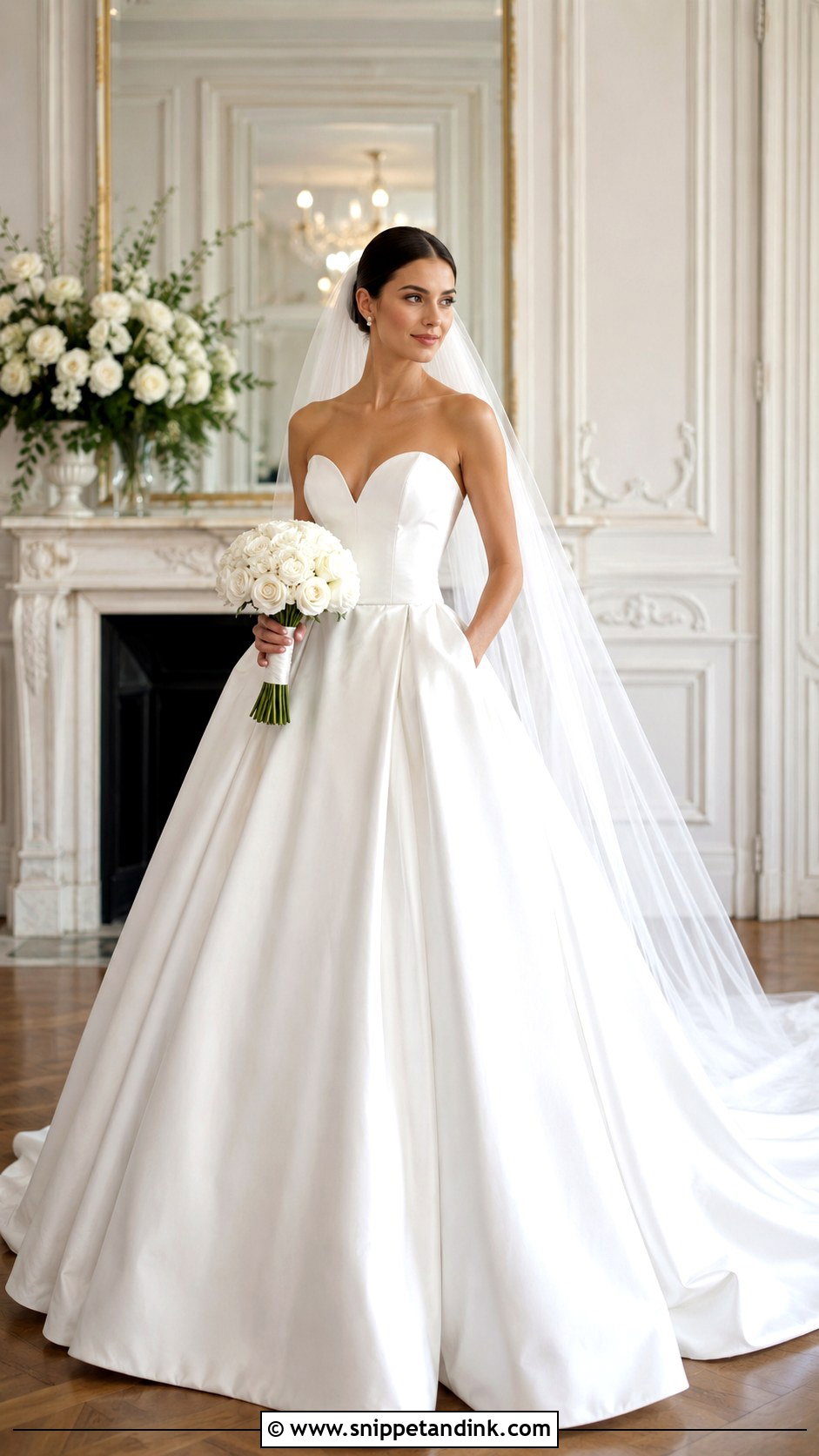
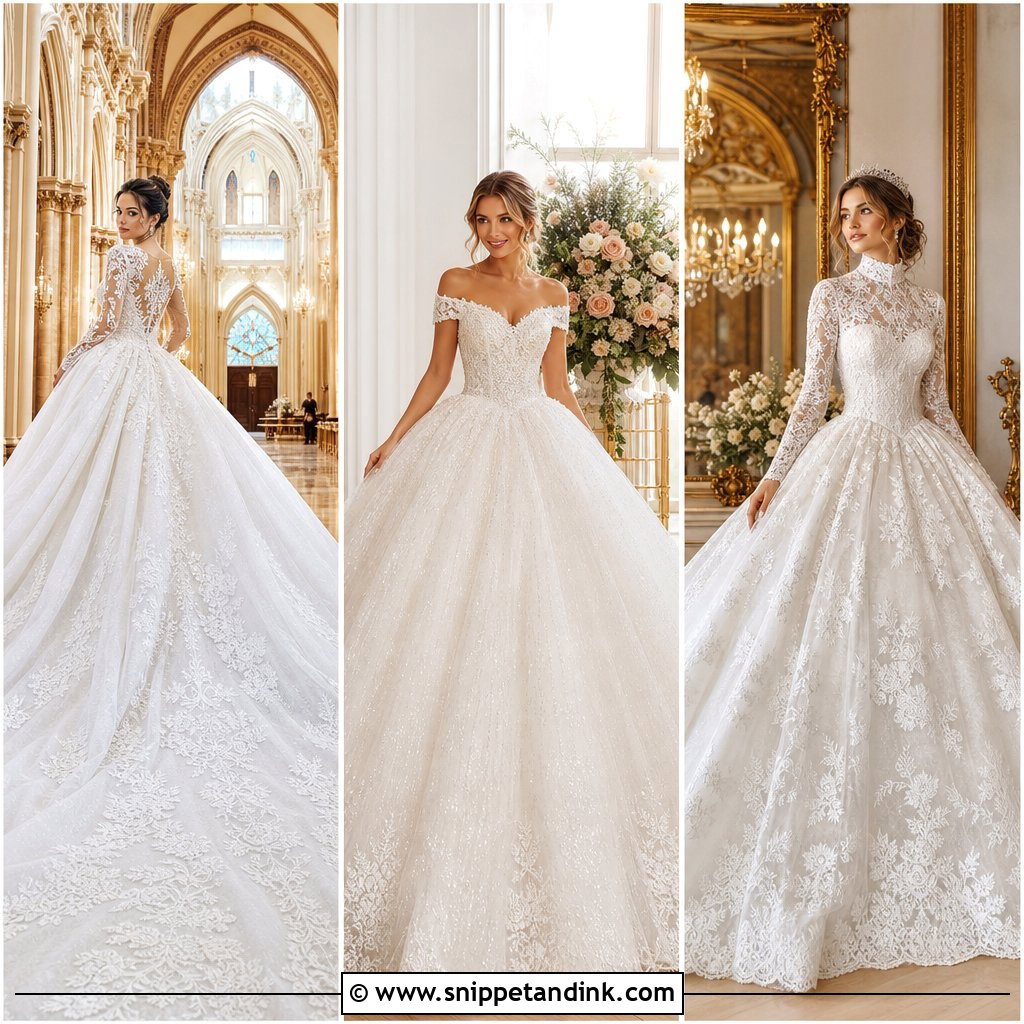
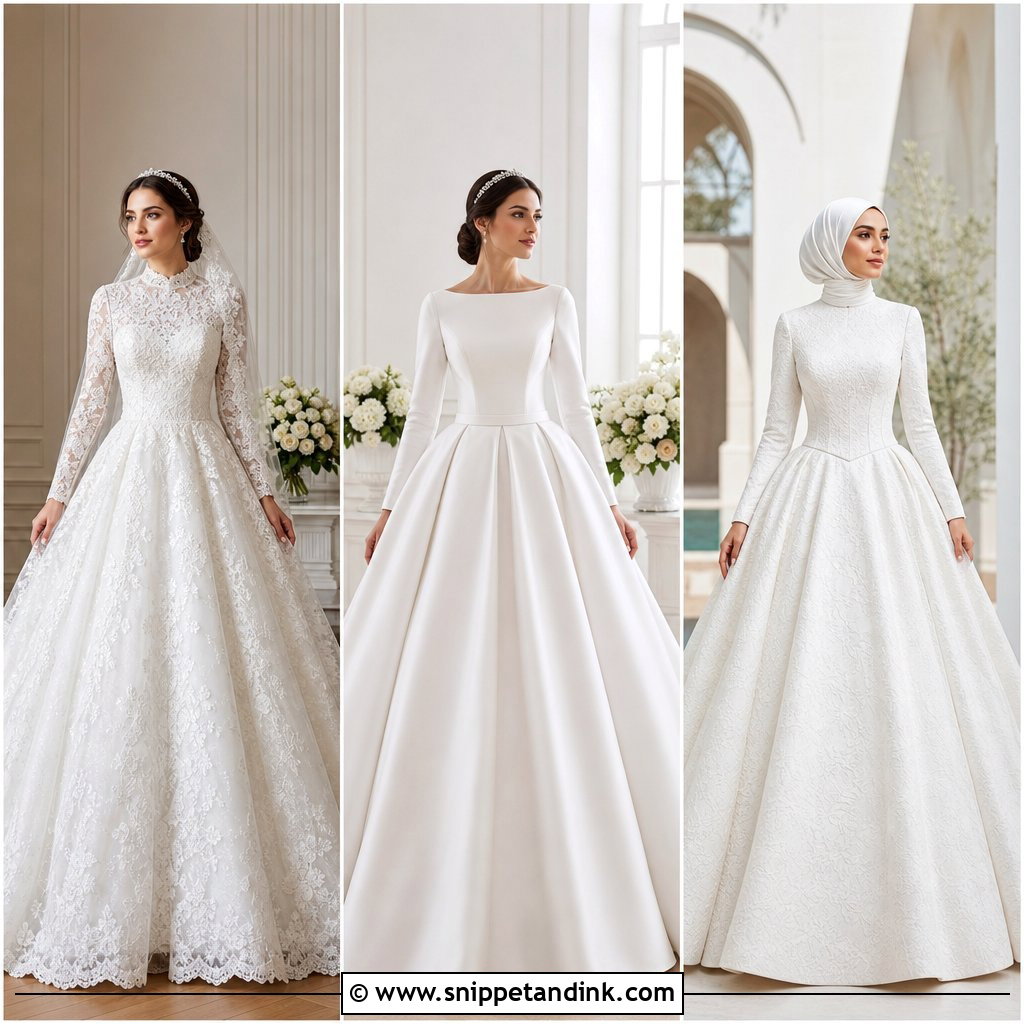
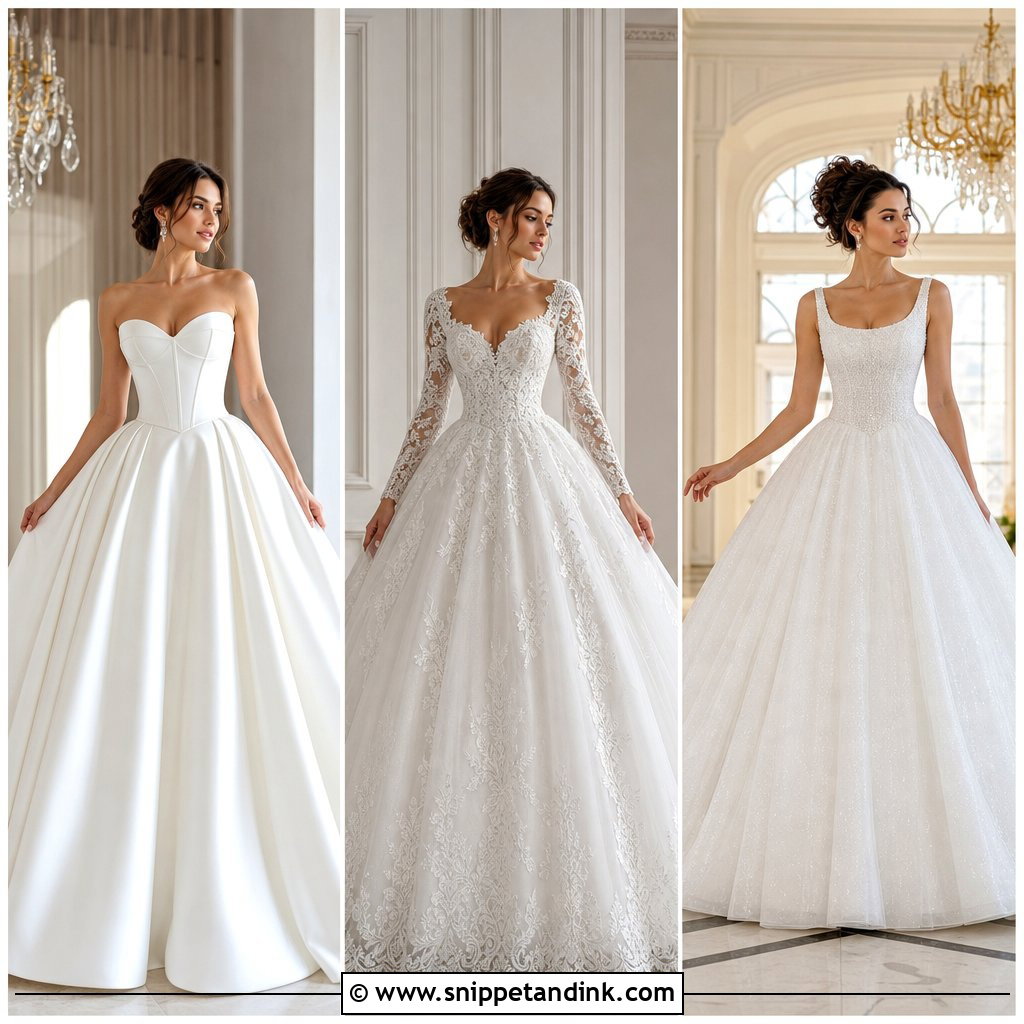
A classic satin princess ball gown lives or dies on fit, because satin shows every ripple. The first thing I check is the side seams: if they pull toward the bust or pucker at the waist, the shine turns that small flaw into a stripe of light in every photo. A heavier duchess satin holds its skirt with less petticoat underneath, which also means a cooler bride. Keep the extras plain, pearl drops and a cathedral veil, and give it a ballroom or hotel with real floor space.
2. Lace Princess Ball Gown Wedding Dress
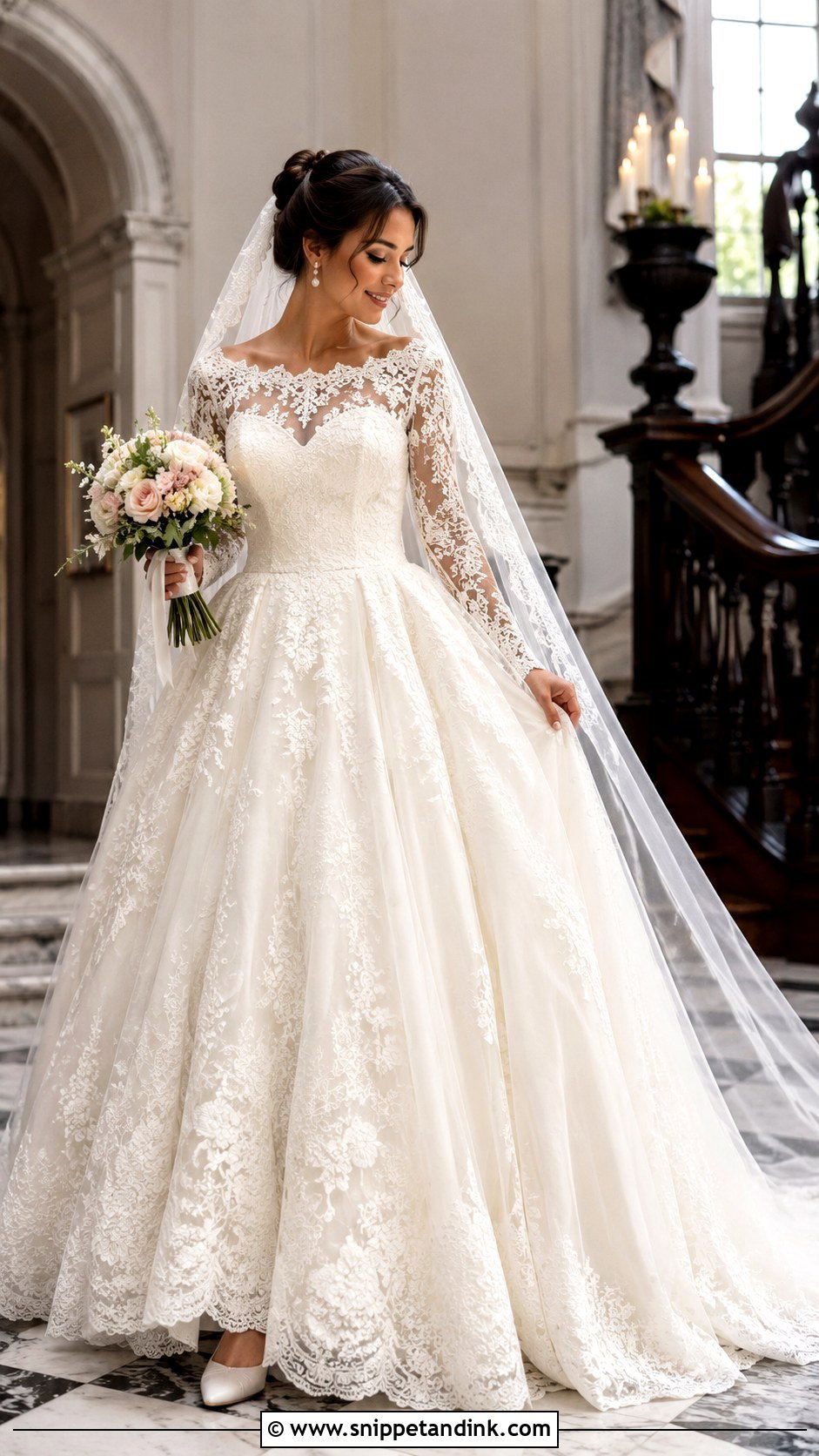
Lace on a ball gown works best when the motifs flow from bodice onto skirt instead of stopping hard at the waist seam. Good seamstresses hand-cut around each motif at that join so you can’t see where the panels meet, so ask to see that seam up close. Long lace sleeves need testing with your arms raised, since most lace has very little give and a tight sleeve binds the moment you hug someone. A lace princess ball gown sits naturally in garden and historic venues, with a veil edged in matching lace rather than a second, competing pattern.
3. Off Shoulder Princess Ball Gown Wedding Dress
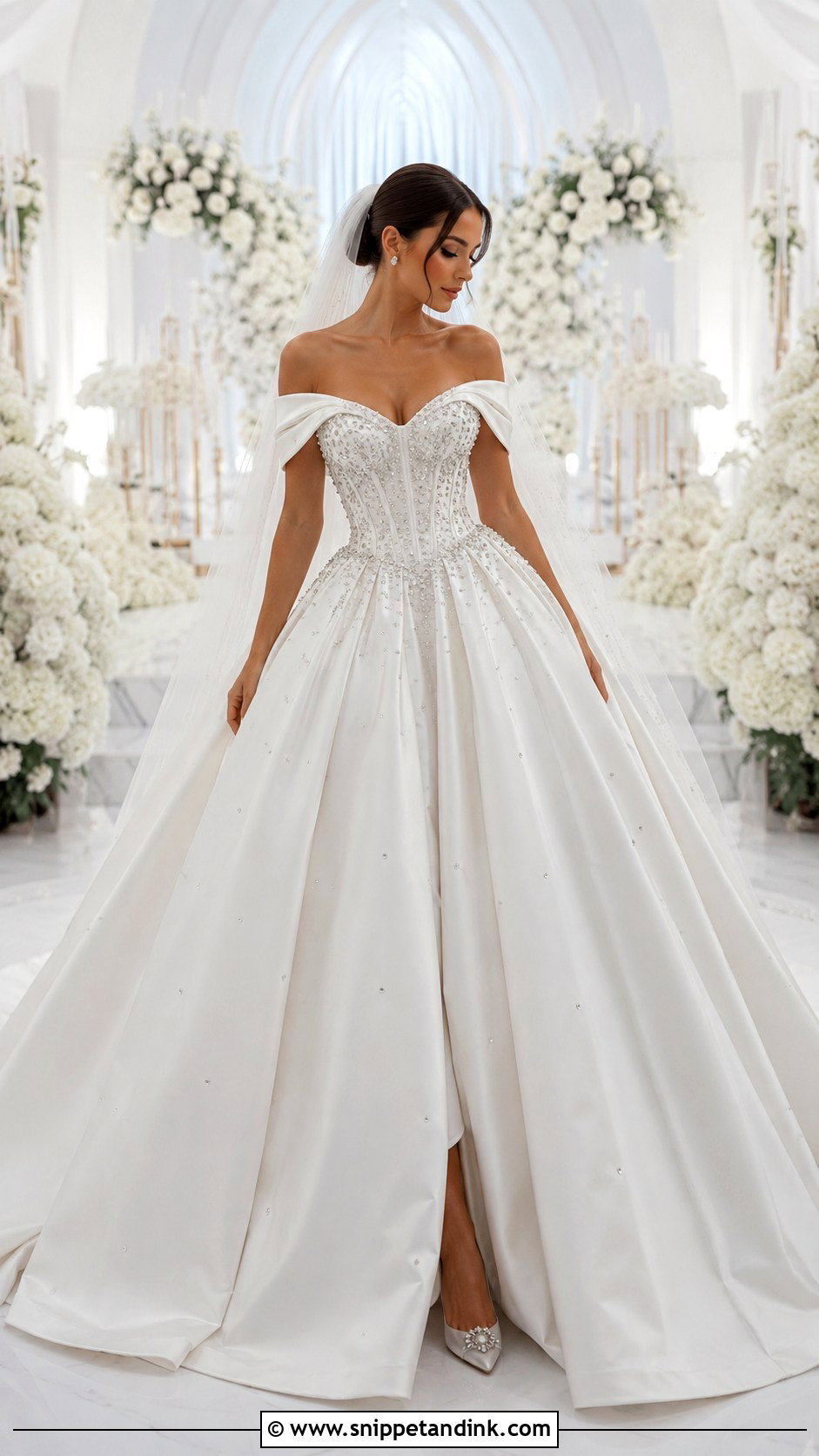
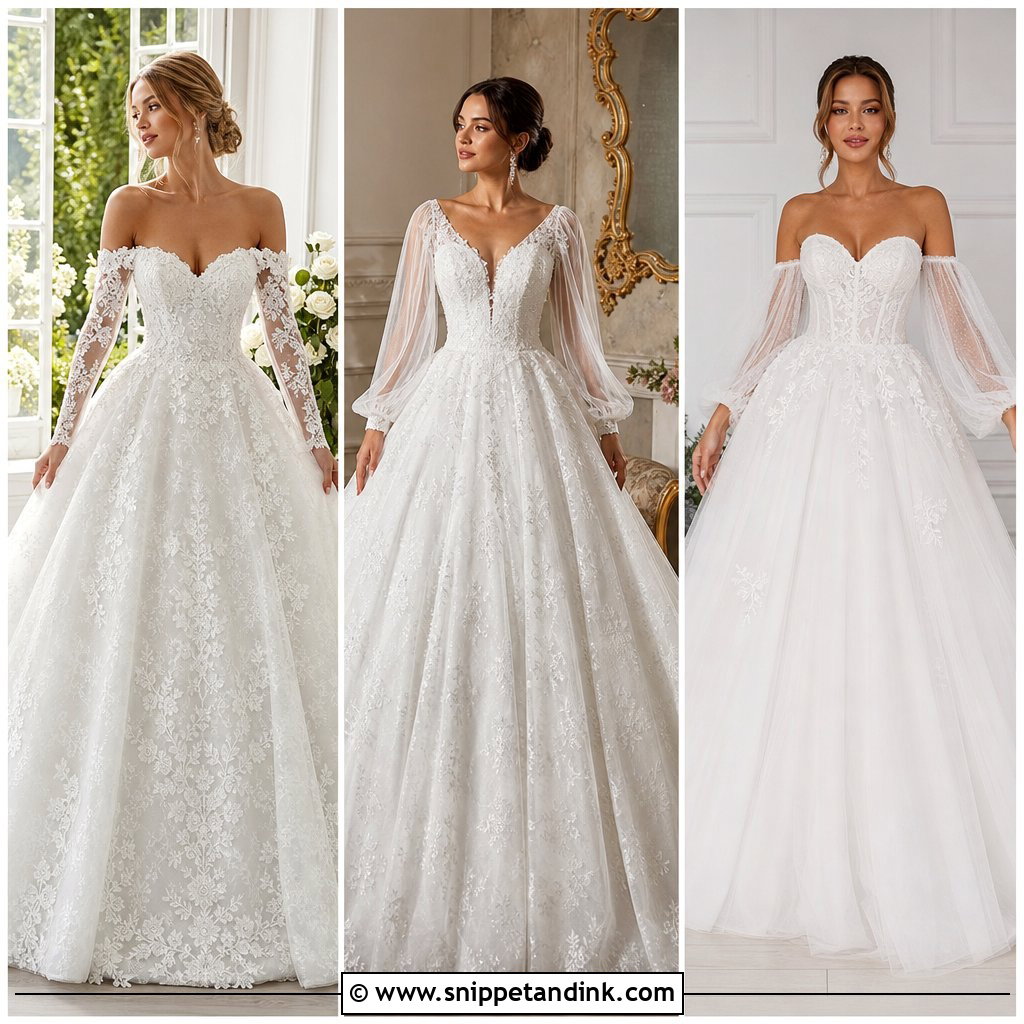
Off-shoulder bands are the neckline I adjust most often. If the band sits even a centimetre too low, you can’t lift your arms to hug anyone, and if it’s too loose it creeps down all evening. At the fitting, raise both arms, hold a pretend bouquet and sit down before anyone pins it. Once the band is right, a low bun and small crystal studs keep the collarbone clear, and a medium veil moves behind you without hiding the shoulders.
4. Long Sleeve Princess Ball Gown Wedding Dress
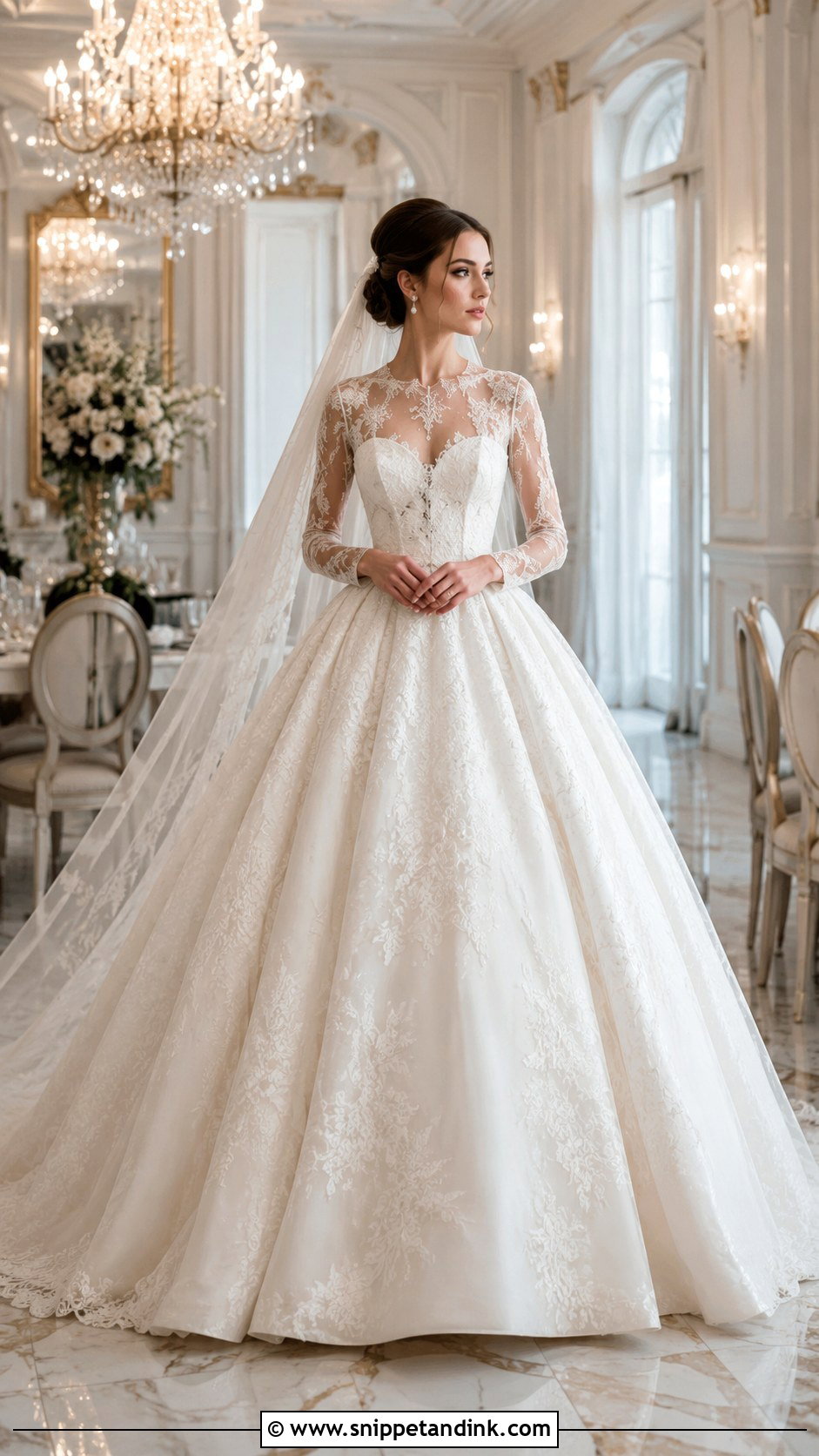
Sleeves change how a ball gown handles a cold venue, and they change the fitting too. Sheer lace sleeves breathe; satin or crepe sleeves look more formal but trap heat in a packed reception. I always have the bride reach forward as if signing the register, because a fitted sleeve that is cut too narrow at the upper arm pulls the whole bodice forward. For autumn and winter weddings this is my favourite way to add coverage, finished with a long veil and closed-toe heels.
5. Tulle Princess Ball Gown Wedding Dress
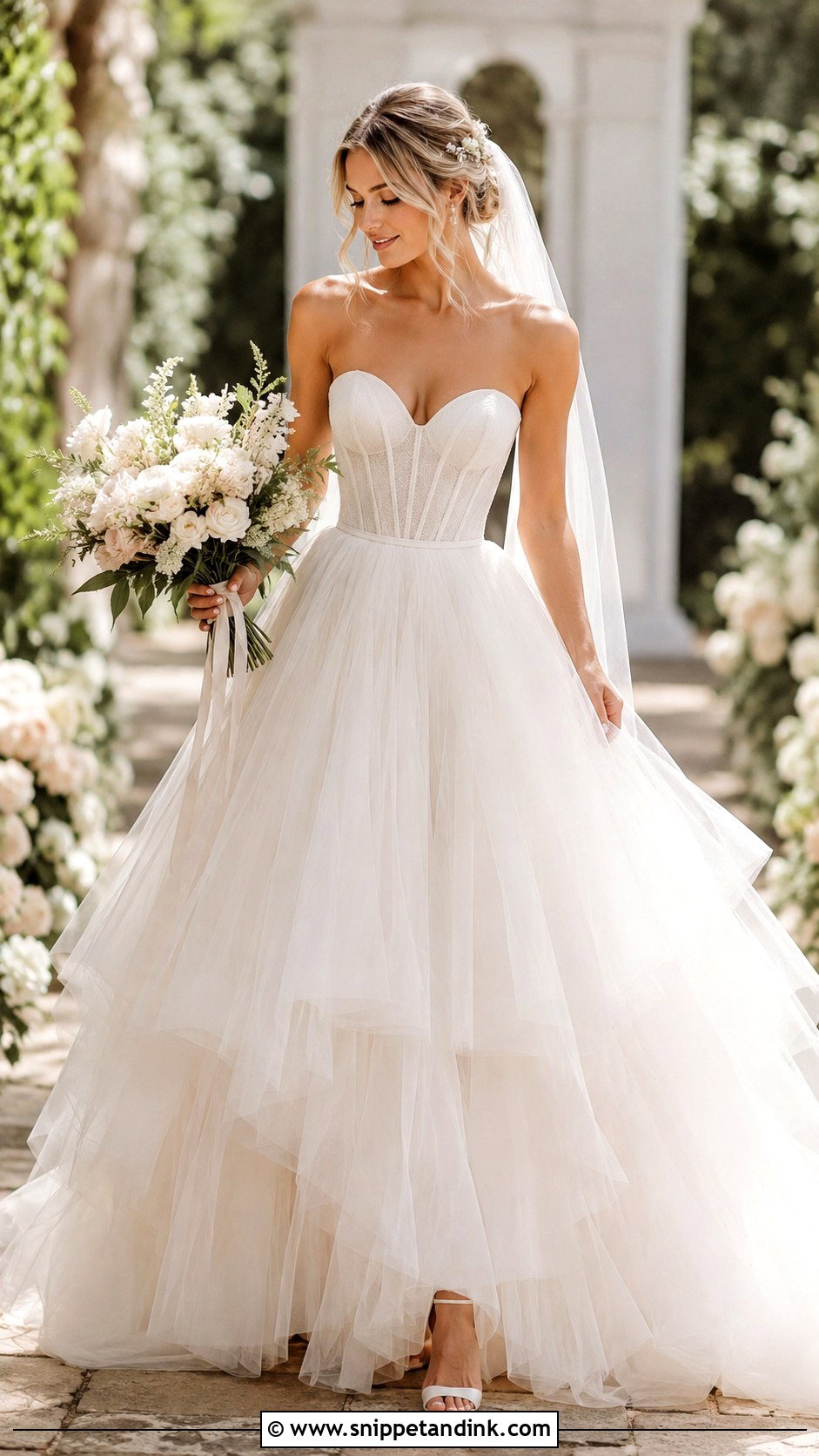
Tulle is the lightest way to get volume, which is why it reads as that soft, floating fairytale effect on camera. The trade-off is snagging. Tulle catches on bracelets, rough steps and Velcro on a ring bearer’s shoes, and a pulled thread shows as a little ladder. I tell tulle brides to wear smooth jewelry and to walk outdoor paths at the trial in their real shoes. Pair it with a sweetheart or corset bodice so the top has enough structure to match all that air.
6. Beaded Princess Ball Gown Wedding Dress
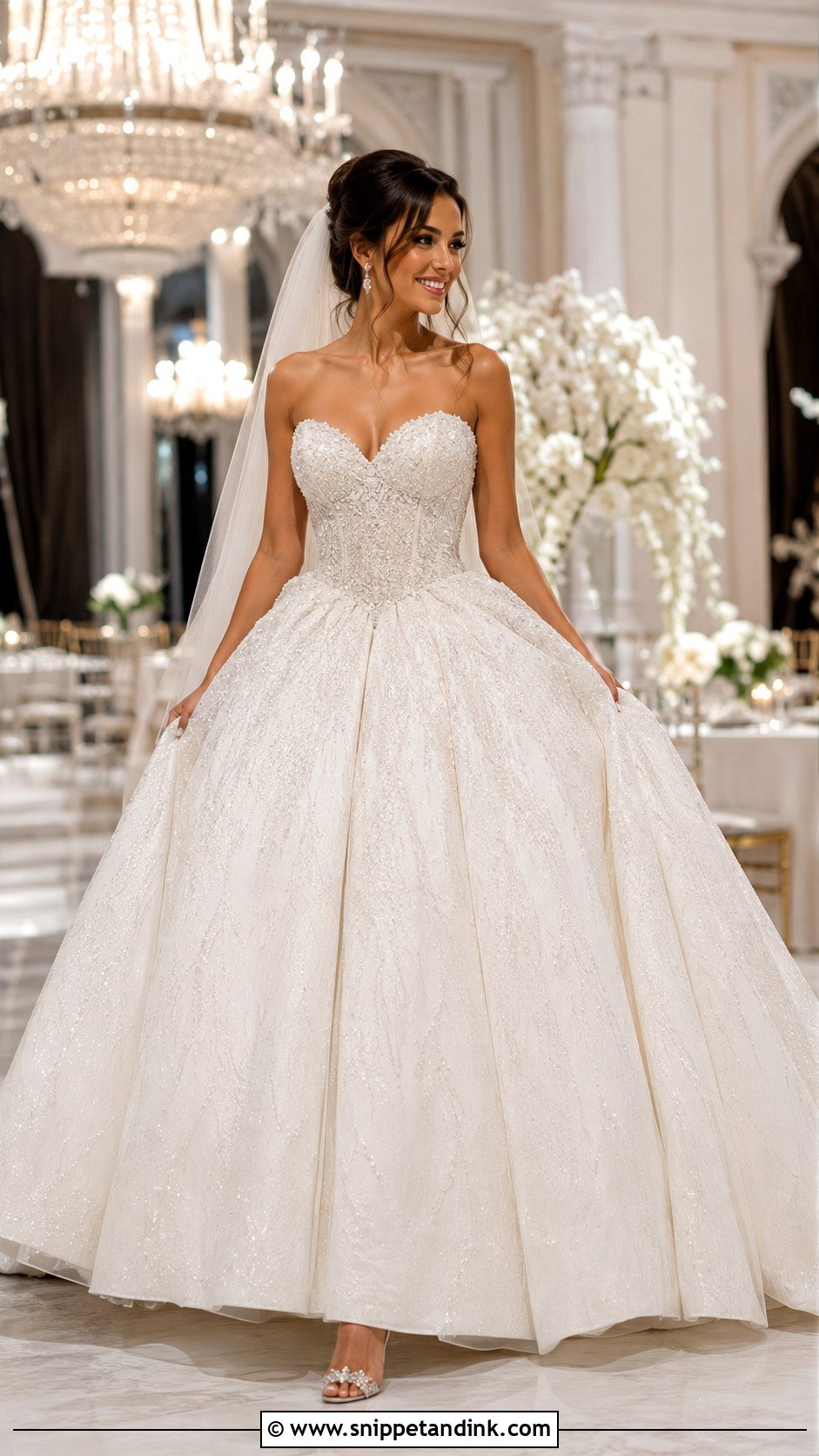
Beading adds weight in the places you feel it most. A fully beaded bodice can be noticeably heavier than plain satin, and that weight pulls at the shoulders of a strapped gown or slides a strapless one down by the evening. I check that the beading stops a little short of the underarm, where it otherwise scratches during the first dance. Under reception lighting the sparkle does the work, so keep jewelry to studs and a plain veil.
7. Floral Applique Princess Ball Gown Wedding Dress
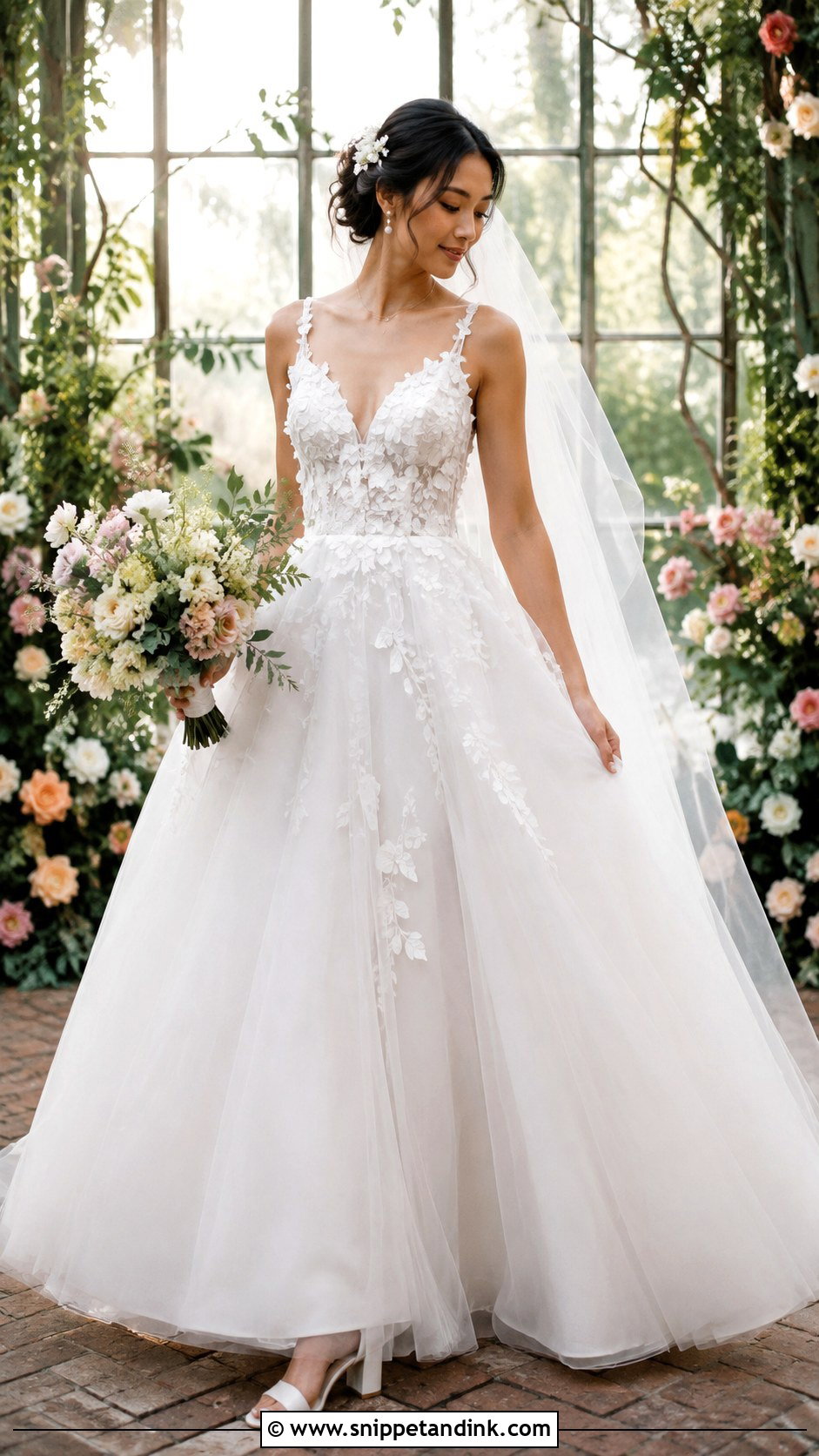
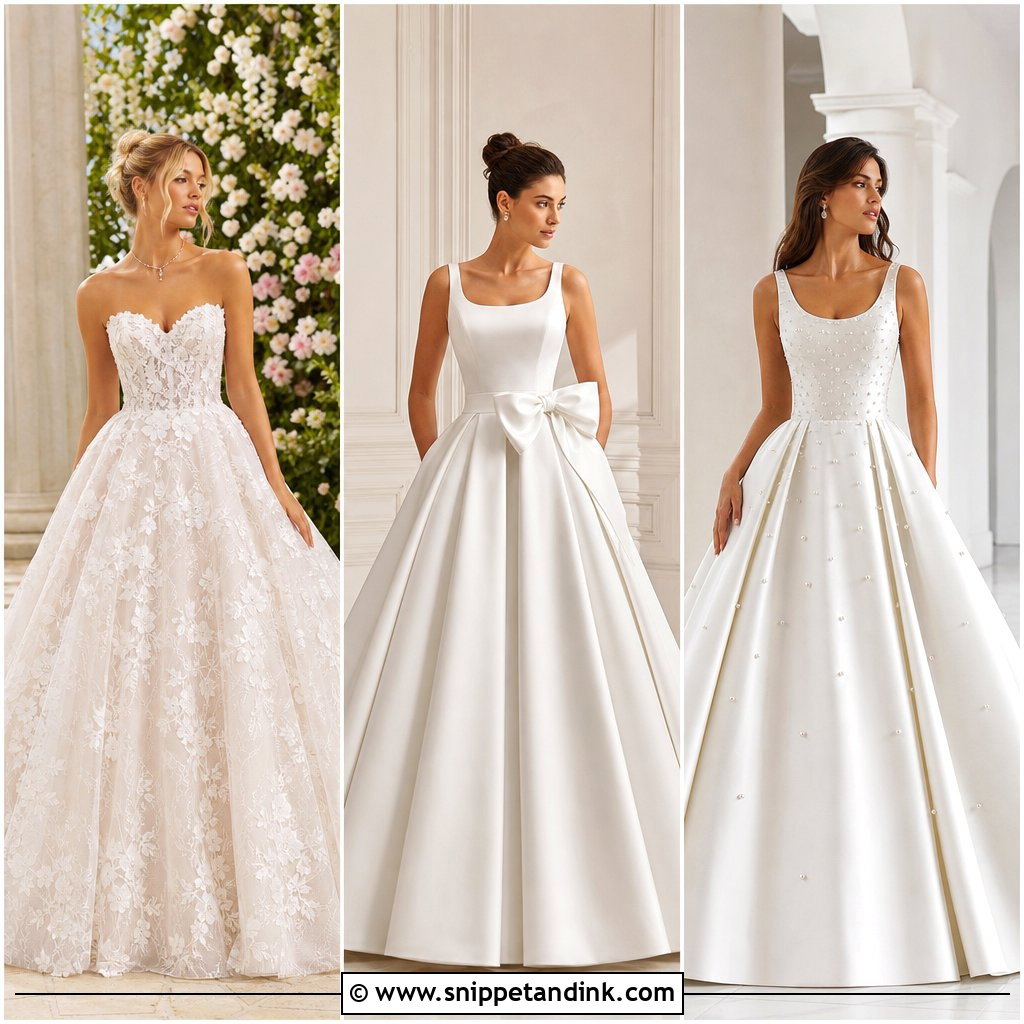
Appliqué flowers are sewn on one by one, which gives you real options at alterations. A seamstress can move a few blooms to cover a new seam, or add stray flowers onto the veil so the two pieces read as one set. White-on-white looks quiet in person and shows its texture in close-up portraits; a blush backing under the flowers reads warmer in garden light. Because the gown already carries so much detail, I’d skip floral hair pins and choose one simple earring instead.
8. Corset Princess Ball Gown Wedding Dress
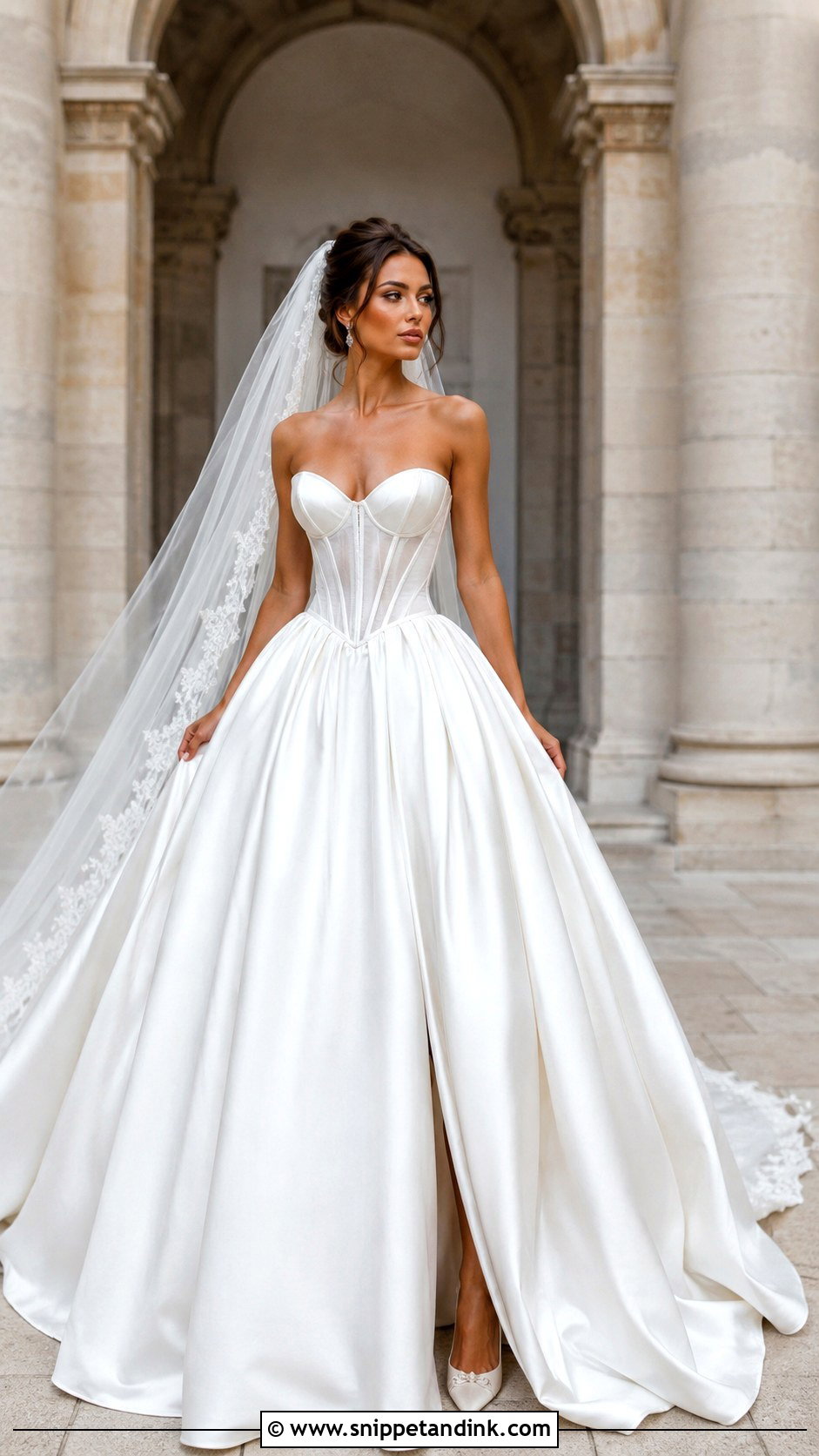
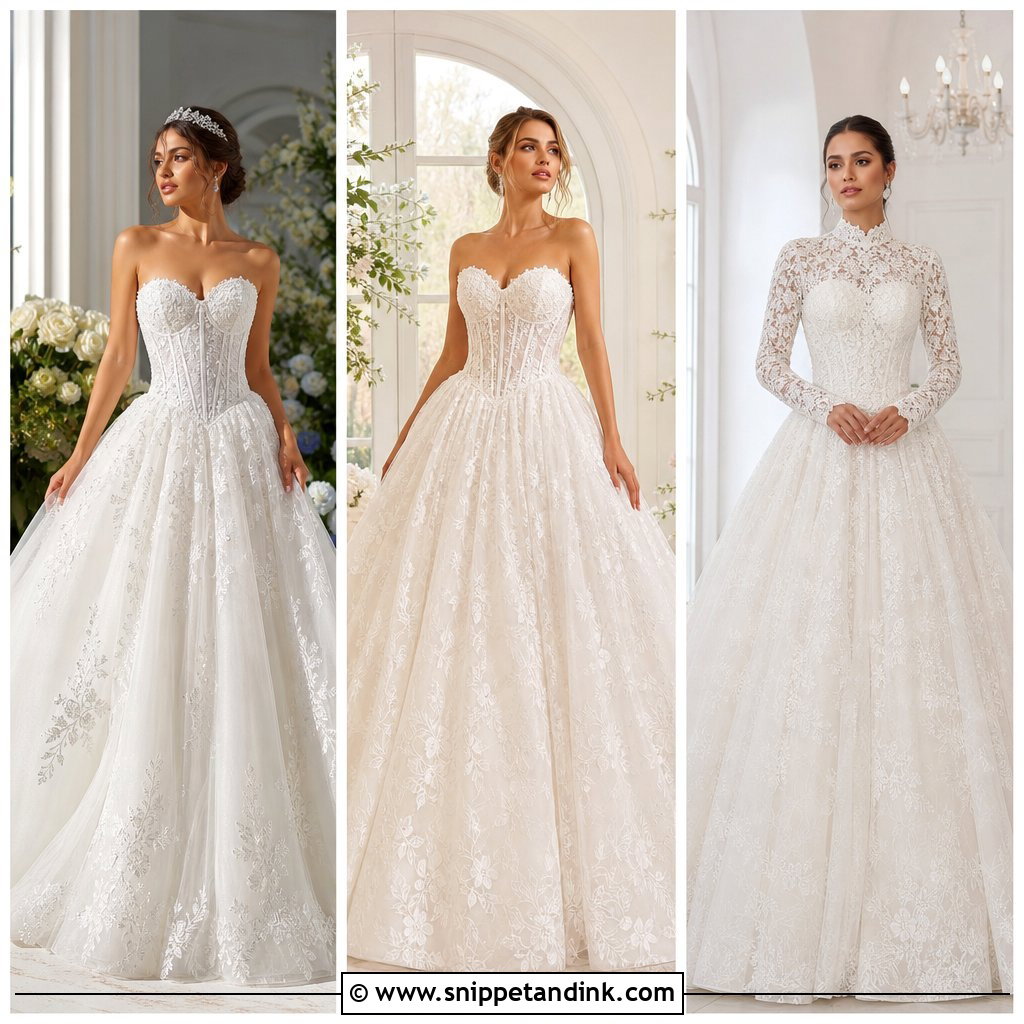
Corset bodices give the most support of anything on this list, but only if the boning is fitted to your torso and not just laced tighter. When a lace-up back gaps or the bones dig into the hip, the size is wrong, and pulling the laces harder only moves the problem. Sit, breathe in fully and bend to pick something off the floor at your final fitting. Visible boning reads modern; a smooth satin finish over hidden bones looks quieter under a long veil.
9. Strapless Princess Ball Gown Wedding Dress
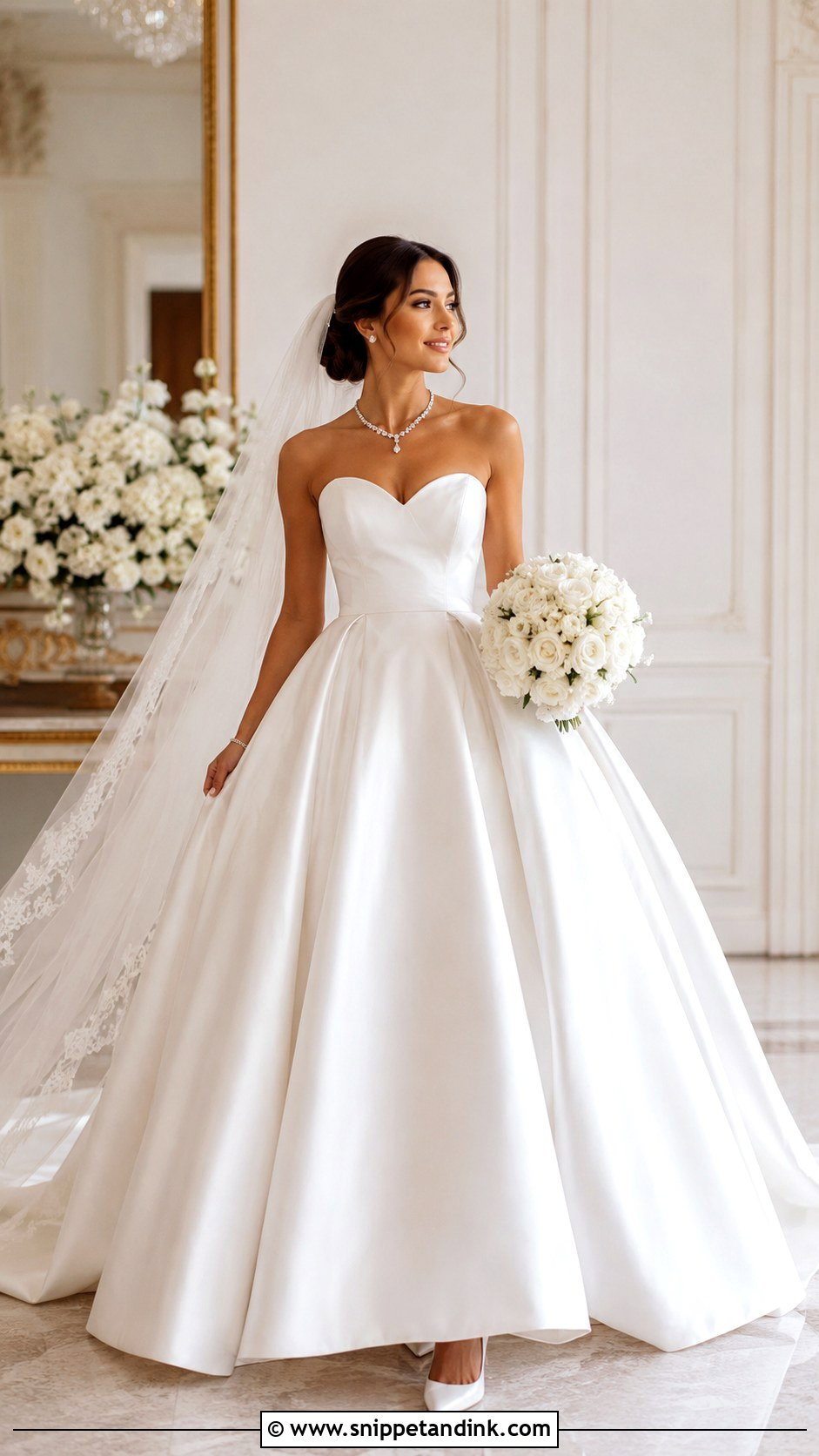
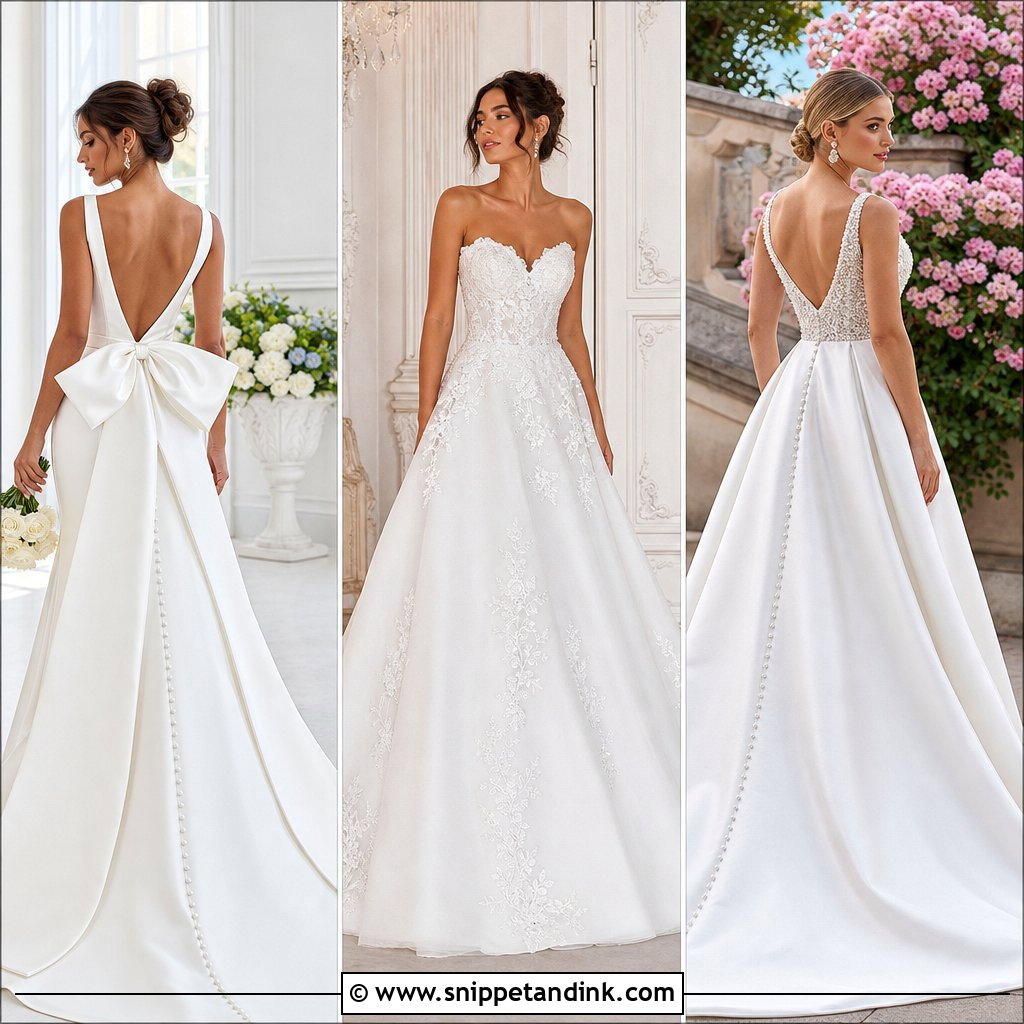
Strapless gowns stay up because of the waist, not the bust. That is the fitting detail most brides don’t expect, and it’s why I have the waistband taken in until it grips without pinching. A straight-across neckline reads crisp; a sweetheart softens the shoulders. Bring the necklace you plan to wear to the fitting, since a strapless line leaves so much skin that the jewelry sets the whole tone, and finish with a cathedral veil if the venue is formal.
10. Sweetheart Princess Ball Gown Wedding Dress
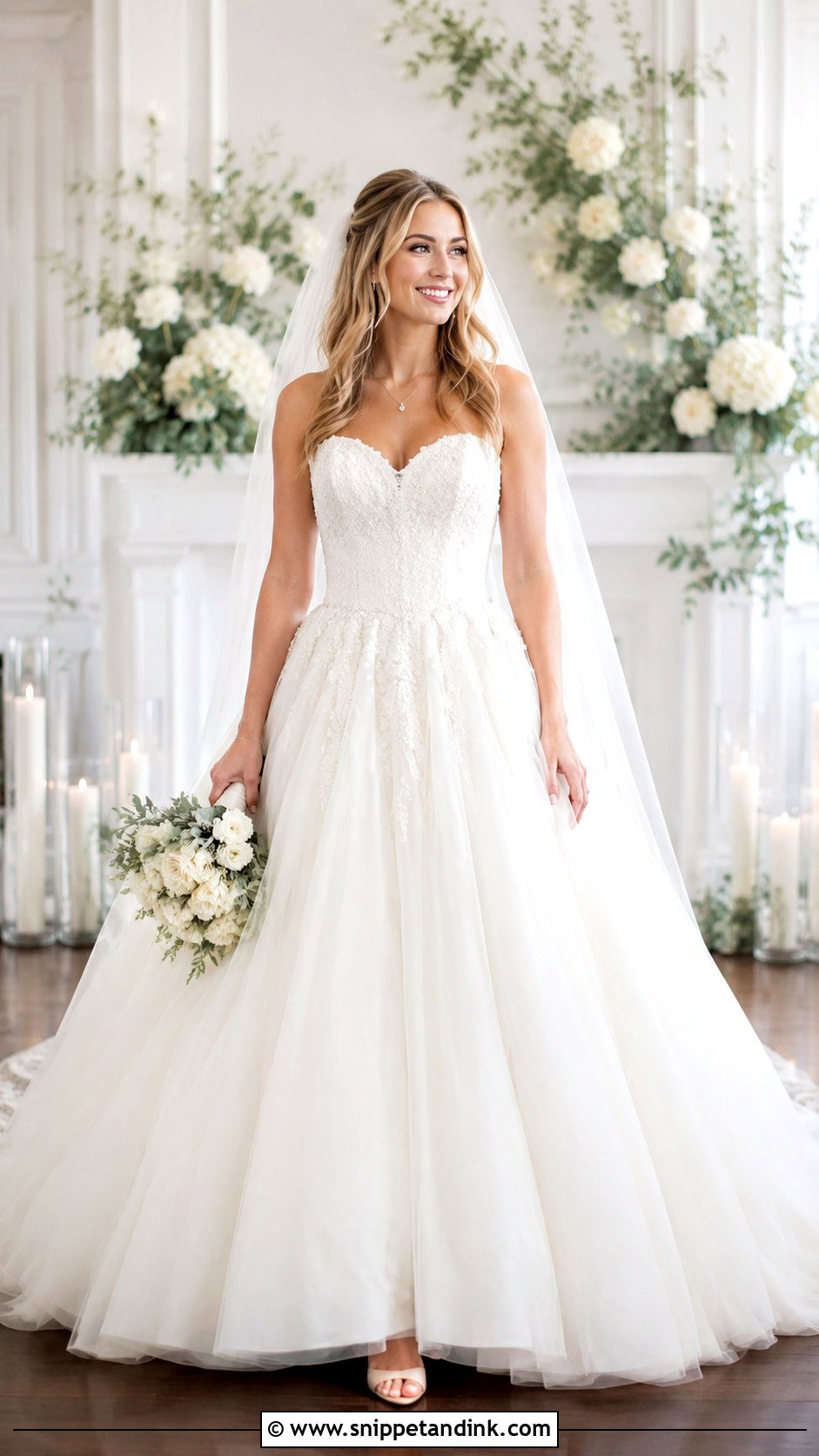
Sweetheart necklines suit most busts, but the depth of that dip is worth negotiating. A deep curve needs good cup support sewn in, or the edge stands away from the body when you lean forward to sign or hug. I usually suggest soft waves rather than a sleek bun here, because the curve at the neckline looks balanced with some movement near the face. Fingertip or cathedral veils both work, so let the venue length decide.
11. Square Neck Princess Ball Gown Wedding Dress
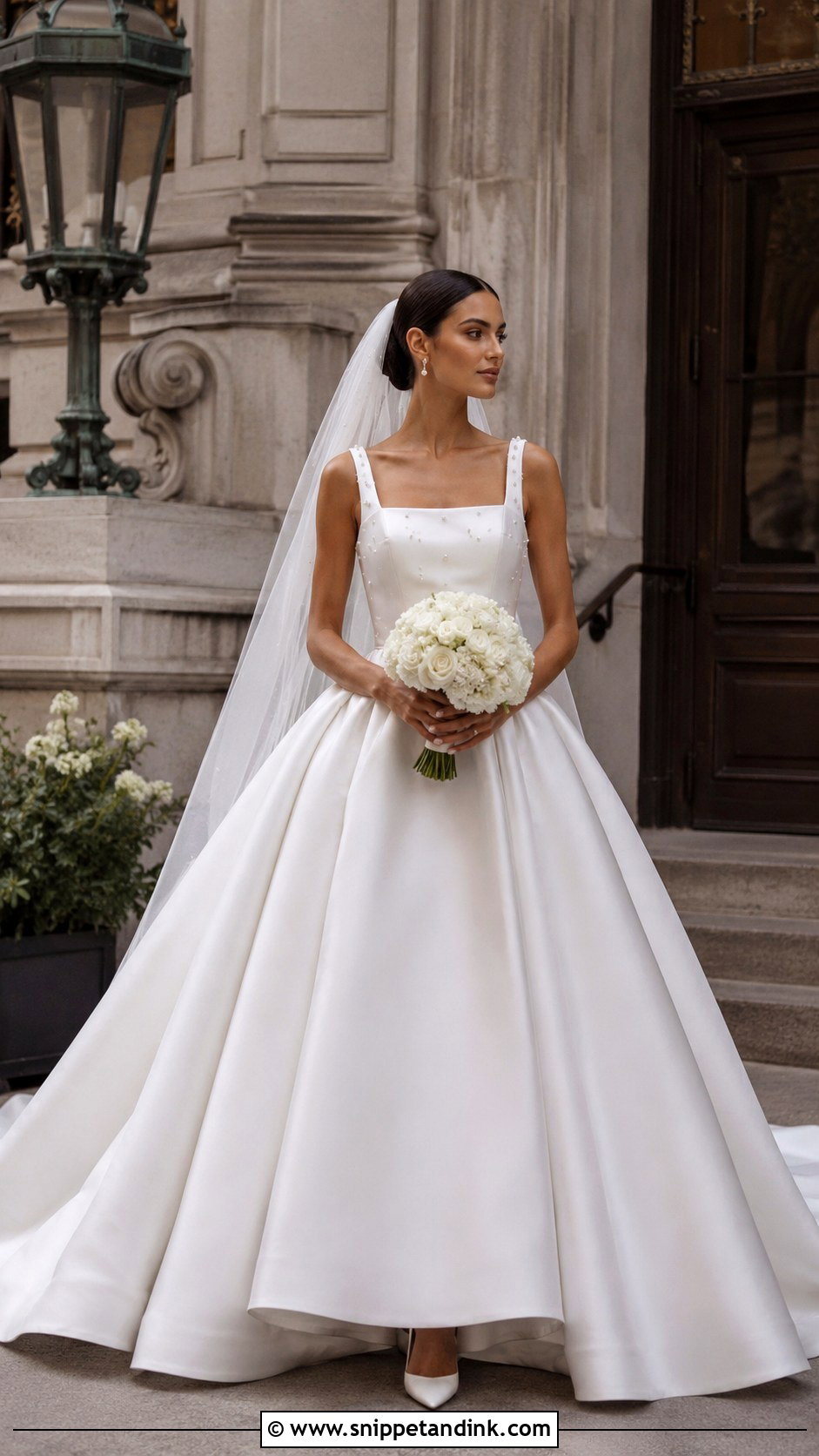
A square neck makes a full skirt look more architectural, and it works best with a wider strap or a fitted sleeve that keeps the corners sharp. Watch those corners at the fitting; if they curl outward, the bodice needs taking in at the side, not the shoulder. Mikado and heavy satin hold the line best. It’s an easy pick if you love royal-inspired fashion but have already tried a dozen sweethearts, and a sleek bun keeps the neckline clean in close-up portraits.
12. Drop Waist Princess Ball Gown Wedding Dress
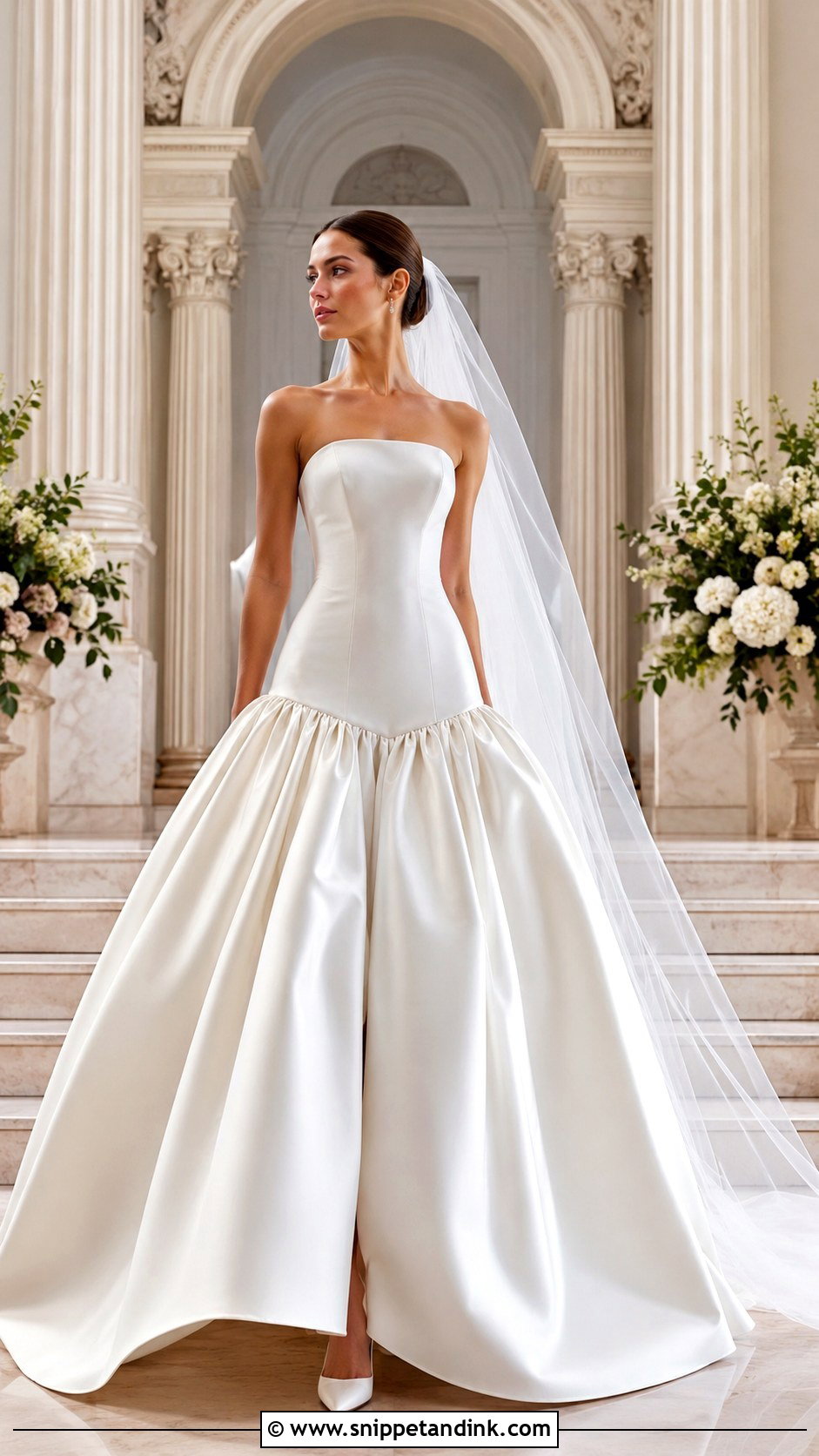
Drop waists are honest about the torso. The longer bodice suits a long waist and can make a shorter torso look cut off, so try one before you fall for the photo. Where the seam sits matters to the centimetre: just above the hip bone, and the skirt flares cleanly; too low, and it pulls when you sit. I’d keep the styling minimal, a smooth veil and pointed heels, and save this gown for a formal room where it has space to open out.
13. Bateau Neck Princess Ball Gown Wedding Dress
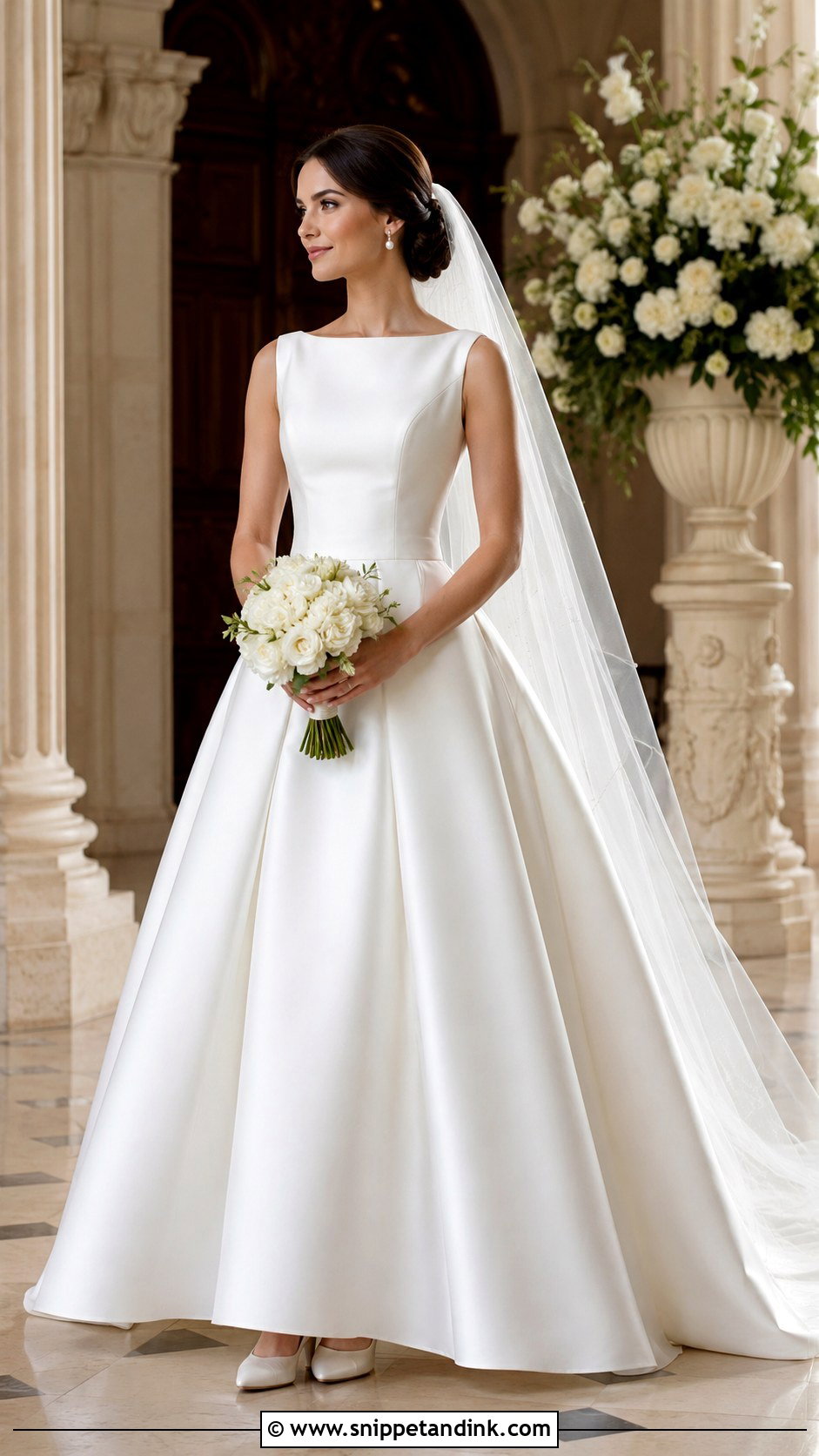
A bateau neckline runs almost from shoulder point to shoulder point, so it sits close to the neck and covers the collarbone completely. That makes it one of the easiest necklines to move in, because nothing slips. It looks especially polished with three-quarter sleeves and a low chignon, which keeps the long horizontal line uninterrupted. I’d reach for it for church ceremonies and historic venues, and for any bride who would rather not adjust a neckline all night.
14. High Neck Princess Ball Gown Wedding Dress
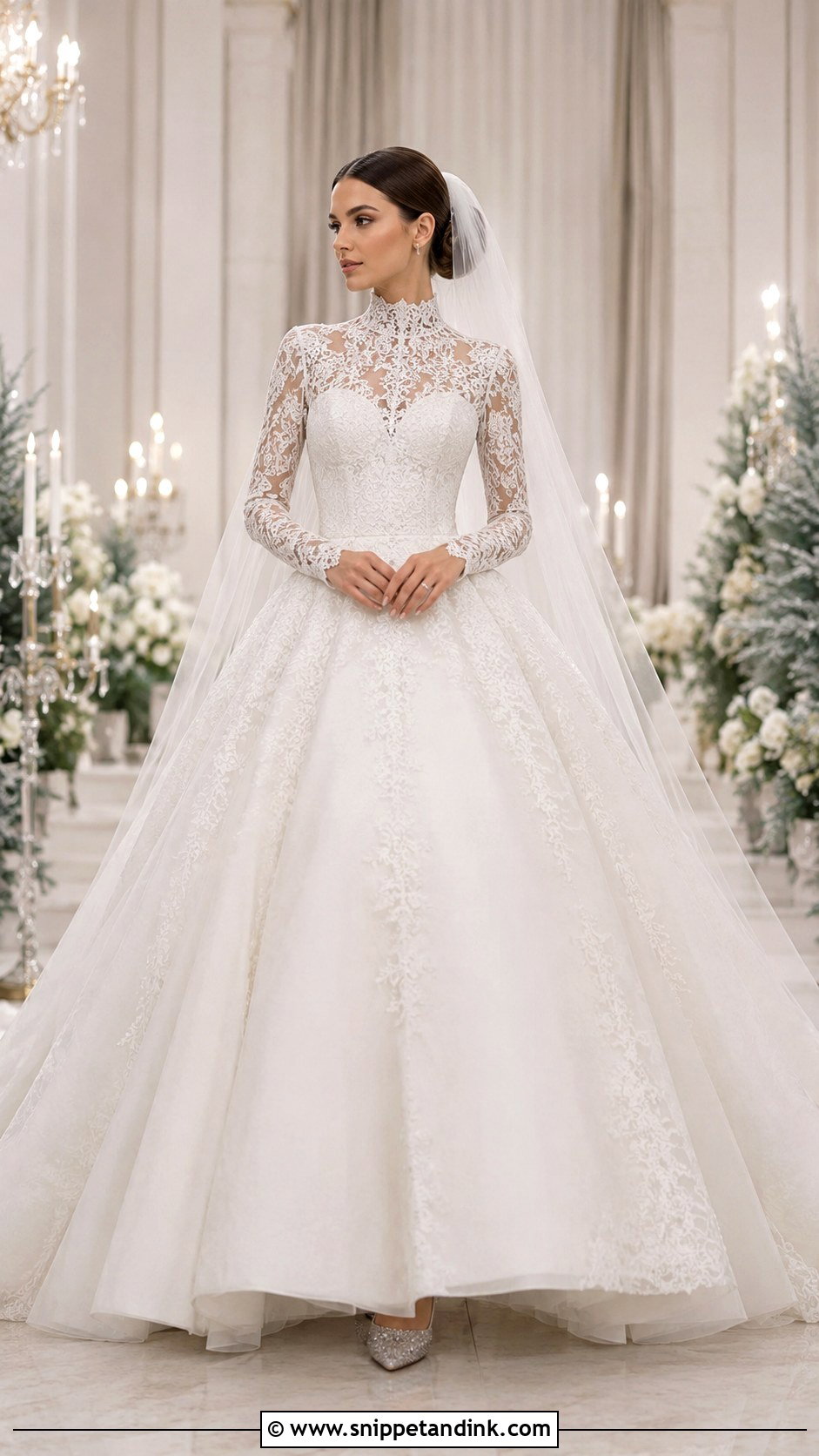
High necks put the focus on the face, so your hair and makeup carry more weight here than with any other neckline. Sheer lace collars need a clean finish at the back fastening, usually tiny buttons or a hook, because that is what the photographer sees during the vows. I attach the veil low at the nape so the comb sits below the collar rather than fighting it. Skip a necklace entirely; small earrings are enough. It suits autumn and winter dates and indoor ceremonies where coverage feels right.



15. V Neck Princess Ball Gown Wedding Dress
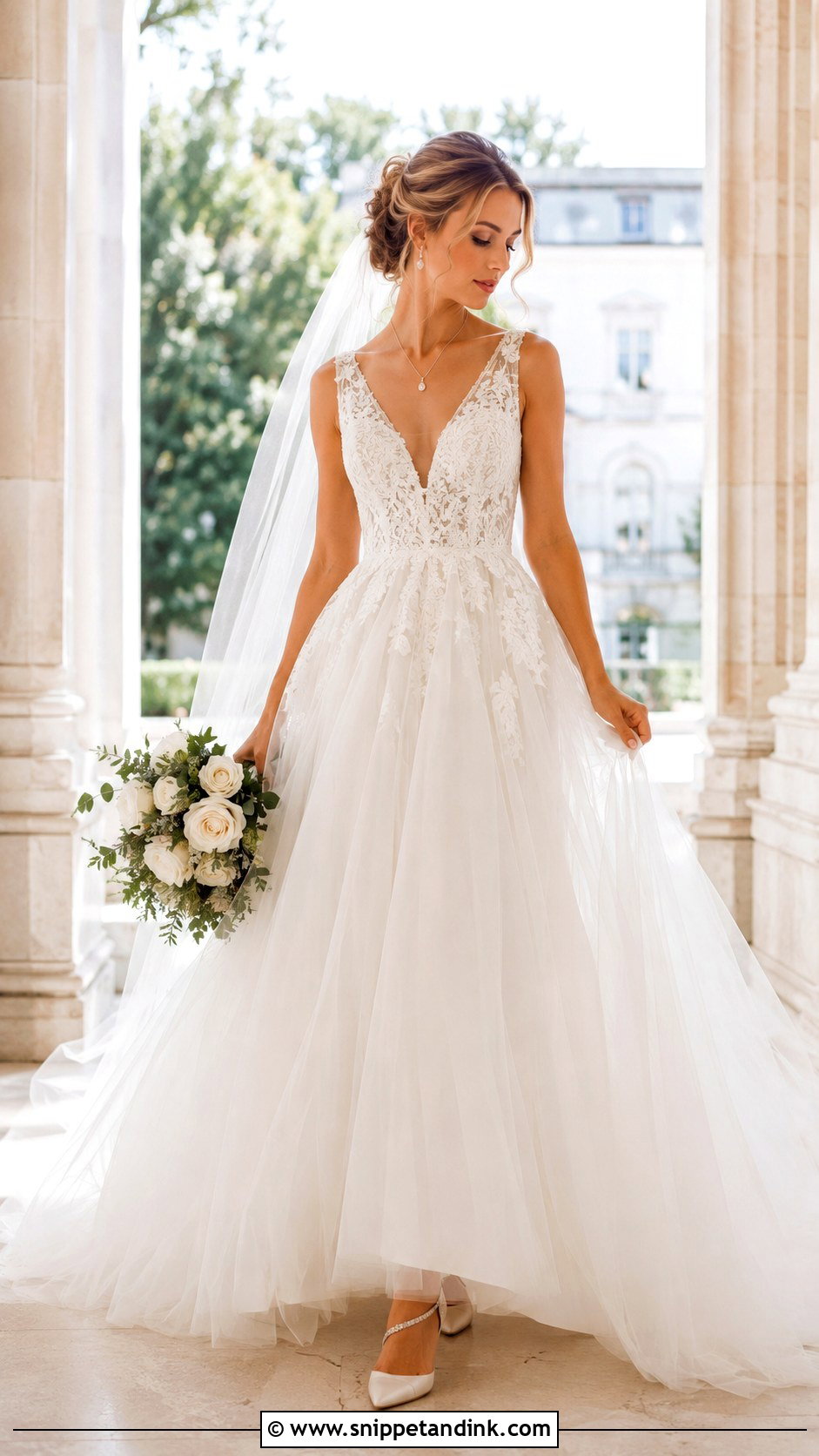
A V neck is the neckline that most often makes a big skirt feel lighter, because it draws a vertical line up through the bodice. The depth is your call, and an illusion panel lets you go deeper without worrying about it. The fitting point I watch is the edges: on a deep V they need a sewn-in tape or light boning so they don’t gape when you bend. Finish with a slim pendant that sits inside the V rather than across it.
16. Cap Sleeve Princess Ball Gown Wedding Dress
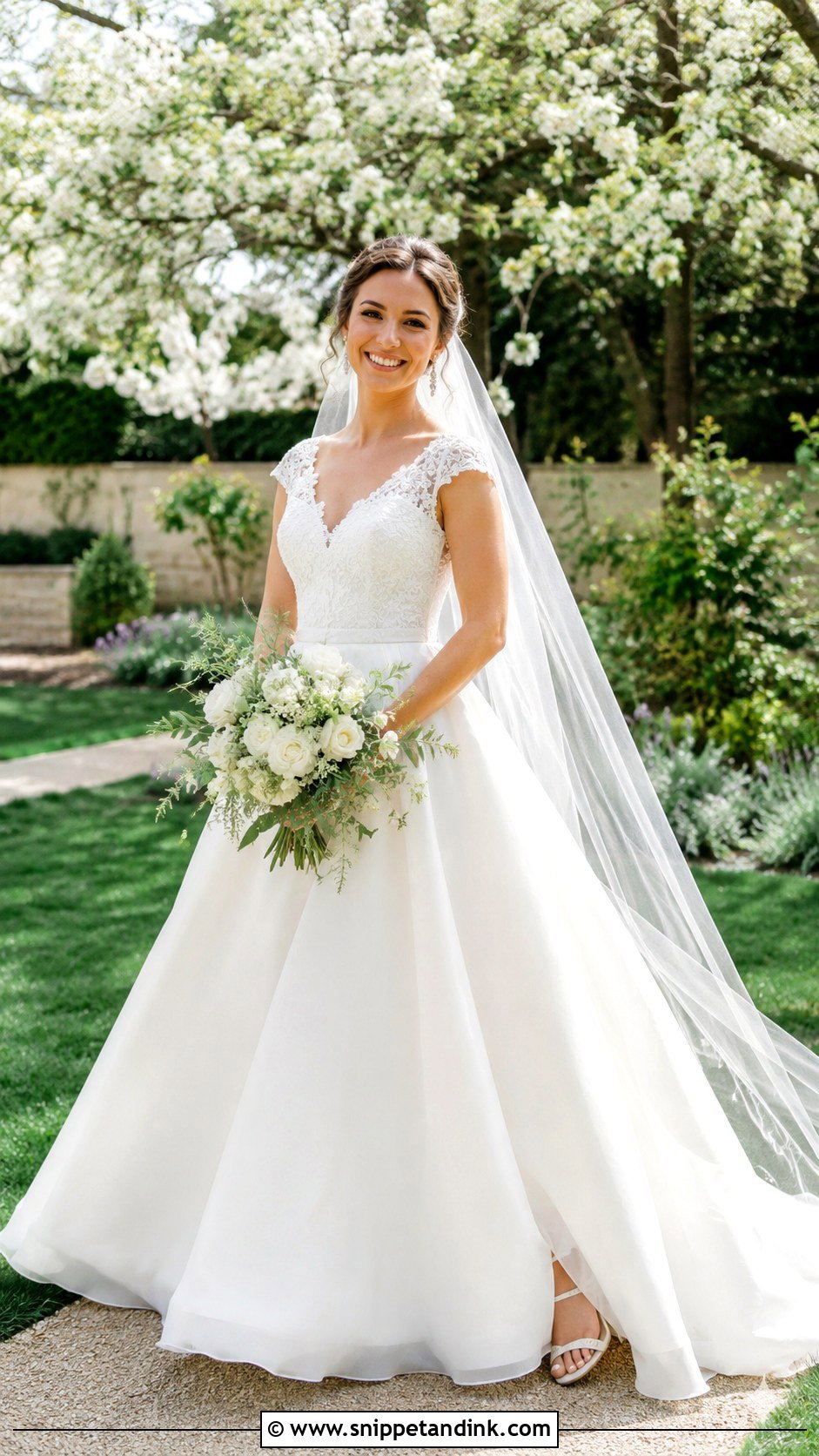
Cap sleeves give a small amount of shoulder coverage without the heat of a full sleeve. I check that the sleeve edge sits on the shoulder rather than biting into the upper arm, which happens when the cap is cut too narrow. A cap sleeve princess ball gown pairs well with block heels and a softer veil for spring garden ceremonies. Lace caps feel sweeter; satin caps look tidier and hold their shape through a long day.
17. Bow Princess Ball Gown Wedding Dress
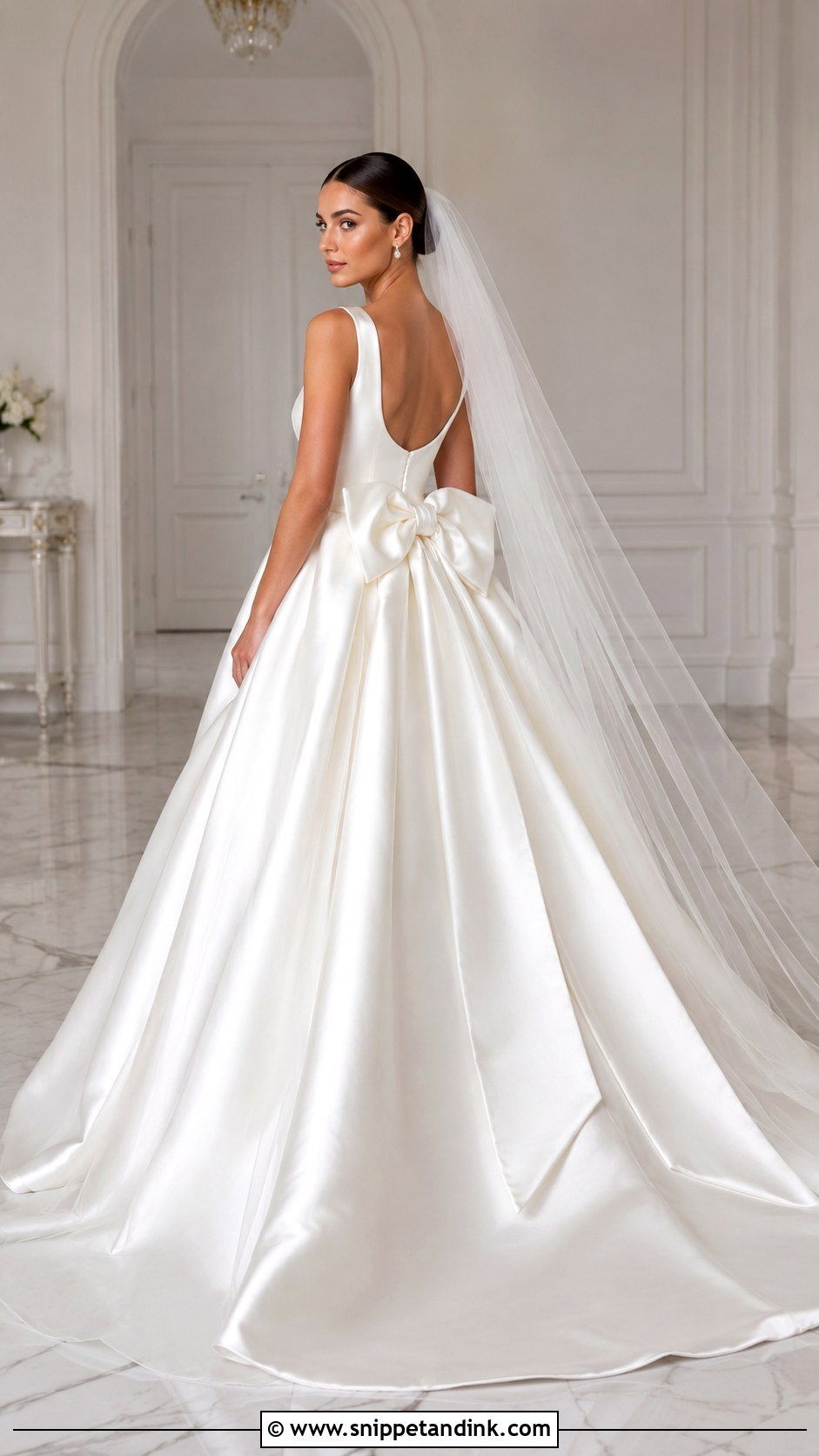
Bows are about placement and stiffness. A back-waist bow has to sit exactly where the bustle will be hooked, so plan the two together or the bow ends up buried under a lifted train. Satin bows need interfacing inside so they don’t droop by the reception; tulle bows stay soft by design. Keep everything else clean so the bow looks deliberate, and think about how it reads from behind, because that’s the view your guests have during the whole ceremony.
18. Cathedral Train Princess Ball Gown Wedding Dress
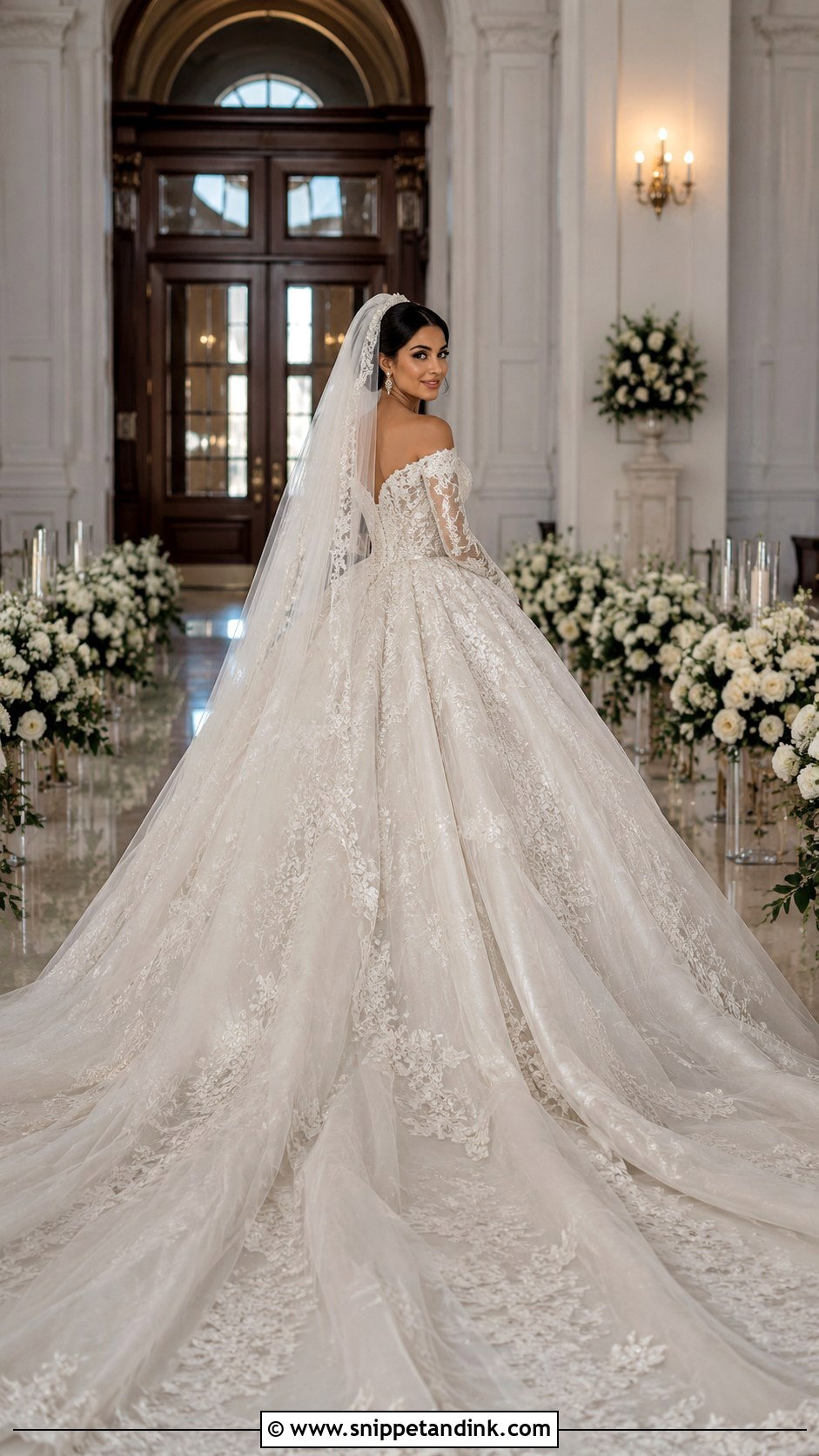
A cathedral train needs a plan for after the aisle. Ask your seamstress which bustle she would use: a French bustle tucks fabric under for a softer drop, while an over-bustle hooks it up on top and is quicker to do. Someone in your party must practise it at the final fitting, because a rushed bustle in a dark corridor is how hooks tear. The gown itself suits long aisles and large venues, and comfortable heels matter more than usual when you’re pulling that much fabric behind you.
19. Detachable Skirt Princess Ball Gown Wedding Dress
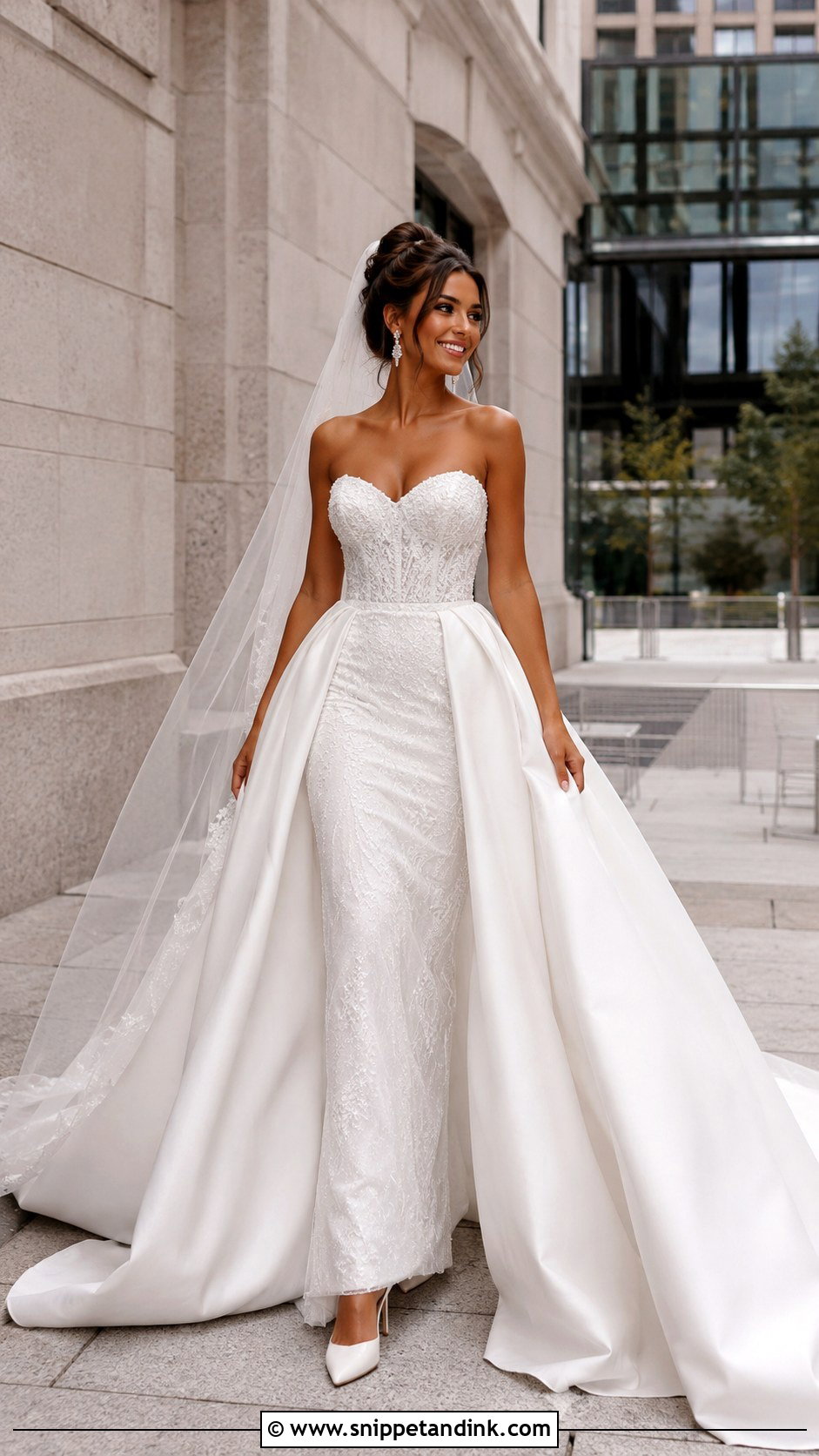
Detachable overskirts are practical, but they only work if the base gown fits as well as the full look. I check the waistband closure carefully, since hooks or snaps that strain under a heavy skirt can show through the bodice in photos. Rehearse the change once with whoever will help you, and decide where the overskirt goes afterward so it isn’t left on a chair. Ceremony with a long veil, reception with the skirt off and bolder earrings: it’s two looks with one fitting schedule.


20. Blush Princess Ball Gown Wedding Dress
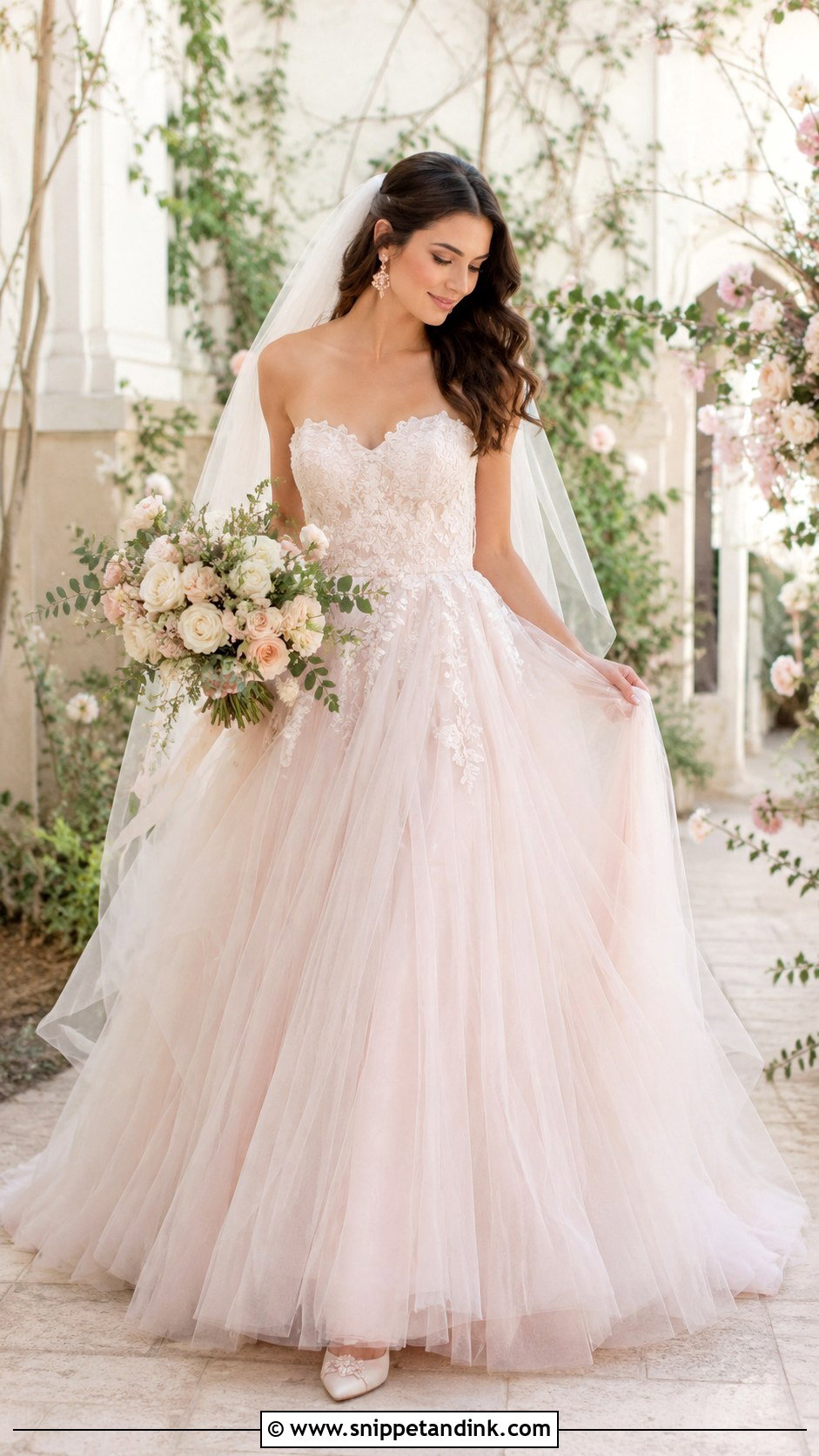
Blush shifts with the light, which is both its charm and its risk. Under warm indoor lighting a pale blush can look almost ivory; in shade it can turn faintly grey-pink. I ask brides to step outside with the sample before they commit. Tulle and organza layers deepen the colour where they overlap, so the skirt reads richer than the bodice. Rose gold earrings and a bouquet in cream and soft pink keep the palette gentle.
21. Ivory Princess Ball Gown Wedding Dress
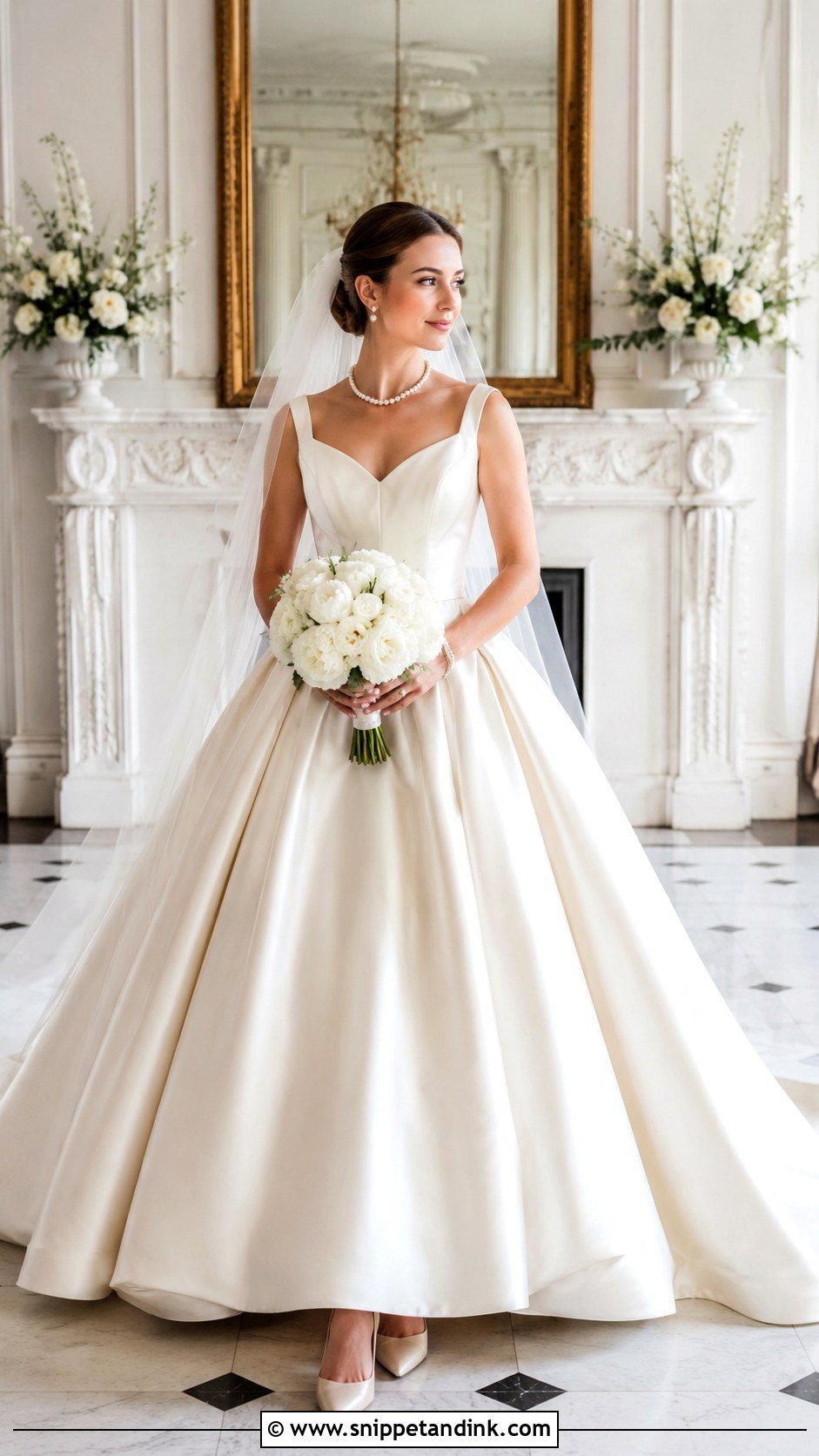
Ivory is softer against the skin than bright white, and it looks warmer in most camera settings. The catch is undertone matching. Ivory from one maker can be another’s champagne, so I always take a fabric swatch to the veil and shoe fittings rather than trusting the label. It pairs easily with bridesmaid colours and flowers, which is why so many planners love it. Pearl accessories, nude heels and a veil cut from the same shade keep it calm.
22. Sparkle Tulle Princess Ball Gown Wedding Dress
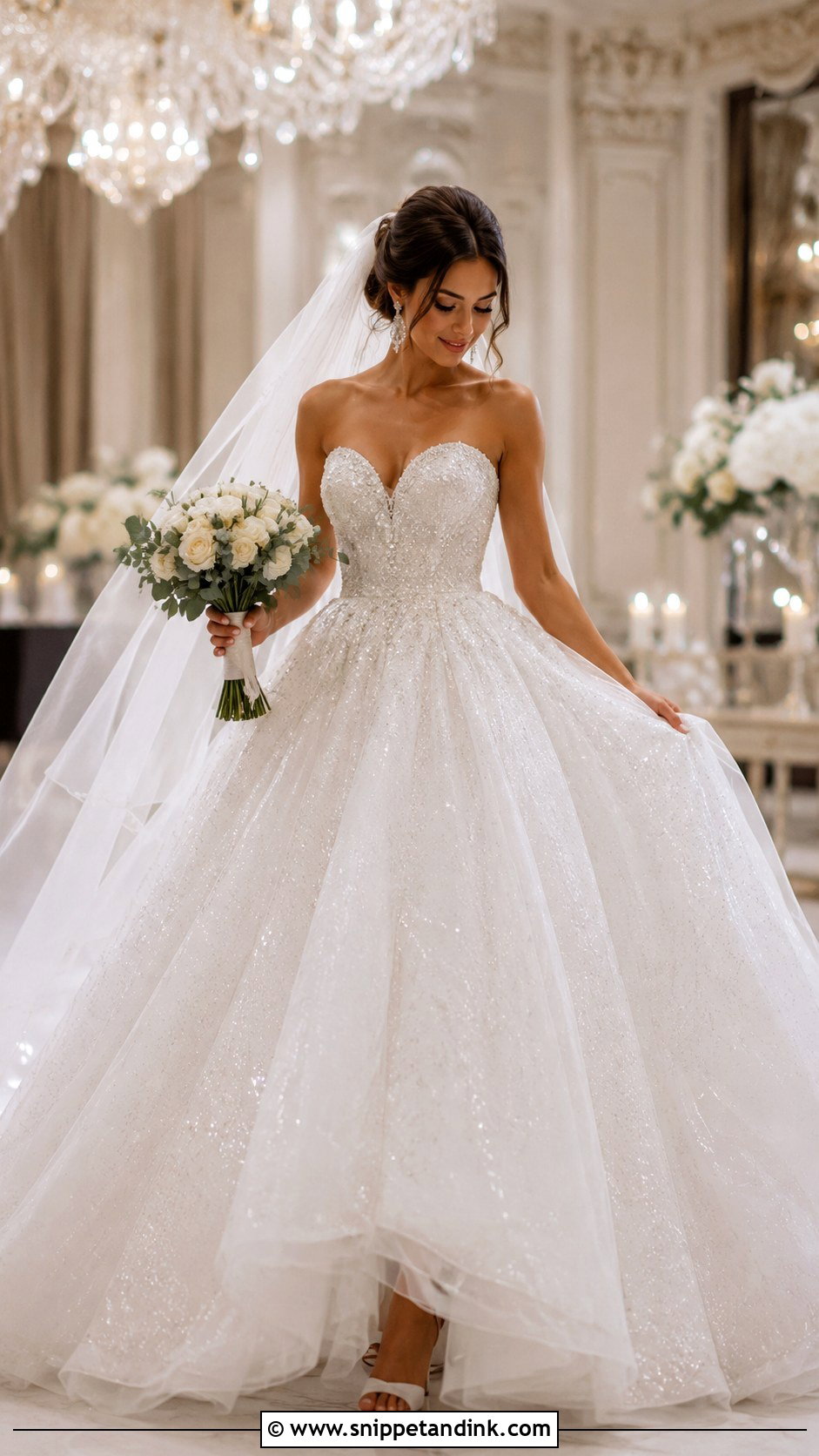
Sparkle tulle gives shimmer at a fraction of the weight of beading, since the glitter is fused or woven into the net itself. Some glitter tulles do shed a little, so do a test rub on a dark sleeve before the day if the groom is wearing navy. The effect shows best under chandeliers and evening light, while flat daylight makes it subtle. Keep earrings small and the veil plain, and choose the density of sparkle with your venue lighting in mind.
23. Mikado Princess Ball Gown Wedding Dress
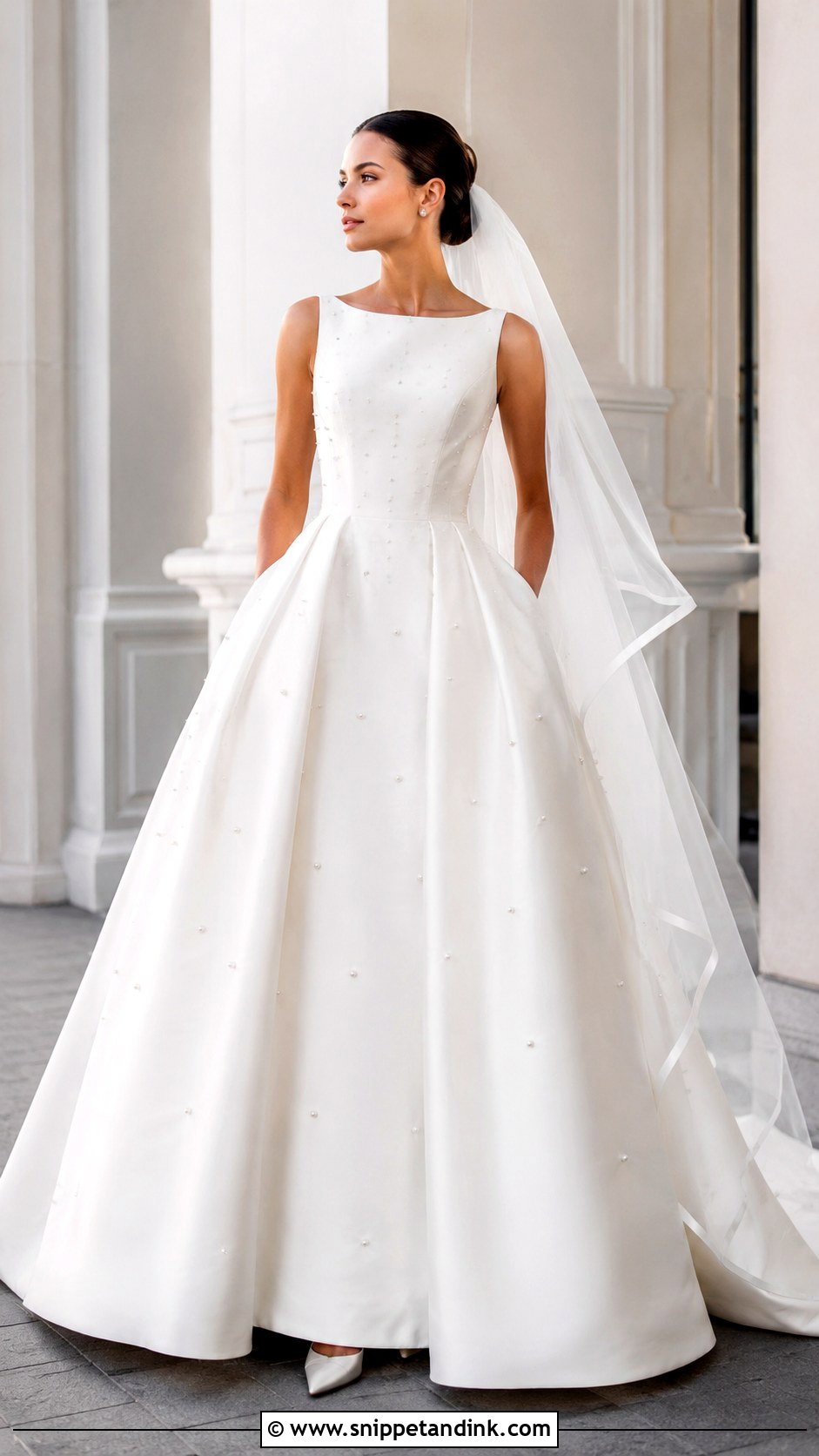
Mikado is a heavy, slightly stiff silk or blended weave, and it holds a full skirt with very little help underneath. That body is why it suits simple necklines, pleated skirts and hidden pockets so well. It does crease when you sit for a long dinner, though the creases tend to drop out once you stand and move. A sleek bun and pointed heels finish it, and it looks right in city ballrooms where a crisp line belongs.
24. Ruffle Princess Ball Gown Wedding Dress
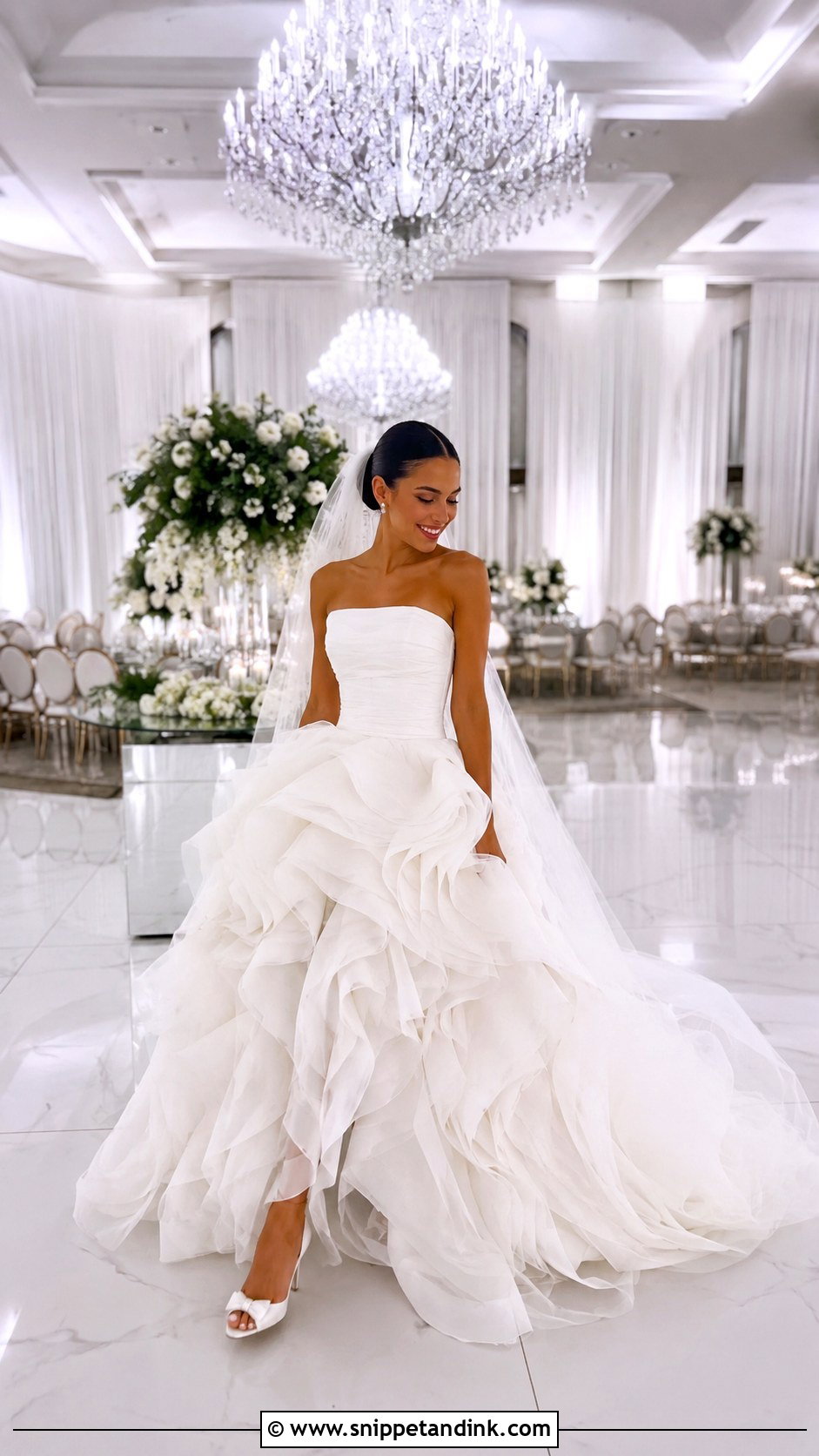
Ruffles add bulk at the hem, which is the part of a dress that takes the most wear. Organza ruffles hold their shape; tulle tiers soften after a few hours of dancing. I steer brides toward a clean bodice so the skirt carries all the texture, and I check that the bottom tier clears the floor in their actual shoes, or the ruffle catches with every step. It needs a large venue to look its best.



25. Minimal Princess Ball Gown Wedding Dress
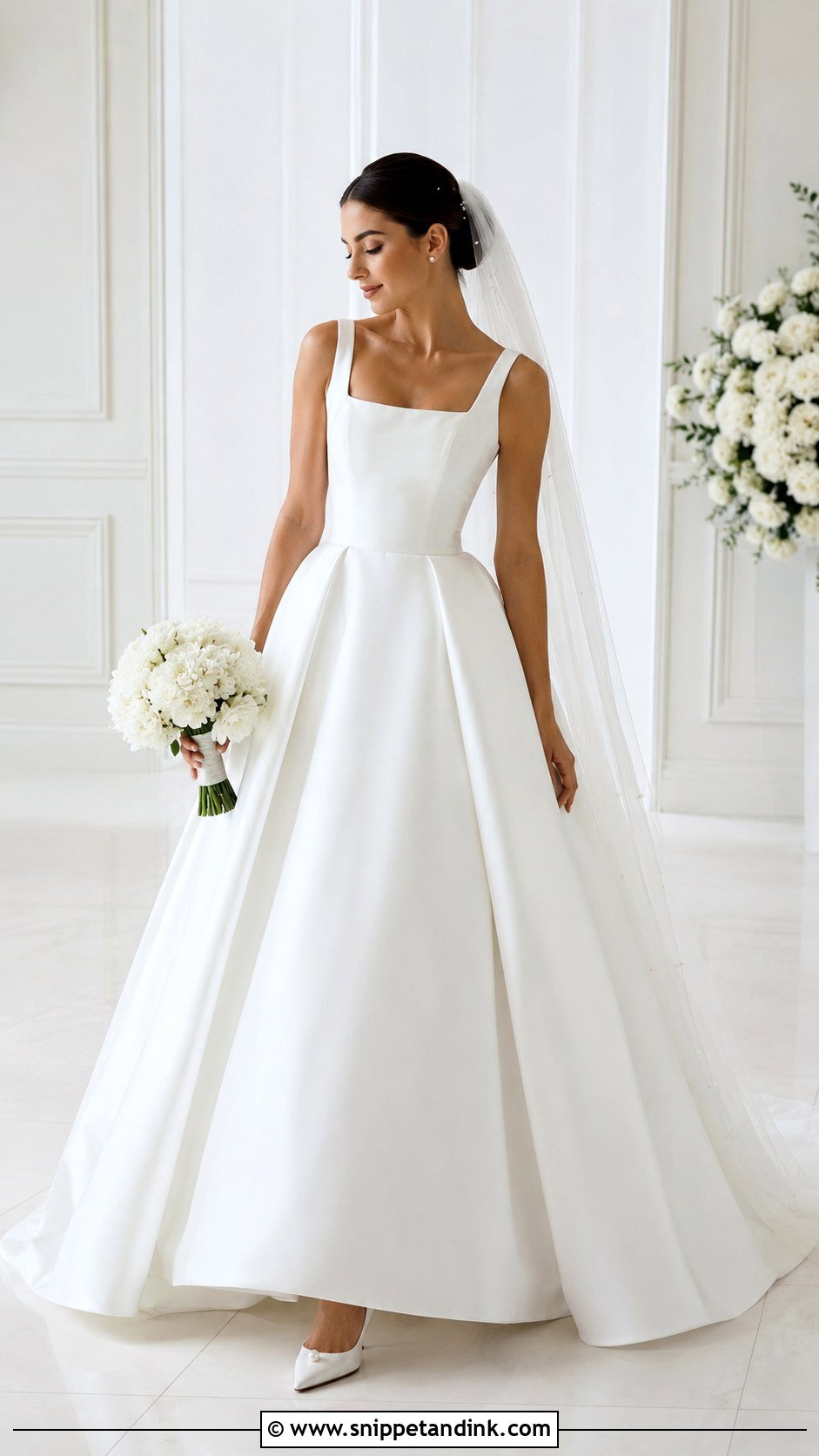
A plain ball gown shows the cut more than any other, so seam placement and fabric quality are all you have. I’d only recommend a minimal gown in a fabric with body, like heavy satin, mikado or faille, because a thin satin without decoration looks limp on a full skirt. Look at how the skirt falls from the waist when you stand still: it should open evenly, with no dent at the side seams. Style it with pearl studs and a neat bouquet, and it ages well in photographs.
Car Doors, Stairs and Bathroom Breaks in a Full Skirt
This is the conversation I have with every ball gown bride, usually to a little laughter, and nobody regrets having it. A skirt this wide changes the small logistics of the day.
- Getting into the car: sit first, back into the seat, then gather the skirt in with both arms. Someone should check the hem is fully inside before the door shuts.
- Stairs: lift the front of the skirt with both hands at hip level, not just one side, and go down slightly sideways so you can see your feet.
- Bathroom: step into the skirt from the front and have a bridesmaid hold it up from behind, or sit facing the cistern so the skirt falls forward over it. Practise once in the gown before the day.
- Sitting at dinner: perch toward the front of the chair and sweep the back of the skirt to one side, so you don’t sit on the train or tilt a hoop up.
Pack a small kit with you: clear nail polish for a tulle snag, a few safety pins, white chalk for marks on satin, and a short length of ribbon in case a bustle loop gives way. A ball gown that is planned for movement feels light by the end of the night. One that isn’t feels heavy before the first dance.
What the Fitting Room Decides About Your Ball Gown
A full skirt and fitted bodice can carry almost any fabric or detail, from lace and mikado to sparkle and bows. What decides whether you love it on the day is the part nobody photographs: the fit at the waist, the petticoat underneath, the bustle and how you move inside all that fabric. Try your favourites sitting down, in your real shoes, and with someone practising the bustle. A ball gown should feel exciting to wear, and with the fitting done properly, it will.
You'll Like These Ideas:







Leave a Reply