
A ball gown is the one silhouette where the skirt does half the talking before you have said a word. When a bride tells me she wants volume, my first questions aren’t about lace or satin. I ask how wide the aisle is, how long she’ll be on her feet, and whether she has ever sat down in a hoop. The twenty gowns below cover the fabrics and necklines I fit most often for big-skirted brides: crisp Mikado, soft tulle, ruffled organza, corsetry and sleeves. For each one I’ve noted what I check at the fitting and where it tends to go wrong, so you walk into your appointment knowing what to ask for.
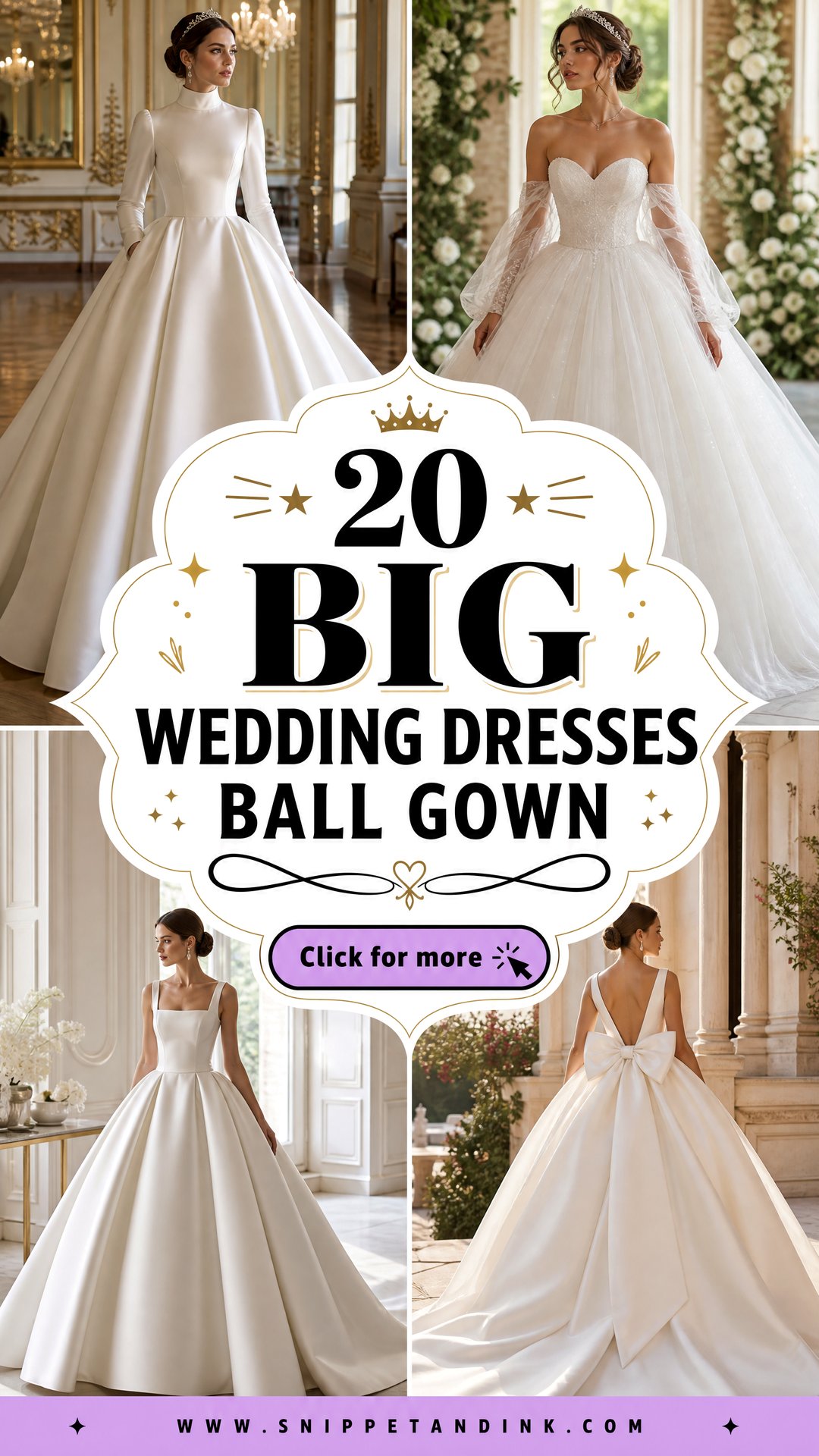
What Actually Holds a Ball Gown Skirt Out
Volume comes from three places: the fabric itself, the layers sewn into the skirt, and whatever you wear underneath. Mikado and heavy satin hold their own shape. Tulle and organza need help, usually several rows of stiff net built into the lining, and sometimes a separate petticoat or hoop.
Built-in layers or a separate hoop
Most current ball gowns have their volume stitched in, which is the easier option to live with. A hoop gives the widest, most even shape, but it swings when you walk and you have to lift the back of it before you sit. If you’ve never worn one, ask to try a hoop at the first appointment rather than discovering it at your first fitting.
Weight is what surprises brides most. A satin gown with a long train can feel fine for an hour in the shop and drag on the shoulders and waist by evening. A waist stay, a grosgrain ribbon inside the bodice that hooks closed before the zip goes up, takes much of that load off the bodice and is worth asking for on any heavy skirt.
- Lift the gown on its hanger before you step in, so you know what you’re signing up for.
- Wear the strapless bra or bodysuit you plan to marry in, or something close to it.
- Stand in heels the same height as your wedding shoes, since the hem is cut to them.
- Sit on an armless chair and notice where the skirt bunches and how far it spreads.
1. Strapless Satin Ball Gown Wedding Dress
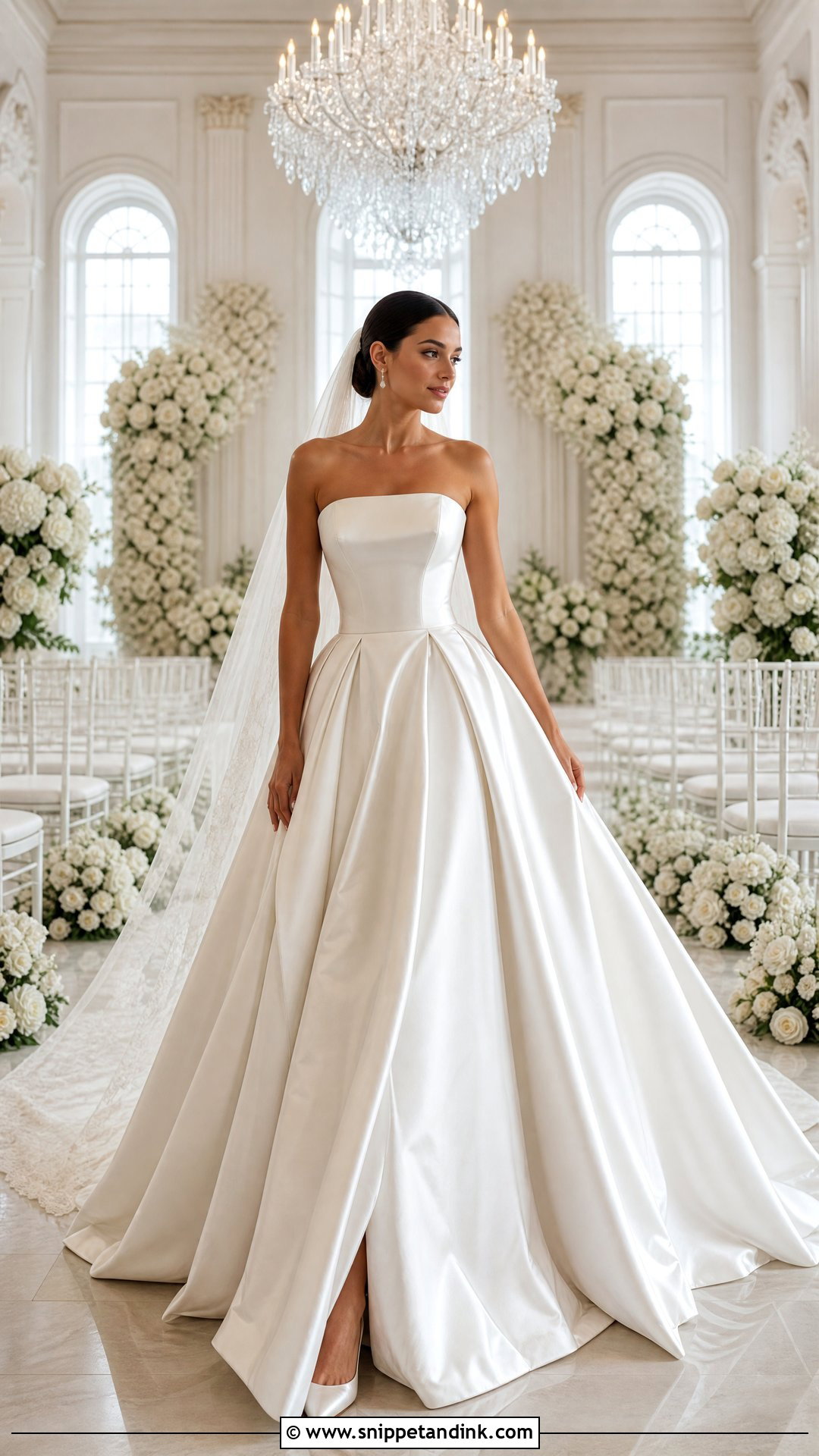
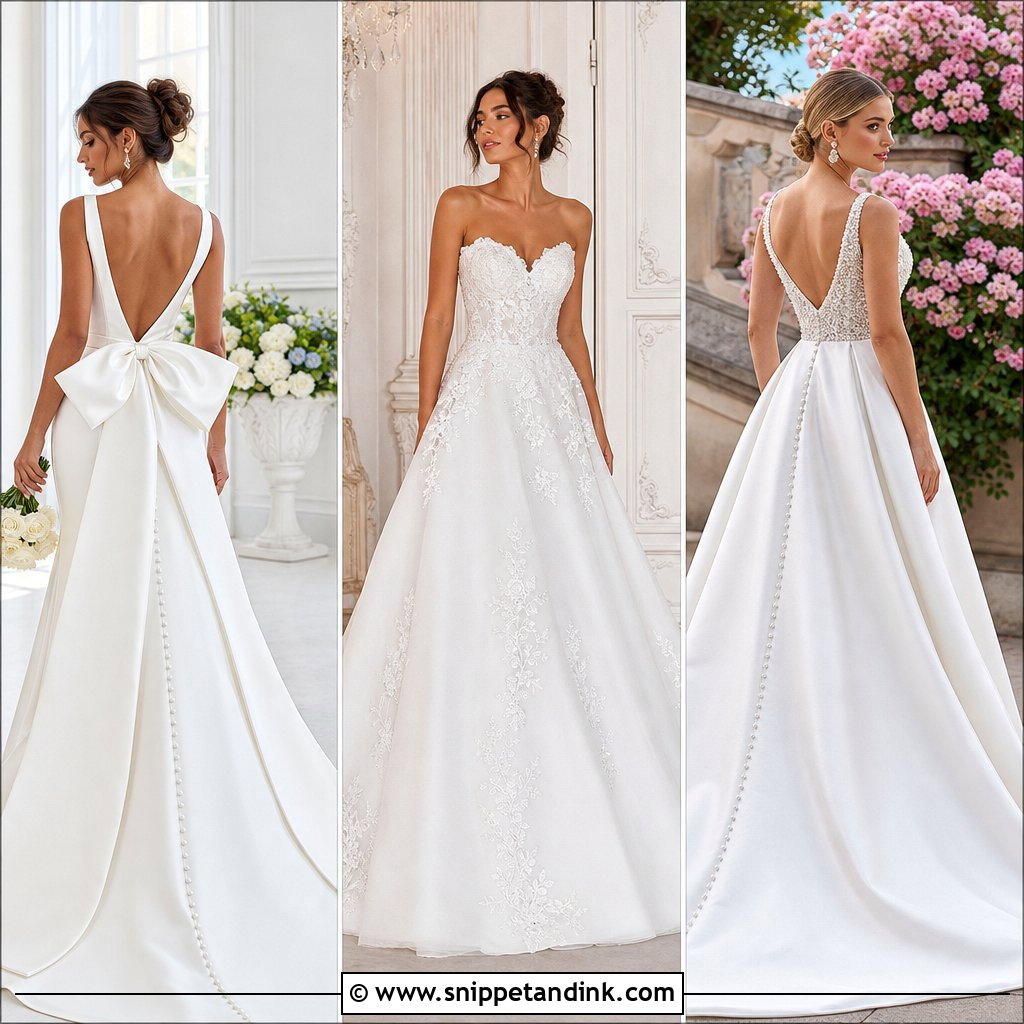
Satin is honest fabric. With no lace to hide behind, a strapless satin ball gown lives or dies on the bodice, so the first thing I do at a fitting is have the bride lift both arms and then sit. If the neckline gapes or slides, the boning or waist stay needs work, because a heavy pleated skirt drags on a strapless top all day. Pointed ivory pumps, pearl drops and a cathedral veil keep it formal; a sleek bun with crystal pins suits a bride who would rather skip the veil. Ask for a bustle with several pick-up points. A wide satin train is heavy, and a single hook usually tears loose by the second dance.
2. Off The Shoulder Lace Ball Gown Wedding Dress
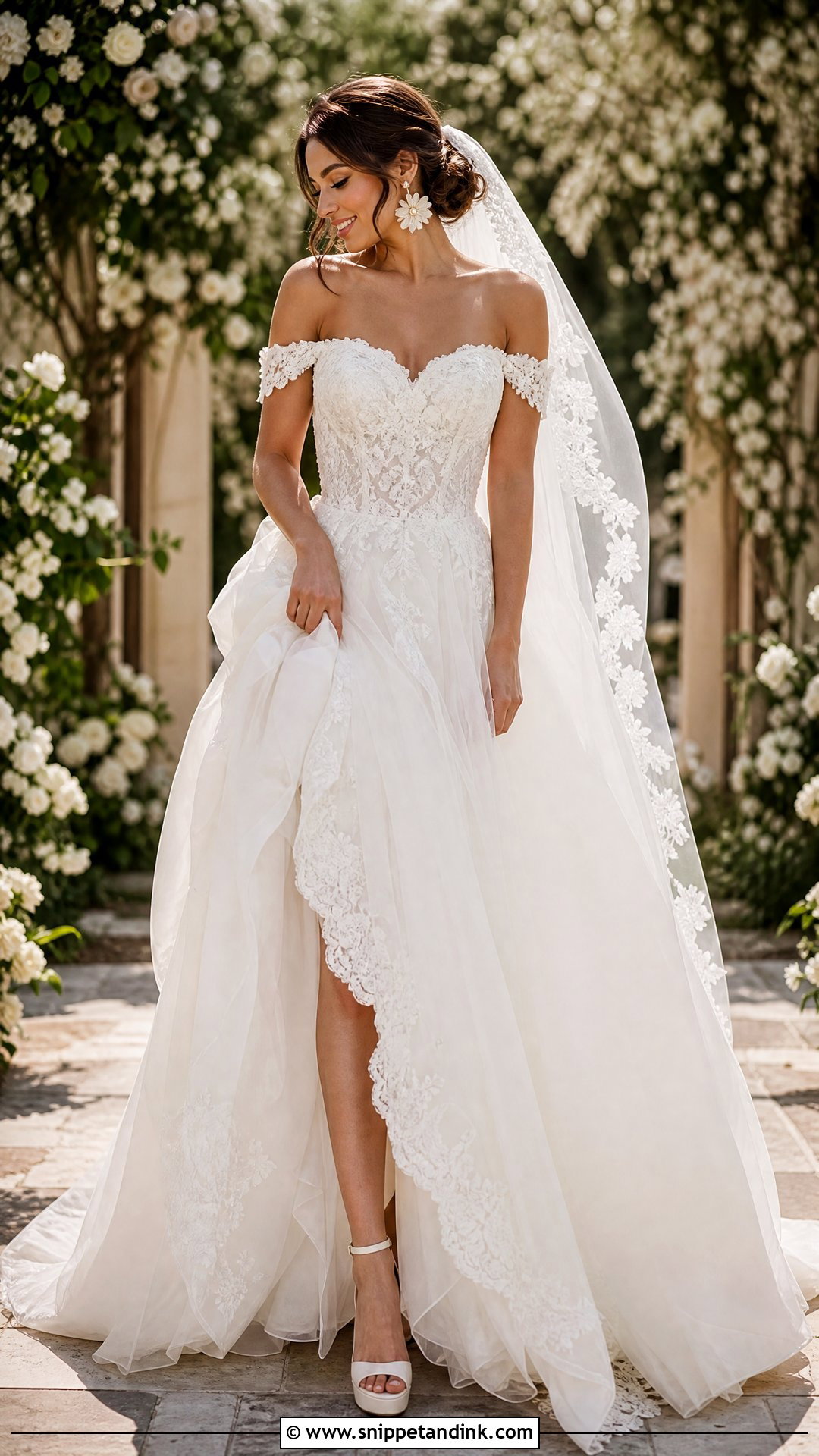
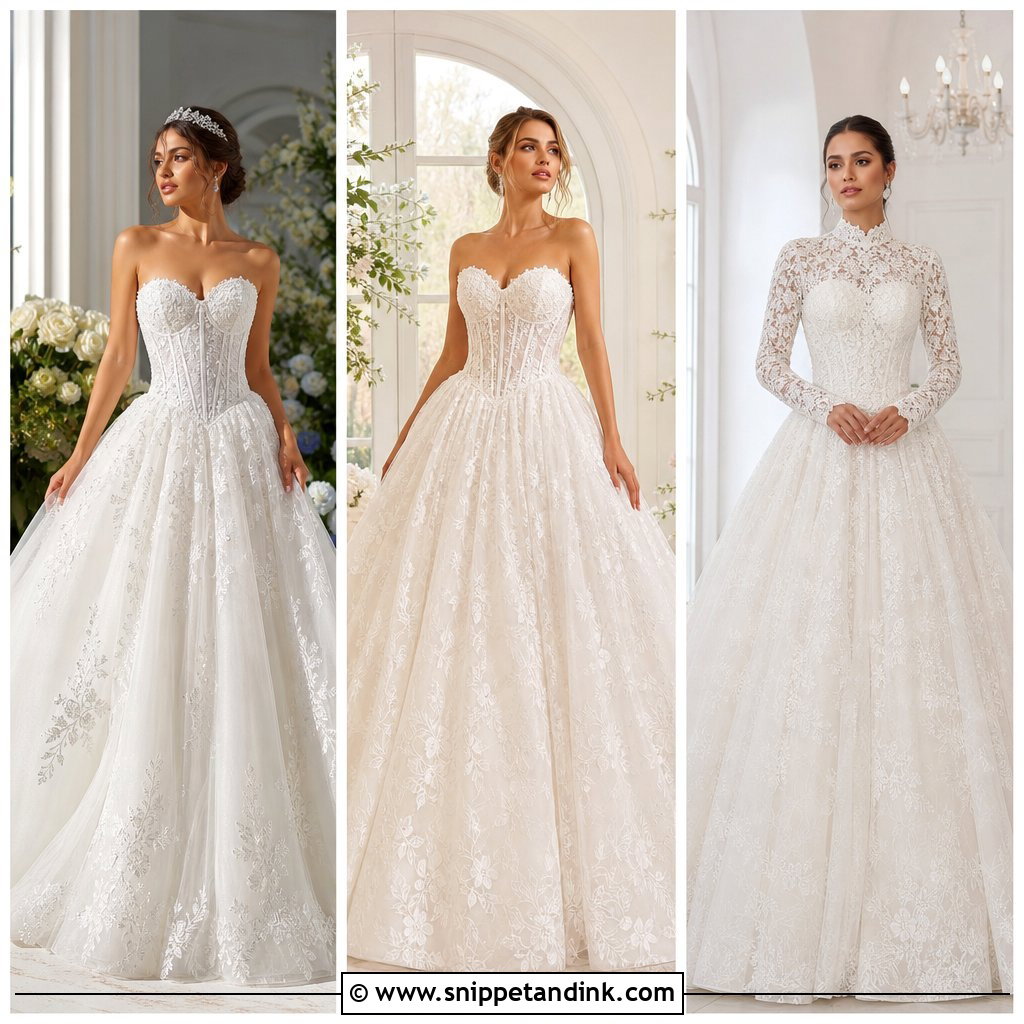
Off-the-shoulder lace looks soft, but it is one of the trickier necklines to fit. The band sits on the upper arm, so if it’s cut a touch tight you feel it every time you reach for a glass. I ask brides to hug me during the appointment; it is the quickest test there is. Look for appliqués that travel from the bodice down onto the skirt instead of stopping at the waist, with a plain tulle layer underneath so the lace reads clearly. A low textured updo keeps the shoulders open, and a veil with a thin lace edge sits with the gown rather than fighting it. Block heels help too, since long lace hems catch on a stiletto.
3. Long Sleeve Mikado Ball Gown Wedding Dress
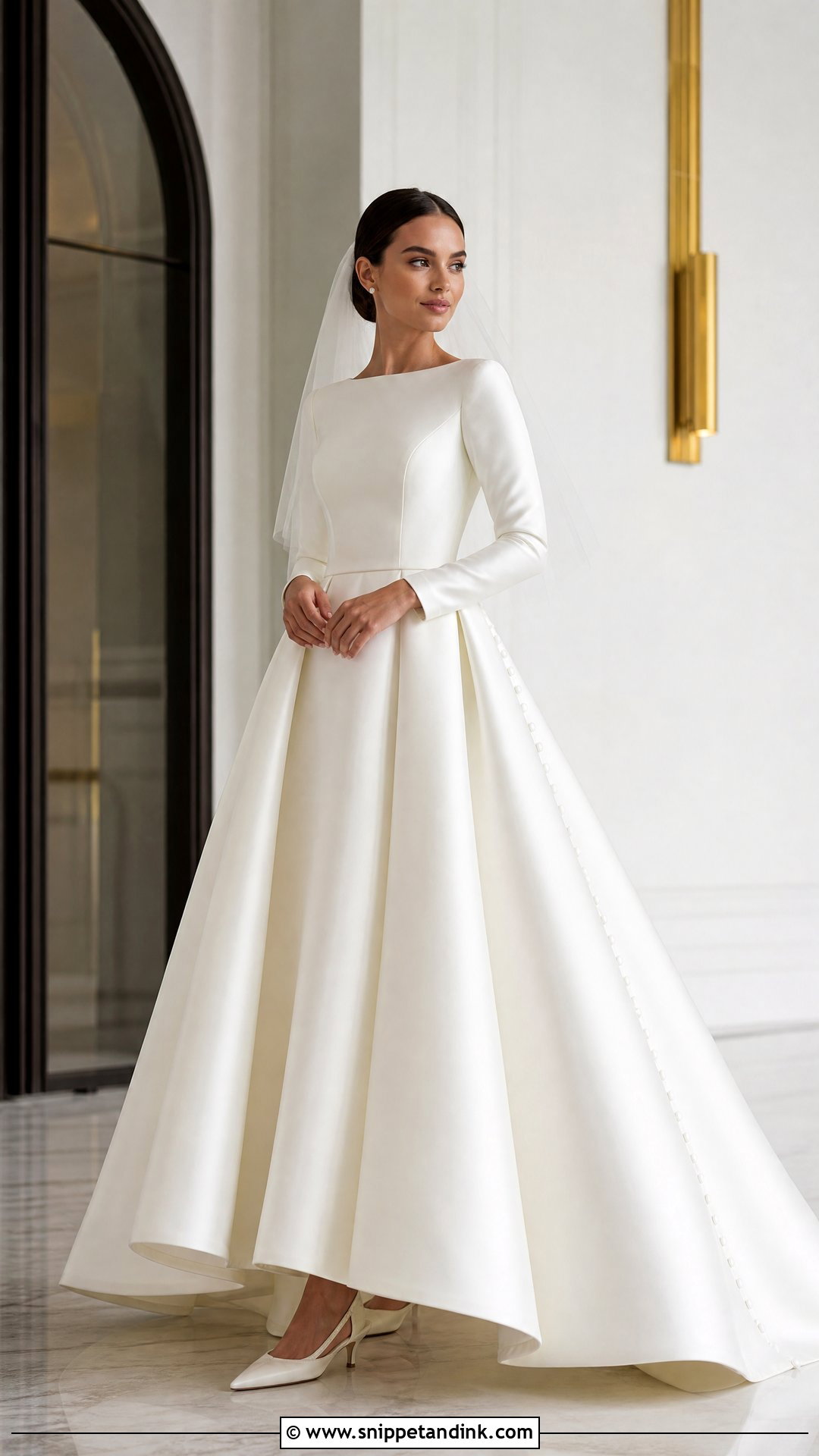
Mikado is the fabric I reach for when a bride wants a skirt that holds its own shape. It’s a heavy twill, usually silk or a silk blend, with a low sheen, and it creases in sharp lines rather than soft ones. Sit down in the sample and look at your lap. If a hard fold forms there, that is what your photos will show after the ceremony. Long sleeves balance the scale of the skirt and suit cooler months. Covered buttons, slingbacks, small studs, a fingertip veil and a smooth chignon are all the decoration it needs, and a good petticoat gives lift without piling on more fabric.
4. Sweetheart Tulle Ball Gown Wedding Dress
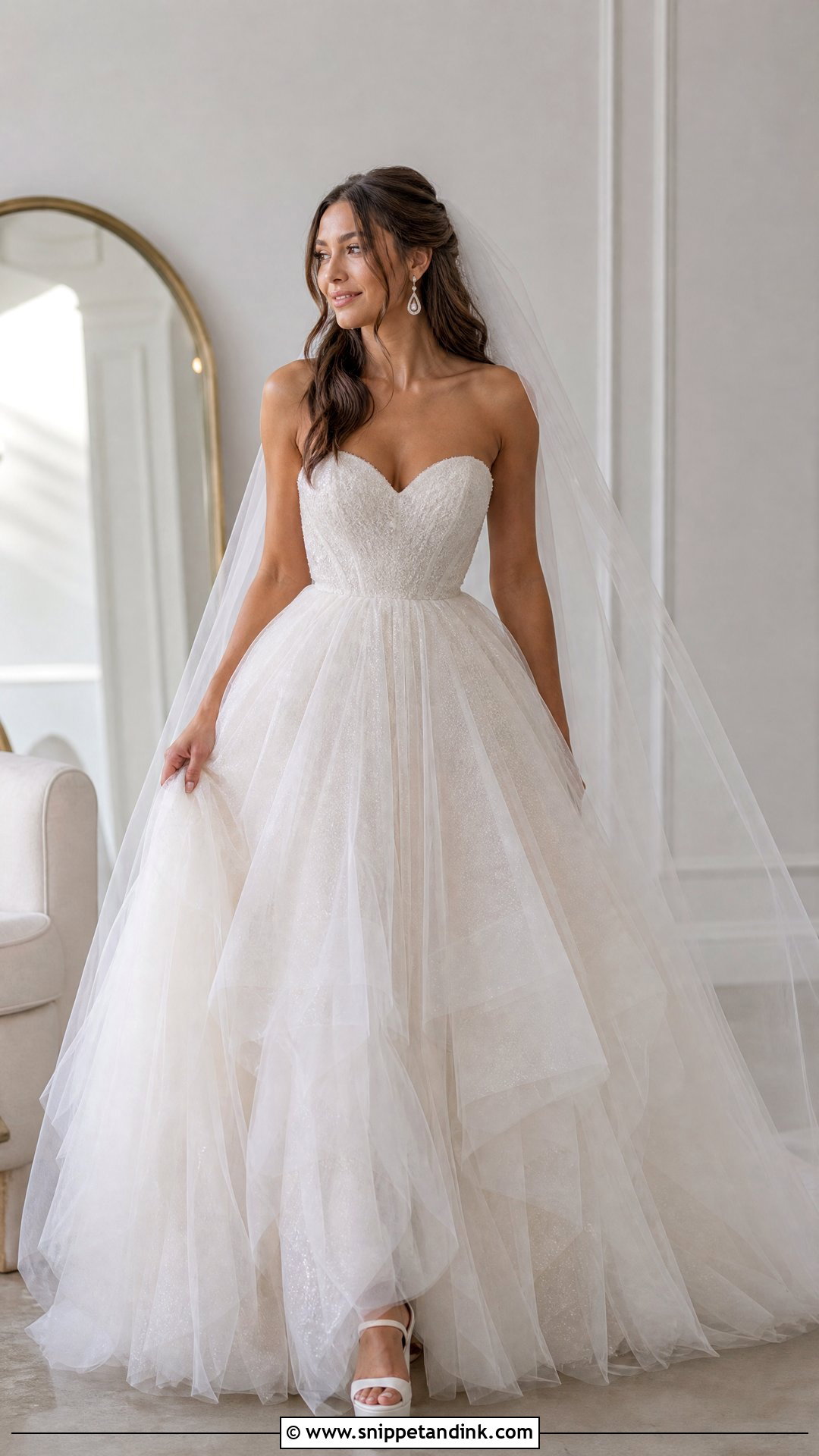
Tulle with a sweetheart neckline is the soft princess effect most brides picture first, and it is forgiving to fit because tulle doesn’t show tension lines the way satin does. My caution is the bodice. A sweetheart needs enough structure that the curve stays against your body when you lean forward to sign the register. Mixed layers of plain and shimmer tulle add depth without looking busy. Teardrop earrings, hidden platform heels and a half-up style with a small comb finish it. Before you settle on a size, walk through a doorway and turn in a tight corner. A full tulle skirt takes up far more room than brides expect.
5. Square Neck Satin Ball Gown Wedding Dress
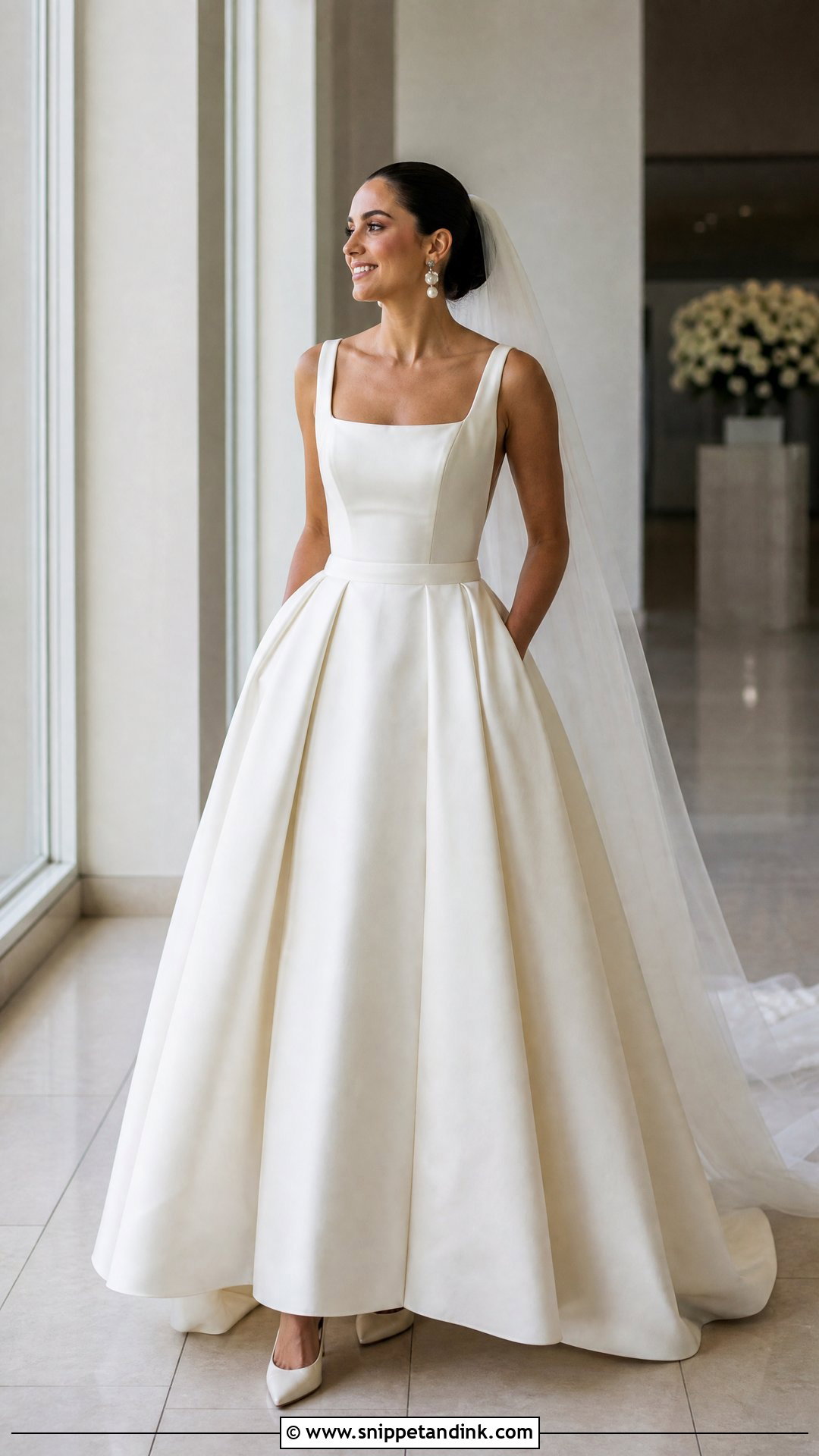
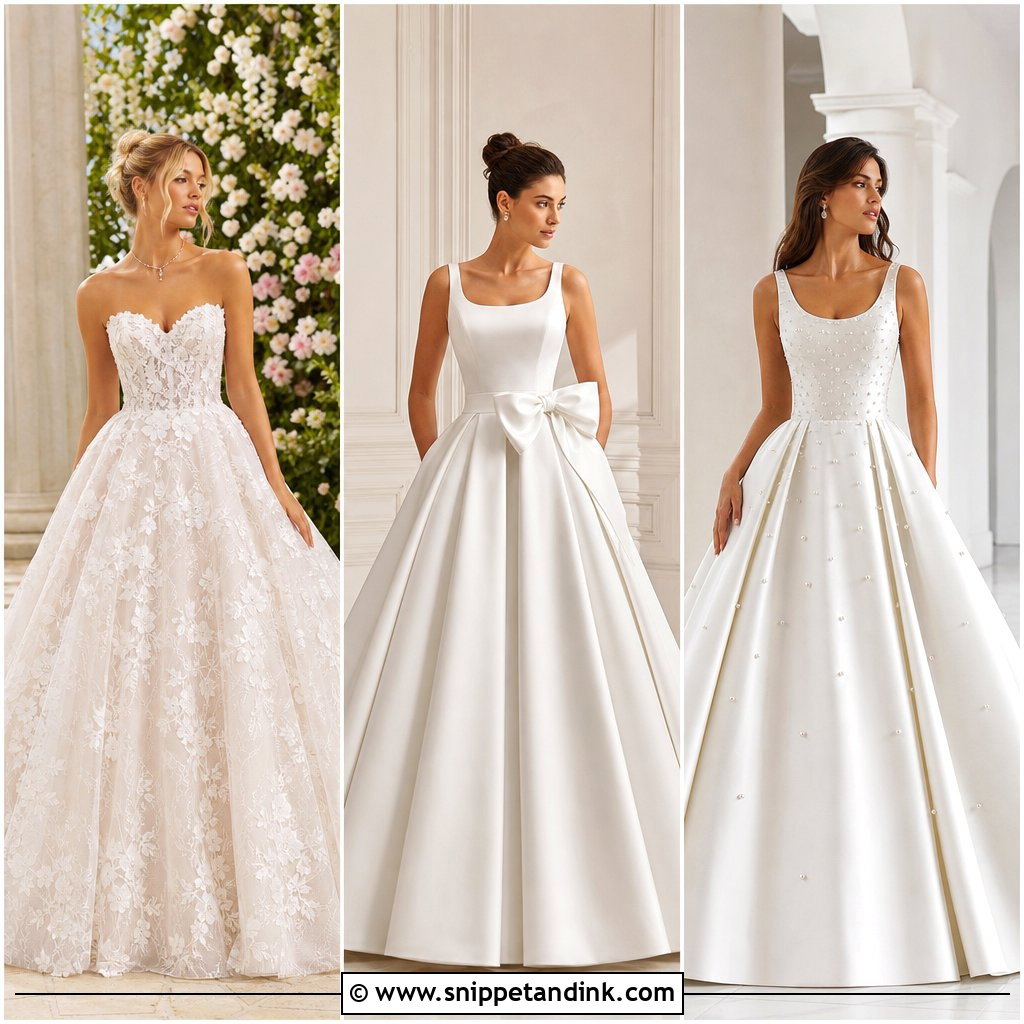
A square neckline makes a satin ball gown look tailored rather than fairy tale. Wide straps or short sleeves carry some of the bodice load, which brides with a fuller bust usually find easier over a long day. After alterations I check that the box pleats still fall evenly around the waist, because taking in the side seams can push them off centre. Sculptural pearl earrings, a chapel veil and a low bun suit the clean lines. Keep the bouquet compact. A trailing cascade covers exactly the part of the dress that makes it interesting, and a slim detachable belt with a small back bow is the only extra I’d add.
6. Corset Bodice Sparkle Tulle Ball Gown Wedding Dress
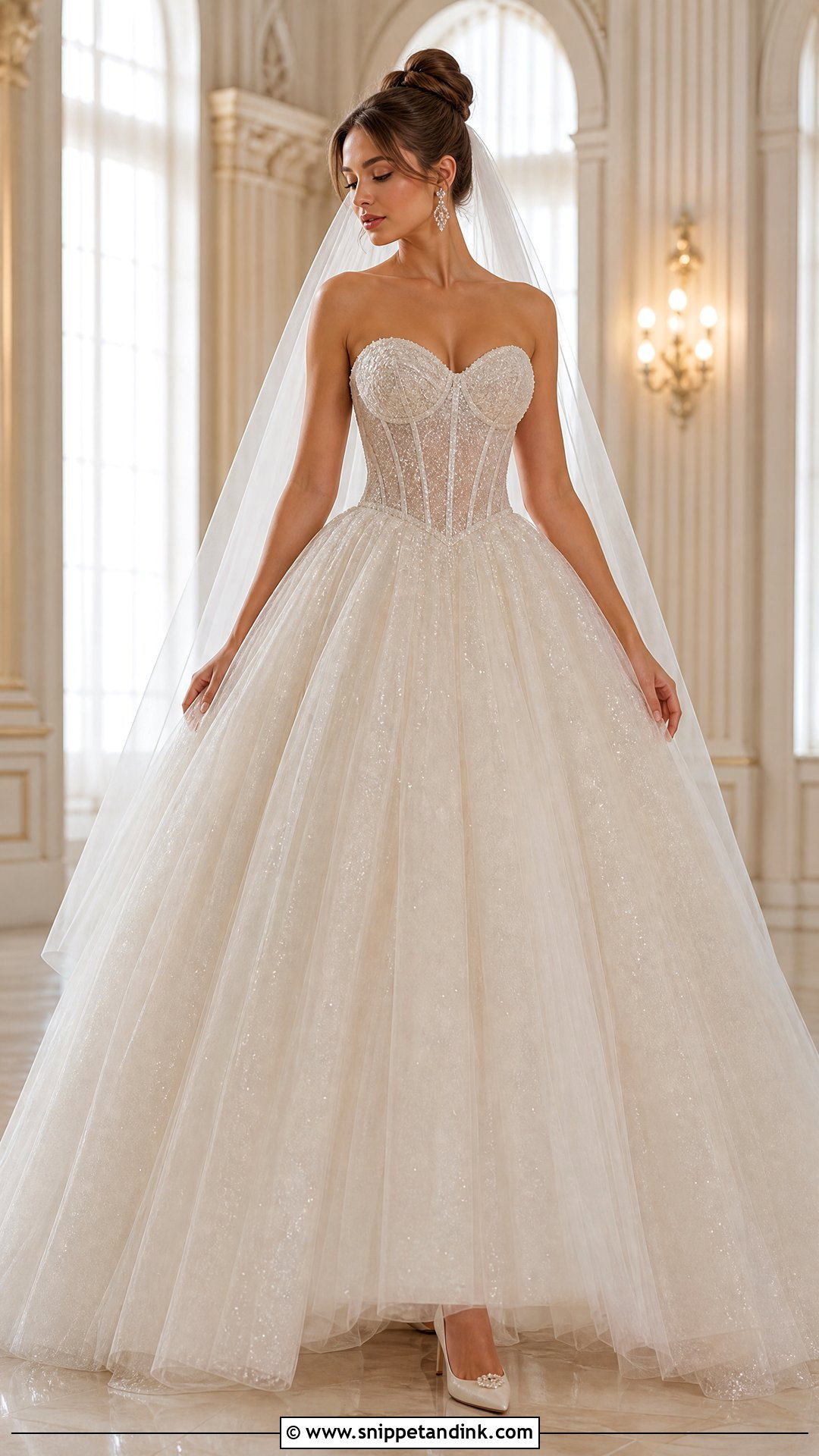
This is the gown for the bride who wants to be seen from the back of the room. Boning defines the waist, and a sheer or lined bodice lets you decide how much skin shows. I always run the inside of my wrist over the embellishment, since sequin and glitter mesh can scratch bare arms after a few hours. Ask to see the dress in daylight and again under warm indoor light; sparkle tulle can look silvery in one and almost gold in the other. Crystal earrings, a plain veil and a polished ponytail or high bun keep everything else quiet. Insist on a soft skirt lining so the glitter layers never touch your legs.
7. Basque Waist Organza Ball Gown Wedding Dress
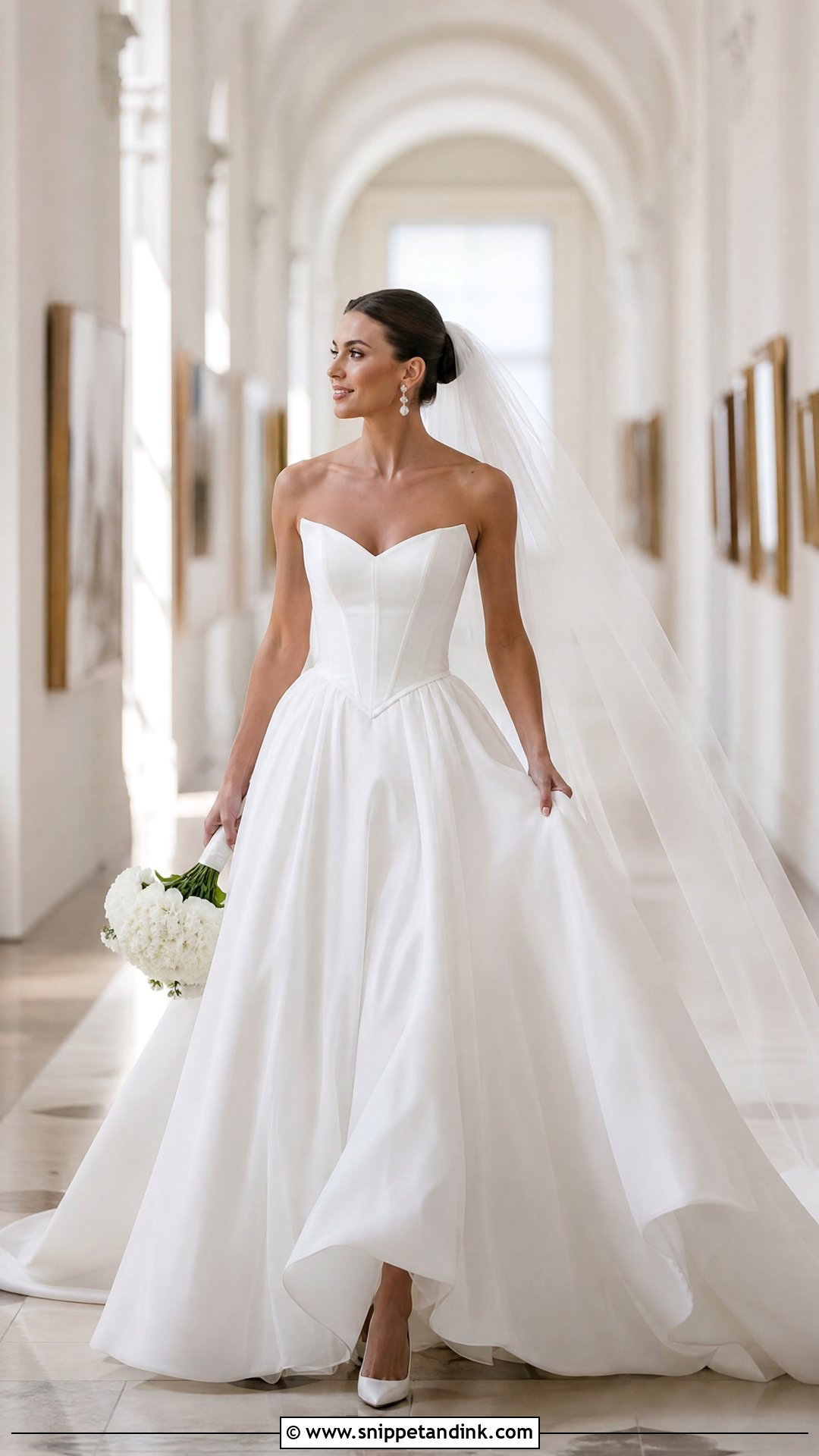
The Basque waist dips to a point at centre front, which lengthens the torso and makes the skirt look fuller below it. Short-waisted brides tend to love what it does for them. The fitting problem is the point itself: if the bodice is a little long for you, it buckles upward when you sit. I have brides sit, stand and sit again before I sign off. Organza gives the skirt movement without satin’s weight, and a detachable organza bow or train can come off after the ceremony. Keep the bodice seams clean so the waist point stays the feature, and check the hem with your real shoes on.
8. Cathedral Train Lace Ball Gown Wedding Dress
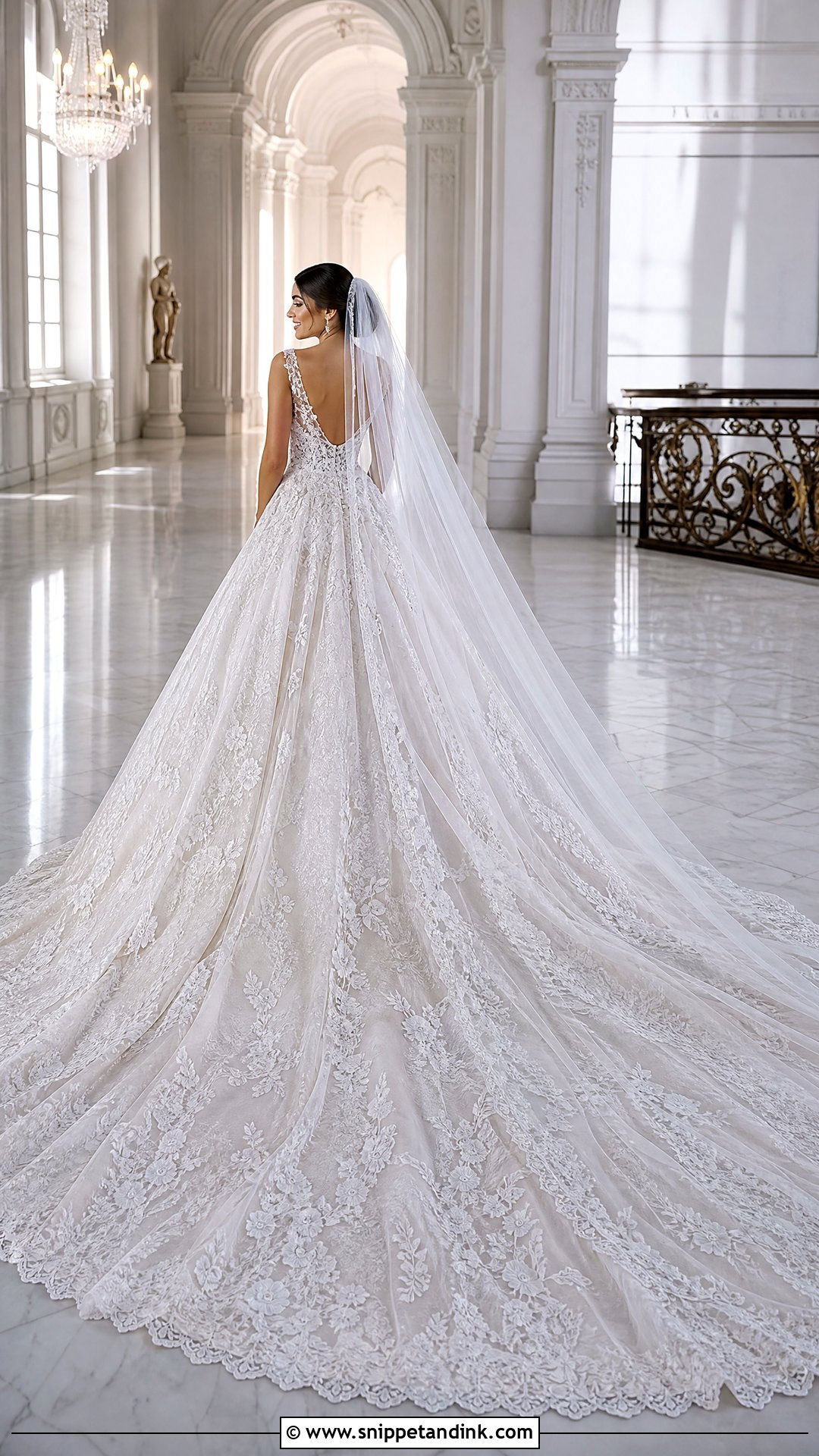
A cathedral train turns a full lace gown into a ceremony entrance, and it comes with homework. The lace motifs should run evenly all the way down the train, not bunch at the waist. Never step backward in it; turn slowly and let the train follow you. On lace trains I ask for a French or multi-point bustle, because a single hook drags the pattern into a crumpled lump. A matching cathedral veil can work if it is plainer than the dress. Pearl studs, block heels and a firmly pinned low bun to hold the veil complete it. Teach one bridesmaid the bustle at the final fitting and make her practise it twice.
9. Floral Appliqué Tulle Ball Gown Wedding Dress
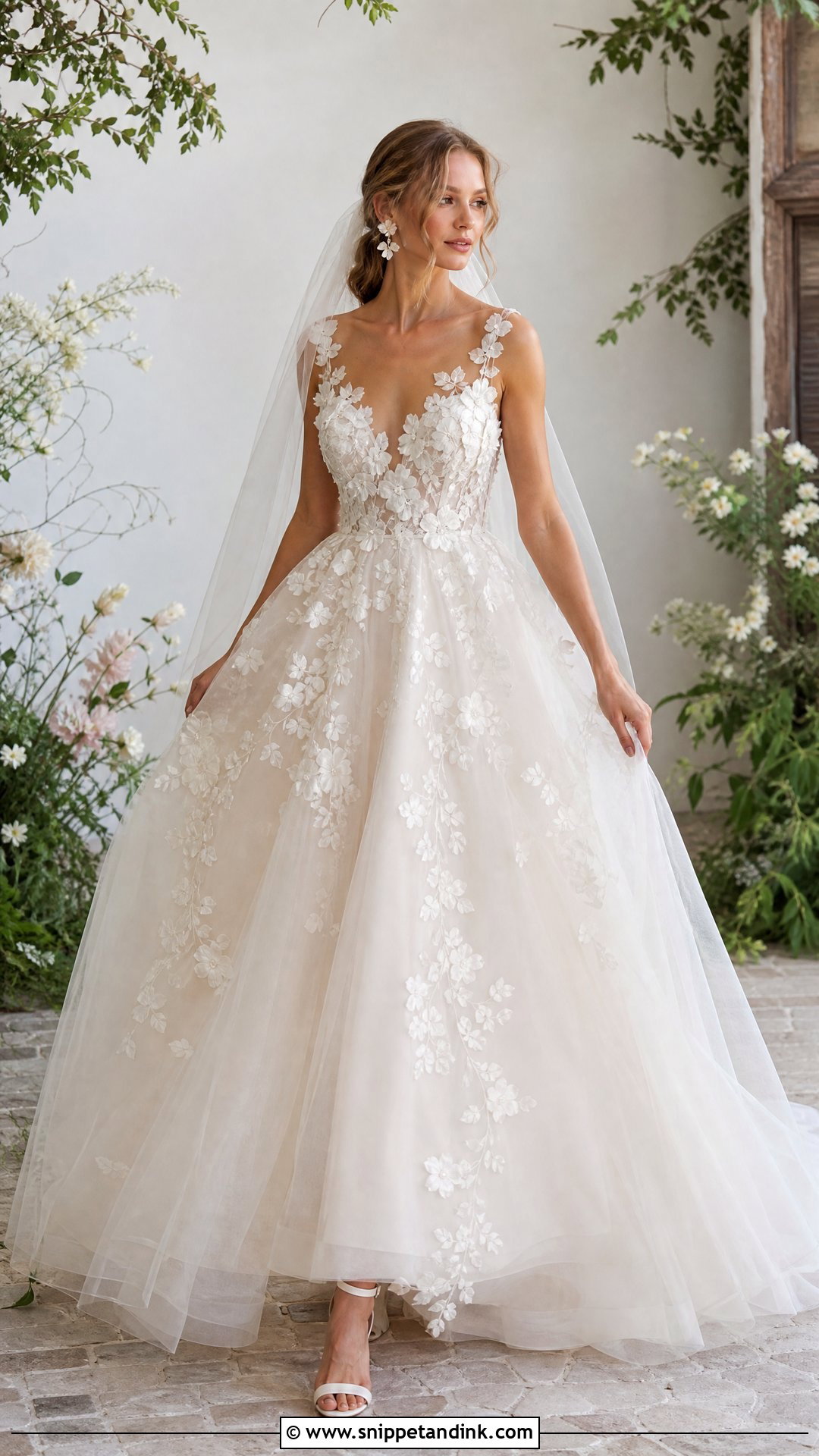
Raised floral appliqués give tulle a garden texture you can see from across a room, and the best versions cluster the flowers at the bodice and thin them toward the hem. What brides miss in the shop is friction. Three-dimensional petals snag a tulle veil and rub the inner arm, so test both before you buy. A seamstress can tack down loose petals and trim rough edges. Ankle-strap heels, small floral earrings, a plain chapel veil and loose waves or a soft low bun are enough; anything busier competes with the skirt.
10. Beaded Bodice Satin Ball Gown Wedding Dress
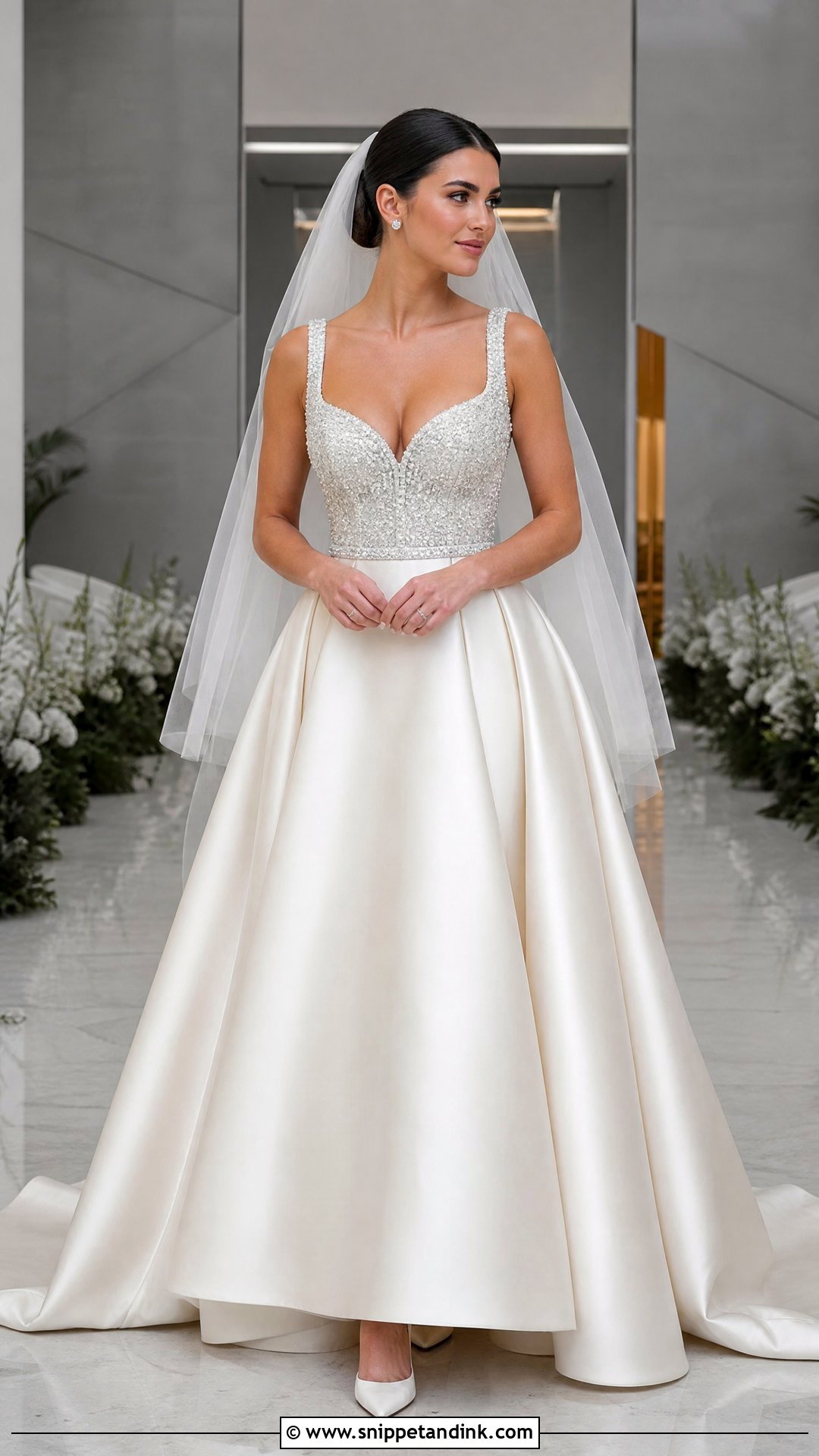
Heavy beading on top and plain satin below is a smart split: the sparkle stays near your face and the skirt stays calm. Check the underside of your arms, because beads that run to the side seams will rub skin raw by evening. I also look at the waist. Beading should follow the body, not form a stiff ridge where the skirt joins. Satin trains are heavy, so a sturdy bustle is essential. Crystal studs, a sleek updo, ivory pumps and an unedged sheer veil are plenty. If you want accessories to tie in, repeat one bead shape in a hair pin and stop there.
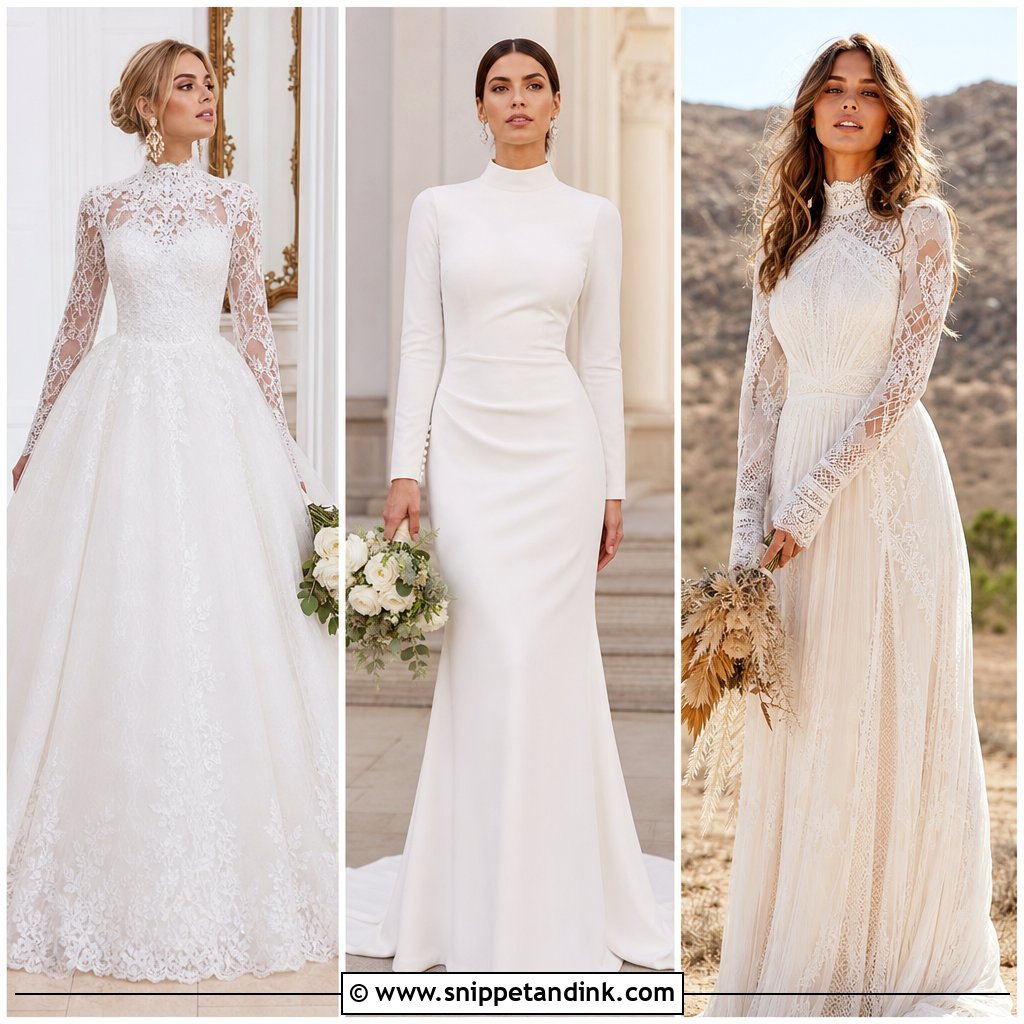
11. High Neck Long Sleeve Ball Gown Wedding Dress
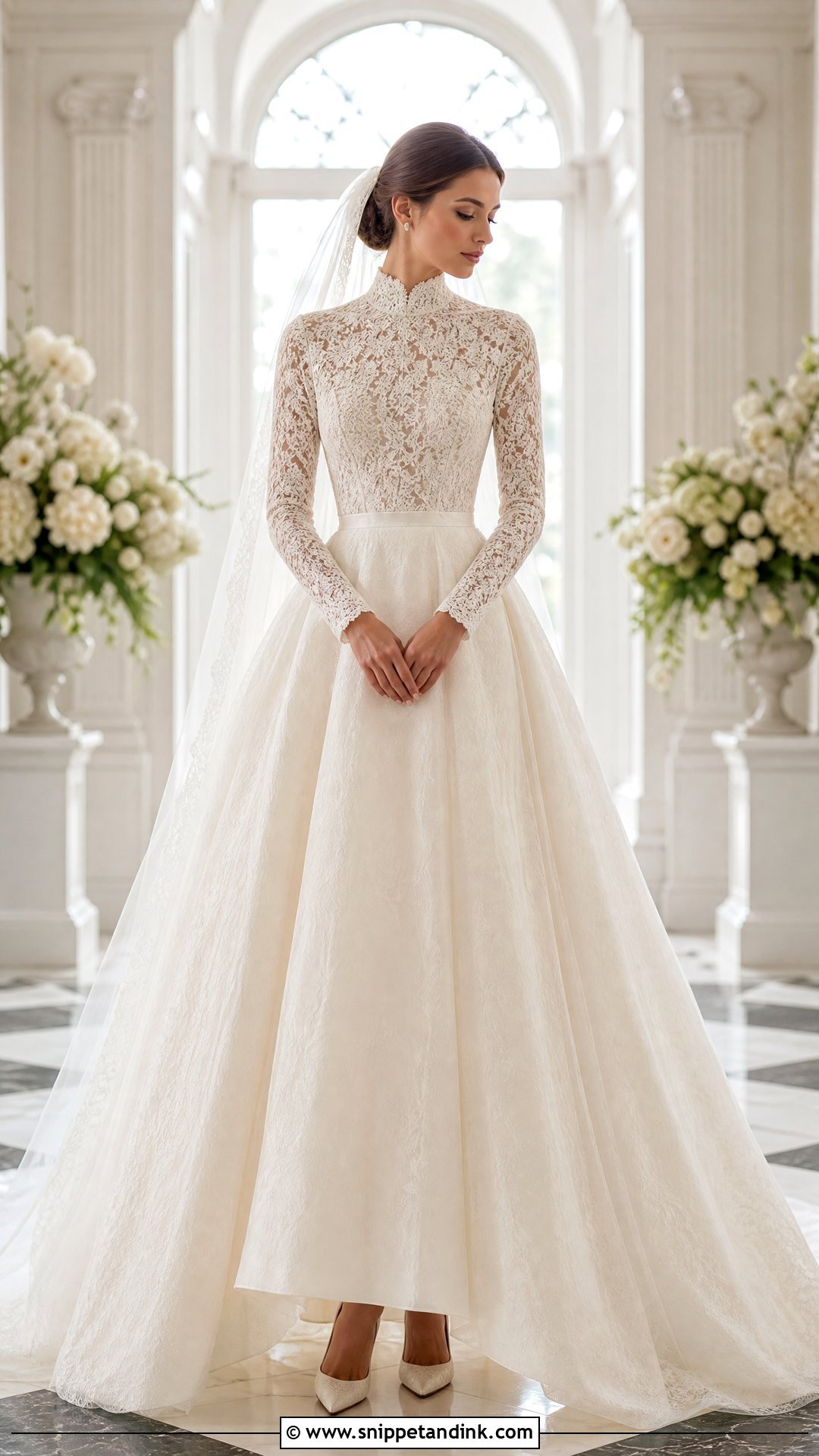
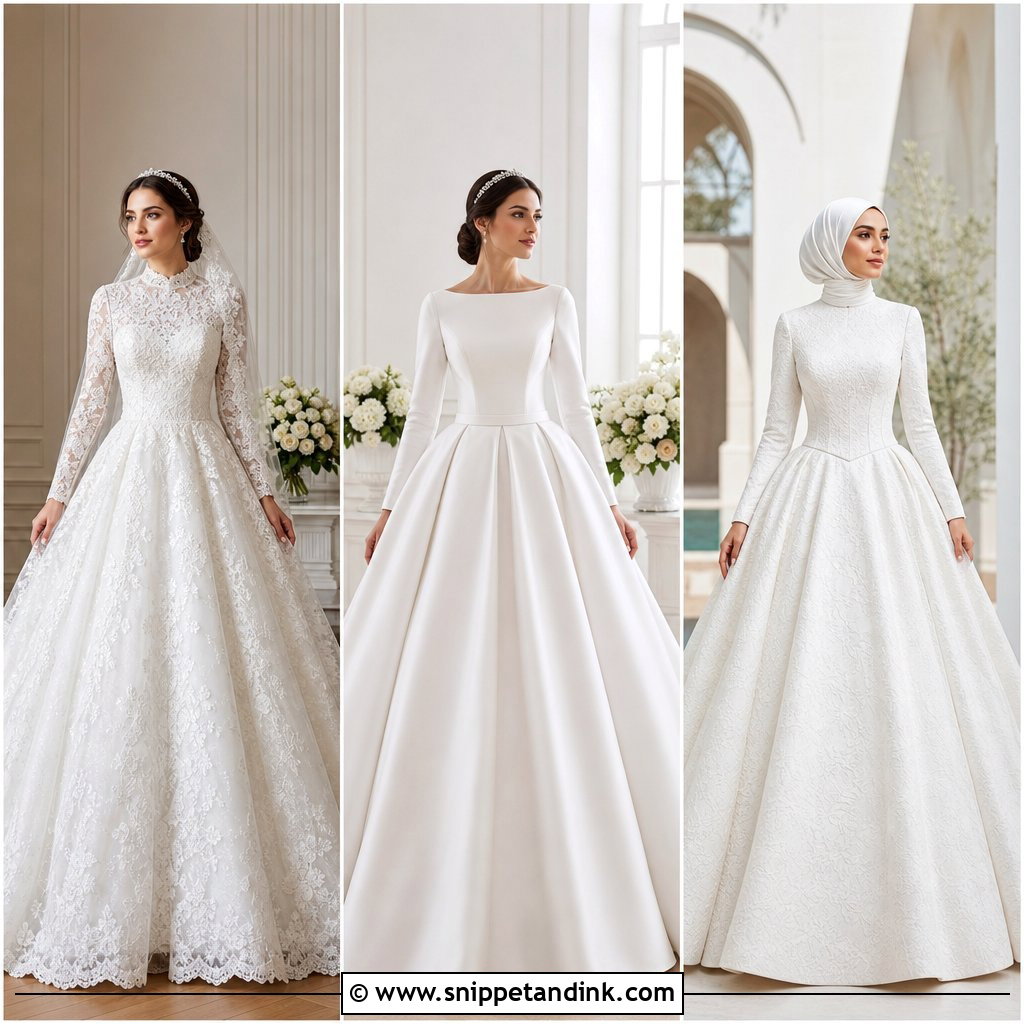
High neck and long sleeves read formal and covered, while the full skirt keeps it bridal. Choose a lighter fabric up top, lace, embroidered tulle or crepe, so the gown doesn’t feel top-heavy. A clearly defined waist matters more here than anywhere else on this list; without it, the covered bodice and big skirt blur into one block. Skip the necklace. Illusion mesh must be matched to your skin in daylight, since a wrong shade can pass under shop lighting. At the fitting I have brides bend their elbows, sit, and hug someone to make sure the sleeves don’t pull at the shoulder seam.
12. Cap Sleeve Lace Ball Gown Wedding Dress
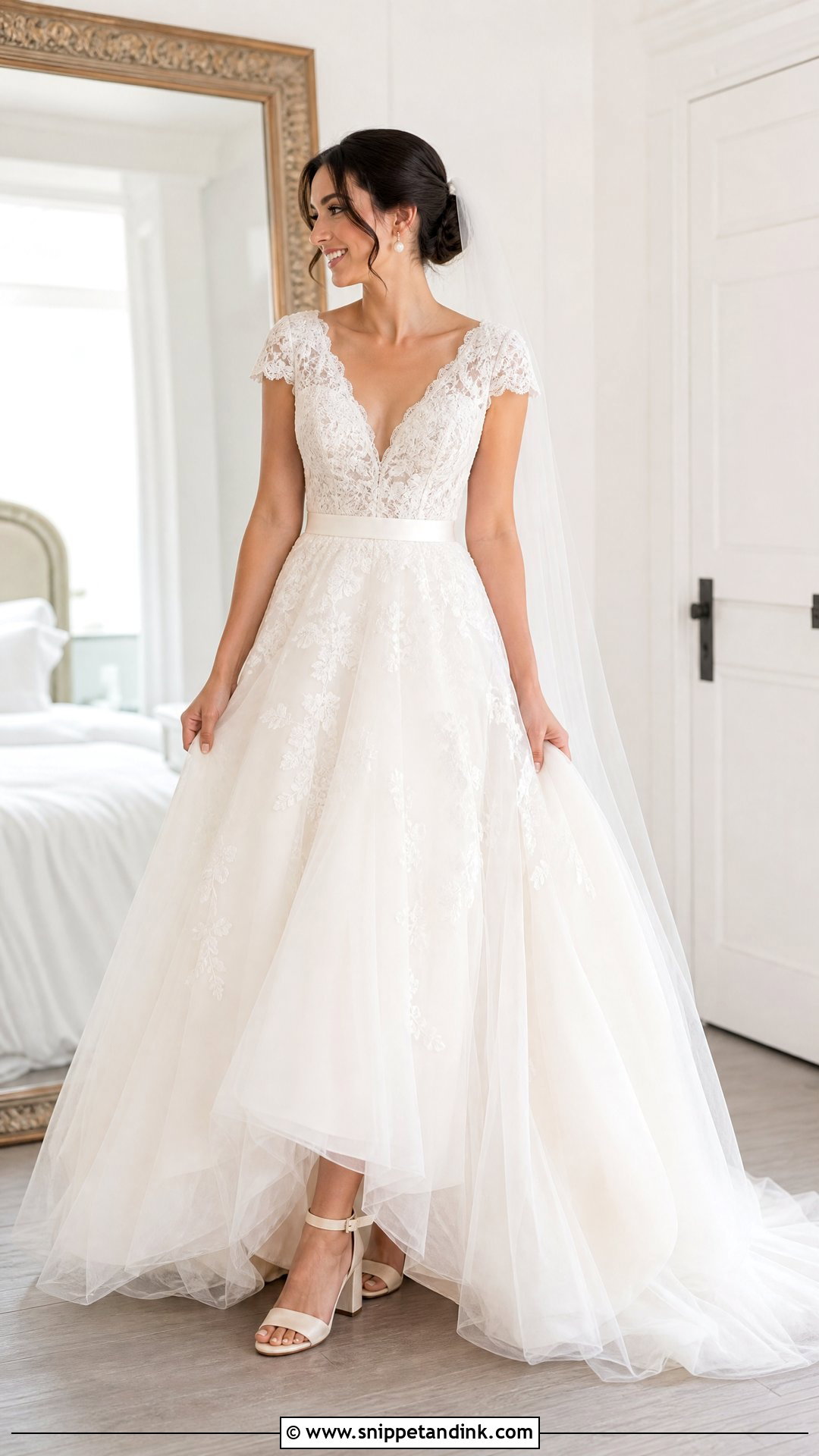
Not every bride wants bare shoulders. Cap sleeves cover just the top of the arm and leave a V or scoop neckline open, which keeps the bodice from feeling enclosed. Paired with a fitted lace waist and a full tulle skirt, they are easy to accessorise: ivory block heels, pearl earrings and a simple veil that falls past the train. The armholes are where I spend my time during alterations. They should sit flat without digging into the skin, and stiff lace trim can often be swapped for a softer edge. A narrow ribbon at the waist adds definition; a wide sash throws the proportions off.
13. Detachable Sleeve Ball Gown Wedding Dress
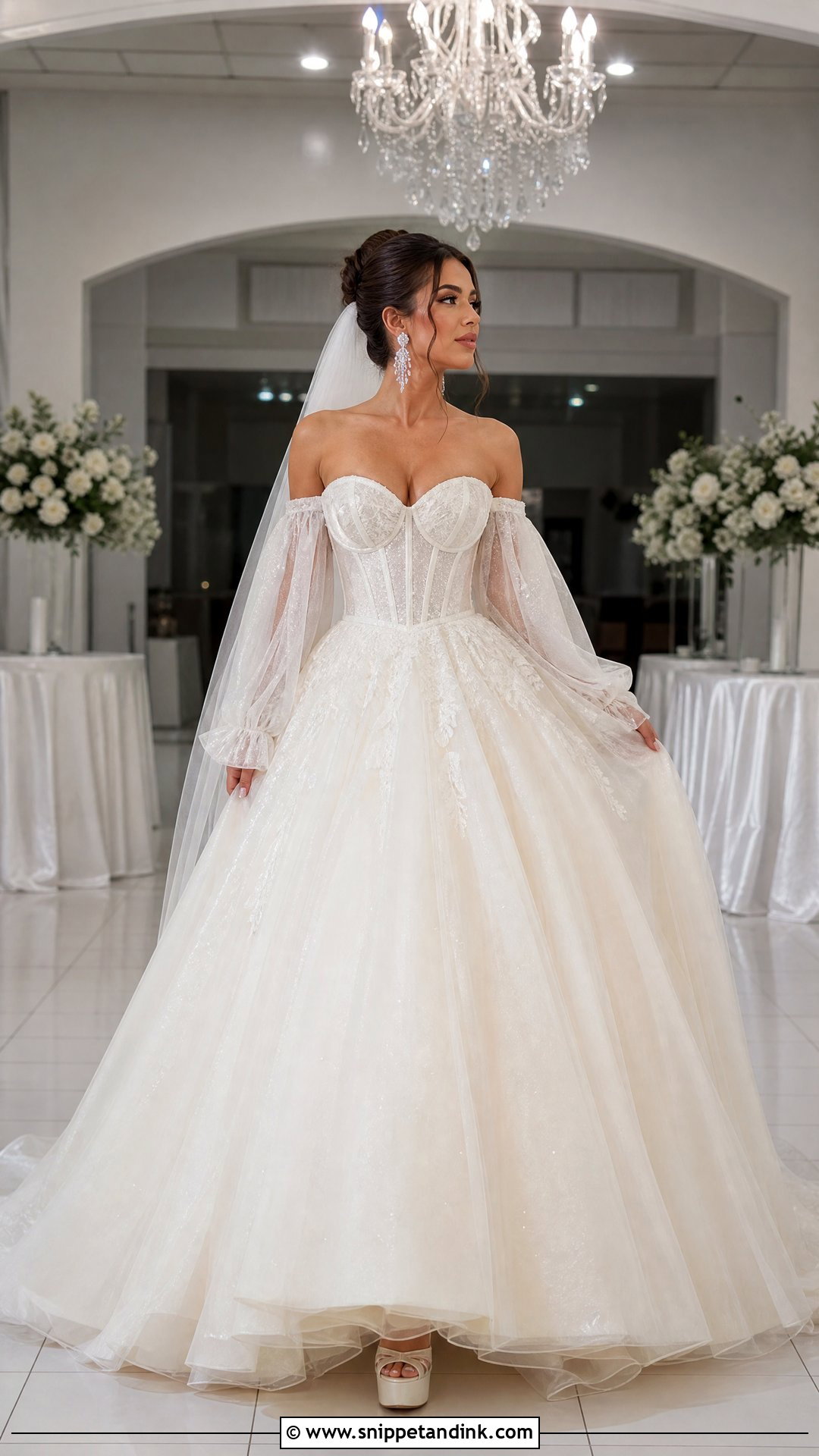
Detachable sleeves give you two necklines from one gown: off-the-shoulder tulle, lace or puff sleeves for the ceremony, then a clean strapless line for dancing. The rule I give every bride is that the bodice must fit and hold on its own. If it only stays up because the sleeves are attached, you’ll be hitching it all evening. Practise removing and reattaching the sleeves at your final fitting so the hooks stay hidden, and pack a labelled garment bag for them. Pair the gown with cushioned platform heels, statement earrings, a chapel veil you can take off after portraits, and a secure updo that suits both versions.
14. Pearl Embellished Tulle Ball Gown Wedding Dress
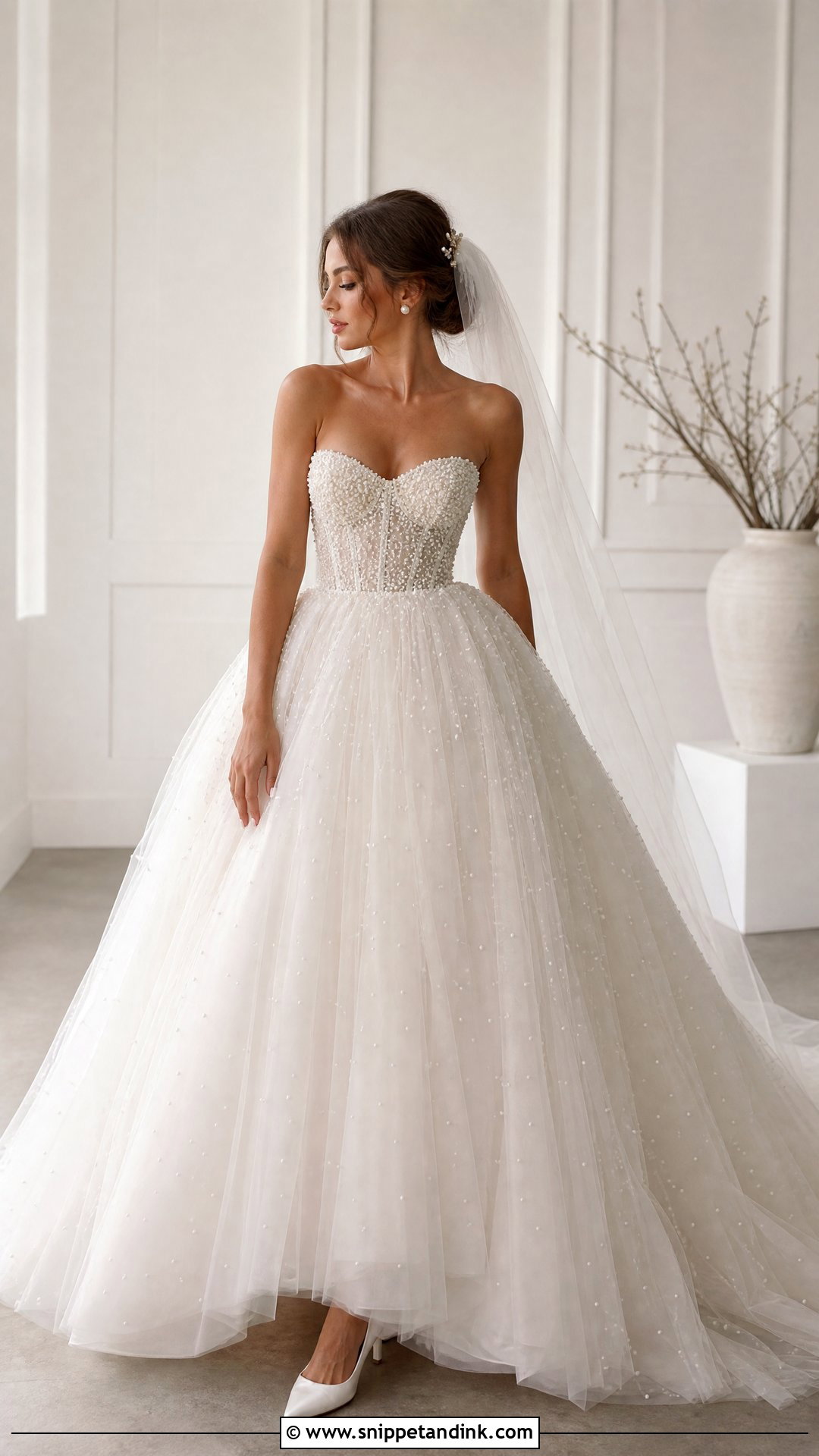
Pearls give tulle a soft glow instead of hard sparkle, which suits daylight ceremonies. They are also heavier than they look. At the appointment I check the bodice boning and the stitching on individual pearls, running my hands slowly over the gown; loose threads are far easier to fix before alterations than after. A moderate sweetheart or straight neckline keeps the surface from feeling overdone. Pearl studs, satin pumps, a plain-edged veil and a small pearl comb in a smooth bun finish it. Don’t add a pearl necklace, bag and headband on top. Matched sets crowd this dress quickly.

15. Bow Back Mikado Ball Gown Wedding Dress
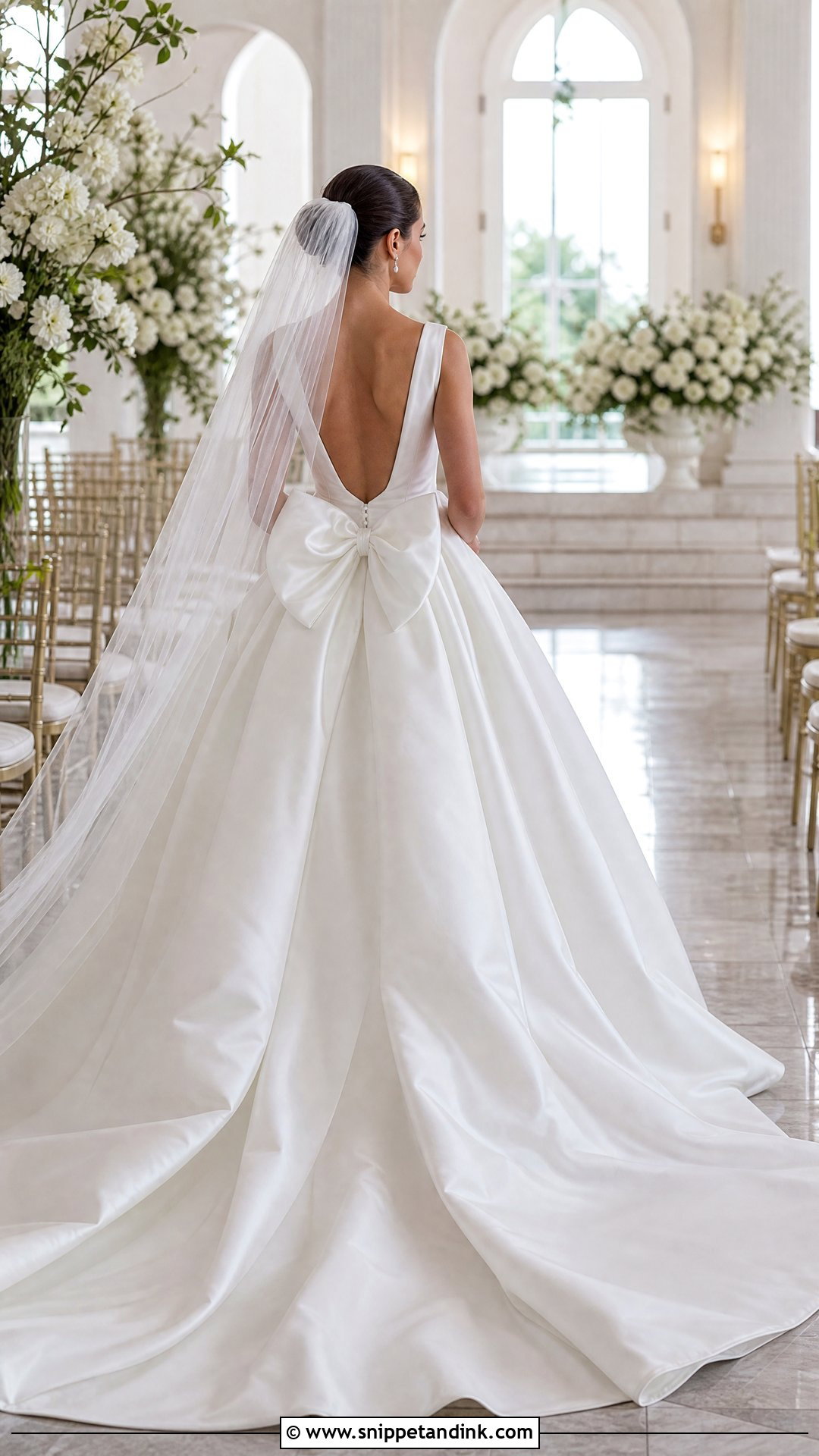
This gown is designed to be seen walking away, so plan the back view first. A large bow needs a structured Mikado skirt to hold its scale; on soft fabric it droops. A low or open back makes it stand out further. My fitting checks are simple: does the bow sit straight, does it clash with the bustle points, and does it spring back after a night hanging in the garment bag? Ask whether it can be made detachable for the reception. Wear your hair up or swept to one side, and pick a veil you can remove for portraits so the bow isn’t buried under tulle all day.
16. Ruffled Organza Ball Gown Wedding Dress
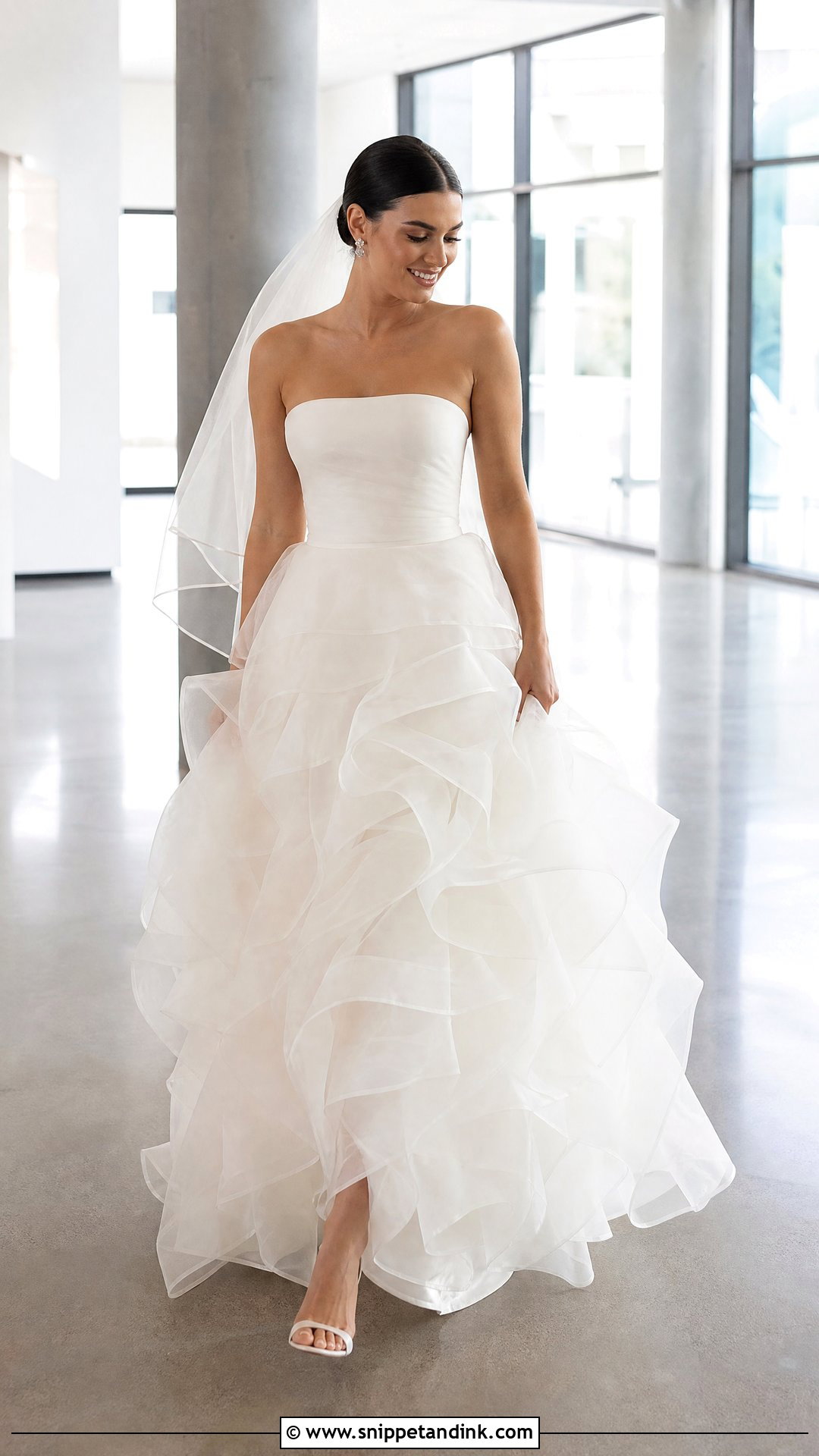
Ruffled organza is the liveliest skirt here. It moves with every step, which is why it needs the plainest bodice you can find, a strapless corset or a simple off-the-shoulder line. The ruffles should all travel in one direction; mixed directions look messy in photos. Keep the veil short enough to end above the fullest part of the skirt, or it flattens the layers. Sit, walk and climb a few steps during the appointment, because ruffled skirts need more space than you’d guess. Crushed organza wants a patient steam, never an iron, so ask the shop how they’d like it transported and pressed.
17. Plus Size Corset Ball Gown Wedding Dress
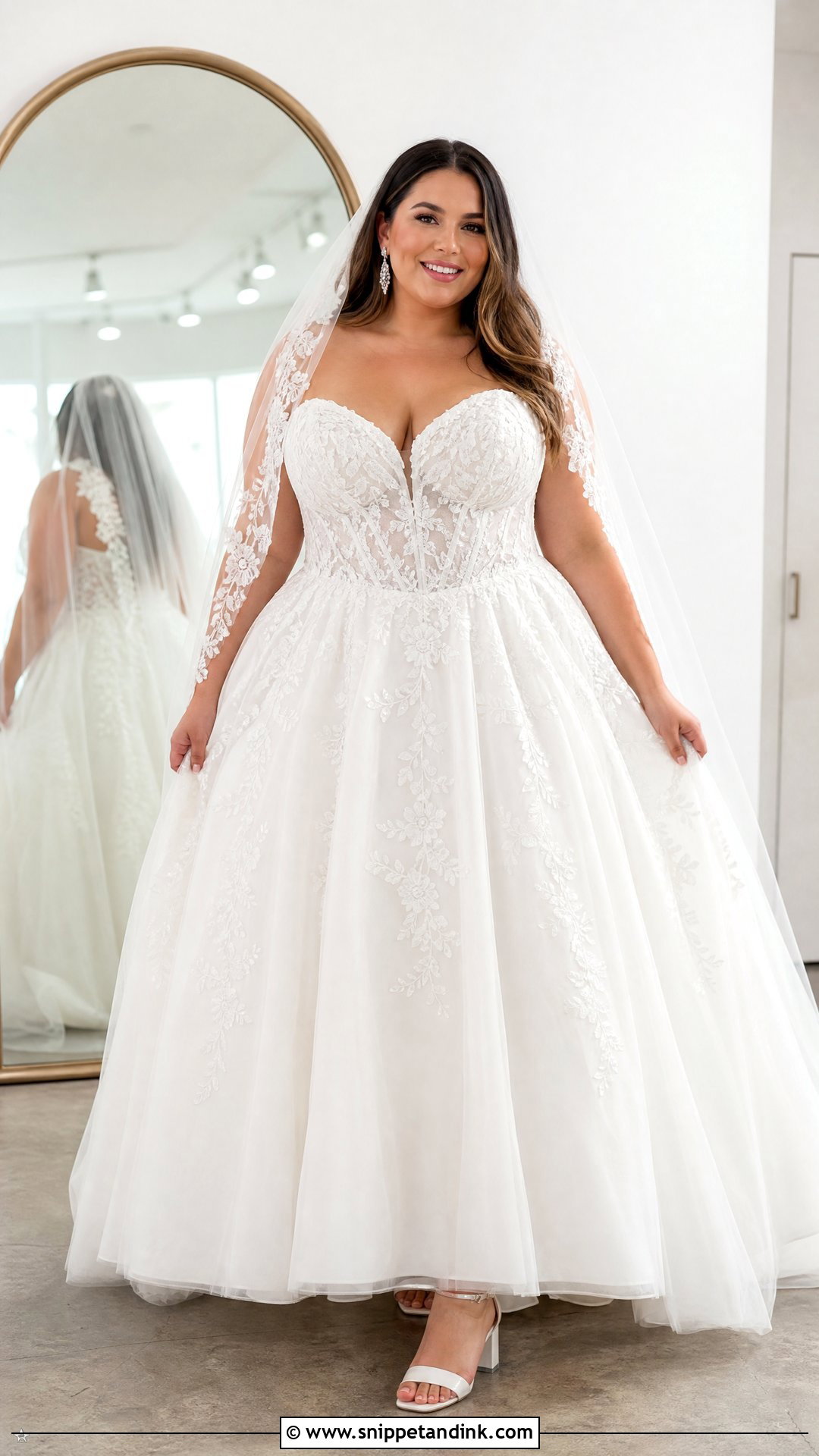
A well-built corset ball gown is one of the most supportive styles I fit for curvier brides. Look for firm boning, adjustable lacing at the back and secure cups, with the skirt opening from the waist rather than adding bulk at the hips. Ignore the number on the label; bridal sizing runs small and you are ordering by measurement, not by your everyday size. Sit down and take a deep breath in the corset. If you can’t, it is too tight for a ten-hour day. Shop where samples come close to your size so you judge real proportion, not a clipped-on sample. A belt can sharpen the waist, but leave it off over detailed lace or beading.
18. Modest Satin Ball Gown Wedding Dress
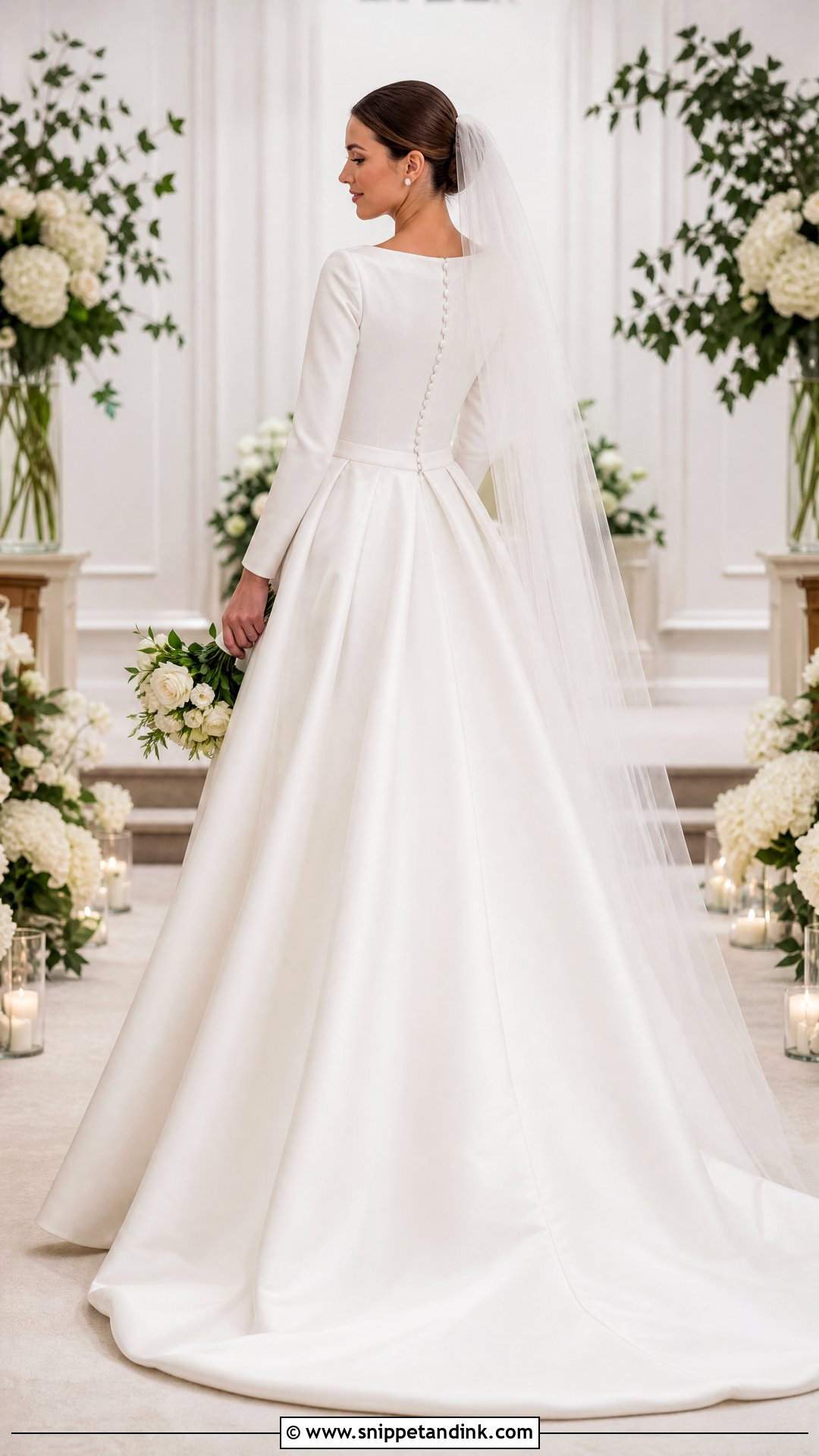
Modest doesn’t mean plain. A satin ball gown with a bateau, jewel or shallow V neck and fitted sleeves gets its impact from cut and pleating rather than skin. Covered buttons down the back add a traditional detail, and the pleated skirt supplies volume. If you need more coverage, ask for lining built into the gown instead of a separate layer that will shift. I check a jewel neckline with the bride bending forward, since that is when it starts to pull. Breathable bodice lining makes a long indoor ceremony far more bearable. Closed-toe pumps, pearl studs and a long veil under a polished bun finish it.
19. Vintage Lace Ball Gown Wedding Dress
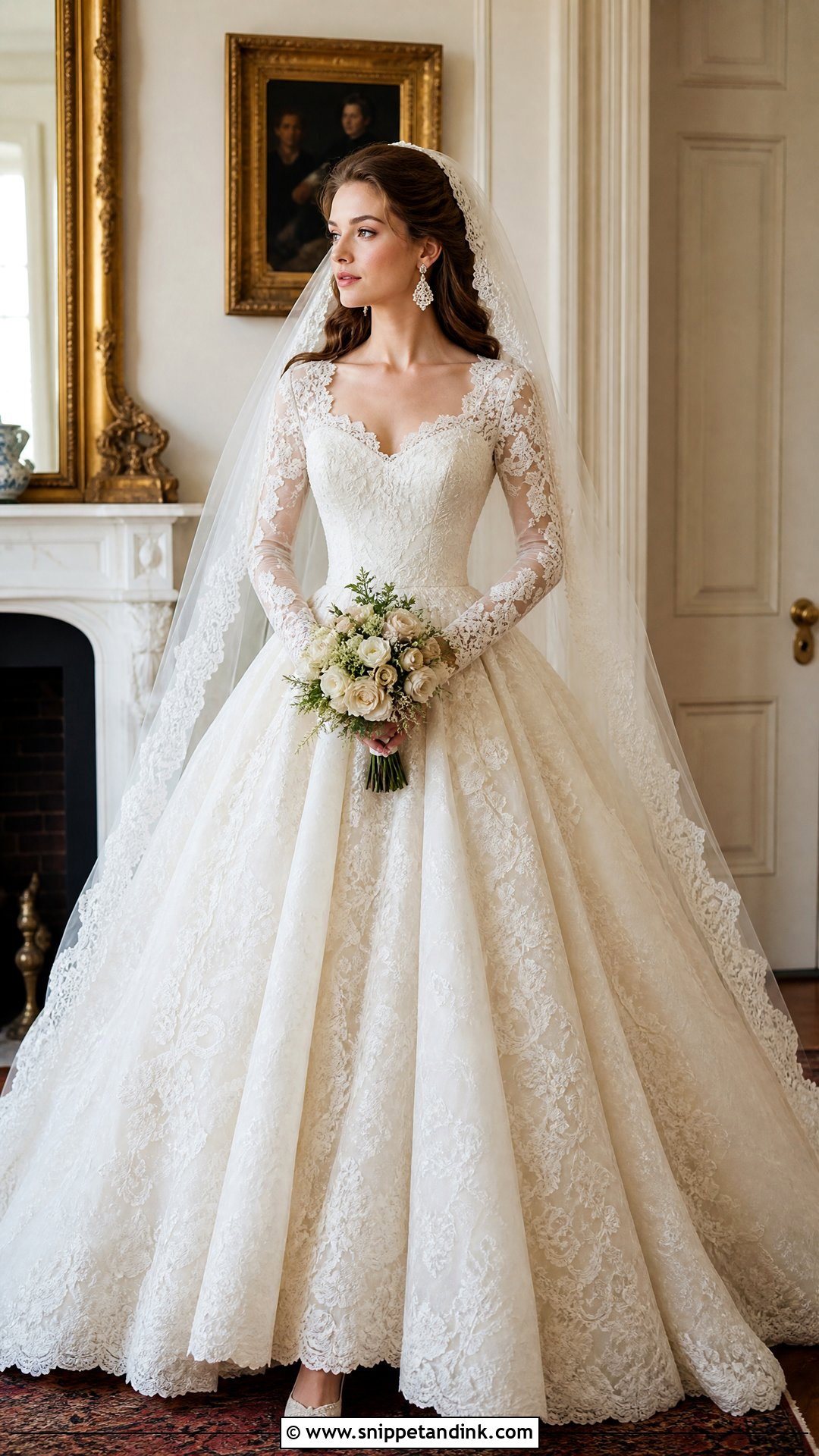
Vintage lace looks right in soft ivory rather than bright white, with scalloped edges, floral motifs and covered buttons; a portrait neckline or fitted long sleeves strengthens the period feel. Buying a genuine vintage gown? Inspect the lace for brittle spots, the seams for stress and the lining for yellowing before paying for alterations. Old lace often needs reinforcing, and not every seamstress will take it on. A new gown with vintage details gives you the character with sturdier construction and easier sizing. Low heels, heirloom-style earrings, a veil that echoes one lace motif, and soft waves or a low chignon suit it.
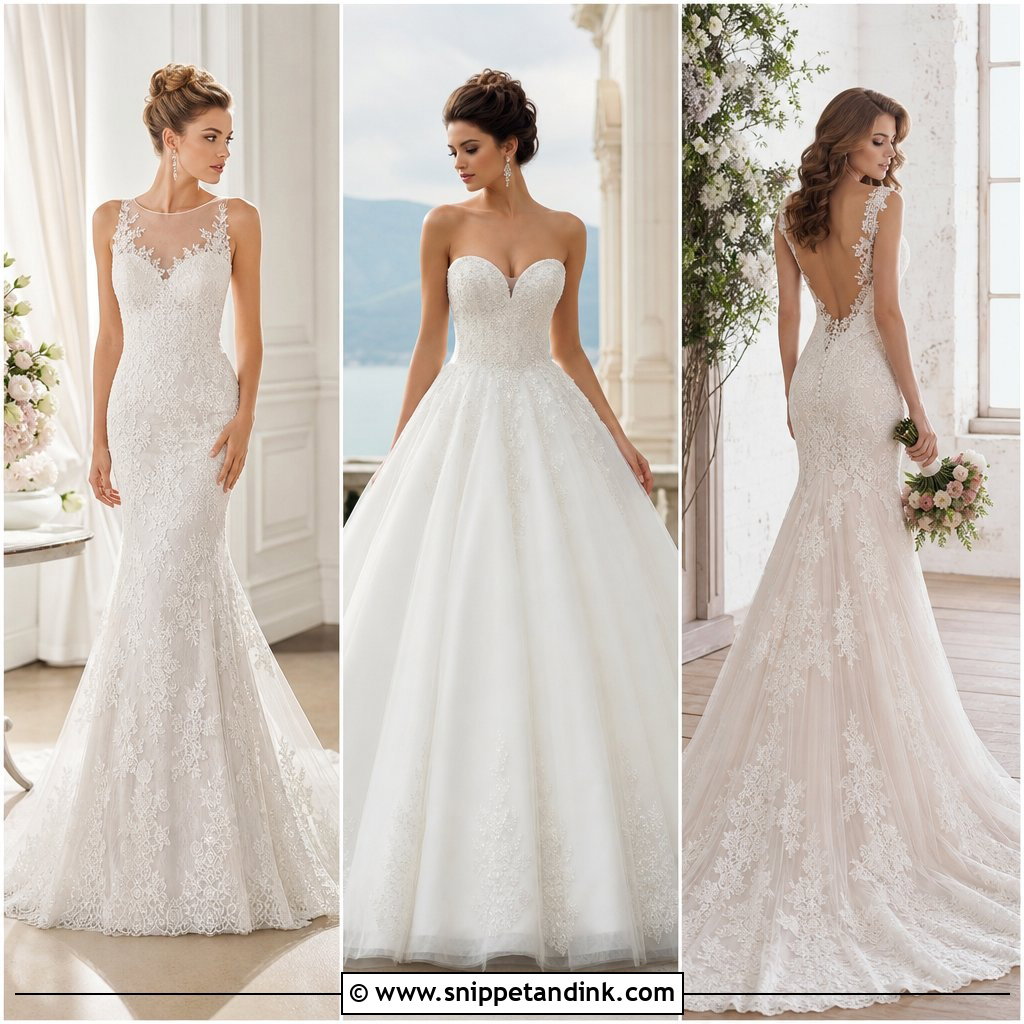


20. Minimalist Structured Satin Ball Gown Wedding Dress
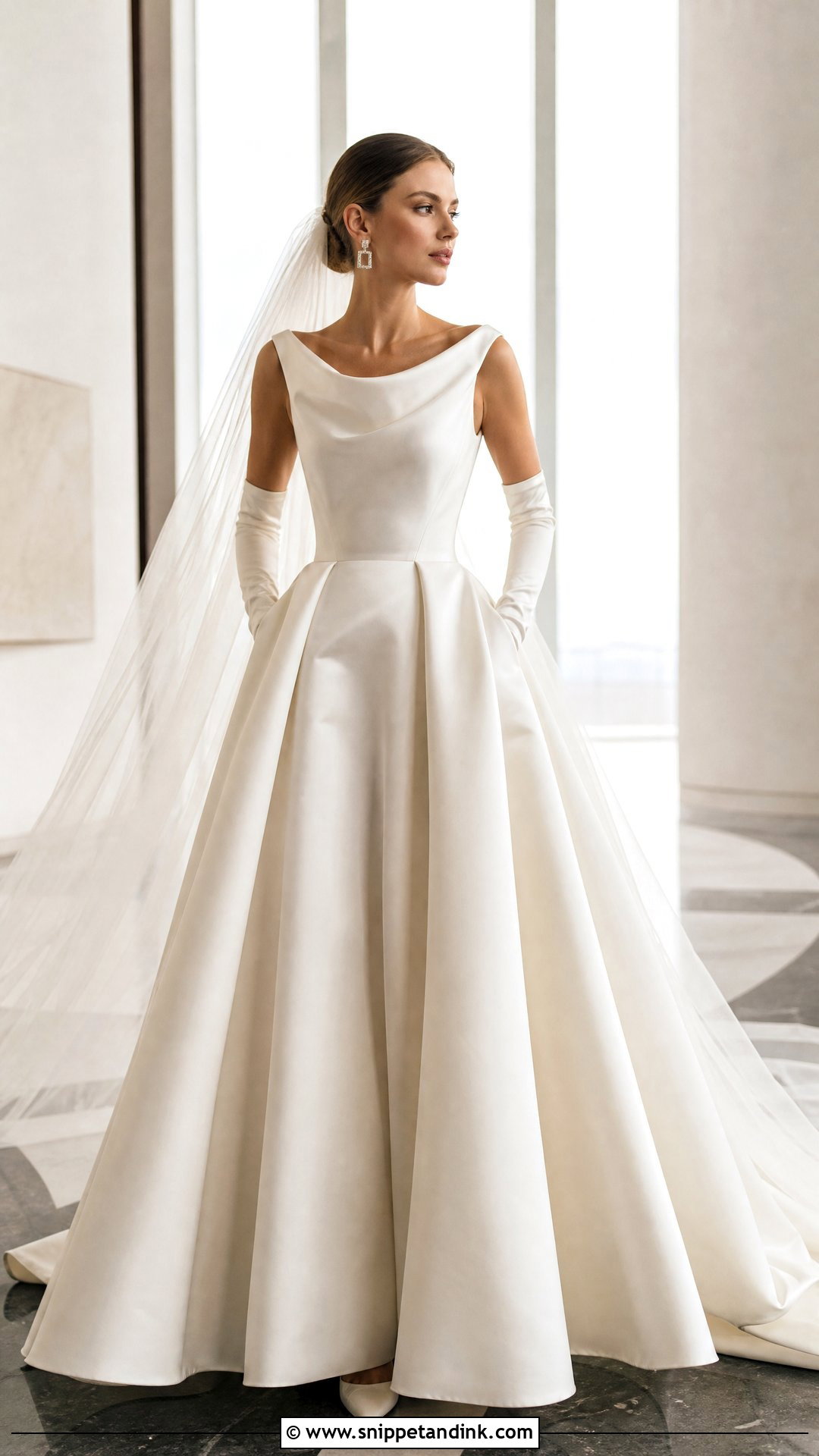
With no lace or beading, a minimalist satin ball gown shows every seam, so tailoring is the whole game. I only recommend it to brides who trust their seamstress completely. Look for a sculpted neckline, fitted waist, deep pleats and hidden pockets. Then check it in daylight, because smooth satin reveals pulling and uneven pressing that shop lighting hides. Architectural earrings, pointed pumps, a trimless veil and a sleek centre-part bun keep it modern, and long satin gloves for the ceremony are an easy thing to peel off before dinner.
Cars, Bathrooms and the Bustle: A Full Day in a Big Skirt
The photos show the entrance. Nobody photographs the moment you try to fit eight layers of tulle into a hatchback, and that is where a little planning pays off.
Getting in and out of the car
Sit down first, then gather the skirt in after you, front layers last. A car with a wide door and a bench seat is far easier than an ordinary back seat, and a clean sheet on the floor keeps the hem off whatever is down there. Have someone lift the train in once you’re settled.
The bathroom
Take one bridesmaid you’re comfortable with. The method most brides find easiest is to face the cistern and sit backwards, so the skirt gathers in front of you instead of behind. Practise once at home in the dress if you can.
Bustling before the first dance
An over bustle hooks the train up onto the back of the skirt and shows off the fabric. An under bustle, often called French, tucks it beneath and keeps a smooth line. Lace and ruffles usually look better in an under bustle; plain satin works either way. Whichever you choose, it should take your helper only a few minutes.
Once the night is over
Have the gown professionally cleaned within a few weeks. Champagne and sugar spills dry invisible and then turn yellow over months. Store it flat or loosely folded in acid-free tissue in a breathable box, never sealed in plastic, and away from a damp loft or garage.
The Fitting Habits That Matter More Than Fabric
Satin and Mikado give structure; tulle and organza give lighter, softer volume. Lace, pearls, appliqués and beading are details, and they should never outweigh the silhouette. Whatever you pick, bring your actual shoes and undergarments to every fitting, practise sitting and walking in the sample, and settle the bustle early instead of at the last appointment. The gown that still feels secure at hour nine is the one I’d send you home in, because a big skirt only looks regal when the bride inside it is comfortable.
You'll Like These Ideas:






Leave a Reply