
Brides in their forties rarely ask me for a dress that makes them look younger. They ask for one that fits properly, lets them move and still looks like a wedding dress. That’s a much easier brief. Clean satin, soft lace, a structured waist and sleeves that don’t pinch are where most of my fittings end up, though a jumpsuit or a short courthouse dress is just as likely. Below I’ve grouped the ideas by shape, sleeve and setting, with notes on fit and fabric that I’d give you across the fitting room curtain.
Salon Samples, Order Times and Trying On Well
If you’re shopping at a bridal salon, a few practical facts help. Sample dresses are usually made in one or two sizes, so the dress you try on may be too big or too small. A good consultant will clip or pin it to show the shape. Don’t judge the fit on the sample; judge the silhouette.
Made-to-order gowns often take several months to arrive, and alterations take more time after that. Rush orders are sometimes possible but usually cost more. If your wedding is soon, ask about off-the-rack or sample sale dresses.
- Wear smooth, neutral underwear and bring the bra you plan to wear.
- Bring shoes close to the height you’ll wear on the day.
- Limit the group to one or two people whose opinion you trust.
- Take photos from the back and side, not just the front.
1. 40s Satin Midi Wedding Dress
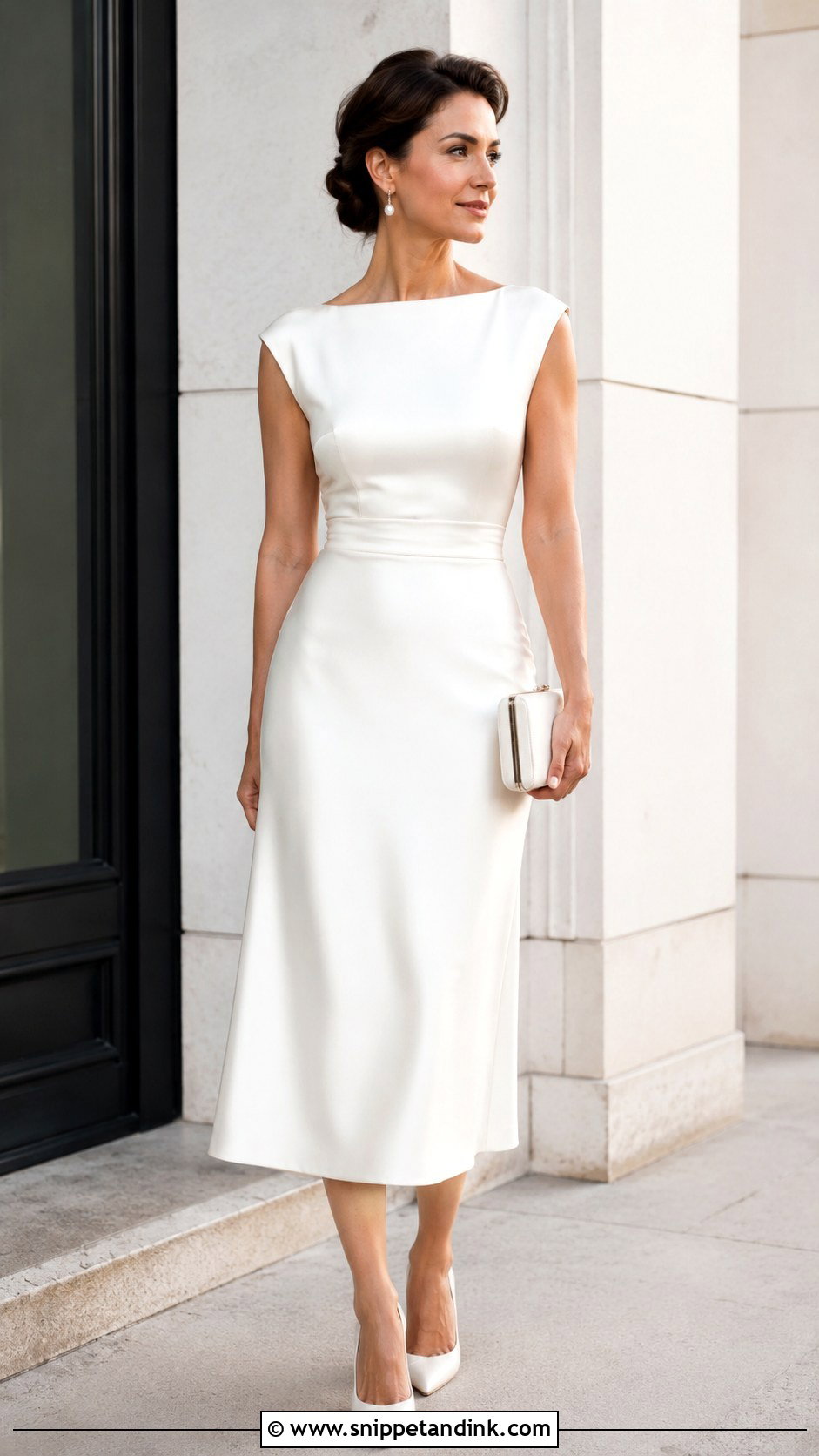
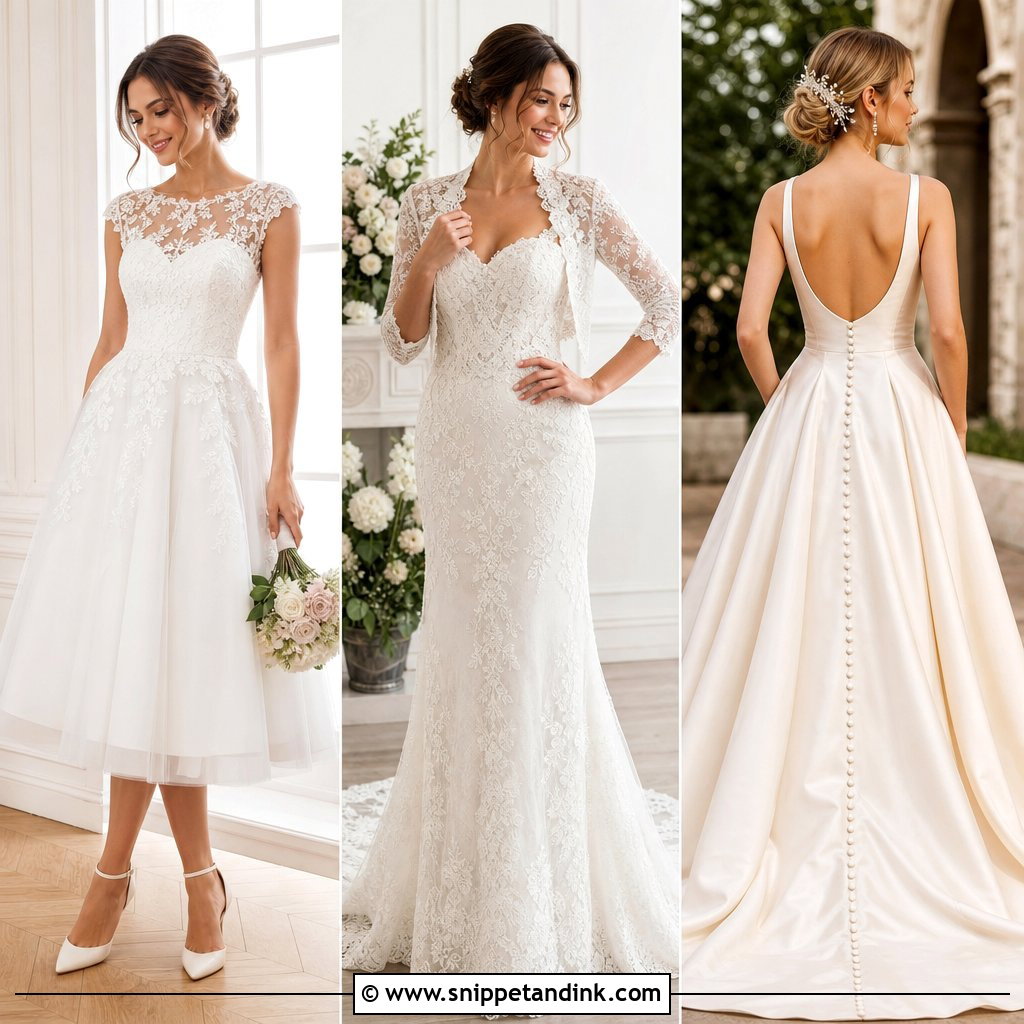
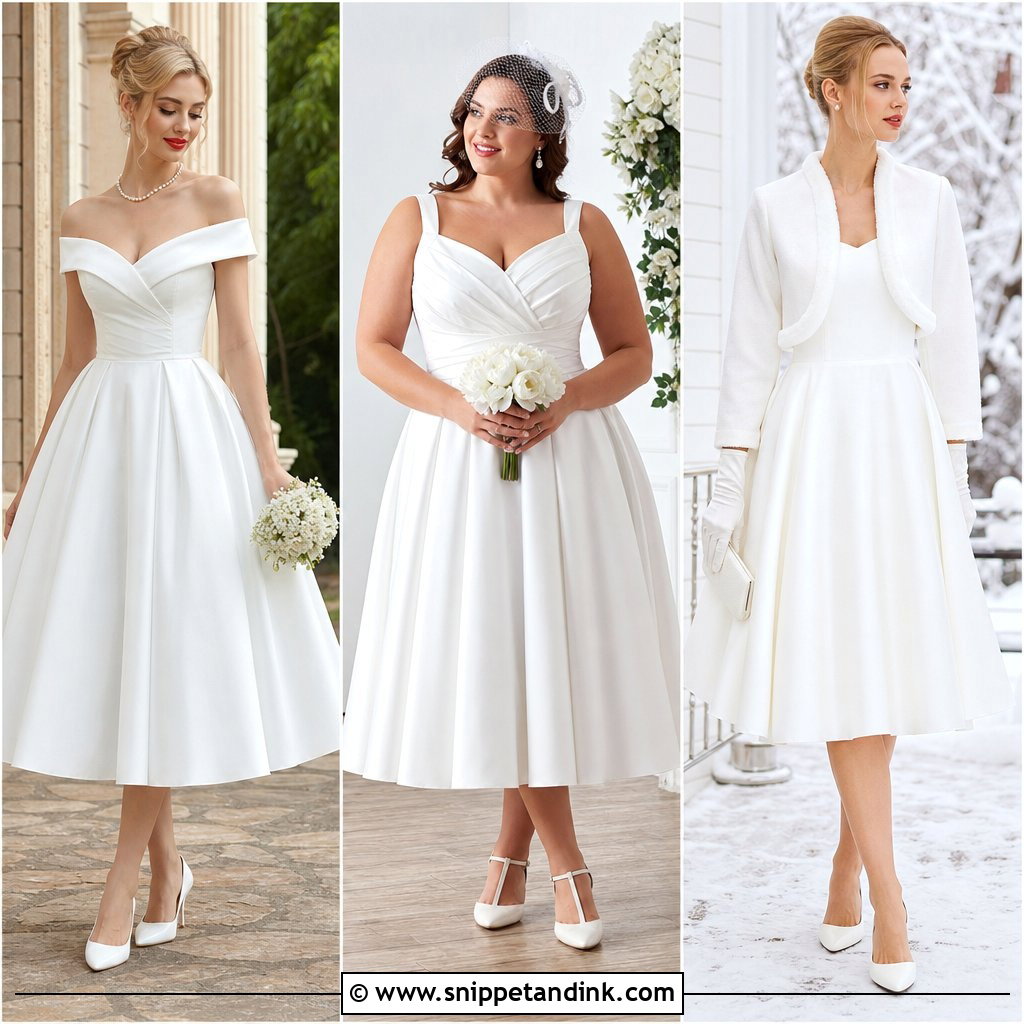
Satin at midi length looks polished in a small room and still lets you climb steps and get in a car without help. A satin midi wedding dress needs a bodice with some structure, otherwise the fabric creases at the waist after an hour of sitting. I’d also check the shade. Bright white satin reflects a lot of light onto the face, which is why I usually move clients toward soft ivory or champagne. Pointed heels and pearl earrings are all it needs.
2. 40s Lace Sleeve Wedding Dress
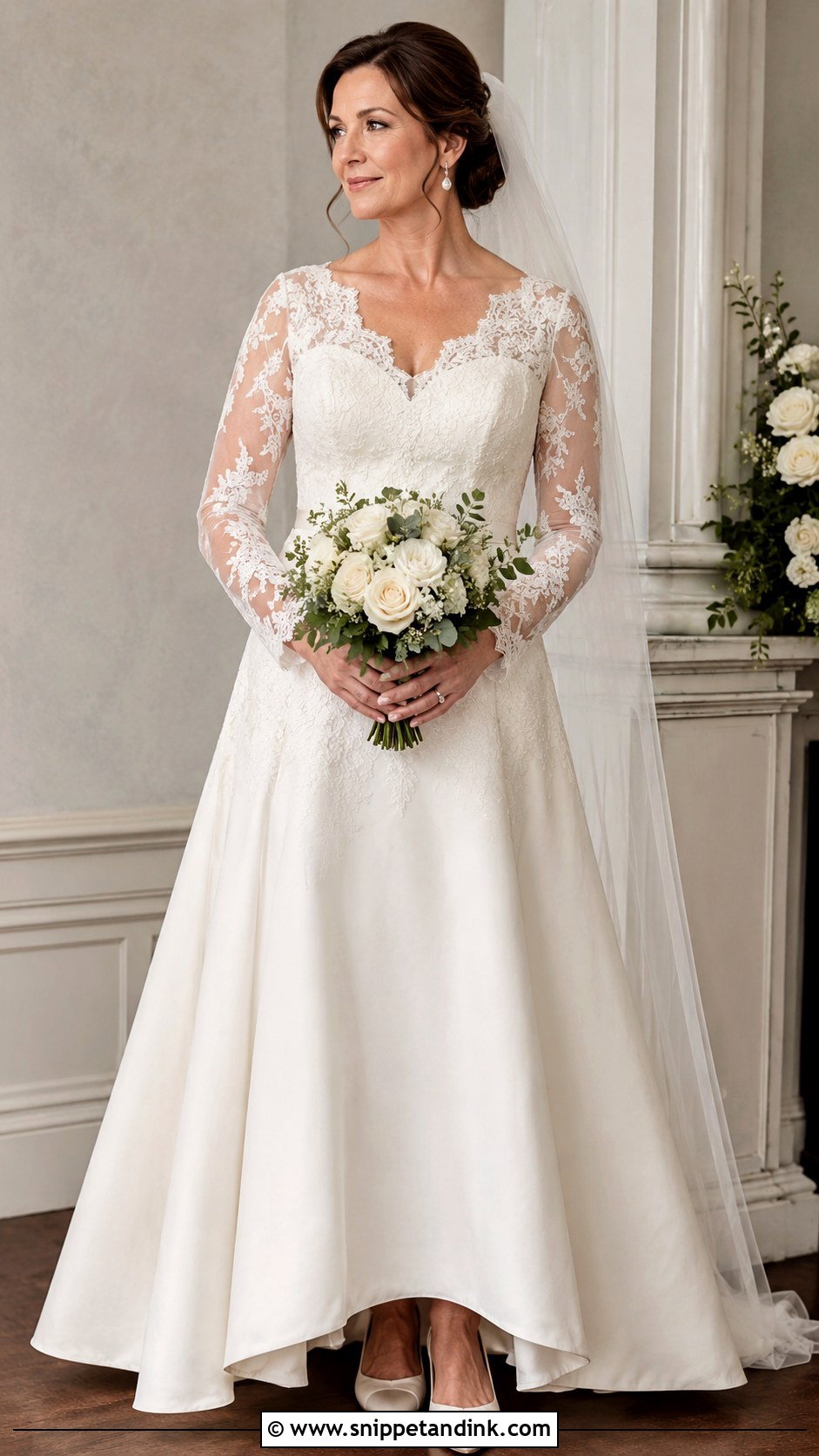
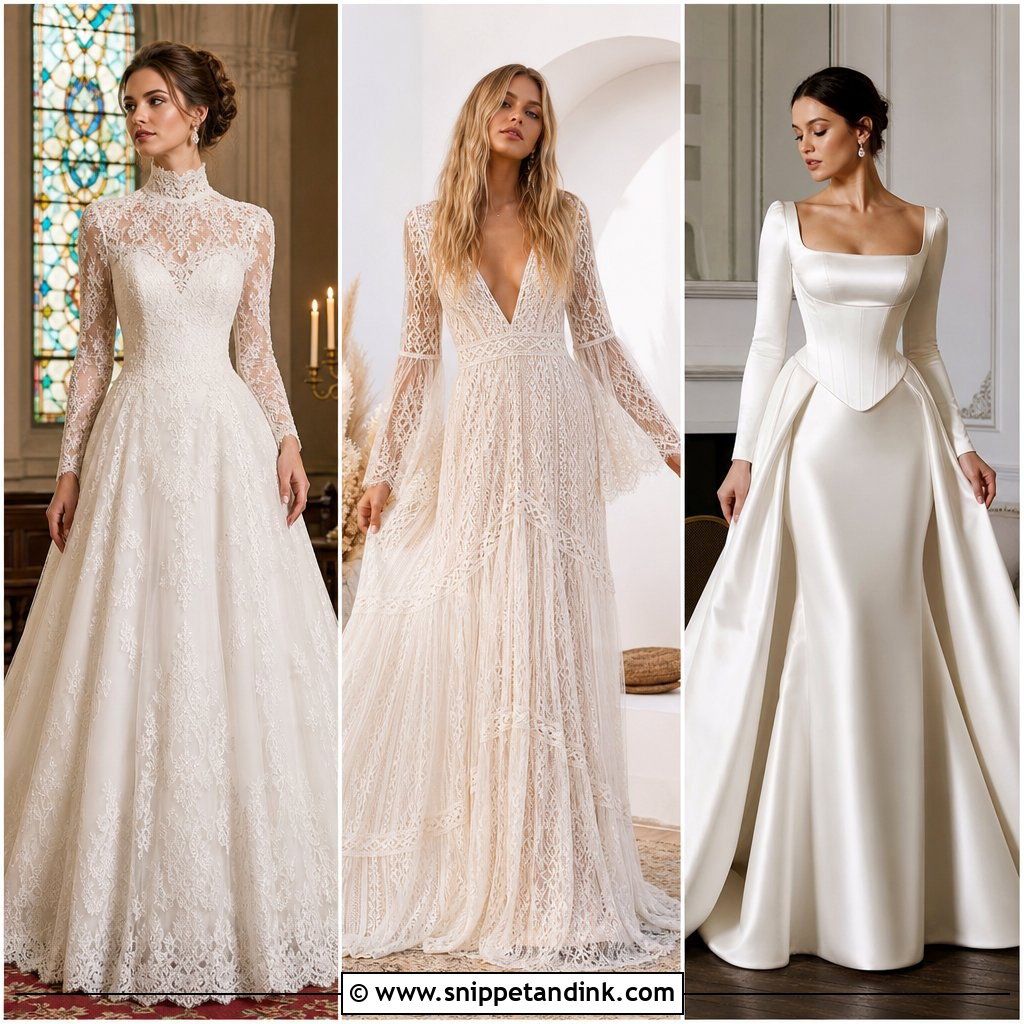
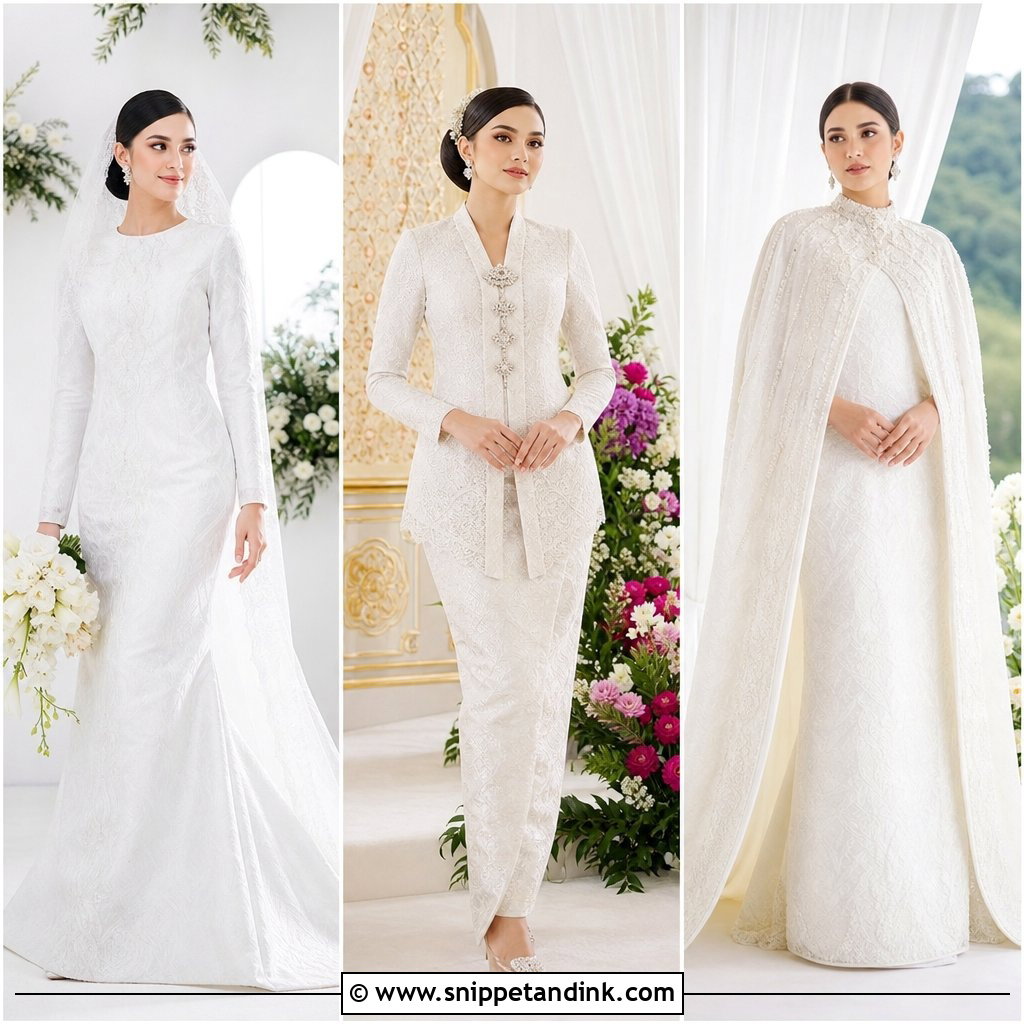
Sheer lace sleeves give you coverage that still feels light. The fit around the upper arm decides whether they’re comfortable. Lace has very little stretch, so if the sleeve is snug when your arm hangs, it will dig in when you bend your elbow to hold a glass. Raise your arm in the fitting room. A fitted waist and subtle A-line keep the lace from looking busy. Low satin heels and a simple veil keep everything calm.
3. 40s A Line Wedding Dress
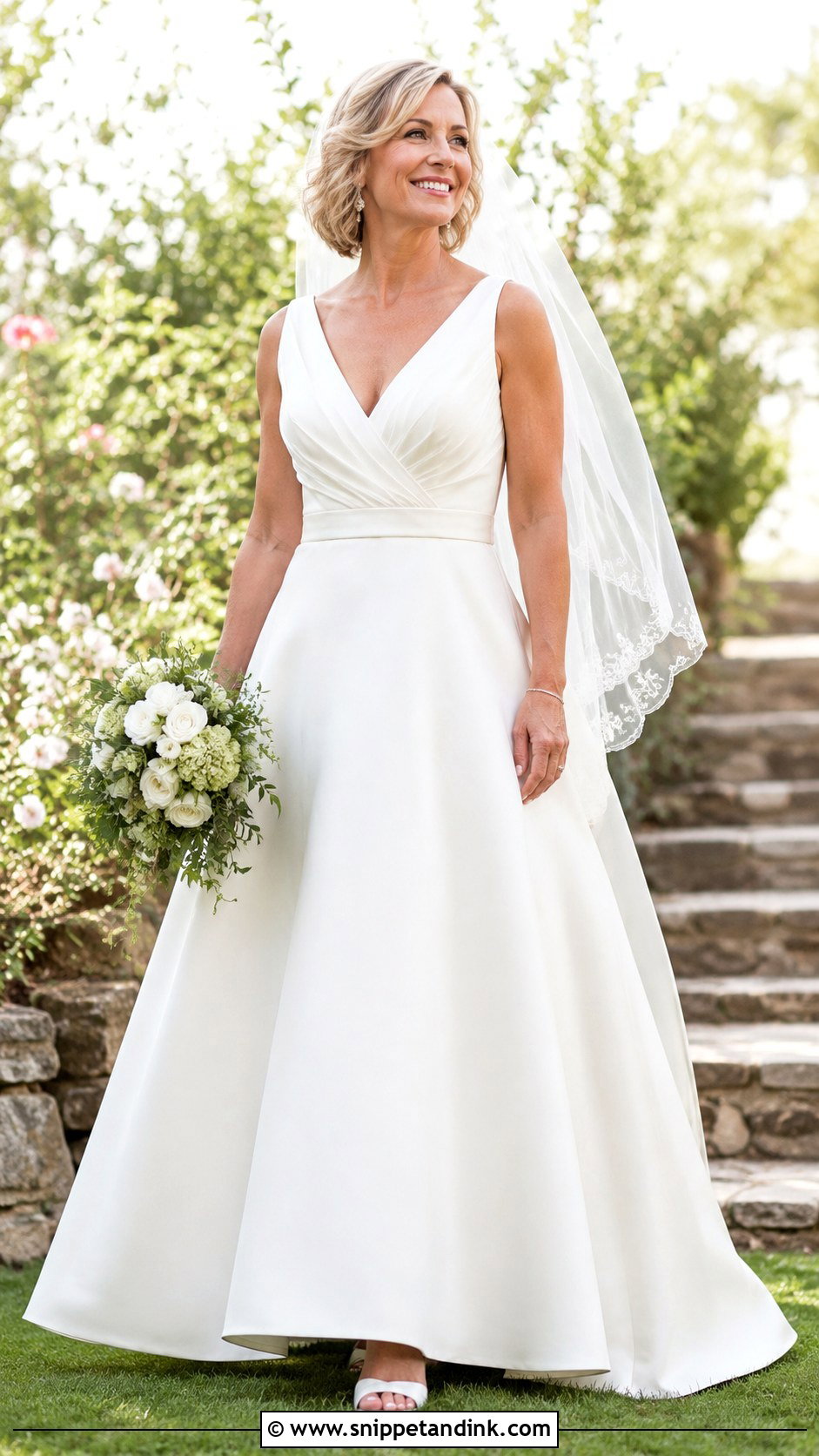
A-line suits more women in their forties than any other shape, because it fits at the waist and skims past the hips and thighs. Fabric choice changes it a lot. Mikado holds a crisp, architectural skirt; crepe falls softly; chiffon floats. For a formal indoor ceremony, I’d pick mikado or satin. For a garden, chiffon or soft crepe. A V or bateau neckline and a medium veil complete it.
4. 40s Long Sleeve Wedding Dress
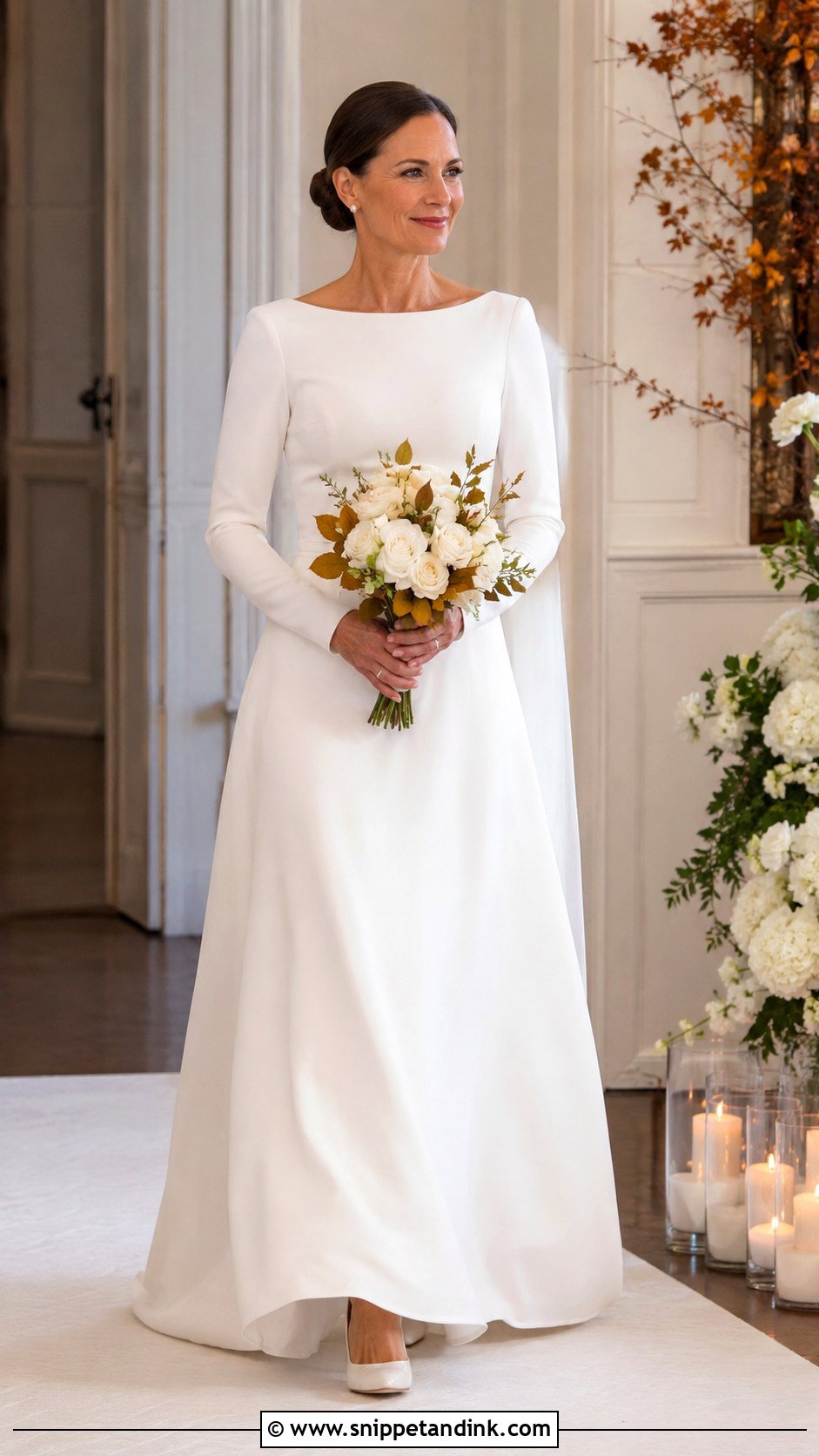
Long sleeves are where comfort can fall apart, so I always look at the cut before the fabric. Fitted crepe sleeves look sleek but need room at the elbow. Sheer lace is lighter. Full bishop sleeves are gathered into a cuff and give the most movement, though they can trail into food at dinner. Pair the sleeve with a clean neckline and either a column or A-line skirt. Pearl studs and soft waves suit autumn and winter well.
5. 40s Tea Length Wedding Dress
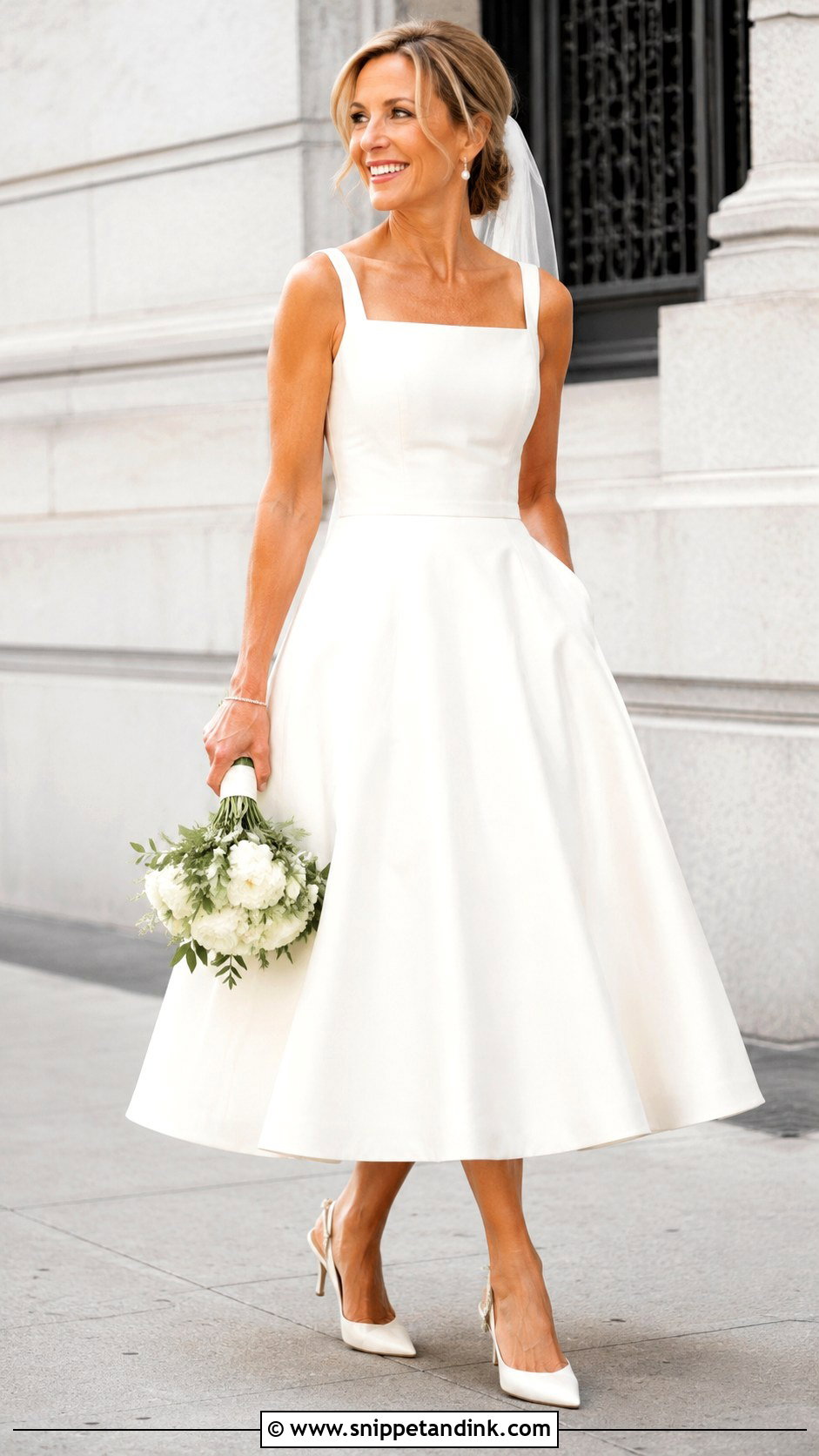
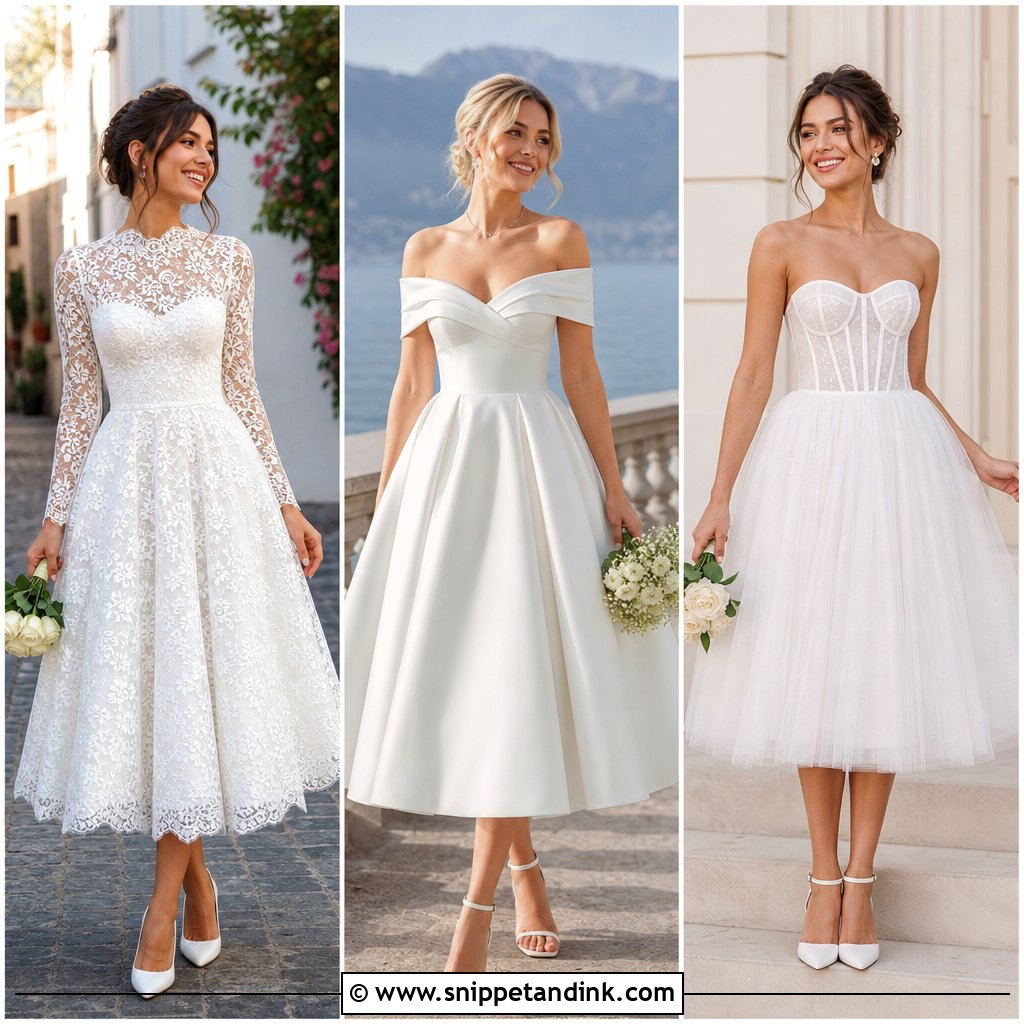
Tea length draws attention to your shoes, so I’d choose them early and buy the best pair you can. Slingbacks, ankle straps or embellished flats all work. The hem should sit at the narrowest point of your calf, which is often a little lower than the standard tea length. A fitted bodice with a flared skirt gives a classic shape. Add a short veil or hair comb. It suits a courthouse, garden or brunch ceremony.
6. 40s Crepe Column Wedding Dress
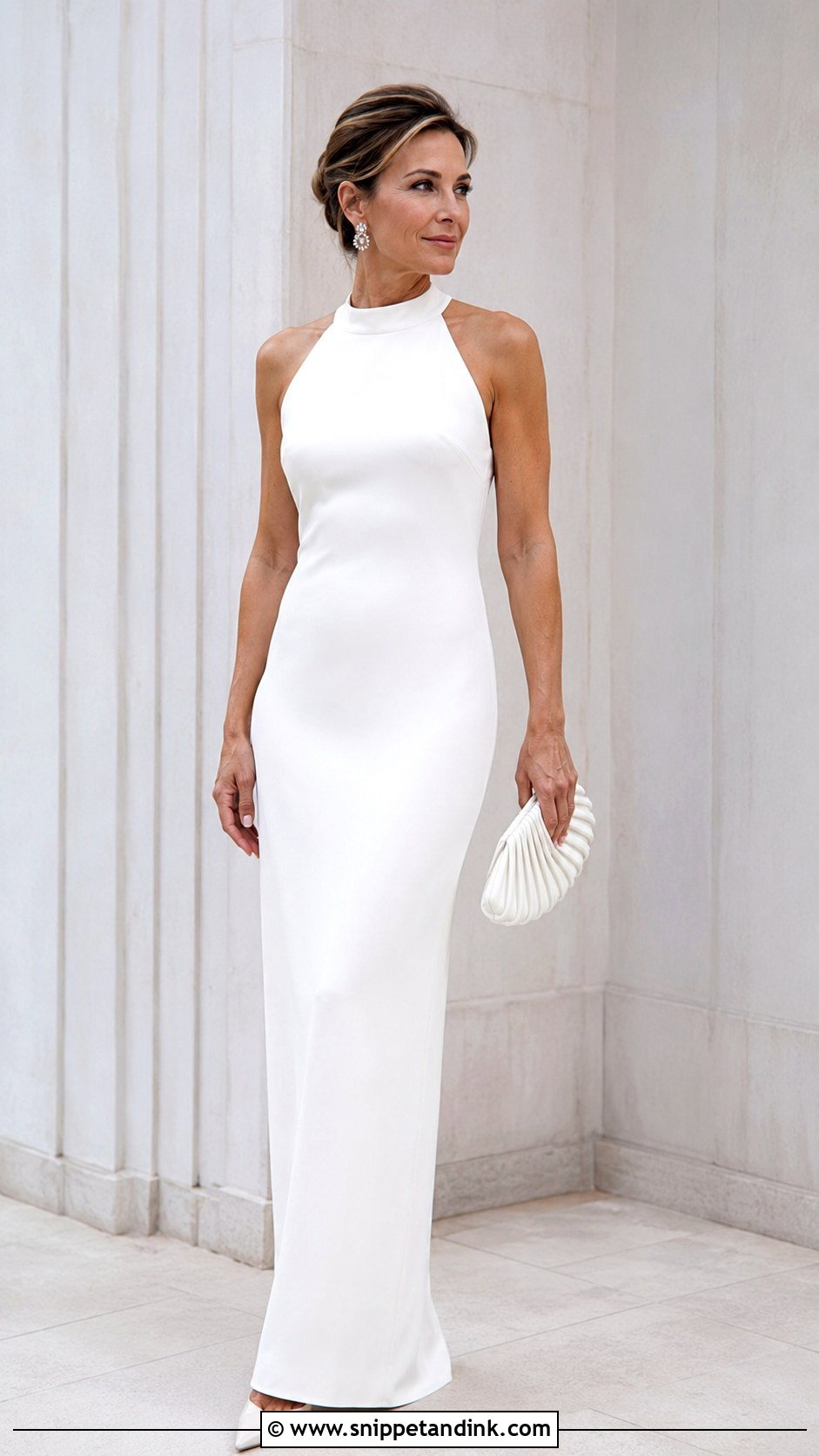
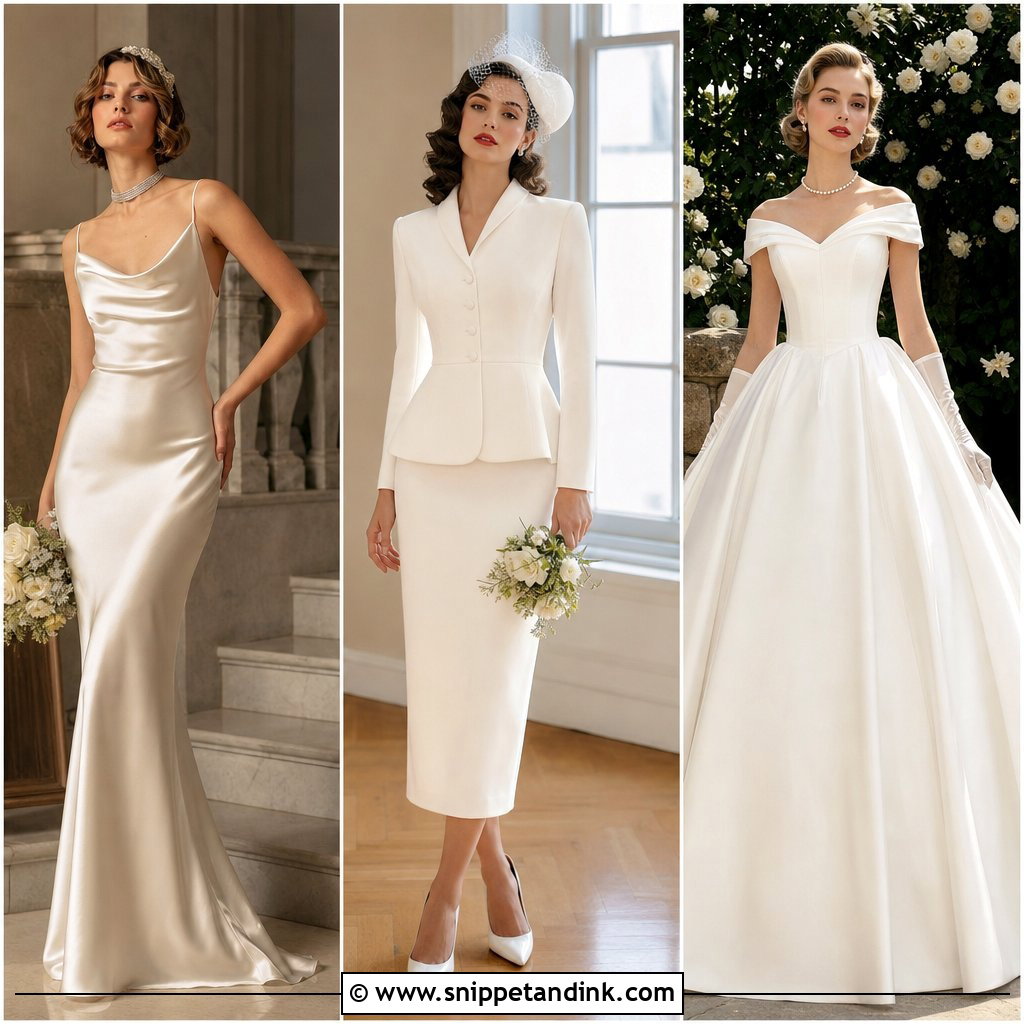
Crepe columns are minimal, and minimal dresses depend entirely on the tailoring. I check the seat, the back of the neck and the side seams carefully; any pulling shows on a plain dress. A little internal structure in the bodice gives support. A high, cowl or off-shoulder neckline personalises it. Pointed heels and a sculptural clutch suit a rooftop or city venue. A good fit will make an inexpensive crepe column look far more costly than it was.
7. 40s Chiffon Wedding Dress
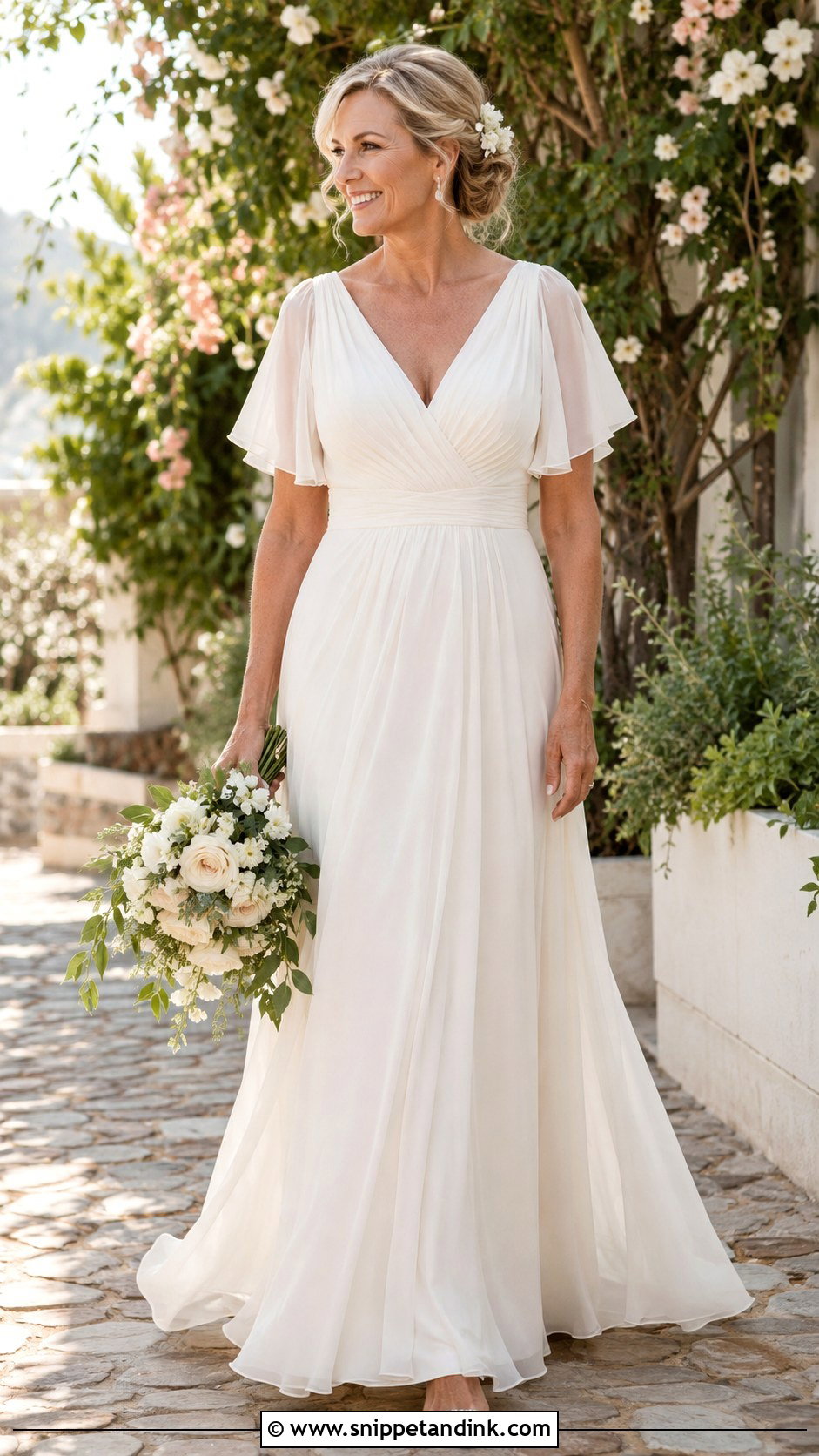
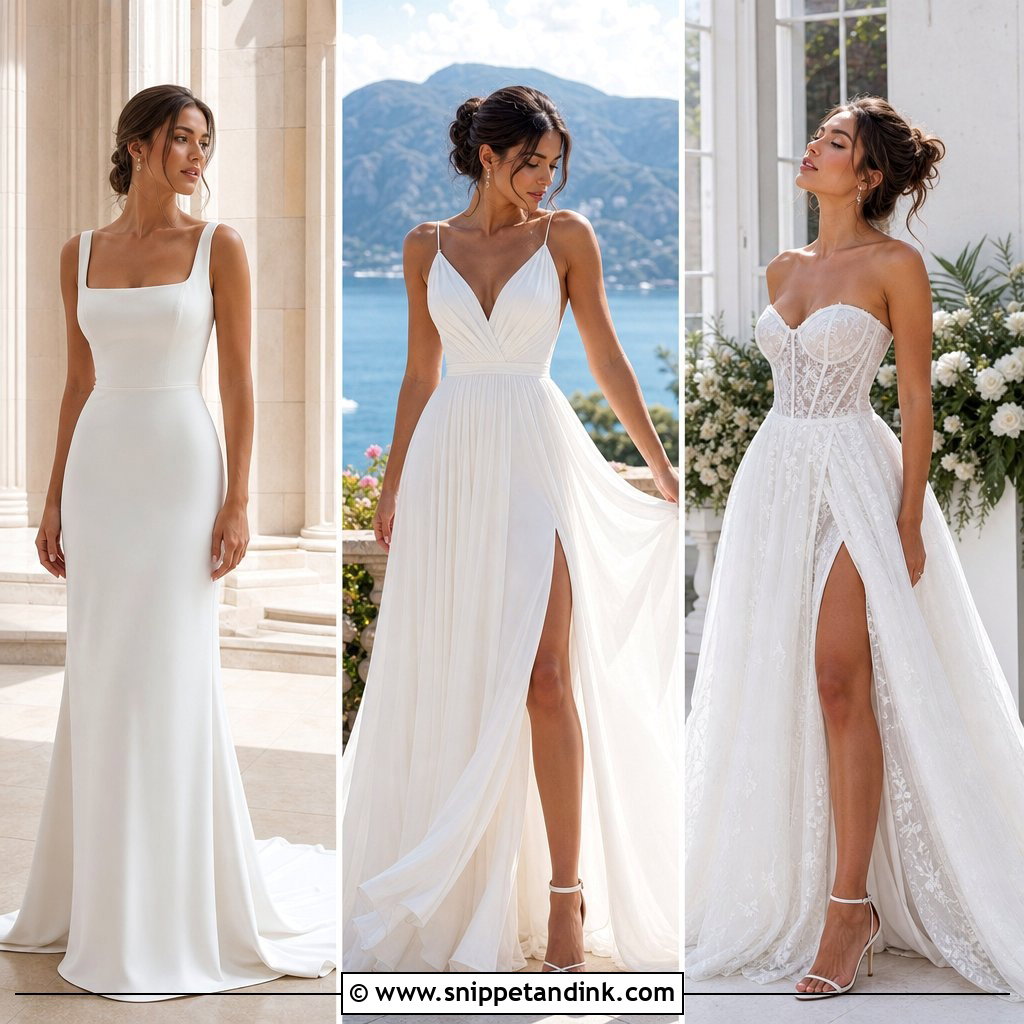
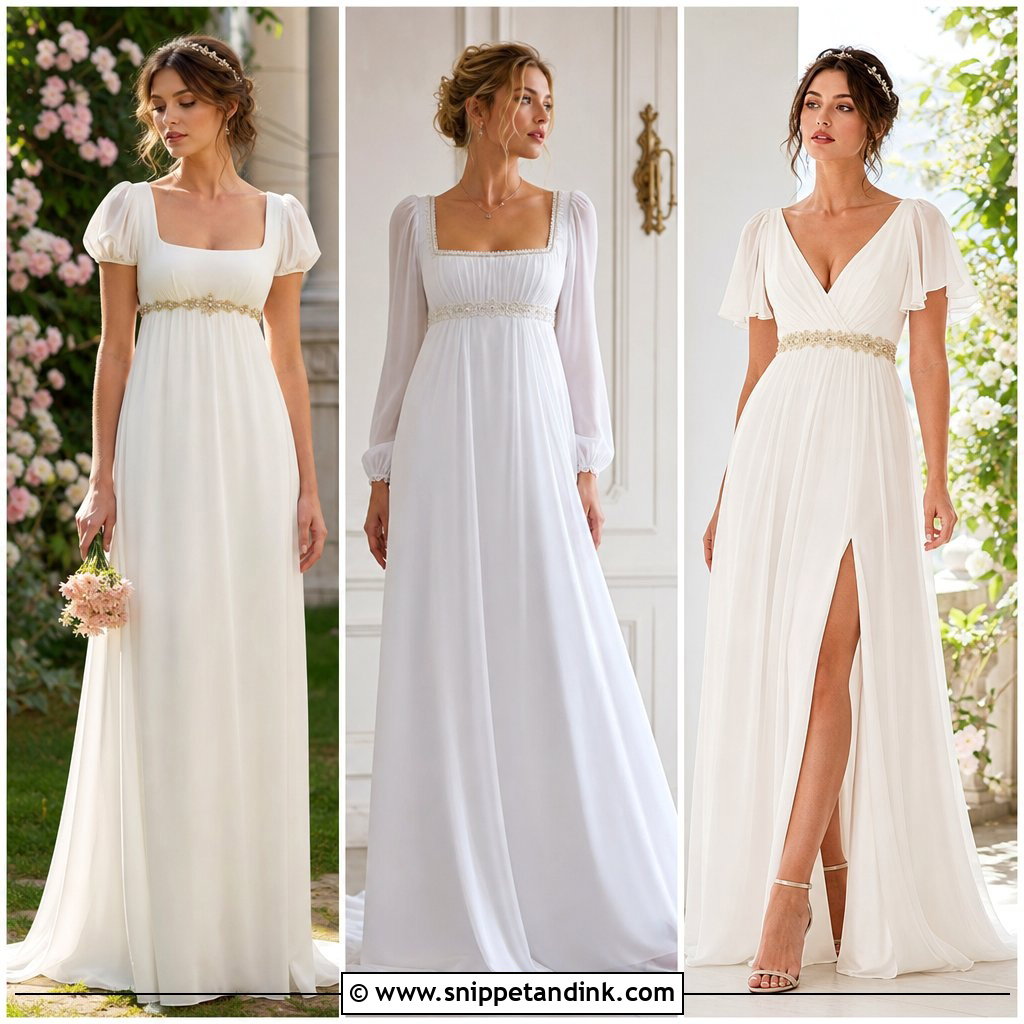
Chiffon is the coolest fabric on this list, which matters more than people expect on a warm afternoon. It moves softly when you walk. To keep it looking grown-up, I’d choose clean layers over ruffles, and an empire or wrap bodice for shape. Delicate sandals, pearl earrings and a floral pin suit a beach or garden ceremony. Chiffon creases easily in a suitcase, so for a destination wedding, plan to steam it on arrival.
8. 40s Off Shoulder Wedding Dress
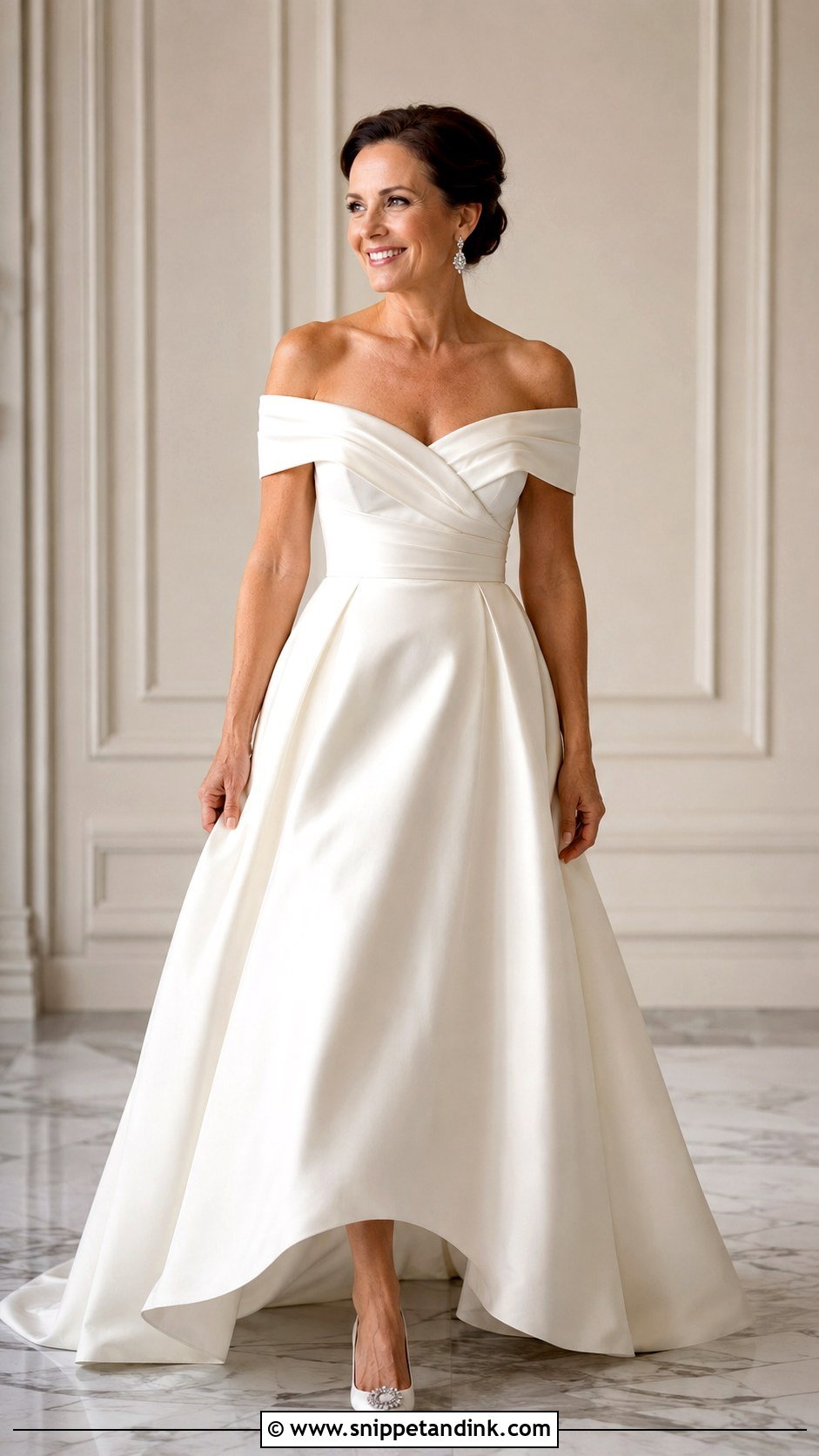
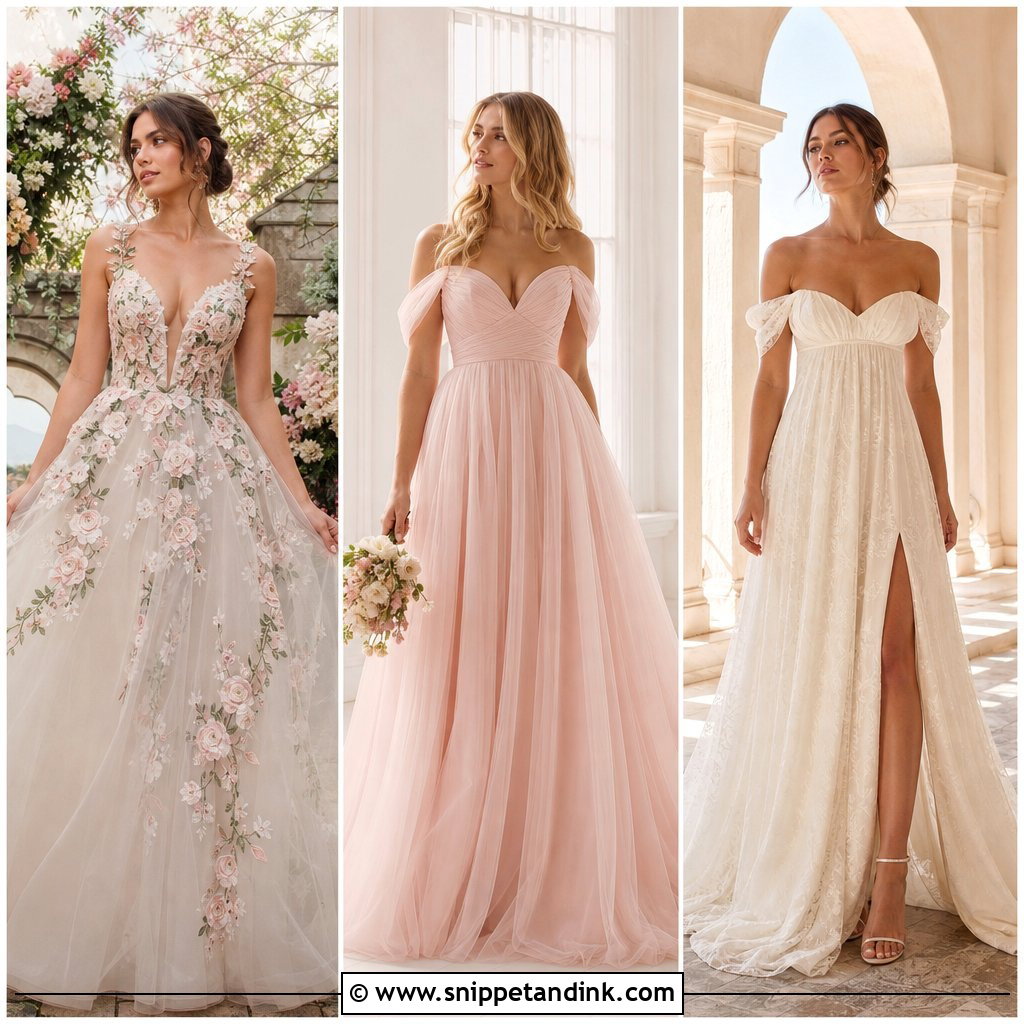
Off-the-shoulder necklines look graceful when they stay where they’re meant to. That depends on a structured bodice with boning, which I always check by having the bride raise her arms and lean forward. A fold-over neckline or soft draped sleeves give more coverage than a deep cut. A-line, mermaid or column skirts all work. A smooth updo and drop earrings show off the neckline at an evening or formal ceremony.
9. 40s V Neck Wedding Dress
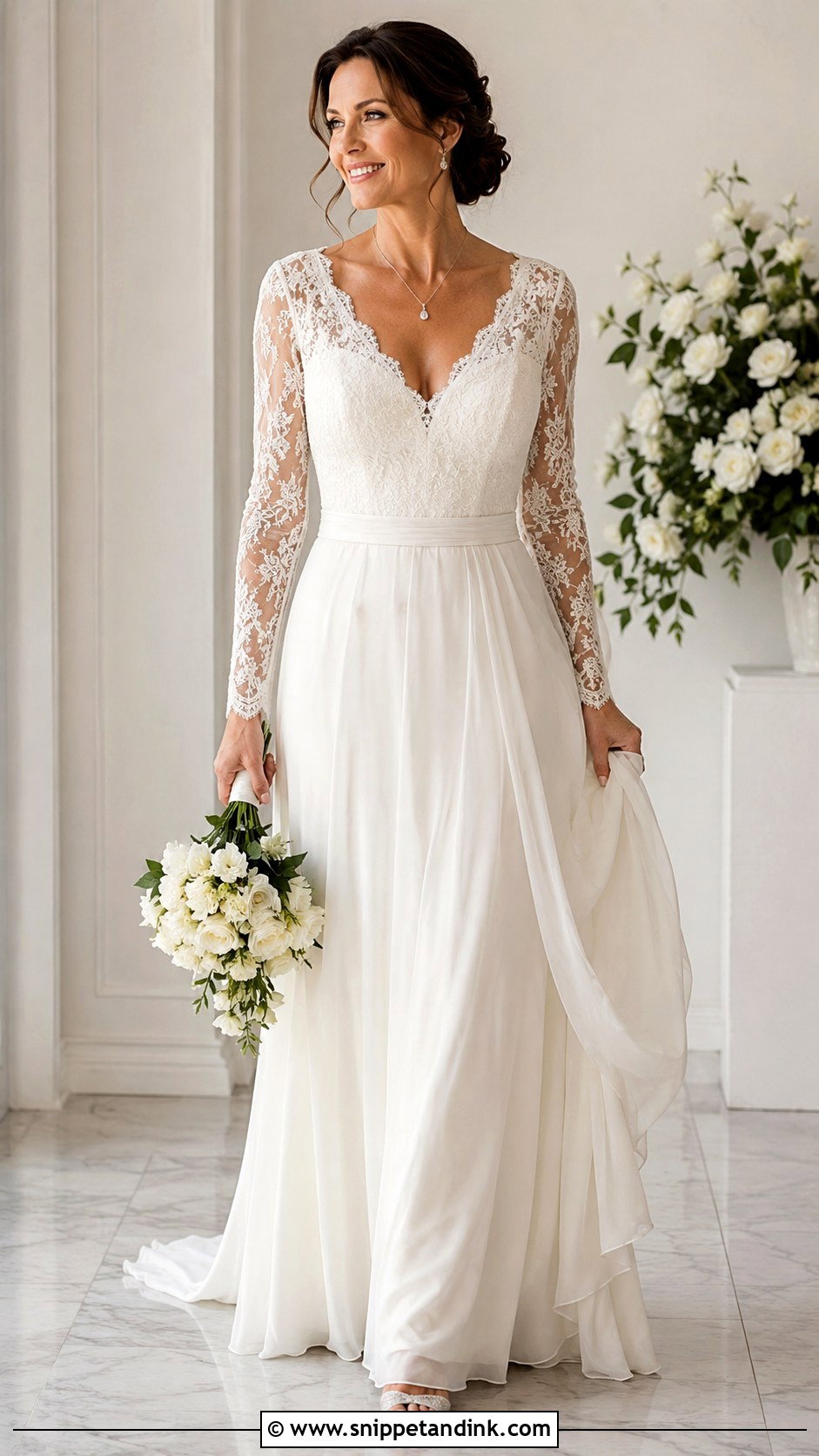
A V-neck lengthens the neck and gives a clean vertical line. In my experience, the V should be supported by the bodice, not just the fabric; otherwise it gapes when you lean forward. A moderate depth looks balanced. Sleeves pair well with it, from a short flutter to full lace. A pendant necklace and small earrings finish the look. High-quality fabric matters, because a V-neck shows every wrinkle along its edges.
10. 40s High Neck Wedding Dress
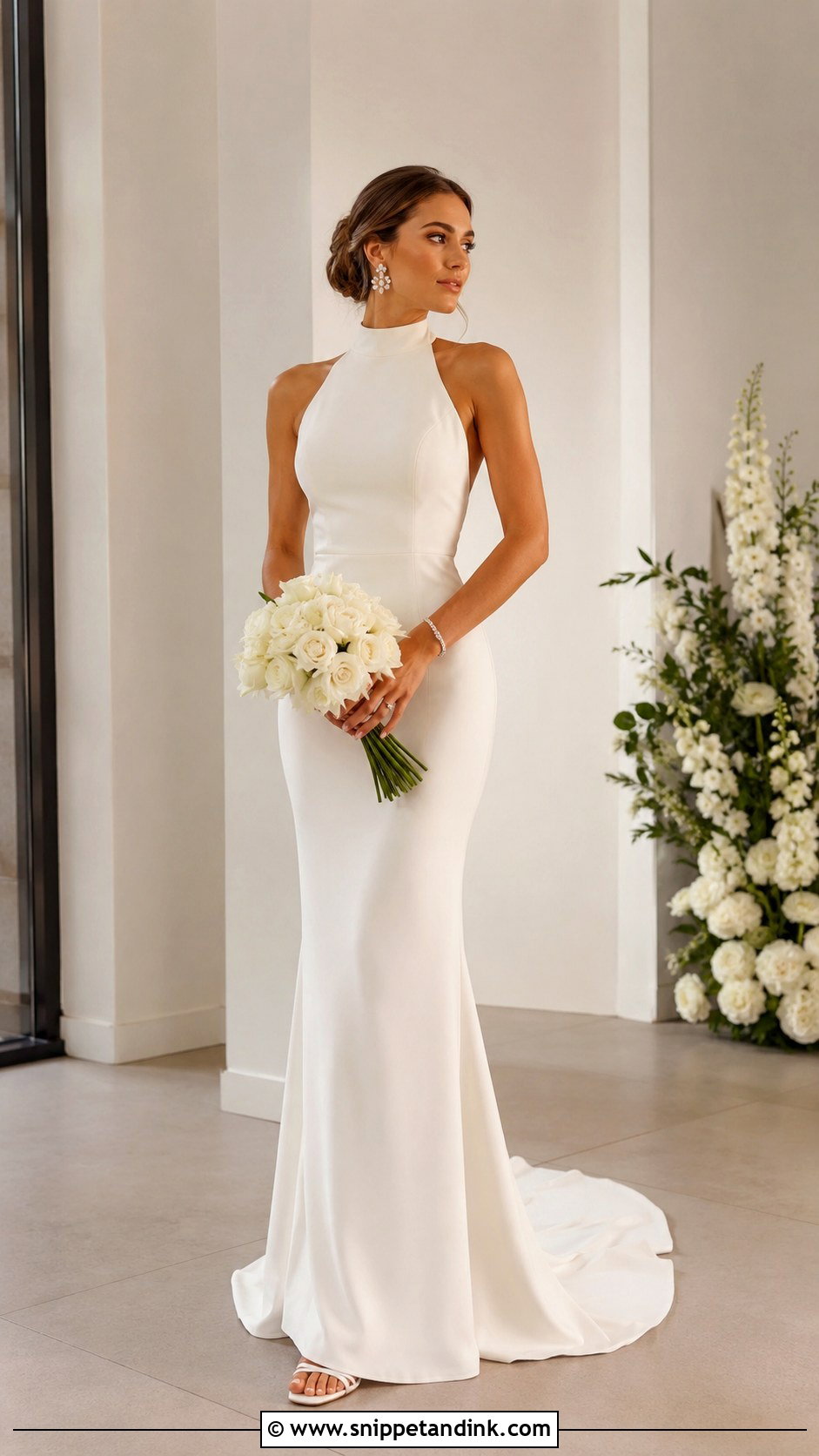
A high neck looks regal rather than old-fashioned when the rest of the dress is modern. A sleek crepe gown or a lace bodice over a soft skirt both work. Because the neckline frames the face, I’d style the hair back and wear statement earrings rather than a necklace. Balance it with a defined waist or an open back, so the look isn’t heavy. It suits brides who want coverage and still want a strong silhouette.
11. 40s Square Neck Wedding Dress
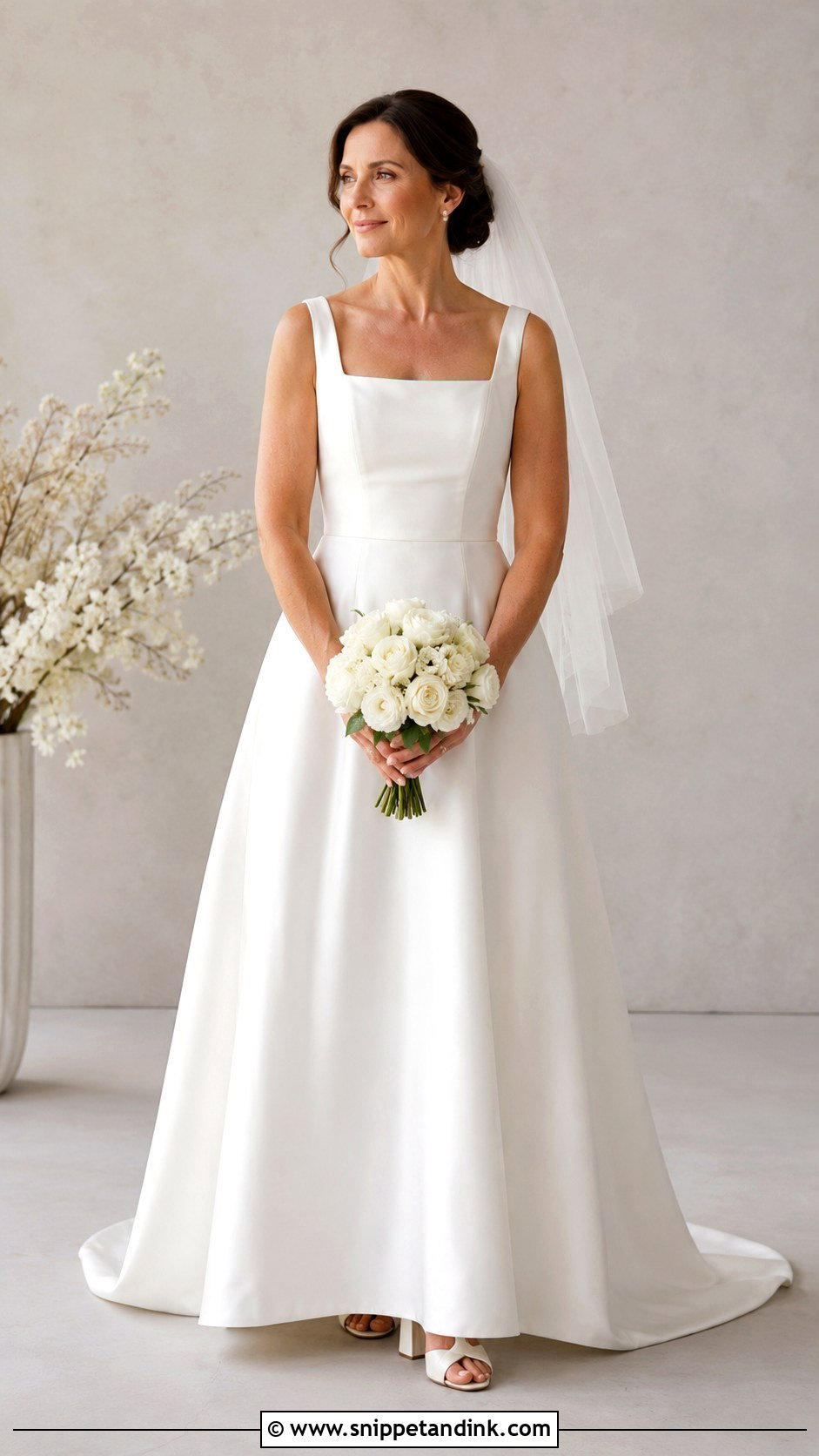
Square necklines frame the collarbone and give more structure than a scoop. They work with wide straps, cap sleeves or long sleeves. One fitting detail: the corners of a square neck should sit flat. If they curl or gape, the bodice needs adjusting. A satin A-line feels classic; a crepe column feels modern. Pearl studs and a plain veil suit it, and the straight line balances a fuller skirt nicely.
12. 40s Wrap Wedding Dress
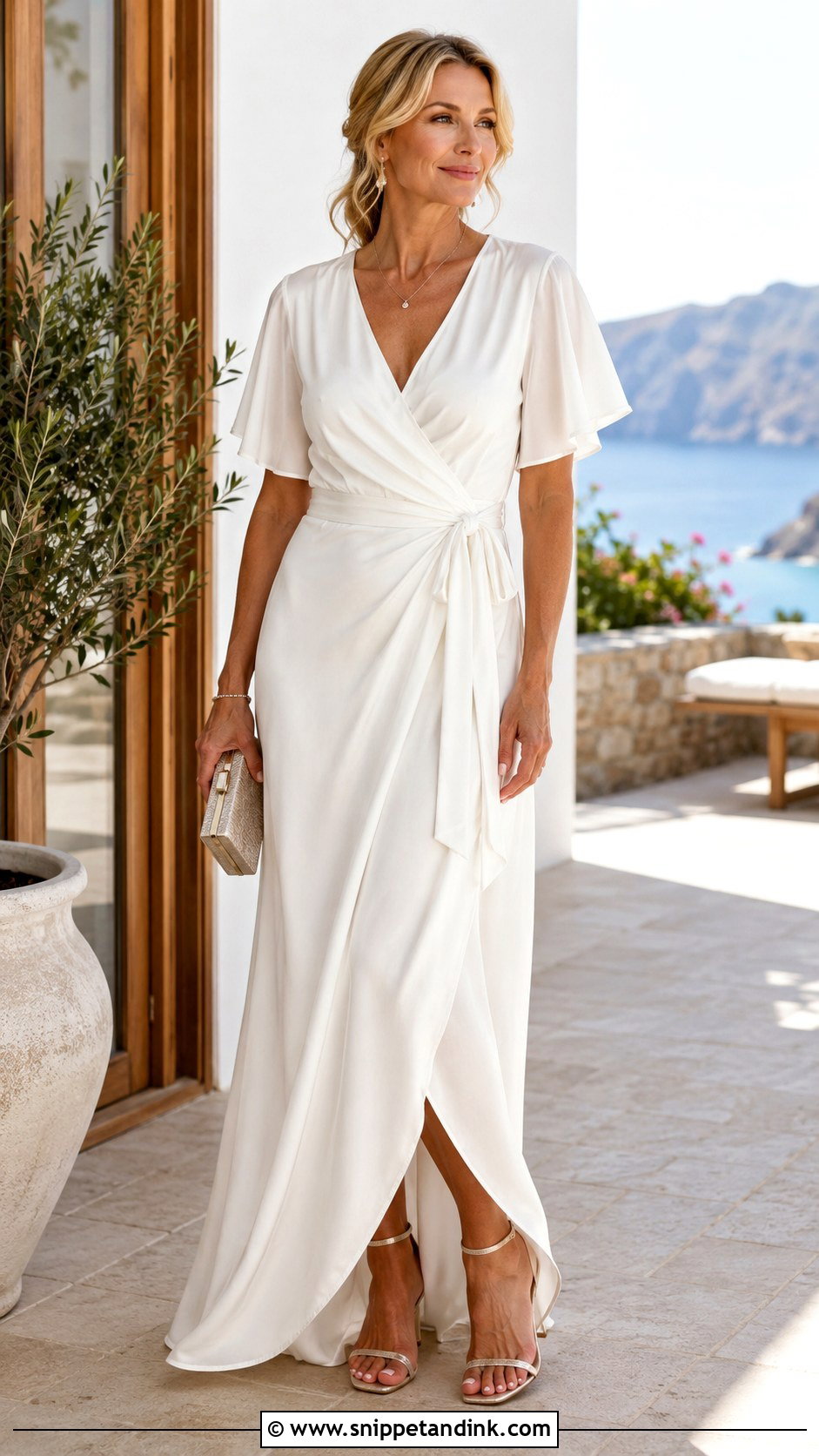
Wrap dresses adjust to your shape, which is a real help for anyone whose size fluctuates in the months before a wedding. Silk, satin, crepe and chiffon all wrap well. A wrap bodice with flutter sleeves or three-quarter sleeves looks graceful. I’d always add a small hidden snap or stitch at the crossover, so the neckline doesn’t open when you bend. Heeled sandals and a small clutch suit a destination or courthouse wedding.
13. 40s Beaded Wedding Dress
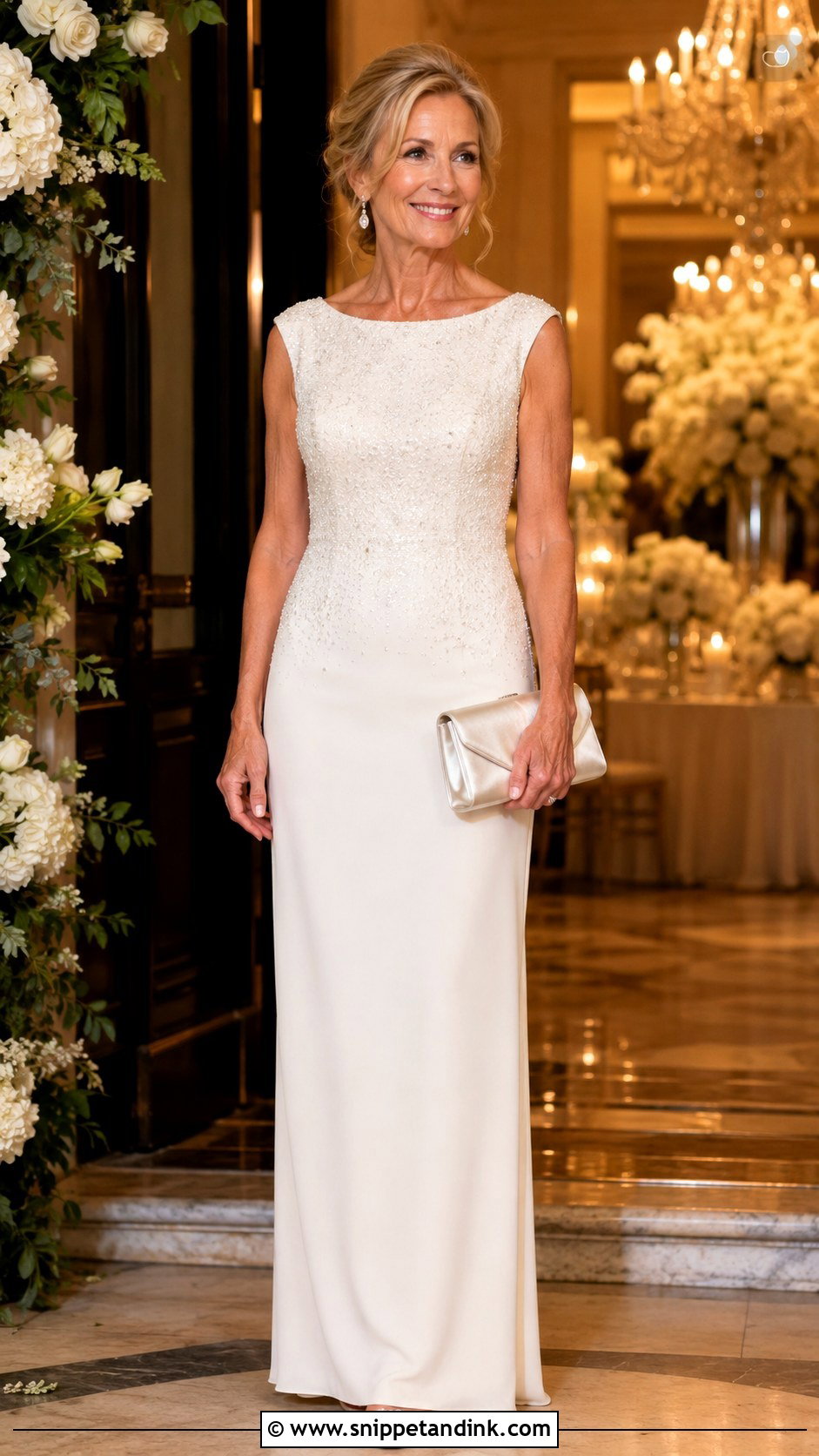
Beading works best when it’s placed with purpose: along the neckline, at the waist or on the sleeves, rather than all over. A soft column or A-line keeps it balanced. Beaded fabric can be heavy and scratchy on the inside, so I’d check the lining, especially under the arms. Simple heels and understated earrings avoid competing detail. Light beading catches candlelight well at an evening reception.
14. 40s Floral Lace Wedding Dress
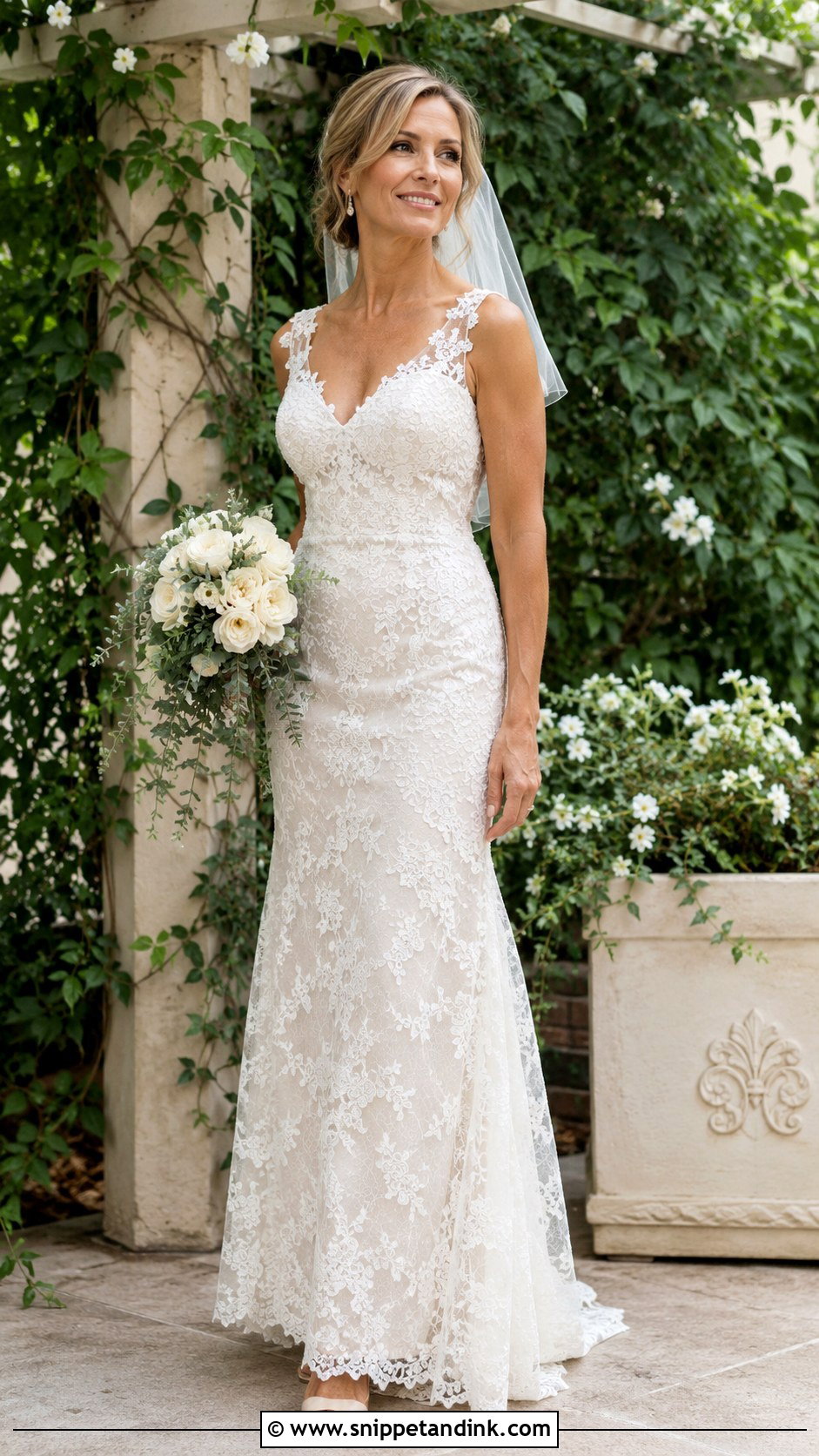
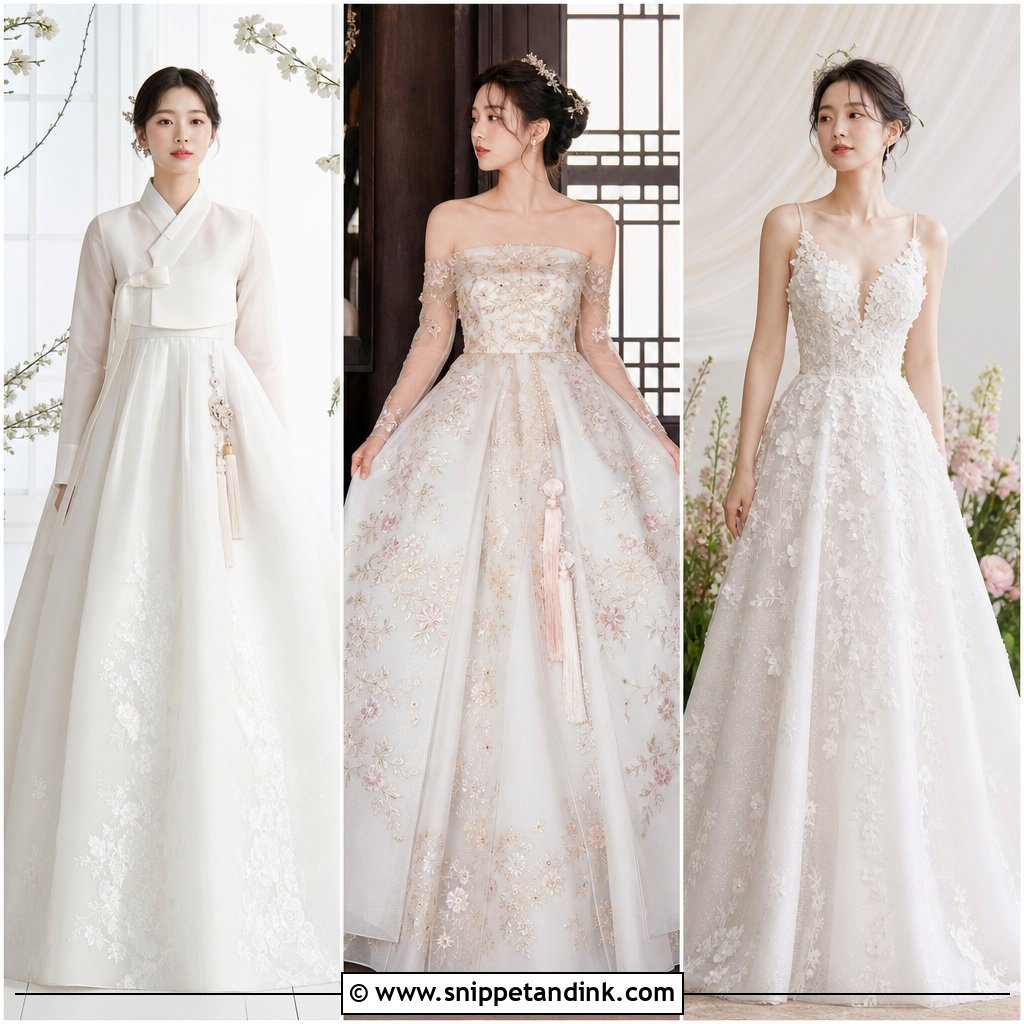
Floral lace is romantic, but heavy lace can feel stiff in warm weather. I’d choose delicate lace, placed along the bodice, sleeves or skirt panels where it flatters your shape. A clean silhouette with lace overlay looks more modern than a very full skirt. Nude or ivory heels and pearl earrings complete it. It suits garden and outdoor ceremonies in spring and summer.

15. 40s Two Piece Wedding Dress
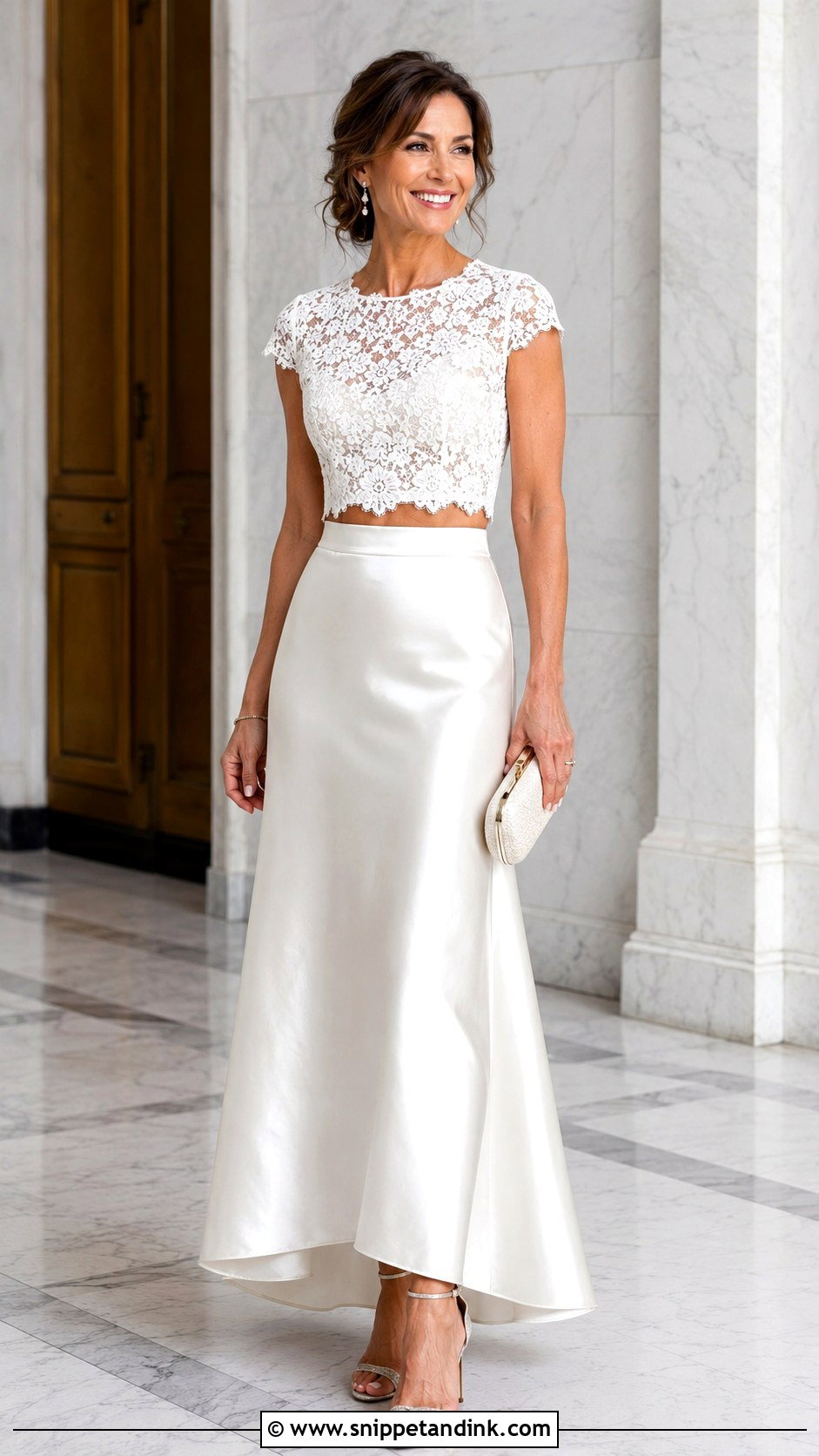
Separates let a seamstress fit your top and bottom independently, which is why I often suggest them to women who are different sizes above and below the waist. A lace top with a satin skirt, a bridal blouse with wide-leg trousers or a structured crop with a high skirt all work. The pieces need to match in colour, fabric weight and formality, or they’ll look accidental. Elegant heels and refined jewelry complete it.
16. 40s Bridal Jumpsuit
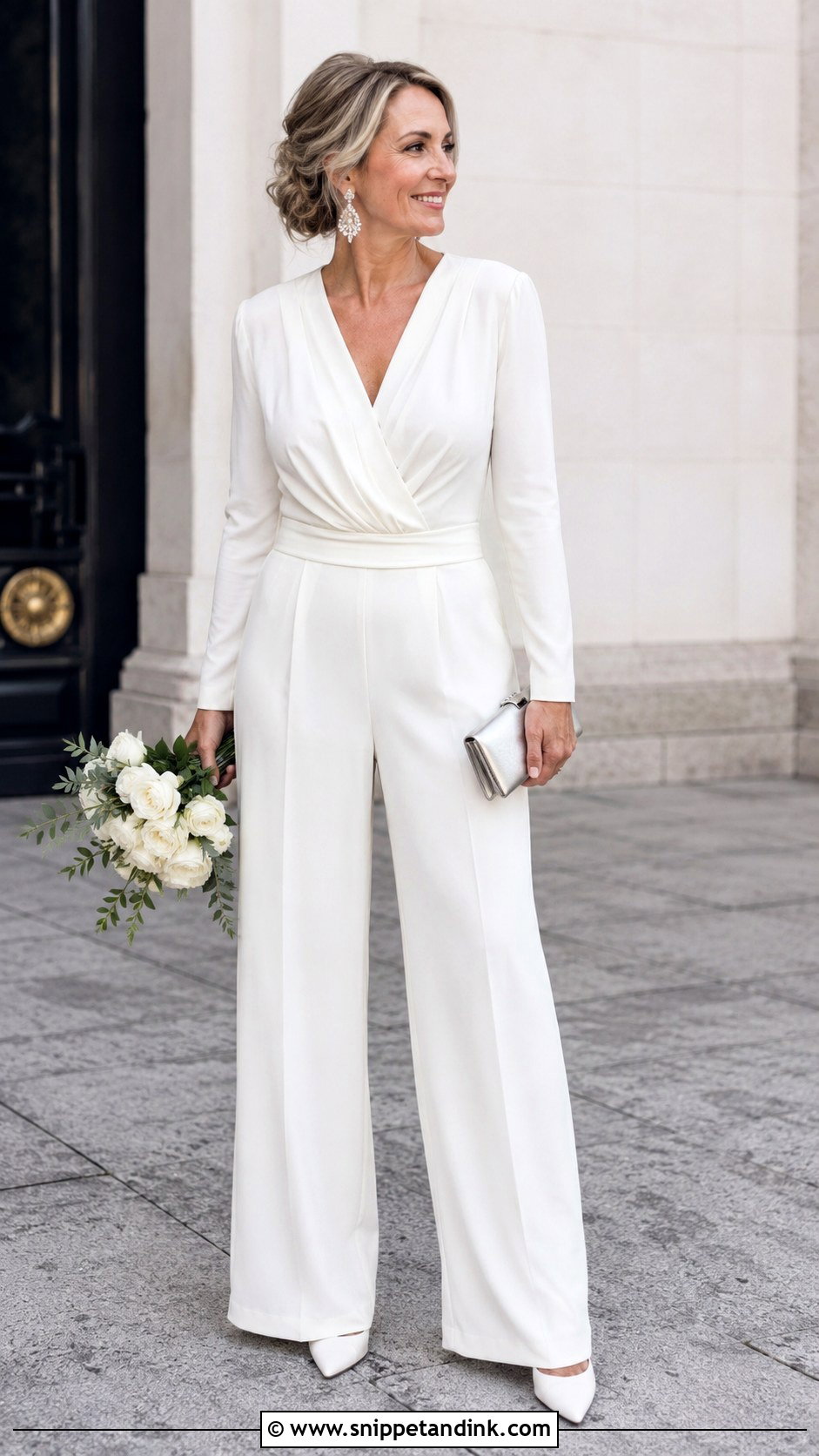
A jumpsuit gives you a confident, modern outfit and complete freedom to move. Look for a tailored waist, wide legs and good fabric, such as crepe, satin or structured stretch. A wrap front, cape sleeve or lace bodice brings in a bridal detail. I always ask brides to practise using the bathroom in a jumpsuit before the wedding; a long back zip is much easier with a hook-and-eye at the top that you can reach. Pointed heels and statement earrings finish it.
17. 40s Wedding Suit
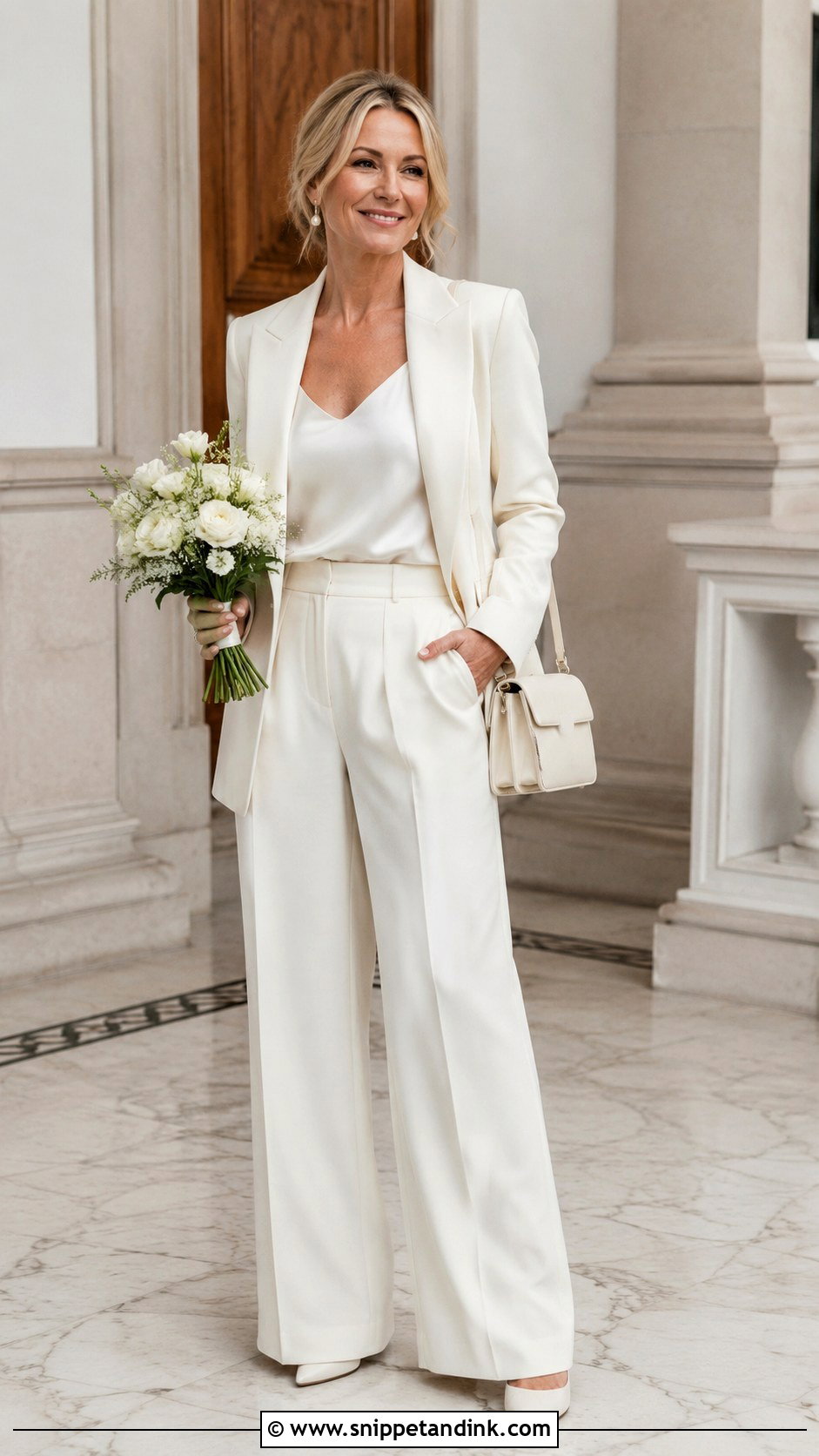
A wedding suit suits women who already love tailoring. An ivory blazer with matching trousers and a silk camisole looks polished. A longline blazer gives a sleek line; wide-leg trousers balance it. Make sure the suit fabric is opaque enough, since thin ivory suiting can show pockets and lining through it. Satin lapels or a lace blouse add bridal detail at a civil ceremony.
18. 40s Cape Wedding Dress
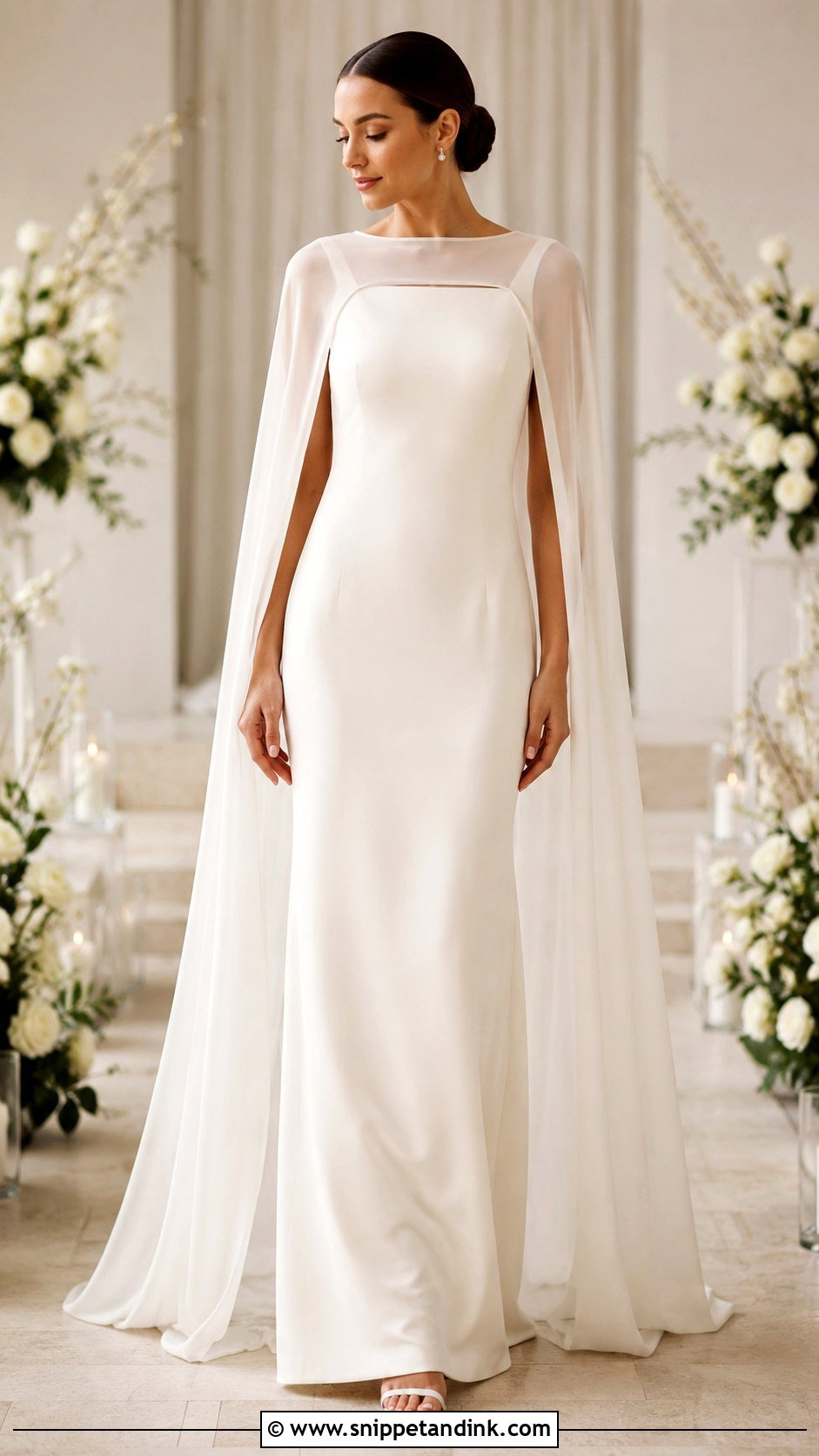
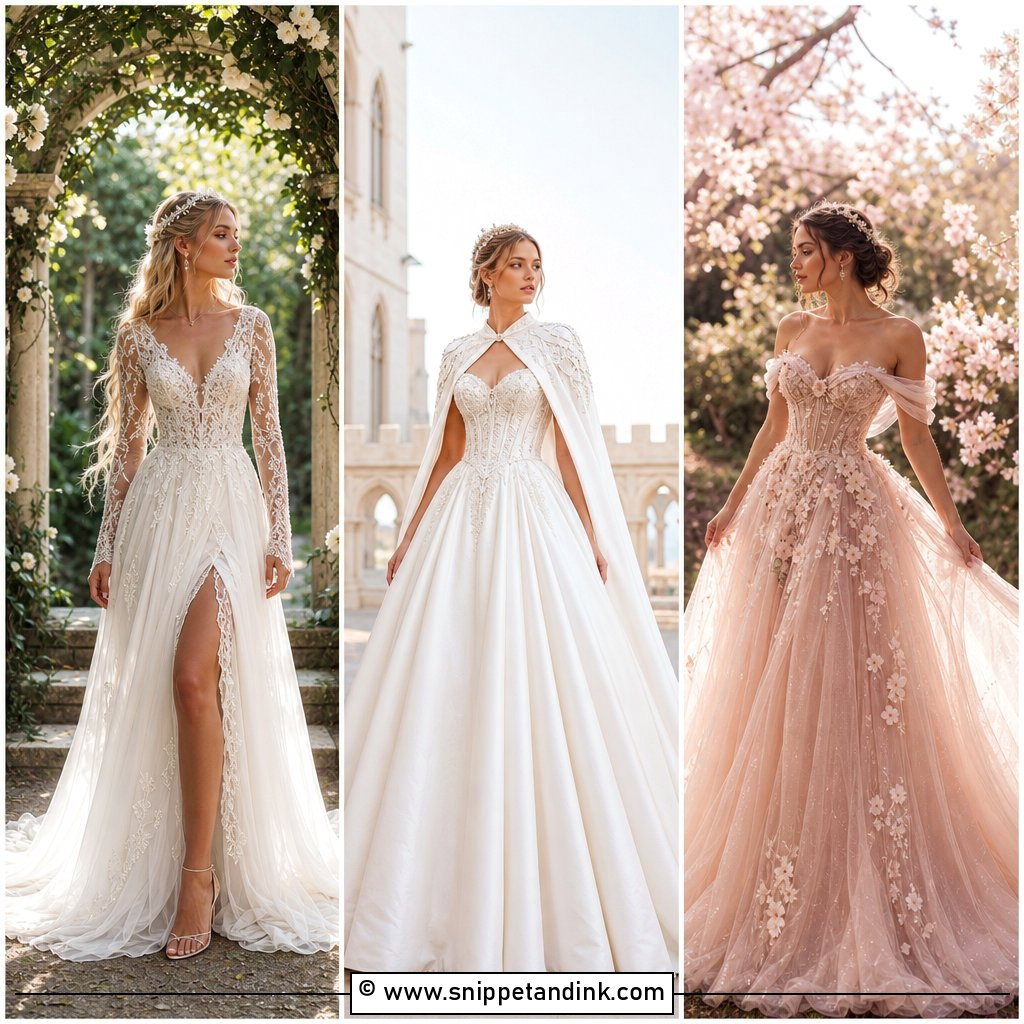
A cape gives drama and coverage without the weight of a long veil. Soft chiffon capes float; a lace capelet frames the shoulders; a crepe cape looks architectural. I prefer detachable capes, because they let you change the look for the reception. Check how it attaches; capes that hook at the shoulders can pull the neckline backward if they’re heavy. A clean column or A-line underneath keeps the focus on the cape.
19. 40s Short Wedding Dress
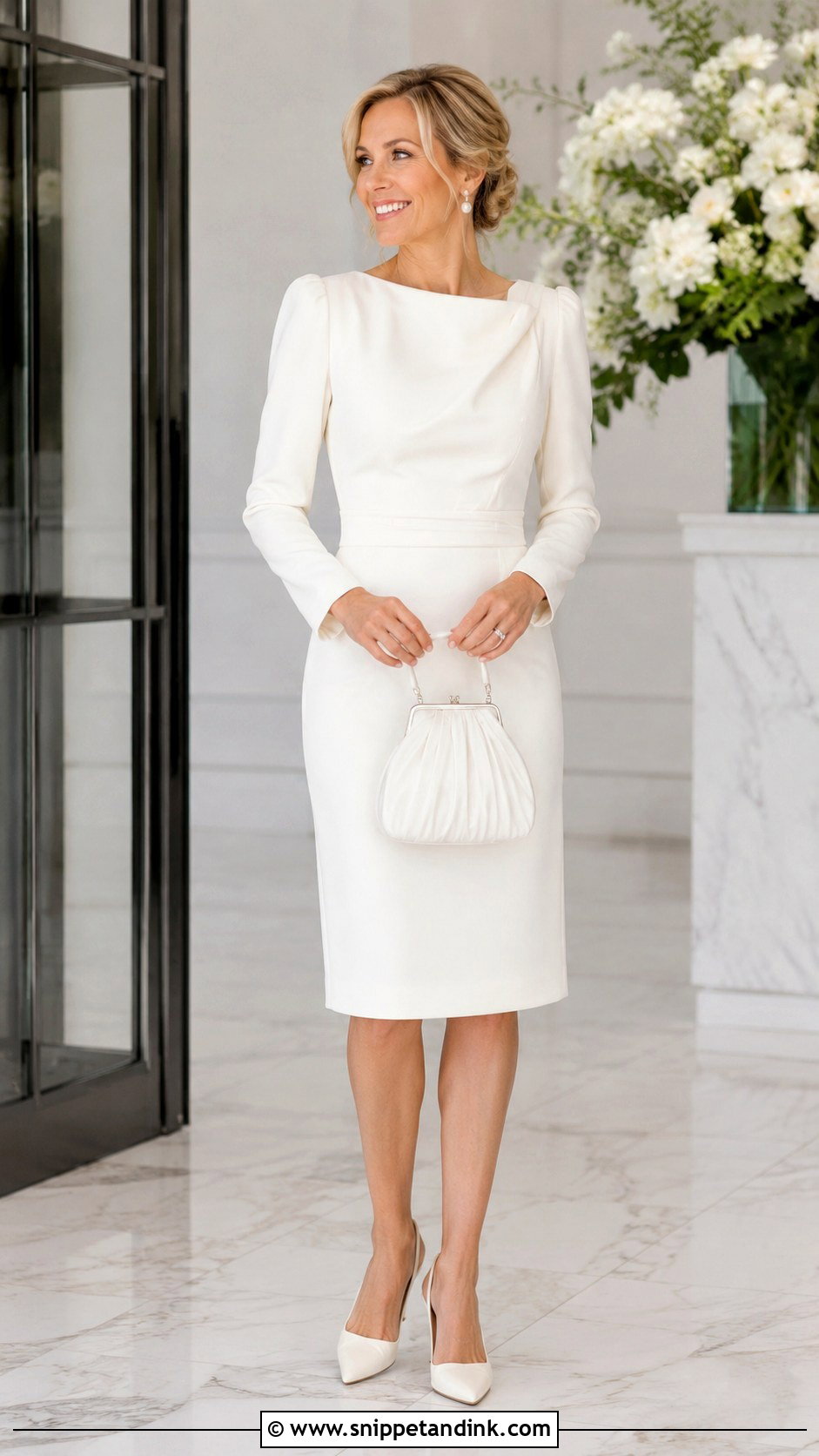
A short wedding dress can feel joyful and fresh. To keep it bridal, I balance the short hem with a more covered top: long sleeves, a high neck or a tailored bodice. A structured mini, knee-length sheath or lace short dress all work. Fabric quality is key, since cheaper fabric reads as casual very quickly. Slingback heels and pearl earrings complete it for a courthouse or as an evening change.
20. 40s Boho Wedding Dress
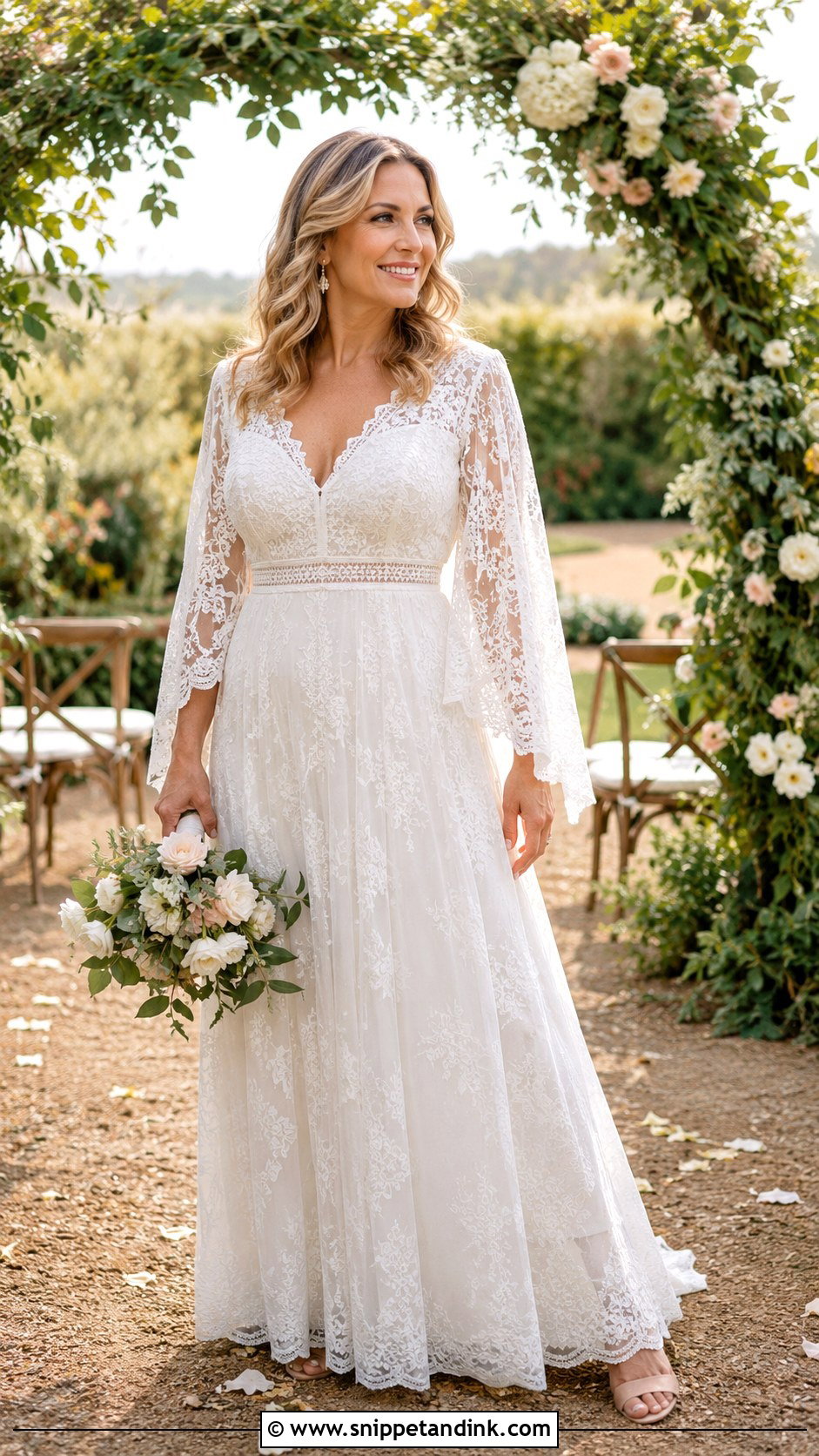
A boho wedding dress has a relaxed, natural feel. Flowing lace, chiffon or crochet-style texture with soft bell sleeves gives the look. I’d keep the silhouette defined at the waist, which stops a boho dress from looking shapeless. Avoid too much fringe or oversized accessories. Low block heels and loose waves suit a beach or garden venue.
21. 40s Beach Wedding Dress
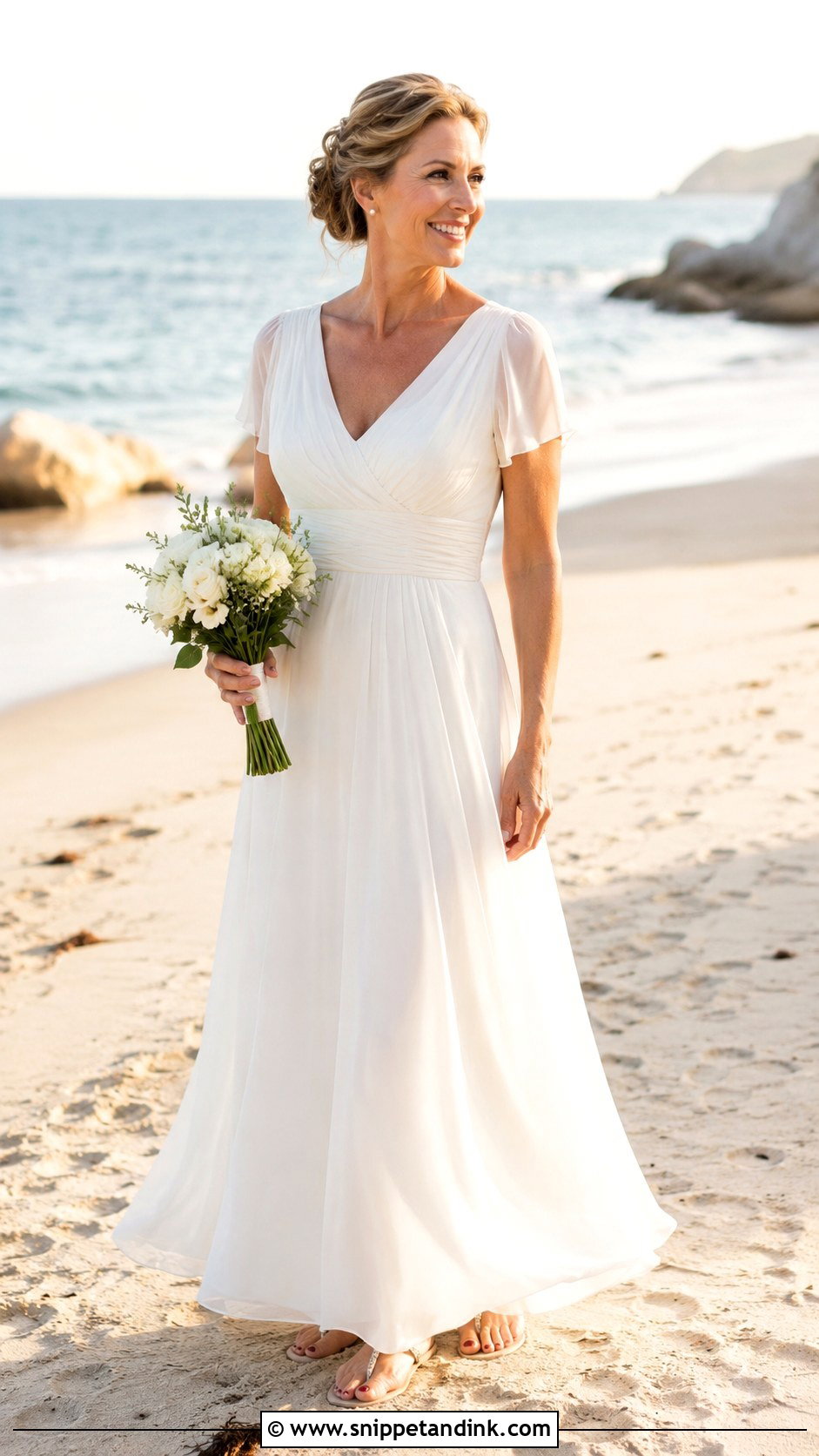
Beach dresses need to breathe. Soft chiffon, silk, crepe or light lace are all comfortable in heat. A flowy A-line, relaxed column or wrap all work, as long as the coverage is secure in the wind. I’d skip heavy trains, which drag and collect sand. Flat sandals or low wedges are much safer than heels on sand. Pearl studs and a soft updo suit the setting.
22. 40s Courthouse Wedding Dress
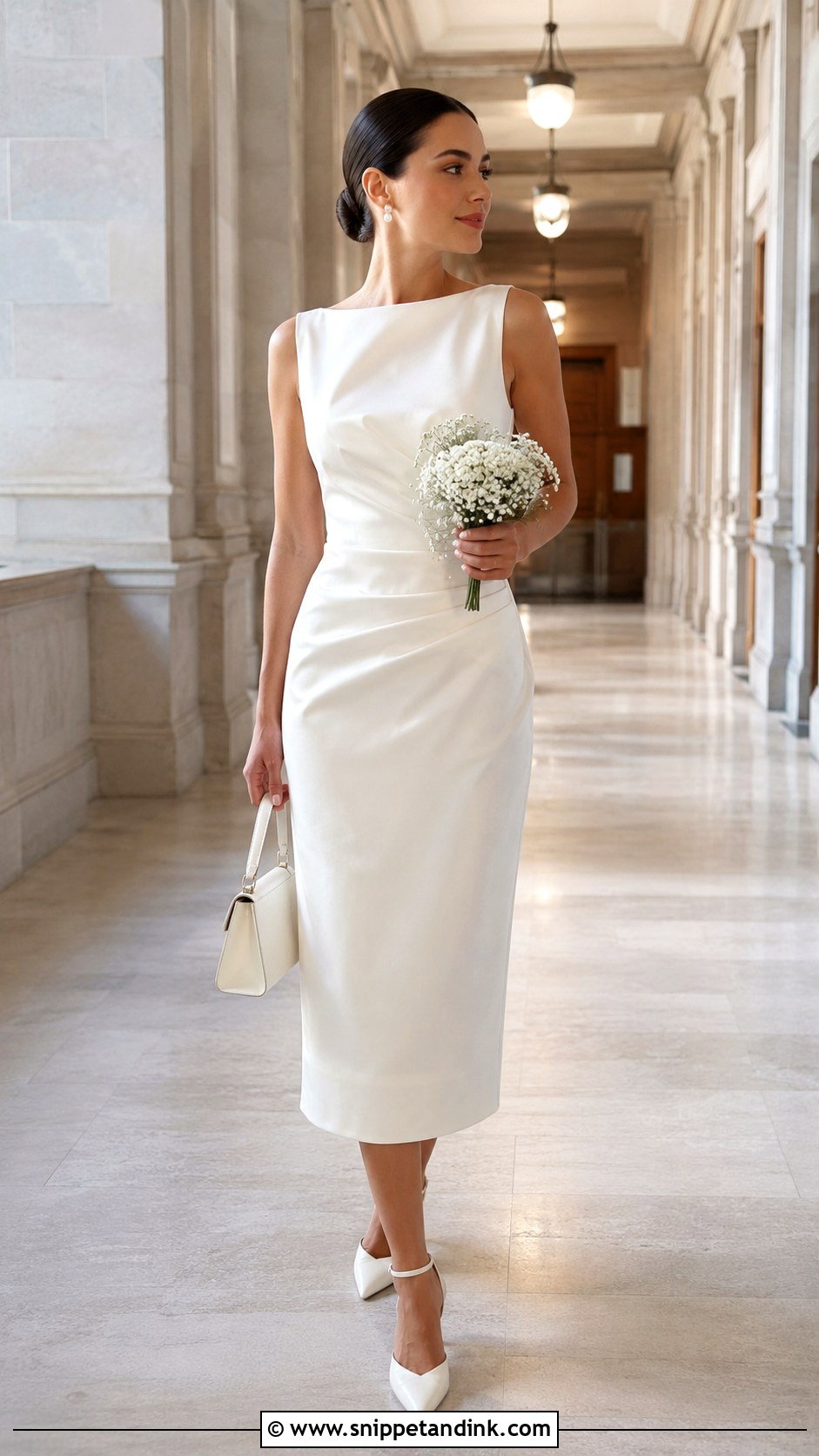
A courthouse outfit needs to look special in a plain, often small room. A satin midi, tailored sheath, bridal suit or minimalist crepe dress all suit it. Clean lines and refined accessories do the work; a structured handbag and pearl earrings look much more deliberate than a casual bag. A short veil, a bow or statement earrings add a touch of drama. Ivory, champagne and blush all photograph well under indoor lighting.
23. 40s Garden Wedding Dress
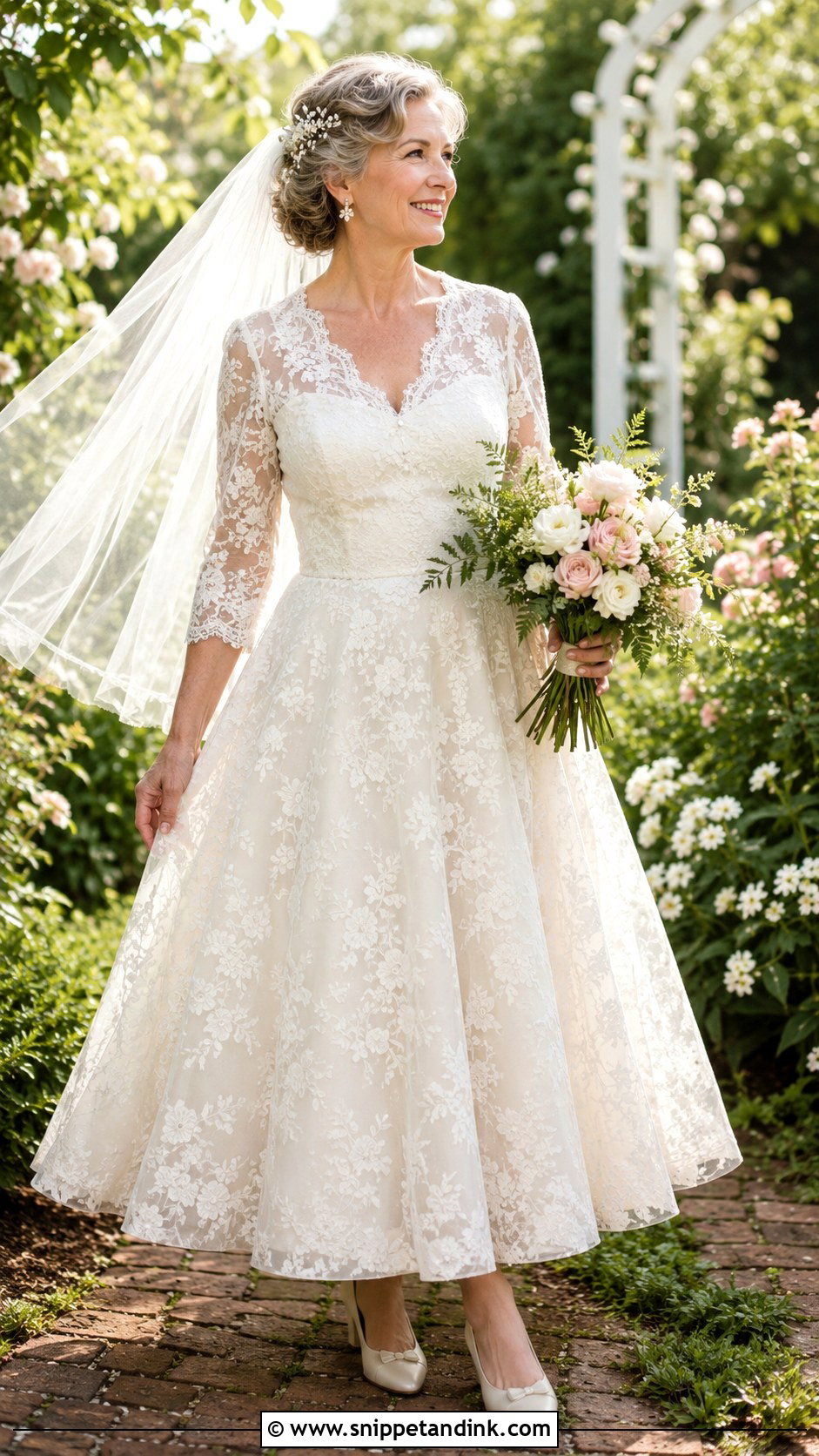
A garden wedding dress needs to handle grass and paths comfortably. Floral lace, soft chiffon, tulle overlays and light satin suit a natural setting. An A-line, wrap or tea-length dress walks easily. Block heels or wedges avoid sinking into lawns. A delicate comb or soft veil complete it, and ivory, blush or pale embroidery blend with the venue.
24. 40s Minimalist Wedding Dress
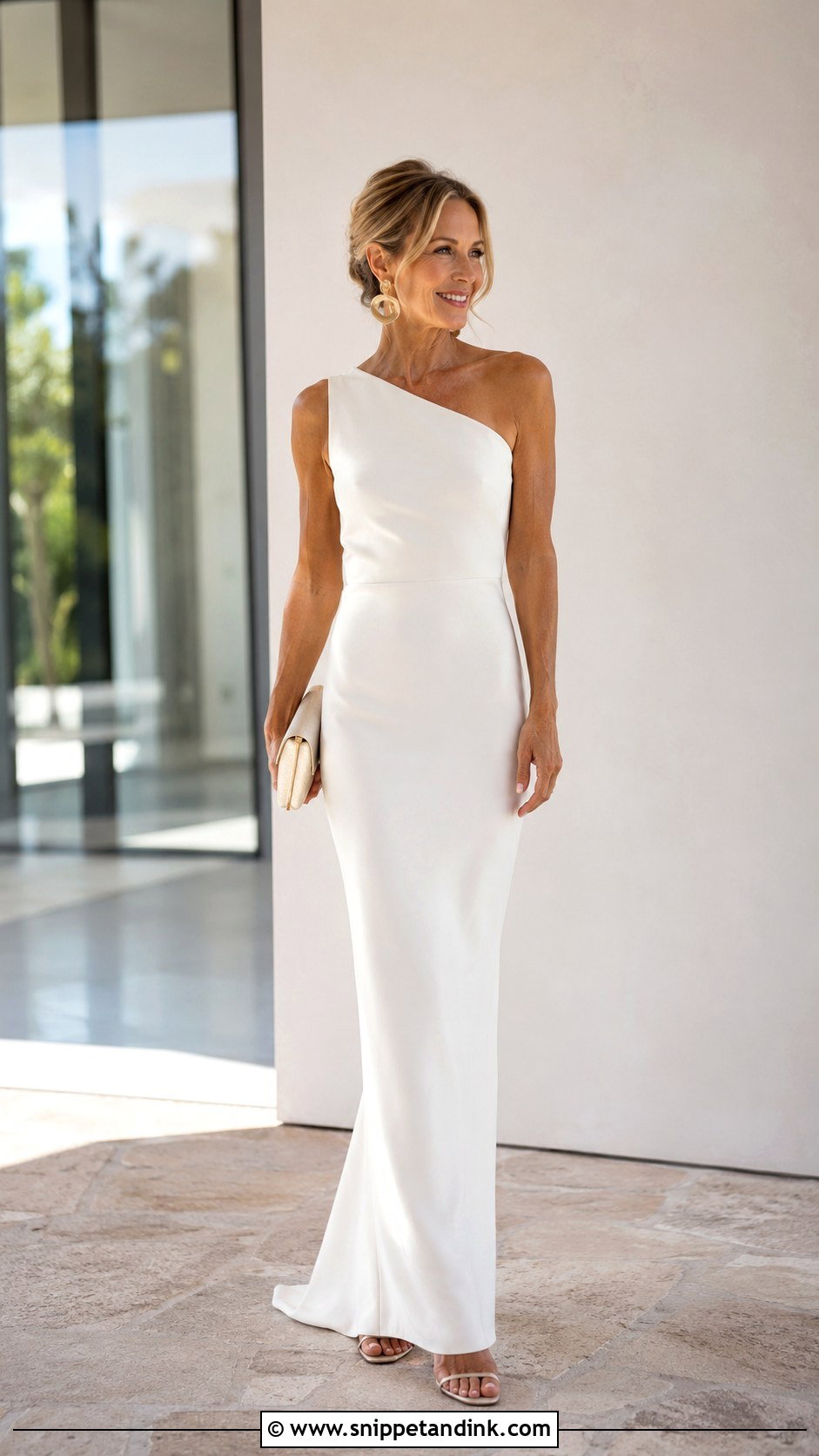
A minimalist dress is all fit and fabric. I’m particularly strict about the hem, waist, bust and shoulders here, because there’s no detail to distract from an imperfect line. A crepe column, satin slip, square-neck A-line or long-sleeve sheath all work. Simple heels and sculptural earrings keep the look clean. Polished hair matters more with a minimal dress than with a detailed one.

25. 40s Second Wedding Dress
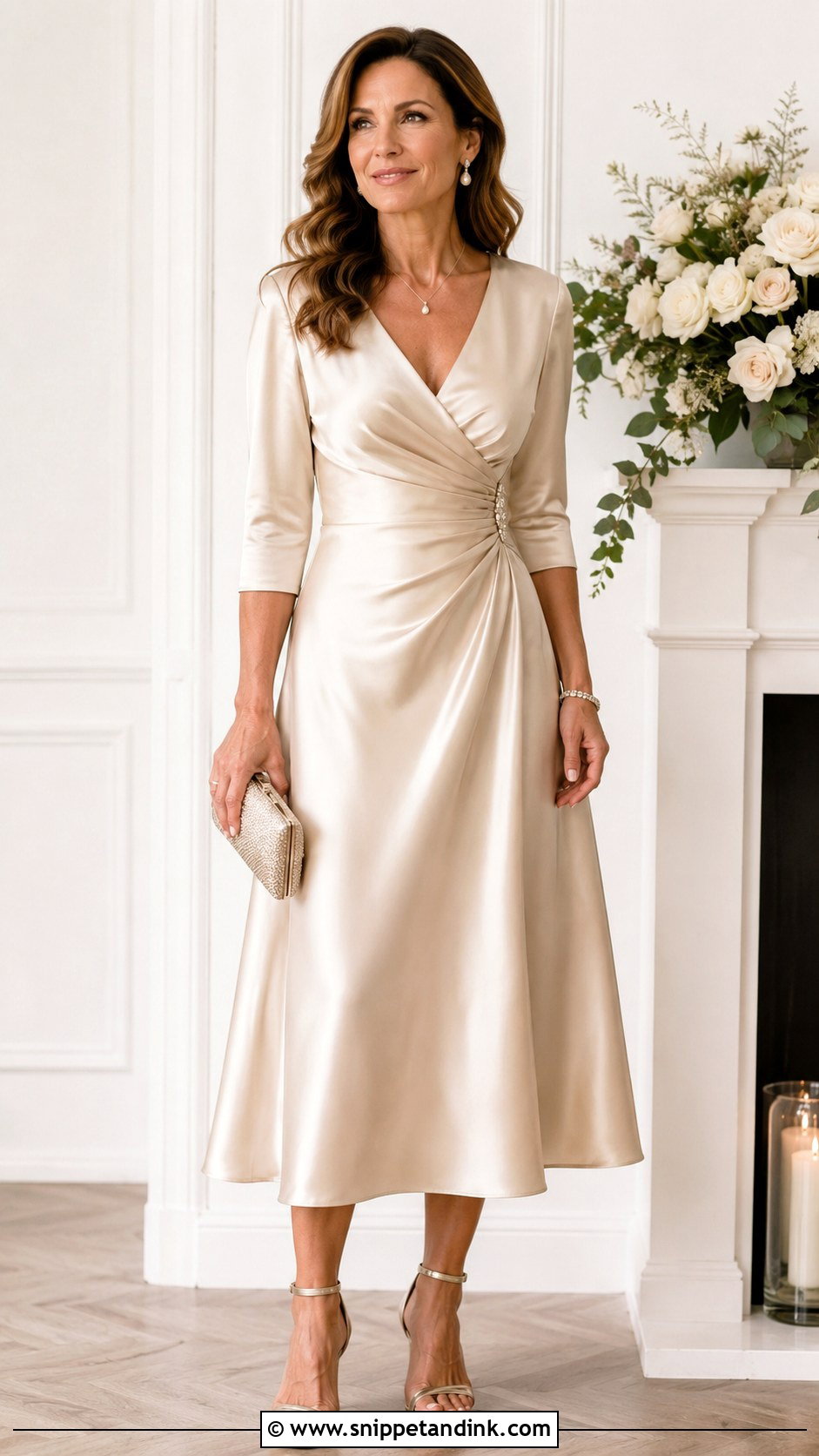
A second wedding dress can be anything from a classic gown to a suit or relaxed midi. Many women in their forties choose satin, lace sleeves, soft A-lines, jumpsuits or separates. Colour rules don’t apply; ivory, champagne, blush, pale blue and soft metallics all look bridal. I’d choose shoes you can stand in for hours and a hairstyle that feels like you. Confidence carries the rest.
Letting the Neckline Decide Your Hair and Veil
I always settle the neckline before talking about hair or veils, because the neckline decides both. A high neck or lace collar needs hair up or swept to one side, otherwise loose hair hides the detail. An off-the-shoulder or square neck shows off the collarbone, which suits a low bun or soft waves pinned back. A V-neck works with almost anything.
Veil Length and Weight
A long veil with a column dress looks dramatic; with a full A-line, it can feel like a lot of fabric. Fingertip and elbow veils are easier to manage for a long day. For a midi or short dress, a short blusher or a bow often looks better than a full veil. Heavy veils pull on hair over the hours, so ask your stylist to anchor the comb firmly.
Fabric Weight by Season
- Summer and beach: chiffon, light crepe, silk and thin lace stay cool.
- Spring and autumn: satin, mid-weight crepe and lace over lining handle changing temperatures.
- Winter and evening: mikado, heavy satin, velvet details and long sleeves feel warm and look rich.
Heavier fabrics hold their shape and resist creasing, while lighter ones move better and breathe. Neither is better; it depends on the weather and the venue.
Fit, Fabric and the Room You’ll Marry In
Bridal style in your forties can be elegant, modern, romantic, relaxed or bold. A satin midi, lace sleeves, a tailored suit, a beach dress or a minimalist column can all look completely bridal. Focus on fit, comfort, fabric quality and the setting. The right dress supports your body and lets you enjoy the day without adjusting anything. Shortlist two or three ideas here, try them on, and trust how you feel in them.
You'll Like These Ideas:



Leave a Reply