
At your brother’s wedding you aren’t really a guest. You’re in the family portraits, you have rituals to perform, you’re greeting relatives at the door, and you’ll probably dance longer than anyone. When I dress the groom’s sister, I plan for all of that, not just for how the outfit looks on a hanger. Below are lehengas, sarees, sharara and gharara sets, gowns and polished Indo-Western looks, each styled with jewelry, shoes, bags and hair. Some suit a daytime haldi or puja, some the sangeet, some the main ceremony and reception. Read them with your own function list in hand.
One Look per Function, Without Five New Lehengas
An Indian wedding can mean four or five events in as many days, and the sister is at every one. I sit down with the function list before we shop anything, because each event asks something different of the outfit.
- Haldi: something washable or old enough to sacrifice. Turmeric stains cotton and silk alike.
- Mehndi: easy movement and short sleeves or no sleeves, so your own henna can dry without smudging.
- Sangeet: whatever you can dance in. Sharara, cape lehenga, ruffle saree.
- Main ceremony: your most traditional piece, since it lands in the family portraits for decades.
- Reception: the one place a gown, sequins or a drape dress fits naturally.
To keep the budget sane, buy one strong skirt and change the top layer. A lehenga skirt with its own blouse for the ceremony becomes a new look at the sangeet with a contrasting crop top and a different dupatta. Most tailors can stitch a second blouse from matching fabric if you ask early.
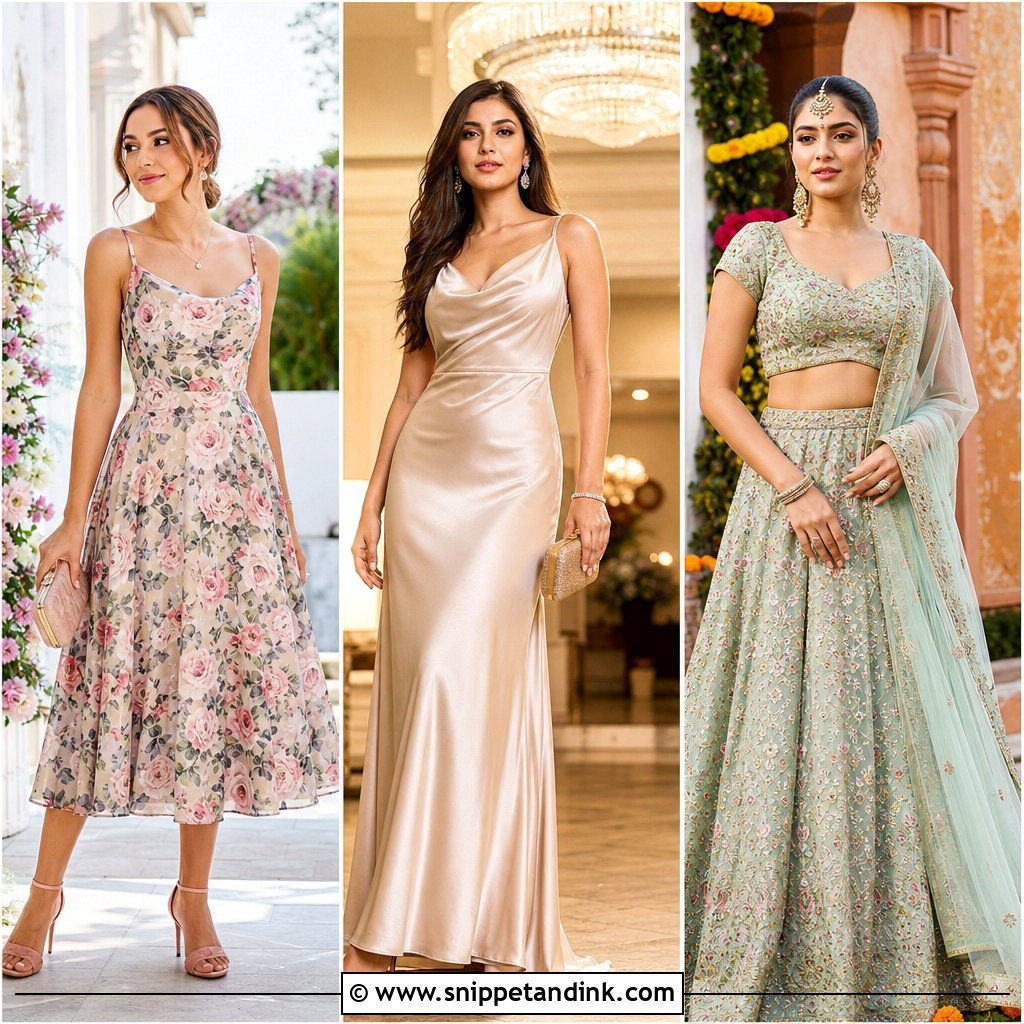
1. Floral Lehenga for Brother Marriage
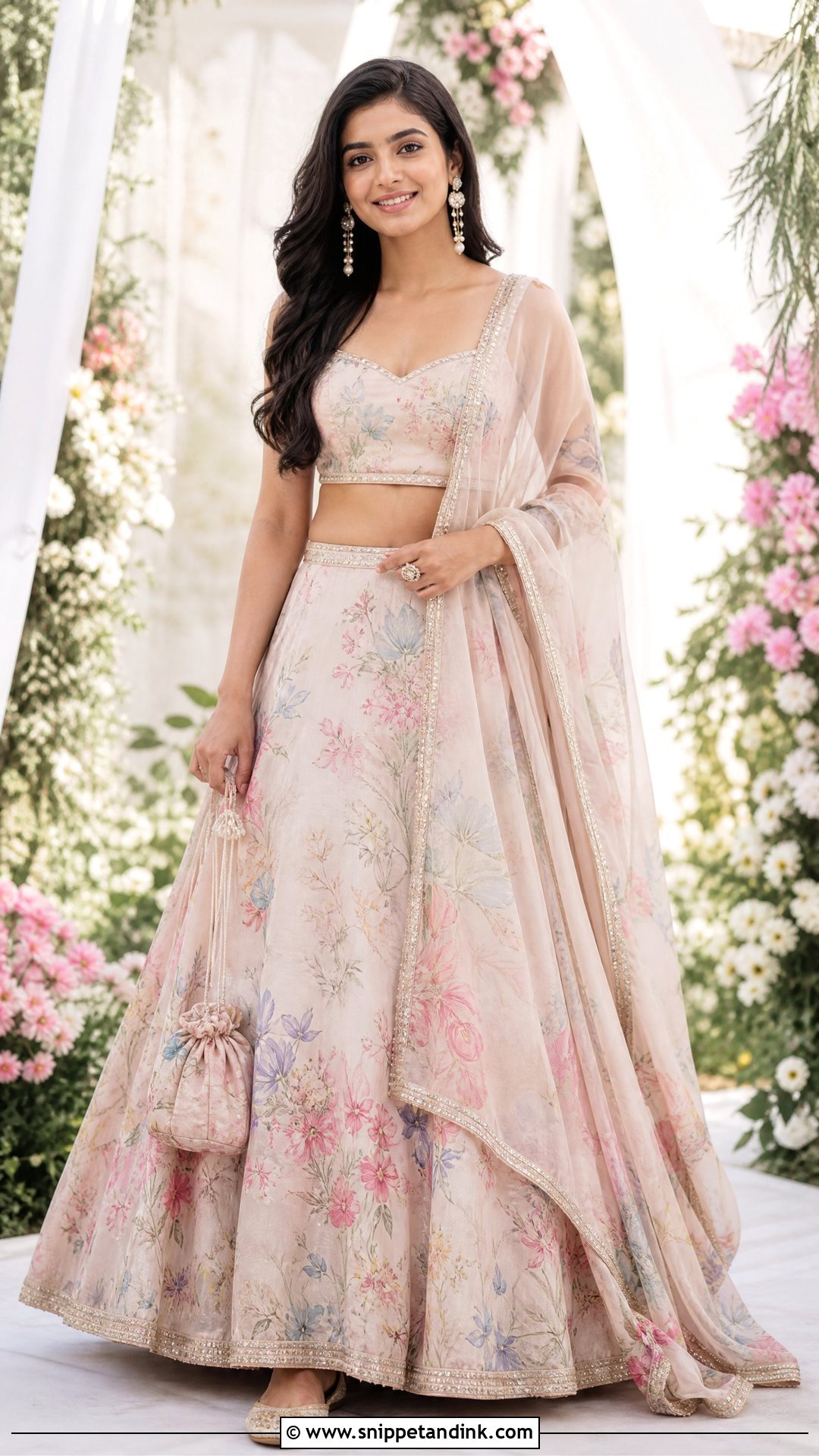
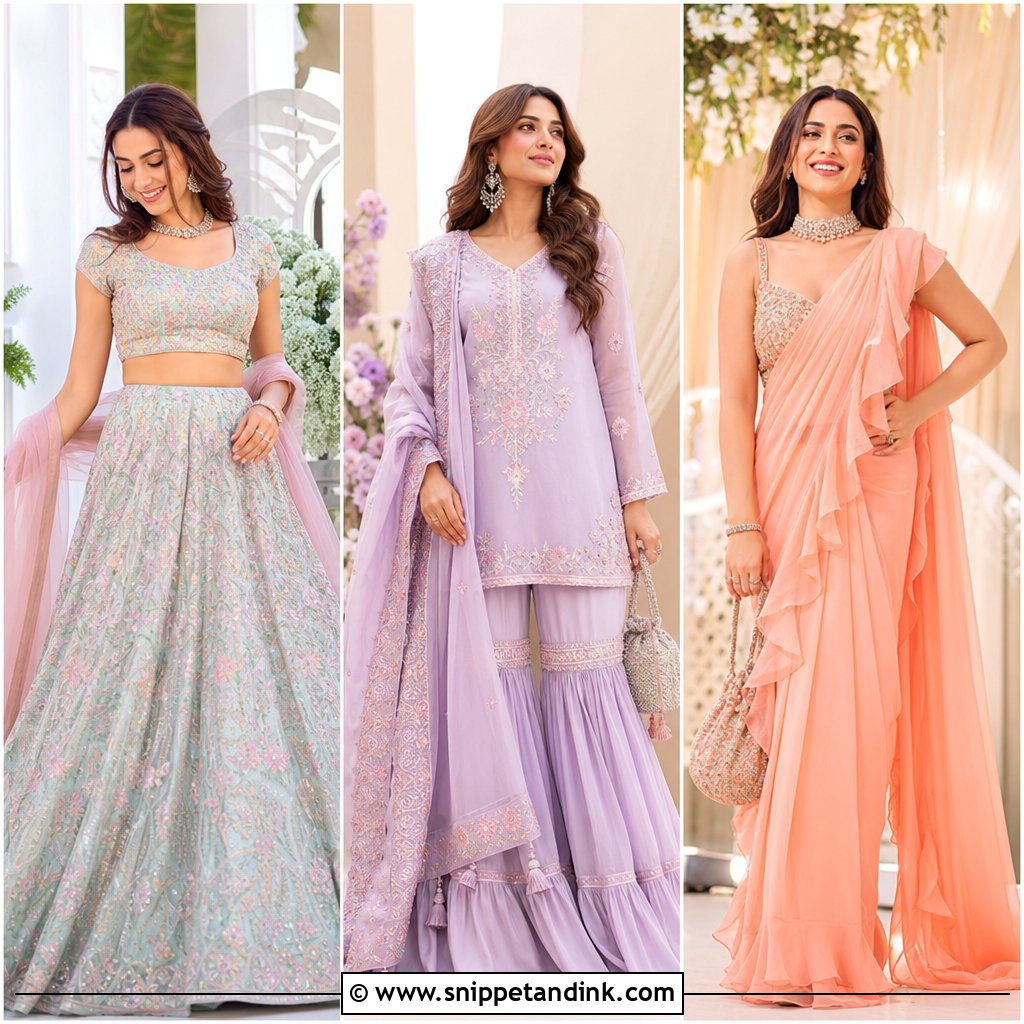
Florals belong in daylight. A printed lehenga in peach, mint, lavender or powder blue looks fresh at an outdoor morning ceremony, where those soft colours actually read; under yellow evening lights they can turn muddy. Keep the embroidery light so the print leads, and pair a fitted blouse with an organza dupatta. Pearl drops, stacked bangles, a small potli and embellished juttis finish it, and soft curls or a loose braid suit the pattern. A high-waisted skirt with a square or sweetheart neckline gives the most definition.
2. Pink Mirror Work Lehenga for Brother Marriage
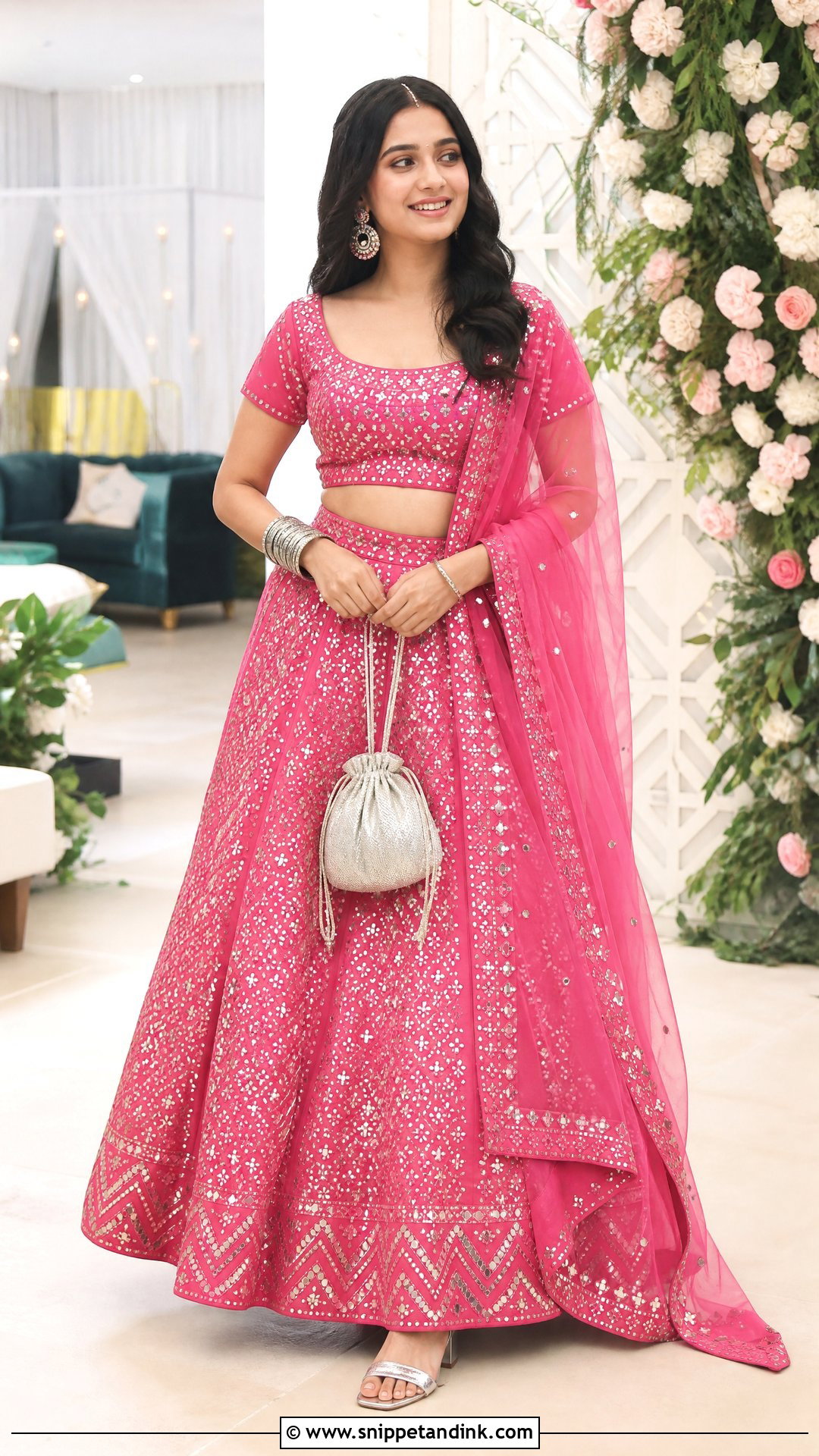
Mirror work in bright pink is made for the sangeet or mehndi, because every mirror flashes when you move on the dance floor. I keep the jewelry moderate: medium chandbalis, slim bangles and a delicate maang tikka. Mirrors are stitched on with a raised edge, and they snag fine net dupattas and scratch the inner arm, so I ask for a smooth lining under the blouse sleeves. A silver potli and low block-heel sandals complete it. If hot pink feels too loud, rose, fuchsia or raspberry carry the same energy.
3. Pastel Embroidered Lehenga for Brother Marriage
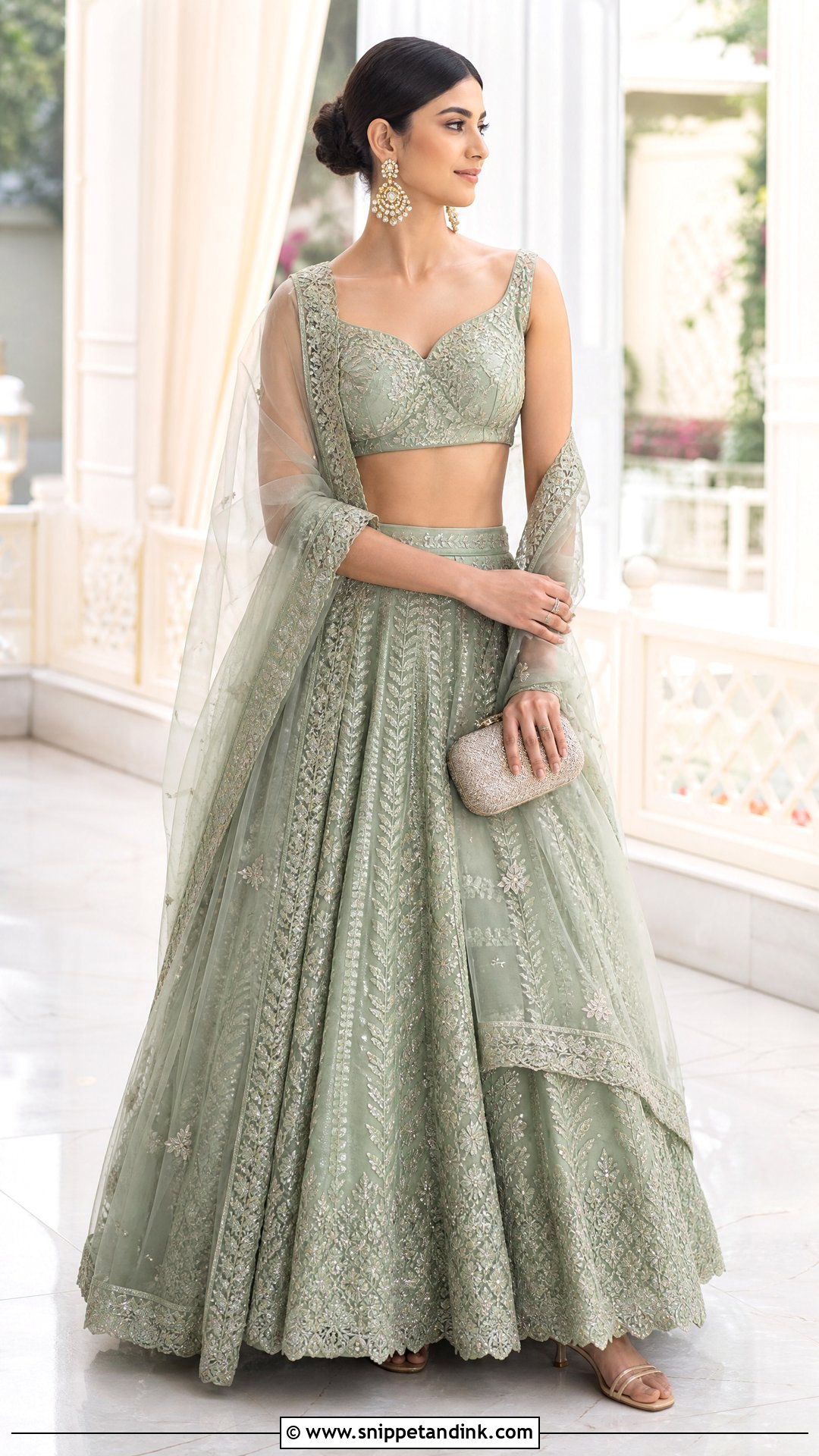
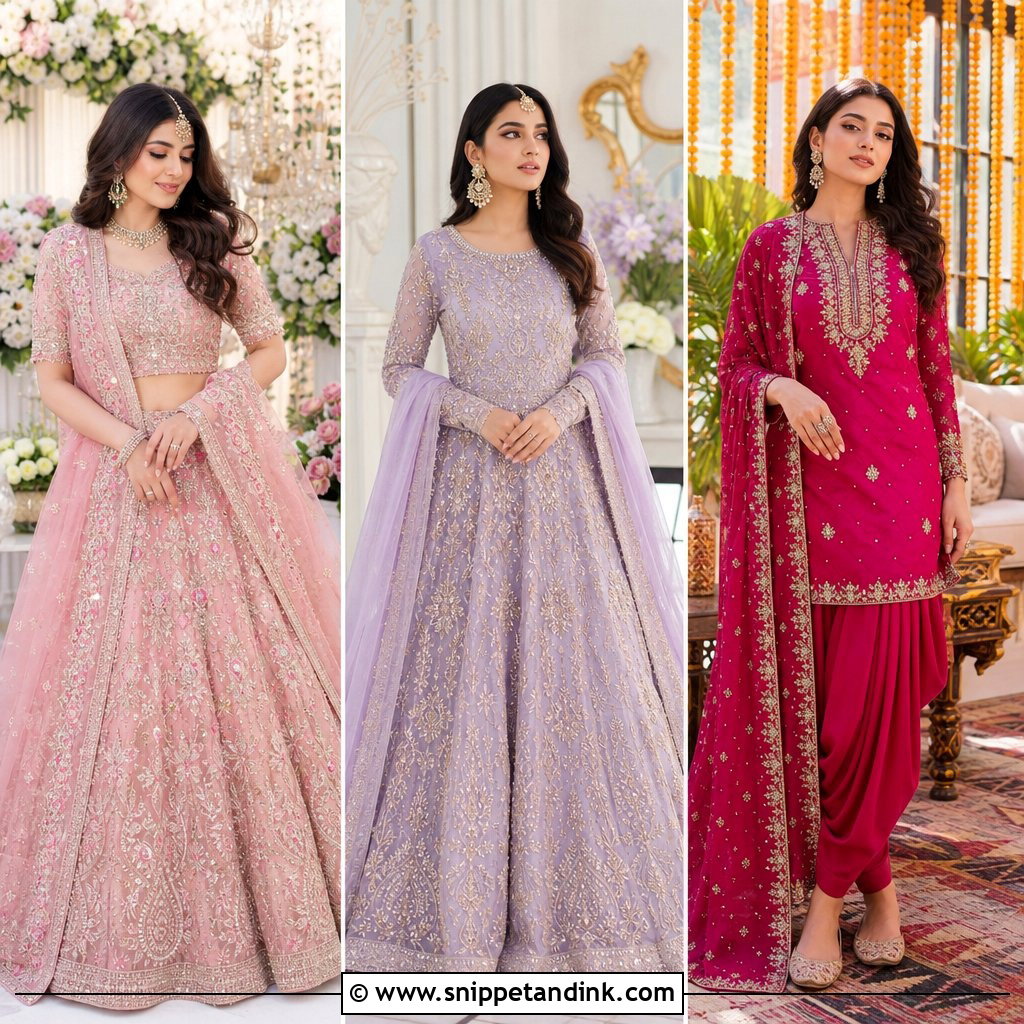
Pastel embroidery is where I’d talk to the bride first. If she is wearing a pastel lehenga herself, a sister in the same sage or blush can look like a second bride in group photos. Once the shades are clearly different, a sage green, dusty rose, lilac or icy blue lehenga with tonal threadwork and small sequins is very wearable. A structured blouse, a sheer dupatta with a narrow border, crystal earrings and a compact clutch keep it neat. Metallic kitten heels or cushioned juttis, and a low bun with a few face-framing strands, finish it.
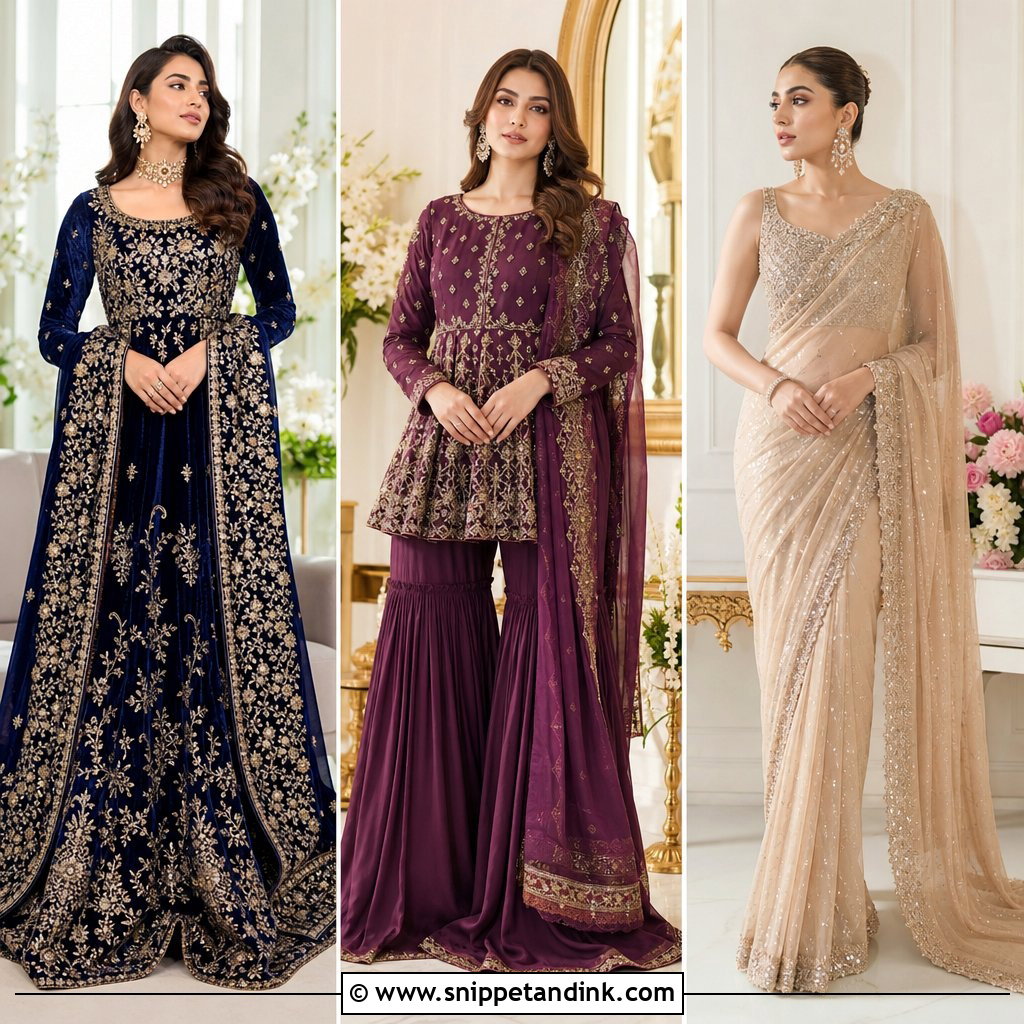
4. Velvet Lehenga for Brother Marriage
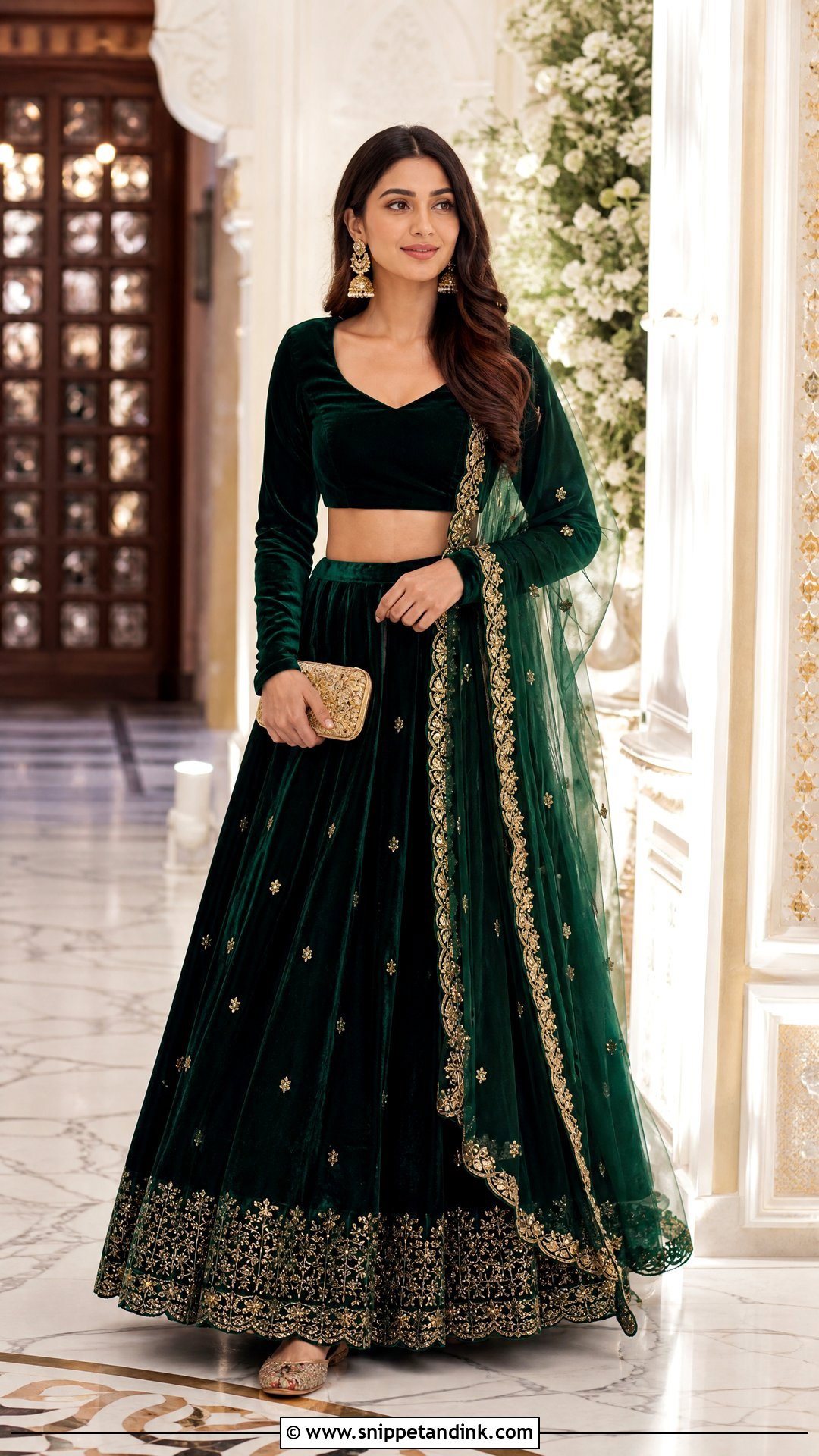
Velvet is for winter weddings only. It is warm and heavy, and in a heated banquet hall with a dance floor it gets uncomfortable fast. In the cold, though, nothing looks richer than emerald, plum, midnight blue or maroon velvet under evening light. Keep the embroidery controlled and pair it with a matching blouse or a lighter silk top, plus a net dupatta so the whole outfit isn’t heavy. Antique gold earrings, one statement ring, an embroidered box clutch and closed-toe juttis are enough. Skip heavy necklaces; velvet already carries visual weight.
5. Banarasi Silk Lehenga for Brother Marriage
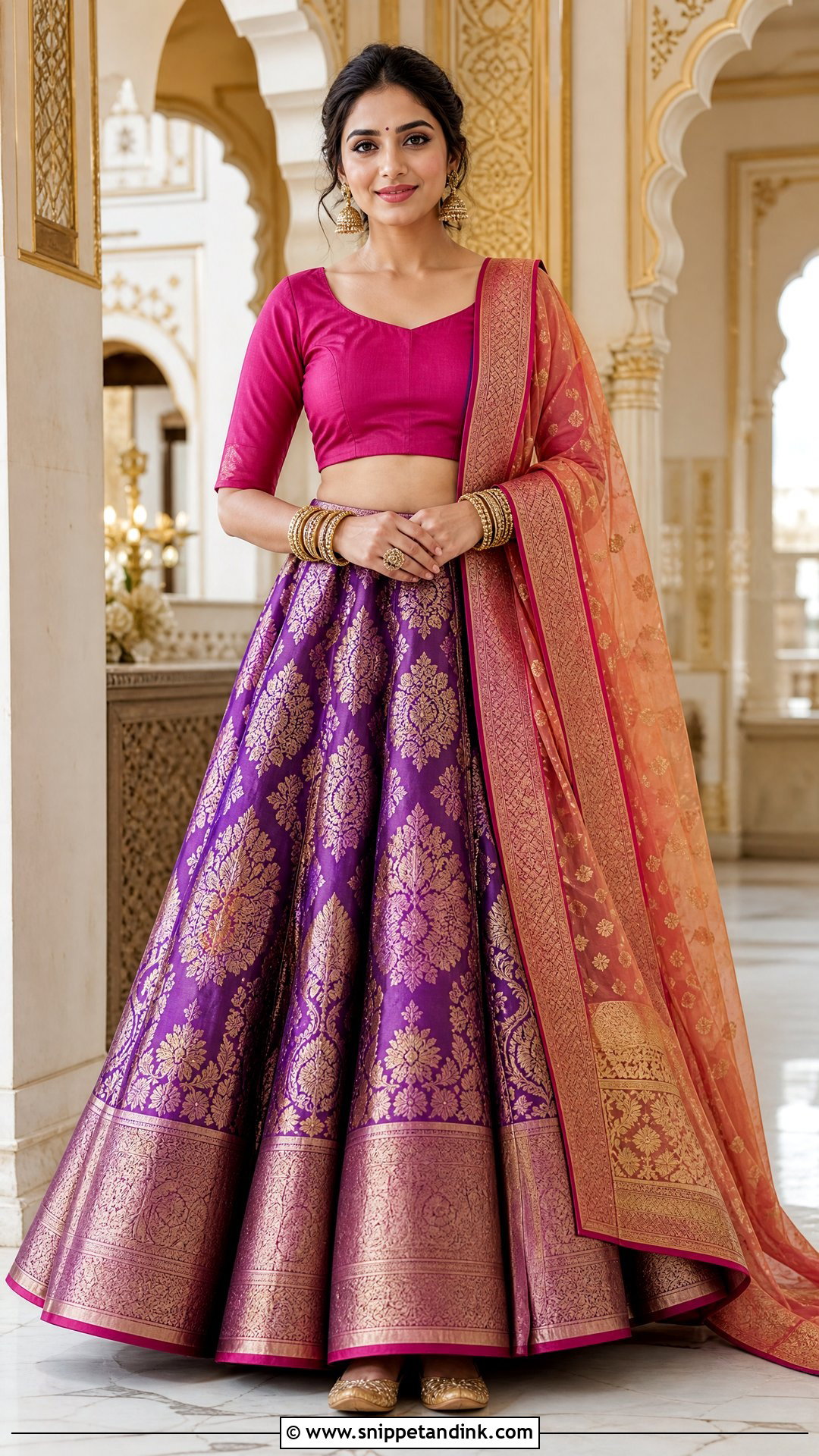
Banarasi silk carries its detail in the weave, with motifs woven in zari rather than stitched on top, so the skirt looks rich without surface embellishment. That makes it a good choice for the main ceremony, where you’ll be in the formal family photos. Choose red, purple, green or royal blue, a plain silk blouse with a good neckline, and a contrasting dupatta. Temple jewelry or classic jhumkas, a small bindi, stacked gold bangles and brocade juttis suit it. A braided bun with fresh flowers completes the traditional mood. Drape the dupatta neatly; real zari is stiff and holds every fold.
6. Ruffle Saree for Brother Marriage
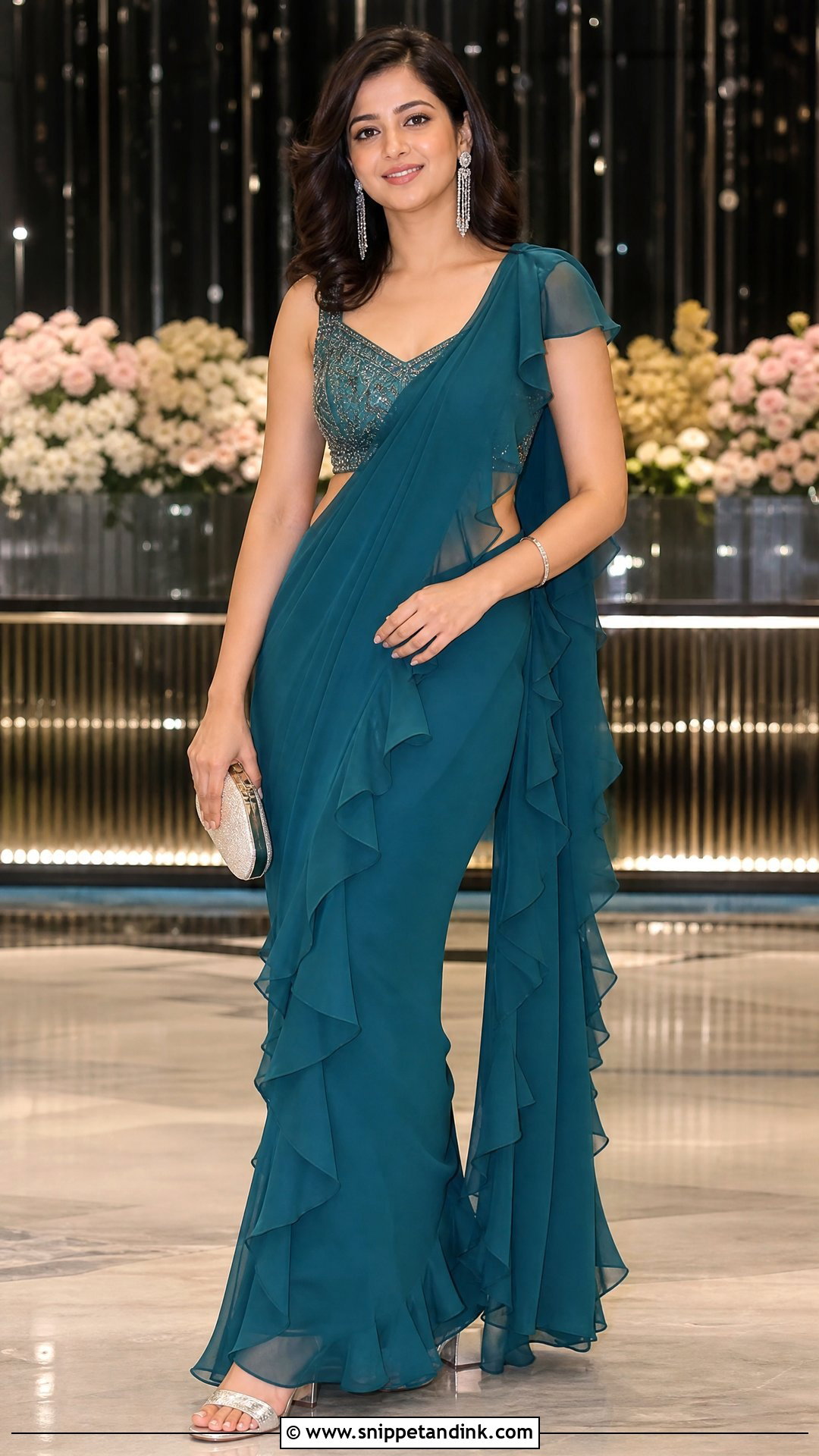
A ruffle saree gives you the drama of a drape without the struggle of crisp pleats. Chiffon or georgette in coral, teal, mauve or deep blue falls softly, and the ruffled border hides the small imperfections a self-draped saree tends to have. A fitted embroidered blouse adds structure. Shoulder-grazing earrings, a slim bracelet and a metallic clutch are enough, with steady block heels for dancing. Pin it firmly at the waist and shoulder, or choose a pre-draped version. It suits a cocktail or sangeet function best.
7. Sequin Saree for Brother Marriage
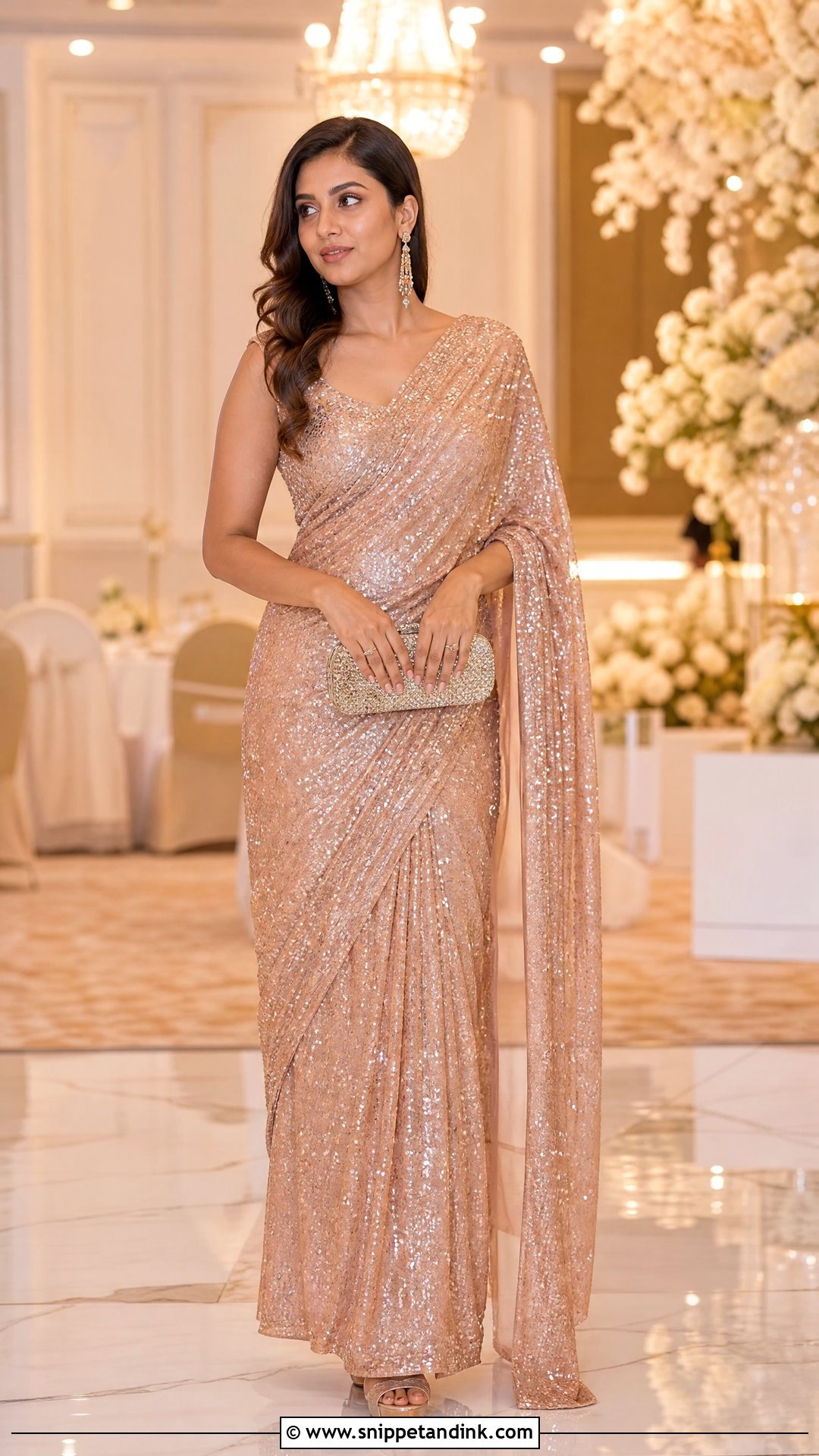
Sequins do the jewelry’s job, so I strip everything else back: sleek earrings, one cocktail ring, a simple clutch. Champagne, pewter, navy, emerald and rose gold glow under reception lighting without looking cheap. Ask for a fully lined blouse with a clean neckline, because sequin edges scratch the skin by the end of a long night. Platform sandals or block heels keep the hem off the floor. Glossy waves or a low ponytail, defined eyes and a soft lip keep the look balanced.
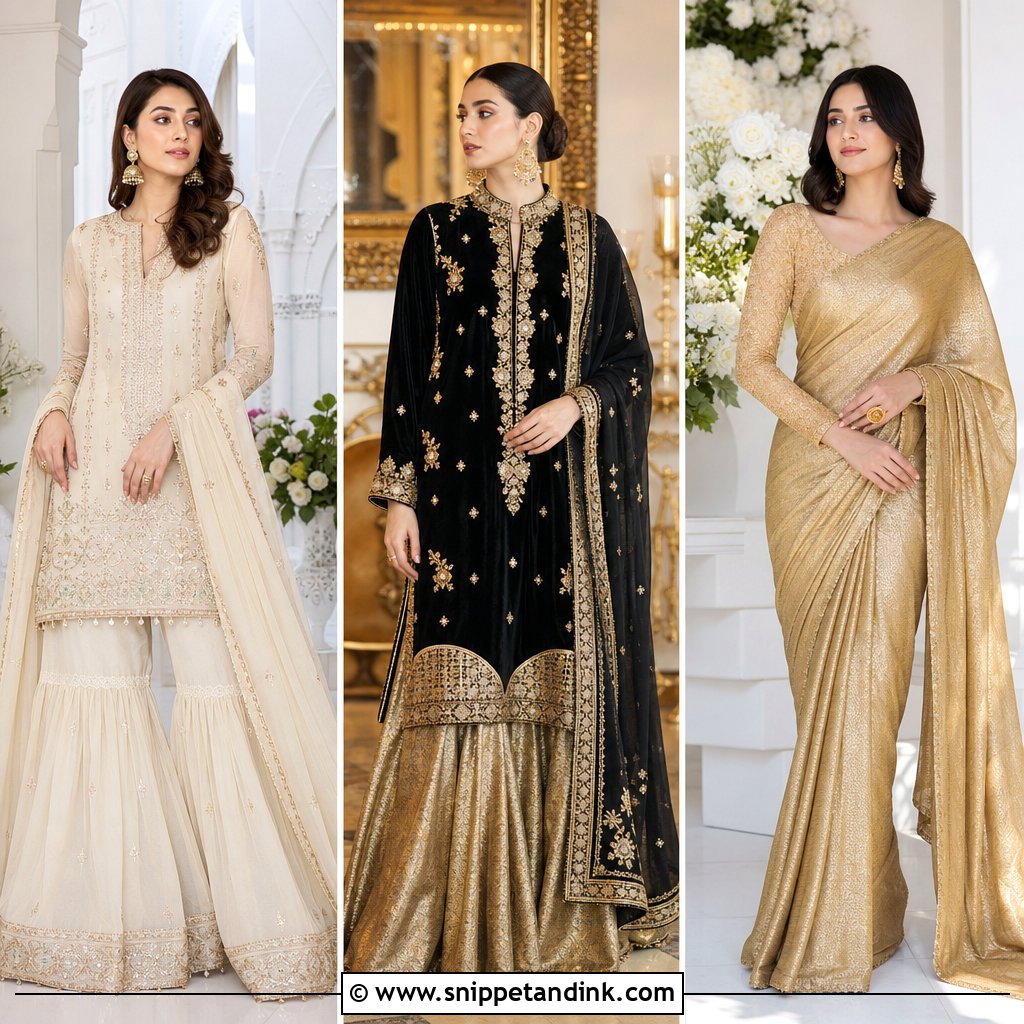
8. Kanjeevaram Saree for Brother Marriage
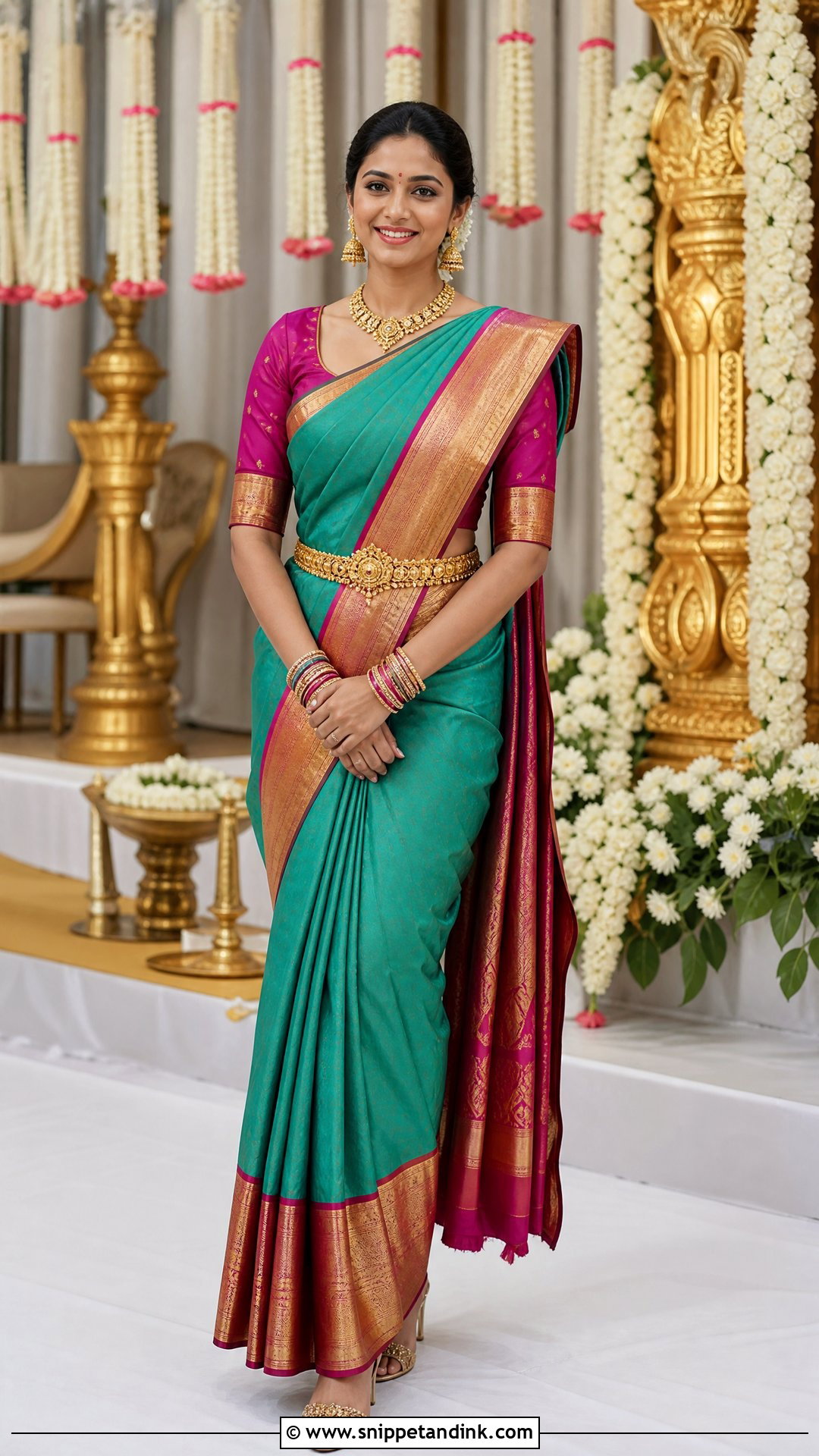
A Kanjeevaram is heavy silk, and that weight is what makes it look so formal at rituals. It also means the pleats need help. I have the pleats pressed and set the day before, because silk this thick won’t fall neatly from a quick drape on the morning. Mustard, magenta, turquoise, rust or green with a contrasting border all suit it, with a well-cut silk blouse in elbow sleeves or a round neck. Gold jhumkas, bangles, a waist belt and a small bindi complete it, along with flat embroidered sandals and a centre-parted bun wrapped in jasmine.
9. Organza Saree for Brother Marriage
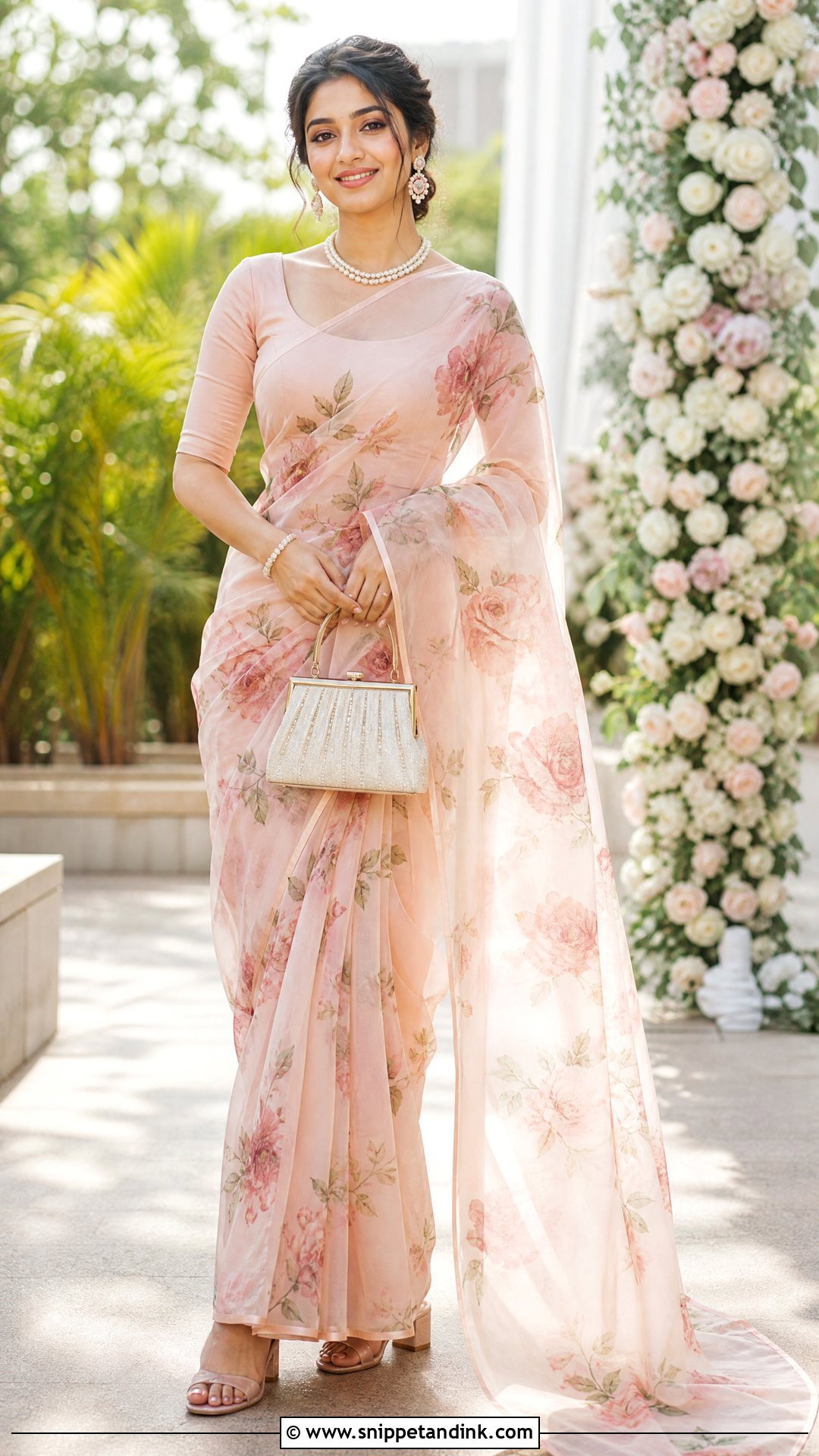
Organza is light, but it is crisp rather than soft, which surprises people on their first drape. The pleats stand away from the body unless you keep them narrow and pin them close. It suits a morning wedding, a garden ceremony or a daytime reception in soft yellow, blush, mint or lavender. Pair a solid sleeveless or elbow-sleeve blouse with pearl earrings, a dainty necklace and a structured mini bag. Pointed flats or low block heels protect the hem. Avoid bulky accessories that catch on the fabric.
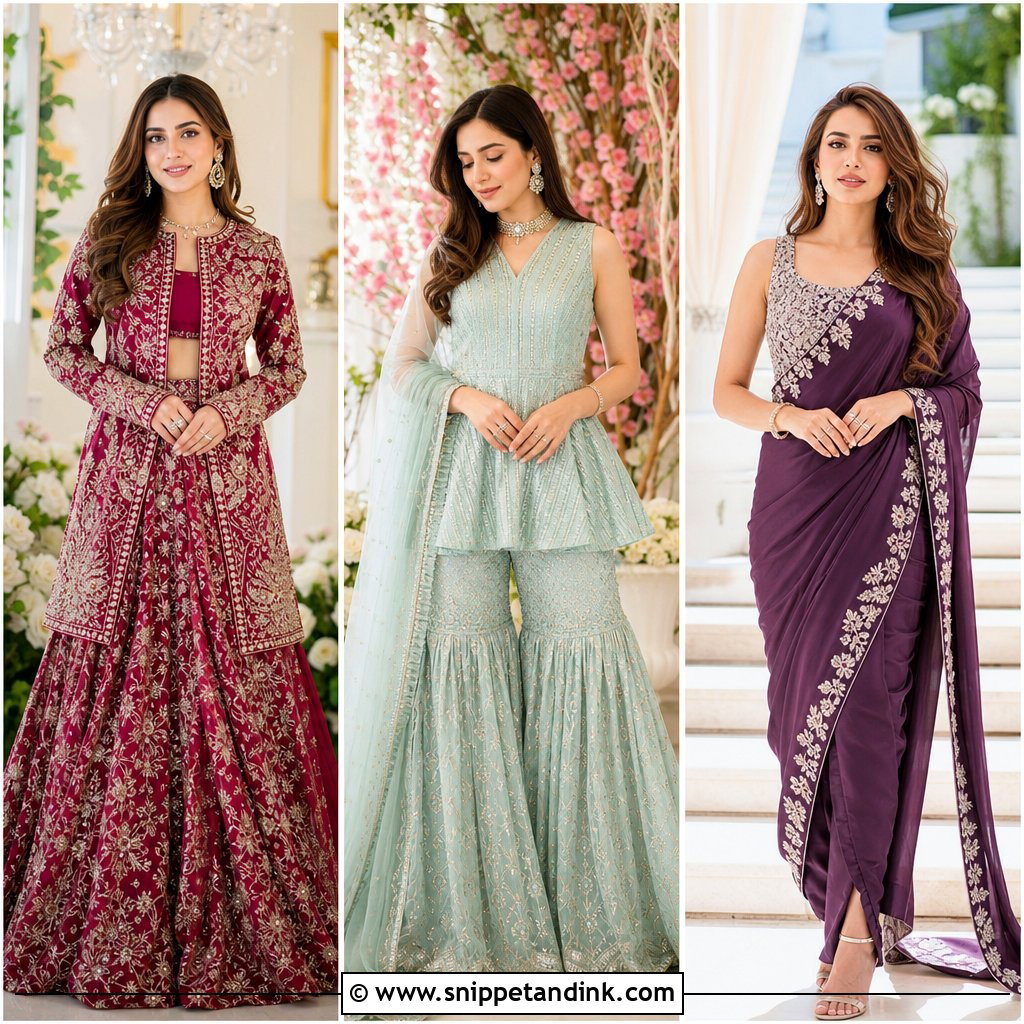
10. Pre-Draped Saree for Brother Marriage
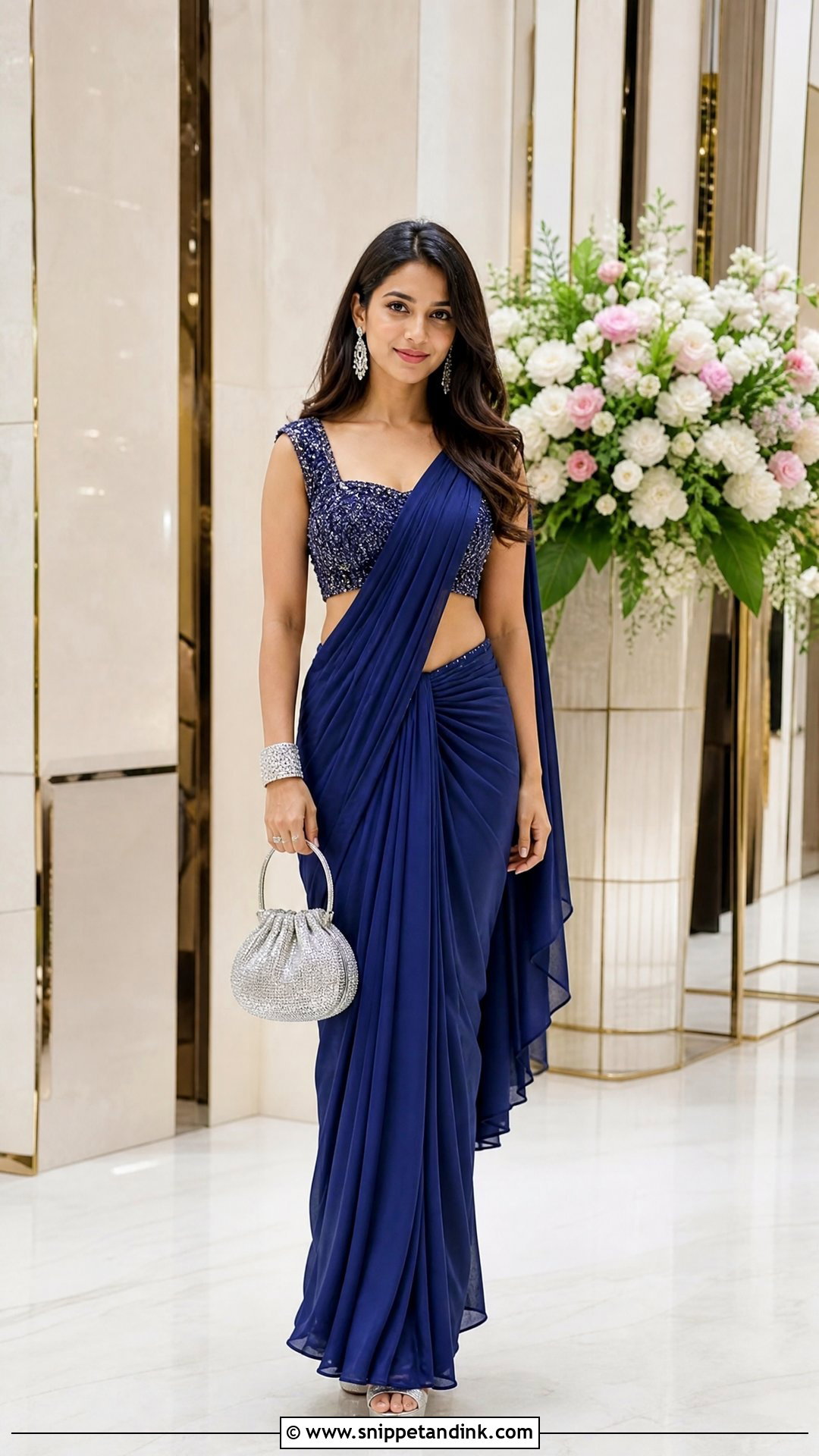
If you will be running between rituals, greeting guests and dancing, a pre-draped saree saves you from re-tucking pleats every hour. Satin, crepe or georgette with a defined waist and an attached pallu keeps its shape all evening. Pair it with an embellished blouse, drop earrings, a cuff and a compact evening bag. Wear the exact shoes you’ll use when you have it hemmed, because the drape length is fixed. Check for a concealed zip you can reach yourself, and sit down in it at the fitting.
11. Anarkali Suit for Brother Marriage
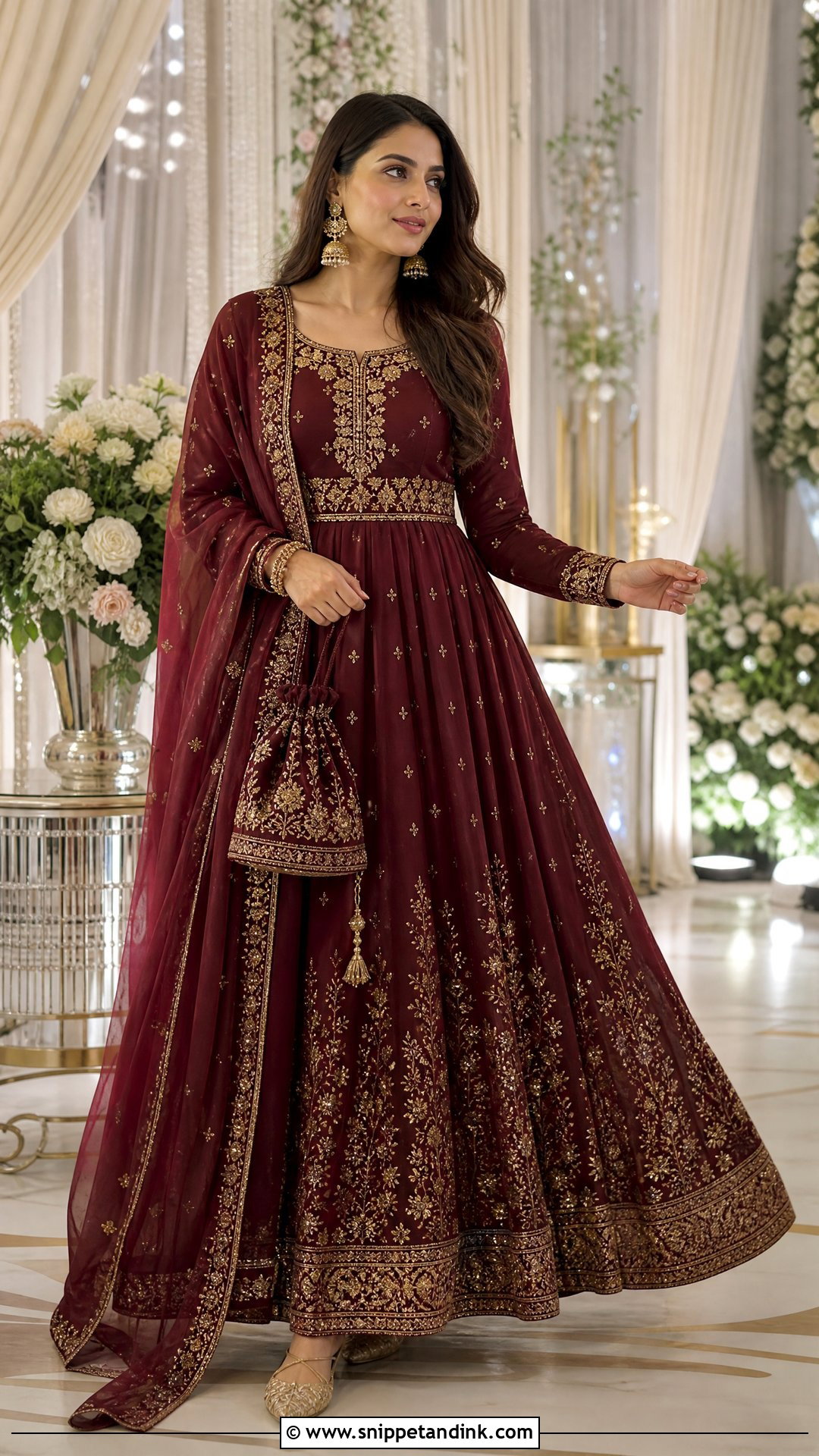
An Anarkali is the outfit I suggest to sisters with the busiest schedule. It is one piece, it moves easily, and nothing needs re-pinning. Choose a fitted bodice, a flowing skirt and a breathable lining; jewel tones suit the evening, while peach, pistachio, sky blue and soft yellow suit the day. Drape a light dupatta over one shoulder to keep your hands free. Jhumkas, a few bangles, an embroidered potli and pointed juttis complete it. Have the hem cut so it clears the floor in your shoes, since a long Anarkali catches on stairs in a crowd.
12. Jacket Anarkali for Brother Marriage
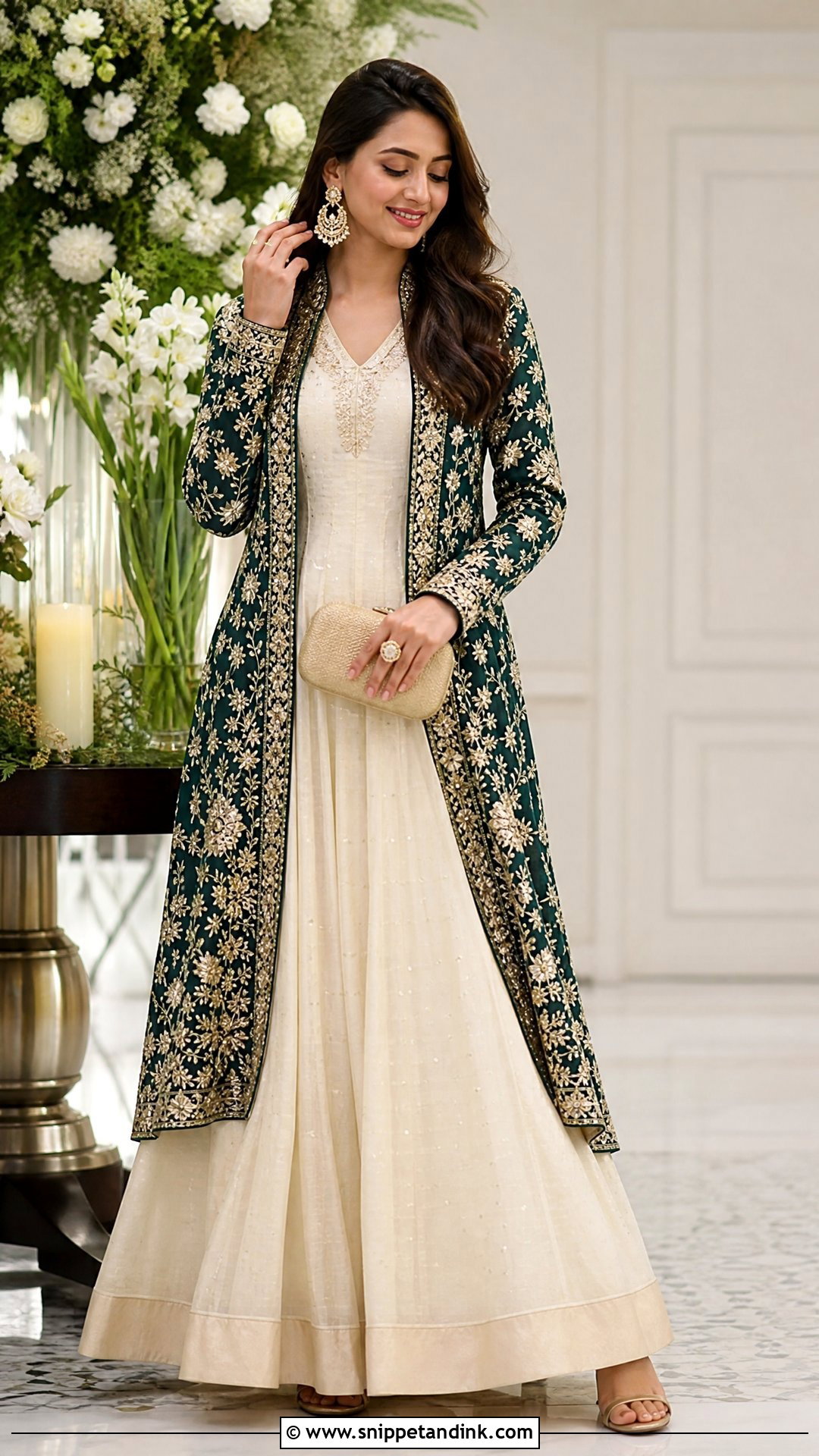
A jacket Anarkali adds coverage and structure, which makes it a sound pick for an engagement, a reception dinner or relatives who prefer modest cuts. Start with a simple flared dress and layer an embroidered jacket in knee or floor length. Contrast does the decorating for you: ivory with emerald, blush with burgundy. Then statement earrings, a slim ring and a structured clutch are all you need. Low heels or embellished flats, and a centre-parted ponytail or smooth bun, keep the jacket’s front embroidery visible. An open front moves more freely; a lightly fastened one looks sharper.
13. Sharara Suit for Brother Marriage
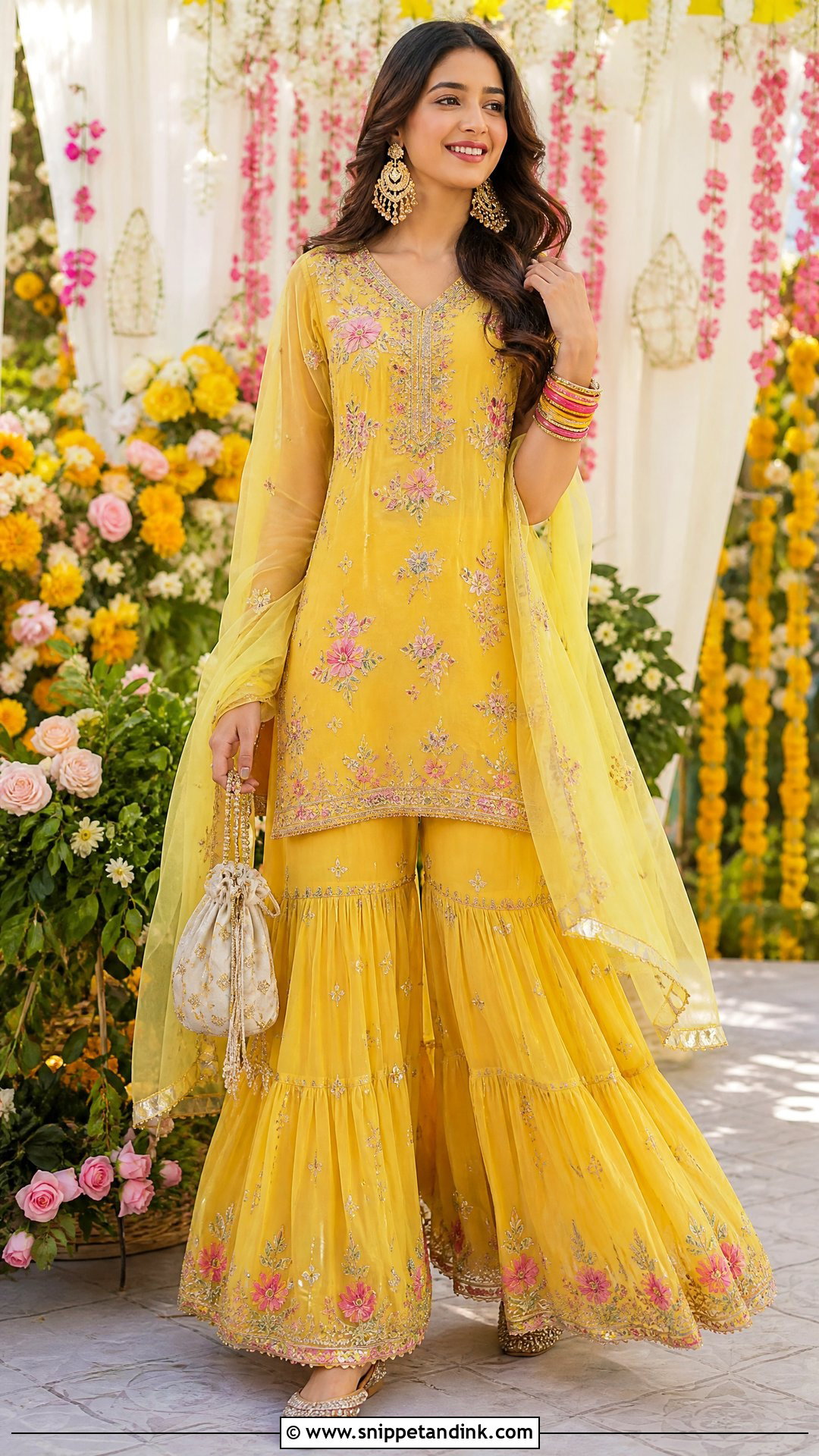
Sharara sets are what I’d put on a sister who plans to dance all through the mehndi. Wide flared pants with a short embroidered kurti and a light dupatta move freely, and they come in colours made for daytime: Lime green, coral, turquoise, hot pink and sunny yellow. Add chandbalis, colourful bangles and a potli matched to the embroidery. Wear juttis, not heels; the flare catches on a stiletto. Keep the kurti ending near the upper thigh, and check the drawstring is secure, because a full sharara holds a lot of fabric at the waist.
14. Gharara Suit for Brother Marriage
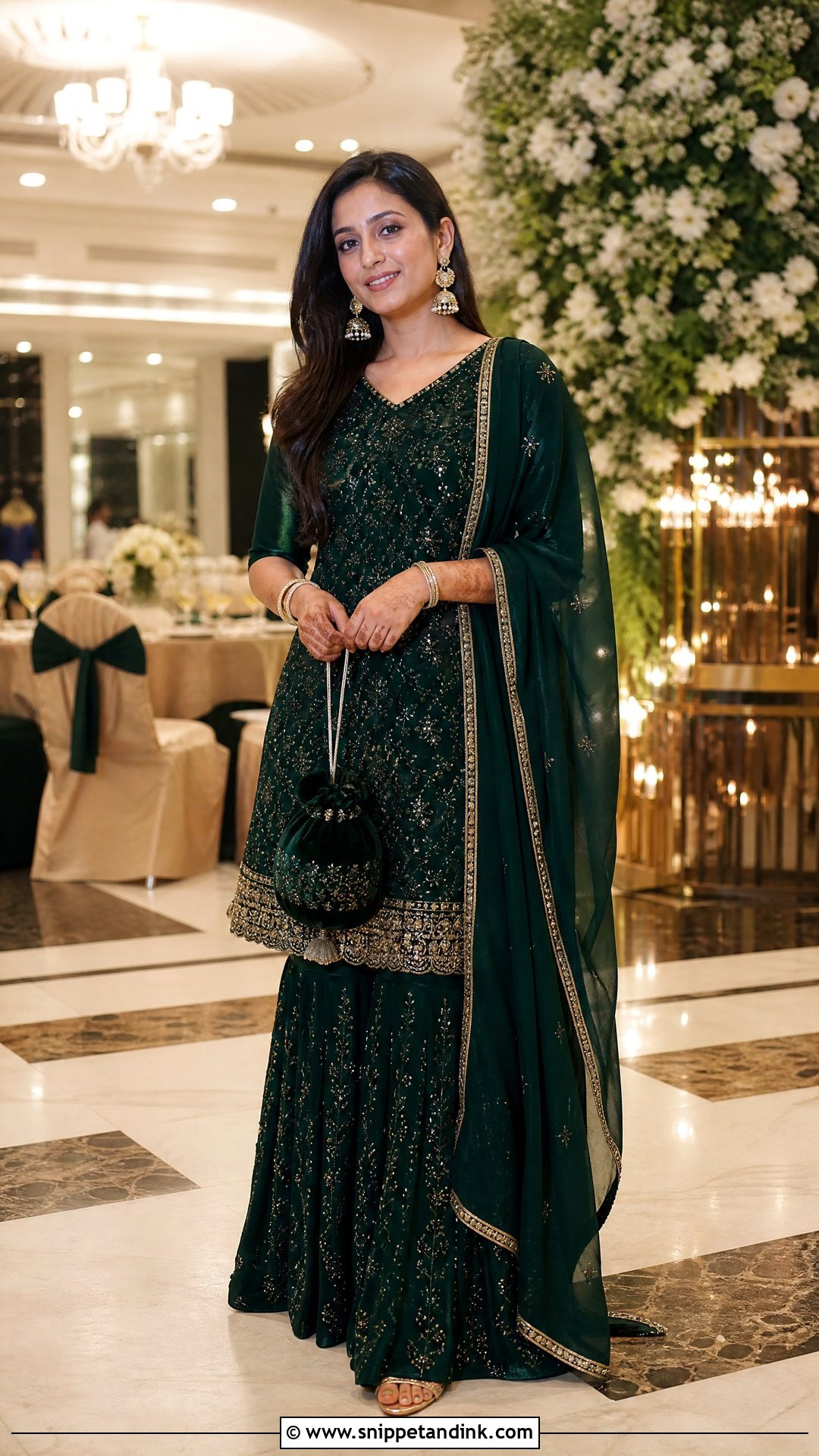
Unlike a sharara, a gharara is fitted above the knee and flares dramatically below it, usually with a decorative band at the joint. It has an old-world grace that suits a nikah, a traditional dinner or an elegant pre-wedding function. A mid-length kurti, moderately fitted, balances the volume, with a dupatta in a delicate border. Ivory, bottle green, rust, dusty pink and deep purple all look refined. Pearl jhumkas, stacked bangles and a velvet potli complete it. That knee band should sit exactly at your knee; if it lands too low, every step feels hobbled.
15. Palazzo Suit for Brother Marriage
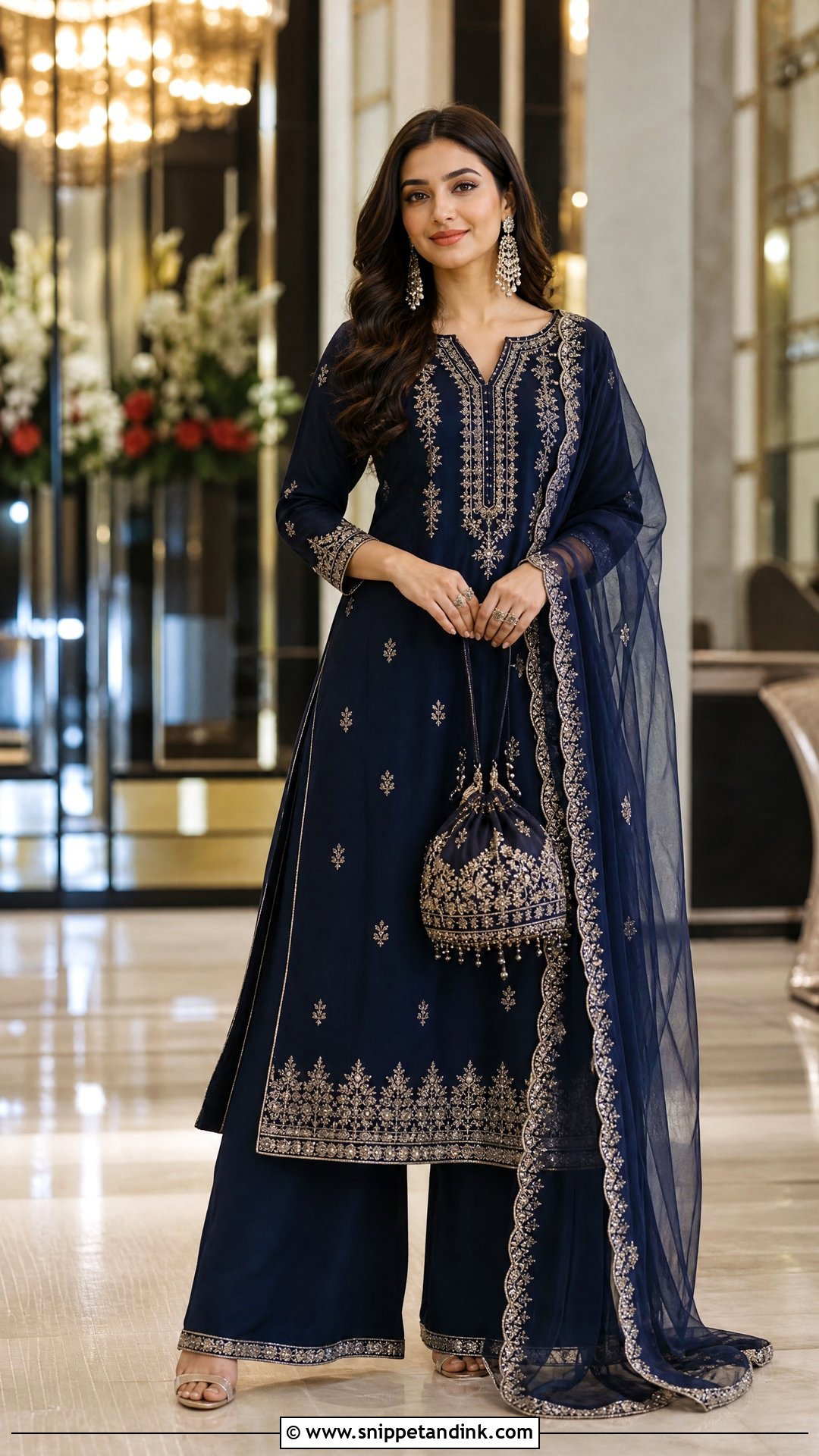
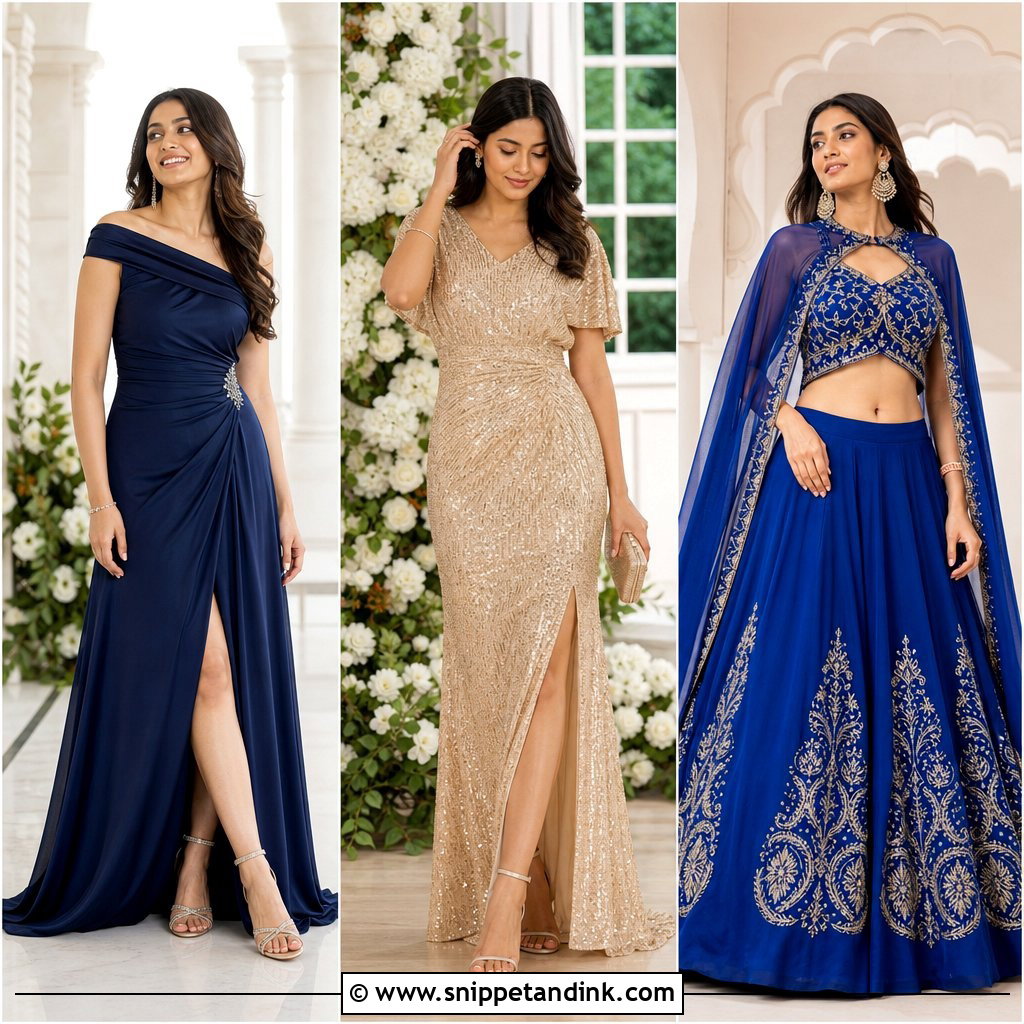
A palazzo suit is the comfortable option that still looks dressed up, and it’s the easiest to sit cross-legged in during long ceremonies. Choose a straight or lightly flared kurta in silk, georgette or chanderi, with wide palazzos and a sheer dupatta. Navy, wine, teal and rose suit evening events. Drop earrings, a structured potli and block heels help the fabric fall neatly. Side slits and vertical embroidery lengthen the line. Hem the palazzos to just graze your shoe, or they’ll pick up every bit of dust and confetti on the floor.
16. Peplum Sharara for Brother Marriage
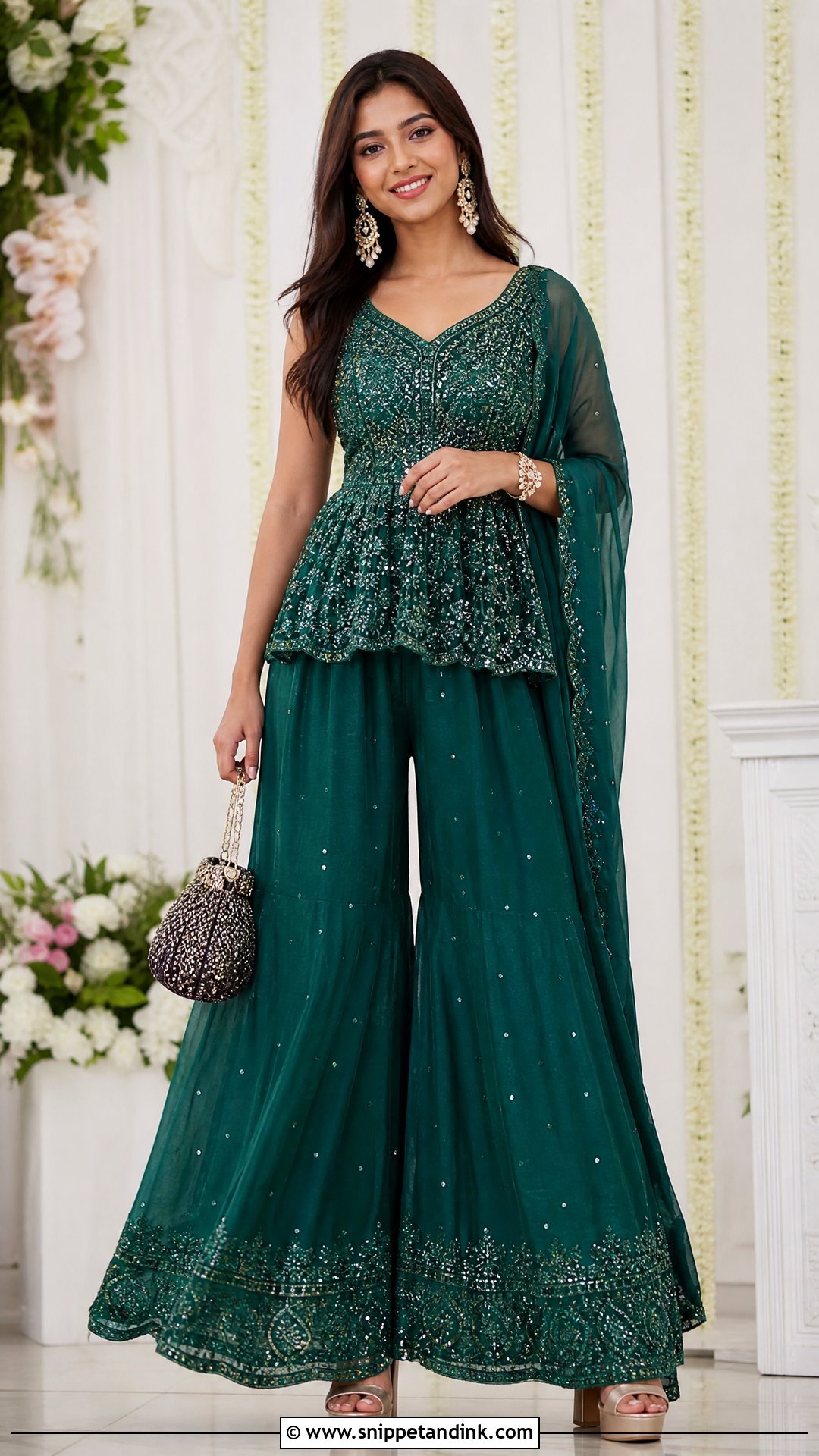
Pairing a peplum top with a sharara gives the waist definition that a loose kurti doesn’t. The top should fit smoothly to the waist before flaring briefly. Emerald, plum, sapphire and magenta look luxurious in the evening; pastels suit the daytime. Statement earrings, a delicate hand bracelet and a compact bag are enough, with platform heels or cushioned wedges to balance the wide pants. A sleek ponytail shows the neckline. Pin the dupatta behind the shoulders or carry it over one arm so it doesn’t hide the peplum.
17. Kurta and Dhoti Pants for Brother Marriage
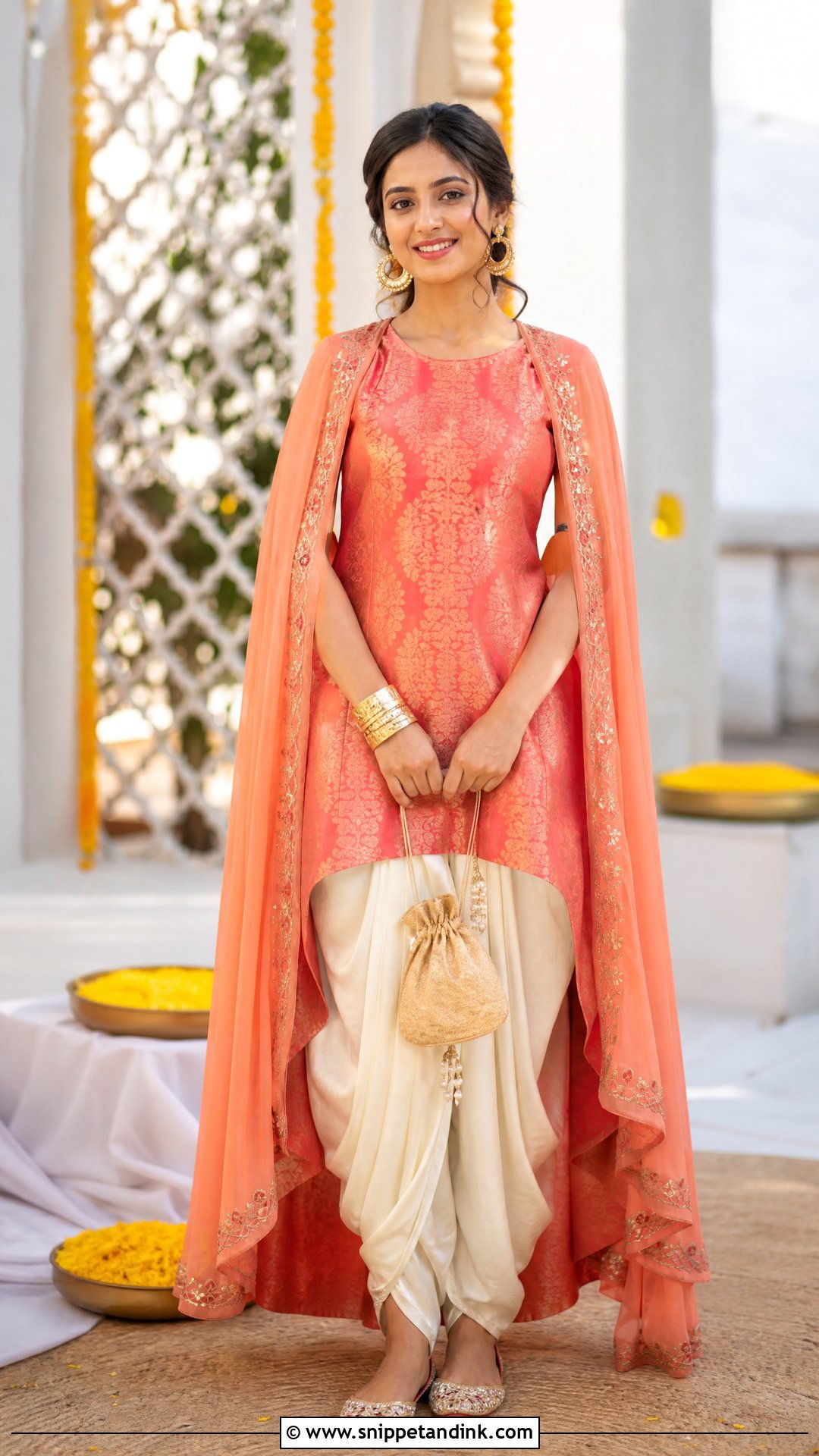
An embroidered kurta with dhoti pants is what I suggest for haldi and mehndi when the sister wants something relaxed. A short or high-low kurta keeps the pleated drape of the pants visible. Soft fabric matters for the dhoti: stiff silk bunches into bulk at the hips, while a fluid crepe or georgette falls cleanly. A sleeveless brocade top looks modern; elbow sleeves give more coverage. Gold hoops, a statement cuff, a small sling potli and juttis complete it, with a messy braid or high ponytail. Haldi paste stains, so don’t wear anything you’d hate to lose.
18. Cape Lehenga for Brother Marriage
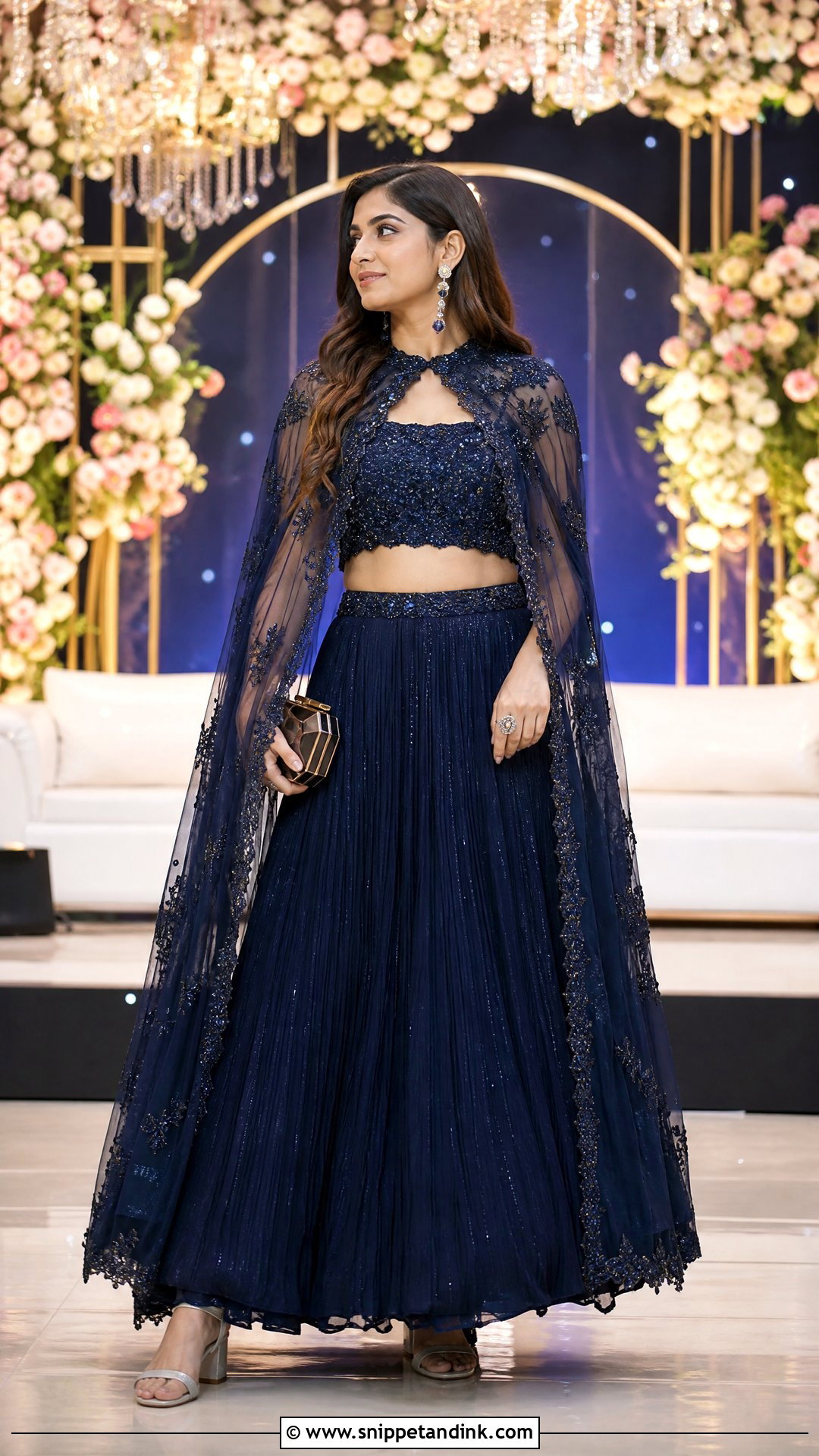
A cape lehenga solves the dupatta problem. There is nothing to slip off your shoulder while you dance or carry a thali. A high-waisted skirt, a fitted blouse and a sheer embroidered cape falling from the shoulders give you movement without fuss. Navy, burgundy, teal or smoky gray suit evenings; blush and powder blue suit the day. Long earrings and a bold ring are enough because the cape already frames you. Keep the cape ending above the floor, and choose a sleek bun or high ponytail so hair doesn’t catch in its embroidery.
19. Crop Top and Skirt for Brother Marriage
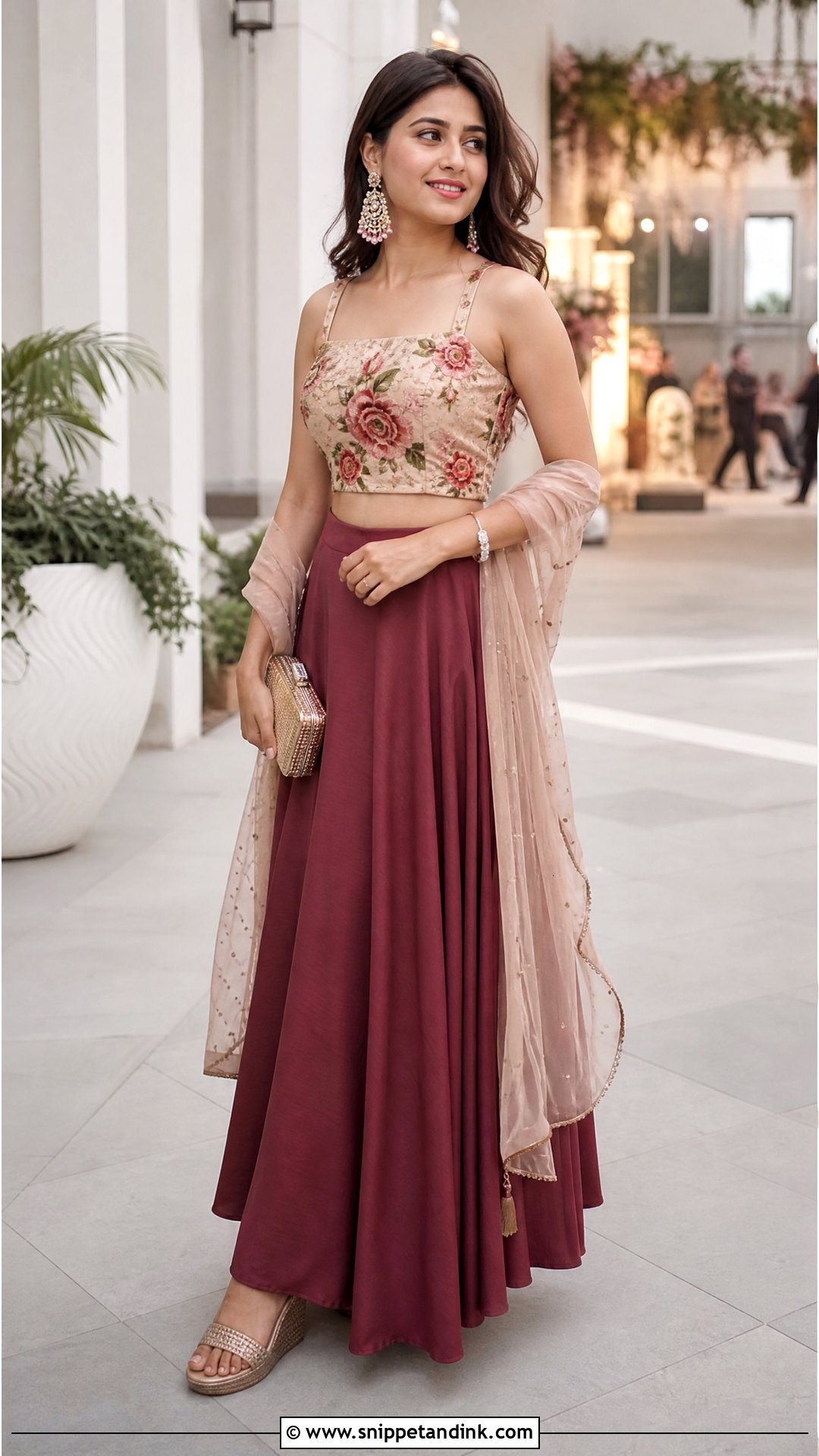
A crop top and skirt make an easy Indo-Western look, and separates have one big advantage: you can rewear each piece with something else later. Choose a structured top with embroidery, beadwork or restrained sequins and a flowing skirt that sits securely at the natural waist. A light stole or cape gives coverage for elders’ functions. Jewel earrings, a slim bracelet, a box clutch and block heels or wedges complete it. Matching colours look streamlined; a contrasting top looks more playful. Save it for cocktail functions and sangeet nights.
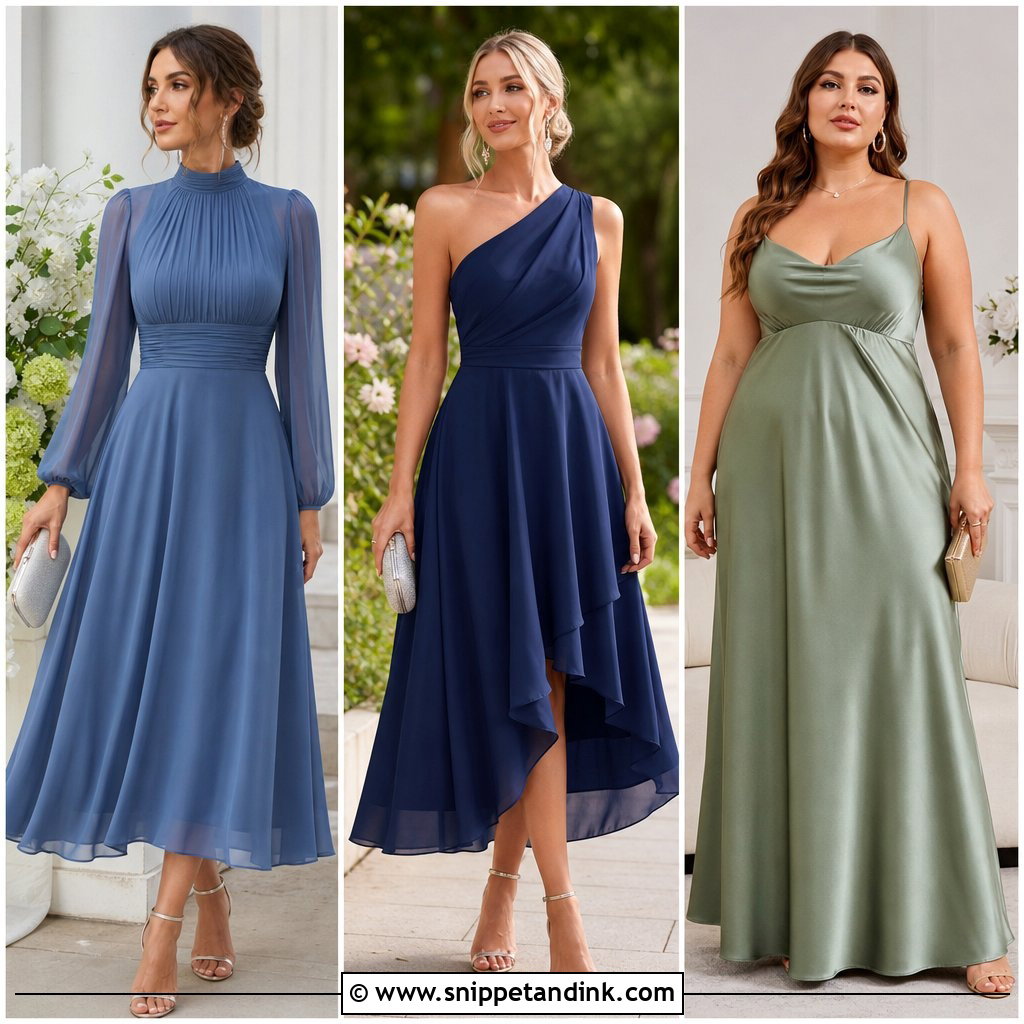
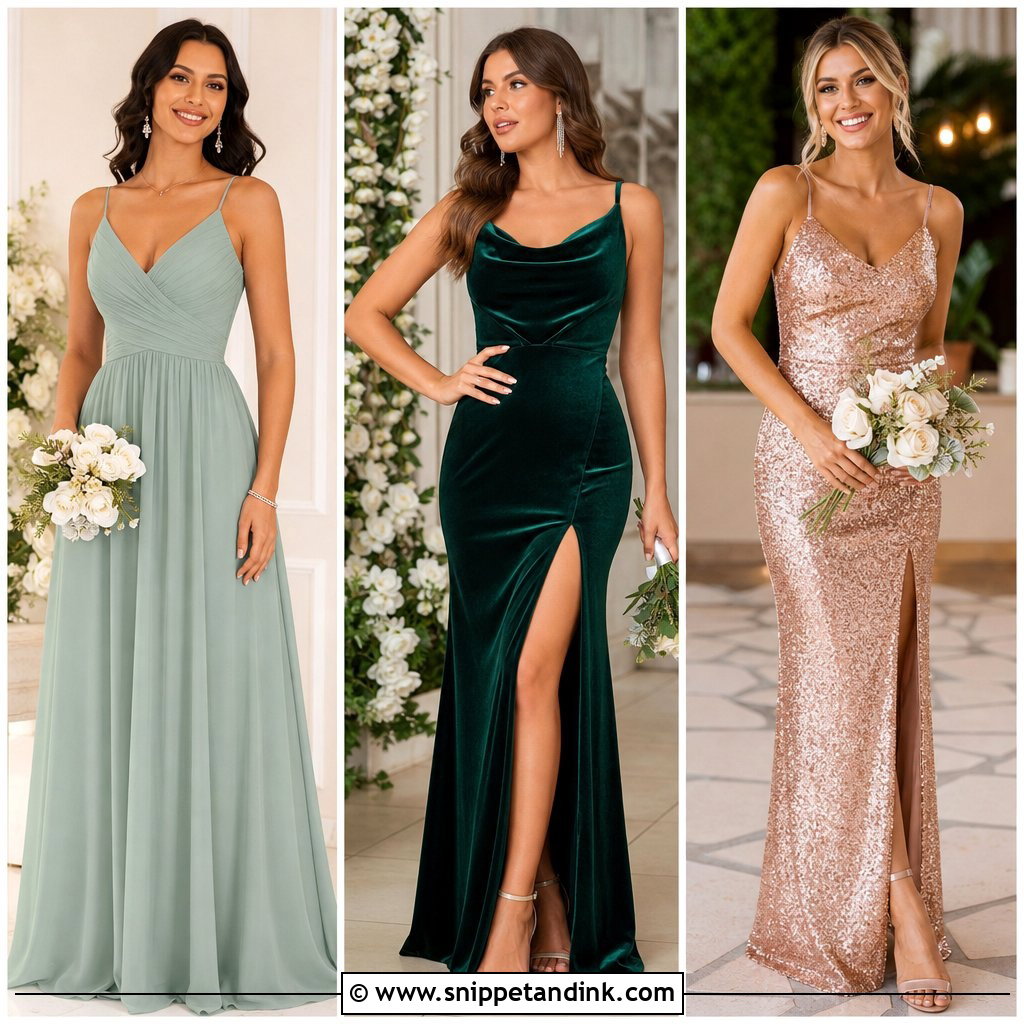
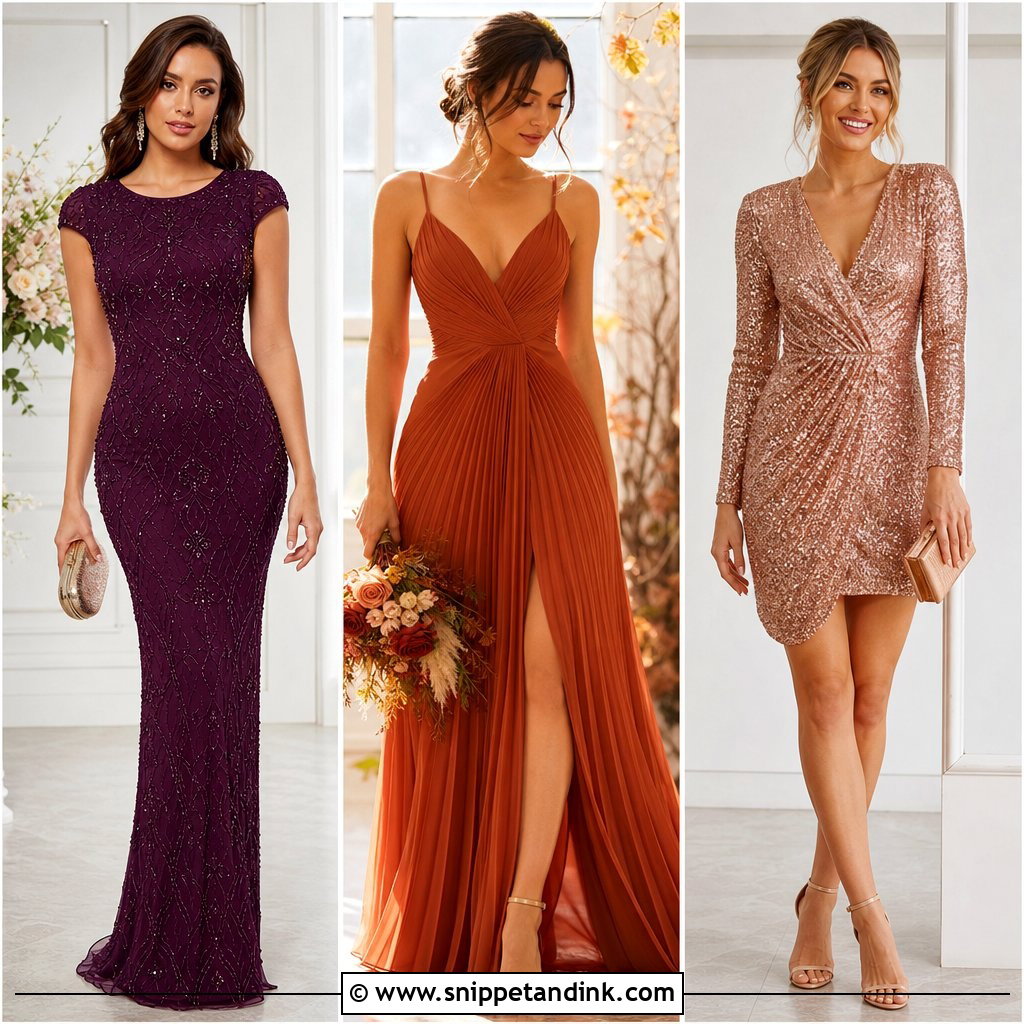
20. Palazzo Jumpsuit for Brother Marriage
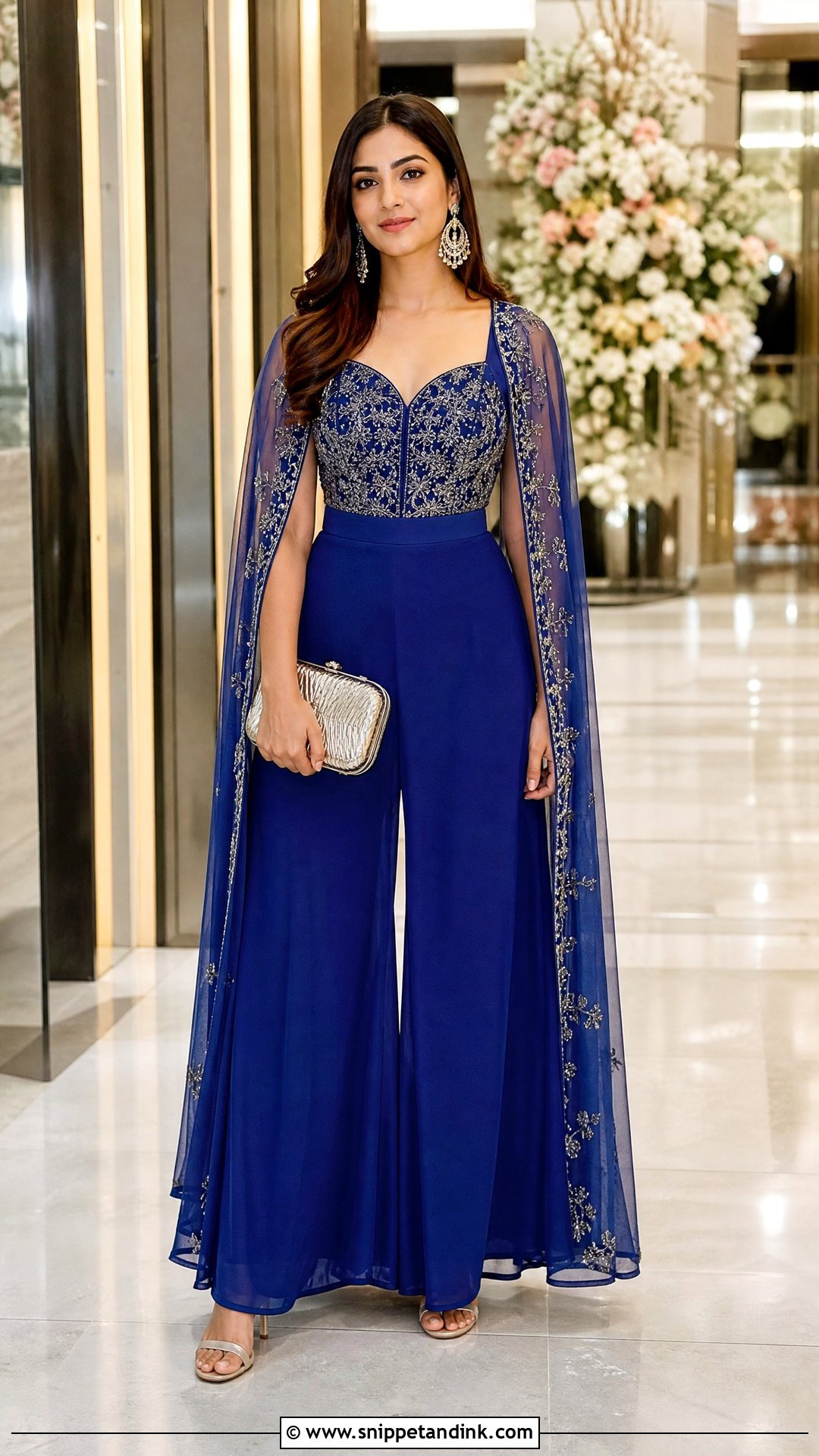
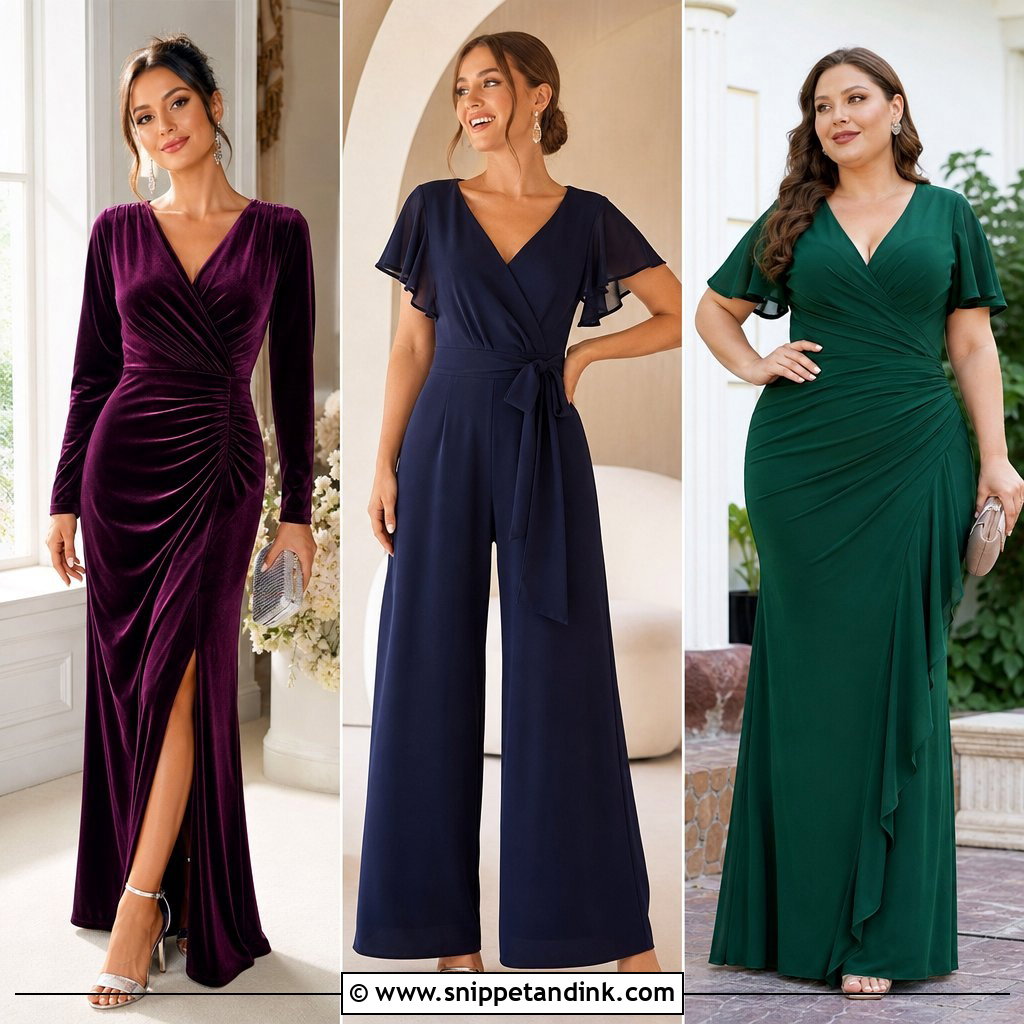
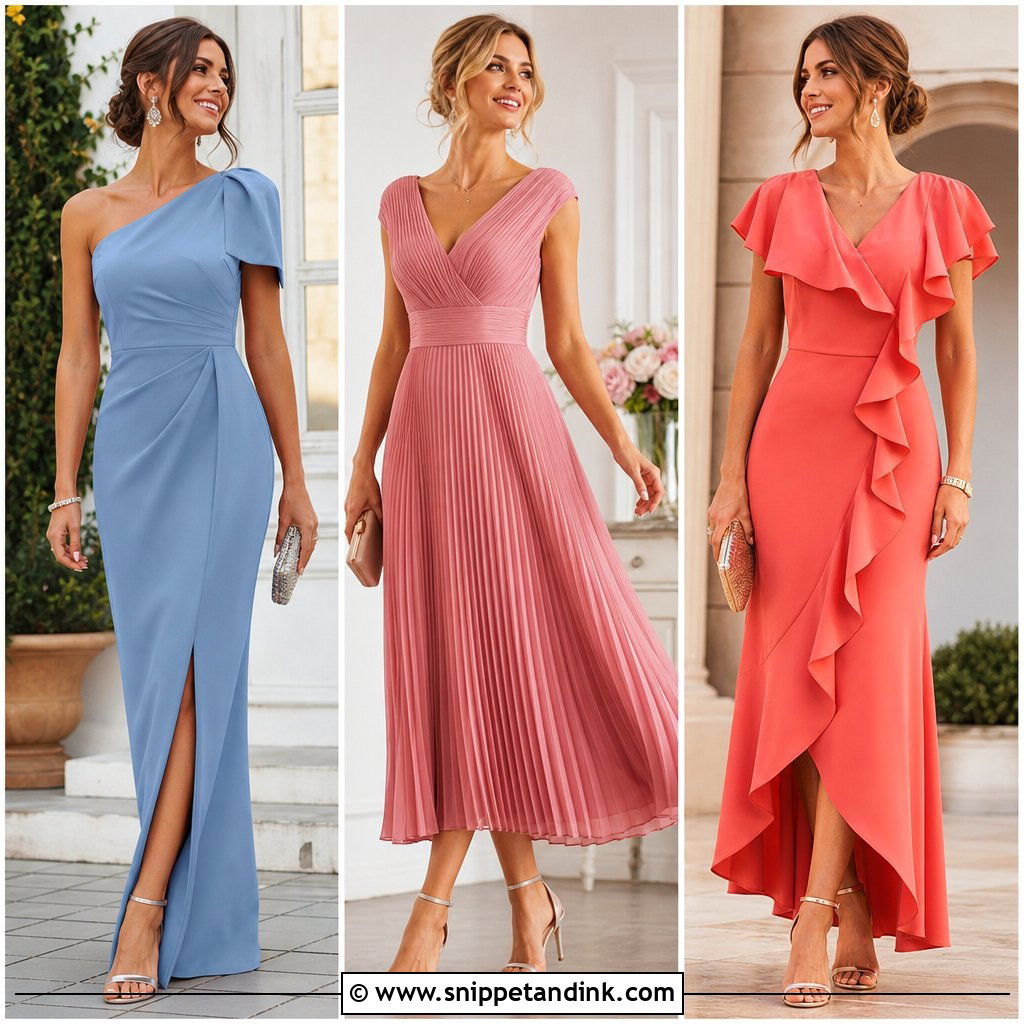
Jumpsuits look sleek, but I always walk sisters through the practical bit first: you need to be able to unfasten it alone in a crowded venue washroom. Look for wide legs, a defined waist and an embellished neckline in emerald, royal blue, deep purple or berry. Add a sheer cape, embroidered jacket or draped panel for an Indian touch. Chandelier earrings, a metallic clutch and block heels finish it, with a sleek ponytail. Sit down in it before buying, and make sure the hem skims the floor without dragging. It belongs at a cocktail party or a reception where traditional dress is optional.
21. Indo-Western Drape Dress for Brother Marriage
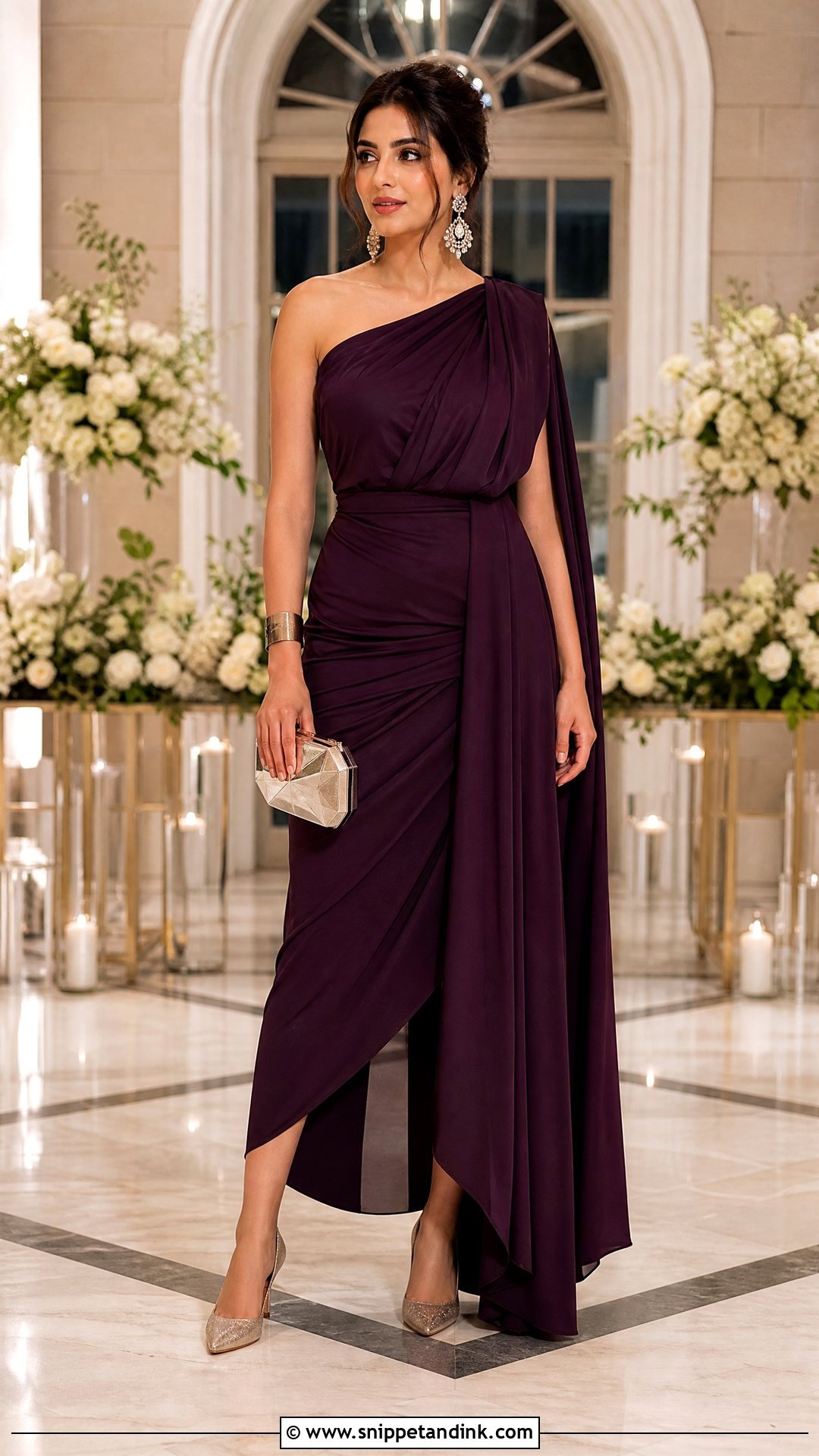
An Indo-Western drape dress gives the line of a saree with none of the pleating. The draped panel crosses the waist or falls from one shoulder, sewn in place, so it stays put during the dancing. Satin, crepe and georgette move fluidly in teal, plum, coral or midnight blue. Keep embellishment on the bodice or waist only; all-over work fights the drape. Statement earrings, a cuff, a structured clutch and pointed heels or supportive block sandals finish it. A sleek bun shows off an asymmetric neckline.
22. Embroidered Gown for Brother Marriage
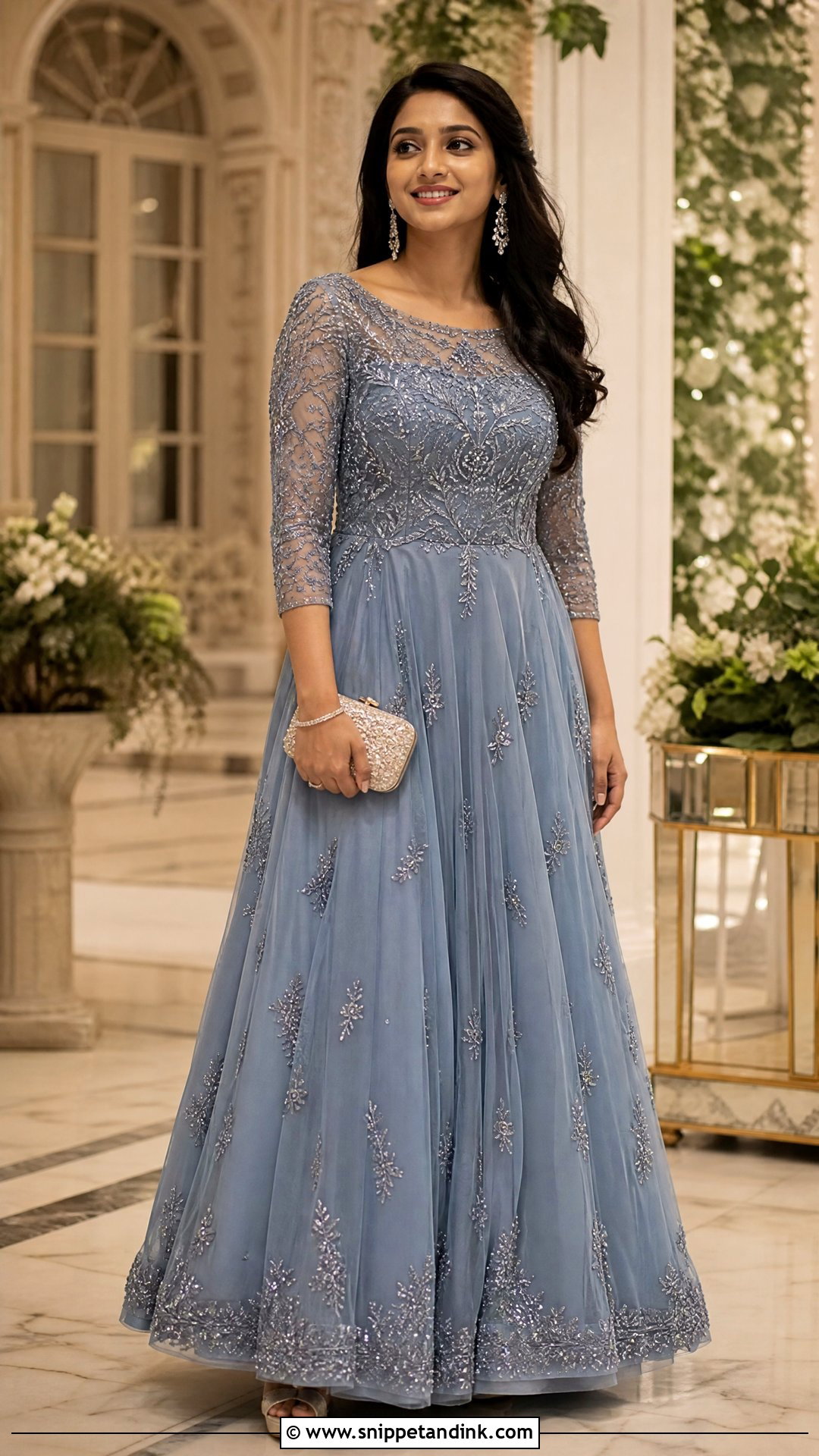
A reception is where an embroidered gown makes the most sense, since there are no rituals to sit through on the floor. Choose an A-line or softly flared silhouette with embroidery on the bodice, sleeves or hem, in navy, emerald, mauve, maroon or dusty blue. Prioritise a supportive bodice and a comfortable lining so you can sit through dinner and dance afterwards. Drop earrings, a delicate bracelet, a beaded clutch and platform heels keep the hem off the floor. Leave the train for the bride; in a busy banquet hall it gets stepped on.
23. Chikankari Suit for Brother Marriage
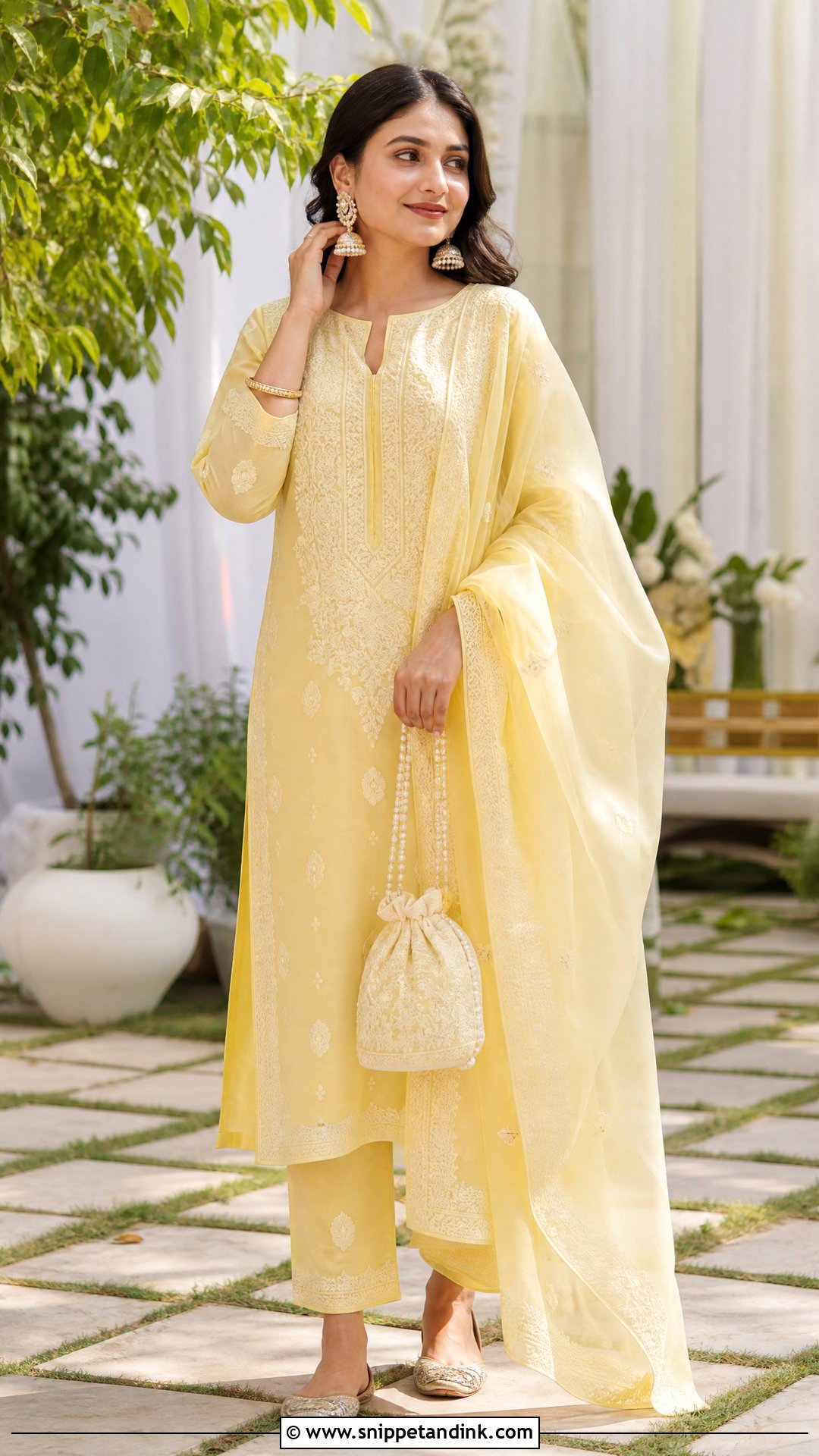
Chikankari is hand embroidery from Lucknow, worked in fine white or tonal thread, and it is cool to wear on a hot day. I’d reserve it for a daytime puja, a warm-weather ceremony or a relaxed pre-wedding gathering. A long kurta in ivory, pale yellow, mint, blush or powder blue with straight pants or a flowing skirt, plus an organza dupatta, is formal enough for family functions. Chikankari is often worked on sheer georgette or mulmul, so ask for a full lining or wear a slip. If you choose ivory, confirm it doesn’t clash with the couple’s colours. Pearl jhumkas, thin bangles and metallic flats finish it.
24. Bandhani Lehenga for Brother Marriage
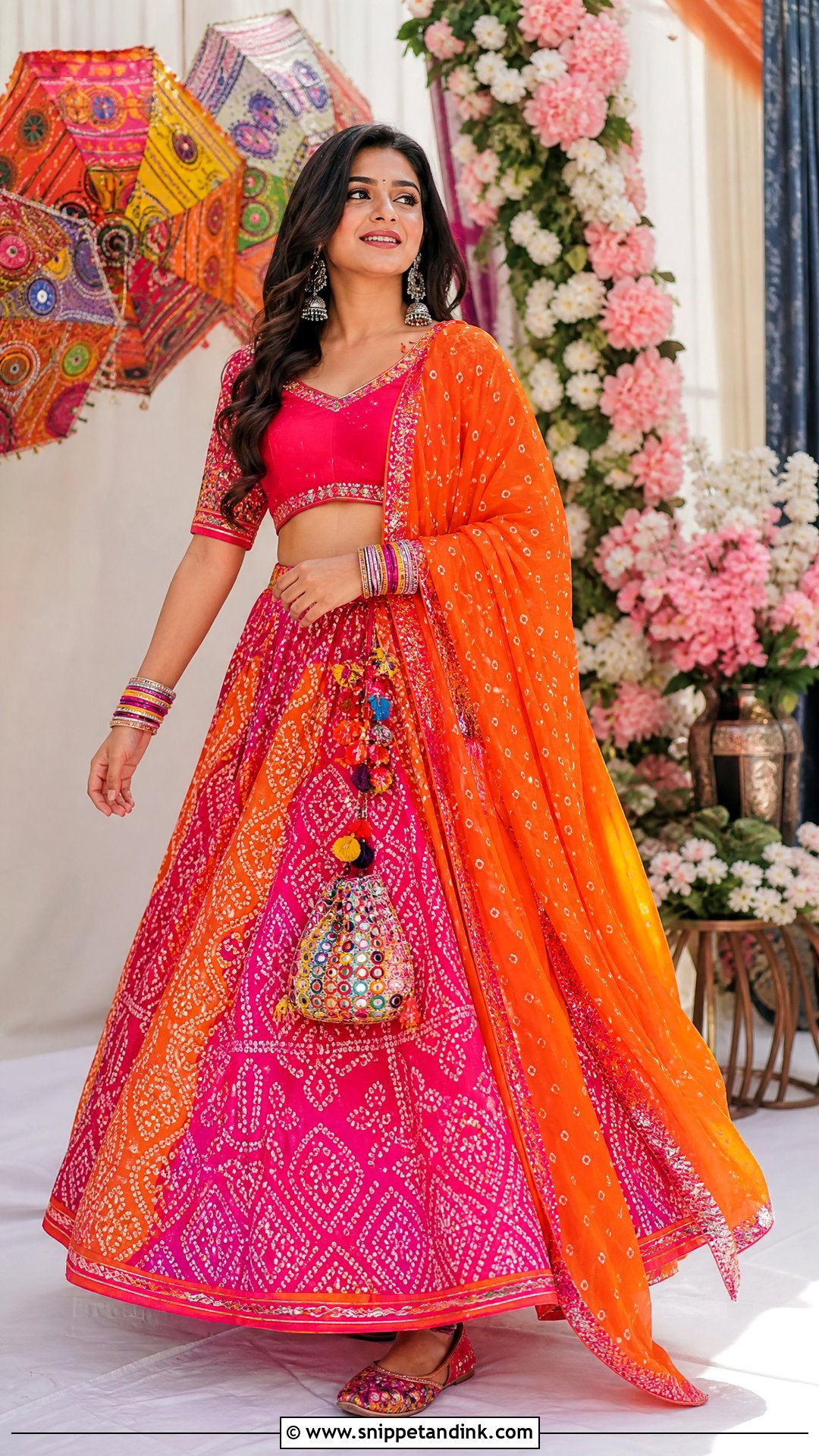
A Bandhani lehenga brings tie-dye craft from Gujarat and Rajasthan, and its tiny dotted patterns are made by hand. Red, orange, fuchsia, green and royal blue make it joyful for garba, mehndi or daytime ceremonies. Pair it with a plain embroidered blouse and a contrasting dupatta. Oxidised silver earrings, colourful bangles, a mirror-work potli and flat juttis suit the dancing. One caution: real bandhani dyes can bleed when wet, so keep it away from haldi water and colour play, and dry-clean it afterwards.
25. Silk Co-Ord Set for Brother Marriage
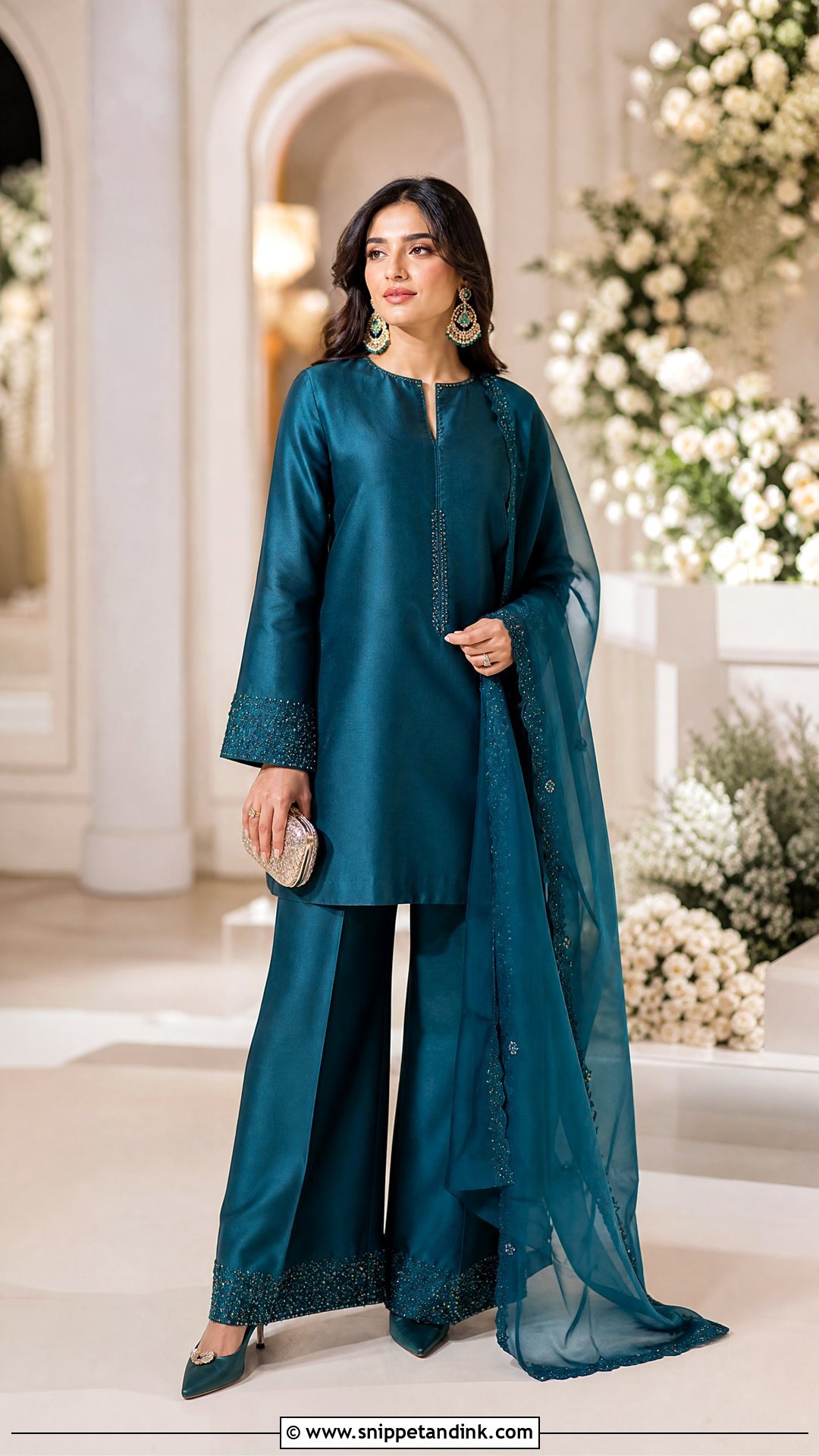
A silk co-ord set is my pick for the sister who dislikes heavy layers. A long tunic, cropped blouse or structured jacket with matching wide-leg pants looks deliberate and modern. Jewel-toned raw silk suits the evening; pastel chanderi suits the day. Tonal embroidery on the neckline, cuffs and hem is enough festive detail. Sculptural earrings, a polished clutch and pointed mules or low block heels finish it, along with a sleek bun. An elasticated back or adjustable waist matters on a long day. Add an organza dupatta for the ceremony, then take it off for dinner.
Dressed for Sehra Bandi, the Baraat and Hours of Hosting
Depending on your family’s customs, the groom’s sister may tie the sehra, perform aarti, lead the baraat dancing, hold the puja thali or block the door for her share of the shagun. Those jobs mean bending, carrying, and lifting your arms above your head. Try each move in the outfit at the final fitting. If the blouse rides up when you raise your arms, or the dupatta slides when you lean over a thali, it needs pinning or altering, not hoping.
The blouse decides everything
A loose or tight blouse ruins even an expensive lehenga. Good tailors are booked solid in wedding season, so hand over the fabric six to eight weeks ahead and plan at least one trial with the jewelry and undergarments you’ll actually wear. On the day, keep a small pouch with safety pins, U-pins, double-sided fashion tape and a spare hook, because someone in the family will need them, and it’s usually the sister they ask.
Shoes deserve the same attention. New juttis are stiff leather and rub the heel and the little toe raw by the second function. Wear them around the house for a week beforehand, add a thin cushioned insole, and pack a pair of flat sandals for the late-night baraat walk, when nobody is photographing your feet anyway.
Your Brother’s Wedding, Dressed for the Part You Play
Start with your function list, your venue and the weather, then work out what you’ll actually be doing at each event. From silk sarees and festive lehengas to sharara sets and modern jumpsuits, the ideas above cover most families and most schedules. Get the blouse fitted properly, choose linings that breathe, and break in your shoes before the week begins. Coordinate with the couple without copying the bride’s colour or level of embellishment. Keep the jewelry balanced and the hair practical, and you’ll look like yourself in every photo while doing everything the day asks of you.
You'll Like These Ideas:


Leave a Reply