
On the Barat day the bride’s sister is barely off her feet. She greets the groom’s side at the door, runs the joota chupai, stands on the stage for portrait after portrait, and holds her sister’s hand at the rukhsati. Her outfit has to look properly formal and still let her do all of that. When I style a sister for this event, my first question is what the bride is wearing, because the sister’s job is to sit one step below that in color and weight. Lehengas, shararas, ghararas, long shirts, pishwas, sarees and jacket sets all work. Below are 25 ideas, each with a note on how it carries through a long night.
Will Your Outfit Clash With Her Lehenga?
Sisters often order their Barat outfit before the bride has finalized hers, and that’s where most of the problems start. Get her color, embroidery tone and dupatta style first, ideally a fabric swatch or a clear daylight photo.
- Keep at least one clear step of difference in color from the bride. Red next to red, or ivory next to ivory, merges in stage photos.
- Match the metal tone of her embroidery if you can. Gold beside gold looks planned; silver beside antique gold can look accidental.
- Choose a lighter level of work. If her lehenga is fully covered, yours should have visible plain fabric.
- Leave the head-covering dupatta and the full matha patti set to the bride.
Custom embroidered outfits often take several weeks to a few months from boutiques, and timings vary a lot during wedding season. Order early enough to allow one fitting and one alteration round before the mehndi, not the night before the Barat.
1. Maroon Lehenga Choli For Bride Sister
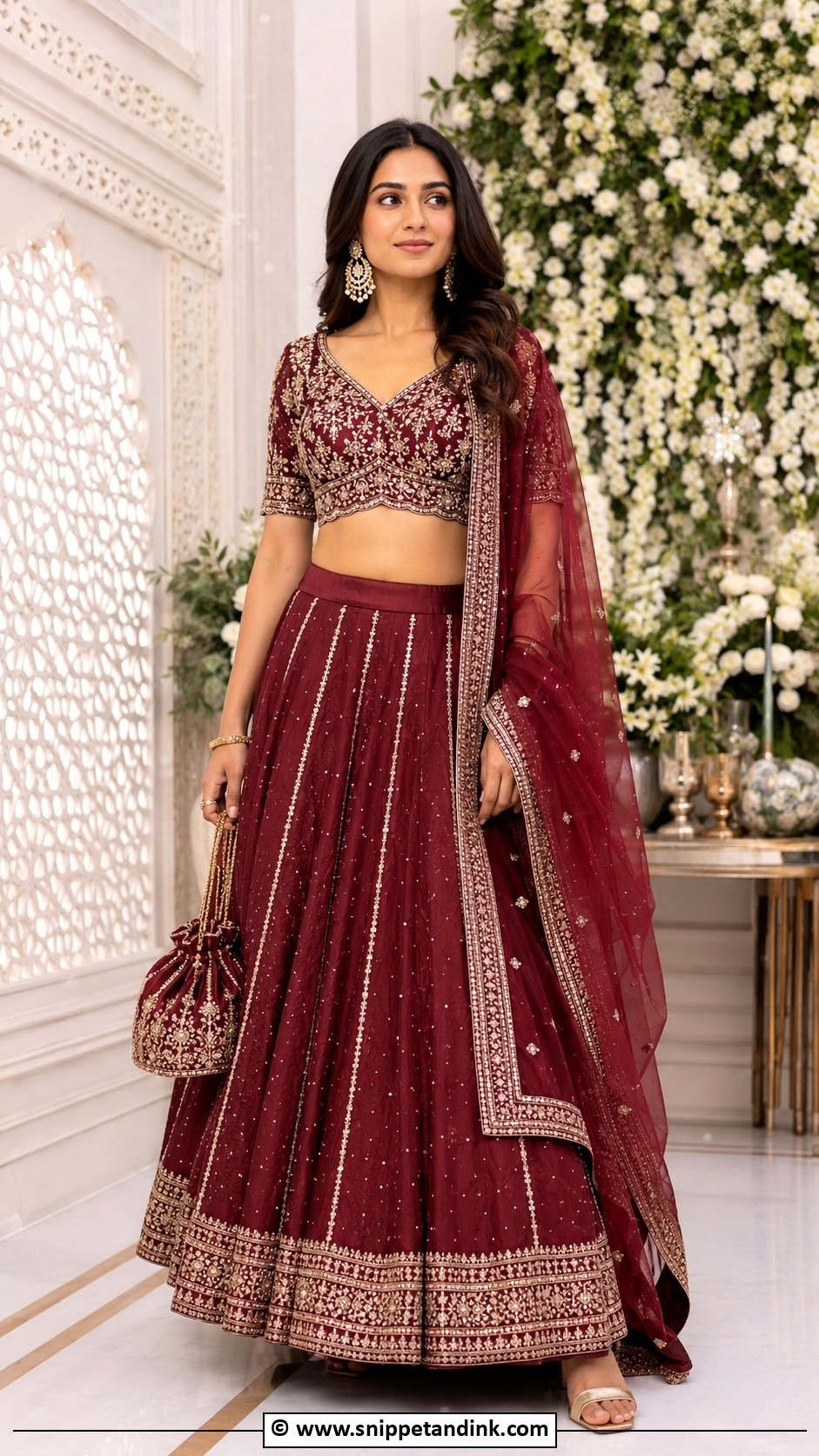
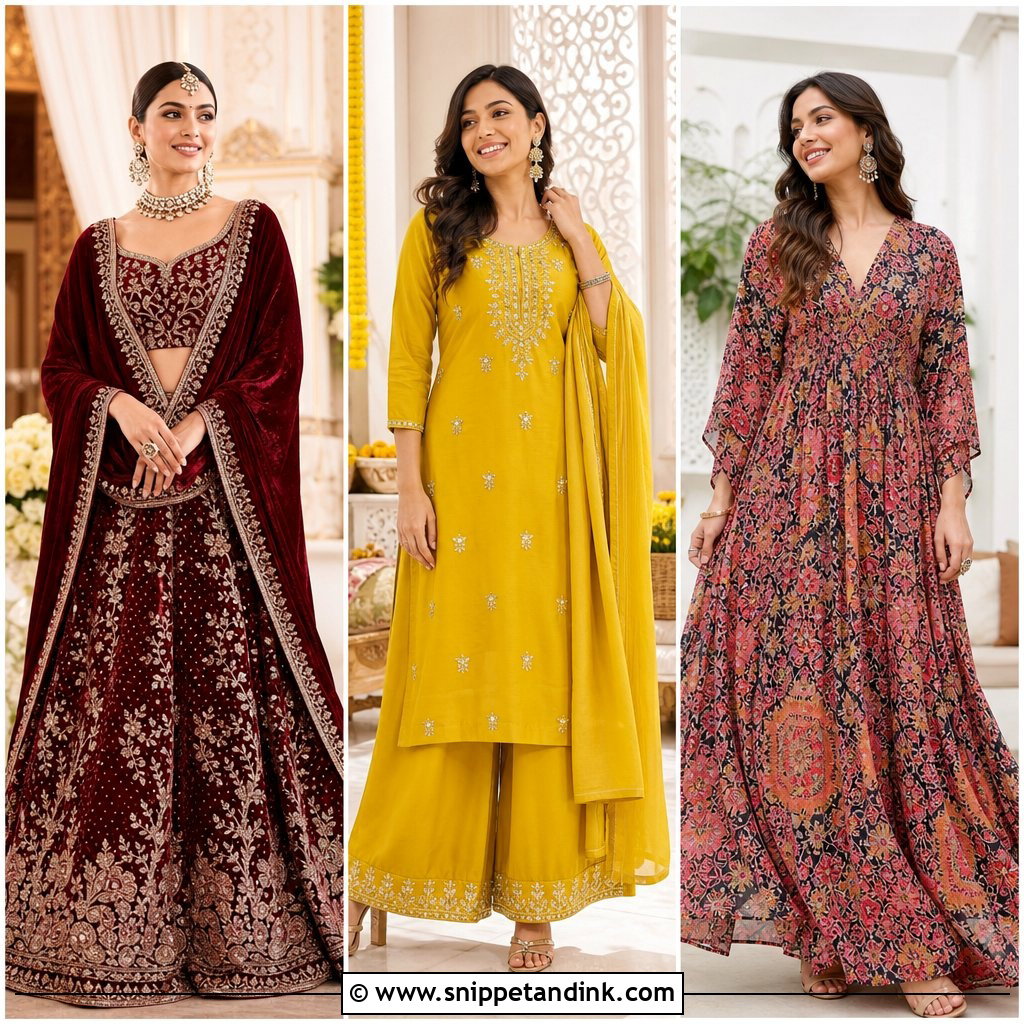
Maroon is the safest choice for the sister because it sits right next to bridal red without copying it. If the bride is in red, go a clear shade deeper or more muted; two similar reds side by side on the stage blur together in photos. A flared lehenga with antique gold work and a fitted choli is classic. Ask for a finished border on the dupatta, since a raw net edge frays and catches on bangles by the end of the night. Kundan earrings and a small potli finish it.
2. Emerald Green Sharara For Barat
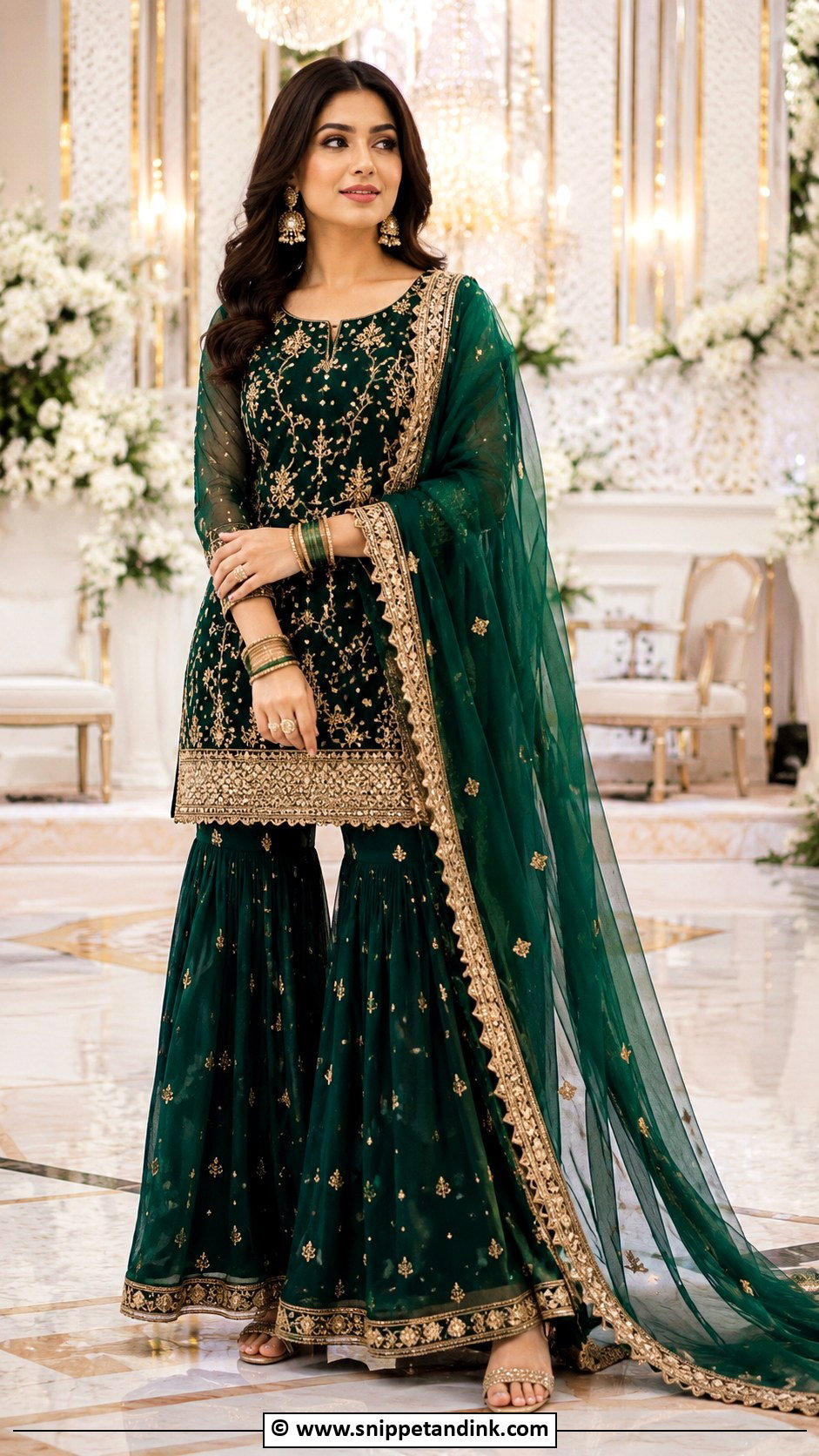
Emerald holds its own against gold decor and red bridal wear, and it reads clearly in evening photos. A sharara is easier to walk in than a heavy lehenga, which matters when you’re running between the entrance, the stage and the dining area. Keep the shirt short or mid-length and put the zari or dabka work there. Choose a lighter dupatta; a fully embellished one on top of an embroidered kurti gets heavy on the shoulders within an hour.
3. Champagne Gold Gharara For Bride Sister
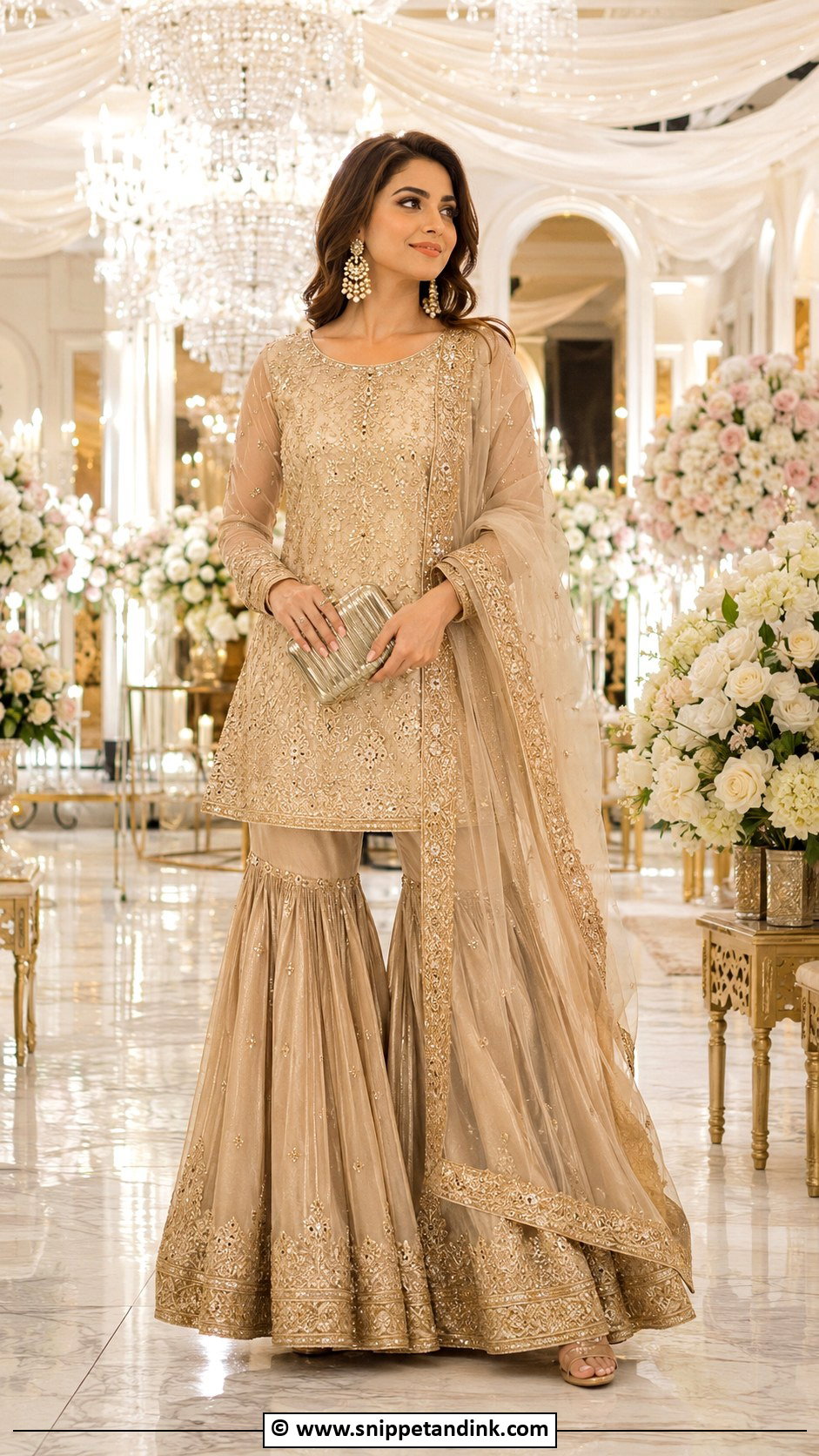
A champagne gold gharara gives a soft luxury look, but it needs care. Champagne sits close to the neutral and gold tones many brides now choose for the Barat itself. I’d check the bride’s outfit first, then keep jewelry lighter and skip a heavy tikka-and-matha-patti set so nobody mistakes the two of you in a wide shot. A structured short shirt, a gota or zari border and an organza dupatta are the right ingredients.
4. Royal Blue Lehenga For Barat
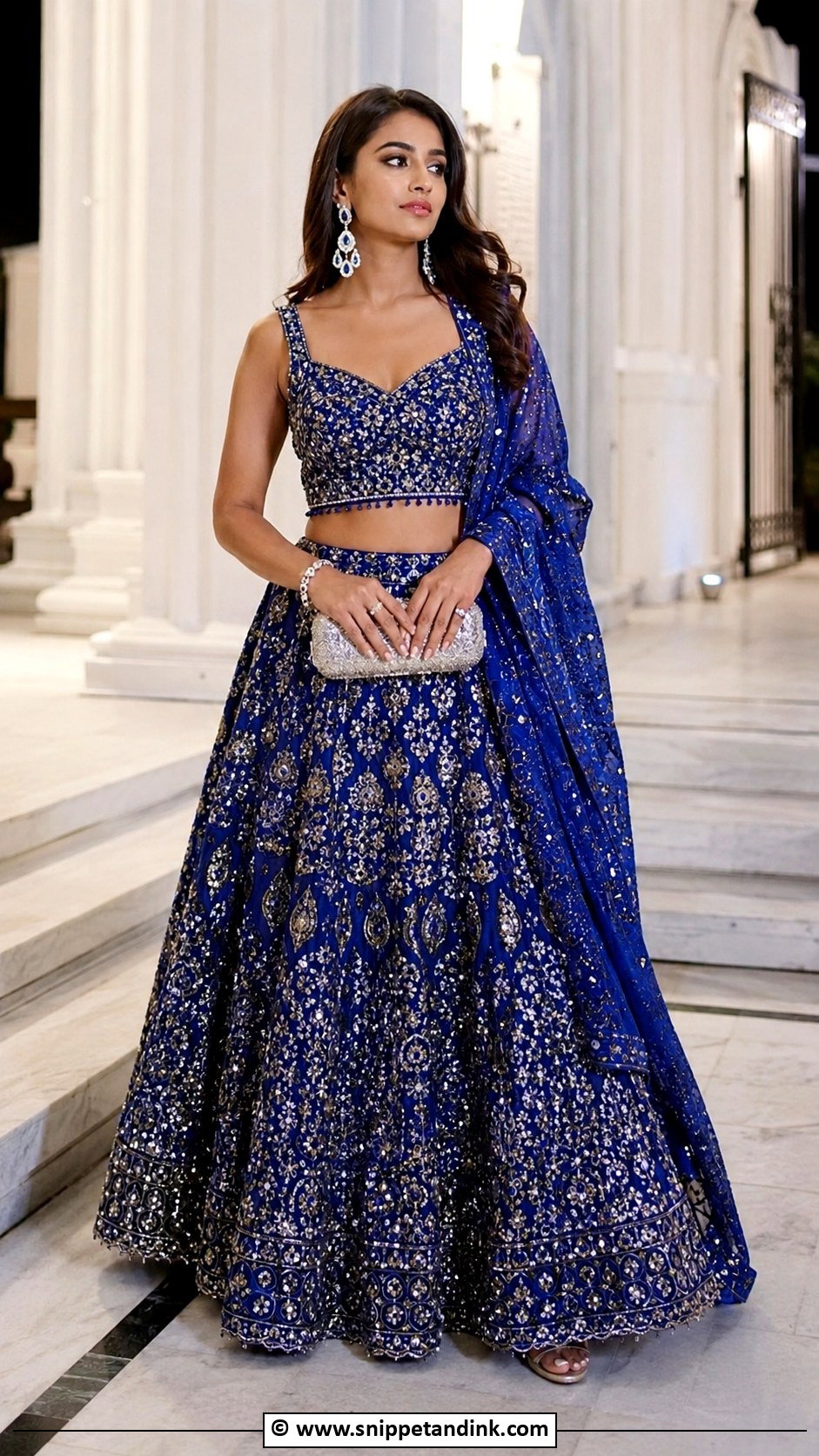
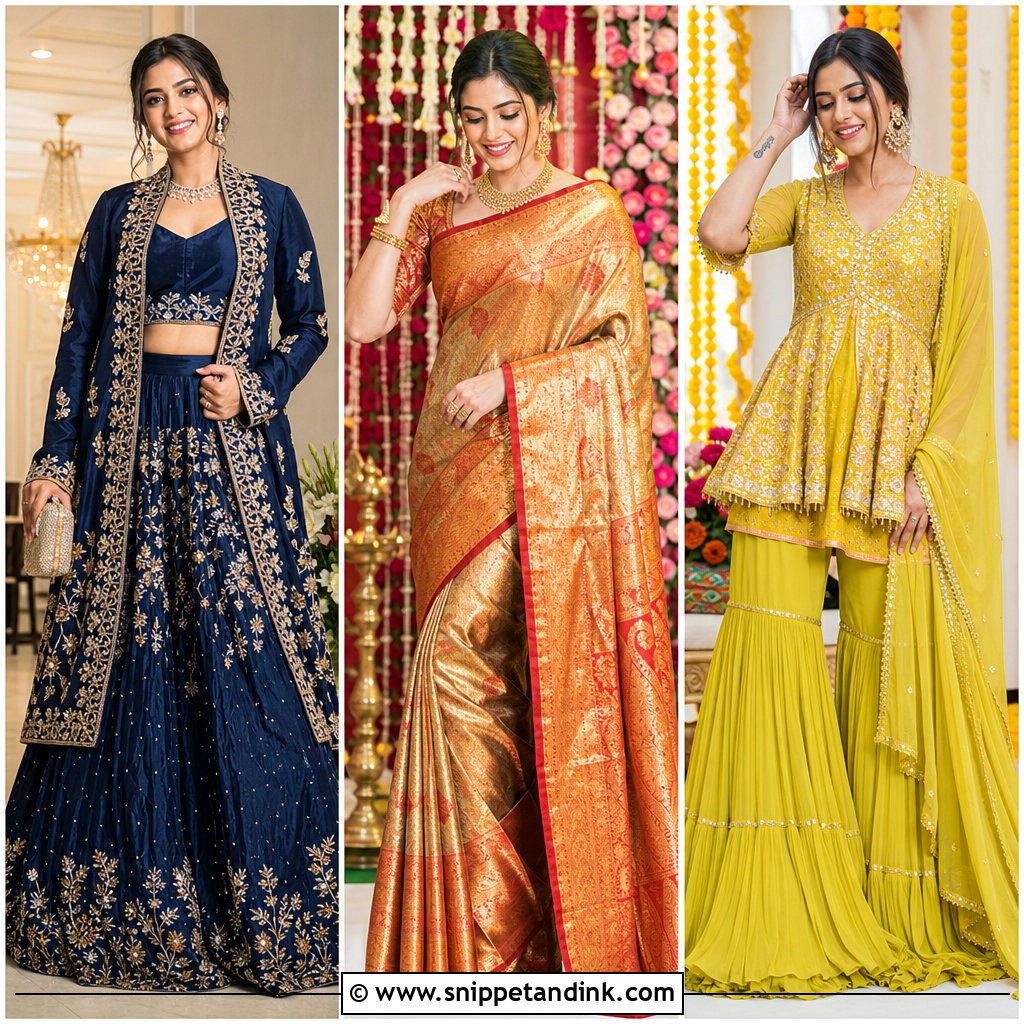
A royal blue lehenga is bold enough for the main event and nowhere near bridal red. Silver work makes it cool and crisp; antique gold makes it warmer. In winter a velvet blouse looks rich, but velvet is warm under stage lights, so I’d keep it for an outdoor or air-conditioned venue. Draping the dupatta over one shoulder gives a long, tidy line in photos.
5. Blush Pink Pishwas For Barat
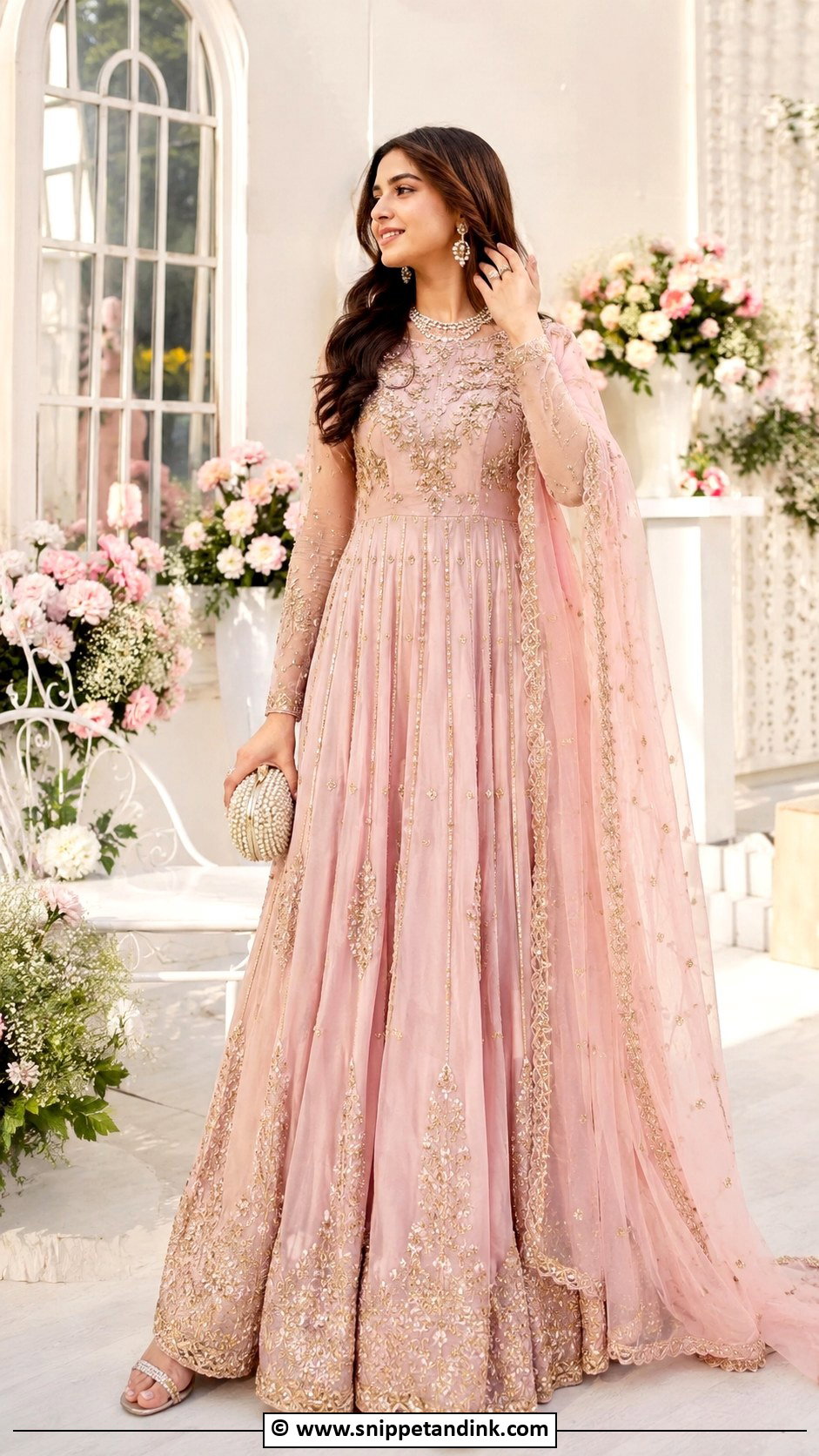
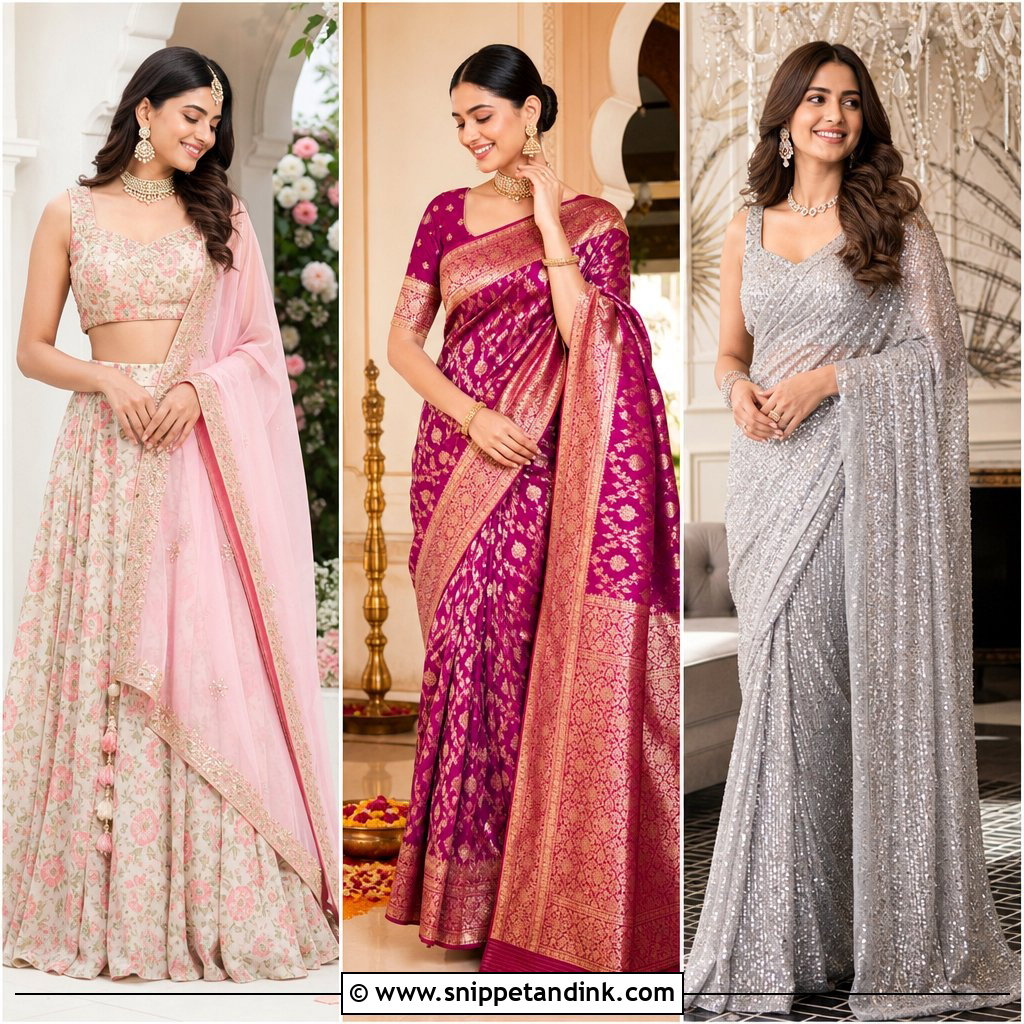
A pishwas suits a sister who wants coverage and movement without a separate skirt and top to manage. The long, flowing shape swings well when she walks beside the bride. Blush with gold, sequin or resham work at the neck, cuffs and hem looks soft. Check the length with your heels on; a pishwas hemmed too long gets stepped on during the entrance. Pearl jewelry keeps the look young.
6. Black And Gold Saree For Barat
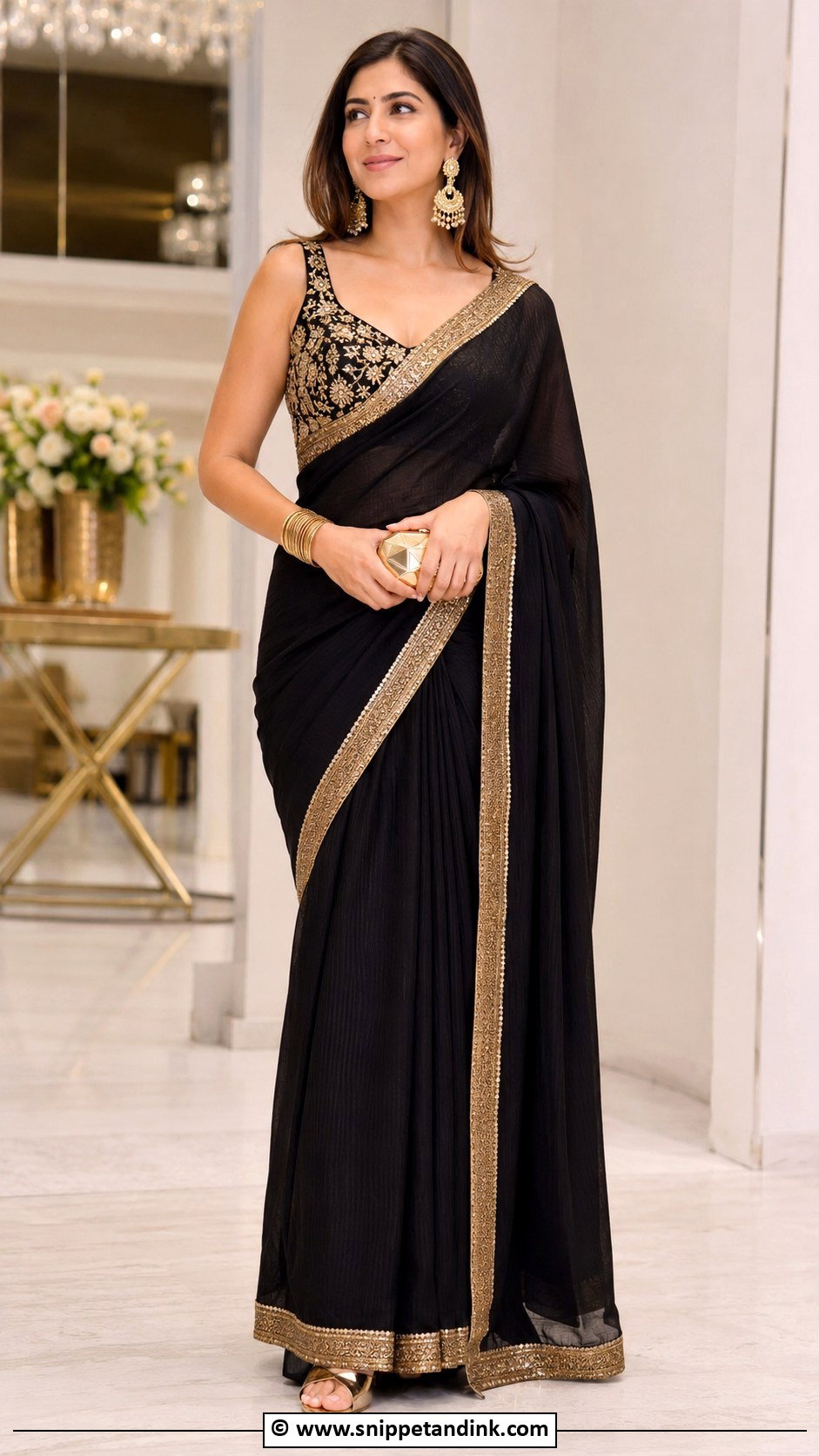
Black at a Barat divides families. Some see it as chic for an evening event; some elders still consider it wrong for a wedding. Ask before you buy. If it’s welcome, a black saree with a rich gold border and a structured blouse looks sharp, and you can soften it with a bronze or champagne blouse. Pin the pleats and pallu securely, because a saree takes the most adjusting of anything here during a busy night.
7. Ivory And Gold Lehenga For Bride Sister
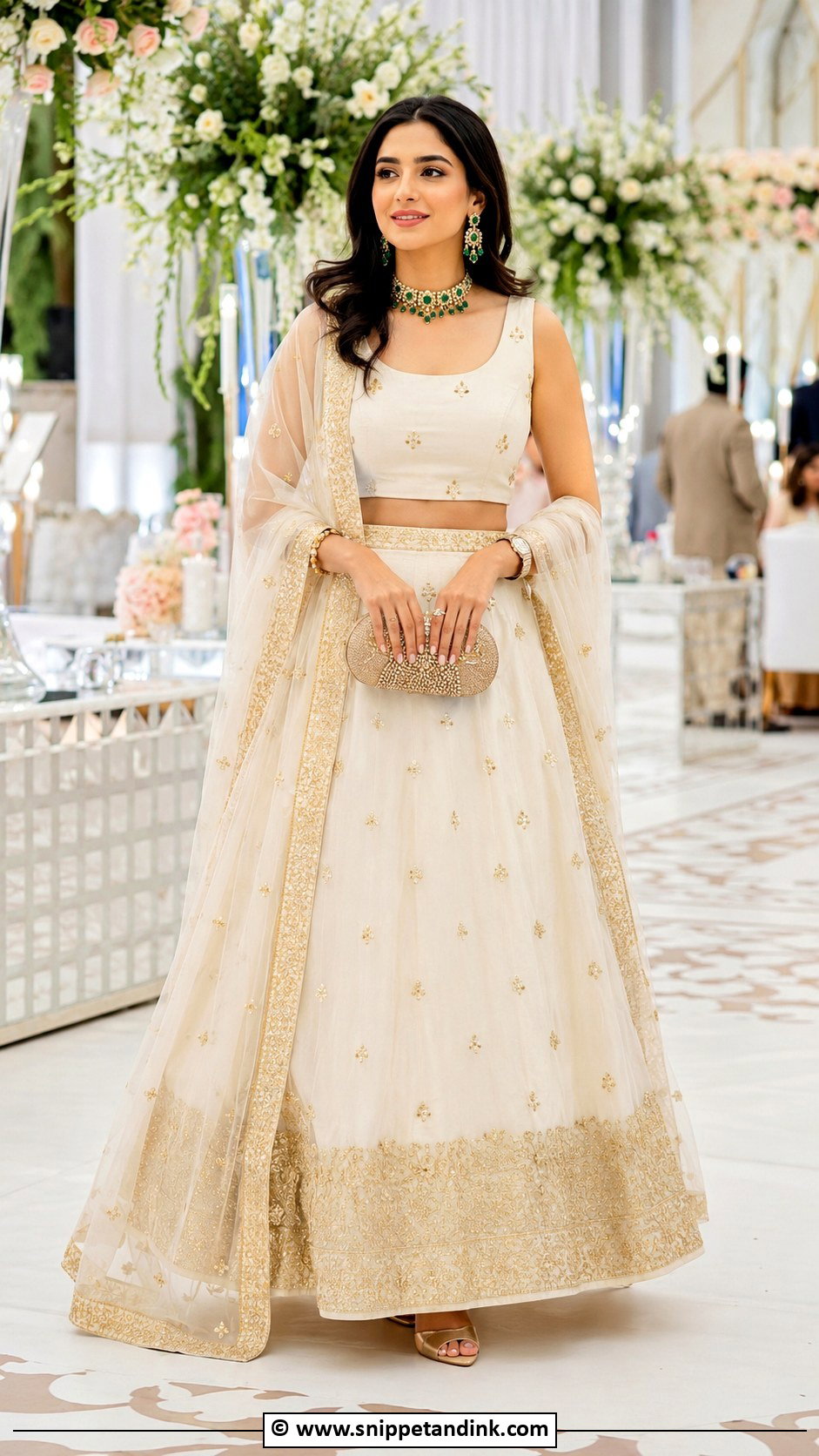
Ivory and gold is the outfit I’m most cautious about for a sister. In many families ivory has become a bridal color, especially for nikah and Barat, so check the bride’s plans before you even try one on. If it’s clear, keep the embroidery light, avoid a dupatta worn over the head like a bridal veil, and add color through emerald or ruby jewelry. It suits a daytime or early evening Barat in a modern venue.
8. Purple Velvet Maxi For Barat
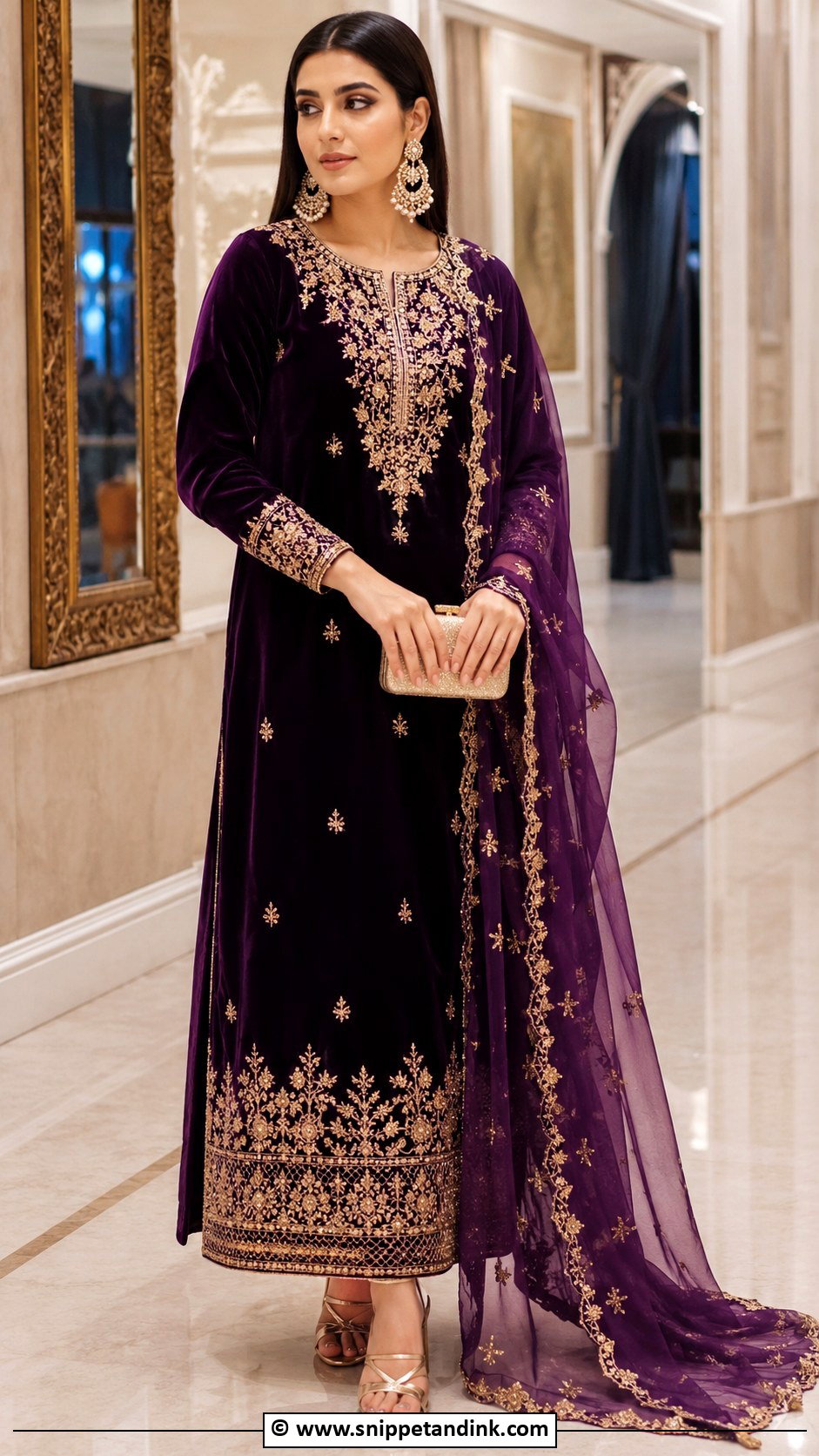
Velvet is a winter fabric, and a purple velvet maxi is one of the warmest options for an outdoor marquee in December. Gold embroidery at the neckline, cuffs and hem catches the light. Velvet is also heavy, so I pair it with a light organza dupatta, never another velvet one. The long shape elongates the body. Chandelier earrings and gold heels finish it.
9. Mustard Sharara For Bride Sister
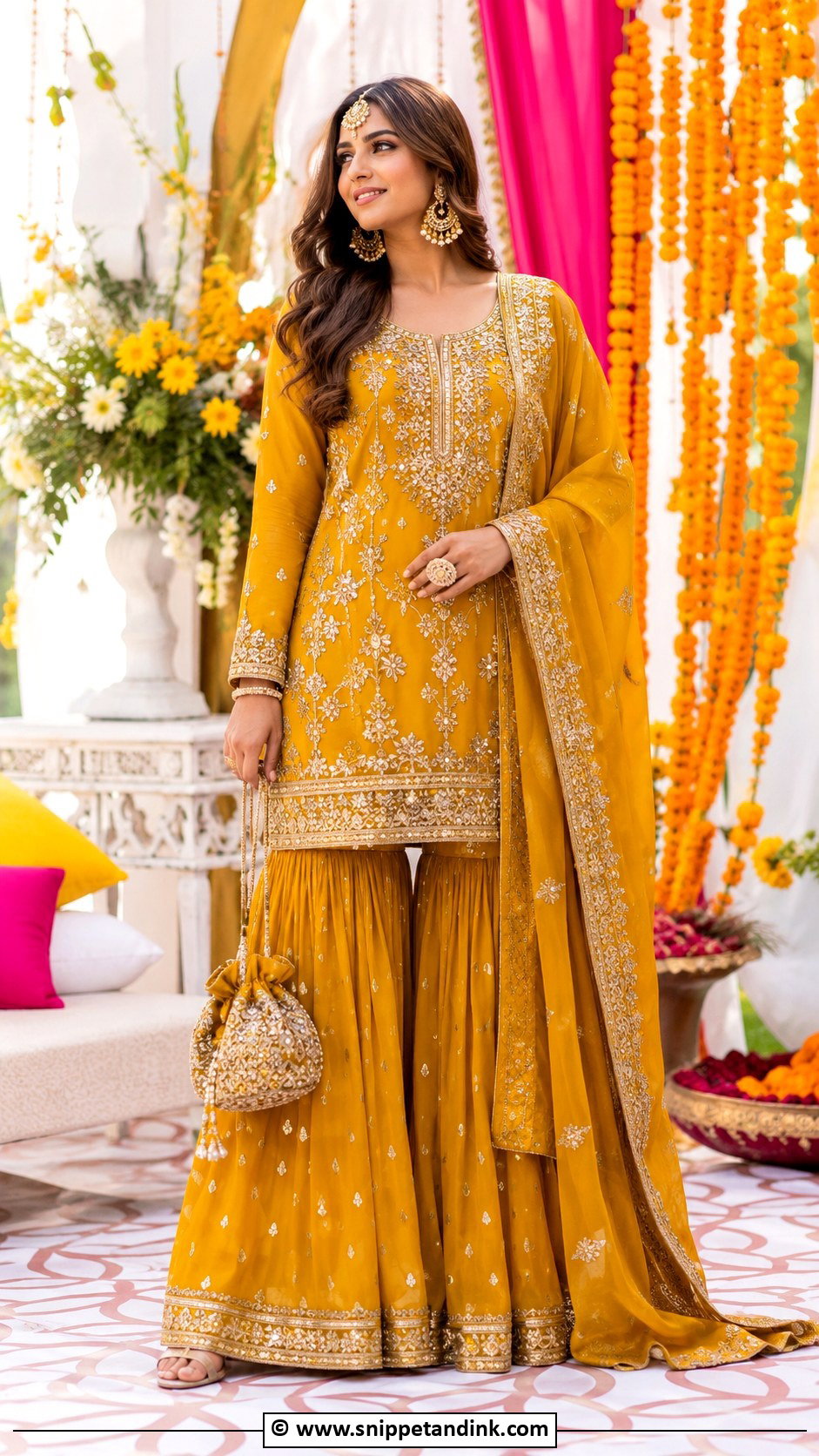
Mustard is cheerful and stays clear of red, maroon and gold, which helps if the family has agreed on a mixed color scheme. Fabric decides whether it looks Barat or mehndi. Cotton mustard looks like a daytime mehndi outfit; silk, organza, chiffon or jamawar make it formal. A flared sharara with antique gold work on the shirt is the right weight.
10. Dusty Rose Gharara For Barat
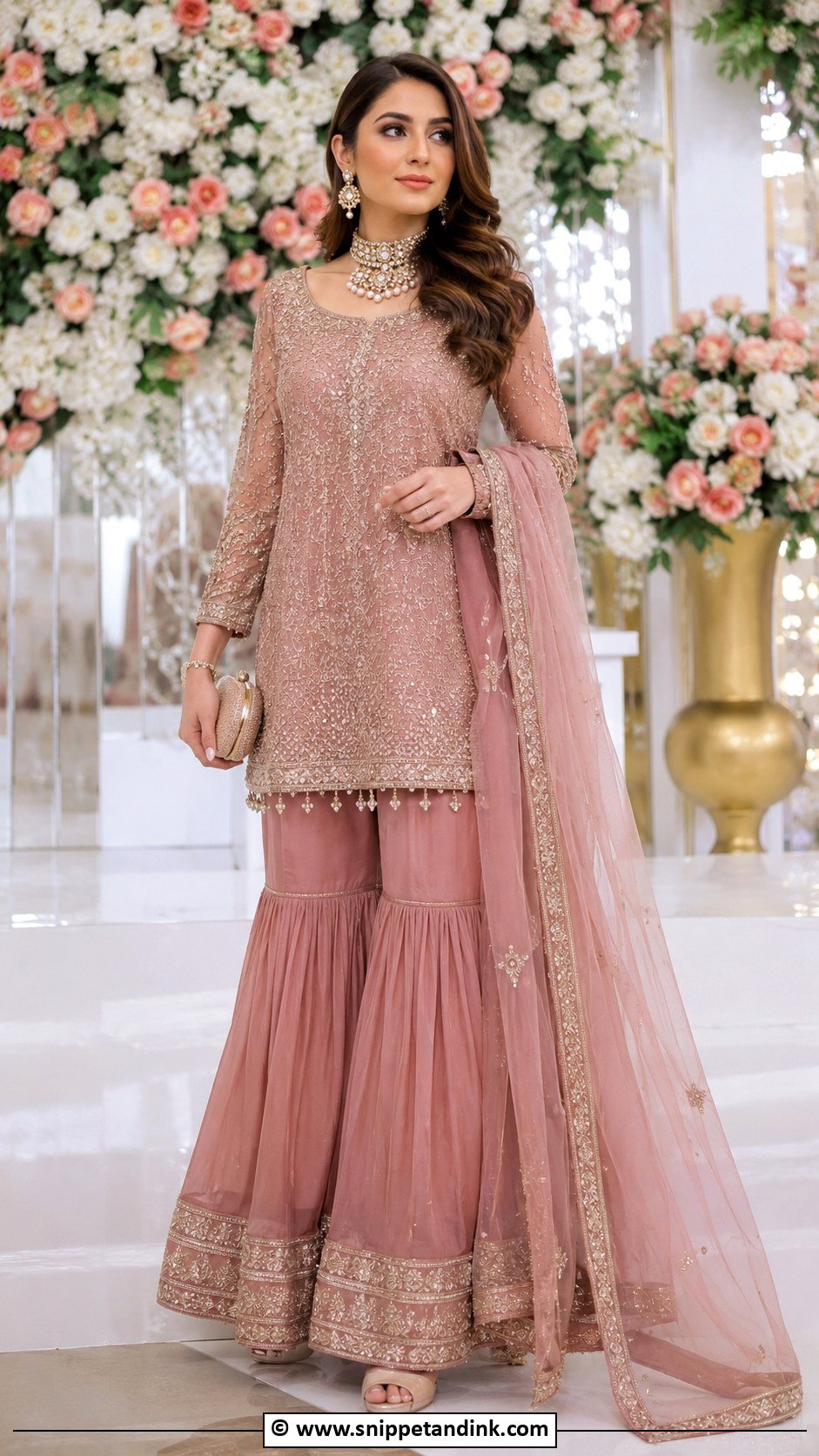
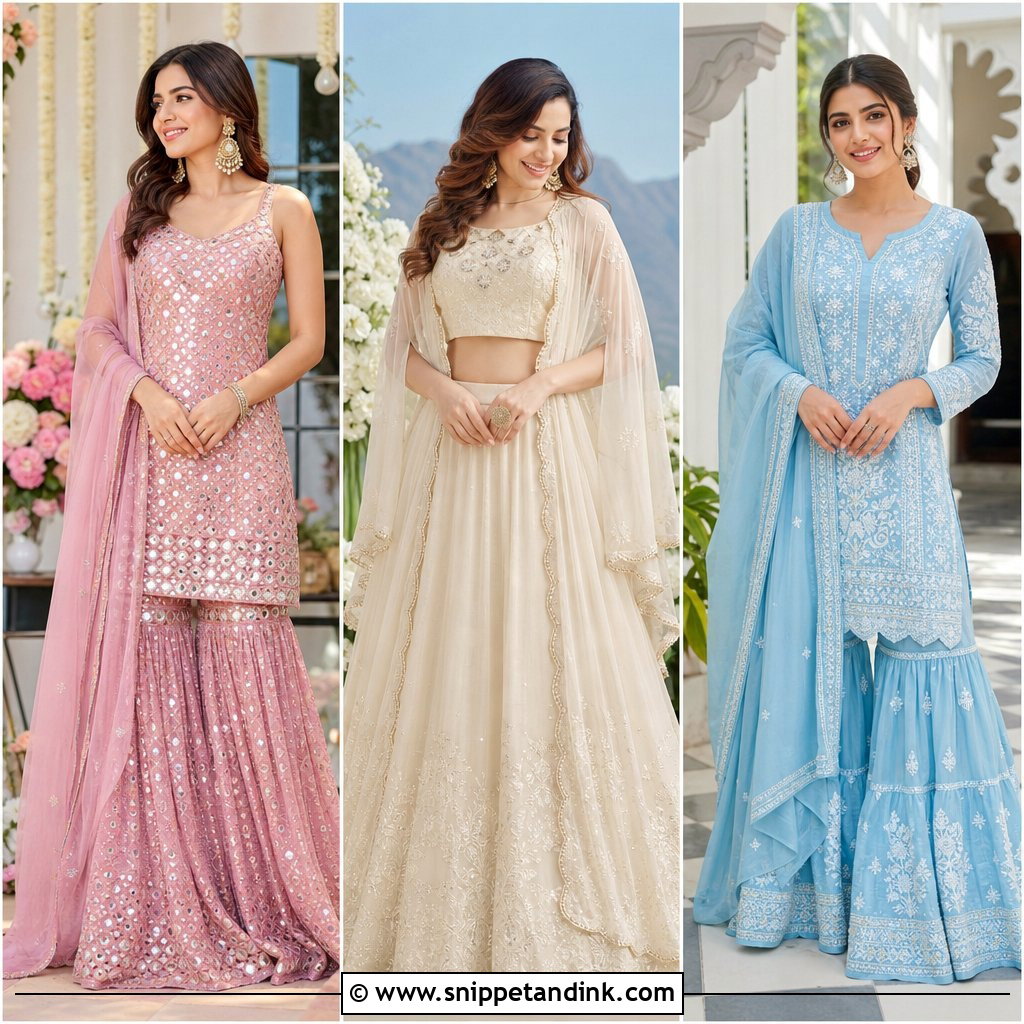
Dusty rose is softer than hot pink and very wearable for long hours. It sits well next to bridal red, ivory, gold and maroon in family photos. A short shirt with detailed work, a flared gharara with border work and a sheer dupatta a shade lighter. Pearl and kundan jewelry together suit the muted tone. A loose bun keeps hair off the neck through a warm evening.
11. Teal Long Shirt With Lehenga
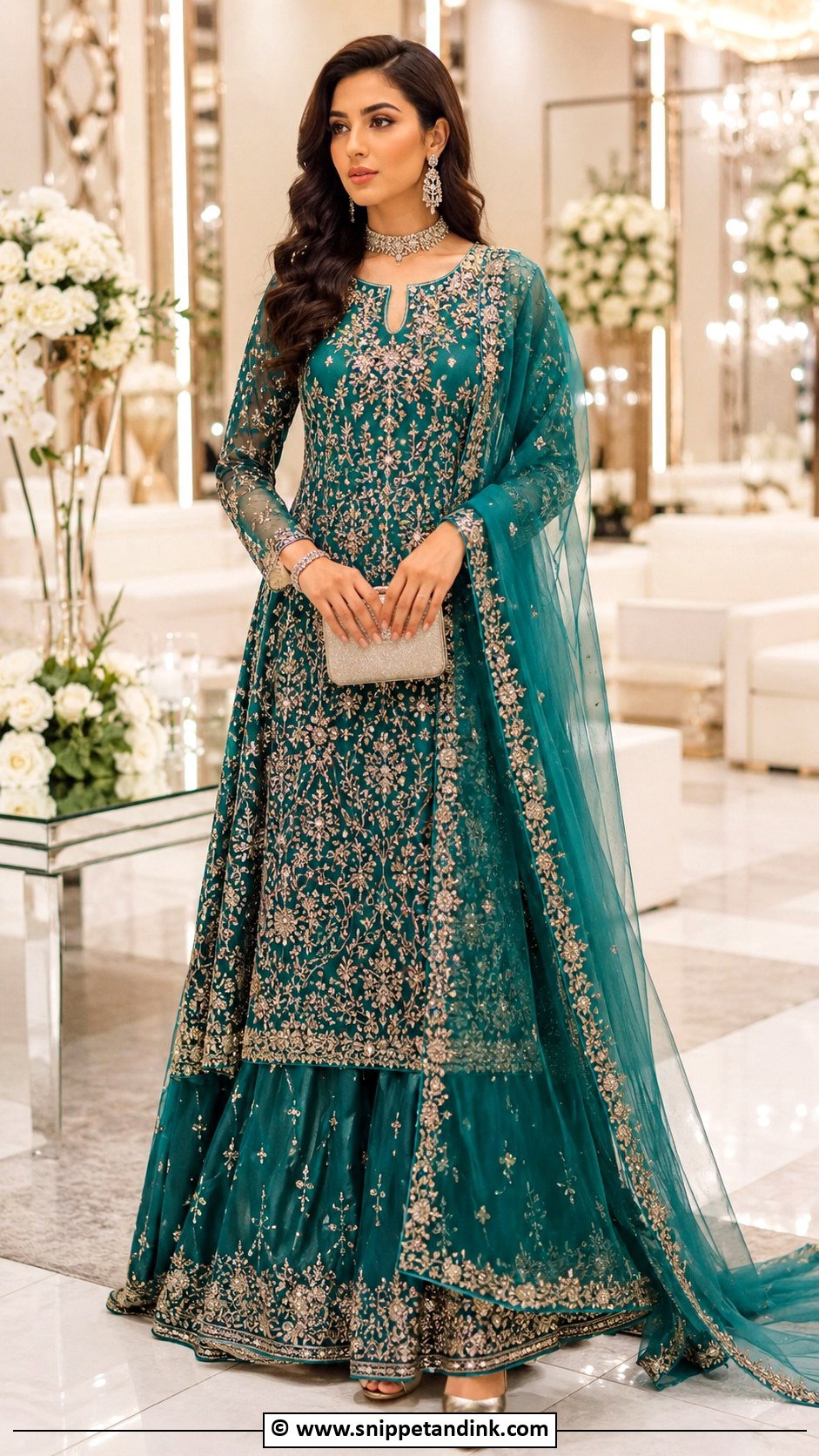
A teal long shirt with a lehenga gives coverage and still delivers the drama of a full skirt. Check the side slits when you try it on: the shirt should fall cleanly over the lehenga when you sit, not bunch at the hips. Embroidery at the neckline, cuffs, slits and hem keeps it balanced. Teal photographs well under bright hall lighting and suits many skin tones.
12. Peach Anarkali For Barat
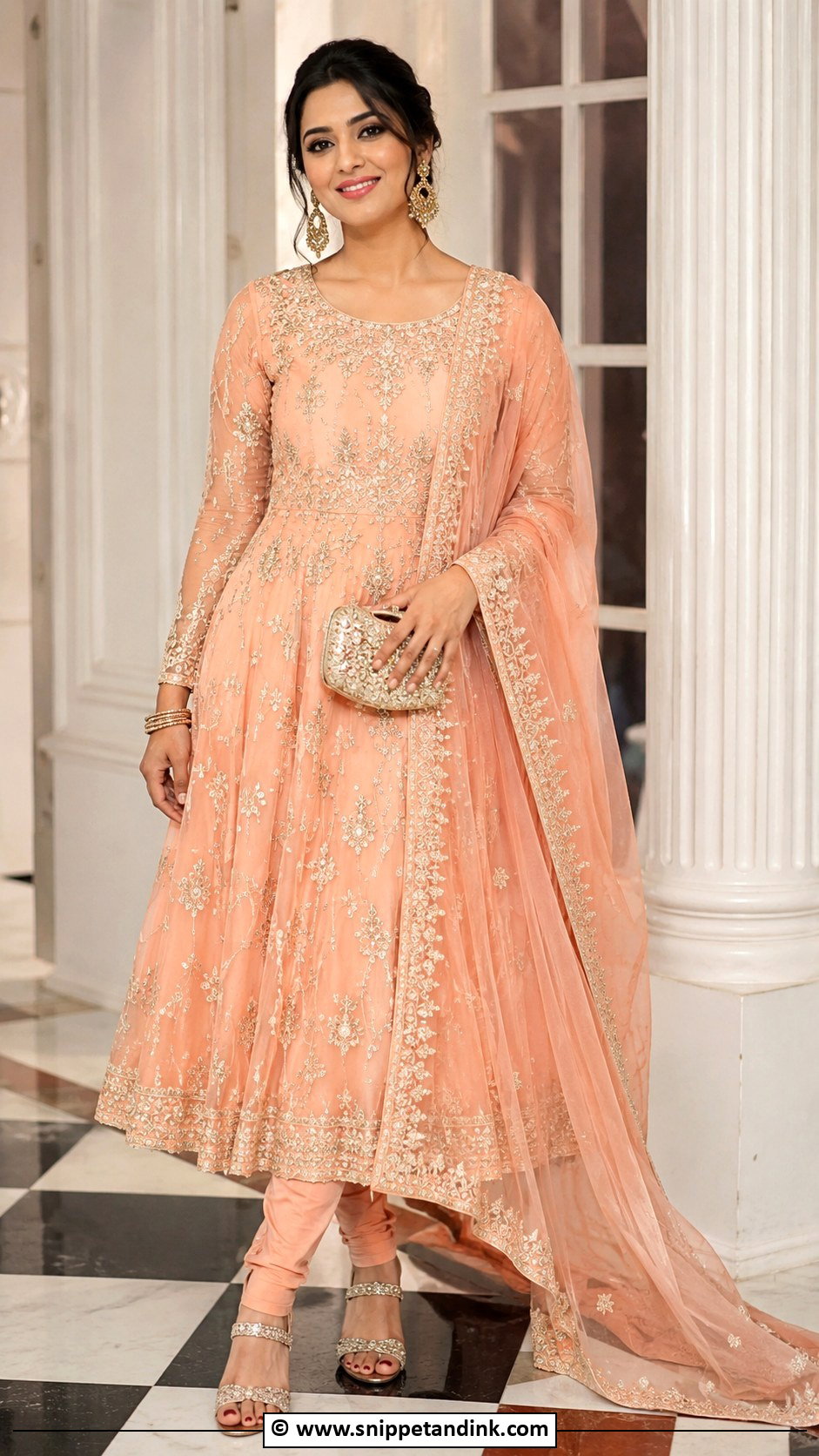
A peach anarkali is the comfortable choice for a sister who expects to be on her feet all night. The fitted bodice and flared skirt move easily. For Barat, it needs real embellishment, zari or sequins, so it doesn’t look like a daytime outfit. Have the churidar fitted with a little ease at the calf; tight churidars become uncomfortable after hours of standing.
13. Rust Lehenga For Bride Sister
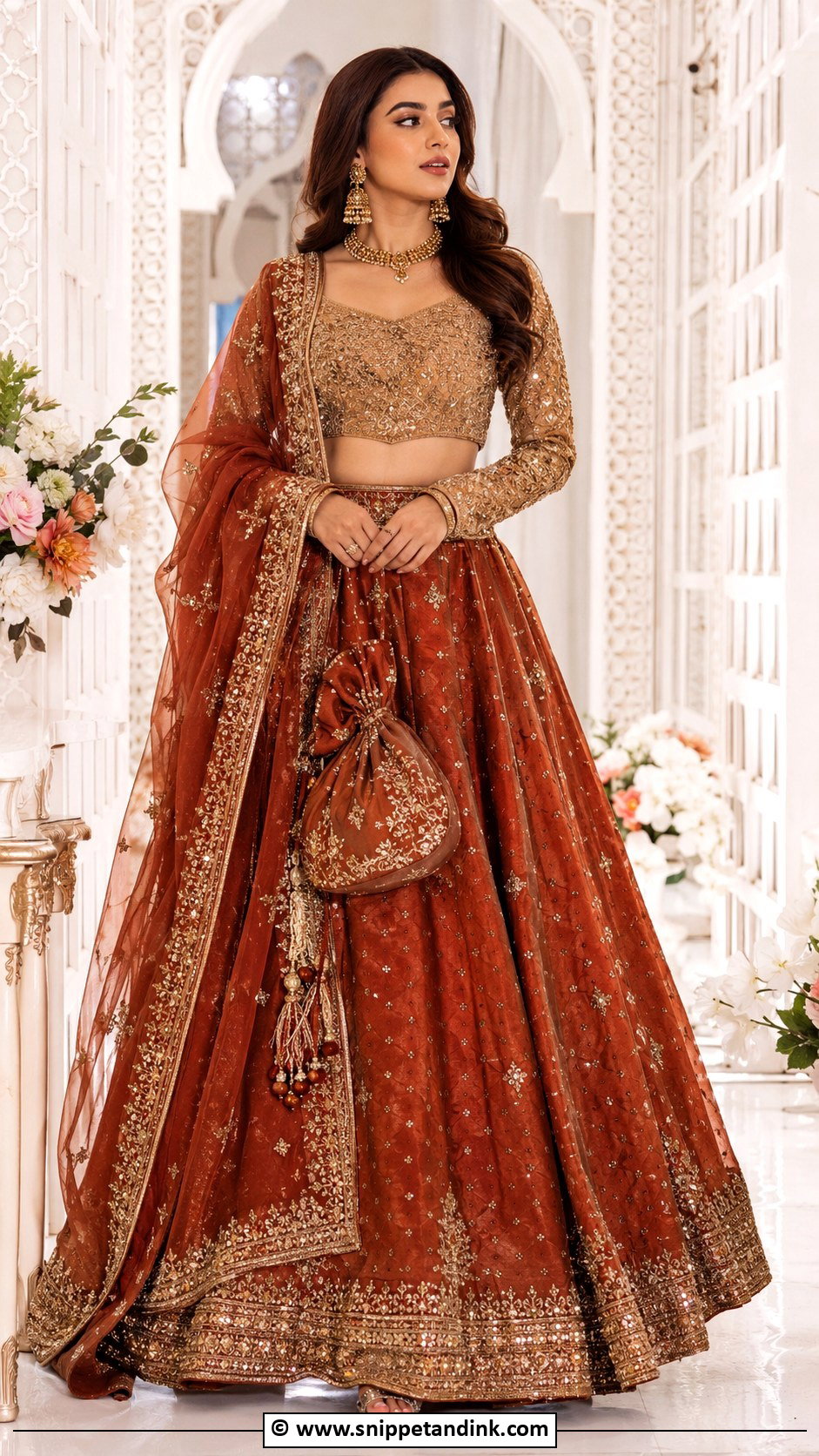
Rust has the warmth of bridal tones while staying clearly different from red. Antique gold embroidery and a structured blouse suit it, with a dupatta in rust, copper or soft beige. It’s excellent for autumn and winter evenings indoors. Warm brown eye makeup works with the shade. A potli bag finishes it, and it’s mature enough for an older sister.
14. Mint Green Lehenga For Barat
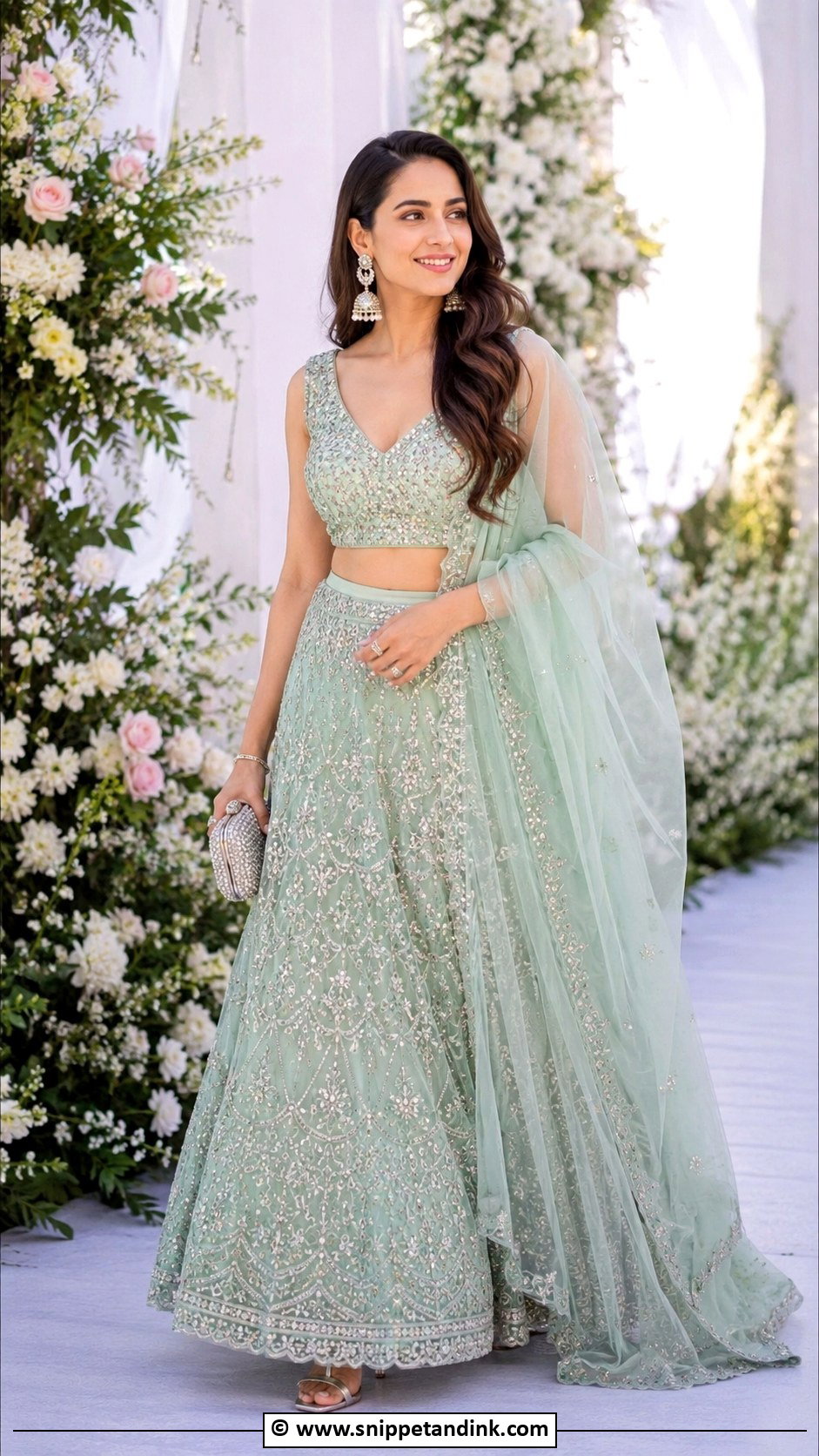
Mint is light enough for a daytime Barat and still formal with silver, pearl or champagne work. It reads well against floral decor. Pale fabrics show every mark, though, and the bride’s sister is often handling food trays, mithai and the doodh pilai glass. I’d keep a stain pen in her clutch. Pearl jewelry and silver heels suit it; a deeper green clutch adds contrast.
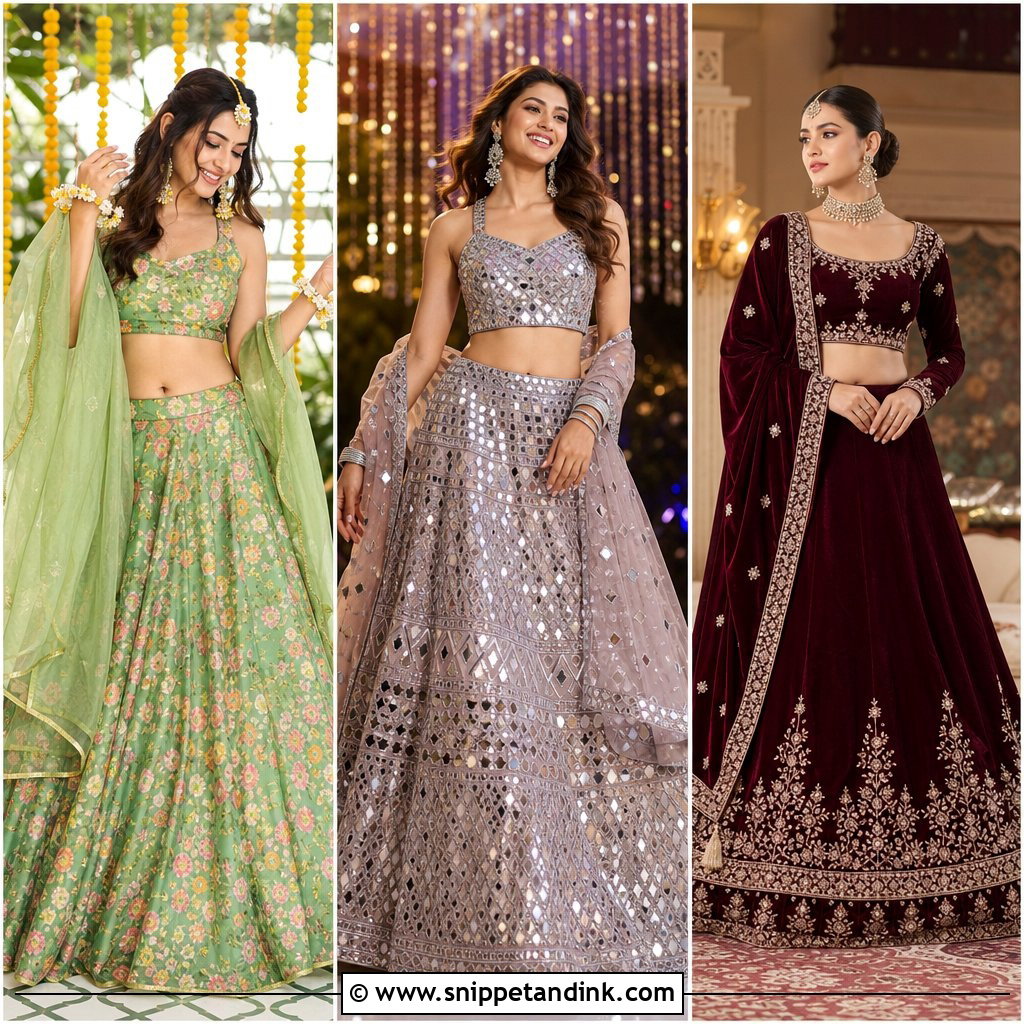
15. Navy Blue Gharara For Bride Sister
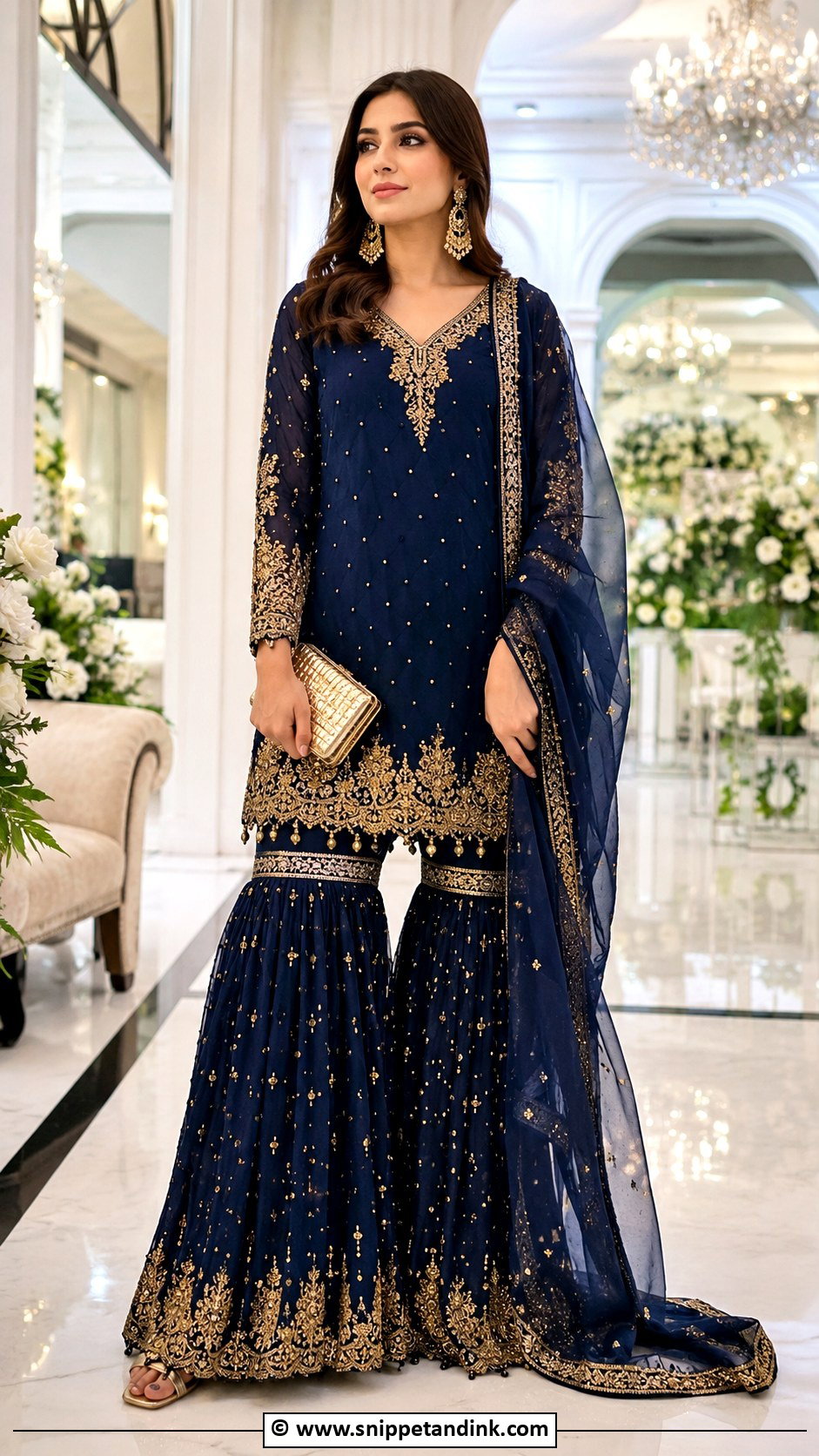
Navy has depth without the starkness of black and pairs with gold, silver or pearl work. A short kameez with a fitted waist and a gharara that flares from the knee gives the traditional shape. It’s also one of the most rewearable outfits here, for receptions and formal dinners later. A sheer bordered dupatta adds formality without hiding the work underneath.
16. Fuchsia Lehenga Choli For Barat
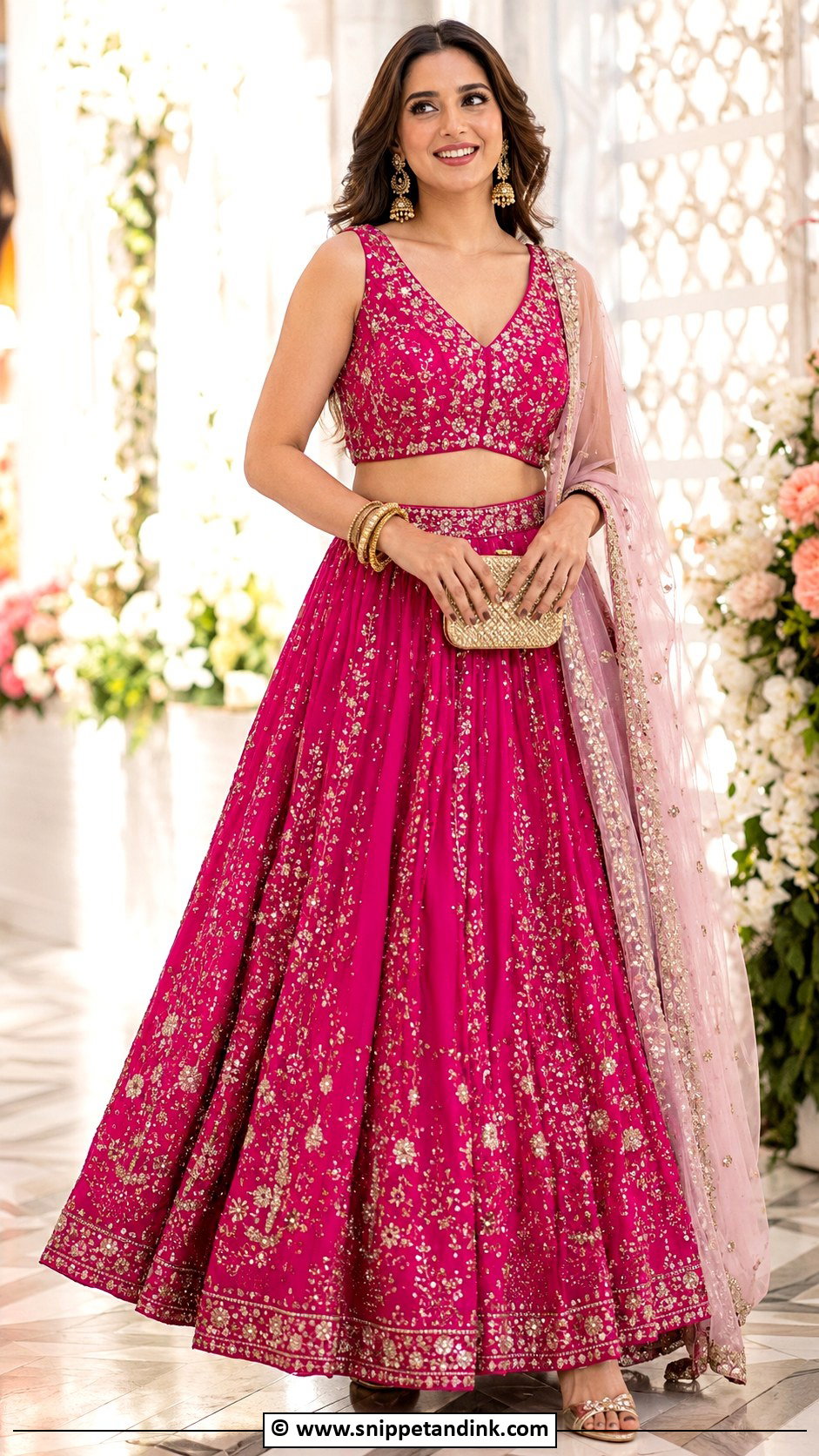
Fuchsia is full of energy and suits a younger sister who’ll be dancing and leading the doodh pilai negotiations. It already makes a strong statement, so accessories should be polished rather than oversized: gold earrings, bangles and embellished heels are enough. A lighter dupatta softens the brightness and is easier to manage while dancing. Mirror work looks lively under stage lights.
17. Silver Grey Saree For Barat
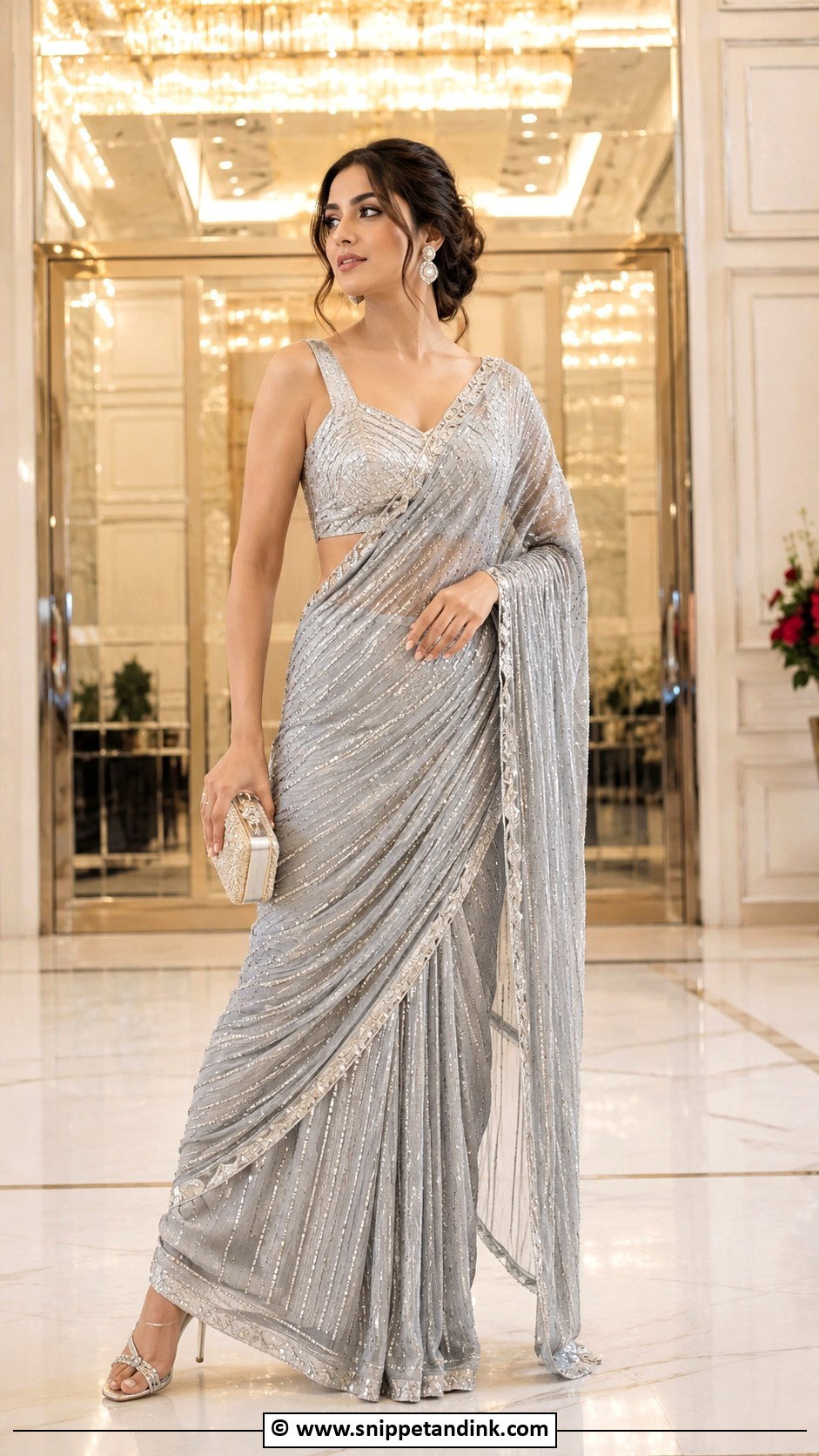
Silver grey is modern and formal, and it suits hotel ballrooms well. Grey can drain warmth from the face under cool lighting, so I add rosy makeup, pearls or a champagne clutch. Choose a saree that drapes smoothly; stiff fabrics in grey show every fold. A sleek hairstyle keeps the outline clean.
18. Olive Green Pishwas For Barat
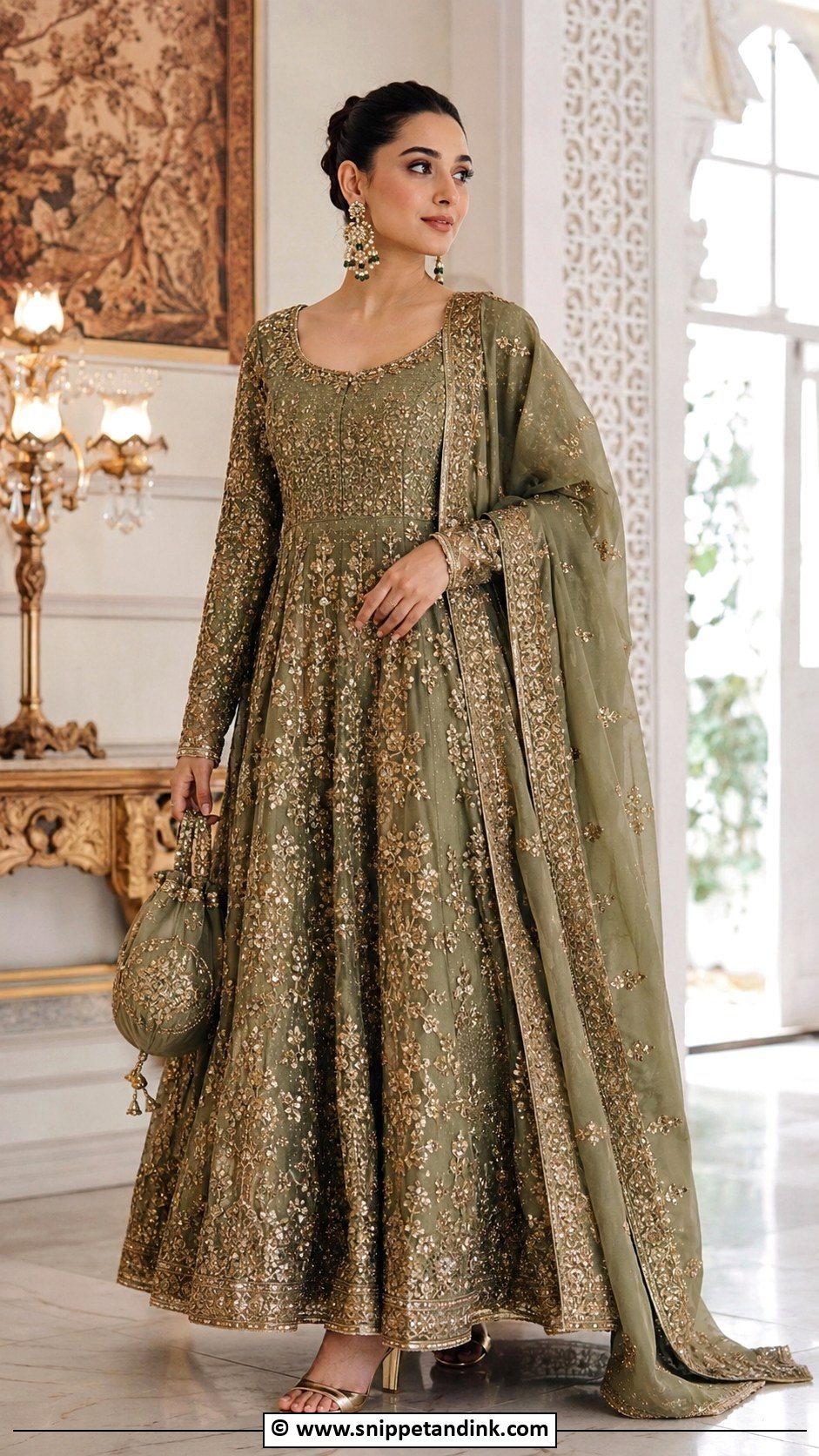
Olive is less expected than emerald or teal and looks mature and rich with antique gold embroidery. A long pishwas with a defined waist gives coverage and movement. Beige or champagne accents soften the green. Kundan, polki-style pieces or pearl drops all suit the earthy tone. It holds its own at a main wedding event.
19. Beige Jacket Lehenga For Bride Sister
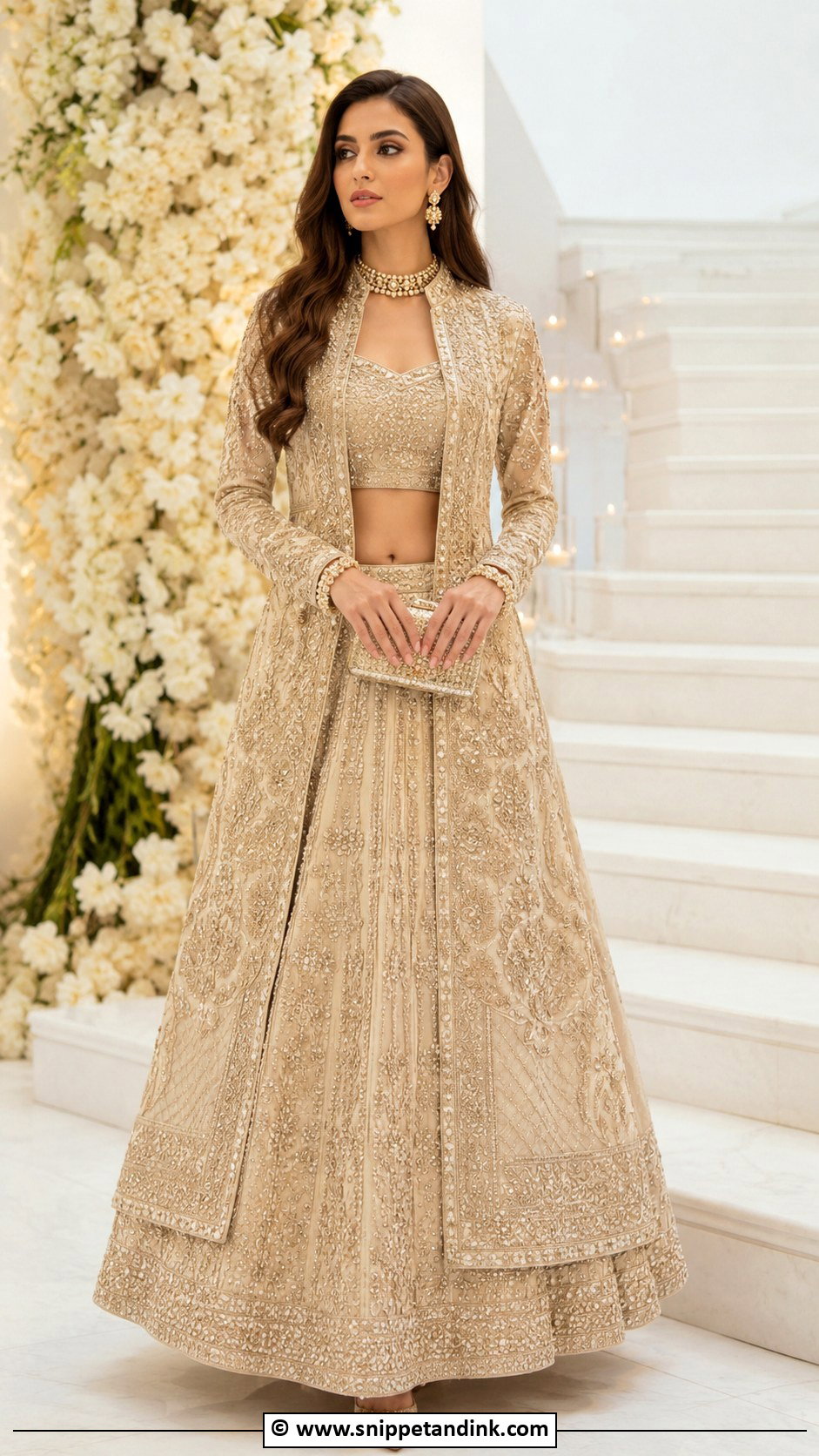
A beige jacket lehenga appeals to the sister who prefers a modern cut. A long embroidered jacket gives coverage; a cropped one feels younger. Plain beige disappears in photos, so it needs texture, shine or heavy embellishment. Remember the jacket adds warmth, and halls get hot once everyone is inside. A light inner blouse lets you take it off for the dancing.
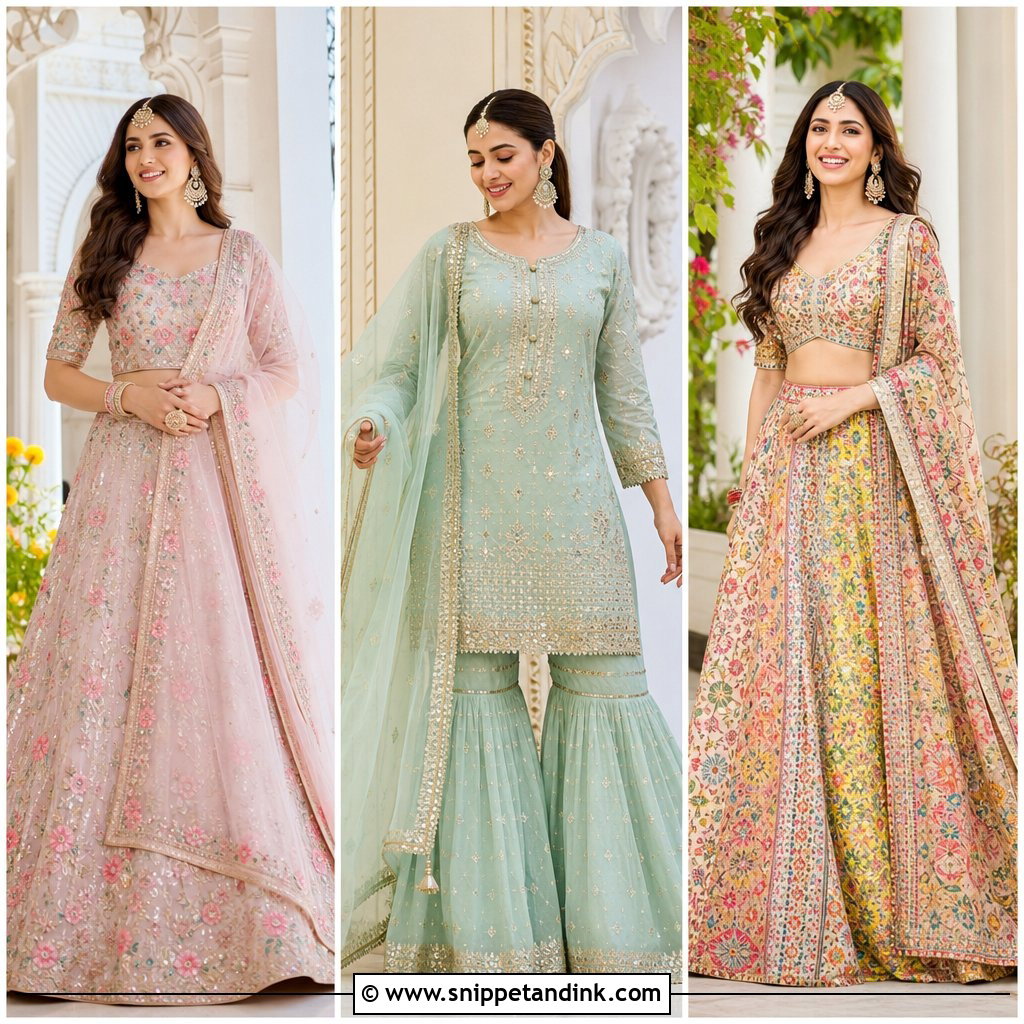
20. Coral Sharara For Barat
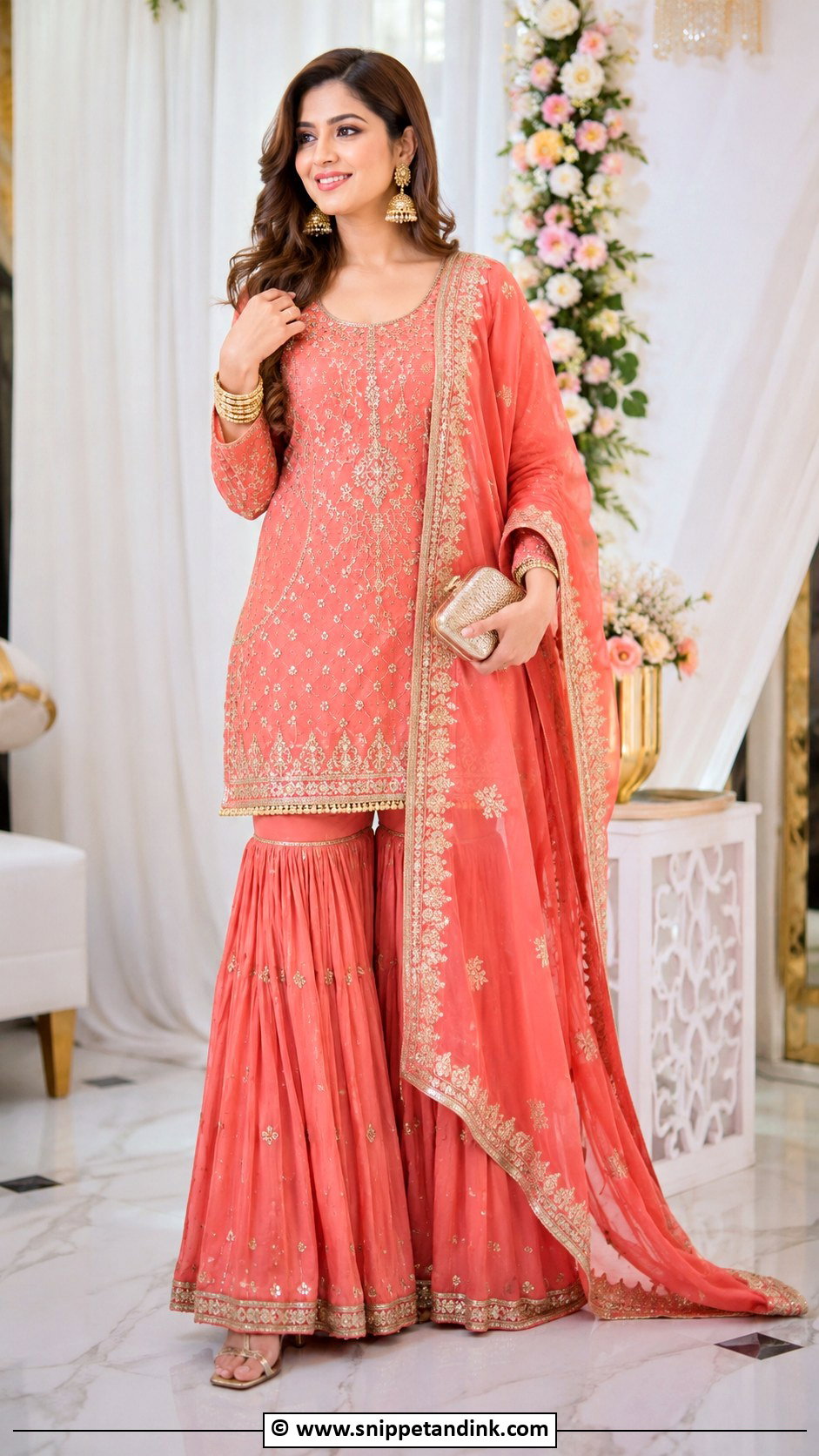
Coral sits between pink and orange and flatters most skin tones. Silk, chiffon or georgette give a sharara the right flow. Gold or pearl embroidery and a bordered dupatta pull it together. It coordinates with maroon, gold, ivory and green family palettes. Peach makeup keeps it fresh.
21. Plum Long Frock For Barat
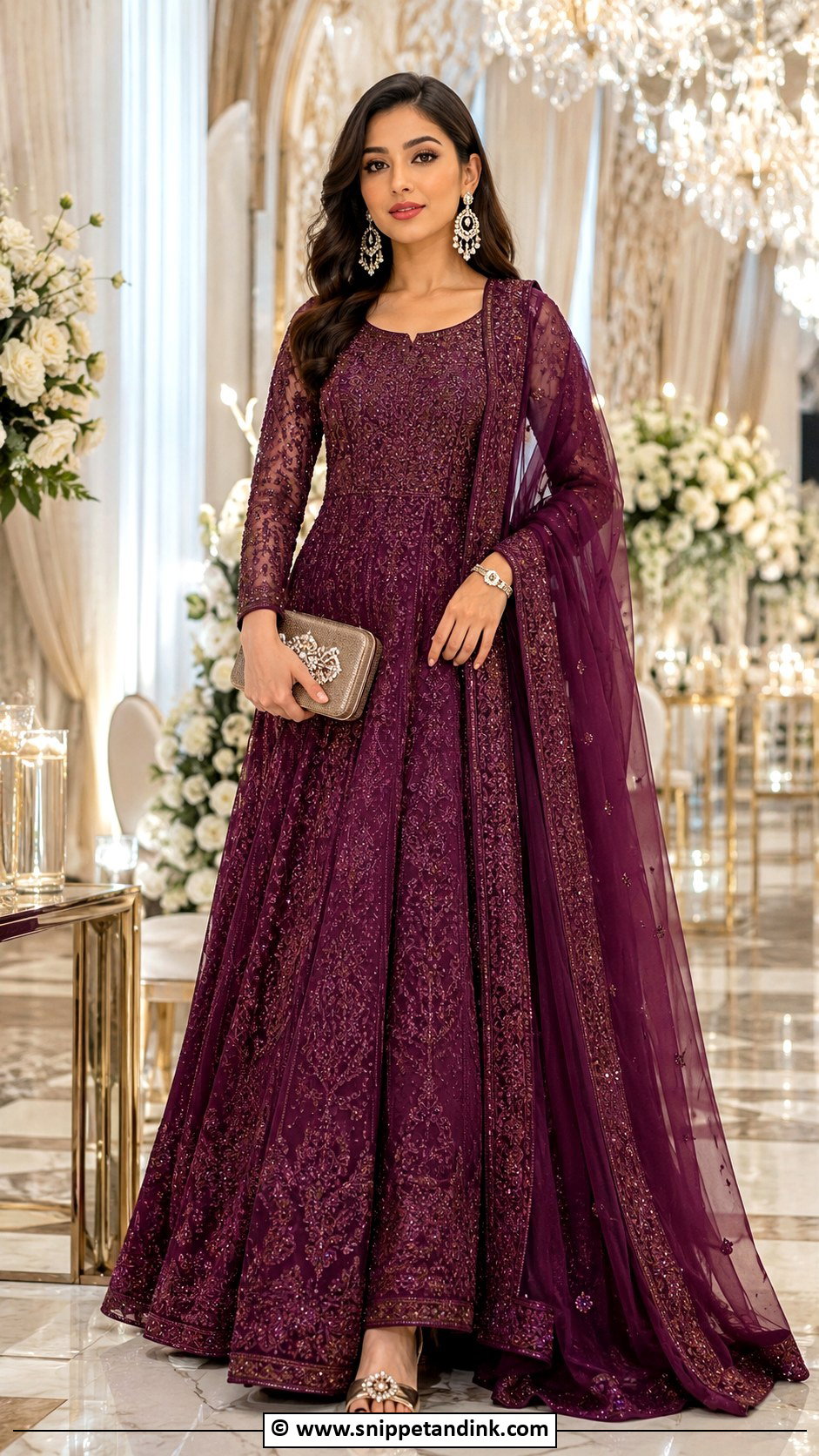
A long frock suits a sister who would rather wear something dress-like than manage a skirt and dupatta separately. Plum is rich for an evening wedding and pairs with antique gold, bronze or silver work. A fitted bodice with a flared lower half looks good from every side of the stage. A light dupatta with border work completes it.
22. Gold Tissue Saree For Bride Sister
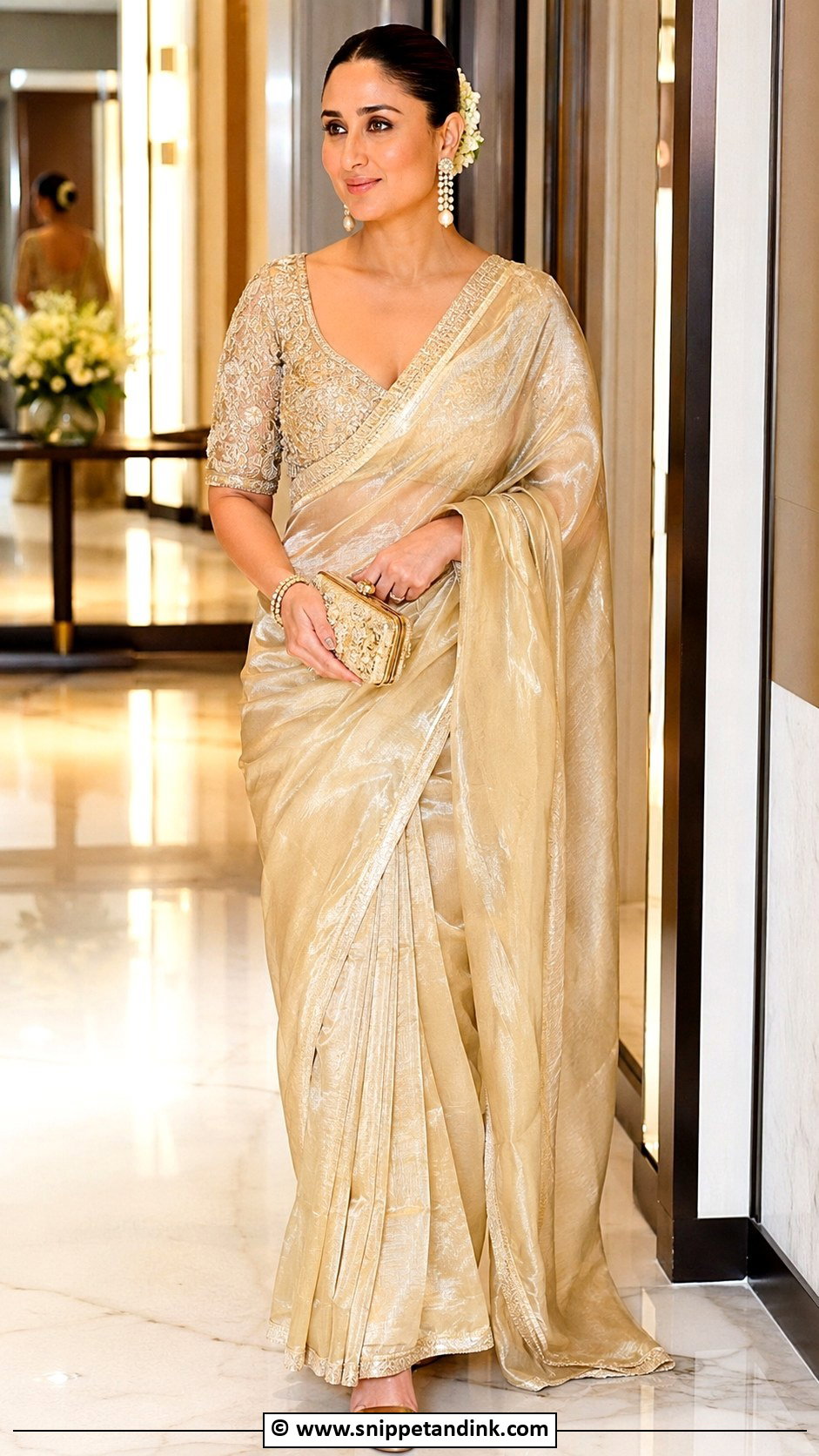
Gold tissue has a natural sheen, so even light embroidery looks festive. That also means it creases visibly, and tissue doesn’t recover well once crushed, so hang it until you dress and avoid sitting on the pallu. A clean border and an embroidered blouse balance the shine. Keep the styling simple, with pearl earrings and a sleek bun, so it reads as family rather than bridal.
23. Red And Beige Lehenga For Bride Sister
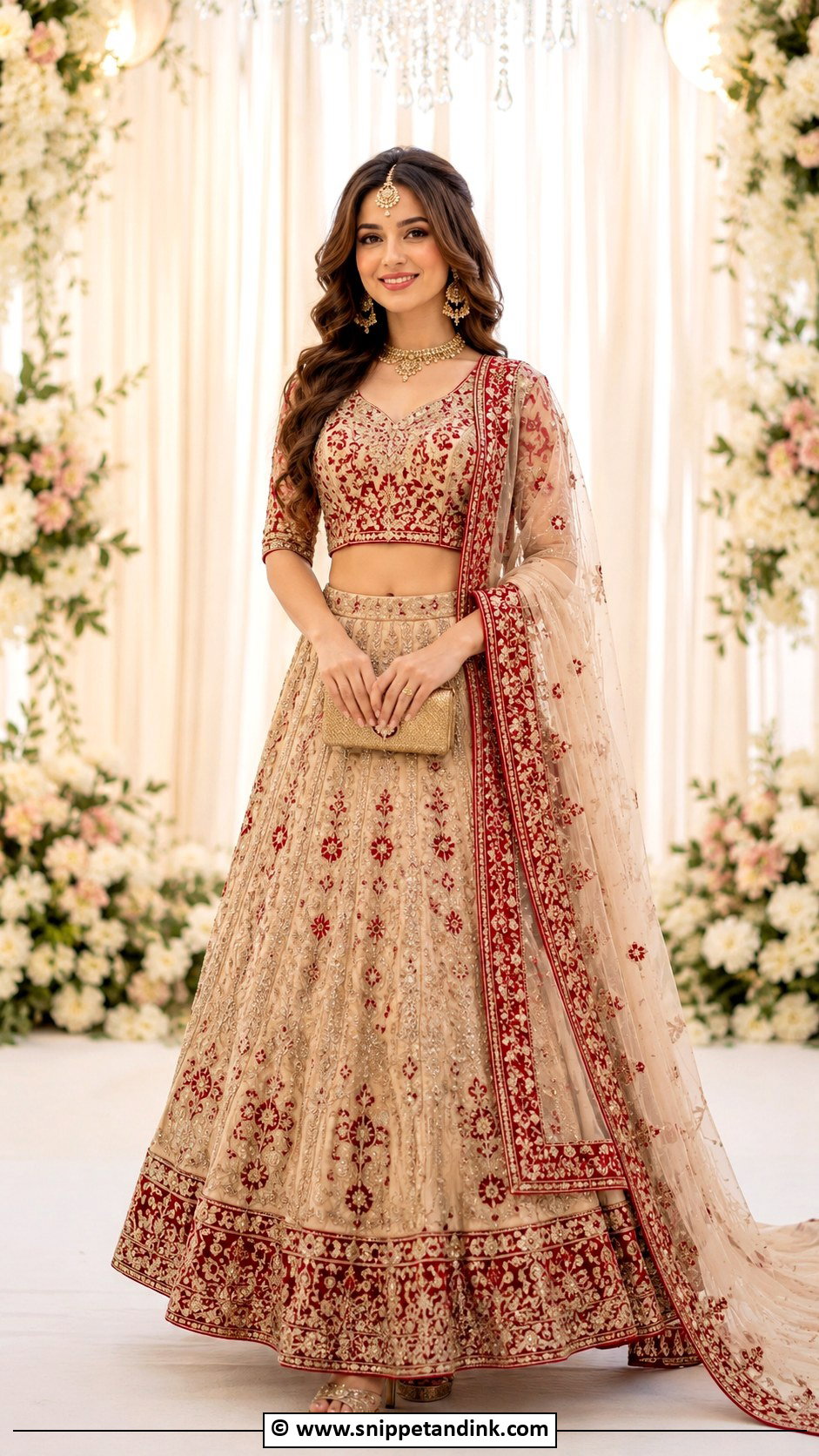
A red and beige lehenga lets the sister wear a traditional Barat color without looking like the bride. Beige is the base; red appears in the dupatta, border or blouse. Keep the embellishment lighter than any bridal outfit and never cover the head with a heavy red dupatta. It works well when the family palette is red, gold and neutrals.
24. Powder Blue Gown For Barat
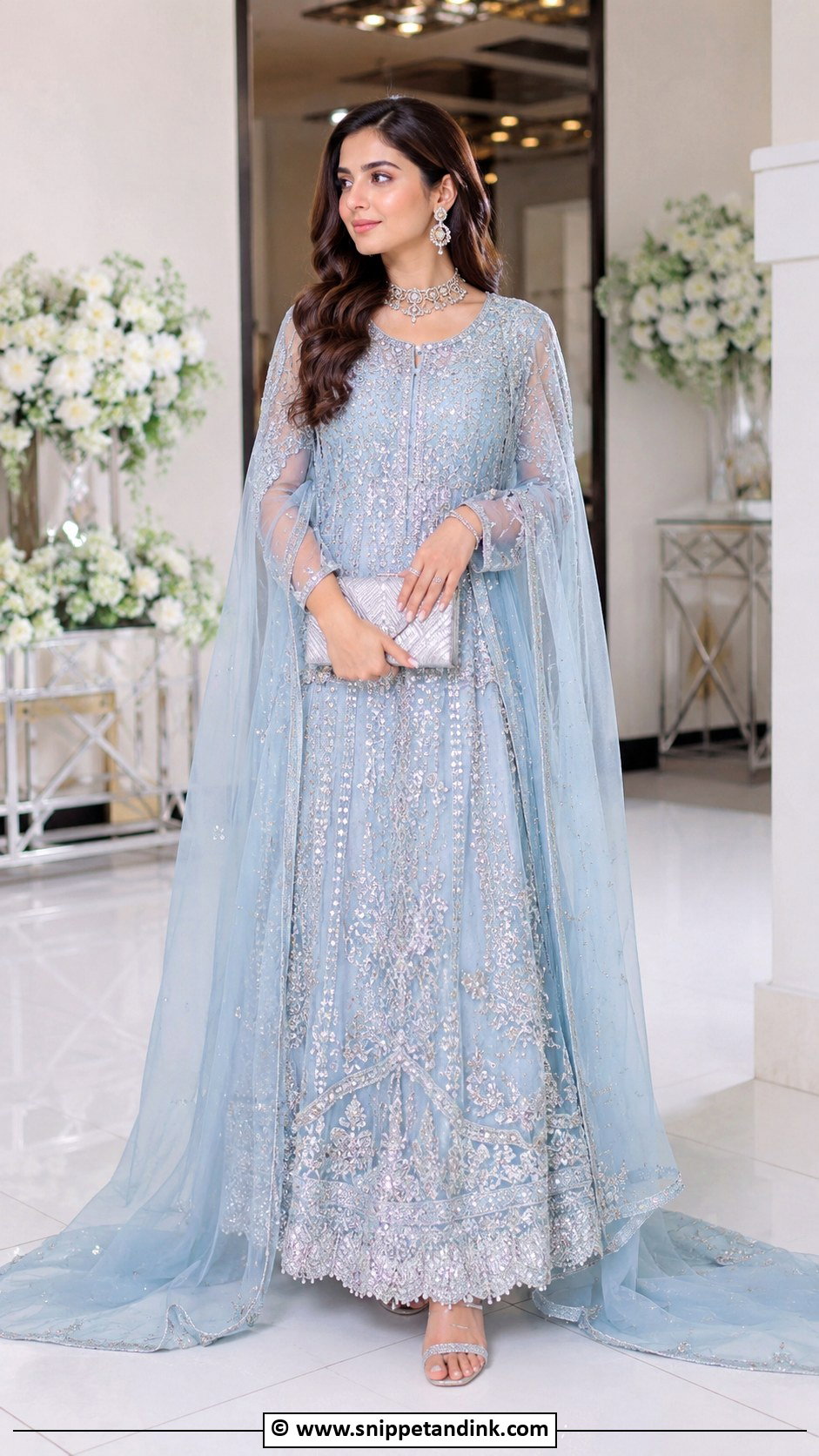
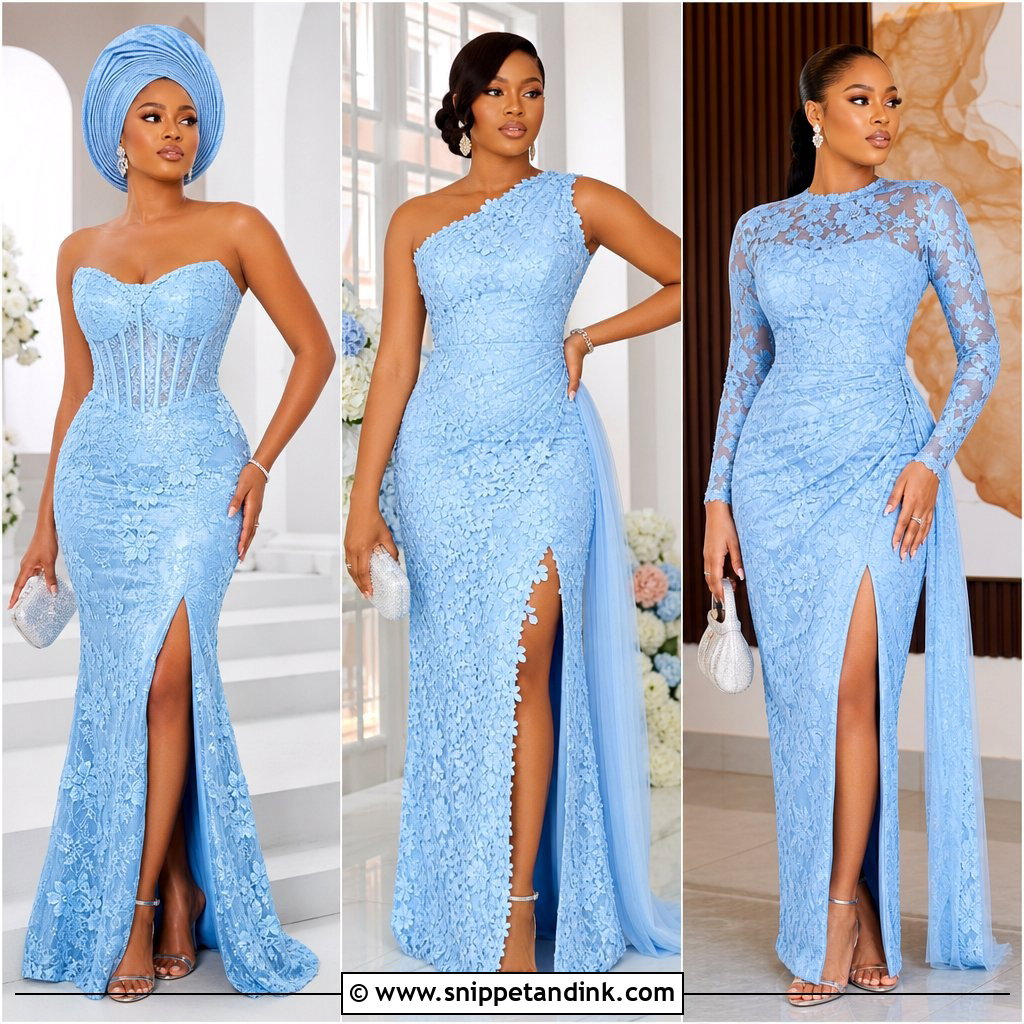
A powder blue gown suits a contemporary venue. It needs a South Asian detail, embroidery on the bodice or sleeves, or a cape dupatta, so it still belongs at a Barat. Check with older relatives if the family is traditional, since a Western-style gown isn’t welcome at every Barat. Silver jewelry and crystal heels suit the cool shade.
25. Magenta Gharara For Bride Sister
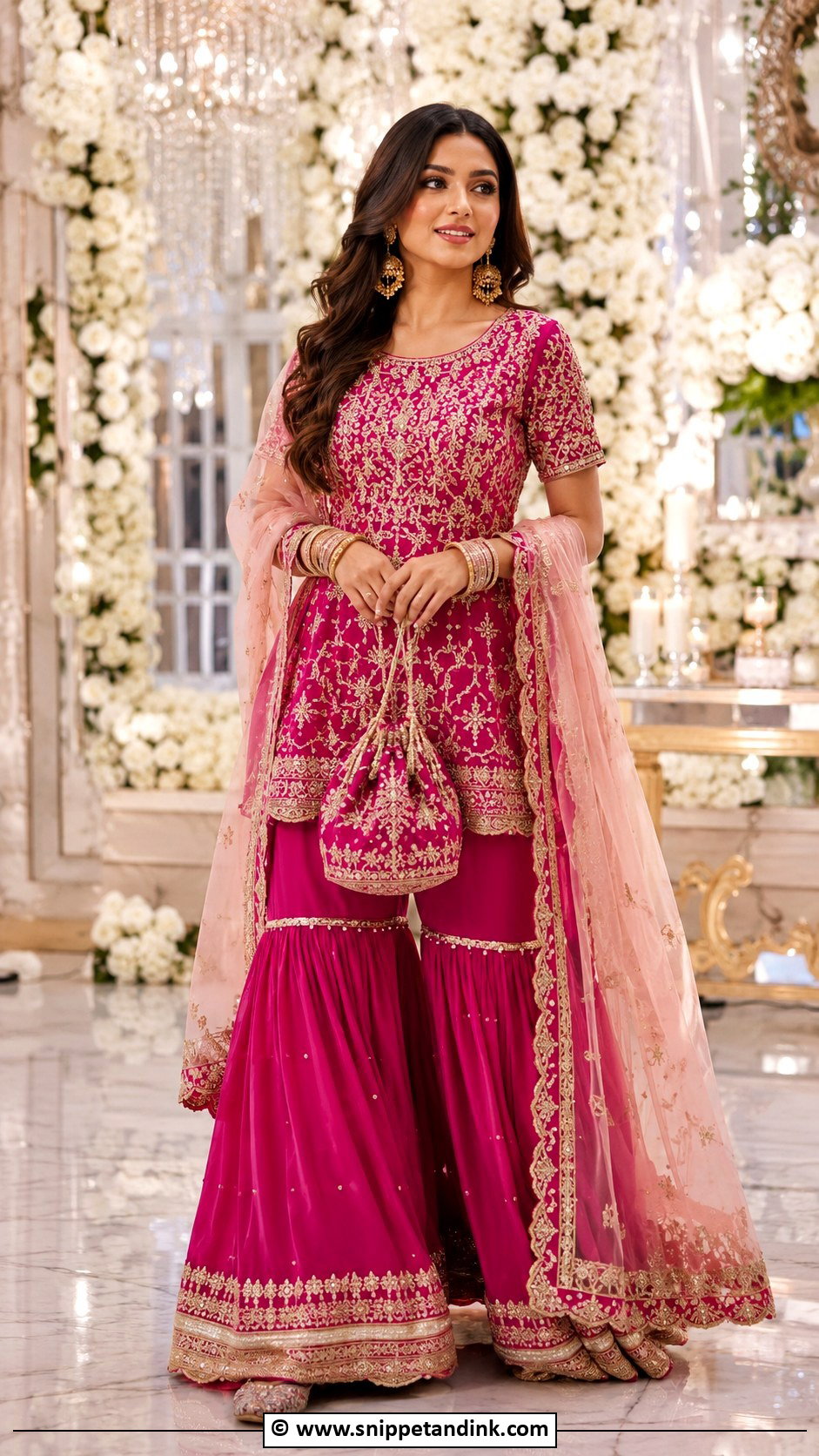
A magenta gharara is joyful and works with gold embroidery. A short shirt with detailed work, a flared gharara with border accents and a dupatta light enough to carry while running around. I’d choose one statement jewelry piece, heavy jhumkas or a big tikka, not both. It’s bright but clearly separate from the bride’s red.
Dressing for Joota Chupai, Doodh Pilai and the Rukhsati
The bride’s sisters usually lead the playful rasams, and those moments are physical. You’ll be bending to hide or retrieve the groom’s shoes, carrying the doodh pilai tray, negotiating with his friends and crowding onto the stage.
Pin the dupatta twice
One pin at the shoulder isn’t enough for a night of leaning and dancing. Add a second hidden pin at the waist or the back of the blouse so it doesn’t slide when you reach forward.
Watch the skirt weight
A heavy can-can and a fully worked skirt can make a lehenga very heavy to move in. If you’ll be on your feet for hours, a lighter lining or a sharara is kinder on the back.
Ask the tailor to add a hidden pocket in the kalidar seam or the lehenga side panel. You’ll want somewhere for your phone and the joota chupai money that isn’t a clutch you keep putting down.
Carry a small kit
Safety pins, blotting papers, a spare bangle pin and flat shoes in the car. By the rukhsati, emotions run high, so waterproof eye makeup is worth it too.
Standing Beside the Bride Without Stealing Her Night
The sister’s outfit works when it looks properly formal and still lets the bride stand out. Lehengas, ghararas, shararas, sarees, pishwas and long frocks all suit the Barat when the color, weight and jewelry sit a step below the bridal look. Jewel tones feel dramatic, pastels soft, metallics glamorous. Check the venue, the season and the family’s expectations, then make sure you can move, dance and hold your sister’s hand at the rukhsati without fighting your clothes.
You'll Like These Ideas:


Leave a Reply