
Dressing a bride’s sister is a different brief from dressing a guest. You’ll be in more photos than almost anyone except the couple, you’ll carry things, fix her dupatta, run between rooms and still be expected to lead the dancing. So when I help put together an outfit for your sister’s wedding, comfort and color sit right beside the embroidery. Wedding wear lately has moved toward light organza, florals, mirror work, chikankari and modern blouse cuts alongside the classic silks, which makes that balance easier than it used to be. The looks below cover every function from a morning haldi to a late reception. Each one should sit in the wedding palette while staying clearly apart from what the bride wears.
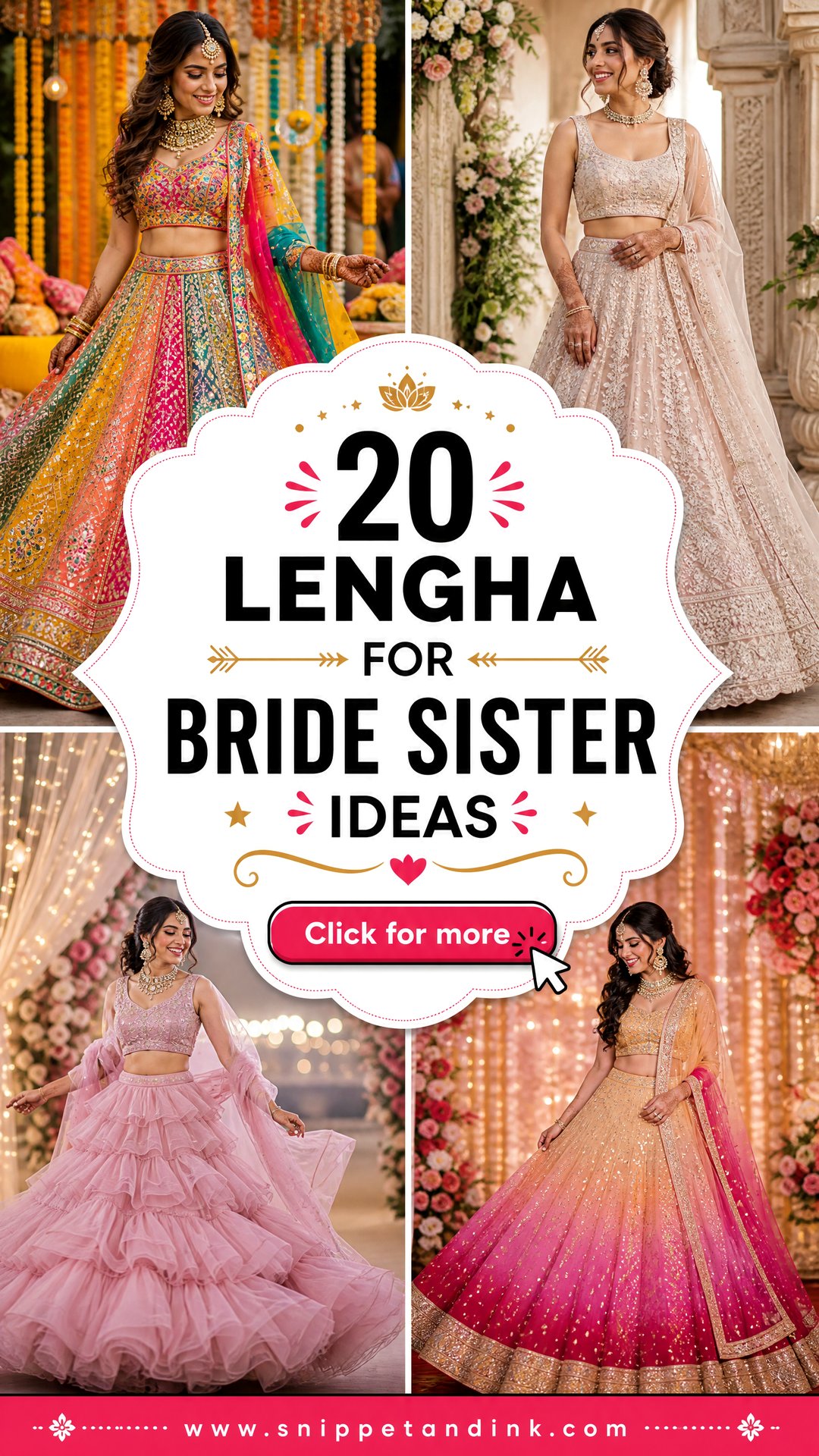
A Sister’s Lehenga Has a Job to Do
When a sister comes to me with a lehenga she loves, I put her through the same small routine before we talk about jewelry. A bride sits for much of her day. You won’t. You’ll hold her bag, straighten her dupatta before every photo, carry gifts and climb stairs in a hurry.
- Lift it. Hold the skirt on its hanger for a minute. If your arm tires, your waist will feel it by the third hour. For a working sister I prefer the lighter of two similar options.
- Ask for pockets. Most tailors can add a side-seam pocket to a lehenga skirt. Lipstick, safety pins and your phone stay with you instead of in a lost potli.
- Check the cancan. A full cancan looks dramatic and doubles the width you need in a crowded mandap. A soft net layer or none at all moves more easily.
- Hem it to the shoes you’ll actually wear. If you’ll switch to flats after the pheras, hem for the flats and accept a slightly shorter look in heels.
- Squat in the blouse. Bend down as though picking up the bride’s hem. A blouse that rides up or pinches across the back needs letting out.
Keep a small kit in that pocket: six safety pins, a few bobby pins, a strip of double-sided tape and blotting papers. You’ll be the one the bride turns to.
1. Pastel Organza Bride Sister Lehenga
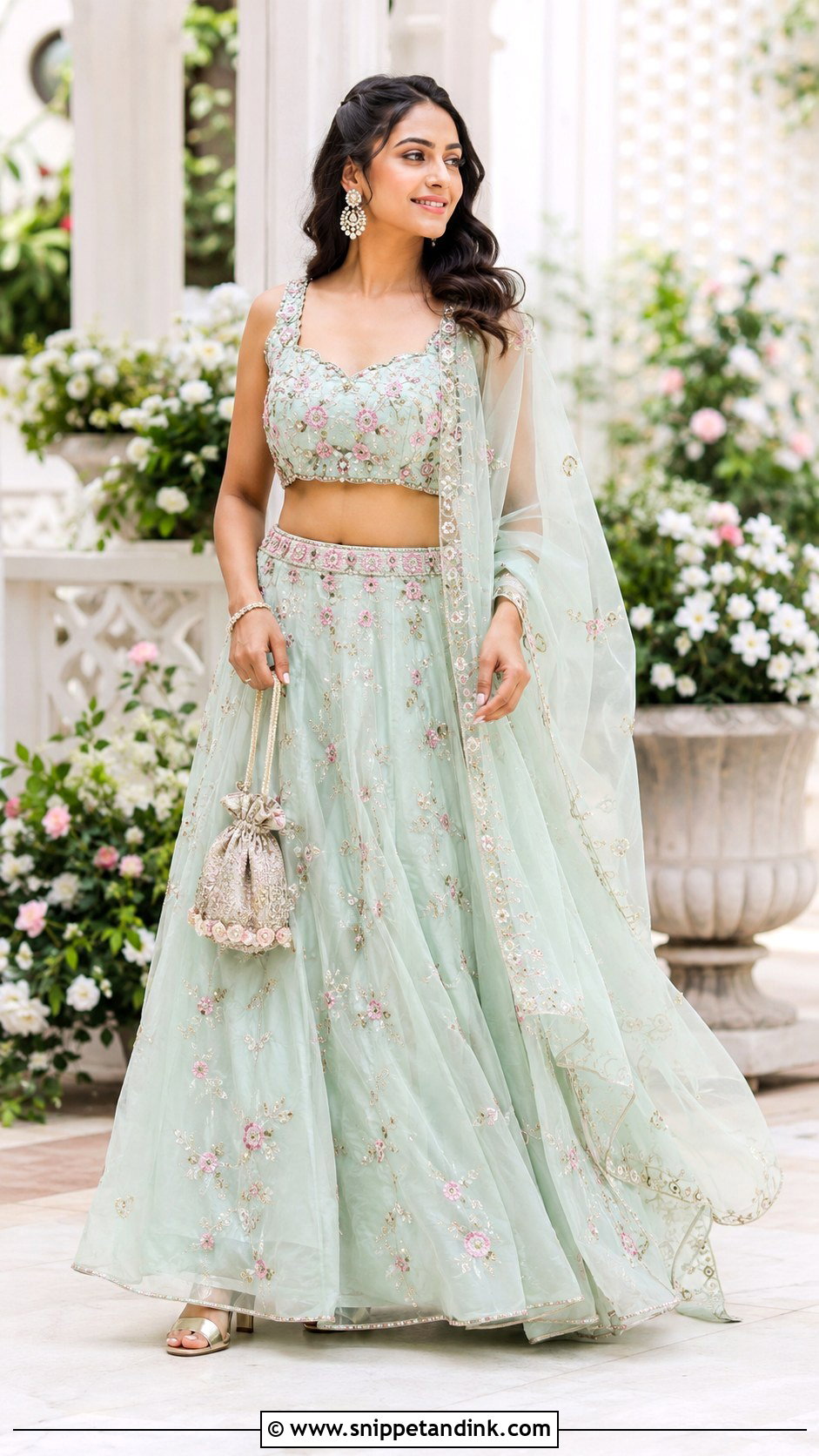
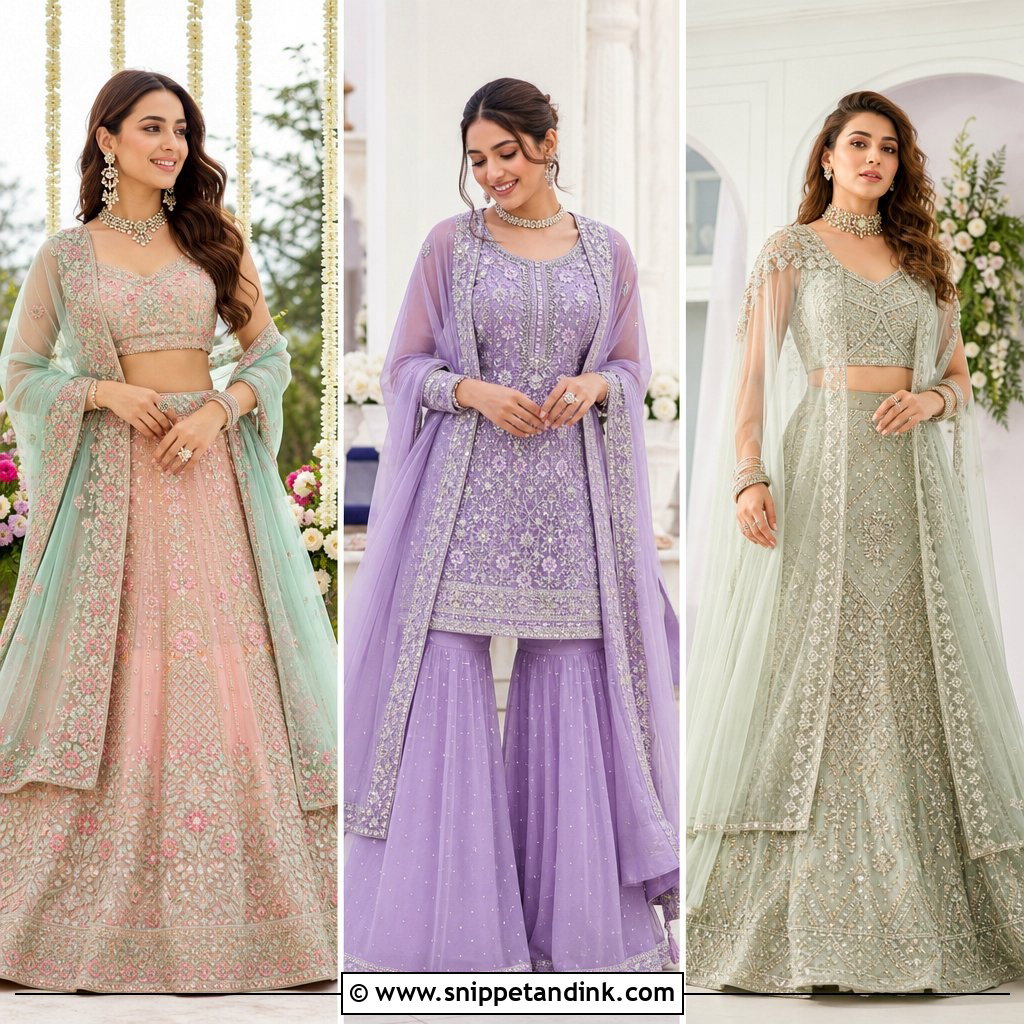
Organza holds its shape by itself, which is both its charm and its risk. A skirt with too many layers stands out like a lampshade and catches on doorframes, so for a sister who is constantly moving I pick controlled volume and a well-finished lining. Mint, powder blue, peach or lavender with fine threadwork and a scatter of sequins suits a daytime ceremony or engagement. Balance it with a fitted embroidered blouse and an organza dupatta light enough to forget about. Pearl earrings, a small potli and metallic block heels finish it, with soft curls or a low bun. Check the skirt by a window; very sheer organza shows everything underneath in daylight.
2. Mirror Work Bride Sister Lehenga
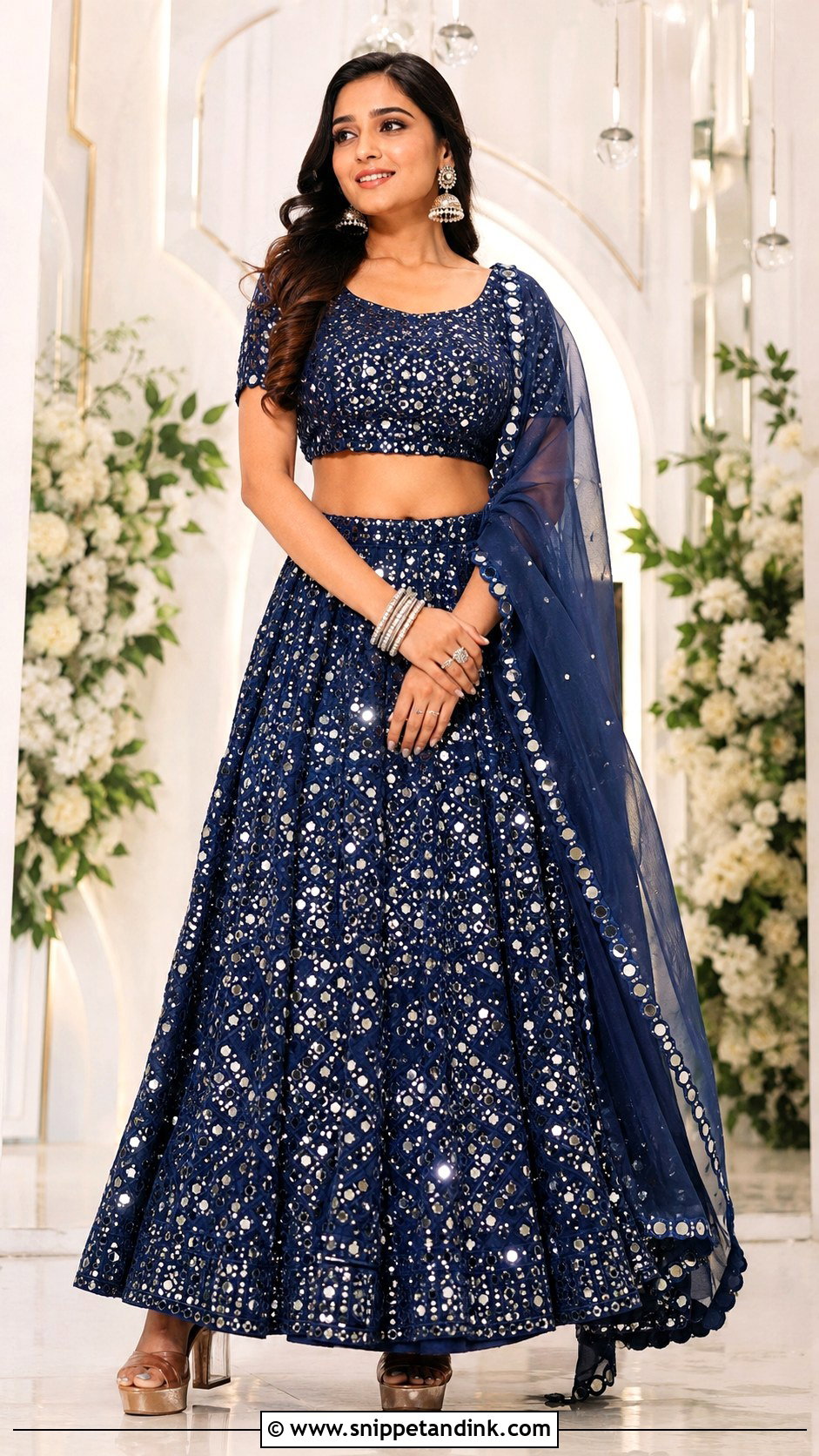
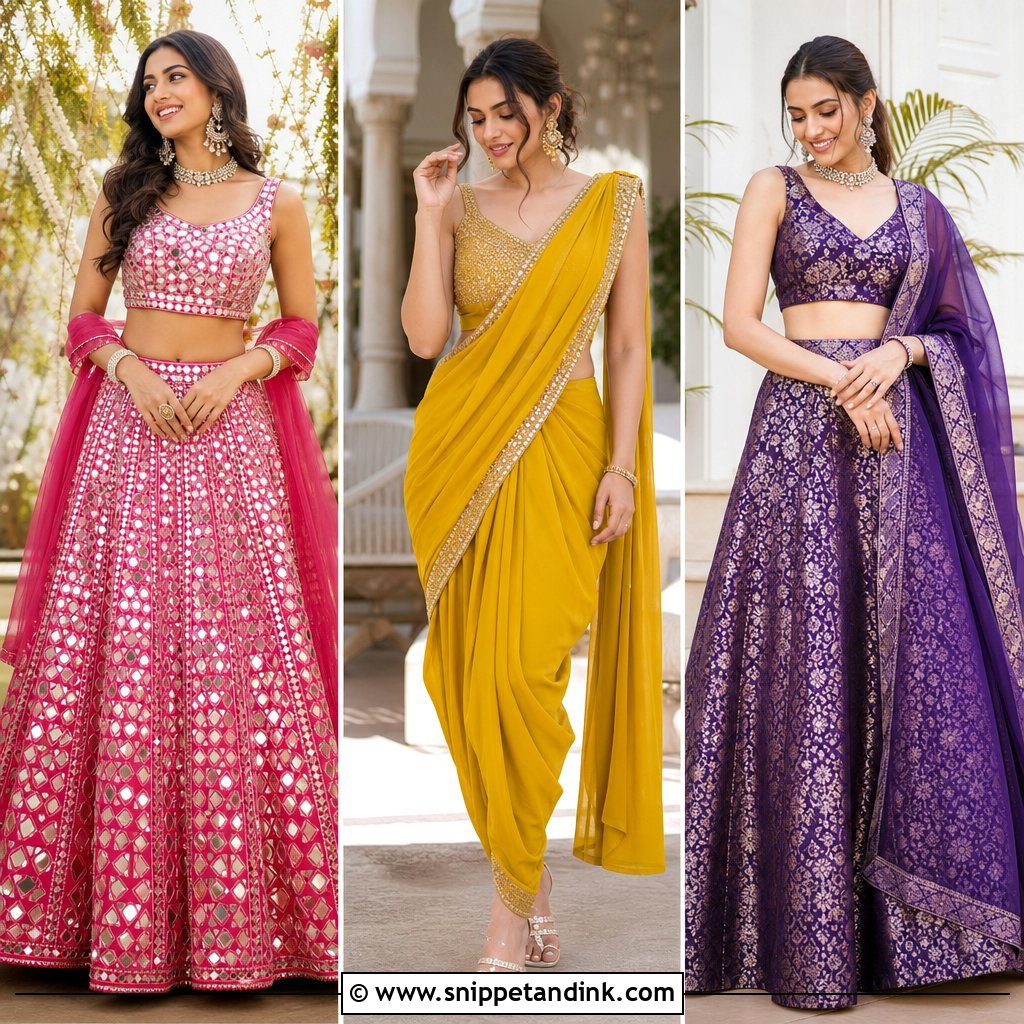
Mirror work has a practical problem people rarely mention: the edges. Cheap mirrors are cut roughly and sewn loosely, and on the inside of a blouse sleeve they scratch through the evening. Run your fingers over the work and look for smooth glass and tight stitching around each piece, and ask for a soft lining under the blouse. Deep blue, fuchsia, teal or plum with evenly spaced mirrors and colored thread is ideal for a sangeet. Keep the dupatta to plain chiffon. Silver jhumkas, stacked bangles and platform heels carry it, and a braided ponytail survives the dance floor.
3. Yellow Floral Haldi Bride Sister Lehenga
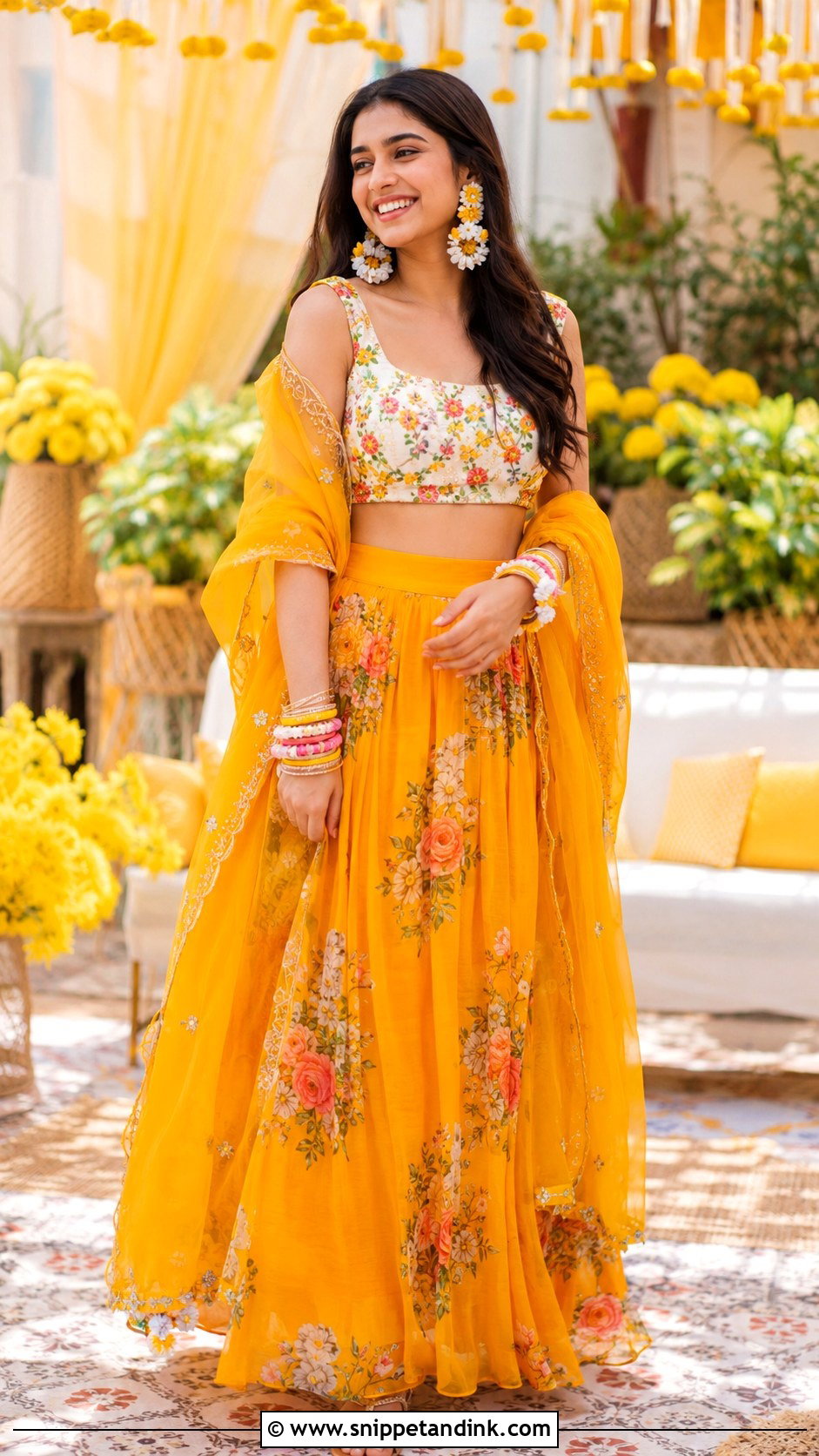
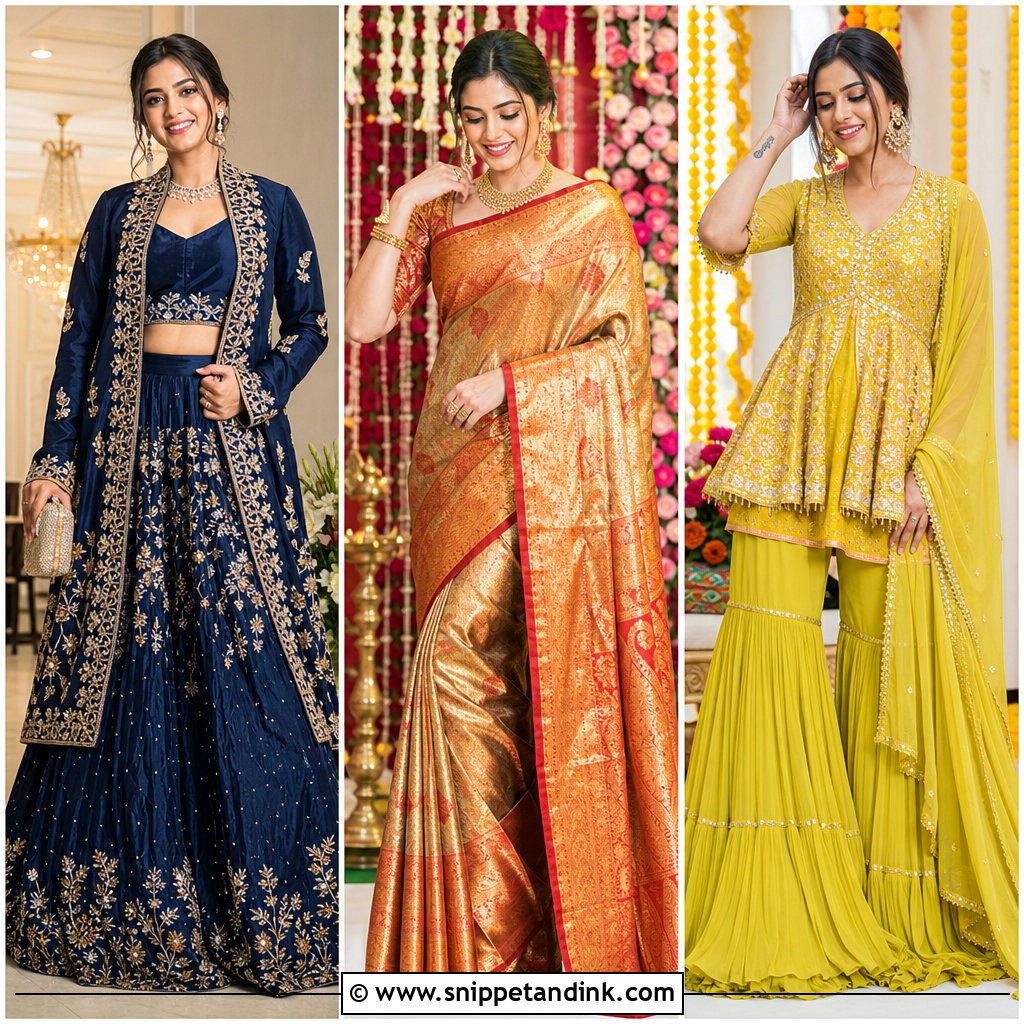
Haldi is the one function where I tell sisters to dress for mess. Turmeric paste stains silk and pale embroidery for good, and it will end up on your hem. Yellow suits the mood of a lively haldi ceremony, so choose georgette or cotton silk with white floral embroidery, a few mirrors or a light gota border, in a fabric you could wash. A sleeveless blouse and a sheer dupatta pinned over one shoulder stay out of the paste. Floral earrings, bangles and embellished flats keep you nimble, and an ankle-clearing hem matters in a crowded courtyard. If the bride is in yellow, move to lime, marigold or mustard so you separate in photos.
4. Multicolor Mehndi Bride Sister Lehenga
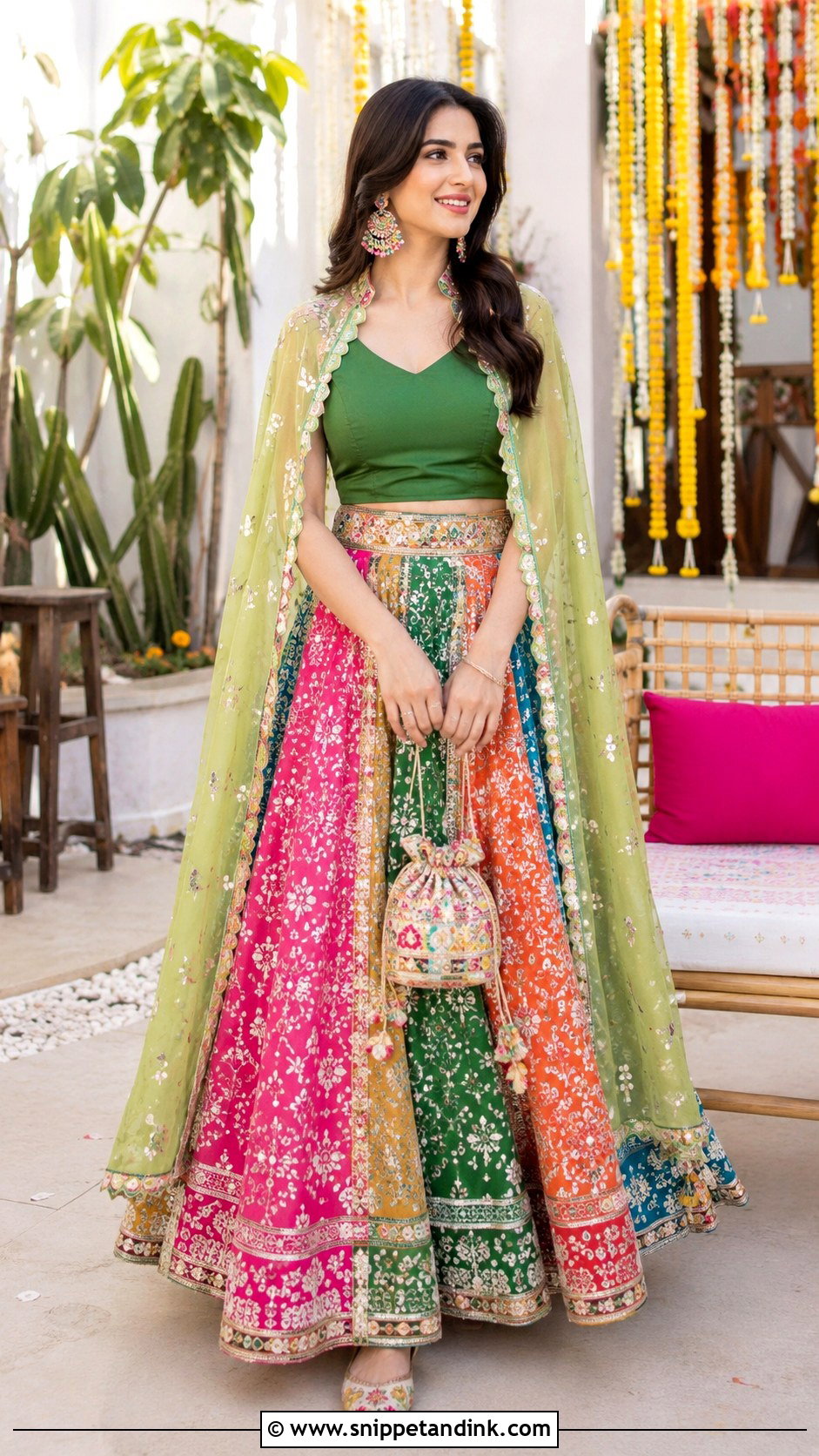
At a mehndi, a sister is often getting her own henna done, which means hours with wet paste on both hands. A multicolor paneled skirt in pink, green, orange and blue suits the mood; ground it with a solid blouse in one of those colors. Skip the long dupatta. A short cape or a dupatta pinned firmly at the shoulder means you never have to adjust it with wet hands. Chandbalis, a sling potli and embroidered juttis finish the look, and bangles stay off until the paste has come away. A half-up style keeps hair out of the design. Busy print means quiet jewelry and plain shoes.
5. Sequin Sangeet Bride Sister Lehenga
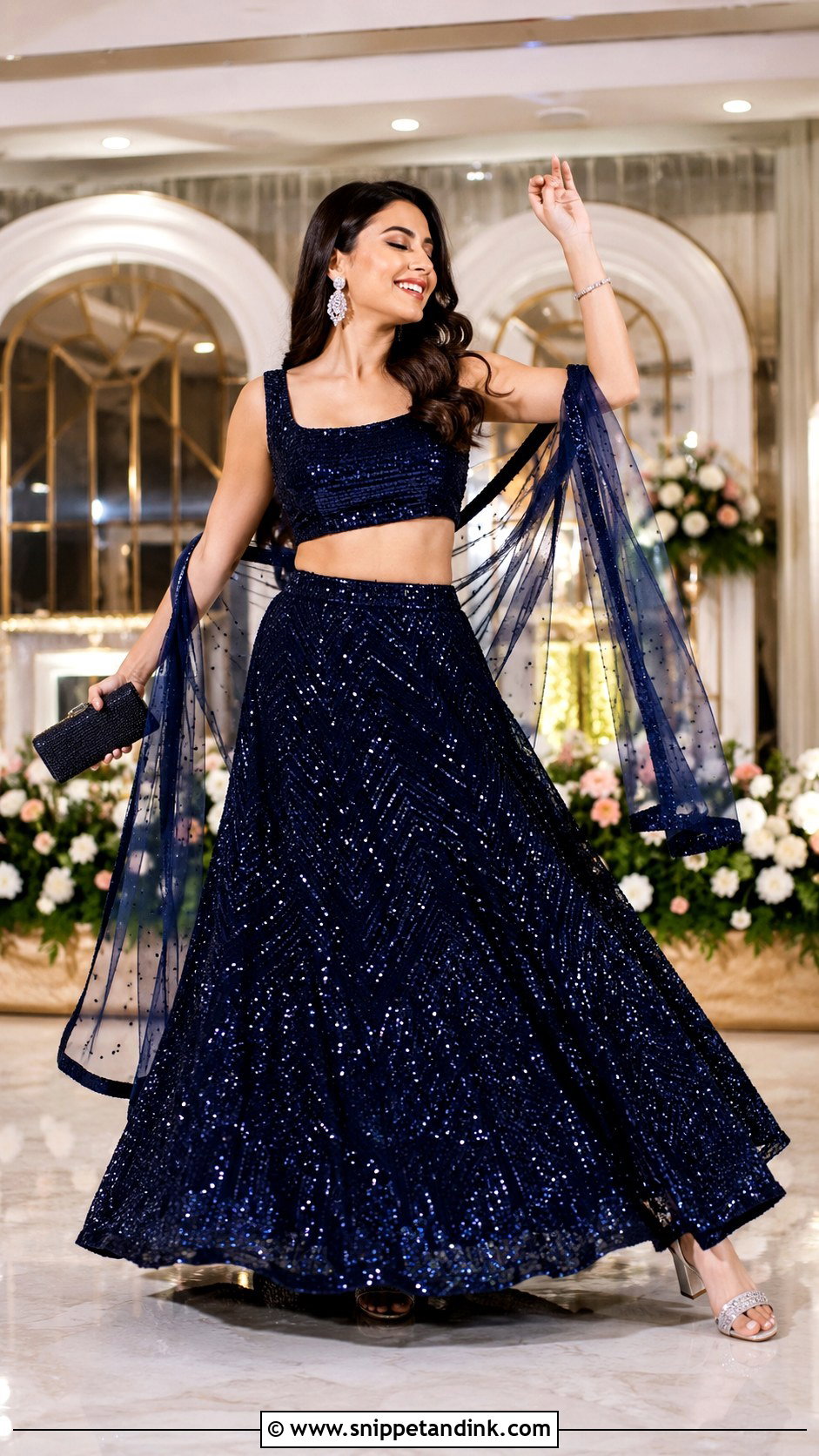
Sequins add real weight to a skirt, and a sister’s sangeet involves a lot of spinning. I look for tonal sequins on a midnight blue, mauve, wine or silver-gray skirt rather than several colors fighting, and I check the waistband carefully, because a heavy sequinned skirt pulls down at the waist when you dance. The blouse needs wider straps and a secure back. Pin a soft net dupatta at the shoulder and wrist, or swap it for a light cape. Crystal earrings, a slim clutch and cushioned block heels finish it, and a high ponytail keeps hair off your face. Rehearse your dance in the outfit before the day.
6. Chikankari Bride Sister Lehenga
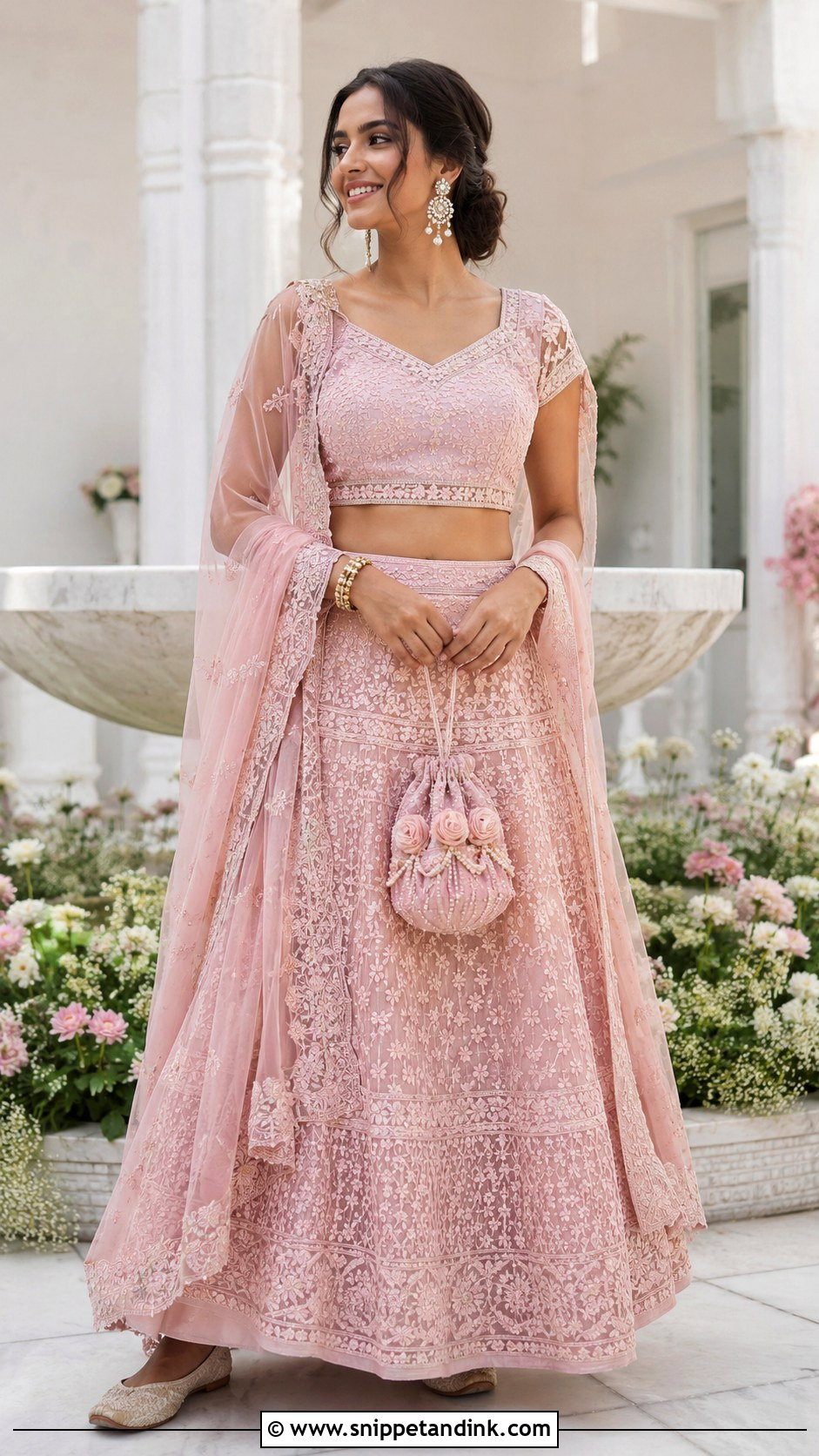
Chikankari is detailed without looking bridal, which makes it one of my favorite choices for a sister. The hand embroidery is traditionally worked on light fabrics, so the lining makes or breaks the comfort. Blush, ivory, pistachio or sky blue with tonal threadwork and a hint of sequin suits morning ceremonies and small gatherings. Pair the skirt with a matching blouse and a fine net or chiffon dupatta with a narrow border. Pearl drops, a kundan bracelet and neutral juttis keep it traditional, and a low bun with small white flowers finishes it. A rose, green or gold potli adds the only bold note.
7. Banarasi Silk Bride Sister Lehenga
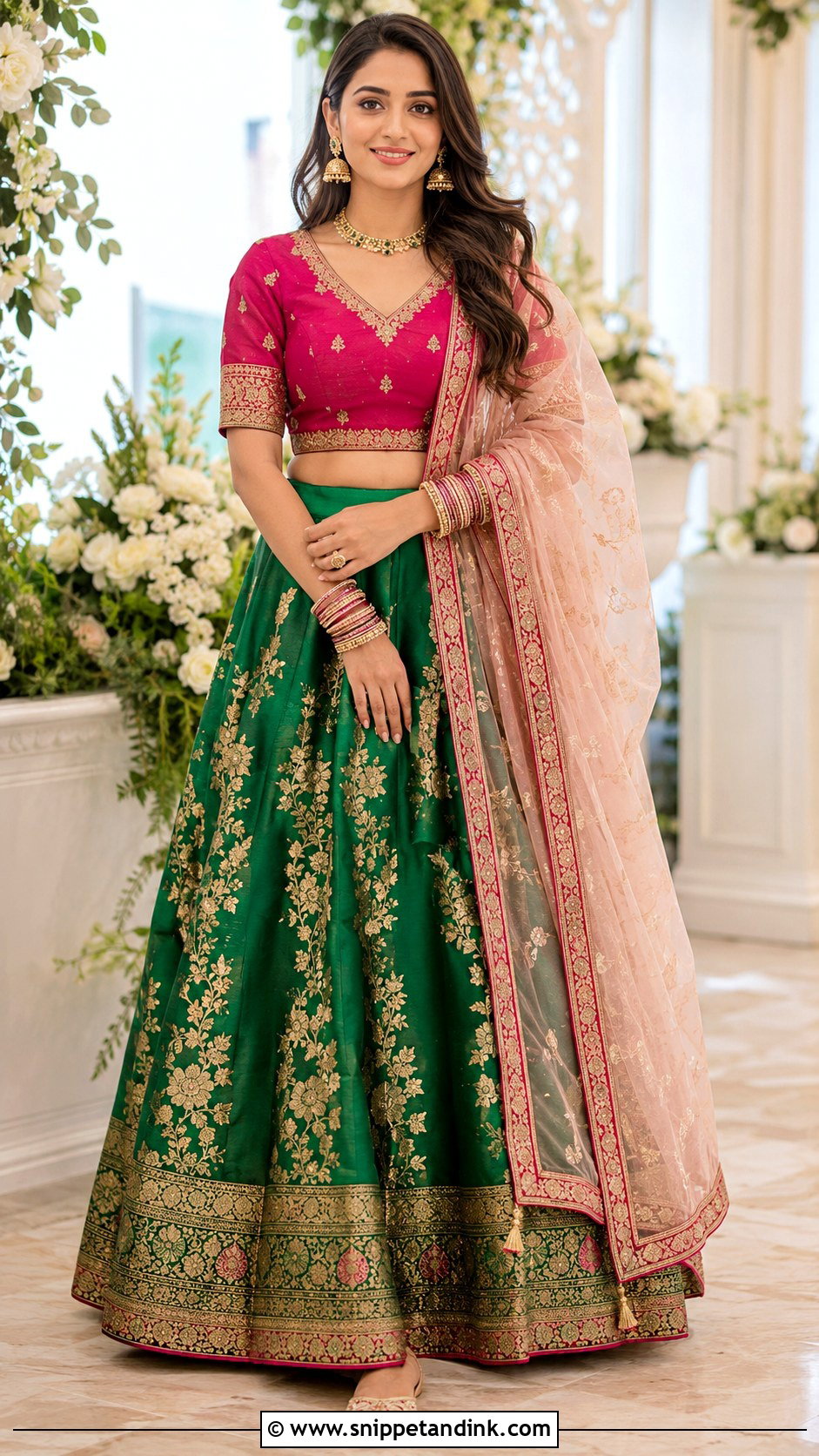
Rich Banarasi silk is woven with its pattern, so the fabric is already doing the decorating. I’d never add dense stonework on top; it fights the weave and doubles the weight. Emerald, royal blue, magenta or mustard with a contrasting silk blouse suits the main ceremony, and an organza or tissue dupatta keeps the whole thing from getting heavy. Jhumkas, a short necklace, bangles and brocade juttis are classic. A polished bun or long braid shows off neckline and weave. Keep the flare moderate. Coordinate with the palette, but don’t copy the bride’s color pairing or the way she drapes her dupatta.
8. Velvet Winter Bride Sister Lehenga
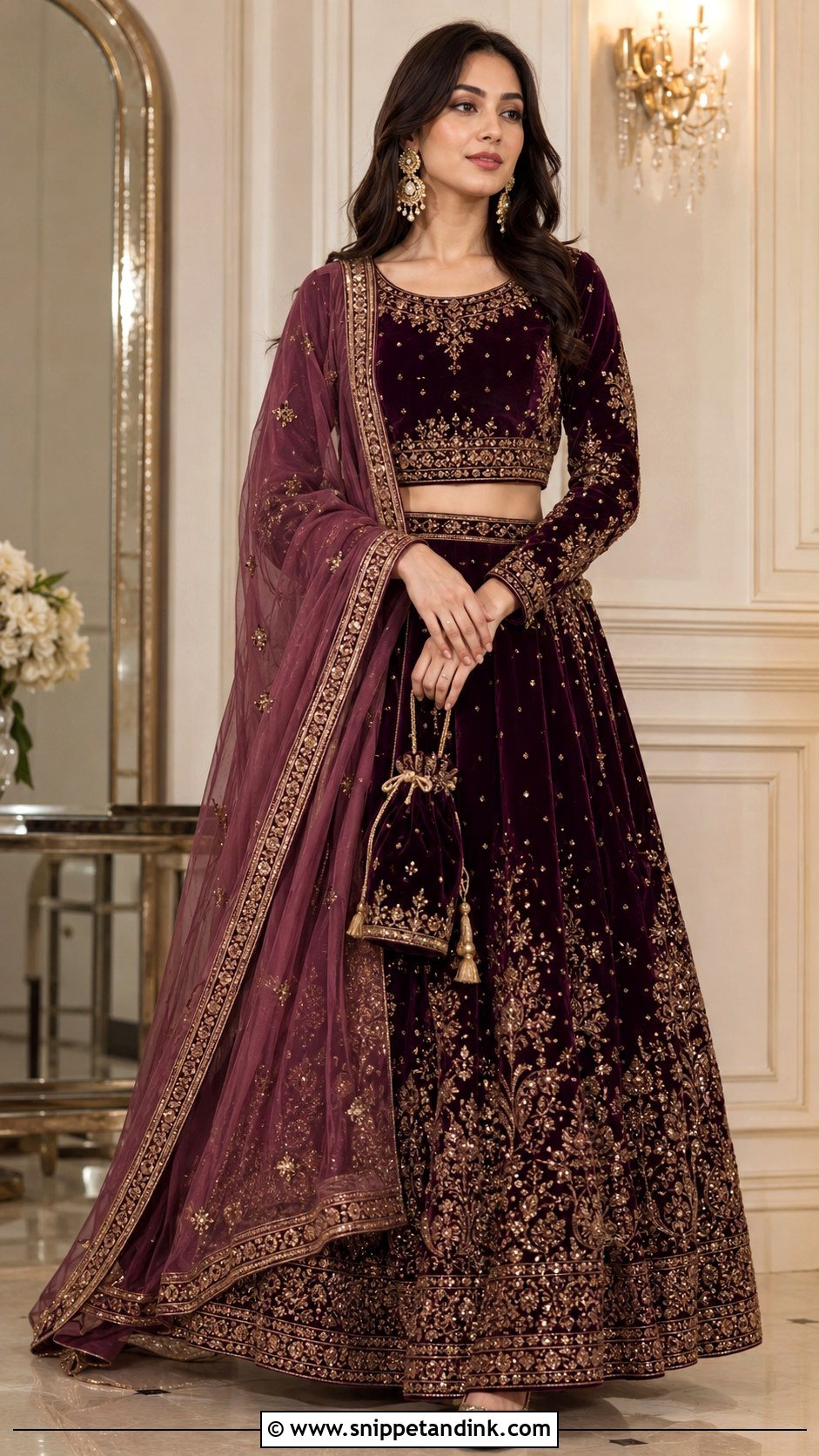
Velvet is warm and heavy, which is wonderful at an outdoor winter wedding and miserable in an overheated banquet hall. Choose bottle green, plum, navy or burgundy with antique gold embroidery kept to the hem and blouse. I limit the cancan under velvet; the fabric’s own weight gives the skirt fall, and extra net only adds bulk. A full-sleeve velvet blouse with a breathable lining, a lighter net dupatta, antique earrings, a structured potli and closed-toe block heels complete it. Sleek bun or soft waves both suit. Evening weddings and receptions are where the deep colors show best.
9. Floral Print Bride Sister Lehenga
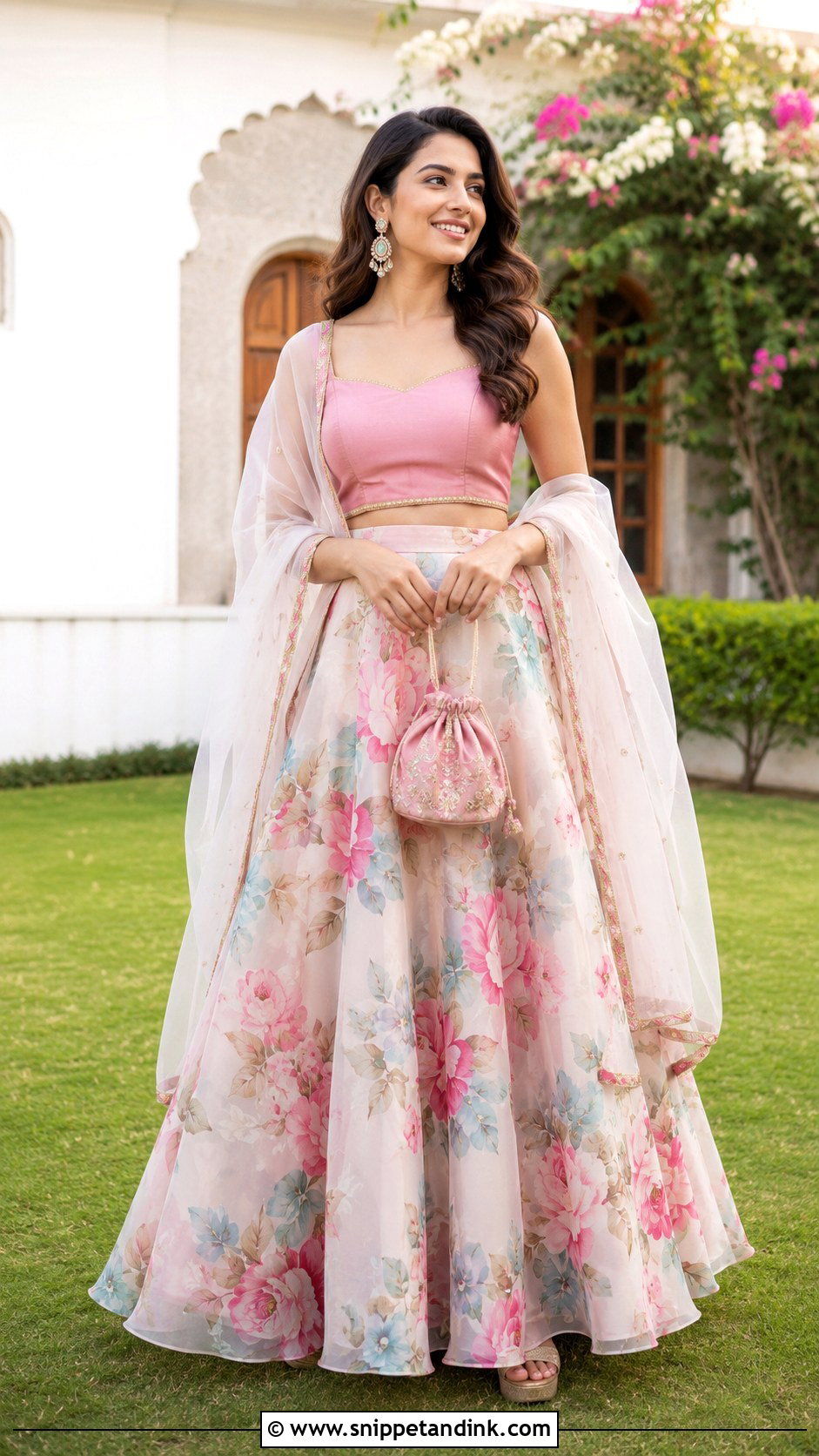
Prints are kind to a long day: they hide creases, they’re usually light, and they read cheerful in daylight. Ivory, pink, aqua or lilac with medium-scale flowers and a slim embroidered border suits garden weddings, daytime pheras and destination events. Look at where the print lands. If the largest flowers sit right at the waist, the skirt looks crowded where you least want attention. A solid blouse that picks up one print color, a sheer dupatta, delicate gemstone earrings and wedge sandals finish it. For sparkle, put a little sequin on the blouse rather than covering the print.
10. Cape Bride Sister Lehenga
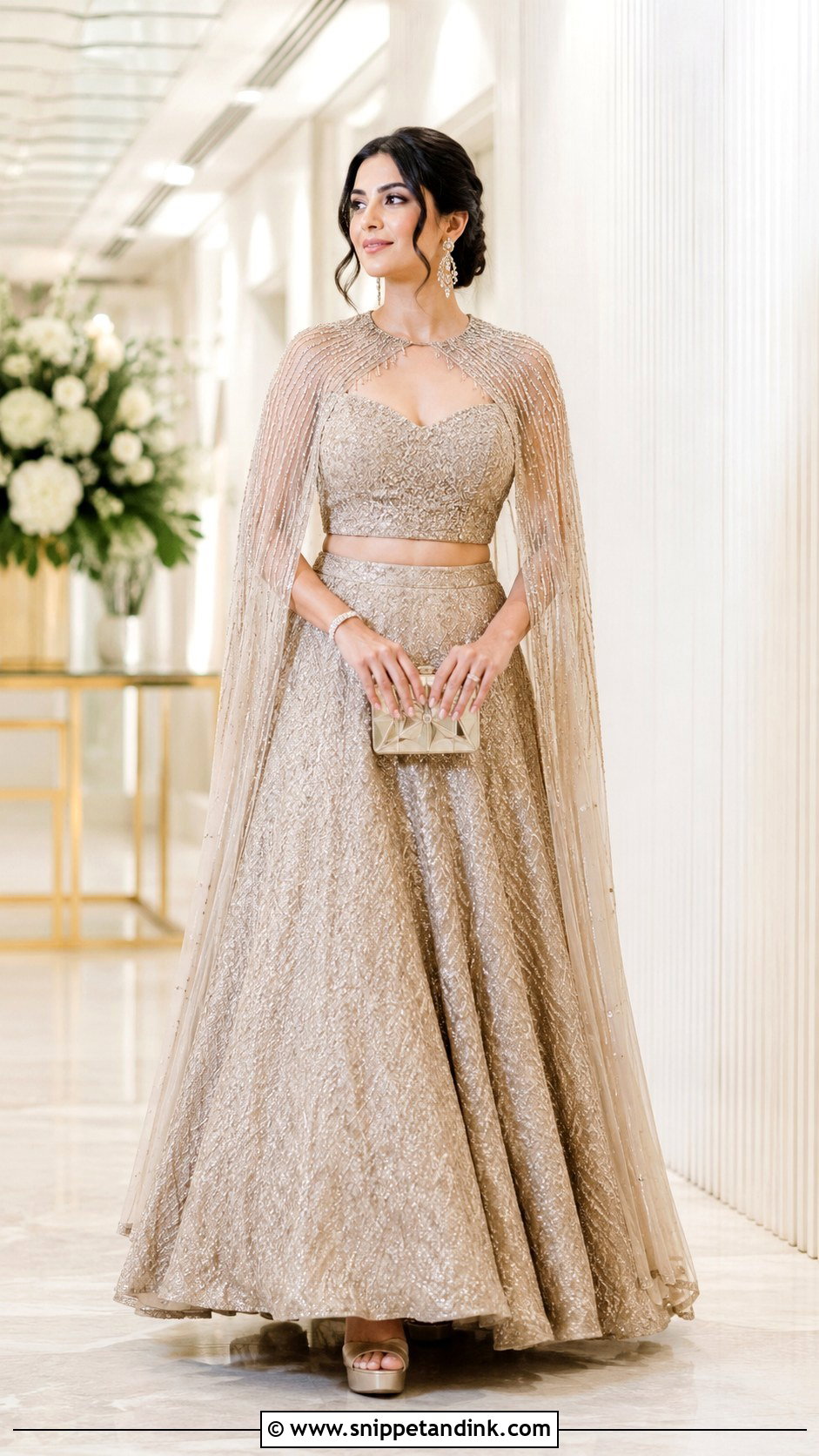
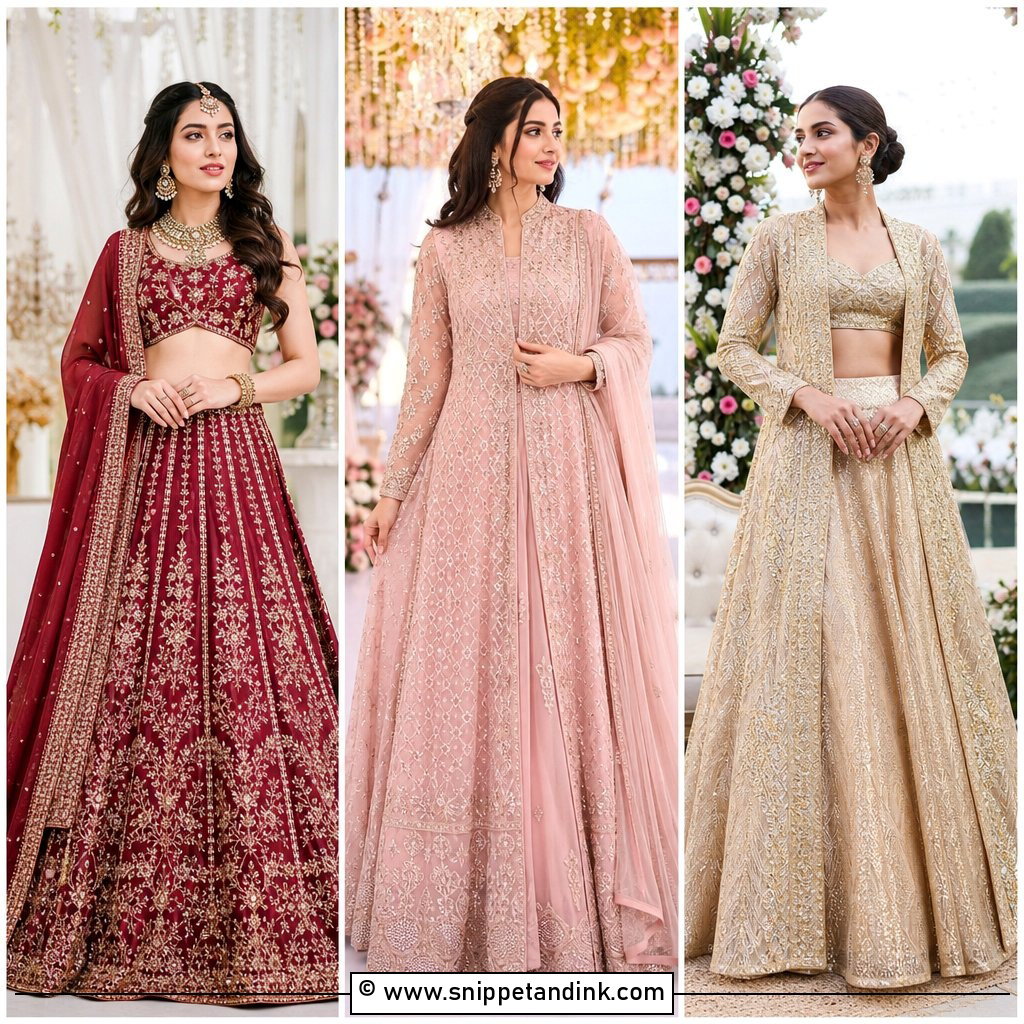
A cape is my answer for sisters who are tired of re-pinning a dupatta every twenty minutes. It sits on the shoulders, stays put and leaves both arms free for sangeet choreography. Over a solid or lightly embroidered skirt in dusty rose, sage, navy or champagne, add a fitted blouse and a sheer cape with beadwork at the shoulders and edges. It should stop above the widest part of the skirt or fall to the floor without dragging. Statement earrings, a slim bracelet, a metallic clutch and platform heels suit it, with a low ponytail or side waves. Leave the big necklace at home.
11. Jacket Bride Sister Lehenga
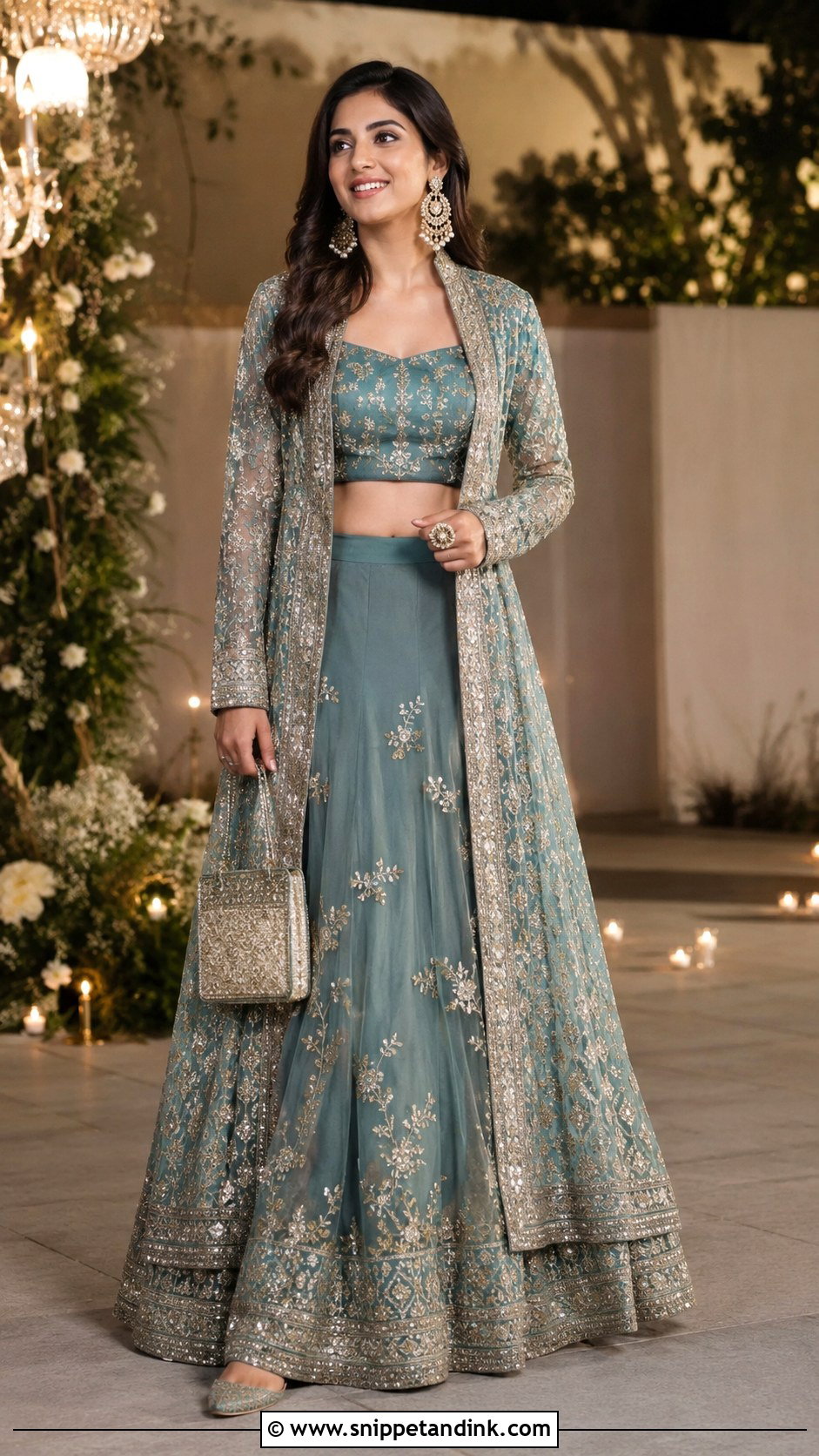
A jacket lehenga gives more coverage than a blouse and dupatta, and it hides a phone pocket beautifully if your tailor adds one inside. Pair a plain flared skirt and cropped blouse with a long embroidered jacket in a matching or contrasting color; jewel tones and muted metallics both carry evening events well. On a petite frame I prefer a waist-length jacket, while taller sisters can wear a longer open front. Lift your arms in it before you buy. Jacket sleeves are often cut narrow. Chandelier earrings, a cocktail ring and pointed juttis or block heels finish it, with a center-parted bun. Keep the skirt and bag simple.
12. Ruffle Bride Sister Lehenga
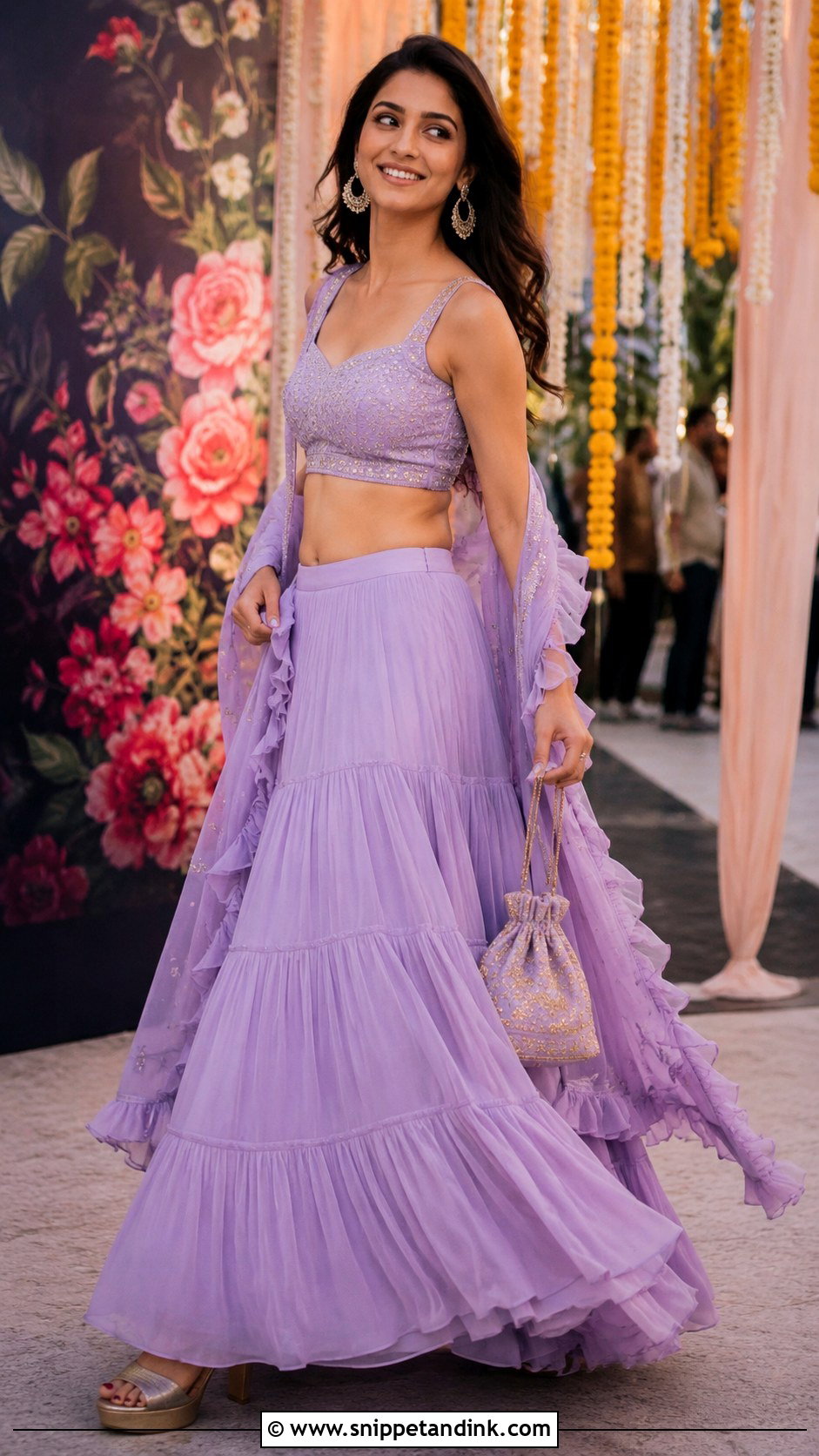
Two or three soft ruffle tiers in georgette give movement without drowning you, and they make this one suitable for mehndi or sangeet. Coral, teal, lavender or mango yellow suit the energy. On a fuller figure, wider ruffle panels give a smoother line than many narrow tiers. Put the heaviest embellishment on the fitted blouse so the skirt stays light, and add a slim ruffled dupatta over one shoulder. Ethnic hoops, a potli and sturdy platform sandals suit it, with a high ponytail. Have the hem checked in your shoes. Ruffles hemmed even slightly long get trodden on during the first dance number.
13. Peplum Bride Sister Lehenga
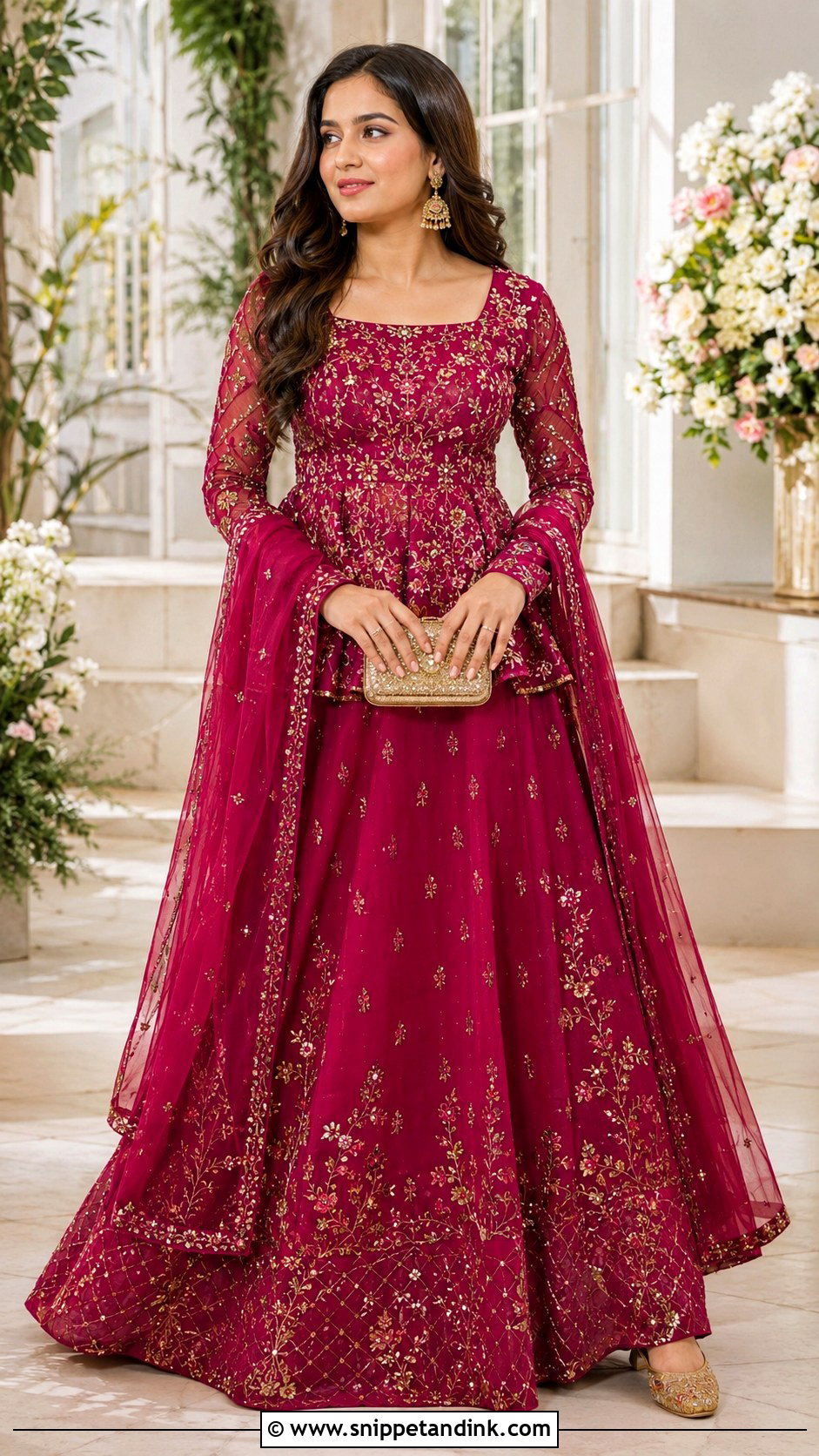
Peplums are forgiving around the middle and easy to sit in. The length is the key decision: ending at the natural waist gives a defined shape, ending at the upper hip lengthens the torso and starts the skirt lower. I’d avoid a heavily flared peplum over an equally full skirt, which simply doubles the width. A structured embroidered peplum over a clean A-line skirt in raspberry, turquoise, aubergine or soft gold is the version I’d choose. Carry a light dupatta over one arm, with medium jhumkas, a box clutch and heeled juttis. A side bun or polished waves finishes it.
14. Corset Blouse Bride Sister Lehenga
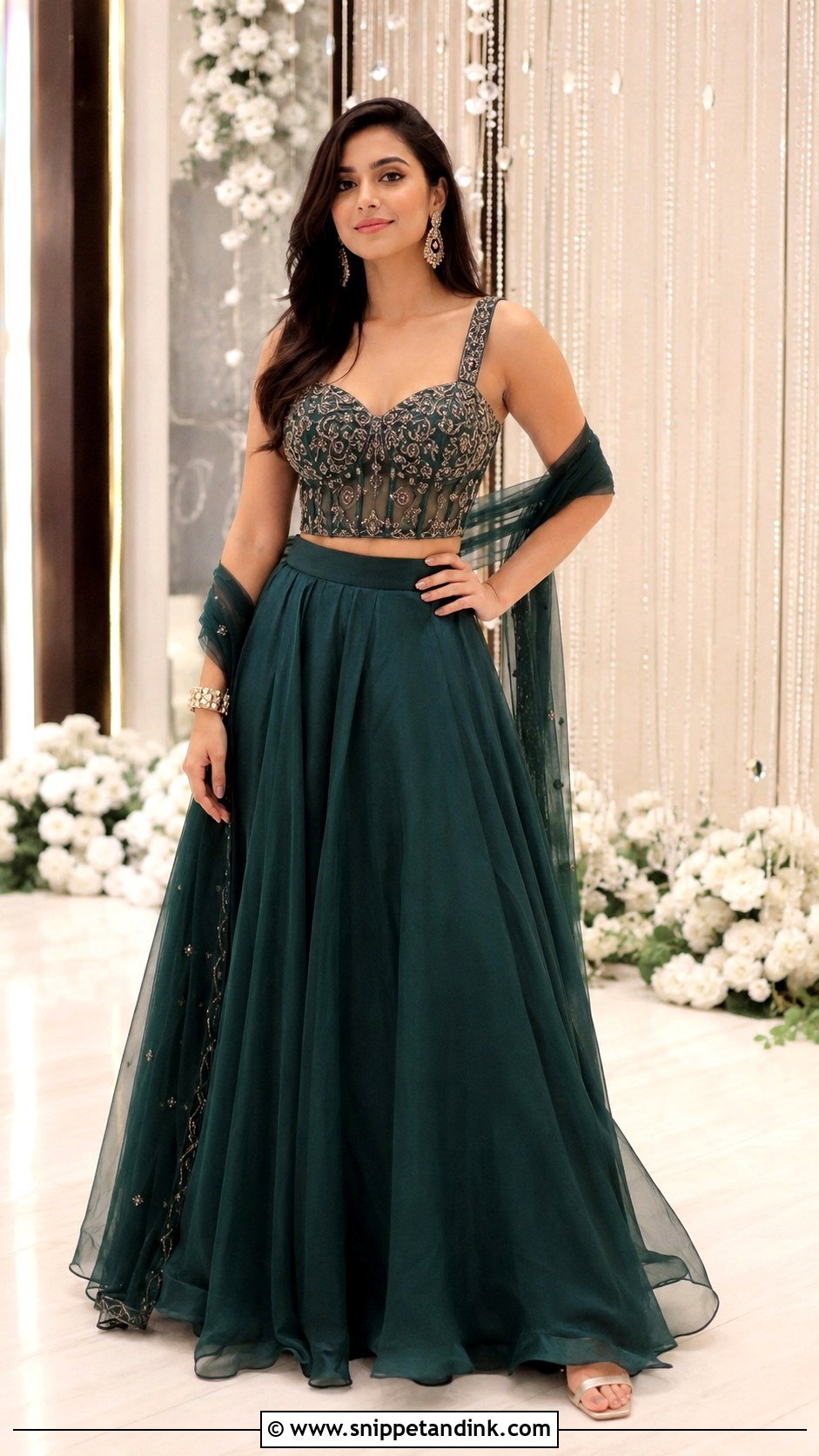
Corset blouses look sharp and can be agony by hour four if they’re built like actual corsets. I ask the tailor for structured seams and light boning, wider straps and a smooth inner lining, then test by sitting, bending to pick something up and raising both arms. Secure hooks matter; a sister bends down a lot. Pair it with a high-waisted silk, organza or georgette skirt in rose pink, emerald, cobalt or muted gold, plus a sheer dupatta from one shoulder. Drop earrings, a cuff and sleek block heels are enough, with soft waves. A sangeet or reception suits this look best.
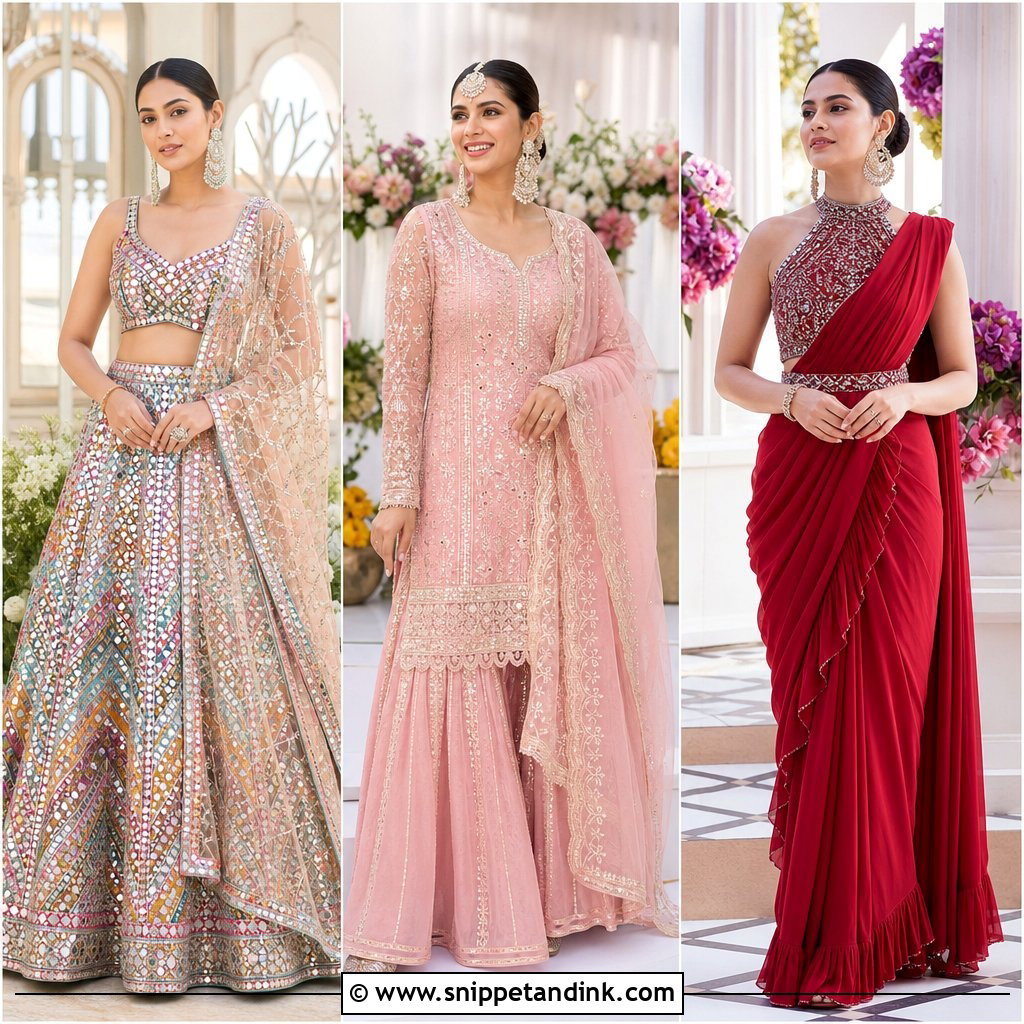
15. Draped Indo-Western Bride Sister Lehenga
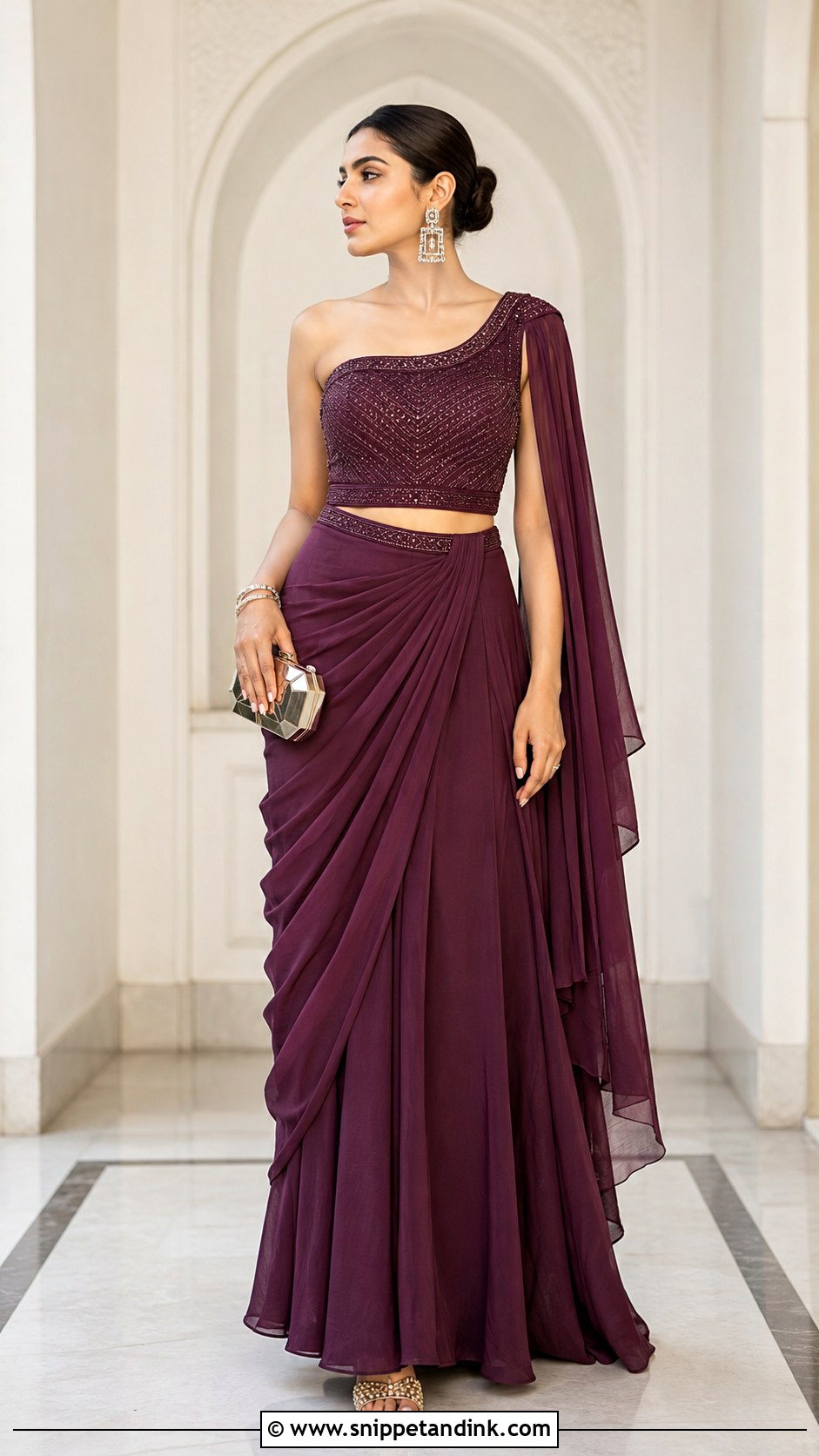
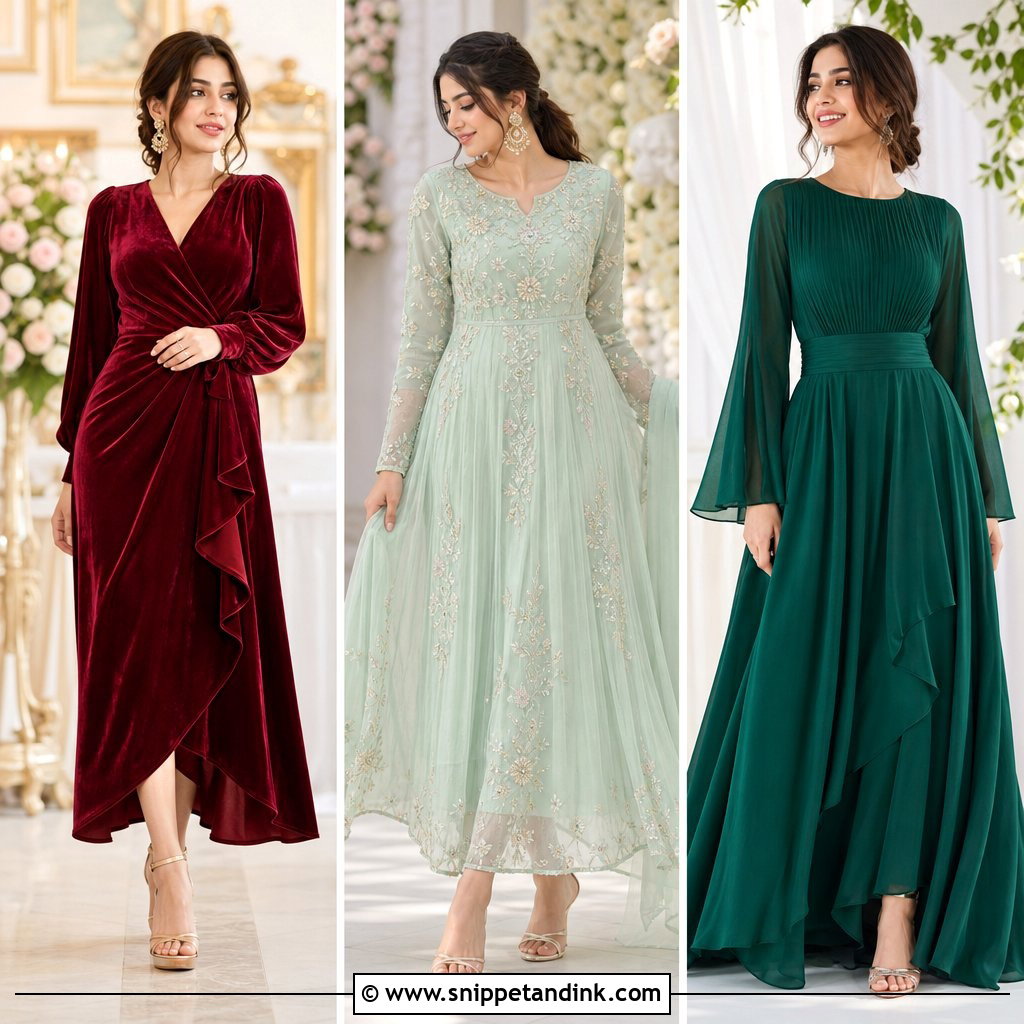
With a draped Indo-Western lehenga, the dupatta is sewn into the blouse, so there’s nothing to manage once you’re dressed. The asymmetric drape across one shoulder needs anchoring at several points, though, or it slides off with the first bhangra step; I check each tack with a firm tug. Solid teal, plum, rust or midnight blue keep the shape clean. A high-waisted flared skirt, geometric earrings, a metallic clutch and modern heels or embellished mules finish it, with a sleek ponytail. The drape frames your shoulders already, so jewelry stays minimal. Receptions and evening parties suit it.
16. Ivory Gold Bride Sister Lehenga
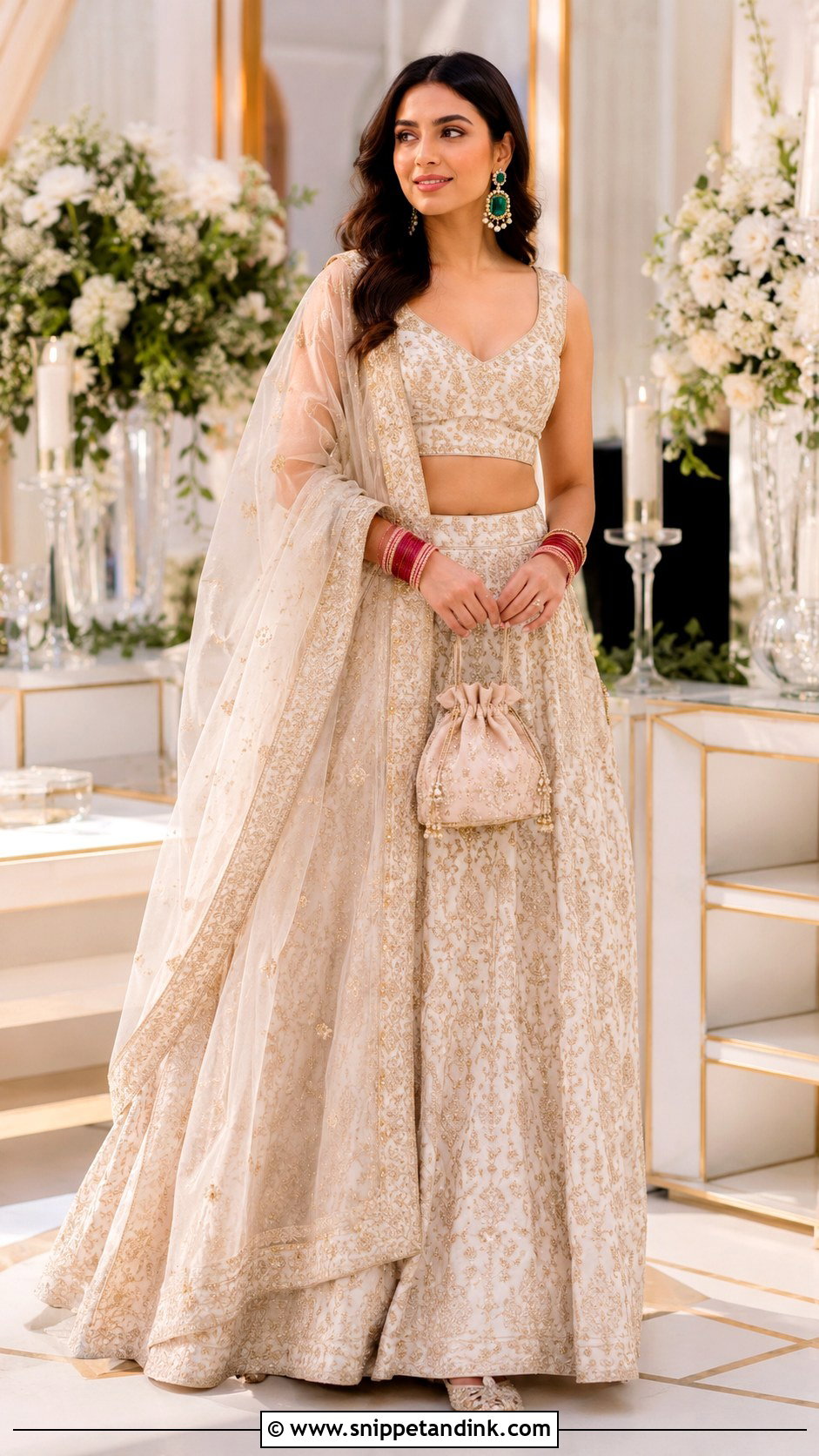
Ivory and gold need a conversation with the bride before anything else. In many families ivory is fine for a sister; in others it reads as too close to bridal, and you don’t want to find that out on the day. Done carefully, an ivory lehenga with fine gold threadwork or a woven border is very refined. Bring in color through emerald earrings, ruby bangles or a blush potli so you’re never ivory head to toe, and use lighter embroidery and fewer layers than the bride. A beige or ivory lining is essential. Pale fabric can turn see-through under strong photography lights. Metallic juttis and a low textured bun finish it.
17. Emerald Green Bride Sister Lehenga
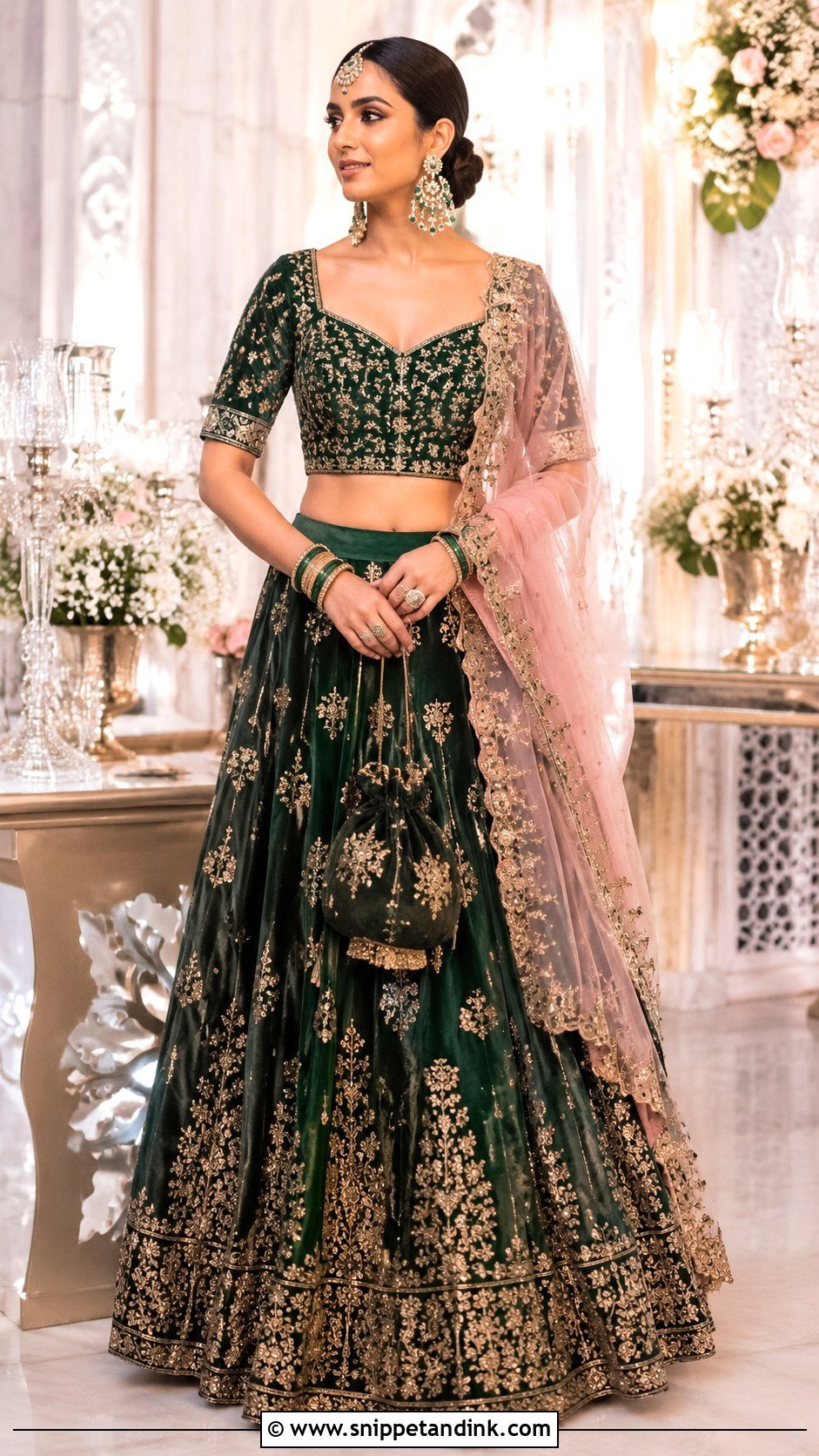
Emerald photographs richly in almost any light and reads festive without competing with a red bridal outfit. Fabric is the decision: georgette for a warm day, raw silk for a cool evening venue. Antique gold embroidery on a matching blouse, with a blush, peach or gold dupatta for contrast, keeps it traditional. Kundan earrings, a fine necklace, stacked bangles and embroidered heels suit it, or skip the necklace if the blouse neckline is busy and go bigger on earrings. A smooth center-parted bun finishes it. Check first whether the bride’s own outfit or jewelry leans green.
18. Black Gold Reception Bride Sister Lehenga
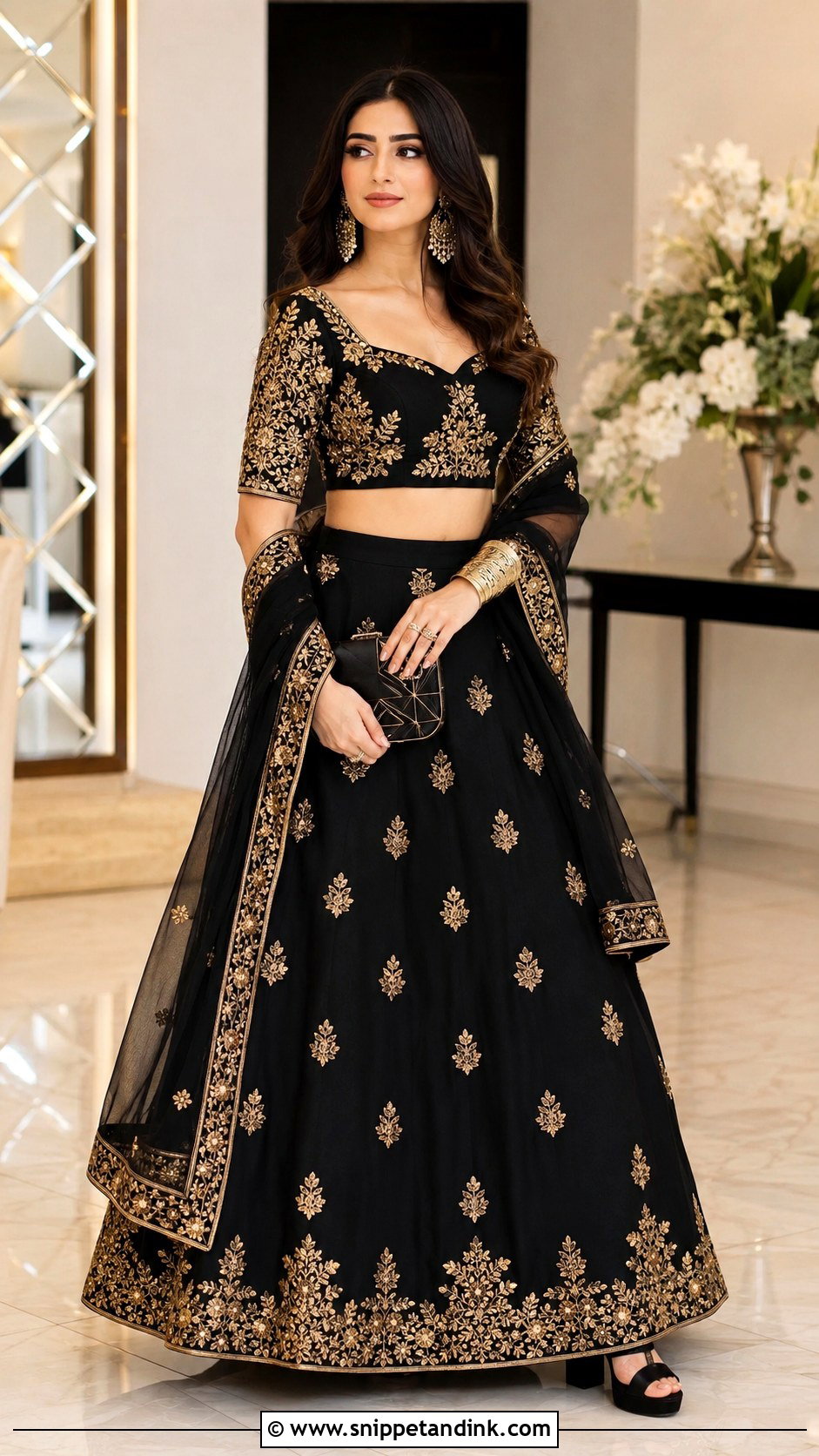
Black is not welcome at every family wedding, so ask before you buy. Where it is, a black skirt with gold embroidery that leaves plenty of plain ground between motifs makes a strong reception look. Dense gold all over black turns heavy and loses detail in photos. A fitted blouse and a light black or muted gold dupatta keep it streamlined. Statement earrings, a gold cuff, a structured clutch and black block heels, with sleek waves or a high ponytail, keep it contemporary. Gold eye makeup with a neutral lip suits the palette. Save it for evening; it looks out of place at a daytime ceremony.
19. Gota Patti Bride Sister Lehenga
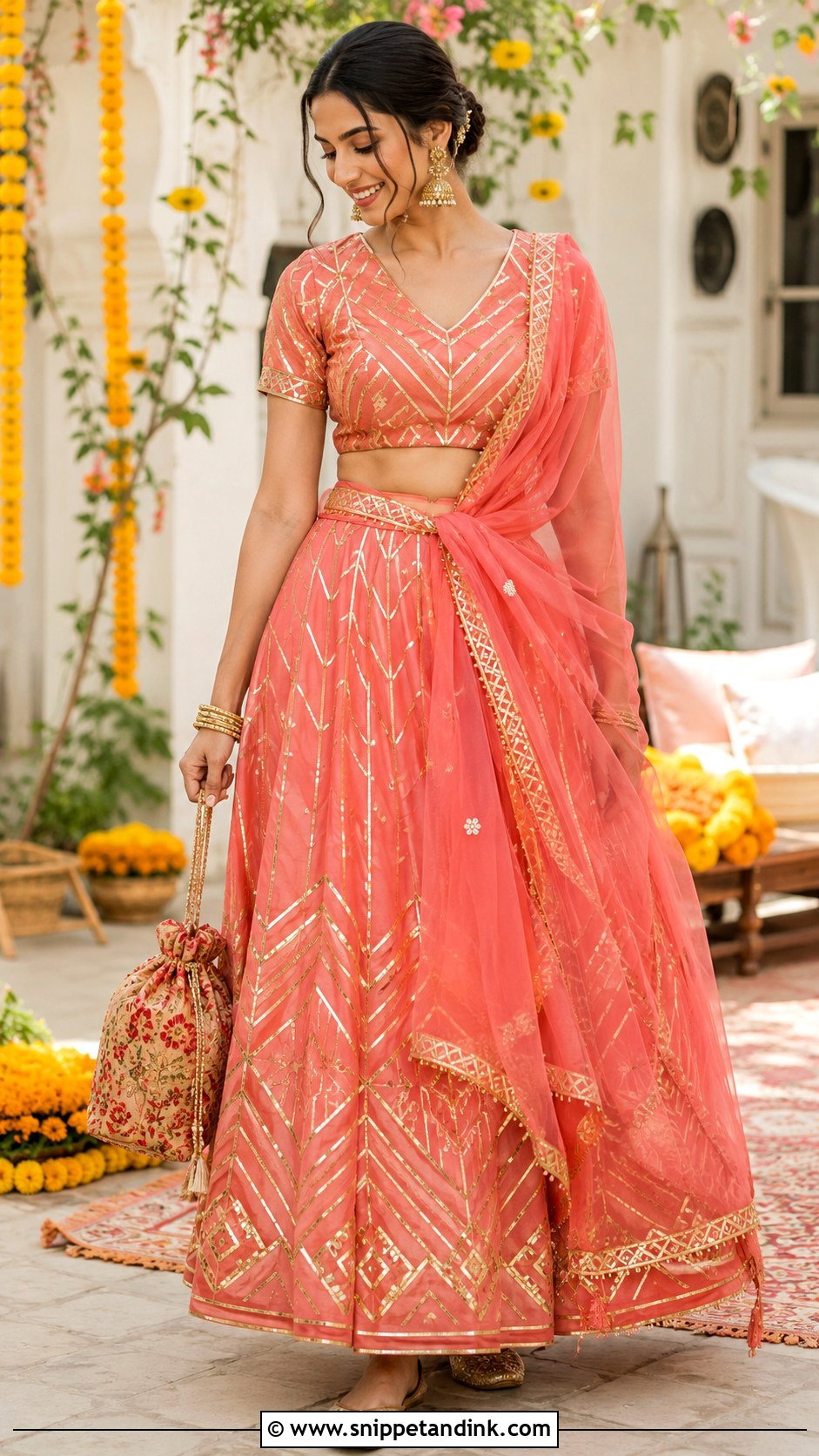
Gota patti is woven metallic ribbon cut and stitched onto fabric, so it shines like zari at a fraction of the weight of stonework. I check that the ribbon edges lie flat and that the stitching is close, because loose gota lifts and catches on bangles. Coral, turquoise, mustard, pink or mint with geometric motifs suit daytime functions; large motifs read bold, small repeats read softer. A short-sleeve blouse and a chiffon dupatta tucked at the waist keep you practical, with gold-toned jhumkas, bangles, an embroidered potli and flat juttis. A braided bun suits it. Gota reflects plenty of light, so keep the jewelry balanced.
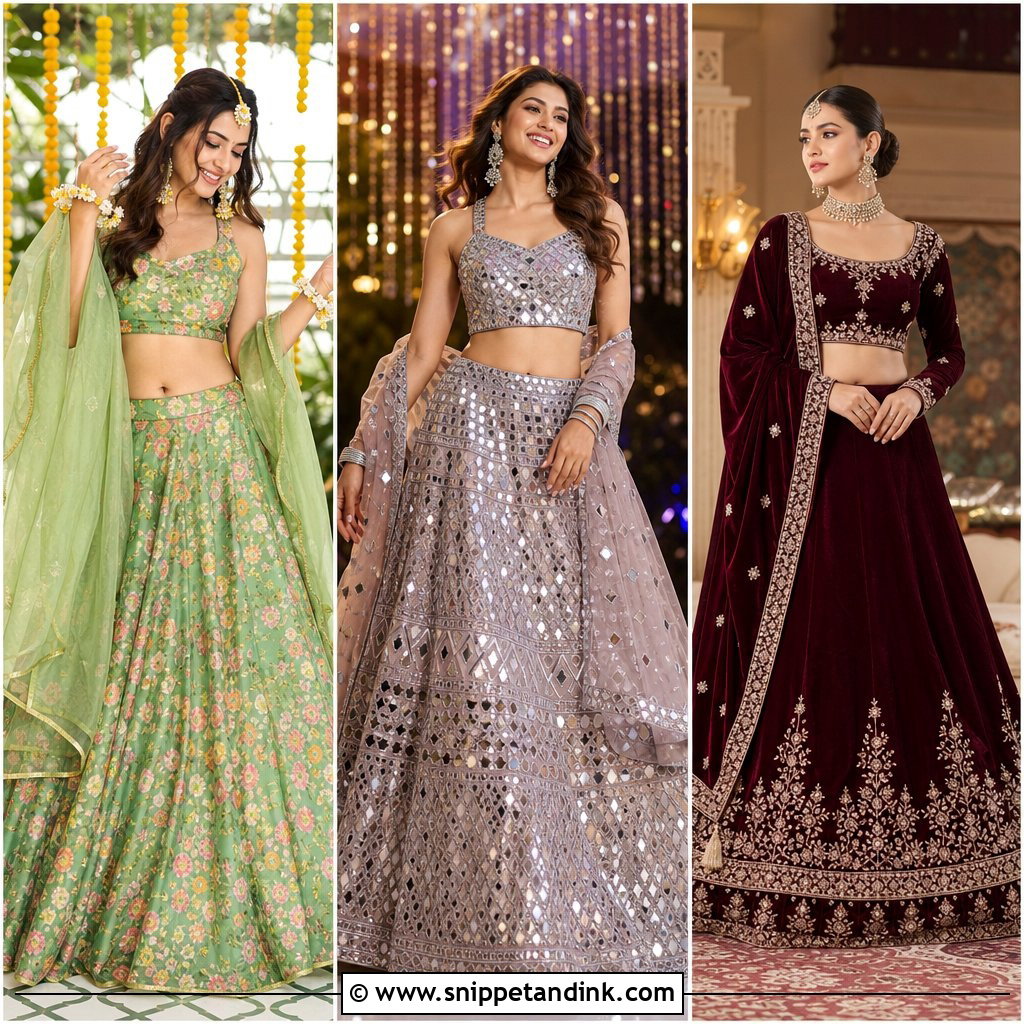
20. Ombre Bride Sister Lehenga
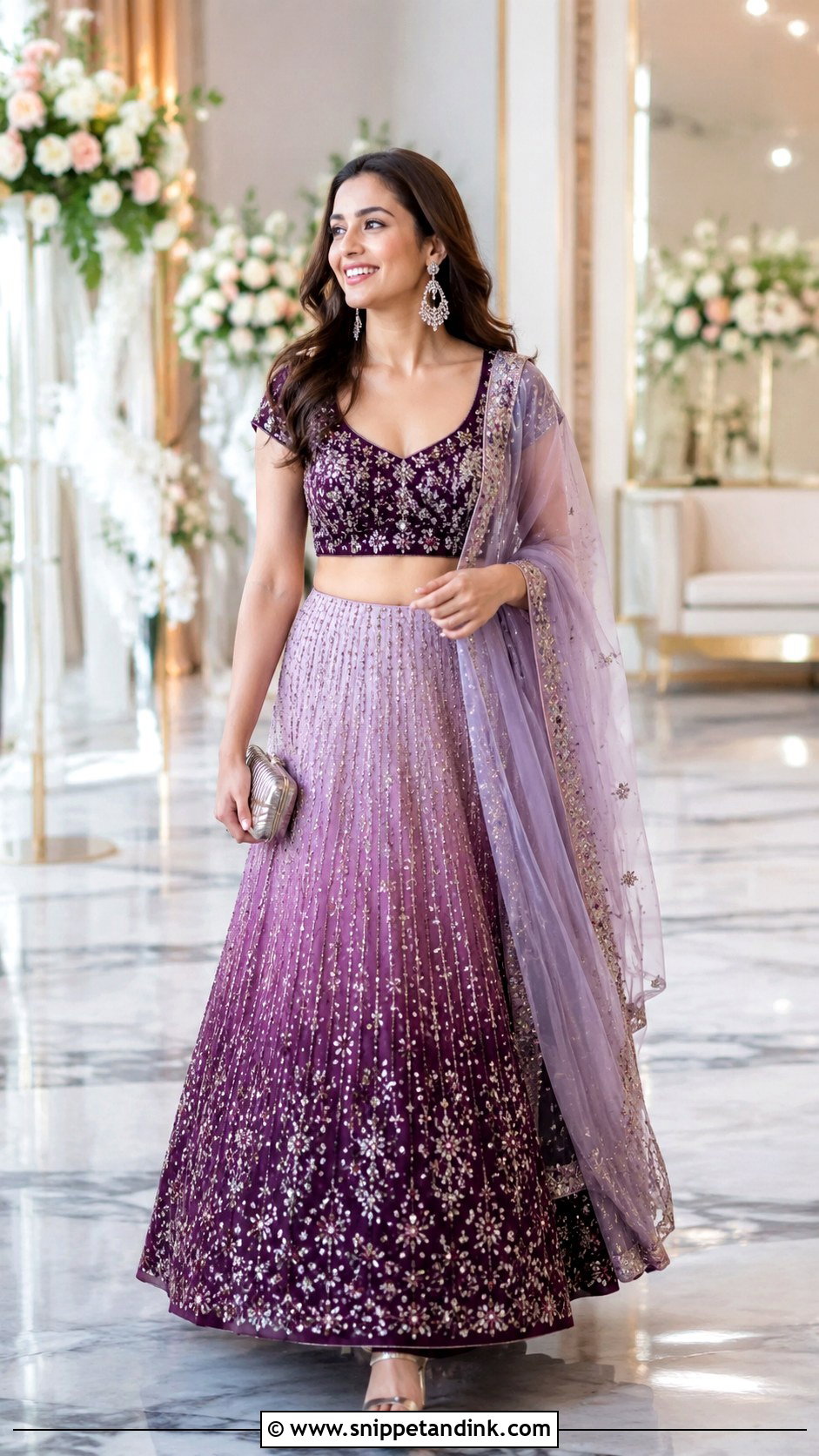
An ombre lehenga relies on the dye, so look closely at the side seams, where the color of each panel has to line up. A badly matched gradient shows a hard band every time you turn. Blush to berry, mint to teal, yellow to orange and lavender to plum all work. Pair the skirt with a solid embroidered blouse in the deepest shade and a sheer dupatta in the lightest. A lightly sequinned waistband defines the shape without breaking the fade. Crystal or kundan earrings, a compact clutch and metallic heels suit it, with soft curls or a half-up style for engagements, sangeet nights and receptions.
Four Functions, Fewer Lehengas Than You Think
Sisters often feel they need a new outfit for every event, and the cost adds up quickly. I’d rather see one excellent skirt worn two ways than four that each needed compromises.
Ways to stretch one outfit
- Order a second blouse for the same skirt. A sleeveless printed blouse for the mehndi and a full embroidered one for the reception change the whole mood.
- Swap the dupatta. A plain chiffon one reads daytime; a sequinned net one turns the same skirt into evening wear.
- Borrow within the family. Mothers and aunts often have heavy silk lehengas and jewelry that a good tailor can refit for you.
- Save new money for the main ceremony, the outfit that will appear in the family albums for decades.
Giving your tailor enough time
Blouses are usually stitched from fabric that comes with the lehenga, and good tailors are booked solid in wedding season. I’d hand over fabric at least six weeks ahead, try the blouse once it’s basted, and collect it about two weeks before the first function so there’s still time for one more correction. Ask the bride for her color for each event before you order anything. Two sisters arriving in the same shade as the bride at the sangeet is an easy mistake to avoid with one message.
Dressed for Every Ritual, Not Just the Photos
A sister’s outfit has to look special and still let you take part in everything. Silk, organza, prints, mirror work, capes, jackets and sequins all have a place across the different functions. Start with the bride’s colors and the formality of each event, then think about weather, venue and how long you’ll be on your feet. Tailoring matters as much as embroidery, so try on every outfit fully dressed at least once before the wedding: walk, sit, raise your arms and dance. Supportive shoes, a dupatta that stays pinned, balanced jewelry and a hairstyle you can forget about let you be there for your sister instead of fixing your clothes.
You'll Like These Ideas:


Leave a Reply