
A cheap dress gives itself away in a few predictable places: thin fabric, a bodice that gaps, and decoration added to distract you from both. Get those right and very few guests could guess what you paid. These 20 Budget Wedding Dress Ideas are the shapes I steer cost-conscious brides toward, from plain satin A-lines to separates, jumpsuits and pre-owned finds, each styled right down to the shoes and veil. Before you buy any of them, I’d set aside part of the budget for hemming, a bodice take-in and proper undergarments, because that’s the money that makes a modest gown look considered.
Spotting Good Construction in an Inexpensive Gown
Price tells you very little about how a dress is made. When a budget gown arrives, or when I’m pulling one off a sample rail, I turn it inside out before I look at the front. These are the checks that separate a dress worth altering from one that will fight you all the way to the aisle:
- Lining: hold the skirt up to daylight. If you can see your hand clearly through it, plan on adding a slip or choosing another dress.
- Inside seams: they should be overlocked or bound, not fraying. Loose threads at the side seams usually mean the bodice will be hard to take in neatly.
- Zip: an invisible zip sewn straight, with no puckering, is a good sign. A wavy zip rarely sits flat once you’re wearing it.
- Hem allowance: a little spare fabric at the hem gives your seamstress room if you change shoe height.
- Shine: very glossy polyester satin can look plasticky under camera flash. Matte satin and crepe photograph far more kindly.
If you’re ordering online, order early enough to try it on inside the return window, leave every tag attached, and don’t steam it until you’ve decided. A dress that’s been pressed is often a dress you can no longer send back.
1. Simple Satin A-Line Wedding Dress
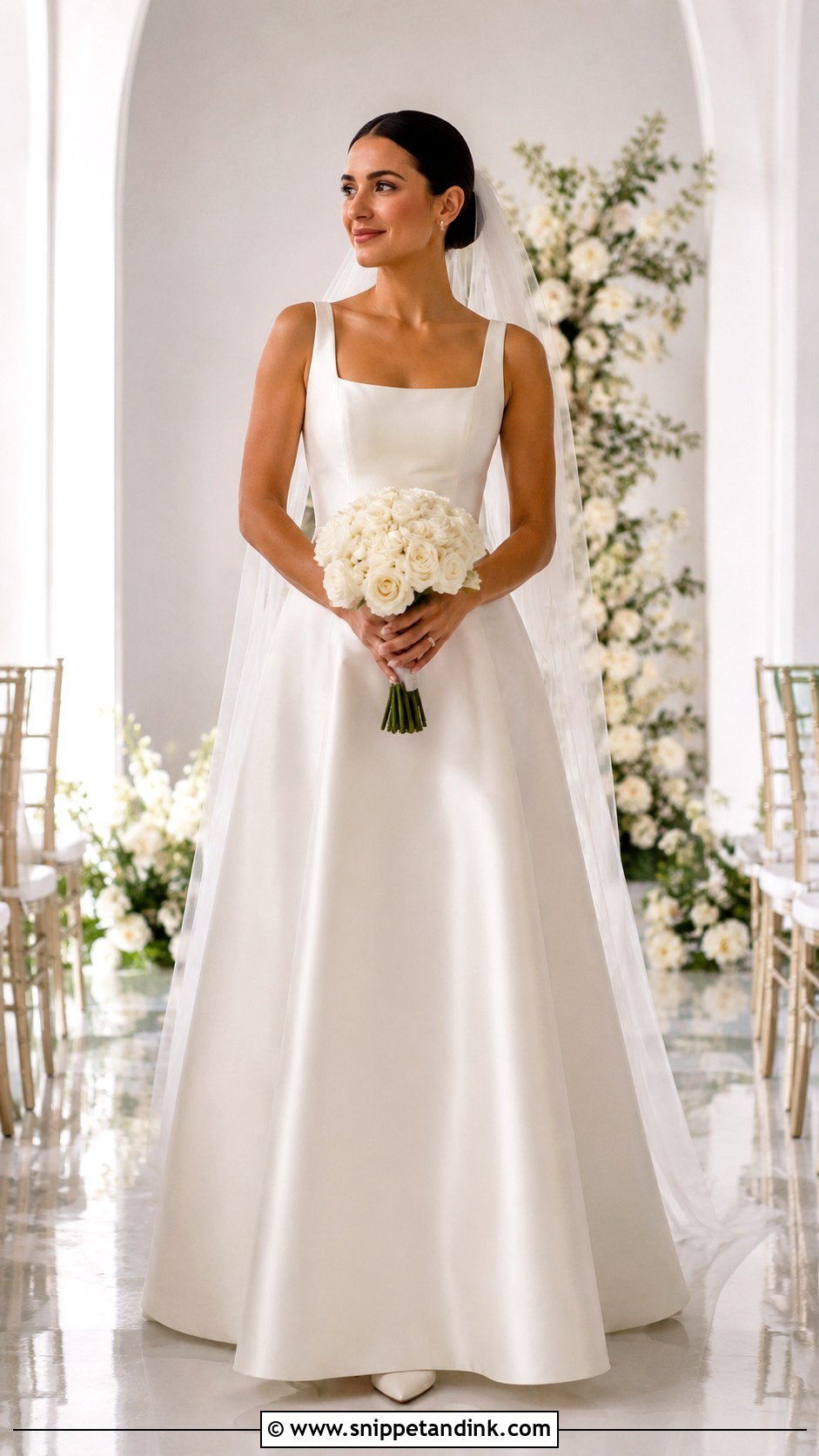
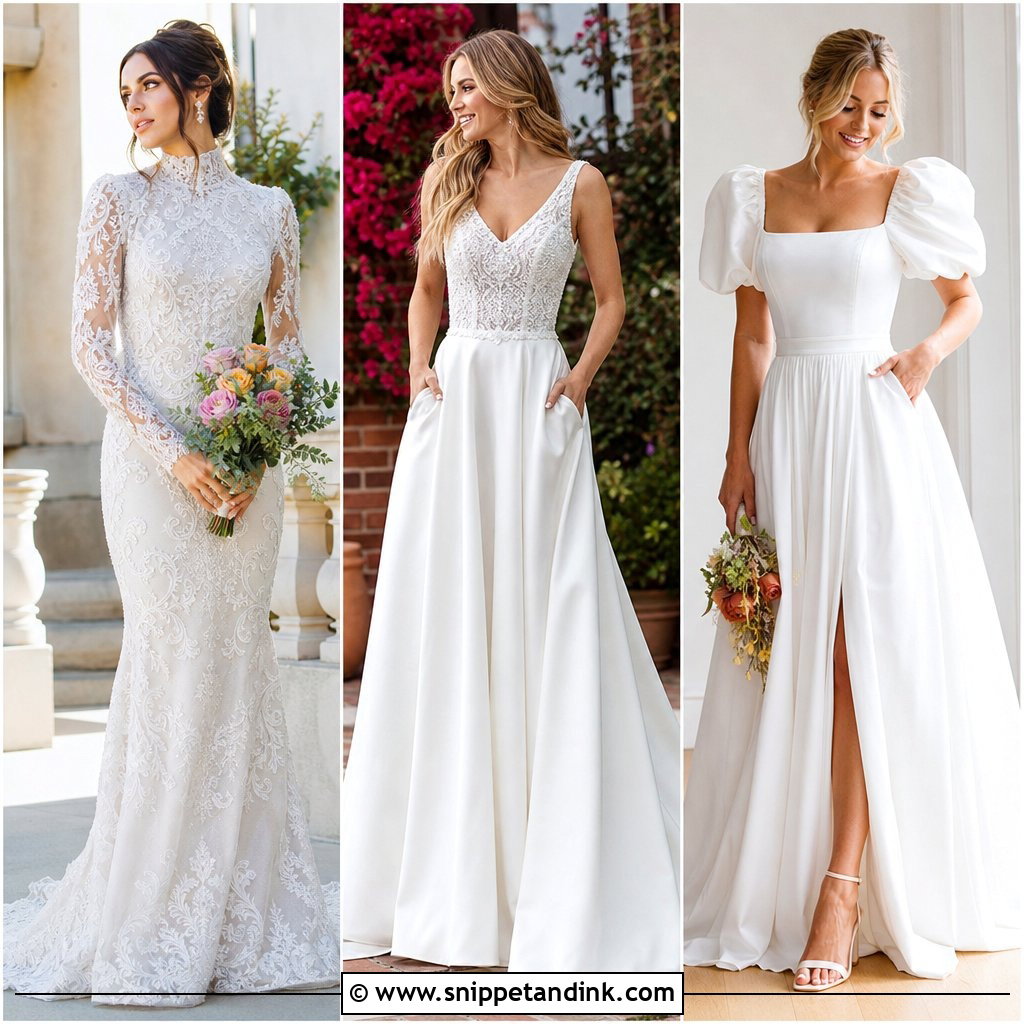
Satin is unforgiving in one way and generous in another. It shows every ripple from a bodice that’s half an inch too loose, but when the fit is right it reflects light the way far pricier fabrics do. I look for wide straps, a softly fitted waist and enough skirt to walk in, then keep the styling plain: pearl studs, a fingertip veil with a cut edge, and pointed block heels, or flats if you’ll be standing on grass. A small structured bag and a compact bouquet of white roses and greenery are all it needs. Spend on the bodice and hem fitting, not on extras.
2. Lace Long-Sleeve Wedding Dress
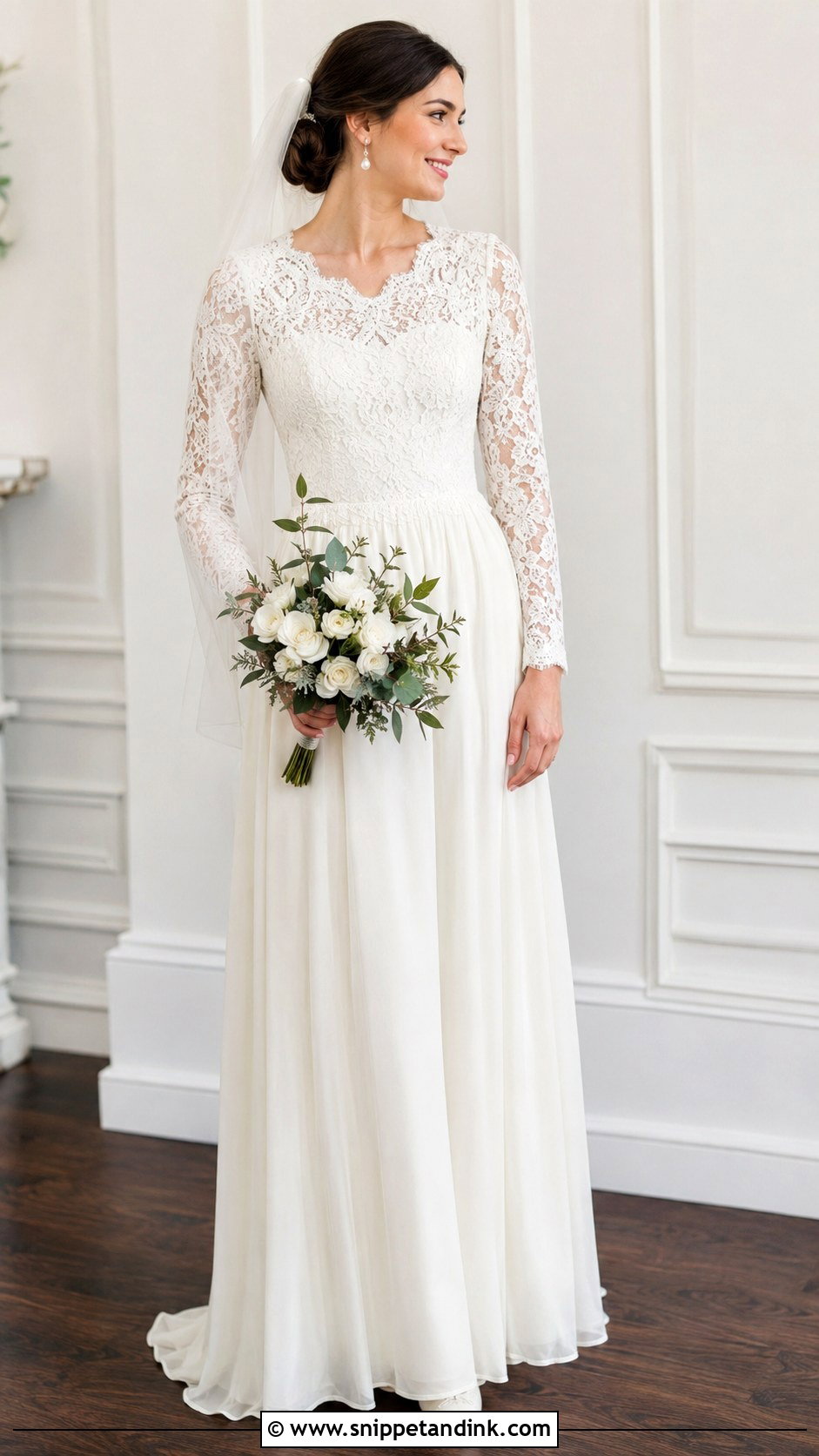
Lace sleeves are where cheaper dresses usually cut corners, so I turn the cuff inside out and check that the lace edge is scalloped or finished rather than raw-cut. Look for a simple lining, a defined waist and lace kept mostly to the bodice and arms, which gives you detail without paying for appliqué from neckline to hem. It’s a fall and winter dress, or one for a heavily air-conditioned room. I pair it with closed ivory pumps, small drops and a plain tulle veil so the pattern isn’t fighting a second pattern, plus a low bun to keep the neckline visible. A loose bouquet with pale seasonal foliage suits it. Skip the belt on a full skirt; the lace already carries the texture.
3. Chiffon Empire Waist Wedding Dress
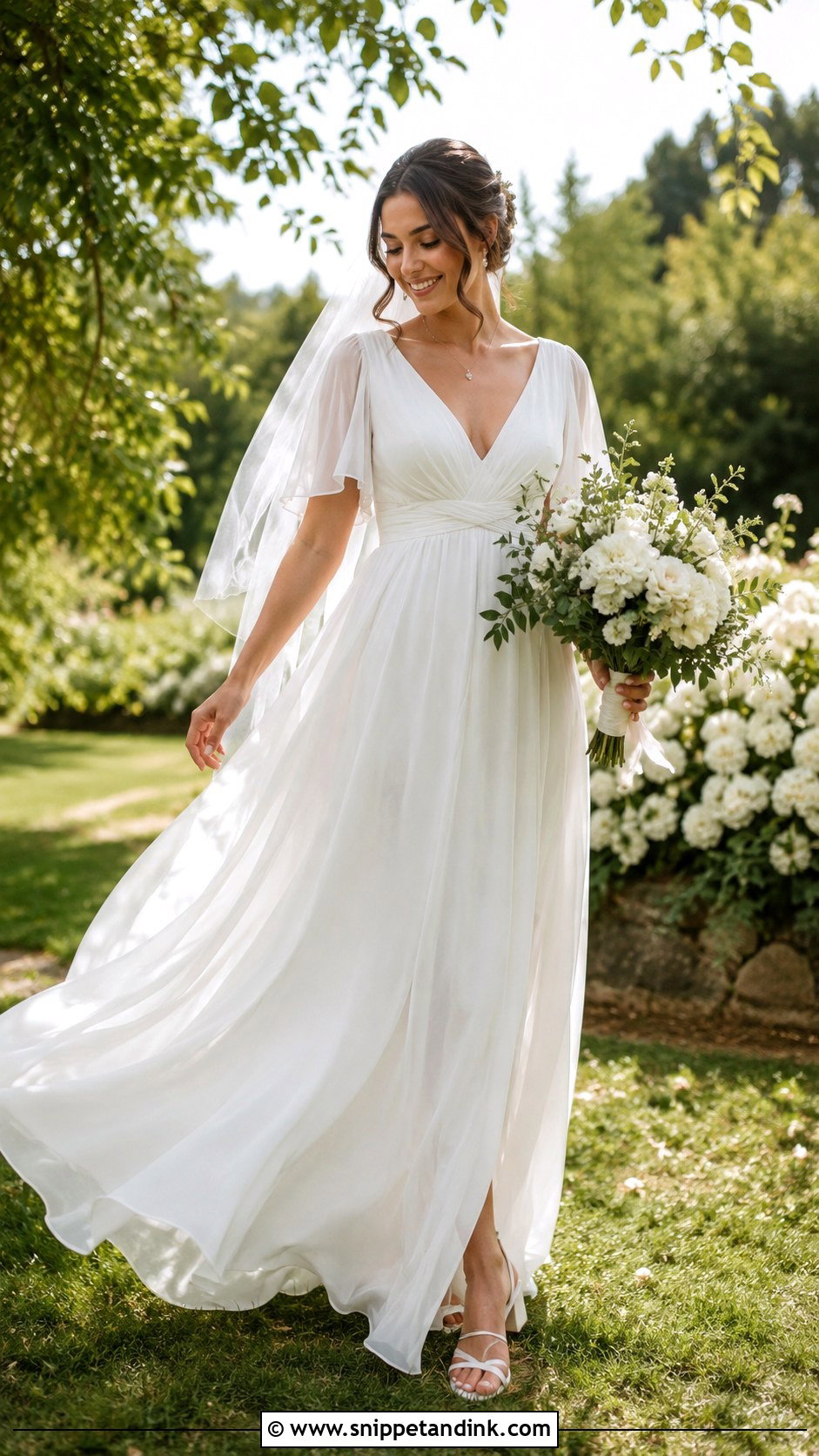
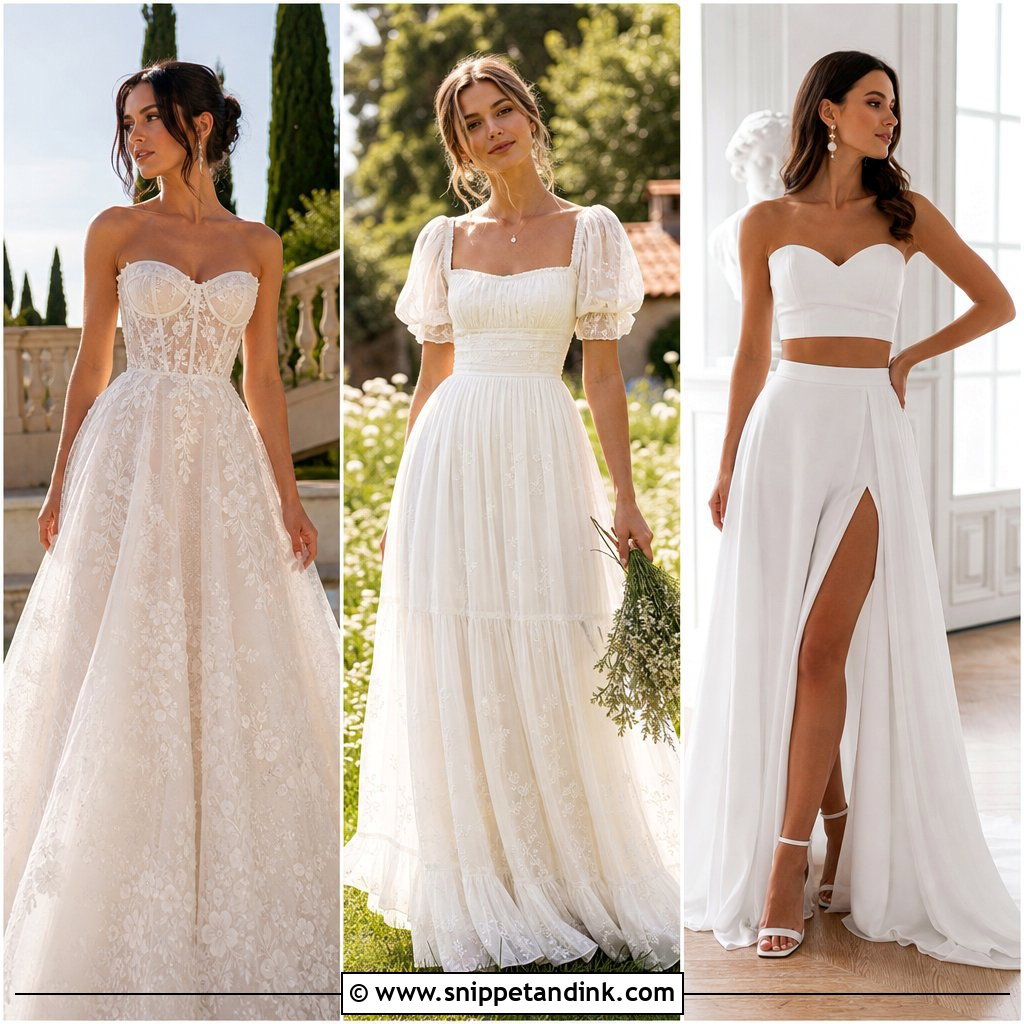
Chiffon is the fabric I reach for at beach and garden weddings because it moves with a breeze instead of fighting it. The empire seam sits just under the bust and the skirt falls straight from there, so there’s nothing rigid to overheat in. The catch is that budget chiffon is often thinly lined and turns see-through in direct sun, so hold the skirt up to a window before you commit. Flutter sleeves or slim straps, a light shoulder-length veil and low block-heel sandals keep it airy, and a fine pendant with a loose white bouquet finishes it. Go easy on shapewear so the skirt can swing. If the neckline feels bare, a removable chiffon cape or a delicate hair vine adds interest for very little money.
4. Off-the-Shoulder Wedding Dress
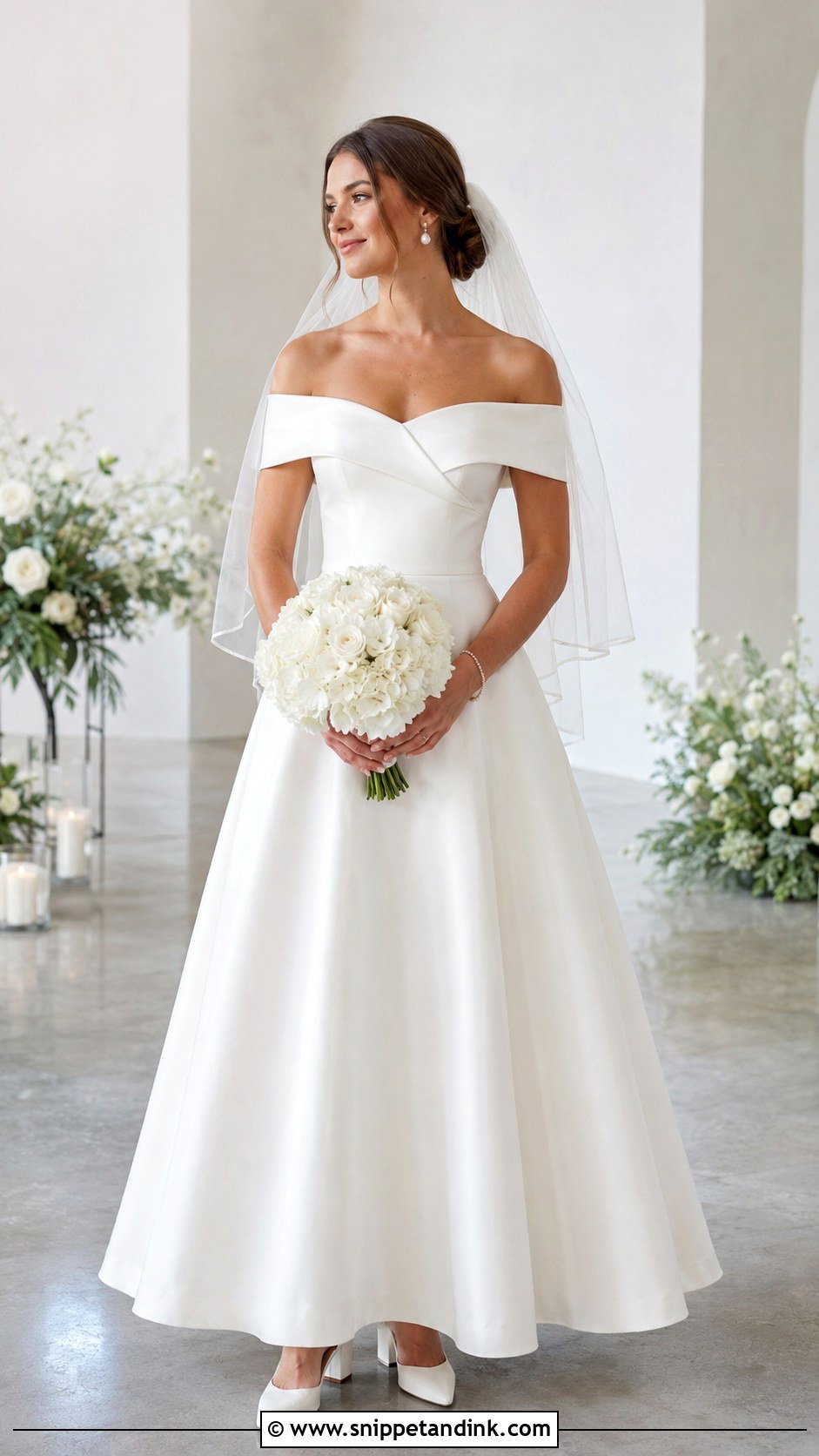
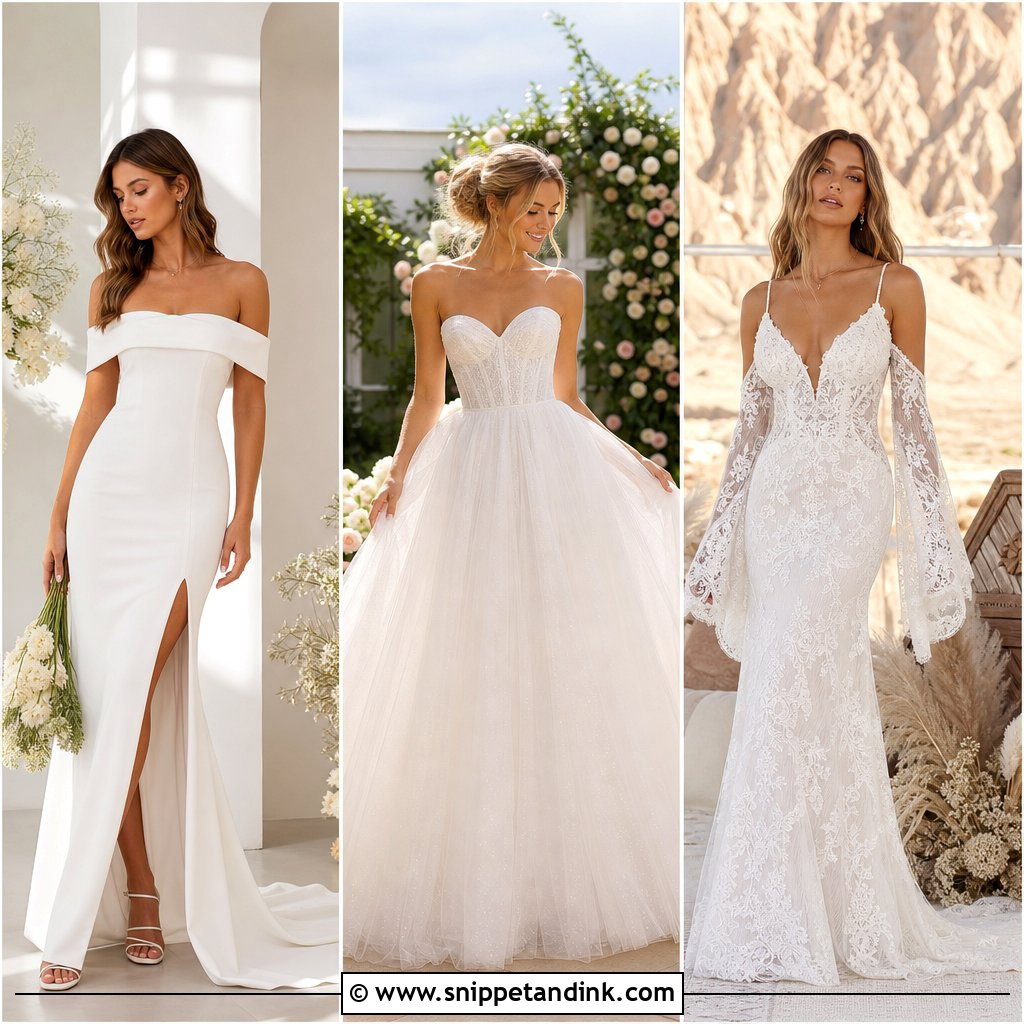
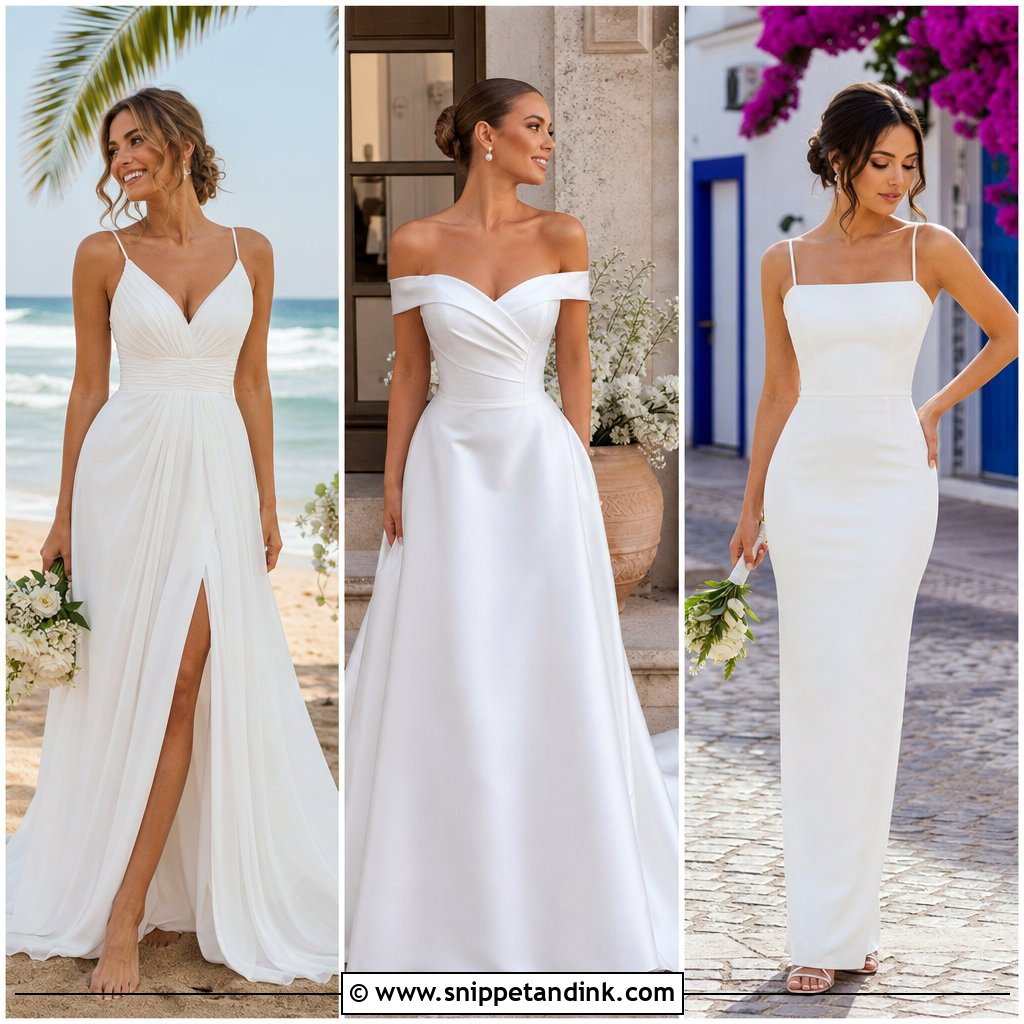
An off-the-shoulder neckline does the dramatic work for you, which is exactly why it’s good value. The risk is the bodice slipping every time you lift your arms. At a fitting I have brides hug me, sit down and raise both hands overhead; if the top edge creeps, it needs boning or a strip of silicone gripper added inside. Matte satin, crepe or light tulle in an A-line or softly fitted shape all work. Skip the necklace and let pearl drops, a slim bracelet and an elbow-length veil carry it, with a smooth low bun keeping hair off the shoulders. Pointed flats or block heels and a rounded white-and-green bouquet are plenty.
5. Square-Neck Wedding Dress
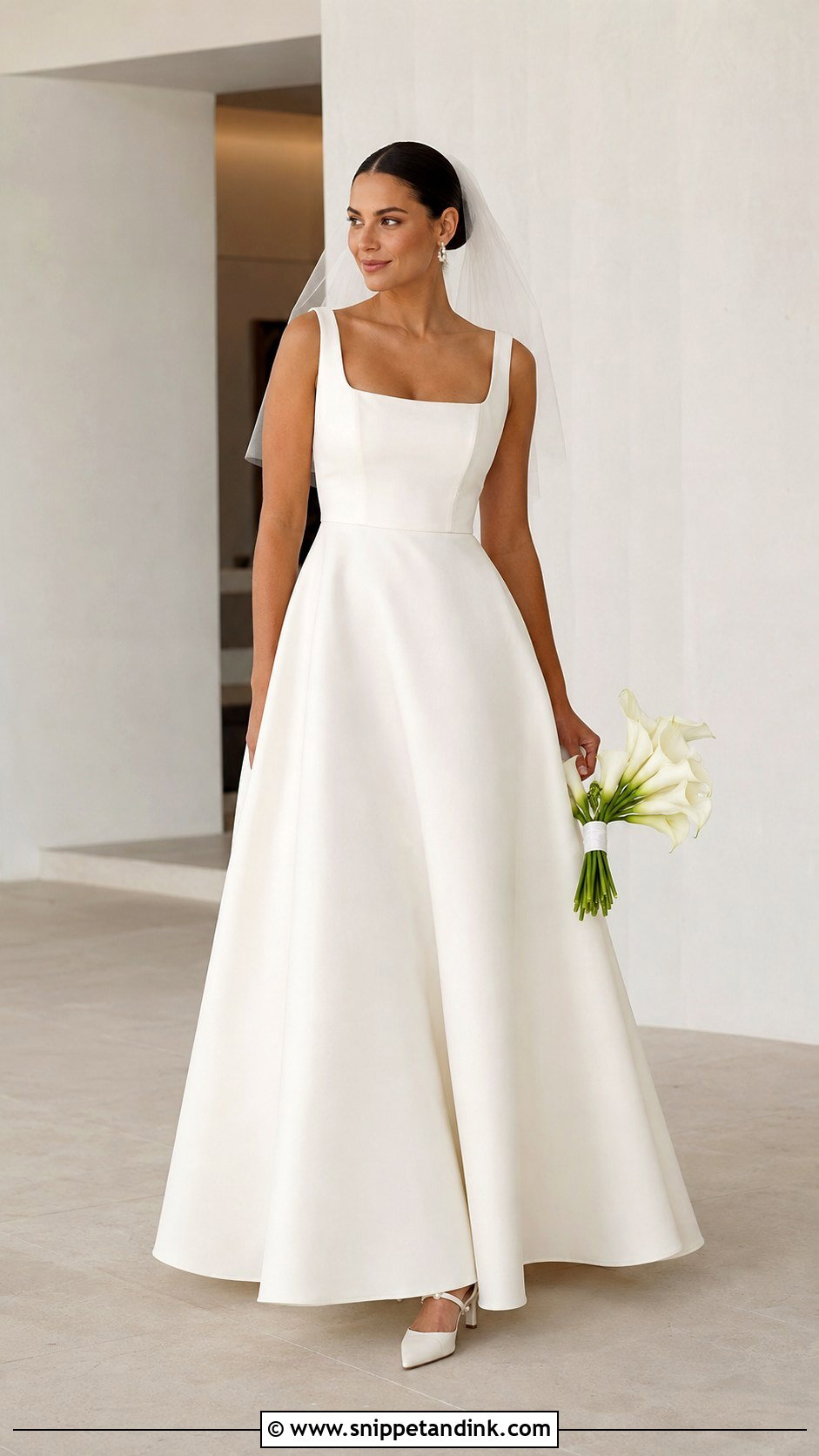
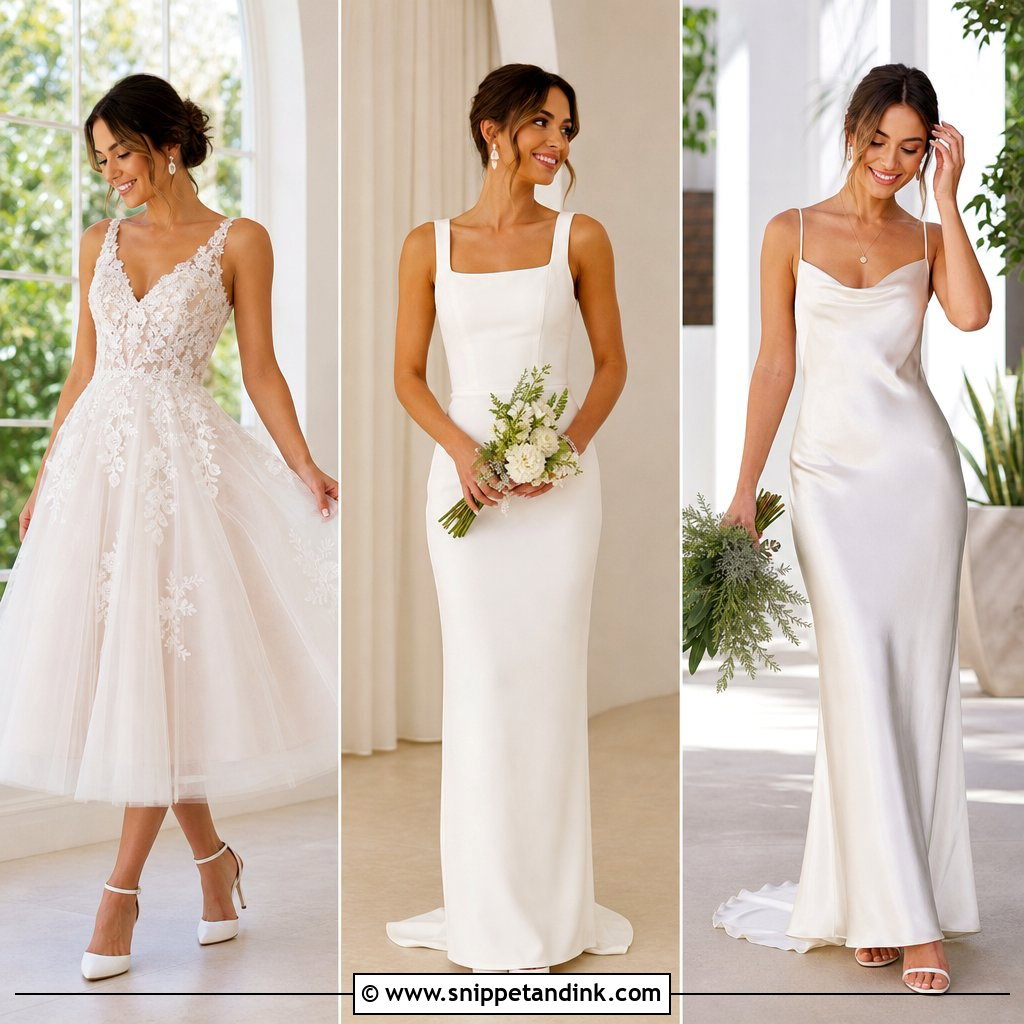
Square necklines only look sharp when the top edge lies flat against the chest. If it gaps when you lean forward, the dress reads cheap instantly, so I’d budget for a bodice adjustment from day one. Choose a fitted bodice with wide straps over an A-line or column skirt; the neckline itself gives plain fabric a reason to look intentional. A short tulle veil, small pearl hoops and a sleek low ponytail suit the clean lines, as do pointed slingbacks in ivory or a soft metallic. Calla lilies or white roses in a small bouquet echo the geometry, and a sheer wrap covers the shoulders for a ceremony that calls for it.
6. Tea-Length Wedding Dress
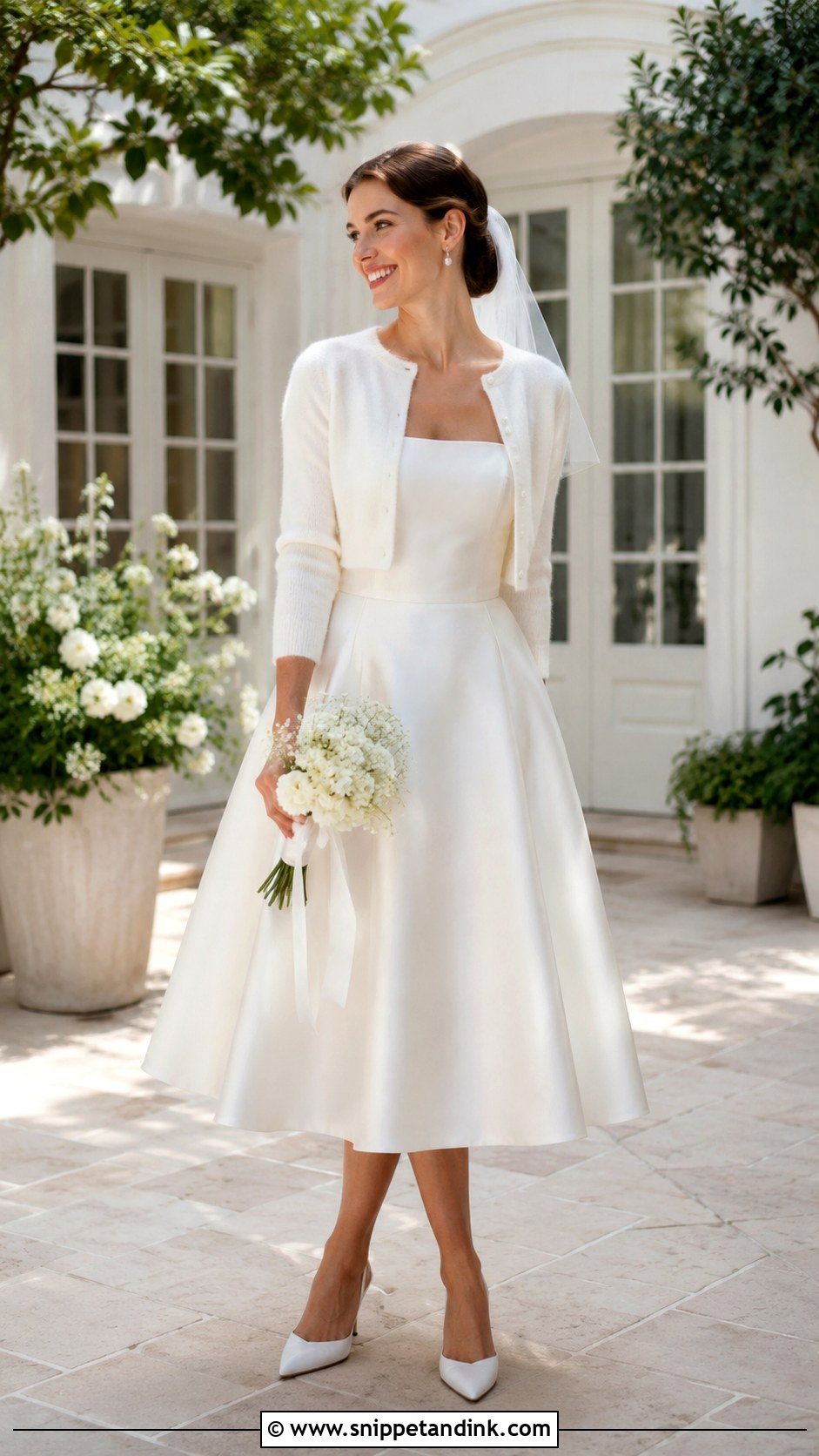
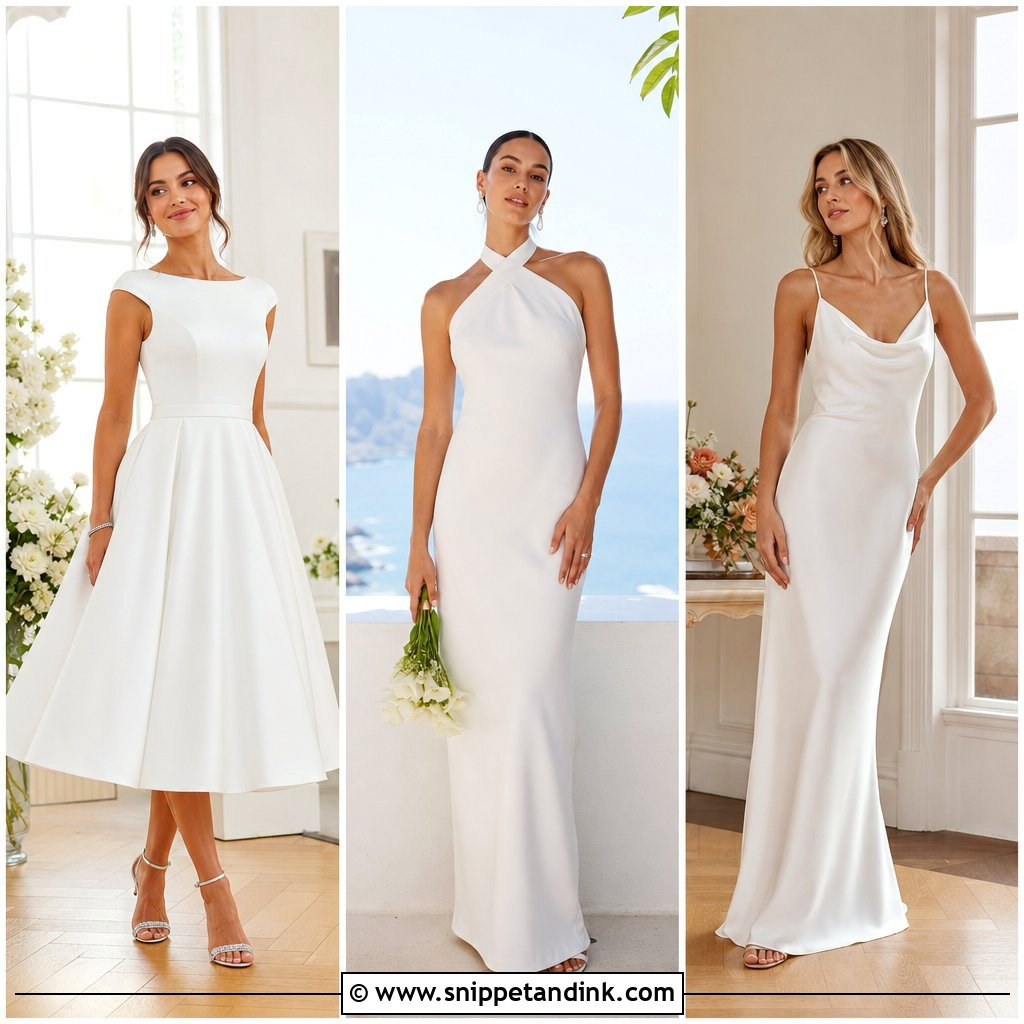
Tea length is my favorite answer for courthouse ceremonies and daytime parties, partly because there’s no train to bustle and the hem rarely needs much work. Your shoes are on show all day, so they become part of the outfit rather than an afterthought. A fit-and-flare in satin, organza, lace or structured crepe holds its shape best at this length; very soft fabrics can drift toward cocktail dress. Pointed pumps, slingbacks or polished ballet flats all work, so pick the pair that agrees with your earrings or hair piece. Add a birdcage or shoulder-length veil and a compact ribbon-tied bouquet. In cooler weather a cropped cardigan keeps you warm without hiding the waist.
7. Minimalist Crepe Wedding Dress
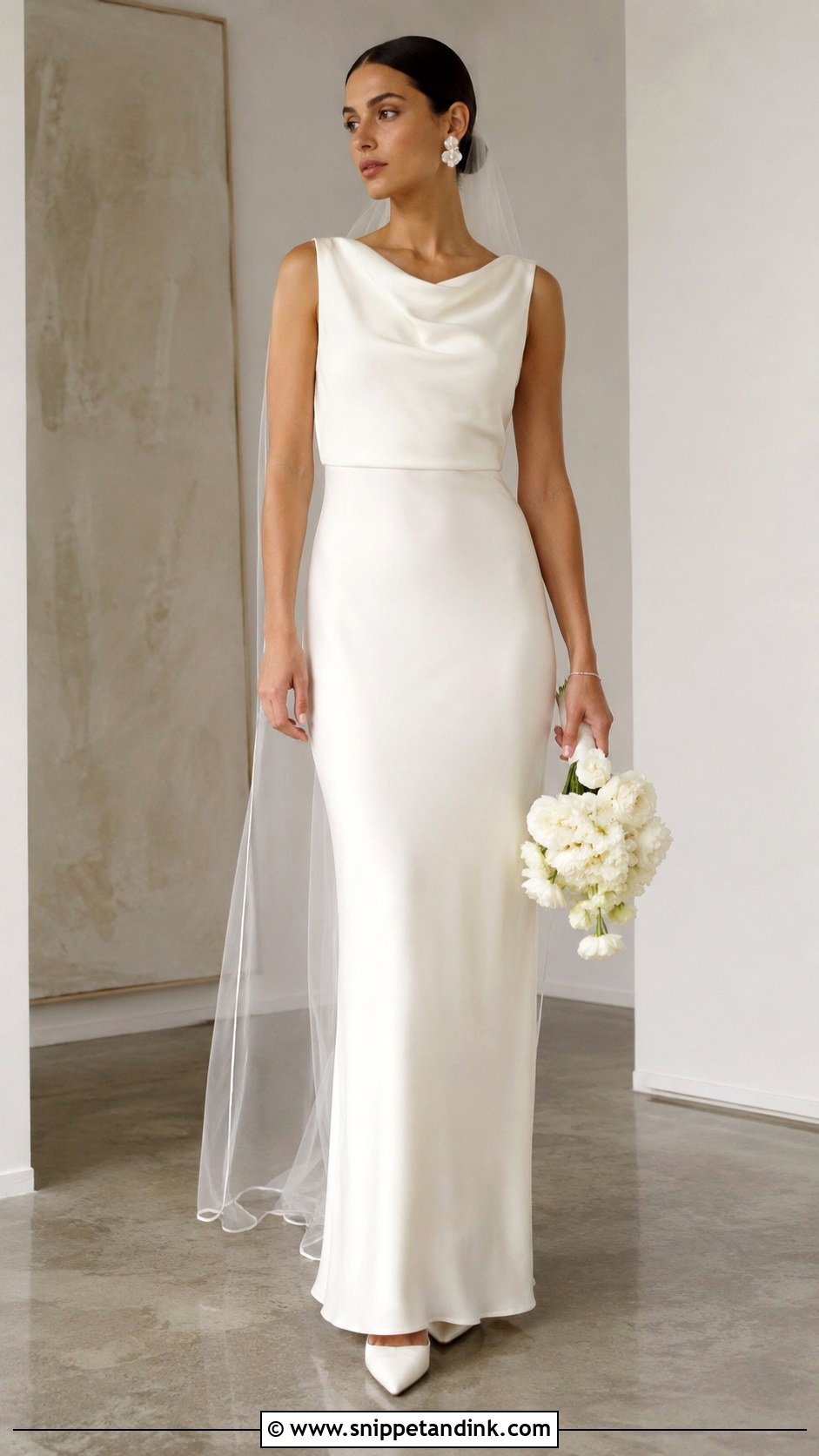
Crepe has no shine and no texture to hide behind. That makes it the dress where I’d move almost the entire accessory budget into alterations, because a wrinkle at the waist or a dragging hem is visible from the back row. Pick a clean column or sheath with one strong detail, maybe a V-back or a draped neck, and let that be the whole story. Small sculptural earrings, a thin bracelet and a plain cathedral or fingertip veil are enough. Wear smooth, no-line underwear; crepe will print a lace edge straight through. Sleek pointed heels, or low mules if the hem covers your feet, plus a single-flower bouquet keep it modern.
8. Floral Appliqué Wedding Dress
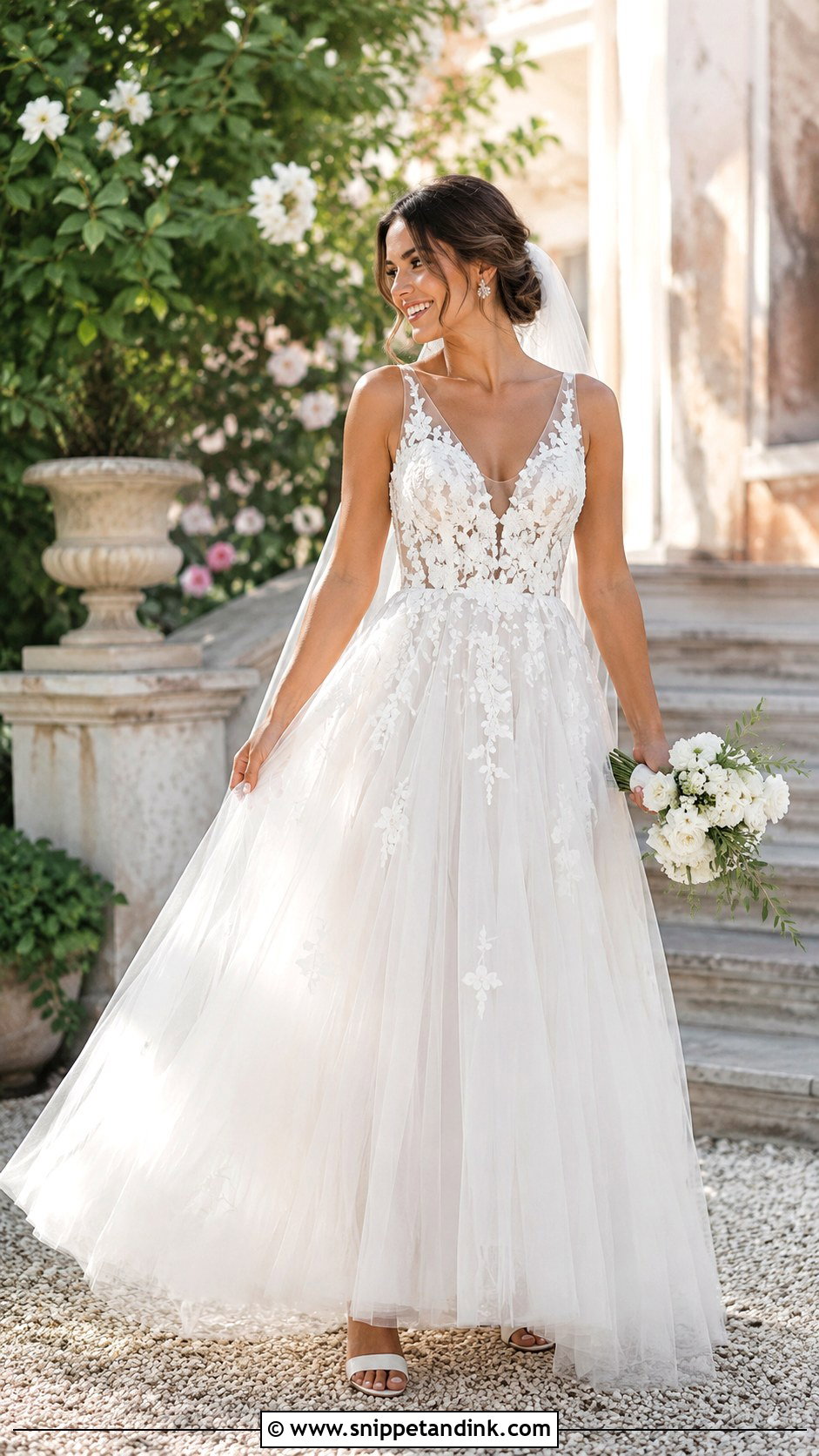
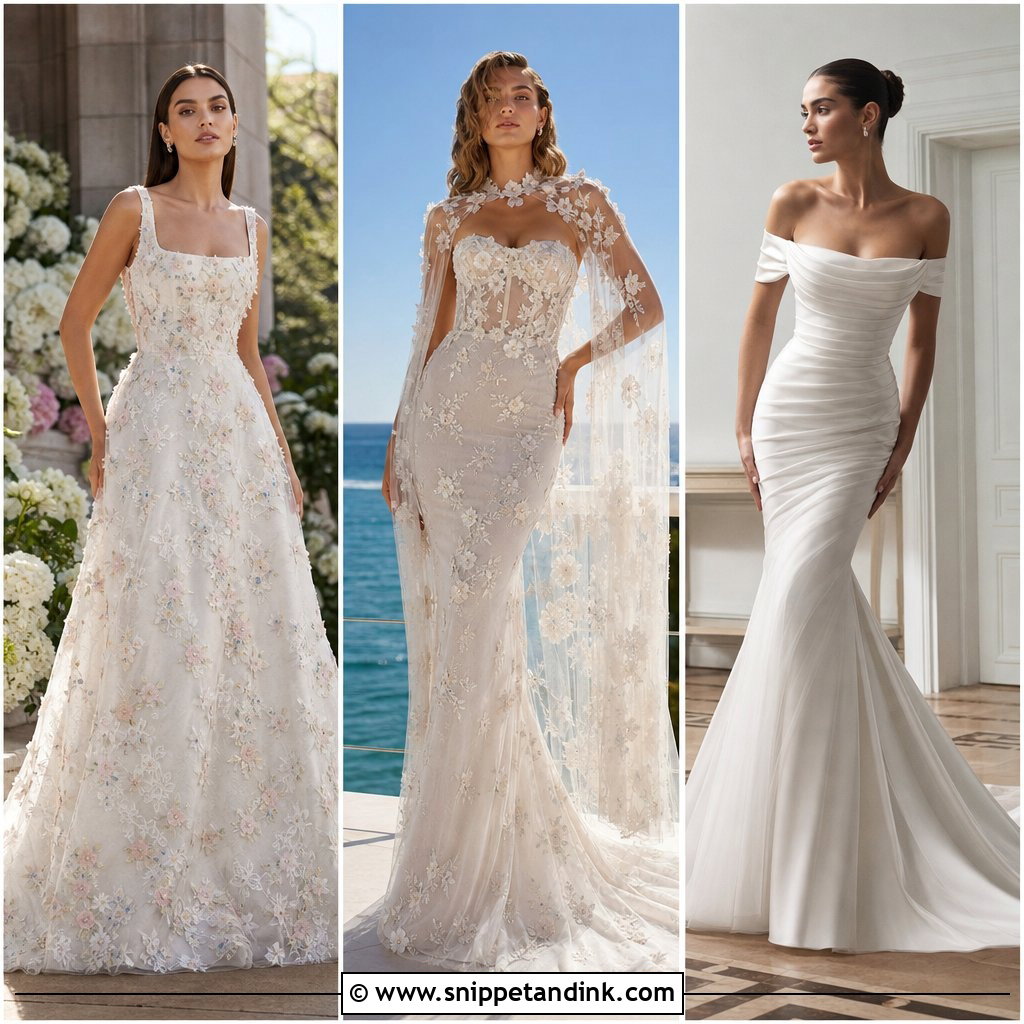
Appliqué is a smart place to save because it only has to cover part of the dress to make an impression. I like it concentrated on the bodice, straps or upper skirt over a plain tulle base, which keeps the gown light. Check the backs of the flowers on cheaper dresses: if they’re glued rather than stitched, they start lifting after a few hours of dancing, and a seamstress can tack them down for a small fee. Style it with block-heel sandals, little floral studs and a sheer veil with a raw edge, and a loose bun or half-up hair to match the texture. Keep the bouquet palette narrow so it doesn’t compete, and leave off the necklace if the neckline is busy.
9. V-Neck Tulle Wedding Dress
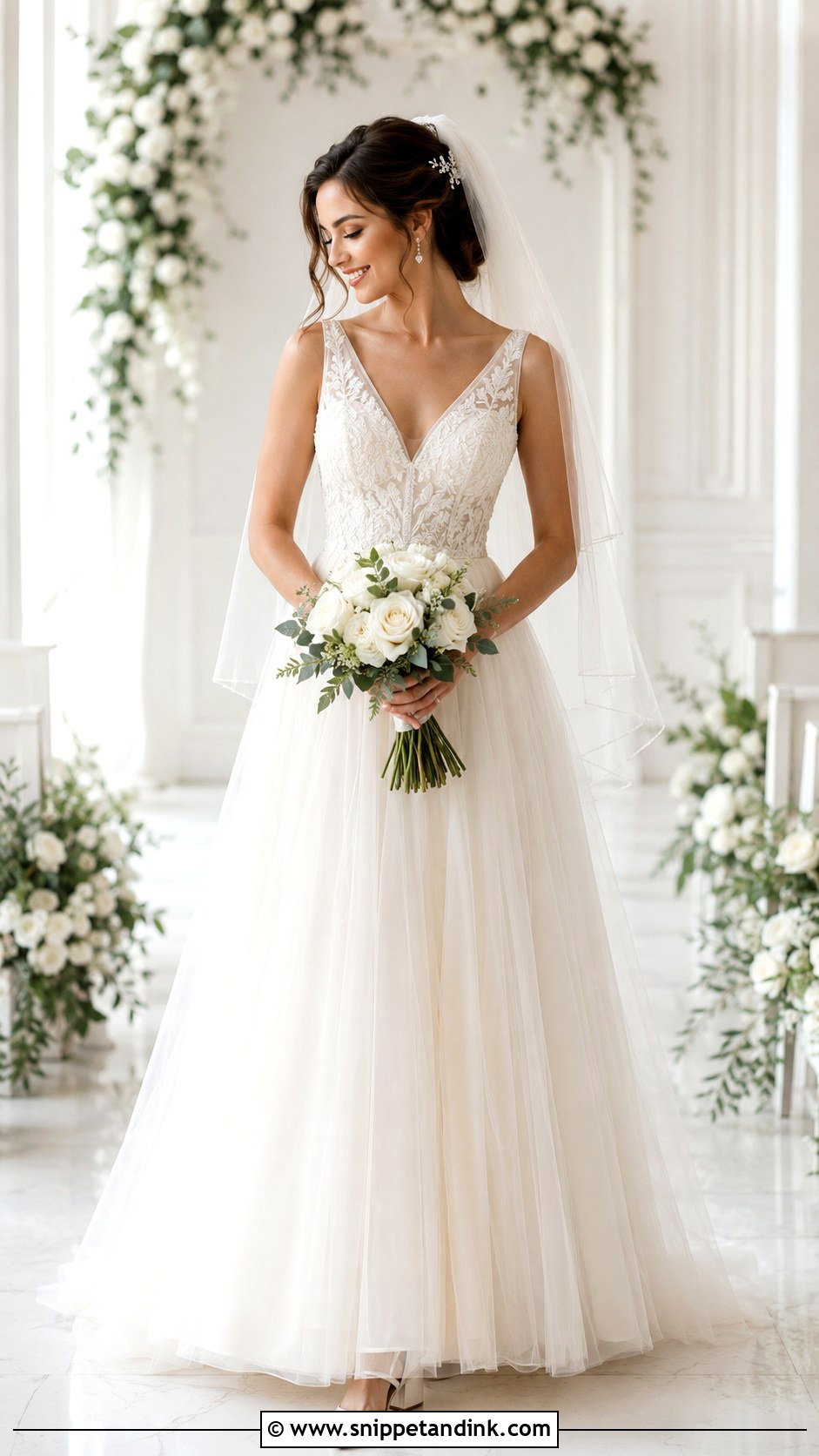
A V-neck tulle gown gives you the traditional fitted-bodice-and-volume shape without the weight of a structured ball gown, because a few soft layers do the job. The first thing I ask is what bra you plan to wear, since a deep V needs either built-in cups or a plunge bra brought to the same fitting as the dress. Delicate drops, a narrow comb and a plain fingertip veil finish it, with closed block heels for balance and a bouquet of white roses with small seasonal flowers. I’d leave out a jeweled belt unless your waist genuinely needs definition. Fitted straps and a clean hem will do more for it than any sparkle.
10. Strapless Ball Gown Wedding Dress
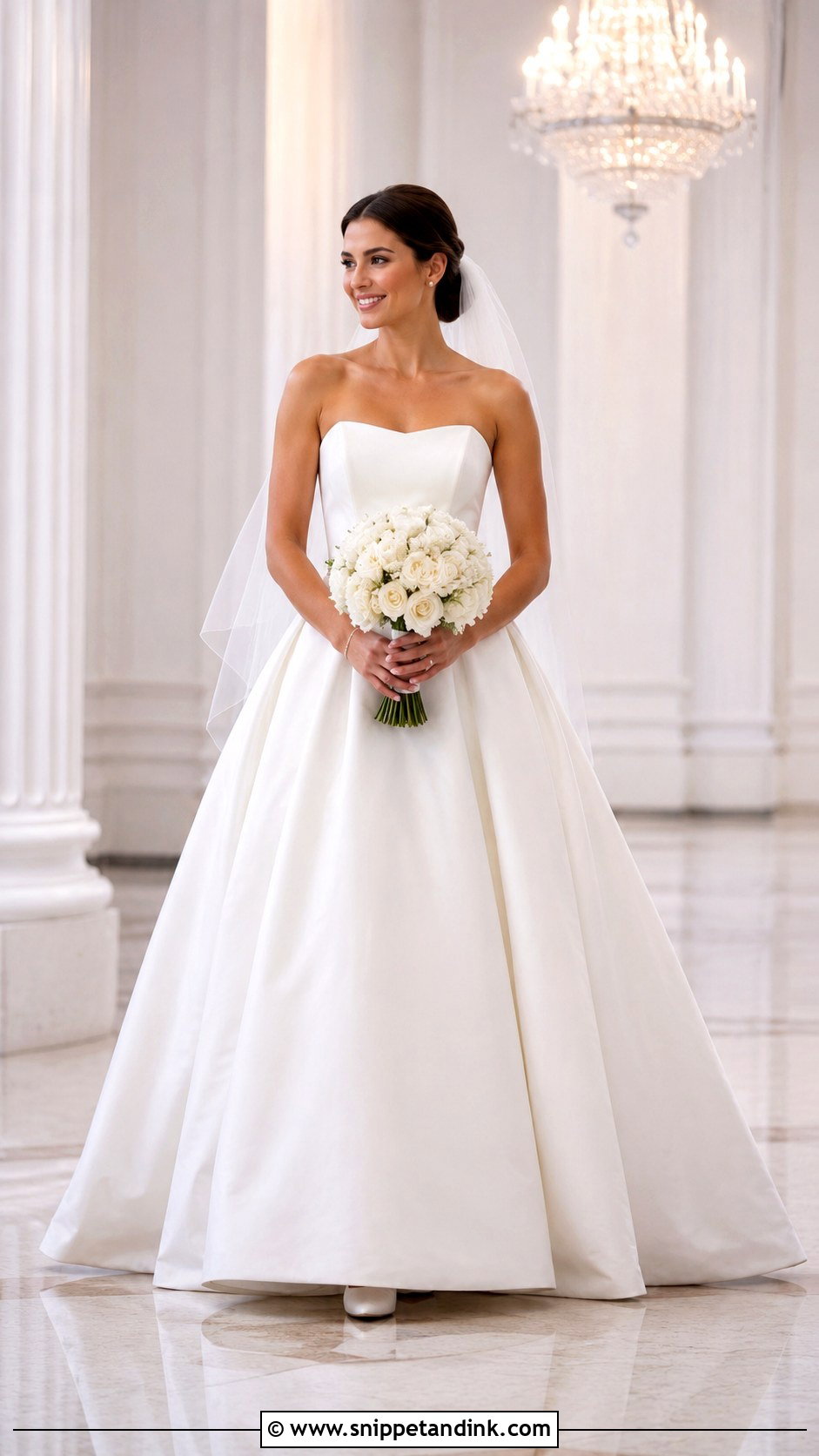
You can still have a big skirt on a small budget, as long as it’s plain. Satin or simple tulle with a structured bodice and no embellishment gives you all the drama the silhouette promises. Strapless is where I’m strictest at fittings: the bodice has to stay up on its own when you sit, bend and dance, without you hitching it all night. If it doesn’t, internal boning and a waist stay are worth paying for. Keep accessories to a simple veil, pearl studs and one bracelet, with pumps or supportive block heels hidden under the hem and hair worn according to how much shoulder you want showing. A medium rounded bouquet balances the volume. Avoid a long train if you can; every extra foot means a more complicated bustle and a bigger alterations bill.
11. Halter-Neck Wedding Dress
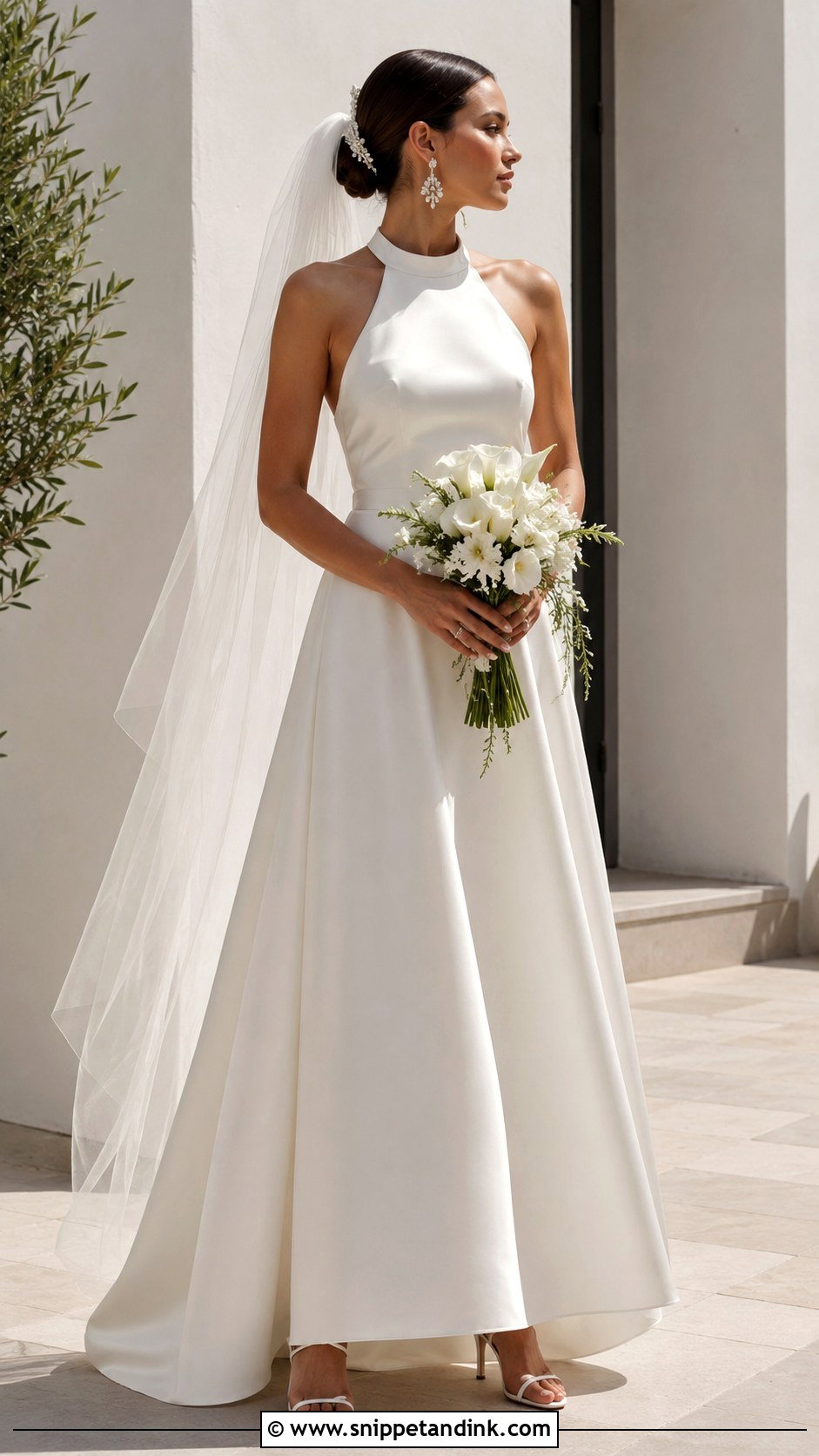
Halters frame the face and shoulders, so a necklace only crowds them and noticeable earrings work much better. Soft satin, chiffon or crepe over a column or gentle A-line skirt keeps the line sleek. The part I test is the neck strap itself: a thin tie or stiff band can rub the skin raw by evening, so wear it for a full hour at the fitting, not five minutes. A smooth updo shows off the shape, with a plain veil anchored under the hair and perhaps a simple comb. Low slingbacks and a streamlined white bouquet suit it. If you want a ceremony layer, a light cape can stand in for the veil.
12. High-Neck Lace Wedding Dress
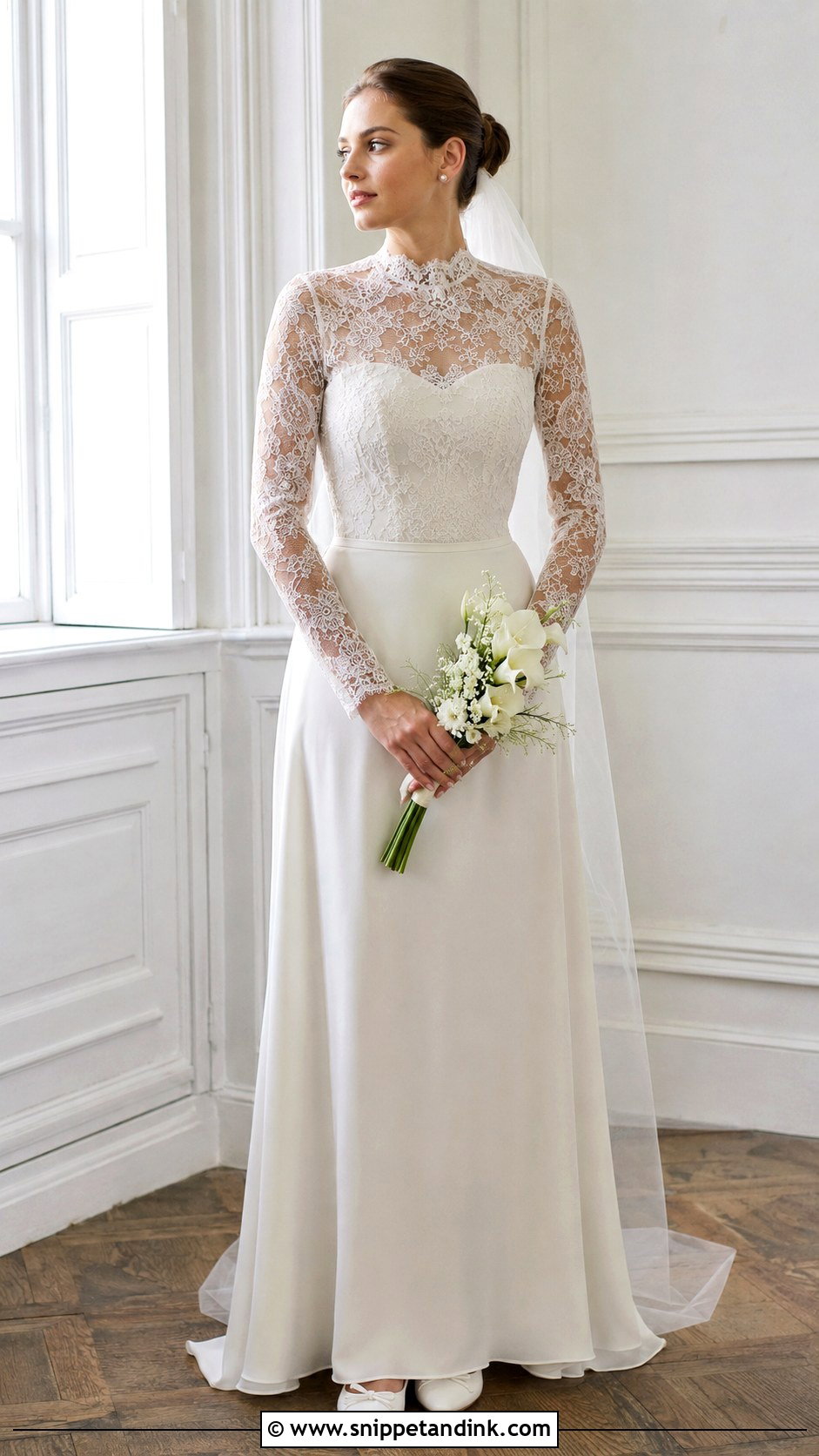
To keep a high-neck lace gown affordable, I look for lace only on the bodice and sleeves with a plain chiffon, crepe or tulle skirt underneath. You still get the detail without paying for lace across every inch. The collar is the fit point that matters. Turn your head fully each way and look down at your plate, because a neckline that’s snug at the throat feels fine standing still and miserable through dinner. Pearl studs and a sleek bun suit it, with the veil set below the hair so it doesn’t bunch at the collar. Ivory flats or low block heels and a slim bouquet keep it classic. No necklace and no heavy headpiece; the neckline is your jewelry.
13. Slip Wedding Dress With Veil
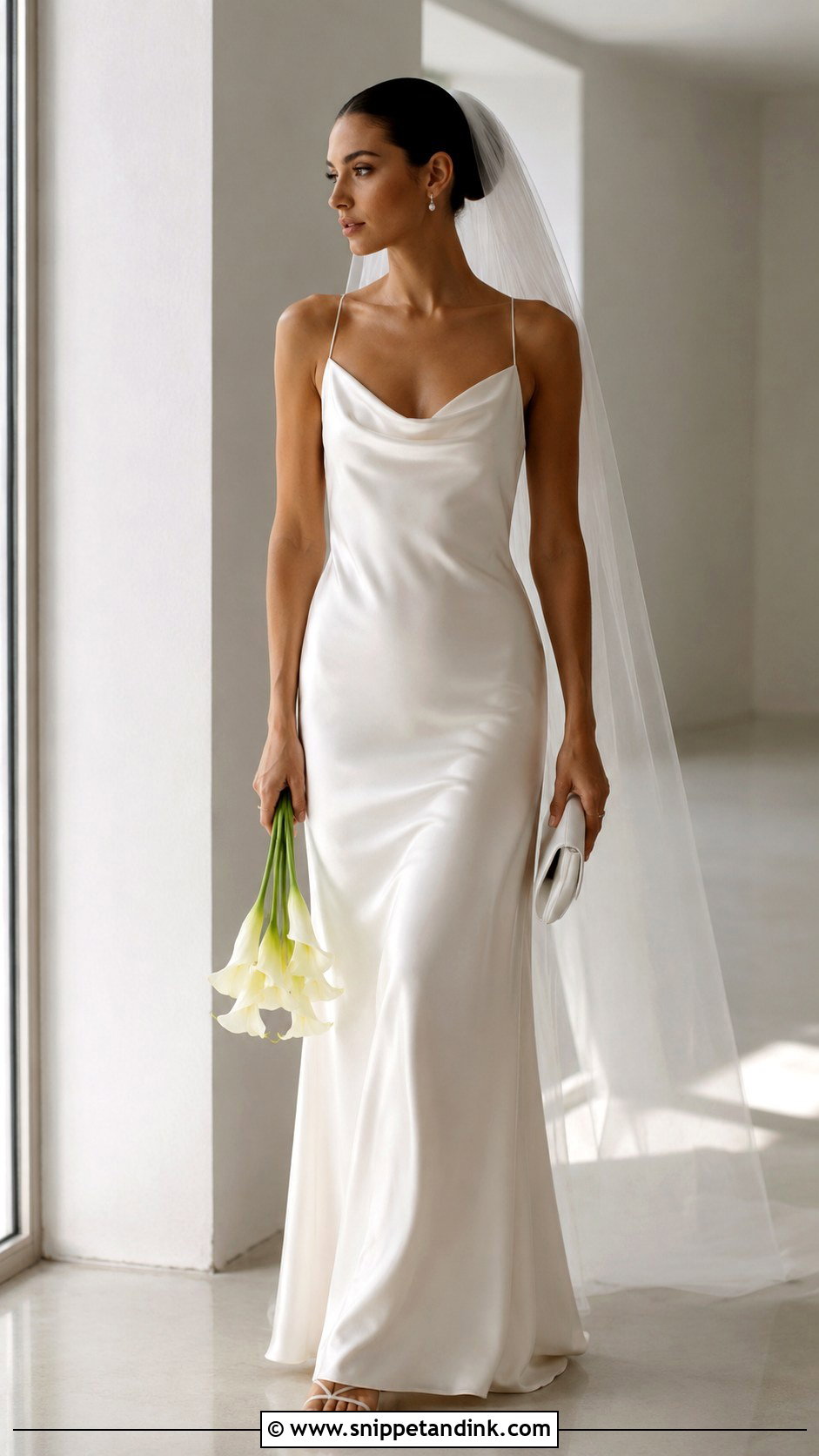
Slip dresses are cut close and usually on the bias, so they cling and reveal what’s underneath. I insist on a full lining and adjustable straps, and I’d size for the hips rather than the bust, since shortening a strap is easy and letting out a bias seam usually isn’t possible. A long plain veil is what turns a nice satin dress into a bridal one. Add pearl or sculptural earrings, low strappy heels, a small clutch, and a neat bun or polished waves, with white calla lilies or one other simple stem in hand. Smooth underwear is non-negotiable here. For coverage, a cropped ivory blazer or sheer cape can come off later for a second look.
14. Bridal Jumpsuit With Detachable Skirt
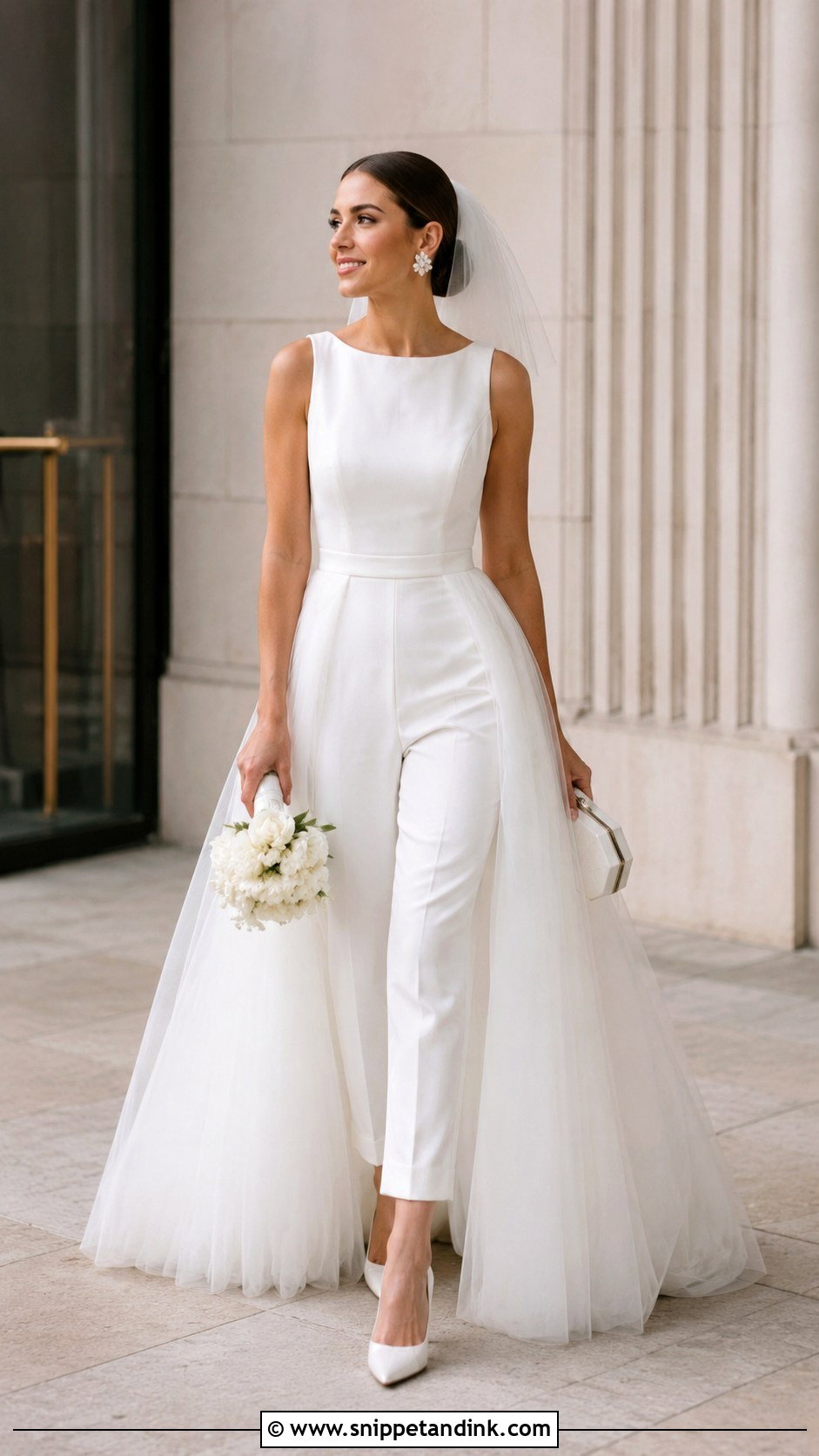
A bridal jumpsuit with a detachable overskirt gives you a ceremony look and a dancing look from one base piece. Start with a tailored white or ivory jumpsuit with a defined waist and wide or straight legs, then add a light tulle or organza skirt that fastens at the waist. I always check torso length first: if the jumpsuit is short in the body, it pulls when you sit, and that can’t be fixed with a hem. Pointed pumps, statement earrings and a short veil or hair bow keep things clean, with a structured clutch and compact bouquet. Leave the jumpsuit undecorated so the overskirt stays the feature, and have the trouser hem set while you’re wearing the actual wedding shoes.


15. Bridal Separates With Tulle Skirt
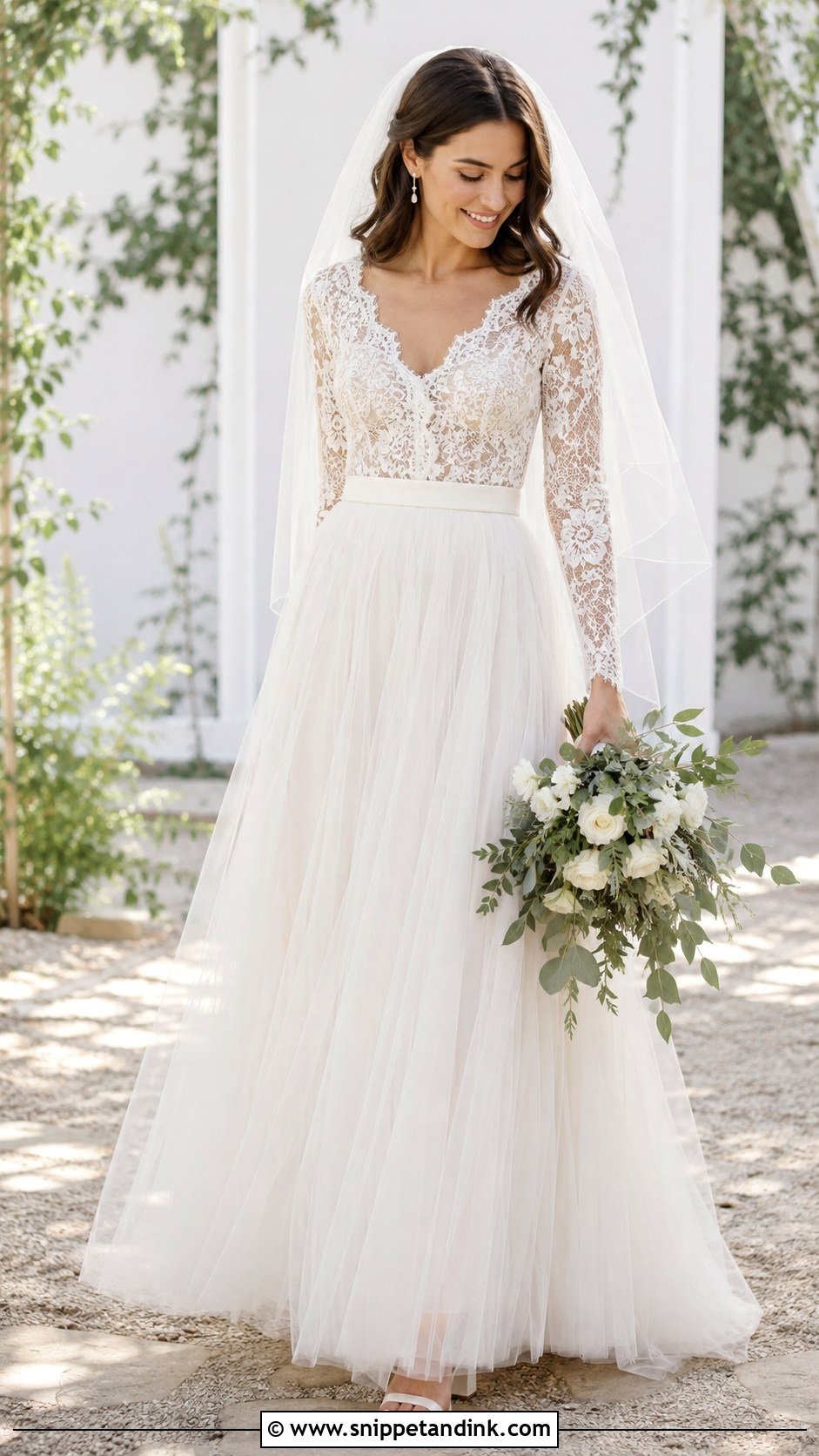
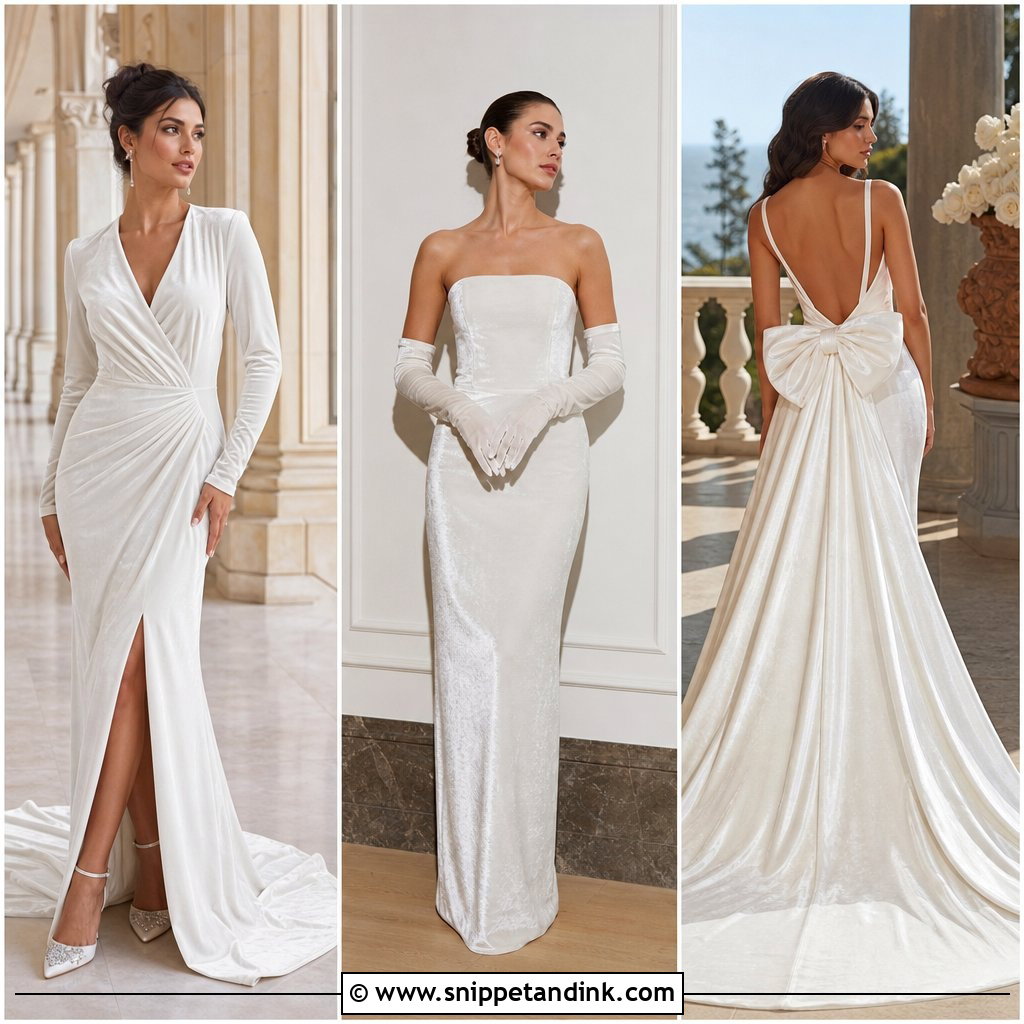
Separates let you buy the top and skirt in different sizes, which helps anyone whose upper and lower halves don’t follow one standard chart. A fitted satin, lace or crepe top over a high-waisted tulle A-line skirt reads as one gown, provided the whites match. Often they don’t: one ivory leans pink, another grey, and daylight shows it. I lay both pieces side by side at a window before cutting any tags. A bodysuit-style top stays tucked far better than a loose blouse, and a narrow belt can hide the join. Finish with block-heel sandals, small earrings, a fingertip veil, a relaxed updo or soft waves, and a simple bouquet with greenery.
16. White Maxi Dress Wedding Outfit
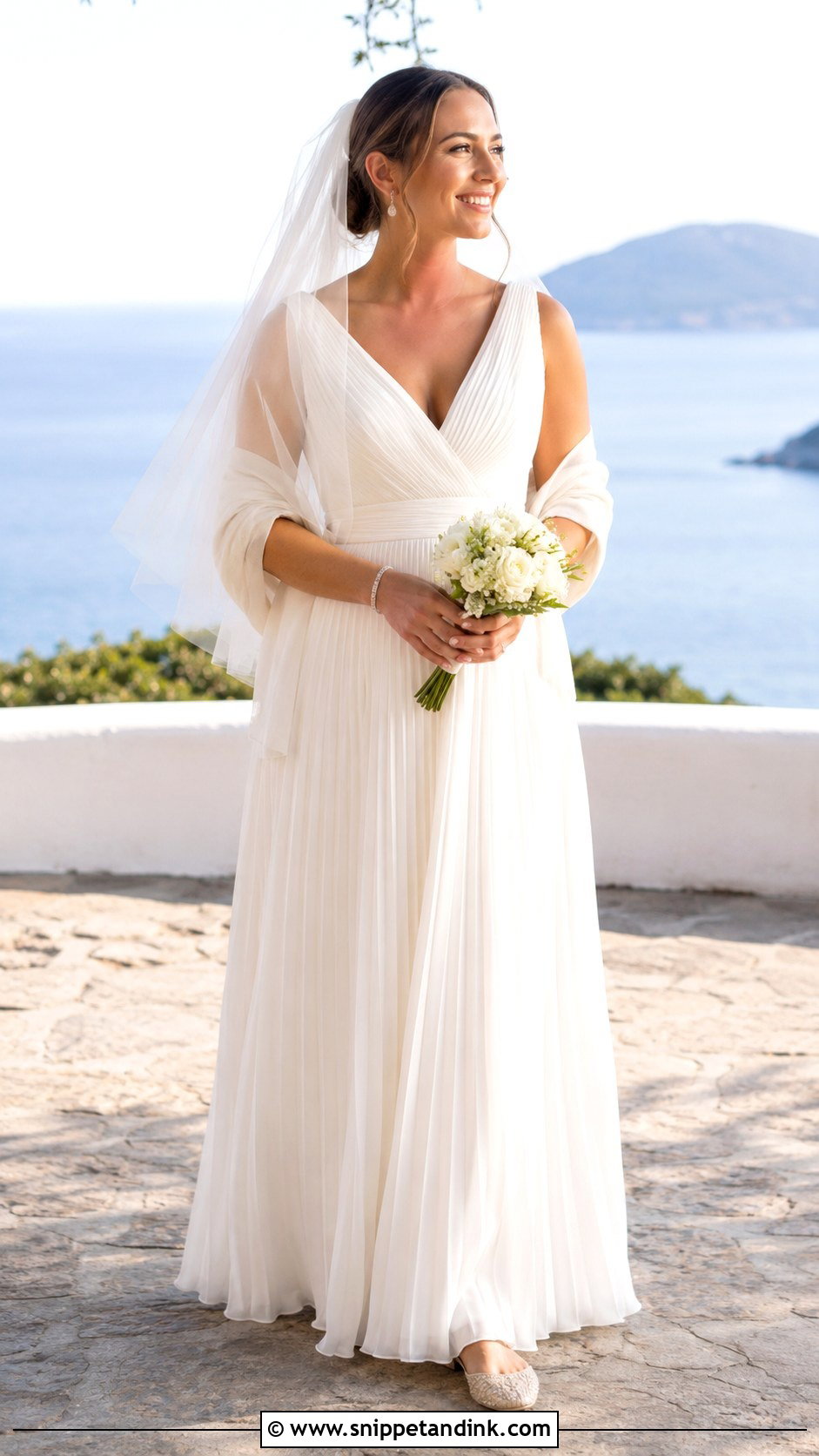
A white maxi dress can work as a bridal outfit for an elopement, a destination ceremony or a backyard party, but it needs a couple of signals that it’s a wedding and not a summer evening out. The veil does most of that work. Choose a floor-length chiffon, satin, pleated or textured crepe dress with a defined waist and a proper lining, then add a shoulder-length veil, pearl earrings and a polished hairstyle. Pick low heels, embellished flats or sandals to suit the ground you’ll stand on, and bring an ivory wrap for cool evenings. Resist piling on sparkle. The money I’d spend is on length: a maxi hemmed to just skim your shoes looks intentional, while one that pools or floats above the ankle looks borrowed.
17. Wrap Wedding Dress With Block Heels
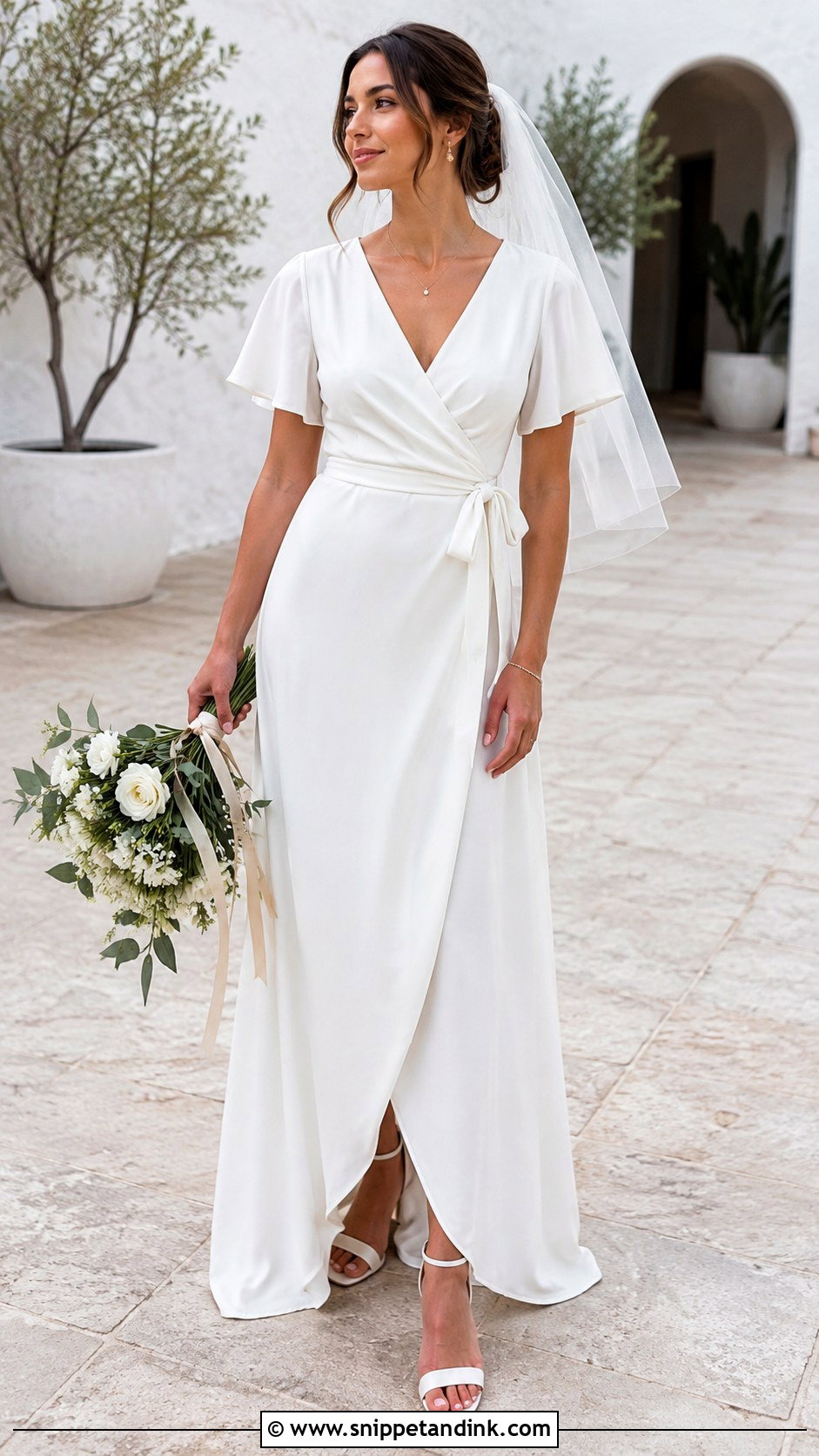
Wrap dresses forgive a bit of weight change in the weeks before the wedding, since the tie adjusts where a zipped bodice can’t. Look for a midi or floor-length version in satin, crepe or chiffon with secure inner fastenings. The usual problem is the front opening drifting lower as the day goes on. I’d have a hidden snap or small modesty panel sewn in rather than tugging at it in every photo. Block heels, a plain veil to the shoulders or fingertips, a fine pendant and a slim bracelet suit the V neckline. Carry a relaxed ribbon-tied bouquet, keep a shawl for cooler weather, and skip the train.
18. Puff-Sleeve Wedding Dress
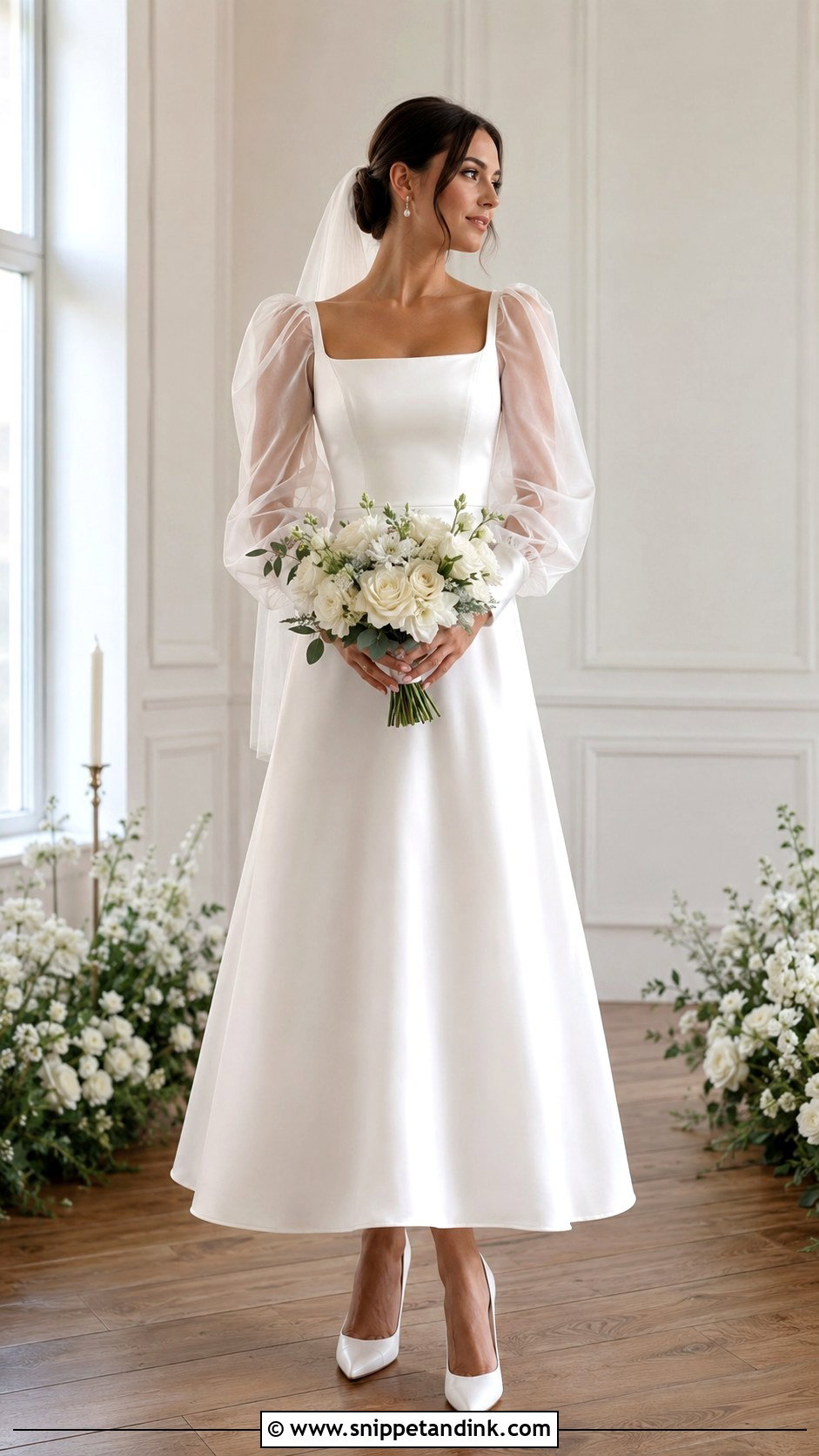
Puff sleeves give a plain dress instant personality, which is why I like them on a budget. A square or sweetheart neck with short sheer sleeves or softly gathered three-quarter ones works, as long as the skirt stays simple in satin, organza or crepe. Big sleeves widen the shoulder line, so I keep jewelry to simple drops, put the hair in a low bun and set a short veil beneath it. Closed pumps or sleek block heels and a medium bouquet of white flowers finish it, and if the sleeves are dramatic, leave out necklaces and large hair pieces entirely. Detachable puff sleeves are the clever version: one look for the ceremony, a cleaner sleeveless one for the reception, no second dress.
19. One-Shoulder Wedding Dress
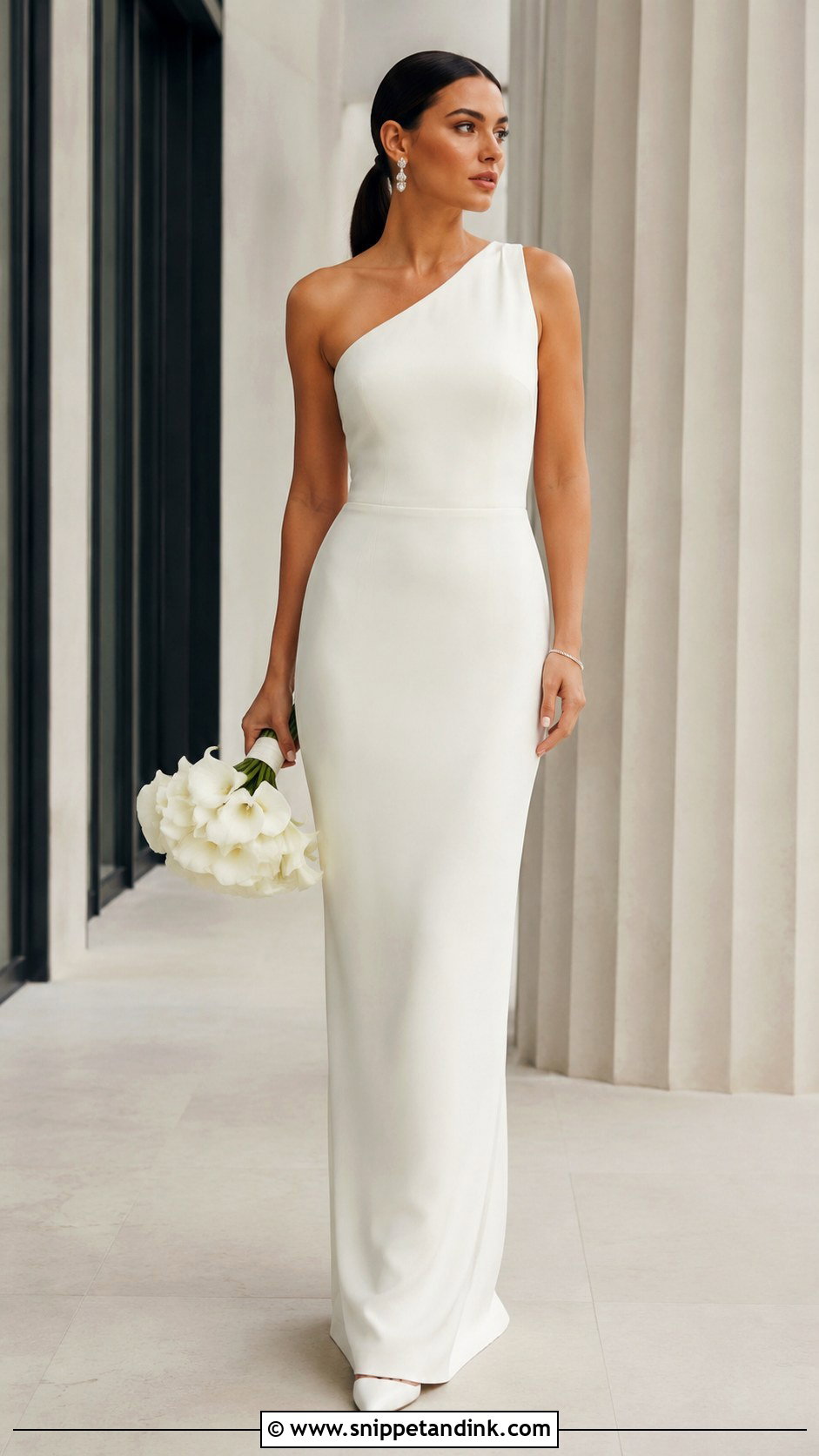
A single strap has to do all the work of holding a one-shoulder bodice in place, so this is the gown where I spend the most fitting time around the shoulder and underarm. If that strap is even slightly long, the whole bodice twists toward the bare side by mid-evening. Crepe, satin or draped chiffon in a column, sheath or A-line shape suits the asymmetry. Wear statement earrings instead of a necklace, a low side bun or sleek ponytail, pointed shoes and a slim bracelet on the bare arm, with a small structured bouquet. A modern hair comb often balances the cut better than a veil. If the dress has one long sleeve, pare everything else right back.

20. Secondhand Wedding Dress With Modern Accessories
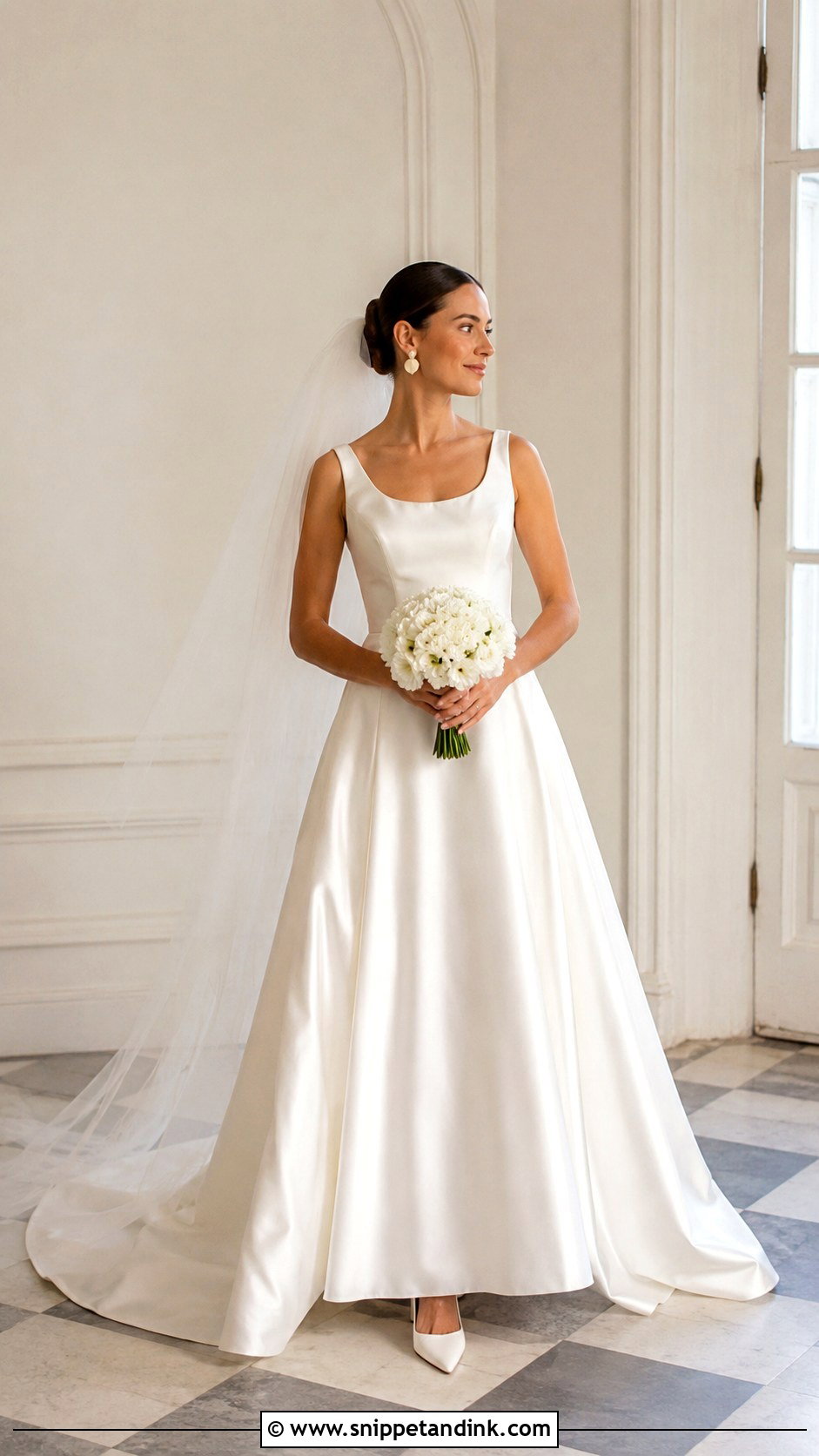
Pre-owned gowns are the best value in bridal, but you’re buying the construction, not the styling it arrived with. I look for a classic A-line, sheath or simple ball gown made well enough to survive alterations, and I check the hem, closures, lining and underarm for yellowing or wear before any money changes hands. Dated beading can usually be removed and a fussy neckline simplified by a good seamstress. Then style it fresh with a new plain veil, modern earrings, pointed shoes, a compact bouquet and sleek hair, which pulls vintage lace or traditional satin into the present. Put money aside for professional cleaning too; older gowns often carry faint hem marks that only show in daylight.
Planning Alterations Before the Dress Is Paid For
Almost every dress on this list will need some tailoring, and on a cheaper gown the alterations can end up costing a large share of the dress price. Rates vary a lot by area and by seamstress, so ask for a quote while the dress is still returnable.
What usually needs doing
- Hemming, especially on layered tulle or lace edges, which take longer than a plain hem.
- Taking in the bodice or side seams so the neckline lies flat.
- Shortening straps, which is quick and makes a surprising difference.
- Adding a bustle if there’s any train at all.
How the fittings are spaced
I’d book the first fitting roughly two to three months before the wedding and the last one a week or two out. Bring your actual shoes and the underwear you’ll wear on the day to every appointment; changing either after the hem is cut throws the length off.
Getting It to the Aisle Without Creases
Steam from the inside of the skirt, test first on a hidden seam, and never press satin with a hot iron straight on the face of the fabric; it leaves a shine mark that won’t come out. Hang the gown by its inner loops in a breathable bag, not plastic, and lay it flat across a back seat for the drive. In my day-of kit there’s always a needle with white thread, safety pins, double-sided fashion tape and a white chalk block for covering small marks.
Why a Good Fit Hides a Modest Price Tag
The brides who look most expensive in my fitting room are rarely wearing the most expensive gowns. They’re in a simple shape that fits properly, with shoes they can stand in and two or three accessories that agree with each other. Start with whichever silhouette above makes you stand a little taller, then add only what supports it. Before you check out, price the hem, the bodice work, undergarments, shoes and veil, so the dress you can afford is still the dress you can afford once it’s finished.
You'll Like These Ideas:



Leave a Reply