
A modest dress with almost no decoration is the hardest kind of gown to get right, and also the one I enjoy styling most. With no lace or beading to distract the eye, everything rests on the cut, the weight of the fabric and how well it has been altered. Coverage and simplicity work with almost any fabric, from floaty chiffon to stiff mikado, as long as the dress is lined properly and fitted to the way you move. Below are twenty dresses I’d happily put a bride in, each with the accessories I’d pair with it and the fitting details I’d watch for.
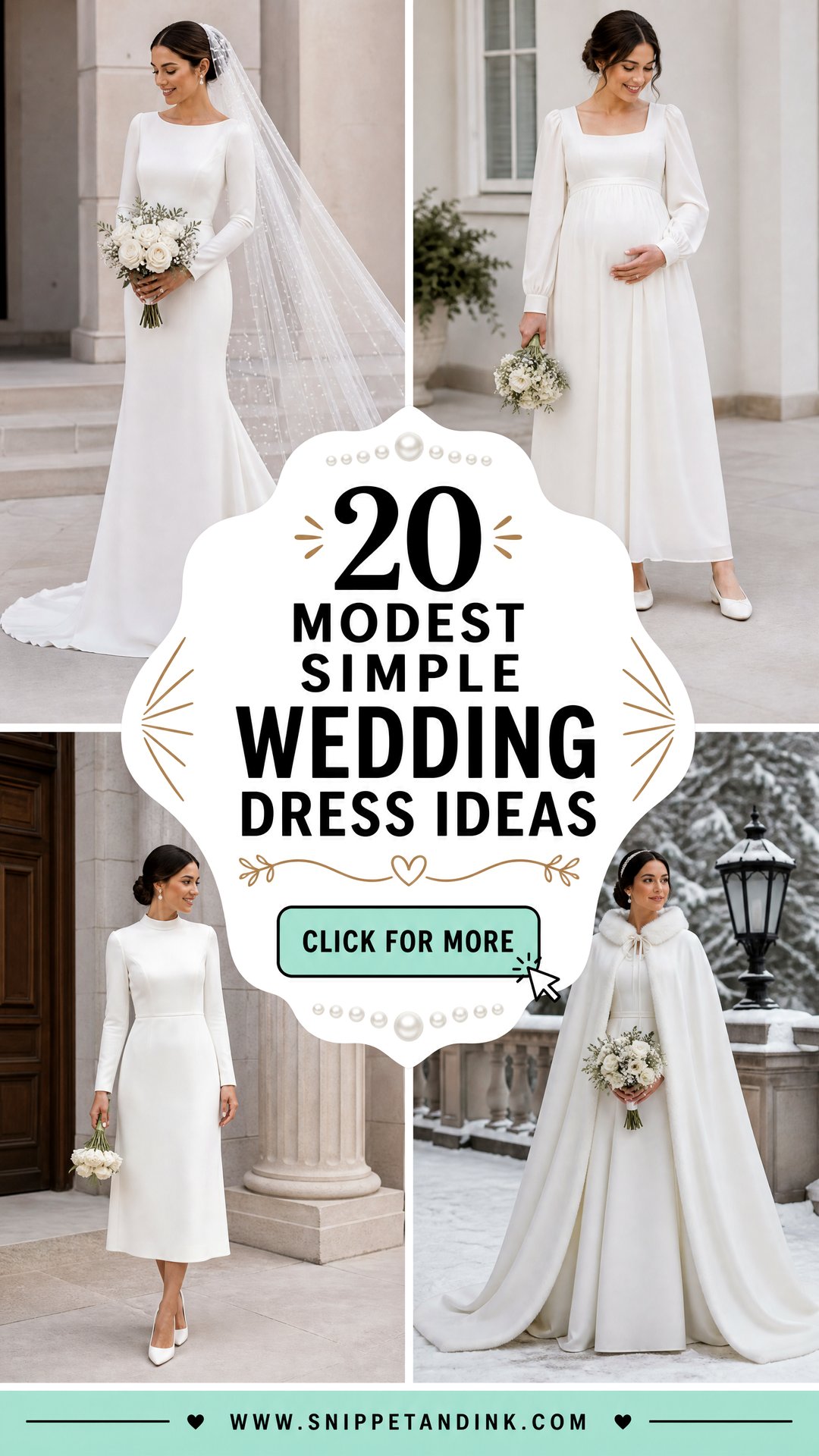
Deciding How Much Coverage You Want Before the First Appointment
Modest means something different to every bride, so I ask for specifics before we pull a single dress. Do you need opaque sleeves to the wrist, or are elbow sleeves fine? Is a sheer illusion panel acceptable if it is lined in skin-tone mesh, or must every layer be solid? Does the back need to be fully closed, or is a small keyhole okay? Knowing those answers saves hours, because many sample gowns are sold strapless with sleeves added later as a custom option.
- Ask whether sleeves can be added to a strapless design and whether the shop’s seamstress or the designer makes them. Matching fabric from the original maker always looks better.
- Hold the dress up to a window. Light behind you is the real test of a lining, not the soft lighting of a fitting room.
- Check the neckline from above, the way a photographer standing on a step will see it.
- If religious or family requirements apply to the ceremony only, a jacket, cape or bolero lets you change coverage for the reception.
Shop around eight to ten months ahead if you can. Made-to-order gowns commonly take several months to arrive, and modest changes such as added sleeves or a raised neckline add time at the alteration stage.
1. Long Sleeve Crepe Wedding Dress With Pearl Veil
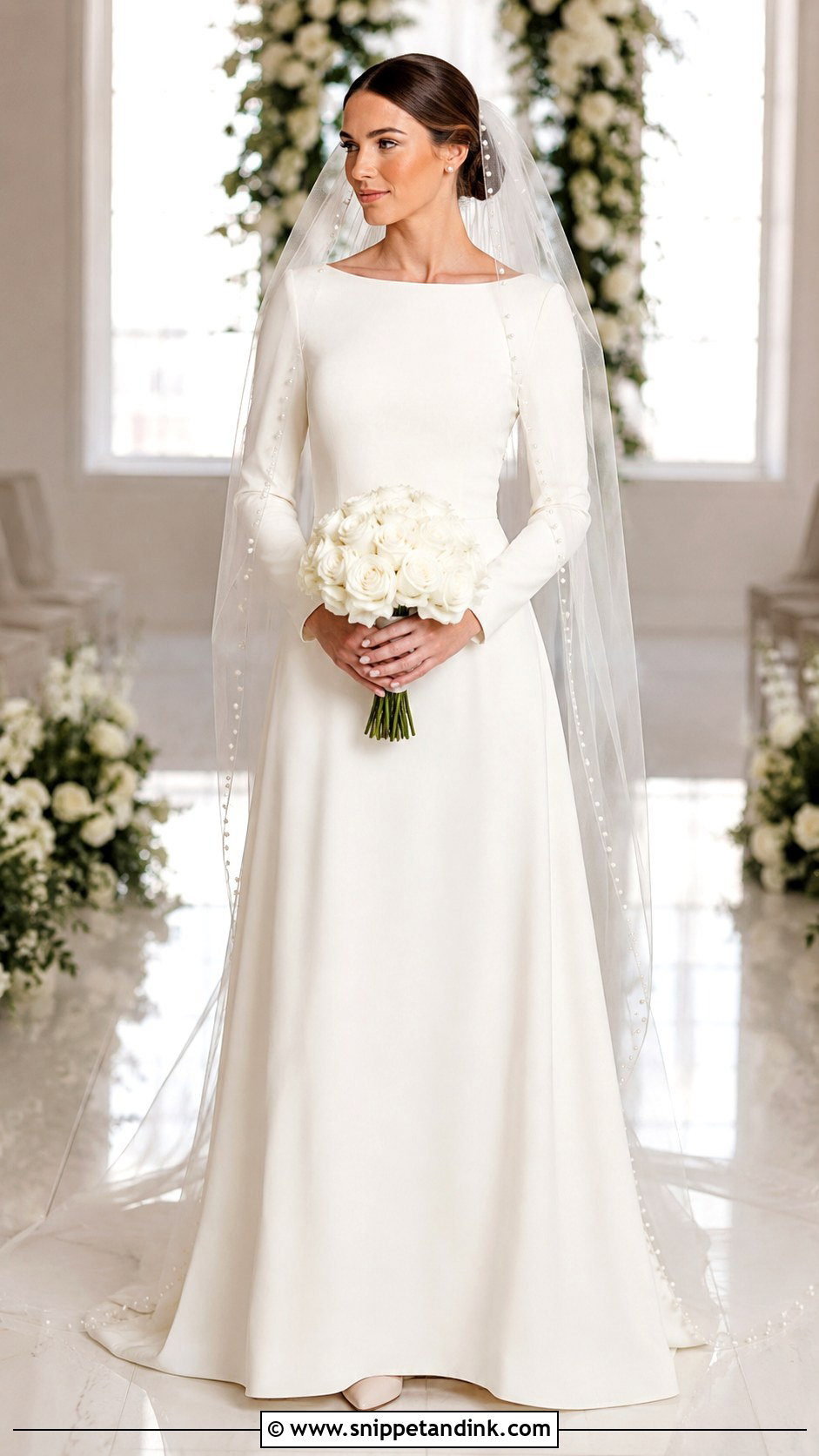
Crepe is forgiving on long sleeves because it has a little give, so you can lift a glass or hug a grandparent without the seam at the armpit pulling. I like it on an A-line with a fitted bodice and a defined waist. A bateau or modest scoop neckline keeps the shape light. The detail I always check is the cuff: covered buttons there need working loops, or you’ll be stuck with sleeves you can’t push up to wash your hands. A fingertip pearl veil, pearl studs and low block heels in ivory finish it, with a small posy of white roses.
2. High Neck Satin Wedding Dress With Low Heels
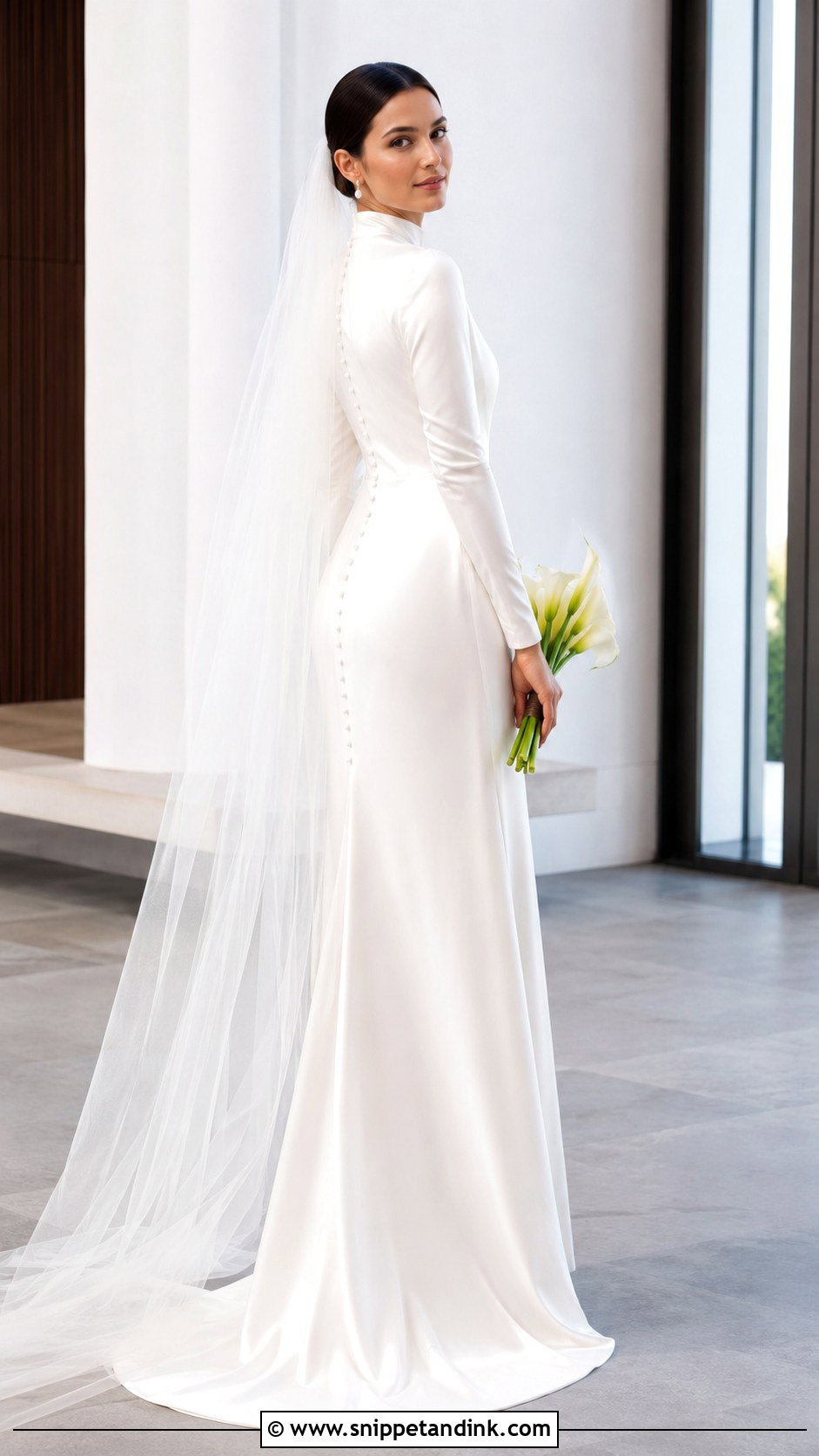
Satin shows every flaw in fit, so on a high neck dress I steer brides toward a softly structured column or A-line rather than anything skin-tight. Duchess or matte satin reads rich in photos without the glare of a shiny polyester. A high neck needs long sleeves to balance it, and a row of covered buttons down the back gives guests something to look at during the ceremony. Hair goes up in a neat bun so the collar stays clean. I’d pair it with low ivory heels and drop earrings, then let the veil length decide the mood: cathedral for a formal church, a short plain one for a small indoor ceremony. Calla lilies or white tulips suit the sleek line.
3. Boat Neck Mikado Wedding Dress With Classic Veil
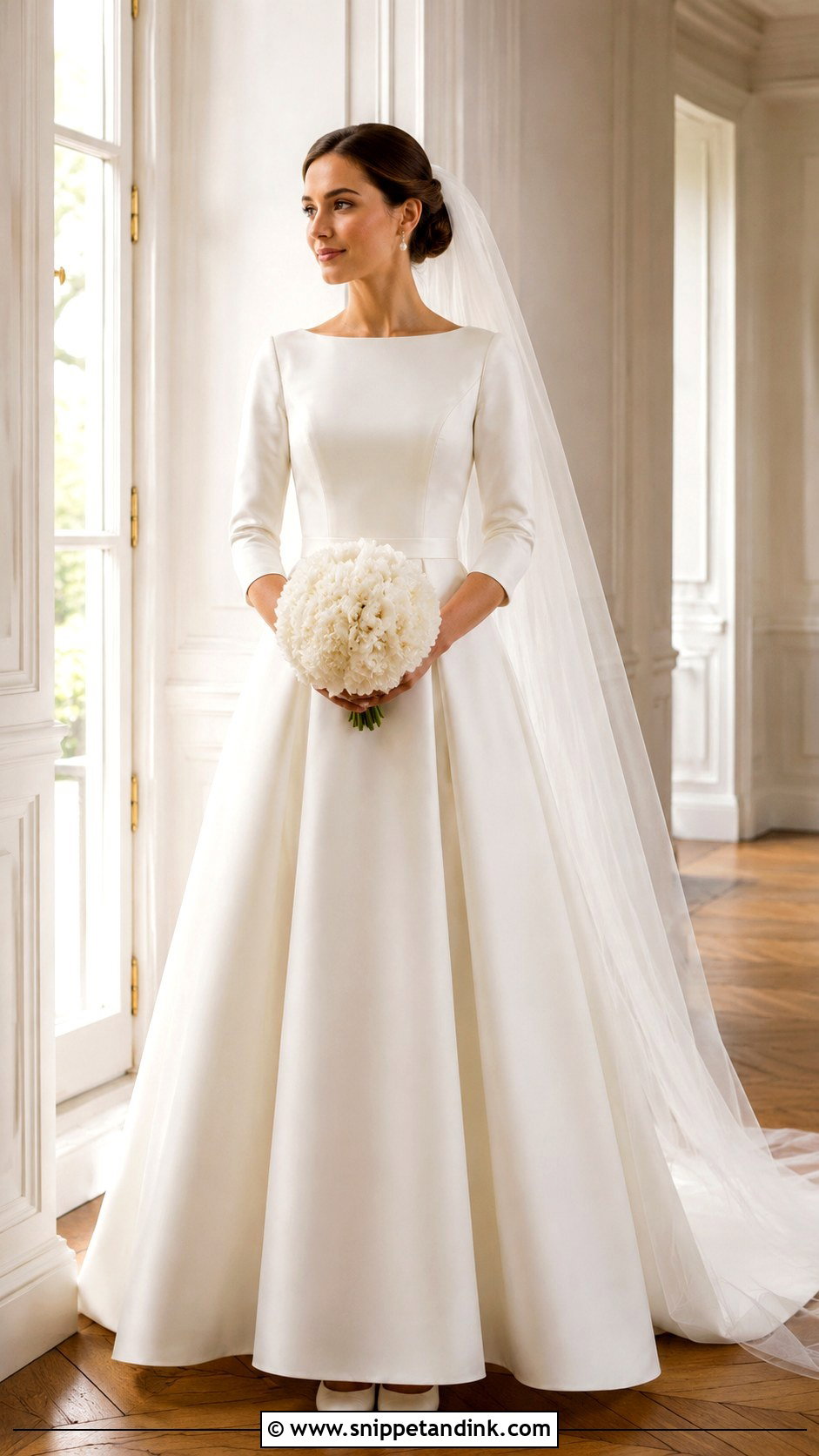
Mikado holds its own shape, which means the skirt pleats stay crisp and the gown needs no lace or appliqué to look finished. That stiffness is also why I fit the bodice carefully: mikado won’t stretch, so any tightness across the back shows as a horizontal crease. The modest boat neck wedding dress works well here, following the collarbone and framing the shoulders without exposing them. Three-quarter or full sleeves both suit it. I keep the rest plain: a chapel veil, pearl earrings, closed-toe pumps, a smooth low chignon and a round white bouquet.
4. Square Neck Wedding Dress With Long Sleeves
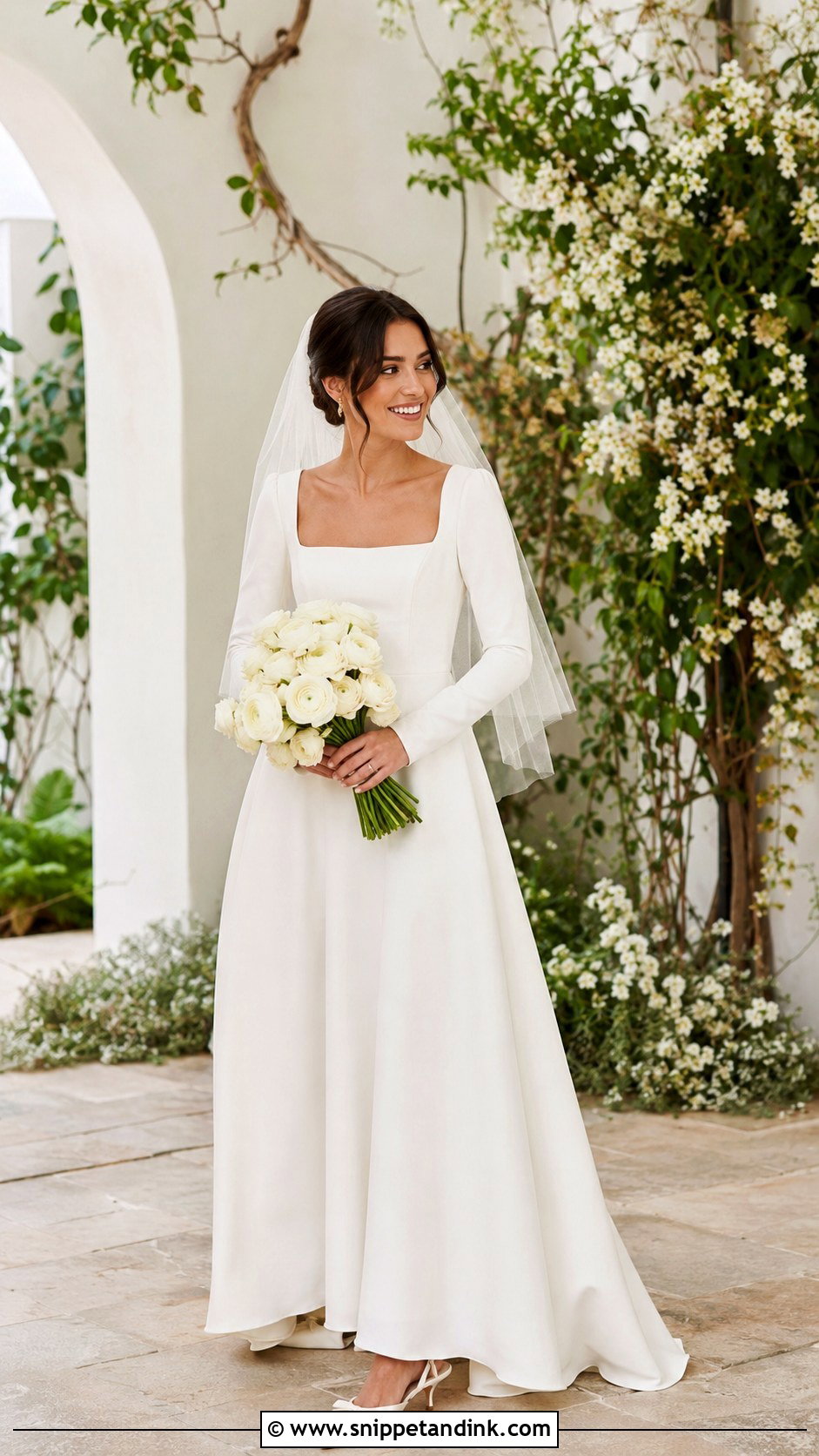
On a square neckline, height is everything. I ask the seamstress to keep the top edge at least a hand’s width above the bust line so it doesn’t gape when you lean forward to sign the register. Paired with fitted full-length sleeves and a structured bodice, it has a slightly vintage feel. Crepe, matte satin and lined chiffon all hold the corners of the neckline well. A softly waved low ponytail keeps that neckline visible, and I’d add a shoulder-length veil, small pearl hoops and ivory slingbacks. White ranunculus with a little greenery keeps the bouquet in proportion.
5. Chiffon Empire Waist Wedding Dress With Ballet Flats
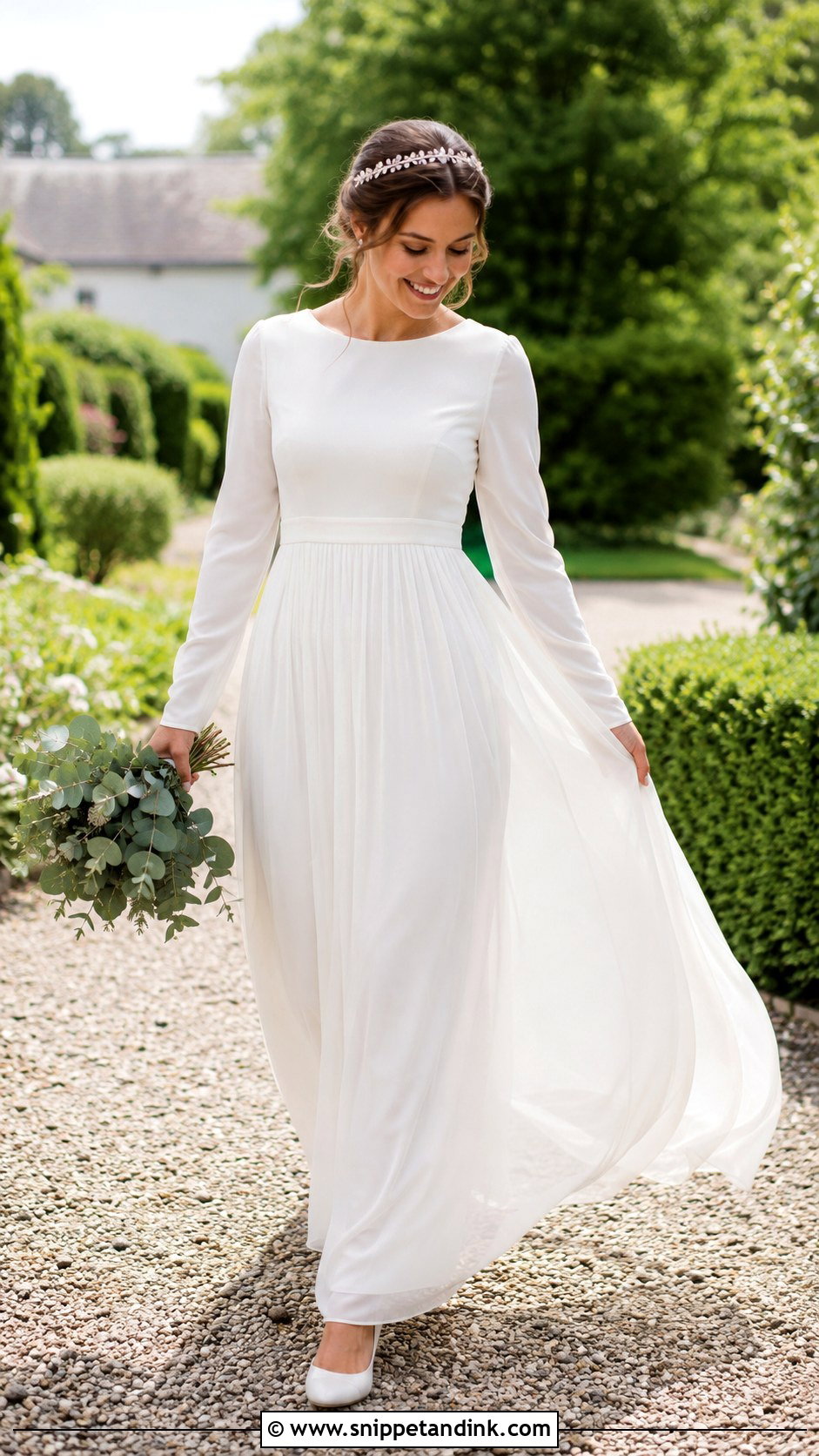
Empire waists are the most comfortable cut on this list. The seam sits just under the bust and the skirt falls loose, so nothing presses on your stomach through a long dinner. The catch with modest empire waist wedding dress designs in chiffon is lining: unlined chiffon turns see-through in flash photos and in direct sun, so I insist on an opaque layer under the skirt and sheer-over-opaque sleeves. Ballet flats work with this shape, along with a slim crystal headband and small studs. A chapel veil moves with the chiffon outdoors; a floral comb is the lighter swap if the forecast is windy.
6. Lace Sleeve A-Line Wedding Dress With Pearl Shoes
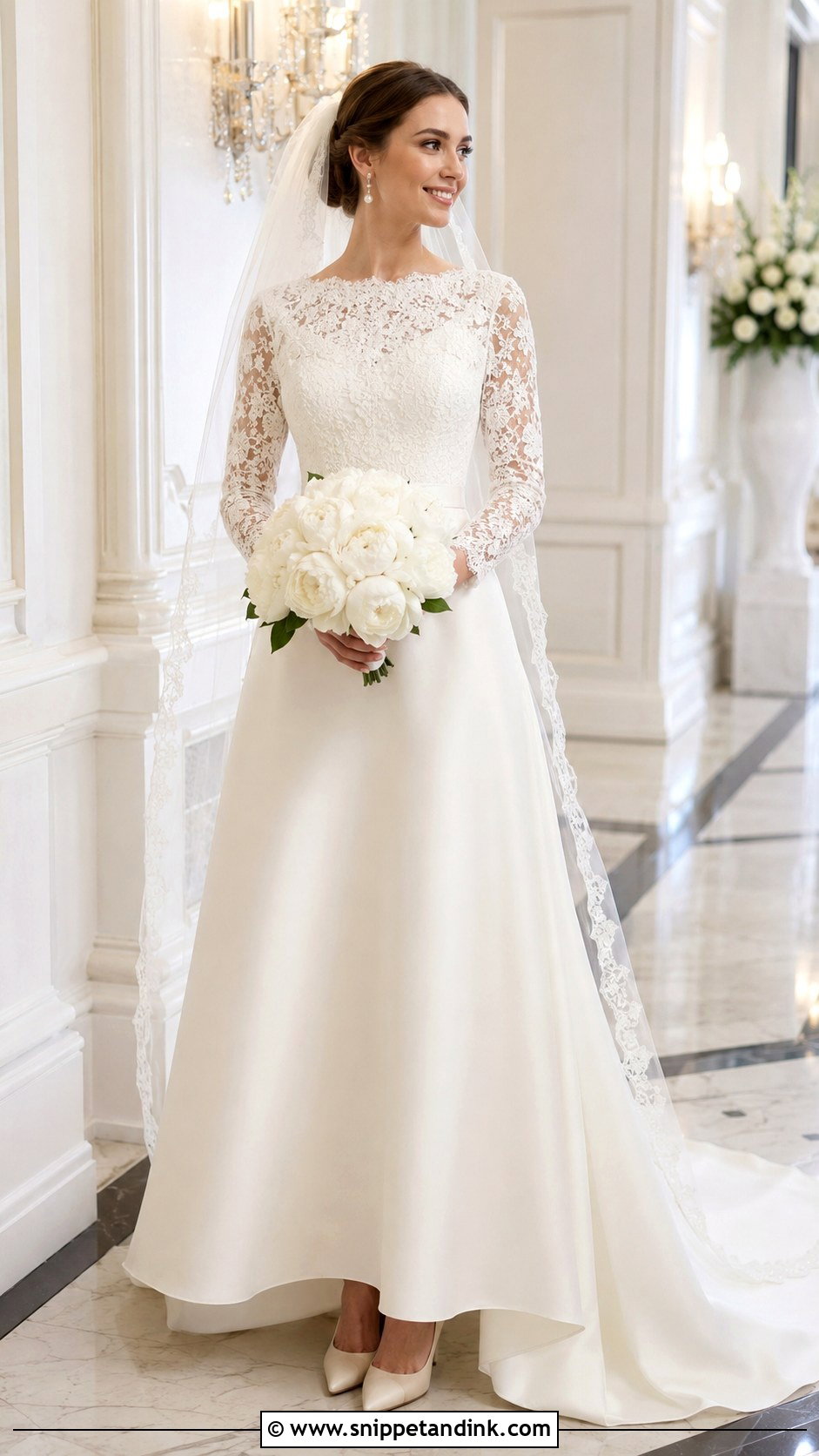
Lace sleeves on a plain gown are a good compromise if a full lace gown feels like too much pattern. What I check first is the bodice: the lace should sit over a lined base, never directly on skin, or the modesty is lost the moment the light is behind you. Keeping the skirt in plain crepe or satin stops the lace taking over. A low bun shows off the sleeve pattern, and I’d choose a tulle veil edged in narrow lace so the two textures link up. Pearl-detailed shoes, simple studs and peonies tied with satin ribbon complete it.
7. Tea Length Wedding Dress With Three-Quarter Sleeves
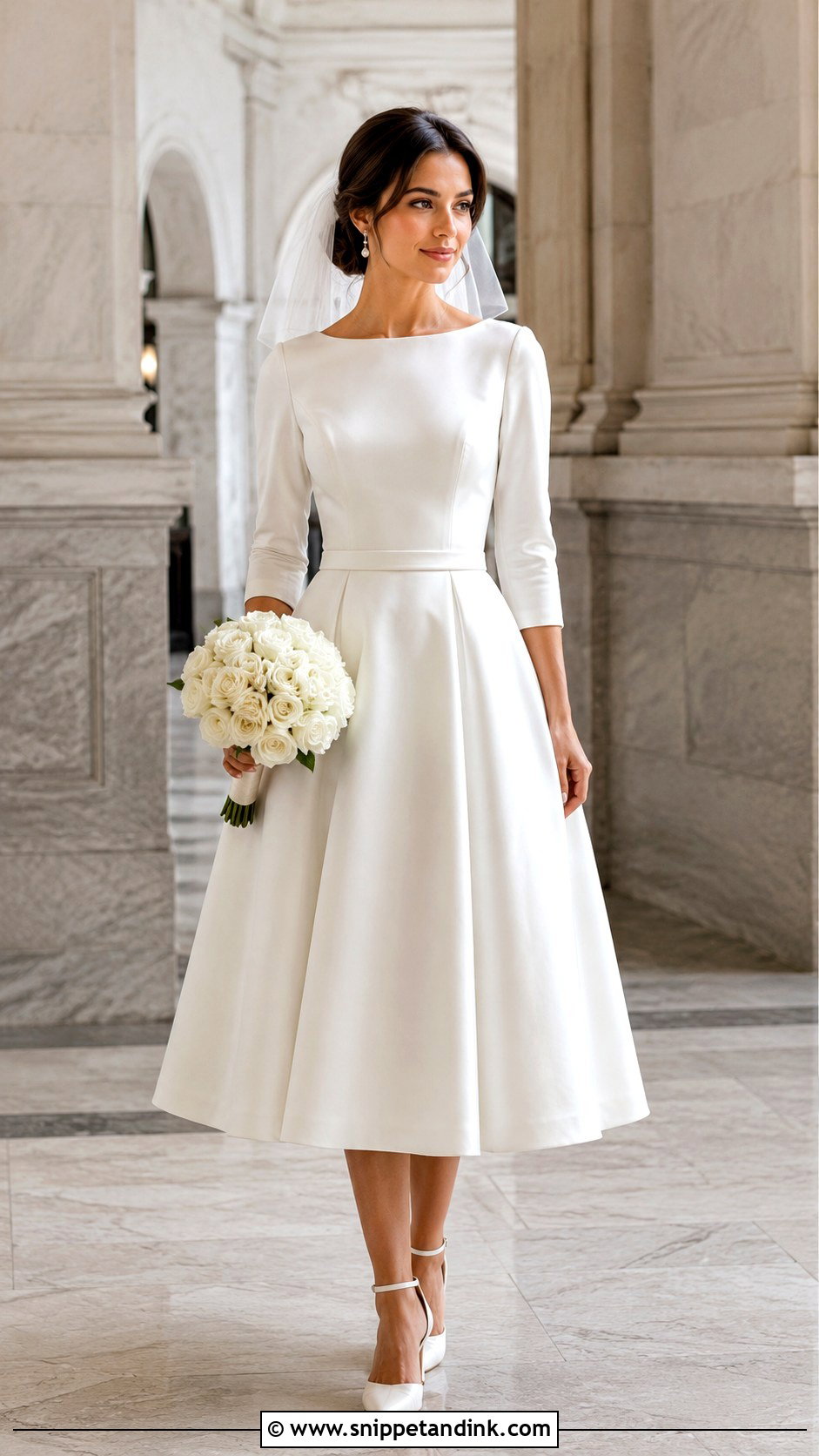
Tea length hems land between knee and ankle, which shows your shoes and keeps you clear of wet grass or city pavements. I’d only choose this length if you’re happy for the shoes to be part of the outfit, because everyone will see them. A fitted bodice, three-quarter sleeves and a high scoop or bateau neckline give it shape. The skirt needs body, so structured cotton, mikado or matte satin beats anything floppy. Ankle-strap shoes, pearl earrings, a birdcage or shoulder-length veil and a self-fabric belt suit it, with a compact bunch of garden roses. Courthouse and daytime weddings are where it feels most at home.
8. Sheath Wedding Dress With Modest Bridal Cape
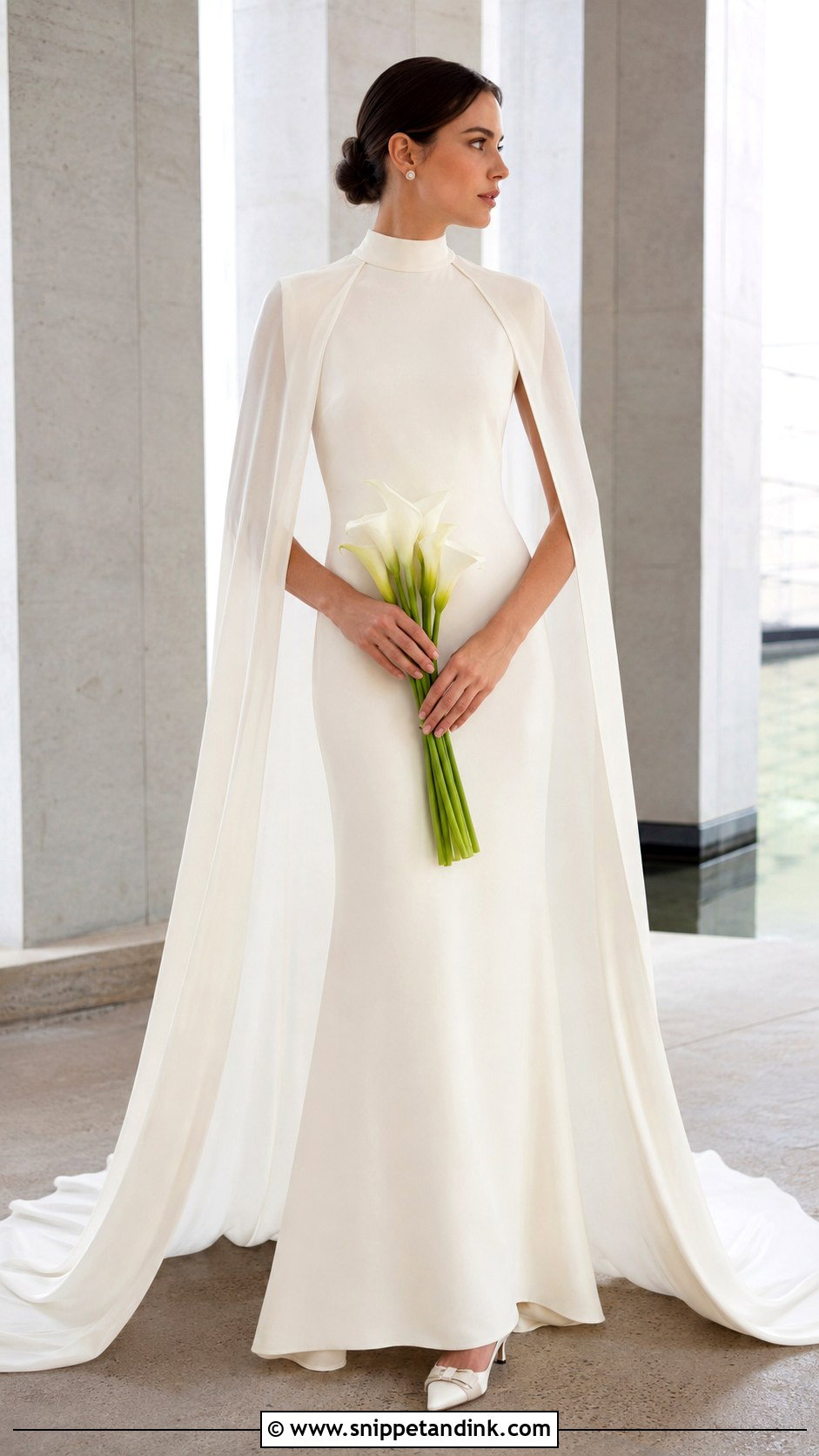
A plain sheath can feel a bit bare for a modest bride until you add a cape. I start with a lined crepe gown with a high bateau neckline that skims the body rather than clinging, then attach a light chiffon or tulle cape at the shoulders. It covers the arms and back and can stand in for a veil entirely. The thing to test is how the cape fastens: snaps or small hooks under the shoulder seam hold better than ties, which slip once you start hugging people. Kitten heels or pointed flats, small studs and a sleek bun keep it clean, and long-stem roses or callas suit the vertical line.
9. Mock Neck Chiffon Wedding Dress With Pleated Skirt
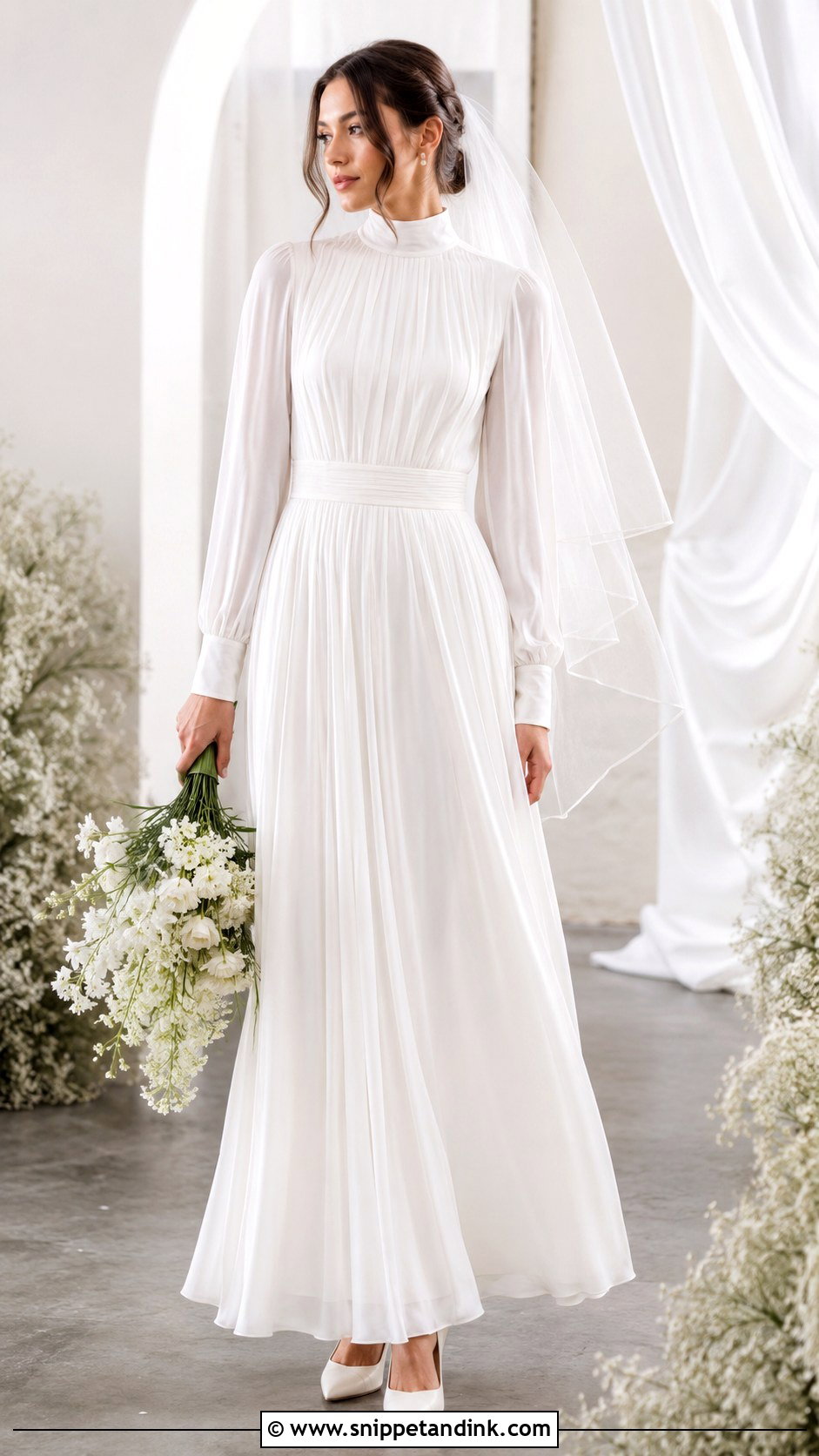
Mock necks in chiffon look soft rather than stiff because the fabric collapses gently at the throat. Fine pleating through the mock neck chiffon wedding dress bodice and skirt gives movement without any embellishment. I always ask for an opaque lining throughout and a lightly defined waist, otherwise all that flowing fabric hides your shape completely. A collar this high needs a low bun or the hair crowds it. Tiny pearl earrings, a delicate comb, closed-toe heels and a fingertip veil that stops above the pleats keep the details visible. Sweet peas and roses in a loose bouquet match the airy fabric.
10. Three-Quarter Sleeve Fit And Flare Wedding Dress
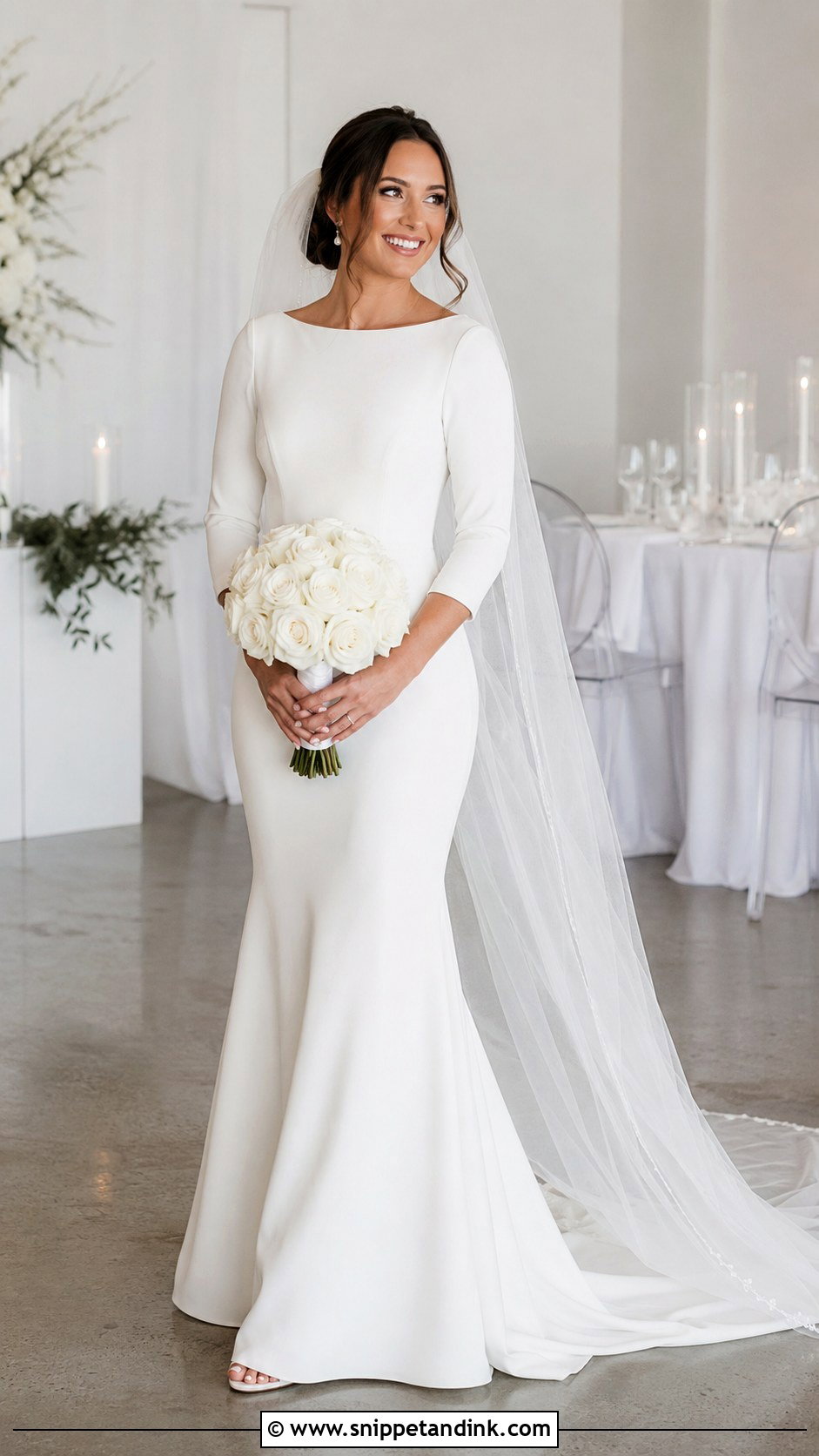
Fit and flare is the shape most brides ask about when they want definition without showing skin. The dress fits through the bodice and hips, then widens around the lower thigh. I’d steer you away from it if you hate feeling your knees restricted, because the flare point controls your stride. Stretch crepe helps a lot here. A high scoop neck, covered back and three-quarter sleeves give balanced coverage, and a low twist in the hair shows off the back buttons. Ivory block heels, a narrow chapel veil, pearl drops and a structured rose bouquet suit the sculpted shape. This is the dress where alterations matter most.
11. Modest Wrap Wedding Dress With Satin Waist Tie
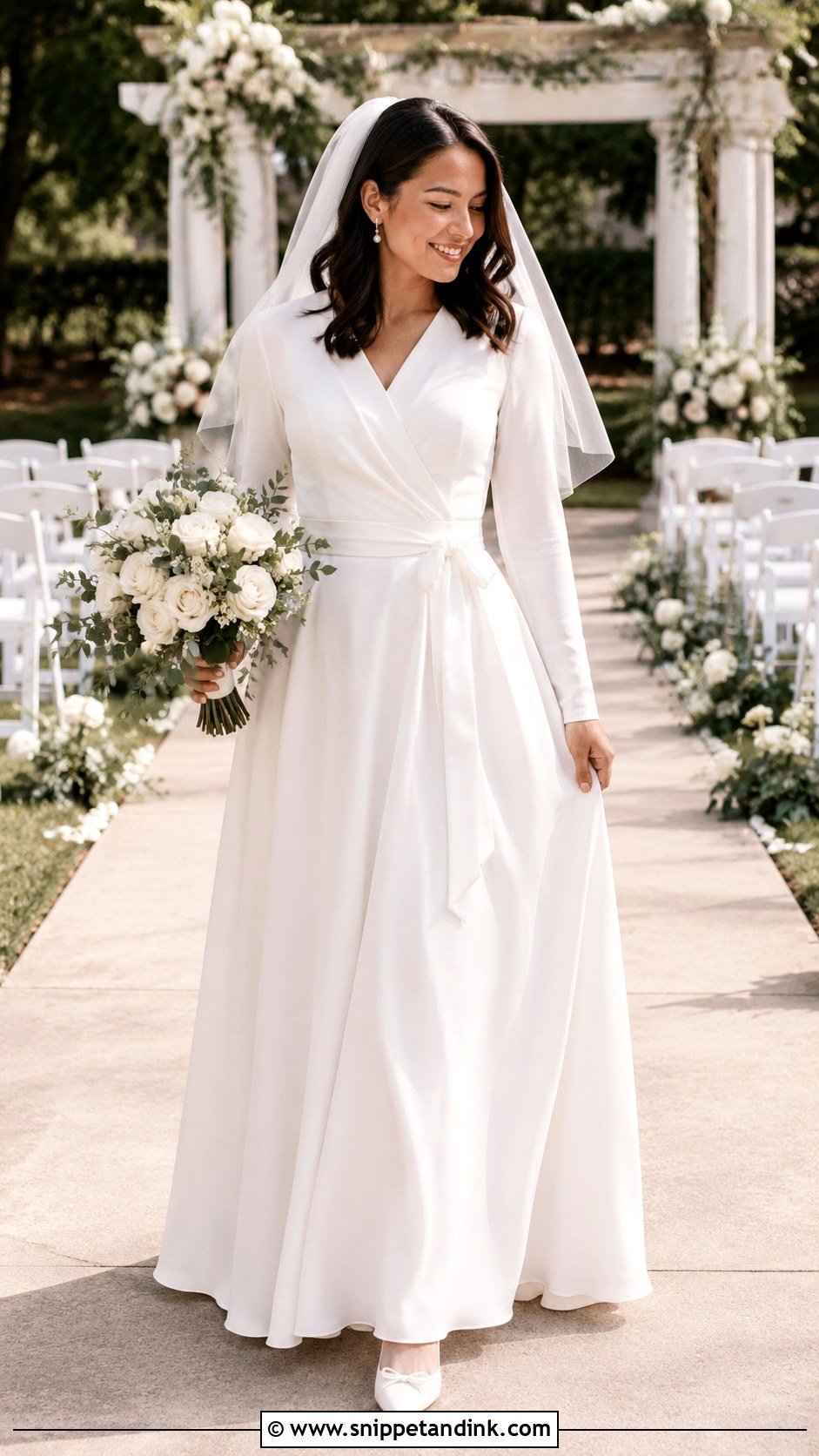
Real wrap dresses open when you sit, so for a wedding I only recommend a faux wrap with a stitched crossover and hidden fastenings. That gives you the soft shape at the waist with none of the shifting. Long sleeves and an A-line skirt balance it. Thin fabric drapes badly in a wrap, so I’d pick matte crepe or lined chiffon. A matching satin tie at the waist, closed-toe kitten heels and pearl earrings keep it relaxed. I like a shoulder-length veil for the ceremony and a floral hairpin once it comes off, with a natural bouquet of white roses and greenery.
12. Button Back Wedding Dress With Long Plain Sleeves
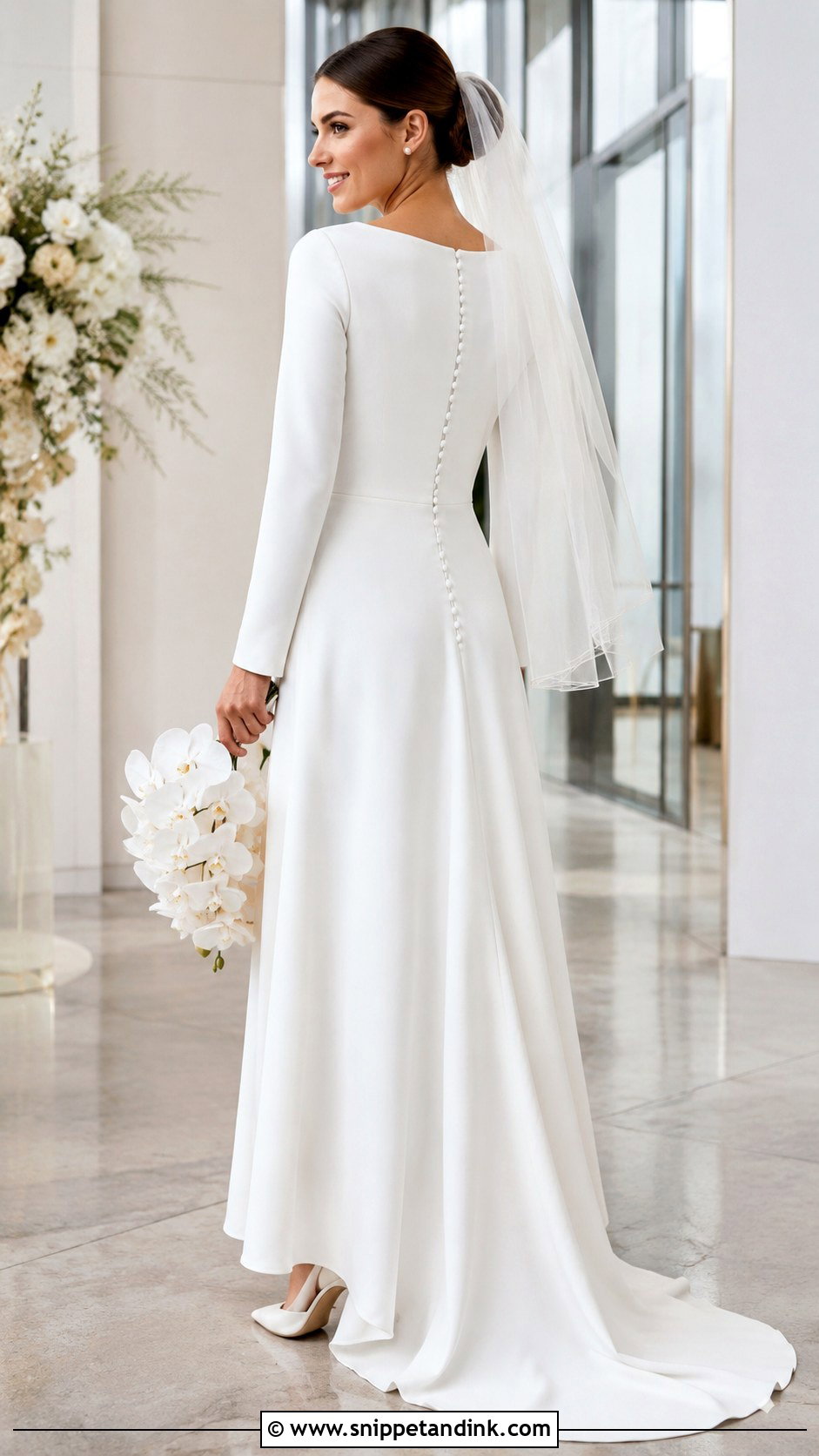
From the front this is a very plain dress, and that’s the point. The interest is a line of fabric-covered buttons running from the neckline down toward the train, which guests see throughout the ceremony. Crepe and matte satin let those buttons stand out against a smooth surface. Pair a high bateau neckline with long fitted sleeves and an A-line or column skirt. Two practical notes from fittings: real buttons take a long time to fasten, so give whoever is dressing you ten spare minutes, and choose a veil that ends above the button line so it doesn’t hide it. A tidy updo, ivory pumps, pearl studs and orchids or tulips finish it.
13. Puff Sleeve Organza Wedding Dress With Simple Accessories
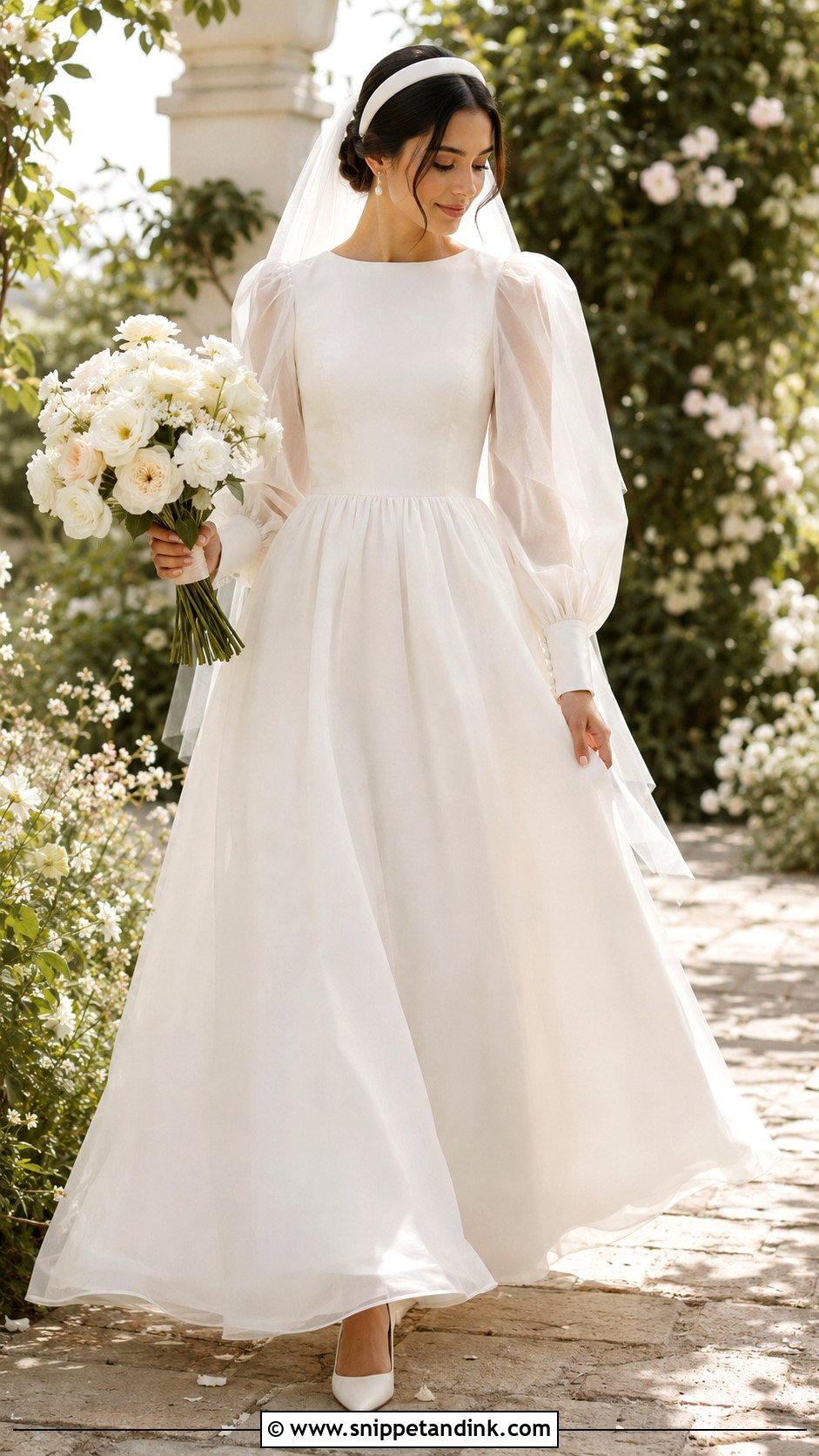
Puff sleeves in organza can tip into costume quickly. I keep the volume at the shoulder only and ask for the sleeve to narrow into a fitted cuff, which stops it looking like a nightgown. Organza is crisp, so it holds that puff all day without a sleeve head. A high square or round neckline, smooth waistband and lightly gathered skirt keep the proportions even. Hair in a low bun with the veil tucked beneath it leaves the sleeves as the main detail. A narrow ribbon headband, pearl studs, plain ivory heels and cosmos or garden roses suit the airy fabric.
14. Simple Wedding Dress With Matching Bridal Jacket
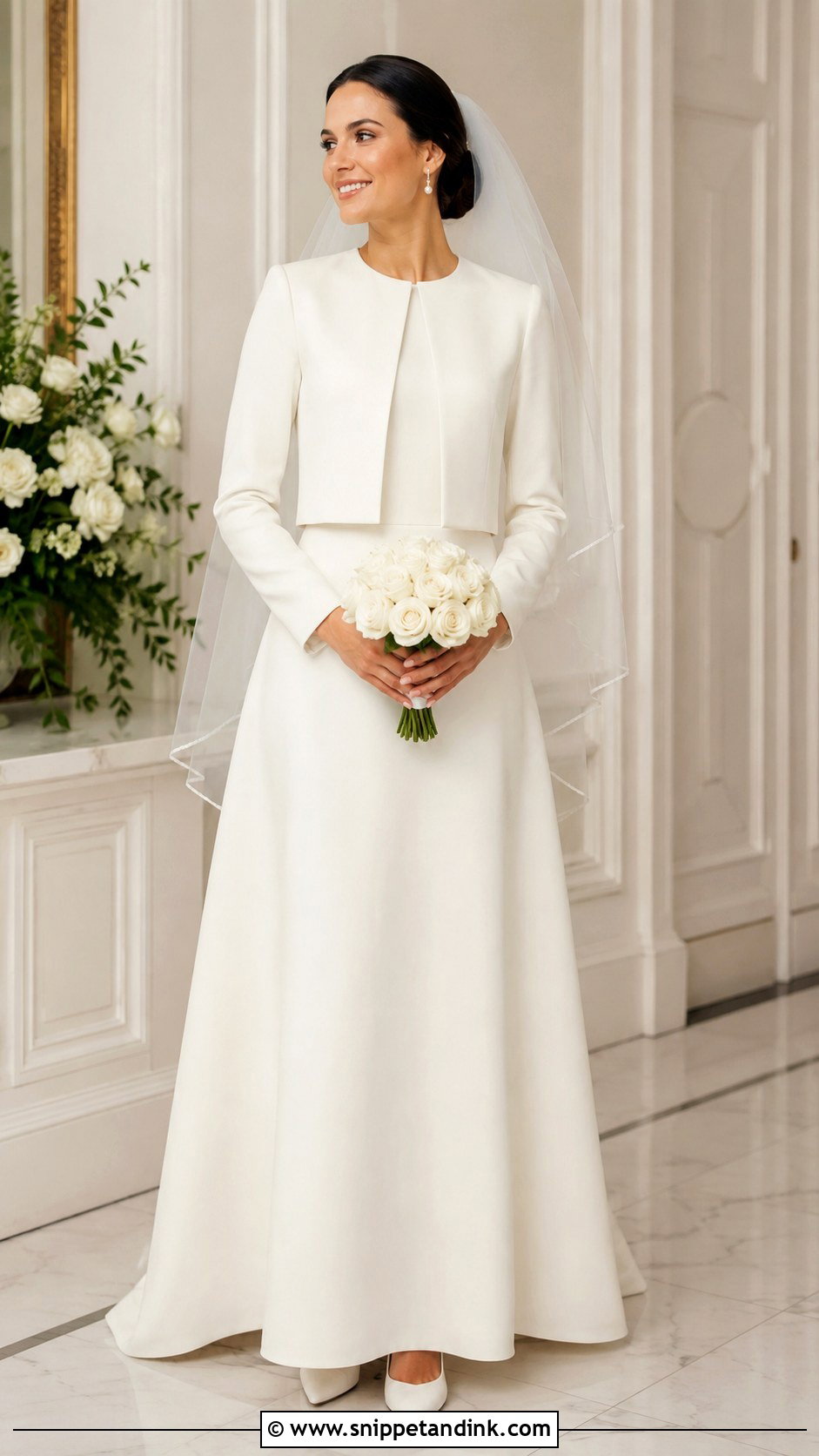
A matching jacket gives you two dresses for the price of one. Start with a sleeveless or short-sleeve A-line with a high neckline and covered bodice, then add a cropped long-sleeve jacket in the same crepe or satin. I have the jacket hemmed to finish at the natural waist; any longer and it cuts your legs short in photos. Wear it through the ceremony and take it off for dancing. Pointed ivory shoes, a fingertip veil and pearl drops suit both versions, along with a compact white rose bouquet. It’s the most useful option here if your venue is a cold church followed by a warm reception room.
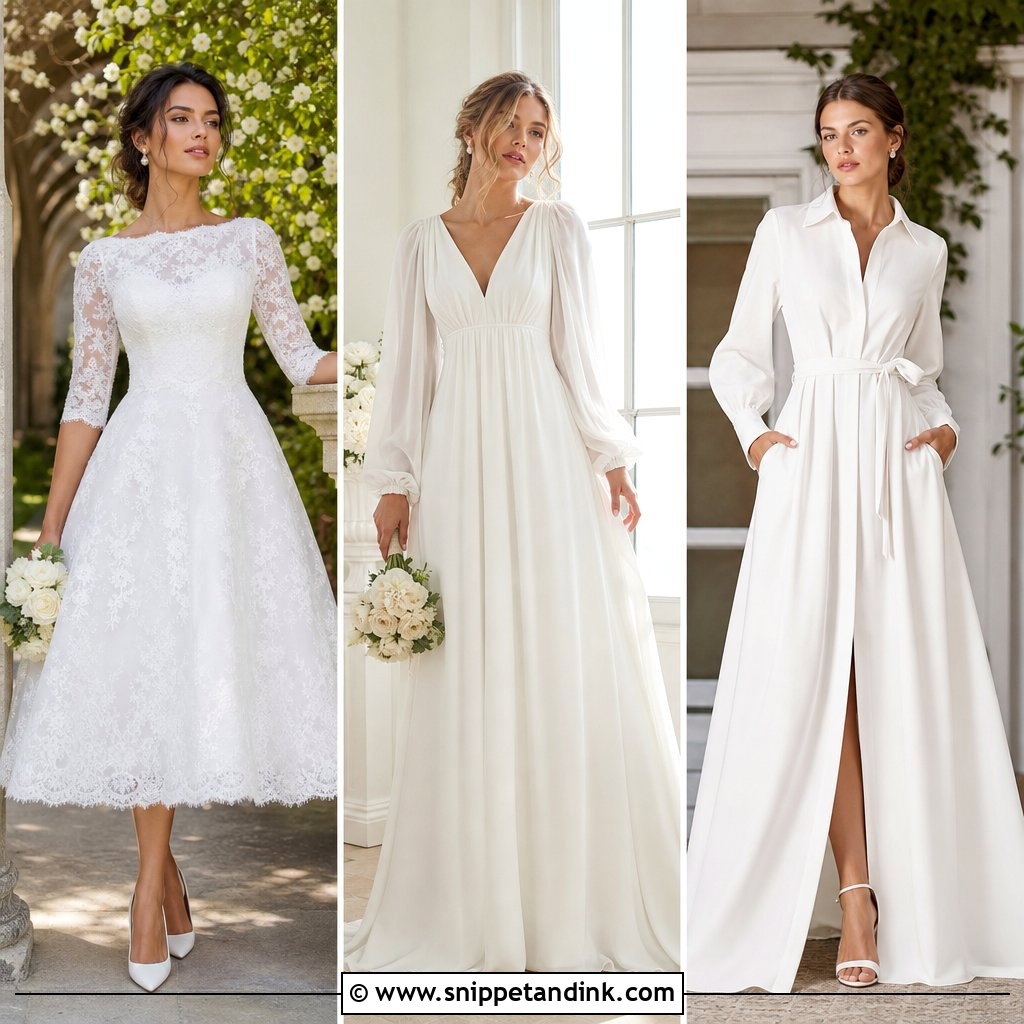

15. Plus Size A-Line Wedding Dress With Long Sleeves
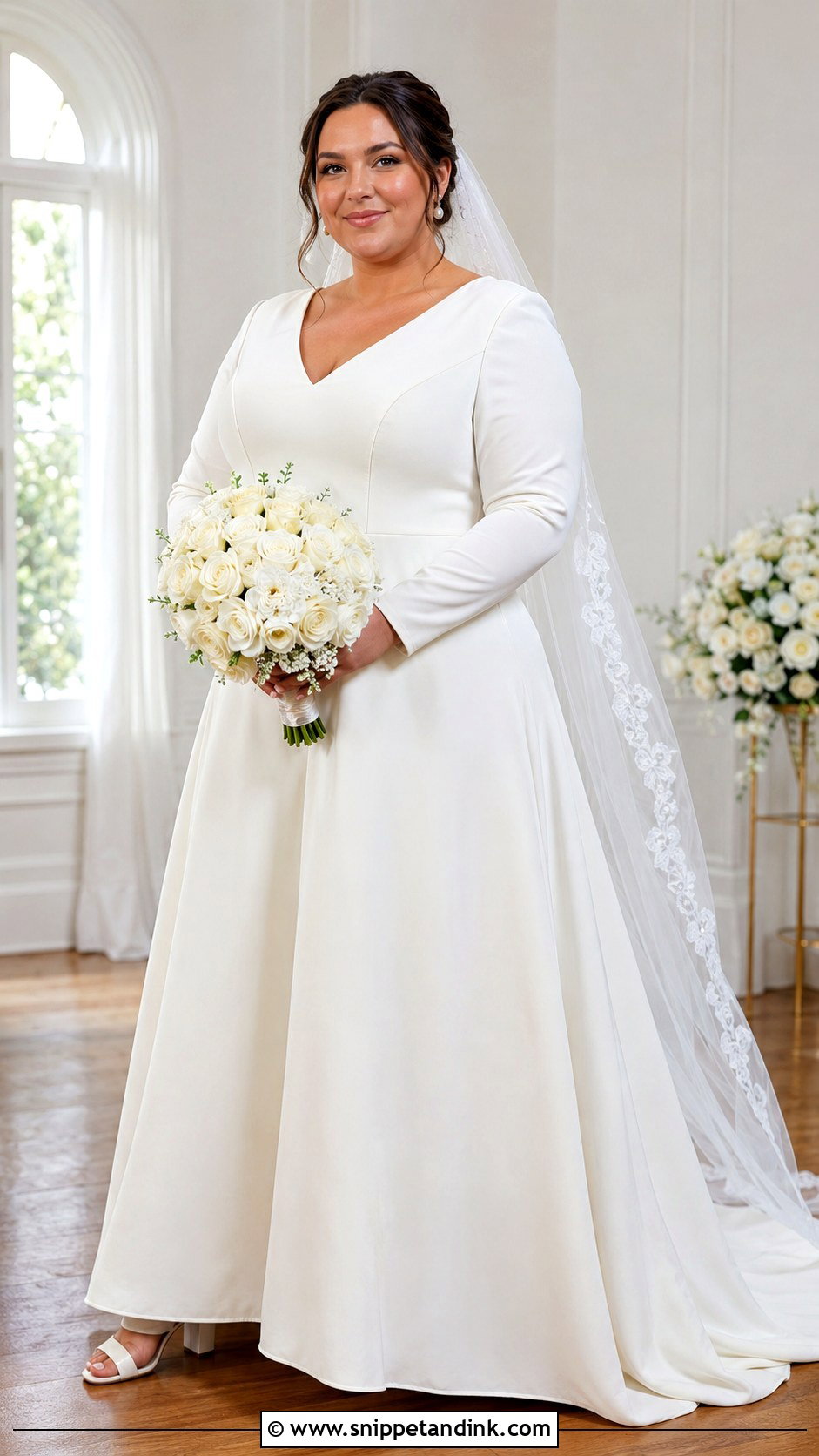
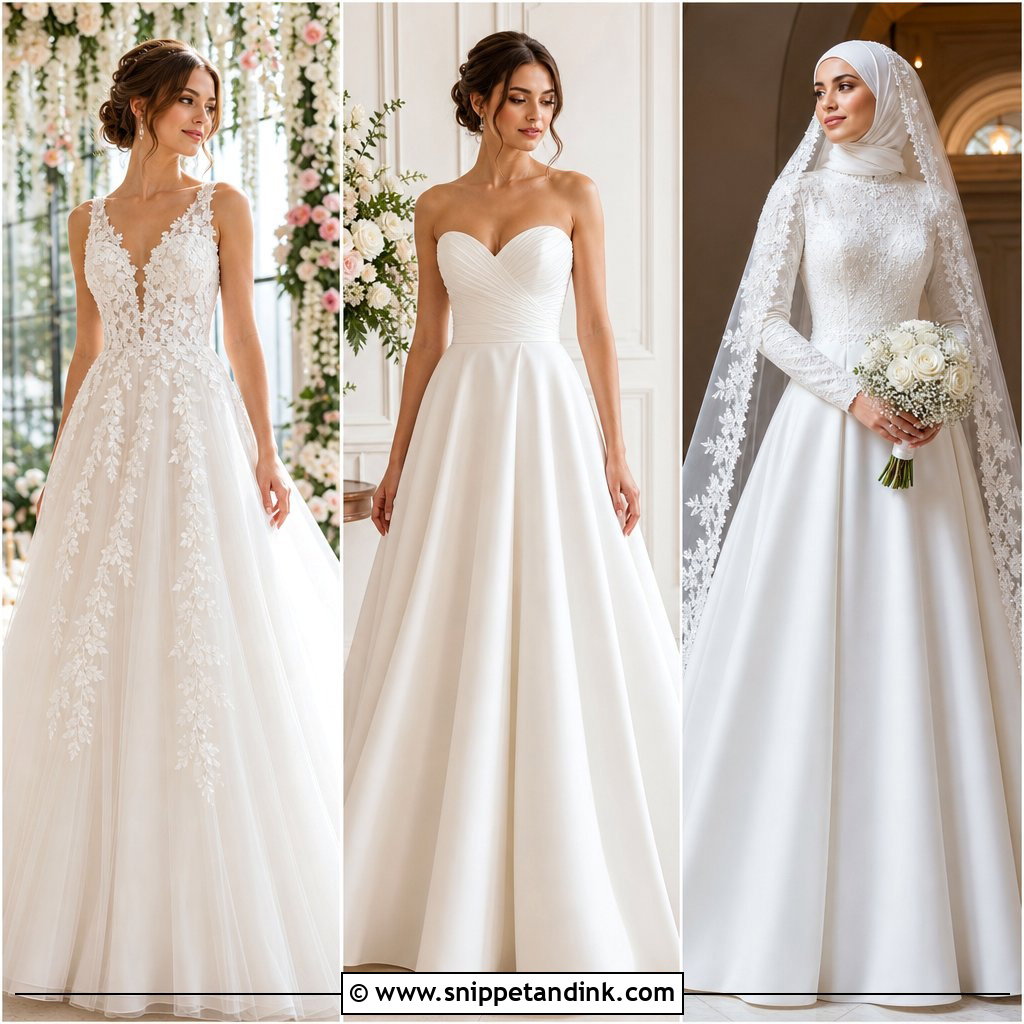
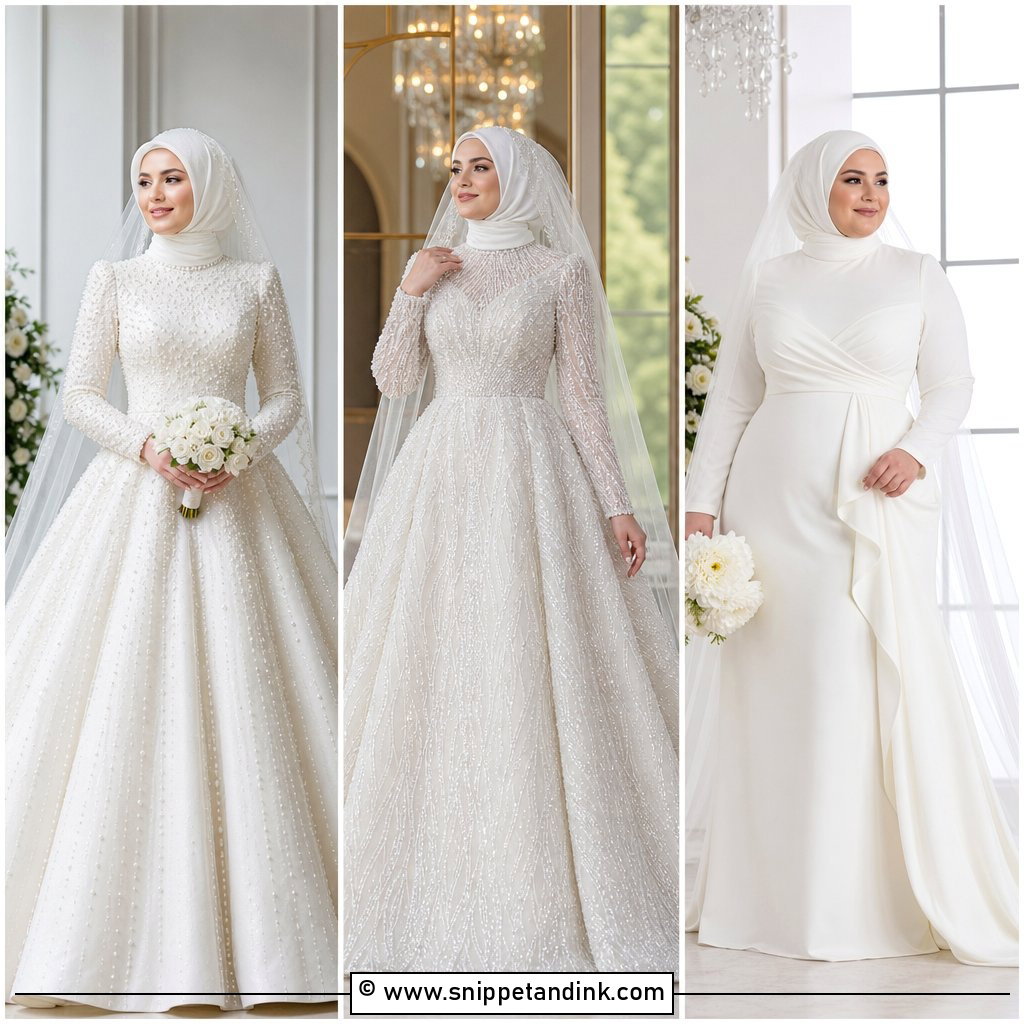
For plus-size brides I usually start with an A-line in a weighty fabric, because substantial crepe, lined chiffon or matte satin drape over curves instead of clinging to them. Princess seams do the shaping, so there’s no need for a rigid corset. A modest V or scoop neckline with long sleeves and a skirt from the natural waist gives a balanced line. The fitting I care about most here is the sleeve and shoulder: off-the-rack sleeves are often cut narrow, and a tight upper arm is uncomfortable within an hour. Order to your current measurements and leave time to alter. Supportive block heels, pearl earrings, a chapel veil above a low updo and a rounded bouquet complete it.
16. Petite Column Wedding Dress With High Neckline
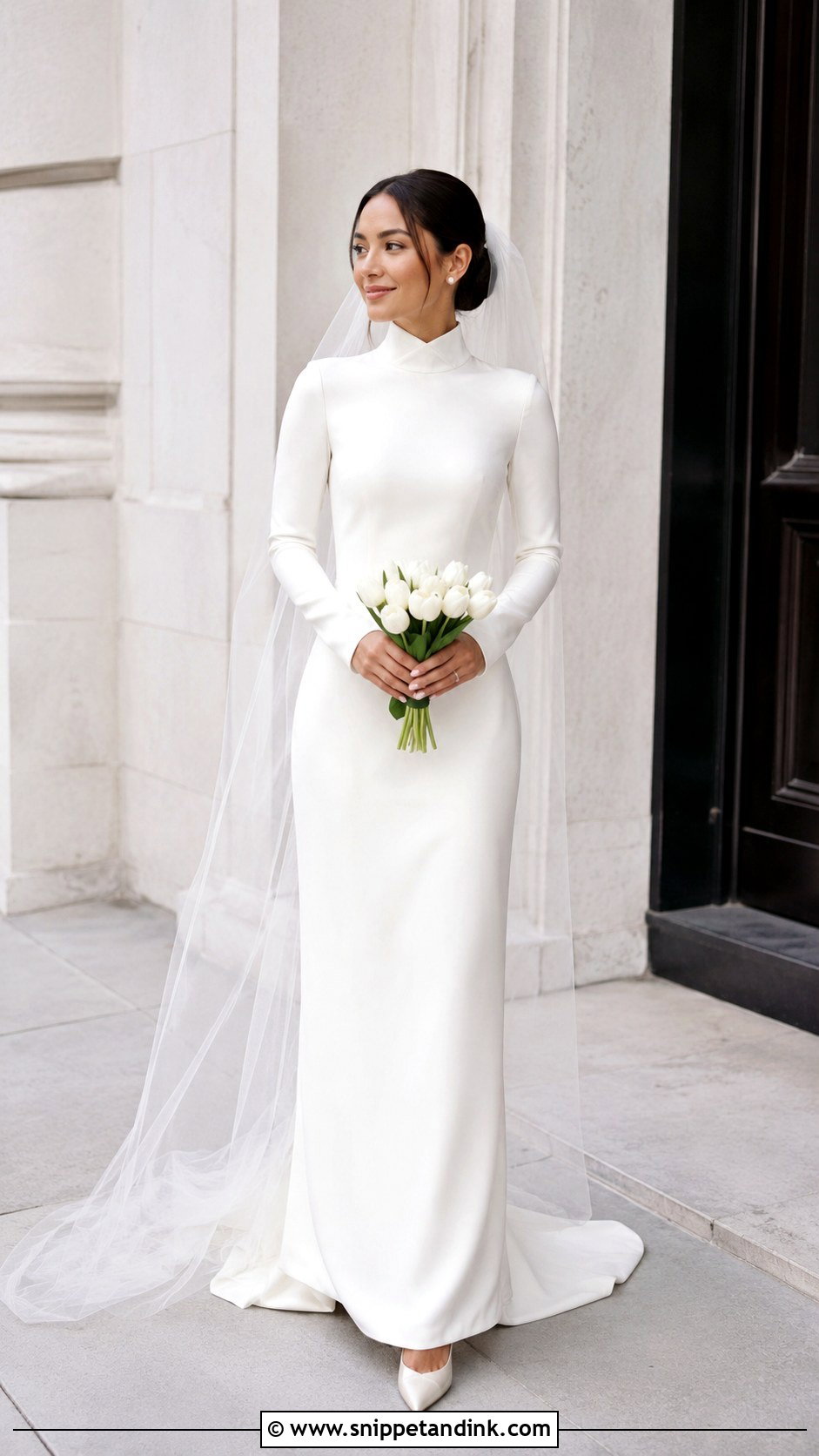
Petite brides often get pushed toward big skirts, but a clean column with a high neckline and fitted long sleeves is usually more flattering because it keeps one unbroken line. Minimal seaming through the bodice helps. Keep the train to a short sweep; a long train on a small frame looks like the dress is wearing you. Soft crepe moves well and stays streamlined. Pointed shoes with a comfortable heel extend the leg, and a narrow fingertip veil, small studs and a neat low bun add nothing bulky. A slim bouquet of tulips or callas suits the scale. Hemming and sleeve length are the two alterations I’d never skip on this cut.
17. Maternity Empire Waist Wedding Dress With Flat Shoes
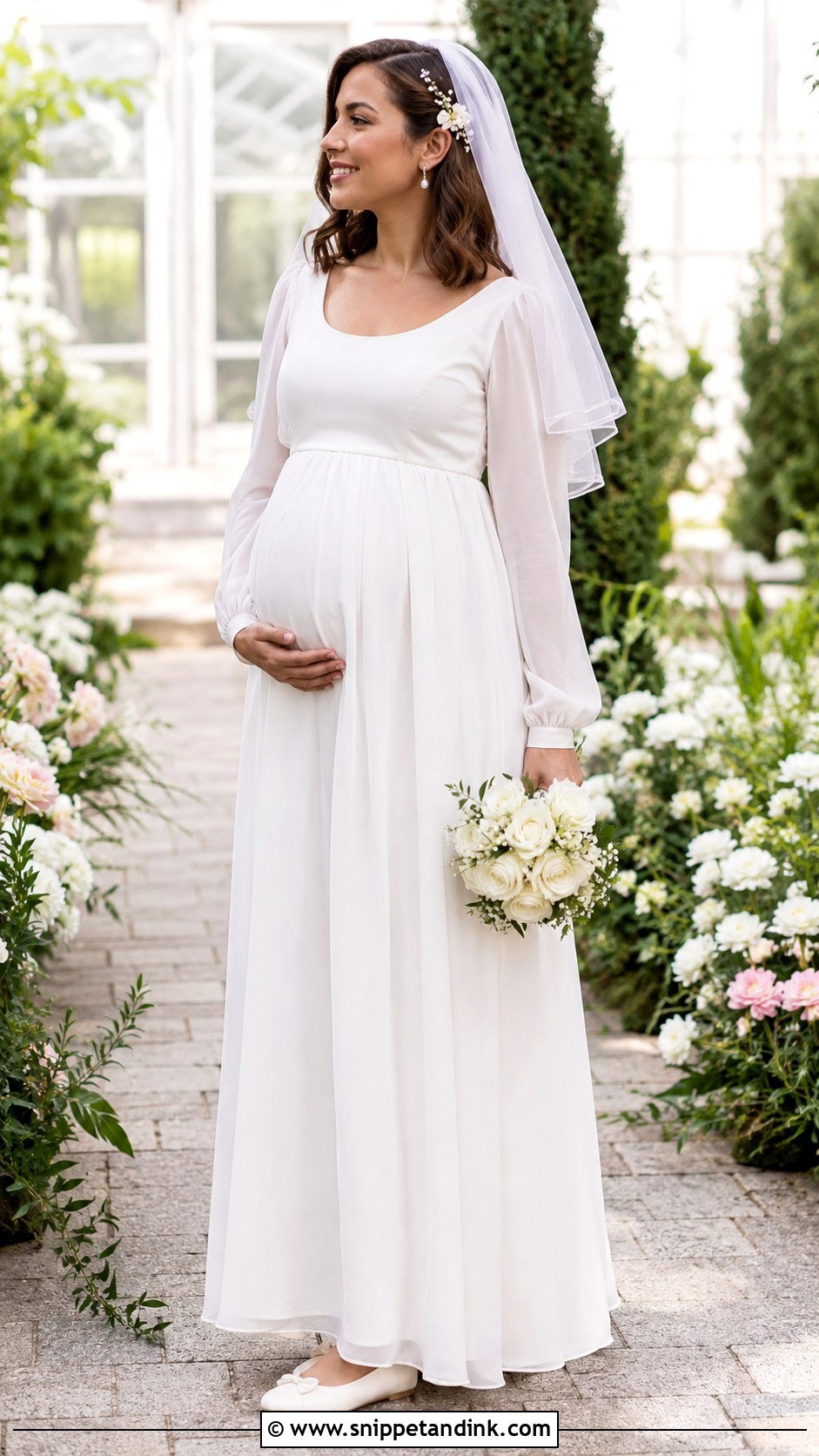
Maternity fittings are a moving target, so this is the one dress where I’d book the final alteration as close to the date as your seamstress allows. An empire bodice that ends above the natural waist leaves room through the middle, and a softly gathered chiffon or stretch crepe skirt falls over the bump without pressure. Long sleeves, a modest scoop neck and full lining give reliable coverage. Avoid heavy skirts and boning, which feel worse as the evening goes on. Cushioned flats, lightweight pearl earrings and a shoulder-length veil held with a floral comb above a loose bun keep it easy. A small bouquet means one less thing to carry.
18. Hijab Wedding Dress With Long Flowing Skirt
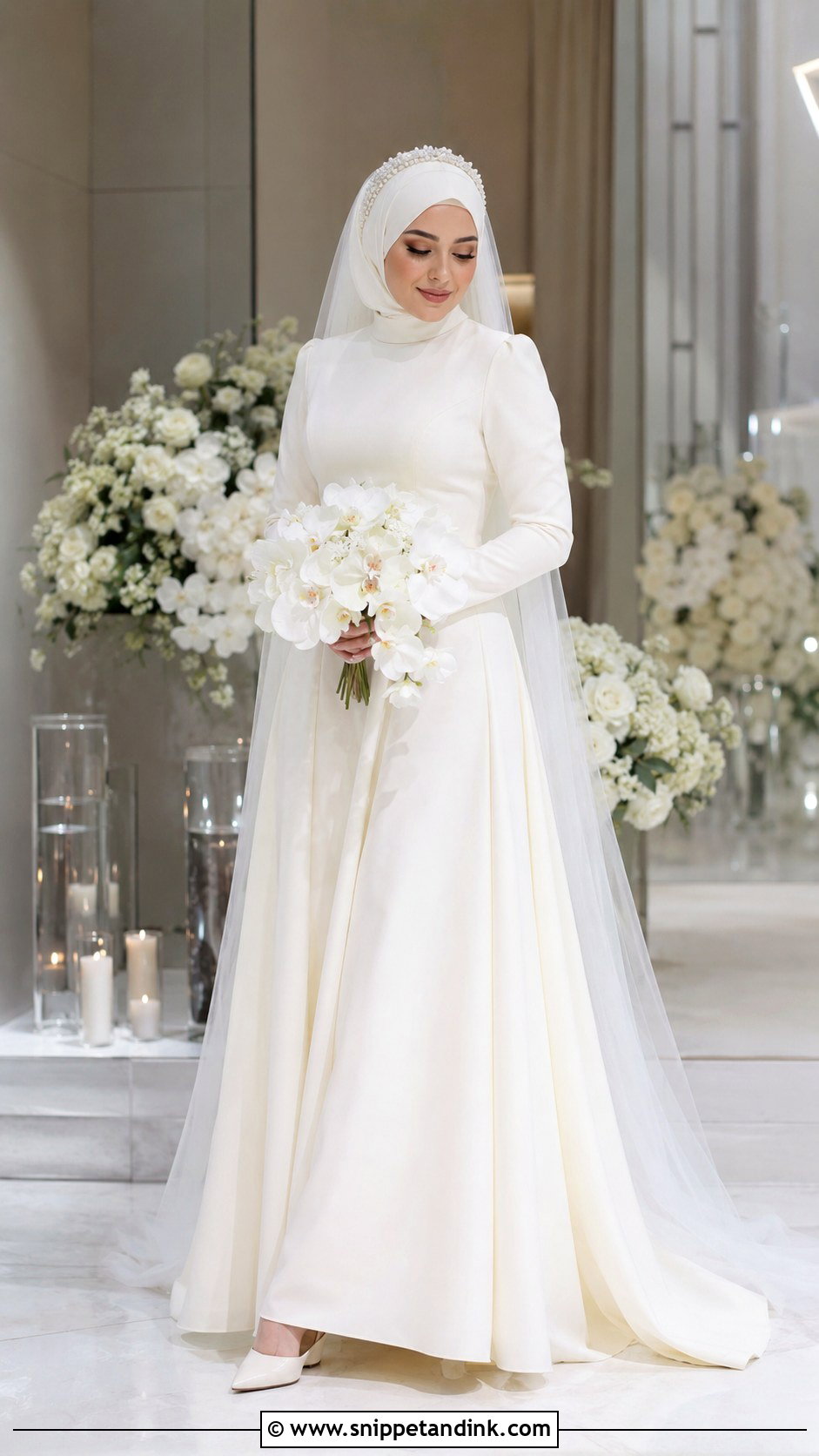
With a hijab, the gown and the scarf have to be planned together, not separately. I choose a high-neck dress with opaque sleeves, a lined bodice and a flowing A-line skirt, then match the hijab fabric to the dress finish: matte crepe with matte, satin with satin, so the two don’t clash under camera flash. Bring the hijab to fittings so the neckline can be adjusted around how you wrap it. A delicate headband, pearl pins or a removable veil add bridal detail without bulk around the face. Raise your arms at every fitting, since sleeves that ride up at the wrist are the most common complaint I hear. Closed-toe heels and white roses or orchids finish it.
19. Courthouse Midi Wedding Dress With Long Sleeves
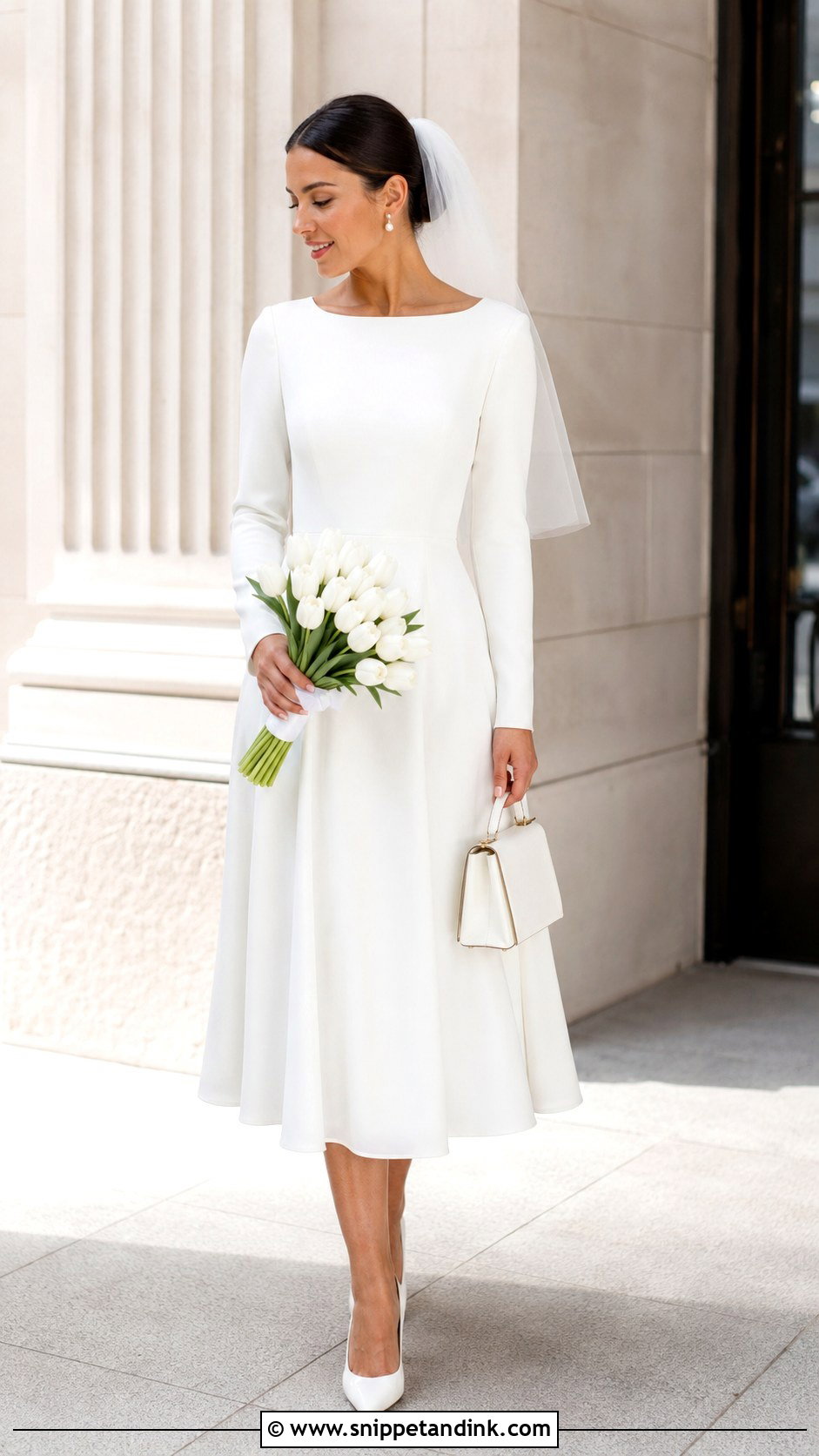
For a courthouse, a midi keeps you smart on steps and pavements. A long sleeve midi wedding dress in crepe, mikado or matte satin looks bridal because those fabrics have structure that a day dress lacks. I like a structured sheath or slight flare, a high square neckline and a hem just below the knee. Pointed pumps, pearl earrings and a small structured bag suit it. A short veil, padded headband or small bow says “wedding” without overpowering a short dress. White tulips photograph well against city stone. You can wear this one again with a change of accessories, which few gowns allow.


20. Winter Modest Wedding Dress With Full Bridal Cape
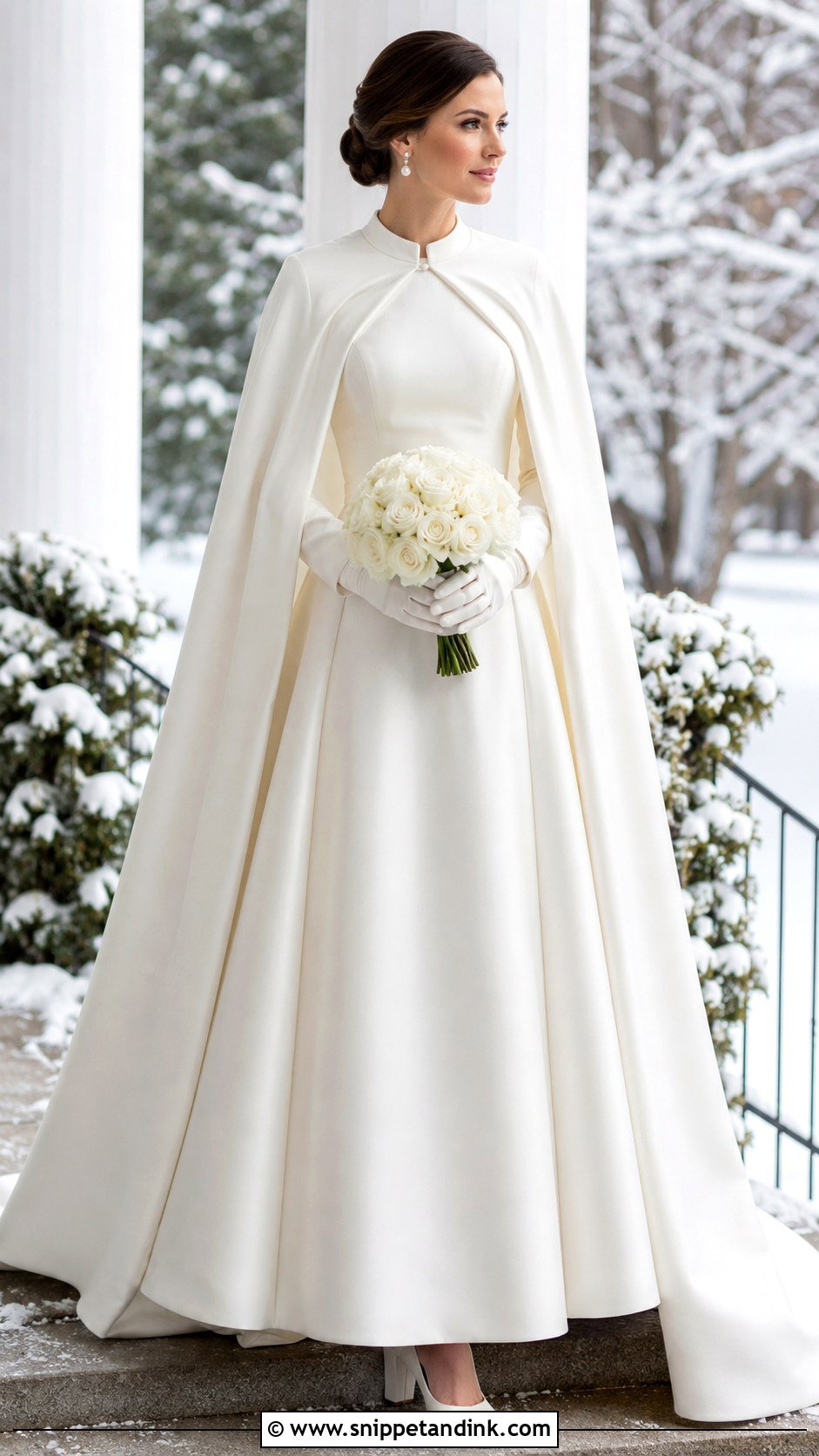
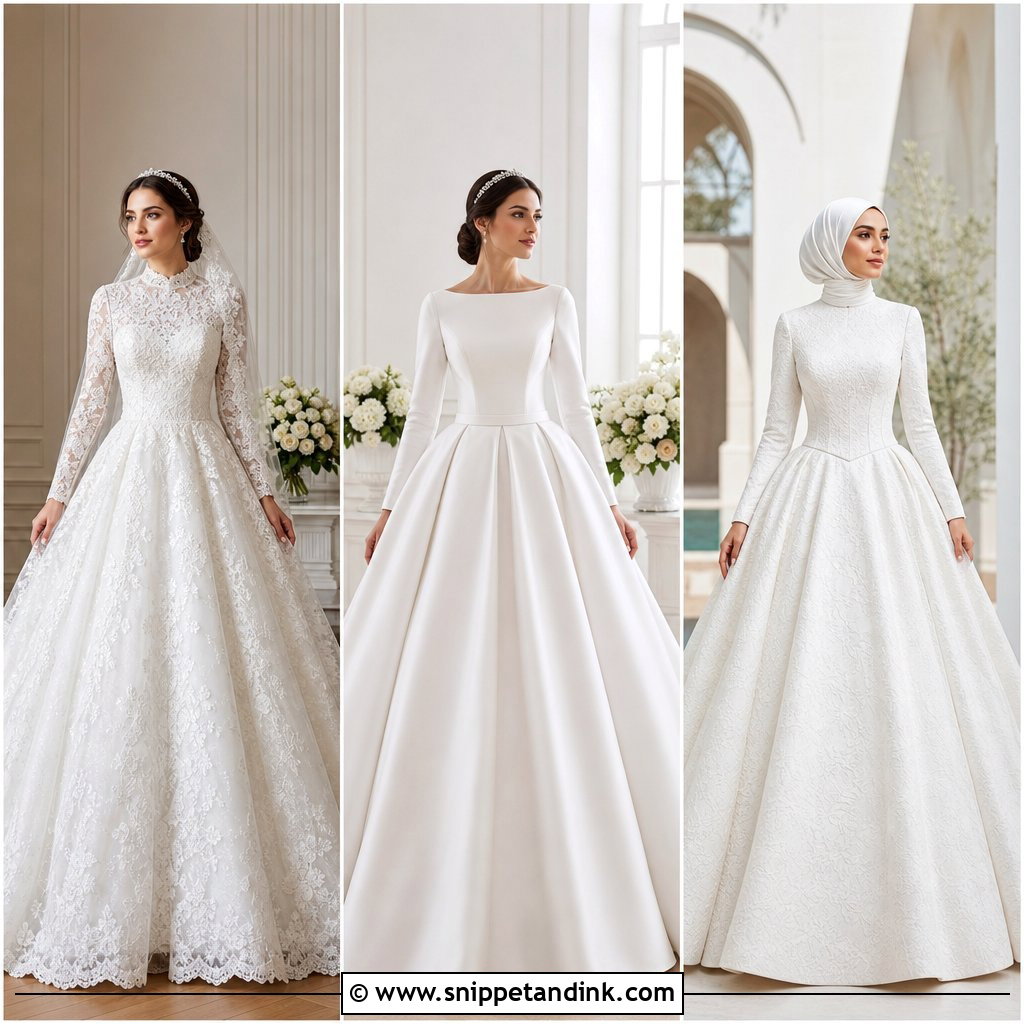
Winter is when I reach for a full-length cape. Over a long-sleeve A-line in heavy crepe or satin with a high neck and covered back, a lined ivory cape fastened at the collar adds warmth and drama at once. A chapel-length cape is enough; longer ones collect mud on outdoor paths. Have the cape hem checked with your actual shoes on, because a mismatch with the gown hem is obvious from behind. Closed-toe block heels, pearl earrings and a smooth low bun keep it tidy, and leather or satin gloves help for outdoor portraits. A white rose bouquet keeps the colour story simple.
Why Plain Crepe and Satin Leave Nowhere to Hide
Lace and beading disguise small fit problems. A bare crepe or satin surface shows every ripple, so a simple dress usually needs more careful alteration than a decorated one. I plan on two or three fittings, the last one about two to three weeks before the wedding.
Undergarments change the fit
Buy your bra or shapewear before the first fitting and wear it to every one. Smooth, seam-free pieces in a shade close to your skin disappear under pale fabric; white lingerie often shows through ivory. If the bodice has enough structure, a seamstress can sew cups straight into it, which removes straps from the equation entirely.
On the morning
- Hang the gown by its inner loops, not the shoulders, as soon as it arrives at the venue so heavy skirts don’t stretch the bodice.
- Steam crepe and chiffon from the inside, keeping the nozzle moving. Never iron satin directly, as it leaves shiny marks that won’t come out.
- Pack a small kit with fashion tape, a lint roller, safety pins in ivory and a white chalk stick for small marks.
- Sit down in the dress once before you leave and check where it creases. Satin will crease at the hip; it’s normal and drops out as you stand.
A Plain Dress Is Only as Good as Its Last Fitting
With so little decoration, the modest dresses here depend on cut, fabric weight and tailoring. At your fittings, sit, walk, raise your arms and bend as if you’re picking up a dropped earring, then ask for changes wherever the neckline gapes or the sleeves pull. Keep shoes and jewellery light enough to forget about. The best one for you is the one you stop noticing an hour into the reception because it simply stays where it should.
You'll Like These Ideas:








Leave a Reply