
Ghanaian bridal fashion asks more of a dress than most Western bridal briefs do. Many brides wear two or three looks across the traditional ceremony, the church or white wedding and the reception, and Kente usually anchors at least one of them. When I style a Ghanaian bride, I start with the cloth and the order of events, then work out the silhouette, because a heavy woven bodice behaves very differently from lace or satin once you sit, kneel to greet elders and dance. The twenty looks below cover corset gowns, kaba and slit, wrapped cloth, jumpsuits and lighter reception changes, with notes on fit, accessories and the practical catches I’d want you to know before you commission one.
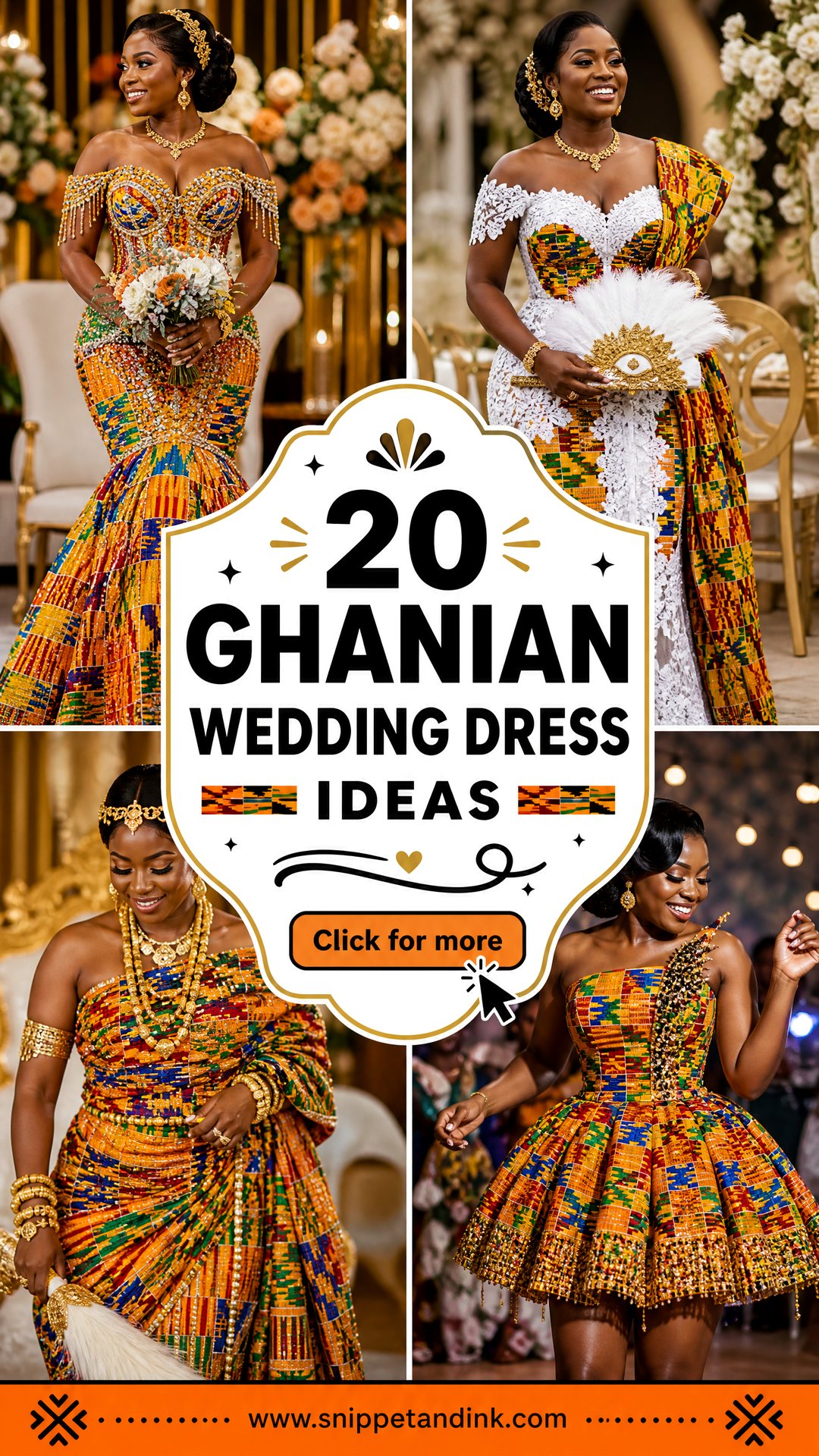
Handwoven Strips or Printed Cloth? Sort the Kente Out First
Handwoven Kente is made on narrow looms in strips roughly a hand’s width across, which are then sewn edge to edge into a full cloth. That construction shapes everything I design with it. The fabric is thick and fairly stiff, it frays quickly at cut edges, and the pattern blocks repeat along each strip, so a tailor has to plan cuts around the motifs instead of laying out a paper pattern freely. You also need more cloth than you’d expect once matching is involved.
Printed Kente-style cotton is lighter, cheaper and far easier to sew into fitted shapes, though it lacks the woven texture up close. I often split the difference: handwoven Kente for the bodice or the wrap that families will look at closely, and printed or plain fabric for the volume underneath.
How far ahead to order
- A custom handwoven design can take weeks to weave, so place the cloth order as early as your planning allows, often several months out.
- Ask the weaver for a small offcut and check it in daylight before the full cloth is finished.
- Give your seamstress the cloth with time for at least three fittings; the last one should be close to the day.
- If the groom is wearing matching cloth, order both from the same batch, as dye lots on separate orders rarely match exactly.
Handle a sample before you sign off. If it feels rigid in your hand, it will feel more rigid on your ribs, and that tells me whether a corset or a wrap is the better shape for you.
1. Kente Corset Mermaid Wedding Dress
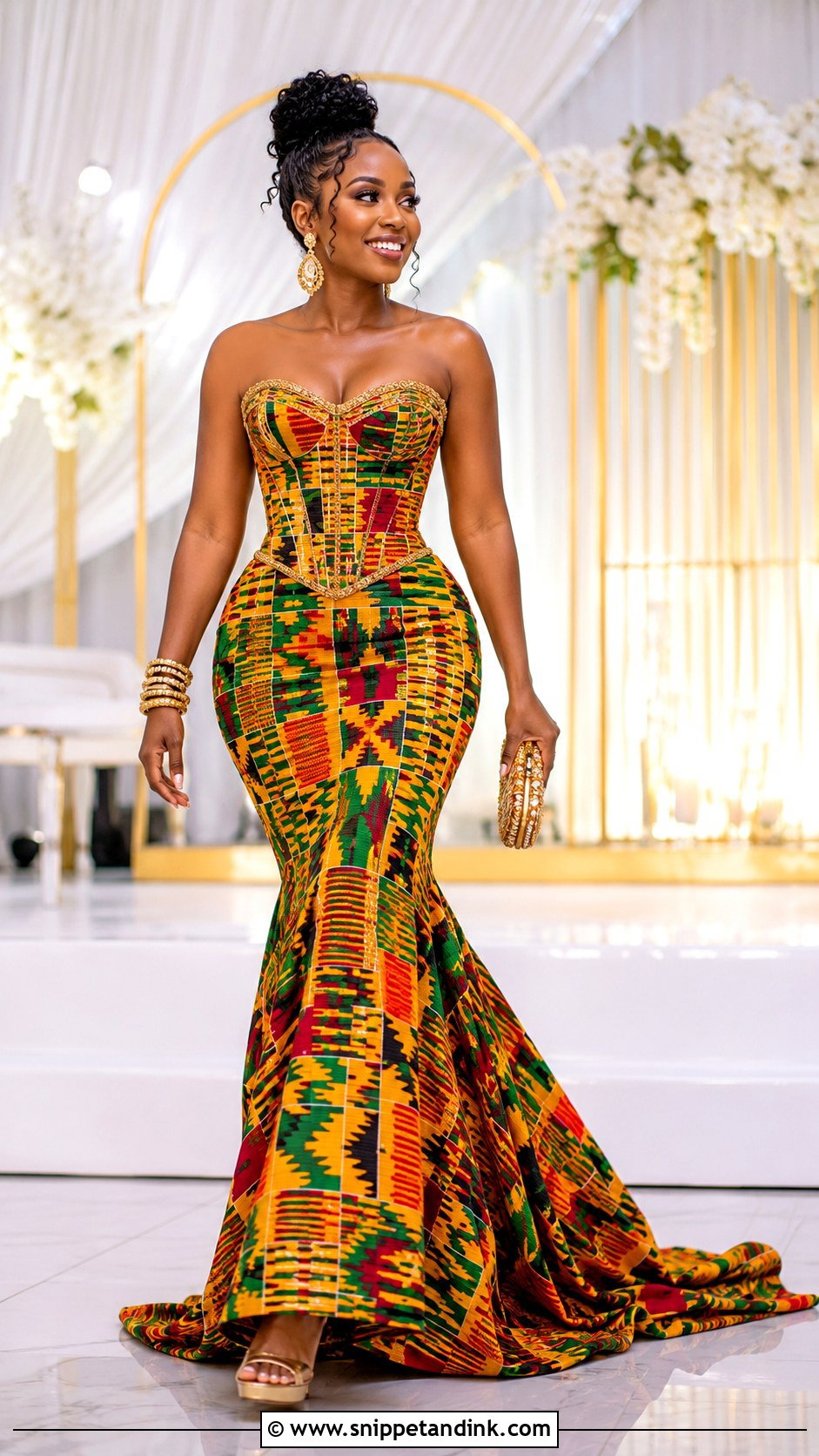
Kente on a corset works because the weave is firm enough to hold a shaped panel without puckering, but that same stiffness means the pattern has nowhere to hide. I ask the tailor to centre the strongest motif on the front bodice and to match the strip joins at the side seams, so the bands line up when you turn. Boning should shape the waist, not squeeze it; you’ll be in this for hours. Keep room around the knees, because a mermaid cut in stiff cloth shortens your stride more than a soft fabric does, and add a wrist loop to the train. Metallic block heels, gold drops, stacked bracelets and a small beaded clutch finish it, and a sleek bun keeps the neckline clear.
2. Kente Kaba And Slit Wedding Dress
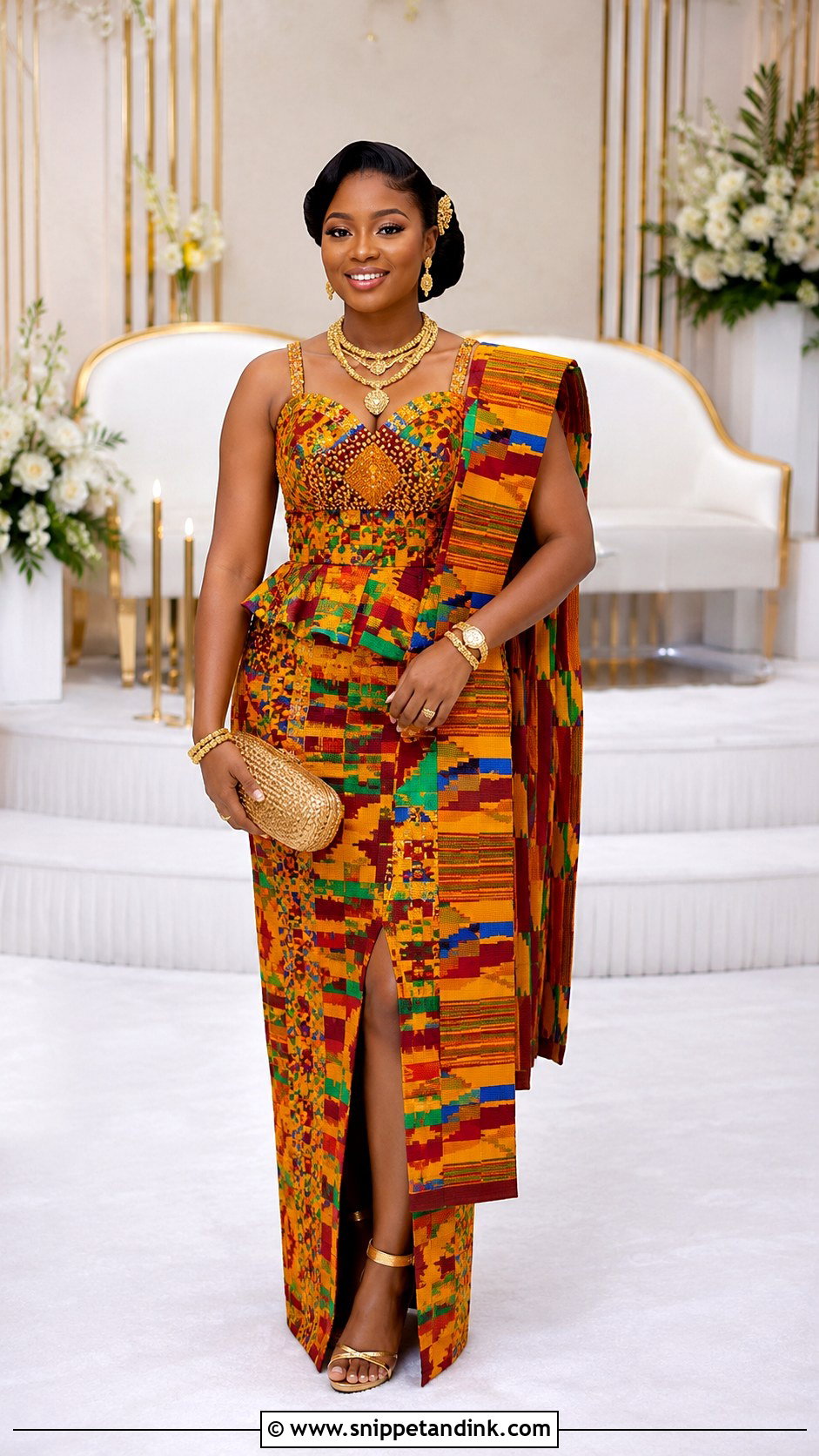
Kaba and slit is the outfit I suggest most often for a traditional ceremony, because the separate top lets your seamstress fit the bust and waist independently of the hip. It pairs a fitted blouse with a long coordinating skirt, and you can play with how the cloth runs on each piece. A sculpted peplum kaba over a high-waisted slit that drops straight before widening near the hem is a classic shape. Add the matching shoulder cloth for the formal entrance and photos. Gold sandals, layered necklaces and bold earrings sit well against the weave. If you want more coverage, elbow sleeves and a square neckline are easy to build in, and the format adapts to petite, tall and plus-size figures without fuss.
3. Off Shoulder Kente Ball Gown
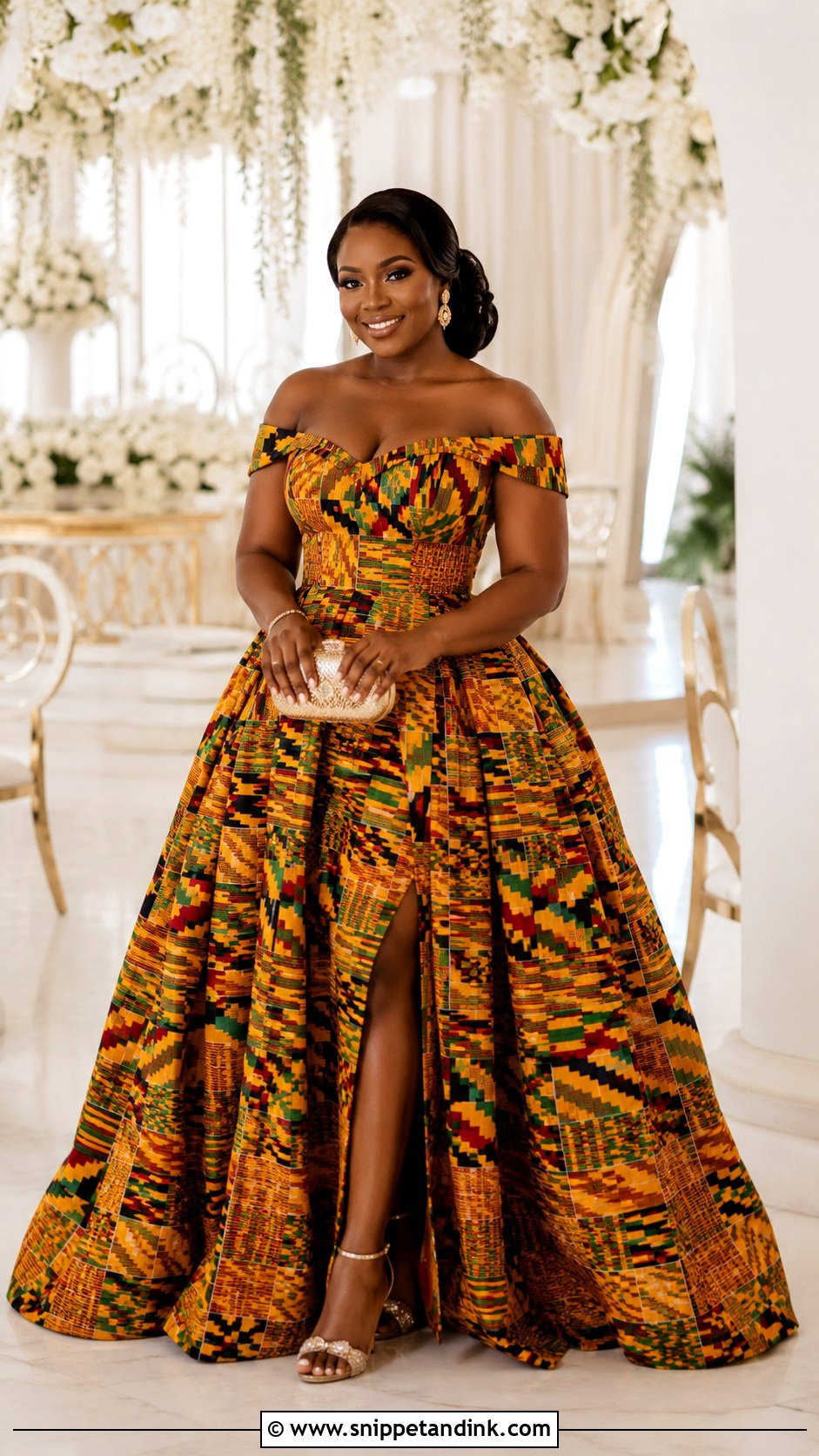
The problem with an off-shoulder Kente ball gown is weight: a full skirt in handwoven cloth can get heavy fast. My workaround is to put the Kente on the bodice and upper skirt, then switch to plain satin panels lower down, or use a pleated construction that moves instead of a stiff gathered dome. The neckline needs hidden boning or a silicone gripper so it stays put while you hug guests. Place the waist seam at your natural waist; a few centimetres too low and the whole gown looks dropped. Crystal heels, a small gold clutch and a polished updo keep the shoulders as the focus, and a detachable wrap covers you for the more formal moments.
4. Beaded Kente Trumpet Wedding Dress
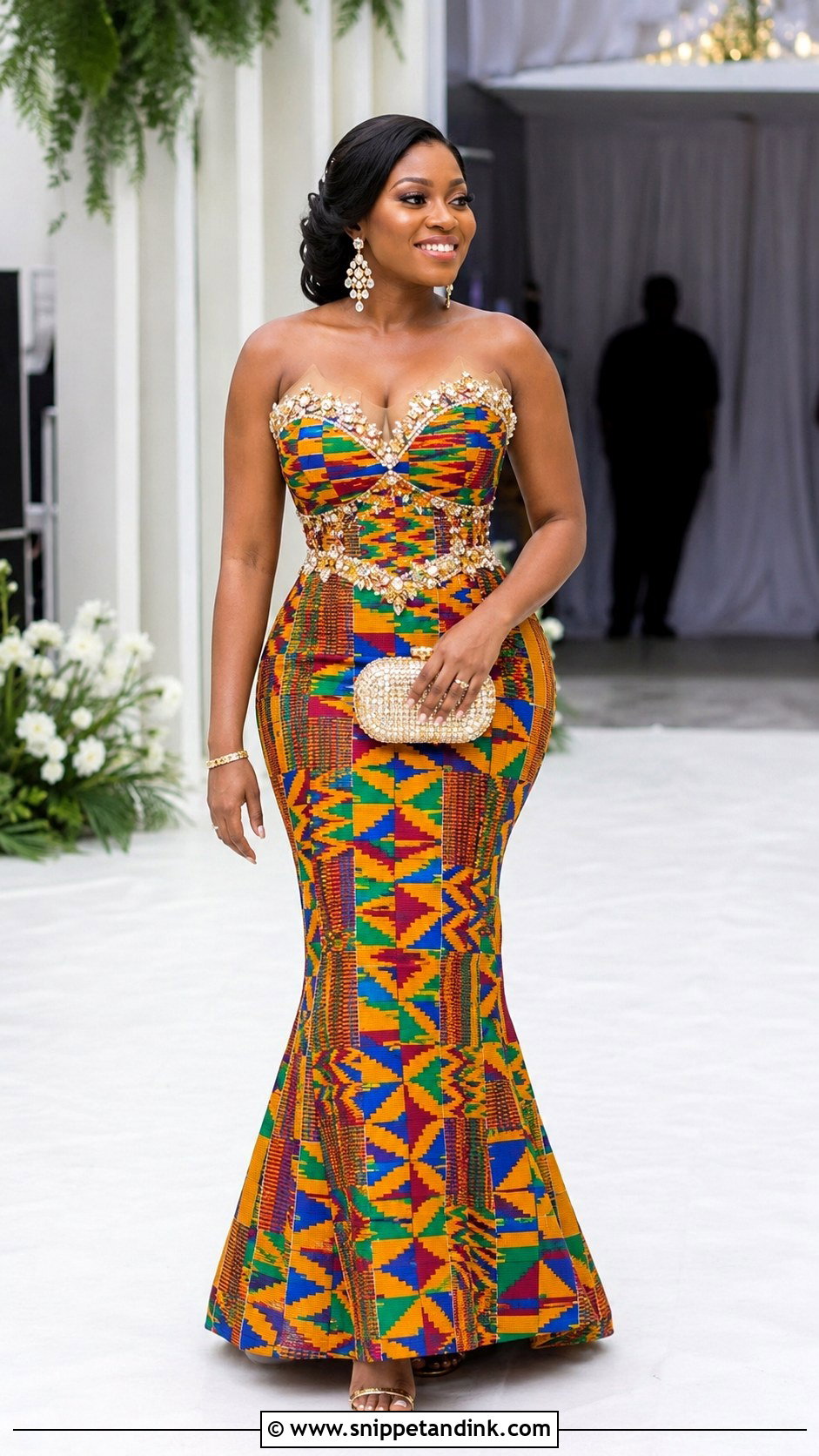
Beads on Kente should follow the structure, not fight the pattern. I place them along the neckline, waist, sleeve edges and skirt seams, where they catch light as you move, and leave the woven motifs clear. A trumpet shape stays close through the hips and opens above the knee, which gives you more walking room than a sharp mermaid flare. Every bead adds weight, so ask for lightweight glass or crystal and check how the bodice feels after an hour in the fitting room. Fuller busts usually need wider straps or short illusion sleeves here. Pair it with gold heels, a structured mini bag and chandelier earrings, and keep the hair lifted.
5. Kente And Lace Wedding Dress
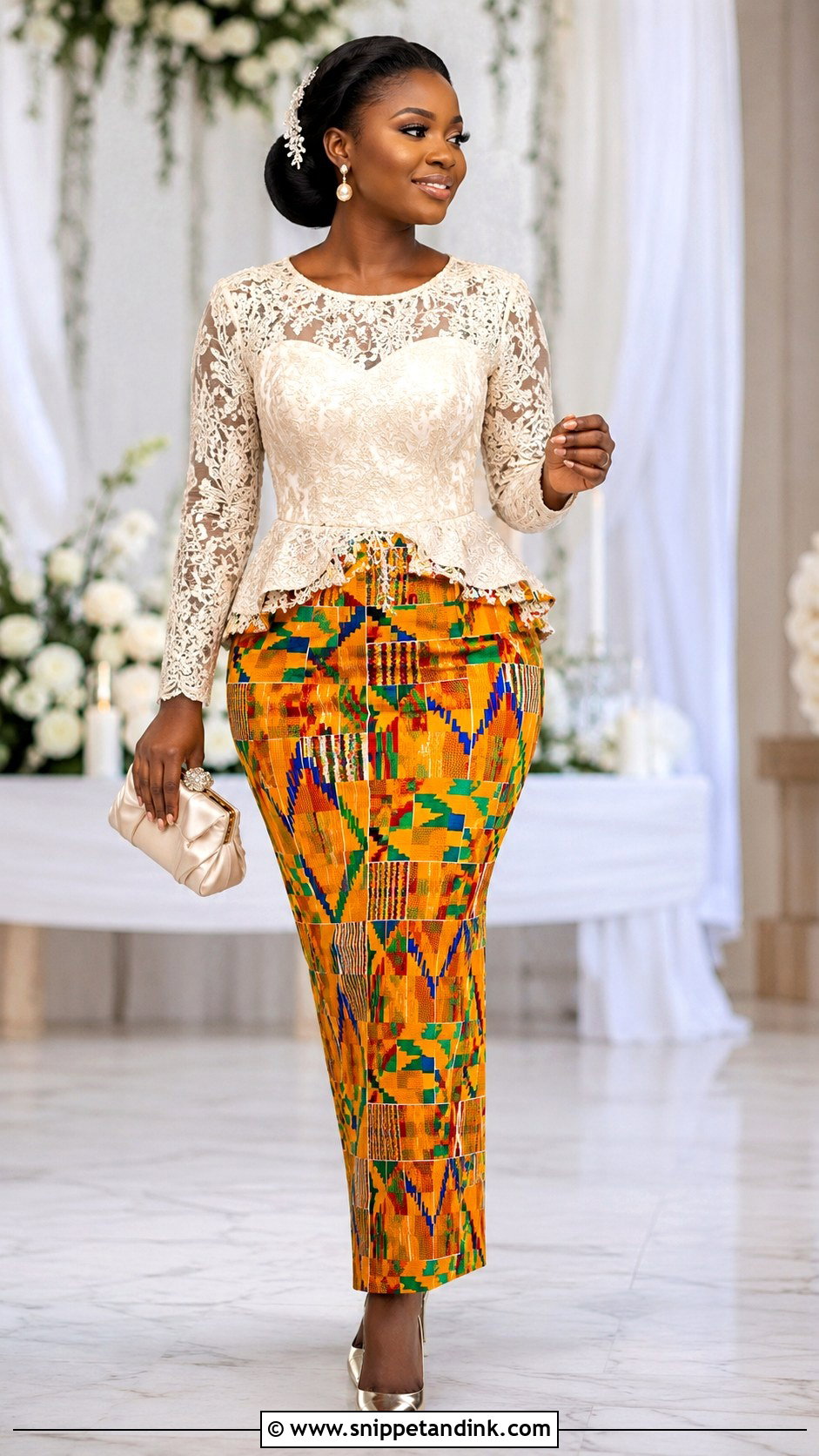
Kente and lace solve the indecision between heritage and a softer bridal feel, provided each fabric gets one job. I give the Kente the skirt and a waist panel, and the lace the bodice and lined sleeves, with appliqués placed by hand at the edges. Pick the lace from the cloth: lift a champagne or soft peach from the weave and it will look planned. Match any illusion mesh to your skin tone in daylight, not under shop lights, or it reads grey in photos. Many Ghanaian bridal designers now layer Kente with lace and textured fabrics this way. Pointed metallic pumps, pearl and gold earrings and a low bun or braided updo complete it.
6. Green Kente Corset Wedding Dress
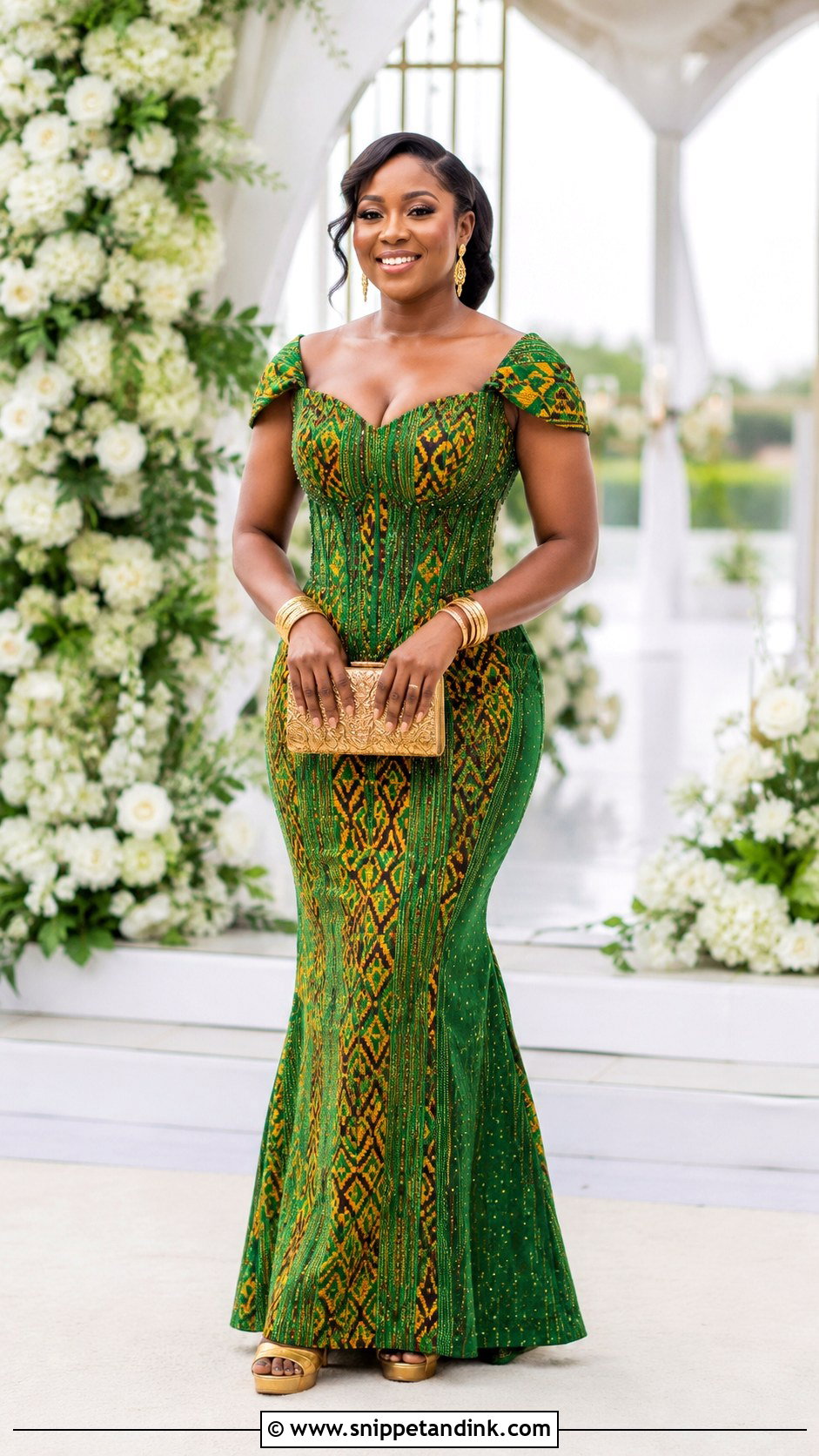
Deep green Kente is forgiving: it flatters most skin tones and sits comfortably against garden foliage or a dark hall. A fitted Kente corset gown with a soft flare and light embroidery at the neckline lets the green lead. I like removable cap sleeves on this one, since they give you a covered look for the ceremony and a lighter one later. Gold block heels, an embossed clutch and stacked bangles are enough jewellery. My one styling rule: borrow a single secondary colour from the weave, say the yellow or burgundy, for your lip or nails, rather than trying to echo every shade.
7. Red And Gold Kente Wedding Dress
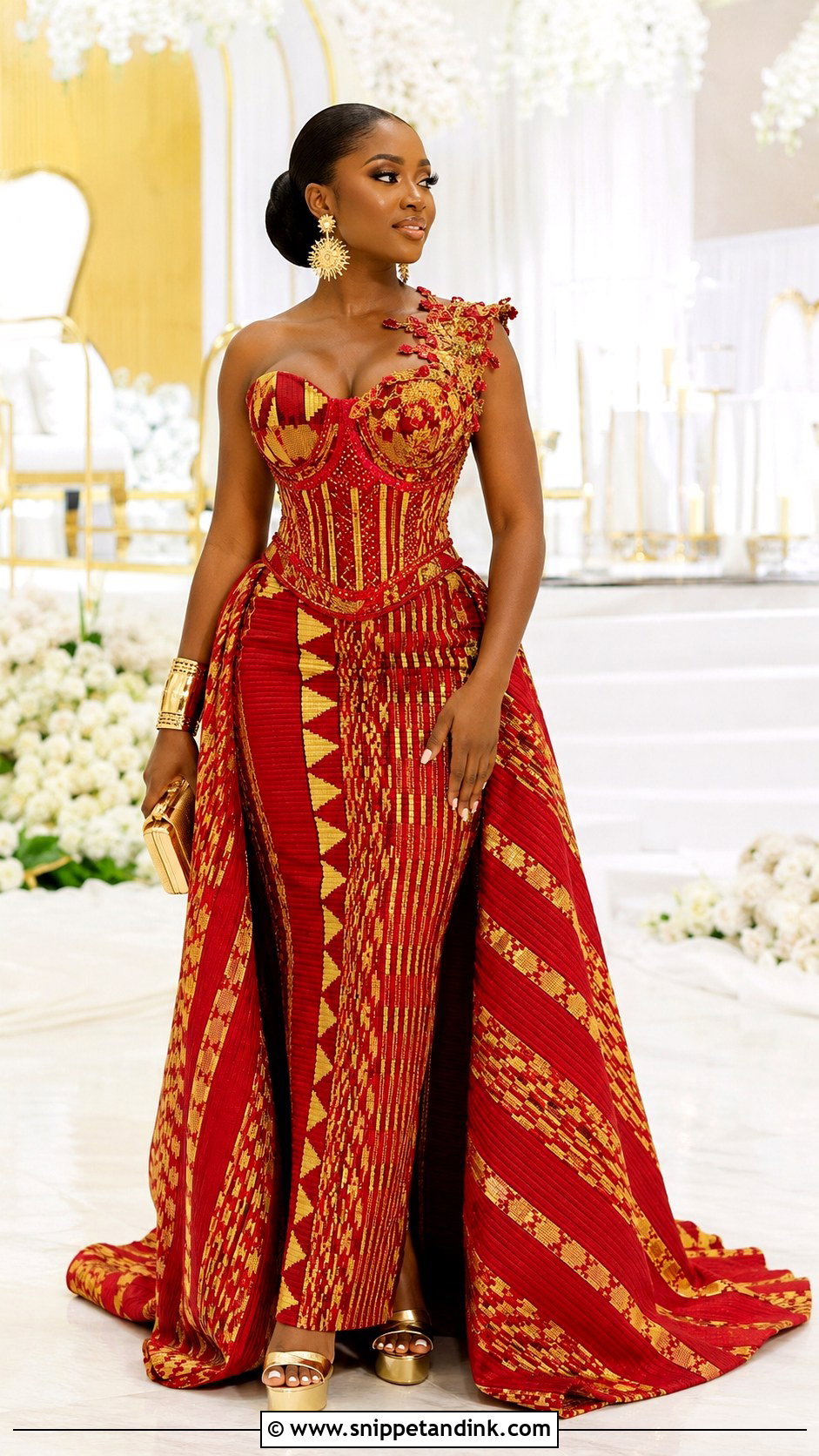
Red and gold is the boldest palette on this list, and it needs a hierarchy. Decide which colour leads, then let the other appear through the woven accents, beadwork or embroidery; half and half usually looks busy. A fitted bodice with a straight floor-length skirt keeps it sleek, and a detachable train adds drama for the ceremony only. Because the cloth is already loud, I keep makeup neutral with one defined lip. Talk to family before you commit, as colours in Kente can carry meaning, and some families have firm views on what the bride should wear. Gold platform sandals, a box clutch and a cuff finish the look.
8. Blue Kente Peplum Wedding Dress
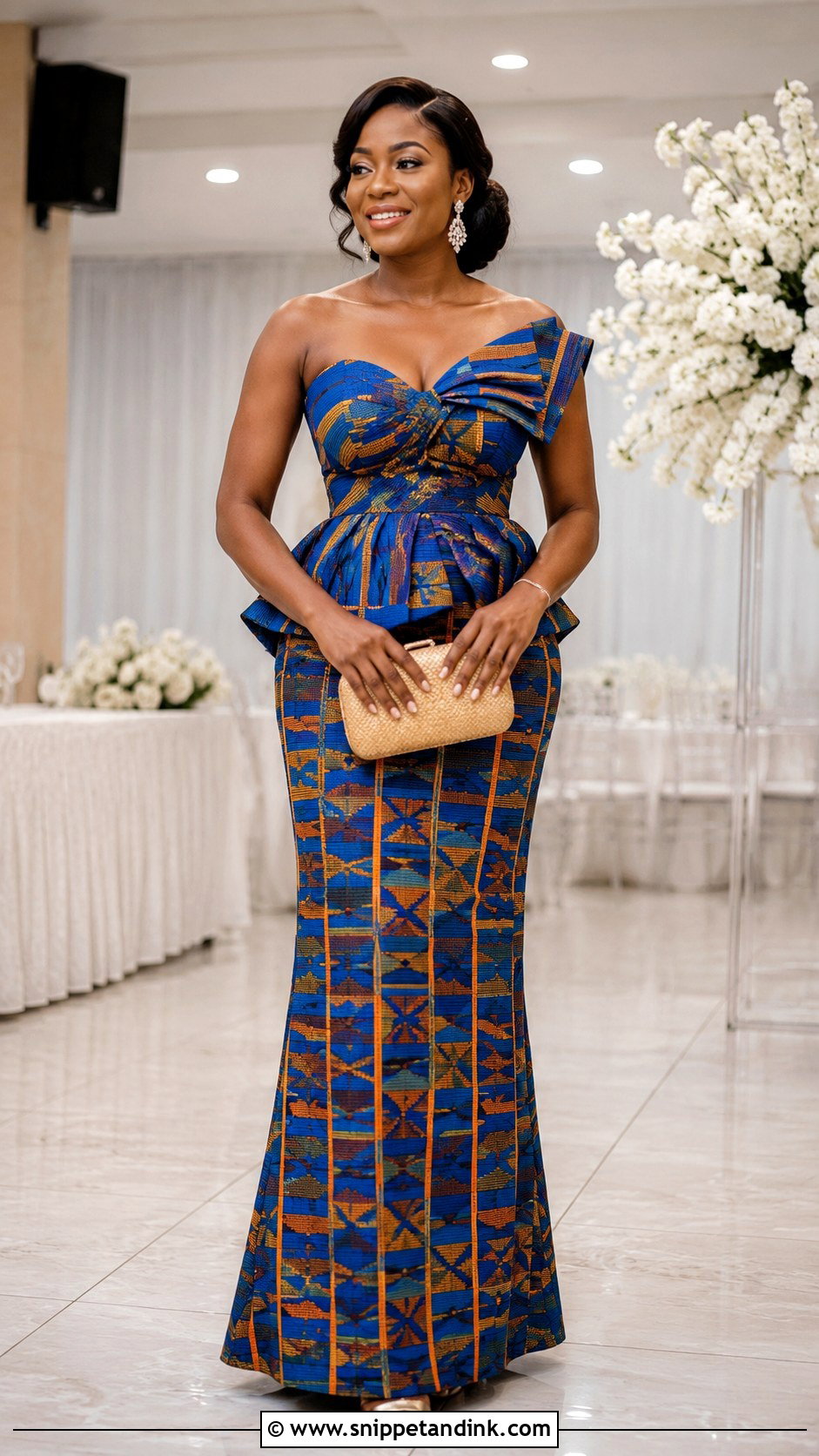
A blue Kente peplum gives you waist definition without a heavily boned corset, which matters if you don’t like feeling caged. Keep the peplum hem gently curved; a very wide ruffle in stiff cloth sticks out like a shelf. Petite brides should keep it compact and set slightly above the natural waist, while taller brides can try an asymmetric peplum that sweeps toward one hip. The skirt can run straight through the hips and open with a back slit or soft flare. Silver or gold heels, crystal earrings and a side-swept updo soften the structure.
9. Purple Kente One Shoulder Wedding Dress
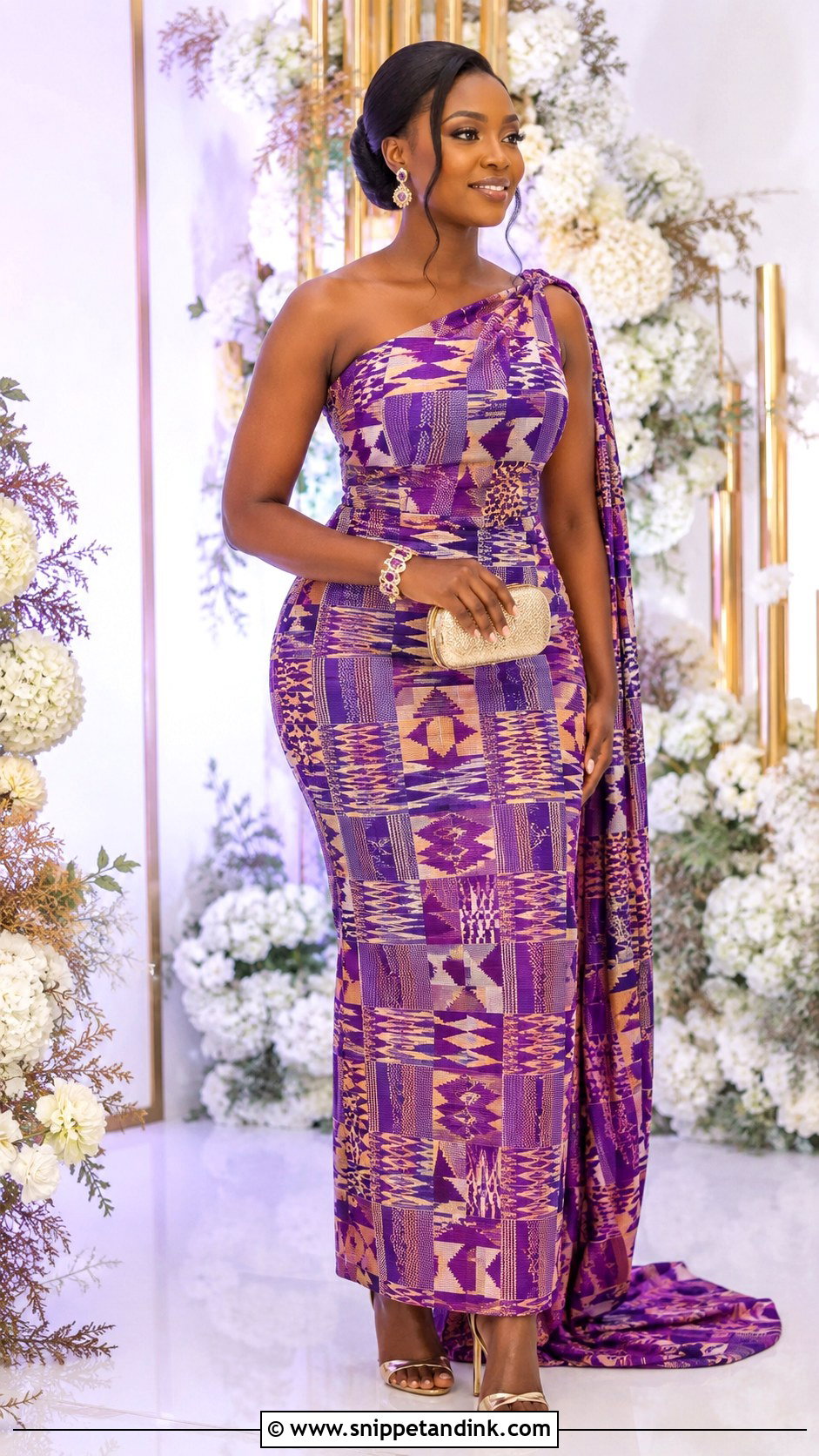
One-shoulder cuts are the hardest to fit in Kente, because the asymmetry pulls the cloth on the diagonal and the pattern shows every bit of drag. I insist on internal support across the chest and a firm seam at the bare side. Carry the diagonal on with a draped waist panel or a narrow sash falling to the back, and let a column skirt with a small train do the rest. Purple weaves read modern and sculptural this way. Put your hair up or part it away from the shoulder detail, and wear one statement bracelet on the uncovered arm.
10. Strapless Kente Ball Gown
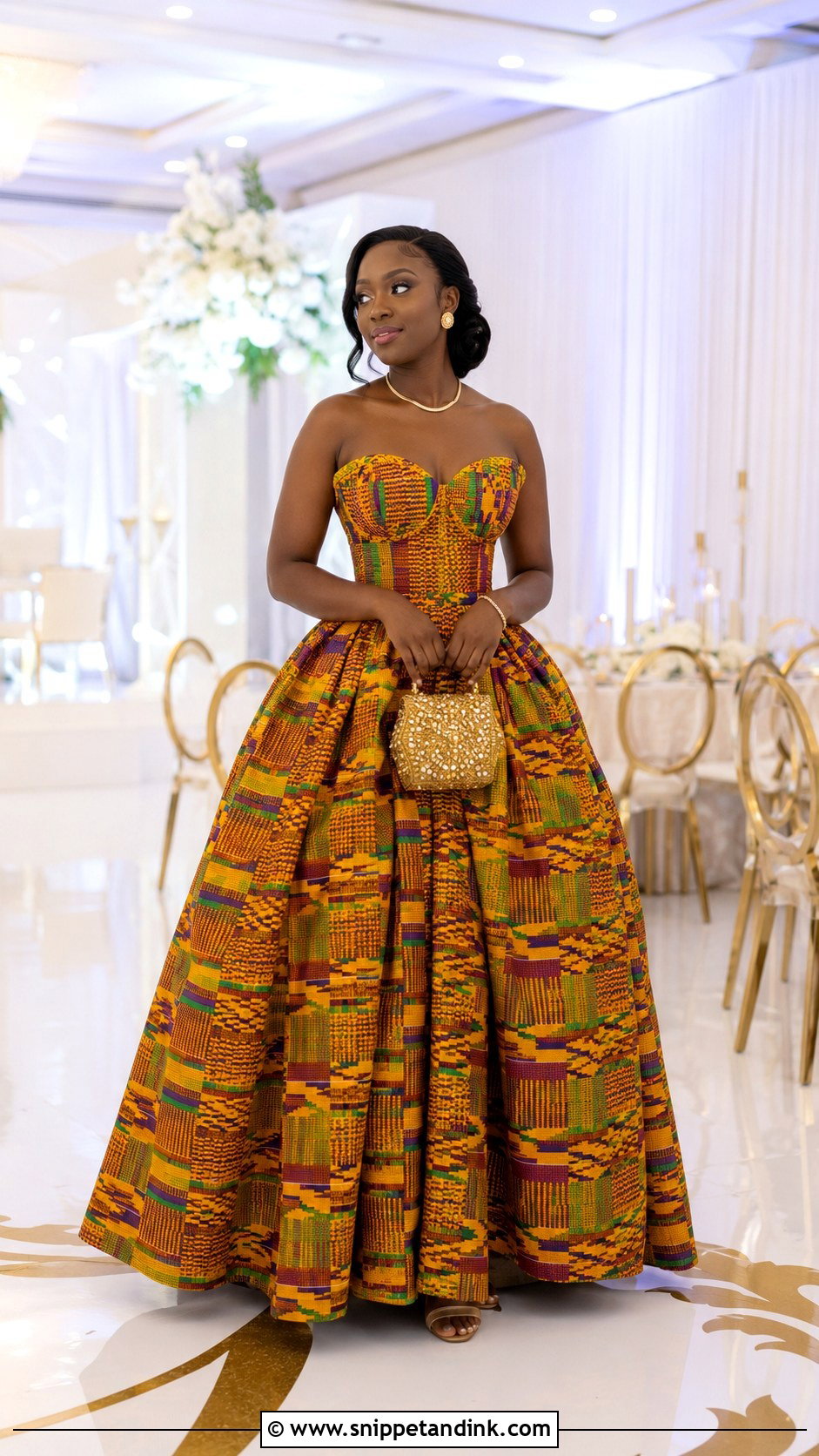
Strapless Kente needs serious engineering underneath: a boned inner corset, a secure back closure and a curved top edge that follows the bust. I match the front panels so the pattern meets cleanly at the centre, then pair the cloth with a lighter underskirt rather than stacking heavy layers. Low metallic heels, a beaded mini bag and a short gold necklace sit well with a high bun or crown braid. If you want cover for church, a removable fitted bolero or draped shoulder cloth does the job. Book your last fitting within a couple of weeks of the day, as even small weight changes affect a strapless fit.
11. Kente Jumpsuit With Detachable Skirt
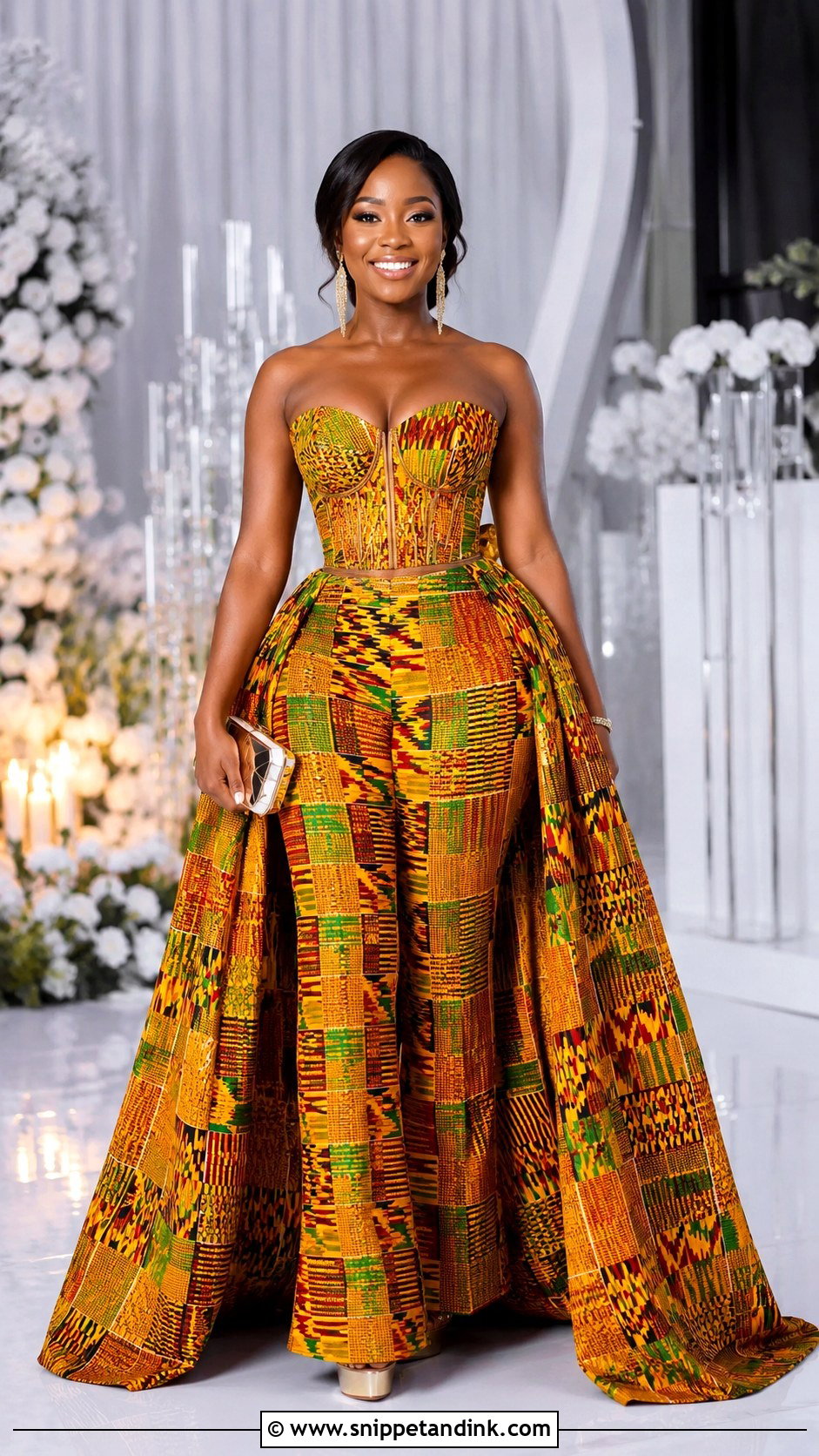
If you plan to dance hard, a tailored Kente jumpsuit with a detachable overskirt gives you two outfits without a full change. The corset top and wide-leg trousers form the base, and the overskirt adds gown-level volume for the entrance and portraits. Removable skirts have become a familiar choice among Ghanaian brides who want flexibility. The closure is where these go wrong: I have the overskirt fasten with hooks hidden under a beaded waistband so it looks deliberate, and I test removing it in under a minute. Platform heels, long earrings and a smooth ponytail suit it. Pockets are worth adding if they don’t break the trouser line.
12. Kente Gown With Organza Sleeves
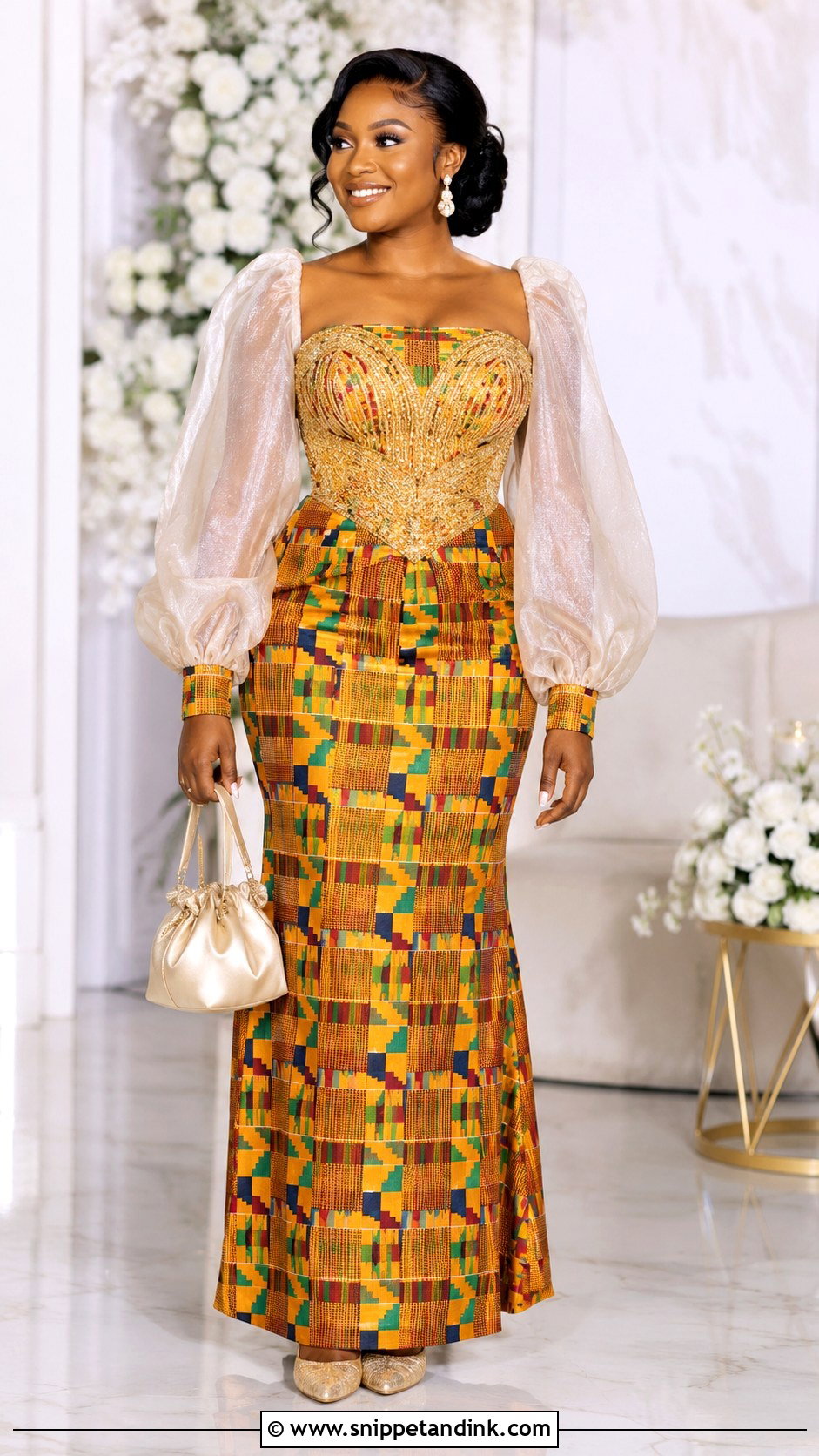
Organza sleeves soften a structured Kente bodice, but they’re climate-sensitive. In heat, ask for the lightest organza and a breathable cotton lining; synthetic organza traps warmth against the arm. Gather full-length puff sleeves neatly at shoulder and cuff, and finish the cuffs with a few Kente-covered buttons so the sleeves feel connected to the dress. Clear or cream organza won’t shift the colours underneath. I check arm movement at the fitting by having the bride raise both hands as if she’s waving, since tight armholes are common with puff sleeves. A centre-parted low bun and pearl drops keep the upper half calm.
13. Kente Gown With Floral Appliqués
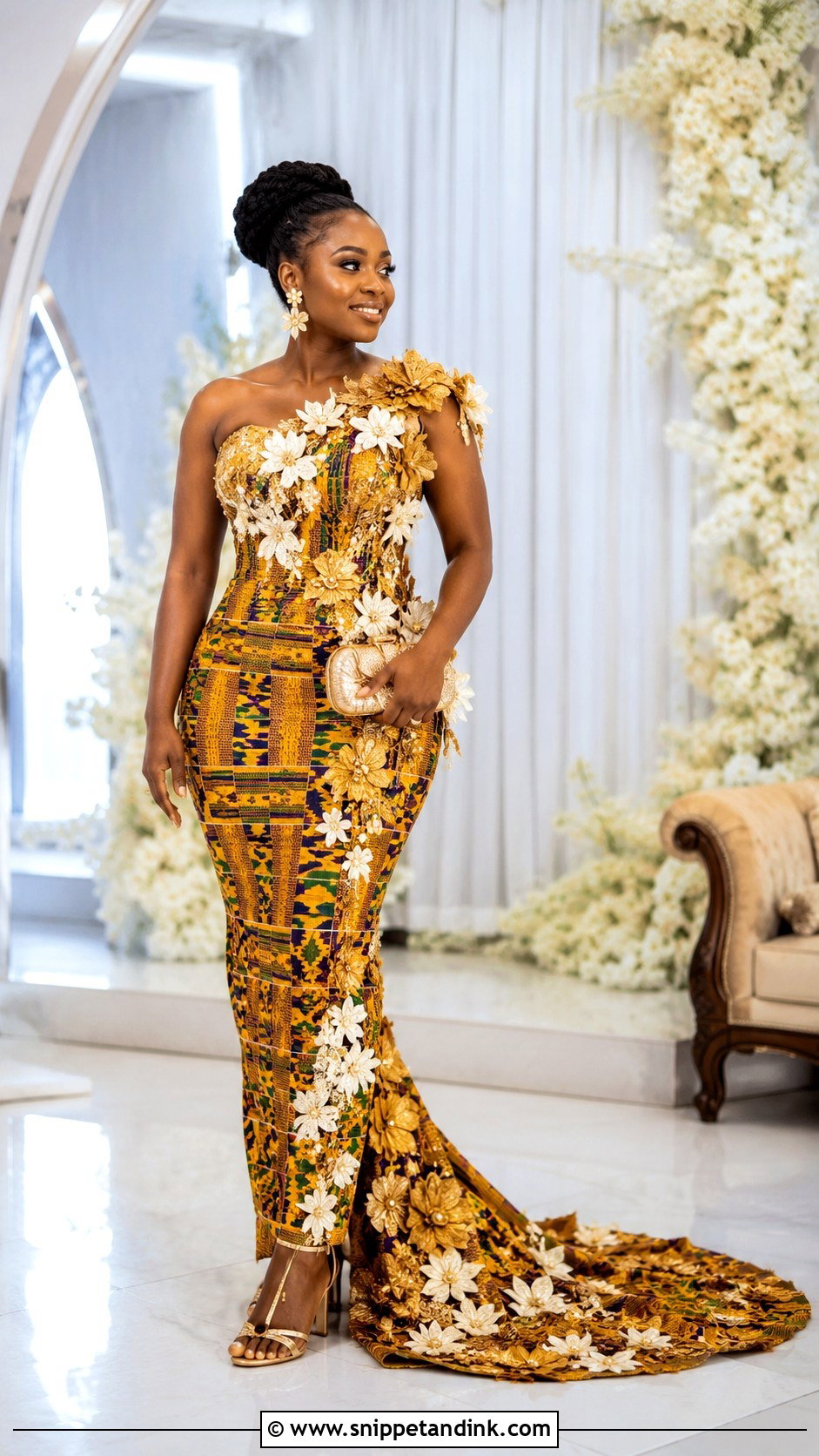
Floral appliqués turn a fitted Kente gown into something sculptural, as long as they’re placed with restraint. Run them along one shoulder, across the waist or down the edge of a detachable train, and keep the woven body visible. Pull the appliqué colour from the weave, gold or ivory usually being safest. I check each flower is stitched through its centre and at the petal tips; loose petals snag on bracelets, chair backs and the groom’s buttons. Skip a big necklace if the flowers sit near the neckline, and wear a neat braided bun with metallic heels and a structured clutch.
14. Wrapped Kente Bridal Dress
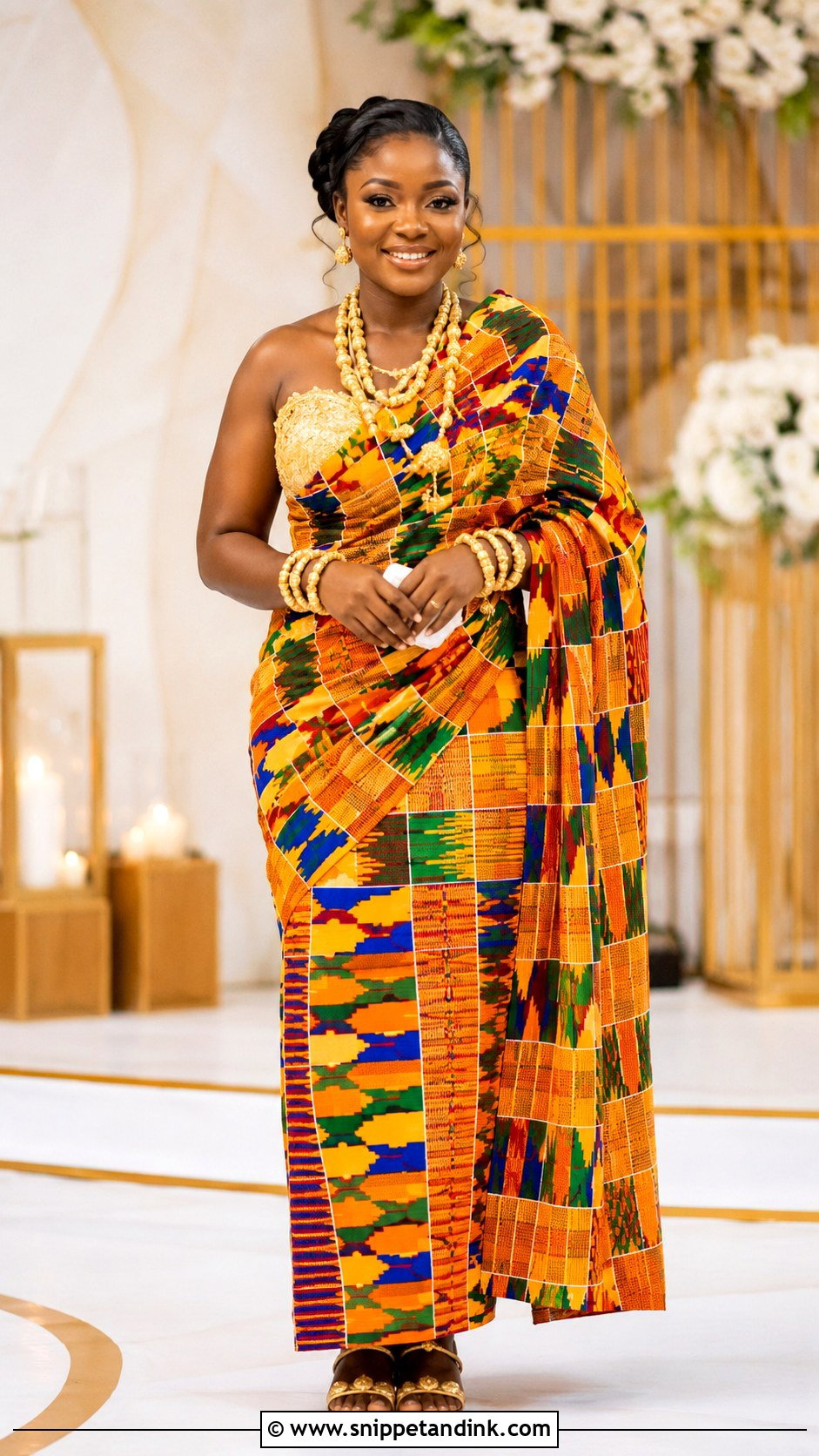
A wrapped Kente bridal look honours the cloth by draping it rather than cutting it, which some families strongly prefer for the traditional ceremony. The cloth goes over a fitted base dress or kaba and slit and is secured across one shoulder. Both brides and grooms often wear wrapped or tailored Kente for these celebrations, so it’s worth coordinating with his cloth. Wrapping is a skill: I’d have someone experienced dress you on the morning and pin it with hidden safety pins and discreet hooks, then walk, sit and dance with you before you leave the room. Low gold sandals, layered necklaces and a close updo keep the drape the focus.
15. Kente Cape Wedding Dress
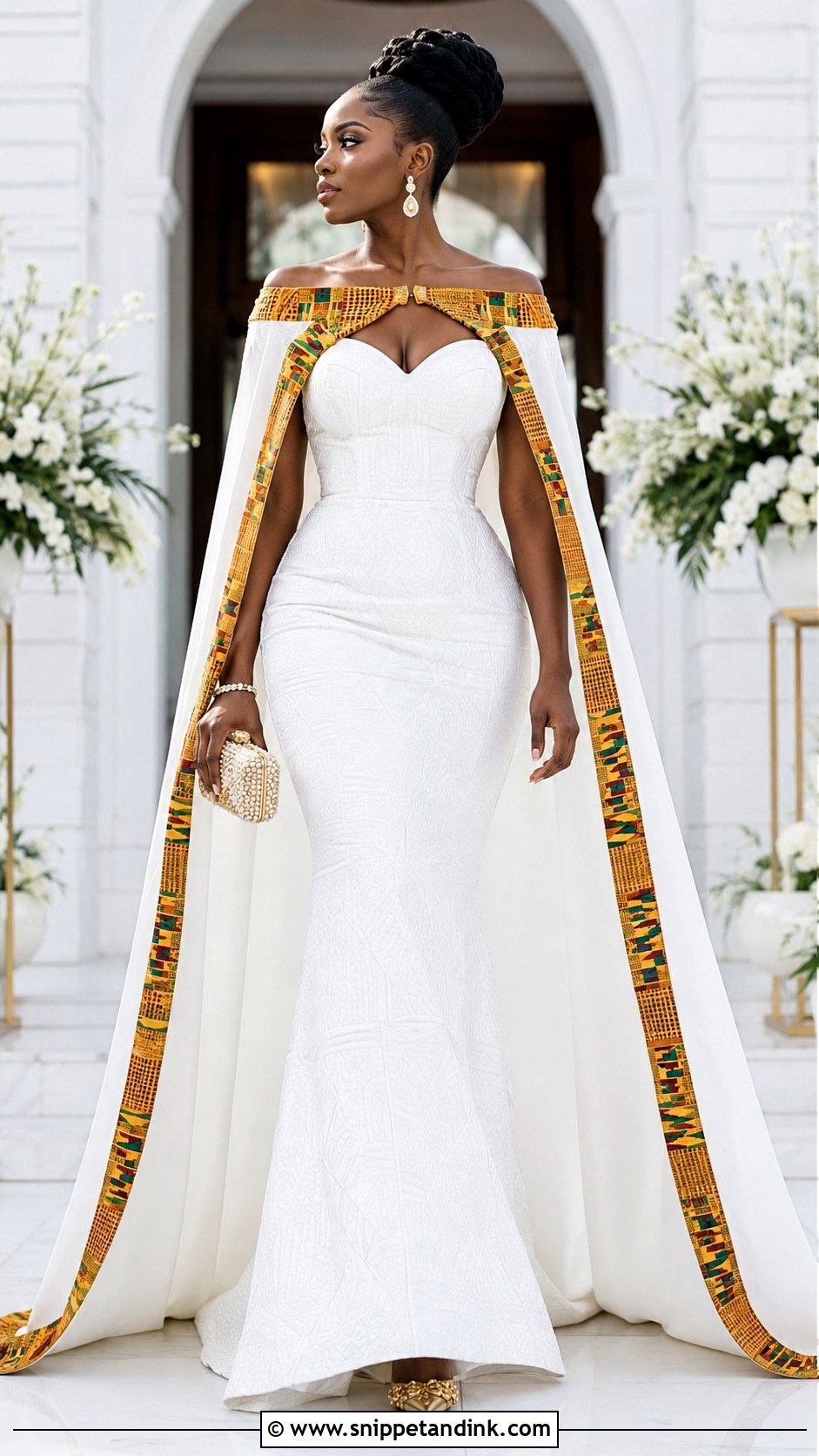
A detachable cape gives you a grand entrance without dragging a heavy train all day. Start with a clean column or trumpet gown and attach a sheer or satin-lined cape at the shoulders, tied to the dress through narrow Kente edging or a few embroidered motifs. Petite brides look best in a cape that stops at the calf; tall brides can carry floor length. The attachment points are what I test hardest. A cape pulls backward when it catches air or someone steps on it, so the snaps should sit on firm seams, not on bare fabric. Pointed gold pumps, drop earrings and a high bun suit it, and skip the necklace if the cape neckline is busy.
16. Kente Two Piece Bridal Outfit
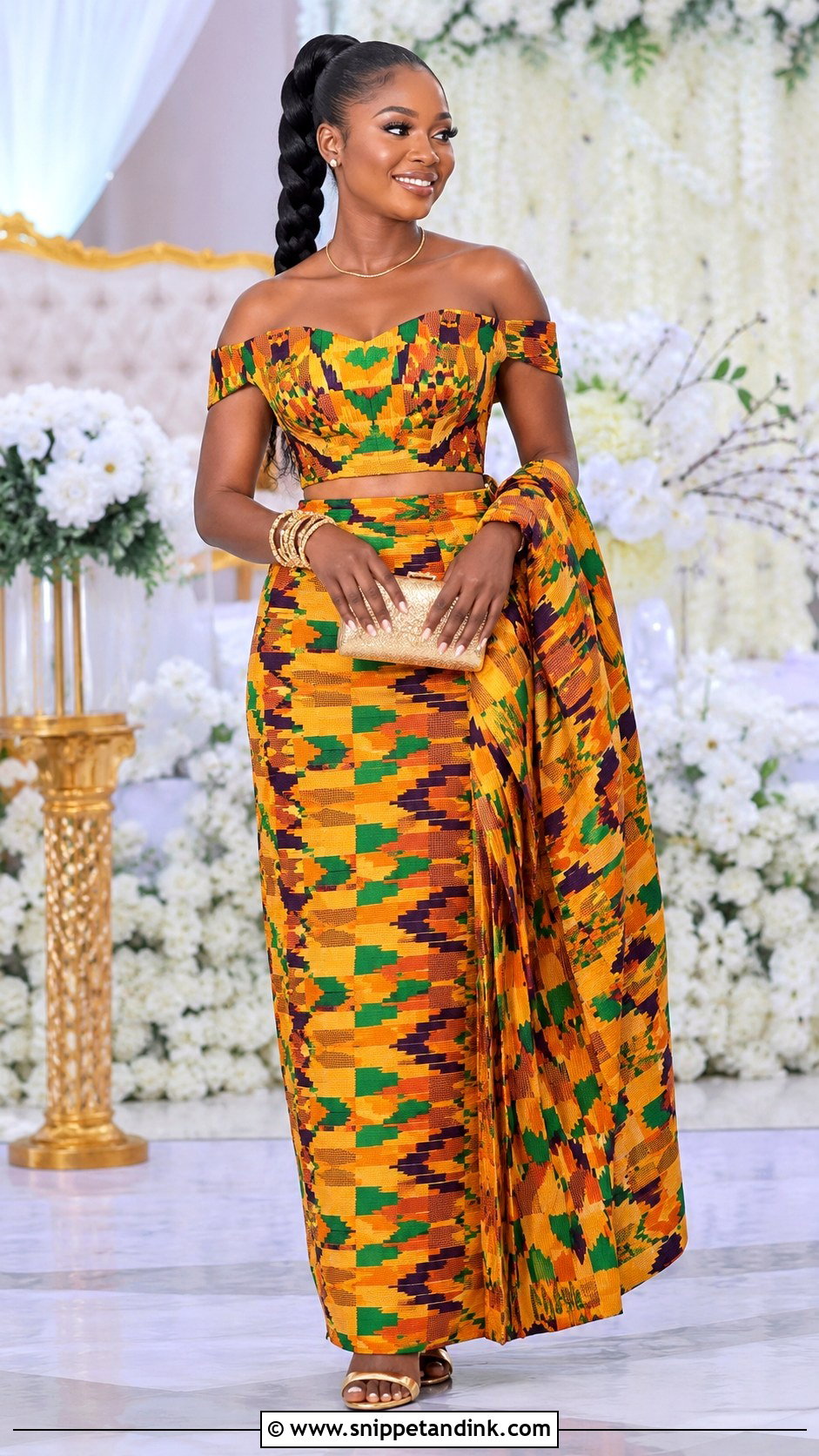
A two-piece Kente outfit is the most practical commission on this list, since your tailor fits the top and skirt separately and you can wear each again. A fitted off-shoulder top over a high-waisted floor-length skirt, with or without a sliver of skin between, is a good base. The skirt can carry a front drape, side pleats or a short back train. Add a matching wrap for a formal entrance. I always point out the afterlife: pair the Kente skirt with a plain satin top for a later party, or the top with black trousers. Heeled sandals, a gold clutch and a braided ponytail finish it.
17. White Lace And Kente Wedding Dress
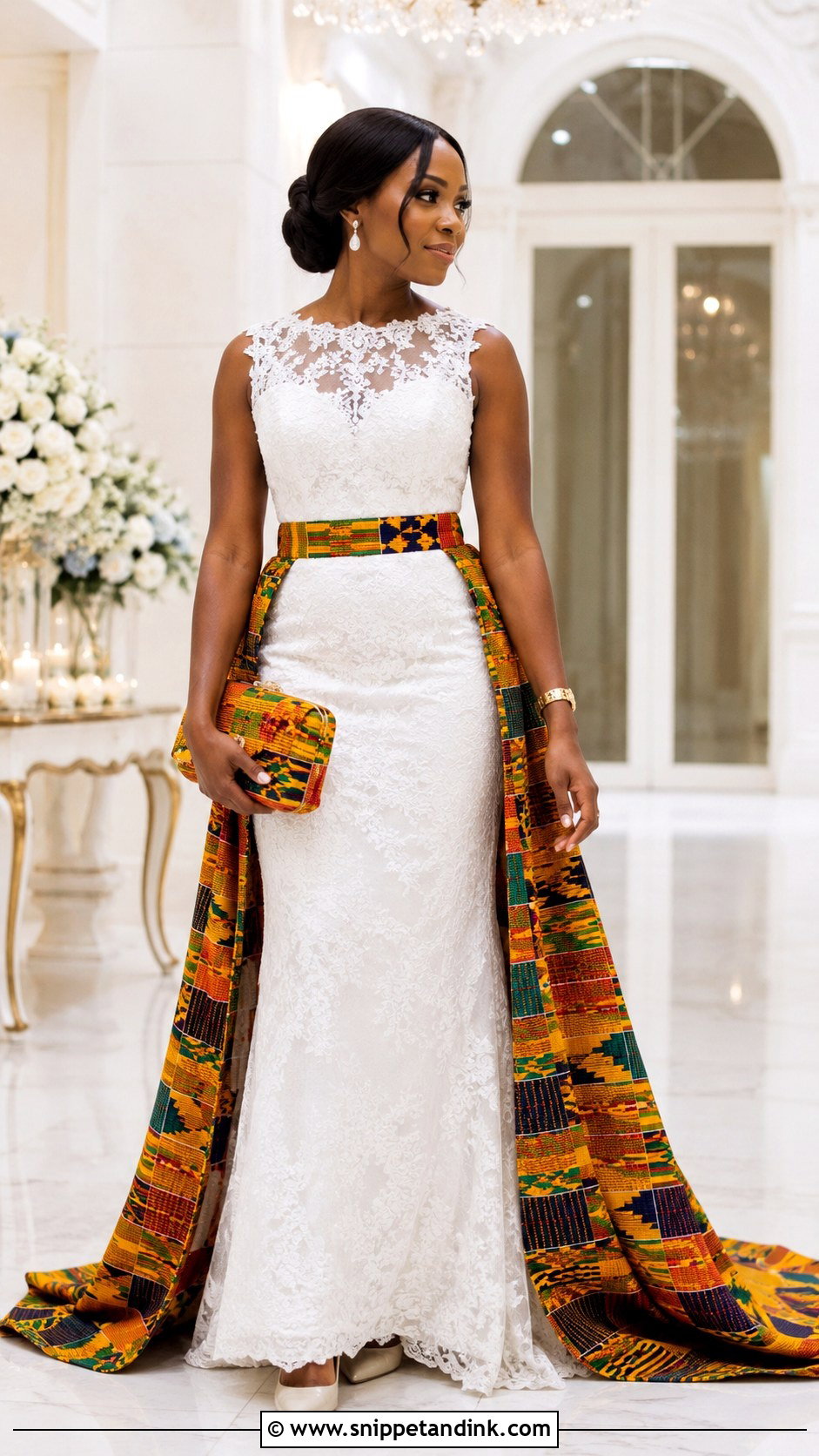
White lace with Kente accents suits a bride who wants the white-gown tradition but still wants her heritage visible. Begin with a lined lace gown, fitted bodice and soft A-line skirt, then add Kente in one or two places: a wide waistband, a neckline panel, covered buttons or a detachable train. More than that and it gets crowded. The catch is colour. Brilliant white lace can make the palest tone in the Kente look dirty, so I hold swatches side by side in daylight and often move the bride to ivory. A Kente-covered clutch, pearl earrings and a low chignon or a soft natural style complete it.
18. Gold Lace Ghanaian Wedding Dress
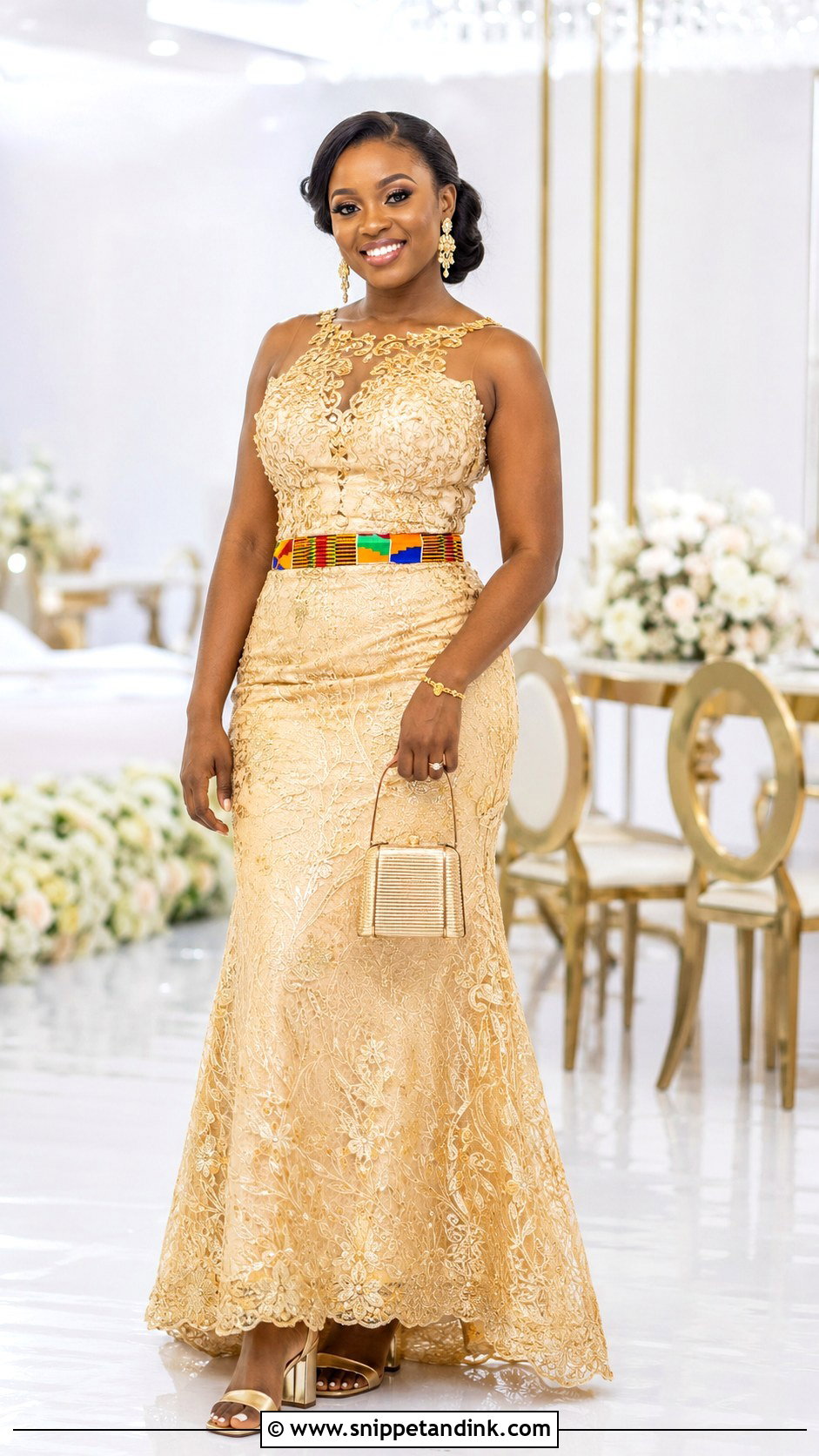
Gold lace works best as a reception look, after the Kente has had its moment. Choose finely embroidered lace with light beading over a lining in champagne, bronze or a shade close to your skin. A fitted bodice into a soft trumpet skirt reads bridal without restricting you. A narrow Kente belt or clutch links it back to the earlier outfit. Gold is unpredictable on camera: it can look brassy under warm hall lighting and pale outdoors, so I view the lace in both settings and ask the photographer how they’ll light the room. Metallic block heels, chandelier earrings and a softly curled updo complete it.
19. Satin Mermaid Reception Wedding Dress
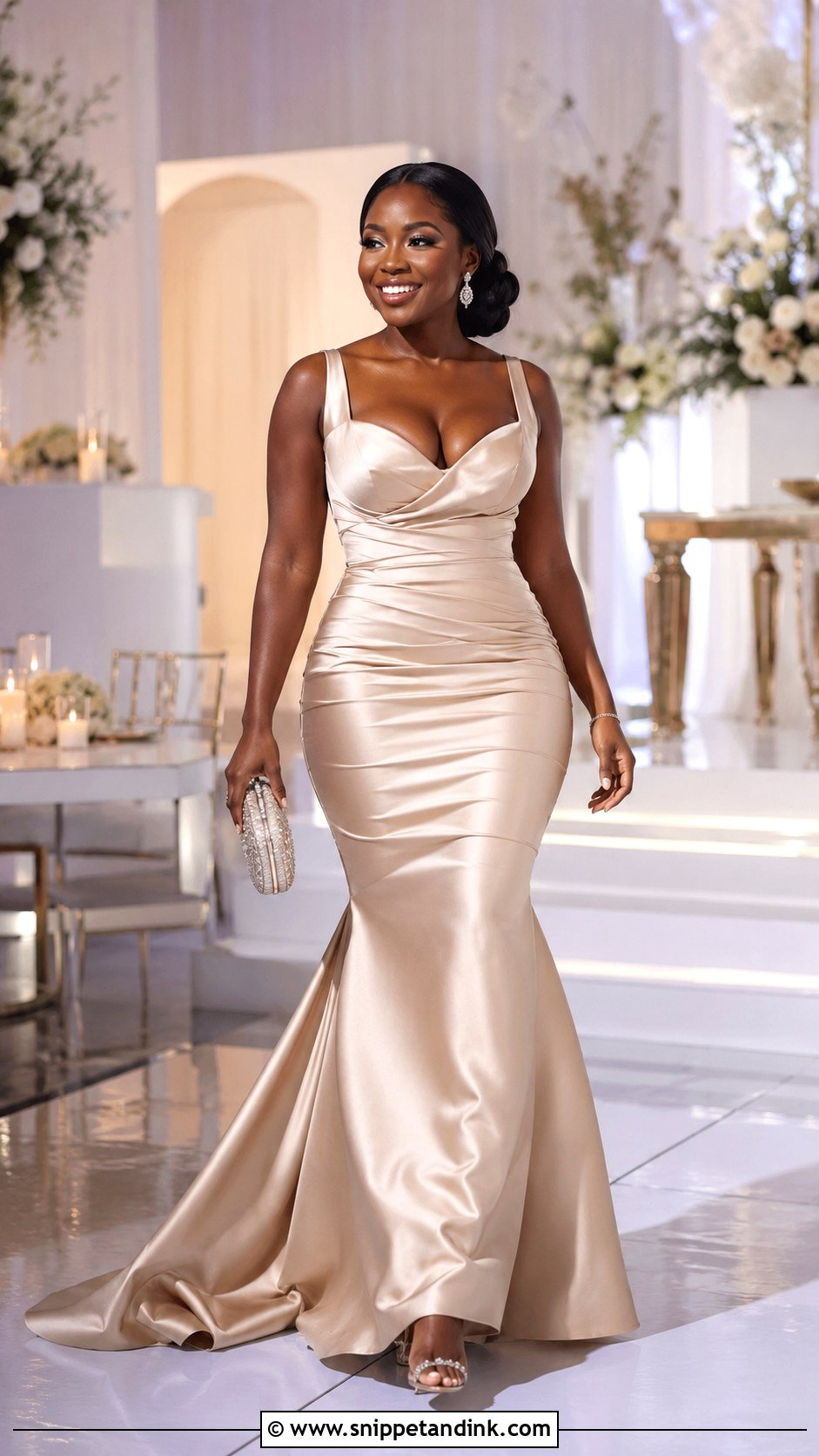
After a heavily textured traditional outfit, satin gives the eye somewhere to rest. A champagne, emerald or copper mermaid gown keeps the reception formal, and its lighter build makes dancing and greeting guests much easier. Set the flare high enough that you can take a normal step, and ask for a bustle or wrist loop for the train. Satin shows everything: pulling at the zip, a seam that’s slightly off, the line of the wrong underwear. So bring your actual shapewear to every fitting. Crystal heels, a compact bag and a neat ponytail or low bun suit the smooth finish.
20. Short Kente Reception Wedding Dress
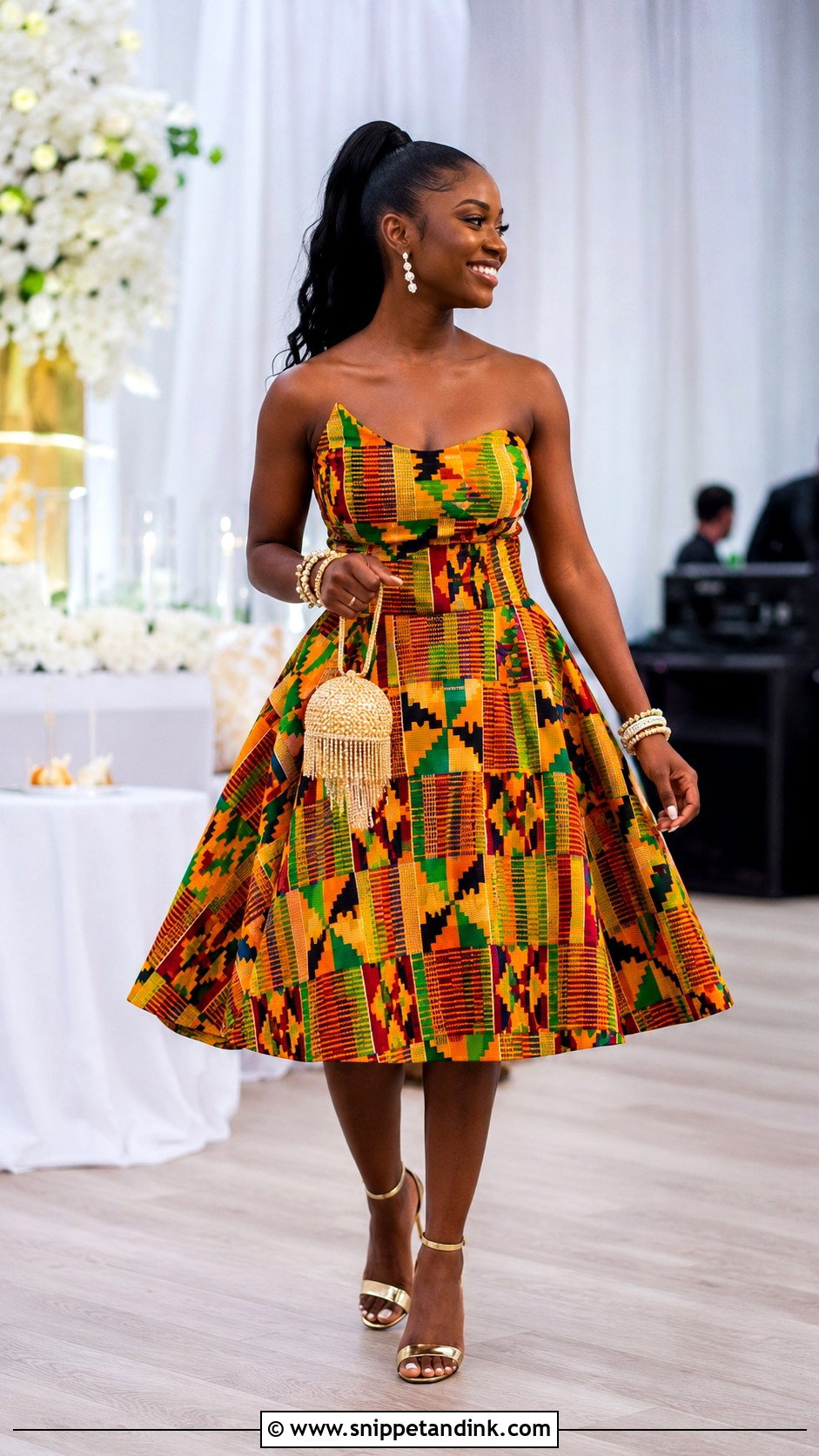
The short Kente reception dress is the change I recommend when the evening is long and the dancing serious. A knee or tea-length fitted bodice with a gently flared skirt keeps the ceremony’s colour story without the weight. You can add a removable overskirt for the entrance and drop it before the first song. Keep the detailing to the neckline or waist, since a compact shape gets busy quickly. I always add a smooth lining or discreet shorts under a full short skirt. A high ponytail, metallic heels and a beaded mini bag suit it, and elbow sleeves work if you’d like more coverage.
Planning Outfit Changes Without Losing Half the Party
Most of the brides I dress for a Ghanaian celebration change at least once, and the changes are where time disappears. I treat each switch like a small stage cue. A wrapped cloth can take a while to unpin and redress; a jumpsuit losing its overskirt takes a minute. Order your outfits from heaviest to lightest so the cloth that demands the most stillness comes first, while you’re mostly seated or processing, and the easy dress arrives when the dancing starts.
- Book a private room near the hall with a full-length mirror and a clear table.
- Pack each outfit in its own bag with its jewellery, shoes and pins clipped to the hanger.
- Name one person who knows how every closure works, ideally the one who wrapped you that morning.
- Tell your MC and photographer when each change happens so the entrance is ready to be captured.
Looking After Woven Cloth Once the Celebrations End
Handwoven Kente is often kept for decades and passed on, so the care afterwards matters. I’d never put it in a washing machine. Spot-clean marks gently, and for anything more, use a cleaner who handles delicate natural fibres, or hand wash in cool water without wringing if the cloth is cotton and the dyes are tested first.
Store it clean, dry and out of sunlight, which fades the brighter yarns. Roll the cloth around acid-free tissue rather than folding it along the same lines every time, or refold it differently every few months, because repeated creases weaken the threads where the strips are joined. A cotton bag breathes; plastic traps moisture. Beaded or appliquéd pieces should lie flat so the weight doesn’t pull at the stitching.
Wearing Your Heritage Through Every Part of the Day
Kente takes well to corsets, ball gowns, jumpsuits, wraps and two-piece sets, and lace, satin, organza and beads give you room to make it your own. Start from your order of events, decide where Kente appears and where something lighter takes over, and plan your fittings around the cloth’s arrival. Bring your shoes, shapewear and a swatch of the groom’s cloth to every appointment. Before you approve anything, sit, walk, kneel and dance in it. The right dress is the one you forget you’re wearing while your families celebrate around you.
You'll Like These Ideas:



Leave a Reply