
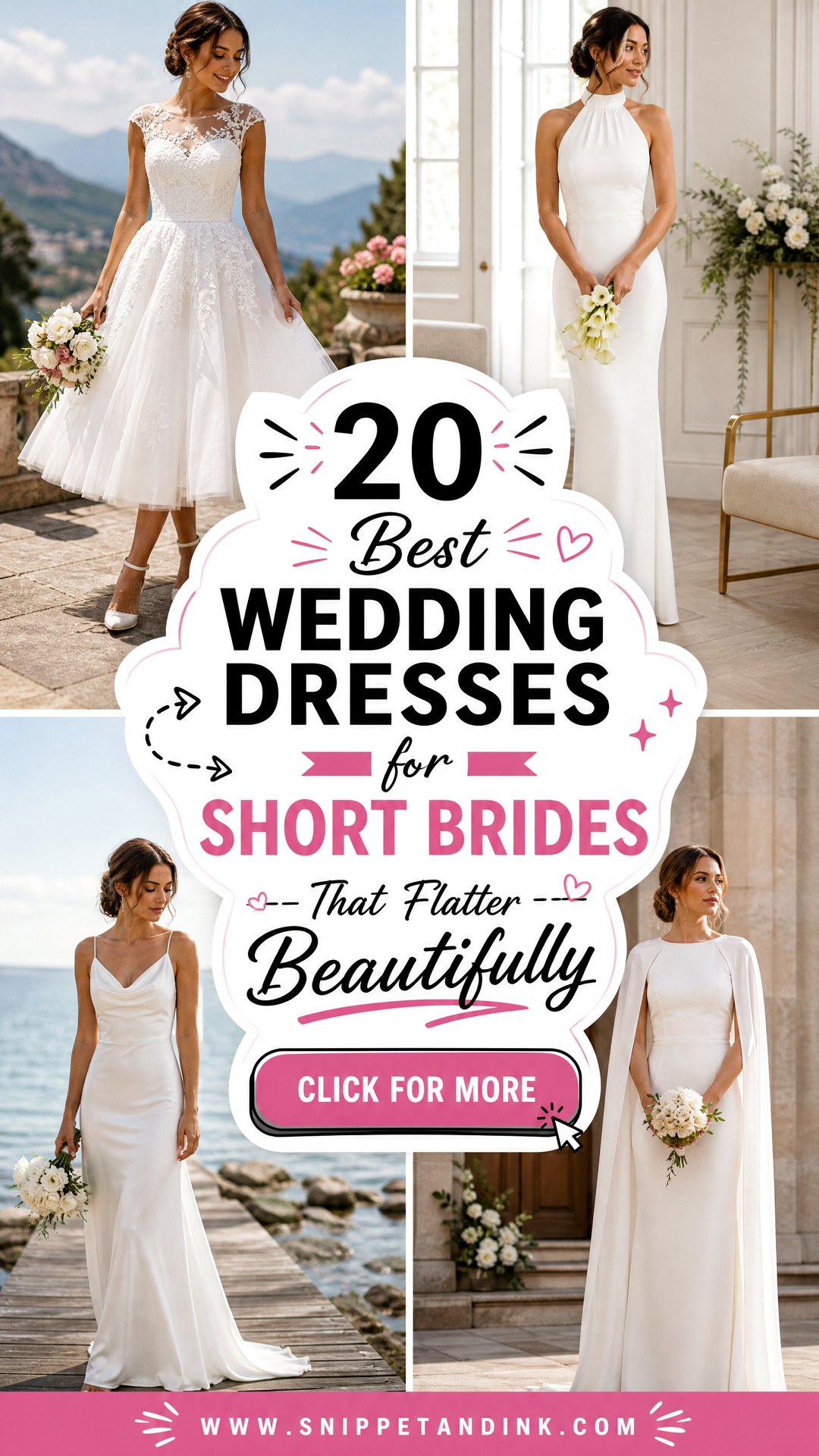
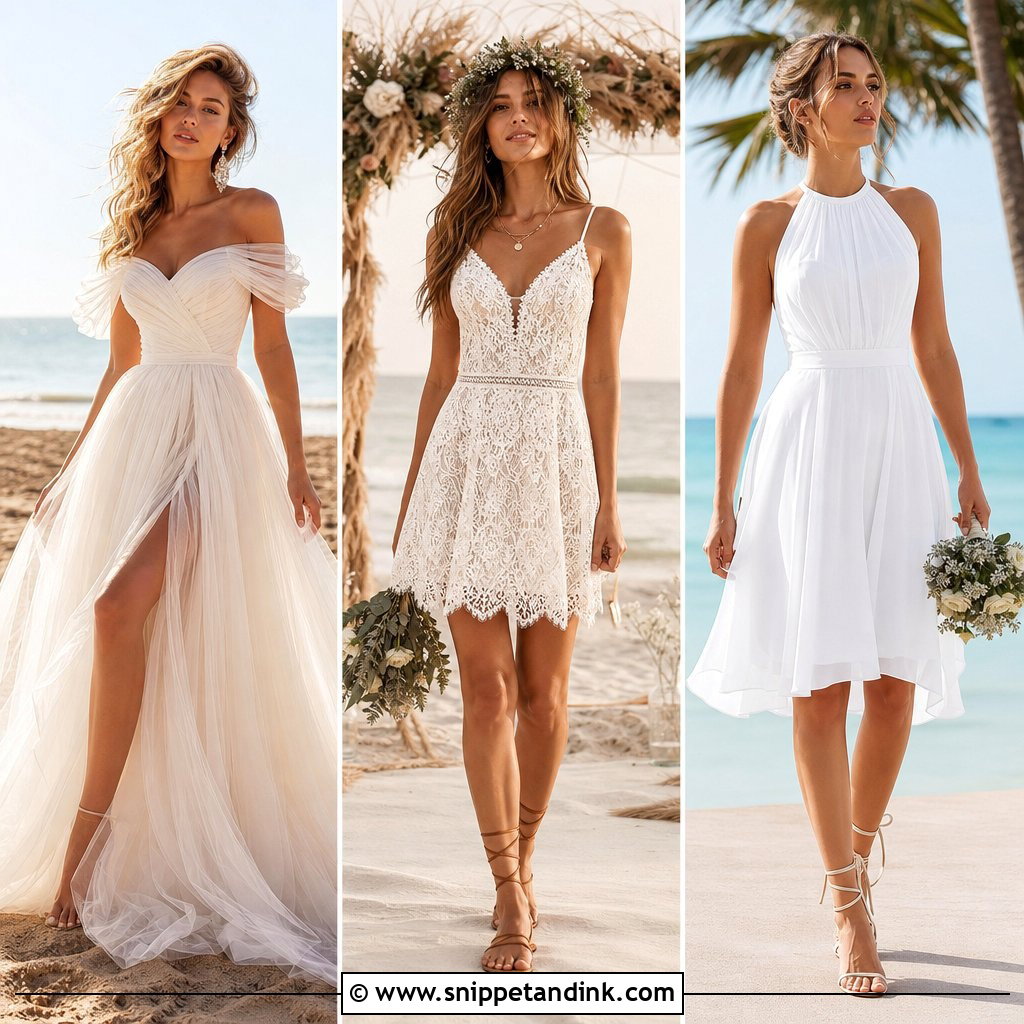
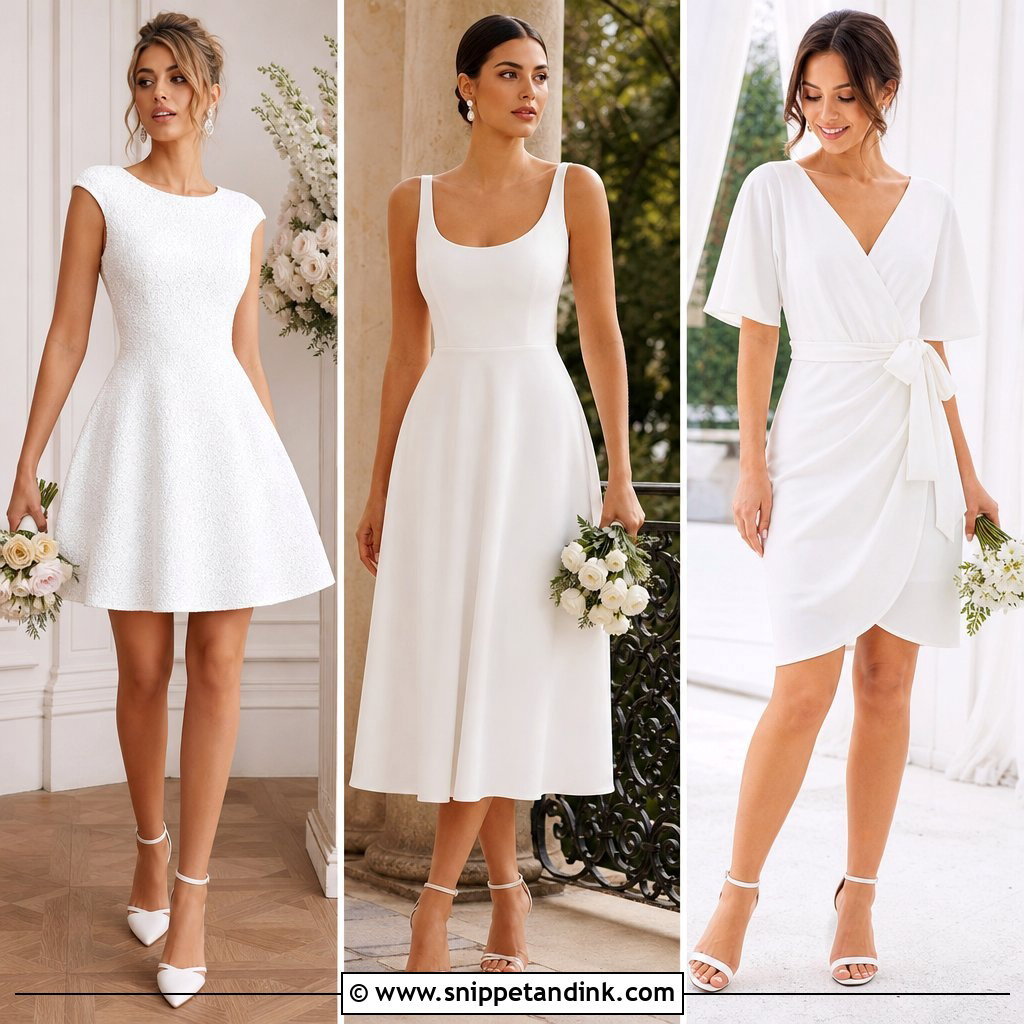
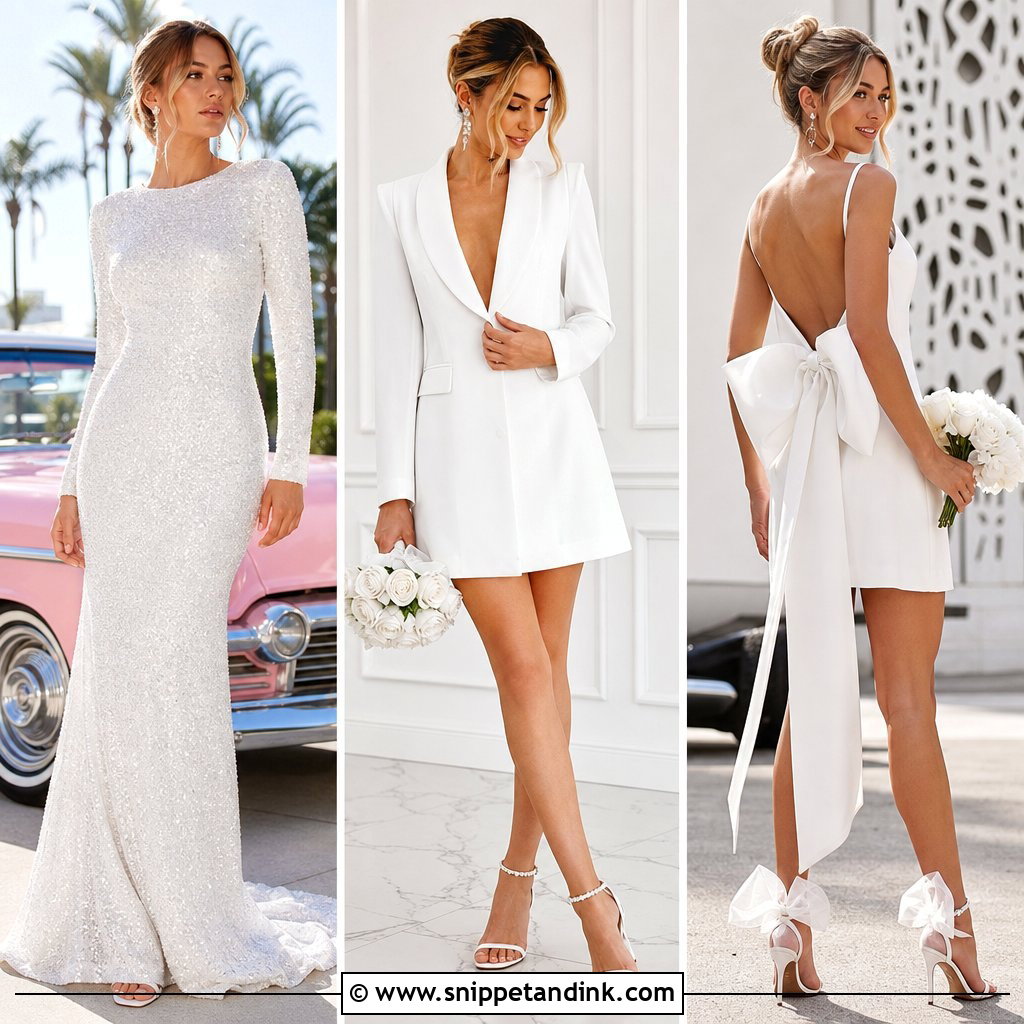
Most petite brides walk into a fitting expecting a list of things they can’t wear. I’d rather start somewhere else: almost any silhouette can work on a shorter frame once the waist seam, the skirt volume and the hem are placed for your body instead of a sample size cut for someone five inches taller. Lace, trains, structure and a dramatic neckline are all still on the table. What changes is scale. Taking up a gown also changes it, because the flare point, the lace border and the embellishment spacing all move when a seamstress removes length, so I build the fittings into the plan from day one. The twenty looks below are dressed head to toe, with shoes, veil and bouquet sized to match the gown.
The Petite Measurement Nobody Takes at the Bridal Salon
Most salons size you by bust, waist and hips, then pin the hem up with a clip. For a short bride, the number that matters more is hollow-to-hem: the distance from the little dip at the base of your throat down to the floor, measured barefoot and then again in your wedding shoes. Standard bridal samples are cut for a much longer measurement, which is why so many gowns look like they’re pooling before anyone has touched them.
Ask for this measurement at your first appointment and write it down. Some designers will cut to it for an extra charge, and a dress made to your length keeps its lace border, its flare point and its train shape exactly as designed. When a gown is cut long and taken up later, all of those things shift.
Torso length decides where the waist lands
Height isn’t the whole story. Two brides of the same height can have very different torsos, and a short torso is what pushes a waist seam below the natural waist. Before you order, have the consultant check where the sample’s seam sits on you. If it lands at your hip bones, look for a petite cut or plan on having the bodice shortened, which is a bigger job than a hem.
- Hollow-to-hem, barefoot and in your wedding shoes
- Natural waist to floor, to judge where a flare or empire seam will fall
- Shoulder to natural waist, which tells you whether a corset or drop waist is cut for a longer body
- Heel height you’ll actually wear for ten hours, not the one you’d like to wear
1. Petite A-Line Wedding Dress
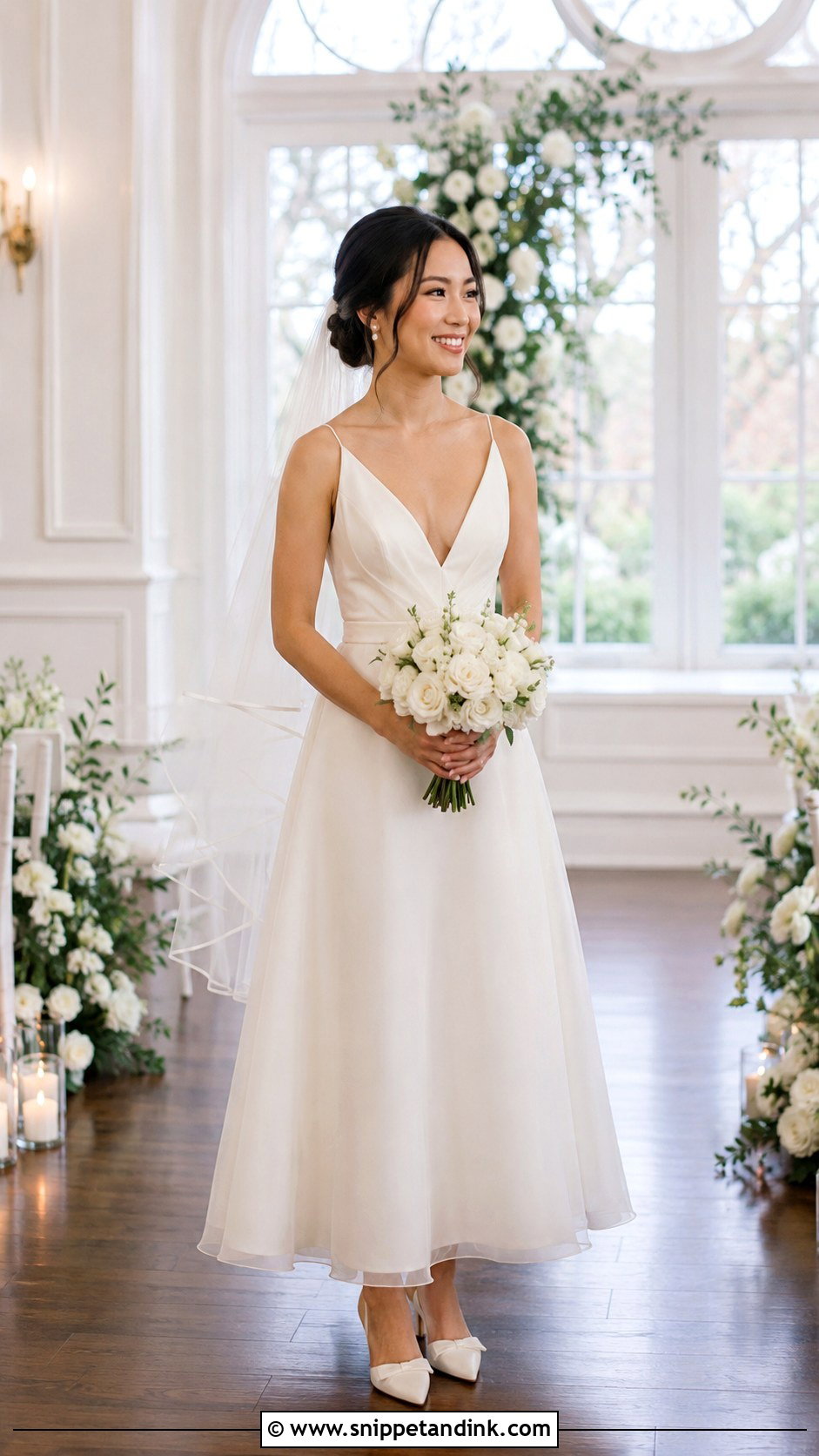
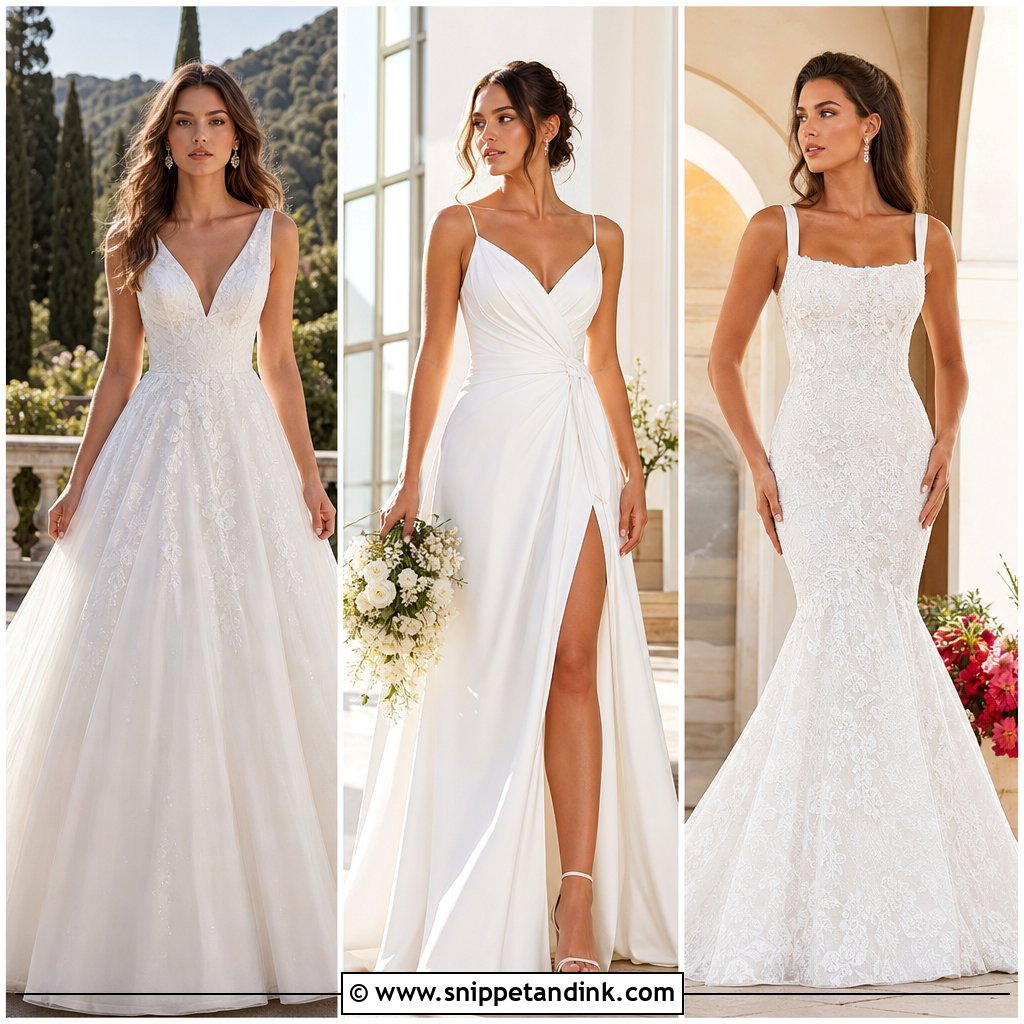
The A-line is where I start most petite appointments, because the waist seam gives the eye a clear anchor and the skirt drops away without fighting you. Go for chiffon, tulle or a soft satin; three stiff layers of tulle on a short frame turn the skirt into a cone. A V-neck or a narrow sweetheart pulls the eye up, and vertical princess seams keep that line running to the floor. I pair it with pointed kitten heels, a fingertip veil, pearl studs and a bouquet no wider than your hips. The detail I check first is the waist seam: on a petite bride it often sits an inch or two below the natural waist straight off the rack, and that alone makes the legs read shorter. If the hem carries lace edging, budget for it to be lifted and reset rather than chopped.
2. V-Neck Crepe Sheath Wedding Dress
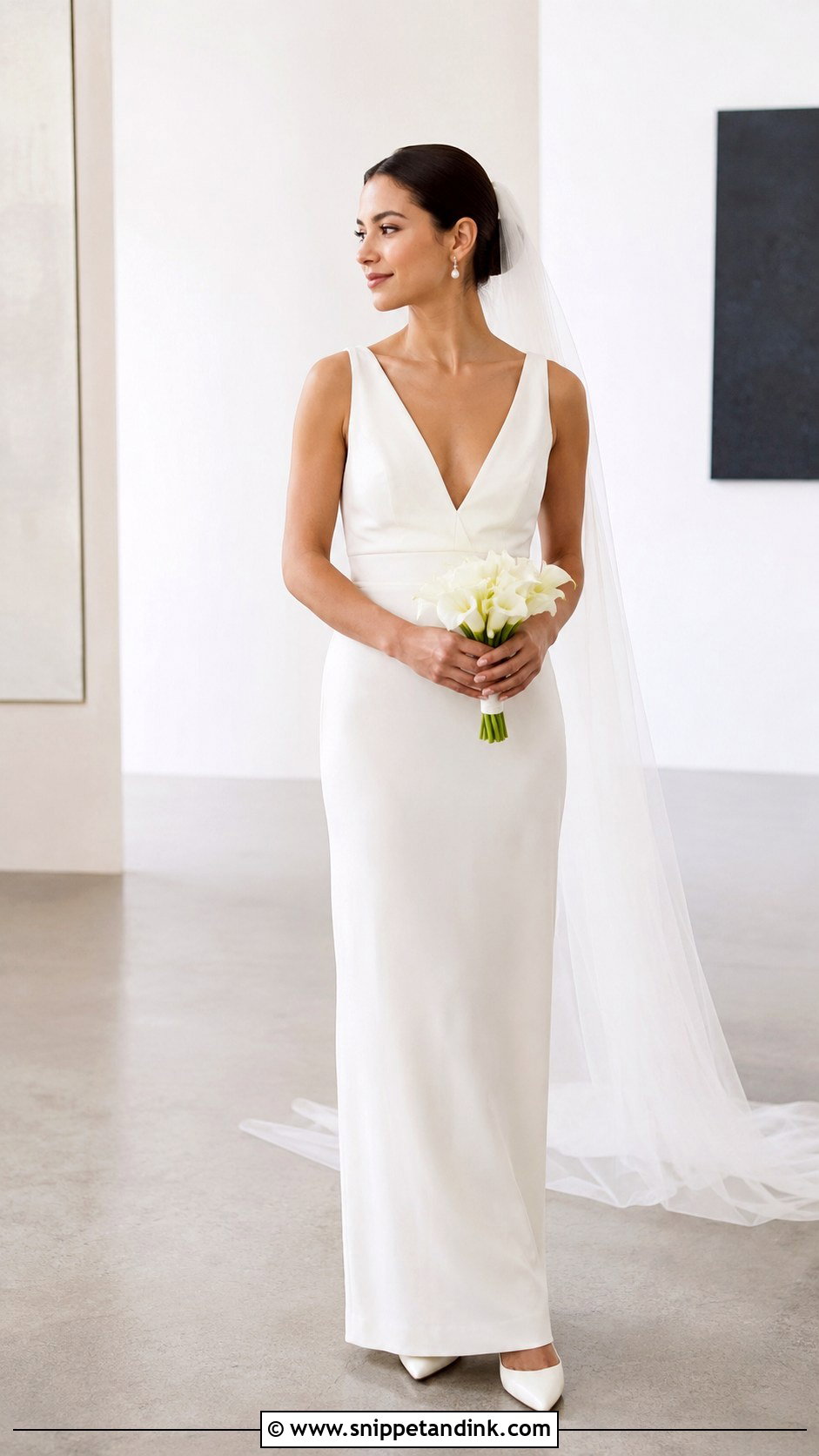
Crepe has no shine and no bulk, so a V-neck crepe sheath wedding dress gives you one unbroken line from shoulder to hem. The catch is that crepe shows everything underneath it, which is why I fit sheaths over the exact undergarments you’ll wear. Look for light internal structure at the waist rather than a dress that relies on being tight. Ivory pointed pumps or slingbacks, a narrow cathedral veil, fine drop earrings and a small structured bouquet keep the outline clean. Want more coverage? Keep the V and fill it with illusion tulle instead of switching to a wide boat neck, which cuts straight across the frame. The fitting work happens at the shoulders and hips; a sheath that’s too long in the body pools at the hem and looks borrowed.
3. Empire Waist Chiffon Wedding Dress
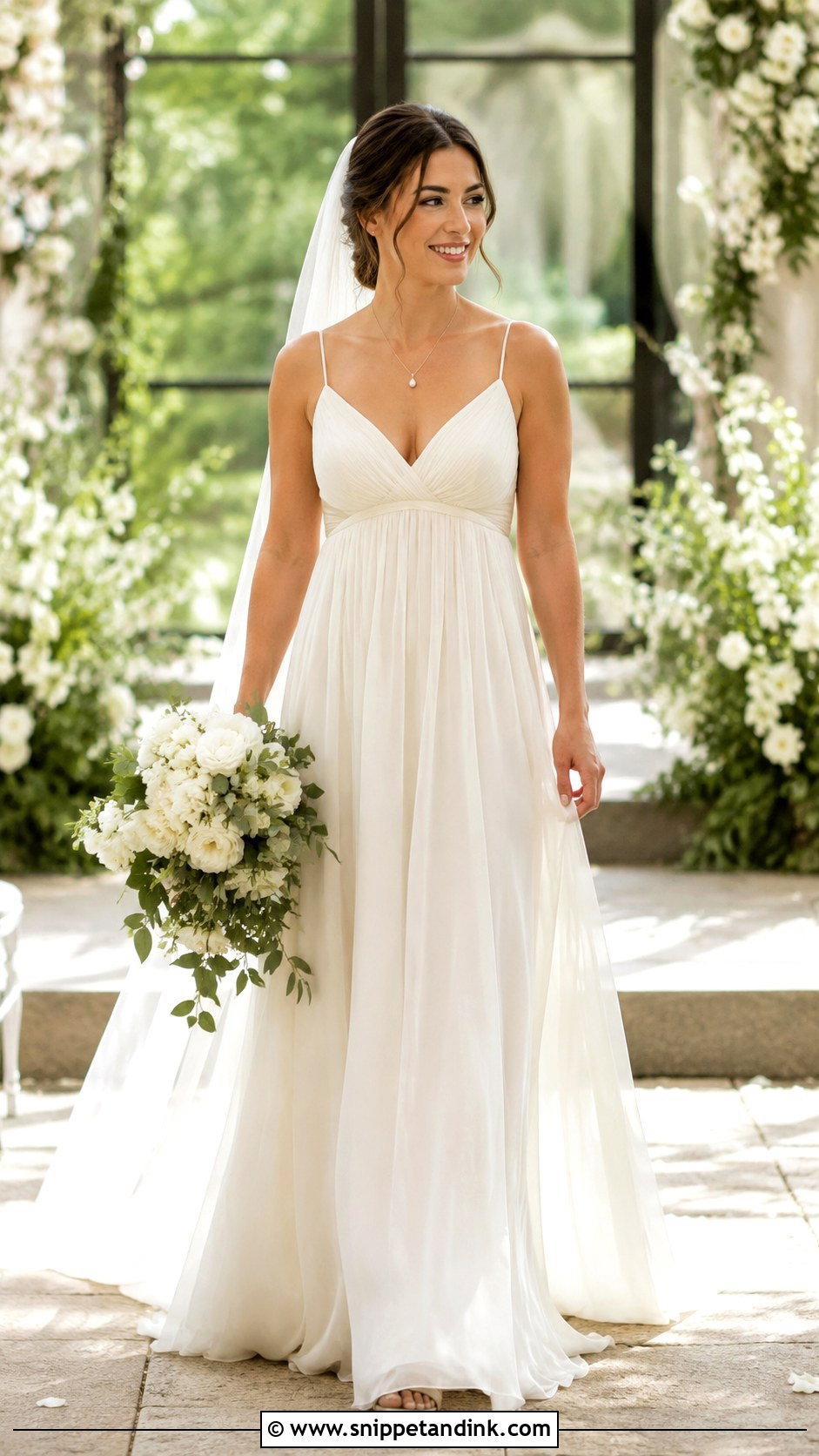
Could a higher waistline balance your proportions? Often, yes. An empire waist chiffon wedding dress sits just under the bust and lets the skirt fall in a long, soft column, so the lower body simply reads longer. The skirt has to stay narrow, though. Heavy gathering under the bust adds width exactly where you don’t want it, and on a short torso it can look maternal. A V bodice, fine straps or a tiny cap sleeve keeps the top open. I’d wear it with low block heels, a plain chapel veil, a fine pendant and a loose bouquet. Skip a wide belt. Chiffon also turns see-through in strong sun, so stand by a window at your fitting and check that the lining is smooth and hemmed to the same length as the outer layer.
4. Tea-Length Fit-and-Flare Wedding Dress
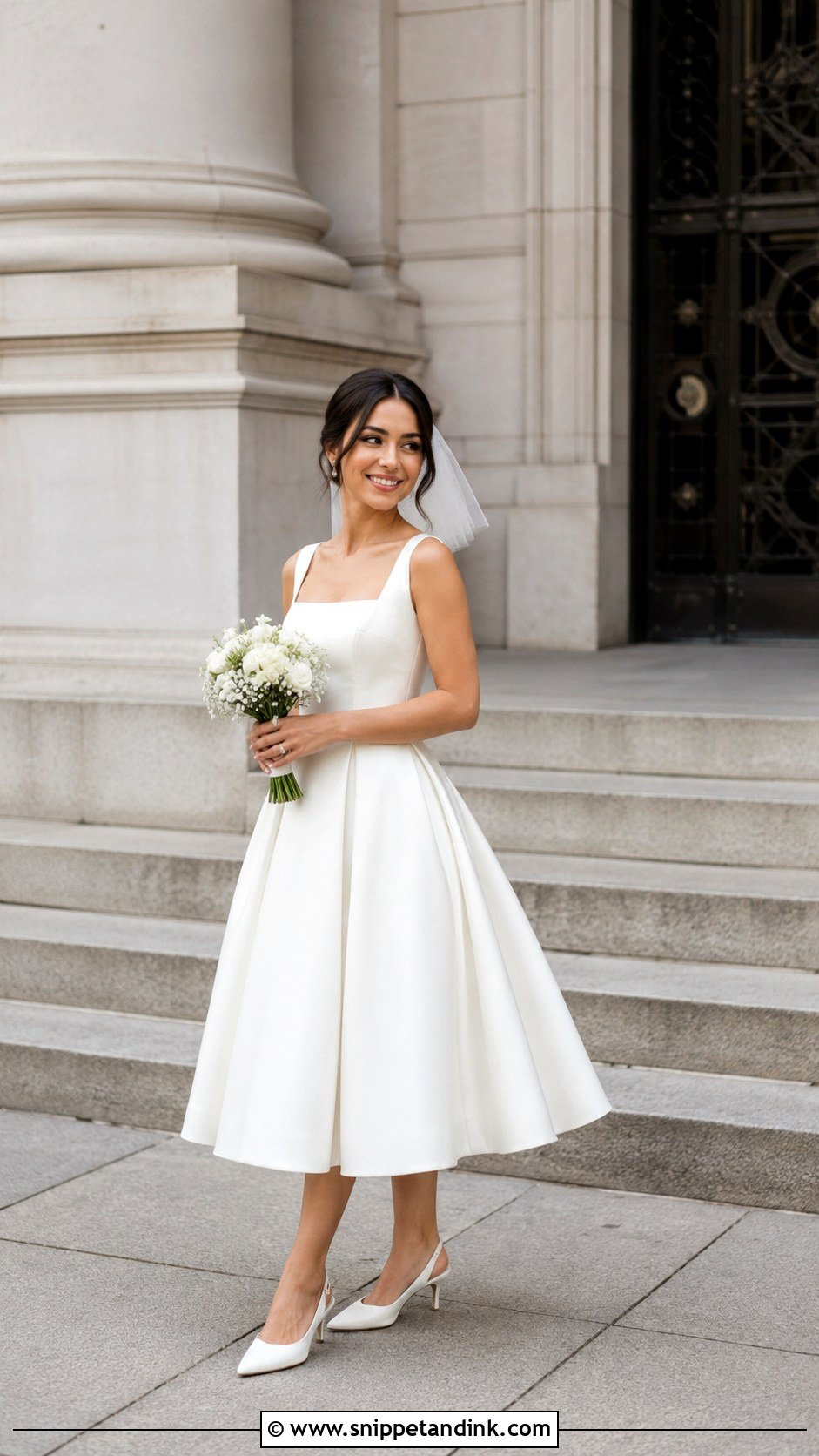
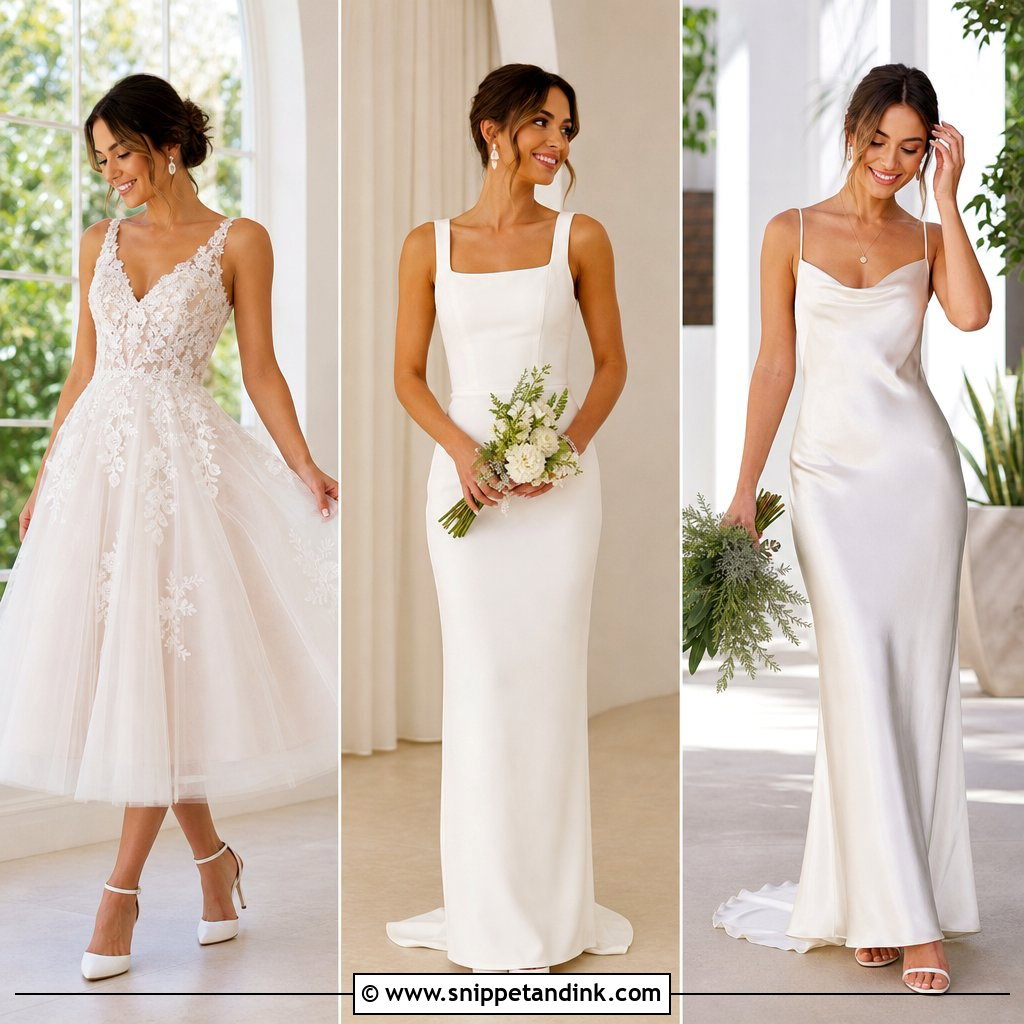
Showing the ankle is one of the most useful tricks I have for a short bride, and a tea-length fit-and-flare does exactly that. The hem placement makes or breaks it. Somewhere between lower calf and ankle usually works, but the one spot to avoid is the widest part of the calf, which visually chops the leg. I mark this hem with the bride standing in her actual shoes, never by a chart. Keep the bodice fitted and the skirt at moderate volume. Because the shoes are on show, low-contrast ivory pumps, slingbacks or a slim ankle strap matter more here than in a floor-length gown. A short veil, pearl earrings and a compact bouquet finish it. It suits courthouse ceremonies, garden parties and anyone who intends to dance hard.
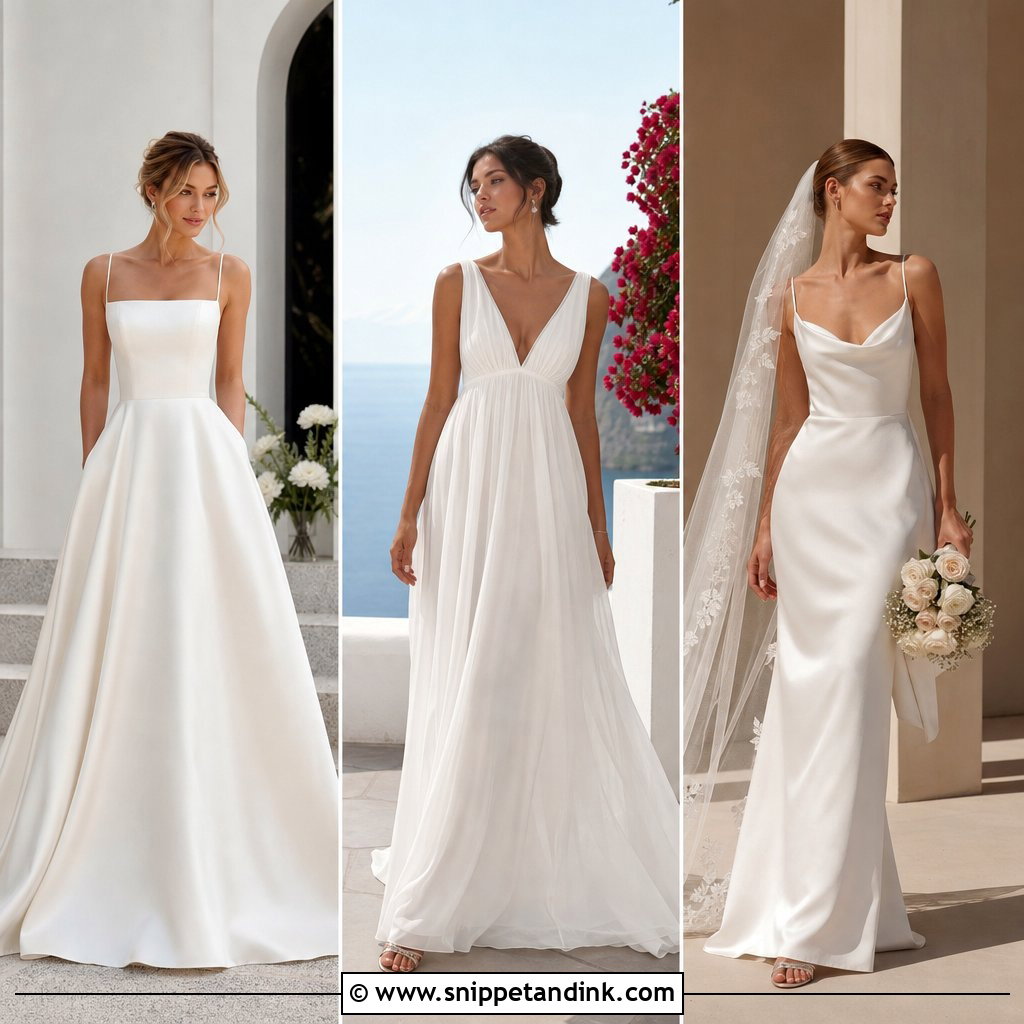
5. Square-Neck Satin Column Wedding Dress
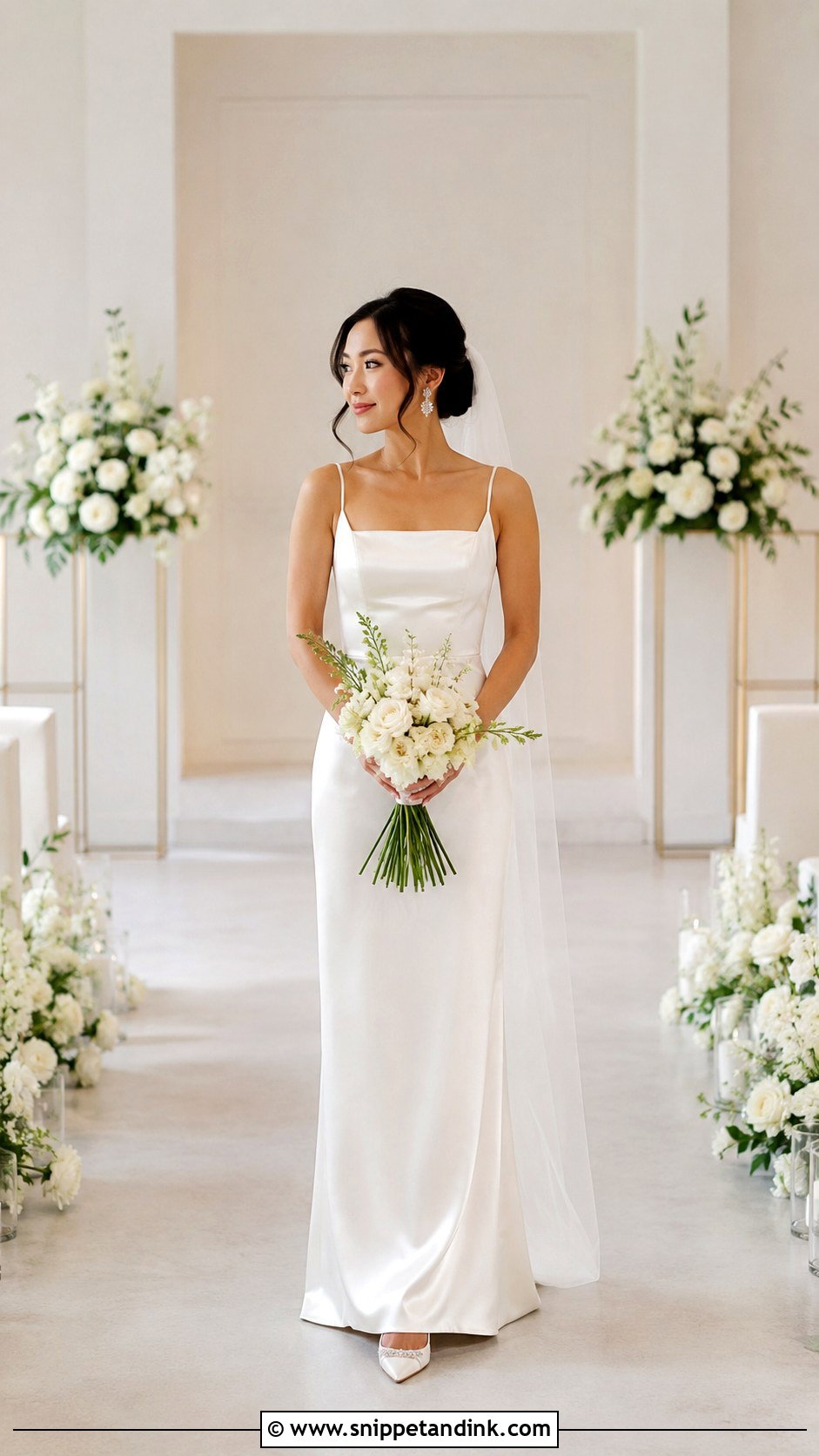
A square neckline frames the collarbone with a clean horizontal edge, and a satin column below it keeps the body narrow, so you get structure without volume. The satin needs to drape, not stand. Very heavy duchess satin on a column can make a petite frame look boxed in, so I look for a fluid weight that moves when you walk. Pointed closed-toe heels, a slim elbow-length veil, small stone earrings and a bouquet with long stems keep everything vertical. Narrow straps lengthen; wider straps support a fuller bust better, and I’d take support over an extra half-inch of visual length. Sit down in it at the fitting and watch the neckline: a square edge that gapes when you lean forward needs taking in before anything else.
6. High-Waist Lace A-Line Wedding Dress
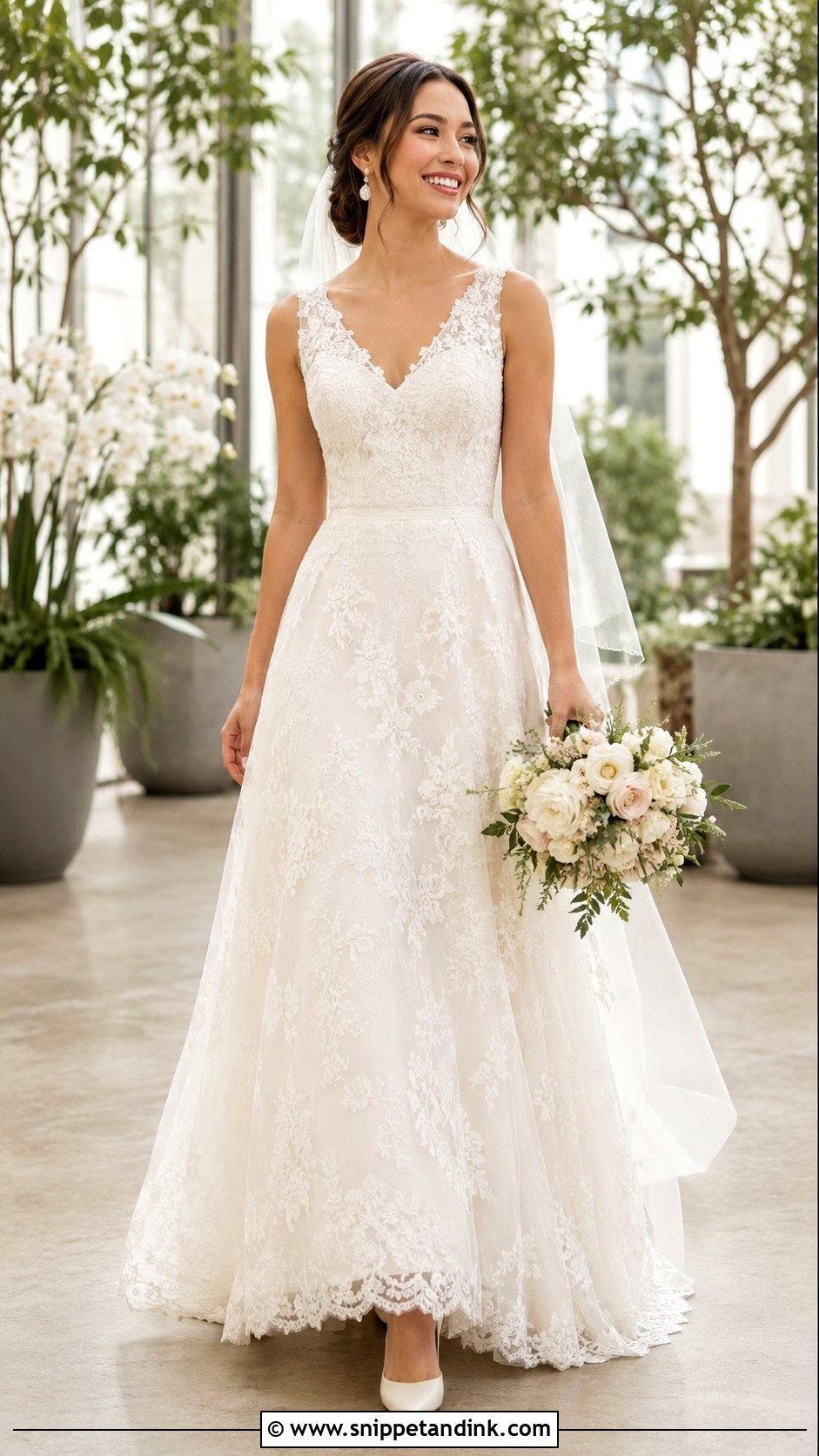
Lace on a short bride comes down to motif size. Big, open floral lace swallows a small frame; small to medium motifs running vertically do the opposite. A high-waist lace A-line lifts the point where the skirt starts, which buys you leg length. Keep the bodice lined, the V-neck clean and the straps narrow so the lace stays the main event. Plain ivory pumps, an unembellished fingertip veil, pearl drops and a rounded bouquet are all it needs. The fitting detail I care most about is the hem. Ask your seamstress whether the scalloped border can be lifted off and reapplied higher up. Simply cutting through a decorative edge loses the finish the designer intended and leaves the hem looking blunt.
7. Off-the-Shoulder Fit-and-Flare Wedding Dress
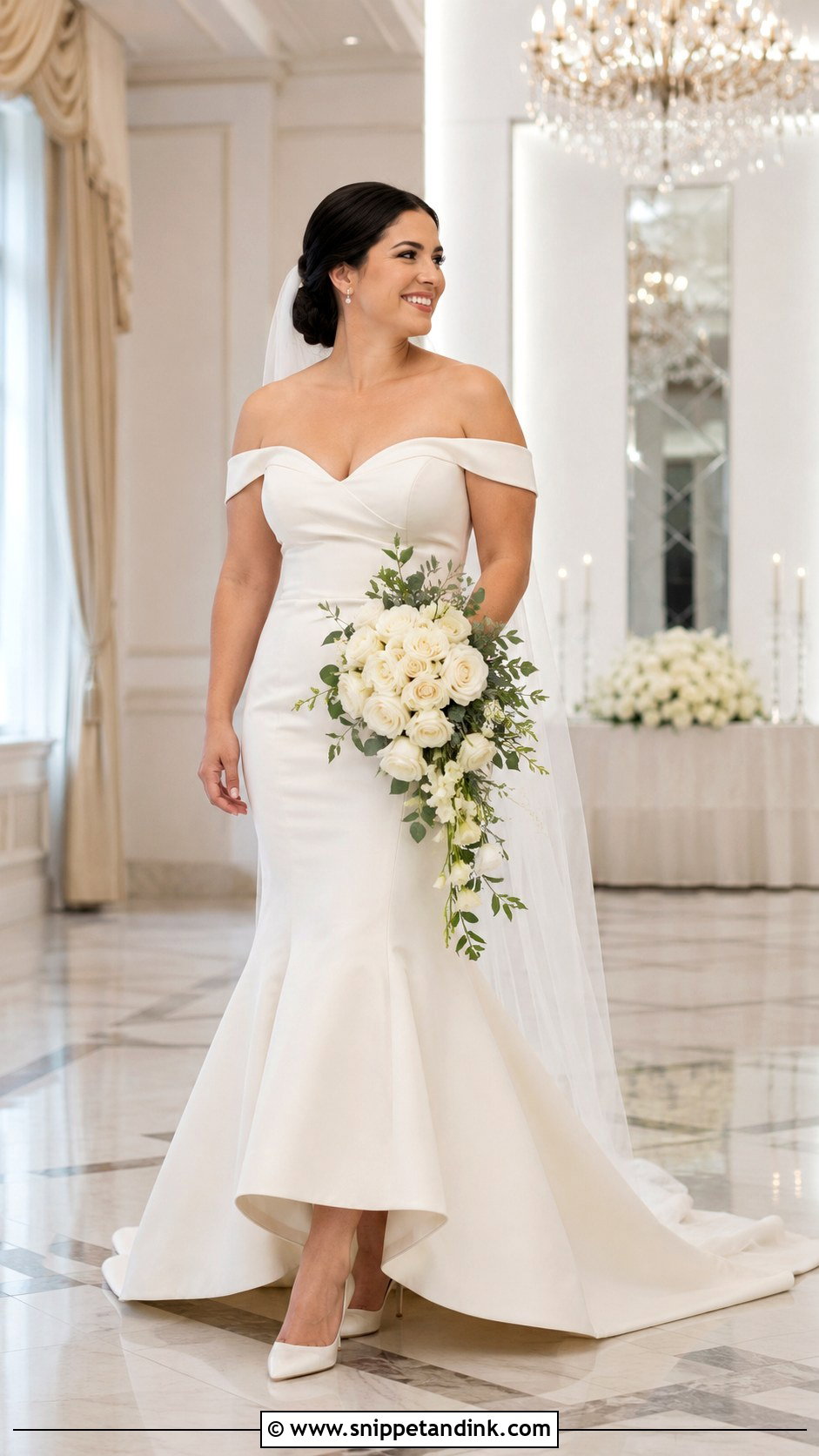
The off-the-shoulder neckline puts the attention on your face and collarbone, and a fit-and-flare skirt shows your shape below it. For a petite bride, the flare point decides everything. If it opens well below the knee, it shortens the leg; I look for one that starts widening at or just above the knee. Off-shoulder sleeves also slide, so I test them with the bride hugging, lifting her arms and holding a bouquet, and add silicone grip or a hidden strap if they move. Pointed heels, a narrow veil tucked under a low bun, small earrings and a cascading bouquet suit it; leave the big necklace at home because it crowds an open neckline. A chapel train or a bustle that lifts cleanly keeps the reception practical.
8. Plunging V-Neck Tulle A-Line Wedding Dress
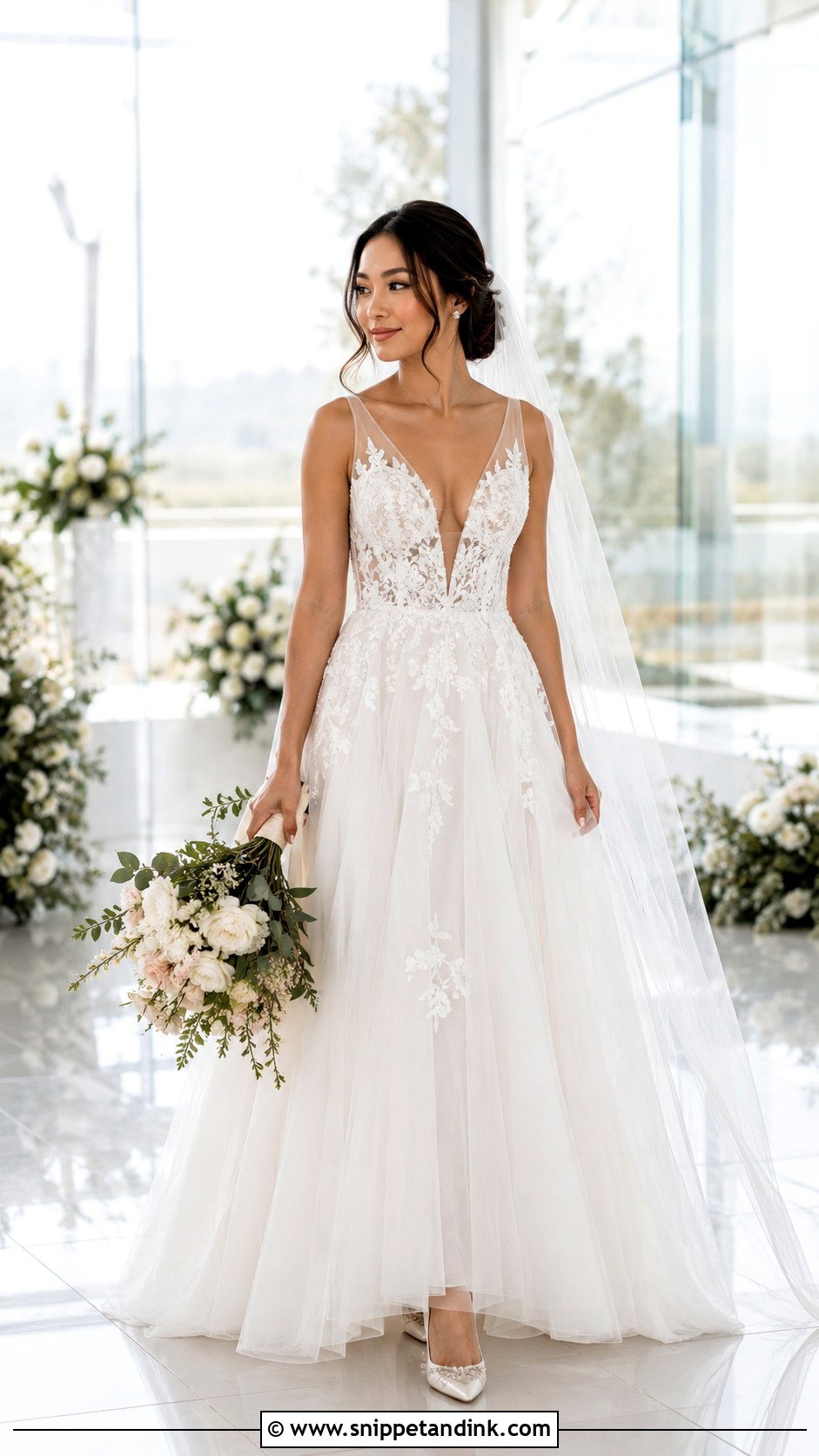
Soft tulle and a deep V can make a short bride look taller, provided the support is real. With a plunging V-neck tulle A-line, the first thing I check is the illusion mesh: it should match your skin tone closely, or the plunge reads as a panel rather than skin. Internal boning or a well-anchored bra cup does the actual holding. Keep the skirt to a few soft layers; dense tiers of tulle add width fast. Sleek pumps, a narrow chapel veil, tiny crystal earrings and a loose bouquet keep it light. A thin tonal waist detail is fine, but a contrast belt breaks the line you’re working for. Have your seamstress check the neckline depth while you sit, bend and reach, because a plunge that’s fine standing can shift once you’re at the table.
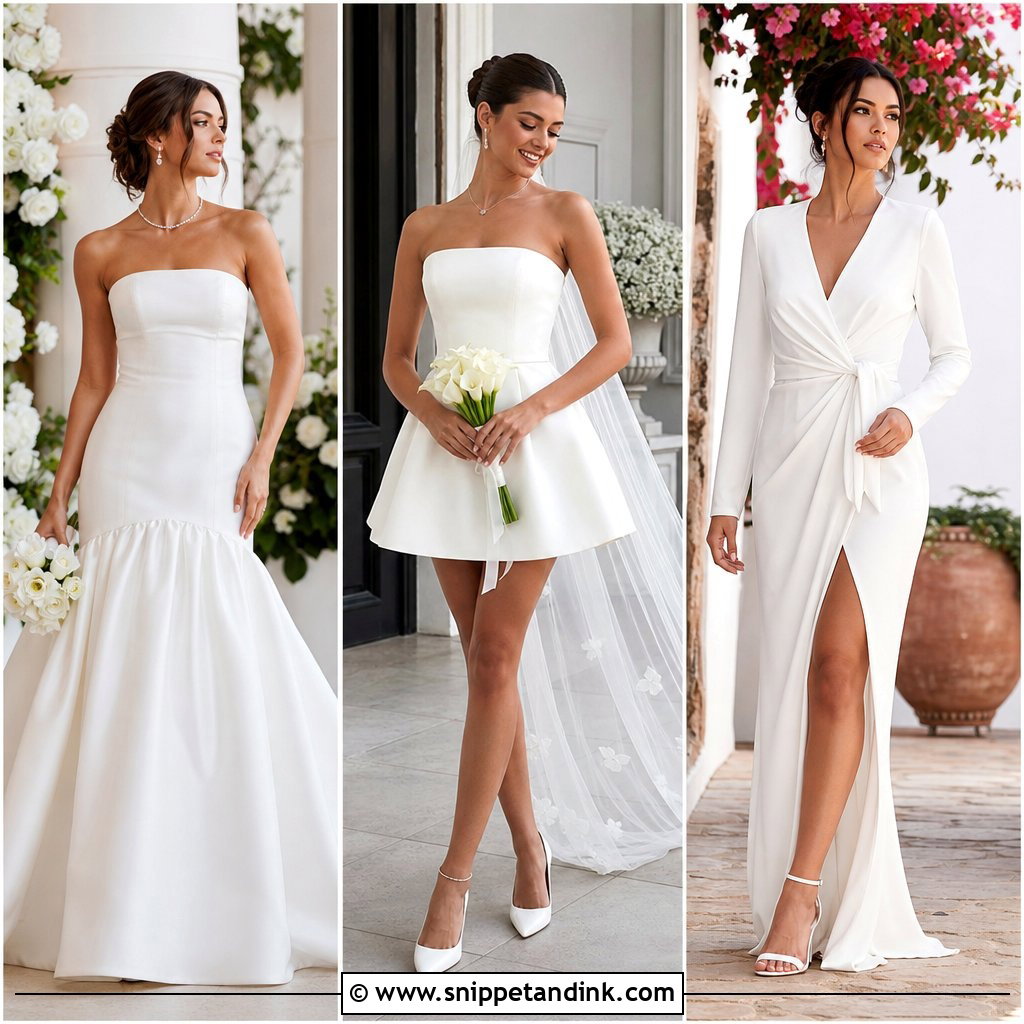
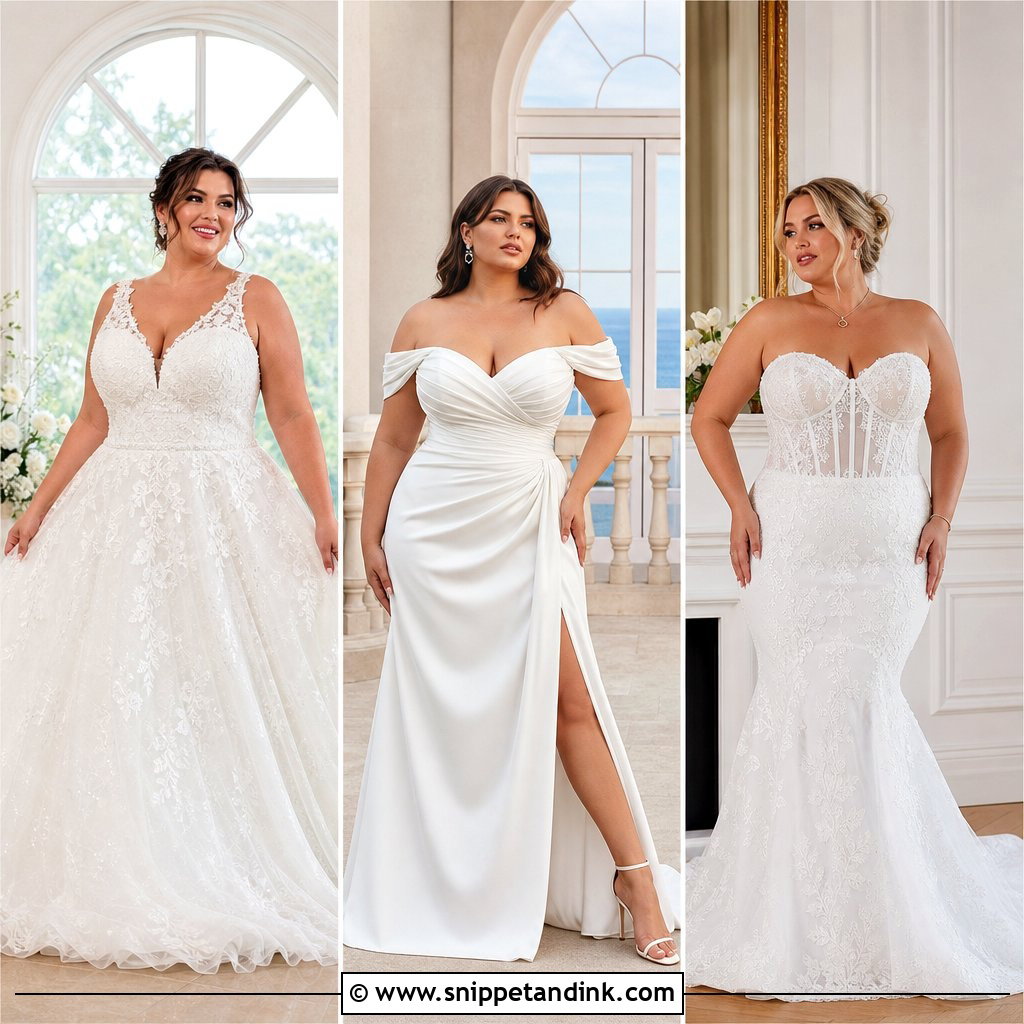
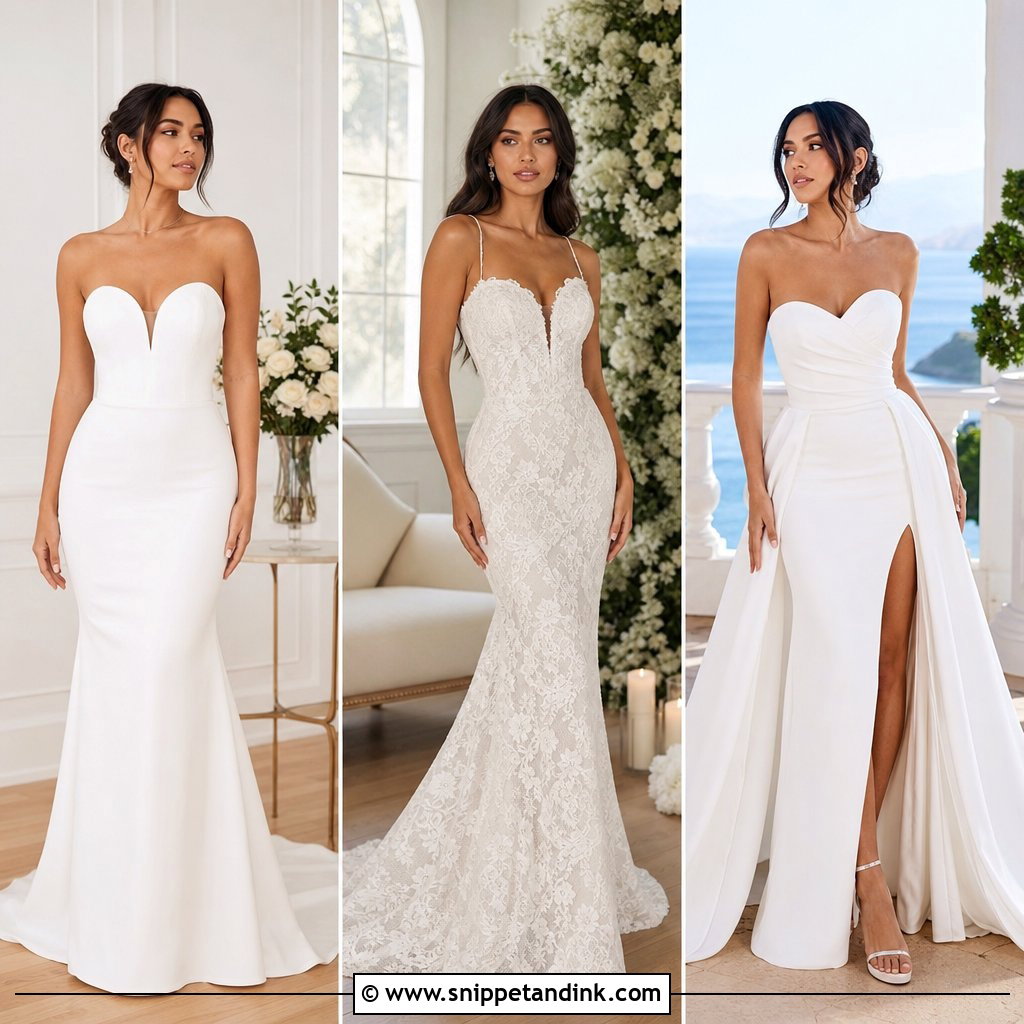
9. Sweetheart Trumpet Wedding Dress
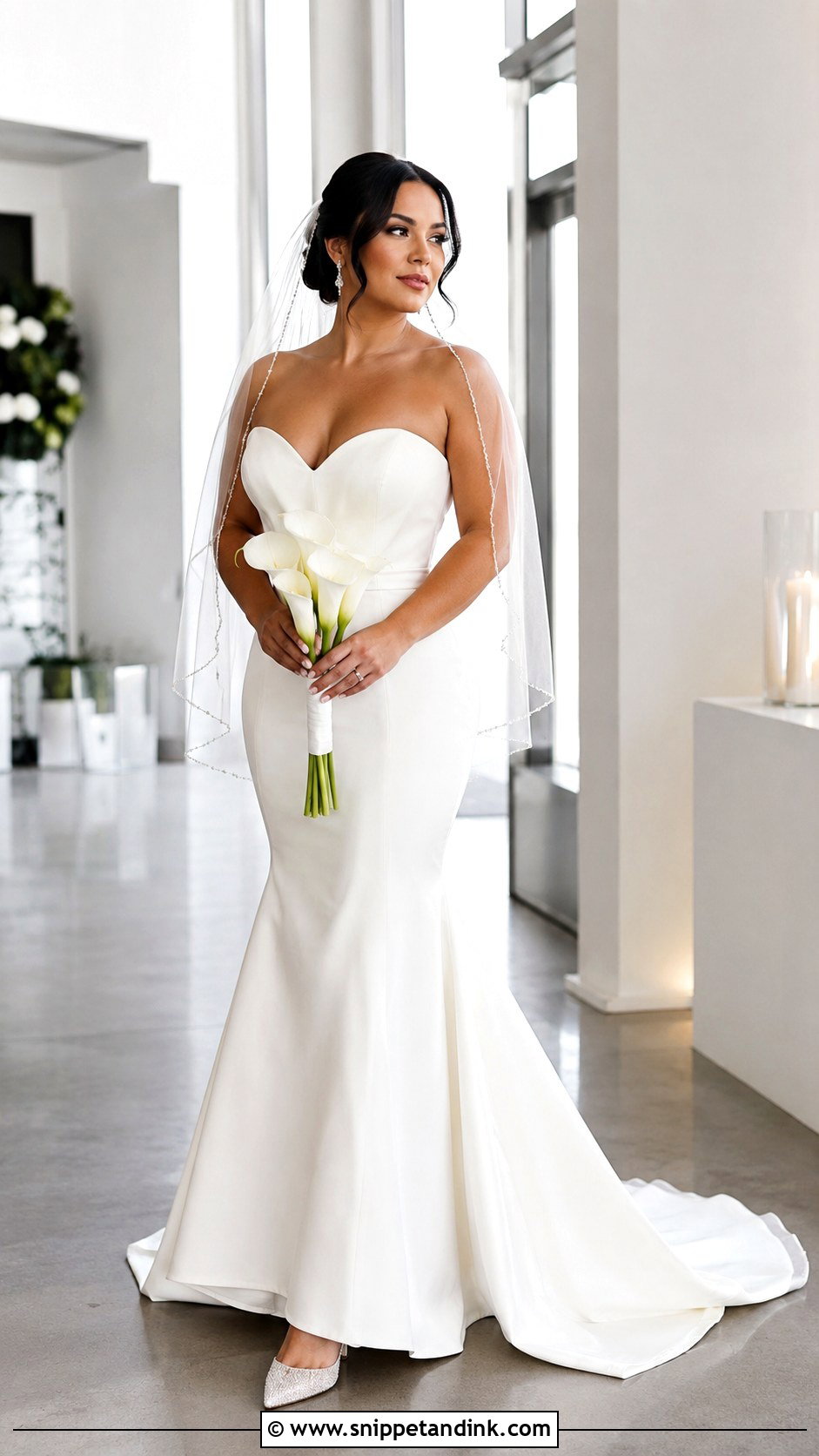
Curvy and petite is a combination I fit often, and a sweetheart trumpet wedding dress handles it better than a true mermaid. The trumpet skirt opens higher on the thigh, so shorter legs keep their length, while a low mermaid flare can make them look cut off at the knee. Smooth crepe, soft satin or lightly beaded lace hold a clean outline. A strapless sweetheart needs serious internal structure, especially with a fuller bust, and I’d rather add boning than have you hitching it up all night. Pointed pumps, a fingertip veil, small earrings and a narrow bouquet keep the focus on shape. Before you buy, walk the length of the boutique: if you can’t take a natural stride, the flare is set too low.
10. Halter Neck Column Wedding Dress
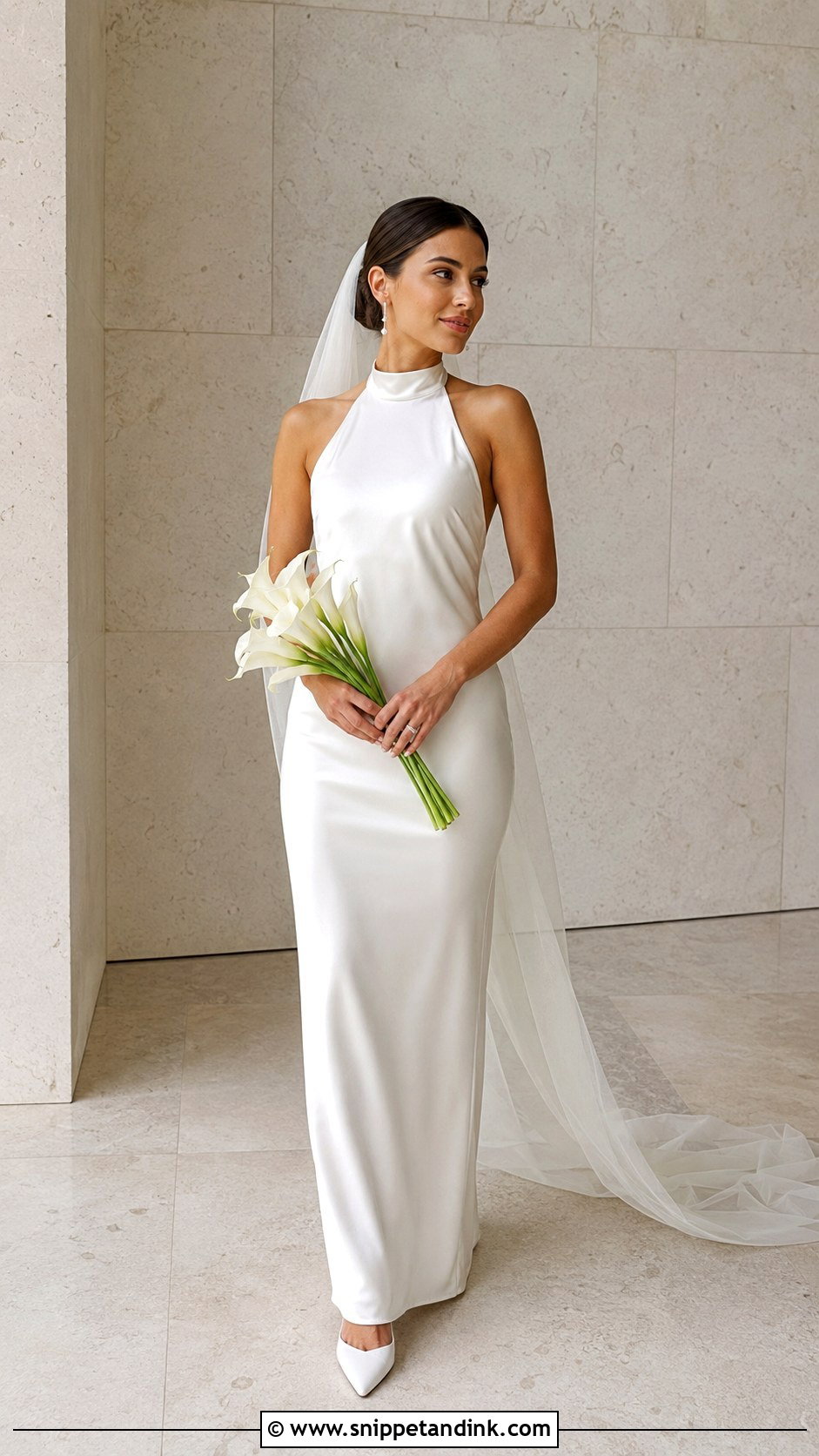
A halter draws the eye upward along the neck, and a column skirt below it never spreads, so the whole shape stays long and narrow. Fluid crepe, satin or a light silk with very little gathering at the neck works best; bunched fabric at the collar adds bulk at the top. Pointed slingbacks, sleek earrings, a low bun and a plain veil pinned under it keep it modern, with a slim bouquet or even a single stem. My first check is the armholes. On petite frames they often sit too low and gape, and that one fault makes the whole bodice look like it belongs to someone else. If your shoulders are broad, a softer halter with a gentle V at the front sits more comfortably than a high, straight one.
11. One-Shoulder Crepe Sheath Wedding Dress
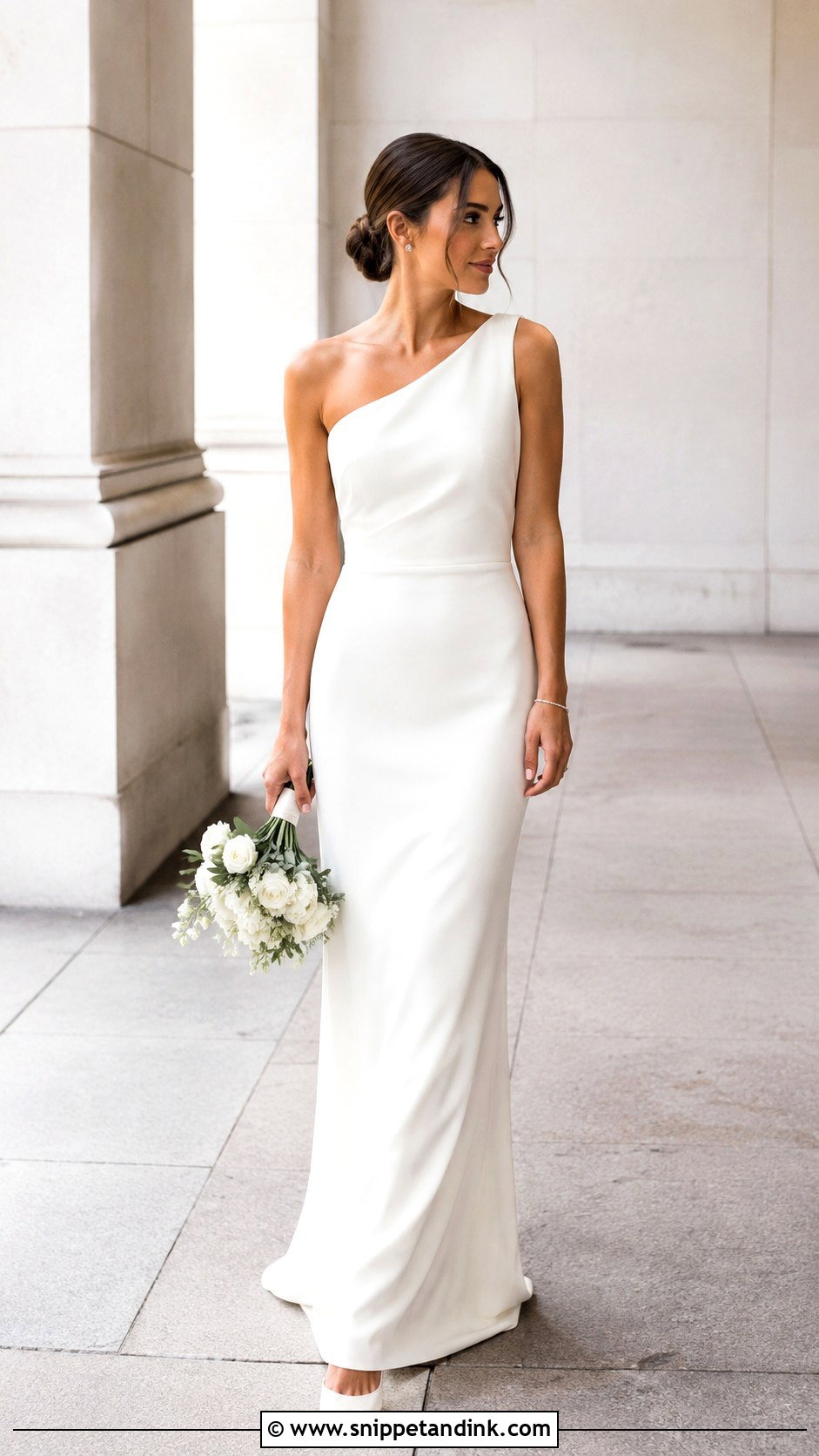
Asymmetry gives a sheath interest without piling on embellishment, which matters on a small frame where every detail takes up proportionally more room. With a one-shoulder crepe sheath, keep the shoulder to a single clean strap; a big bow or gathered puff on top overwhelms it. I like a bracelet on the bare arm, compact earrings, a low chignon and pointed heels. A veil pinned under the chignon keeps the neckline visible, though a hair comb alone is cleaner still. Crepe should skim, not cling, so your undergarments matter here. The fitting test I always run: arms up, sit, dance a few steps. A one-shoulder seam that creeps toward the neck needs a hidden grip strip or a stay stitched inside.
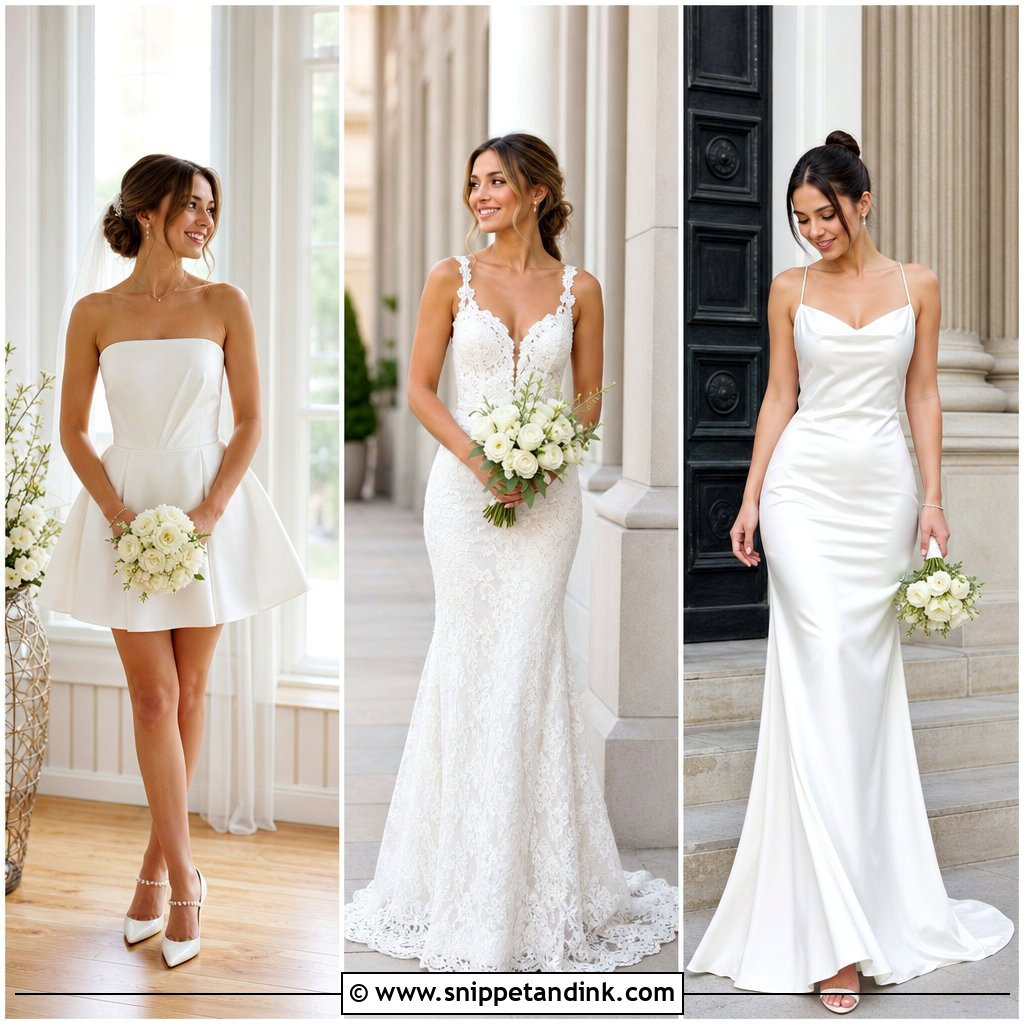
12. Mini Wedding Dress With Overskirt
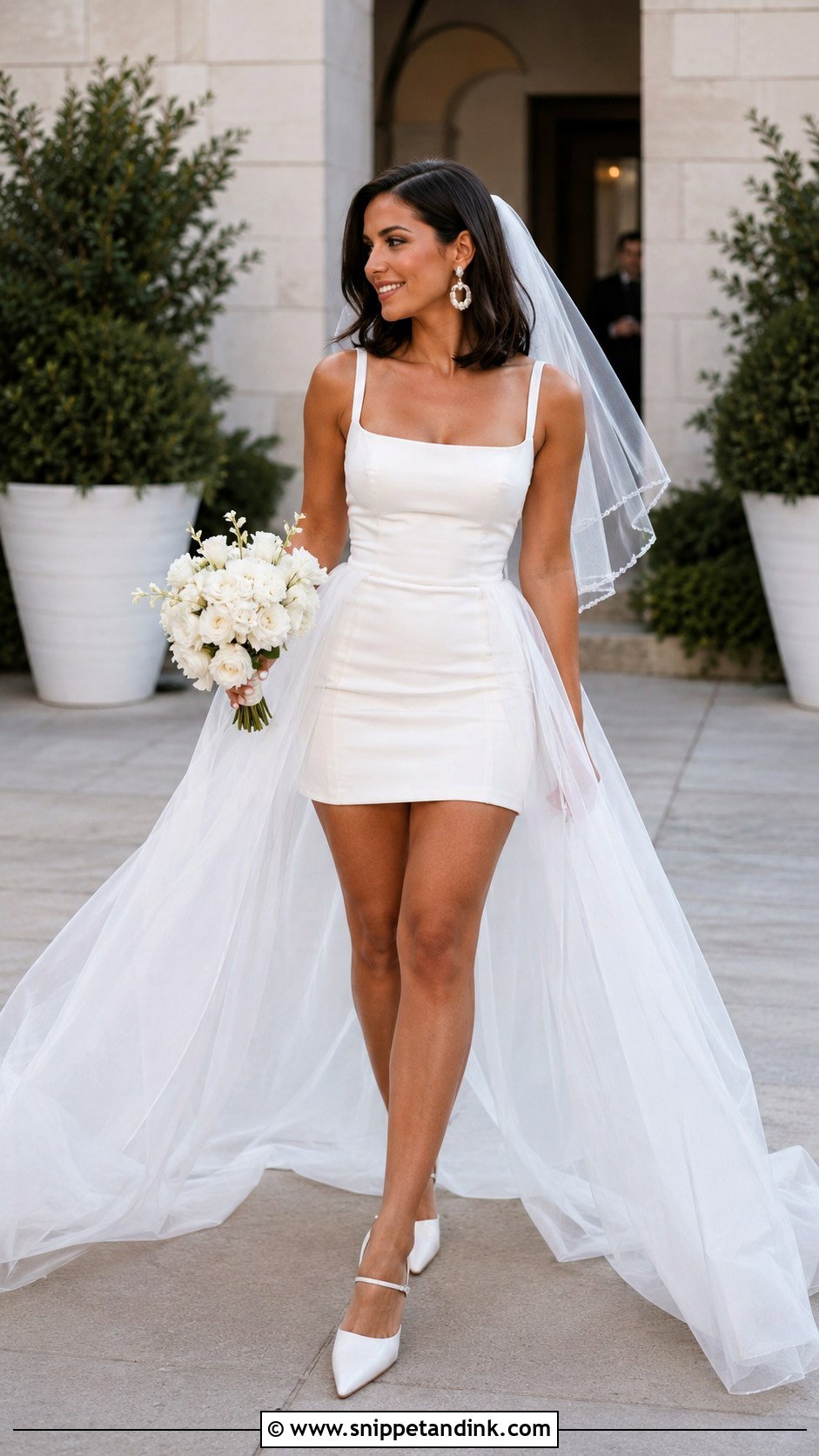
Two looks, one dress. A fitted mini with a detachable overskirt shows a clear line of leg for the reception, and the overskirt adds aisle movement for the ceremony. On a short bride I want that overskirt high-waisted with very little gathering, since a bunched waistband sits right where you want the narrowest point. Pointed pumps or delicate slingbacks, a shoulder-length veil, statement earrings and a small bouquet carry both versions. Practice the change before the day and give your maid of honour the job of storing the overskirt. Check that the mini hem stays put when you sit. And get the whites matched under daylight: ivory chiffon next to diamond-white satin looks like two different garments in flash photography.
13. High-Low Wedding Dress
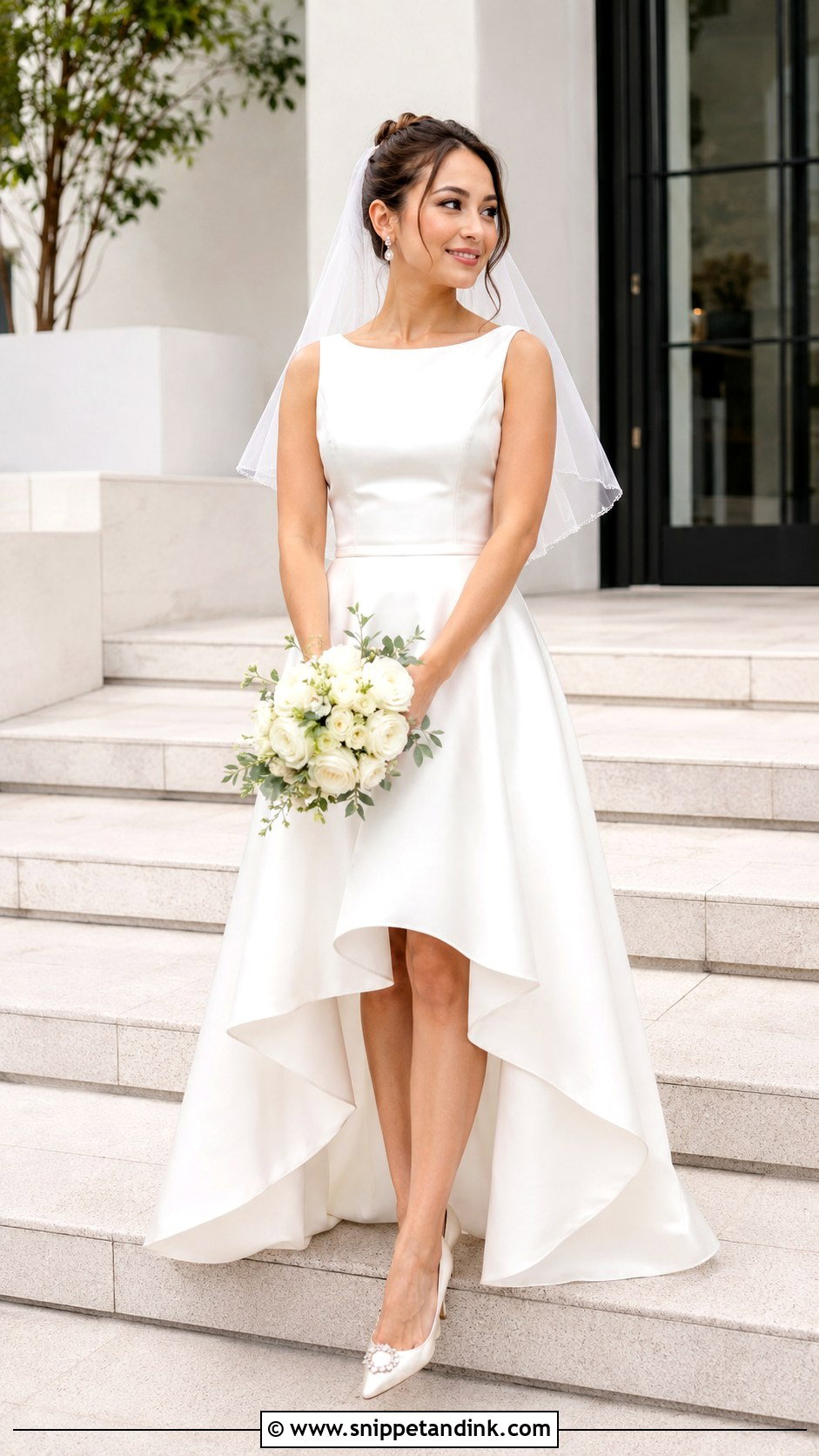
A high-low hem shows the shoes and legs at the front while keeping length behind, so it feels lighter than a full gown and still reads as bridal. Soft organza, satin or a few layers of tulle give the back some movement. The transition matters most. A gradual curve from front to back looks deliberate; a sharp step slices across the shin and shortens you. Because your shoes are on display, match their colour and finish to the dress, not just to each other. Pointed heels, a short veil, drop earrings and a modest bouquet suit it. Don’t let the back drag into a long train, which undoes the whole point of the shape. I set both hem lengths with the bride standing in her wedding shoes.
14. Bias-Cut Slip Wedding Dress
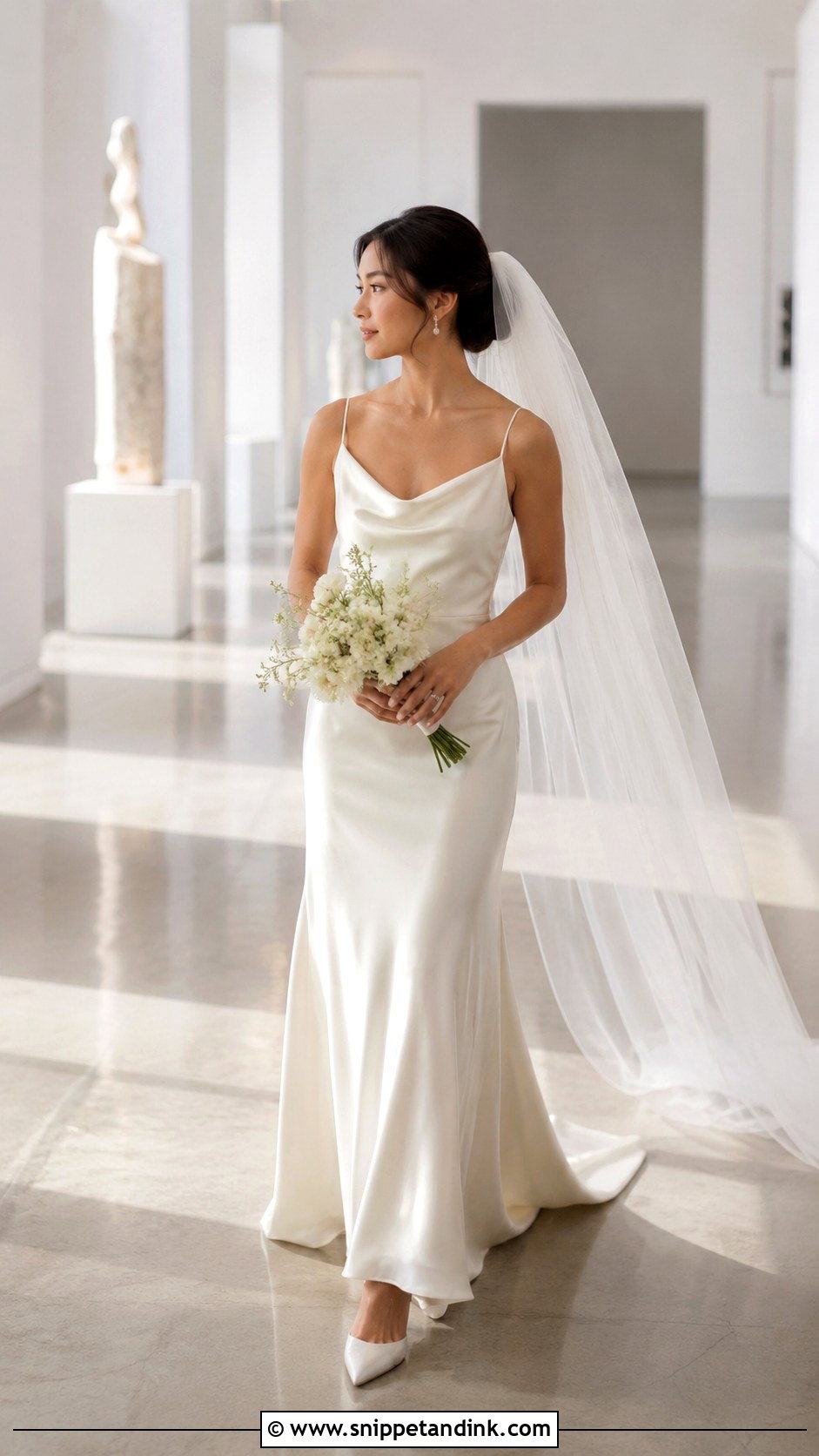
Cut on the diagonal grain, a bias slip moulds to the body and falls without any internal structure, which suits petite brides who hate feeling held in. It’s also the least forgiving dress on this list. Every line underneath shows, so I fit it over smooth, edge-free undergarments, with light shapewear only if you want it. Narrow straps and a soft cowl or draped neck keep it simple; leave enough ease in the skirt to walk. Pointed slingbacks, a sheer chapel veil, small drops and a delicate bouquet are all you need. Here’s the practical bit: bias-cut fabric relaxes and drops after it hangs, so I schedule the final hem as late as the seamstress allows, never months ahead. Skip a wide belt entirely.
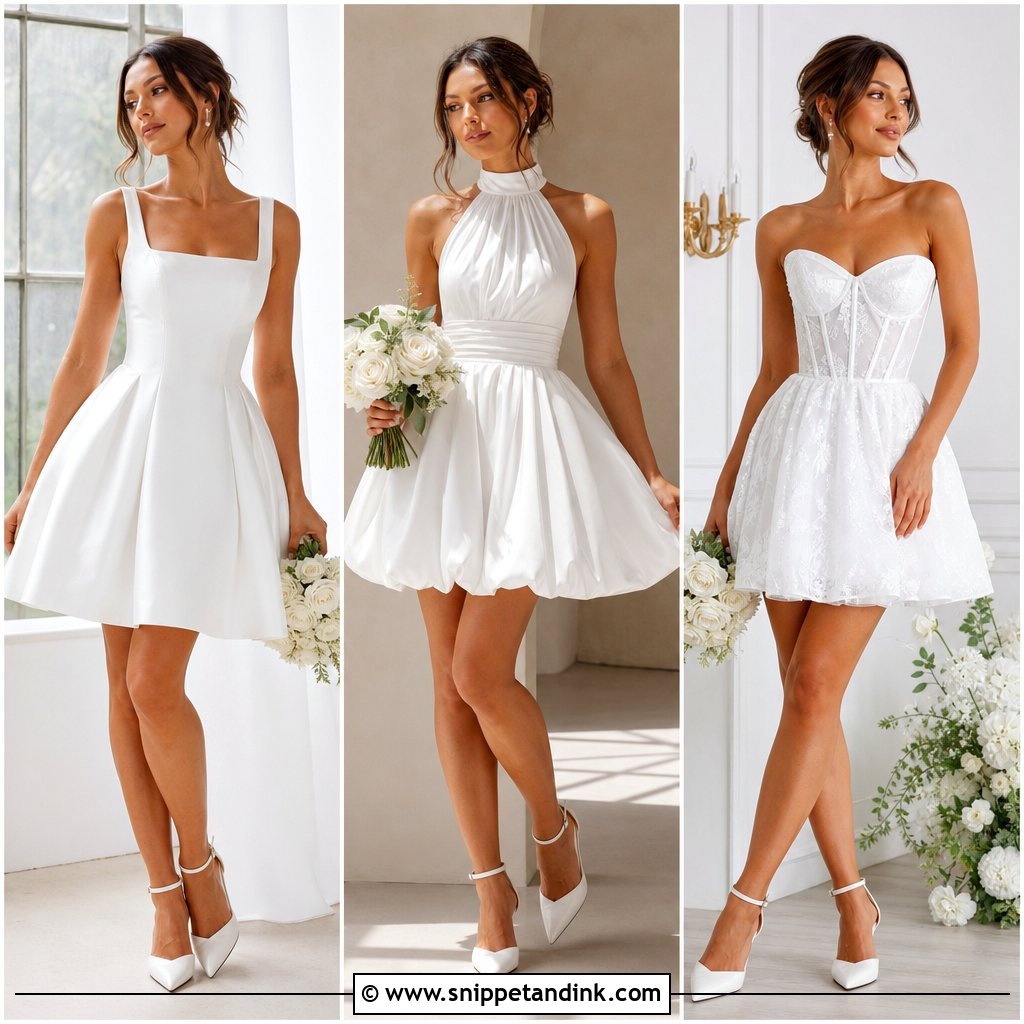
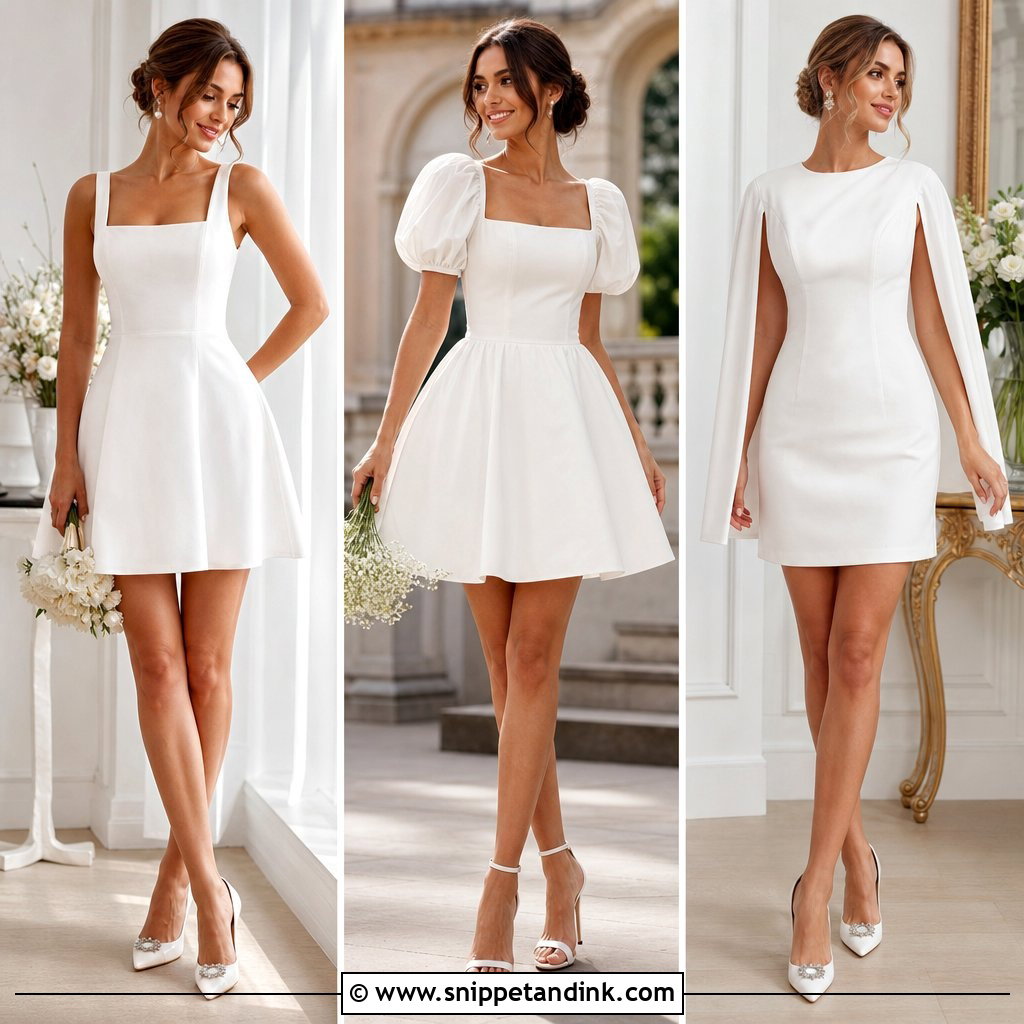
15. Corset-Waist A-Line Wedding Dress
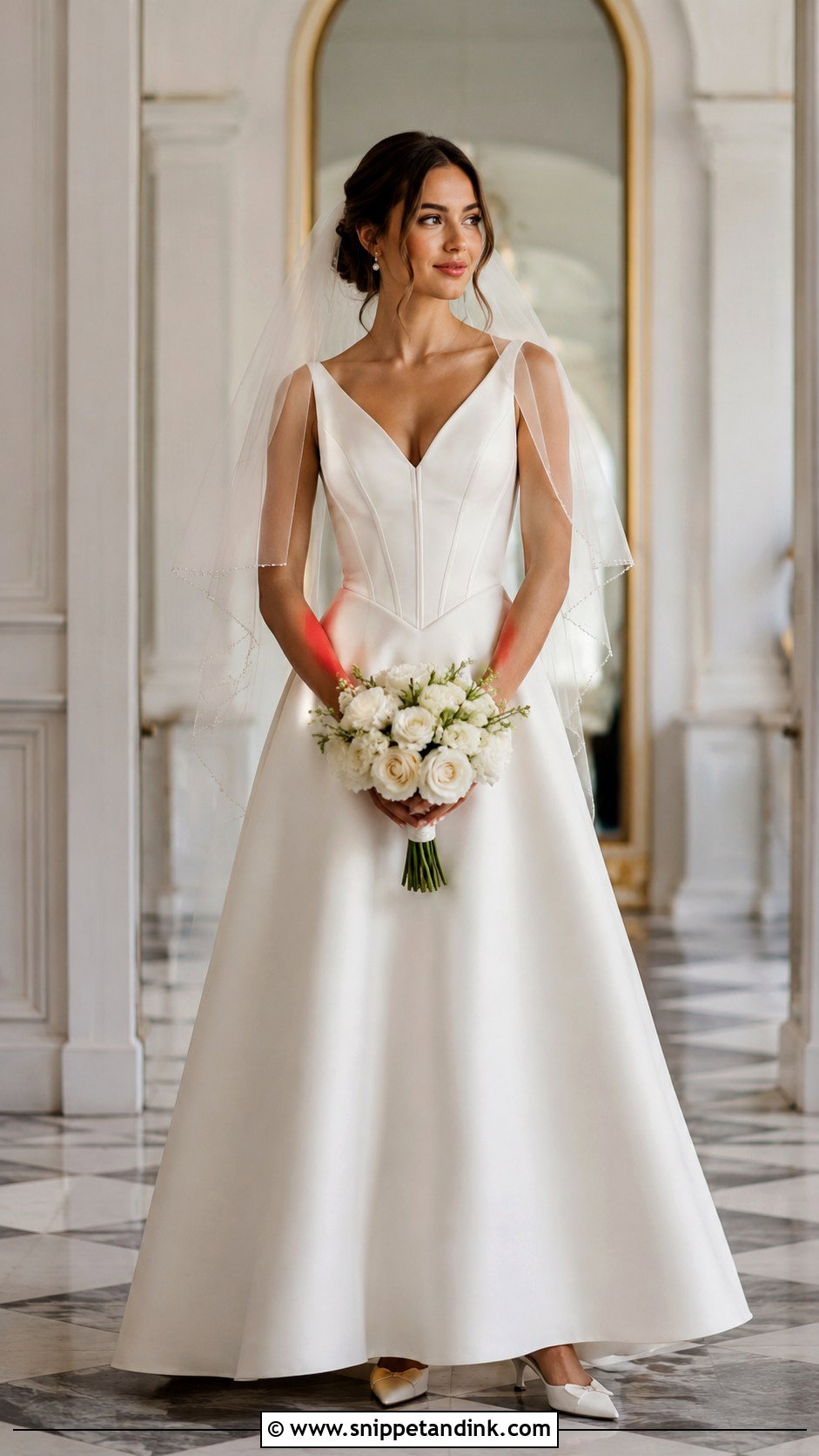
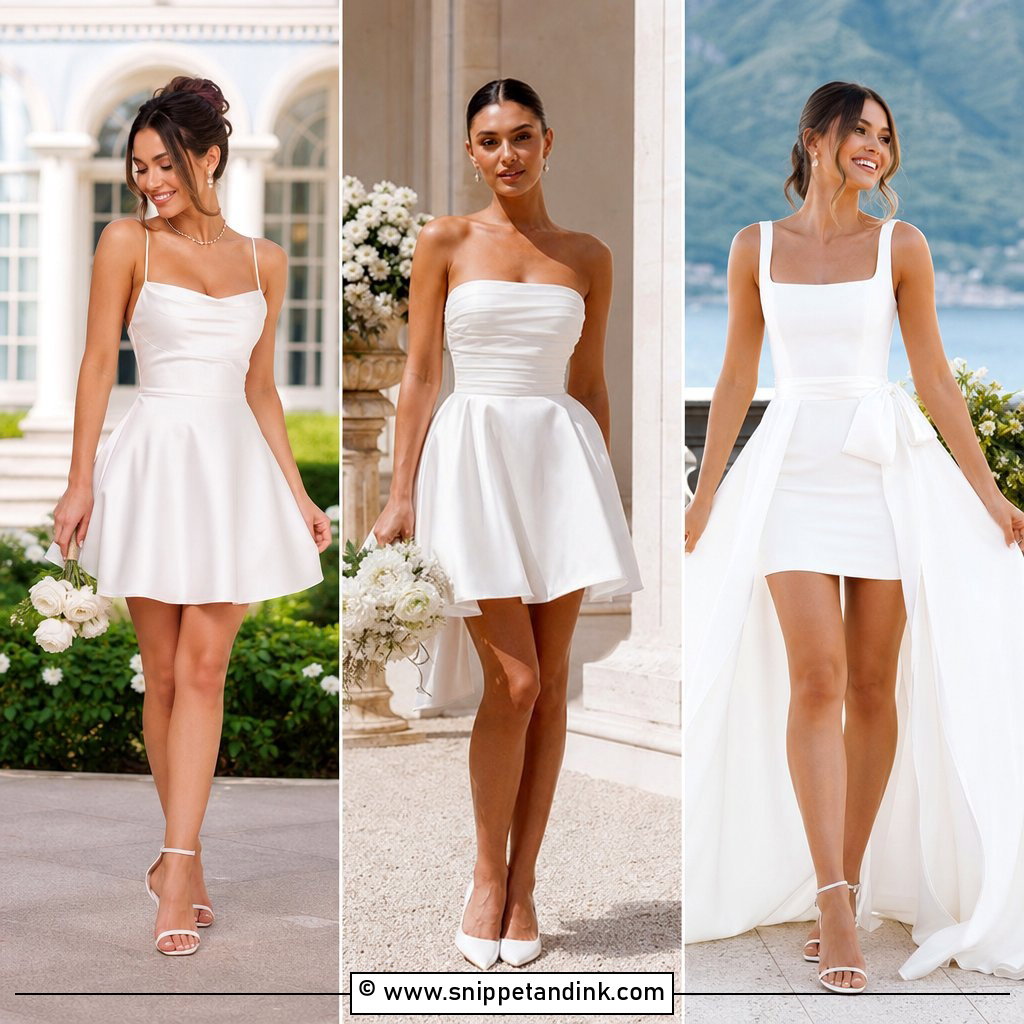
Structure helps, but only when it’s sized for you. A corset-waist A-line pulls in the waist and supports the bust before the skirt opens gently. The problem I see most with petite brides is bodice length: a corset built for a longer torso digs into the hip bones when you sit and pushes the waist seam down, shortening the legs. Look for fine boning channels and a bodice cut for a short torso, ideally with a slight V or dip at the centre front to add length. Tonal lace or smooth satin keeps it cohesive. Pointed kitten heels, a fingertip veil, pearl earrings and an upright bouquet suit it. At the fitting, sit down and take a deep breath. If the fabric buckles at the waist or you can’t breathe out fully, it needs adjusting.
16. Long-Sleeve Illusion Sheath Wedding Dress
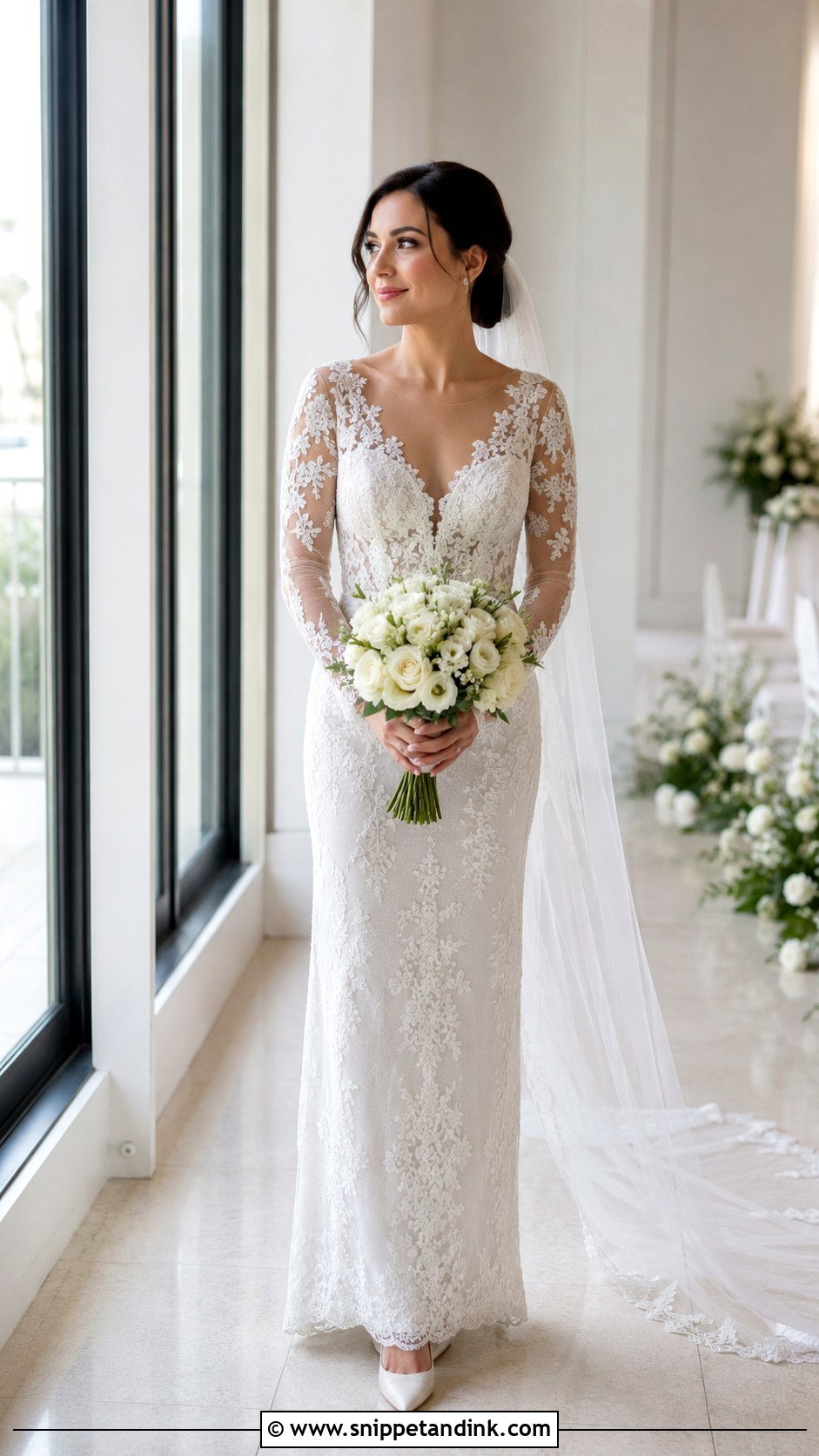
When you need coverage, a long-sleeve illusion sheath wedding dress gives it without the visual weight of solid sleeves and a full skirt. Fine mesh with small appliqués lets the arm show through, and the straight body keeps one long outline. Open something else to balance the coverage: a V-neck, a scoop or a low back. Pointed pumps, a narrow chapel veil, tiny earrings and a structured bouquet keep it crisp. On petite arms, the sleeve is where most of my fitting time goes. Excess mesh wrinkles at the elbow and bags at the wrist, and the appliqués need to be spaced so they don’t bunch when the sleeve is shortened. A petite-length gown is a good start, though the waist, hips and hem will usually still need work.
17. Scoop-Neck Mikado A-Line Wedding Dress
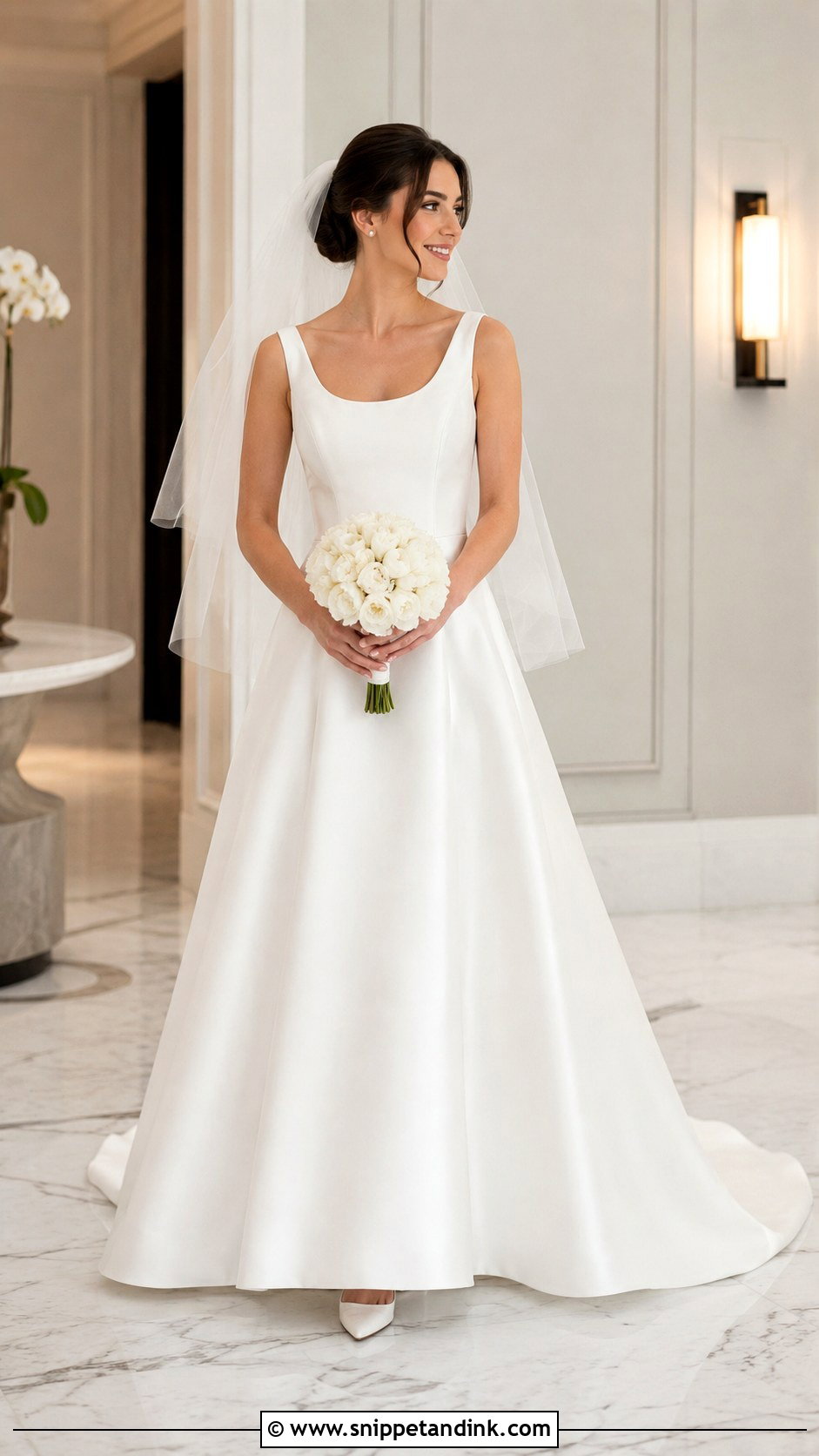
Mikado is a heavier silk blend with a crisp hand, and it holds its own shape far more than chiffon or crepe. That’s the reason to choose it, and the reason to be careful: a Mikado A-line with a full underskirt can make a petite bride look like she’s standing inside the dress. Keep the fullness controlled and the petticoat minimal. A medium scoop opens the neck without exposing too much, and princess seams give the bodice direction. Pointed heels, an elbow-length veil, pearl studs and a rounded bouquet held close to the body suit it. A small train sits better than a wide cathedral one. Pockets are great if they lie flat. Fit the waist and bodice length before the hem is touched, because Mikado can’t be eased afterward.
18. Fit-and-Flare Wedding Dress With Detachable Train
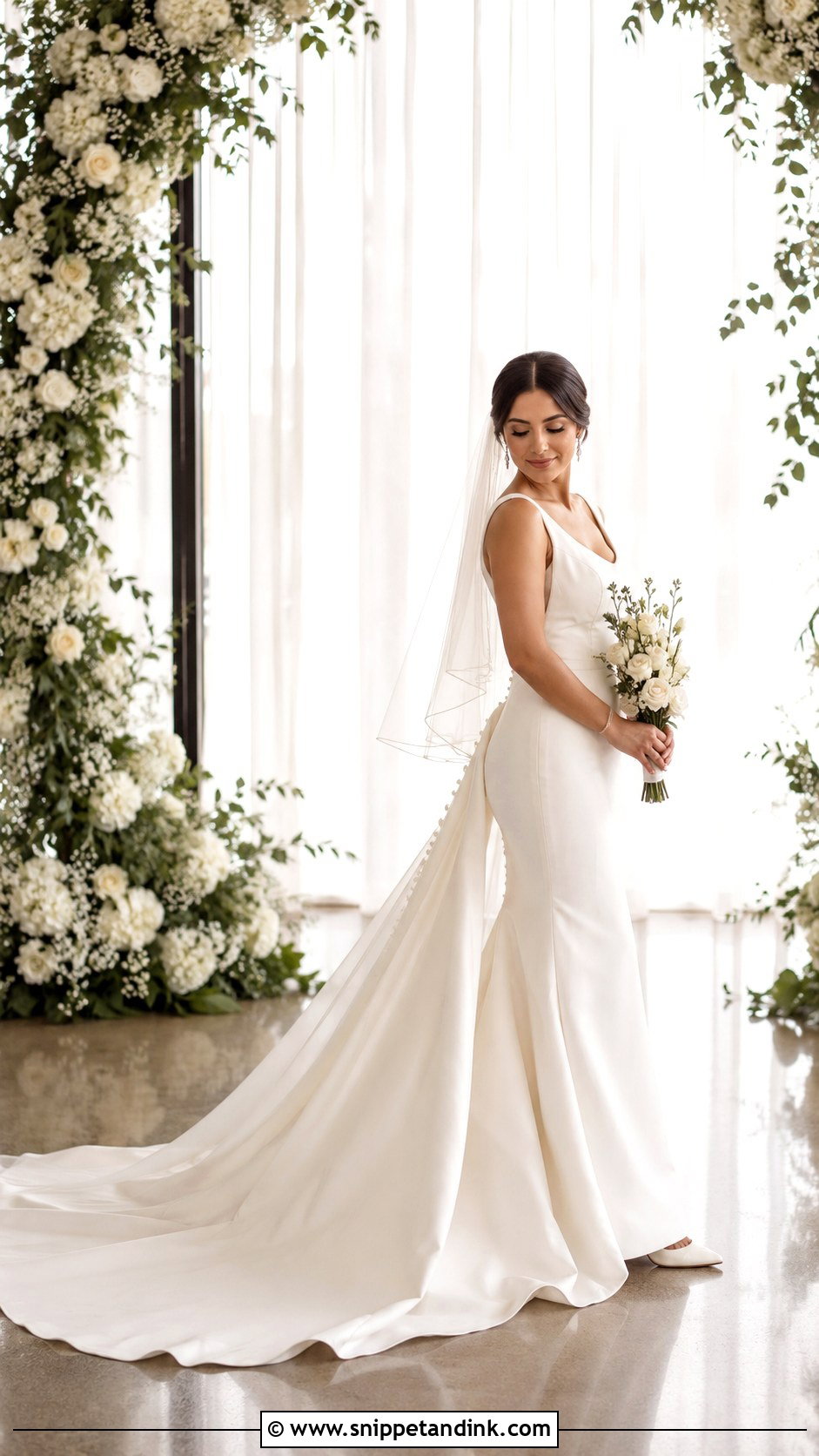
You get the ceremony drama without hauling extra fabric all evening. Start with a sleek crepe or lace fit-and-flare that opens around the upper knee, then add a lightweight chapel-length train or overskirt for the aisle. The attachment point is what I examine closely. Hooks or snaps at the waist or lower back should sit flat under the train, with no ridge visible through the crepe once it comes off. The train needs to match the dress exactly in fabric, lace and shade so it looks built in. Pointed pumps, a fingertip veil, fine earrings and a narrow bouquet carry both looks. Rehearse taking it off, and name the person who’ll fold and store it safely afterward.
19. Petite Ball Gown Wedding Dress
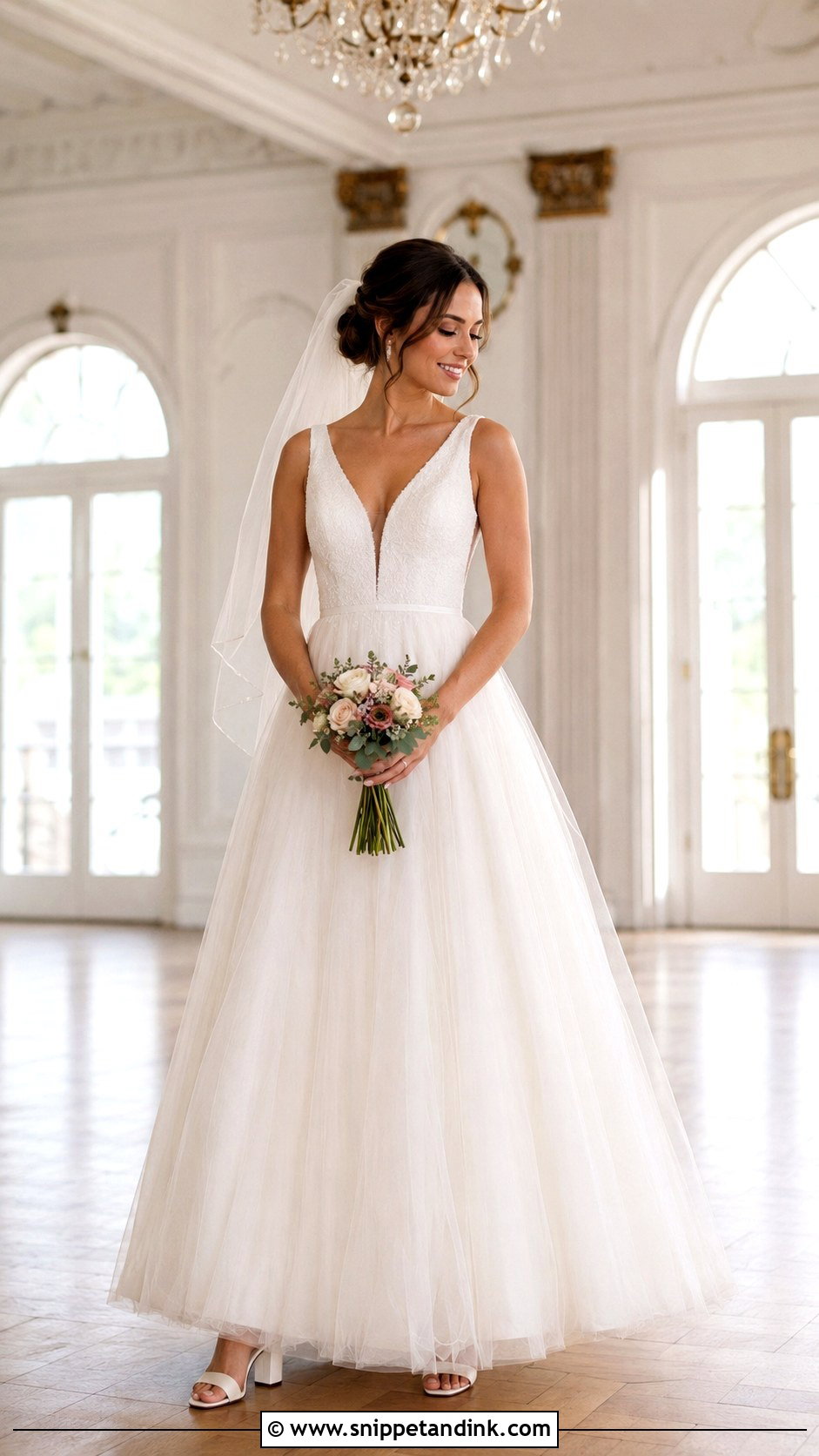
Yes, a petite bride can wear a ball gown. The trick is keeping the scale in check. I look for a fitted bodice, a natural waist placed slightly high, and a skirt that falls first and then expands, instead of jutting out from the hip. Tulle or organza give volume with far less weight than layers of stiff petticoat. A V-neck or narrow sweetheart keeps the top open. Comfortable block heels help, because you’ll be carrying more skirt than in any other style here. A plain fingertip veil, small earrings and a compact bouquet keep the gown in charge. Avoid oversized bows, wide horsehair hems and dropped waists. If the designer offers custom hollow-to-hem length, take it; it saves a lot of alteration on a skirt this full.
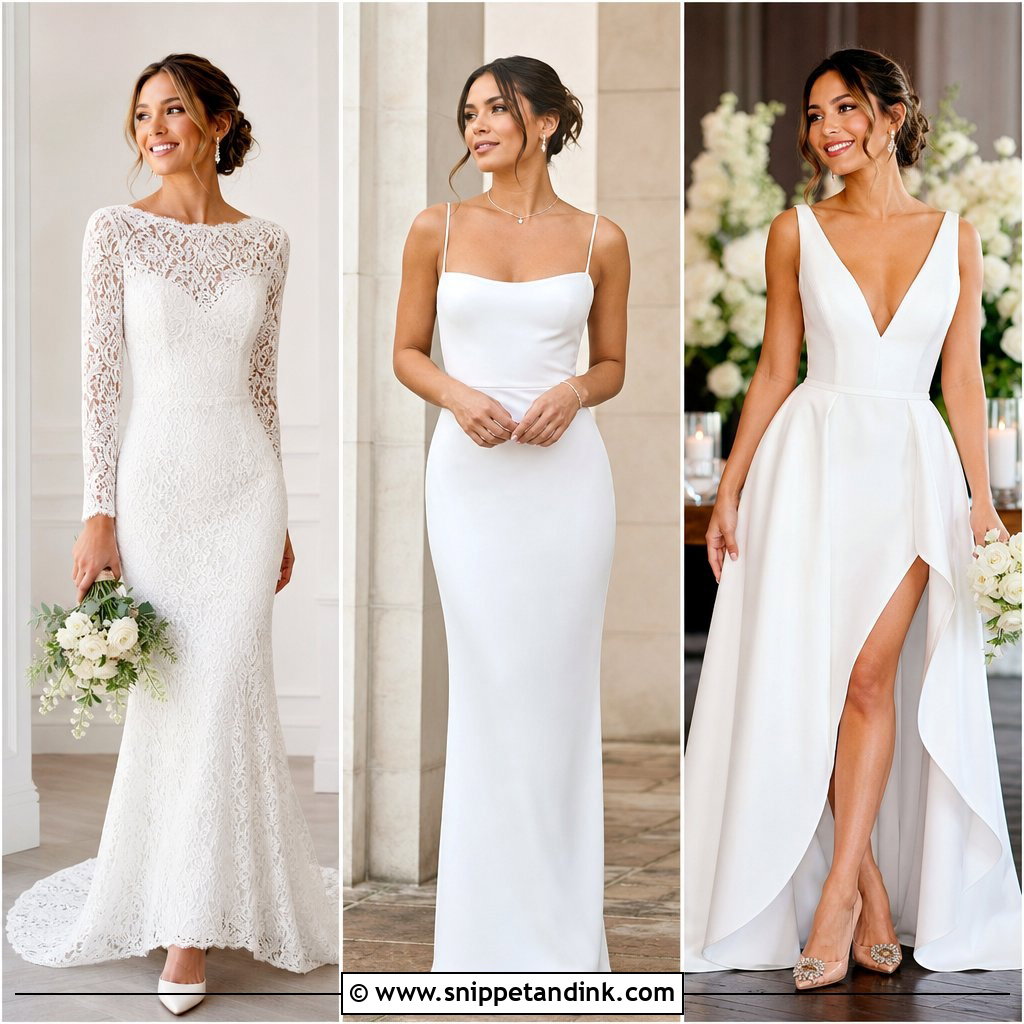
20. Cape-Sleeve Column Wedding Dress
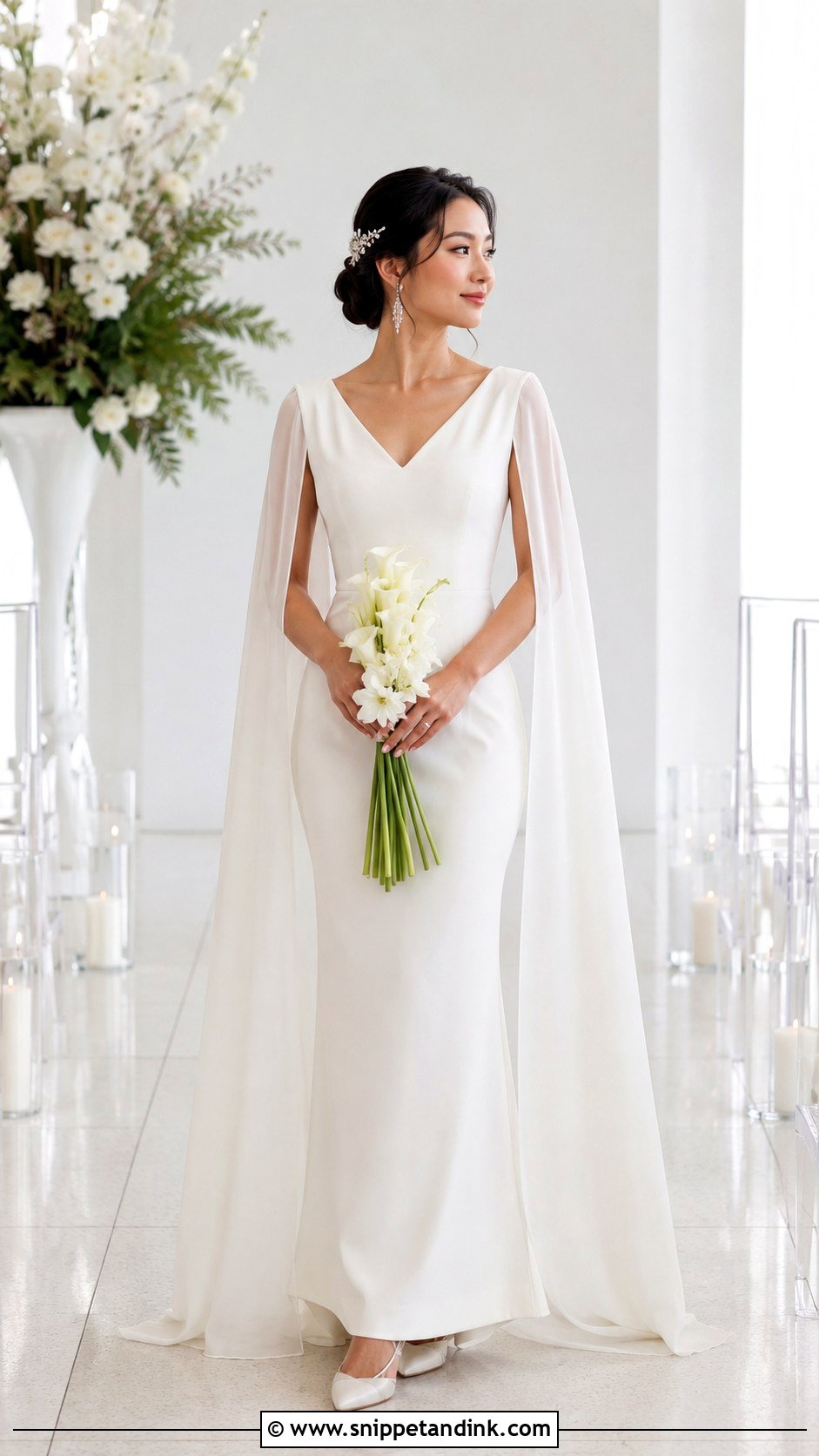
A cape gives you movement behind you while the column underneath stays narrow, so you don’t really need a veil. Choose a fitted crepe or satin column with sheer chiffon panels attached at the shoulder seams. The cape must fall straight and stay narrower than the skirt; if it fans out, it starts to read like a cloak and adds width at the shoulders. Pointed slingbacks, sleek earrings, a polished low bun, a hair comb and a small long-stemmed bouquet finish it. Keep the neckline simple, a soft V or bateau, with no heavy beading at the shoulder. When a seamstress shortens the dress, the cape needs shortening in proportion too, so its hem sits above the train rather than trailing past it.
How Many Fittings a Shortened Gown Really Needs
Plan on three fittings, and book the first one about eight to ten weeks before the wedding. That gap matters more for petite brides than anyone else, because shortening is rarely just a hem. Taking length out of a skirt often means lifting the waist seam, moving a bustle, reapplying lace or rebalancing a train, and each of those adds time at the seamstress.
At the first fitting, the seamstress pins the big structural changes: waist placement, bodice length, strap position. The second checks them and sets the hem with you in your shoes. The last one, ideally a week or two out, is for small corrections and for learning the bustle. Bias-cut and chiffon gowns should have their final hem done as late as the seamstress is willing, because both fabrics settle and drop a little after hanging.
Questions to ask before you hand the dress over
- Will the lace or beaded border be removed and reattached, or cut?
- Does shortening the skirt move the flare point, and can it be moved back up?
- Where will the bustle points go once the train is shorter?
- Is any embellishment going to end up crowded at the new hem?
Prices for these alterations vary a lot by region and by how much handwork the gown carries. A plain crepe hem is a small job; resetting a scalloped lace edge around a full skirt is not. Ask for an itemised quote before the first pin goes in so nothing surprises you later.
Proportion Beats Height Every Time
Being petite doesn’t limit you to one silhouette or one hem length. A-lines, sheaths, columns, minis, fitted trumpets and even ball gowns all work once the waist sits where yours does, the skirt volume suits your frame and the fabric is light enough to move. Size the shoes, veil, bouquet and jewelry to the dress too. The single most useful thing I can tell you is to bring your exact shoes and undergarments to every fitting. A well-altered gown lets you walk, sit and dance without thinking about it, and it should look like your dress, not like a dress engineered to make you look taller.
You'll Like These Ideas:


Leave a Reply