
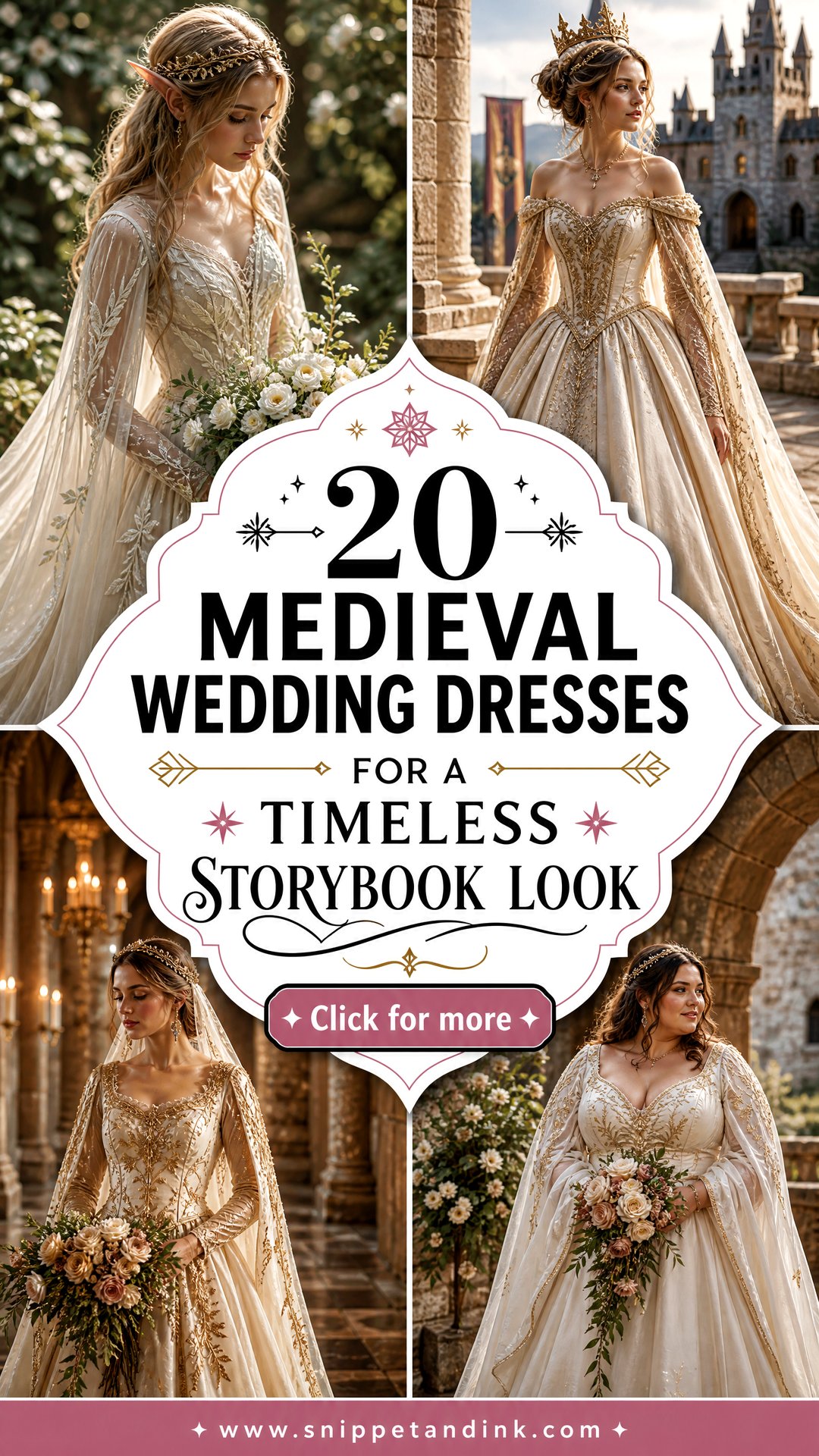
Most medieval brides did not wear white at all. They married in their best gown, often in a rich colour, and the white wedding dress only became the norm centuries later. That freedom is what I enjoy about dressing a bride for this theme: a velvet gown in a castle, a light chiffon one under trees, a black lace one for a Gothic evening, all of them legitimate. The real decision is how much history you want to wear. Below I have put together twenty full outfits, from plain linen kirtles to brocade princess gowns, with the accessories and shoes I would choose for each and the fitting problems I watch for.
Period Gown or Fantasy Costume? Spotting the Difference in a Fitting Room
The question I ask every bride drawn to this theme is how historical she wants to look. Some want a gown that could pass at a reenactment, some want a fantasy dress with a medieval sleeve, and most sit happily in between. Any of those works. What does not work is a bridal gown that accidentally reads as a party costume, and that usually comes down to a few details rather than the overall design.
- Shiny polyester satin catches flash and looks cheap in photos. Matte crepe, silk, linen, wool and cotton velvet look far more convincing.
- Plastic grommets on a laced bodice show up instantly. Ask for metal eyelets or hand-bound holes.
- Very long sleeves with raw, unfinished edges fray by the end of the day.
- A tall crown, pointed ears or a sword prop pulls the whole outfit toward fancy dress unless the guests are in costume too.
If you want true period accuracy, tell your dressmaker early, because it affects the cut of the sleeves, the shape of the neckline and how the gown closes. If you only want the feeling of history, I would put the effort into fabric and one strong feature and keep the construction modern and comfortable.
1. Bell Sleeve Medieval Wedding Dress
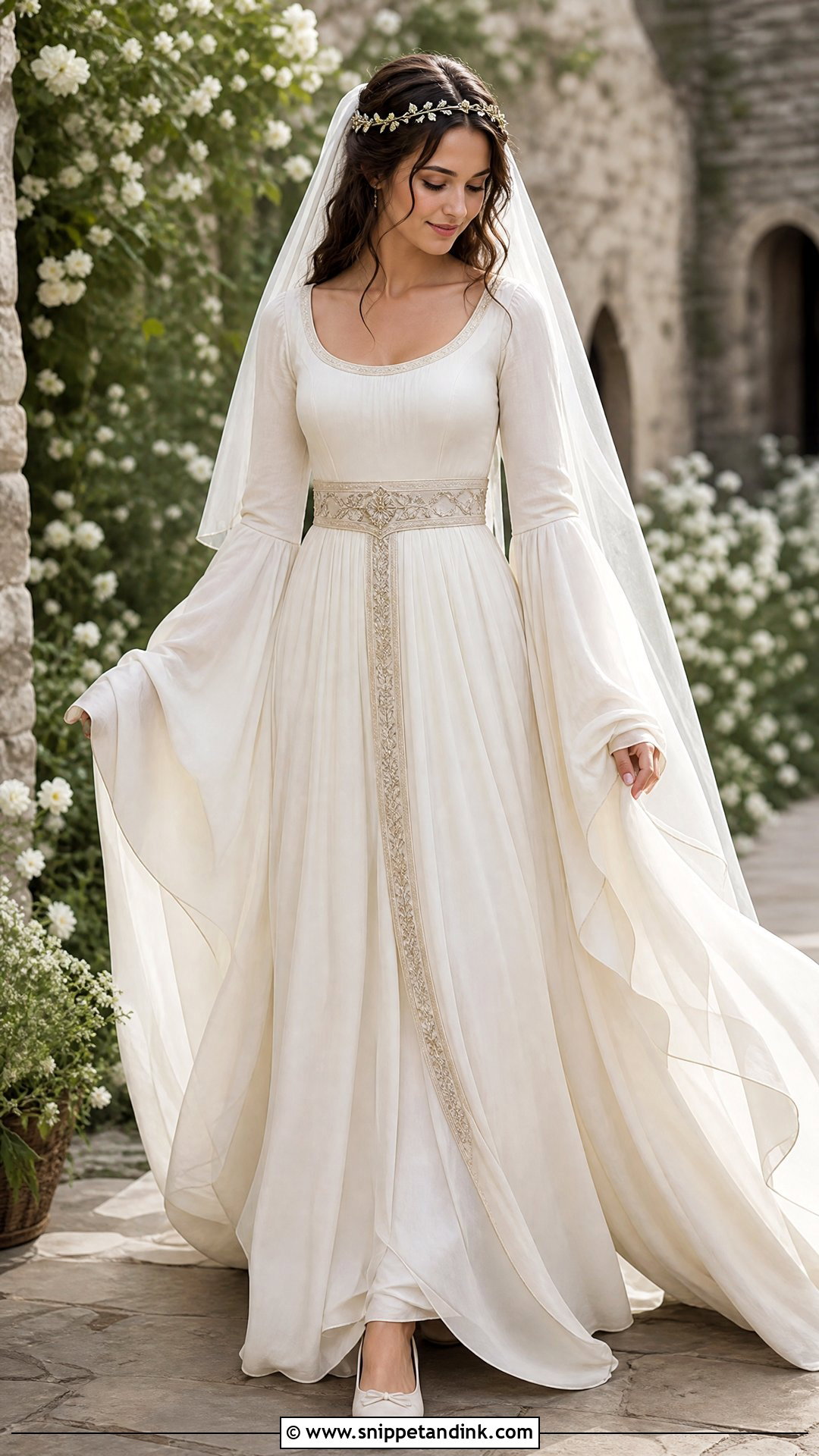
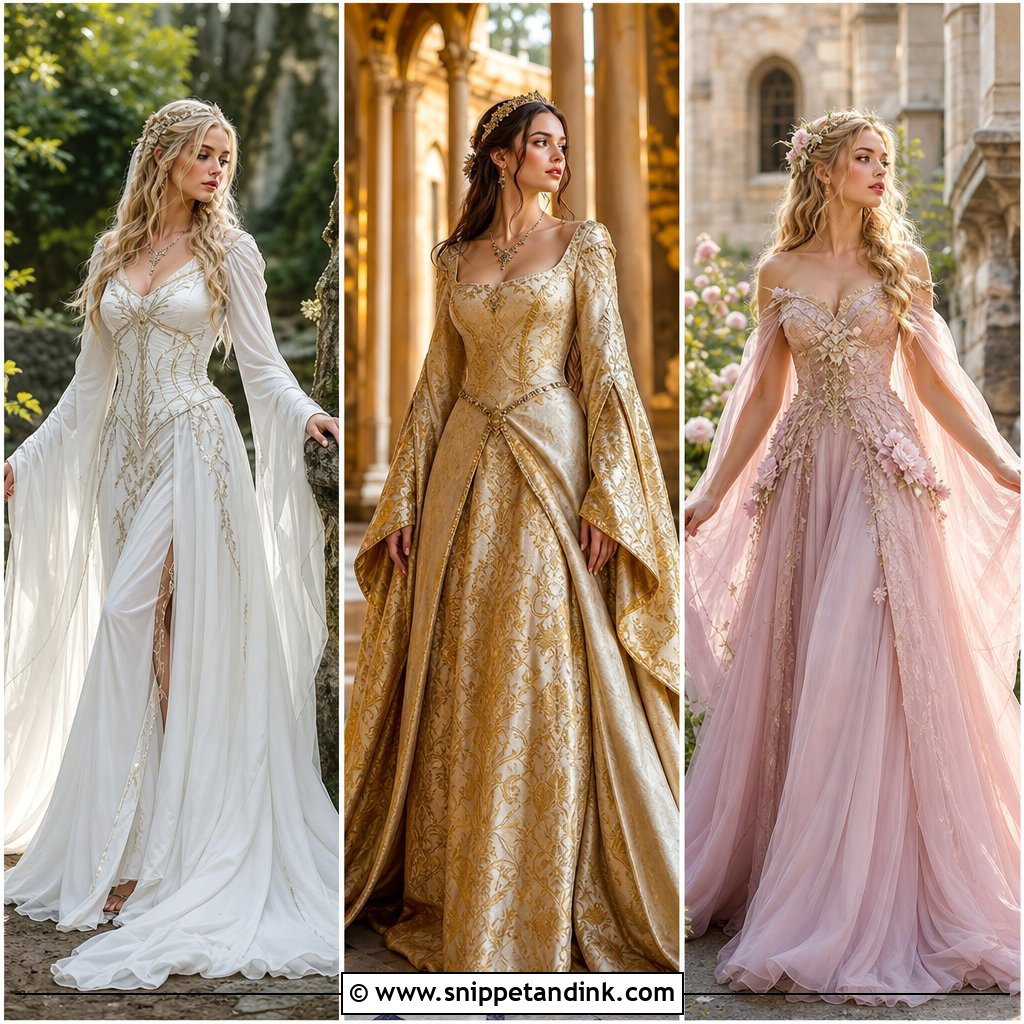
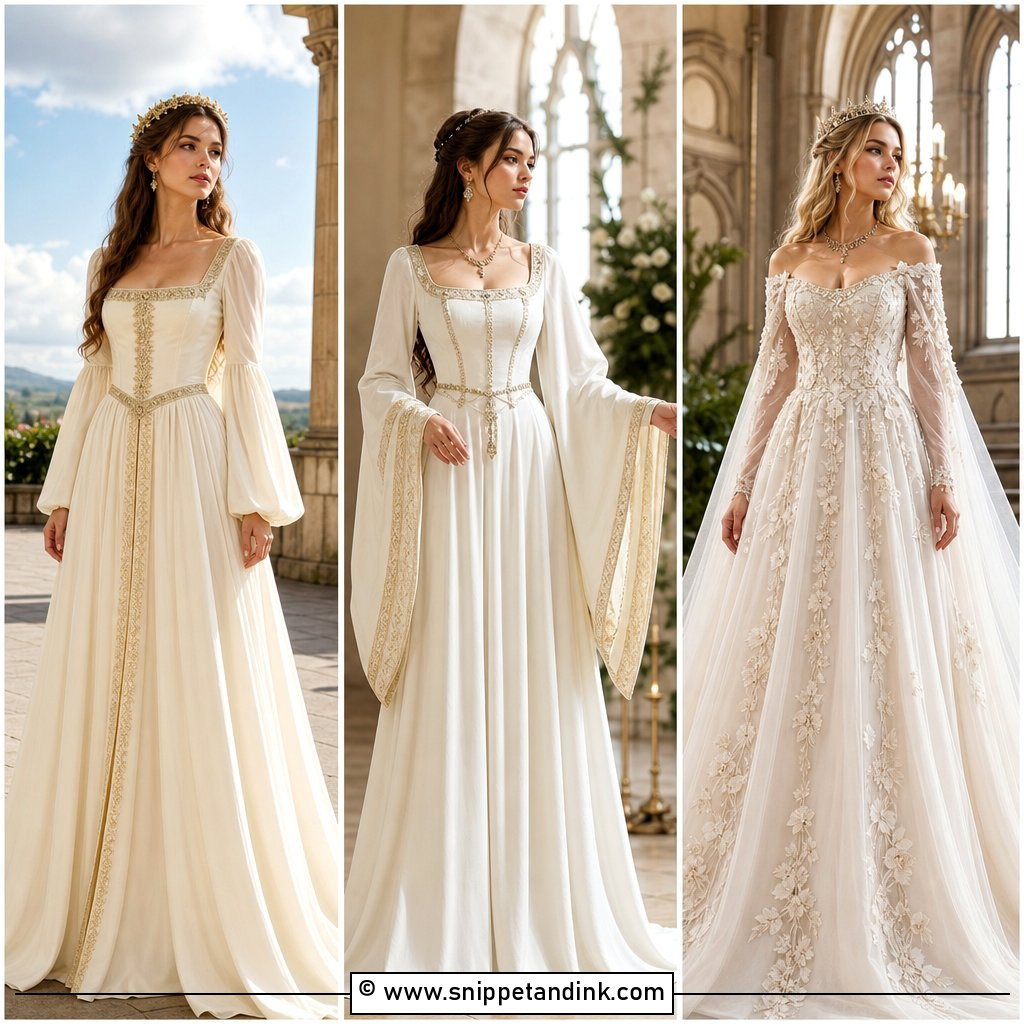
A bell sleeve medieval wedding dress needs almost no decoration, because the sleeve is the whole idea. I like it in ivory chiffon or soft crepe with a fitted bodice, scoop neckline and a gently gathered floor-length skirt. At the fitting I watch where the bell begins: opened just below the elbow, it swings when you walk; opened at the upper arm, it can look like a robe. A narrow embroidered belt, a fine circlet, loose waves and a fingertip veil finish it, over ivory ballet flats or low block heels. Leave the wrists bare of bracelets.
2. Corset Medieval Wedding Dress
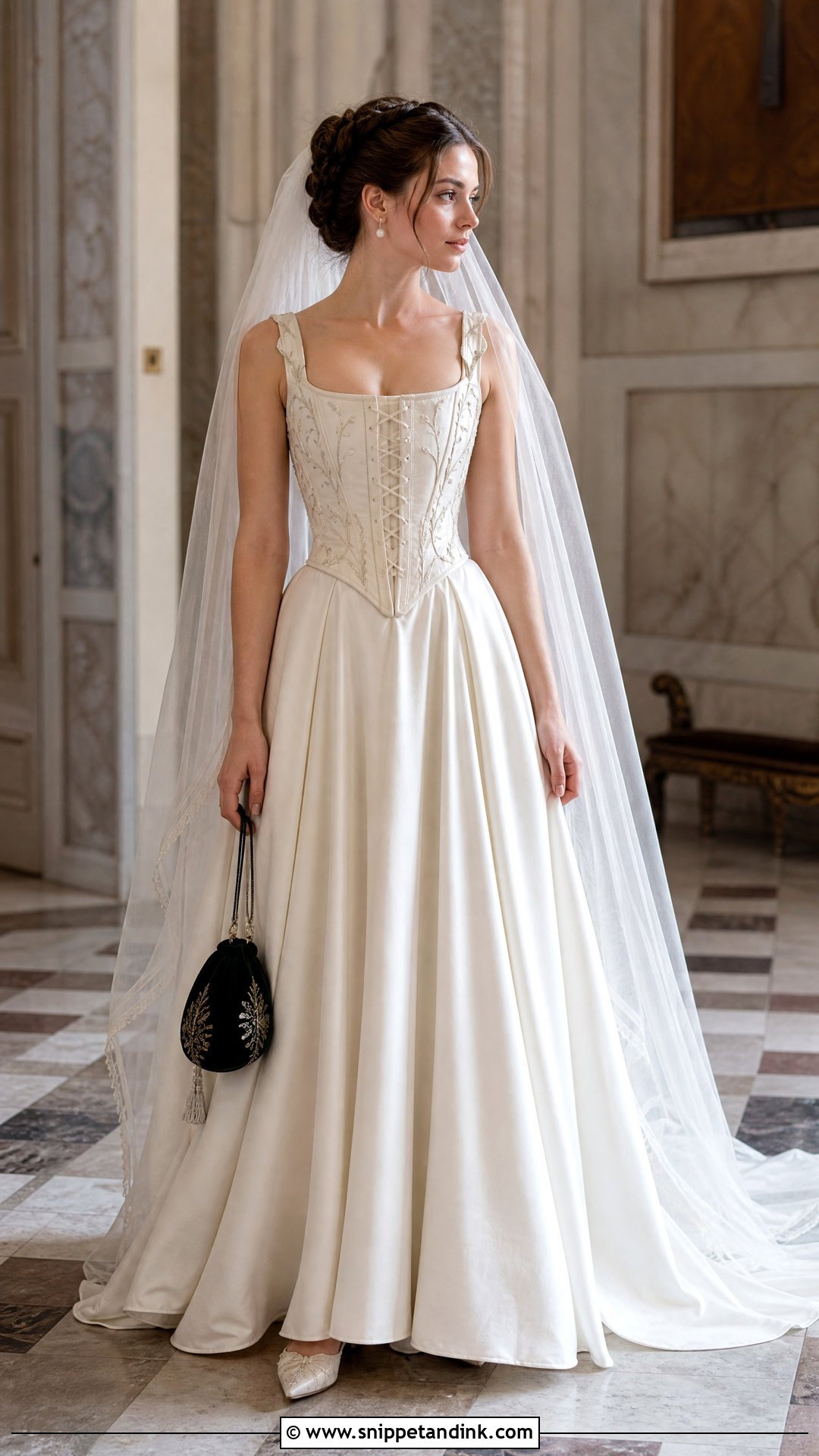
Soft boning and a laced bodice give definition without the stiffness of a costume corset, and that distinction matters more than anything else in this dress. Wide shoulder straps, ivory satin or matte silk, and fine vine embroidery keep it bridal. I ask brides to breathe in fully and laugh at the first fitting; if the laces creak or the top edge digs, it is too tight, and it will not loosen with wear. A sheer cathedral veil under a braided updo, pearl drops and pointed ivory flats or low heels complete it. A small velvet pouch saves you hunting for a lipstick later.
3. Square Neck Medieval Wedding Dress
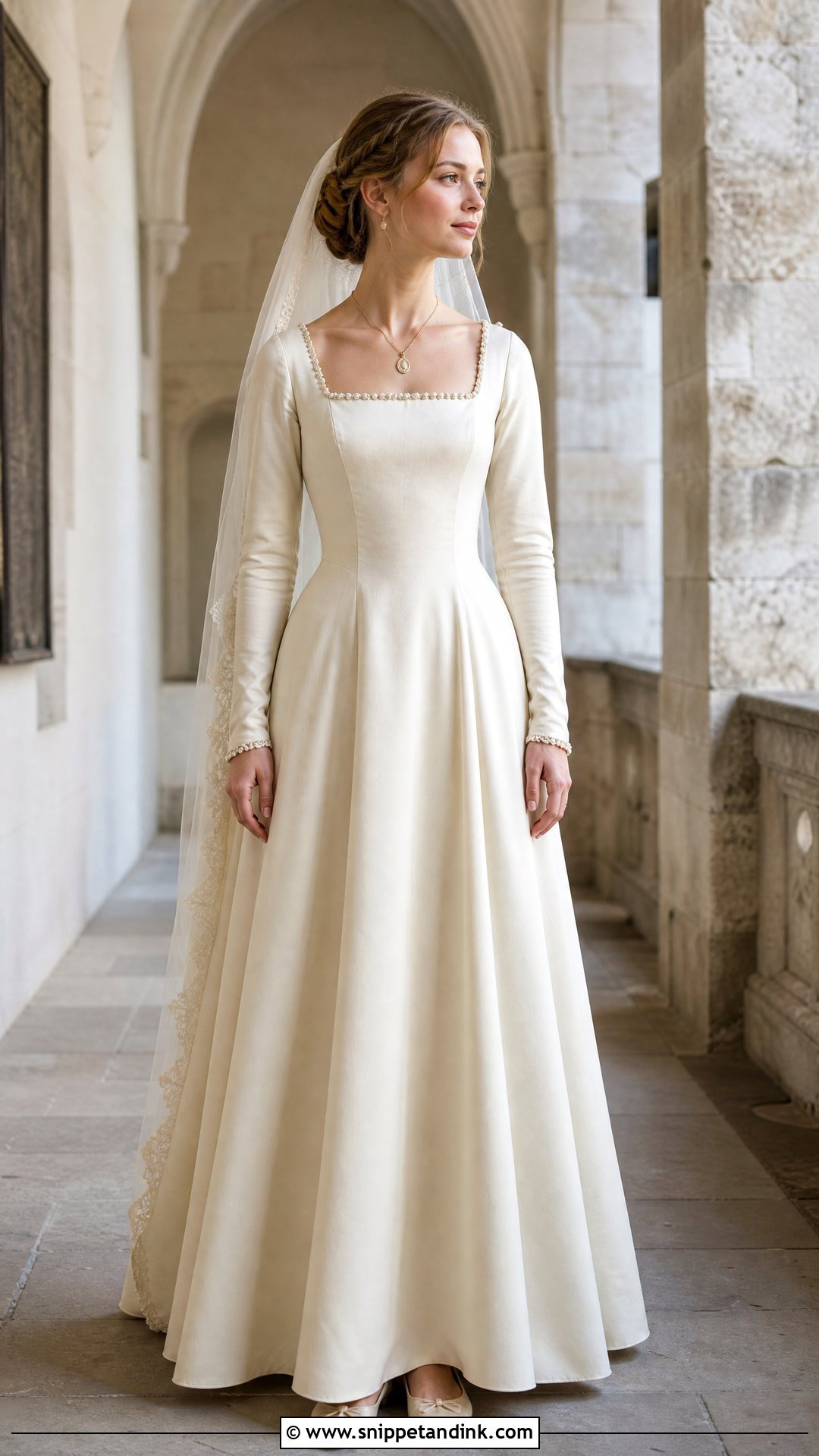
The square neckline belongs to the later medieval period, which is why it reads more refined than rustic. A fitted gown with long narrow sleeves and an A-line skirt is the classic base, and pearl trim or fine gold embroidery at the neckline frames the face. The width of the square is the detail to get right: it should end just inside the shoulder point, because a neckline that sits too wide slides off and too narrow makes the shoulders look broad. Wear it with a chapel veil, a low braided bun, a pendant that sits inside the neckline, and soft leather flats.
4. Hooded Medieval Wedding Dress
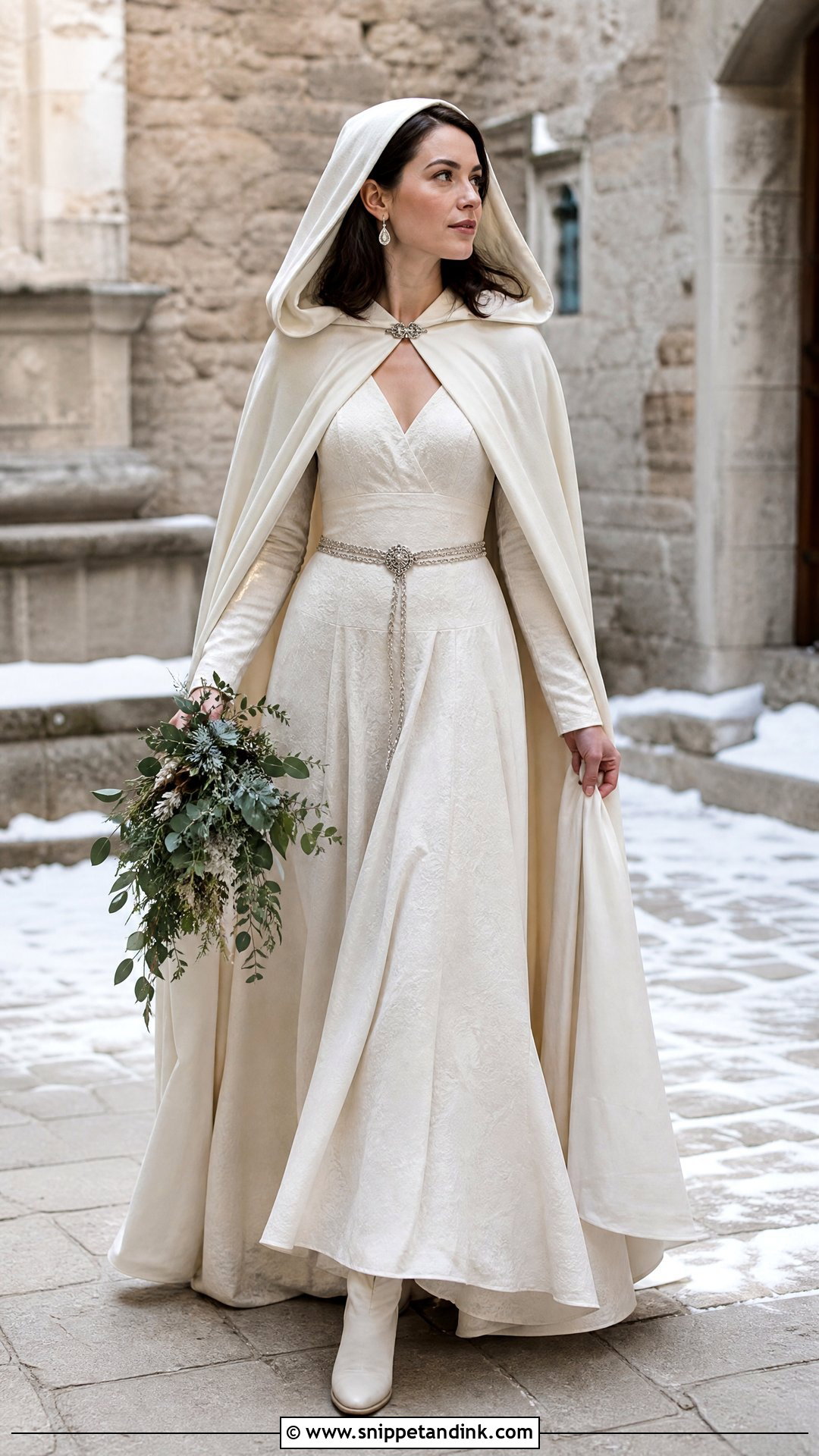
Winter brides get the most out of a hood. Pair a long-sleeved ivory gown with a fitted waist and fluid skirt with a detachable hooded cape in matching fabric, velvet for warmth or lined crepe for something lighter. I usually leave the hood down for the ceremony so it frames the neckline and keeps the hair visible; raise it for the walk outside and the portraits. A silver belt, moonstone earrings and closed-toe ankle boots finish the outfit, and a bouquet of greenery and white flowers suits its slightly mysterious mood.
5. Medieval Wedding Dress With Cape
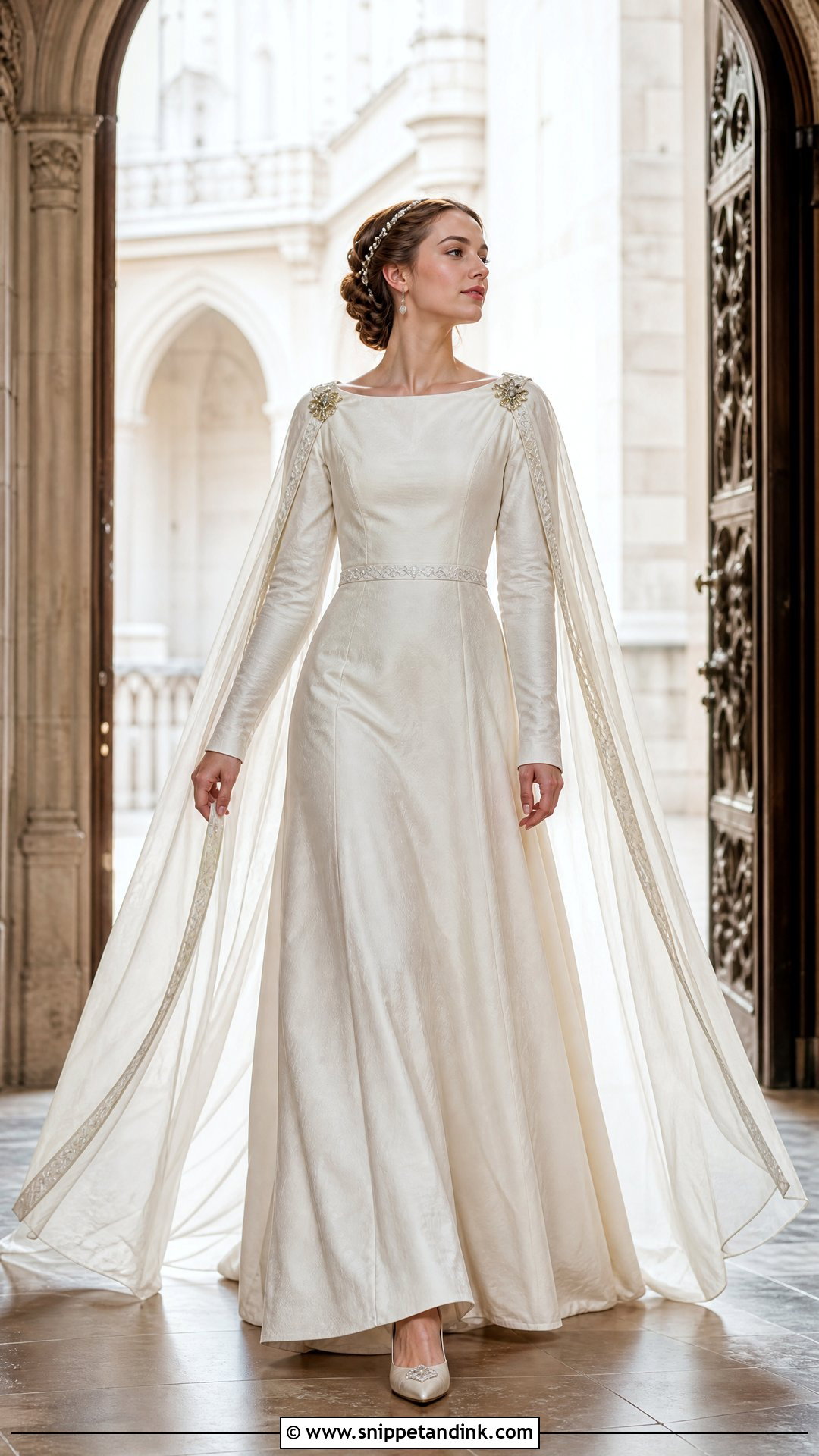
A cape gives you the entrance of a long train without dragging one around all evening. Start with a plain ivory A-line gown with a fitted bodice and long sleeves, and fix a floor-length cape at the shoulders with small jewelled clasps. Tulle floats; velvet means winter. The clasps carry the full weight of the cape, so I ask for them to be sewn onto a reinforced strip inside the gown, not just the outer fabric, or they pull the shoulder seam down by the afternoon. Wear a polished braided bun, pearl pins and low pointed heels, and skip the veil. Unclip the cape for dinner and add a slim belt, and you have a second, lighter look.
6. Velvet Medieval Wedding Dress
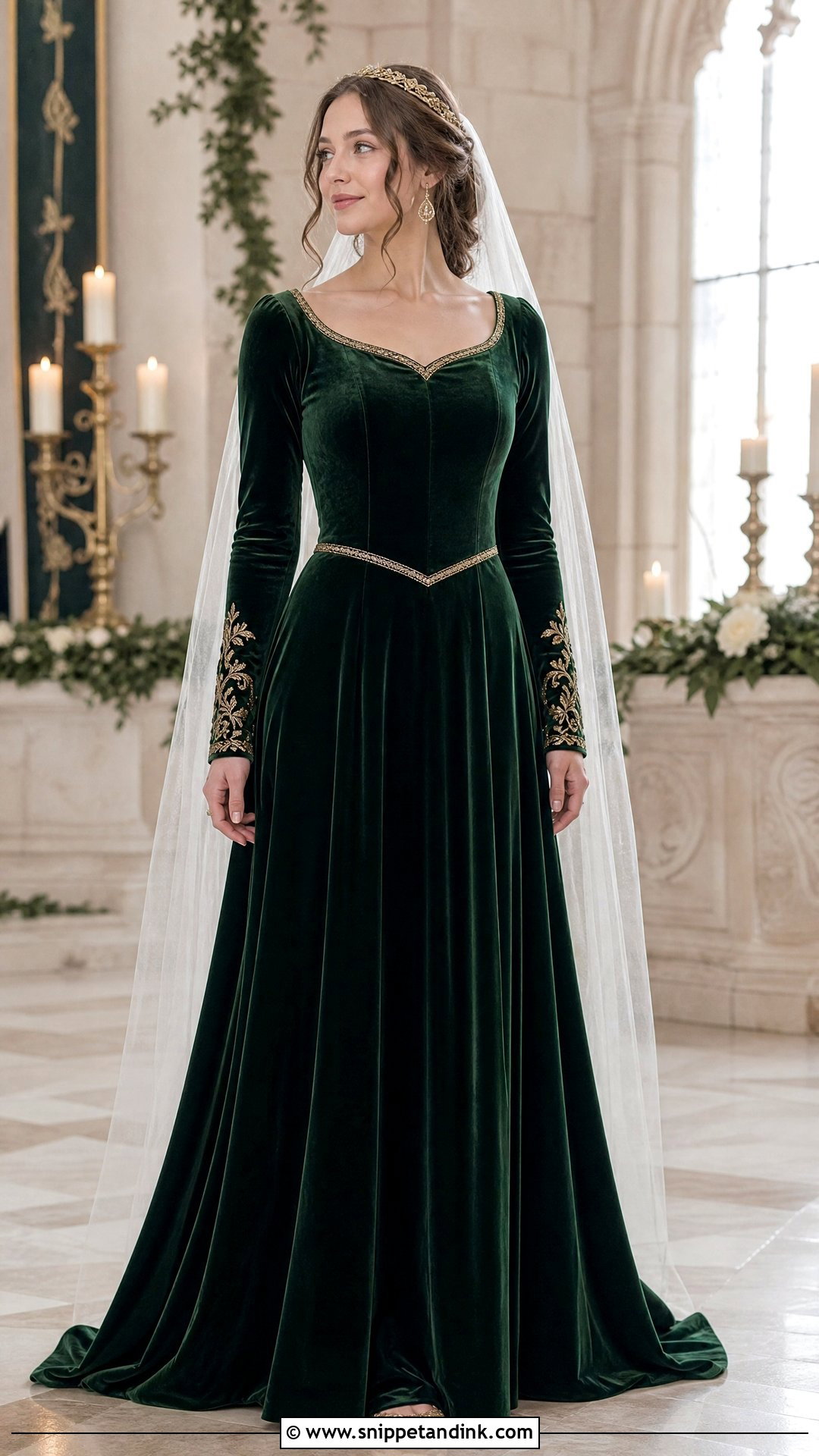
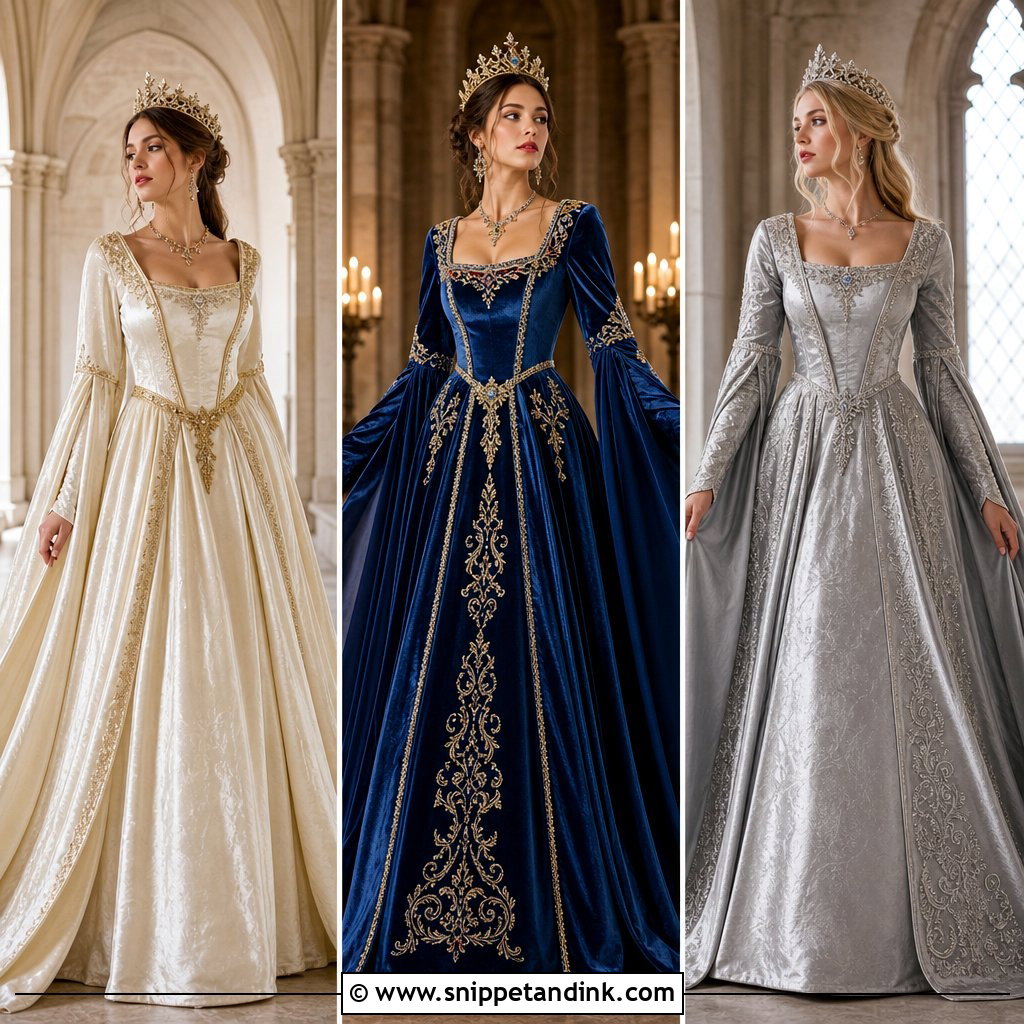
Velvet in a candlelit stone room is about as regal as bridal clothing gets. Its weight and pile make it an autumn and winter fabric, in emerald, burgundy, midnight blue or ivory, cut with a fitted bodice, long sleeves and a softly flared skirt. Gold embroidery at the neckline and cuffs gives the edges definition. I insist on a breathable silk or cotton lining, because a fully synthetic velvet gown gets very warm once the dancing starts. A slim metal circlet, a sheer veil from the back of the hair and closed-toe flats are enough; velvet shifts between light and shadow on its own, so keep the bouquet and jewellery restrained.
7. Celtic Medieval Wedding Dress
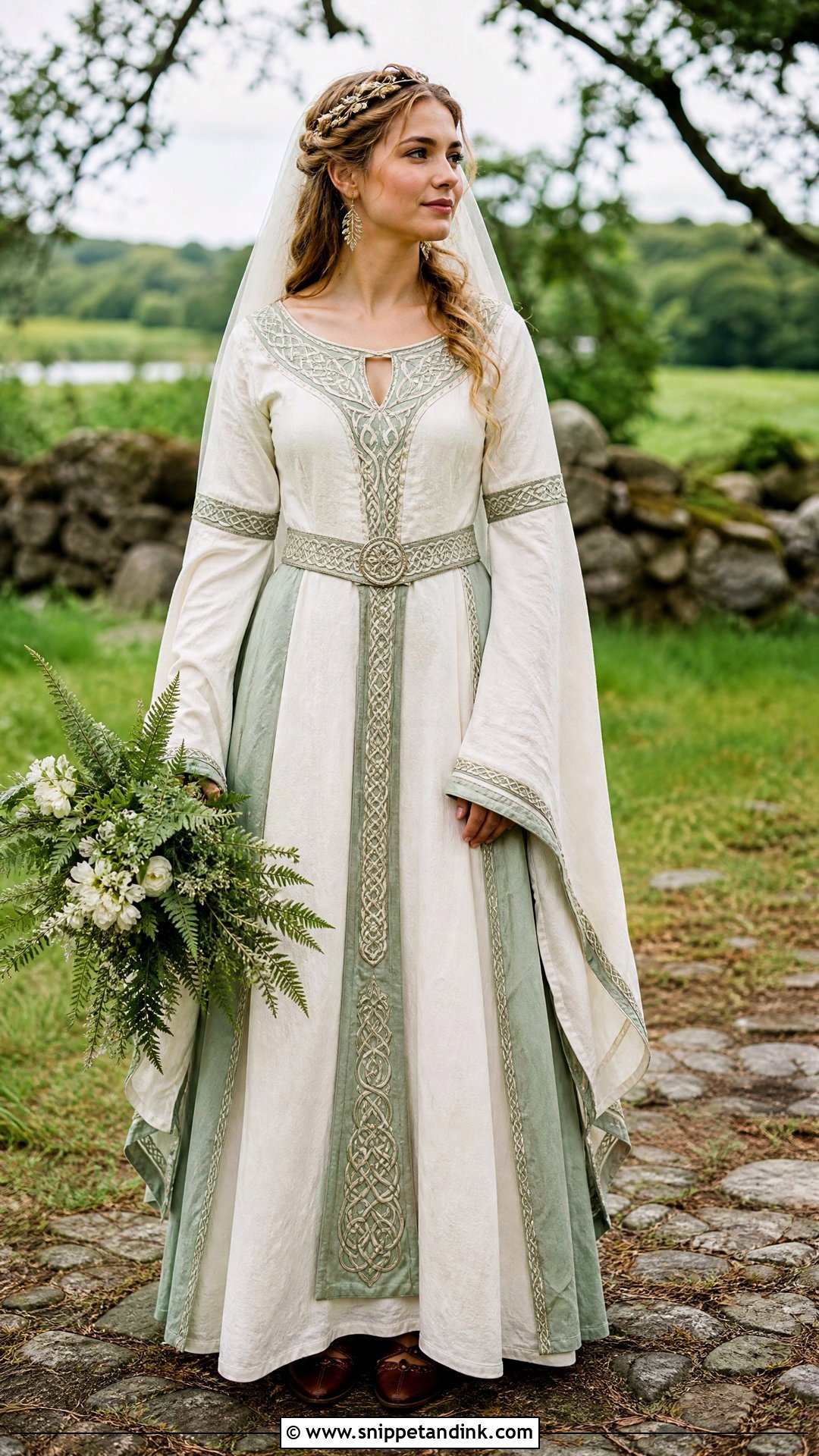
Pale sage is my favourite base for a Celtic gown, though ivory works too, with a natural waist, long flared sleeves and intricate knot-inspired details embroidered at the neckline and hem. A woven belt in silver, green or muted gold makes it feel handmade. Brown or ivory leather flats sit better on grass than glossy pumps, and a braided crown with small leaf earrings and a soft veil pinned under the braids completes the look. Pick one motif, knotwork or botanical, and repeat it in the belt, jewellery and bouquet ribbon; mixing both looks muddled up close.
8. Elven Medieval Wedding Dress
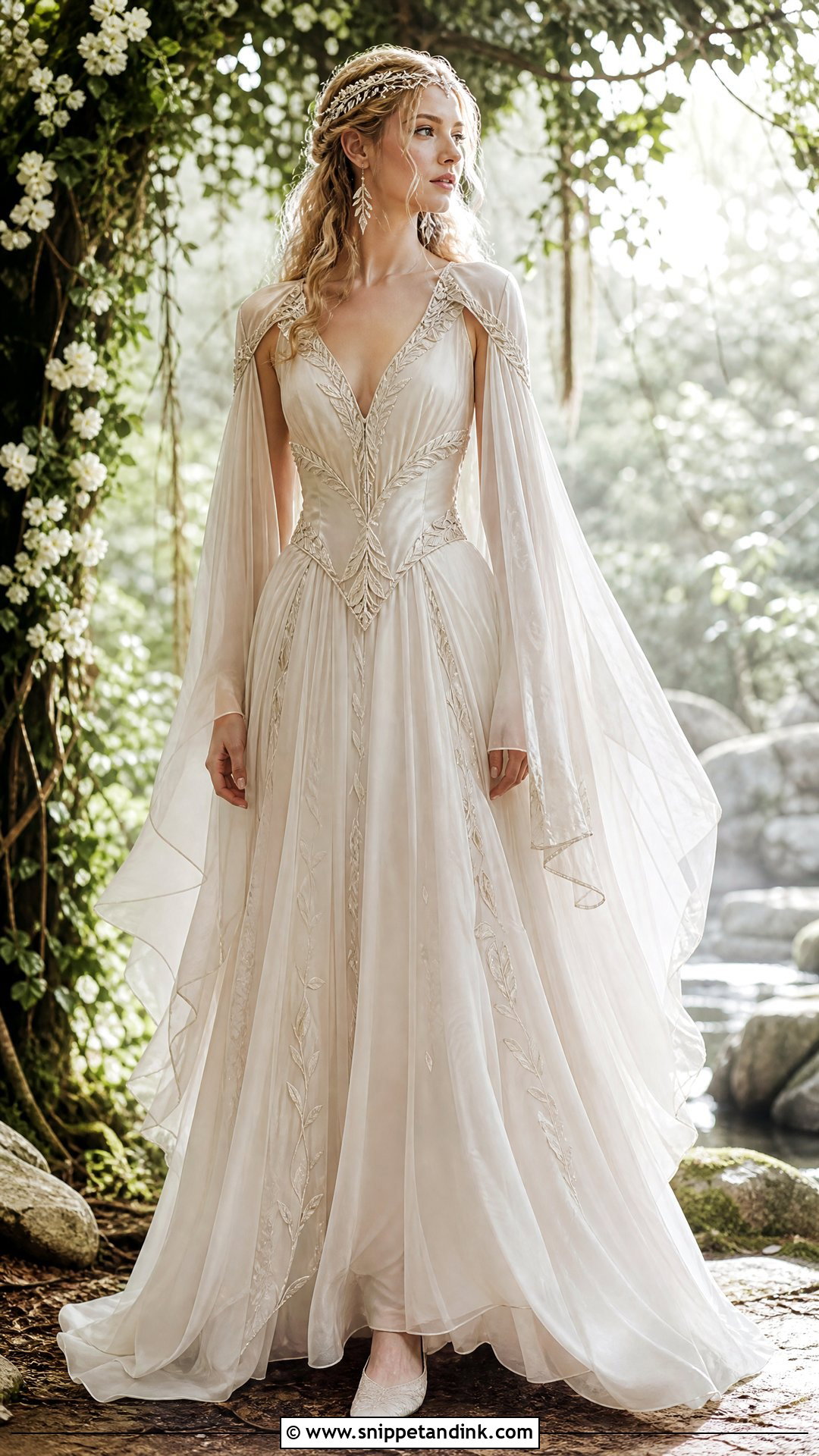
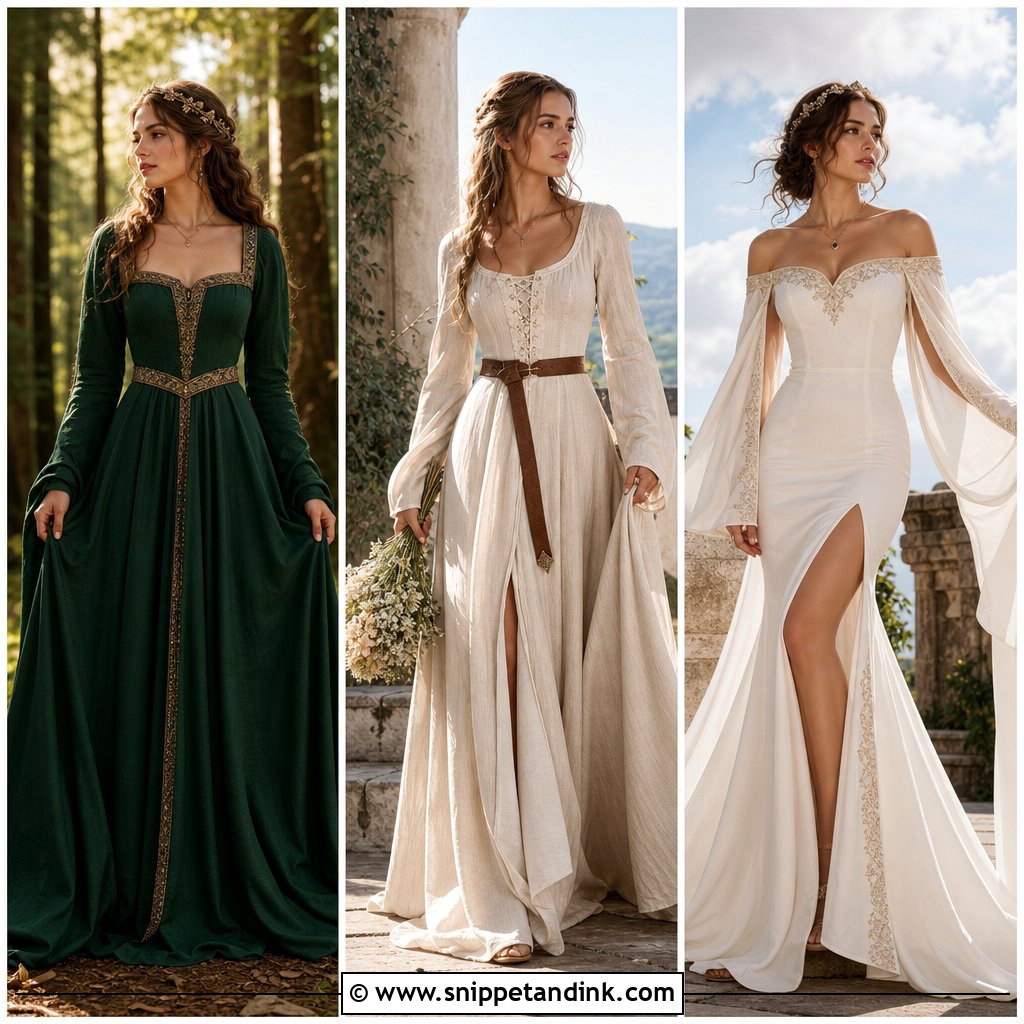
An elven medieval wedding dress lives or dies on restraint. Start with a fitted ivory gown in chiffon, silk or soft tulle, then add translucent bell sleeves, a low V-shaped waist and fine leaf embroidery across the bodice. A narrow cape or shoulder drape brings movement. Pointed ears, glitter and costume props are where it tips into fancy dress, and I gently talk brides out of them unless the whole wedding is in costume. A silver vine circlet, loose curls, pointed drop earrings and pale flats are all it needs, with soft makeup and a loose bouquet against greenery.
9. Medieval Princess Wedding Dress
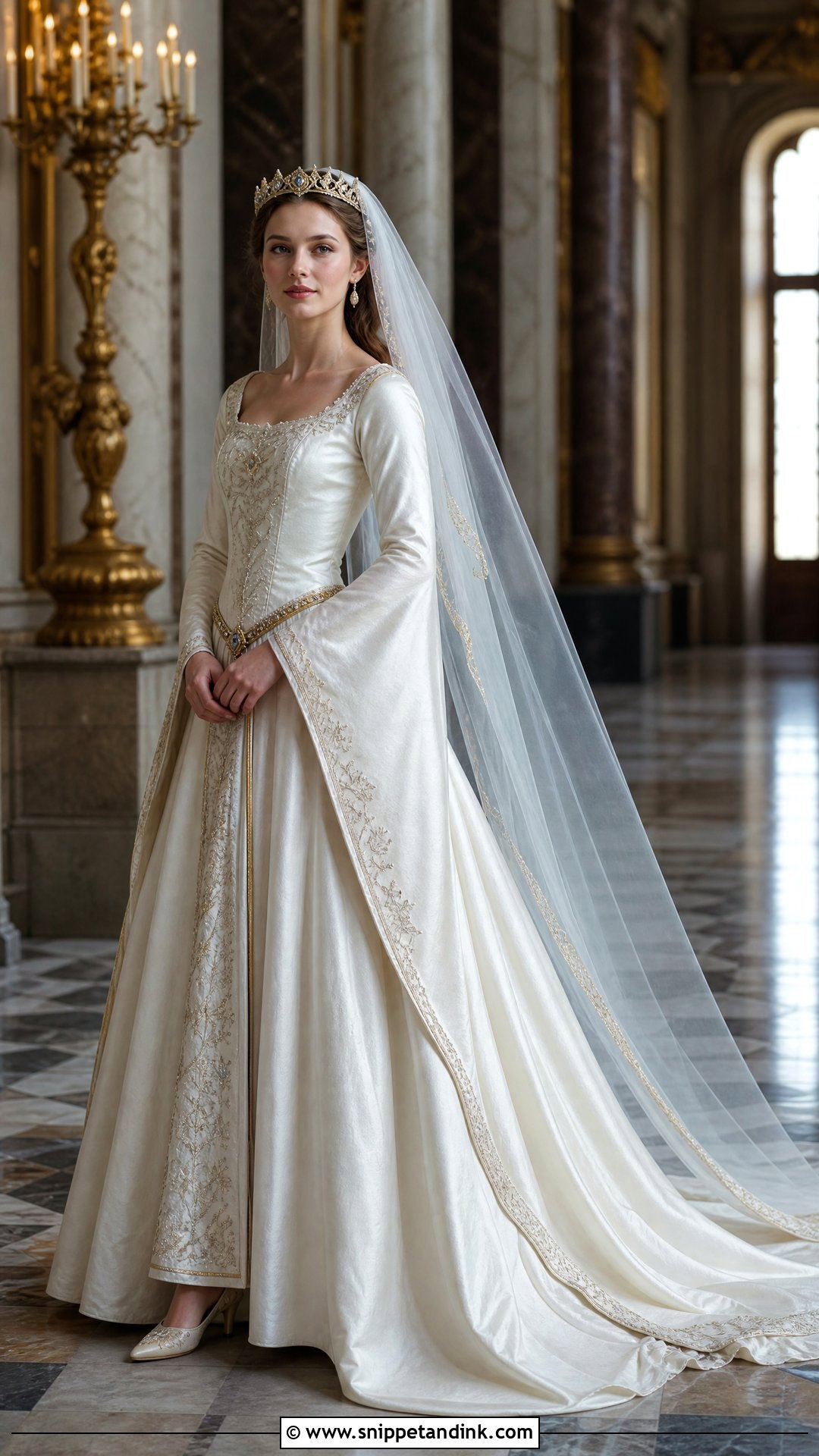
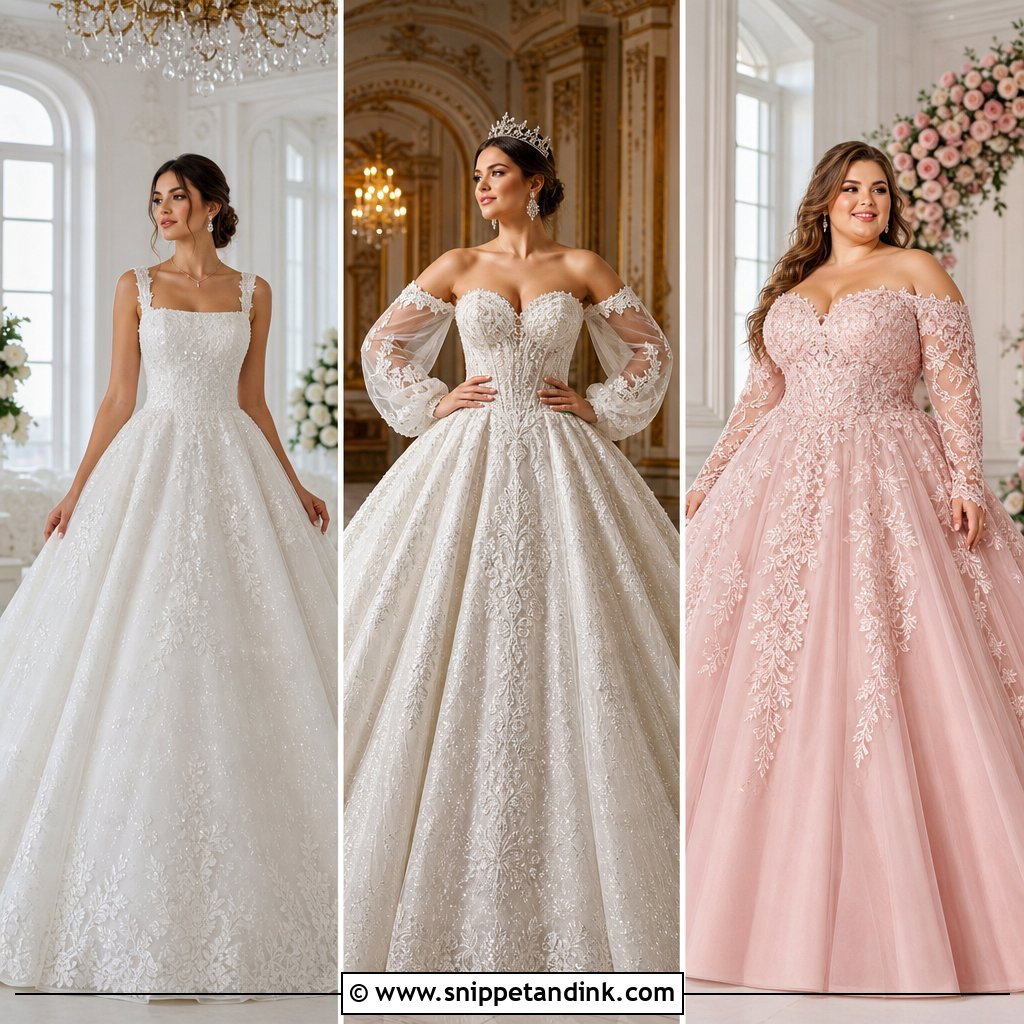
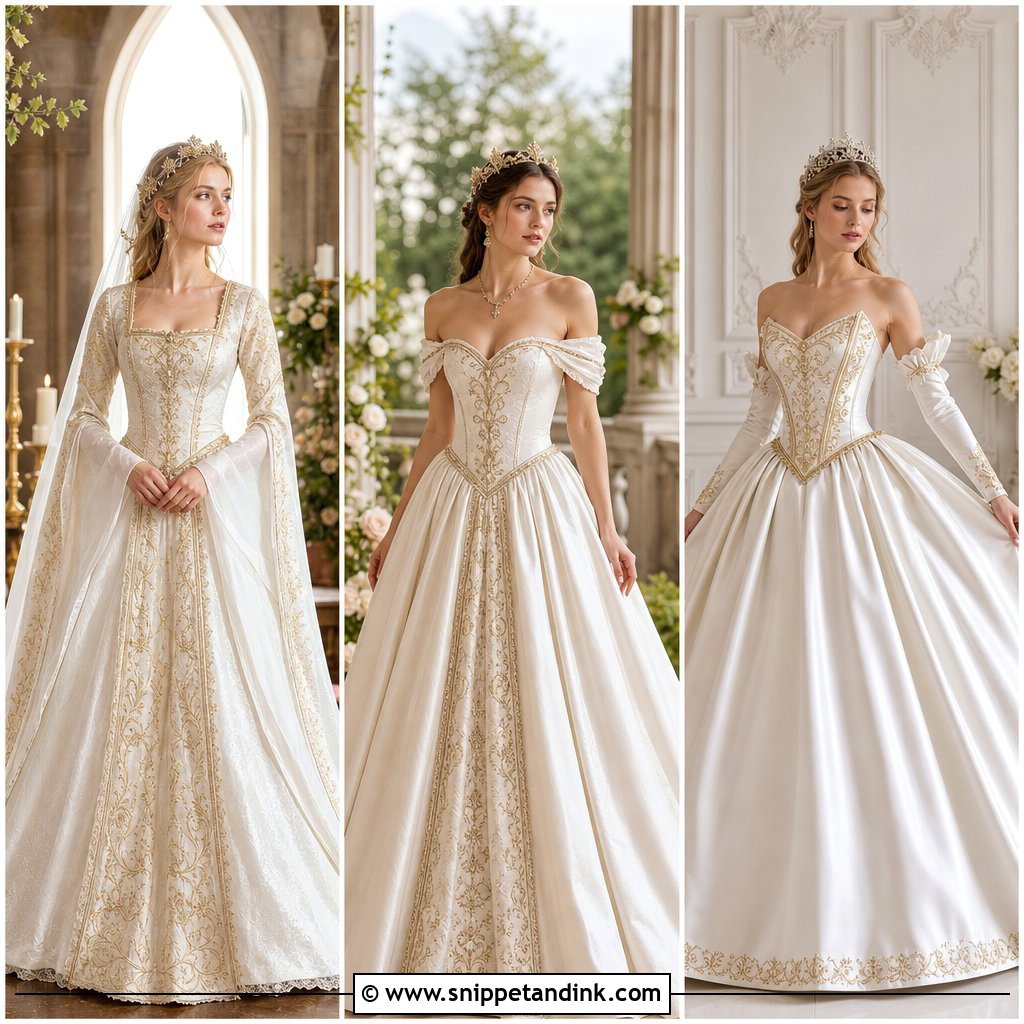
Volume and structure are what separate the princess version from the rest. Choose a fitted embroidered bodice, long sleeves, a defined waist and a full skirt with a modest train in ivory satin with pale gold accents. A jewelled circlet looks luxurious; a tall crown tips toward costume. Full skirts need a bustle for the reception, and I ask to see the bustle being done at the last fitting, with the person who will do it on the day watching, because a row of hidden buttons is hard to find in a dim hallway. A cathedral veil, pearl earrings and embroidered low heels complete it for a grand hall or castle.
10. Gothic Medieval Wedding Dress
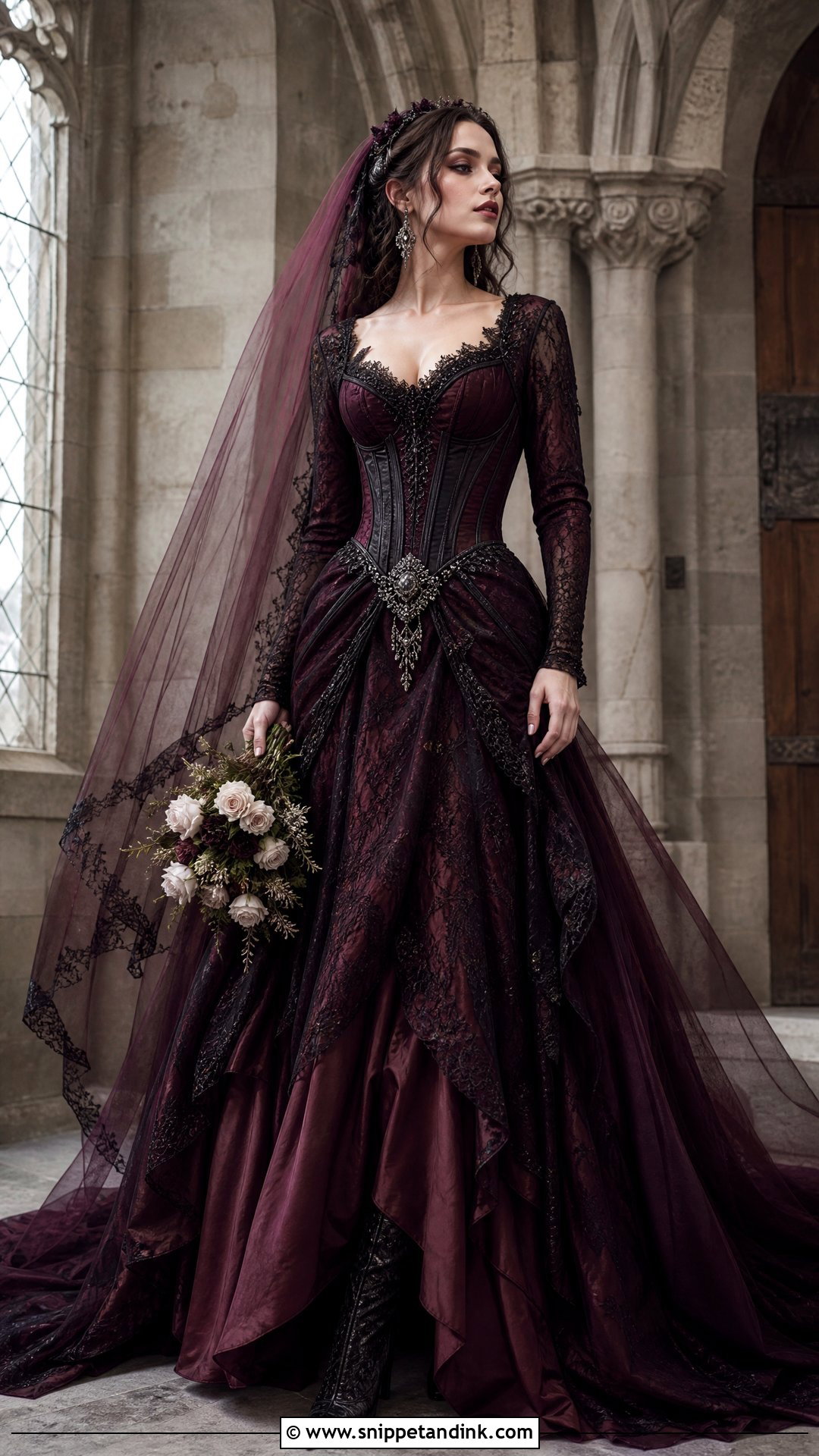
A Gothic gown is about shape and shadow. Choose a black, dark plum, or burgundy gown with a corset-style bodice, long fitted sleeves and a layered floor-length skirt; black lace over a solid lining gives depth with full coverage. Dark fabric swallows detail in low light, so I tell brides to check the evening lighting plan with their photographer before committing, or the lace simply disappears. A matching veil, antique silver earrings and a narrow jewelled belt suit it, with pointed ankle boots or closed block heels. Pale flowers give it a bridal note, and a defined eye with a berry lip keeps the makeup in step.
11. Green Medieval Wedding Dress
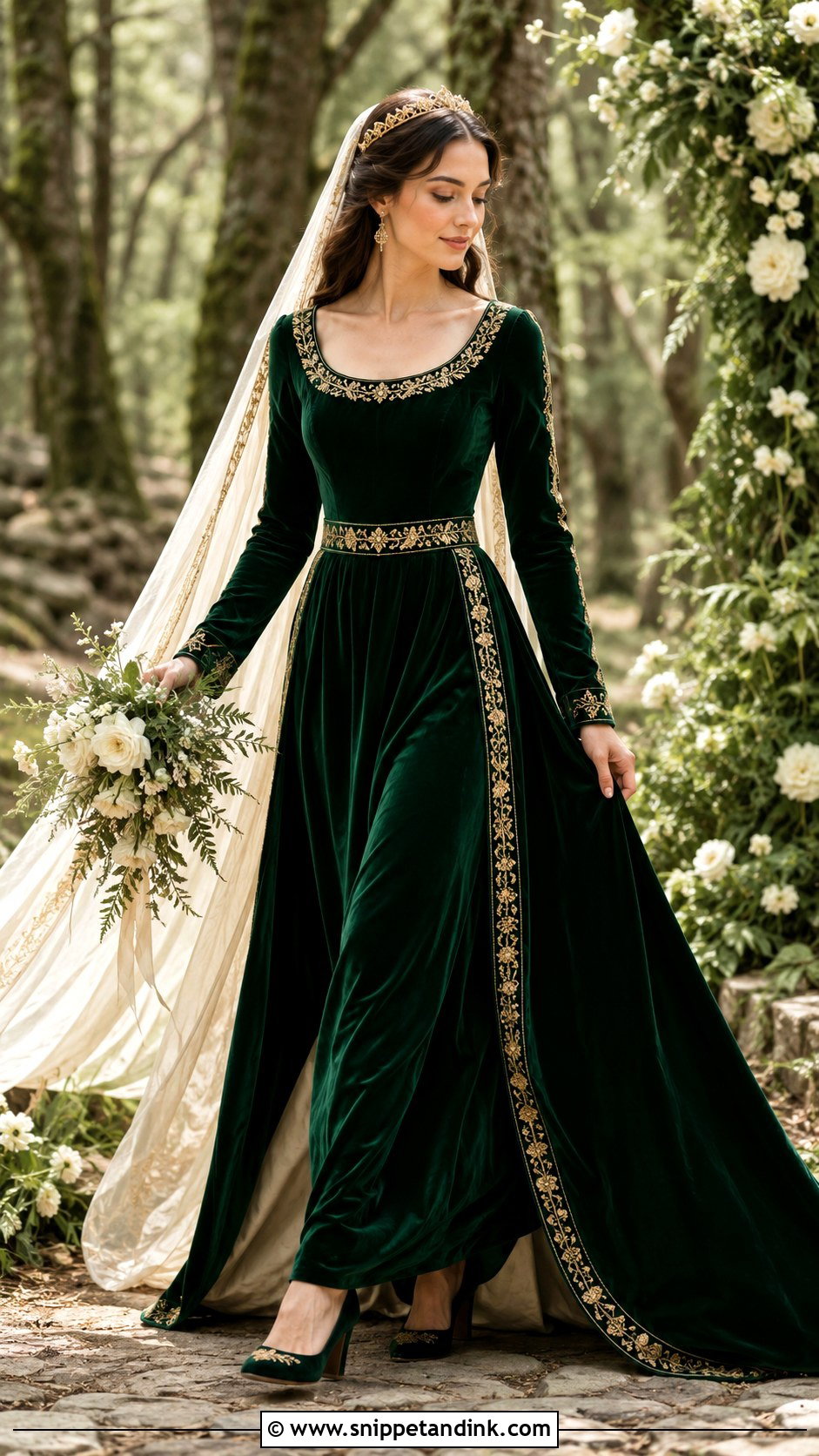
Medieval brides very often married in colour, so green is closer to tradition than modern white. It looks richest in sage silk, forest velvet or muted emerald crepe, on a long-sleeved gown with a scoop neckline, fitted bodice and full skirt. Gold embroidered borders at the neckline, cuffs and waist give it shape. Greens shift between daylight and indoor bulbs more than most colours, so view the fabric by a window and under warm light before you order. A cream veil, gold circlet and drop earrings give contrast, with brown leather flats or dark green block heels and a light bouquet of cream flowers and leafy stems.
12. Blue Medieval Wedding Dress
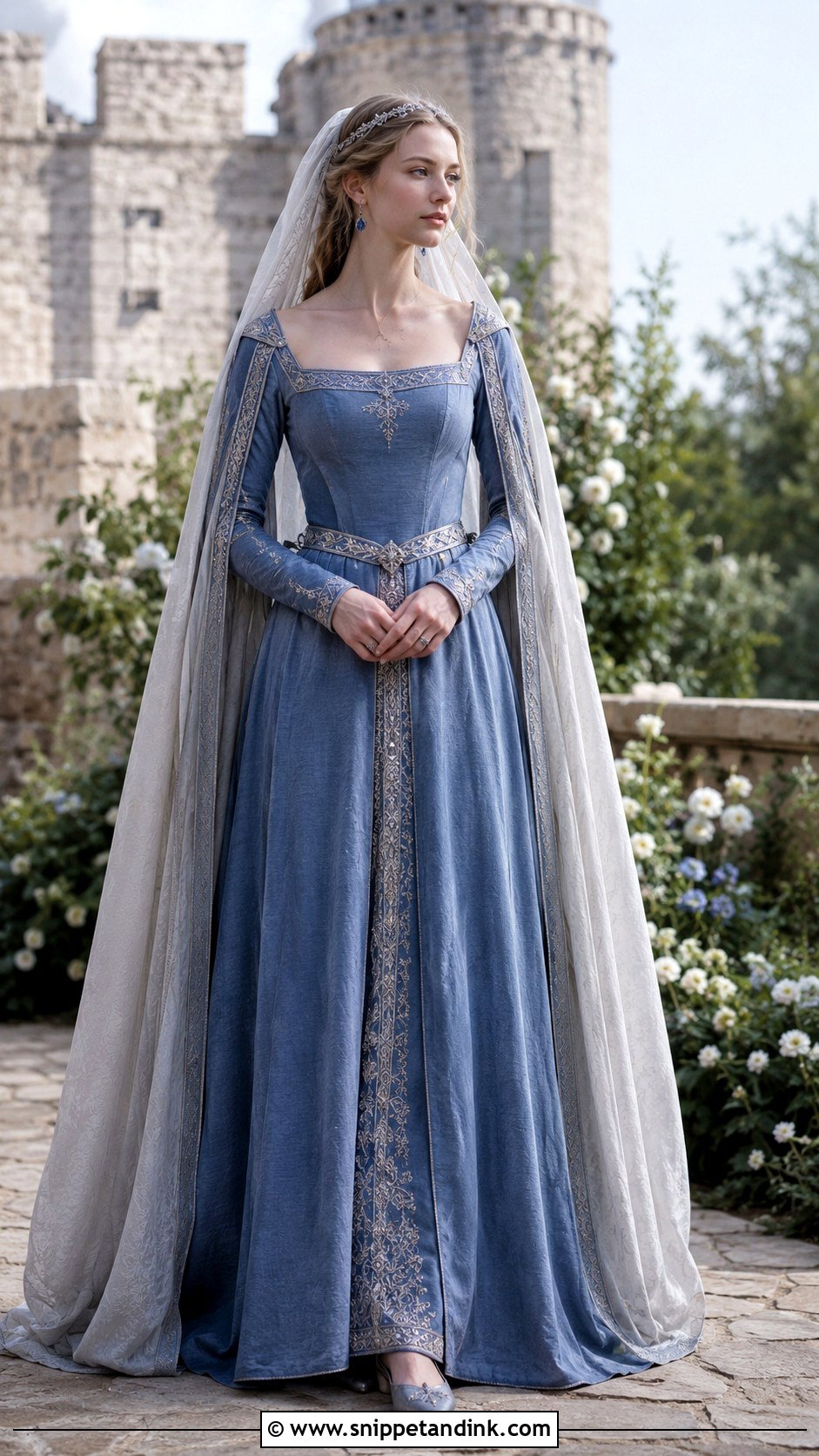
Blue sits quietly and still looks regal. Dusty blue is soft; sapphire or navy is the bolder choice. A floor-length gown with a fitted waist, square neckline, long sleeves and subtle silver embroidery suits either, and a pale grey or ivory cloak covers a cool outdoor ceremony. I keep every metal on this outfit in one finish, silver circlet, silver earring settings and silver shoe buckles, because mixed metals look accidental against blue. Add a gauzy veil, blue gemstone earrings and comfortable pointed flats. White flowers with silvery greenery lift the deeper shades in castle interiors and by the sea.
13. Burgundy Medieval Wedding Dress
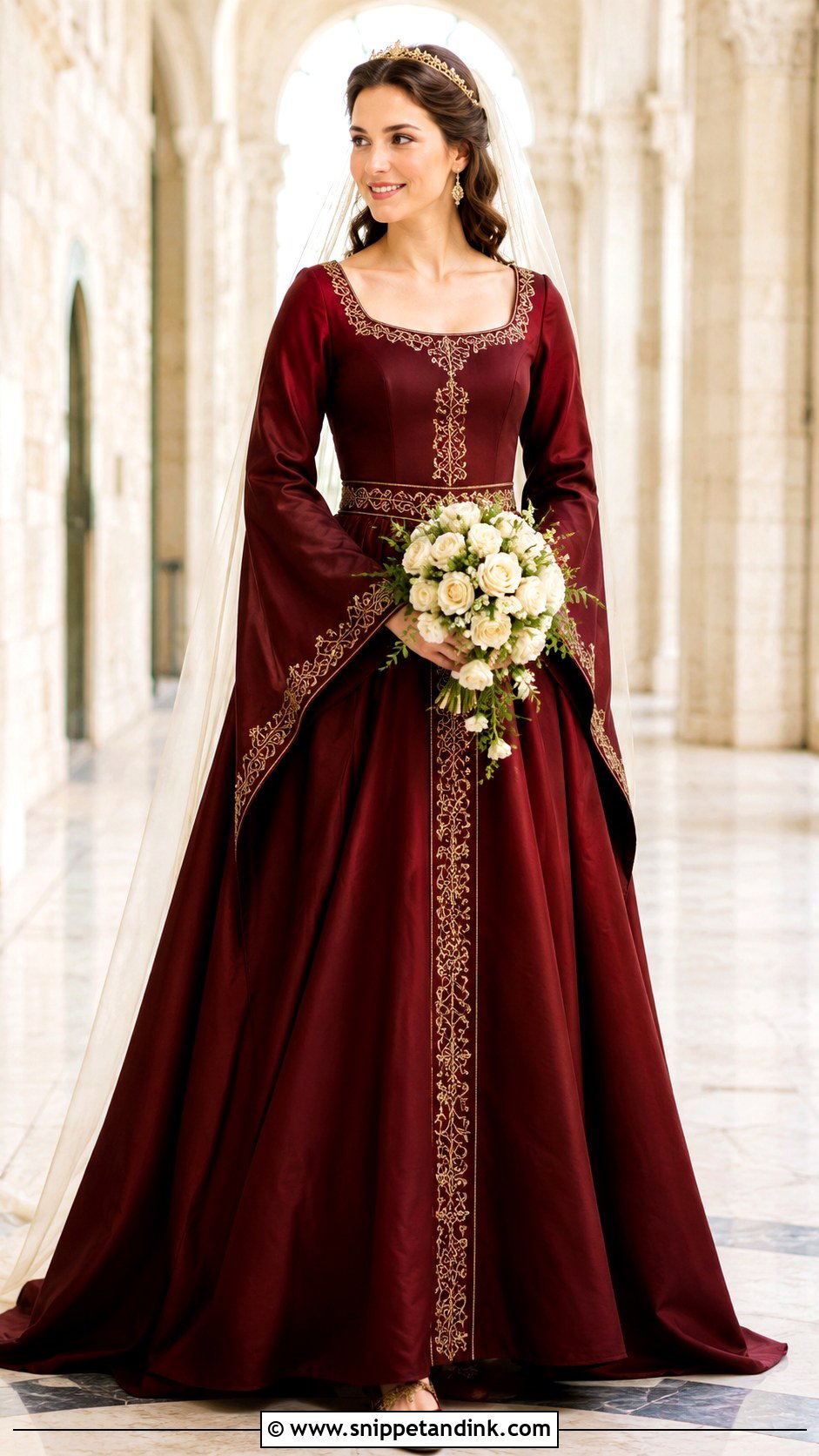
Burgundy brings warmth and weight. Velvet or satin, a fitted bodice, long trumpet sleeves and a sweeping A-line skirt make a strong base, framed with antique gold embroidery at the neckline and sleeve edges. A delicate gold circlet, small drops and a sheer ivory veil behind a braided style keep it bridal. Dark brown or burgundy flats connect the shoes to the gown. The bouquet is where I see this go wrong: an all-dark bouquet against burgundy disappears in photos, so carry cream flowers with restrained greenery. Autumn and winter halls with good lighting show the colour and stitching best.
14. Gold Embroidered Medieval Wedding Dress
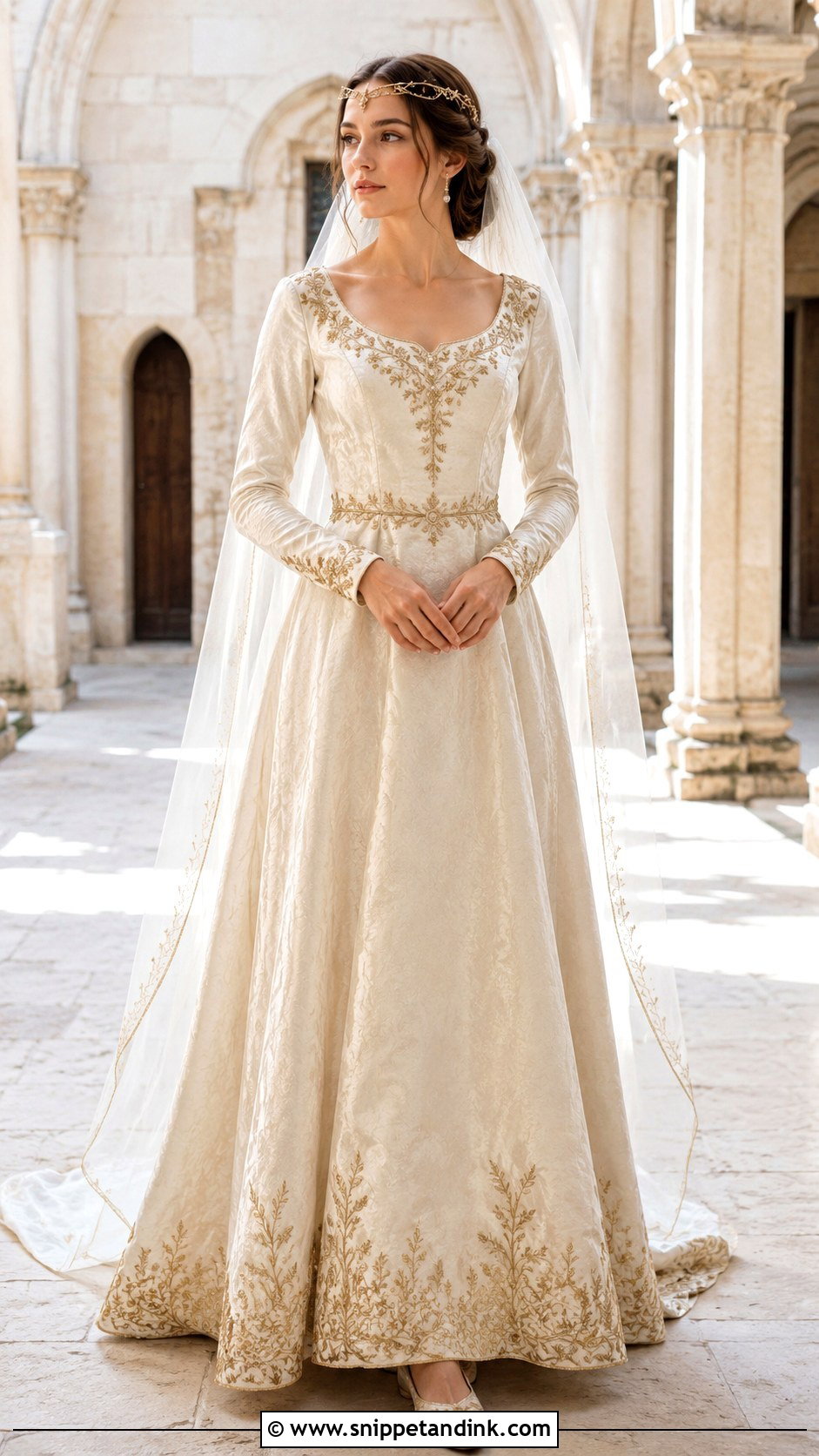
Metallic embroidery on an ivory, cream or champagne base makes a simple gown ceremonial. Keep the scrolling vines to the neckline, cuffs, waist and hem rather than covering the whole dress, with long fitted sleeves and a softly flared skirt as the background. A slim gold circlet, pearl earrings, an ivory veil and champagne flats or low heels hold the tonal palette, and a bouquet ribbon in the same gold ties it together. At the try-on, rub the inside of each sleeve against your arm and drape the veil over the shoulder embroidery; metallic thread can scratch skin and snag tulle.
15. Brocade Medieval Wedding Dress
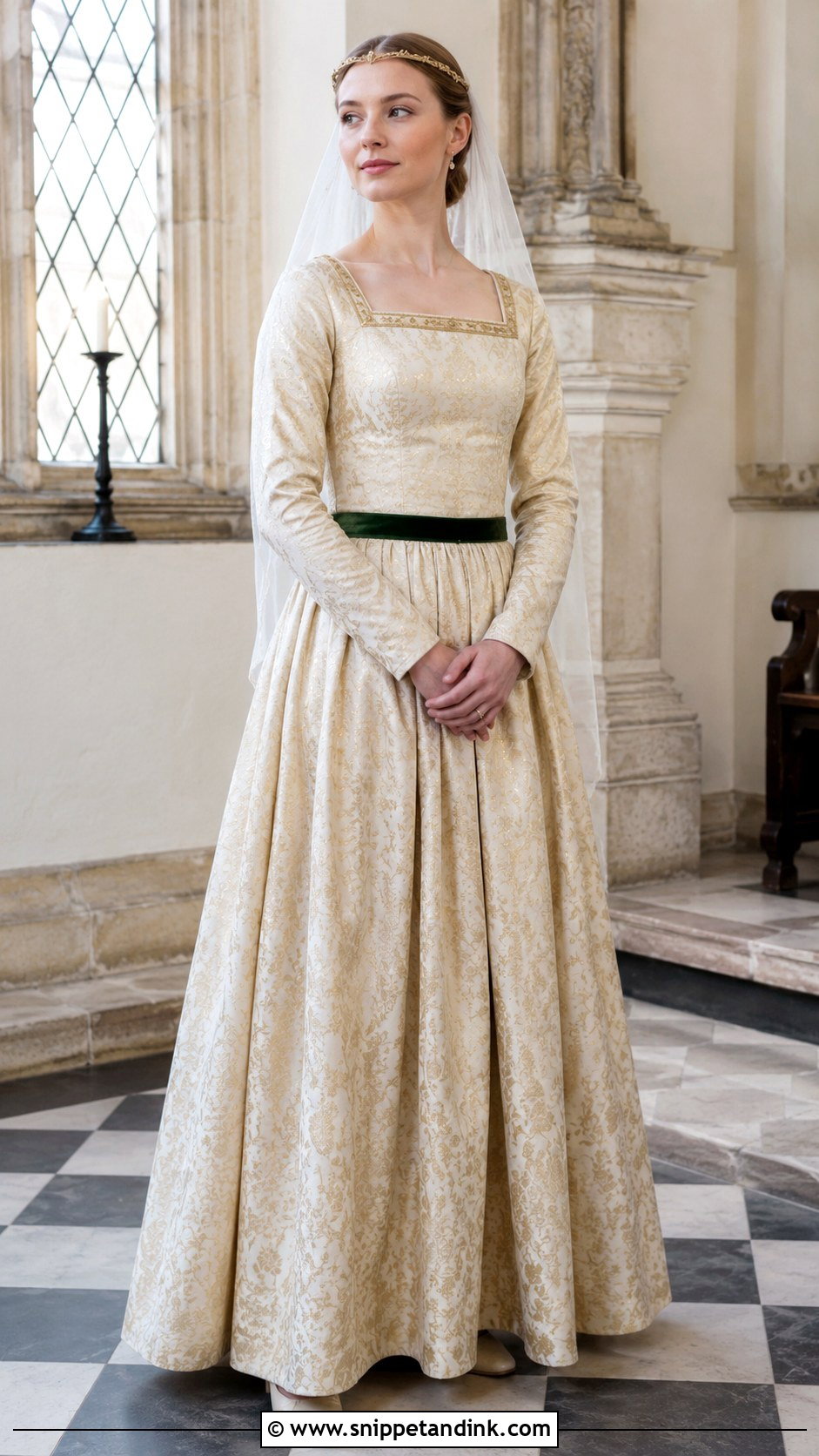
Brocade gives pattern without a single bead. Ivory, pale gold, muted blue or deep green brocade on a structured gown with a fitted bodice and full skirt is plenty, and simple sleeves with a clean square neckline stop it from looking bulky. A solid velvet belt breaks the pattern at the waist. Brocade is a stiff, heavy weave that does not stretch at all, so fit has to be exact at the ribs, and I always ask for a breathable lining and seams placed away from the underarm. A plain veil, small circlet, small earrings and low block heels or leather flats in a matching colour let the fabric lead.
16. Lace Medieval Wedding Dress
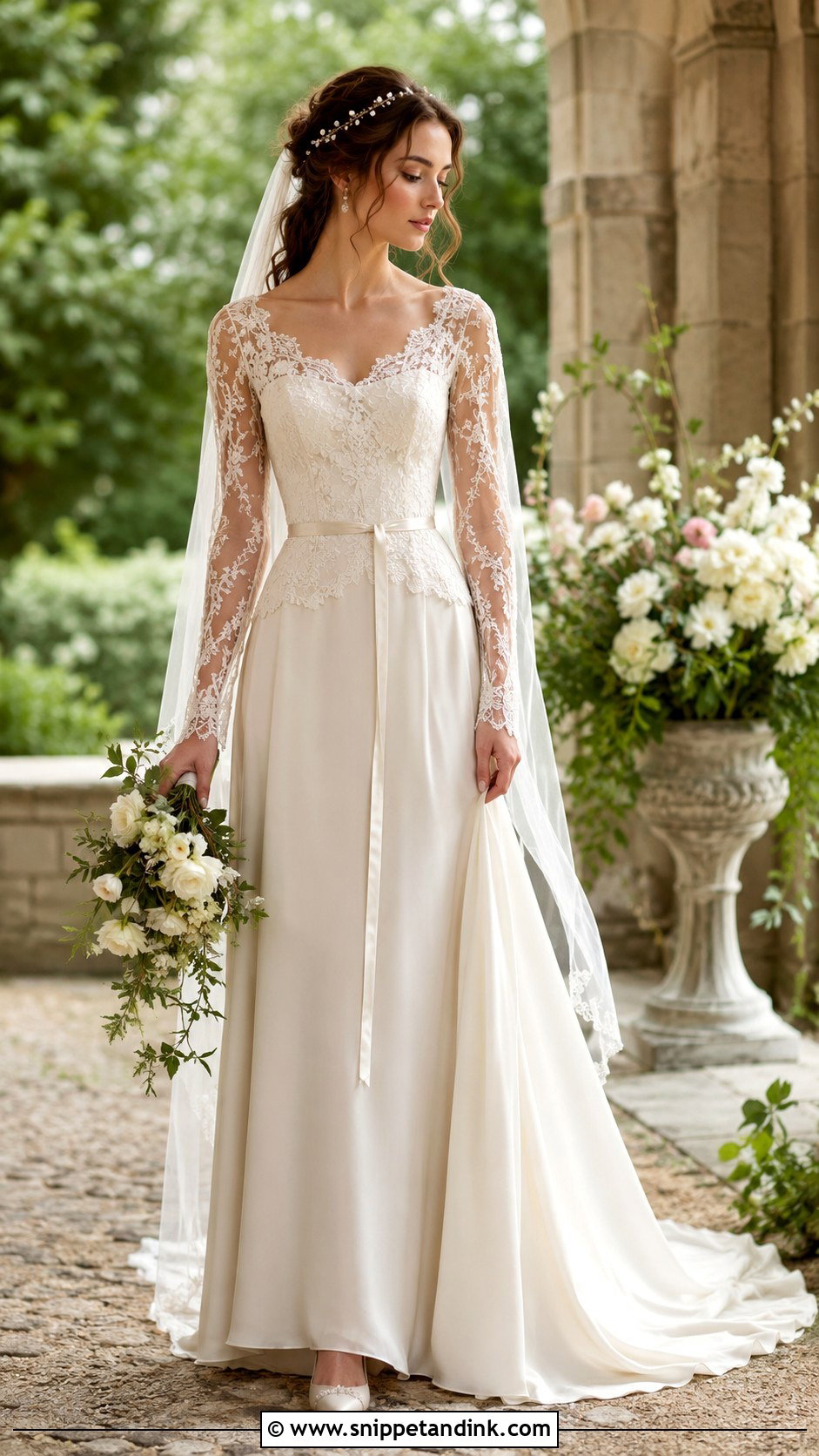
Lace works best here when the pattern follows the shape of the gown rather than sitting on it. I would choose a lined bodice, long lace sleeves, a slightly lowered waist and a flowing chiffon or crepe skirt. Large botanical motifs look old-world; fine florals are softer. The lining colour decides how the lace reads: a lining close to your skin tone makes the lace look like it is floating on you, while one matching the gown gives more coverage. A narrow ribbon belt, pearl pins, ivory flats or low heels and a simple veil that leaves the sleeves visible are enough. Garden ceremonies and historic estates suit it.
17. Medieval Surcoat Wedding Dress
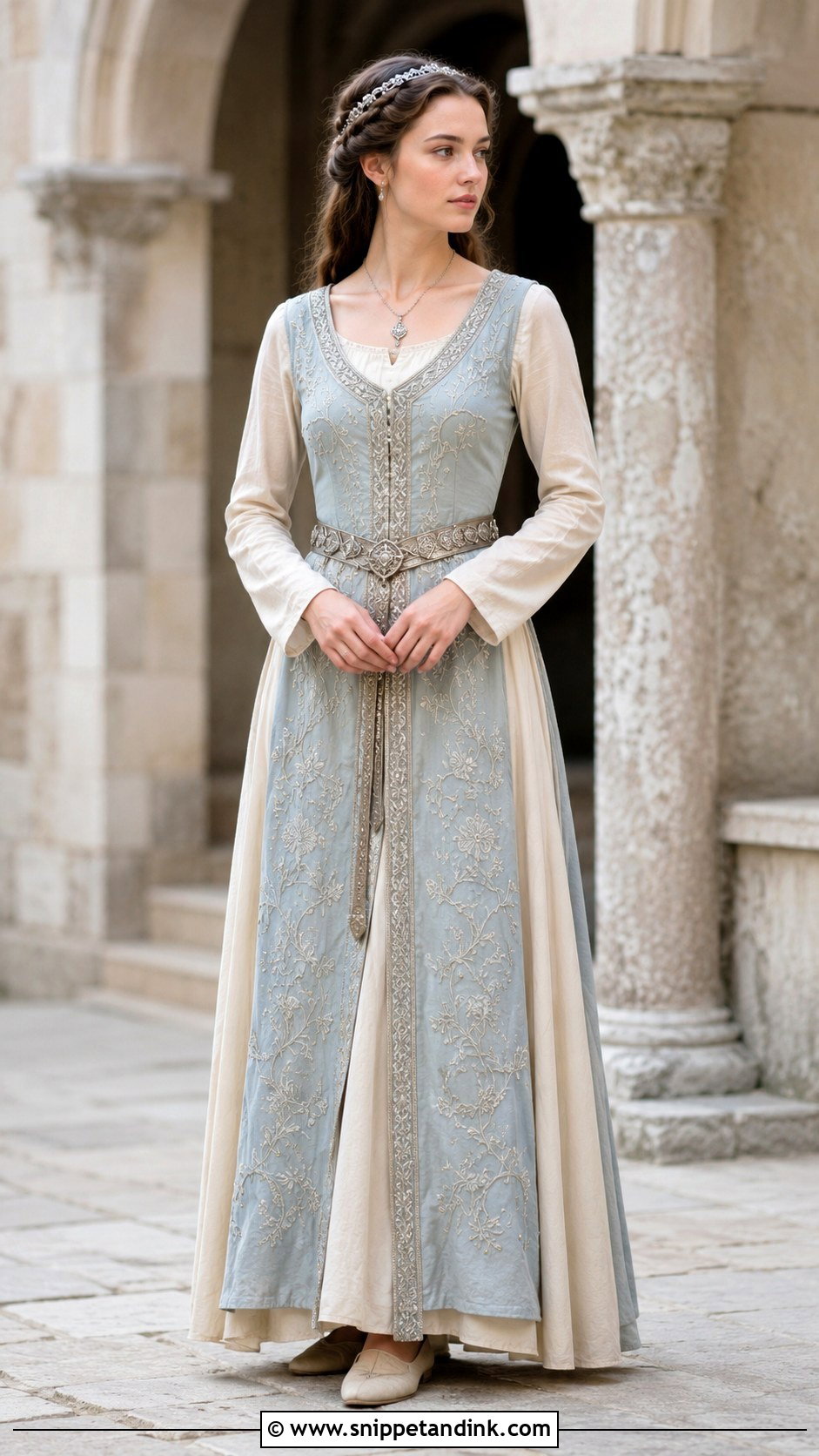
A surcoat is the layered look people recognise from manuscripts. Begin with a long-sleeved underdress in ivory silk, light linen or soft crepe, then place a sleeveless open-sided overdress in pale gold, blue, green or embroidered ivory over it. Both layers should finish at the same floor-length hem, and a decorative belt at the natural or slightly lowered waist holds them together. Keep the open side edges clean, since heavy trim there blurs the outline. I check the armholes of the overdress with arms raised; cut too deep, they show the underdress bodice at every wave. Braids, a circlet, a small pendant and leather flats finish it.
18. Medieval Kirtle Wedding Dress
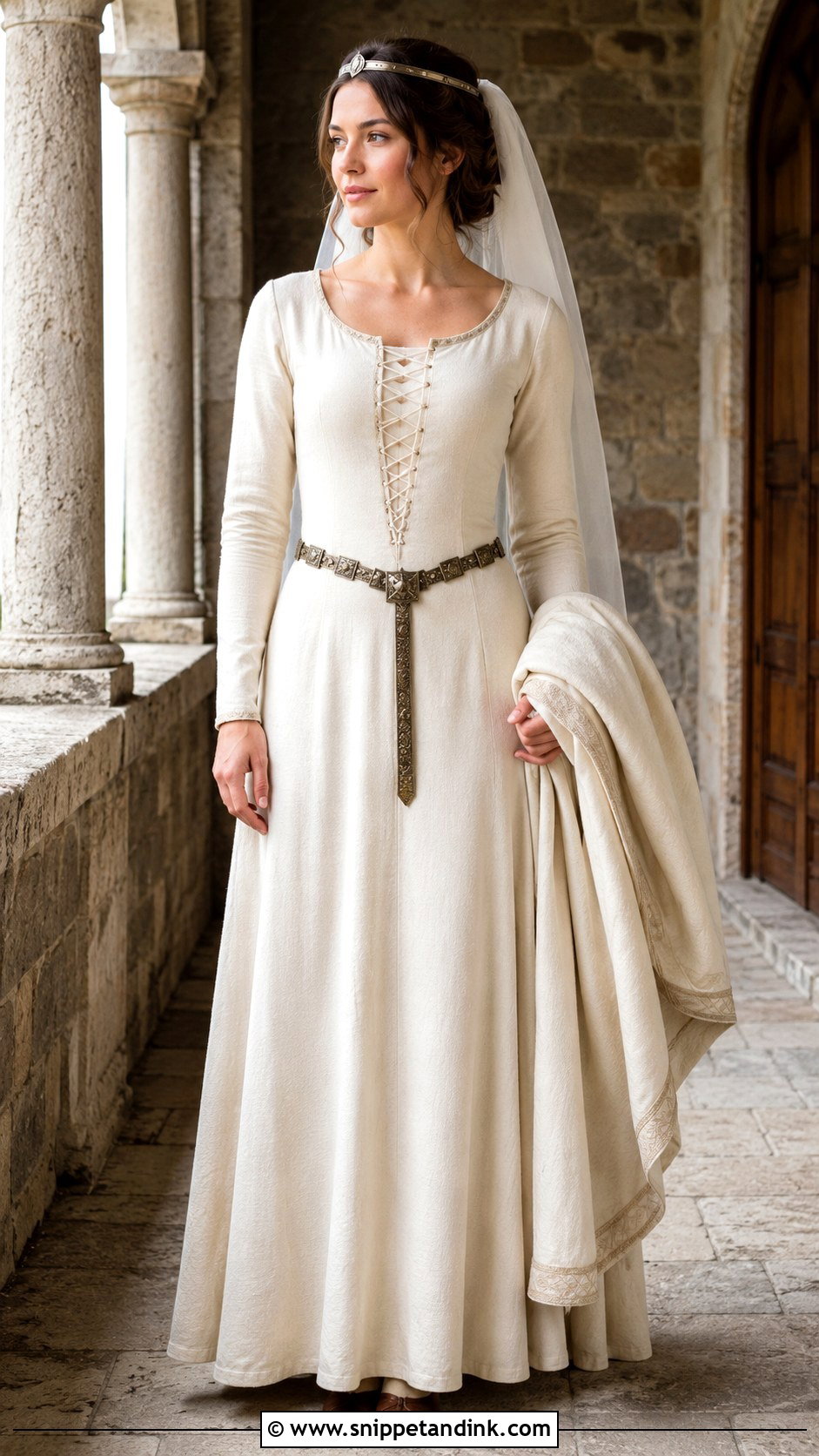
The kirtle was the everyday fitted gown of the period, and its simplicity is the appeal. A close-fitting body with lacing at the back or front, long narrow sleeves and a skirt that widens gradually toward the floor is the whole design. Ivory wool crepe suits cold weather; linen blends and light silk suit warm. Because the kirtle gets its support from fit alone, I fit it on the body over the exact underwear you will wear on the day; changing bras after the last fitting changes everything. Add a woven or metal belt, a soft veil, a small circlet, rounded leather flats and a detachable cloak for outdoor photos.
19. Plus Size Medieval Wedding Dress
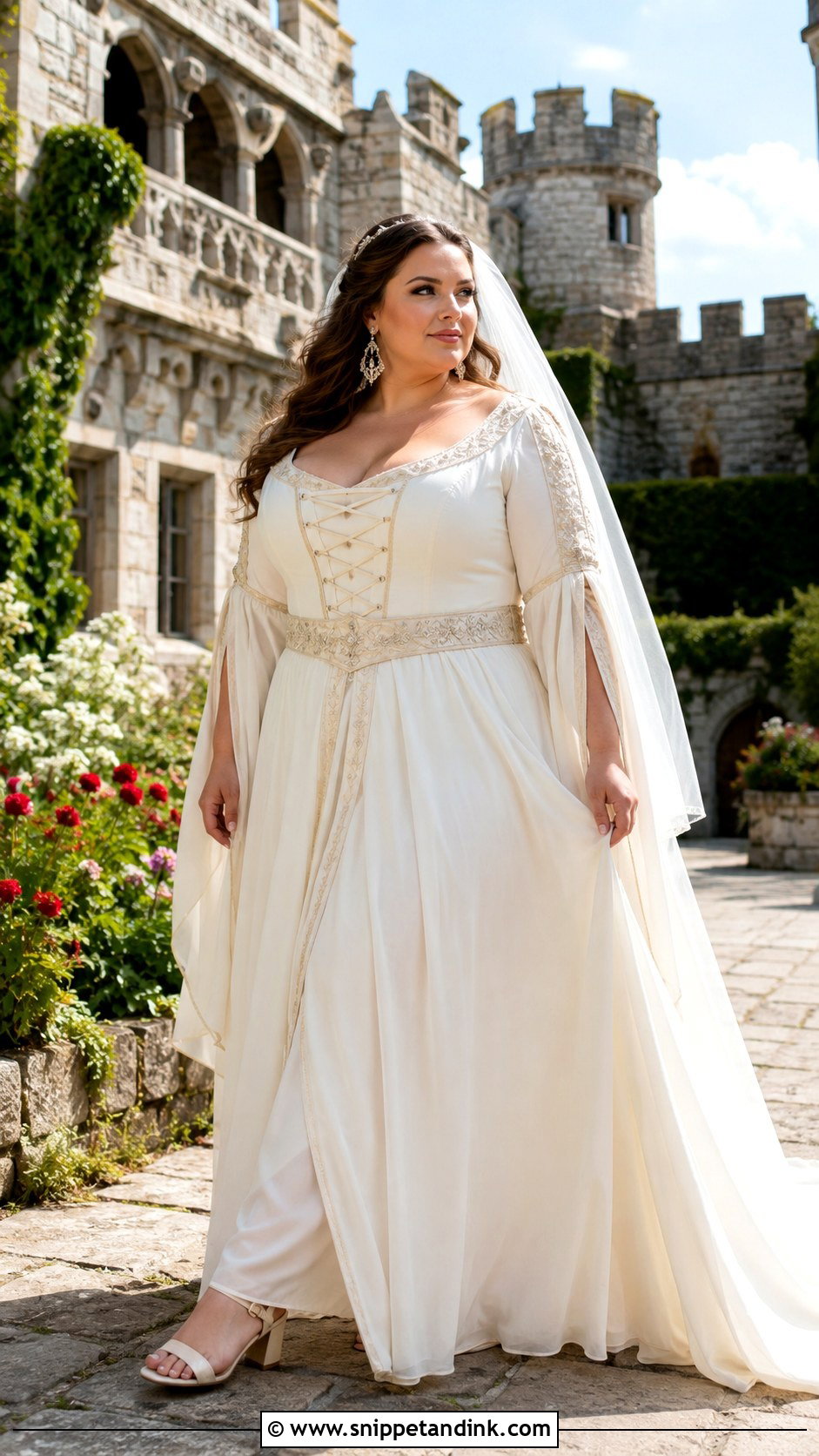
Support first, then style. An A-line gown with a structured laced bodice, wide straps or long sleeves and a skirt that falls from the waist without clinging is a strong base, with a square or softly rounded neckline to balance the shoulders. Ask for flexible boning, a smooth lining and sleeves cut to your own arm measurements, since standard sleeve patterns are often tight at the upper arm. I never recommend ordering a size down for a tighter corset effect: a well-fitted bodice should let you breathe and sit. An embroidered belt, a light veil, drop earrings and cushioned block heels or flats complete it.
20. Simple Linen Medieval Wedding Dress
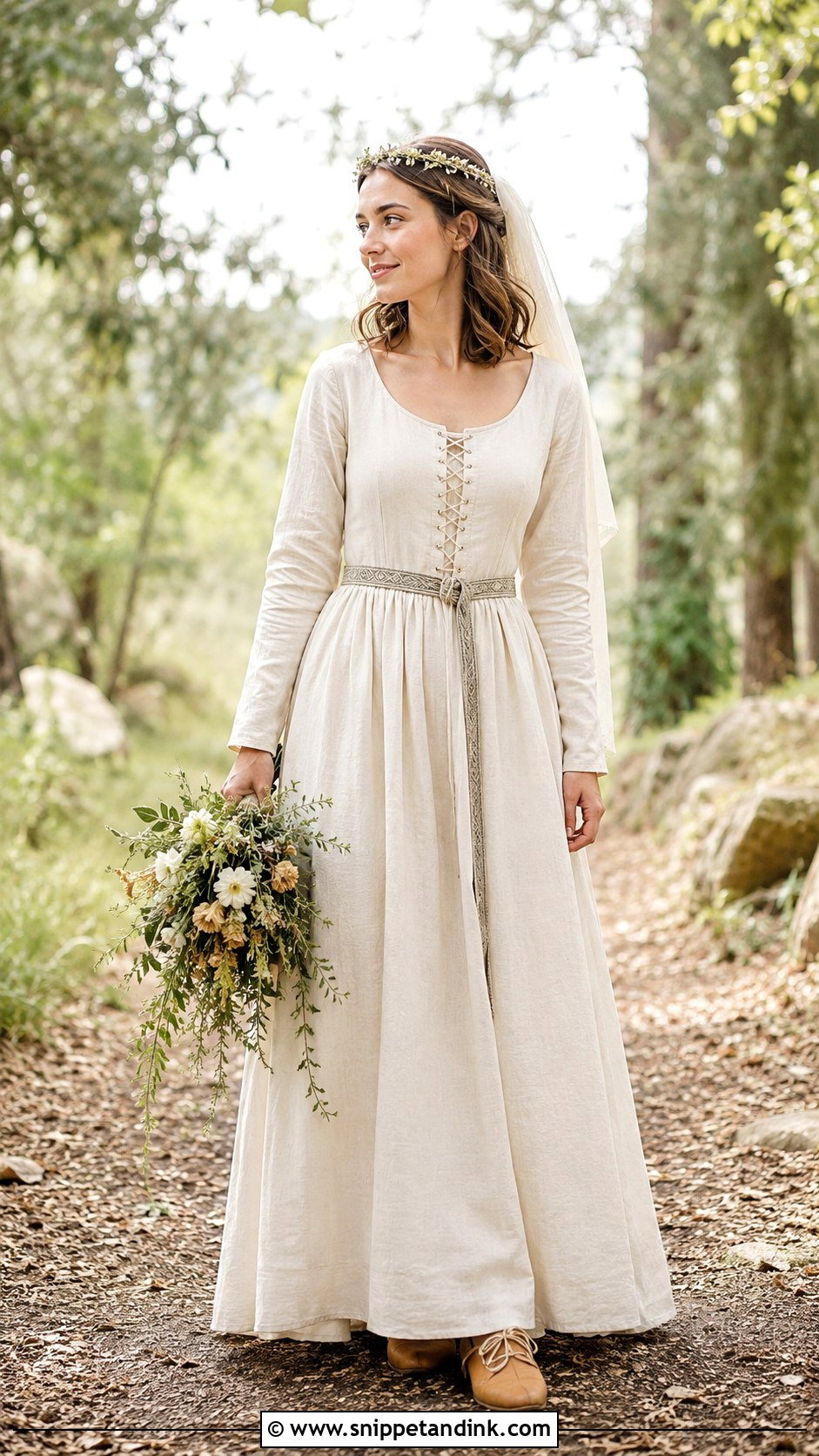
Linen is the most relaxed option on this list and the one I suggest for outdoor ceremonies in warm weather. An ivory or natural cream floor-length gown with a gently fitted bodice, scoop neckline, long sleeves and a gathered A-line skirt keeps it simple, and a lace-up back adds shape. A narrow woven belt, a floral or silver circlet, a shoulder-length veil and tan leather flats that cope with grass and gravel finish it. Pure linen wrinkles fast; a linen blend holds a smoother line if creases bother you. A loose, seasonal bouquet suits its spirit.
Stone Stairs, Wet Grass and a Long Hem
Castles and woodland venues are hard on a gown. Spiral stone steps are narrow and worn, and a floor-length skirt with a train has to be lifted in one hand while the other holds the rail. Practise that at the final fitting. If you cannot do it comfortably, ask for a wrist loop on the train or a bustle that lifts it clear.
On grass, the hem picks up damp and green stains within minutes. A horsehair braid or a protective facing on the inside of the hem keeps the skirt holding its shape, and choosing a gown that just skims the floor rather than pooling on it helps more than any hem guard. Boots or flat leather shoes with a little grip are safer than heels on uneven ground, and they suit the period anyway.
Dressing a Partner Who Matches Without Looking Rented
When one half of the couple is in a medieval gown, the other in a standard suit can look like two different weddings. A tunic or doublet in the same colour family as your trim, a plain linen shirt, dark trousers and leather boots are usually enough to link the two. I match one element directly, often the belt metal or the embroidery thread, and leave the rest simpler. Skip printed costume tunics; a well-cut plain garment in wool or linen will look like it belongs beside a real gown.
Start With the Venue Floor, Then the Sleeves
Start with the place, not the dress. A cold stone hall, a grass clearing and a candlelit evening each point to a different fabric, sleeve and shoe, and once those are settled the rest of the choices narrow quickly. Then pick one or two medieval features, a bell sleeve, a laced bodice, a cape or a colour, and keep everything else quiet. Leave time for alterations, because almost every gown here depends on fit through the torso and sleeves, and wear the whole outfit together once before the day so the circlet, veil and cape have been tested side by side.
You'll Like These Ideas:


Leave a Reply