
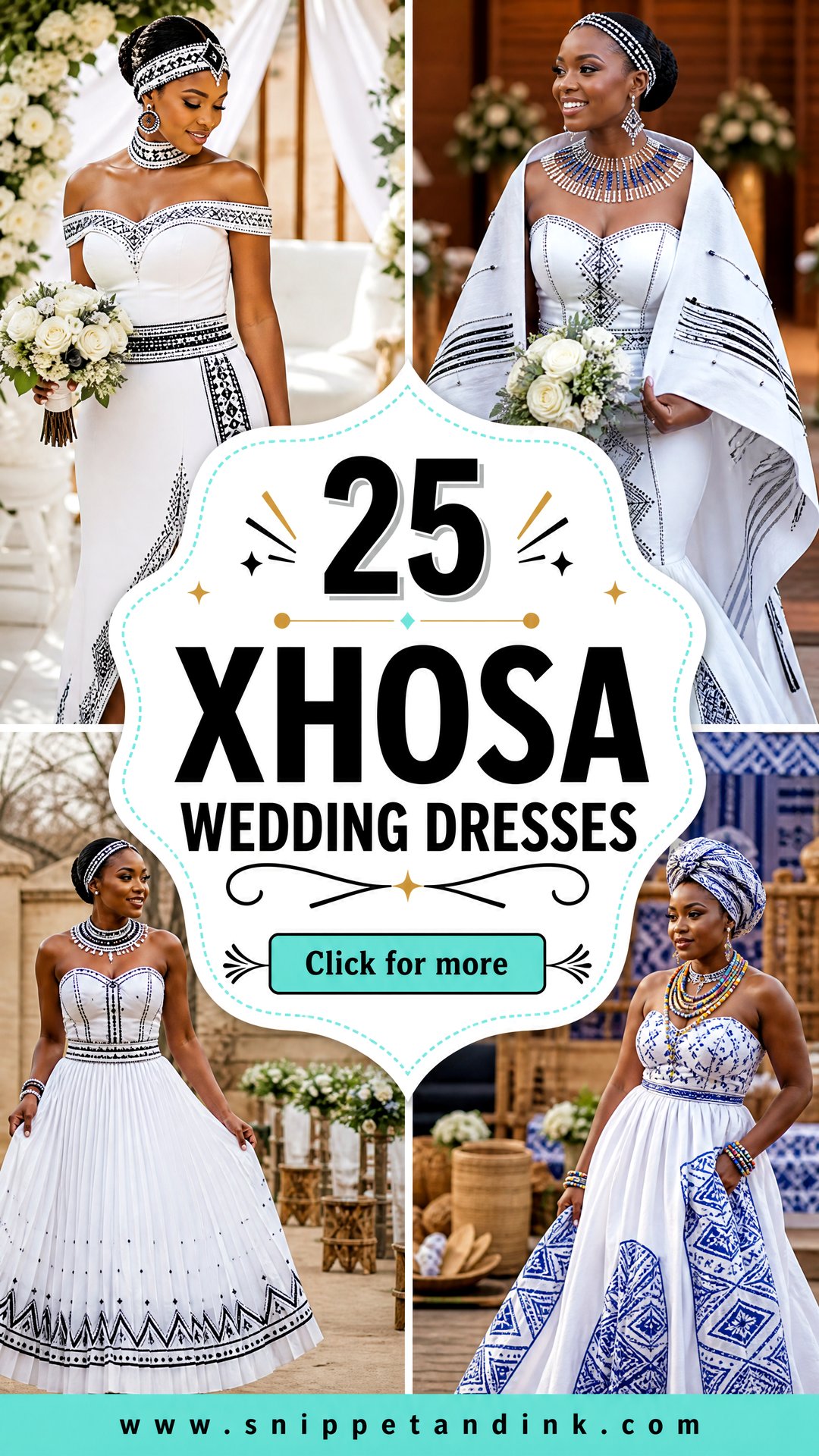
Xhosa wedding dresses carry a lot more than style. The umbhaco cloth, the parallel black bands, the beadwork and the doek all say something about family and about the bride stepping into a new role, so I never treat them as decoration to be sprinkled onto a gown. Some brides I dress want the full traditional outfit, layered and bold. Others want a white gown that borrows a striped border or a beaded collar. Both can work, as long as the dress lets you sit on a low bench, kneel to greet elders and move through a long day without tugging at it. The looks below run from strictly traditional to very modern, with notes on how each one behaves once you’re wearing it.
Briefing a Dressmaker on Umbhaco Cloth, Bands and Beads
Most of the Xhosa bridal outfits I style are made to order, and the first meeting with the dressmaker sets the whole result. I bring three things: the cloth itself if the family is supplying it, a photo of trim spacing we like, and a clear list of what the bride will do during the ceremony. Kneeling, sitting on a low bench and carrying things all change how the bodice and skirt need to be cut.
- Pre-wash cotton umbhaco before cutting. It can shrink, and black bands stitched onto unwashed cloth may pucker the first time the dress gets damp.
- Ask how the bands are attached. Straight, even topstitching on both edges keeps them flat; a single line of stitching lets them curl.
- Have beadwork made as separate backed pieces where you can. A beaded collar or cuff that detaches can be stored safely and worn again with another outfit.
- Leave enough time. Custom dresses with hand beading often take several months, and the beader and the dressmaker are frequently two different people working one after the other.
I’d also book at least two fittings, the second one wearing your actual shoes and doek. A headwrap changes your proportions, and a hem pinned while you’re barefoot will drag once the heels go on.
Talk to the Elders Before Modernising the Outfit
In many Xhosa families the bride’s clothing for the traditional ceremony is not entirely her call. A makoti is often expected to keep her head covered, her shoulders and knees modest, and to wear what the in-laws provide or approve for certain parts of the day. Customs differ from family to family, so I always tell brides to ask before the fabric is bought, not after.
A short conversation with a mother-in-law or aunt can settle what’s fixed and what’s open. Often the answer is a split: a traditional outfit for the family rites and a freer, more fashion-led dress for the reception. Knowing that early saves you paying for a dress you can only wear for an hour.
1. Traditional Xhosa Umbhaco Wedding Dress
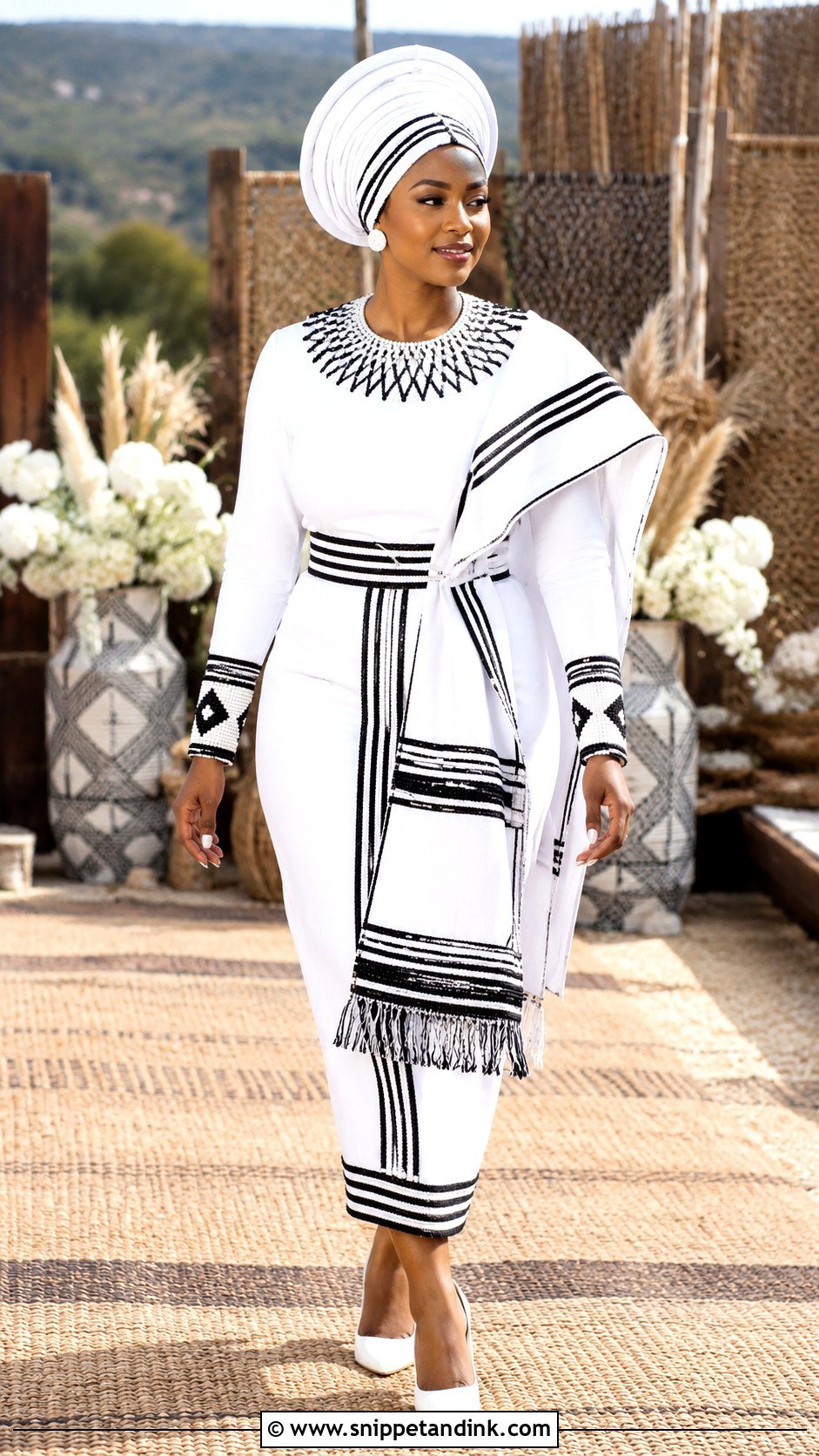
This is the outfit most families picture first, and a traditional Xhosa umbhaco wedding dress earns that place. The cloth is usually white or cream cotton with black bands stitched in rows, and the spacing of those rows matters more than people think: bands set too far apart look sparse, too close and the skirt reads as grey from a distance. Cotton umbhaco is heavier than it looks, so I ask for a little ease at the waist and shoulders. You’ll be sitting, rising and greeting for hours, and a snug cotton bodice will not stretch to forgive you.
2. Black And White Xhosa Wedding Dress
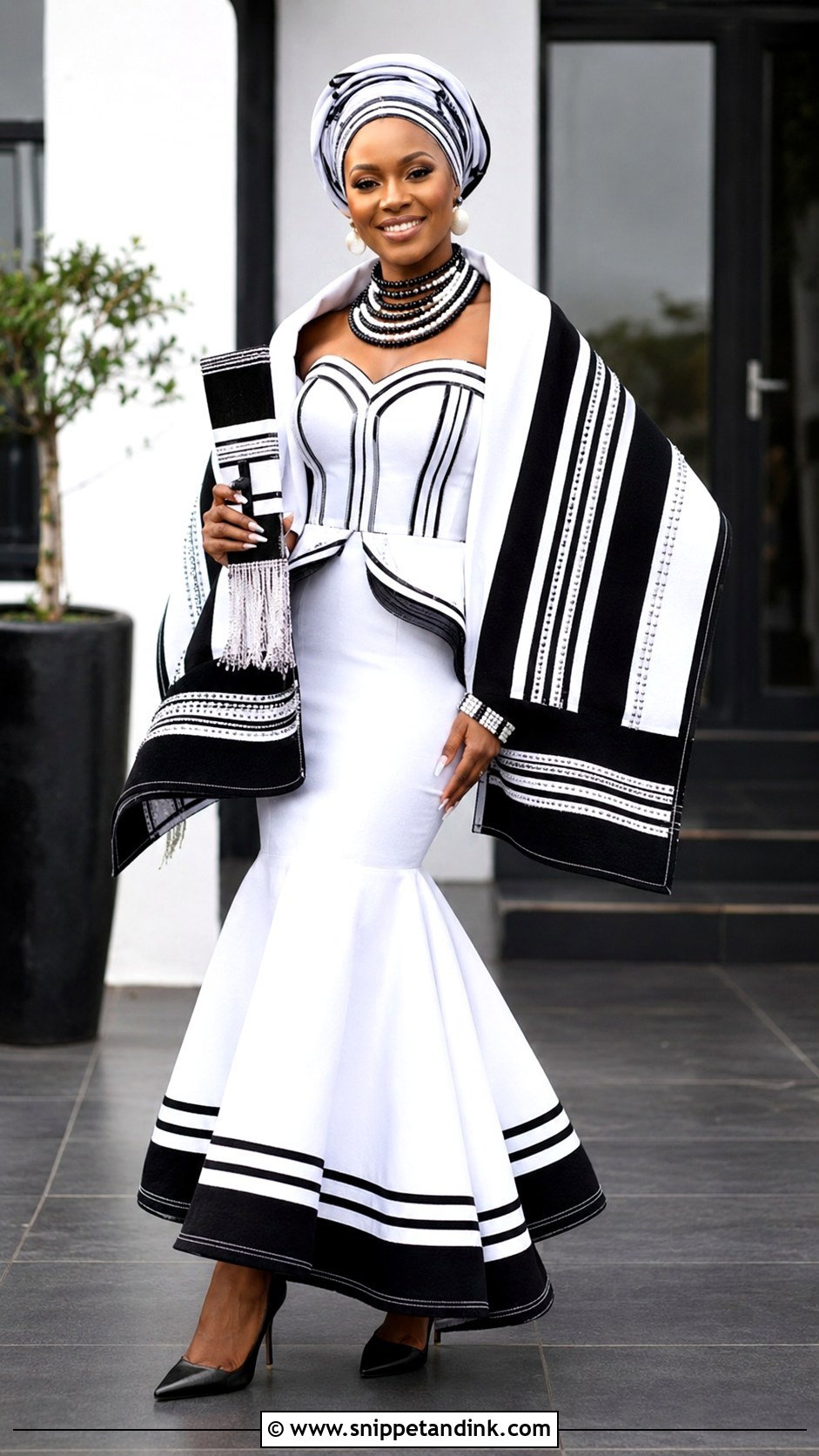
Pure black and white is the version I’d pick for an outdoor ceremony with harsh midday sun. The contrast holds its shape in photos when softer colours wash out. Where the black bands sit changes the body’s outline: a band at the natural waist shortens the torso, while bands at hem and cuffs pull the eye outward and lengthen. If you’re petite, I’d keep the heaviest stripe low. Black heels, a striped doek and pearl or bead earrings are all this one needs.
3. Modern Xhosa Wedding Dress With Beads
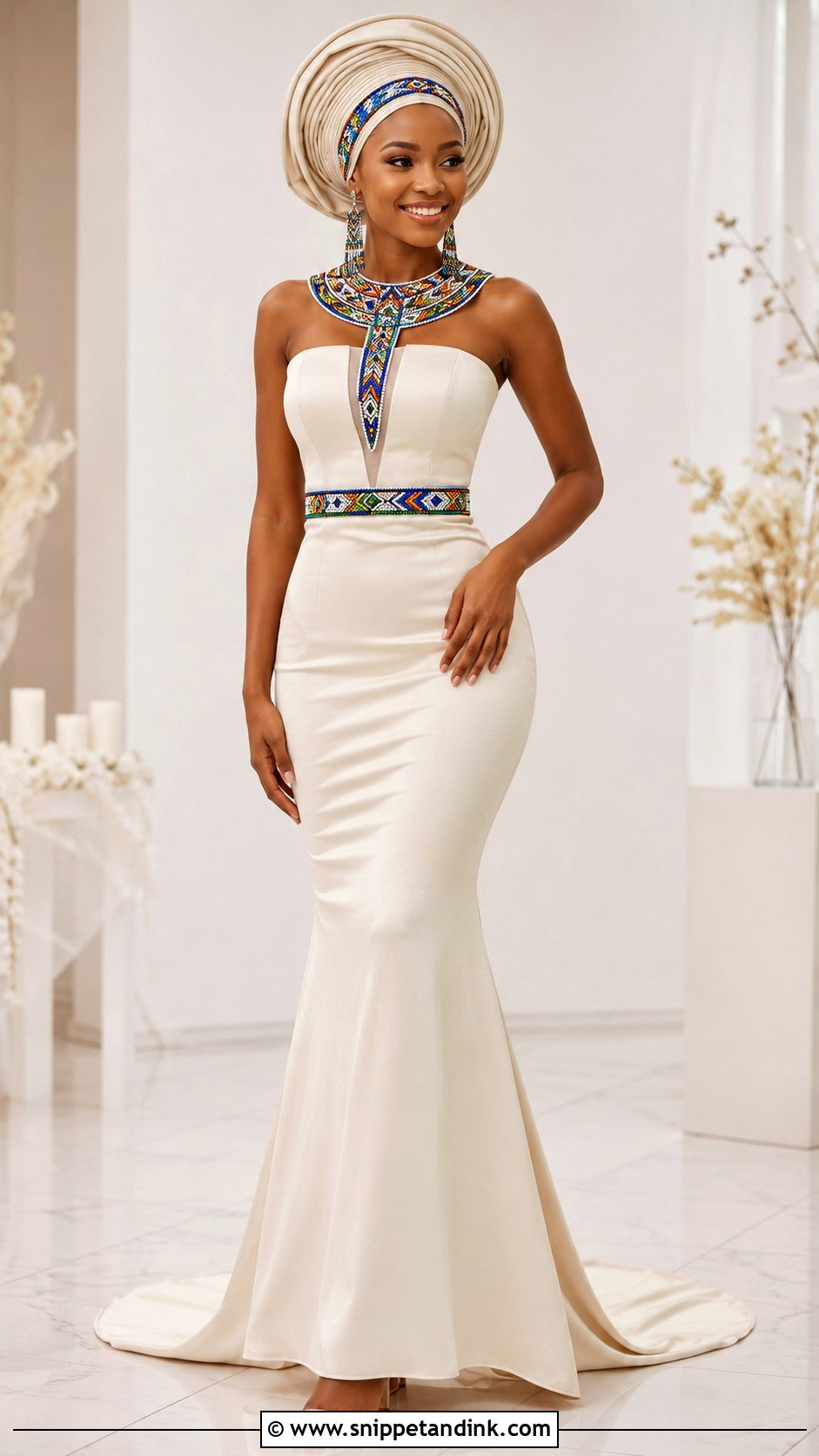
Beadwork on a modern gown has a practical catch: it’s heavy. A beaded hem drags lighter fabrics downward, and a beaded waistband can pull a mermaid seam out of line by the end of the day. When I brief a dressmaker, I ask for the beads to be stitched onto a backed band and then attached, rather than sewn straight into thin fabric. White, ivory, red or black all take beading well. Frame the neckline or the cuffs and leave open space elsewhere so the pattern can actually be read.
4. Red Xhosa Wedding Dress
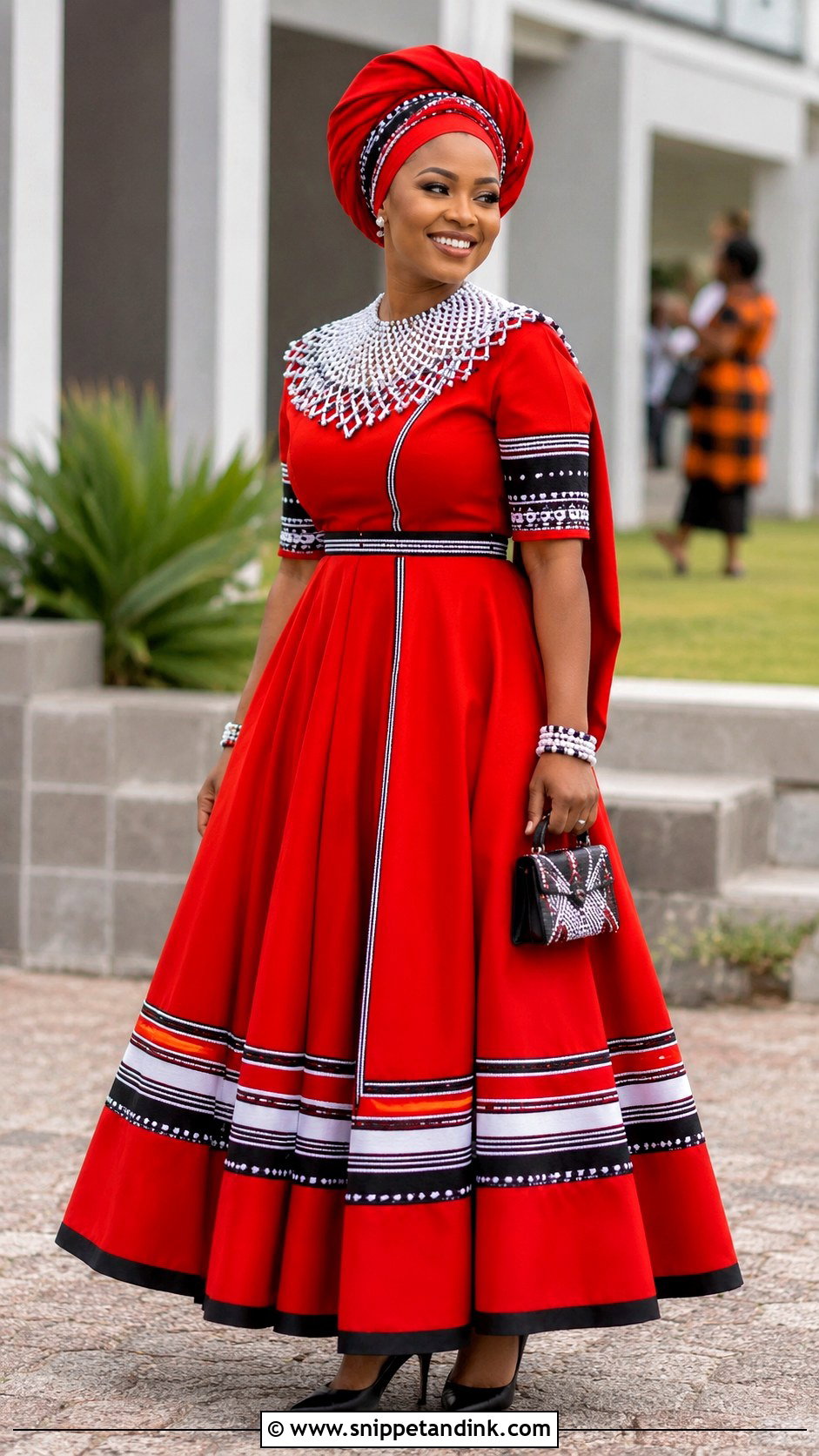
Red is a confident colour on a bride, and it photographs warmly against dry grass and earth tones. The thing I watch is the dye. Some red cottons bleed when they meet sweat or a spilled drink, which is a disaster against white trim, so I always ask for a wash test on an offcut before anything is cut. Paired with black and white bands, a flared skirt and a matching doek, red keeps its grounded traditional feel while standing out in group shots.
5. White Xhosa Wedding Dress With Black Trim
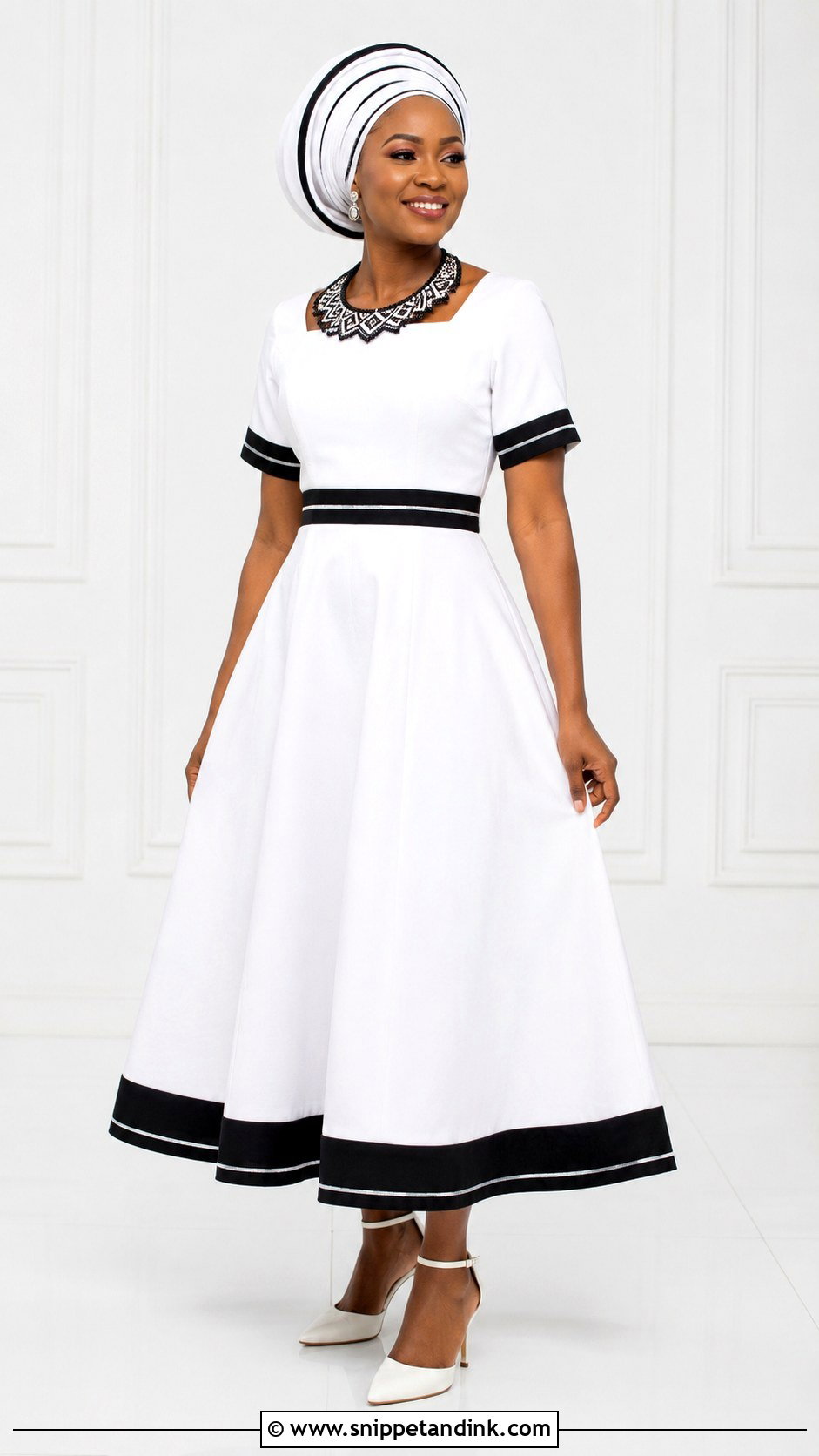
White with black trim is my usual answer when a bride wants one dress to work for both a church service and the family ceremony. The white reads as bridal; the black bands keep it unmistakably Xhosa. It takes to an A-line, a mermaid or a two-piece set equally well. Be warned that white cotton shows every mark from red soil and outdoor seating, so I’d plan a quick-change skirt or a wrap for the later part of the day.
6. Xhosa Mermaid Wedding Dress
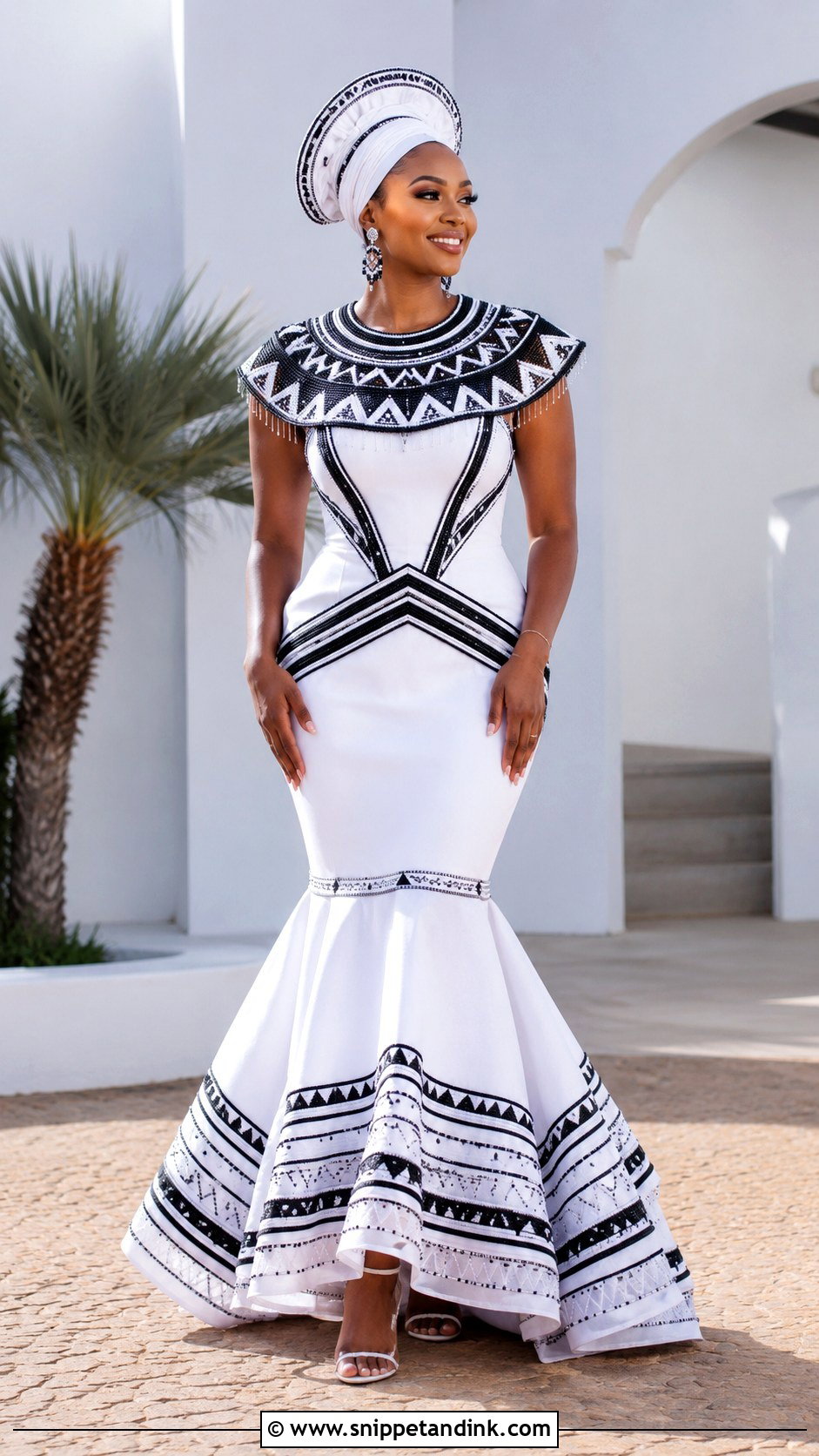
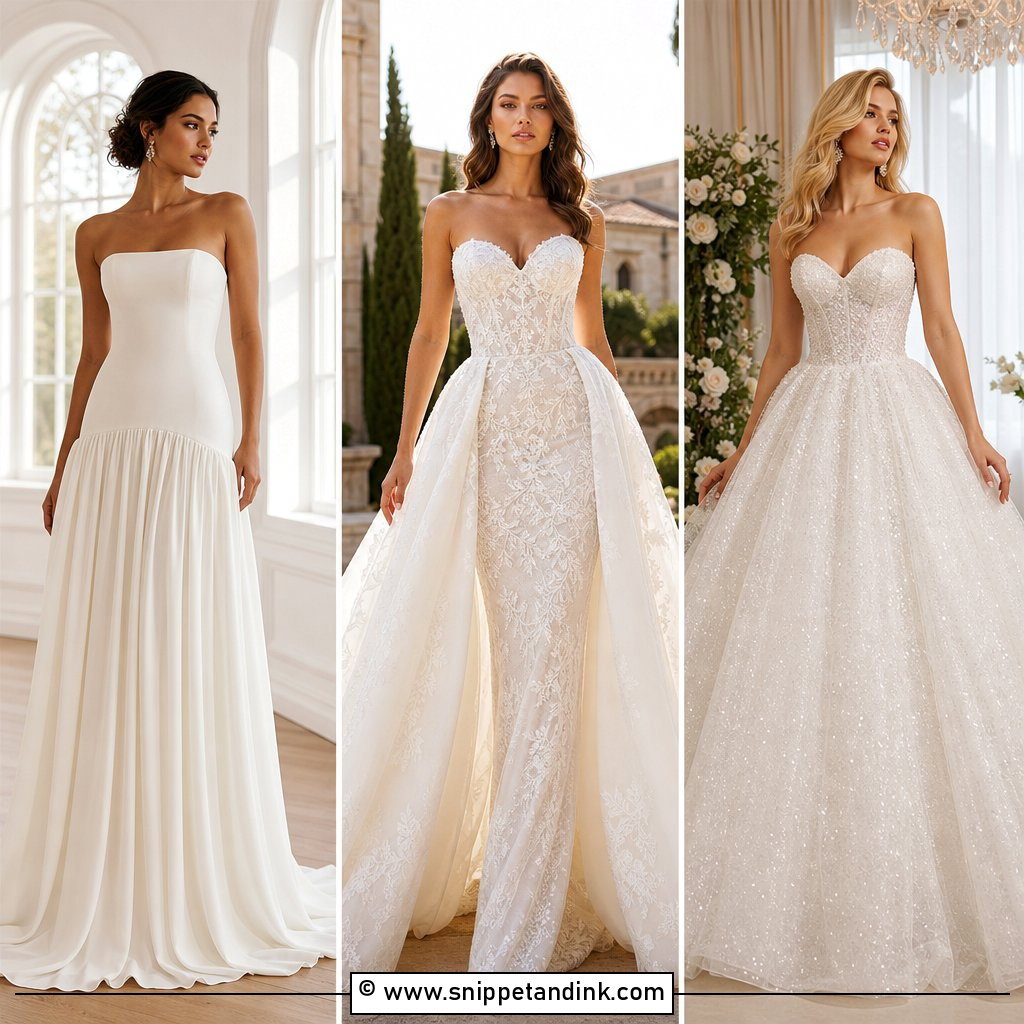
A Xhosa mermaid wedding dress is the most demanding shape on this list to wear at a traditional event. It hugs to the knee, which looks dramatic standing but makes kneeling or sitting on a low bench very hard. I’d only steer a bride here if her ceremony keeps her mostly upright, or if she plans to change. Trim along the flare works well because it moves when you walk. Choose a fabric with real body; a soft knit will sag under beaded panels within hours.
7. Xhosa Ball Gown Wedding Dress
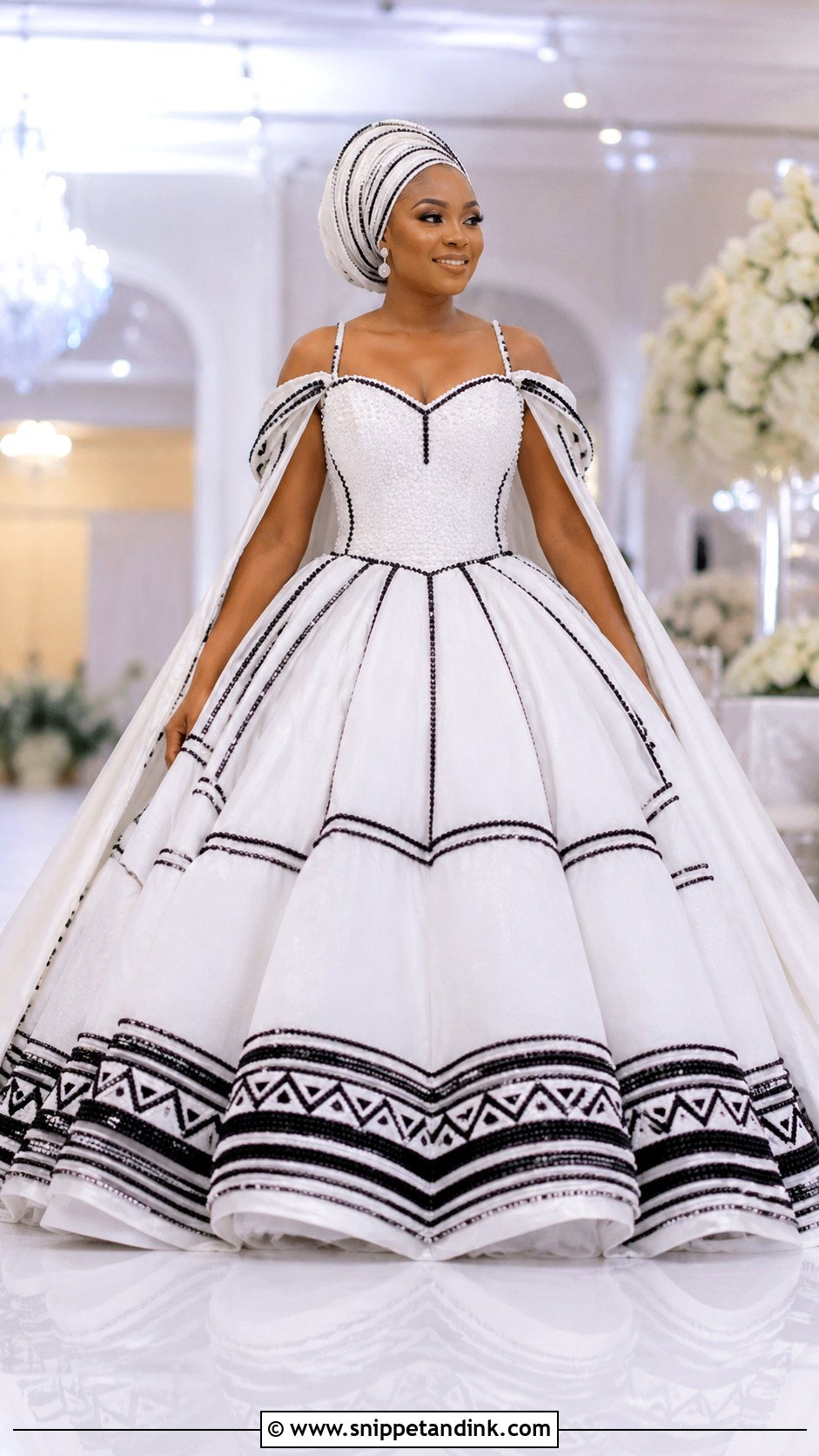
A full skirt makes an entrance, no question. It also takes up a lot of room in a crowded homestead or a small hired hall, so I always ask about the space before suggesting one. The bodice is where umbhaco trim or geometric beading shows best here, because the skirt volume swallows detail at the hem. Keep the jewellery light. A heavy collar plus a huge skirt can make a bride look wide from shoulder to hem in photos.
8. Xhosa A Line Wedding Dress
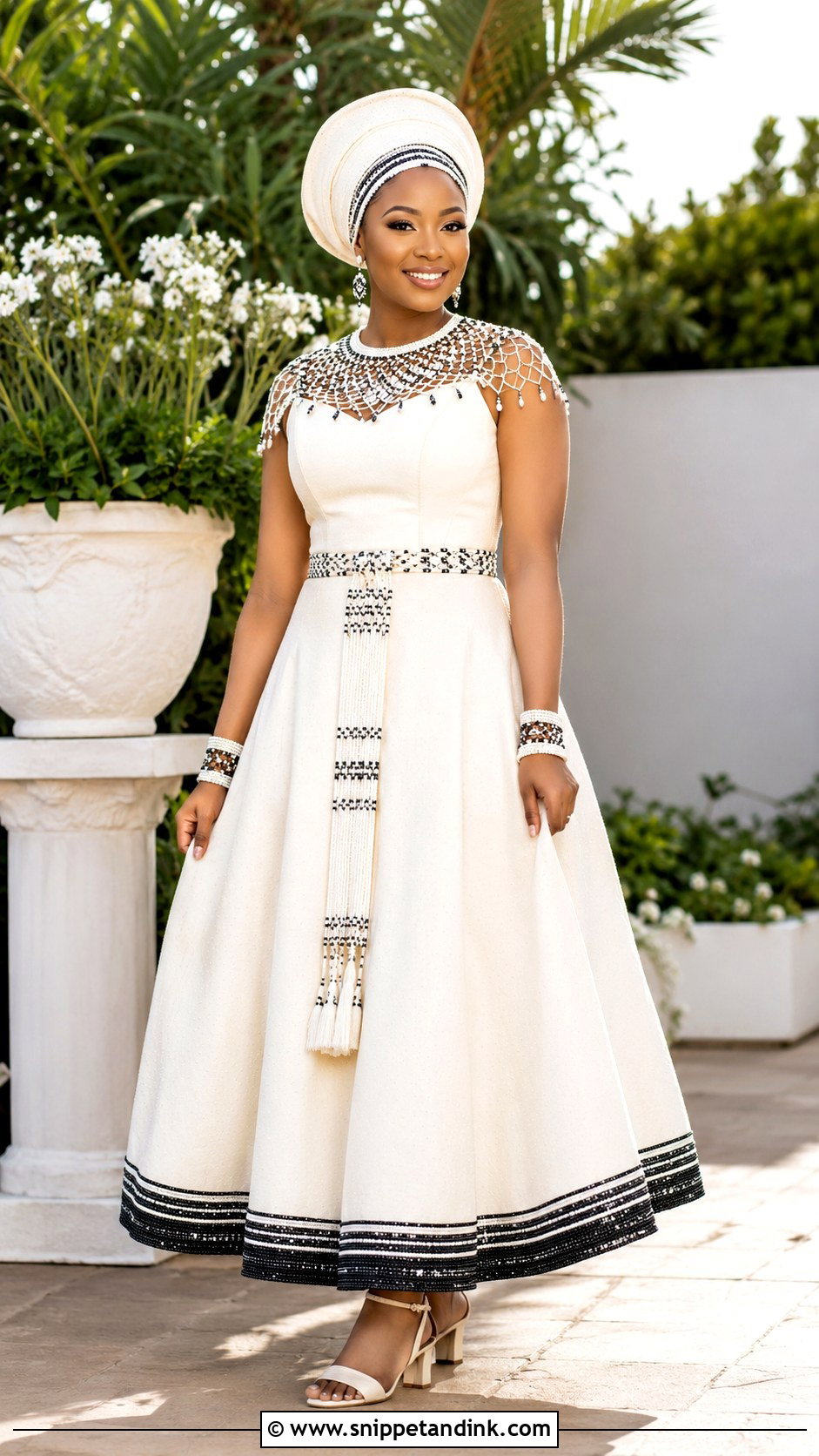
If a bride tells me she plans to dance, walk between households and sit through speeches, I point her to an A-line first. It’s forgiving on most bodies and doesn’t fight you when you move. Black trim on white, beaded borders on red or patterned bands on ivory all sit happily at the hem of this shape. I’d choose mid-height heels with it; the skirt hides them and your feet will thank you by evening.
9. Xhosa Wedding Dress With Headwrap
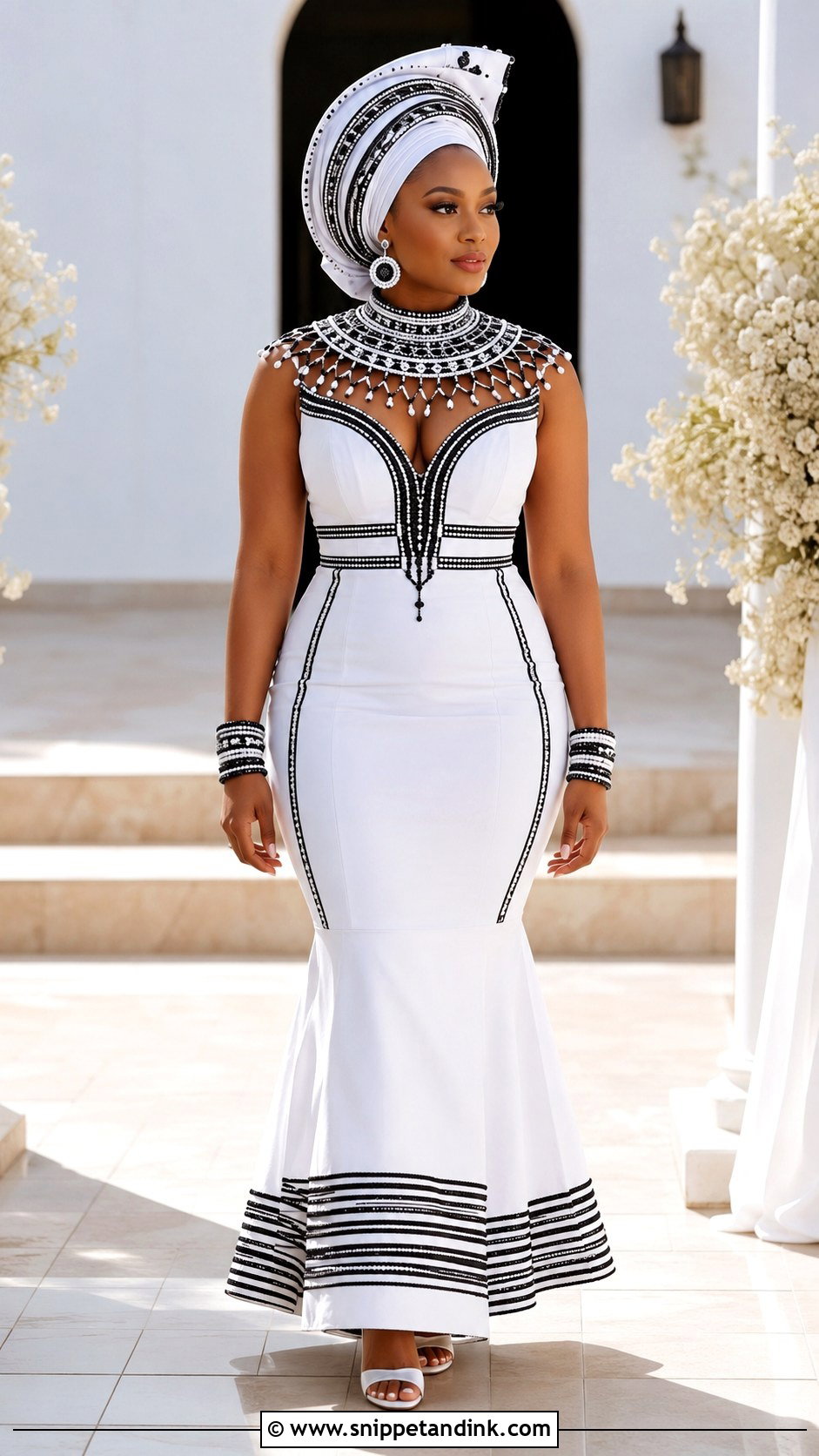
The doek frames the face, and in many families it also marks the bride as a married woman, so it deserves the same thought as the dress. I match it to either the cloth or the bead colours, never to a third new shade. A white dress with black trim looks right with a black-and-white wrap, and red feels strongest with a matching red wrap. The real test is security: tie it, then nod, bend and hug someone. If it shifts, it needs pinning to the hair underneath, not more height.
10. Xhosa Wedding Dress With Beaded Collar
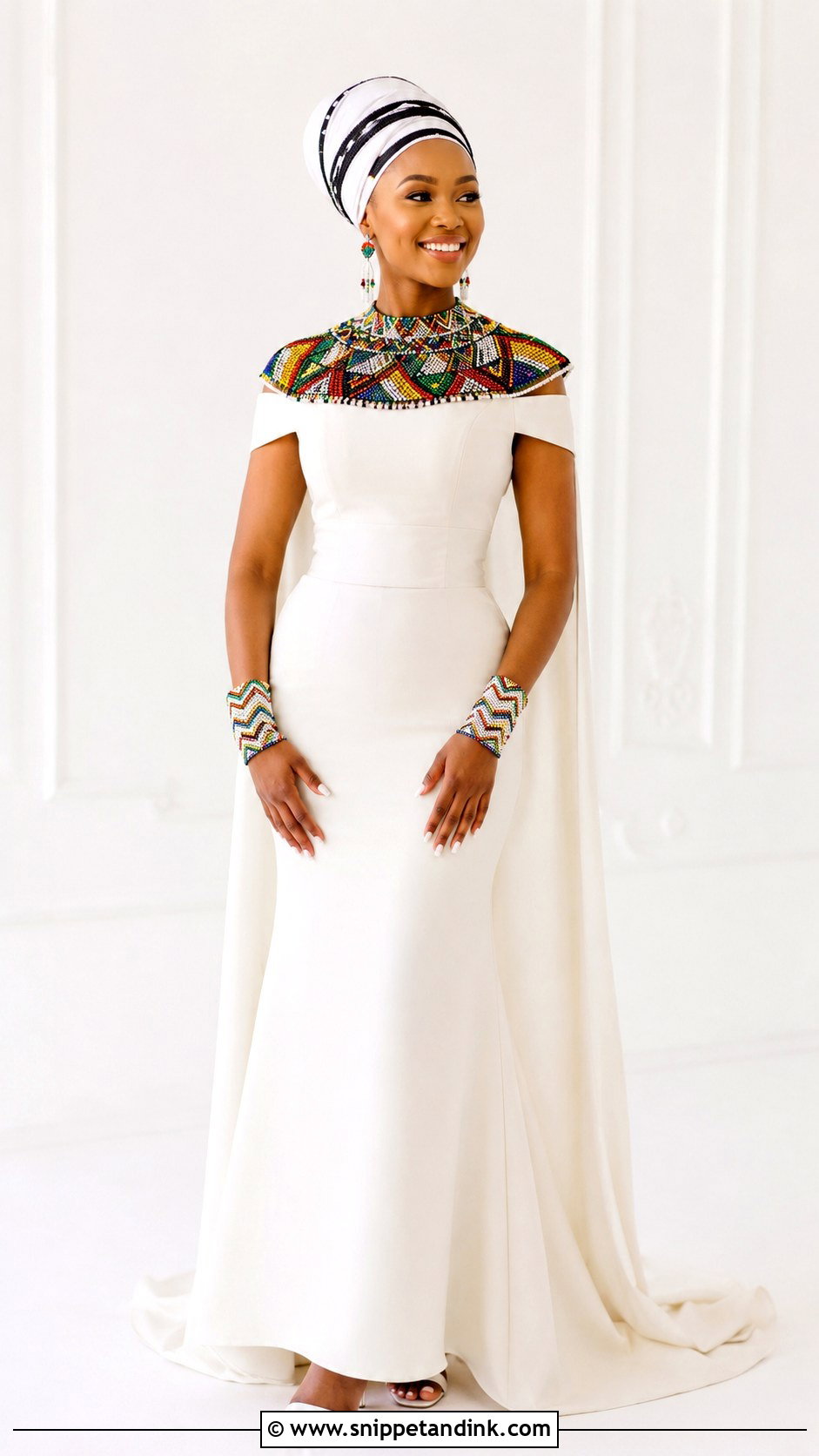
A large beaded collar is the detail people remember, so the dress beneath should be plain. Strapless, boat-neck and short-sleeve shapes all leave room for it. What brides don’t expect is the weight on the back of the neck after a few hours, and how the edge can scratch bare skin. I’d ask the beader to back the collar with soft fabric and check the clasp sits flat. Skip any extra necklaces; the collar is the statement.
11. Xhosa Two Piece Wedding Dress
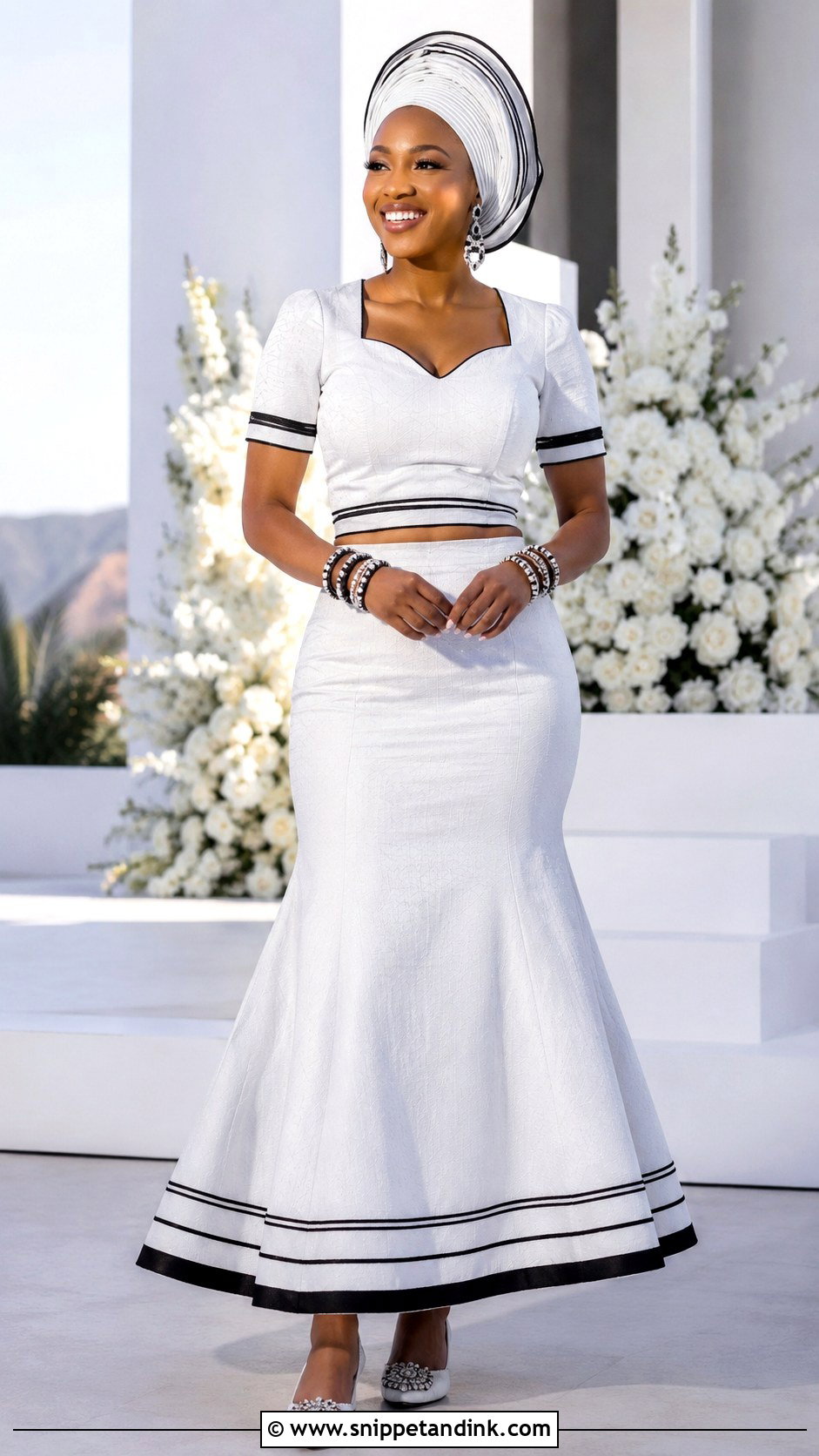
Two pieces give you options a single dress can’t. The top and skirt can be altered separately, and a longer blouse adds coverage for the parts of the day where elders are present. A cropped top with a high-waisted skirt looks young and modern, but I’d keep that for the reception rather than the family ceremony in most households. Run the same trim across both pieces so they read as one outfit, and do a full sitting test, since the gap at the waist tends to open when you lean forward.
12. Xhosa Off Shoulder Wedding Dress
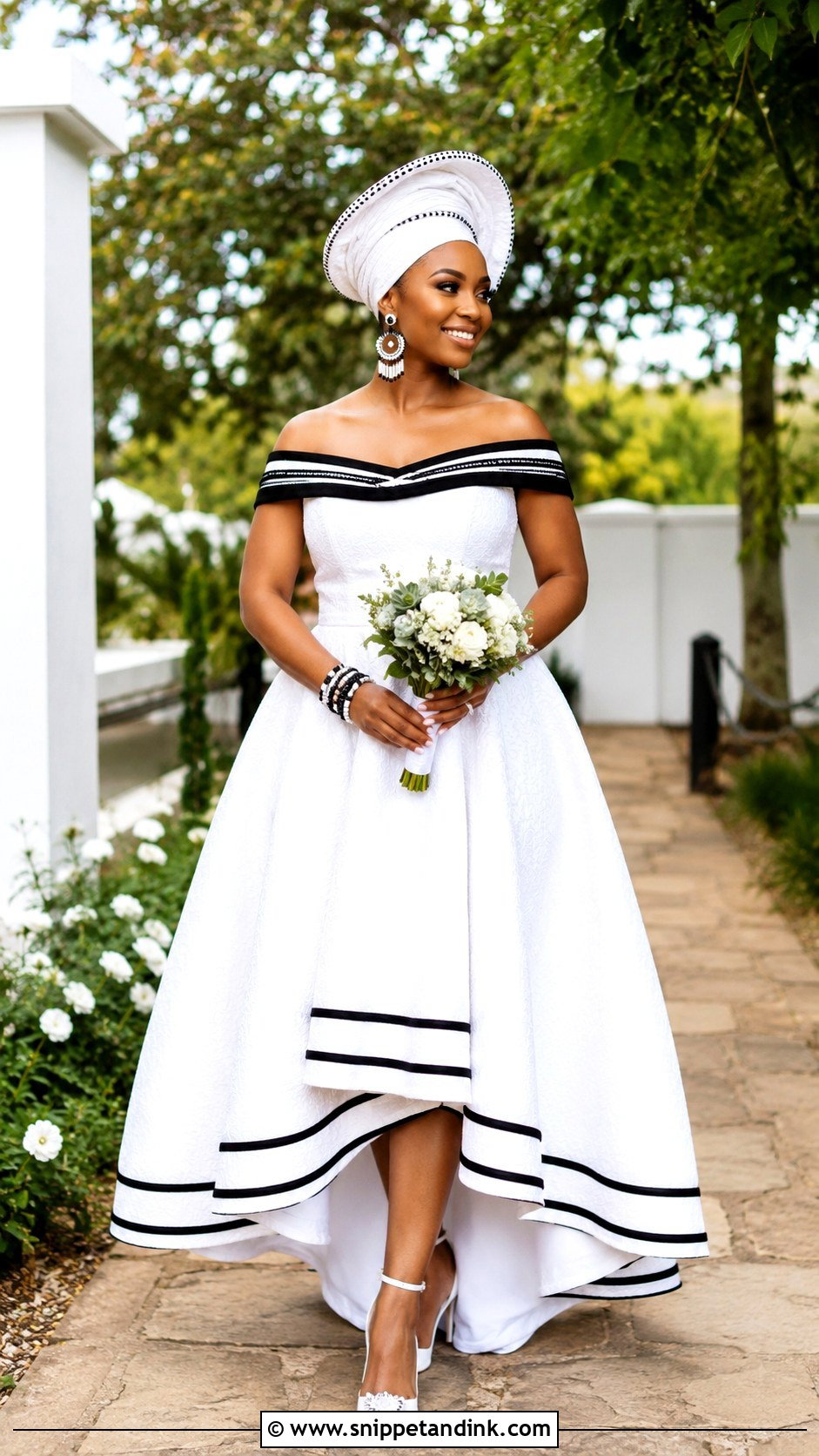
Off-shoulder necklines show off a beaded collar and pull focus to the face in portraits. They also slip. The band almost always needs elastic or silicone grip inside it, otherwise the bride spends the day hitching it up. Try lifting both arms in the fitting room: if you can’t raise them to hug someone, the band is too tight. In more conservative families, a shawl over the shoulders for the formal part of the day solves the modesty question.
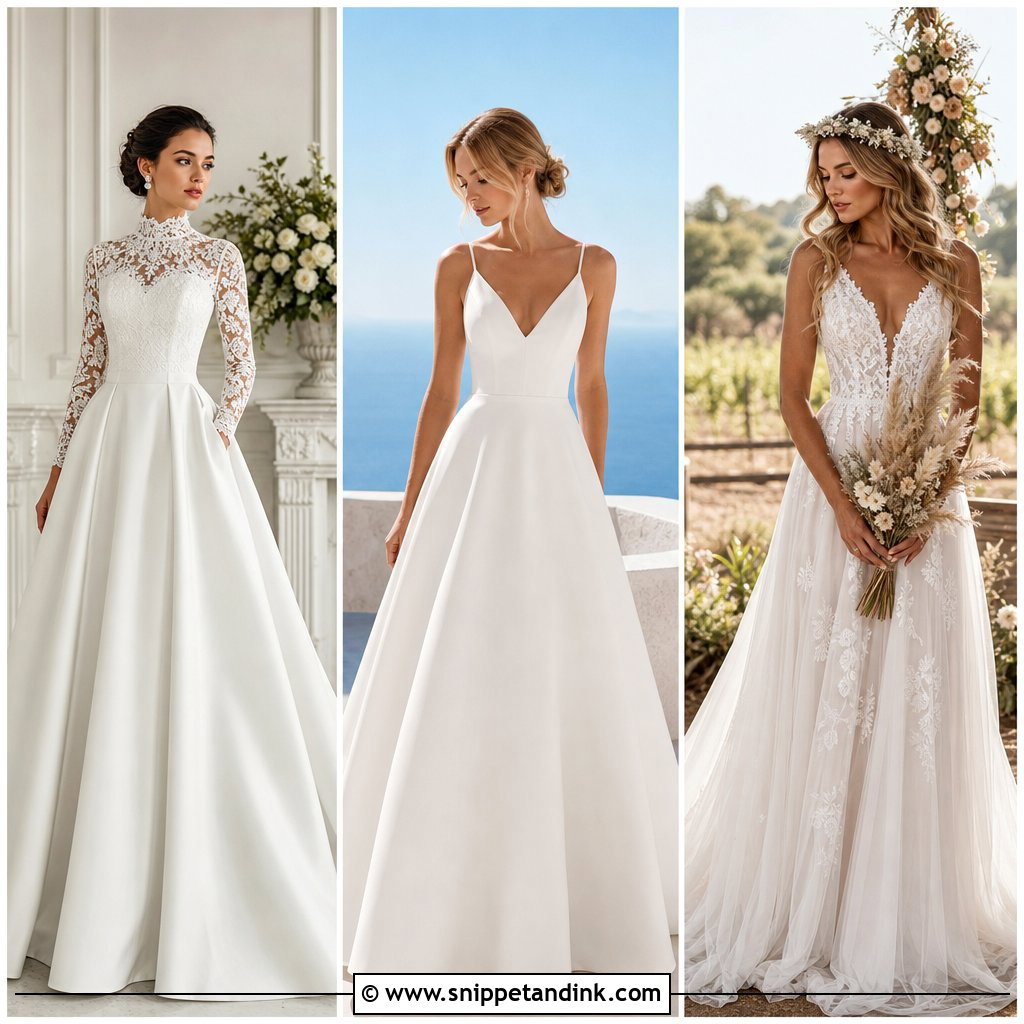
13. Xhosa Long Sleeve Wedding Dress
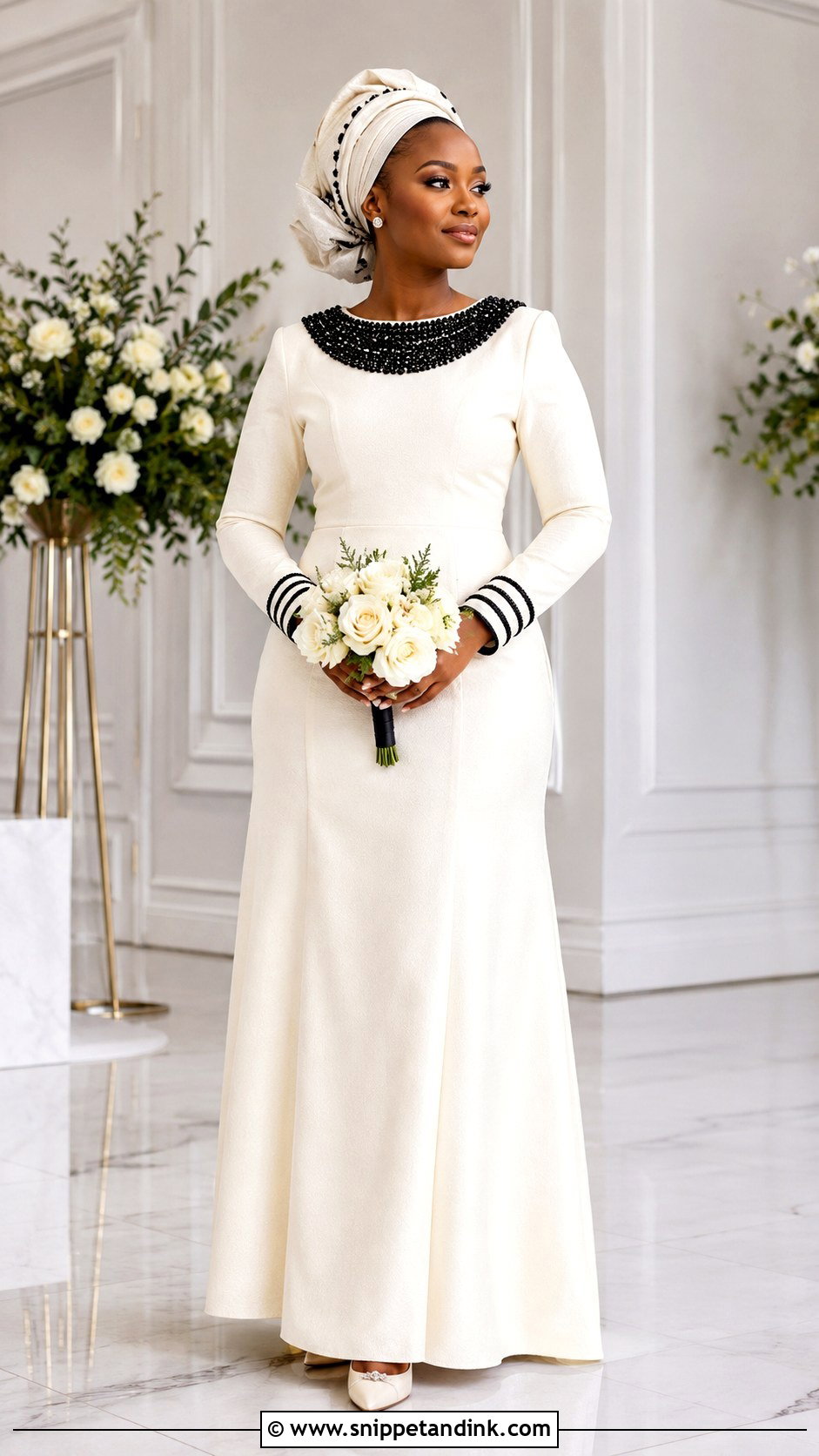
Long sleeves suit winter weddings and families who expect a covered bride, and they give you a canvas for striped or beaded cuffs. A sleek mermaid version feels formal; an A-line feels easier. One rule I follow: if the sleeves are detailed, the neckline stays plain, and the other way round. I’d also ask for a slightly longer sleeve than you think, because sleeves ride up when you raise your arms to greet people or dance.
14. Xhosa Lace Wedding Dress
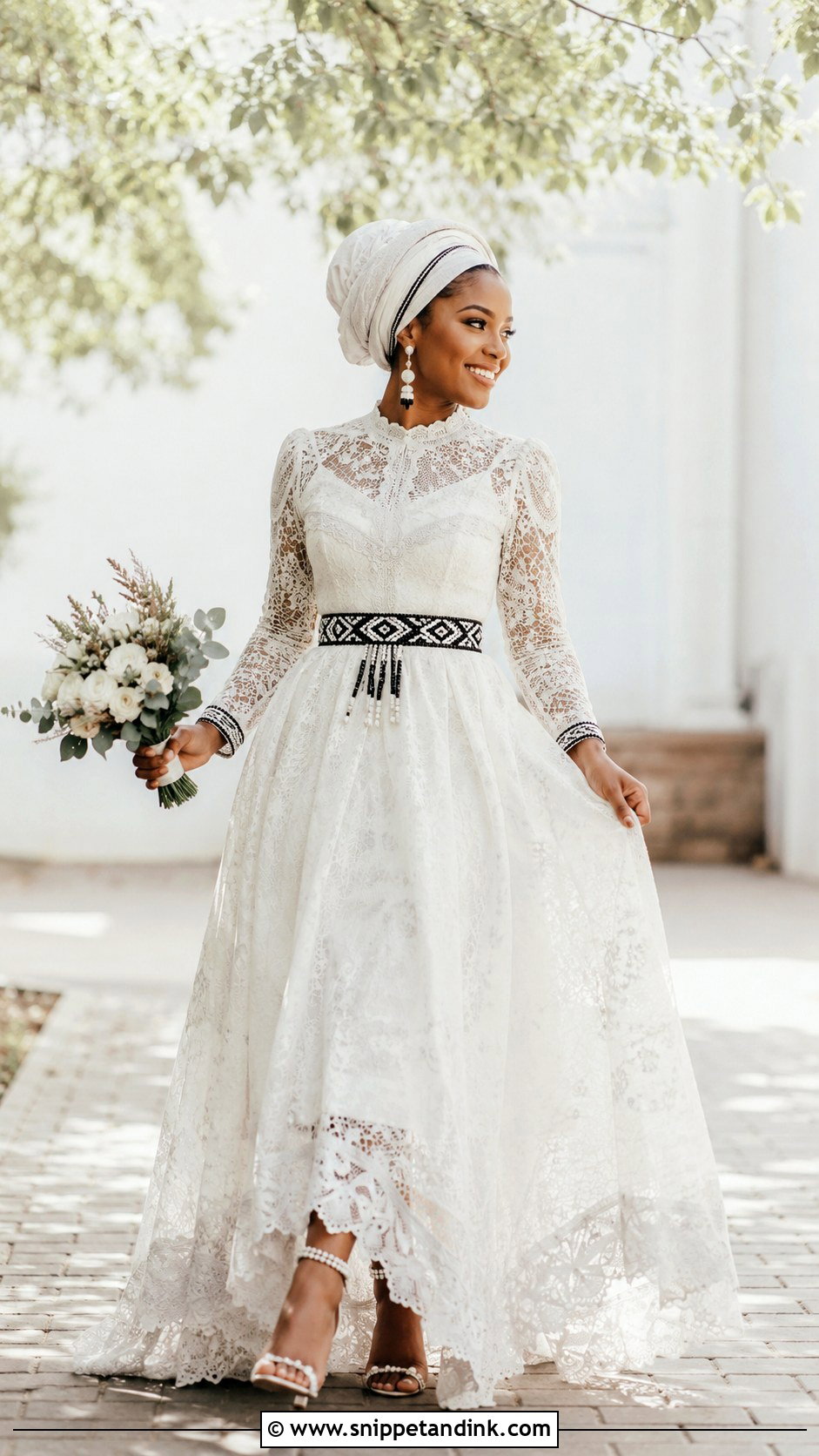
Lace brings softness, but it’s a busy texture, and Xhosa trim is a bold geometric one. Put both at full strength and they fight. I’d use the lace on the bodice or sleeves and let the trim define the waist and hem where there’s no lace beneath it. Pick a lace with a small, tight motif rather than big florals. And check how the trim is attached: stitching heavy bands onto open lace can pucker it, so the band usually needs a fabric base.
15. Xhosa Satin Wedding Dress
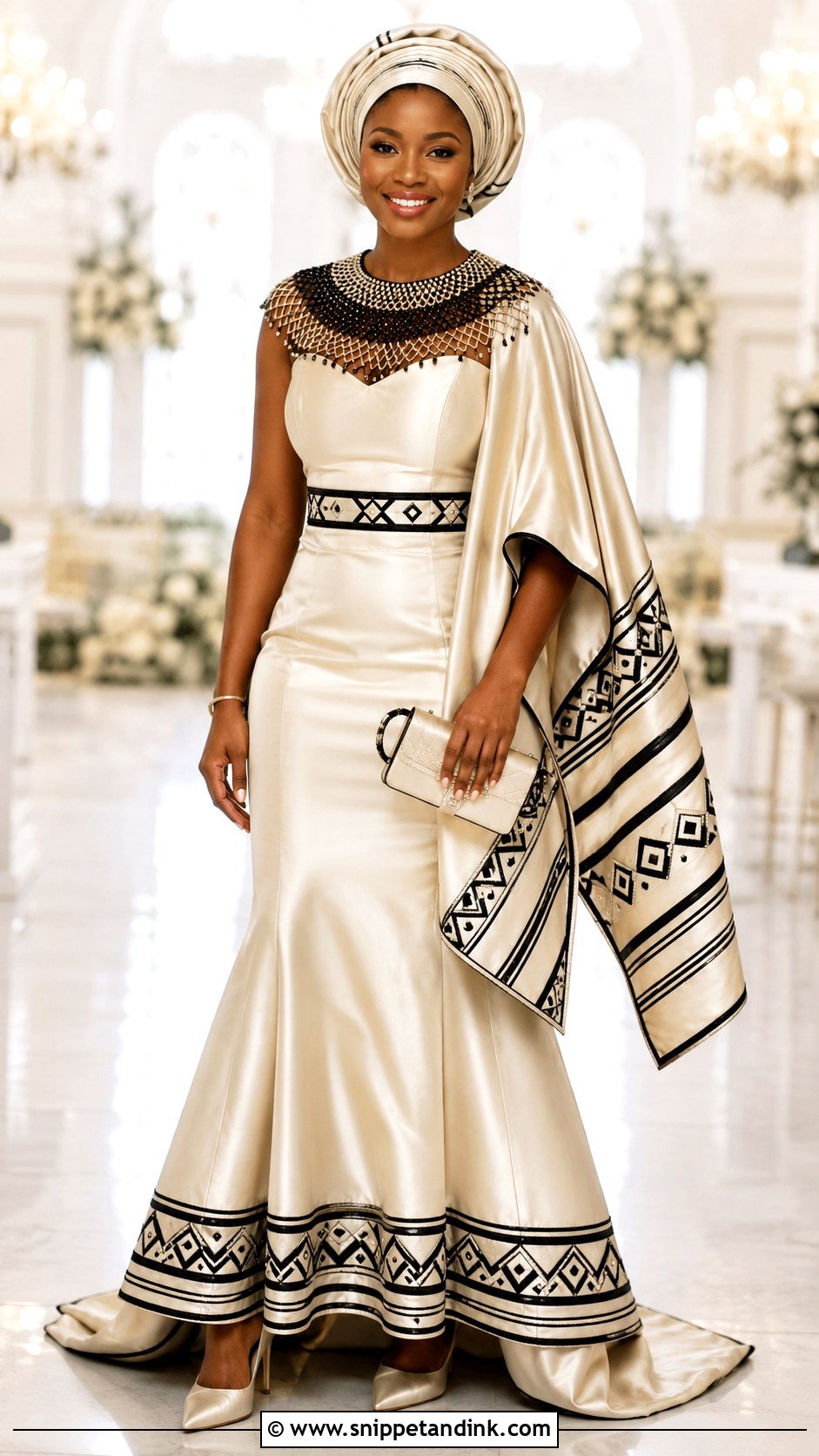
Satin reflects light, which is lovely indoors and in evening photos, and unforgiving in a crumpled state. It creases badly where you sit, especially across the lap and the back of the skirt. For a long ceremony day I’d prefer a heavier duchess satin over a thin shiny one. Trim at the neckline, waist and hem is enough, since the fabric already carries the shine. A satin doek ties beautifully but slides more than cotton, so plan on pins.
16. Xhosa Wedding Dress With Cape
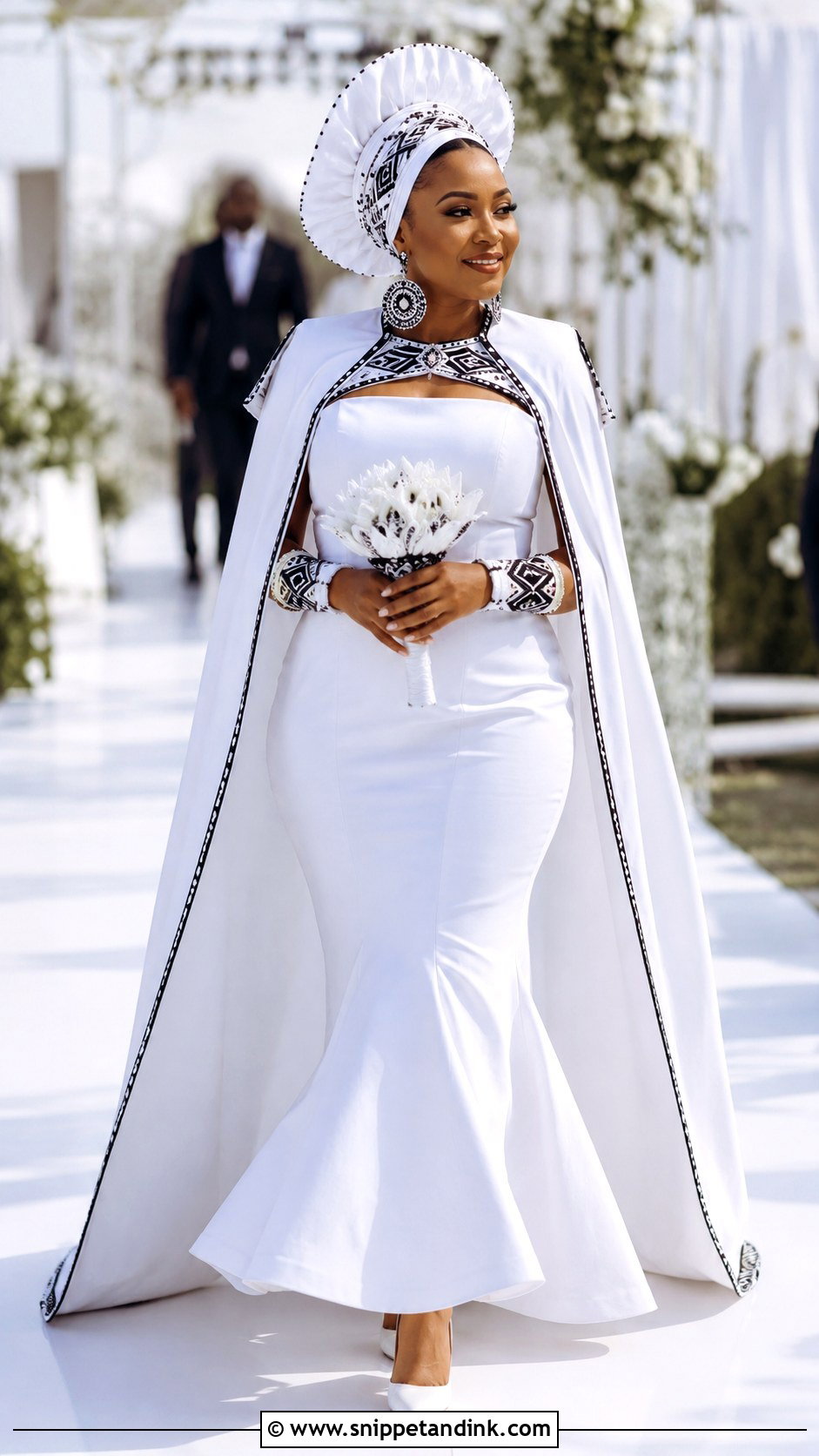
A cape gives you coverage and drama without a veil, and it can carry the black-and-white border on its edge, where it moves. I’d keep the dress underneath plain so the two don’t compete. Short structured capes stay put; long flowing ones catch wind outdoors and need a secure fastening at the shoulder, not just at the throat. It shows best from the back and side, so tell your photographer to catch the walk in.
17. Xhosa Wedding Dress With Train
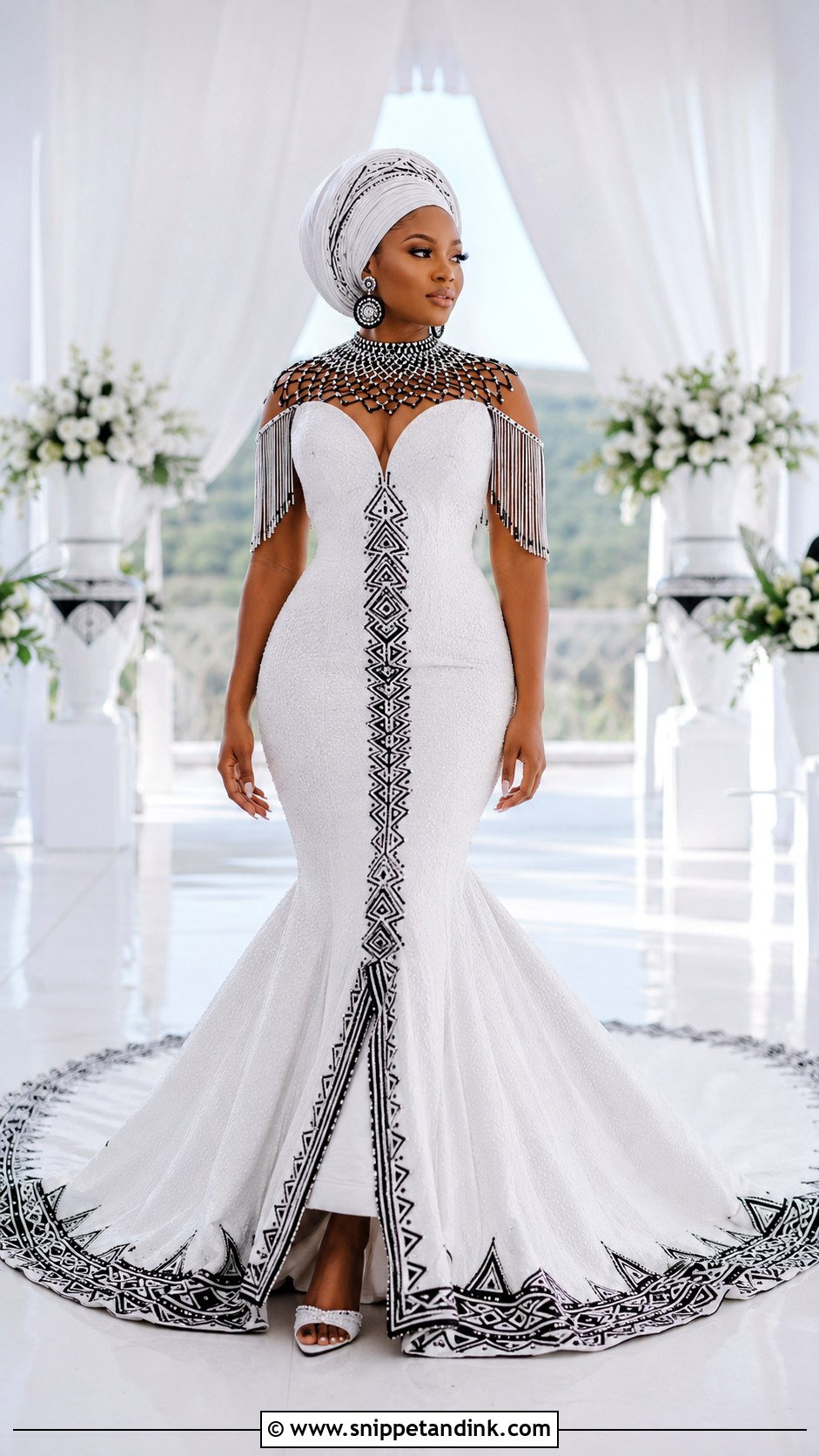
A train belongs in the walk in. After that, it becomes something you manage. For most traditional ceremonies I’d recommend a detachable train or one with a bustle, so you can greet, sit and dance without someone guarding your hem. Trim running along the train’s edge looks striking but adds weight, so choose a train length you can actually pull behind you on grass or gravel. Comfortable shoes matter here; you’ll be standing still for long stretches.
18. Xhosa Wedding Dress With Shawl
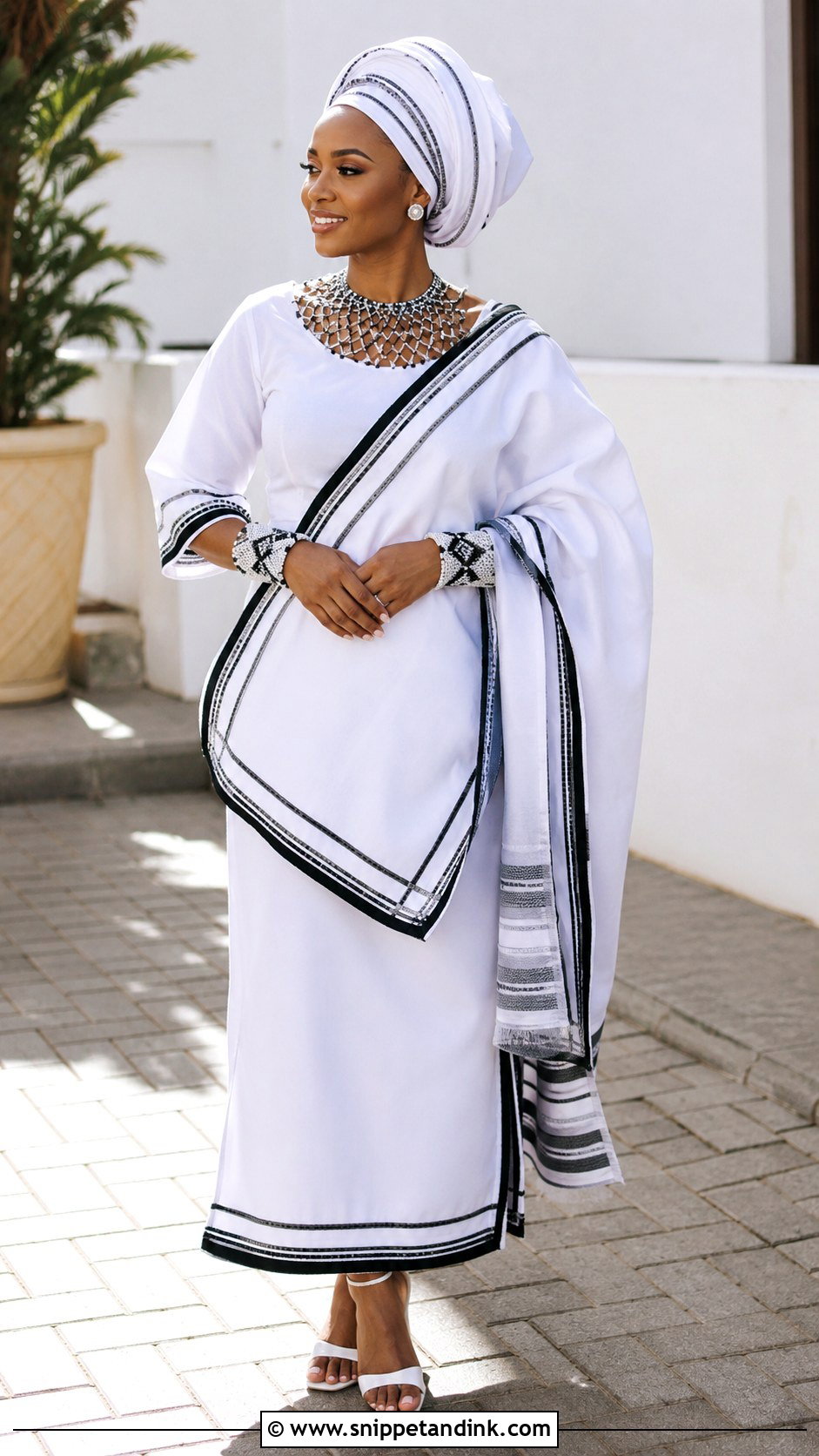
A shawl is the most practical item in a Xhosa bride’s wardrobe, in my experience. It adds coverage when elders are present, it keeps you warm after sunset and it changes the look for photos without a full change of clothes. Drape it over both shoulders for formal moments, or across one side for portraits. Match it to the dress trim or the beads. A white dress with black borders pairs naturally with a black-and-white shawl; a red dress takes a red or cream wrap.
19. Xhosa Wedding Dress With Pleated Skirt
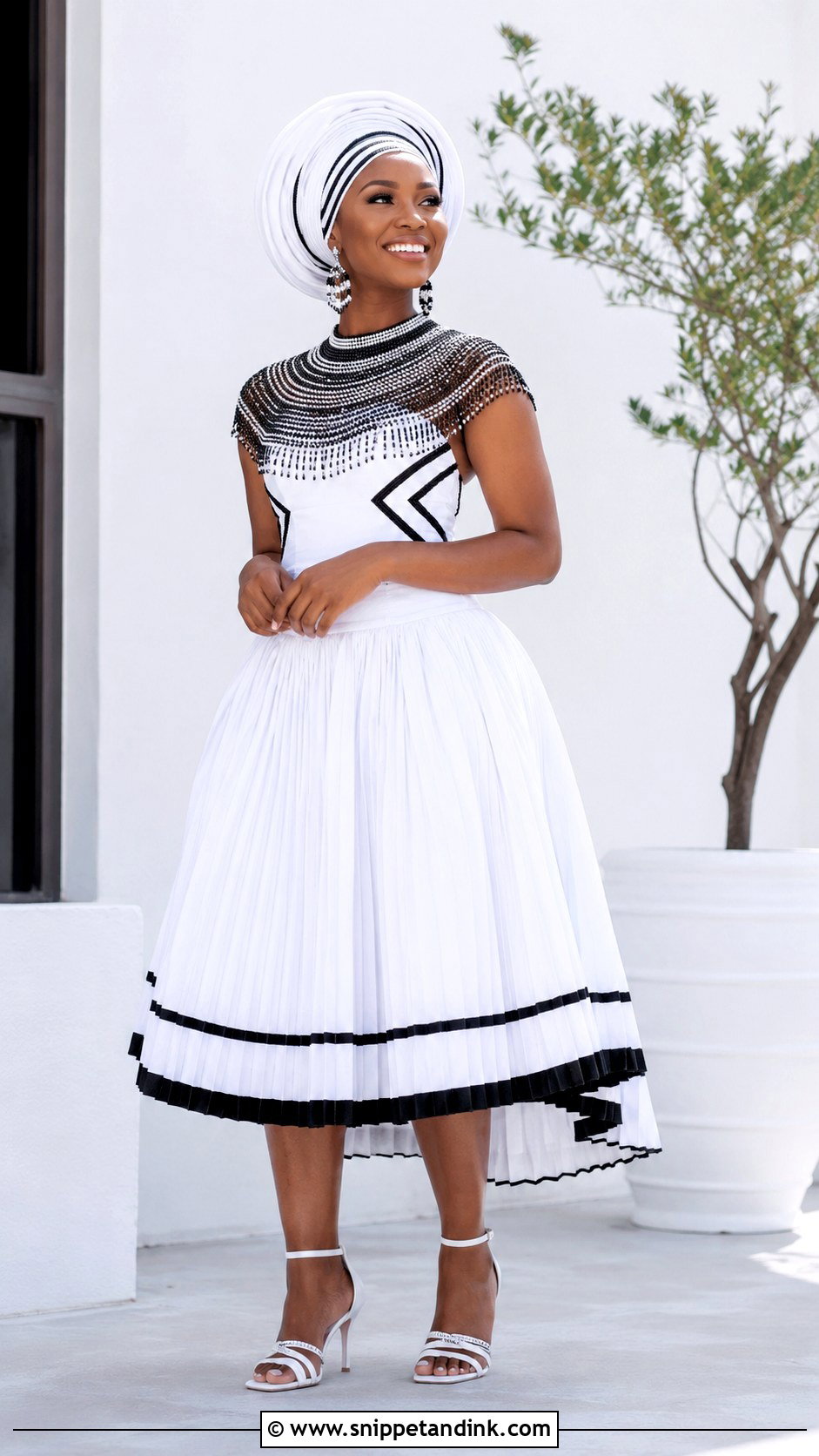
Pleats give movement without the weight of a ball gown, and they soften the hard lines of black-and-white trim as you walk. The catch is that knife pleats in cotton fall out when the fabric gets damp or crushed in a car. Ask the dressmaker to set them with a firm press and stitch them down a few centimetres below the waistband. Crisp pleats suit a formal ceremony; softer, unpressed folds suit a relaxed celebration.



20. Xhosa Wedding Dress With Peplum
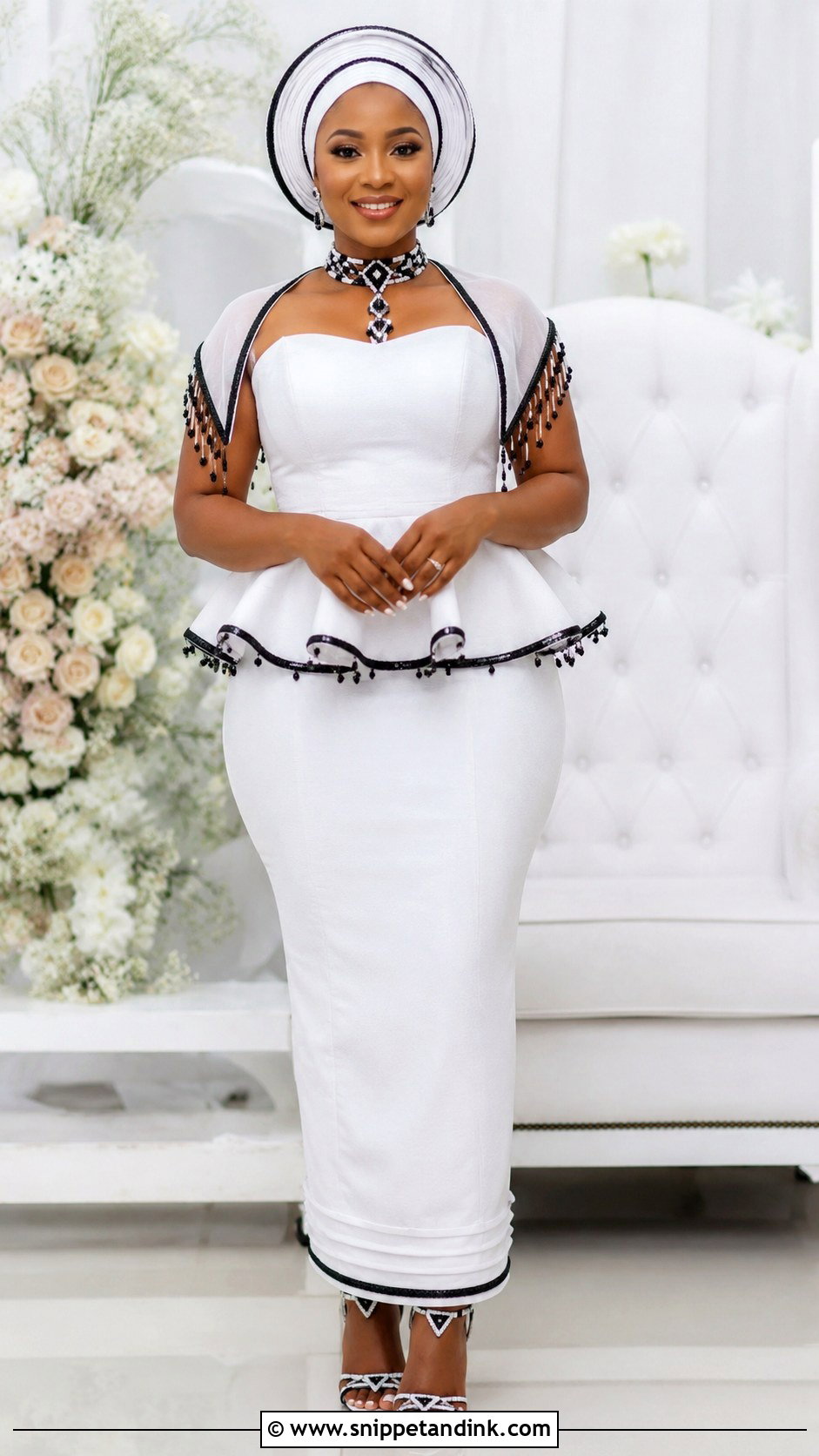
A peplum defines the waist and adds a little shape over the hips, which suits brides who want structure without a big skirt. The edge of the peplum is a natural place for a black trim line. Watch the length, though: a peplum that ends at the widest point of the hip draws the eye straight there. I usually set it a couple of centimetres above or below that line. A fitted skirt or a mermaid base keeps the look clean.
21. Xhosa Wedding Dress With Isishweshwe Print
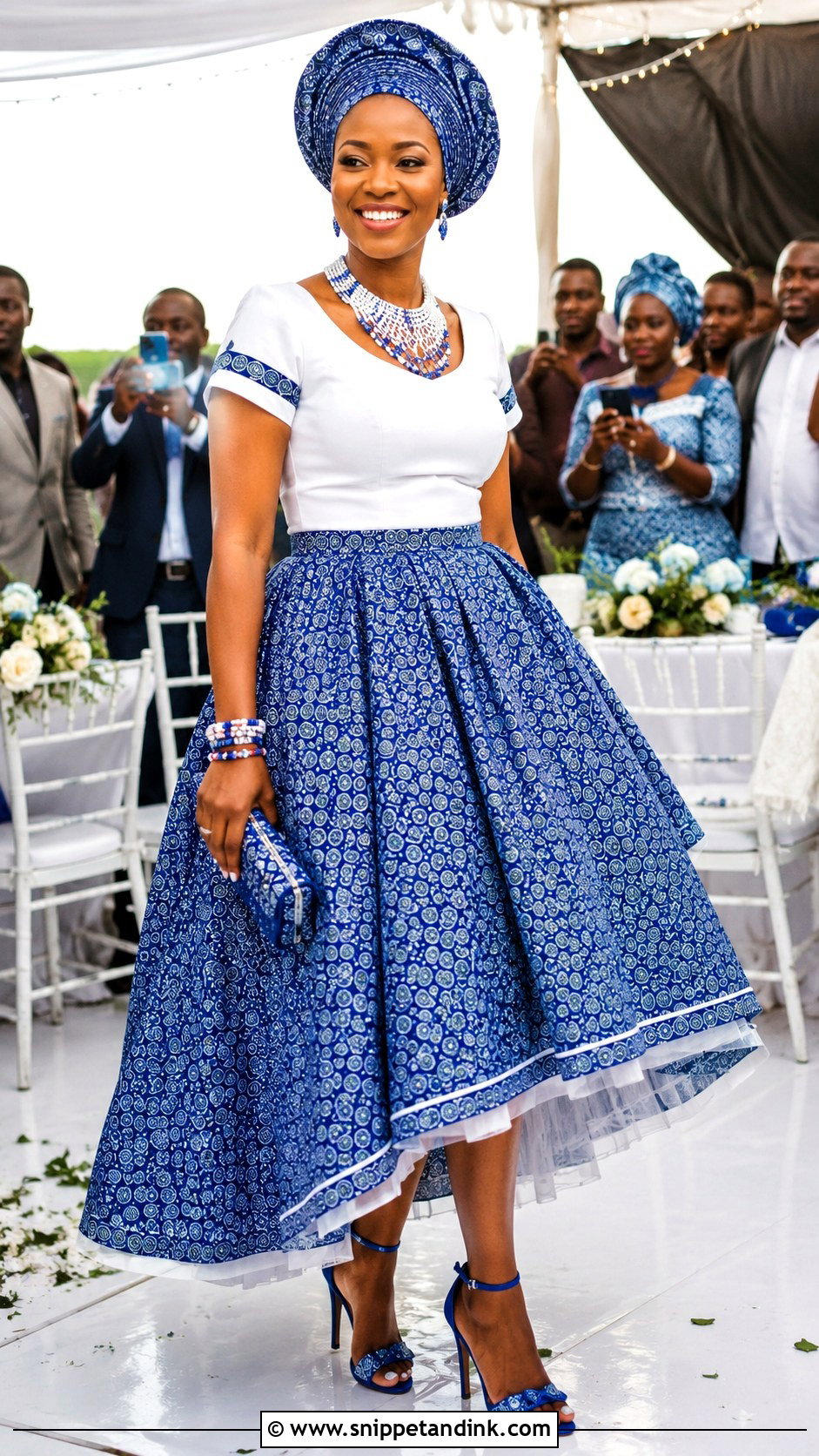
Isishweshwe is a printed cotton with a long history among Xhosa and Sotho women, and many families have strong feelings about its colours and patterns. It works as a full dress, a skirt, sleeve panels or a matching doek. New isishweshwe has a stiff starched finish that softens and fades slightly after washing, so if you want the crisp look in photos, don’t pre-wash the outer panels. Keep the silhouette simple when the print is busy; the pattern does the talking.
22. Xhosa Wedding Dress With Gold Beading
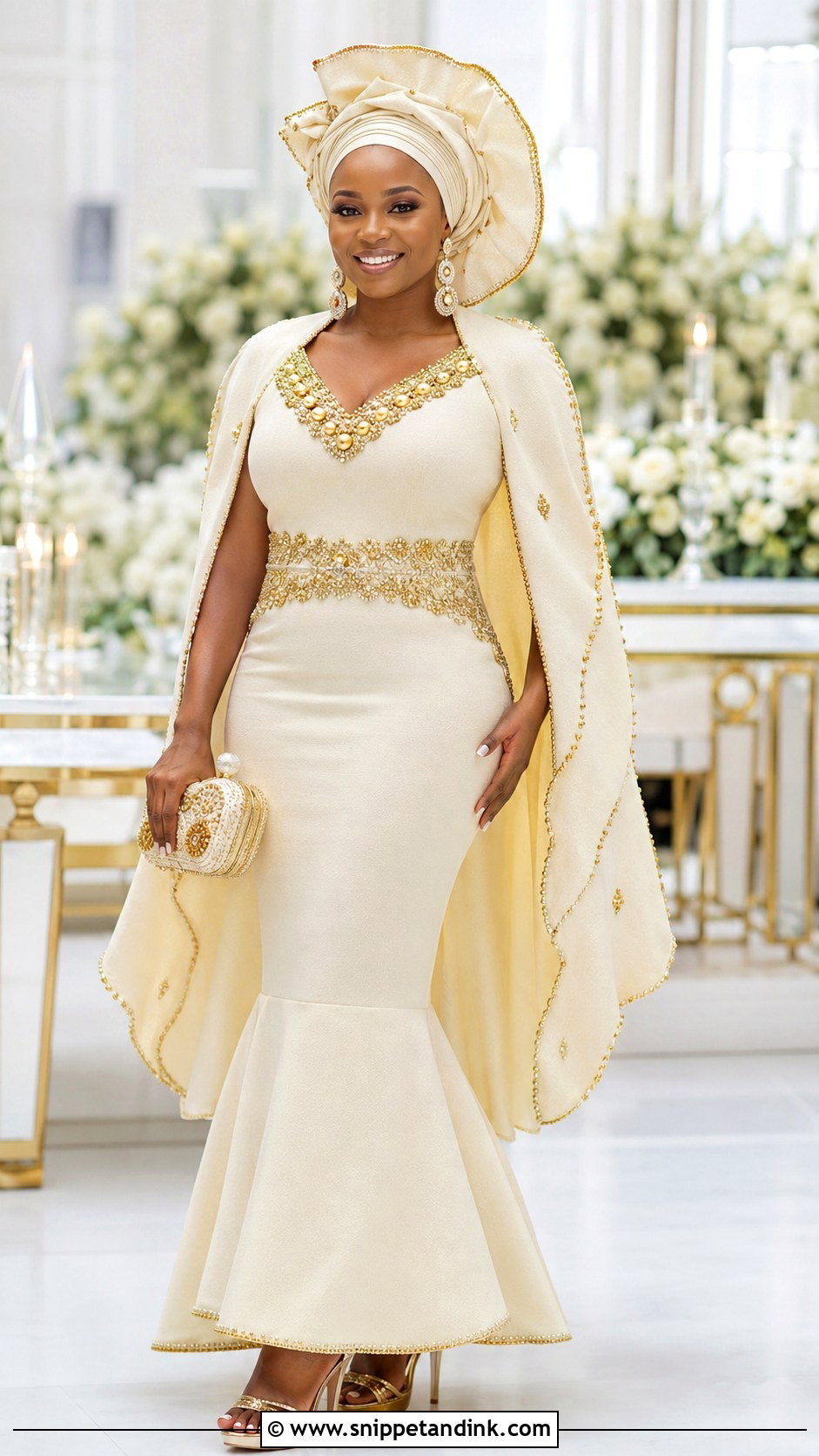
Gold beading warms up white, cream, black, red or deep brown cloth and reads as celebratory without leaving Xhosa styling behind. I keep the gold to one zone, such as the neckline or the cuffs, and echo it once in the earrings. Gold-toned heels and a small clutch are enough. Under strong flash, metallic beads can blow out to white spots in photos, so a matte or brushed bead often looks richer on camera than a high-shine one.
23. Plus Size Xhosa Wedding Dress
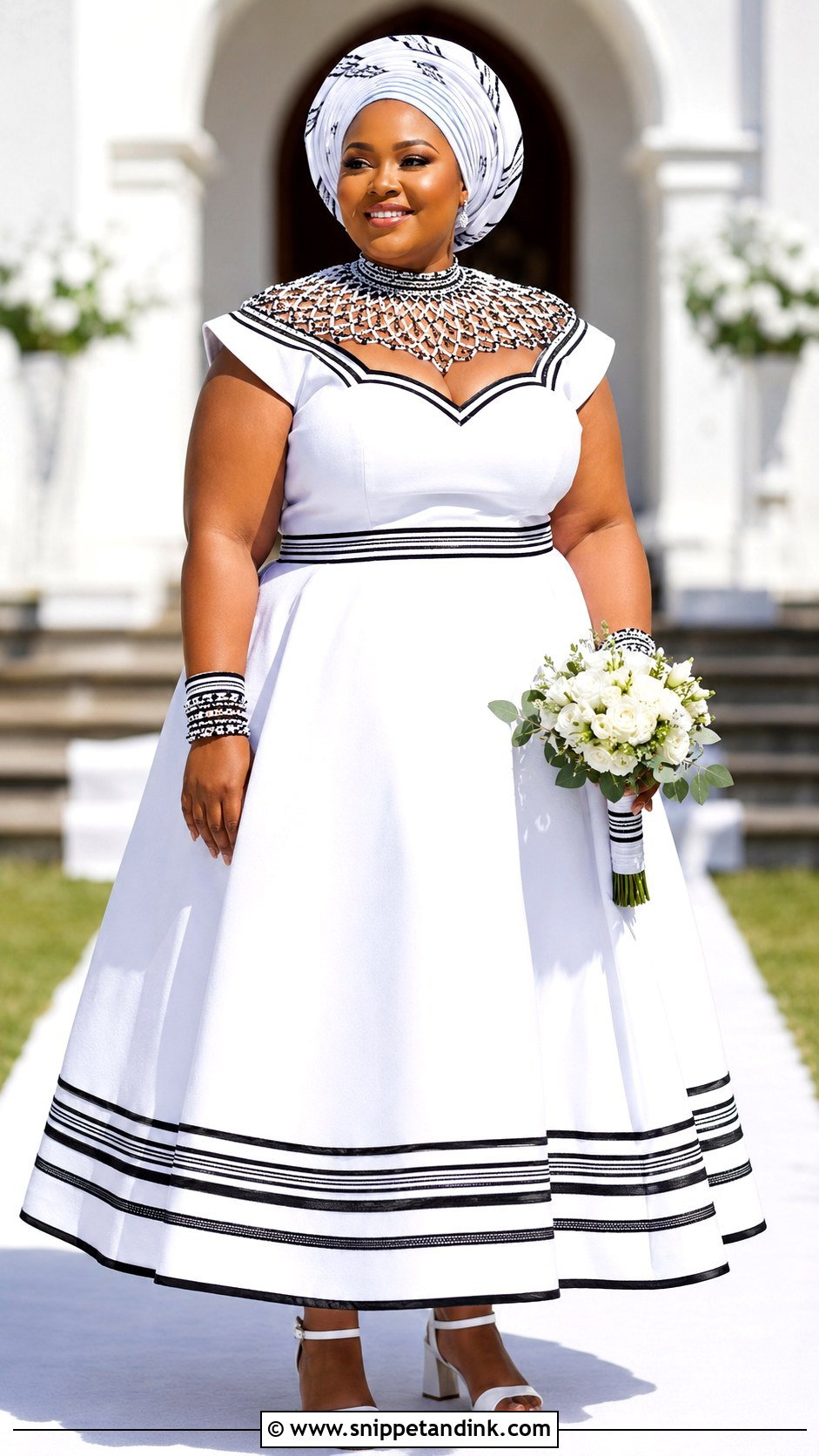
For a plus size bride, fit is everything, and off-the-rack sizing almost never gets the bust, waist and sleeve right at once. A-lines, wrap bodices, peplums and structured mermaids can all work when cut properly. I’d choose cotton or satin with enough weight to skim rather than cling, and place trim where you want the eye to rest, often the neckline and the hem. A custom maker can add an inner corset or wider straps for support. None of this is about hiding; it’s about a dress that stays put while you live in it.
24. Simple Xhosa Wedding Dress
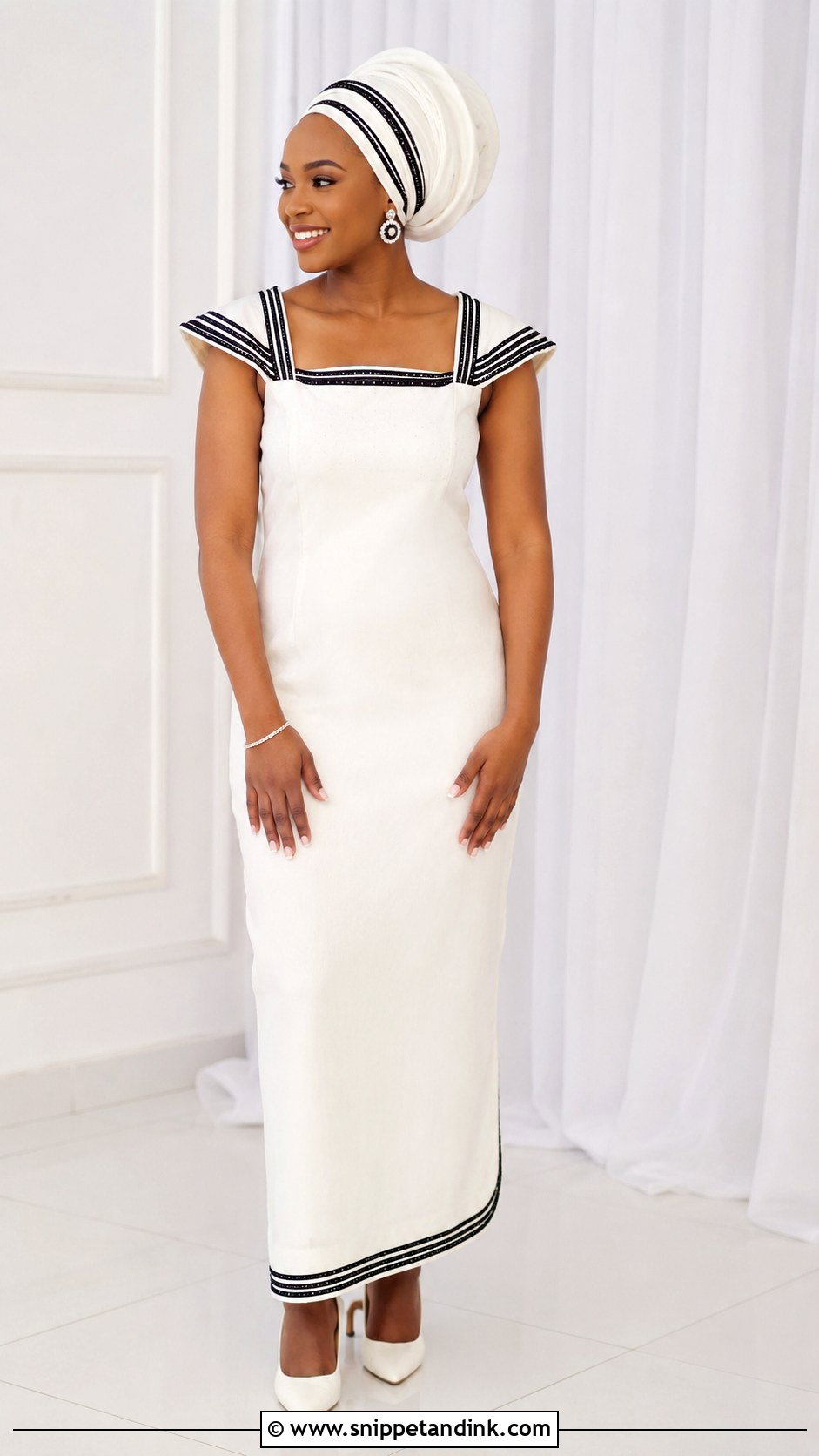
A simple version suits a bride who wants to feel like herself rather than costumed. Think white or ivory cloth with a narrow black band, minimal beads and a neat doek. Column, A-line or a modest two-piece all work. With so little detail, the tailoring shows everything, so this is the one look where I’d spend more on the dressmaker than on the beading. Small beaded earrings and a delicate bracelet finish it.



25. Luxury Xhosa Wedding Dress
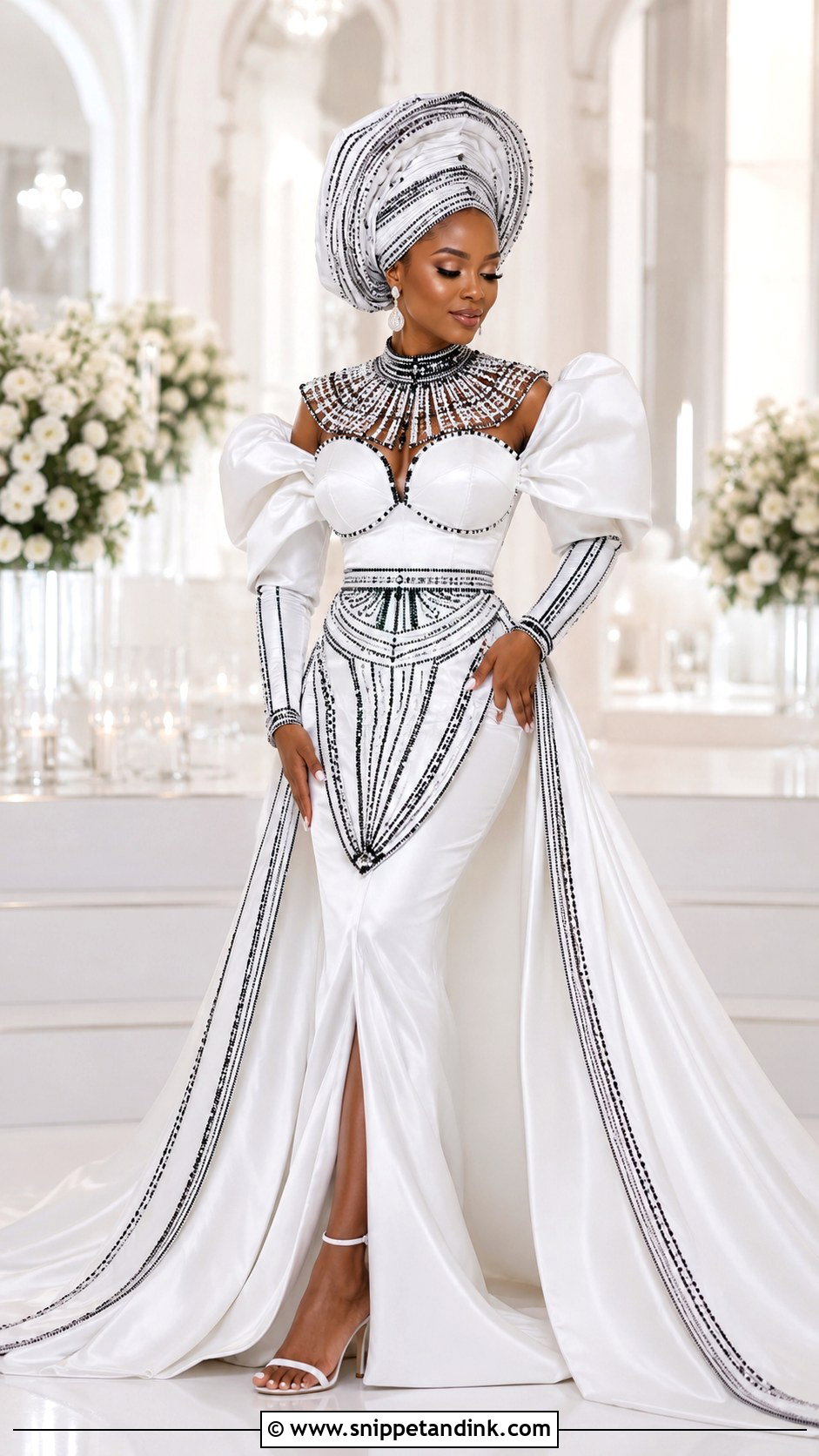
Luxury in a Xhosa gown comes from the finishing, not the price tag. Hand-applied beadwork, trim that meets perfectly at the seams, a lined cape, sleeves that sit right without pulling. Structured satin, long trains and colours like gold, champagne or deep green all suit this level of dressing. Ask to see the inside of a maker’s past work; clean inner seams tell you more than any photo. It’s a look for a large formal wedding, and it needs a bride who’s willing to do two or three fittings.
After the Wedding: Storing Beadwork and Umbhaco So They Last
These pieces often get worn again, lent to a sister or passed down, so how you put them away matters. Beadwork should never hang. The thread stretches under its own weight over months, and collars lose their shape. I lay beaded pieces flat in a box lined with acid-free tissue, with tissue between layers so the beads don’t rub.
Spot clean umbhaco cotton with cold water and mild soap rather than soaking it. Red and black dyes can run into white areas in a full wash. Let it dry flat in the shade, since strong sun yellows white cotton and fades the bands unevenly.
Store the doek folded, not knotted. A wrap that stays tied for a year keeps hard creases that won’t fully press out. Finally, keep everything in a cotton bag or a breathable box rather than plastic, which traps moisture and can mark the cloth over time.
Which of These Dresses Will Carry You Through the Whole Ceremony?
Start with your ceremony and your family, then think about style. Some brides belong in a classic umbhaco dress with a matching doek and full beadwork. Others feel more at home in satin, lace or a modern two-piece with Xhosa borders. I’d judge every option by three things: can you kneel and sit in it, does the trim mean something to your family, and does the doek stay on when you hug your grandmother. Get those right and the photographs take care of themselves.
You'll Like These Ideas:





Leave a Reply