
An Irish wedding look rarely comes from one feature. Lace, flowing sleeves, structured bodices, long trains and meaningful Celtic details each give a gown some sense of place, and today’s bridal collections add clean minimal shapes, modern corsetry, detachable capes and textured lace to the mix. That range makes it easier to suggest Ireland without dressing in costume. When I style a bride for an Irish wedding I start with three practical questions: what’s the venue, what’s the weather likely to do, and how long will she be on her feet. The veil, shoes, heirloom jewelry or cape come after. The twenty looks below suit castles, coastlines, gardens and small city ceremonies.
Church at Noon, Castle by Evening
Many Irish weddings still begin in a church and move to a hotel or castle for the reception, and the two settings ask different things of one dress. Some churches prefer covered shoulders during the ceremony, and old stone churches can be cold even in June. Ask the parish or celebrant about expectations well before your first fitting.
The simplest answer is a gown that changes. A few options I build around:
- A lace bolero or fitted jacket over a strapless bodice for the church, removed for the meal.
- A cape that covers the shoulders through the vows, then comes off for the first dance.
- Detachable sleeves or an overskirt that gives you a slimmer, cooler dress for the evening.
- A long veil for the aisle, swapped for a short one or a comb at the reception.
Whatever changes, practise the switch in the dress. Hooks and snaps that take thirty seconds at a fitting take far longer in a crowded bridal suite. Name one bridesmaid as the person who knows every fastening, and walk her through it at the last fitting.
1. Irish Lace A-Line Wedding Dress
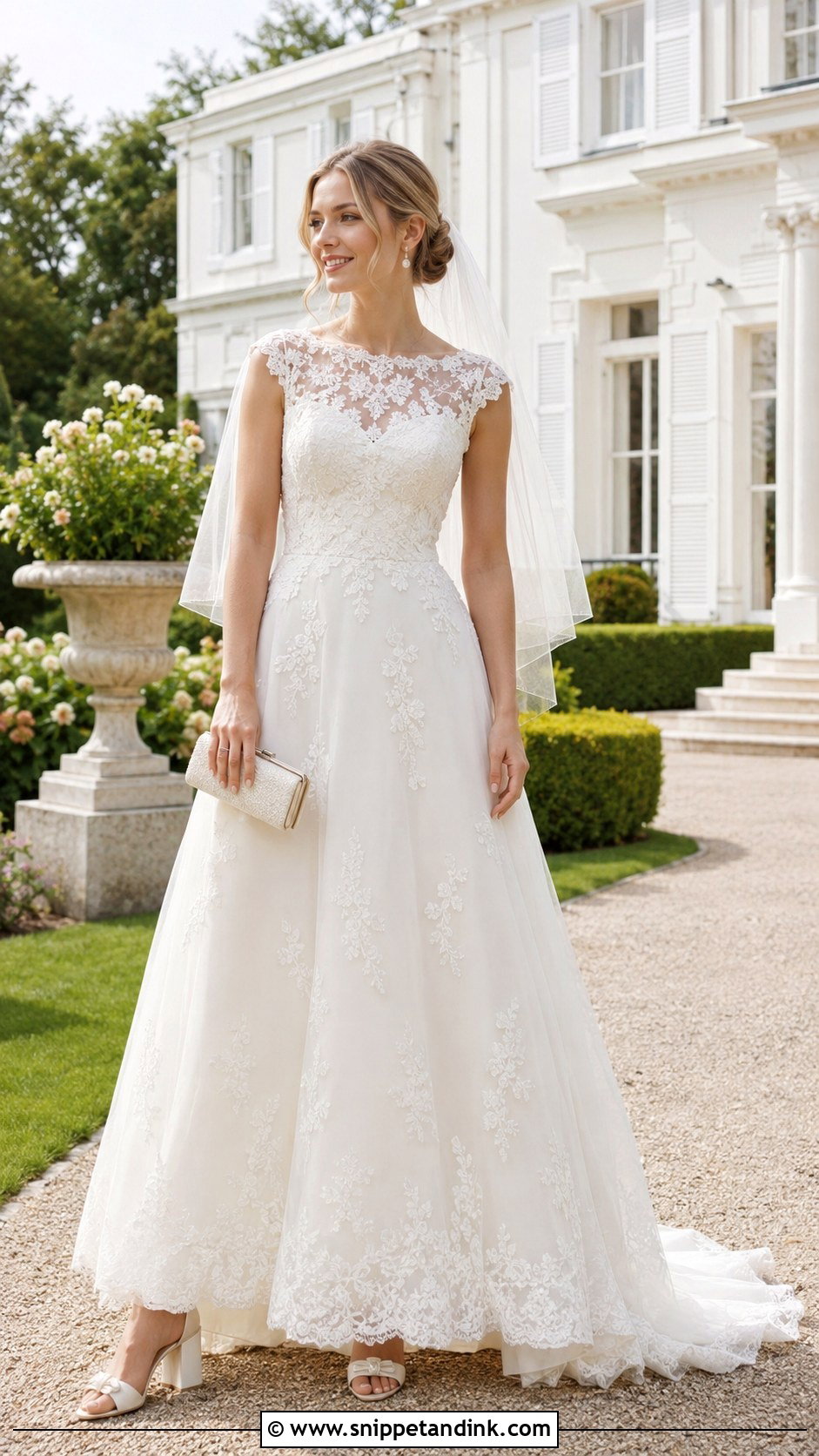
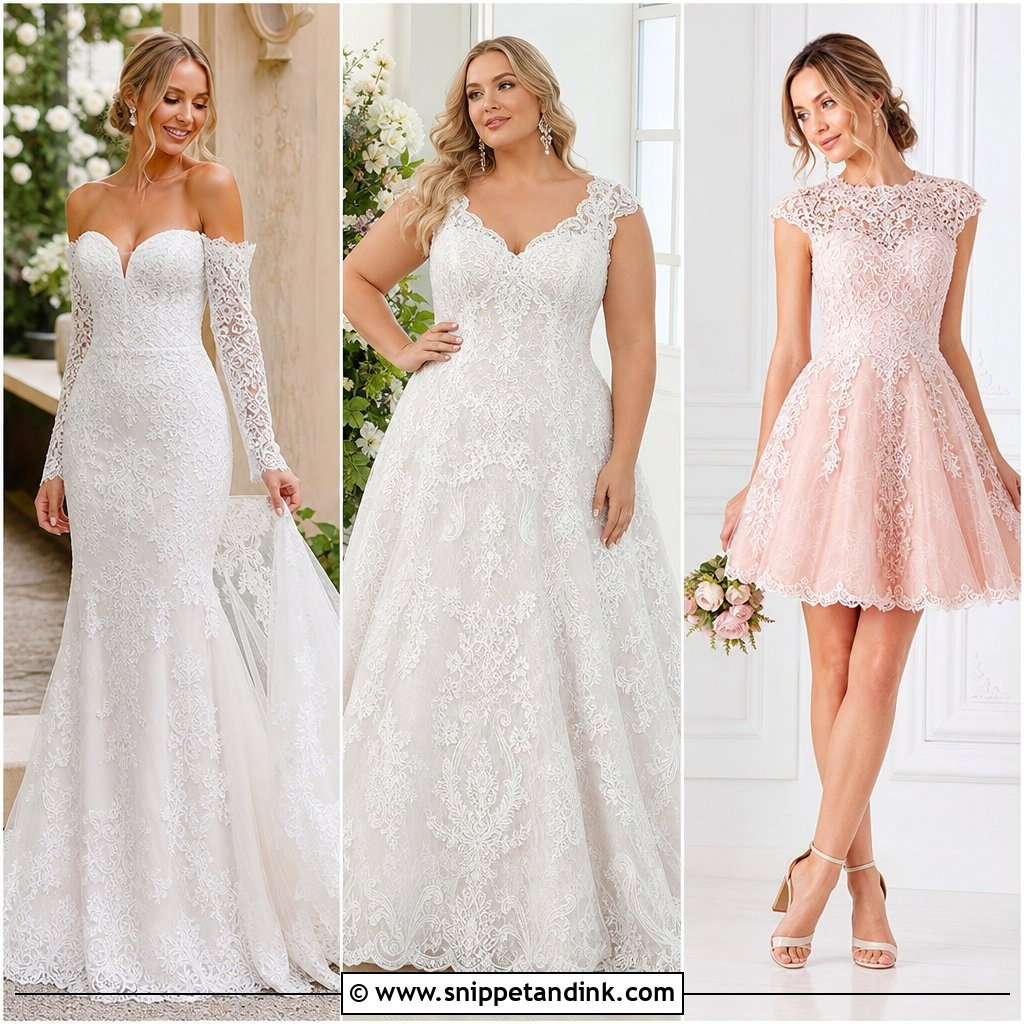
The A-line is where I send most brides first, because it suits almost every figure and every venue. A fitted bodice defines the waist and the skirt opens gently from there. Small floral lace looks classic; larger botanical patterns look more current, and they also hide the seams in a fitted bodice better. A bateau, scoop or modest V-neck keeps it balanced. Pearl drops, an ivory fingertip veil and satin block-heel pumps complete it. Sleeves, a ribbon belt or a removable train can all be added later, which is useful if you buy off the rack.
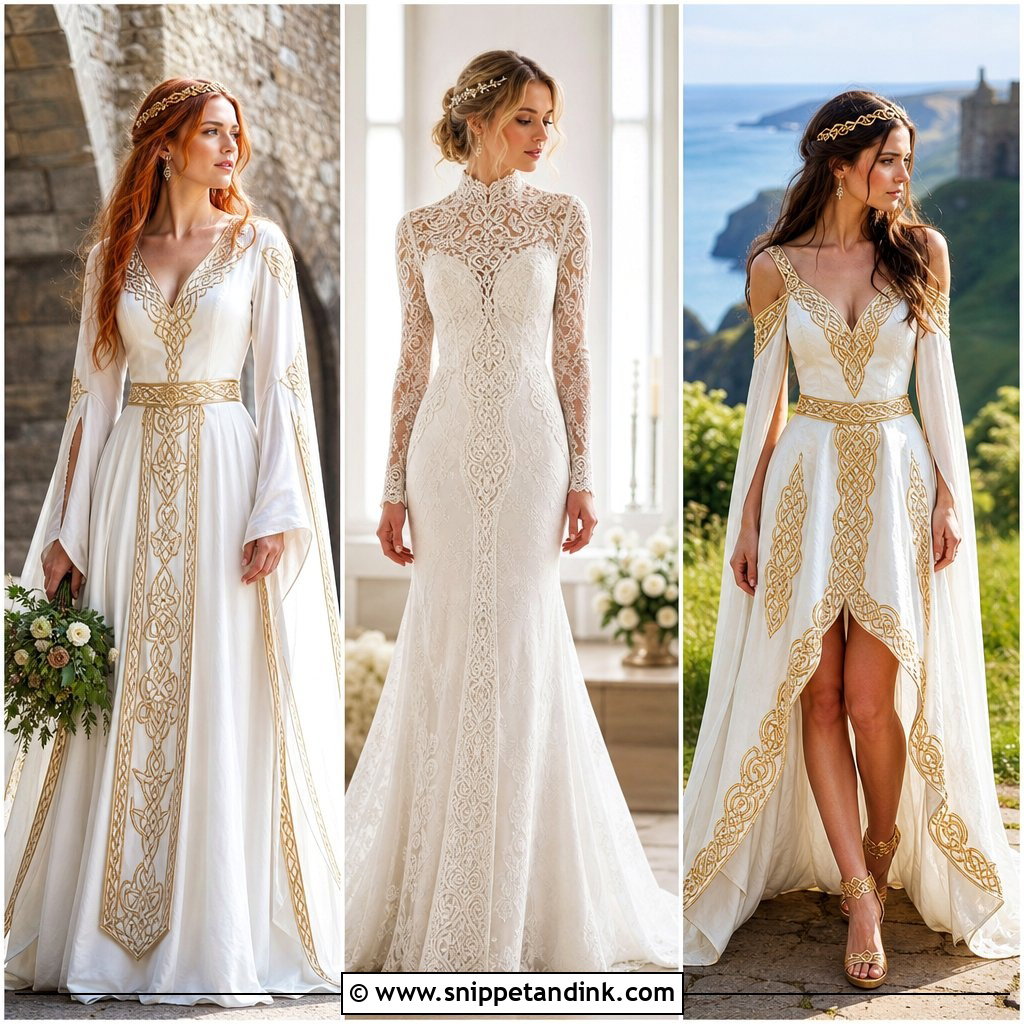
2. Long Sleeve Irish Wedding Dress
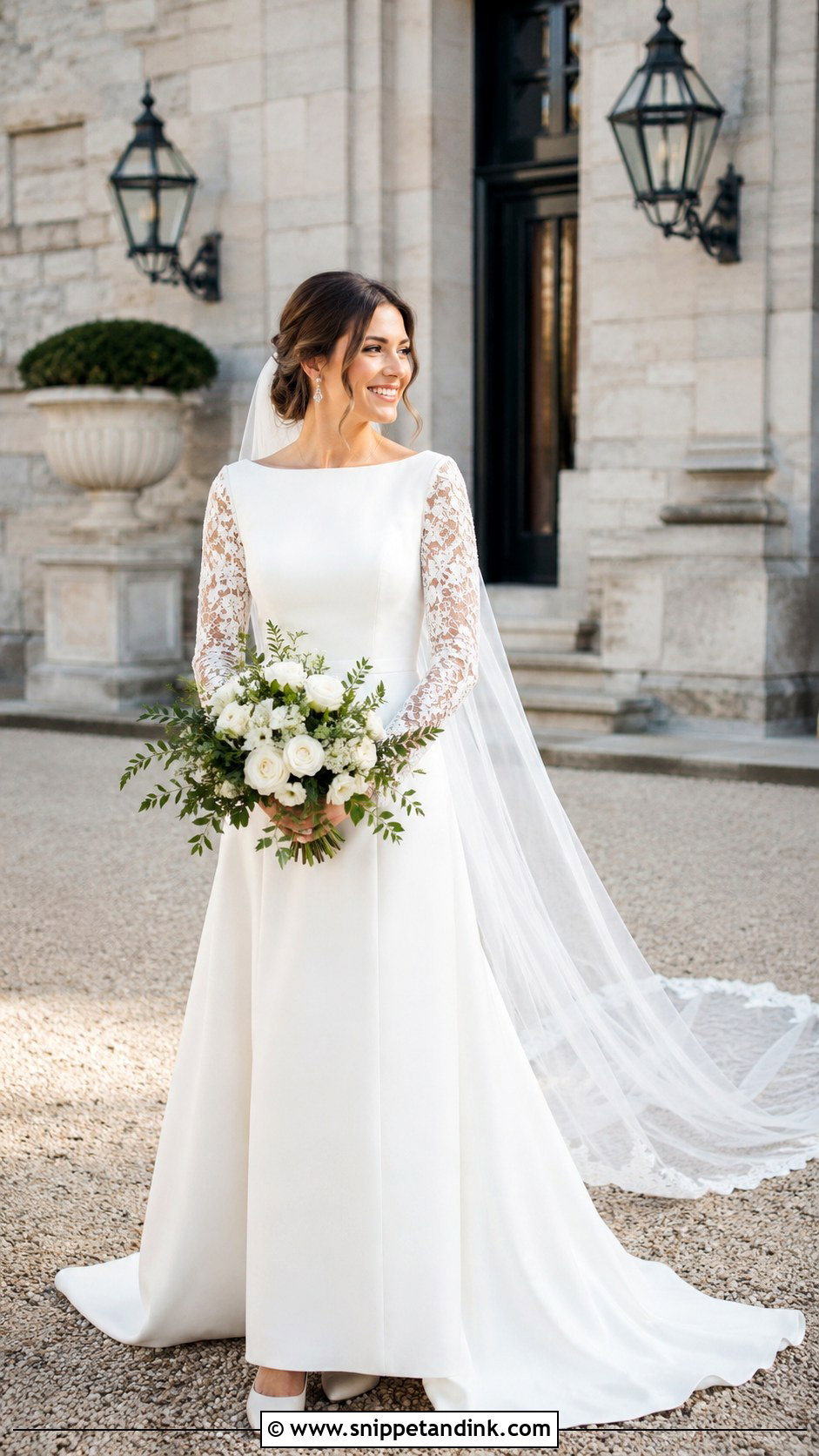
In Irish weather, long sleeves are practical as well as pretty. Fitted lace sleeves look traditional; soft bishop sleeves, gathered at the wrist, move more freely. A lined crepe bodice gives structure, and an A-line or column skirt keeps it polished. I keep the neckline simple so the sleeves lead. On grass and old stone, a low block heel or bridal ankle boot is steadier than a stiletto. A chapel veil and small crystal earrings finish it, and a defined waist stops the extra coverage from hiding your shape.
3. Celtic Knot Embroidered Wedding Dress
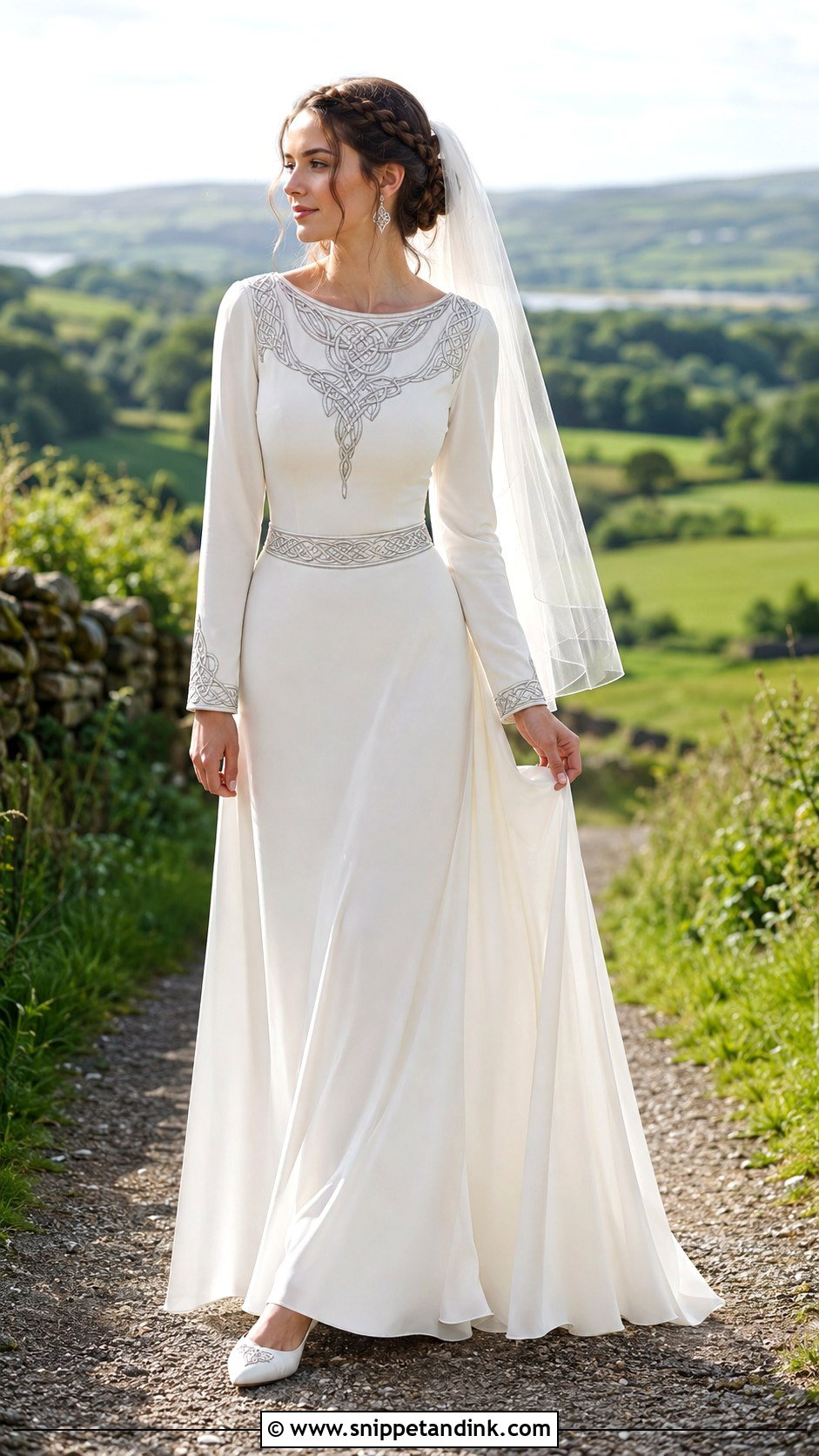
Knotwork reads best in small doses. Place it along the waist, cuffs, neckline or train edge and leave the rest of the gown clear. Silver thread looks cool and refined; muted gold is warmer. Complex knot designs often need simplifying before they are stitched, because fine interlaced lines blur on soft fabric, and a good embroiderer will suggest this before starting. A fluid ivory skirt, pointed satin flats, understated earrings and a plain veil keep the needlework visible. A narrow sage or deep green ribbon at the waist adds colour. Bridal first, symbolic second.
4. Irish Crochet Lace Wedding Dress
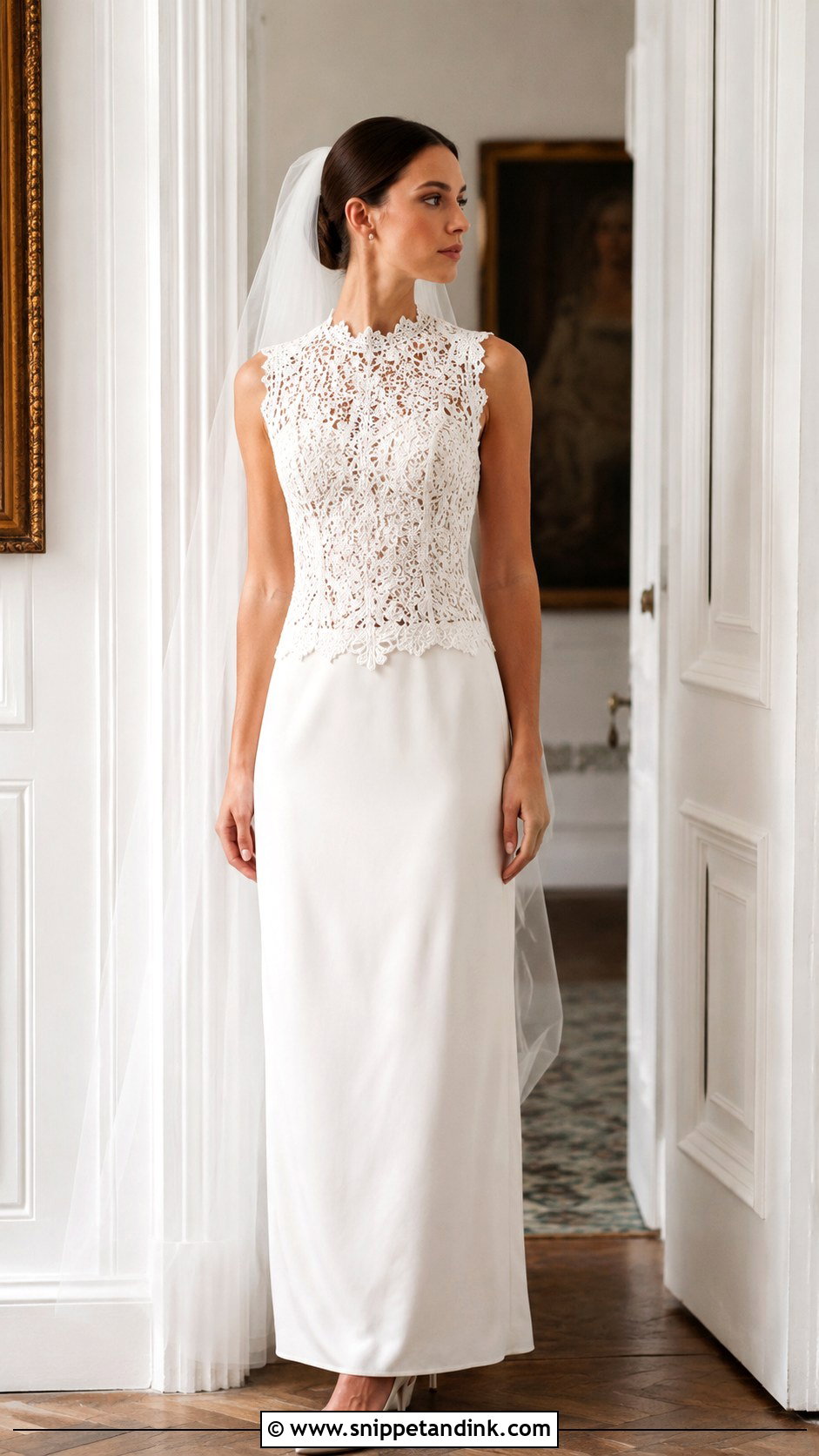
Irish crochet lace has strong raised texture, which is why it looks best over a plain silk, satin or crepe lining rather than on top of another busy fabric. Try a fitted crochet bodice with a flowing skirt, or a full overlay on a relaxed column. Crochet stretches downward under its own weight, so a full overlay should be anchored to the lining at several points, not just the waist. Pearl studs, a soft tulle veil, ivory leather pumps and a low bun complete it. For a lighter look, use crochet only on the sleeves, upper back or bodice.
5. Satin Irish Wedding Dress With Cape
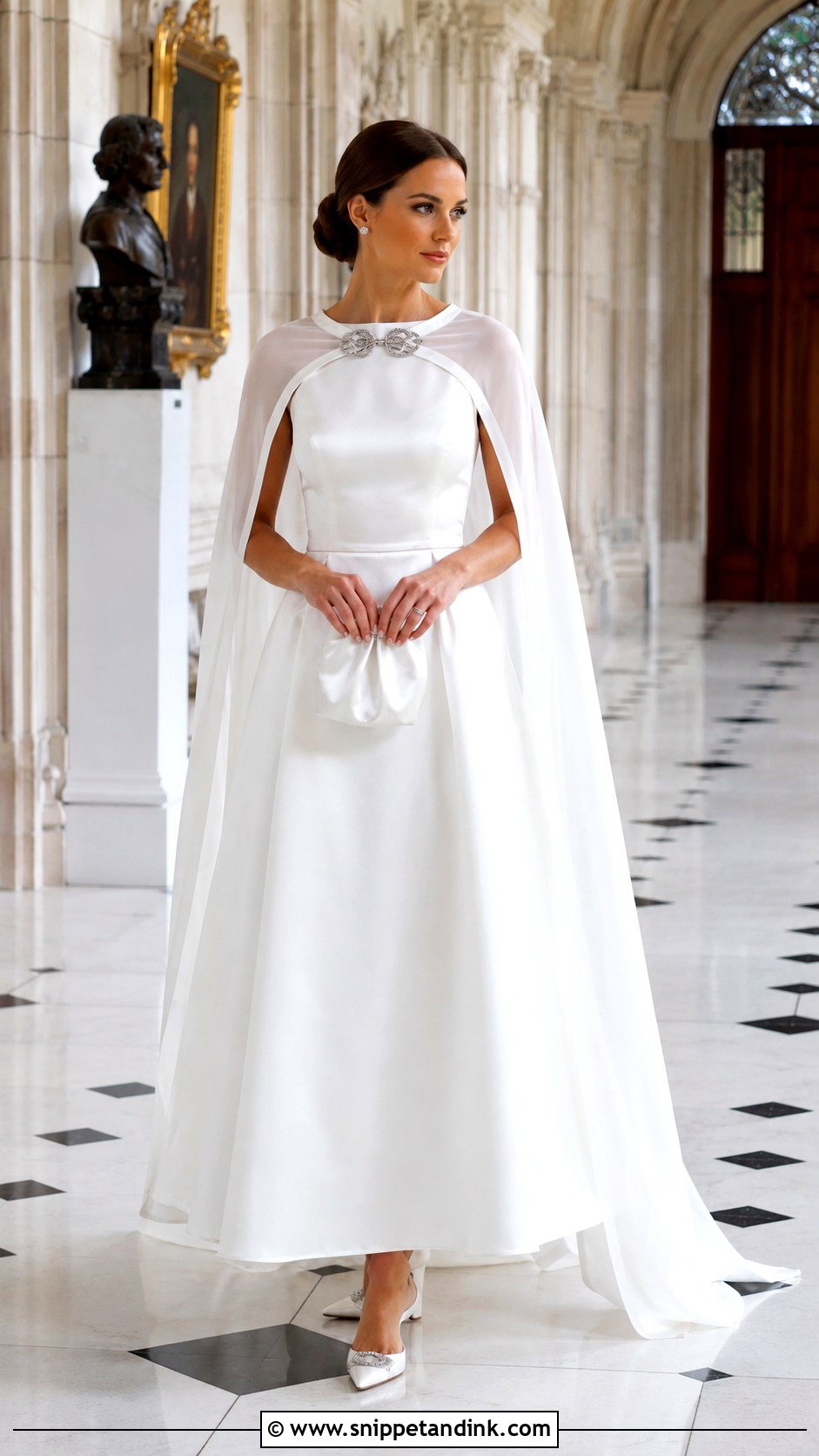
A plain satin gown with a cape is dramatic without clutter. Start with a clean A-line or fitted column, a structured bodice and almost no embellishment, then add a detachable floor-length cape in sheer tulle, satin or light crepe, fastened with a small silver Celtic-style clasp. Skip the veil if the cape already runs past the train. Satin shows every crease, and a cape lying over it all day leaves marks across the shoulders, so keep a handheld steamer at the venue. Take the cape off after the ceremony and you have a second look without buying a second dress.
6. Boho Irish Wedding Dress With Bell Sleeves
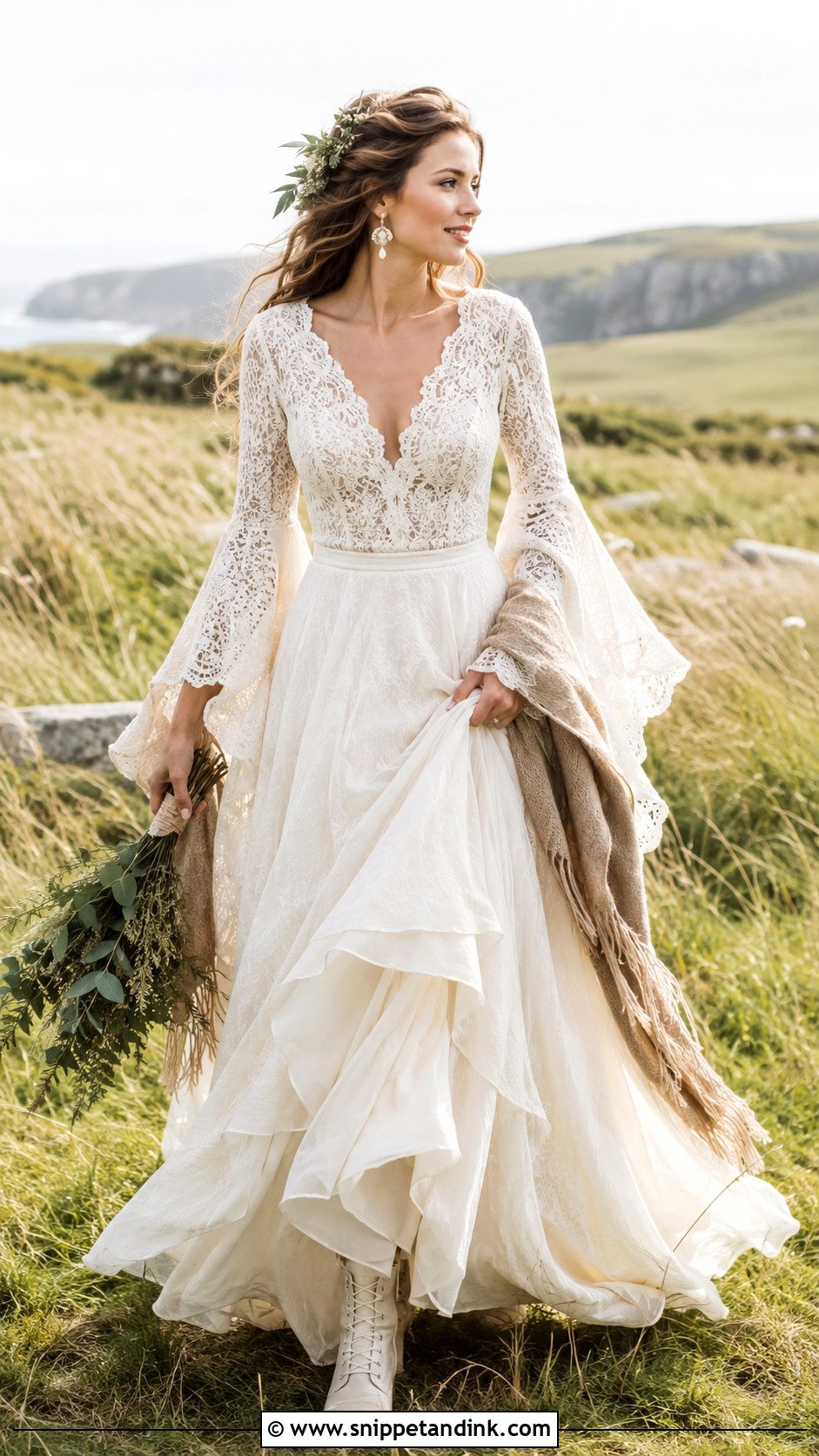
Bell sleeves suit a relaxed countryside wedding, with an ivory lace bodice, open neckline, defined waist and softly layered skirt. Have the sleeves end above the fingertips. Any longer and they trail through the bouquet and across your dinner plate. Breathable lining matters because lace bodices get warm in a marquee. Simple drop earrings, a loose braided updo with a sprig of greenery and suede or leather block-heel ankle boots for uneven ground suit it, plus a light shawl for later. Natural fabrics, unbleached lace and wide sleeves sit naturally alongside Celtic and folklore-influenced bridal designs.
7. Emerald Green Irish Wedding Dress
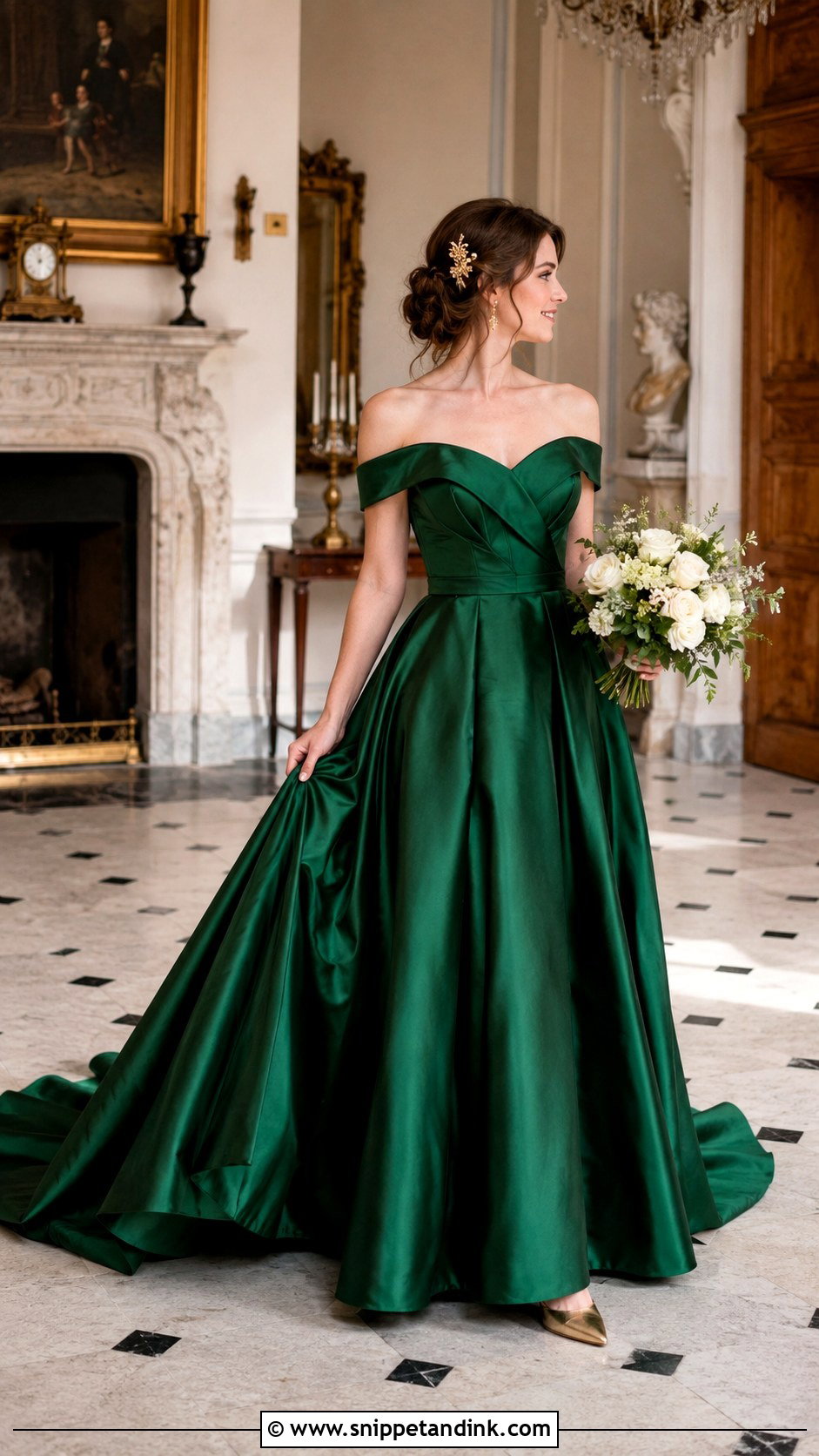
Emerald green is the boldest move here, and the colour should do the talking. Pick a clean ball gown, A-line or long-sleeve velvet shape with restrained detail. Satin makes green look formal and glossy; crepe makes it softer and more modern. Strong green can cast a tint onto the skin under the chin in photographs, so I keep foundation slightly warmer than usual and test it in daylight. Gold earrings, champagne heels and an ivory bouquet for contrast work well, and a sheer ivory cape or a gold comb replaces a matching veil. Velvet for autumn and winter, light silk for spring.
8. Ivory Wedding Dress With Green Embroidery
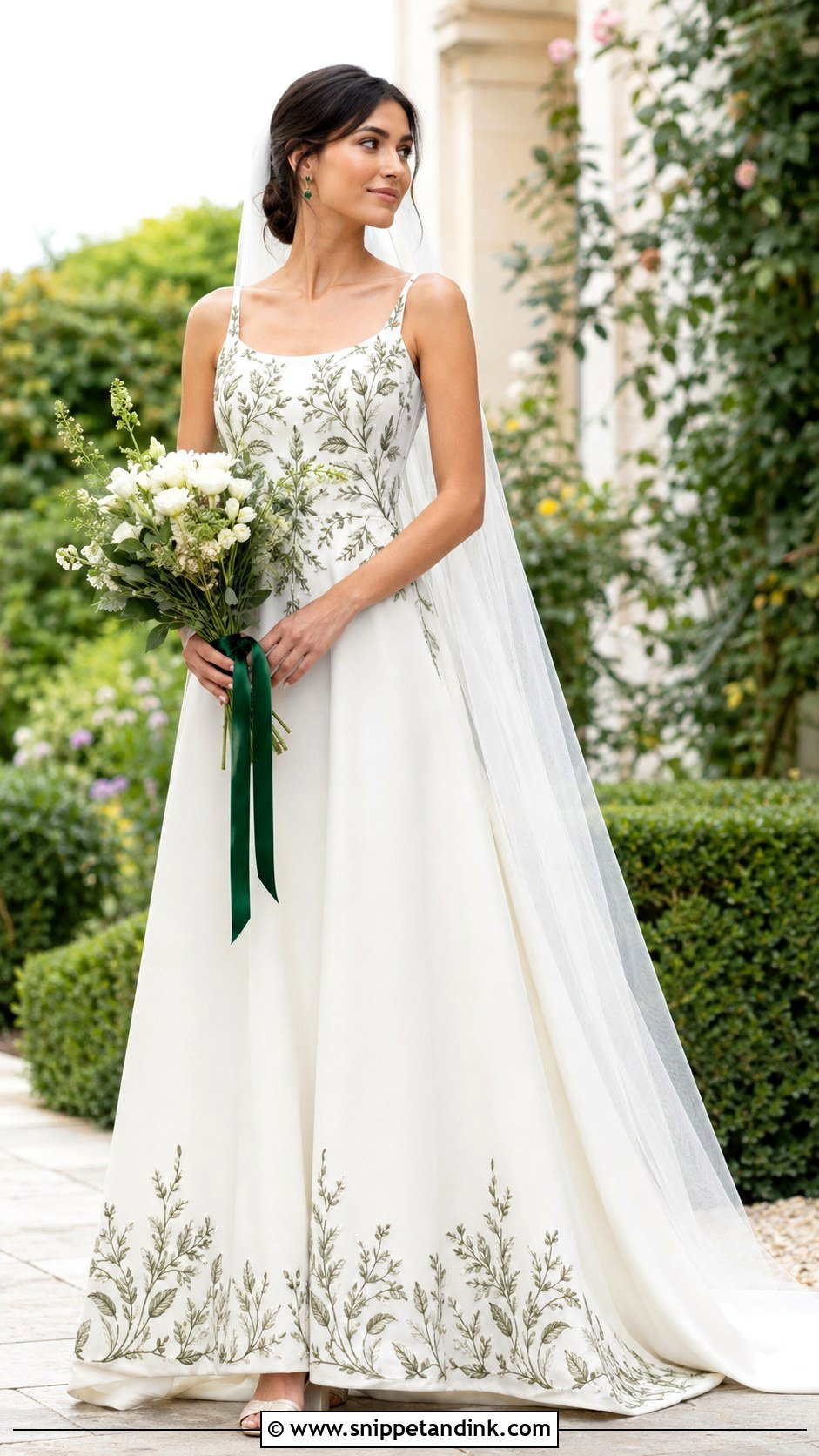
Green embroidery on ivory is the gentler version. Choose a simple A-line or fit-and-flare and add green vines, shamrock-inspired leaves or abstract botanical stitching at the bodice and hem, kept narrow and well spaced. Moss, sage and eucalyptus are softer than bright emerald. Coloured thread can bleed if the dress gets wet, so ask your maker for colourfast thread before an outdoor wedding. Emerald studs, ivory block heels and a green velvet ribbon round the bouquet tie it together. Bespoke work can hide initials, the date or a local flower in the pattern.
9. Irish Castle Ball Gown Wedding Dress
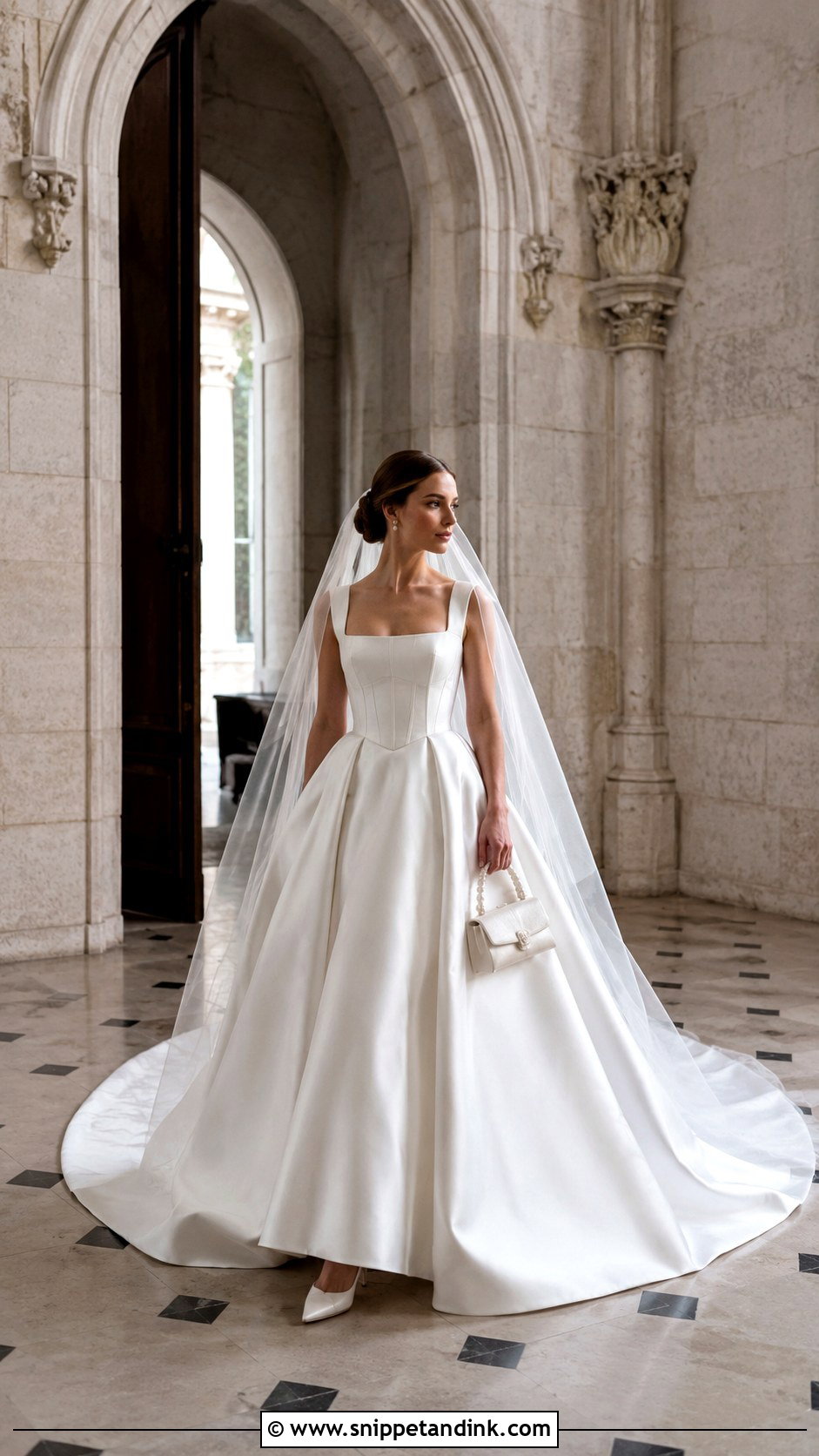
A castle can hold a full ball gown in a way a small venue can’t. Look for a structured corset bodice, defined waist and a full satin or mikado skirt with a chapel train. Mikado is stiff enough to keep its shape on stone floors and in draughty halls, which soft tulle doesn’t. Subtle lace appliqué or embroidered knotwork adds Irish character. A cathedral veil, pearl earrings and satin pumps complete it. Corset bodices sculpt the shape well, but only with professional alterations; you need to sit, breathe and move freely. Ask for a secure bustle for dancing.
10. Irish Coastal Wedding Dress
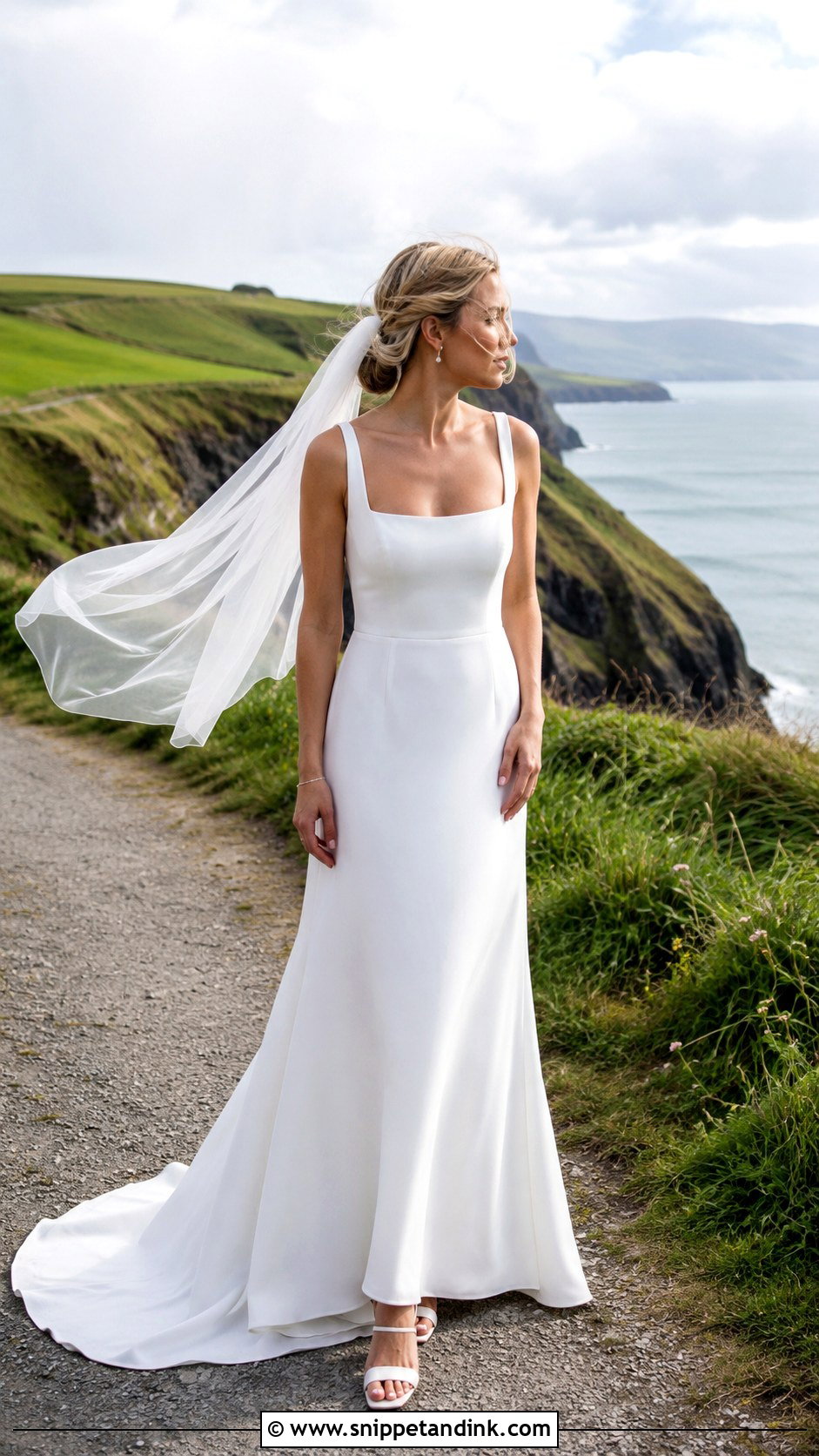
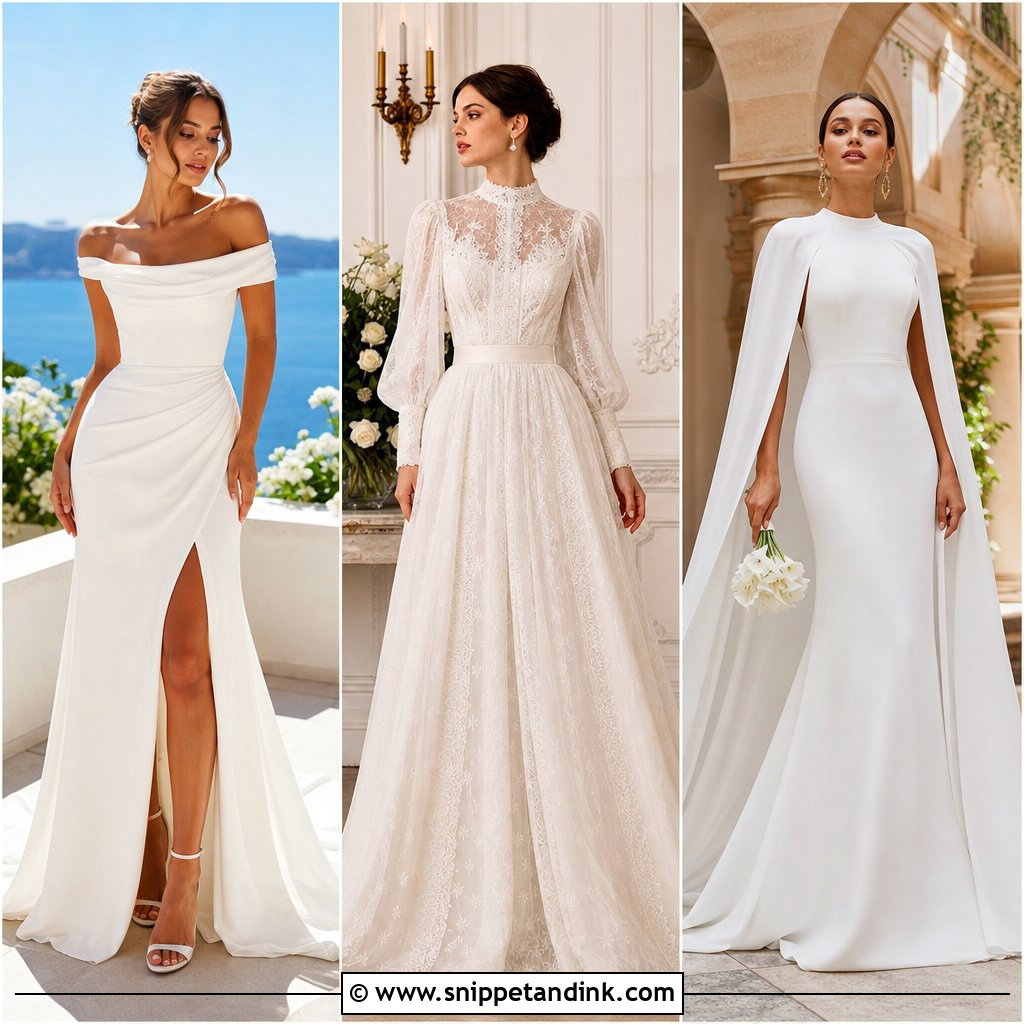
On the coast, the wind makes the decisions. Choose a lightweight chiffon, soft crepe or silk A-line with a short sweep train and a fitted bodice with secure straps; loose fabric at the neckline flaps about in every photograph. A fingertip veil or removable sheer cape can come off if the wind picks up. Block heels suit firm paths and bridal flats suit sand or grass. A low bun keeps the hair under control. I’d leave very long veils, heavy skirts and fragile beading at home for a clifftop ceremony.
11. Carrickmacross Lace Wedding Dress
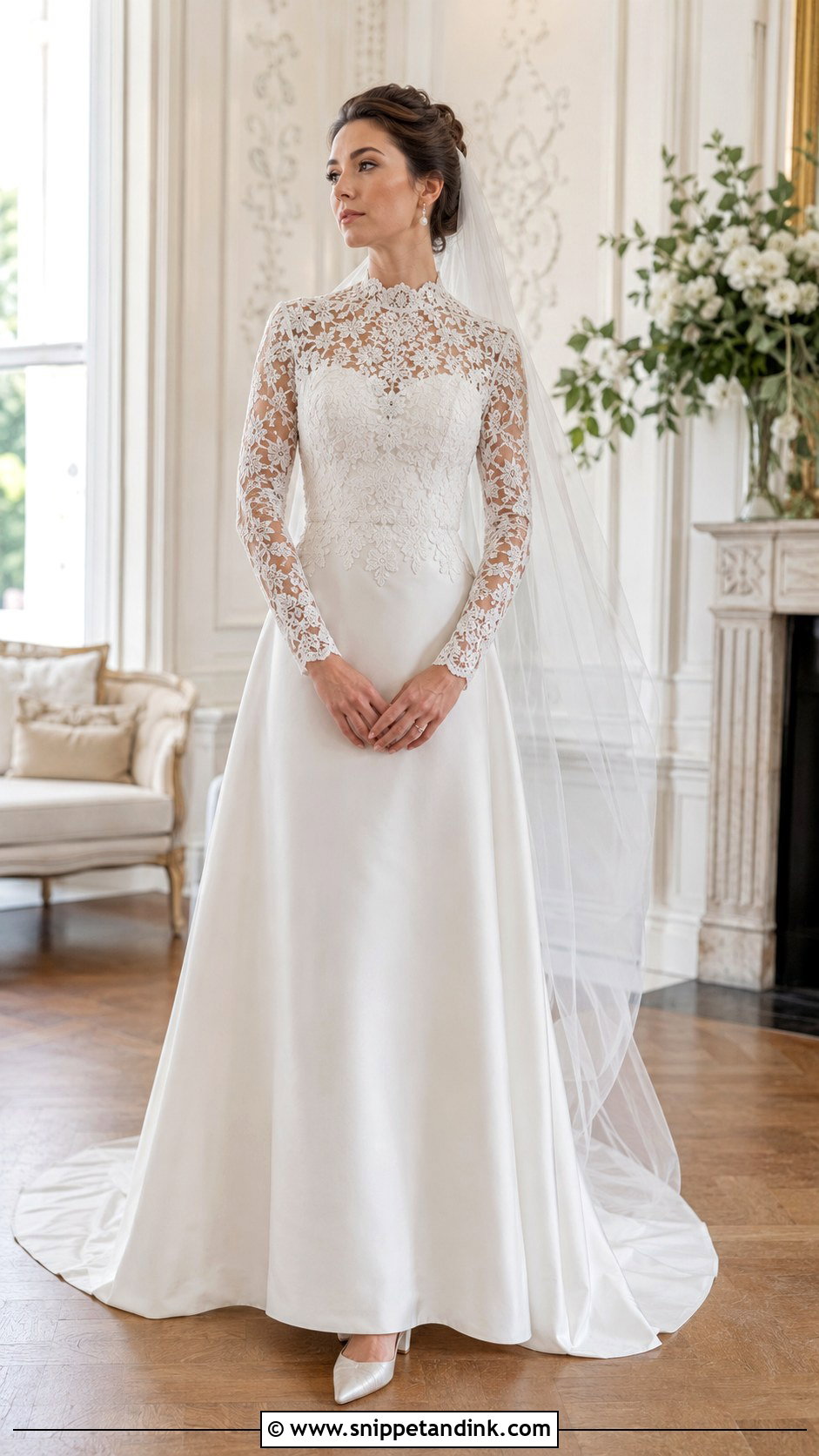
A Carrickmacross lace wedding dress shows off one of Ireland’s best-known lacemaking traditions: fine fabric appliquéd onto decorative net. Place the lace where it can be seen up close, on a high neck, fitted sleeves, a bodice panel or the veil, over a simple silk or crepe A-line. If the dress carries a lot of lace, keep the veil plain; if the lace is only on the bodice, a lace-edged veil can repeat it. Patterns can include Irish motifs, which makes a custom commission very personal. Handmade lace takes time, so start the conversation with a maker many months ahead.
12. High Neck Irish Wedding Dress
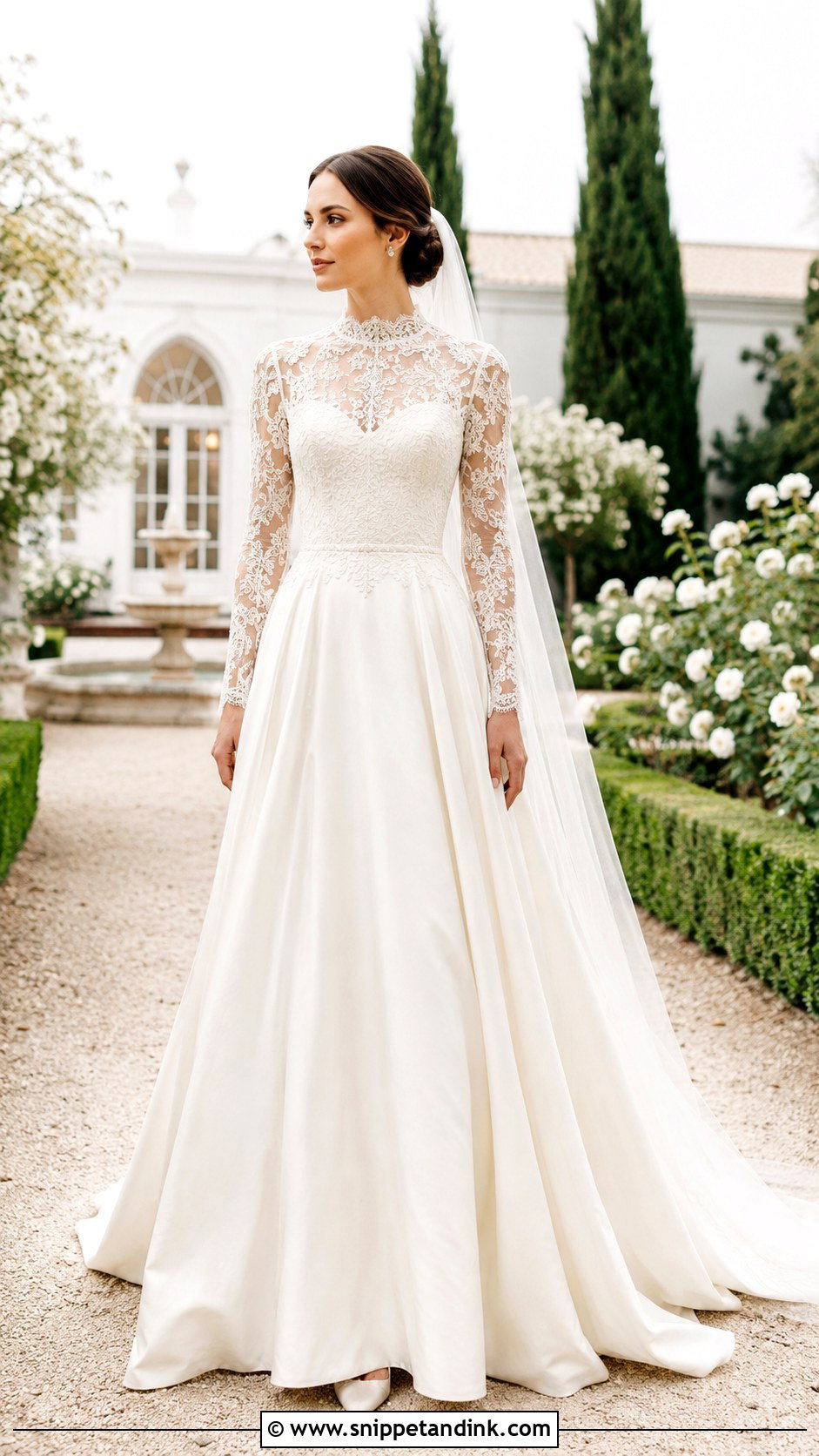
A high neck gives a composed silhouette and frames the face. Choose an illusion lace neckline over a sweetheart lining, or a clean crepe bodice with a softly raised collar, with long fitted sleeves for a traditional look or none for a lighter one. Balance the coverage with an open back or a fluid skirt. Skip the necklace. Pin the veil beneath the hairstyle rather than on top so it doesn’t hide the neckline. The collar has to sit flat when you turn your head; a high neck that buckles every time you look sideways needs a small adjustment at the back seam.
13. Square Neck Irish Wedding Dress
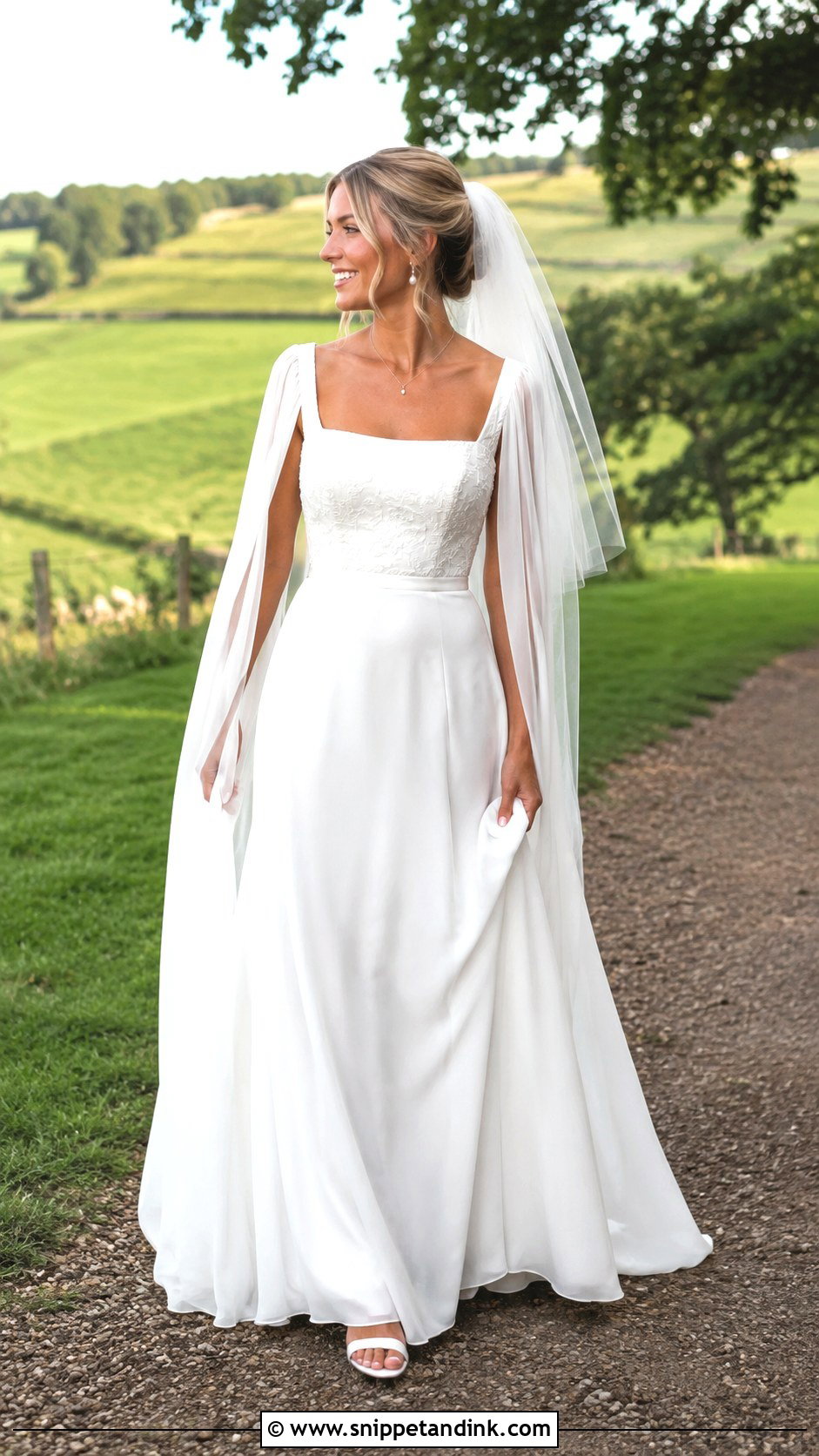
A square neckline frames the face cleanly and is flattering on most figures. Pair it with a fitted lace bodice, natural waist and a full, softly structured skirt, with long chiffon drape sleeves or short lace ones for warm weather. It frames detailed lace and flowing sleeves especially well, which is why it shows up so often in folklore-style gowns. If the bodice is corset-style, the top edge must lie flat against the chest when you lean forward; gaping there is the most common fitting fix I see. A delicate pendant, pearl earrings, low ivory heels and a loose updo keep it light.
14. Irish Wedding Dress With Detachable Overskirt
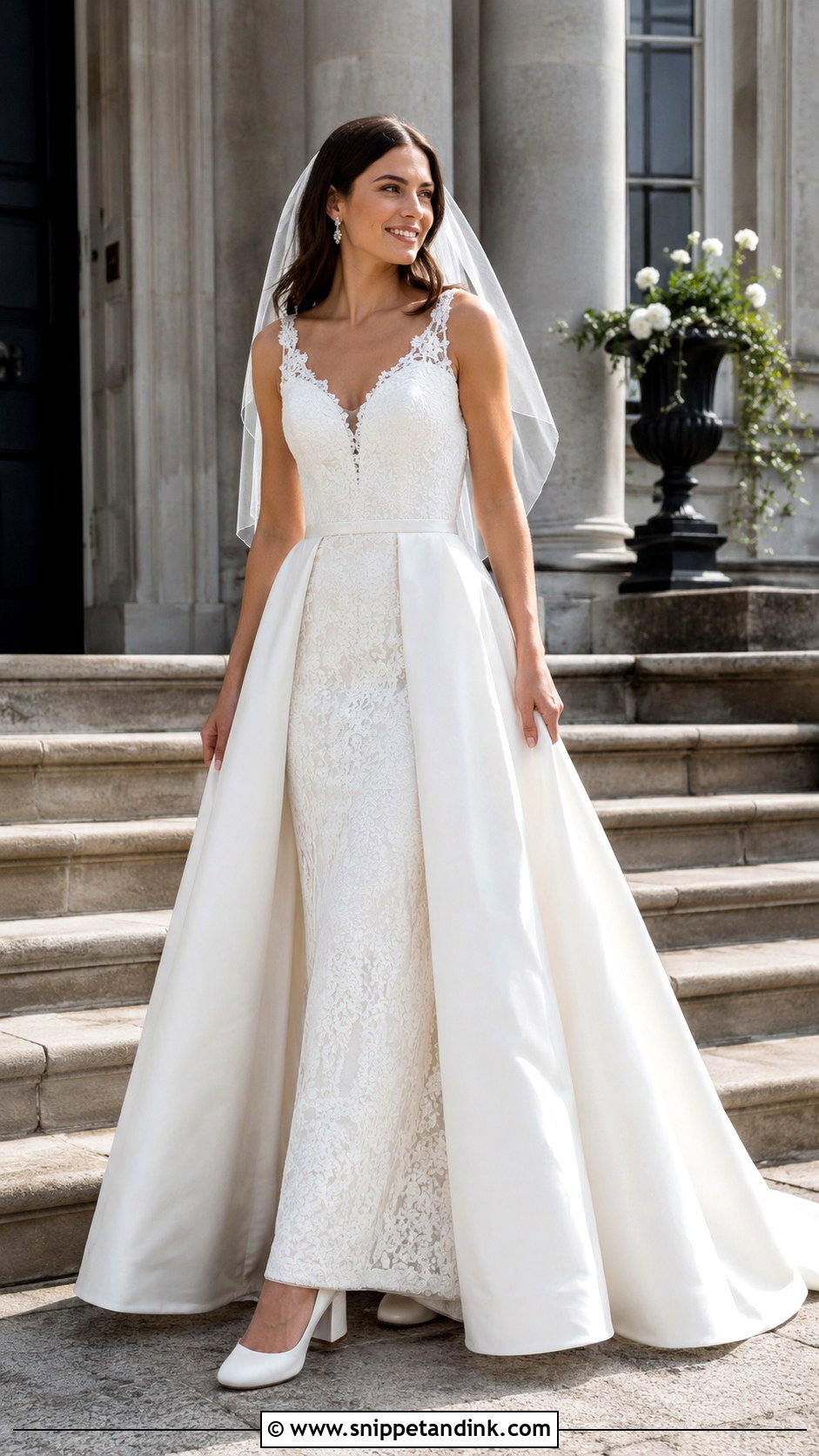
A detachable overskirt turns one dress into two silhouettes. Start with a fitted crepe or lace column you’re happy to wear all day, then add a full satin, organza or tulle overskirt for the ceremony. Remove it later and you’re in a slim dress for dancing. Hide the attachment under a narrow belt or row of covered buttons. Overskirts are heavier than they look, so the fastening should be hooks on a firm waistband, never snaps alone. Keep the overskirt train manageable for outdoor photos, and add a shoulder-length veil and block-heel pumps.
15. Irish Wedding Dress With Blue Details
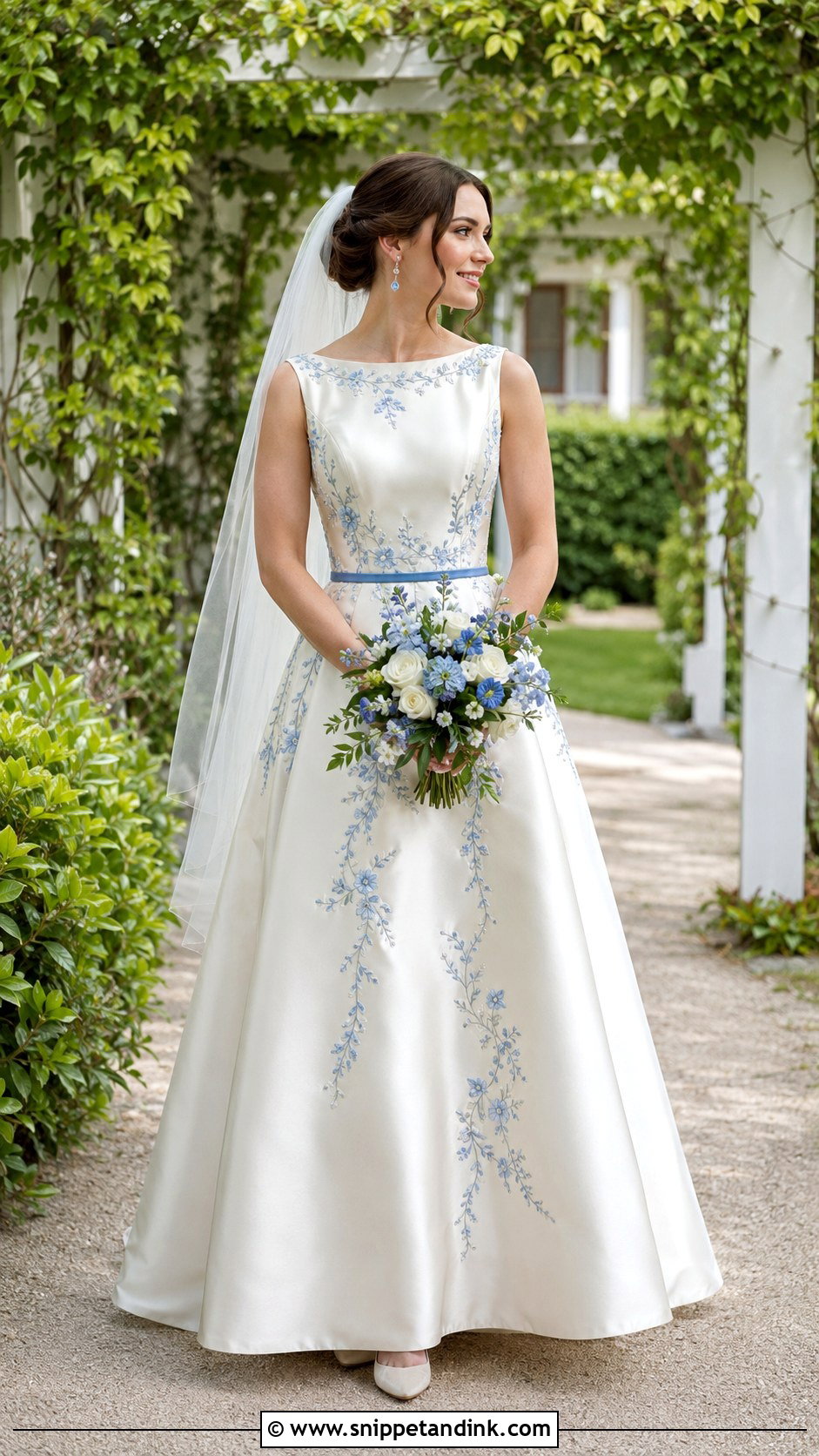
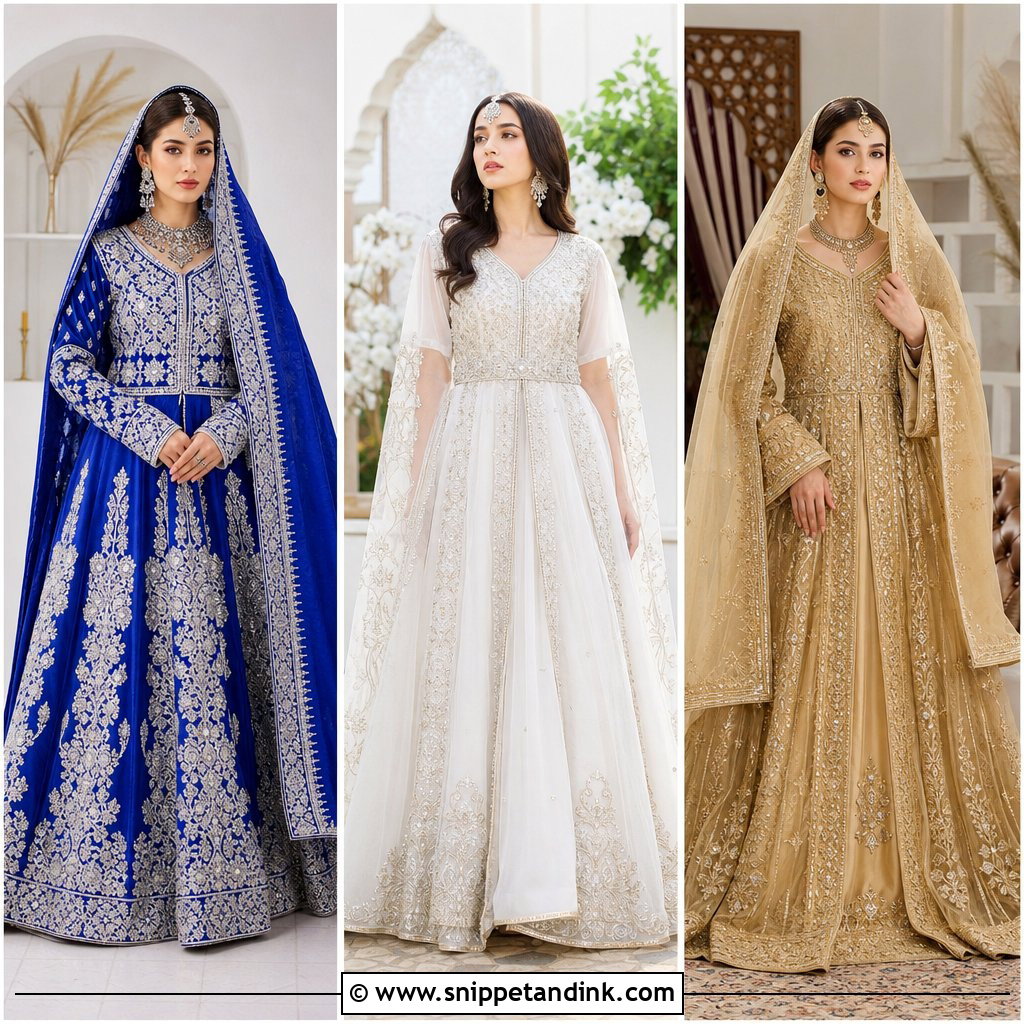
Blue details add a little colour without a fully coloured dress. Start with an ivory A-line or fitted satin gown and bring in dusty blue through floral embroidery, a narrow ribbon, covered buttons or the lining of a cape, placed deliberately so it still reads as one design. Silver suits cool blue far better than yellow gold. Pale blue gemstone earrings, ivory shoes and a tulle veil finish it, with blue and white flowers in the bouquet. For something private, embroider initials or a short message in blue thread inside the skirt.
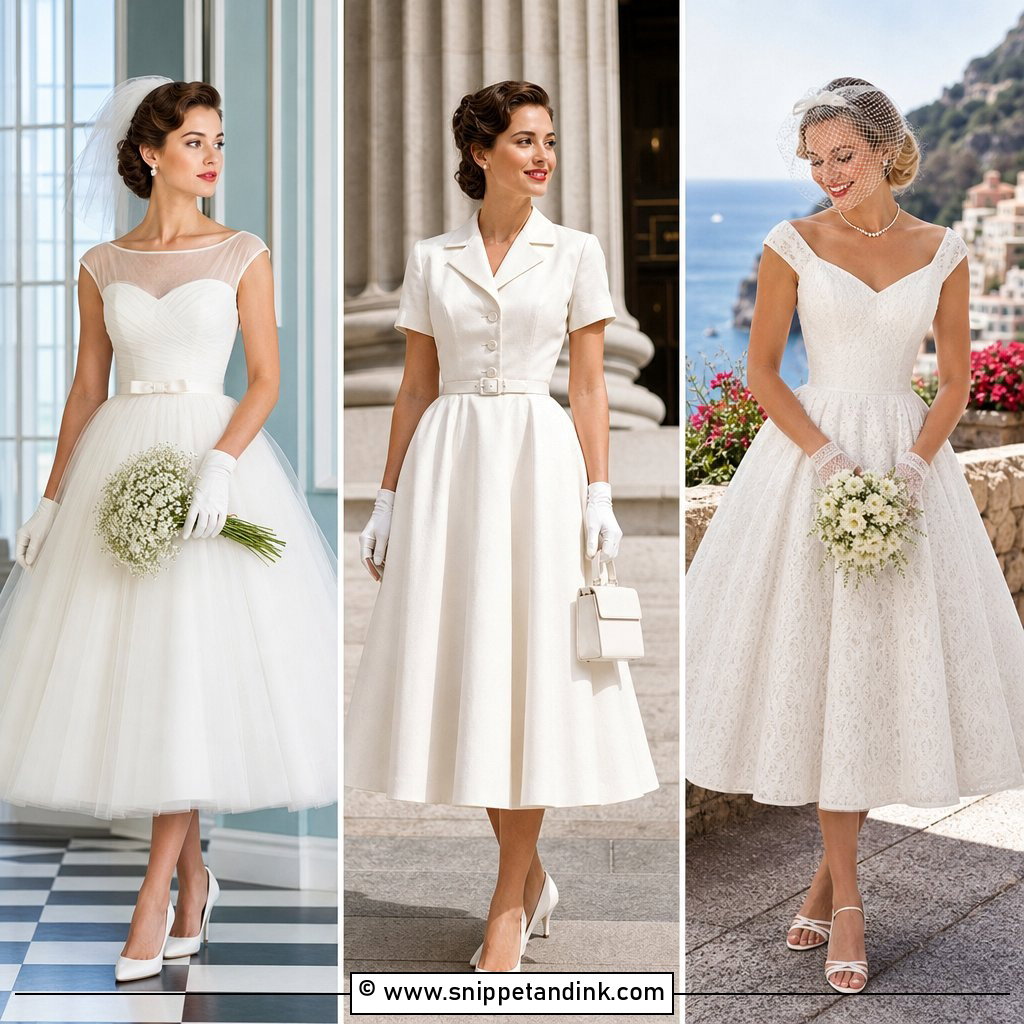
16. Vintage Irish Lace Tea Length Wedding Dress
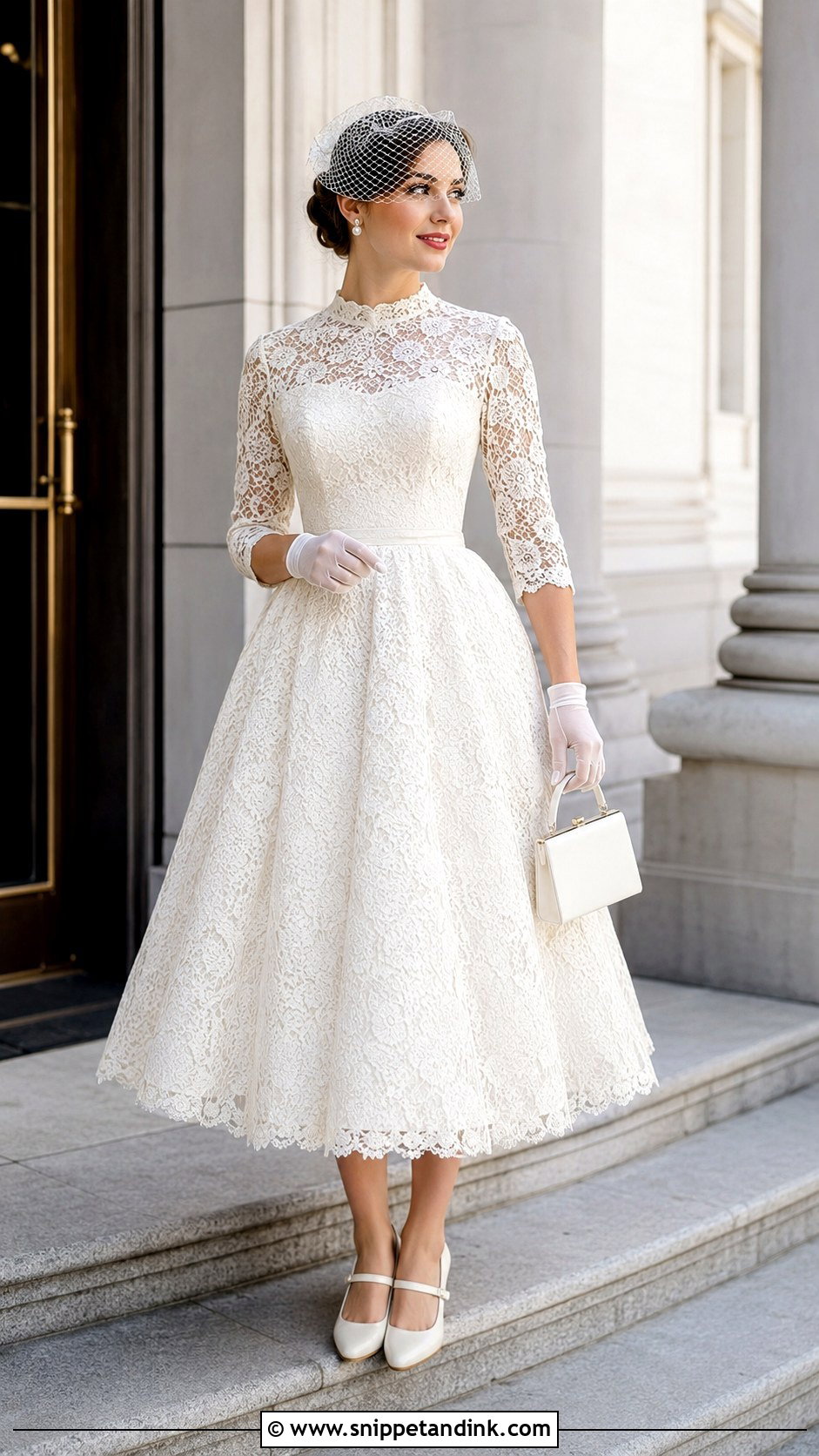
A tea-length lace wedding dress has vintage personality and suits a city ceremony or smaller celebration. Choose an ivory fitted bodice with three-quarter sleeves and a softly flared skirt ending between knee and ankle. With the feet on show, Mary Jane pumps, slingbacks or neat bridal flats become part of the outfit. A structured mini handbag suits the proportions better than a big clutch. Irish crochet or floral lace adds heritage texture, and a satin waistband defines the waist. Sit down at the fitting; a tea-length skirt rides up more than you expect.
17. Minimalist Irish Crepe Wedding Dress
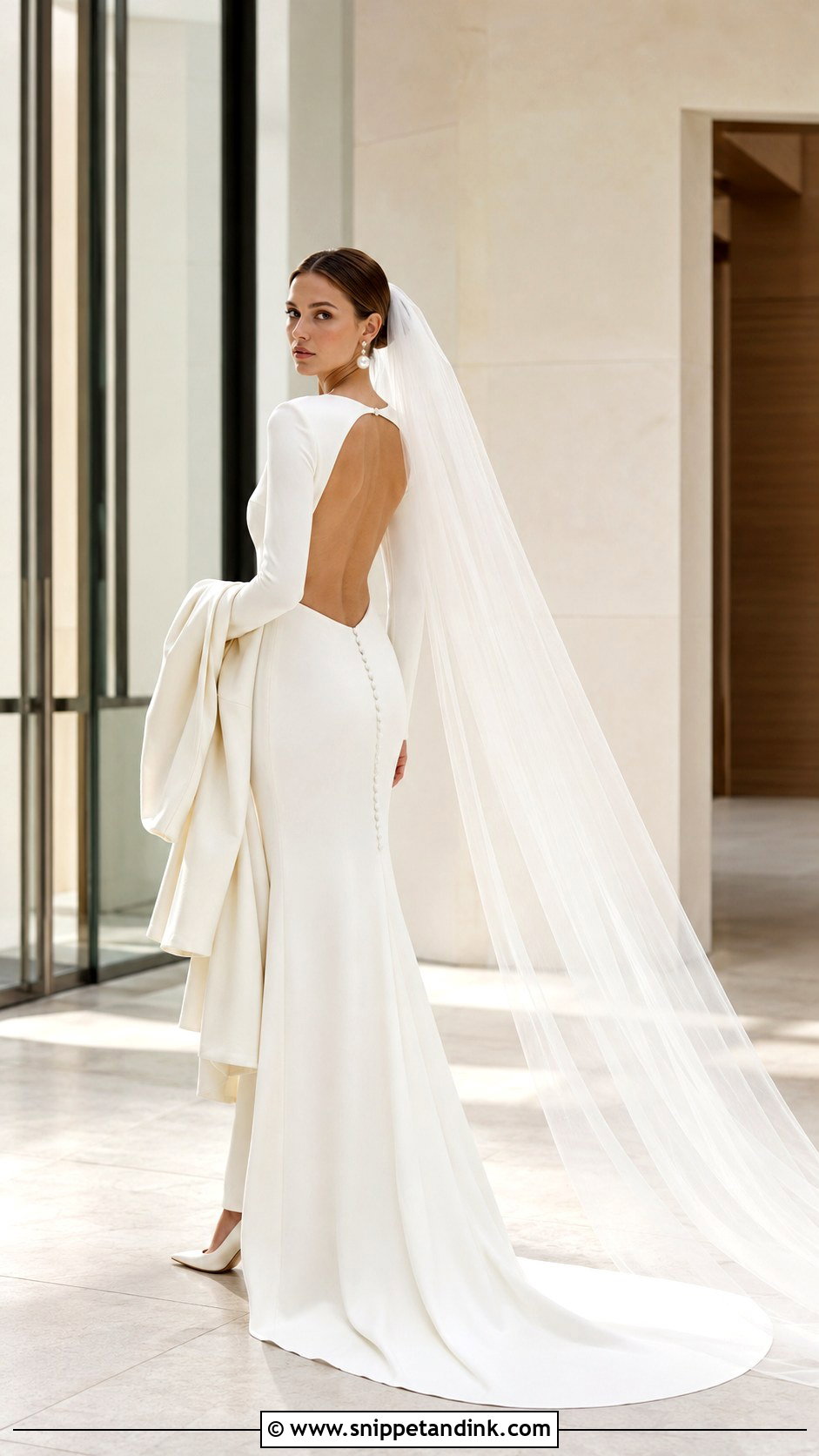
Plain crepe is the hardest dress to get right, because nothing hides a poor fit. It relies on excellent tailoring, good fabric and one strong design element: a long-sleeve column with an open back, a square-neck A-line, or a fitted shape with a row of covered buttons. Minimal gowns paired with subtle detail and modern accessories are a big part of Irish bridal fashion at the moment. Crepe shows pulling at the seams and an uneven hem straight away, so book enough fittings. Sculptural pearl earrings, pointed pumps, a smooth cathedral veil and a tailored wool wrap for outdoor photos finish it.
18. Irish Wedding Dress With Puff Sleeves
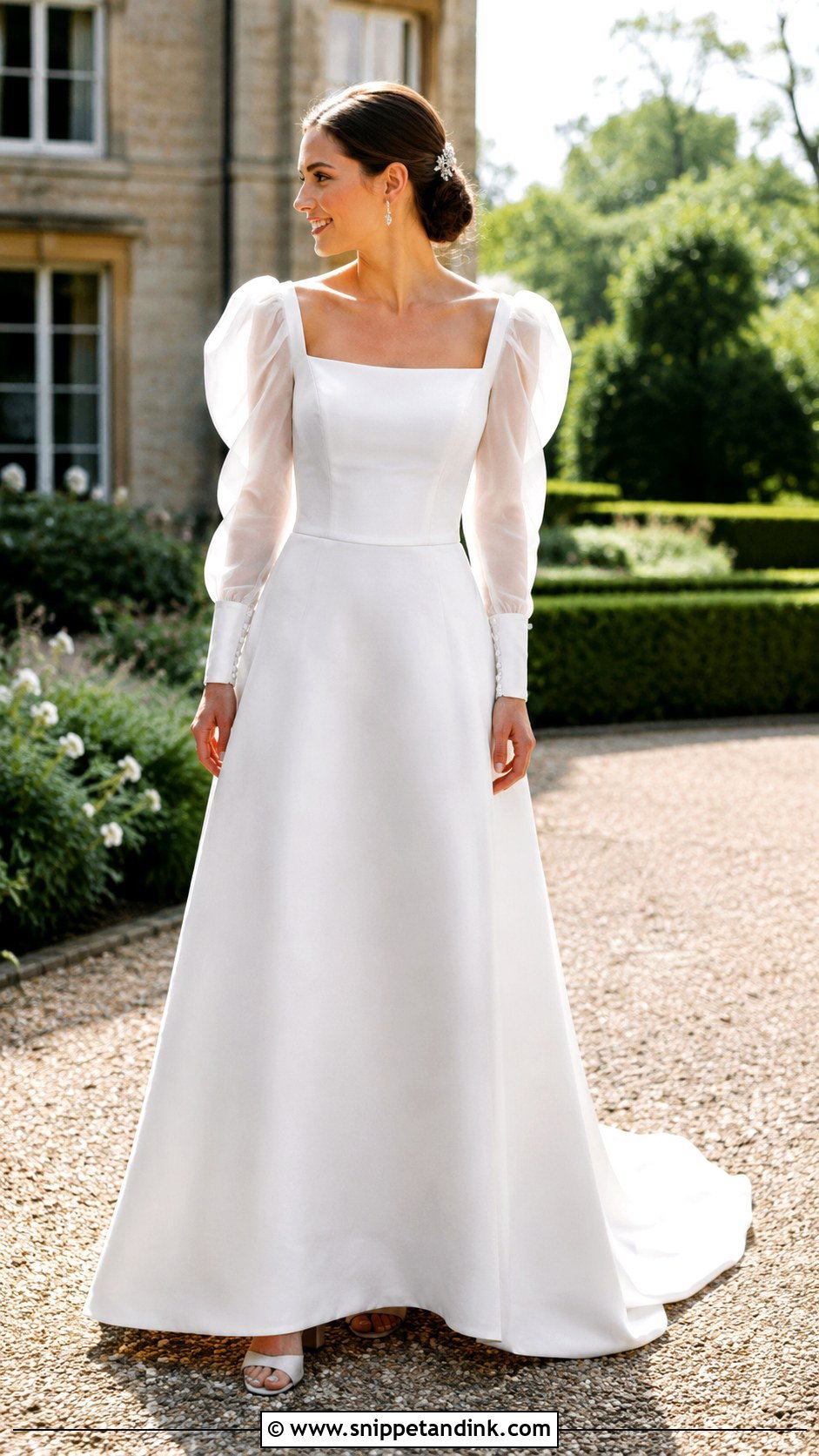
Puff sleeves add volume at the shoulder while the waist and skirt stay defined. Try a fitted satin bodice with removable organza sleeves, or lace sleeves with gentle fullness at the top, over a streamlined A-line skirt. Statement sleeves of every kind, from structured shapes to soft bishop sleeves, are very much in fashion. Check the armhole before alterations are finished; puff sleeves set into a tight armhole stop you lifting your arms to hug anyone. Delicate drops, a low bun and satin block heels suit it, with a small comb in place of a veil if the sleeves are dramatic.
19. Plus Size Irish Lace Wedding Dress
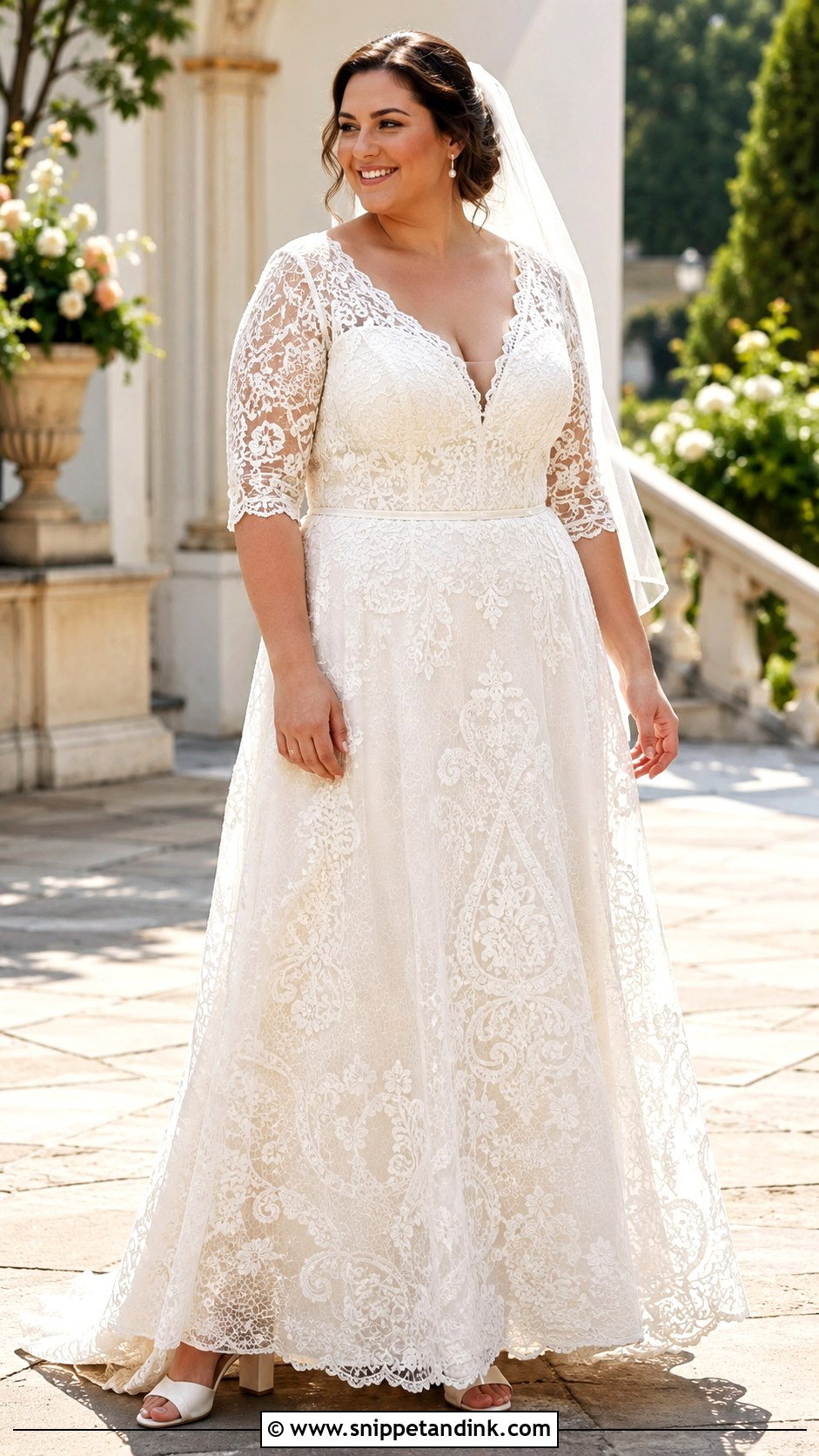
For a plus-size lace gown, the support is built in first. An A-line with a structured bodice defines the waist and lets the skirt fall smoothly, with soft lace sleeves, a supportive V-neck and lining that feels good against the skin. Lace placed at the neckline, waist or train draws the eye where you want it. Have the tailor check the upper arm while you sit, reach and hug someone. Many Irish-inspired lace designs come in extended sizes, but compare your actual measurements with the designer’s chart; bridal sizing usually runs smaller than everyday clothing.
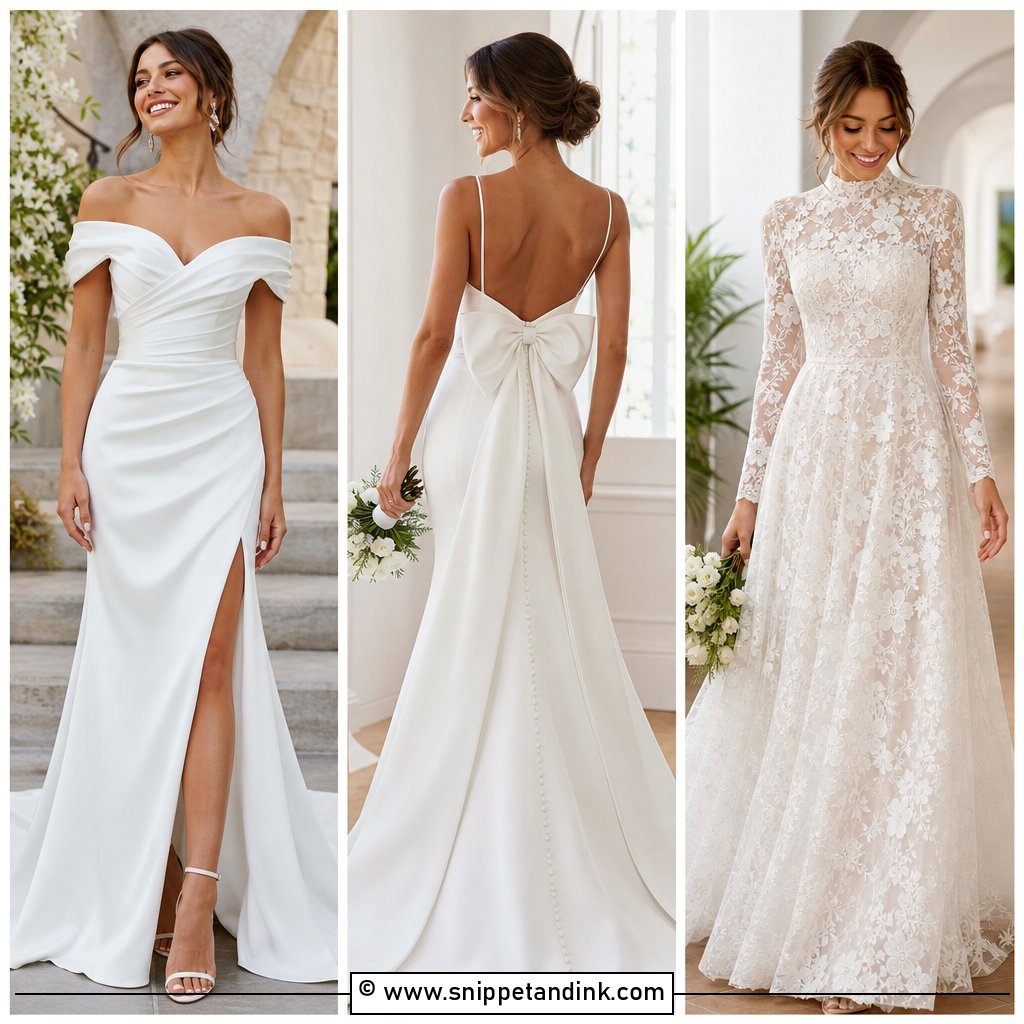
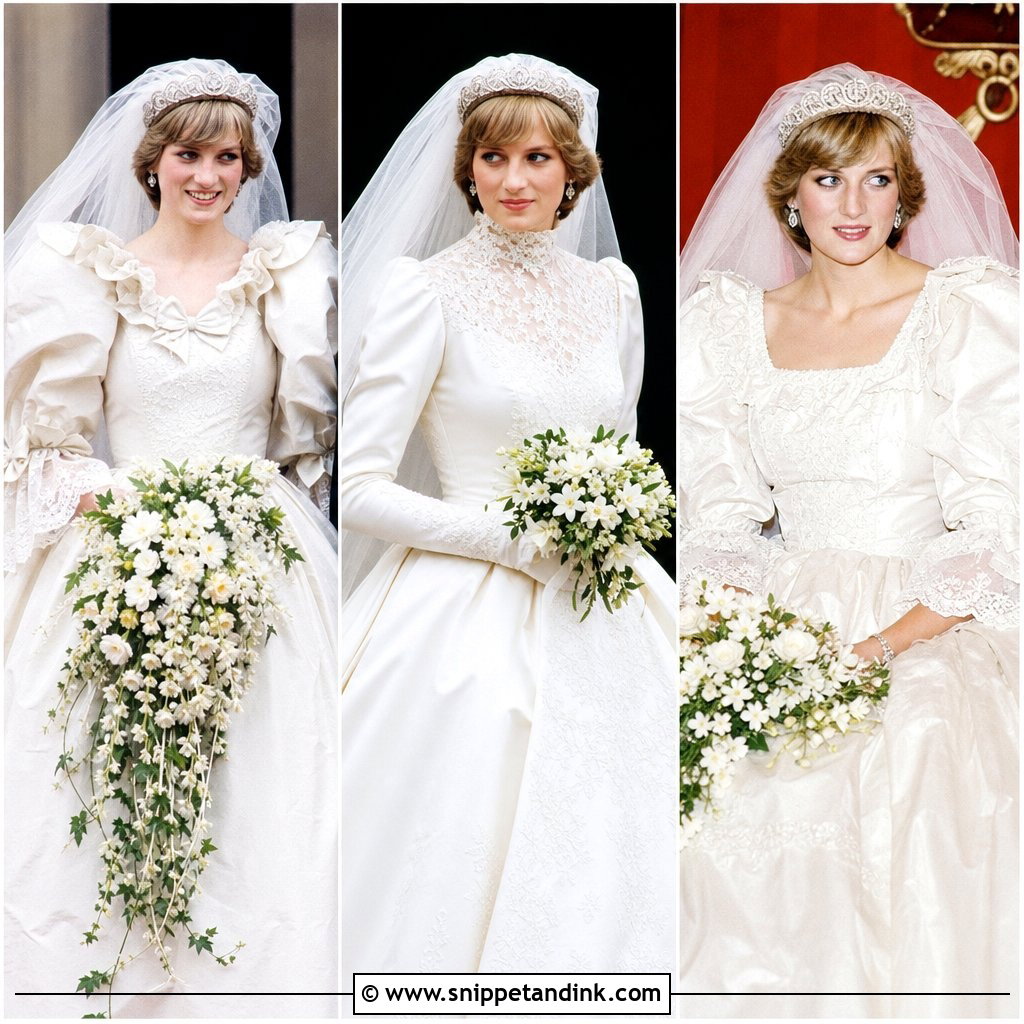
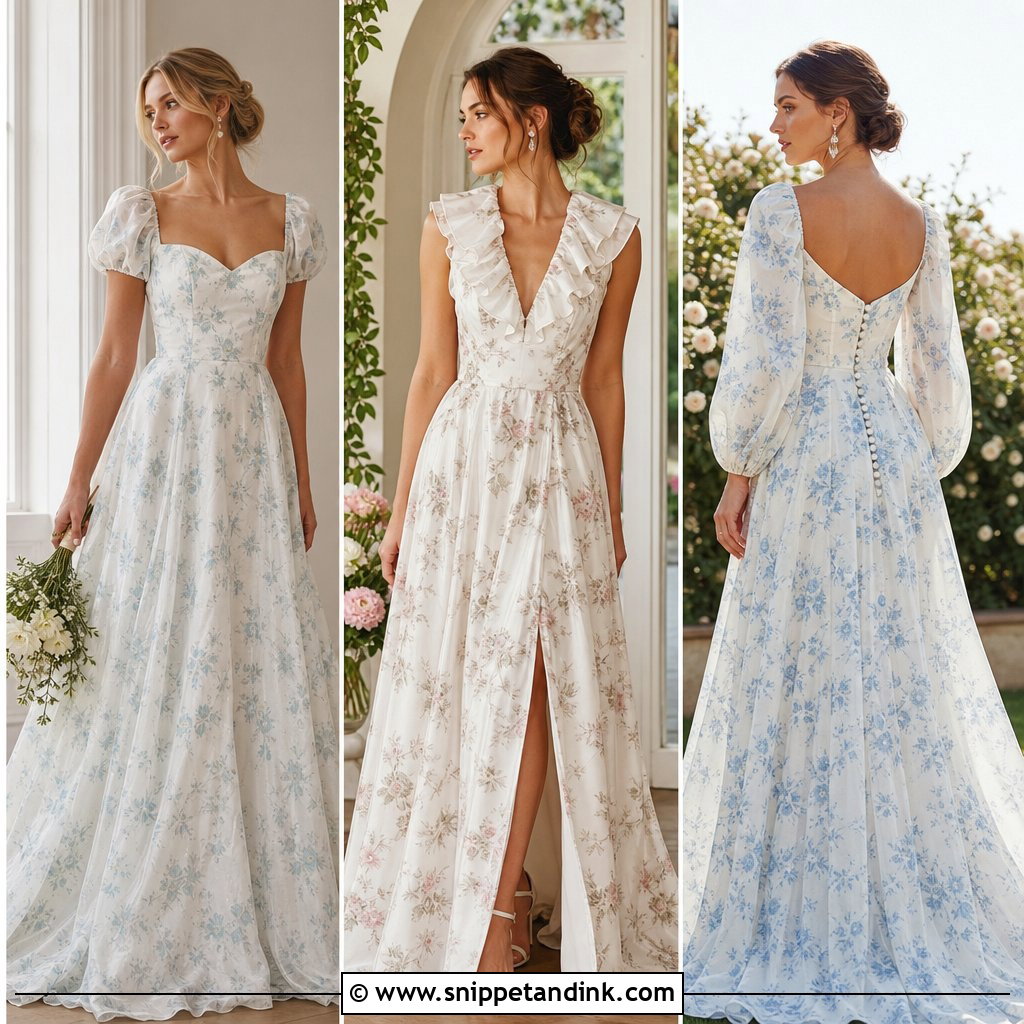
20. Irish Bridal Jumpsuit With Lace Cape
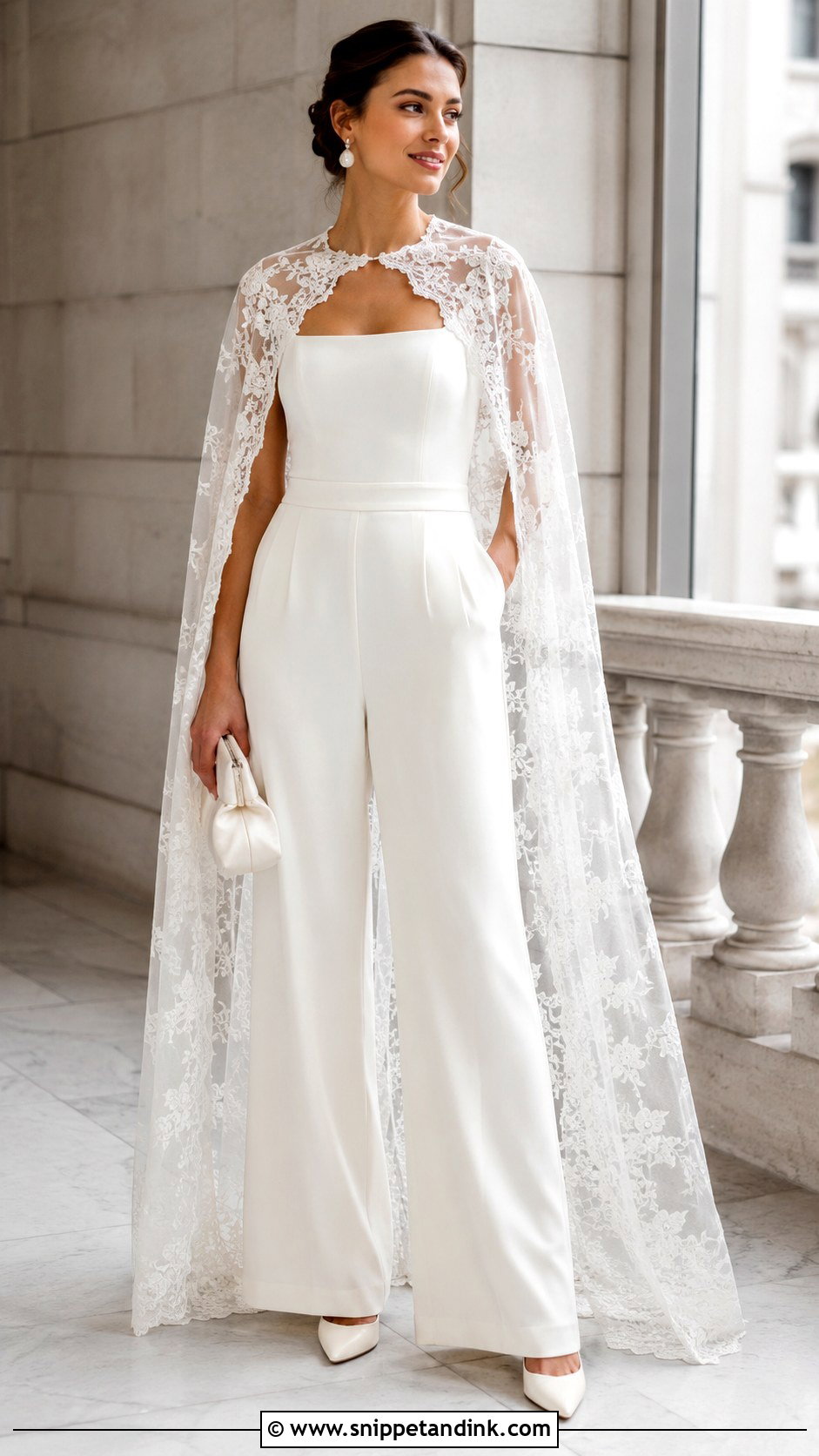
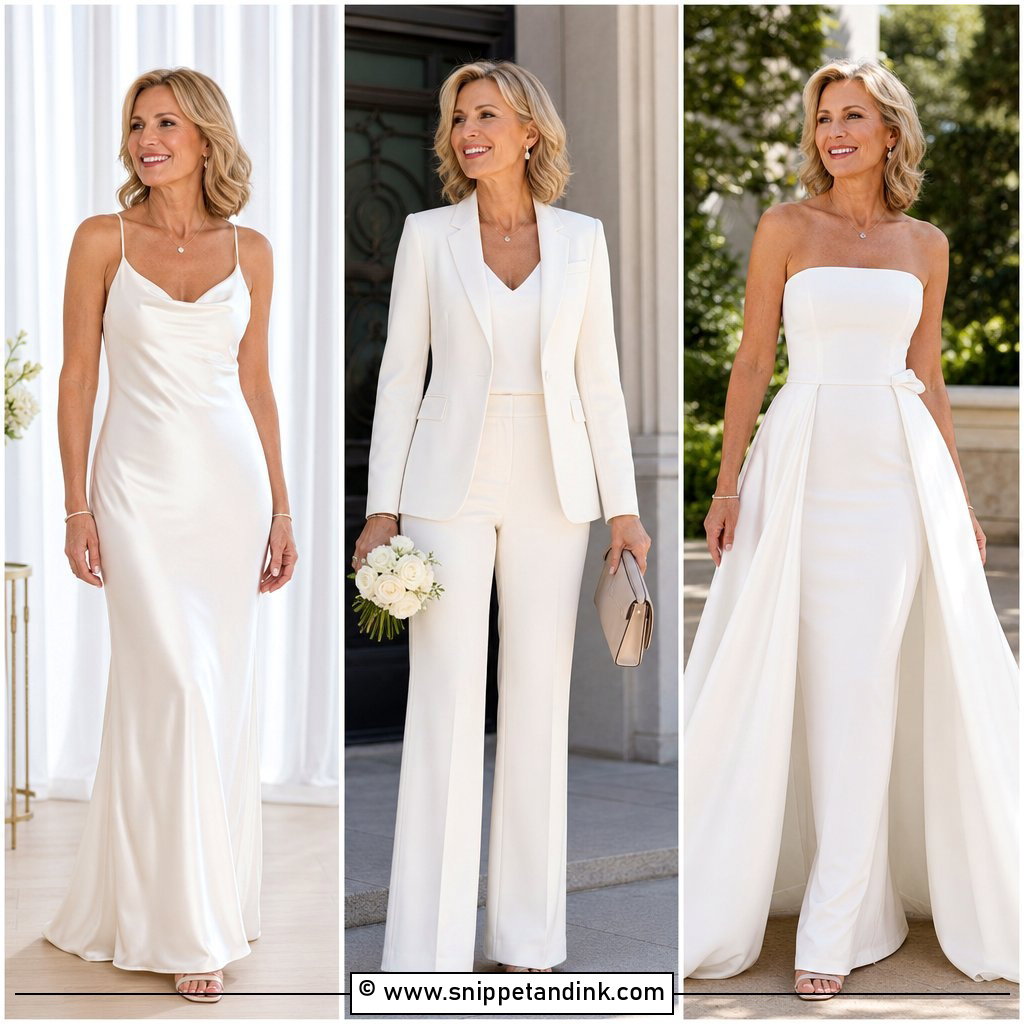
A jumpsuit is the modern alternative and still looks bridal with the right finishing. Select a tailored ivory jumpsuit with a defined waist, wide-leg trousers and a structured square or V-neck bodice, then layer a lace cape over the shoulders for softness and heritage texture. The trousers should almost skim the floor without catching under the shoes, so bring your heels to the final fitting. Bridal tailoring suits civil and intimate ceremonies especially well. Pointed pumps, pearl drops and a sleek ponytail finish it, and the cape comes off for dancing.
Flying to Ireland With Your Gown
If the wedding is a destination trip, the dress travels with you, never in the hold. Lost luggage happens, and a wedding gown can’t be replaced in two days. Contact your airline ahead of time. Some will hang a gown in a cabin closet when space allows, but policies differ and you shouldn’t count on it.
- Ask your shop to pack it in a breathable garment bag with tissue paper between the folds.
- Lay it flat in the overhead bin, on top of other bags rather than under them.
- Hang it as soon as you arrive so gravity can start releasing the creases.
- Book a steaming service or a local seamstress near the venue for a day or two before the wedding.
- Pack a small sewing kit, spare bustle ribbon and safety pins in your hand luggage.
Heavier satin and mikado travel better than chiffon or tulle, which crush easily. That’s worth weighing up if you’re still choosing fabrics for a destination wedding.
Meaning in the Details, Comfort in the Fit
Irish influence can be quiet or striking. Lace, Celtic embroidery, flowing sleeves, green accents and capes all carry it, while crepe gowns, detachable overskirts, jumpsuits and corsetry give you modern routes in. Before deciding, think about the season, the ground you’ll walk on and how many hours the celebration runs. Then bring every accessory to a fitting and wear them together with the dress. When the whole outfit works as one, nobody needs to be told it’s Irish.
You'll Like These Ideas:




Leave a Reply