
Every Indian bridal outfit is a negotiation between tradition and the body that has to wear it for a whole day. More brides now want heritage weaves, a piece of family history and a modern cut alongside the classic red and gold, and the twenty looks here try to reflect that: ceremony lehengas, regional sarees from Kerala to Assam, shararas, Anarkalis and a few contemporary shapes. I’ve styled each one completely, from dupatta drape to footwear, and noted the fitting detail I’d watch for. Use the ones that fit your rituals and your comfort, and skip the rest.

Underneath the Lehenga, Where Comfort Is Decided
Brides spend months on embroidery and minutes on what goes under it, and the under-layers decide how the day feels. When a bride tells me her outfit is unbearable by mid-afternoon, the cause is nearly always here.
- A cotton or soft-lined can-can, not a scratchy net one against bare skin. Ask for it to be attached to the skirt lining.
- Blouse cups sewn in, so you don’t need a separate bra strap peeking out under a deep back.
- Light cycling shorts under a lehenga or sharara stop chafing on hot days and make floor sitting easier.
- For sarees, a petticoat with a drawstring, never elastic. Elastic doesn’t hold the weight of tucked pleats.
Bring every under-layer to every fitting. A blouse fitted over one bra and worn over another will not sit the same way.
In heat and humidity
Ask your tailor to stitch washable sweat shields into the blouse underarms. They protect silk and zari from salt marks that are very hard to remove later. Choose a breathable lining such as cotton or soft mul over polyester, even if it costs a little more. If the ceremony is outdoors in summer, plan a cool room or a fan near the mandap, and keep a lighter outfit ready for the evening change.
1. Red Zardozi Indian Bridal Lehenga
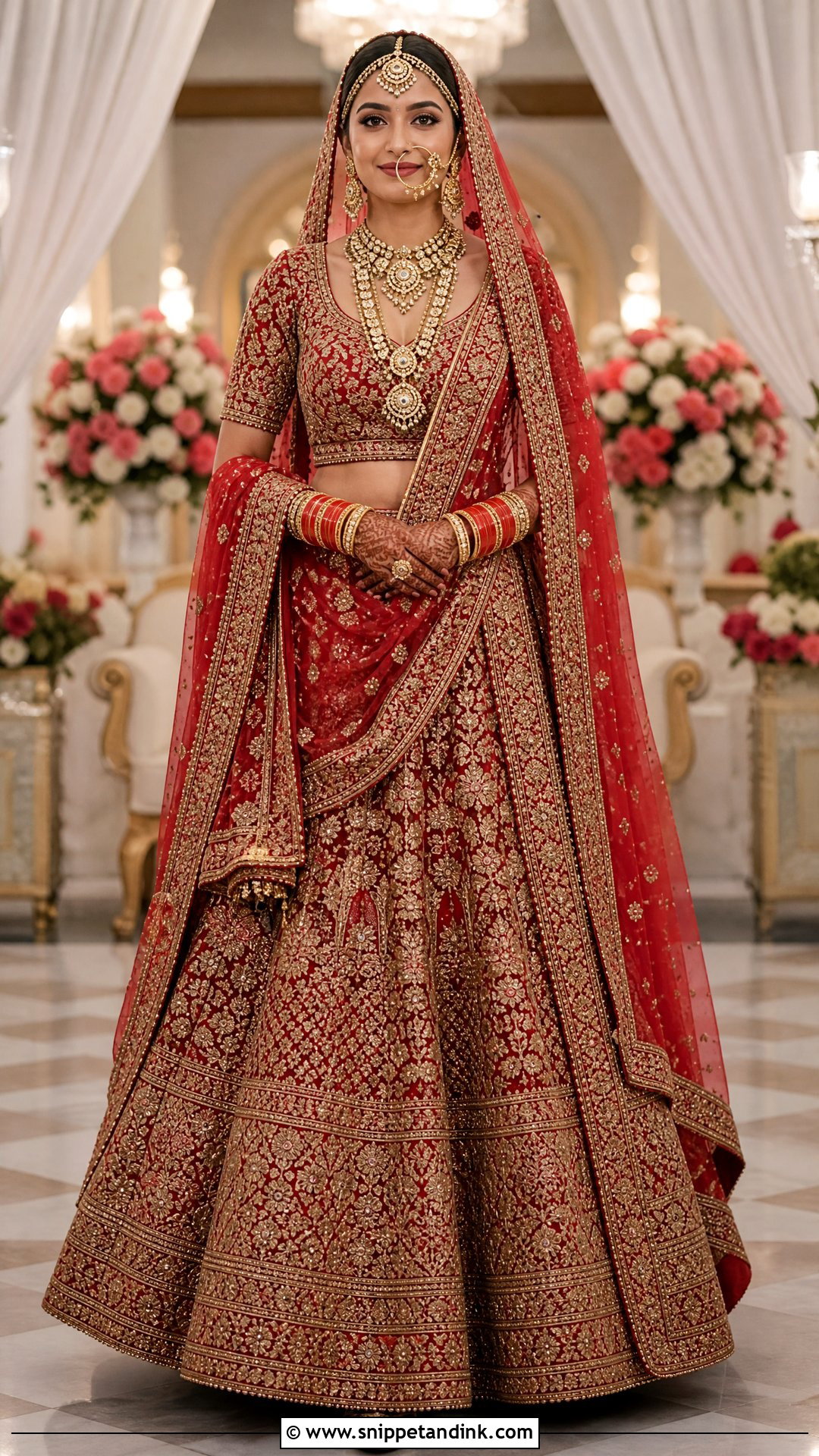
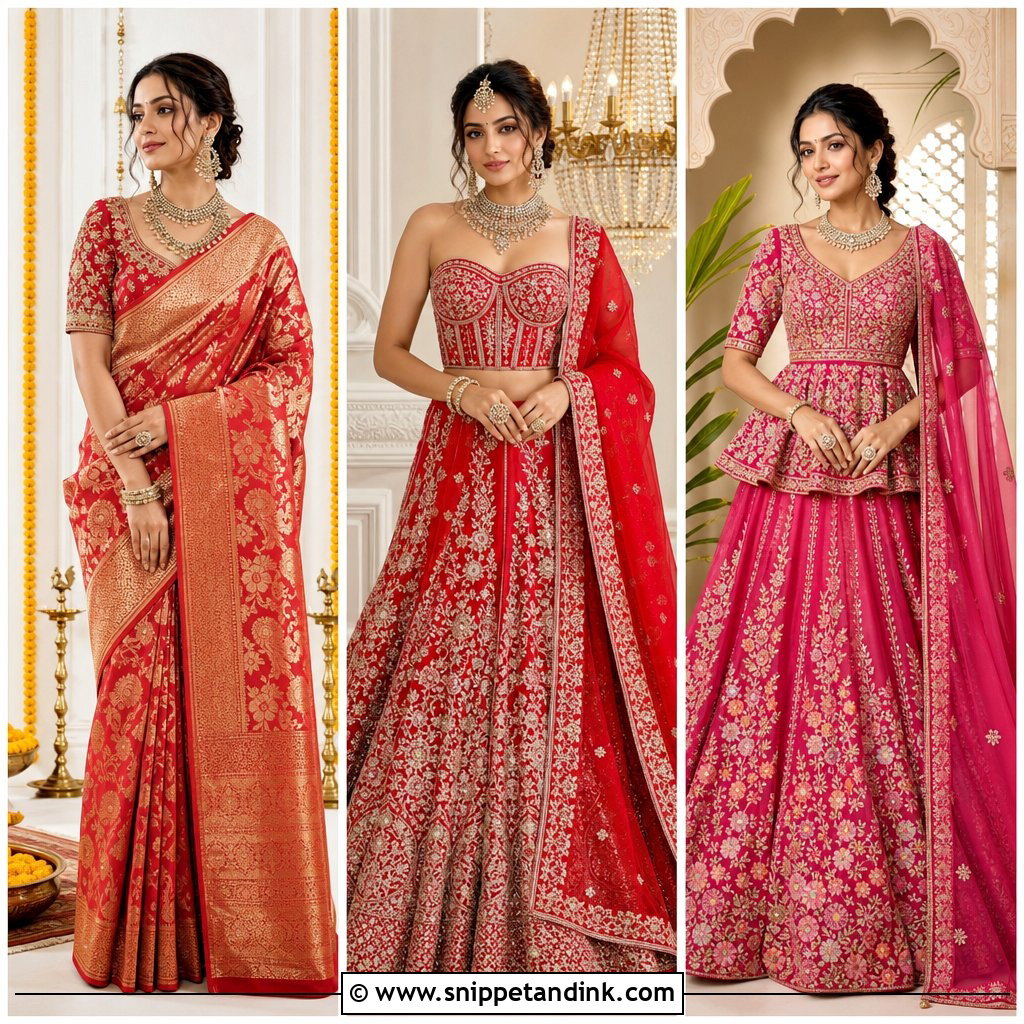
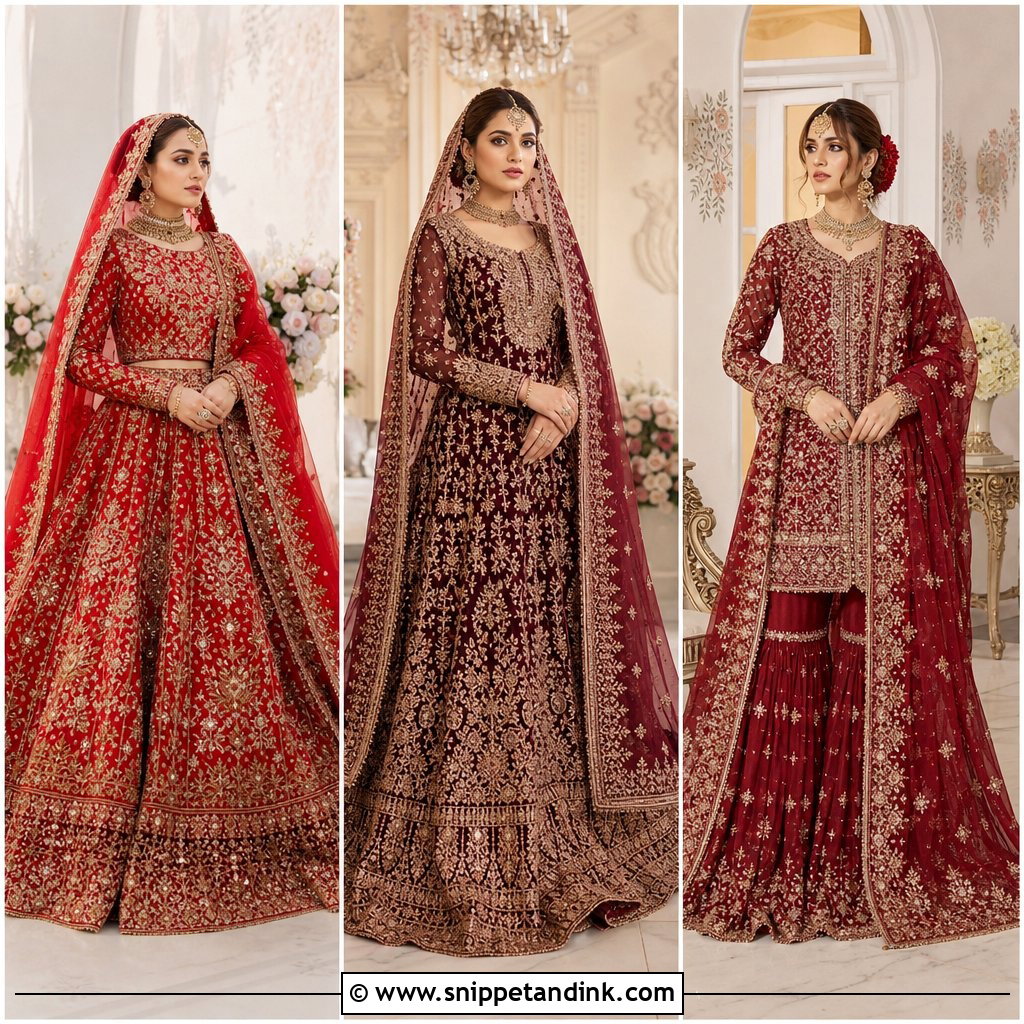
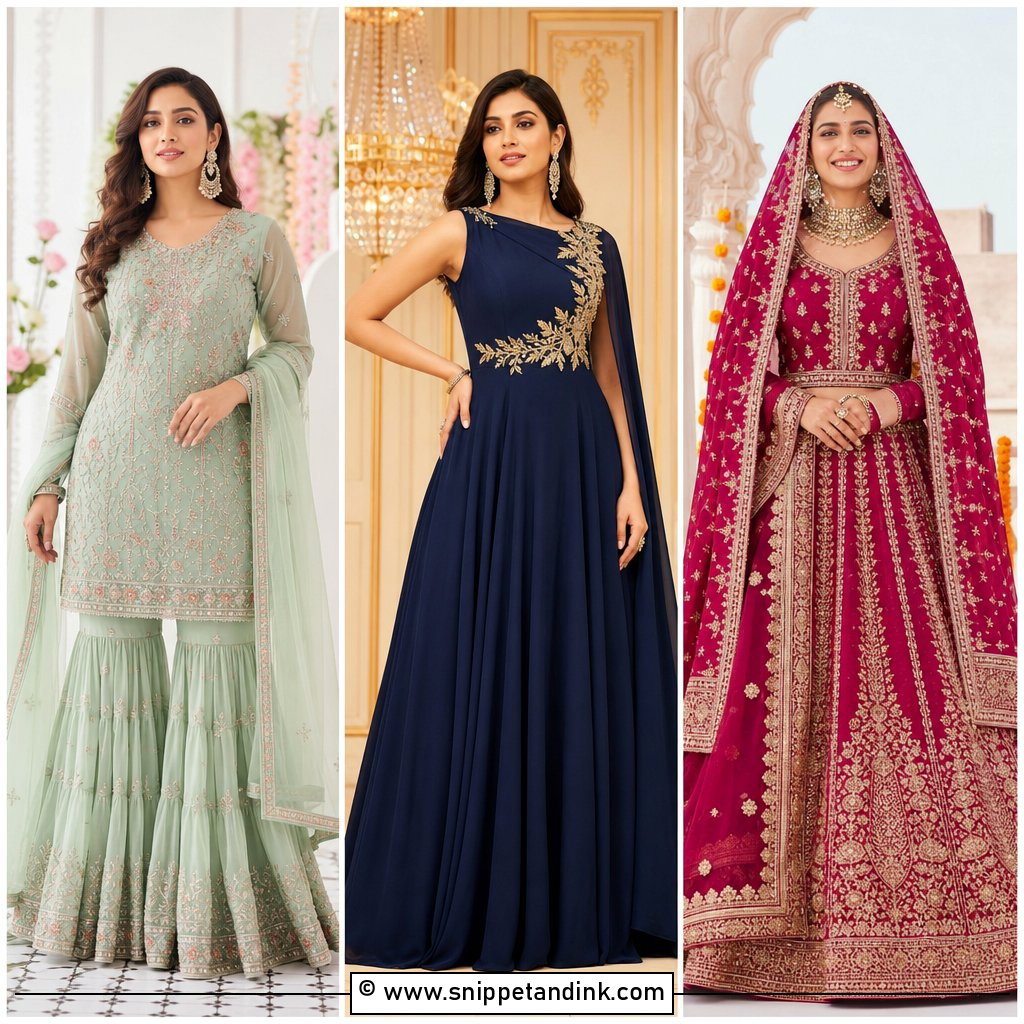
Zardozi on red is the image most people hold of an Indian bride, and it still earns its place at the pheras. Gold thread, beads and sequins on a full skirt carry a lot of weight, so I ask for the heaviest work at the hem, where gravity helps the skirt hang, rather than around the hips. Keep the blouse neckline open enough for a layered choker and long necklace. Drape the red dupatta across the torso and keep the head veil light, so it frames the face instead of hiding the blouse. Jhumkas, maang tikka, bangles, juttis and roses tucked into a low bun complete it.
2. Maroon Velvet Indian Bridal Lehenga
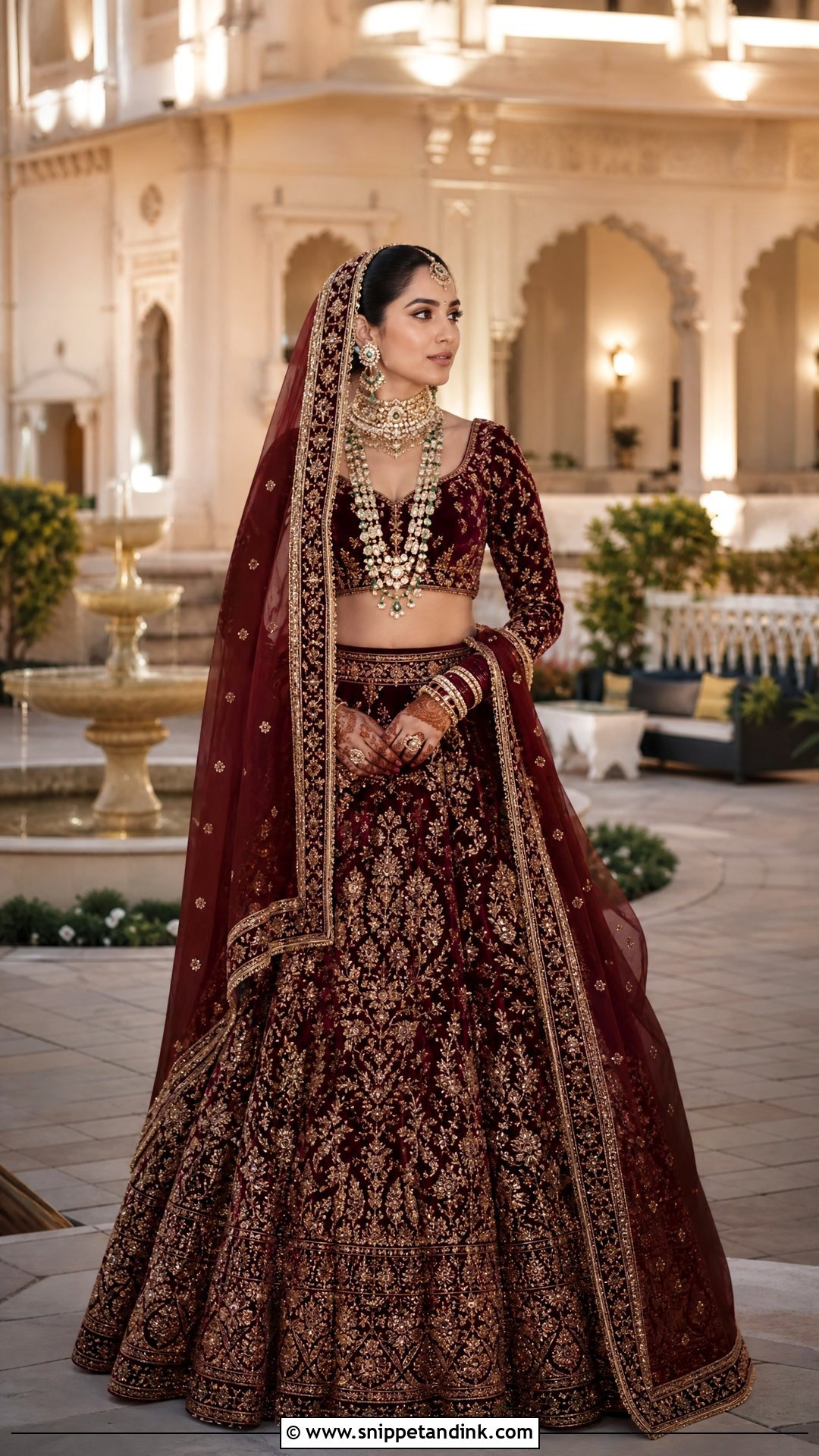
Velvet already has depth, so it needs less embroidery than you’d think. Concentrating zardozi or dabka at the neckline, sleeves, waistband and border looks richer than covering every inch, and it keeps the skirt from getting stiff. For an evening or a cool-season wedding, I’d style it with a fitted blouse, a velvet-bordered net dupatta over one shoulder and a featherlight veil over the head. Kundan choker, a traditional nath and padded block heels hidden under the hem suit it. A sleek centre-parted bun keeps the eye on the jewelry.
3. Ivory Gold Indian Bridal Lehenga
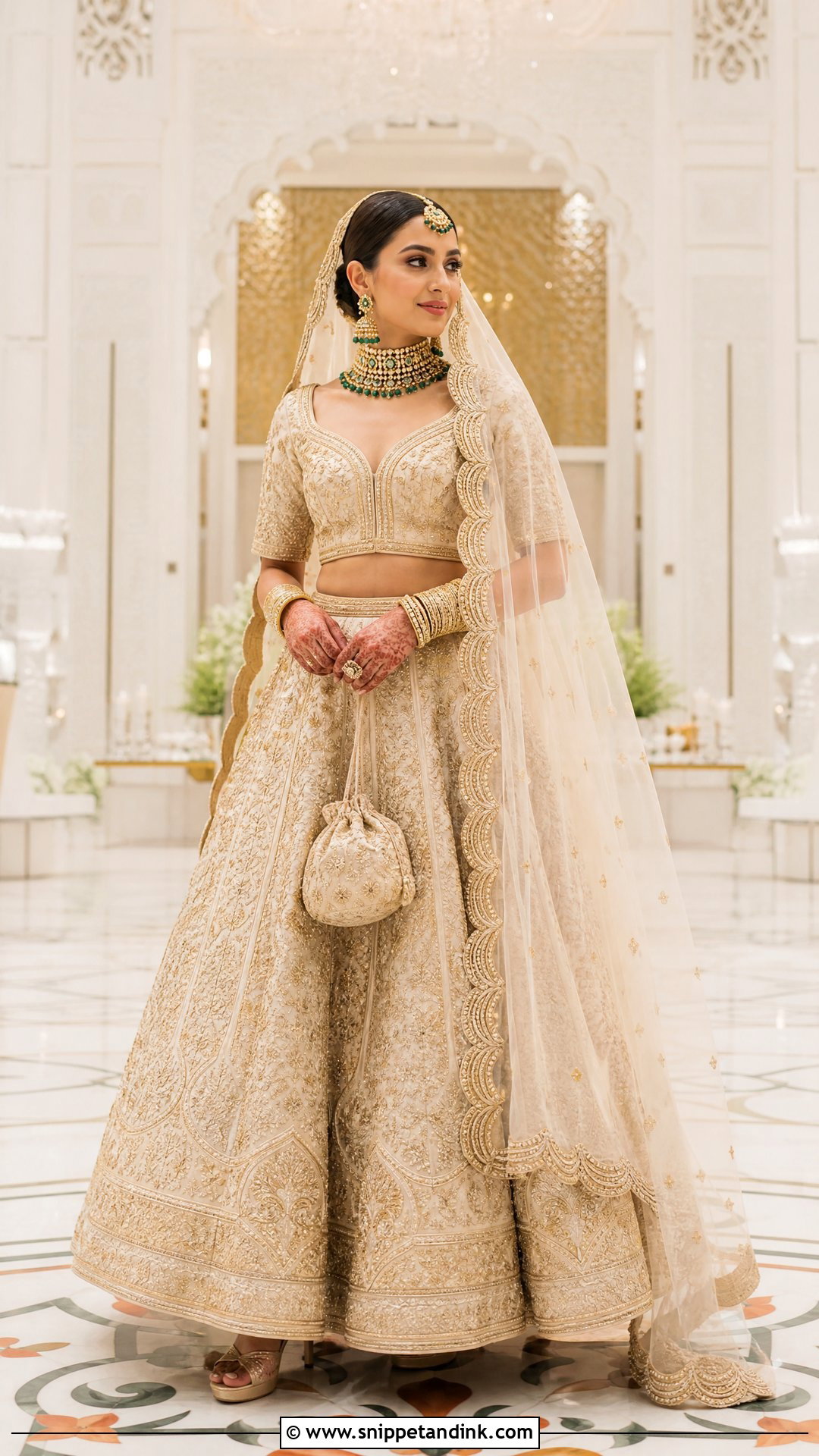
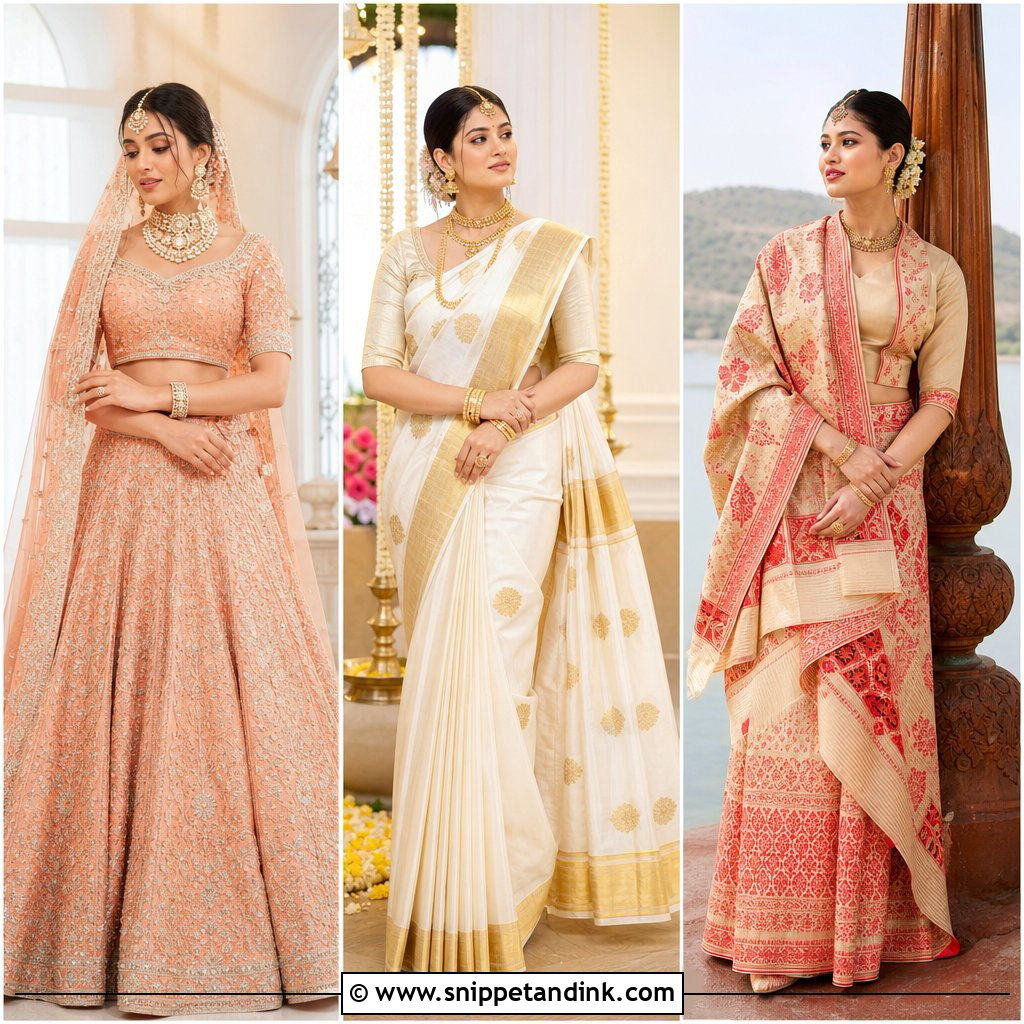
The trap with ivory is that there are dozens of ivories. A blouse that’s slightly yellower than the skirt looks dirty in photographs, so before ordering I lay all three fabrics side by side in daylight and again under warm light. Once the undertone is consistent, the rest is easy: tonal embroidery, pearls and fine mirror accents, a supportive blouse, a sheer dupatta with a scalloped gold edge. Emerald, ruby or polki gives contrast. White flowers in a neat bun and gold heels finish it.
4. Pastel Pink Indian Bridal Lehenga
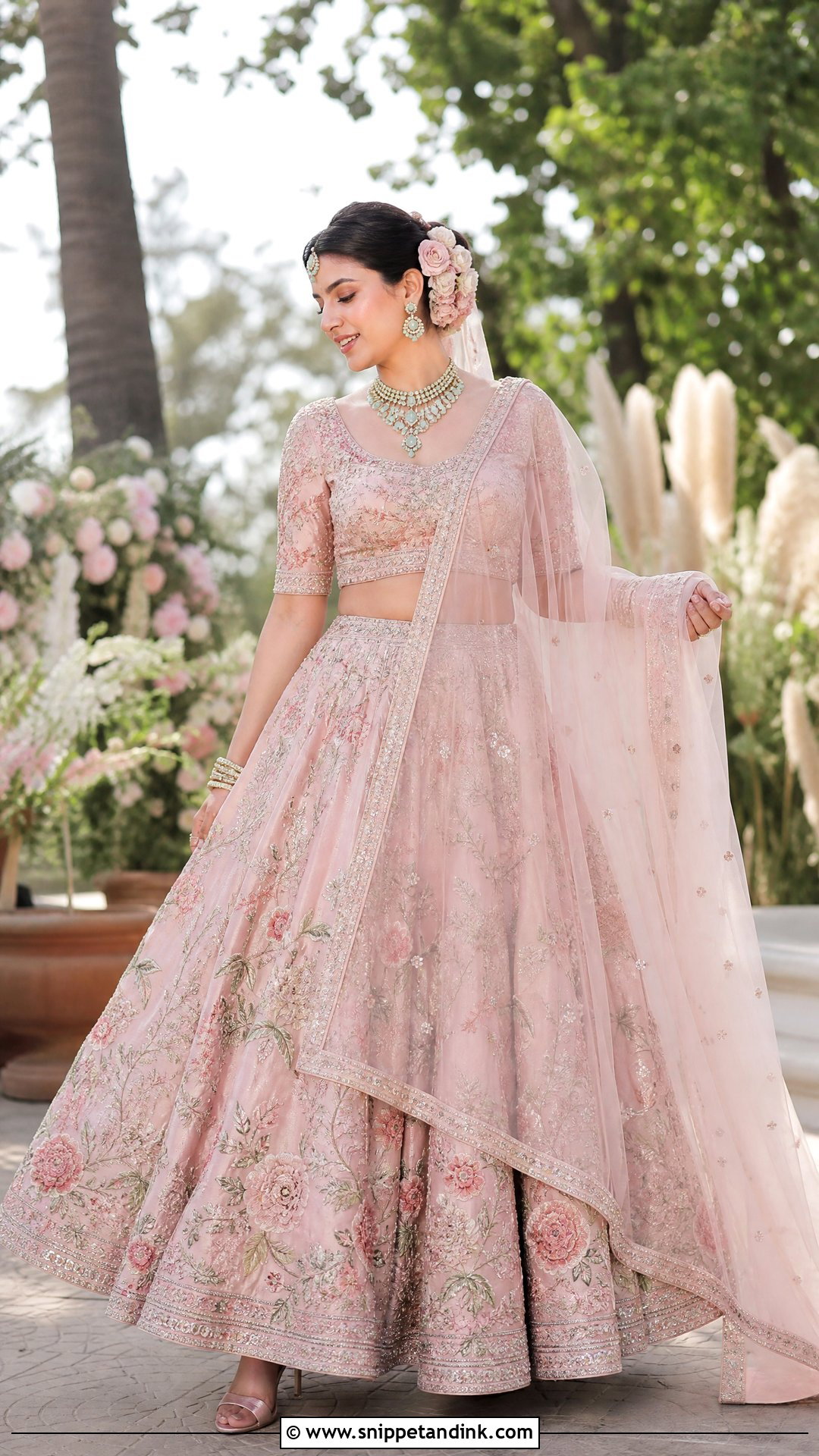
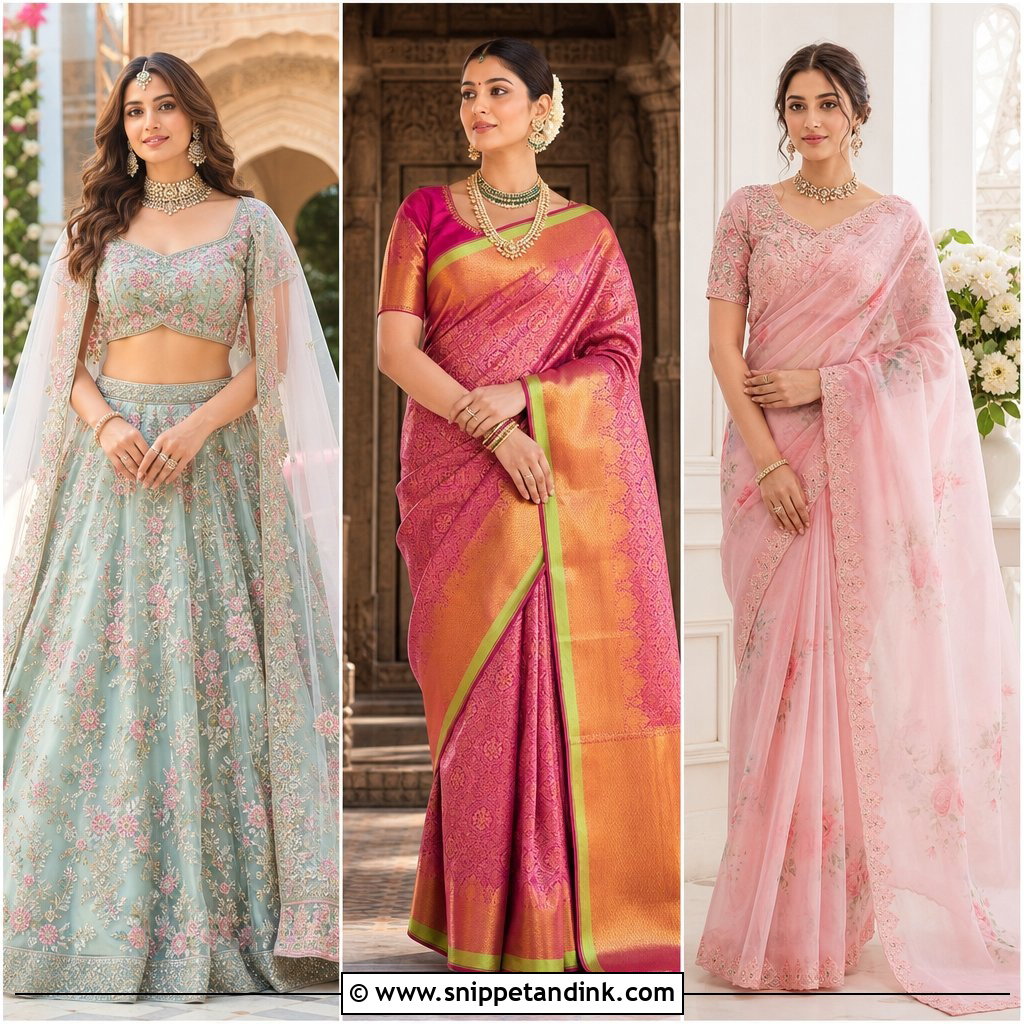
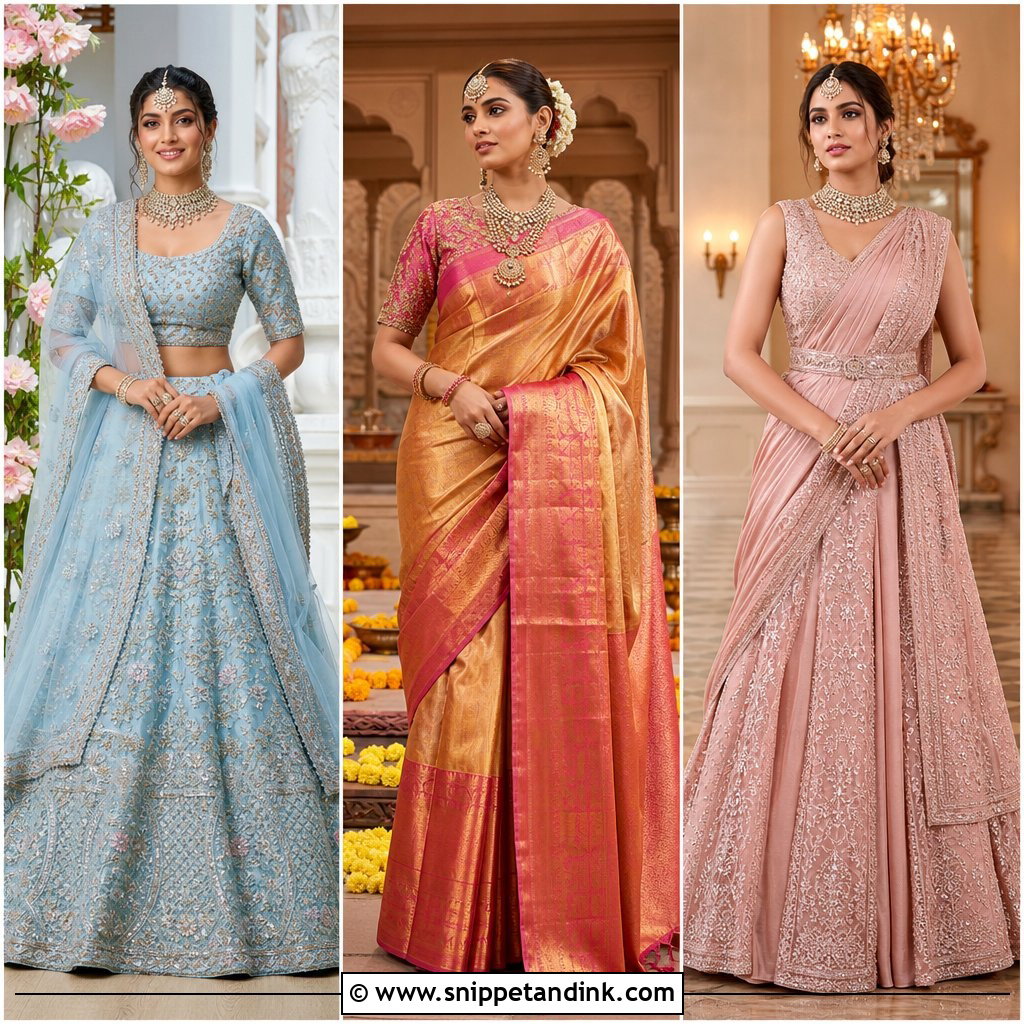
Pastel pink suits a daylight ceremony or a garden, but it can look underdressed beside heavily embroidered guests. The fix is dimension: embroidery you can feel with your fingers, silver zari or pearls that catch the light. A short-sleeved or sweetheart blouse gives the skirt shape. A sheer pink dupatta across the shoulders and a finely embroidered head veil frame it. Rather than piling on several pale accessories, I’d pick one statement necklace or a larger maang tikka and stop there.
5. Green Bandhani Indian Bridal Lehenga
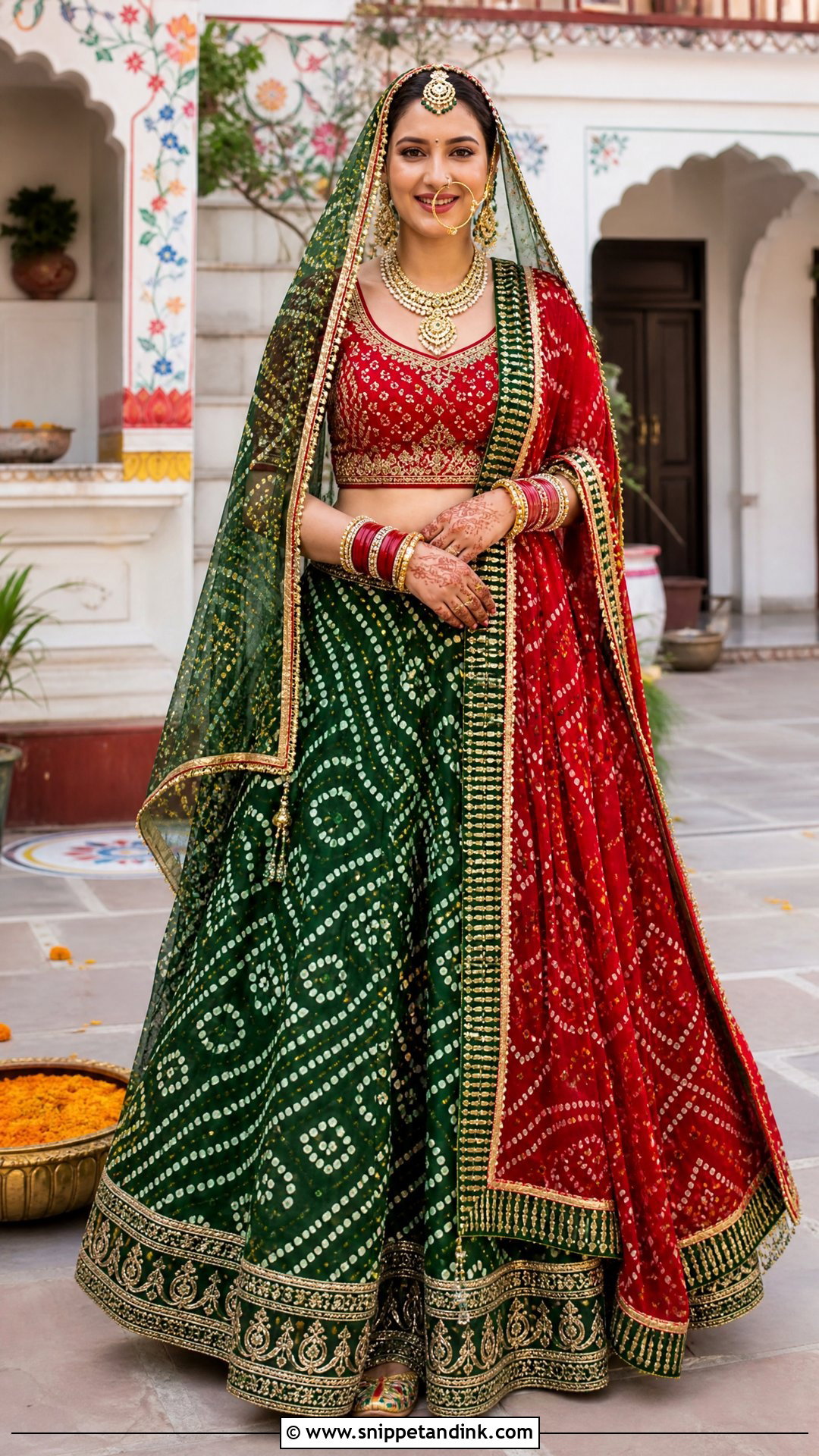
Bandhani is tie-dye done by hand, thousands of tiny knots that leave a dotted pattern, and green bandhani gives a lehenga instant movement. The print is busy, so keep the blouse shape clean and limit embellishment to gota patti or mirror work. A red bandhani dupatta across the bodice with a lighter green veil makes the layered palette Rajasthani and Gujarati brides wear. A borla, traditional bangles and gold jewelry complete it. Hand-dyed bandhani can bleed if it gets damp, so dry clean only, and don’t stand near the haldi bowl.
6. Banarasi Silk Indian Bridal Lehenga
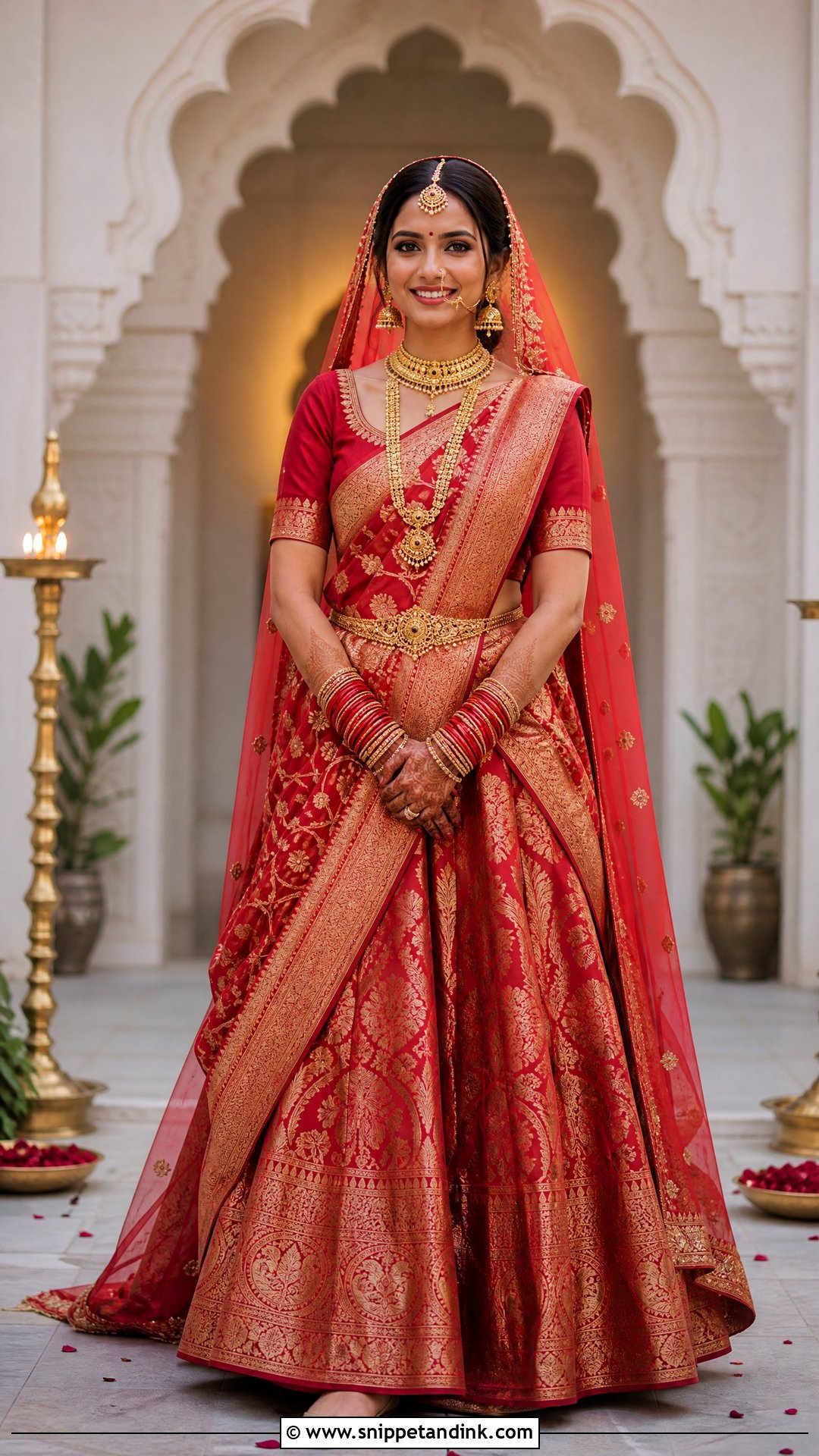
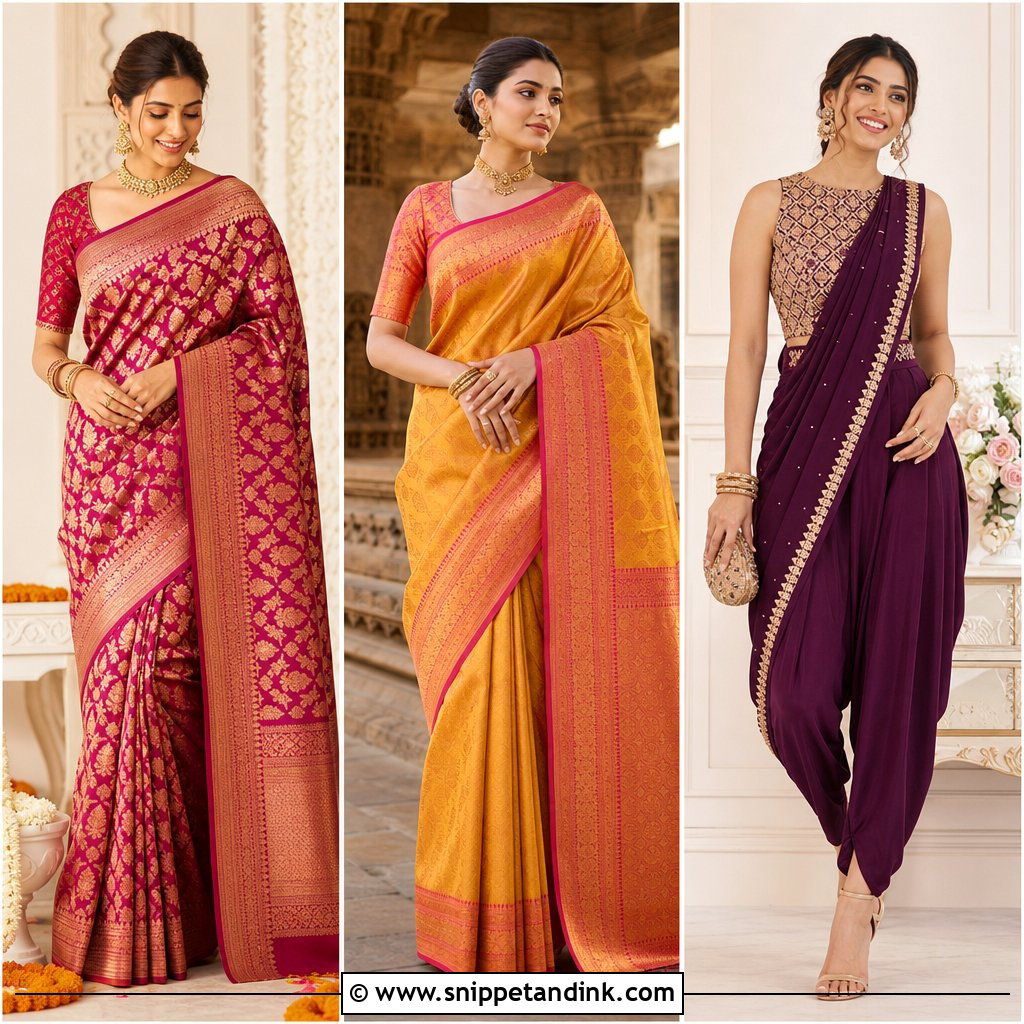
Banarasi gives you a full bridal skirt made from a woven textile rather than surface embroidery, which means it ages well and can be cut down or restyled later. Red, magenta, rust and jewel tones with gold brocade motifs are typical. Keep the cut simple so the weave isn’t lost in gathers. A raw-silk blouse and a contrasting organza dupatta keep the weight manageable; a matching Banarasi veil is impressive but heavy, so test it over your head for twenty minutes before committing. Temple or kundan jewelry, a waist belt and cushioned juttis suit it.
7. Red Kanjeevaram Indian Bridal Saree
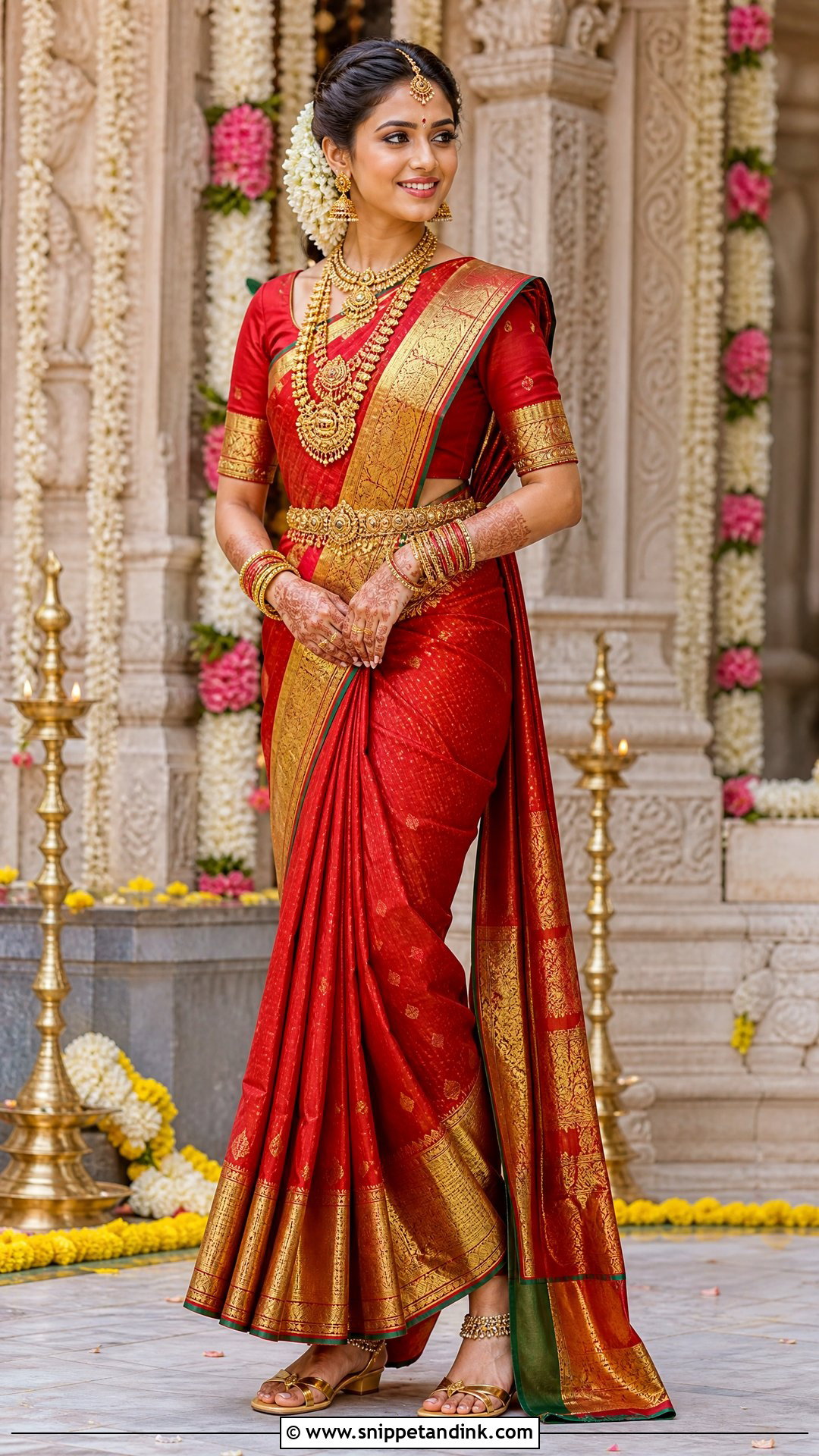
A red Kanjeevaram saree has crisp body and brilliant zari, and in the best pieces the border is woven separately and interlocked with the body, which is why it stands so firmly. Pick a contrasting gold, green or maroon border and repeat one of those colours in the blouse. Heavy silk pushes pleats open, so I pin them in at least two places and ask for reinforced hooks on the blouse. Temple necklaces, jhumkas, an ottiyanam, anklets and a jasmine braid complete the look. Wear flat or low sandals for the rituals.
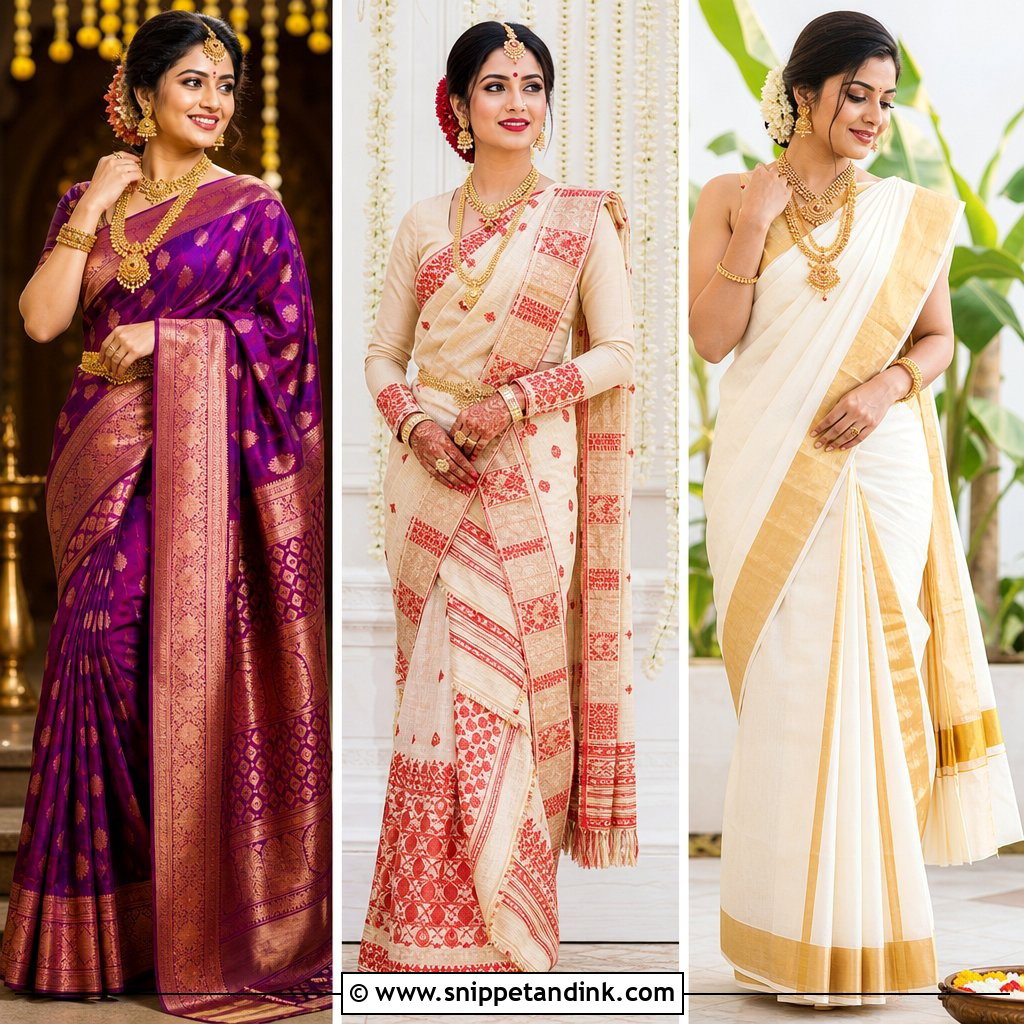
8. White Gold Kasavu Indian Bridal Saree
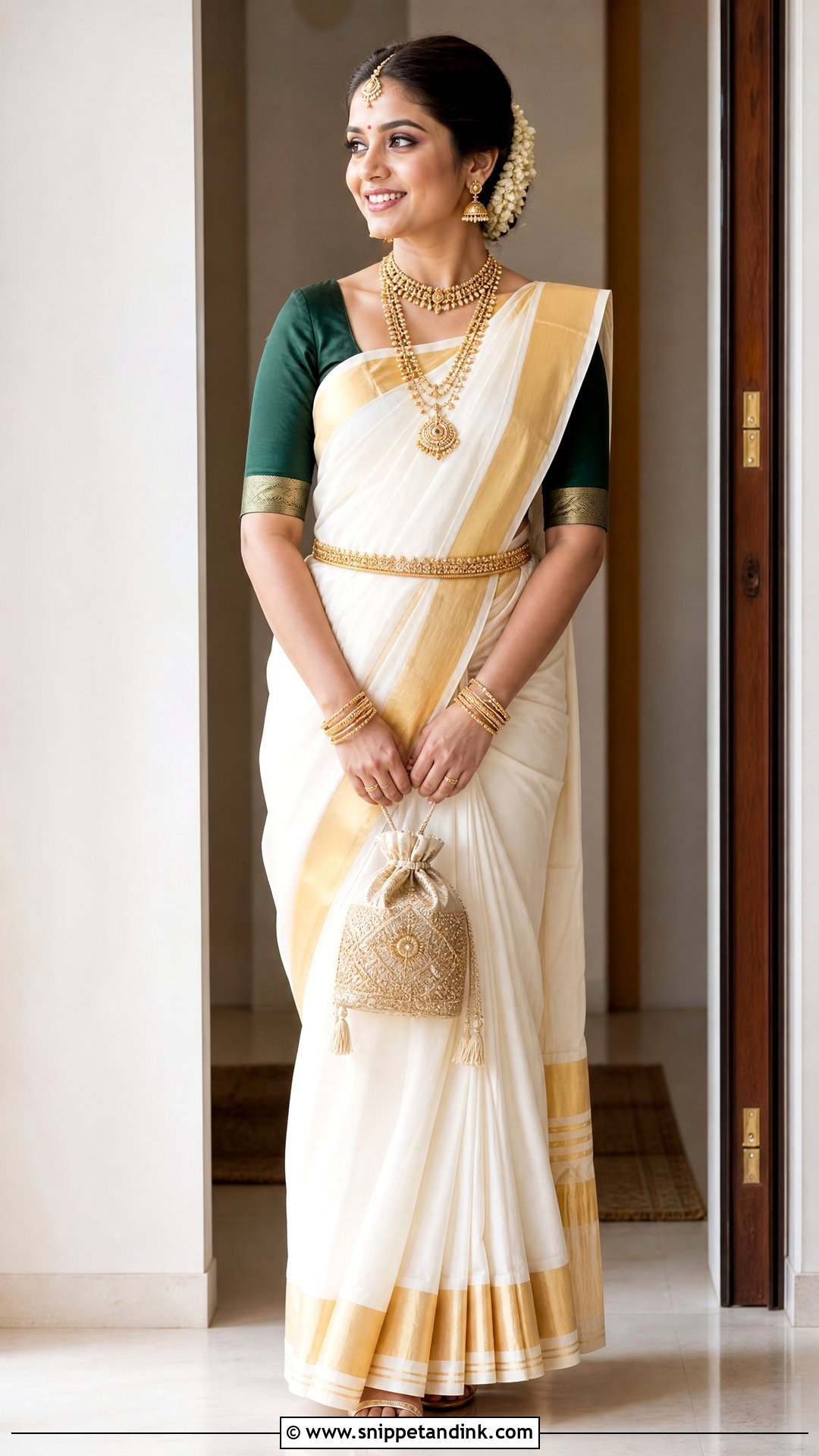
Kasavu is the opposite of maximal. White or cream handloom with a gold border relies on fit and finishing, so every pleat shows. Choose the blouse colour by how much contrast you want: gold keeps it tonal, red or deep green brings it to life. Elbow sleeves with light embroidery suit it, along with a gold waist belt, layered necklaces and a small forehead ornament. Jasmine around a braid adds scent as well as texture. Cotton Kasavu creases faster than silk, so steam it on the morning, not the night before.
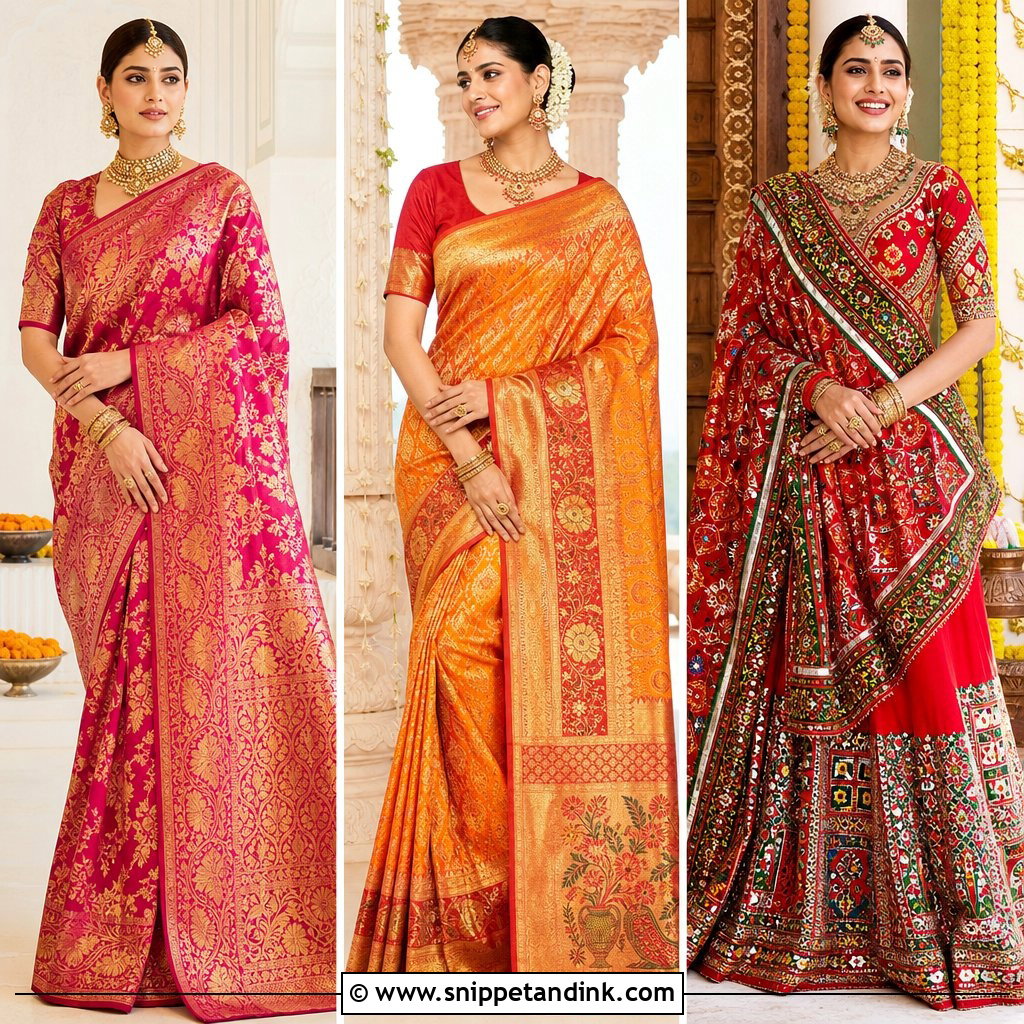
9. Red Banarasi Indian Bridal Saree
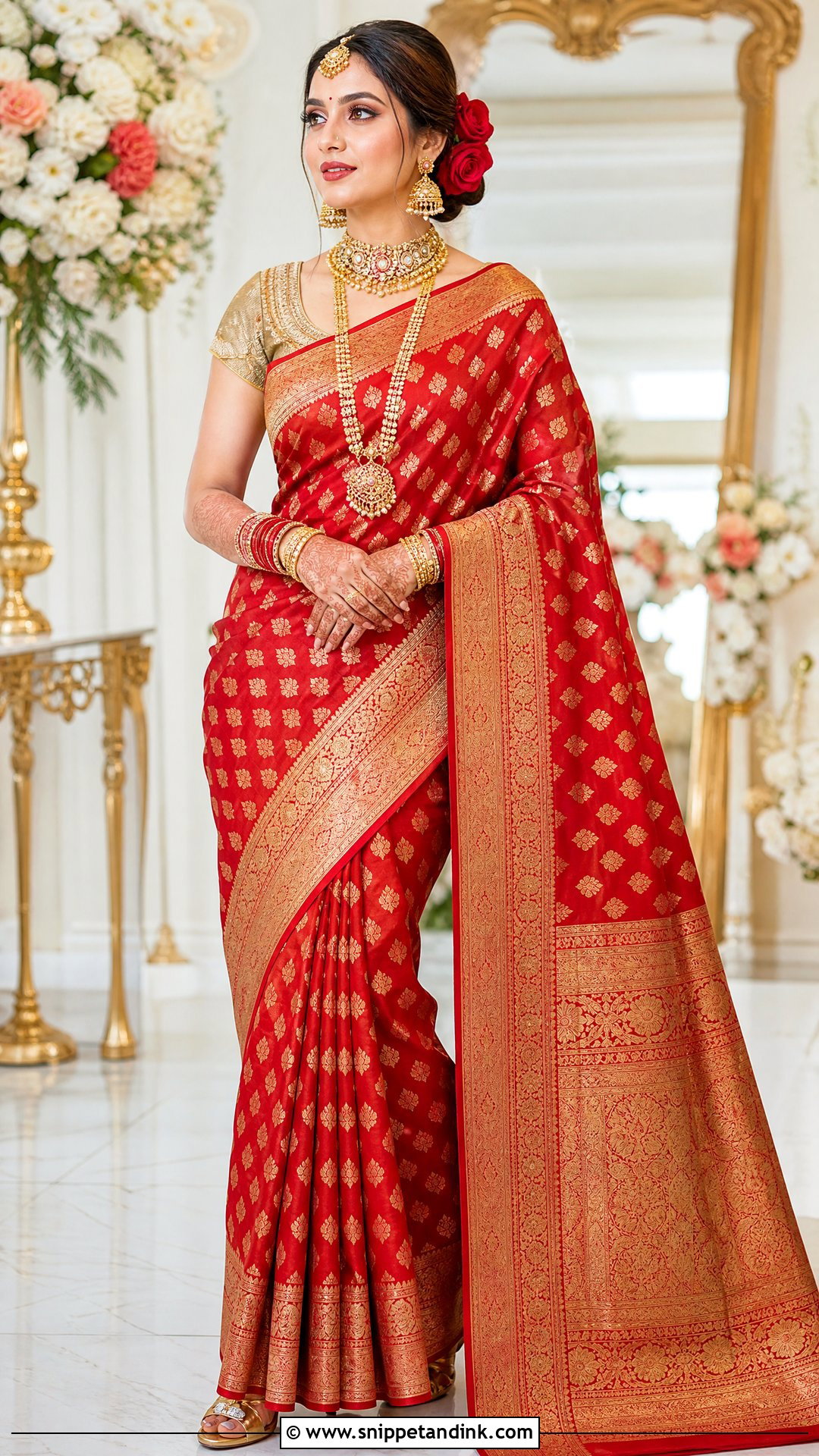
Red Banarasi with gold buta motifs takes bridal jewelry better than almost any fabric, because the weave is rich without being busy. A red or antique-gold blouse with elbow sleeves and a moderately open neck leaves room for a choker and a long necklace. The front pleats should fall evenly; uneven pleats are the first thing I notice in photos. Add jhumkas, a statement maang tikka and padded sandals. If your family has an heirloom necklace or an old blouse border, this is the outfit to bring it into.
10. Bengali Red White Indian Bridal Saree
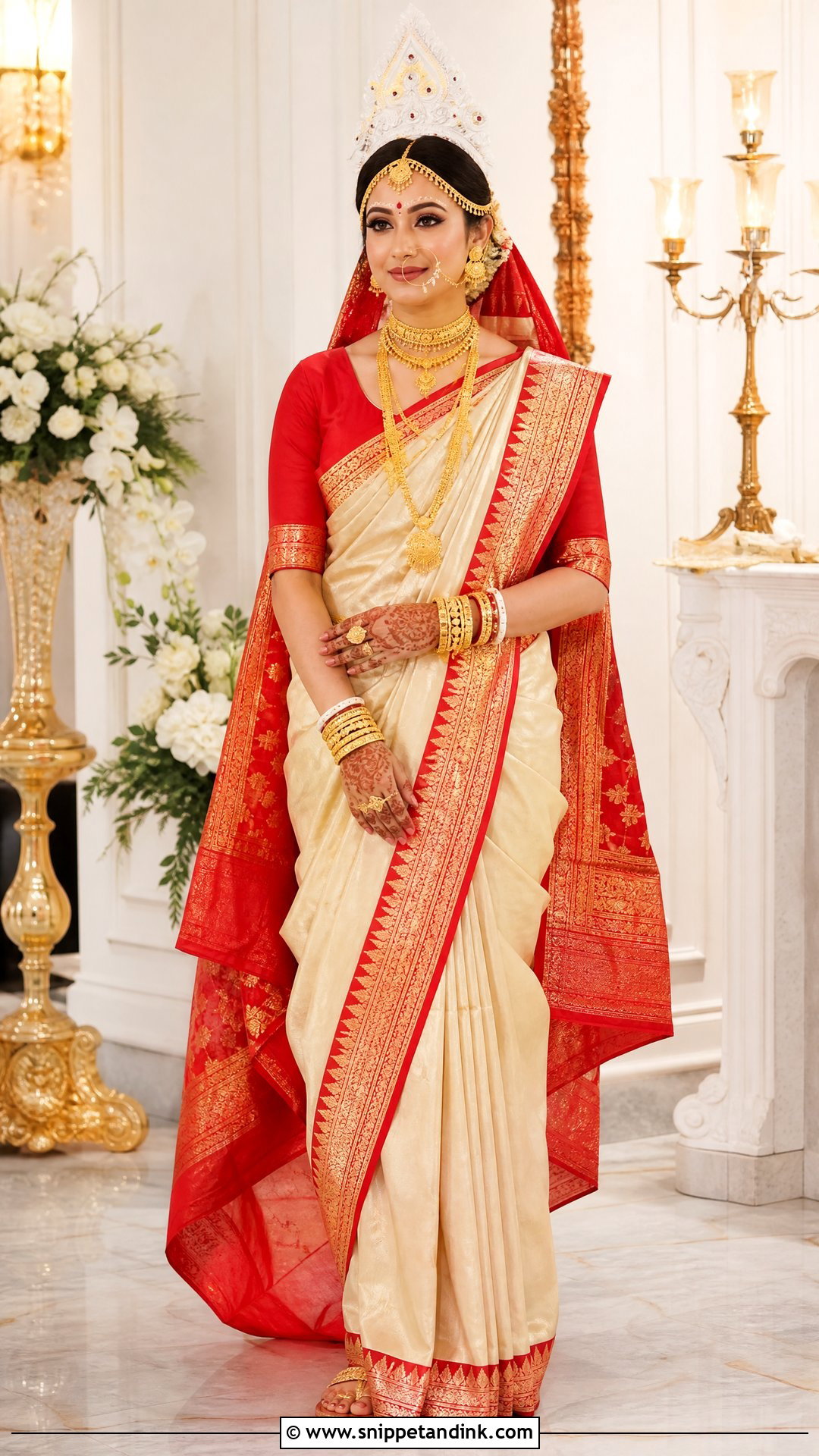
Red and white together is the classic Bengali bridal palette: white silk with a red border, or a red Banarasi with ivory and gold accents. Pair it with a fitted red blouse and arrange the pallu so the border shows clearly. Gold jewelry, a statement nath, the red and white shakha pola bangles and an ornate headpiece complete it. The forehead design of red and white dots is traditionally painted by hand; include it only if it’s appropriate for you and your family. A red veil for the ceremony should sit behind the border, not over it.
11. Purple Paithani Indian Bridal Saree
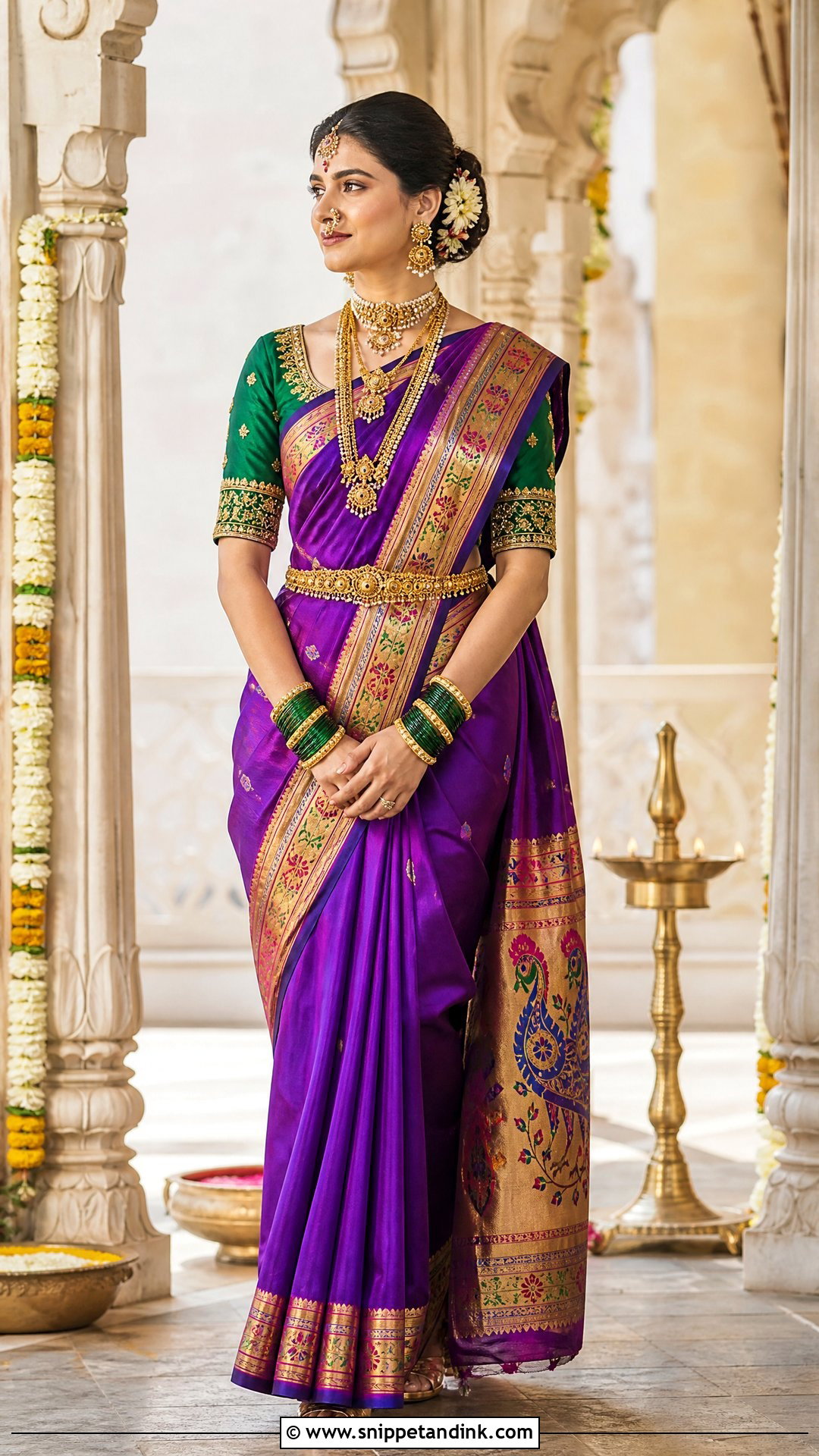
Purple Paithani is a confident break from red that still looks unmistakably bridal. Look for a contrasting gold border and a densely woven pallu. Silk this structured, plus heavy gold, gets tiring on the skin by afternoon, so ask for a soft cotton lining in the blouse. A purple, magenta or green blouse with elbow sleeves works. Layered gold necklaces, green glass bangles, a nath and a waist belt give the Maharashtrian finish, with a flower-dressed bun keeping the neckline clear.
12. Gujarati Panetar And Gharchola Bridal Saree
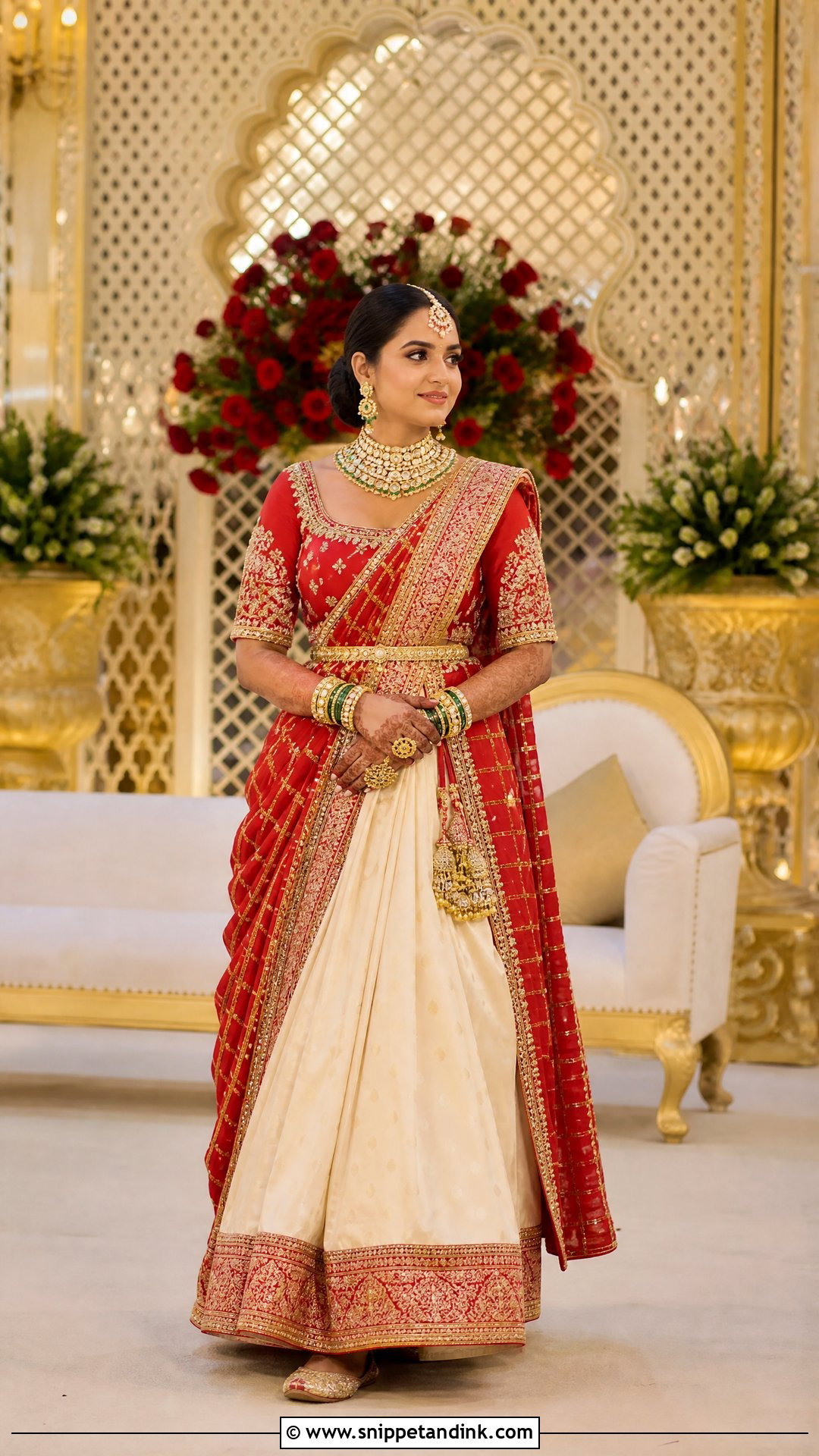
The ivory Panetar and the red Gharchola, with its gold grid and tie-dye dots, are worn at different points of a Gujarati wedding, and some brides layer them. Two saree-weights of fabric around the waist is a lot, so the blouse should be light and the pins placed with care. A red blouse worked in gold at the neckline and sleeves bridges both. Gold or kundan jewelry, a maang tikka and a waist belt suit it. Match the reds closely. Two slightly different reds side by side always photograph as a mistake.
13. Assamese Mekhela Sador Bridal Outfit
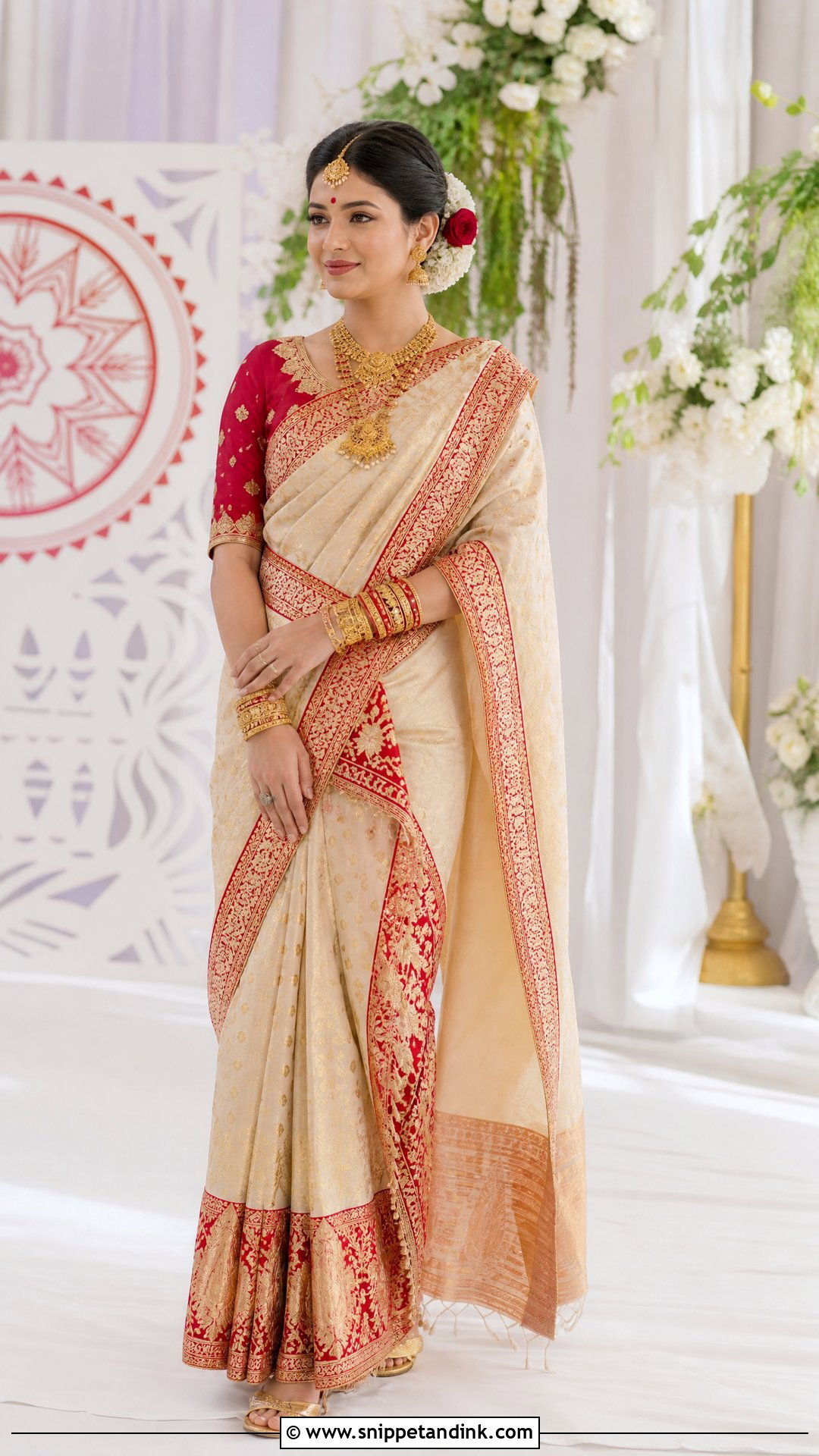
An Assamese Mekhela Sador is two pieces: the mekhela, a cylindrical skirt pleated at the front and tucked at the waist, and the sador, draped across the torso and over the shoulder. Ivory, cream, red or gold with traditional motifs and a contrasting border are classic for a bride. A blouse that picks up the border colour without matching the weave works best. Gold necklaces, earrings, bangles and a forehead ornament add ceremony. Book someone who has draped one before. The pleats need to be precise or the mekhela twists as you walk.
14. Maharashtrian Nauvari Indian Bridal Saree
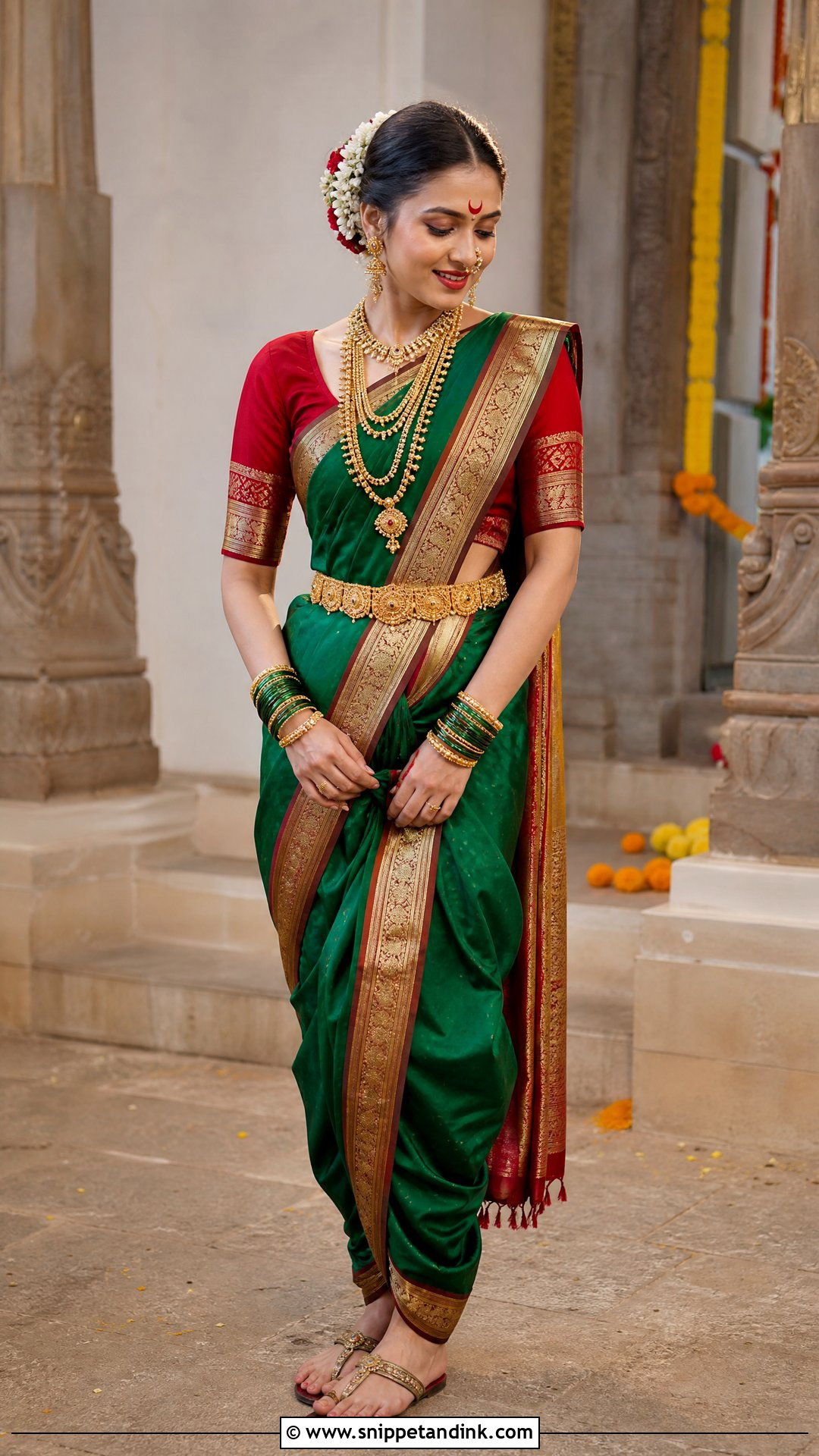
A nine-yard Nauvari is draped dhoti-style, passing between the legs, which gives a Maharashtrian bride a distinctive silhouette and, once secured, surprising freedom of movement. Green, yellow, red or purple silk with a gold border and a contrasting short-sleeved blouse is traditional. Layered gold, green bangles, a nath, a crescent bindi and a waist belt complete it. Practise in it beforehand. The pleating is specialised, and I want to see a bride sit, stand and walk in the full drape at least once before the wedding morning.
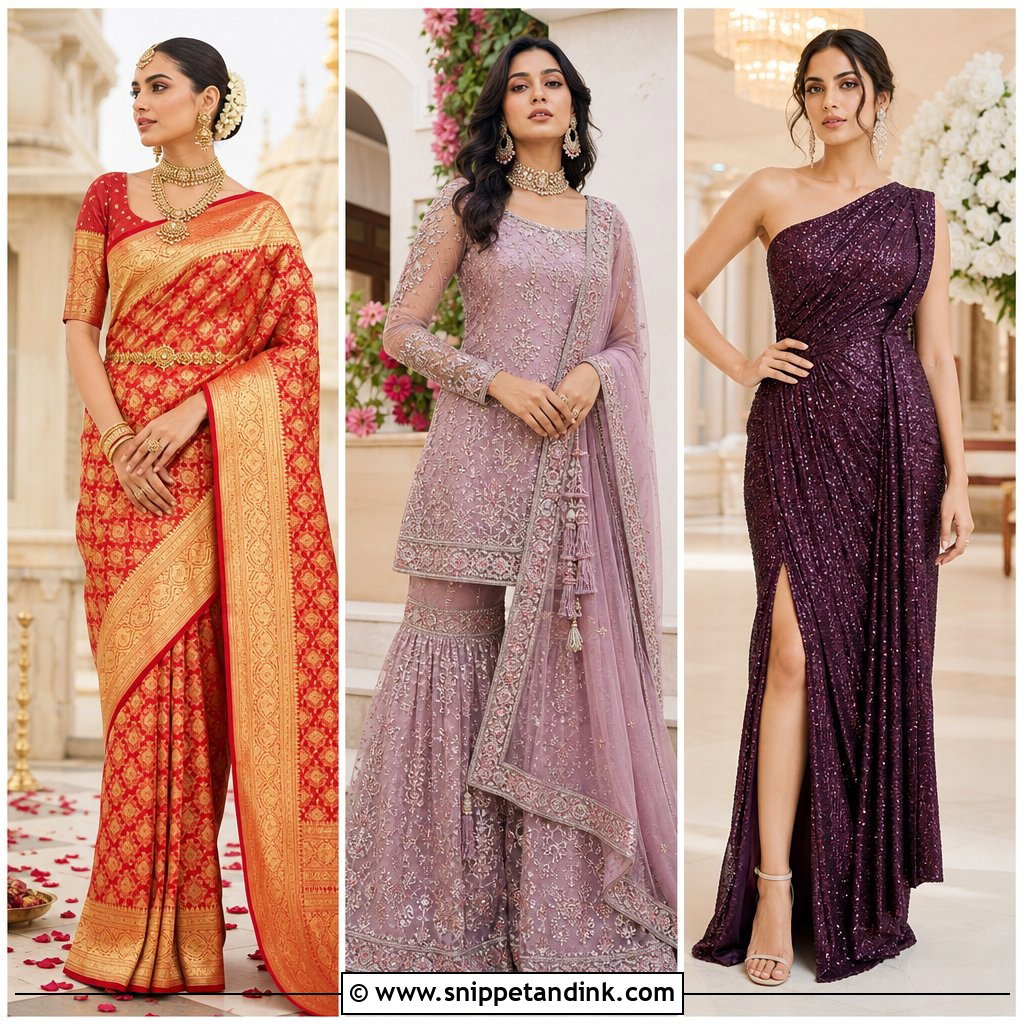
15. Gota Patti Indian Bridal Sharara
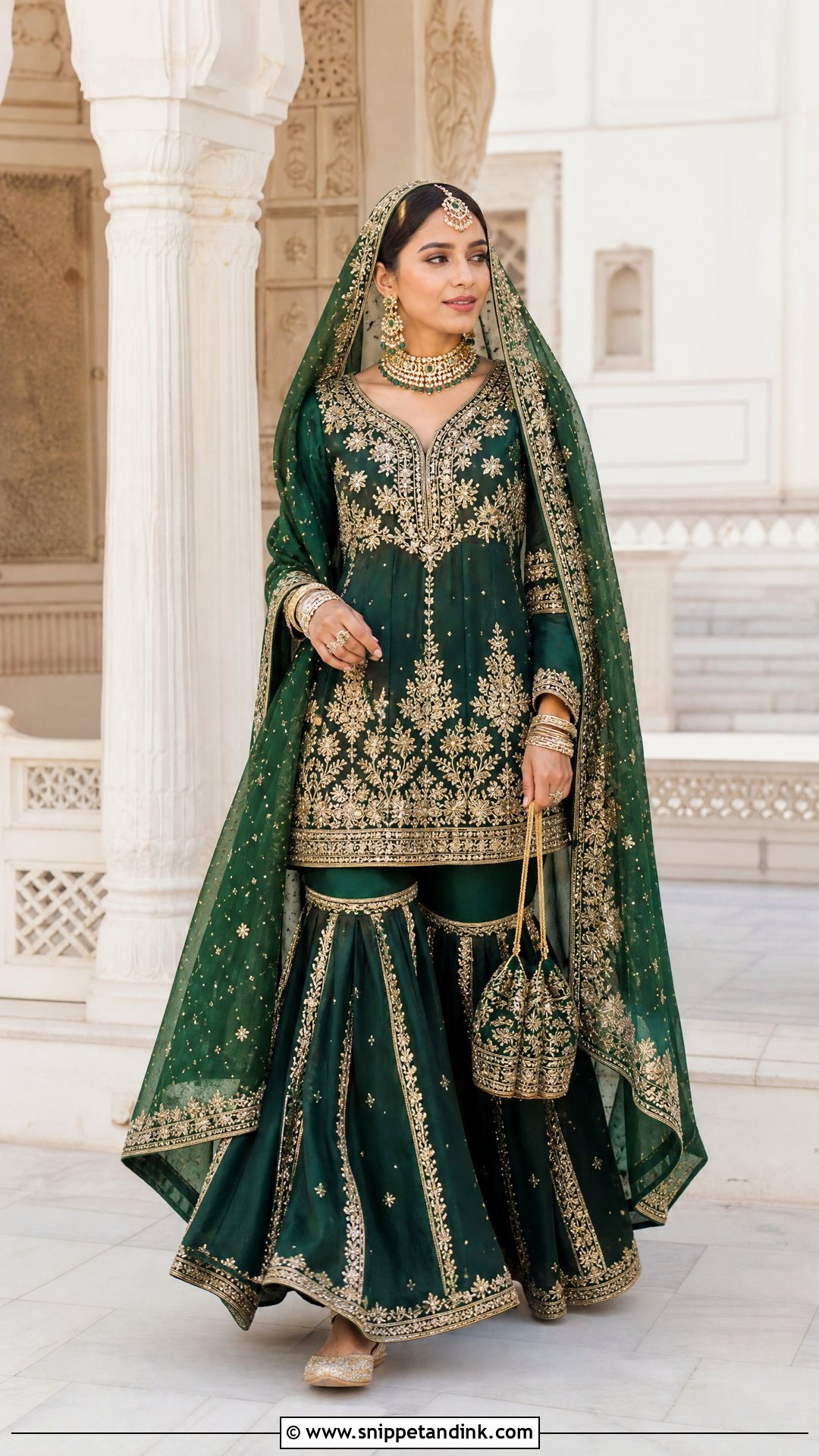
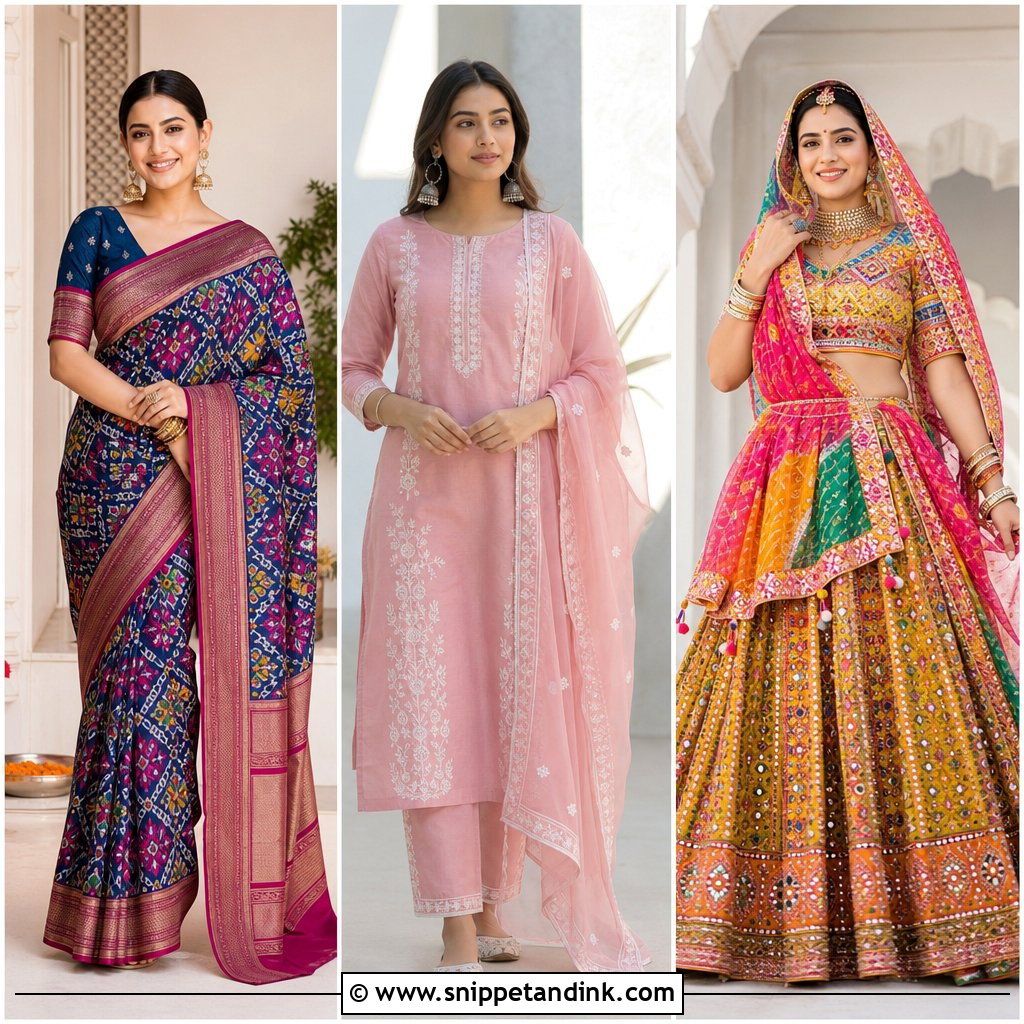
Gota patti is gold ribbon appliqued onto fabric, and on a gota patti sharara it gives sparkle without much weight. Wide-legged pants, a short embroidered kurta and a coordinated dupatta in emerald, fuchsia, saffron, red or ivory all suit a bridal event. Repeat the gota along neckline, sleeves, pant panels and dupatta border so it reads as one outfit. A kundan choker, maang tikka and juttis finish it. Gota can tarnish if stored damp, so keep it wrapped in cotton afterwards.
16. Long Anarkali Indian Bridal Dress
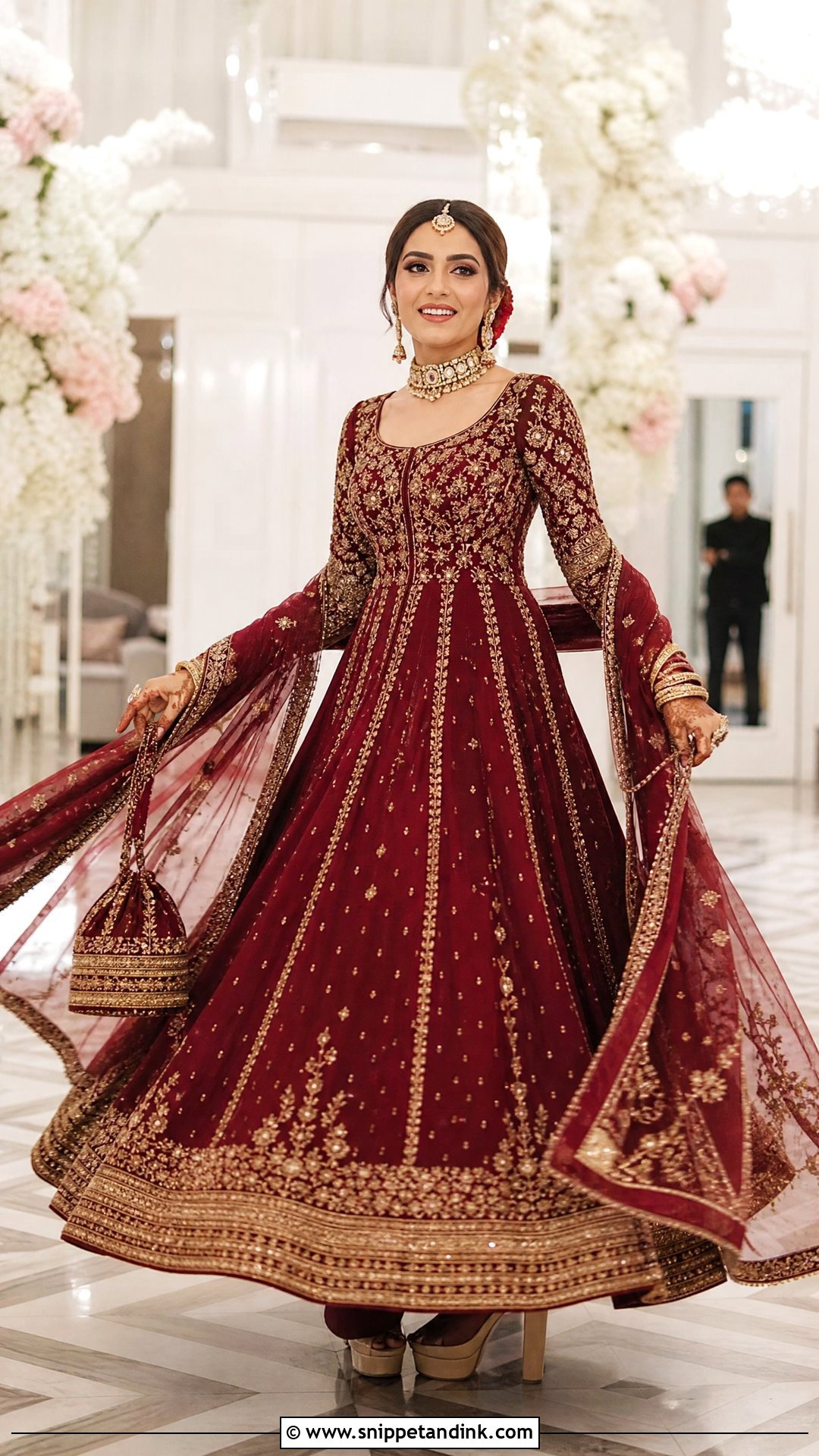
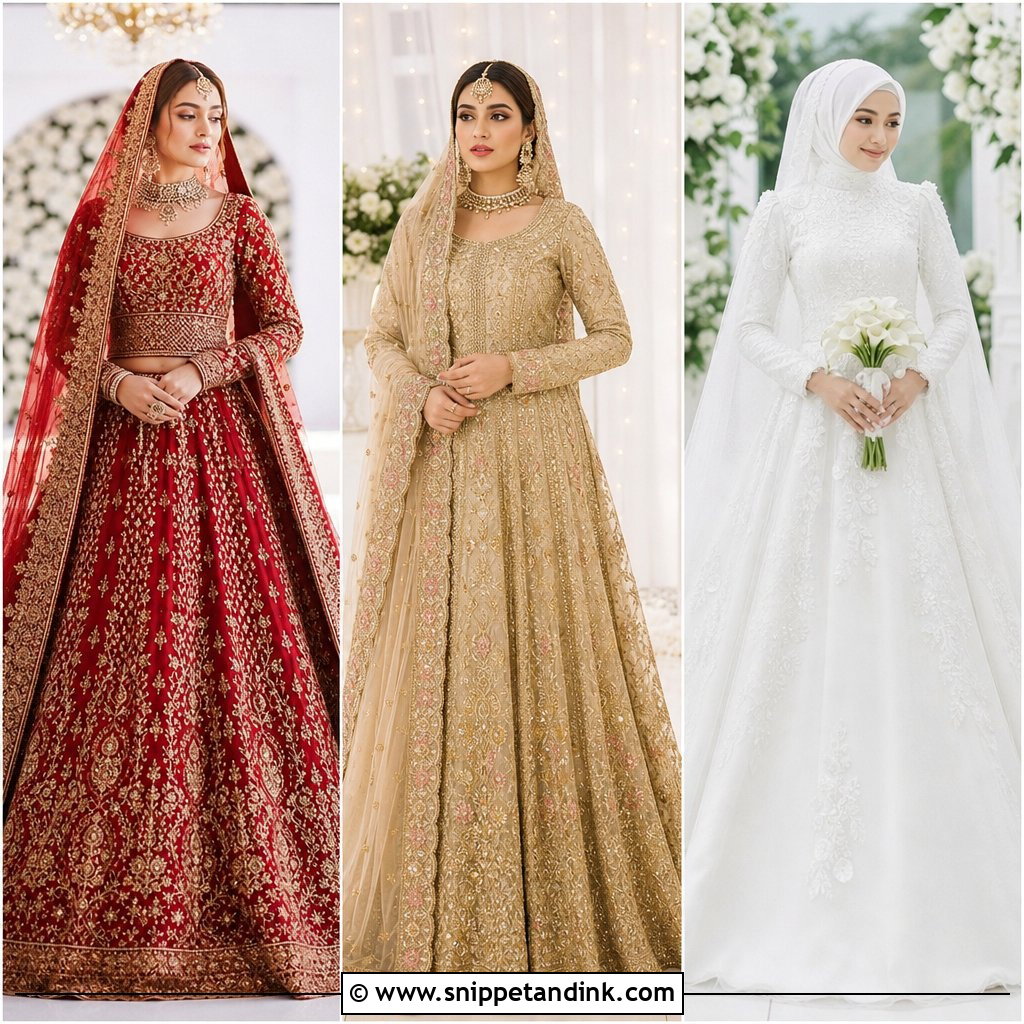
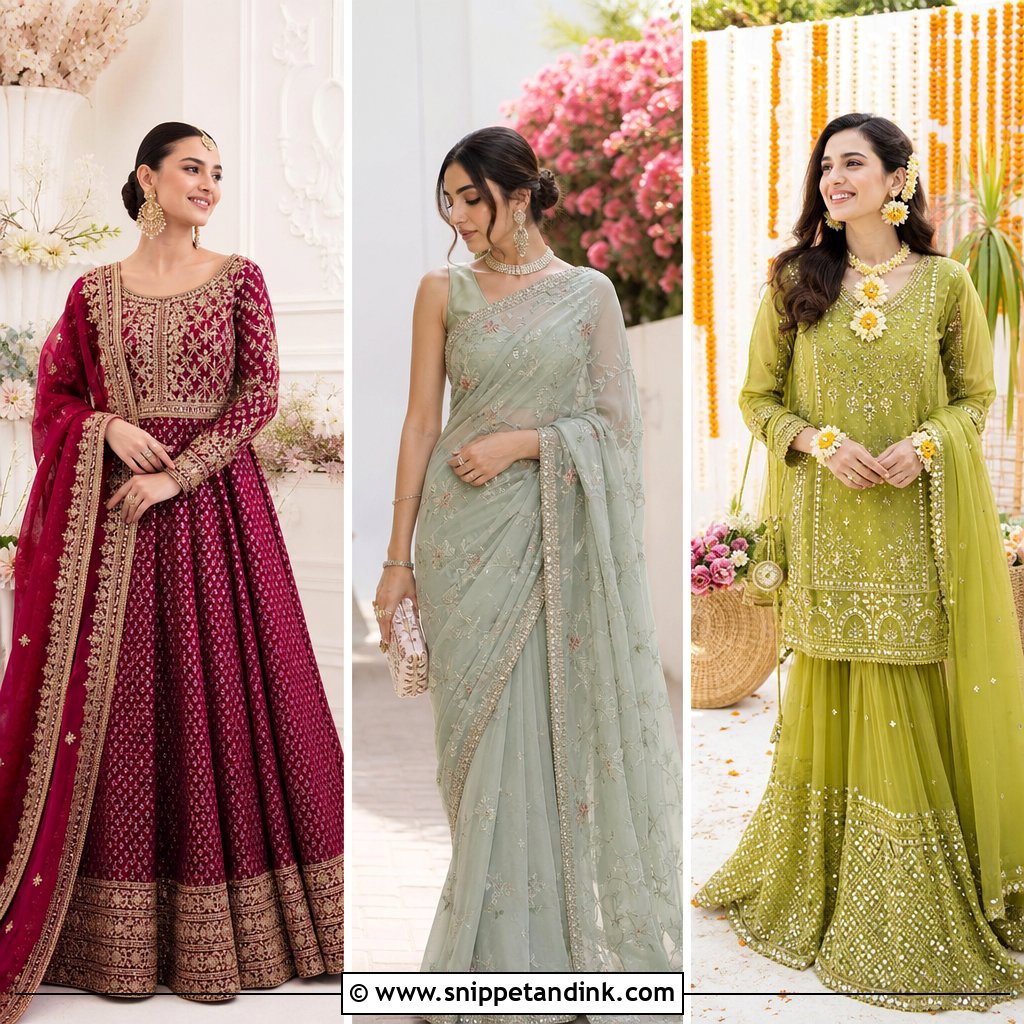
Anarkalis are flattering partly because of the fitted bodice, and that’s where I spend most of the fitting. In red, wine, emerald, ivory or deep blue, with zardozi or resham at the neck and hem, it shouldn’t need embroidery everywhere. Slim churidar underneath, an embroidered dupatta over one shoulder or the head, a choker and long earrings. Hidden platform heels help the flare fall smoothly. Test the hem in the exact shoes; a few millimetres decide whether you glide or trip.
17. Embroidered Jacket Indian Bridal Lehenga
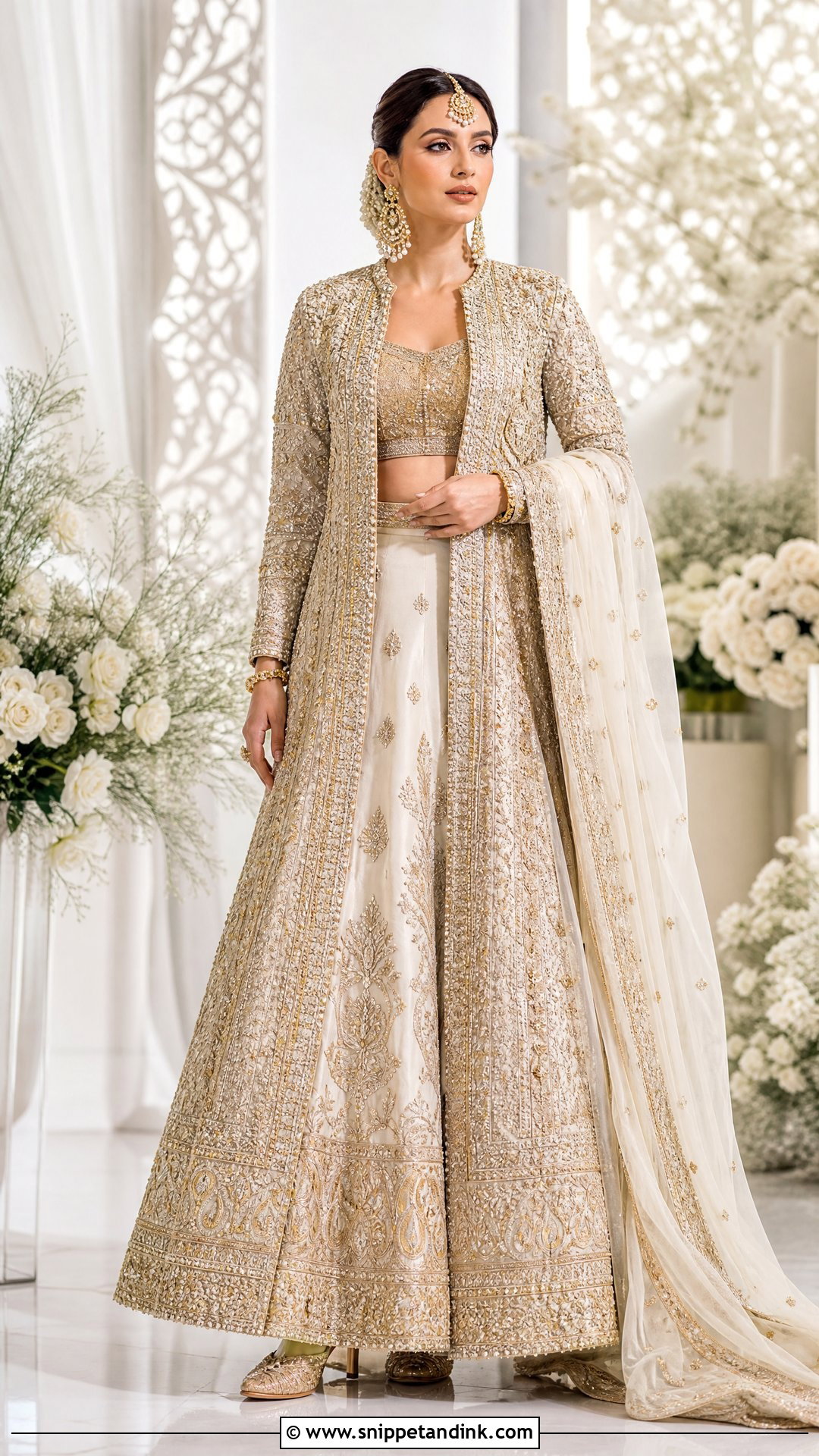
The jacket lehenga is for a bride who wants coverage and a long line. A flowing skirt, a fitted blouse and a long open-front jacket in one colour family, such as ivory and gold or deep red and antique gold, keep the look calm. The vertical opening lengthens the body and still shows the waistband. A heavily embellished jacket usually doesn’t need a dupatta at all. Insist on flexible sleeves and a light lining. Stiff jacket sleeves make it impossible to lift your arms for garlands.
18. Pre-Draped Indian Bridal Saree
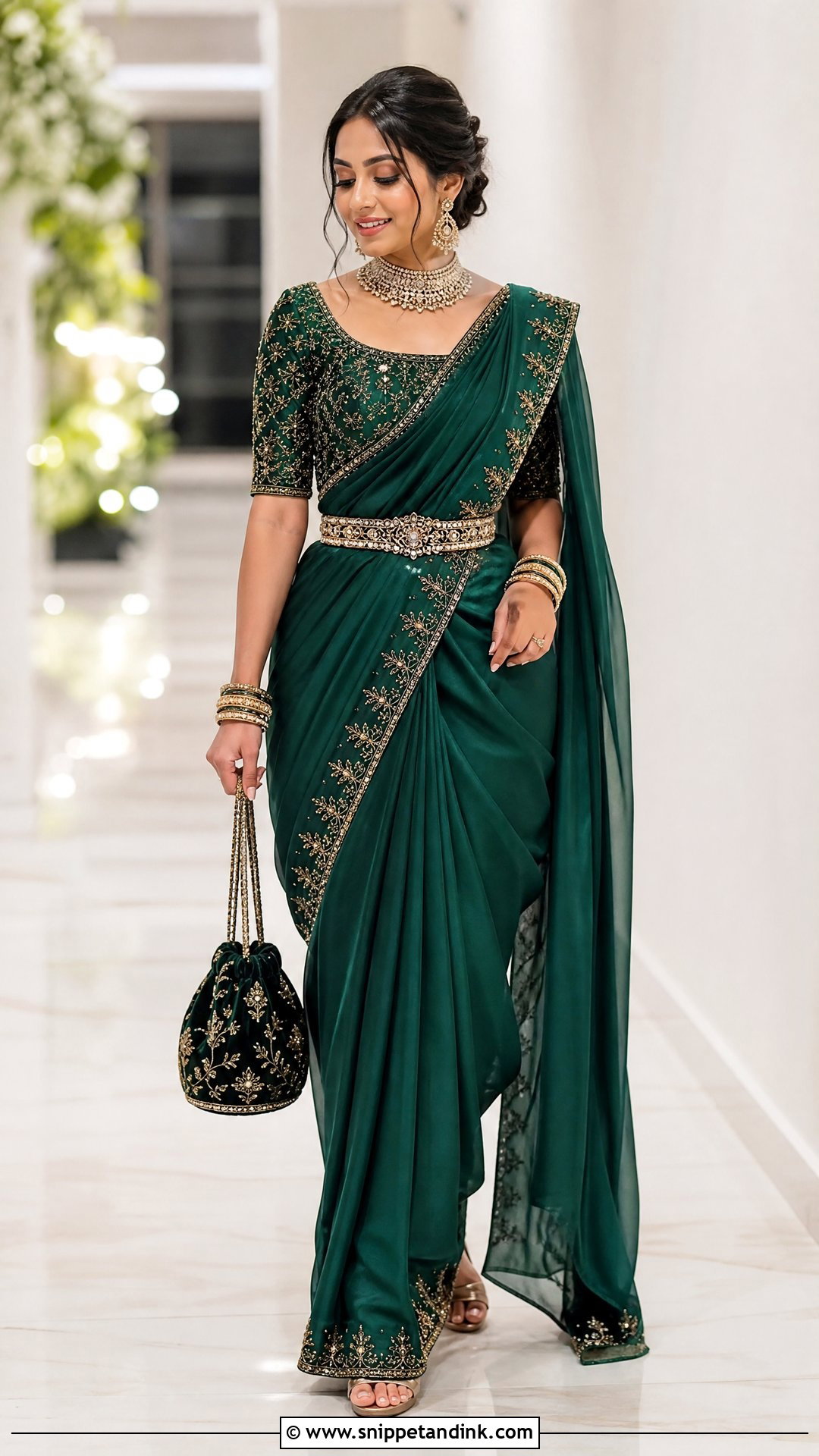
A pre-draped saree takes the stress out of draping, especially for receptions and dancing. Look for a fitted waist, a fluid pallu and a matching blouse in a jewel tone, ivory, champagne or deep red. A belt adds structure and keeps the drape anchored. During fittings, check where the zip or hooks sit, since a badly placed closure shows through the pleats, and look at the pallu from front, side and back. Soft waves keep it modern; a sleek bun is more formal.
19. Champagne Mermaid Indian Bridal Lehenga
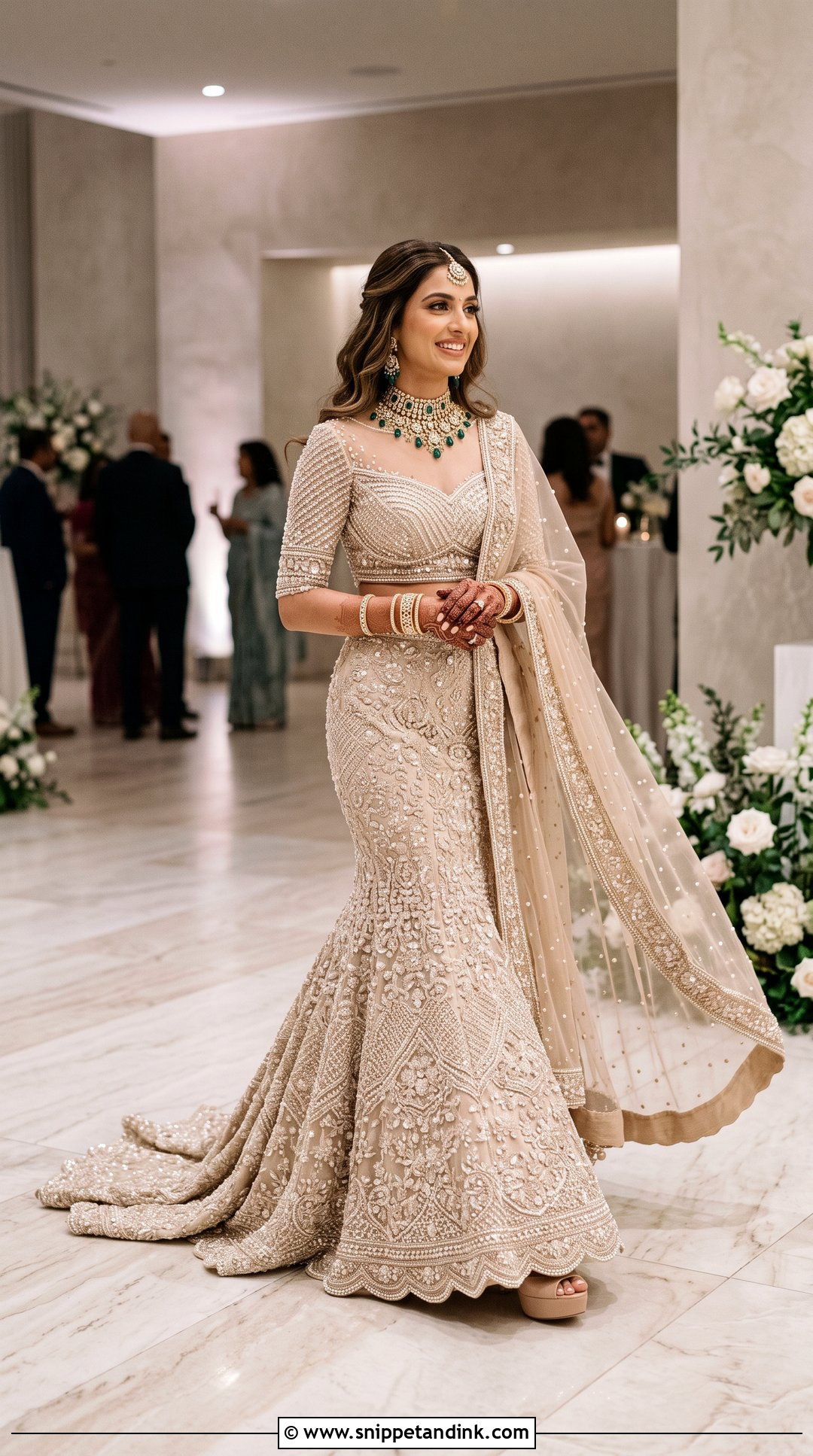
The champagne mermaid is the most glamorous shape here and the least forgiving. Fitted through the hips with a flared hem, it limits your stride, so wear stable platforms and practise stairs. Tonal sequins, pearls or crystals give champagne dimension. A structured blouse and a sheer dupatta over the shoulders or arms finish it, with diamond-look jewelry or emerald accents. Judge the fit sitting and walking, never just standing in front of the mirror. If it pulls or twists when you sit, it needs letting out.
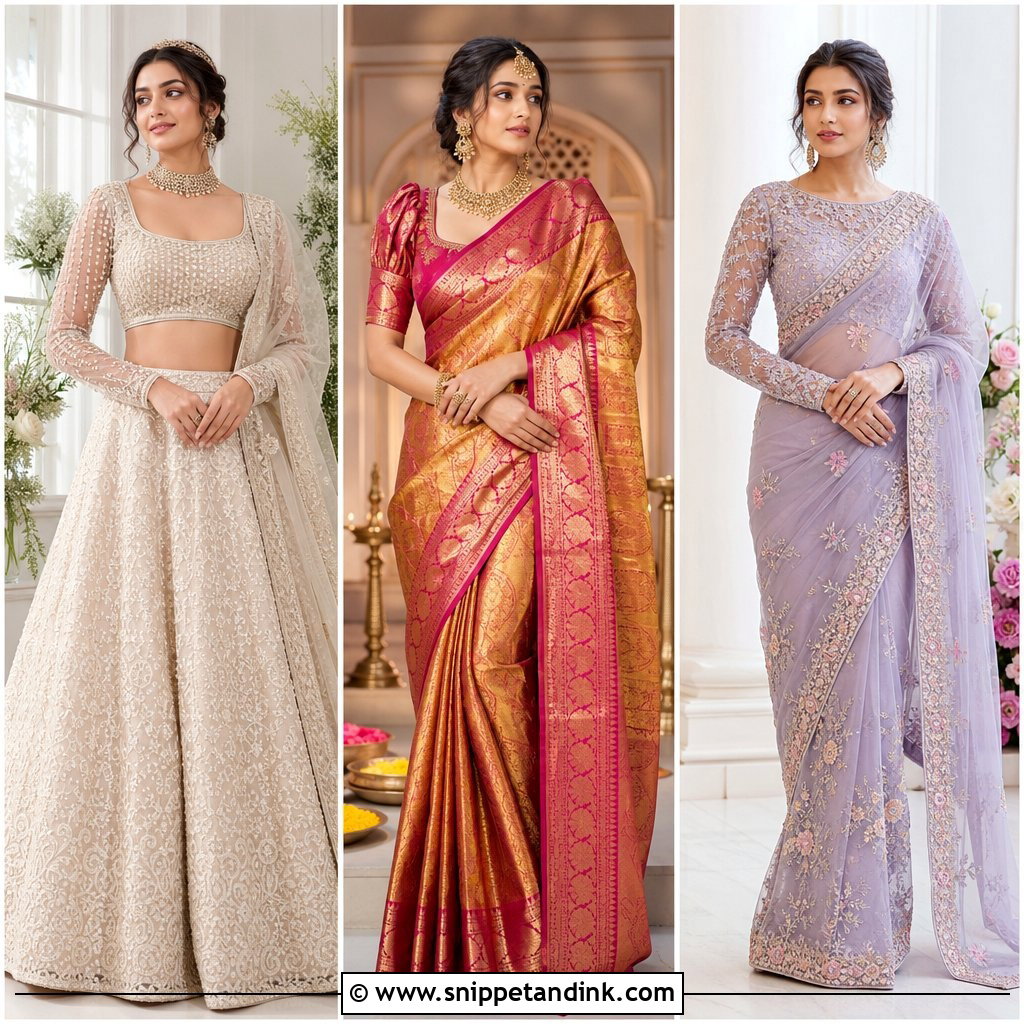
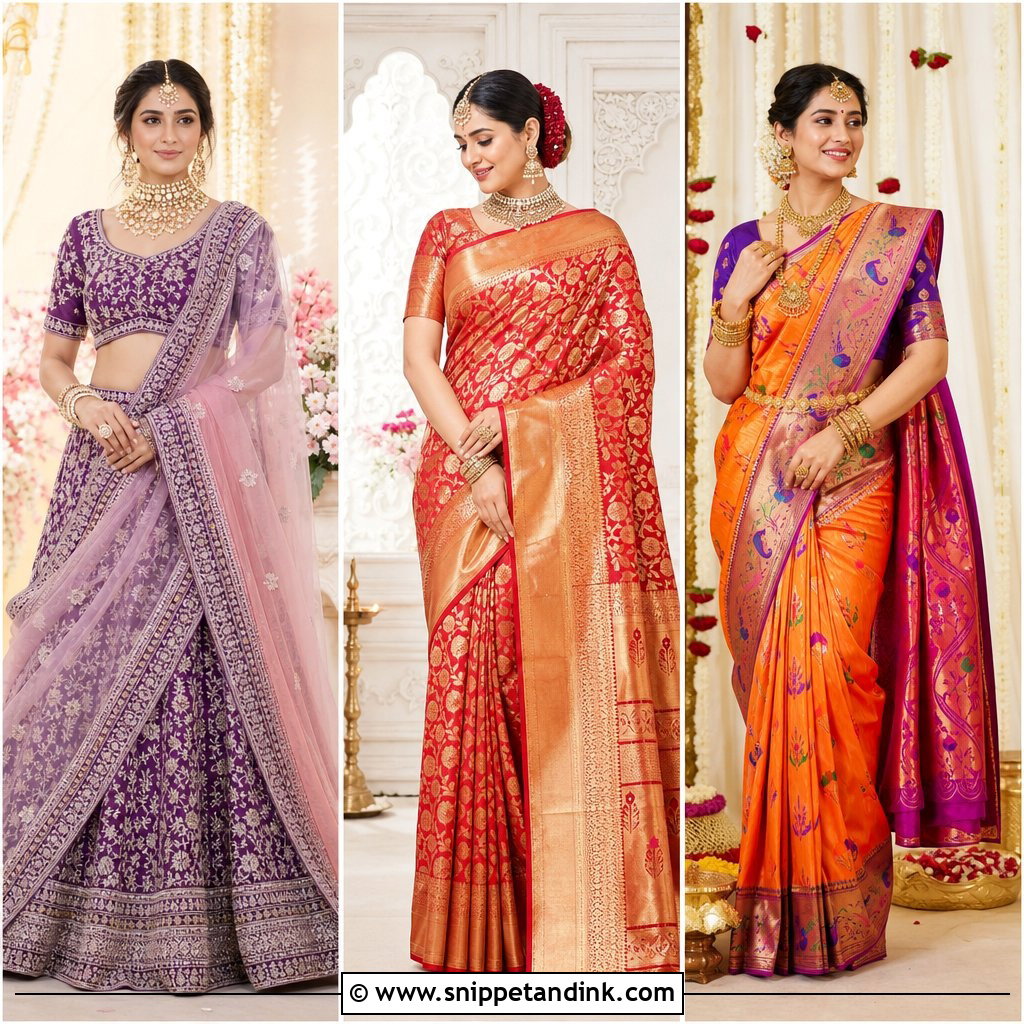
20. Heirloom Saree Indian Bridal Outfit
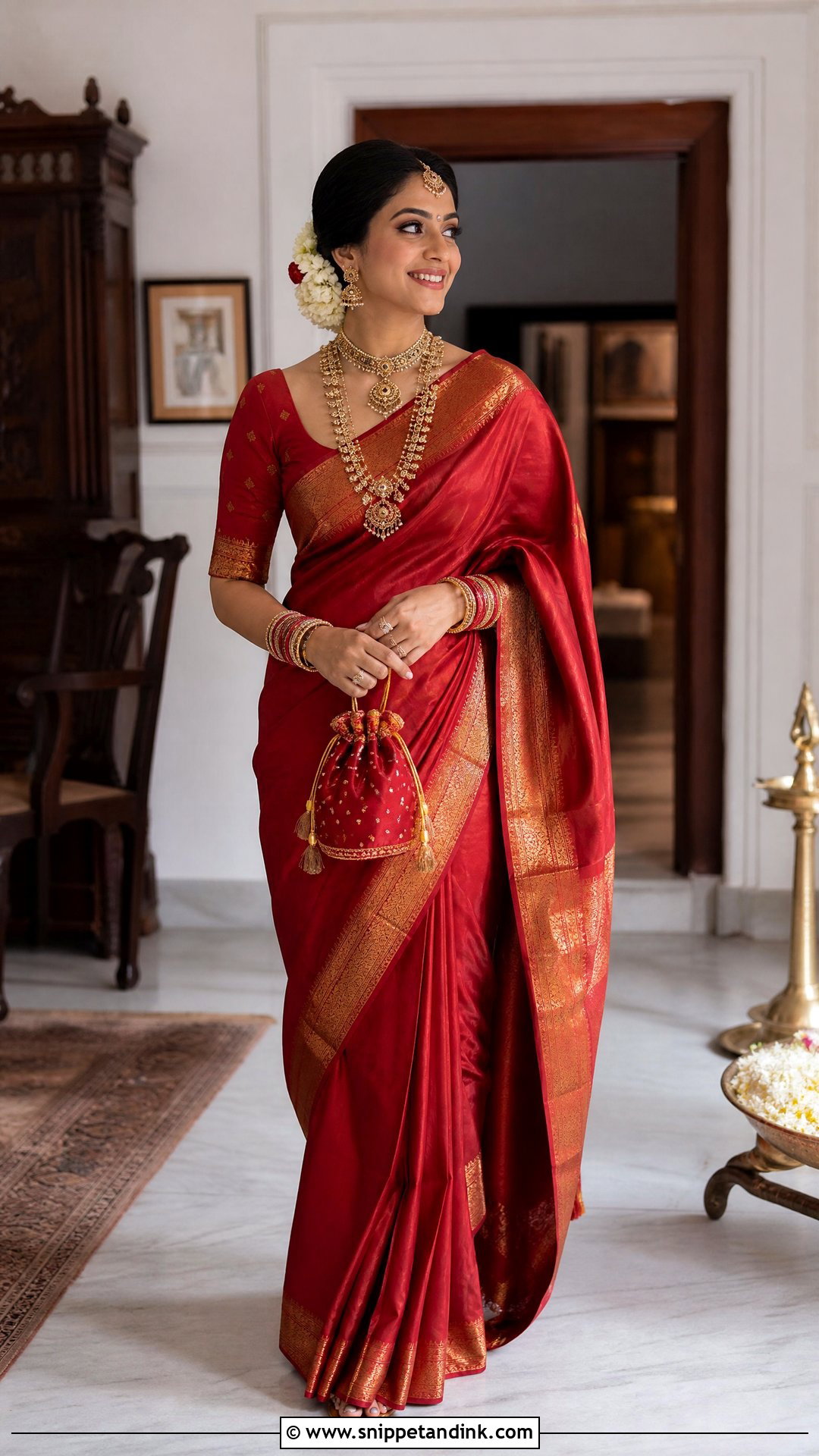
Building a bridal look around an heirloom saree is one of the most meaningful projects I take on, and it starts with inspection, not styling. Hold the fabric up to the light and check the border, the pallu and the fold lines for weak spots; old silk tends to split along folds. Get a textile restorer to repair anything fragile before the blouse is cut. A new blouse can borrow a border or use fabric-covered buttons to tie it to the saree. Family jewelry and a potli from leftover fabric finish it. Photograph the final drape so whoever dresses you can repeat every pin.
A Hook Gives Way During the Pheras, Now What?
Something small almost always slips: a blouse hook, a pleat, a dupatta pin. It’s only a problem if nobody nearby can fix it. I hand a small kit to one calm person, usually a cousin or friend who stays close to the bride all day.
- Safety pins in two sizes and U-pins in the dupatta’s colour.
- A needle pre-threaded with thread in the blouse colour, plus a few spare hooks.
- Double-sided fashion tape for necklines and pallu edges.
- Blotting papers, a small towel for sweat, and stain wipes that are safe on silk.
- A photo of the full drape taken at the final fitting, so anyone can redo it.
During long rituals, a quiet word to the priest or officiant is enough to buy a minute. Fix it, breathe and carry on; no guest will remember it.
Wear It for an Hour at Home First
Start with your ceremony, venue, weather and traditions, and the field shrinks fast. Then choose the silhouette you feel strong in and refine fabric, embroidery, colour and draping around it. Schedule one complete fitting with everything: shoes, underlayers, jewelry, dupattas. Then wear it at home for an hour. Walk, sit on the floor, pick up the dupatta, eat something. That hour tells you more than any photograph, and it leaves time to fix what bothers you.
You'll Like These Ideas:


Leave a Reply