
A haldi outfit has two jobs that pull against each other. It has to glow in daylight photos, and it has to survive people smearing wet turmeric paste on your face, arms and feet while you sit on the floor. Yellow is the classic answer, though marigold, orange, ivory, pink and lime all sit happily beside it. Cotton, chanderi, georgette and light silk blends keep you cool through the rituals and the dancing that follows. Turmeric stains are stubborn, so leave heirloom pieces in the cupboard. Below are 20 complete looks for brides, bridesmaids, relatives and guests, each with the shoes, jewelry and draping I’d put with it.
How Turmeric Paste Treats Each Fabric
Haldi paste is turmeric mixed with gram flour, sandalwood and usually rosewater or oil. The oil is what makes the stain travel. It carries the yellow pigment deep into fibers, so a smear that looks small at noon has spread by the evening. Fabric choice decides how much of that you’ll get back out.
- Cotton and linen: the most forgiving. They take a cold rinse and detergent, and white or ivory cotton fades further when it dries in direct sun.
- Georgette and chiffon: the paste sits on the surface, but the fabric is thin, so rub gently or you’ll snag it.
- Pure silk and tissue: treat these as single-use for haldi. Water marks silk, scrubbing breaks the sheen, and the dry cleaner may not shift the yellow.
- Zari, gota and sequins: the paste dries into the metallic thread and the backing. I keep heavy embellishment above the bust, away from the hands and feet that get covered first.
If you have your heart set on a delicate piece, plan a change of clothes. Many brides wear the special outfit for the first photos, then slip into a cotton set before the family gets the bowls.
Dressing for the Low Stool, Not the Mirror
In a fitting I ask brides to sit on a low stool, cross their legs and raise both arms above their head. That’s the haldi in three moves. If the blouse rides up, the skirt pulls tight across the knees or a strap slides off, it will happen in front of the whole family.
- Sit test: palazzos, shararas, dhoti pants and gathered skirts pass. Tight churidars and fitted fish-cut skirts don’t.
- Arm test: sleeveless or elbow-length sleeves stay clean. Long, wide sleeves drag through the paste.
- Dupatta test: pin it, then shake your arms. If it slips, add a second pin at the back or leave it off.
- Shoes: you’ll probably be barefoot for the ritual, so pick something that slips on and off easily, like juttis, kolhapuris or flat sandals.
1. Yellow Cotton Kurta Palazzo Set for Haldi
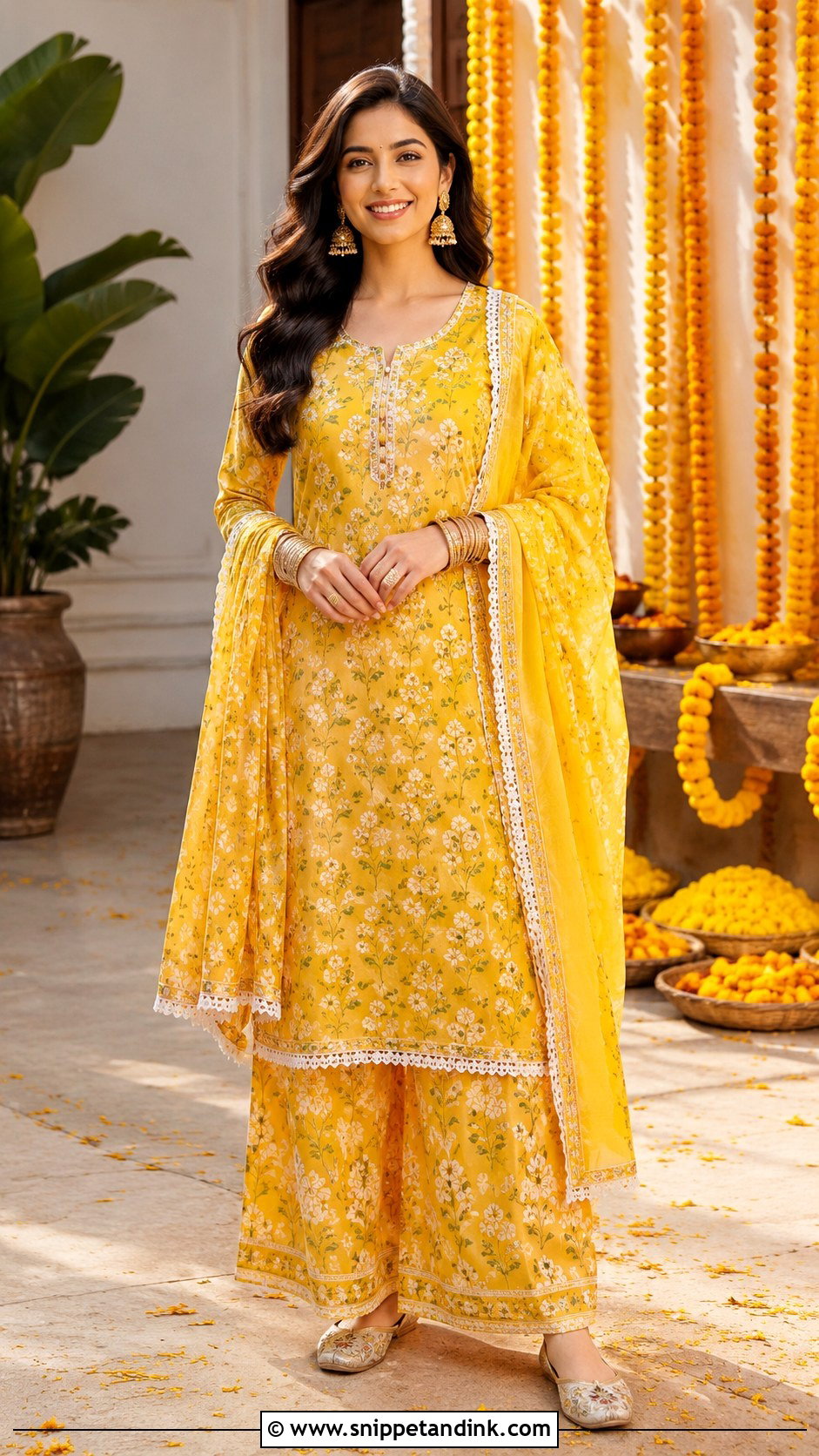
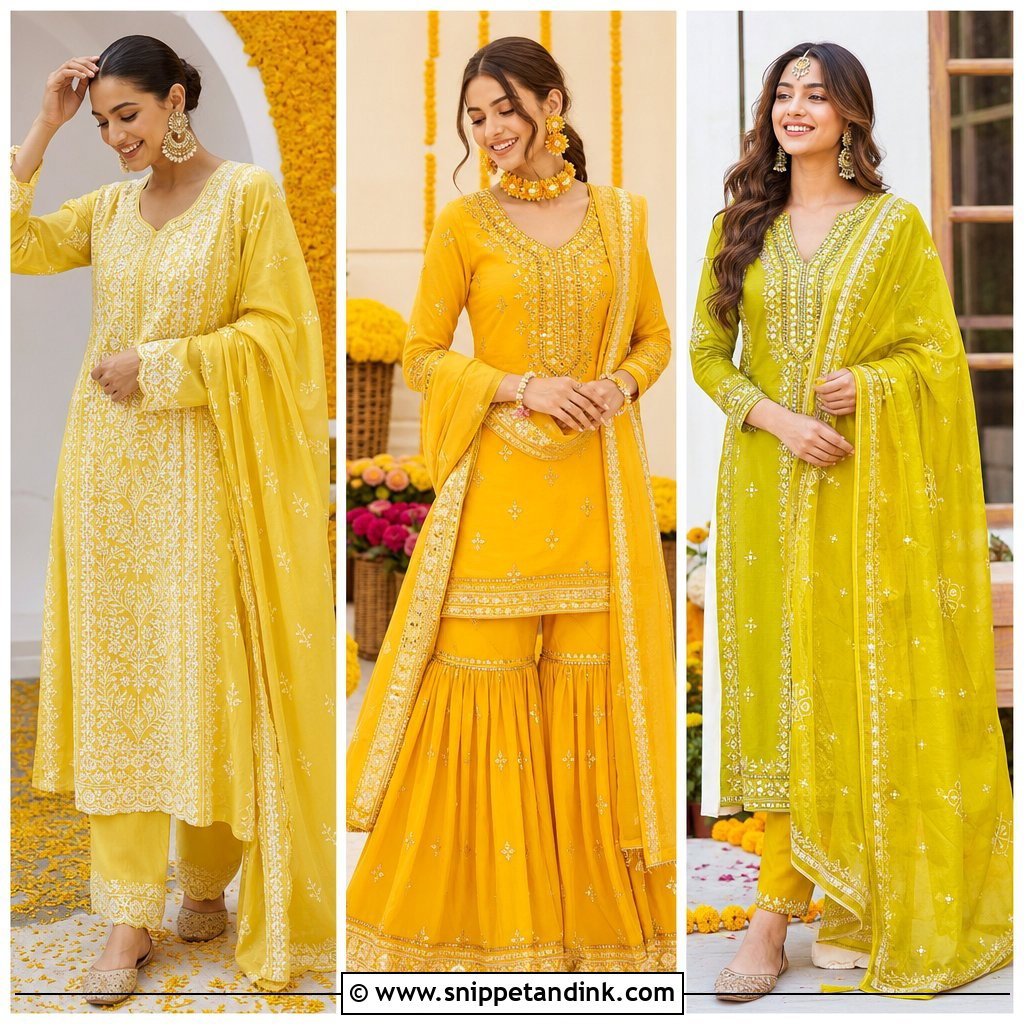
A yellow cotton kurta with palazzo pants is the outfit I suggest most often for this function, because it handles cross-legged sitting better than almost anything else. Pick a straight or gently flared kurta with block prints or a narrow gota border. Wide-leg palazzos fold neatly under you on a low stool and still swing when the music starts. Pin a light organza or mulmul dupatta at one shoulder only; a dupatta draped over both arms ends up dipped in the paste bowl within ten minutes. Gold jhumkas, stacked bangles and embroidered juttis finish it. Mustard reads richer on camera, lemon yellow younger and brighter.
2. Marigold Lehenga for Haldi
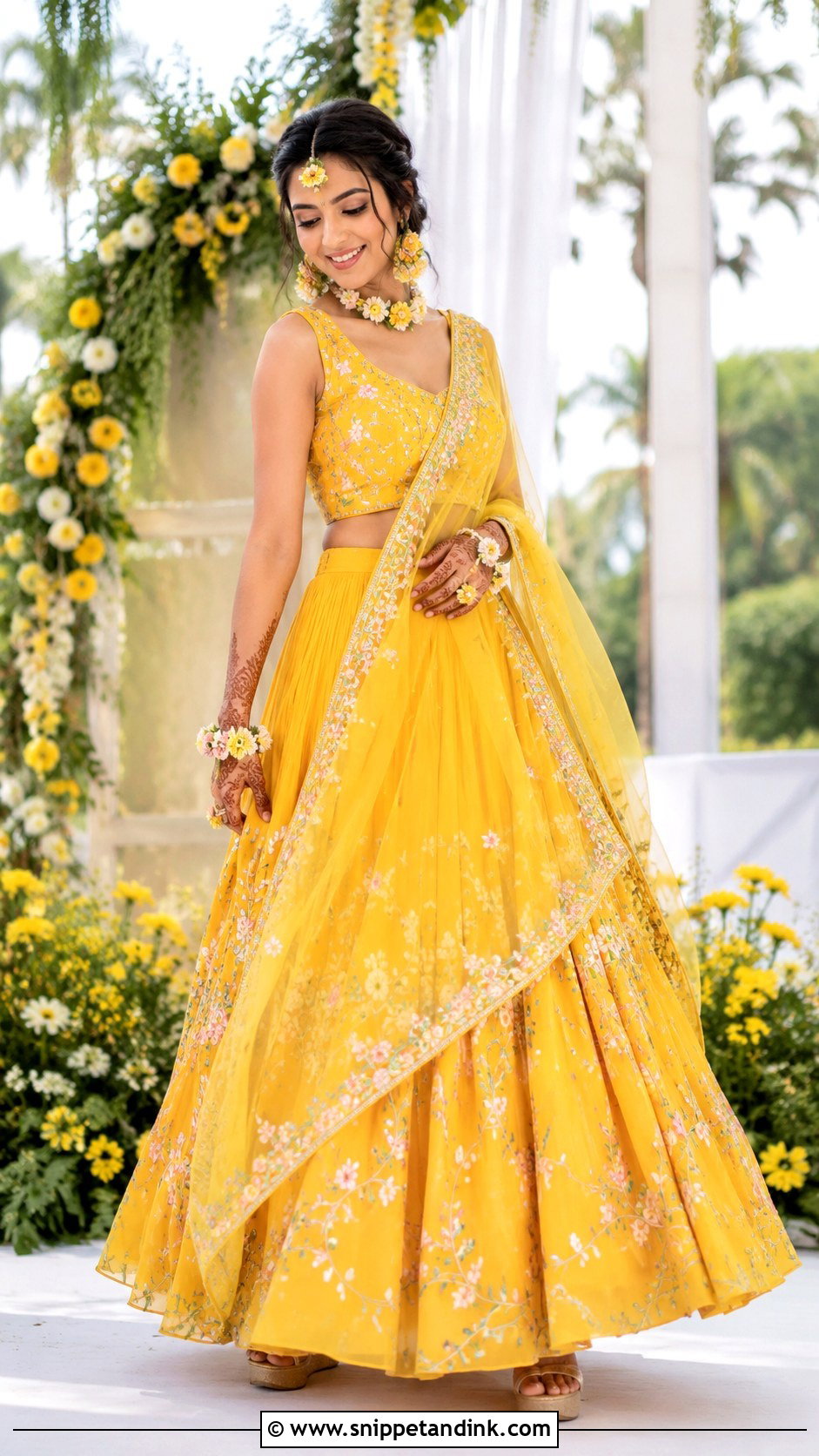
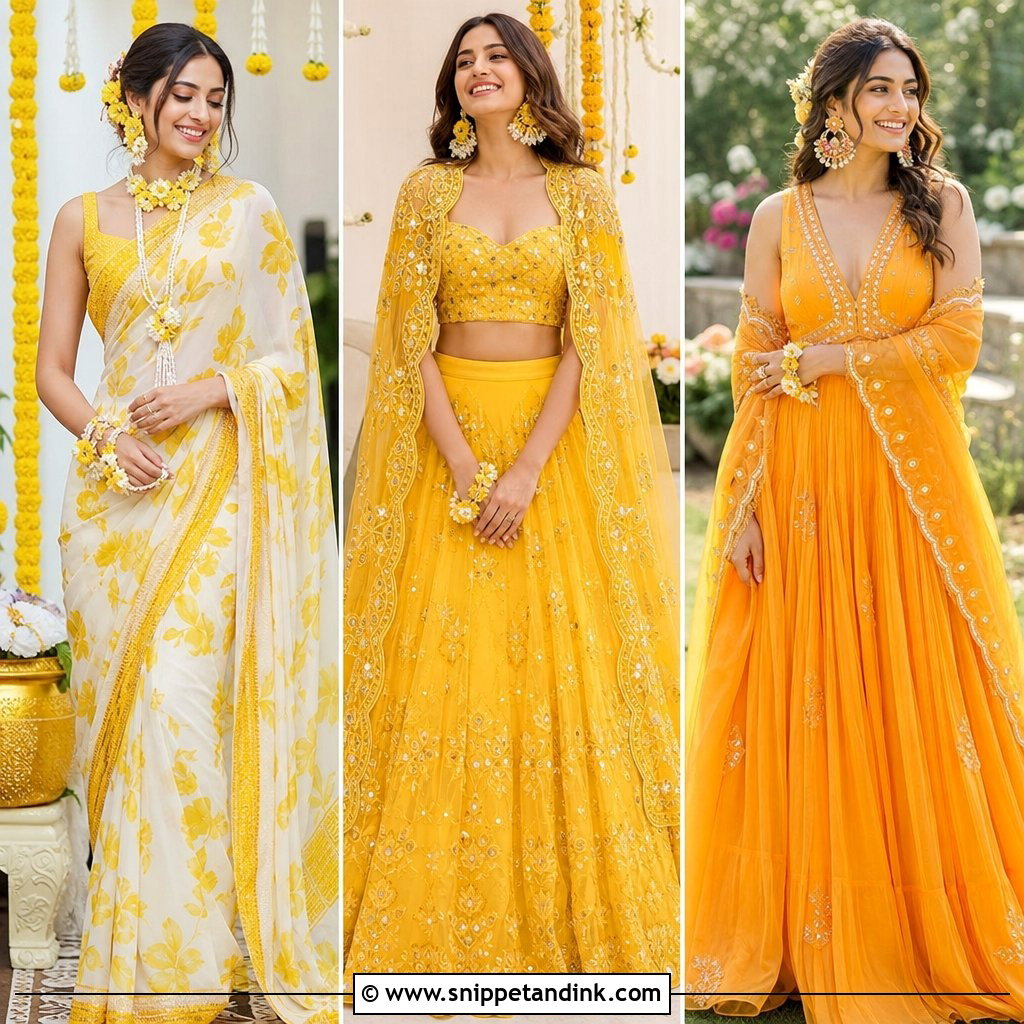
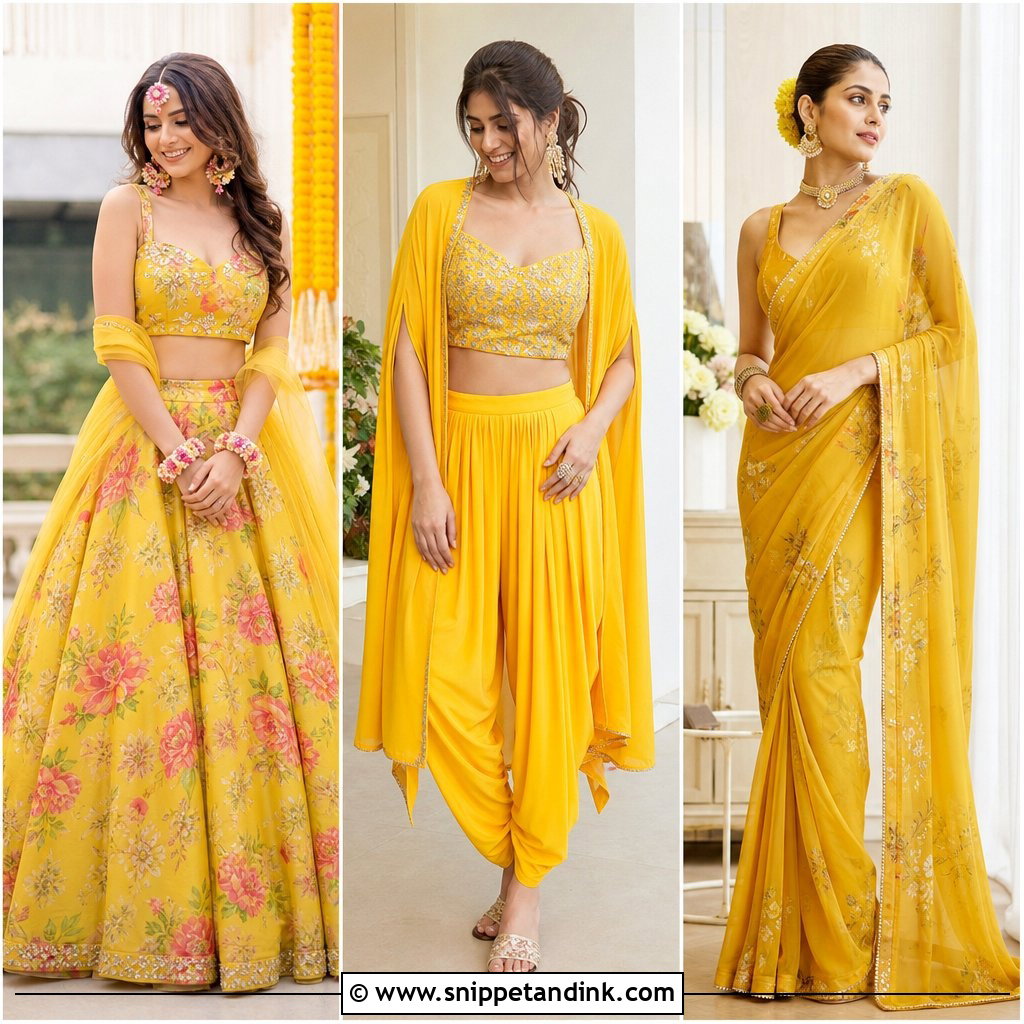
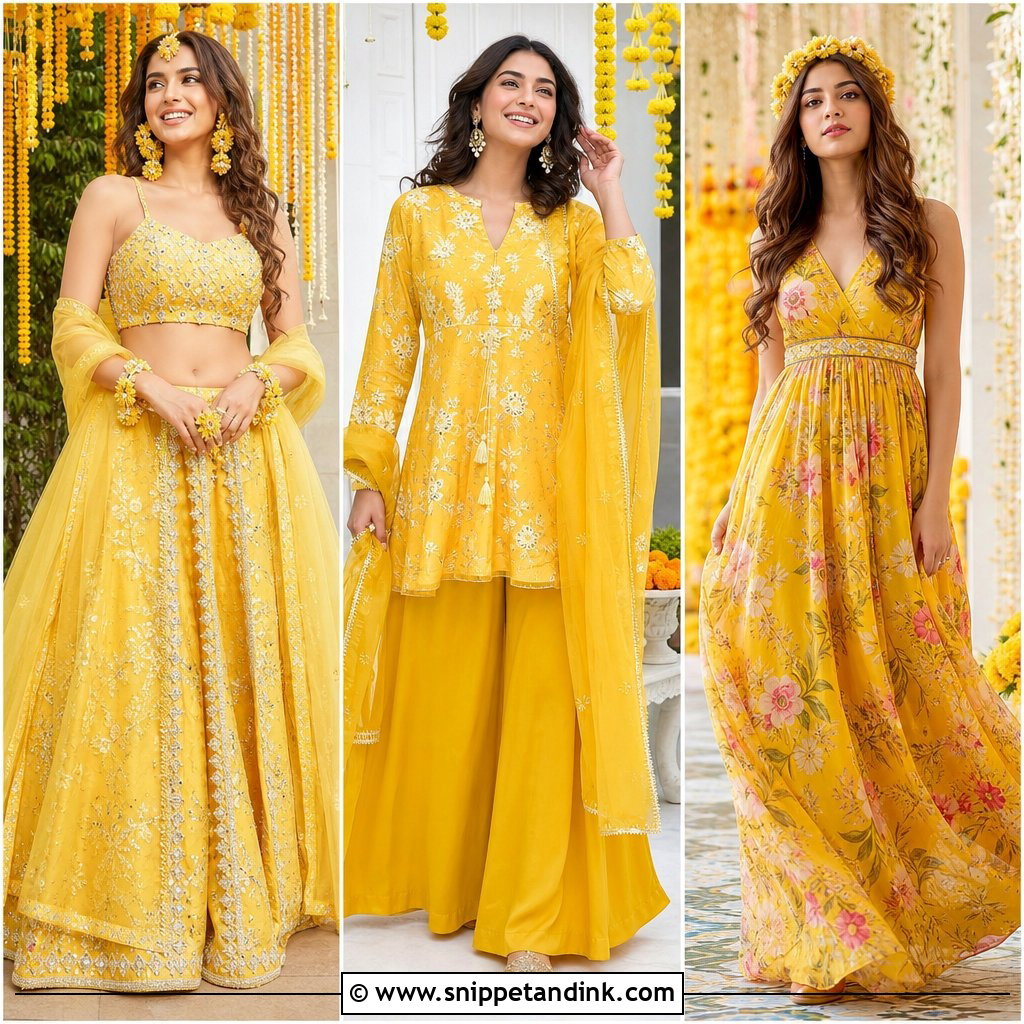
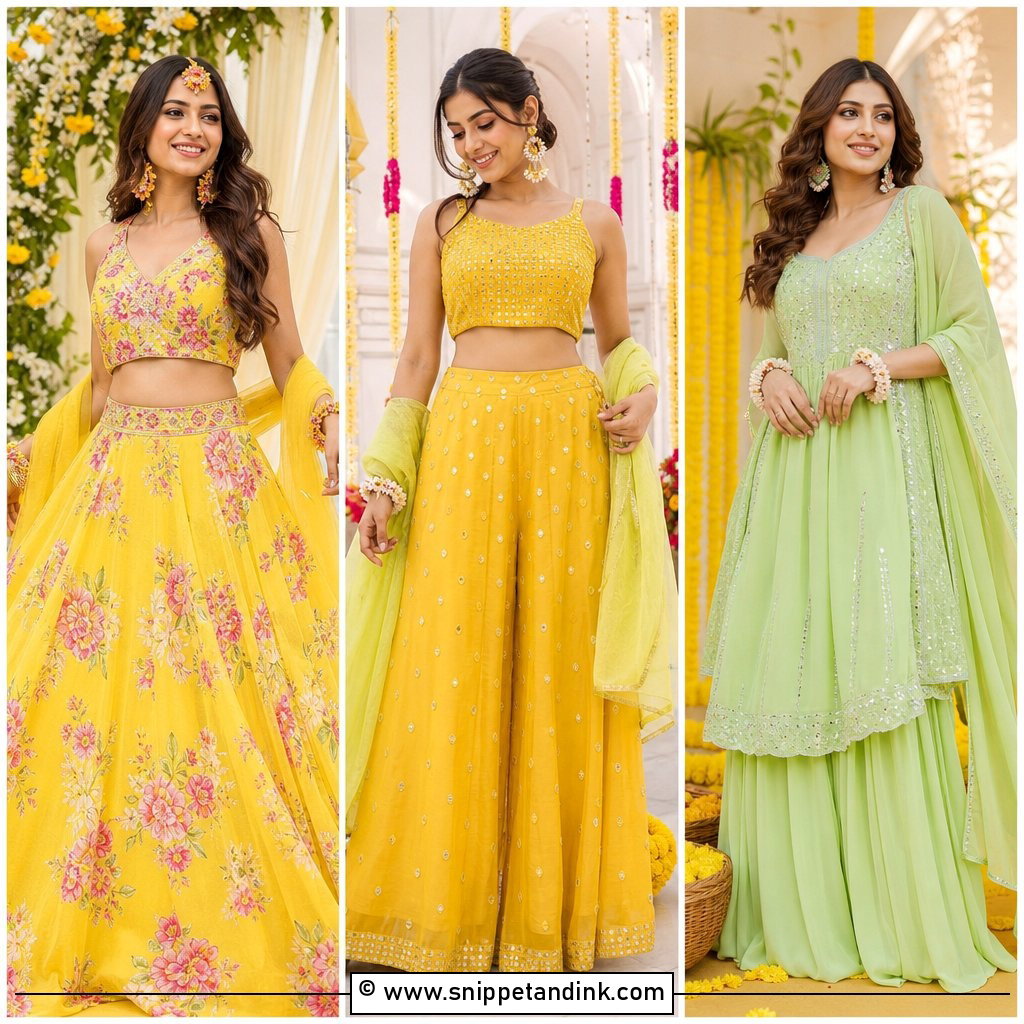
Brides who still want a skirt for their haldi do best with a marigold lehenga in a light fabric. Georgette, cotton silk or chanderi move freely; a layered bridal can-can skirt traps heat and holds onto paste in its folds. Floral threadwork, small mirrors or a scalloped border give the camera enough detail. Wear the dupatta diagonally across the torso or loop it around the arms. I always have the hem taken up slightly above floor length for this event, since outdoor ground is often damp from rinsing water. A supportive blouse, floral earrings, a maang tikka and wedge sandals complete it for the bride or her sister.
3. Floral Sharara Set for Haldi
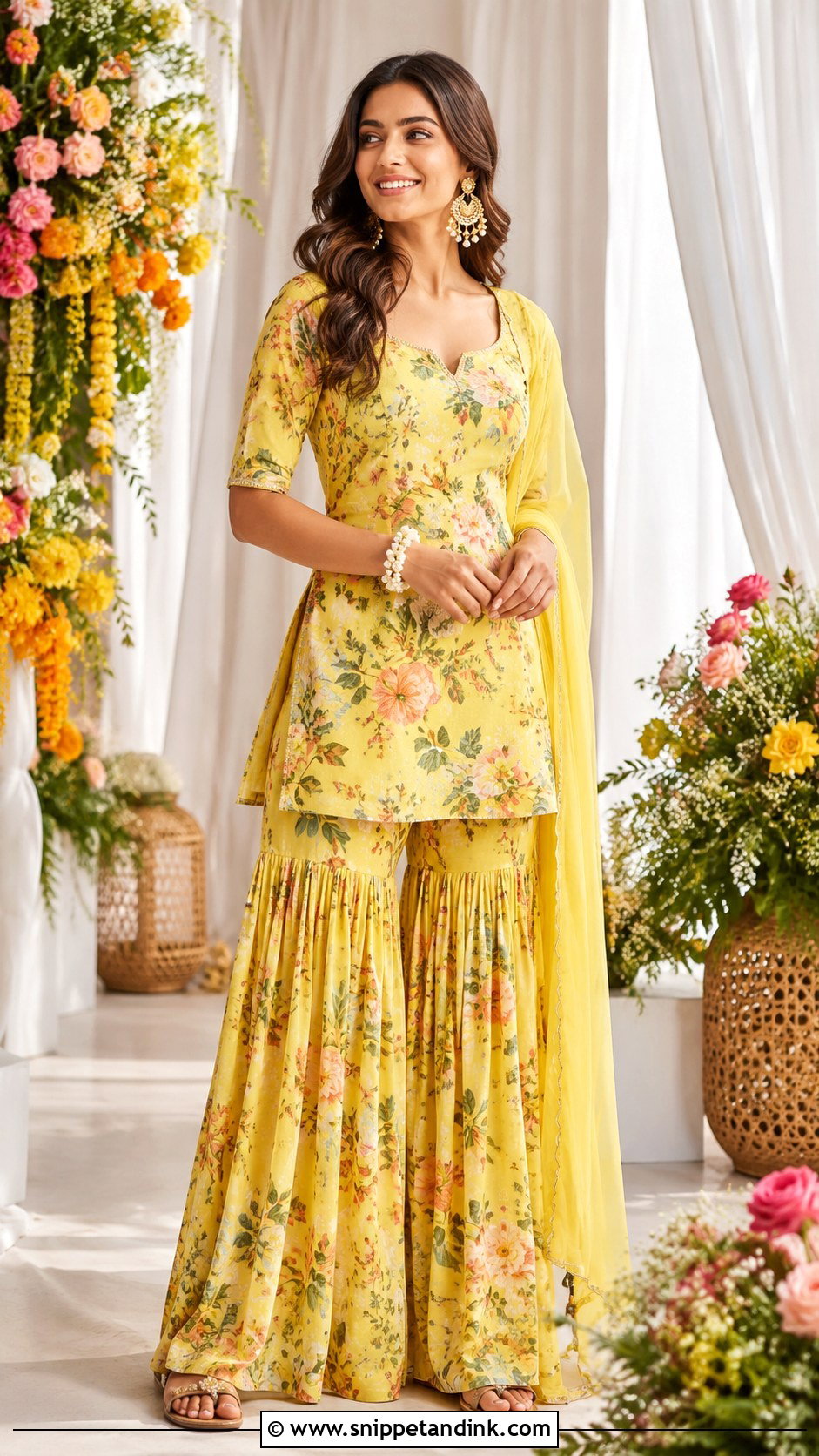
Florals echo the marigold strings and petal baskets at most haldi setups, which is why a printed sharara set fits so naturally. Start with a short yellow kurti carrying pink, green or orange botanicals, then a sharara flared enough to read as a skirt. Keep the dupatta plain chiffon or the prints start fighting each other. Small chandbalis, a floral bracelet and flat kolhapuris are all it needs. The flare defines the waist on most figures. On petite clients I scale the print down and ask for a controlled flare from the knee, because a huge print on a short frame swallows her in photos; taller women can carry broad motifs. Bridesmaids can coordinate colors without matching exactly.
4. Yellow Saree With Pink Blouse for Haldi
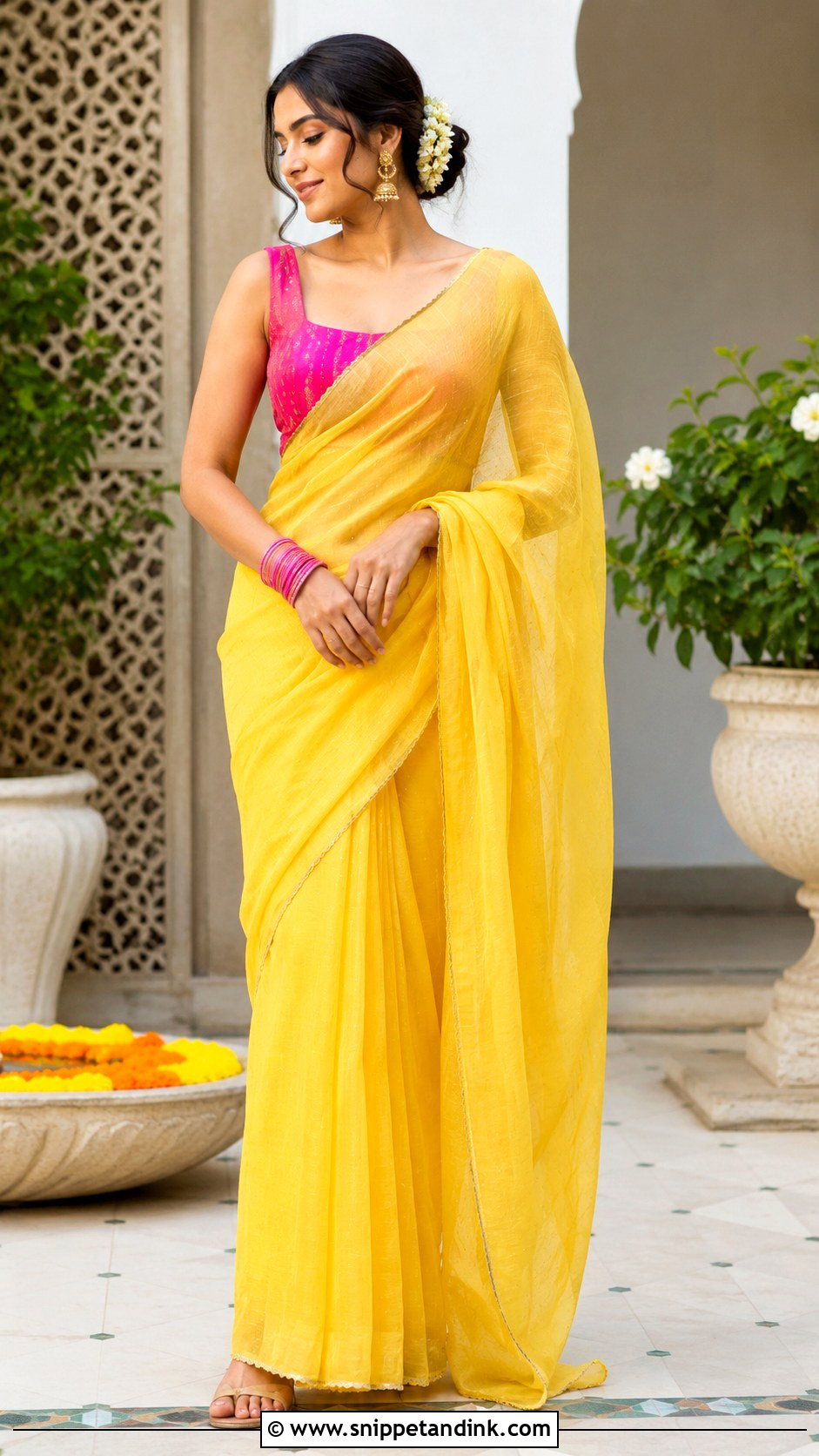
Hot pink against yellow is the oldest contrast in the haldi wardrobe, and a yellow saree carries it well. Lightweight cotton, chiffon, georgette or a linen blend pleats easily and won’t feel tight when you’re seated for an hour. Choose a blouse neckline you’d happily wear all day, square neck or elbow sleeve. Pin the pallu at the shoulder and again at the waist so both hands stay free for the rituals. Pink bangles, gold earrings and flat sandals pull the colors together. If the family plays rough with the turmeric, I’d switch to a pre-stitched saree: a traditional drape loosens every time someone tugs your arm, and re-pleating with paste on your hands is miserable.
5. Ivory Chikankari Suit for Haldi
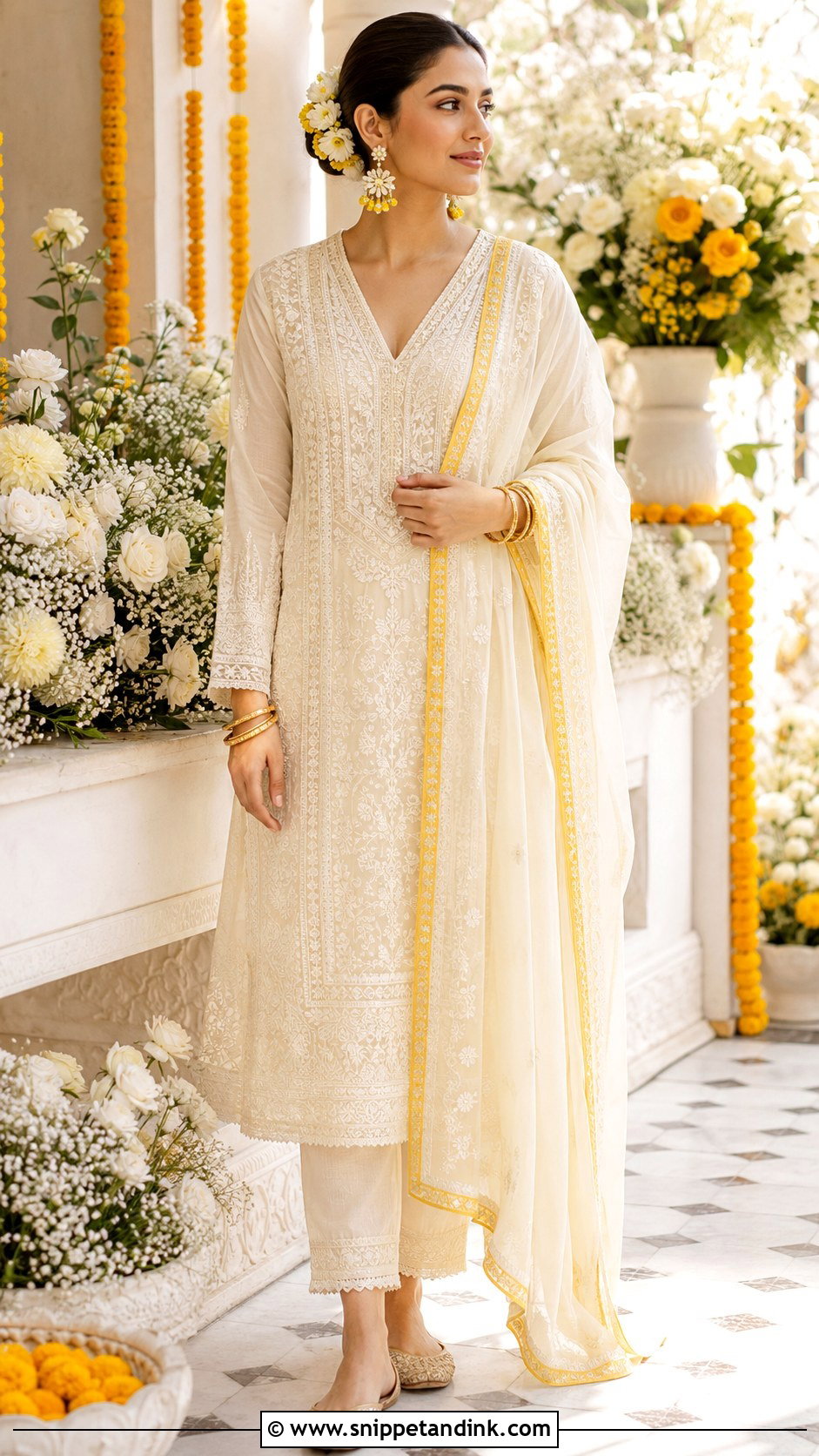
Ivory chikankari gives the yellow around you somewhere to land. A straight kurta, straight pants and a yellow-bordered dupatta look traditional and light. Here’s the honest catch: turmeric shows more on pale fabric than on anything else, so I only suggest this in washable cotton or a cotton blend, never in ivory silk. Yellow flower earrings, gold bangles and beige juttis tie it to the day’s palette. It suits a bride who dislikes head-to-toe yellow and guests who want to stay out of the bride’s color. A long kurta with side slits walks well; pair it with fresh, minimal makeup and a neat bun dotted with small yellow blooms.
6. Mustard Anarkali for Haldi
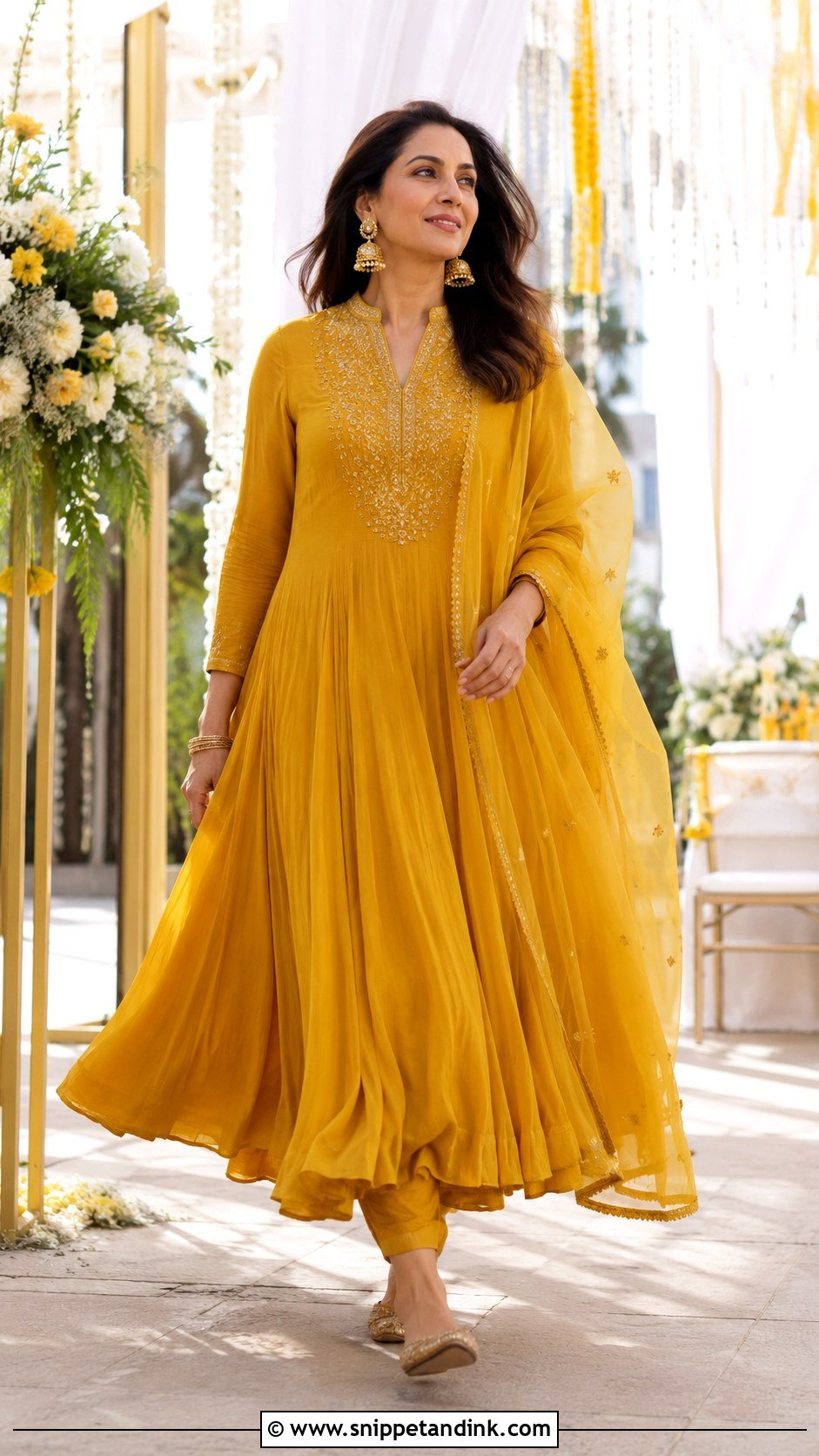
Mustard is the yellow I reach for when a client’s skin turns sallow in lemon shades. An Anarkali in calf or ankle length, with light embroidery at the neck and cuffs, gives a fitted bodice and a soft flare without the weight of a skirt. Narrow pants or leggings underneath matter more than people expect, because an Anarkali rides up when you sit cross-legged. Secure a matching chiffon dupatta at the shoulder and add antique gold jhumkas and pointed juttis. Mothers and aunts often ask for longer sleeves and a higher neck, and the shape takes both changes without losing its swing. Bridesmaids can split the mustard into two or three shades.
7. Yellow Gharara Set for Haldi
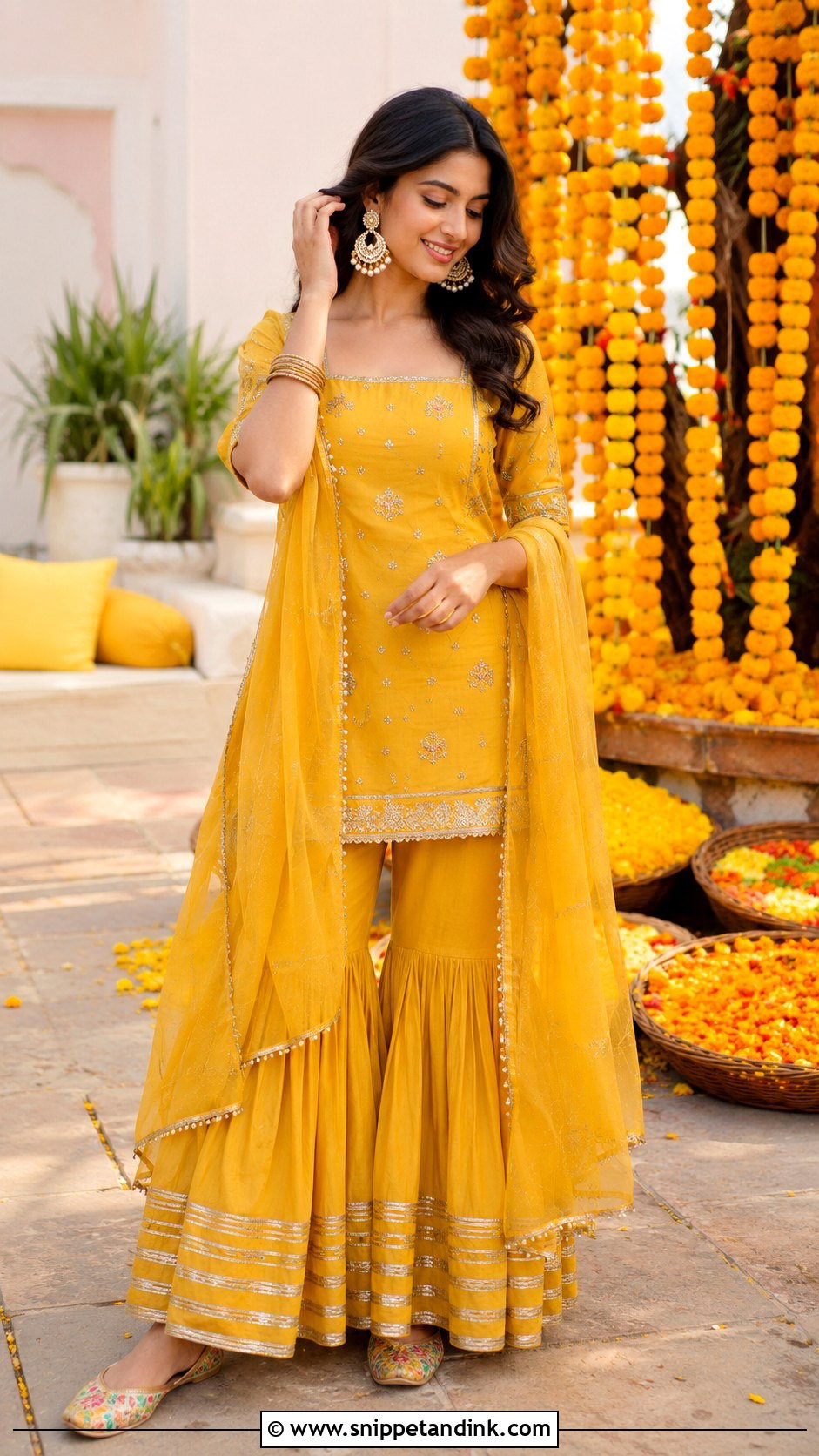
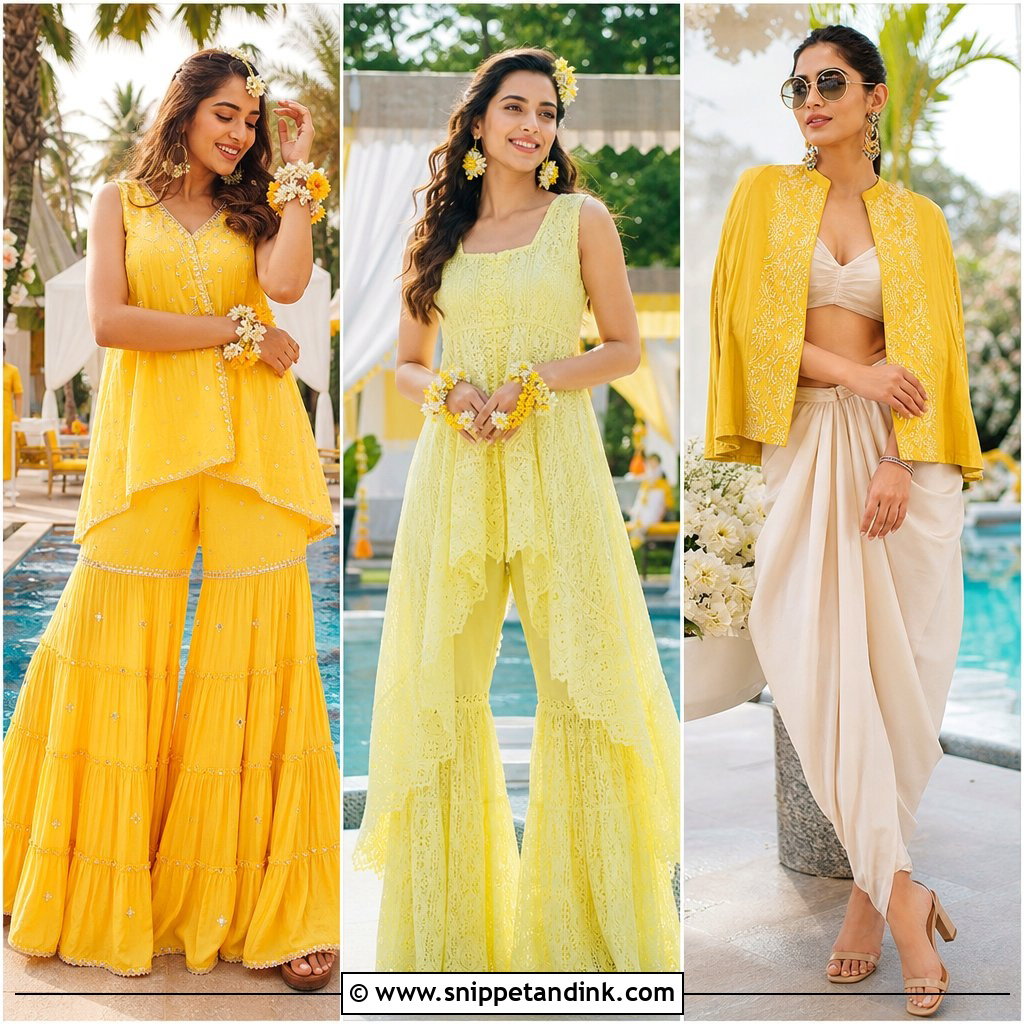
A gharara is all about the gathered join at the knee, so the kurti has to stop high enough to show it, around the upper thigh. Gota trim or fine embroidery at that knee seam is what the camera picks up. A sheer dupatta with a narrow border keeps the top half quiet. Pearl chandbalis, gold bangles and flat juttis handle hours of standing. One warning from fittings: ghararas use a lot of fabric, and cheap versions in heavy polyester feel like wearing a tent in the midday sun, so check the weight before you buy. A square-neck kurti with three-quarter sleeves makes it look current, and sisters and cousins look great lined up in matching sets.
8. Peplum Top and Dhoti Pants for Haldi
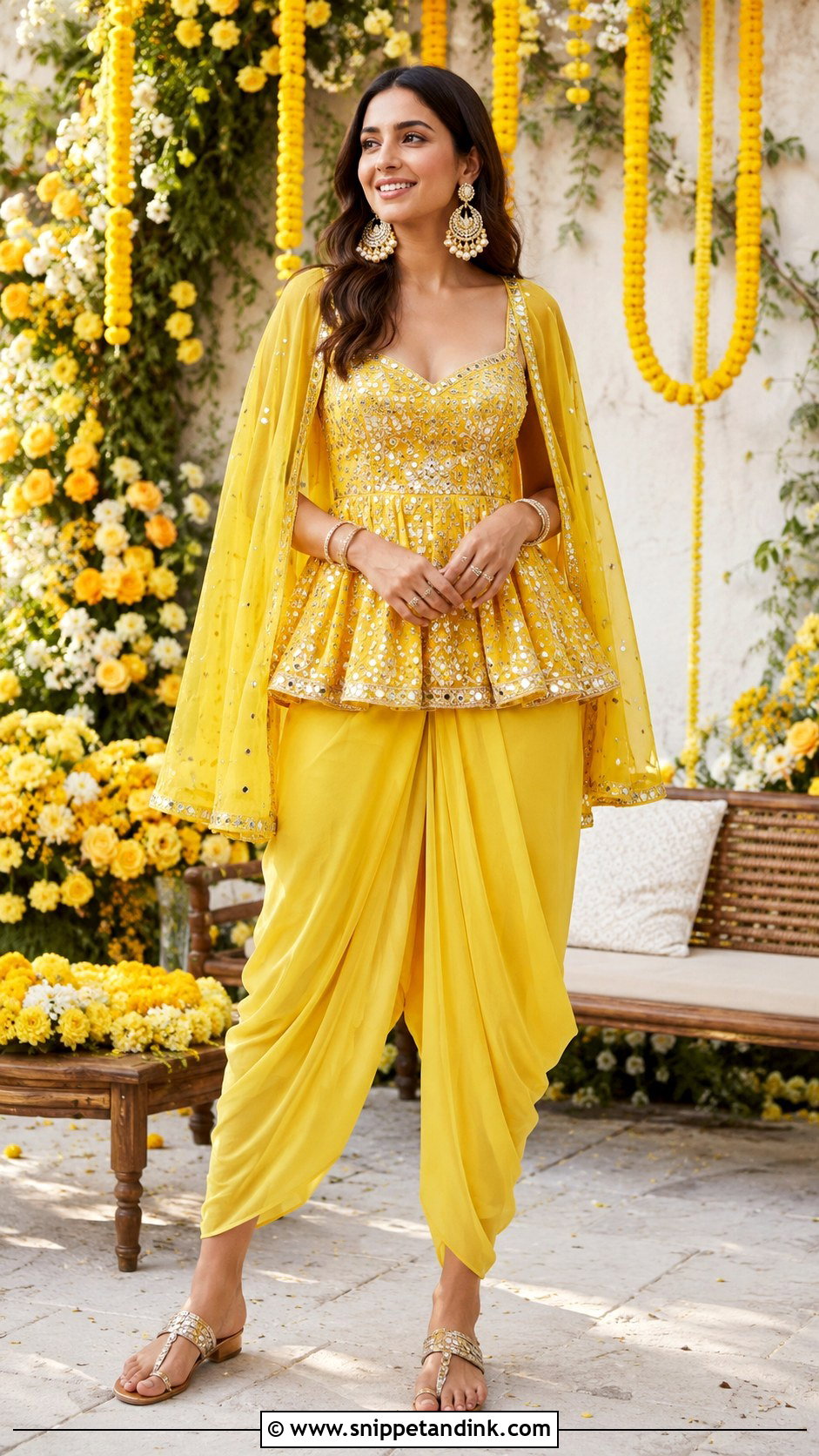
Not every haldi needs a dupatta, and a yellow peplum top with draped dhoti pants proves it. The peplum’s fitted waist gives shape while the pleated dhoti is comfortable for sitting on the floor and dancing after. Breathable cotton silk or light crepe with a few mirror accents is enough. Skip the long dupatta entirely or add a short cape that can’t fall into the paste. Bold earrings, slim bangles and metallic kolhapuris finish it. For outdoor or poolside functions this is my first suggestion, because dhoti pants cropped above the ankle stay out of puddles. Check the top’s fastening at the fitting; a back zip that gapes when you raise your arms will show in every dancing shot.
9. Pre-Draped Saree for Haldi
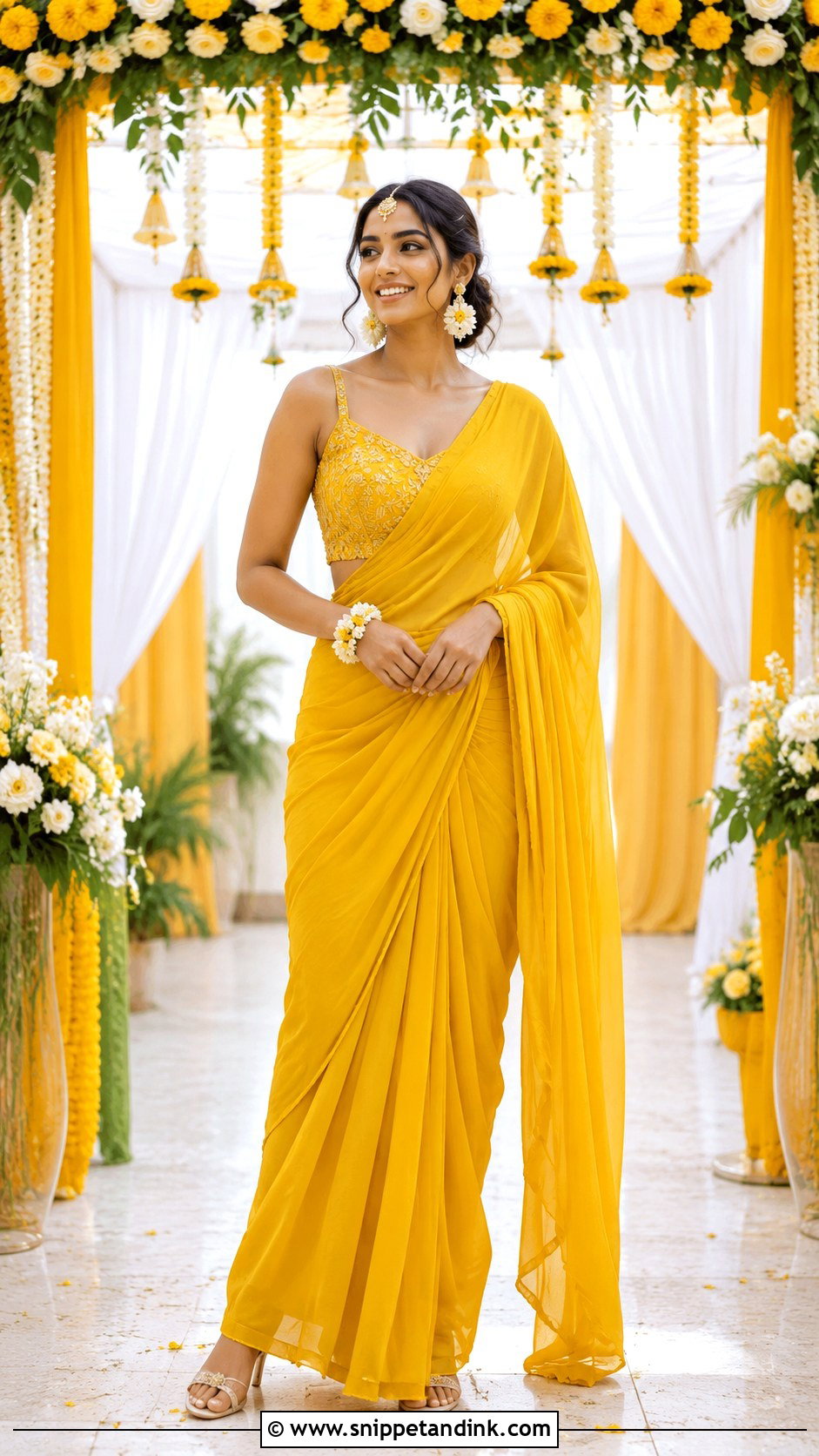
Pre-draped sarees solve the biggest saree problem at a haldi, which is pleats coming loose while relatives pull you around. Sunflower or mustard georgette, crepe or chiffon sits well in stitched pleats. Choose a structured blouse with a modest back and secure straps if you’ll dance. A ruffled edge adds movement; a plain border looks more classic. Floral earrings, a fine maang tikka and low block heels or flat sandals suit it. I ask for any embellishment to sit on the blouse rather than the skirt, so the part that touches wet ground stays light and goes straight into a cold wash.
10. Bandhani Lehenga for Haldi
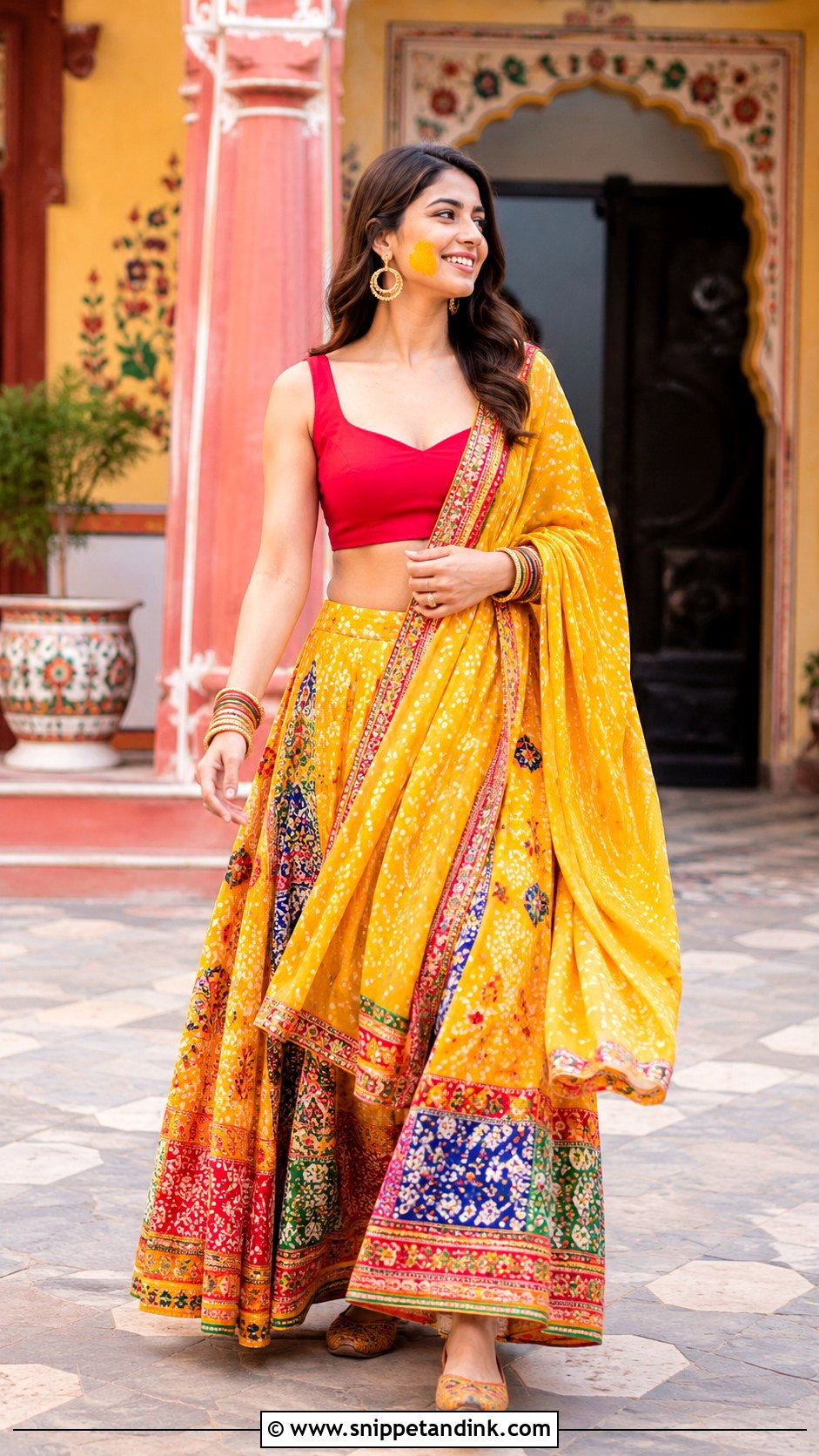
Tie-dyed bandhani carries Rajasthani and Gujarati character into the room. A yellow bandhani lehenga flecked with red, pink or green works best against a solid blouse, otherwise the dots run together on camera. Add a matching bandhani dupatta, gold hoops, bright bangles and embroidered juttis. Brides can wear a floral necklace or matha patti; guests should keep accessories simple. Real bandhani is often dyed with colors that bleed in a first wash, so test a hidden corner before you scrub turmeric out of it. For a fuller bust, I’d pick a supportive blouse with a wider neckline and a high-waisted, gathered cotton or georgette skirt that stays put when you’re seated.
11. Mirror Work Co-Ord Set for Haldi
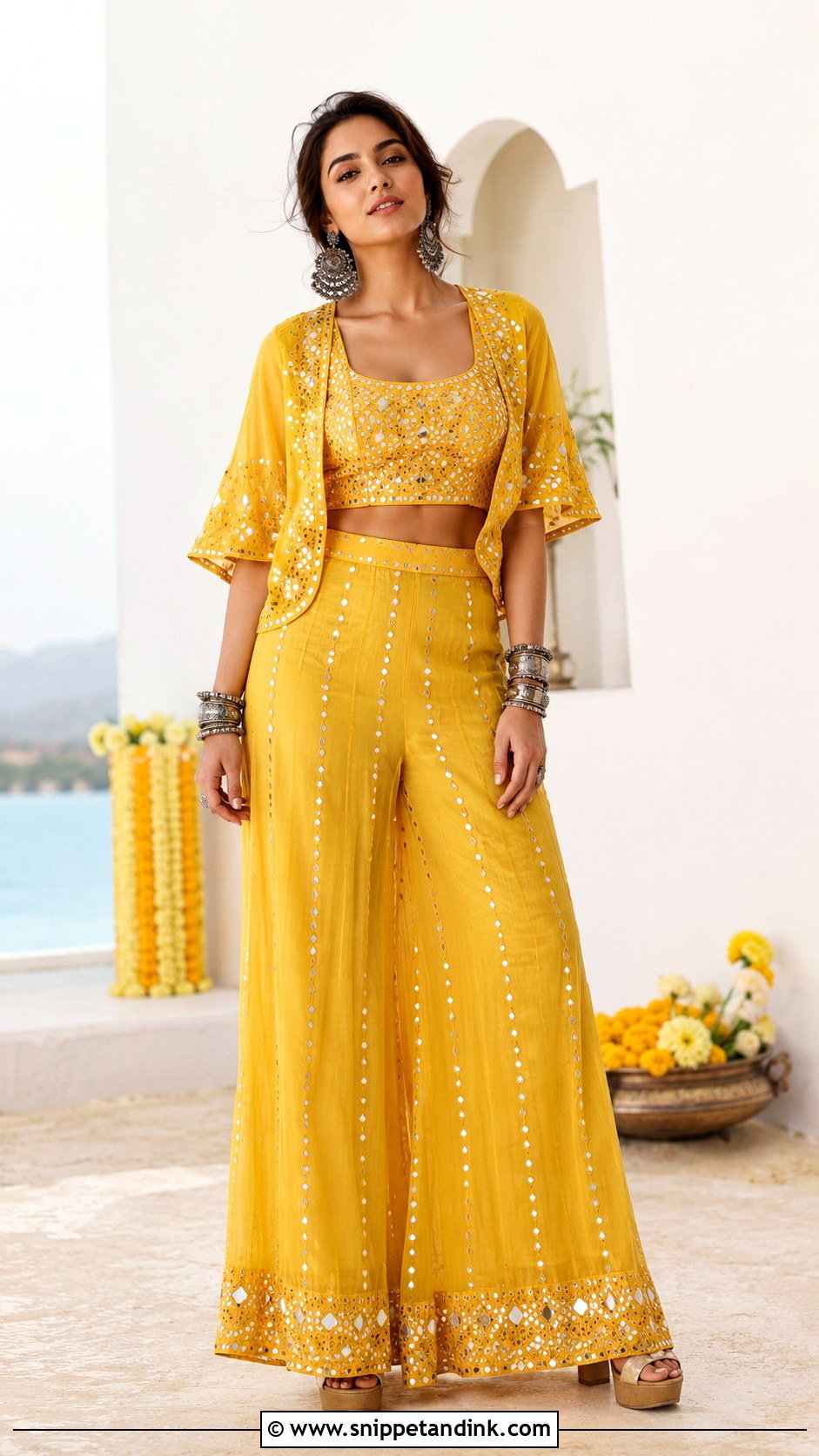
Co-ords suit an informal haldi and the guests who would rather not drape anything. A cropped or waist-length yellow top with small mirror details and matching wide-leg pants looks put together with almost no effort. Add a light cape or cropped jacket if you want coverage. Keep the mirror work to the neckline or hem: real mirrors are glass and heat up in direct sun, and a heavily mirrored top gets uncomfortable fast at a noon ceremony. Oxidized silver earrings, a few cuffs and platform sandals suit destination weddings and younger guests. A longer top with high-waisted pants gives more coverage without losing the modern feel.
12. Lime Green Lehenga for Haldi
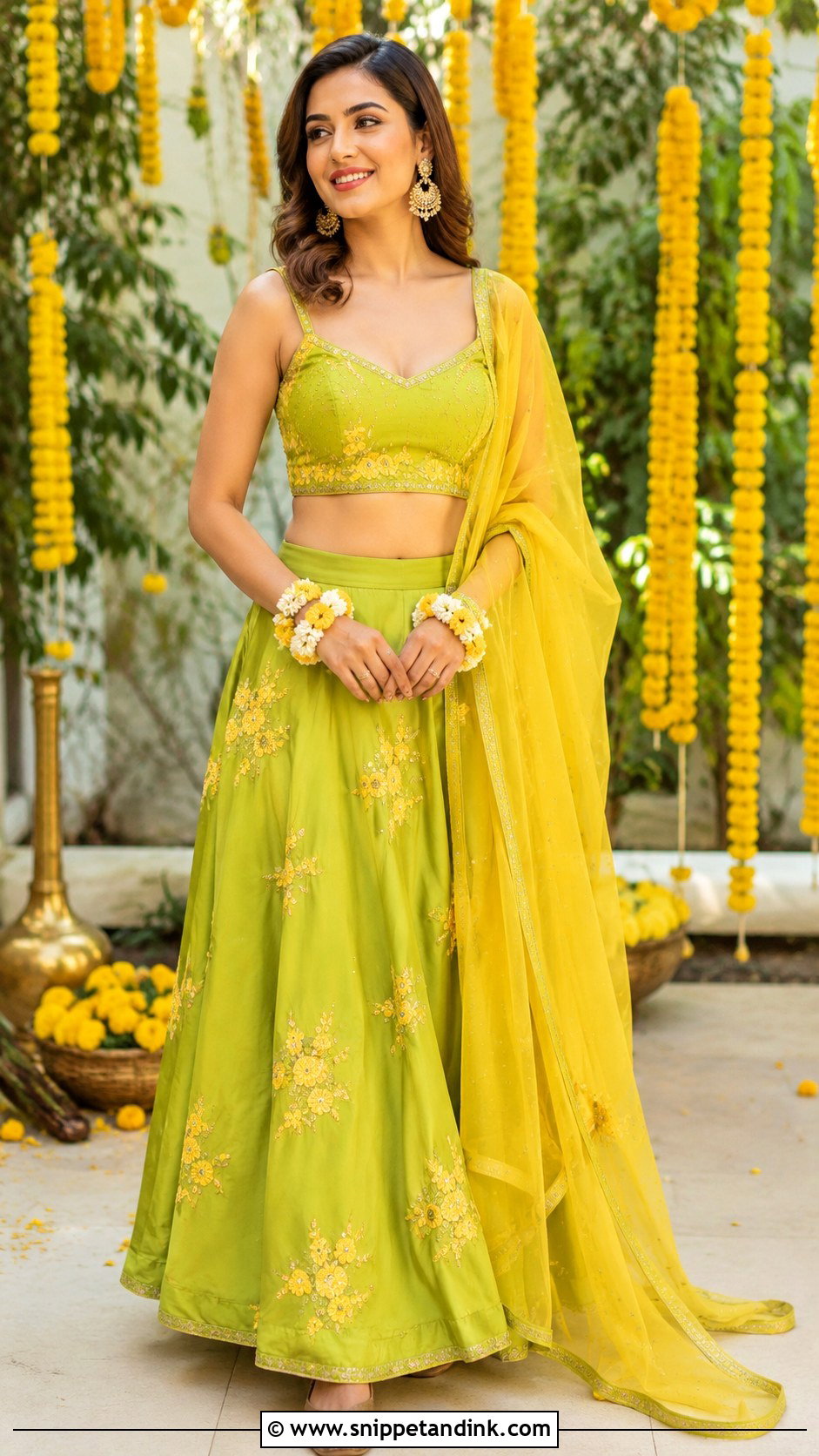
Lime is my favorite trick for a bridesmaid group that wants to separate from a bride in yellow. Look for a light lime lehenga with yellow floral embroidery or a yellow border, a matching blouse and a sheer yellow dupatta to link it back to the haldi palette. Gold earrings, floral bangles and neutral juttis keep the attention on the color. Steer clear of neon: under noon sun it bounces green light onto the face, which photographers then have to correct. A fresh citrus shade in matte or lightly textured fabric holds its color on camera. A high-waisted skirt with a gently fitted blouse keeps the silhouette balanced on most figures.
13. Orange Kurta Sharara Set for Haldi
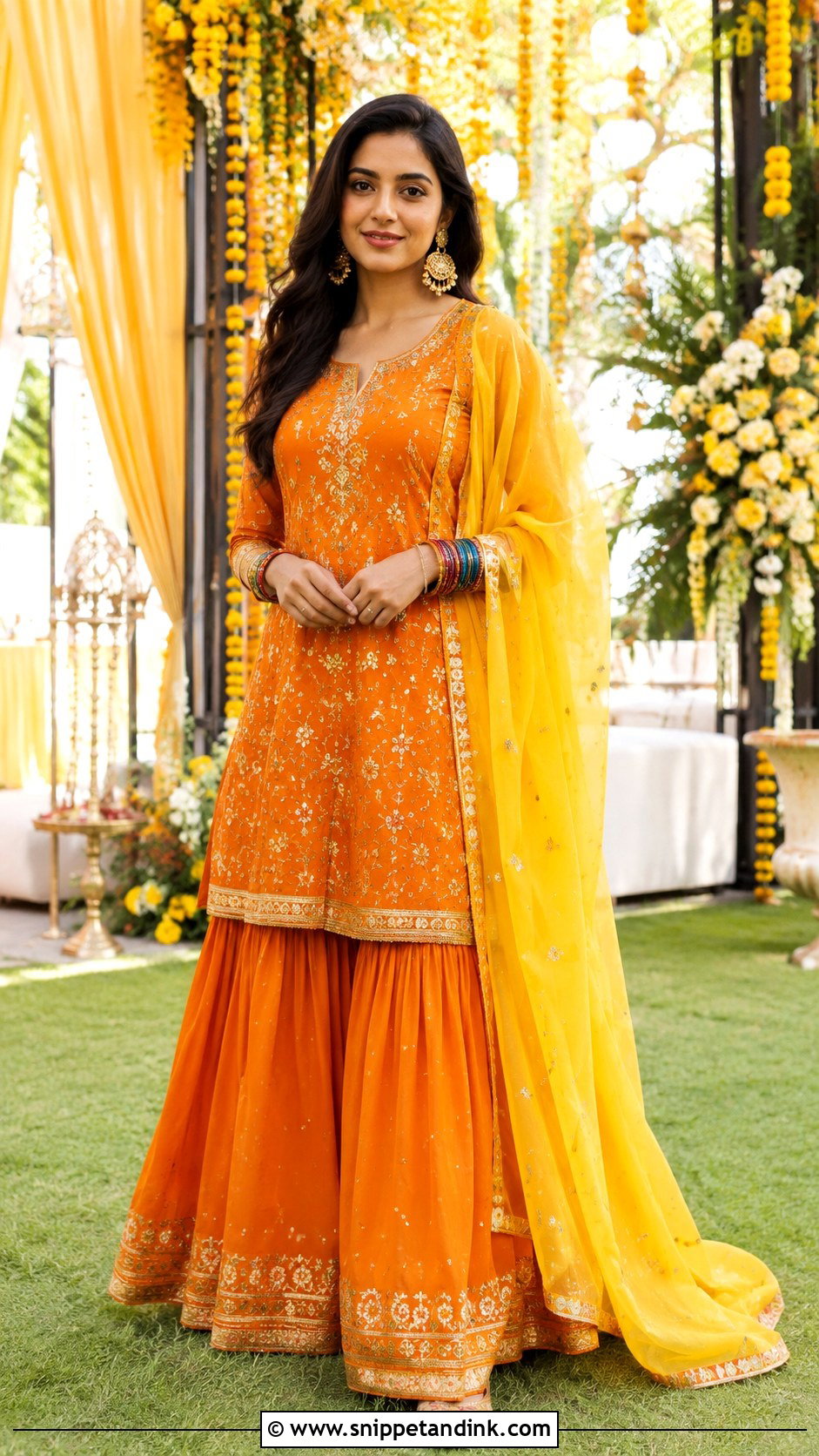
Saffron and orange give a warmer alternative to yellow and stand out well against green foliage in garden venues. Wear an orange A-line kurta with a matching sharara and a yellow chiffon dupatta. Small floral motifs, gota edging or tonal thread embroidery are festive without adding weight. Gold jhumkas, orange-and-yellow bangles and cushioned juttis finish it. My rule is that only one half gets the detail: a heavily embroidered kurta wants a plain sharara, while a plain kurta can carry a printed or bordered bottom. Sleeve length, neckline and flare can all be adjusted, so this one dresses a teenage cousin and a grandmother equally well.
14. Floral Organza Saree for Haldi
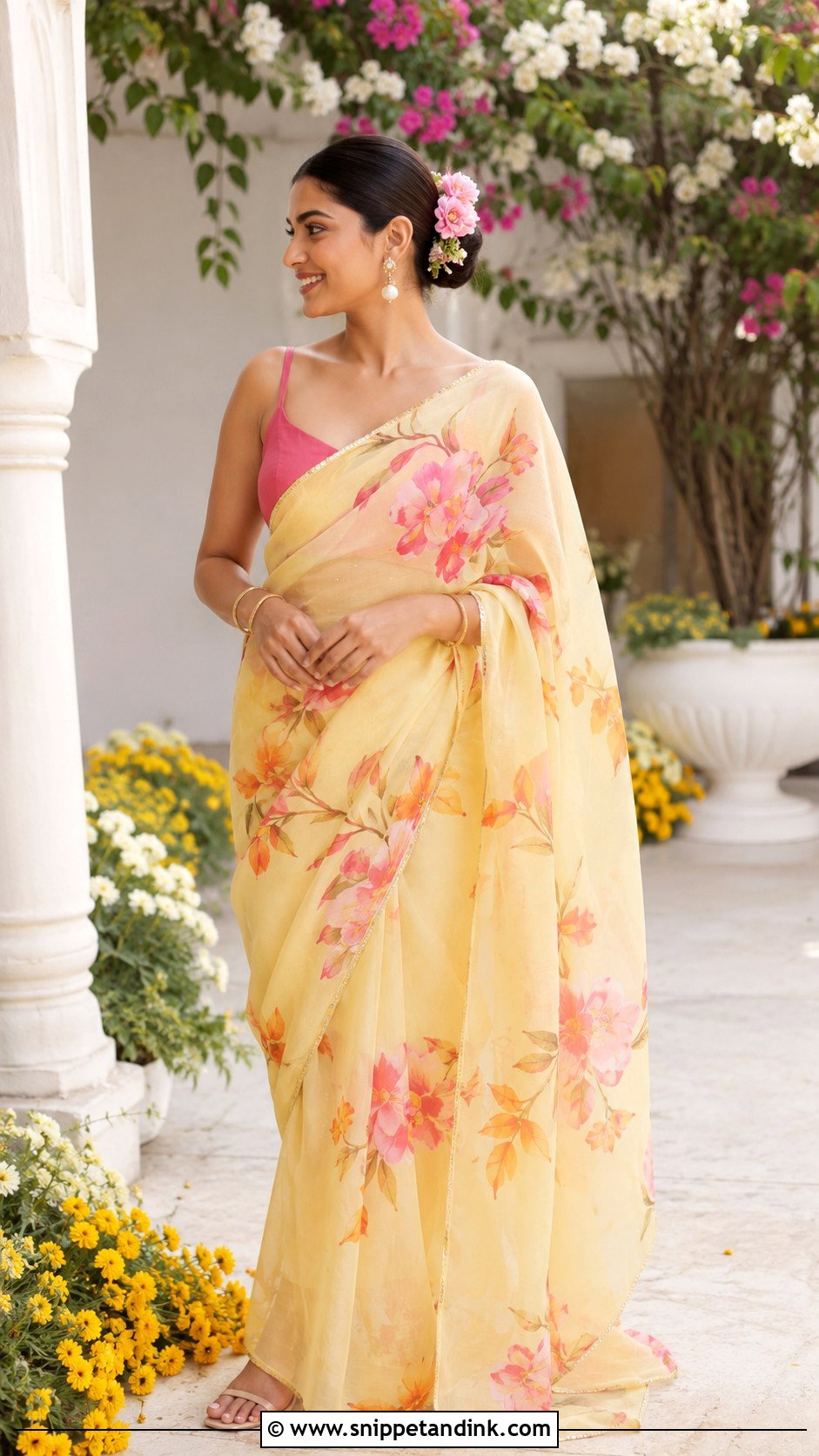
Organza only makes sense at a haldi where the turmeric is applied with a light touch, a dab on the cheeks rather than a full smearing. A pale yellow saree printed with pink, orange and green flowers needs a solid yellow, pink or ivory blouse underneath to give the sheer fabric a clean base. Organza is crisp and springs back, so I keep the pleats narrow and pin the pallu firmly, or it sticks out like a fan. Wet paste on organza also leaves a ring that’s very hard to lift. Pearl earrings, slim bangles, low heels and a sleek bun or half-up style keep the print from getting too sweet. Choose soft organza with a narrow border; stiff wide borders scratch the arms when you sit.

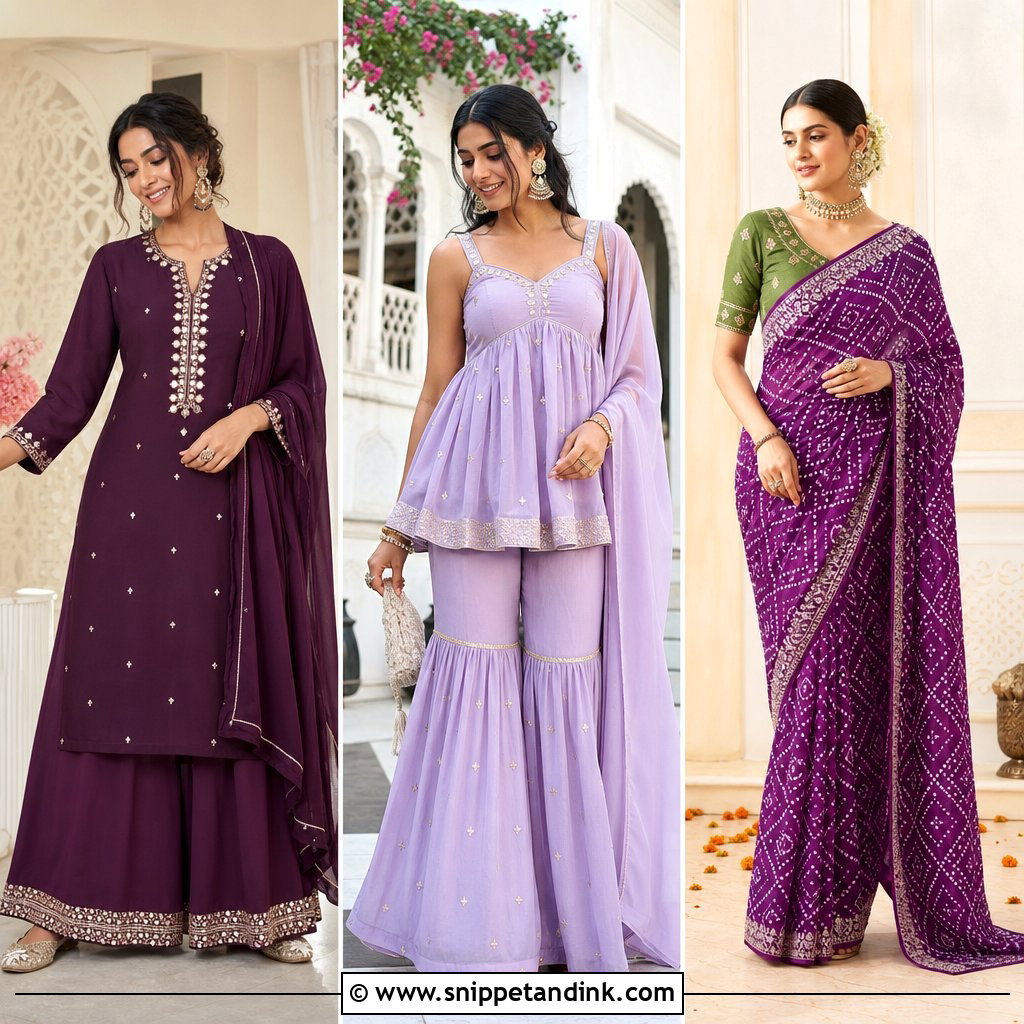

15. Yellow Kaftan Set for Haldi
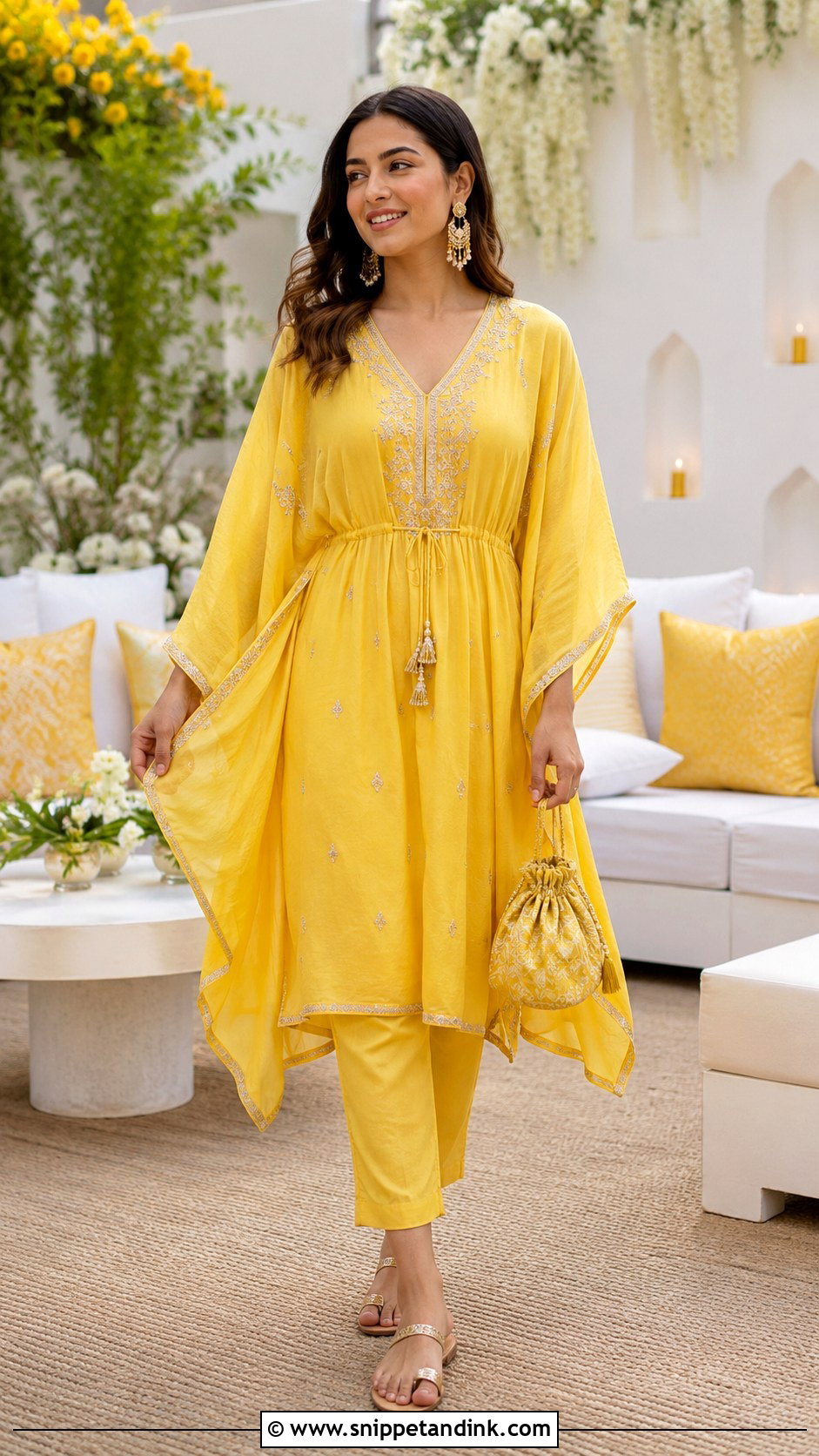
Nothing is easier to live in at a relaxed haldi than a flowing yellow kaftan over tapered pants. Choose a knee-length kaftan with a waist seam, drawstring or thin belt; without one, all that fabric hides your shape in photos. Embroidery at the neckline gives a focal point. Add slim pants, flat metallic sandals, statement earrings and a small potli bag, and skip the dupatta. Pregnant guests and anyone traveling for the wedding tend to love it. A V-neck lengthens the upper body and side slits help you walk. The loose sleeves are the weak spot: they swing into paste bowls, so push them up or tie them during the ritual.
16. Yellow Patiala Suit for Haldi
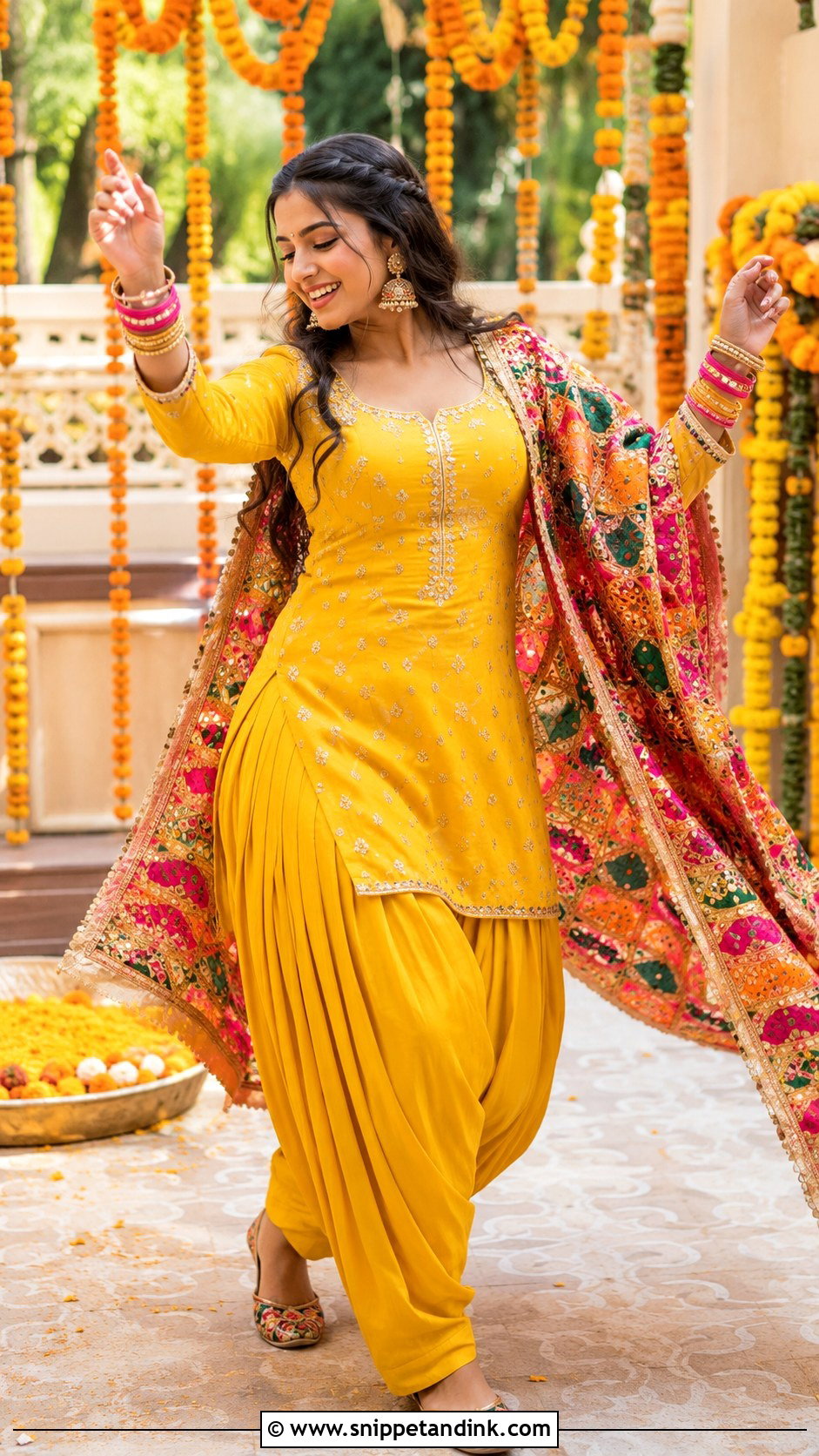
A yellow Patiala suit brings Punjabi energy to a haldi that will turn into a dance floor. A fitted mid-thigh kurti over deeply pleated Patiala pants in cotton lets you move without thinking about your clothes. The phulkari dupatta, embroidered in pink, green, blue or orange, is the star, so pin it across one shoulder or drape it around both arms. Jhumkas, glass bangles and Punjabi juttis complete it. Because the phulkari already does the talking, I keep the kurti plain and leave off heavy necklaces and big hair pieces. A longer kurti adds coverage; shaped side seams give a waist.
17. Yellow Skirt and Crop Top Set for Haldi
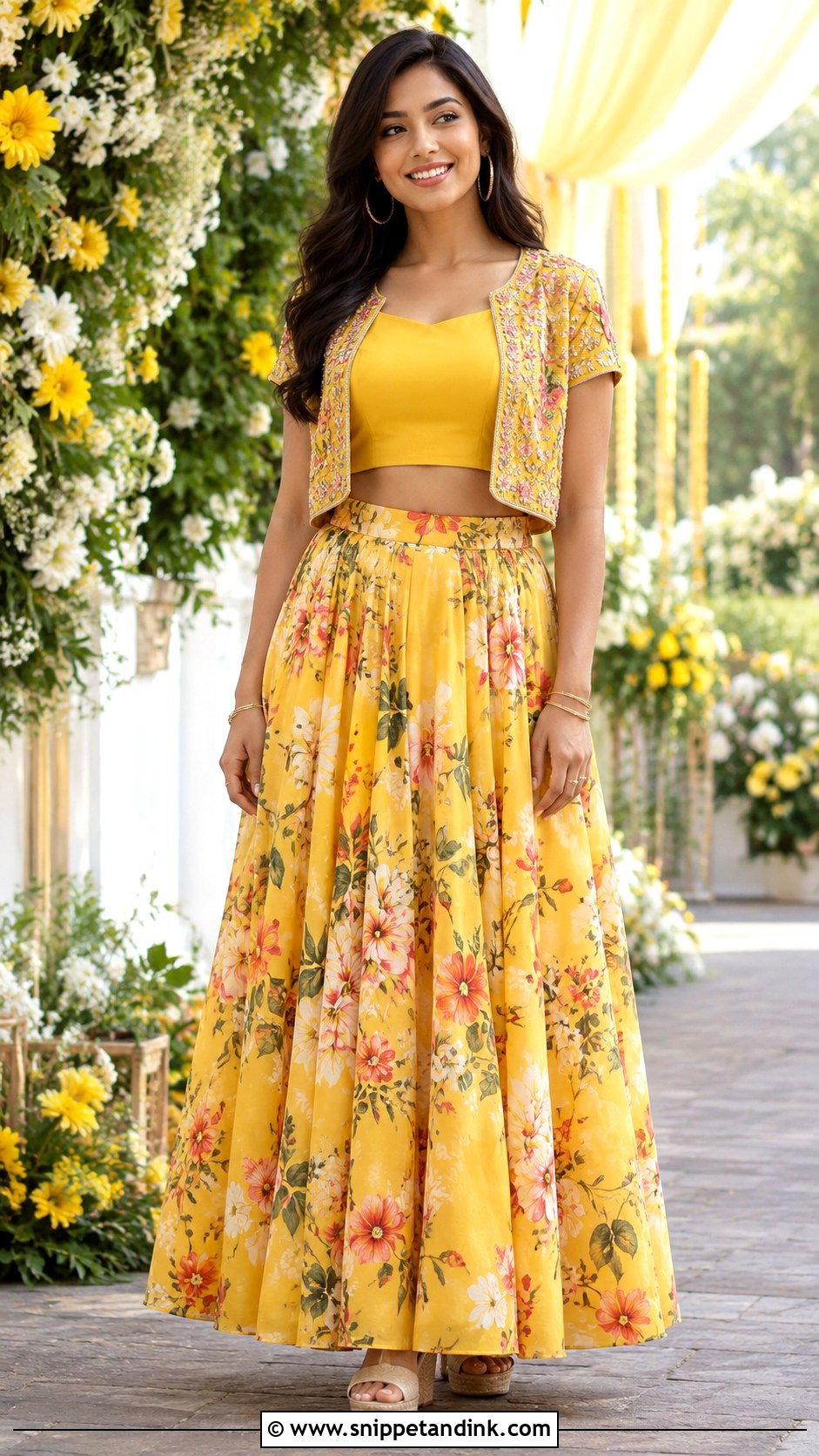
A skirt with a crop top gives you the swing of a lehenga with far less fabric. Choose a printed or lightly embroidered flared skirt and a solid top that meets the waistband. A cropped jacket or short cape with floral embroidery, mirror work or a scalloped hem adds coverage. Worn open, it draws a long vertical line that’s flattering on most figures. Hoops, a few bangles and wedge sandals finish it; wedges matter on lawns, where block heels sink and stilettos aerate the grass. Anyone who prefers not to show the midriff can choose a longer blouse or high-rise skirt.
18. Yellow and White Ombré Lehenga for Haldi
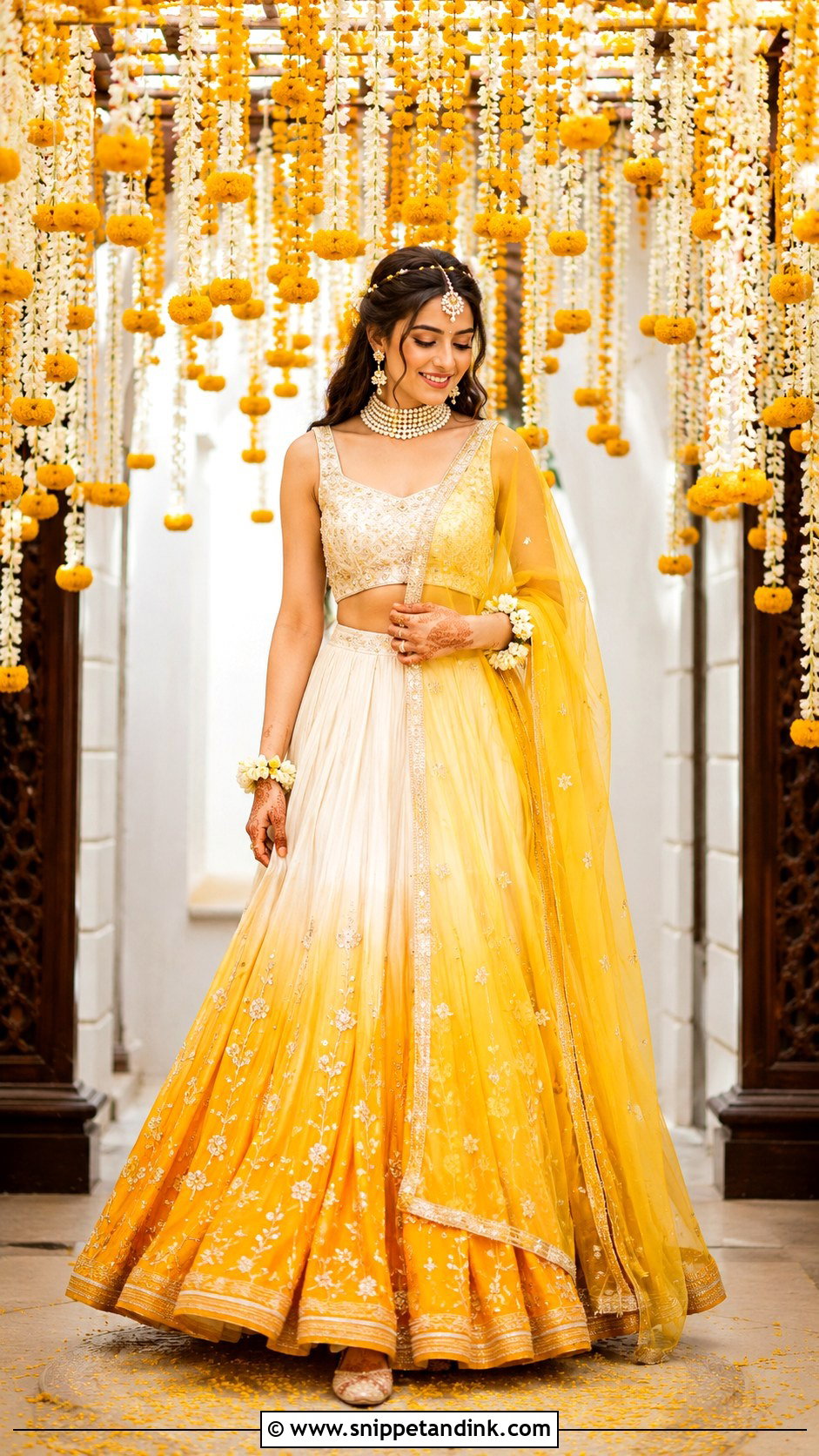
Ombré lehengas that fade from ivory at the waist to marigold or sunflower at the hem look fresh in natural daylight. Pair one with an ivory blouse with fine yellow embroidery, a sheer yellow dupatta, floral jewelry and gold juttis. I’ll be blunt about the ivory waistband: it’s exactly where turmeric-covered hands land during hugs. This is a better choice for a bride who changes after the main ritual, or a guest who’ll stay on the edge of the action. A softly gathered skirt moves well without bulk. Keep accessories delicate so the color shift stays the focus.
19. Yellow Maxi Dress for Haldi
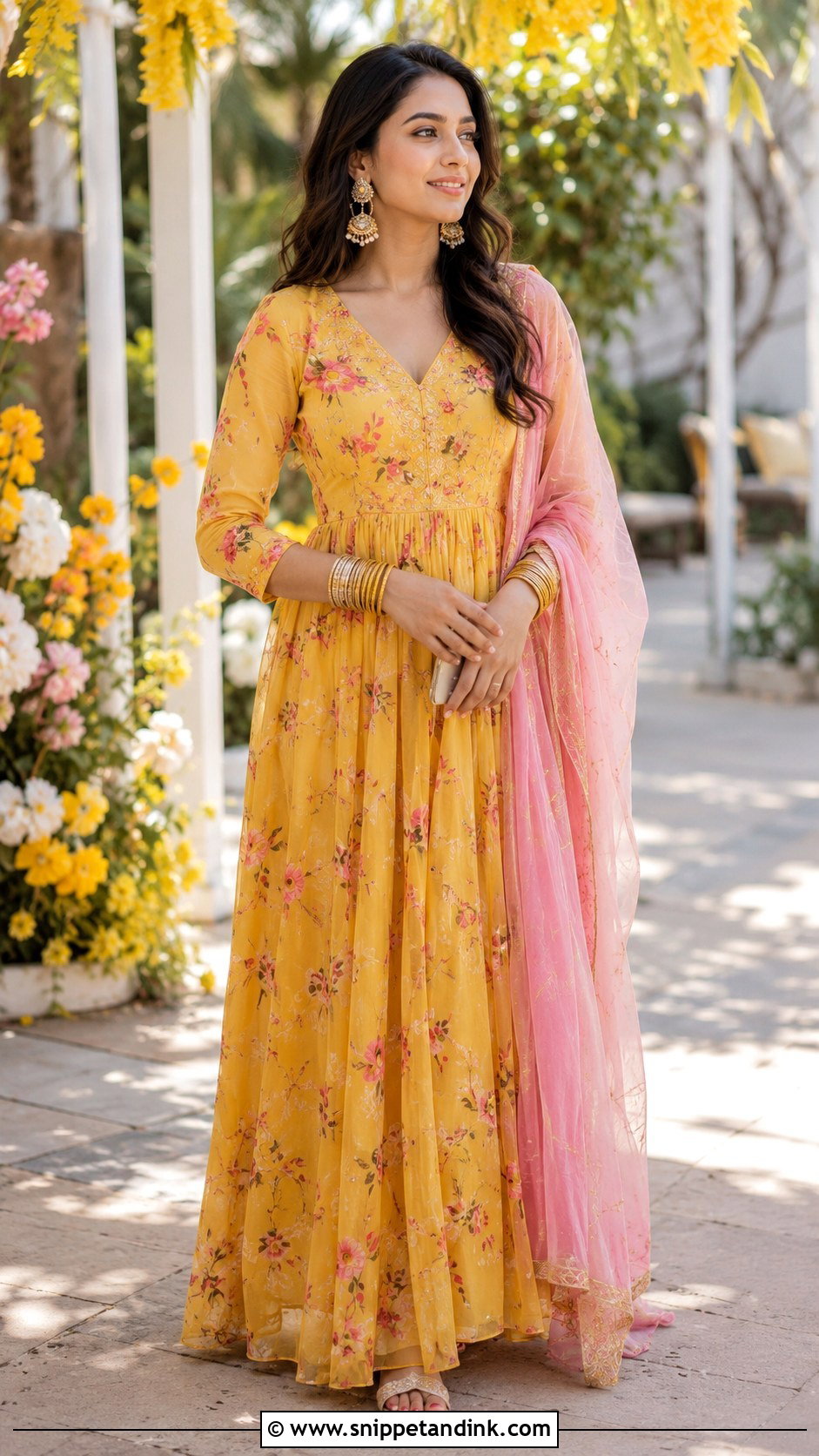
Guests at a multicultural or destination haldi often ask me if a dress is acceptable. A yellow maxi dress works if it’s ankle length, with a modest neckline, a defined waist and a full skirt. Floral prints, tiers or a touch of gold trim link it to the occasion, and jhumkas, stacked bangles and embroidered flats bring it closer to Indian dress. Drape a light yellow or pink dupatta over one shoulder if the family is traditional. Avoid long trains and tight pencil shapes, because you may be sitting on a floor cushion. It packs flat and repeats at any daytime event afterward. Petite guests can choose small prints and an ankle-baring hem.
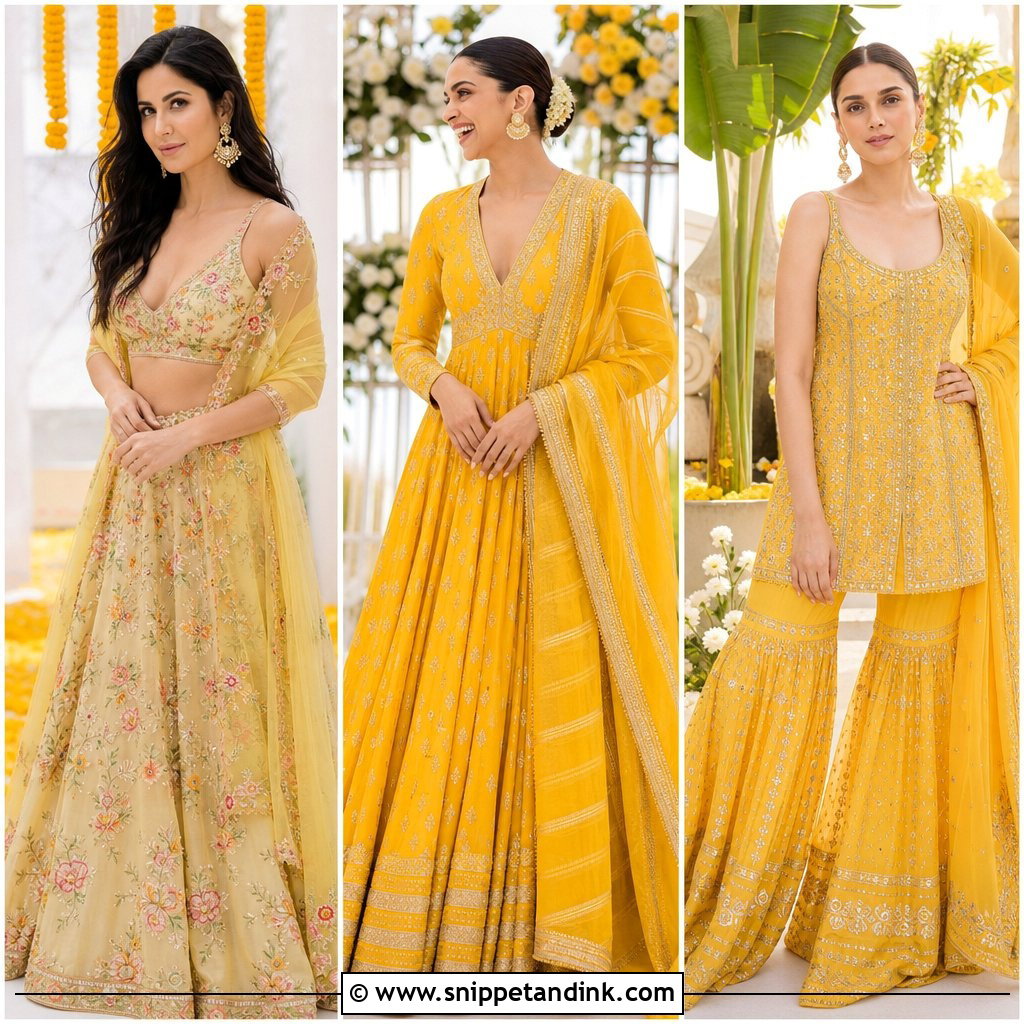
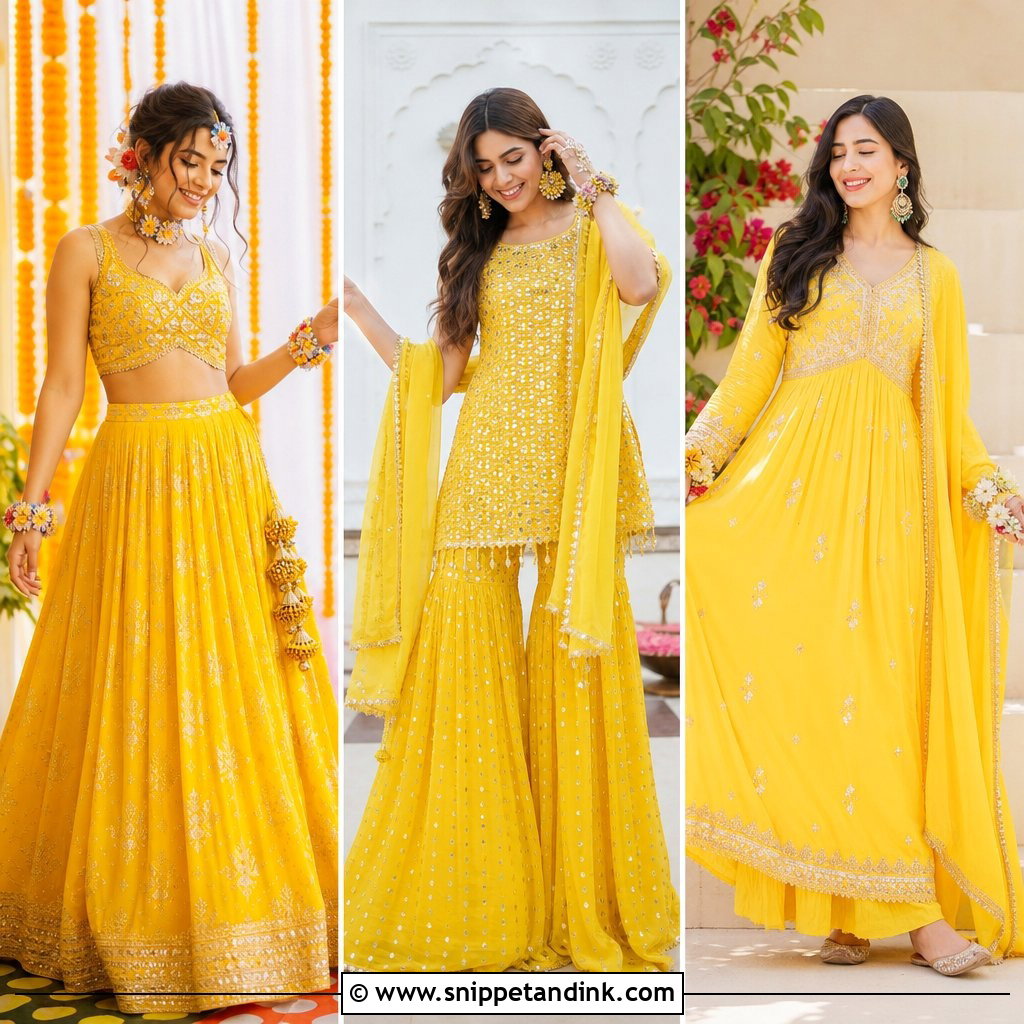
20. Yellow Handloom Saree for Haldi
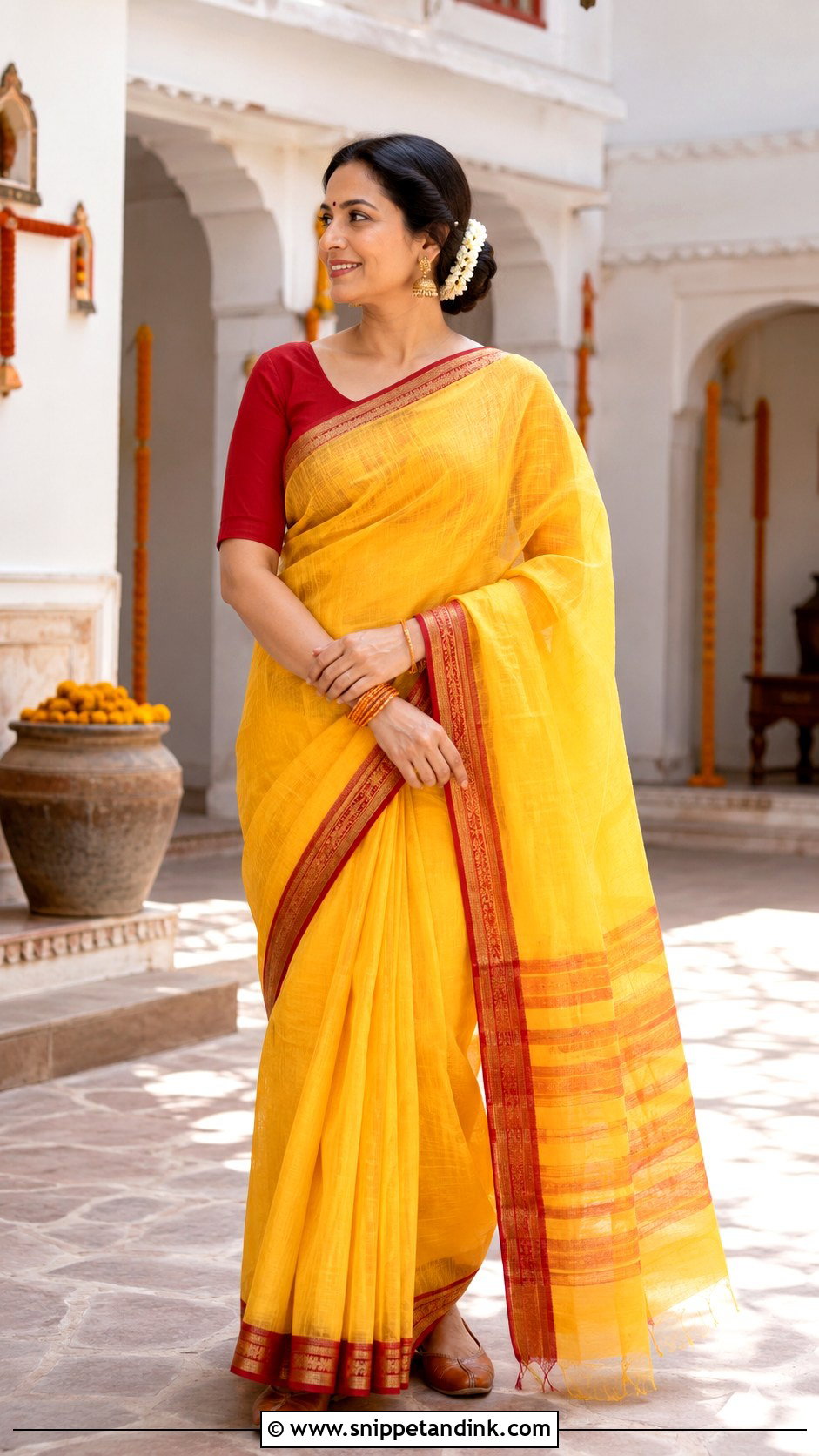
Handloom cotton is the quietest outfit on this list, and the one I’d choose for a hot morning. A yellow handloom saree with a red, green or pink blouse breathes in a way synthetics never will. Look for a woven border, small motifs or fine checks. Handloom cotton is crisp when new and softens with each wash, so a slightly worn saree drapes more easily than a brand-new one. Pin the pleats and keep the hem off damp ground. Gold jhumkas, glass bangles, a small bindi and leather flats finish it. Brides can add fresh floral jewelry; mothers often prefer a traditional necklace and a neat bun.
Getting the Yellow Out That Same Evening
Treat the outfit the day you take it off. Turmeric sets as it dries and oxidizes, and two days in a laundry bag can make a rinseable mark permanent.
- Scrape off dried paste with a blunt knife or card. Don’t rub, which only pushes pigment deeper.
- Rinse from the back of the fabric under cold water. Hot water sets the stain.
- Work a drop of plain dish soap into the mark to cut the oil, then rinse again.
- Dry washable whites and pale cottons in strong sunlight. Light breaks down the pigment, and much of the remaining yellow fades over an afternoon.
- Send silk, zari and embellished pieces to a dry cleaner the next day, and tell them it’s turmeric so they choose the right spotting agent.
One surprise worth knowing: turmeric turns red or brown when it meets anything alkaline, including baking soda and some soaps. Don’t panic if a spot changes color mid-wash. Keep rinsing and the color usually shifts back as the soap washes out.
Wear the Yellow, Then Let the Turmeric Happen
A good haldi outfit is the one you forget you’re wearing once the paste starts flying. This list moves from traditional sarees and lehengas to kurta sets, shararas and modern separates. Yellow is the natural favorite, but orange, lime, ivory and pink belong here too. Choose breathable fabric, a drape that stays put and shoes you can stand, sit and dance in. Pin your dupatta, skip fragile embellishment and let one or two accessories carry the look. If you’re not anxious about every splash of turmeric, you’ll look relaxed in the photos too.
You'll Like These Ideas:








Leave a Reply