

Weighing a Chunri Before You Fall for Its Border
A chunri sits on the head for hours, often through a long pheras or nikah, and whatever it weighs ends up on your bun, your neck and the pins holding it. So before I look at colour, I pick it up. A heavily bordered zardozi or phulkari piece can feel fine for ten minutes in a shop and miserable by the third hour.
- Hold it at the border, not the middle. The border is where the weight is, and that’s the part that pulls backward on the hair.
- Match fabric to role. Net, georgette and organza are head fabrics. Velvet, raw silk and dense phulkari usually belong on the shoulder or across the body.
- Check the length against your height plus your heels. Too short and it tugs at the pins with every step; too long and you’ll tread on it climbing to the mandap.
- Ask your hairstylist before the day what the bun can carry. A low, firm bun with a hidden base is what most heavy chunris need to stay put.
If the one you love is heavy, it doesn’t have to go. Wear it across the body and add a sheer veil on top, as in the double drape further down.
1. Red Bandhani Bridal Chunri Dupatta With Lehenga
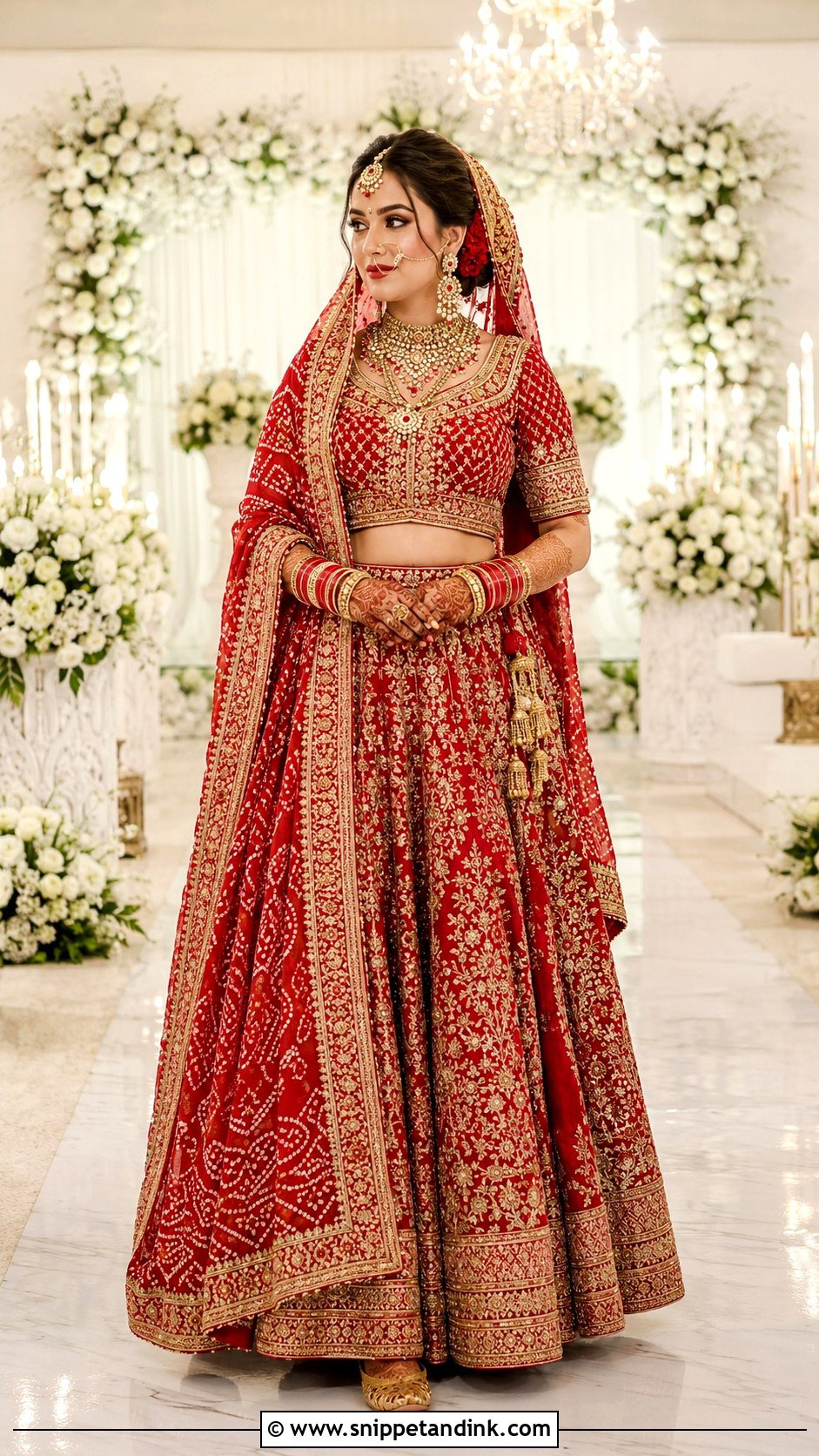
Bandhani is the chunri most families picture first, and a red bandhani chunri over a red raw silk lehenga with antique gold embroidery still carries the most ceremony of anything here. I keep the blouse embroidery restrained on purpose: tie-dye dots are small, and a busy blouse swallows them. A modest sweetheart or round neck, a kundan choker with a longer necklace, matha patti, stacked red bangles and gold juttis are enough. Set the chunri over a low bun so the gold border frames the face, then bring one side over the arm if you want more coverage. Real bandhani has a slight crinkle and some stretch from the tying, so it grips the hair better than a flat silk and needs fewer pins than you’d expect.
2. Gharchola Bridal Chunri Dupatta With Red Lehenga
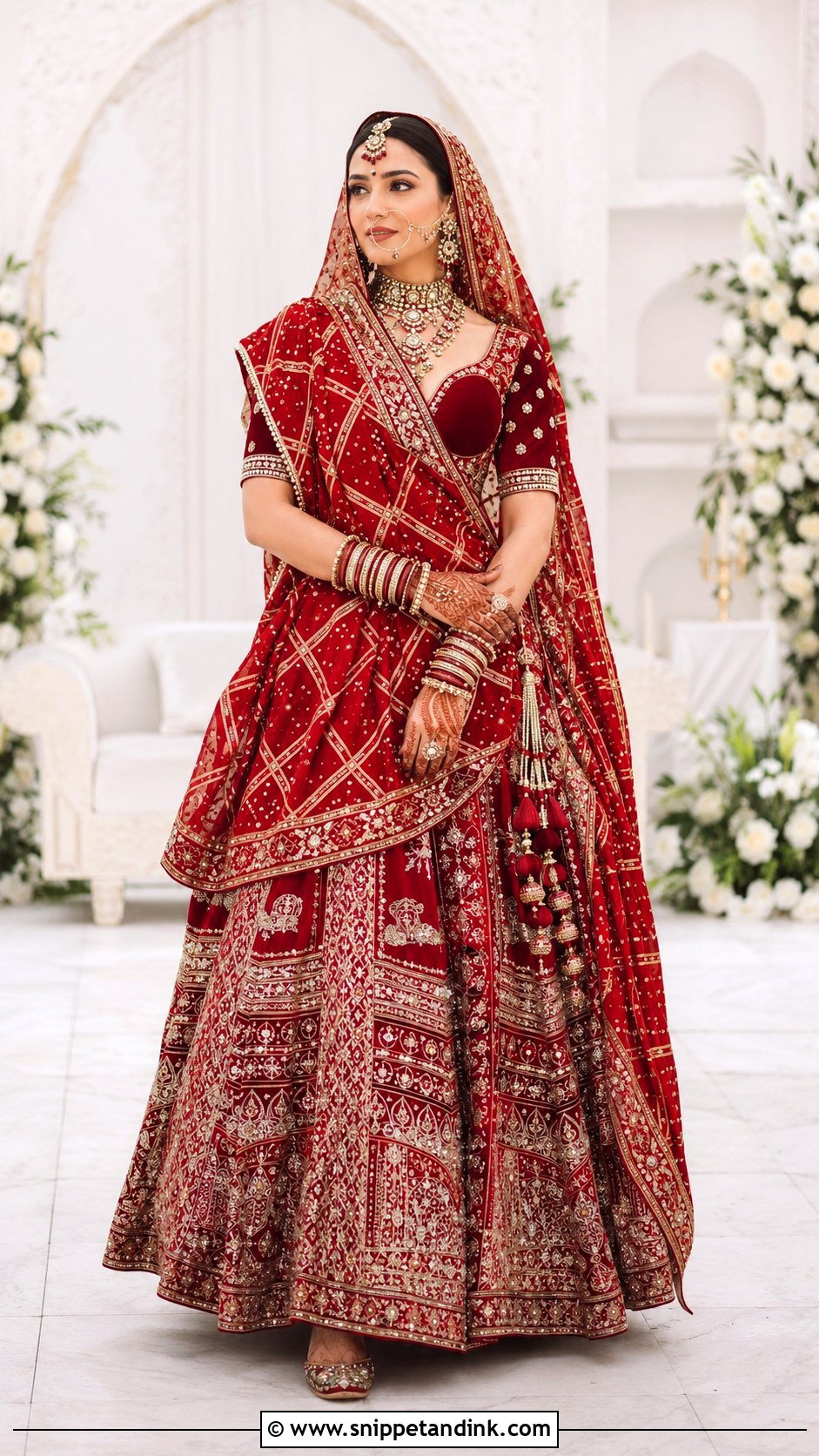
A gharchola is a grid: zari checks with bandhani dots and motifs inside each square. That grid only reads if it’s opened out, so I spread the top section wide across the head instead of gathering it into folds. Underneath, a red or deep crimson lehenga and a blouse with restrained zari work. Polki, a centred maang tikka, a traditional nath, red-and-gold bangles and embroidered juttis finish it. A sleek low bun keeps the crown flat. Heavy gharchola borders tend to slide forward onto the brow, so I pin the border a finger’s width behind the hairline and the face stays open.
3. Gota Patti Bridal Chunri Dupatta With Maroon Lehenga
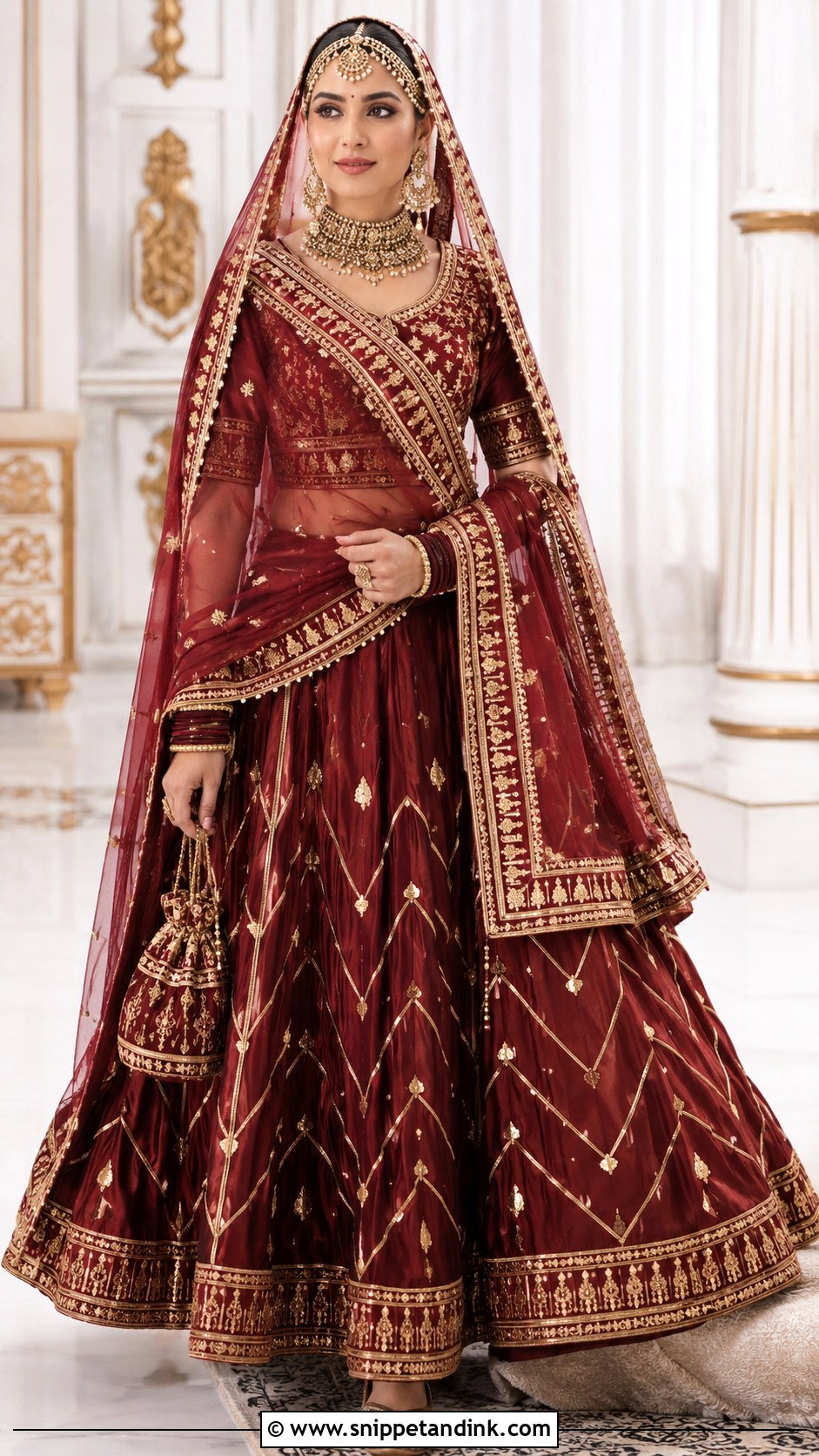
Gota patti is metallic ribbon appliqué, and against deep maroon velvet or silk it catches every bit of light in the room. Pair a fitted blouse with a lightweight red or maroon chunri worked in gota flowers, and drape it over the head with one side crossing the torso to the opposite waist. That diagonal lengthens you and leaves the blouse and jewellery visible. Gold choker, matching earrings, a fine matha patti, maroon bangles, metallic juttis. New gota is stiff and tends to stand away from the head in a ridge. I have it steamed gently from the reverse a day or two before the final draping so it softens and lies down.
4. Double Bridal Chunri Dupatta With Velvet Lehenga
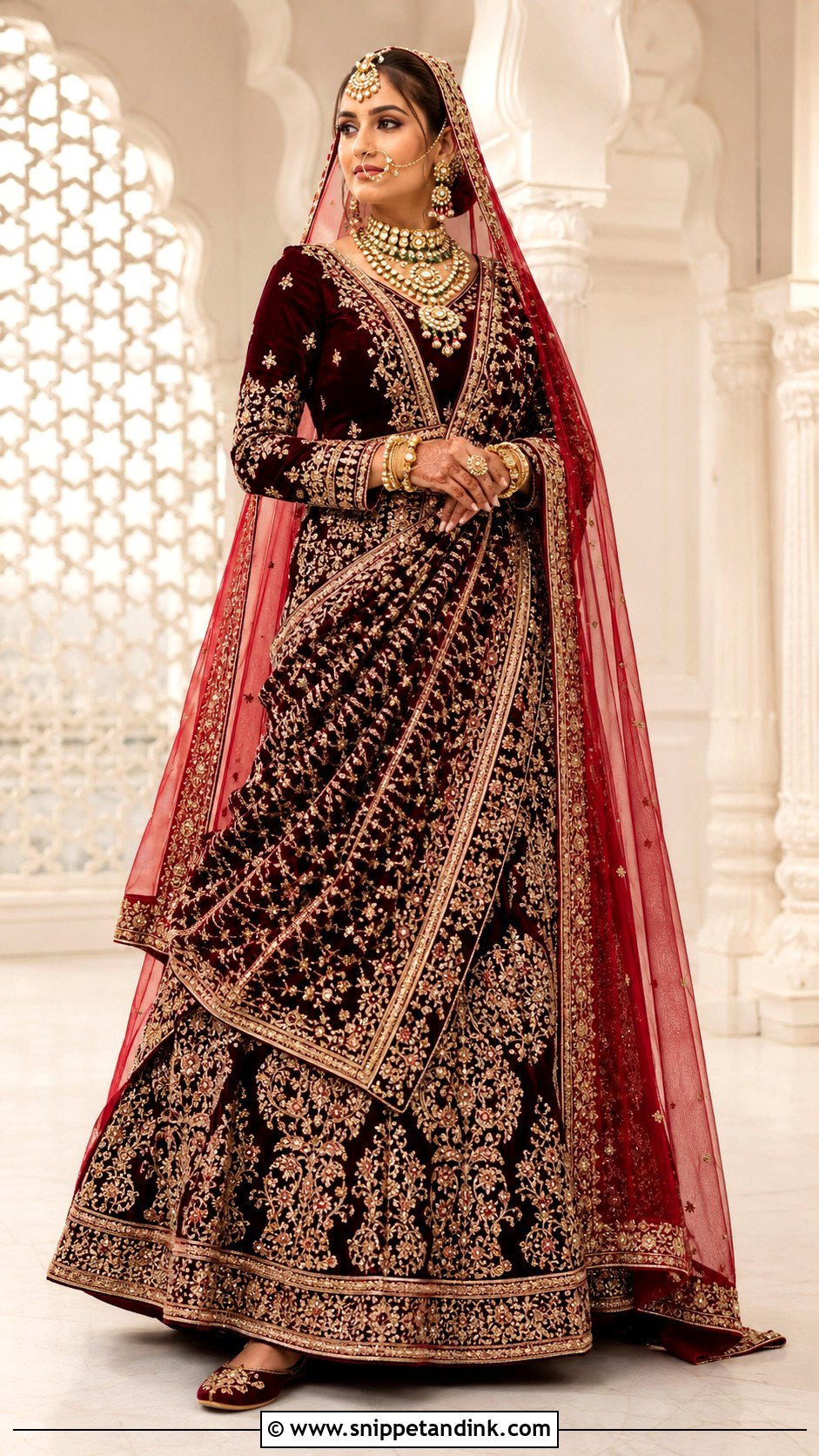
The double dupatta is a ceremony look with a practical logic: the head carries the light fabric and the body carries the heavy one. Wear a burgundy velvet lehenga and blouse worked in antique gold zardozi, set a sheer red chunri over the head with its border close to the hairline, then pleat the second, richer dupatta over one shoulder and take it diagonally to the waist. Your neck and bun never take the weight of the embroidered piece, which is the whole point. Layered polki, a nath, gold bangles, velvet juttis and a structured low bun complete it. I pin the body dupatta at the shoulder and waist before the head veil goes on; doing it the other way round drags the veil sideways.
5. Personalized Bridal Chunri Dupatta With Names
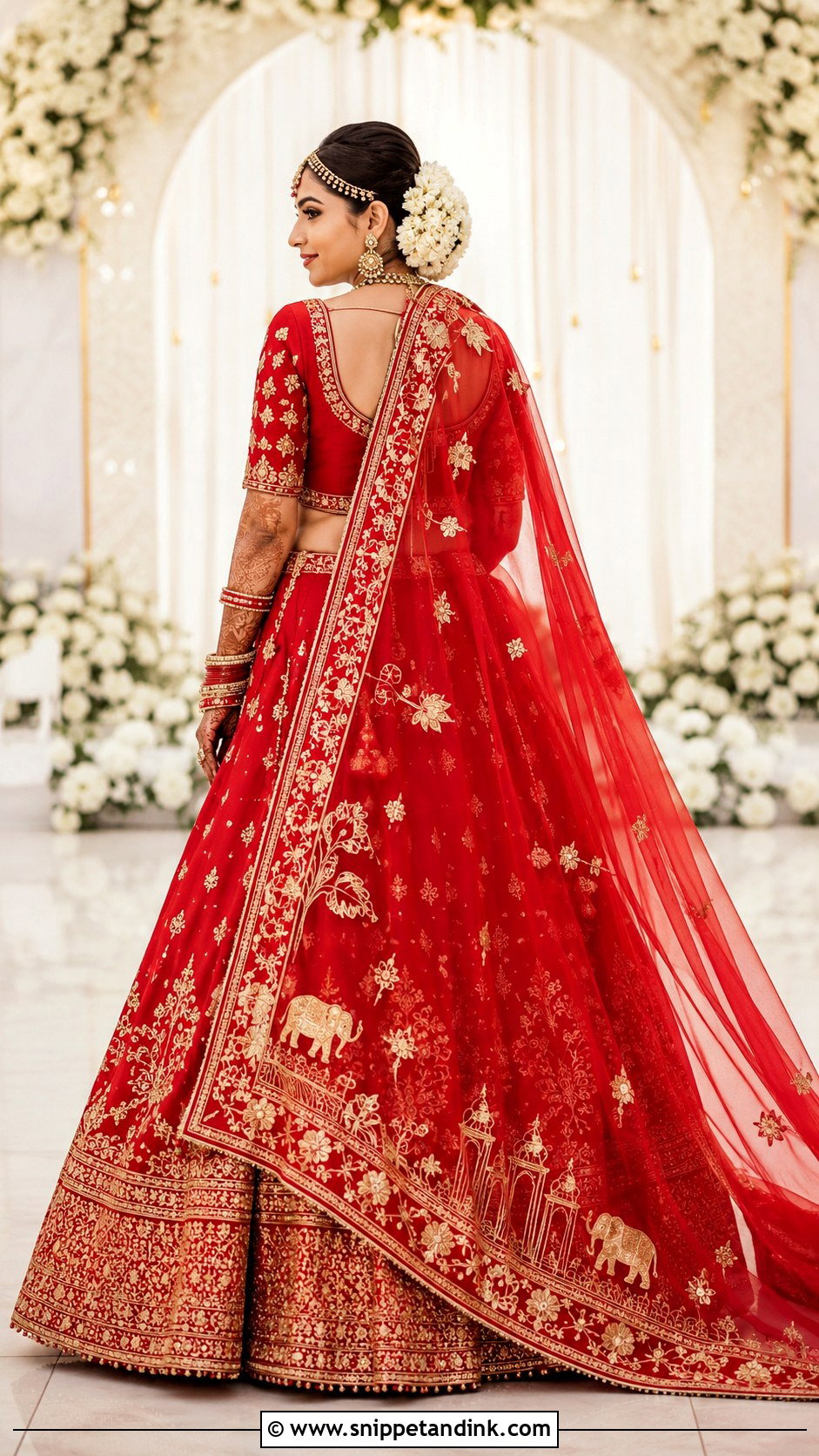
Names, the wedding date or a short blessing stitched into the border make a chunri yours without changing the outfit around it. Keep the base classic: red silk lehenga, fitted blouse with gold threadwork, sheer red dupatta. Leave the centre fairly open so the words aren’t lost in folds. Kundan choker, long necklace, maang tikka, stacked bangles, red juttis and white flowers in a low bun suit it. The mistake I see most is wording that reads upside down once the chunri is on the head. Before anything is embroidered, drape a plain dupatta of the same size, mark the border with chalk where you want the text, and send that to the embroiderer.
6. Zardozi Bridal Chunri Dupatta With Gold Lehenga
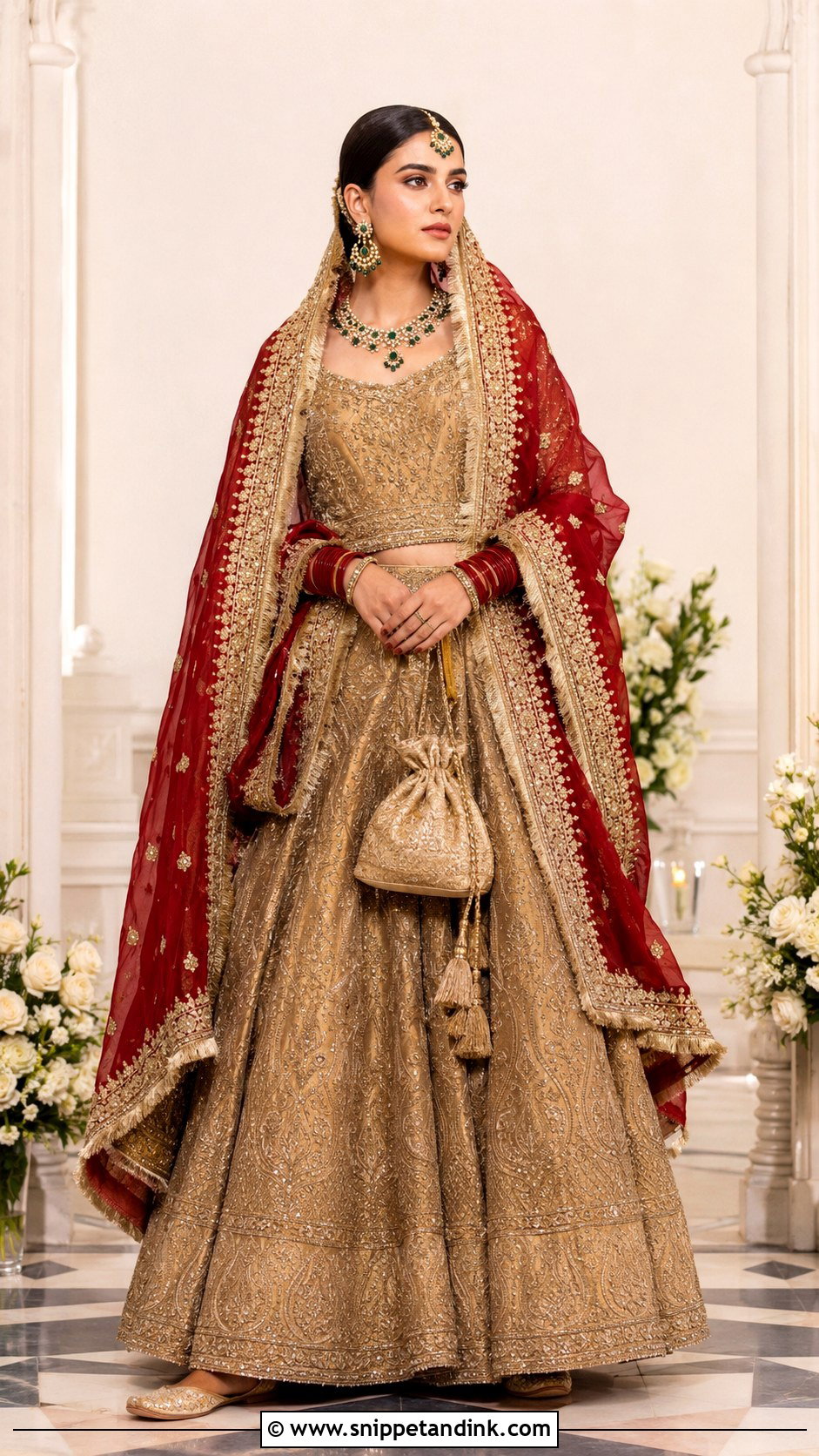
Deep red zardozi over an antique gold lehenga is the richest pairing on this list, and it works because the chunri does the talking while the lehenga stays relatively quiet. Choose gold tissue or silk with lighter embroidery and a structured blouse. The red net or organza chunri can carry zardozi vines, small florals and a heavy hand-finished border. Wear it over the crown with both ends falling behind. Emeralds contrast well, with gold juttis and a red potli. Zardozi is metal wire, and it’s heavy. A raised bun pushes that border up into a peak, so I keep the hair smooth and low.
7. Mirror Work Bridal Chunri Dupatta With Pink Lehenga
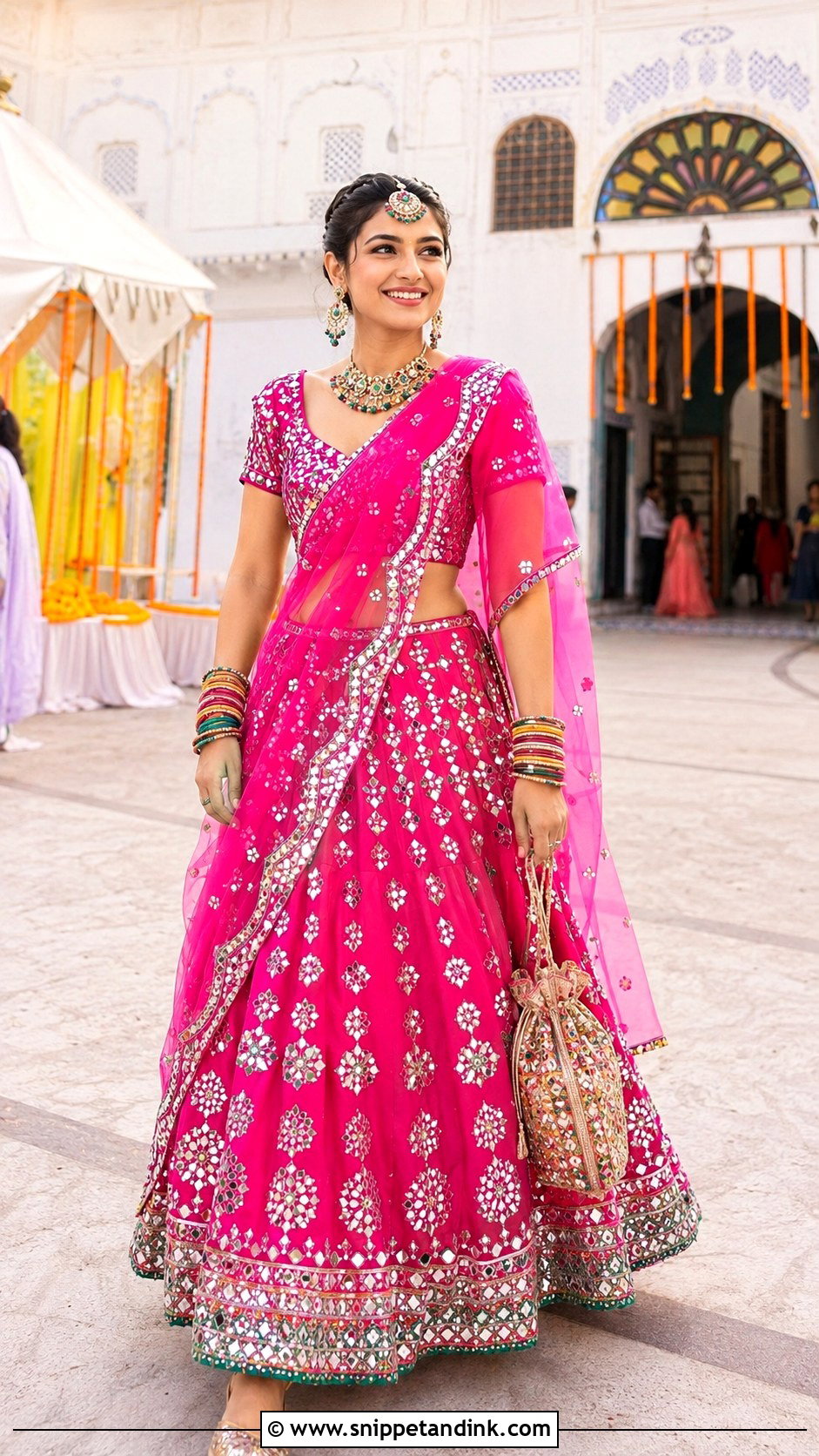
Mirror work on a fuchsia or rani pink lehenga brings movement, and every turn of your head flashes. Choose a short-sleeved blouse, colourful threadwork on the skirt, and a red, orange or pink chunri with small mirrors rather than big reflective discs, which glare in flash photos. Over the head for the pheras, then one side moved to the shoulder afterwards. Meenakari jewellery, mixed bangles, metallic juttis and a mirror-work potli, with soft waves pinned into a low bun. Run your fingers along the edges before you buy. Cheap shisha has sharp rims and loose backing, and it scratches at the hairline and wrists all day.
8. Phulkari Bridal Chunri Dupatta With Punjabi Lehenga
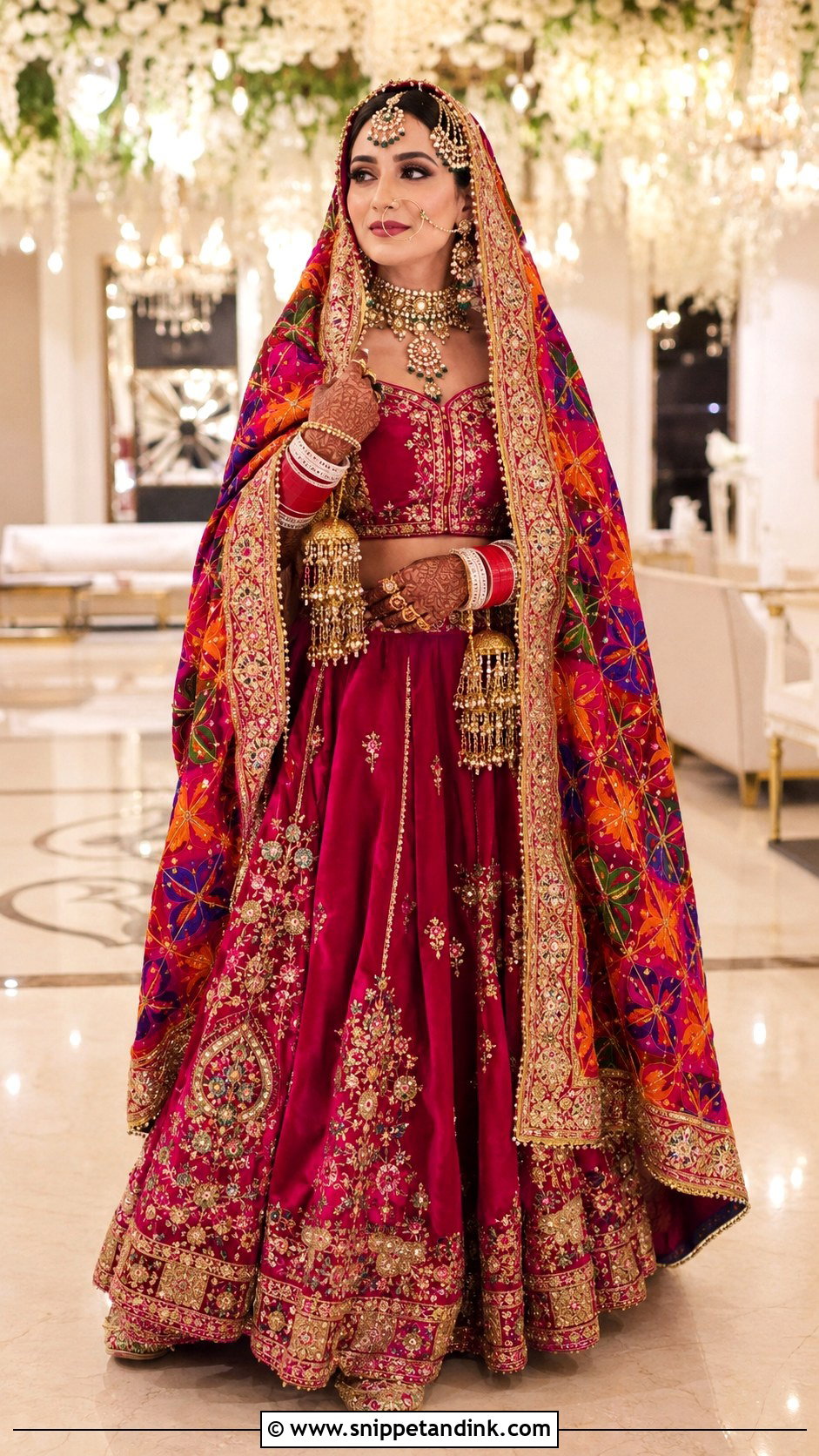
Phulkari’s dense darning stitch in orange, pink, green and gold is made for a Punjabi-inspired bridal lehenga in deep red or magenta silk. I pin it at the crown and bring one side forward over the arm instead of covering the blouse, so both the embroidery and the lehenga’s shape show. Passa, kundan earrings, a medium necklace, chooda, kaleere and embroidered juttis complete the outfit, with a centre-parted low bun. A genuine phulkari is thick and heavier than it looks. I spread the load across six or eight small pins around the bun rather than one big anchor, and I take out unnecessary layers underneath.
9. Scalloped Bridal Chunri Dupatta With Pastel Lehenga
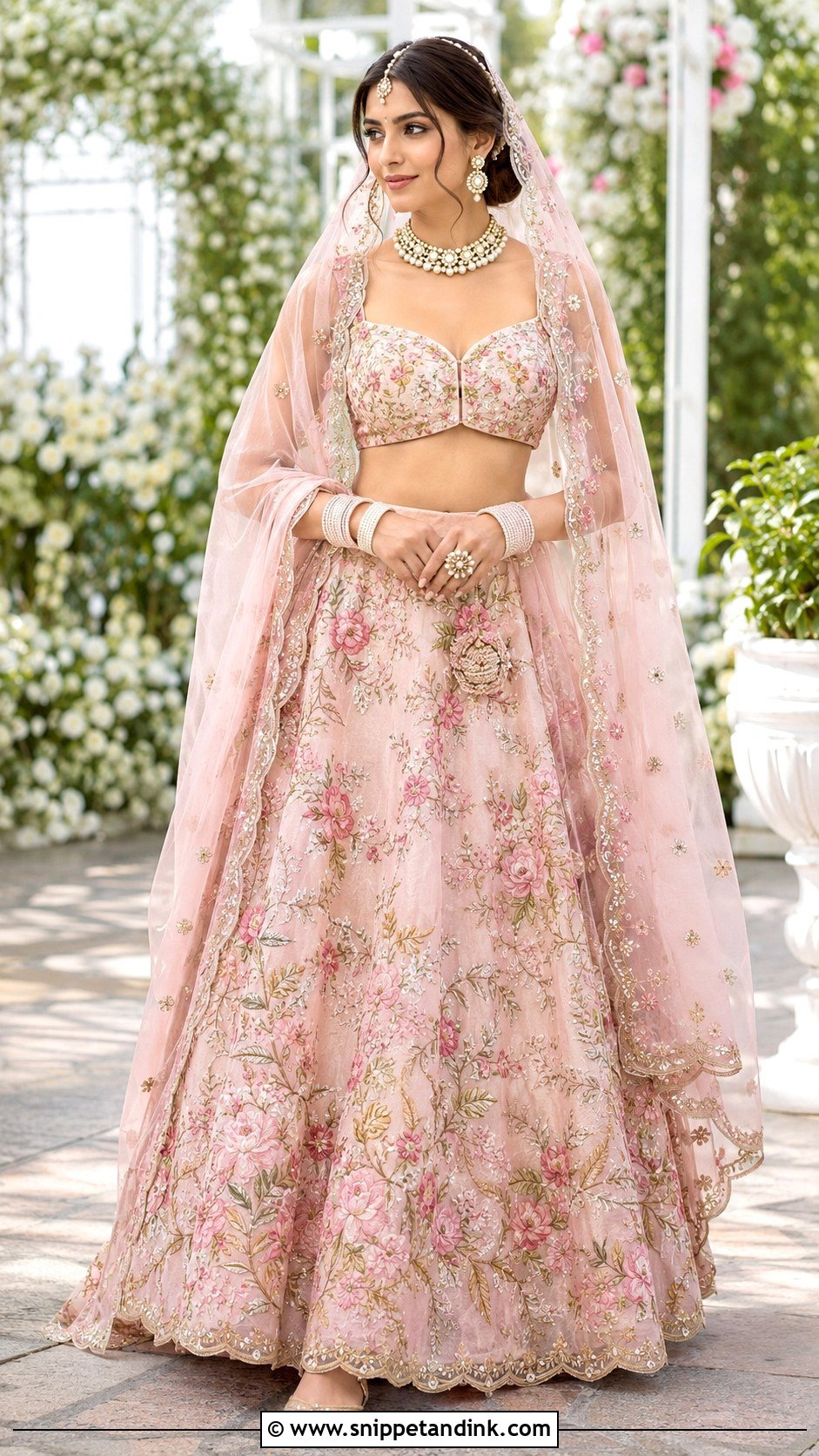
Scalloped edges finish a blush or peach lehenga cleanly, but only if each curve is placed deliberately. Choose a pastel skirt with floral embroidery, a fitted blouse and a sheer pink chunri with pearl, sequin or thread scallops. I set the scallops around the hairline one by one so the arcs sit evenly across the forehead, then let one side fall over the shoulder and hold the other loosely on the forearm. Diamond or polki choker, small maang tikka, pearl bangles, nude juttis, loose waves in a low bun. Scallops folded under look like a mistake on camera. That alone is reason enough for a full draping trial.
10. Organza Bridal Chunri Dupatta With Ivory Lehenga
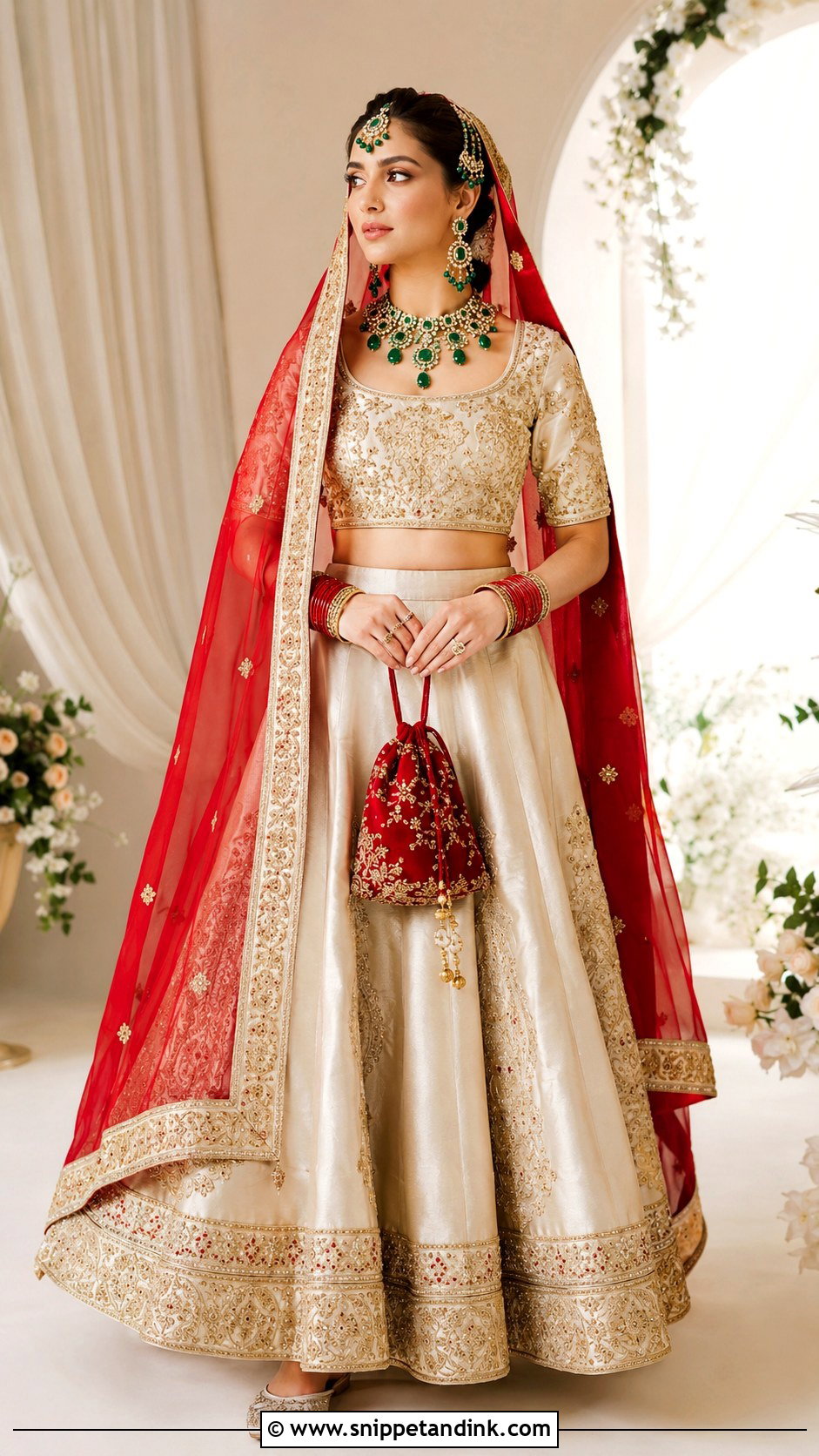
Organza lets you bring in traditional red without overwhelming an ivory lehenga. Wear ivory silk with gold threadwork, pearls or small florals, then set a sheer red organza chunri over a sleek bun with its narrow border along the forehead. One end forward over the shoulder, the other flowing behind. Emerald and kundan, red bangles, ivory juttis, a small red potli. Organza is crisp and remembers every fold, which is why it holds a defined veil shape so well and also why tight pleats turn into cardboard by the second hour. I make the folds wide and soft and use the lightest pins I have.
11. Net Bridal Chunri Dupatta With Traditional Red Lehenga
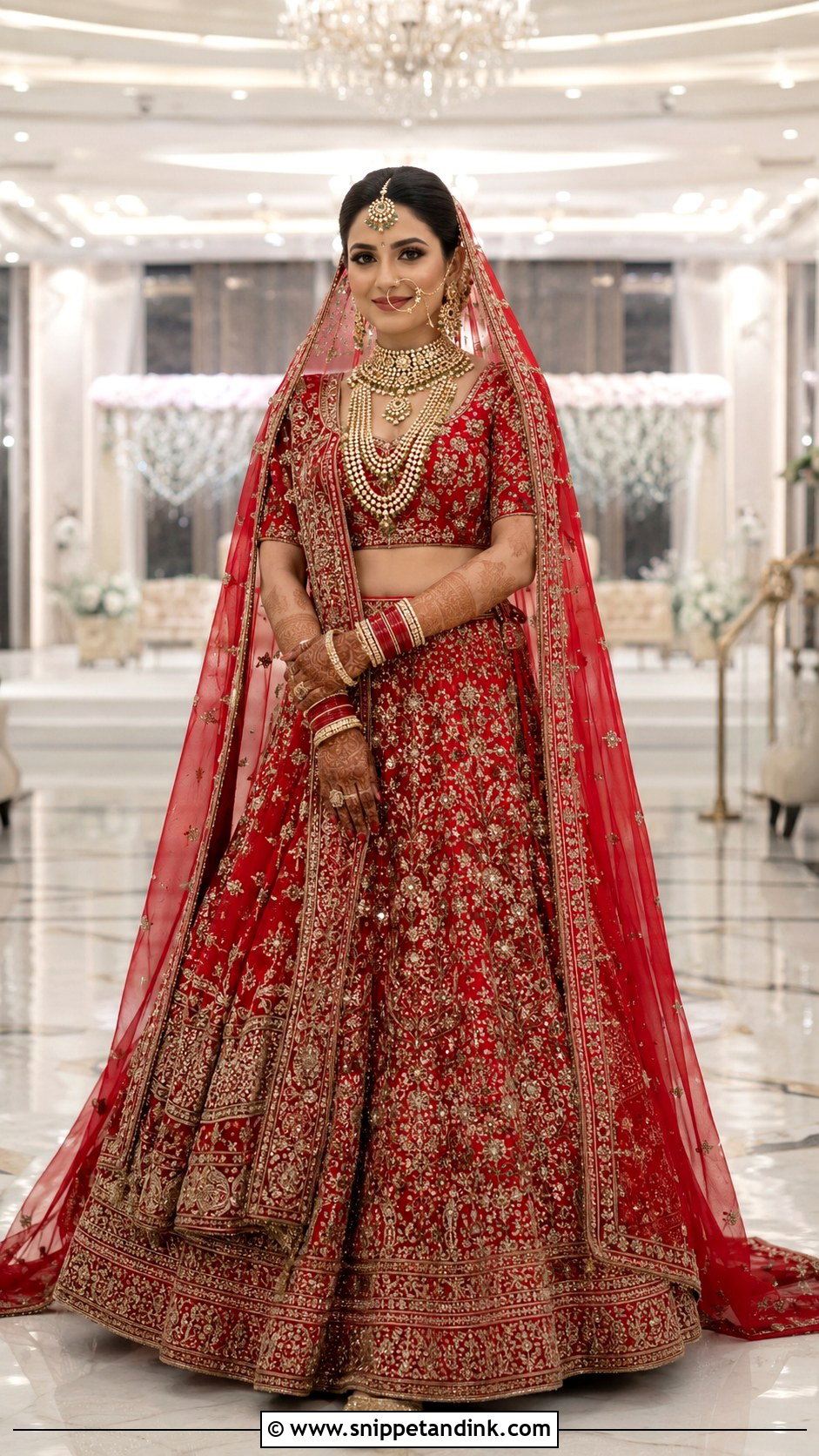
When a red lehenga is already loaded with zari, dabka or sequins, a fine net chunri adds coverage without adding another heavy layer. Look for scattered motifs and a medium gold border. I set it a little behind the centre parting so the maang tikka stays visible, then spread it over both shoulders. Polki choker, long haar, nath, stacked bangles, gold juttis. Squeeze the net in your hand at the shop. Stiff net springs away from the body and looks like a tent on the shoulders, while soft net drapes. A border that’s too heavy will tug the bun backwards over a long ceremony.
12. Velvet Bridal Chunri Dupatta With Winter Lehenga
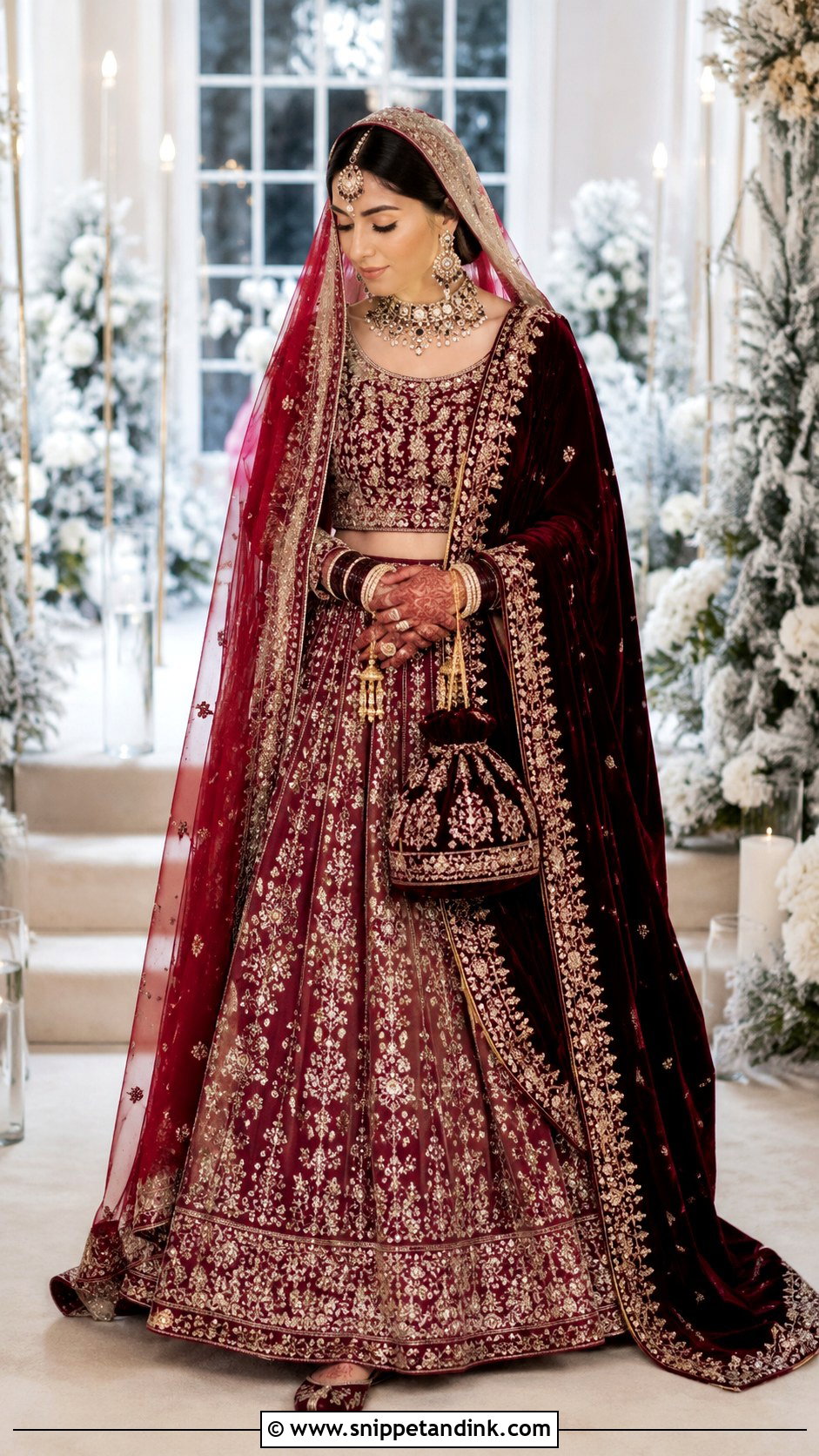
Velvet makes sense for a winter wedding, but not on top of the head. I wear a red or burgundy velvet dupatta with antique gold threadwork across one shoulder and around the arms, over a deep maroon silk lehenga and a long-sleeved embroidered blouse. If head coverage is needed, a lighter net chunri goes over the bun separately. Uncut diamonds, a statement nath, dark red bangles, velvet juttis and a matching potli. You get warmth on the arms and shoulders, which is where you actually feel the cold. Velvet slips on silk, so I pin it firmly at the shoulder and the waist, and keep it off the blouse’s best embroidery.
13. Green Bridal Chunri Dupatta With Red Lehenga
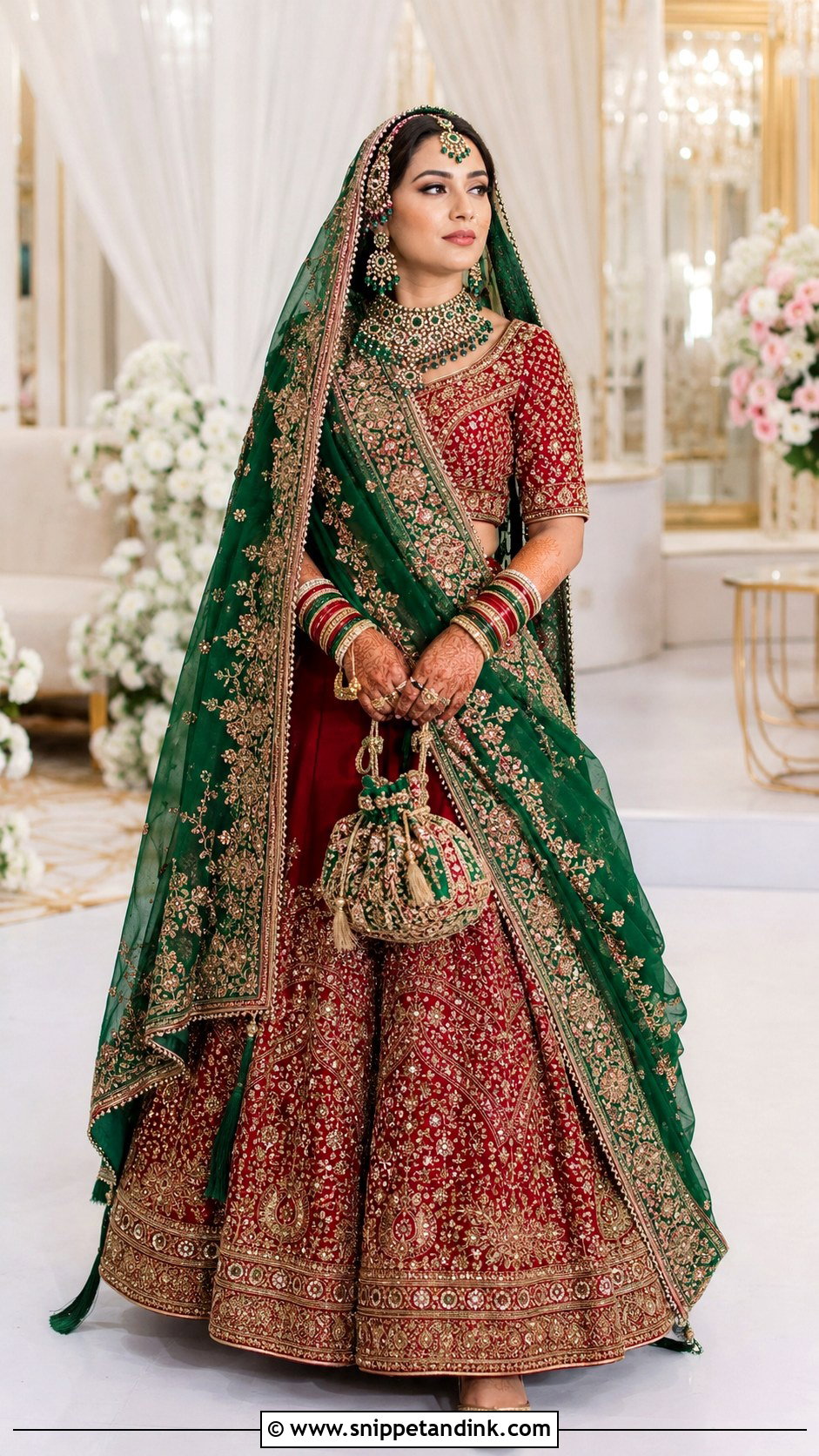
Emerald against crimson is a classic contrast, and a green chunri with a red border, small gold motifs or bandhani detailing ties the two together. Crimson silk skirt, matching blouse with gold florals, chunri over the head and one side brought diagonally across the torso. Emerald-and-kundan jewelry picks up the green, with red bangles, gold juttis and a coordinating potli. I keep makeup to defined eyes and a red lip; adding a third colour on the face fights the outfit. A heavily decorated green chunri needs a simple blouse neckline, or the top half gets crowded.
14. Orange Bridal Chunri Dupatta With Pink Lehenga
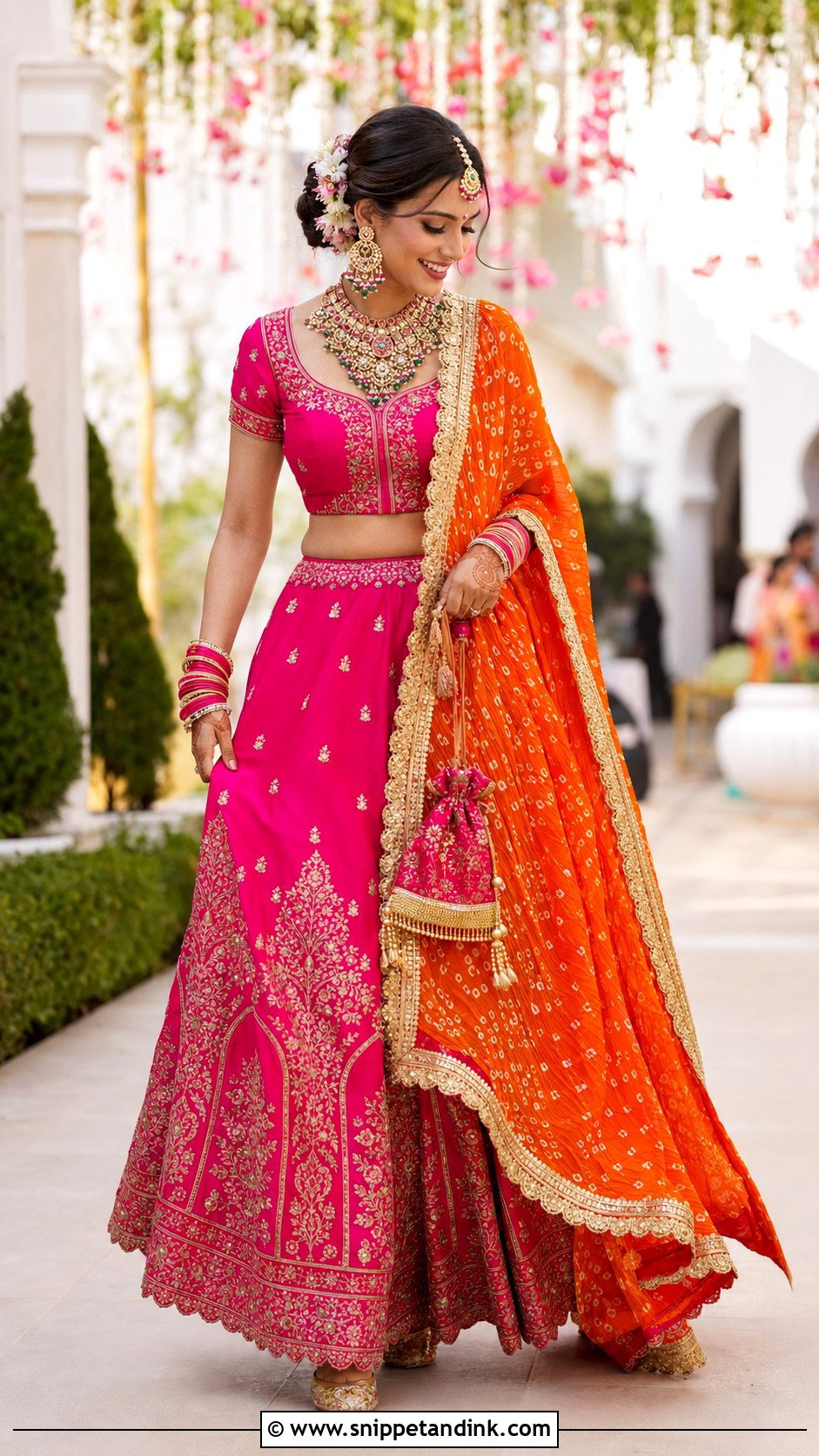
Orange and pink is a daytime pairing that looks happy in natural light. A rani pink lehenga and blouse with an orange bandhani or leheriya chunri edged in gold gota patti is the version I reach for. Set the chunri over the head and bring one side forward across the shoulder so both colours show from the front. Meenakari jewellery, a fine matha patti, pink-and-orange bangles and gold juttis, with a floral or braided low bun. Because the colour contrast is already loud, I choose a chunri with evenly spaced pattern and modest embellishment. A small potli in both shades connects everything.
15. Ivory Bridal Chunri Dupatta With Gold Lehenga
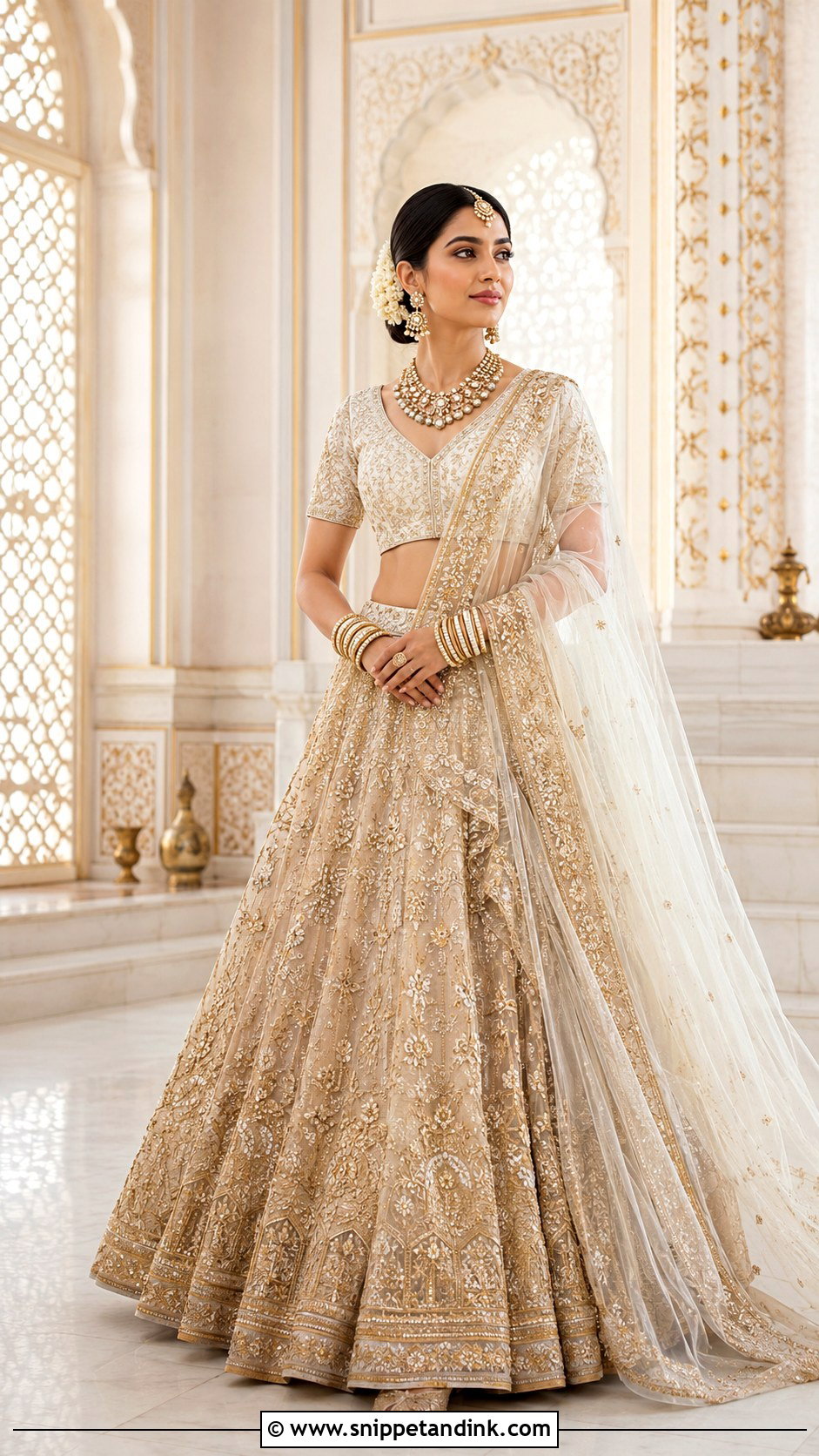
An ivory chunri reads ceremonial without the traditional red. Over a champagne-gold lehenga with an ivory blouse in zari, pearl or crystal work, the sheer ivory veil and its gold border should sit evenly around the crown. Both ends back for a long uninterrupted line, or one over the forearm. Polki, pearl strands, a small nath, ivory-and-gold bangles, metallic juttis and a sleek centre-parted bun. Ivory near the face can wash out some skin tones under indoor lighting, so I test it against bare skin at the trial before committing. A red lip or a few red bangles bring back a traditional note if you want one.
16. Sequin Bridal Chunri Dupatta With Reception Lehenga
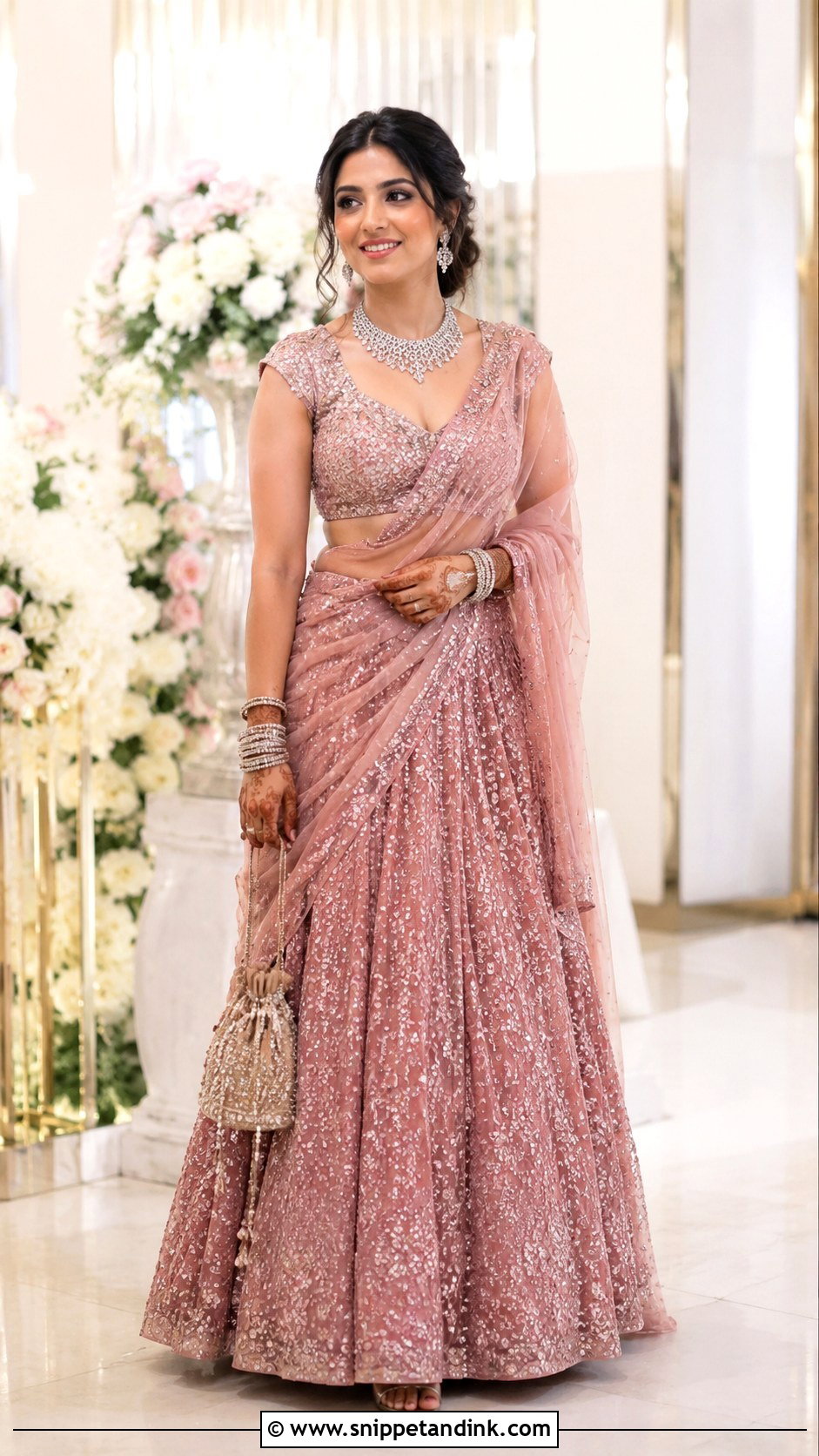
For the reception, a sequin chunri changes the mood without needing a new outfit. A silver, champagne or dusty rose lehenga with a fitted blouse and a sheer, scattered-sequin dupatta works well. Skip the head entirely: pleat it on one shoulder, drape it diagonally to the waist and secure the end at the back for a saree-like line. Diamond earrings, a statement necklace, slim bangles, metallic heels, a beaded potli and side-parted waves. Keep the dupatta and lehenga in one colour family. Sequins scratch bare arms after a few hours of dancing, so I check the reverse is backed or lined before choosing one.
17. Pearl Bridal Chunri Dupatta With Blush Lehenga
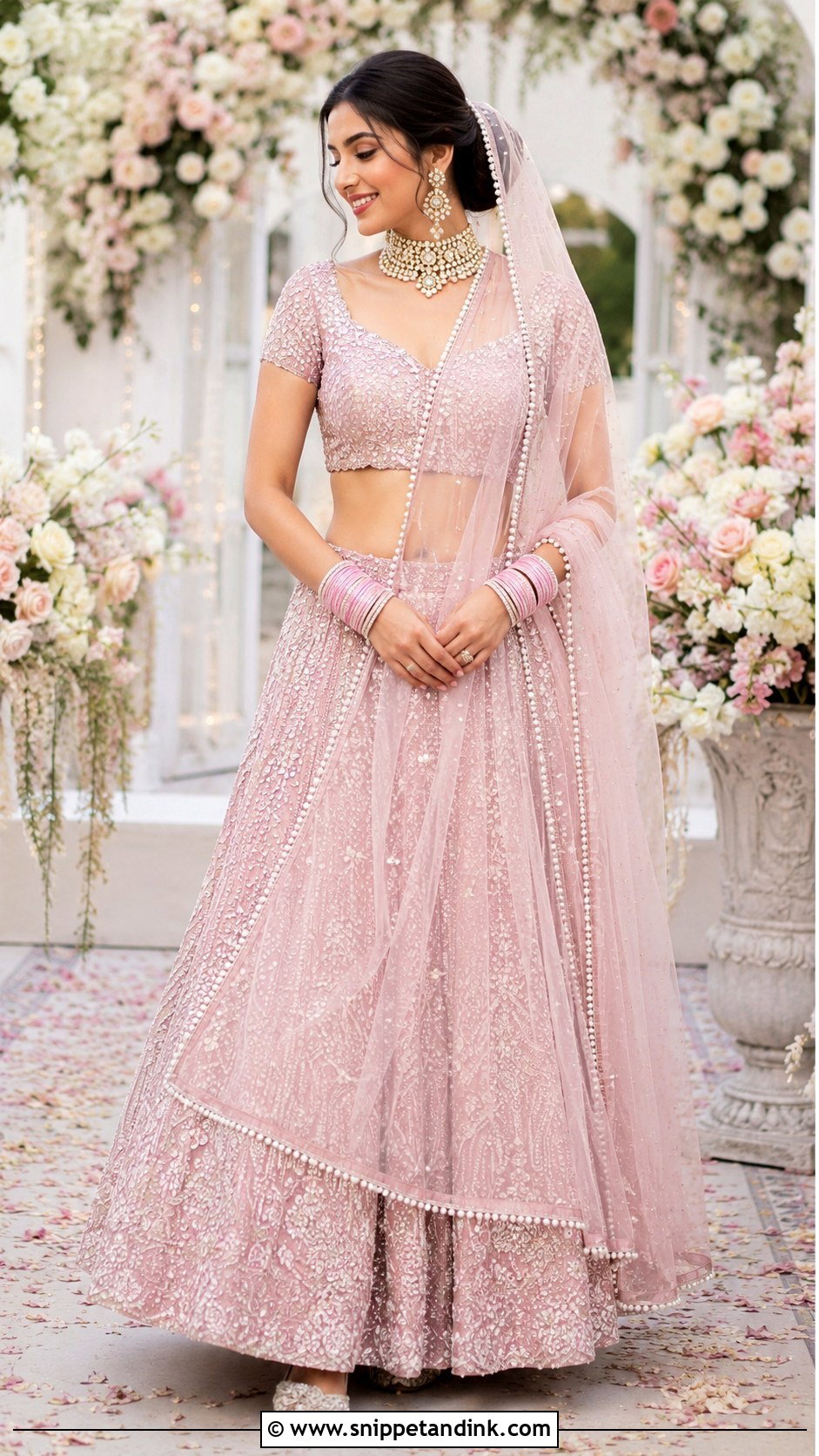
Tiny scattered pearls give a sheer chunri texture without bulk, over a pale pink skirt with floral threadwork and a blouse with pearl-edged sleeves. Place the chunri over a low bun so the pearl border curves around the face, one side over the shoulder, the other behind. Pearl-and-polki choker, drop earrings, a fine maang tikka, soft pink bangles and ivory juttis. Pearls add weight quickly, and a dense cluster at the crown pulls the whole drape backward. I ask for evenly spaced, securely stitched pearls and look at the veil under bright light, where clustered pearls can hide the lehenga’s own embroidery.
18. Long Trail Bridal Chunri Dupatta With Lehenga
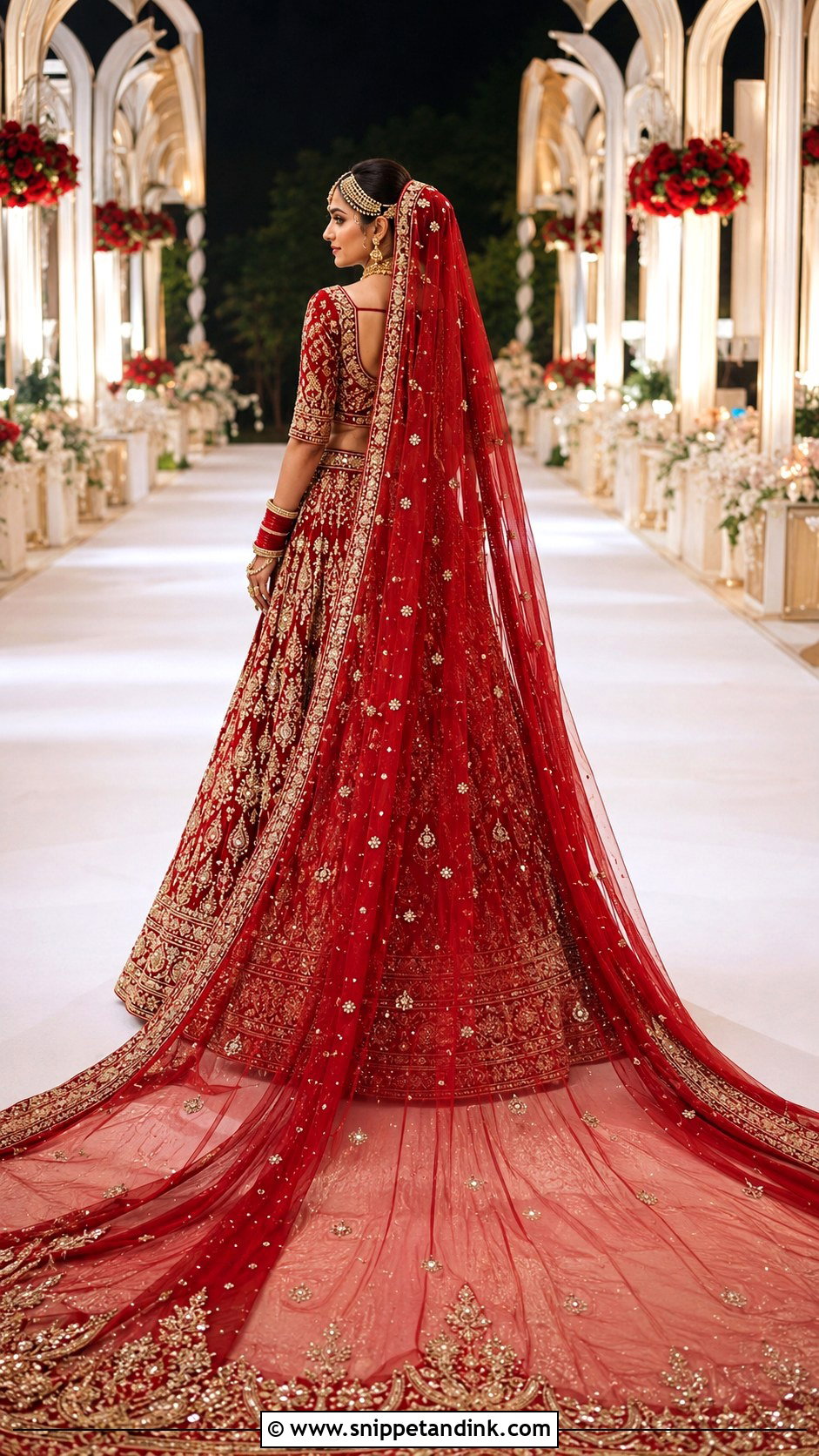
A long-trail chunri makes the entrance. Over a deep red lehenga and structured blouse, an extra-long sheer veil with an embroidered border and scattered gold motifs is pinned firmly behind the crown so it frames the face and then runs down the back. Keep the front drape simple; a long train plus extra fabric across the torso is too much. Layered kundan, a centered matha patti, bridal bangles, embroidered juttis. The chunri has to be long enough to fall without dragging on the hairstyle. If it’s even a little short, every step pulls at the pins. Ask someone to arrange the trail before each entrance, portrait and seating.
19. Saree Drape Bridal Chunri Dupatta With Lehenga
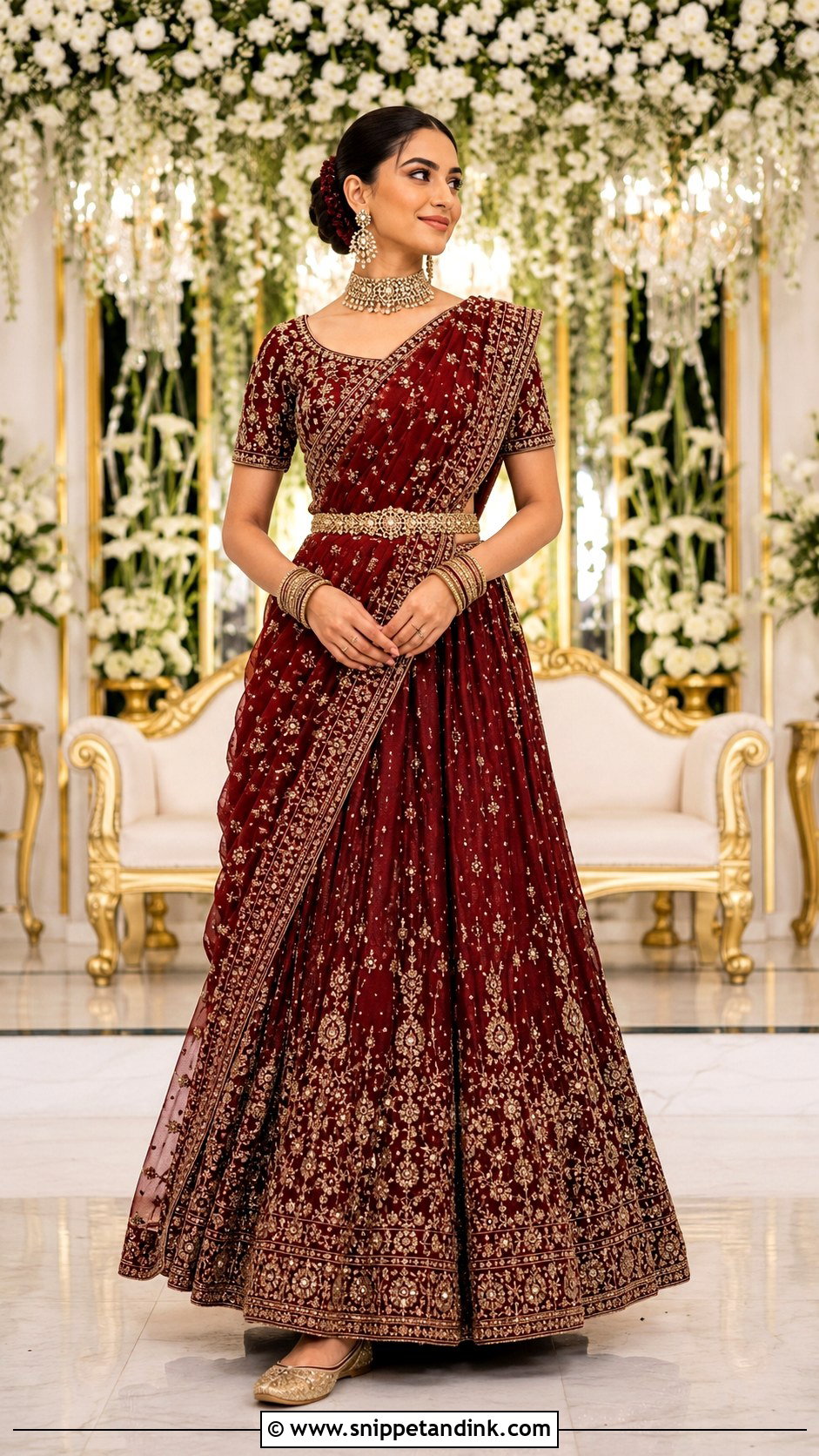
A saree-inspired chunri drape gives a lehenga a defined waist and a tidy front. With a red, maroon or pink lehenga and a blouse that has a detailed neckline, pleat the dupatta over one shoulder, take it diagonally across the torso and tuck the other edge at the waist, letting the rest fall behind like a pallu. A kamarbandh holds it, and a choker, statement earrings, bangles and gold juttis finish it, with a neat bun or low braid. It’s my usual suggestion when the blouse and waist embroidery are the best part of the outfit. Sit, stand and walk in it before the final pins go in.
20. Belted Bridal Chunri Dupatta With Contemporary Lehenga
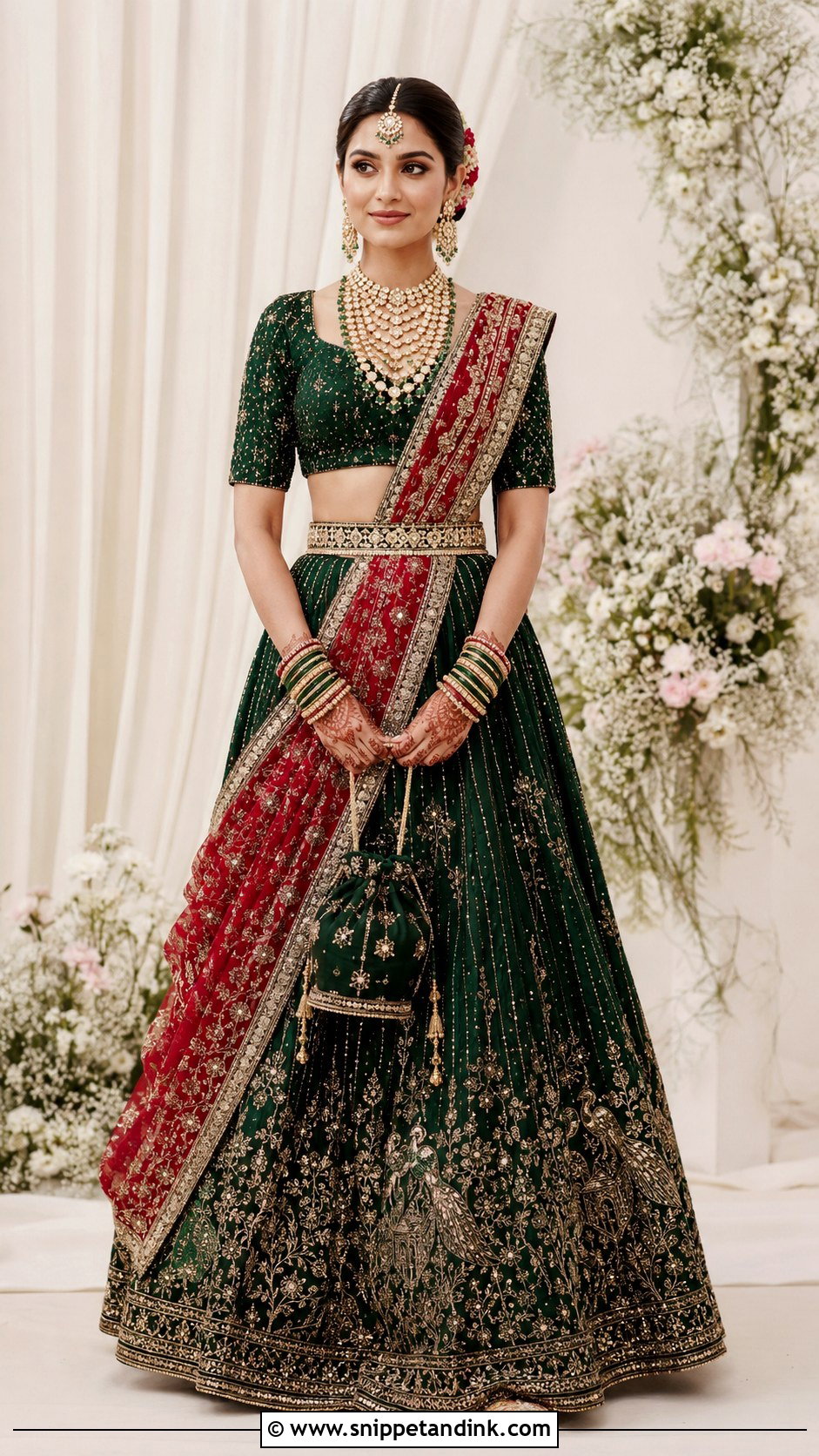
A belted drape is the one I suggest to brides who plan to move a lot. Pair a jewel-toned lehenga, a structured blouse and a light dupatta, pleat one end over the shoulder, bring it across the body and fasten it under an embroidered waist belt. Leave a little ease across the ribs so you can breathe and sit. Layered choker, drop earrings, stacked bangles, heels or juttis, a compact potli, and a sleek bun or polished ponytail. The belt keeps flowing fabric under control and defines the waist. I match the belt embroidery to the lehenga rather than the chunri, so the drape looks anchored to the outfit.
The Draping Trial Nobody Should Skip
I ask for one full rehearsal of the chunri at least a couple of weeks out, with the real blouse, jewellery and the hairstyle roughly in place. Pins go in differently once a maang tikka and matha patti are on, and earrings can catch the fabric. I photograph the finished drape from the front, both sides and the back so whoever dresses you on the day can copy it exactly.
Then the bride moves. Sit cross-legged or on a low seat as you would for the rituals, stand up without hands, walk around a chair seven times, and bend to touch someone’s feet. Anything that slides, I re-pin then and there. On the day, bring a small pouch with spare safety pins, U-pins in your hair colour and a few bobby pins; someone in the family should know where it is.
Folding Zari and Bandhani Away for the Next Generation
Many chunris get passed down, so how you store yours after the wedding matters. Metallic thread tarnishes in damp and in contact with plastic, and sharp folds eventually crack the zari along the crease.
- Air it for a day out of direct sun before putting it away, and spot-check for makeup or sindoor on the border.
- Have any stains handled by a dry cleaner who works with zari, not a regular laundry. Bandhani colours can bleed if they’re washed at home.
- Wrap it in soft white muslin or cotton, never a plastic garment bag, and lay acid-free tissue between the folds of any metal embroidery.
- Refold it along different lines every few months so no single crease sets in.
- Wrap mirror work and pearls separately so they don’t scratch or snag the other fabric.
One Chunri, Three Jobs to Do on the Wedding Day
Every chunri here is doing one of a few jobs: framing the face, showing off the lehenga, or carrying the family tradition of the ceremony. Bandhani and gharchola bring the tradition, and organza, pearls, scallops and personalised borders give lighter or more individual options. Choose the one that shows your lehenga’s best work rather than covering it, and whose weight your hairstyle can hold for the length of the rituals. Do a full trial with the blouse, jewellery, shoes and hair accessories, walk, sit, and stand up again. Careful pinning and even embellishment are what keep a chunri graceful and comfortable from the first ritual to the last photo.
You'll Like These Ideas:


Leave a Reply