
When a bride tells me she has found the dress, my next question is what goes with it, because the gown is only part of what ends up in your photos. A dress on a hanger tells you very little about how it moves, how it sits over your shoes, or whether the veil fights the neckline. Below are twenty silhouettes I see brides say yes to, each with the shoes, jewelry, veil and flowers I’d put beside it in a fitting room. Treat them as starting points. The right gown is the one you can still breathe, sit and hug people in late at night.
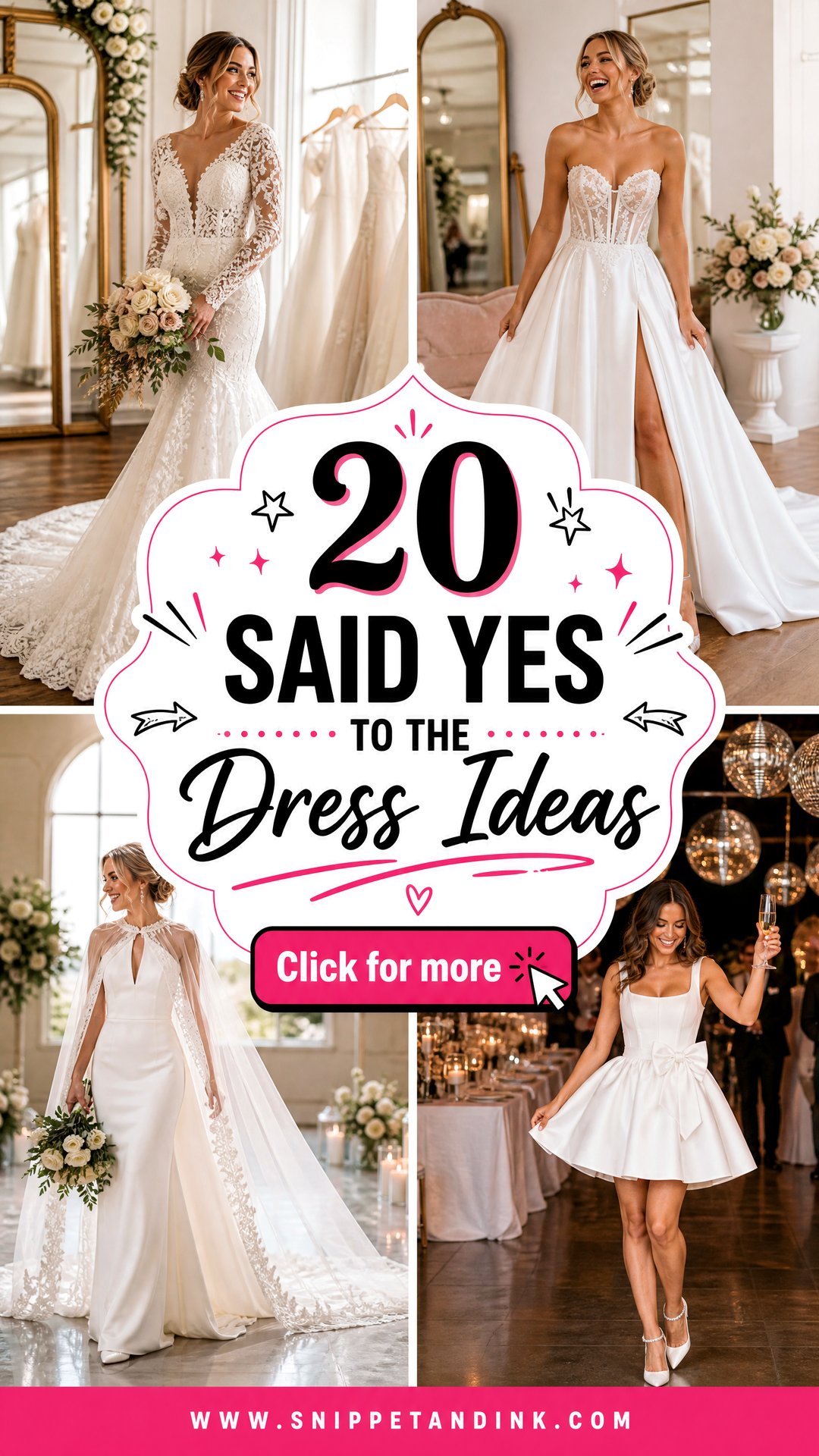
What I Ask Brides to Bring to a Gown Appointment
Most bridal salon appointments run somewhere around an hour to ninety minutes, and the brides who get the most from that time arrive prepared. I’d rather see you with the right underwear and three good photos than with a crowd of opinions. Here is what actually helps in the fitting room:
- Shoes at the heel height you plan to wear. A hem judged in bare feet or sample heels can look wrong by several inches.
- A nude strapless bra or smooth bodysuit, so you can see how a bodice sits without straps cutting across it.
- Three to five reference photos, ideally showing one thing you love in each, such as a neckline or a sleeve, rather than whole outfits.
- One or two people whose taste you trust. Large groups tend to vote for the dress they would wear.
Timing matters too. Many made-to-order gowns take several months to arrive after you order, and alterations need another couple of months on top of that, so I suggest starting your search roughly nine to twelve months out. Lead times vary a lot between designers, so ask each salon for its own estimate before you fall for anything.
1. Satin Ball Gown Wedding Dress
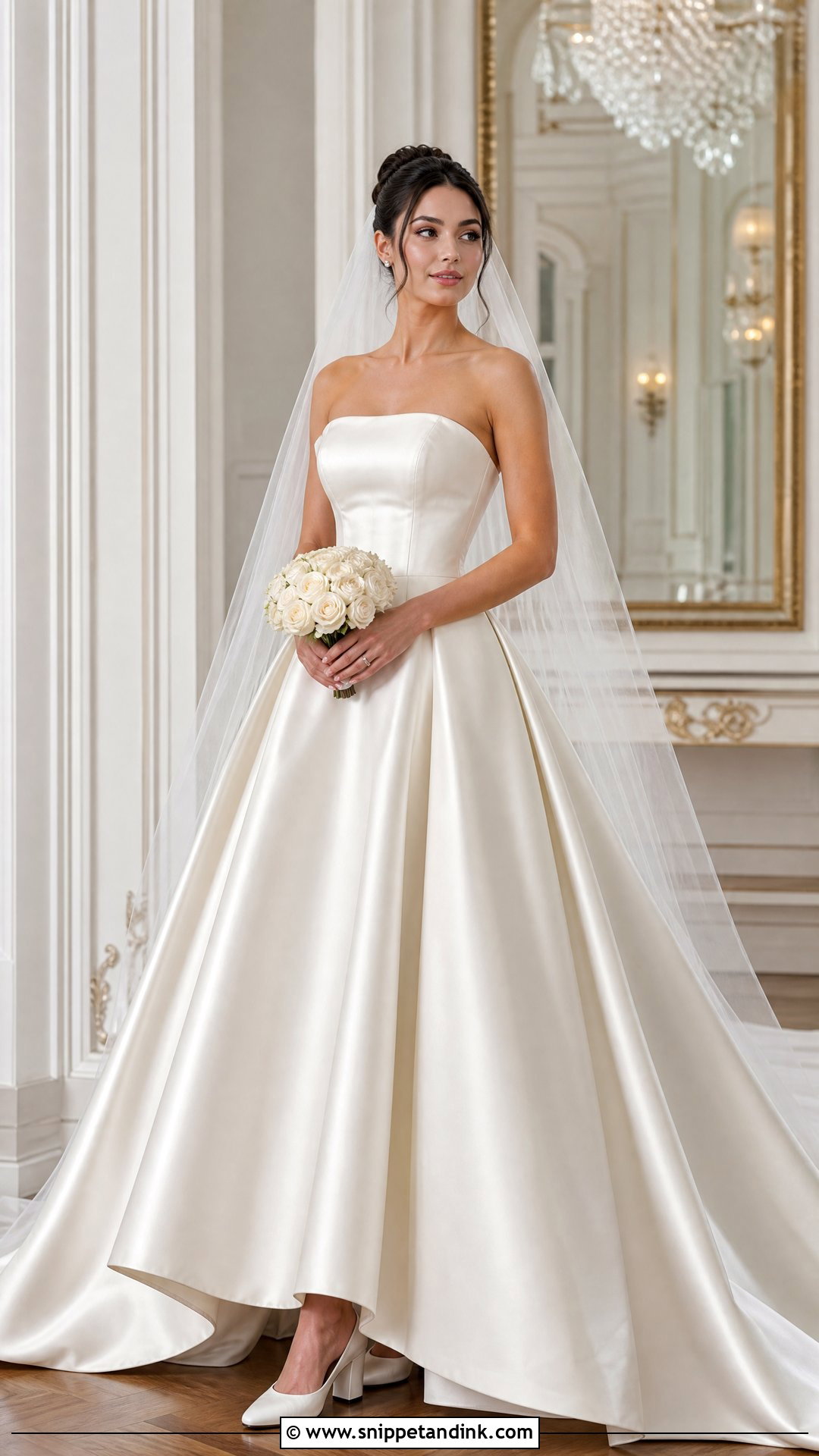
Satin ball gowns are heavy, and that weight is what gives the skirt its smooth, unbroken fall. I keep the neckline simple, strapless or softly draped, because satin already reflects a lot of light and extra detail at the top gets lost. A cathedral veil suits the scale; pearl studs and one slim bracelet are plenty. Nobody sees your feet under all that skirt, so wear block-heel pumps or flats you can stand in for hours. Satin shows every crease after a car ride, which is why I always want a handheld steamer in the getting-ready room. Ballrooms and grand hotels give it the floor space it needs, and a low bun keeps the neckline and veil clear.
2. Lace A-Line Wedding Dress
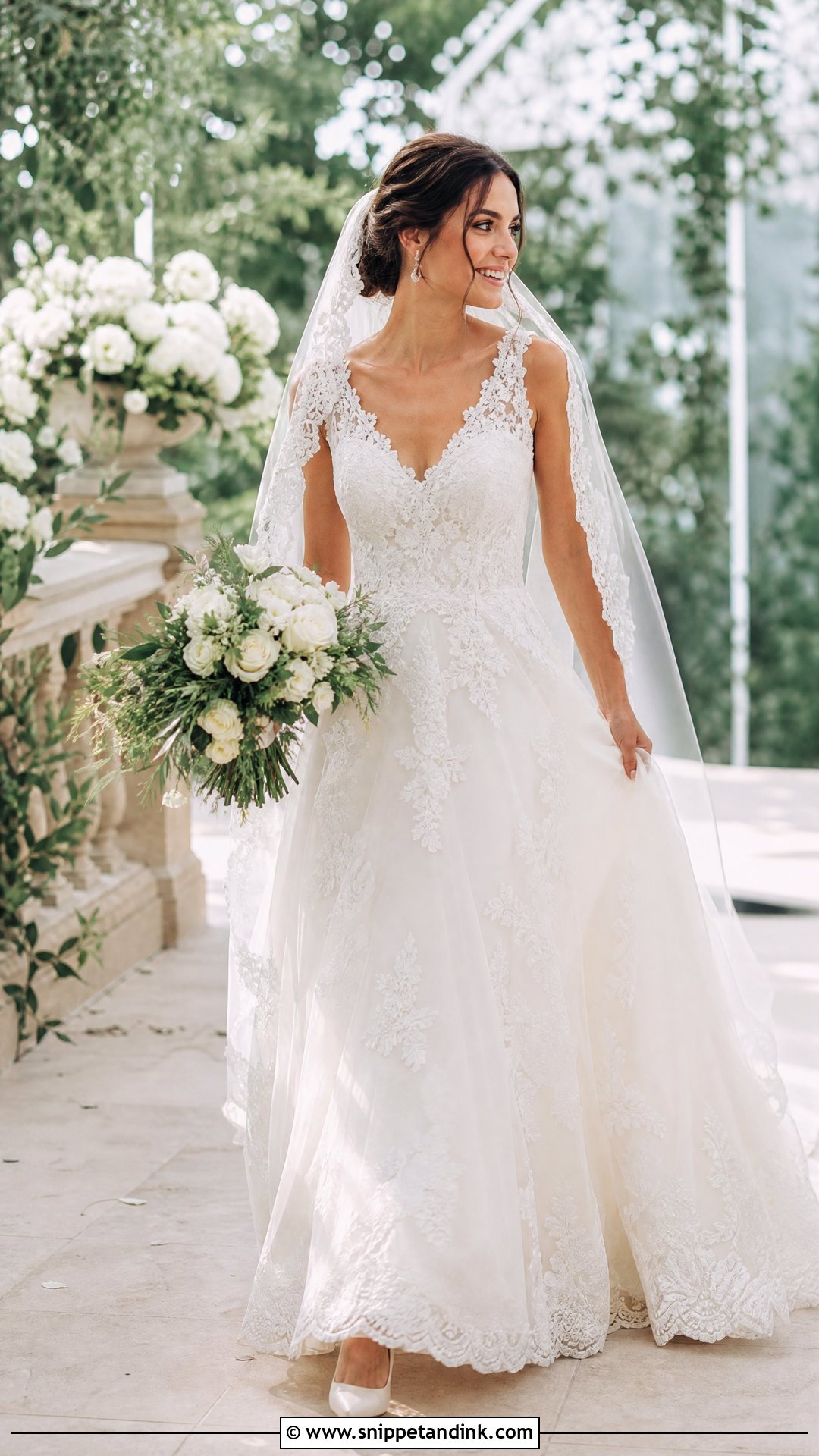
Lace on an A-line is the silhouette I’d hand to a bride who has no idea where to start, since it flatters most figures and never weighs you down. Look for a bodice that fits close and then releases at the waist, with a V-neck or fine straps to keep the top light. Edge the fingertip veil in only a hint of lace, and hold it against the dress first: two lace motifs from different makers clash more often than you’d think. Small drop earrings, ivory low heels and a loose bouquet of white flowers with pale greenery finish it, with the hair in a relaxed chignon. Gardens and estates suit this dress, but ask whether the hem is backed, because bare lace snags on gravel.
3. Mermaid Wedding Dress
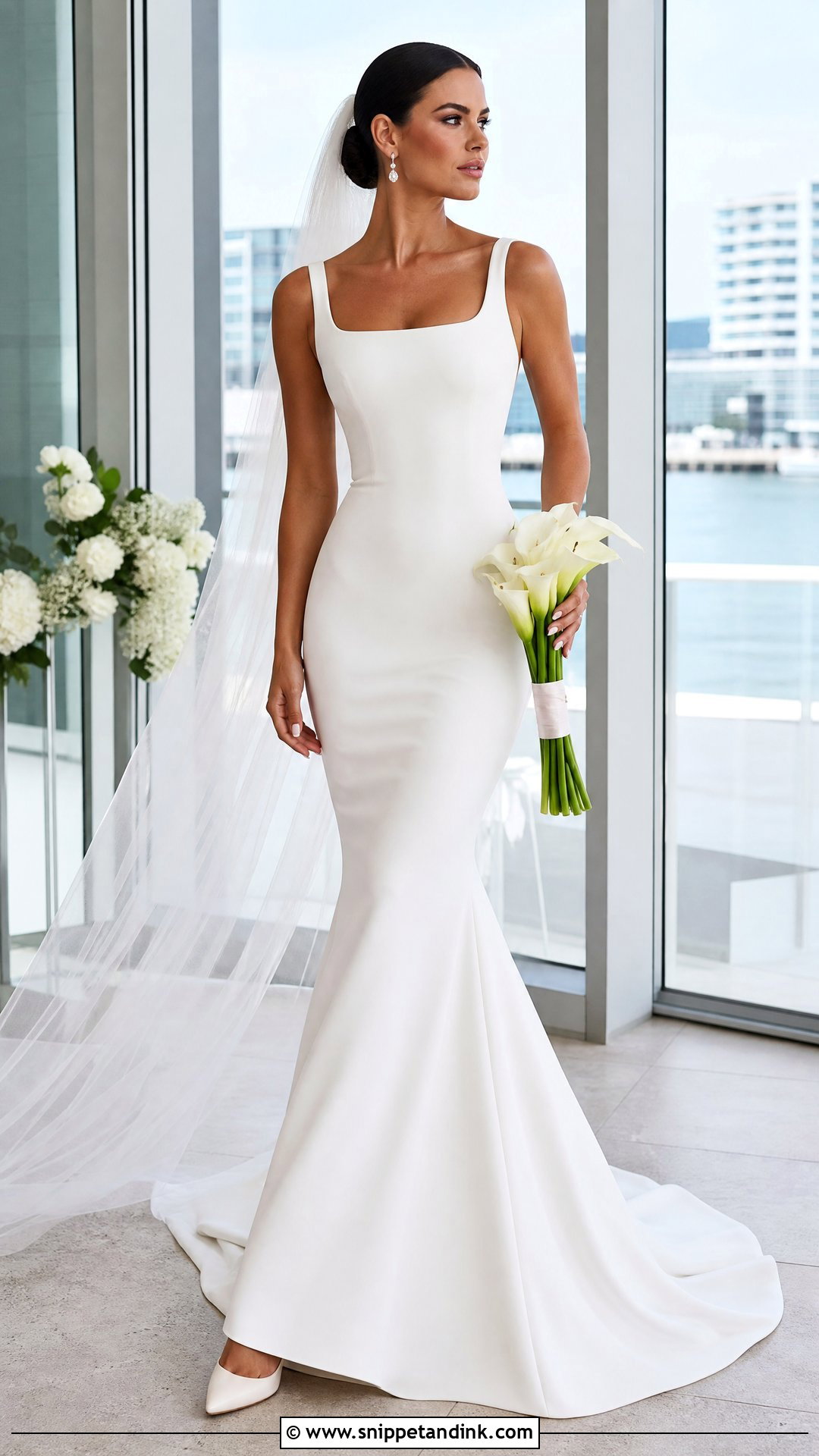
Mermaid gowns fit close through the hips and flare at or just below the knee, and that flare point decides everything. Set it too high and you lose the shape; too low and you’ll shuffle down the aisle. In crepe, satin or lightly beaded lace, I pair it with pointed heels and a chapel veil starting below a sleek bun, plus crystal earrings and nothing at the throat. Sit down in it at your first appointment, then climb a step. A slim bouquet of calla lilies echoes the line. Modern ballrooms and waterfront venues suit the drama, though I’d warn anyone planning a long, energetic reception to budget for a good bustle or a second dress.
4. Basque Waist Wedding Dress
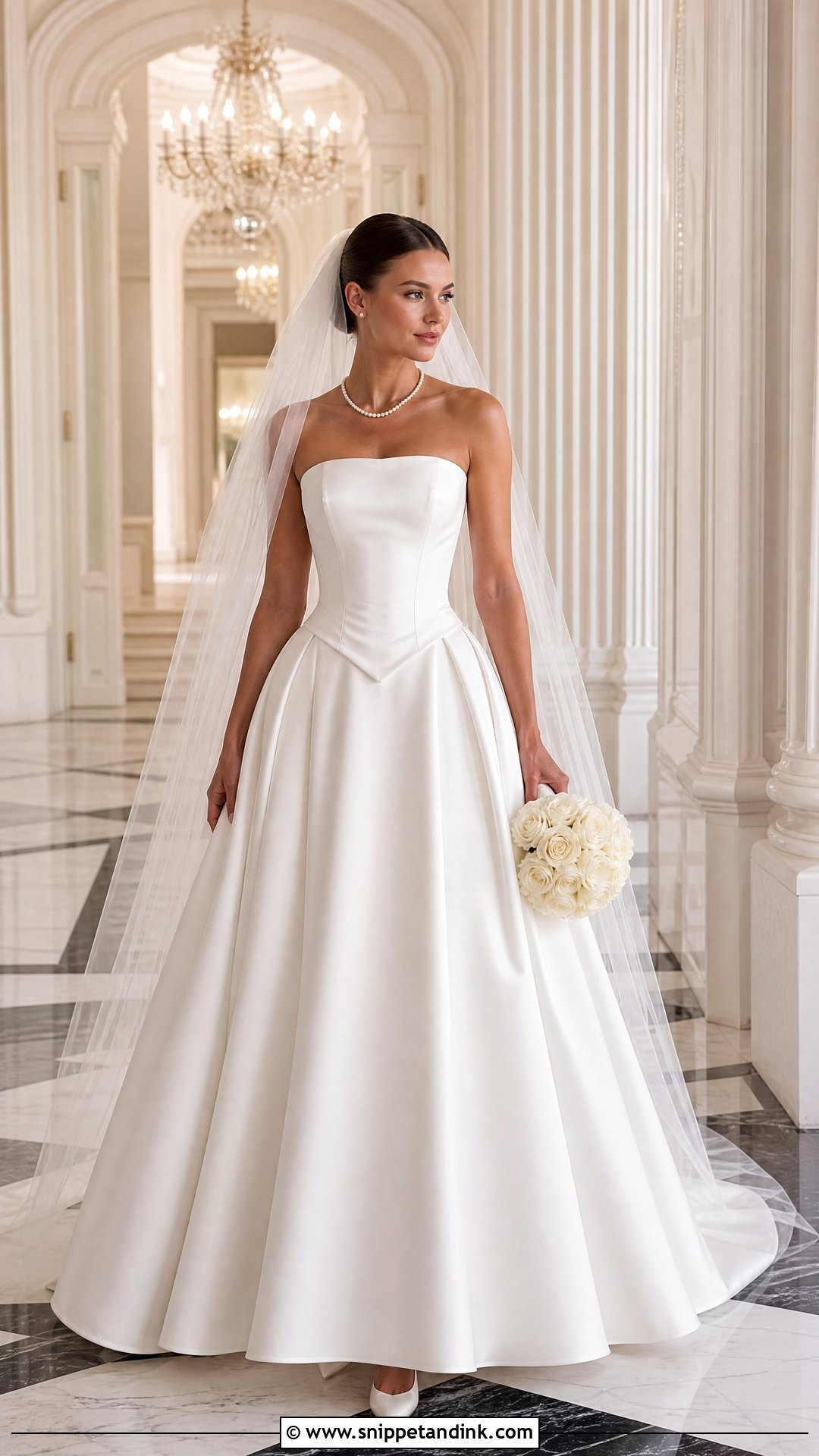
A basque waist wedding dress dips into a V at the center front, and that point visually lengthens the torso, which is why I reach for it on brides with a short waist. It needs a full satin or tulle skirt below to look balanced. Strapless shows off the seaming, while a short pearl strand softens the top. Add pointed ivory pumps, a long sheer veil, a rounded bouquet of roses with trailing greenery and a smooth bun. The V has to land exactly at your natural waist, so expect your seamstress to spend most of her time there. If the point sits even slightly off center, it’s the first thing a camera catches.
5. Off-the-Shoulder Wedding Dress
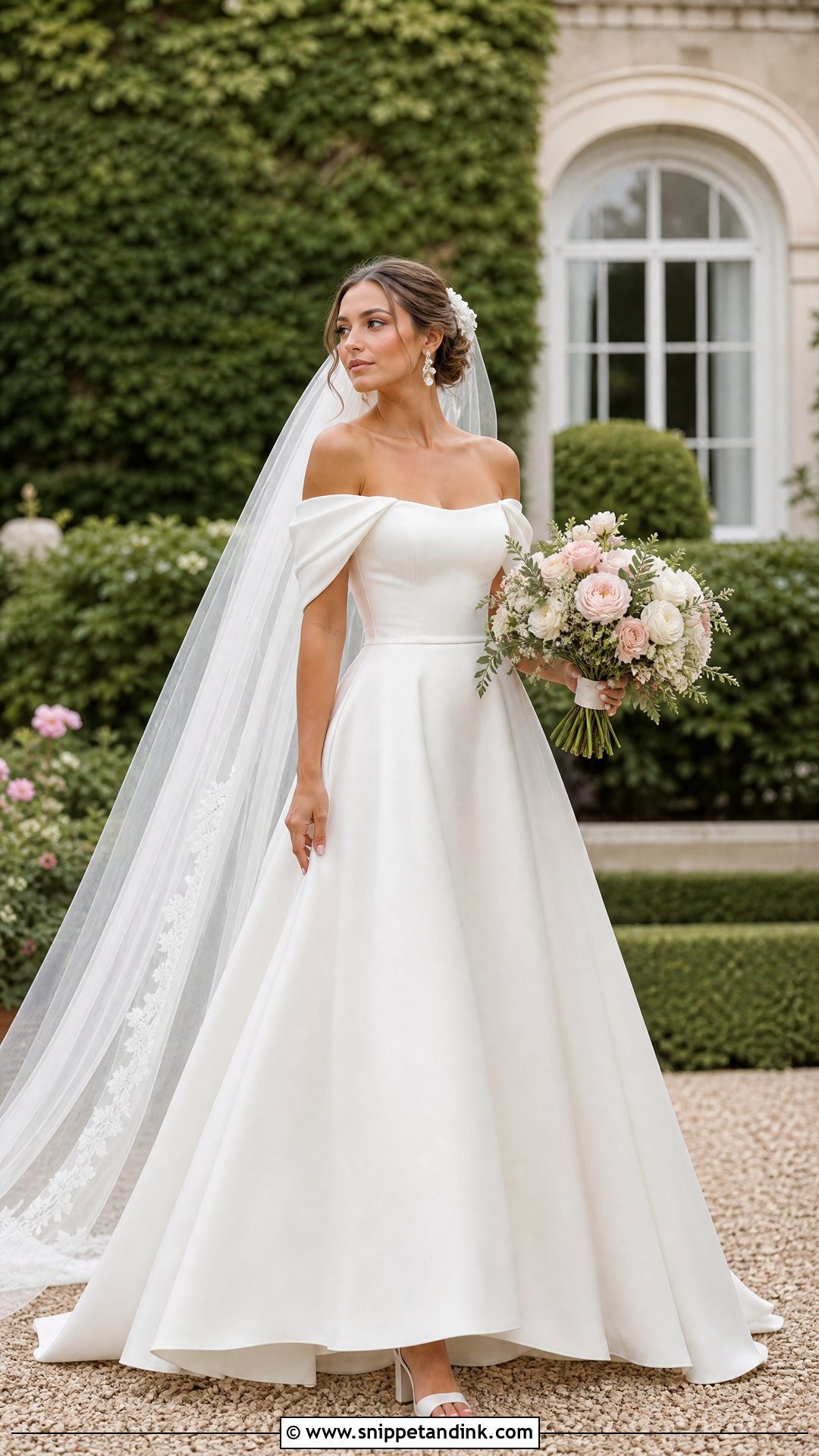
Off-the-shoulder bands look easy on a hanger and are the trickiest neckline I fit. They hold the upper arms, so the test is simple: lift both arms as if hugging someone taller than you. If the bands ride up or the bodice drops, it needs a firmer grip at the side seams or a hidden strap. Lace sleeves read traditional, folded satin reads cleaner. I like a collarbone-length pendant, pearl drops and a low updo that leaves the shoulders bare, with a sheer chapel veil and block heels. A hand-tied bouquet in white and blush picks up the warmth of the skin around the neckline.
6. Long-Sleeve Lace Wedding Dress
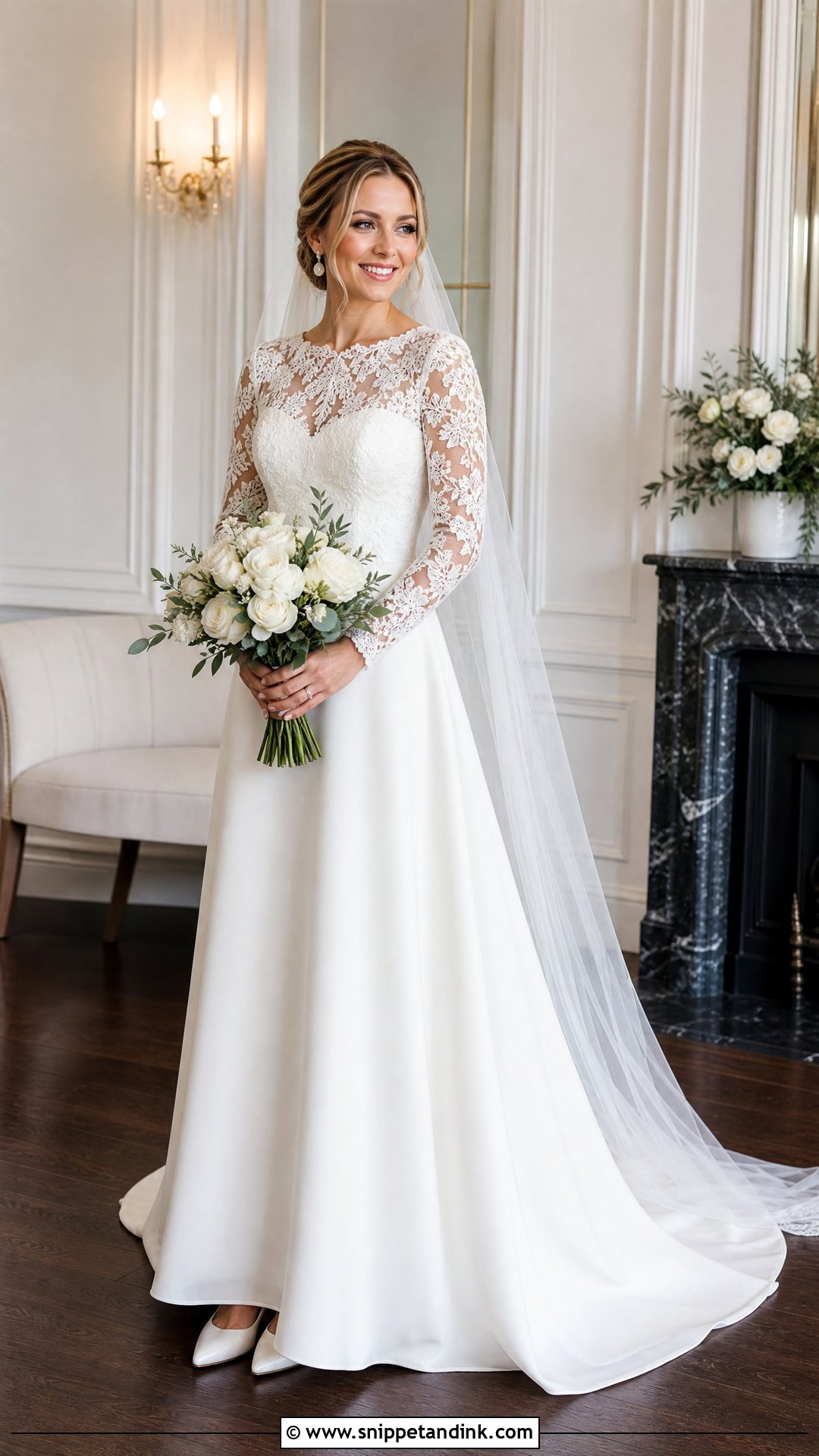
Long lace sleeves belong to fall, winter and early spring weddings, and they’re warmer than they look once you start dancing. Illusion sleeves with placed appliqués feel lighter; lined sleeves give real coverage. Below them, an A-line skirt moves easily and fitted crepe gives a sleeker line. Keep everything else plain: closed-toe heels, pearl earrings, one comb above a low bun and an unedged tulle veil. My rule with lace is one pattern only, so skip the heavy necklace and keep the white bouquet with eucalyptus muted. Check the cuffs at fittings. Sleeves cut too long bunch at the wrist, exactly where everyone looks when you hold your flowers.
7. Square-Neck Wedding Dress
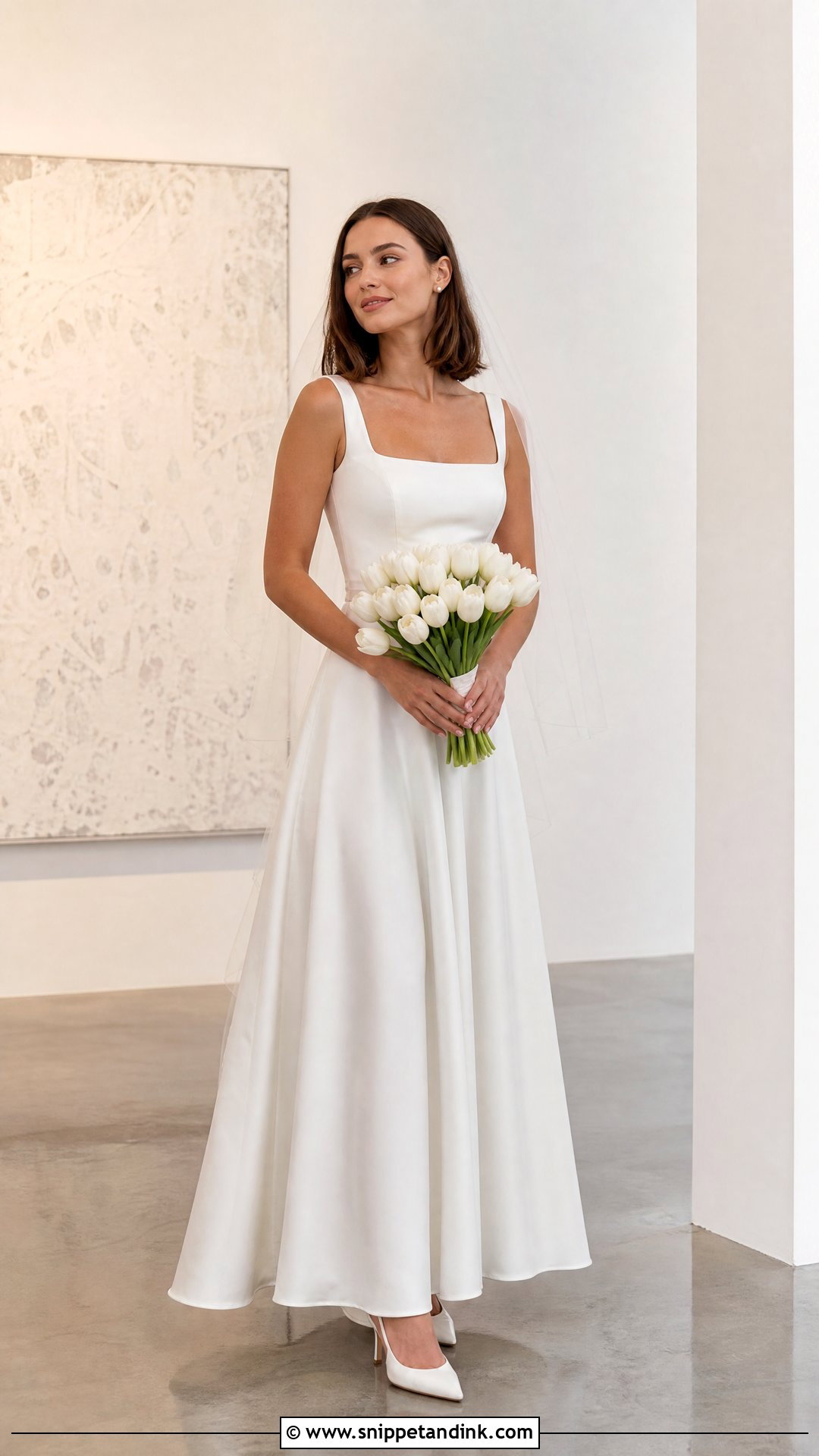
Square necklines reward precise tailoring. If the corners gape when you lean forward to sign the register, the whole shape collapses, so that’s what I check first. Wide straps and a fitted bodice support it over either an A-line or a slim column skirt. With a plain bodice a fine chain works; with embroidery, stay with small studs. A smooth low bun and a shoulder-length veil keep the square visible, and pointed slingbacks with a structured bouquet of white tulips carry the crisp lines through. In satin it reads modern, in embroidered fabric softly vintage.
8. Minimalist Slip Wedding Dress
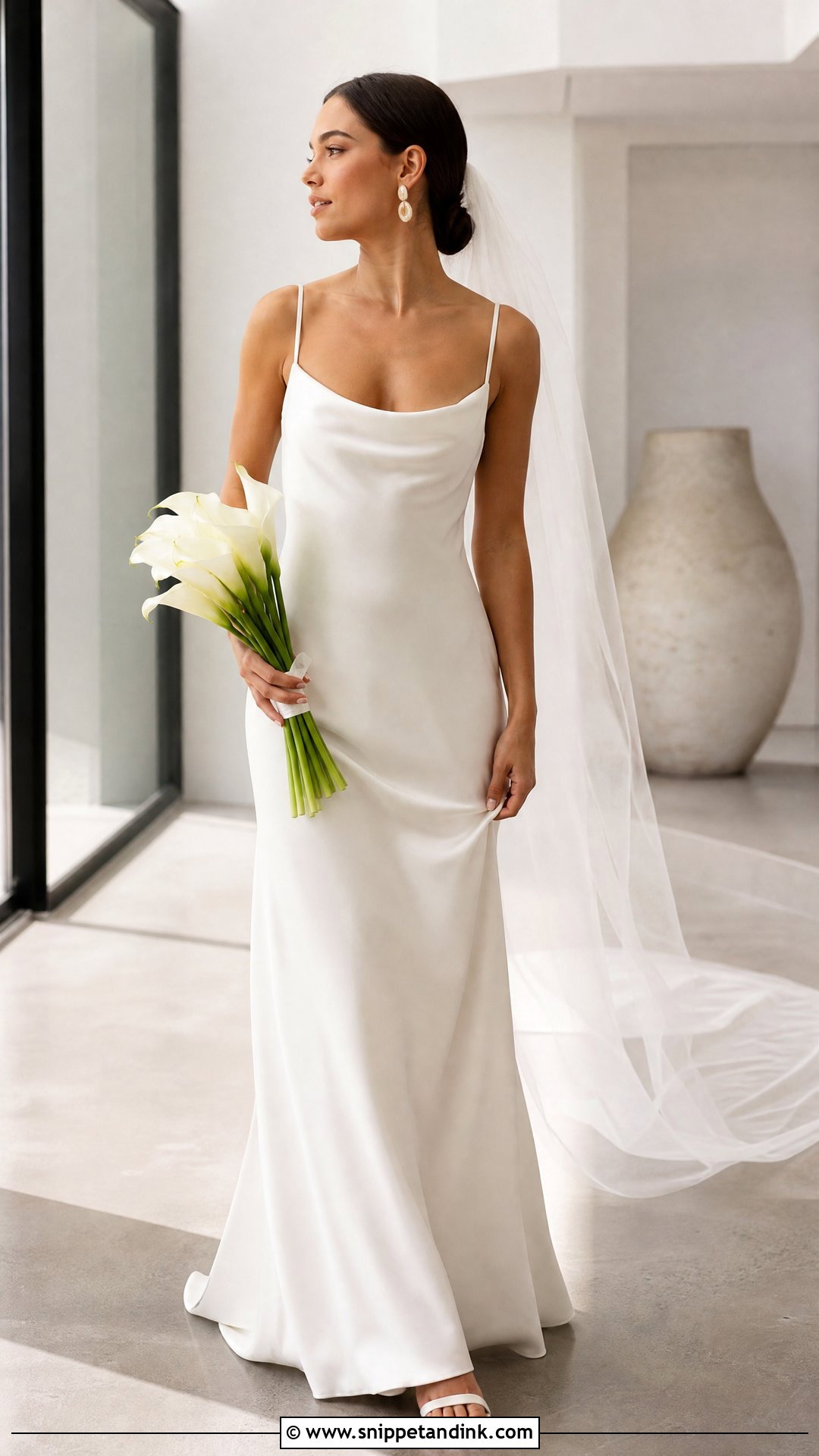
A silk or fluid satin slip is the least forgiving dress here, and I say so up front. Bias-cut fabric clings, so underwear lines, an uneven hem or a slightly loose strap all show. Sort the foundation first, a smooth bodysuit or adhesive cups, and wear it to every fitting. Then keep the rest spare: sculptural earrings, sleek low heels, a light veil and a few calla lilies. A neat bun feels polished, loose waves more relaxed. Galleries, intimate dinners and destination weddings suit it. Think twice if you’ll be folded into a car for an hour, since silk wrinkles fast and shows every drop of water.
9. Tea-Length Wedding Dress
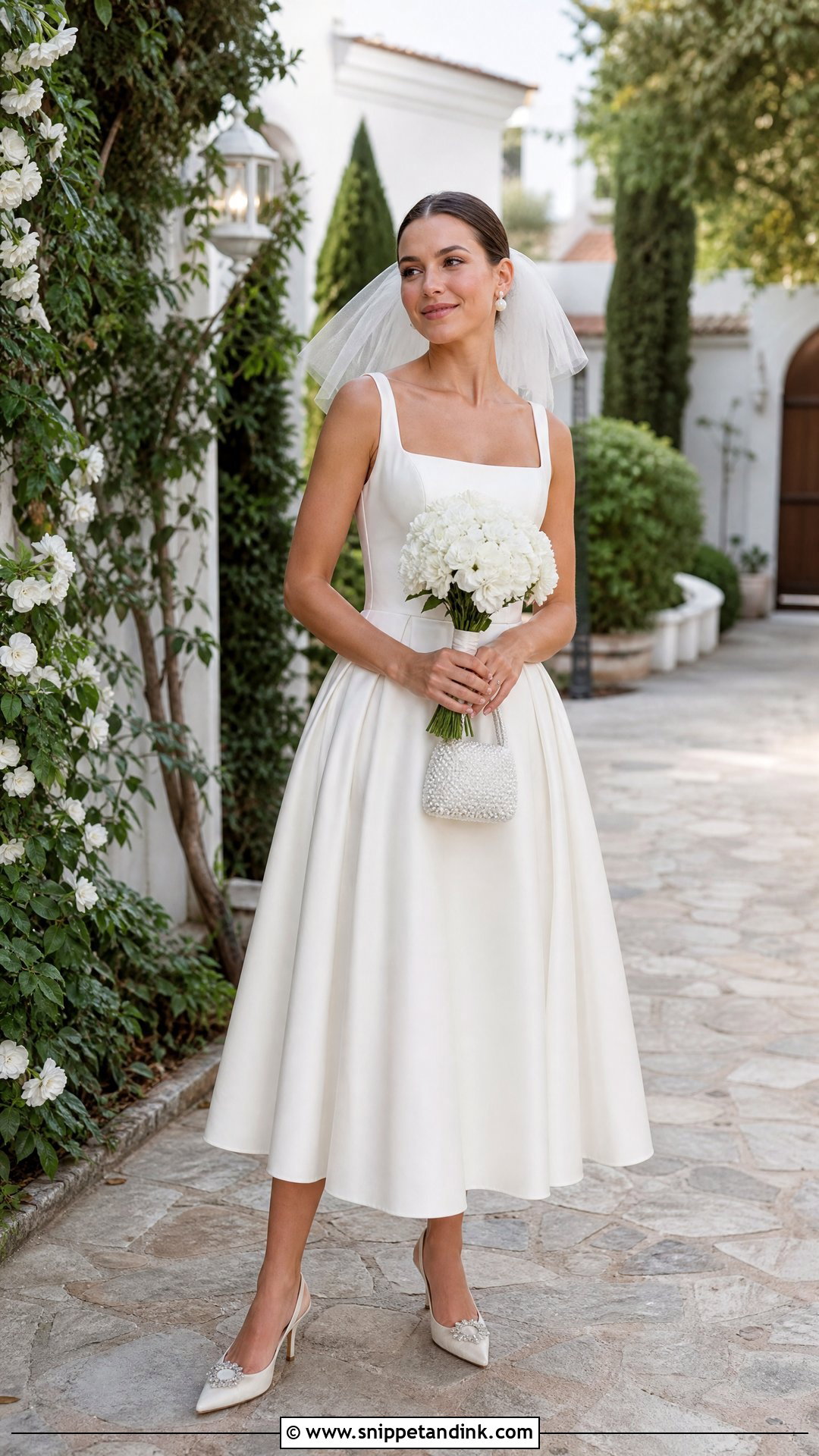
Tea length puts your shoes on show, so this is the dress where I’d spend real money on footwear. The hem falls between knee and ankle, and pointed pumps or embellished slingbacks look right at that length. A long veil overwhelms the shorter proportions, so I suggest a short veil or a structured headband instead. Pearl earrings, a small bag and a compact bouquet finish it. Add a petticoat for that full fifties skirt, or skip it for softer movement. It’s a joyful bridal look for courthouse ceremonies and daytime parties, and the hem stays clean on wet grass in a way floor-length never does.
10. Floral Appliqué Wedding Dress
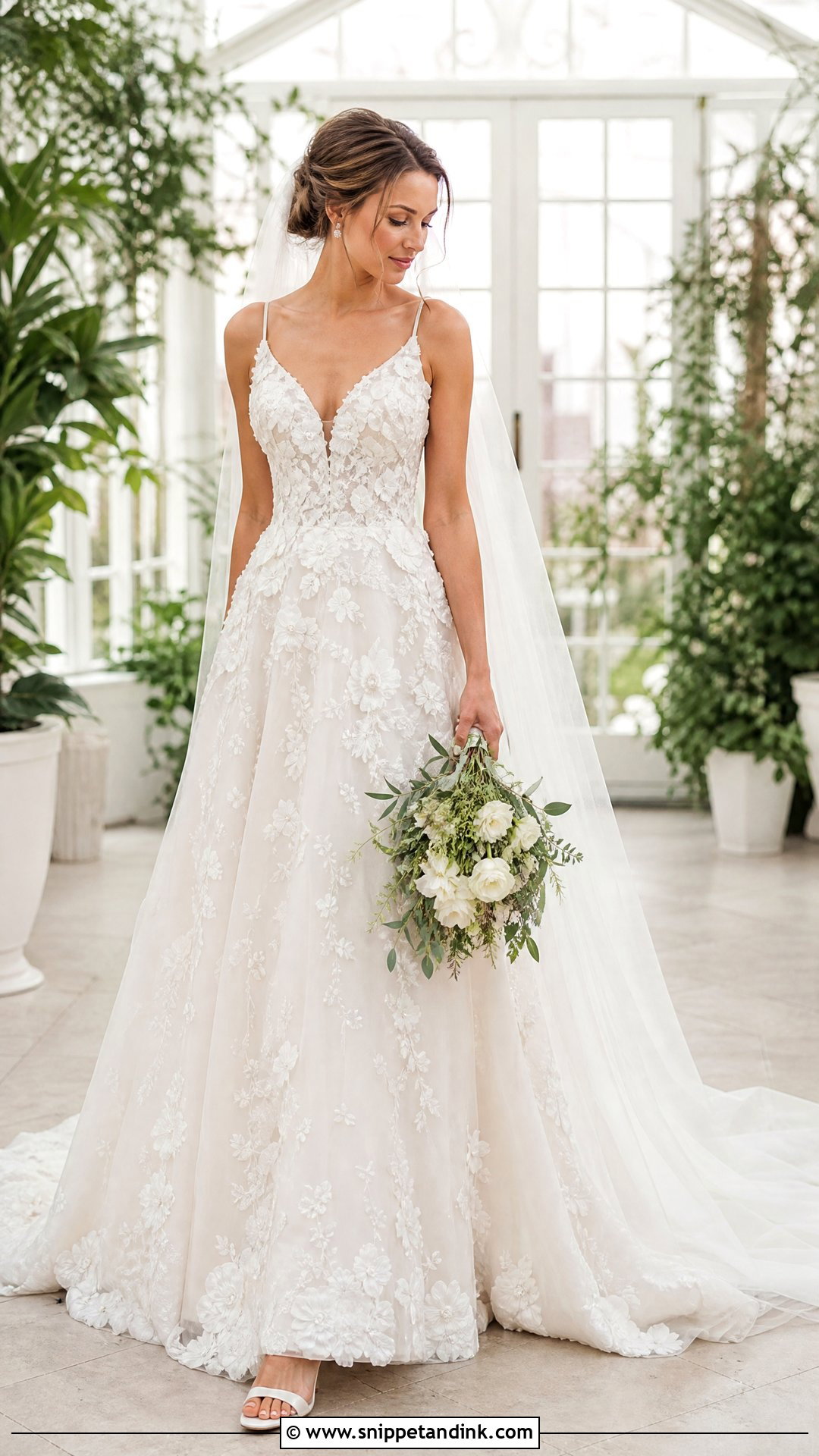
Three-dimensional appliqués are placed by hand, so look closely at where they cluster. The best dresses gather them at the bodice and scatter them down the skirt, which pulls the eye toward the waist and the movement of the hem. With that much texture, I strip the accessories back to crystal studs, plain ivory heels and an unedged tulle veil. A bouquet in one or two colors avoids the flowers-on-flowers effect, and a low textured bun with a few loose pieces suits it. One thing fittings teach you: raised petals catch veil tulle and bouquet ribbon, so walk with both before you commit. Spring weddings and conservatories show off the depth.
11. Pearl Beaded Wedding Dress
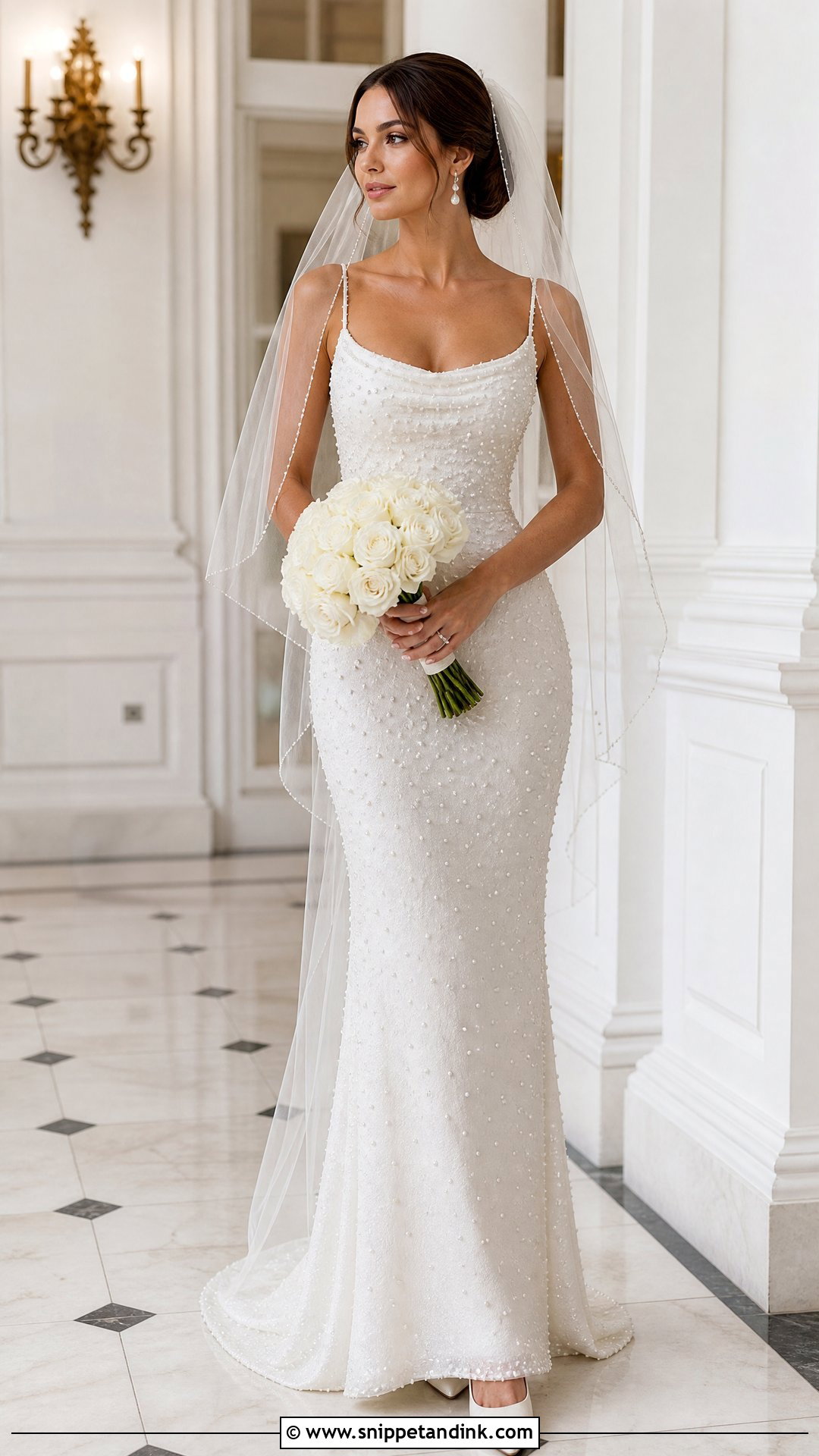
Pearl beading gives a soft glow rather than sparkle, and that’s its appeal. It works on a sheath, an A-line or a corset shape as long as the pearls are evenly spaced. Because the gown already wears pearls, I’d stop at studs or a single drop. Satin pumps, a clean fingertip veil, a smooth low bun and white roses or peonies with little greenery keep the palette tight. At every fitting I run my hand along the inner arms and side seams; rough thread knots there scratch skin and snag the veil within an hour. In bright rooms the pearls hold a quiet sheen that cameras pick up well.
12. High-Neck Modest Wedding Dress
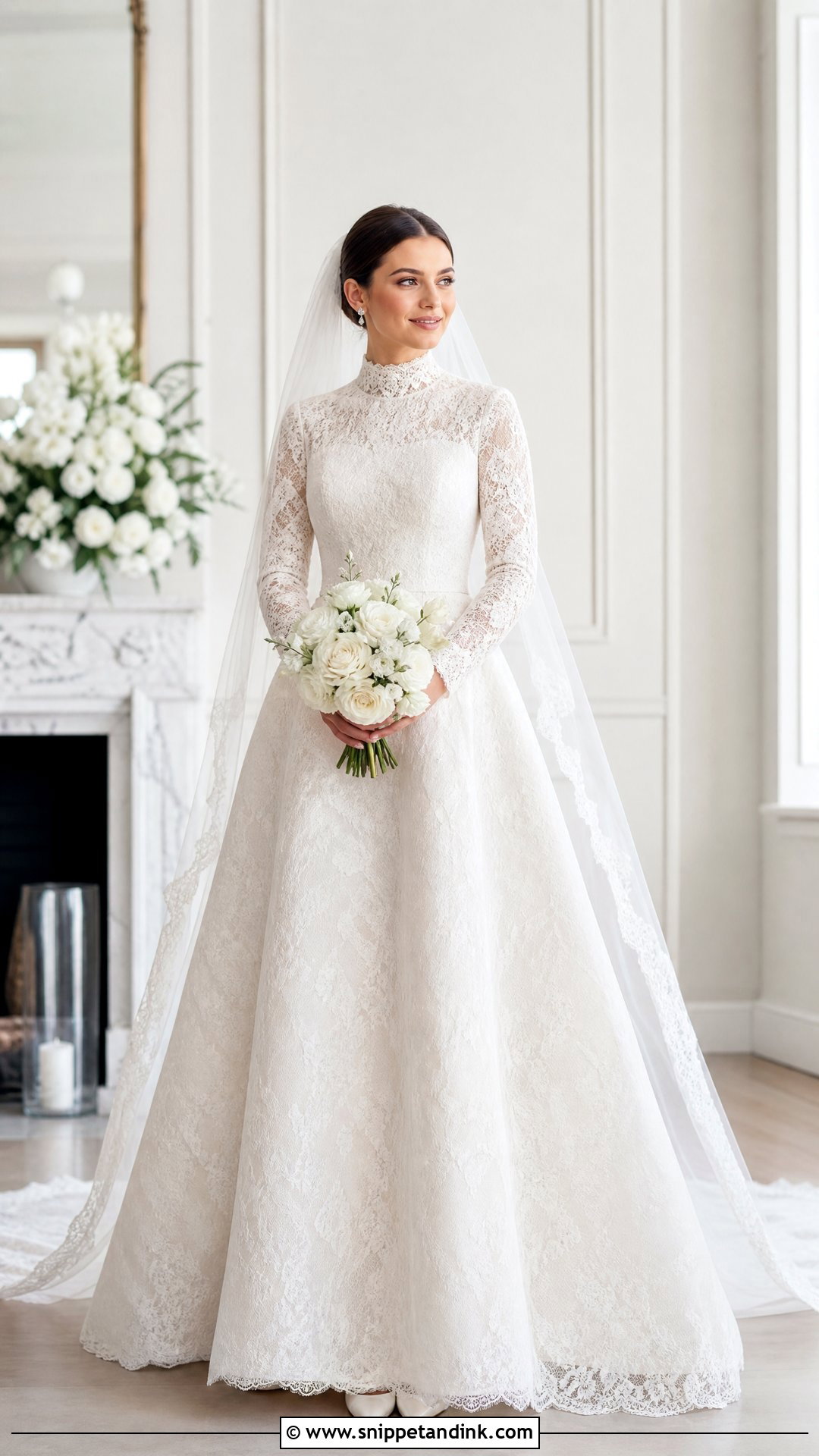
A high neck gives coverage without hiding your shape, provided the waist is clearly marked. Lace with fitted sleeves feels classic, smooth crepe cleaner; an A-line skirt moves softly and a column stays sleek. Leave the throat bare and wear small earrings instead, with closed-toe heels, a simple veil set beneath a low bun and a structured white bouquet. My pairing rule: lace dress, plain veil; plain dress, lightly embroidered veil. I always check the collar while the bride turns her head and looks down, because a stiff high neck can press under the chin in every seated photo. Formal and cool-weather weddings are its natural home.
13. One-Shoulder Wedding Dress
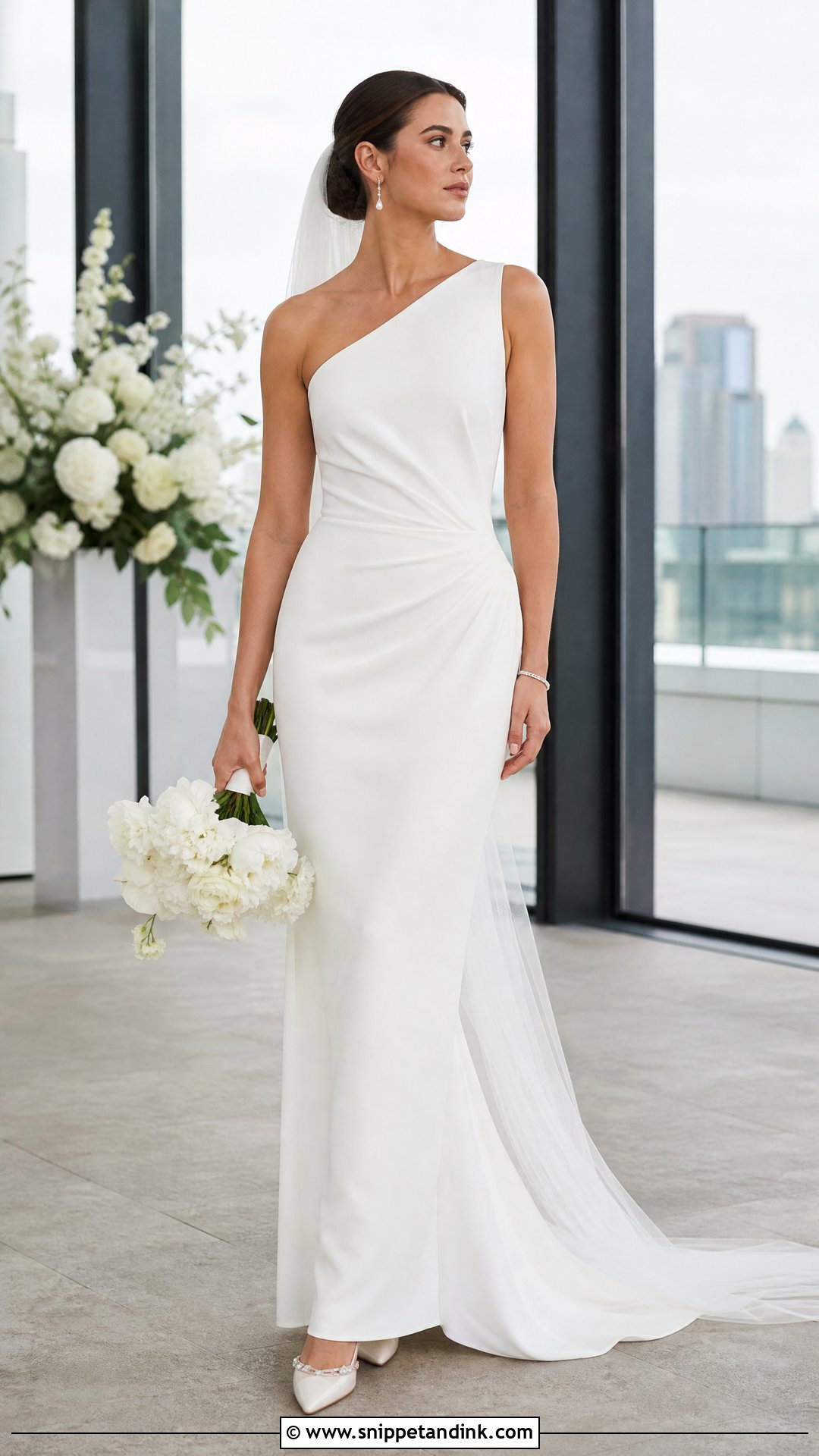
One-shoulder gowns are all about asymmetry, so I balance everything against the bare side. Draped satin flows, fitted crepe holds a sharper line. Skip the necklace for sleek drop earrings, set a side-parted low bun away from the covered shoulder, and let a bracelet on the bare arm even out the weight. Pointed heels, a simple bouquet and a veil attached low at the back finish it. Rooftops and minimalist rooms suit it well. The weak point is the single strap: unless it’s anchored with boning or a hidden band across the back, it slides every time you raise a glass.
14. Corset Bodice Wedding Dress
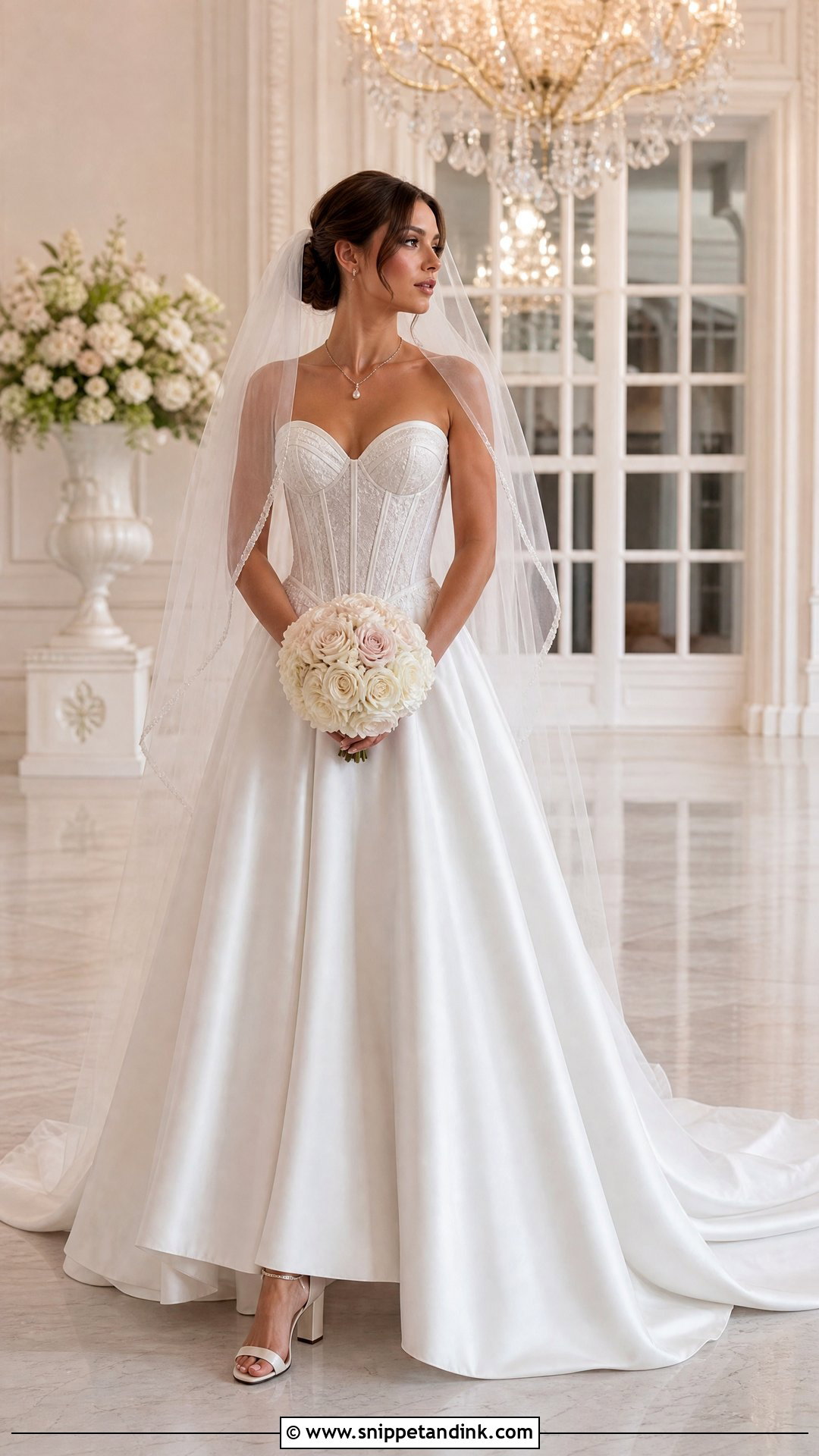
A corset bodice wedding dress uses boning to shape and support, so many brides can skip a separate bra entirely. Pair it with a flowing A-line for balance or a full ball gown for drama; sheer panels feel current, lined fabric covers more. A small pendant, little earrings and a chapel veil falling behind the bodice keep the construction visible, with satin block heels and a rounded bouquet below. Here’s the test I insist on: eat something at your final fitting. A corset that feels fine standing can be miserable after dinner, and you need room to breathe, sit and dance.

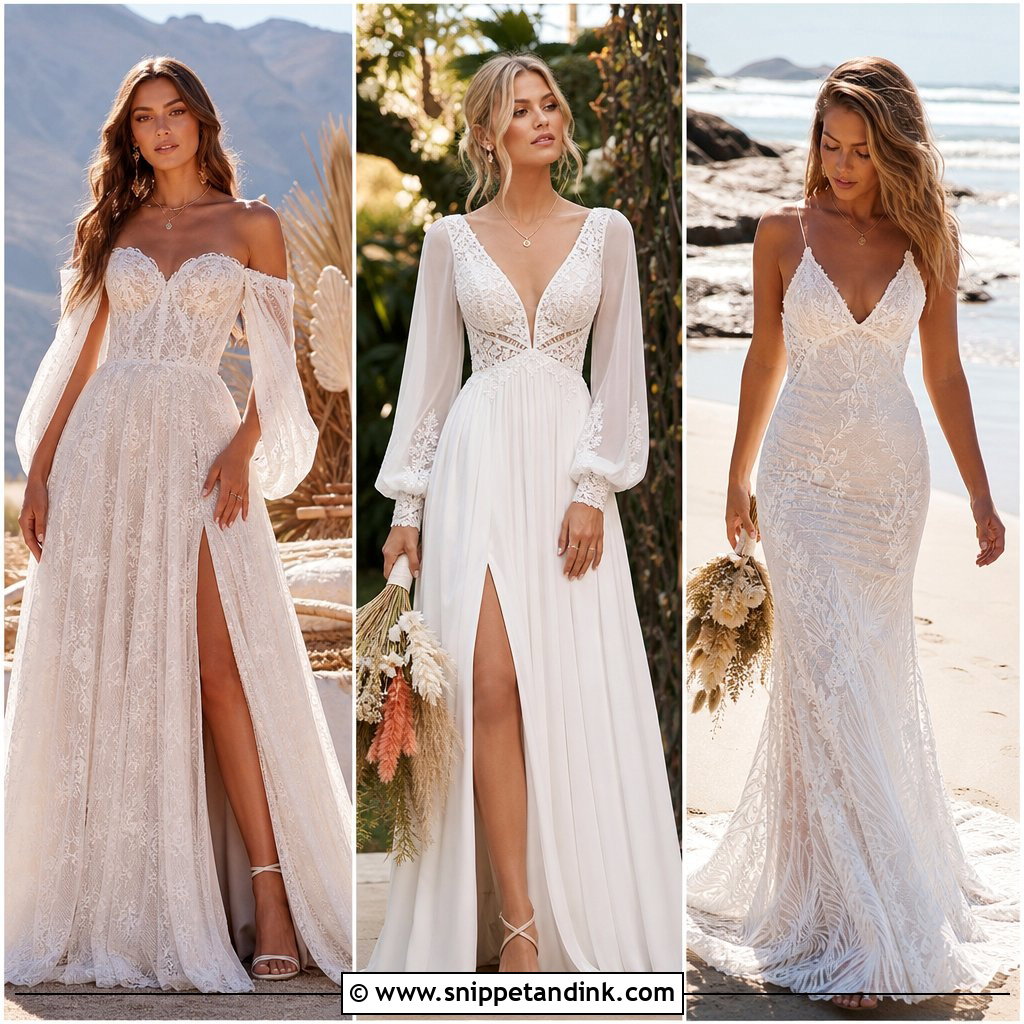
15. Detachable Overskirt Wedding Dress
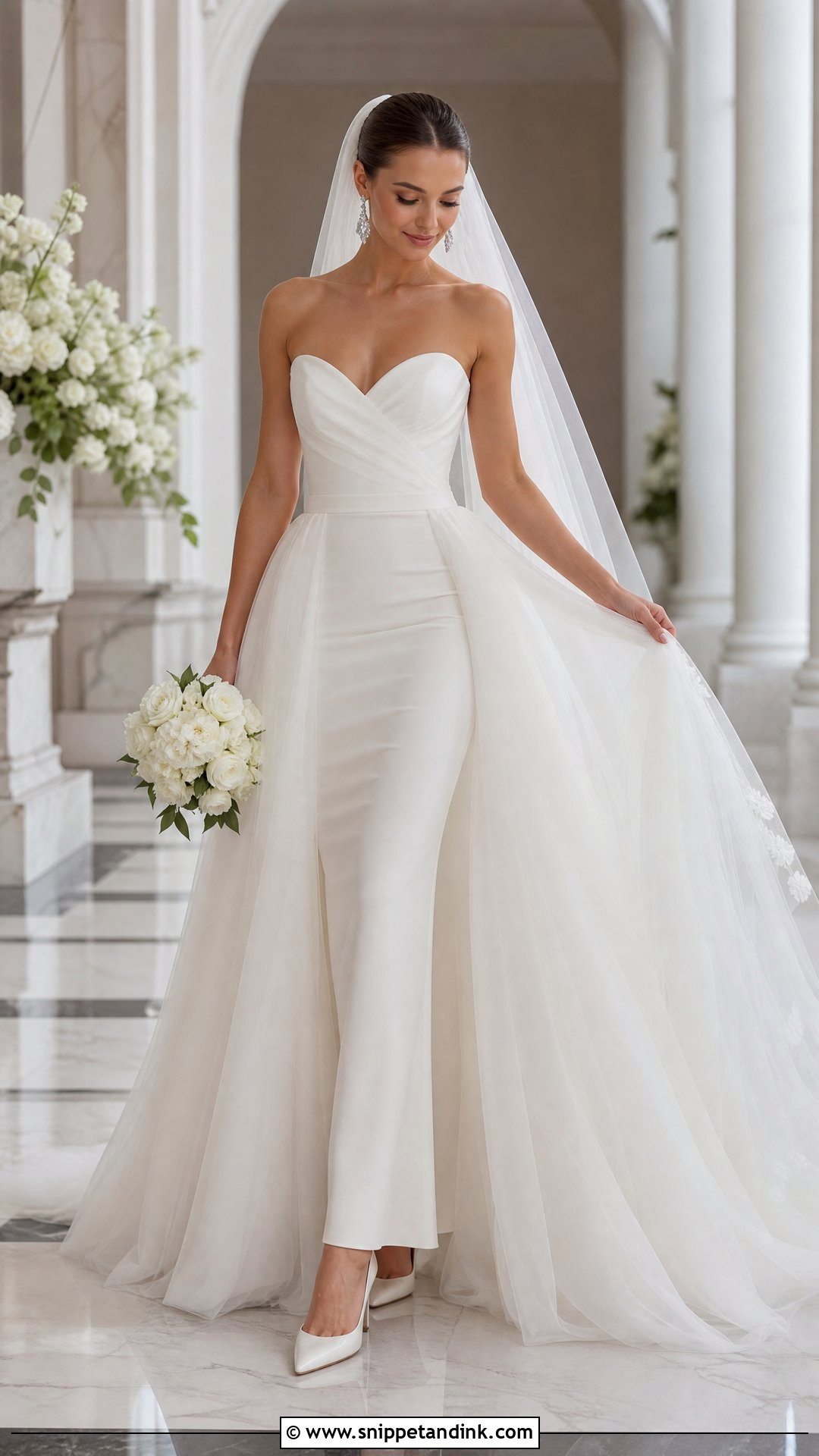
Two looks without a full outfit change is what a detachable overskirt buys you. Underneath sits a fitted sheath or mermaid; over it goes a full satin or tulle skirt for the aisle, worn with a long veil, drop earrings and elegant pumps. After the ceremony the overskirt and veil come off, and a hair comb, bracelet and small clutch refresh the slimmer version for dinner. Ask your seamstress to show you exactly how it fastens, then rehearse with whoever will help you. Hooks buried under tulle are hard to find in a hurry, and the swap should take a couple of minutes, not twenty.
16. Wedding Dress With Cape Veil
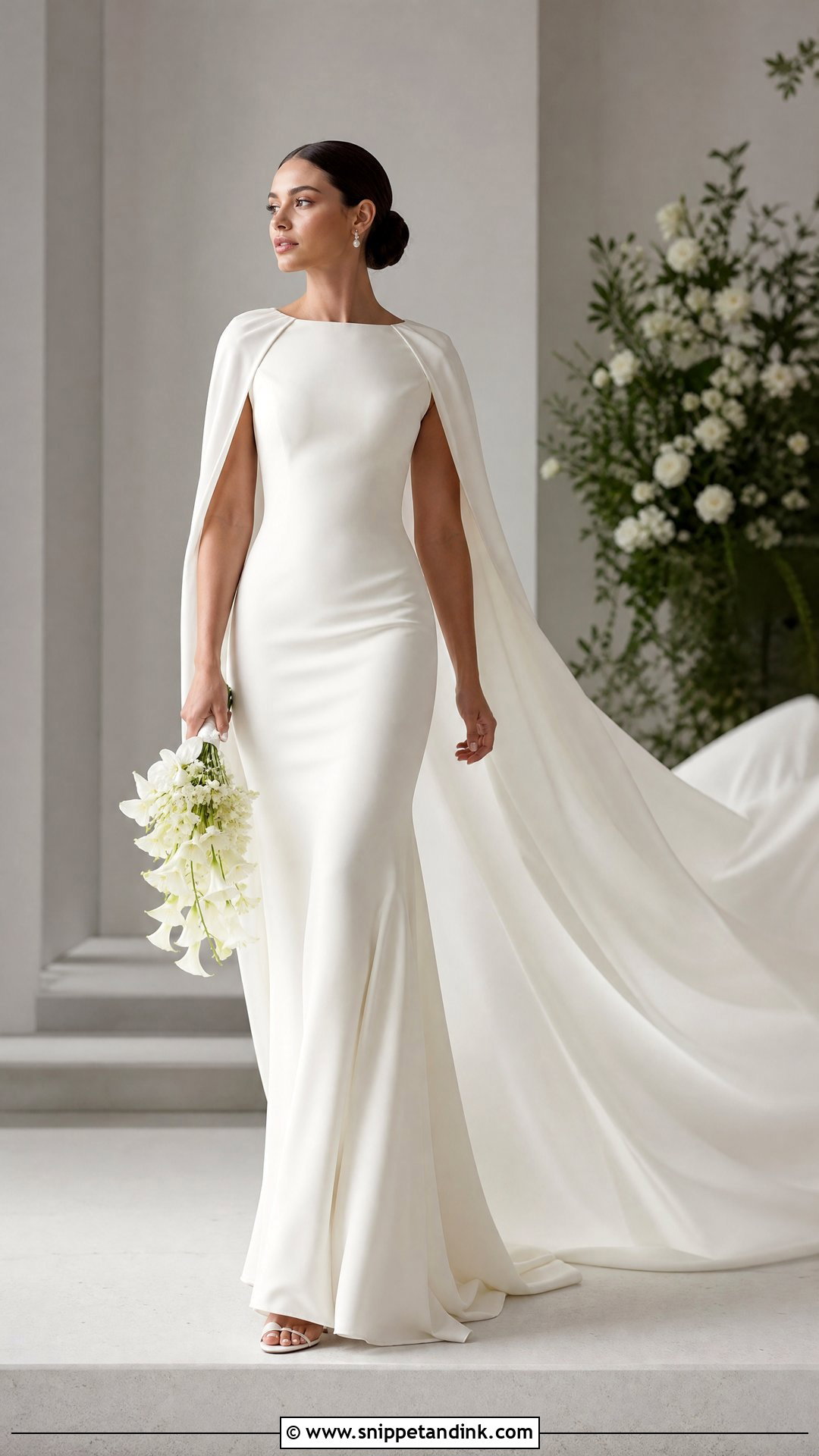
A cape veil gives you the movement of a long veil with nothing pinned into the hair, which matters when your updo won’t hold a heavy comb. Pair it with a clean column, fitted crepe or a plain A-line so the cape carries the drama. It can fasten at the shoulders, neckline or back straps and run to chapel or cathedral length. Polished heels, small earrings and a sleek bun keep everything calm, and a narrow bouquet won’t tangle in the fabric. Leave the necklace off if the cape has an embellished collar. Before buying, confirm it unclips in seconds, because most brides take it off for the reception.
17. Boho Chiffon Wedding Dress
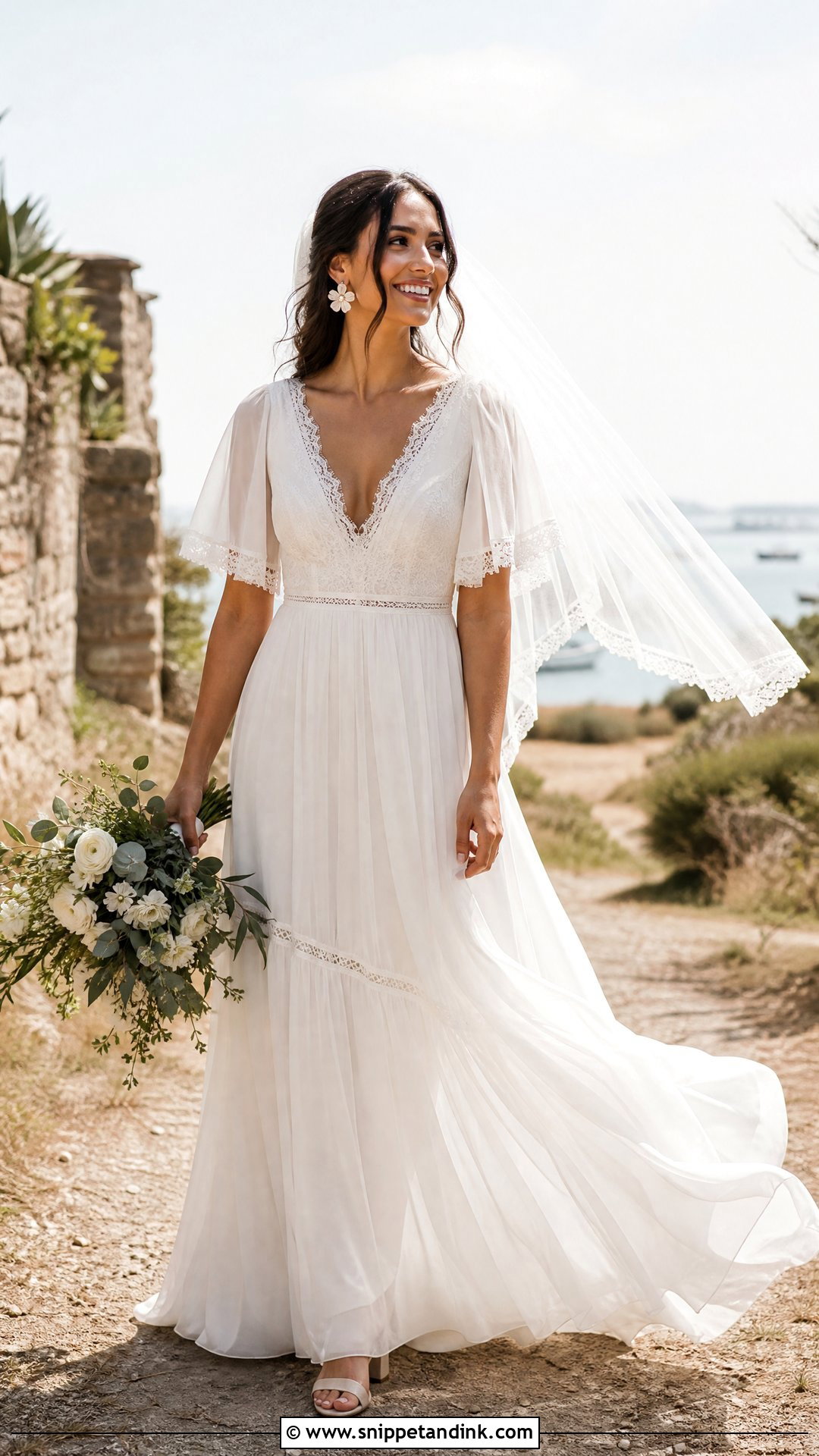
Chiffon floats with every breeze, which is wonderful outdoors until the sun is behind you and the skirt turns sheer. So the first thing I check is the lining, in daylight, next to a window. An empire waist or soft A-line with flutter sleeves suits the fabric. On grass or sand, low block heels or flat bridal sandals stop you sinking. Add small floral earrings, a fingertip veil and a loose bouquet of white blooms and greenery, with textured waves or a relaxed braided updo kept neat enough for the camera. Chiffon also travels well for coastal and destination weddings and needs only a light steam on arrival.
18. Plus-Size A-Line Wedding Dress
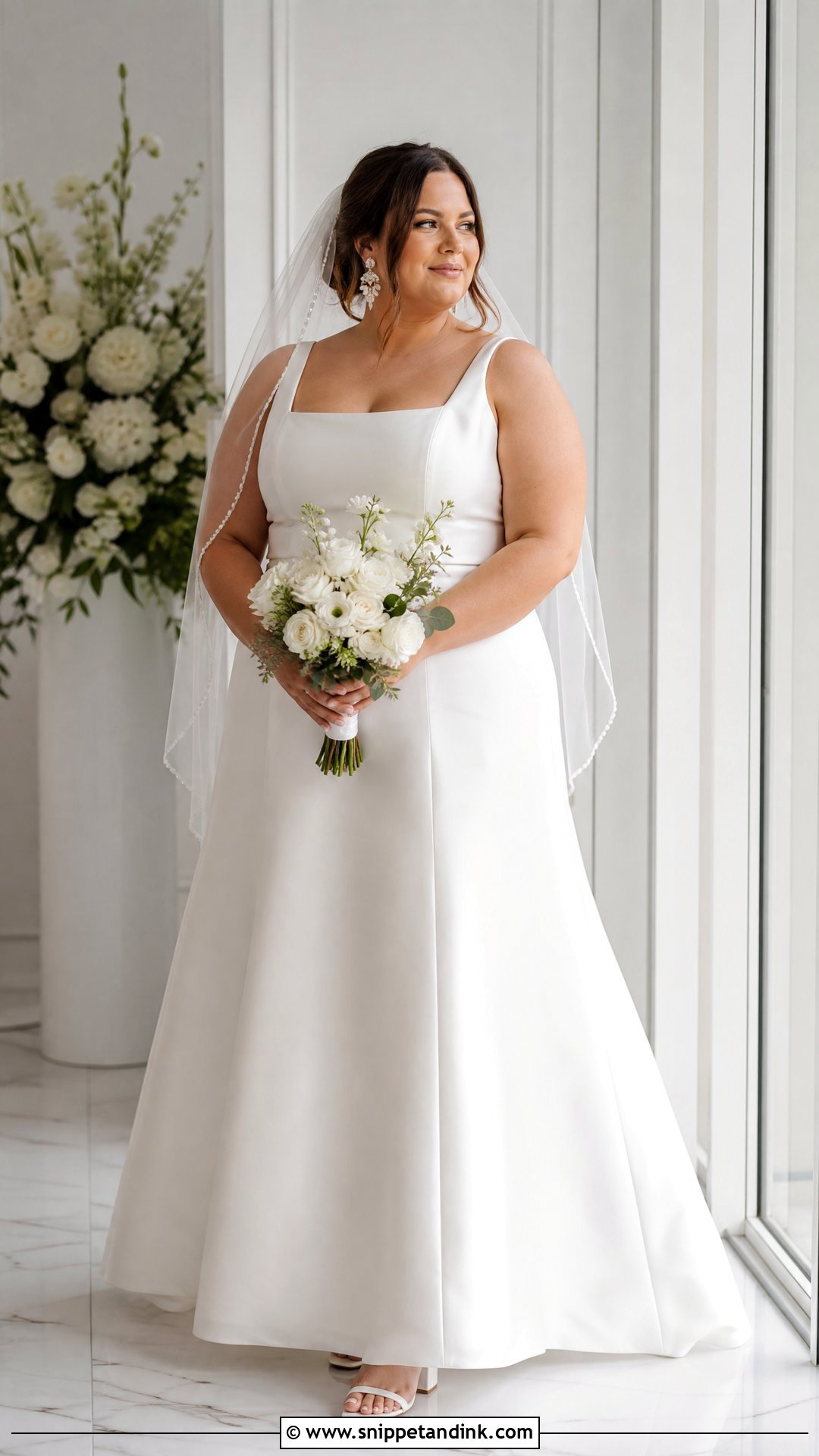
For a plus-size A-line, support comes from construction, not from sizing down. I look for secure straps, proper boning or an internal corset, and a skirt that releases smoothly from the natural waist. Satin reads clean, while lace or appliqués add texture. Block heels, statement earrings, a fingertip veil and a bouquet that feels right in your hands finish it. Sample gowns rarely fit anyone exactly, so judge the shape rather than how the sample pulls, and let alterations handle the rest. The neckline, waist placement and hem should all be fitted to your body and your actual shoes.
19. Petite Sheath Wedding Dress
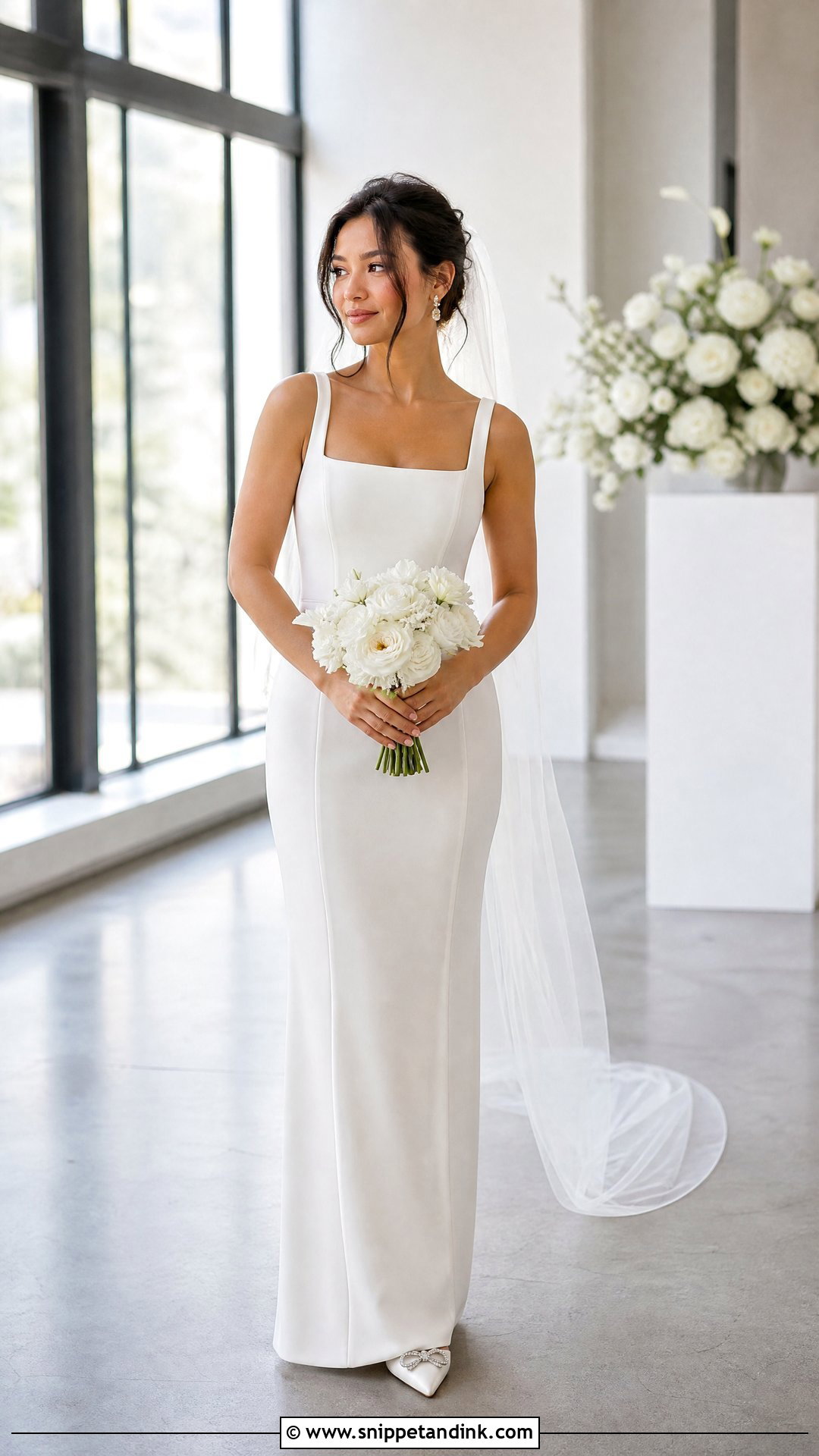
On a petite frame, a sheath with vertical seams and a defined natural waist lengthens you without swallowing you. The skirt should skim the body rather than grip it. A V-neck or square neckline adds structure, and narrow straps keep the scale light. I’d pair it with pointed heels, delicate earrings and a veil without much volume, since a heavy cathedral can end up wearing you. Keep the bouquet compact and the hair in a low bun or half-up style. Hemming is where petite brides gain or lose the line, so bring your exact wedding shoes to every fitting.
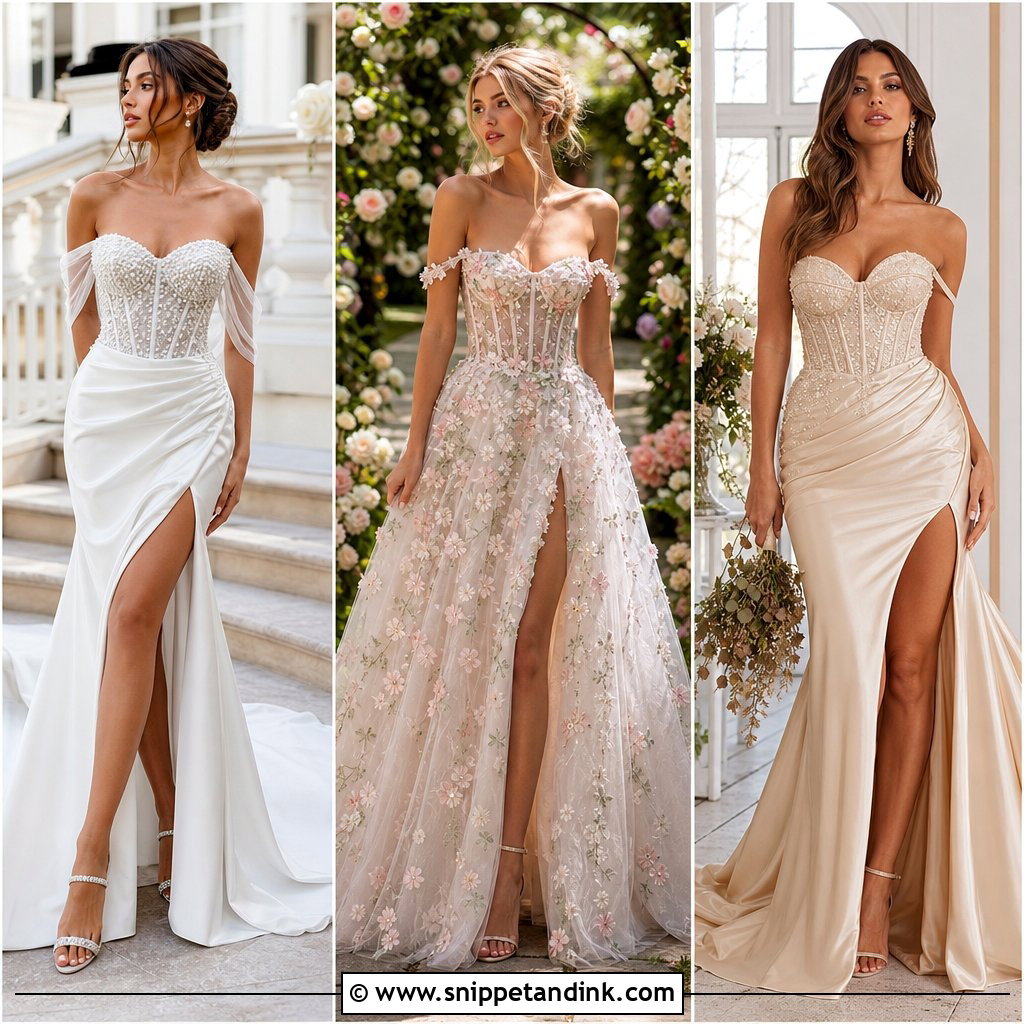
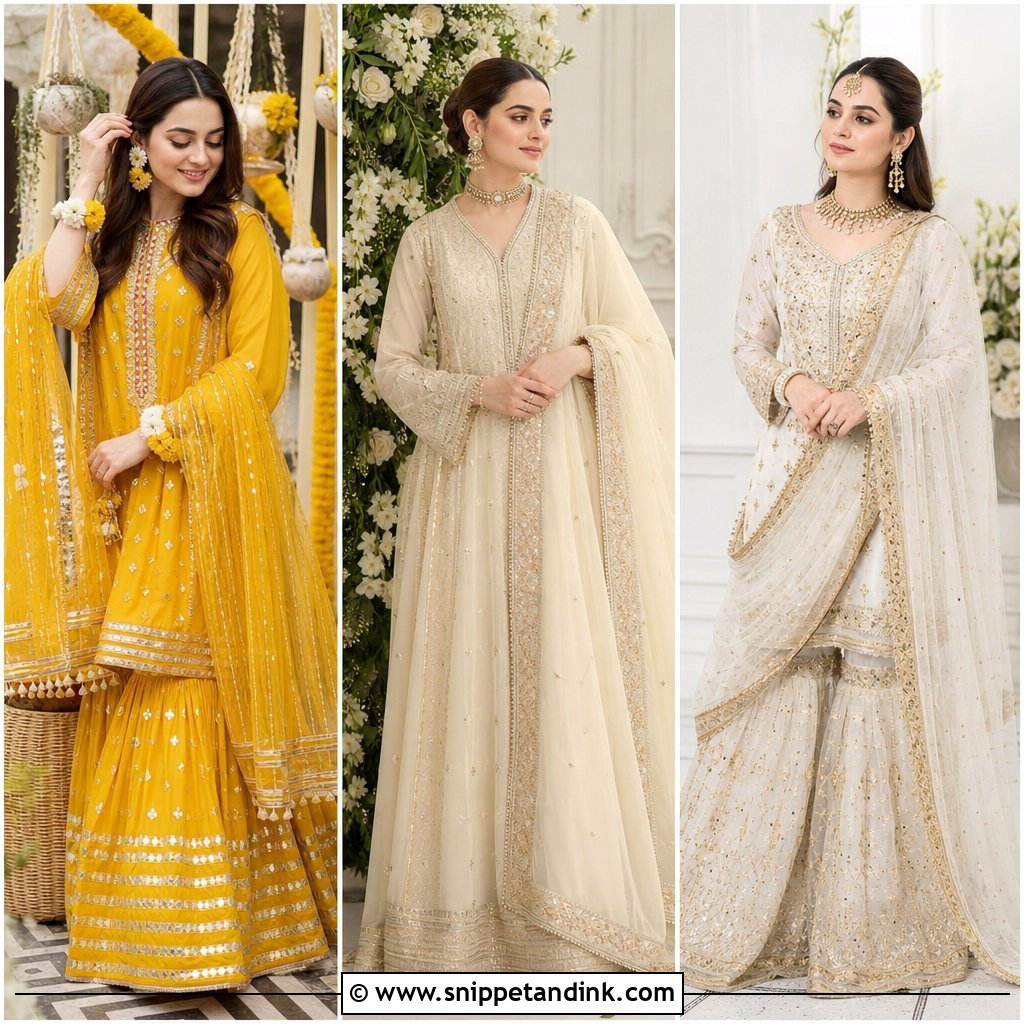
20. Reception Mini Wedding Dress
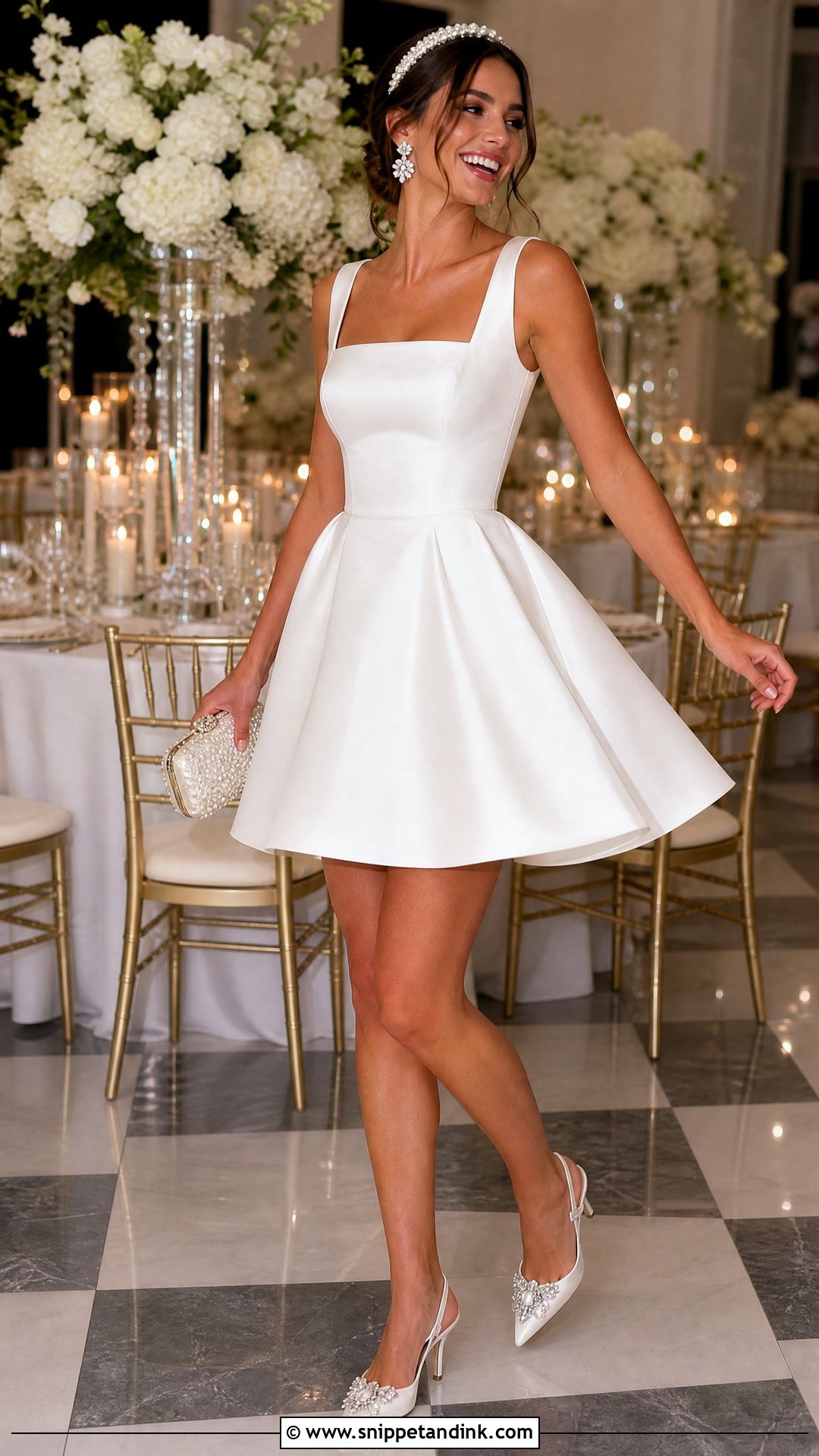
A reception mini is the dress you’ll actually dance in. A structured satin mini or a beaded shift still reads bridal, especially with the veil swapped for a bow or pearl headband. Block heels or embellished flats will carry you through the night, and statement earrings with a small clutch are all it needs. Sit, bend and spin in front of the mirror before buying, because minis ride up faster than you expect. A removable overskirt can even turn one into a ceremony dress, which suits courthouse weddings and after-parties alike.
Satin, Lace, Chiffon and Crepe After a Full Wedding Day
Every fabric above looks perfect at the first fitting. The difference shows after the car ride, the ceremony and hours of sitting, hugging and dancing, so this is how I explain each one to a bride who is torn between two gowns.
Satin
Satin holds structure well but creases wherever you sit, especially across the lap. Lay the skirt out behind you in the car, and ask someone to steam the front before photos if you have a gap between ceremony and portraits.
Lace
Lace hides small creases and forgives a lot, but it snags. Rings with raised settings, Velcro on a groom’s boutonniere pouch and rough chair edges are the usual culprits, so I tell brides to check their jewelry against the bodice at the last fitting.
Chiffon and crepe
Chiffon barely wrinkles and stays cool, though it can cling with static in dry indoor heat. Crepe is the most comfortable of all to sit in for hours, yet it shows every line underneath, so your foundation garments matter more with crepe than anything else.
Fittings, Bustles and the Last Week
I usually suggest the first alteration appointment about two to three months before the wedding, with two or three fittings in total and the final one a week or two out, when your shoes and underwear are settled. Bring whoever will bustle the train to that last fitting and have them do it twice while the seamstress watches. A French bustle tucks fabric under the skirt and an over bustle hooks it up on top; either is easy once you’ve practised, and close to impossible to work out in a dim hallway at the reception.
When you collect the gown, hang it by the inner loops, not the shoulders, in a breathable cotton bag rather than plastic, and keep it away from radiators and sunny windows until the morning of the wedding.
The Dress Should Still Feel Like You at Midnight
The gown that looks best on someone else’s feed isn’t necessarily yours. What matters is the whole outfit: how it supports your body, suits your venue and still feels comfortable after hours on your feet. Use these 20 Said Yes to the Dress Ideas to narrow silhouettes and fabrics before you book appointments. Bring reference photos, but leave room for surprises; plenty of brides walk in set on a mermaid and leave in an A-line. Walk, sit and raise your arms in every contender, then pick the one that makes you look like yourself on a very good day.
You'll Like These Ideas:





Leave a Reply