
Plenty of the brides I dress never wanted a white ball gown, and nobody should talk them into one. Today’s nontraditional options run from colored tulle and black lace to tailored suits, jumpsuits, short hemlines, separates and sequins. Whether one of them works rarely comes down to the color. It comes down to fit, to how the fabric behaves after six hours of sitting and hugging, and to whether you can move the way your day needs you to. Below are 20 complete looks, each with the styling I’d pair with it and the fitting detail I’d watch.
Where an Alternative Wedding Dress Usually Comes From
Most bridal salons carry a few colored or black gowns, but many alternative looks come from somewhere else, and each route runs on a different clock. I’d work out which one you’re shopping in before you fall for a picture.
Bridal labels in color
Plenty of bridal designers offer their styles in blush, champagne or black. These are usually made to order, so plan on several months for delivery, often six or more, with alterations on top. Ask for a fabric swatch in your color, because an ivory sample tells you very little about how black lace or red crepe will sit on you.
Eveningwear and ready-to-wear
Sequin gowns, jumpsuits, suits and minis often come from eveningwear or designer ready-to-wear. You can have them in weeks, but they’re cut to standard sizes with narrow seam allowances, so there’s less room to let anything out. Take the piece to a tailor before the return window closes, not after.
Custom work and dyeing
A dressmaker can make a gown in any color, and silk takes dye evenly. Polyester satin barely takes dye at all, so don’t count on dyeing a white polyester dress later. Custom pieces need the most fittings, usually three or more, which is why I’d start them earliest.
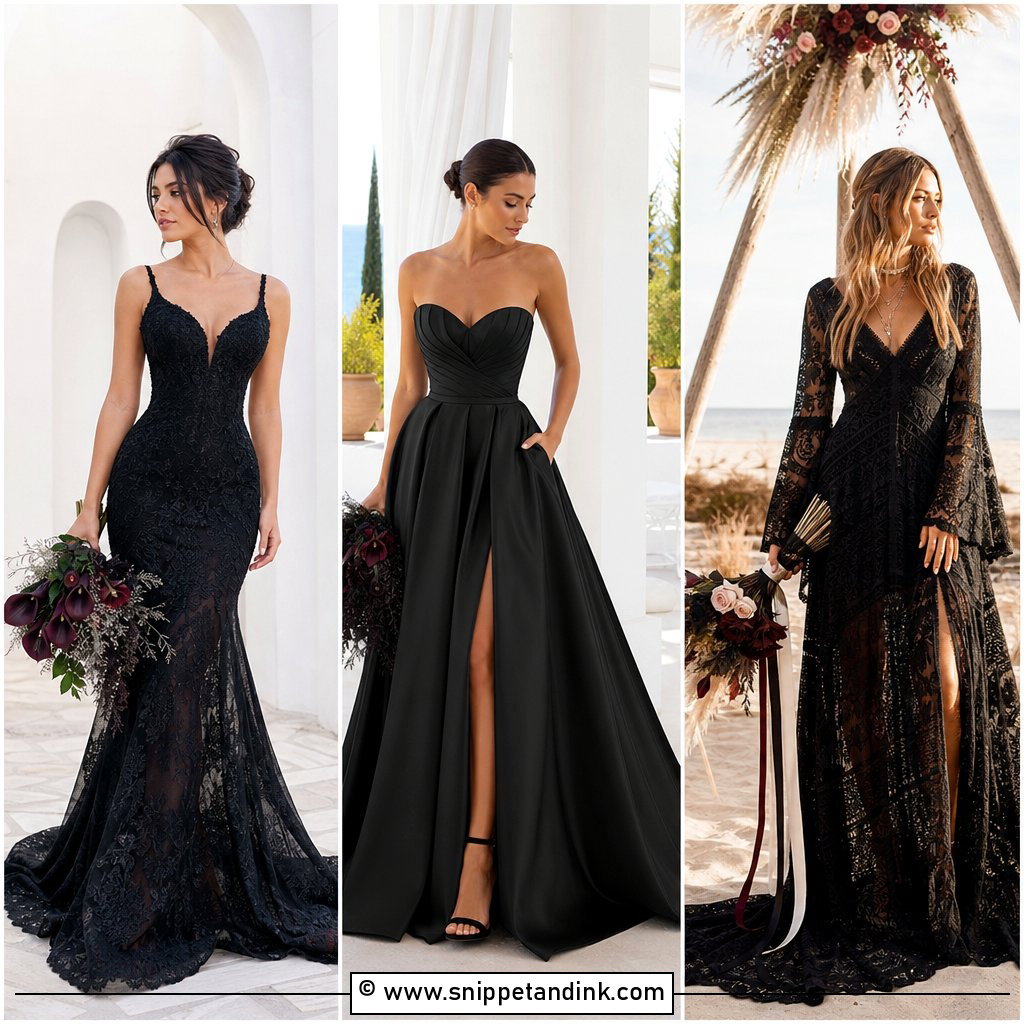
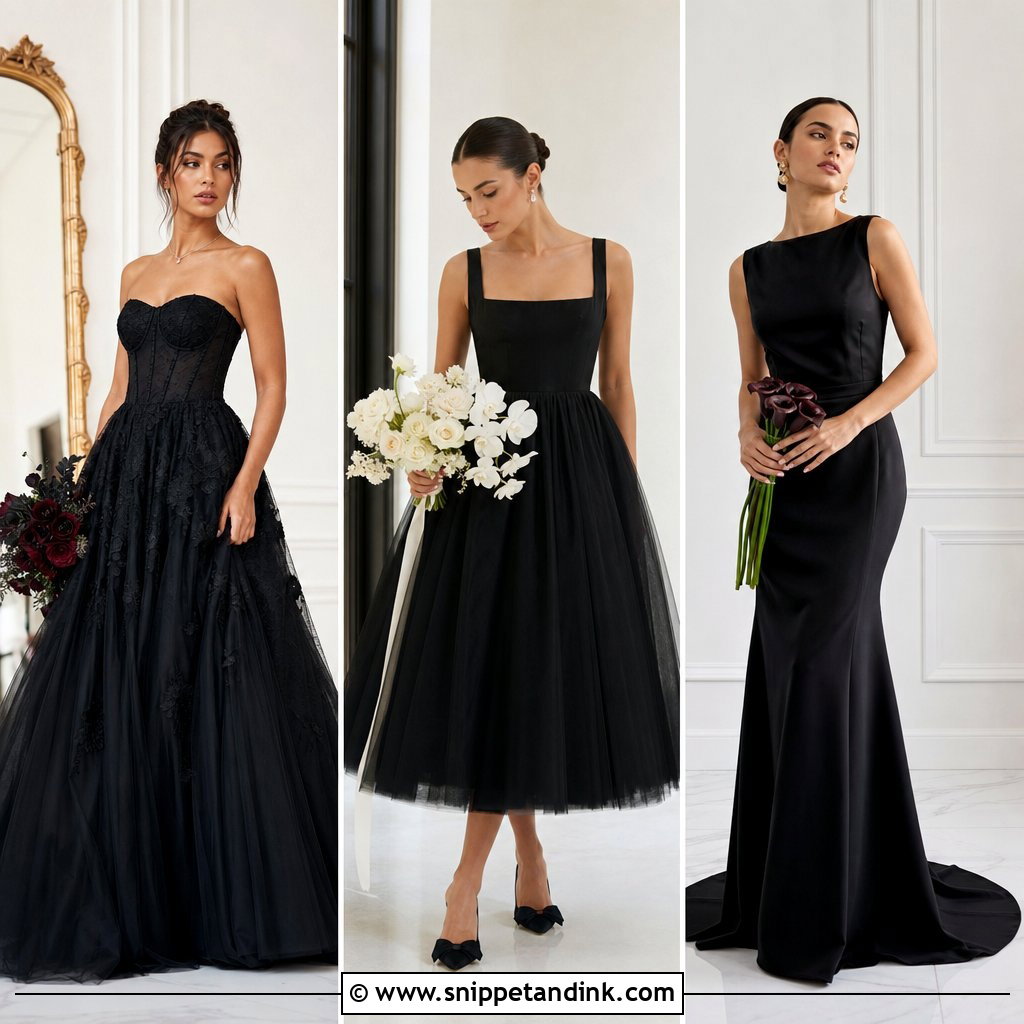
1. Black Lace Wedding Dress
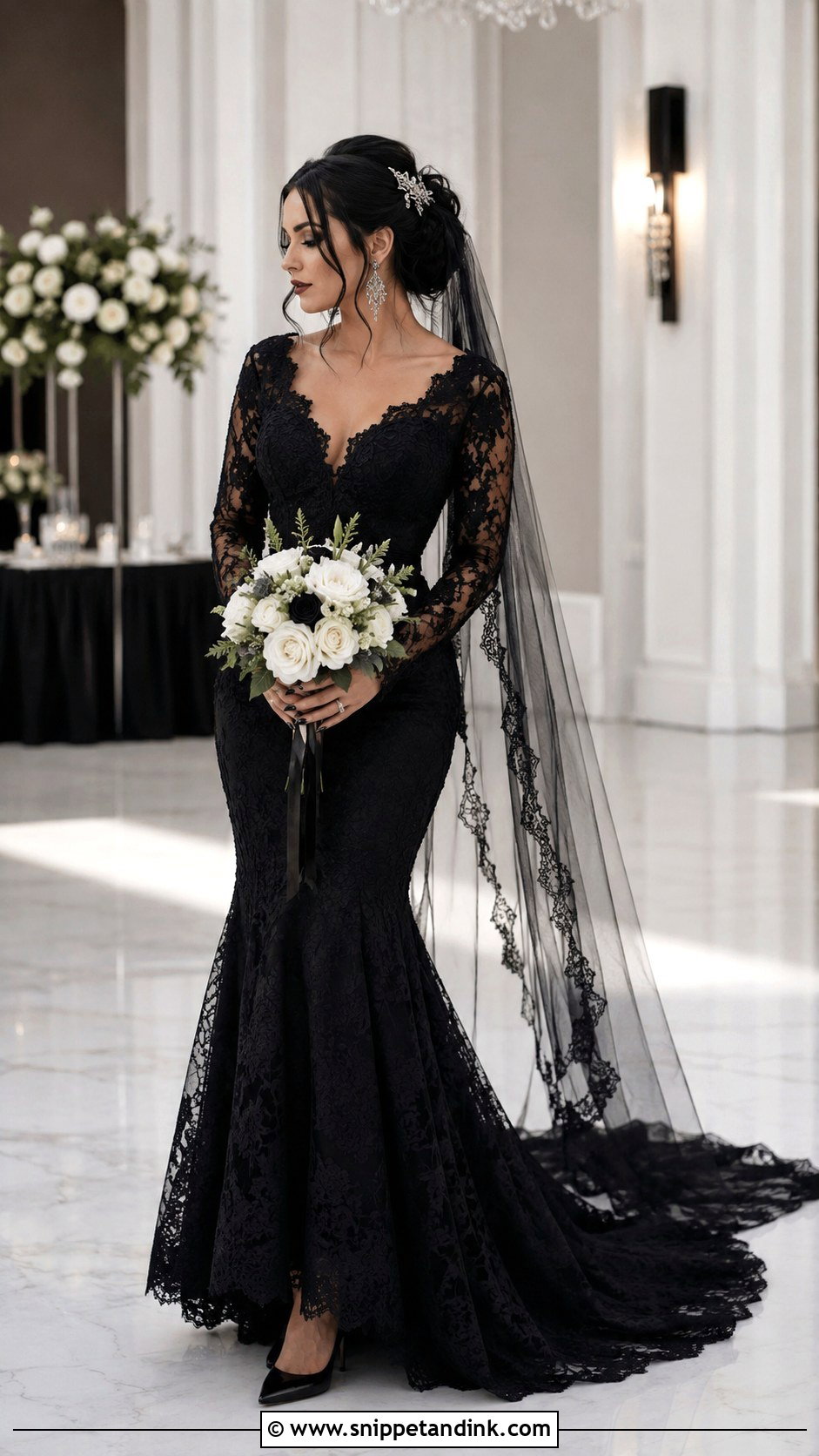
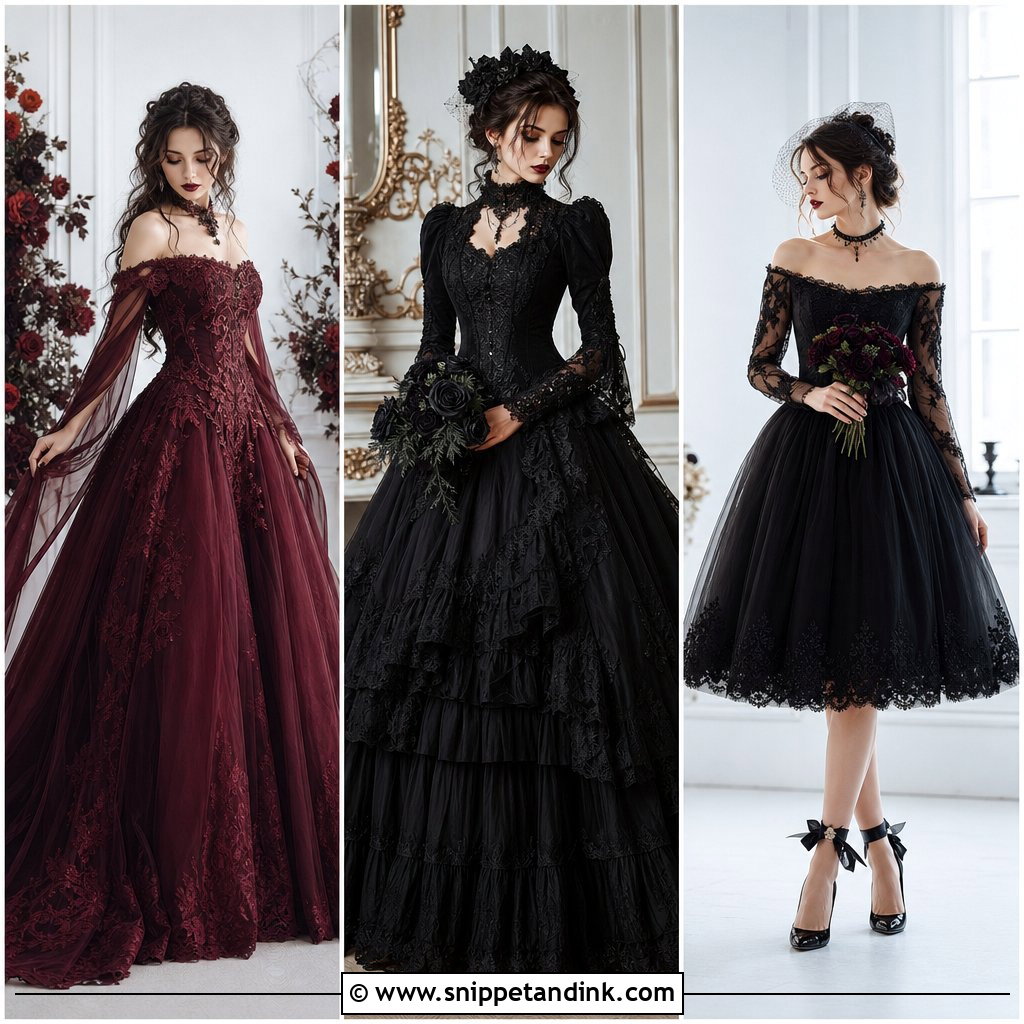
Black lace reads dramatic, but the lining decides how it looks up close. Lace over a nude or grey lining shows every motif, while lace over black flattens into one dark shape from across a room, so I always ask the salon to show both. A mermaid cut suits a formal ceremony if you’re happy taking small steps; an A-line lets you climb stairs and dance without hitching the skirt. Pointed black pumps, an antique comb and silver or crystal earrings finish it. A black tulle veil keeps the palette dark, and an ivory one gives a sharp contrast. Keep the bouquet pale with trailing greenery so it doesn’t vanish against the gown, and if the evening turns cold, a matching black velvet jacket covers your arms without hiding the bodice.
2. Blush Pink Tulle Wedding Dress
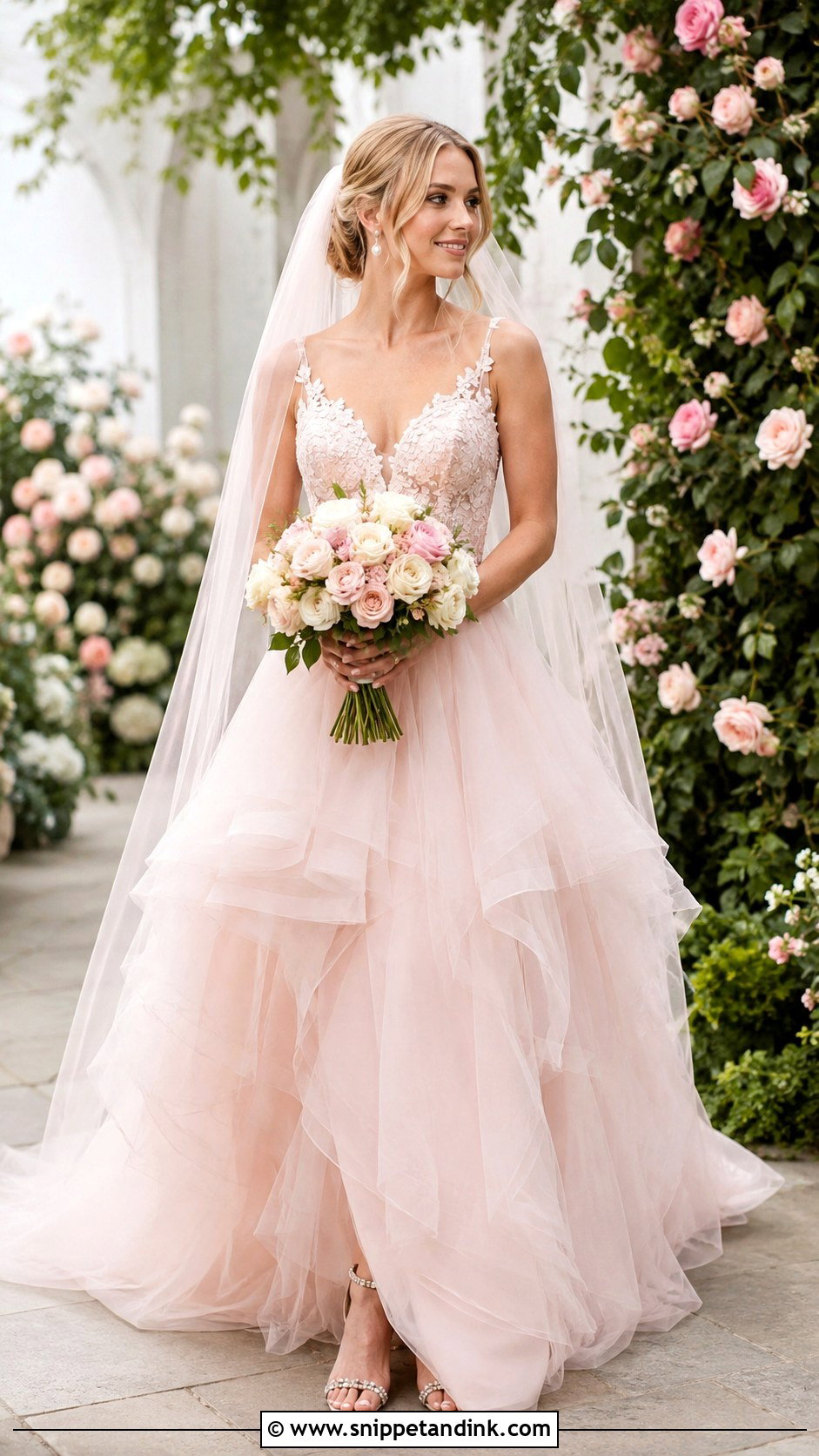
Blush is the gentlest step away from white, and many bridal designers offer it as a standard color option rather than a special order. Look for layered tulle on an A-line skirt, a supportive bodice and a few floral appliqués. Tulle snags on beaded clutches and bracelet clasps, so I keep the accessories smooth: champagne sandals, pearl drops and a small satin bag. A blush veil blends in, while an ivory one makes the pink read more clearly. It sits naturally in a garden or a spring ceremony. Carry cream, pale pink and muted green flowers, and wear a sleek low bun or loose waves so the airy skirt has something calm above it.
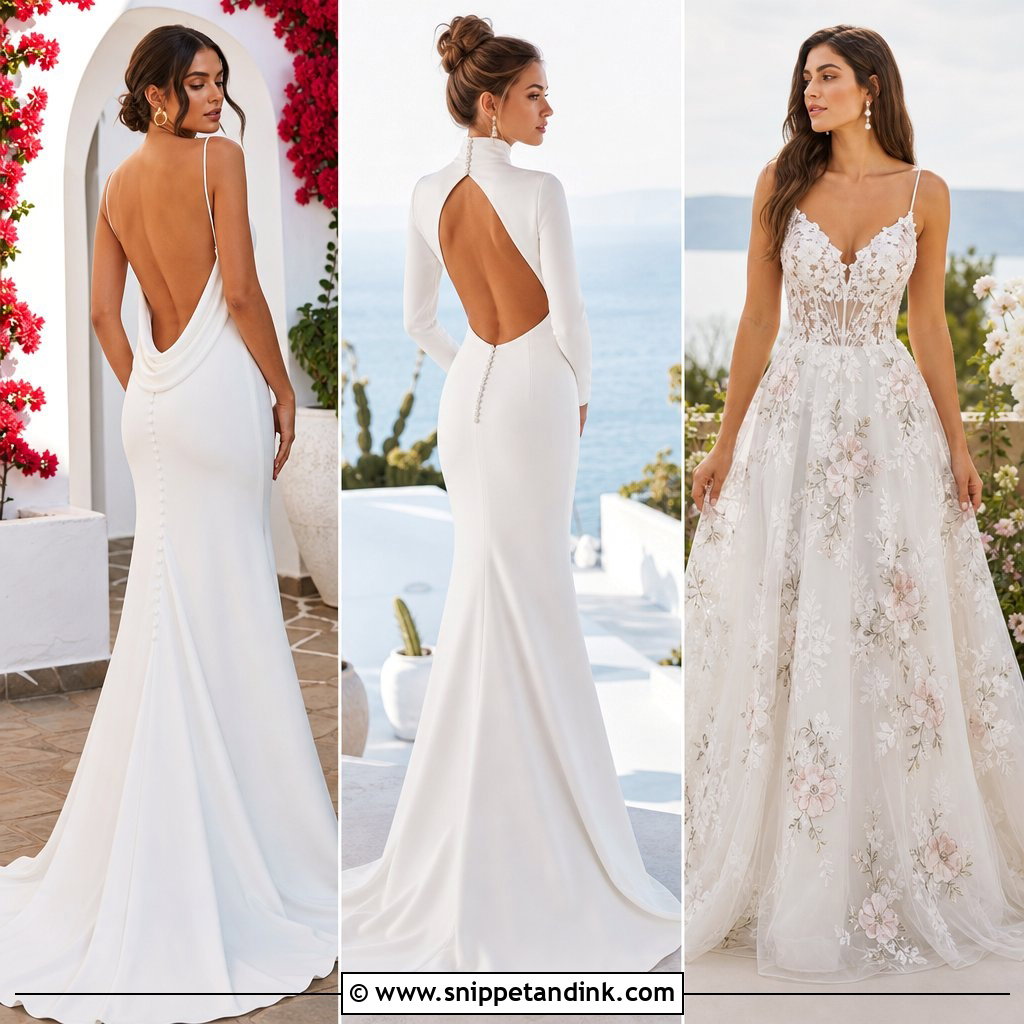
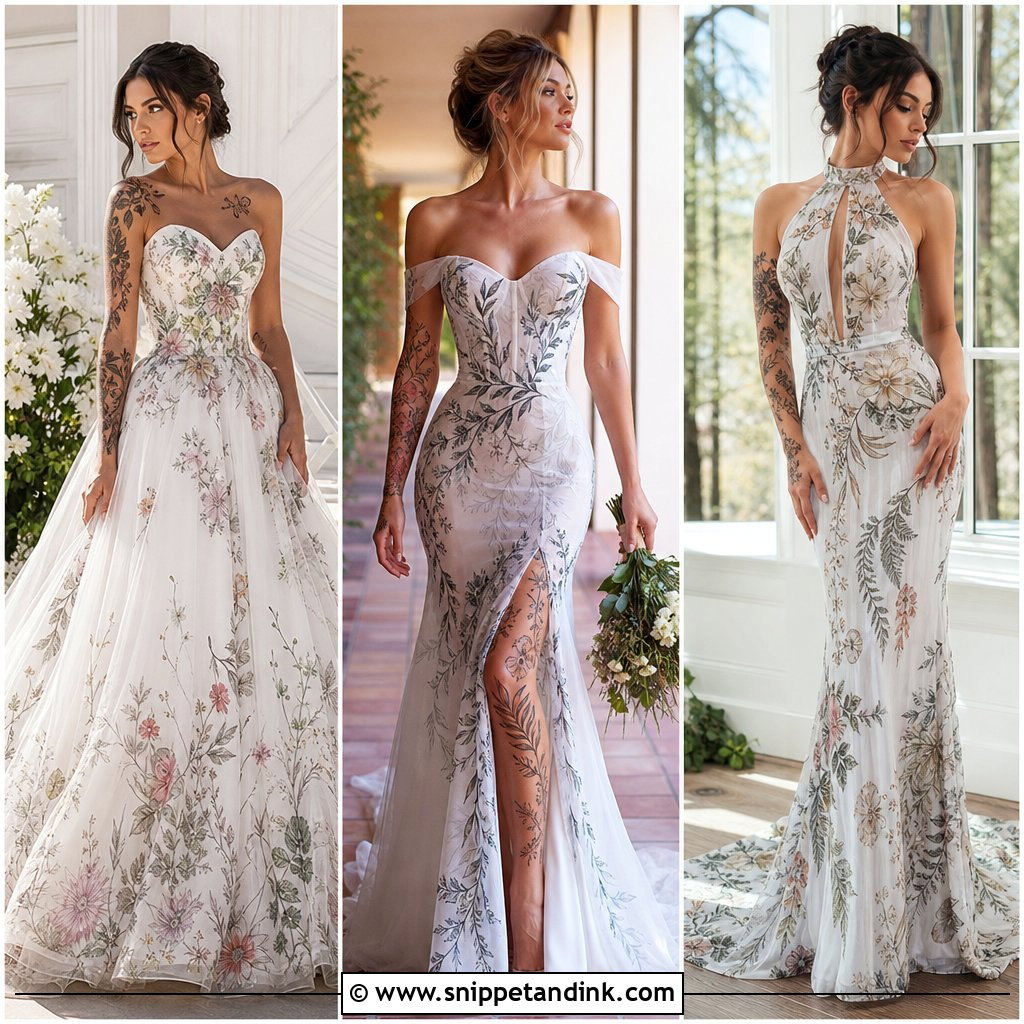
3. Floral Embroidered Wedding Dress
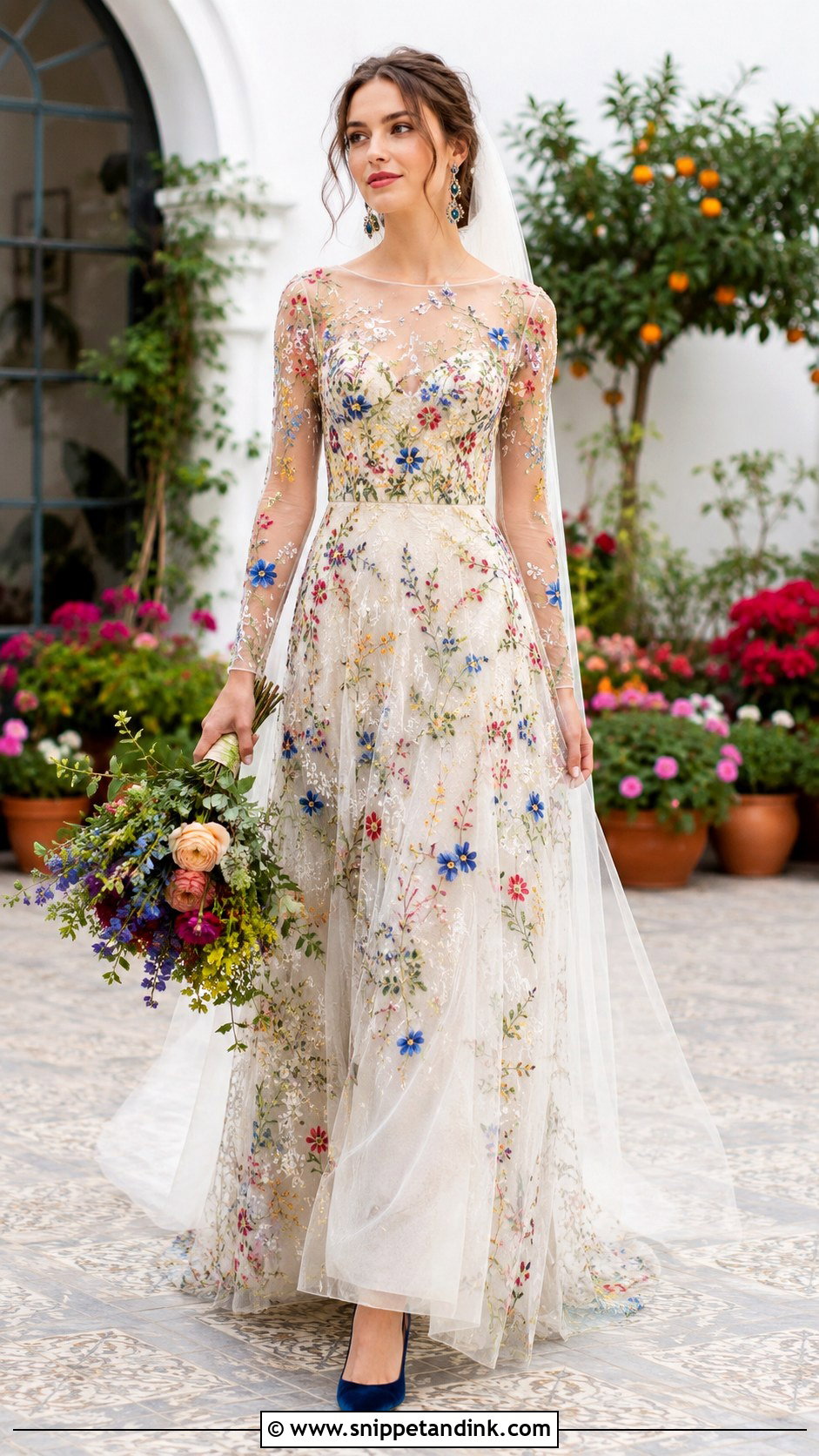
Colorful embroidery is heavier than it looks. Dense threadwork on a sheer overlay drags the fabric down, so the first thing I check at a fitting is whether the lining is cut to carry that weight or whether the skirt will sag at the hips by evening. A soft A-line or column keeps the pattern from overwhelming you, especially walking through an outdoor ceremony. Take one color from the embroidery into your shoes, maybe blue velvet pumps or pale green block heels, and stop there. Small gemstone earrings, a plain veil and a loose seasonal bouquet suit the garden mood. In the hair, a small floral pin works better than a large crown, which ends up arguing with an embroidered bodice.
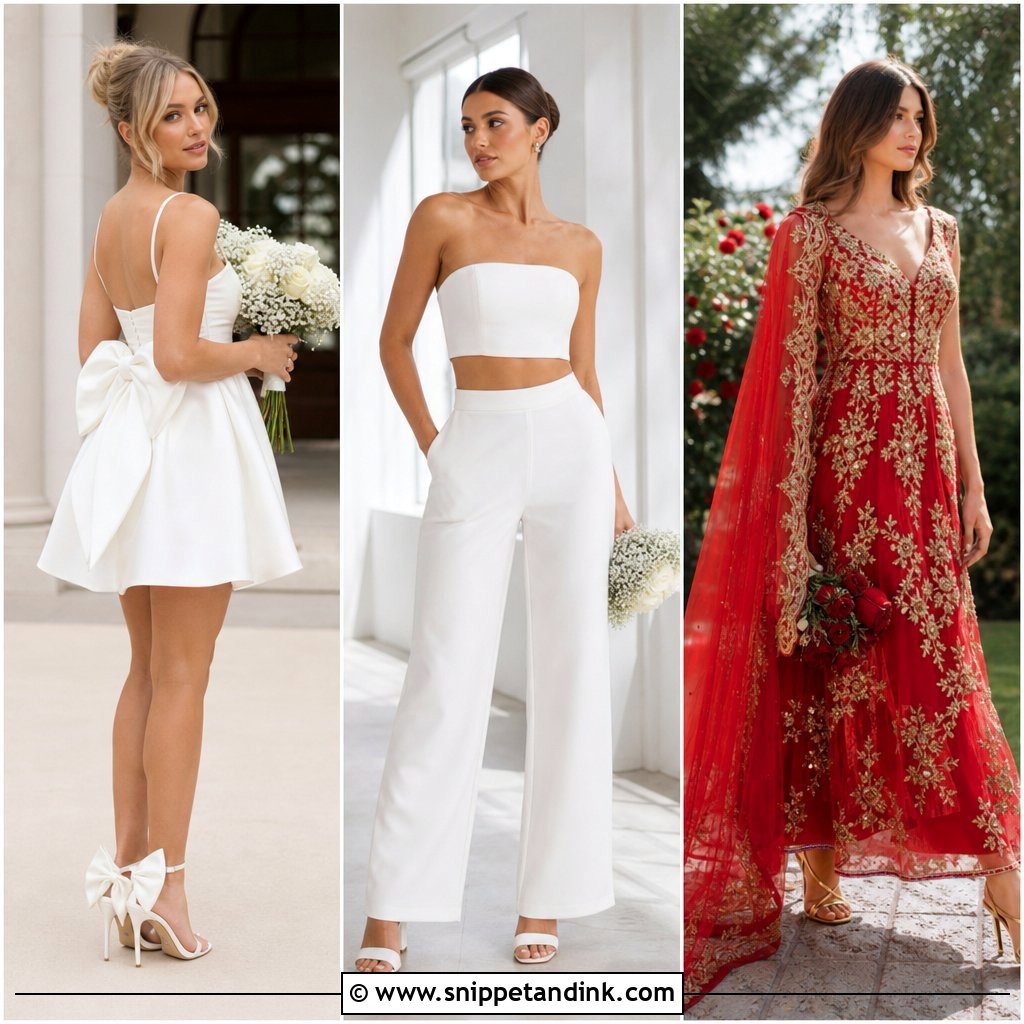
4. Red Satin Wedding Dress
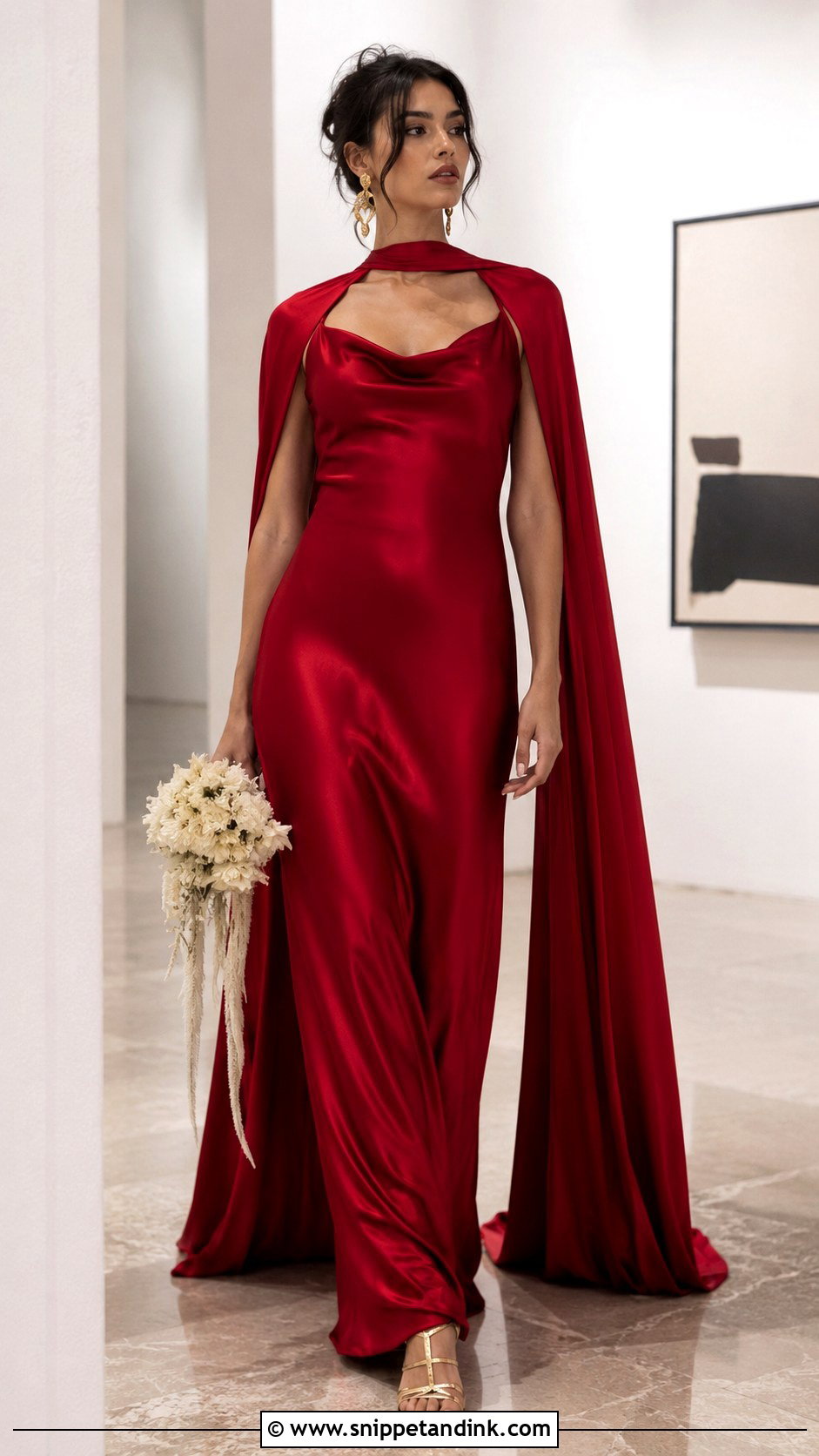
Red satin makes an entrance, and in Chinese and many South Asian traditions red is the customary bridal color rather than an alternative one. Choose the shade against your skin in daylight, from bright scarlet, deep crimson or muted burgundy. Satin shows every pulled seam and every ripple from a poorly fitted bodice, so this is a dress where I’d budget for a good tailor before jewelry. A clean column, a bias cut or a softly structured ball gown all suit it. Gold sandals, sculptural earrings and a compact gold clutch are plenty. A matching red veil or a cape cut from the same fabric gives the ceremony finish, and cream or deep red blooms with dark greenery keep the bouquet simple.
5. Silver Sequin Wedding Gown
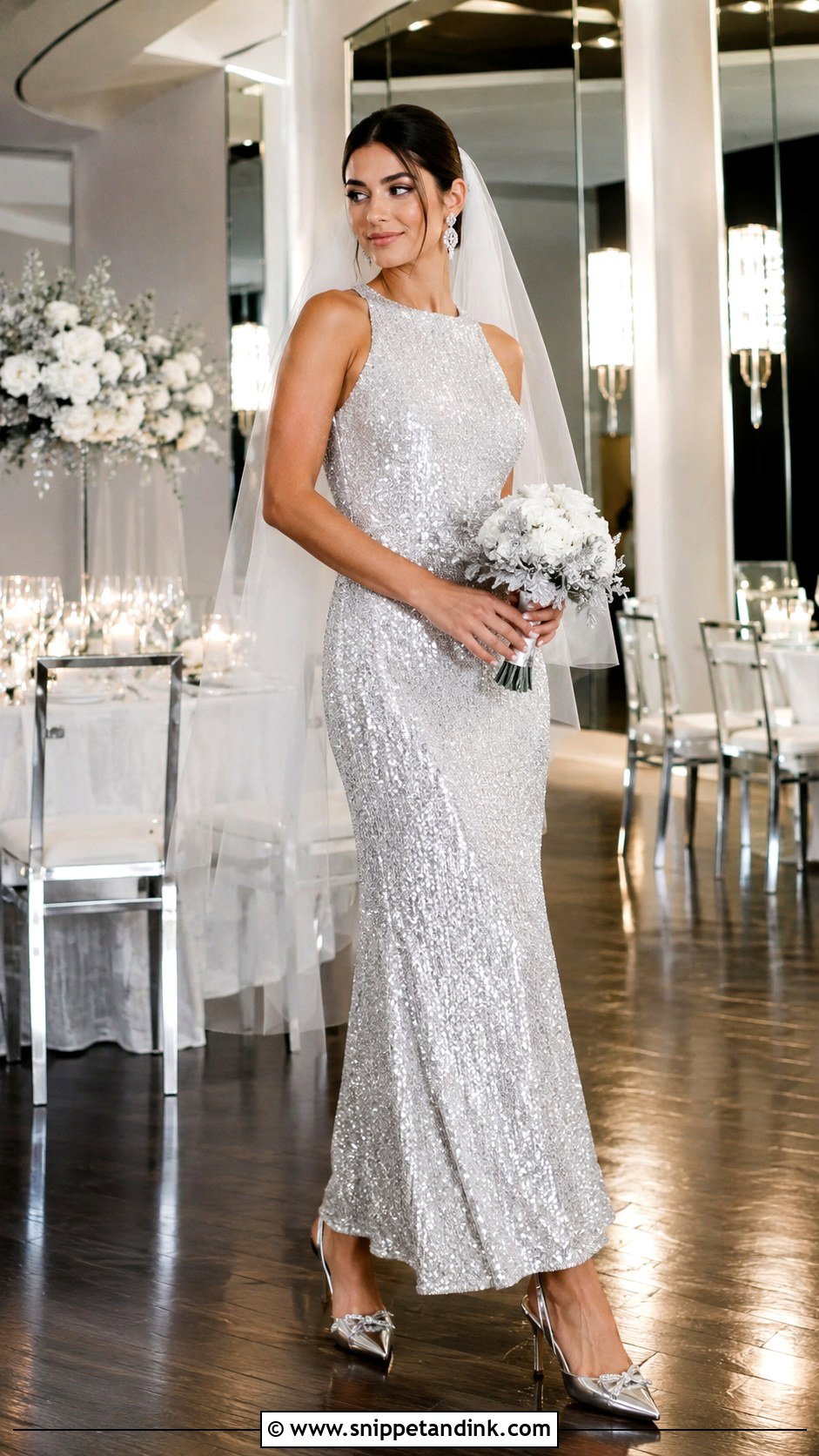
Sequin gowns are the hardest dresses I send for alterations. Every seam that gets taken in needs its sequins unpicked from the seam allowance and hand-sewn back afterwards, so allow extra time and expect a higher alteration bill. Choose a streamlined shape with a soft lining, secure straps and sequins that lie flat. A column feels sleek; a flared skirt moves more on the dance floor. Check the underarm too, because scratchy sequins there rub skin raw over a long evening. Style it with silver slingbacks, crystal earrings and a small mirrored clutch, then add plain white tulle or a sheer silver-grey cape instead of a beaded veil. White flowers with silvery foliage soften the shine without bringing in more colors.
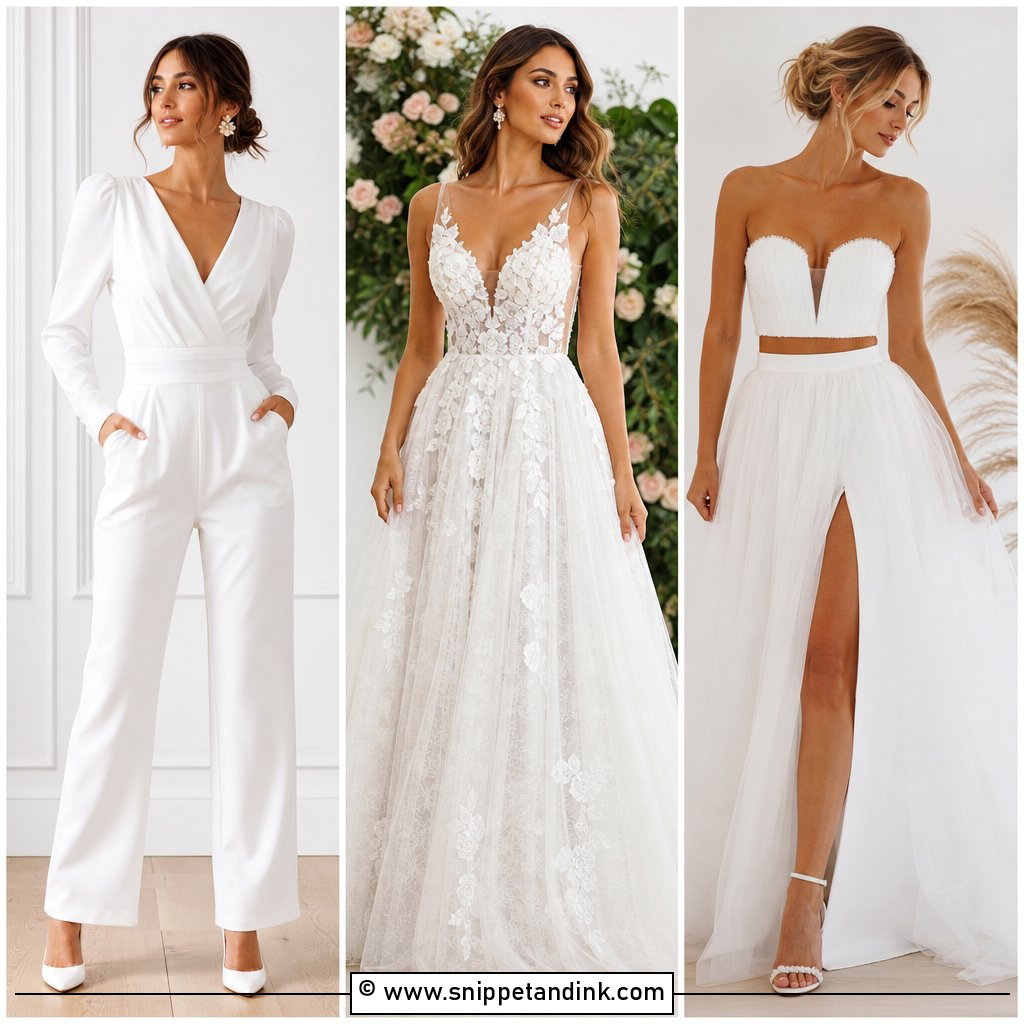
6. White Bridal Jumpsuit
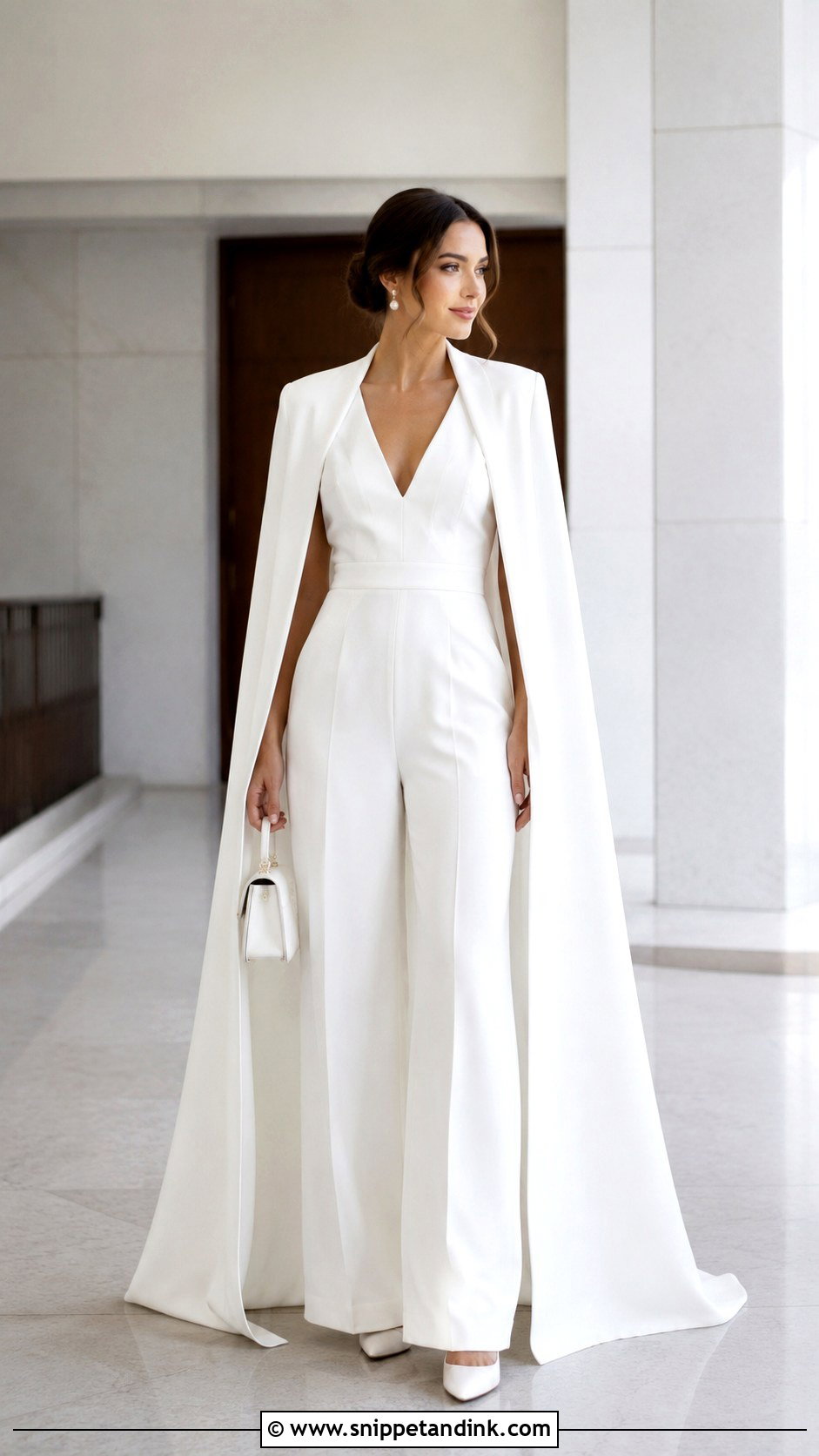
Pants suit a lot of brides better than a skirt, and a wide-leg white jumpsuit with a defined waist is the cleanest way to wear them. Crepe gives a tailored line; satin moves more and shines. The hard part is fit, because rise, waist, bodice and trouser length are one garment: shorten the torso and the crotch moves with it. At the fitting I have you sit, walk and raise both arms before anything is pinned. Hem it to the exact shoes, whether pointed pumps under a longer leg or embellished flats for comfort. Then add the ceremony piece, such as a detachable cape or a shoulder-length veil, with pearl earrings and a structured mini bag. One unglamorous note: rehearse the bathroom routine, and make sure the back zip is one a friend can manage quickly.
7. Ivory Bridal Pantsuit
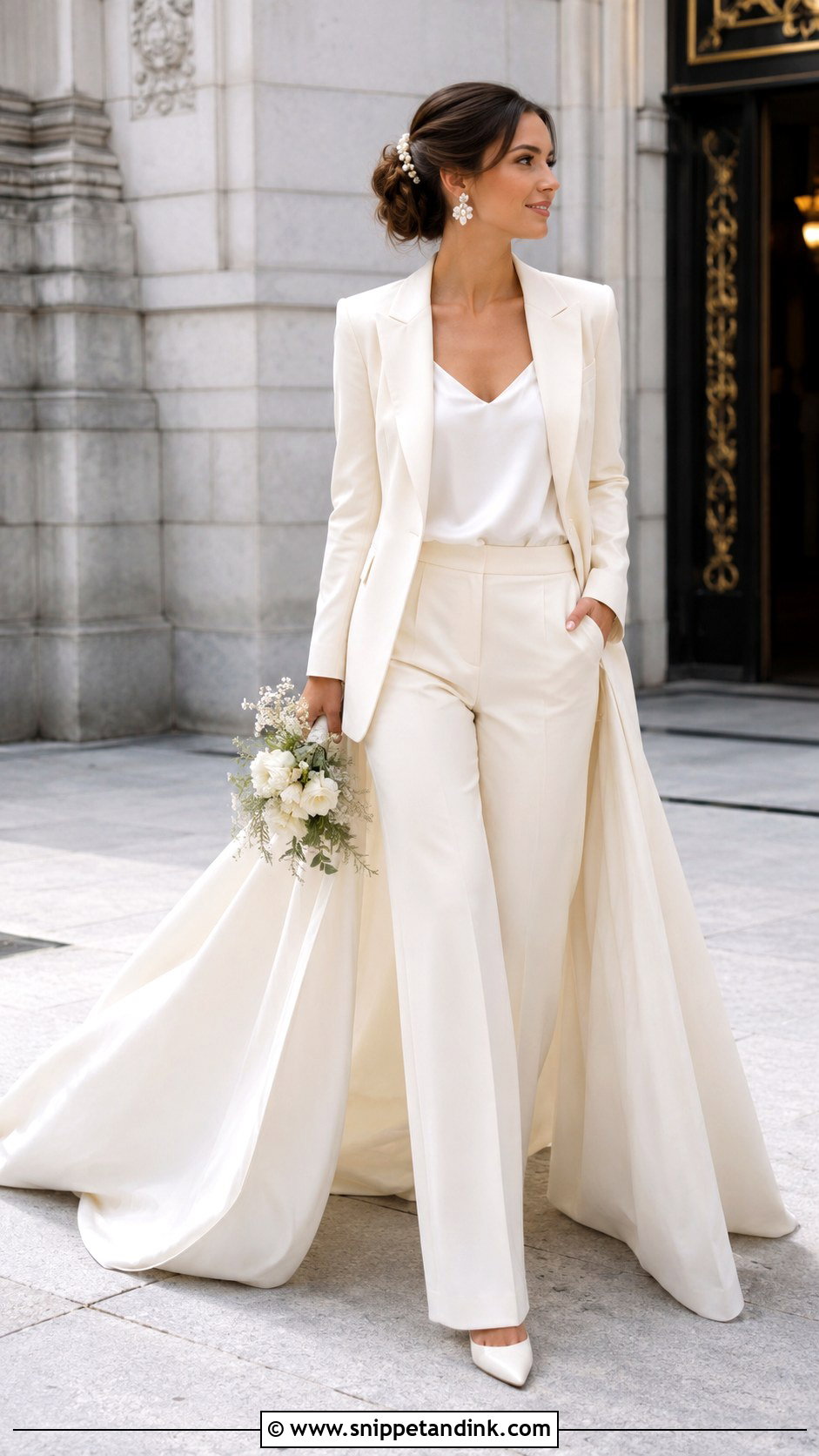
Clean tailoring can make an ivory pantsuit feel every bit as bridal as a gown, provided the jacket is fitted on you rather than worn straight off the hanger. Start with high-waisted trousers and a single-breasted blazer shaped through the waist; most suits need the sleeves shortened and the waist taken in. Underneath, a silk camisole, a lace bodysuit or a minimal bandeau sets how much you show. Ivory heels lengthen the leg and loafers sharpen it. A birdcage veil, a pearl hair accessory and architectural earrings mark it as wedding clothing, and a compact bouquet keeps the lines crisp. Wear the blazer open with wide legs for a softer feel, or button it and add a detachable train or floor-length cape for a formal ceremony.
8. Bridal Crop Top And Skirt
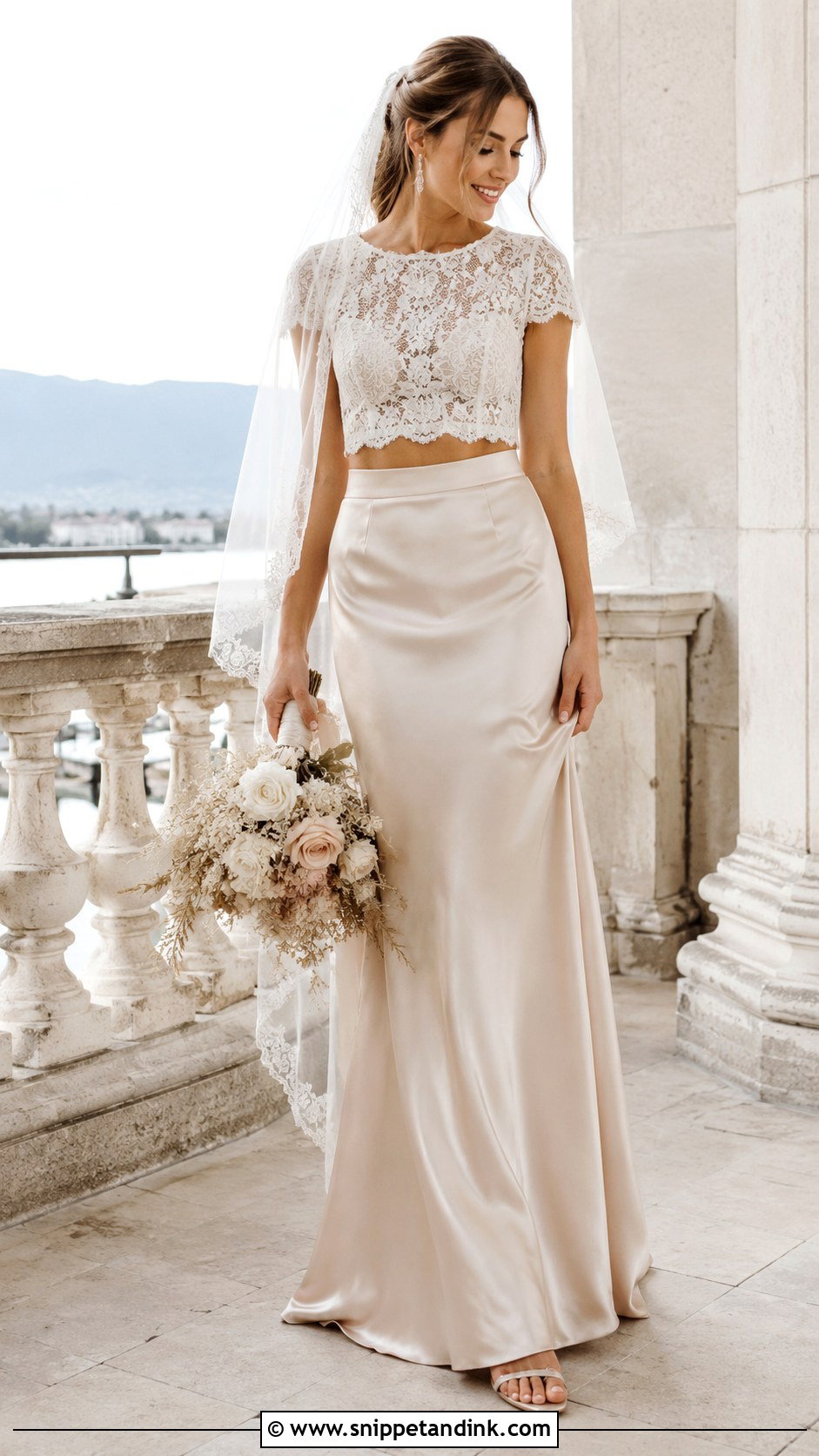
Separates are my favorite answer for a bride who is two different sizes on top and bottom, since each piece is bought and altered on its own. Pair a fitted lace or beaded top with a high-waisted satin skirt so only a narrow line of skin shows, or choose a longer structured top that meets the waistband and reads like a dress. A full skirt brings ceremony drama; a bias-cut maxi feels relaxed. Bring both pieces to every fitting, because whites from two makers rarely match. Hold them together at a window. If they clash, go for clear contrast instead, ivory lace over champagne satin for instance. Delicate sandals, drop earrings and a fingertip veil finish it, and a heavily beaded top wants a plain skirt.
9. White Mini Wedding Dress
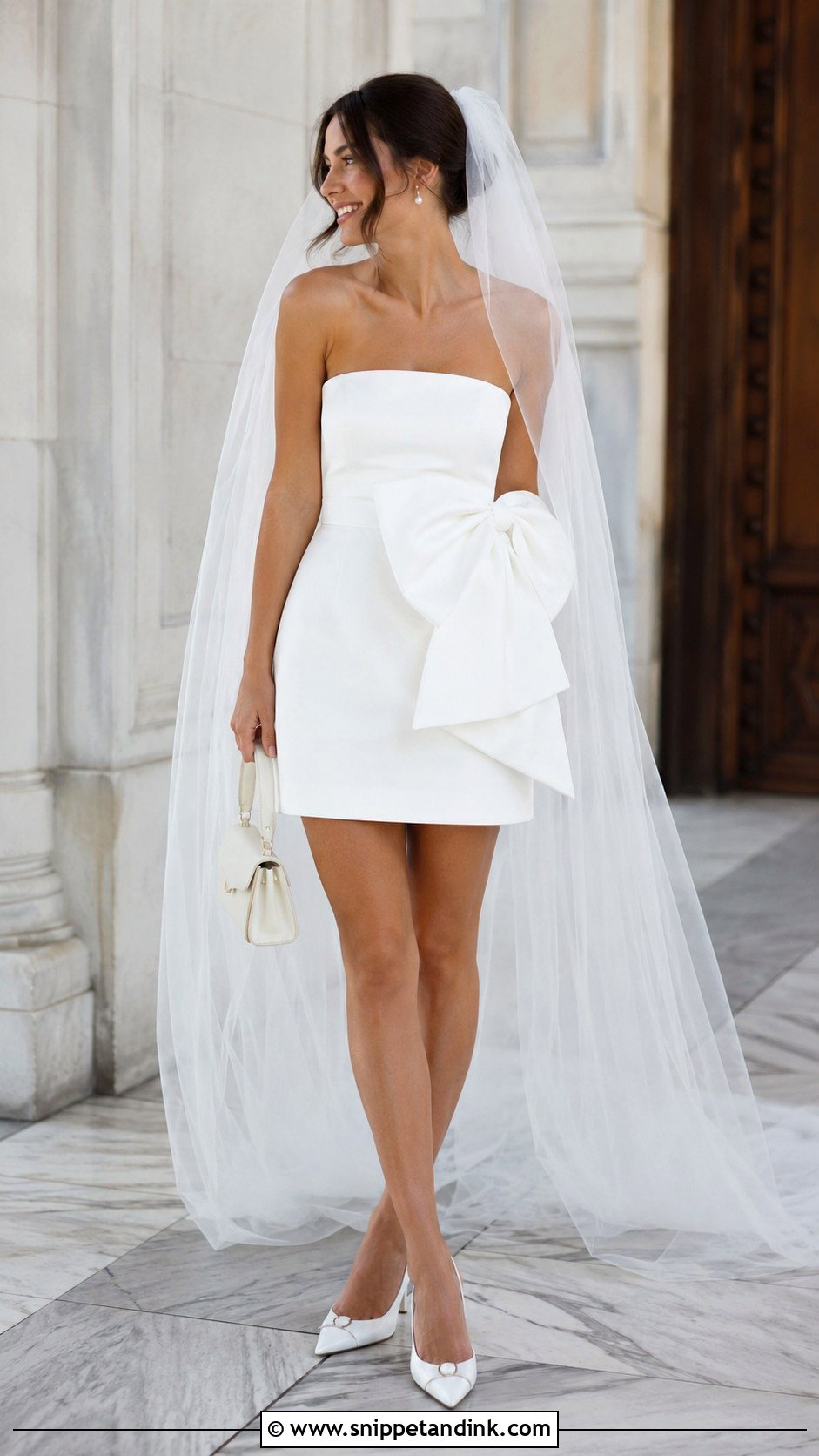
Short dresses suit courthouse ceremonies, small dinners and reception changes, and the trick is one strong feature rather than five. Pick a big bow, structured sleeves, feather trim or a sculpted neckline and let everything else stay plain: slingbacks, pearl earrings and a little top-handle bag. A long veil over a short hem looks deliberately bridal. Before you buy, sit, bend and lift your arms in the fitting room, because a mini rides up more than you expect getting in and out of cars all day. Block heels or embellished flats are kinder for dancing, and sheer tights with a cropped jacket carry it into cooler weather.
10. Tea Length Wedding Dress
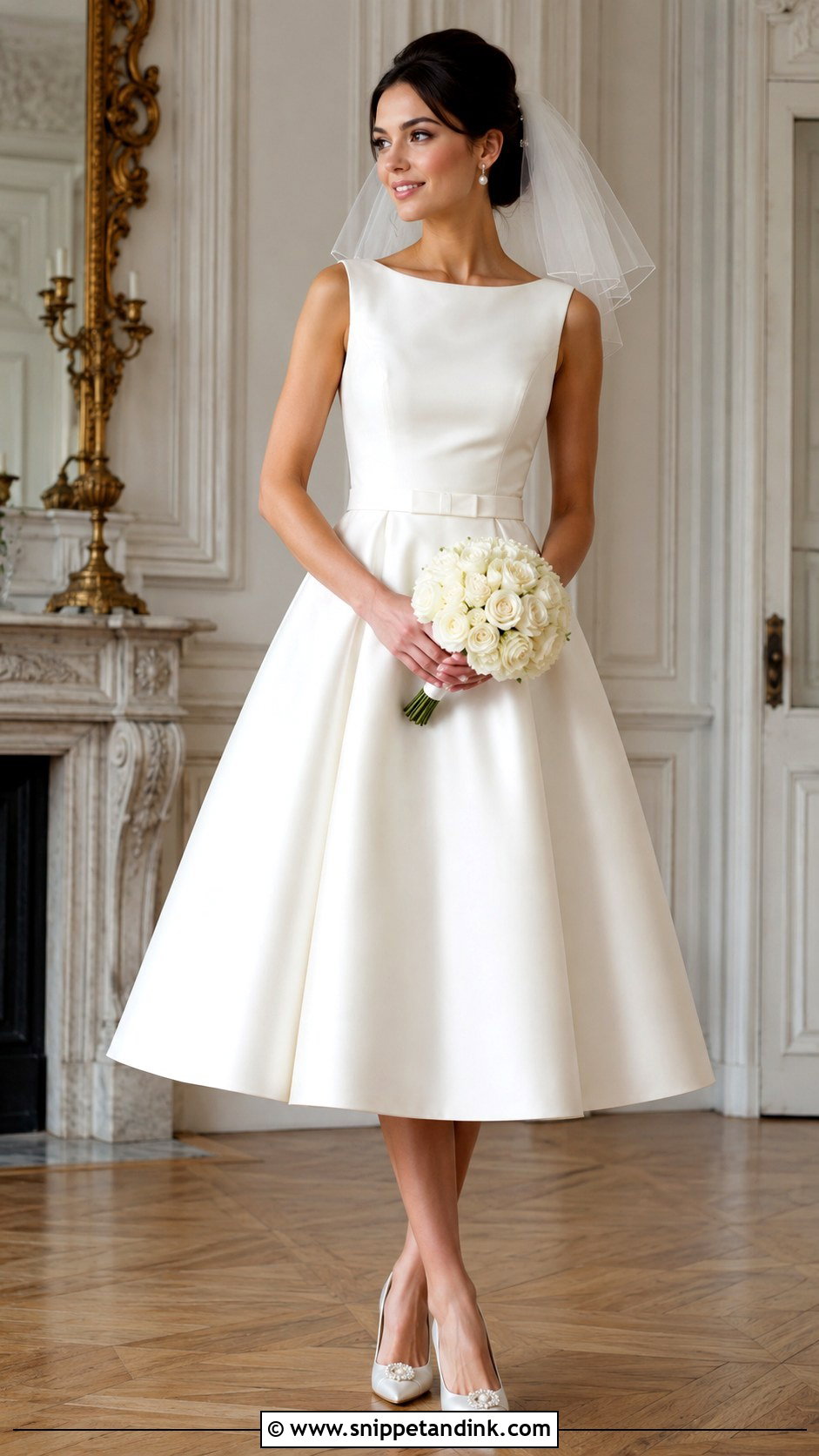
Hemlines between knee and ankle put your shoes on show, so I’d choose those shoes before the final hem is set, never after. A fitted waist with an A-line skirt gives the vintage version, and a straighter midi feels current. Satin pumps, ankle straps or decorative flats all earn their place here, alongside a short veil or pillbox headpiece and pearl earrings. Structured fabrics hold a crisp skirt, while chiffon and soft tulle swing more. A shorter hem leaves nowhere to hide an uneven line. Your tailor should mark it while you stand in the shoes and check it again seated, since a midi can climb above the knee once you sit down.
11. Vintage Seventies Wedding Dress
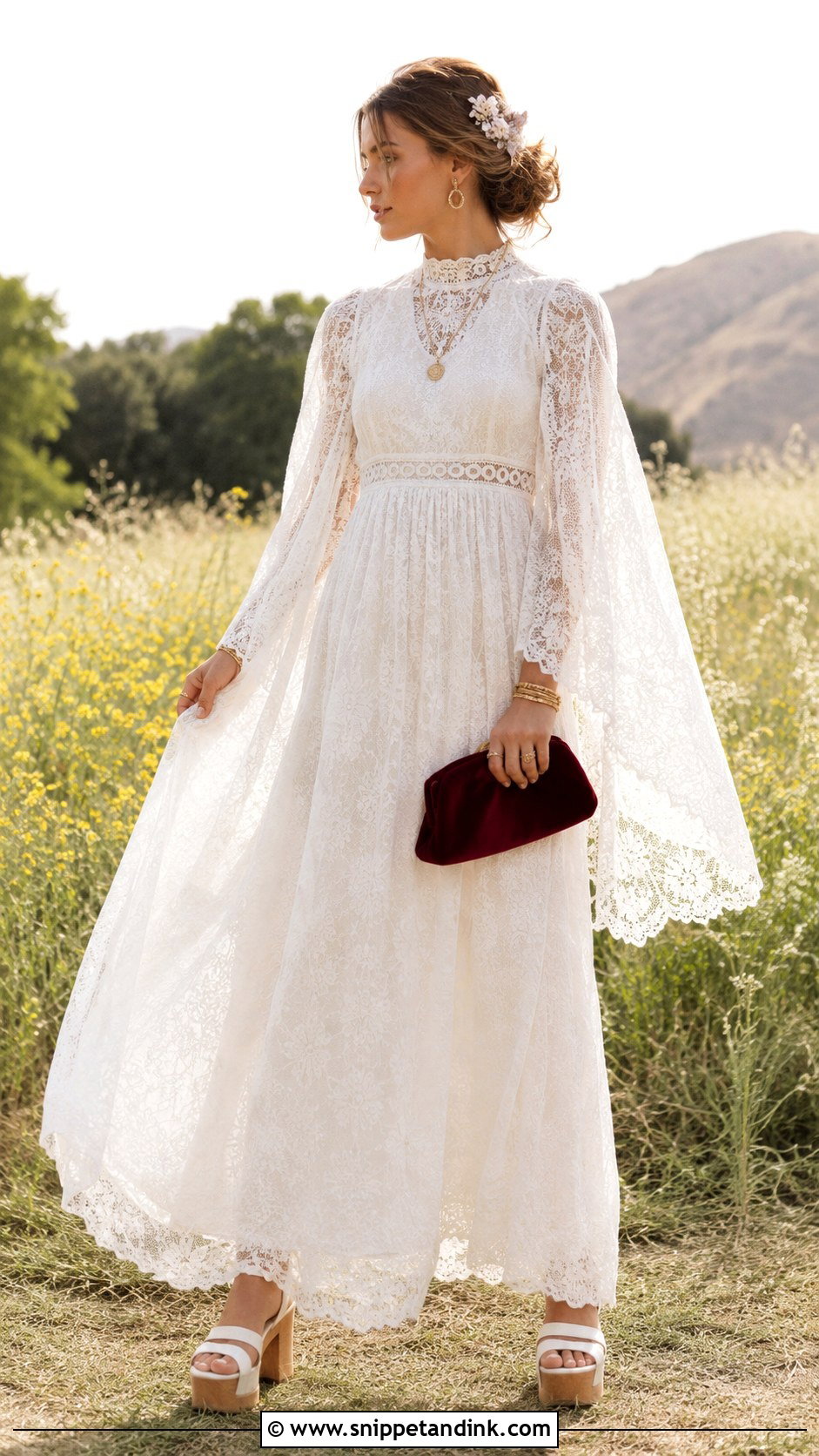
Flowing sleeves, soft lace, high necks, empire waists and gentle flares are what make a dress read as seventies. A true vintage piece can be wonderful, but old fabric is often weaker than it looks: decades-old lace can split the moment a tailor lets out a seam, and vintage sizing runs small. A modern reproduction gives you sturdier construction and more sizes. If you do buy original, have an experienced tailor inspect the seams, lining, closures and lace before anyone cuts. Style it with platform sandals, a suede or velvet clutch and simple gold jewelry, then stop at two period references, say a floral comb or a wide-brim ivory hat, with loose waves.
12. Boho Crochet Wedding Dress
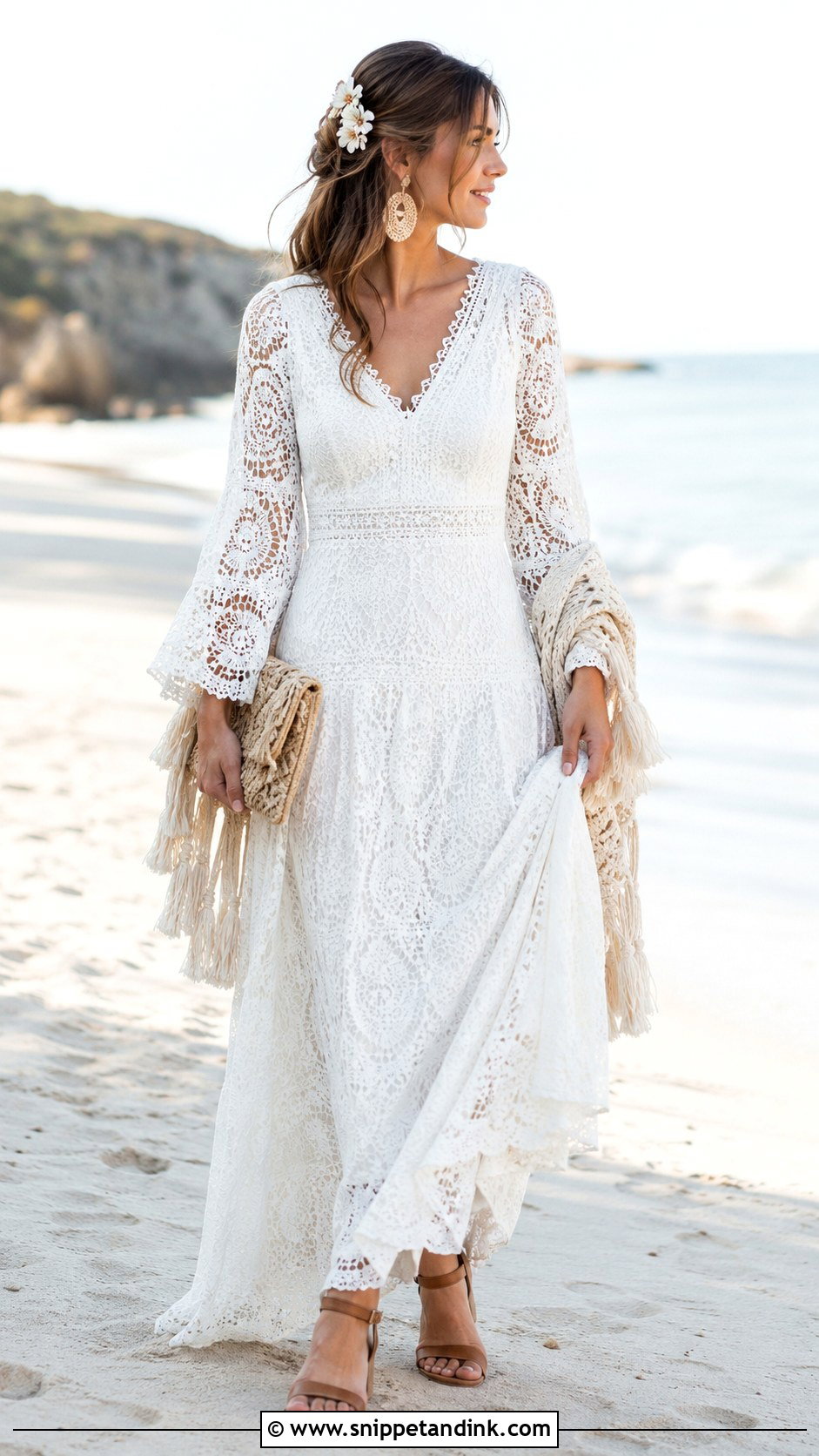
Crochet and openwork lace stretch with body heat and wear, so I fit them a touch snugger than a woven dress and recheck the shoulders and waist late in a long fitting. Choose a lined maxi with a close bodice and a skirt that moves. Bell sleeves, scalloped edges and geometric lace patterns give interest without heavy beading. It belongs on a beach, in the desert, in woodland or in a backyard. Leather block-heel sandals won’t sink into grass or sand; add woven earrings and a small natural-fiber clutch. A soft tulle veil contrasts with the texture, a floral comb keeps it informal, and a light fringed shawl covers cooler evenings. Watch your rings, because open stitches catch on prongs.
13. Gothic Velvet Wedding Dress
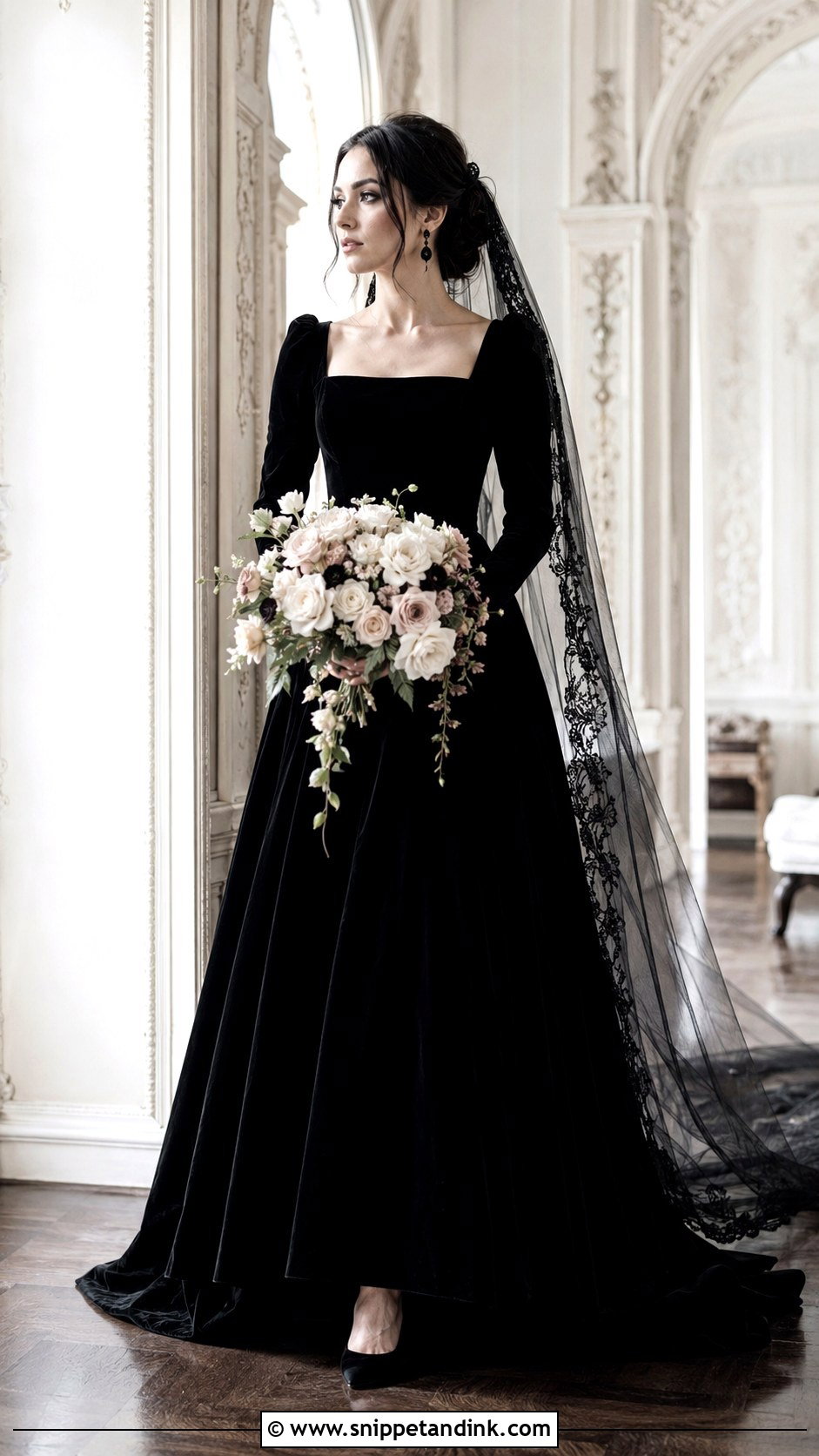
Velvet gives a gothic wedding dress a depth satin can’t, in black, midnight blue, forest green or dark burgundy. Long sleeves and a square neckline nod to history without tipping into costume. It’s warm and heavy, though, so I’d only put a bride in it for a cool season or a properly air-conditioned room. Velvet also can’t be pressed flat: an iron crushes the pile for good, so it’s steamed from the inside and brushed in one direction. Pair it with pointed velvet pumps, dark gemstone earrings and a structured mini bag. A black cathedral veil adds drama, an ivory lace one gives contrast, and pale flowers with dark foliage stand out against the cloth.
14. Blue Wedding Dress
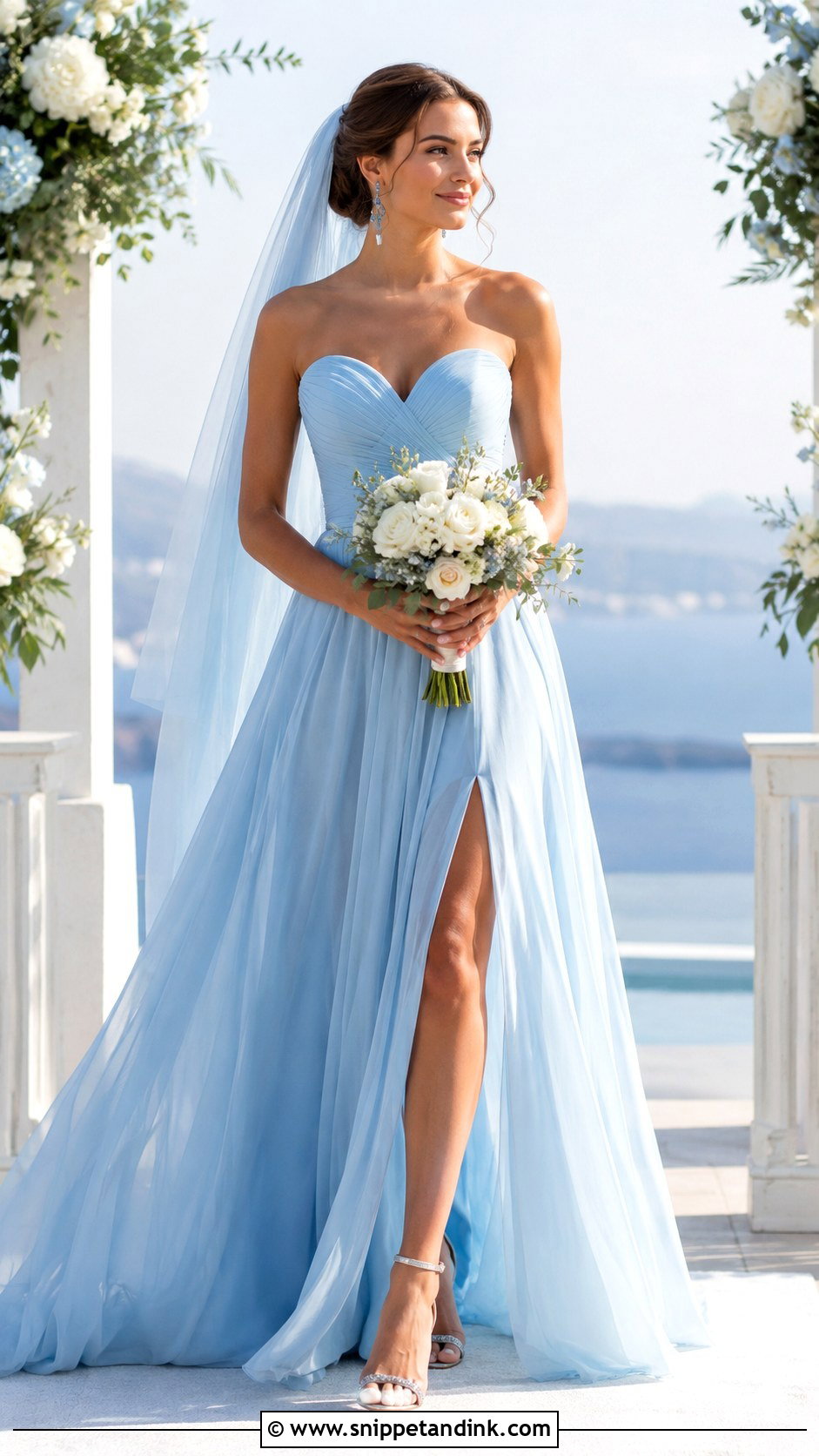
A blue wedding dress covers a wide range: powder, dusty and grey-blue stay quiet, while cobalt and navy are bold. Blue is also the color whose undertone shifts most between daylight and a warm-lit room, so I take a swatch into both before a bride commits. Flowing chiffon suits an outdoor setting and structured satin an indoor formal one. Silver heels and sapphire-style earrings sit well with nearly every shade, and white flowers with greenery give fresh contrast. A pale blue veil matches, while ivory tulle quietly nods to tradition. Keep makeup balanced, since a strong cobalt neckline can throw a cool cast up onto the face.


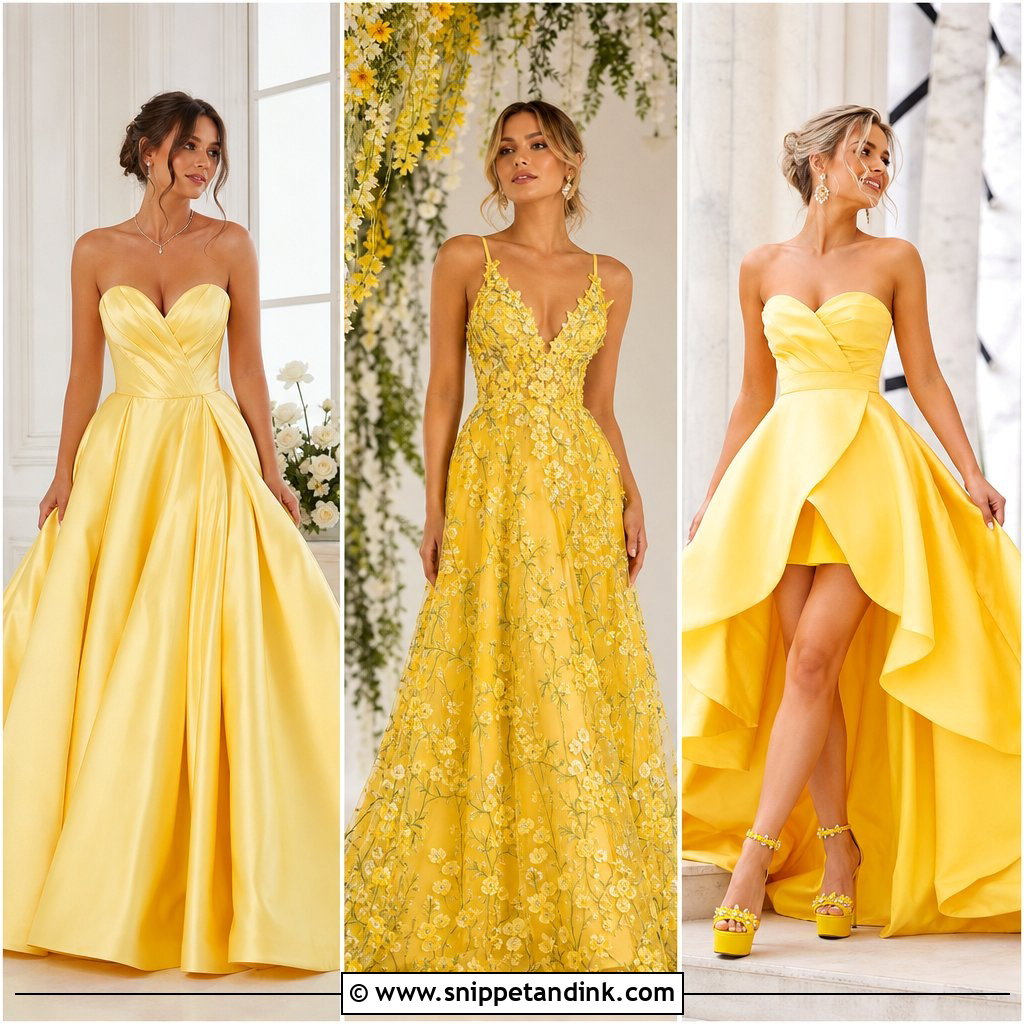
15. Green Wedding Dress
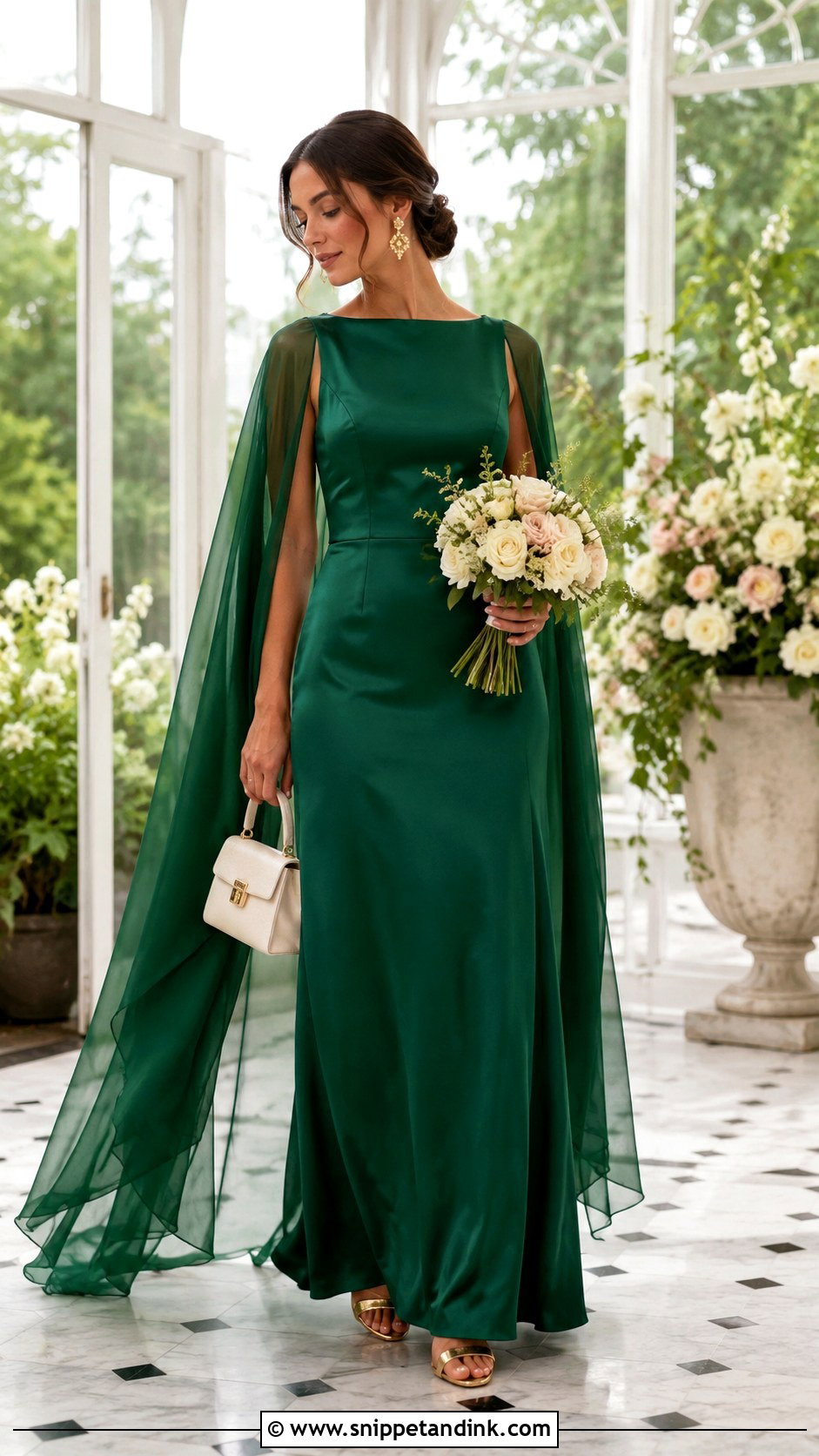
Sage and eucalyptus greens are quiet; emerald is formal. Green suits a nature-led celebration, and pleated chiffon or structured satin are the two ways I’d cut it. On a large expanse of satin, uneven dye shows as faint streaks, so inspect the skirt in daylight the day it’s delivered, not the week of the wedding. Gold sandals, warm metallic earrings and a small cream bag go with almost every green. Skip the all-green bouquet, which disappears against the fabric, and carry ivory, blush or soft yellow flowers with little foliage. A sheer cape in place of a veil keeps it modern and also gives the outfit one clearly bridal piece, so it never reads as a guest’s evening dress.
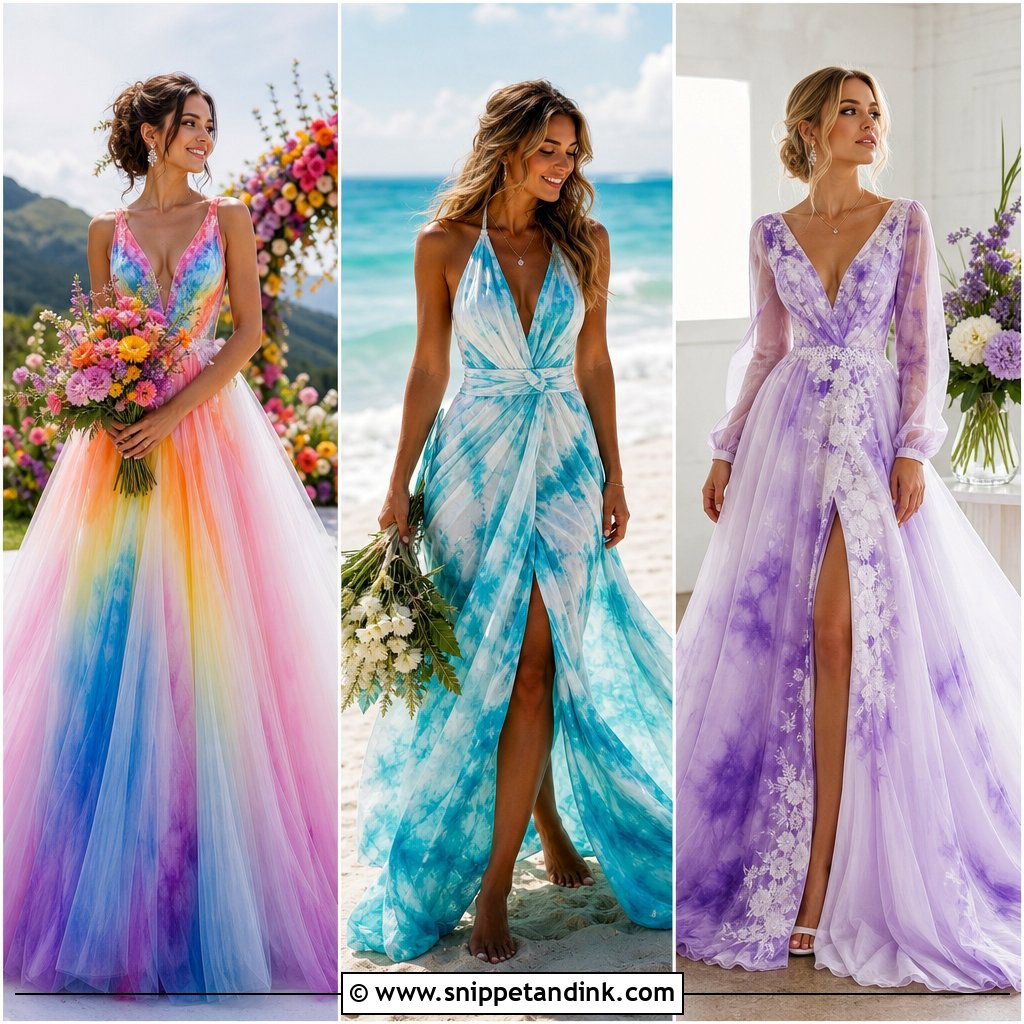
16. Ombre Wedding Dress
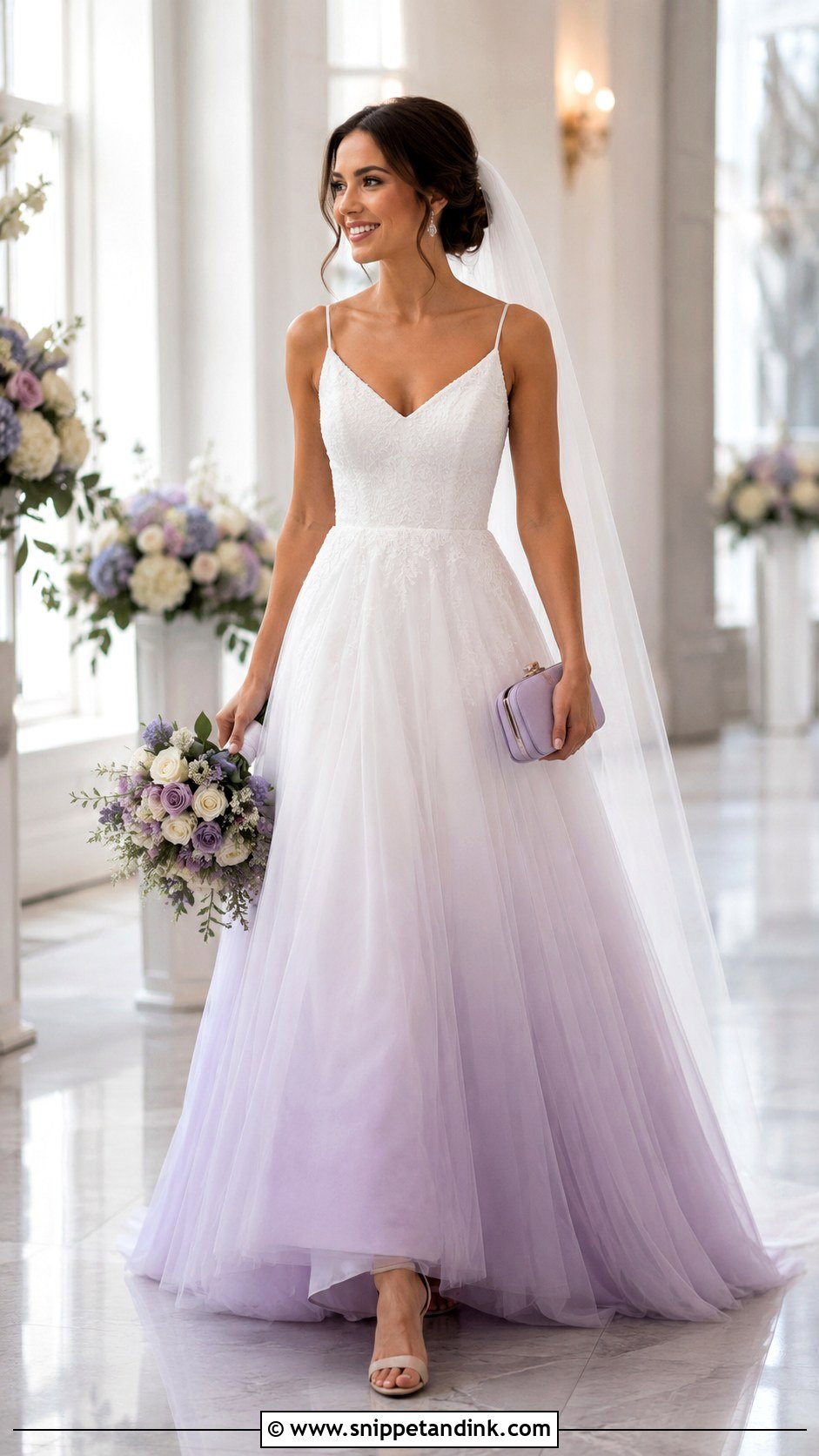
Ombre gowns fade from a white bodice into blue, pink, lavender or grey toward the hem, so the color does the work and no print is needed. A flowing A-line keeps the gradient visible as you walk. The alteration warning here is the one I repeat most: if the dress is too long, shorten it by lifting the skirt at the waist seam rather than cutting the bottom, because cutting removes the darkest band of the fade. Neutral heels, minimal earrings and a clutch matched to the deepest tone suit it. Keep the veil plain and attach it high so it doesn’t cover the transition, and carry a simple bouquet in neighboring shades.
17. Bridal Cape Wedding Dress
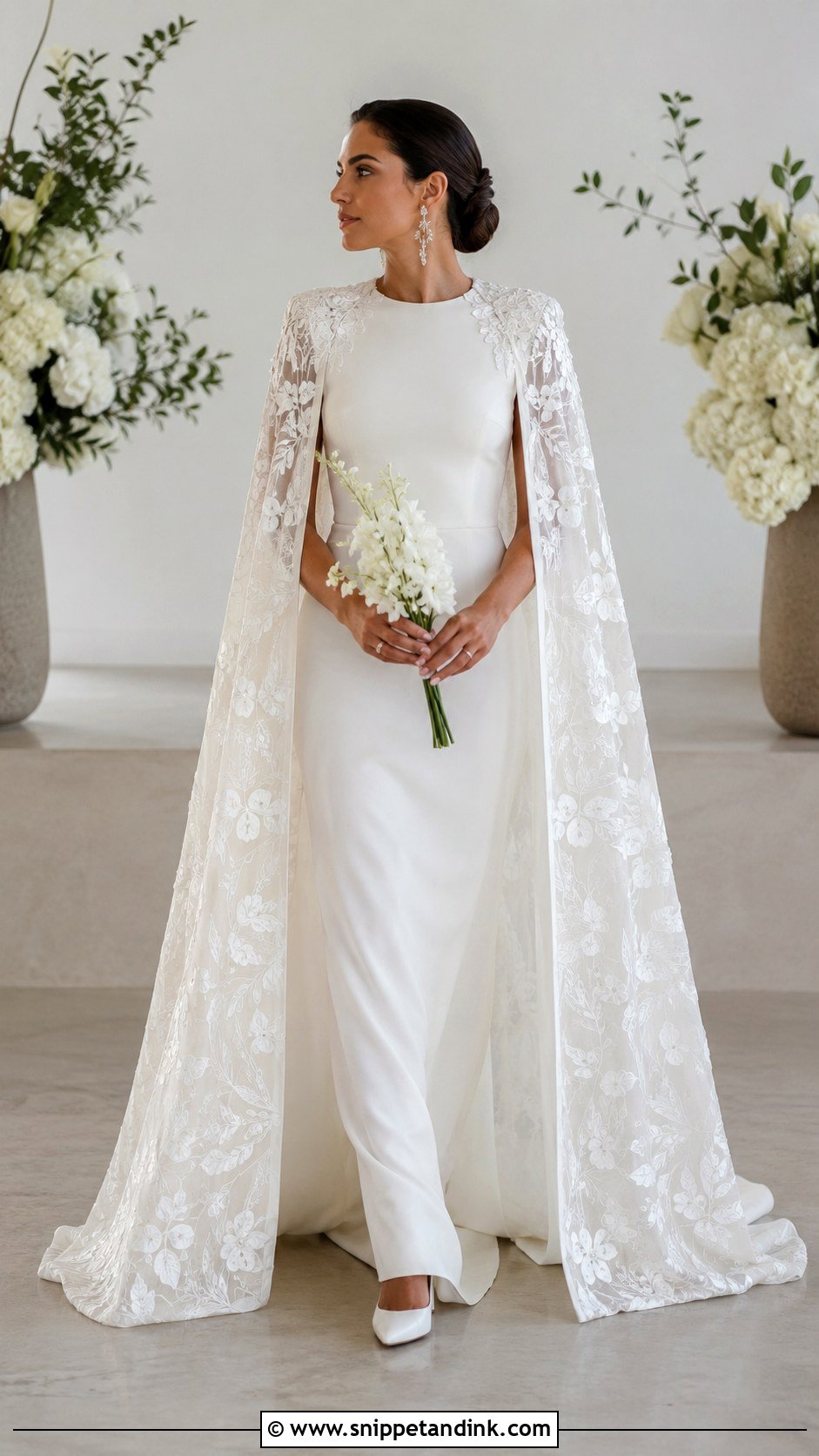
A cape turns a plain dress into a ceremony outfit. Start with a clean column, slip or crepe gown, then layer a floor-length tulle, lace or satin cape on top. Shoulder beading, a high collar or light embroidery frames the face while the length moves behind you. Most capes attach with hooks or small snaps at the shoulder, and that join carries real weight, so I make sure it’s stitched into the dress straps, not just the outer fabric. Practise walking, turning and sitting so the hem doesn’t end up under your heel. Sleek pumps, statement earrings and a low bun suit it; add a veil only if it sits comfortably with the attachment. Carry a narrow bouquet, and unclip the cape for the reception.
18. Feather Trim Wedding Dress
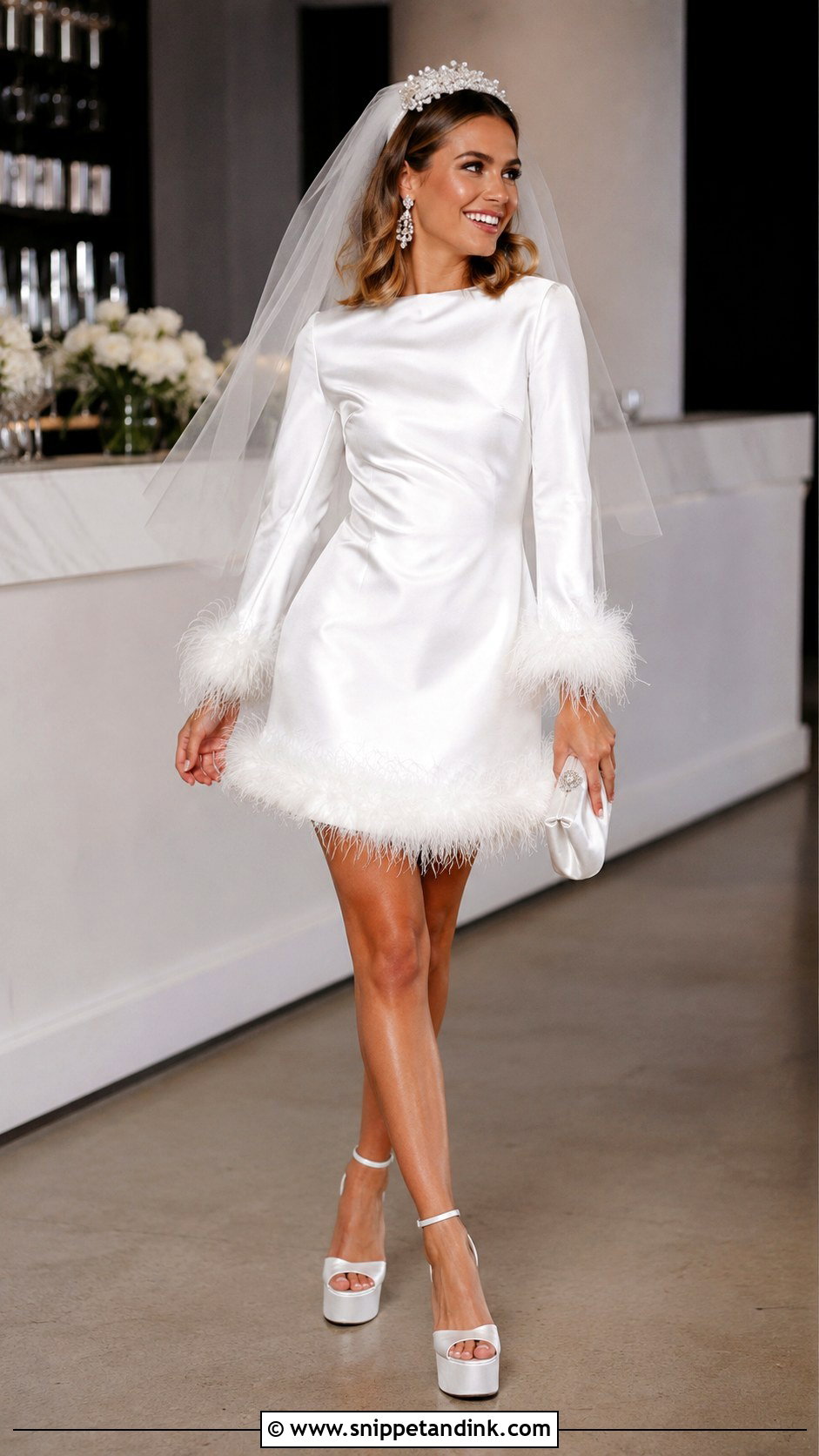
Feathers add movement, but placement matters: trim at the cuffs, neckline or hem looks sharper than a dress covered in them. A simple satin mini, midi or column makes the best base. Ostrich feathers droop in humidity and flatten in a crowded garment bag, so I store these dresses with room around the trim and revive it with a gentle shake and a cool hairdryer shortly before you dress. Skip bracelets that tangle in feathered cuffs. Platform sandals or pointed pumps, crystal studs and a compact satin clutch keep the rest clean. A shoulder-length veil leaves the trim visible, or go veil-free with a jeweled headband.
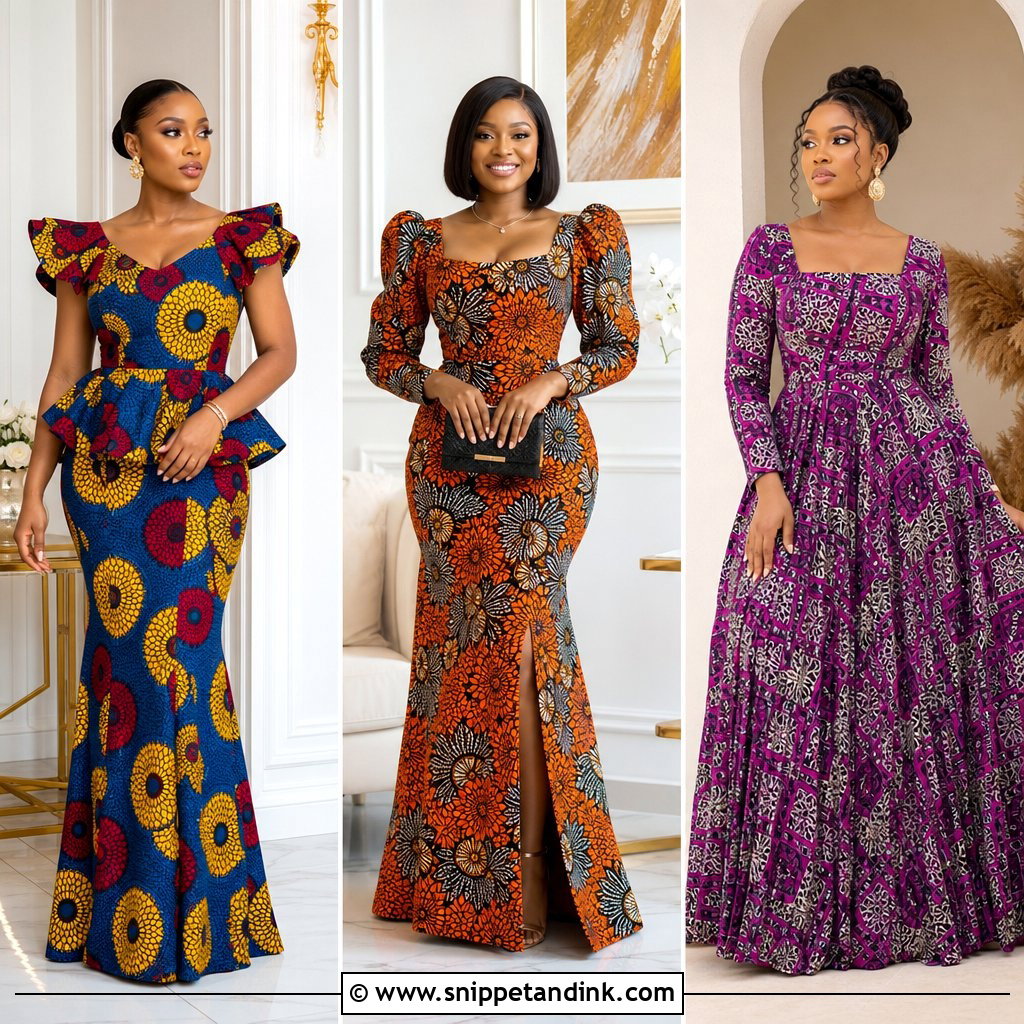
19. Printed Maxi Wedding Dress
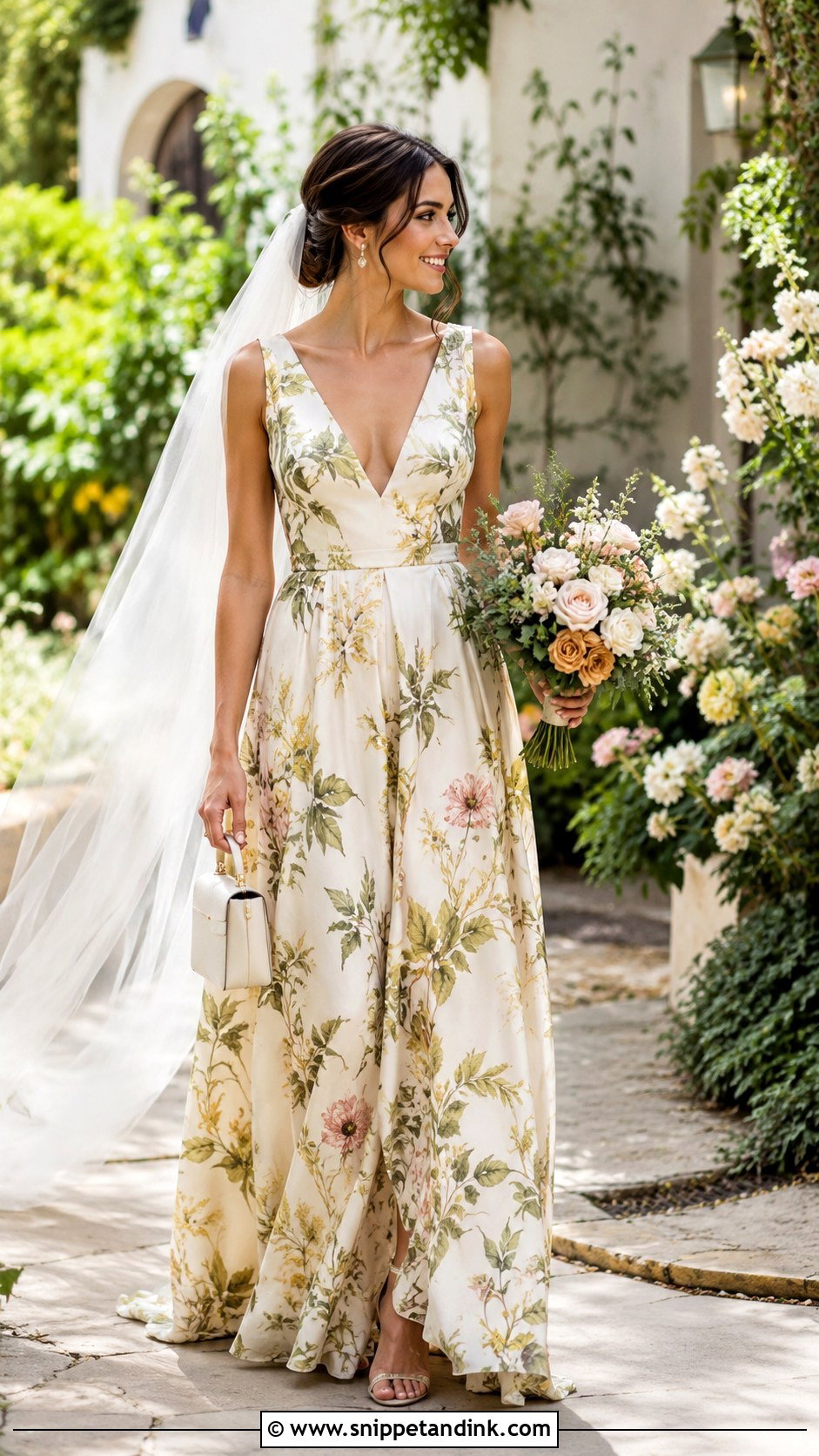
A print gives you color, pattern and a dress you’ll genuinely wear again to another wedding or a summer dinner. Botanical, watercolor floral, celestial and abstract designs can all work if the fabric has some weight and drape. Look for a defined waist, a considered neckline and a floor-length skirt, not a sundress shape. With a large print, check where the motifs land. A big flower centered on each bust point, or one chopped in half at the side seams, is a cutting problem no tailor can fix later. Match shoes and bag to one smaller color in the print, wear simple earrings and a plain veil, and build the bouquet from the palette without repeating every shade.
20. High Low Wedding Dress
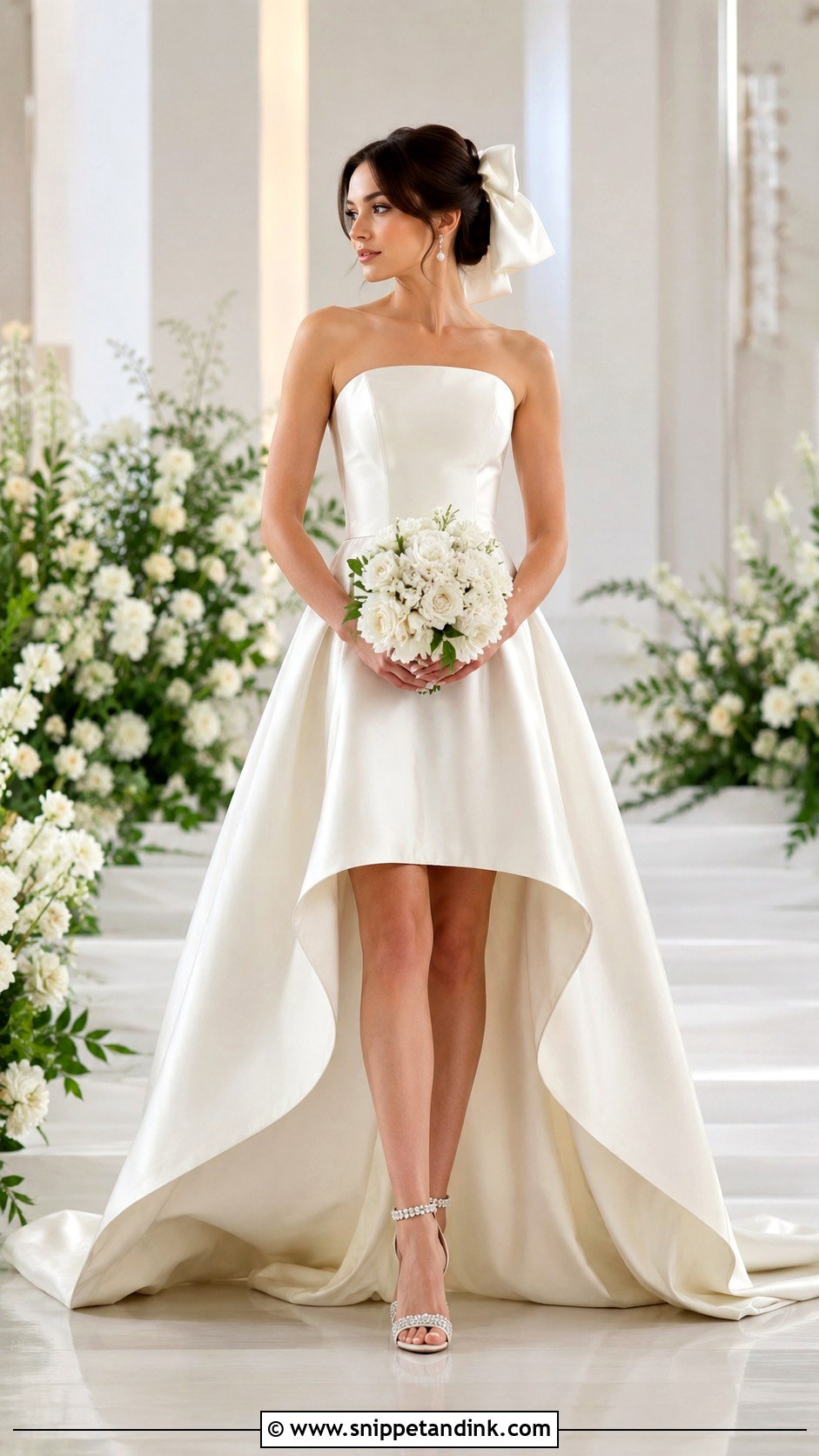
Shorter at the front and long behind, this skirt shows off your shoes while still giving you a train for the entrance. Structured satin holds a sculpted shape; layered tulle softens it. The front hem is where these dresses go wrong: too short and it catches on your knees as you walk, too long and it just looks badly hemmed. I won’t mark it until you’re standing in the exact shoes, and I check it from the side, where the curve between front and back shows most. Embellished pumps, ankle straps or colorful platforms all deserve the attention. Keep jewelry streamlined and finish with a short veil or a sculptural hair bow.
Underneath a Jumpsuit, Sheer Lace or a Crop Top
The foundation garment changes the fit more than any accessory, and alternative cuts are harder to dress under than a boned bridal bodice. Buy it before your first fitting and wear it to every one after that.
- Jumpsuits and suits: a no-line brief or thong, since trouser crepe shows every edge across the seat.
- Sheer lace in black or color: a slip or bodysuit matched to the lining, not to your skin, so nothing pale shows through dark lace.
- Crop tops: a longline bra, or support built into the top, so you’re not adjusting straps where skin shows.
- Low backs and plunging necks: adhesive cups, or cups your tailor sews into the dress.
Sewn-in cups are usually a quick job, and I suggest them often because they leave nothing to slip during the hugs.
Red, Black or a Suit at a Family Wedding
Some relatives love a nontraditional look on sight; others need a little warning. In Chinese and many South Asian families red is the traditional bridal color, so a red gown may please grandparents more than white would. Black can still read as mourning to some older guests, and certain religious venues expect covered shoulders during the service.
I’d show close family a picture before the invitations go out, and plan a ceremony layer, such as a lace bolero, a cape or a long veil, that covers more for the service and comes off for the party. Check your venue’s dress expectations early. Adding sleeves at the first fitting is simple; rushing them in during the final weeks is not.
Wear It Because It Fits You, Not Because It’s Different
The right alternative outfit is the one you’d still pick if nobody called it unconventional. Start with how you need to move and how you want to feel, then work through season, venue, fabric and formality. Try your shortlist with its shoes, underwear, jewelry and outer layer before deciding, because those are what shift the fit. Colored gowns, black lace, suits, jumpsuits, short dresses, vintage pieces and separates can all be right when good tailoring stands behind them.
You'll Like These Ideas:





Leave a Reply