
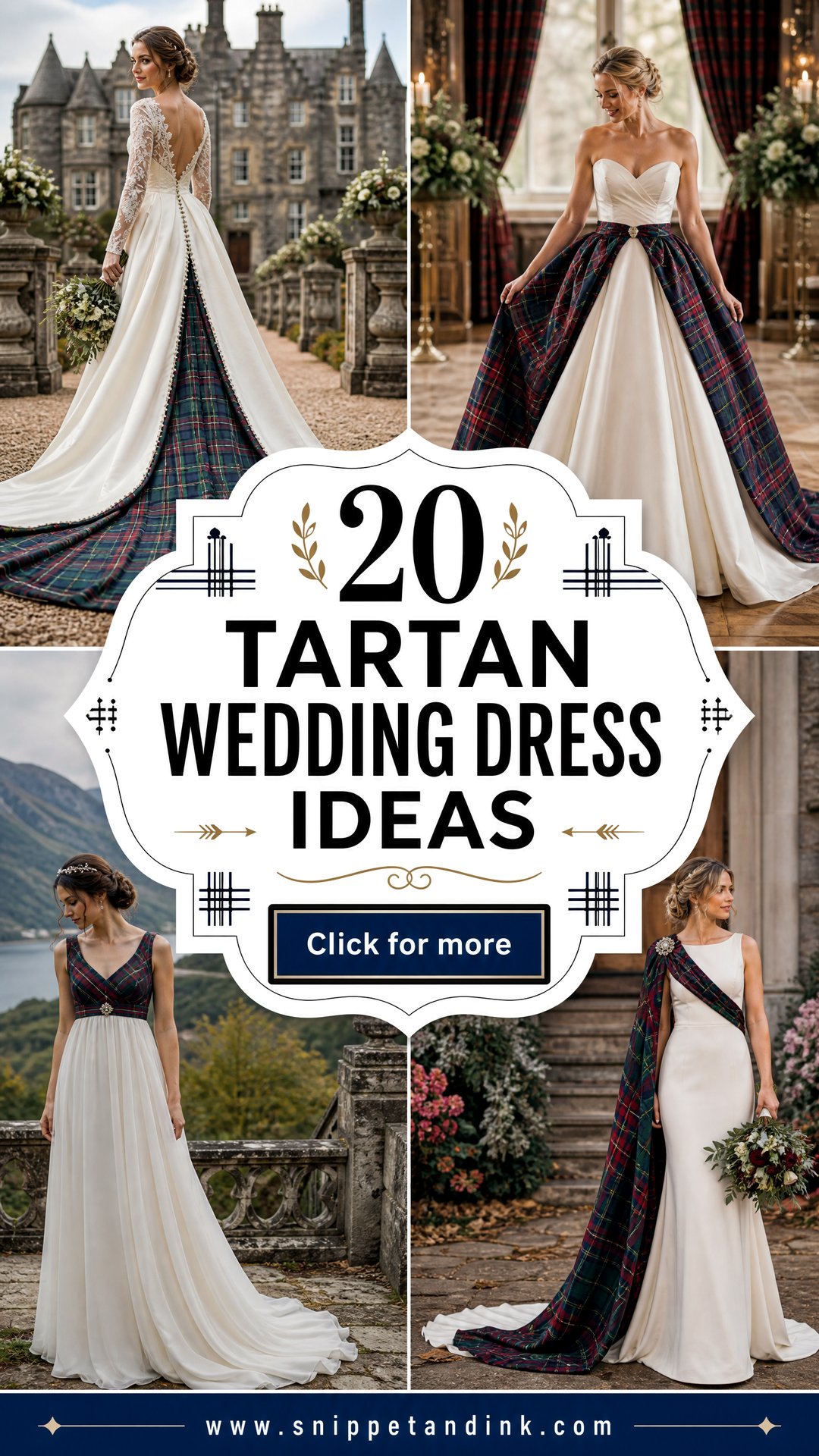
Tartan gives a bridal outfit color and a distinctive Scottish-inspired touch, and it doesn’t have to cover the whole gown. I’ve seen it work as a corset, a sash, a train, a cape or an overskirt, which is why it fits a castle as easily as a city registry office. Red and green setts read loud; muted blue, gray and ivory ones read quiet. Before a bride falls for a pattern, I want to know three things: the season, how much she’ll be walking, and what the groom is wearing, because those decide the fabric weight and the color far more than the photos do. The 20 outfits below run from full checked ball gowns to a single strip of plaid.
Whose Tartan Are You Allowed to Wear?
This is the question brides ask me quietly, usually after they’ve already fallen for a pattern. In Scotland, many tartans belong to a clan or family name, and wearing one signals that connection. Nobody will stop you wearing any tartan you buy, but at a wedding full of Scottish relatives it’s worth getting right.
- If you or your partner have a family surname with a clan tartan, that is the obvious choice, and most clans have more than one version, such as dress, hunting or ancient colors.
- A bride often wears her own family tartan and takes on the groom’s afterward; some couples include a short moment in the ceremony where the groom’s family pins a sash of their tartan on her.
- With no Scottish connection, look at district tartans tied to a place you love, or at tartans generally treated as open to all, Black Watch among them.
- Couples can also design and register their own tartan, mixing colors that mean something to both families. It takes time to approve and weave, so start early.
When older relatives are involved, I suggest asking them before ordering. A two-minute conversation can save an awkward moment at the reception and often uncovers a family tartan nobody had mentioned.
1. Full Tartan Ball Gown Wedding Dress
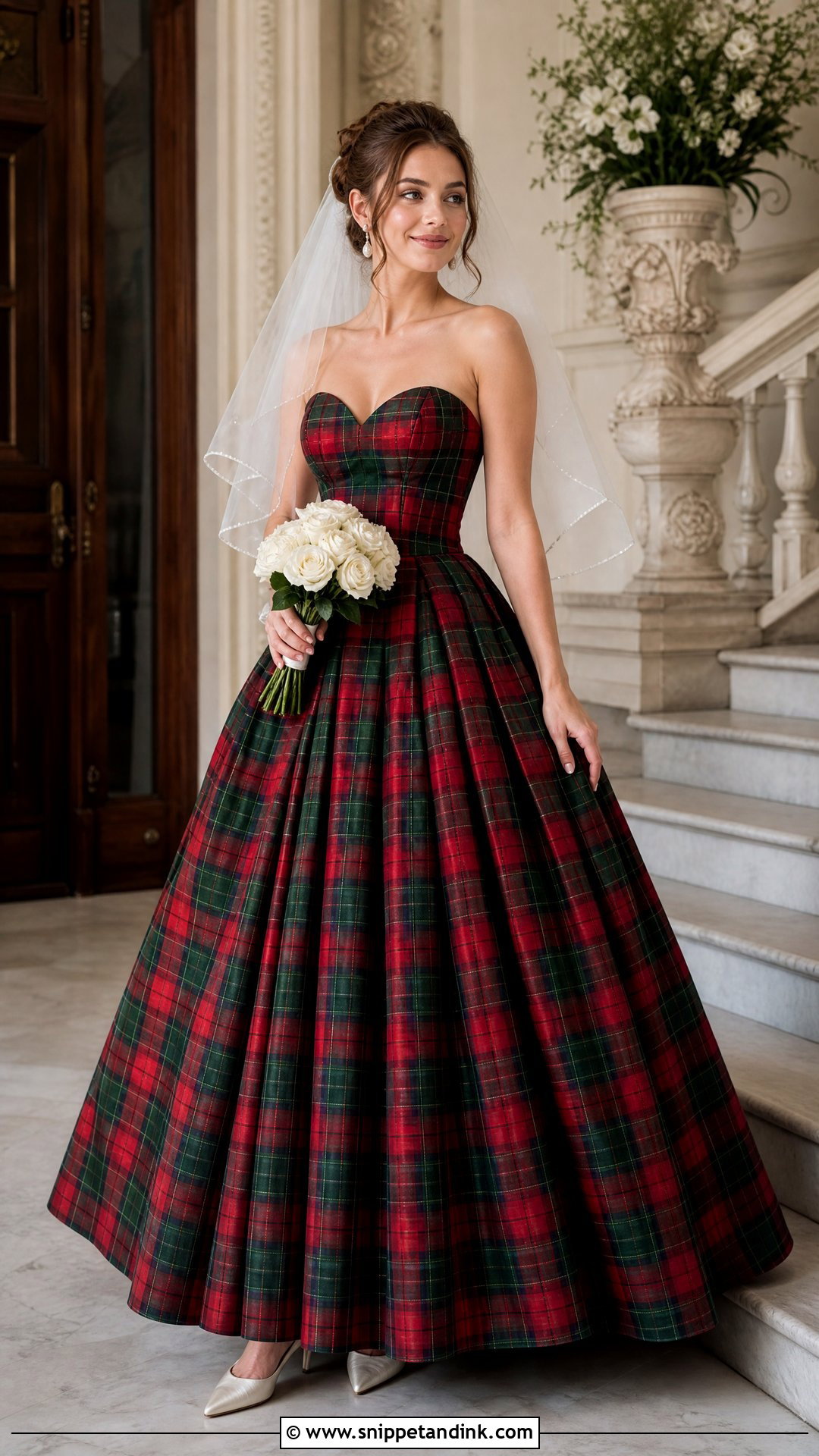
Going fully tartan is the boldest choice here, and it only works if the structure is serious. I’d want a fitted bodice with proper internal boning and a wide pleated skirt, pleated so each fold shows a full repeat of the pattern rather than chopping it in half. A square or sweetheart neckline steadies all that volume. Then keep everything else quiet: pearl earrings, one bracelet, an ivory fingertip veil, ivory satin pumps and a compact bouquet of white roses and greenery. Save this one for a castle or a large historic room; in a small space the skirt eats the aisle.
2. Tartan Corset Wedding Dress With Ivory Skirt
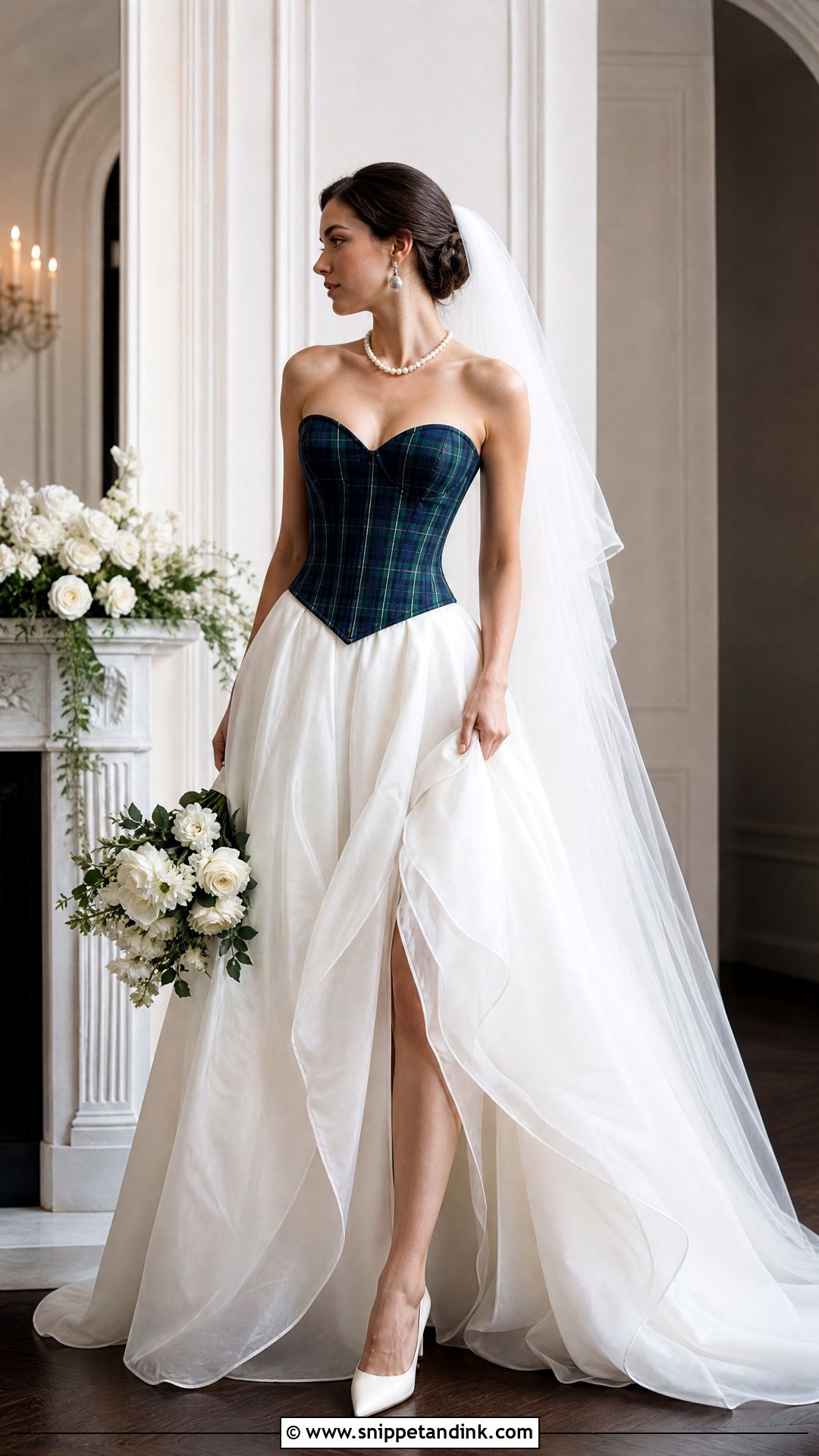
A tartan corset over an ivory skirt keeps bridal white and adds the pattern where it shapes you most. Choose a sett that already contains ivory, blue, green or burgundy, and the join at the waist looks planned instead of harsh. The skirt can be satin or organza. One fitting note: a checked corset shows every bit of asymmetry, so I ask for the center front line of the pattern to sit exactly on your center front before boning goes in. A short pearl necklace, a veil tucked under a low bun, small drops, pointed heels and a bouquet ribbon picked from the corset’s quietest color finish it.
3. Ivory Tartan Wedding Dress With Waist Sash
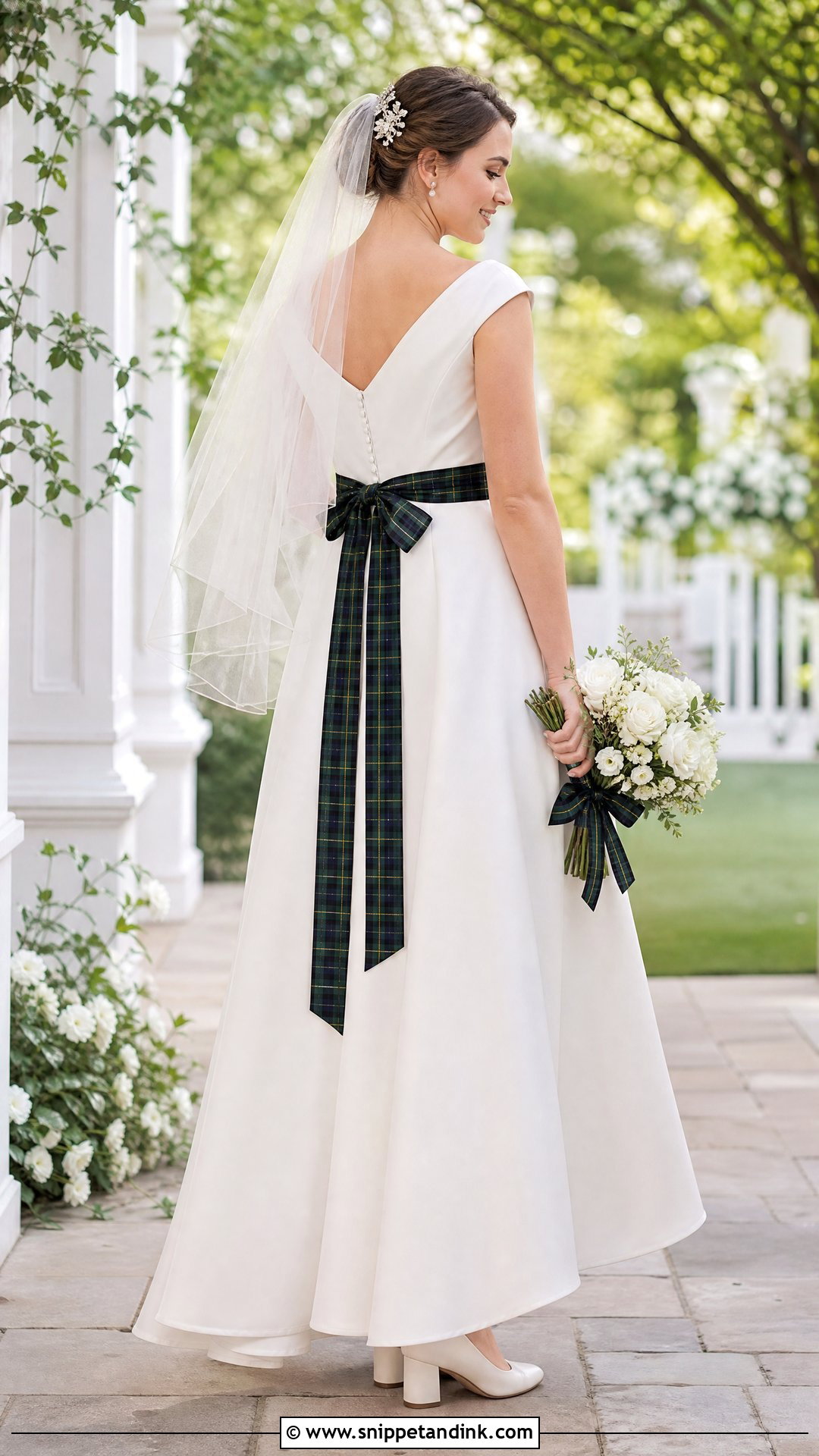
The gentlest route is a plain ivory A-line with a tartan sash at the waist. Smooth crepe, satin or chiffon all make a clean background. Tie the sash in a flat bow at the back or let the ends fall straight down the skirt; I prefer the falling ends on a bride who’ll be seated at a long table, because a big bow gets crushed against the chair. Pearl studs, a small comb, ivory block heels and a sheer chapel veil keep it soft. Wrap the bouquet stems in matching tartan ribbon and the whole outfit ties together.
4. Tartan Skirt Wedding Dress With Lace Bodice
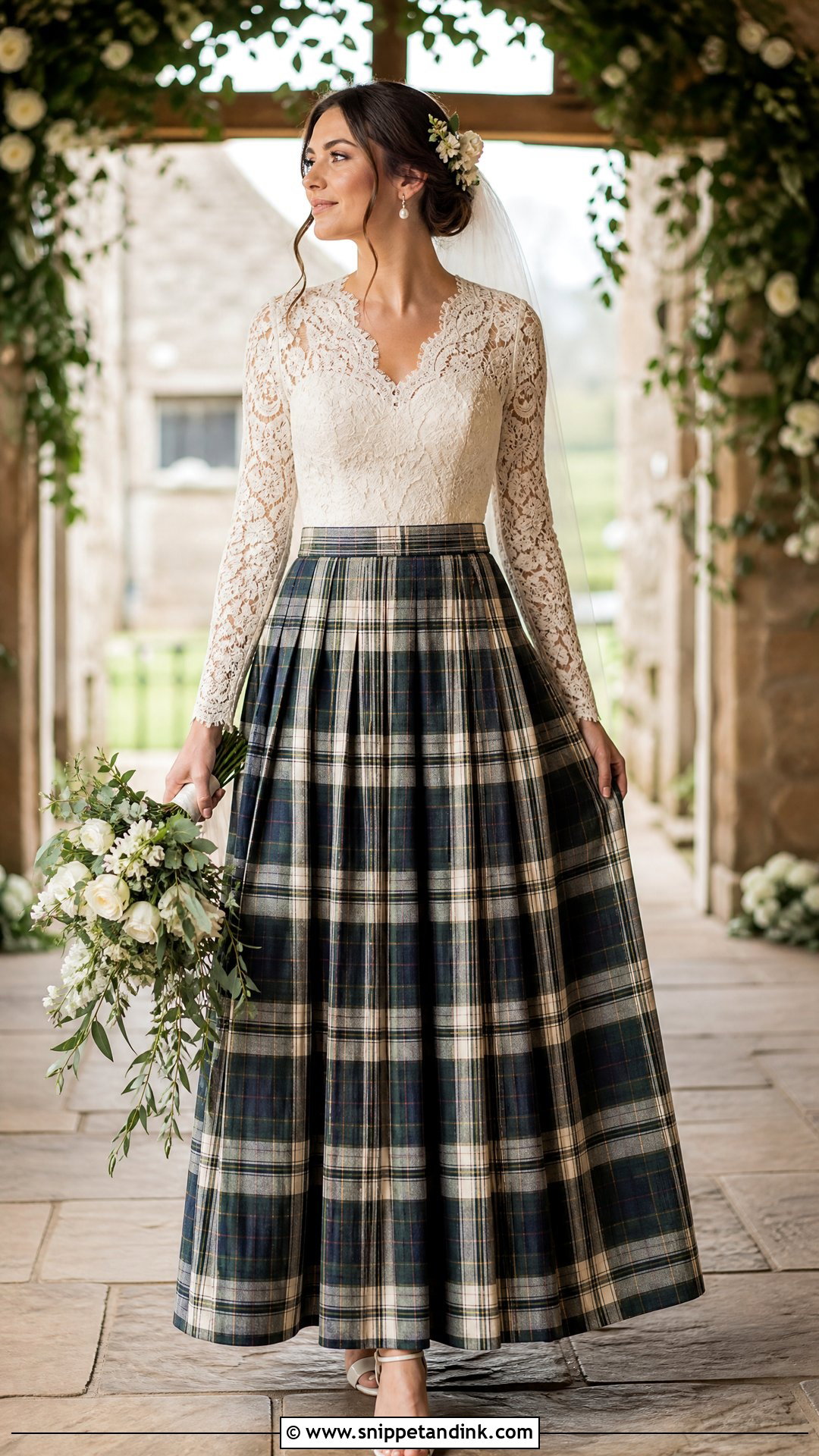
Lace and tartan sit together better than people expect, and the lace-and-plaid pairing brings out the romance and heritage-inspired design in both. An ivory lace bodice with fitted sleeves or an illusion neckline sits over a high-waisted tartan skirt. Box pleats keep the checks aligned better than gathers, which pull the lines into wobbles. Pick a delicate lace, not a heavily beaded one, or the top and bottom start arguing. Ivory ankle-strap heels, pearl drops, a small floral pin above a low chignon and a plain tulle veil keep it balanced. In the bouquet, add a few blooms in the tartan’s deepest shade.
5. Ivory Wedding Dress With Tartan Train
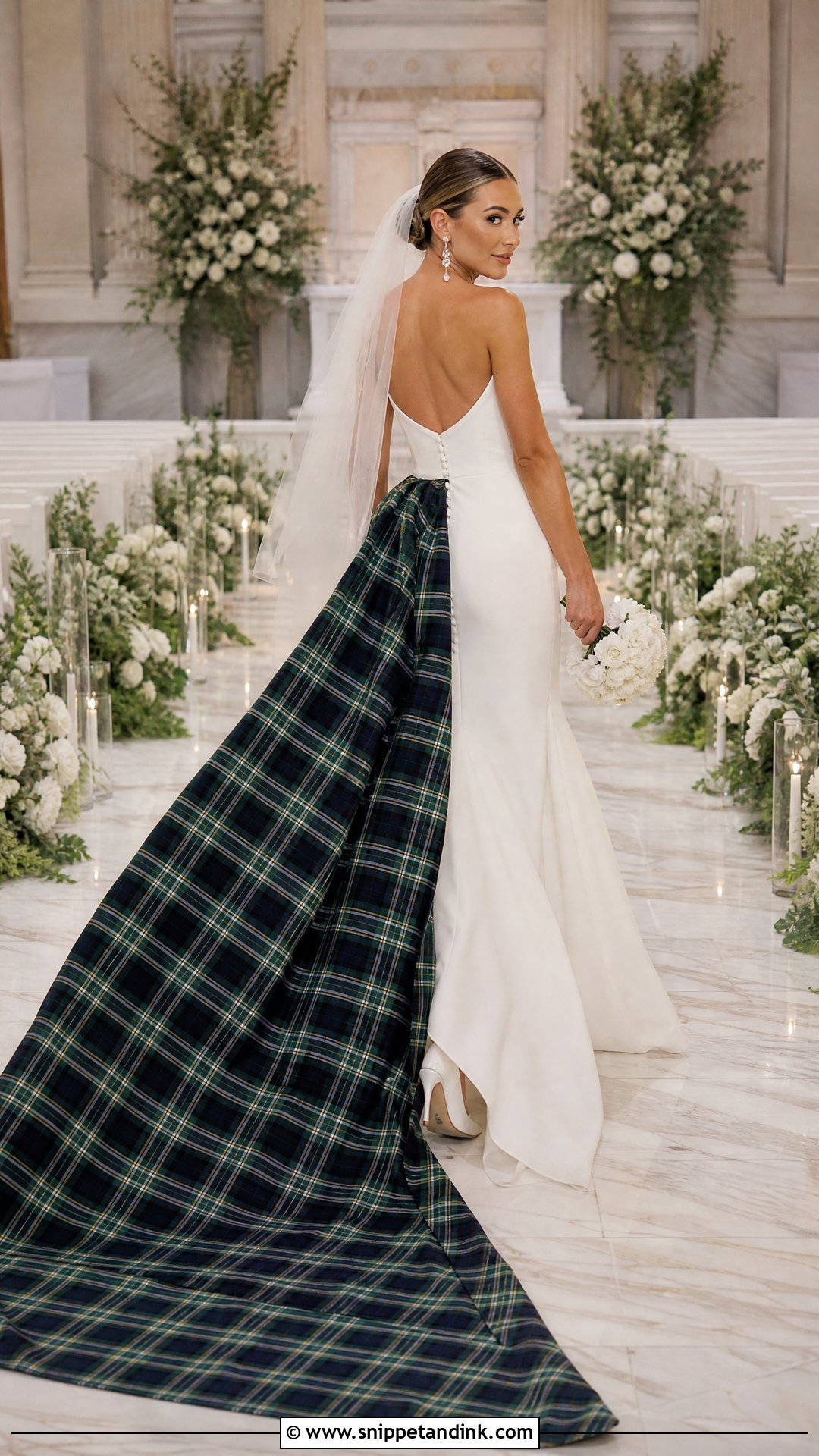
A detachable tartan panel fastened at the waist turns a familiar ivory gown into a ceremony piece, opening behind you in a sweep of color. A crepe or satin column, A-line or mermaid underneath all work. The tailoring matters more than usual: the checks must hang straight and mirror each other, and I check the train from the back of the room, not up close. Keep the front minimal with pointed pumps, small crystal studs and a smooth veil, and wear your hair low so nothing fights the train. Unhook it after the ceremony and you’re in a lighter dress for dinner and dancing.
6. Tartan Overskirt Wedding Dress
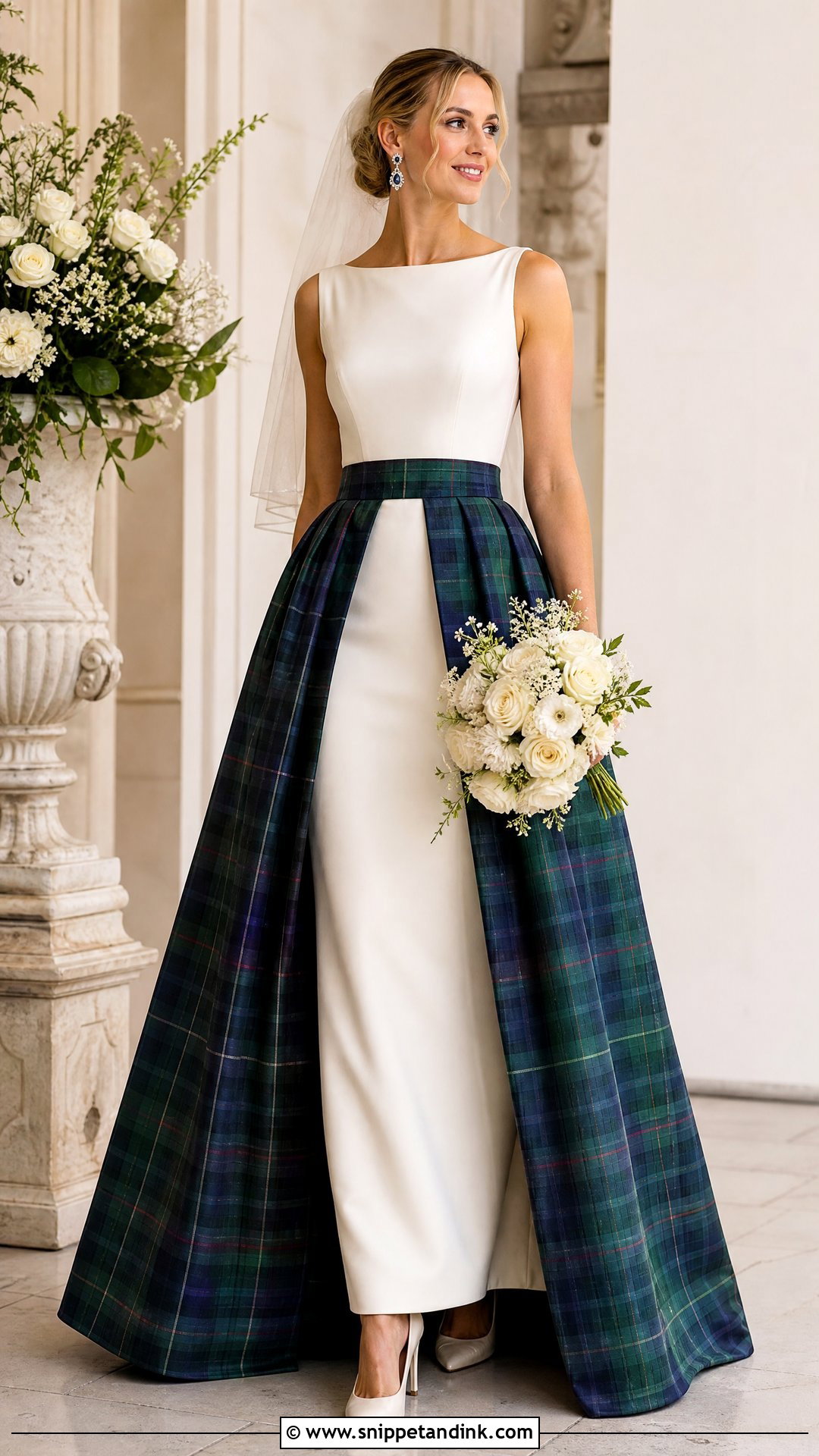
Two outfits, one dress. A removable tartan overskirt opens at the front over a slim ivory gown for the ceremony, then comes off once the formal photos are done. Wide pleats and a neat waistband give it shape. I always have the overskirt fastened with hooks hidden under the waistband rather than a zip, so it can come off in a minute without someone wrestling you in a corridor. Ivory heels, a short veil and gemstone earrings matched to the plaid’s main color suit the ceremony version; swap the veil for a jeweled comb afterward. A small bouquet of cream blooms and trailing greenery suits the layered skirt.
7. Black Watch Tartan Wedding Dress
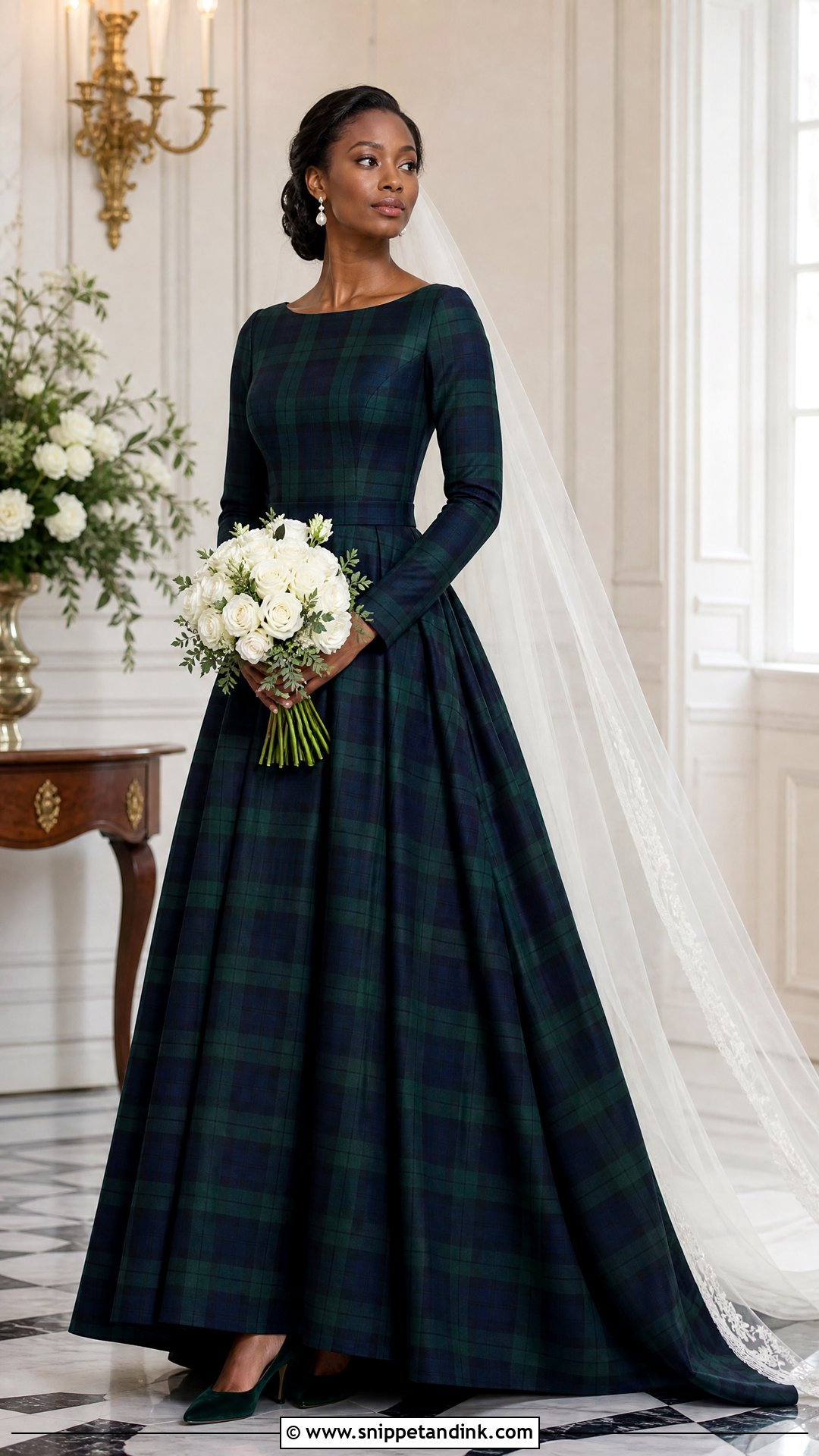
Black Watch is deep navy and green, and it is one of the tartans widely treated as open to anyone, which is useful if you have no clan connection. The dark palette suits a long-sleeve gown with a fitted waist and full skirt, and a bateau or modest V-neck keeps it clean. Dark green velvet pumps add texture; pearl earrings, an ivory veil and white roses bring light back to your face. A low bun shows the neckline. If the groom is also wearing tartan, compare physical swatches before ordering. Two mills can weave the same tartan in noticeably different shades, and side by side in photos it shows.
8. Royal Stewart Tartan Wedding Dress
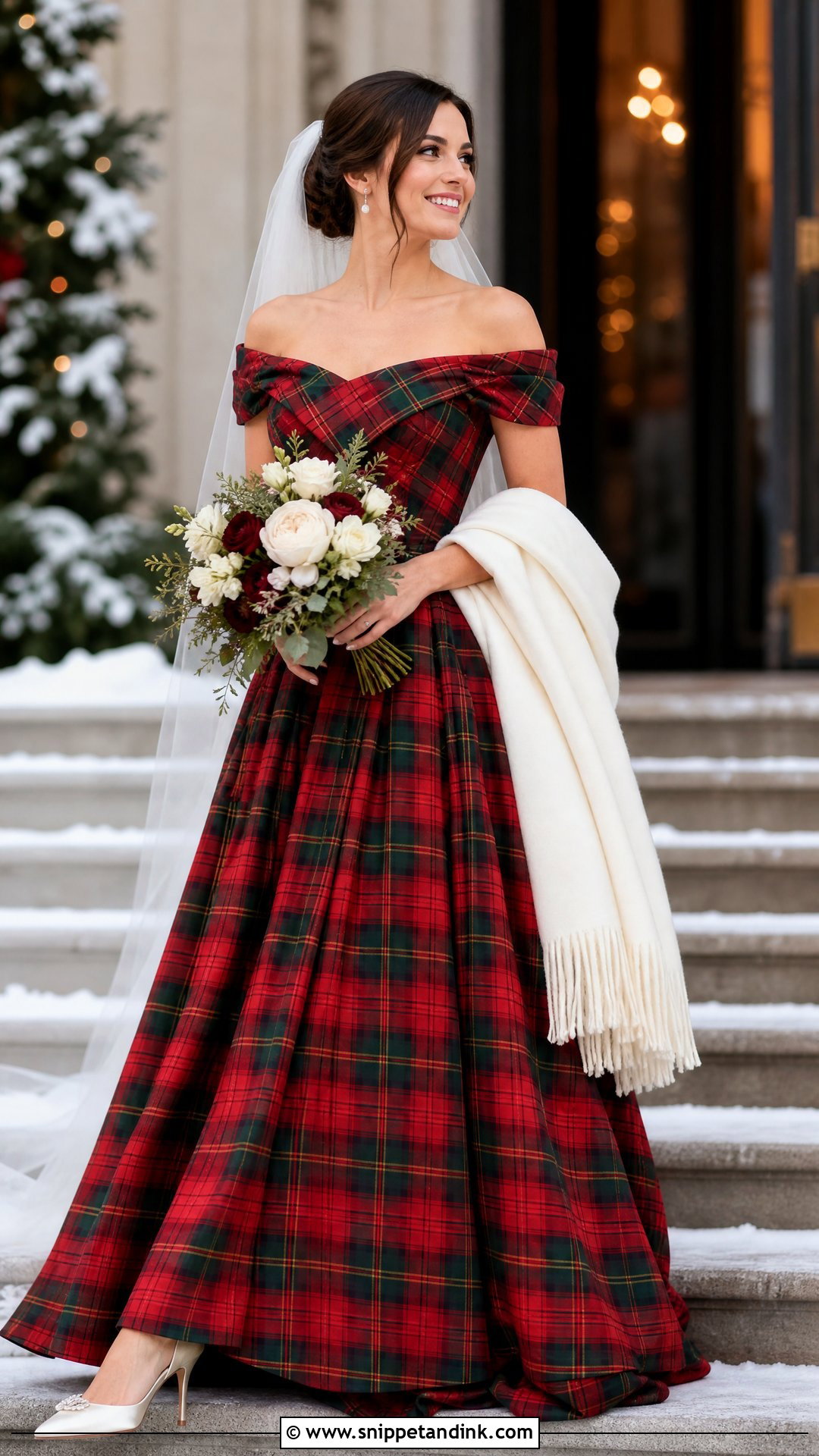
Royal Stewart is the red tartan most people picture, and on a gown it is loud by nature. I’d let it lead with a strapless or off-the-shoulder bodice and sweeping skirt, and a folded neckline helps soften the strong checks at the shoulders. Then hold back: ivory satin heels, a plain veil, small pearls and a single bracelet, not more red. A bouquet of cream flowers, eucalyptus and a little burgundy connects to the dress without competing. For cold outdoor portraits, an ivory faux-fur wrap over the shoulders reads well against the red.
9. Muted Hunting Tartan Wedding Dress
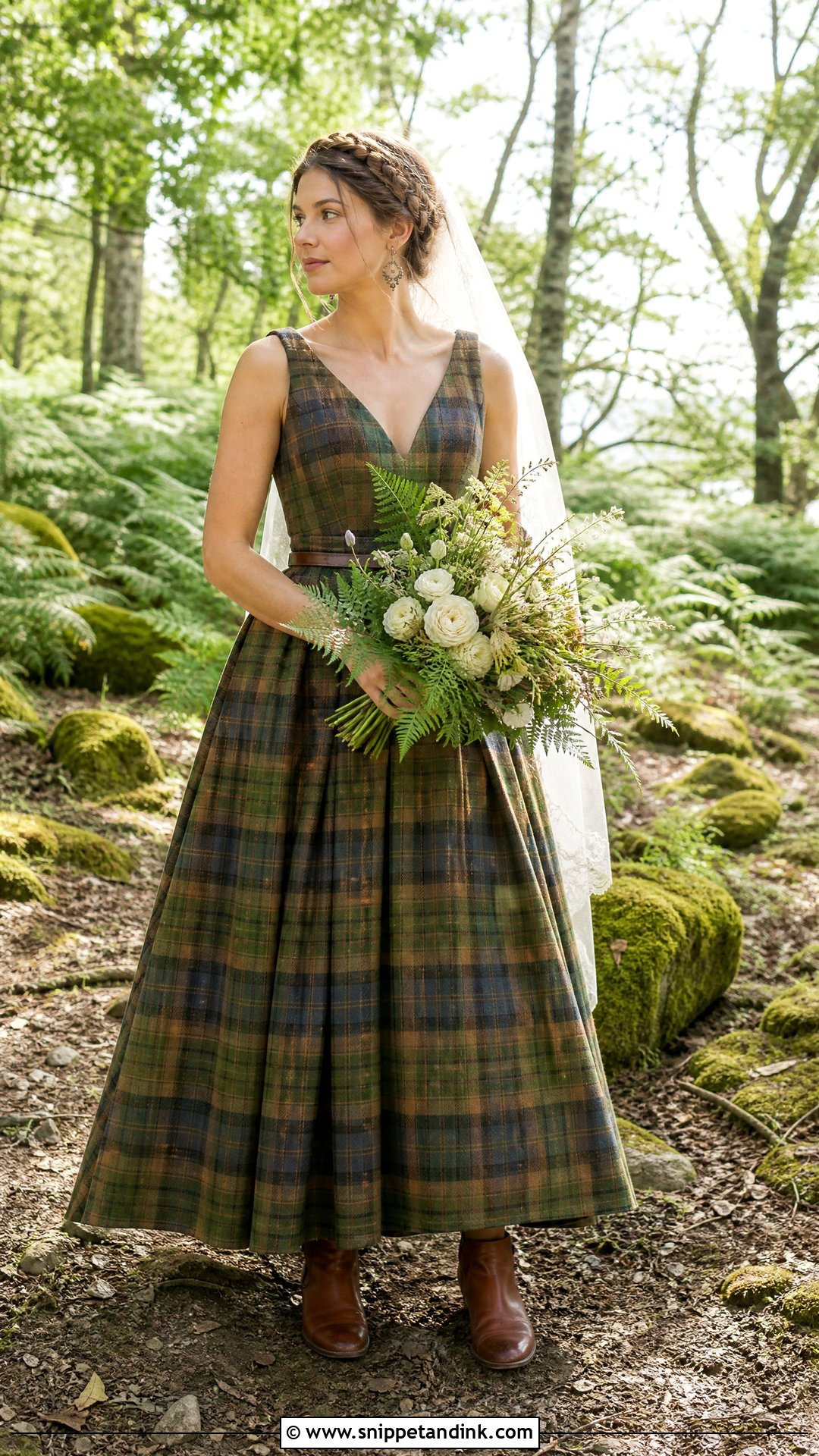
Hunting tartans were made to blend into hills, so their greens, browns, blues and grays are soft on camera and easy on most skin tones. A relaxed A-line with a lightly fitted bodice suits them. Brushed wool is warm for autumn; a lightweight weave or silk tartan is kinder in summer. Style it with brown leather block heels or neat ankle boots for a rustic site, plus an ivory veil, antique-style earrings and a loose braided updo. I’d skip sparkle entirely here. Matte metals and a bouquet of cream flowers and ferns sit far better with these colors in woodland or mountain settings.
10. Blue Tartan Satin Wedding Dress
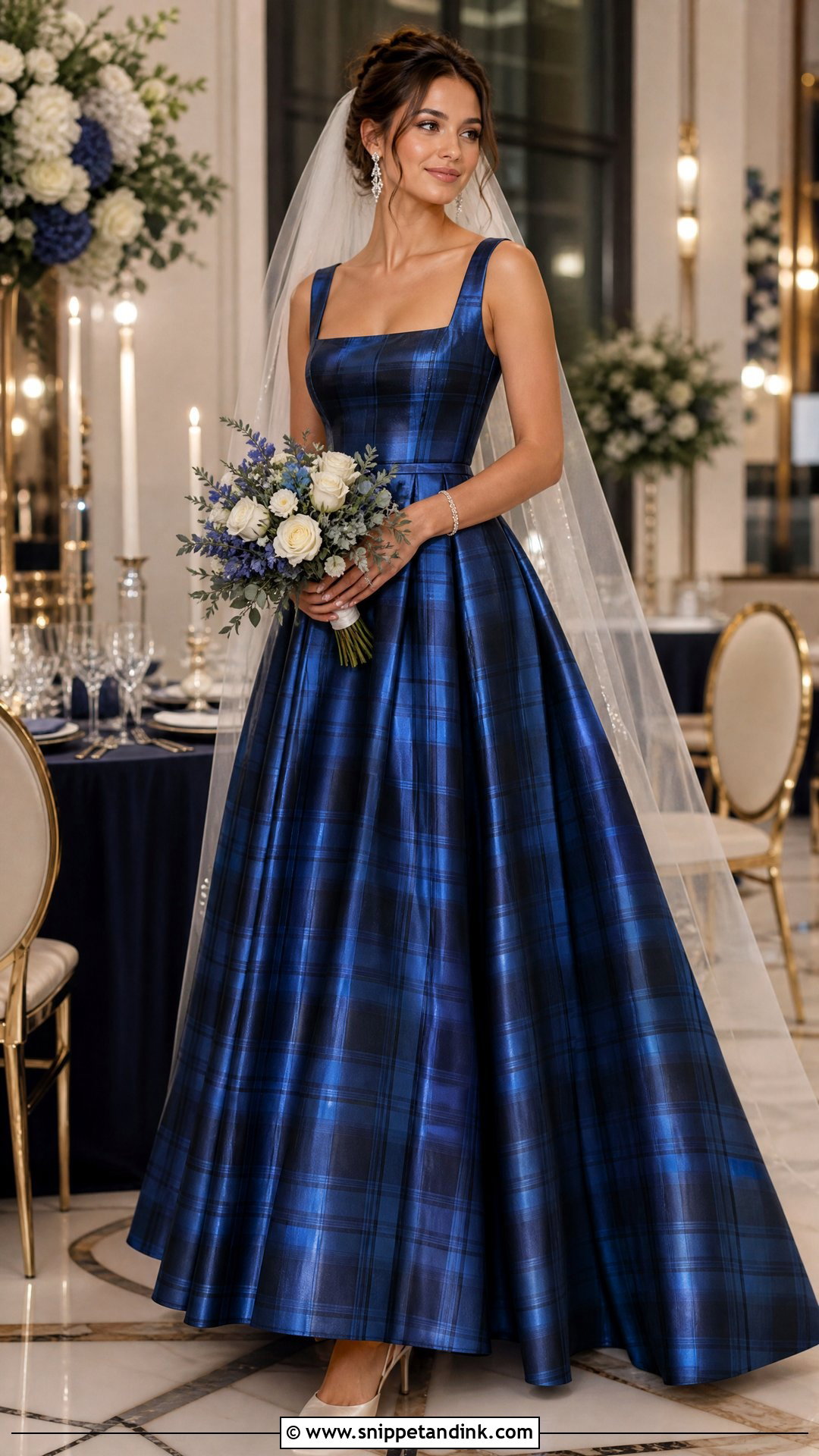
Satin changes tartan completely: the sheen softens the lines and catches light, so a pale blue, navy and silver-gray check looks almost luminous. A fitted gown with a square neckline and full skirt needs no embellishment. The catch is that satin shows creases at the hip once you’ve sat through dinner, so I suggest a satin with some weight to it and a quick steam before the evening photos. Crystal drops, a slim silver bracelet, ivory pointed shoes or navy velvet pumps, a sheer ivory veil and white flowers with blue accents finish it. Indoor evening light flatters this one most.
11. Green Tartan Velvet Wedding Dress
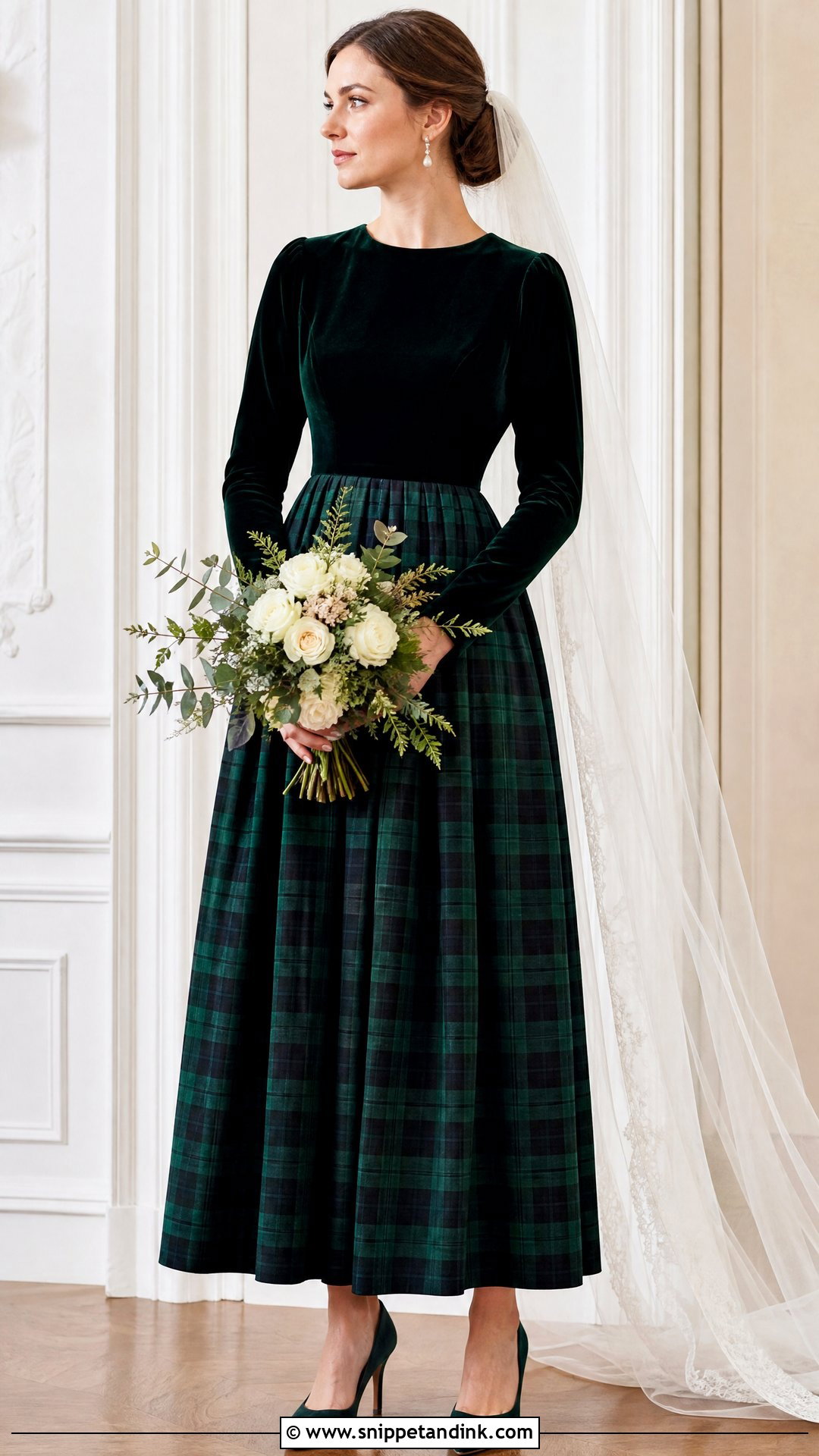
Velvet on the bodice and a lighter tartan below is how I’d handle green for a cold-weather wedding. All-over velvet tartan gets heavy and hot fast, so use it on the bodice or a few panels only. Long sleeves, a defined waist and a softly flared skirt keep it formal. Dark green pumps, pearl earrings and an ivory cathedral veil follow, with a thin velvet ribbon in the hair to repeat the texture. If you need more coverage outdoors, add an ivory cape rather than another patterned layer. Cream flowers, dark foliage and a touch of burgundy keep the bouquet seasonal.
12. Tea-Length Tartan Wedding Dress
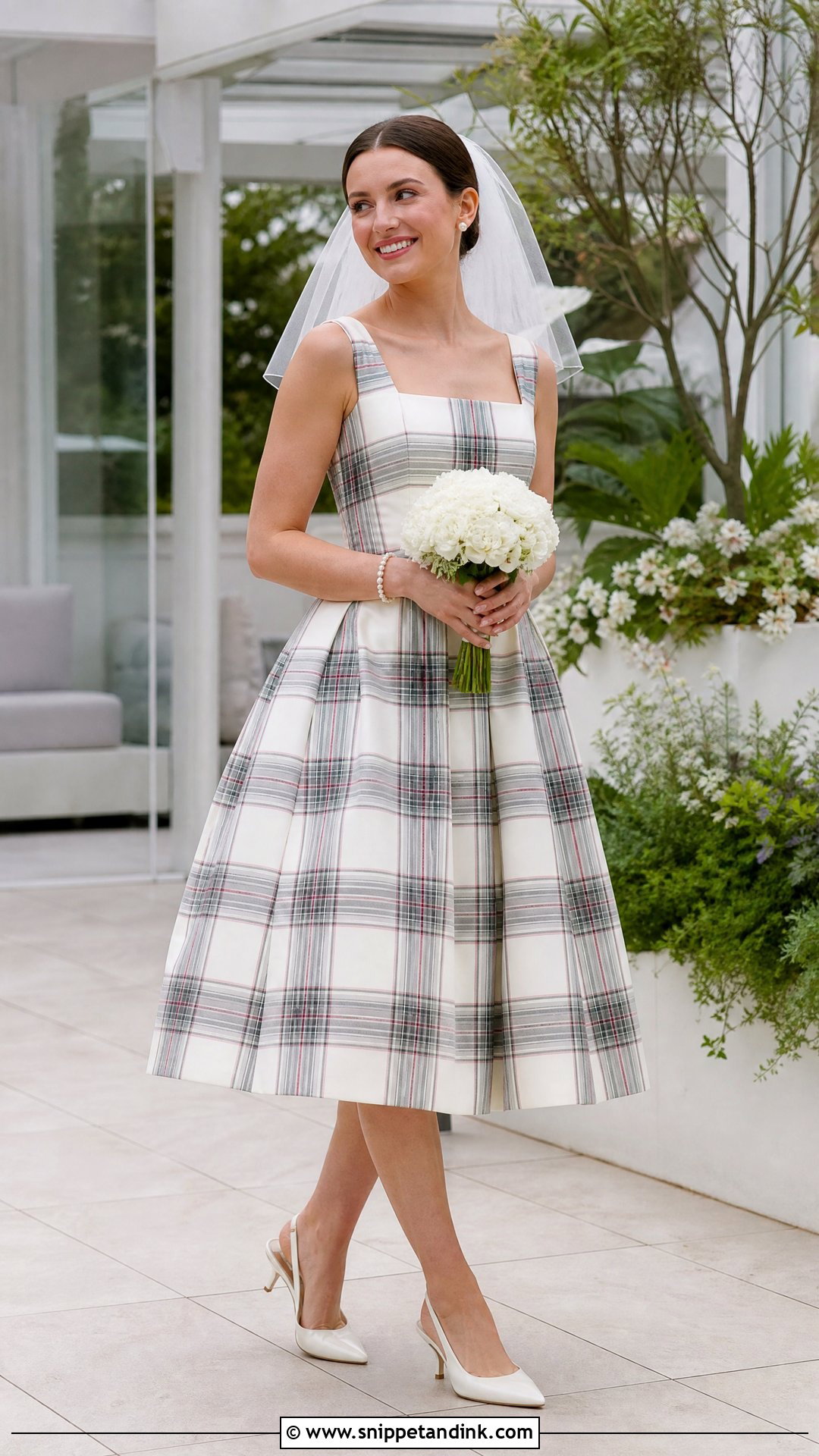
Tea length is the most relaxed silhouette in this list and the one I’d pick for a small wedding or a long walk between venues. Look for a fitted bodice and full skirt ending between knee and ankle. Your shoes become part of the outfit, so ivory slingbacks, block heels or bridal flats all need to be ones you actually like. A birdcage or shoulder-length veil matches the shorter proportions. Pearl studs, a fine bracelet, a compact bouquet and perhaps ivory gloves give a vintage feel. Hem the skirt with your real shoes on, because a centimeter changes how the checks land at the edge.
13. High-Low Tartan Wedding Dress
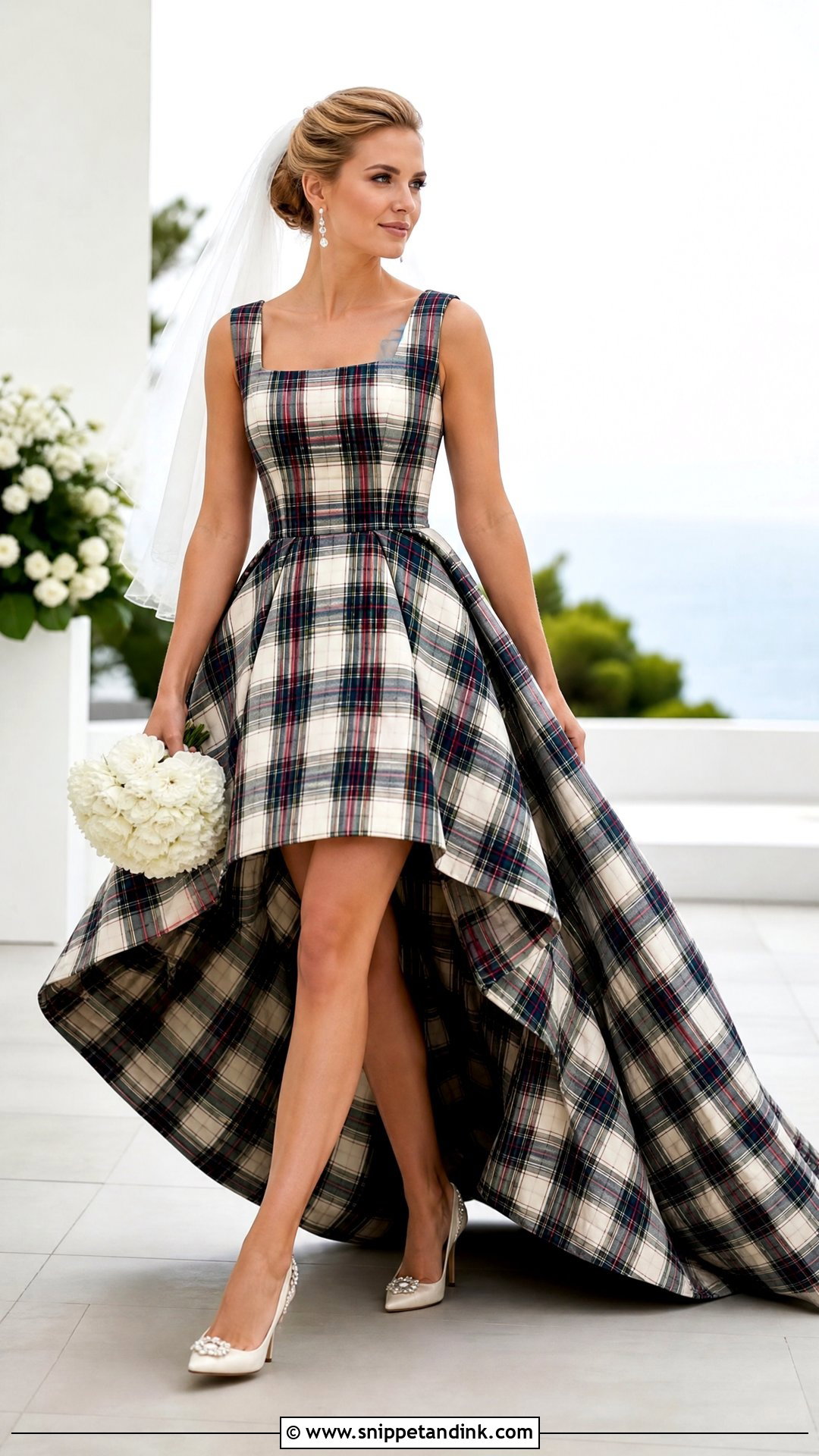
The front hem stops below the knee and the back falls into a soft train, so you get drama and visible shoes at once. The tartan needs enough body to hold that curve; a limp weave collapses at the sides and the hemline looks uneven. A fitted sleeveless bodice or a portrait neckline balances the skirt. Embellished ivory pumps, quiet drop earrings and a wrist-length veil suit it. Keep the bouquet tight, white flowers with one deeper accent, since the hemline already supplies the movement. I’d suggest it for a terrace, a gallery or any venue where you want to walk freely.
14. Tartan Mermaid Wedding Dress
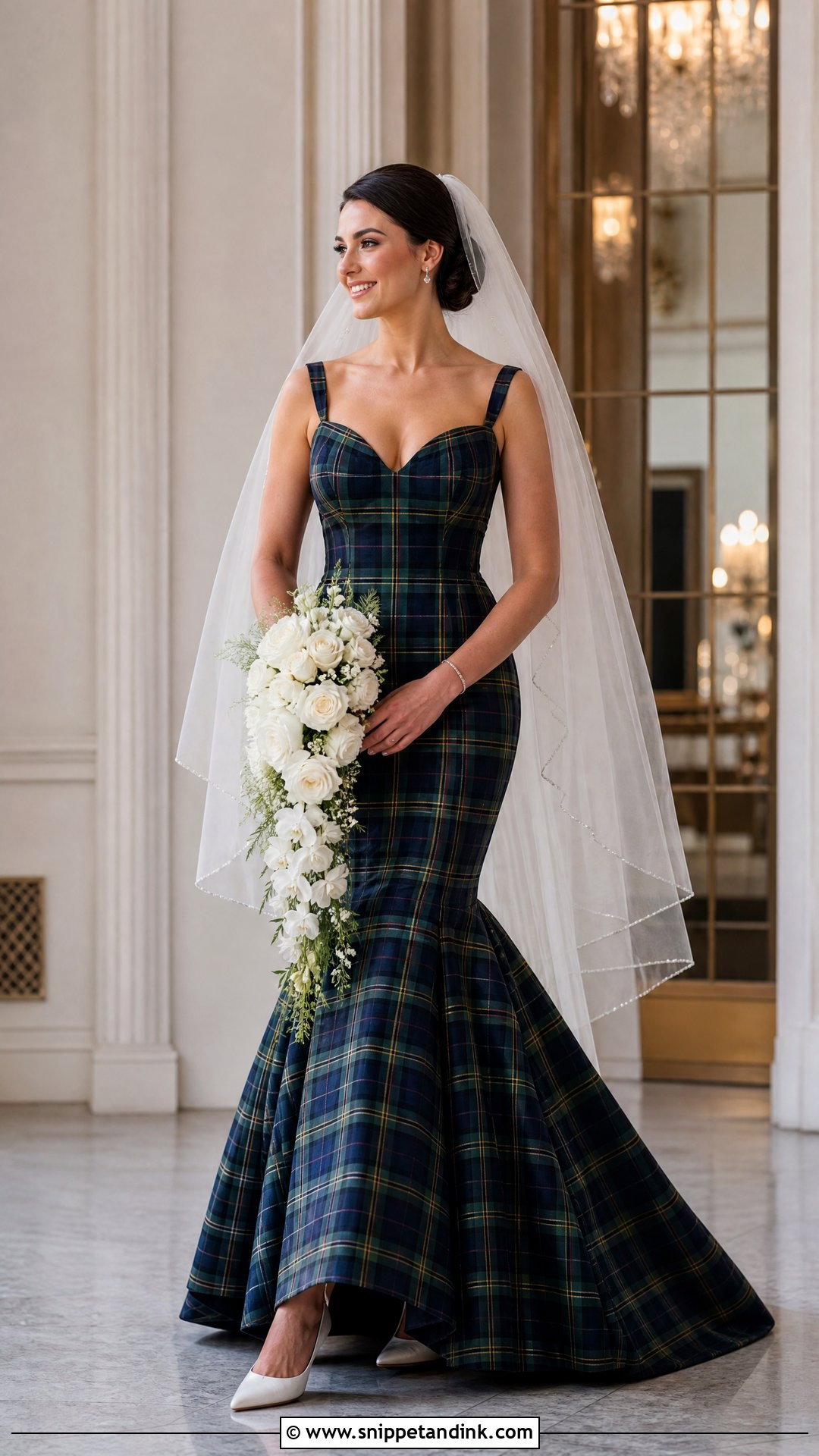
Mermaid seams curve, and that makes tartan difficult. Medium-scale checks are much easier to match across those seams than very large ones, and I’d ask any maker to show you how the lines will meet at the knee flare before cutting. A sweetheart neckline with supportive straps or an off-the-shoulder fold balances the upper body. Simple ivory pumps, crystal studs, a sleek bracelet and a smooth fingertip veil are enough. A narrow cascading bouquet follows the gown’s vertical line without hiding the waist, and a low bun or side-swept hair keeps the neckline open.


15. Tartan Empire Waist Wedding Dress
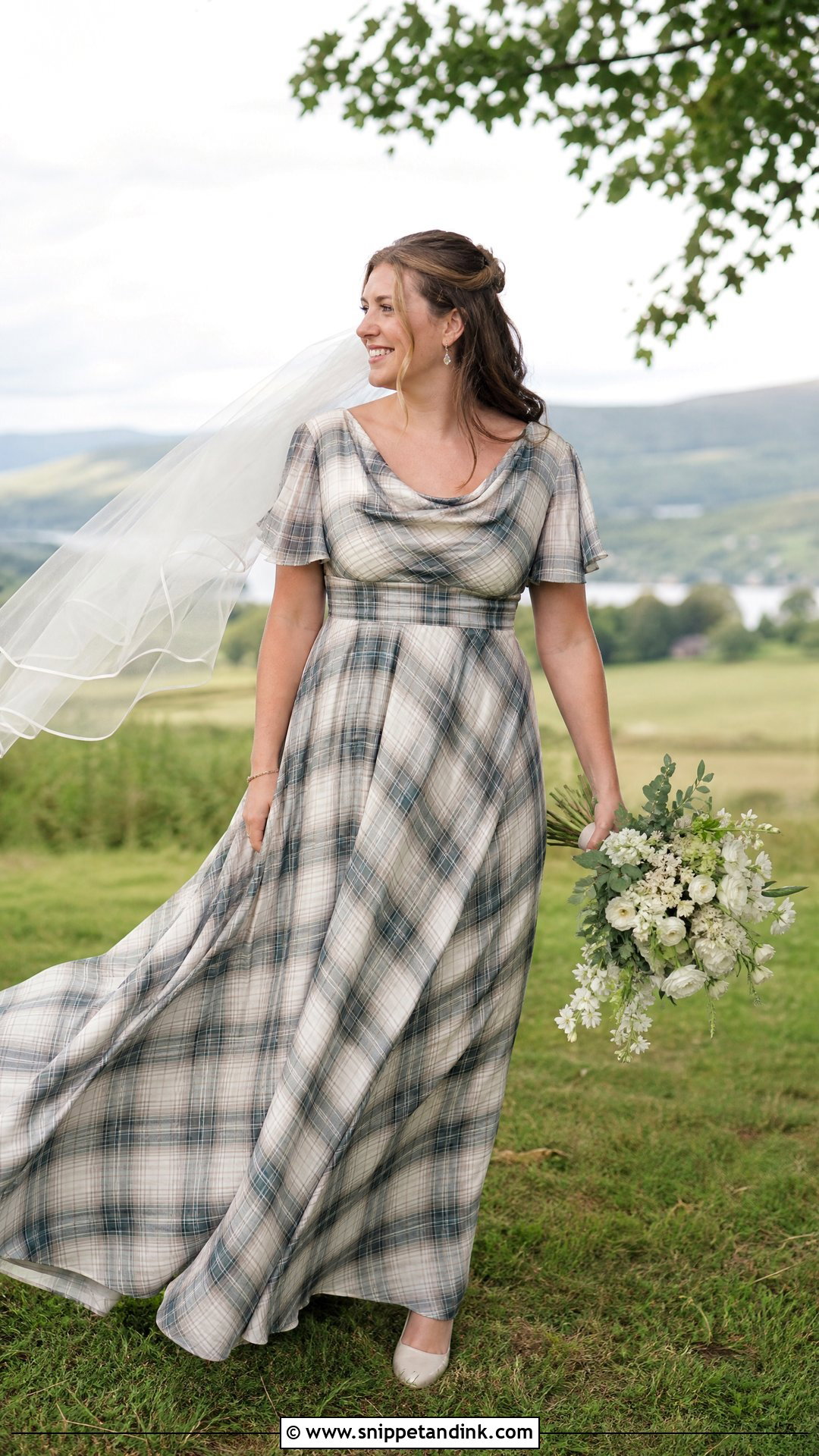
An empire waist puts the seam just below the bust and lets a long, easy skirt fall from there. It’s one of the most comfortable shapes you can wear for a full day, and it suits brides who don’t want anything tight at the natural waist. Use tartan on the bodice, the waistband or the entire dress depending on how much color you want. A draped neckline and flutter sleeves add softness. Ivory low heels, delicate drops, an elbow-length veil and a loose half-up style suit the flowing line, with a hand-tied bouquet ribboned in the tartan’s main color. Garden and countryside weddings are where it fits best.
16. Ivory Wedding Dress With Tartan Cape
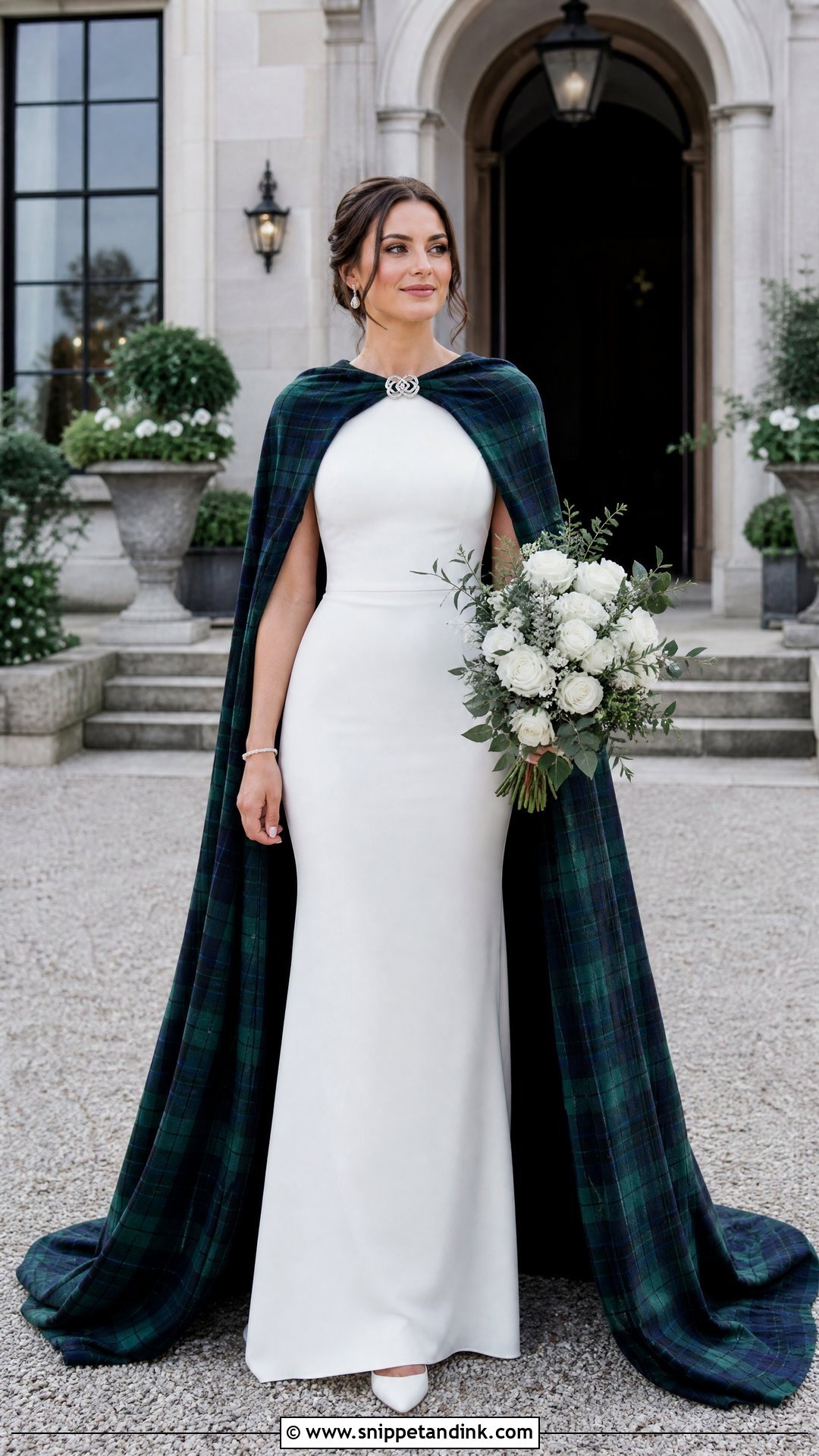
If you’re marrying outdoors in autumn or winter, a tartan cape over a clean ivory gown solves warmth and color in one piece. Keep the gown simple, crepe or satin with little embellishment. A hip-length cape suits a full skirt; a long cape suits a narrow column. Fasten it with a brooch or covered clasp at the neckline, and make sure the clasp sits on the cape’s own facing so it doesn’t pull on the dress. Pearl earrings, ivory pumps and a slim bracelet sit underneath. If the cape has a hood or tall collar, skip the full veil and use a small comb. Take the cape off indoors for a lighter reception look.
17. Tartan Bridal Jacket With Simple Wedding Dress
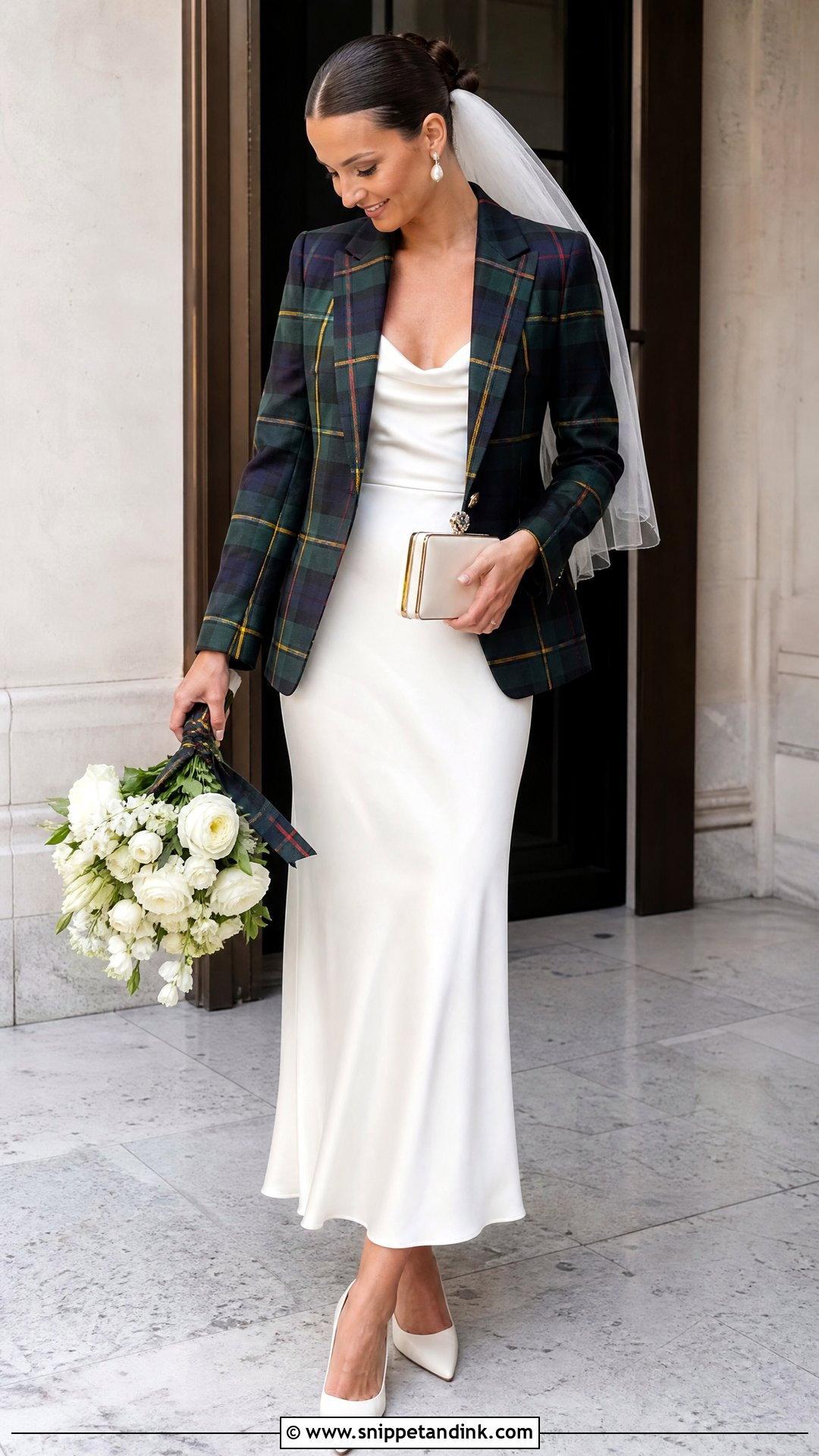
A fitted tartan jacket over a slip dress, column or plain A-line is the smart, slightly unexpected option. It’s useful for outdoor photos, travel between venues or a cool ceremony. I’d keep it ending at the waist so it defines your figure instead of covering the dress, and the shoulders must be tailored properly, since a jacket that’s even slightly too wide looks borrowed. Ivory pointed pumps, pearl earrings, a structured clutch, a sleek bun and a short veil that sits clear of the collar work with it. Tie tartan ribbon around a white and green bouquet, then take the jacket off for the reception.
18. Tartan Wedding Dress With Detachable Sleeves
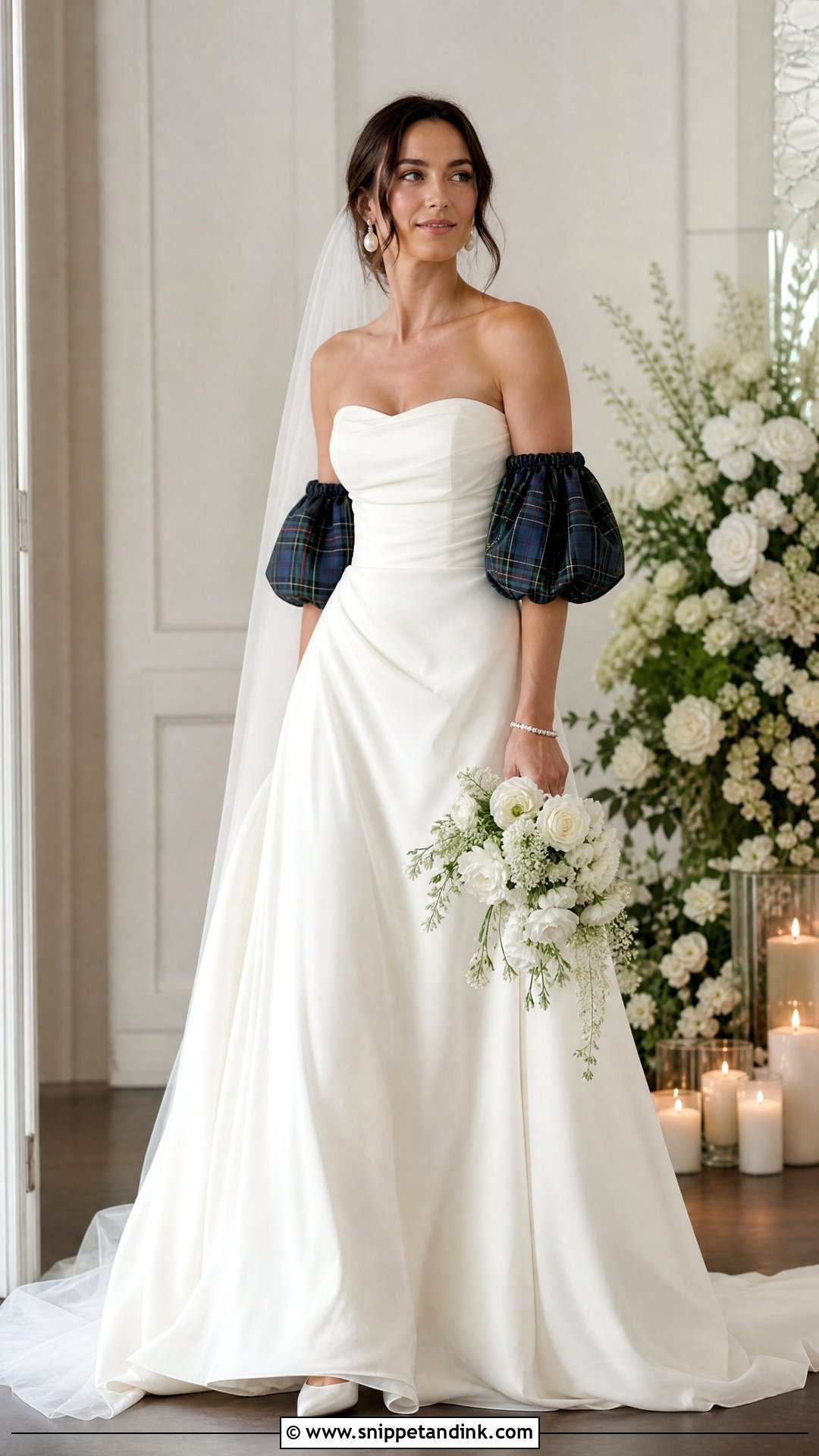
Detachable sleeves change the dress without changing the dress. Fitted or softly puffed tartan sleeves attach to an ivory strapless bodice, putting the color near your face while the rest stays light. The upper edge is where these succeed or fail: I have them secured with elastic and small hooks at the bodice so they don’t slide down when you raise your arms. Ivory heels, a plain tulle veil, pearl earrings and a narrow bracelet keep the top half from crowding. After the ceremony, remove the sleeves and swap the veil for a small hair accessory, and you’re ready to dance.
19. Plus-Size Tartan Corset Ball Gown
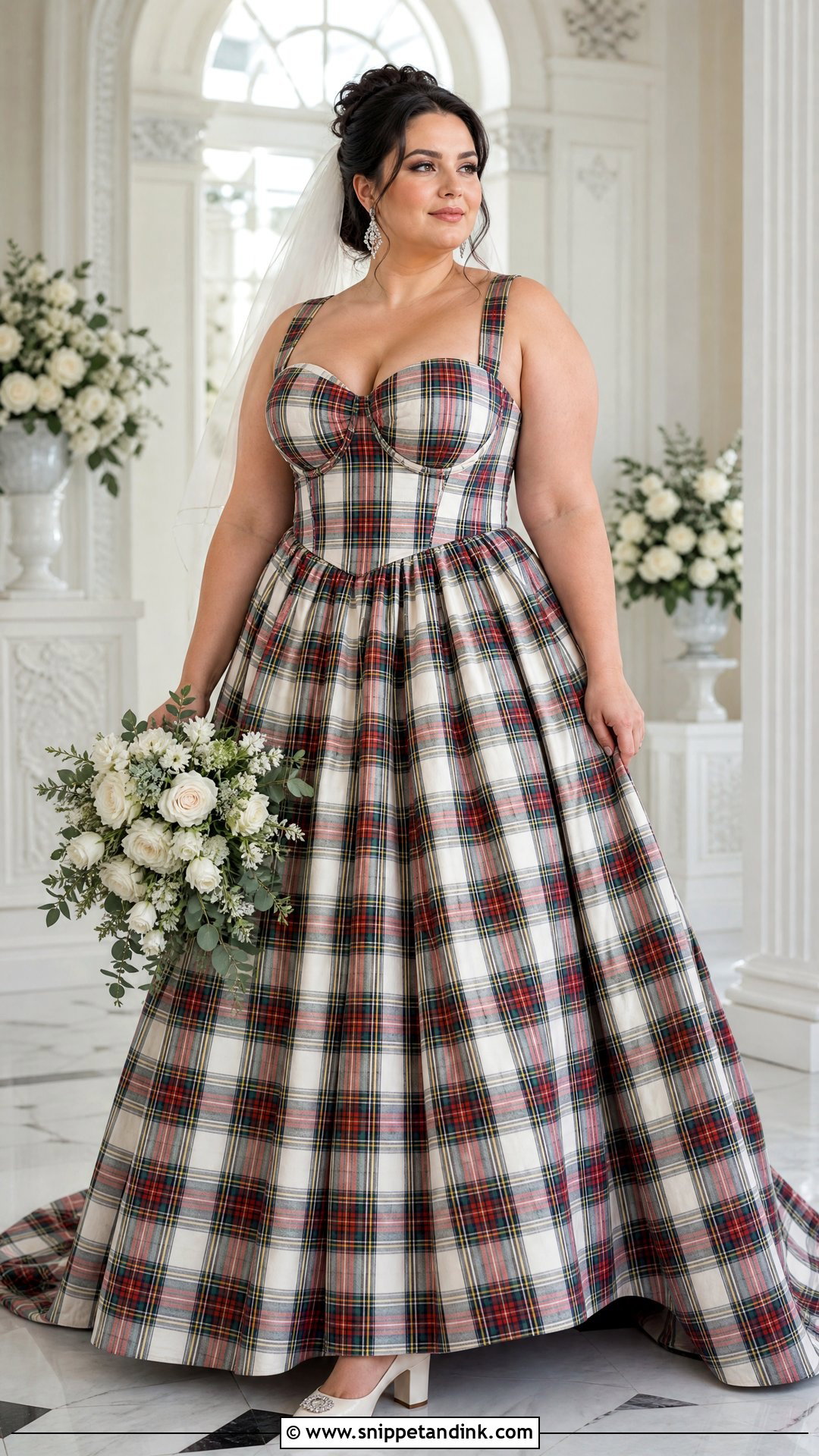
A plus-size tartan corset ball gown gives definition and real support when it is cut to your proportions, not graded up from a sample. Look for comfortable boning, a secure neckline, and straps or sleeves if you like extra support. Pleats placed correctly let the tartan fall smoothly from the waist. Choose the size of the check to suit the design rather than following old rules about body shape; I’ve never found those rules hold up. Supportive block heels, pearl or crystal earrings and an ivory veil on a polished updo finish it. Bring your actual undergarments and shoes to every fitting so the length and fit stay accurate.


20. Ivory Column Wedding Dress With Tartan Shoulder Drape
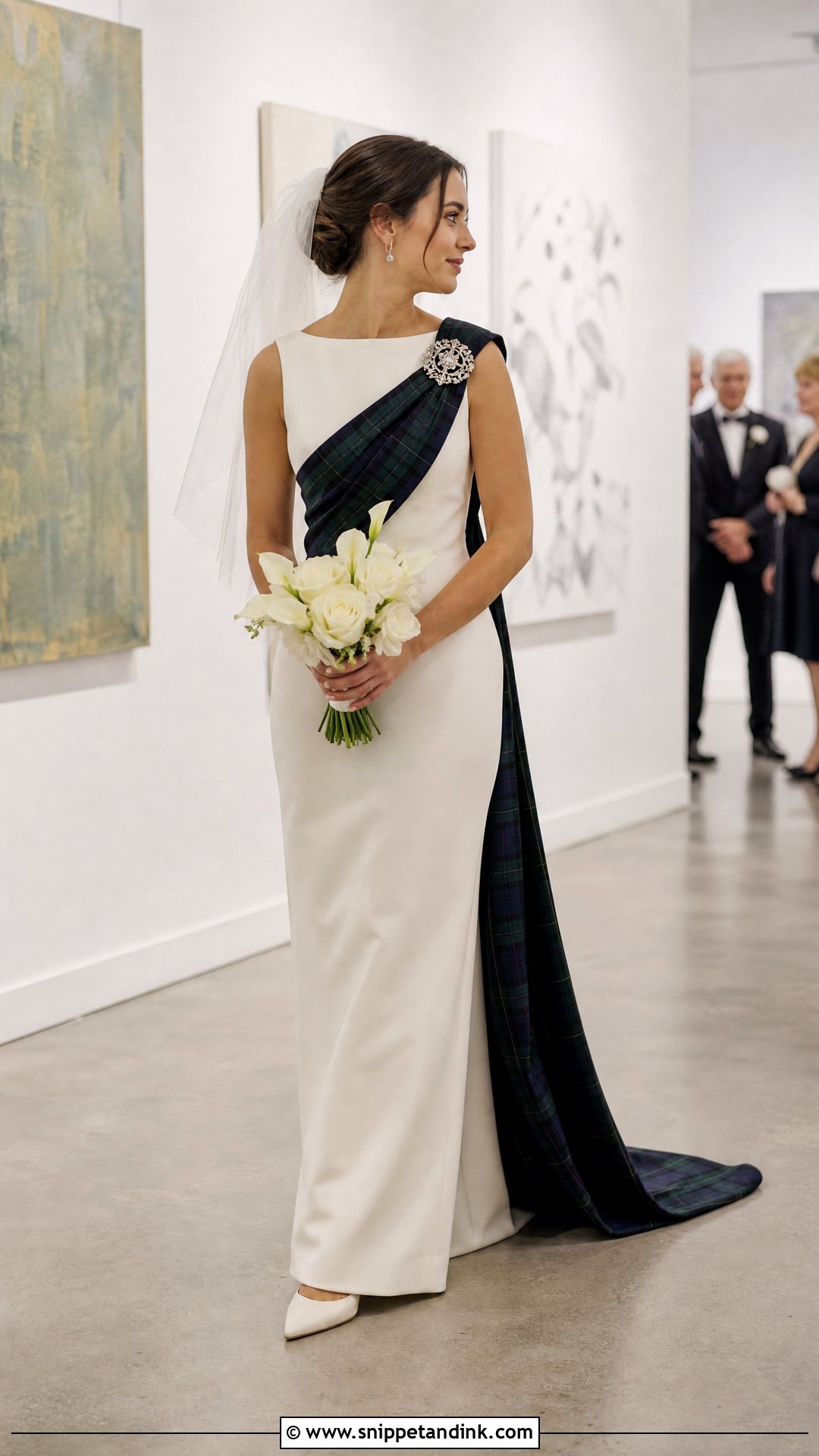
One strip of tartan, placed well, can carry the entire theme. Across a sleek ivory column it crosses one shoulder, falls diagonally over the bodice and continues down the back as a narrow train. Pin it with a silver brooch, and ask your seamstress to add a small hidden tack under the brooch so the folds hold through the ceremony. A smooth crepe gown with a high neckline or simple V suits the clean vertical line. Ivory pointed pumps, small silver earrings, a low bun and a short sheer veil set beneath it stay modern. A narrow bouquet of white flowers and structured greenery finishes it.
Matching Checks Across Seams Takes More Fabric and More Time
Tartan is the hardest fabric I send to a seamstress, because every seam, pleat and dart has to line up with a repeating grid called the sett. That affects your budget and your schedule in ways a plain gown doesn’t.
Order extra yardage
Matching the pattern wastes fabric between pieces. Larger setts waste more. Ask your maker how much to buy for your design and add a little on top; running short halfway through a skirt and having to reorder from a different dye lot is the thing to avoid.
Pick the weight for your weather
Heavy kilt-weight wool is very warm and holds sharp pleats, which suits a winter castle. For a skirt or bodice worn in summer, ask for a lightweight wool or a silk tartan. Feel both before deciding; the difference in a long day is huge.
Allow for weaving
Popular tartans are often in stock, but less common clan or district setts may be woven to order, and a custom tartan takes longer still. I’d settle the fabric first, then book fittings, rather than the other way round.
On the day, wool tartan should only be pressed through a cloth on a wool setting. A hot iron straight on the fabric leaves a shine that never comes out.
How Much Tartan Is Right for You?
Balance is what makes tartan look bridal. A full checked ball gown is the loudest version; an ivory dress with a sash, train, cape or shoulder drape is the quietest. Think about your season, venue, shoe height and how much you’ll be moving before you settle on a design. I’d always put money into custom tailoring here, because tartan lines look best when they meet cleanly across seams and pleats, and order swatches for anyone else wearing the same pattern. From traditional to rustic to modern, there’s a version above for almost any wedding.
You'll Like These Ideas:



Leave a Reply