
The dress that makes it all feel real rarely announces itself on the hanger. In the fitting room I usually see it in the bride’s shoulders before she says anything: they drop, she stops fiddling with the bodice, and she starts moving. Below are twenty complete looks, each with its veil, shoes, jewelry and small finishing pieces, running from a satin ball gown and a fitted mermaid to boho chiffon, bridal separates and a jumpsuit. Read them with your venue, season and the amount of walking you’ll do in mind, and notice which silhouettes you keep coming back to.
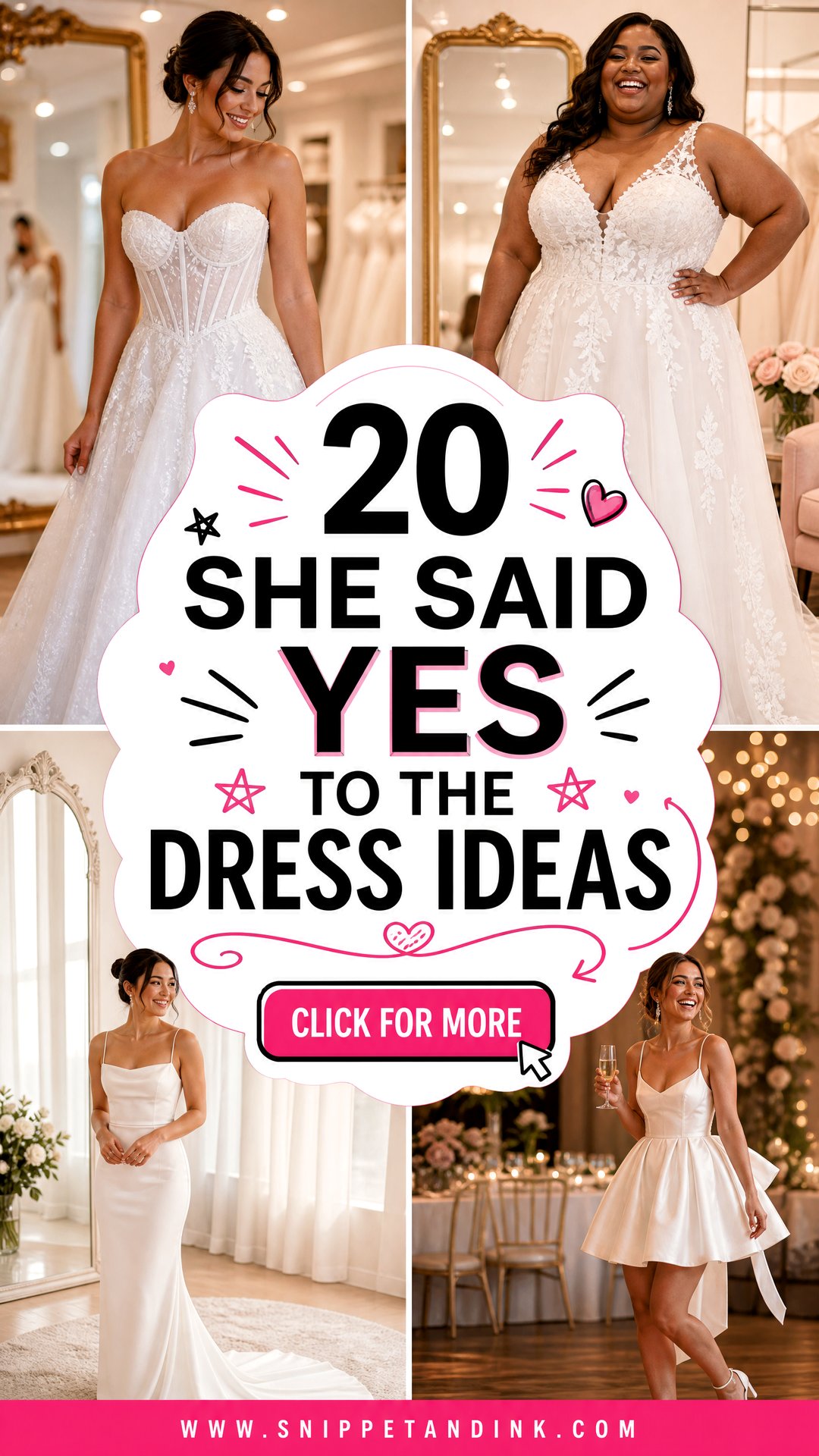
Three Opinions in the Room Are Plenty
The appointments that end in a yes usually have a small audience. Once six people are on the sofa, the bride starts dressing for their faces instead of the mirror, and every gown gets a split vote. Bring the one or two people whose taste you trust and who will tell you kindly when something isn’t working.
What you bring in your bag matters as much. Pack shoes close to the heel height you plan to wear, smooth nude underwear and a strapless bra, because a ball gown and a slip dress hang completely differently at the wrong height. Shop samples are clipped onto you at the back, so look at the front and the shape, not the gap in the zip.
About the number on the label
Bridal sizing usually runs smaller than high-street sizing, often by a size or two, and the order is based on your measurements against that designer’s chart. Seeing a bigger number than you wear every day means nothing about you. Let the consultant measure and pick the size, then let the seamstress do the rest.
1. Satin Ball Gown Wedding Dress
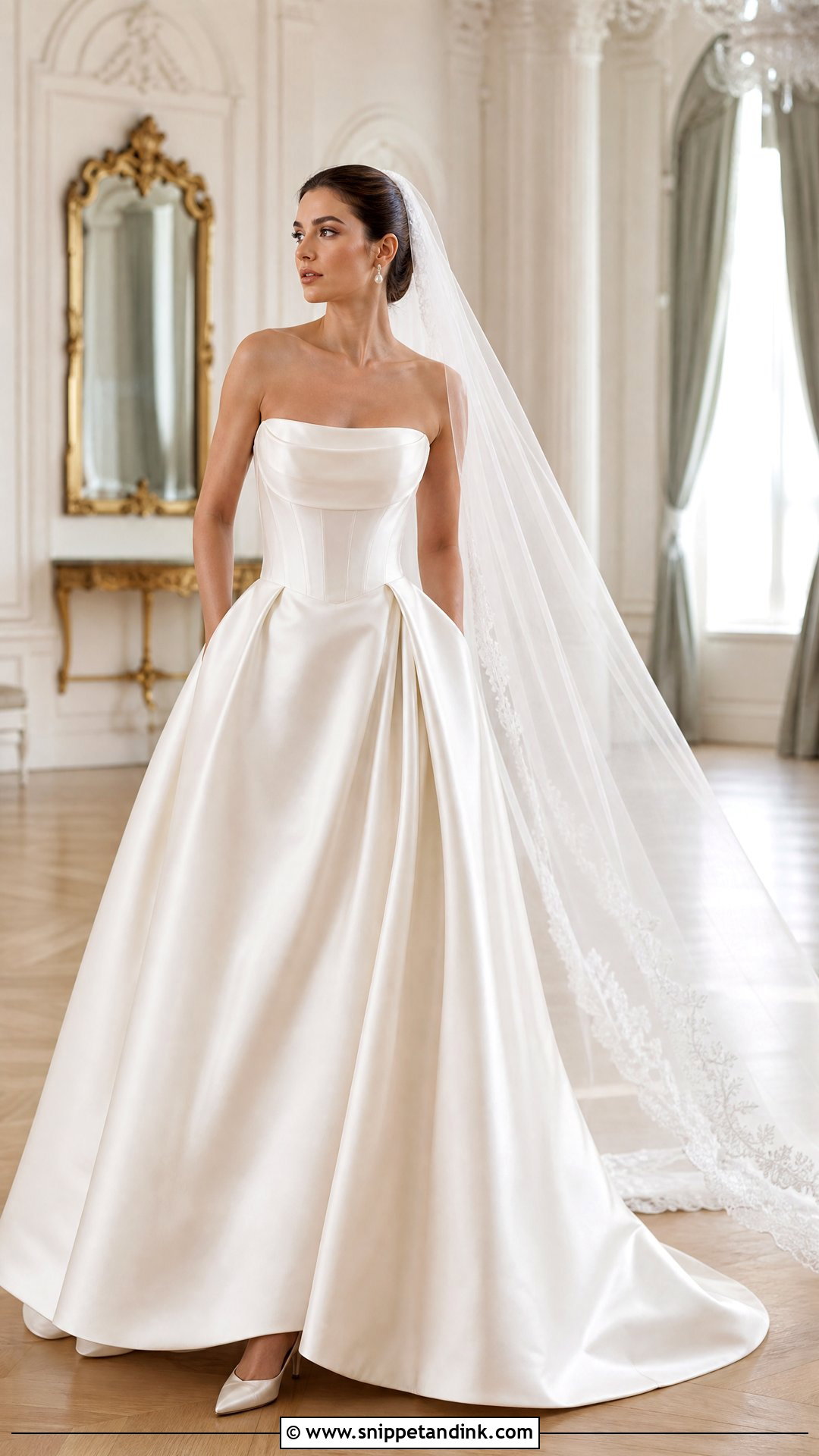
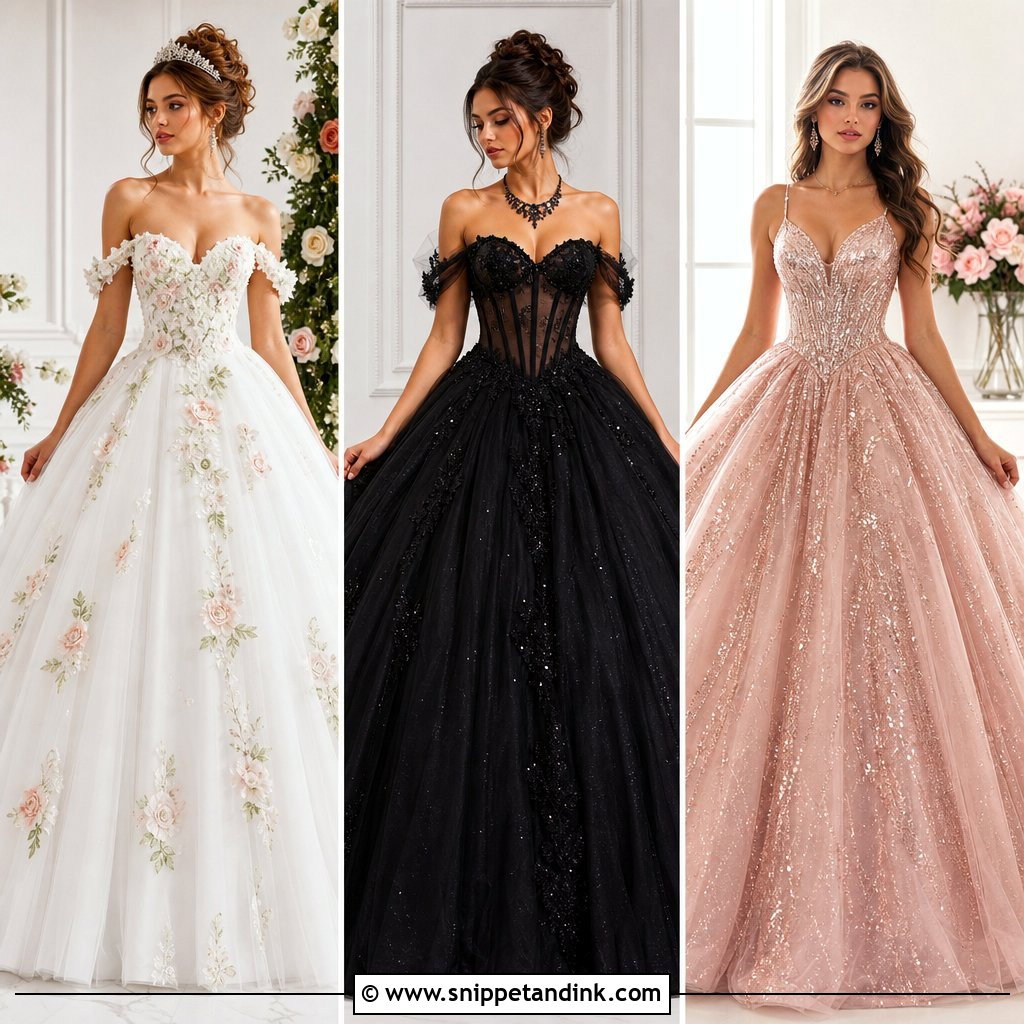
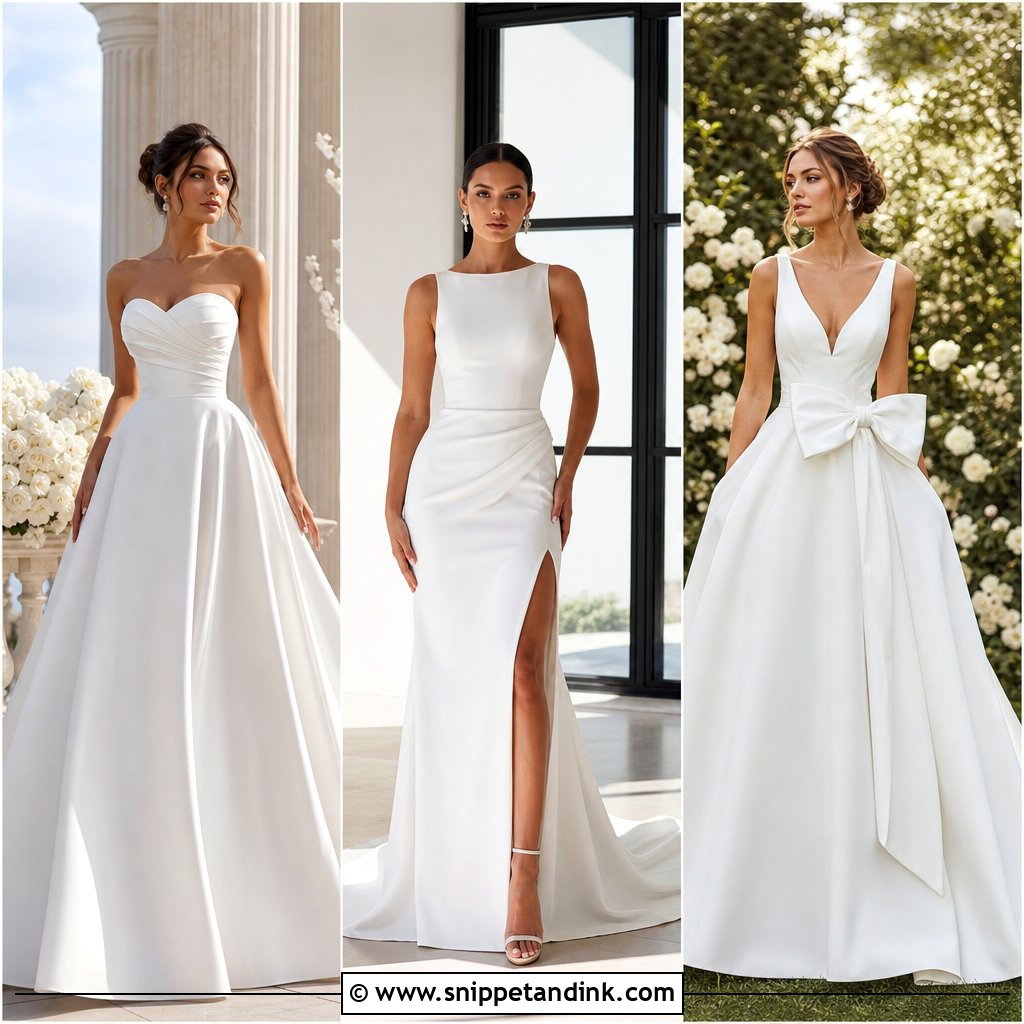
Structure is the whole point of a satin ball gown: a firm bodice, a defined waist and a skirt with real volume behind it. Smooth ivory or soft white satin keeps the surface clean, and a strapless or softly draped neckline holds the classic line, with covered buttons running down the back. Add a cathedral veil, pearl drop earrings, pointed satin pumps, a small bouquet and a fine bracelet. Ballrooms and grand hotel spaces suit the scale. Always have the hem set while you wear your actual wedding shoes, because a full skirt that’s half an inch too long will catch under your toes on every step forward.
2. Lace A-Line Wedding Dress
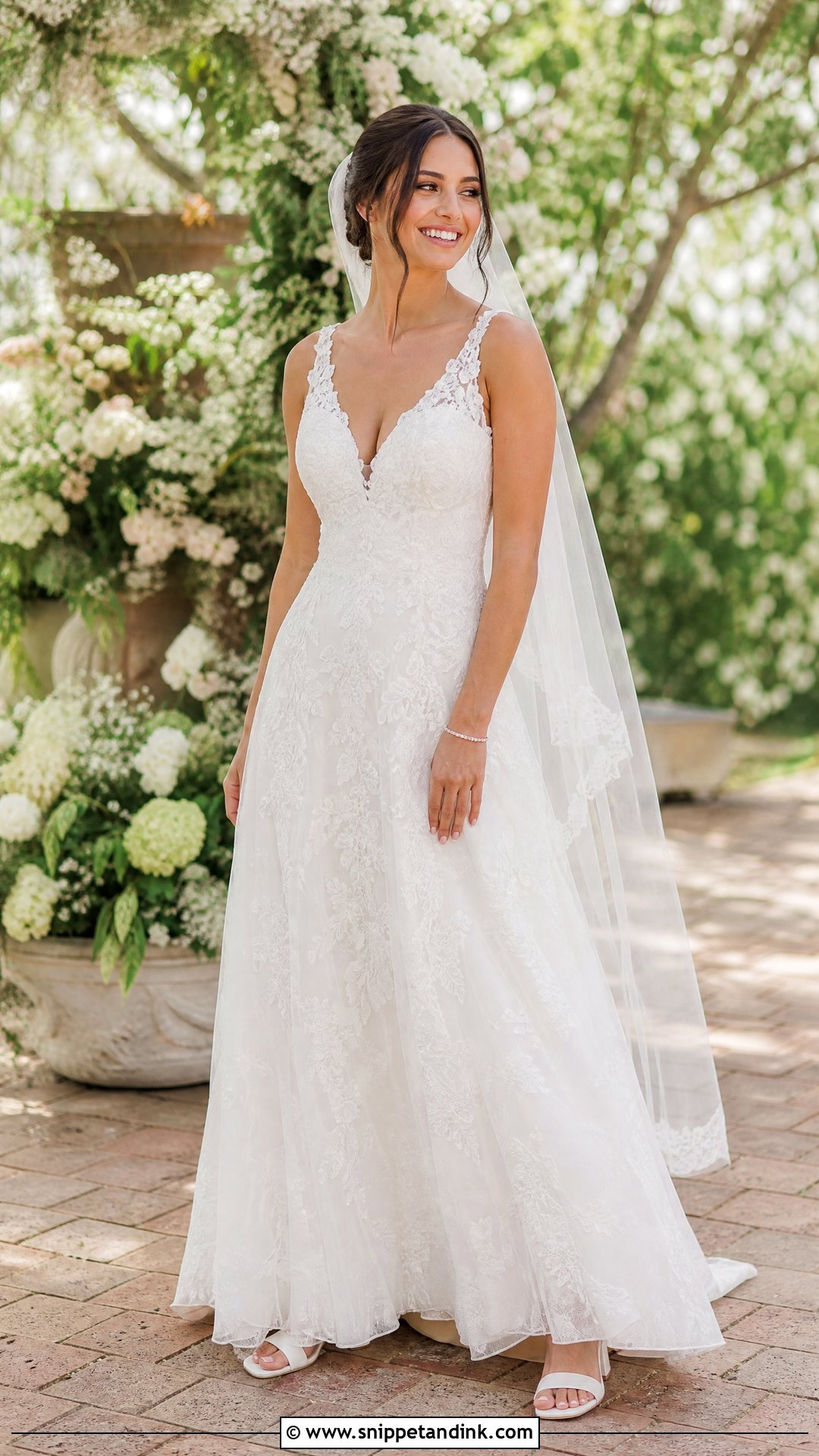
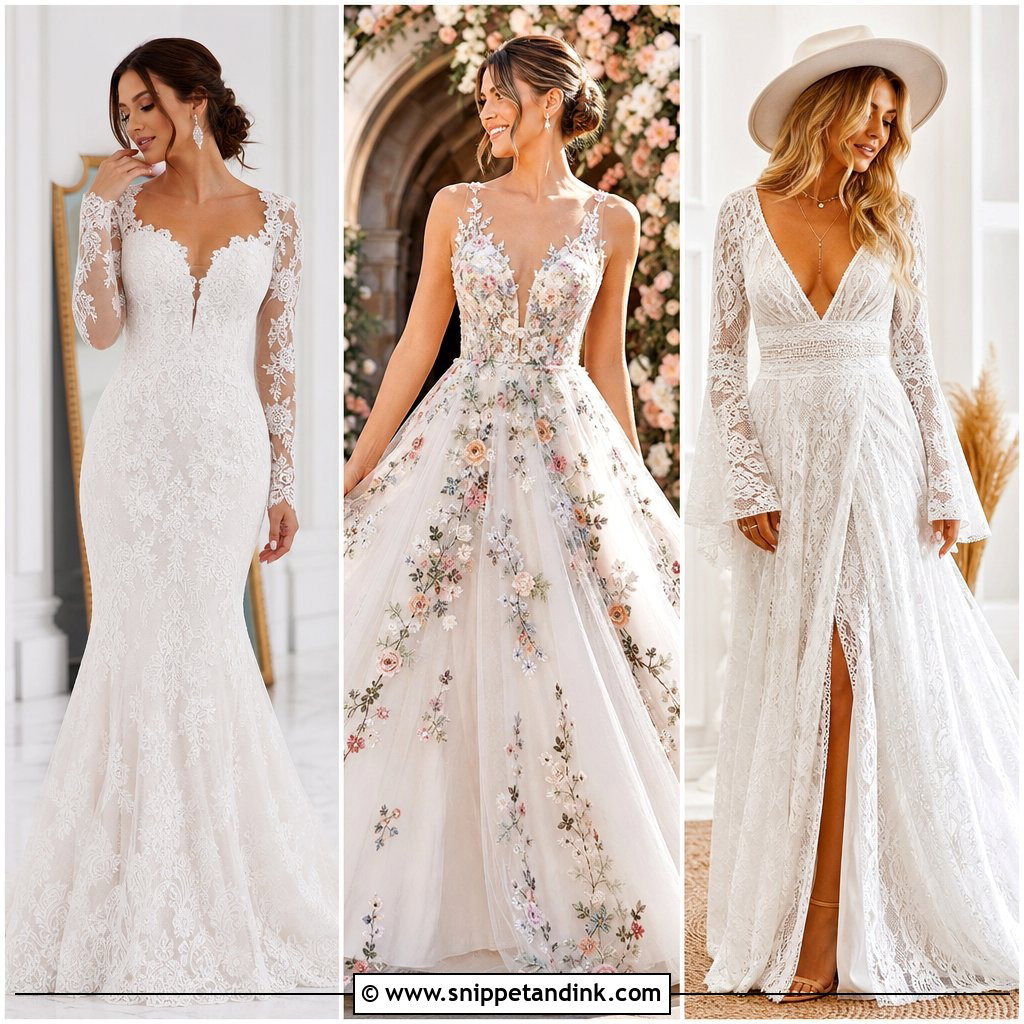
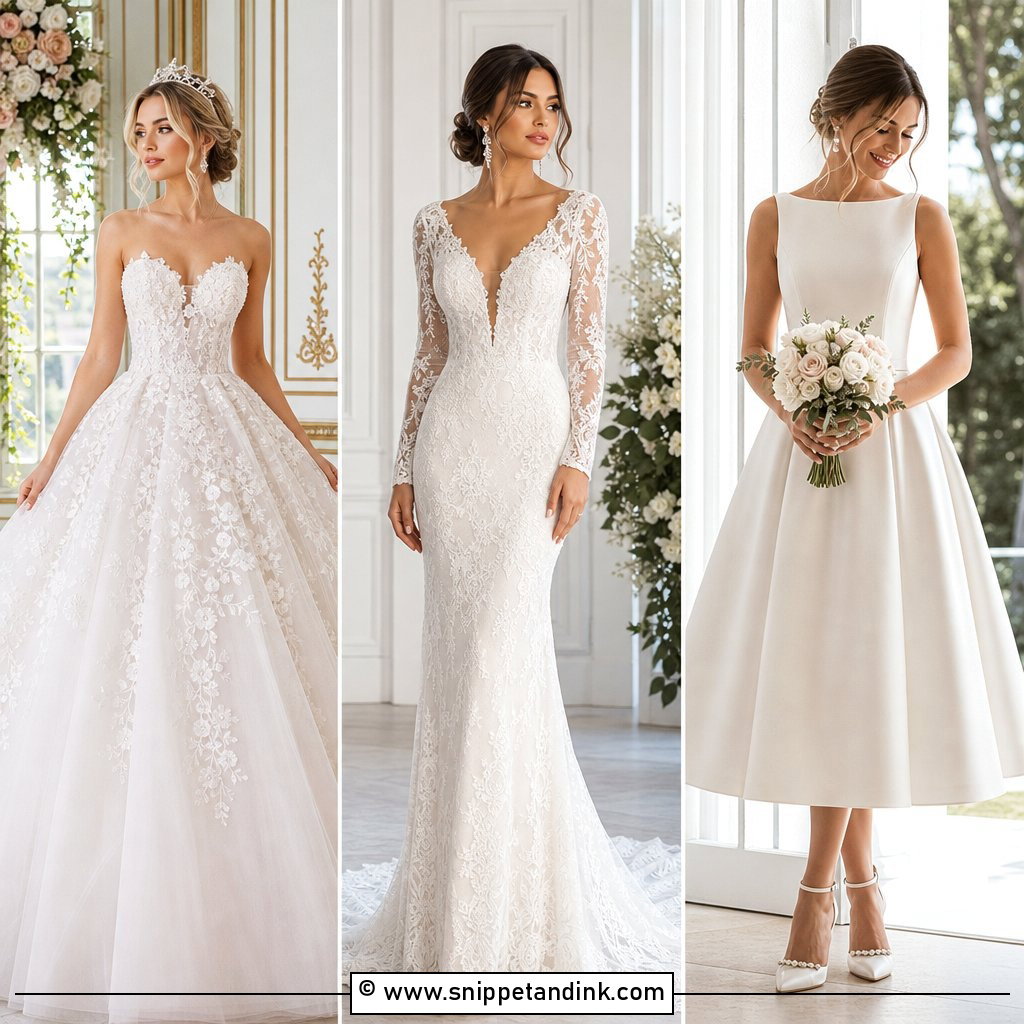
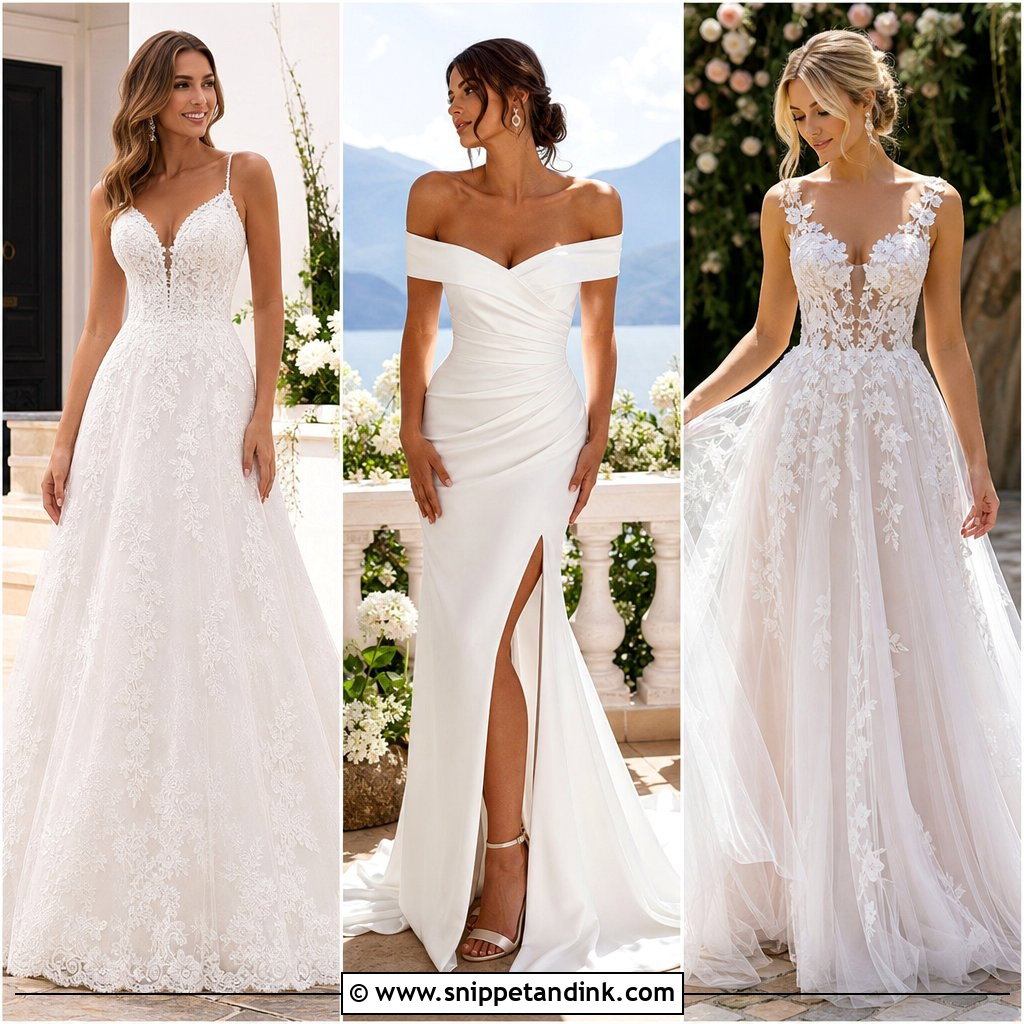
Lace and an A-line shape suit more body types than almost any other pairing, because the fitted top marks the waist and the skirt releases over the hips. Floral lace laid over a neutral lining shows the pattern far more clearly than lace over white. A V-neck with supportive straps keeps everything secure through a long ceremony. Style it with a fingertip veil, crystal studs, a slim tennis bracelet, low block heels and a loose bun or soft waves. Run your hand along the inside seams at the first appointment; scratchy, unfinished lace edges at the underarm will bother you by the second hour.
3. Strapless Mermaid Wedding Dress
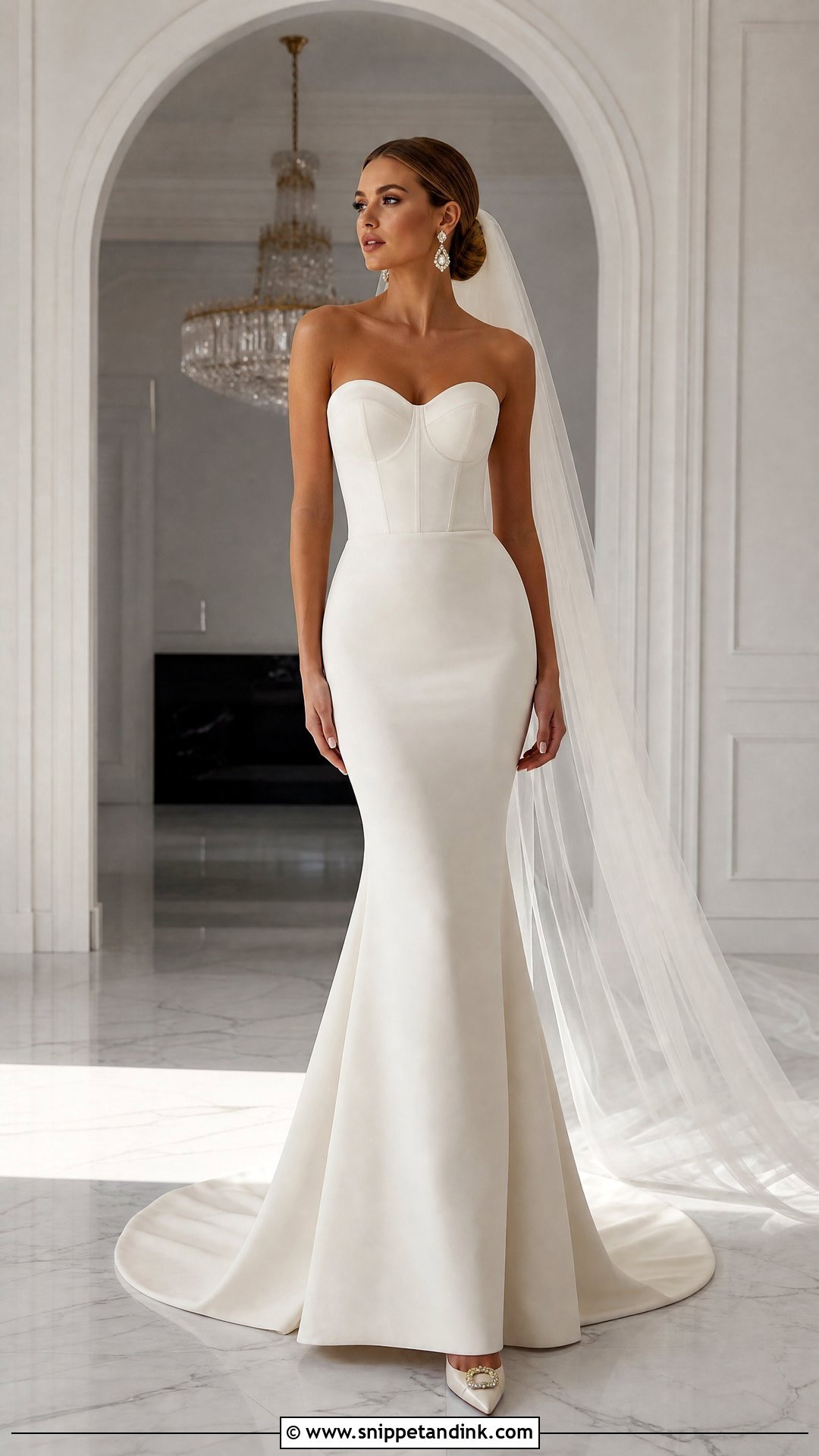
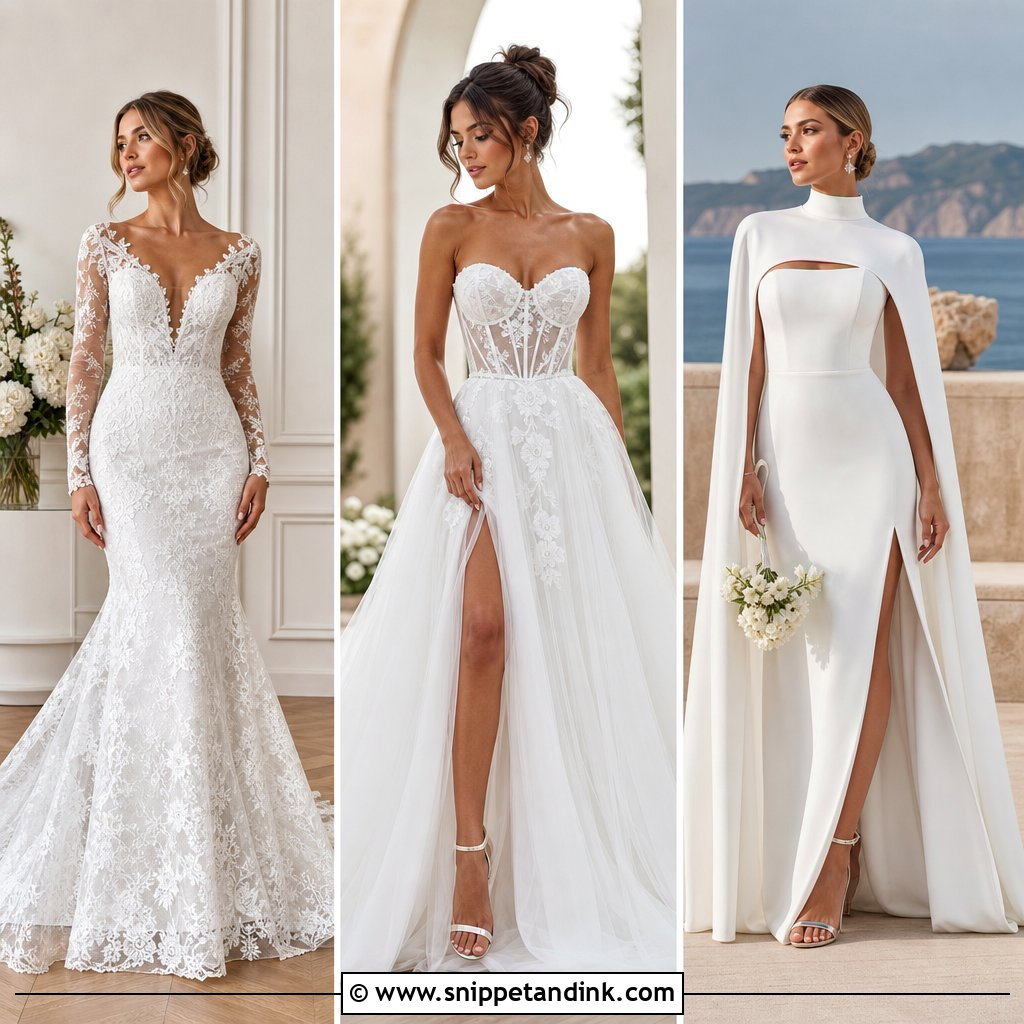
Mermaid gowns follow the body to the knee and then open into the skirt, which shows off curves and also limits your stride more than any other shape on this list. A structured corset lining is what keeps a strapless version from slipping, so I check the boning before I look at anything else. Clean crepe reads modern, embroidered lace adds texture. Shoulder-grazing earrings, a sleek low bun, pointed pumps and a long sheer veil complete it, with no necklace. At fittings, climb a few stairs and sit down. If you’ll dance in the same gown, ask about a bustle or a slightly lower flare point.
4. Long Sleeve Lace Wedding Dress
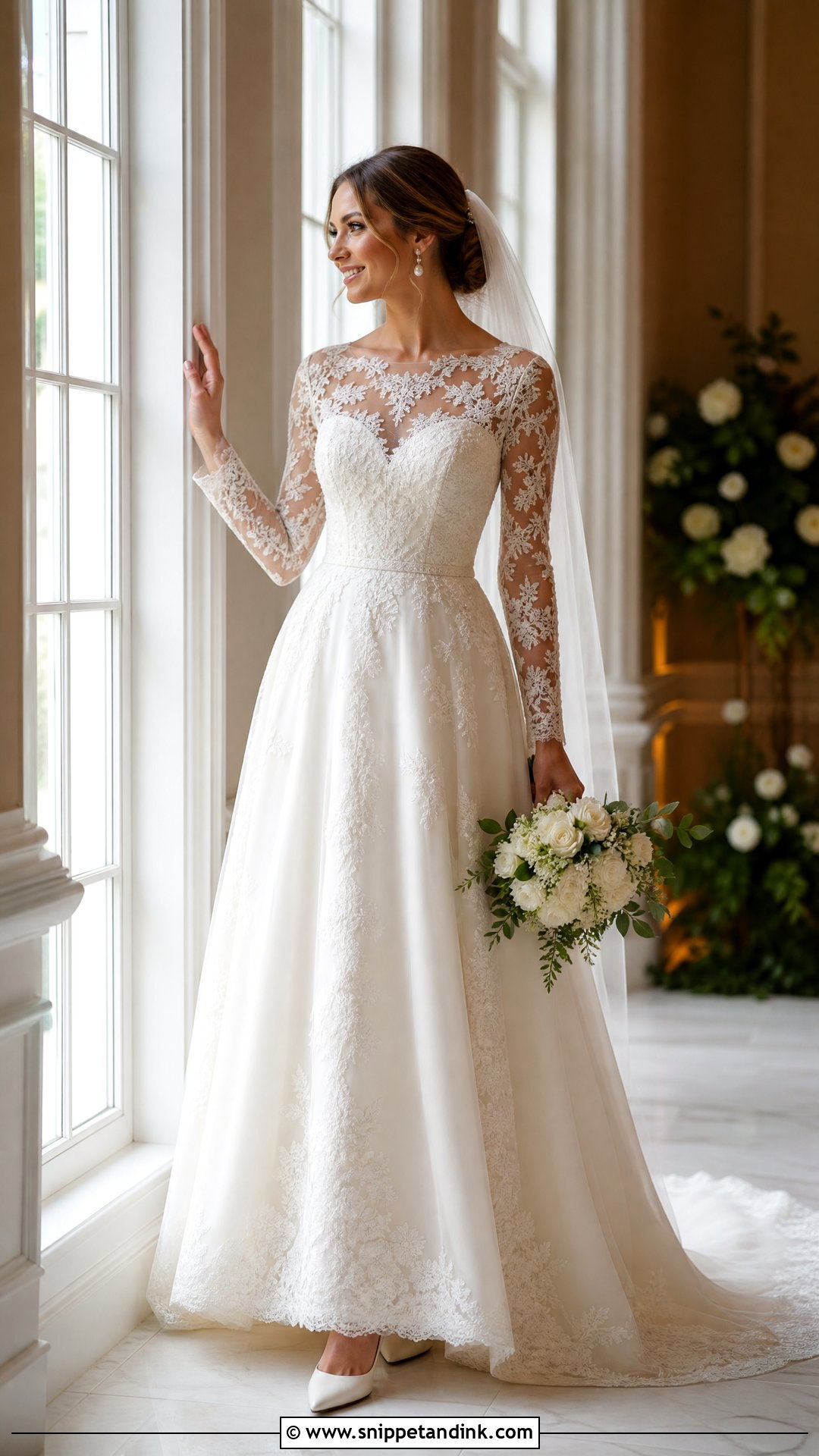
Long lace sleeves give coverage without weight. Fitted illusion sleeves with scattered appliqués look delicate on the arm, while lined sleeves cover more. Balance the busy upper half with an A-line or softly fitted skirt so the gown doesn’t tip into fussy. A plain tulle veil, pearl earrings, ivory pumps, a compact bouquet and a low chignon that shows any back detail. Fall, winter and heavily air-conditioned venues are where these earn their keep. The test I never skip: arms straight up, then a hug. Tight lace sleeves tear at the armhole seam, and a little stretch lace there prevents it.
5. Square Neck Wedding Dress
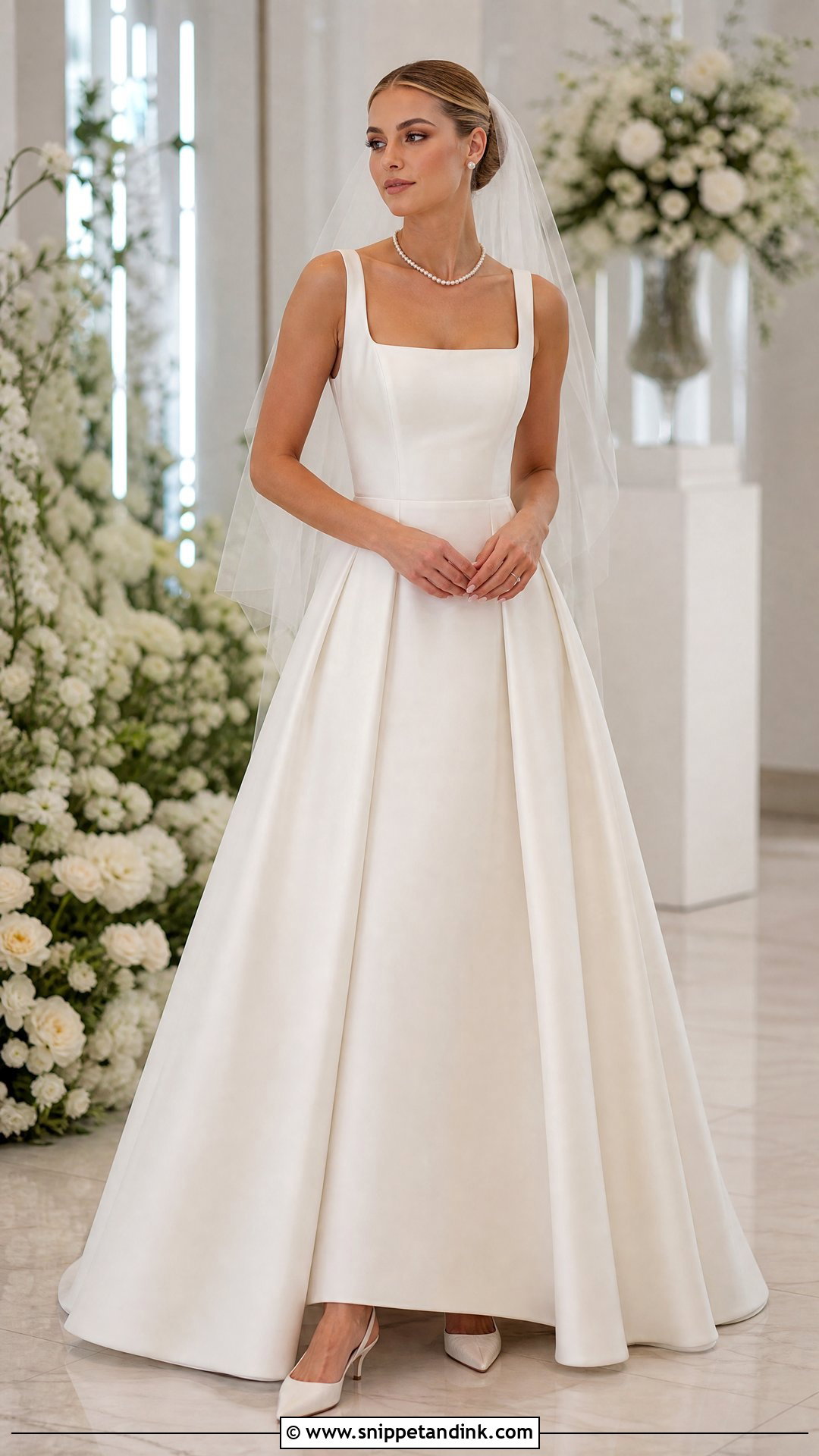
A square neck frames the collarbone with clean, straight lines and pairs equally well with wide straps, fine straps or fitted sleeves. Put it over an A-line satin skirt for a classic gown or a slim crepe skirt for something plainer. A short pearl necklace and matching studs, a smooth bun, pointed slingbacks and a chapel veil that softens the geometry without covering it. The tailoring has to be exact. When I fit one, I watch the top corners as the bride breathes in and reaches forward; if they lift or gape, the bodice needs taking in at the side seams before the hem is touched.
6. Basque Waist Wedding Dress
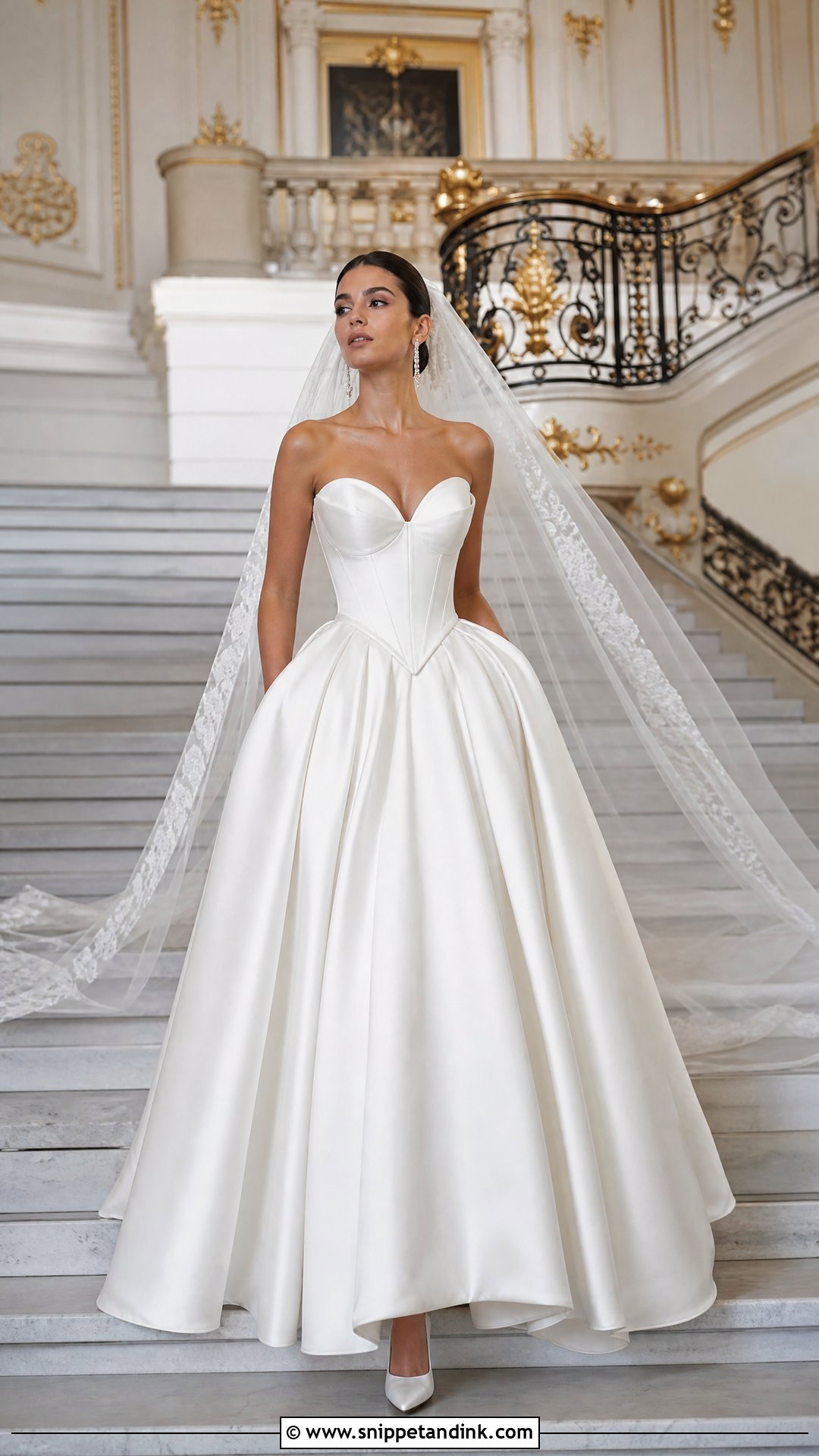
The bodice of a basque waist wedding dress dips into a point below the natural waist, which lengthens the torso and gives a full skirt a smooth place to start. Satin makes it sculptural, lace softens it. A cathedral veil, crystal earrings, satin pumps and a structured updo suit it, and long gloves can work if they match the gown’s exact shade, since ivory gloves against diamond white look grubby in photos. Never add a belt; it cuts the point in half. Good boning should hold you up without pressing into your ribs when you sit.
7. Off Shoulder Wedding Dress
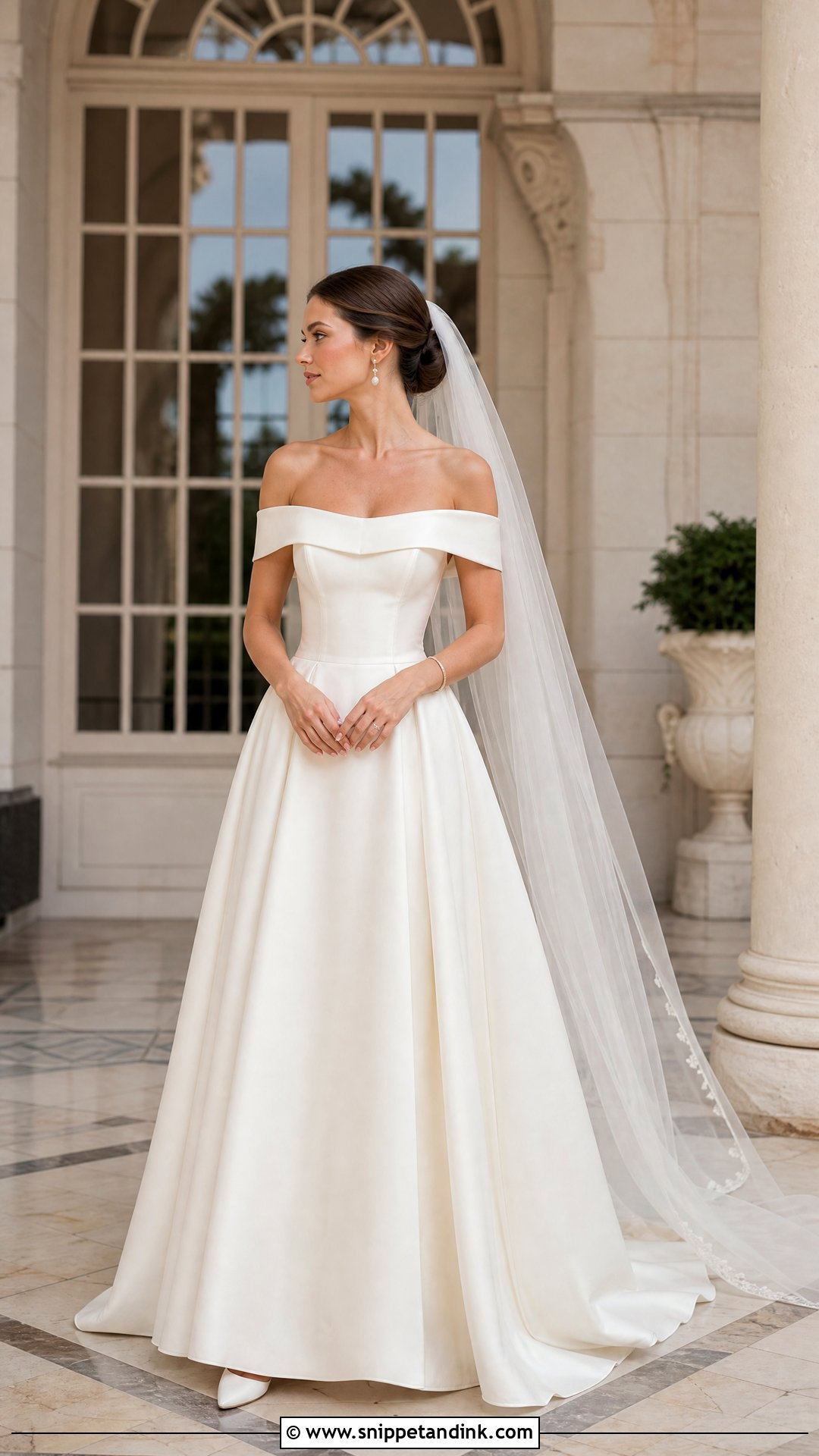
Off-the-shoulder necklines sit on the upper arm, and that’s where the trouble usually starts. Draped satin bands feel formal, lace sleeves romantic, and both pair best with an A-line or ball gown skirt. Skip the choker for drop earrings, a slim bracelet and a polished low bun that keeps the shoulders clear, with closed-toe heels and a chapel veil set beneath the hairstyle. Bands cut too tight stop you lifting your arms to hug anyone, so test the reach at every fitting. Hidden elastic, flexible lining or detachable bands make the design far easier to live in.
8. Minimalist Slip Wedding Dress
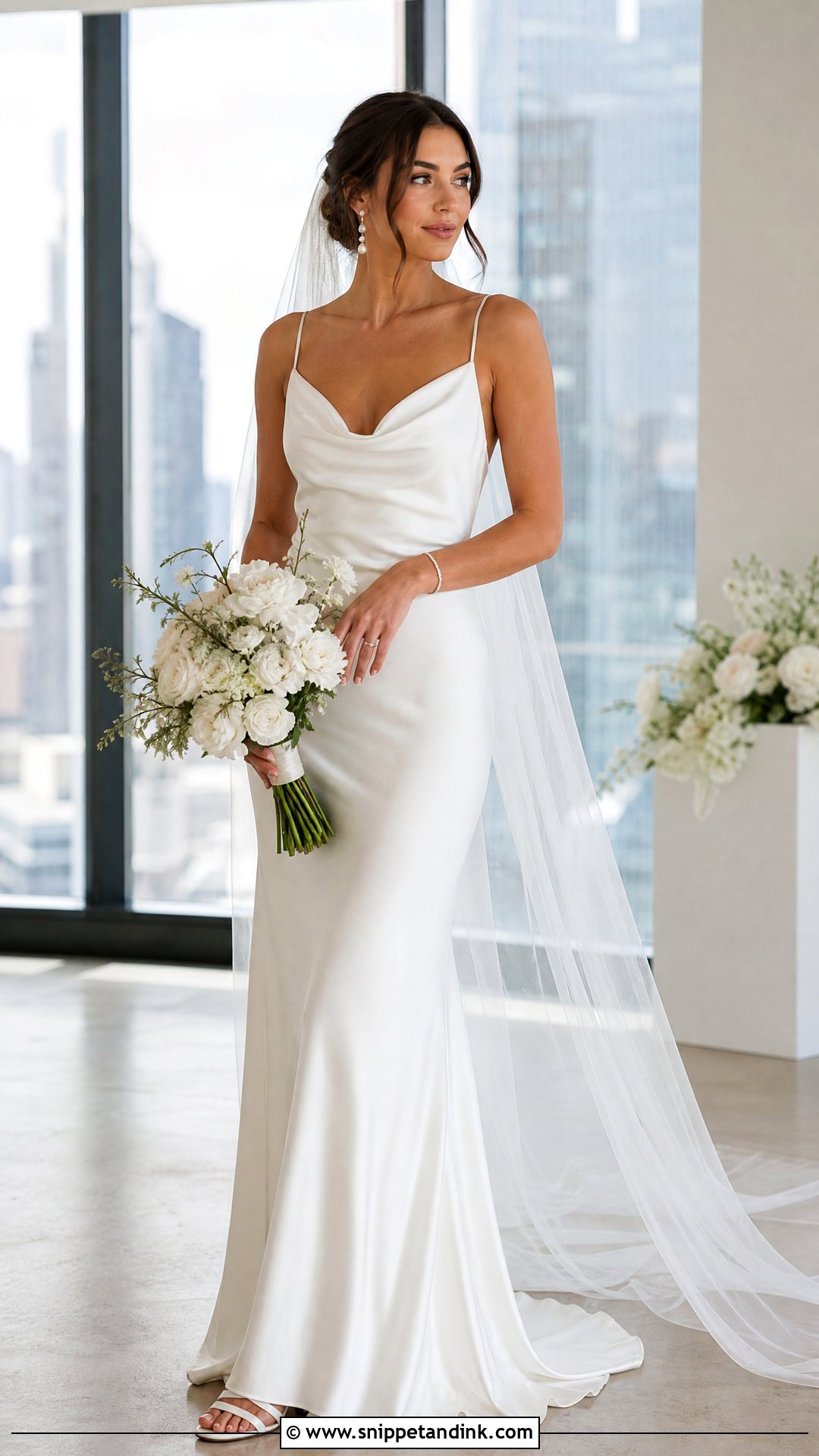
A slip dress has nowhere to hide, so seam placement and fabric quality carry the entire look. Look for fluid satin or silk with a softly draped neckline, narrow straps and a skirt that skims rather than clings. Delicate earrings, a thin bracelet, strappy heels, a long sheer veil and either a smooth bun or loose waves. Bias-cut slips show every line underneath, which is why I have brides bring their exact underwear to the first fitting rather than the last. In cooler weather, a tailored ivory blazer or light wrap comes off once you’re indoors.
9. Floral Applique Wedding Dress
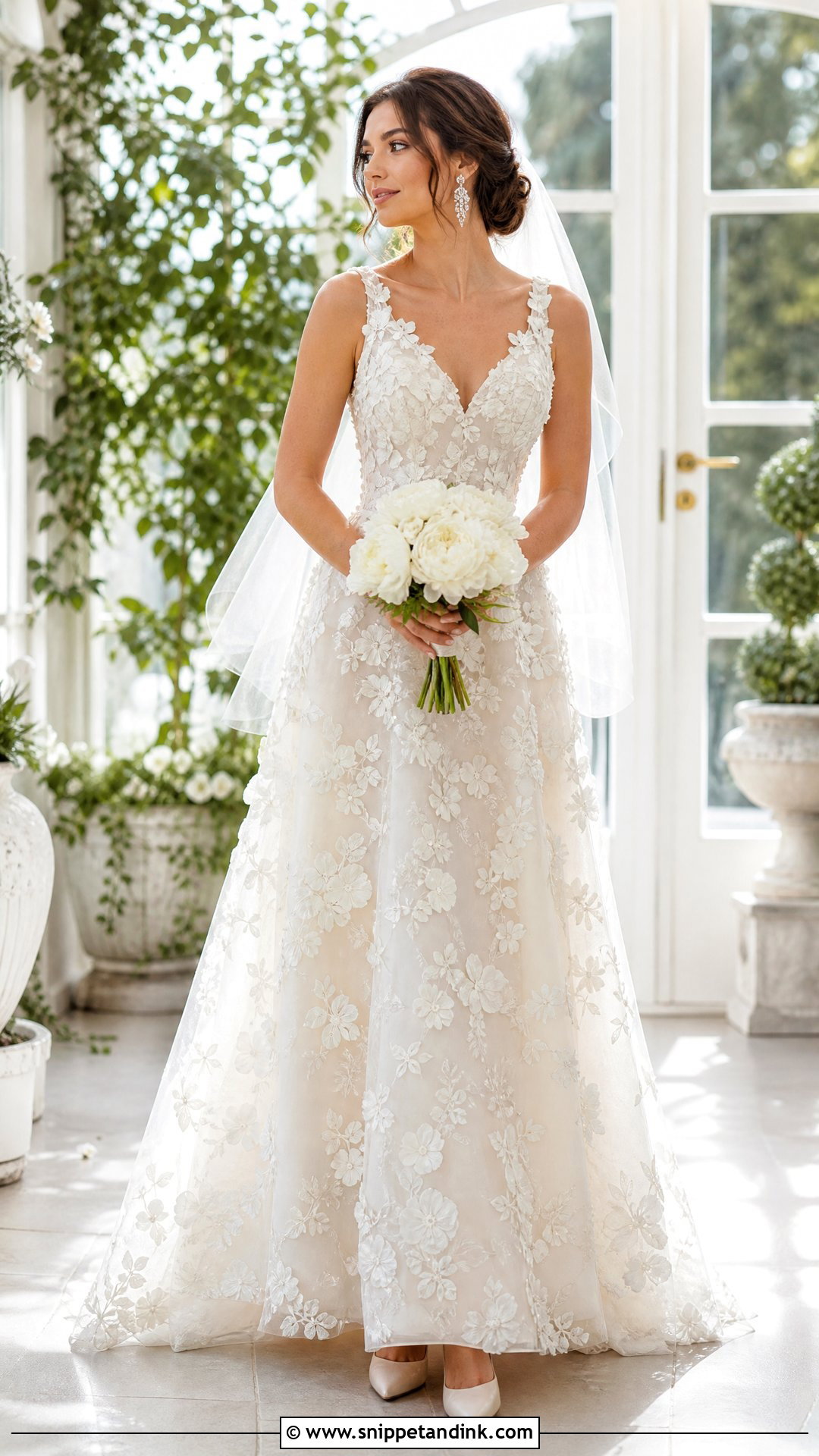
Raised floral appliqués turn a familiar silhouette into something you’ll want to stand close to. They can be scattered across an A-line bodice and skirt or gathered around the neckline of a fitted gown, and a lining close to your skin tone makes each flower stand out. Keep everything else plain: small crystal earrings, a plain tulle veil, neutral pumps, a simple bouquet and uncluttered hair. Oversized flowers, heavy jewelry and an embellished veil together are too much. Run your fingers over the petals before the wedding; any that lift at the edges need a few tacking stitches.
10. Pearl Beaded Wedding Dress
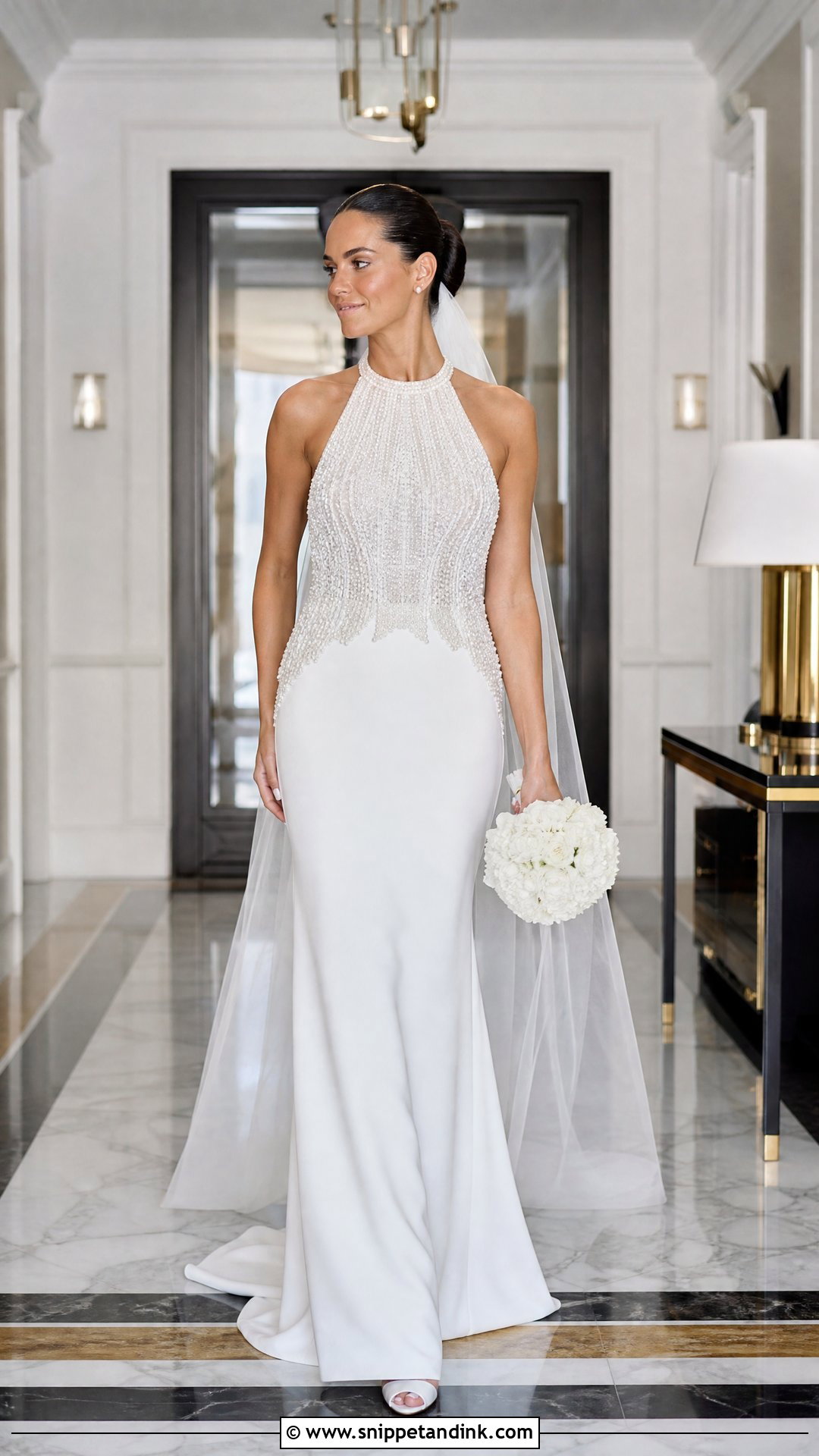
Pearls give a softer glow than crystals, without the sharp sparkle. Scattered across a fitted bodice above a clean crepe skirt, they look restrained; continued over the whole gown, they get decorative fast. Pearl studs, an unembellished veil, satin heels, a small structured bouquet and a sleek bun, because loose hair snags on beads. The underarms are where I look first. Raised beads rub skin raw over a long day, and a soft lining strip or fabric guard fixes that. Pack a needle, thread and a couple of spare pearls in the emergency kit.
11. Boho Chiffon Wedding Dress
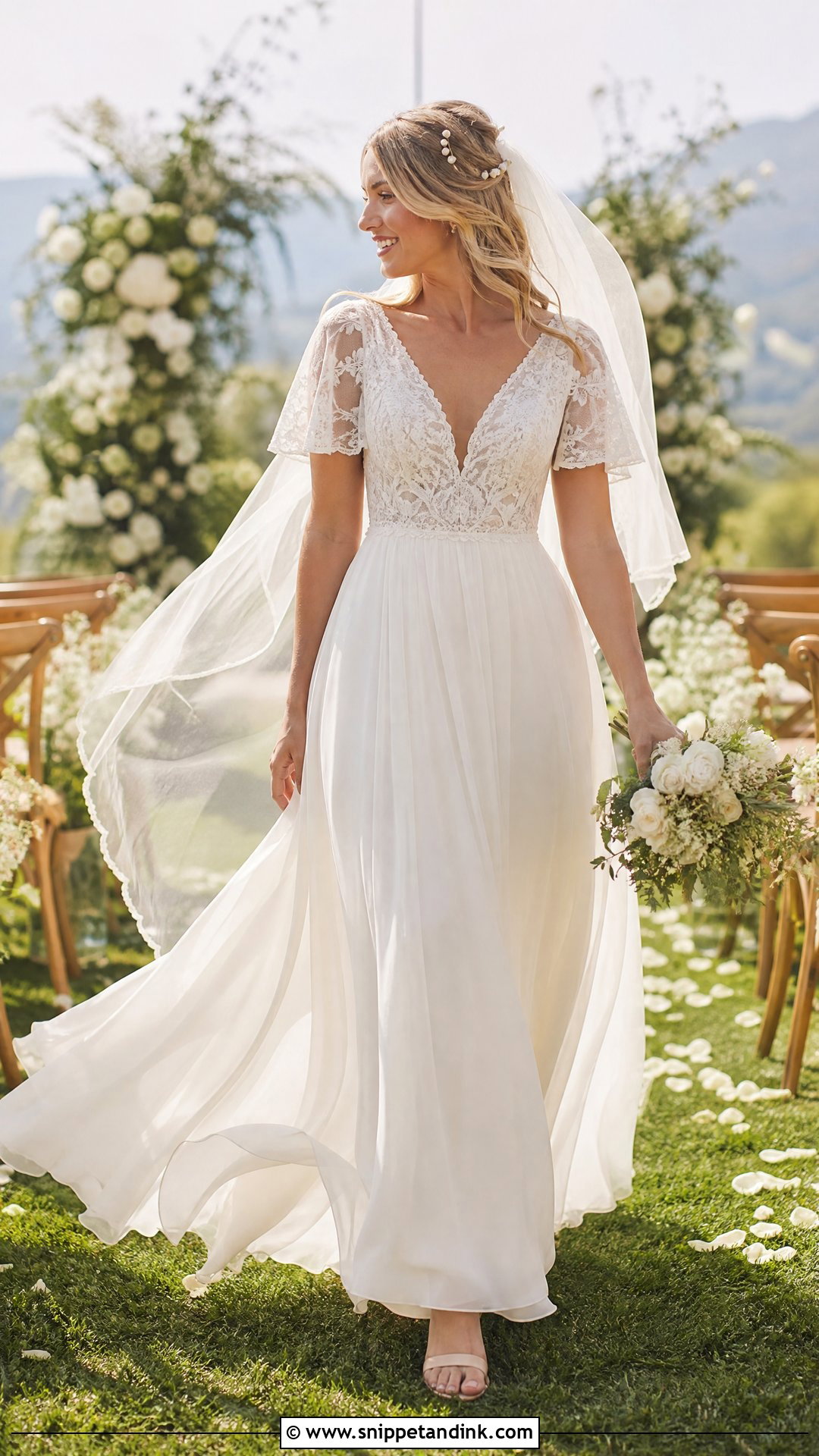
Chiffon moves with the slightest breeze, which is exactly why outdoor brides love it. An A-line skirt, a lace-trimmed bodice and flutter sleeves keep the outline soft, and a low back or small side cutouts add something current. Pearl hair pins, fine earrings, low block-heel sandals and a light fingertip veil, with a loose braid or pinned waves. Heels sink into lawns, so pick shoes for grass or sand. Hold the skirt up to a sunny window in the shop as well; a thin lining turns chiffon see-through in bright daylight.
12. Tea Length Wedding Dress
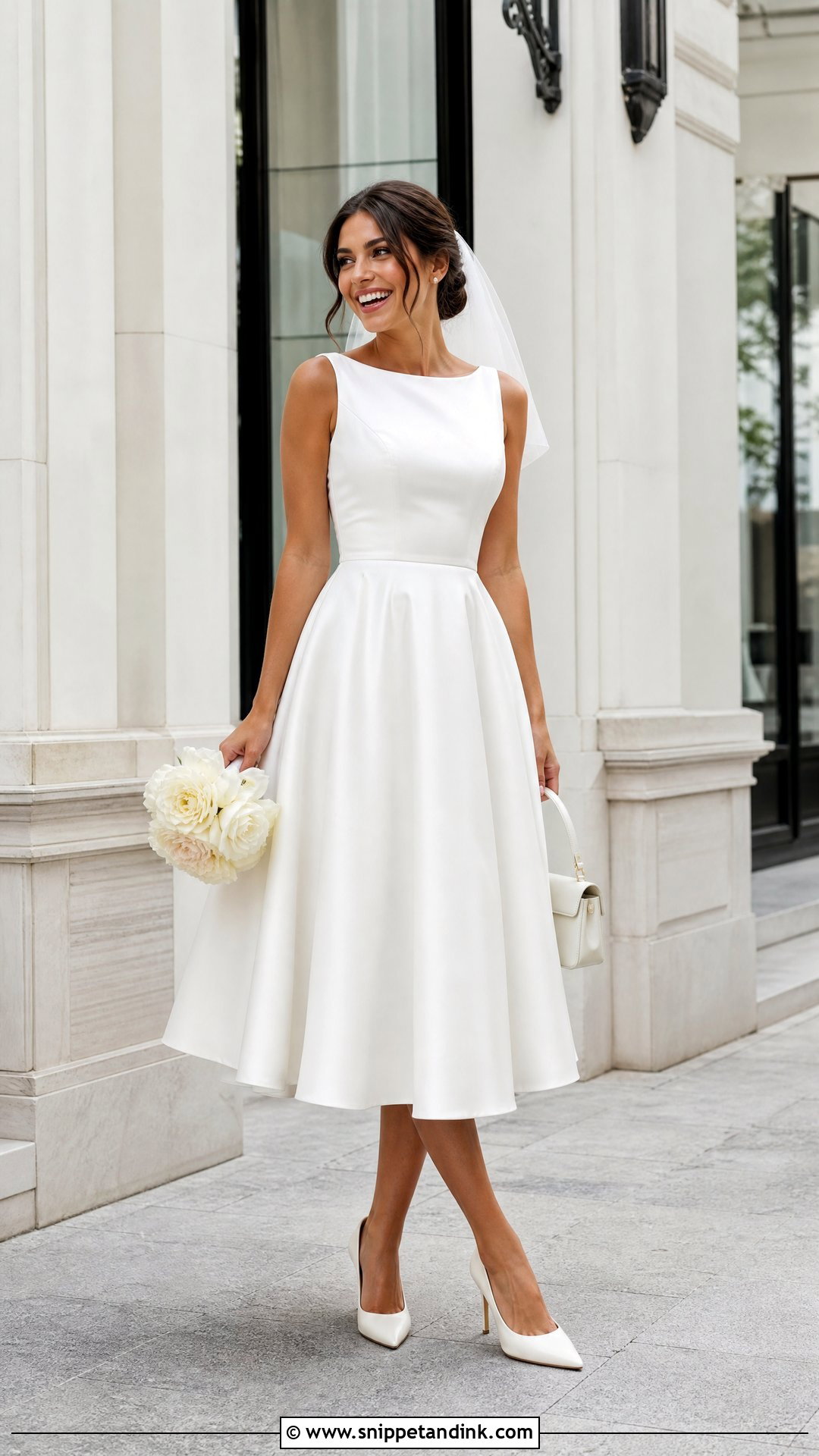
With a hem between knee and ankle, a tea-length dress makes the shoes part of the outfit. A fitted bodice over a softly flared skirt keeps it balanced; satin holds a crisp shape, while tulle or lace moves more. Pointed pumps, a short veil, pearl earrings, a structured mini bag and a neat bun or curled bob. Courthouse ceremonies, daytime weddings and dance-heavy receptions suit it. Where the hem stops matters most. I mark it just below the widest part of the calf, never across it, then check it again in the shoes.
13. High Neck Wedding Dress
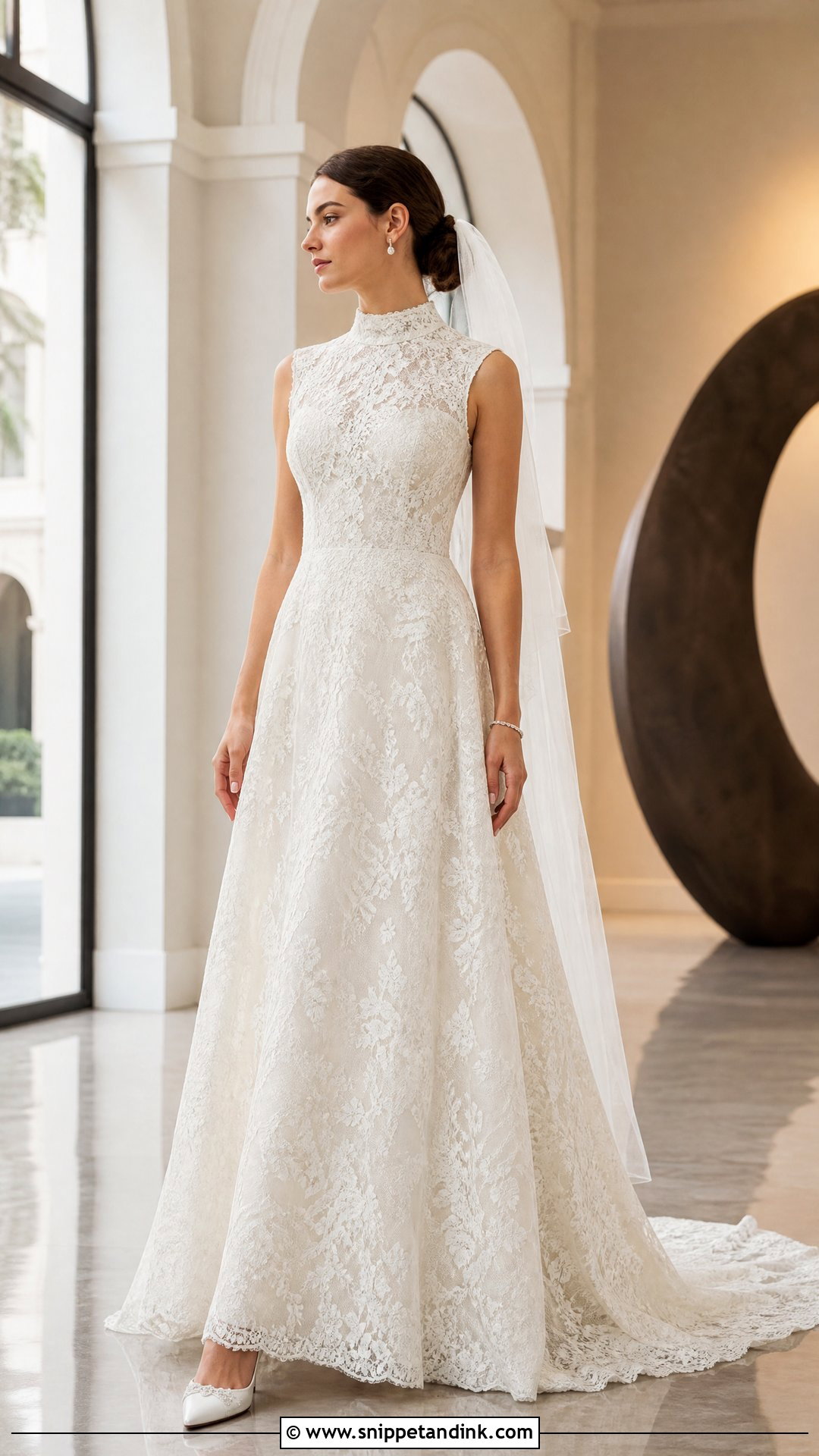
A high neck covers the chest and pulls all the attention up to the face. Sheer lace looks delicate there; smooth crepe or satin looks architectural. A fitted column skirt keeps it modern, an A-line softens it. Skip the necklace in favour of small earrings, a bracelet and a low bun, and attach the veil below the hairstyle so it doesn’t hide the collar. Have someone watch the collar while you turn your head both ways and look down. It should stay put without pressing on your throat, and in summer a breathable lining makes the difference.
14. Corset Wedding Dress
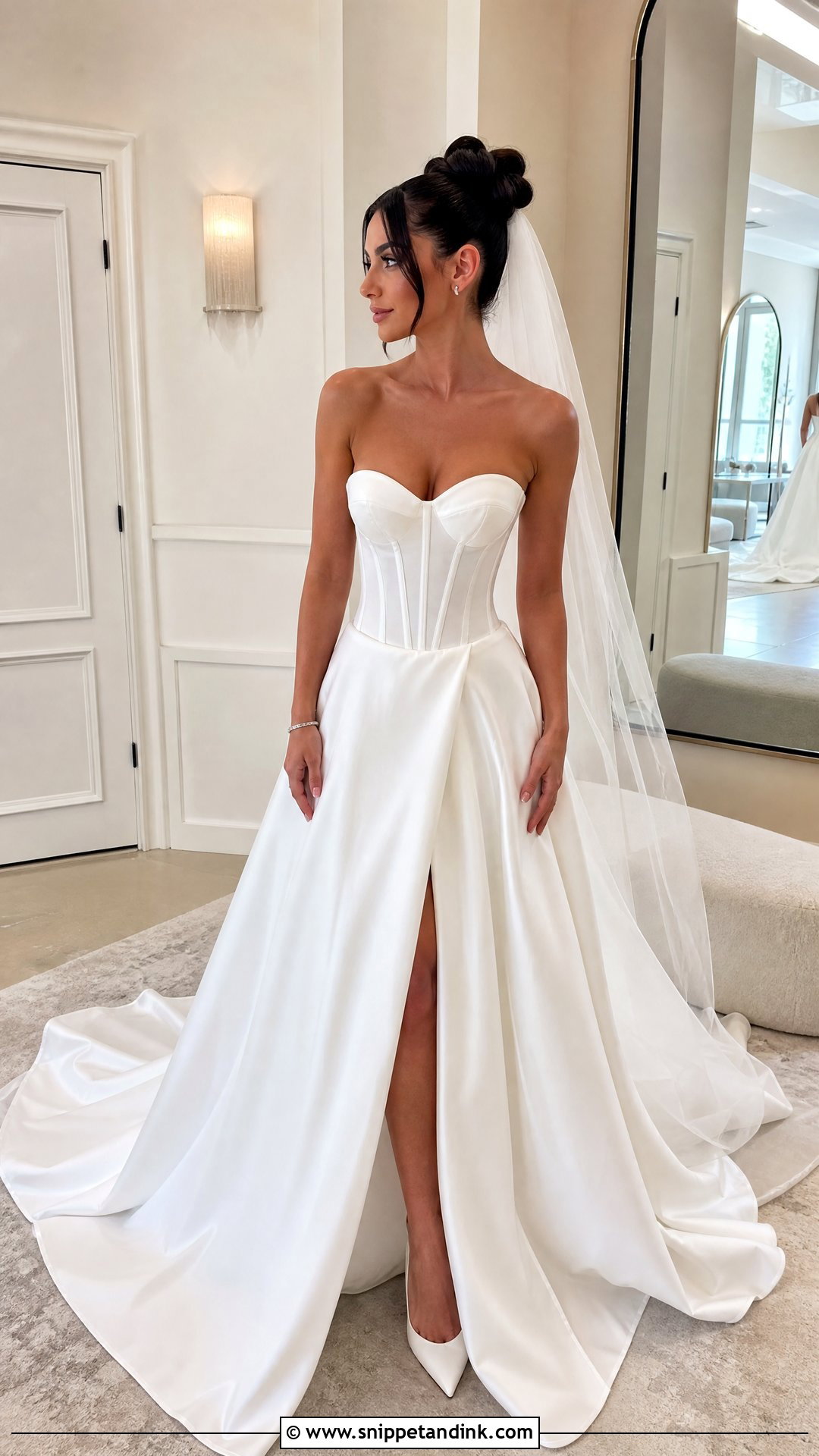
Visible boning and shaped cups give a corset wedding dress its defined, fashion-led look. A flowing A-line skirt contrasts with the structure, while a fitted skirt makes it more dramatic. A straight or sweetheart neckline softens the exposed construction. Wear it with a plain veil, crystal studs, a polished updo and satin heels. The correct size should hold you; lacing it tighter to compensate only restricts breathing by the speeches. Sit, raise your arms and walk at every fitting. A removable overskirt adds ceremony volume and comes off for a slimmer reception shape.
15. Cape Wedding Dress
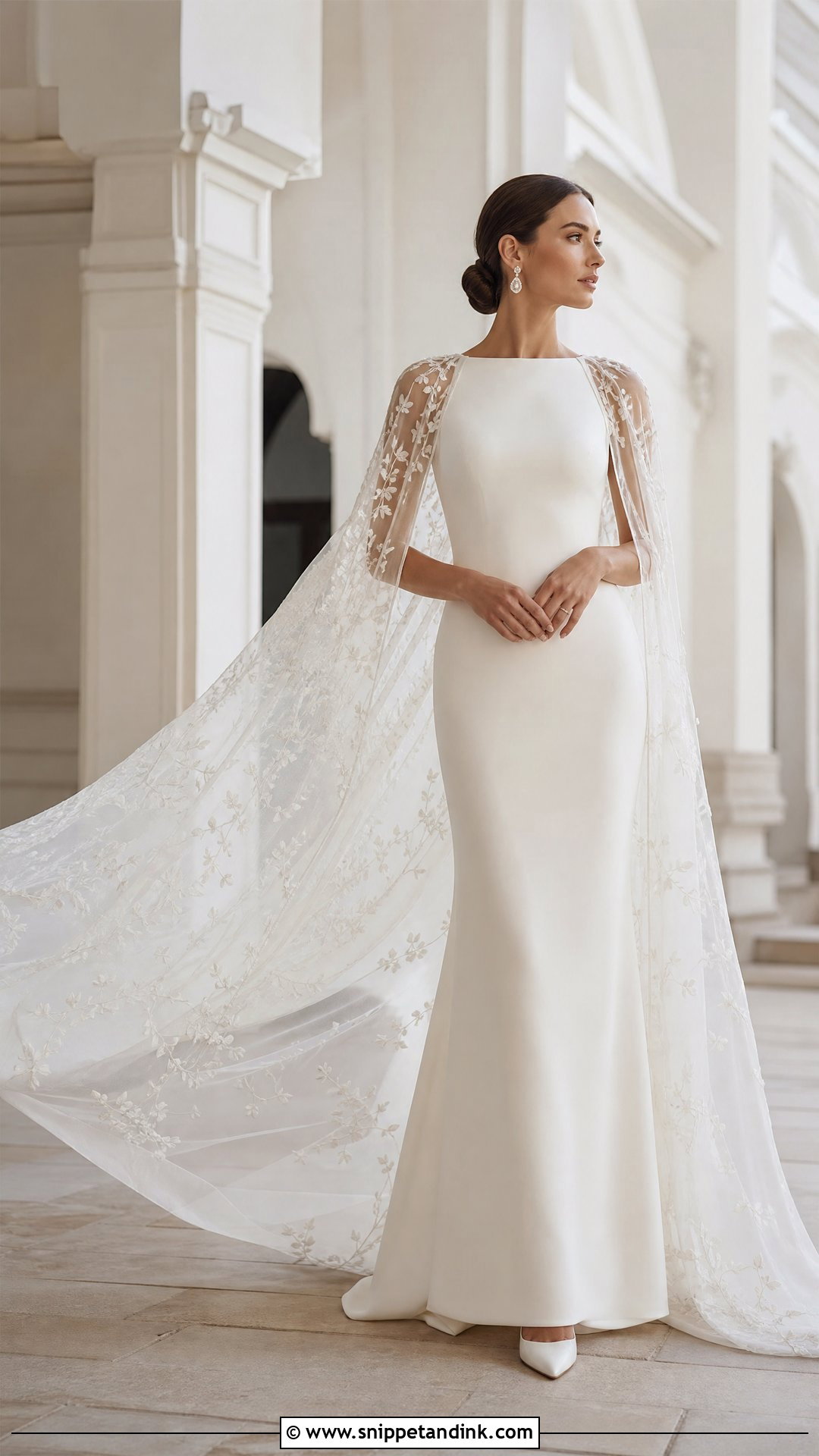
Instead of a veil, a bridal cape gives the drama from behind. Start with a sleek column or fitted crepe gown and add a sheer floor-length cape with a simple neckline fastening. Embroidery, pearls or light beading can trim the edge, but keep it quieter than the dress. Understated earrings, pointed pumps, a smooth low bun and no necklace if the cape fastens near the collarbone. Its length should work with the train rather than double it, and it has to come off quickly before dinner. That combination gives you a striking ceremony entrance and a cleaner outline for the party.
16. Two Piece Bridal Outfit
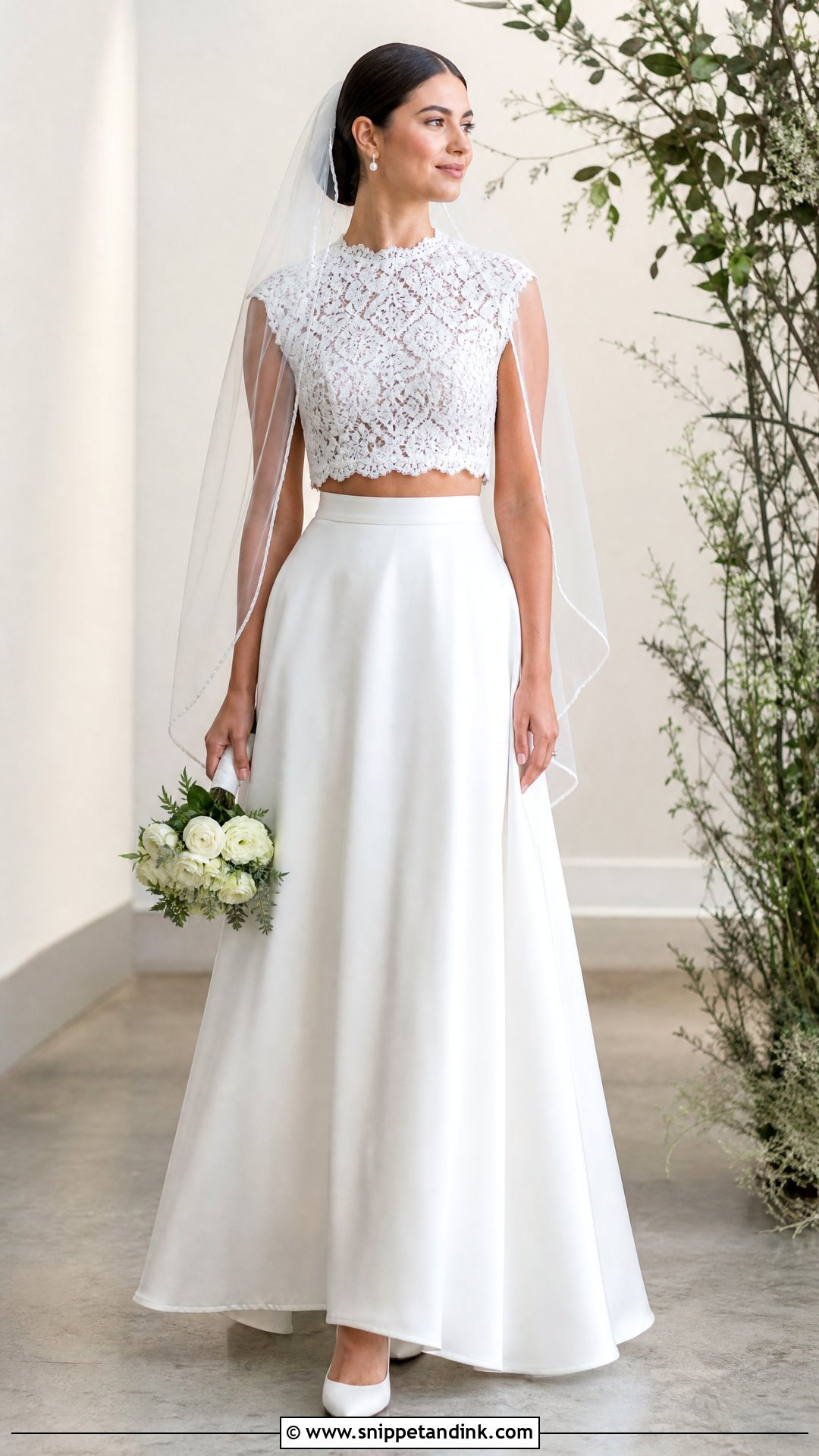
Separates suit brides who never felt like themselves in a single gown. A structured lace or satin top over a high-waisted A-line skirt should meet neatly at the waist, with a narrow strip of skin for definition or an overlapping cut for more coverage. A fingertip veil, pearl earrings, closed-toe pumps and a small bouquet finish it. Buy both pieces from the same fabric lot if you can; two ivories that match indoors can split into cream and white in daylight. A couple of discreet hooks stop the top riding up when you dance, and the skirt can be worn again afterwards.
17. Bridal Jumpsuit Wedding Outfit
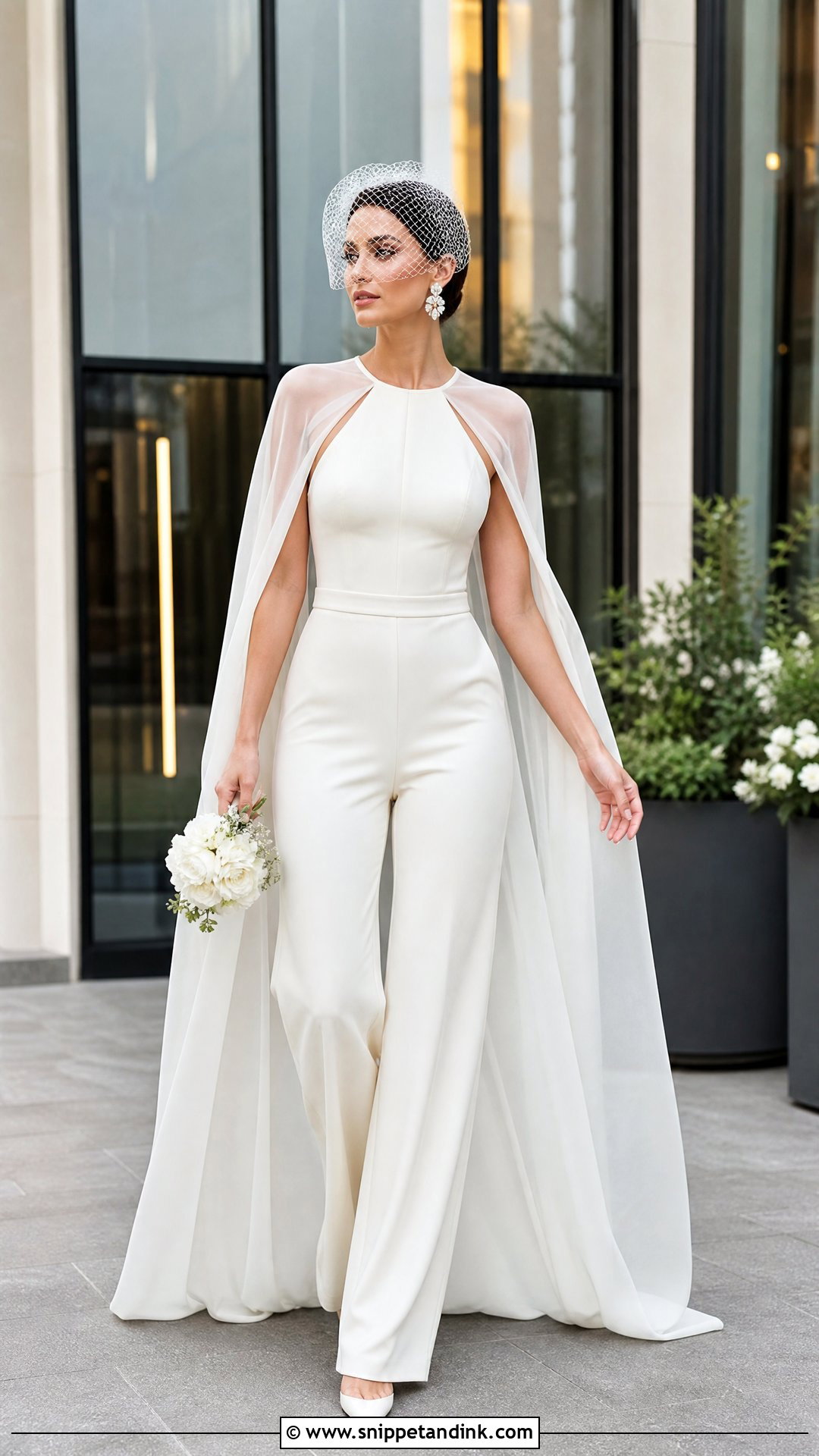
Trousers move better than any skirt, and a tailored bridal jumpsuit proves it. Look for a fitted bodice, a defined waist and wide legs that skim the shoes without dragging, ideally in crepe, which holds structure and stays smooth. Add pointed pumps, statement earrings and a detachable overskirt or sheer cape for the ceremony, with a birdcage veil for a classic note. Think about bathroom trips before you fall for a back zip with forty buttons. Hem the legs with your shoes on so the heel doesn’t catch the fabric.
18. Plus Size A-Line Wedding Dress
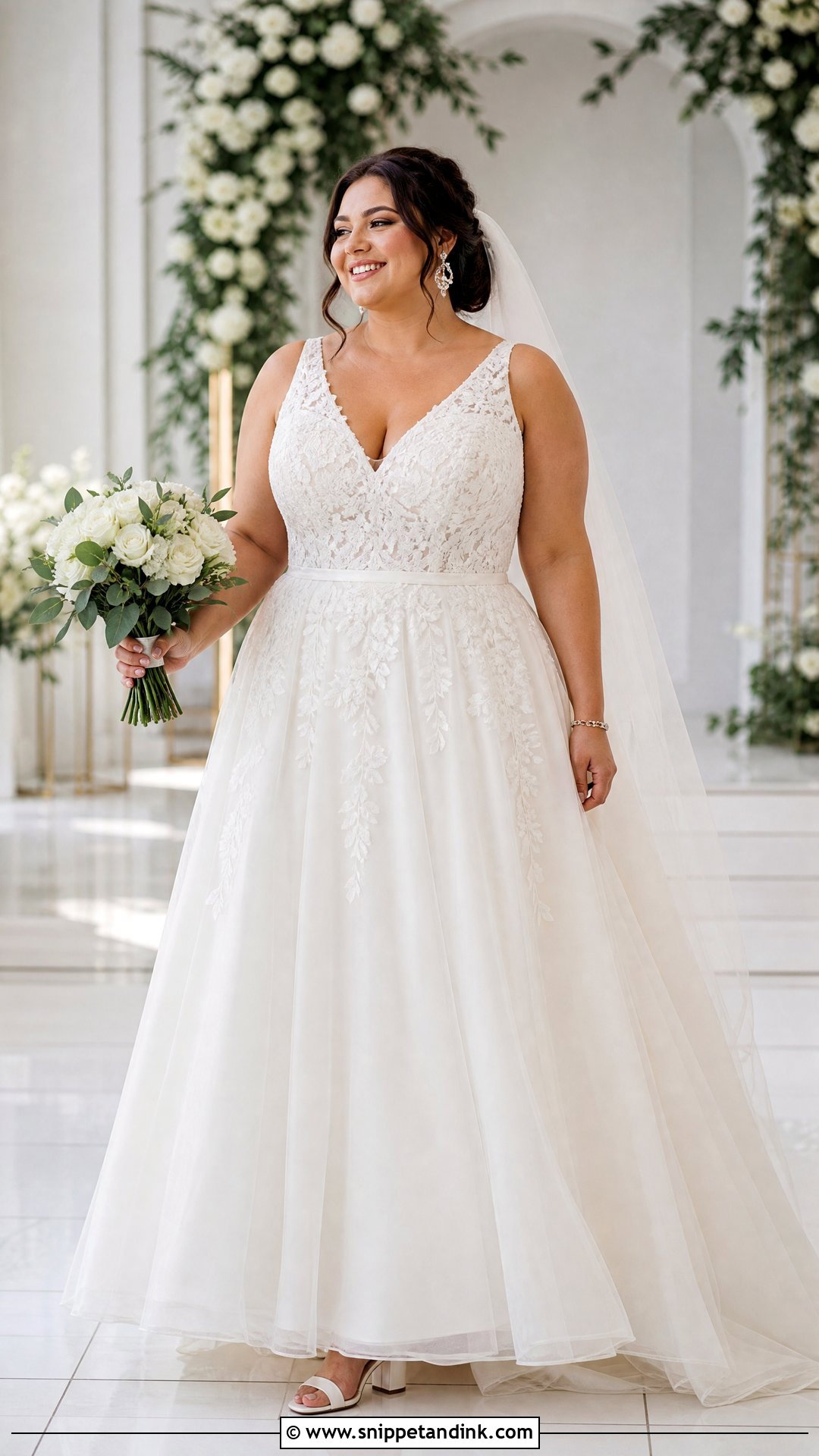
A well-built A-line supports the body and moves with it without hiding its shape. Look for secure straps, quality boning and a waist seam set where it sits best on you, not where the pattern placed it. A V or scoop neck frames the face, and lace appliqués add detail across bodice and skirt. Block heels, a soft veil, drop earrings and a supportive foundation chosen during fittings. Please don’t order a size down hoping to shrink into it. Taking in a correctly sized gown is routine work; letting out one that’s too small often isn’t possible.
19. Petite Column Wedding Dress
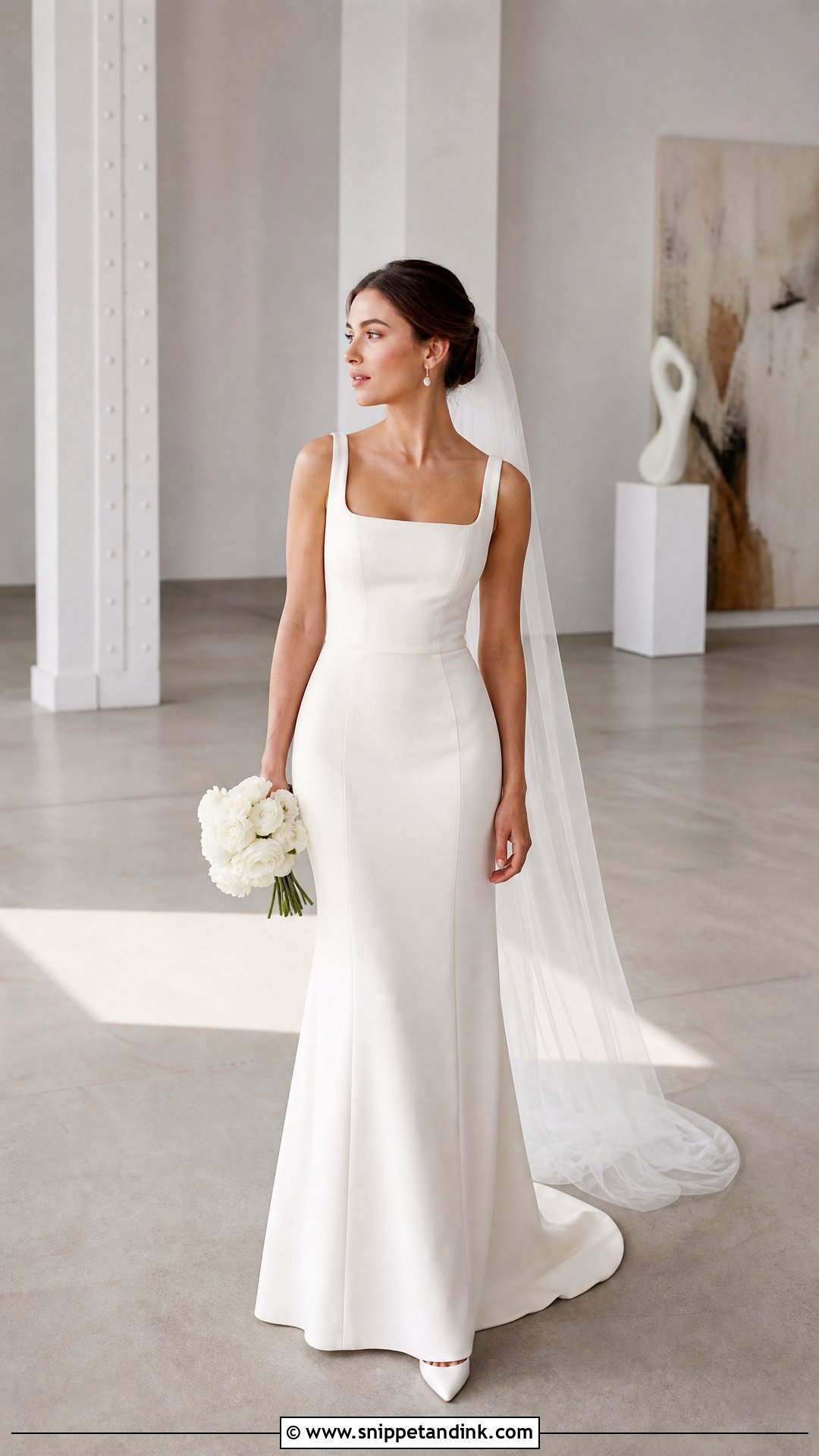
On a petite frame, a column gown draws one long vertical line from neck to floor. Choose vertical seams, a defined waist and very little bulk through the skirt, with a V or square neckline to keep the upper body open and a moderate train. Pointed-toe heels, delicate earrings, a narrow chapel veil and hair worn up for extra height. Fabric pooling at the ankle shortens you instantly, so the hem has to be cut precisely with your shoes. Small, well-placed details work better here than oversized appliqués, which can swamp a smaller frame.

20. Reception Mini Wedding Dress
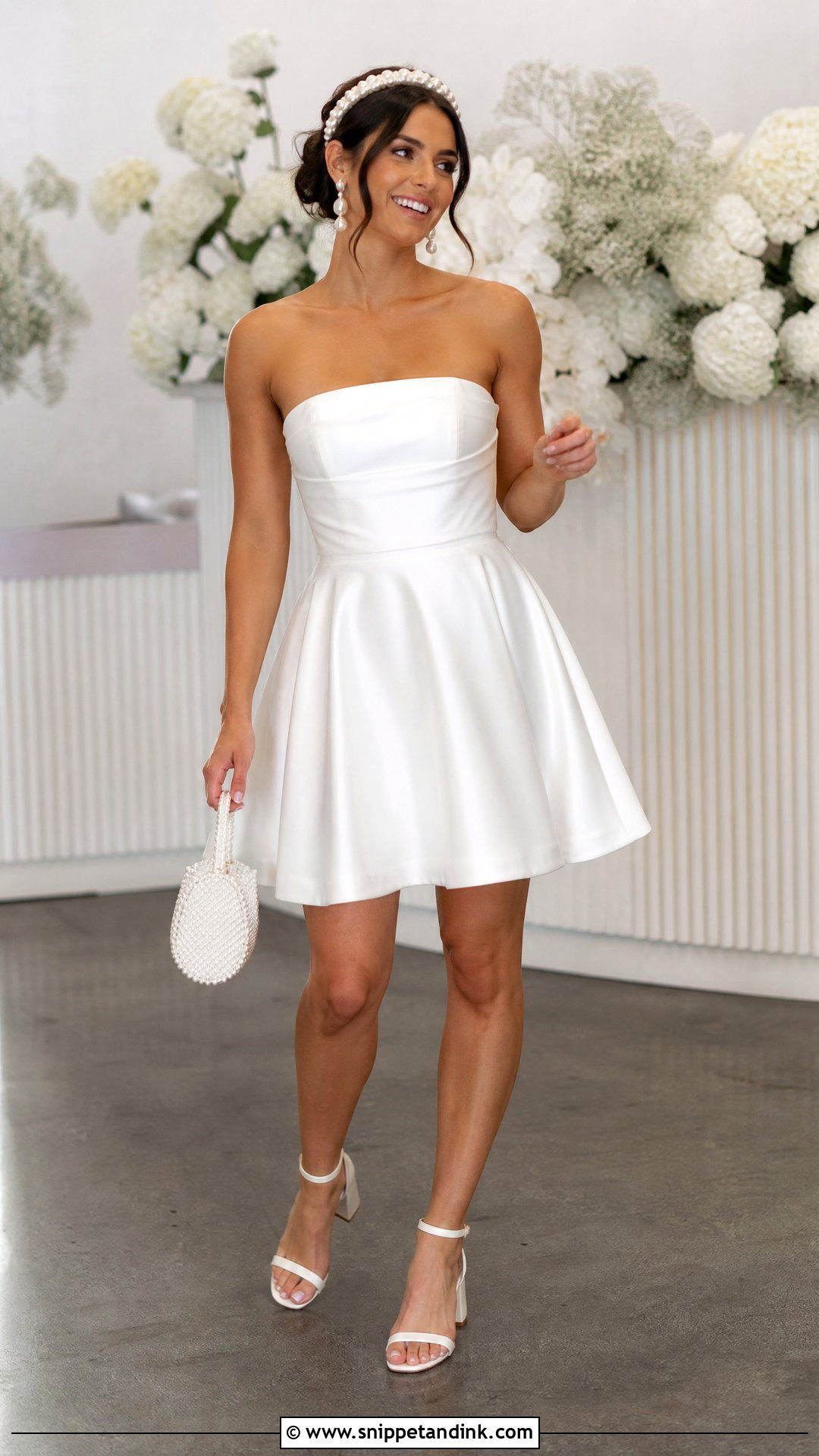
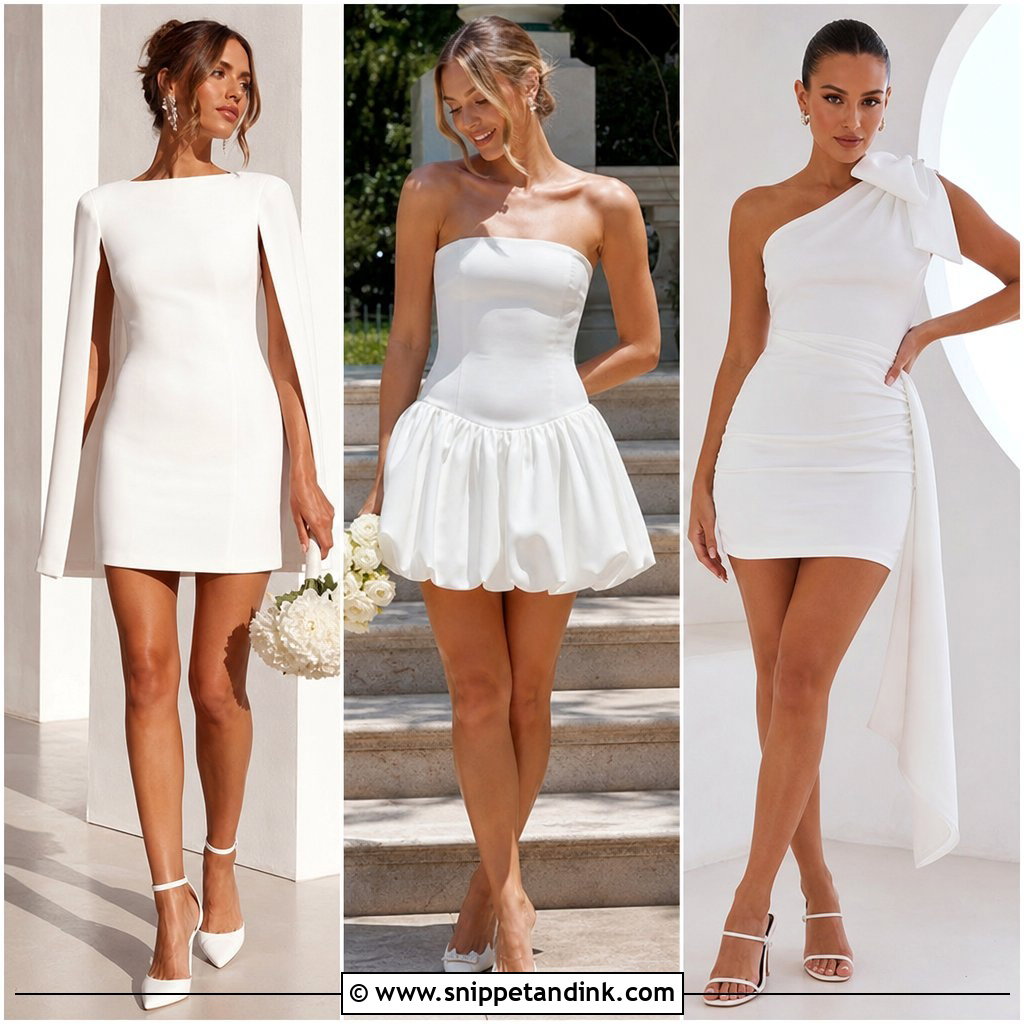
A reception mini is a second look made for dancing. Choose a structured satin mini, a pearl-embellished shift or an A-line dress with a secure fitted bodice, and sit down in it at the fitting to be sure the hem still covers what you want covered. Block heels or smart flats, statement earrings and a short veil or pearl headband. Repeating the ceremony jewelry ties the two outfits together. Strapless minis slide lower with every jump, so a silicone grip strip inside the top edge is worth the small alteration charge. A small bag holds lipstick and your phone.
From the Deposit to the Final Pressing
Saying yes is the start of a schedule, not the end of shopping. Made-to-order gowns typically take several months to arrive after you pay the deposit, and rush orders cost extra when they’re available at all. A rough plan I give brides, which varies by designer and shop:
- Around nine to twelve months out: shop, choose and place the order.
- When the gown arrives: try it on straight away to check it’s the right style, color and size before any cutting.
- Roughly two to three months out: first alteration fitting, with your shoes and underwear.
- Three to four weeks out: second fitting for the hem, bustle and fine adjustments.
- The final week: last fitting, learn the bustle with whoever will do it on the day, then collect it pressed.
Doubting the Dress After You’ve Paid for It
It’s very common to wobble a few weeks later, usually after scrolling past a completely different style. Deposits are generally non-refundable and orders can rarely be cancelled once fabric is cut, so before panicking, book a visit to see the sample again with your shoes, veil and hair roughly up. Most brides remember why they chose it within a minute. If you don’t, a seamstress can often change sleeves, a neckline or the skirt volume without starting over.
The Gown That Still Feels Right at Midnight
The right dress isn’t always the most fashionable one in the shop. It fits, holds you up, suits the room you’re marrying in and stays comfortable from the aisle to the last song. Every look in this run of She Said Yes to the Dress ideas, from ball gowns to separates and party minis, depends on the same habits. Bring your real shoes and underwear to every fitting, walk and sit in the dress each time, and leave space for alterations. Once it’s right, stop changing things.
You'll Like These Ideas:








Leave a Reply