
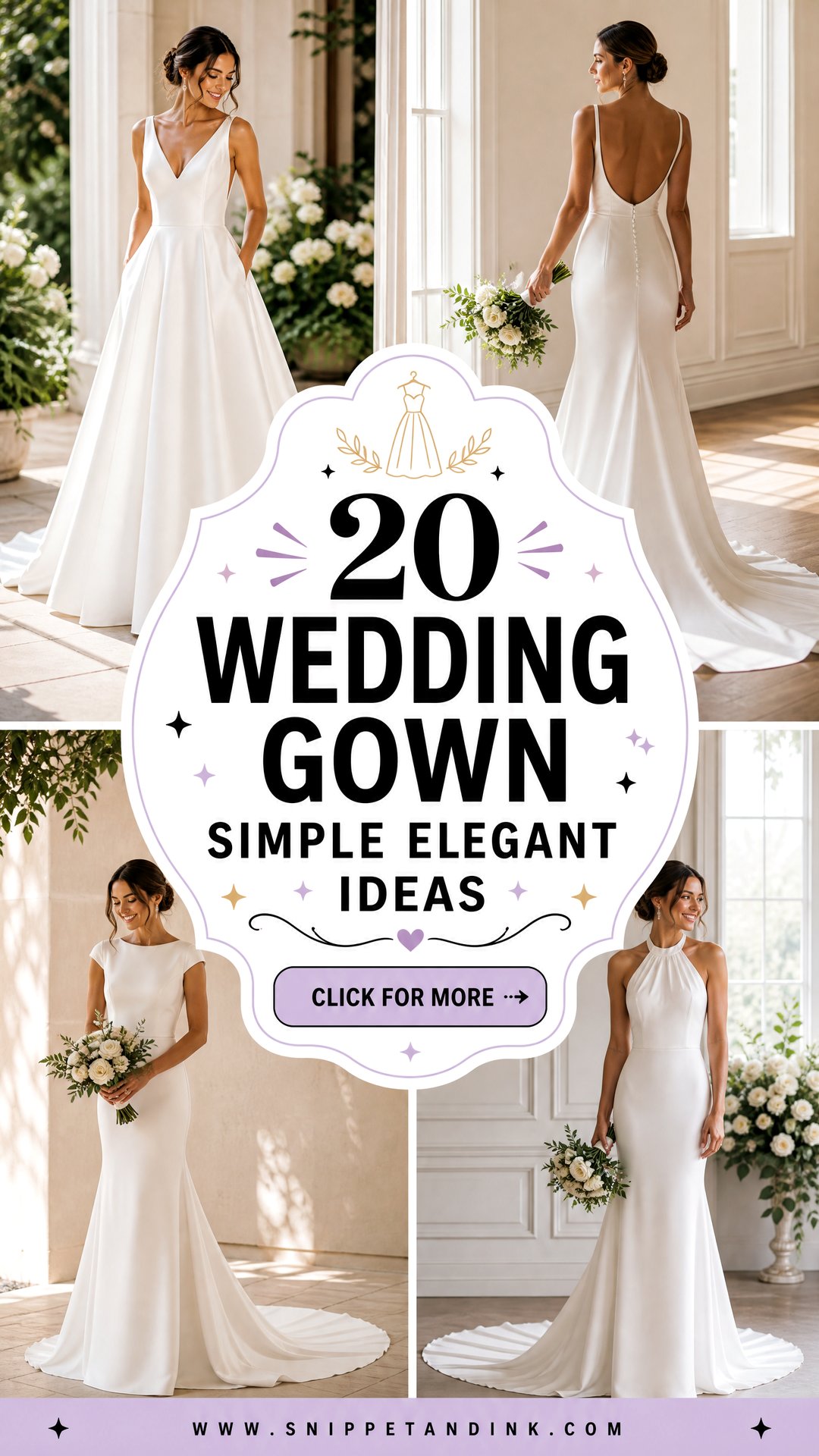
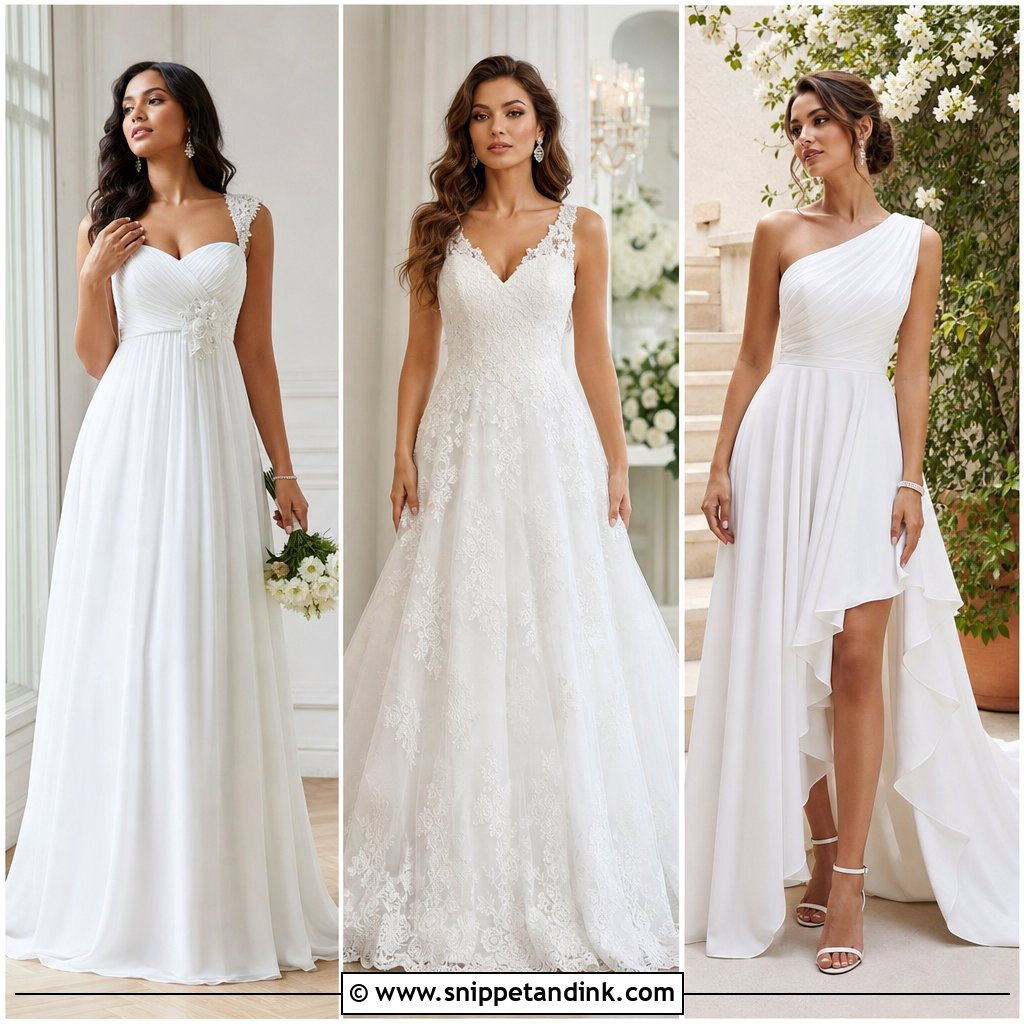
A dress without decoration can be every bit as memorable as a heavily beaded one, but it asks more of the fabric and the tailoring. When there’s no lace to draw the eye, people notice how the gown moves, where the seams fall and whether the hem sits right. That’s why alterations matter more on a minimal gown, not less. The twenty looks below cover ballrooms, gardens, beaches, courthouses and small rooms, from fluid satin sheaths to structured A-lines, and for each I’ve suggested the shoes, jewelry, veil and flowers I’d put with it and the one fitting detail I’d watch.
Ordering a Minimal Gown: The Timeline I Work Back From
Simple doesn’t mean quick. Most bridal gowns are made to order, and a plain one is often cut and sewn just as late as a beaded one. These are the stages I plan around, working backward from the wedding date. Timings vary by designer and season, so treat them as a rough guide and ask your boutique for theirs.
- Start trying on roughly nine to twelve months out. That leaves room for a made-to-order gown, which commonly takes several months to arrive.
- Order once you’re sure, and ask the boutique for a written delivery estimate.
- Book your first alteration appointment for around two to three months before the wedding.
- Expect two or three fittings. Minimal gowns sometimes need more, because small fit issues show on plain fabric.
- Collect the dress a week or two before, once the final fitting is signed off.
If you’re shopping later than this, look at sample and off-the-rack gowns. Plain silhouettes are easier to alter from a sample than heavily embellished ones, since there’s no lace or beading to unpick.
1. Simple Satin A-Line Wedding Gown
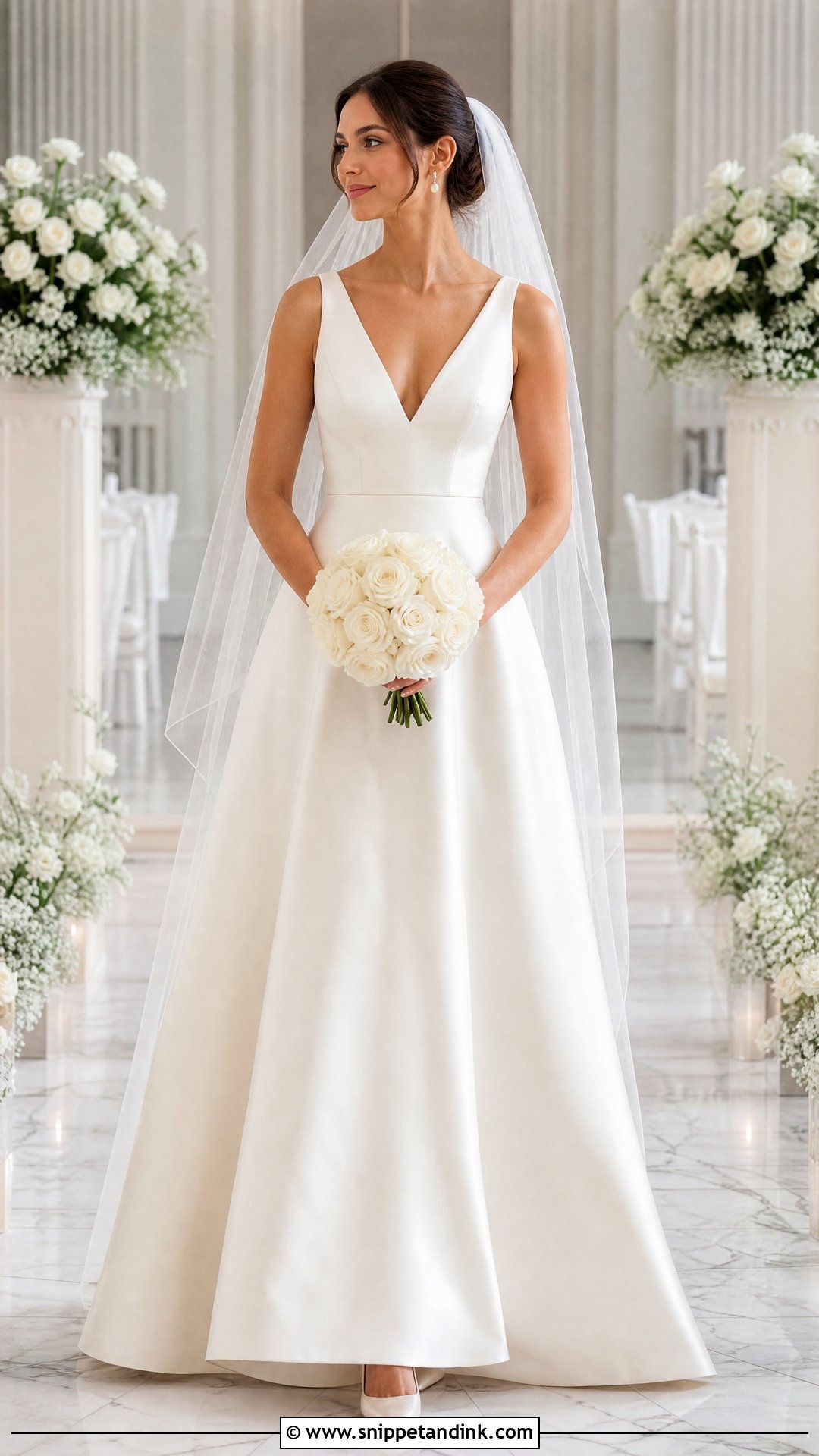
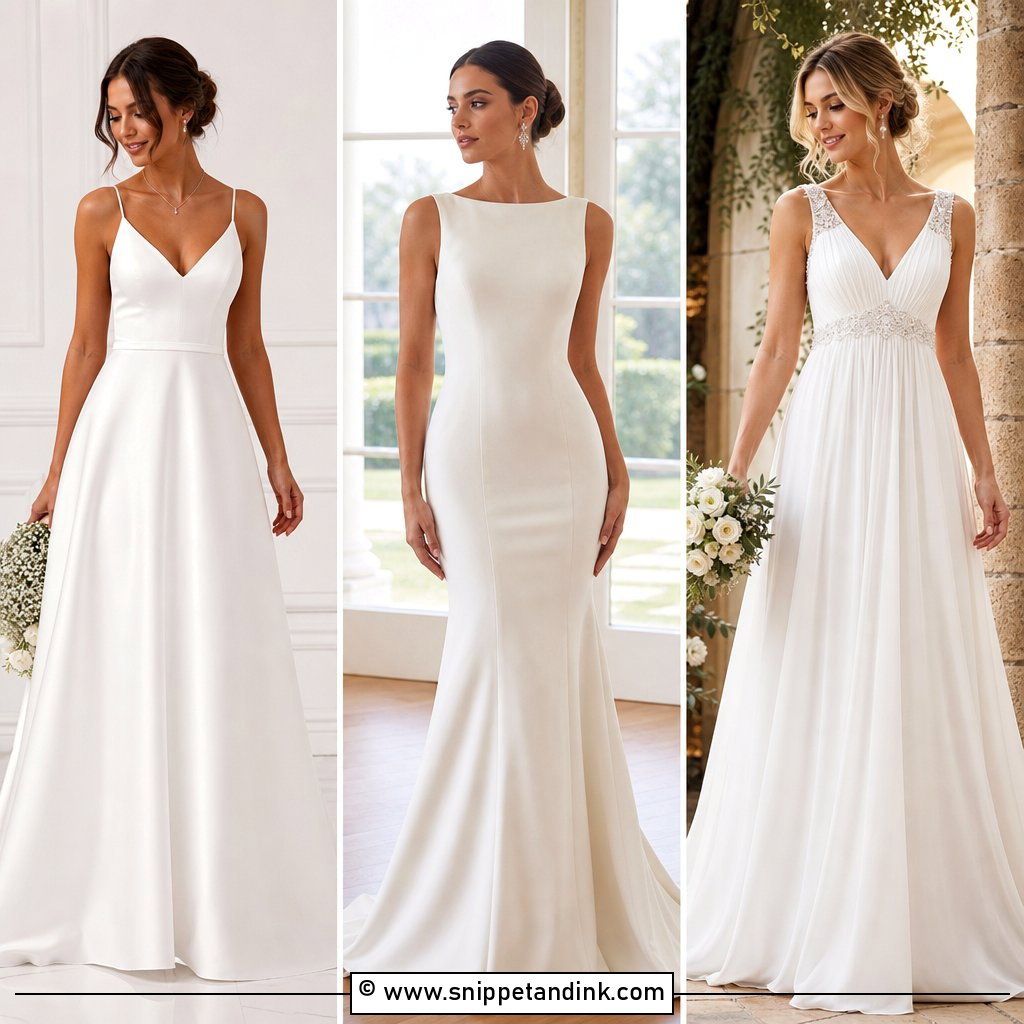
I start most minimal-gown appointments with a satin A-line because it tells us quickly what the bride likes. A fitted bodice, a natural waist and a skirt that widens gradually let you walk freely. A V-neck lengthens the upper body; wider straps give real support if you’d rather not rely on a corset. Pointed pumps, pearl drops and a raw-edged fingertip veil keep it clean, with a compact rose bouquet and a smooth low bun. Satin catches light along every seam, so stand under bright light at your fitting and look for any puckering at the sides of the bodice.
2. Simple Crepe Sheath Wedding Gown
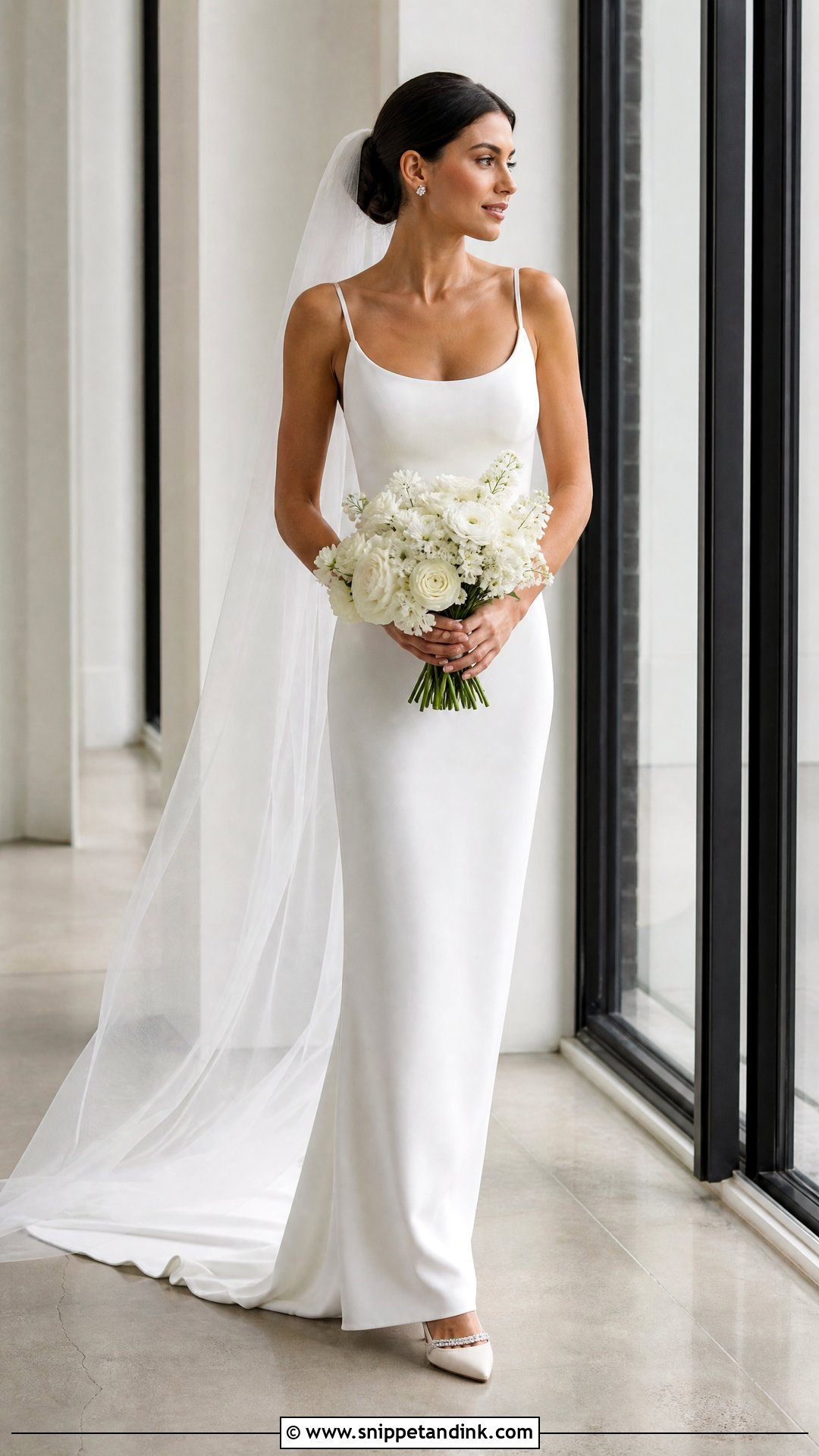
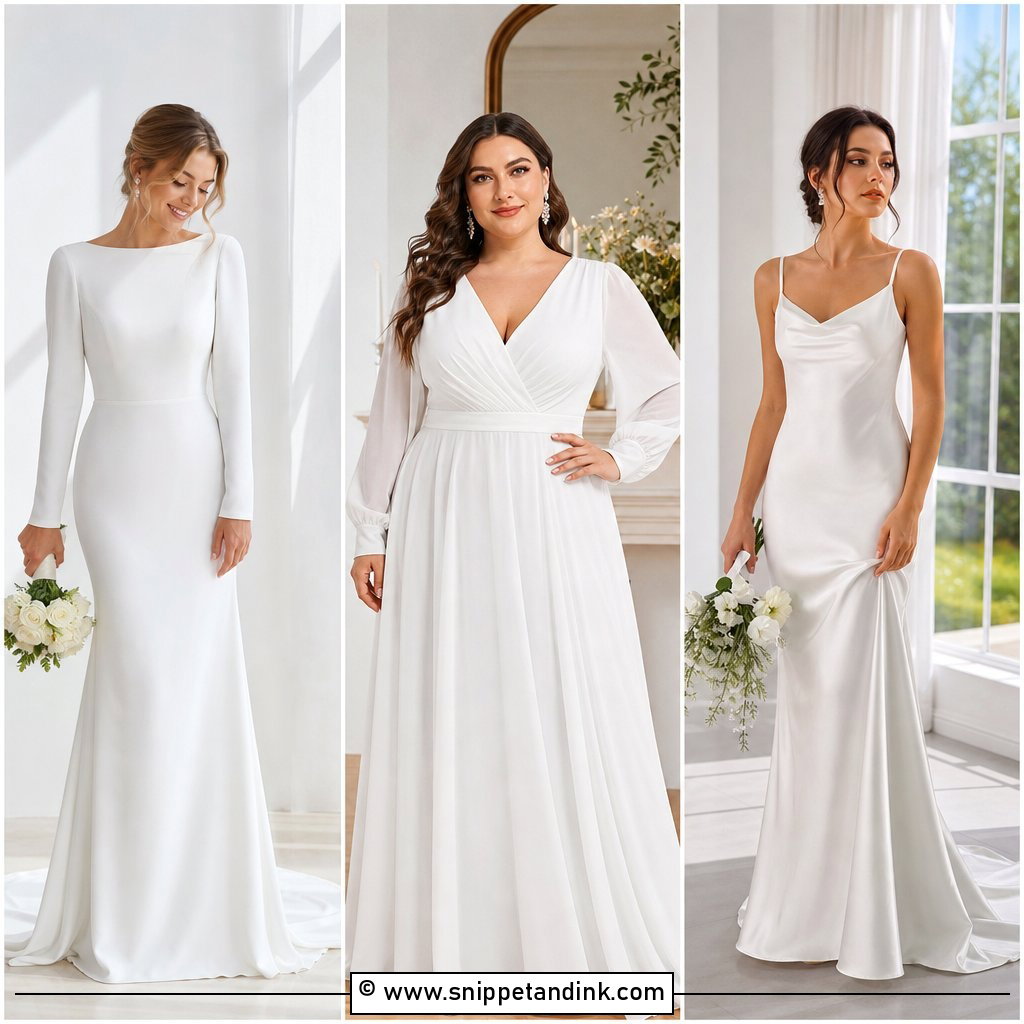
Crepe sheaths have a soft matte surface that keeps a straight silhouette from feeling stiff. The fit should skim. Too tight through the hips and thighs, and crepe pulls into horizontal lines every time you move. A shallow scoop and narrow straps keep the top minimal. Slingbacks, small crystal studs and a slim cathedral veil give a little drama from behind, and a structured white bouquet contrasts with the fluid fabric. A sleek ponytail shows off the neckline. Seamless undergarments and careful tailoring matter more here than on any embellished gown, because nothing distracts from a visible line.
3. Simple Square Neck Fit And Flare Wedding Gown
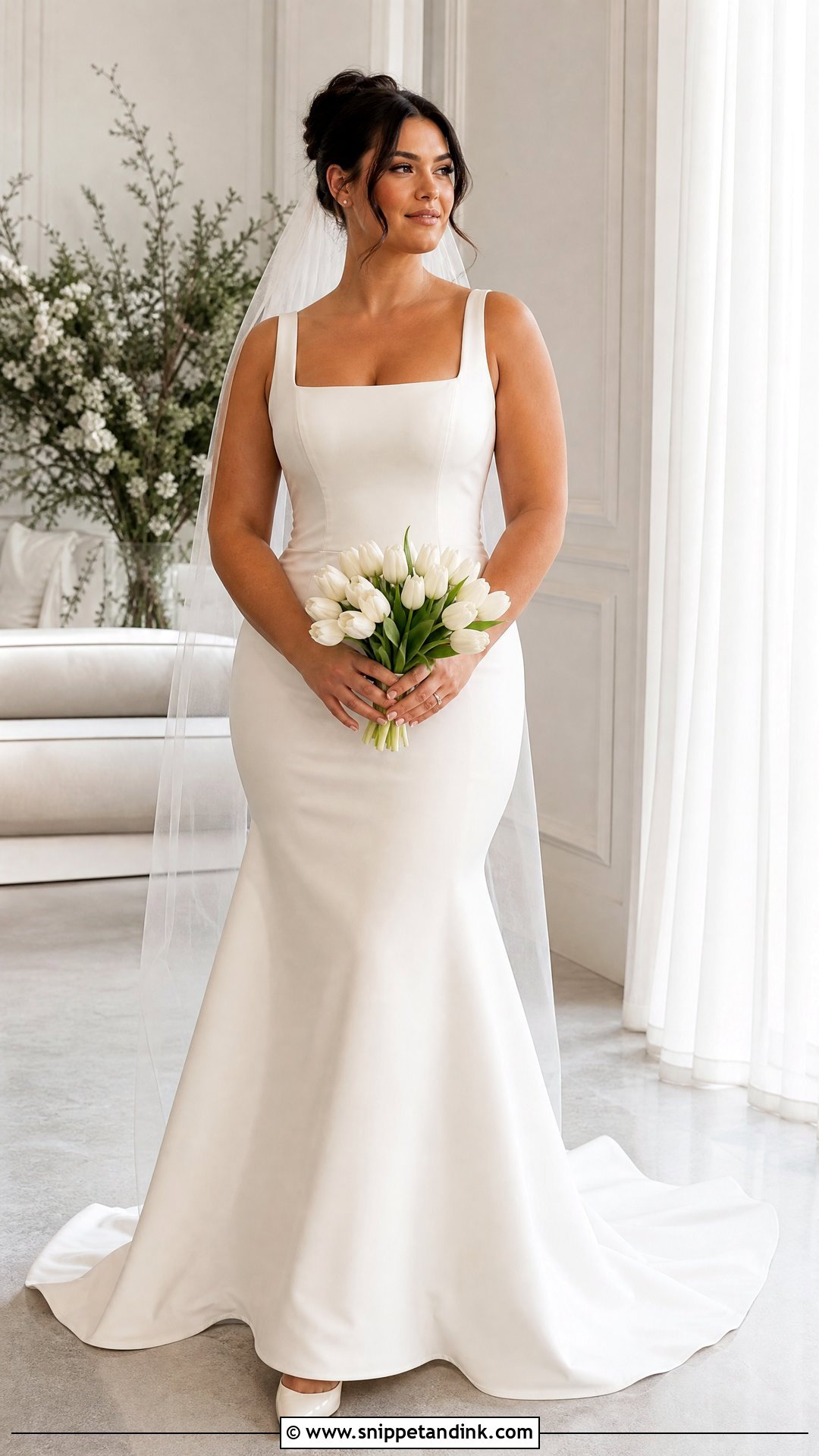
Square necks and fit and flare skirts give you structure at the shoulders and shape through the hips, which reads classic and current at once. Smooth crepe or satin with wide straps suits it, and I’d keep appliqué off so the neckline stays the feature. Pearl button earrings, pointed pumps and a single-layer veil to below the waist, plus a low chignon and loose white tulips. The bodice must sit flat against the chest. If the square neckline bows outward when you breathe in, ask for it to be taken in at the side seams rather than the front.
4. Simple Strapless Mikado Ball Gown
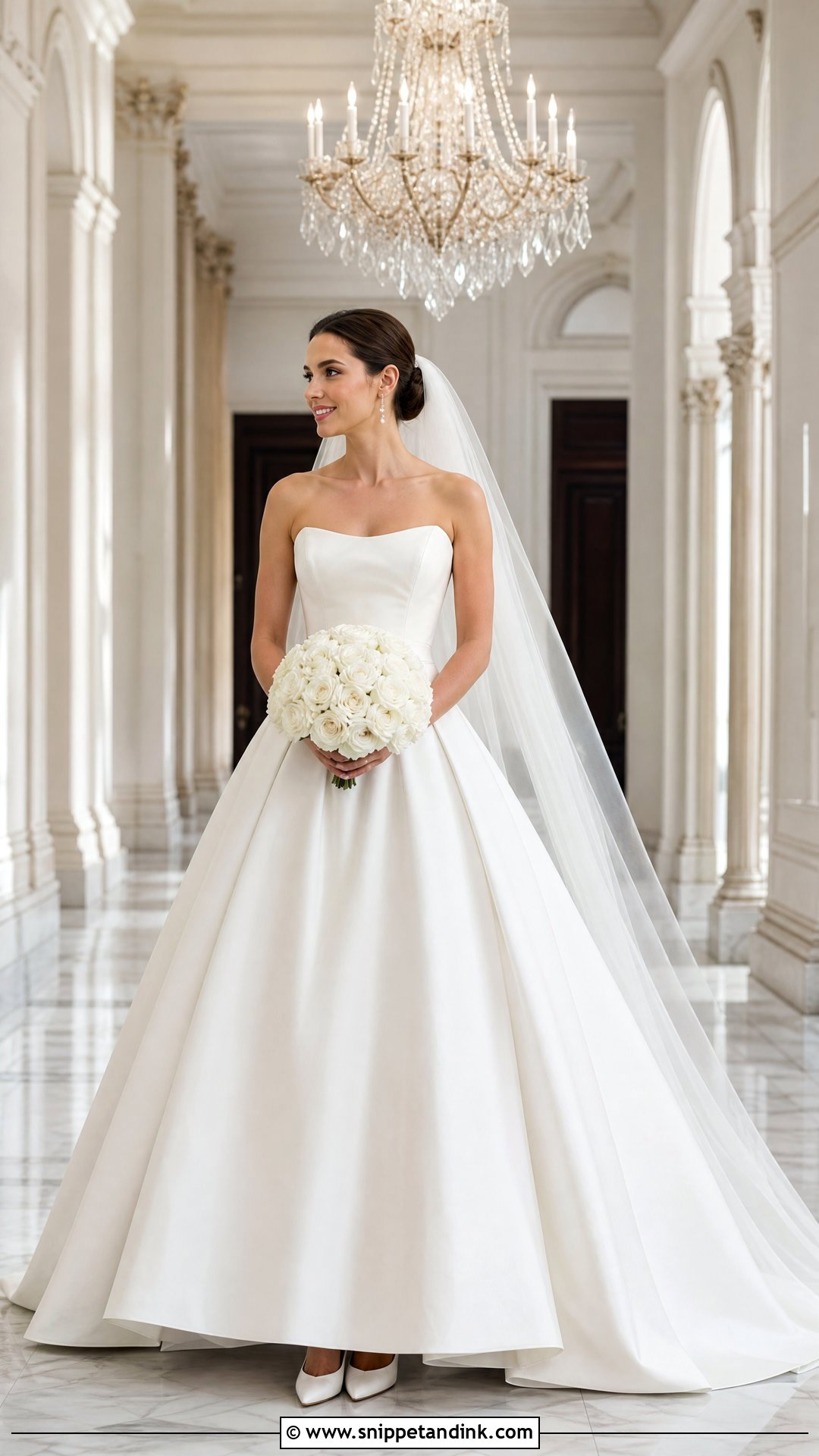
Mikado is how a ball gown stays simple. The fabric is stiff enough to hold a smooth bodice and a full skirt without visible layers or decoration. Look for a curved strapless neckline with solid internal construction and a clean waist seam. Delicate drops, closed-toe satin heels and a long untrimmed veil suit it, with a neat bun to balance the skirt’s volume and a bouquet of rounded white flowers. Have the hem set so it just kisses the floor in your actual shoes, and ask for a bustle that hooks under the skirt. Mikado is heavy, so the bustle points need reinforcing.
5. Simple Long Sleeve Column Wedding Gown
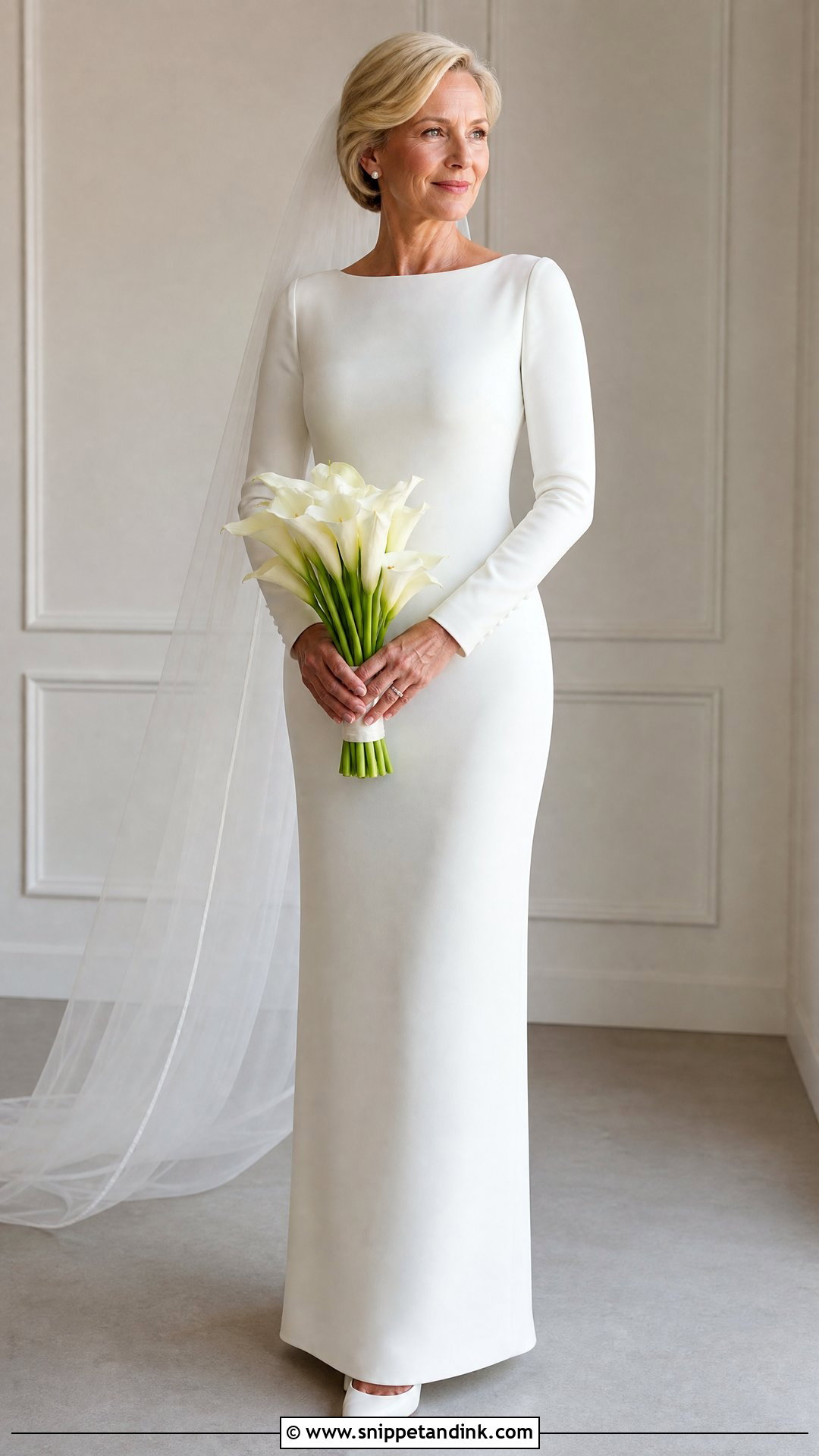
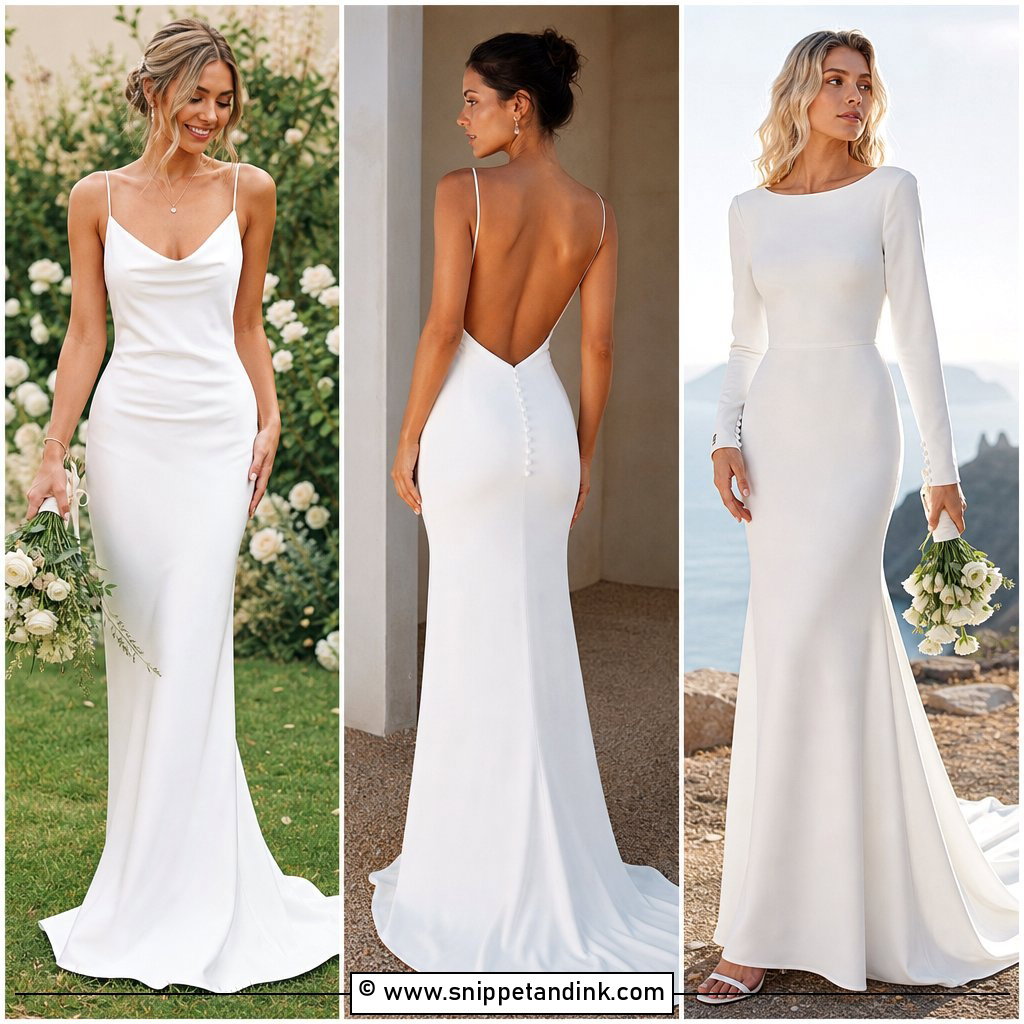
For cooler months, a long sleeve column in substantial stretch crepe covers you without bulk. Fitted sleeves, a bateau neck and a skirt that falls straight from the hip make one continuous line, and covered buttons down the back add quiet detail. Pearl studs, a low bun, pointed heels and a chapel veil complete it, with calla lilies to match the length. Extra fabric at the wrist or elbow is what spoils this look, so have the sleeves fitted while you hold a bouquet. Then reach forward as if hugging someone. It’s the honest test.
6. Simple Cowl Neck Slip Wedding Gown
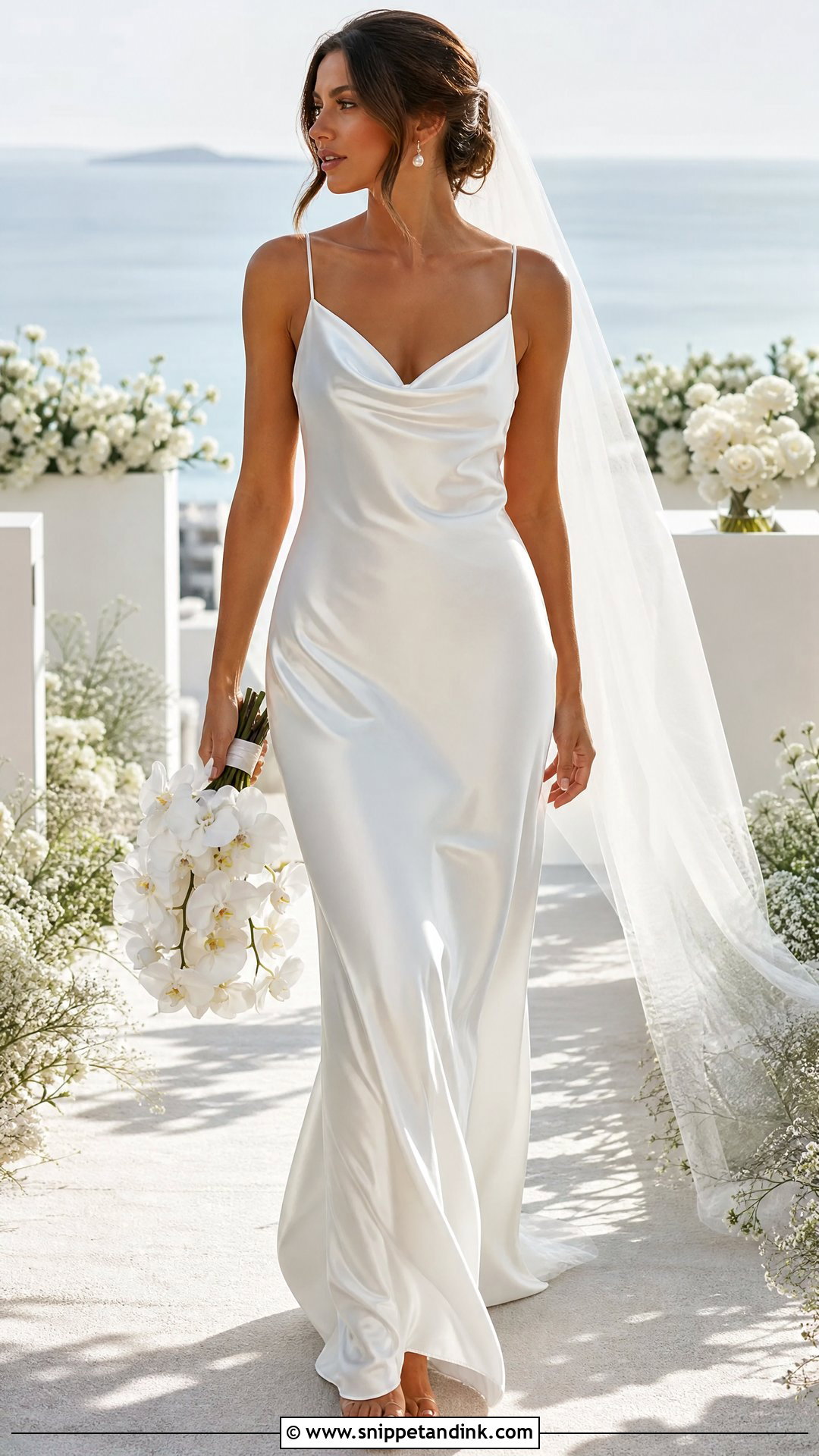
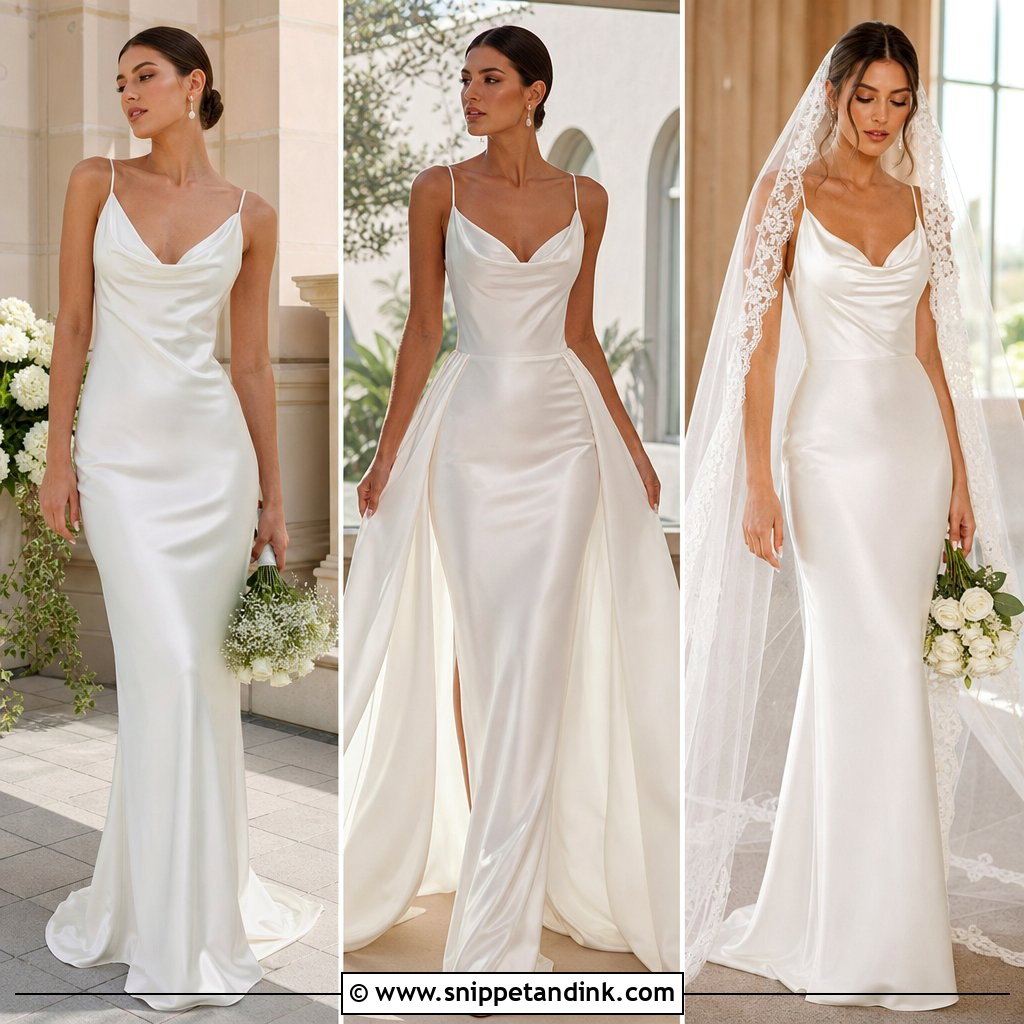
Bias-cut satin is what gives a cowl neck slip wedding gown its fluid drape. I’d send this one to a beach, a garden or a small destination wedding rather than a formal ballroom. Delicate straps aren’t enough on their own; there needs to be some structure through the bust so the cowl doesn’t slide sideways. Strappy sandals, small pearl hoops, a sheer chapel veil and loose waves or a soft twist suit it, with a light bouquet of orchids. Satin slips reveal every edge underneath, so choose smooth, laser-cut underwear. The hem should float just above the ground in your shoes; bias-cut fabric can drop over time, so leave it hanging for a few days before the final hem.
7. Simple Off The Shoulder Wedding Gown
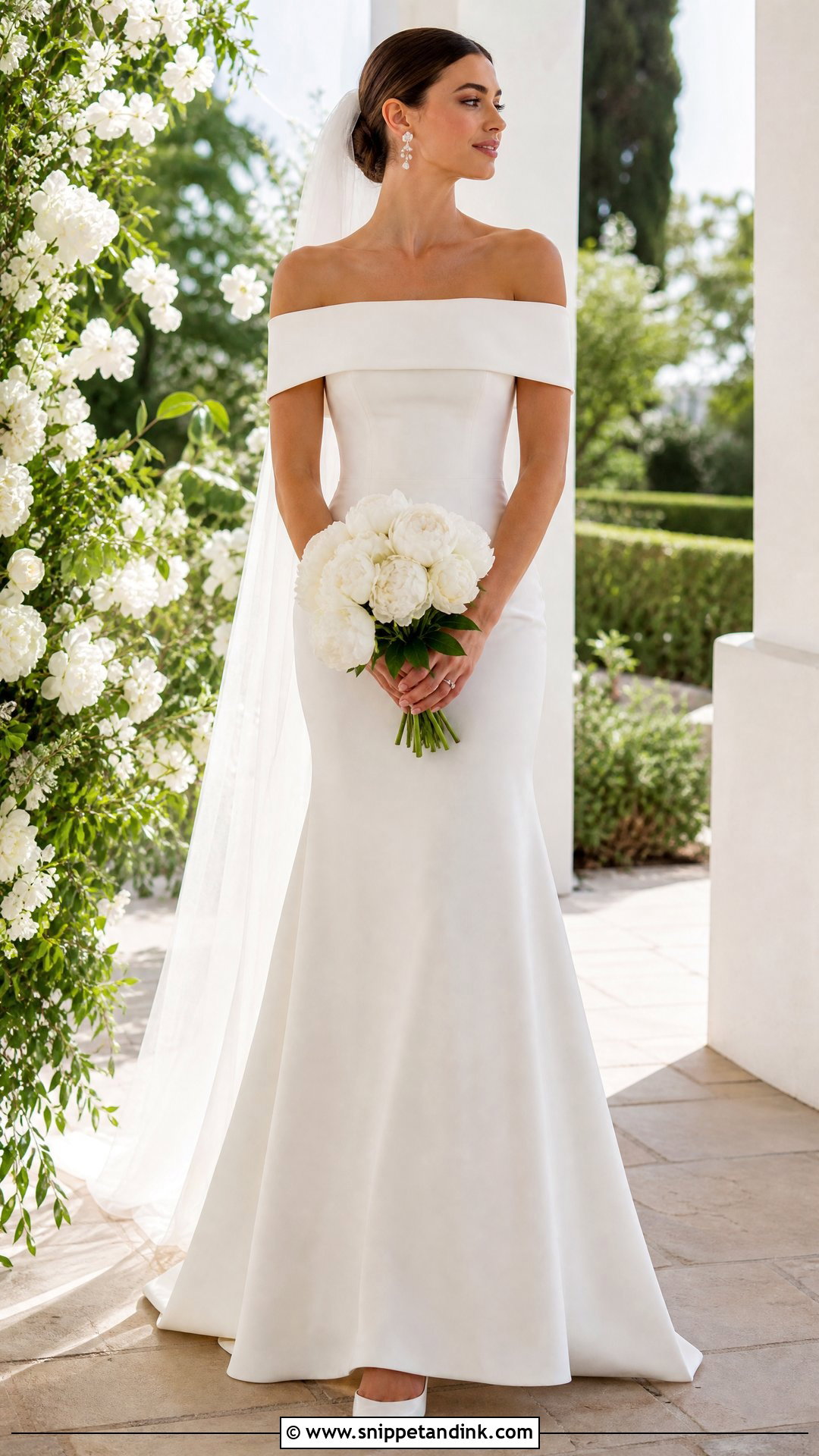
Off-the-shoulder necklines frame the collarbone, and in plain satin or crepe they’re romantic without a single flower. A folded neckline, fitted bodice and soft flare is the classic version. The neckline must stay put without your arms holding it there. I’d wear drop earrings and no necklace, plus pointed satin heels, a low bun and a long plain veil set under the hair. Peonies or garden roses soften the structure. Keep everything else quiet, since the neckline is already the focal point, and keep makeup luminous rather than heavy.
8. Simple High Neck Satin Wedding Gown
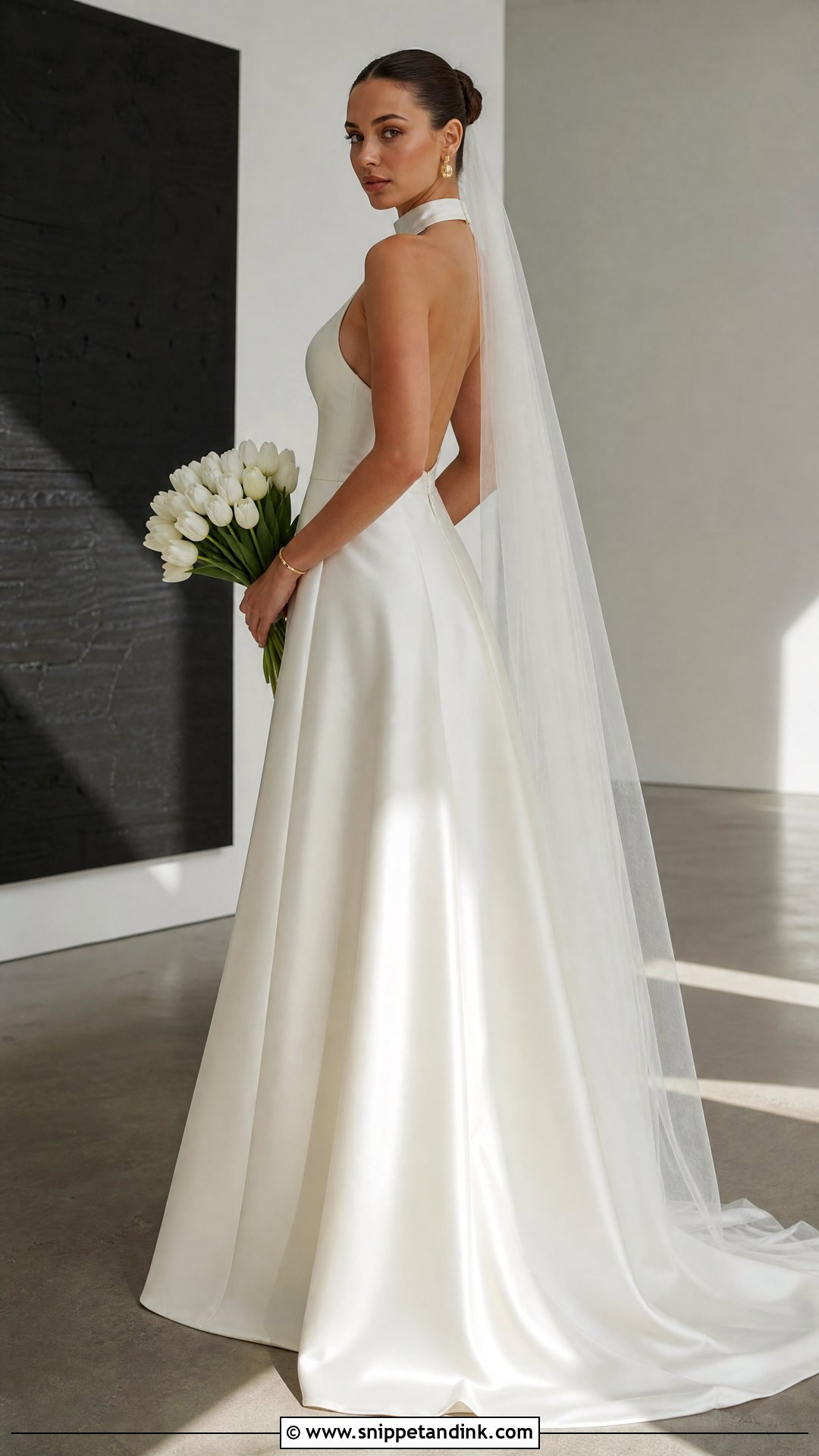
High neck satin is the most fashion-led shape in this group. Choose a sleeveless column or A-line with a close neckline, a shaped waist and an open or buttoned back. The smooth front doesn’t want a necklace. Sculptural earrings, a narrow bracelet and pointed heels do more, with a polished bun or high ponytail so the neckline shows and a long untrimmed veil under the hair. Tulips or callas keep the bouquet slender. Sit and turn your head at the fitting. A high neck should look crisp, but if you’re aware of it at your throat after five minutes, you’ll be very aware of it by the toasts.
9. Simple Bateau Neck Wedding Gown
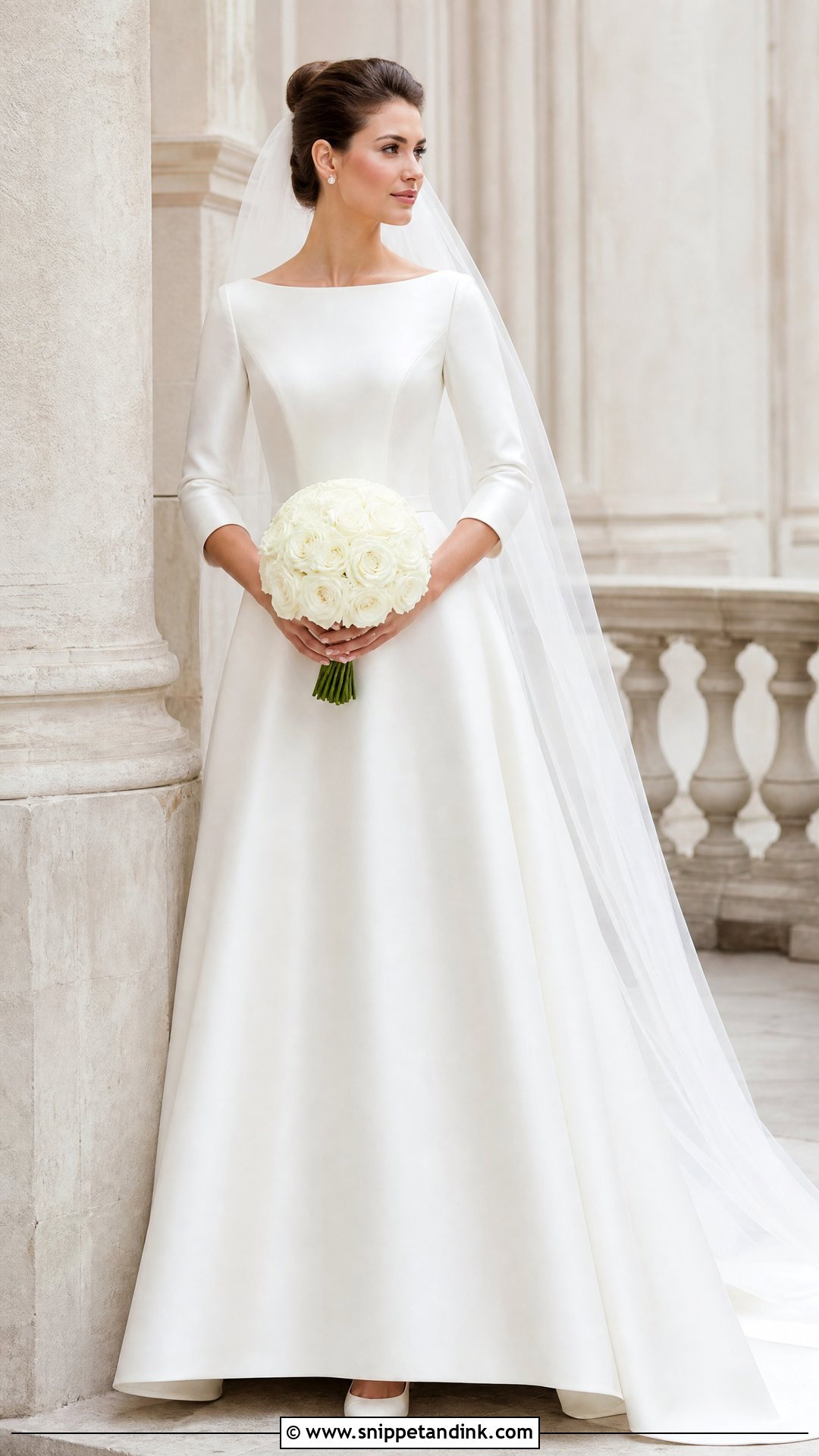
A bateau neck wedding gown runs straight across from shoulder to shoulder and suits a smooth crepe or matte satin A-line, with or without three-quarter sleeves. Pearl studs and a slim bracelet keep the neckline clear. Ivory pumps, a chapel veil, a low French twist and white roses with little greenery finish the look. Bateau necks gape when the shoulder width is even slightly off, so check it lies flat across the collarbone. Then raise your arms, because a bateau cut too narrow at the shoulder restricts movement more than you’d guess.
10. Simple Empire Waist Chiffon Wedding Gown
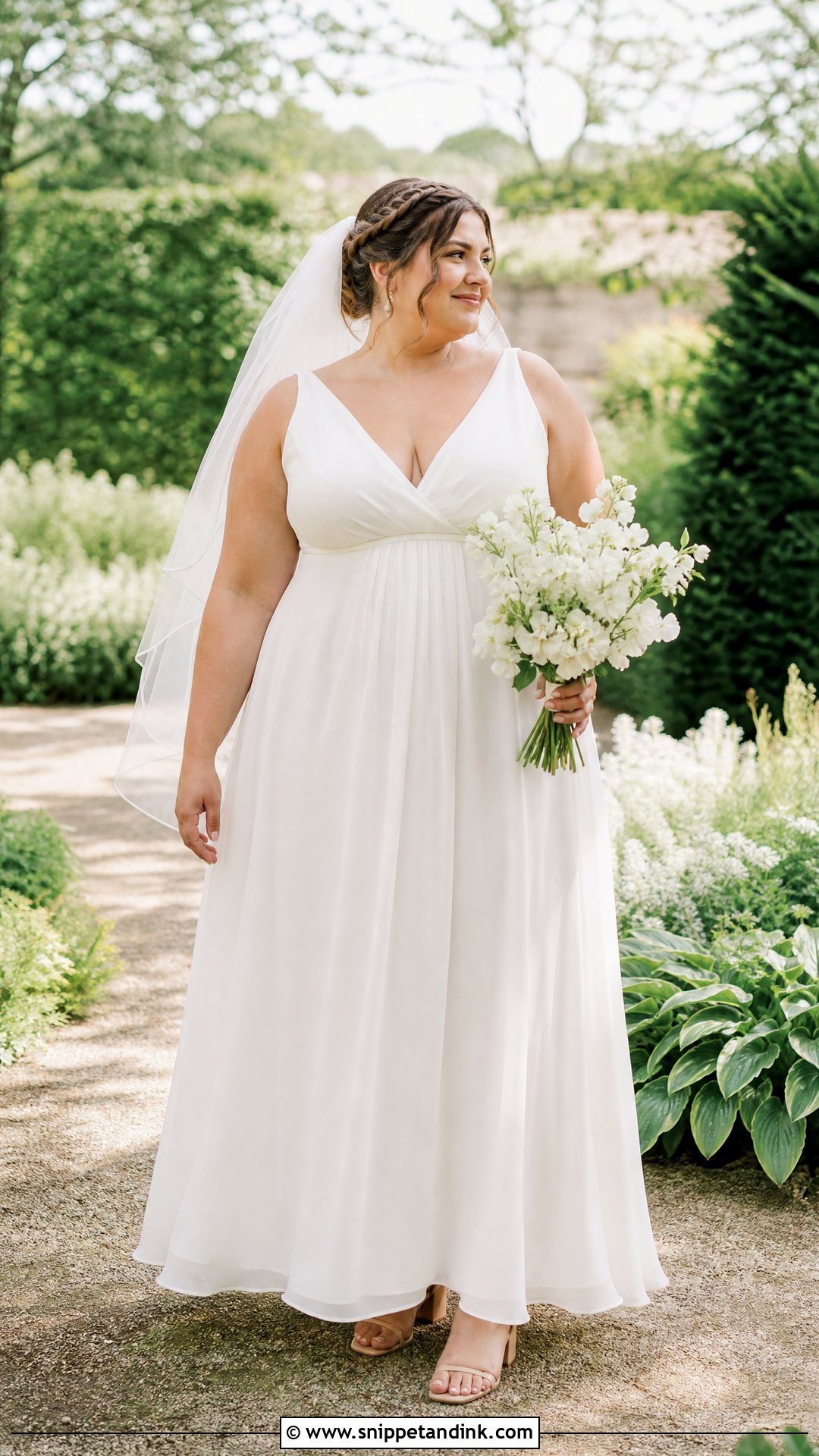
Light chiffon with an empire waist is about as comfortable as wedding dresses get. The bodice fits under the bust and the skirt falls in soft gathers to the floor, so nothing presses on your waist through dinner. A modest V or scoop balances the top. Block-heel sandals, small earrings, a fingertip veil and a braided updo suit it, with sweet peas or small roses. It’s the one I’d pick for hot weather and outdoor ground. Ask for a full lining that still lets the chiffon move, and have the hem set a touch shorter for grass or gravel.
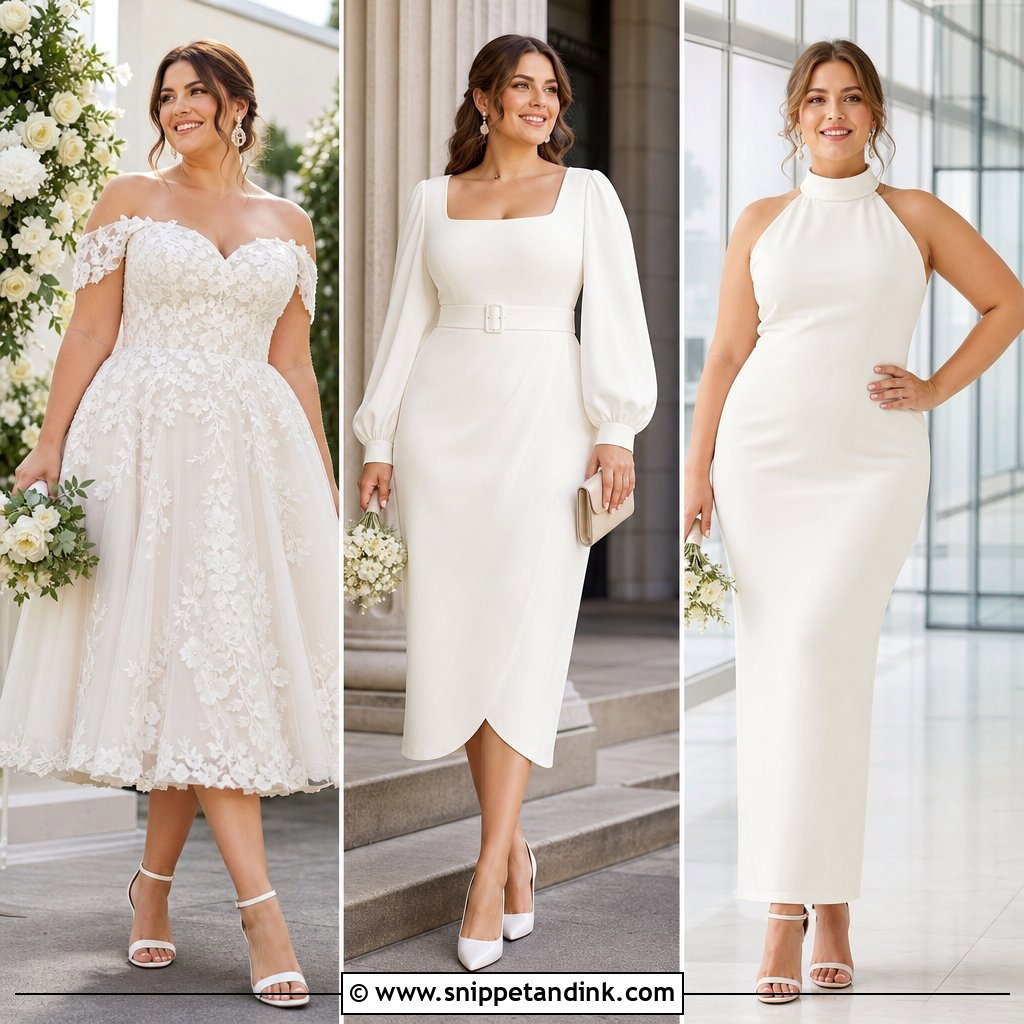
11. Simple Tea Length Wedding Gown
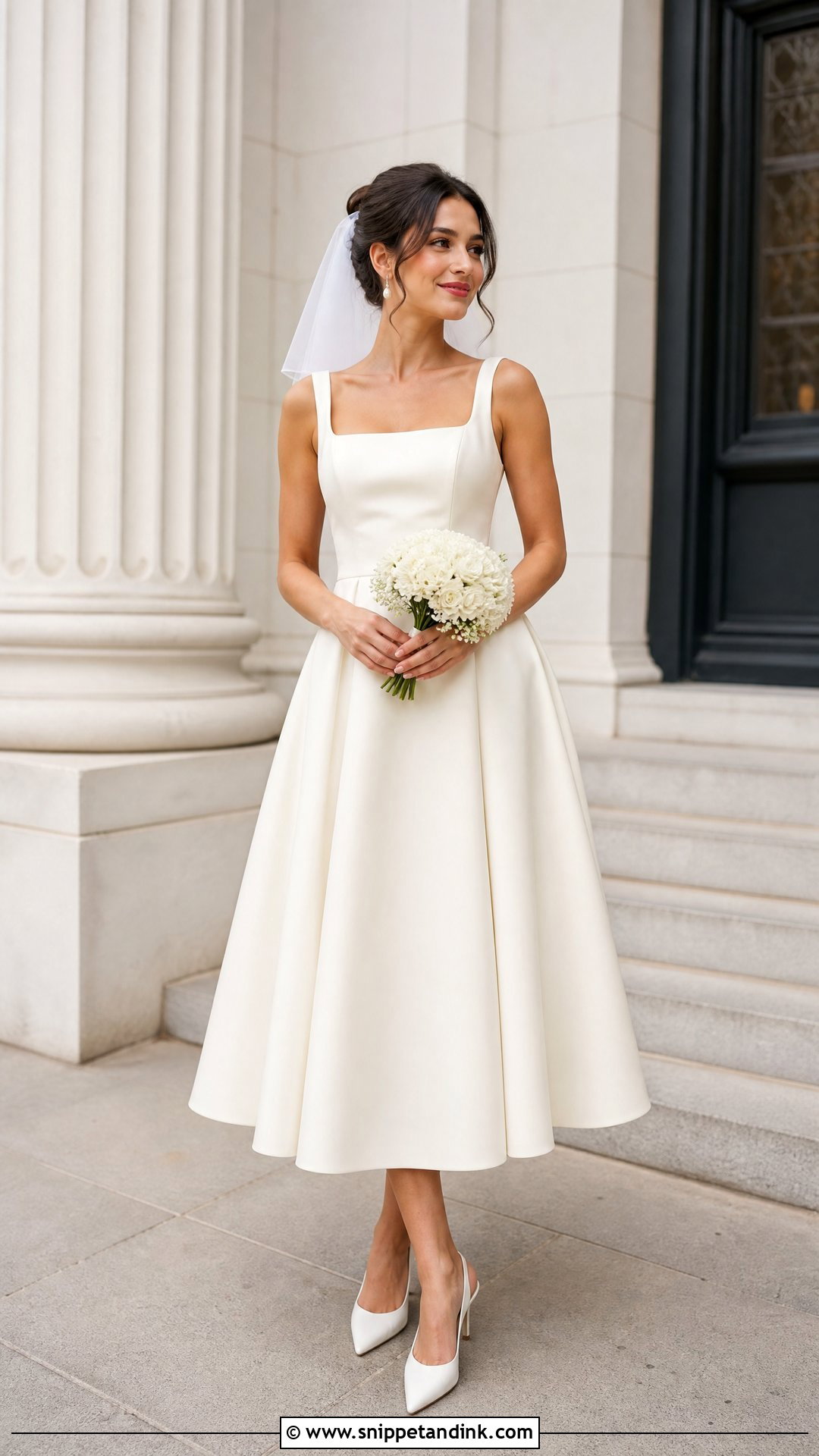
Tea length feels cheerful and practical, especially for a courthouse or daytime party. A structured A-line ending between knee and ankle, with a fitted bodice and a square or bateau neck, puts your shoes on show, so slingbacks, pumps or ankle-strap heels deserve some thought. Pearl earrings, short gloves if you like them and a shoulder-length veil give a vintage nod, with a small bouquet and a smooth bun or shoulder-length waves. The hem placement depends on your height and calf shape. I try several lengths with pins before cutting, because the right one looks deliberate and the wrong one looks shortened.
12. Simple One Shoulder Wedding Gown
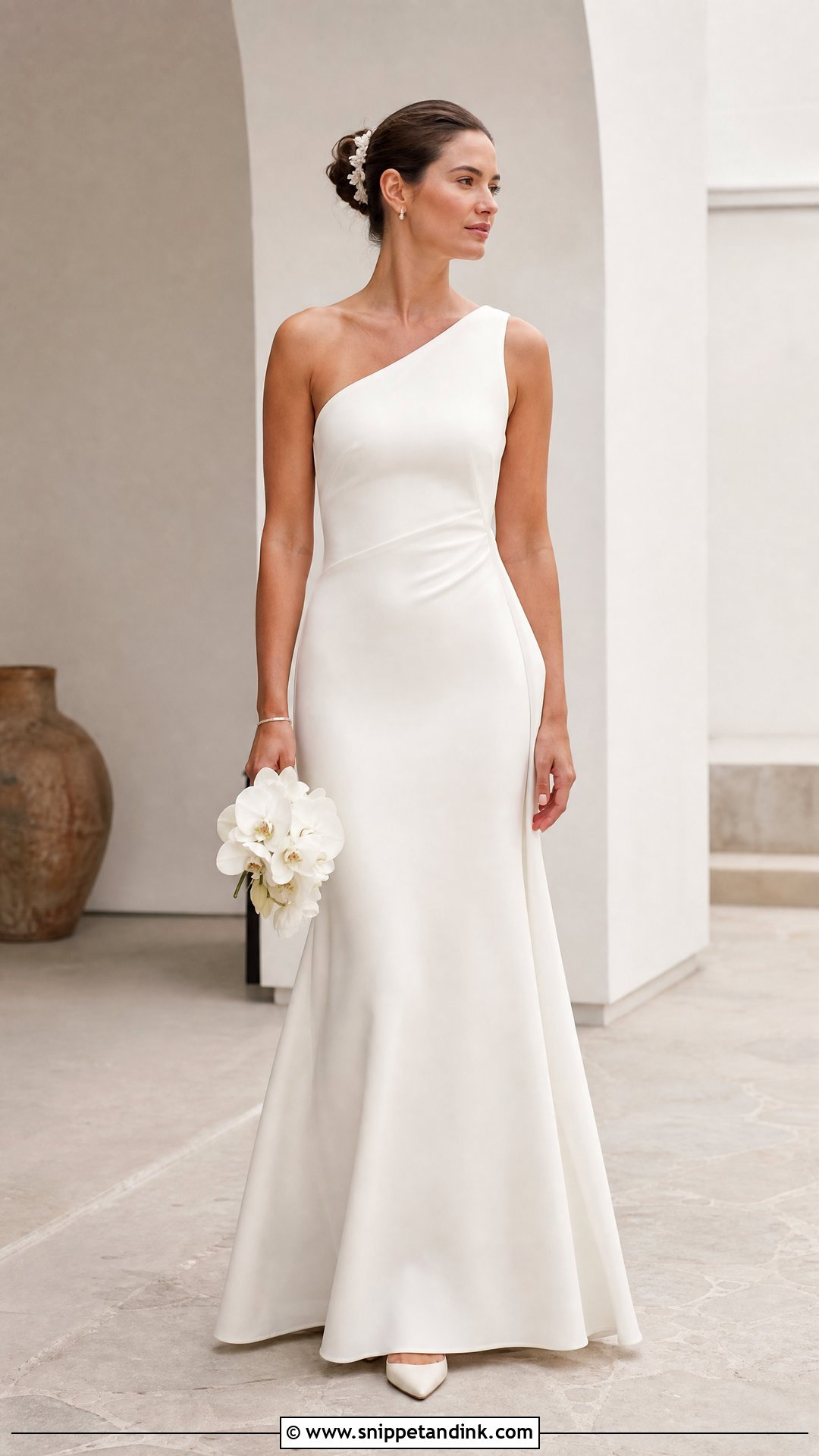
One-shoulder gowns give you interest without decoration. Smooth crepe or satin with a fitted bodice works over a column, A-line or gentle flare. The asymmetric strap must fit closely and have internal support, or the bodice will creep toward the open side as you move. No necklace. Small earrings, a slim bracelet and pointed heels are enough, and a sleek bun near the center balances the diagonal. Wear a plain veil or swap it for a sculptural hairpin. Orchids suit it. At the fitting, raise your bouquet arm and check the underarm on the strap side doesn’t dig in.
13. Simple Scoop Neck Low Back Wedding Gown
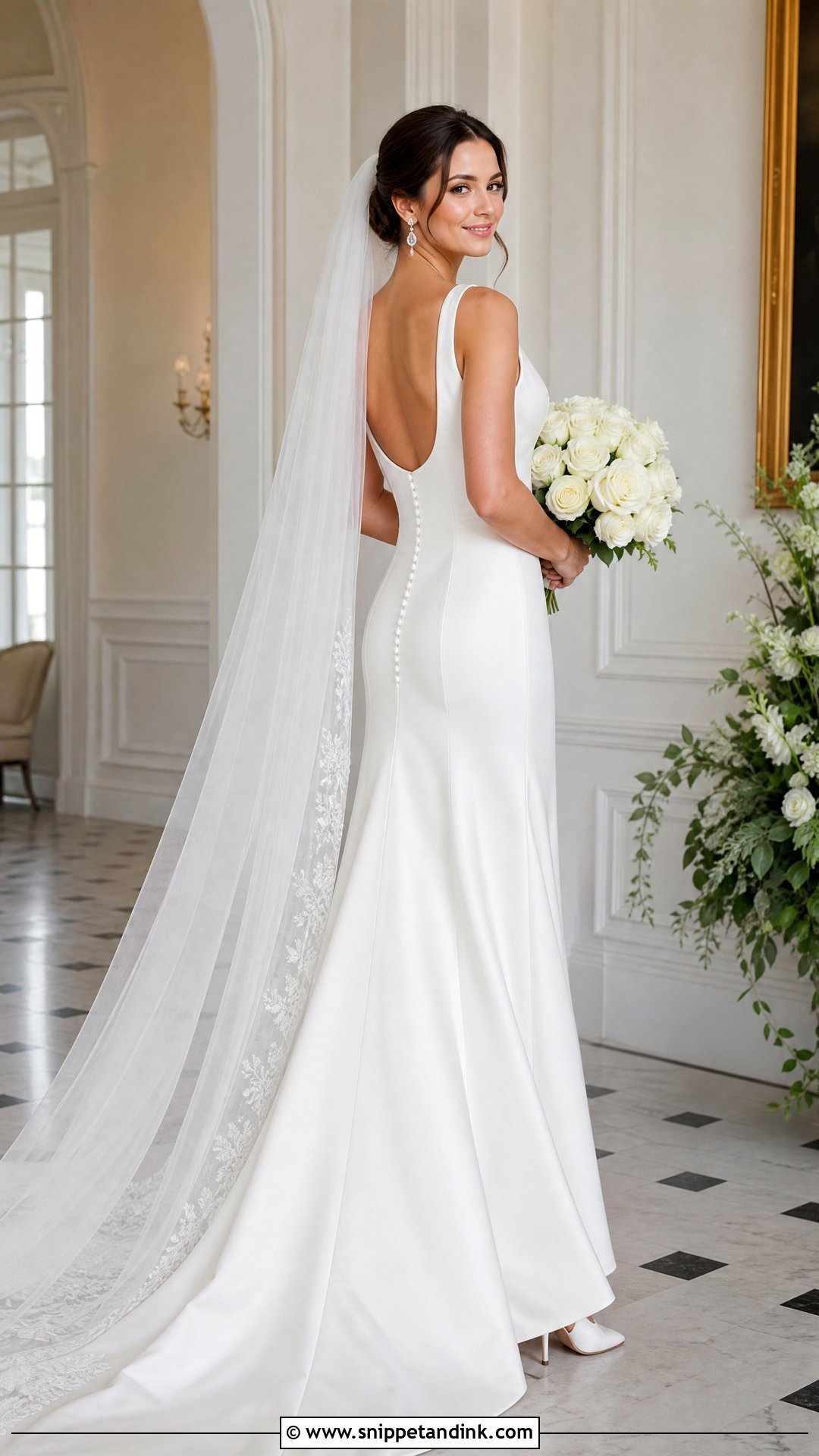
From the front, a scoop neck reads soft and classic; turn around and the low back does the talking. A fitted crepe or satin bodice with supportive straps, a defined waist and a gentle flare works well, and covered buttons along the back seam add a small detail. Drop earrings, ivory pumps and a sheer cathedral veil let the back show. Wear your hair up in a high bun or swept twist rather than long waves that cover it. Sort out underwear before alterations start. A standard bra won’t work, and built-in cups sewn in during fitting are the most comfortable answer.
14. Simple Cap Sleeve Crepe Wedding Gown
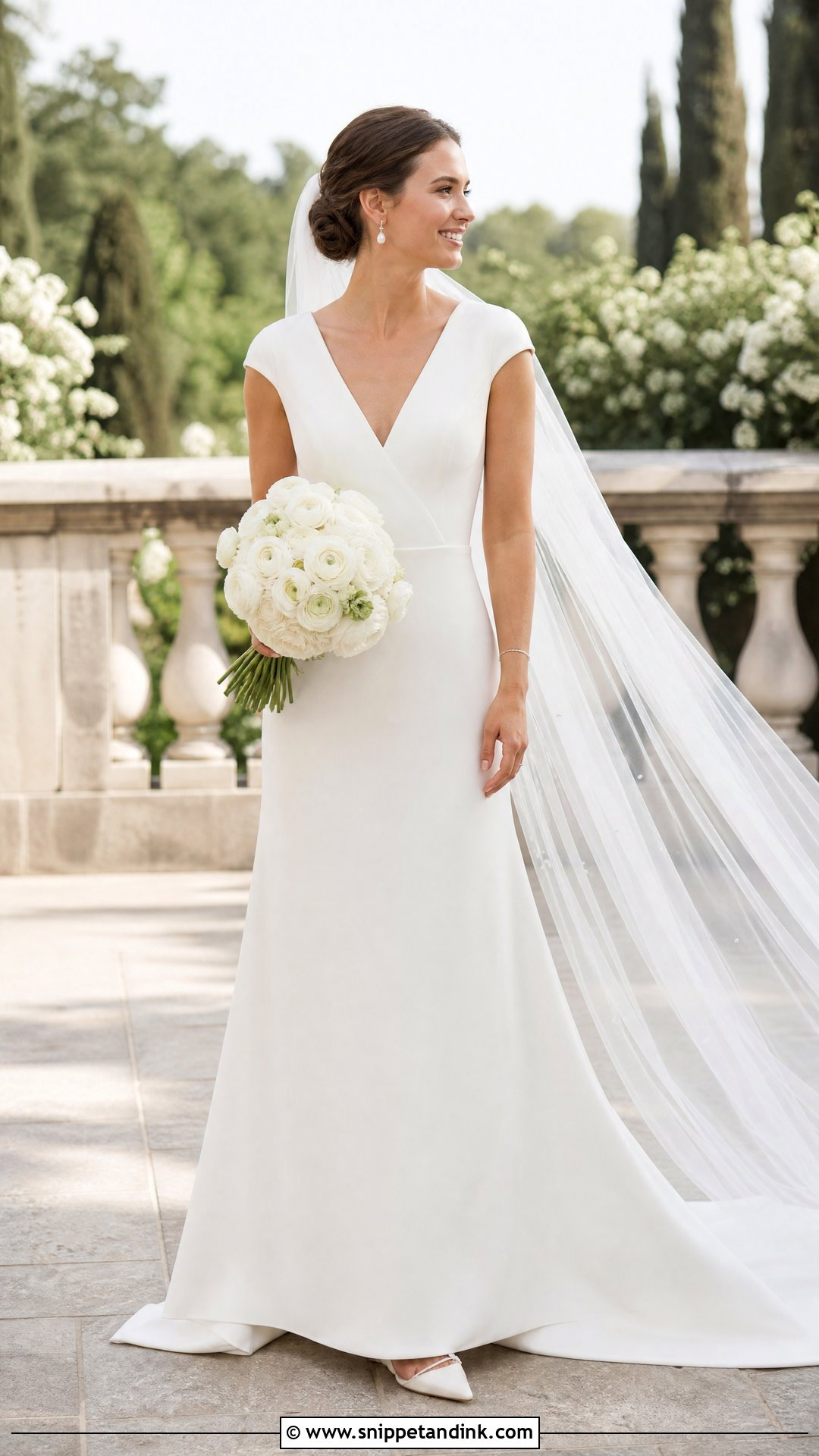
Cap sleeves cover just the top of the shoulder and keep a crepe gown light. A fitted A-line or sheath with a clean V and no embellishment suits them. The sleeves should lie flat on the arm. If the edge cuts in, the sleeve is too tight; if it stands out, too wide. Small pearl earrings, a delicate bracelet and low pointed heels make it comfortable for a long day. A fingertip veil and a low textured bun soften the crepe, with white ranunculus in hand. I always have a tailor look at the sleeve angle from the side as well as the front, because a slight change there fixes the whole shoulder line.
15. Simple Halter Neck Wedding Gown
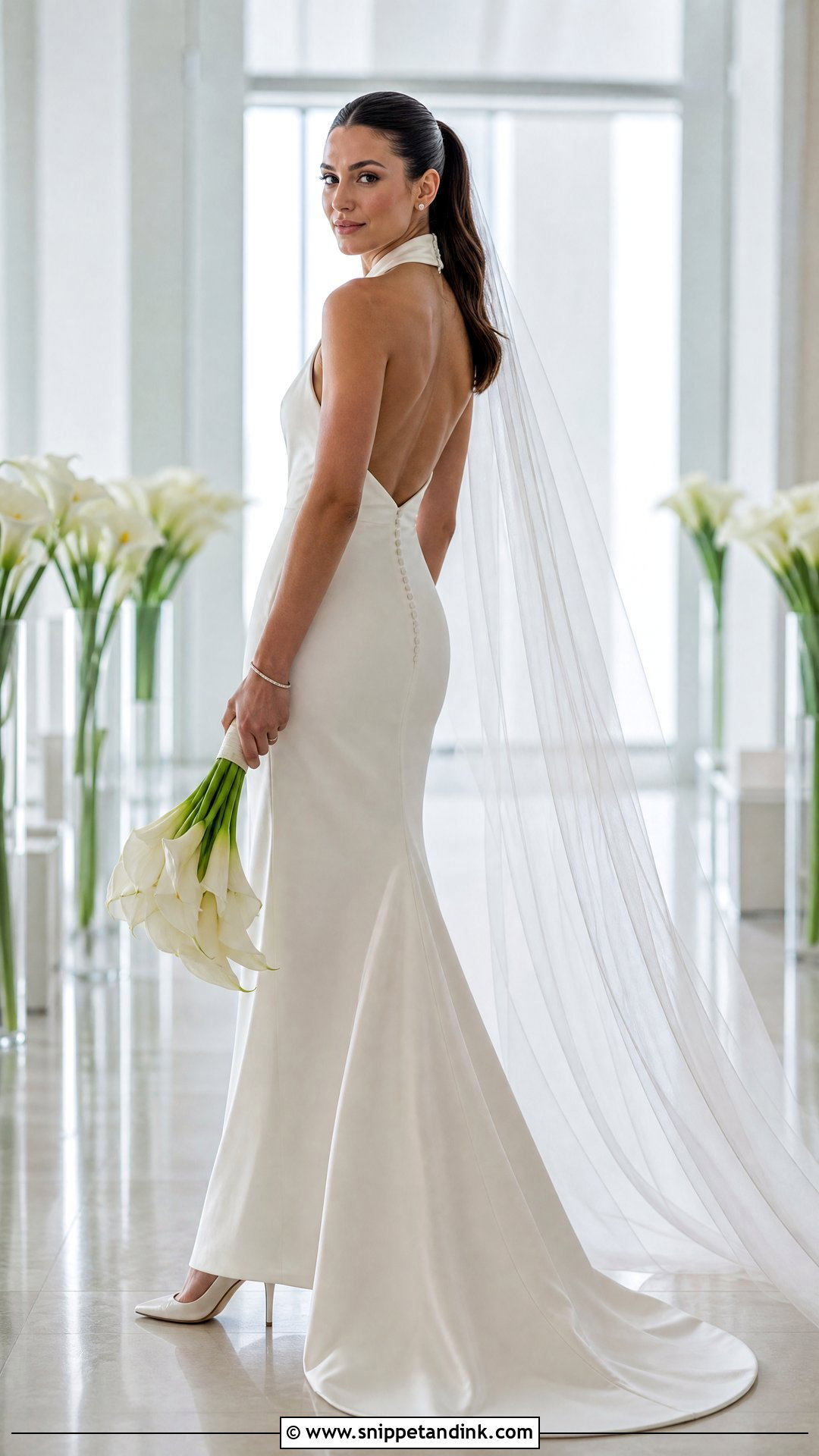
Halter necks pull attention upward and lengthen the body. A smooth satin or crepe gown with a secure neckline, fitted waist and straight or gently flared skirt is the simplest form, and an open back balances the higher front. Skip the necklace. Polished studs or slim drops, a sleek ponytail, a narrow bracelet, pointed heels and a plain veil under the hair keep it modern, with callas to echo the line. The weak point is the back of the neck. If the halter pulls there while you sit, the bust support isn’t doing enough, and that ache builds through the evening.
16. Simple Drop Waist Satin Wedding Gown
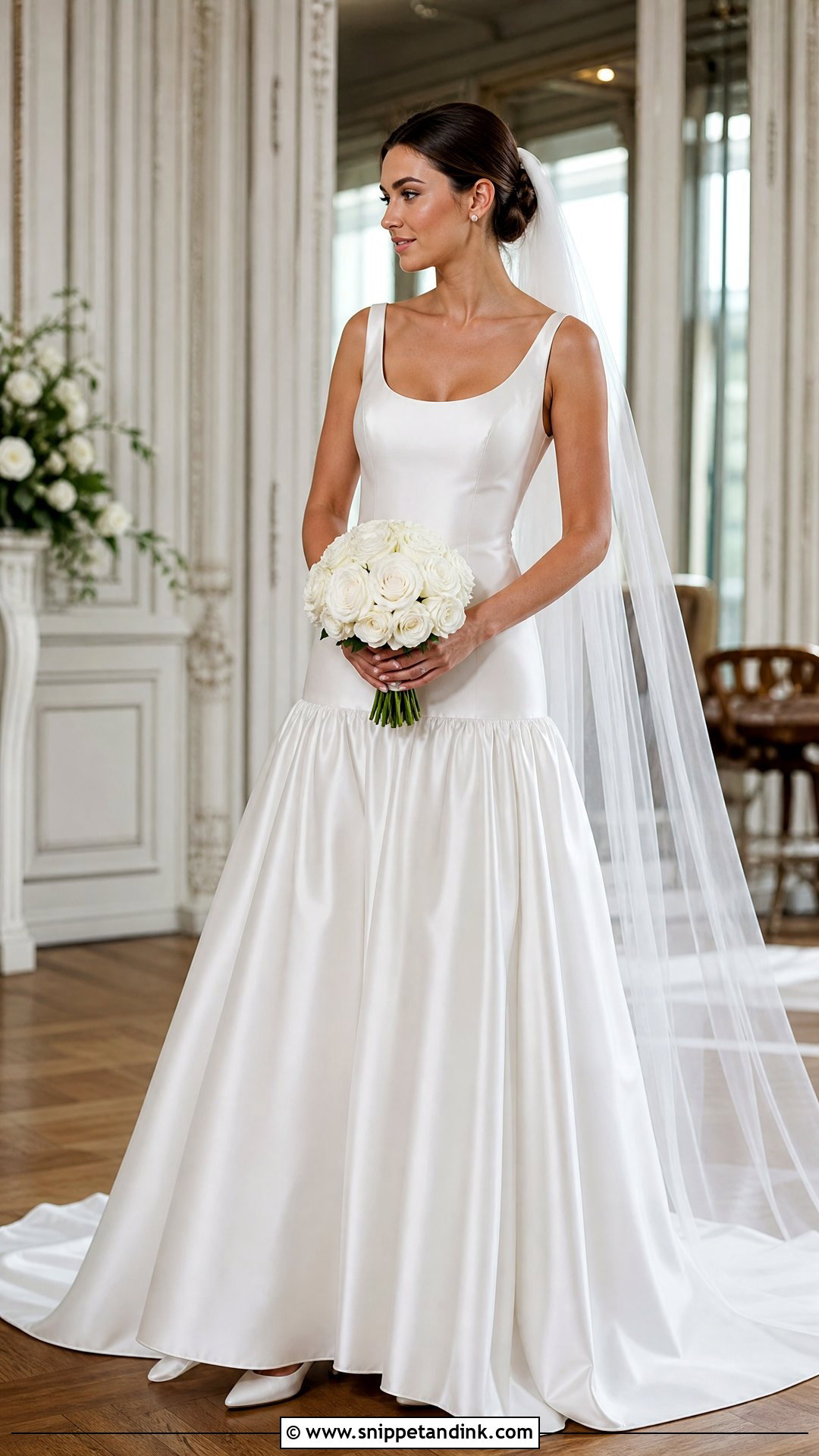
A drop waist has a long fitted bodice that meets the skirt around the upper hip. It’s striking in plain satin, but it’s also the trickiest waistline here to fit, because where the seam lands changes your whole proportion. A scoop, square or strapless neckline works, depending on how much coverage you want. Pearl studs, satin pumps and a long sheer veil suit it, with a smooth bun and white roses. Plan on several fittings for this one. Sit, bend and walk at each, and if the seam sits at the widest point of your hips, ask to move it up or down an inch.
17. Simple Wrap Front Wedding Gown
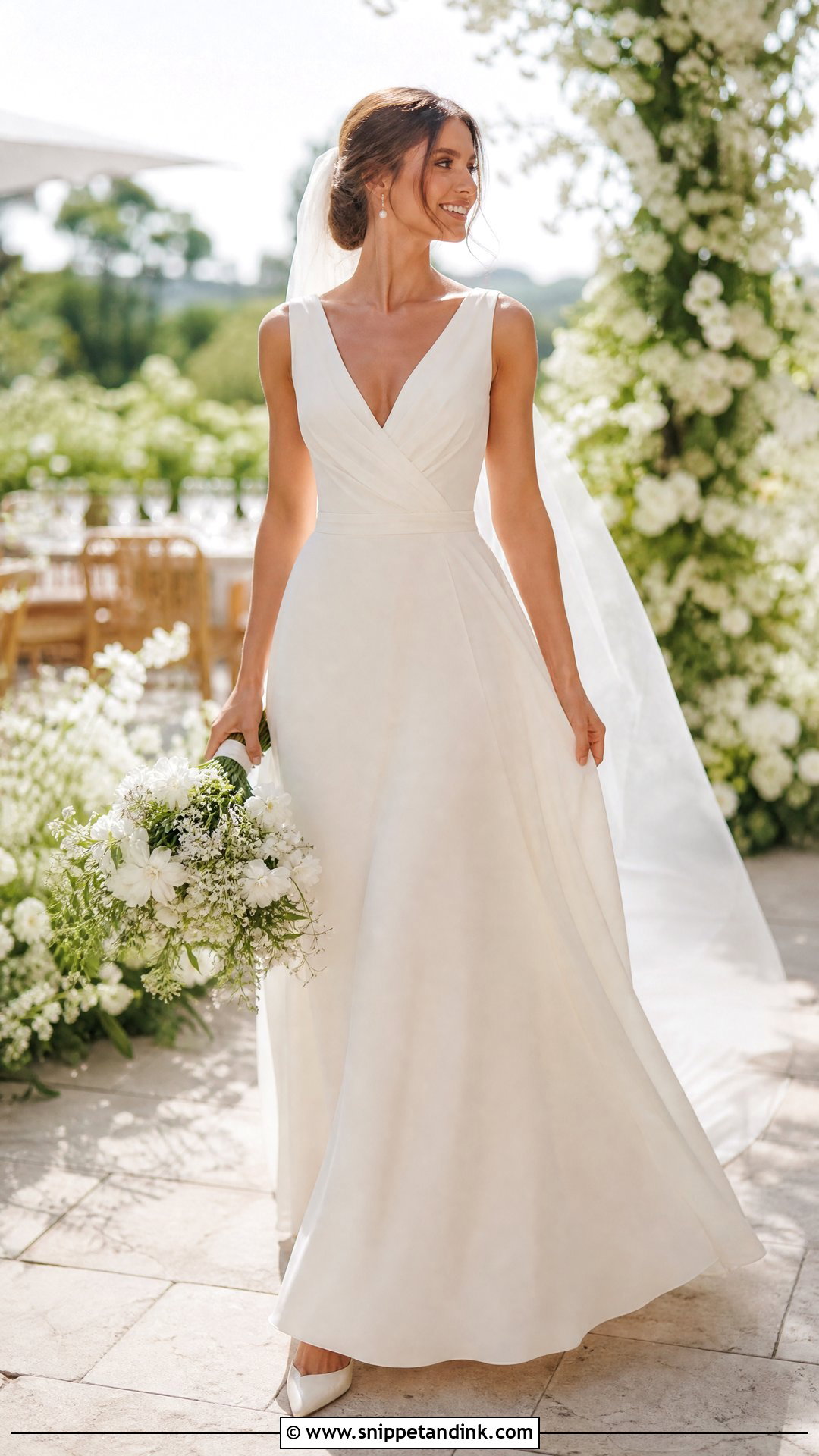
A wrap front gives a soft crossover neckline and looks forgiving, which is why I like it for brides who feel unsure about a fitted bodice. For a wedding, choose a faux-wrap in crepe or satin, fully stitched in place, rather than a true tied wrap that can shift. A defined waist and flowing A-line keep it balanced. Pearl drops, low pointed heels, a light fingertip veil and a pinned bun or side-swept waves suit the diagonal lines, with a loose bouquet of white flowers. Bend forward in the mirror. Crossover necklines open up when you lean, and hidden snaps or a small stitch at the cross point keep it modest.
18. Simple Crepe Mermaid Wedding Gown
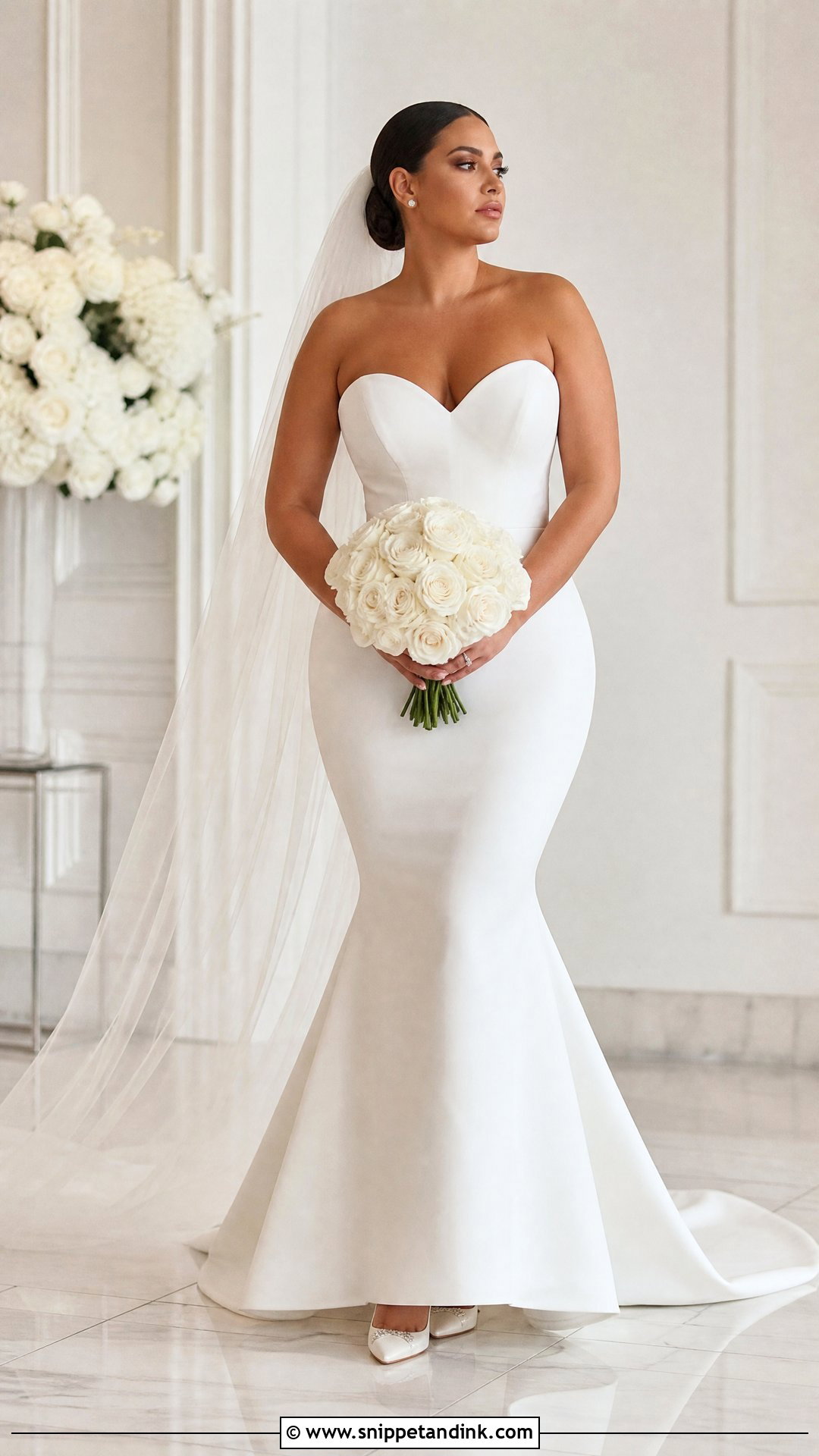
Mermaids don’t need lace to be dramatic. In smooth crepe, the fitted bodice and flared hem are the statement. A sweetheart, square or modest V neckline works, and the flare should begin at a point around the knee where you can still walk comfortably. Simple studs, pointed pumps and a plain cathedral veil that follows the train, with a sleek low bun and structured roses. Walk, sit and climb a few steps at the fitting. Any pulling lines across the thighs mean it’s too tight. Ask for a secure bustle too, as a fitted skirt with a loose train is hard to manage once the dancing starts.
19. Simple Cape Sleeve Wedding Gown
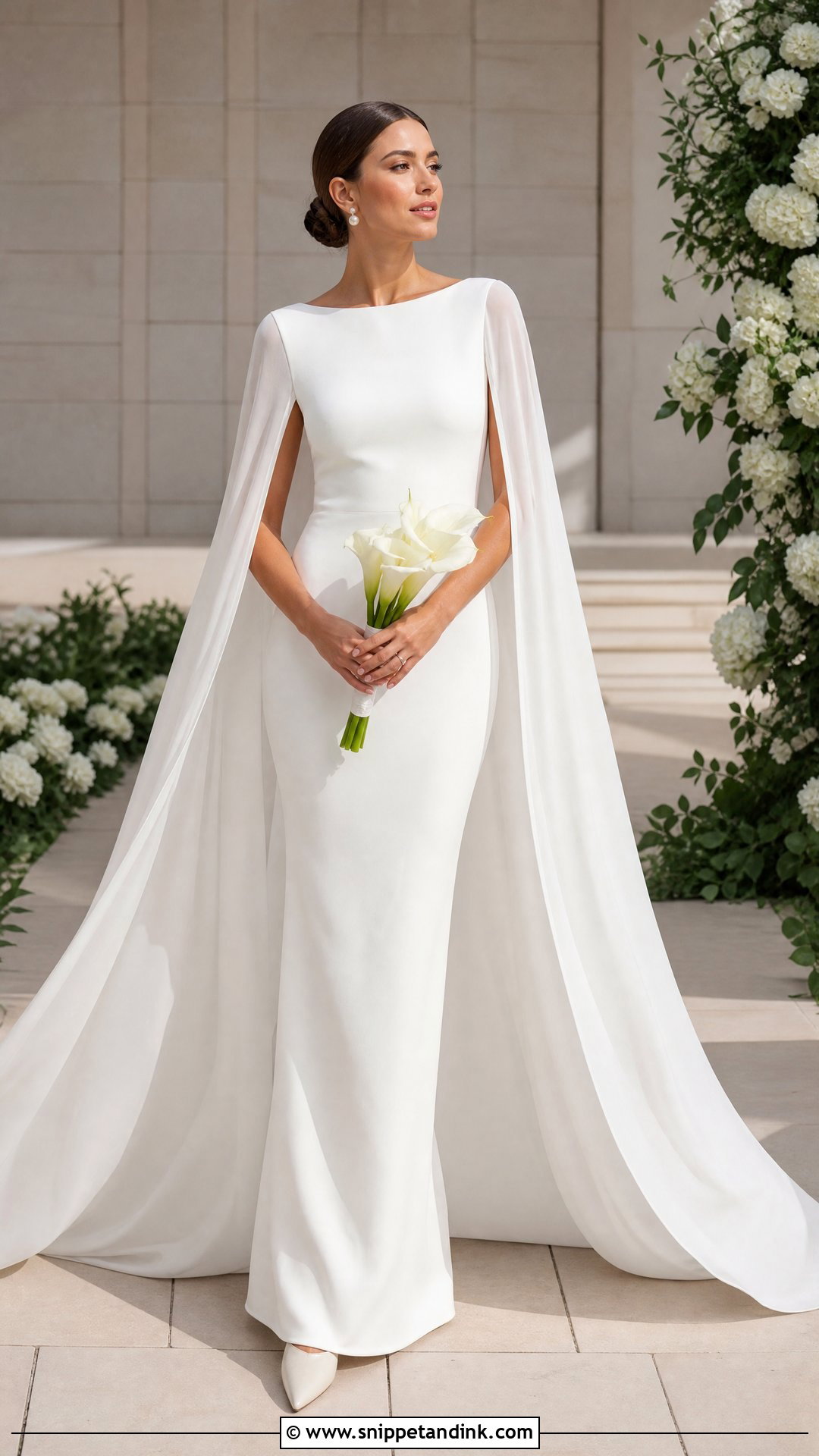
Cape sleeves add movement to a plain crepe column or A-line. A lightweight chiffon cape falling from the shoulders toward the floor keeps it floating rather than theatrical, so long as the gown underneath stays unembellished. Pearl studs, pointed heels and a smooth low bun are enough. You may not need a veil at all; if you want one, make it short and very sheer. Narrow tulips or callas suit the length. Ask whether the cape detaches or bustles. A floor-length cape trails through food at dinner and gets stepped on during the first dance.



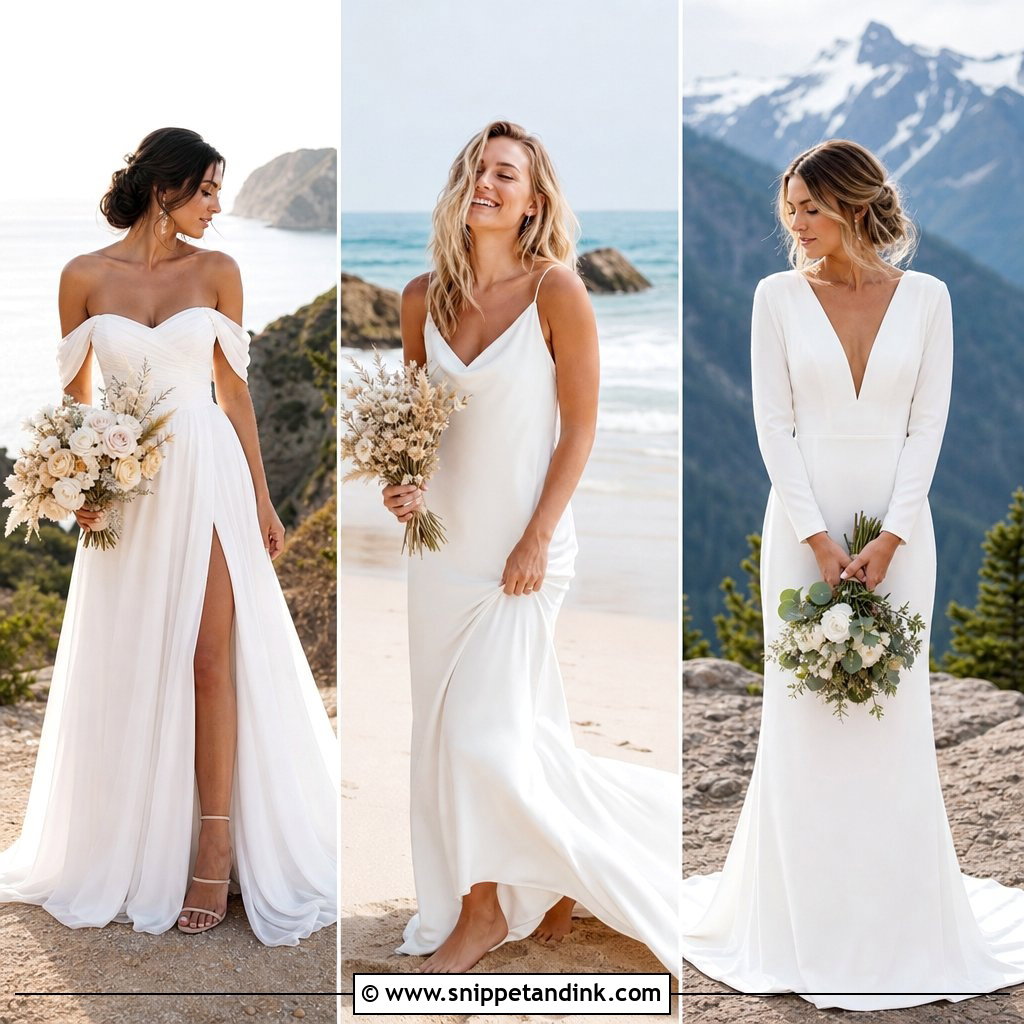
20. Simple Three Quarter Sleeve A-Line Wedding Gown
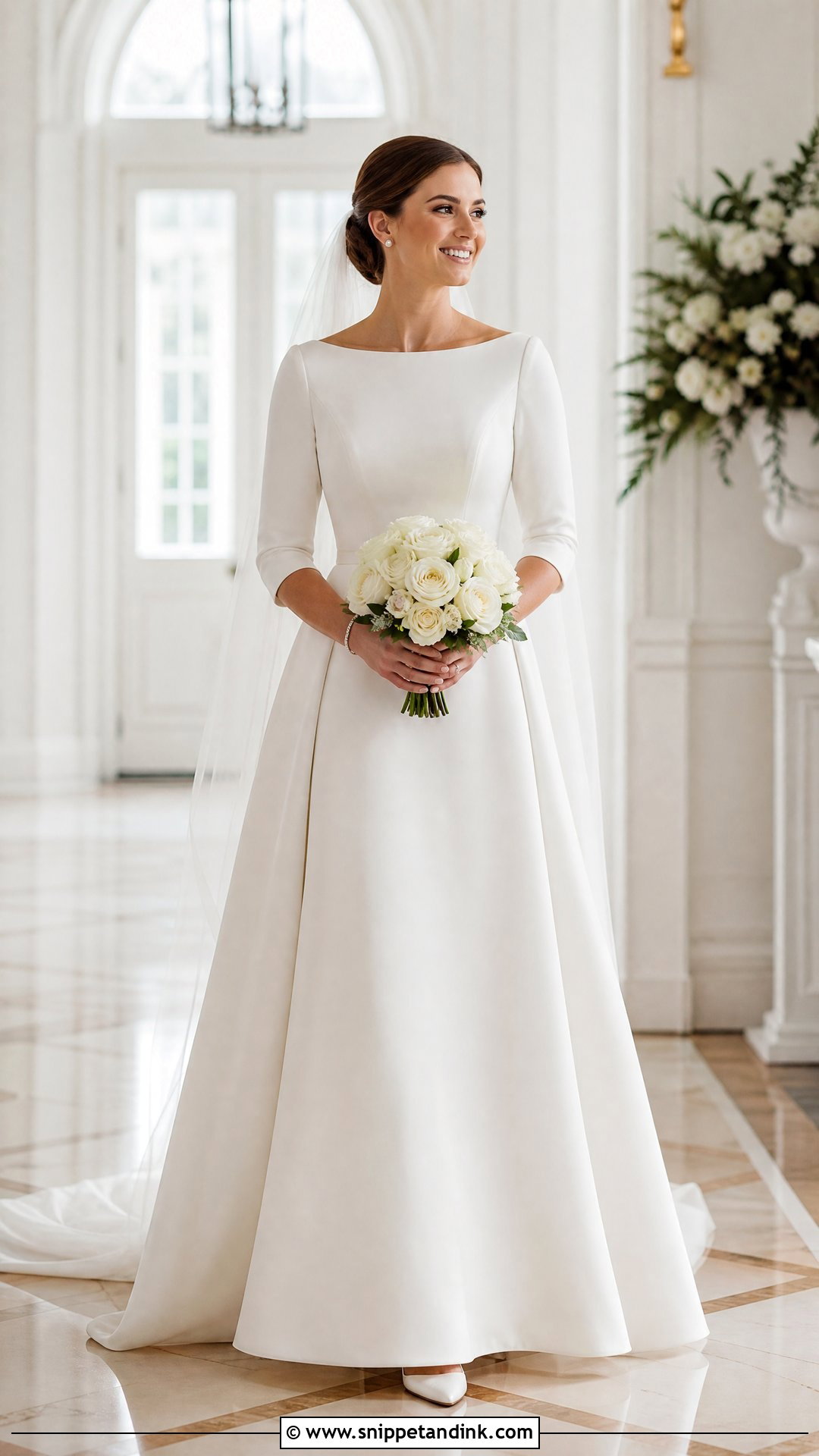
Three-quarter sleeves end between elbow and wrist, giving coverage without the warmth of a full sleeve and leaving room for a slim bracelet. Matte crepe, satin or soft chiffon all work on an A-line with a defined waist and a V or bateau neck. Pearl earrings, closed-toe pumps, a plain chapel veil, a low chignon and a medium rose bouquet make it a year-round option. Check sleeve circumference at the fitting. Crepe sleeves cut too close bunch at the elbow when you bend, and a little extra ease there is the fix.
Adding Detail Later Without Spoiling the Line
Some brides love a clean gown in the fitting room and then worry it’ll feel too plain in the moment. My answer is to add detail that comes off, never detail sewn onto the dress itself.
- A detachable overskirt in tulle or organza gives ceremony volume and comes off for dancing.
- A large satin bow pinned at the back of the waist changes the silhouette for portraits.
- Opera gloves or a cathedral veil with a raw edge add formality without decoration.
- Statement earrings for the reception, swapped in once the veil comes out.
The reverse matters too. If you already have a dramatic veil, a family heirloom necklace or a big floral bouquet planned, a plain gown is often the better pairing. One strong piece against a quiet dress looks intentional, while two competing statements tend to cancel each other out in photographs.
Bring any add-on to your final fitting. A bow or overskirt fastens with hooks or snaps, and the seamstress needs to place them so they don’t pull on the bodice or show through thin fabric.
Where the Money Should Go on a Plain Dress
On a minimal gown, the budget belongs in fabric, support and alterations, because those are what make an unembellished dress look expensive. There’s an option here for every season, venue and comfort level. Watch how the neckline, waist and skirt behave when you move, then add accessories that support the direction rather than compete with it. Pearl earrings, clean shoes, the right veil and a bouquet in proportion are usually enough. Pick the gown in which you still look and feel like yourself, and let it be comfortable enough to forget about once the ceremony starts.
You'll Like These Ideas:






Leave a Reply