
A plain dress is the hardest kind to get right, and I say that as someone who loves them. With no beading or lace to look at, the eye goes straight to fit, fabric and proportion, so every choice shows. Simple doesn’t mean boring, though. A satin slip, a crepe sheath, a clean A-line, a lace sleeve on an otherwise bare gown, a midi, a pair of bridal separates: each of these has a distinct mood without a single crystal on it. Below are the shapes I’d put on a bride who wants a quiet dress, with what I check on each one, and they cover everything from a courthouse wedding to a formal ballroom.
Plain Fabric Hides Nothing, So Start With What’s Underneath
A beaded gown forgives a visible strap or a seam line. A crepe sheath or satin slip does not. Before I fall in love with any simple dress with a bride, I want to know what she’ll be wearing under it, because that changes the fit.
- Smooth, no-line underwear in a shade close to your skin, not white. White shows through ivory satin more than nude does.
- Bra decisions made early. If the dress needs sewn-in cups or a low-back option, sort it before the first fitting so the seamstress fits the bodice around it.
- Shapewear tested on a long day. If you’d want to take it off by dinner, it’s the wrong piece. Light smoothing is usually enough under crepe.
- The real shoes at every fitting. Hem length is set to the heel height, and switching shoes later means a second hem.
I’d also look at the dress in daylight before you commit. Shop lighting is warm and kind, and thin white fabrics turn surprisingly sheer outdoors, which matters most for garden and beach ceremonies.
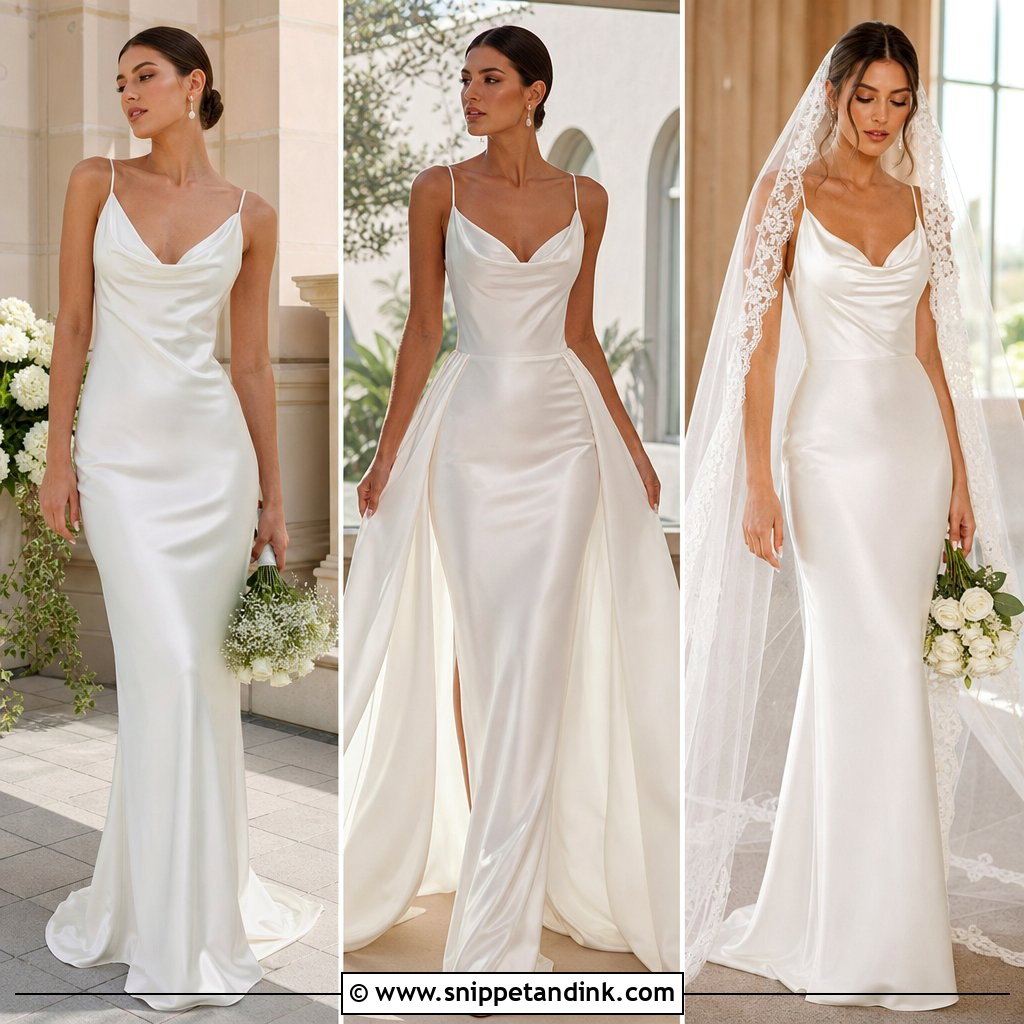
1. Simple Satin Slip Wedding Dress
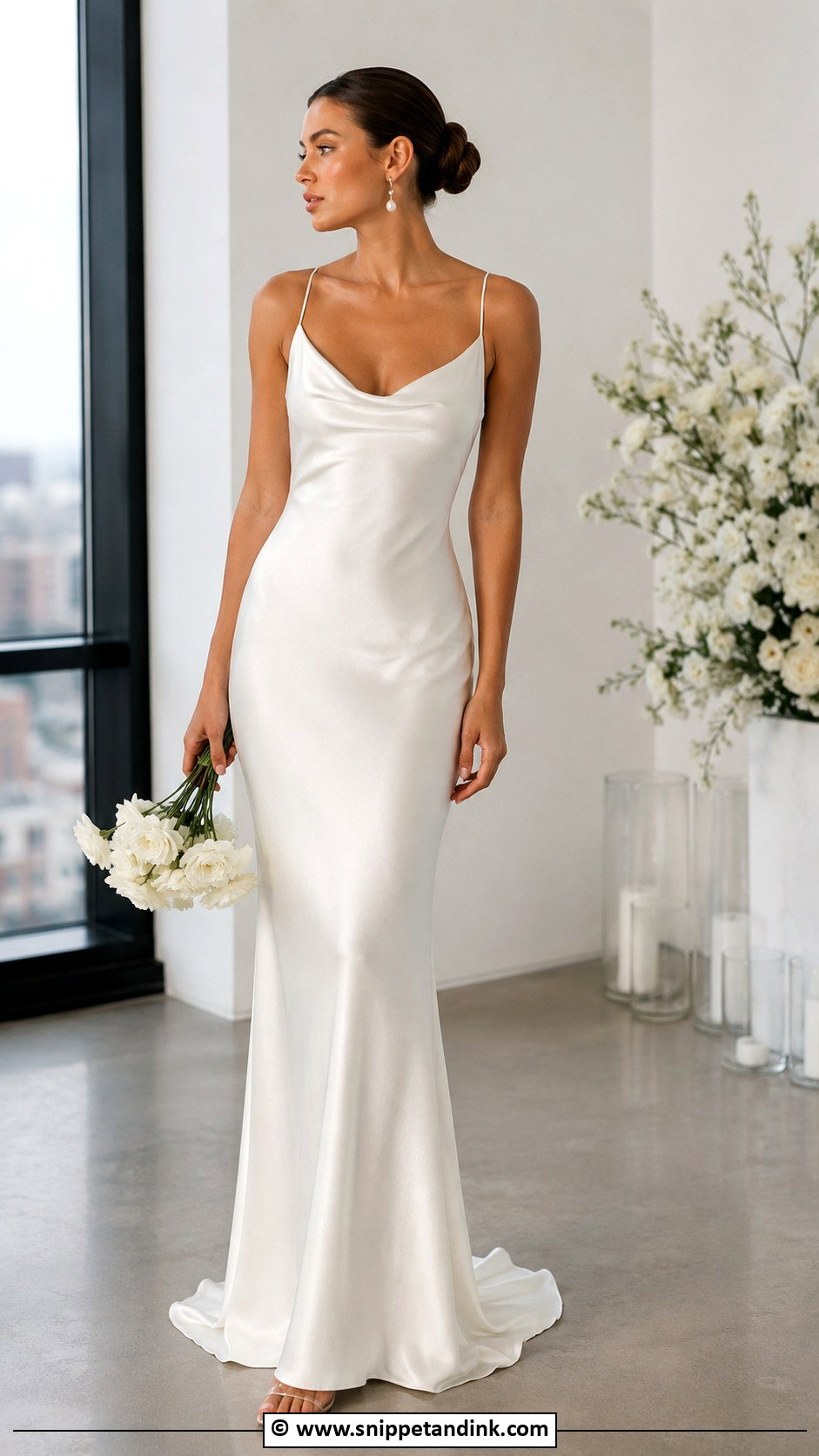
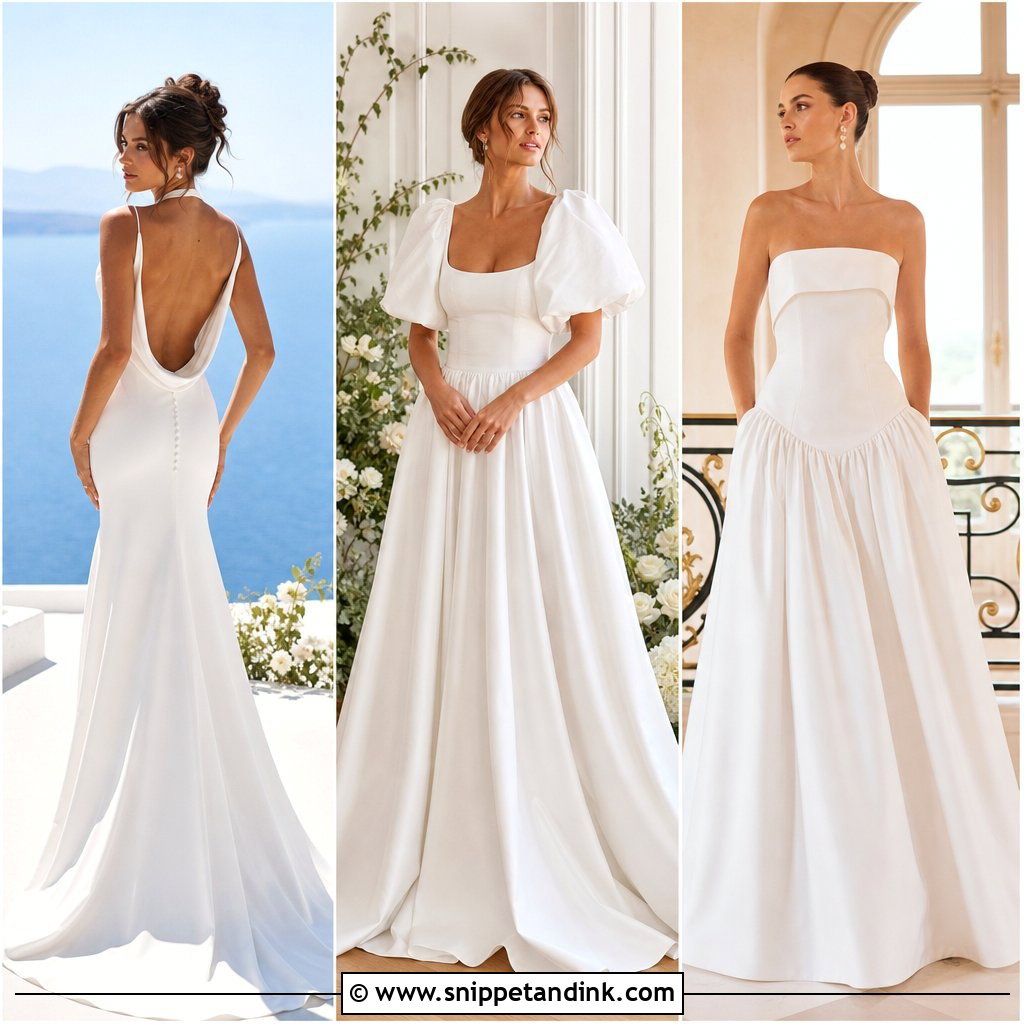
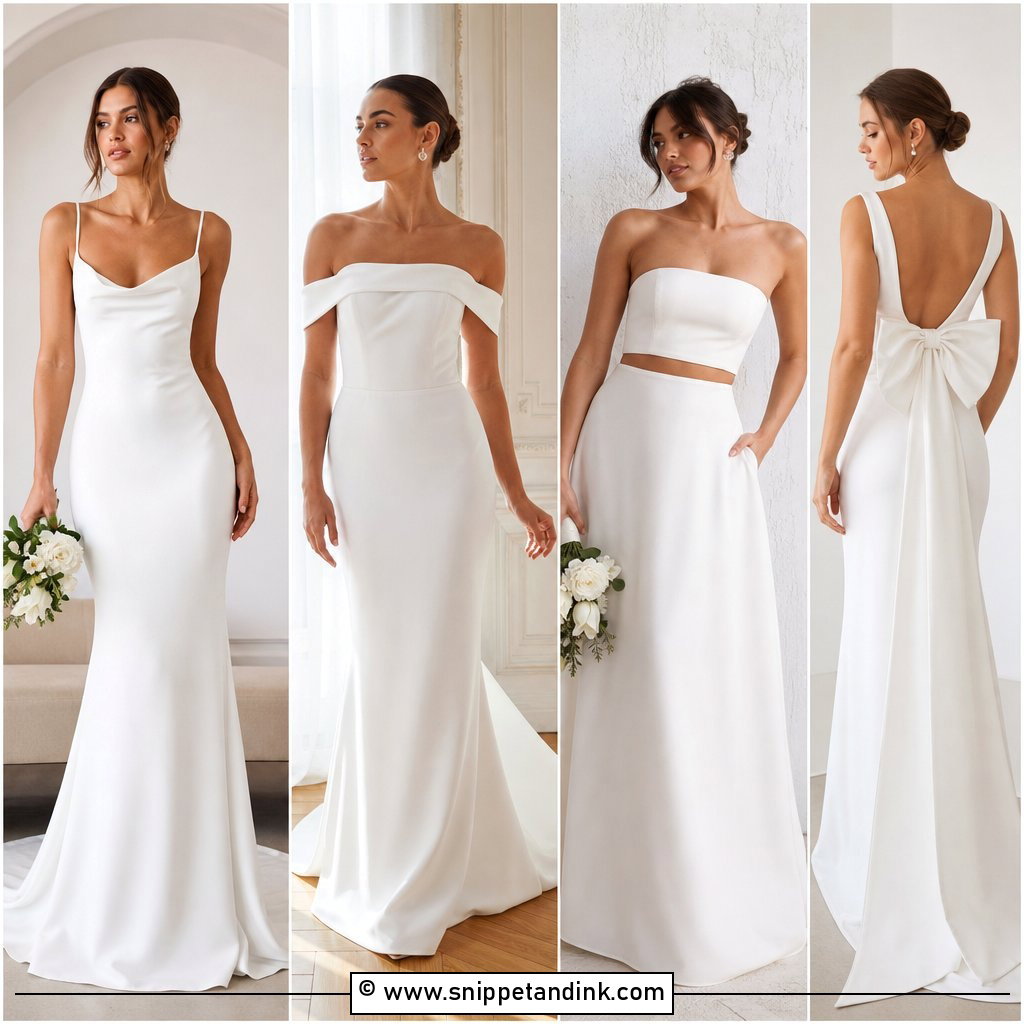
Satin slips glow without a single bead, and the thin-strap, cowl or straight necklines give them that 90s ease. They’re also the least forgiving dress on this list. Bias-cut satin traces every line underneath it, so I fit slips with the exact underwear the bride will wear and look at the hips in natural light, not the shop’s flattering spotlights. Barely-there heels, pearl drops, a sleek low bun and a fingertip veil are all it needs. Ivory or soft white works for city ceremonies and evening receptions alike.
2. Simple Crepe Sheath Wedding Dress
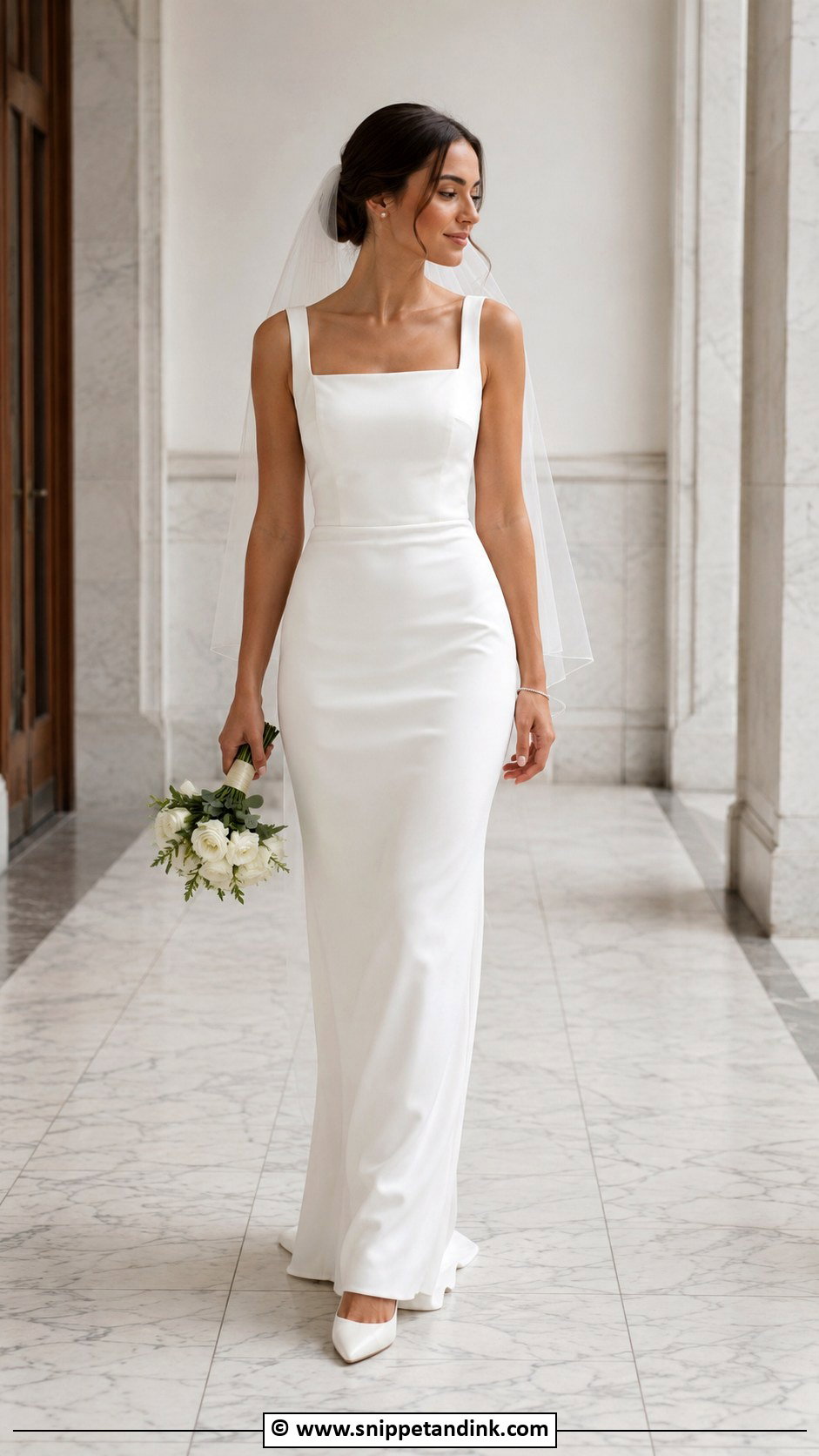
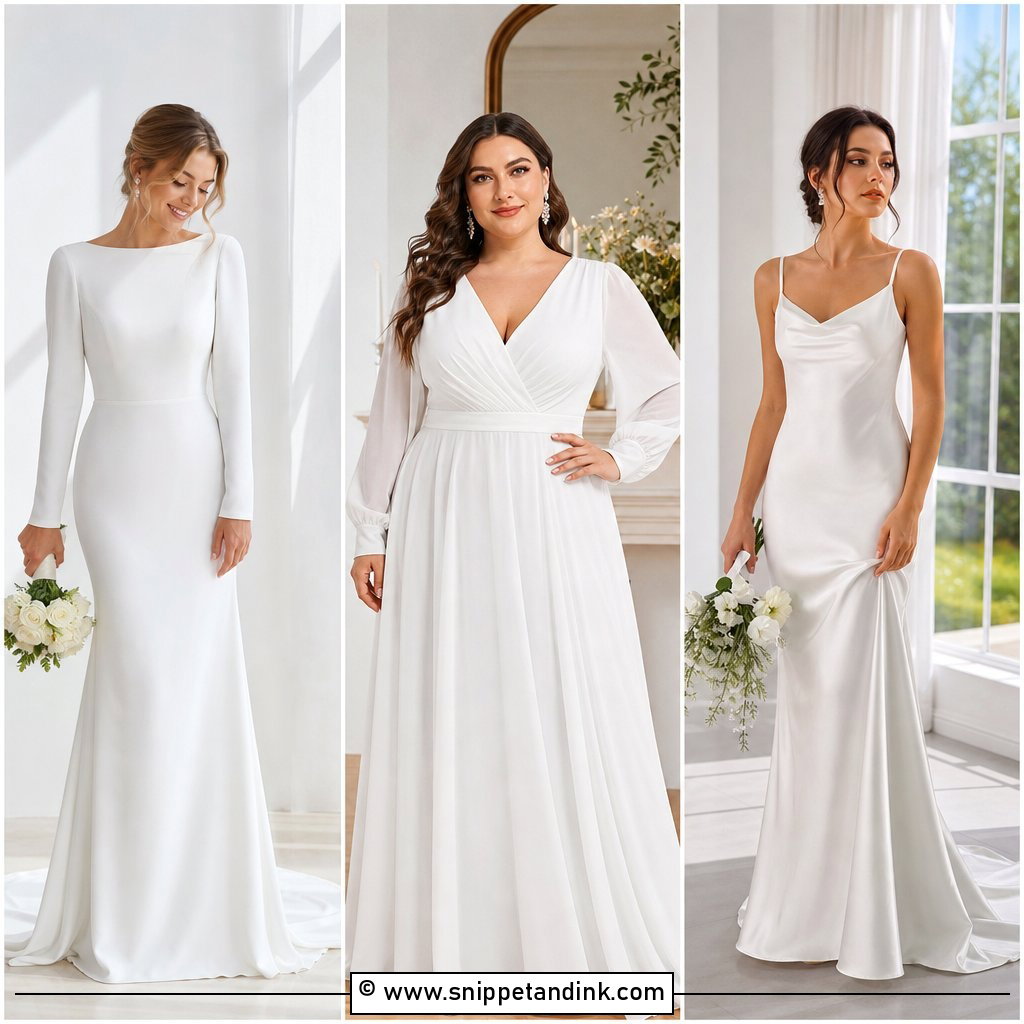
Crepe gives you structure without any volume. Its slightly matte finish reads modern and, unlike satin, it doesn’t show every crease from sitting in the car. A sheath shape skims the body, so the whole look rests on tailoring; I’d budget for at least two fittings even on an off-the-rack crepe dress. A square, bateau or soft V neckline changes the mood without adding detail. Pointed heels, a fine bracelet and a clean veil finish it for a courthouse, a hotel or a minimalist venue.
3. Simple A Line Wedding Dress
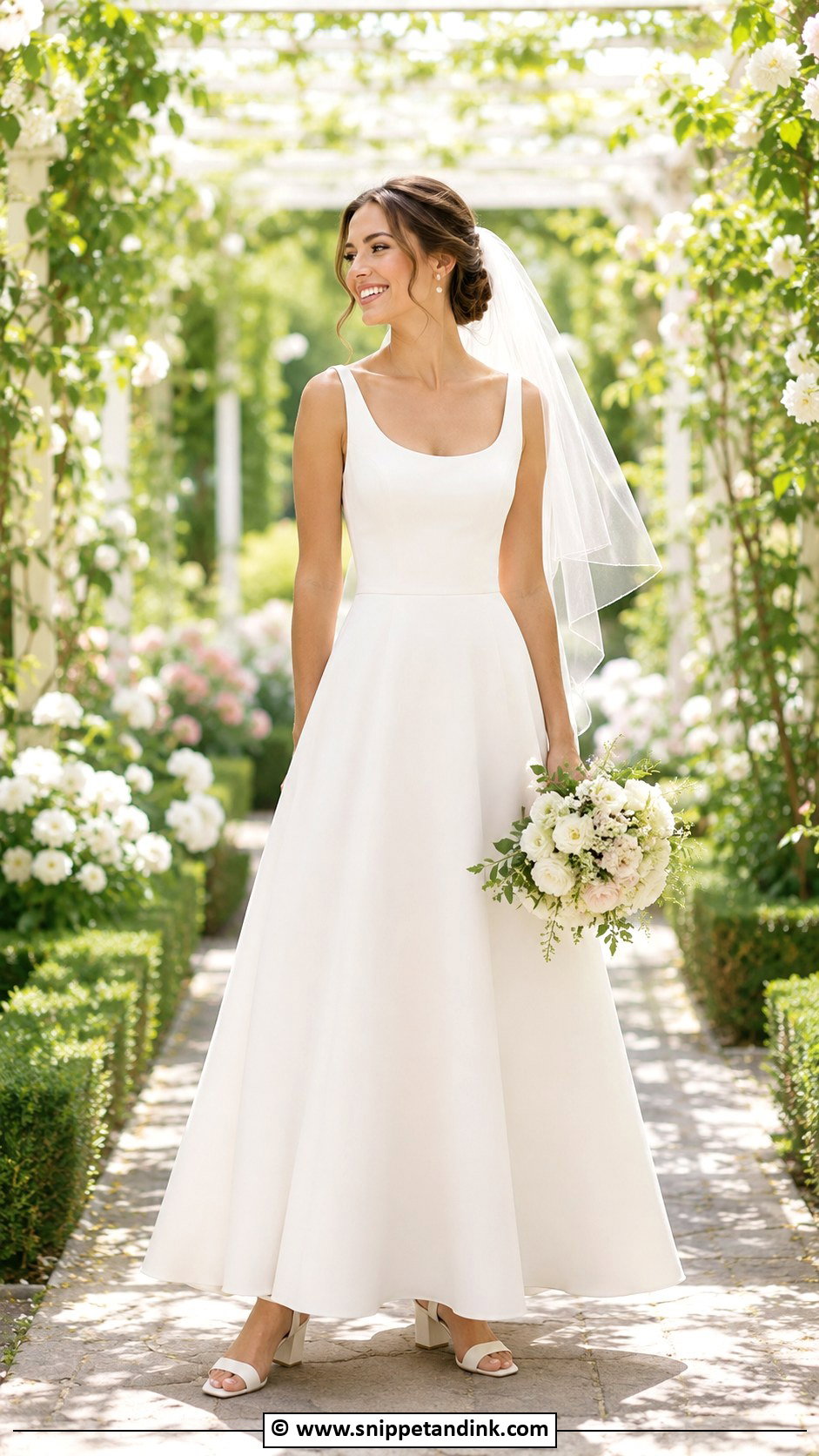
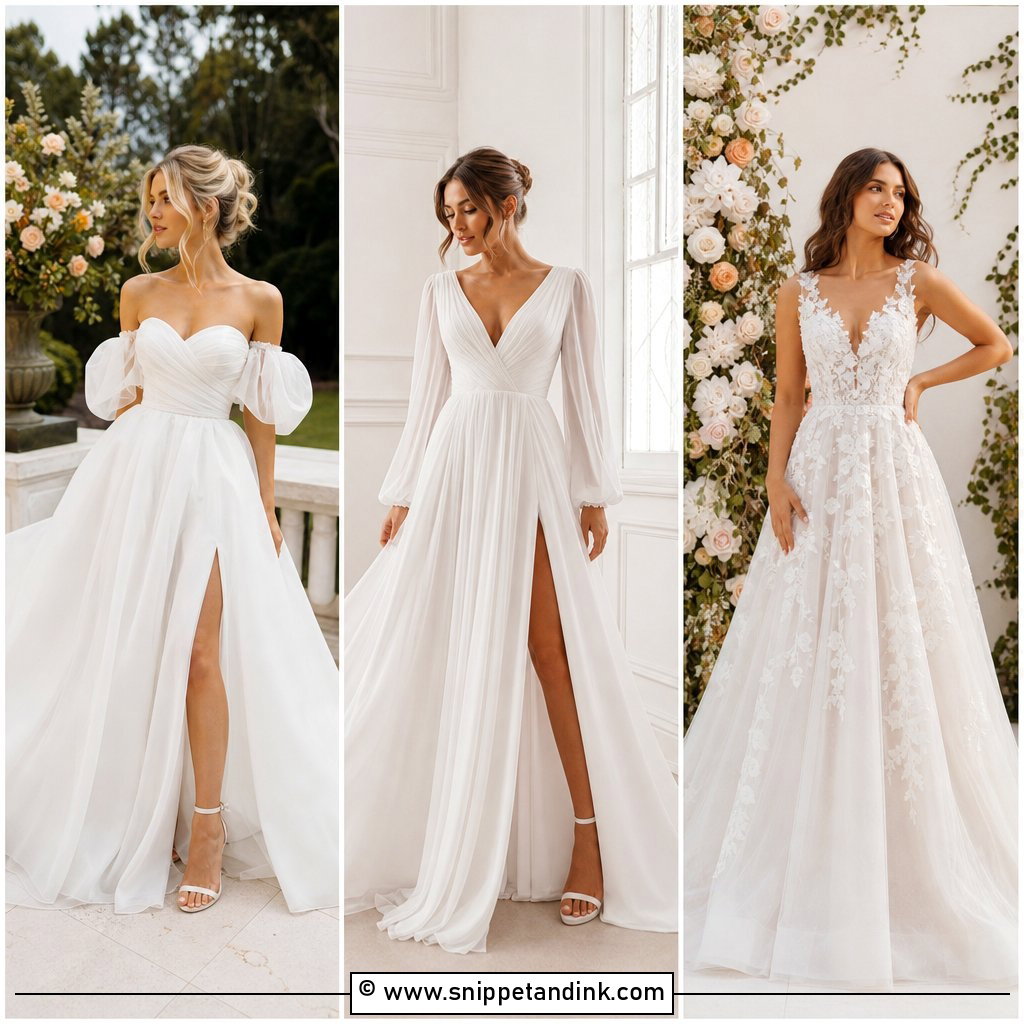
Fitted through the bodice, softly flared below: the A-line is the shape I’d hand to nearly any body type first, because it marks the waist and then gets out of the way. Fabric decides how simple it reads. Mikado and satin hold a crisp line, organza adds air, crepe drapes lower. A scoop, a V or a strapless bodice keeps it easy. Block heels, pearl studs and a soft veil carry you through a long day comfortably, and you’ll be able to sit, walk and dance without thinking about it.
4. Simple Strapless Wedding Dress
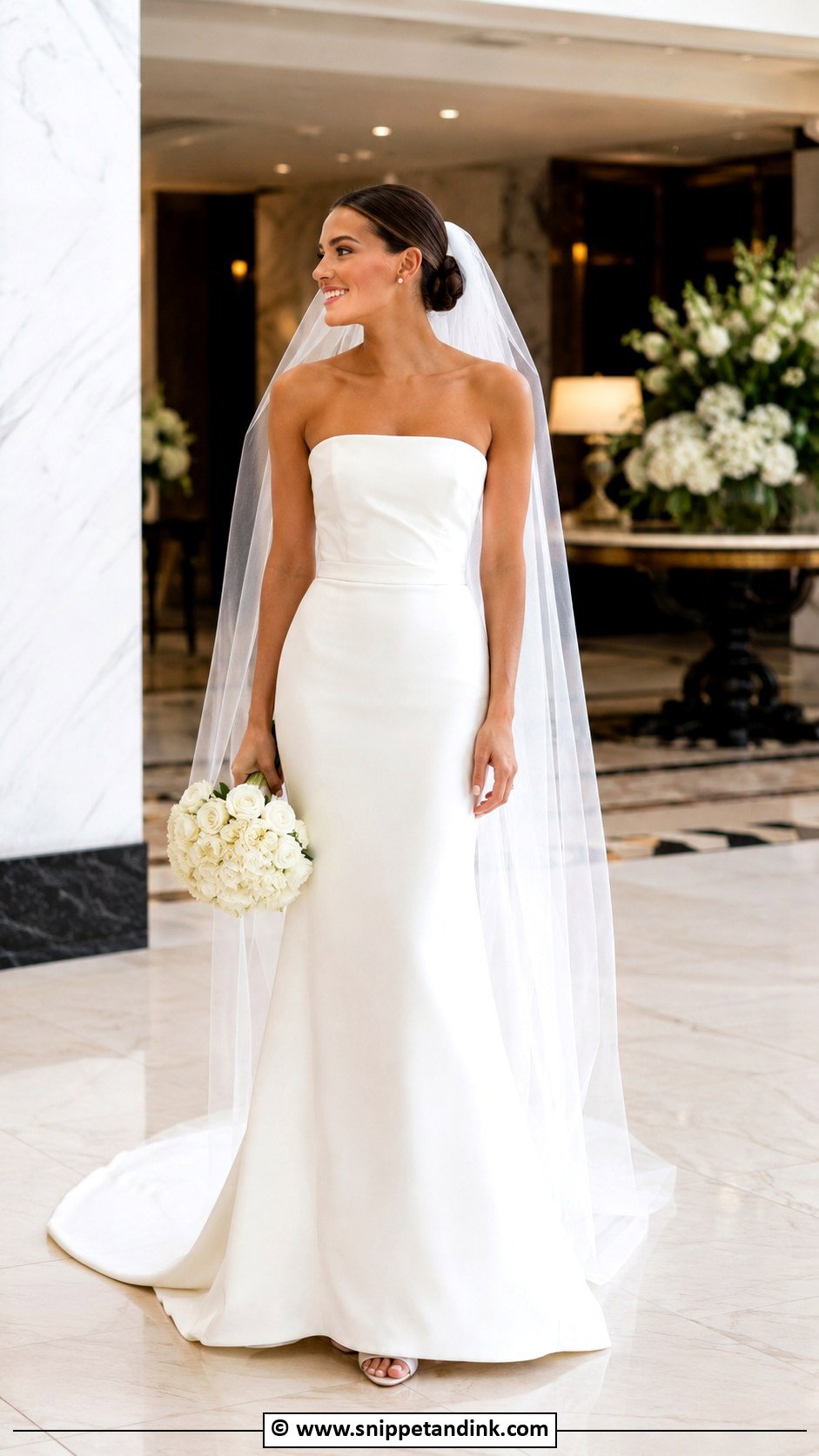
A bare neckline puts your shoulders, collarbones and face in charge, which means skin and posture matter more than jewelry. Support is the make-or-break. A strapless bodice should be held up by its internal structure and a waist stay, not by your bust, so I check it by having the bride lift her arms and lean forward. Straight-across reads modern; a soft sweetheart reads gentler. Satin heels, a smooth updo and a short or sheer cathedral veil complete it, with a removable wrap for a ceremony that needs covered shoulders.
5. Simple Long Sleeve Wedding Dress
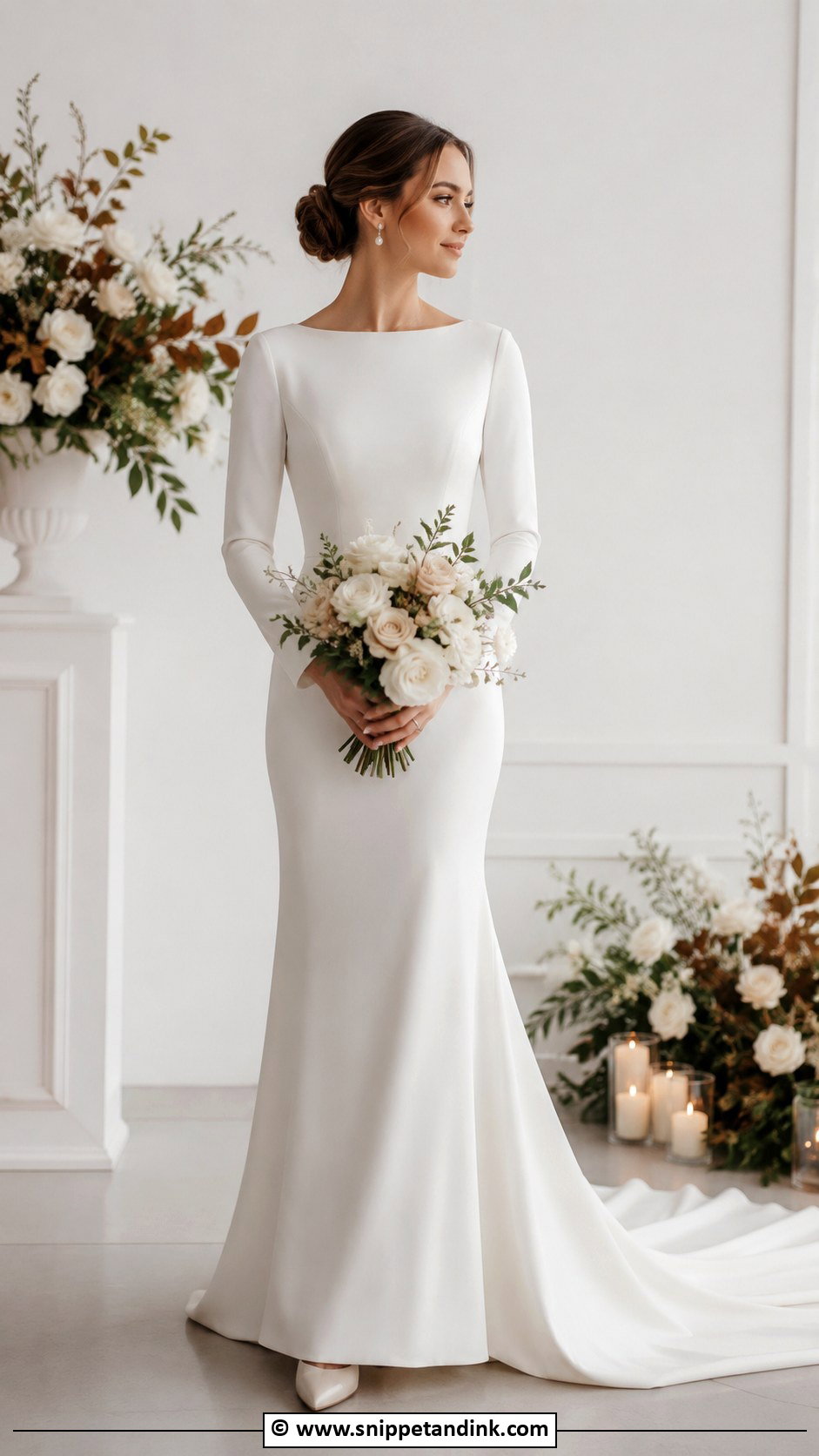
Long sleeves change a plain gown completely. Slim crepe sleeves look modern; sheer chiffon feels lighter. The fit point I care most about is the armhole. Set too low, it stops you hugging anyone without the bodice lifting, so I always have brides wrap their arms around me at the fitting. A high neck feels formal, a V-neck more relaxed. Closed-toe heels, pearl earrings and a low chignon suit autumn and winter, and minimal accessories let the sleeves do the talking.
6. Simple Square Neck Wedding Dress
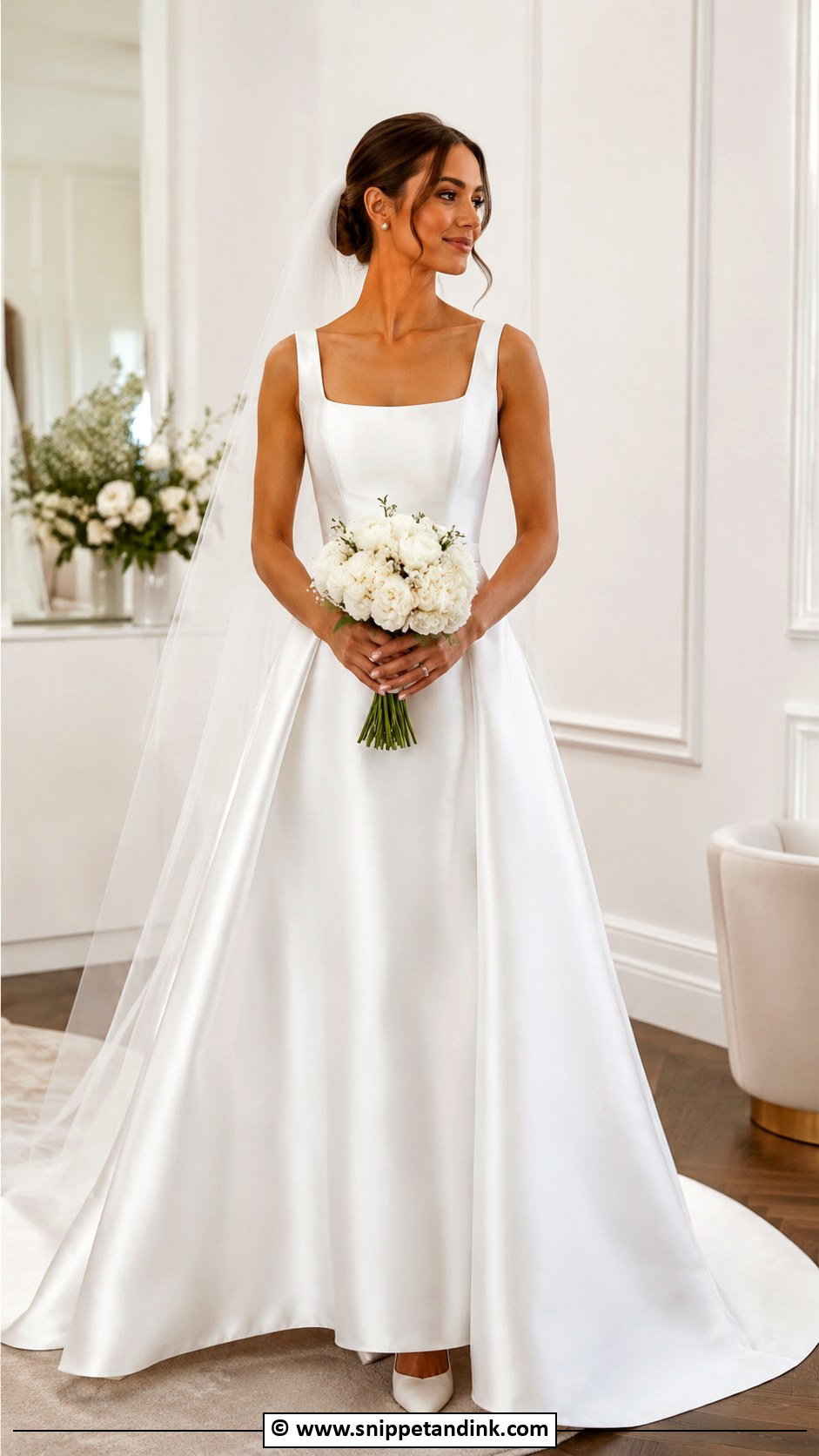
Square necklines frame the collarbones in a structured way and turn a plain gown into something that looks designed. They also slightly widen the shoulder line, which balances wider hips nicely. The detail I check is the corners: if the neckline is cut wider than your shoulders, the corners gape and the straps slide. Wide straps feel supportive, narrow ones more delicate. Satin or crepe, pearl studs, a smooth veil and classic pumps keep it timeless with just a slight modern edge.
7. Simple Off Shoulder Wedding Dress
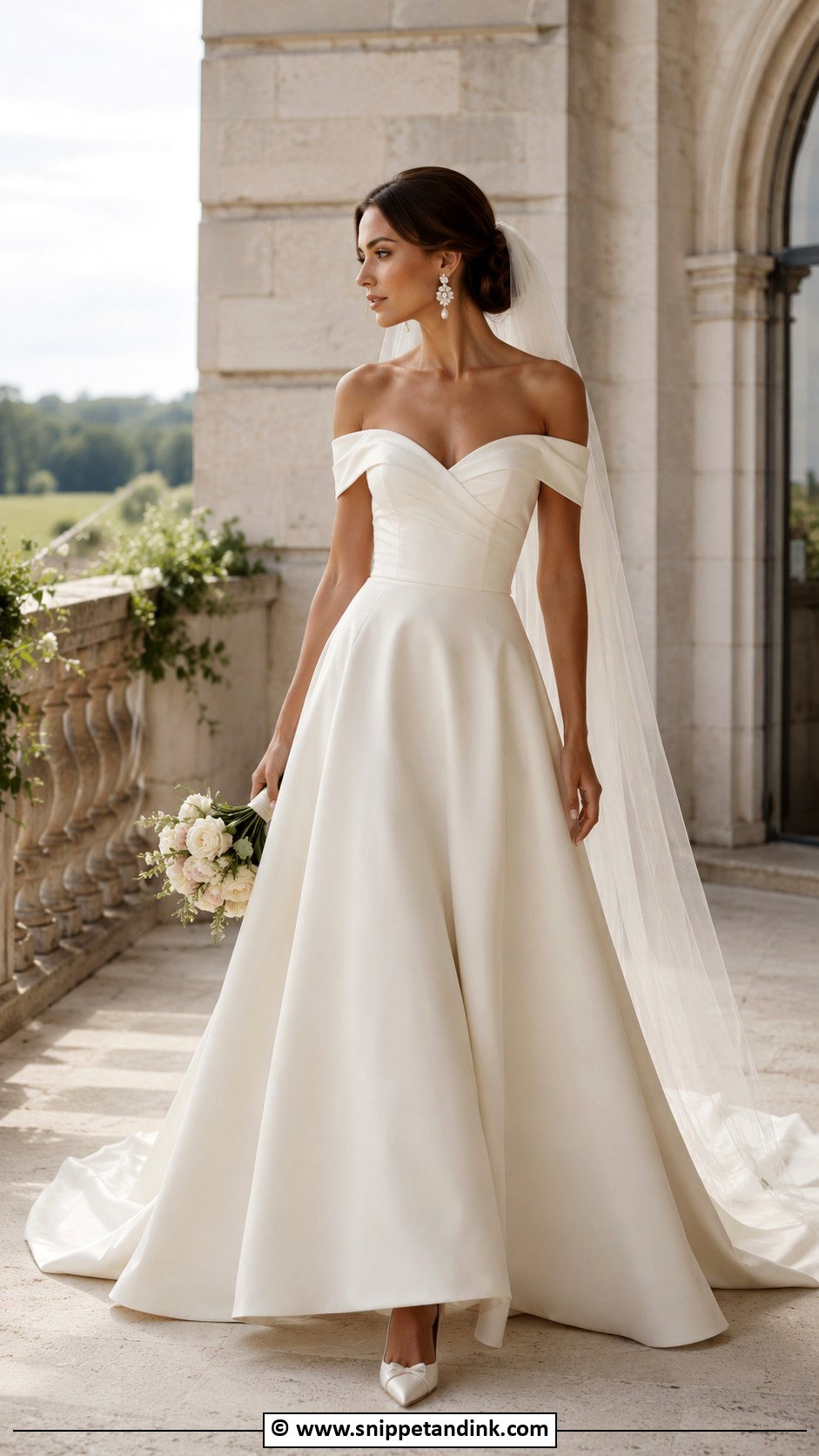
Off-the-shoulder bands frame the face and neck softly, and they work on a sheath, a plain A-line or a structured ball gown. The trade-off is movement. A band without elastic or a silicone grip creeps up, and you’ll lose some range in your arms, so this isn’t the gown for anyone planning a wild dance floor. Drop earrings, a delicate bracelet and sleek heels are enough. Wear the veil low at the back of the head to keep the neckline clear, and choose smooth fabric if you want it to feel modern rather than traditional.
8. Simple High Neck Wedding Dress
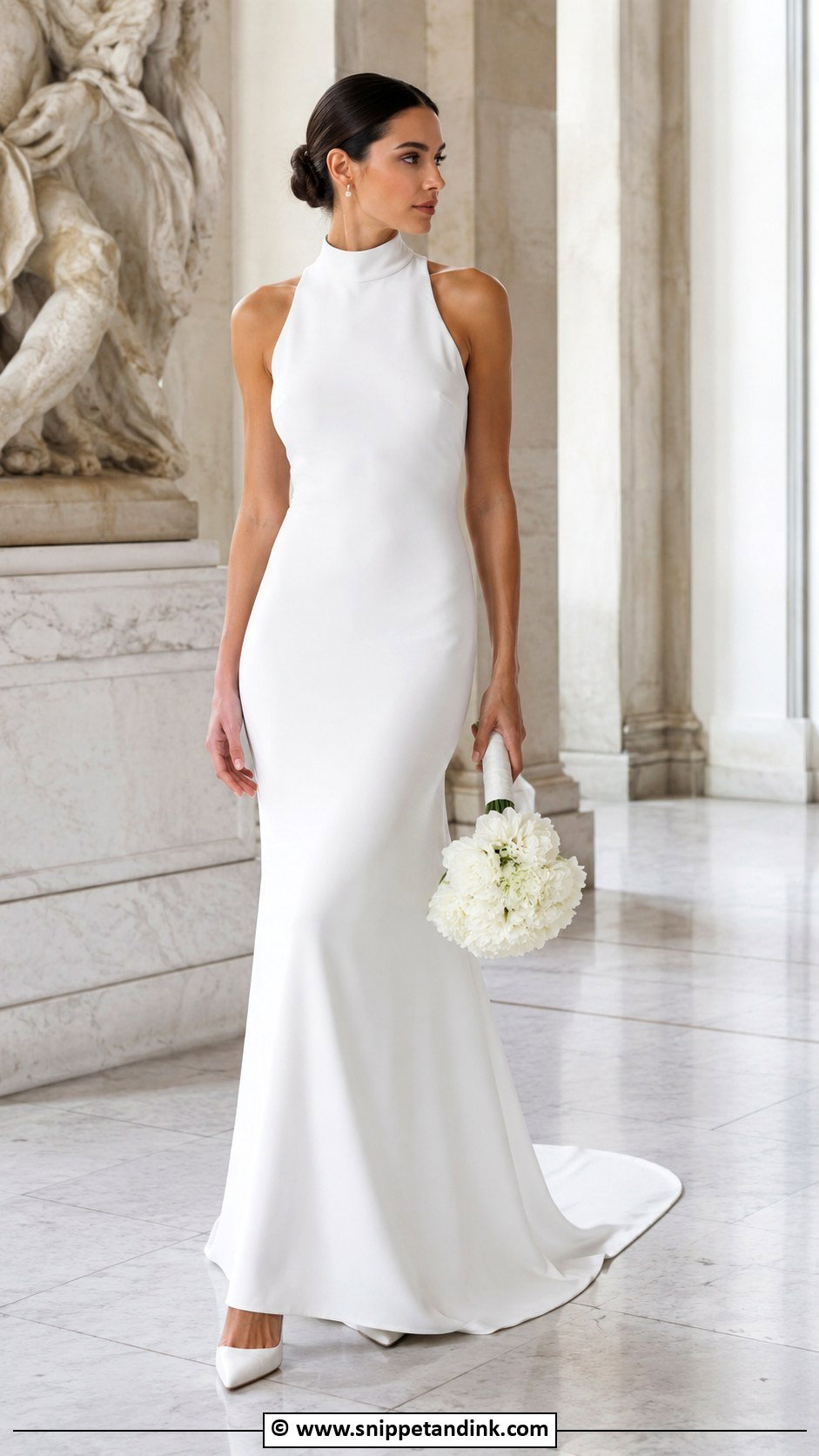
A high neckline is modest and polished, and it does the decorating so the rest of the dress doesn’t have to. Sleeveless versions look sleek and architectural; long sleeves push it formal. Necklaces fight a high neck, so I’d take earrings instead, with a low bun and pointed heels to show off the line. One thing to know before buying: a high, close neckline gets warm, so I’d steer you to crepe or lined lace rather than heavy satin for a summer ceremony. A dramatic veil pairs well if you want one big moment.
9. Simple V Neck Wedding Dress
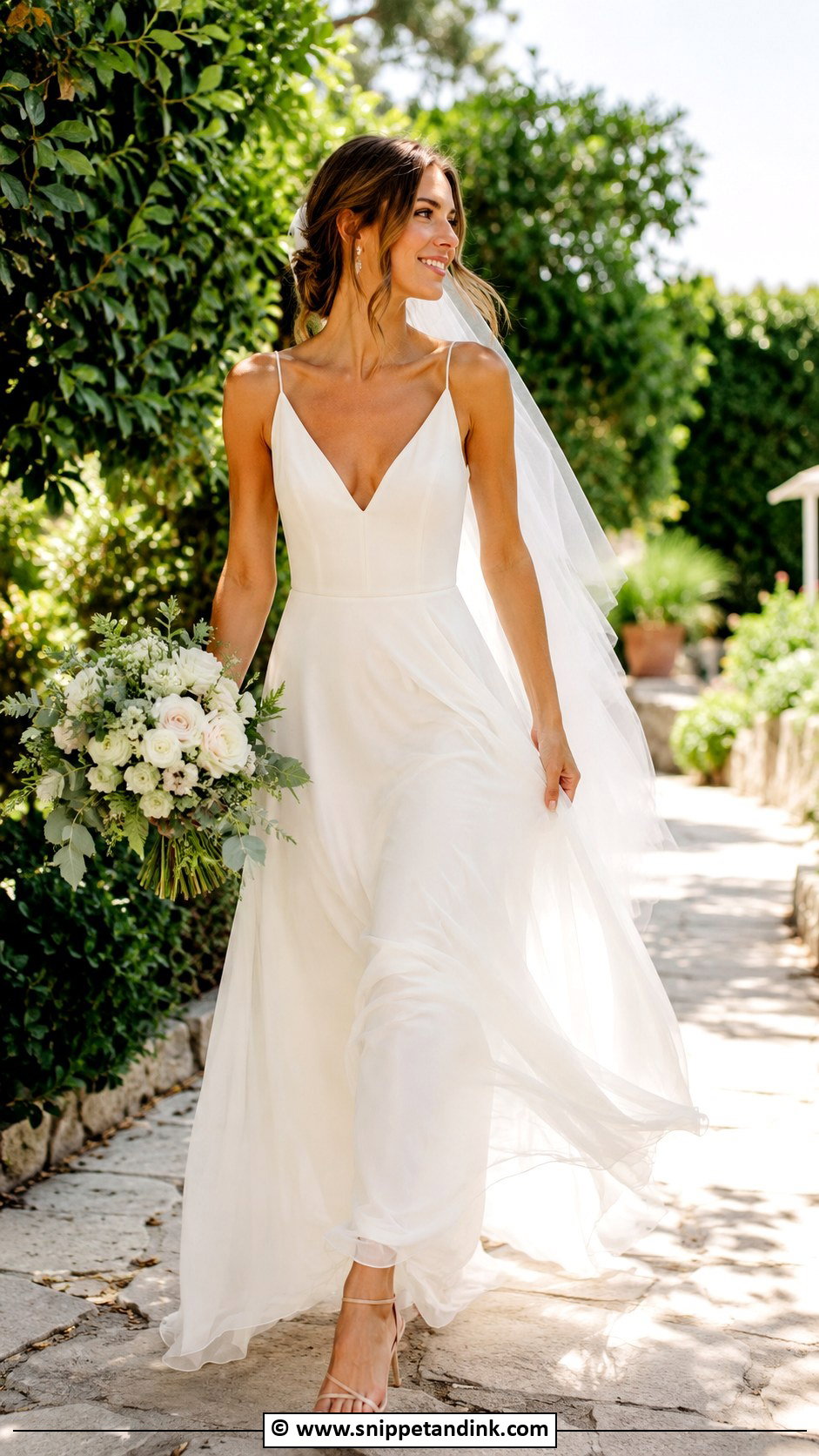
V-necks lengthen the upper body and suit almost everyone, which is why they’re the neckline I reach for when a bride isn’t sure. Depth is where taste comes in: a shallow V feels classic, a deeper one modern. A deep V needs fashion tape or a built-in cup that stays put when you bend, and I test that in the fitting rather than hoping. Crepe gives a clean finish, satin glow, chiffon movement. Pendant earrings, strappy heels and a soft veil suit beach, garden and destination weddings.
10. Simple Tea Length Wedding Dress
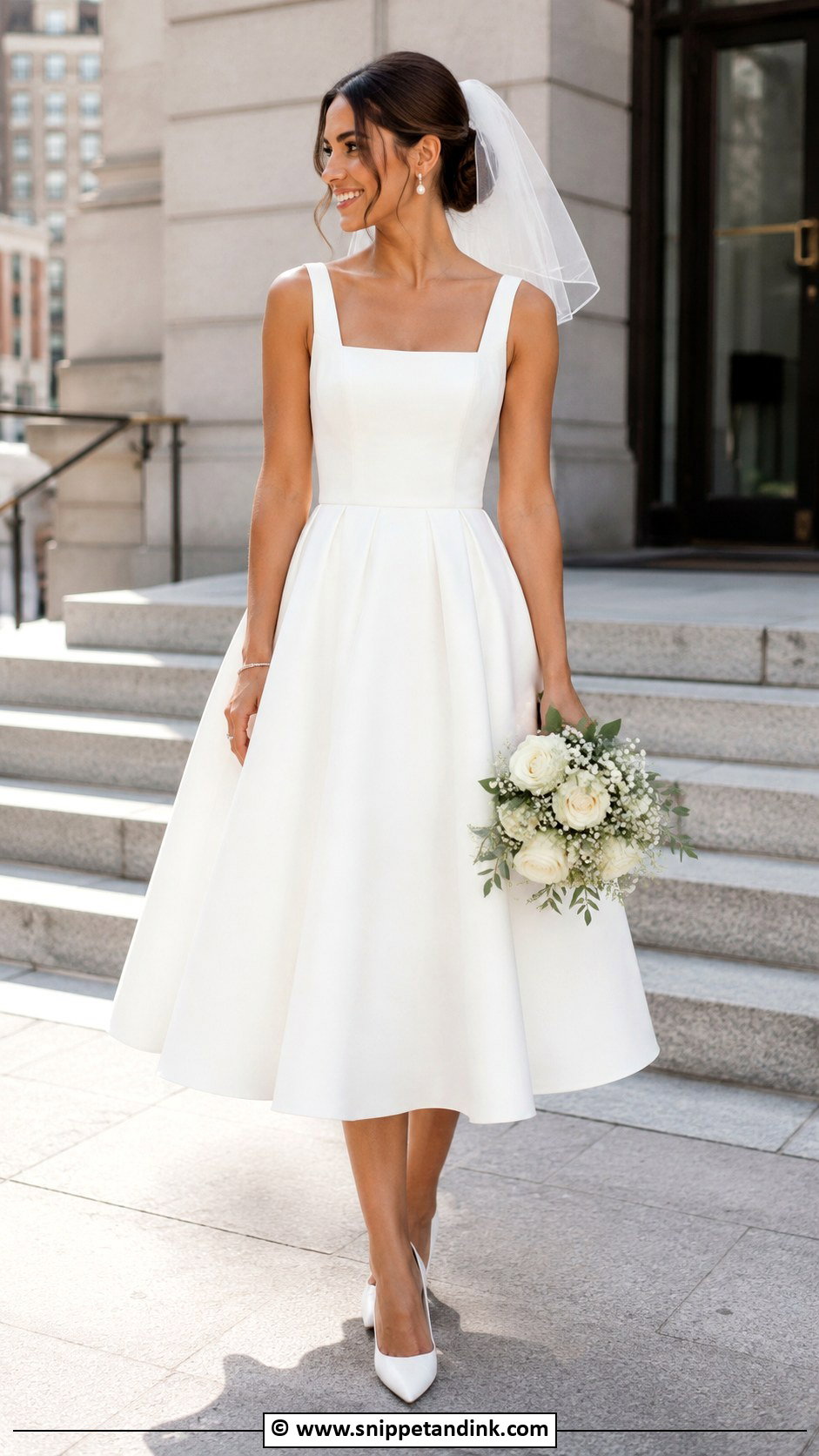
Tea length is where I send brides who want to show off their shoes. The hem falls between knee and ankle, so walking, dancing and climbing courthouse steps are easy. Where the hem lands matters: cut across the widest part of the calf, it shortens you, so I nudge it slightly up or down. A structured bodice with a clean skirt feels classic; soft satin feels more modern. Pointed pumps, pearl earrings and a short veil or bow clip finish it, and it’s a favourite for brunch receptions and second weddings.
11. Simple Midi Wedding Dress
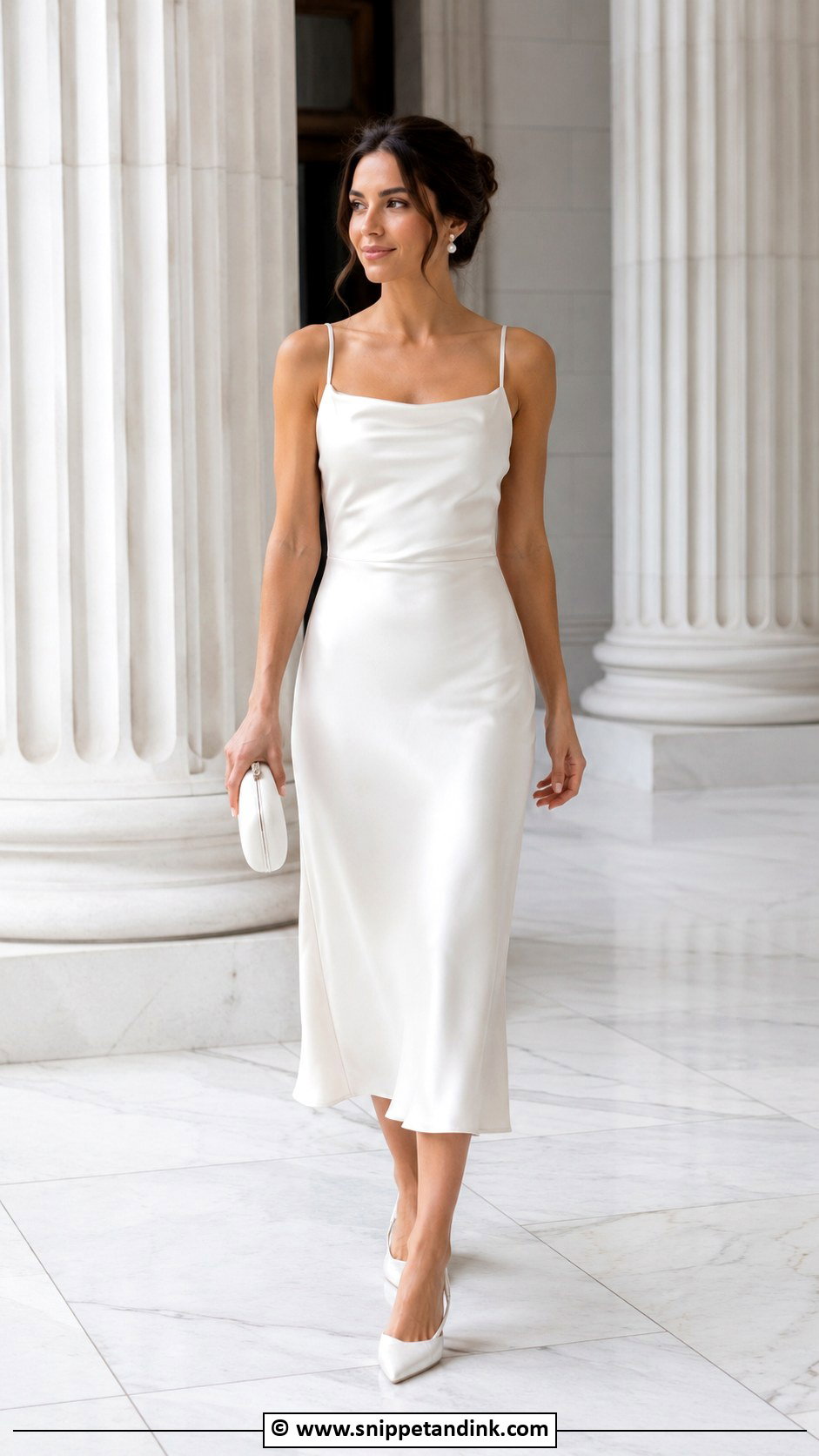
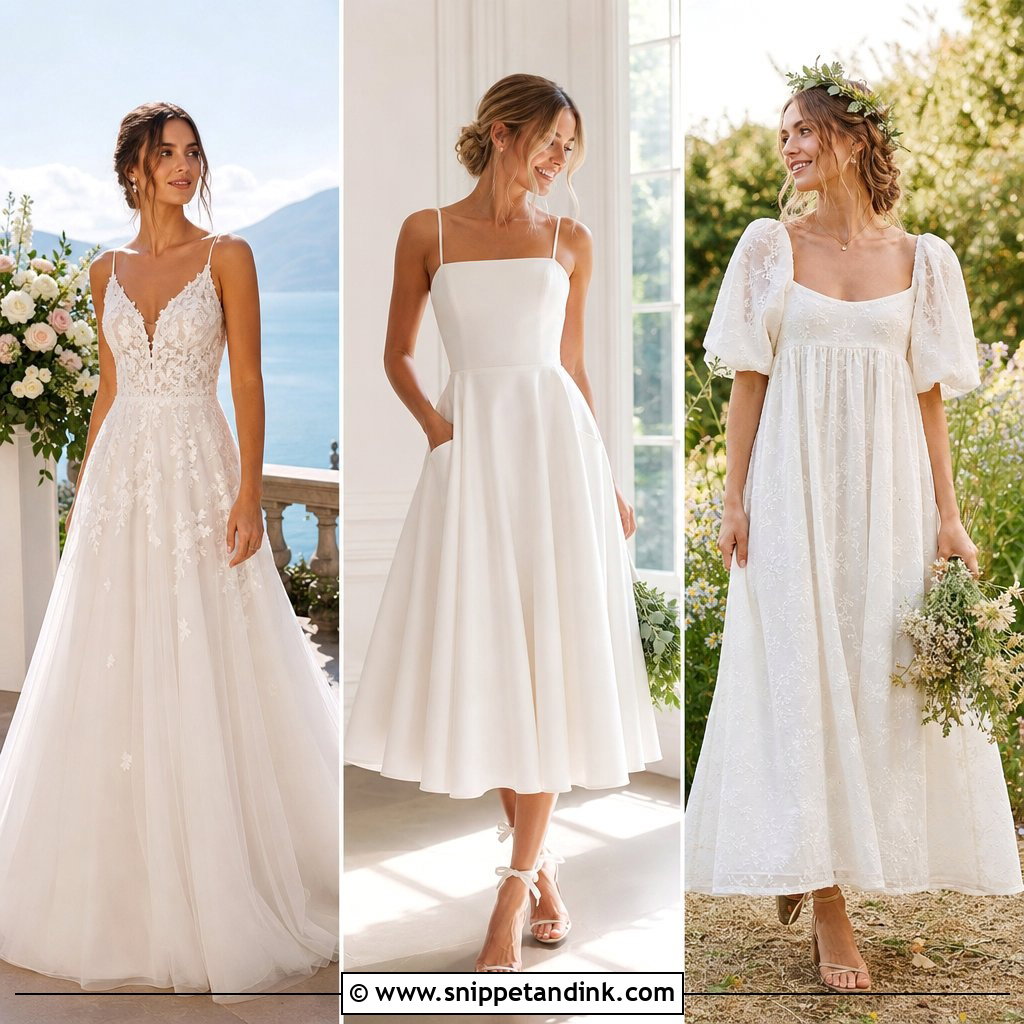
Midis feel less traditional than a full gown while still clearly bridal. A satin slip midi suits a city ceremony; a structured crepe midi looks sharp at a courthouse. Midi satin creases across the lap, so I’d plan photos before you sit for lunch, or pack a travel steamer. Slingback heels, a small clutch, pearl or crystal earrings and a birdcage or short veil keep it occasion-ready. It’s also one of the few wedding dresses you’ll genuinely wear again to anniversary dinners.
12. Simple Courthouse Wedding Dress
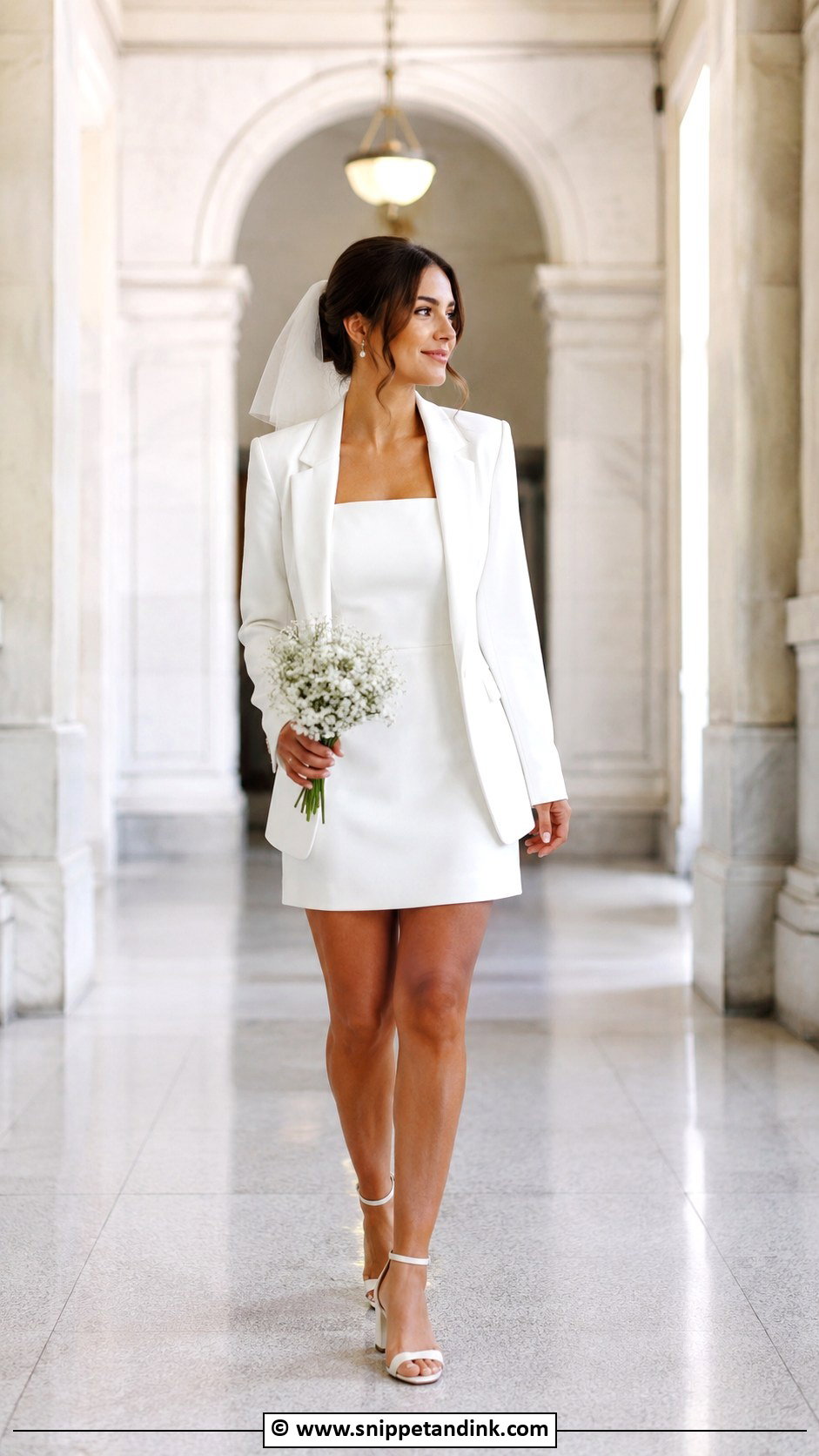
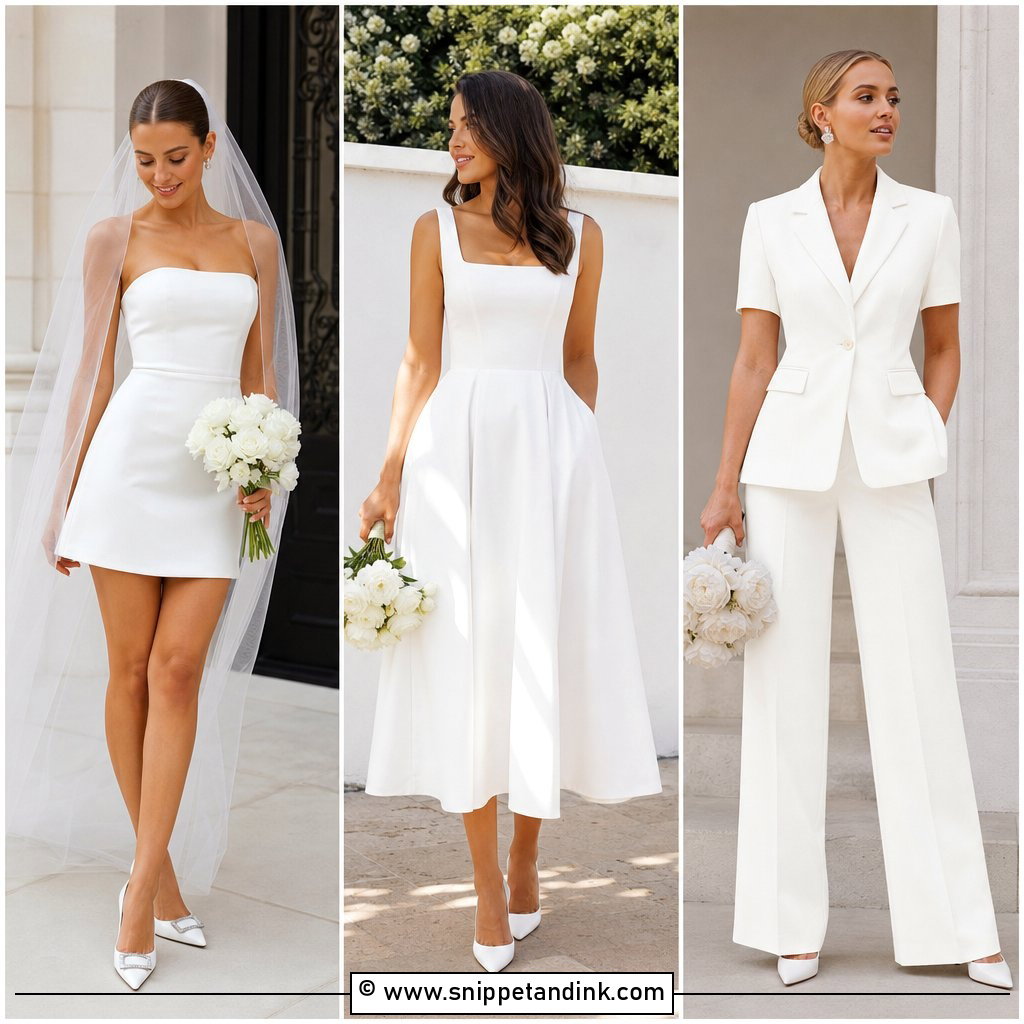
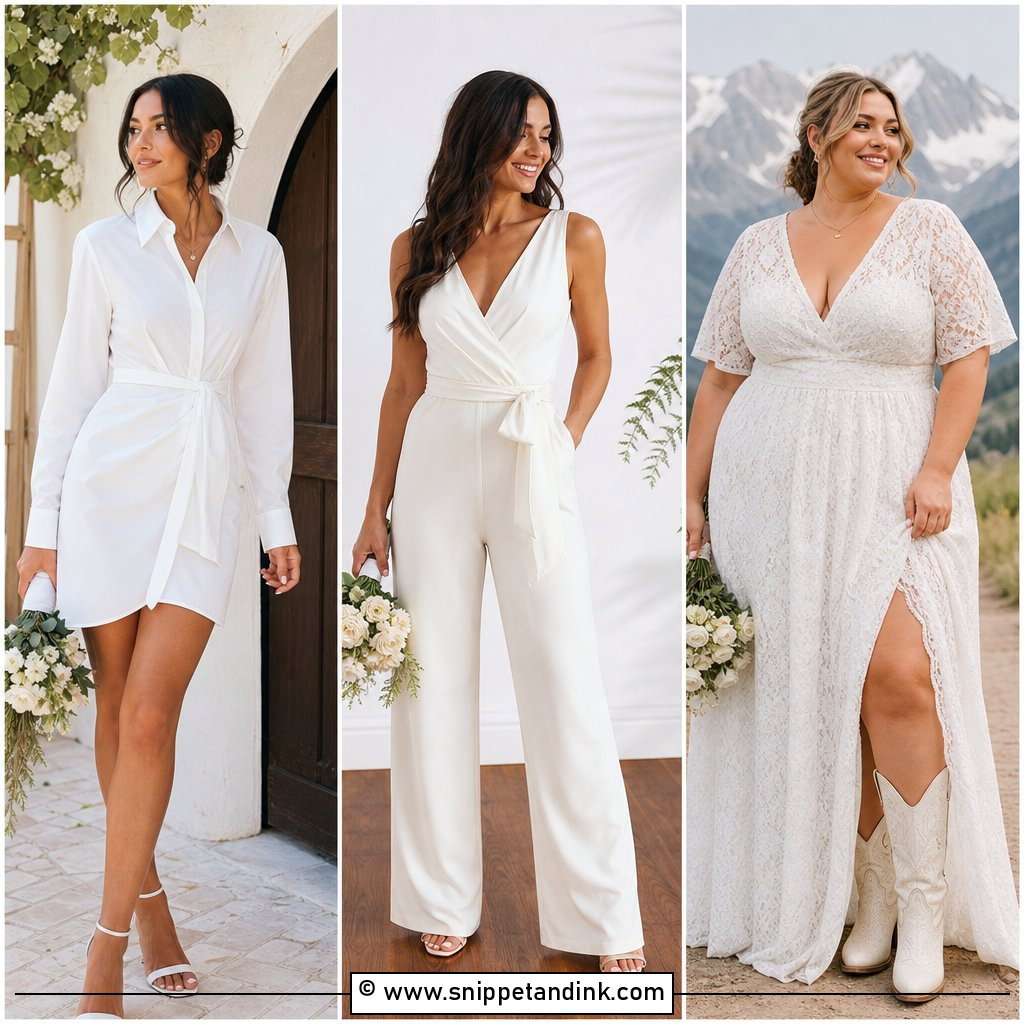
A courthouse wedding dress has to cope with queues, corridors and photos on the steps, so I favour a clean mini, midi, sheath or slip with one considered detail: a square neckline, a bow back or covered buttons. Smooth fabrics and sharp tailoring look best in a short ceremony. Block heels earn their place on stone floors. Add a structured blazer, a small bouquet and simple earrings, and a short veil will make it read bridal the moment you step outside.
13. Simple Beach Wedding Dress
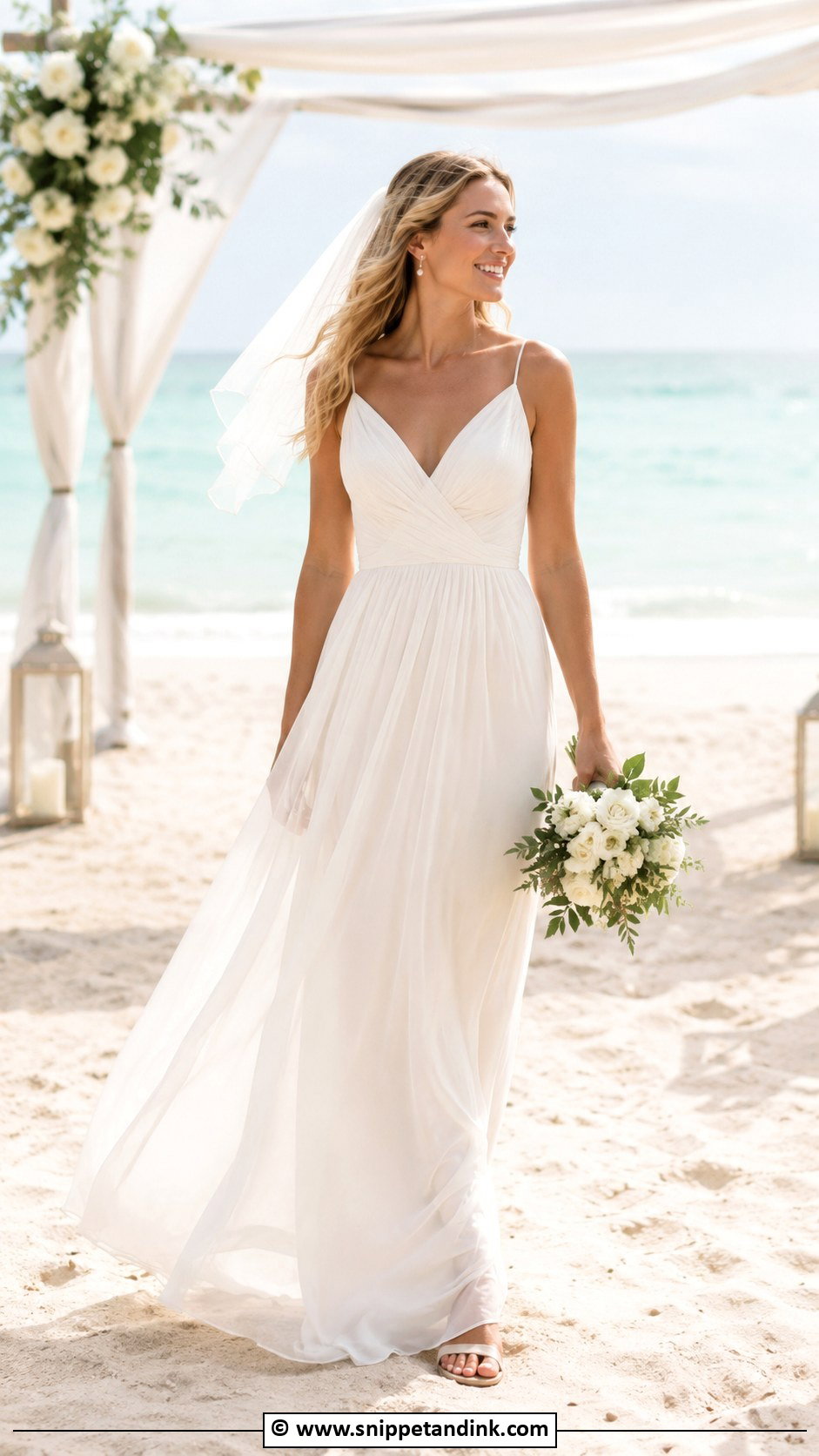
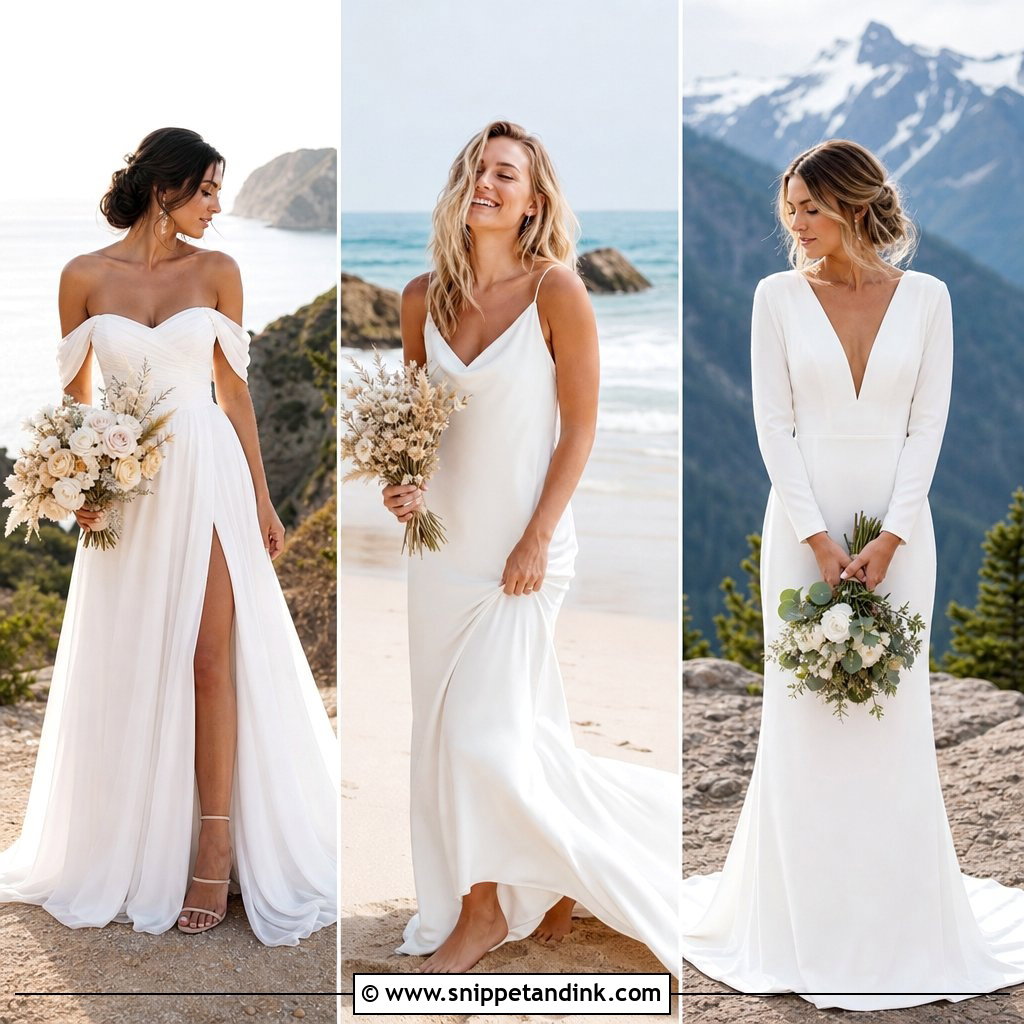
Sand and sea air punish heavy fabric. Chiffon, silk, crepe and lightweight satin move in a breeze, and a slip, sheath or relaxed A-line will be far easier on sand than a ball gown that drags and collects grit. I’d have the hem taken to just brush the floor while you’re barefoot or in flat sandals. Pearl earrings and loose waves suit it, and if you want a veil, keep it short or very fine so it doesn’t wrap around your face. Ideal for destination weddings and seaside elopements.
14. Simple Garden Wedding Dress
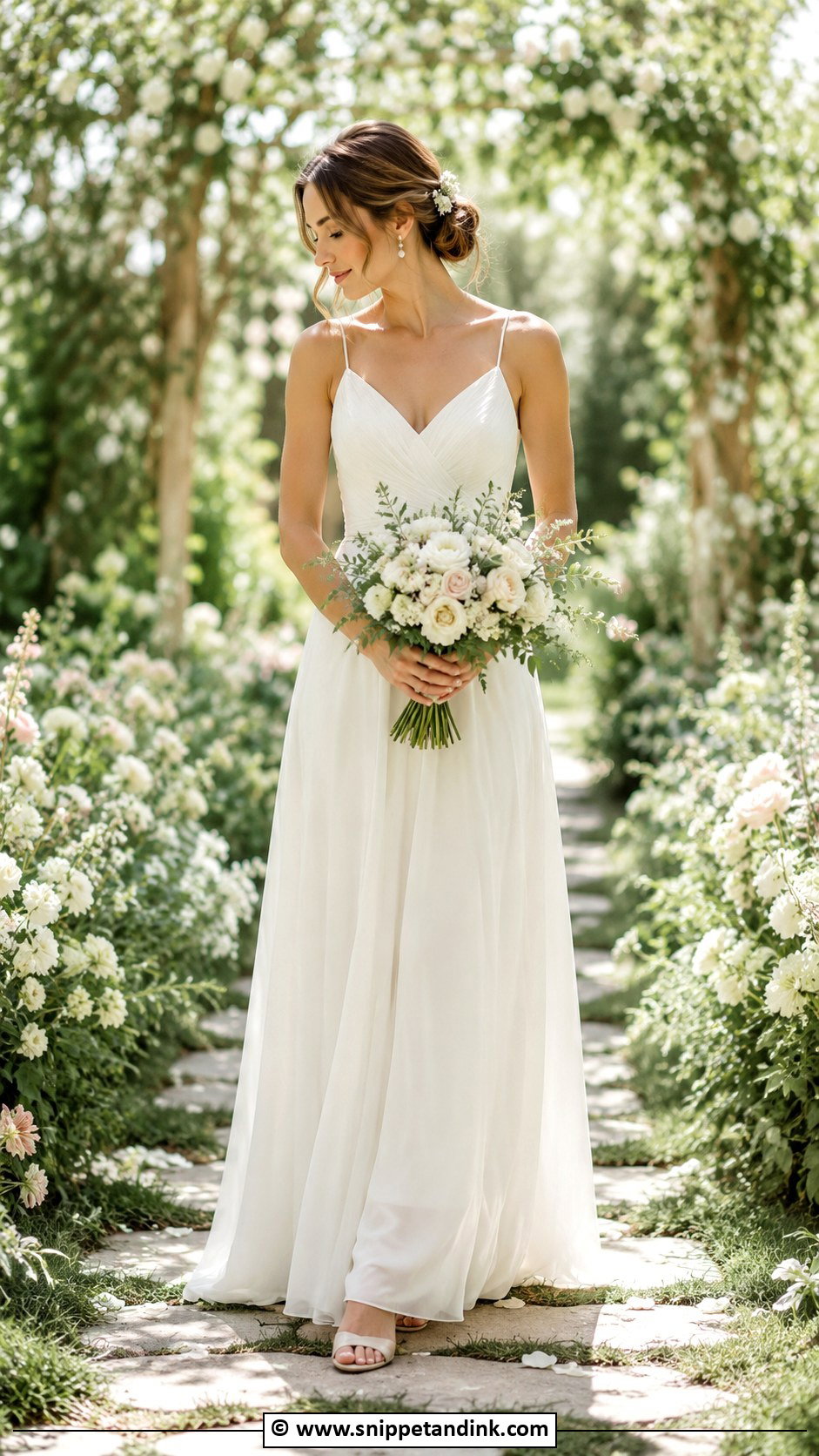
Gardens are hard on hems. Grass stains, damp lawns and gravel paths are what I think about first, so for a garden ceremony I prefer a hem that clears the ground slightly and a fabric that brushes clean. A plain A-line, chiffon or simple lace dress looks at home among the planting. Block heels or bridal flats stop you sinking into the lawn. Pearl earrings, a loose low bun and a single floral pin add charm, and soft white or cream reads natural in green daylight.
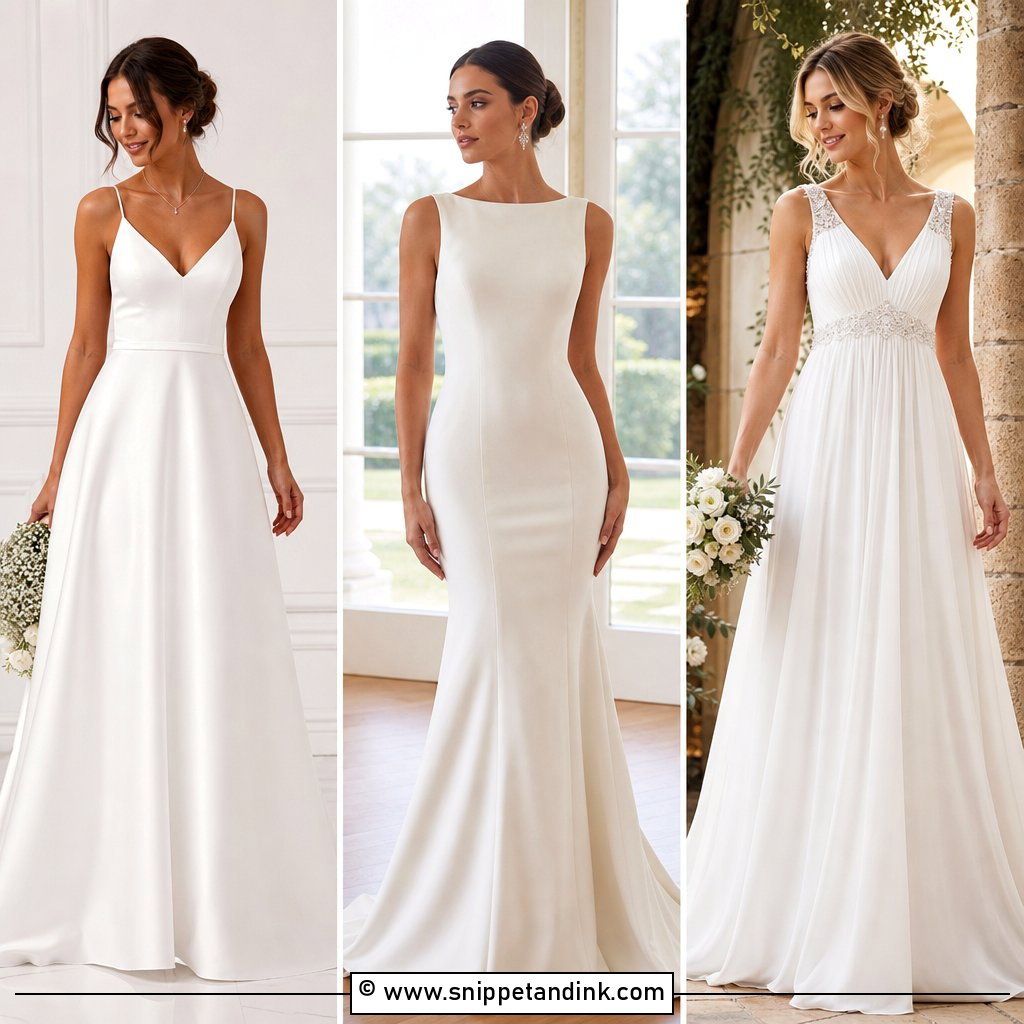


15. Simple Lace Wedding Dress
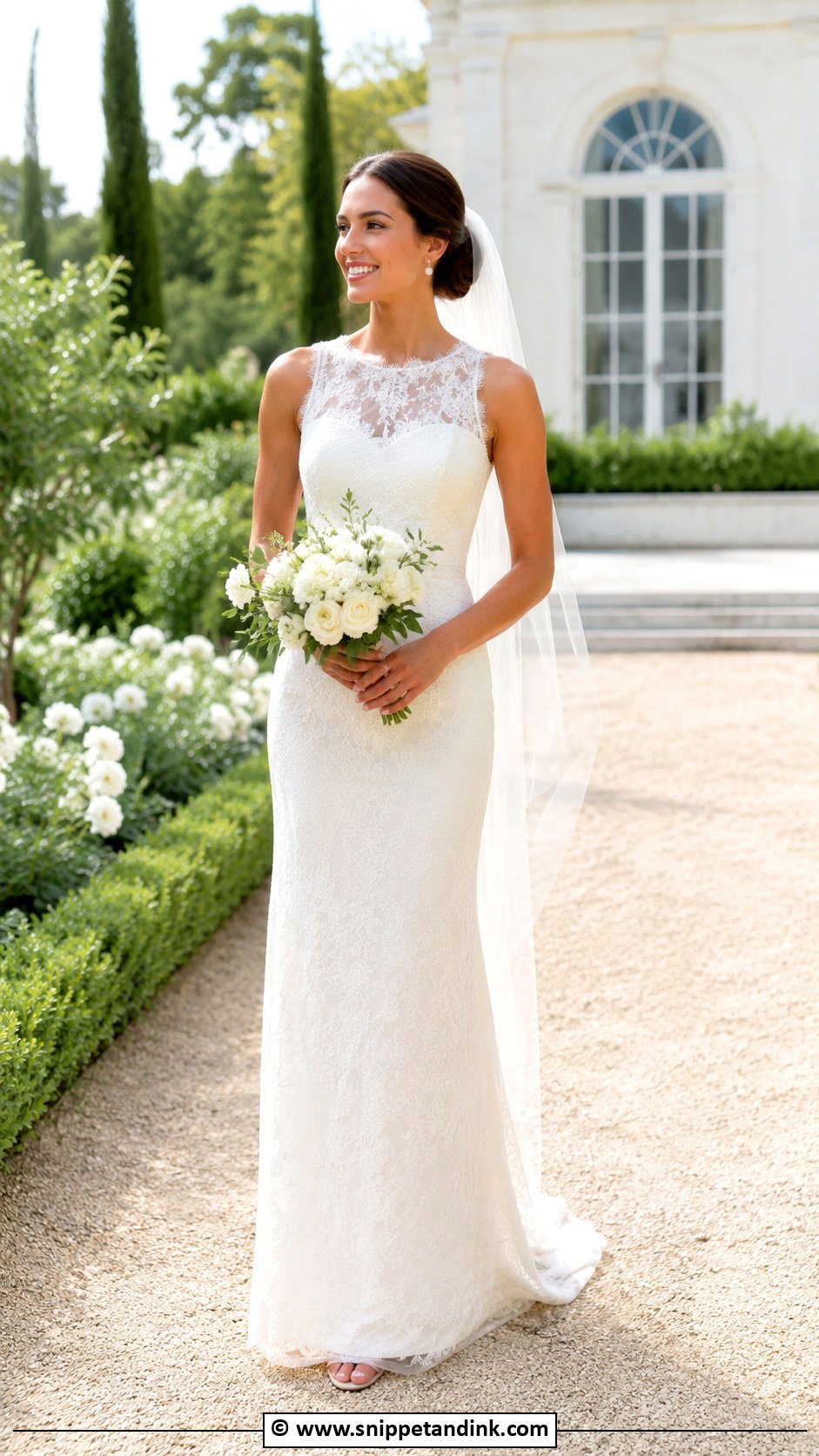
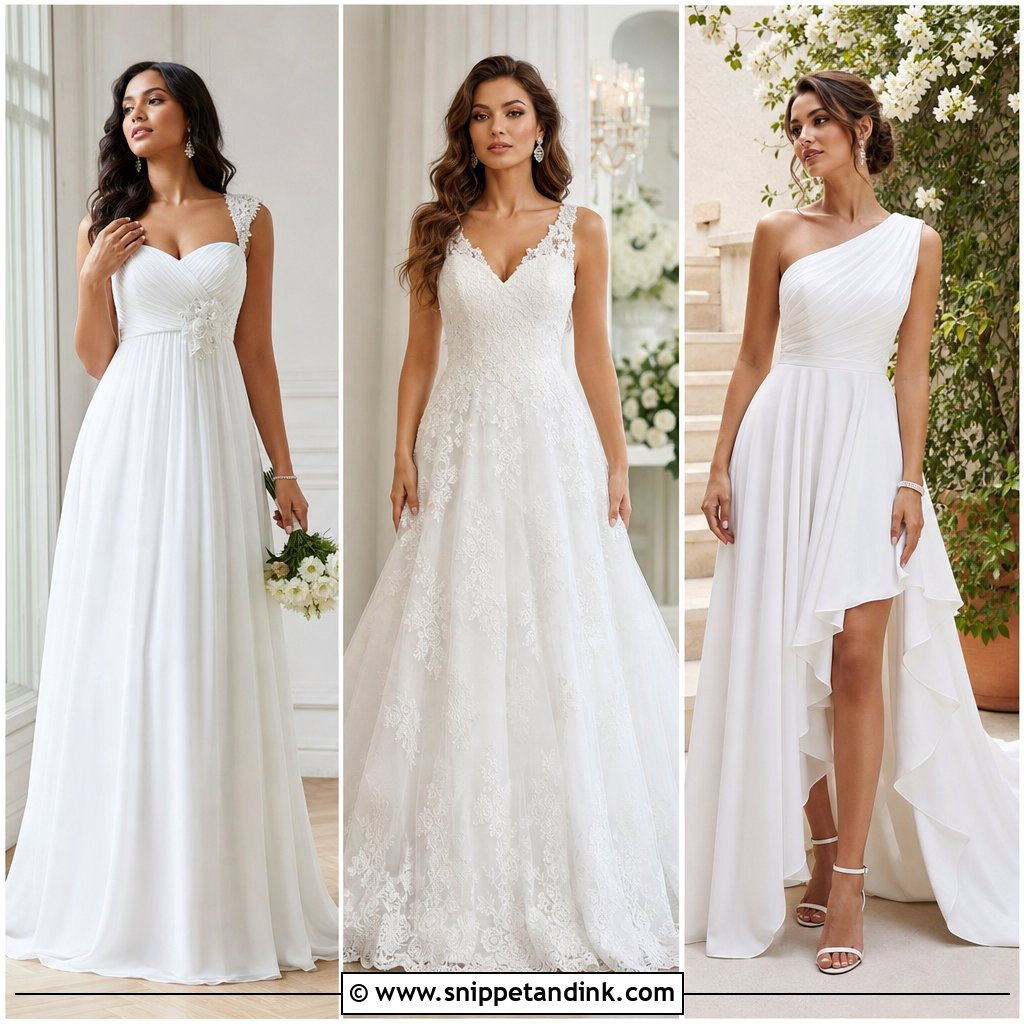
Lace gives texture without ornament, but the pattern decides whether it reads simple or busy. I look for an open, clean floral motif and a smooth lining underneath; small, dense lace on a heavily boned bodice tips quickly into fussy. A lace sheath feels romantic, a lace A-line classic. For something more modern, put the lace only on the sleeves or the bodice over a plain skirt. Simple heels, pearl studs and a sheer veil are all it needs for a garden, estate or traditional ceremony.
16. Simple Satin Ball Gown Wedding Dress
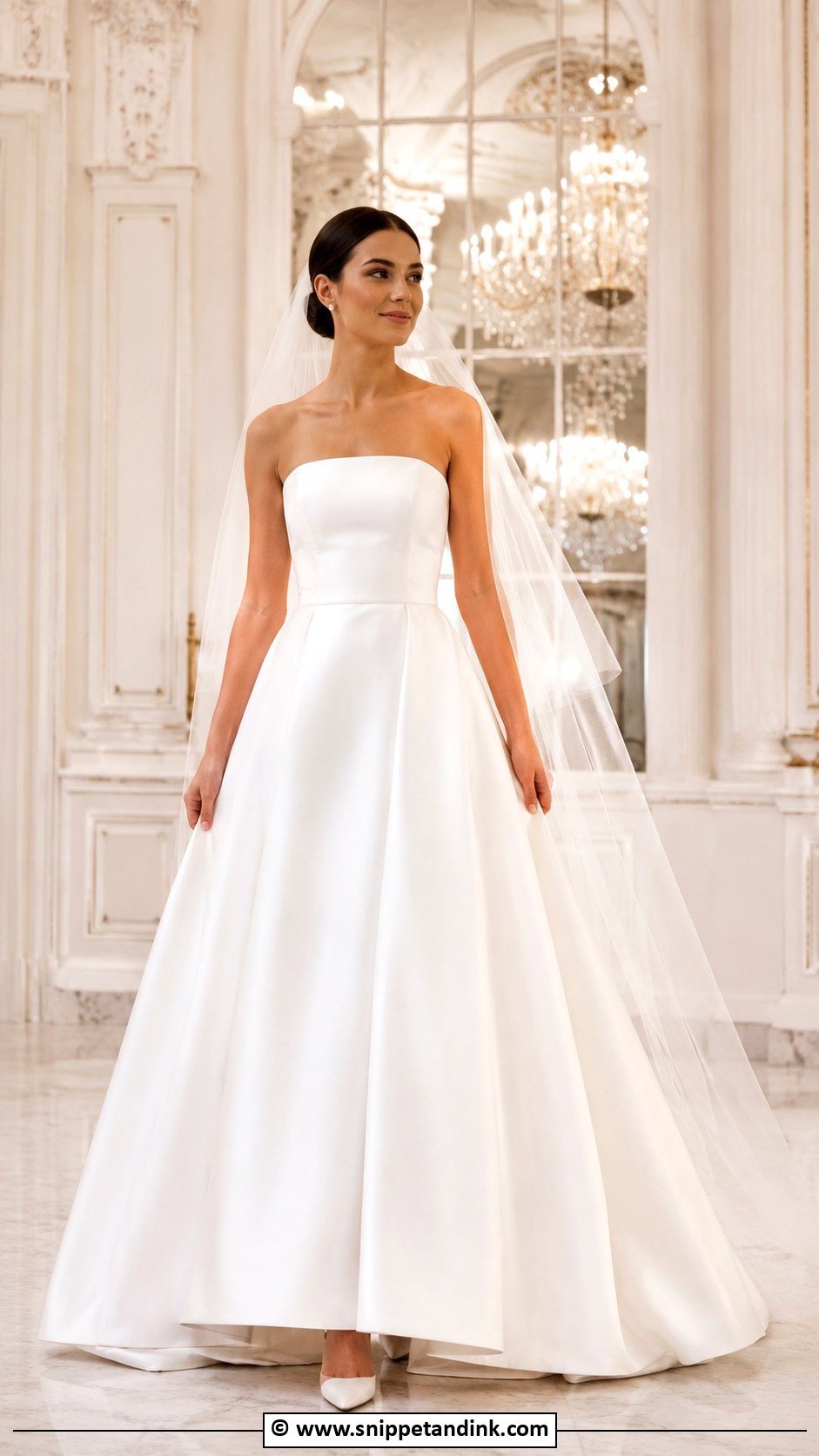
A full satin skirt gives you the princess shape without a single crystal. Volume makes the statement here, so oversized jewelry just competes; I’d keep earrings small. Practicalities matter with a ball gown: check that you can get in and out of the car, through doorways and into a bathroom stall, and plan a bustle that lifts the skirt without crushing it. A strapless, square or off-shoulder bodice suits the shape. Classic pumps and a long veil complete it for formal hotel and evening ceremonies.
17. Simple Column Wedding Dress
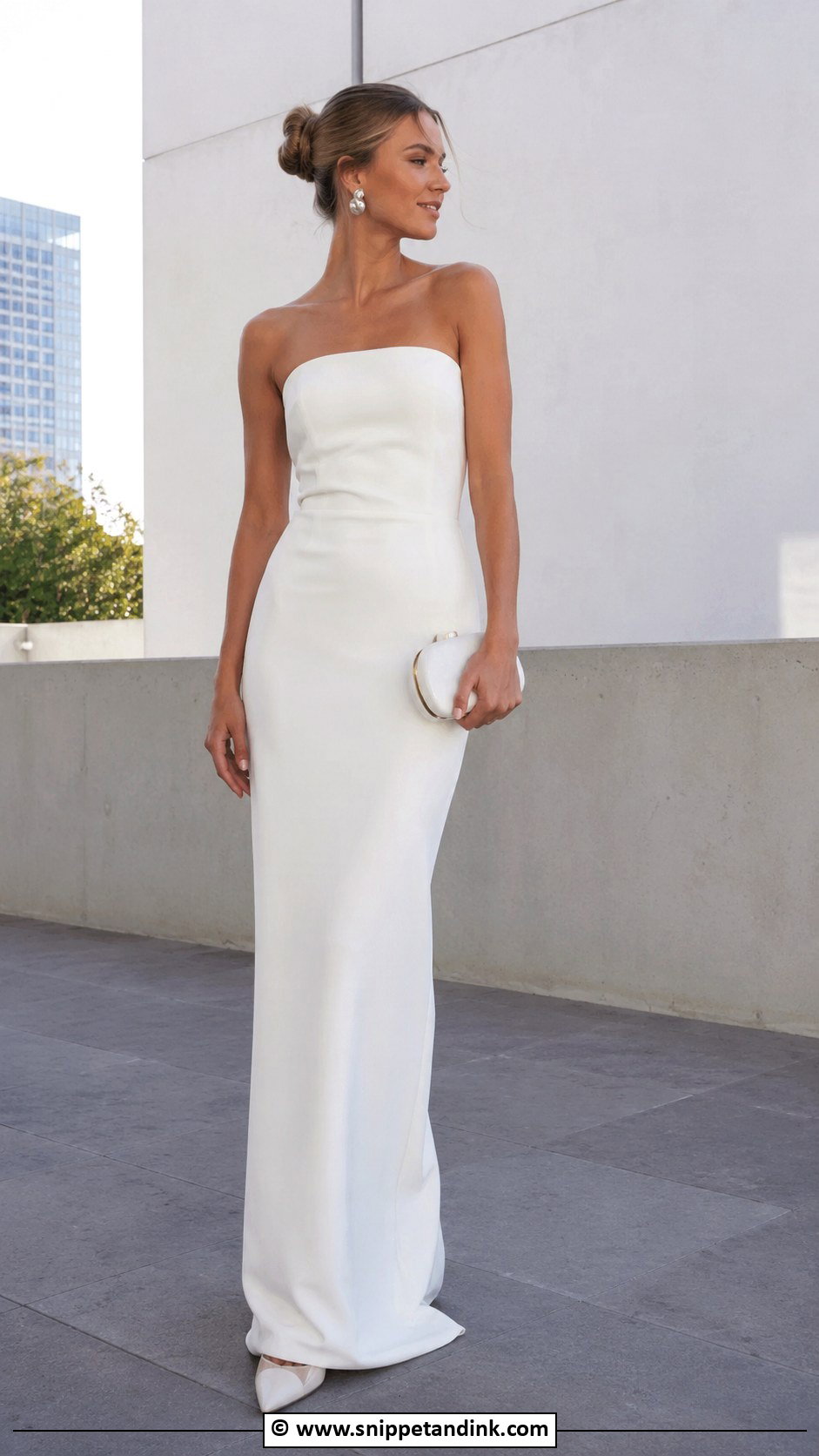
Columns don’t flare, so the line runs straight from shoulder to floor and makes you look taller. That same line shows everything underneath, which is why I fit column gowns over smooth, no-line shapewear and check the seat when you walk, where they tend to pull. Crepe, satin and mikado all hold a clean line. Strapless, one-shoulder and high-neck versions each feel different while staying plain. Pointed heels, a smooth clutch and sculptural earrings suit a city, rooftop or gallery venue.
18. Simple One Shoulder Wedding Dress
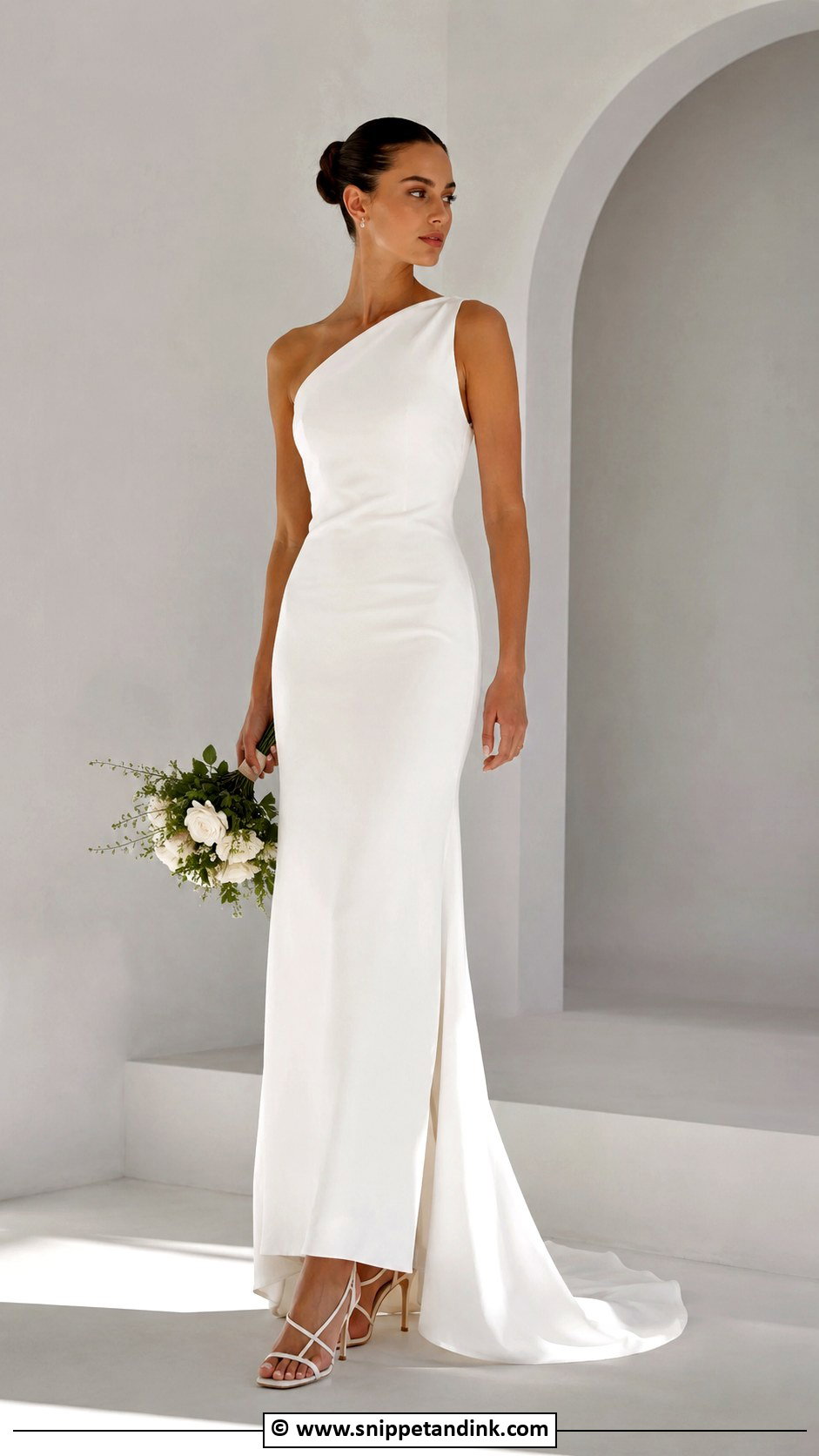
One asymmetric strap is the only decoration a dress like this needs. Satin, crepe and stretch fabrics follow the body smoothly, and the single strap needs an internal grip or light boning on the open side so the bodice stays level when you raise your arm. Skip necklaces entirely. Sleek heels, one statement earring or small studs and a neat bun keep the shoulder line clear, and the side profile in photos is where this neckline really shows.
19. Simple Backless Wedding Dress
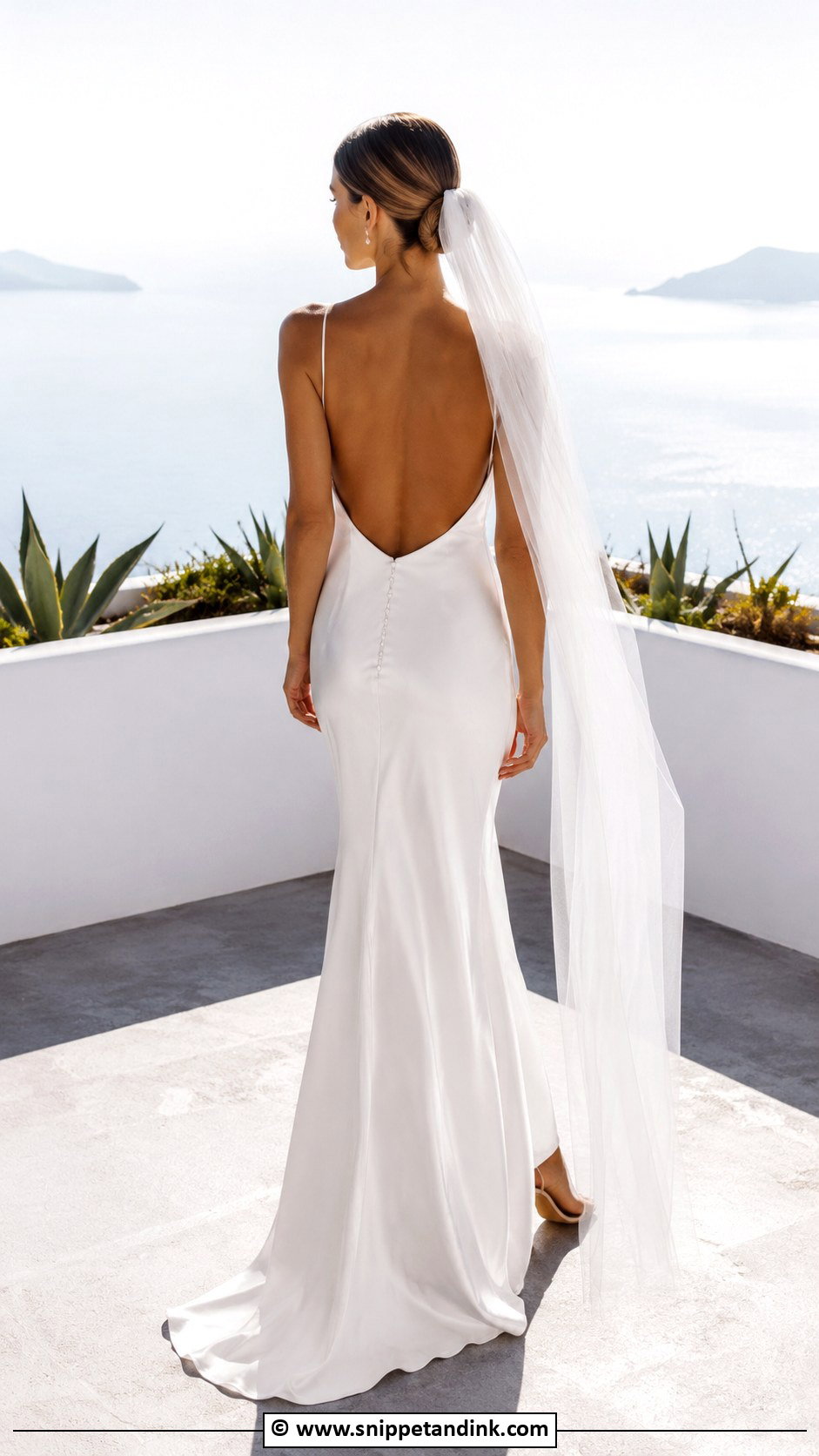
Understated from the front, all the drama is behind you. The challenge is support. A low back rules out most ordinary bras, so the gown needs built-in cups or a dedicated low-back solution, and I always fit it with the exact undergarment you’ll wear. A satin slip with a low back is sleek; an open-back crepe gown more structured. Style the hair low or swept to one side, attach a sheer veil below the crown, and keep earrings and heels simple so the back stays the focus.

20. Simple Wedding Dress With Bow
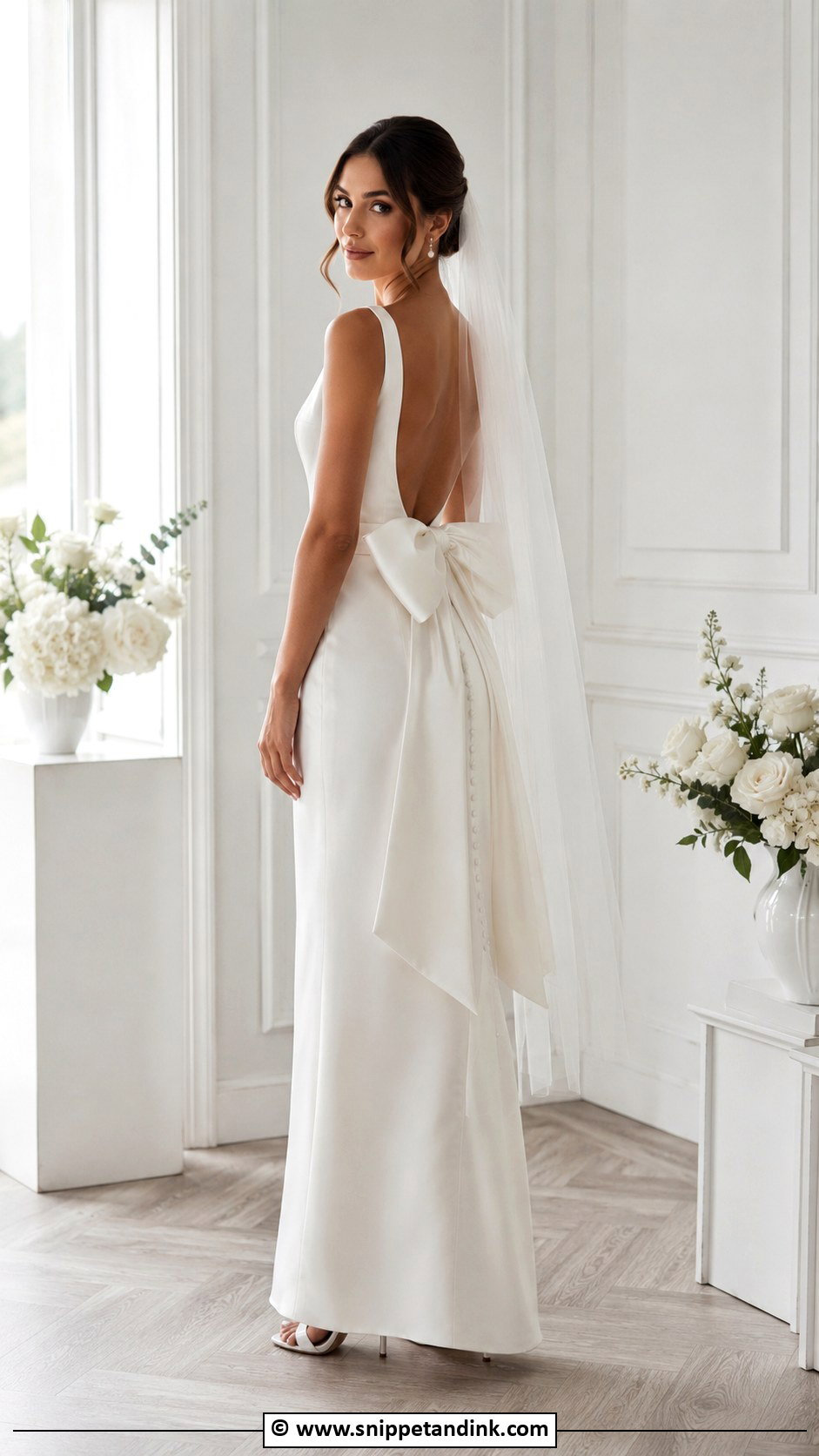
A bow gives a plain dress one sweet focal point. It can sit at the back waist, on a shoulder, at the neckline or as a removable sash. Crisp satin or mikado holds a bow’s loops; soft fabric droops by the reception, so I look at whether the bow is interfaced inside. A bow at the back waist will also be sat on, so try sitting during the fitting. If it’s large, keep everything else very plain: classic heels, pearl earrings, a smooth veil. Portraits from behind are where it pays off.
21. Simple Wedding Dress With Sleeves
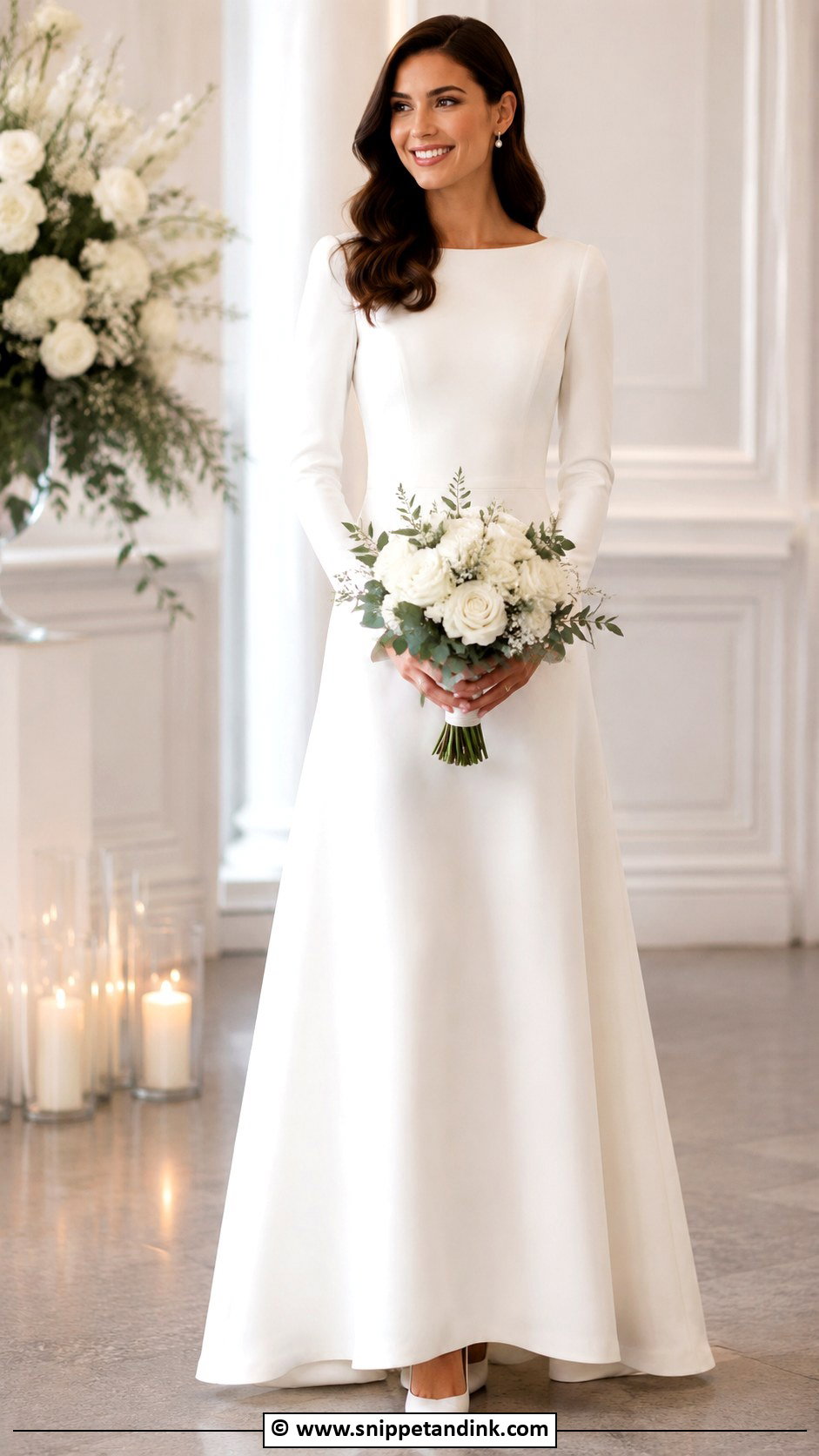
Sleeves can completely change a plain dress. Fitted crepe sleeves feel modern, chiffon airy, satin formal. Paired with a simple bodice and a straight or A-line skirt, they look clean from every angle. Detachable sleeves are the clever option for a covered ceremony and a lighter reception, but I check how they attach; tiny snaps under a heavy sleeve pull loose by the evening. Closed-toe heels, small earrings and a low bun or polished waves suit autumn, winter and formal indoor weddings.
22. Simple Wedding Dress With Train
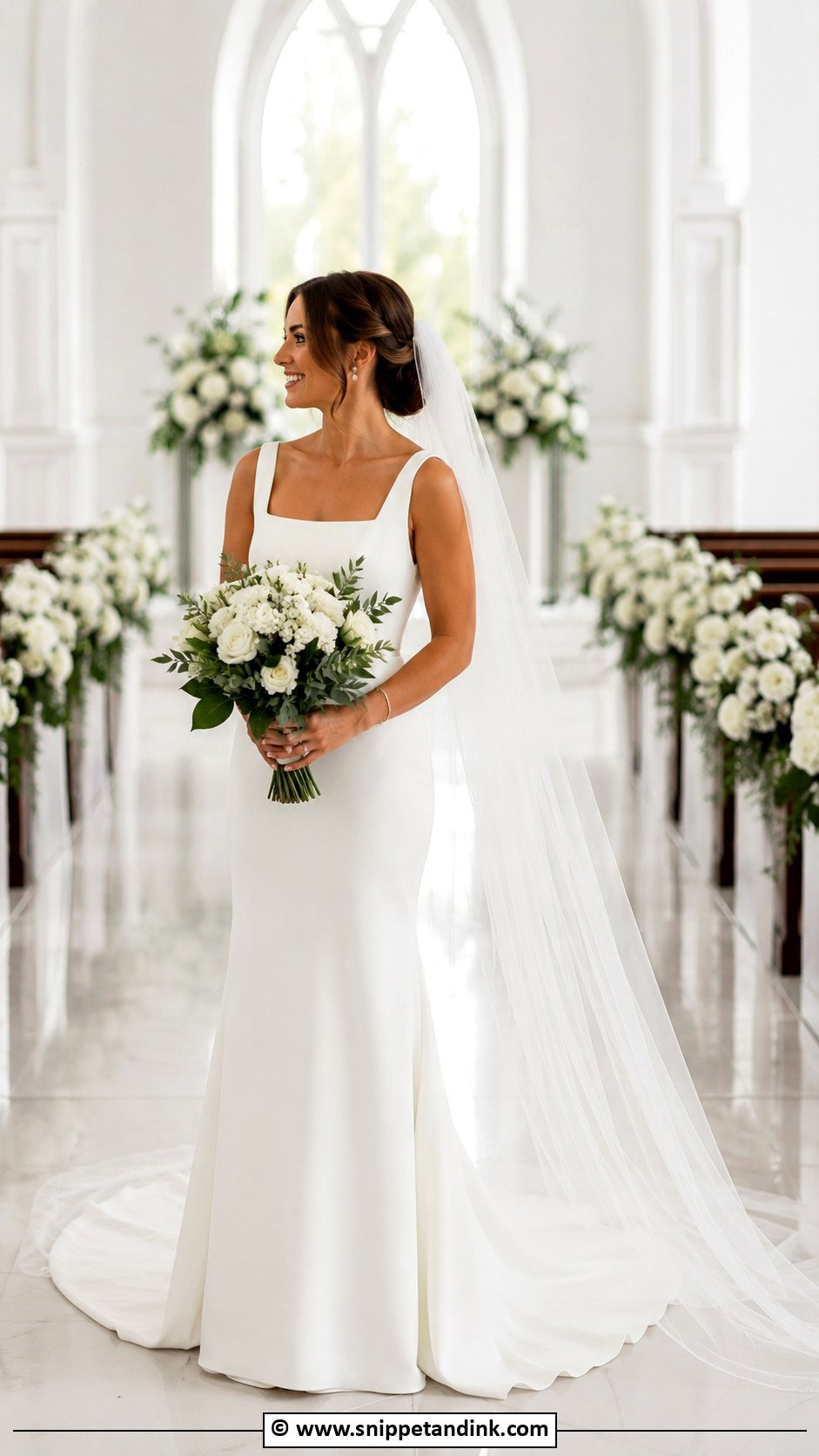
A train adds bridal drama to a plain design. A sweep or chapel train makes even a very simple gown look special walking down an aisle. Satin, crepe, mikado and minimalist lace all work. The question I always ask before alterations is how you’ll bustle it, because a long train on a dance floor gets stepped on within minutes. An over-bustle or French bustle should be agreed at the first fitting, not the last. Elegant heels, a sheer veil and simple jewelry keep the train in charge.
23. Simple Wedding Dress With Buttons
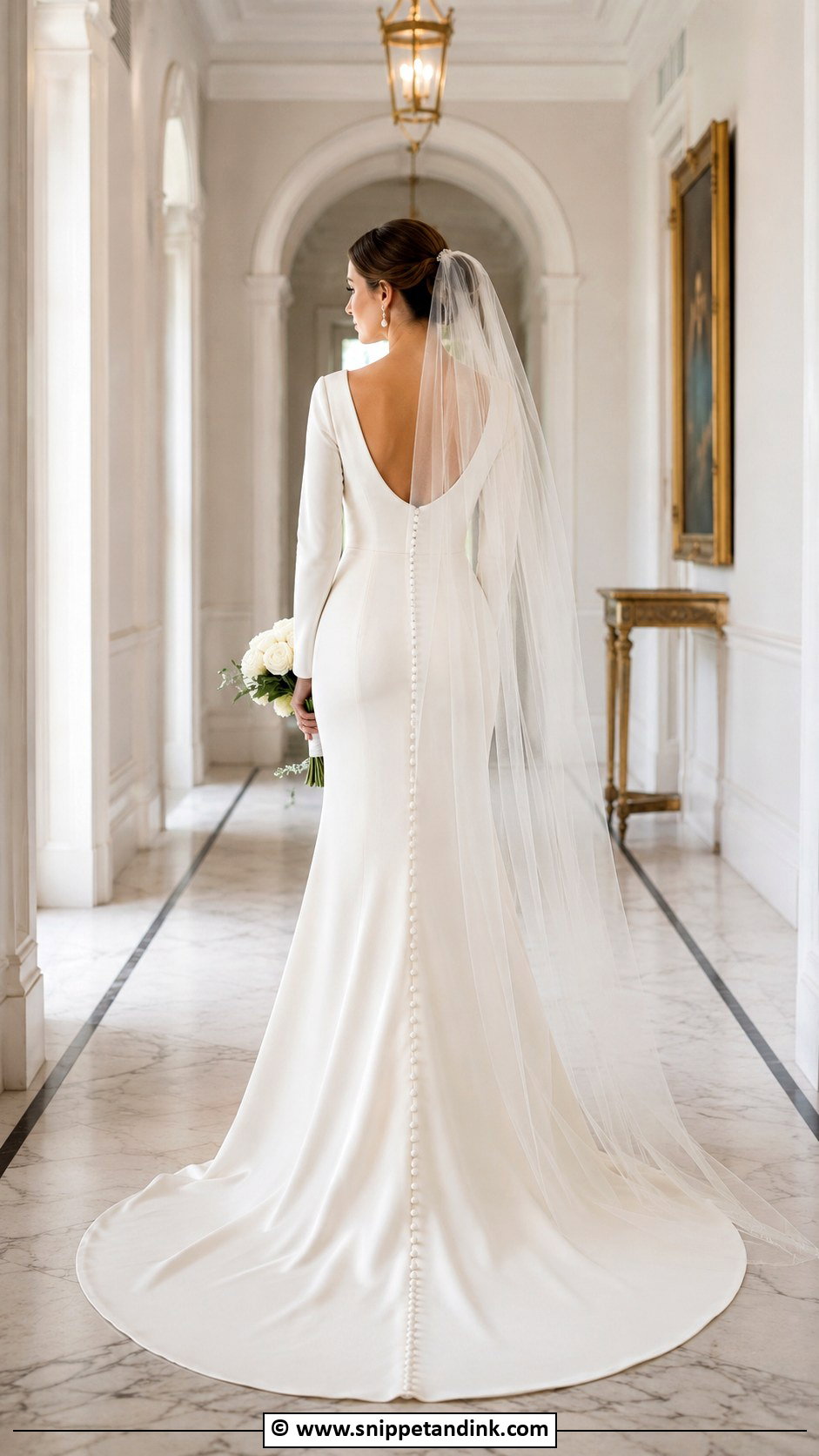
Covered buttons are craftsmanship you only notice up close, which is exactly the point. Down the back of a crepe sheath, a satin A-line or a long-sleeve gown, they make plain fabric look bridal. Be honest with yourself about how long they take to fasten: a full row of loop buttons needs a patient helper and a few minutes, and many gowns hide a zip underneath, which I always prefer. Pearl earrings, a low bun and a sheer veil let the back show through, especially when the buttons run on down the train.
24. Simple Wedding Dress With Slit
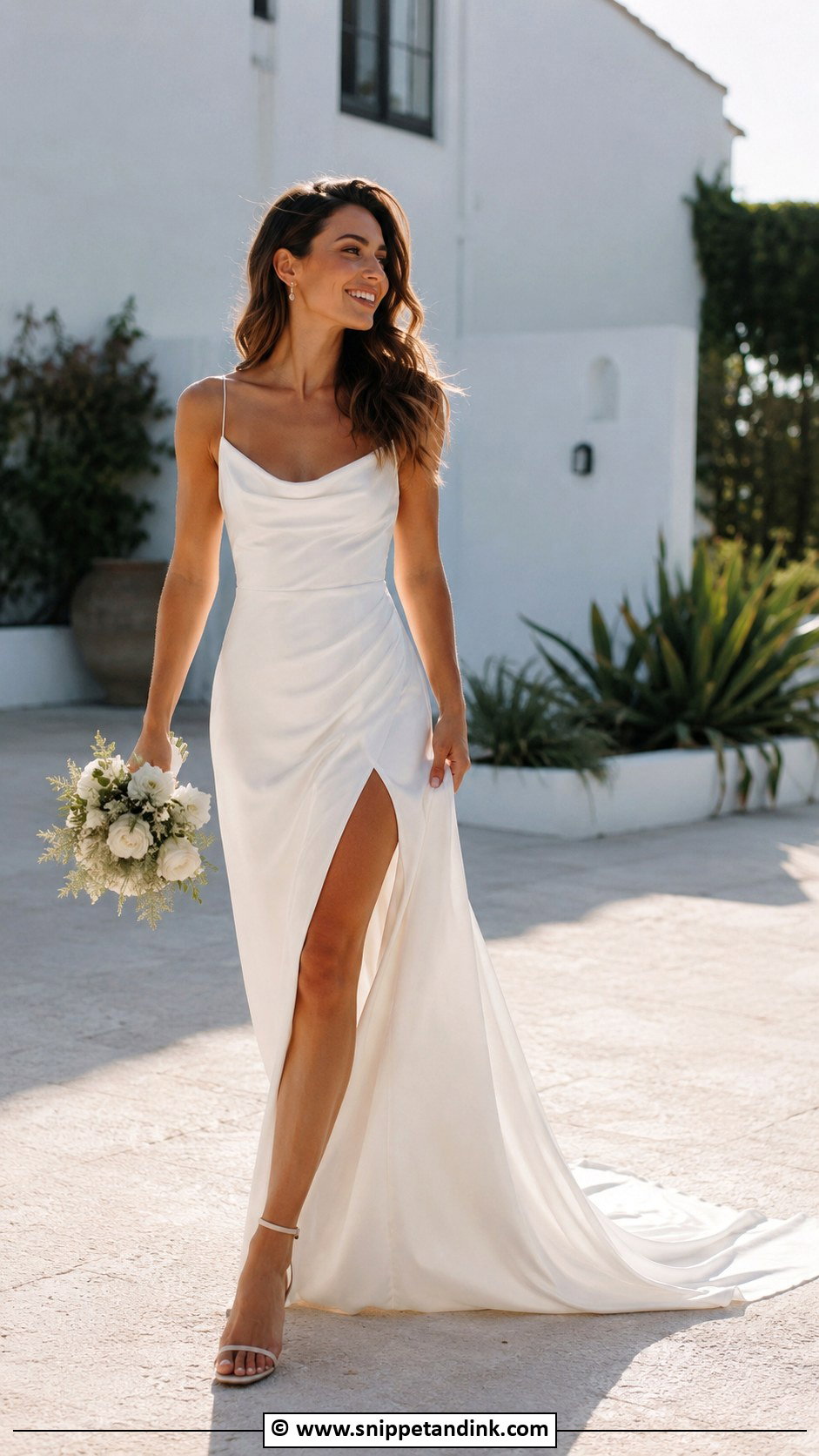
A slit makes a slim dress far easier to walk in and adds movement without any detail. Height is the decision. A side slit to the knee is subtle; higher feels fashion-led and needs a quick test sitting down, where it opens wider than you expect. It works on satin slips, crepe columns and soft A-lines. Shoes become part of the outfit here because they’ll be seen, so pick a pair you’d happily photograph. Delicate earrings and a clean hairstyle suit beach, city and warm-weather ceremonies.
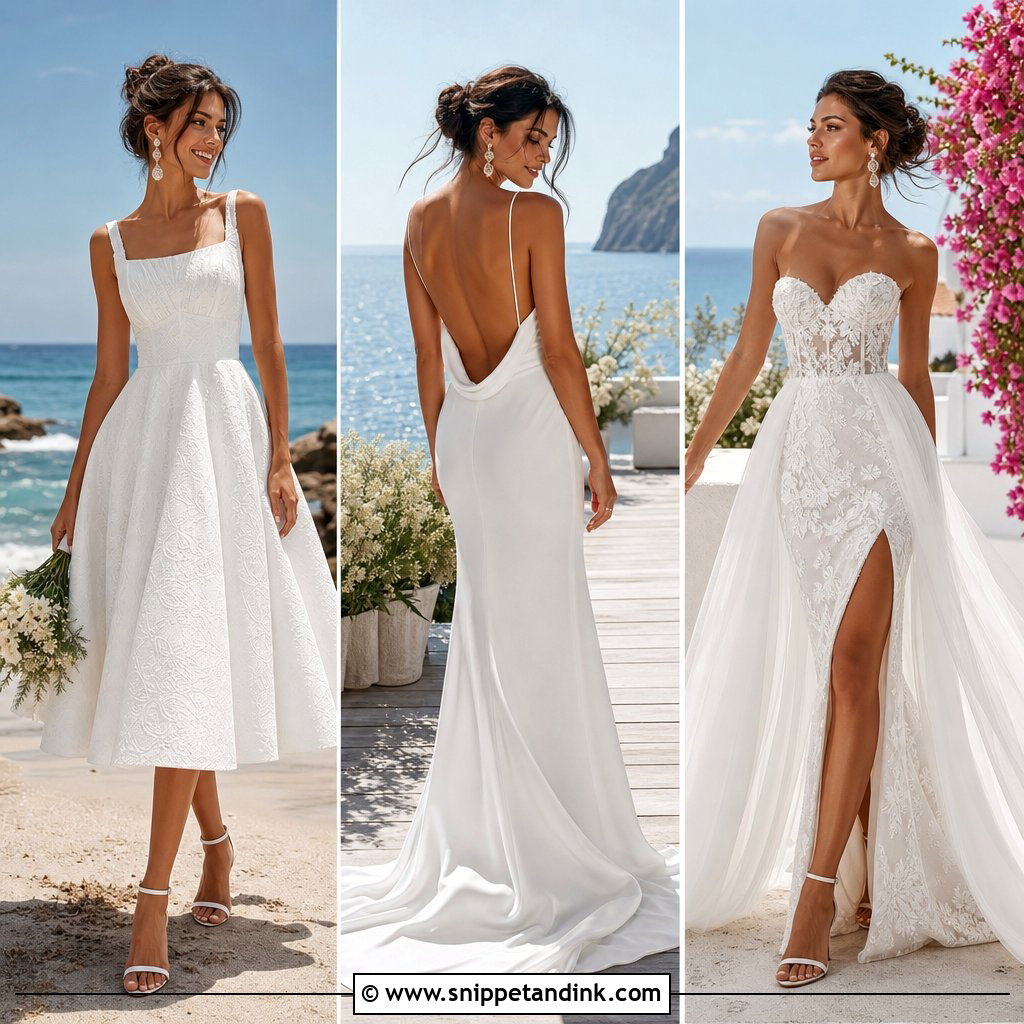
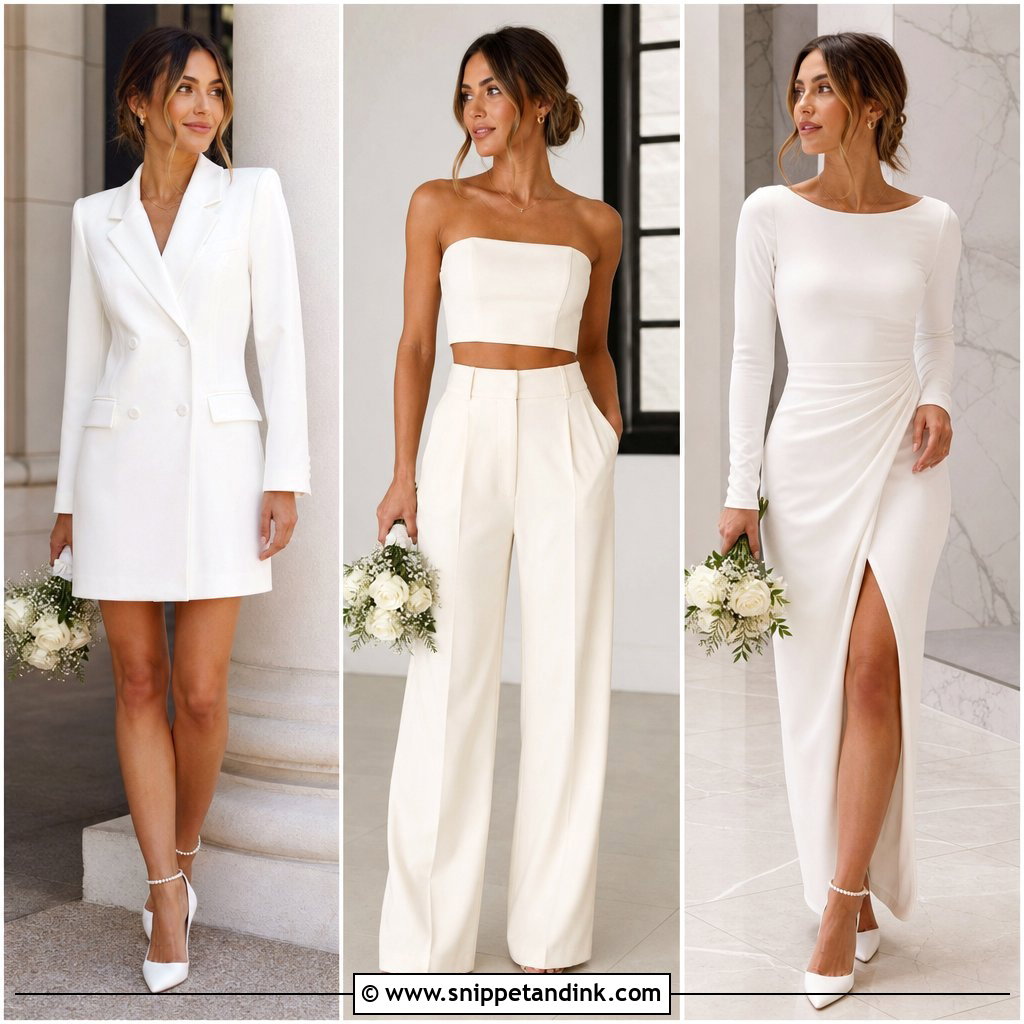
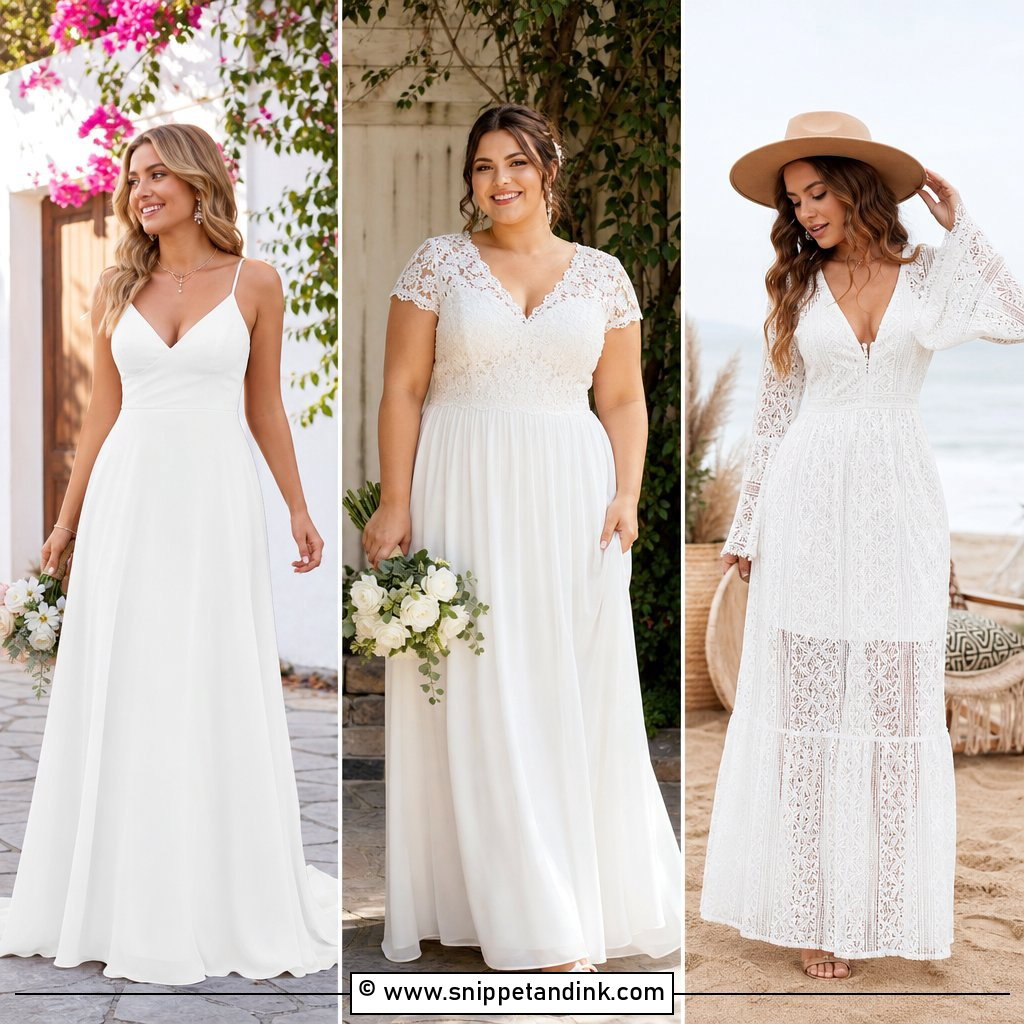
25. Simple Plus Size Wedding Dress
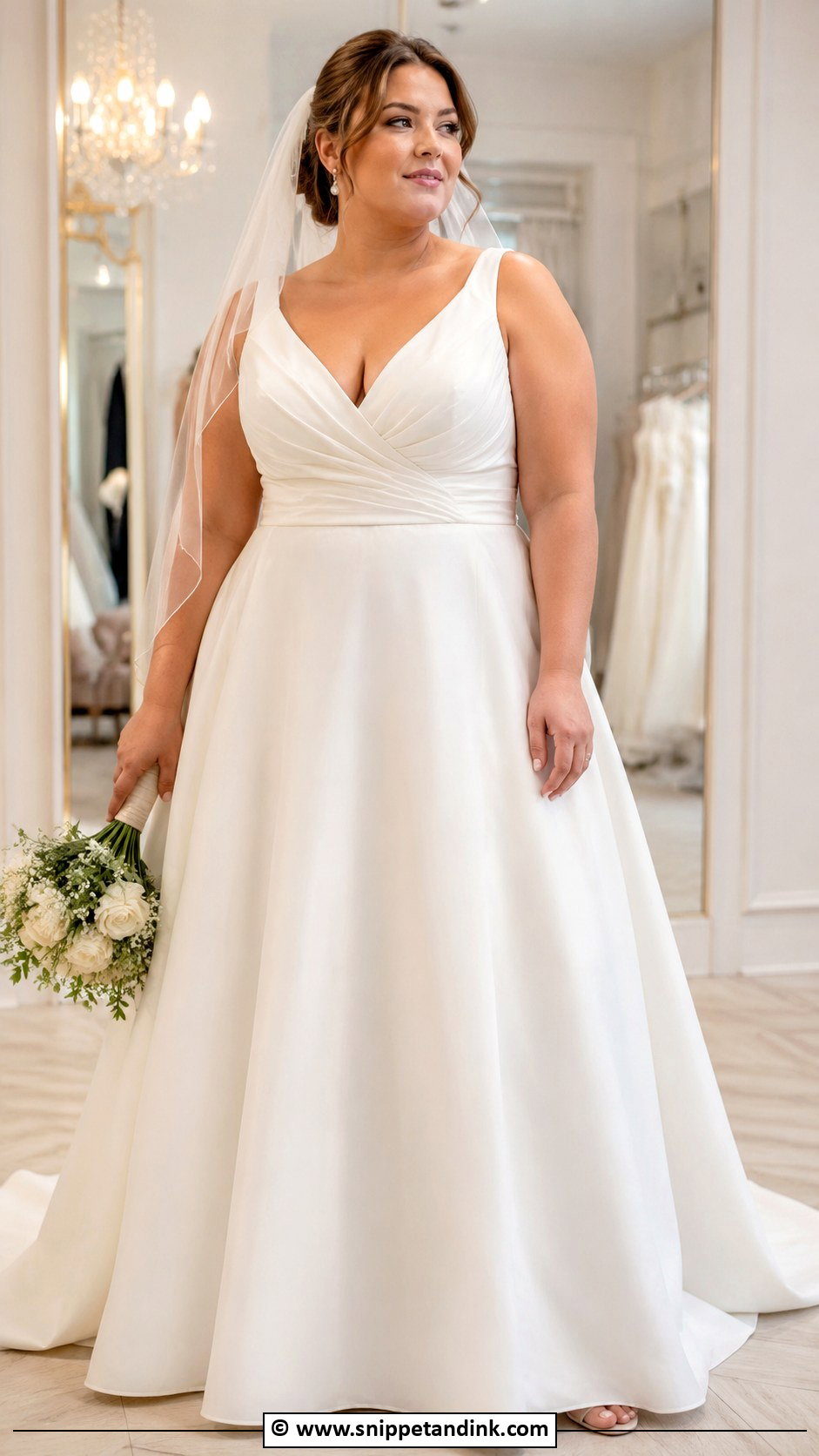
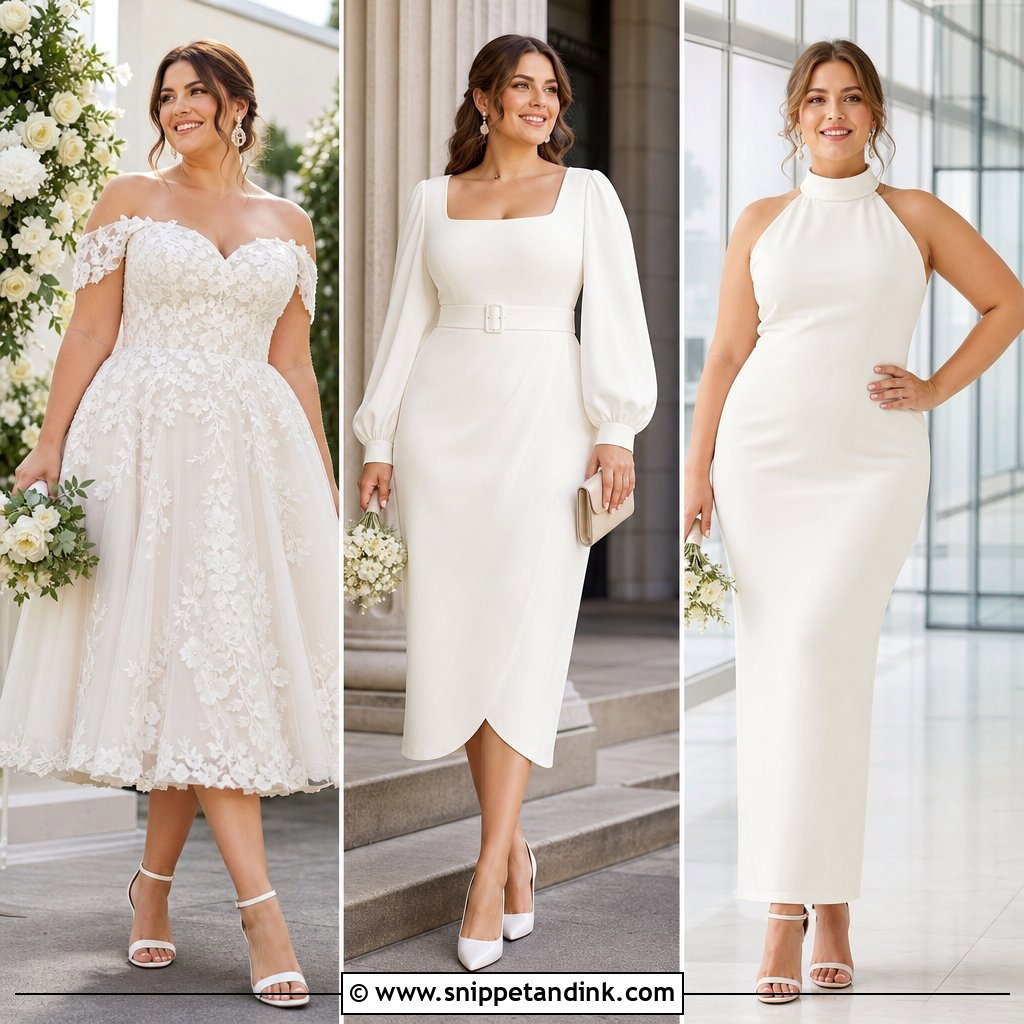
Structure is everything in a simple plus size wedding dress, because a plain gown has no detail to hide a weak fit. I look for a strong inner corset or waist stay, good lining and seams placed where they shape rather than cut across. A-lines define the waist, crepe sheaths look sleek, satin ball gowns give drama without decoration. Supportive bridal shoes, pearl earrings and a veil matching the dress length finish it. Don’t pick a gown only because it’s plain; pick the one that moves well and sits smoothly. Good tailoring is what makes it special.
26. Simple Petite Wedding Dress
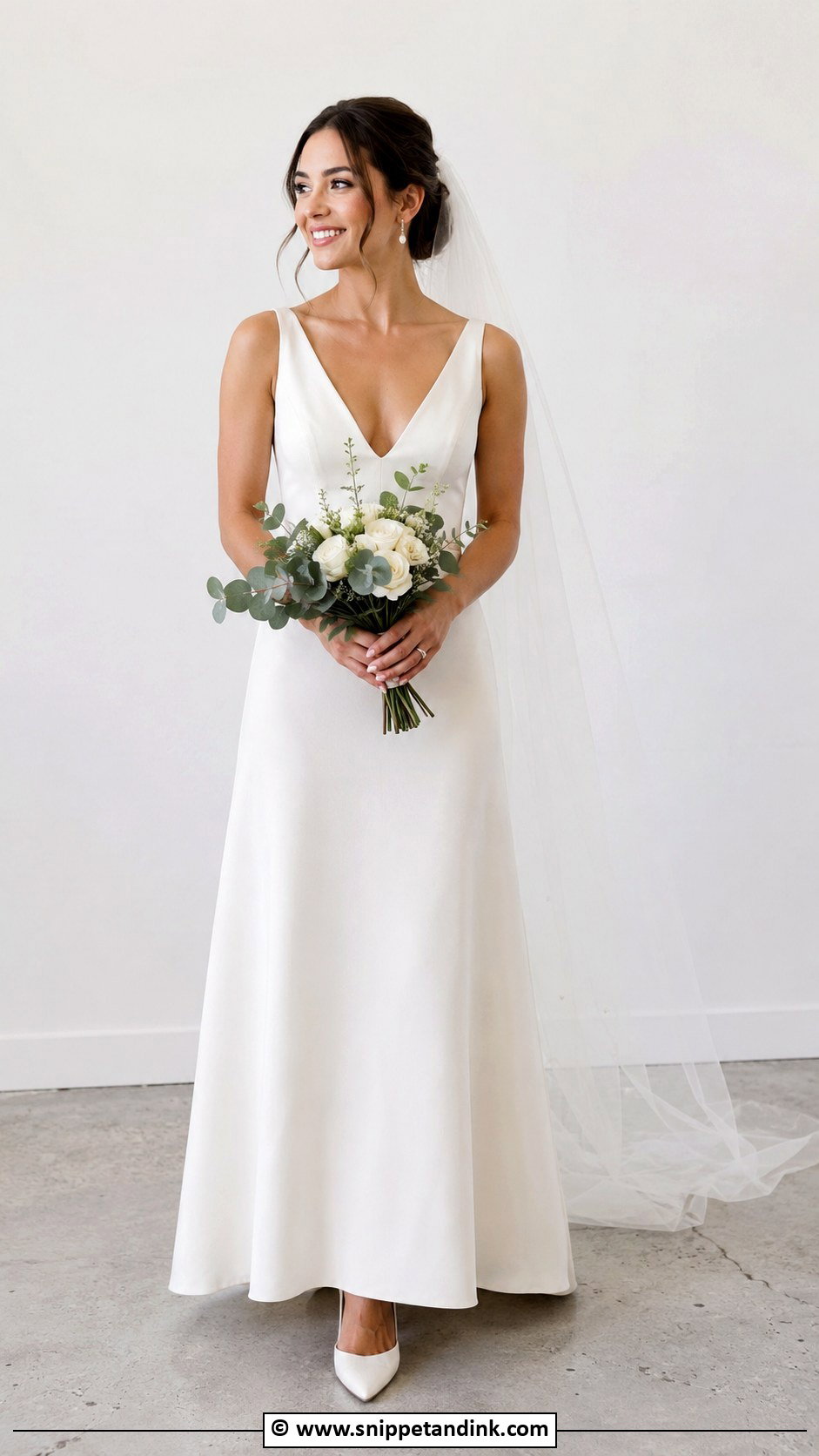
For a petite frame, scale is the whole game. A skirt with too much volume swallows you, so I’d look at sheaths, columns, slips and narrow A-lines, with vertical seams or a slightly high waist to lengthen. A small train is fine when the proportions agree. Most petite brides need the bodice shortened, not just the hem, and that’s a job to raise at the first fitting. A V or square neckline opens the upper body, and pointed heels plus a veil that doesn’t overpower keep everything balanced.
27. Simple Maternity Wedding Dress
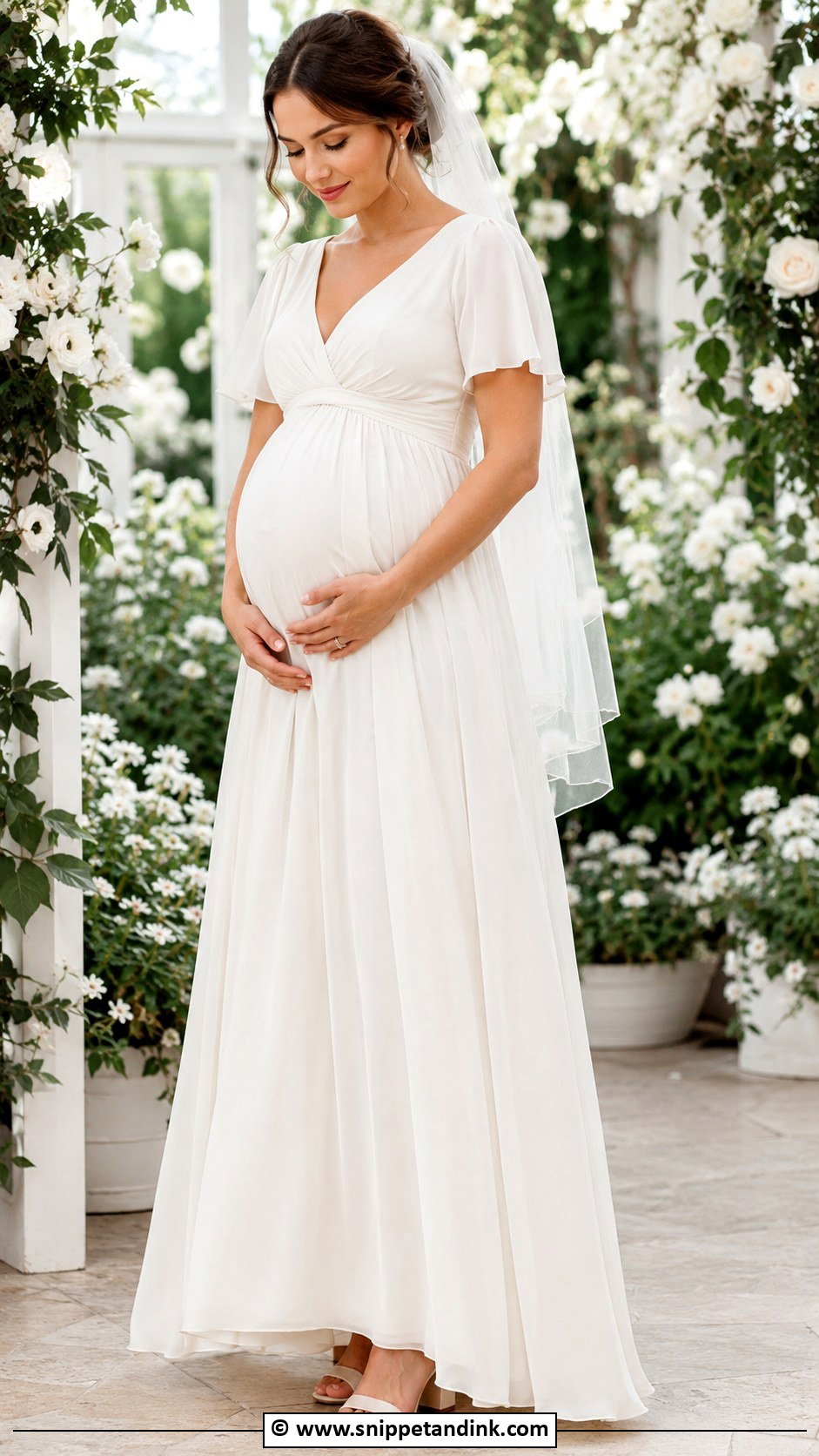
Bodies change week by week in pregnancy, so the real advice is timing: order with room, and schedule the final fitting as close to the wedding as your seamstress allows. Empire waists, stretch crepe, wrap styles and flowing A-lines give space over the bump without pulling. Breathable fabric and soft lining matter more than in any other gown here. A V, square or off-shoulder neckline frames the face. Block heels or flats, small earrings and a soft veil keep it comfortable all day.
28. Simple Second Wedding Dress
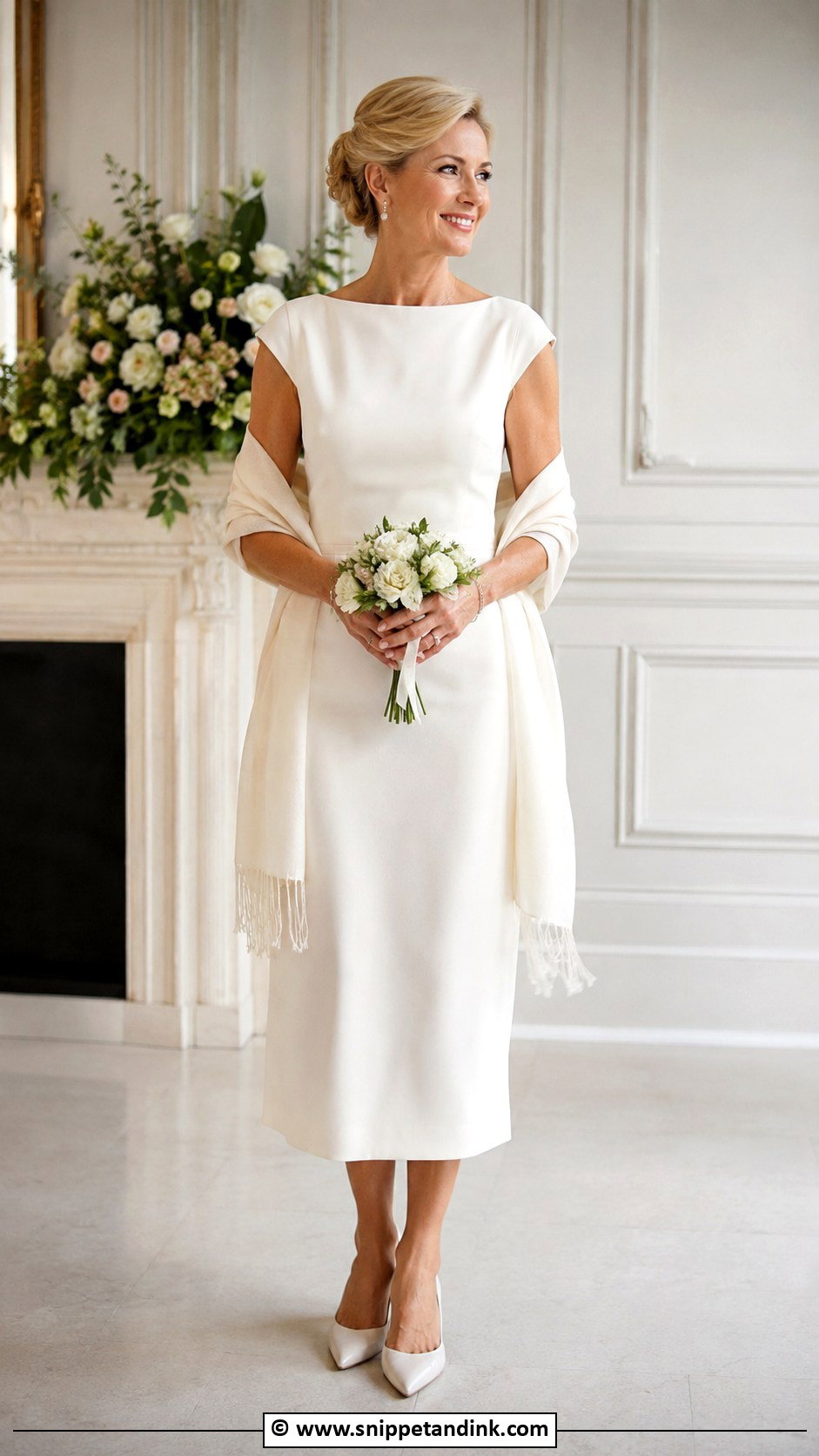
A second wedding dress doesn’t have to follow any of the rules the first one did. A midi, a tailored sheath, a satin slip or a simple lace dress all fit, in white, ivory, champagne, blush or any soft shade you like. I usually ask brides what they’d change about the first wedding, and the answer tends to point straight at the dress. Polished heels, understated jewelry and a bouquet that suits the ceremony are enough, with a short veil, comb or bridal hat if you want an occasion detail.
29. Simple Civil Wedding Dress
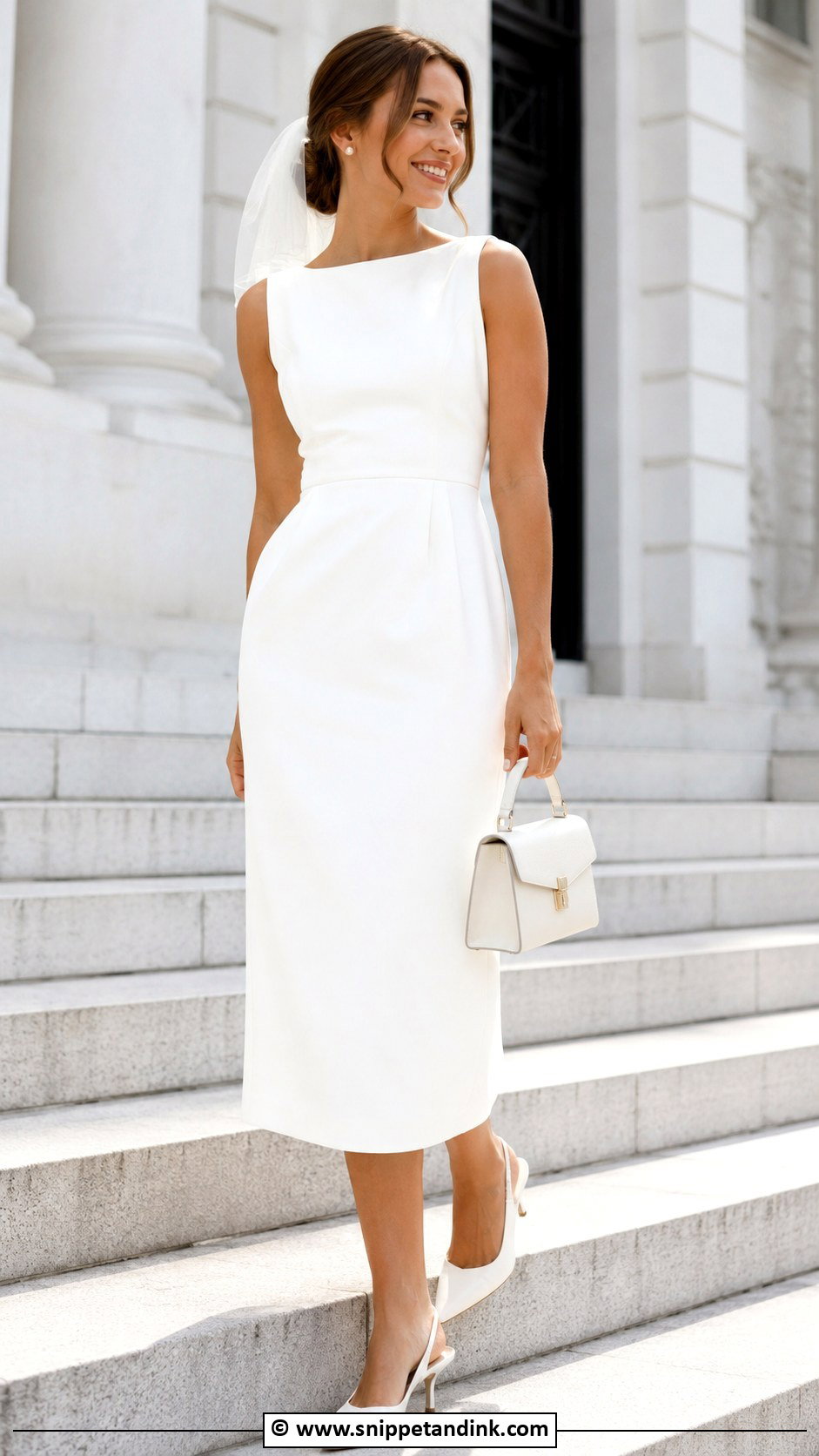
Civil ceremonies involve more waiting, walking and standing than people expect, so ease of movement comes first. A clean midi, tailored mini, sheath or satin slip all work. I’d avoid anything that needs constant adjusting while you sign papers and shake hands. Slingback heels, a structured bag and pearl or gold earrings keep it polished; a blazer gives a sharper city look. A short veil makes it bridal while staying modern.
30. Simple Elopement Wedding Dress
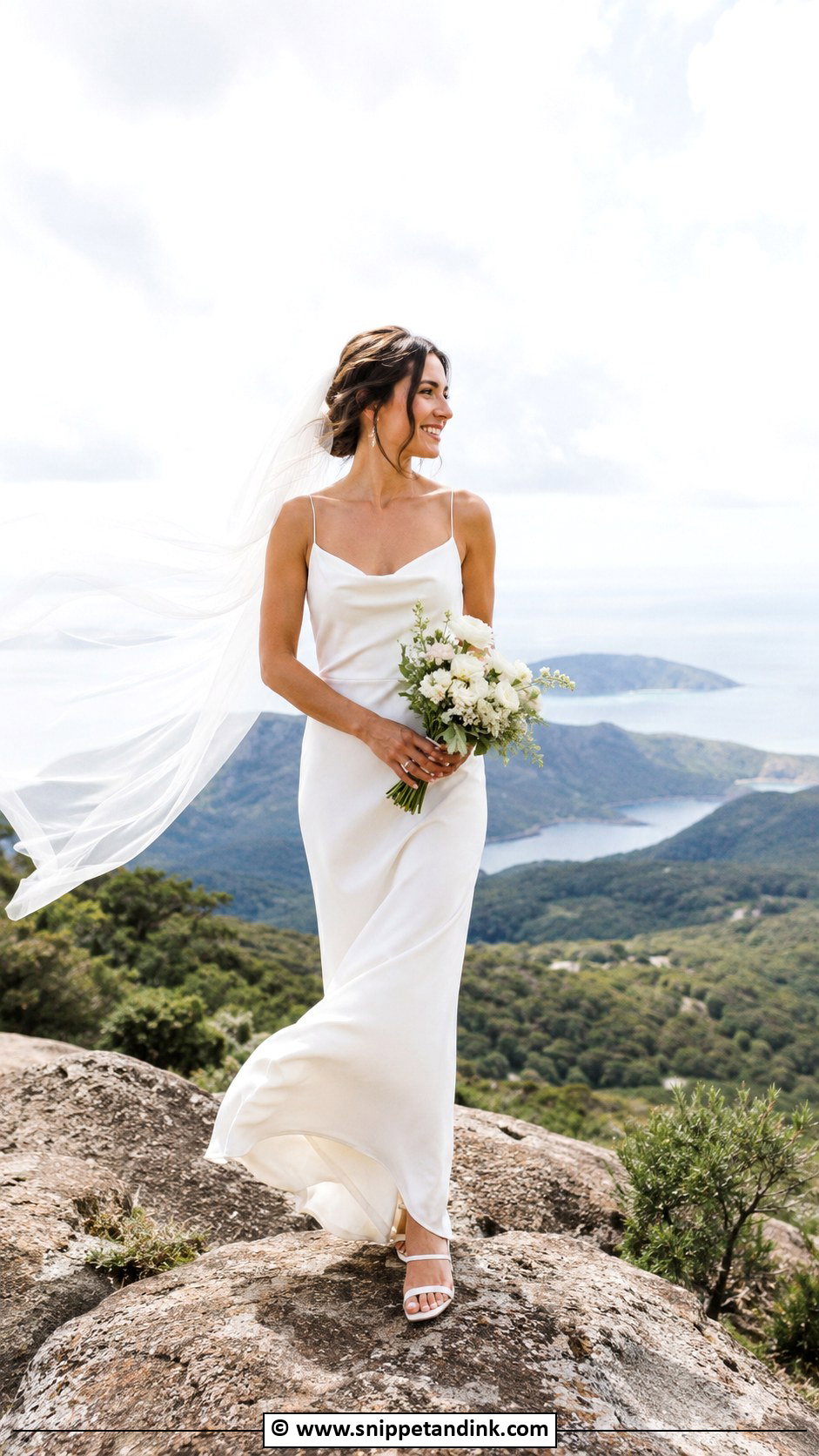
A simple elopement wedding dress has to travel. Crepe and stretch satin come out of a suitcase looking fine; pure silk and stiff mikado often don’t. I fold elopement dresses with tissue paper inside and hang them the moment you arrive. City hall, a cliff path or a garden each ask different things of a hem, so match length to the walking. Satin slips, crepe sheaths, chiffon A-lines and simple midis all suit, with comfortable shoes, a small bouquet and a lightweight veil.
31. Simple Wedding Dress For Older Bride
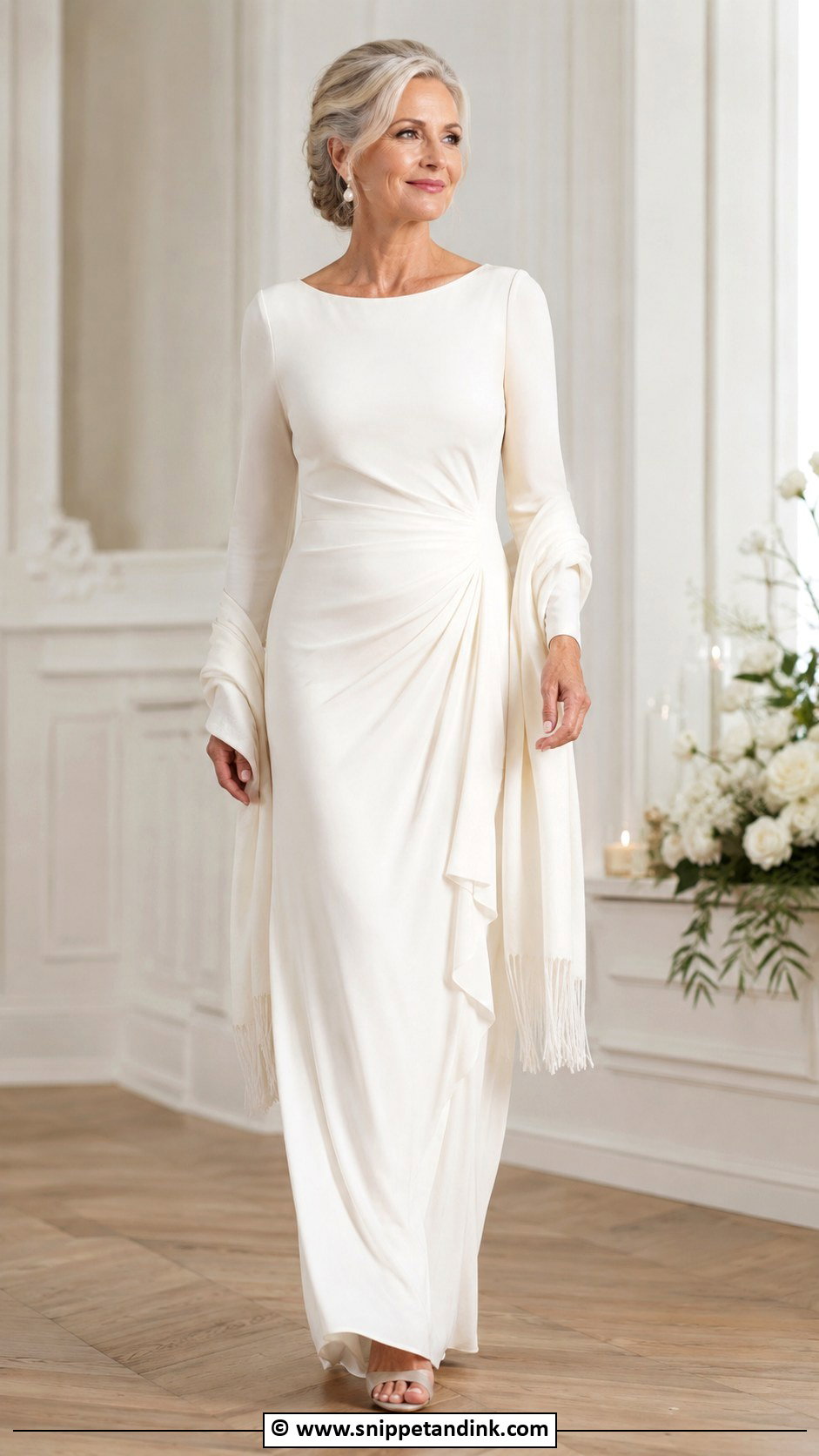
There are no age rules in bridal dressing, and I’d ignore anyone who says otherwise. What changes is often comfort and support. A long-sleeve crepe gown, an elegant midi, a soft A-line or a tailored sheath all look graceful. I tend to suggest fabrics with a little weight, which drape rather than cling, and a neckline you’ll never have to tug. Ivory, cream, champagne and soft white all suit. Comfortable heels, pearl or diamond-look earrings and a soft wrap for coverage finish it.
32. Simple Modest Wedding Dress
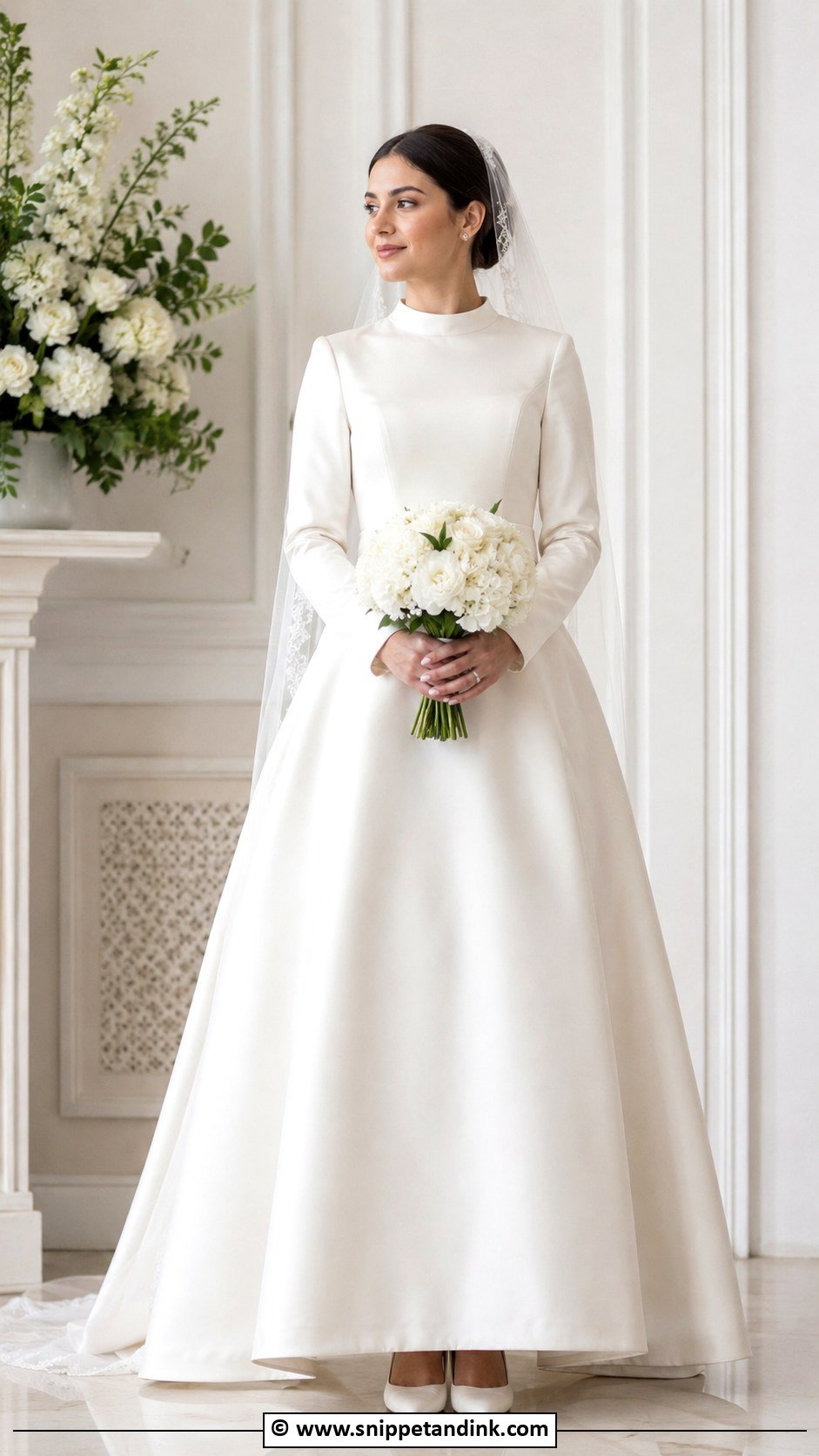
Covered can still look current. High necklines, long sleeves, bateau necks and full-length skirts make a refined bridal look without decoration, and crepe or satin keep it smooth. Sheer sleeves need a proper lining if coverage is the point, so I check them in daylight, where unlined chiffon is far more see-through than in a fitting room. A simple lace overlay adds softness. Closed-toe heels, a delicate veil and small earrings suit formal and family-centered weddings. Modest doesn’t have to mean heavy.
33. Simple Boho Wedding Dress
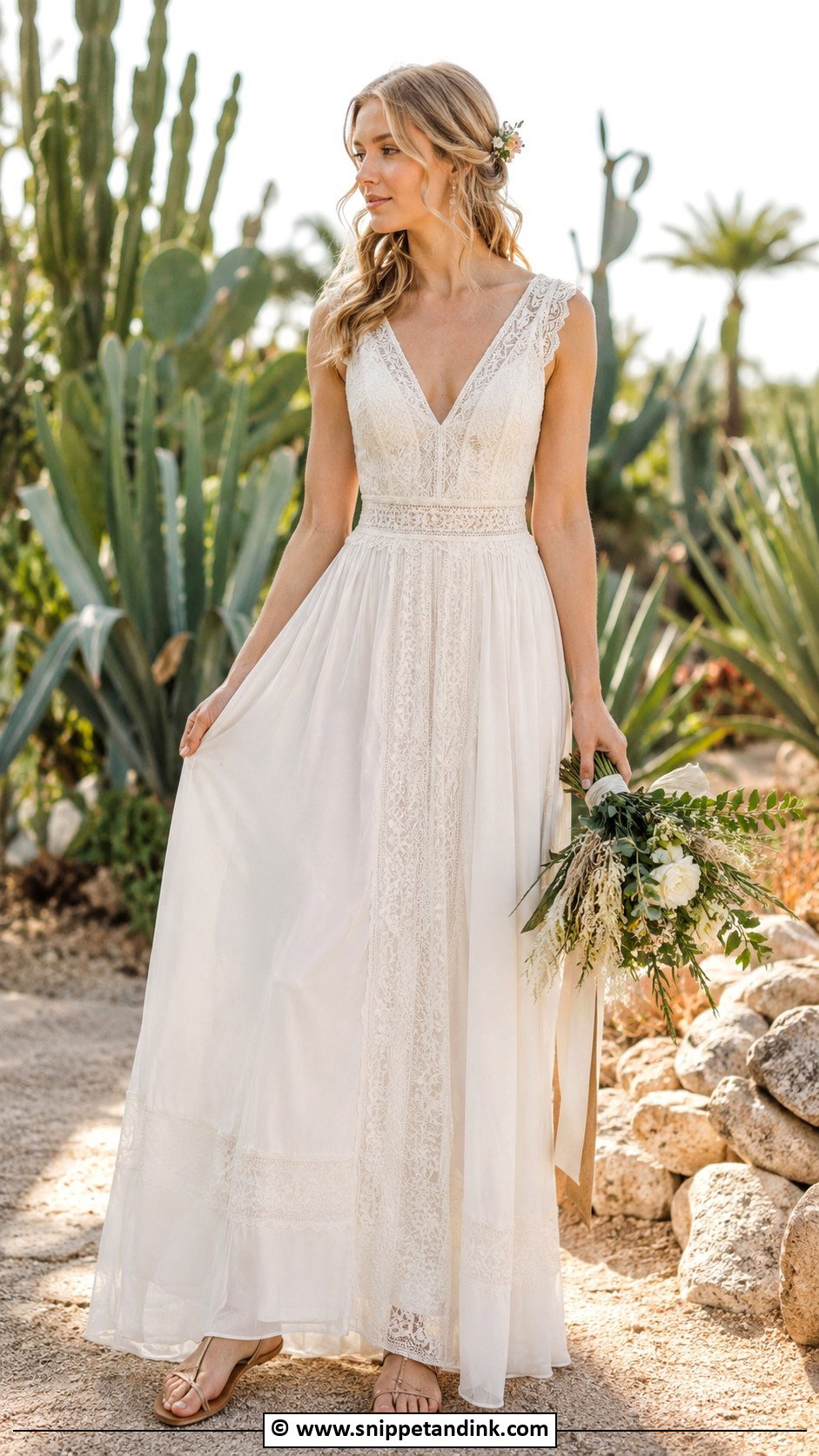
Boho done simply means soft lace, flowing chiffon or cotton lace in a relaxed A-line, not heavy fringe. A V-neck, flutter sleeve or open back adds softness. These dresses are often unstructured, so I check how they hang on your shoulders; without a waist seam, a dress can look shapeless in photos, and a belt or sash fixes that quickly. Flat sandals, loose waves, fine earrings and a small flower pin suit beach, desert and garden ceremonies. Keep it light so it never looks like a costume.
34. Simple Vintage Wedding Dress
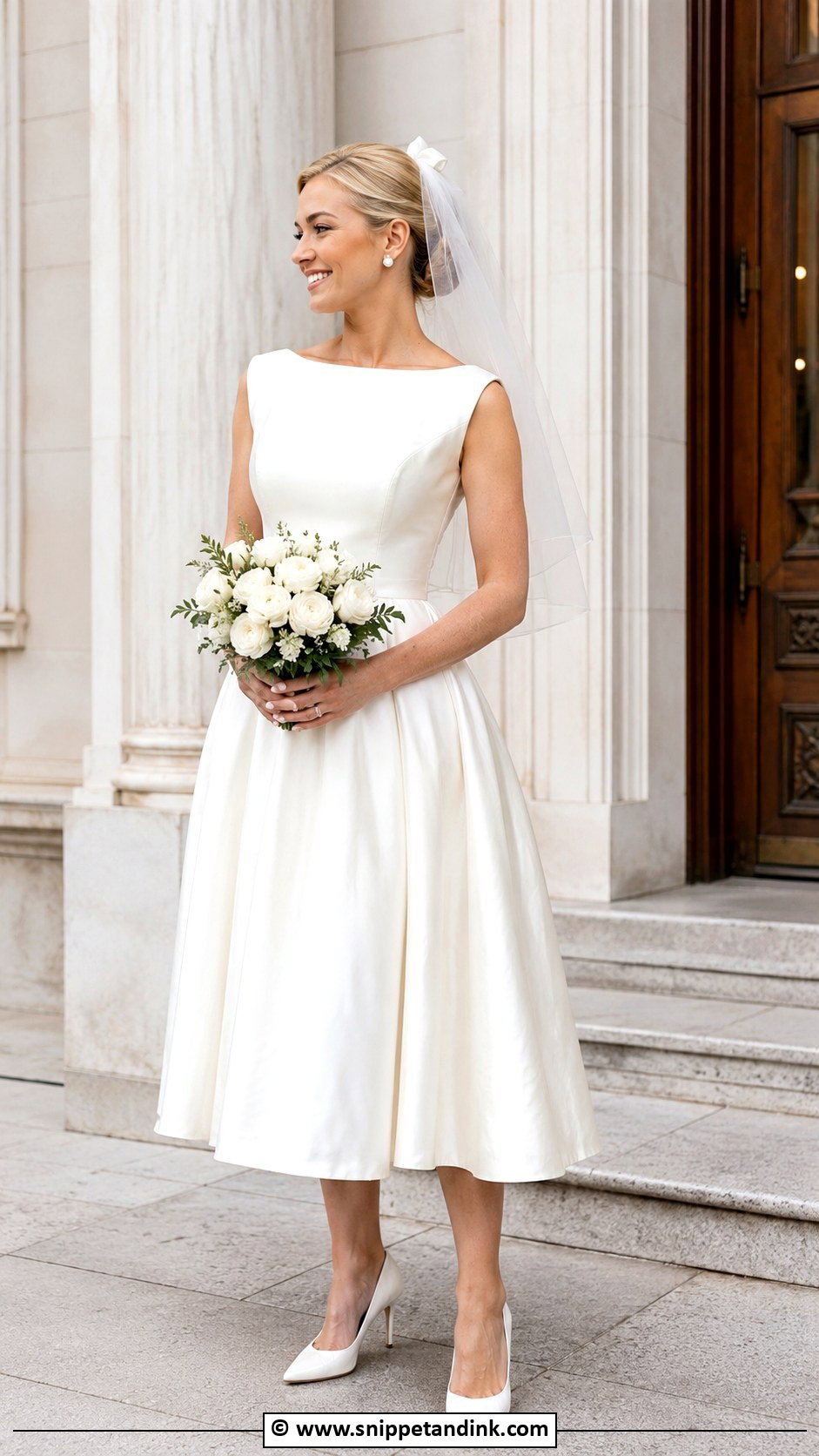
Vintage works best as one or two details, not a full period outfit. A tea-length hem, satin buttons, a bateau neckline, lace sleeves or a clean 60s shift shape each nod to the past on their own. If you’re buying genuinely old, check underarm discoloration and the zip first, since those are the usual problems. Ivory and cream suit the mood. Pointed pumps, pearl earrings and a soft veil or neat hair bow keep the rest clean and fresh.
35. Simple Short Wedding Dress
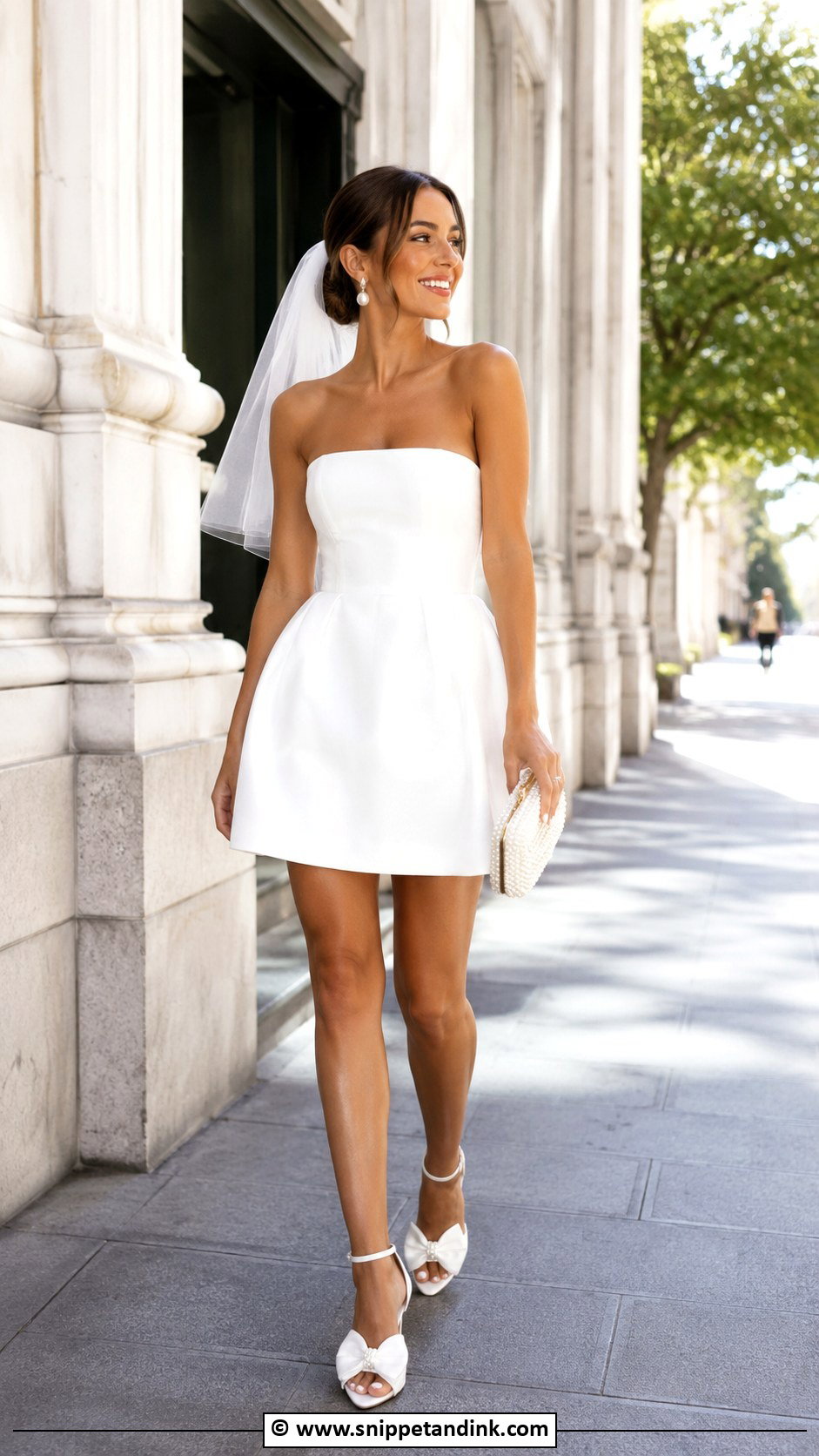
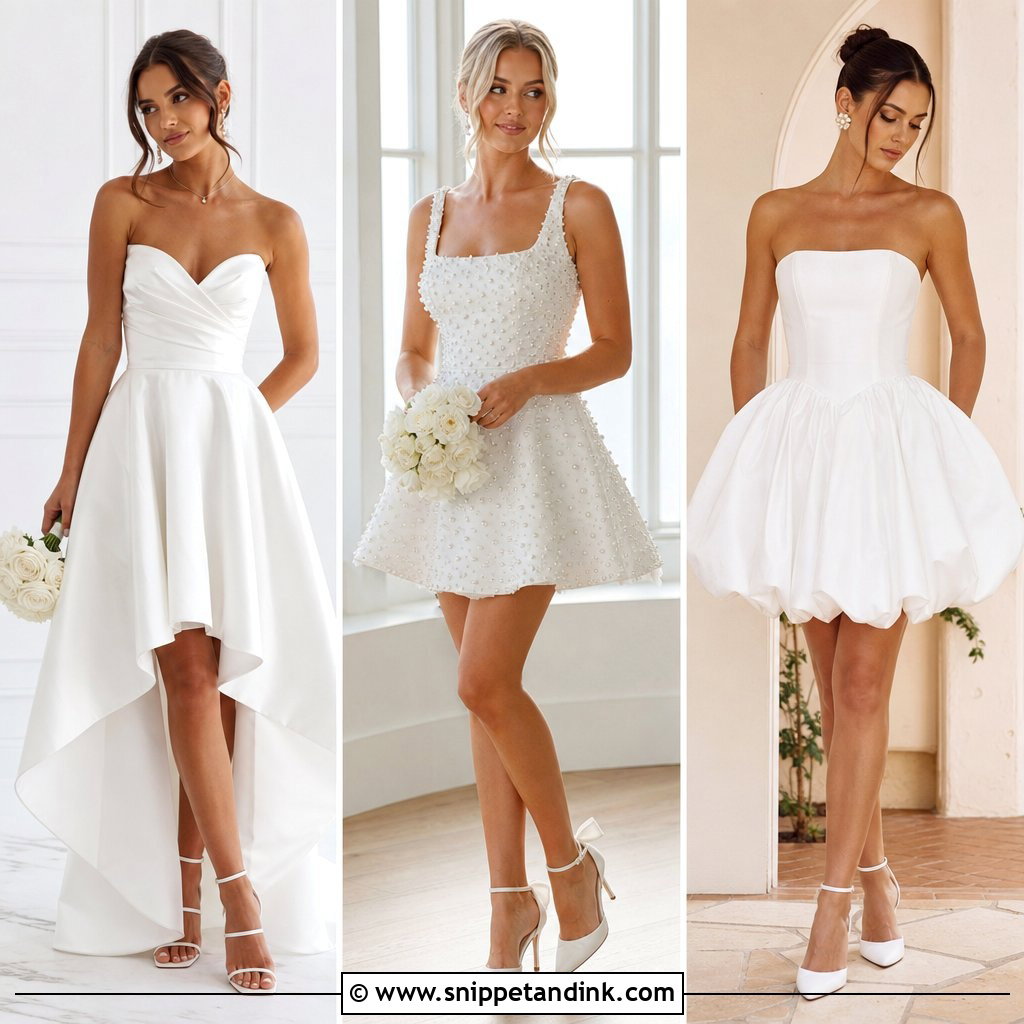
Short wedding dresses rely on proportion more than any other, because the hem is right there at eye level. A mini, a knee-length dress or a structured short A-line in satin, crepe, jacquard or simple lace all look intentional when the fit is sharp. I check hem length with the shoes you’ll wear, since a heel changes everything. Statement heels, pearl earrings and a short veil or bridal headband make it occasion-ready for a courthouse, an elopement or an after-party change.
An Alterations Calendar for a Dress With Nowhere to Hide
Because simple gowns depend on fit, alterations matter more than they do with a heavily decorated dress. Here’s the order I plan them in. Timings vary with the shop and the seamstress, so treat these as a starting point to confirm.
When to order
Made-to-order bridal gowns often take several months to arrive, so many brides order six to nine months out. Ready-to-wear and off-the-rack simple dresses can be bought much later, which is a real advantage for small weddings and elopements.
How many fittings
Expect two or three. The first, roughly two to three months before the wedding, deals with the big structural changes: taking in the bodice, shortening straps or the waist. The second refines. The last, a week or two before, is a try-on to check nothing has shifted, and it’s when whoever is helping you dress learns the bustle and fastenings.
What to bring every time
Your shoes, your underwear, any belt or sash, and ideally the veil. A long veil can drag a lightweight crepe back, and you want to see that before the hem is cut, not after.
Fit First, Then One Detail
Simple gowns can be sleek, romantic, modest, vintage or relaxed, and the difference comes down to fabric, neckline and silhouette rather than decoration. They suit nearly every setting, from a quick courthouse ceremony to a formal reception. My order of priorities never changes: get the fit right, then add one detail that sounds like you. The best plain dress isn’t the plainest one. It’s the one you stop thinking about the moment you put it on.
You'll Like These Ideas:







Leave a Reply