
More and more of the brides I dress walk into a fitting room and ask for less: no beading, no lace overlay, just a good shape in a good fabric. It’s a request I love, because a plain gown leaves space for the things that are personal, a family veil, your grandmother’s earrings, a bouquet from your own garden. It also shows everything, so the cut and the fit carry the whole look. Below are 25 clean gowns, from satin slips to crepe columns, tea lengths and jumpsuits, with the practical detail I’d check on each, for courthouses, gardens, beaches and ballrooms alike.
How Long a Plain Gown Actually Takes
A simple gown isn’t always a quick one. Plain doesn’t mean faster to make, and many brides are surprised by the timeline.
- Made-to-order from a bridal shop: order roughly six to nine months before the wedding. Production often takes several months, and alterations need another six to eight weeks after it arrives.
- Off the rack or a sample: you can buy and take it home the same day, which makes it the answer for a short engagement. Budget for cleaning and for more alterations, since samples are made in one size.
- Ready-to-wear and contemporary labels: often quicker to ship, but check returns before buying online, and leave time for a seamstress.
Whichever route you take, plan for two or three fittings, with the last one in the final couple of weeks.
One thing that does save time with a plain gown: there’s no lace to re-pin or beading to remove and re-sew at the seams, so alterations are usually simpler and quicker than on an embellished dress. Hemming satin or crepe is straightforward. Taking in a fitted bodice is not, so go to fittings in good time if you’re planning any big changes.
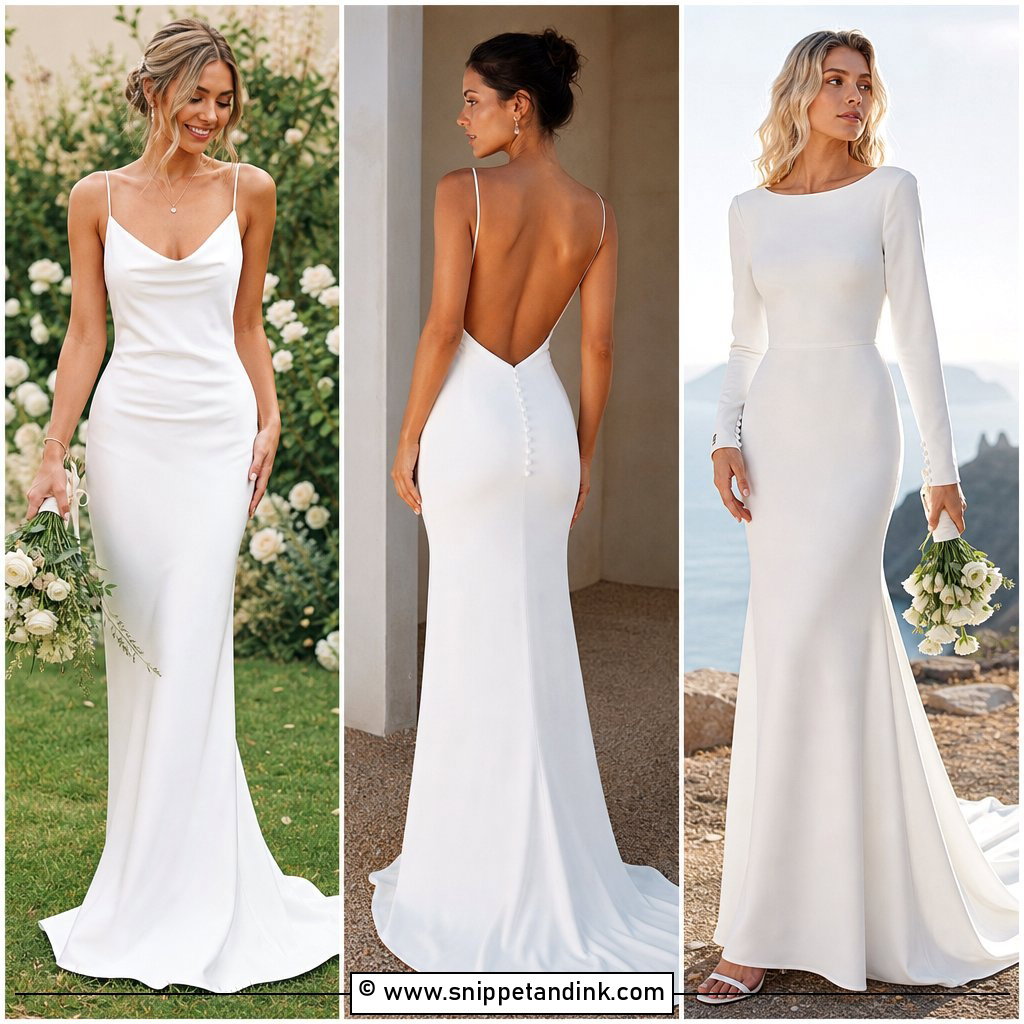
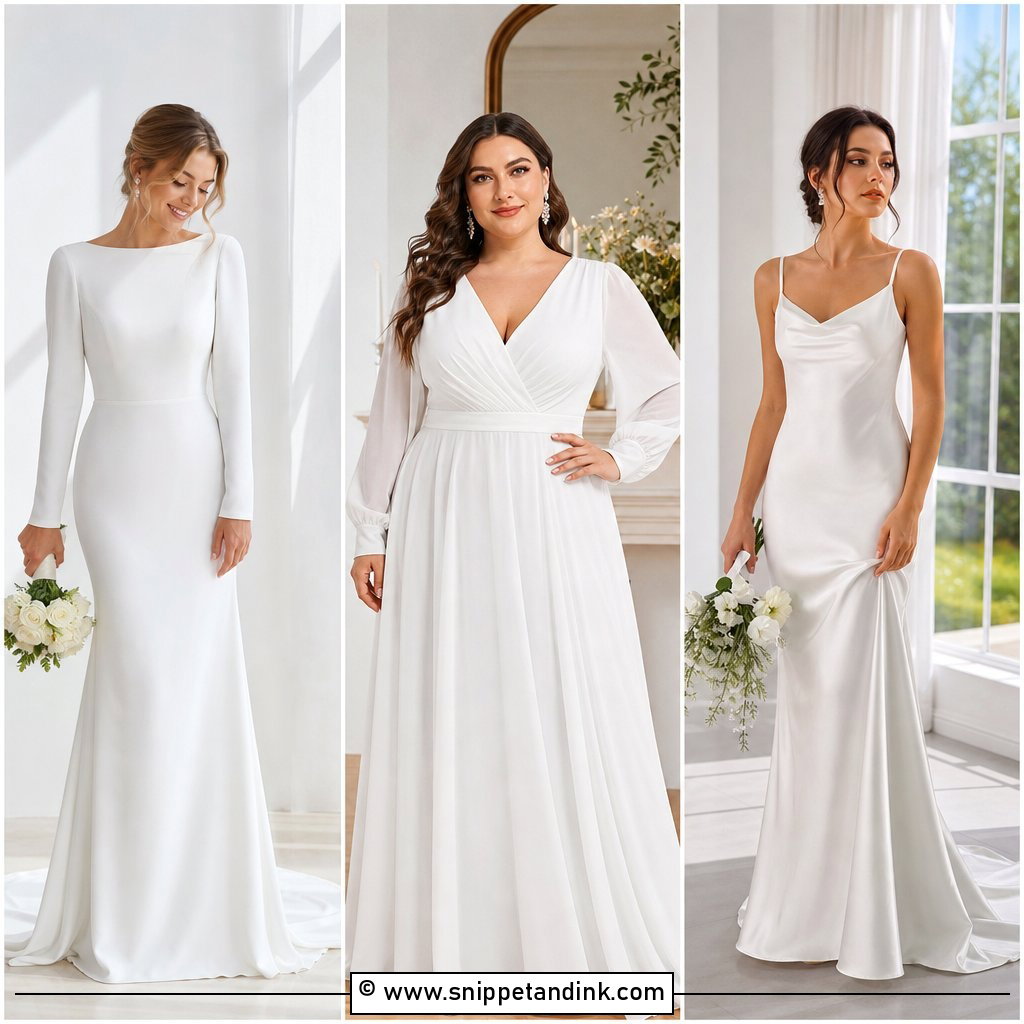
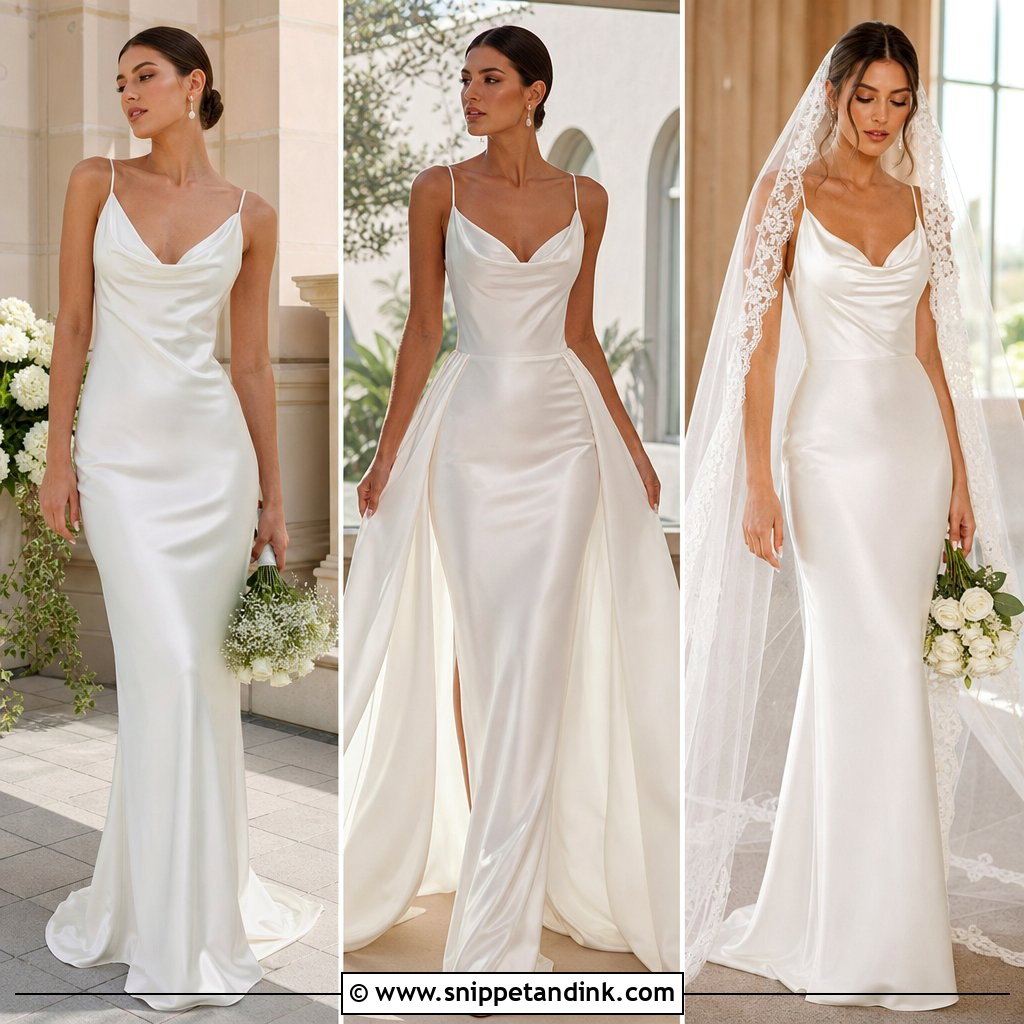
1. Simple Satin Slip Wedding Gown
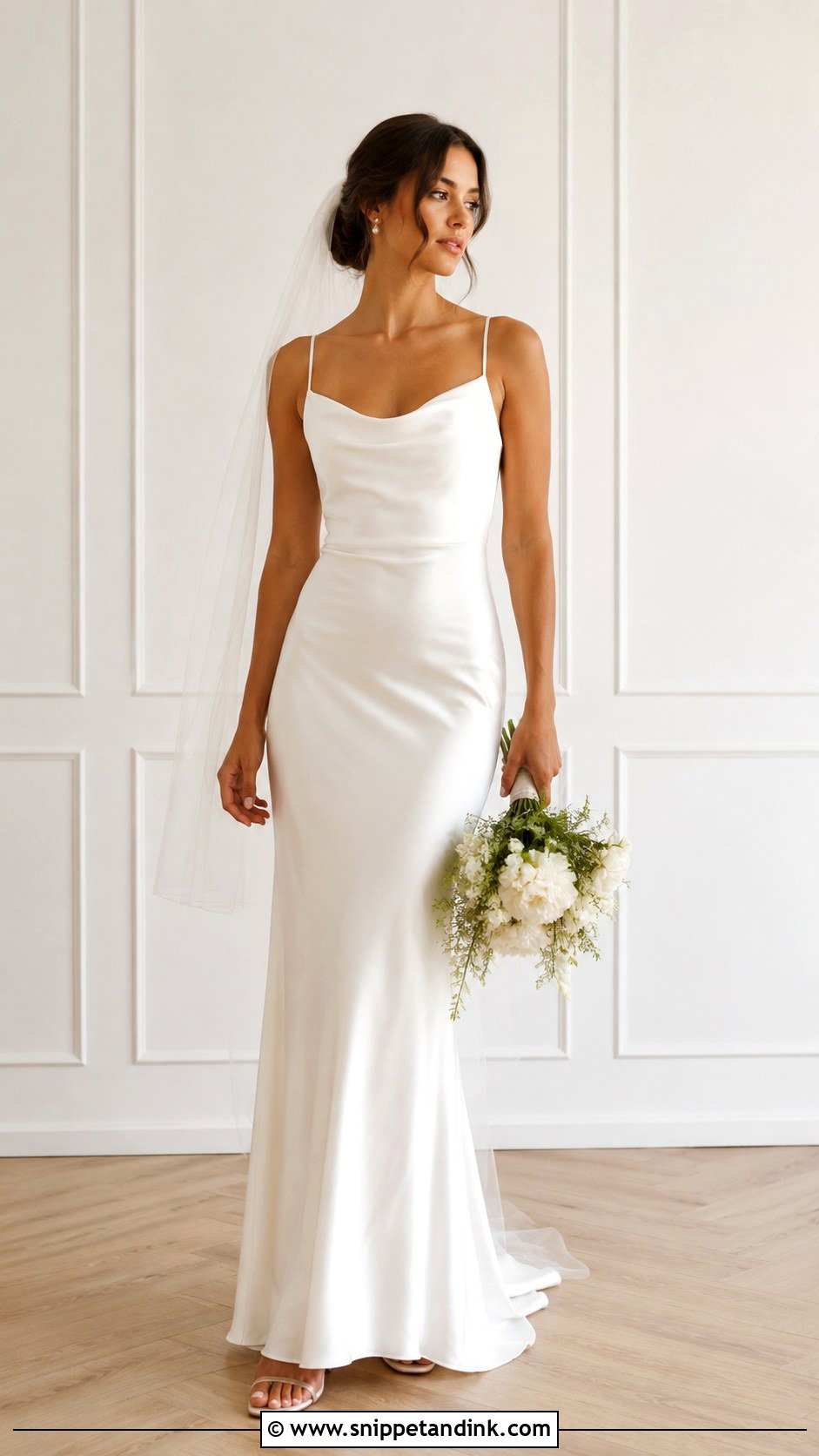
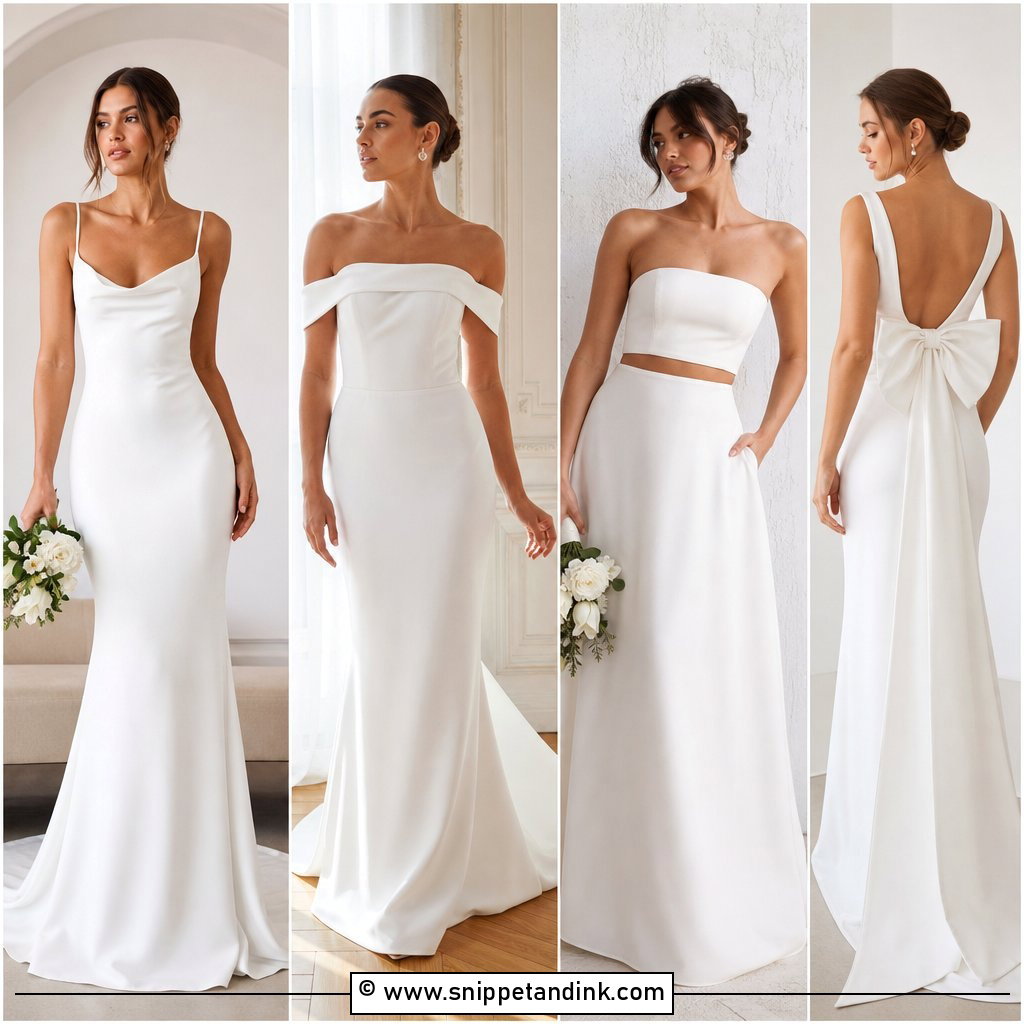
Satin slips depend almost entirely on the fabric, so I’d put most of the budget there. Smooth satin or a heavy charmeuse falls over the body with that soft 90s feel; a thin one clings and shows every line underneath. A cowl neck feels relaxed, a straight neck modern. Barely-there heels, pearl studs and a slim veil finish it, and a sheer wrap or cropped bridal cardigan covers your shoulders for a cool evening or a church.
2. Simple Crepe Column Wedding Gown
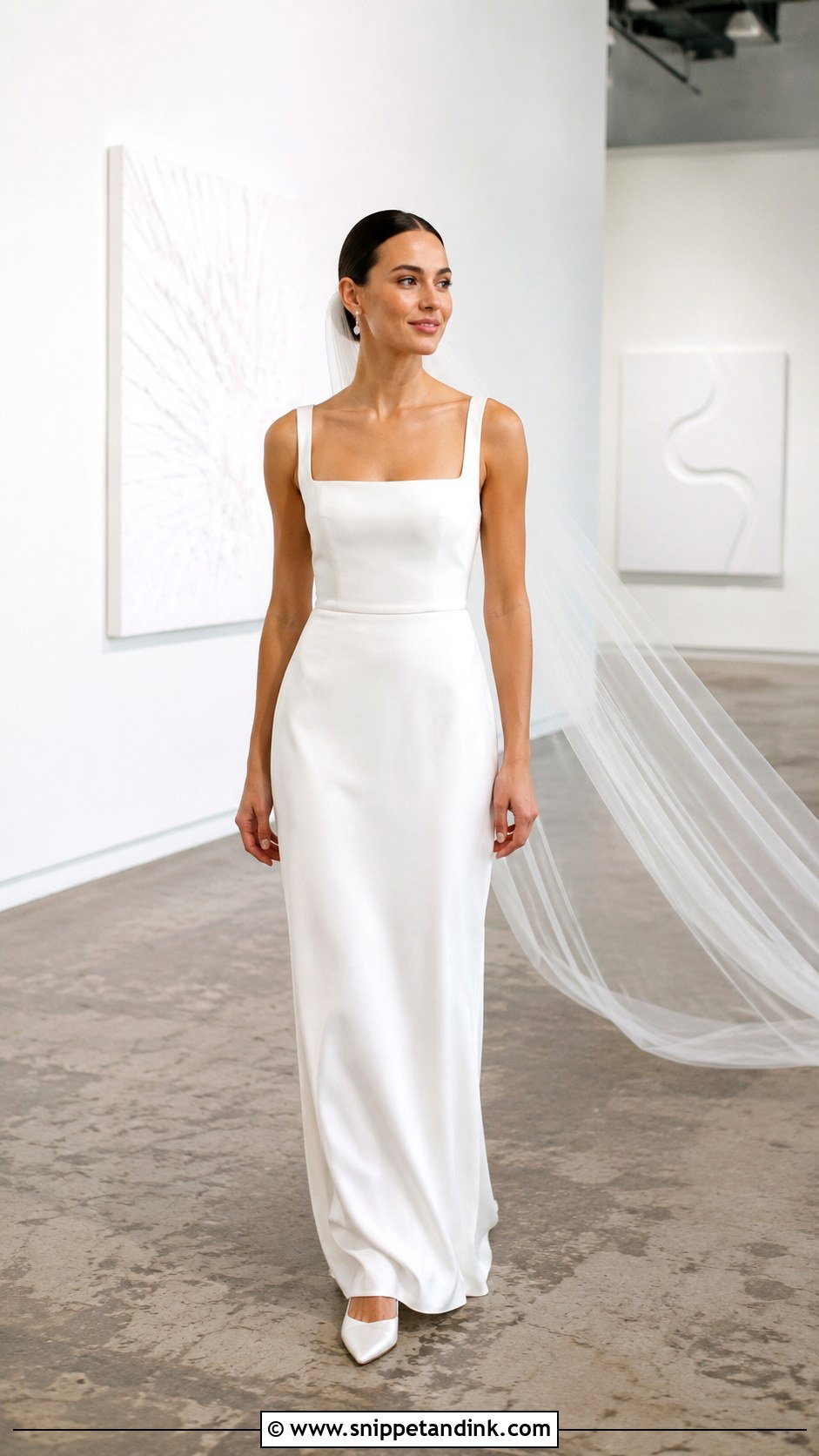
Crepe is the fabric I suggest most to minimalists. It has a matte surface, smooths the figure, holds a sharp seam and doesn’t crease badly when you sit. In a column, the waist should be shaped gently rather than nipped tight, or the long line breaks. A square, bateau or slim V neck keeps it understated. Pointed satin pumps, a low bun and delicate drop earrings; add a long veil if you want drama at the ceremony.
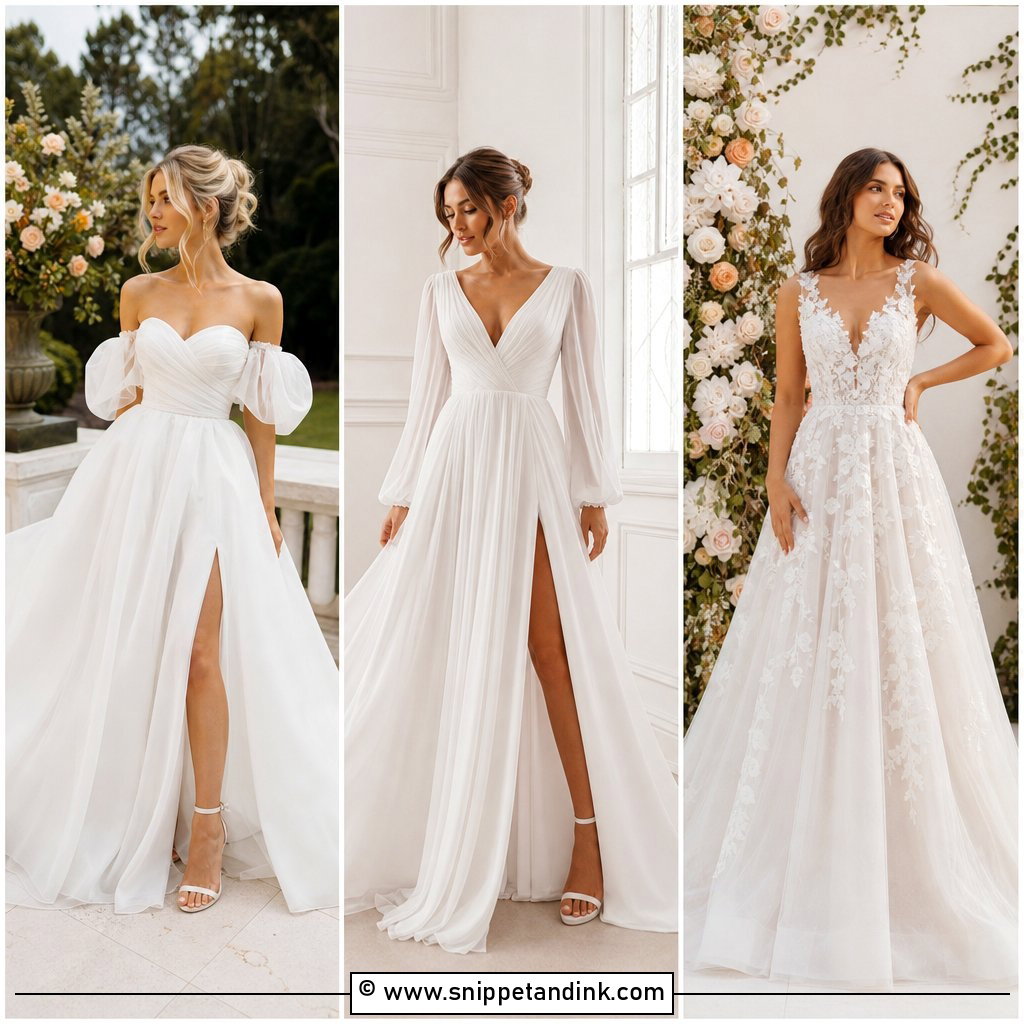
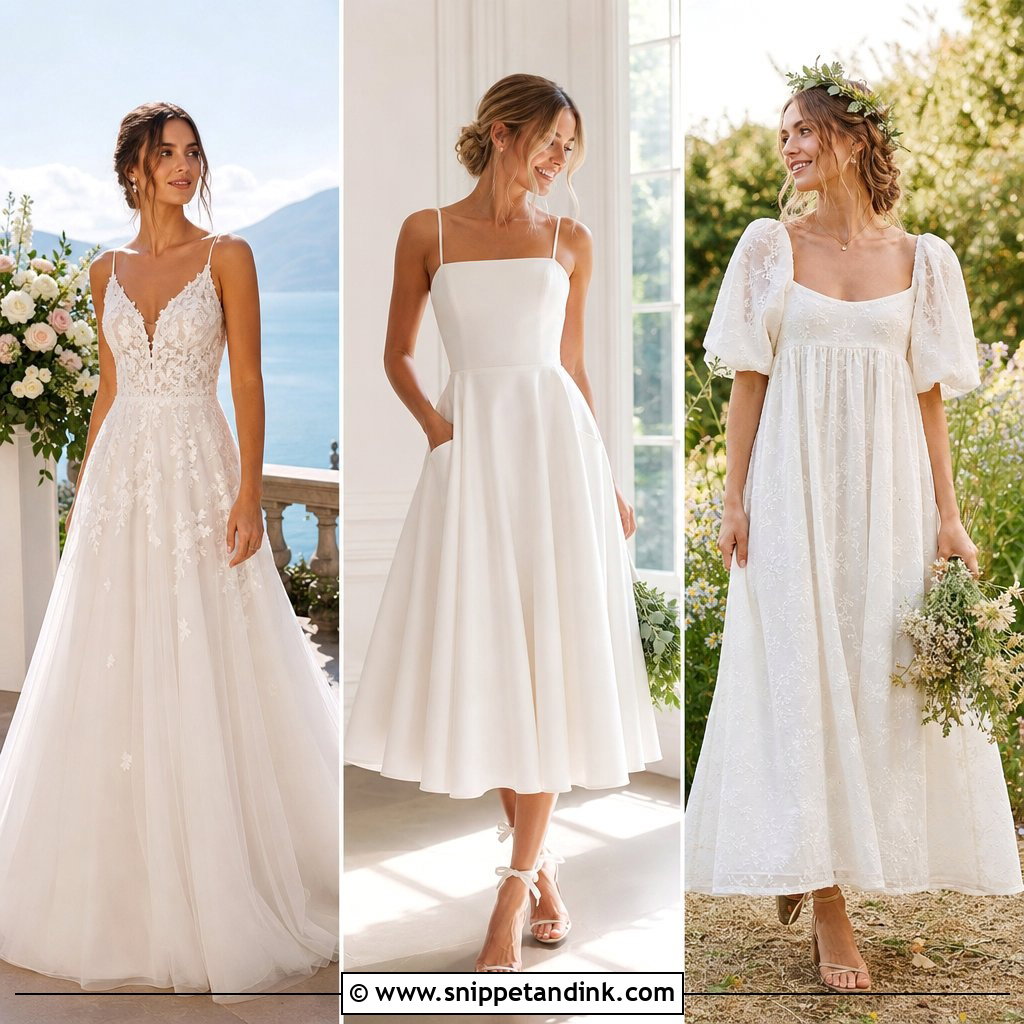
3. Simple A Line Wedding Gown
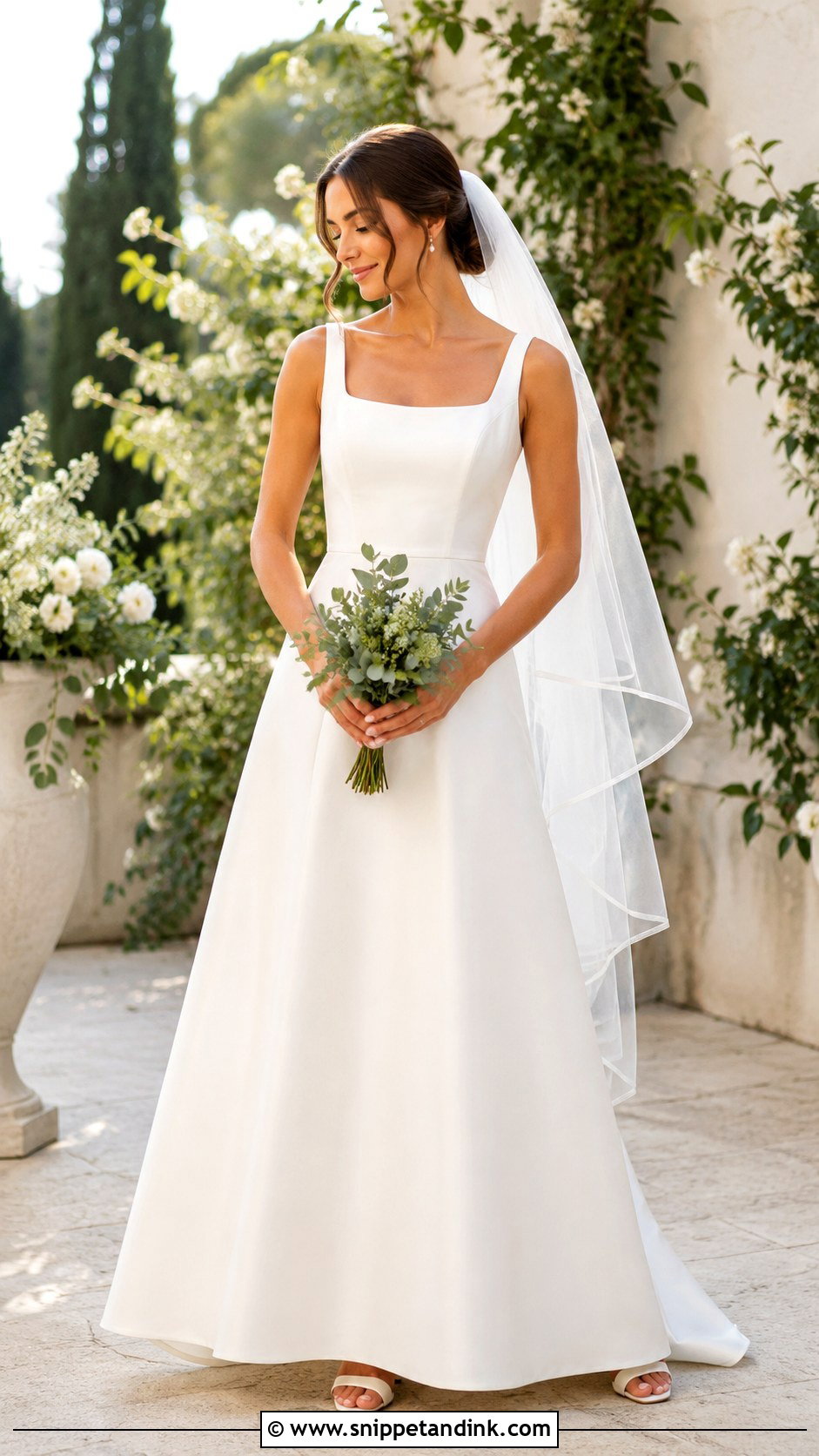
Most bodies I fit look good in an A-line, which is why it’s the safest first try-on. The bodice shapes, the skirt opens from the waist, and you can walk, sit and dance in it. The fabric sets the mood: matte satin and mikado give structure, organza adds air, soft crepe keeps it relaxed. Scoop or square necklines keep it fresh, with block heels, a fingertip veil and a small bouquet with greenery.
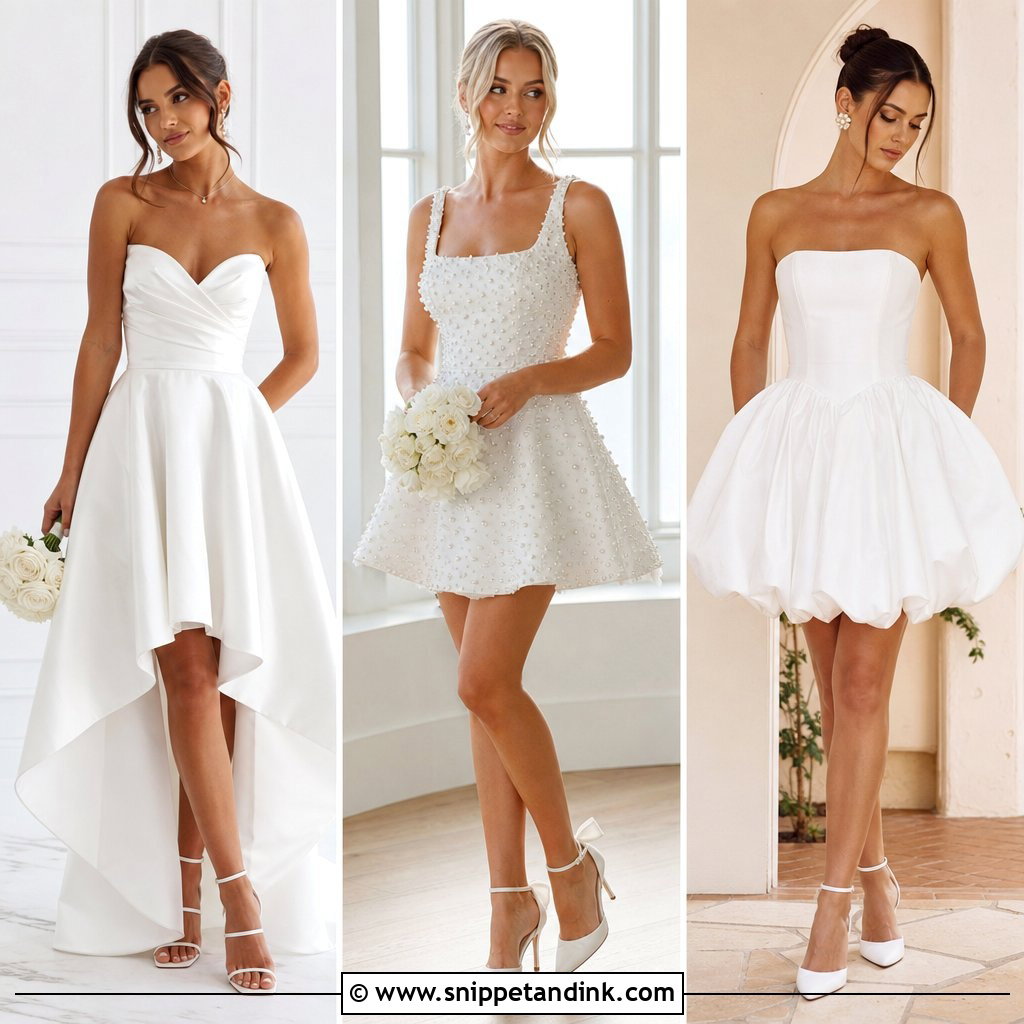
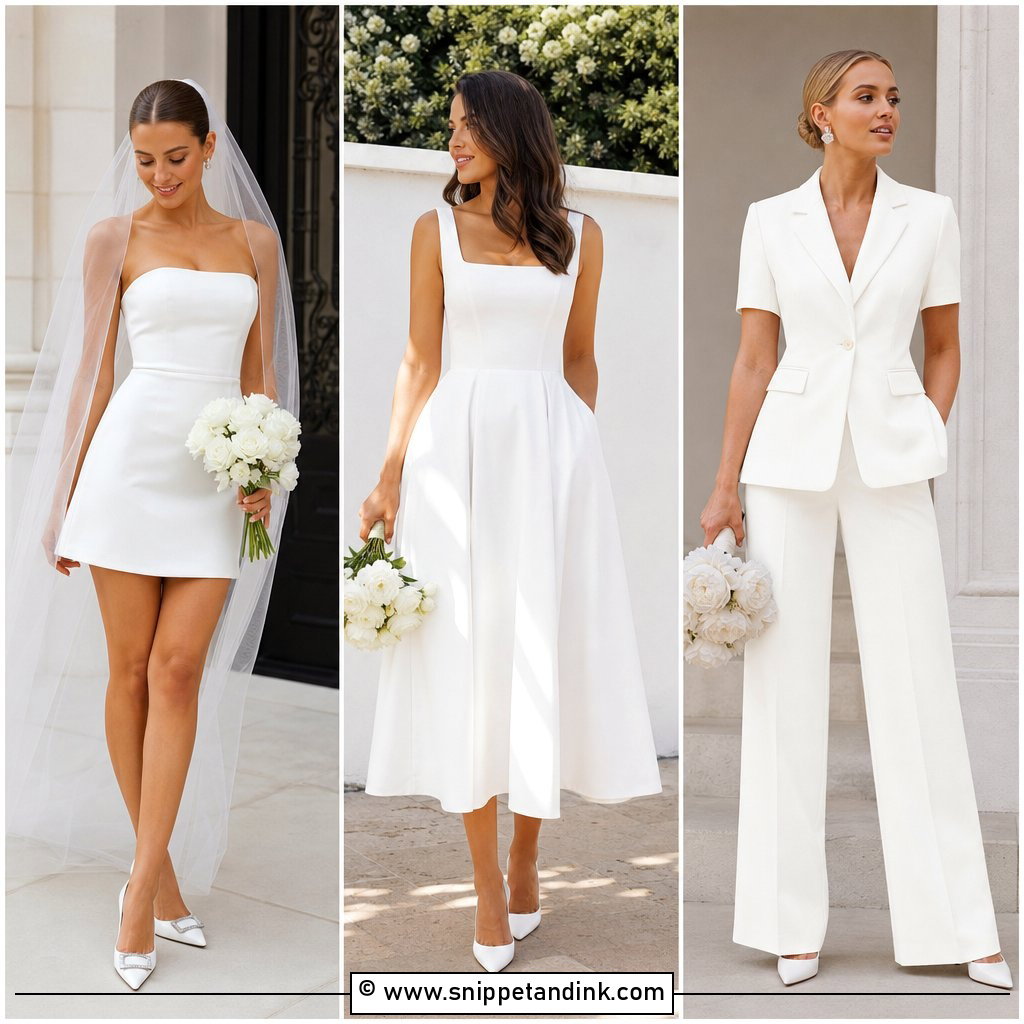
4. Simple Strapless Wedding Gown
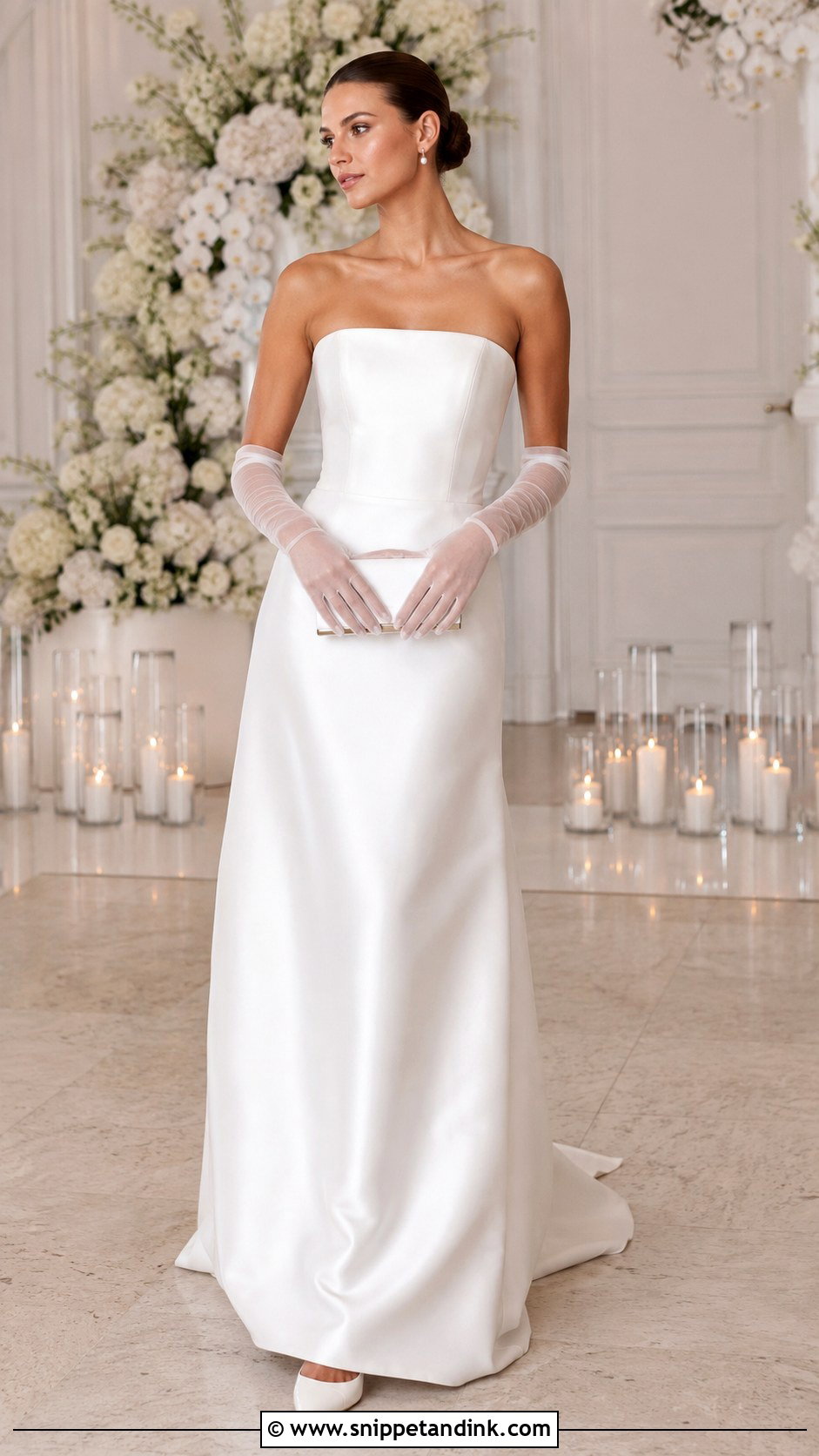
Strapless gowns look clean and confident, but only with real inner structure. I want a boned bodice with a waist stay, and I make brides sit, raise their arms and hug me at fittings; if the top slides, it needs taking in or a silicone grip strip. A straight-across neckline is modern, a soft sweetheart more romantic. A sleek chignon, pearl earrings and a clutch are enough, and a detachable scarf, sheer gloves or a light wrap adds coverage if you need it.
5. Simple Long Sleeve Wedding Gown
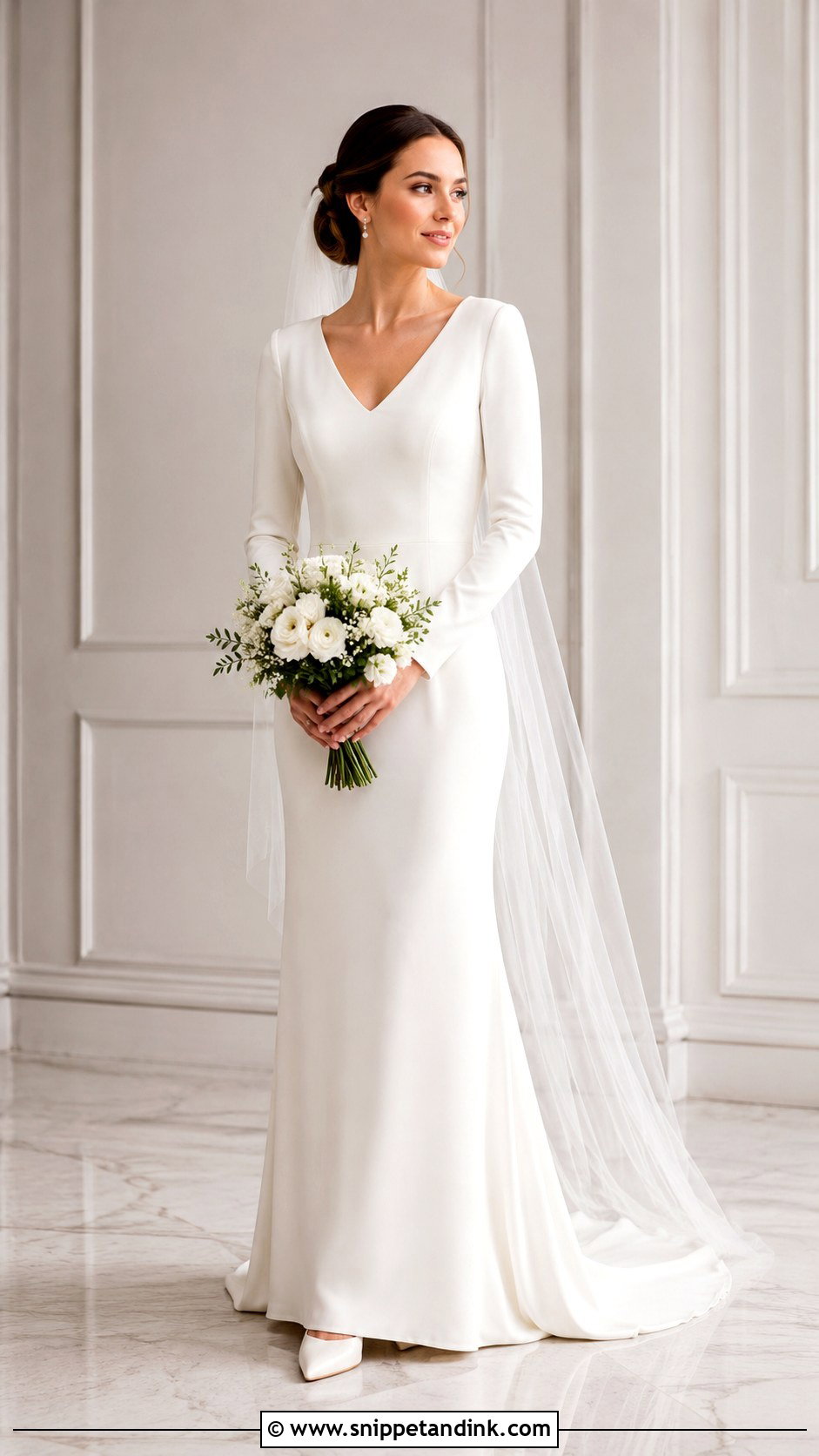
There’s something quietly elegant about long sleeves on a plain gown. Fitted crepe sleeves look sleek, sheer sleeves lighter, satin more classic. Sleeves change how you move, though, so have them fitted with your arms bent and raised; a sleeve set too low in the armhole stops you lifting your arms for a hug or the first dance. A high neck is refined, a V softer. Closed-toe heels, a clean veil and minimal jewellery keep the sleeves the focus.
6. Simple Square Neck Wedding Gown
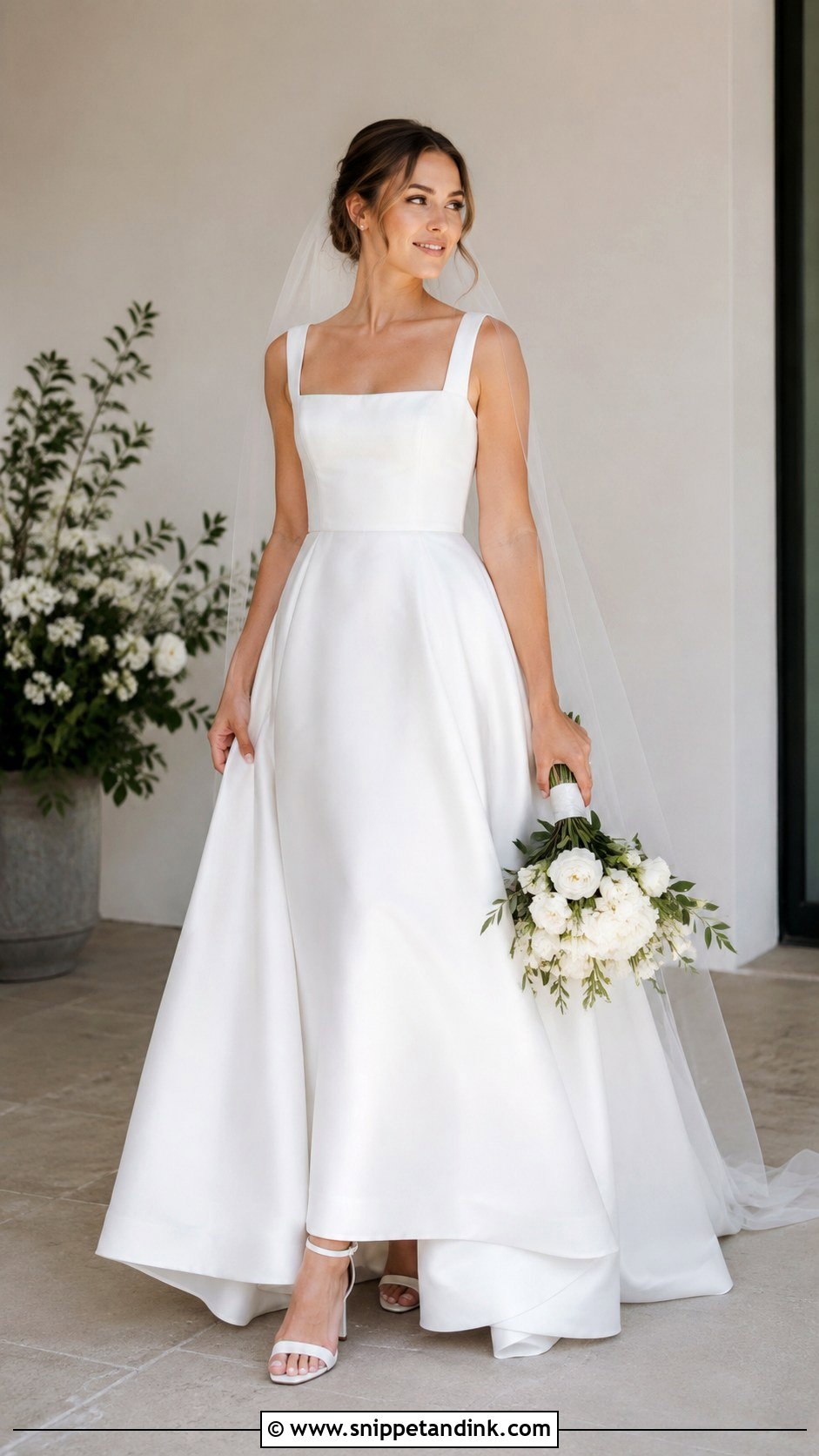
A square neck frames the collarbone and gives a fuller bust more support than a sweetheart or a slip. It stays crisp in crepe, satin or mikado, but goes floppy in soft chiffon. Straps, sleeves or a sleeveless bodice all work with it. Low pearl earrings, a smooth veil and ankle-strap heels balance it. One rule I give: with a full skirt keep earrings small; with a slim skirt you can go bolder.
7. Simple Off Shoulder Wedding Gown
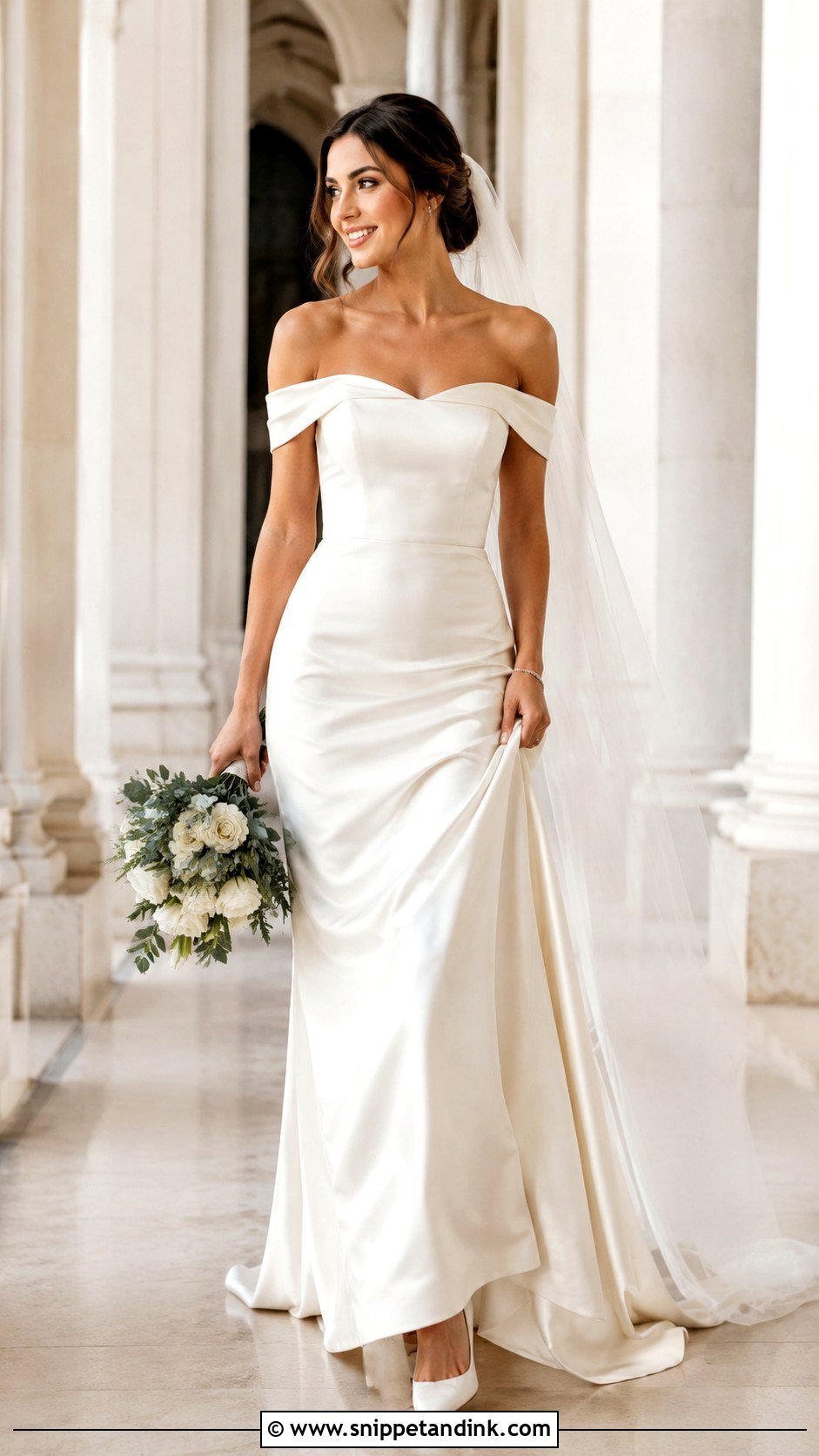
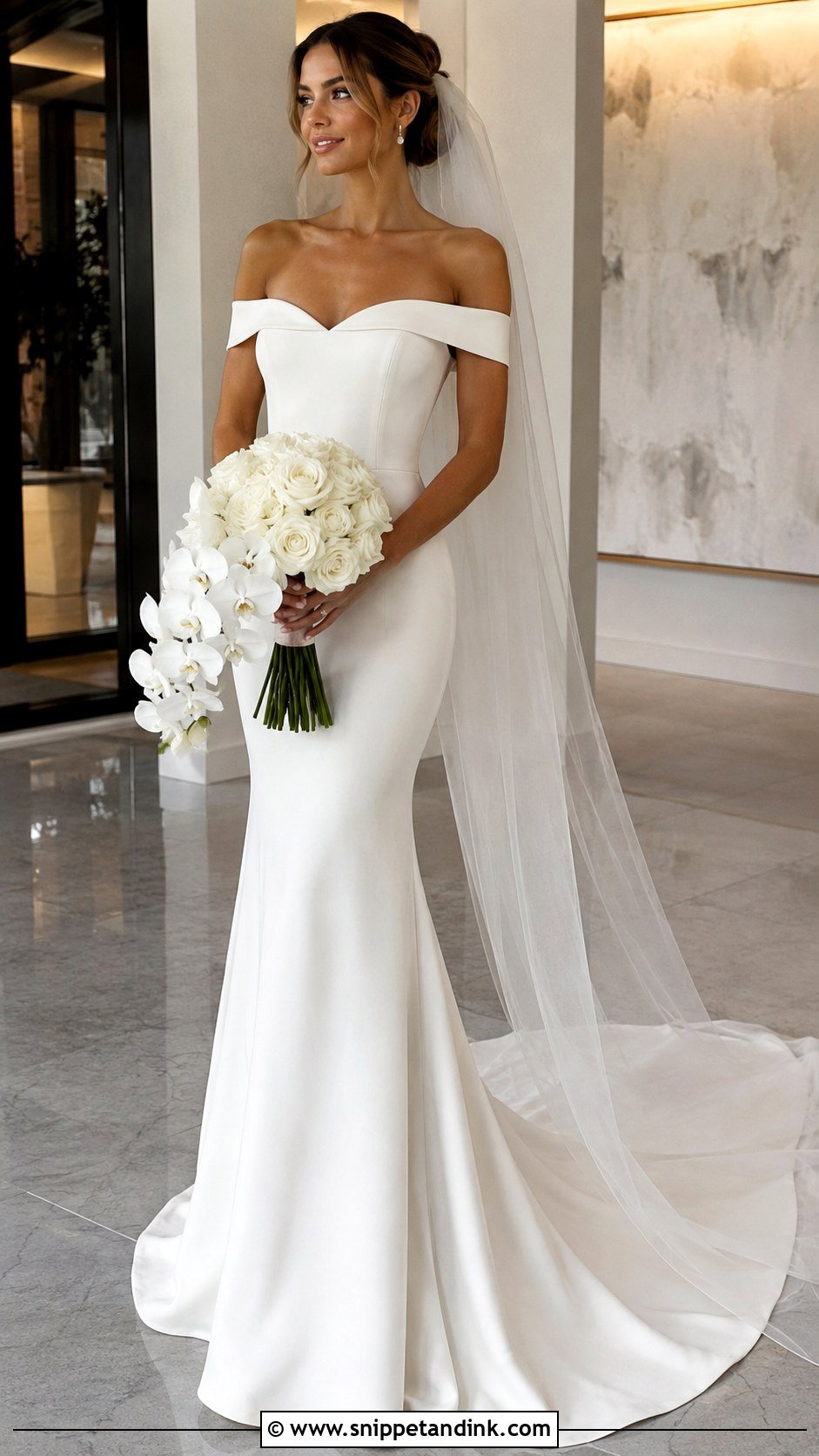
Off-shoulder necklines draw the eye to the shoulders and collarbone and look best with hair swept up. I always warn brides that the band limits how high you can raise your arms, so practise a hug and a bouquet toss in it before you commit. A fitted bodice and smooth skirt is classic; a relaxed fold is more modern. Satin and crepe both hold the shape. Pointed heels, a slim bracelet and a soft veil that doesn’t cover the neckline.
8. Simple Halter Wedding Gown
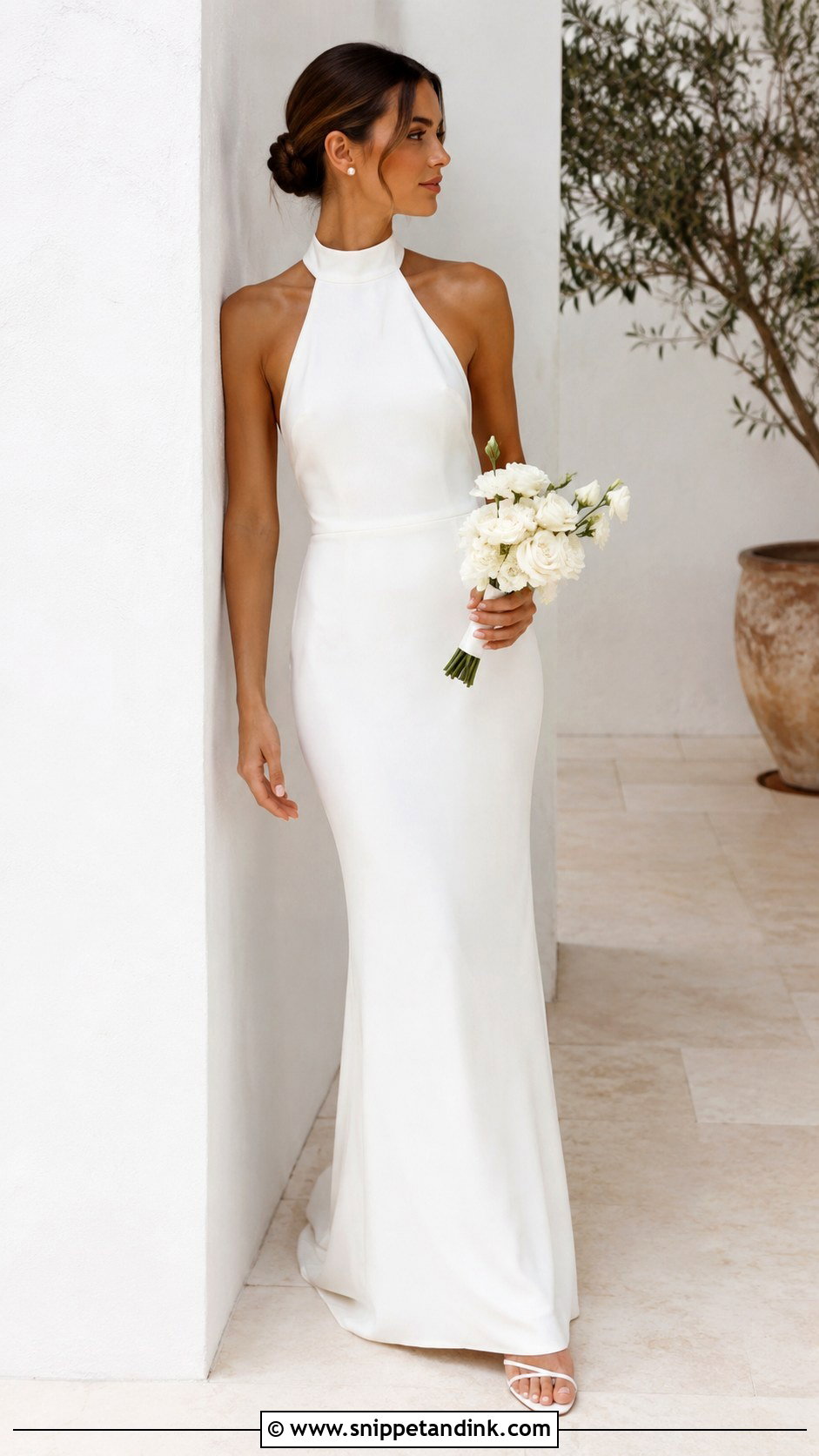
Halters create a long line through the upper body and suit athletic or broad shoulders particularly well. They work with a fitted column or a gentle A-line. A low twisted bun keeps the neckline visible, and a halter almost always looks best without a necklace. Small hoops or studs and strappy heels finish it. I’d keep it for warm-weather and destination weddings, as a halter leaves little room for a cover-up.
9. Simple V Neck Wedding Gown
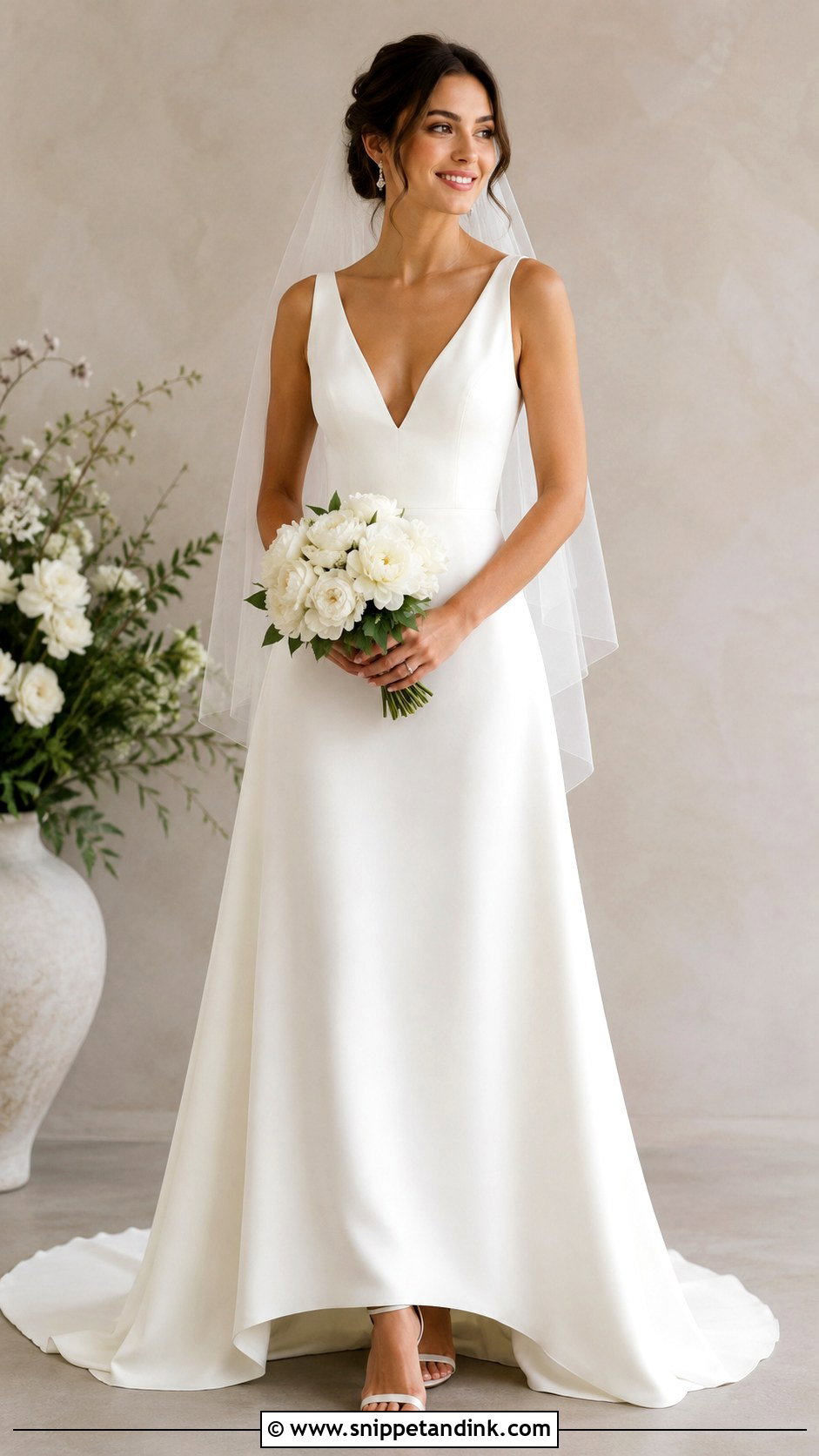
V necks lengthen the neck and torso, which is why they flatter so many figures. A shallow V looks classic and modest; a deep one feels modern but needs either a mesh insert or a well-built bodice to stay put. Crepe or satin gives a smooth finish. With a deep V, skip the necklace and let earrings do the work, with soft waves and a plain veil.
10. Simple High Neck Wedding Gown
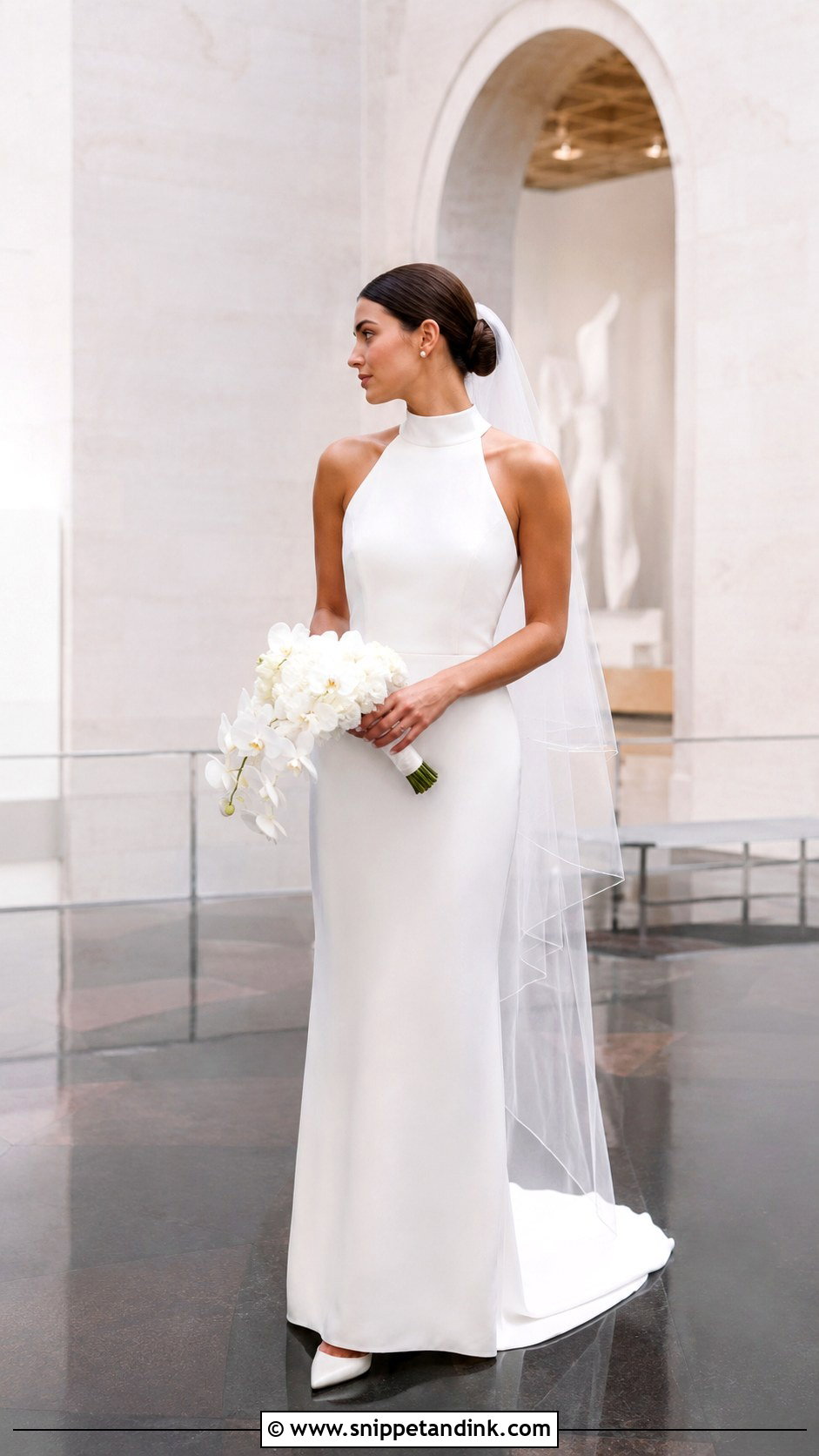
High necks feel slightly fashion-forward and suit brides who want coverage with a sleek line. In crepe as a column it looks very modern; in satin as an A-line, more classic. Wear your hair up or tucked back, because loose hair over a high neck crowds the face. Have the veil attached low at the bun so it doesn’t break the neckline. Small pearl studs and pointed heels are all it needs, especially in museums, galleries and formal city venues.
11. Simple Tea Length Wedding Gown
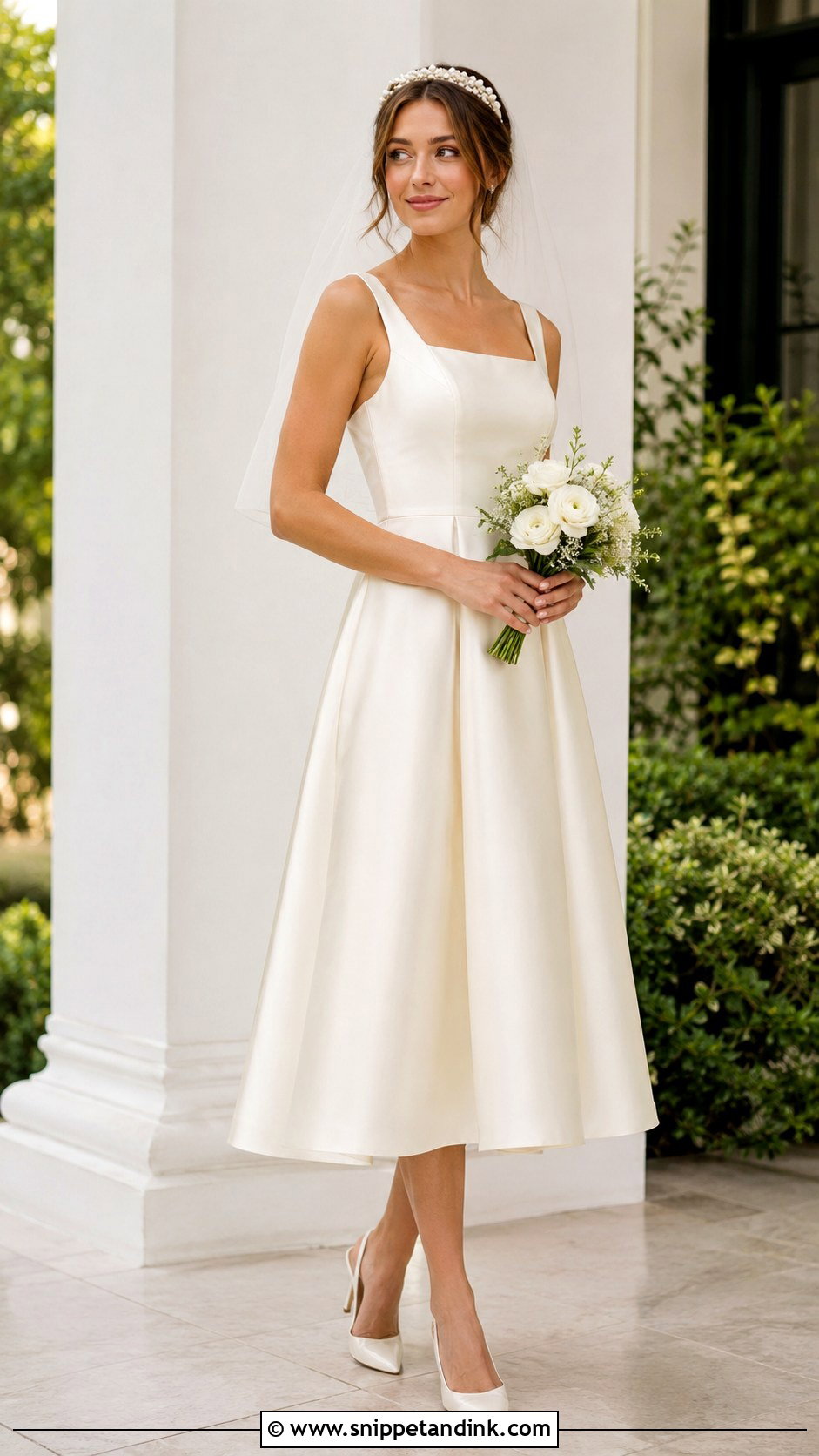
Tea length falls between knee and ankle, which makes it the easiest gown here for walking, greeting guests and dancing. Satin, tulle and mikado all give it a bridal shape over a fitted bodice. Your shoes are on show, so choose pumps, slingbacks or bow heels you love, and make sure the hem is set with the exact shoes you’ll wear, since a centimetre either way changes the proportions. A short veil, a pearl headband or soft curls finish it.
12. Simple Courthouse Wedding Gown
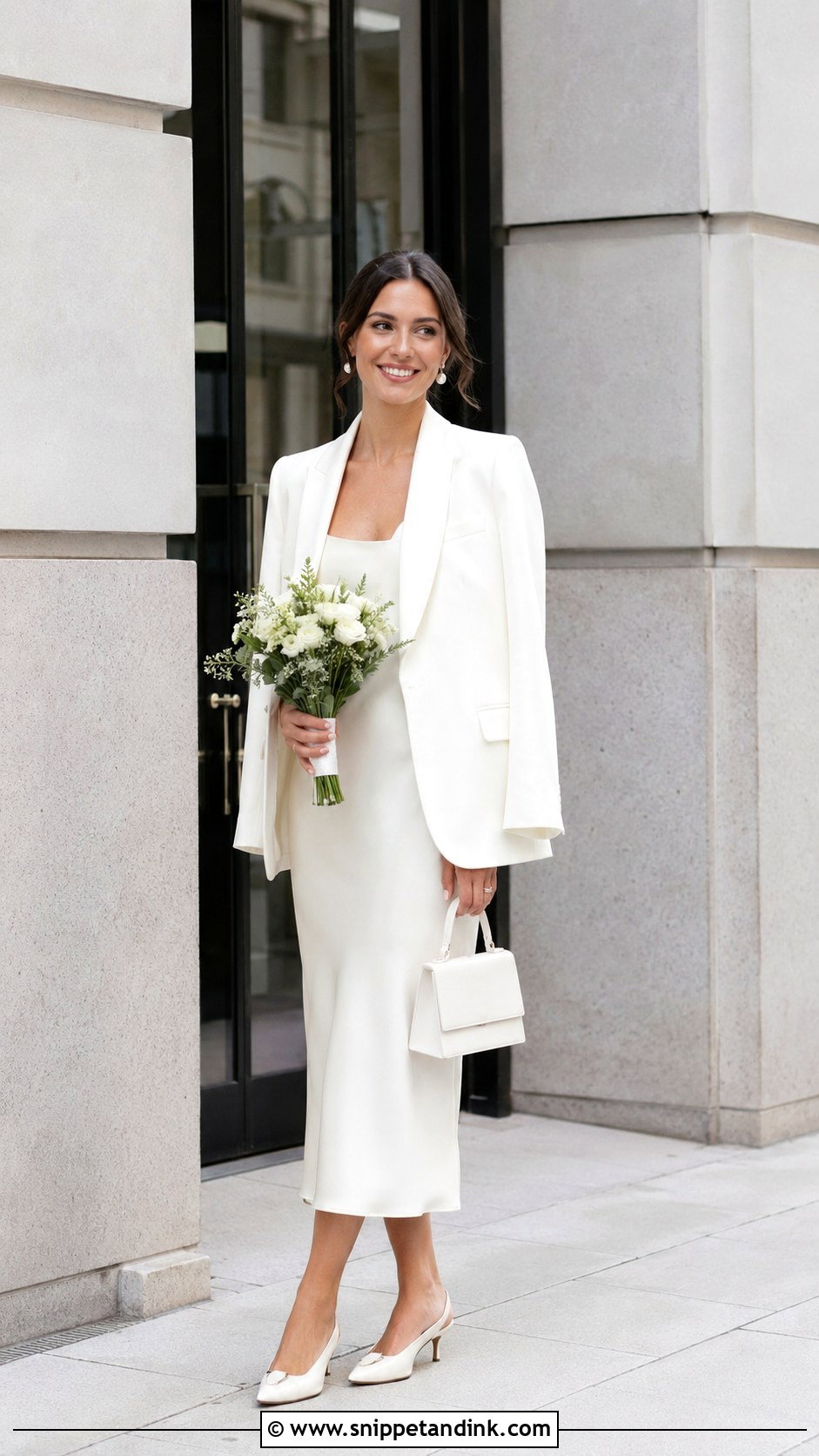
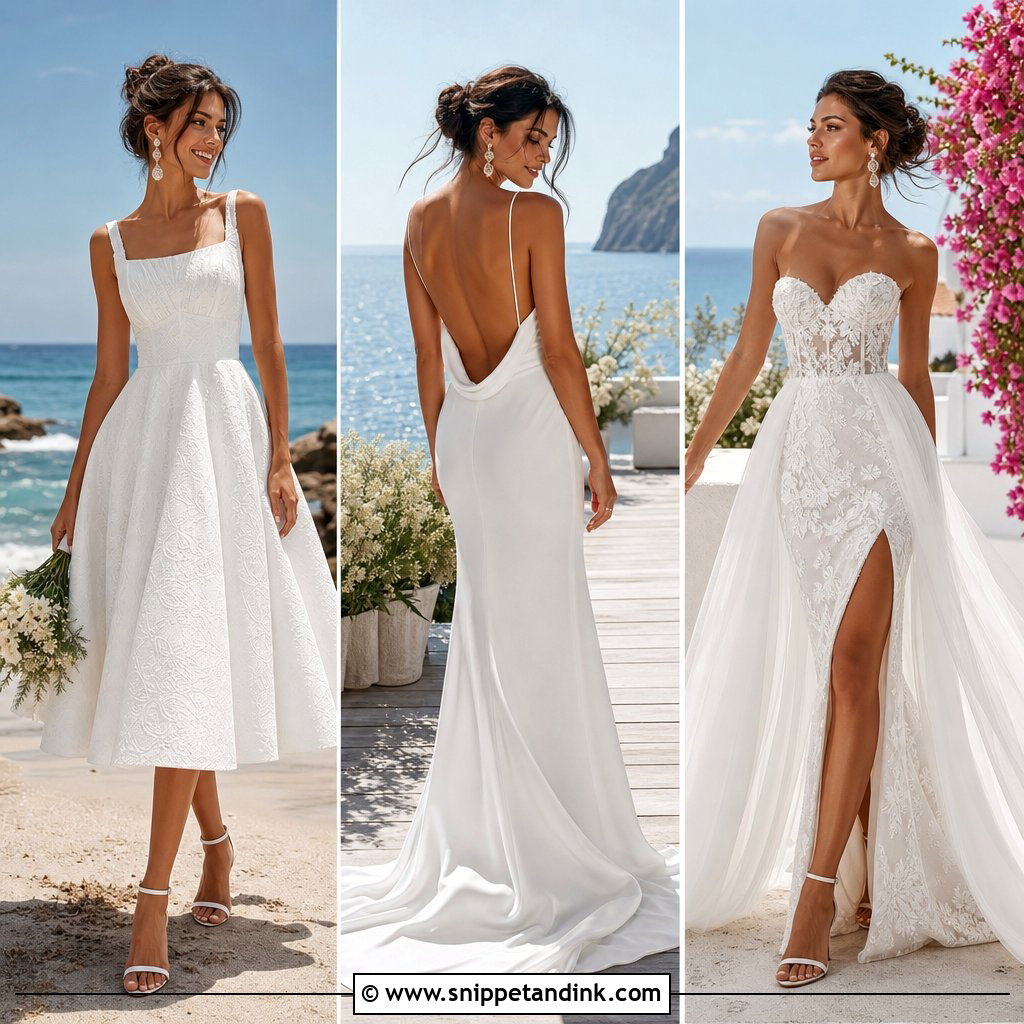
A courthouse wedding gown has to work in a small room, on stairs and in a taxi. A sleek midi, a satin slip, a crepe sheath or a tailored bridal dress all do the job. Because the setting is plain, fit and accessories carry the look: low heels, a small bouquet, a structured mini bag. A short or birdcage veil makes it bridal without formality, and a white blazer over the top looks sharp in arrival photos.
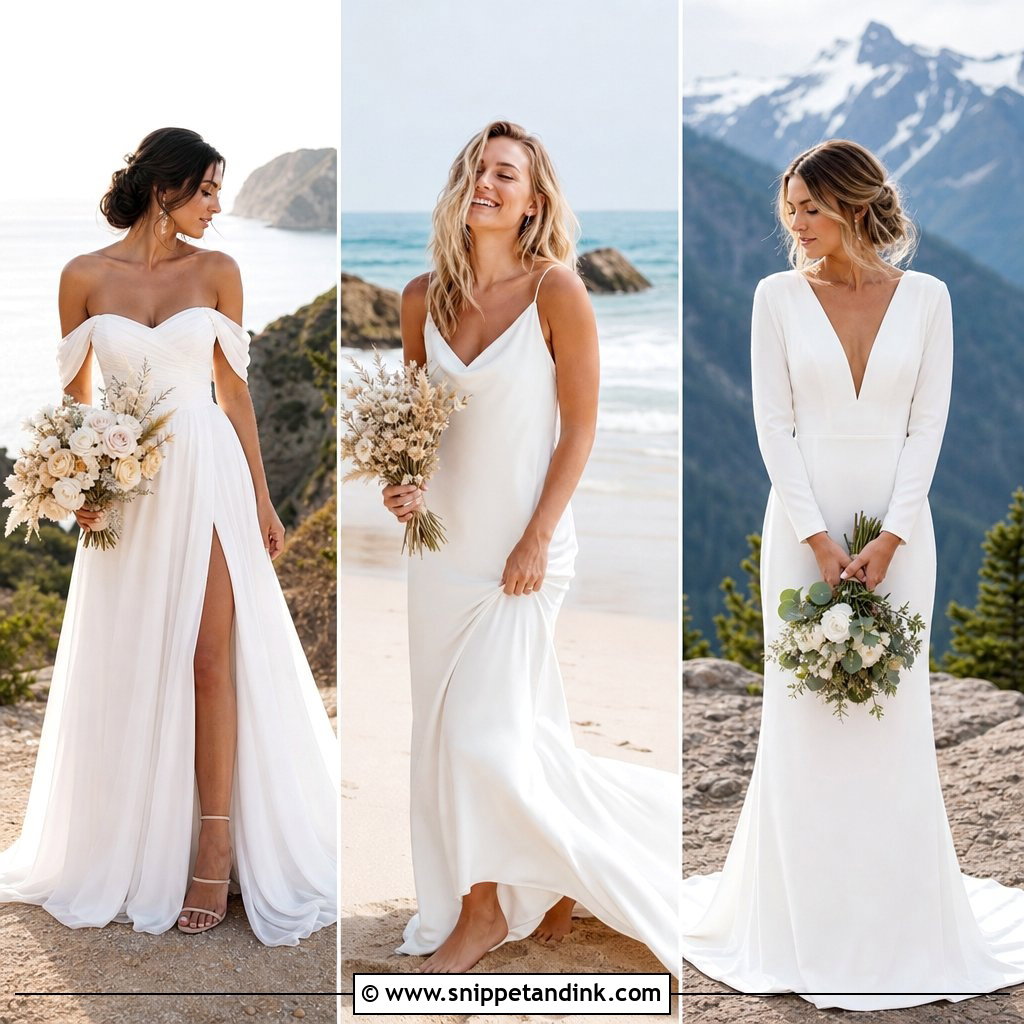
13. Simple Beach Wedding Gown
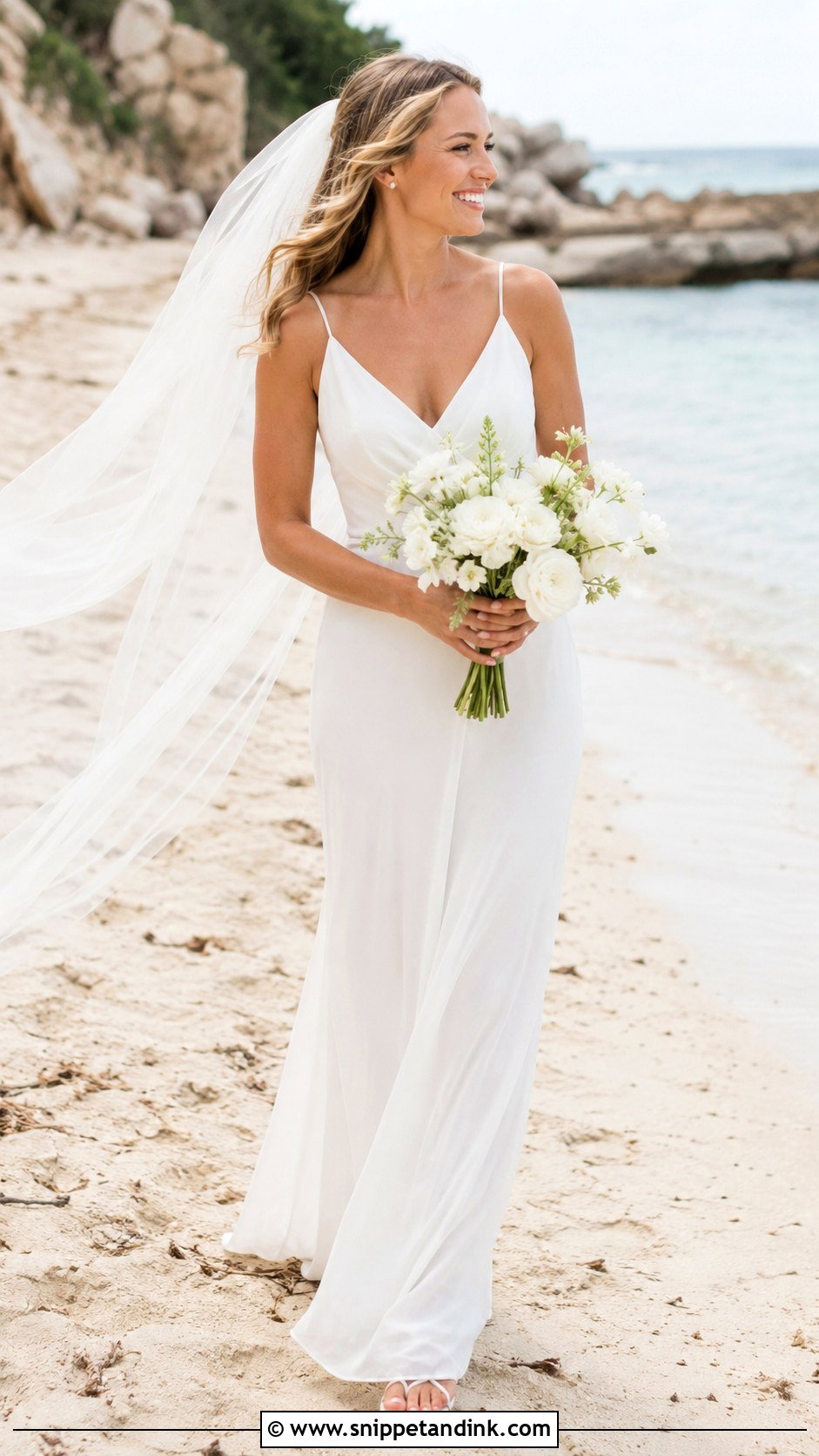
Wind, sand and heat are what a simple beach wedding gown has to handle. Chiffon, soft crepe, light satin and lightweight organza breathe best. A sheath, slip or simple A-line moves naturally, and I’d skip long trains: they collect wet sand and drag heavily by the end of the ceremony. Hem it a little shorter than usual for flat sandals or bare feet. Pearl studs, loose waves and a sheer veil that catches the breeze finish it.
14. Simple Garden Wedding Gown
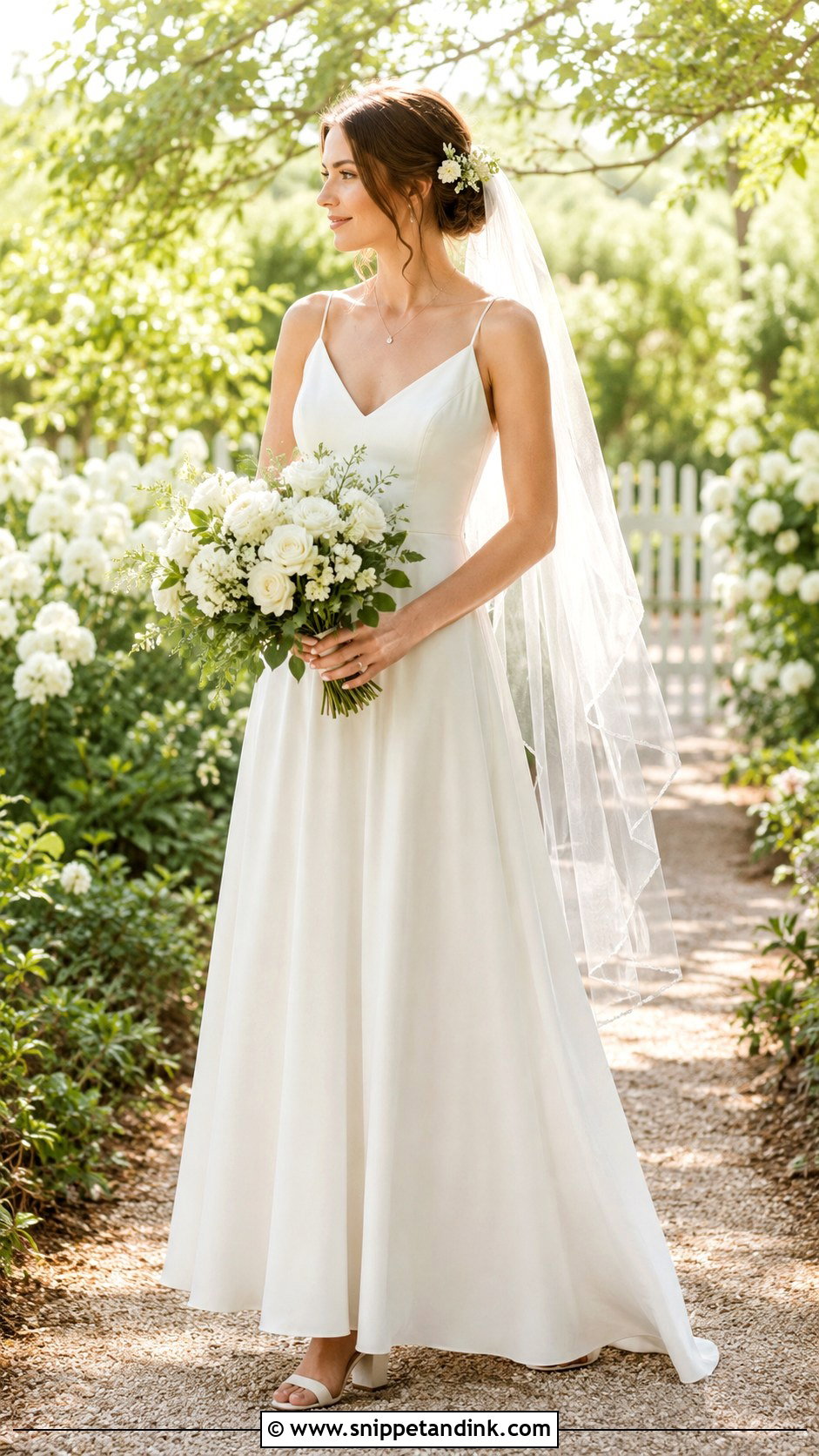
Soft sunlight and greenery do much of the decorating at a garden wedding, so the gown can stay plain: an A-line, a delicate chiffon dress or a gown with a minimal lace trim. The hem matters most here. On grass, a floor-sweeping skirt picks up damp and grass stains, so I’d hem it just to the floor or carry it with a wrist loop. Block heels or bridal flats stop you sinking into the lawn. A floral hair pin and a natural bouquet complete it.
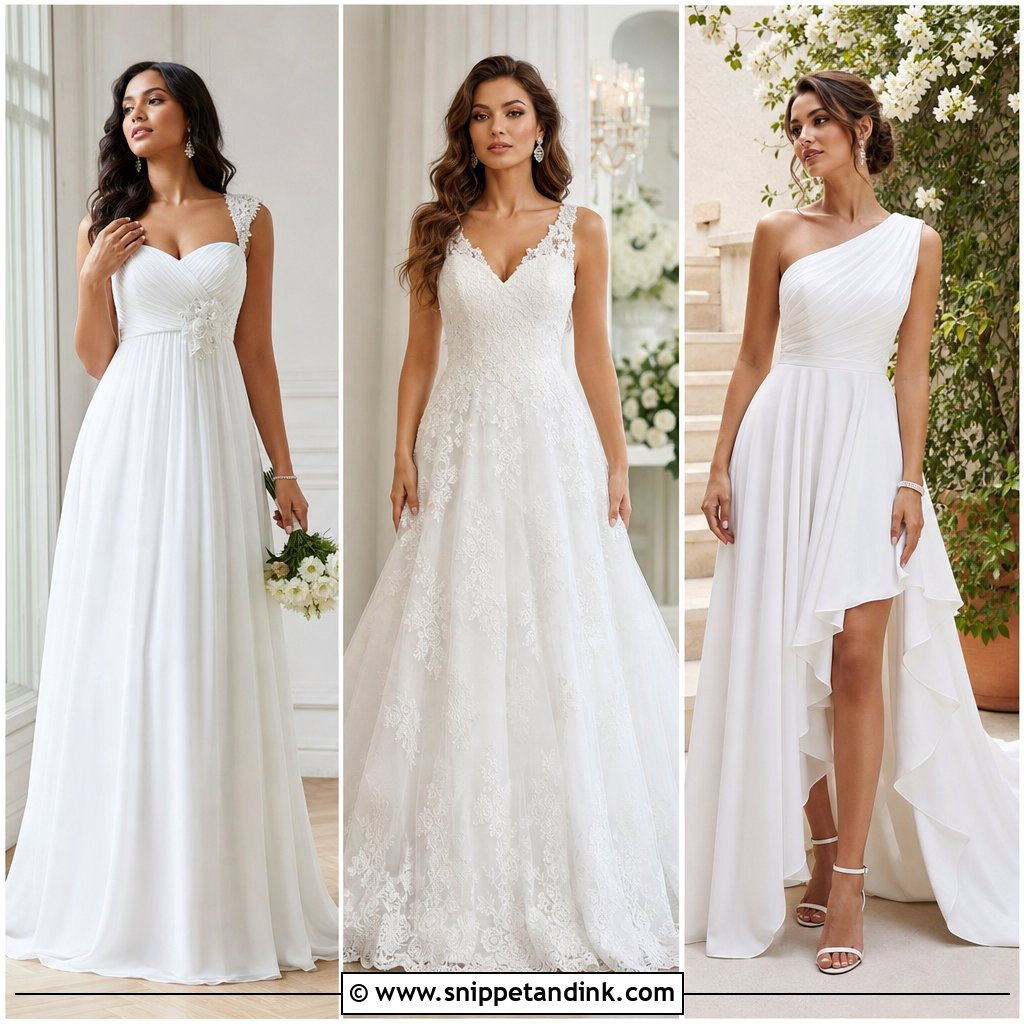


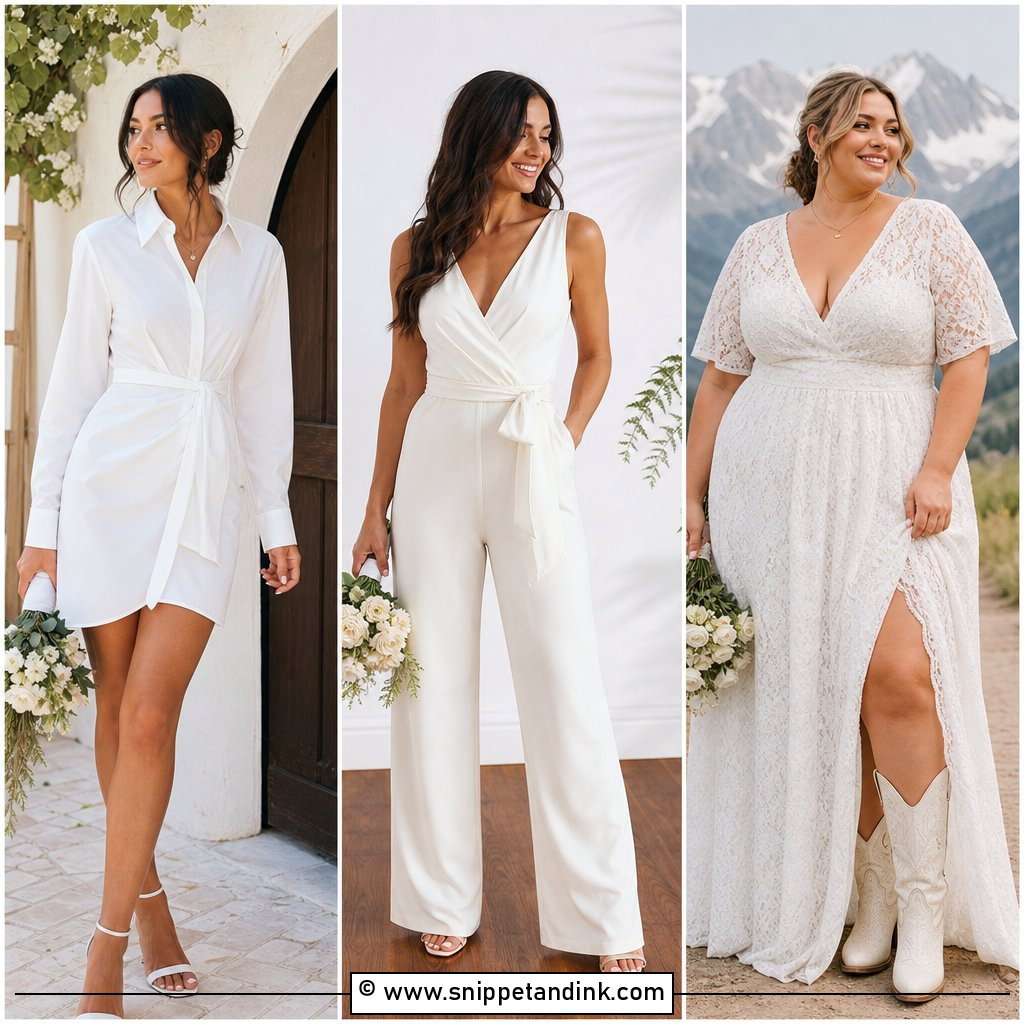
15. Simple Boho Wedding Gown
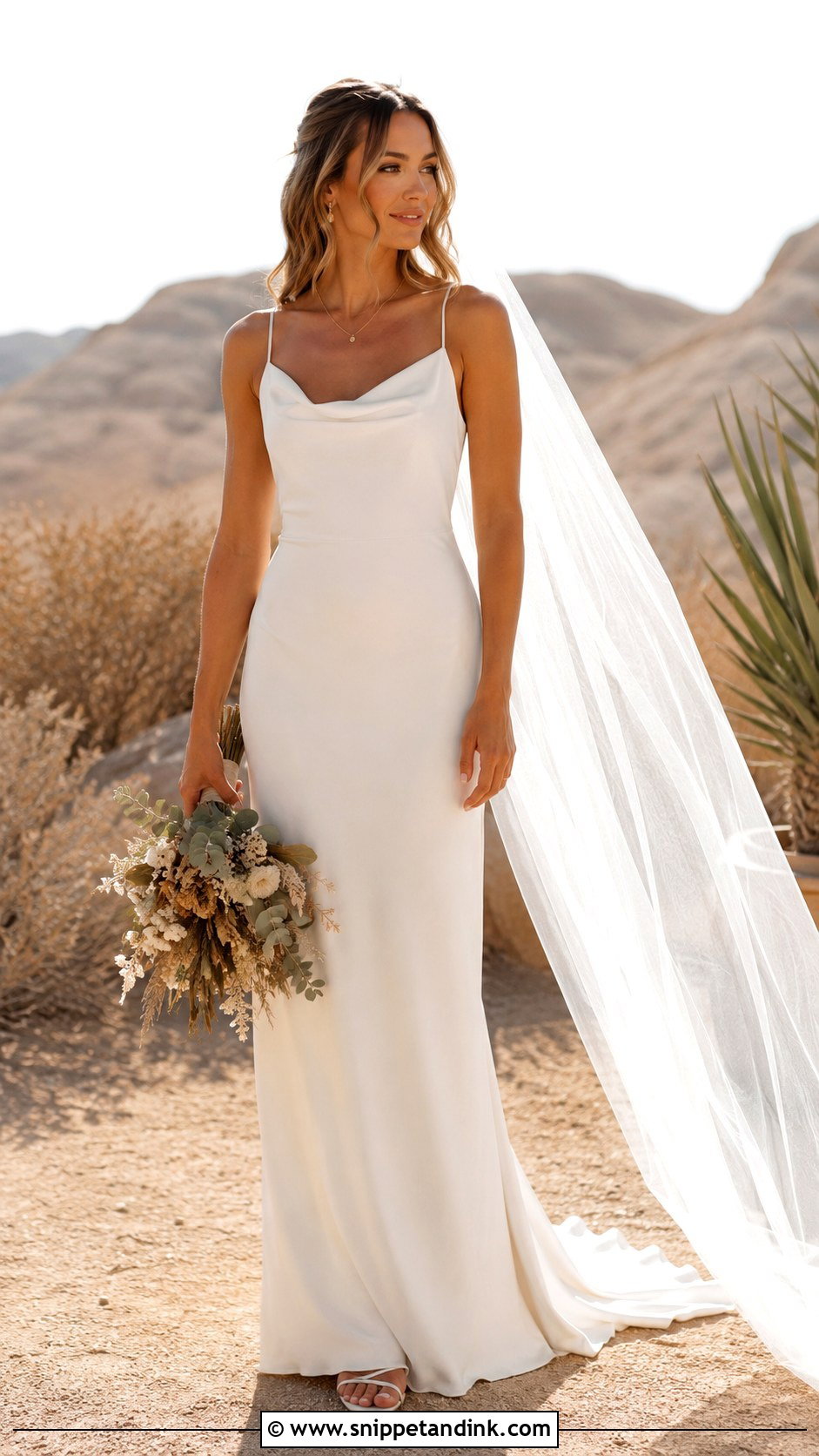
Boho done simply relies on movement, not trim. A fluid sheath, a soft A-line or a matte satin with subtle texture, delicate straps and an easy waistline give the feel without fringe. The trick I use is to let the accessories carry the boho cue: a flower comb, loose waves, gold or pearl jewellery, low sandals. It works for outdoor, desert-style and forest ceremonies, where the setting already does a lot.
16. Simple Lace Wedding Gown
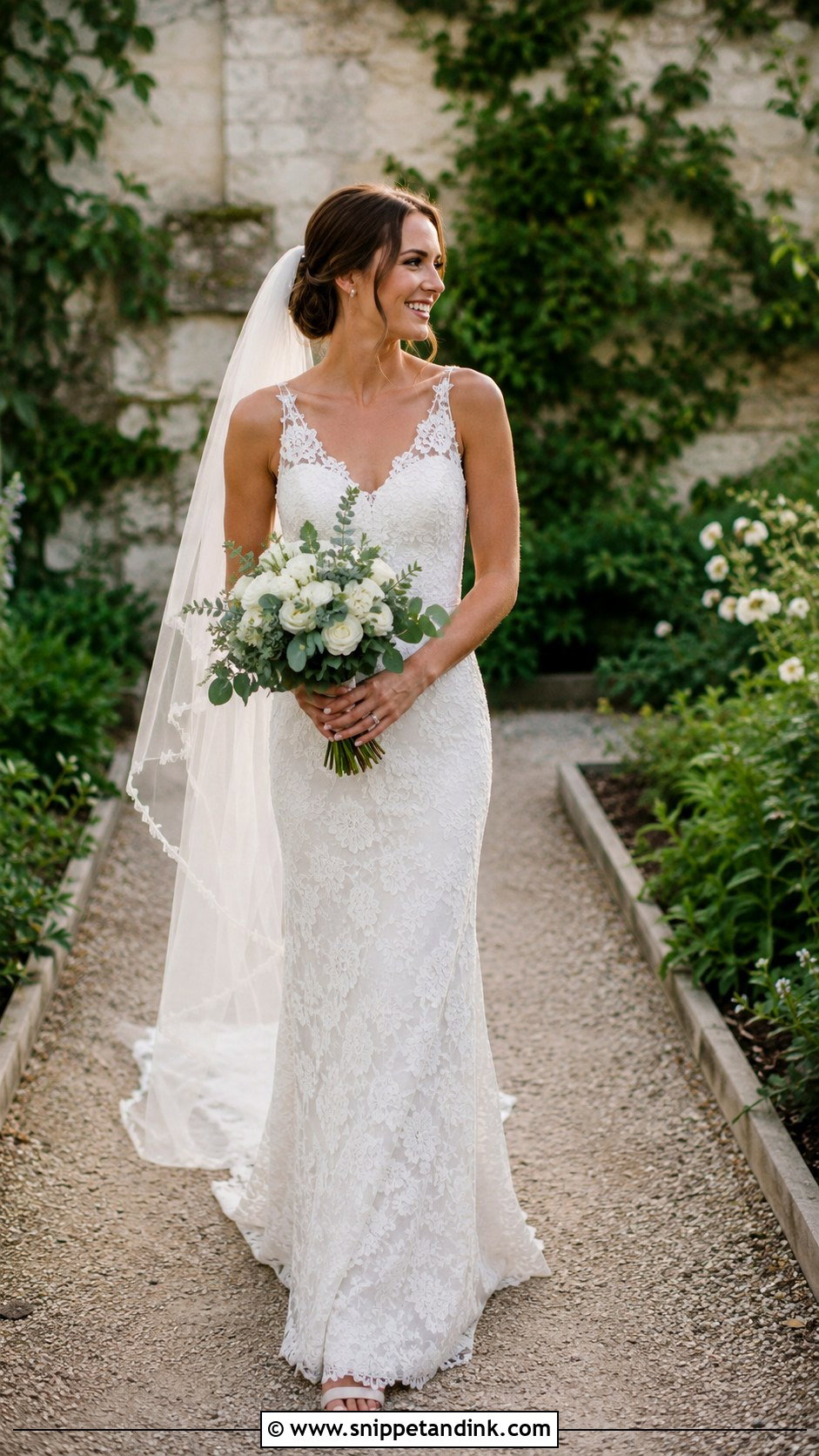
Lace and simplicity can live together if the lace is fine and quiet. A simple lace wedding gown works best with soft floral lace over a straight sheath, an A-line, or just on the bodice above a plain skirt. Look at how the lace is joined: good gowns cut around the motifs so seams disappear, cheaper ones show a straight seam through the pattern. With all-over lace keep accessories minimal; with lace only on the bodice or sleeves, a longer veil adds balance.
17. Simple Tulle Wedding Gown
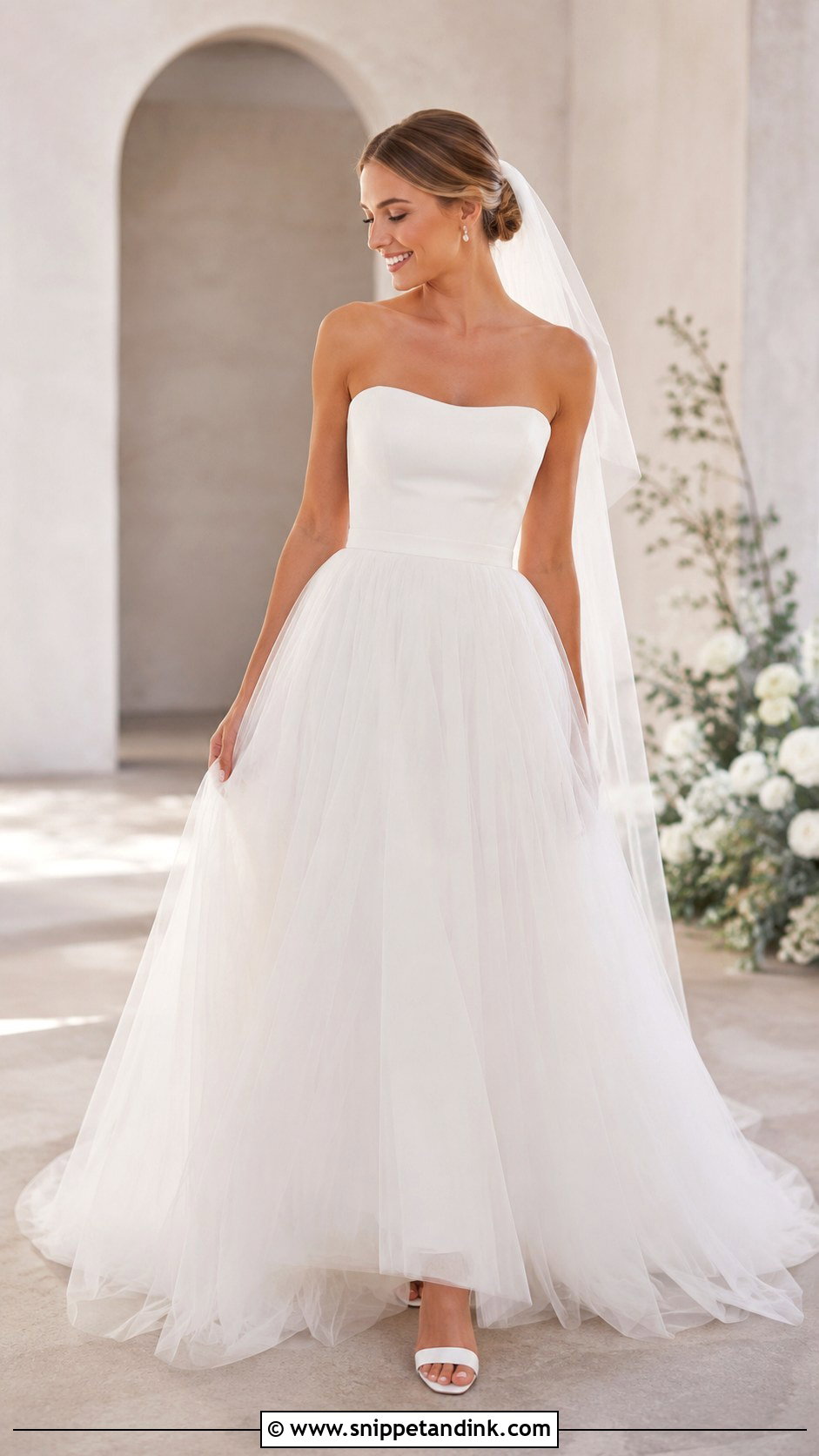
Tulle gives softness and floaty volume without the weight of a ball gown. Keep the bodice clean, strapless, square or scoop, and the skirt layered but gentle. Tulle snags on rough surfaces, jewellery clasps and bouquet wire, so ask your florist to wrap the stems well and watch bracelets near the skirt. Ballet-style flats, satin heels or simple pumps, a soft bun and a sheer veil keep it fresh for garden and afternoon ceremonies.
18. Simple Ball Gown Wedding Gown
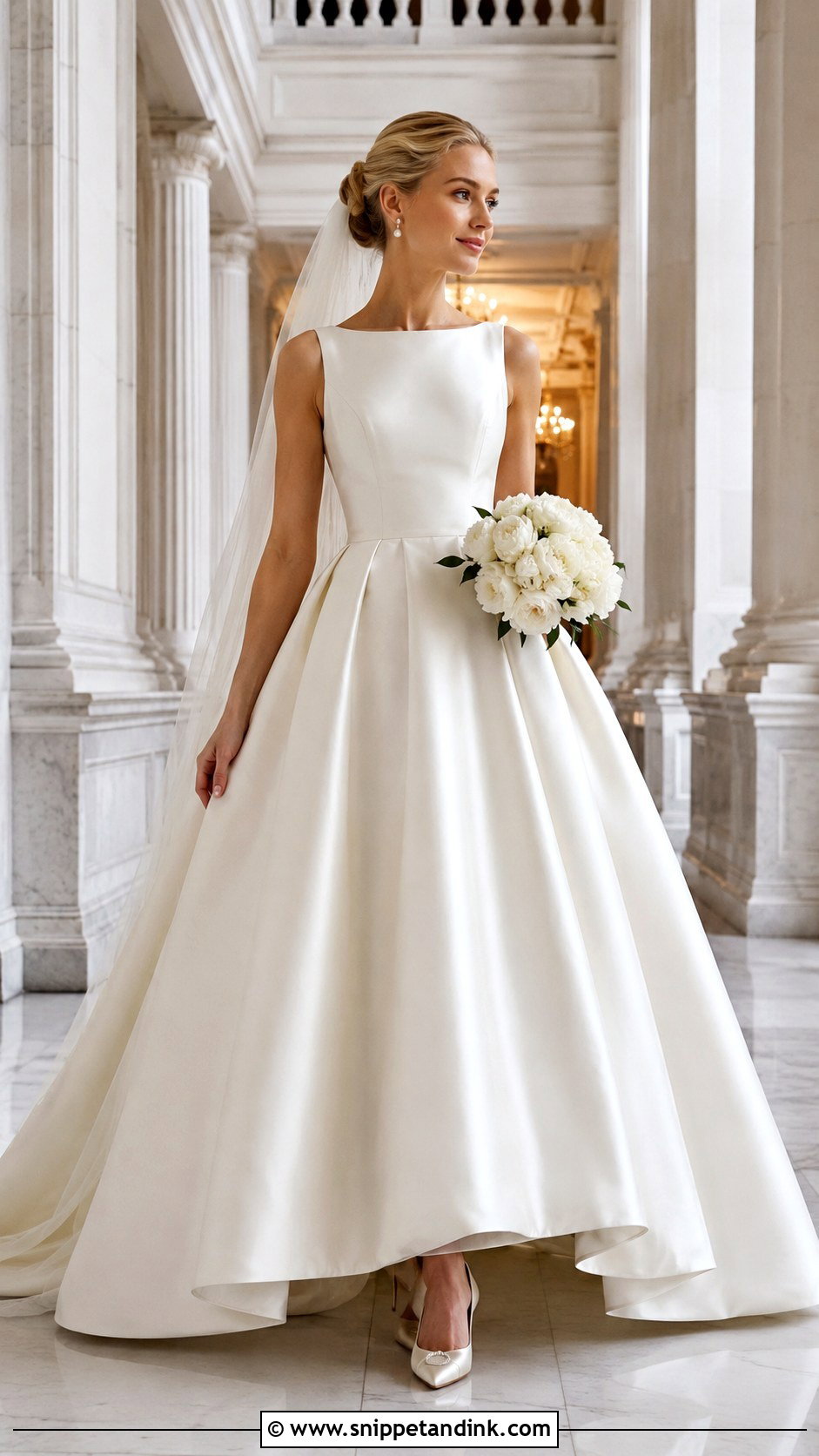
Volume can still look clean. A plain bodice and a smooth skirt with minimal seams give a ball gown its most classic effect, and mikado, satin or organza hold the shape best. Ask about the petticoat inside, since it’s what keeps the skirt full by evening, and practise sitting and going to the toilet in it. A structured updo and one polished accessory, pearl earrings or a long veil, is all the gown needs.
19. Simple Mermaid Wedding Gown
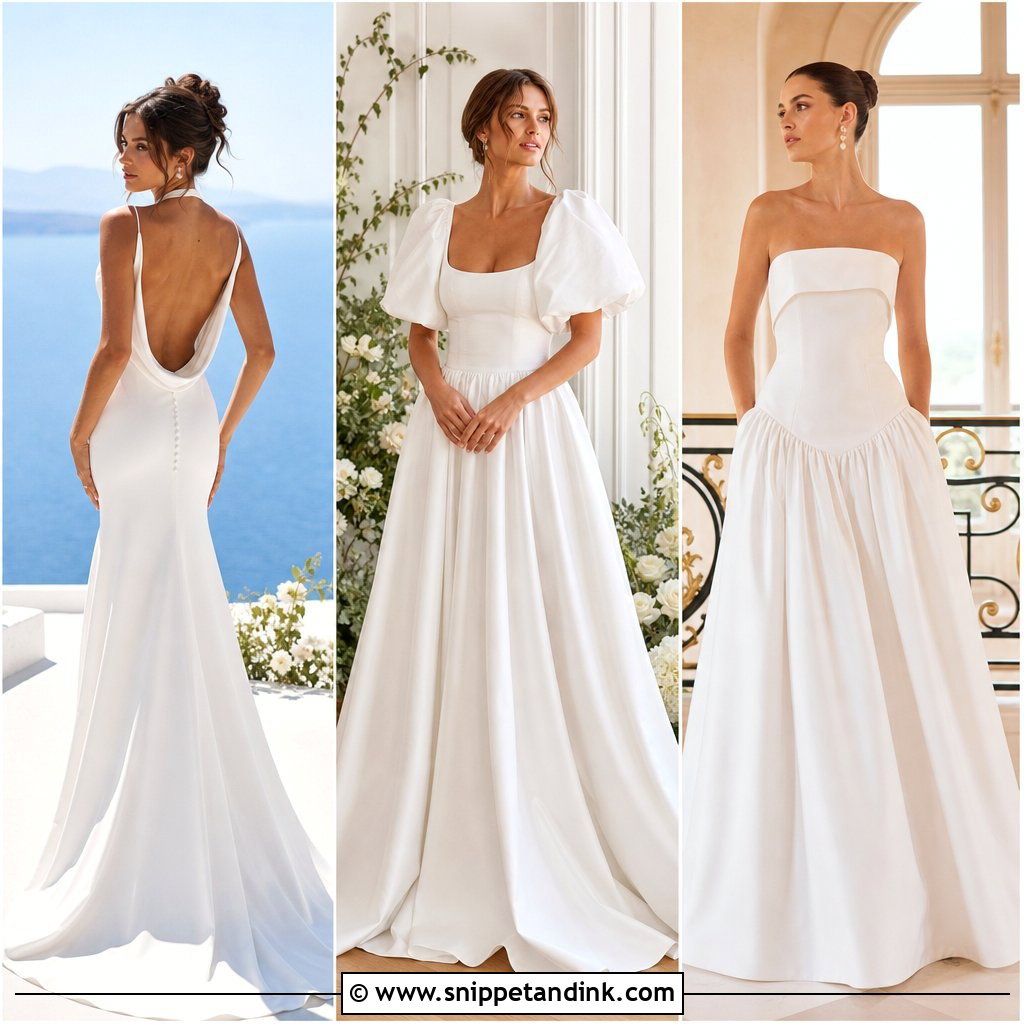
Mermaids fit close through the body and flare near the knee, so the fabric needs some stretch and structure, which is why stretch crepe is so popular for them. The flare point is everything: set too low and you can barely climb a step. Strapless, off-shoulder or square necklines suit the shape. Keep embellishment low with clean heels, a long veil and delicate earrings, and it shines at evening receptions.

20. Simple Empire Waist Wedding Gown
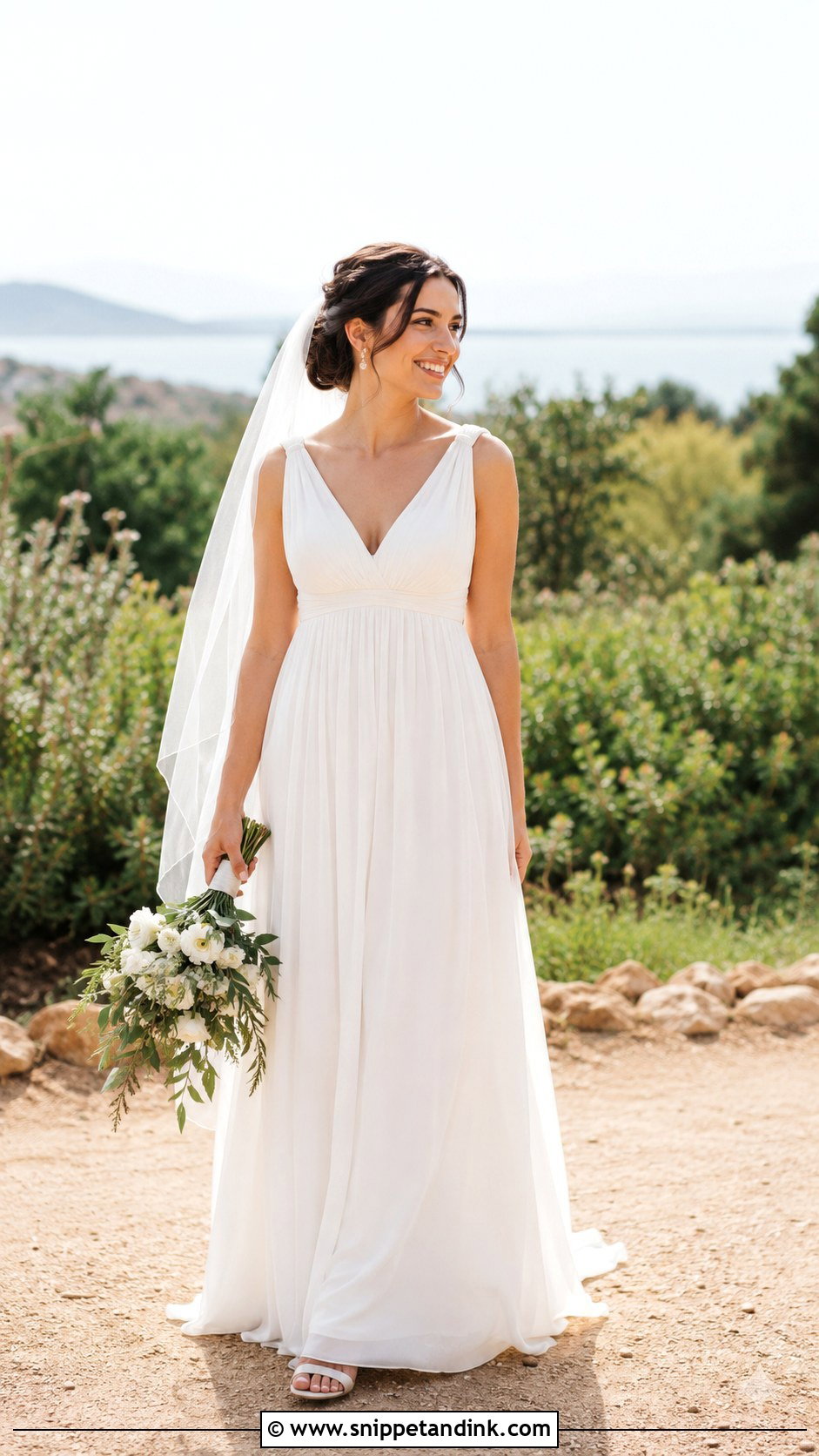
Empire waists sit just under the bust and let the skirt flow freely, so they’re comfortable through the waist and hips all day. Lightweight chiffon, crepe or a silky fabric keeps the shape soft, while anything heavy makes it look like a tent. The seam must sit right on the ribcage, not partway across the bust. V, scoop or delicate-strap necklines all work, with low heels, a sheer veil and small earrings for outdoor and warm-weather weddings.
21. Simple Bridal Jumpsuit Gown
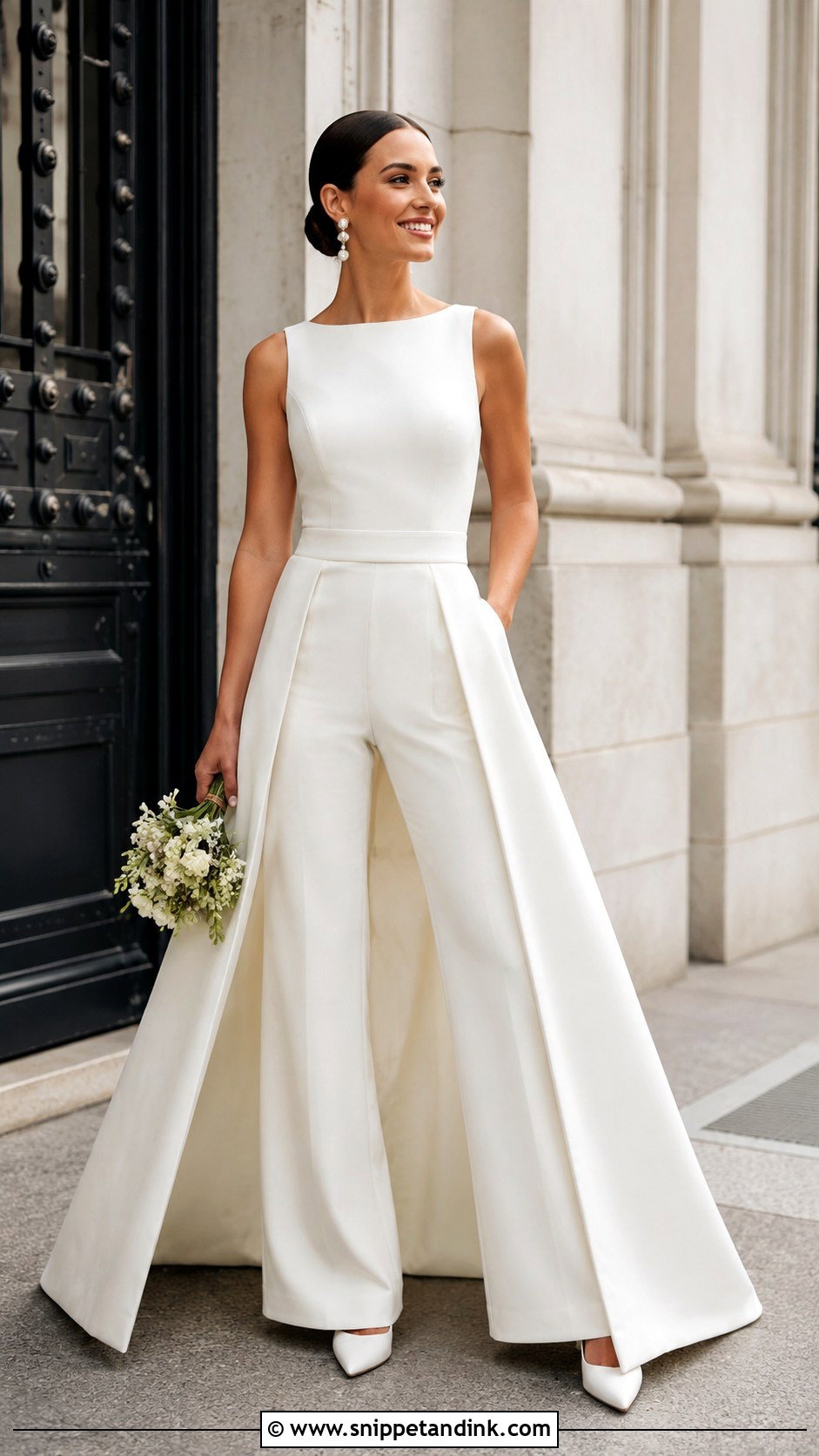
Jumpsuits give you bridal polish with the ease of trousers. Look for a white or ivory jumpsuit with a clean bodice and wide legs, and add a detachable overskirt or cape for ceremony drama. One practical point: a one-piece is fiddly in a bathroom, so check where the zip sits and whether you can manage it alone. Pointed heels, statement pearl earrings and a slick bun or soft waves finish it for civil ceremonies and reception changes.
22. Simple Short Wedding Gown
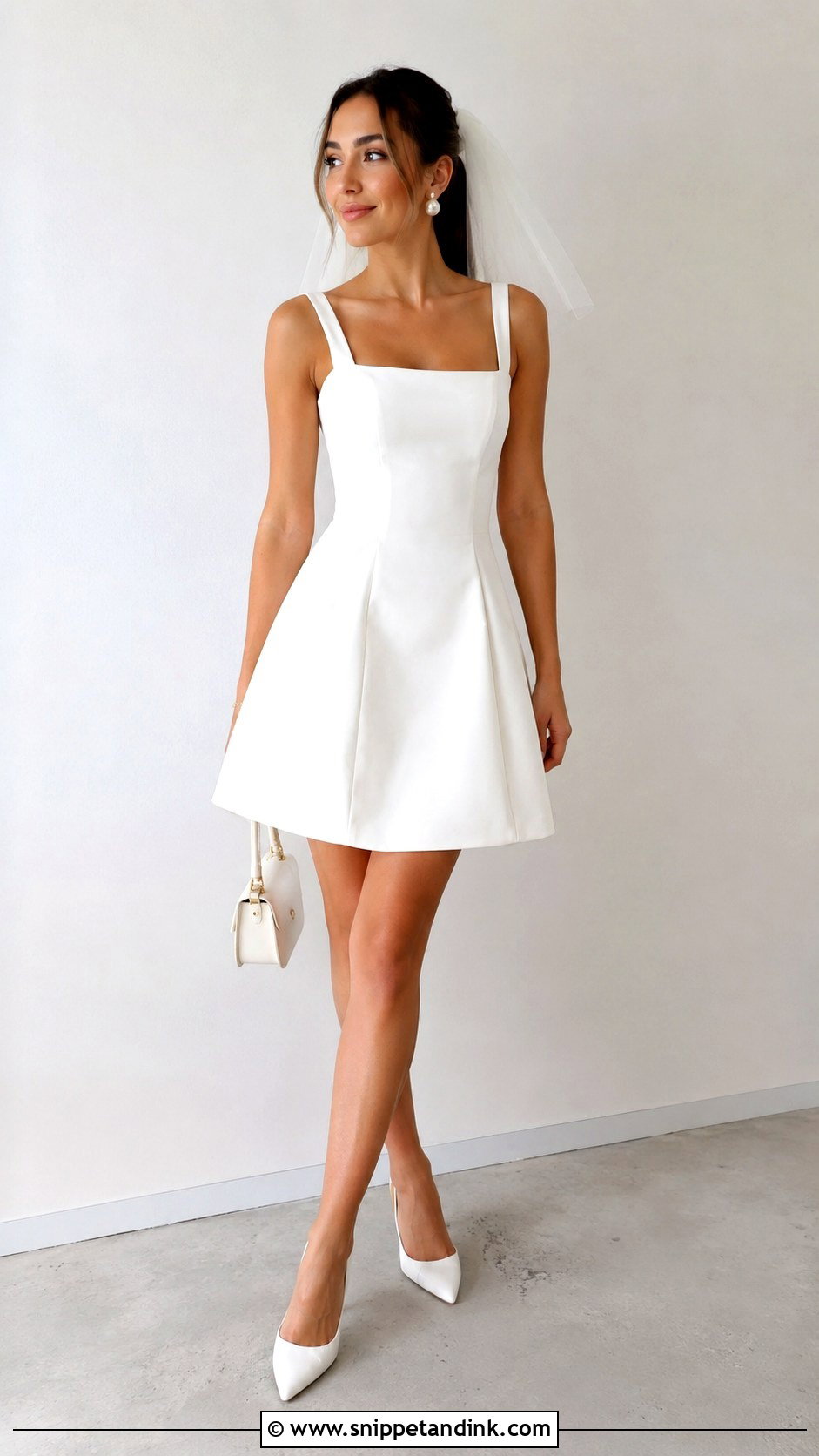
A short gown suits courthouse ceremonies, elopements and second looks, and it’s the most practical choice for dancing in warm weather. Mini or knee length, with clean tailoring, a structured bodice or a simple A-line skirt. Satin, crepe and mikado keep it bridal; thin fabrics make a short dress read as a party dress. Pointed pumps, pearl earrings and a short veil or bow clip finish it with a small structured bag.
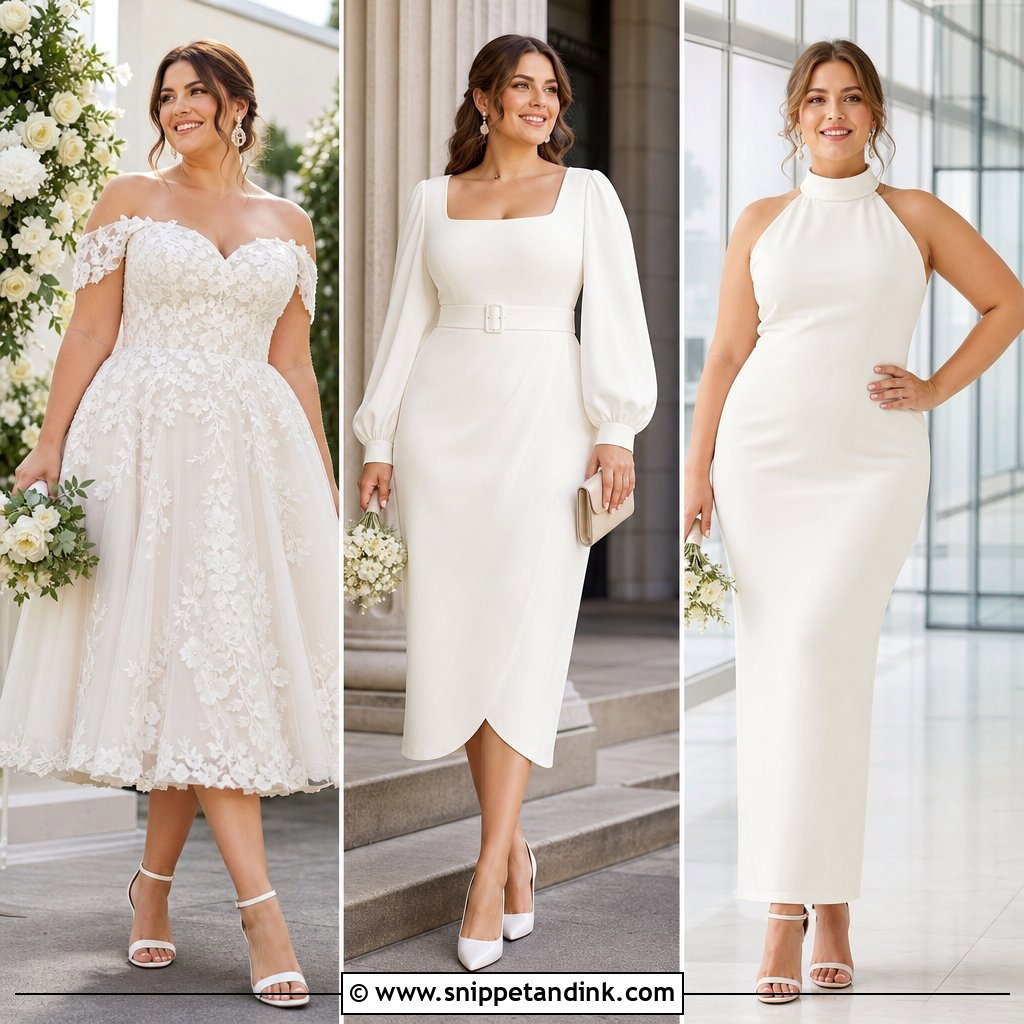
23. Simple Plus Size Wedding Gown
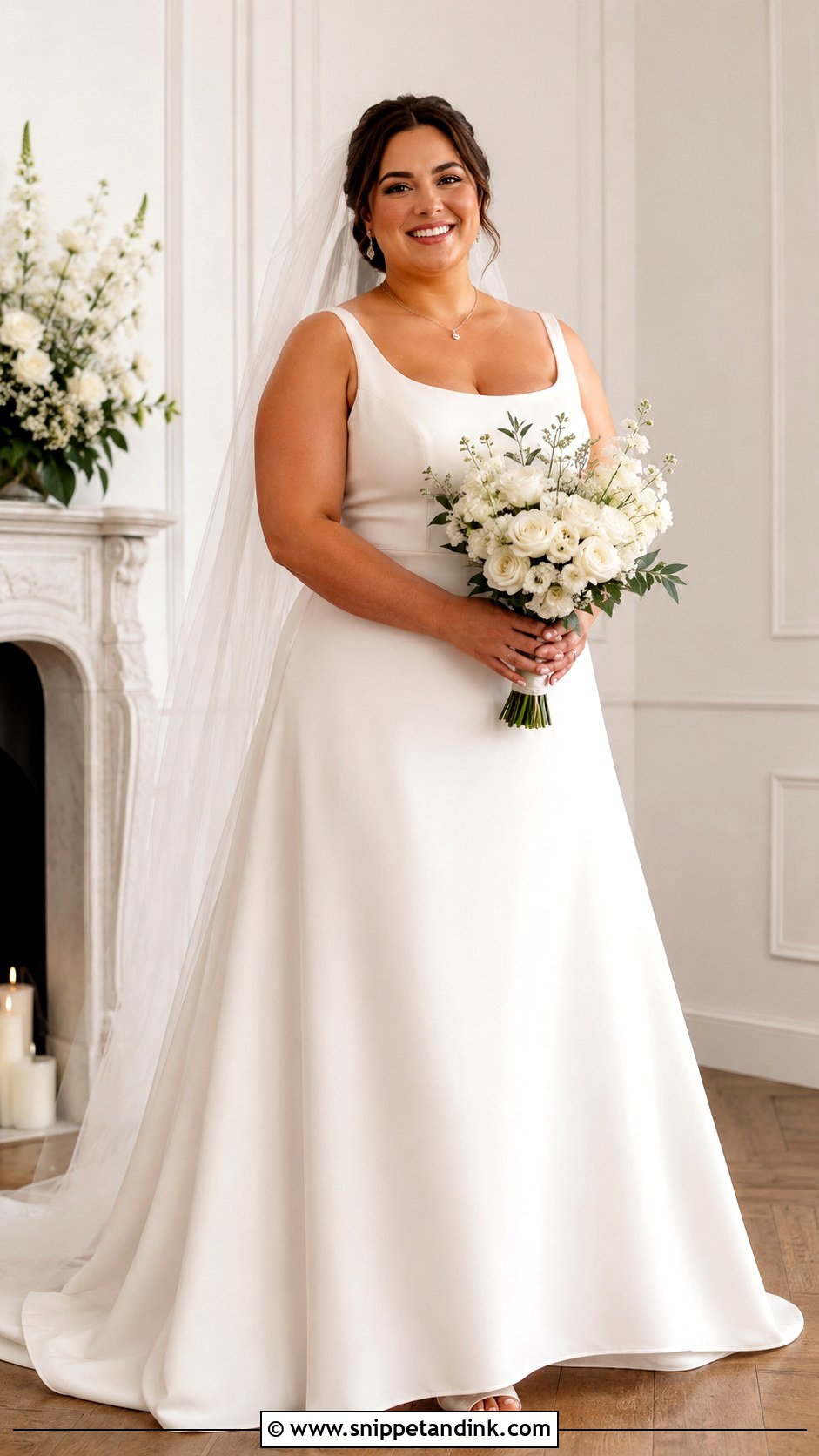
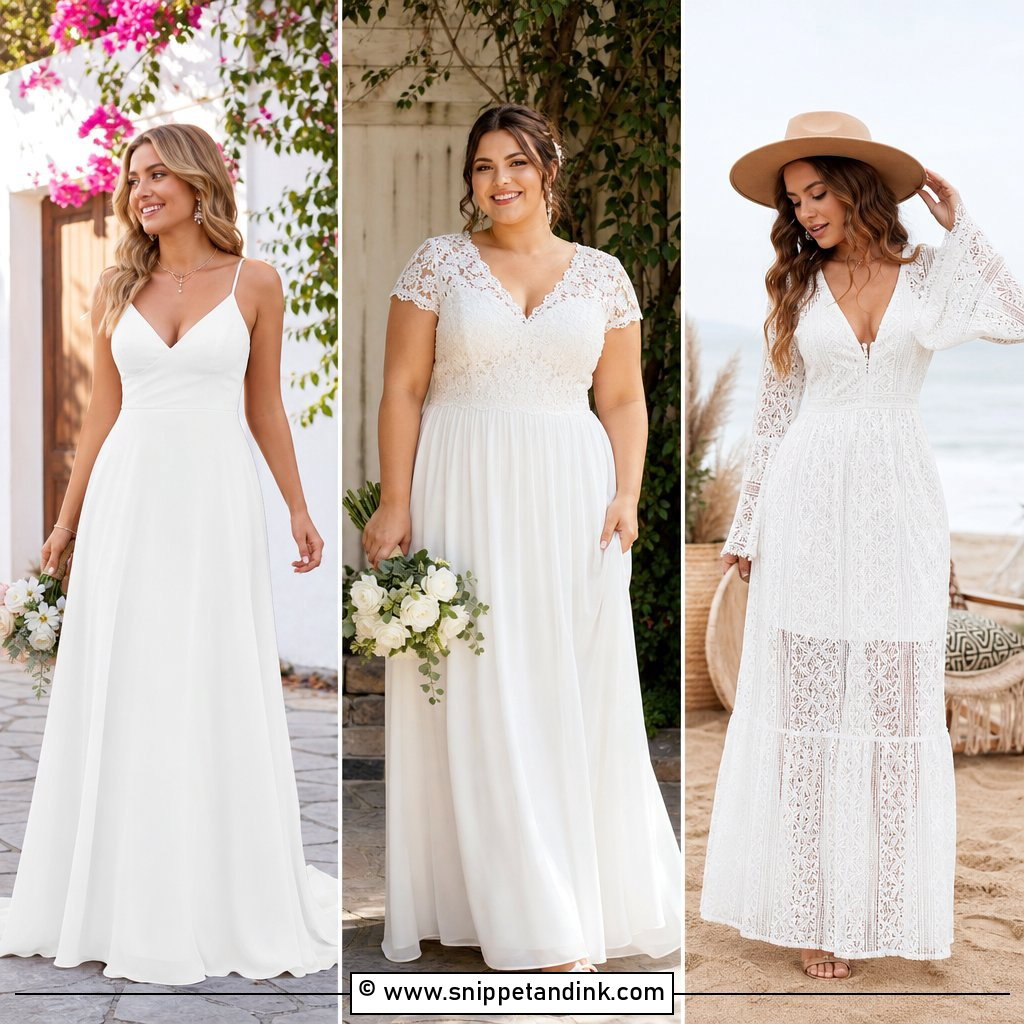
Fit, structure and comfort come first in a simple plus size wedding gown. I look for strong lining, princess seams that shape without pinching, and a bodice with built-in support, so you’re not relying on a separate bra. A-line, empire, sheath and fit-and-flare silhouettes can all look wonderful. Crepe, satin, chiffon and mikado keep the lines clean. The goal isn’t hiding anything; it’s a gown you can stand, walk, hug and dance in all day.
24. Simple Maternity Wedding Gown
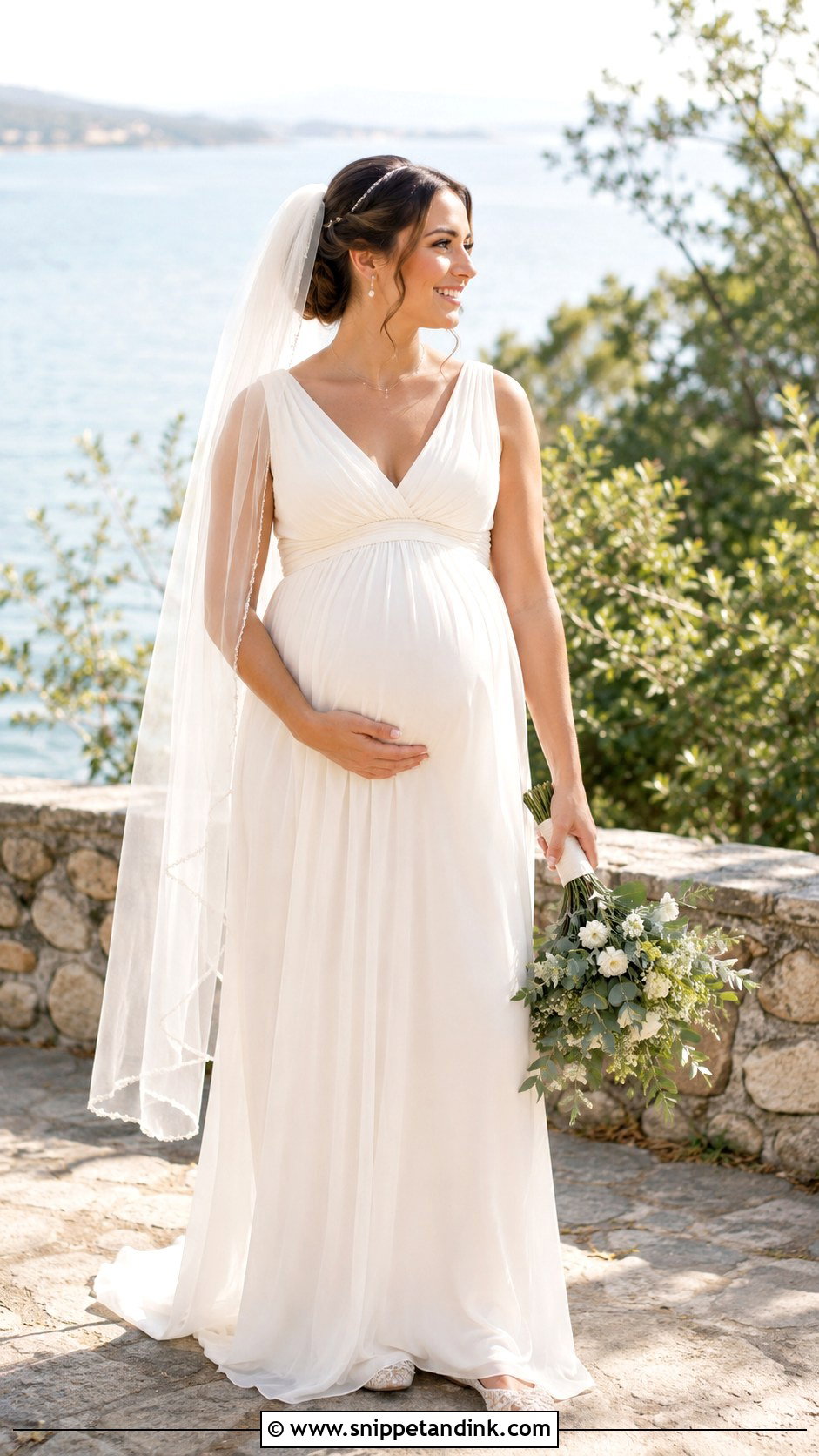
A simple maternity wedding gown needs to allow for growth. Bumps can change noticeably in the last few weeks, so I schedule the final fitting as close to the wedding as possible and choose dresses with stretch or adjustable lacing. Empire waists, stretch crepe, chiffon A-lines and wrap shapes all work. Avoid stiff boning and heavy skirts; breathable lining and a secure neckline matter more. Block heels or embellished flats and a soft veil finish it.
25. Simple Reception Wedding Gown
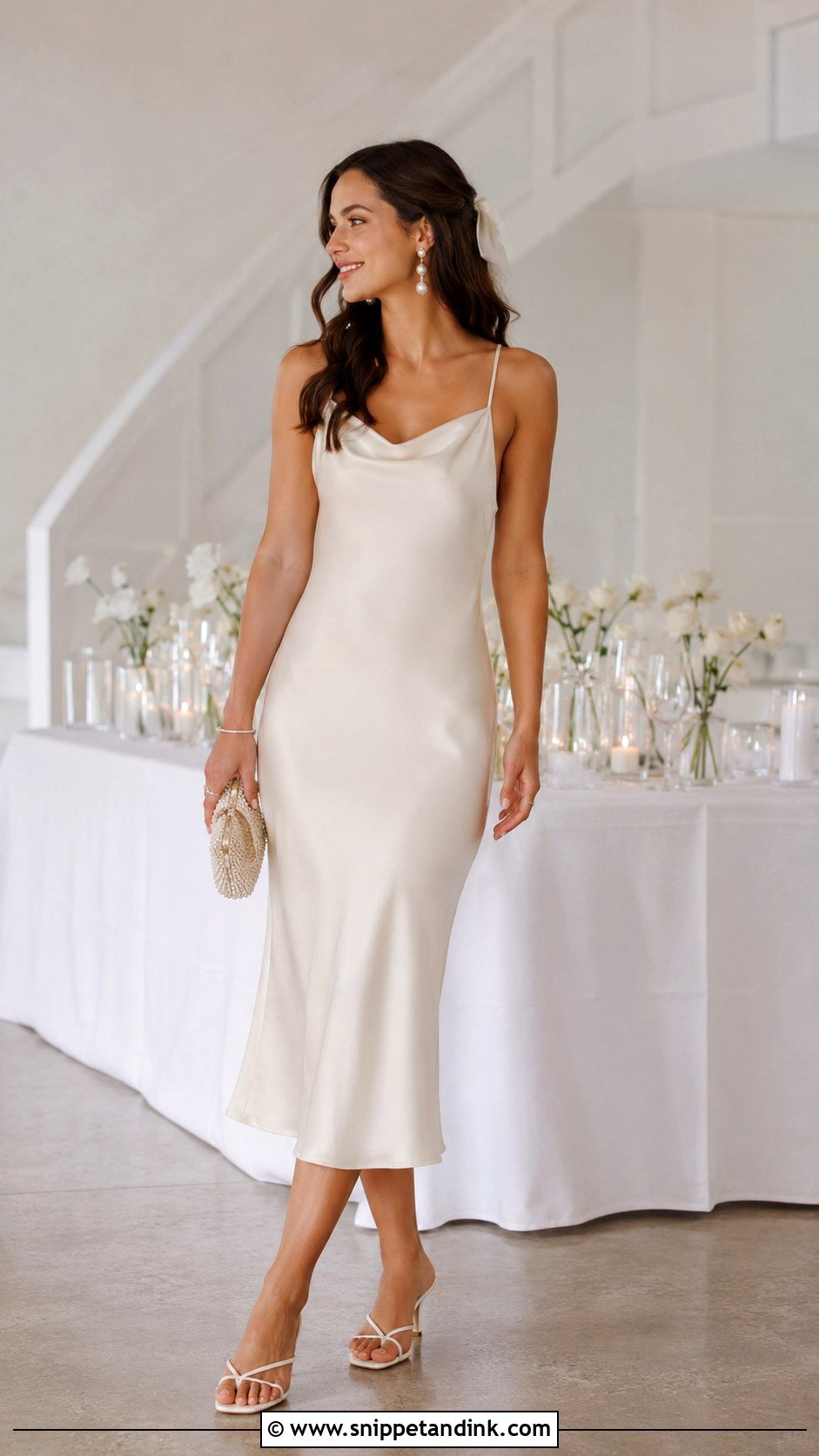
A reception gown is for moving, eating and celebrating. A sleek slip, short satin dress, clean midi or lightweight crepe sheath all work as a second look, a little less formal than the ceremony gown. It’s most useful if your ceremony dress has a long train or a structured skirt. Swap the veil for a bow clip or headband, and allow ten minutes for the change; someone needs to be ready to help with buttons and to take the first gown away.
What Goes Under a Plain Gown
With no lace or beading to distract, a plain gown shows what’s underneath: bra edges, knicker lines, a shapewear ridge at the thigh. Bring your actual underwear to every fitting, because the seamstress fits the dress to your body as it will be on the day.
- Choose smooth, no-line pieces in a colour close to your skin, not white, which shows through ivory.
- If the dress has a low back or thin straps, ask for cups to be sewn into the bodice instead of an adhesive bra.
- Try sitting in shapewear for half an hour before you commit to it; some rolls down at the waist.
Small Custom Touches That Keep It Simple
If a plain gown feels too anonymous, change something small rather than adding embellishment. Pockets set into the side seams, a different strap width, covered buttons over the zip, or your initials and wedding date embroidered inside the hem or lining are all ordinary requests for a good seamstress. They make the dress yours without changing what you loved about it in the first place.
Calm, Comfortable and Recognisably You
A plain gown is never plain when the fit is good, the fabric is right and the accessories are chosen with care. The same clean dress can look classic, romantic, modern or relaxed depending on the neckline, shoes, veil and setting. Slip, column, A-line or a short reception dress, start with the shape that feels comfortable and true to you, and let fittings do the rest. You’ll know it’s right when you stop thinking about the dress and start enjoying the day.
You'll Like These Ideas:






Leave a Reply