
A sheath follows the body’s own line from shoulder to hem, with no petticoat to hide behind. That’s what I like about it, and also why it takes more care than a ball gown. Crepe gives clean structure, satin moves and catches light, and lace, pearls, appliqués or beading add texture without widening the shape. Because nothing is padded out, tailoring and underwear decide whether it looks expensive or merely tight. The twenty looks below are complete outfits, and since each comes with a bouquet as well as a veil, shoes and jewelry, I’ve paid attention to how those pieces sit against such a narrow dress.
How Much Bouquet a Narrow Dress Can Carry
A big round bouquet looks balanced against a ball gown and swamps a sheath. With a slim skirt, the flowers become the widest thing in the picture. My rough guide is that the bouquet shouldn’t be wider than your hips, and it should be held low, at or just below the navel, so the waist and neckline still show.
- Long-stemmed bunches, like calla lilies or tulips, repeat the vertical line of the dress.
- Small posies suit minimal crepe and satin, where a heavy bouquet hides the cleanest part of the gown.
- Loose, trailing arrangements suit lace and appliqué sheaths, as long as they fall downward rather than spreading sideways.
- Heavily textured gowns usually look better with a simple, single-flower bouquet, so the two aren’t competing.
Bring a photo of the dress, or a fabric swatch, to your florist. Ivory flowers against diamond-white satin can look yellow, and pure white blooms against ivory lace can look blue. Stems matter too: a thick bound handle looks clumsy against a slim waist, so ask for the stems to be trimmed short and wrapped in ribbon that matches the gown rather than bright white.
1. Minimalist Crepe Sheath Wedding Dress
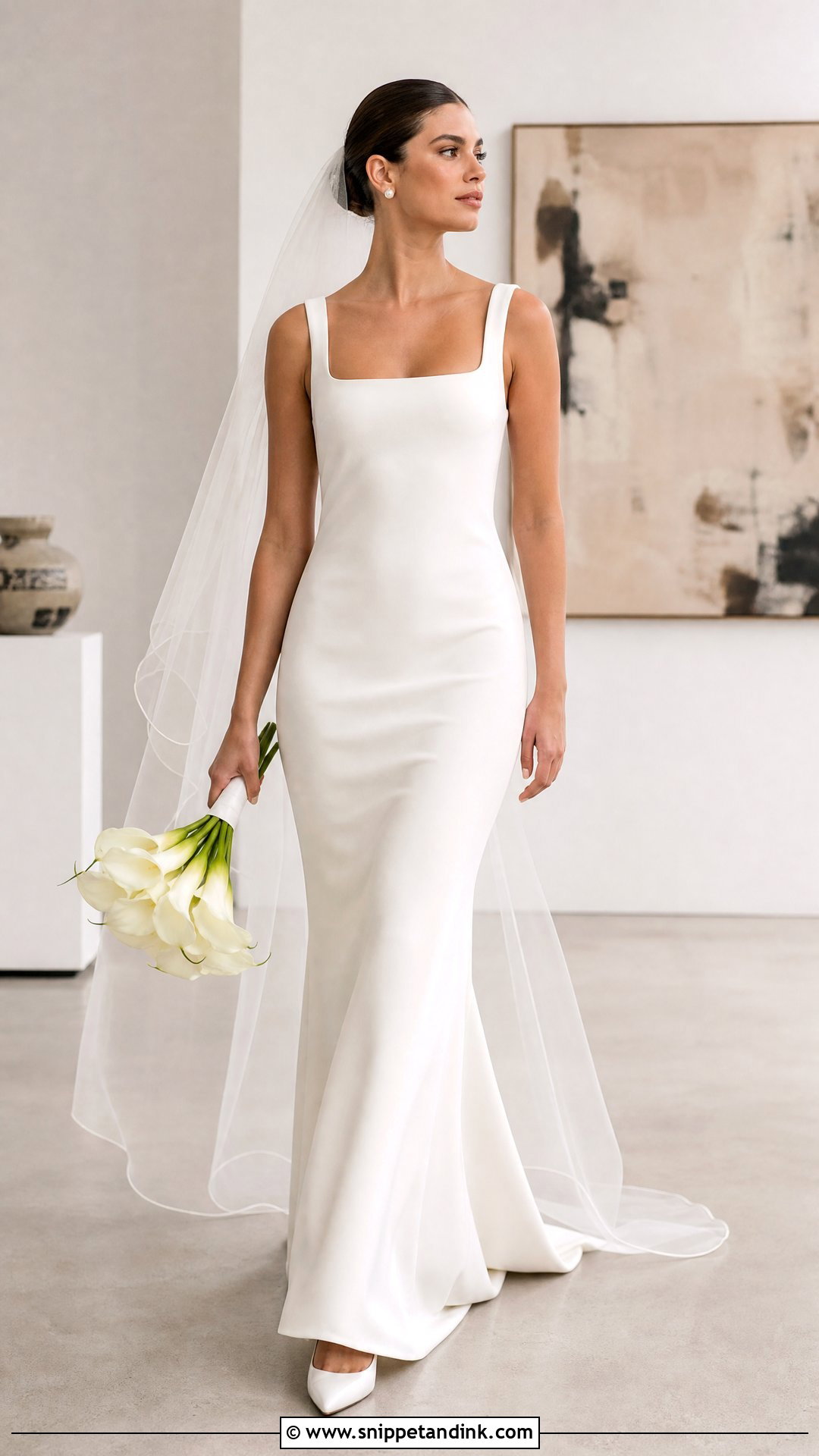
Minimal crepe is the hardest sheath to get right and the easiest to wear once it fits. Choose a substantial stretch crepe that skims instead of clinging; thin crepe shows every seam allowance pressed inside it. A square neck with wide straps gives structure, and a low back adds the only drama. Pointed ivory pumps, pearl studs, a smooth fingertip veil and a tight bundle of white calla lilies. Smooth shapewear and well-placed cups keep the surface flat. Galleries, hotels and city halls, where the architecture does some of the decorating, suit it best.
2. Satin Cowl Neck Sheath Wedding Dress
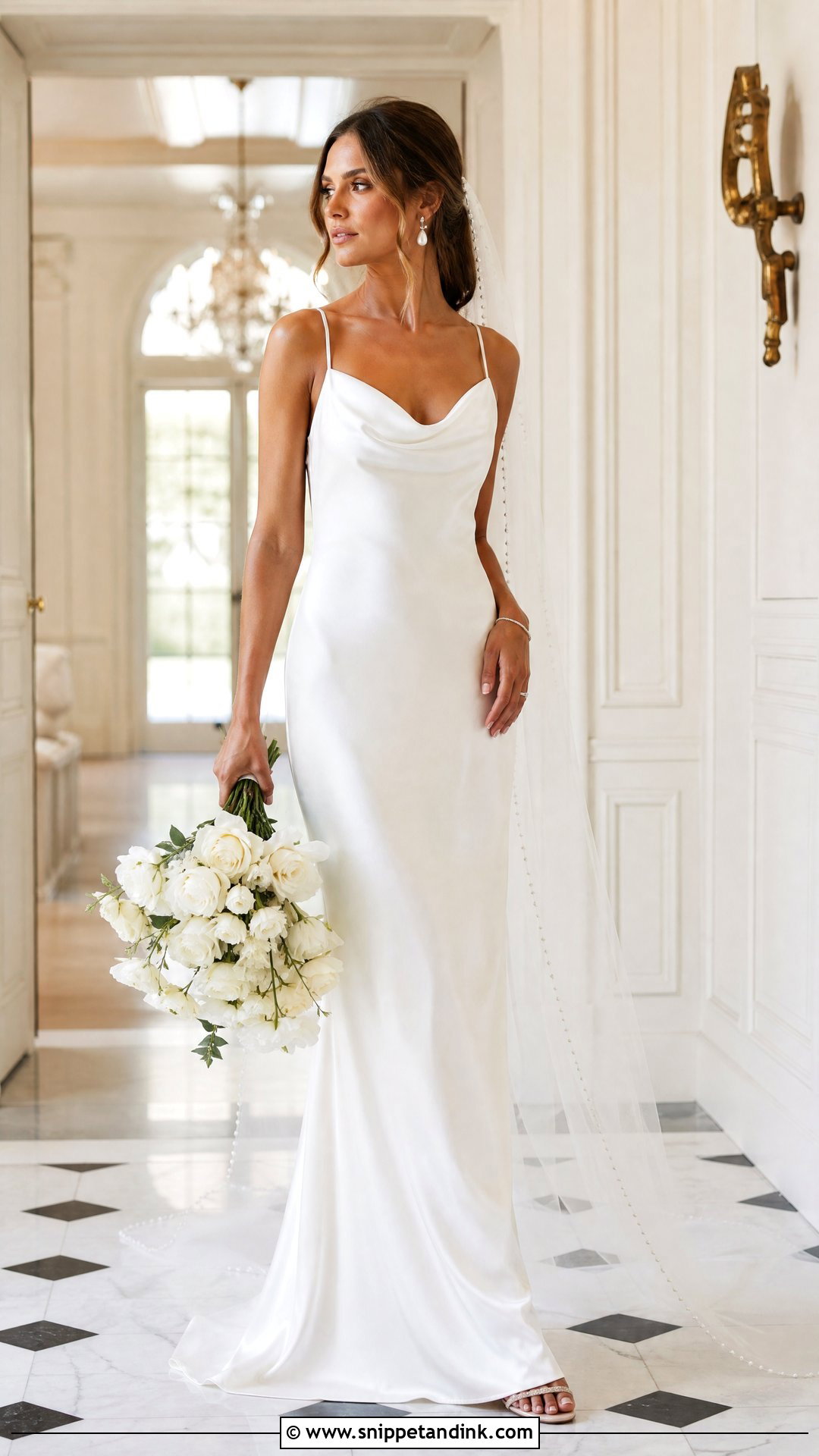
Satin with a cowl neckline pools softly across the bodice, and a bias-style cut lets the skirt pour down the body. Slender straps keep it light. The satin needs some weight; flimsy satin on the bias ripples at the hips and shows every dimple. Fine drop earrings, metallic champagne sandals, a pearl-edged cathedral veil and a low twisted bun. A loose bunch of white roses with trailing greenery breaks up the liquid surface. Bias-cut satin grows slightly as it hangs, so the hem should be set on the final fitting, not the first.
3. Long Sleeve Lace Sheath Wedding Dress
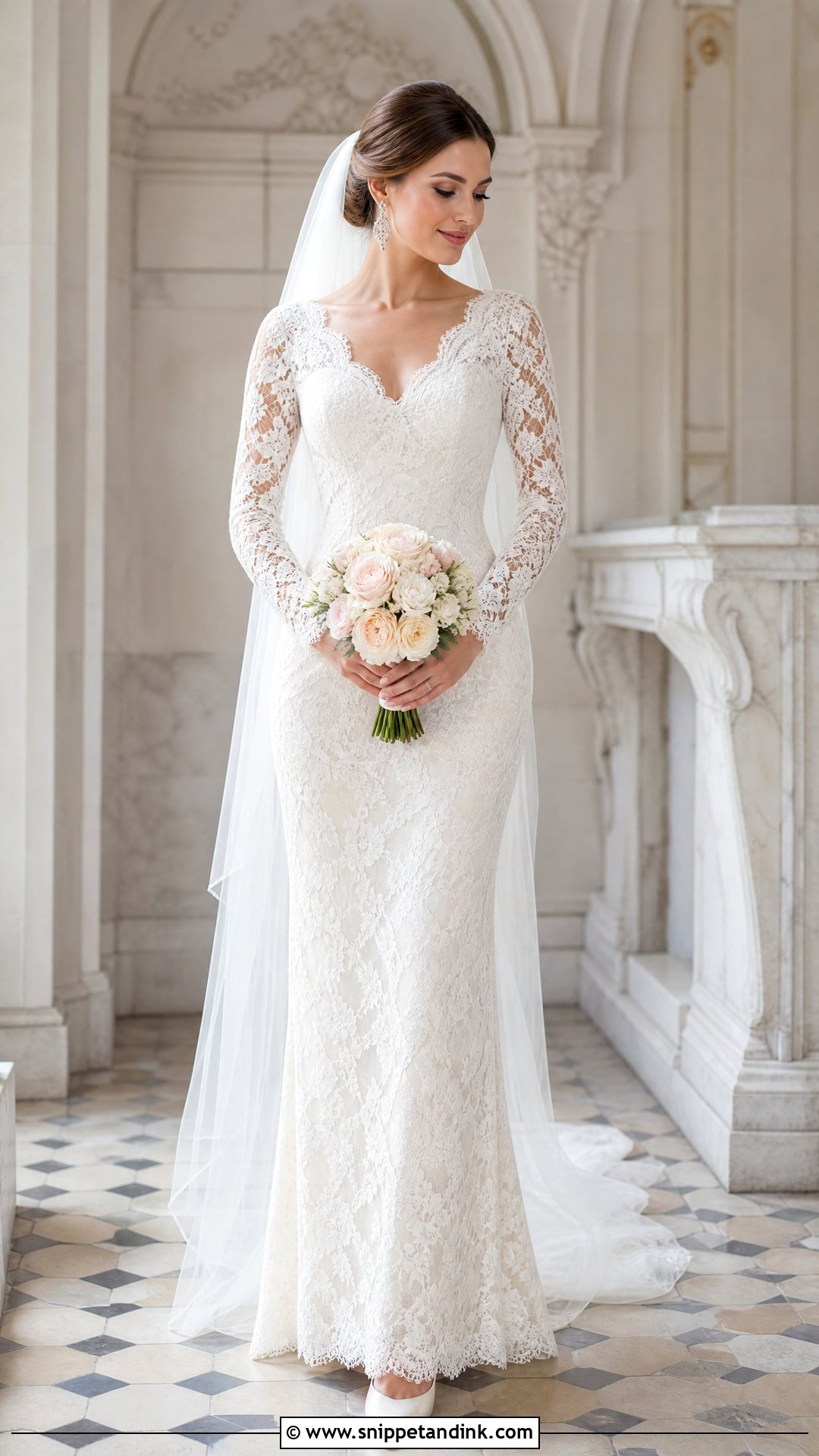
An allover lace sheath wedding dress with long sleeves is romantic without adding any width. Choose fitted sleeves with a soft scalloped edge and a lightly structured bodice for support. A bateau or modest V neck balances the busy fabric, and a lined skirt keeps it from looking like lingerie. Closed-toe satin pumps, crystal earrings, a plain tulle veil that lets the lace show and a small bunch of ivory garden roses. With highly patterned lace, no necklace. Lace sheaths tend to suit cooler months; allover lace with a full lining is warmer than people expect.
4. Strapless Corset Sheath Wedding Dress
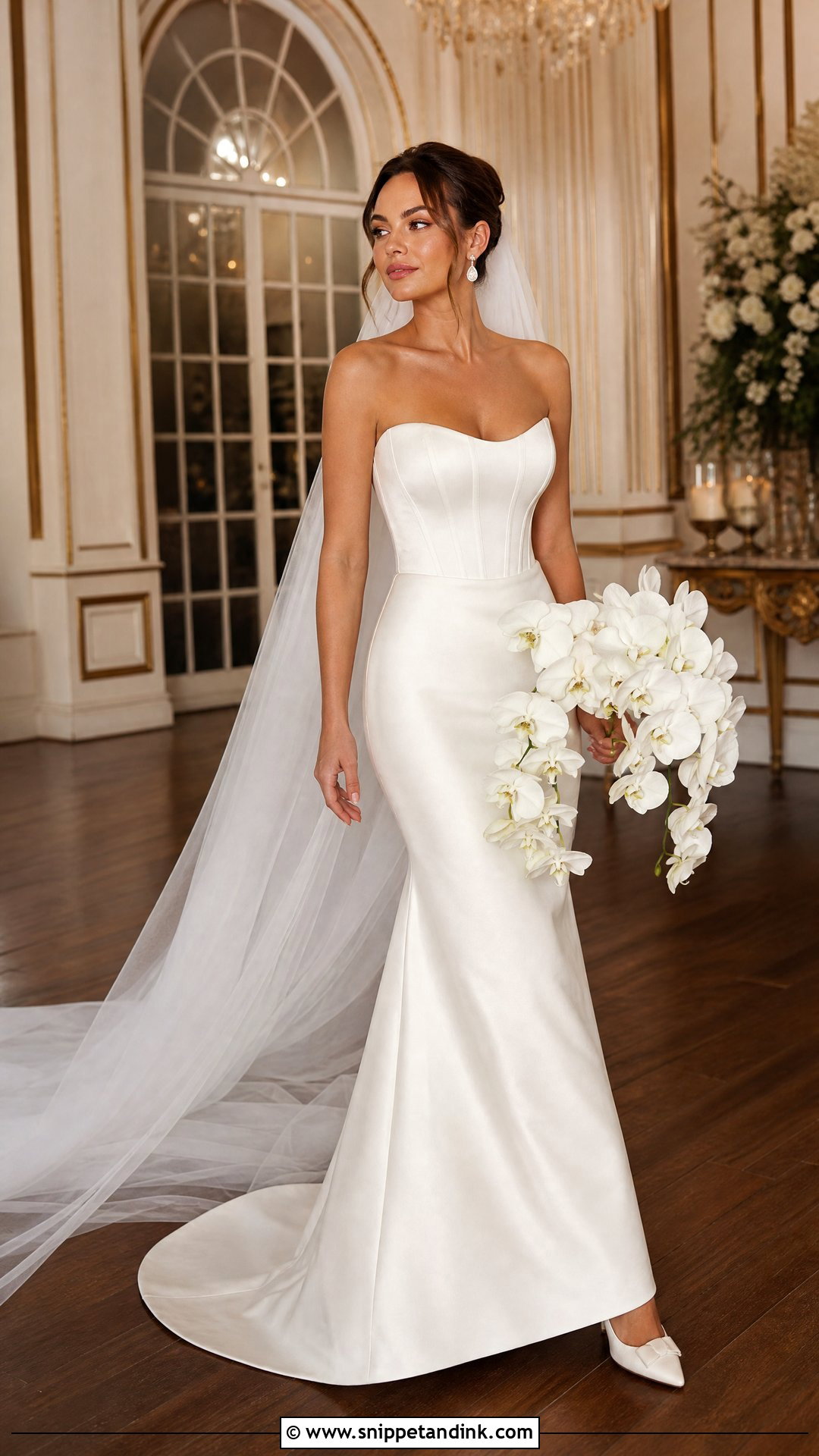
Corset bodices hold you up with internal boning, so the skirt below can stay slim and plain. Look for a softly curved neckline and seaming that defines the waist, then keep the skirt in crepe or satin so the corset reads as structure, not costume. A long plain veil, pear-shaped earrings, pointed slingbacks and a structured bouquet of white roses or orchids. My test for a strapless corset is simple: arms straight up, then a deep breath. If the top edge moves or you can’t breathe in fully, the size or the boning isn’t right yet.
5. Off Shoulder Sheath Wedding Dress
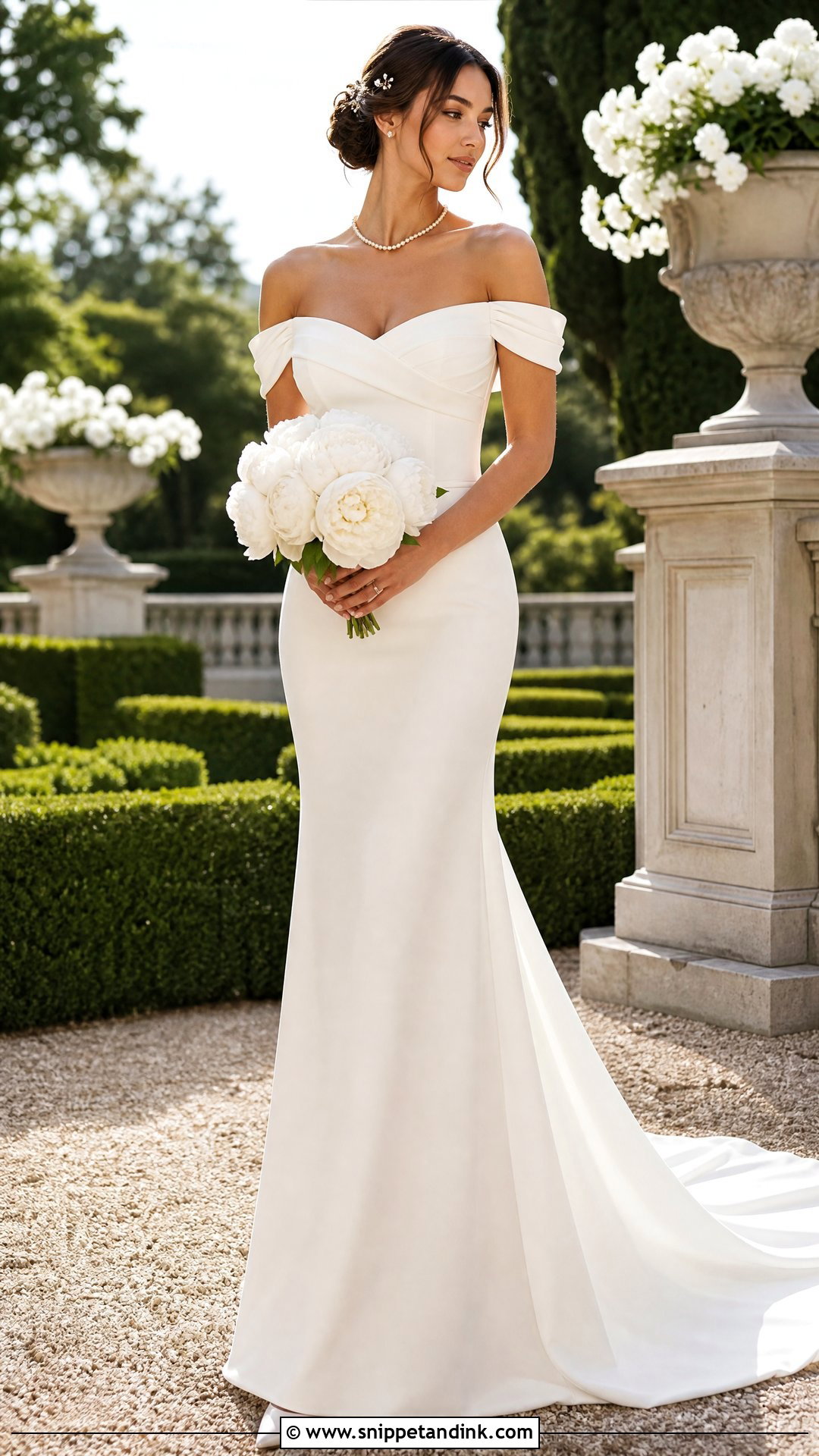
The collarbones become the focus with an off-the-shoulder neckline, and draped bands or fitted short sleeves soften it against a smooth crepe skirt. Hidden support in the bodice keeps it in place from vows to dancing. A short pearl necklace, crystal hairpins, pointed pumps and a chapel veil beneath a low bun. White peonies with greenery add soft volume without crowding the neckline. If you want more freedom later, detachable off-the-shoulder sleeves give you a second look. Keep peonies out of the sun until the last minute; they open fast in warm rooms.
6. Halter Neck Sheath Wedding Dress
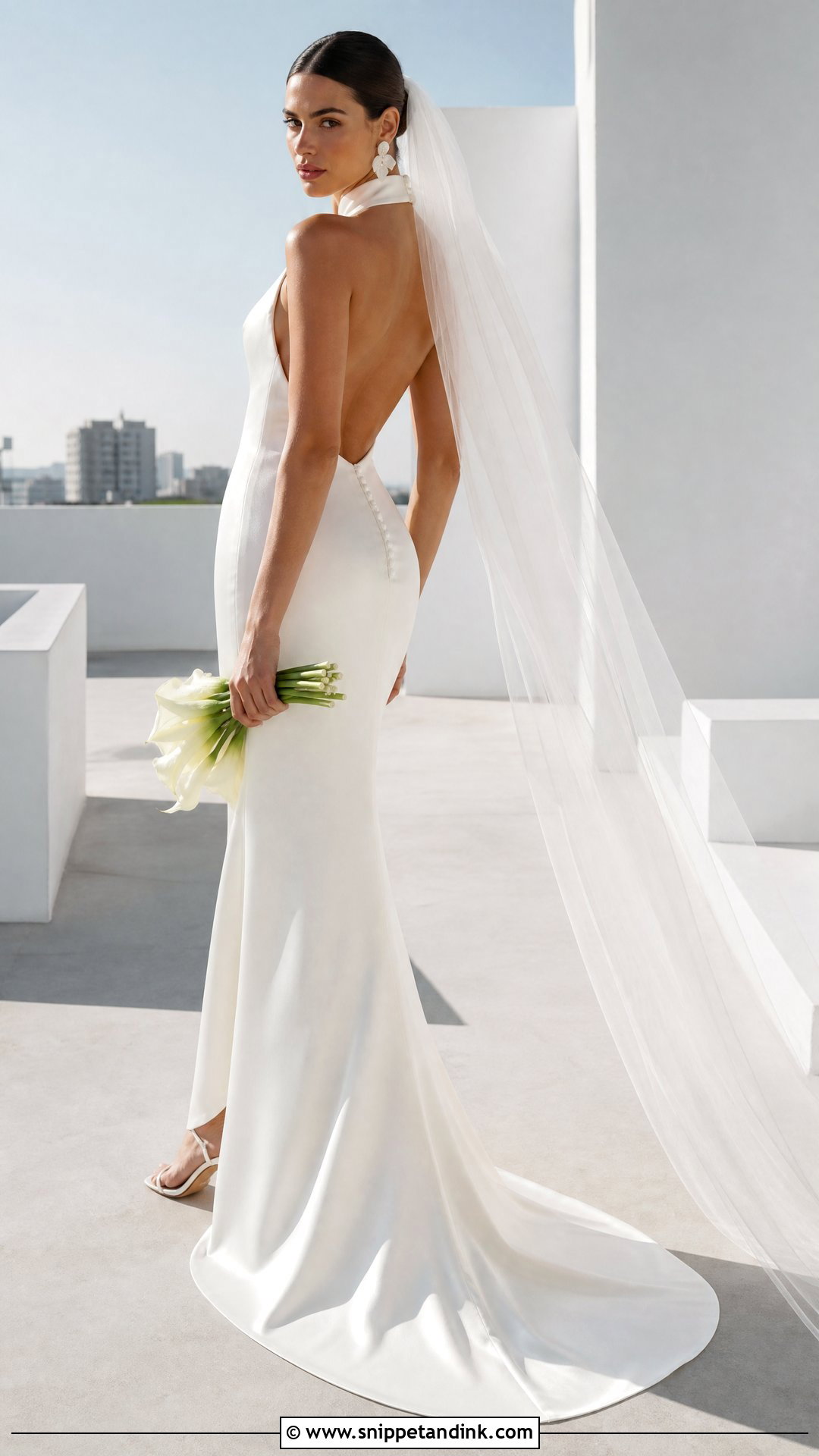
A halter neck sheath wedding dress shows off the shoulders and feels more fashion than fairy tale. Smooth satin or structured crepe keeps the long line crisp. A halter that fastens at the neck and opens into a low back gives you front and back interest. Small sculptural earrings, sleek ivory sandals, a narrow cathedral veil from a polished bun and no necklace. White anthuriums, orchids or calla lilies keep the mood modern. Halters can give a headache after a few hours if the strap is tight; a hook with two settings lets you loosen it later.
7. High Neck Sheath Wedding Dress
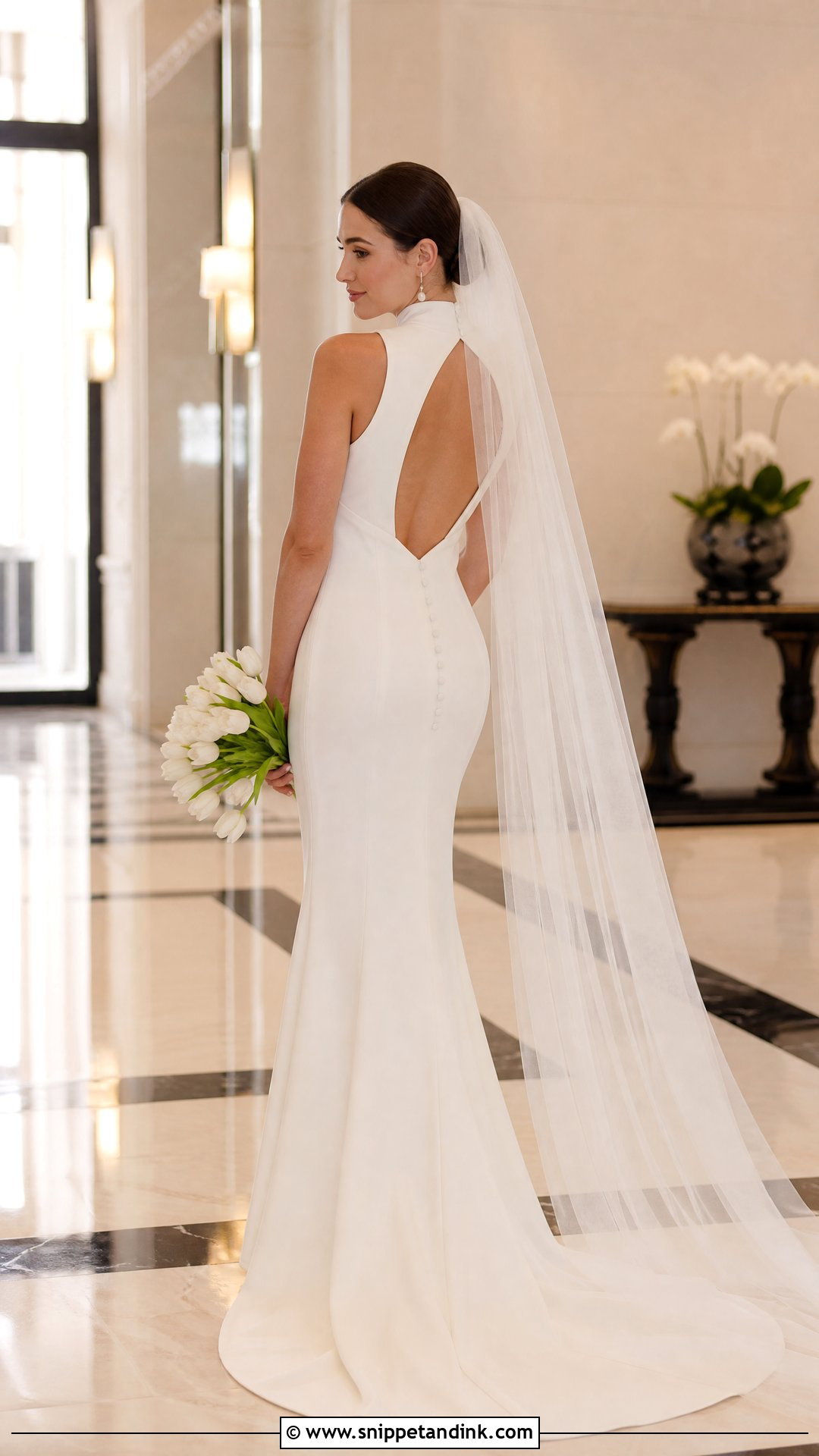
Coverage up to the throat gives a sheath a reserved, polished presence. A fitted crepe mock neck looks clean and modern; a lace high neck feels softer and more traditional. Balance the covered front with an open, keyhole or illusion back. Pearl drops, low pointed heels and a long veil beneath a smooth chignon. A slim bunch of white tulips suits the long line, though tulips keep growing and bending in the vase, so ask for them to be wired or bought close to the day. Make sure the fabric at the neck is soft, since it touches skin all day.
8. V Neck Lace Sheath Wedding Dress
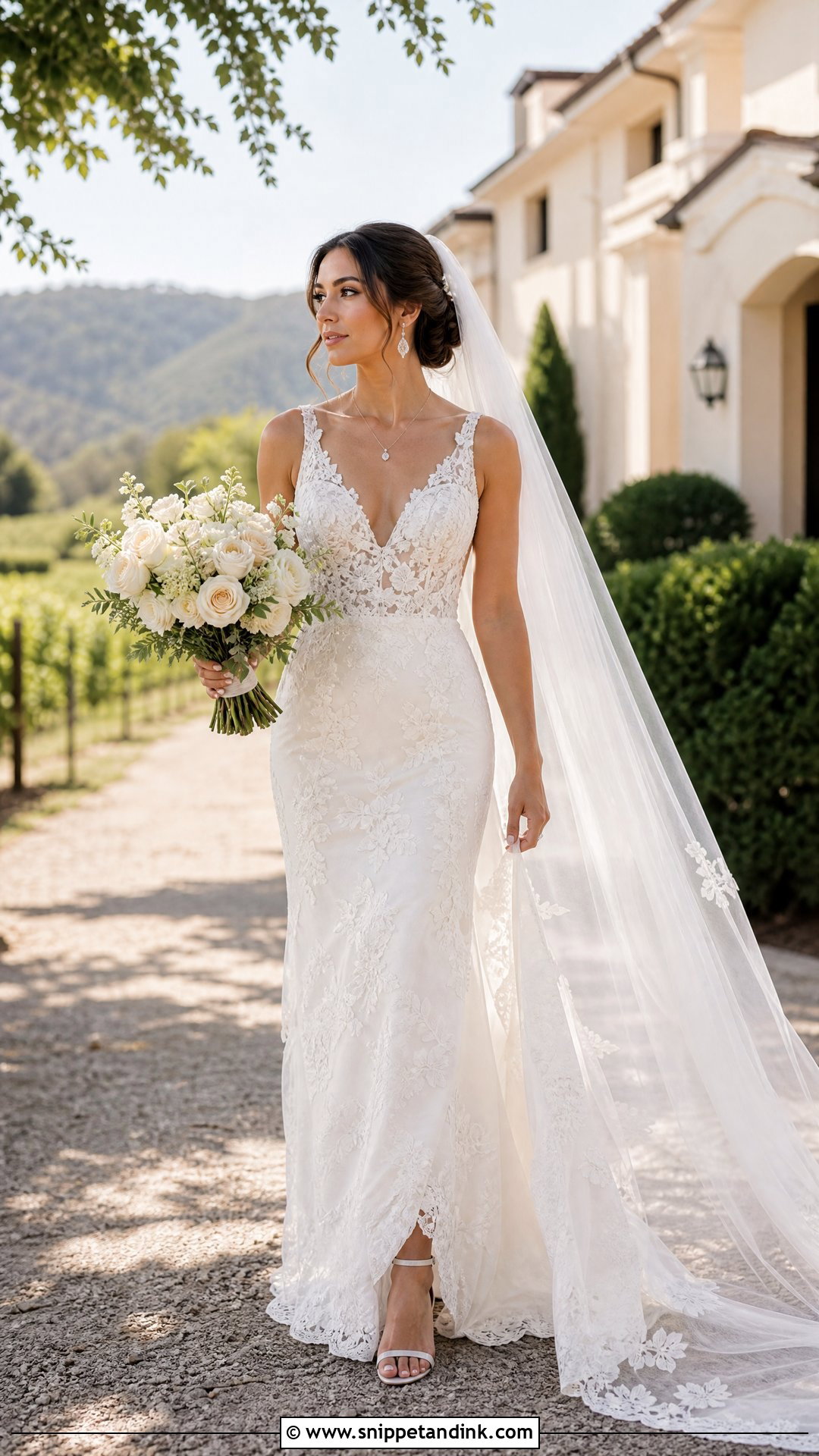
A V neck pulls the eye straight down the dress and lengthens the whole look. Pick a depth you’re comfortable with, then look for supportive mesh or discreet cups inside. Lace appliqués over a smooth lining give definition without volume. A fine pendant, pearl earrings, ivory ankle-strap heels and a sheer veil with a narrow lace border, with a loose bunch of cream roses. Vineyards, gardens and historic houses suit it. If the V plunges, a seamstress can set illusion tulle inside it. I’d decide that before the final fitting rather than relying on tape.
9. Scoop Neck Satin Sheath Wedding Dress
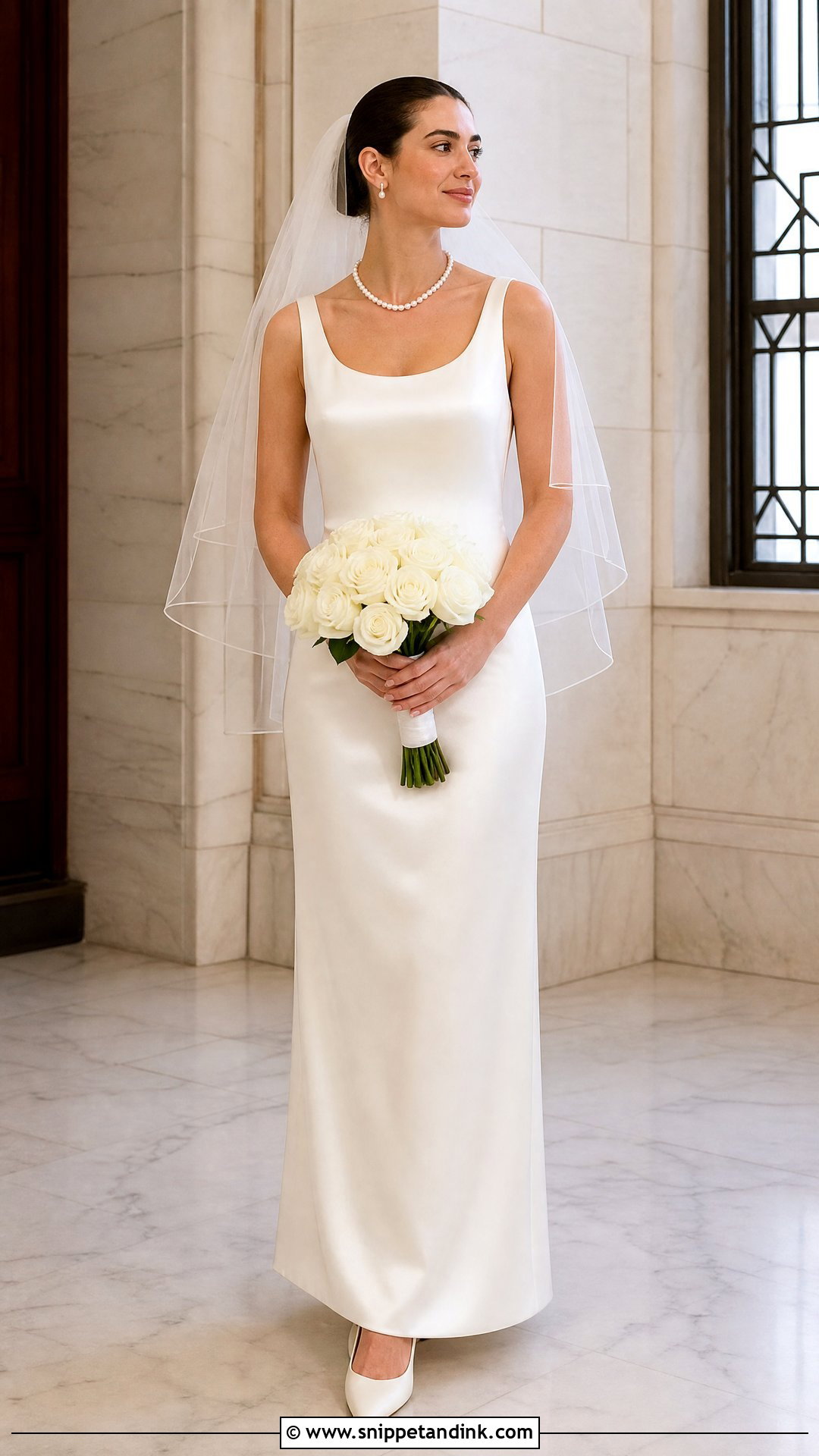
A scoop neck satin sheath wedding dress is the classic, unfussy option. The rounded neck frames the collarbones and suits wide straps or a sleeveless bodice. Medium-weight satin reflects light softly and stays smooth over the hips, where lighter satin creases. A single strand of pearls with matching earrings, pointed satin heels, a simple fingertip veil and a neat bun or waved bob. White roses tied with ivory ribbon finish it. It moves from a courthouse to a hotel dinner without looking out of place at either.
10. Open Back Sheath Wedding Dress
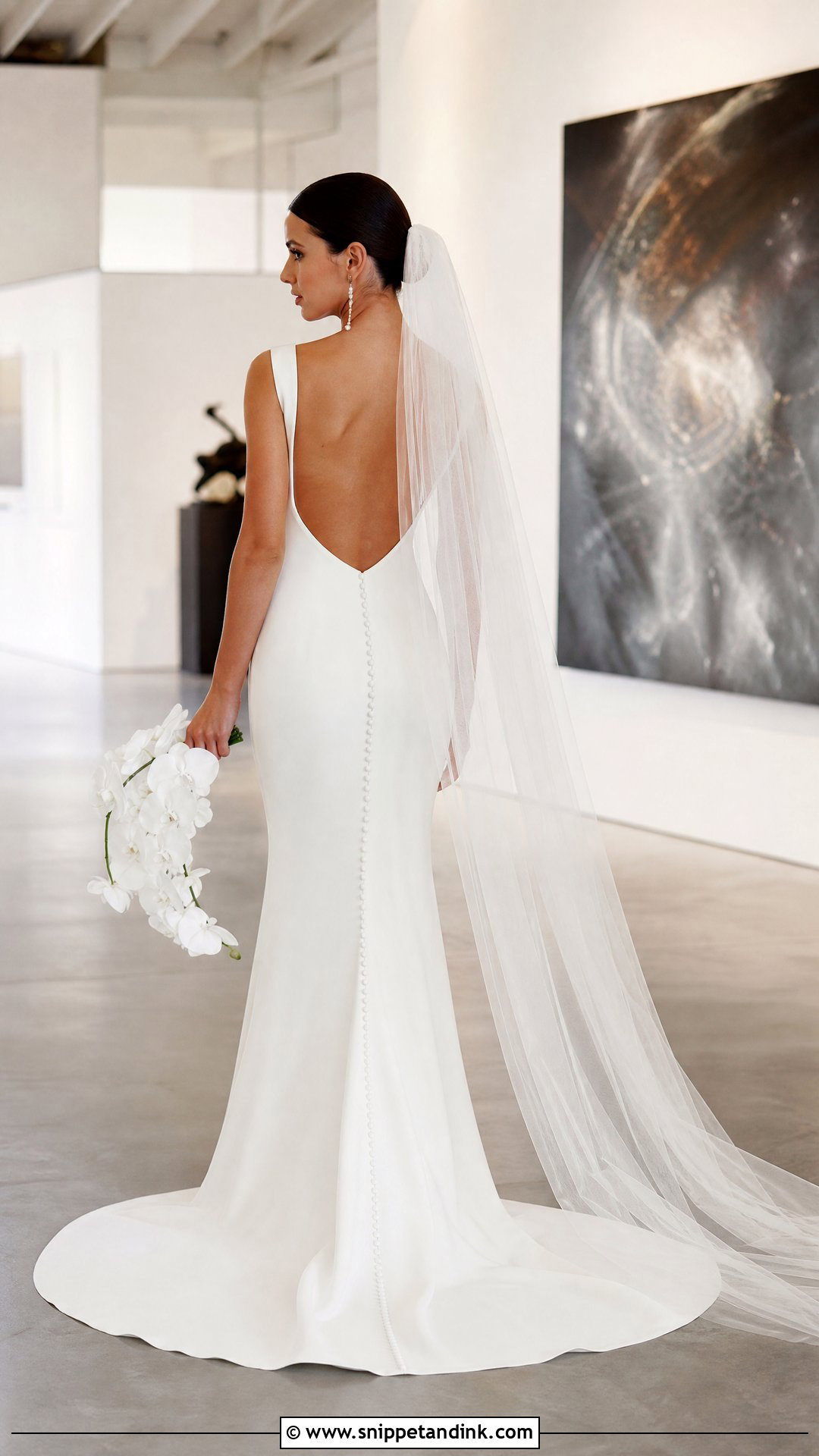
Restraint at the front, the reveal at the back. A high neck or clean bateau keeps the front quiet, then the back dips into a low V or curve finished with covered buttons. Long drop earrings, backless ivory heels, a sheer veil under an updo so the back stays visible and a slim bunch of white orchids. Support has to come from sewn-in cups and a well-built lining, not a visible bra. The lowest point of the opening should sit above where the waistband of your underwear sits; I mark it with the bride in her chosen underwear, never before.
11. Illusion Back Sheath Wedding Dress
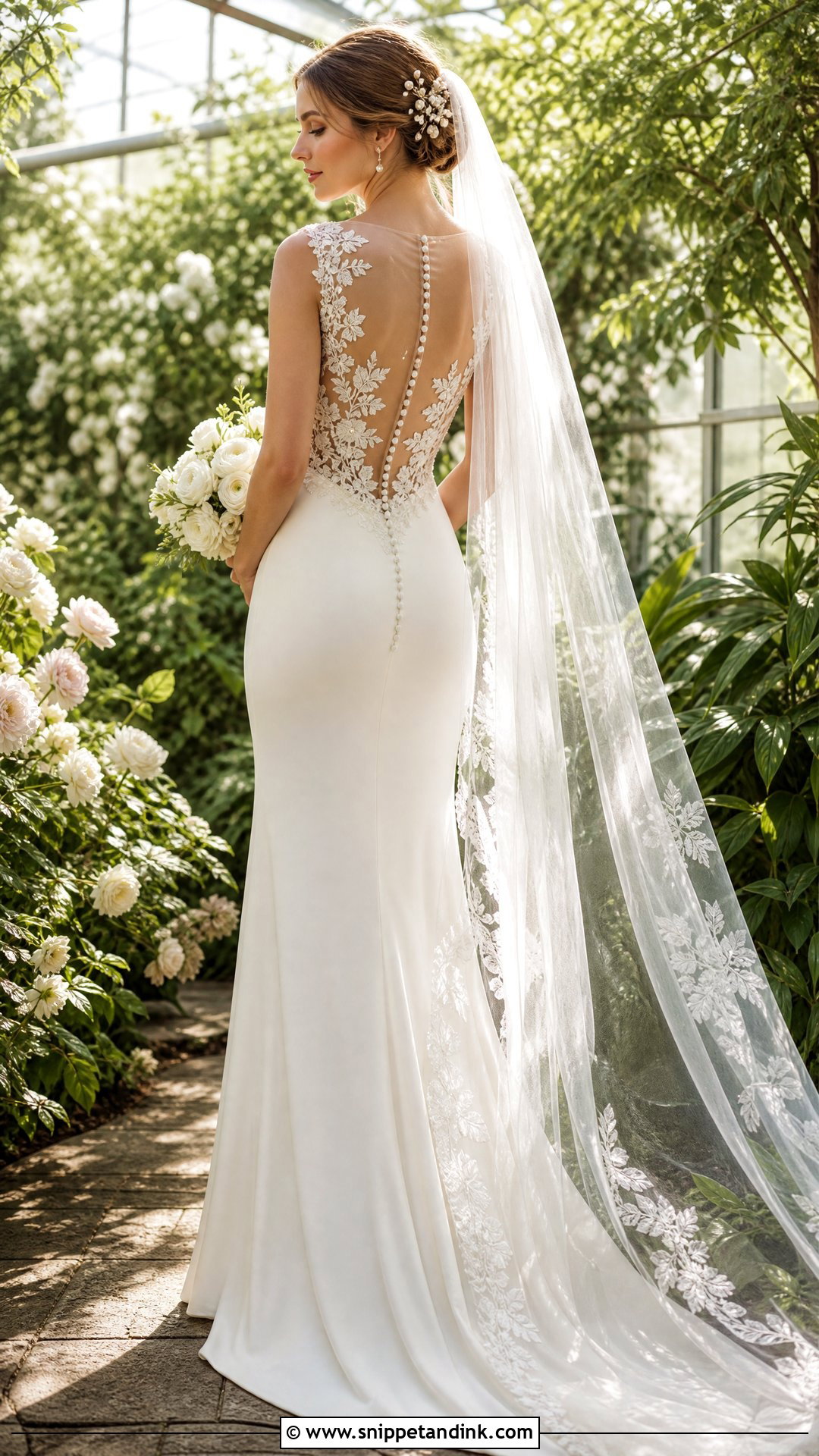
Illusion backs give the look of an open back with more coverage and more support. Sheer mesh holds lace appliqués, pearl buttons or embroidered vines that seem to float on the skin. Keep the front streamlined with a modest V and a fitted crepe or lace skirt. Pearl hairpins, small crystal earrings, ivory pumps, a clear cathedral veil and a soft bunch of white ranunculus. The mesh shade has to match your skin; a mismatched panel looks like a grey patch in photographs. Have it checked while you sit, too, because the mesh pulls tight across the shoulder blades.
12. Sheath Wedding Dress With Slit
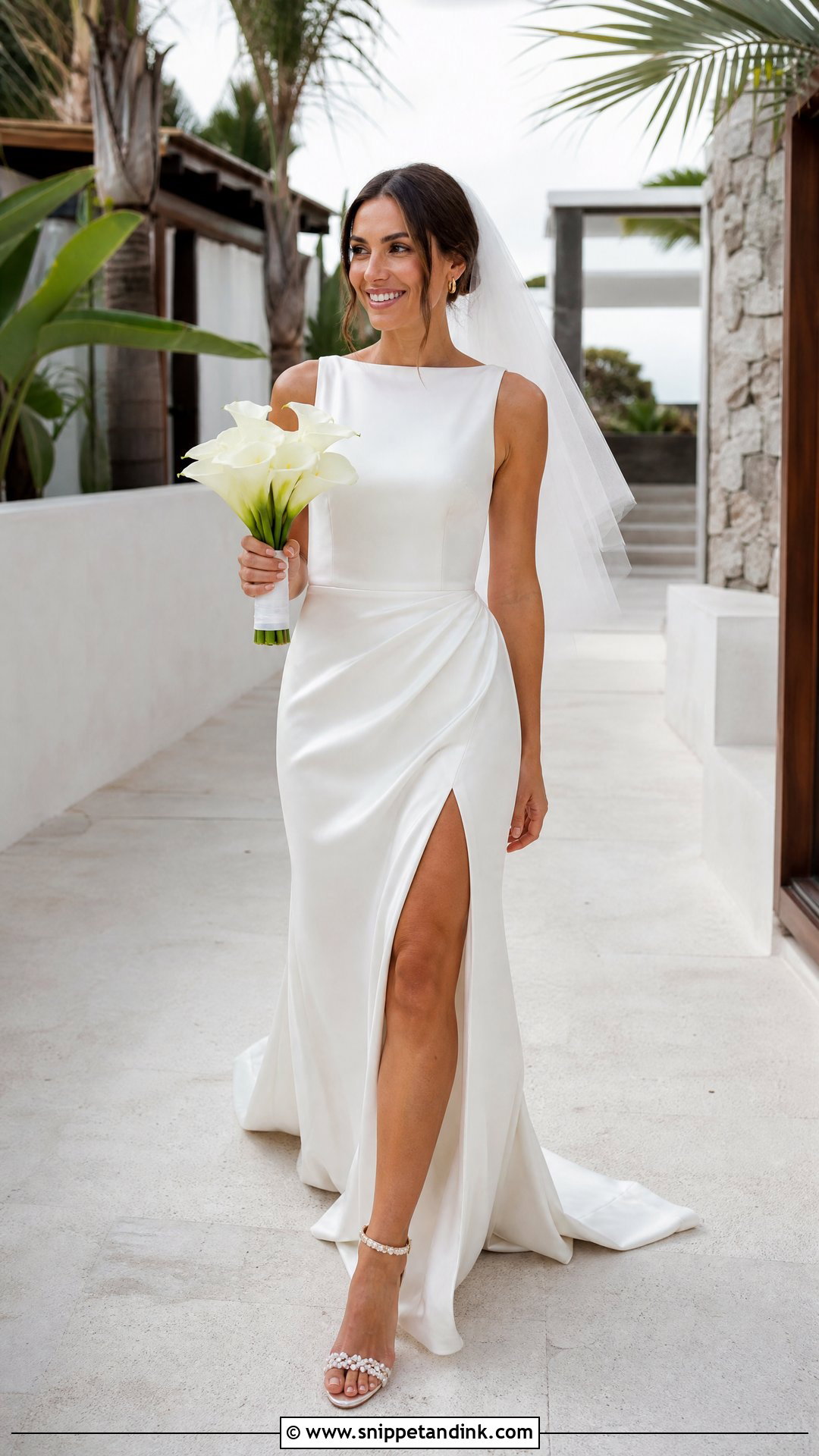
A slit gives a narrow skirt room to walk and adds a modern edge. Side or front, it should start at a height you’re comfortable with when seated, not just standing. Draped satin and stretch crepe move naturally around the leg. Embellished ivory sandals or pointed slingbacks show off the detail, with small hoops and a clean chapel veil. Calla lilies suit the confident mood. With the slit already drawing attention, the rest stays simple. I’d ask for a small hidden stay stitch at the top of the slit so it can’t tear higher on the dance floor.
13. Beaded Sheath Wedding Dress
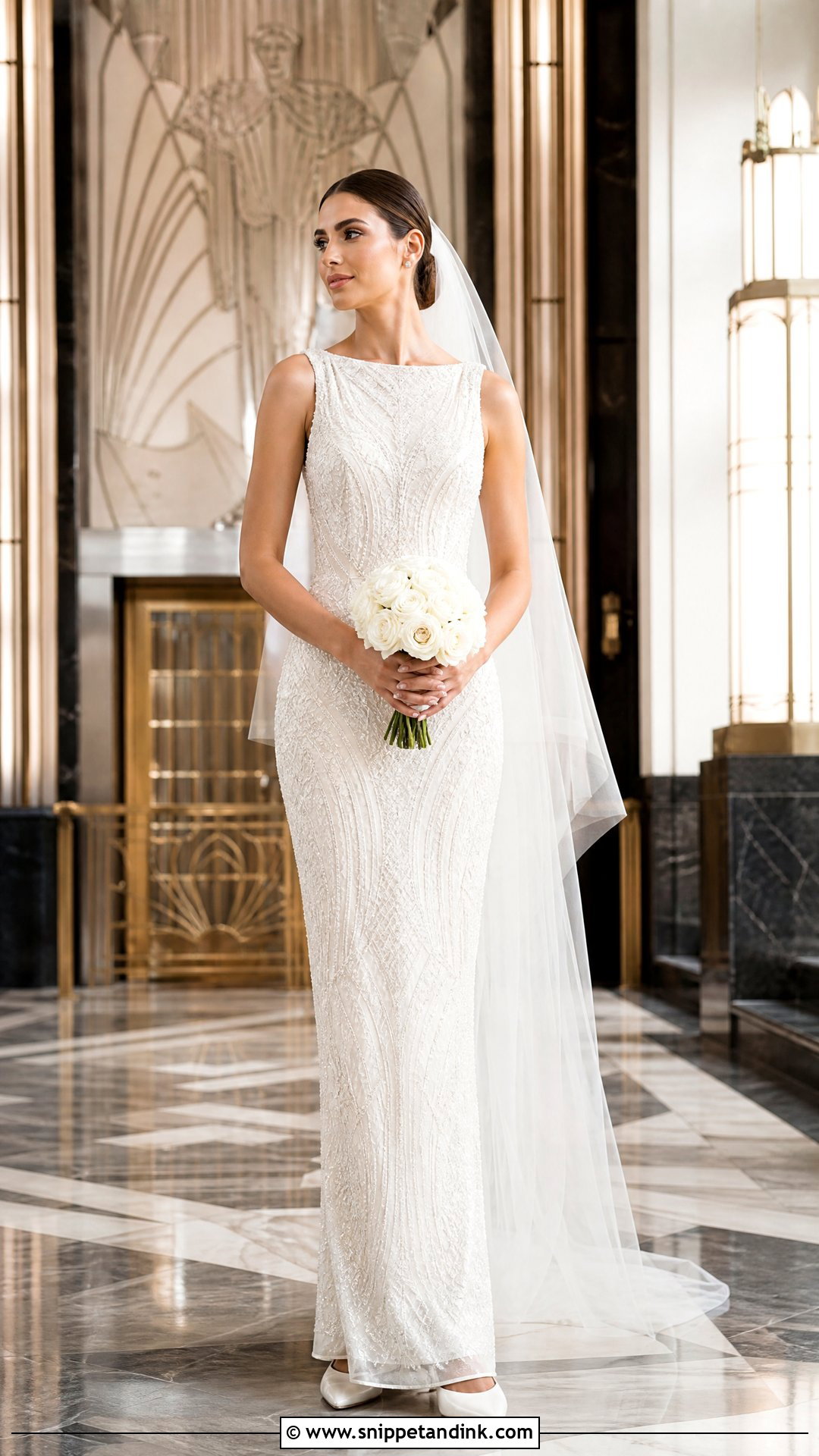
Shimmer and a slim shape aren’t a contradiction. Tonal beads, clear sequins or fine crystal embroidery that runs vertically keeps a beaded sheath looking long. A lightly lined bodice and narrow skirt stop it from feeling heavy. Simple satin pumps, small diamond or crystal studs, an unembellished tulle veil and a compact bunch of white roses. Beaded gowns are noticeably heavier than plain ones, and the weight drags on the shoulders by evening, so check the straps are wide or reinforced. Under the arms is where the beads scratch; feel it there before deciding.
14. Floral Appliqué Sheath Wedding Dress
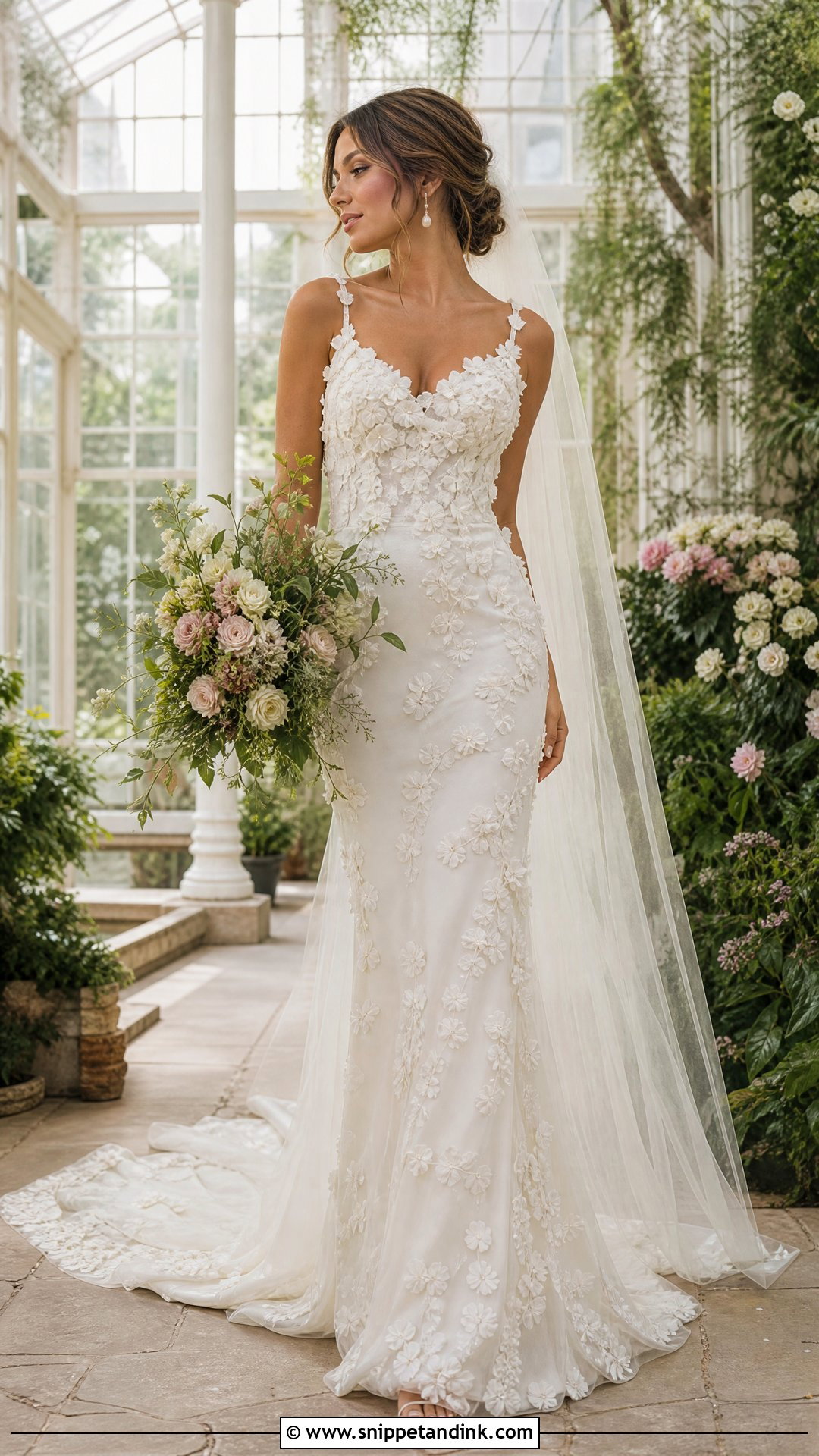
Raised floral appliqués are most effective placed where the eye travels: bodice, waist and train, with the rest of the dress left clear. A nude or ivory lining changes how strongly they show, so compare both by a window. Pearl drops, delicate ivory heels and a plain veil. White sweet peas, roses and greenery echo the flowers on the dress. Sweet peas wilt fast without water, so they’re best added to the bouquet on the morning. Pin the hair softly back to show the neckline. Botanical gardens and conservatories make an obvious backdrop.
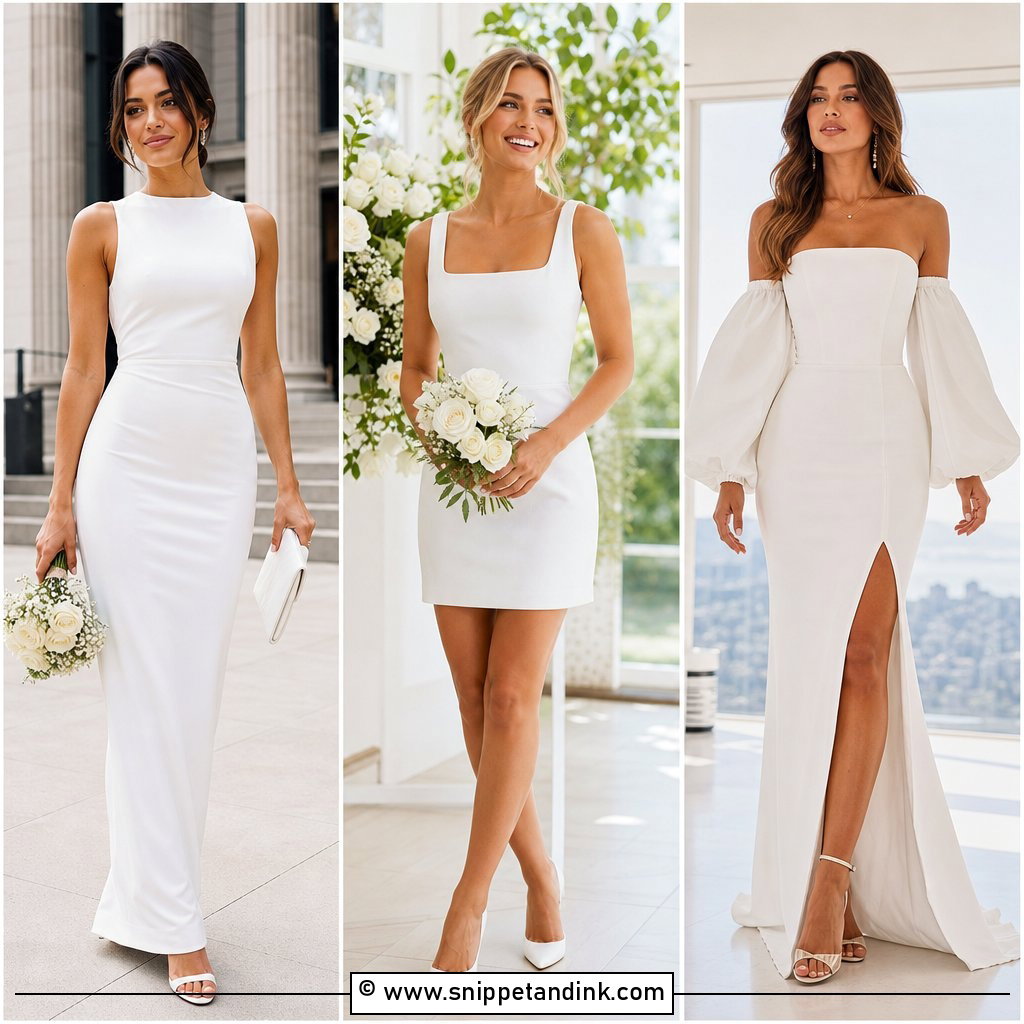
15. Pearl Sheath Wedding Dress
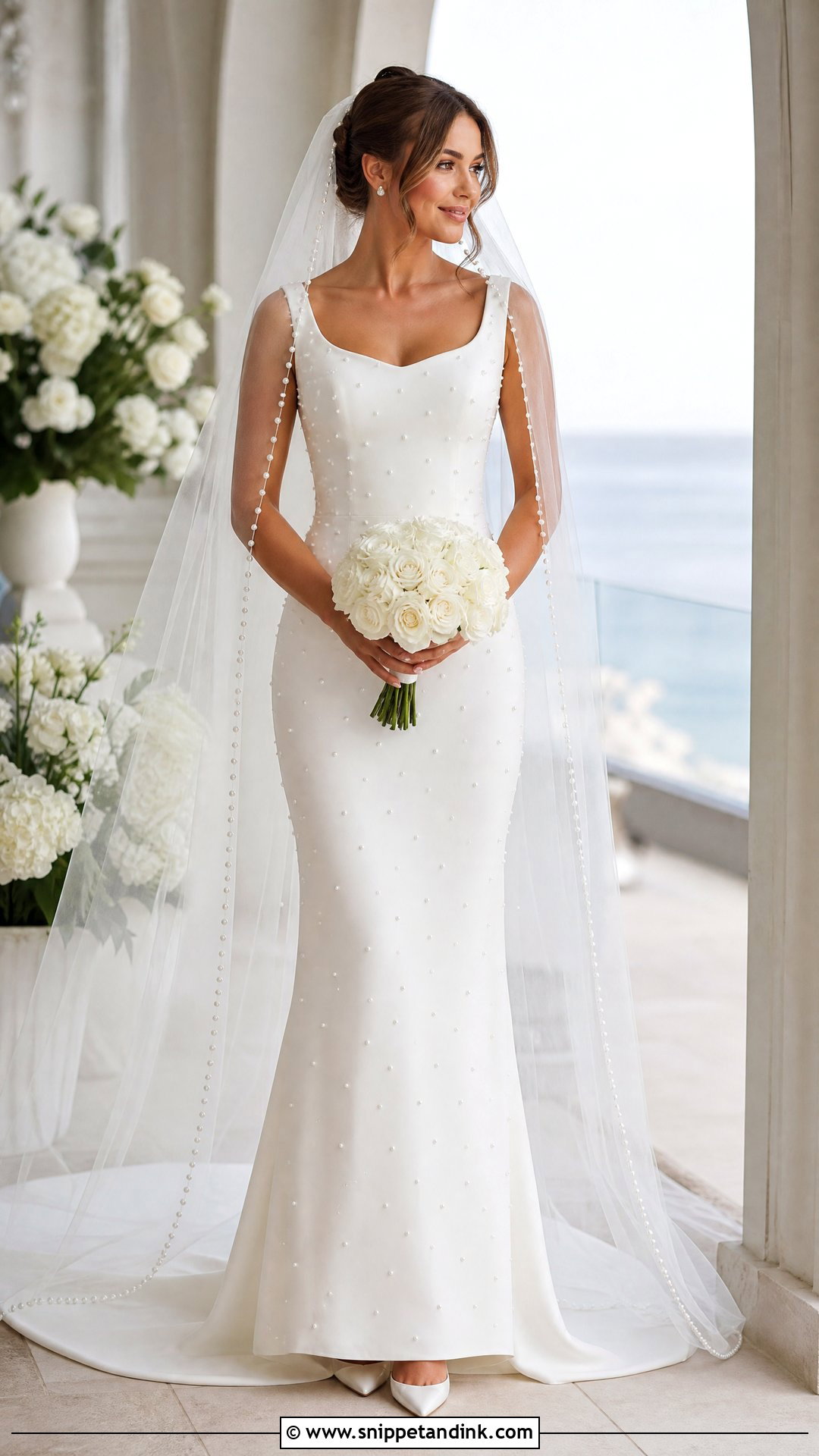
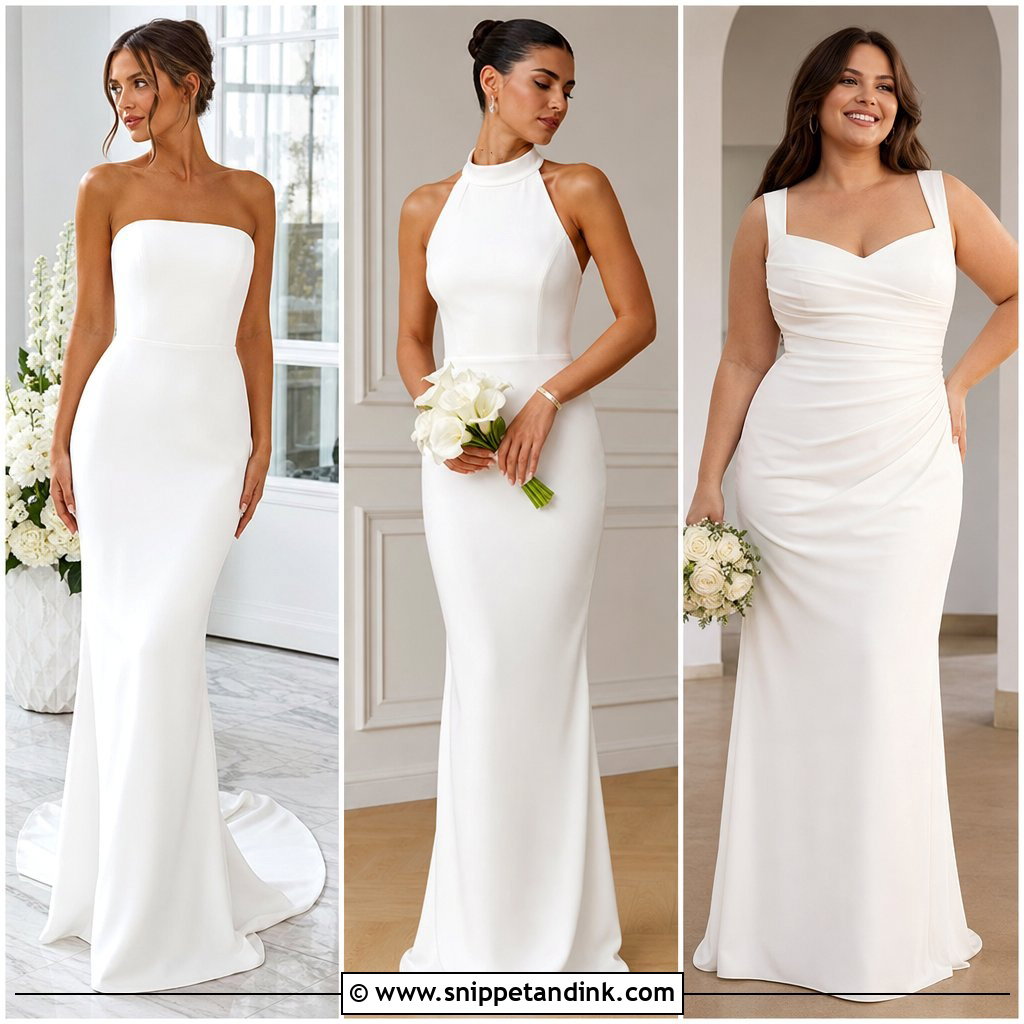
Pearls can be scattered for a subtle glow or packed around the neckline and bodice for real impact. Smooth crepe underneath keeps the outline clean. Pearl studs, ivory pointed pumps, a sheer veil edged with a few matching pearls and a rounded bunch of white roses. Raised pearls catch fine tulle, which is why I always test the veil sliding over the dress at a fitting before the wedding. Pearls also add weight to a slim gown, so check the bodice still sits up properly by the end of the appointment, not just at the start.
16. Detachable Sleeve Sheath Wedding Dress
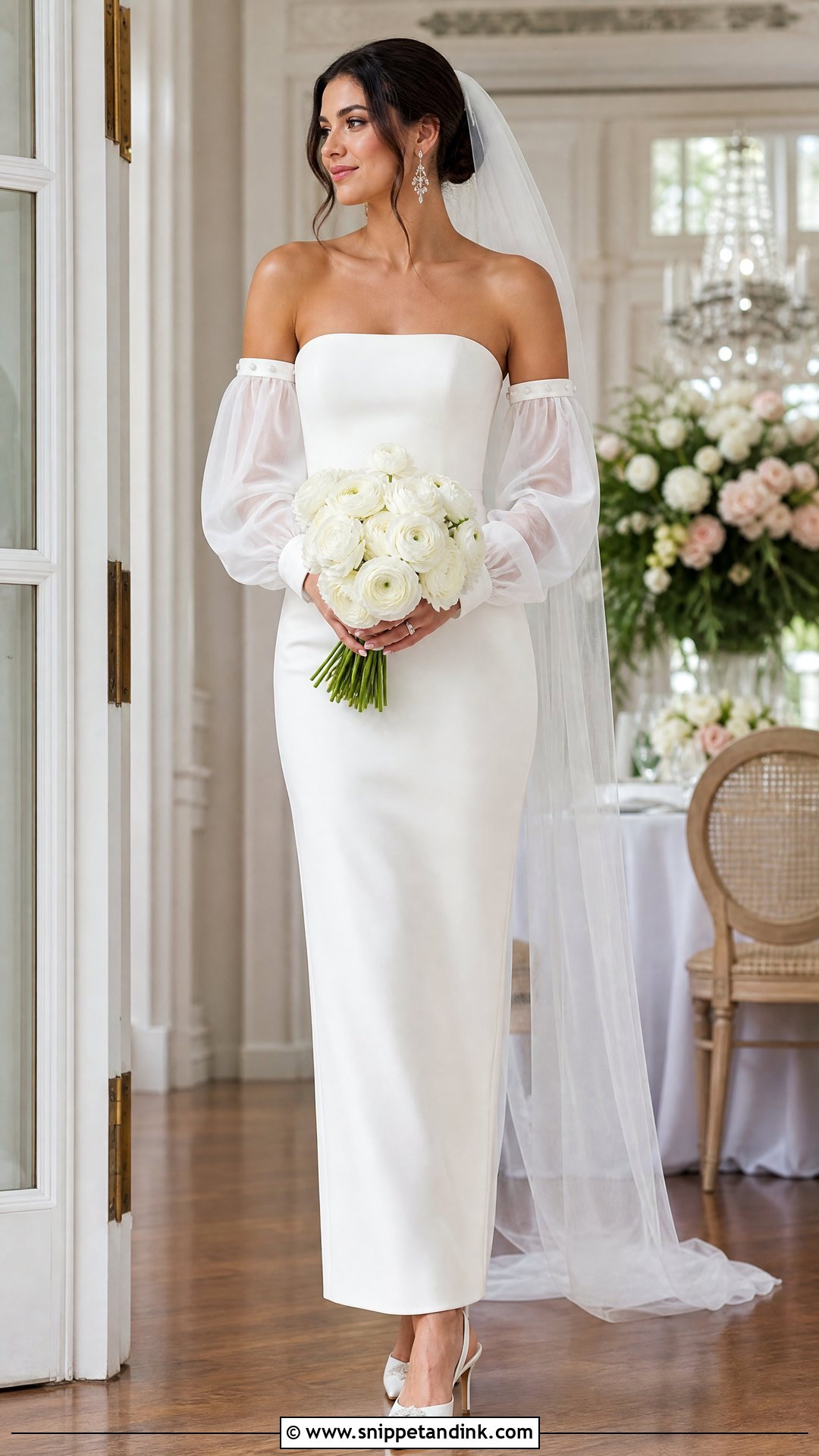
Detachable sleeves give one gown two looks. Start the ceremony in fitted lace sleeves, sheer bishop sleeves or draped off-shoulder bands, then take them off to reveal a strapless or sleeveless bodice for the party. A smooth crepe skirt keeps both versions consistent. Crystal earrings, pointed slingbacks and a fingertip veil for the ceremony, then a pearl comb once the sleeves come off. White ranunculus suits both moods. Have a bridesmaid practise removing them on the final fitting, since tiny hooks are hard to work in a dim corridor.
17. Sheath Wedding Dress With Cape
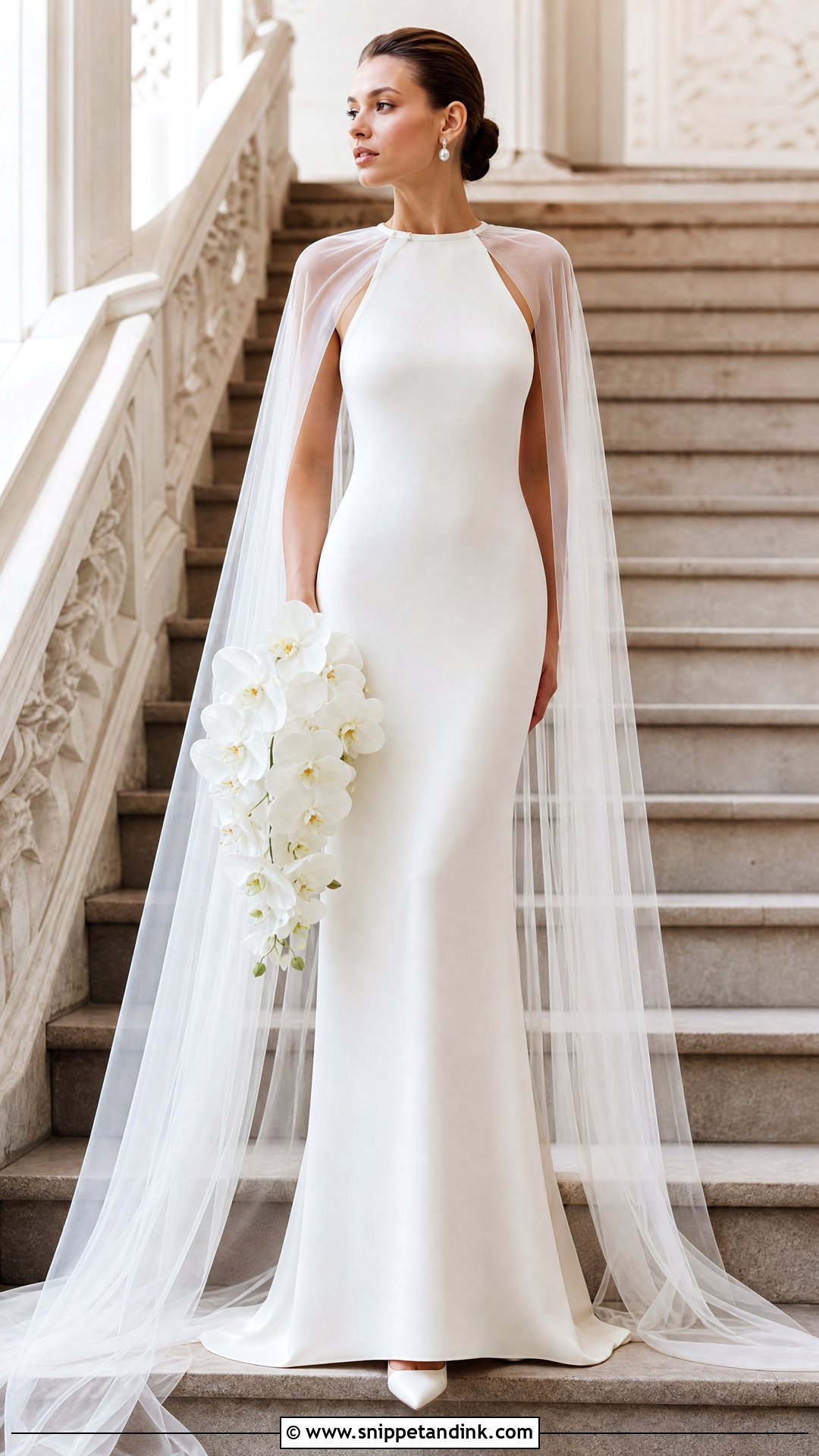
A cape adds the drama a narrow dress doesn’t have on its own. Sheer tulle feels airy, lace is romantic, smooth crepe looks architectural. Underneath, keep the gown streamlined, sleeveless, defined at the waist and narrow in the skirt. Pearl earrings, closed-toe pumps, a sleek low bun and a small bunch of white orchids, so nothing feels excessive. The cape can stand in for a veil or come off after the ceremony. On a windy outdoor site, a long tulle cape will blow sideways; a few hidden weights or a heavier lace edge keep it hanging straight.
18. Sheath Wedding Dress With Overskirt
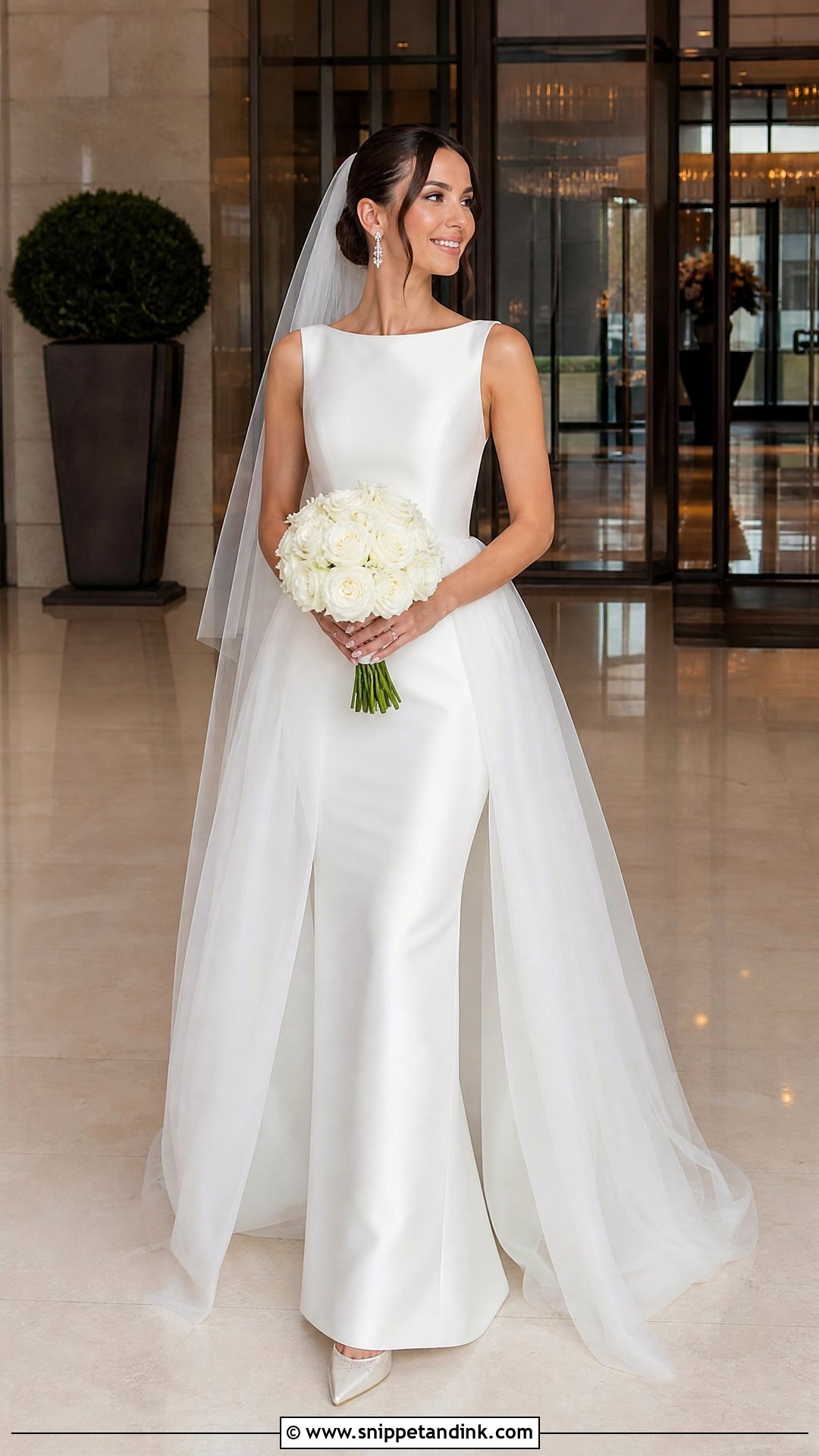
A detachable overskirt gives you ball-gown volume for the aisle and a sleek dress for the party. Choose a light tulle, organza or satin layer that fastens at the natural waist without bulky closures, over a fitted crepe or satin sheath. A long veil, crystal earrings and pointed ivory pumps for the ceremony, then a decorative comb once the veil and overskirt come off. White roses suit both versions. Waist fastenings show as a ridge under thin crepe, so the seamstress should test the sheath alone as well as with the layer on.
19. Petite Sheath Wedding Dress
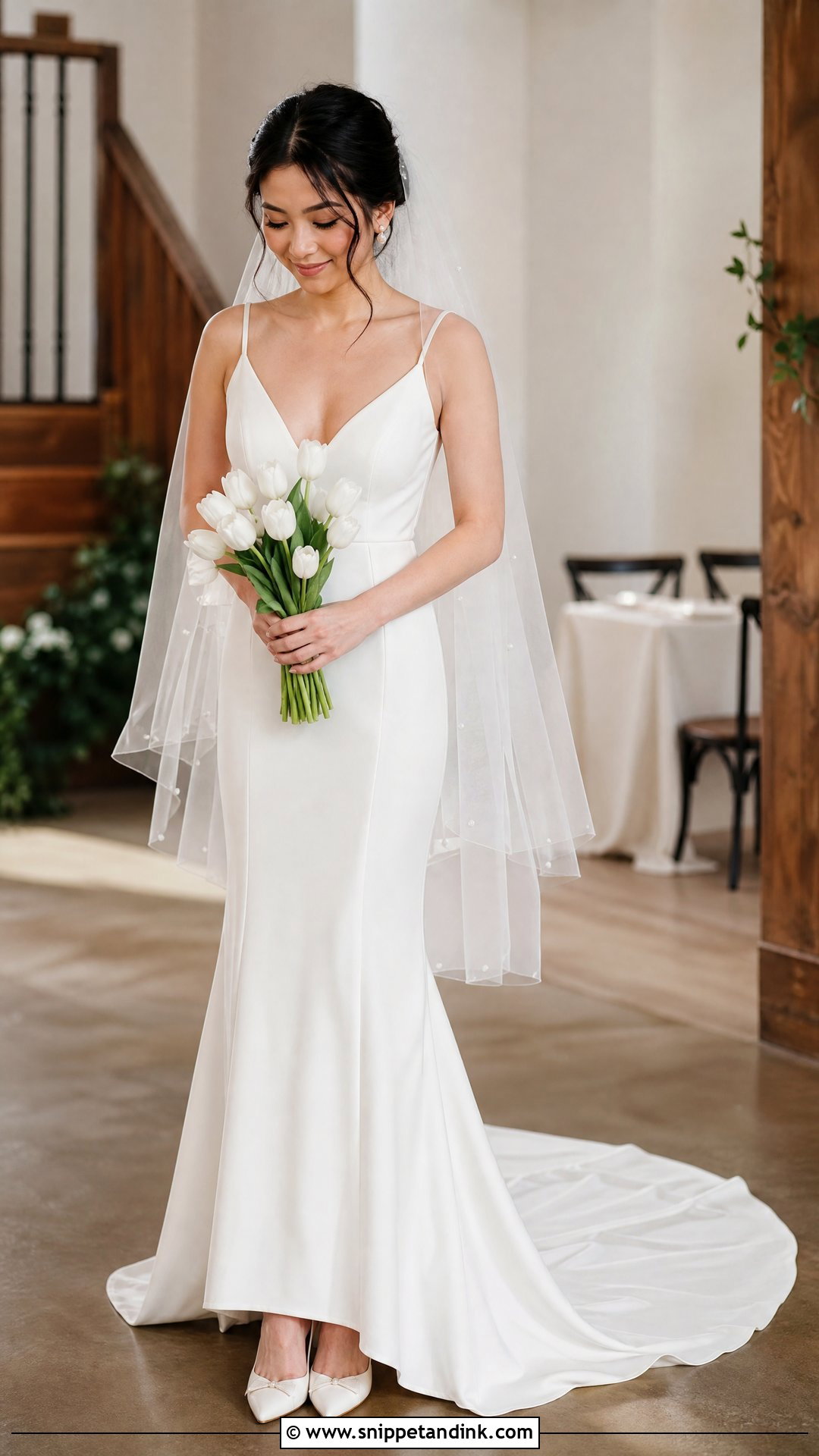
On a petite bride, the problem with most sheaths is length in the wrong places: a low waist, long straps, a train that drags. Look for a raised or natural waist, narrow straps, vertical seams and a moderate train. A V or scoop neck keeps the upper body open. Pointed low heels, small pearl earrings, a fingertip veil rather than an extra-wide one and a compact bunch of white tulips. Order by measurements and budget for alterations to straps, bodice, hem and train. Shortening straps alone often lifts the waist into the right place.

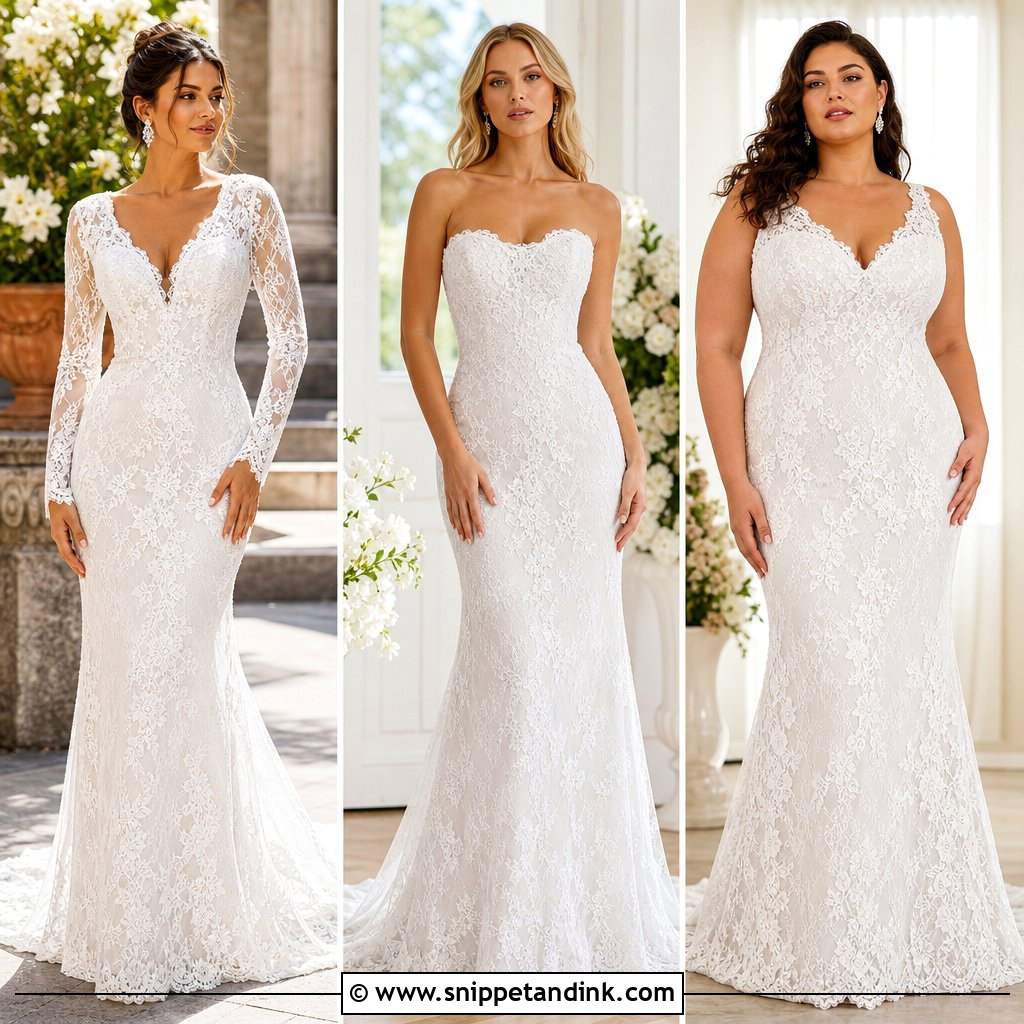
20. Plus Size Sheath Wedding Dress
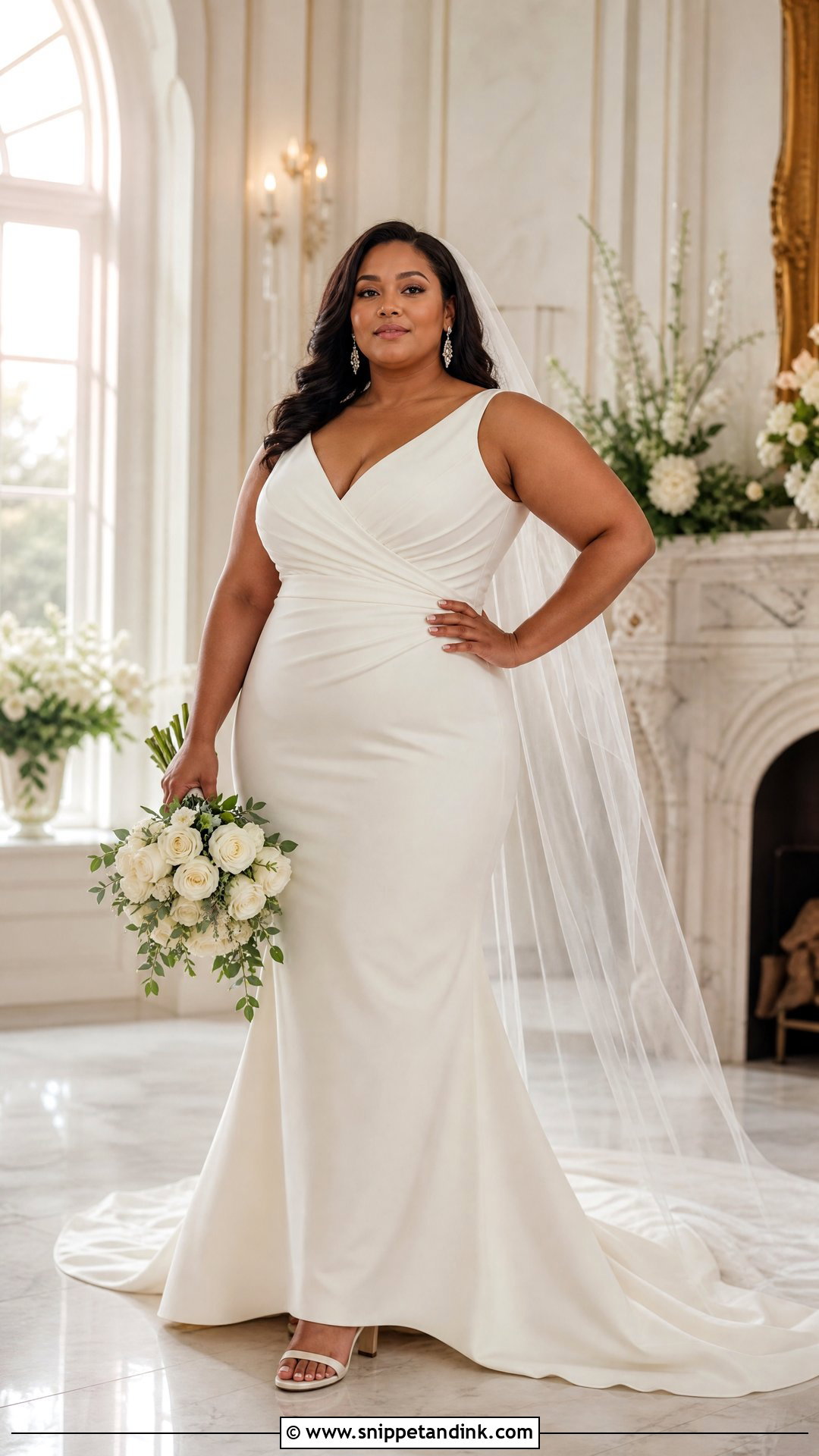
Structure is what makes a plus-size sheath work. Substantial stretch crepe, lined lace and softly draped satin follow the body and stay smooth. Look for supportive straps, a reinforced bodice, ruching placed with purpose and seams that define the waist, with a V or off-the-shoulder neck to frame the face. Block-heel ivory shoes, statement earrings, a chapel veil and a bouquet of white roses and greenery sized to your frame. Judge it moving, not standing: walk, sit, bend and dance at every fitting. Good alterations should let the dress hold you without squeezing.
Stepping Into a Sheath on the Morning
Narrow dresses are put on differently from full skirts, and doing it wrong smears makeup on the neckline or strains a zip that was fitted with no spare room. Allow fifteen unhurried minutes for this, and keep a clean scarf nearby to drape over your face if anything has to go over your head. This is the order I follow:
- Hair and makeup first, then underwear, then shoes off.
- Lay the dress open on the floor and step into it, pulling it up rather than lowering it over your head.
- Arms into straps or sleeves, then one person holds the two sides of the zip together while another closes it slowly.
- Shoes on last, sitting on the edge of a firm chair, so the hem and train stay off the floor.
Dealing with the train after the vows
Most sheath trains are light and short, so a simple wrist loop or a single hook at the back of the waist handles them. Heavier satin or beaded trains need a proper bustle with several points, and the person doing it should practise at the final fitting, not on the day. Ask the seamstress to number or color-code the hooks; it saves a lot of fumbling in a corridor.
One Narrow Line, Twenty Ways to Wear It
The best sheath isn’t the most decorated one. It fits comfortably, holds you up, suits the venue and looks like you. Crepe gives structure, satin gives movement, and lace or embellishment adds texture, while necklines, sleeves, trains and removable layers let you change it further. Walk and sit in every gown you consider, give the alterations proper time, and choose a veil, shoes and flowers that work with the long line rather than against it. From plain crepe to heavy beading, the shape adapts to almost any bride and almost any room.
You'll Like These Ideas:






Leave a Reply