
A plain wedding dress is harder to get right than a decorated one. With no lace or beading to look at, every seam, every pull line and every centimetre of fit is on show, and that’s exactly why brides who love clean design tend to choose one carefully. When it works, the shape, the fabric and the way it moves do all the talking. Below are thirty simple gowns, from silk slips and crepe sheaths to sculpted ball gowns and short courthouse dresses, each with the styling I’d pair with it and the fit points I’d check first.
Turn It Inside Out: Judging Quality When Nothing Hides the Seams
With lace and beading, small flaws disappear. On a plain gown, they’re the first thing a camera catches. When I’m shopping with a bride for a simple dress, I always look at the inside before I let her fall for the outside.
- Lining: a full lining in a similar weight lets the outer fabric hang smoothly. Missing or thin lining lets seams and underwear show through.
- Seams: run a finger along them. They should lie flat with no puckering, especially on crepe and satin where any ripple catches the light.
- Zip: an invisible zip should vanish into the seam. If it waves or bulges, it’ll look worse once you sit down.
- Boning and waist stay: in strapless or fitted bodices, these do the holding up, not the fabric.
- Hem: a weighted or faced hem falls straighter on a plain skirt than a simple turned edge.
A good seamstress can fix a lot, but she can’t add quality to fabric that isn’t there. If the budget is tight, a better fabric in a simpler cut will usually look more expensive than a fussier gown in a cheaper one.
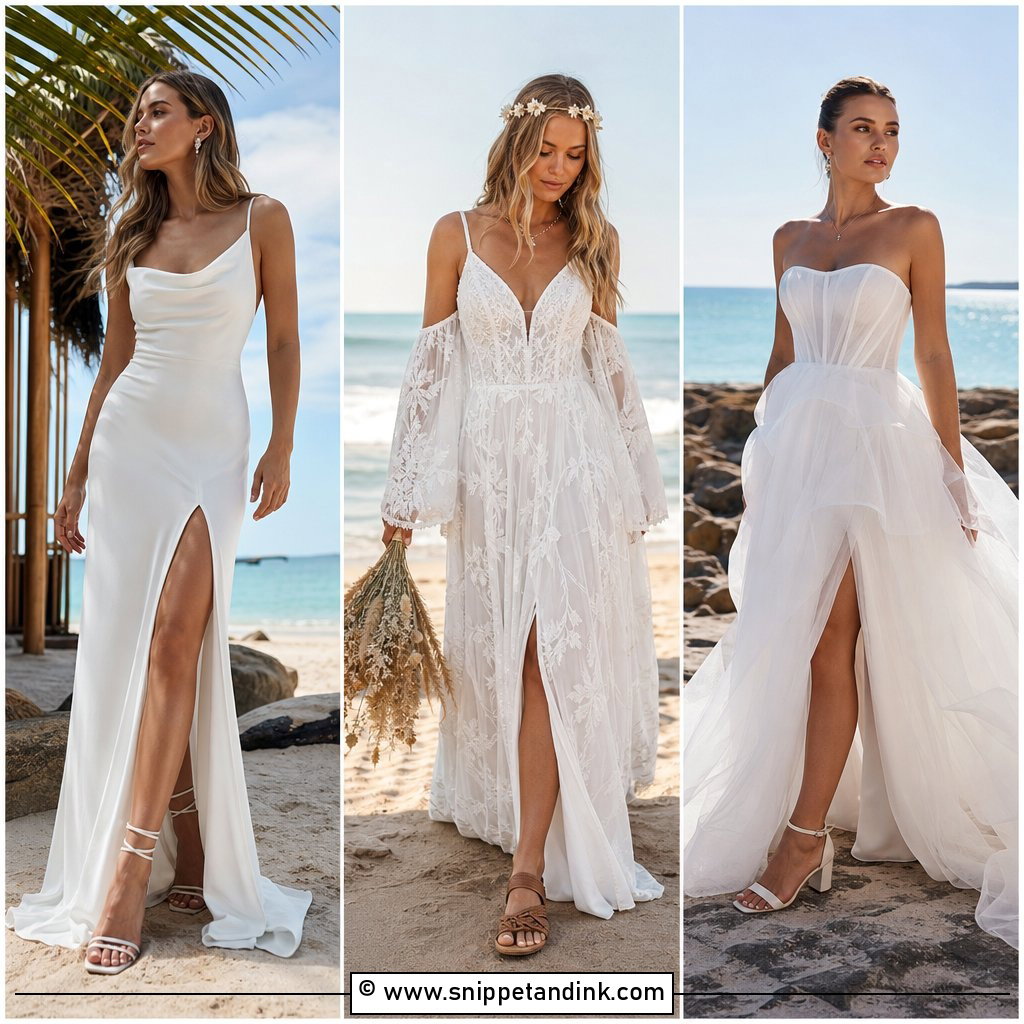
1. Minimalist Slip Wedding Dress
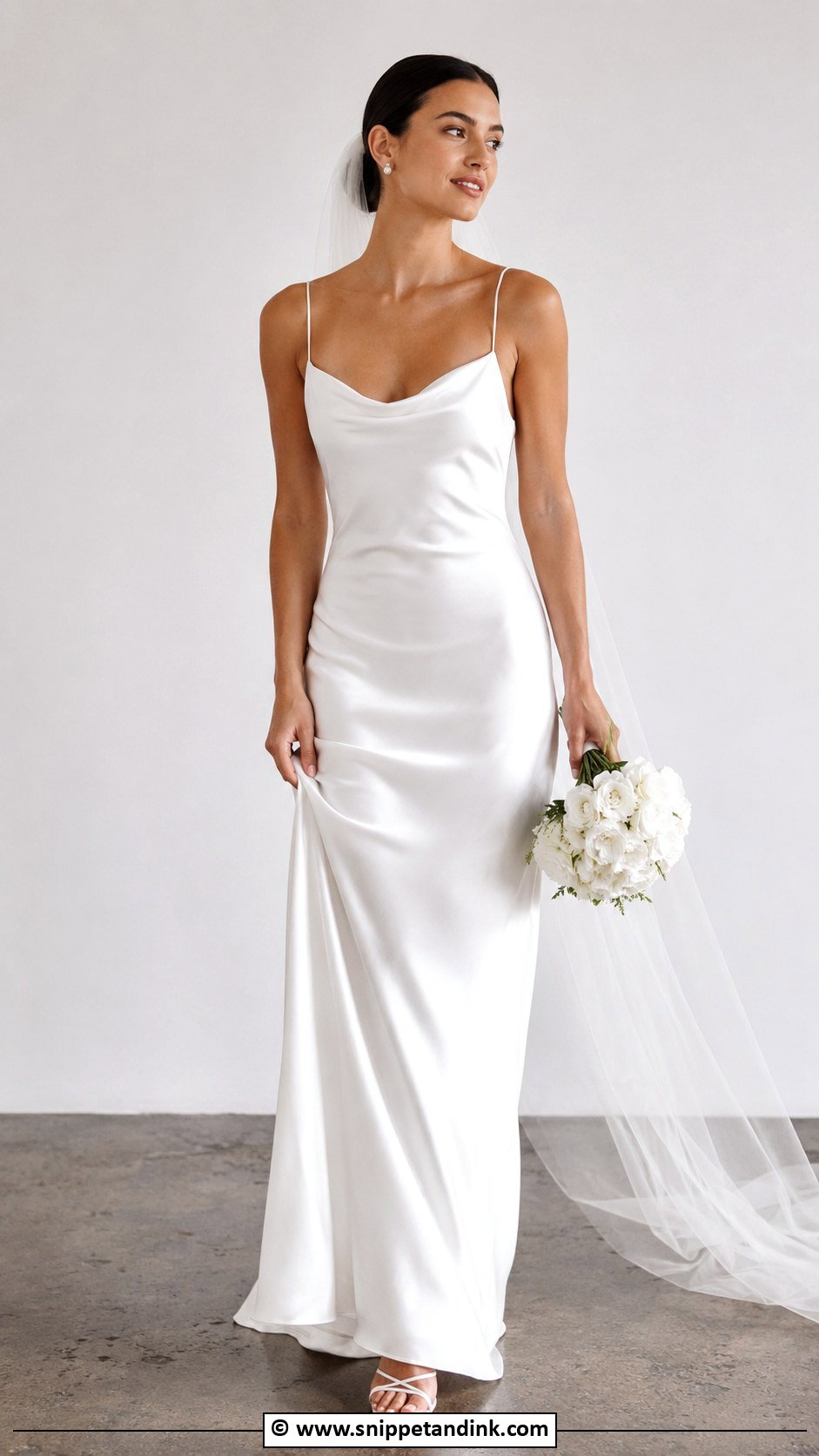
The slip is the purest version of a simple dress, cut on the bias so it drapes over the body. That bias cut is also why it’s tricky: it stretches and shifts, so a slip that fits at the shop can hang differently after a day on a hanger. I let slips hang for a day before final hemming for that reason. Barely-there heels, a fine bracelet, small pearl earrings and a slim veil suit it, and a higher cowl or wider strap gives more coverage without breaking the clean line.
2. Minimalist Satin Wedding Dress
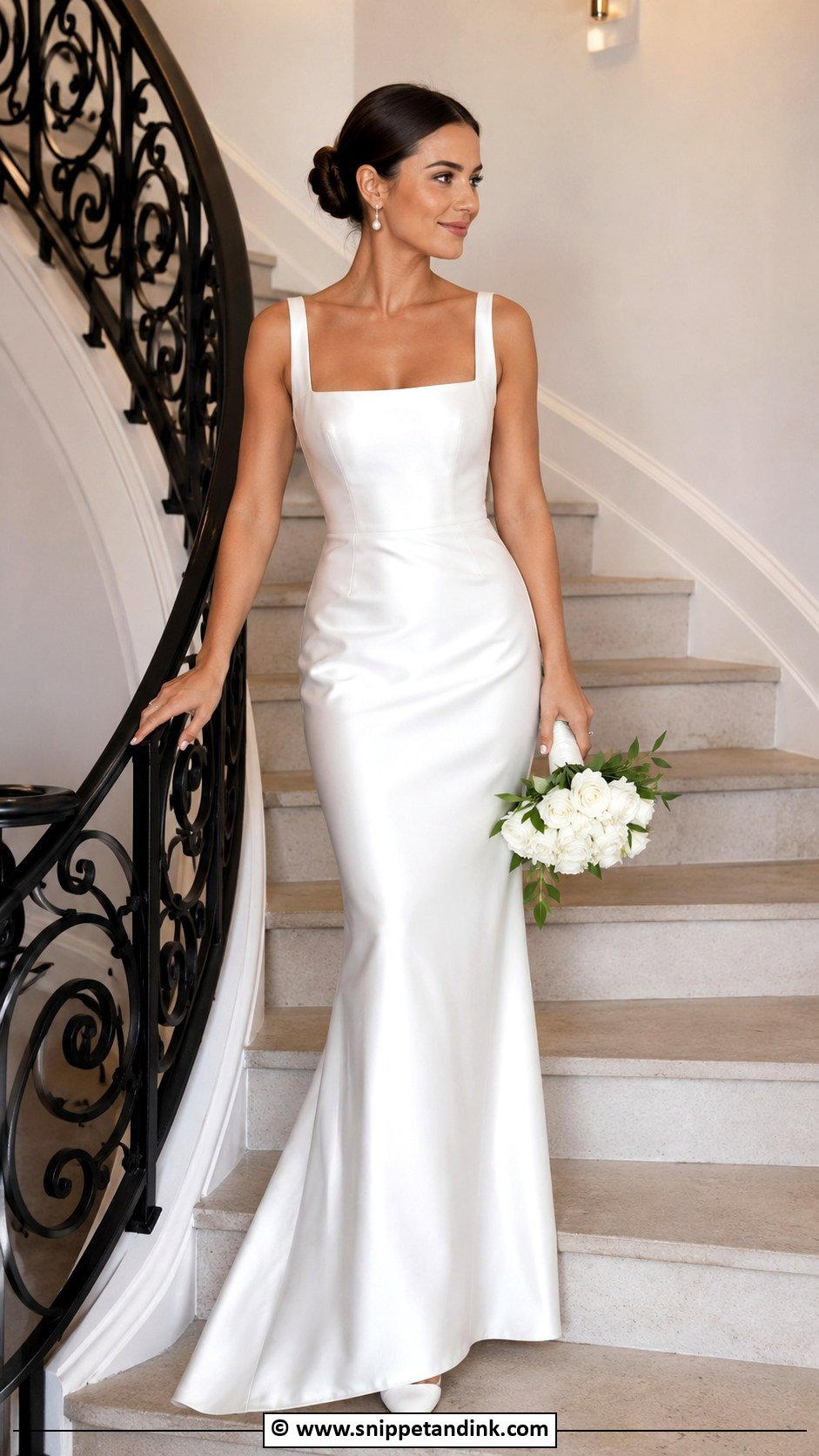
Satin has enough sheen to feel bridal on its own, so a simple shape is all it needs. A fitted bodice into a straight skirt or soft A-line, with a modest train, keeps it clean. I’d pick one detail and stop there: a square neckline, a folded off-shoulder band or a row of covered buttons down the back. Pointed white pumps, a smooth low bun, drop earrings and a small structured clutch complete it for a hotel or formal garden wedding.
3. Minimalist Crepe Wedding Dress
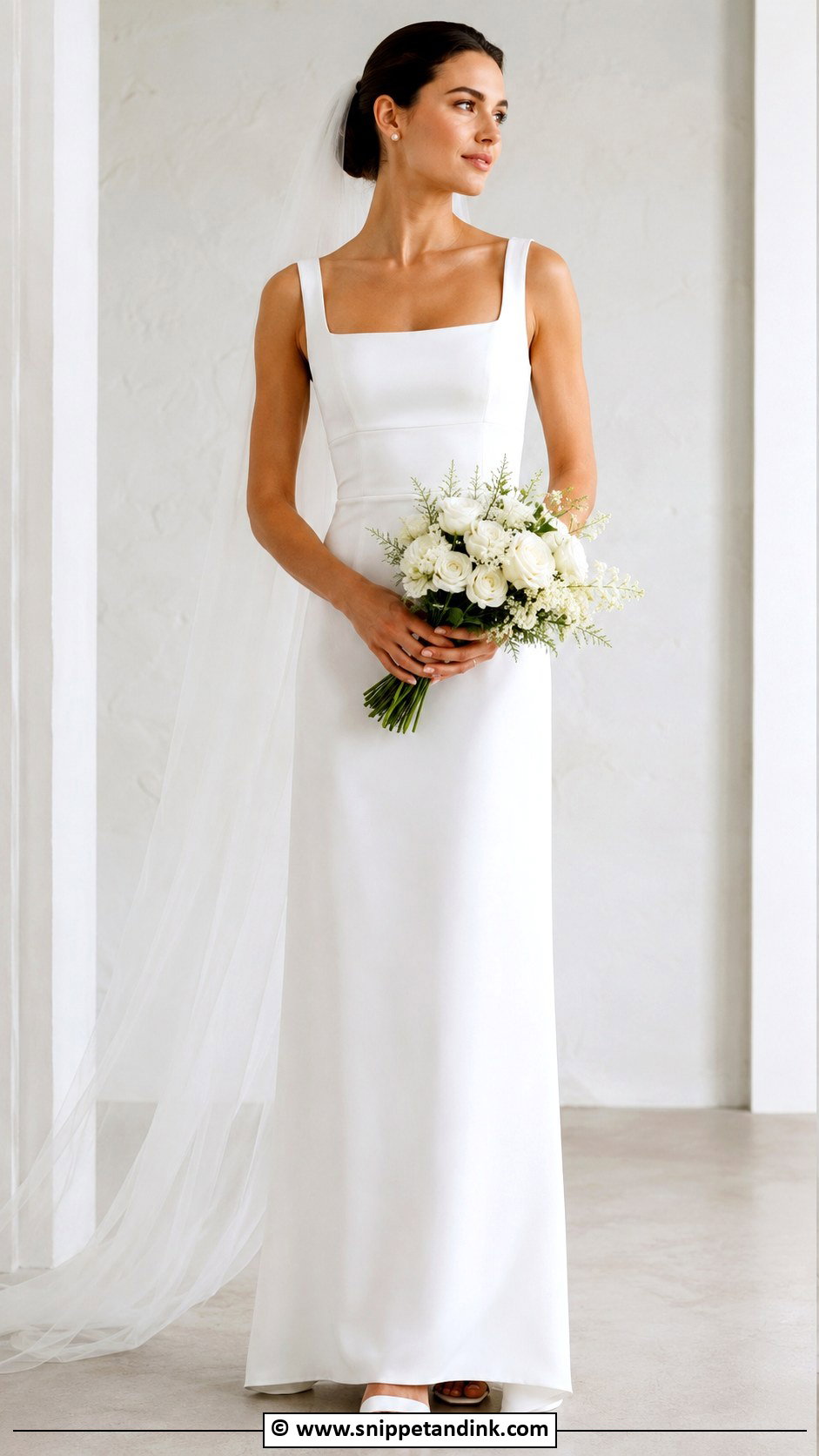
Crepe is matte, holds a seam crisply and has a little stretch, which makes it comfortable as well as structured. It also shows construction honestly, so look at the inside: a fully lined crepe gown with neat seam finishing will hang smoothly, while an unlined one shows pocket bags and seam allowances through the fabric in bright light. A sheath or fit-and-flare shape suits it, with block heels, a long plain veil and pearl studs. A square, bateau or deep V neck changes the mood without adding detail.
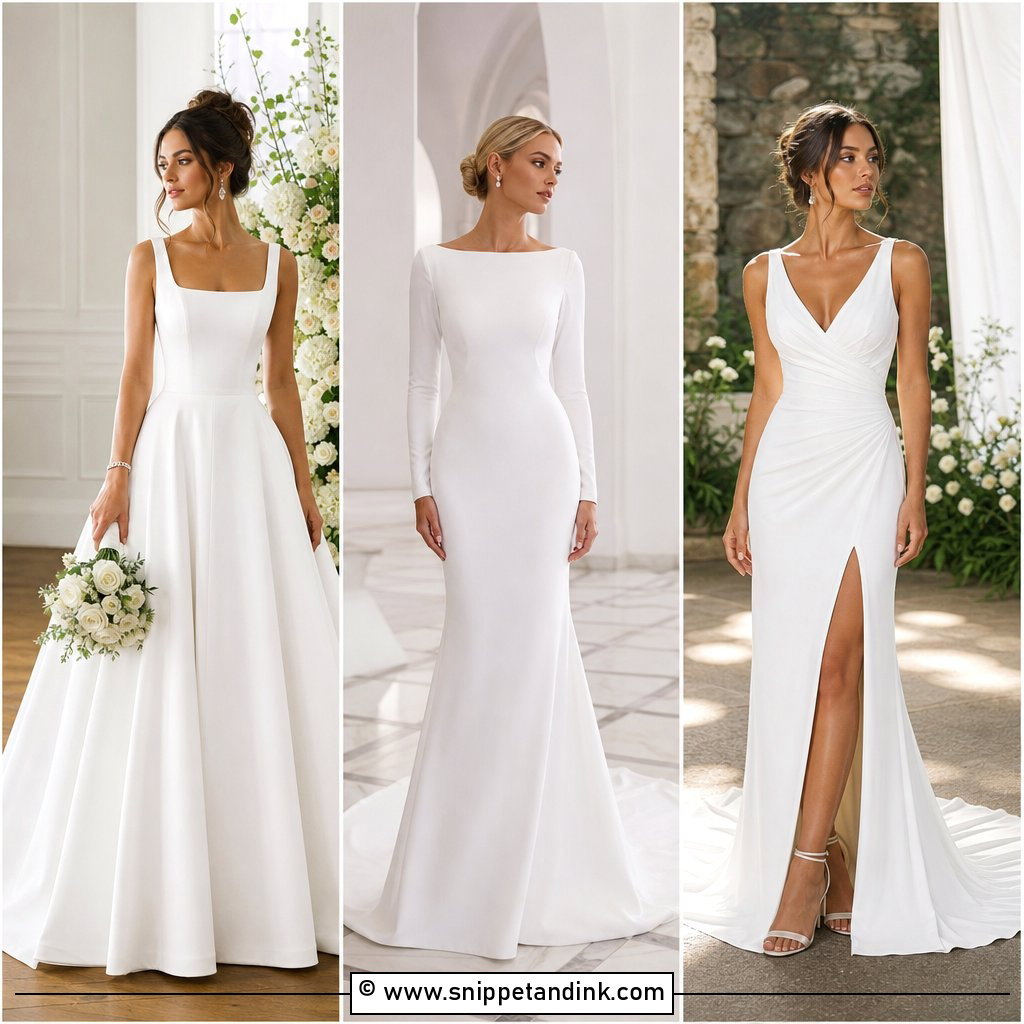
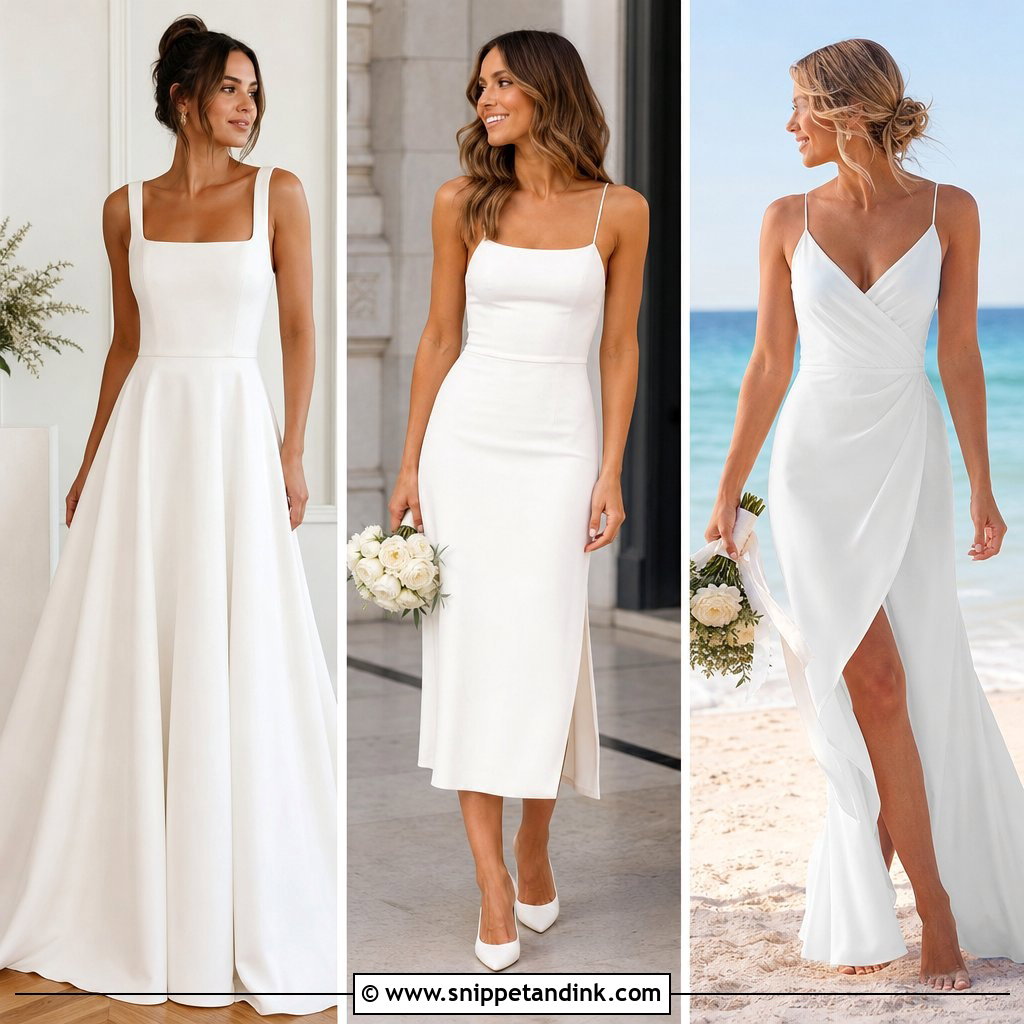
4. Minimalist Square Neck Wedding Dress
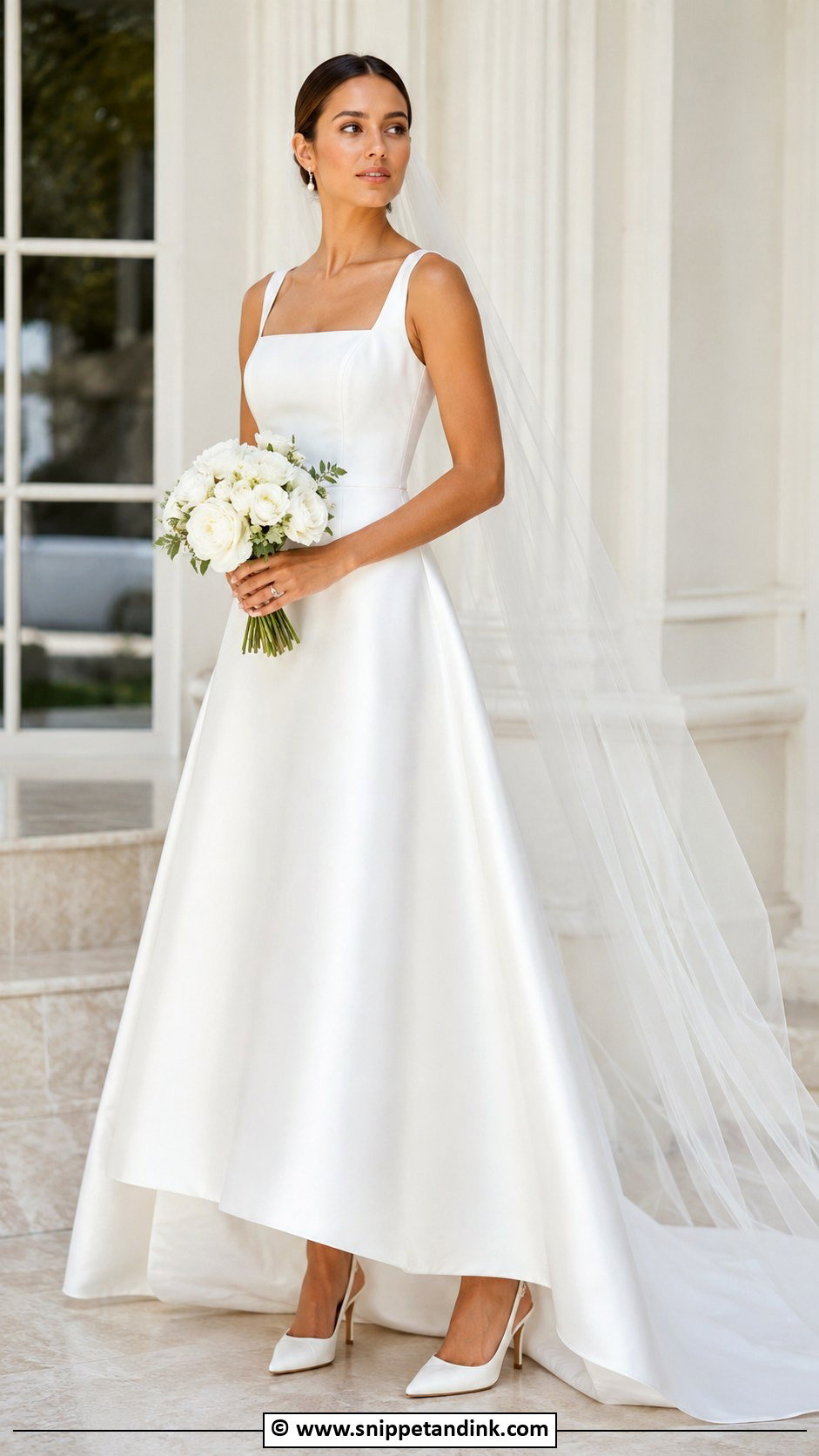
A straight neckline across the chest frames the collarbone and makes a plain gown look deliberate. It works in satin, crepe, mikado and silk faille, and it suits most builds because it adds a little structure at the bust. Watch the width; a square neck cut too wide slides toward the shoulder edge and needs constant adjusting. Slingbacks, small studs and an updo keep the neckline open. A gentle A-line skirt softens it, while a fitted column silhouette sharpens it.
5. Minimalist Strapless Wedding Dress
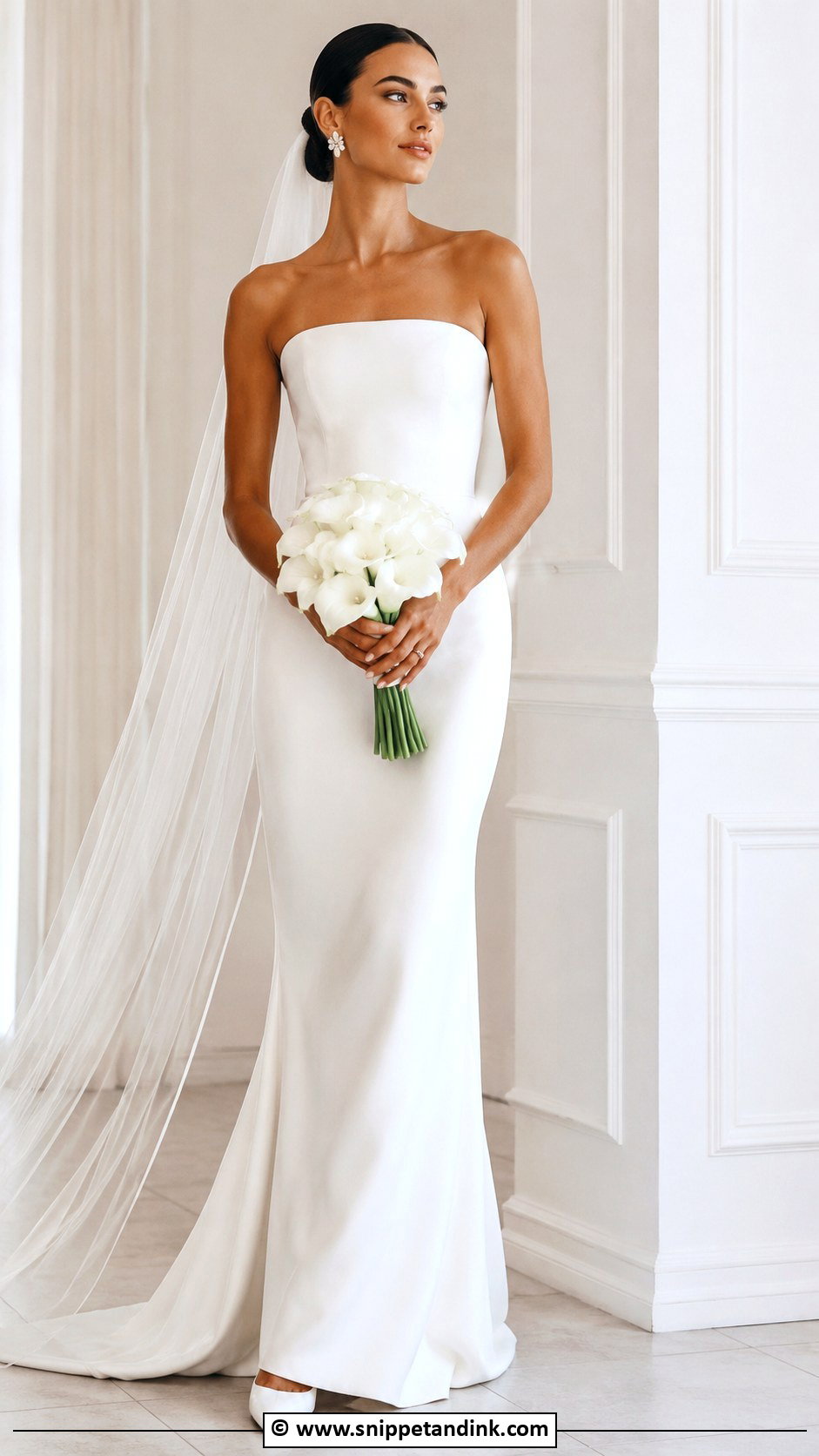
Strapless gowns rely on the inner corset, so I check that before anything else. A bodice with a firm waist stay and boning that’s sewn in properly will stay up through dancing; one that relies on grip tape alone won’t. A straight-across neckline looks sleek, a soft sweetheart a little more romantic. Pointed heels, sculptural earrings and a long veil balance the bare shoulders, and I often skip the necklace entirely.
6. Minimalist Long Sleeve Wedding Dress
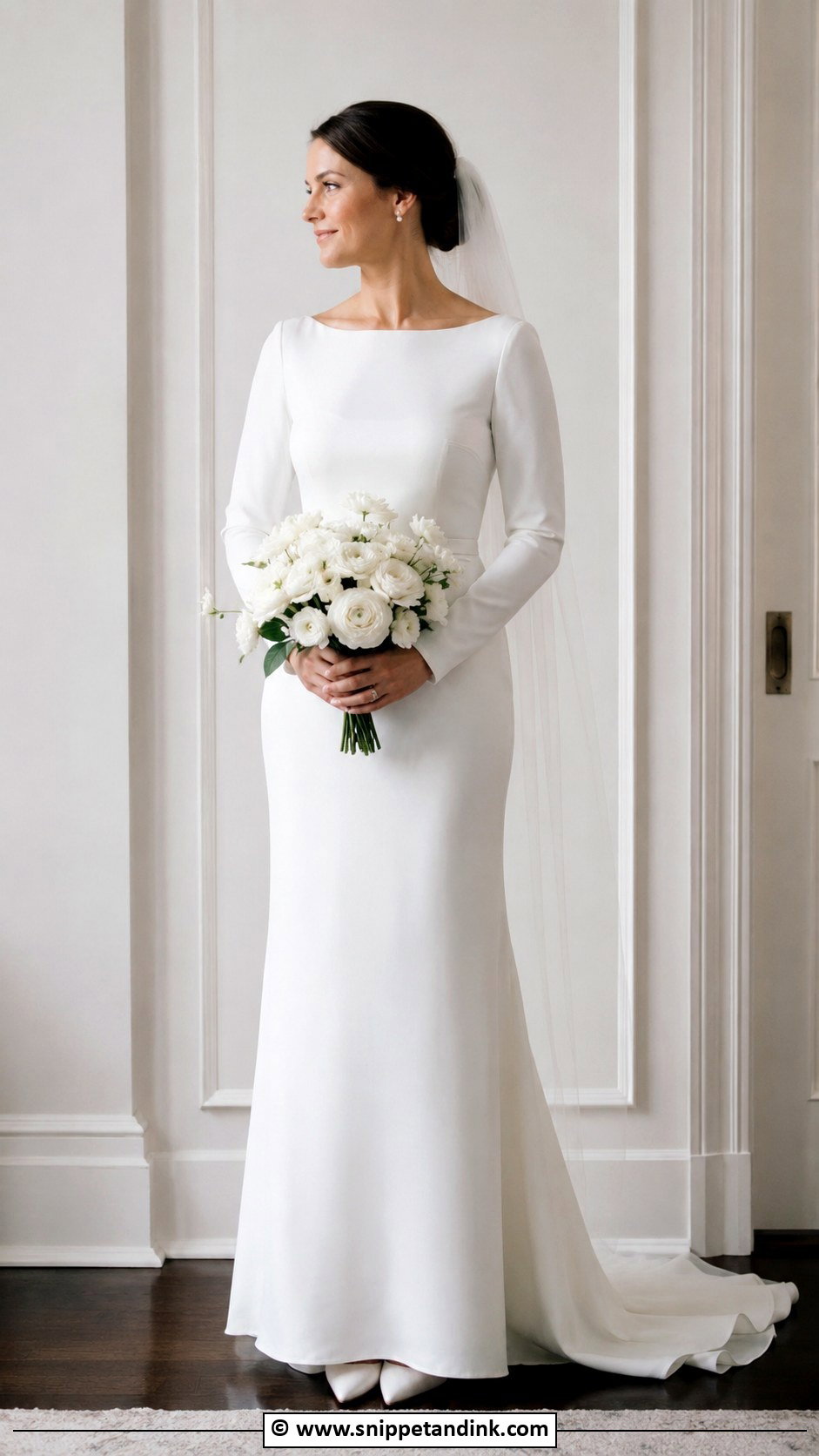
Smooth long sleeves without lace are among the most dramatic simple looks, and they suit autumn and winter or a formal indoor ceremony. Crepe, satin or silk all work, with a bateau, high or square neckline. Proportion is the thing to judge: fitted sleeves can sit with a slim or gently flared skirt, while wider sleeves need the rest of the gown kept very clean. Closed-toe heels, a sleek bun and small earrings finish it, with a plain veil or none at all.
7. Minimalist High Neck Wedding Dress
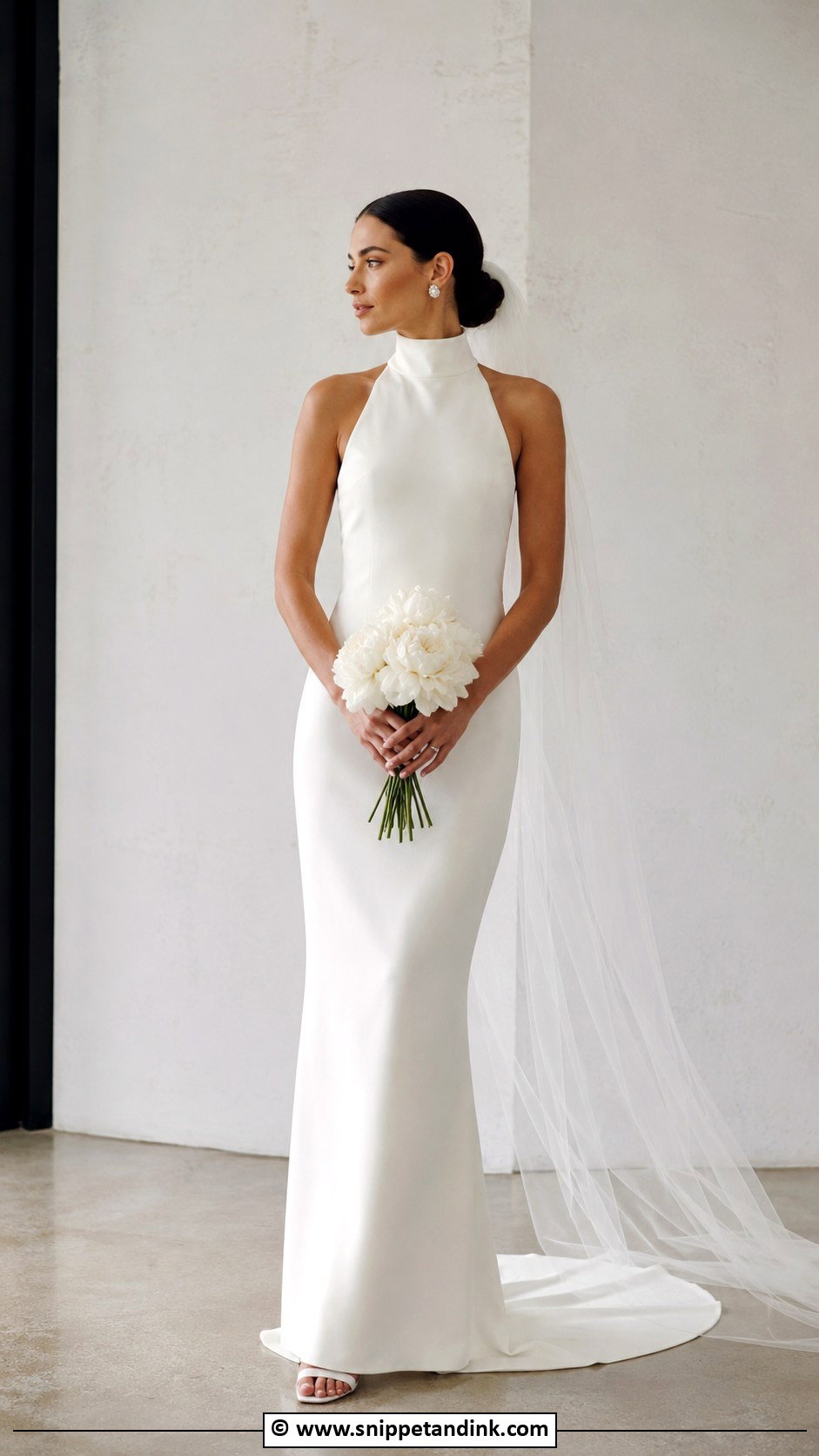
A high neck pulls focus up to the face and changes your posture; most brides stand taller in one. A column skirt, low back or soft train can add interest while the front stays plain. Statement studs and a smooth low bun suit it better than hair down, which can catch on the collar. Crepe, silk and satin all hold the shape. Since the neckline is already the feature, a necklace would only crowd it.
8. Minimalist Halter Wedding Dress
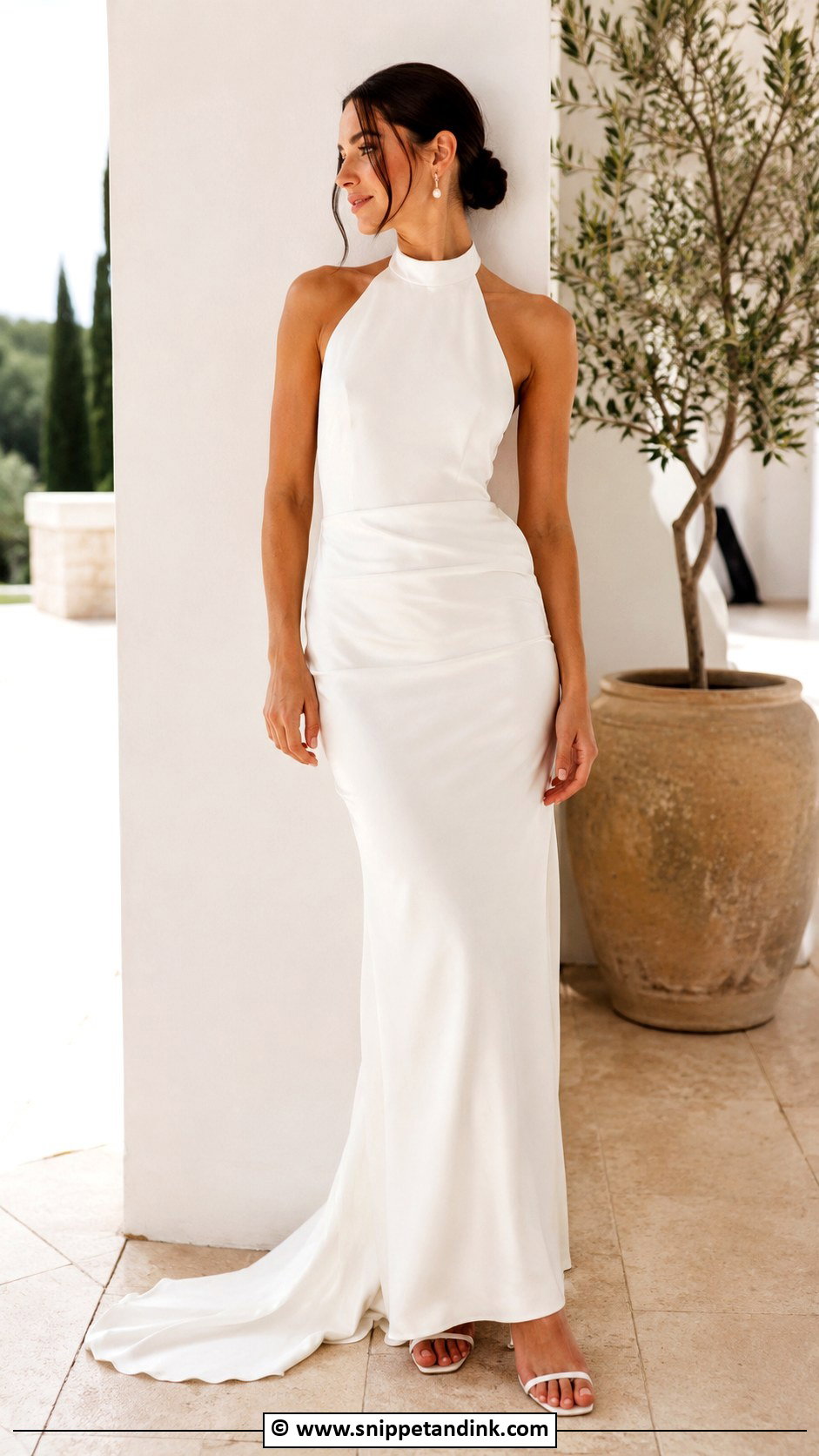
The halter draws attention to the shoulders and works well for warm-weather ceremonies. A slim crepe version looks sharp with high-heeled sandals and a low knot; a satin halter with a soft A-line feels more classic. Strapless and halter gowns both need a plan for underwear, and here I usually ask the seamstress to sew cups into the bodice so nothing shows at the open sides. Pearl earrings and a narrow veil keep accessories simple.
9. Minimalist Off Shoulder Wedding Dress
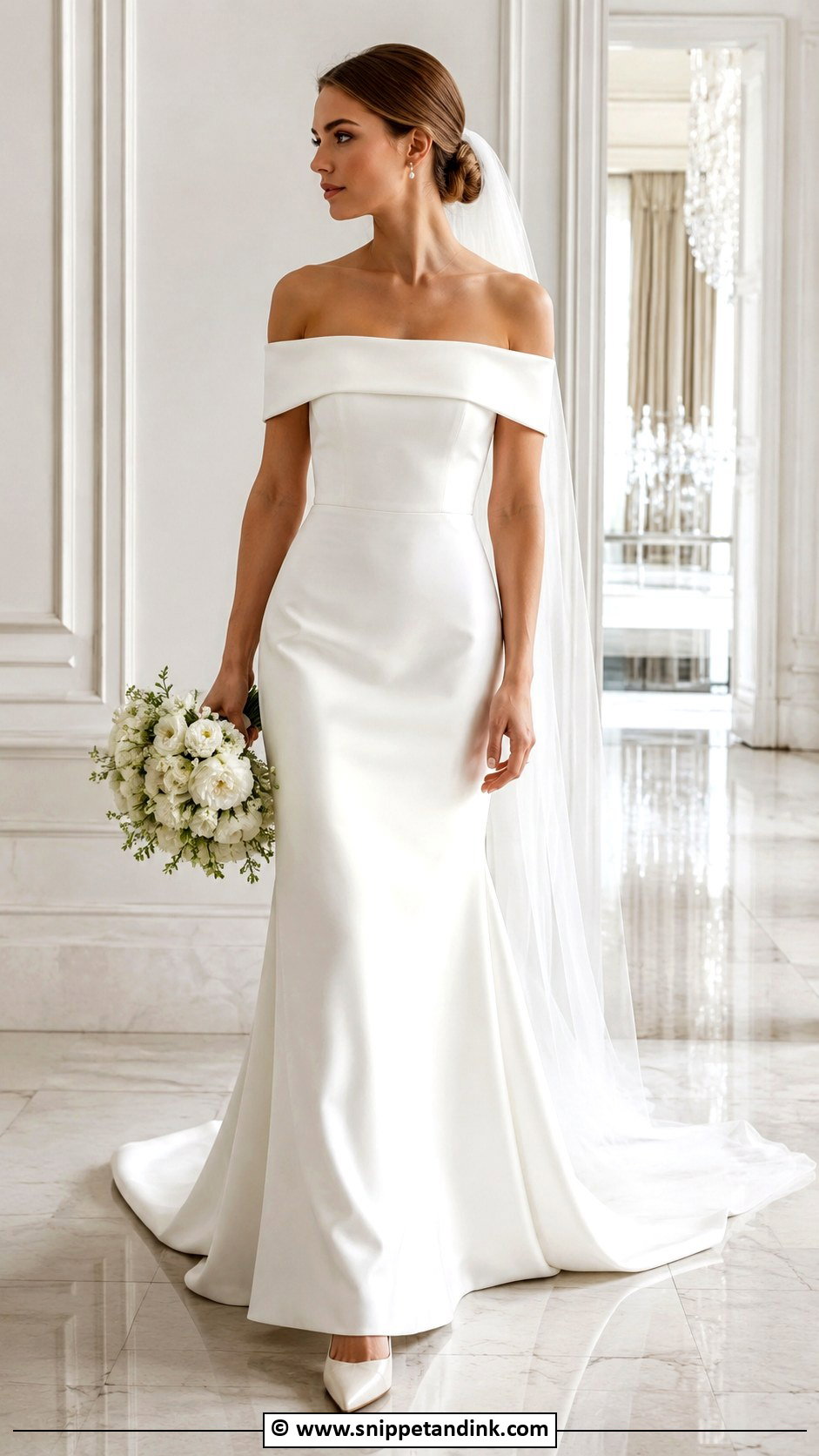
An off-shoulder neckline softens a plain gown without any lace. Satin gives a soft glow, crepe looks sculpted and mikado holds the most structure. A clean foldover band is the minimalist version; gathered or ruched bands add a romantic feel. Have the bride lift both arms during the fitting, since the band must stay in place when she hugs guests. Pointed pumps, a delicate bracelet, small earrings and a veil placed low in the hair complete it.
10. Minimalist A Line Wedding Dress
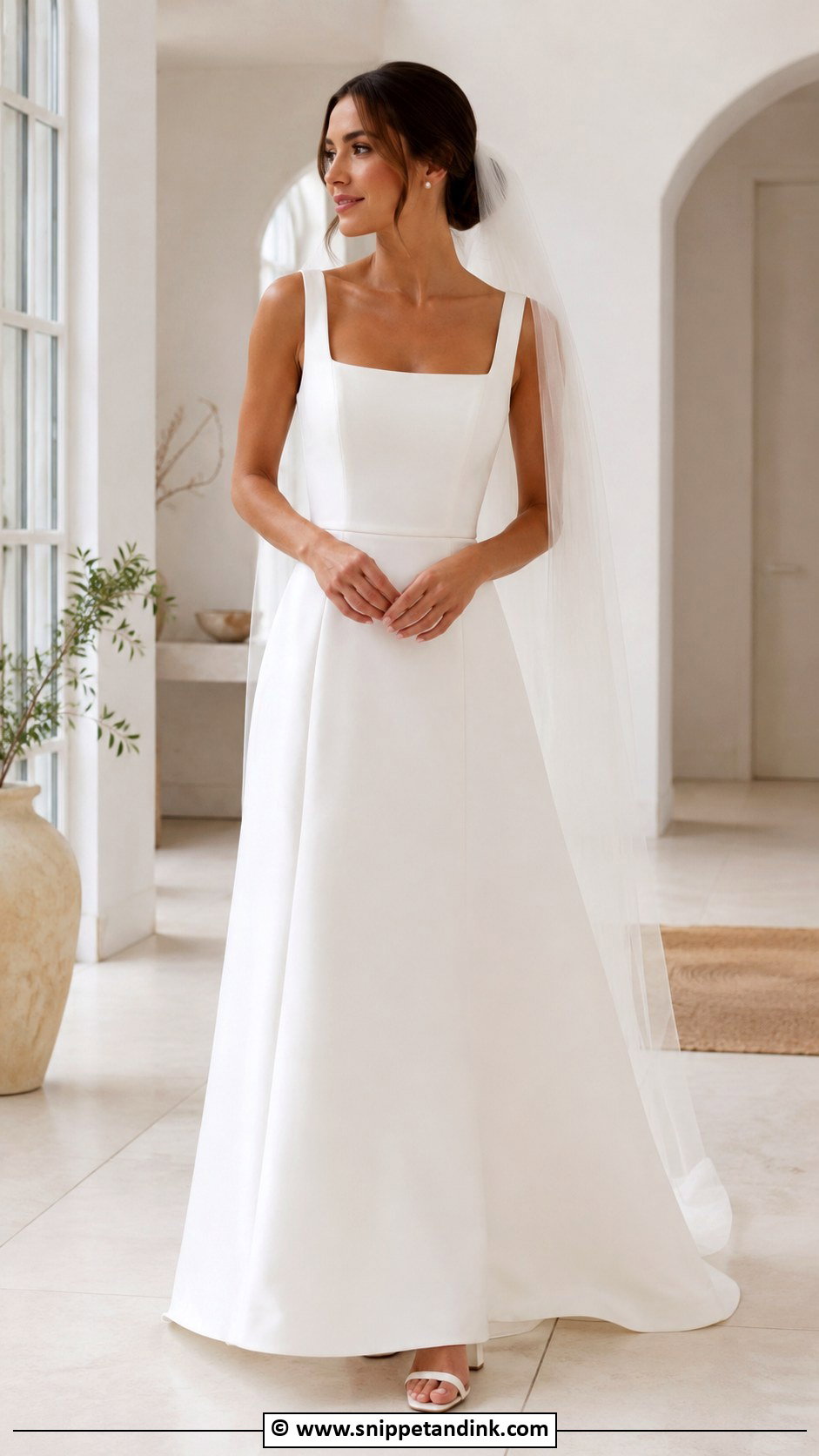
If I had to name one silhouette that suits almost every bride, it would be the A-line. The bodice fits at the waist and the skirt opens gently, so it moves without bulk. In plain satin, mikado or crepe it looks clean at any venue, from a garden to a formal hall. Block heels or pointed pumps, a simple veil, pearl studs and a small bouquet complete the outfit. For a modern feel, pick a square neck, scoop neck or strapless bodice with as few seams as possible.
11. Minimalist Ball Gown Wedding Dress
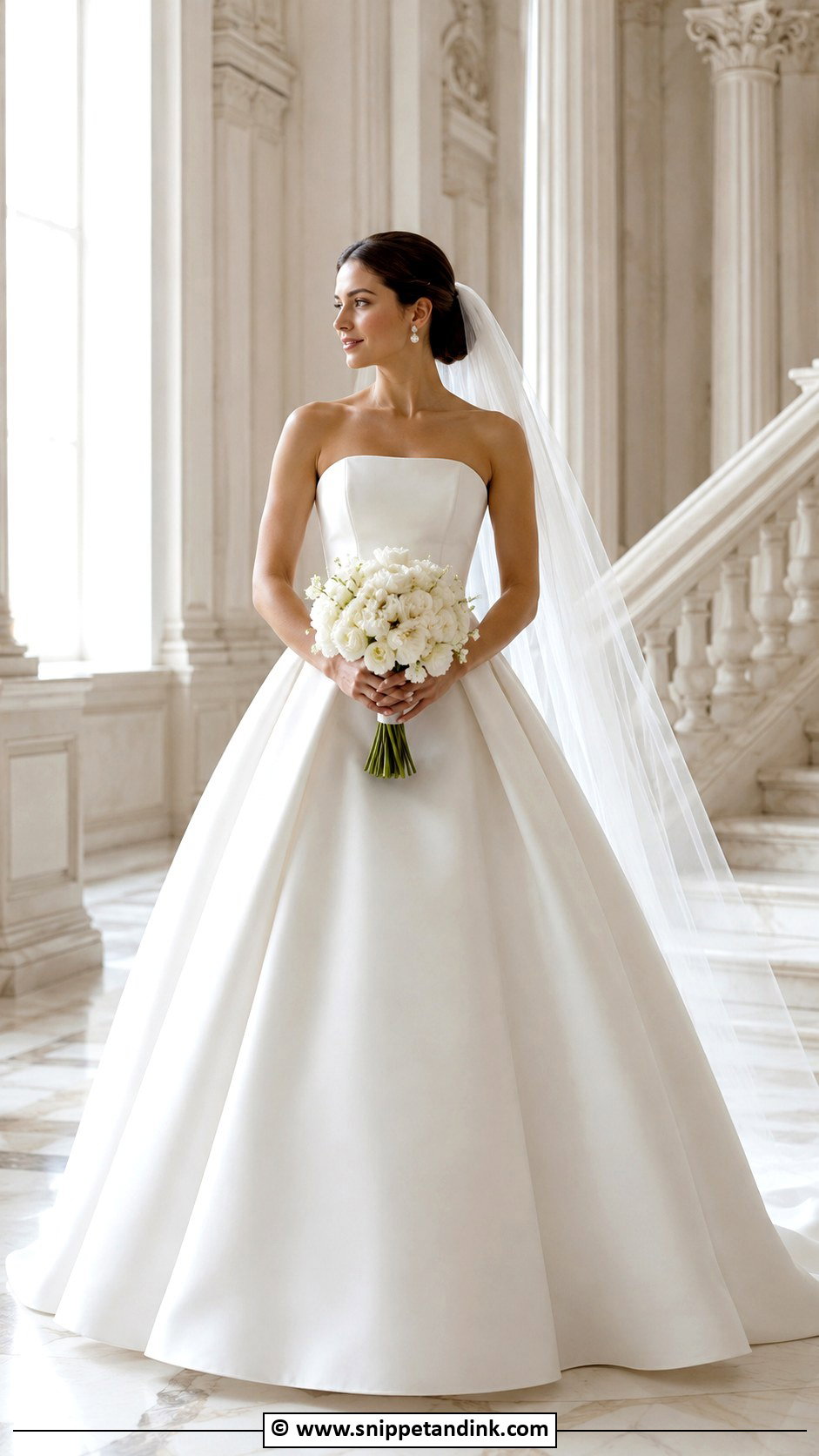
Volume without decoration is where a simple ball gown gets its drama. Plain mikado or satin over a fitted bodice gives a grand shape that still reads clean. The weight is real: a full mikado skirt with petticoats can be heavy, so try walking and turning in it, and ask about a bustle if there’s a train. One feature is plenty, a square neckline, a strapless bodice or hidden pockets. Sleek pumps, pearl studs, a smooth bun and a long veil finish it for a formal venue.
12. Minimalist Sheath Wedding Dress
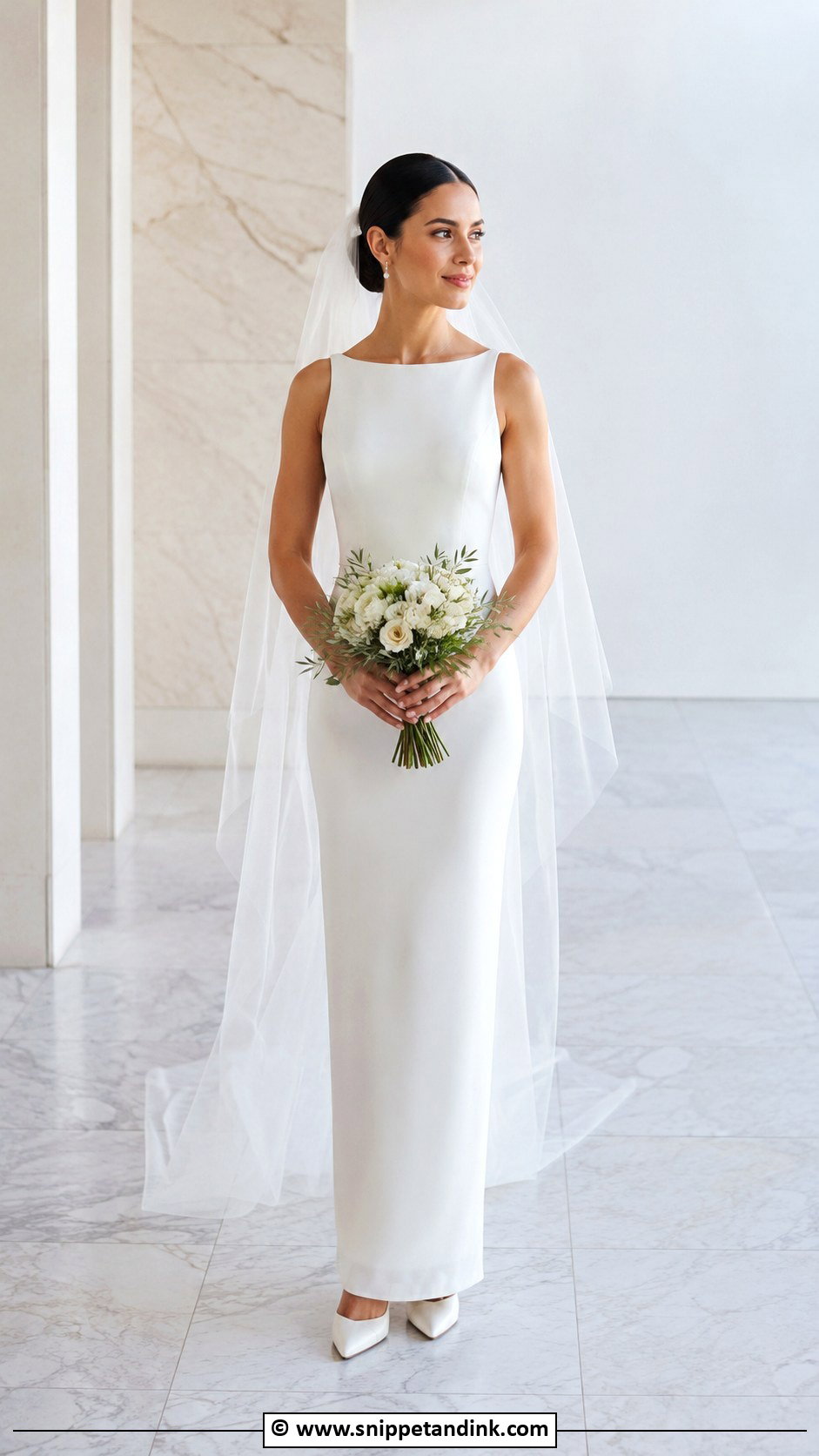
A sheath follows the body’s own line with very little added volume, so it moves naturally. Crepe, silk and satin all suit it. Because it sits close, alterations matter more here than on fuller shapes, and the hip and seat are where I pin most often. Slim heels, a long plain veil, delicate earrings and a loose bouquet suit a courthouse, beach or modern indoor ceremony. A cowl back, side slit or covered buttons add subtle detail.
13. Minimalist Column Wedding Dress
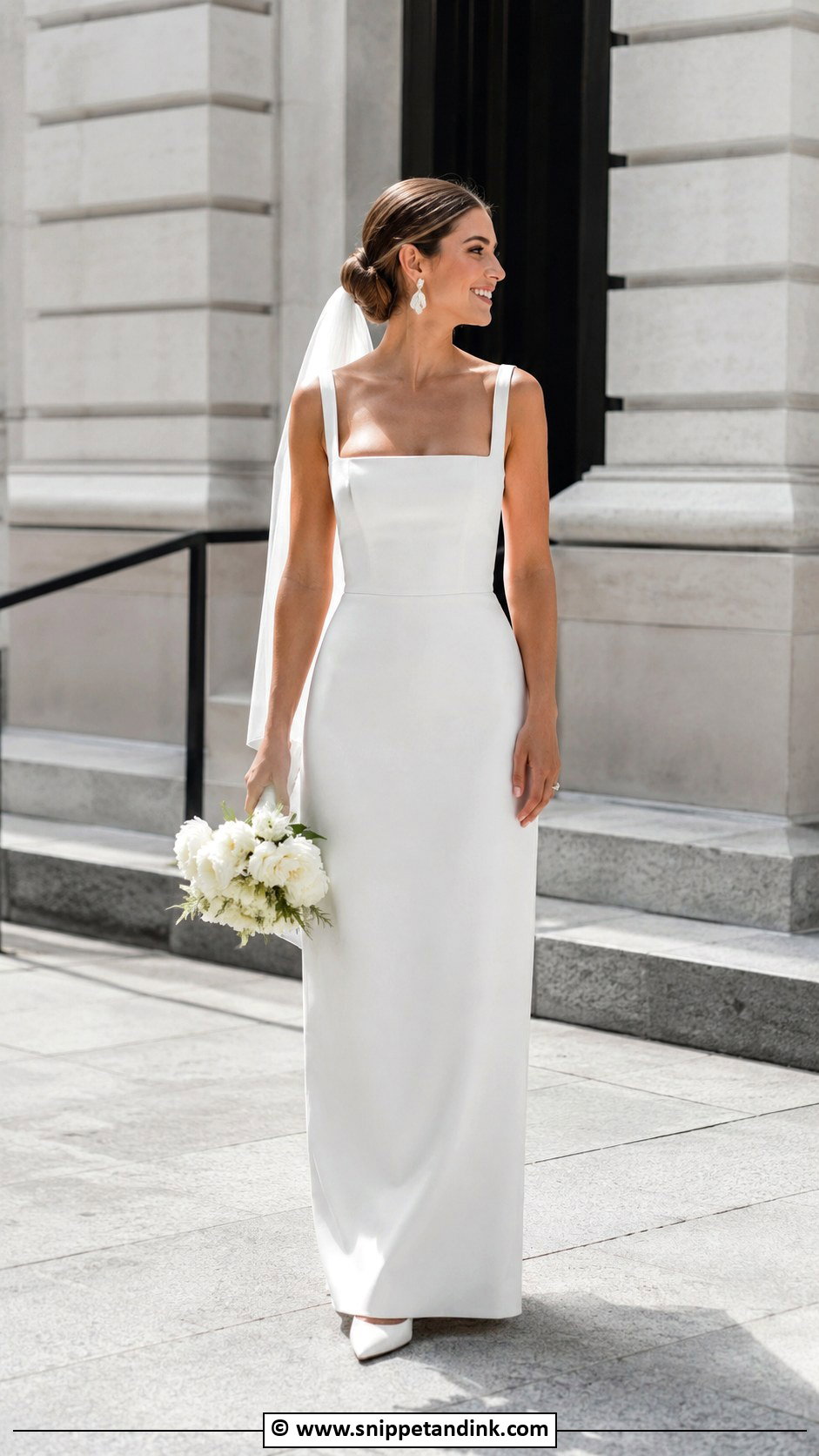
Column gowns fall straight from shoulder to hem in one long line. Satin, crepe and silk work best when the fabric is heavy enough not to cling. Choose one detail, such as a high slit, open back or square neckline, and keep everything else quiet. Test the slit while walking and sitting, since a slit that’s too high on a straight skirt will open more than you expect. Pointed heels, sculptural earrings and a low veil finish it for a smaller wedding or a city celebration.
14. Minimalist Fit And Flare Wedding Dress
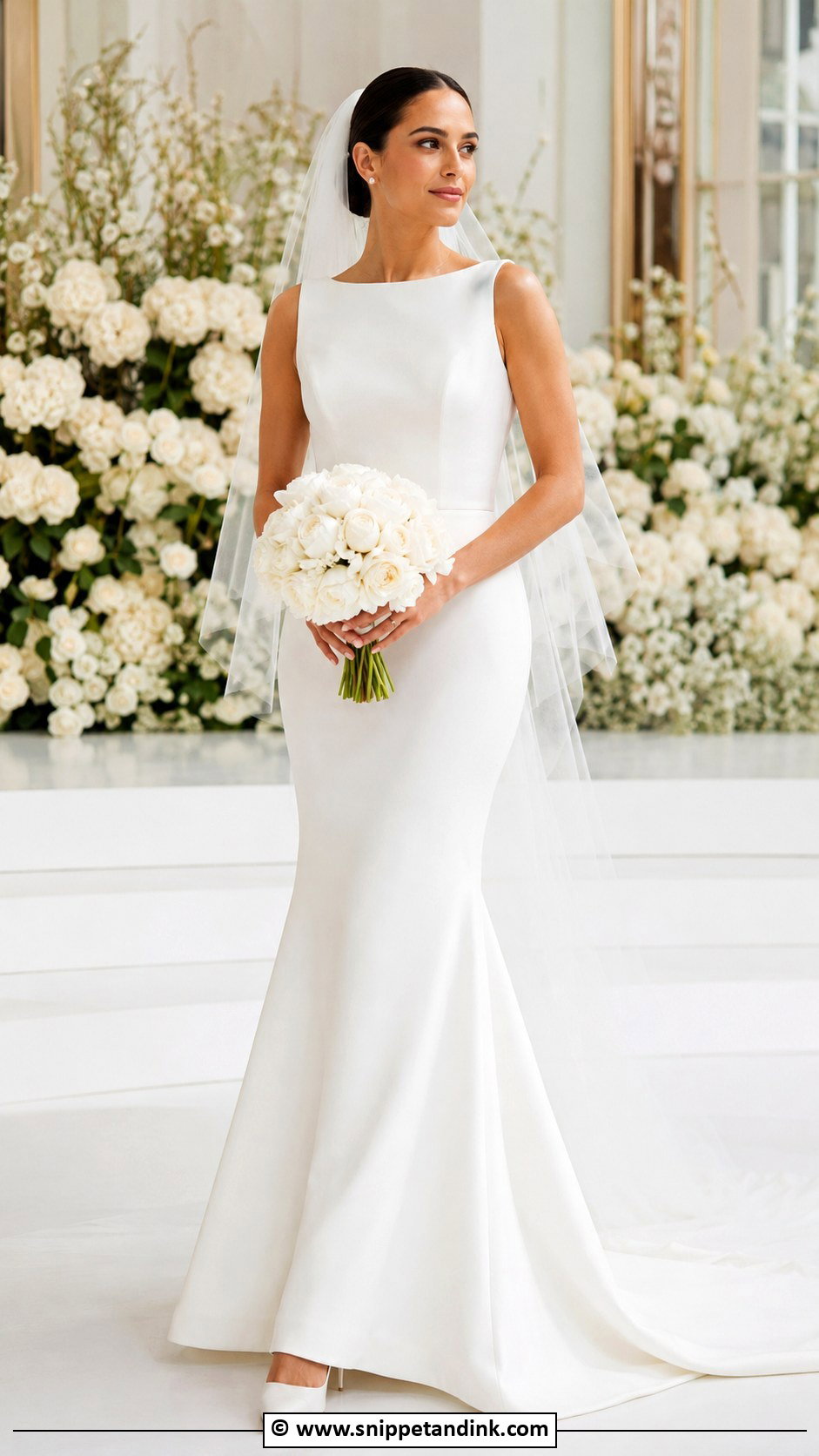
A fit-and-flare gown fits through the bodice and hips, then opens below for movement. In crepe or satin, the shape itself is the decoration. The flare point is what I check most carefully: if it starts too low, around the knee, you’ll walk in small steps and struggle with stairs. Starting the flare slightly higher gives more freedom with little change in the look. High heels, simple studs, a smooth veil and a clean bouquet keep attention on the seams and shape.
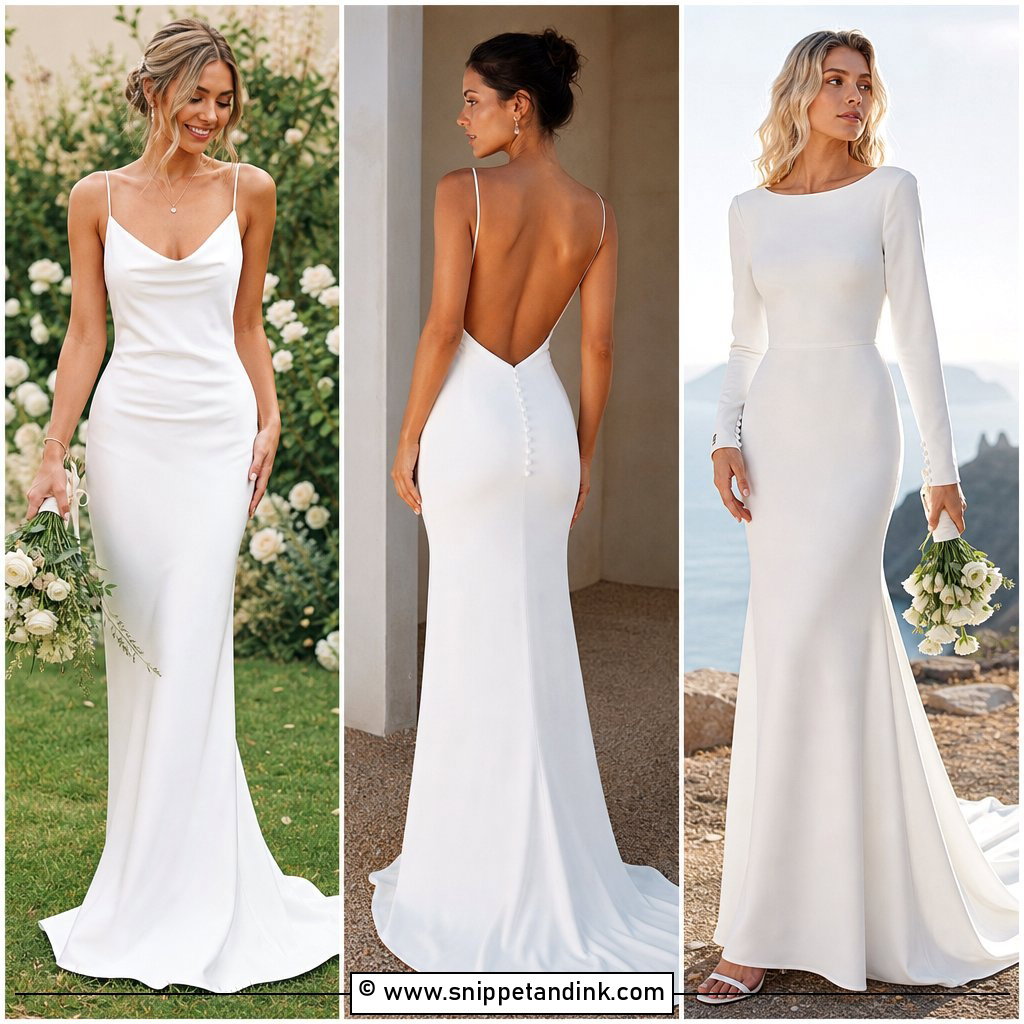
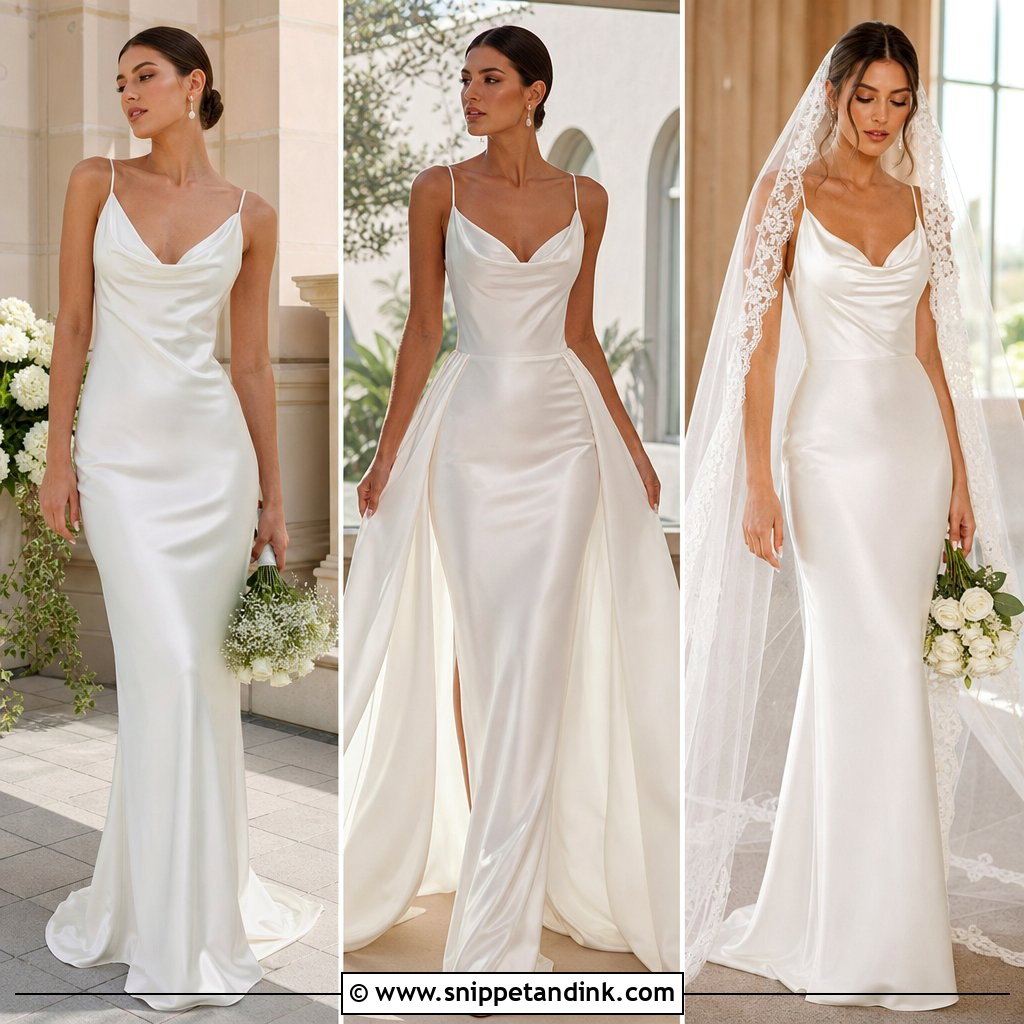
15. Minimalist Mermaid Wedding Dress
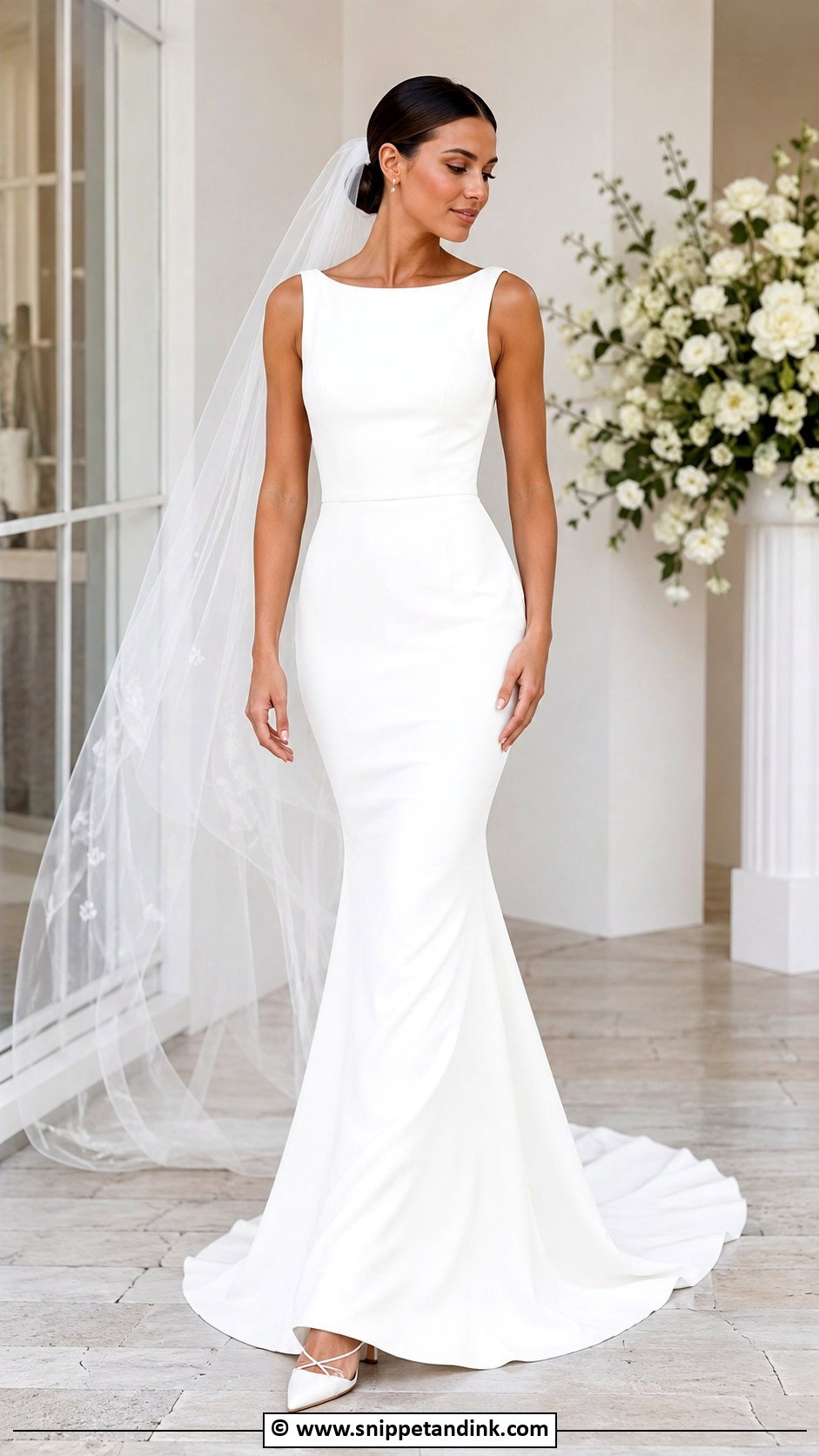
The mermaid is the most fitted cut here, hugging to the knee before flaring out. Smooth crepe supports the shape well. Be realistic about the day: sitting and climbing stairs are both harder, and dancing usually means bustling the train. If that sounds limiting, a trumpet, which flares from mid-thigh, gives a similar silhouette with more ease. Pointed heels, a long veil, sleek hair and small earrings let the shape stay the focus.
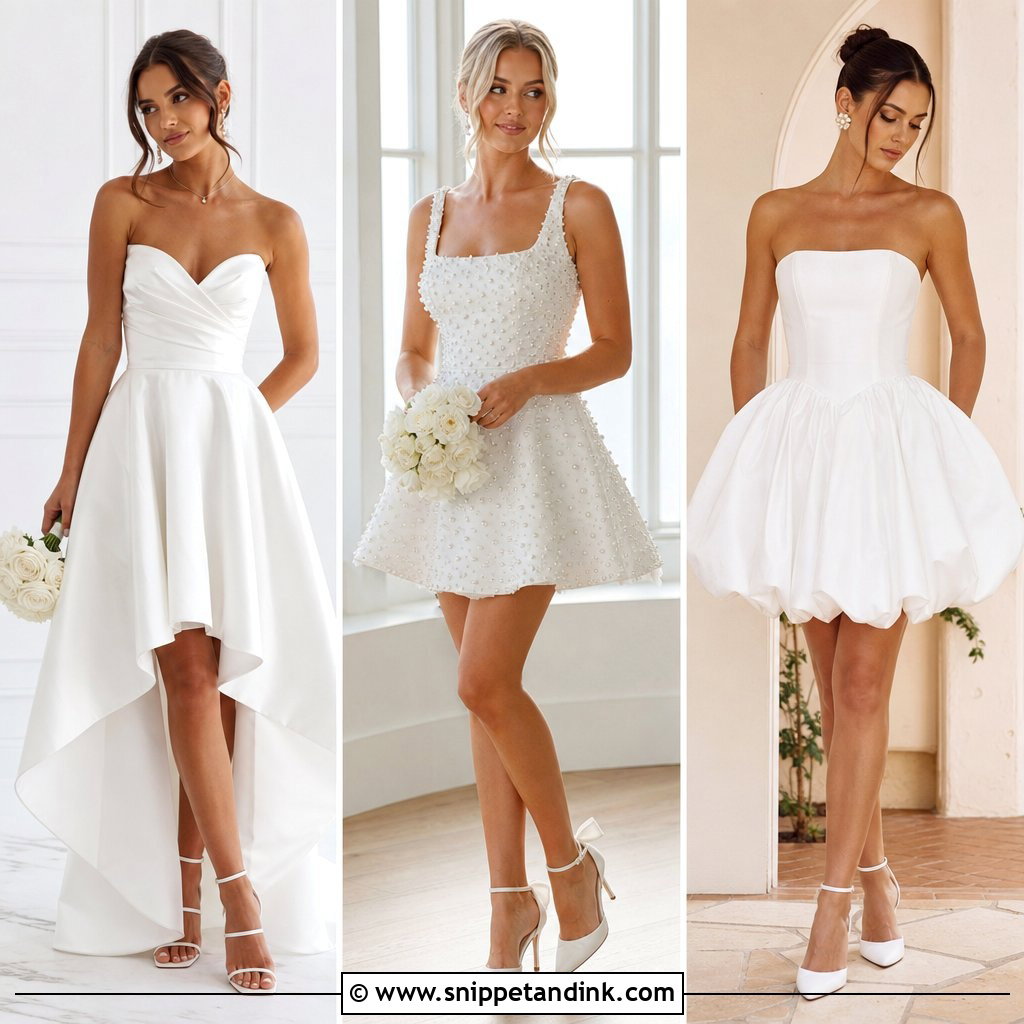
16. Minimalist Tea Length Wedding Dress
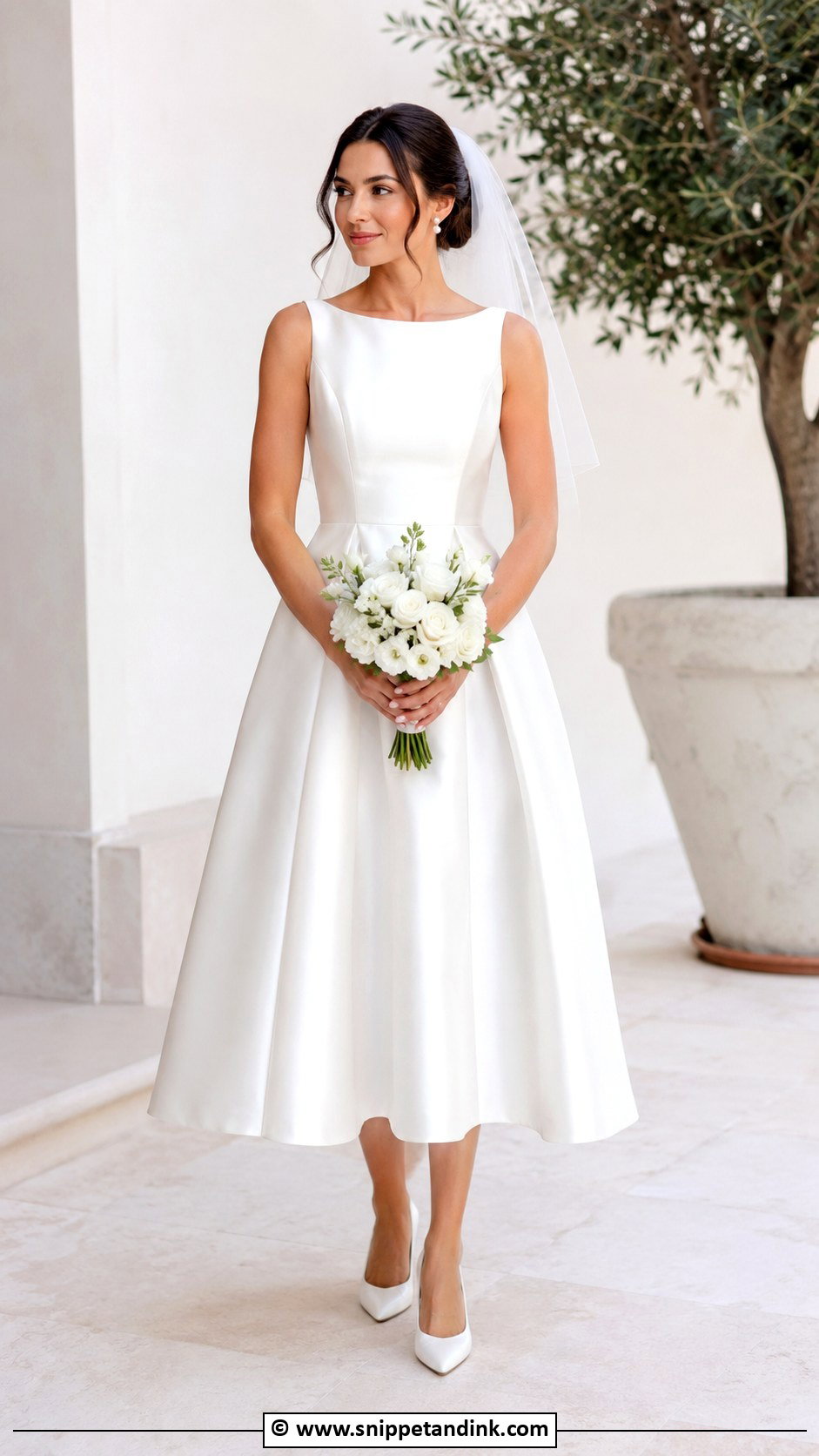
A tea-length gown puts your shoes into the outfit. The hem usually falls between the knee and ankle, and I mark it with the bride in her actual shoes. Clean satin, crepe or organza with a simple bodice and softly shaped skirt suits it. Fabric quality decides whether it looks modern or costume-like, so avoid shiny polyester satin. Pointed pumps, slingbacks or refined ballet flats with pearl studs and a short veil or hair bow suit a courthouse or brunch reception.
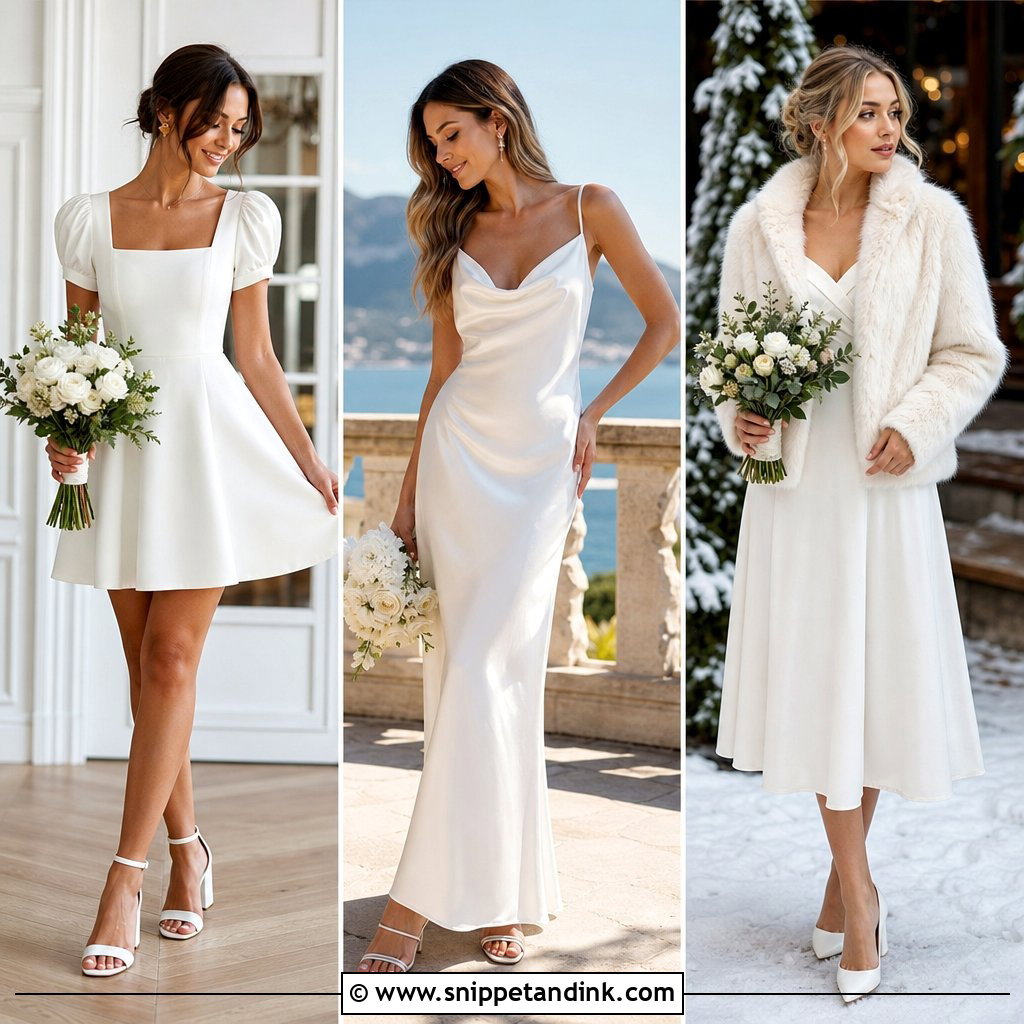
17. Minimalist Mini Wedding Dress
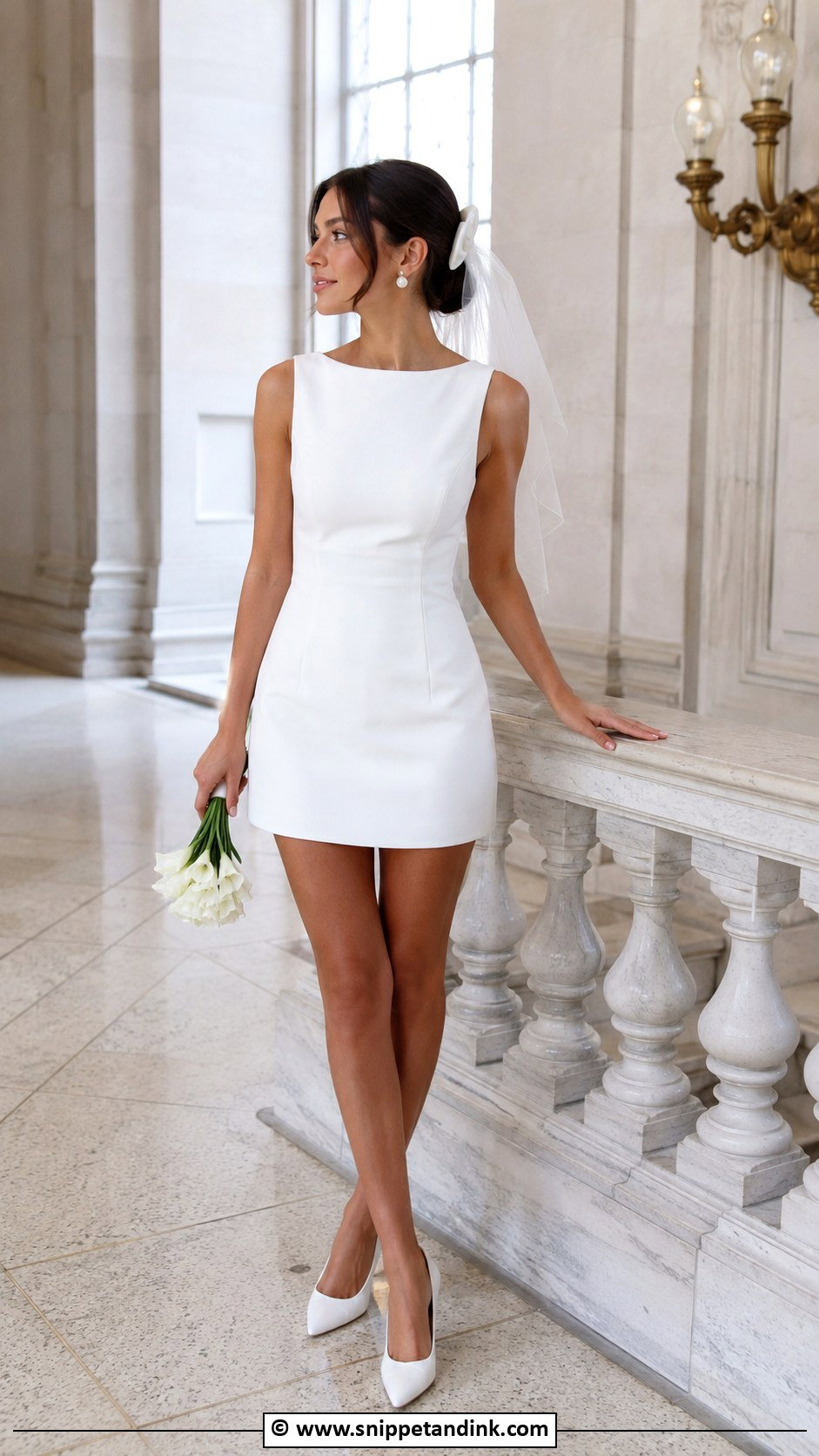
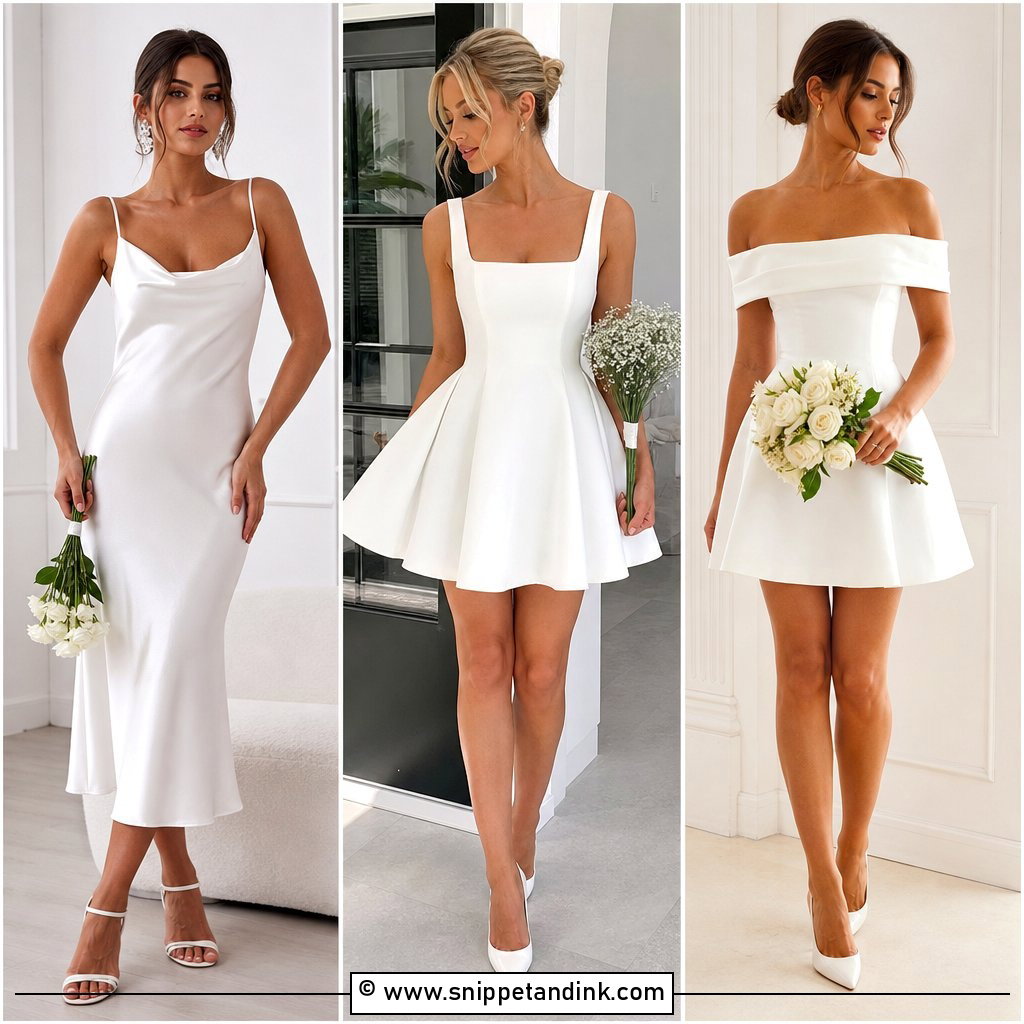
A simple short dress works for a civil ceremony or an after-party. A structured crepe mini, satin shift or square-neck mini all look bridal when they’re tailored well. Short hems are unforgiving, so check that the hem hangs level all the way round and the bodice doesn’t shift when you sit. White pumps, sheer tights in cold weather, pearl earrings and a small veil or sleek hair clip finish it.
18. Minimalist Courthouse Wedding Dress
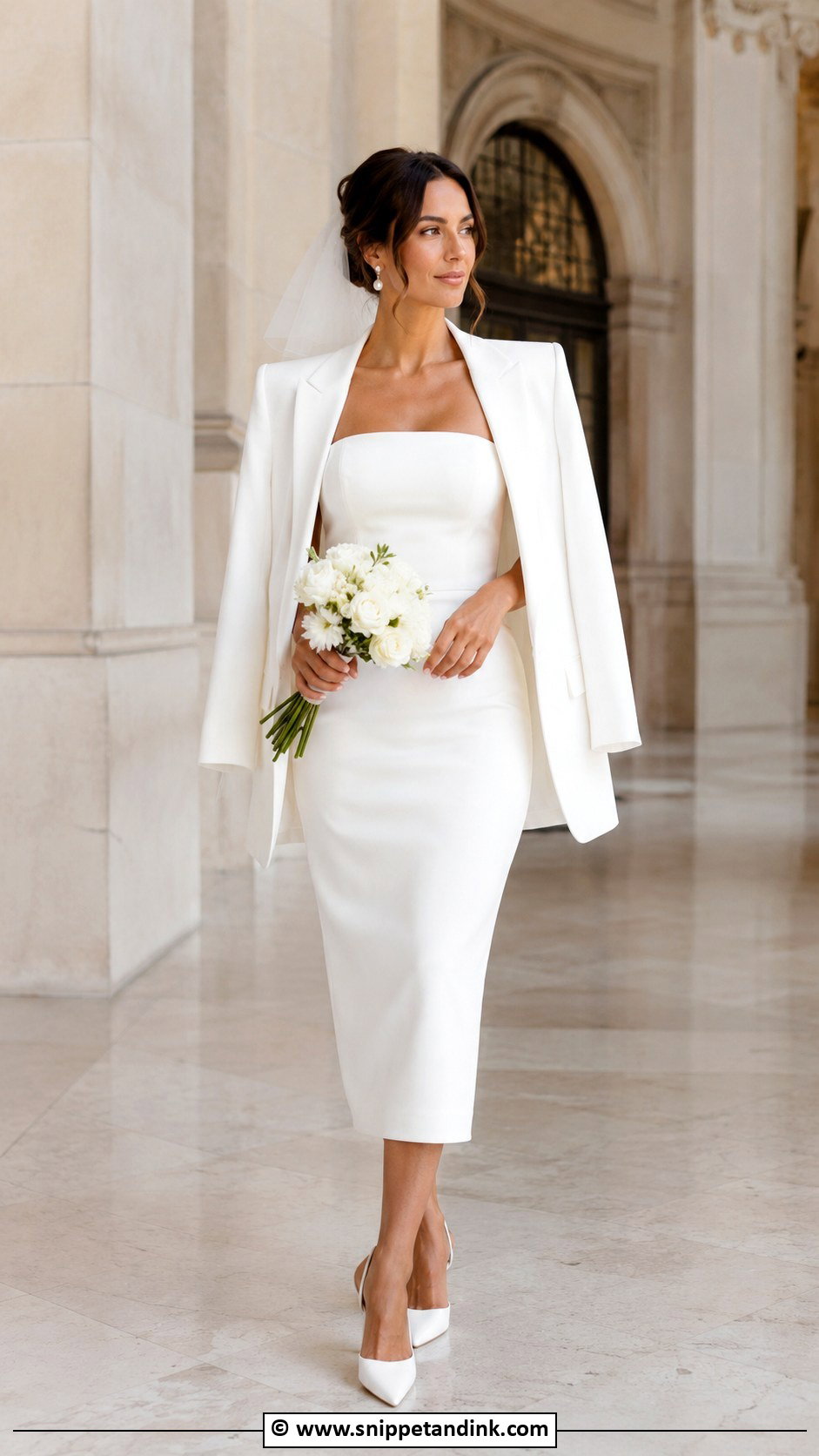
For a registry office, the dress needs to look smart standing next to an official and comfortable in a taxi. A minimalist courthouse wedding dress might be a midi slip, tailored sheath, square-neck column or clean mini. Pointed pumps or slingbacks, pearl earrings and a small bouquet are enough, with a structured blazer for coverage. Satin, crepe and heavy silk hold their shape in photos. A short veil or simple headband adds a bridal touch without feeling over-formal.
19. Minimalist Beach Wedding Dress
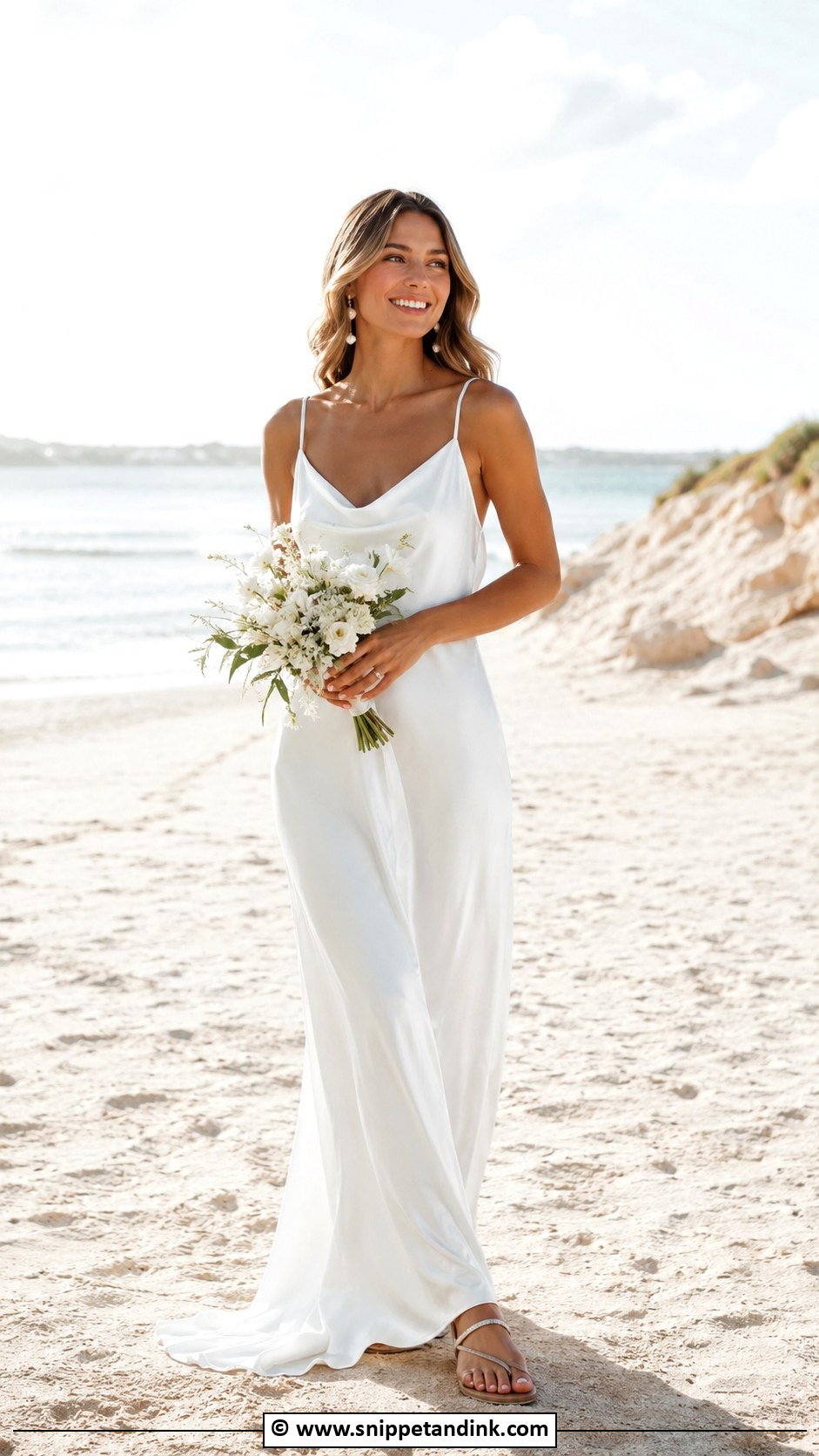
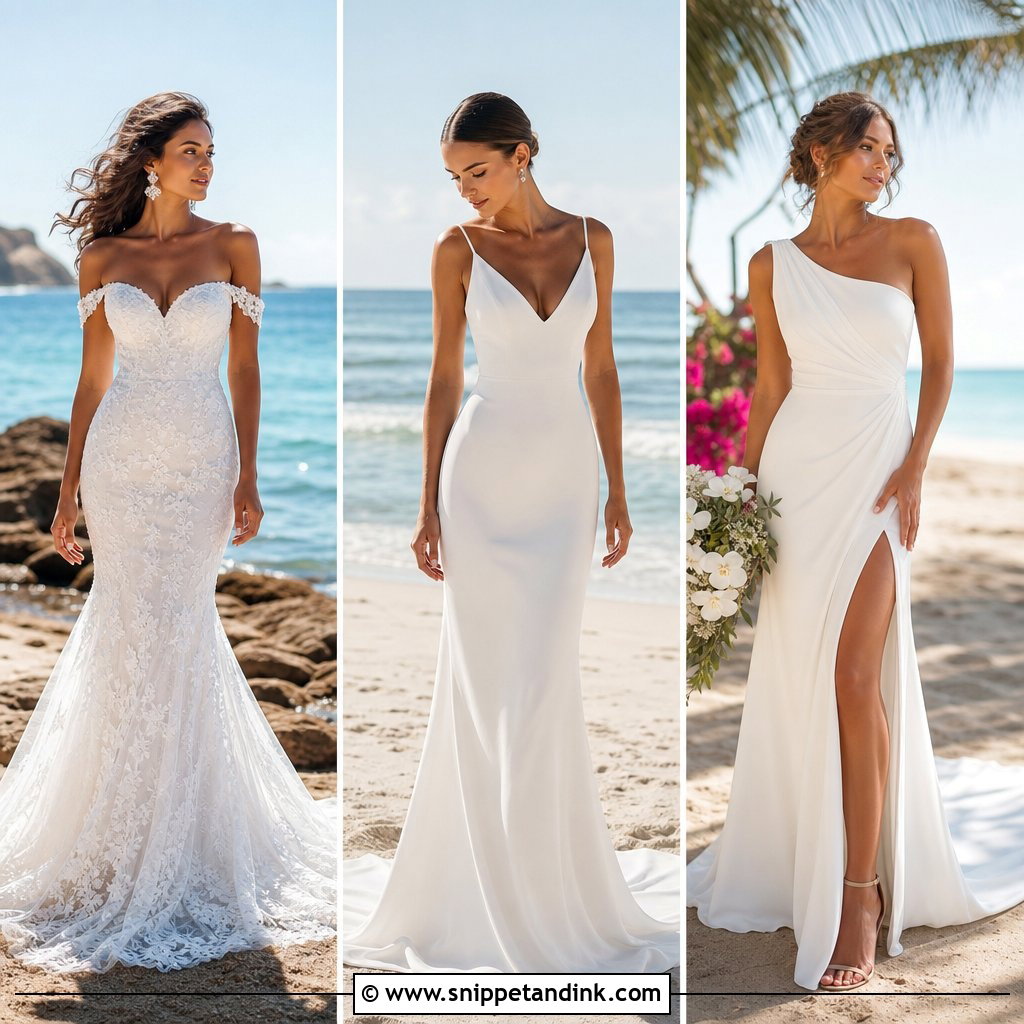
Sand, wind and heat set the rules on a beach. A silk slip, soft sheath or simple A-line moves with the breeze, and breathable fabrics are kinder in the sun. Raise the hem so it clears the sand by a little, or the edge will be grey by the first photo. Flat sandals, delicate earrings, loose waves and a small bouquet suit it. A veil looks lovely but becomes a kite in wind, so a short one or a weighted edge is easier to manage.
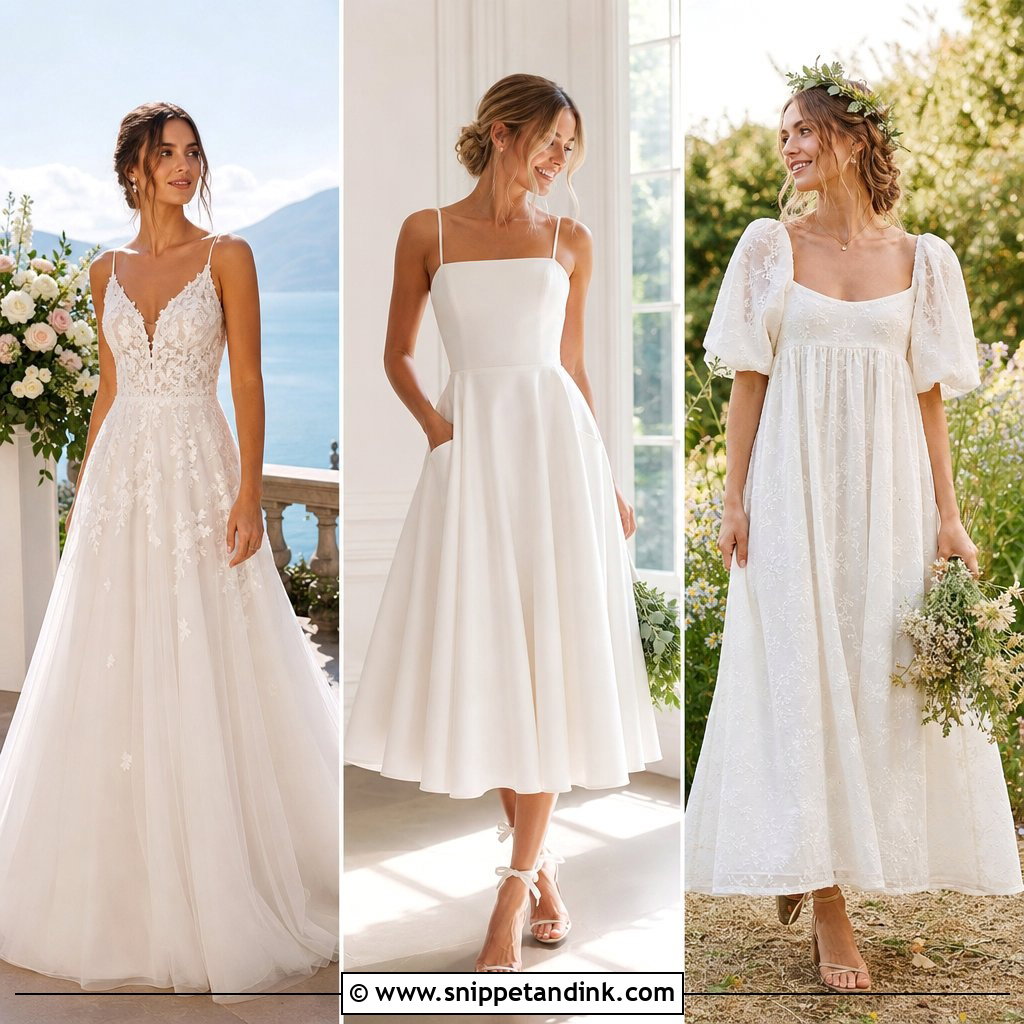
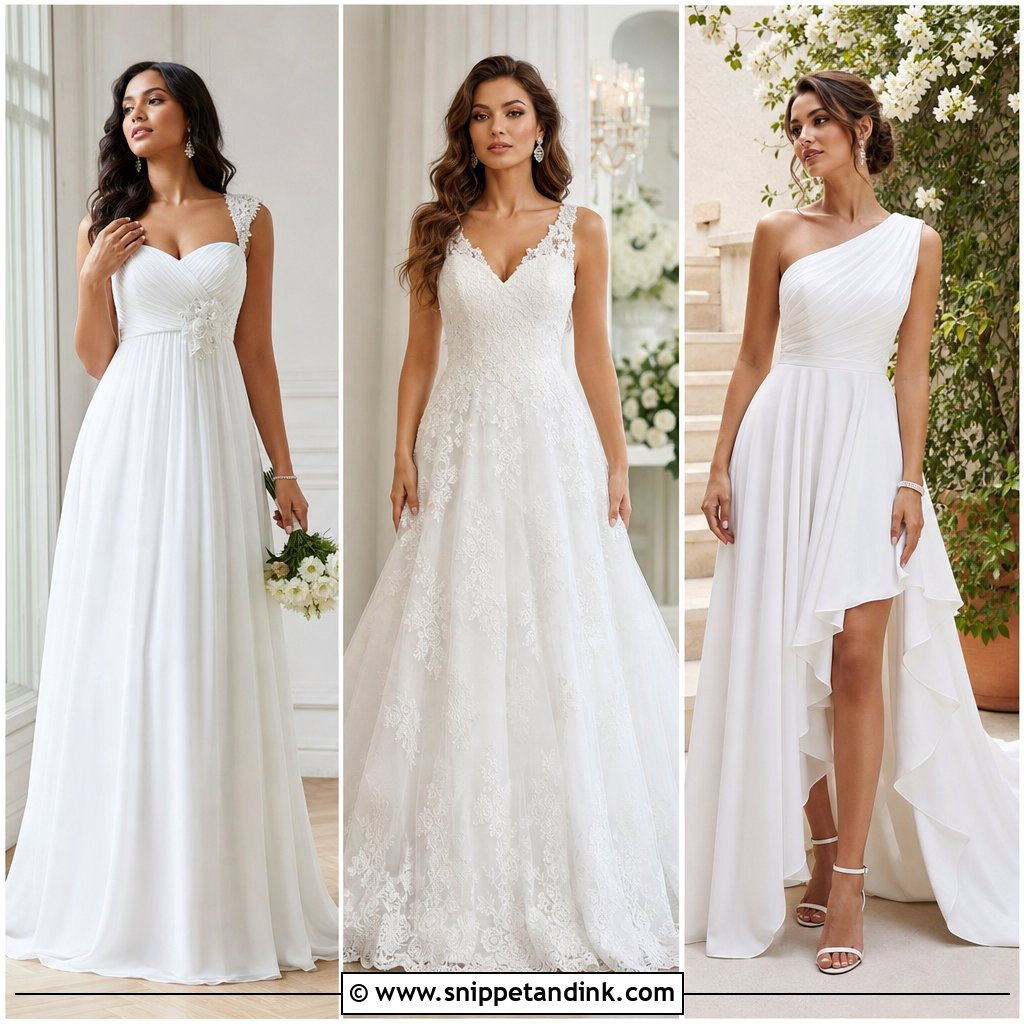

20. Minimalist Garden Wedding Dress
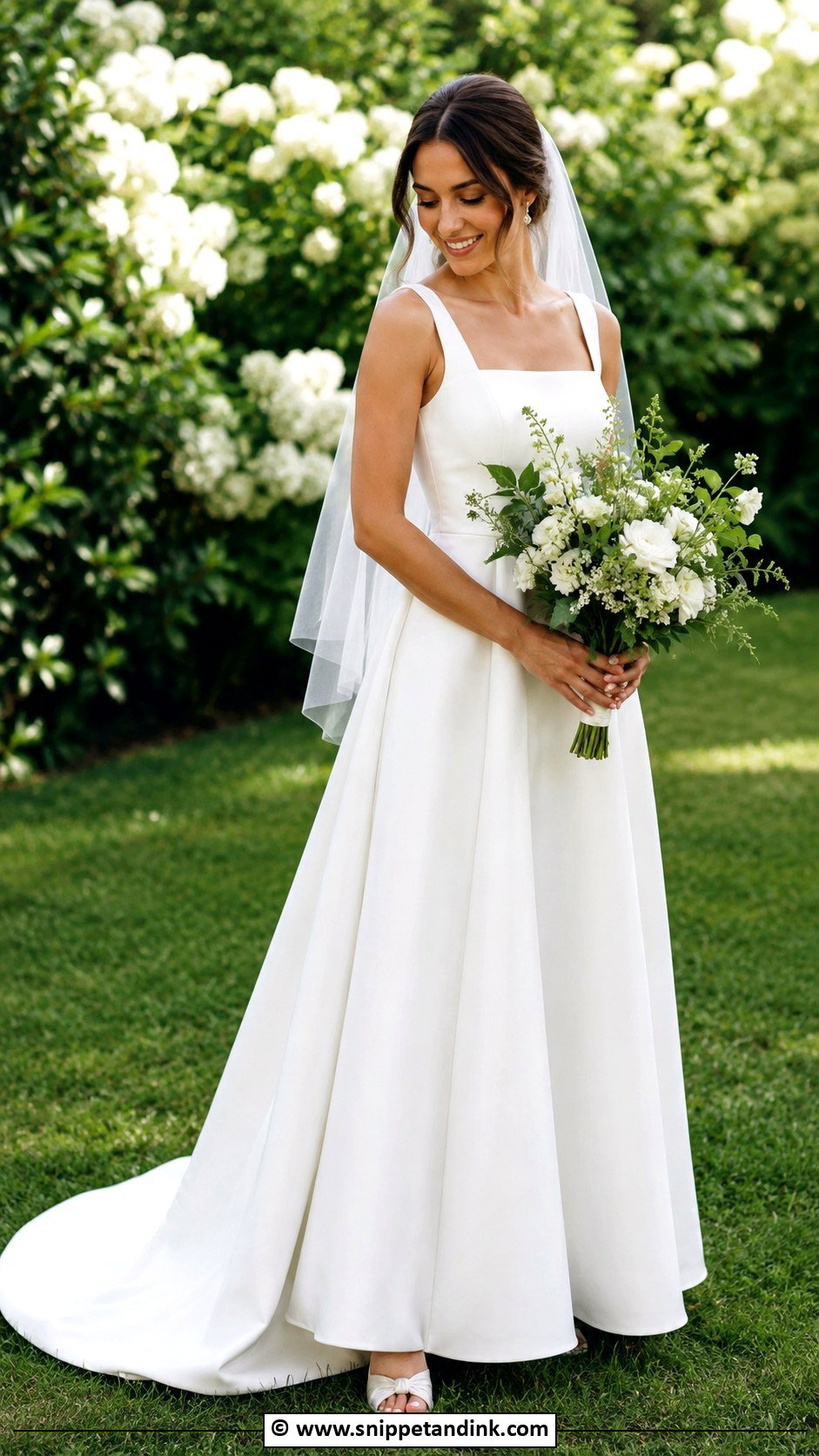
For a garden, I think about the ground first. A clean A-line, satin slip or square-neck gown with a light skirt moves well, and a hem that skims the ankle collects less grass. Low block heels or dressy flats won’t sink into lawns. A slightly textured fabric adds depth while staying simple. Pearl earrings, a light veil and a natural bouquet finish it for a spring or early autumn ceremony.
21. Minimalist City Wedding Dress
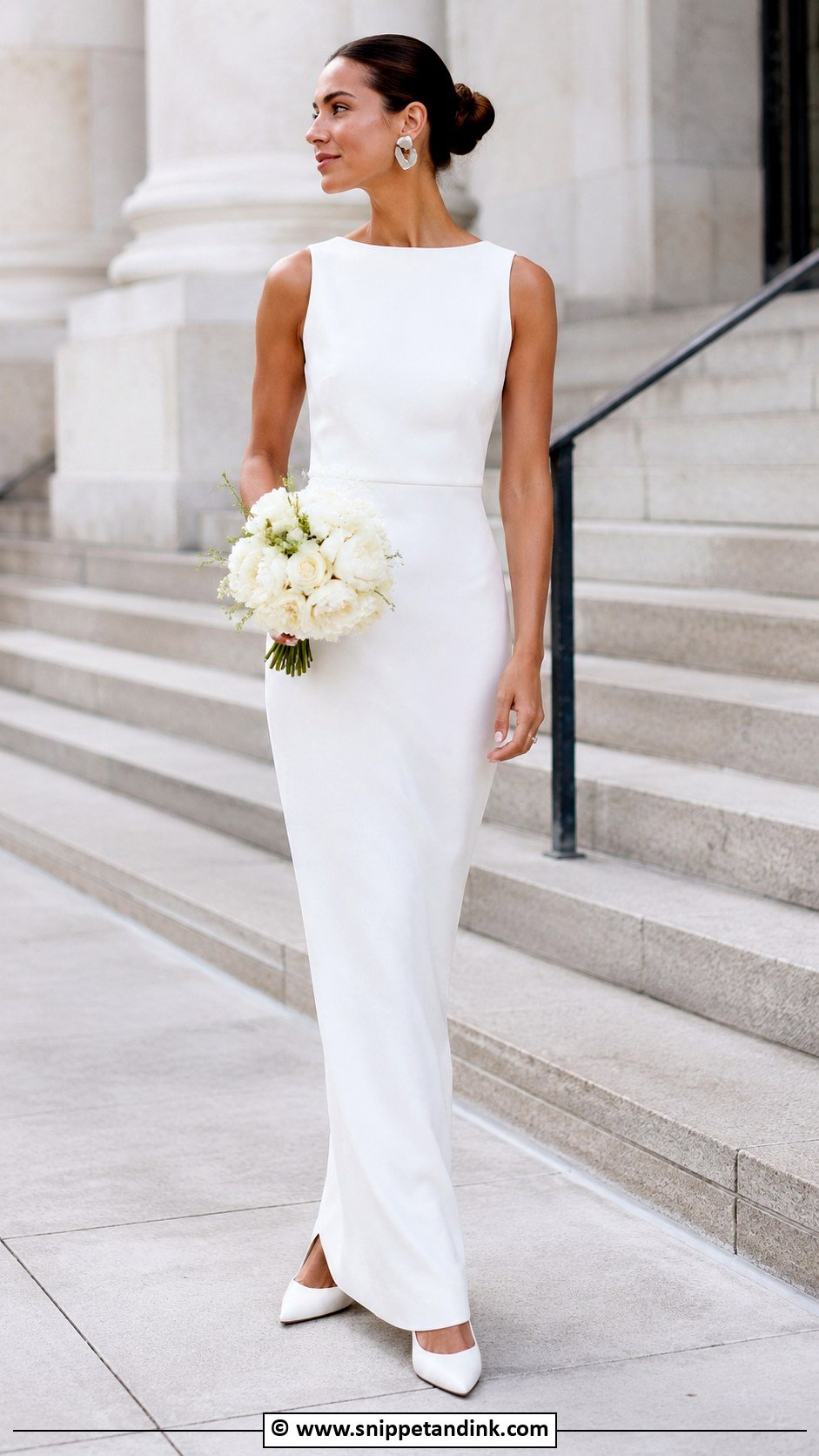
City weddings call for sharp lines rather than softness. A column gown, satin slip, crepe sheath or structured mini all look right against stone steps or a hotel lobby. Pointed pumps, a smooth bun, sculptural earrings and a small bouquet are enough, and a tailored coat or blazer handles cooler days. Daylight on pale stone is bright and flat, so fabric that doesn’t shine too much tends to look better outdoors in town.
22. Minimalist Plus Size Wedding Dress
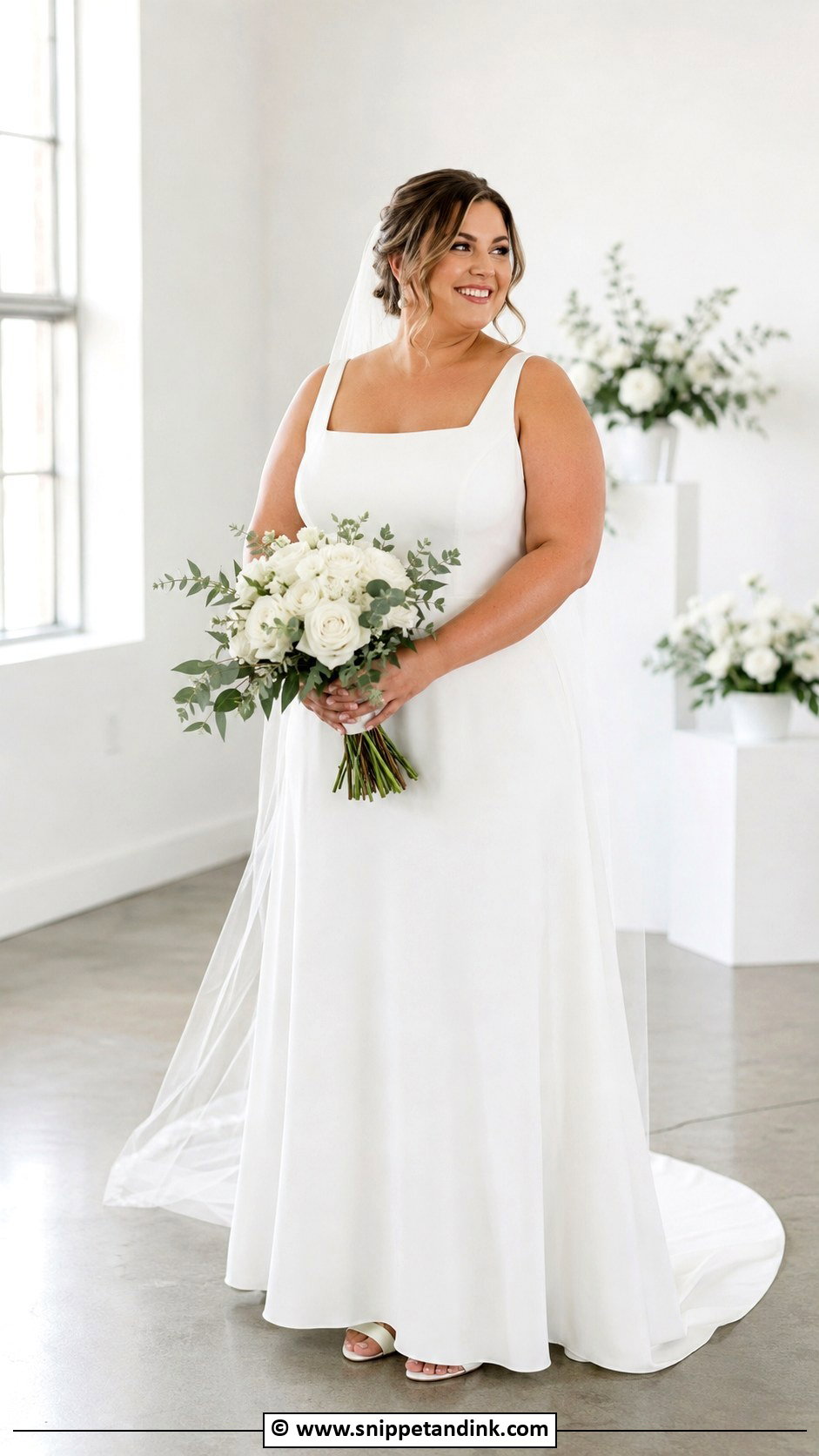
On a plus-size frame, a simple gown depends on construction more than anything else. I look for a supportive bodice with built-in structure, a smooth lining and seams that shape without squeezing. A crepe A-line, satin ball gown, square-neck sheath or off-shoulder fit-and-flare can all work. Comfortable heels, pearl earrings, a soft veil and a bouquet scaled to the gown keep it balanced. Minimal doesn’t mean plain; it means every detail earns its place.
23. Minimalist Petite Wedding Dress
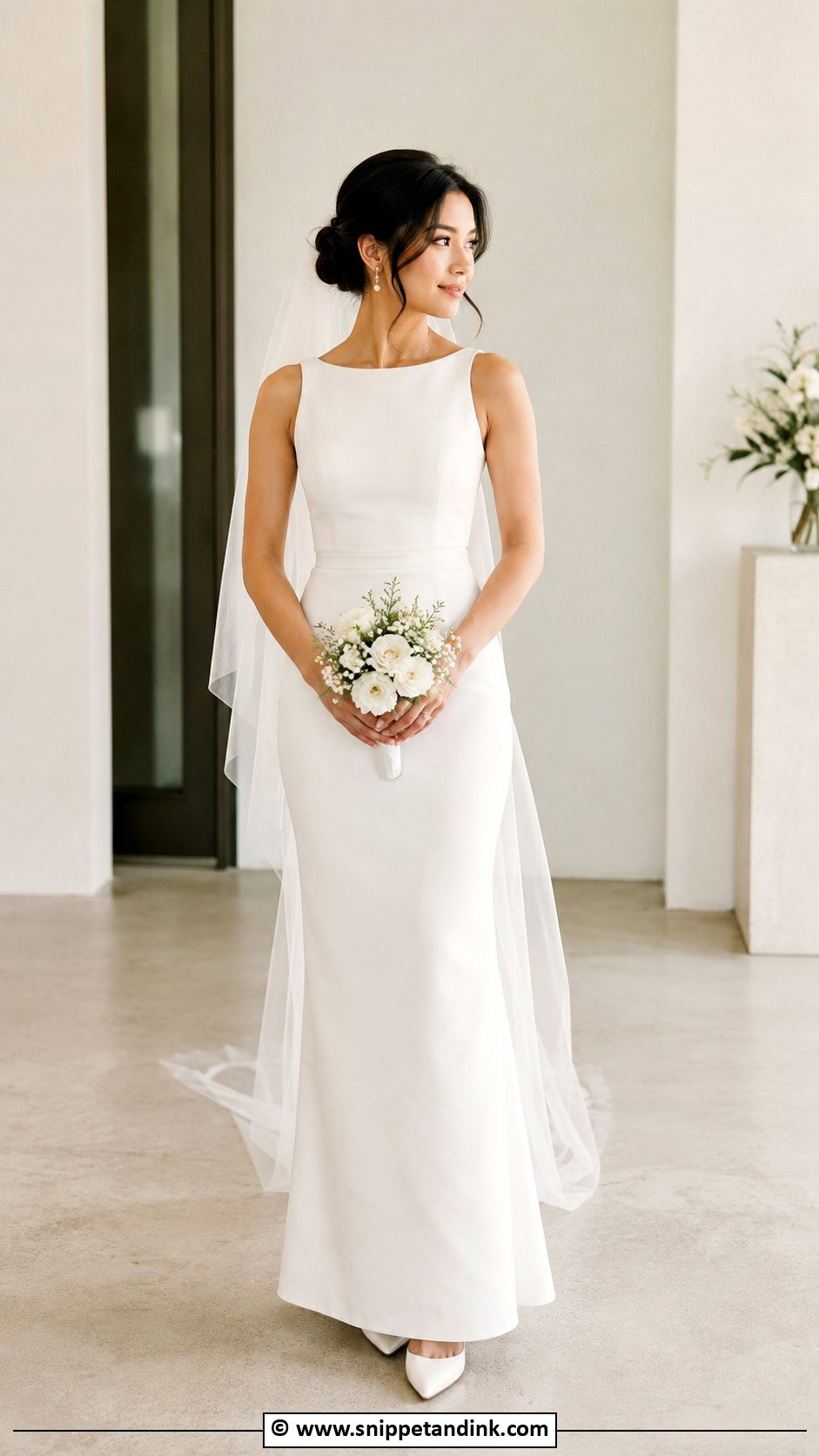
For a petite bride, the danger is fabric swallowing her frame. A sheath, column, slip or gentle A-line keeps proportions in scale, and a slightly higher waist with a clean neckline adds length. If you love a train, choose a short or detachable one. Pointed heels, delicate earrings, a narrow veil and a small bouquet keep everything in proportion. The goal isn’t to look taller at any cost, just to make the dress look like it was made for you.
24. Minimalist Maternity Wedding Dress
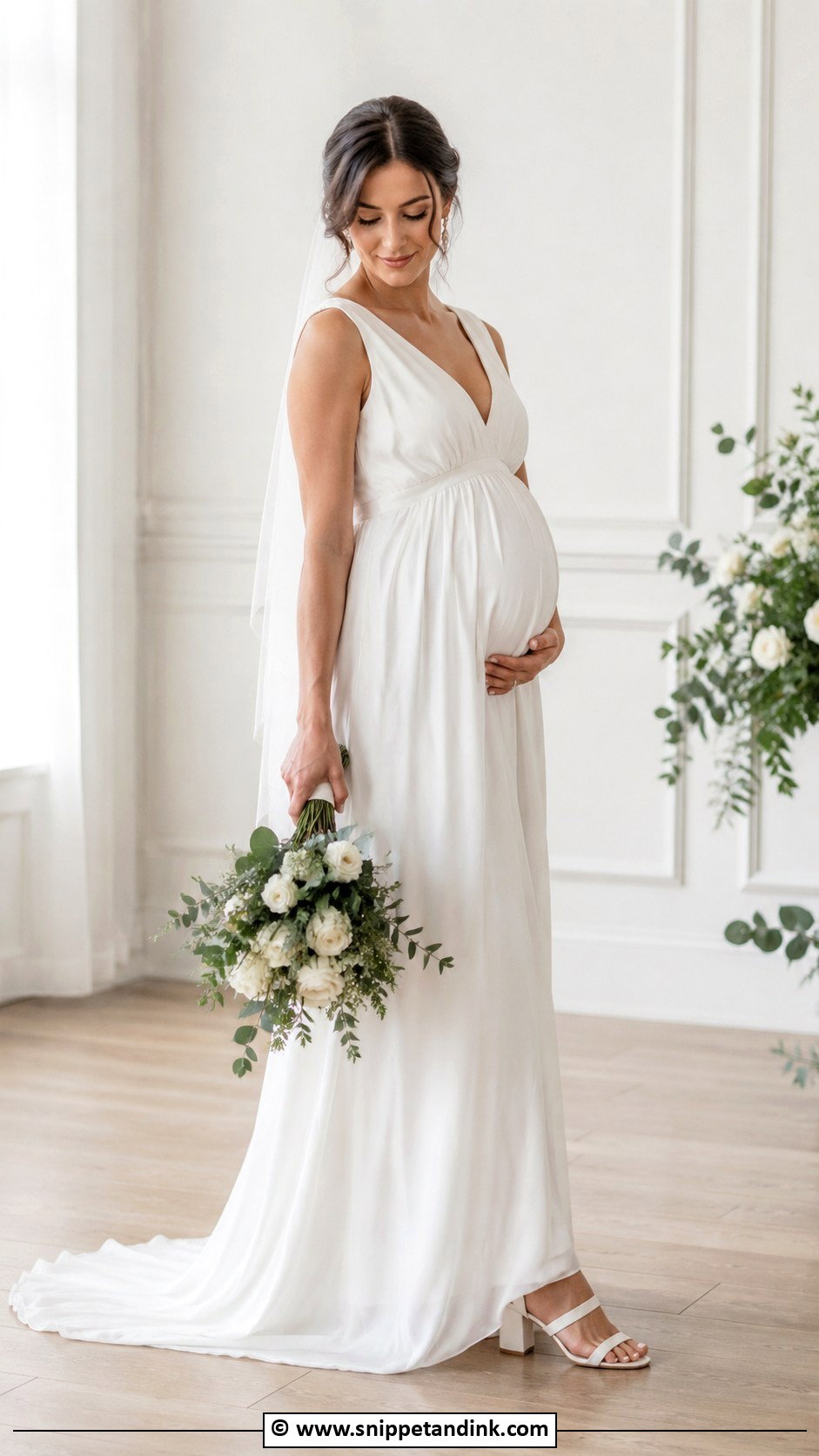
For a maternity gown, comfort leads every decision. Empire waists, stretch crepe sheaths, silk slips and flowing A-lines all leave room to breathe. Order with the wedding date in mind, since the bump can change a lot between first fitting and the day, and I schedule the final fitting as close to the wedding as the seamstress allows. Gentle structure at the bust, a comfortable lining, low block heels and a soft veil complete a calm, simple look.


25. Minimalist Modest Wedding Dress
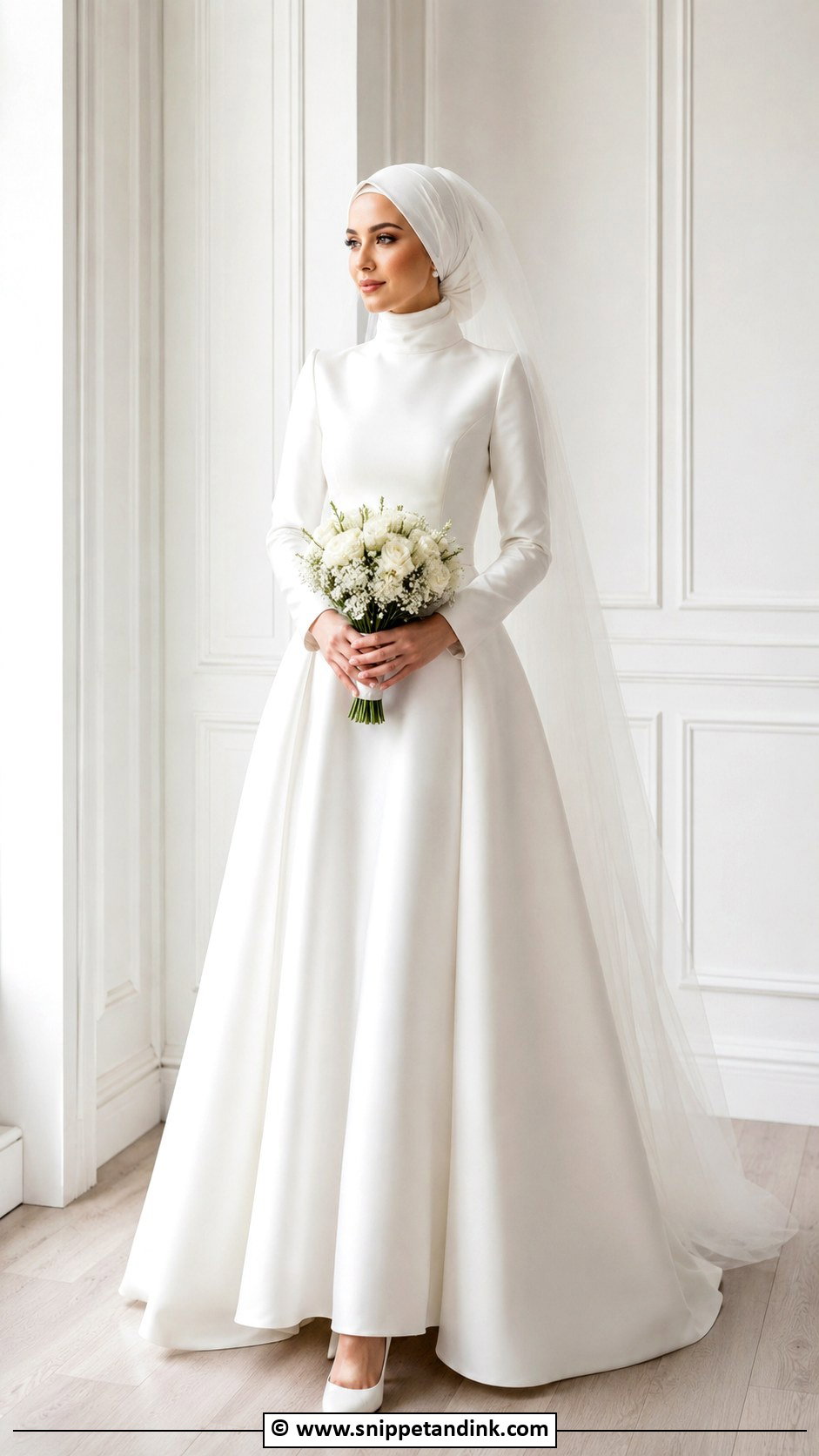
Coverage and clean lines suit each other well. A minimalist modest wedding dress uses long sleeves, a higher neckline, a full-length skirt and opaque fabric. A crepe high-neck gown, satin long-sleeve A-line or bateau-neck column all look graceful. Check opacity under bright light, since some ivory crepes go see-through in flash photography. Closed-toe heels, pearl studs, a smooth veil and covered buttons or a subtle train finish the look.
26. Minimalist Backless Wedding Dress
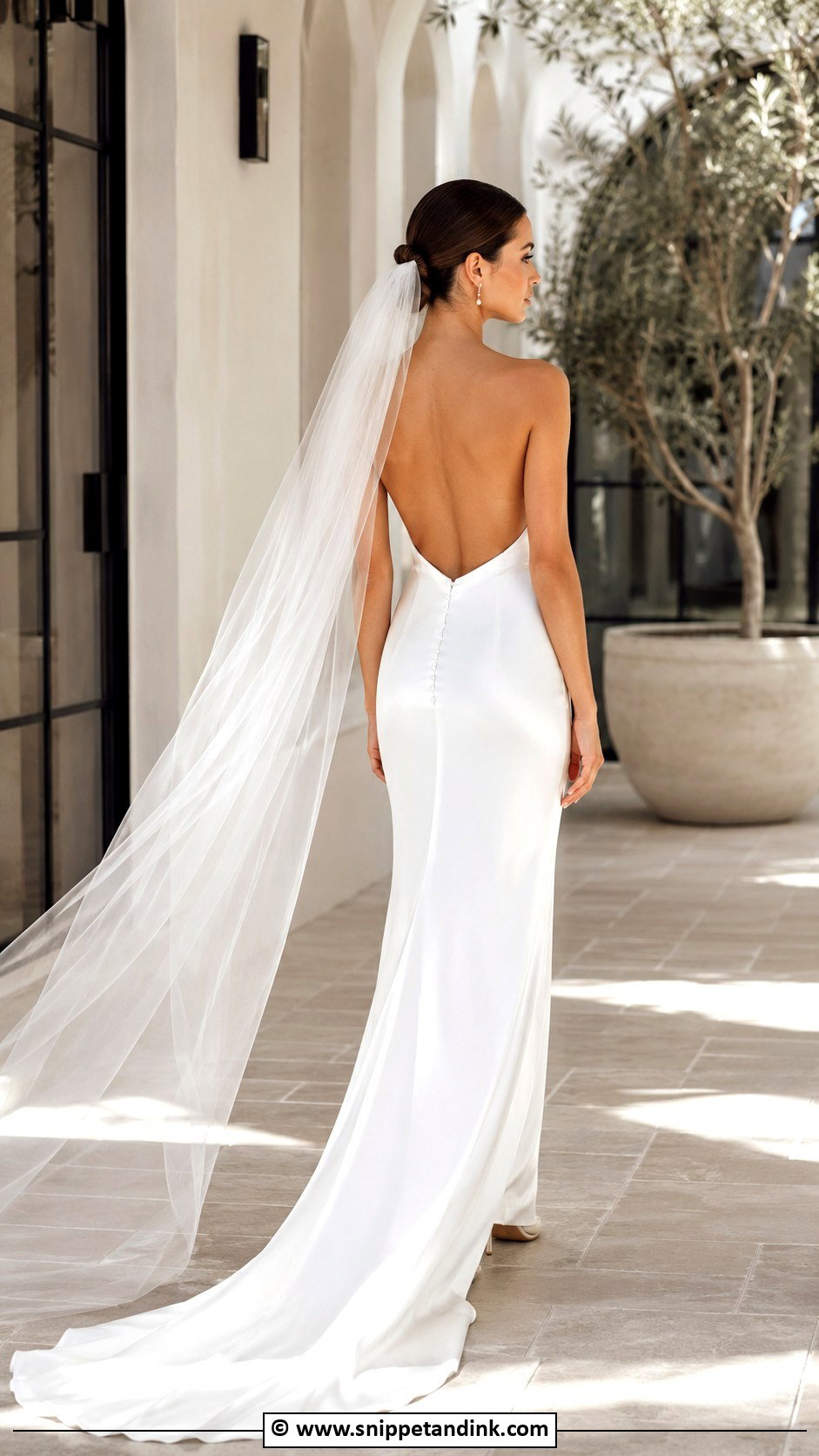
A backless gown is plain from the front and a surprise from behind. A silk slip, crepe sheath or satin column suits it, and a low bun keeps the back visible. Fit matters enormously; a back that gapes when you lean forward needs taking in, and I test that with the bride bending over a table. Adhesive or built-in cups replace a bra. Delicate earrings and slim heels finish it, and a ceremony veil can come off later to show the back.
27. Minimalist Cowl Neck Wedding Dress
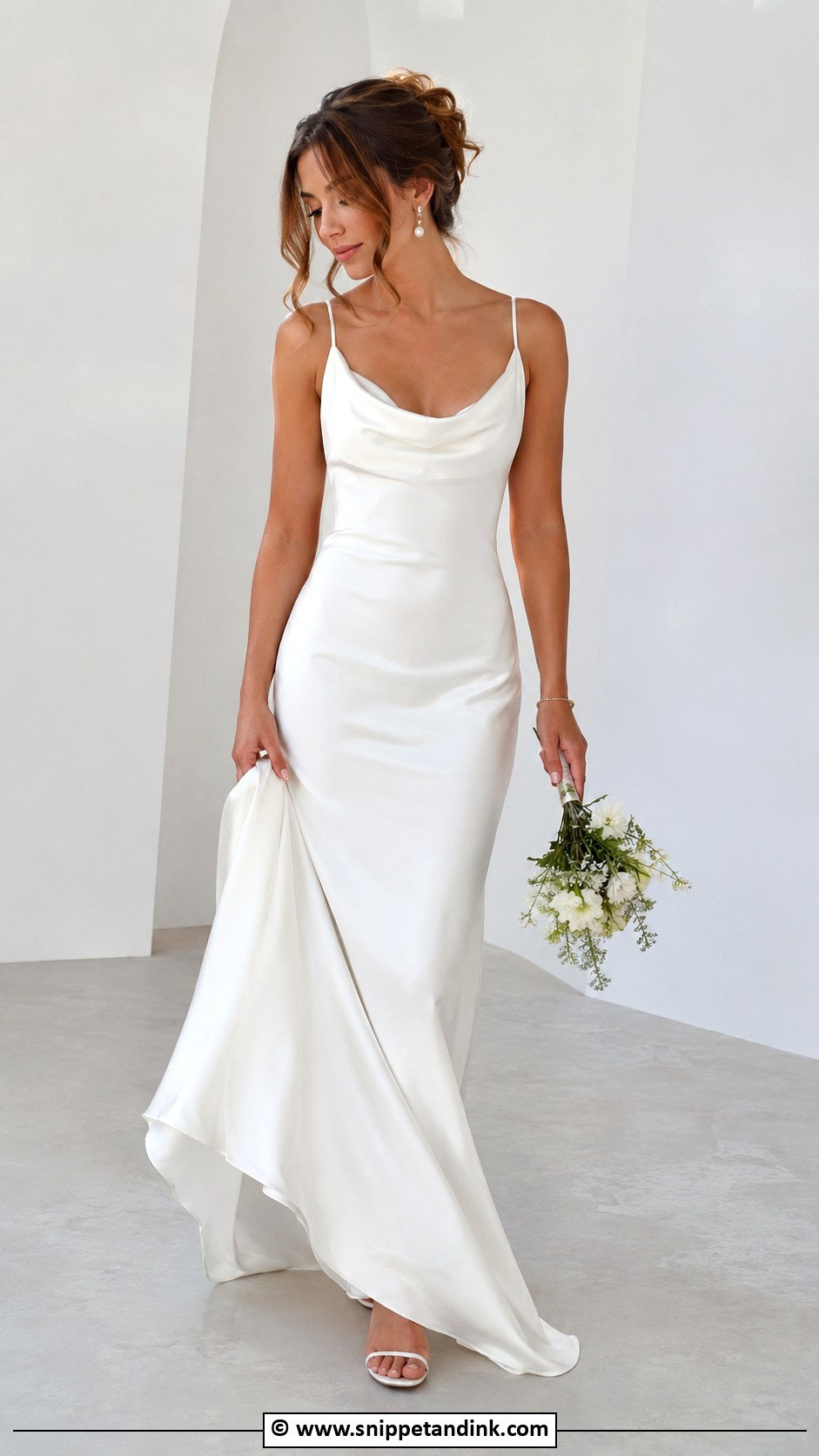
A cowl drapes softly at the neck, adding movement without any decoration. A satin or silk cowl neck slip dress suits strappy heels, small pearl earrings and a fine bracelet. Be aware that a deep cowl opens when you lean forward; a small weight or hidden stitch inside the drape keeps it in place. A cowl on a sheath or column gives more structure. Light accessories and softly styled hair finish it.
28. Minimalist One Shoulder Wedding Dress
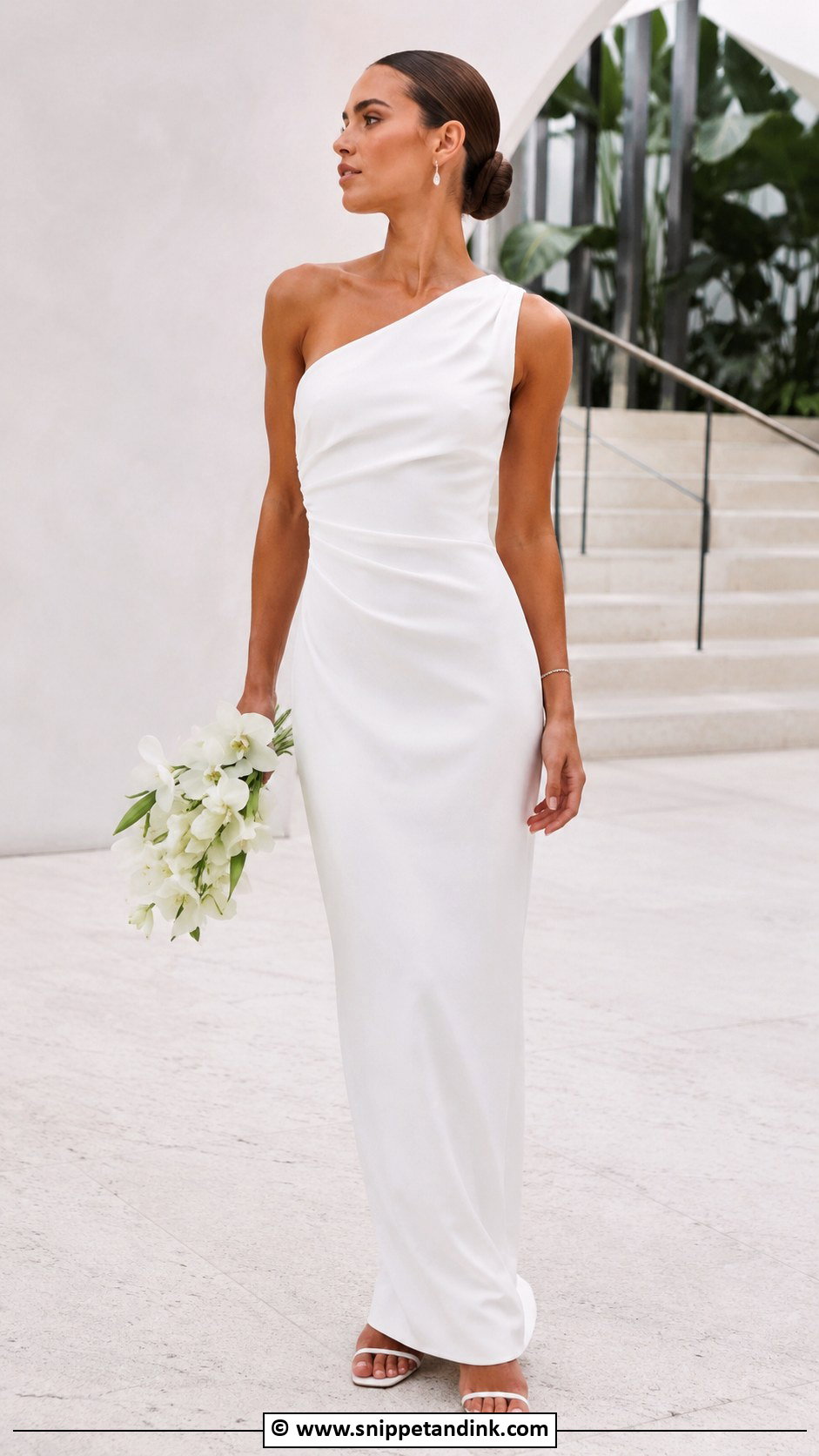
One shoulder creates an asymmetric line that does the work of decoration. A crepe column, satin sheath or soft A-line with one strap looks polished with sleek heels, a single bracelet, small earrings and smooth hair. Skip the necklace. Think about which side faces your partner at the ceremony, since that’s the side most photos will capture, and many brides prefer the bare shoulder toward the camera.
29. Minimalist Two Piece Wedding Dress
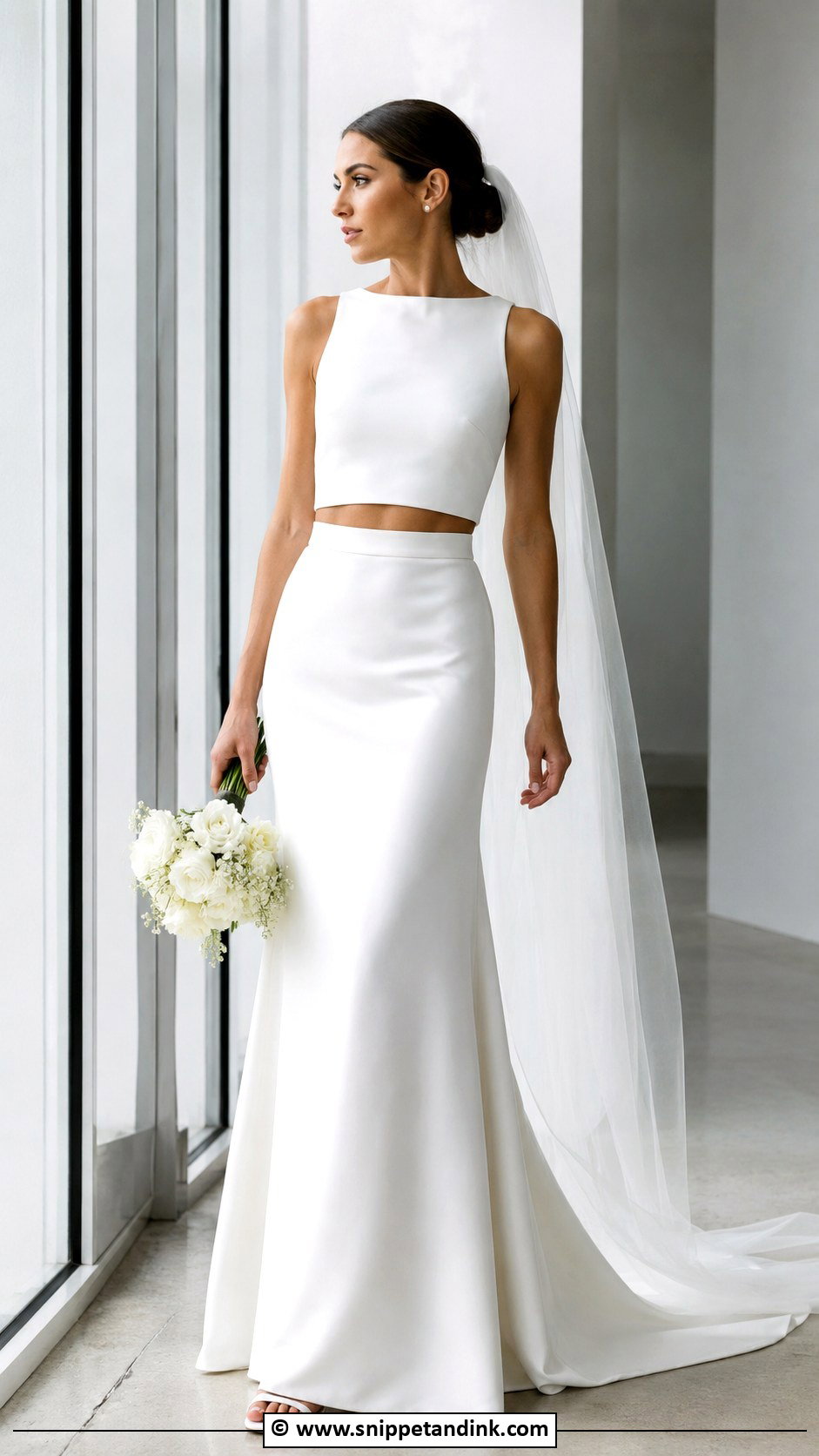
Separates give flexibility and a modern shape. A crop top with a high-waisted satin skirt, a fitted bodice over a crepe column skirt or a long-sleeve top with a flowing skirt can all look bridal. The hard part is matching whites; two ivories from different fabrics can look slightly different in daylight, so compare them outdoors before buying. Sleek heels, pearl studs, a low bun and a plain veil keep the set looking intentional.
30. Minimalist Wedding Dress With Bow
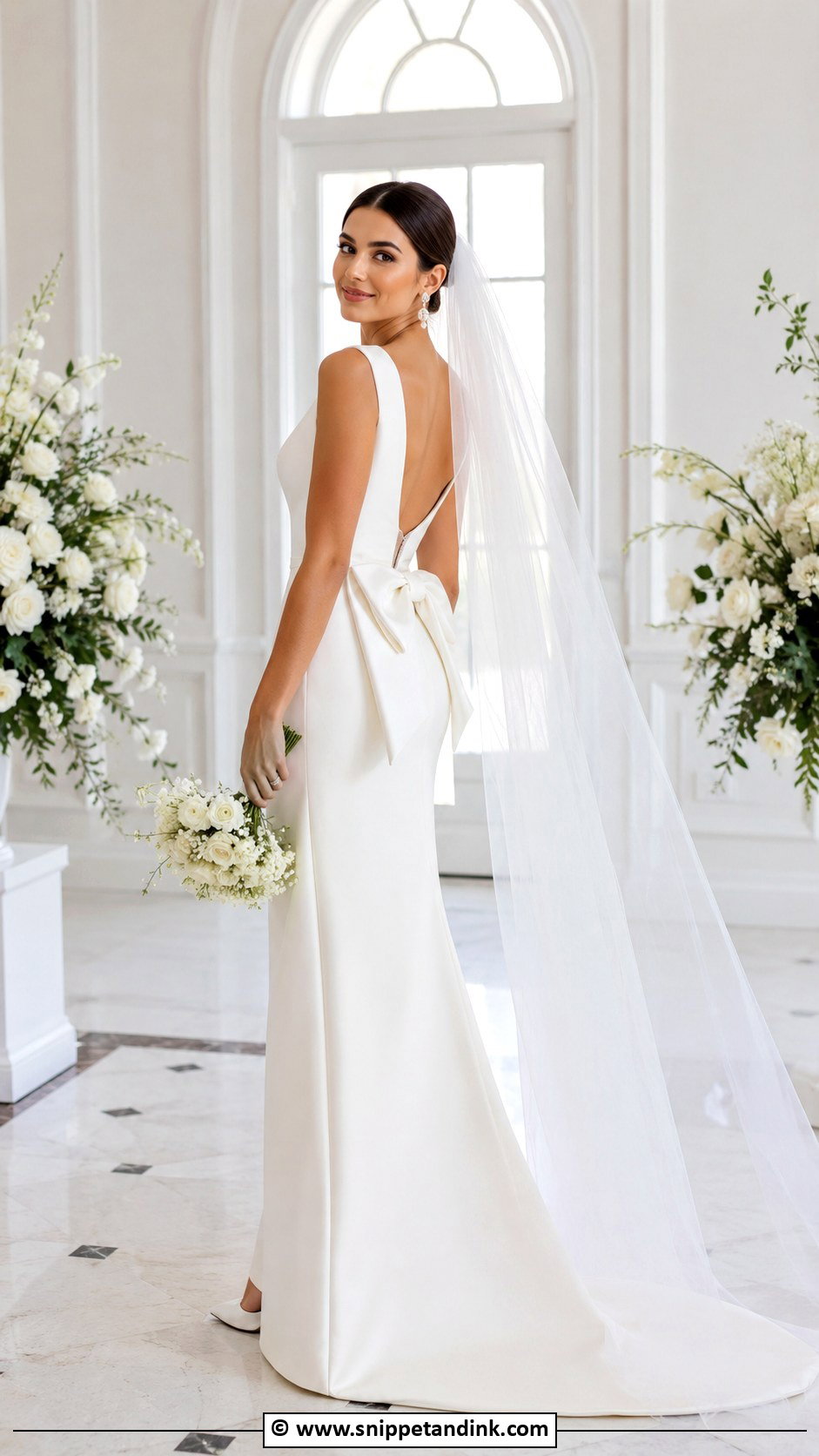
One bow is the softest way to add personality to a simple gown. A small back bow on a satin column, a waist bow on an A-line or a shoulder bow on a sheath all work, as long as the bow isn’t oversized. The fabric should be stiff enough to hold the loops, or the bow will droop by evening. Plain heels, delicate earrings, a smooth veil and a compact bouquet keep the bow as the focus.
What Goes Underneath a Plain Gown
Undergarments are the hidden reason a simple dress looks either sleek or slightly off. Satin and silk show every line, and crepe isn’t far behind. Bring the exact pieces you’ll wear on the day to every fitting, because changing your bra after the bodice is fitted can shift the fit by a surprising amount.
- Strapless, halter and backless gowns usually work best with cups sewn into the bodice. Ask your seamstress early; it’s a quick job.
- Laser-cut, skin-toned briefs disappear under slips. Lace trims leave marks.
- Light shaping shorts can stop thighs rubbing under a column or sheath, but heavy shapewear often creates its own ridge at the waist or thigh.
- Hold an ivory dress against your skin in daylight. Pure white can look blue on warm undertones, while soft ivory is kinder to most skin tones.
Changing the mood after the ceremony
One of the best things about a simple gown is how easily you can change its look. Remove the veil, swap pearl studs for statement earrings, let down a bun or add a bold lip for the evening. It looks like a new outfit without needing a second dress.
Simple Lines, Careful Fit
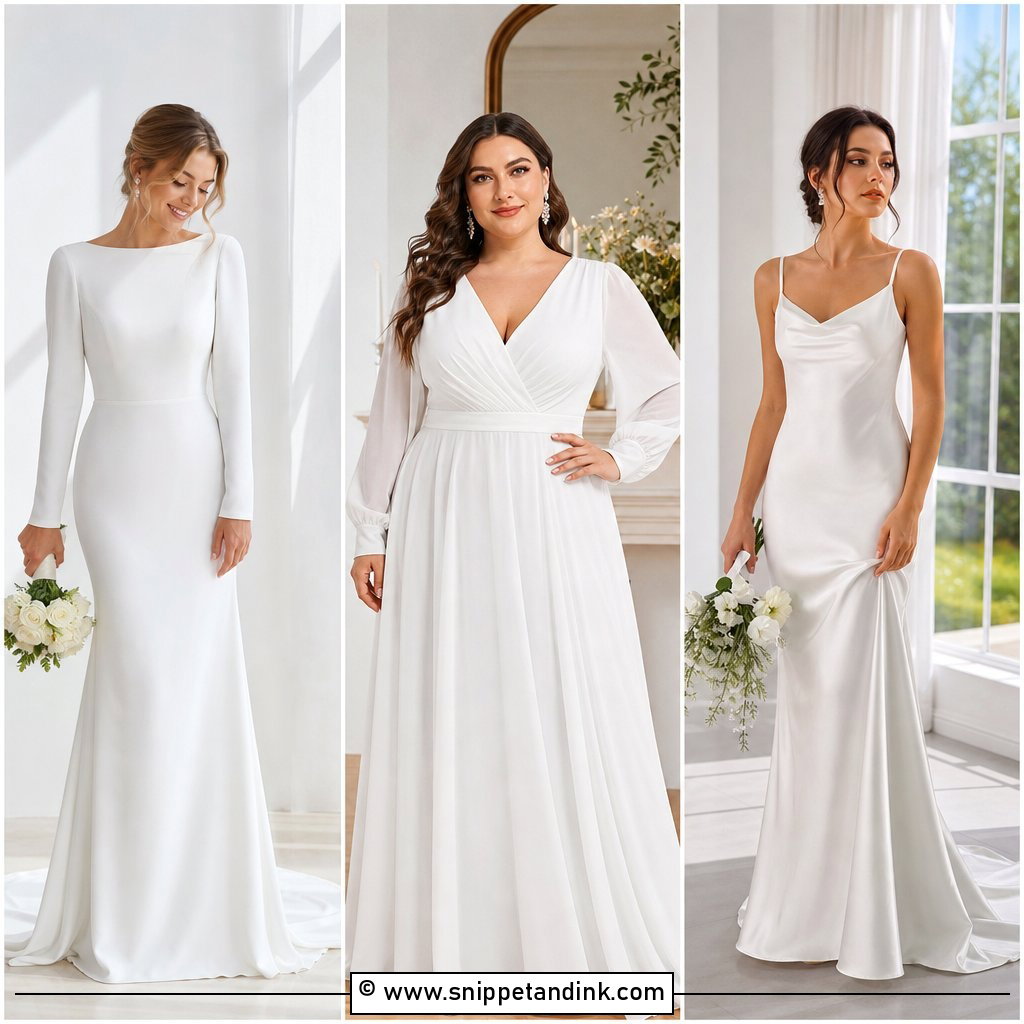
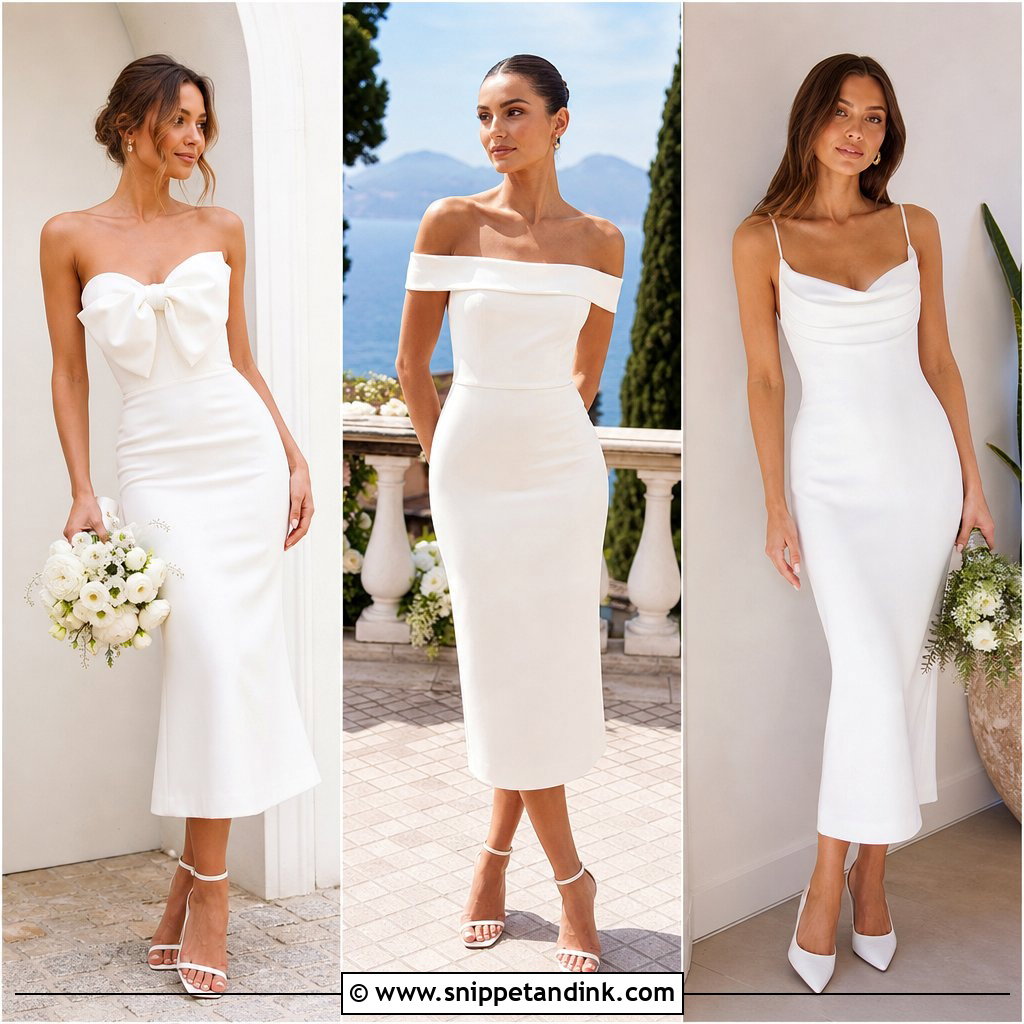
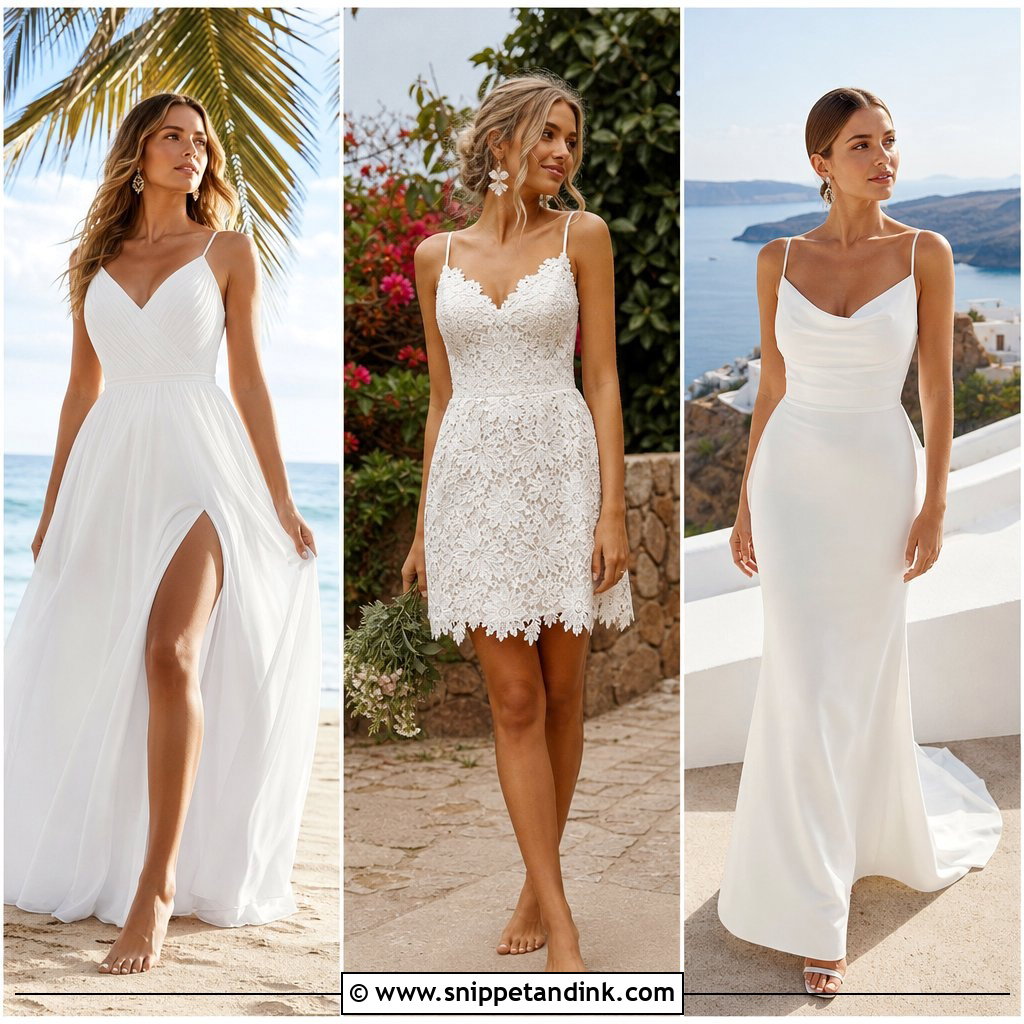
A plain dress earns its place through fabric, fit, neckline and the way it moves. A satin slip, crepe sheath, sculpted ball gown, long-sleeve modest dress and short courthouse mini can all be the right choice, depending on who’s wearing it. Budget time and money for tailoring before anything else. Then pick shoes, hair, veil and jewellery that support the dress rather than compete with it, and the simplicity will look like a decision rather than an absence.
You'll Like These Ideas:





Leave a Reply