
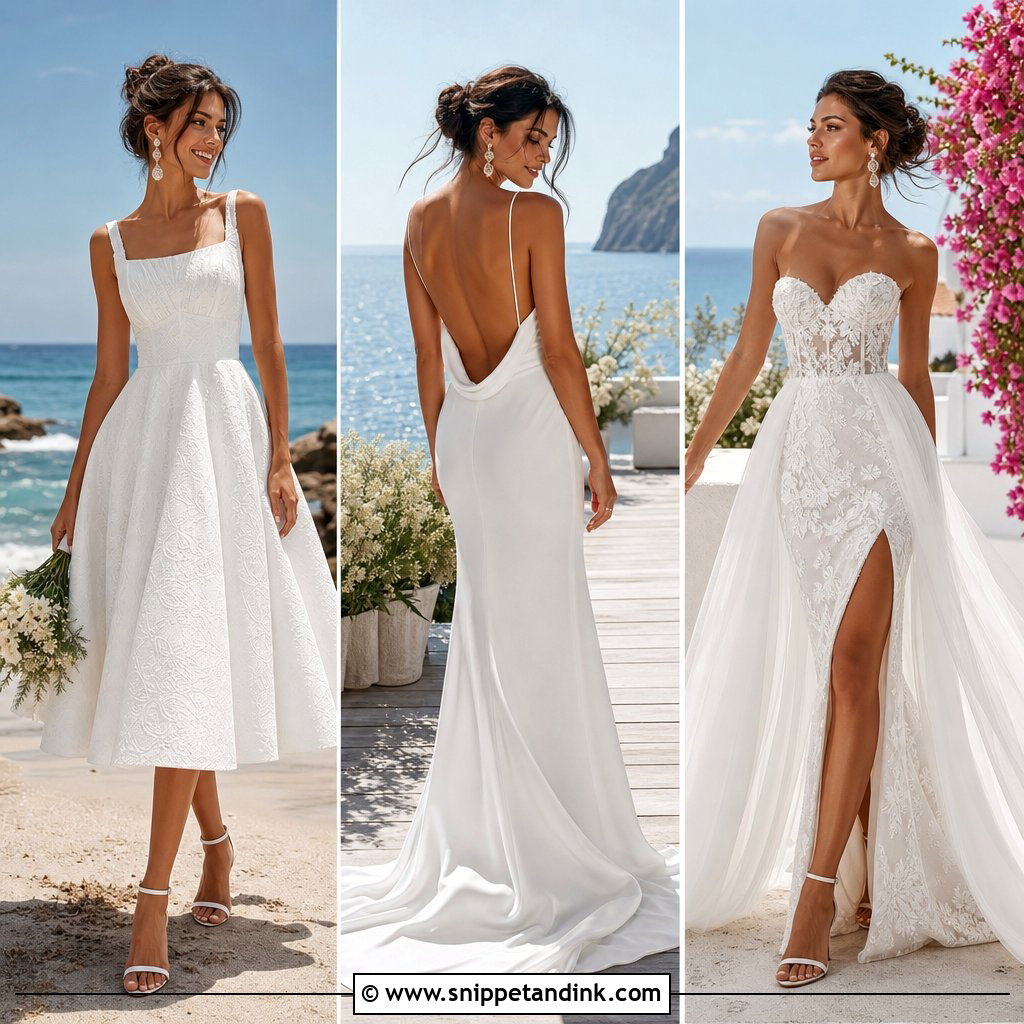
Some brides tell me at the first appointment that they want to breathe, eat dinner and dance without a corset digging in, and that’s a perfectly good brief. A loose gown moves with you, and lighter fabrics like chiffon, crepe, soft satin, cotton and unlined-feeling lace suit outdoor ceremonies, destination trips and small celebrations especially well. The skill is keeping it bridal rather than sliding into a nice summer dress, and that comes down to fabric weight, a few precise fit points and the accessories around it. The twenty looks below each come with shoes, jewelry, veil and hair, and cover different seasons, settings and bodies, pregnancy included.
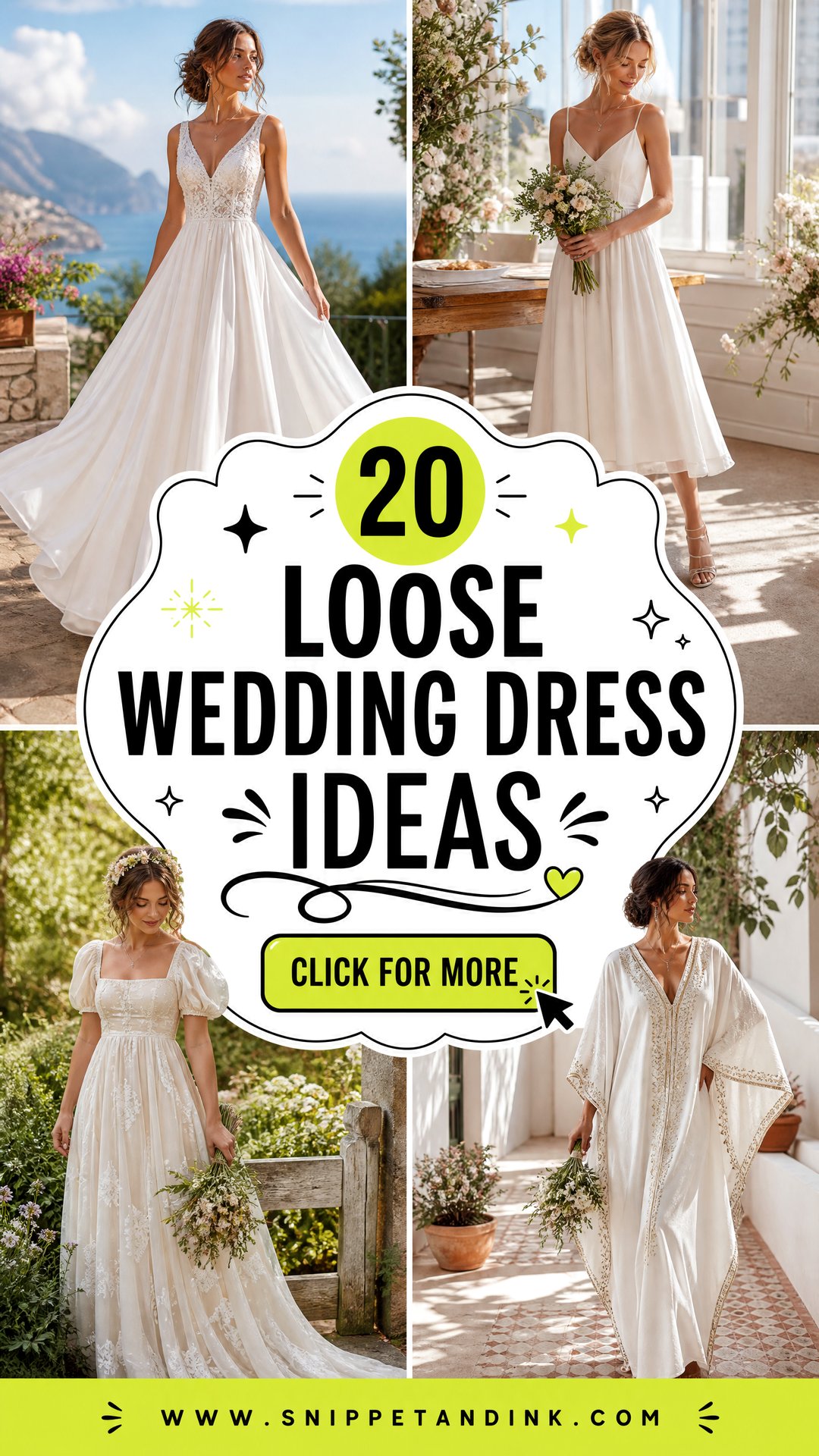
Three Places a Loose Gown Still Has to Fit
Brides often assume a relaxed dress needs no tailoring. In my fittings, the loose styles need fewer alterations, but the few they need matter more, because a flowing dress that’s off at one point looks borrowed.
Shoulders and straps
The whole dress hangs from here. Straps that are a centimetre too long drop the neckline and the waist seam with them. Have them shortened before anything else, then judge the rest.
The bust
With no corset, support comes from cups sewn into the bodice, a well-fitted bra or a bodice lining cut close to the body. Bring the exact bra you plan to wear to every fitting. If you need real support, ask the seamstress to add built-in cups or a light internal band; it keeps the outside soft.
The hem
Light fabric floats, so a hem that brushes the floor in the mirror will catch under your toes on steps. Set the length in your wedding shoes and ask for a hem that just clears the ground.
1. Flowy A-Line Wedding Dress
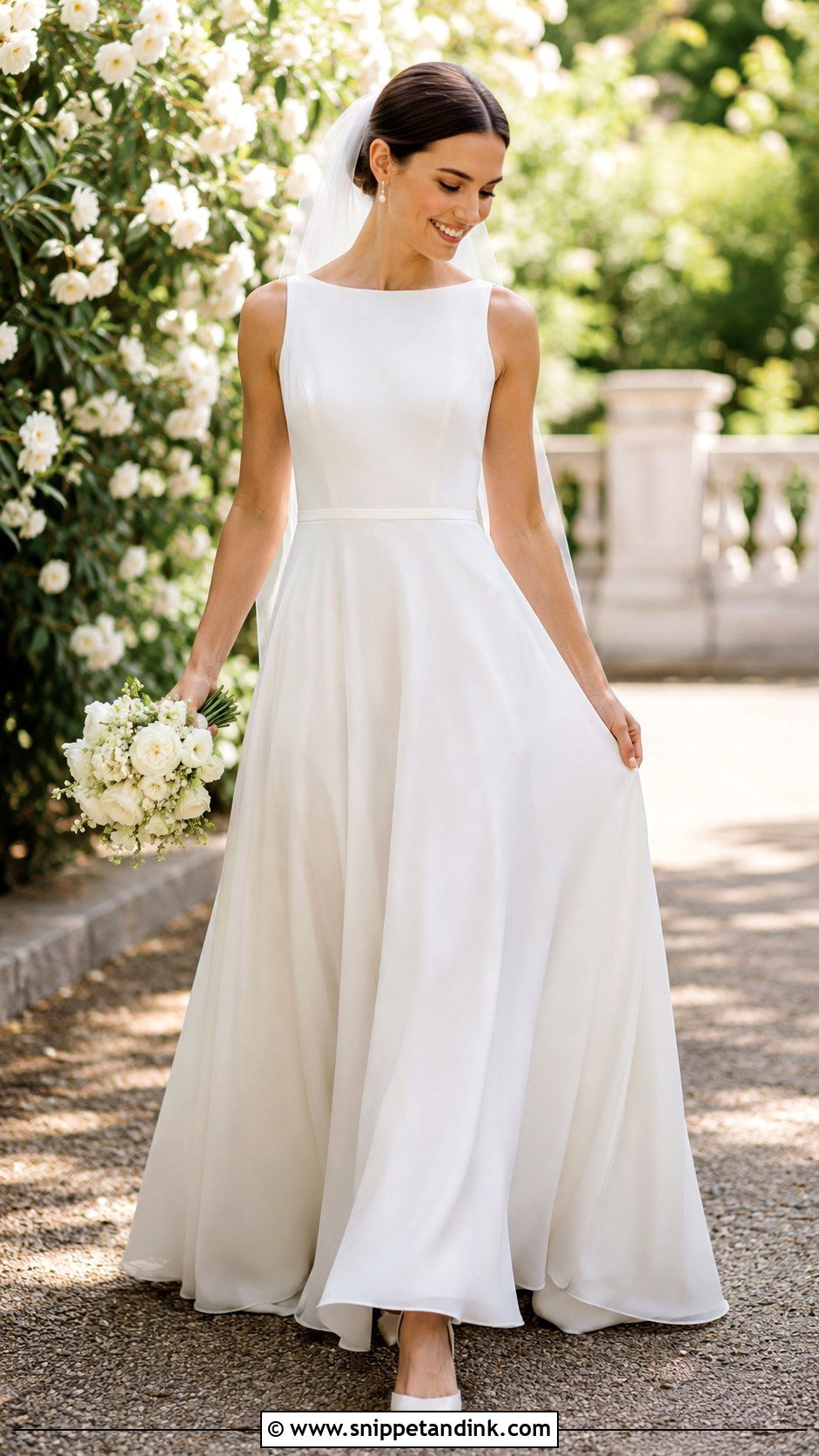
The flowy A-line is where I’d start most brides who want comfort and still want to look classic. An ivory chiffon gown with a softly fitted bodice and a natural waist lets the skirt fall away from the hips. Spaghetti straps look delicate; wider satin straps hold a fuller bust better and hide a regular bra strap, so choose by support, not only looks. Pearl drop earrings, a fingertip veil and pointed flats or low block heels finish it, with a small white bouquet. A low textured bun keeps the neckline visible. Garden and estate venues suit it, and you’ll be able to sit on a hay bale or a lawn chair without a second thought.
2. Empire Waist Chiffon Wedding Dress
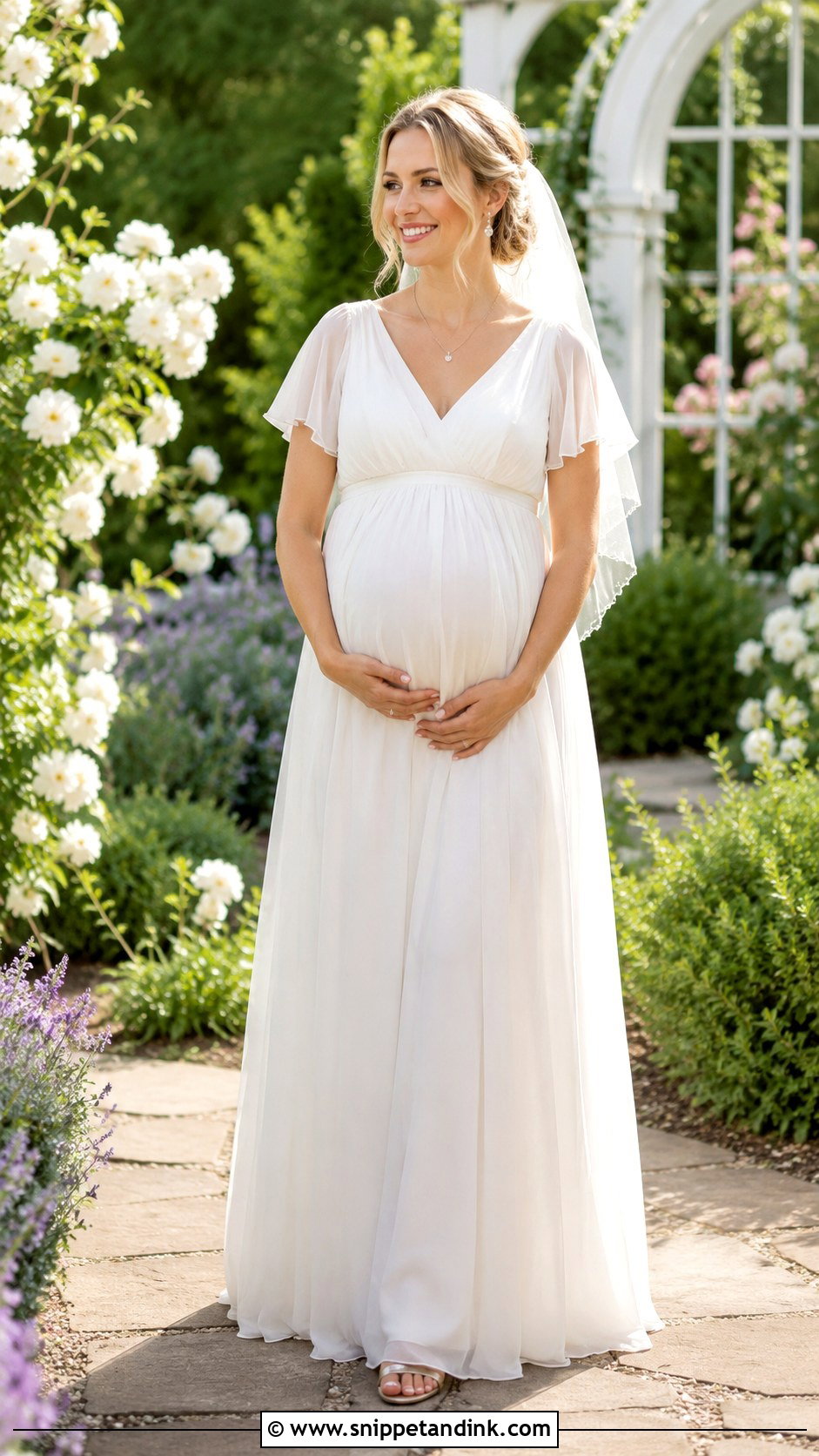
An empire waist gathers directly under the bust, so everything from the ribcage down is free. That makes it the most forgiving cut on this list, and the one I suggest for pregnant brides and anyone who simply wants room. A V-neck and flutter sleeves give it shape. Crystal earrings, a fine pendant and metallic low sandals keep it light, with a loose braided updo and a short tulle veil or simple comb. The one place it has to fit precisely is the seam under the bust. If that seam sits too low, the dress looks like it’s slipping.
3. Boho Lace Wedding Dress With Bell Sleeves
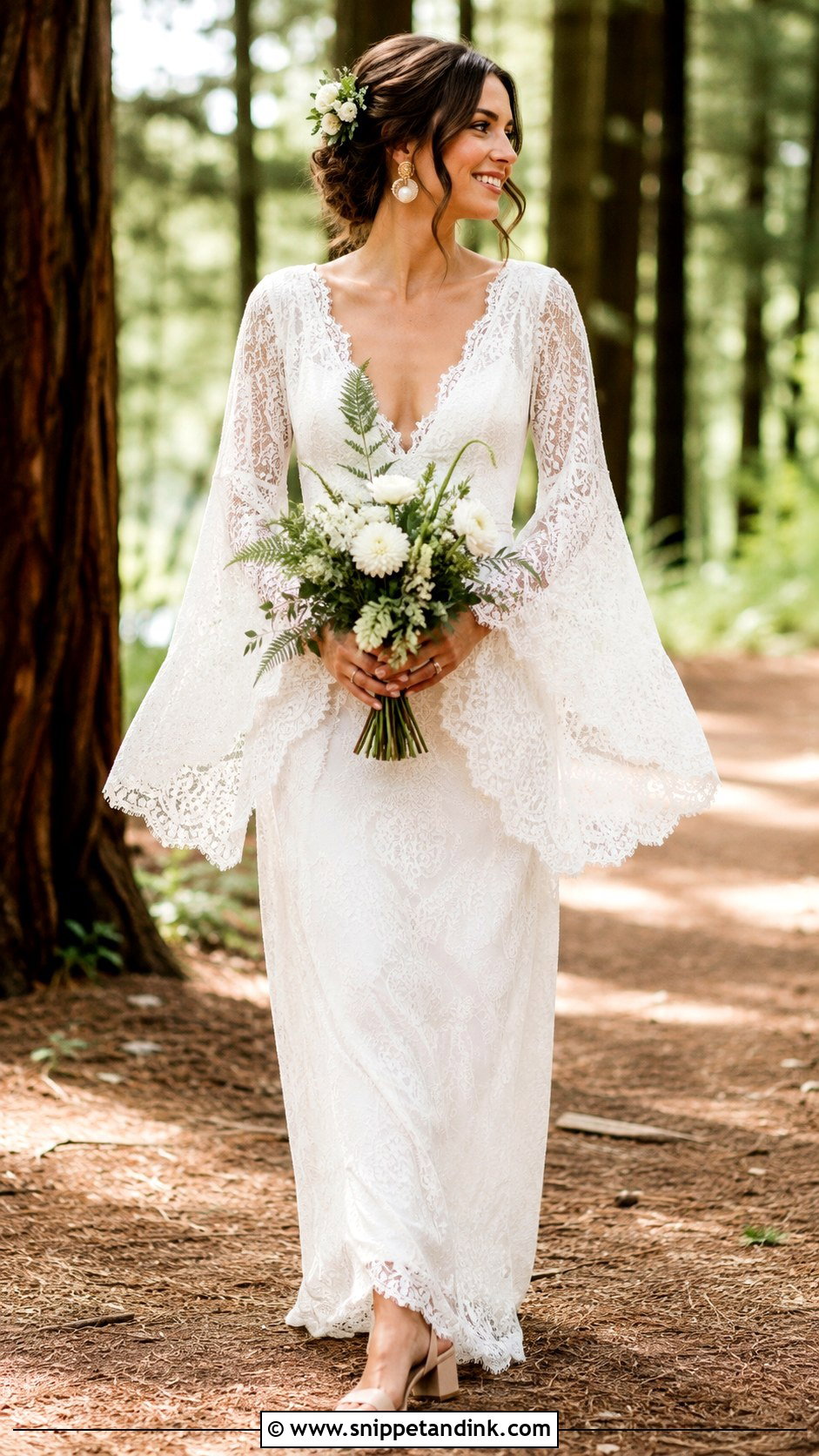
Bell sleeves bring the drama here, so the rest of the dress can stay easy. A loosely cut lace gown with a lightly defined waist and a scalloped neckline suits them, with sleeves widening below the elbow. The lining matters: a smooth one lets the lace motif read clearly instead of looking busy. Ivory ankle boots or low suede heels, a small floral comb and plain gold earrings finish it, with a greenery bouquet. Loose waves or a relaxed half-up style carry the bohemian mood. One practical note on bell sleeves: they dip into everything, so be careful with cake and candles.
4. Loose Satin Slip Wedding Dress
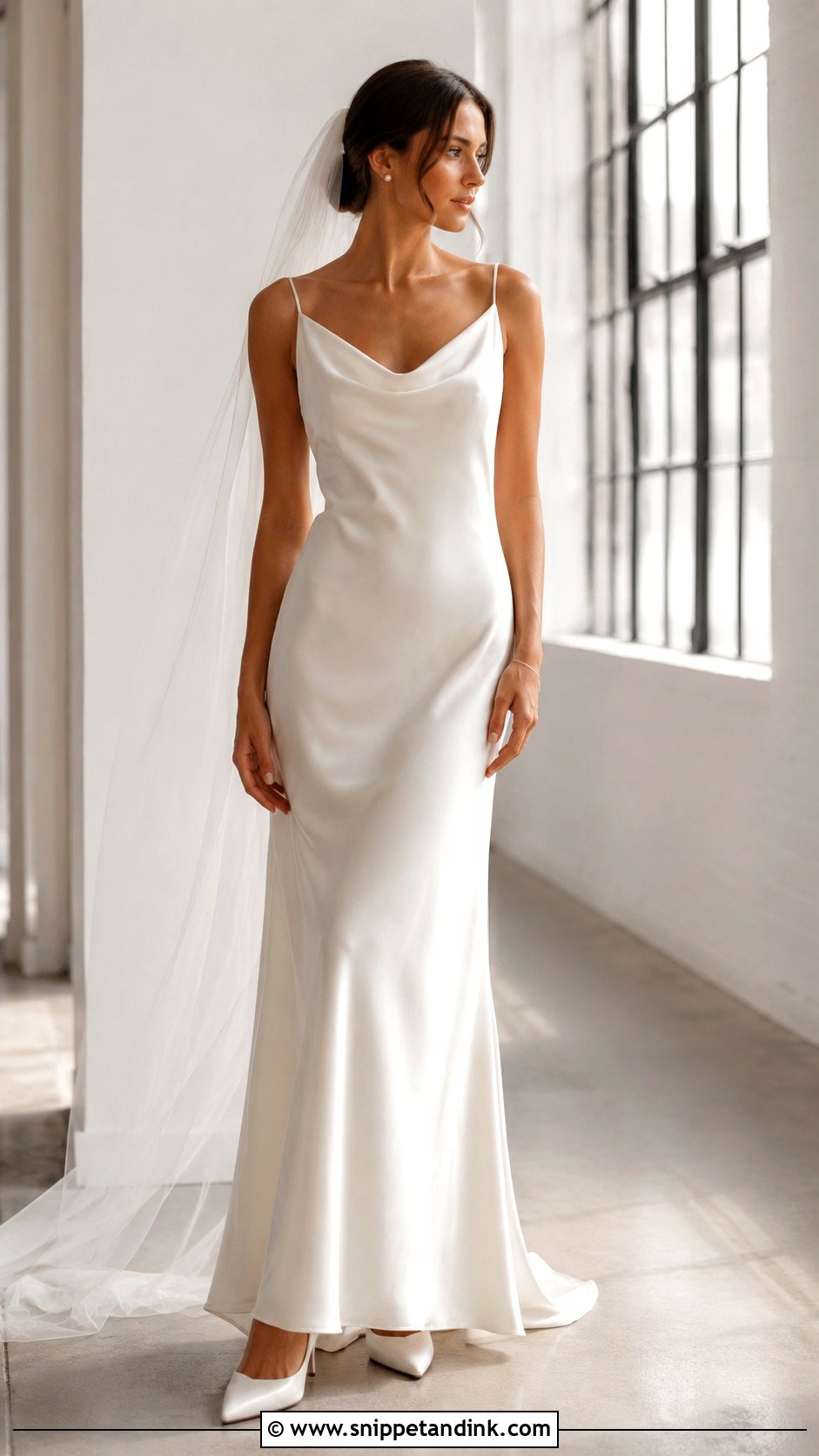
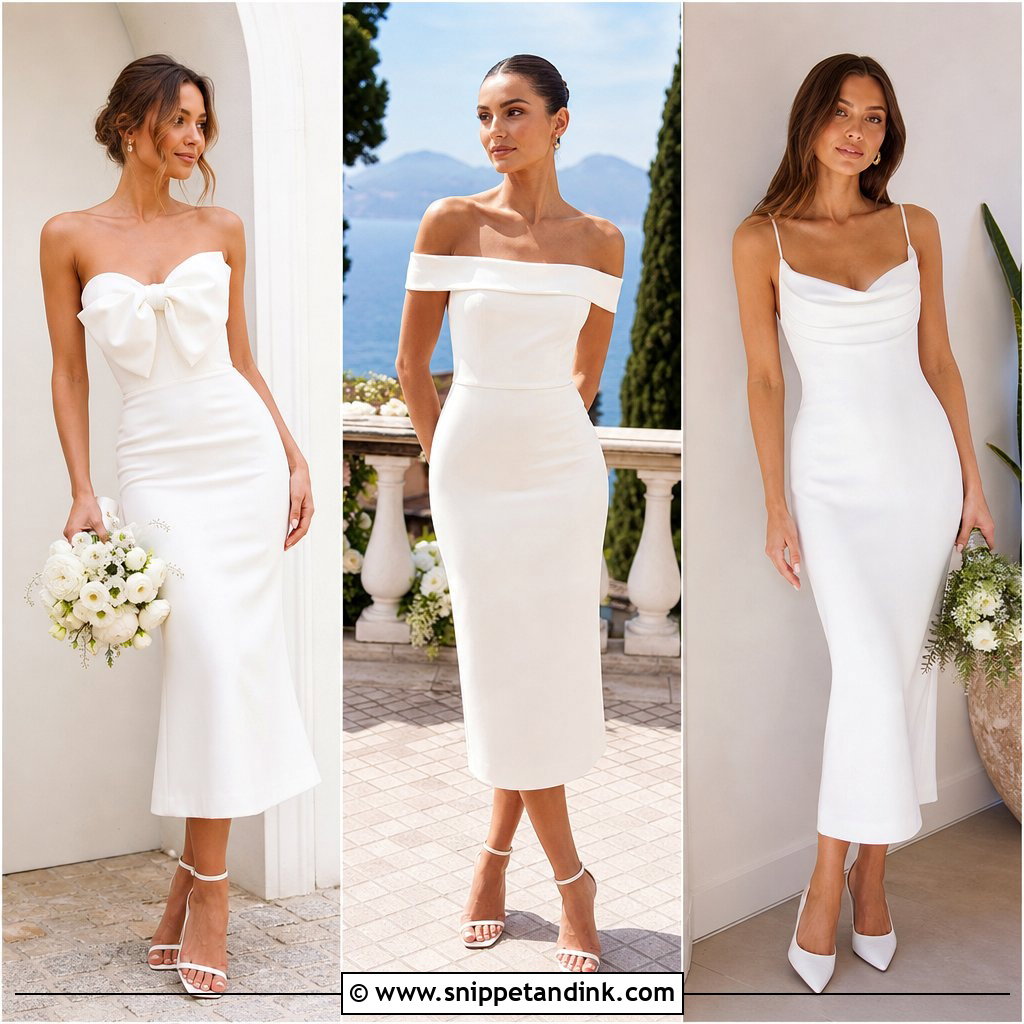
Most satin slip dresses are cut on the bias and cling, which is exactly what a bride wanting a loose fit should avoid. Ask for a straighter cut that skims and falls from the bust or a high waist, with a cowl neckline and narrow straps. Heavier satin hangs better and shows less underwear than thin, shiny polyester. Pearl studs, a thin bracelet and white kitten heels keep it spare, and a small structured bag holds the reception essentials. A polished low bun with a long sheer veil adds the bridal contrast. It suits courthouse weddings, rooftops and intimate dinners.
5. Tiered Tulle Wedding Dress
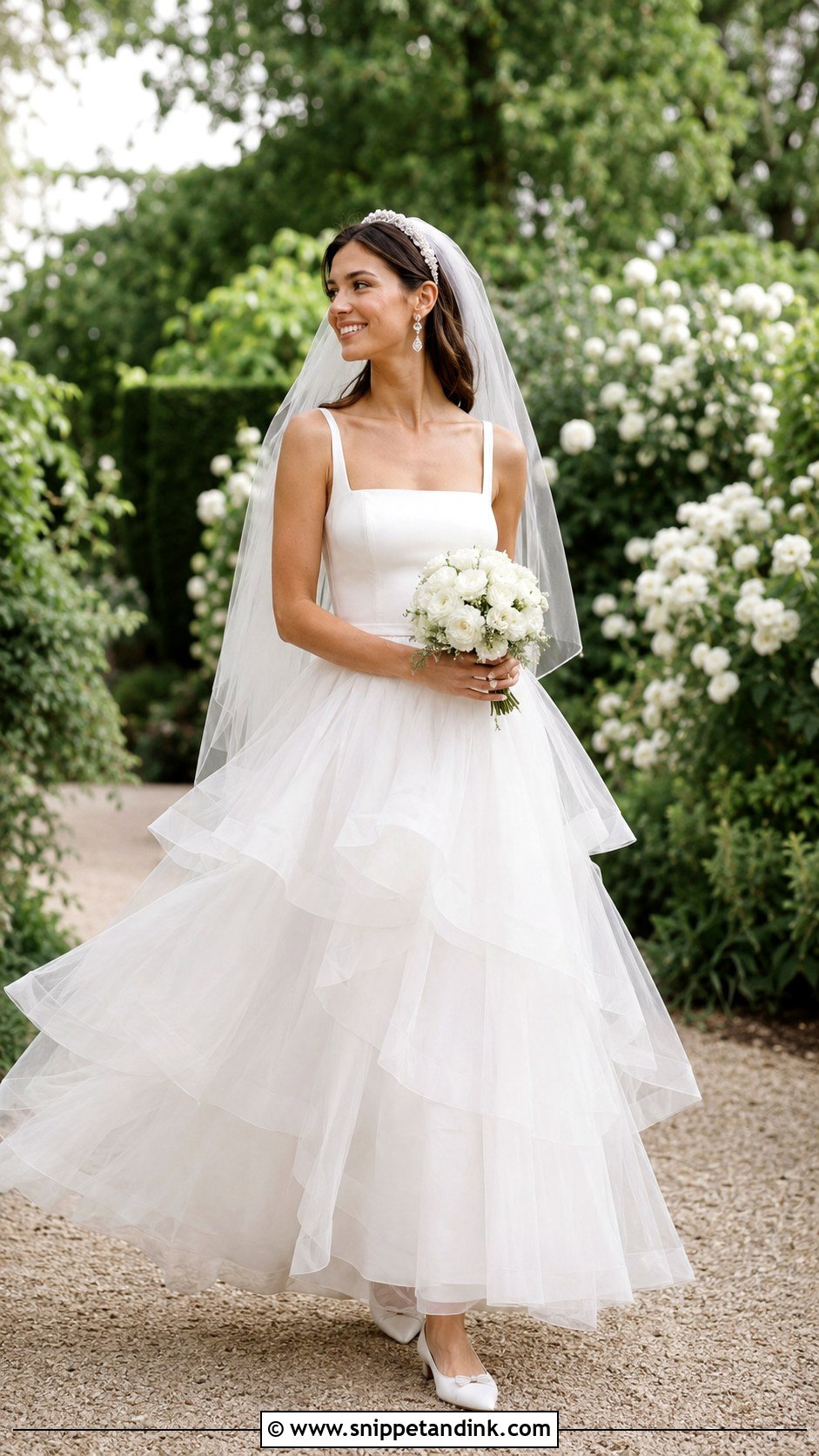
Tiered tulle gives you a full skirt with no hoop or petticoat, and it’s surprisingly light to wear. A simple lined bodice with two or three soft tiers keeps it from looking like layers of netting. Narrow straps, a square neck or short sheer sleeves balance the volume below. I’d keep the accessories small: crystal earrings, a slim headband and white ballet flats, plus a waist-length veil that won’t hide the tiers. Choose a compact bouquet. Tulle does catch on rough wood and rose thorns, so walk the garden route once before the ceremony.
6. Beach Wedding Dress With Flutter Sleeves
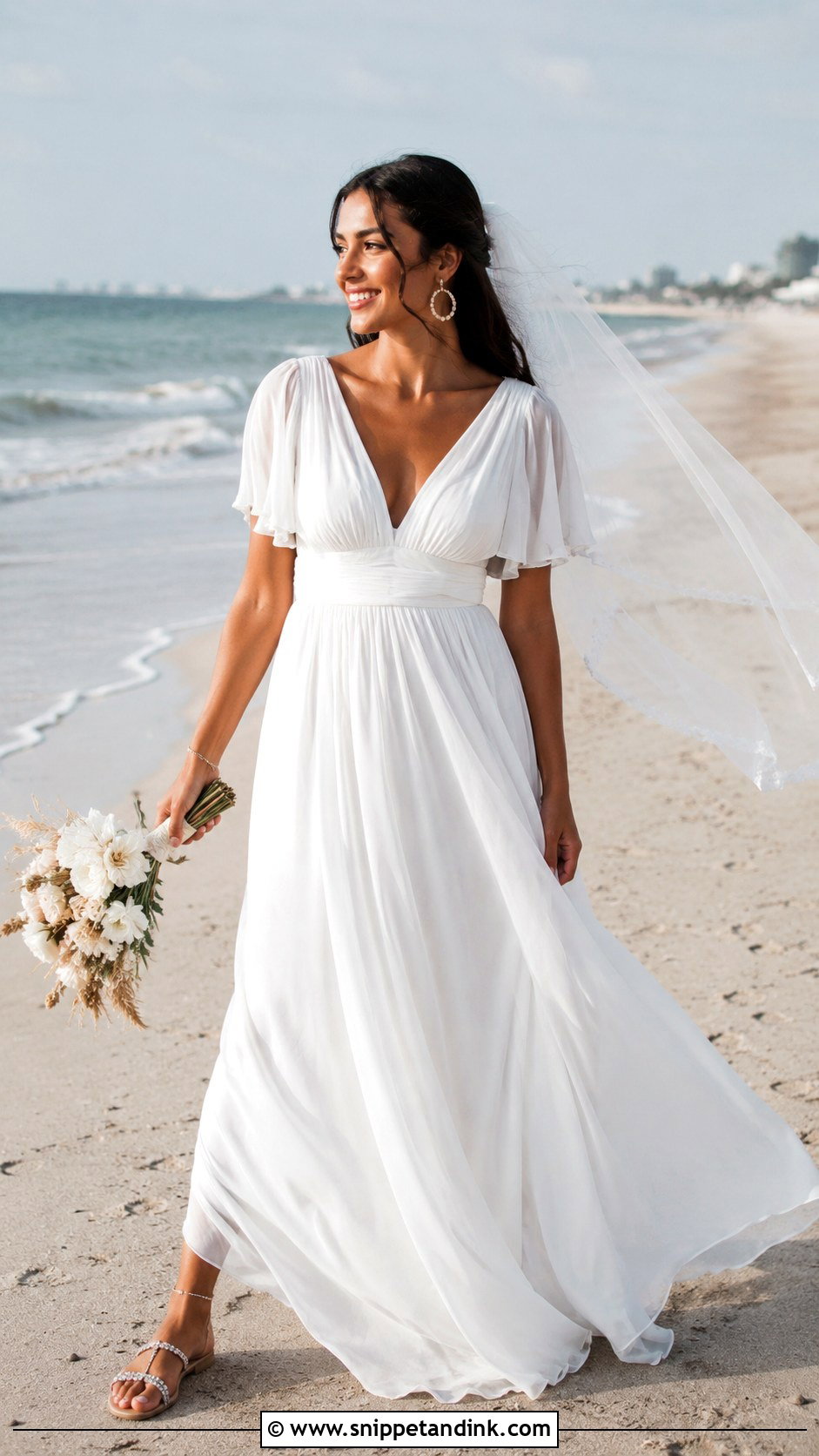
On sand, the hem length decides your comfort. Keep it at the ankle or just skimming, because a longer hem fills with sand and drags. A light chiffon gown with flutter sleeves, a V-neck and a softly gathered waist moves with the breeze rather than fighting it. Embellished flat sandals work, or go barefoot for the ceremony and put shoes on for the reception. Pearl hoops and a fine anklet are enough. Sea wind is relentless, so I’d choose a secure low braid or a pinned updo over loose hair, and a fingertip veil with a weighted edge or a comb set firmly into the braid. Keep the bouquet small.
7. Off-the-Shoulder Chiffon Wedding Dress
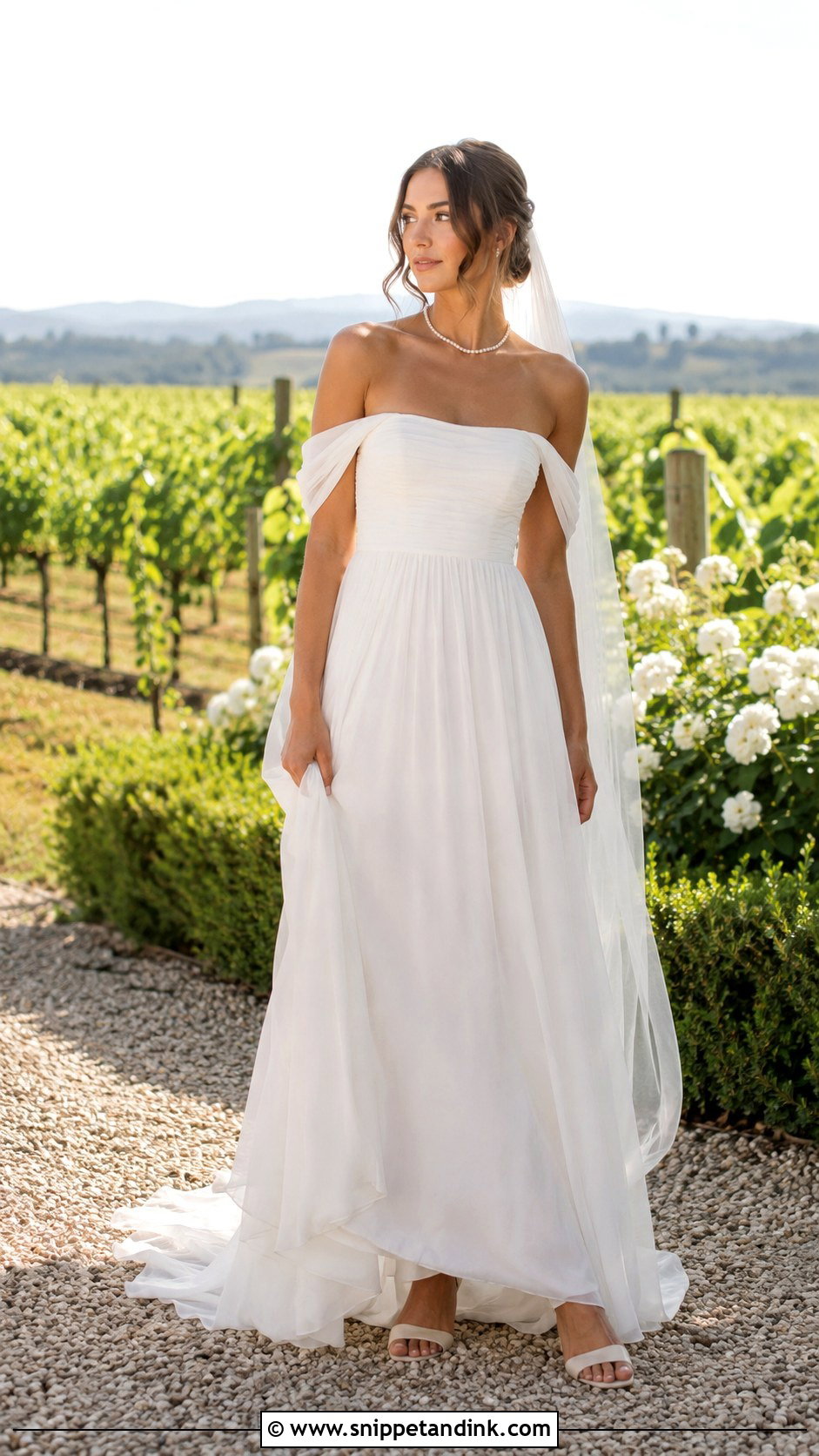
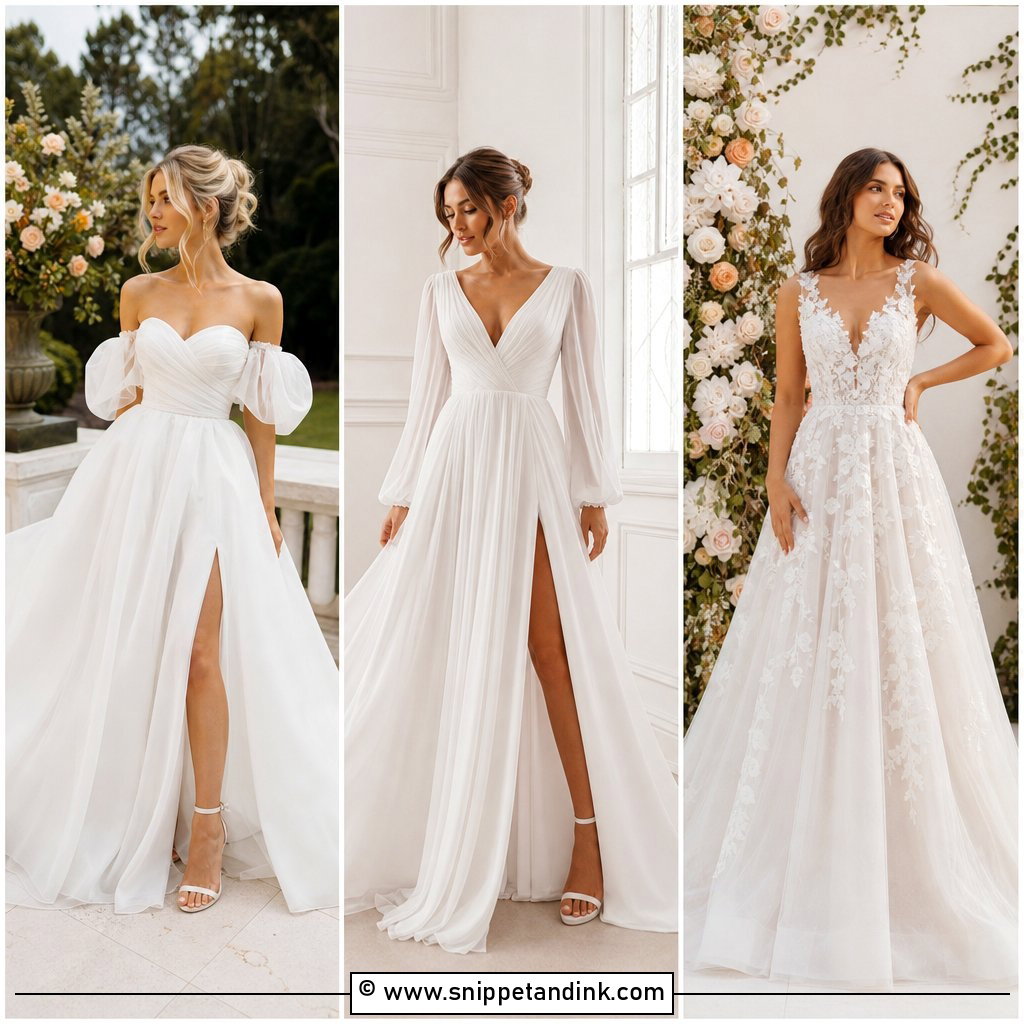
Off-the-shoulder chiffon is romantic, but loose fabric across the arms needs hidden support or you’ll be hitching it up all day. Look for an elastic or boned band inside the neckline. The skirt can fall from a slightly raised waist so nothing presses on the stomach or hips. A short pearl necklace, matching studs and ivory block-heel sandals complete it, with a loose low bun to keep the shoulders clear and a small comb for shine. A sheer chapel veil can come off after the ceremony. Vineyards, gardens and warm resorts suit it.
8. Long-Sleeve Lace Wedding Dress
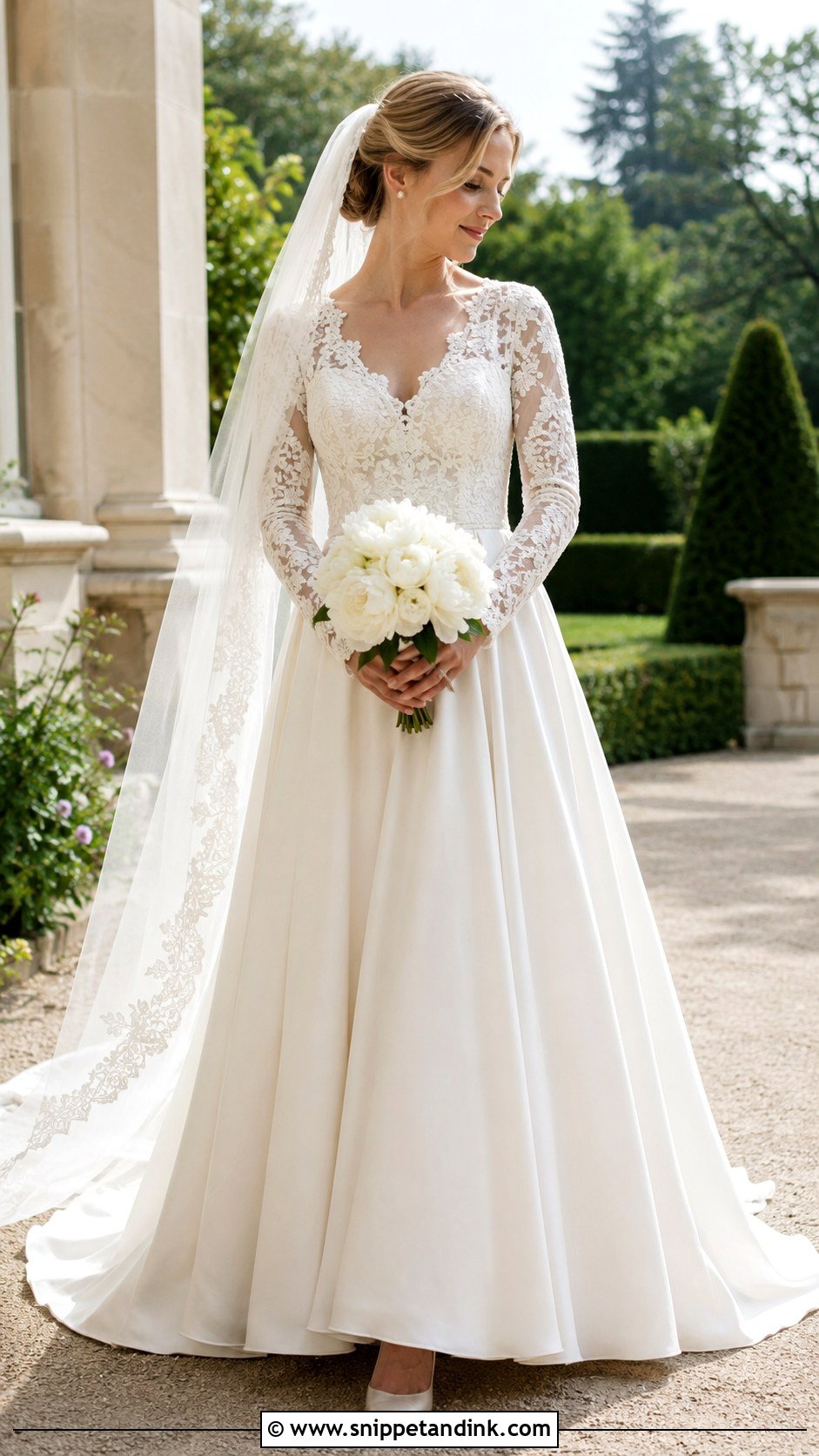
A long-sleeve lace dress can stay loose as long as the lace is light and the sleeves have room. Choose an A-line or column with roomy sheer sleeves, a gently gathered skirt and no rigid boning at the waist. A bateau or shallow V-neckline lets the sleeve pattern lead. Ivory pointed flats, pearl earrings and a satin hair ribbon finish it, with a small bouquet of seasonal white flowers. In cooler weather, a smooth bridal cape sits over the dress better than a coat, which crushes lace sleeves. Autumn and winter venues suit it well.
9. Grecian Draped Wedding Dress
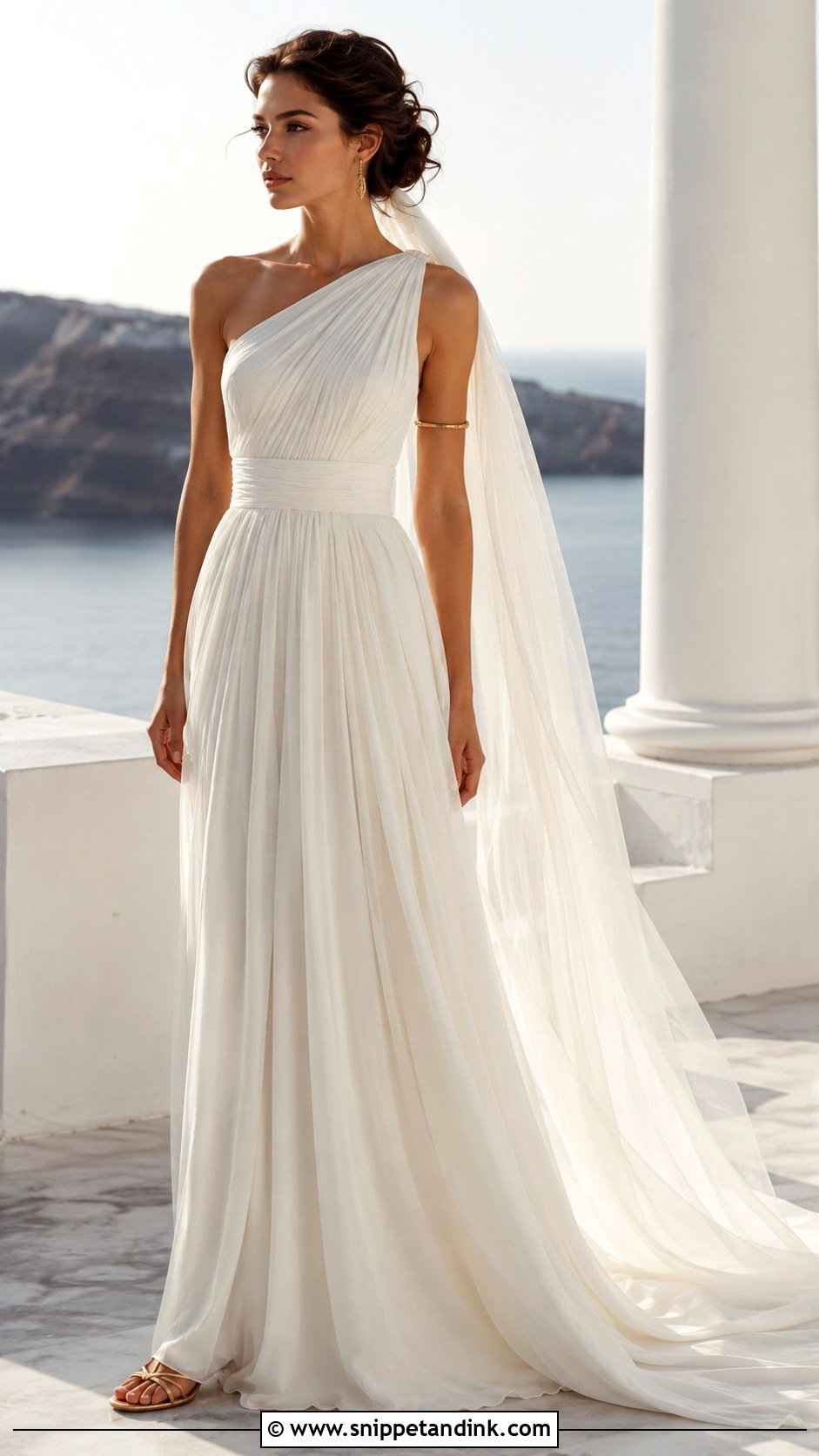
Grecian draping works because the folds are stitched in place, so the dress looks fluid but doesn’t shift around. A floor-length chiffon gown with an asymmetric neckline, a pleated bodice and a loose skirt is the classic version. A soft waistband can define the waist, but it should rest rather than cinch. Slim metallic sandals, small gold earrings and a fine arm cuff suit it, with a low twisted updo and a few loose pieces. I’d pair it with a light cape veil instead of a decorated headpiece. One-shoulder necklines need a test: lift your arm fully and check the bodice stays put.
10. Loose Tea-Length Wedding Dress
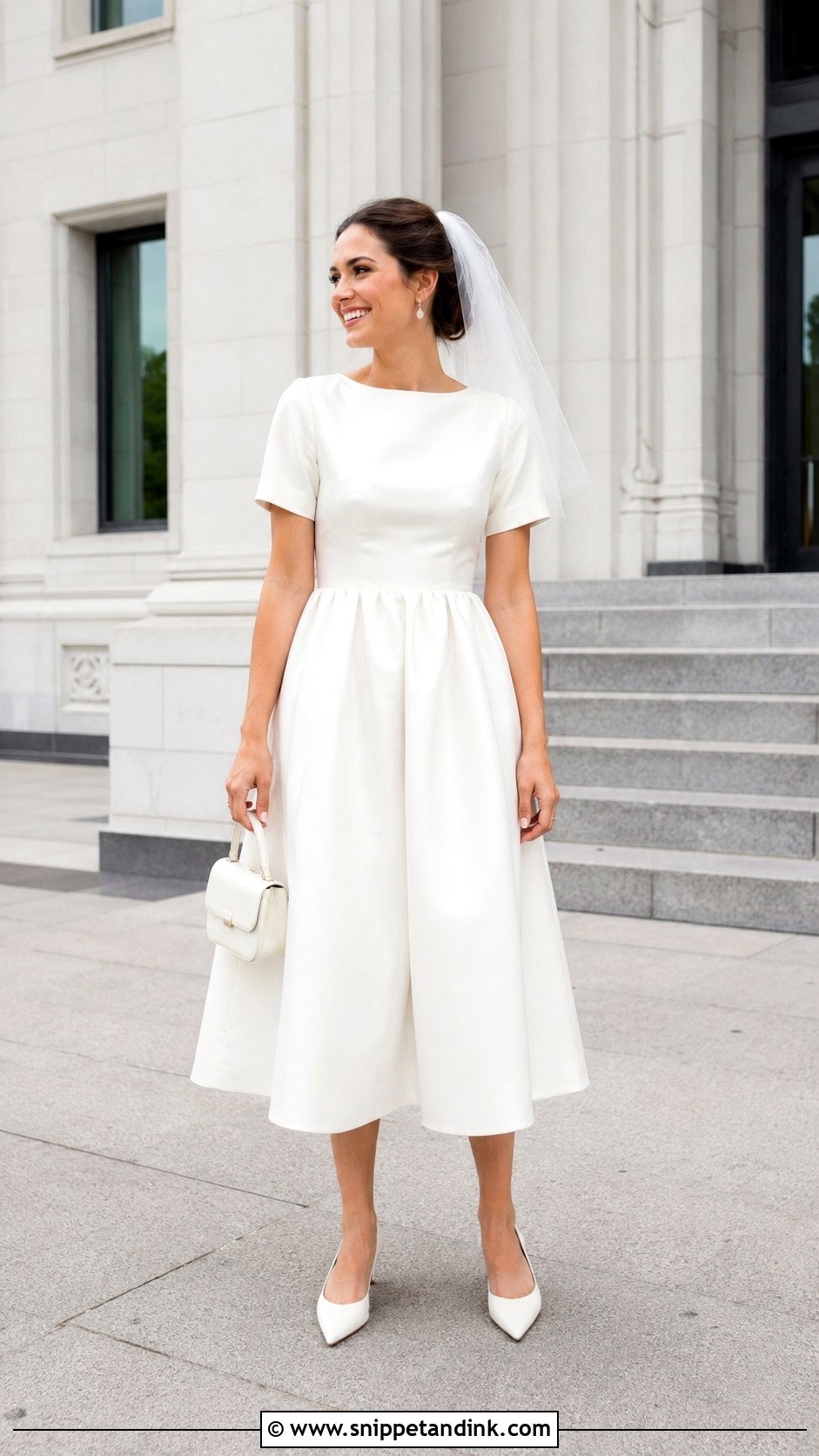
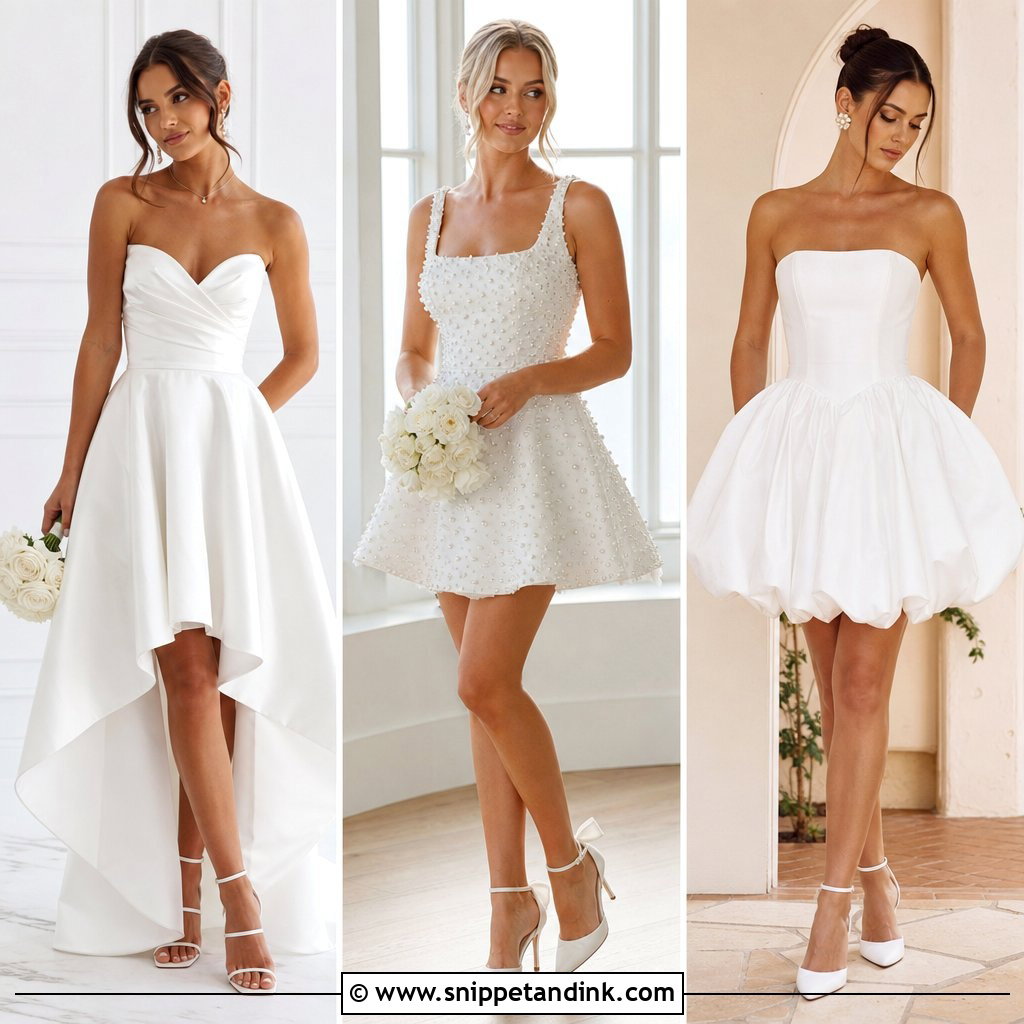
Tea length lets you move freely and skips the train altogether. Look for a loose A-line that ends between the knee and ankle, with short sleeves, a soft gathered waist and a smooth lining. Your shoes are now on show all day, so pick them carefully: pointed kitten heels, embellished flats or simple slingbacks all work. Pearl earrings, a short veil and a compact top-handle bag complete it, with a curled bob or low ponytail. On a cool spring morning, add a light cropped cardigan. Courthouse ceremonies and brunch receptions suit it.
11. Cape Sleeve Wedding Dress
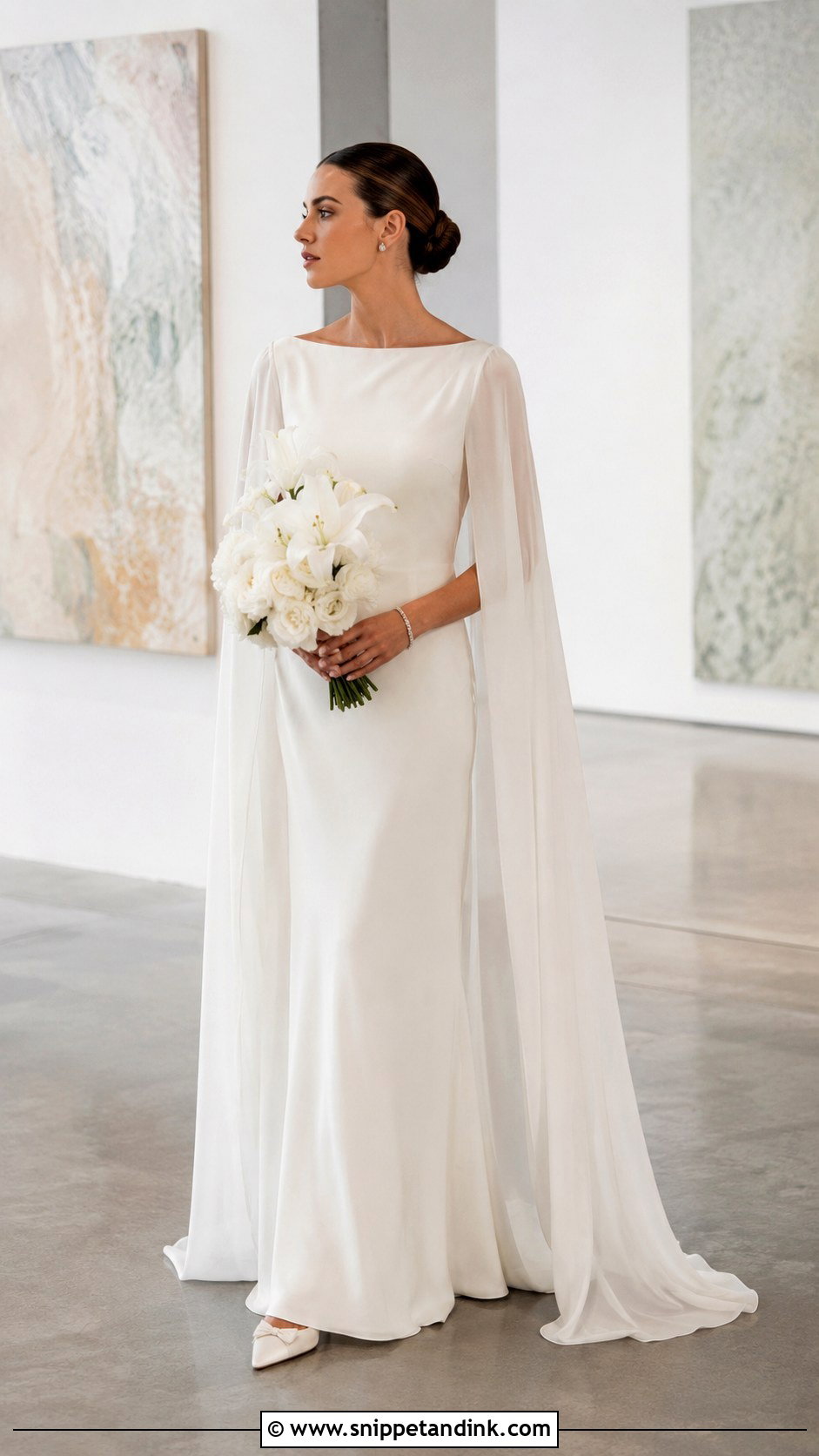
Cape sleeves give arm coverage without any sleeve seams to fit, which makes them comfortable. The sheer panels attach at the shoulder and float behind. On a crepe or chiffon gown with a straight, softly flared shape, the panels should end around the hip or a little lower; longer ones trail into everything. Crystal studs, a narrow bracelet and pointed flats are plenty. A sleek low bun lets the cape frame the shoulders and back. Skip the veil, or pick a very short one so the two don’t tangle. Carry a structured bouquet with white flowers and greenery.
12. Cotton Eyelet Wedding Dress
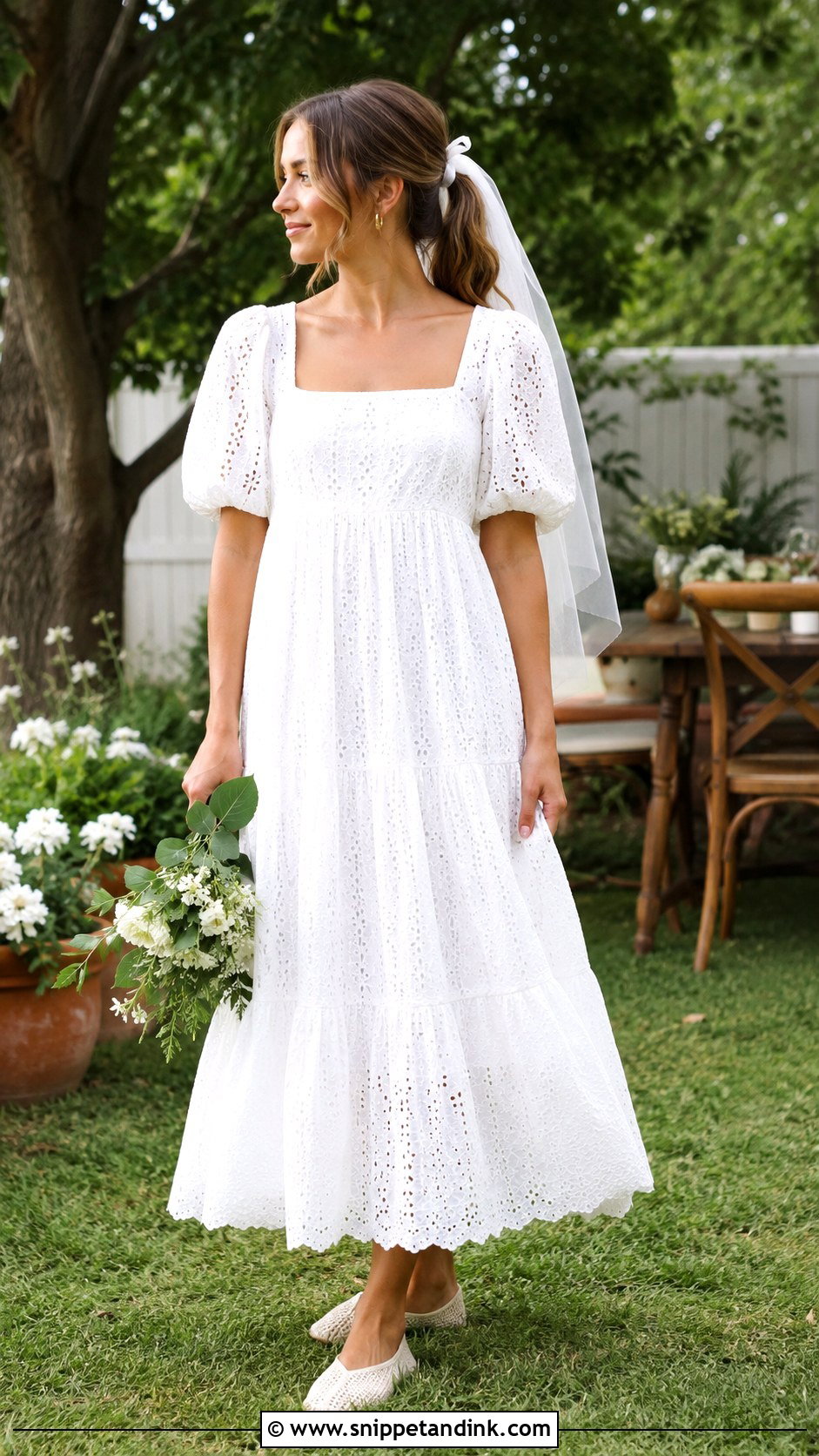
Eyelet is cotton with small embroidered holes, and it’s one of the best fabrics for a hot, informal wedding because it breathes. Cotton eyelet works on a lined maxi with a square neck, puff sleeves and a softly tiered skirt. The lining should stop short of the eyelet border so the pattern still shows at the hem. Woven flats, small gold hoops and a ribbon around a low ponytail keep it fresh, with a shoulder-length tulle veil or a floral comb. Cotton creases, so steam it on the morning and expect gentle wrinkles by evening. It’s also one of the easiest dresses to wear again.
13. High-Neck Boho Wedding Dress
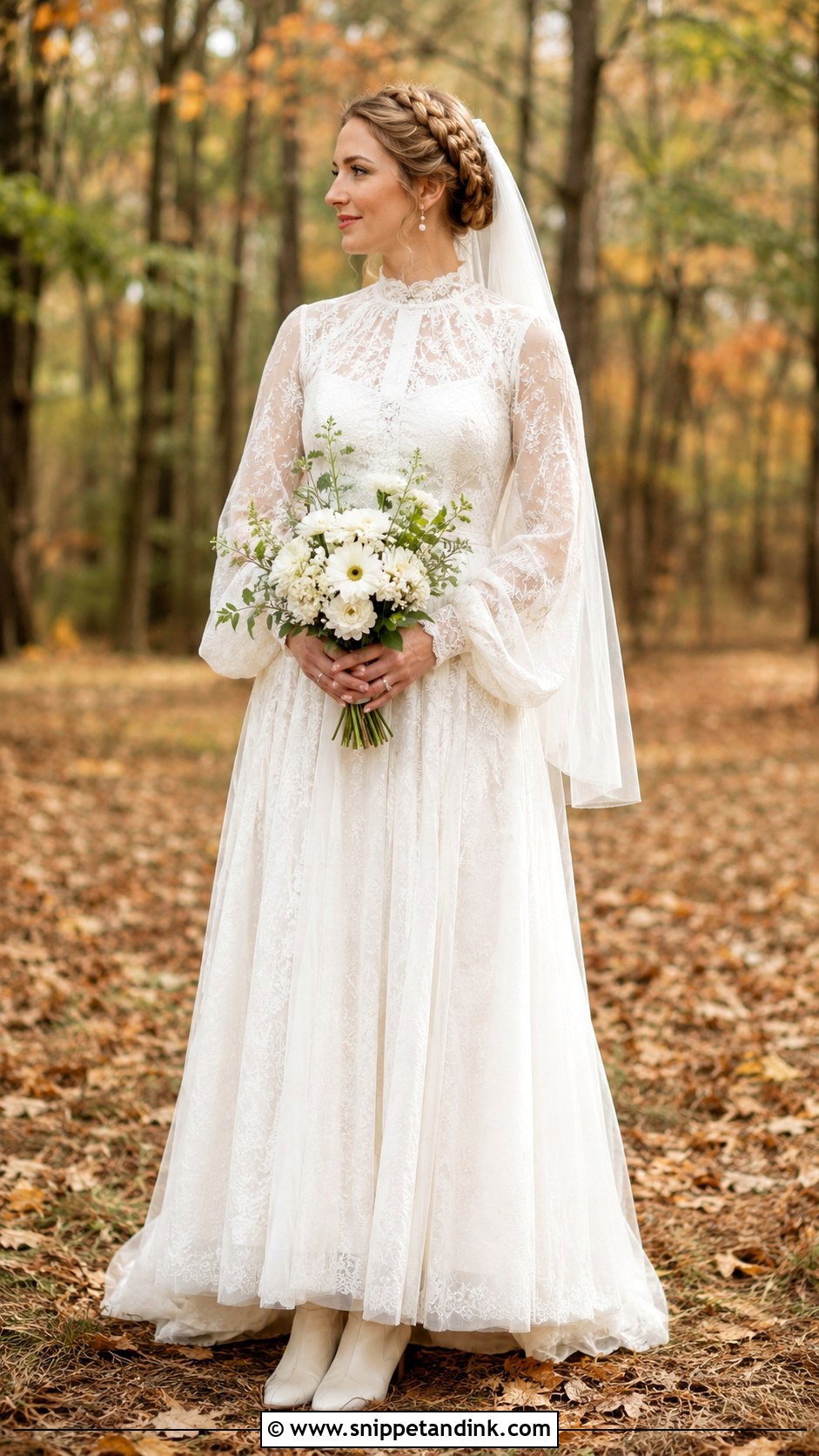
A high neck adds coverage and detail to a dress that’s otherwise relaxed. Soft lace or embroidered chiffon over a lined bodice, roomy sleeves and an A-line skirt falling from the natural waist is the shape. The neckline might have small covered buttons, scalloped trim or a narrow ruffle, so skip the necklace and wear small pearl or gold earrings. Ankle boots, low heels or polished flats depend on the ground. A loose braided bun shows the collar, and a light veil pinned beneath it finishes the look. Check the collar isn’t tight; a high neck that presses feels hot quickly outdoors.
14. Wrap Wedding Dress
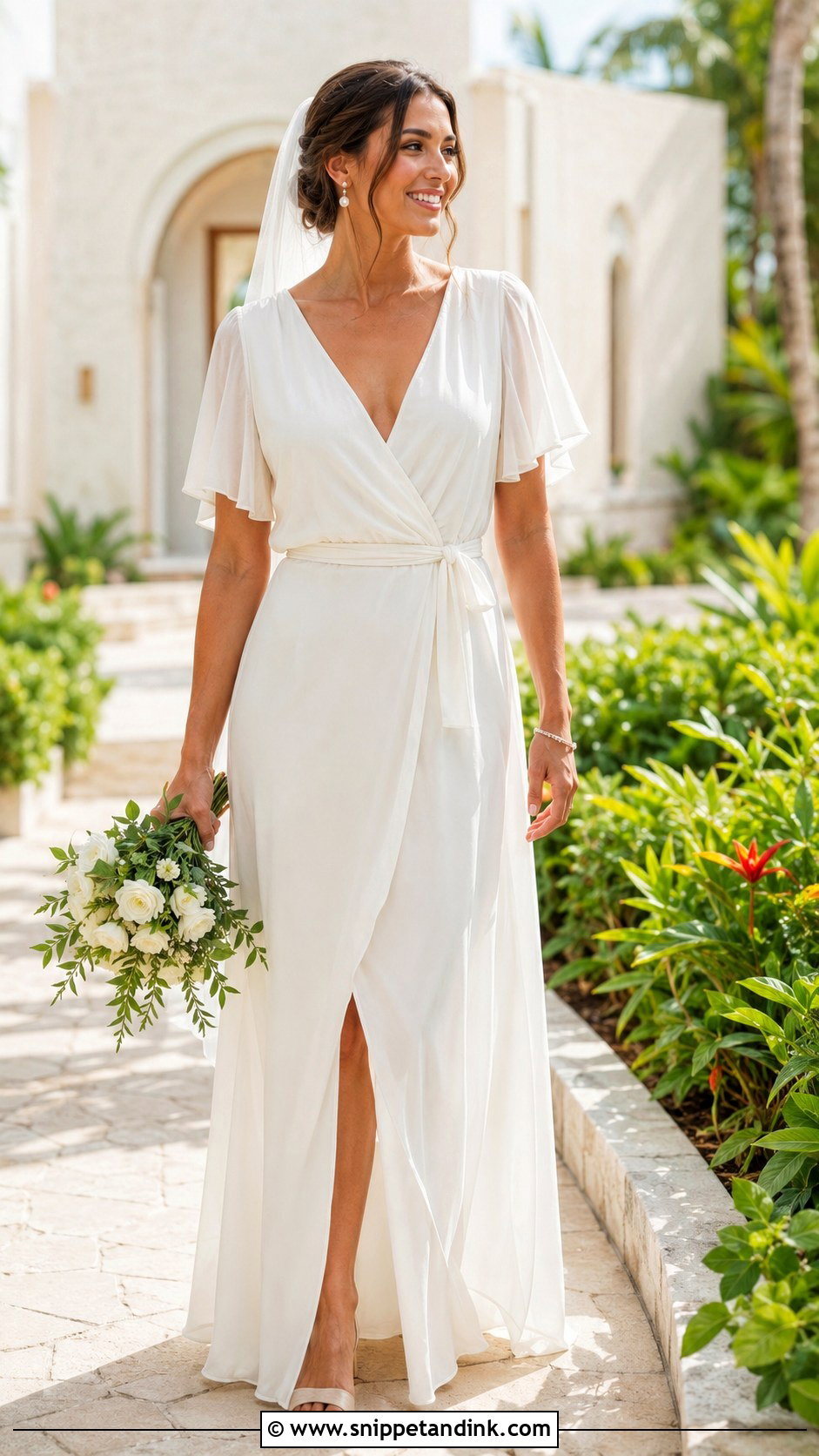
A wrap dress adjusts to you, which is why I suggest it when a bride’s size may change before the wedding. Choose soft crepe or chiffon with a secure internal tie or snap, flutter sleeves and a skirt that overlaps generously. That overlap matters, because a skimpy wrap opens when you sit or walk. Pearl drop earrings, a fine chain bracelet and low block-heel sandals suit it, with a chapel veil for formality. Side-swept waves or a low chignon go with the V-neck. At the alterations stage, ask for a hidden snap at the cross point of the neckline so it can’t gape.

15. Loose Maternity Wedding Dress
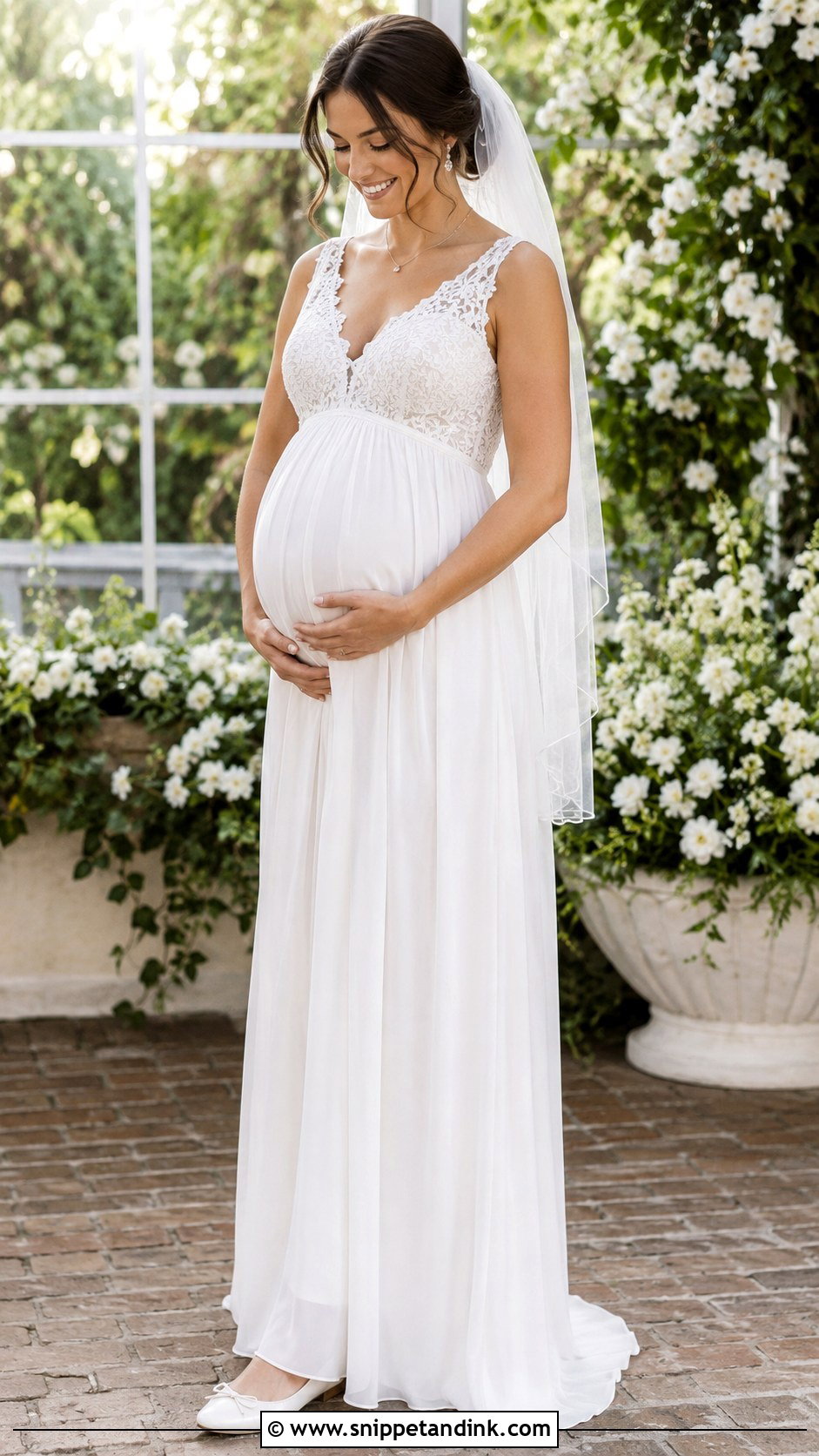
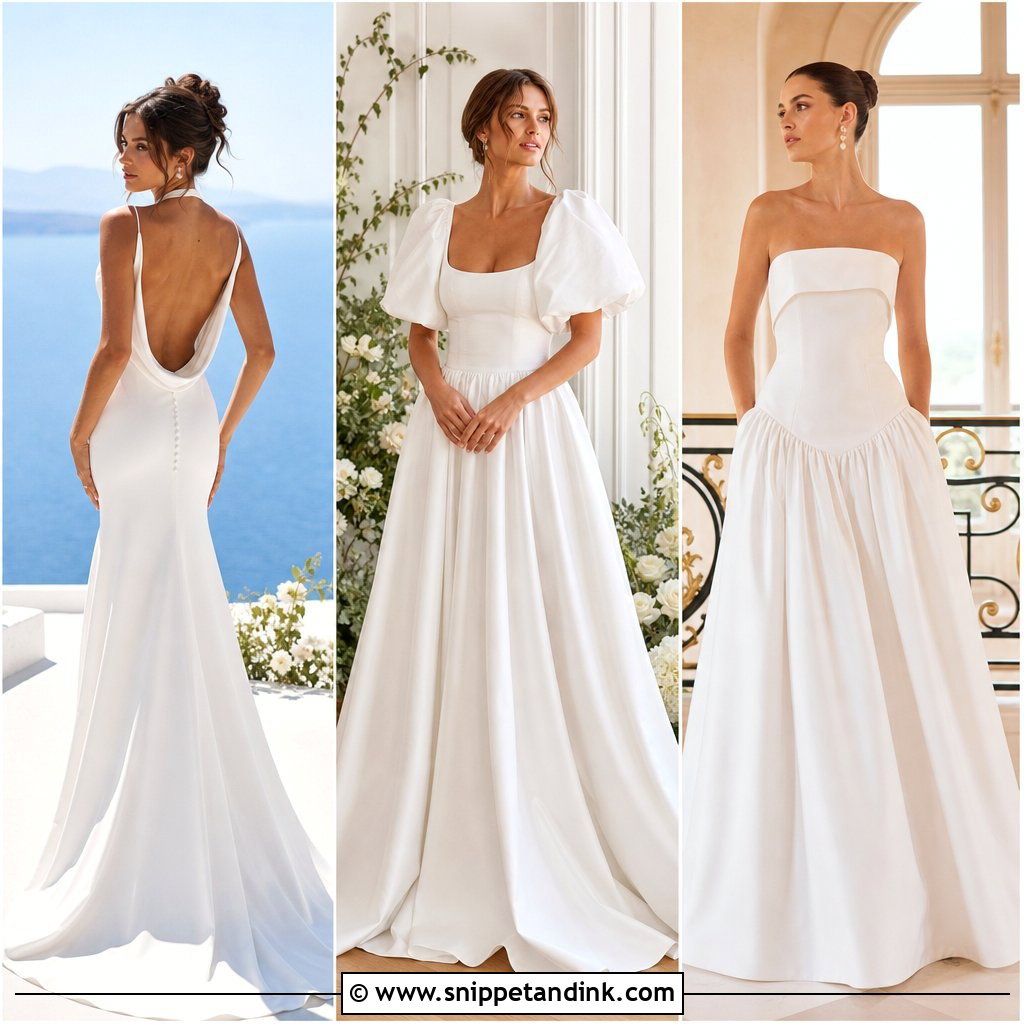
Bodies change week by week in pregnancy, so the dress has to plan for that. An empire waist in chiffon or stretch-lined lace starts below the bust and falls freely over the bump. Flutter sleeves or wide straps help support a fuller bust. Cushioned flats, a fine pendant and light earrings complete it, with a soft updo and a fingertip veil. Avoid unstable shoes, especially on grass or gravel. Book final alterations as late as your seamstress allows, often within the last couple of weeks, and ask whether the side seams can be let out at short notice.
16. Plus-Size Empire Waist Wedding Dress
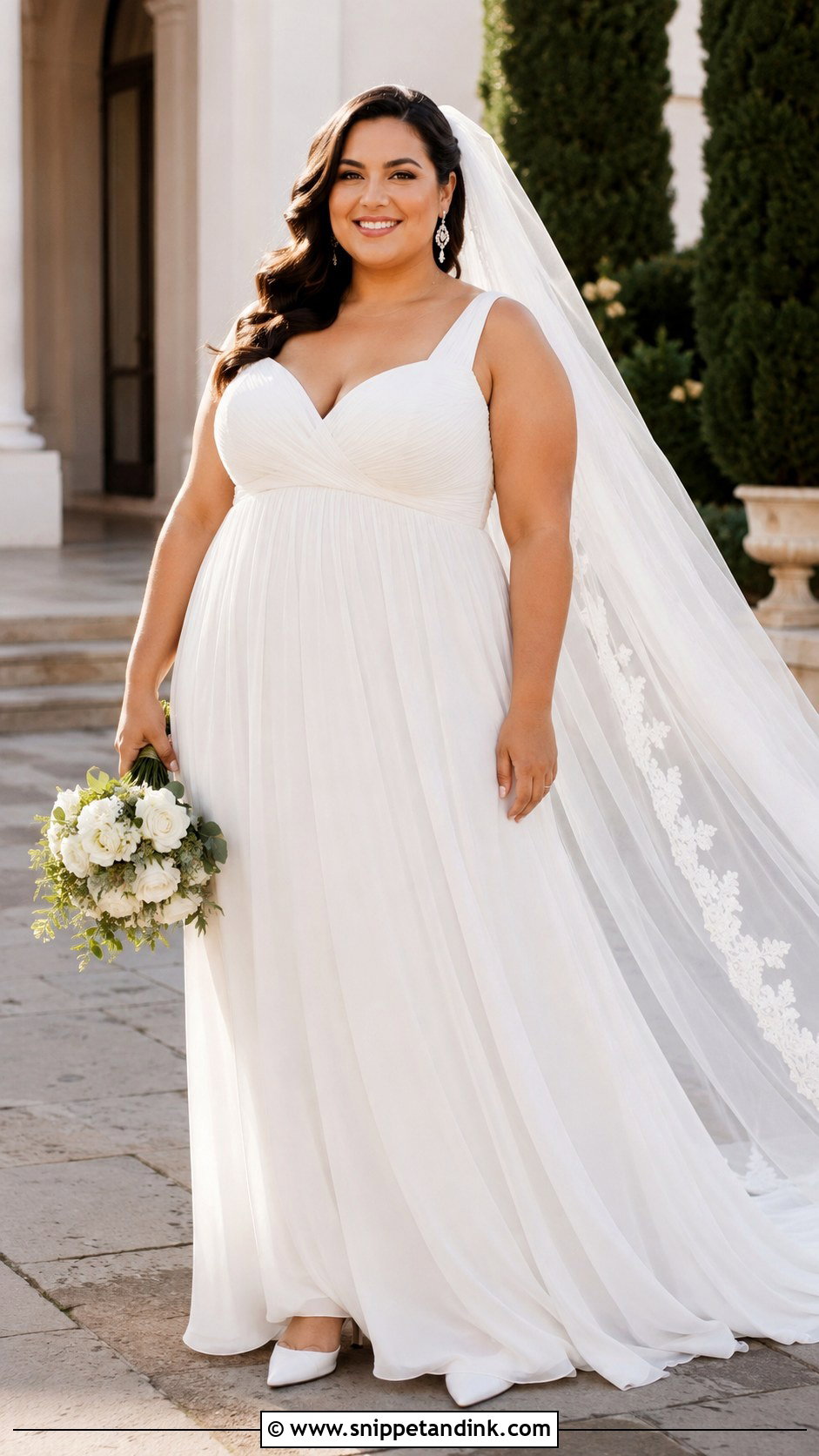
On a plus-size bride, an empire waist only works if the bust fits properly; the rest of the dress hangs from that seam. Look for supportive wide straps, a well-fitted bust and a skirt that falls smoothly from beneath the bodice. Chiffon, matte crepe and lined lace all move well and have enough weight to drape rather than tent. Low block heels or pointed flats, drop earrings and a fingertip veil finish it. A defined hairstyle such as a low bun or side-swept waves balances the skirt. Built-in cups or a bra sewn into the bodice can give real support without any shapewear.
17. Minimalist Crepe Wedding Dress
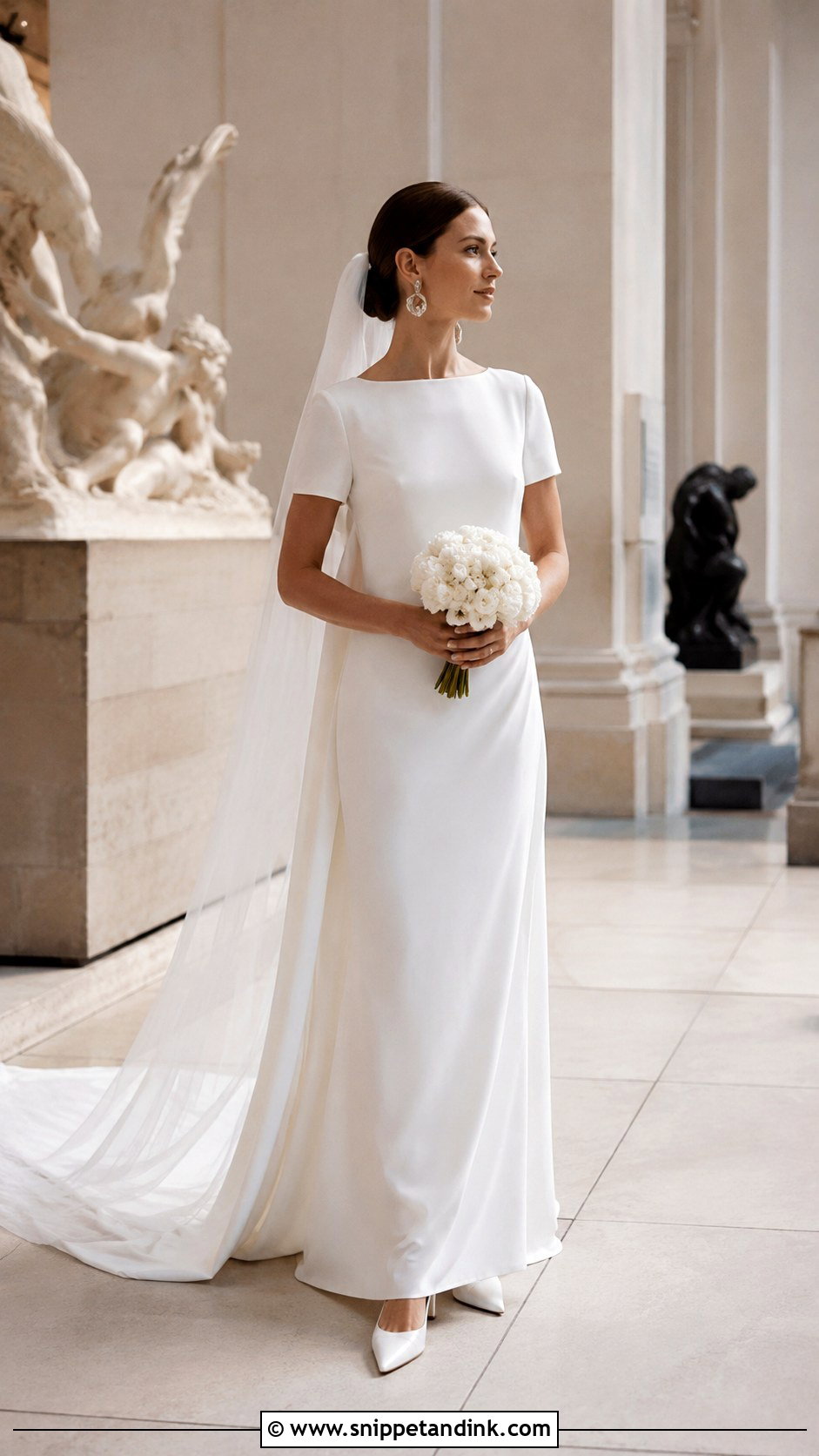
A plain crepe gown looks relaxed only if the fabric has weight. Thin crepe clings and shows every line, while a heavier one skims and falls straight. A loose column or soft A-line with a bateau neckline, short sleeves and a clean floor-length hem is the shape. Sculptural earrings, pointed kitten heels and a compact white bouquet keep it modern, and a long, plain veil adds gentle drama. A center-parted low bun or polished ponytail suits it. Spend your alteration budget on the shoulders, bust and hem, since those are the only places this dress shows its fit.
18. Puff-Sleeve Cottagecore Wedding Dress
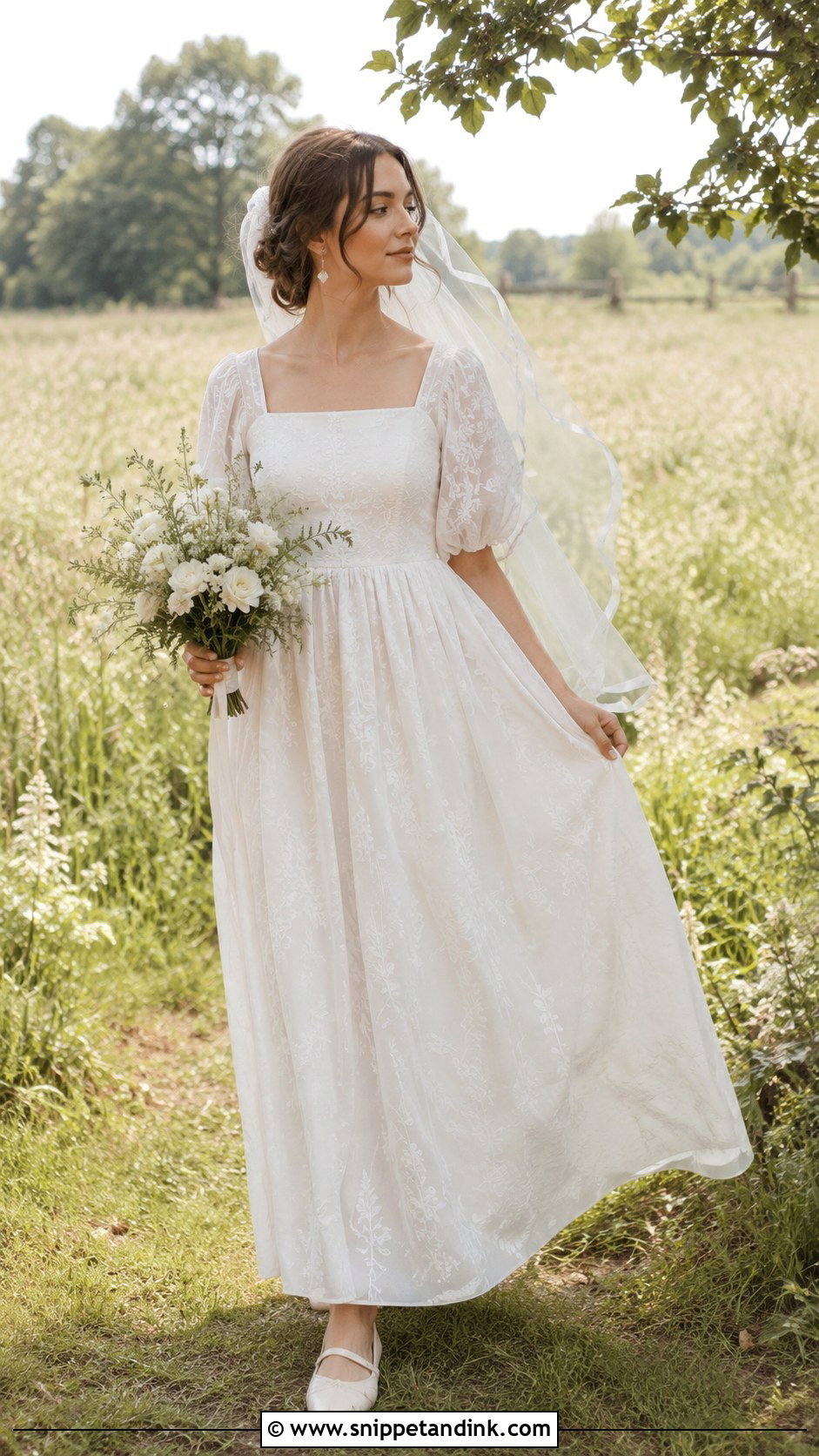
Cottagecore rests on small, homespun details. A loose cottagecore wedding dress usually has a square neck, soft puff sleeves and a gathered skirt from a comfortable waist, with tiny floral embroidery or lace trim. Ivory flats, vintage-style earrings and a ribbon-trimmed veil complete it, plus a loose braided updo and a hand-tied bouquet of white flowers and greenery. Meadows, orchards and backyards suit it. The risk is that it tips into a prairie day dress, so I’d keep the fabric a step up in quality, silk-cotton or fine lawn rather than plain cotton, and keep accessories refined.
19. Loose Wedding Dress With Train
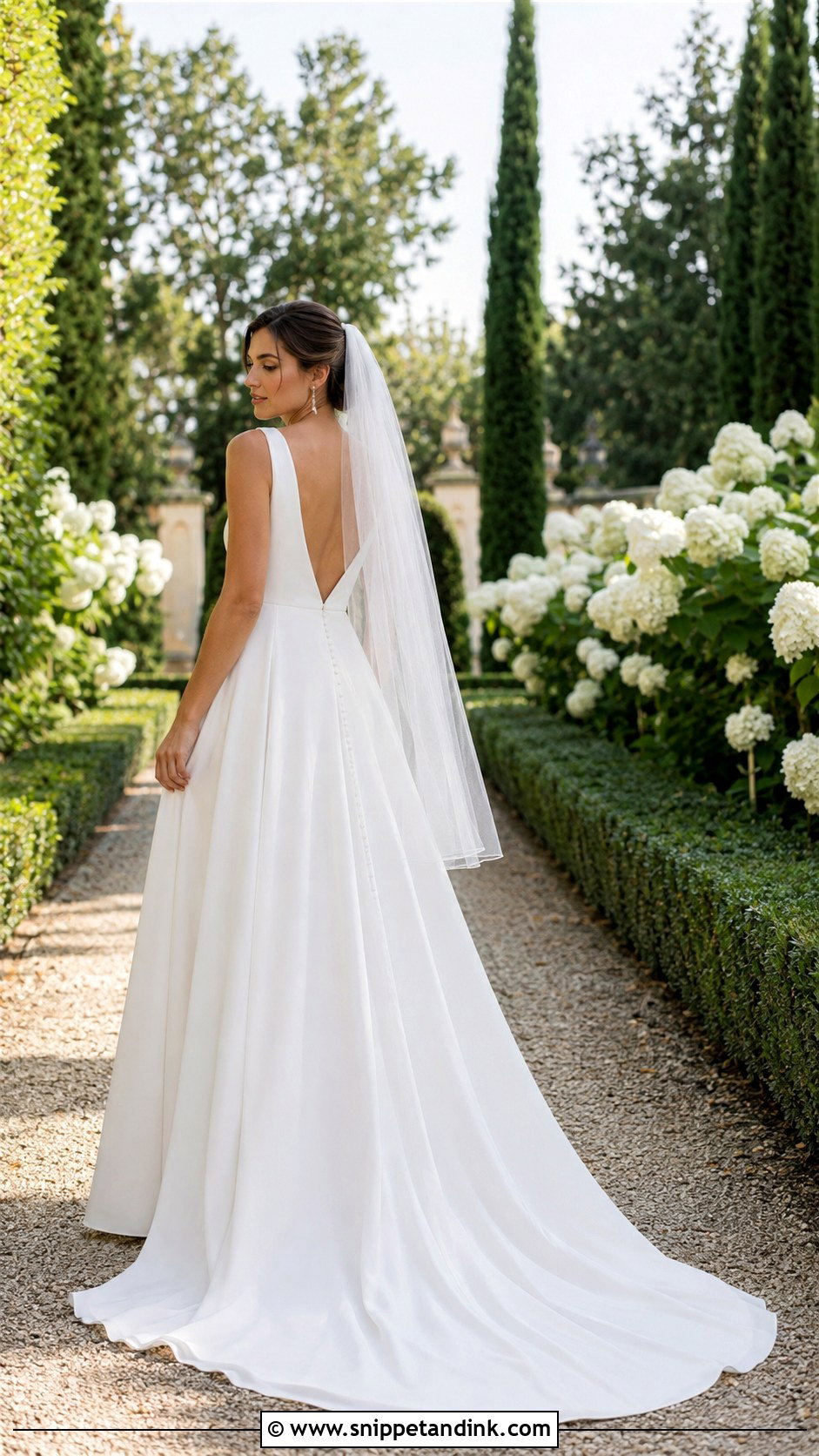
A loose dress can still have a train if you want ceremony drama. On a chiffon or light crepe A-line, a sweep or chapel train moves nicely in photographs without much handling. Pearl earrings, low heels and a sheer veil ending near the train complete it, with a low bun so there aren’t too many flowing parts competing. Ask your seamstress for a discreet bustle. Light fabrics bustle easily with a couple of hooks or a few ribbon loops, but have the person doing it on the day practise once before the wedding.
20. Loose Kaftan Wedding Dress
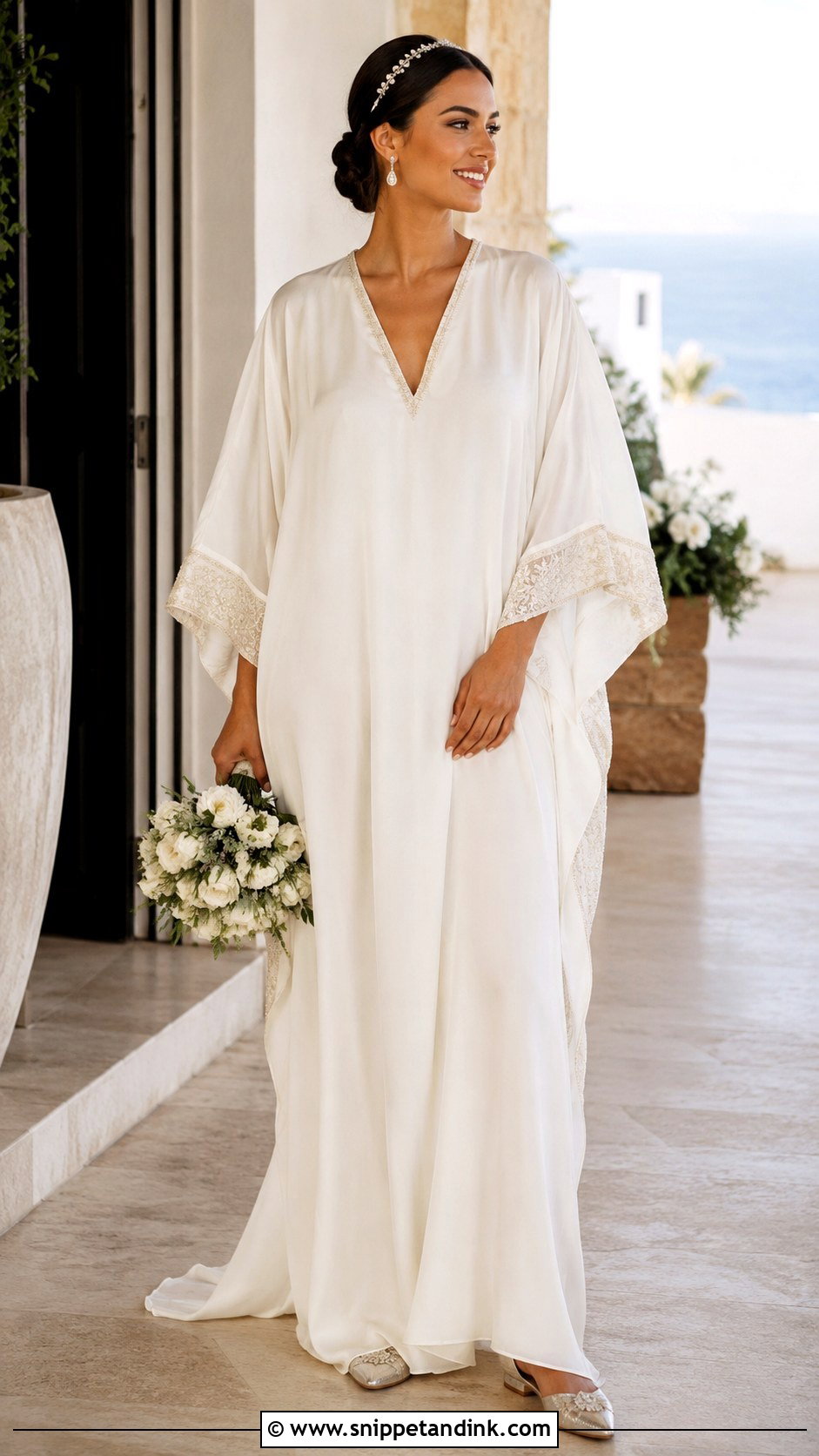
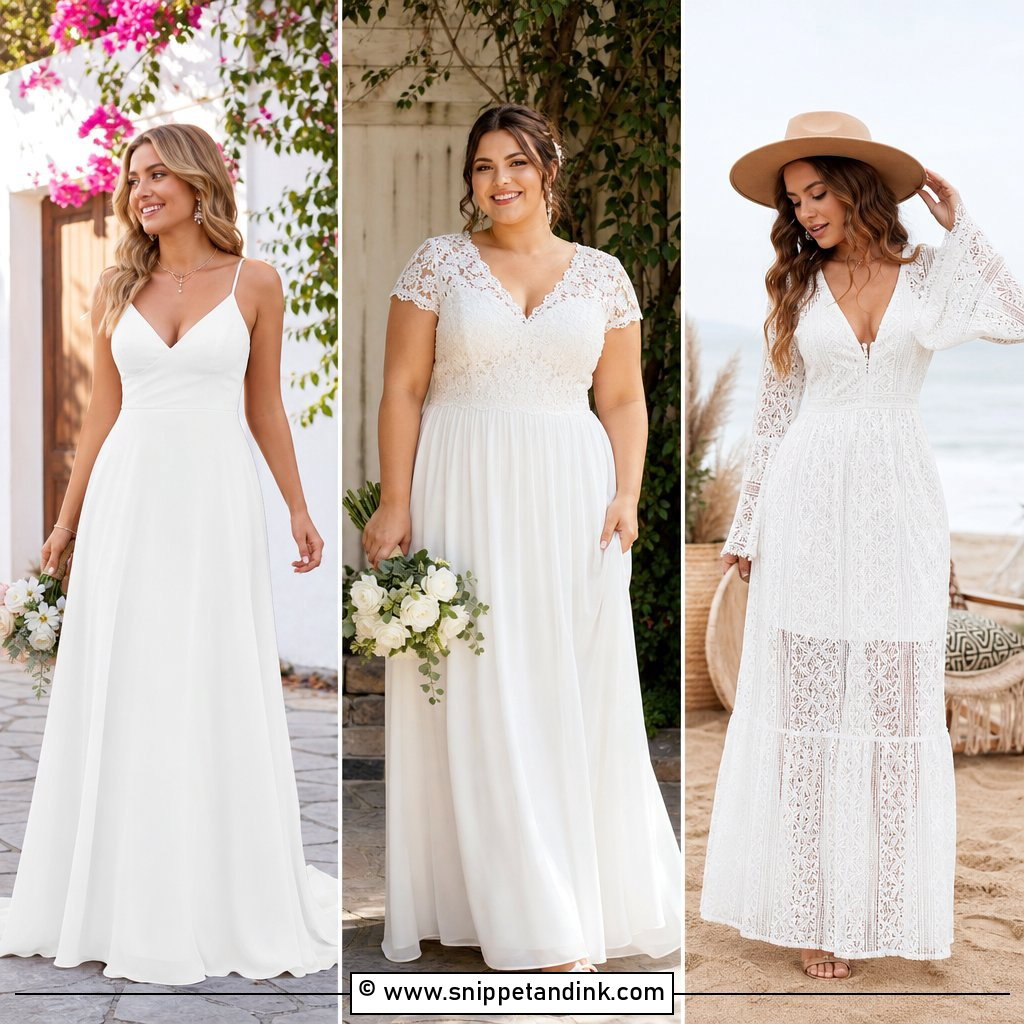
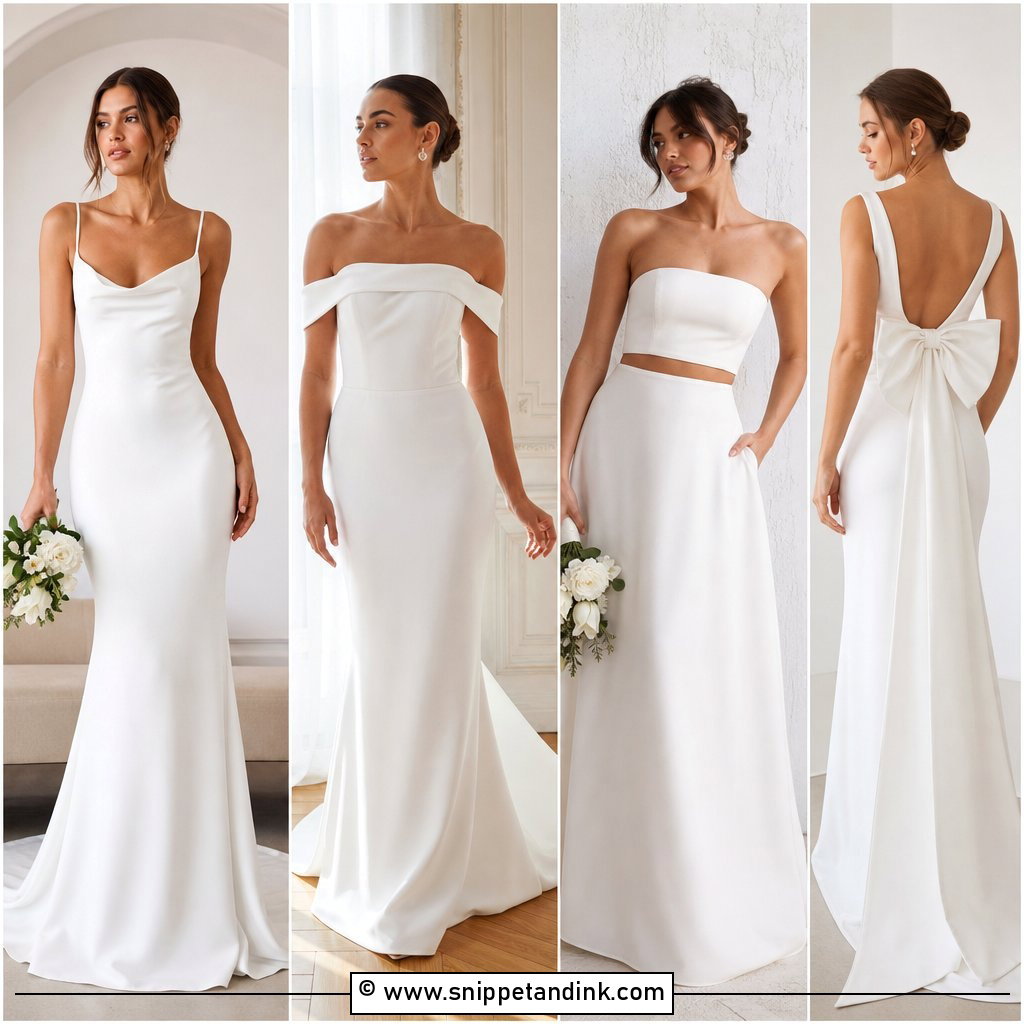
A kaftan gets its formality from fabric and embellishment rather than fit. Choose a floor-length ivory design with a V-neck, wide sleeves and fine beadwork at the neckline or cuffs, with a smooth lining to stop sheerness and help it hang. Metallic flats, drop earrings and a narrow jeweled headband suit it; skip a large necklace so the neckline work shows. A polished low bun or soft waves behind the shoulders keep the sleeves clear. A simple veil can sit beneath the hair, though the kaftan also stands alone. Wide sleeves catch on chair backs, so sit carefully at the head table.
Will Chiffon Turn See-Through at Sunset?
It can. Low sun behind you shines through thin chiffon, crepe and cotton, and your outline shows in every backlit portrait. Before buying, stand with a bright window behind you and have someone photograph you. If the legs show, ask for a fuller lining or wear a slip in a shade close to your skin.
Wind, cling and creases
- Wind: loose skirts lift on beaches and clifftops. A seamstress can sew small drapery weights into the hem without changing how it hangs.
- Static: synthetic chiffon clings in dry air. A light mist of anti-static spray on the lining, tested on a hidden seam first, keeps it falling straight.
- Creases: chiffon and silk crepe recover well with steam; cotton and linen will crease again within hours, and that’s normal.
Travelling with a loose dress
Flowing gowns pack well compared with structured ones. Fold the skirt loosely in tissue in a garment bag and carry it on the plane rather than checking it. On arrival, hang it in a steamy bathroom for an hour, then finish with a handheld steamer held a little away from the fabric, never touching it, especially on satin.
Comfort Gets Built In at the Fittings
A loose gown should let you forget about your dress and still look like the bride in every photograph. Flowing A-lines, empire waists, soft sleeves, relaxed slips and kaftans all give you an alternative to corsets and heavy ball gowns. Weigh your venue, weather, shoes, support and how much you’ll move before you settle on one. Then take alterations seriously: a relaxed dress should drape, not look a size too big. Keep accessories in support of the dress rather than competing with it.
You'll Like These Ideas:






Leave a Reply