
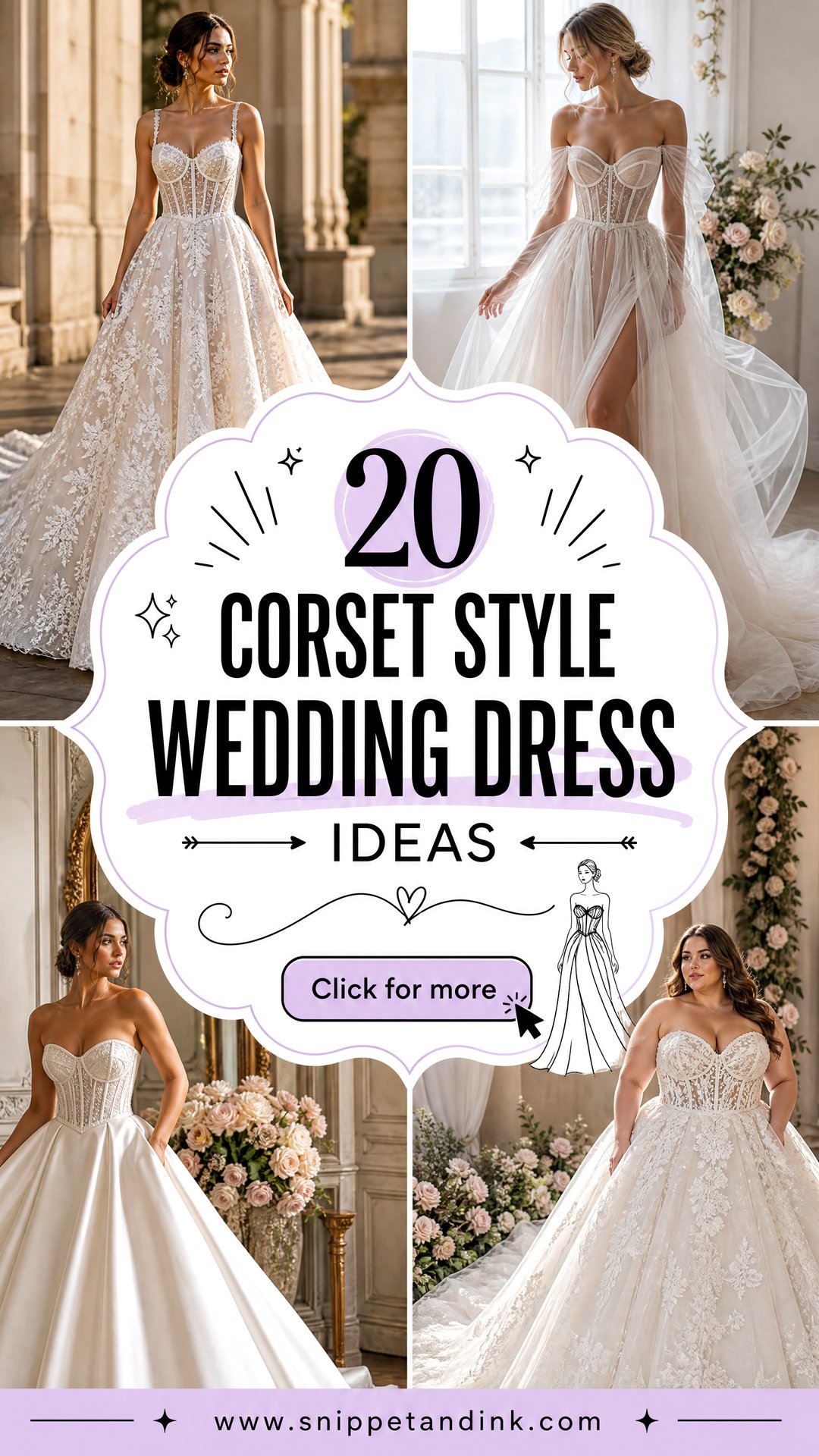
A corset bodice is the most hardworking part of a wedding dress. It holds the gown up, shapes the waist and decides whether you spend the evening comfortable or tugging at your neckline. Modern versions go well beyond lace-up backs: sleek satin, sheer boning, sculpted basque waists, detachable sleeves and full skirts all sit on the same internal frame. I’ve grouped twenty looks here, from classic ball gowns to a mini and a size-inclusive ball gown, and for each I note how I’d accessorize it and what I’d check at the fitting before saying yes.
Is the Structure Real? Reading a Corset Dress from the Inside
Plenty of gowns are sold as corset dresses because of seam lines on the outside. Turn the bodice inside out at the appointment and you’ll know in a minute whether it can actually hold you.
- Boning: look for spiral steel or firm synthetic bones in stitched channels running from the bust to the waist. Thin plastic strips that bend in your fingers will curl after a few hours of body heat.
- Waist stay: a grosgrain band hooked inside at the waist carries the gown’s weight from your waist instead of your bust. Strapless styles need one.
- Cups: sewn-in cups should sit where your bust actually is. If they don’t, they can be moved during alterations.
- Closure: lace-up backs adjust if your weight shifts before the wedding; zips with hooks are quicker to get into but give no flexibility.
I’d also order with your posture in mind. A long rigid bodice suits a bride who stands tall; if you tend to slouch or sit cross-legged, a shorter bodice with a softer drop is kinder after the speeches.
1. Strapless Satin Corset Ball Gown
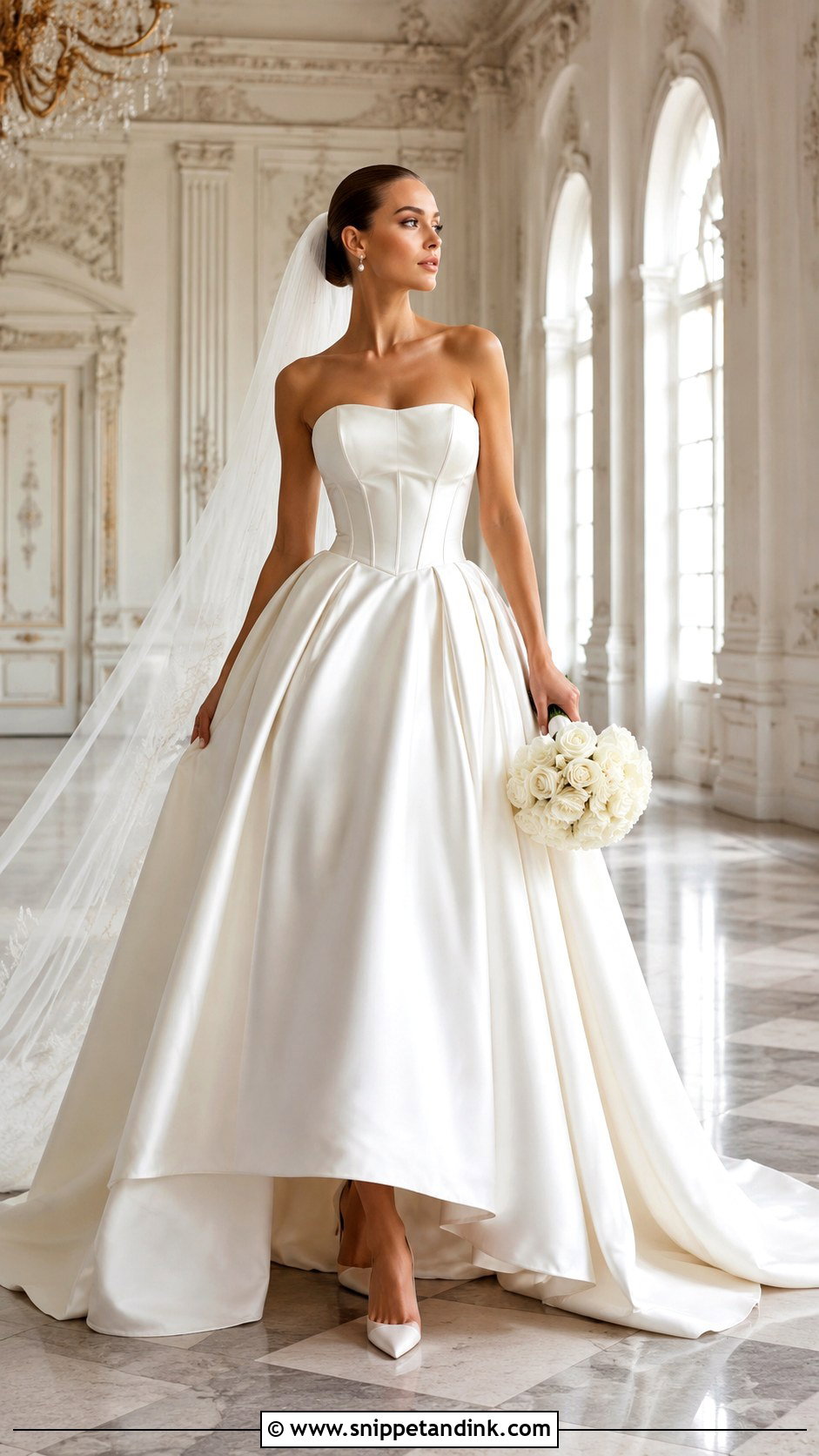
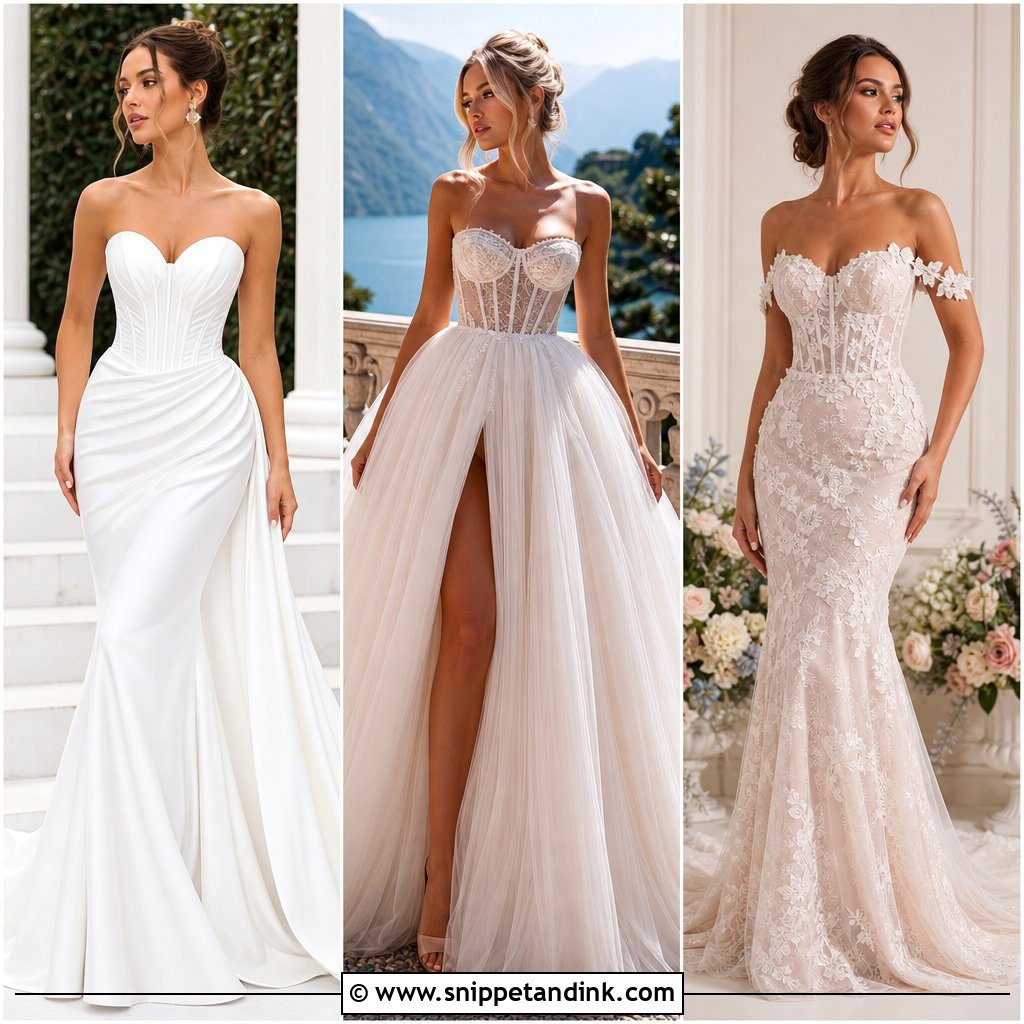
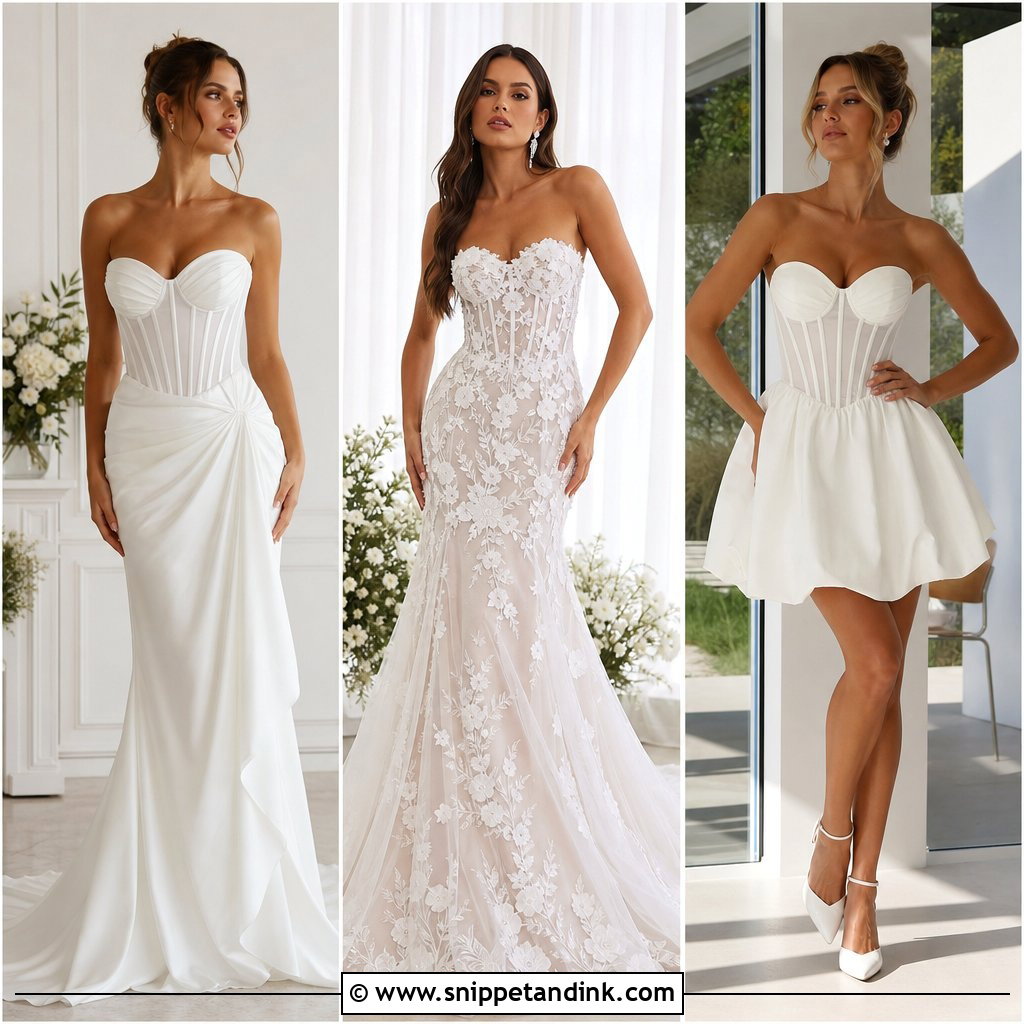
Strapless satin has no decoration to distract from the fit, which is exactly why I like starting brides here. Curved seams and proper boning should carry the bodice, with a soft scoop or sweetheart edge. A full satin skirt keeps the finish smooth. I’d style it with pointed ivory pumps, pearl drops, a raw-edge cathedral veil and a tight posy of white roses, ideally in a ballroom or hotel where the shine reads well under chandeliers. Sit, walk and raise your arms at the fitting; firm around the ribs is right, breathless is not.
2. Lace Corset A-Line Wedding Dress
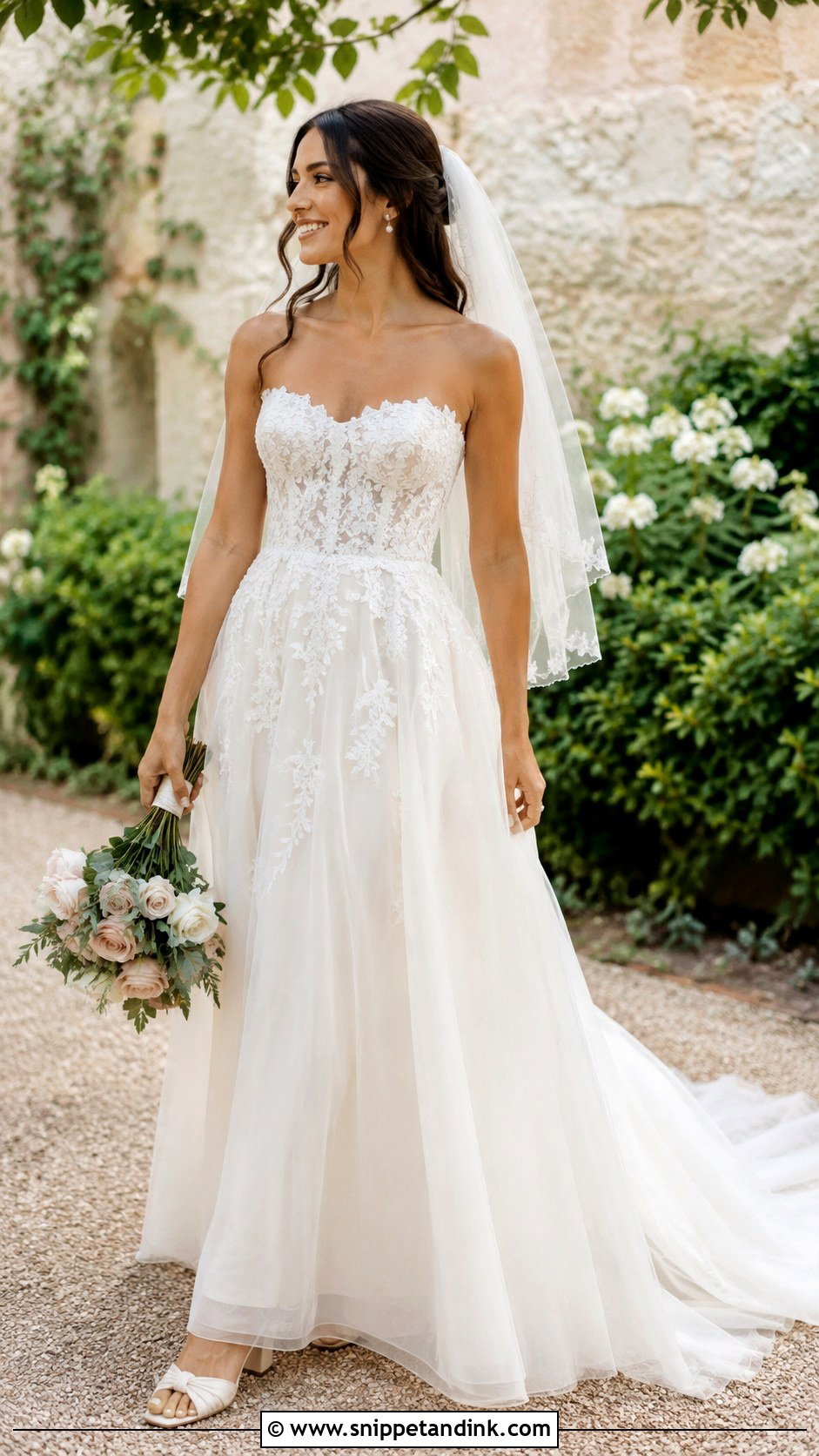
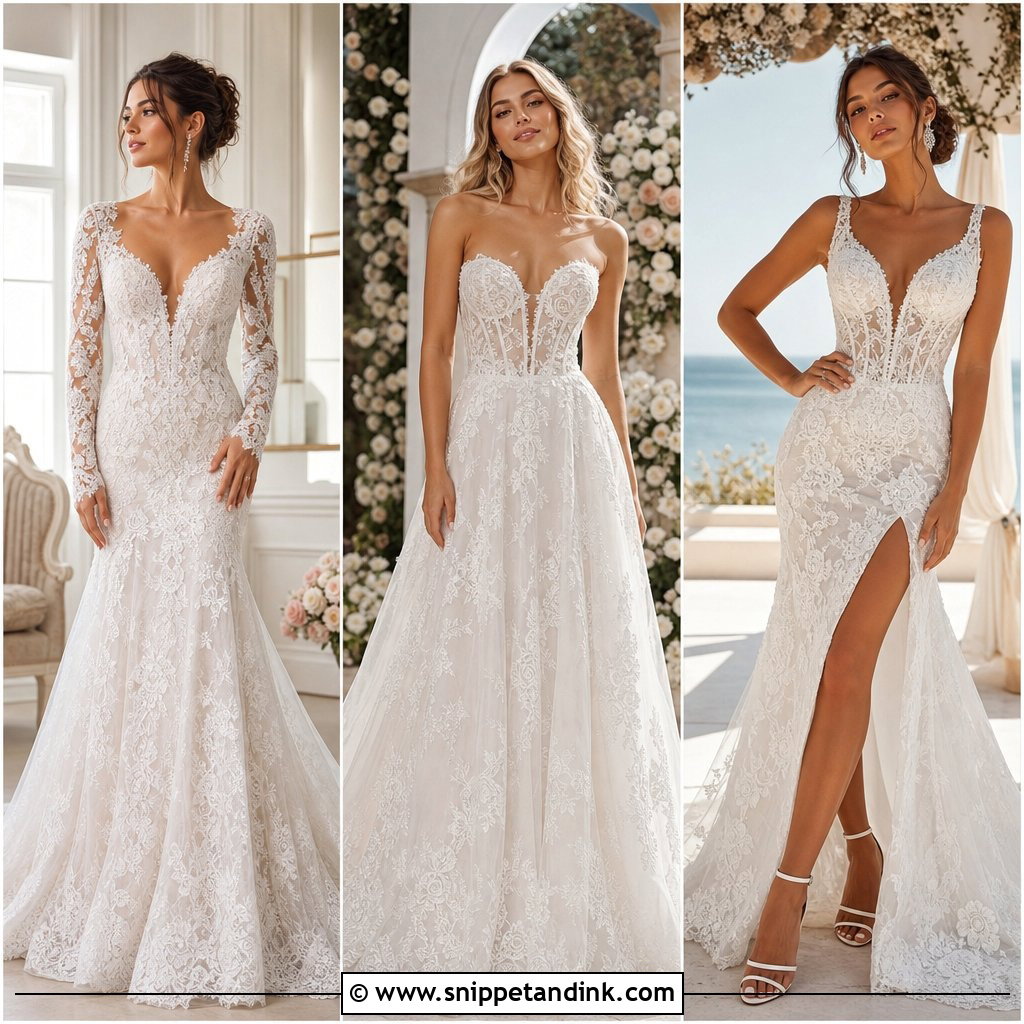
Lace over a corset with an A-line skirt is the easiest version to wear all day, because the skirt falls away from the waist without a ball gown’s weight. Lining color changes the whole mood: nude behind the lace makes the pattern jump, ivory makes it quiet and classic. Low block heels, a fingertip veil, pearl studs and a loose rose-and-greenery bouquet suit garden and estate ceremonies. Where the lace crosses the corset seams, I check that the motifs are mirrored left and right across the bust. Lopsided placement is surprisingly common and very visible in front-on photos.
3. Sheer Boned Corset Tulle Wedding Dress
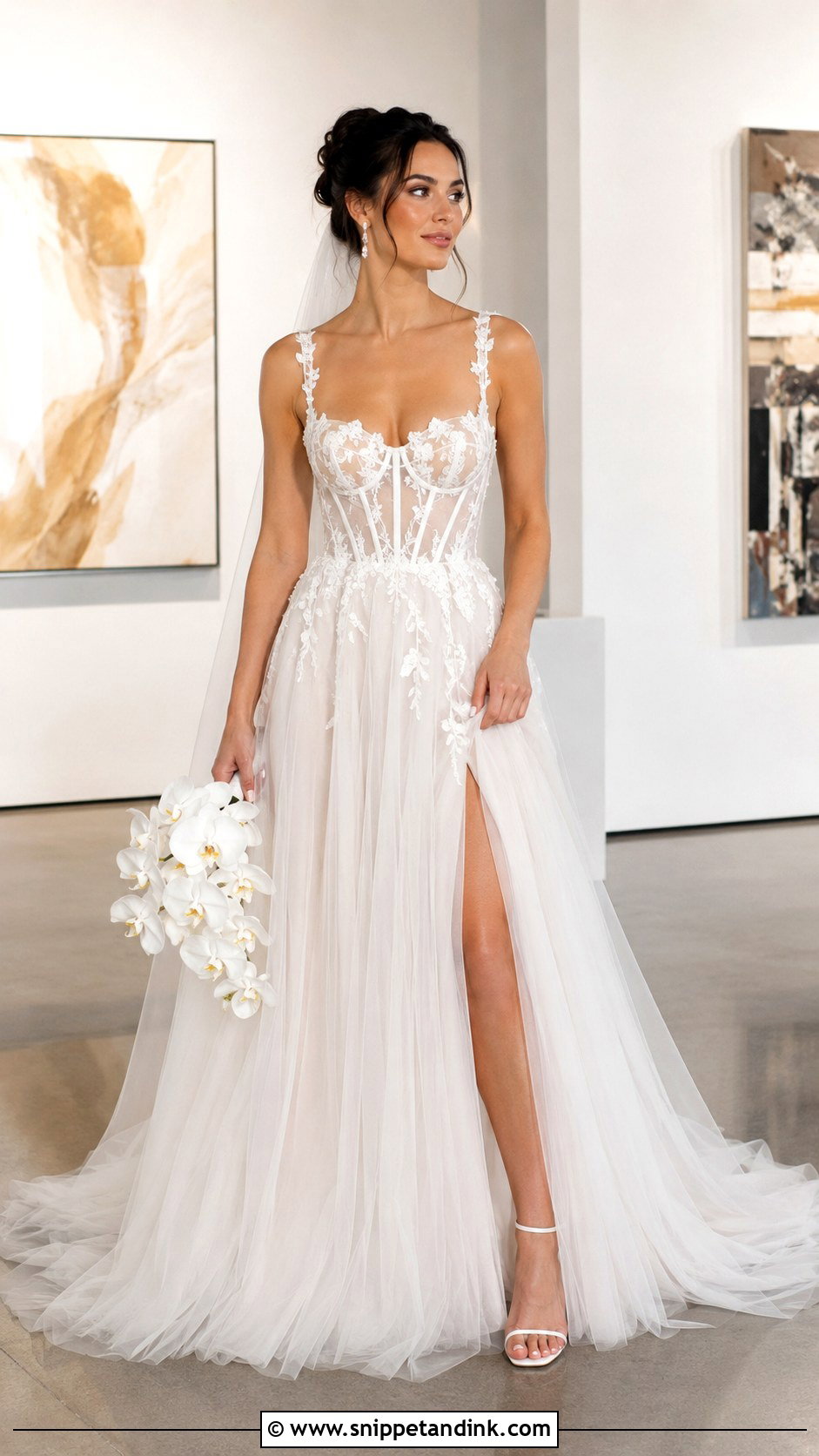
Visible boning under sheer tulle is the fashion-forward option, and it lives or dies on the lining. Placed appliqués and built-in cups keep it bridal rather than lingerie-like. Layers of soft ivory tulle float below it. I’d go with barely-there sandals, crystal earrings, a simple tulle veil and white orchids, in a gallery, loft or bright outdoor setting. Ask whether the bodice can be fully or partly lined if you want more coverage. Then look closely at the neckline and underarms, since gaps there are the first thing a sheer bodice gives away.
4. Basque Waist Corset Ball Gown
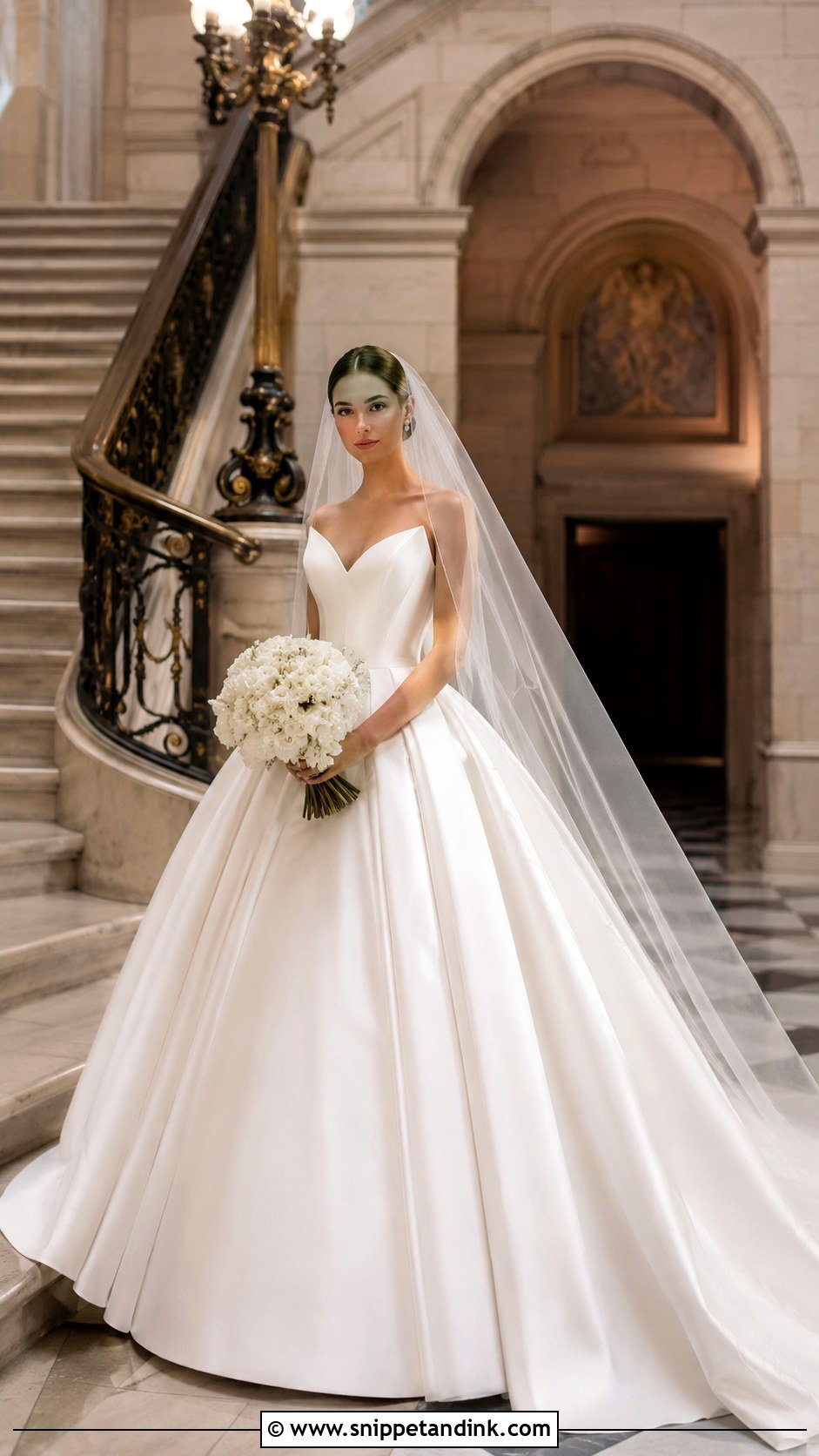
The pointed waist pulls the eye downward and lengthens the torso before the skirt opens out. In plain satin or Mikado it looks surprisingly modern. I keep everything else tidy: closed-toe pumps, a long veil, small studs, a structured white bouquet and a tucked chignon. Grand staircases and historic rooms suit it. Point length should follow your torso; a petite bride usually looks better with a shallower point, a tall bride can carry a deep one. Get measured from underbust to natural waist so the point lands centered and flat.
5. Off-the-Shoulder Corset Wedding Dress
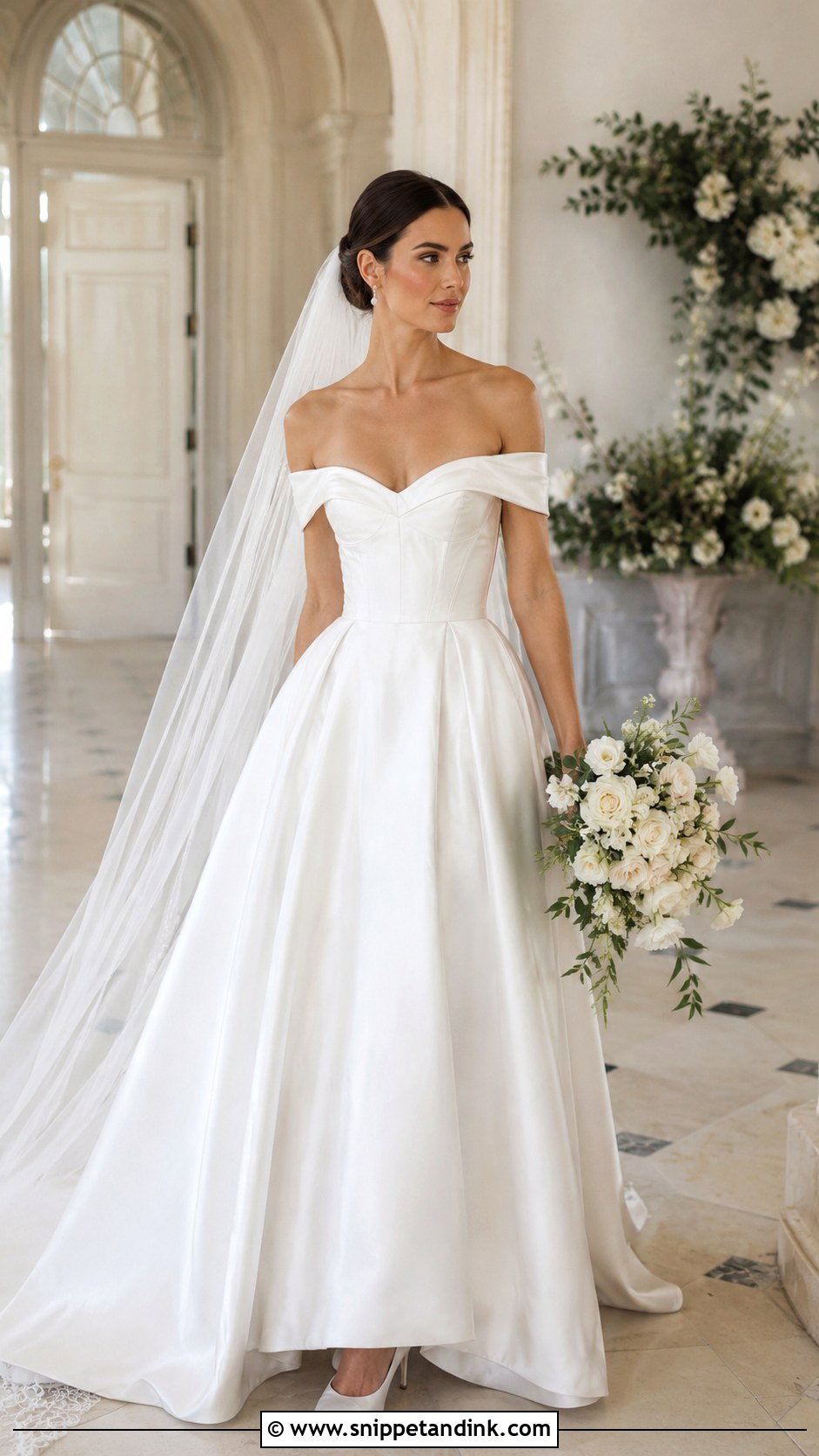
Draped satin bands across the upper arms give a sculpted neckline; lace sleeves or tulle straps give a lighter one. A full A-line skirt keeps it classic, a fitted skirt sharpens it. I’d use a low bun, a bare neck or short necklace, pearl earrings and pointed satin heels, with the veil attached under the hair so it doesn’t cover the shoulders. Before you buy, try a hug and a dance hold. Fixed off-shoulder bands stop your arms at about chest height, and you will feel that restriction at the reception.
6. Sweetheart Corset Mermaid Wedding Dress
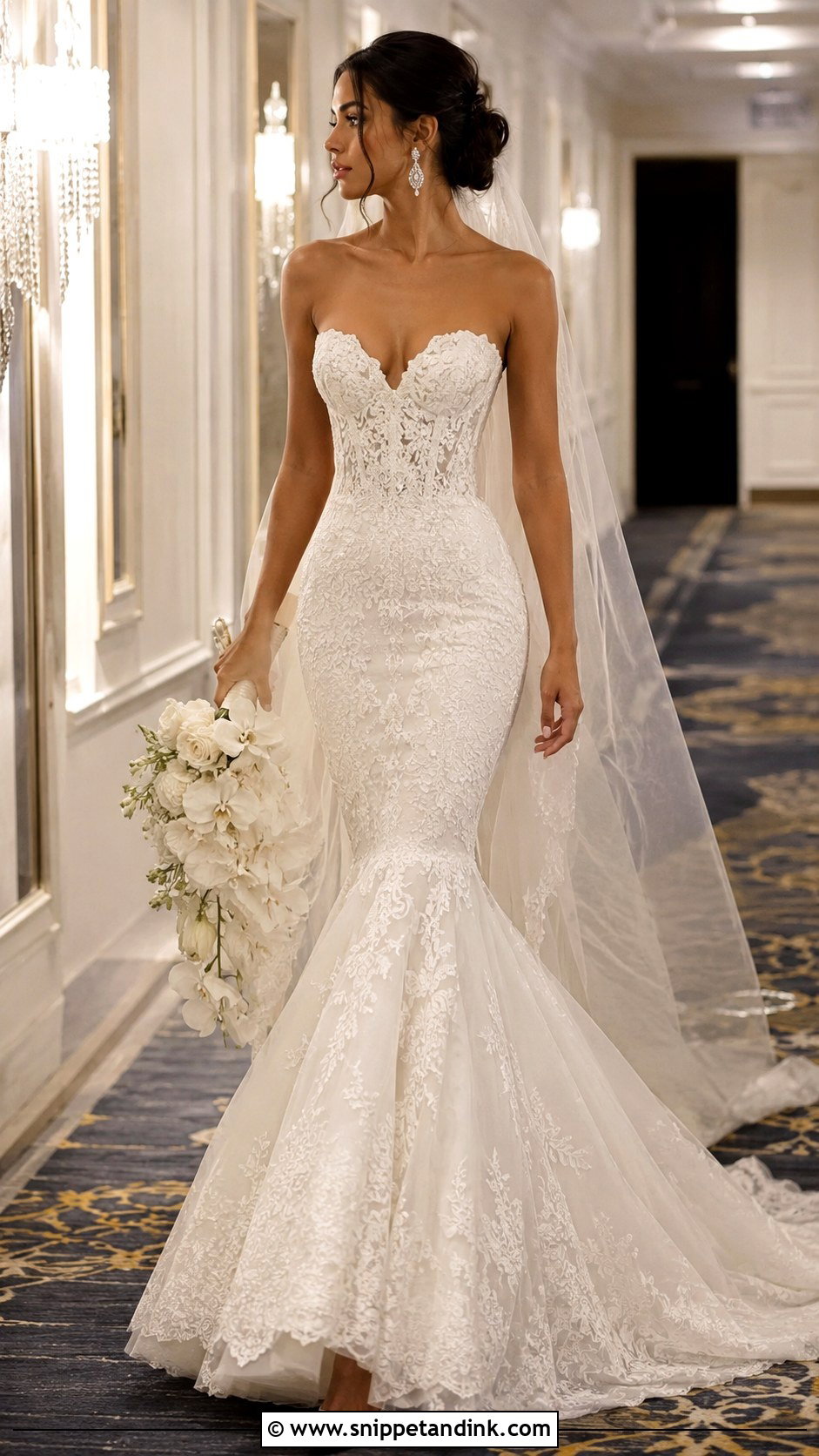
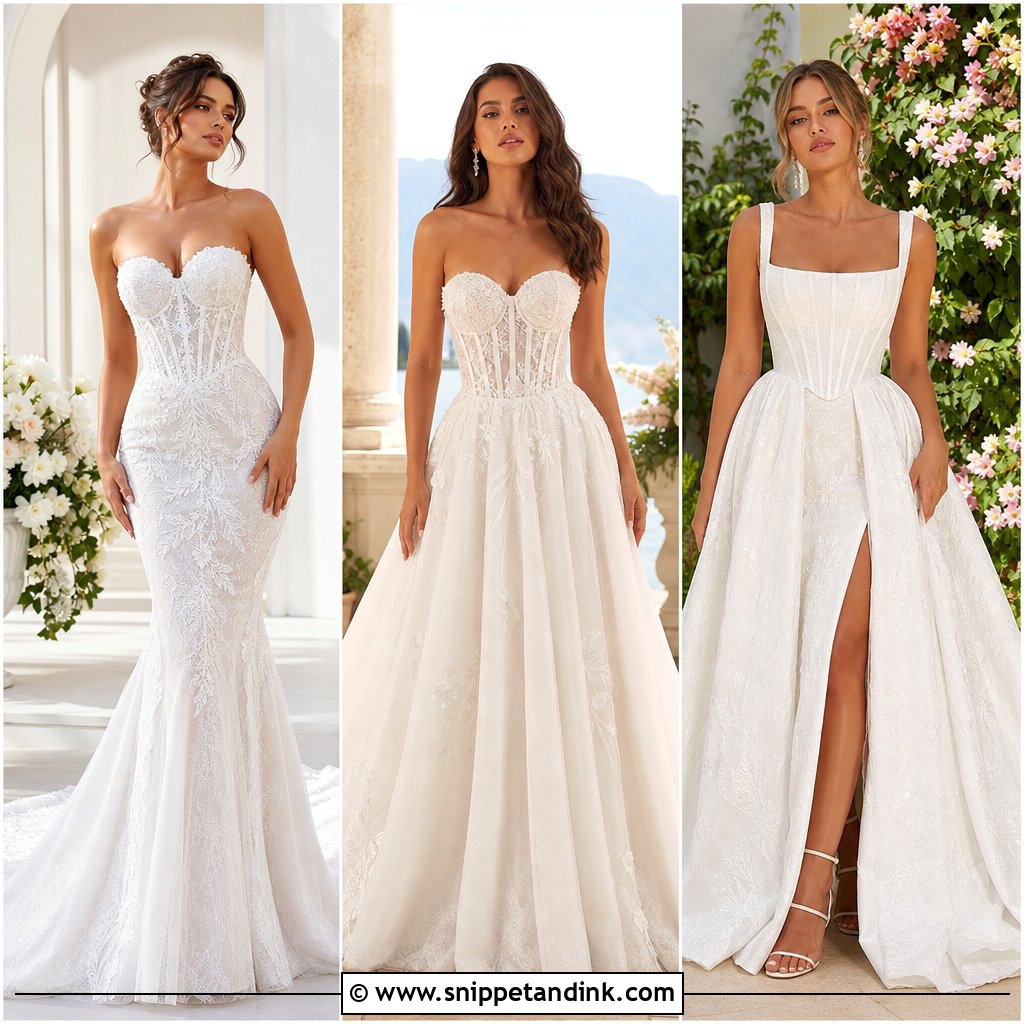
A sweetheart corset on a mermaid shape gives the most defined silhouette here, fitted through the hips and flaring near the knee. Satin reads sleek, lace adds texture. Crystal drops, a narrow chapel veil, pointed heels and a cascading bouquet balance the long line, with a side-parted updo or polished waves. The flare point matters most. Set too low, it shortens your stride to tiny steps; I’d rather see it at or just above the knee. Sit and climb a step at every fitting, and ask about a stretch lining if the skirt grips.
7. Square Neck Corset A-Line Wedding Dress
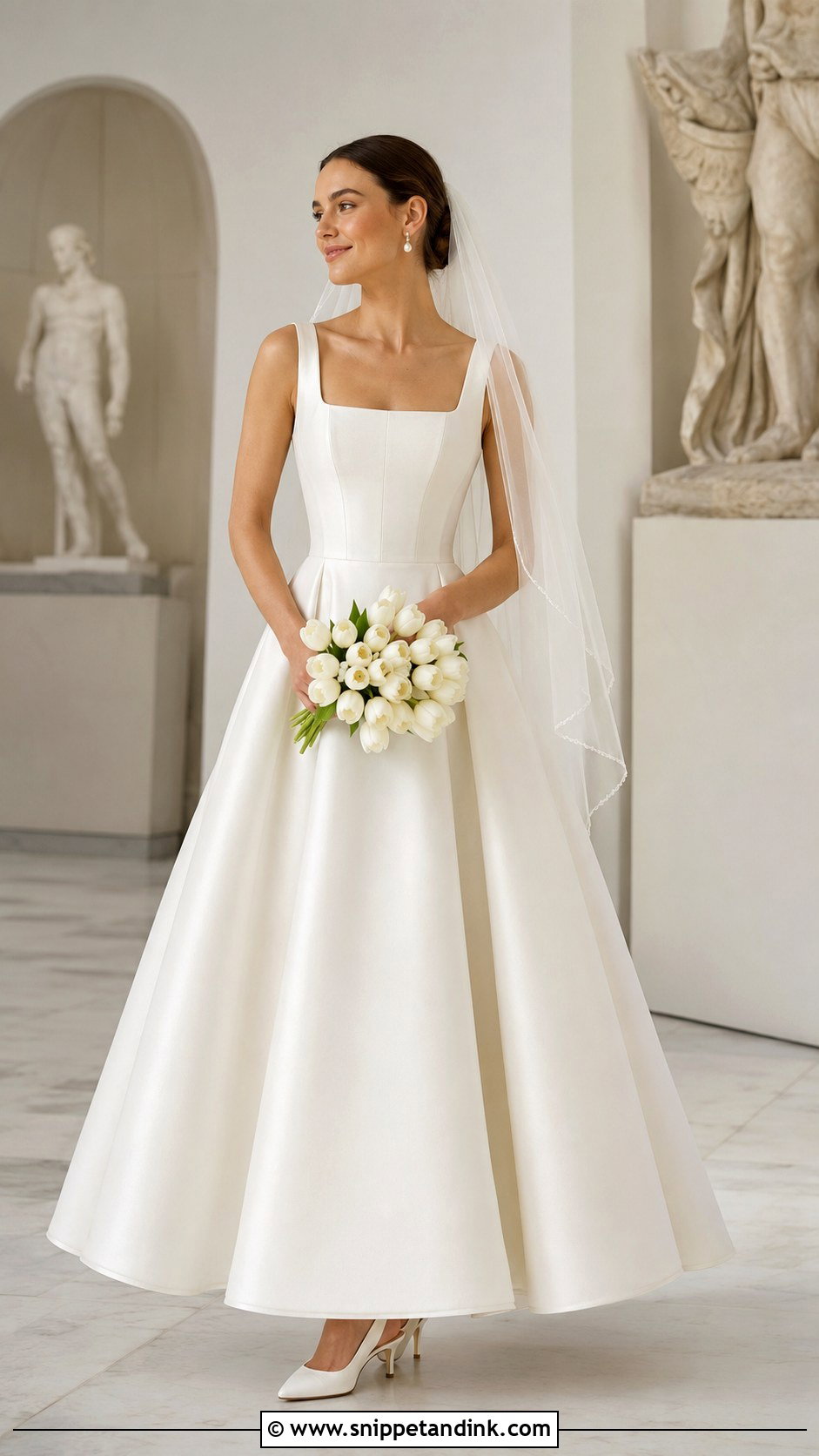
Square necklines with wide straps are understated and secure, and the straps take strain off the corset. Matte satin, Mikado or crepe keeps it minimal. Pearl button earrings, a sleek bun, slingback heels and a fingertip veil suit it, and white tulips or callas repeat the clean lines. It fits a courthouse just as easily as a museum. Watch the corners of the neckline when you lean forward; gaping there usually means the straps need shortening, and supportive cups keep the front edge flat.
8. Long Sleeve Lace Corset Wedding Dress
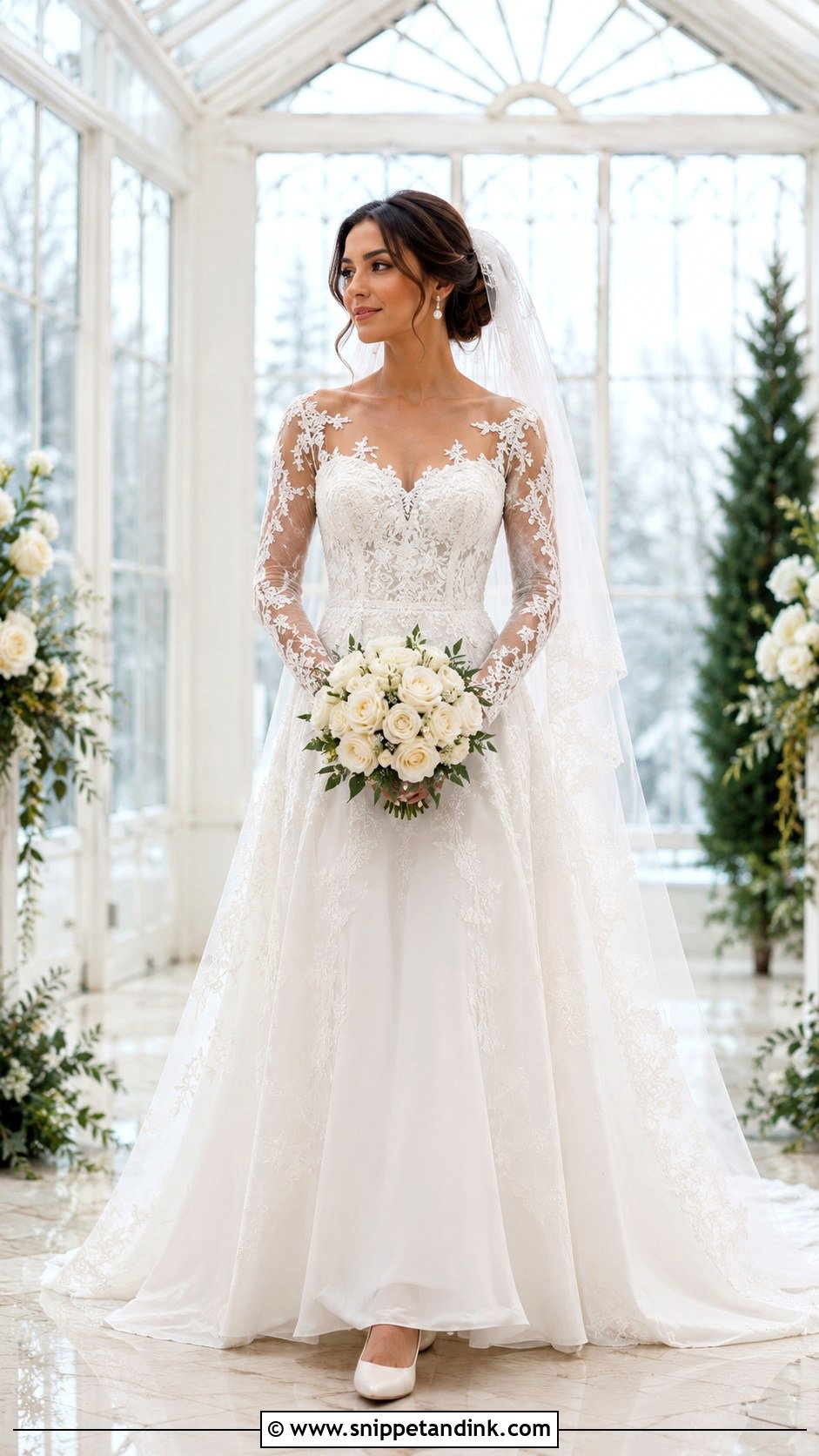
Long lace sleeves add coverage while the corset keeps the waist defined underneath. Illusion sleeves covered in appliqués stay light; fully lined lace reads more modest. An A-line or gently flared skirt keeps movement easy. Closed-toe pumps, pearl earrings, a lace-trimmed veil and a neat low bun suit it, with roses and seasonal greenery for fall, winter or a cool spring day. Lace has very little stretch, so reach forward and bend your elbows in it. If the sleeves pull, the corset will be dragged up with them.
9. Drop Waist Corset Wedding Dress
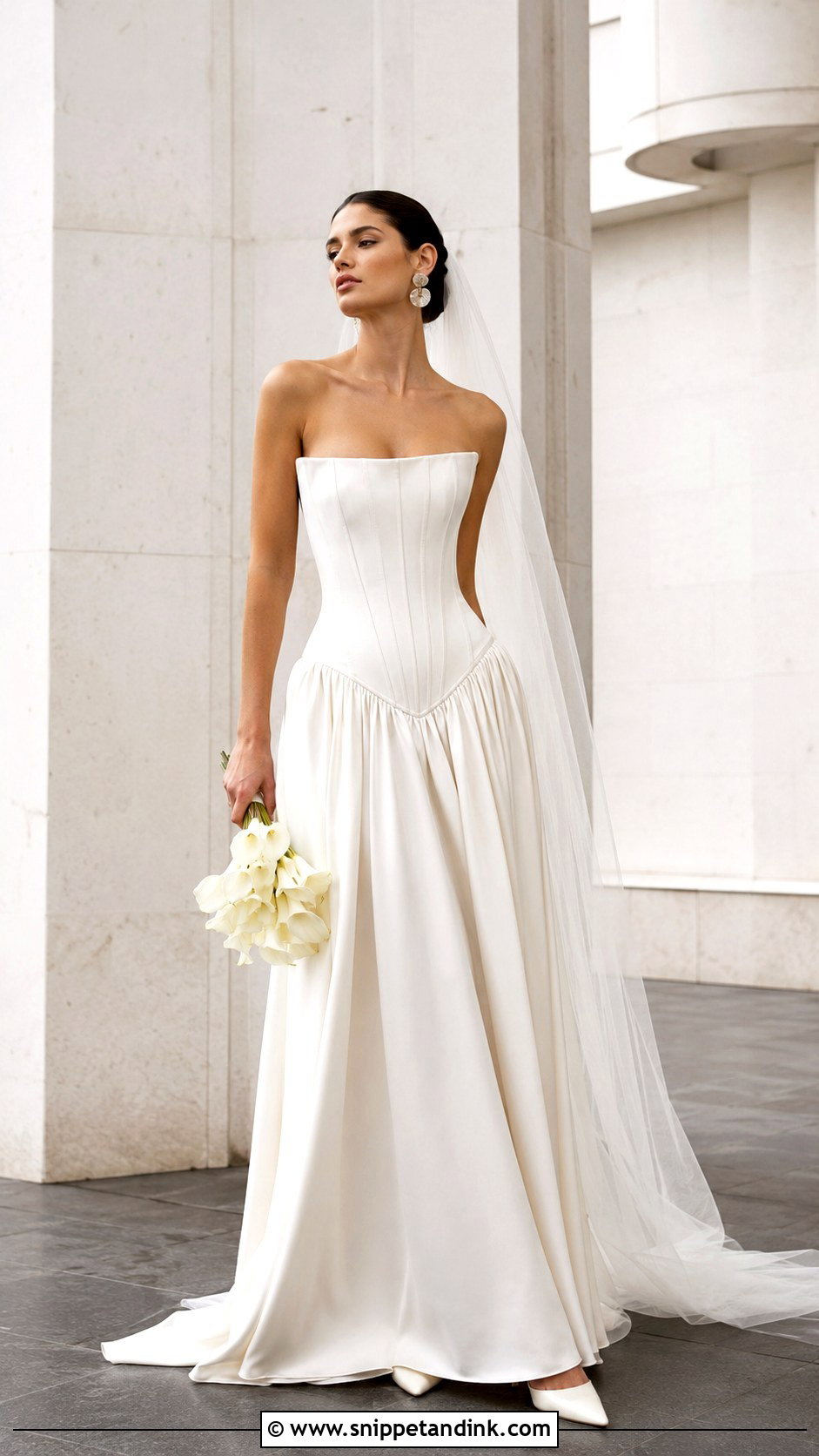
Here the bodice continues past the natural waist to the upper hip before the skirt opens. Satin keeps it sleek; embroidered lace makes it richer and more vintage. I’d choose pointed heels, sculptural earrings, a narrow veil and an elongated bouquet. Don’t add a belt at the natural waist, as it cuts across the long line the dress was designed for. Drop waists suit straighter hips best. On curvier hips, I check that the bodice follows the body instead of flattening it, and that you can sit without the lower edge pressing in.
10. Corset Wedding Dress With Detachable Sleeves
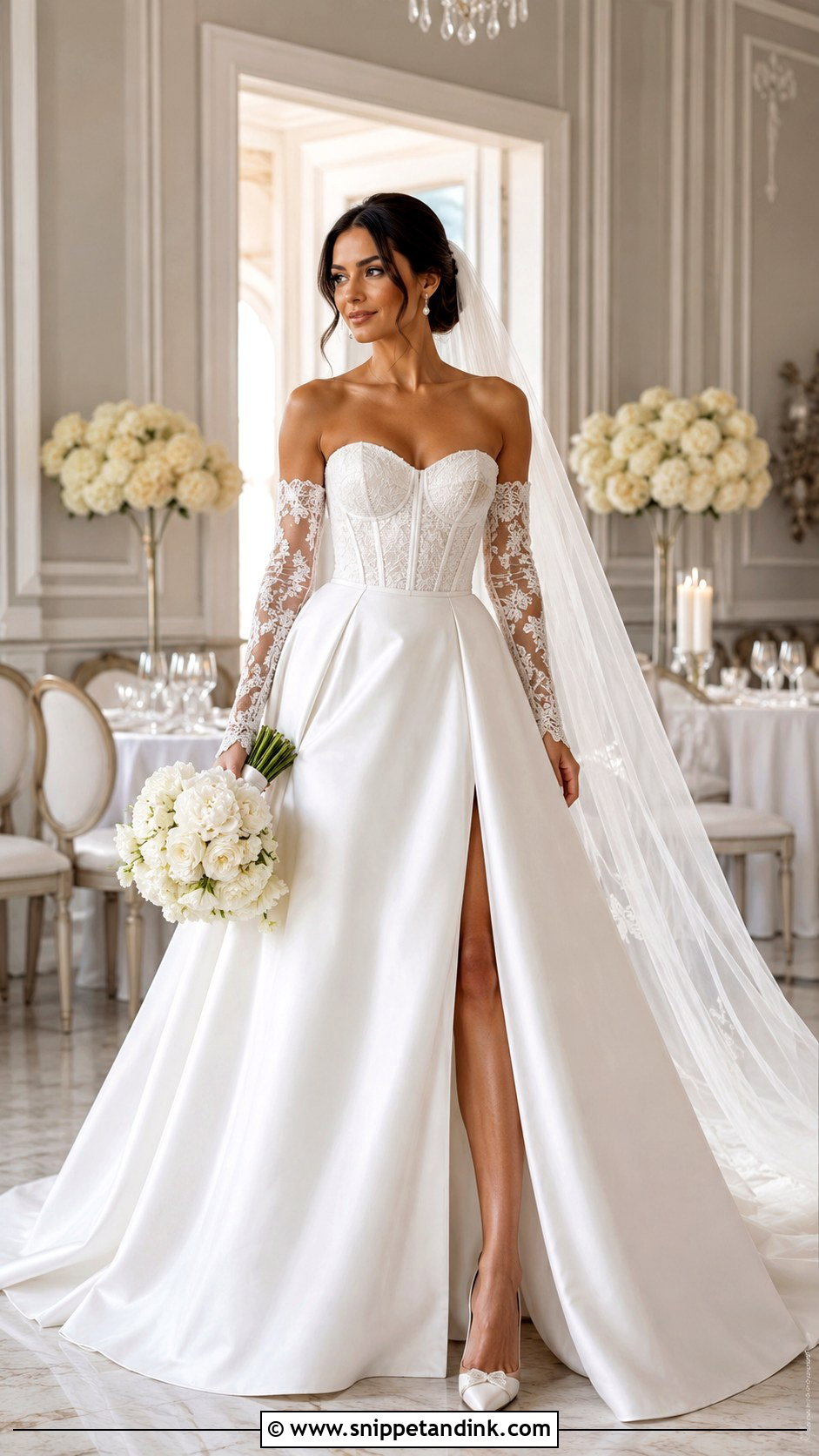
Two looks, one gown: lace sleeves, draped off-shoulder bands or sheer puffs for the ceremony, then a strapless corset for dancing. A full A-line skirt, satin heels, pearl earrings and a long veil work for both. I like swapping the veil for a jeweled comb at the same time the sleeves come off, so the change looks deliberate. The attachments need to be discreet and simple enough for a bridesmaid to undo in a minute. It is the right pick when the ceremony is more formal than the party.
11. Floral Appliqué Corset Tulle Wedding Dress
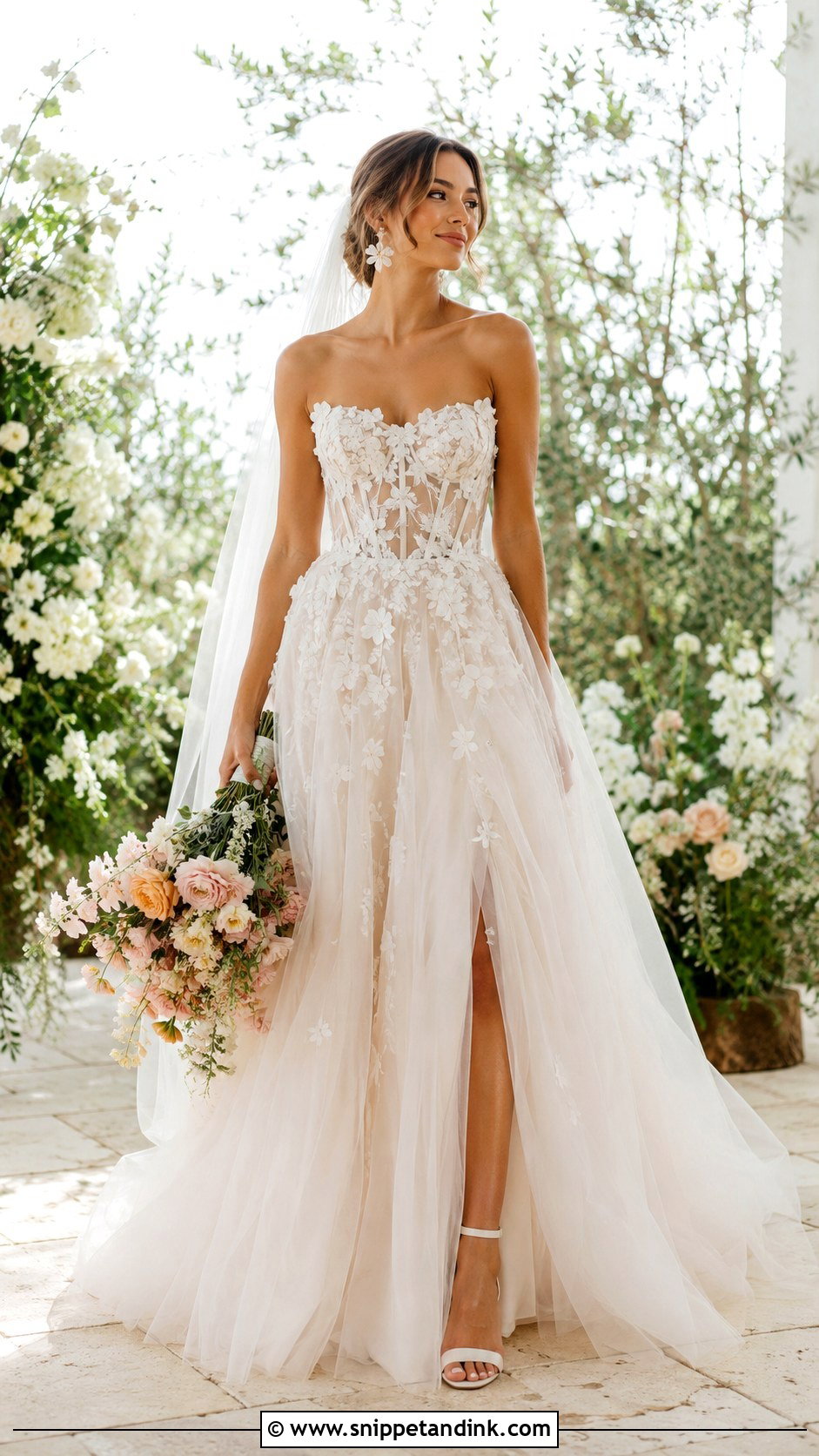
Three-dimensional flowers over visible boning turn a tulle corset dress into a garden look. I prefer appliqués dense on the bodice and thinning gradually down the skirt. Floral earrings, ivory ankle-strap heels, a plain veil and a loose bouquet of similar blooms suit a conservatory or spring estate, with a low textured bun or a neat half-up style. Raised flowers right under the arms rub with every movement. Point that out at the fitting; a seamstress can usually move or flatten them.
12. Beaded Corset Column Wedding Dress
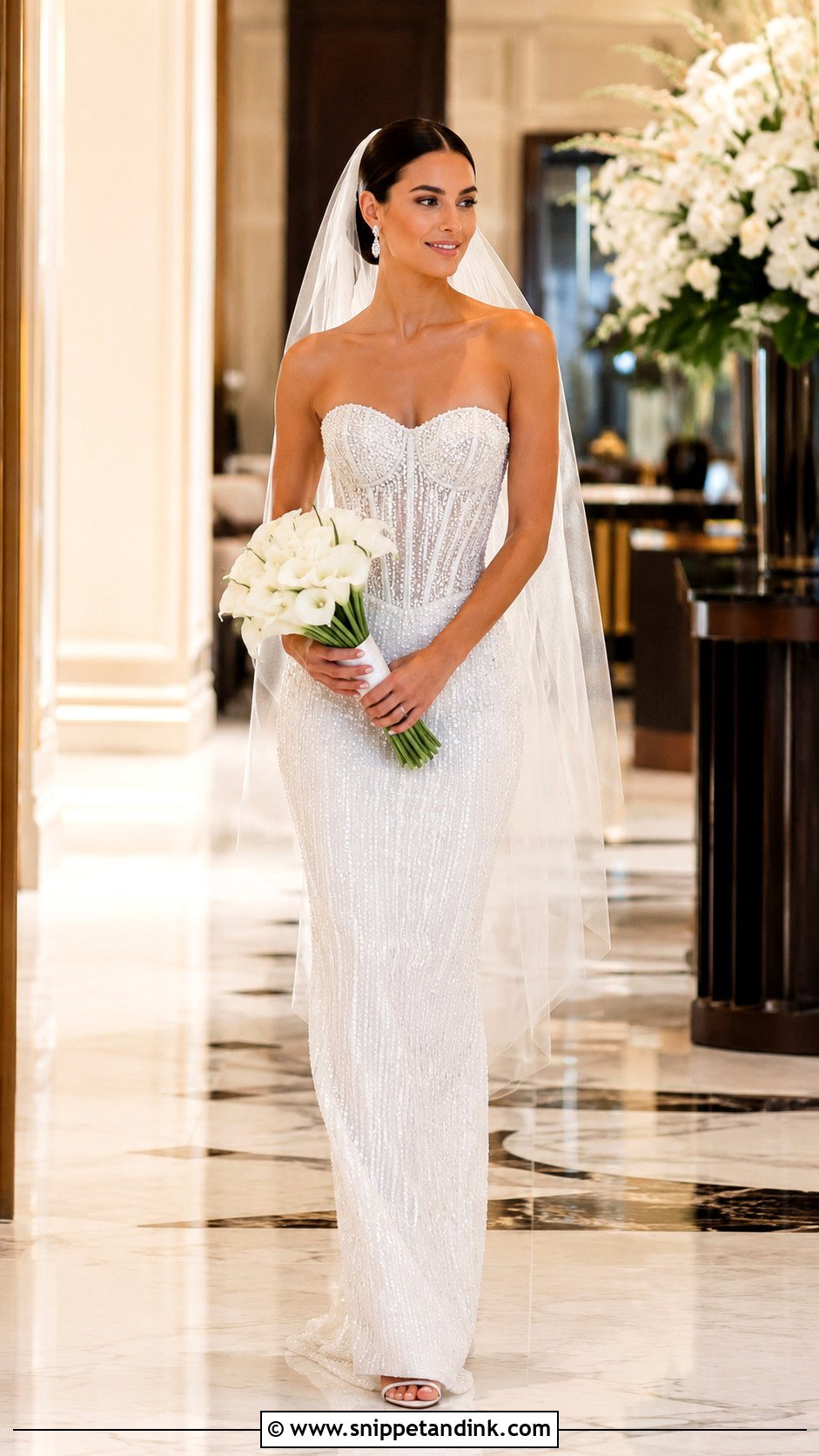
Beading on a column gives sparkle without volume. Fine crystals, pearls or sequins tracing the bodice seams and fading down the skirt keep it controlled. Simple metallic or ivory sandals, small crystal earrings, a plain veil and a slim bouquet are enough. Wear your hair up, because long hair tangles in beadwork. Beading adds real weight, which pulls a bodice down over an evening, so I check the boning and cups are firm and that any straps are set exactly where they carry that load.
13. Minimalist Crepe Corset Wedding Dress
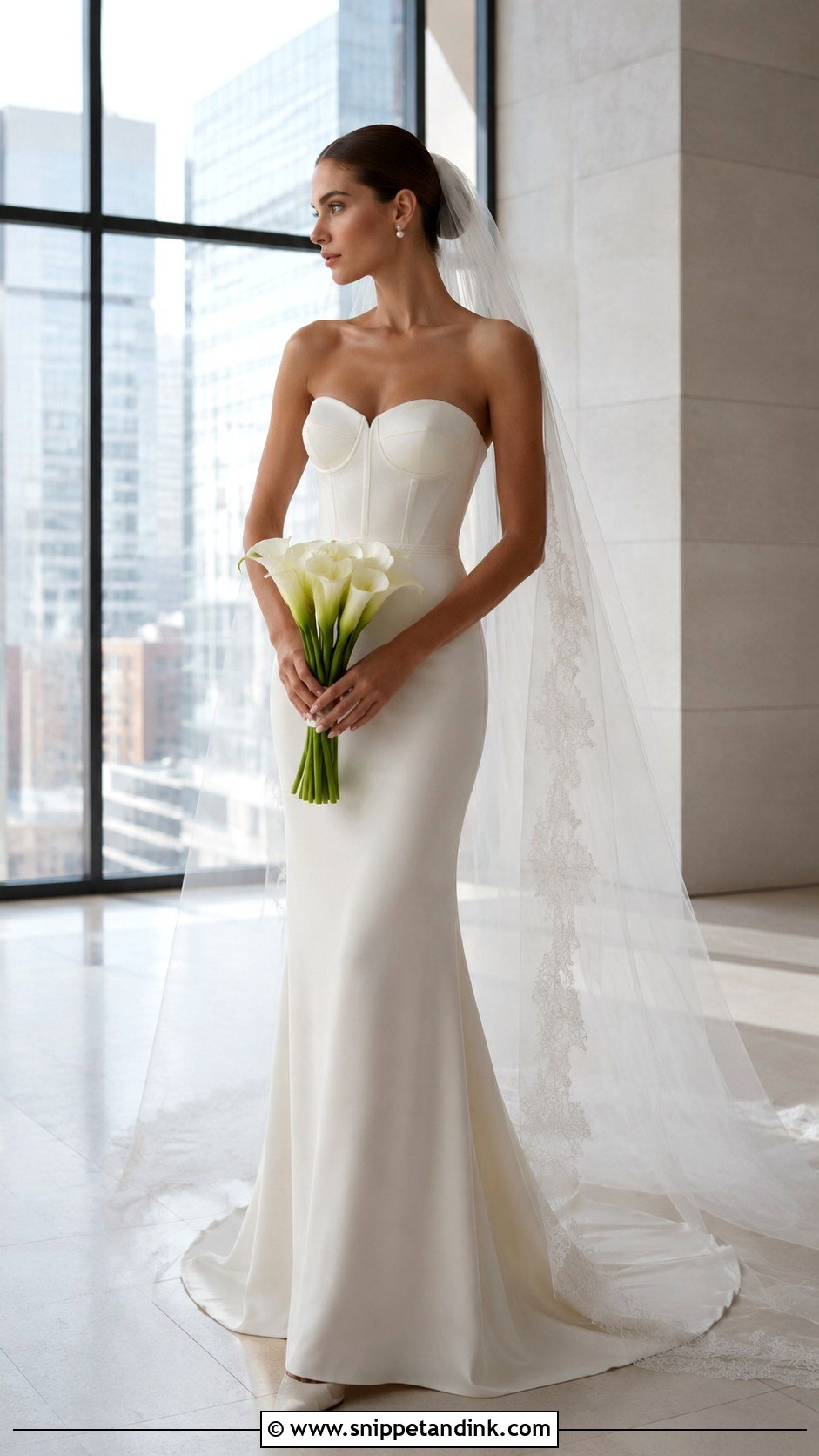
Crepe hides nothing, which is both its charm and its challenge. A paneled corset bodice paired with a column, gentle trumpet or A-line skirt looks precise and modern. Pointed pumps, small gold or pearl earrings, a sleek bun, a plain cathedral veil and callas suit city venues and courthouses. Every bone channel and cup edge can shadow through crepe, so I ask the seamstress to check from the side and back under strong light. A smooth, breathable lining stops the structure showing.
14. Corset Top And Full Bridal Skirt
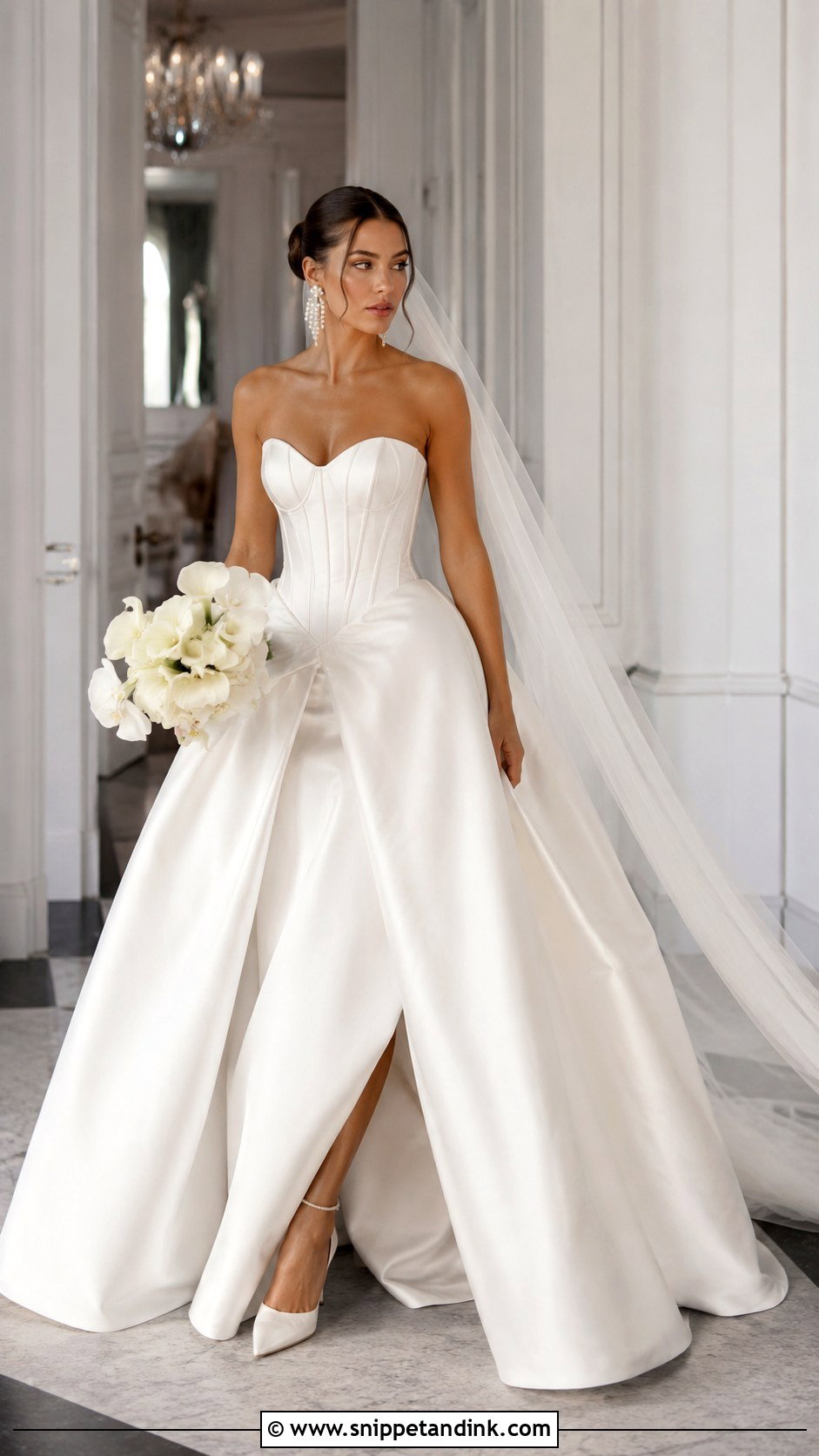
Separates let you build your own gown: a fitted satin, brocade or lace corset over a skirt that meets it at the waist with no gap. A voluminous overskirt gives ceremony drama, and a slimmer underskirt appears when it comes off. Satin pumps, statement earrings, a long veil and a structured bouquet complete it. The corset can be worn again with trousers later. The weak point is the waist join when you sit, so I add hidden hooks or a snap to tie top and skirt together.



15. Corset Mini Wedding Dress
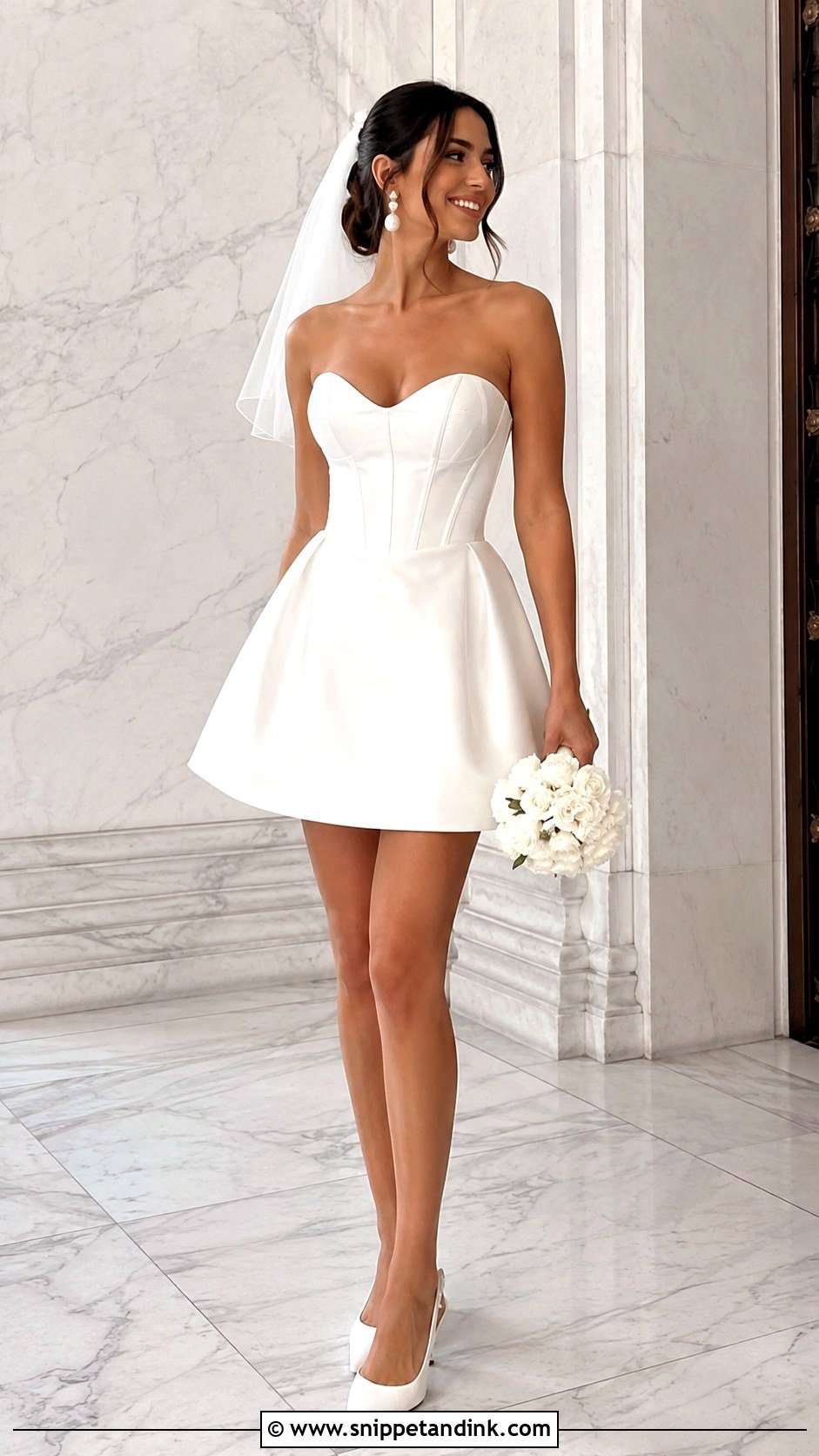
A short corset dress is fun for a courthouse, a small party or a reception change. A structured satin bodice with an A-line mini moves easily, with sheer tights in cool weather or bare legs in summer. Slingbacks, pearl drops, a short veil or a bow and a compact bouquet keep it bridal. An overskirt can cover it for the ceremony. Check the length from behind while sitting, which is shorter than it looks standing; built-in shorts or a smooth lining help without spoiling the line.
16. Tea-Length Corset Wedding Dress
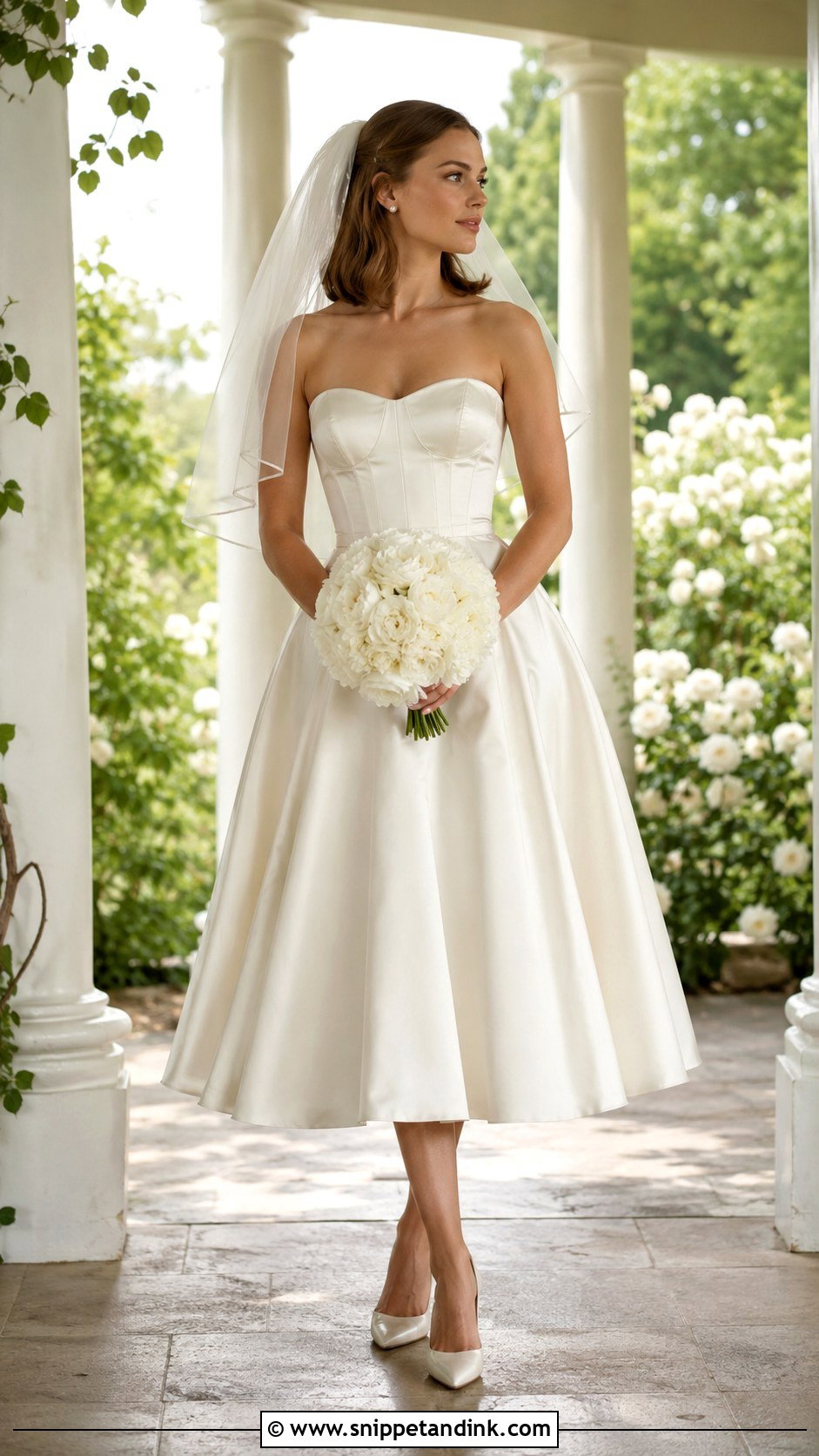
Tea length shows off your shoes and makes the day easier on your feet and hem. The fitted bodice defines the waist and the skirt stops between knee and ankle. Satin gives it a crisp line, layered tulle a softer one. I’d add elegant pumps, pearl studs, a birdcage or shoulder veil and a small round bouquet, with a polished updo that hints at the era without tipping into costume. It suits restaurants and daytime receptions. The hem is unforgiving at this length, so hem it in the exact shoes you’ll wear.
17. Blush Corset Wedding Dress
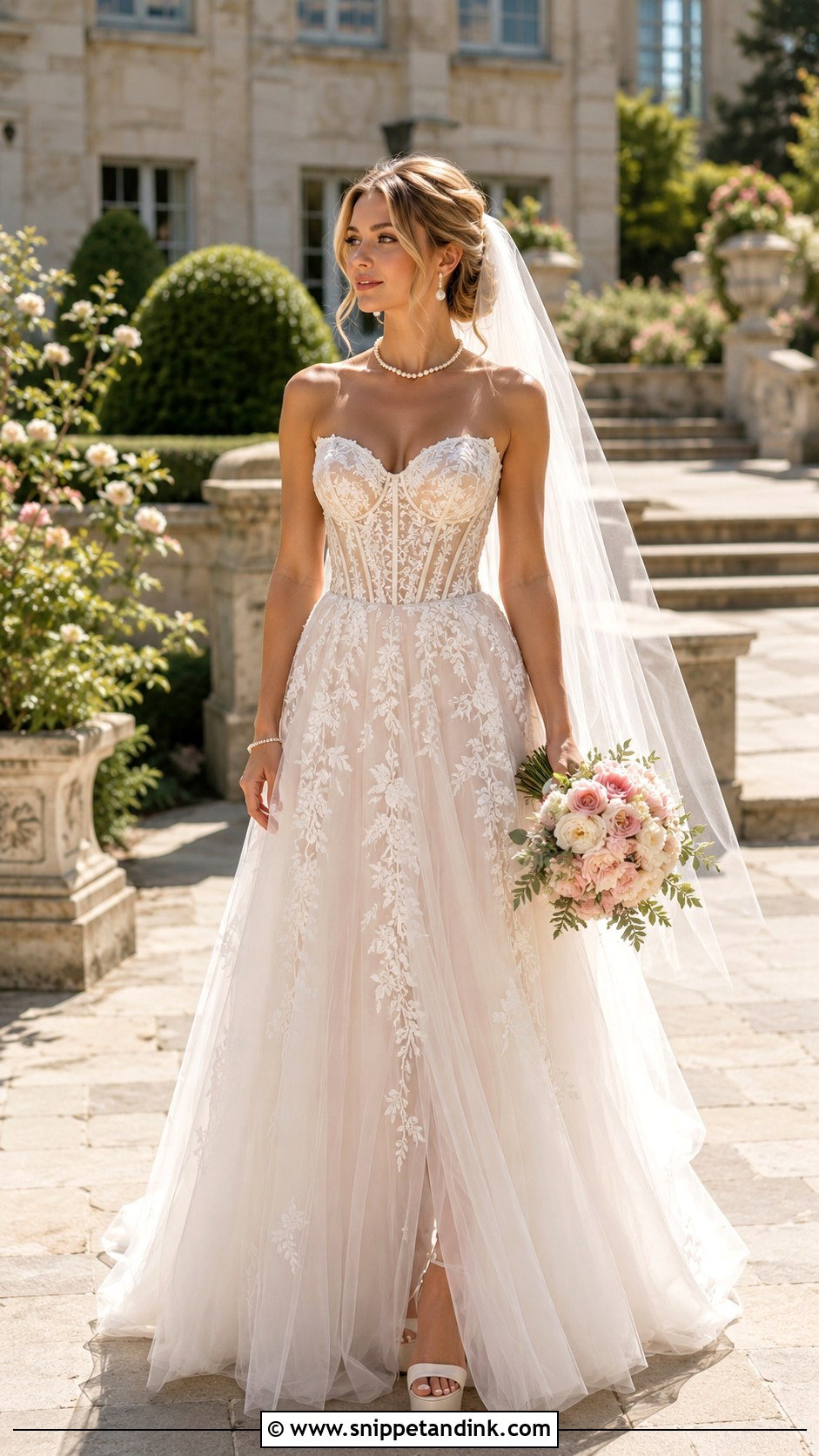
Blush usually comes from the lining: soft pink, champagne or nude under ivory tulle and lace. That gives depth without bold color. A fitted corset with an A-line or ball gown skirt suits it, with neutral satin heels, rose-gold or pearl jewelry, a plain ivory veil and white and pale pink flowers. Keep the extras quiet. Blush shifts with light and with skin tone, warming on some brides and vanishing on others, so I view it in daylight and indoors before anyone decides.
18. Plus-Size Corset Ball Gown
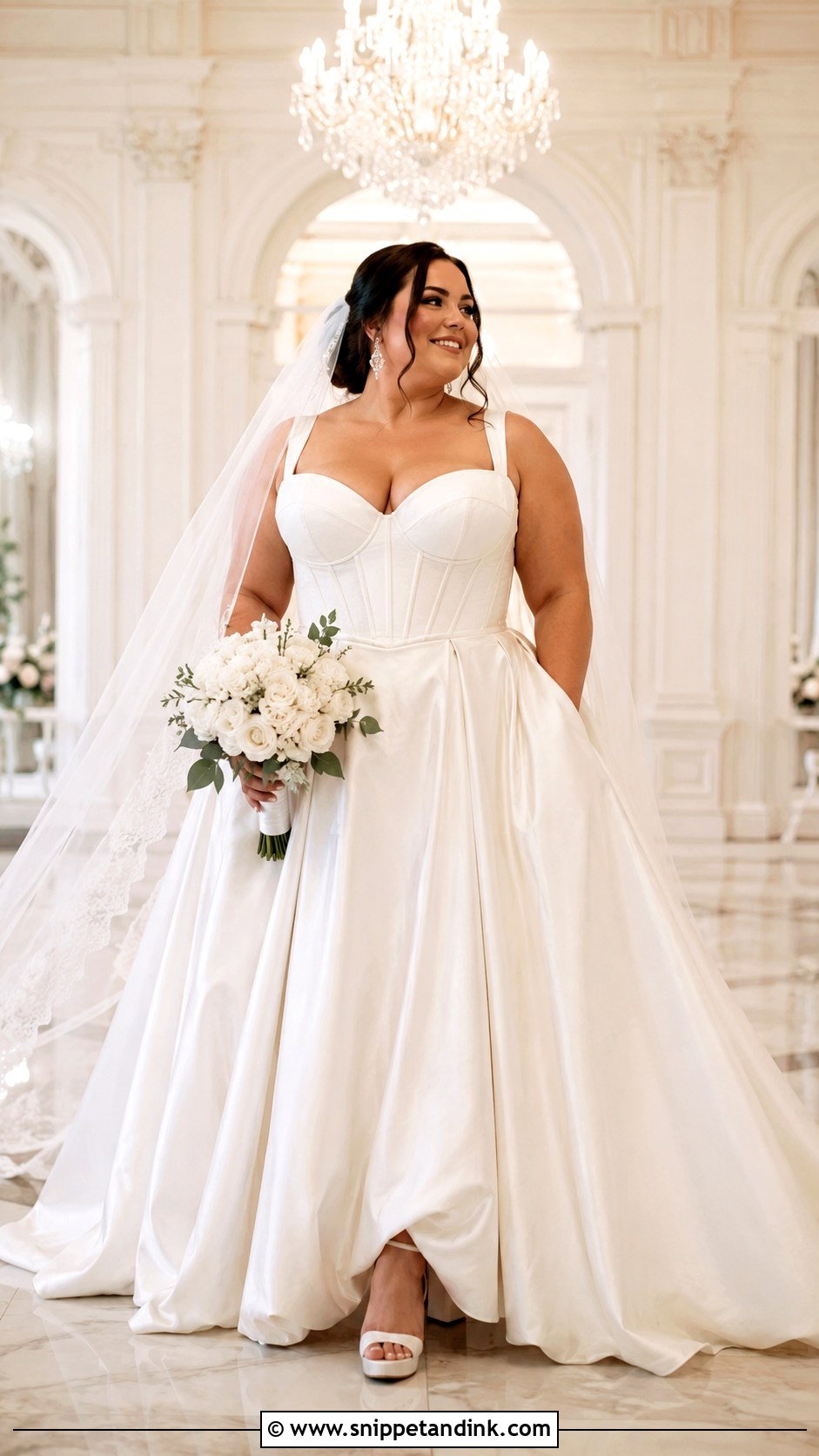
A plus-size corset ball gown should give real support and a clearly defined waist. Look for substantial boning, cups in your true size, a wide internal waist band and a reinforced or lace-up back. A structured skirt flows from the waist with room through the hips. Supportive block heels, statement earrings, a fingertip or cathedral veil and a bouquet scaled to the skirt suit it, and detachable sleeves or a lined bodice add coverage. Pain is never part of correct corsetry. You should breathe, sit, eat and dance without thinking about the bodice.
19. High Neck Wedding Dress With Hidden Corset
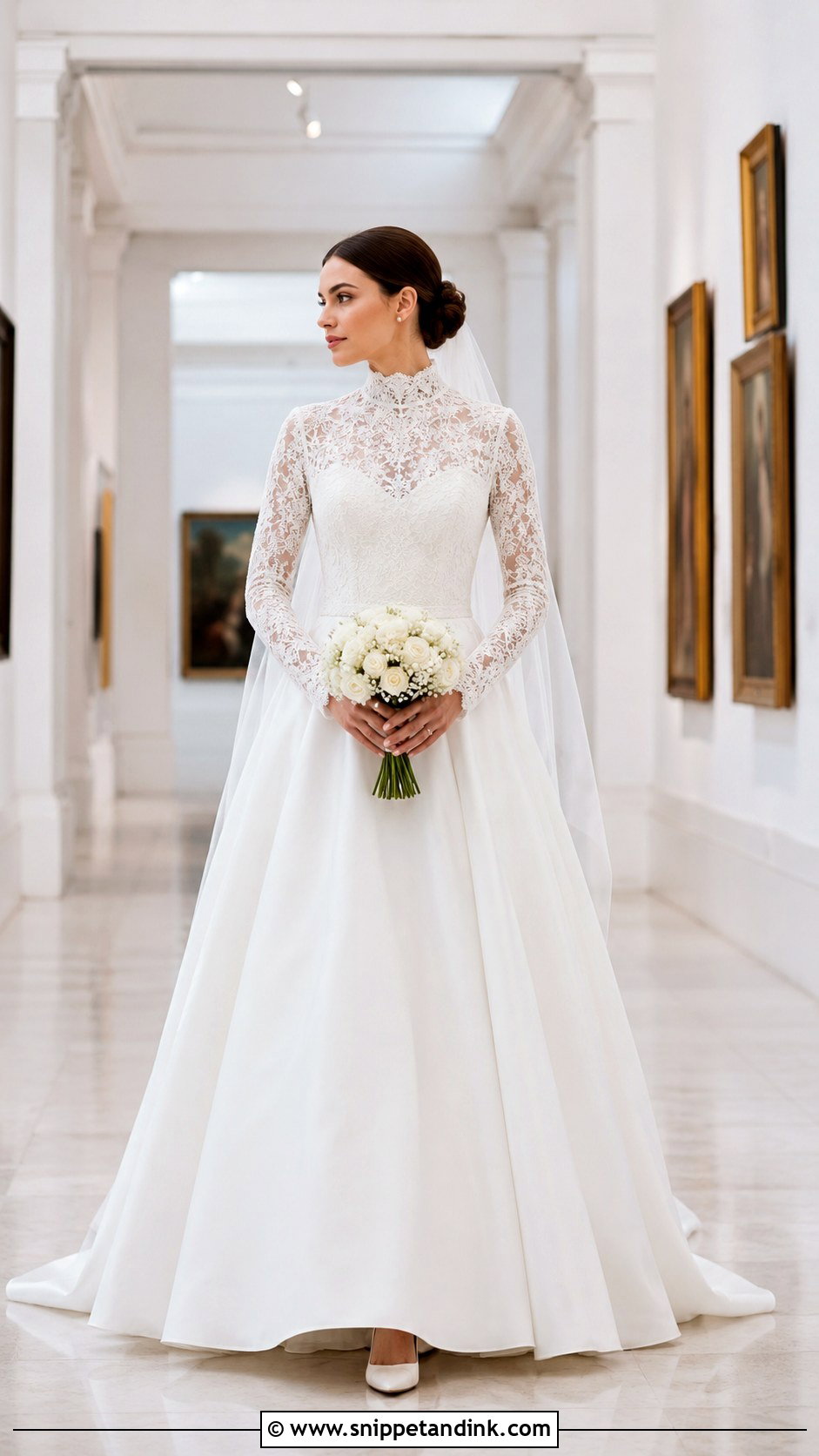
Some brides want the support without the look of boning or a bustier-inspired appearance. Internal corsetry can sit beneath lace, crepe or satin and leave a perfectly smooth outside. A fitted high neck, long sleeves and an A-line skirt keep it covered and refined, with pearl studs, a low bun, closed-toe heels and a veil set below the hair. Ask the consultant to show you the inside. High necks fight the corset if the neckline is cut too tight, wrinkling across the chest when you lift your arms.



20. Corset Back Wedding Dress With Chapel Train
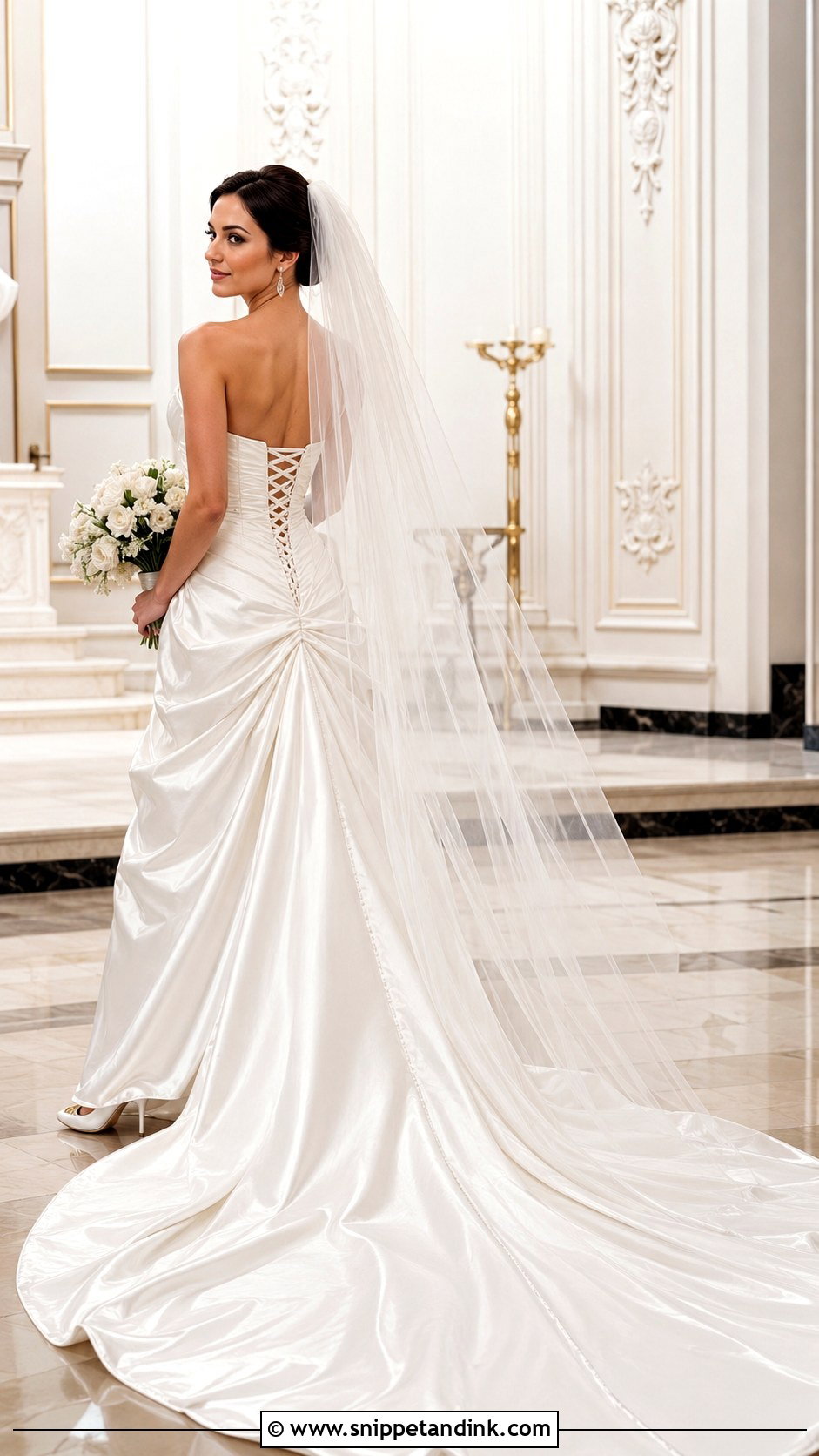
Lacing at the back gives an adjustable fit, and a chapel train adds a graceful length for the entrance. Lace reads romantic, satin more formal. I’d add a cathedral veil reaching just past the train, comfortable pumps, understated earrings and a classic bouquet, and I’d ask for a secure bustle for the reception. The lacing should run straight down the center with an even gap and a tidy bow tucked away. Whoever is lacing you should practice before the wedding, and never pull it tight enough to restrict breathing.
Lacing Up on the Morning Itself
Corset backs look simple until two nervous bridesmaids try them at nine in the morning. Give the job to one calm person, and have them practice at the final fitting.
- Put the dress on after hair and makeup, wearing your wedding underwear and shoes.
- Check the modesty panel (the fabric flap behind the lacing) is lying flat against your back before any lacing starts.
- Lace loosely from top to bottom first, then tighten gradually from the middle out toward each end, a little at a time.
- Stop when the bodice is snug and both sides of the gap are parallel. You should still be able to slide two fingers in at the top edge.
- Tie a flat bow at the bottom and tuck the ends inside, never leaving long loops to snag on chairs.
If the bodice starts to slip
Bodies warm up and loosen the fit by evening. Have your helper re-tighten the lacing before the first dance; it takes two minutes. For a zipped corset that drops, a few strips of fashion tape along the top edge and a pin through the waist stay hold until the end of the night.
The Bodice Has to Let You Breathe, Eat and Dance
Corsetry suits almost every aesthetic, body and season once you decide two things: whether the structure shows or hides, and how much coverage you want. From there, compare neckline, waist placement, skirt shape and fabric. Pick accessories that support the gown’s mood. Spend money on good alterations before extra embellishment. Walk, sit, raise your arms and dance in every fitting, because a corset that only works standing still isn’t working.
You'll Like These Ideas:







Leave a Reply