
Cute is a better brief than people think. When a bride tells me she wants to look cute rather than grand, I hear that she wants to feel light, move freely and still look like herself in the photos. The twenty looks below range from lace gowns and satin ball gowns to suits, jumpsuits and short reception dresses, each styled head to toe. I’ve added what I’d adjust or watch for with each one, because the charm of an outfit usually comes down to proportion and a single well-chosen detail, not more accessories.
Editing Accessories Around the Dress’s Main Feature
The looks that read as cute in photographs usually have one clear focal point. When I style a bride, I find the dress’s main feature first, the neckline, the sleeves, a bow, the back, and then edit everything else so it supports that one thing.
- Detailed neckline: skip the necklace and keep earrings small or single drops.
- Bare shoulders or square neck: earrings can be bigger, and a fine necklace is optional.
- Ornate back: wear the hair up and choose a plain veil that won’t hide it.
- Plain gown: this is where a statement earring, a bow or a pearl veil earns its place.
My test is simple. Put everything on and take a full-length photo on your phone, then look at it small, the way a guest scrolling past would. If your eye jumps around, remove one piece. If the outfit looks flat, add one. It’s rare that more than one change is needed.
1. Lace A-Line Bride Look
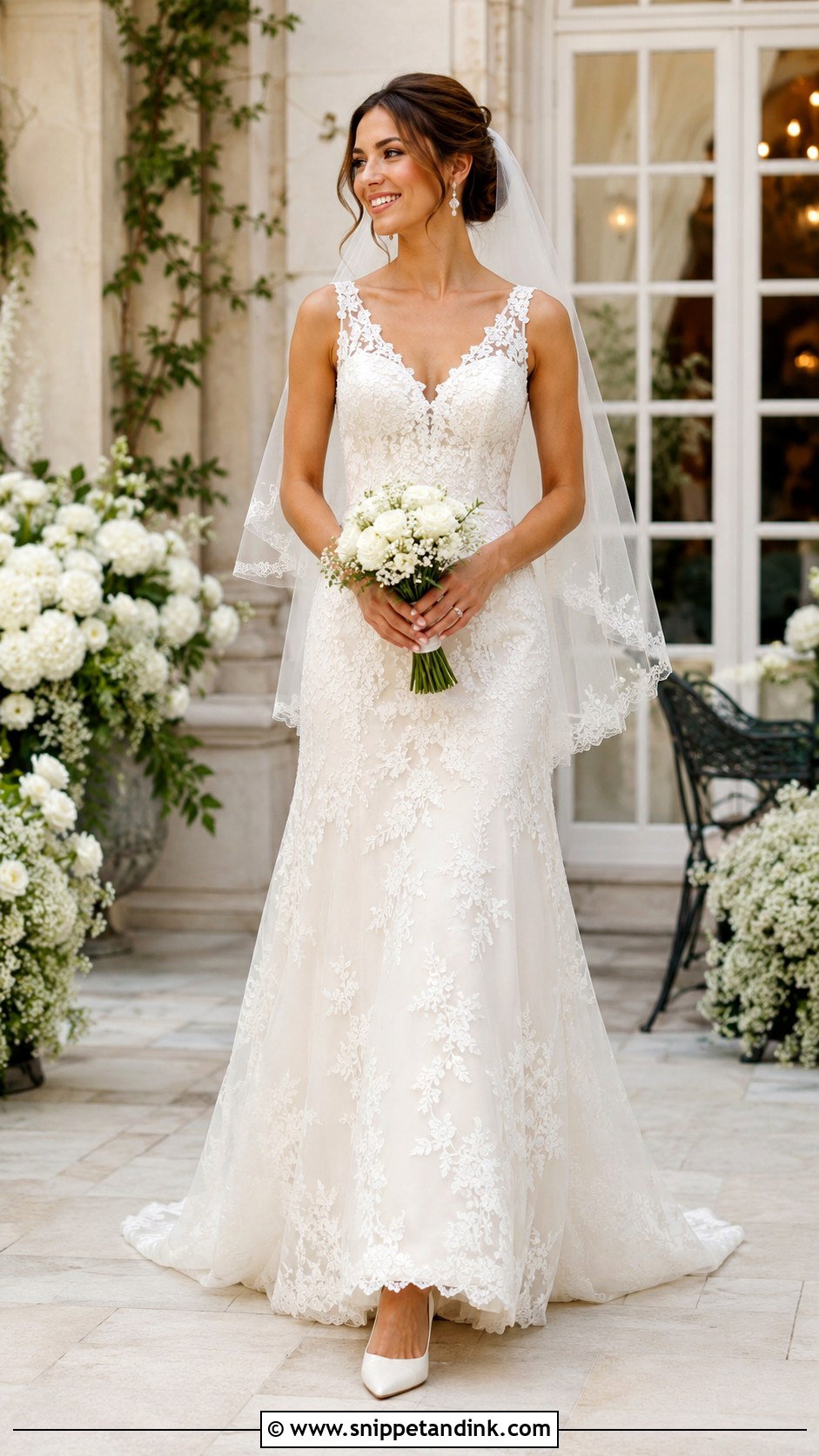
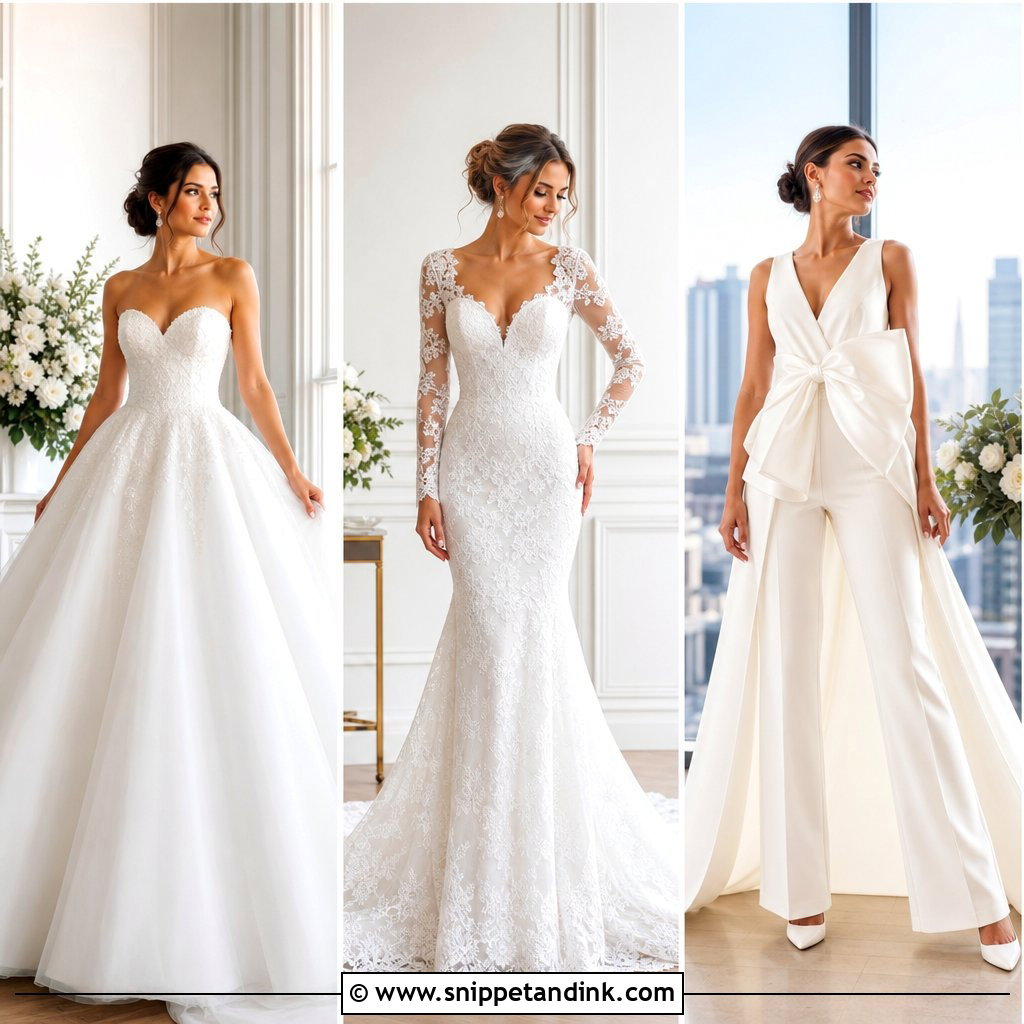
Lace with an A-line skirt is the easy, friendly gown: fitted through the bodice, then light enough to walk in without kicking fabric. A sweetheart or soft V keeps it pretty rather than formal. I’d pair it with pearl drops, a fingertip veil, ivory pointed pumps and a small white bouquet. If you want coverage for the ceremony, sheer lace sleeves or a matching removable topper both work; the topper comes off for dancing. Keep the hair relaxed in a low bun or loose waves.
2. Satin Ball Gown Bride Look
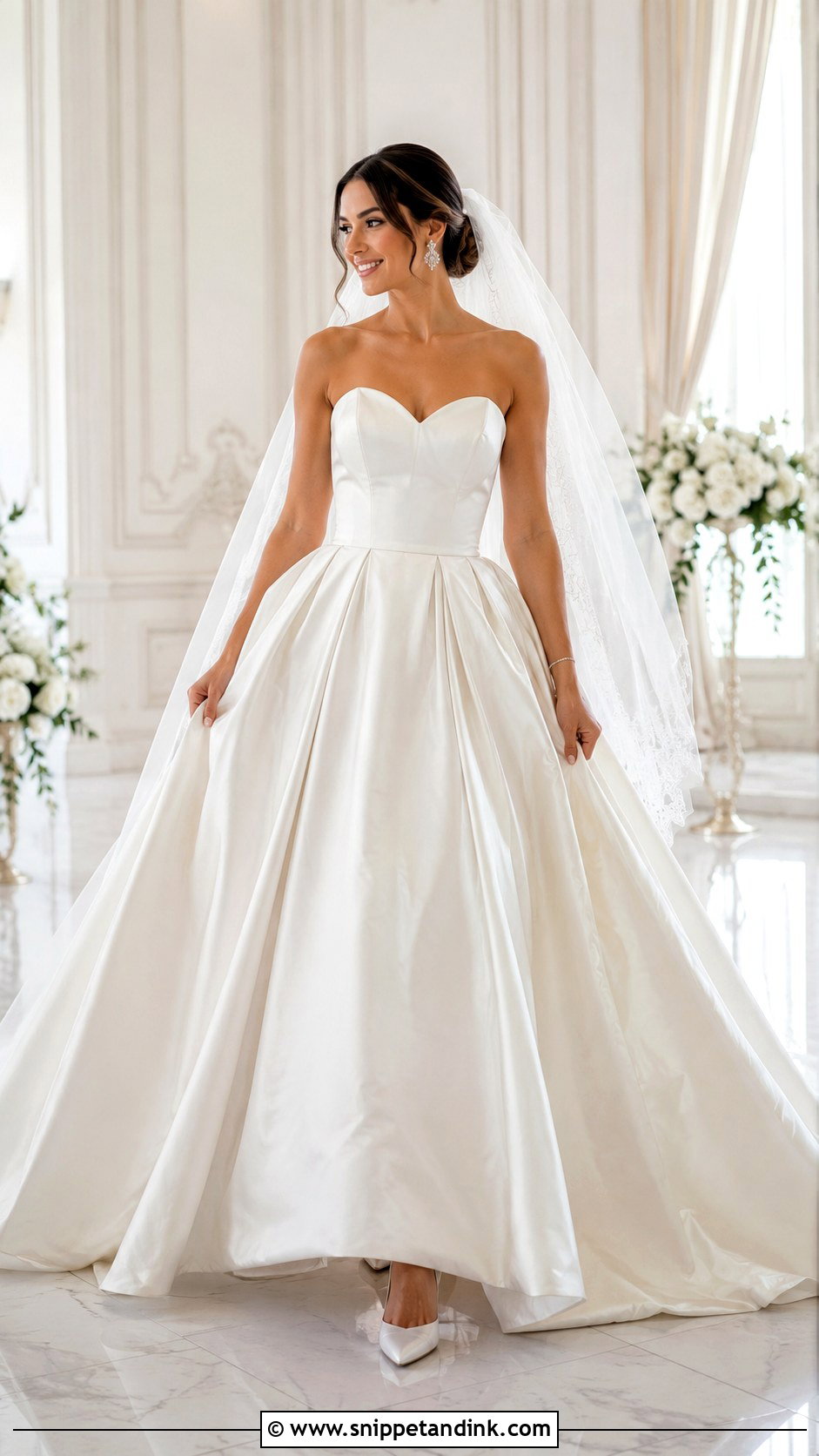
Satin is unforgiving of wrinkles and wonderful in photographs, so I steam a satin ball gown last thing before the bride steps in. A structured bodice and full skirt with a modest train give the classic shape; a square or strapless neckline modernises it and leaves room for statement earrings. Wear the cathedral veil for the ceremony and remove it after the portraits. Satin heels, a small clutch and a tennis bracelet are plenty. The skirt already carries a lot of volume, so I keep the hair sleek, a bun or a soft curled ponytail, and skip big hairpieces.
3. Minimalist Slip Dress Bride Look
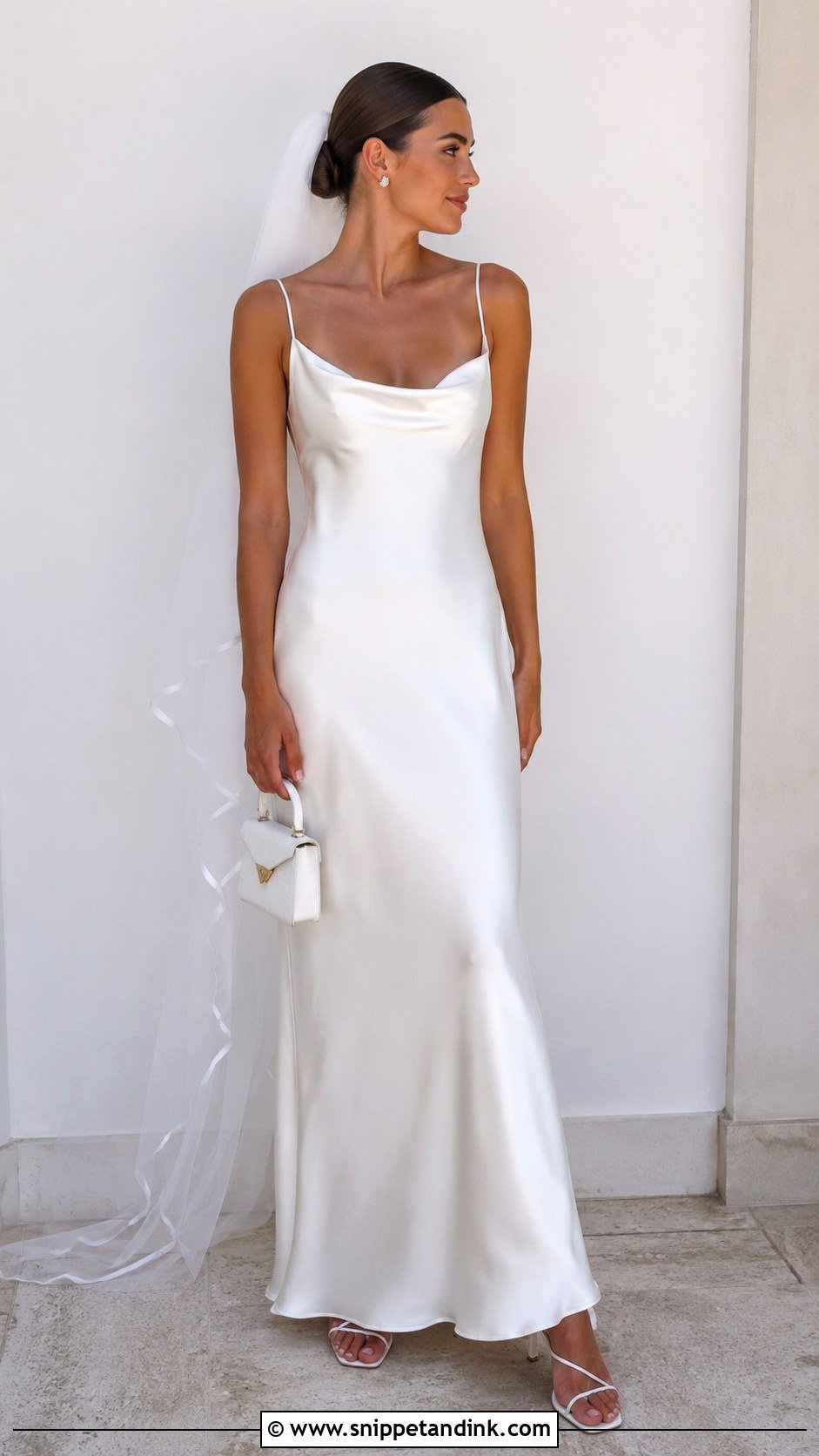
Bias-cut slip dresses look simple and are anything but. The fabric is cut on the diagonal so it drapes and stretches, which also means it shows every line underneath and can grow slightly in length when hung. I hang a bias-cut satin design for a day or two before the final hem is set. Delicate straps, a draped neck and a low back keep the interest. Strappy sandals, small studs and a clean-edged chapel veil suit it, with a glossy low bun. A tailored white blazer handles a chilly evening, and a structured mini bag is useful at a courthouse.
4. Tea-Length Bride Look
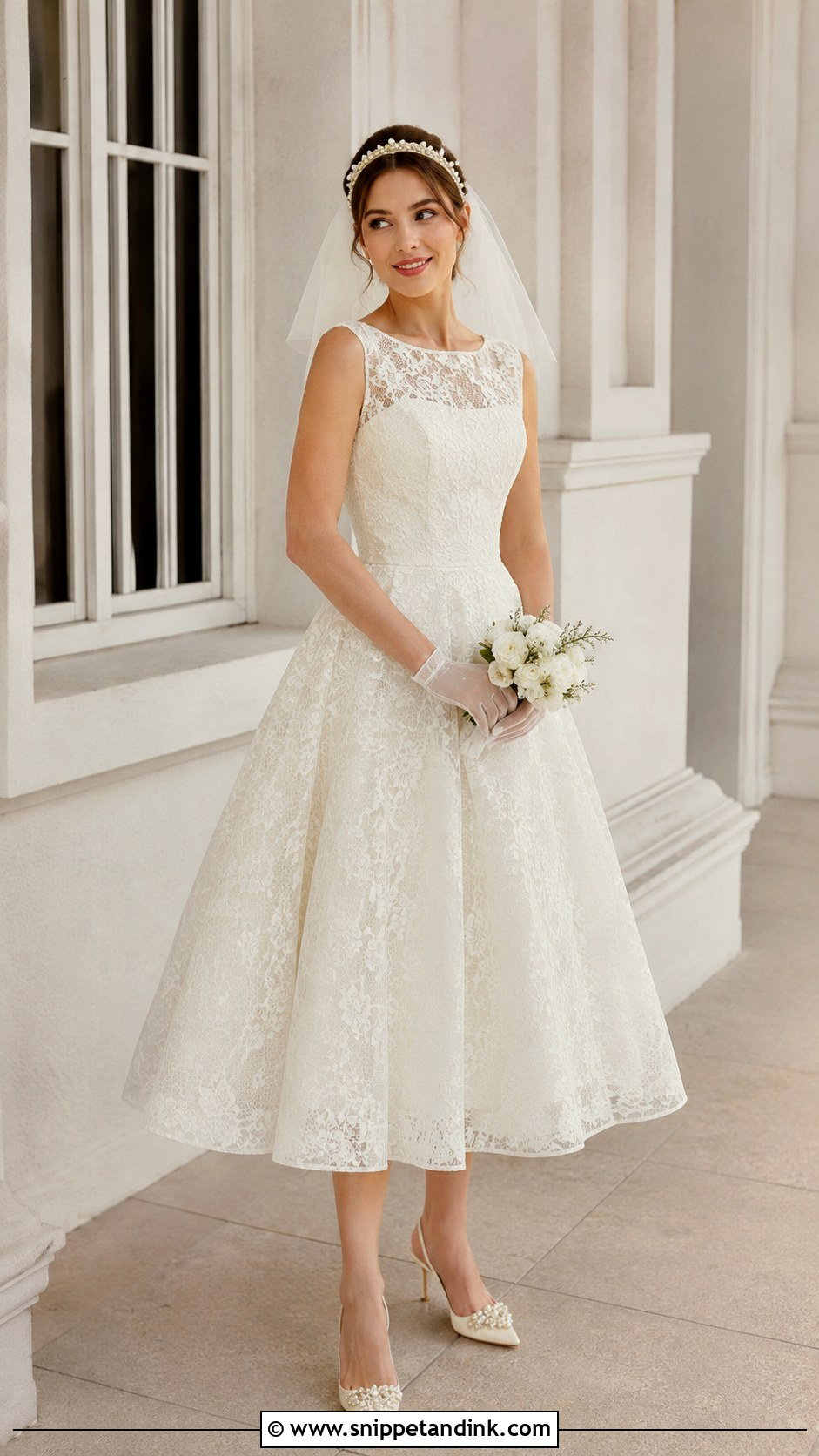
Tea length is made for dancing. The skirt lands somewhere between knee and ankle, and I set that point with the bride in her shoes, since a centimetre either way changes the whole proportion. Lace, mikado or textured organza keep it looking bridal. Your shoes are on show, so choose pointed pumps, embellished slingbacks or block heels you can actually wear for hours. A short veil, pearl headband and gloves give a vintage nod; a narrow satin belt helps if the waist needs more definition. Finish with a compact bouquet and soft curls.
5. Floral Appliqué Bride Look
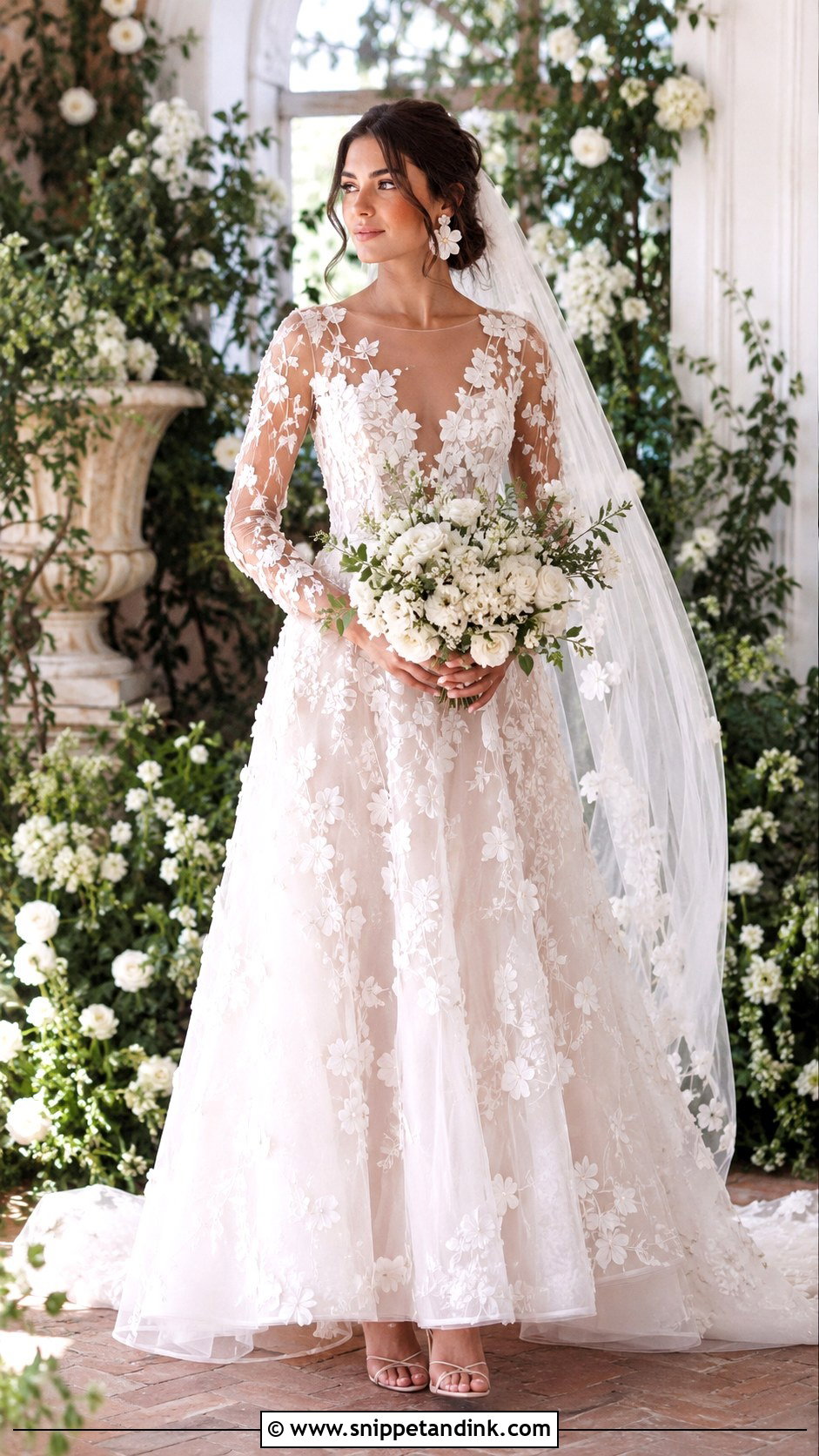
Floral appliqué gives a gown personality, but it needs a calm base. I keep the underlying shape simple, an A-line or fitted dress, so the flowers read as flowers and not clutter. Check the edges: stiff petals at the underarm scratch by evening. Barely there heels, floral studs and a sheer veil with a clean border let the dress lead. For the bouquet, echo one or two of the appliqué flowers rather than all of them, and wear a loose bun with a few face-framing pieces.
6. Off-Shoulder Bride Look
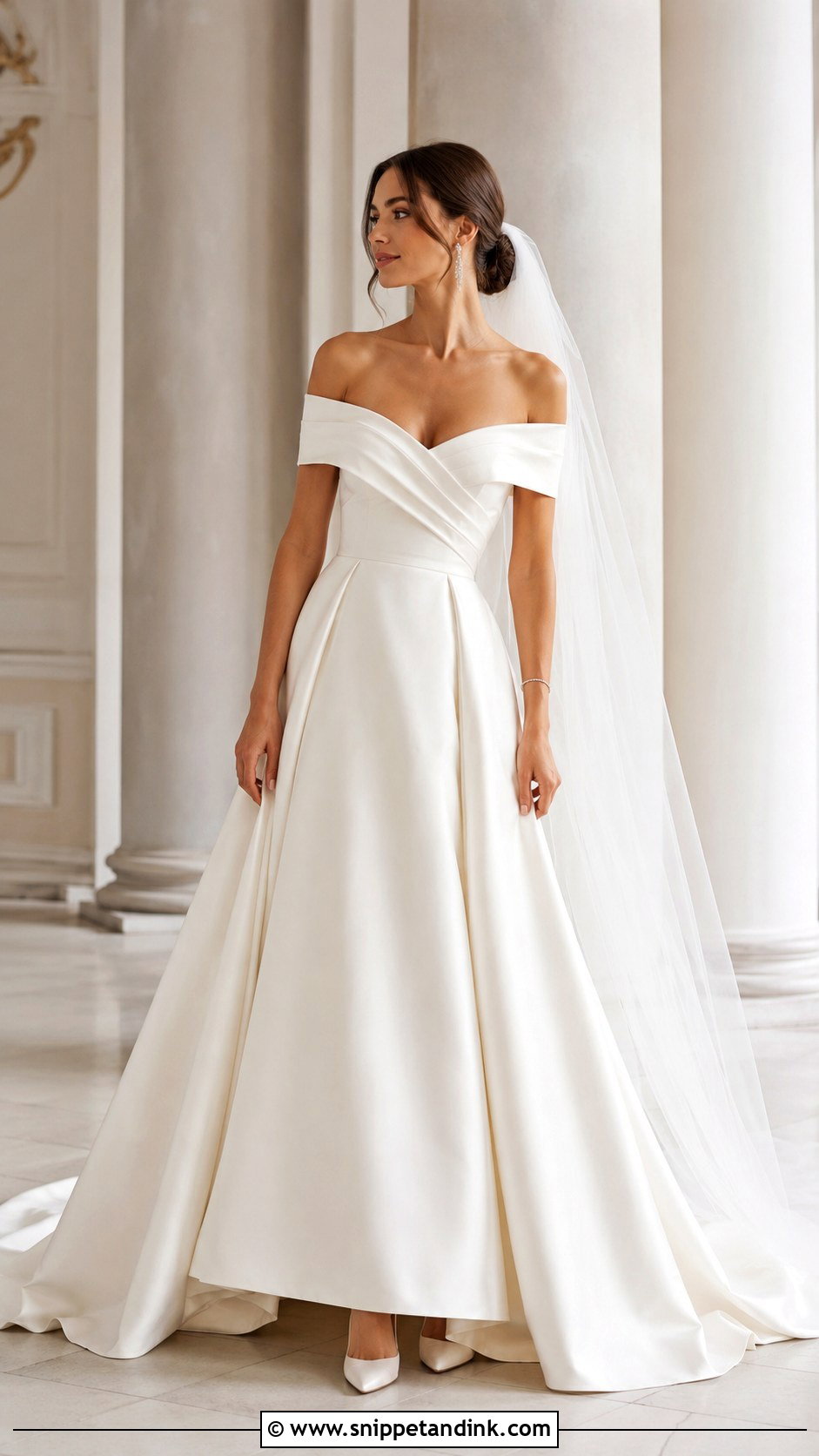
Off-shoulder bodices need real inner structure, since the sleeves can’t hold the dress up and you’ll want to hug people all day. I test this by having the bride raise her arms and lean forward before anything is altered. Either a flowing A-line or a structured full skirt balances the neckline. Sparkling drop earrings alone usually look cleaner than a necklace. Ivory pumps, a long simple veil, a slim bracelet and a low chignon keep the shoulders clear. Detachable off-shoulder straps give you a strapless version for the reception.
7. Long-Sleeve Lace Bride Look
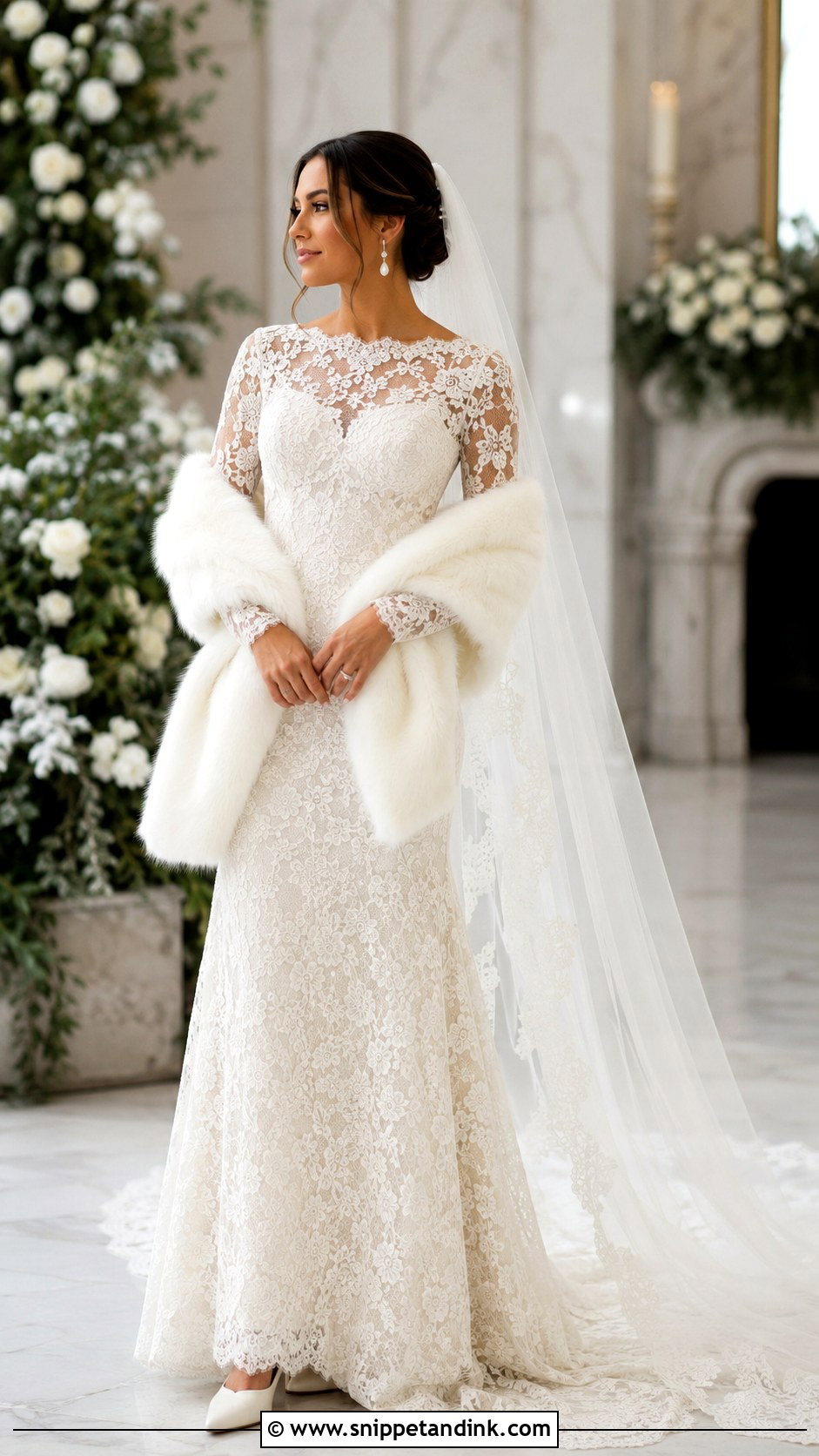
Long lace sleeves are the cold-weather answer, provided the sleeve is lined or partly sheer so you can still lift your arms. A defined waist and gently flared skirt with a modest train keep it balanced. Closed block heels, pearl earrings and a chapel-length veil set beneath a neat bun finish it. For outdoor photos in winter I keep a white faux-fur wrap or a tailored cape on hand, because no one smiles naturally while shivering. Skip a heavy necklace if the neckline already has lace.
8. Corset Drop-Waist Bride Look
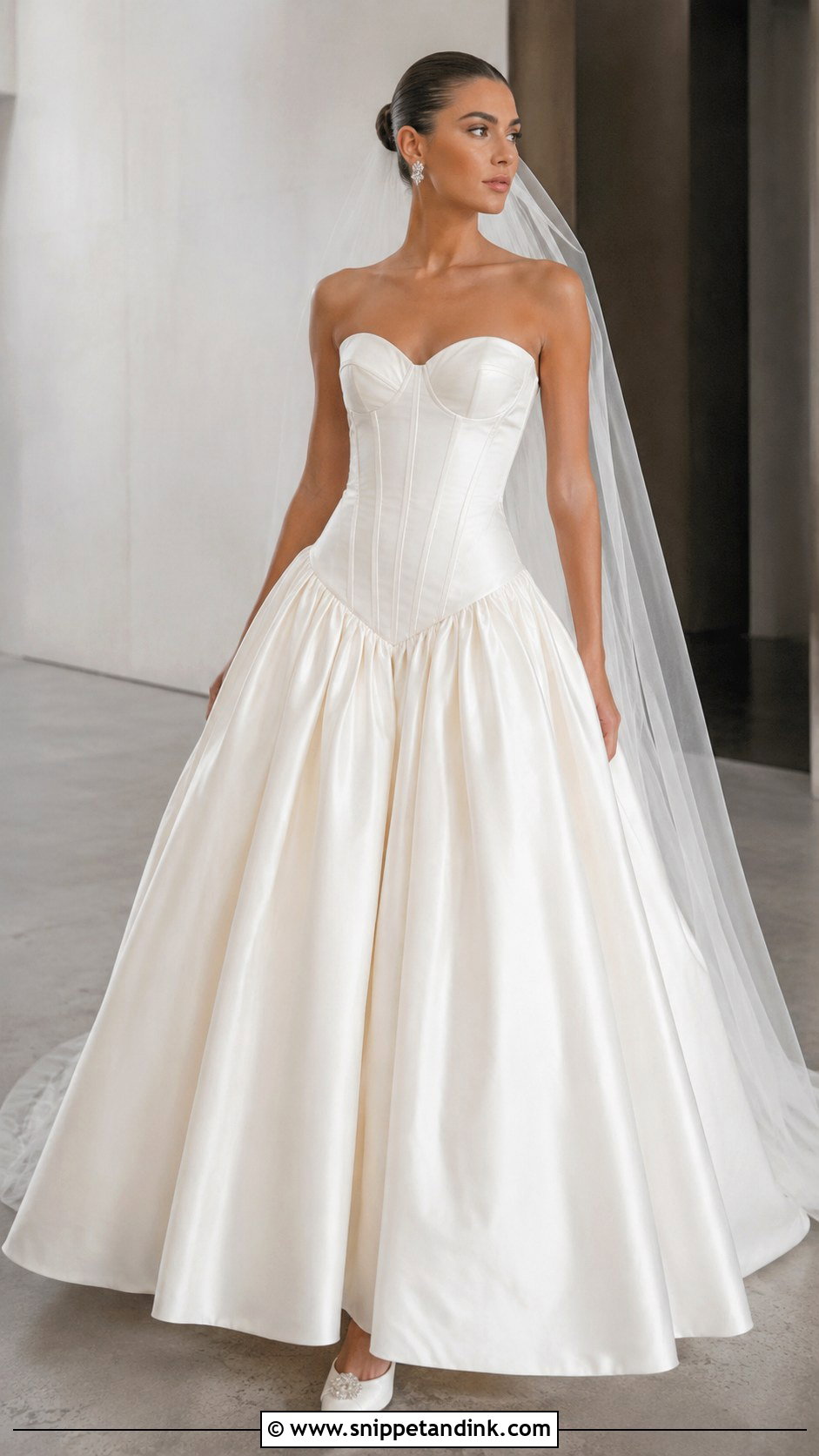
The drop-waist corset extends the bodice below the natural waist before the skirt opens, which lengthens the torso. Its comfort depends on the length of that bodice matching yours; too long and it digs in at the hip when you sit, so I always do a seated check. Supportive boning and smooth inner seams matter. Pointed ivory heels, crystal earrings and a sleek updo let the structure show, and the veil should fall behind rather than cover the waistline. If the corset has visible boning or lacing, keep everything else minimal.
9. Bow Detail Bride Look
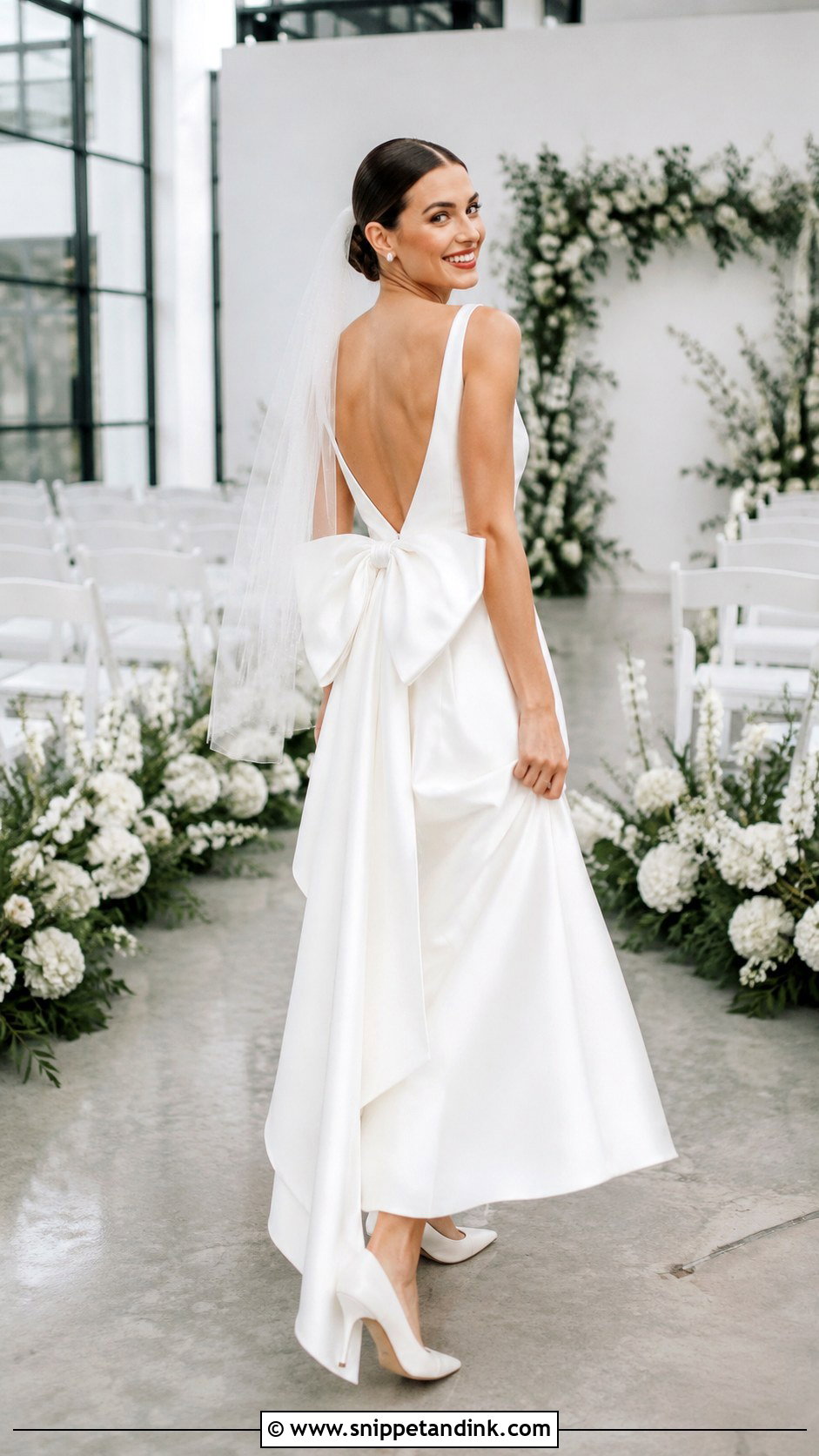
One bow, well placed, is charming. Three is a costume. I’d pick a gown with a single bow feature, at the back, the shoulder or the waist, on a simple satin, crepe or mikado shape. Bow-trimmed pumps only work if the dress bow is small; otherwise wear plain ivory heels. Pearl studs, a smooth low bun and a clean fingertip veil finish it. A detachable back bow is useful: take it off with the train for the reception and you have a lighter second look.
10. Pearl Embellished Bride Look
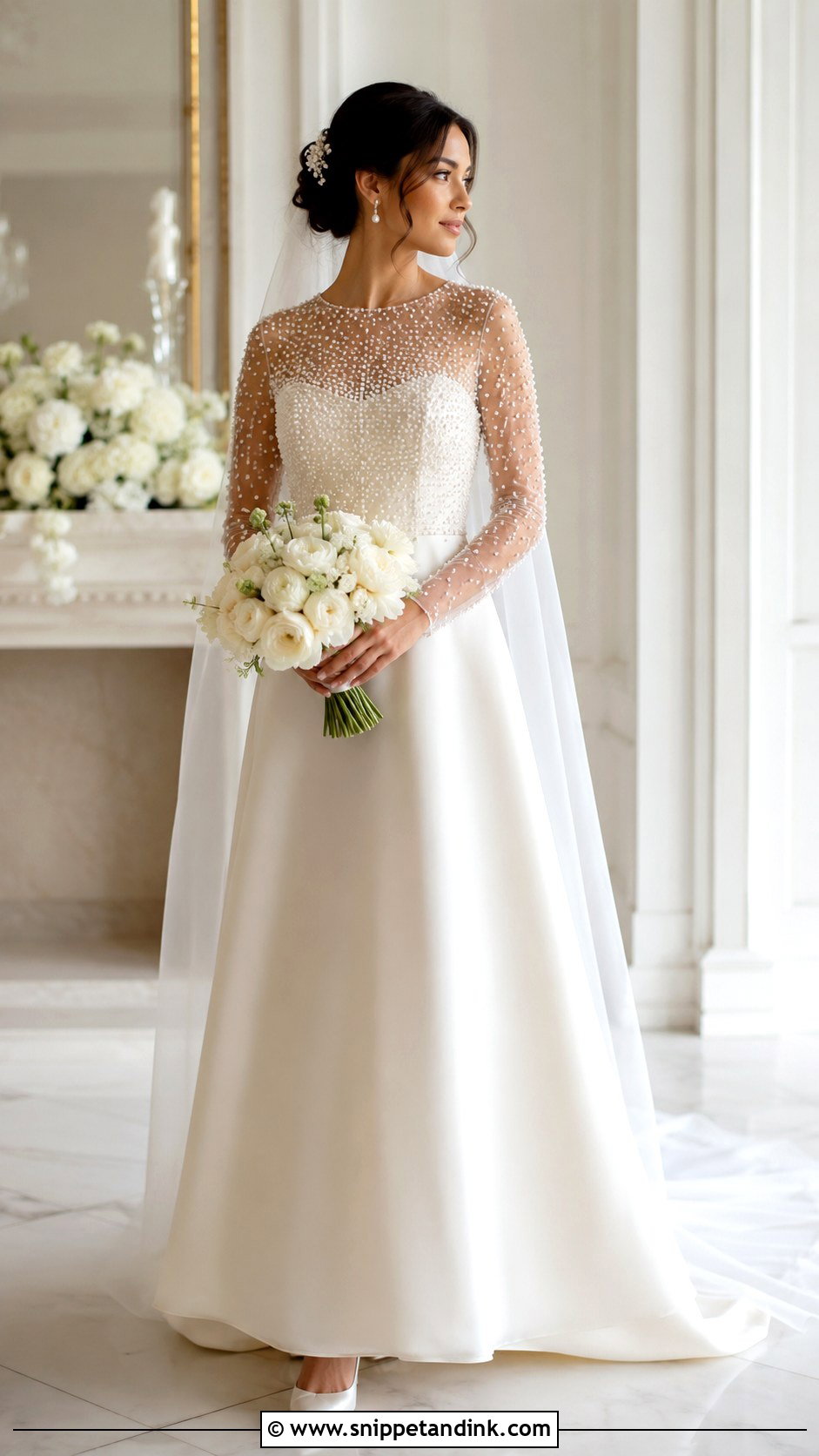
Tiny pearls catch light softly instead of flashing like crystals, which suits a daytime ceremony. They look best scattered across sheer sleeves, a fitted bodice or a light overskirt on a clean silhouette. Check the stitching: pearls on a heavily handled area like the cuffs can loosen, so ask for a few spares and a needle in your emergency kit. Pearl earrings, satin pumps and a plain veil are enough. One pearl hairpin in a low bun is fine; a pearl necklace, bracelet and headband all at once is too much. Carry a simple white bouquet.
11. Boho Bride Look
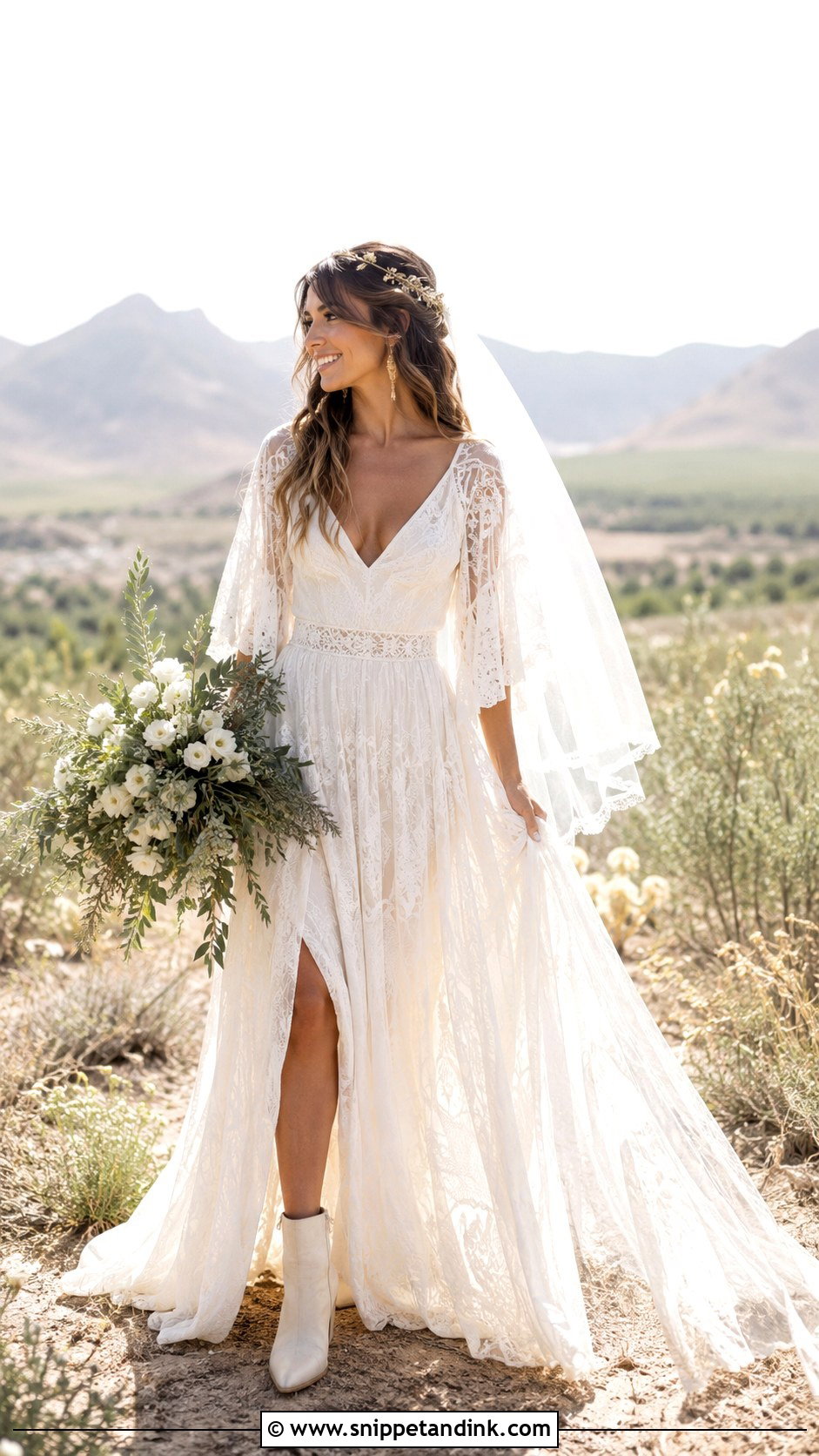
Boho done well looks relaxed, not unfinished. I start with a light lace or chiffon gown with soft sleeves and a defined waist, then choose shoes for the ground: ankle boots on rough paths, flat sandals on sand, low block heels on lawns. Textured gold earrings, a delicate hair vine and a soft veil suit loose waves or an undone braid. A bouquet with wispy stems and greenery completes it at a rustic venue or in the desert.
12. Garden Bride Look
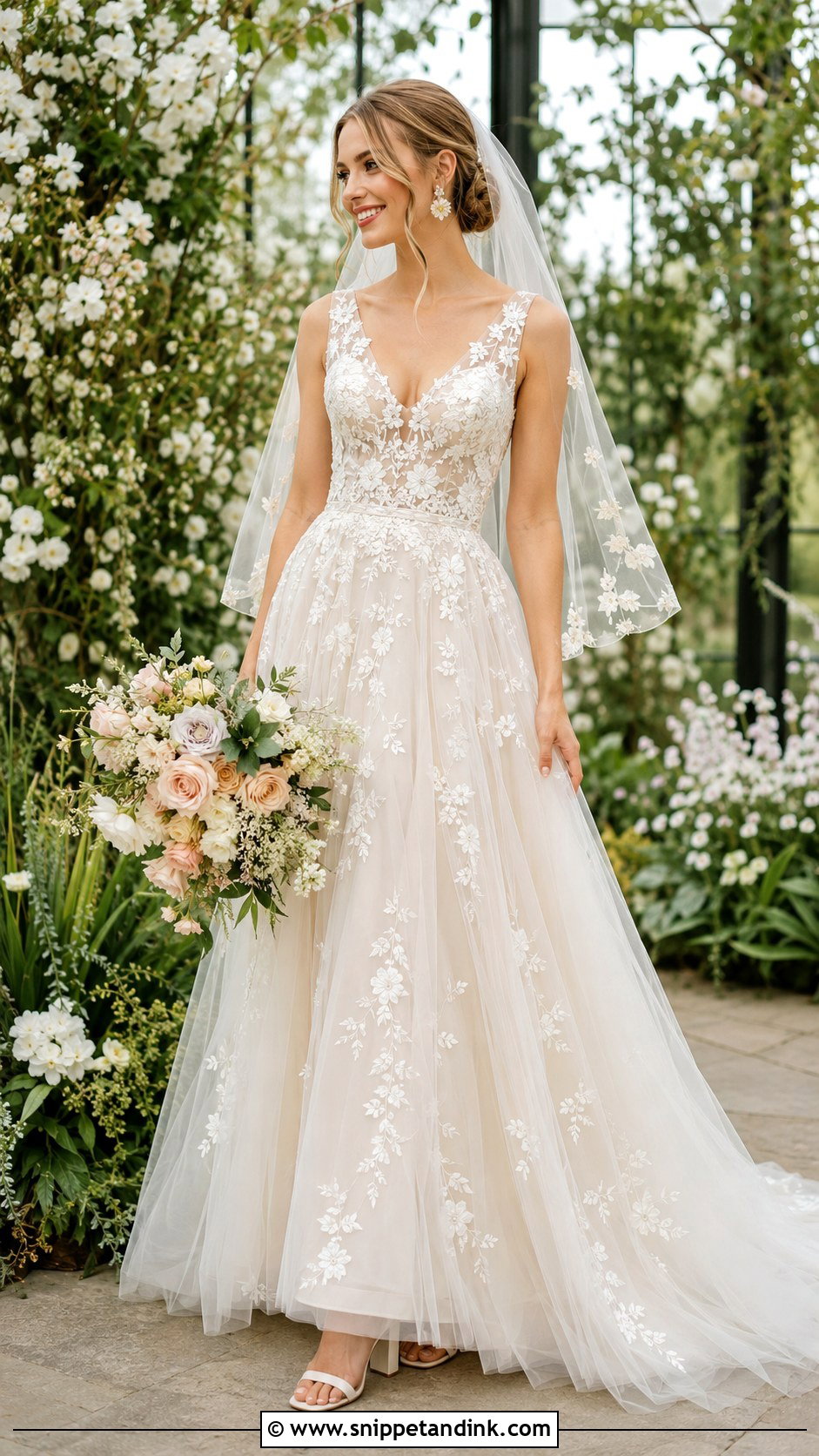
Garden weddings are where heels sink. Choose stable block heels or flats with a wider base, and take the shoes onto actual grass before the day. An airy tulle or organza gown with floral embroidery and a floating skirt suits the setting; heavy trains just collect soil, so ask for a bustle before the reception. A blush, pale blue or botanical detail is a soft alternative to plain white. Add a fingertip veil, floral earrings, a small pastel bouquet and a braided low bun with a few floral pins.
13. Beach Bride Look
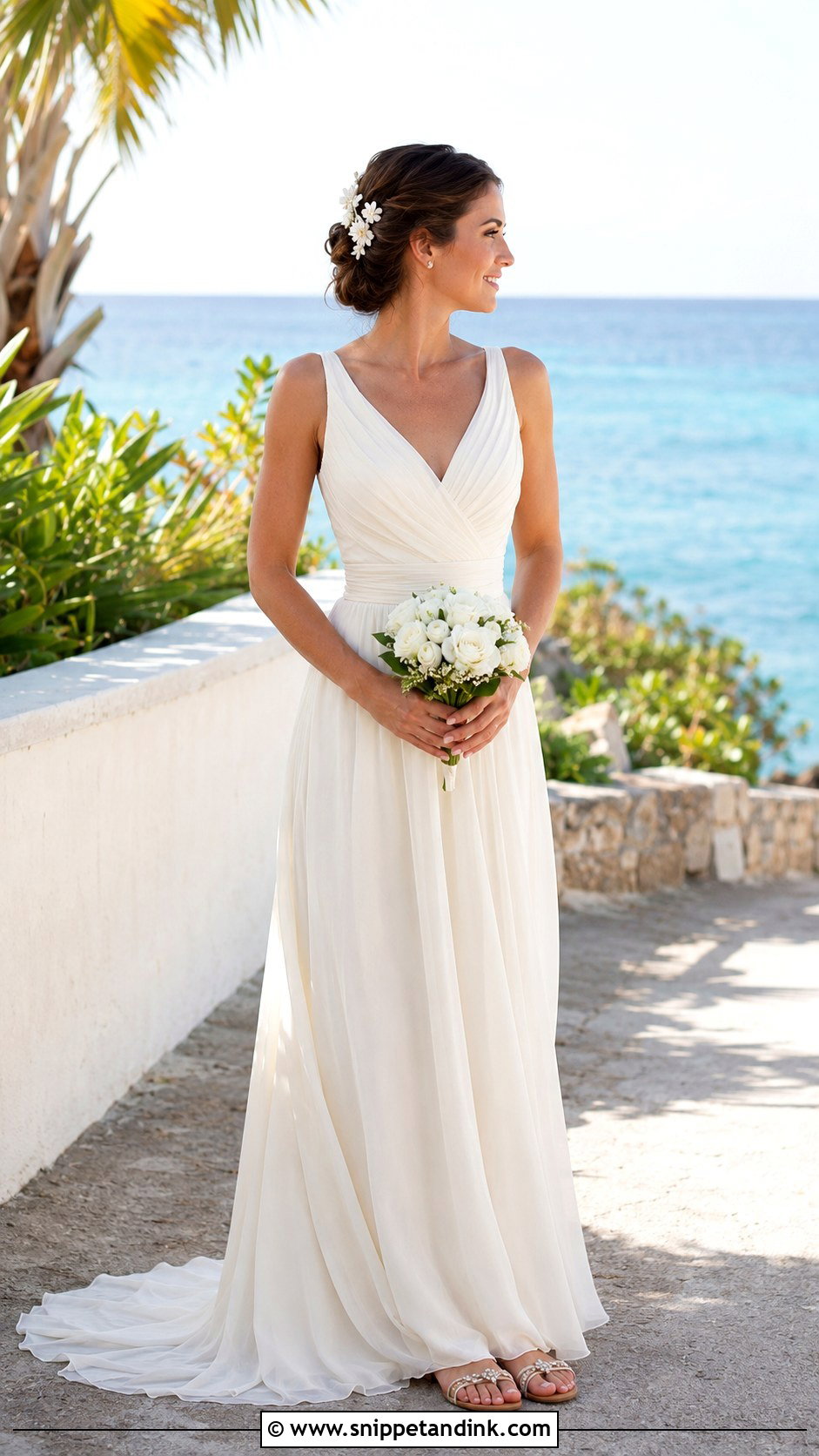
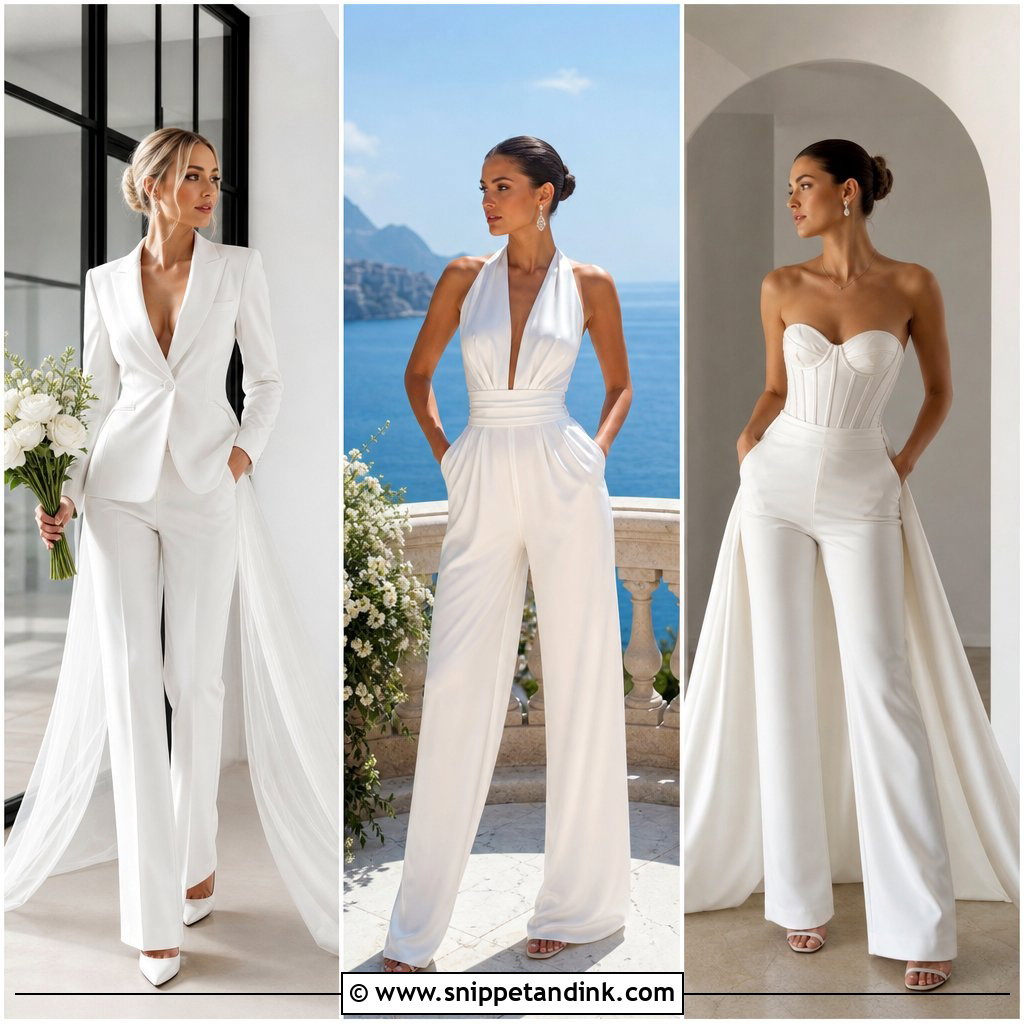
On a beach, wind is the real problem. Lightweight chiffon, crepe or soft satin with minimal layering moves well, and a halter, V or one-shoulder bodice stays cool. Flat embellished sandals, barefoot jewellery or low wedges on firm paths are all practical. I pin the veil into the bun at several points, or swap it for a short veil, a scarf or a floral comb, since a cathedral veil becomes unmanageable in a sea breeze. Small earrings, a secure low bun and a compact white and pale green bouquet finish it.
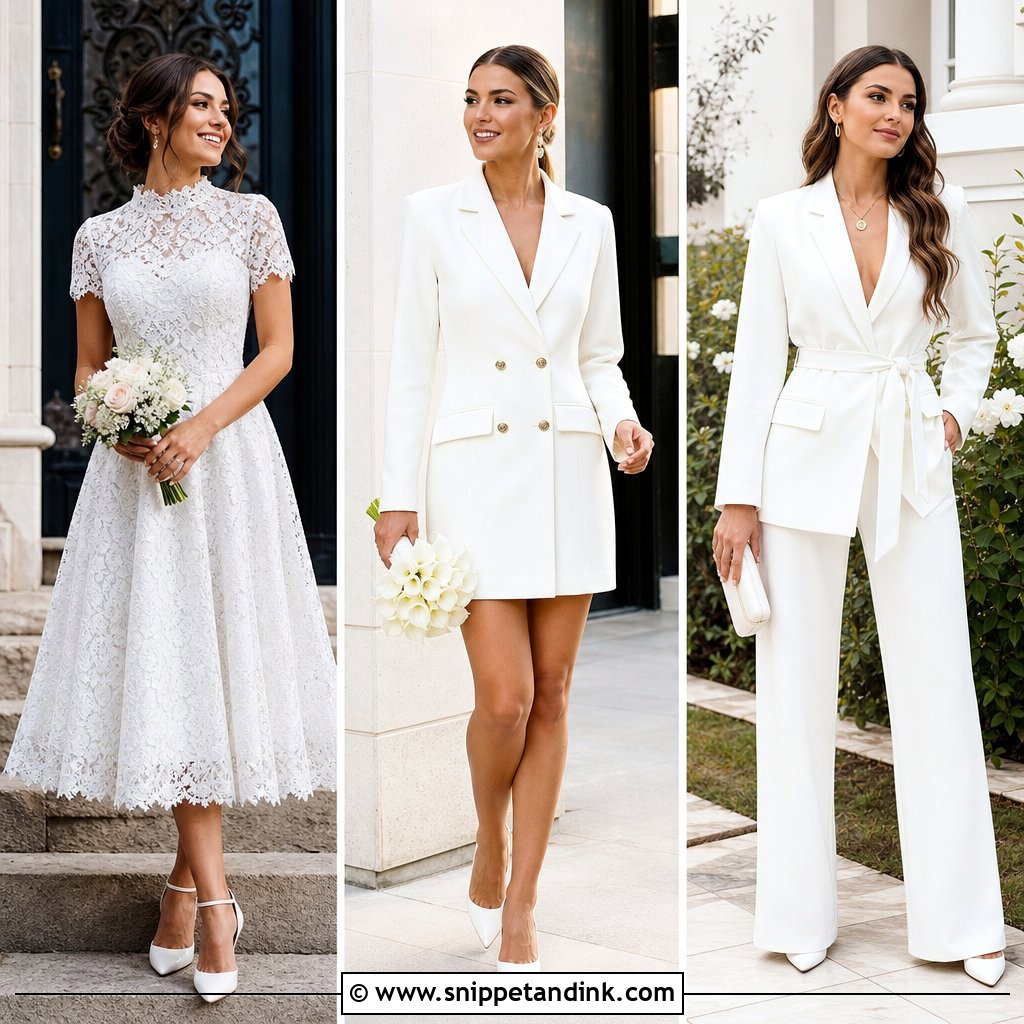
14. Courthouse Bride Suit Look
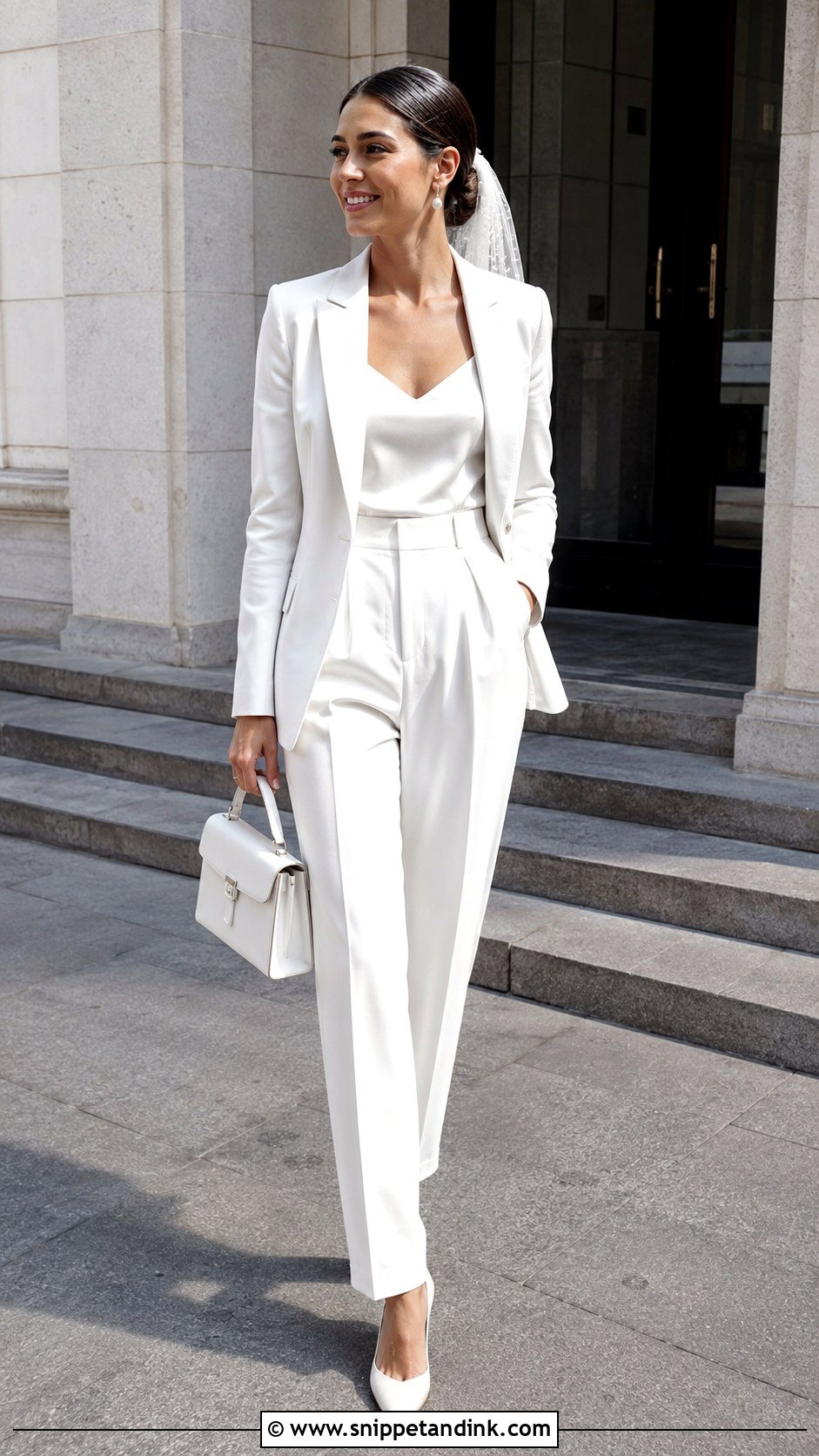
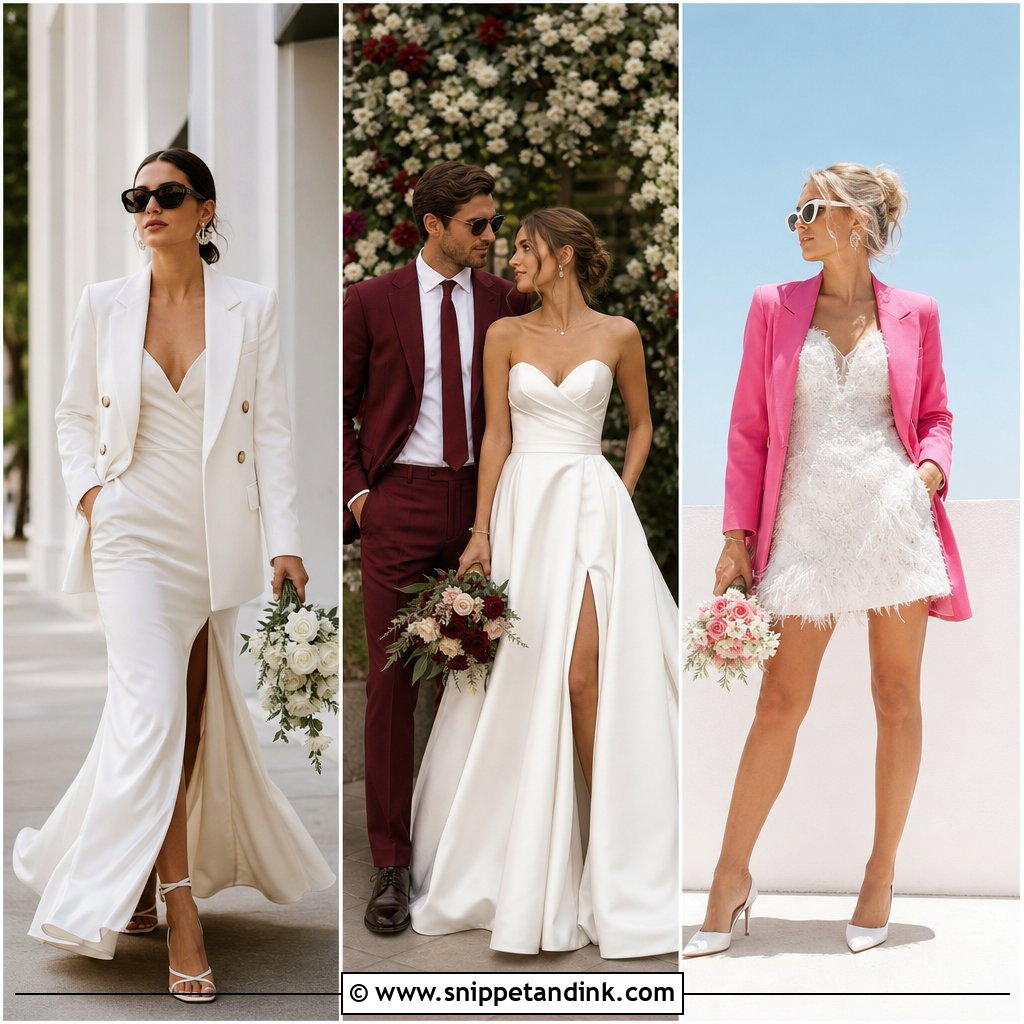
A white suit lives or dies on tailoring. The shoulders should sit at your shoulder point and the trouser hem should just kiss the top of your shoe at the back, so bring the shoes to the tailor. High-waisted trousers with a fitted blazer, silk camisole or structured vest underneath give options through the day. Pointed pumps, a small top-handle bag, pearl earrings and a short or birdcage veil make it clearly bridal. Off comes the blazer for lunch and photos. It’s also one of the few wedding outfits you’ll wear again.
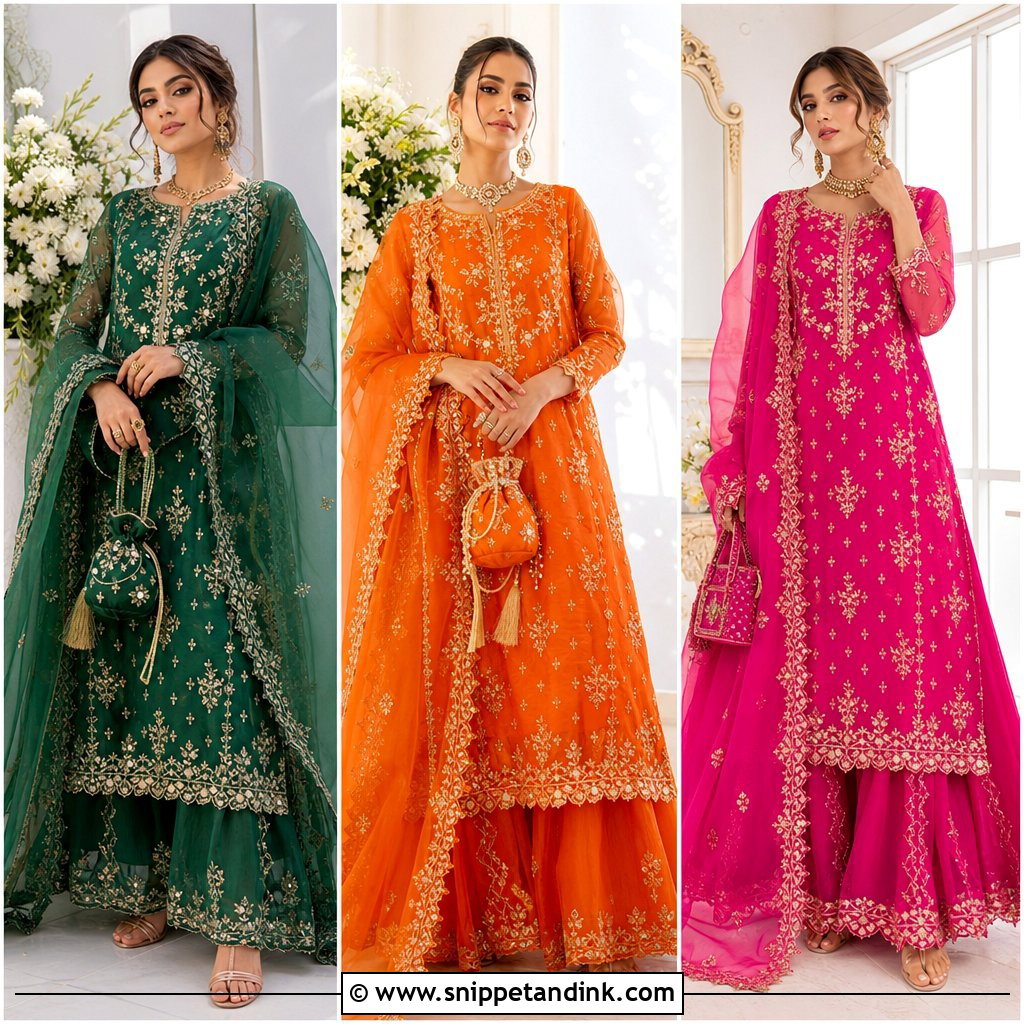
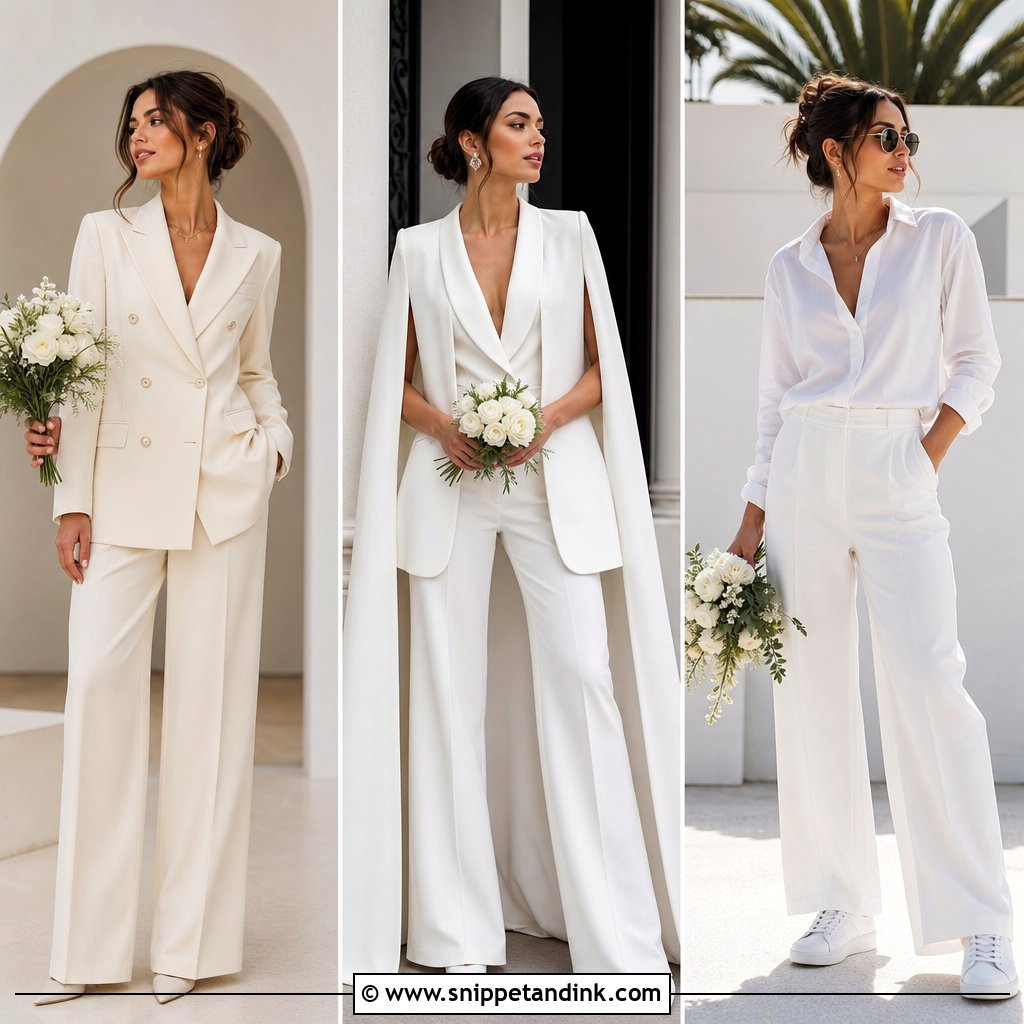

15. Bridal Jumpsuit Look
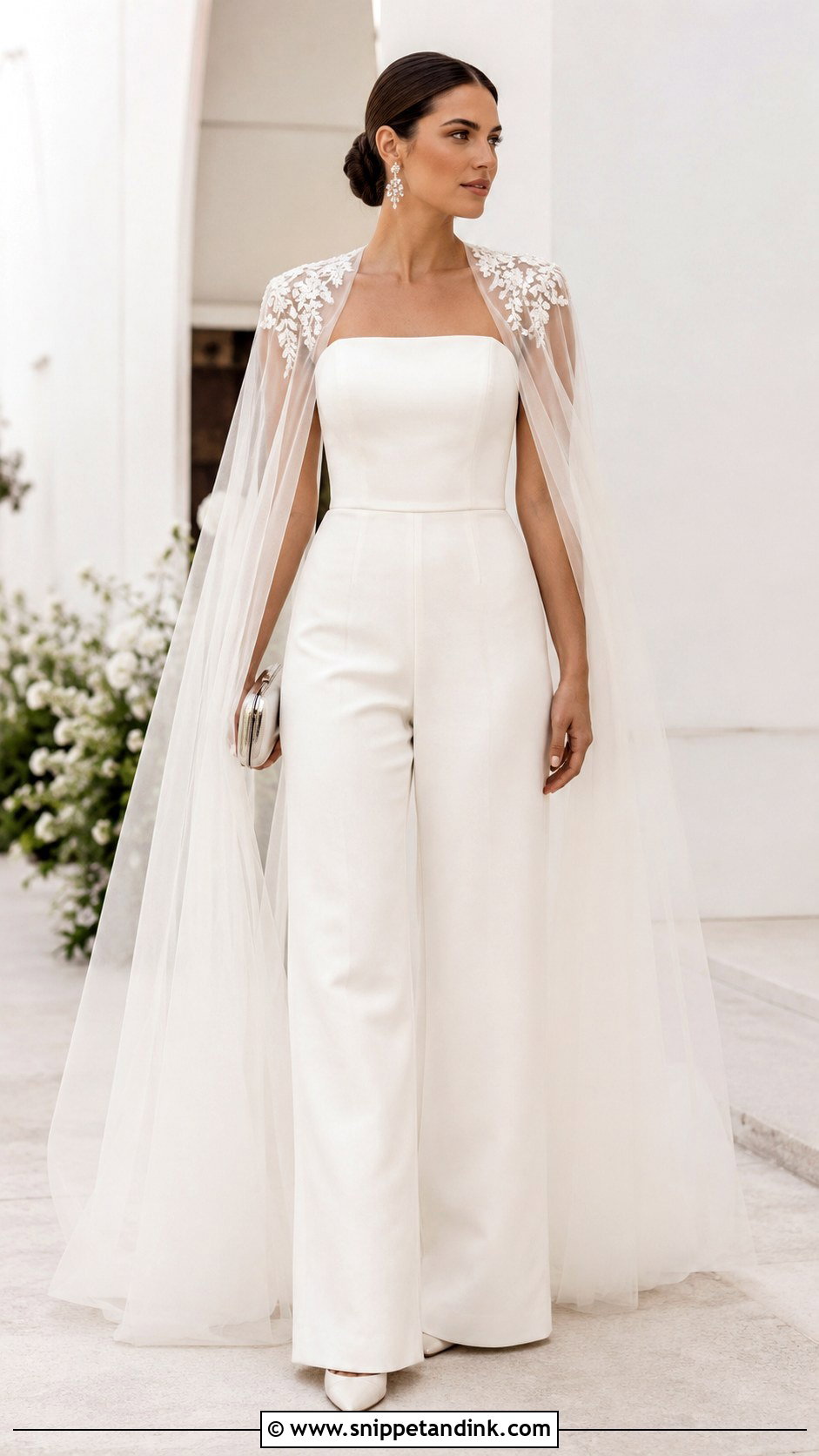
Jumpsuits are comfortable, but the fit is more exacting than a gown’s because the rise has to suit your torso length. If the crotch sits low or pulls, no styling fixes it, so try on several brands before deciding. A defined waist, supportive bodice and wide or straight legs in crepe or satin look most polished. Pointed heels, statement earrings and a detachable cape or overskirt make an entrance; a sleek clutch is all you need after. Hem the legs to skim the floor in your wedding shoes.
16. Vintage Bride Look
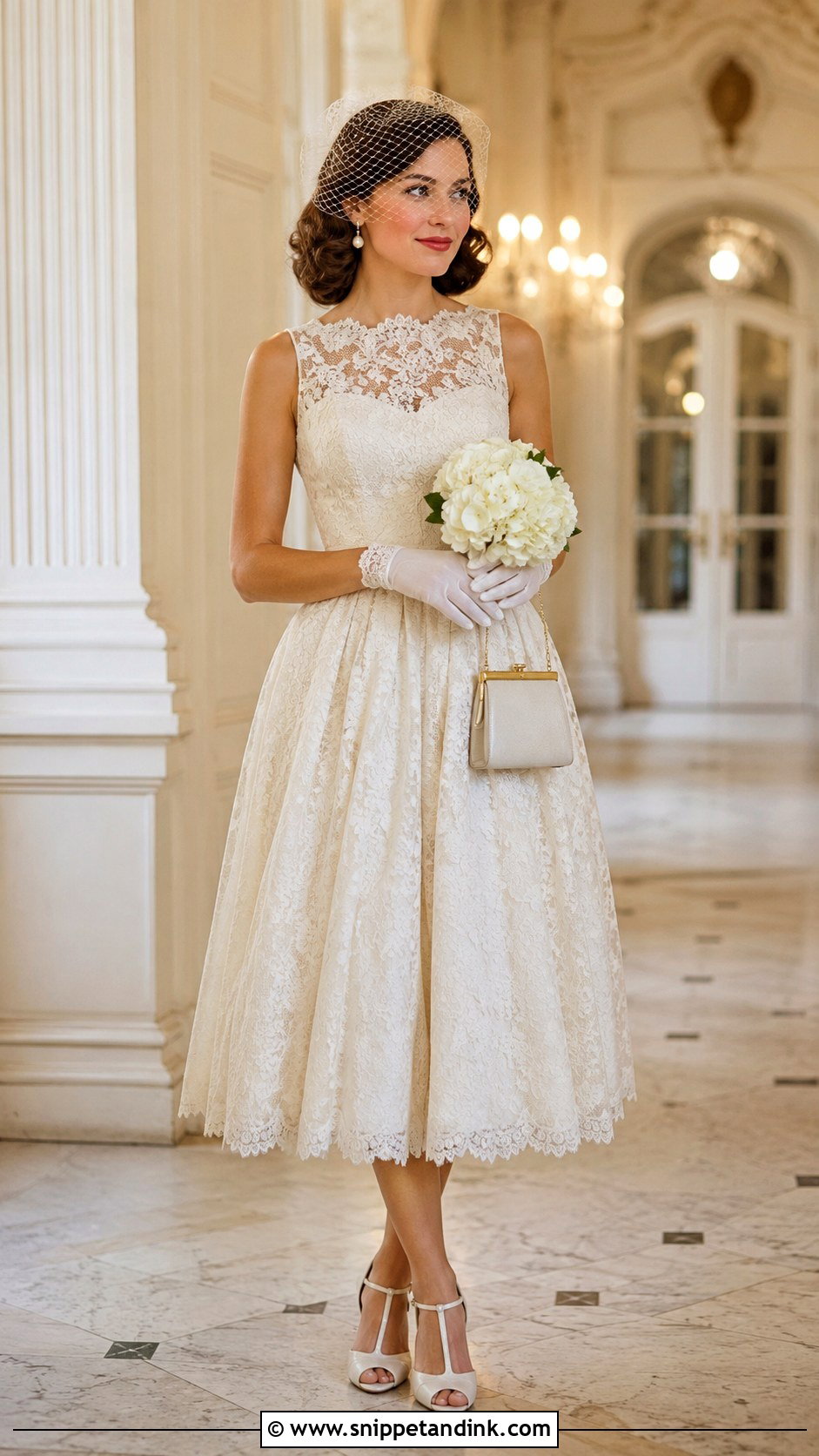
Vintage works when you borrow one or two details from a decade rather than recreating it. Start with a tea-length lace dress, a bias-cut satin gown or a long-sleeved column, then add gloves, a birdcage veil, pearl buttons or T-strap shoes. Soft waves, a rolled updo or a red lip finish the period feel without tipping into costume. A small structured bag and compact bouquet complete it for a historic venue or city hall.
17. Modest Bride Look
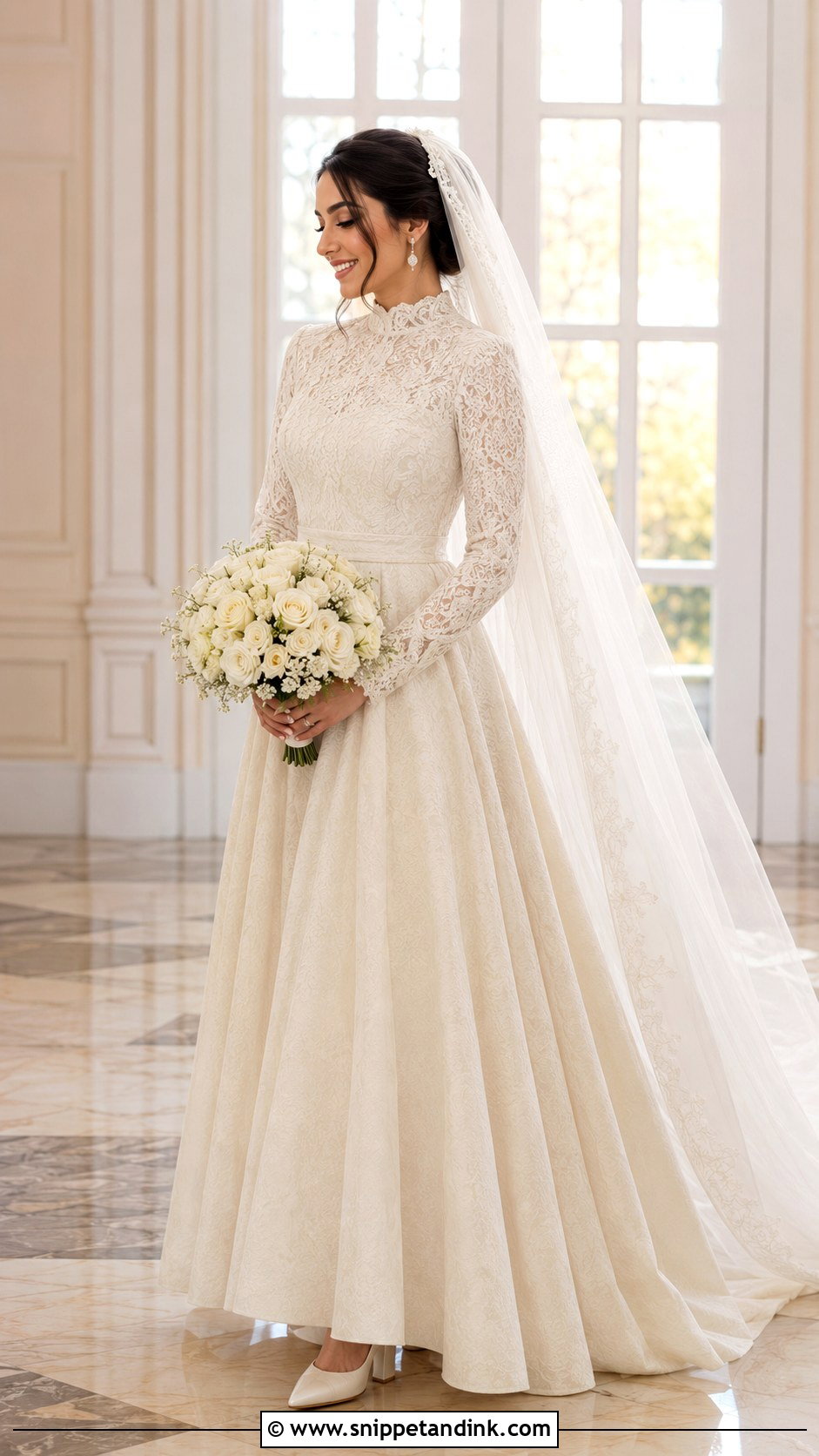
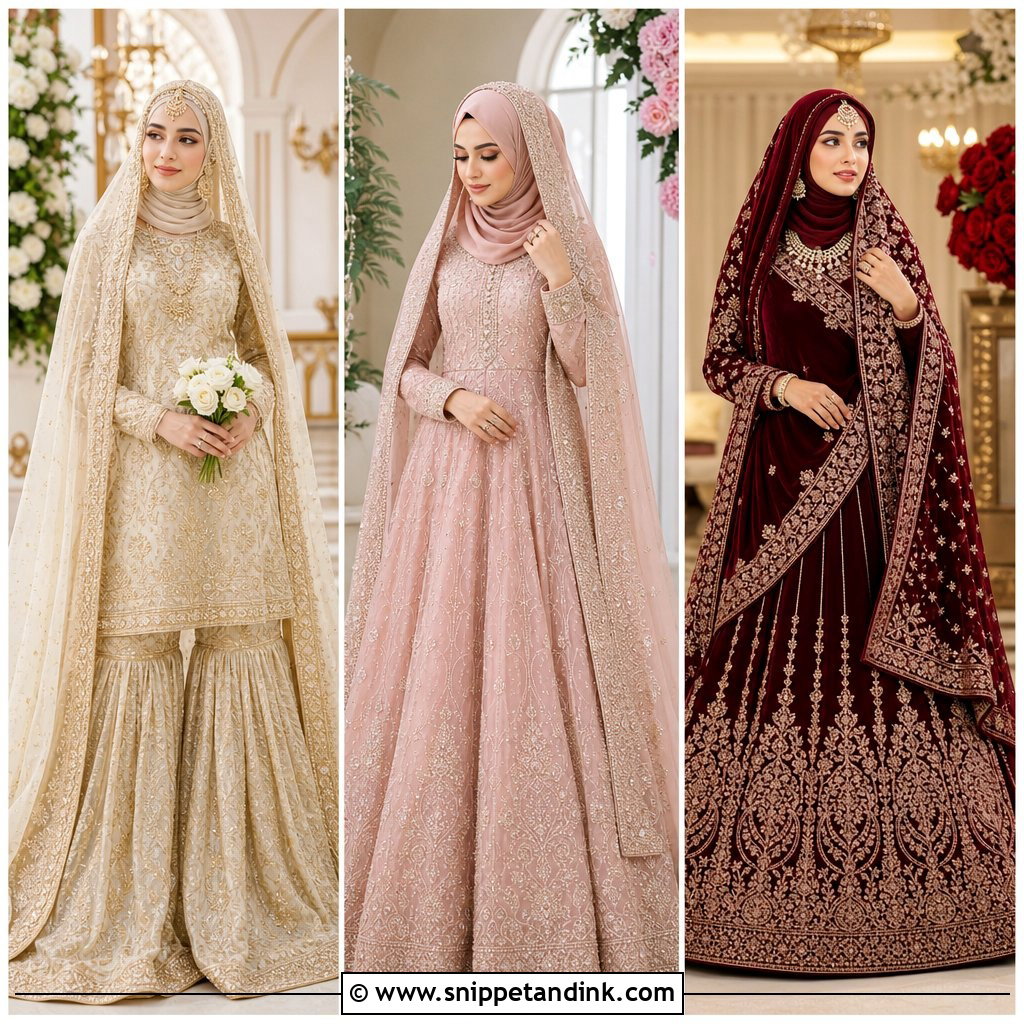
Coverage doesn’t have to mean a shapeless cut. I look for a high neckline, full sleeves and a defined waist so the gown still has form. Soft lace, chiffon or crepe adds movement without bulk. If you’re wearing a hijab or other head covering, plan the veil with it from the first fitting: it can sit over the covering or attach beneath, and the pinning needs testing. Closed heels and drop earrings are enough when the sleeves and neckline are detailed. A structured bouquet gives definition next to a flowing skirt.
18. Plus-Size Bride Look
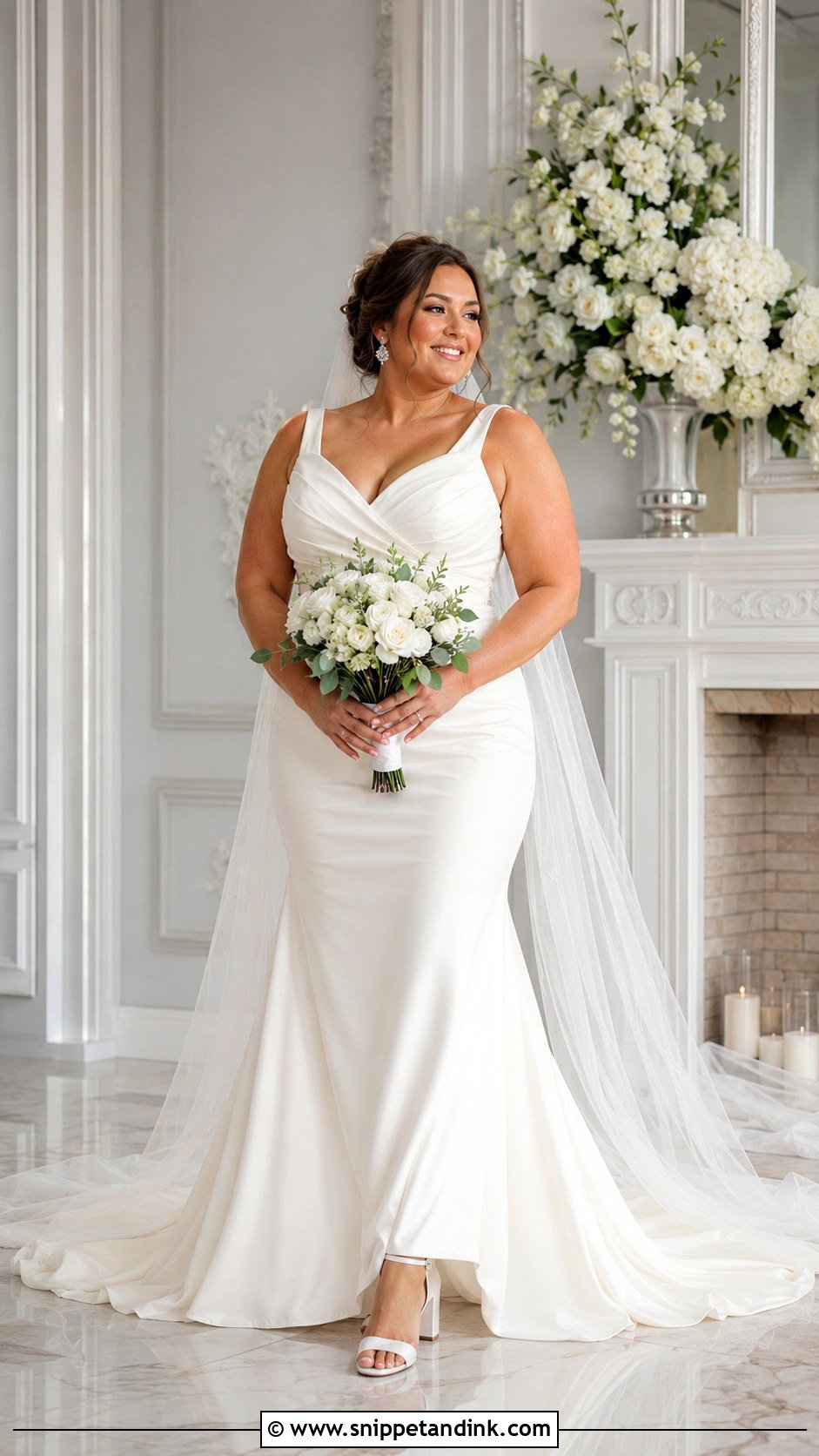
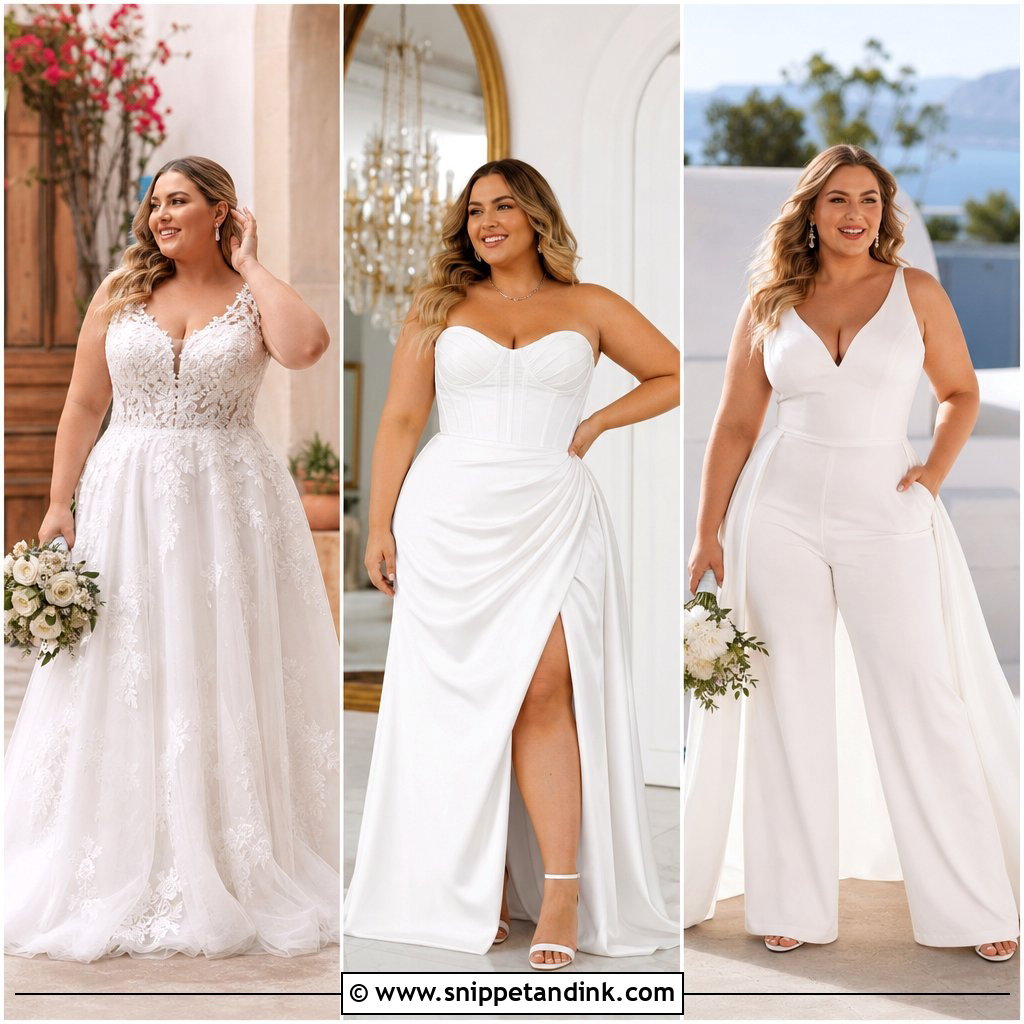
For plus-size brides, the outfit starts inside the dress. Wide straps, internal boning, a neckline that stays put and good tailoring decide how you feel by evening. I’d try an A-line, a fit-and-flare, a ball gown and a column before settling, rather than being steered to one supposedly flattering shape. Supportive block heels, earrings scaled to the gown and a veil length that suits it finish the look. Bring the actual underwear and shoes to the final alteration, then walk, sit and dance in the fitting room.
19. Reception Mini Dress Bride Look
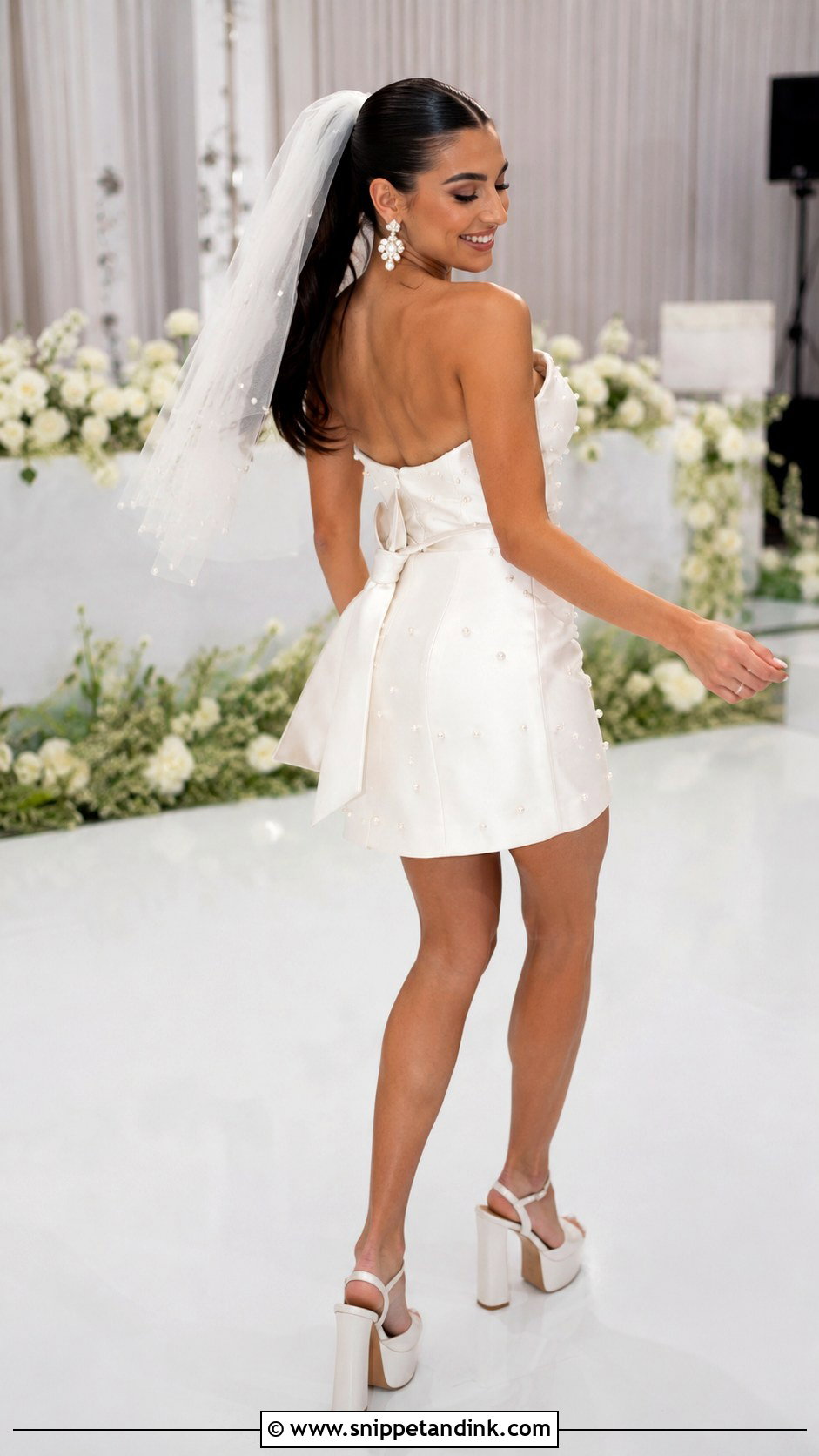
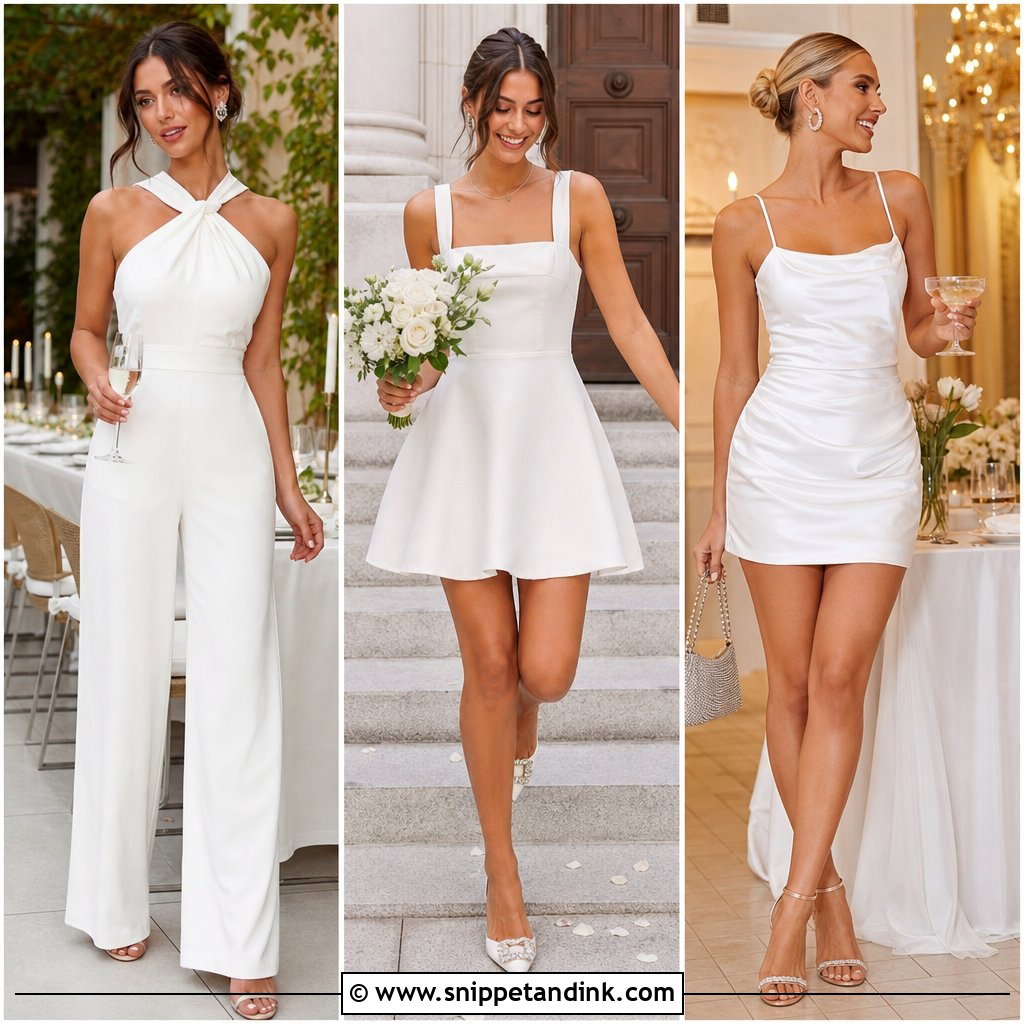
A short reception dress is the moment to play. Structured satin, feathers, pearls or a bow can all tie it back to the ceremony gown. Choose shoes you can dance in, such as block heels, embellished flats or platforms. Statement earrings and a short veil keep it bridal. I check the length seated and mid-dance, since a mini rides up more than people expect. A neat ponytail or bun survives a busy dance floor better than loose curls. As a complete second outfit, it’s far easier to move in than a full gown.
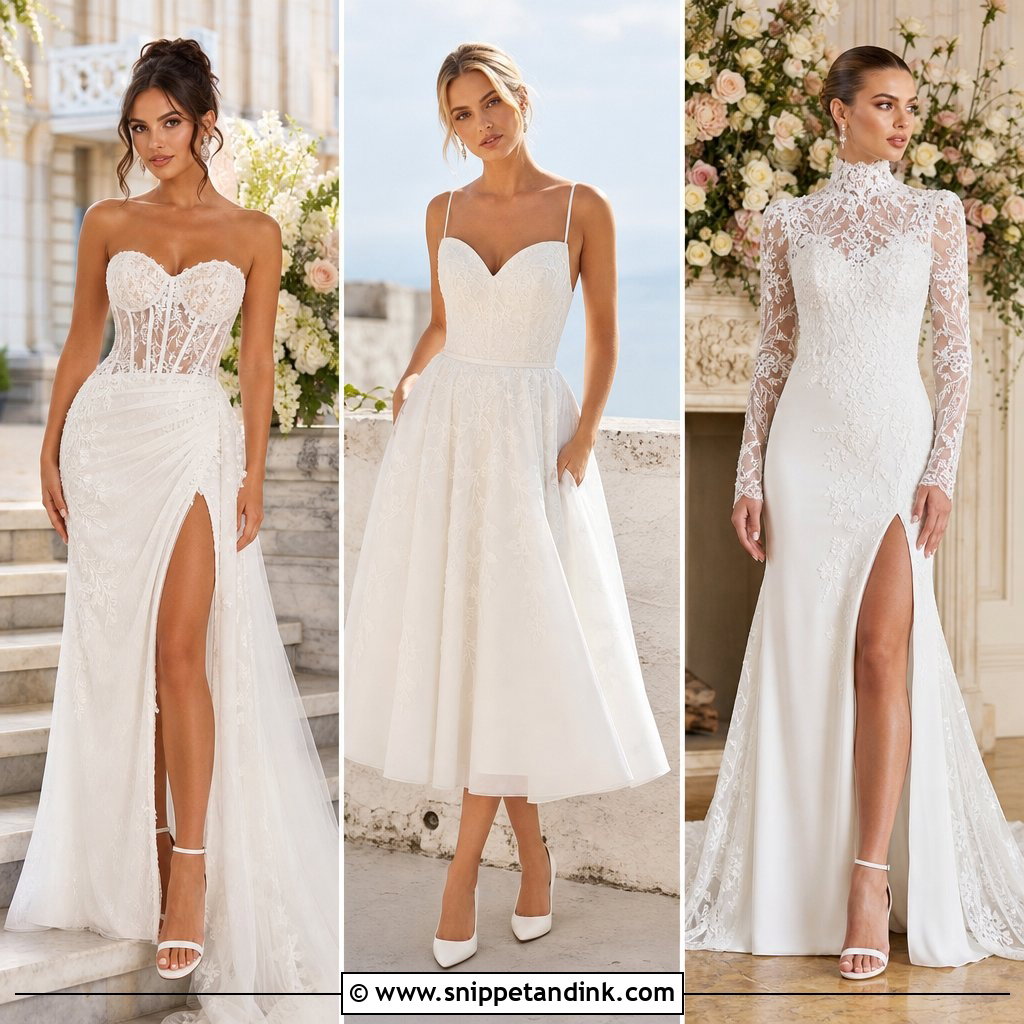
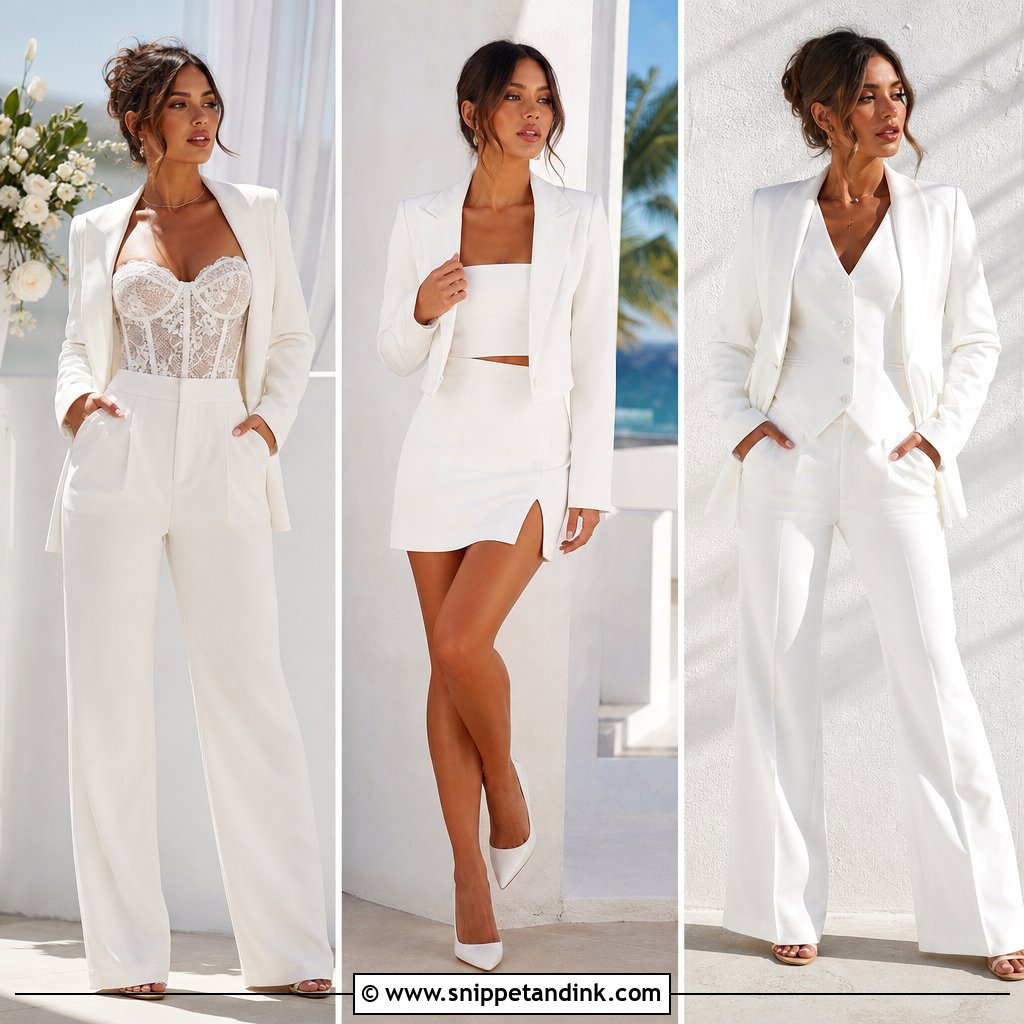

20. Detachable Overskirt Bride Look
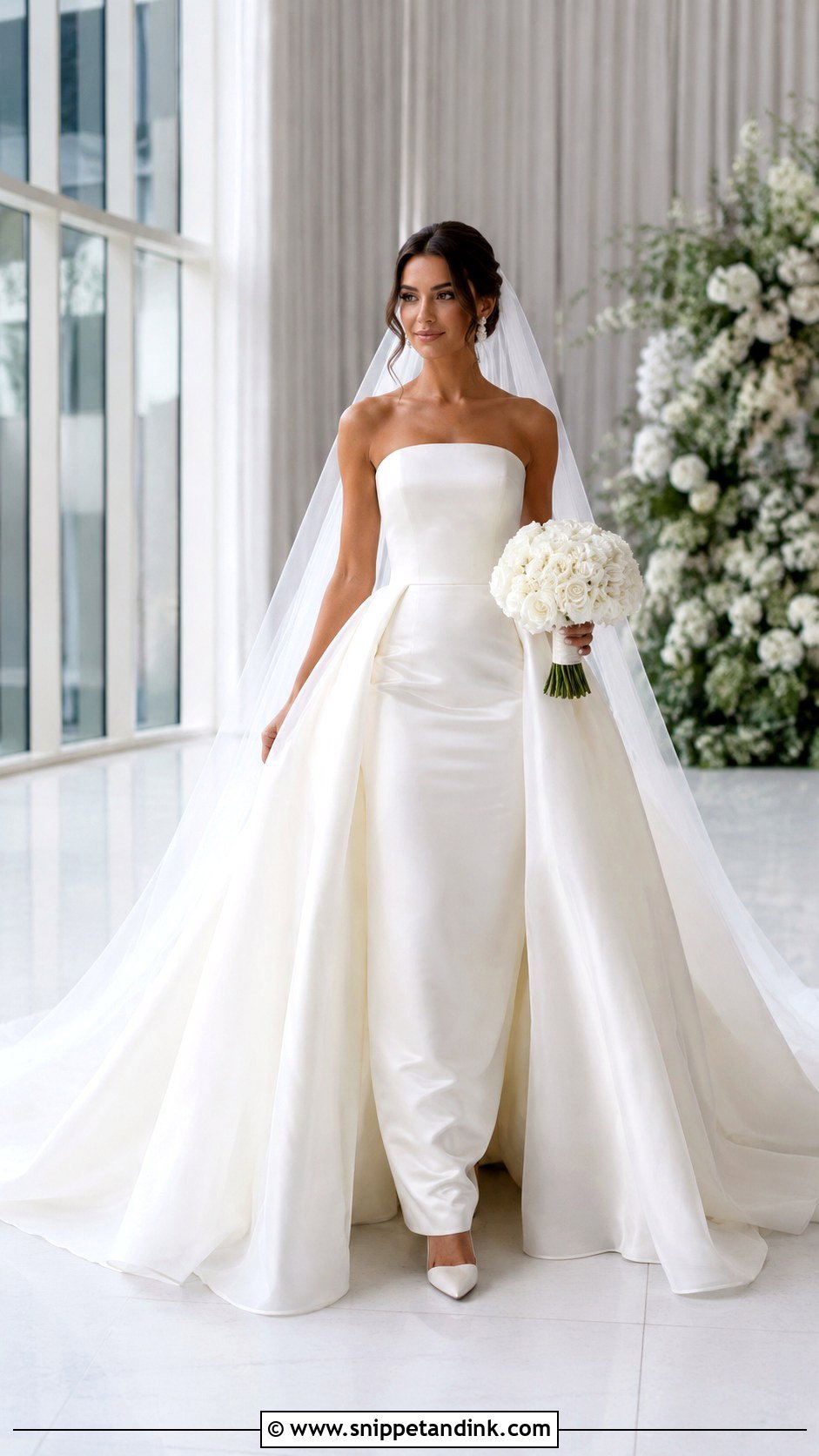
A detachable overskirt turns a fitted column, sheath or jumpsuit into a full ceremony silhouette. The waist closure decides whether it looks built-in or added on, so ask your seamstress to sit the overskirt band over the base garment’s waist seam where it can hide. Elegant heels, refined earrings and a long veil go with the formal version. After photographs, remove the skirt and veil and change into a second, comfier pair of shoes. You get two silhouettes without buying and altering two dresses.
Planning the Change Into a Second Look
Several of these looks involve a change: removing an overskirt, a topper or a bow, or swapping into a mini or jumpsuit. Brides tend to underestimate the time this takes. A full change with hair adjustments rarely takes less than twenty minutes, and an overskirt removal still needs five or ten with help.
When to change
The easiest moments are straight after the formal portraits or right before dinner is served, when guests are busy finding seats. Tell your planner or venue so a private room is ready and nobody needs you for that window.
What to pack for it
- Your second outfit on its own hanger, already steamed.
- Comfortable shoes, plus blister plasters.
- Spare hair pins and a small mirror, since removing a veil often loosens the style.
- A garment bag and a hanger for the ceremony pieces, so they don’t end up on a chair.
- One person who has practised the fastenings with you.
Wear the Whole Outfit Once Before the Wedding
The right outfit suits the celebration and the person wearing it. Lace, satin, a suit or a short dress, it doesn’t matter which: start with the silhouette that feels most comfortable, then build shoes, jewellery and hair around its best feature. Think about the venue, weather and the ground you’ll walk on. Then do a full dress rehearsal at home, with underwear, veil, shoes and backup shoes. Twenty minutes in the complete look will tell you more than any fitting-room mirror.
You'll Like These Ideas:


Leave a Reply