
I do bridal makeup, which means I meet the outfit before I meet the face. The lehenga hangs on the door, the jewellery is laid on the bed, and every choice I make with foundation, eyes and lips follows what’s already there. Indian bridal dressing now runs from classic red lehengas and Kanjeevaram silks to pastel ceremony outfits, jewel-tone reception looks, pre-draped sarees and flat bridal shoes, and each one asks for a different face. A heavy outfit alone doesn’t make the look. Colour, blouse, dupatta, jewellery, hair, makeup and comfort have to agree. Below are 25 fresh ideas for an Indian bride, across ceremonies, regions and moods, with the makeup and finishing notes I’d give for each.
Why Your Lehenga Colour Changes the Foundation I Use
The outfit sits right under your chin all day, and its colour reflects up onto your skin. Red and maroon warm the face, green can bring out redness, gold bounces light, and ivory shows any mismatch in the base. So the first thing I do at a trial is hold the dupatta under the bride’s face by a window and look at her skin in that light, not in a mirror under bulbs.
Then I match foundation to the neck and chest, not just the jaw. Bridal blouses often have deep backs and wide necklines, and the camera sees all of that skin. If the face is a shade lighter than the neck, every photo shows a line at the jaw.
What to bring to a trial
- The dupatta or a fabric swatch from each outfit you’ll wear.
- Photos of the jewellery, or the pieces themselves if they’re heavy.
- A top with a neckline close to your blouse, so we can blend the chest and back.
- Your own phone, to take flash and no-flash photos before you leave.
The flash photo matters most. Some powders and sunscreens look fine in person and turn white under a camera flash, and that’s far better discovered at a trial than in the album.
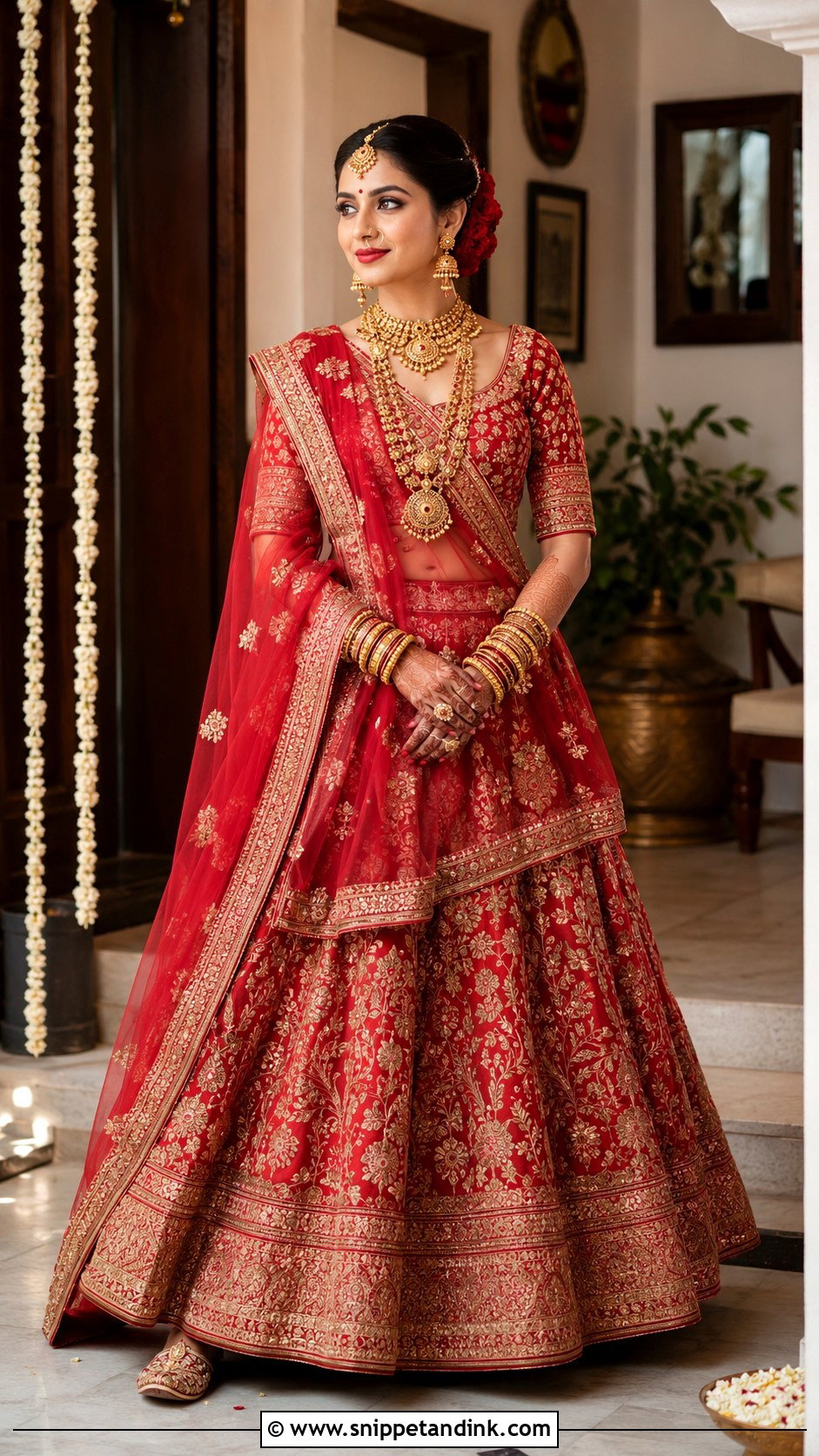
1. Red Bridal Lehenga Look
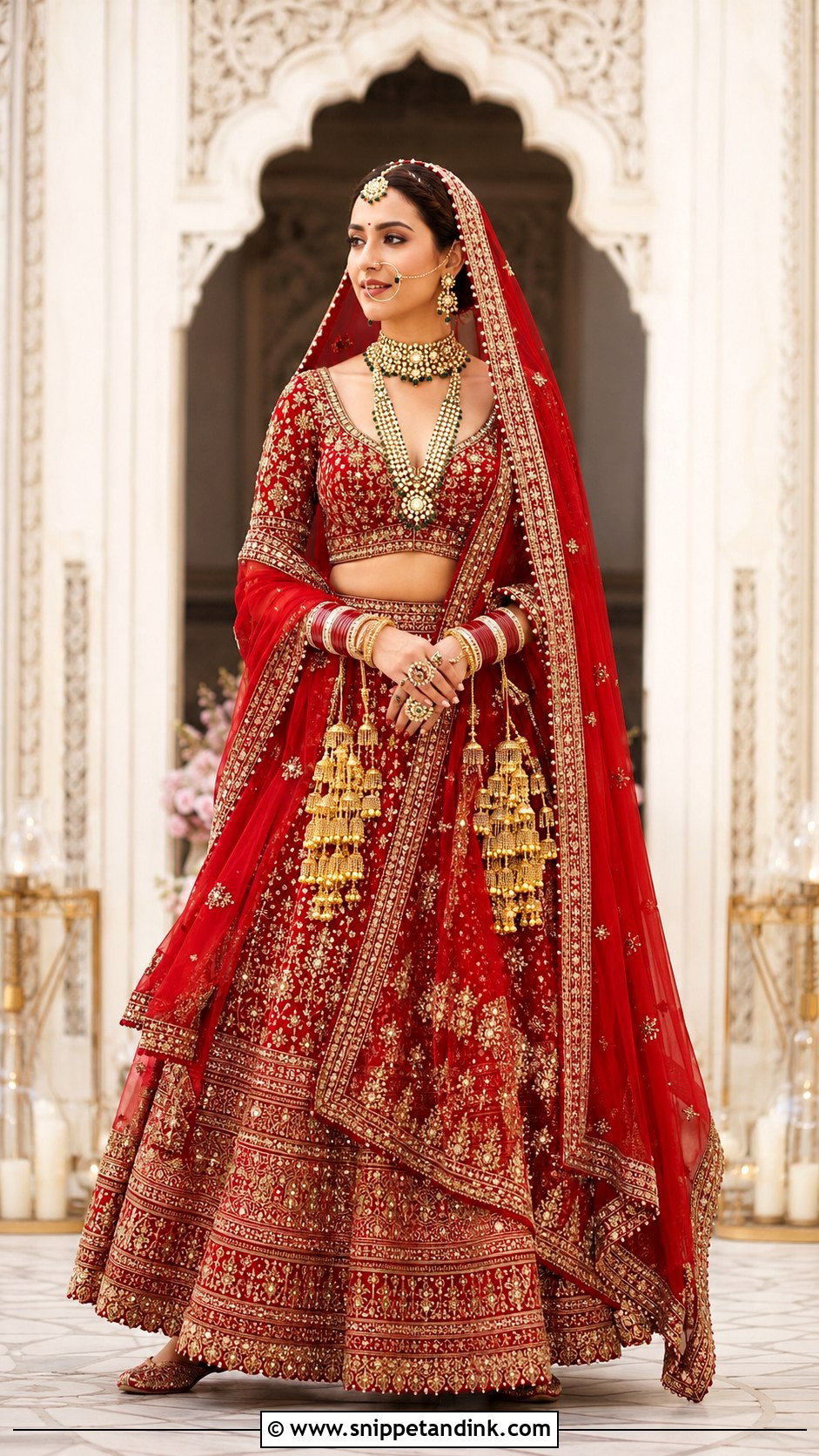
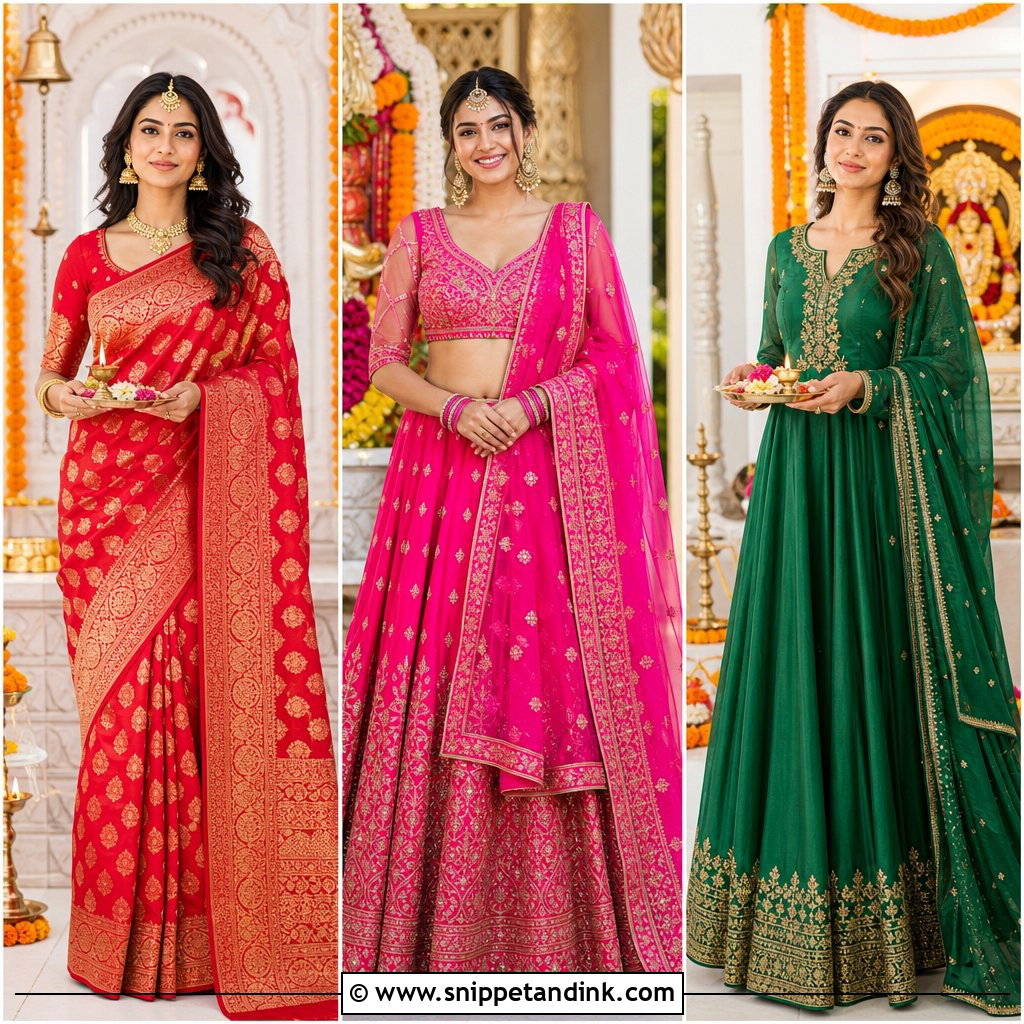
Red still owns the main ceremony for many families. Silk, velvet or raw silk with zari, dabka, zardozi or sequin work gives it the weight it needs, and a second sheer dupatta over the head reads instantly bridal. A kundan choker, layered rani haar, matha patti, nath, bangles and embroidered juttis complete it. With this much red near the face, I match the lip to the lehenga’s undertone, blue-red with a cool crimson, orange-red with a warm one, because a mismatch shows clearly in close-ups. Defined eyes and a sleek bun with fresh flowers keep everything in proportion.
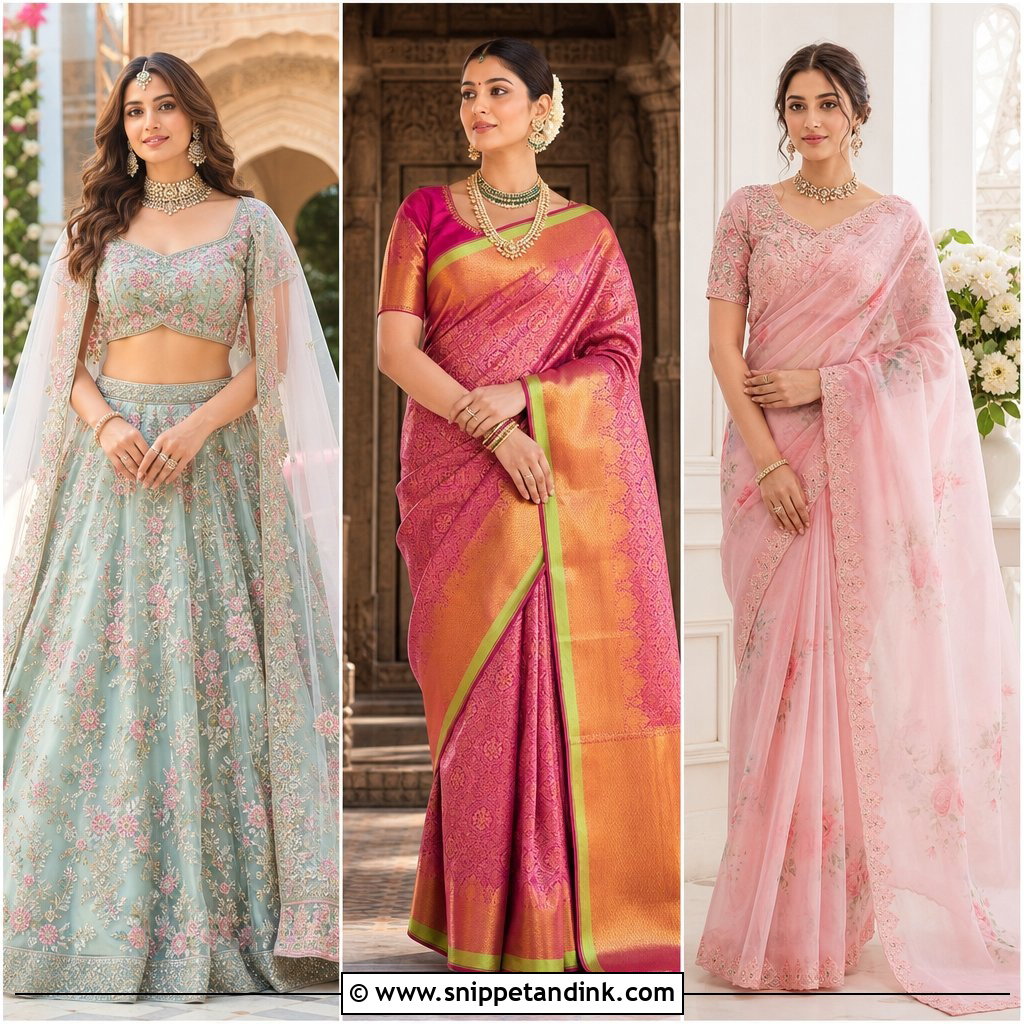
2. Pastel Bridal Lehenga Look
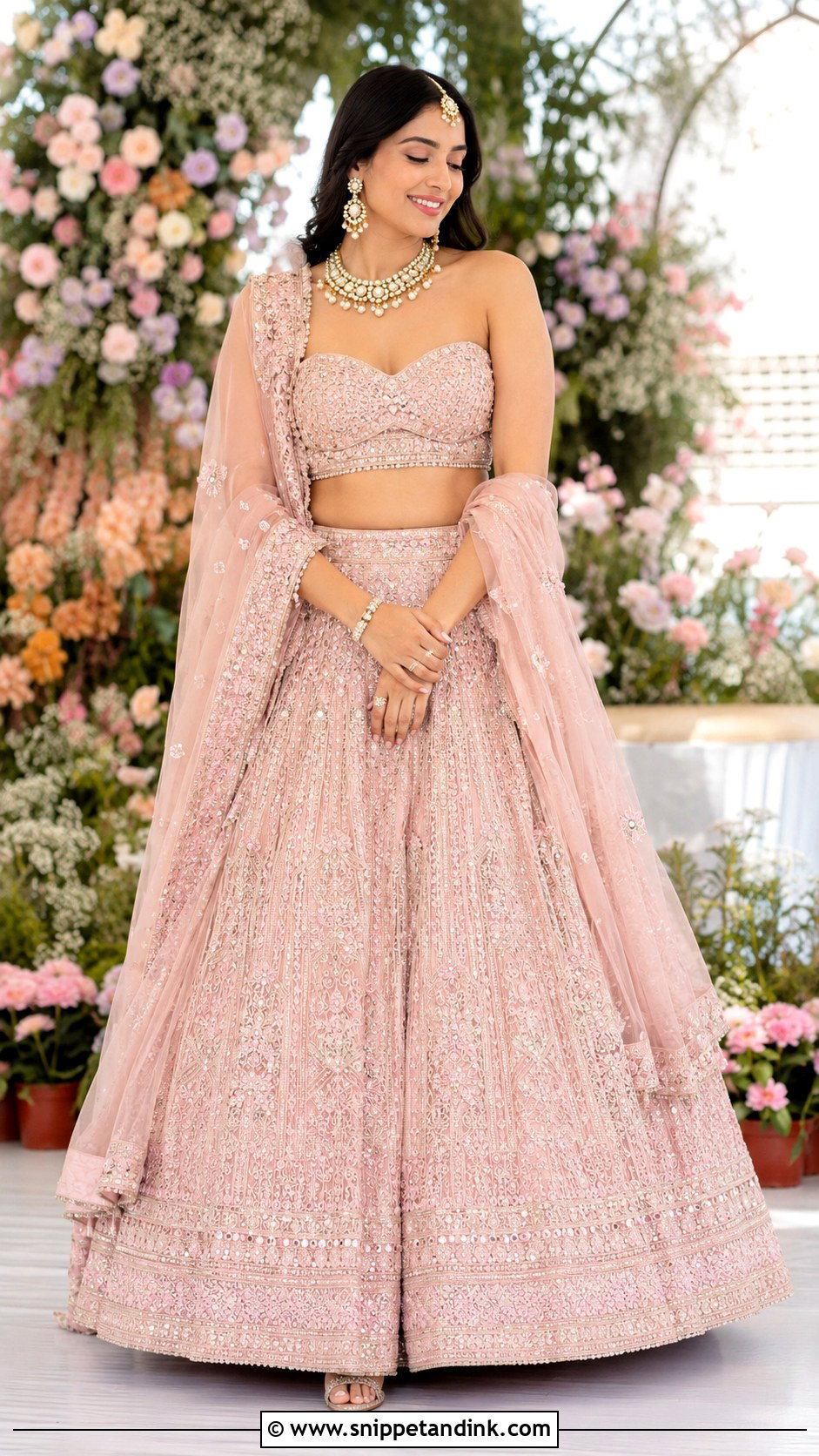
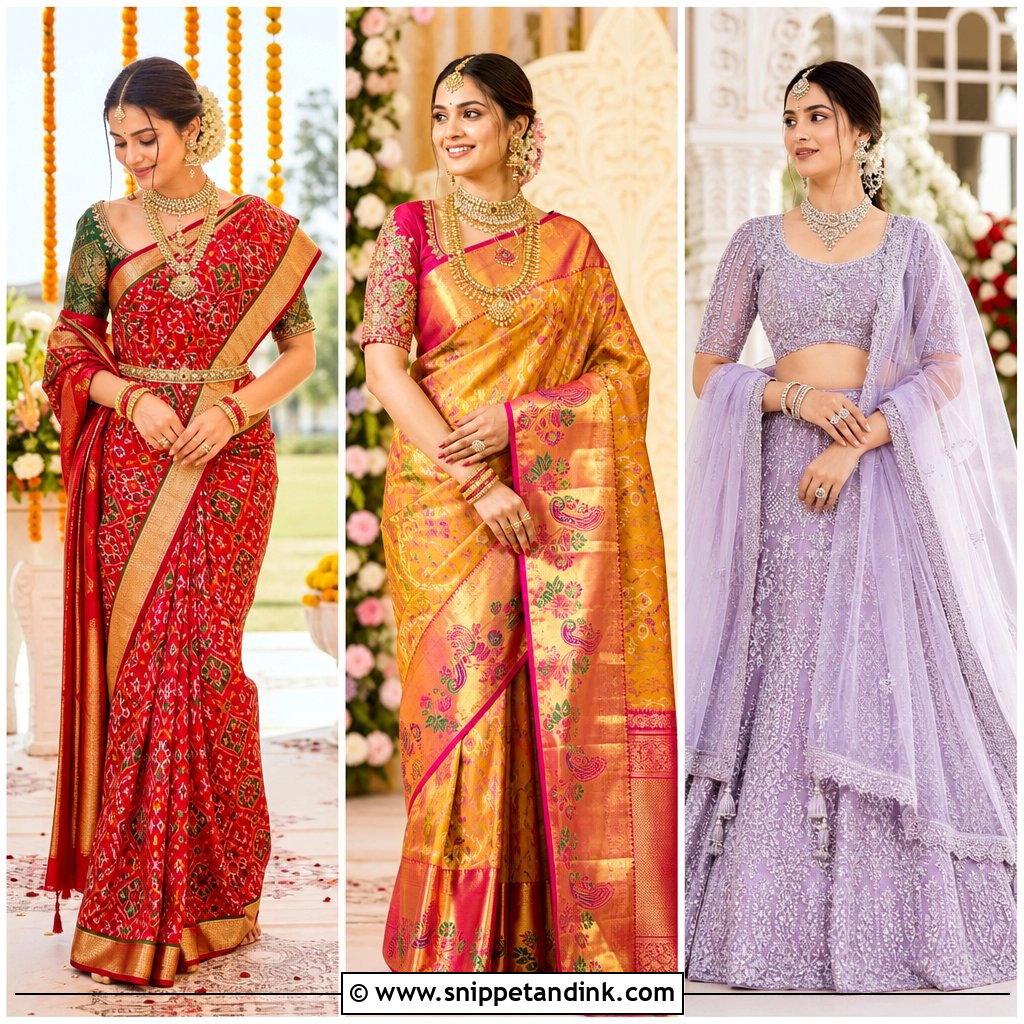
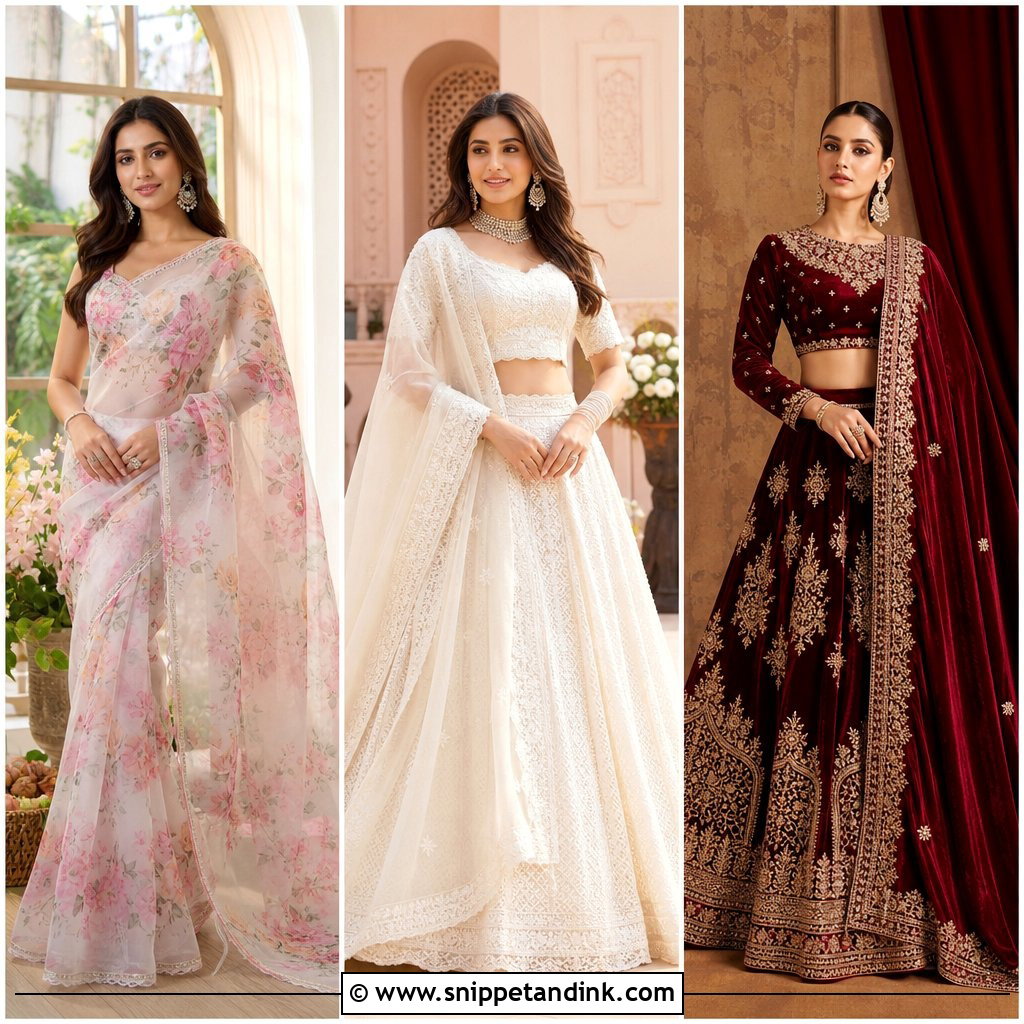
Pastels belong to daylight. Blush, powder blue, peach, sage and lavender soften the whole picture, and pearls, tone-on-tone thread or small mirrors keep them from looking plain. A sweetheart or square-neck blouse feels modern, and a light dupatta keeps it airy. Pair it with polki, pearl drops, soft waves and nude heels or embellished flats for outdoor venues. Here’s what I watch: a pale outfit can make a bride look washed out if the makeup is too soft, so I add more warmth on the cheeks and a deeper lip than you’d expect. Dewy skin, yes; no colour at all, no.
3. Kanjeevaram Saree Bridal Look
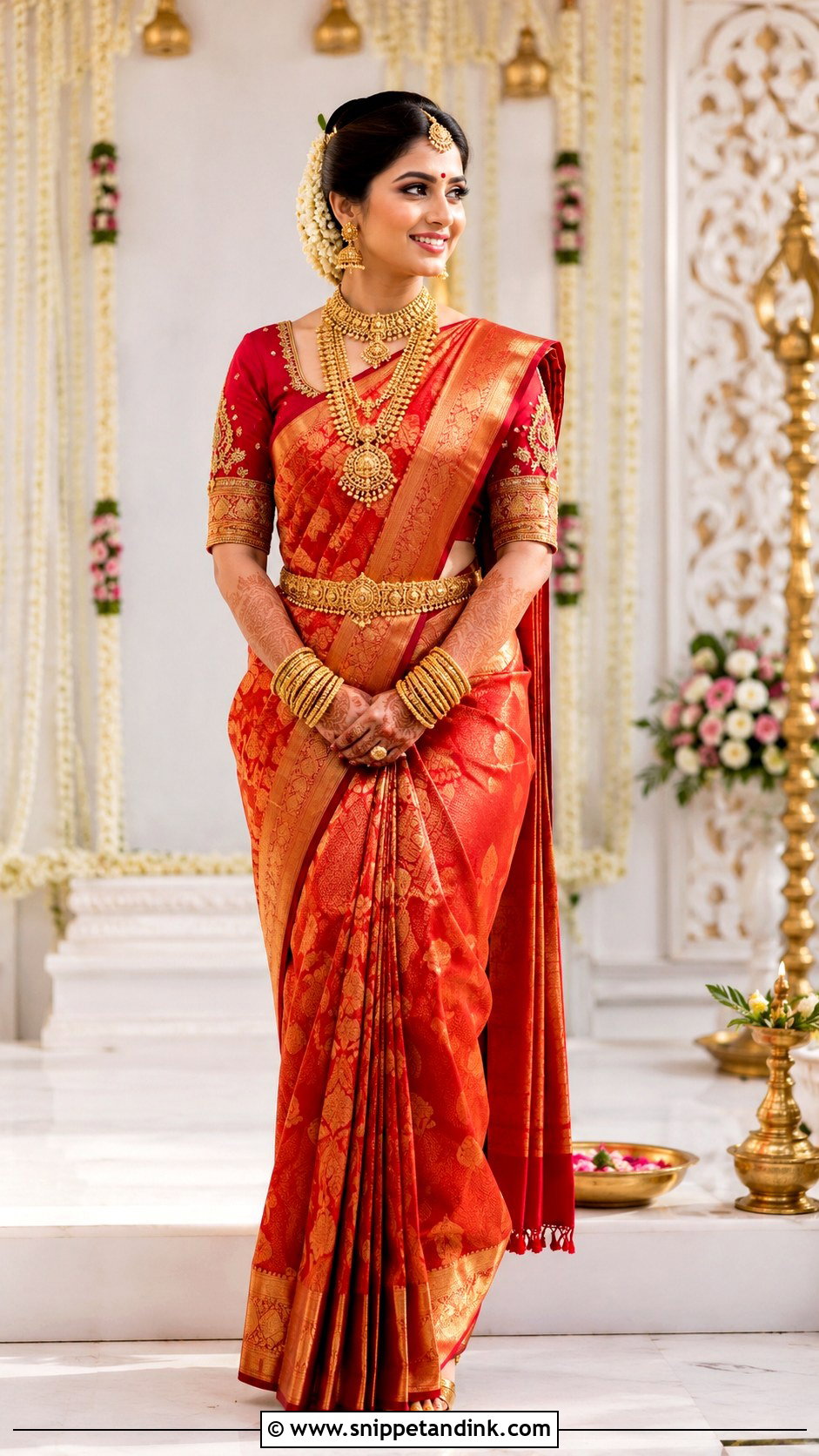
Kanjeevaram silk is stiff, heavy and glorious, and it rewards a bride who loves South Indian heritage and strong colour. Red, maroon, orange, gold, emerald or royal purple with a wide zari border all work. An elbow-sleeve blouse, gold temple jewellery, layered necklaces, jhumkas, vanki armlets, an oddiyanam at the waist and jasmine in the hair complete the classic look. The jasmine is my cue for the eyes: with white flowers framing the face, I go for strong kohl and a bold bindi so the face doesn’t fade behind them. Pin the pleats sharply and wear comfortable gold sandals.
4. Ivory Bridal Lehenga Look
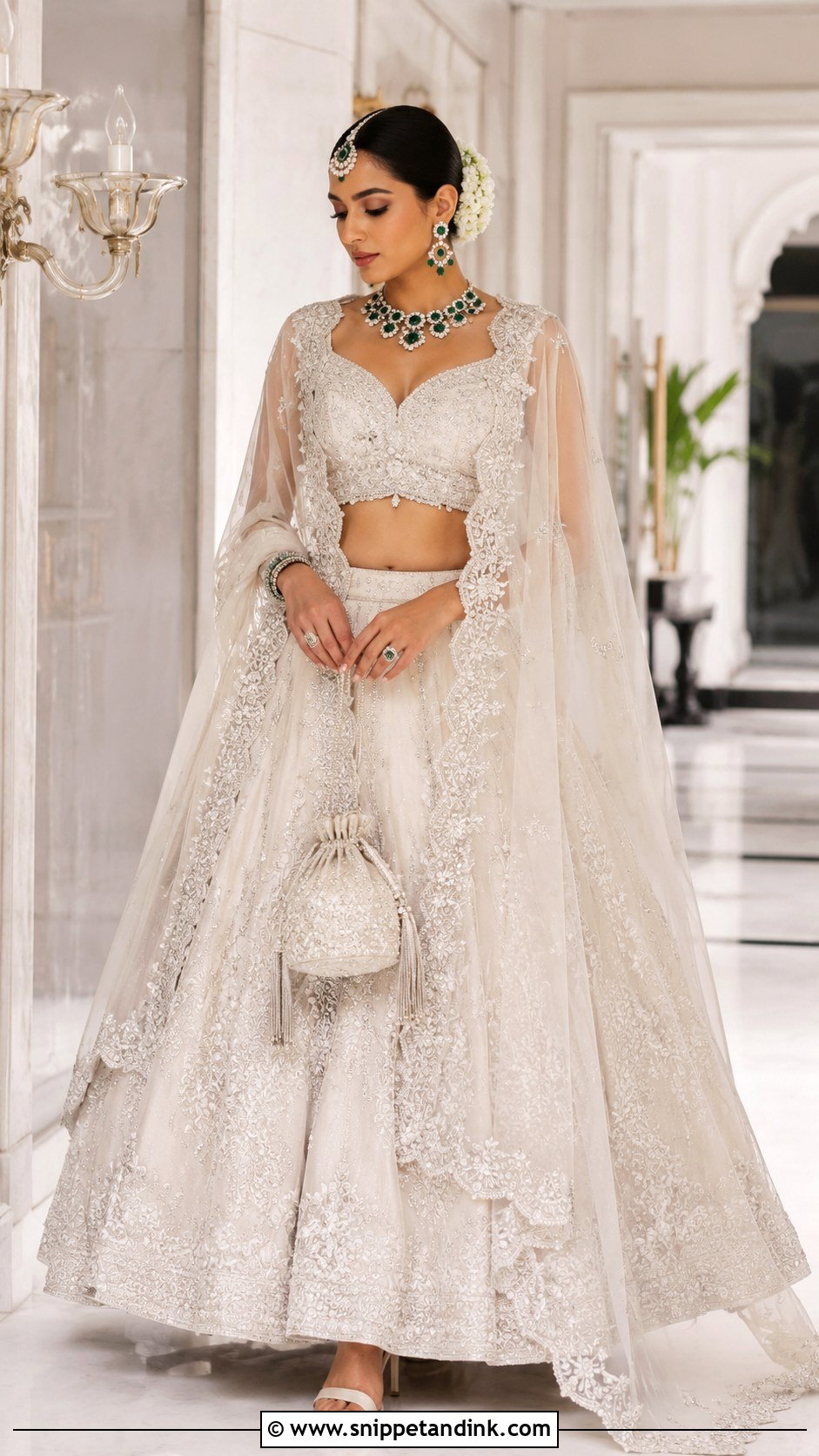
Ivory gets its bridal weight from texture rather than colour. Choose ivory, champagne or pearl white with gold, silver or antique embroidery on a heavily worked skirt, a structured blouse and a sheer scalloped dupatta. Emerald, polki or diamond-look jewellery adds contrast. A sleek bun, soft brown eyes and a nude lip keep it refined; ivory embroidered heels and a potli finish it. Ivory is the outfit where I check foundation hardest, because any orange or grey cast in the base sits right next to a near-white neckline. It suits palace weddings, destination ceremonies and receptions.
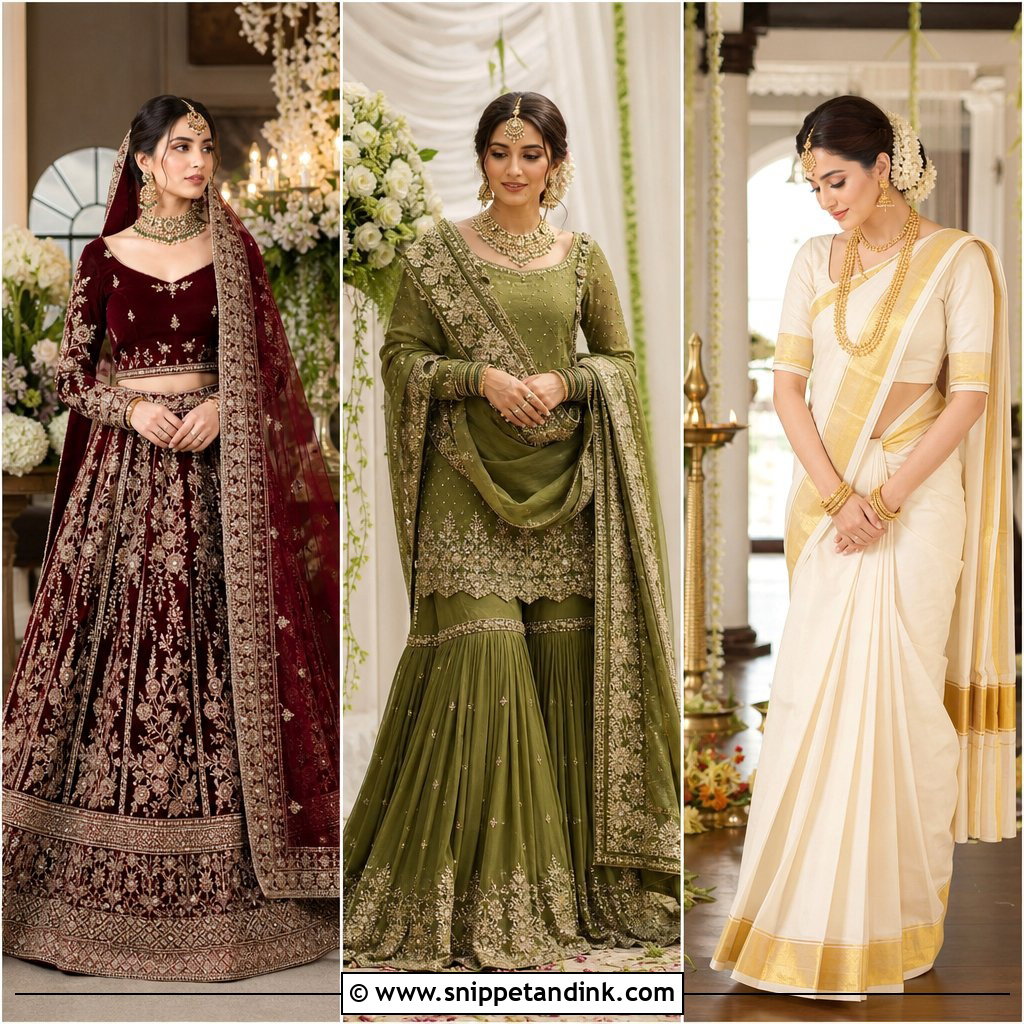
5. Maroon Bridal Lehenga Look
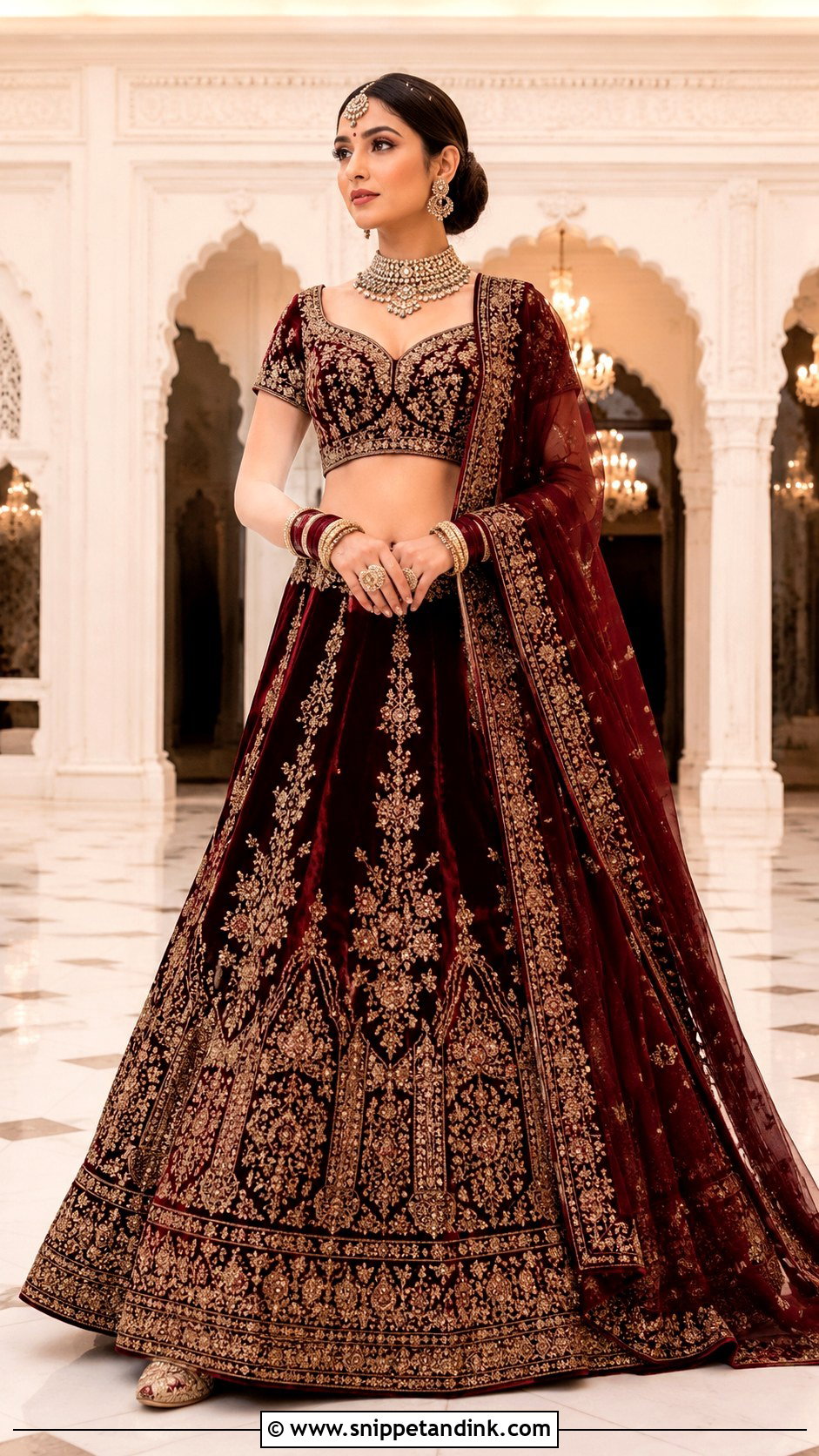
Maroon is red’s quieter sister, and it flatters most skin tones because it isn’t as bright. Velvet suits a winter wedding, silk a year-round one. Antique gold borders and a structured dupatta keep it grand, with kundan, polki or antique gold jewellery. My makeup move with maroon: soft smoke on the eyes and a bold lip, never both at full strength, or the face looks heavy against the dark fabric. Wear embroidered heels or juttis you can manage through long rituals, and part the hair down the centre into a bun.
6. Banarasi Saree Bridal Look
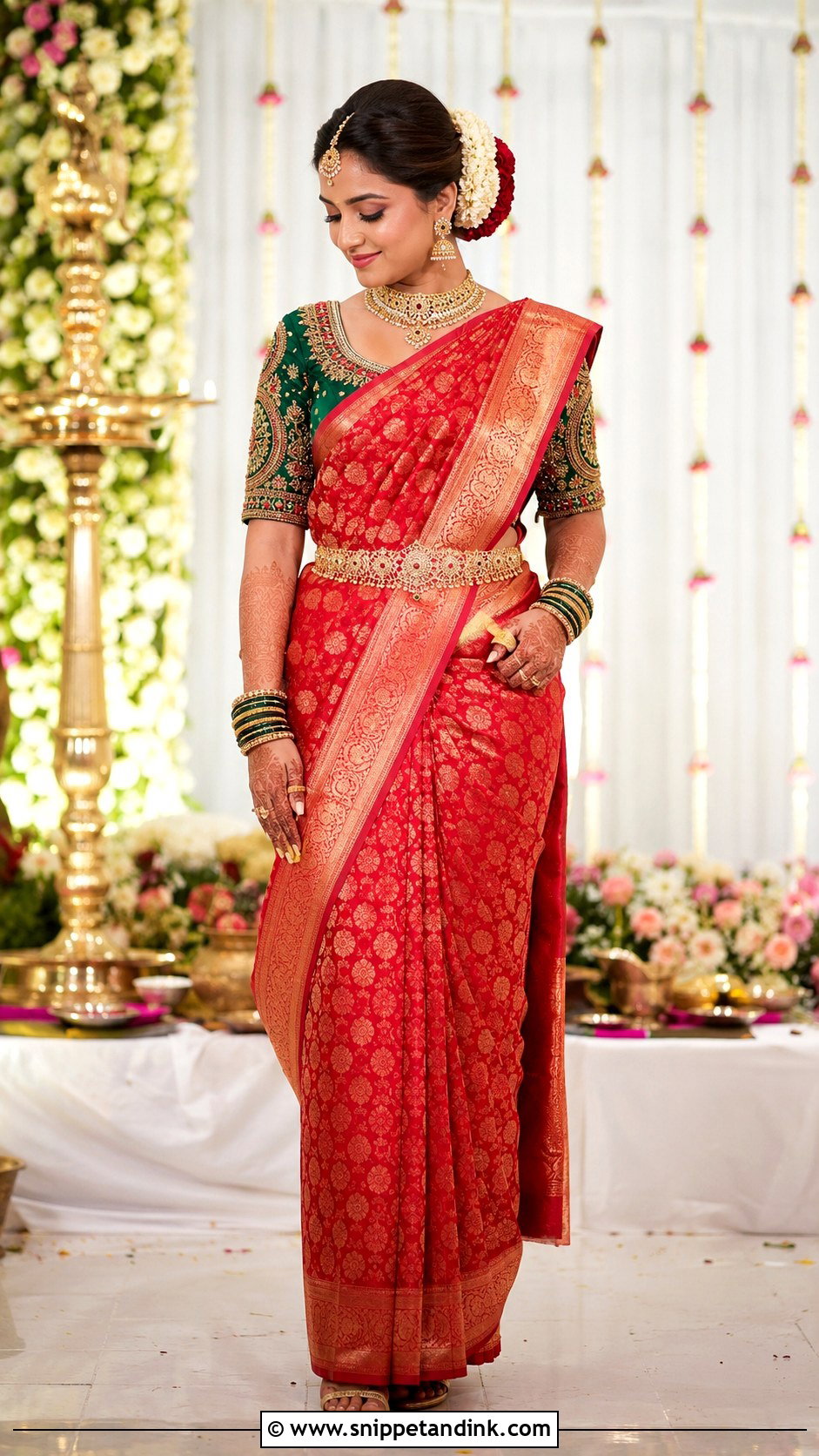
Banarasi is the saree families keep. Red, pink, rust, emerald or gold brocade works, and a contrast blouse in green, maroon, gold or deep pink makes it look styled rather than inherited. A waist belt defines the drape and holds it. Traditional gold, kundan, bangles and a small bindi suit it, with hair in a bun or braid with flowers. If the saree is an heirloom, I’d test-drape it weeks ahead; old silk can be weaker at the old fold lines, and you want to find that out before the morning of the wedding.
7. Gold Bridal Lehenga Look
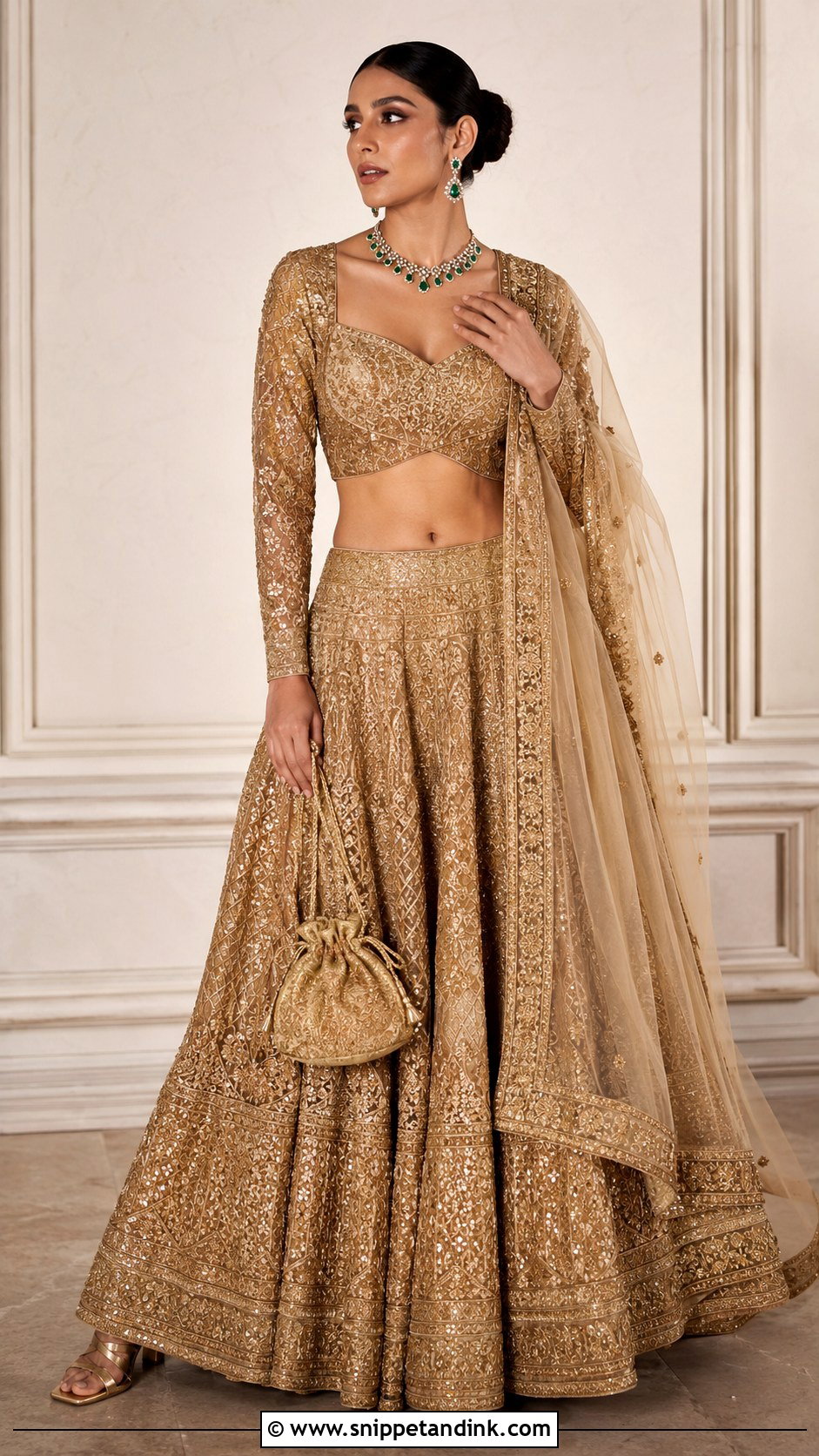
Gold brings glamour without a loud colour. Antique, champagne, dull or rose gold should be chosen against your skin and the venue lighting, since warm yellow light turns pale gold almost white. Metallic threadwork, sequins and beads give it depth, and a matching blouse and dupatta make it one smooth sweep of colour. Emerald or ruby jewellery adds contrast. For makeup I use bronze eyes and a soft lip, and I go lighter on highlighter than you’d think, because a metallic outfit is already reflecting light up onto the face. Gold heels, a potli and sleek hair finish it.
8. Pink Bridal Lehenga Look
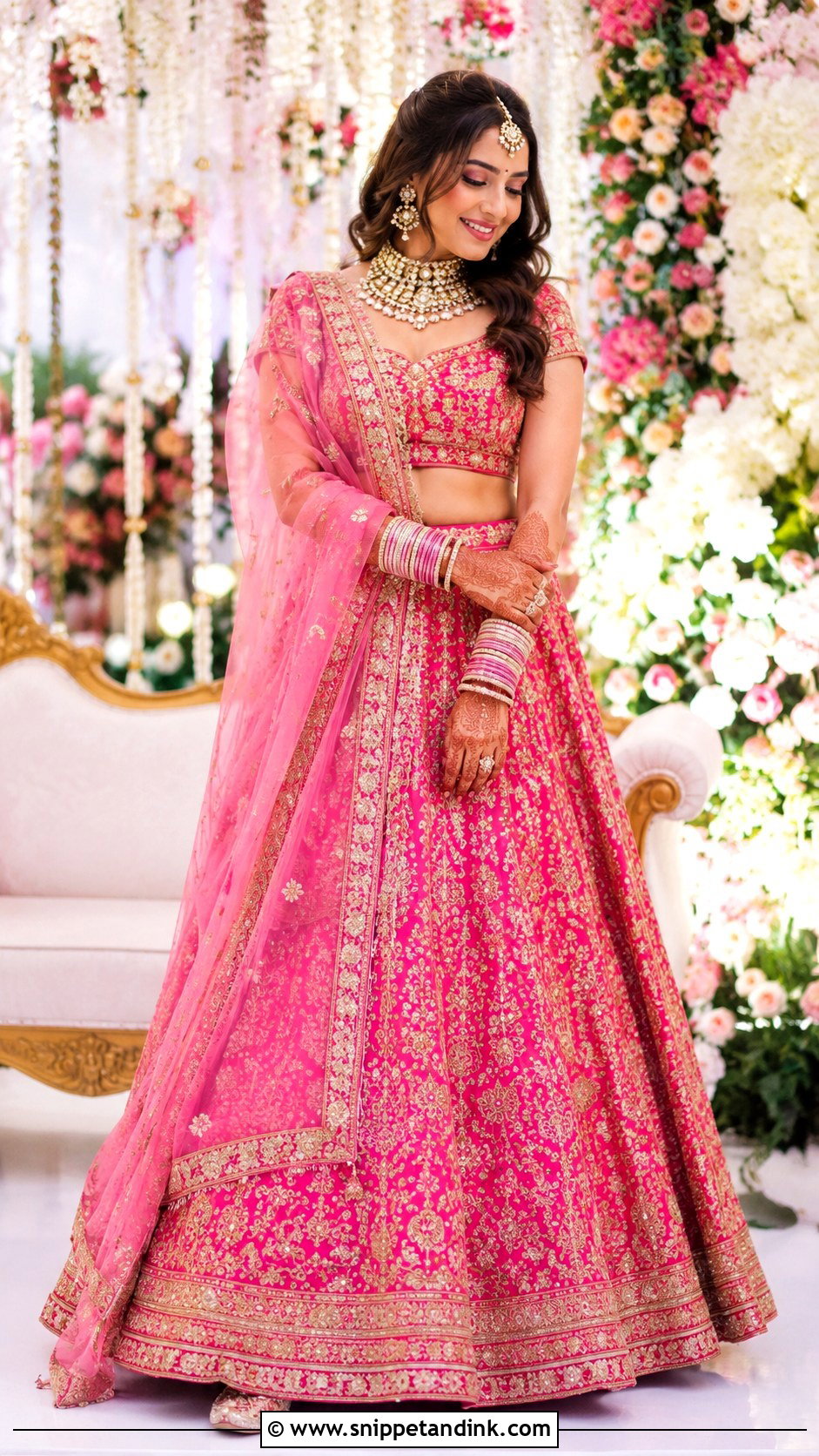
Pink is the most personal of the bridal colours. Bright rani pink is festive, blush or rose softer for daytime. Gold, silver, pearl or mirror embroidery shifts the mood with the venue. A short blouse with a flared skirt gives the classic bridal shape, and a sheer dupatta keeps it light. Kundan, soft curls or a floral bun and metallic heels or juttis complete it. I avoid matching the lipstick exactly to the lehenga’s pink; a shade deeper or warmer stops the face from blending into the outfit in photos.
9. Emerald Green Bridal Lehenga Look
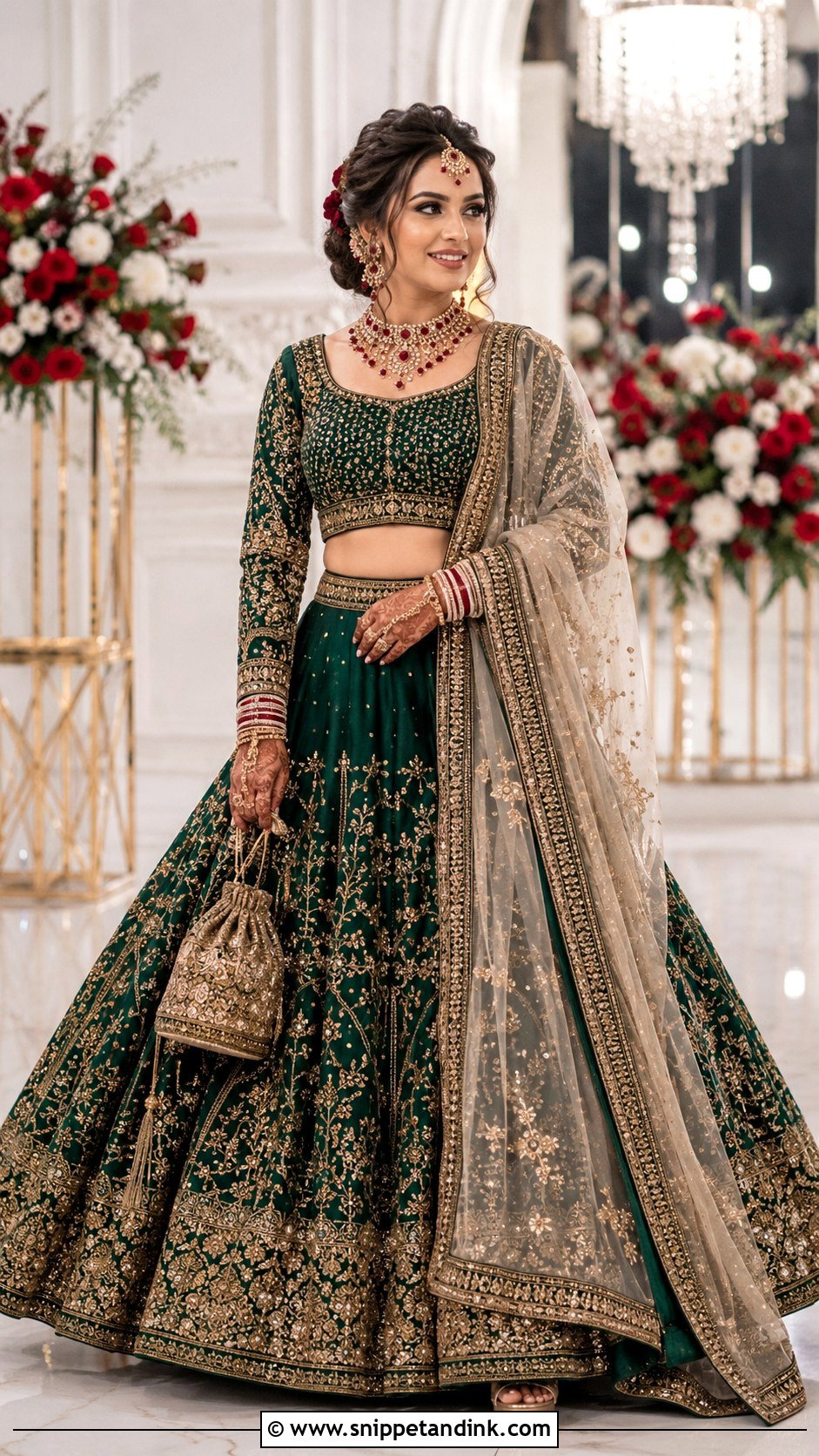
Emerald is a confident, slightly unexpected bridal choice, and it’s rich in velvet, silk, organza or brocade. Gold embroidery warms it; silver or crystal makes it cooler and more modern. Polki, diamonds, pearls or ruby accents add contrast. A matching dupatta looks regal, a blush or champagne one softens it. Green reflects onto skin more than people expect, so I correct any redness carefully and keep a little warmth in the base; a nude or berry lip and defined eyes balance it. Gold heels and a structured potli finish the look for receptions and winter weddings.
10. Orange Silk Saree Bridal Look
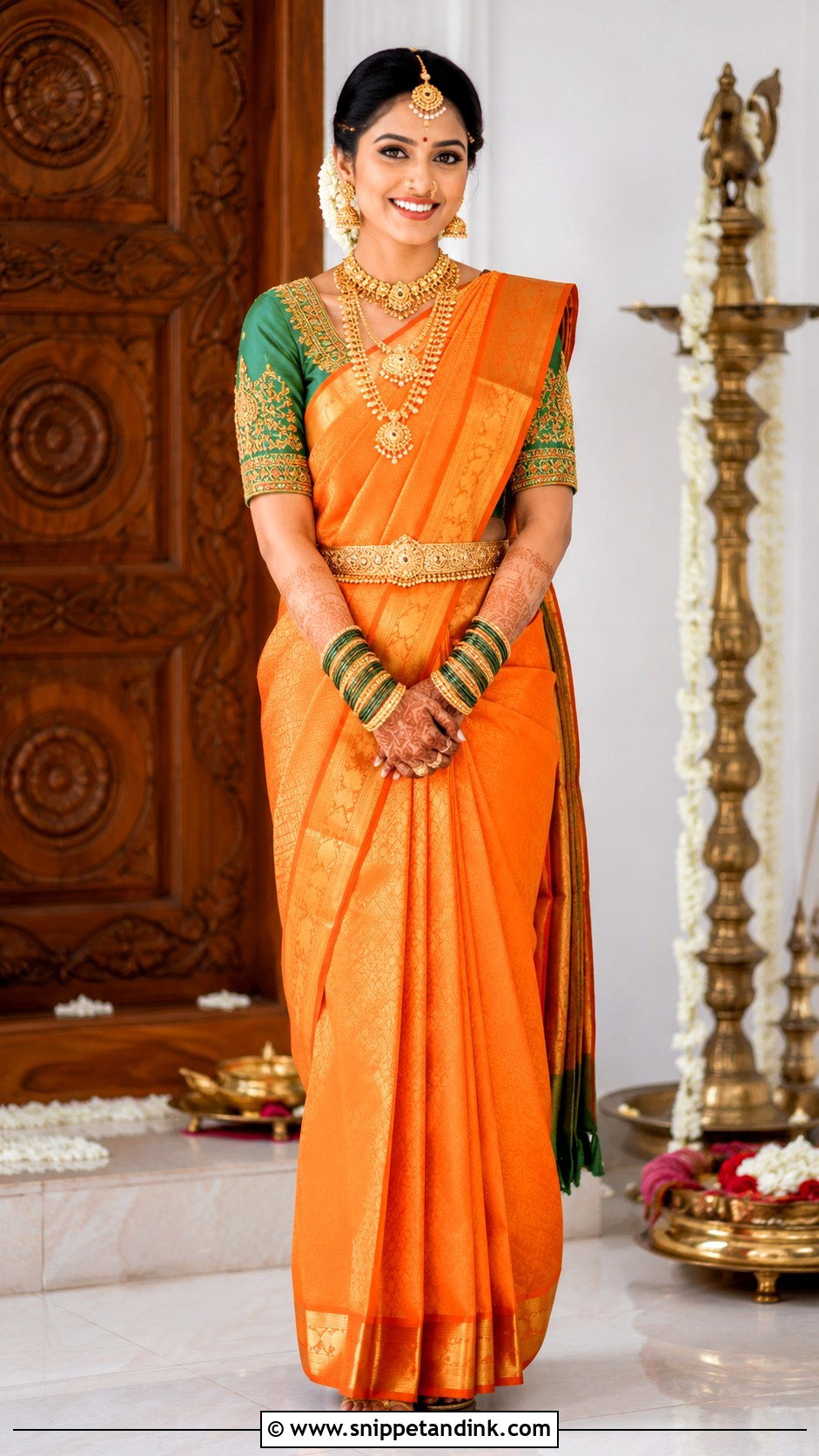
Orange silk is warm and festive, and in many South Indian ceremonies it feels completely at home. Tangerine, rust, coral or deep orange with gold zari works, with a red, green or gold blouse for contrast. Temple jewellery, layered necklaces, bangles, a kamarbandh and jasmine finish it. A neat bun, bold bindi and kohl-lined eyes complete the face. Morning ceremonies are common with this look, and that means early starts: I’d plan the makeup around natural light by a window rather than a ring light, so the orange and the skin read true outside.
11. White And Gold Bridal Saree Look
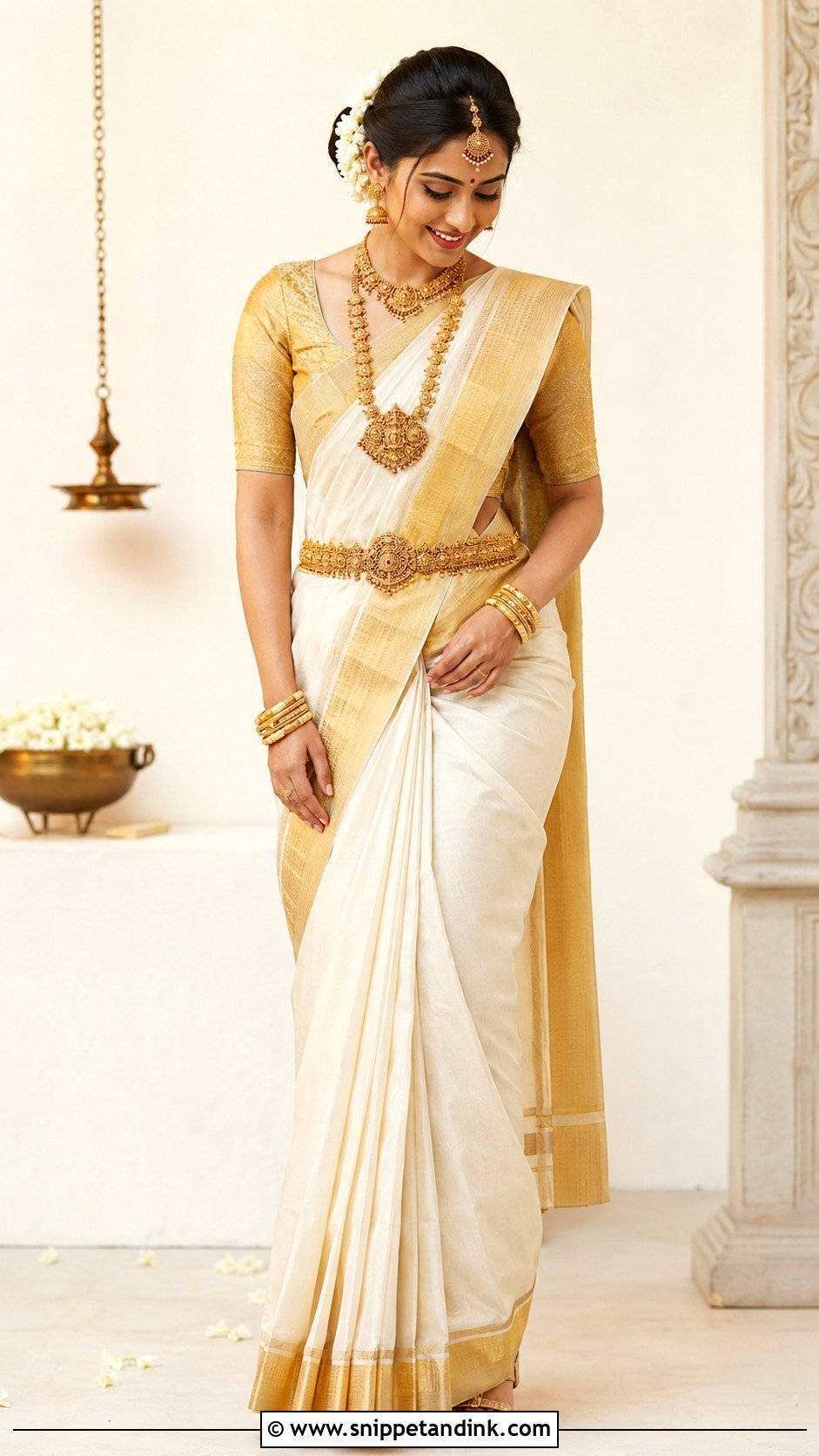
White and gold is calm and clean. Choose an off-white, cream or kasavu-style saree with a gold border, and let the blouse set the mood: gold for tradition, ivory for softness, red for contrast. Temple jewellery, pearls, glass bangles and a floral bun suit it. Keep the face fresh with glowing skin, softly defined eyes and a red or nude lip. This is where I’m careful with SPF in the base, since some sunscreens throw a white cast under flash, and next to cream silk that cast is obvious. A waist belt helps the drape stay put through temple ceremonies.
12. Mirror Work Bridal Lehenga Look
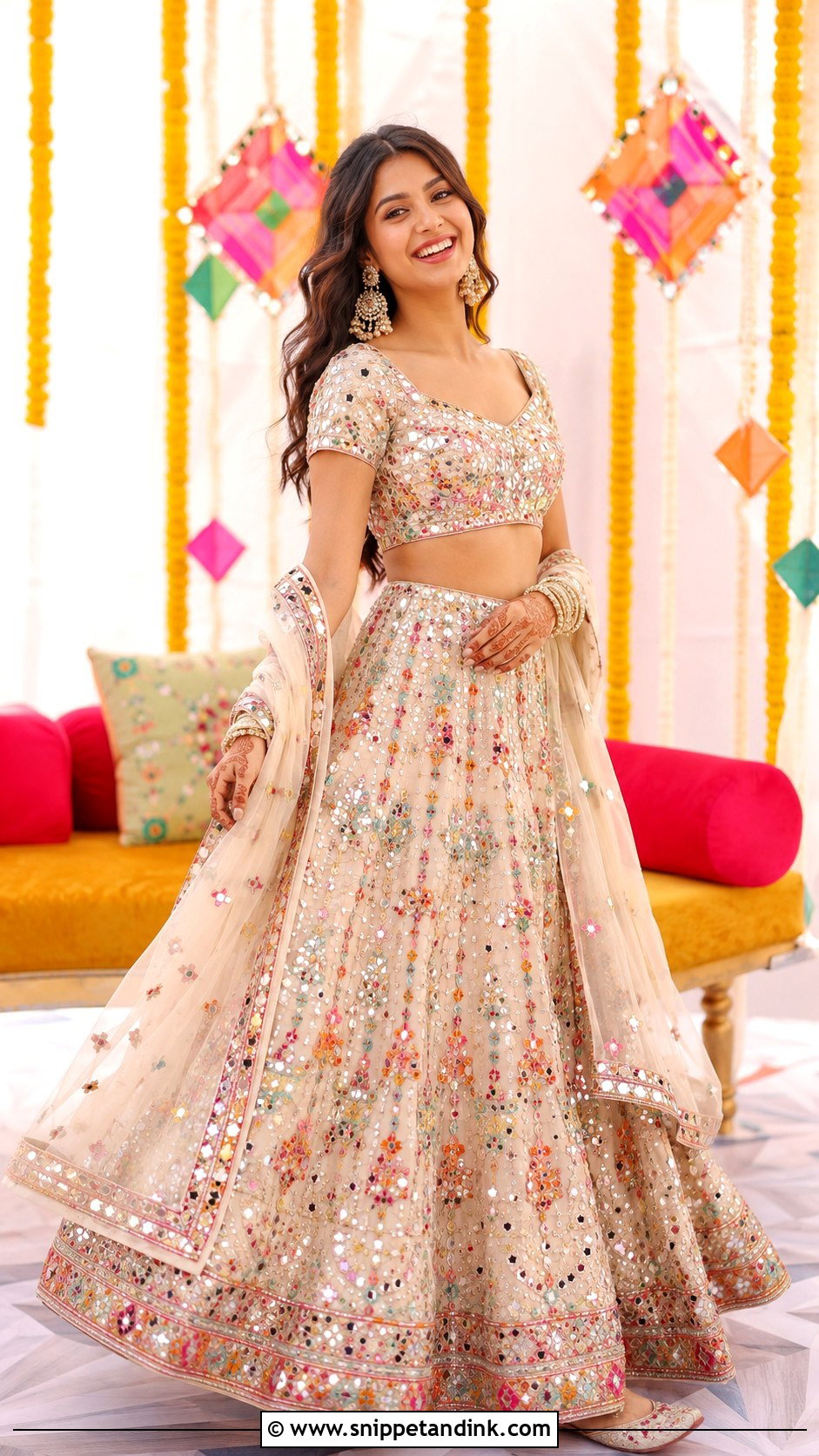
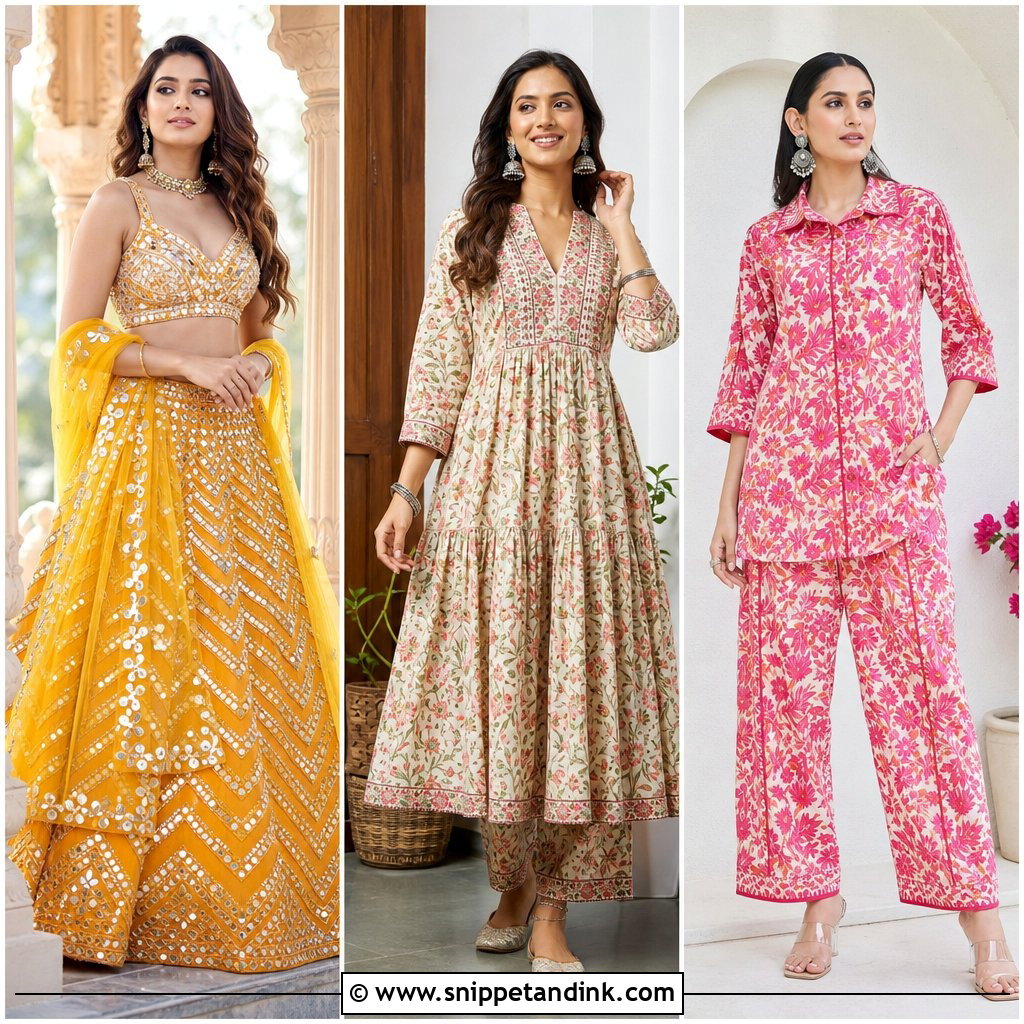
Mirror work sparkles without heavy metallic embroidery, which makes it lighter to wear. Ivory, yellow, pink, mint, orange or red with scattered mirrors or bold geometric patterns all work, on a fitted blouse and flowing skirt you can dance in. Oxidised silver, kundan or pearls suit different colours. Soft curls, fresh makeup and a small bindi keep it youthful. Mirrors bounce light back at the camera, so I keep the skin satin rather than shiny; too much glow on top of all that reflection looks oily in photos. It’s at home at the mehendi, sangeet or a destination wedding.
13. Floral Bridal Lehenga Look
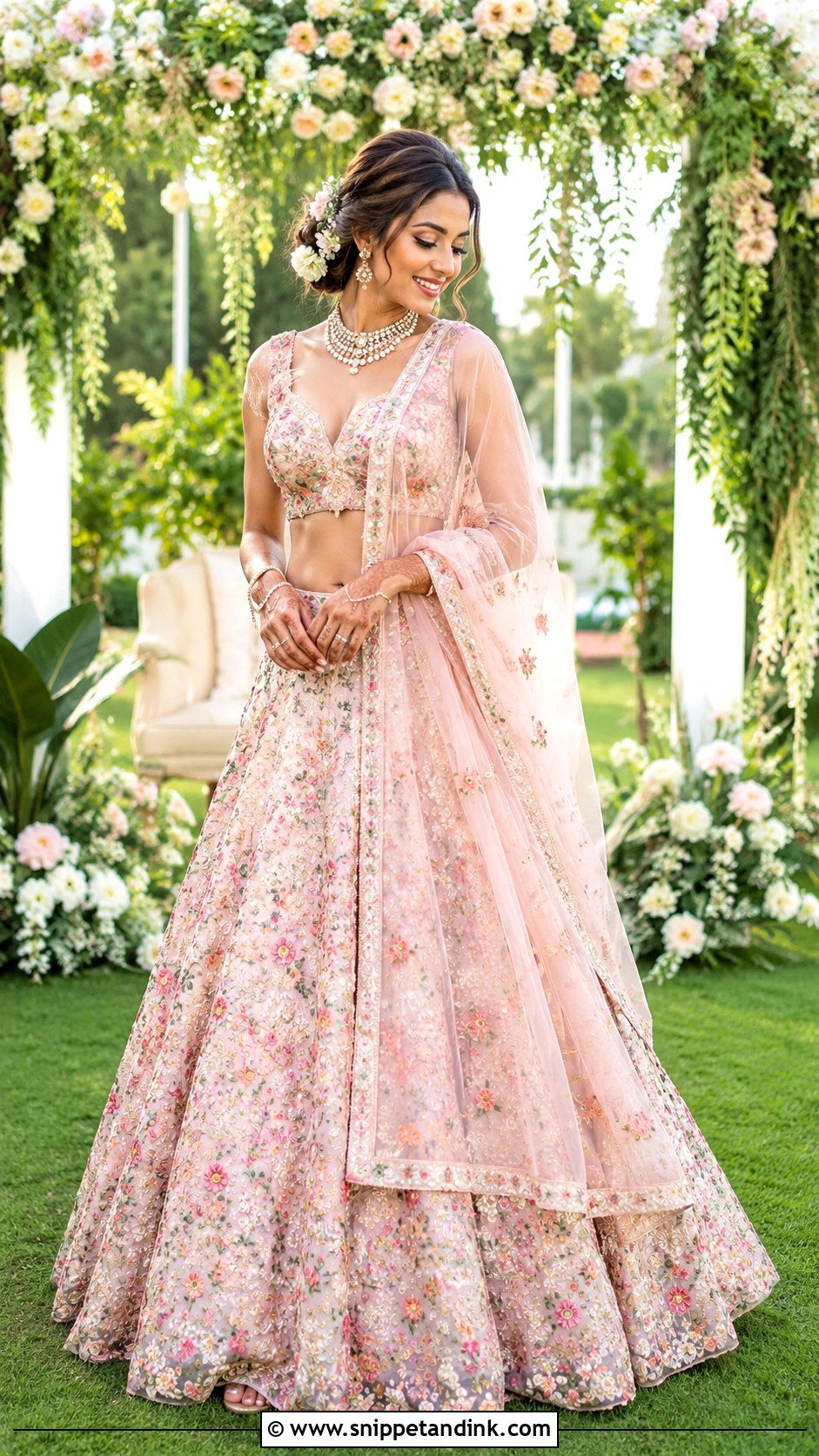
Florals suit a garden wedding or a daytime ceremony better than almost anything else. Printed flowers, embroidered blooms, 3D appliqué or threadwork on organza, silk, georgette or net all work. Peach, blush, mint, ivory and lavender feel romantic; deeper floral tones read dramatic. Pair it with fine jewellery, pearls and fresh flowers in the hair, a light dupatta and heels you can walk on grass in. I’d skip shimmer on the eyes here. Florals are already busy, and a soft matte lid with good lashes keeps the eye on your face, not on a competing sparkle.
14. Lehenga Saree Bridal Look
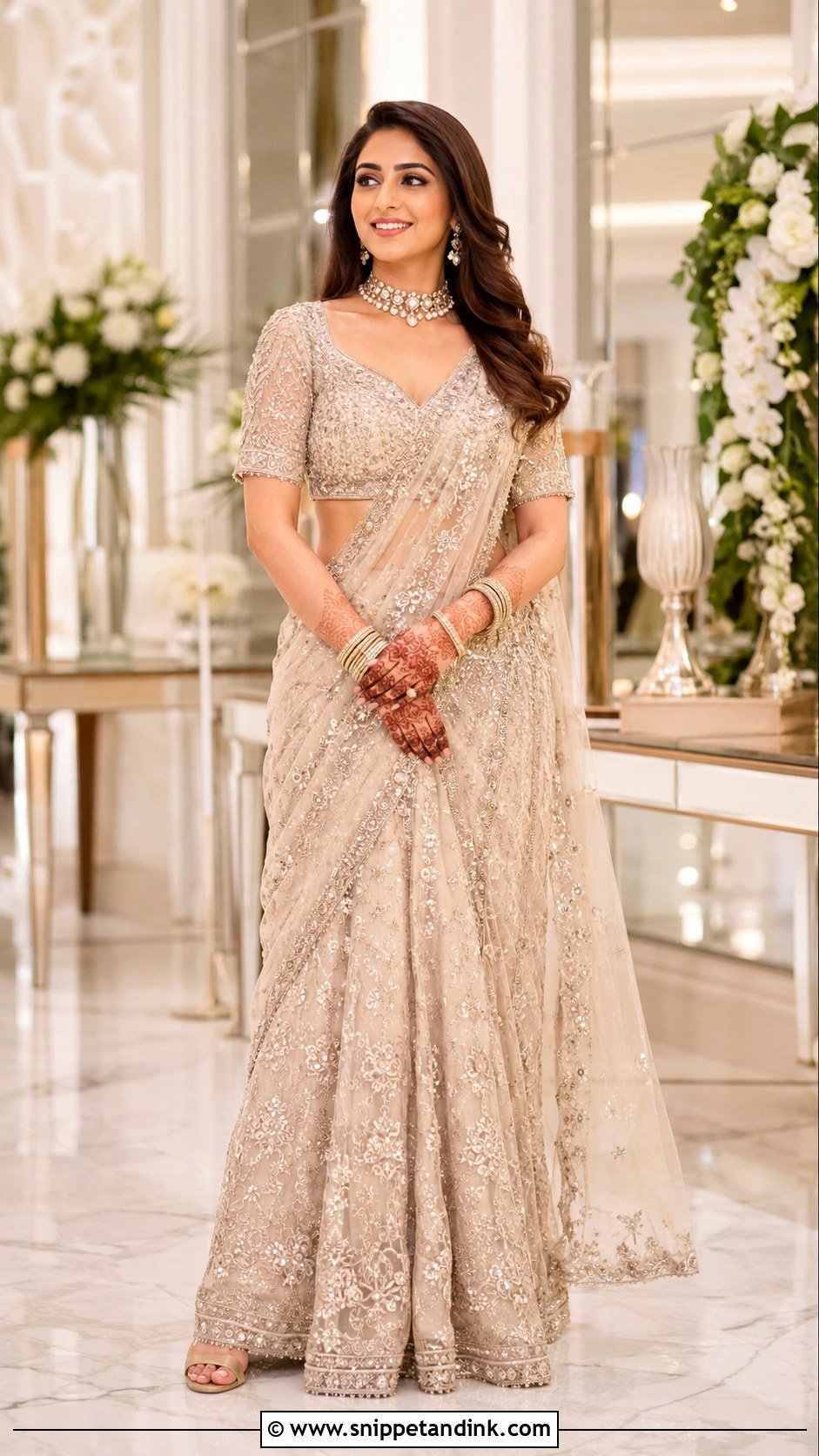
A lehenga saree bridal look gives you the lehenga’s drama with a saree’s line, and the pre-draped pallu means nothing comes undone at the reception. Silk, satin, georgette or crepe with embroidery at the waist, border and blouse suits it. A statement blouse makes it modern; a matching dupatta adds softness. Chandbalis, a choker, bangles and slim heels finish it, with a smooth bun or soft waves. Because the pallu sits across one shoulder, I check that side of the neck and back for foundation blending; it’s the side the camera sees most.

15. Red Bridal Saree Look
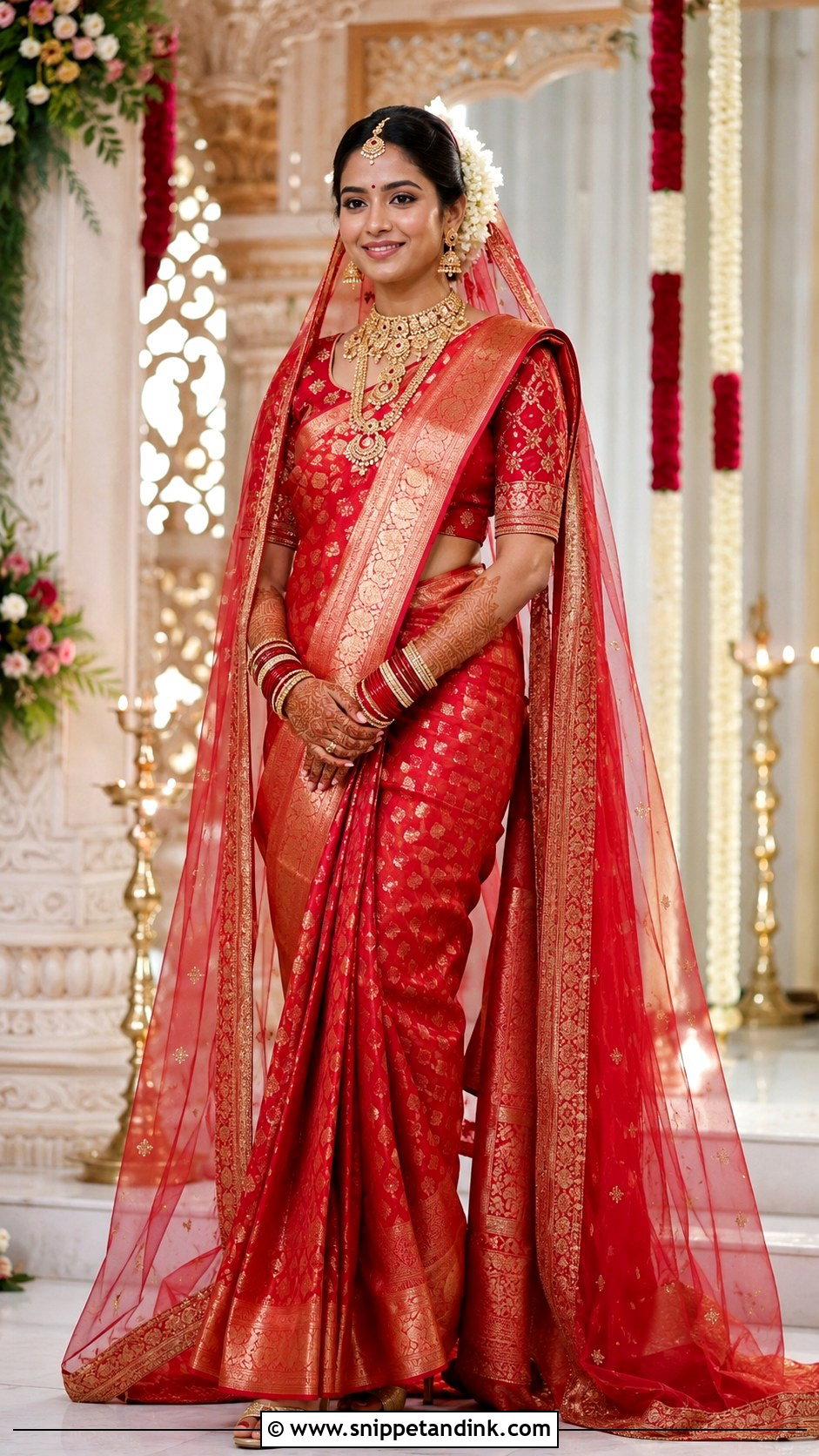
The red saree is still the most emotional choice for many brides. Silk, Banarasi, Kanjeevaram or brocade with gold zari gives it richness, and a fitted blouse with detailed sleeves makes it look made for you. Kundan, gold or temple jewellery should follow your region and taste. A red veil or second dupatta adds bridal shape for the main rites. Finish with a bun, gajra, bangles, alta where it’s part of your tradition, and comfortable sandals. Red pulls attention to the lips, so I line and set them in layers to survive a full ceremony.
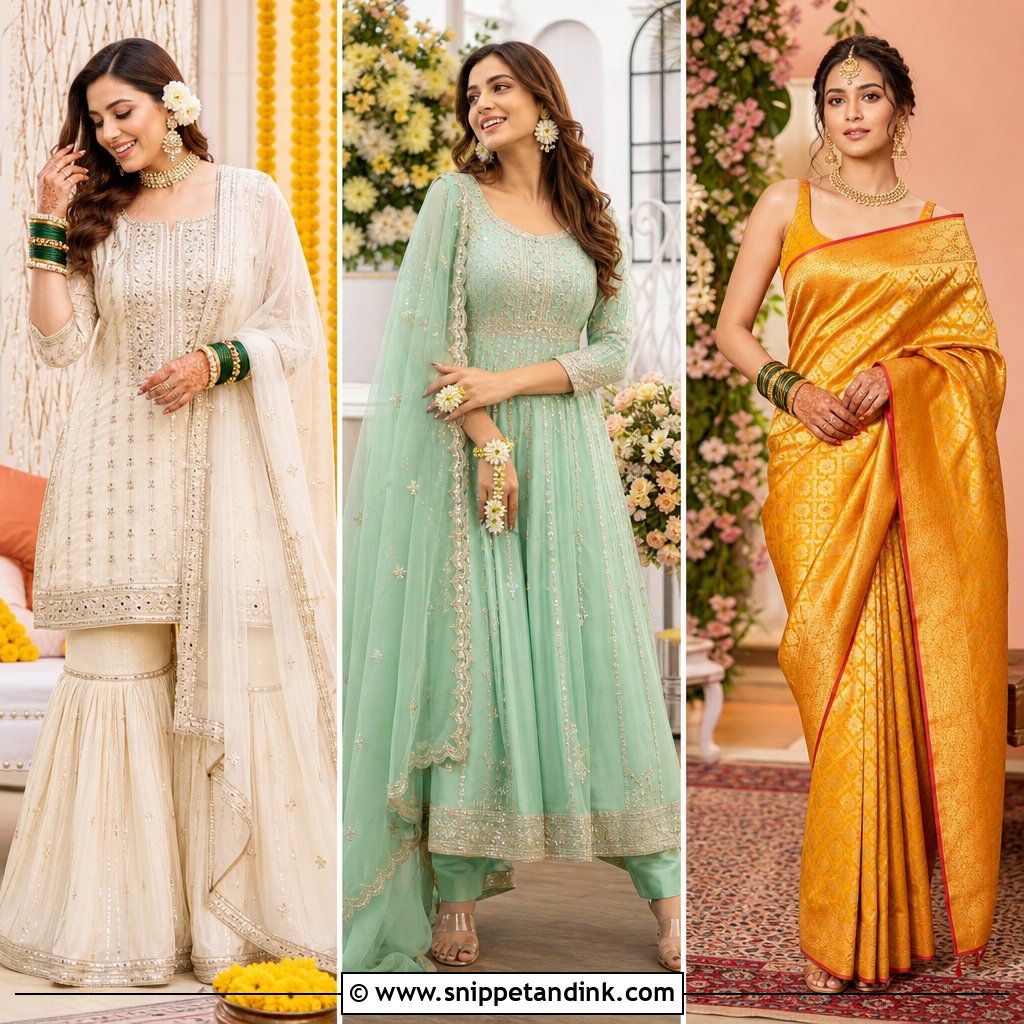
16. Yellow Haldi Bridal Look
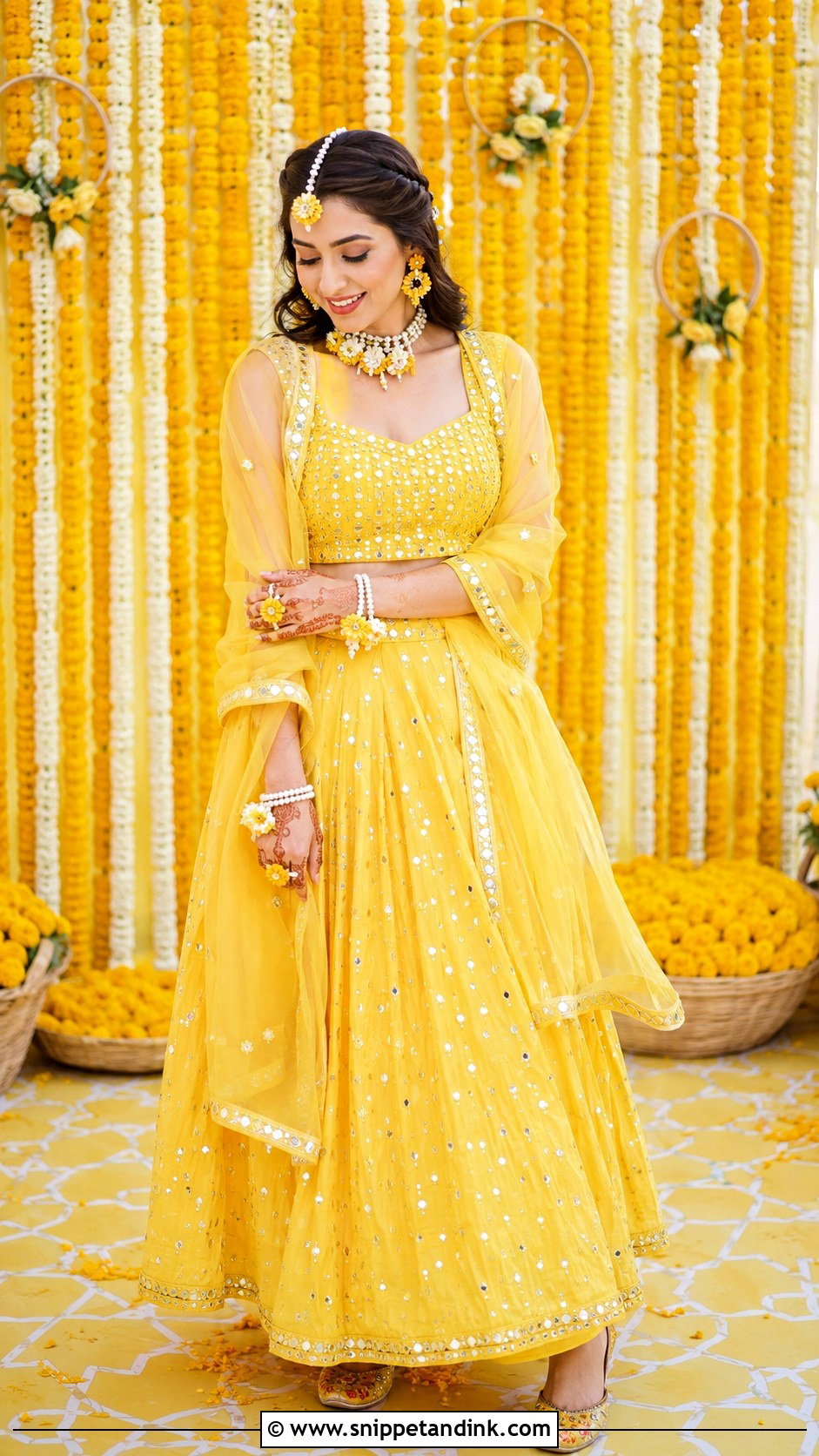
A yellow haldi bridal look has to survive turmeric paste, water and laughter. A yellow lehenga, sharara, saree or anarkali with light embroidery, mirror work, gota patti or florals works, in breathable fabric that can be cleaned. Floral jewellery, pearl bangles and fresh flowers in the hair suit it. I keep haldi makeup minimal and waterproof: a tinted base, waterproof mascara and a lip stain, nothing that turns streaky when the paste goes on. Wear juttis, flats or low wedges rather than delicate heels.
17. Green Mehendi Bridal Look
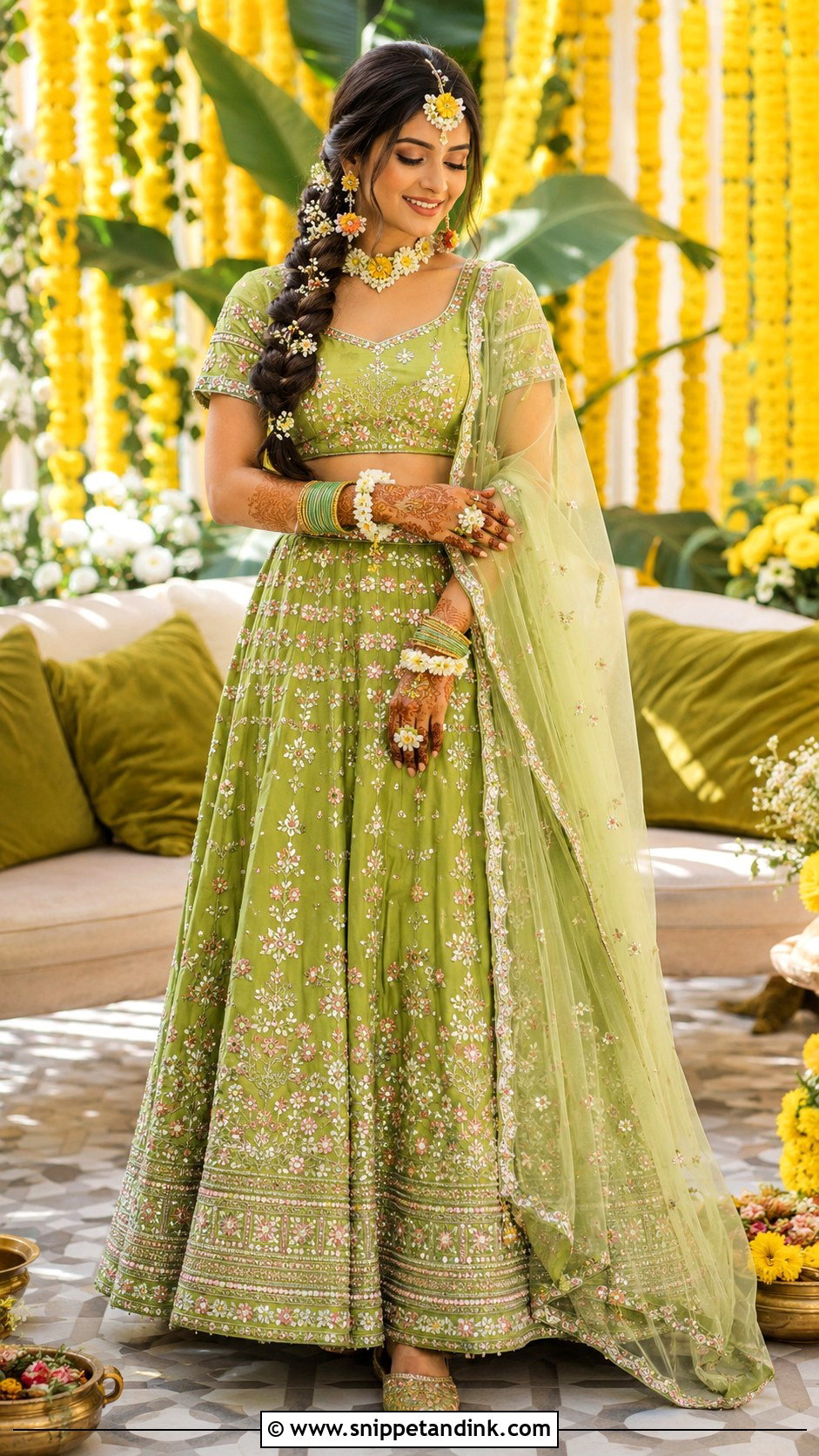
A green mehendi bridal look fits the ceremony’s colour. Parrot, emerald, mint, olive or bottle green on a lehenga, sharara or anarkali with mirror work, gota patti, thread embroidery or tassels does the job. Keep the sleeves short or three-quarter so the mehendi isn’t smudged and stays on show. Floral jewellery, statement earrings, bangles and a braid with fresh flowers complete it. You’ll sit still for hours with your hands out, so I finish makeup and set it before the artist starts; there’s no touching up your own face once the paste is on.
18. Sangeet Bridal Lehenga Look
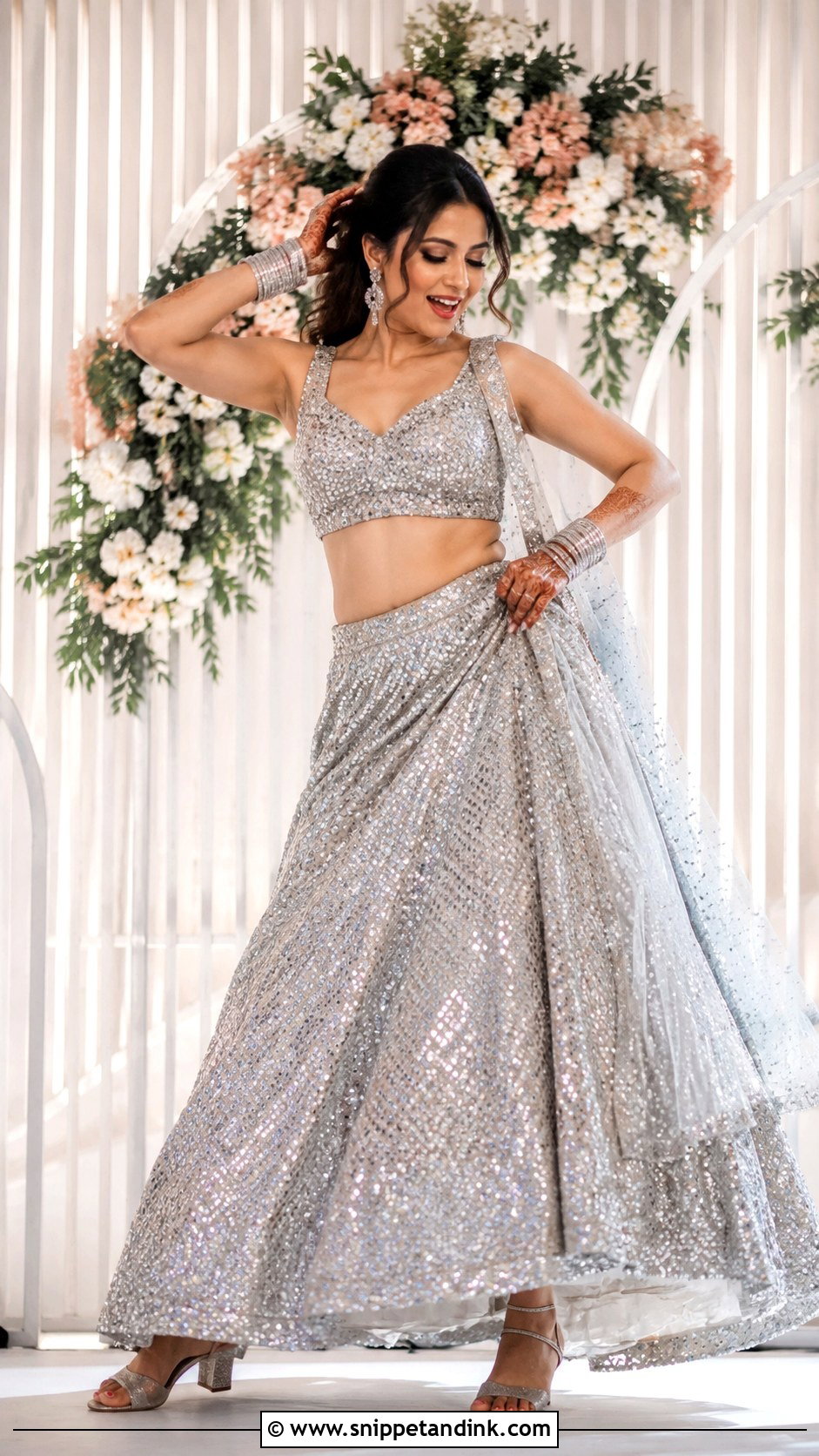
The sangeet is where you dance, so the outfit has to move. Choose a light lehenga with sequins, mirrors, fringe, metallic embroidery or shimmer fabric, with enough flare to spin and not so much weight that it drags. A supportive blouse is non-negotiable. Pin the dupatta firmly or swap it for a cape layer. Statement earrings, stacked bangles and stage-ready makeup suit it, with block heels, wedges or embellished sneakers underneath. Dancing means sweat at the hairline, so I set the base with a fine powder there and give a touch-up kit to someone who’ll stay near you.
19. Reception Gown Bridal Look
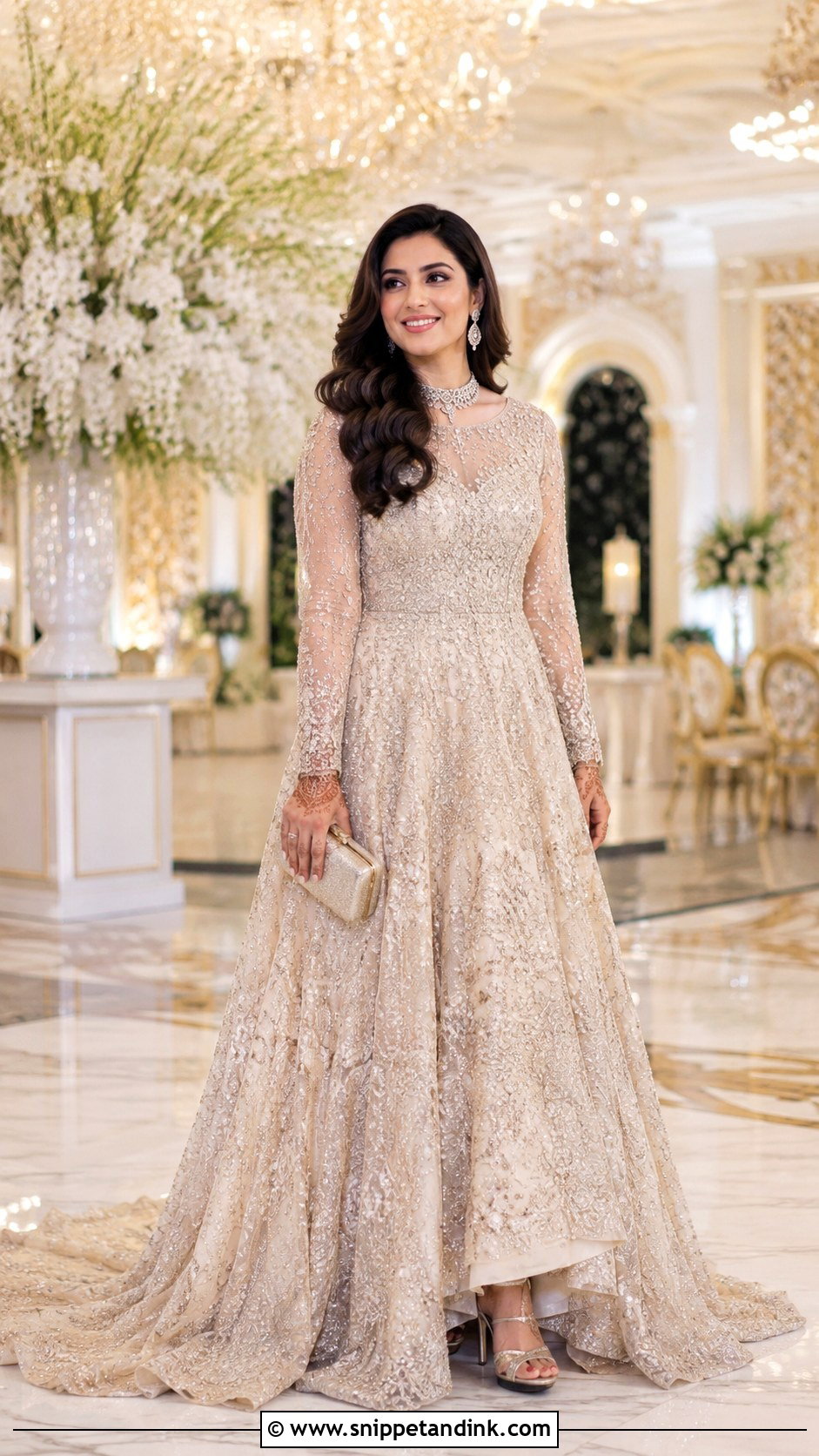
After the rituals, many brides want a gown. A structured one in gold, silver, ivory, blush, emerald, navy or wine works, with embroidery, sequins, beading or a dramatic trail to keep it bridal. Diamond-look jewellery, pearl drops or a sleek choker finish it, and a soft updo, side-parted waves or old-Hollywood curls suit the shape. Metallic heels and a small clutch complete it. The change from ceremony to reception is often fast, so I plan a makeup shift rather than a full redo: deepen the eyes, switch the lip, refresh the base. That takes far less time than starting again.
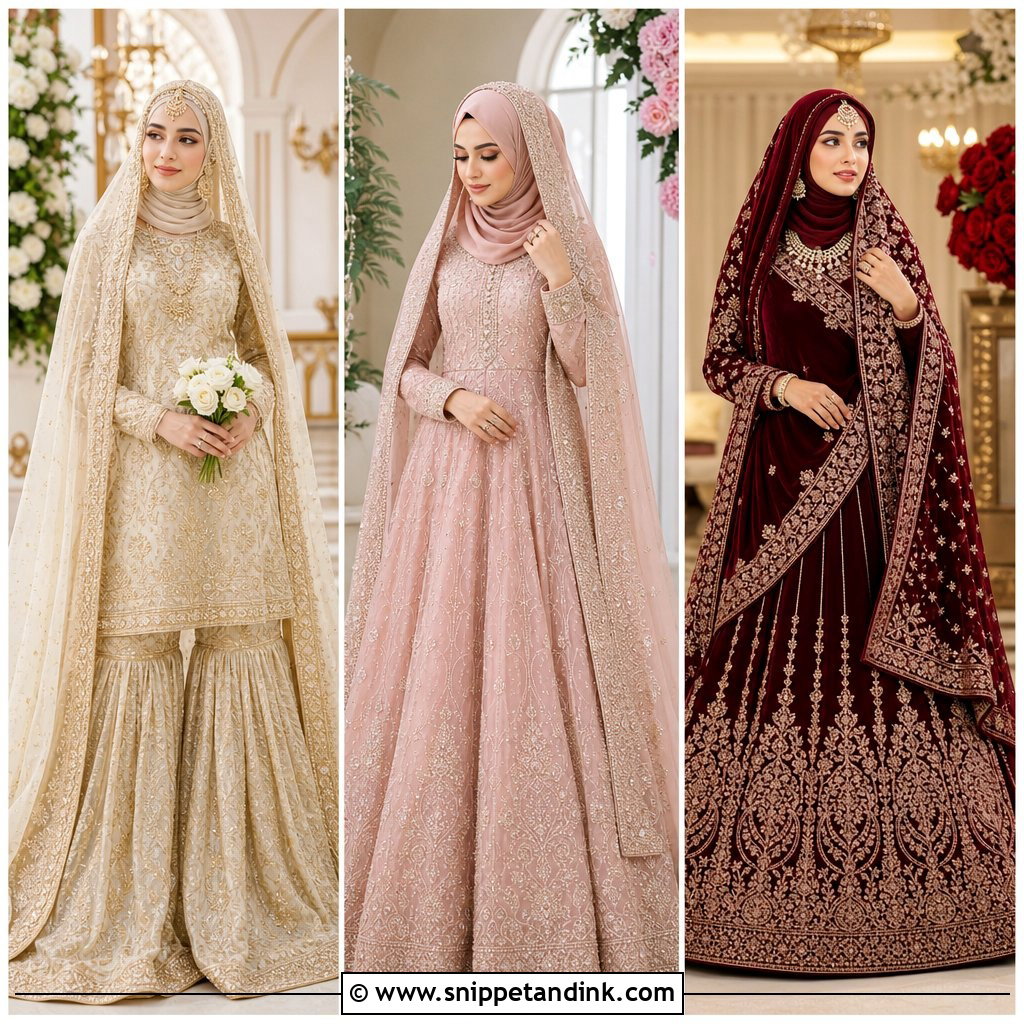
20. Bridal Sharara Look
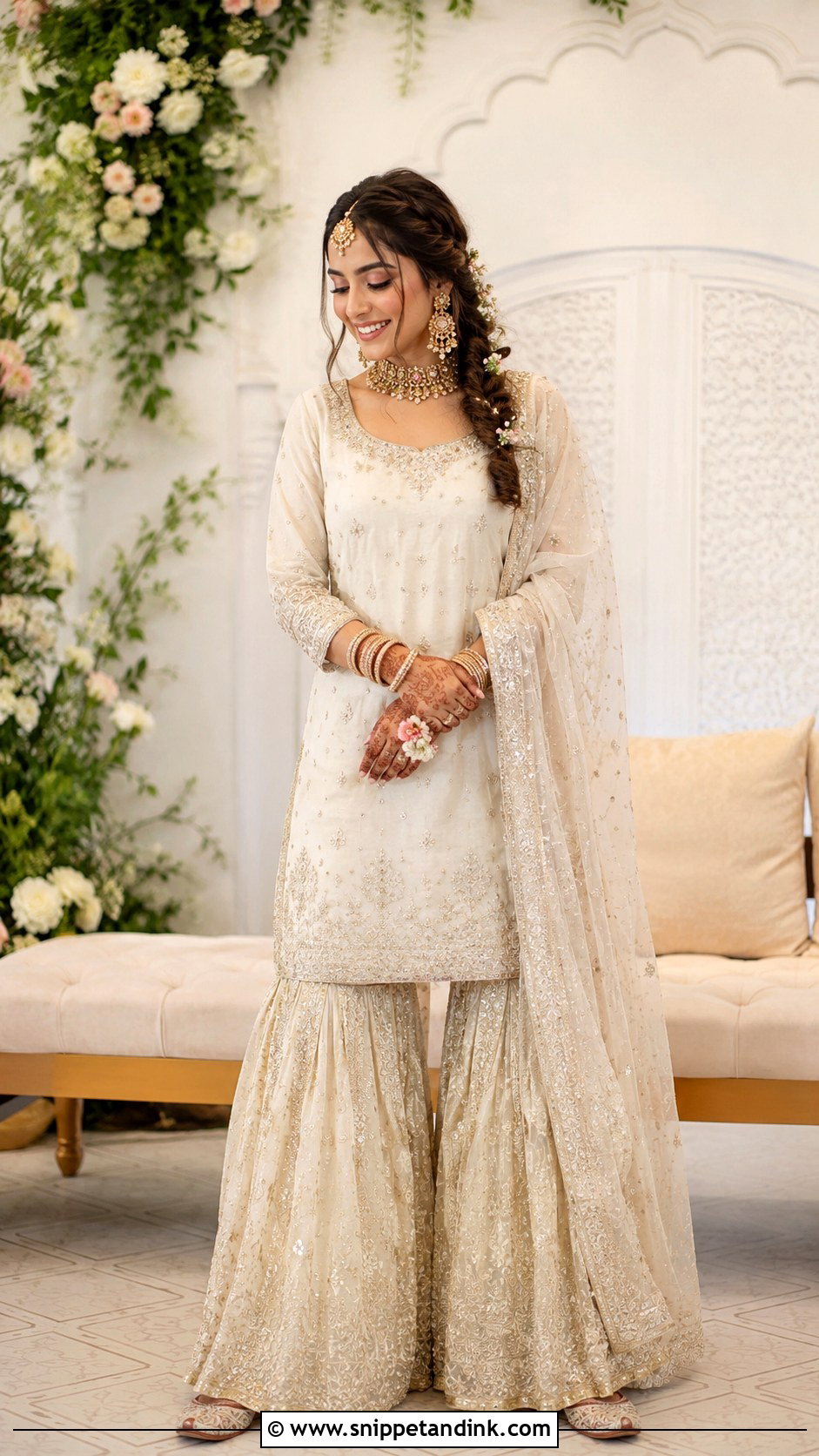
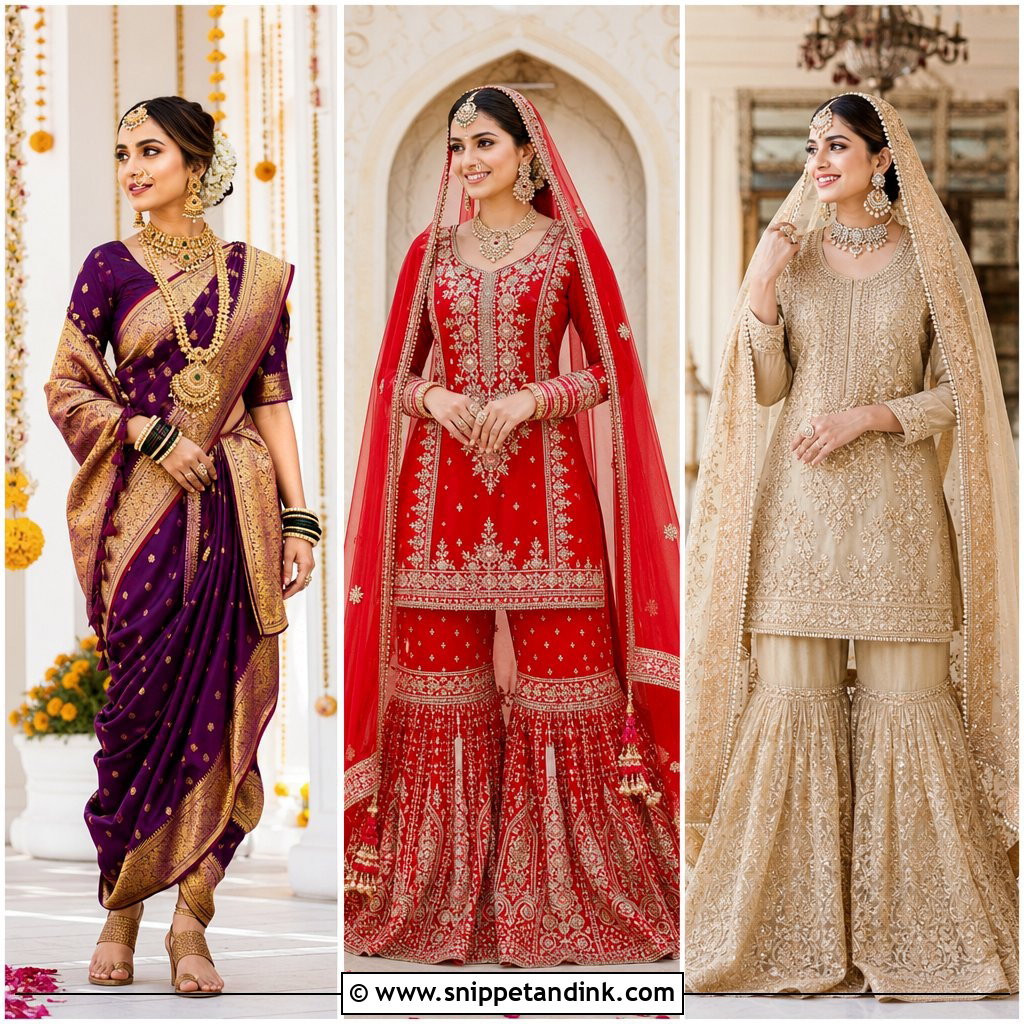
A sharara gives you something different from a lehenga and is easier to walk, climb stairs and get into a car in. A heavily embroidered short kurti with flared sharara pants and a matching dupatta forms the set, in silk, brocade, georgette, velvet or organza. Red, ivory, gold, pink, green and mustard all feel bridal with enough embellishment. Pair it with a choker, jhumkas, bangles and juttis or heels, and wear a soft braid or low bun. I’d check the kurti’s neckline against the choker: a high neck and a wide choker together can crowd the face.
21. Bridal Anarkali Look
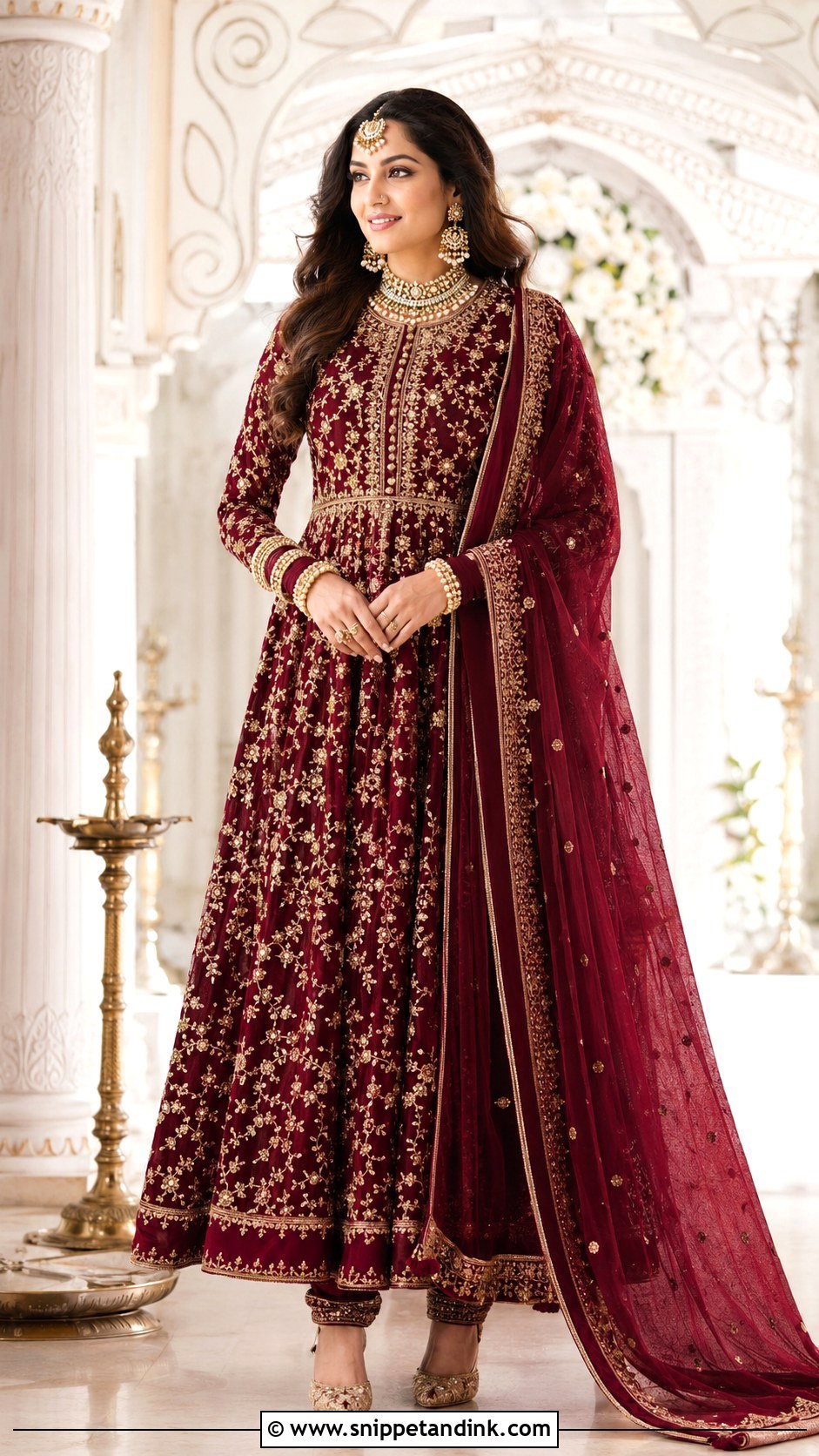
An anarkali gives coverage and movement, and it flatters a wide range of figures. A floor-length cut with rich embroidery, zari, gota patti or fine sequins in red, maroon, ivory, gold, emerald or blush all reads bridal. Churidar or slim pants underneath keep the line balanced, and a heavy dupatta brings ceremony. Kundan, jhumkas, bangles and embroidered heels or flats finish it. Let the neckline decide the hair: a high neck wants a centre-parted bun, a deep one can take soft curls or a braid.
22. Minimal Bridal Lehenga Look
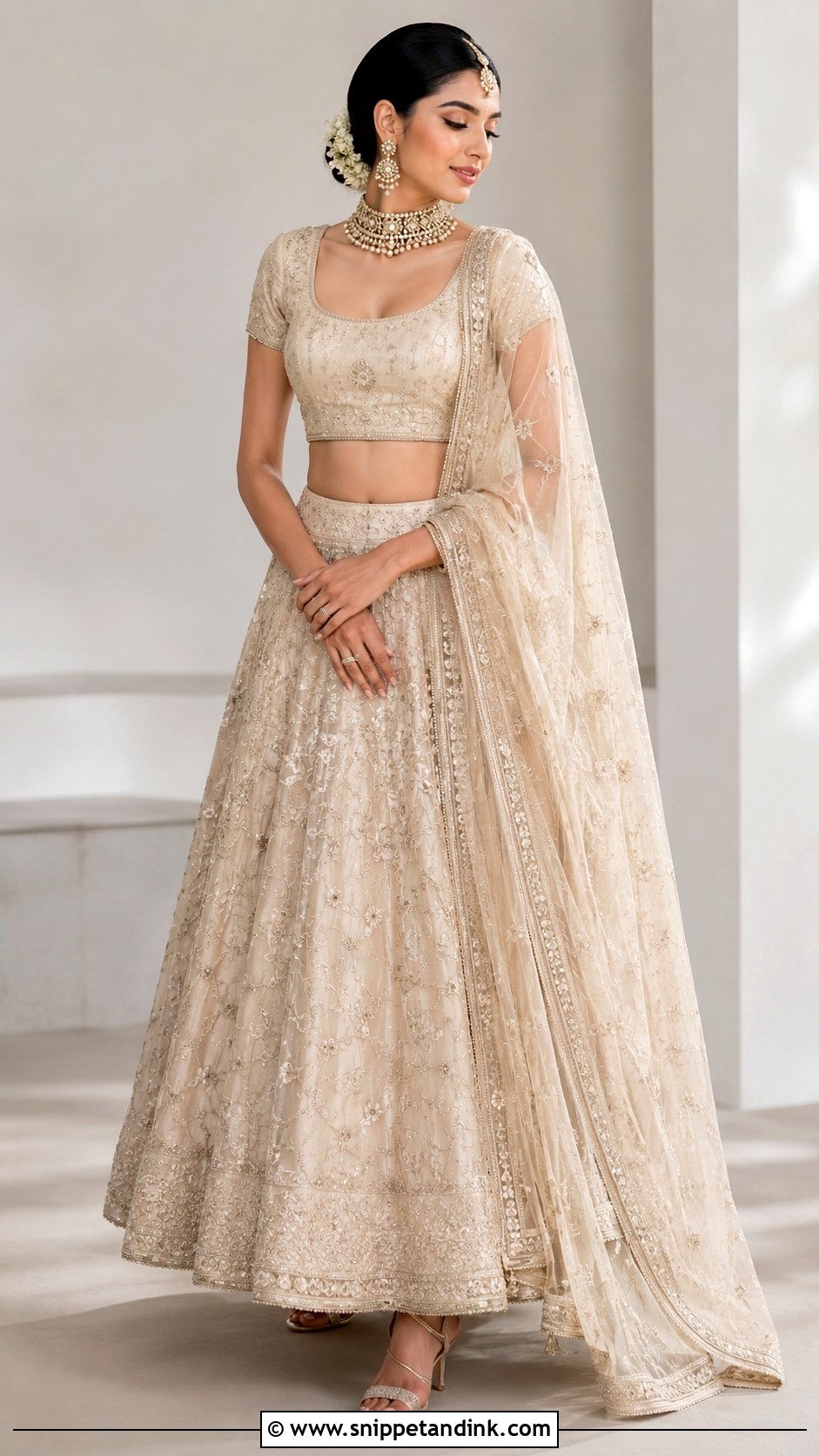
Minimal works when the detail is focused. Clean fabric, soft colour and embroidery in a few chosen places, in ivory, blush, beige, champagne, sage or muted gold, look very refined. A simple blouse and a lightly embroidered dupatta keep it balanced; a polki choker, pearl necklace or emerald earrings make sure it still reads as bridal. Soft makeup, sleek hair and classic heels complete it. With a minimal outfit, the face becomes the main event, so I put more time into skin prep and brows here than on any other look.
23. Velvet Bridal Lehenga Look
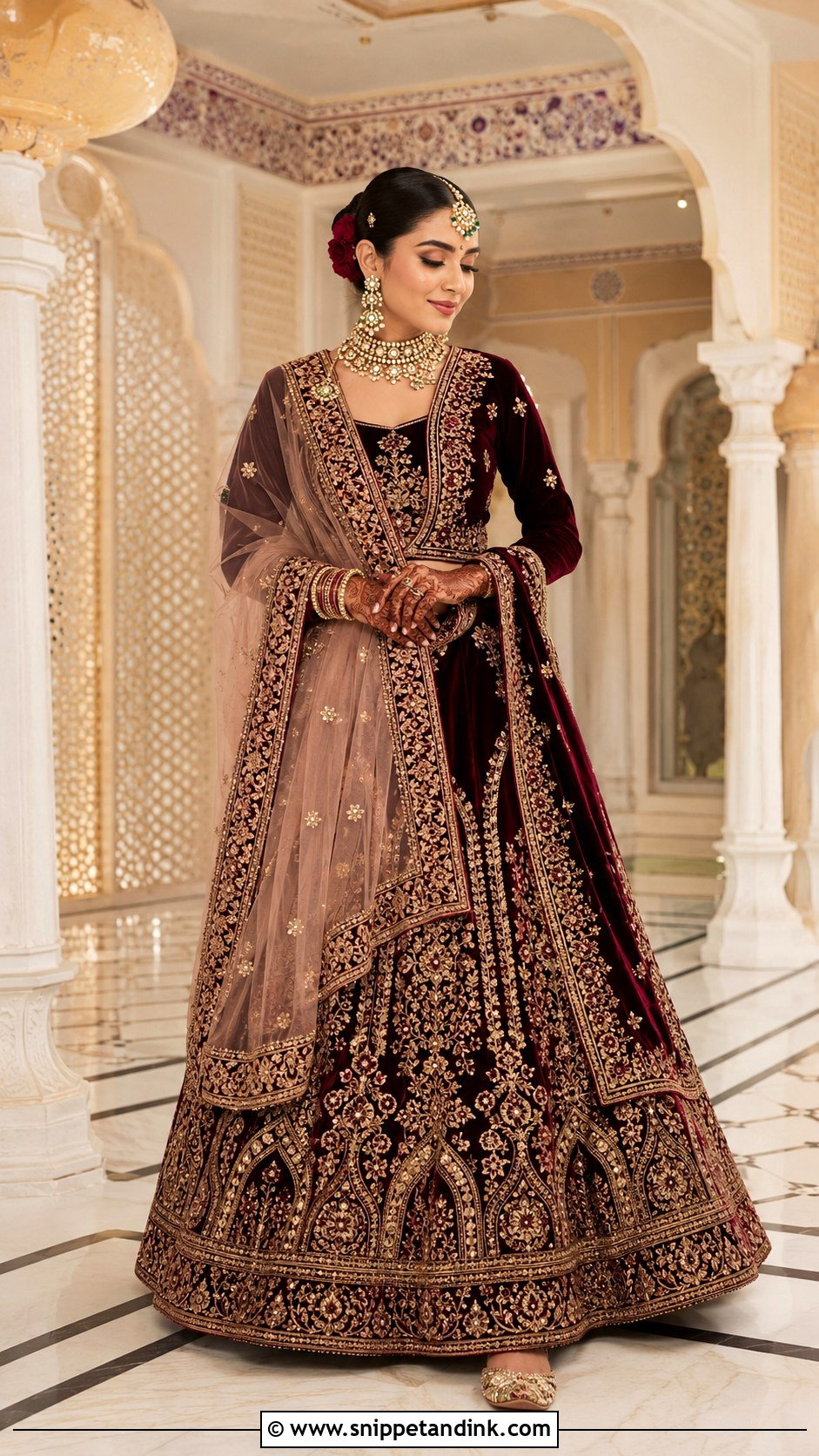
Velvet suits cool weddings and evening ceremonies. Maroon, emerald, navy, wine, ruby or royal purple look richest, with antique gold embroidery or fine crystal work so it doesn’t get too heavy. A velvet blouse with a silk or net dupatta mixes the textures well. Kundan or polki, a sleek bun and bold but controlled makeup suit it. Velvet absorbs light, which can make the face look flat beside it; I add a little more sculpting at the cheekbones than usual. Keep accessories refined and choose heels or embellished flats you can stand in for hours.
24. Indo Western Bridal Look
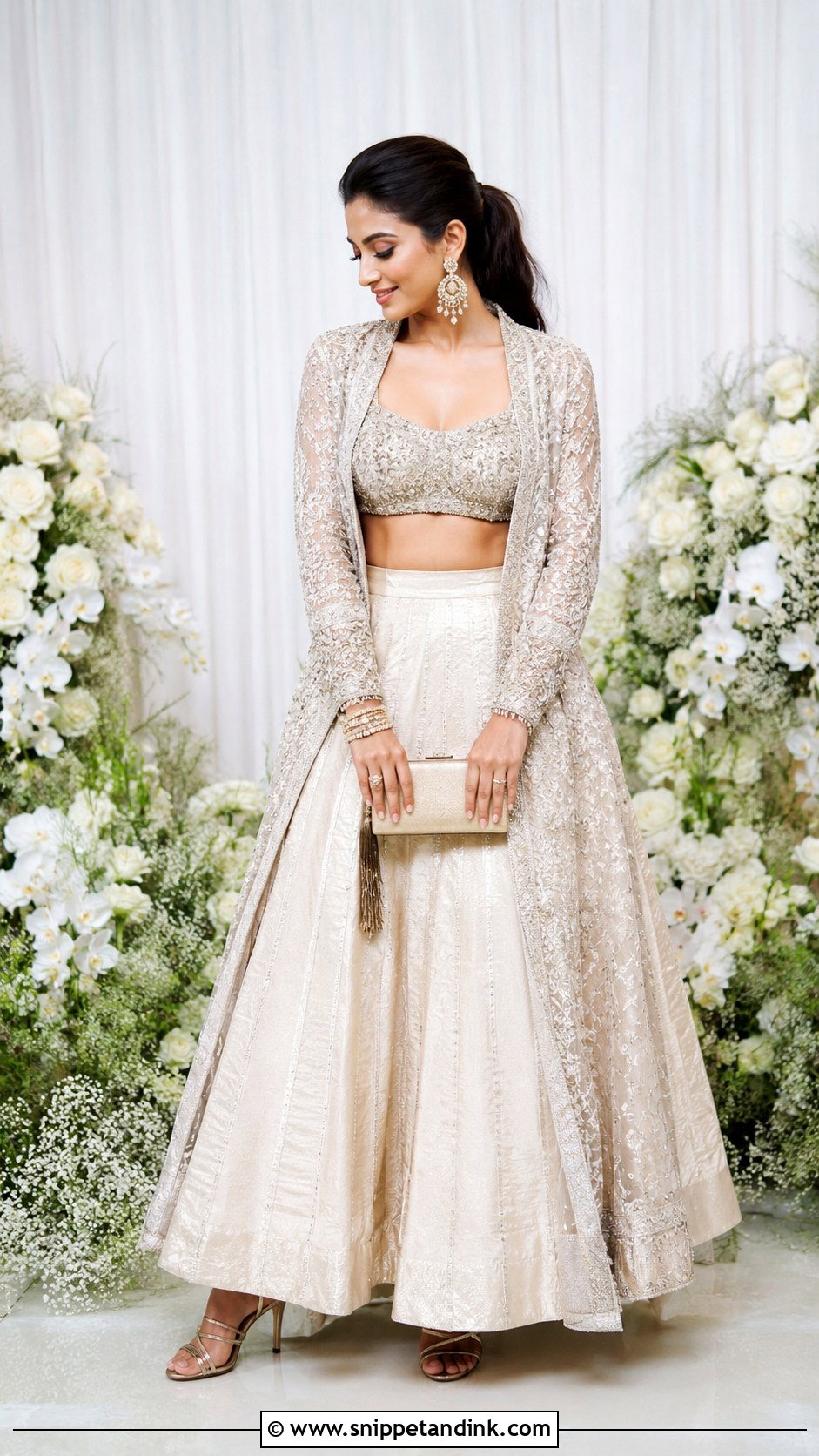
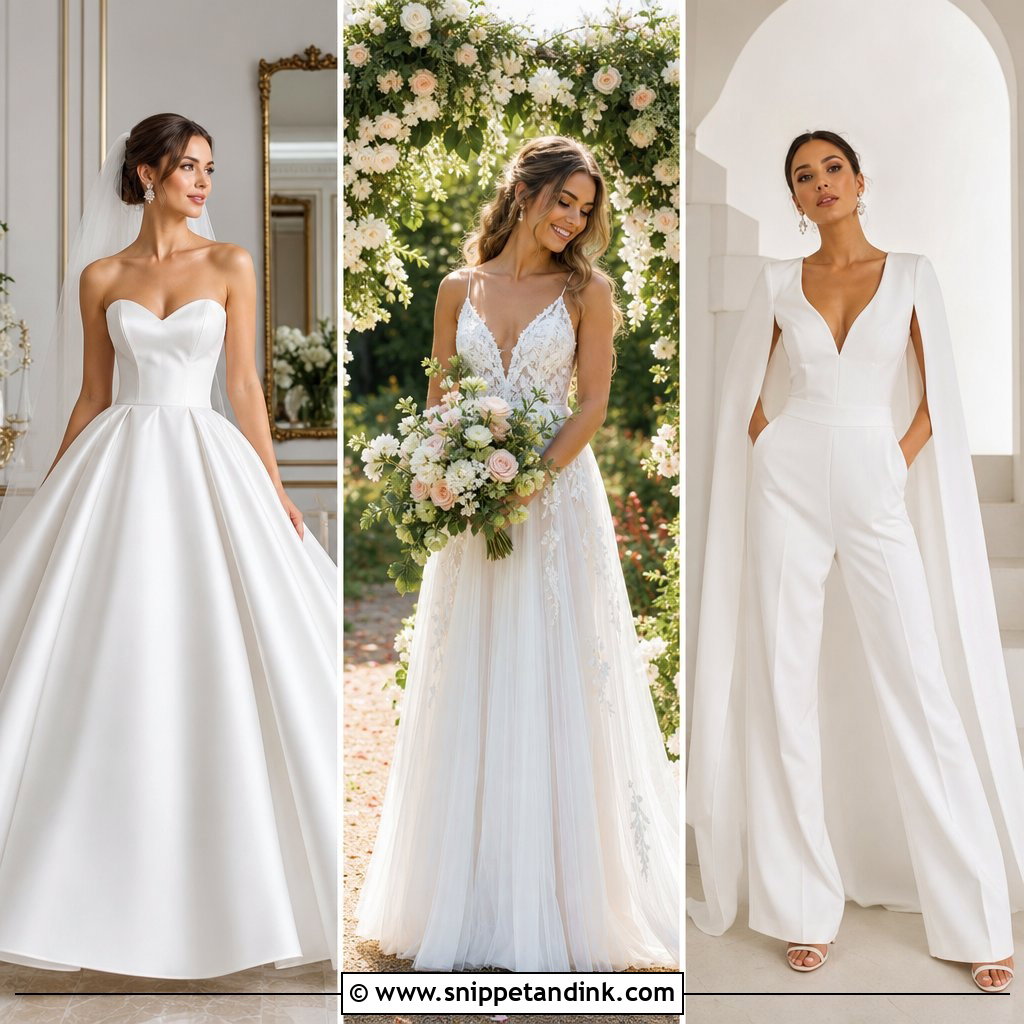
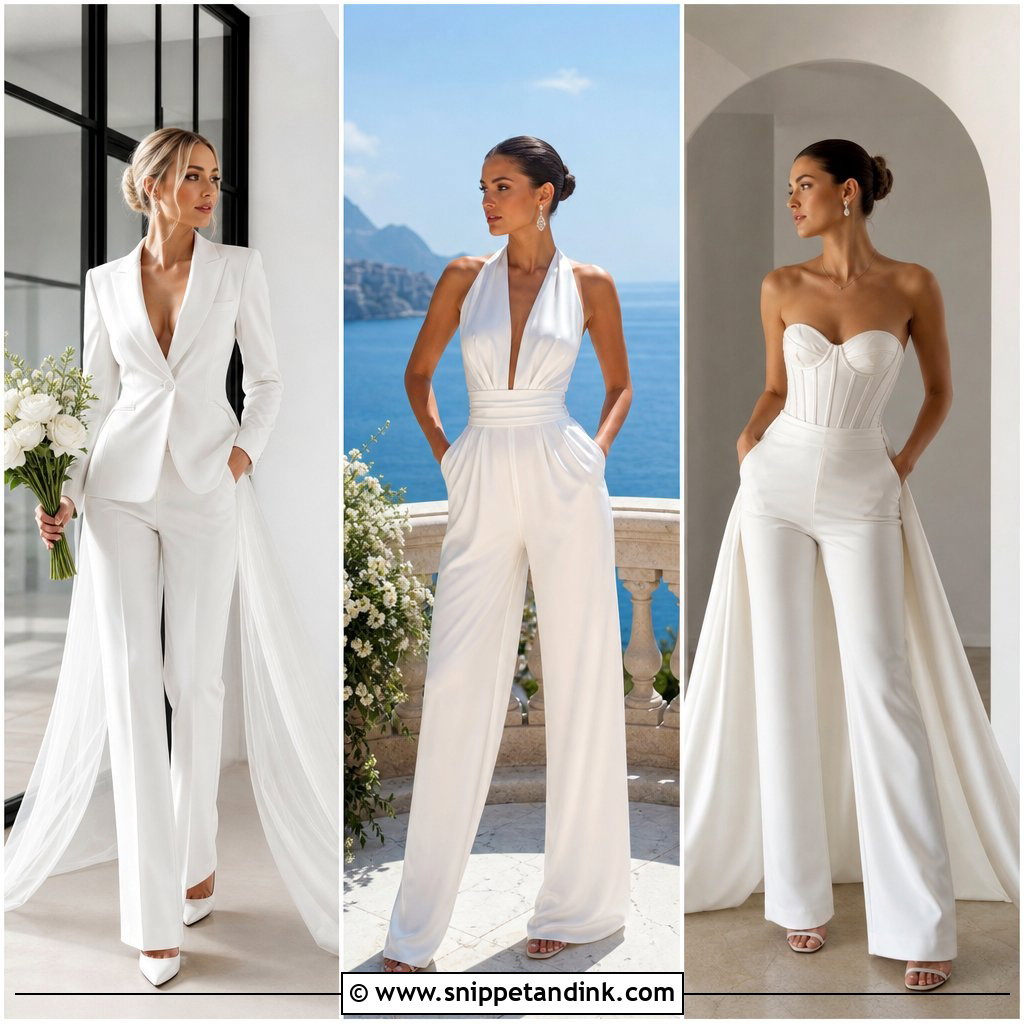
Indo-western suits a bride who wants fashion first with Indian detail. A structured lehenga with a jacket, a cape blouse with a skirt, a draped skirt set or a saree gown are all options. Embroidery, metallic details, pearls and rich fabric keep it bridal. Modern jewellery helps: a choker, sculptural earrings or layered bracelets. A sleek ponytail, soft waves or a clean bun look sharp, with heels and a small clutch. I’d book a trial for this one more than any other, since there’s no traditional reference for how the hair and face should look; you’re building it from scratch.

25. Heirloom Jewelry Bridal Look
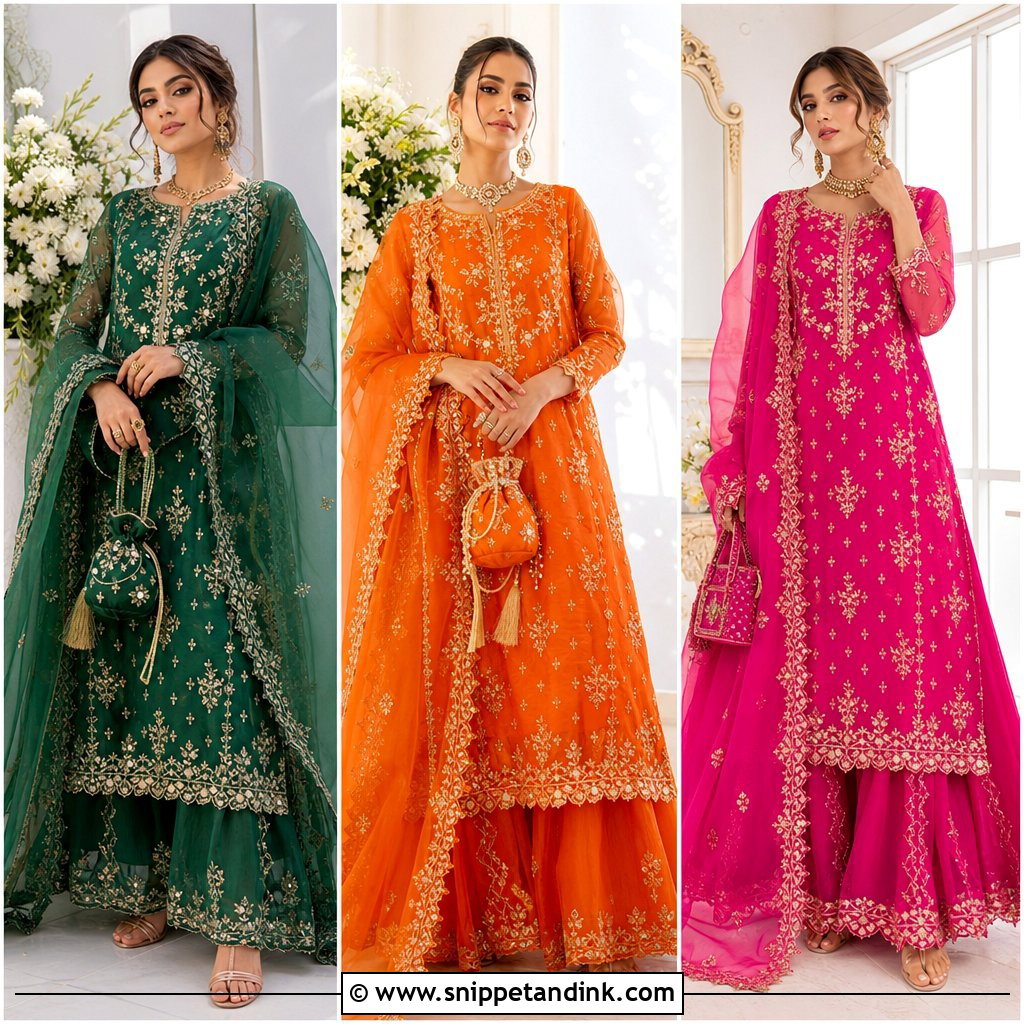
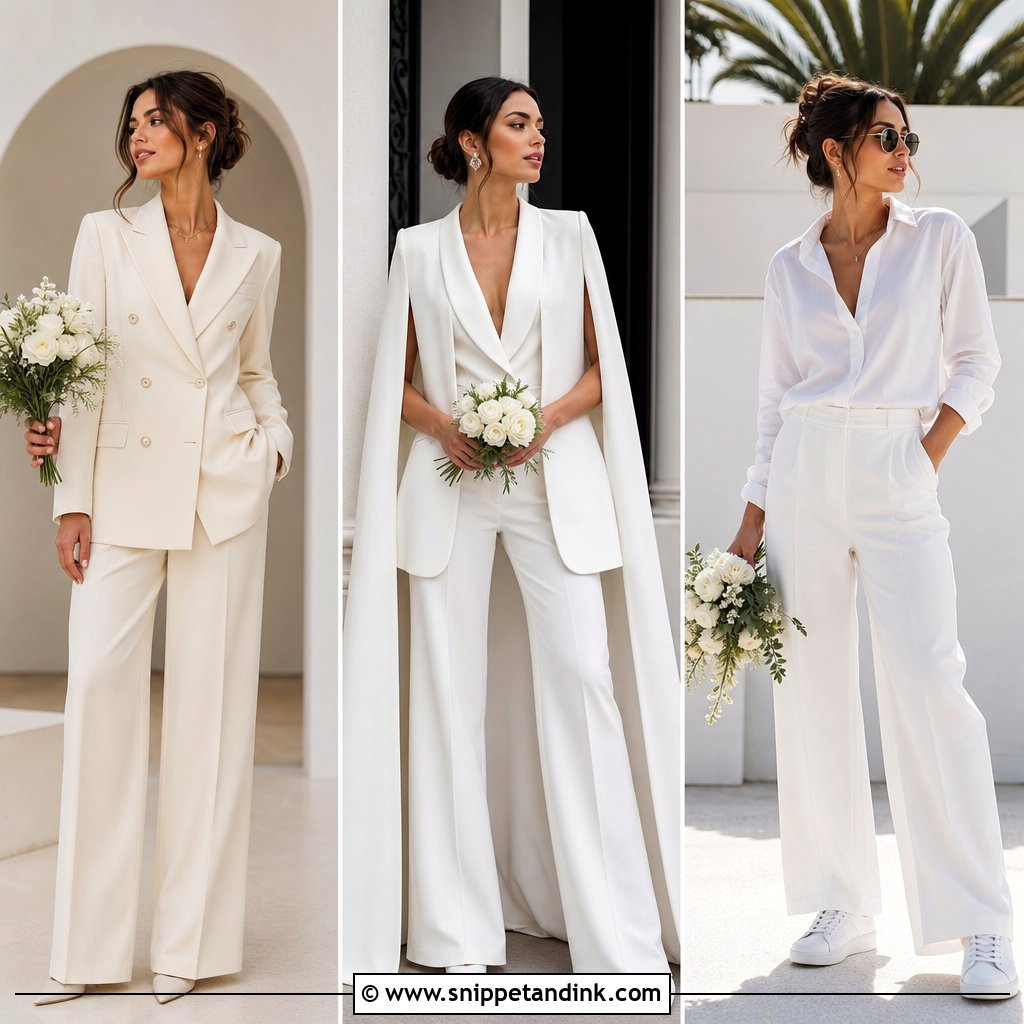
Some brides build the whole look around family jewellery, and the outfit’s job is to support it. A heavy gold necklace, temple set, kundan rani haar or antique bangles need a lehenga or saree that leaves room. Rich silk, Banarasi fabric, Kanjeevaram or classic red and gold lehengas work well. Keep the blouse neckline comfortable for layers, and put the hair in a bun or braid so earrings and hair ornaments show. Old jewellery is often heavy, so I ask the bride to wear the earrings for an hour at the trial; if they pull, we add a support chain or ear thread before the day.
Surviving the Pheras, the Heat and the Vidaai
Indian weddings are long, often warm, and sometimes held by a sacred fire. I build the face in thin layers, set each one, and keep mascara and eyeliner waterproof, because the vidaai brings tears even for brides who swear they won’t cry. Kajal on the lower lash line smudges first in heat, so I set it with a matching powder shadow.
The pouch I hand to a cousin
- Blotting papers, which lift oil without disturbing the base.
- The exact lipstick and lip liner used that day.
- Cotton buds and a small micellar water bottle for smudges.
- A few bobby pins and safety pins for the dupatta and matha patti.
- A tiny pressed powder for the nose and forehead.
Give the pouch to one person who will stay close through the rituals. Brides almost never carry a bag, and the moment you need a blotting paper is usually the moment you can’t walk off to find one.
Bring the Dupatta to Your Makeup Trial
Your bridal look should feel like you on the most photographed day of your life. Some brides will always choose a red lehenga; others feel more at home in a pastel outfit, a silk saree, a sharara, a gown or a minimal ivory look. Think about the ceremony, venue, weather, jewellery and how long you’ll wear each outfit, because comfort matters a great deal during long rituals. Take whatever you like from these Indian bride ideas, bring the outfit to your makeup trial, and build the face around it from there.
You'll Like These Ideas:







Leave a Reply