
Most brides I dress are not choosing one outfit. They are choosing four or five, one for each function, and each event asks something different of the clothes: the haldi gets messy, the mehndi keeps your hands out of action for hours, the sangeet is for dancing and the ceremony can mean long stretches of sitting cross-legged. Below are twenty complete looks, from red lehengas and regional silk sarees to shararas, Anarkalis and reception gowns. Bridal dress also changes a great deal from region to region, so treat these as starting points and check them against your own family’s customs. I’ve added notes on fabric, weight and fit to each one, because those are the things that decide whether you enjoy wearing it.
Matching Each Function to the Right Fabric Weight
Before I look at colour with a bride, I list her functions and how long she’ll be in each outfit. That list usually rules out half the options straight away. A heavy bridal lehenga is fine for a ceremony where you’ll mostly sit, but it is miserable at a three-hour sangeet.
- Haldi: washable, cheap-to-replace fabric, short sleeves, no trailing hem. Assume it will stain.
- Mehndi: sleeves above the elbow and a drape that stays off your hands, because you’ll sit with wet paste on both arms for a long time.
- Sangeet: the lightest outfit you own. Shararas, cape lehengas and short jackets let you dance.
- Ceremony: the heaviest piece is acceptable here, provided you can sit cross-legged or on a low seat without the waistband cutting in.
- Reception: you’ll stand and greet people for hours, so stable shoes and a hem you don’t have to hold matter more than embellishment.
Climate changes the list too. In a humid outdoor setting, velvet and dense brocade feel heavy within the first hour, while georgette, organza and light silk breathe. For a winter evening wedding, velvet earns its place.
1. Red Indian Bridal Lehenga
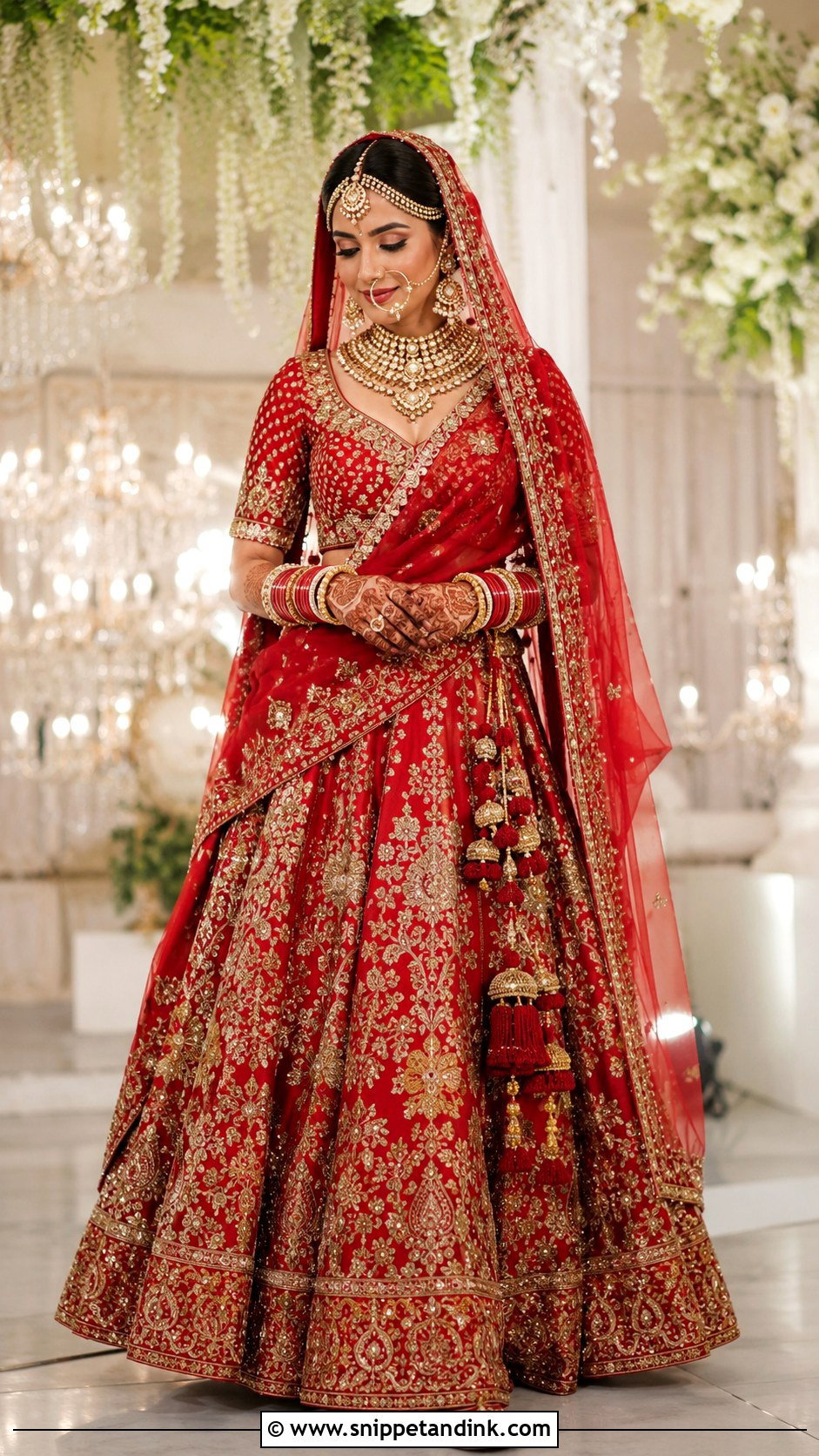
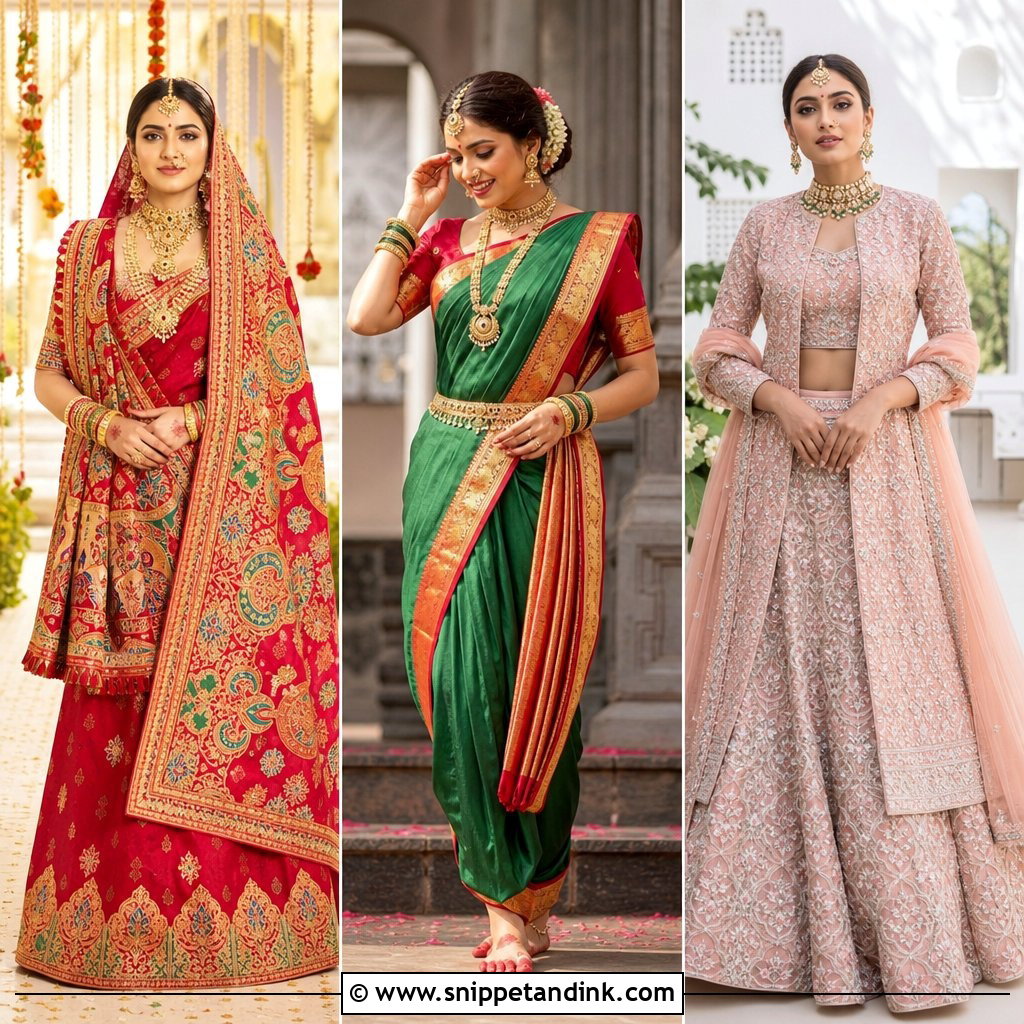
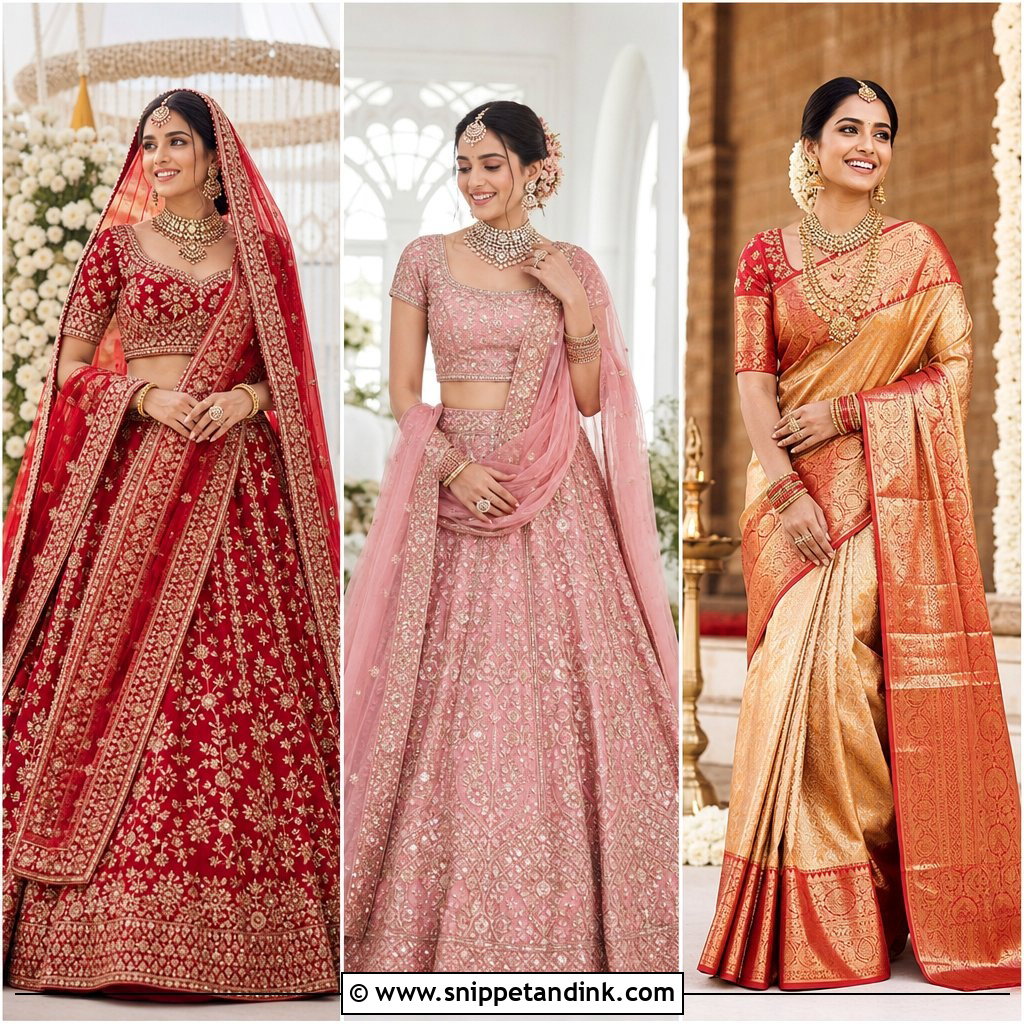
Red is still the colour most families picture for the pheras, and a full raw silk, velvet or brocade skirt with zari or zardozi work carries it best. The thing I check first is skirt weight: heavily worked bridal lehengas can be several kilos, and that weight sits on your hips for hours. A fitted blouse balances the volume, a matching dupatta goes over the head, and a lighter second dupatta across one shoulder gives you somewhere to move. Add a choker, a long necklace, maang tikka, earrings, bangles and embroidered juttis. If dense contrast embroidery feels too busy for you, tone-on-tone work reads richer in person than it sounds. Hem the skirt in the exact shoes you’ll wear, and sit down at the final fitting. If you can’t sit through a ritual without the waistband digging in, it needs letting out.
2. Maroon Velvet Indian Bridal Lehenga
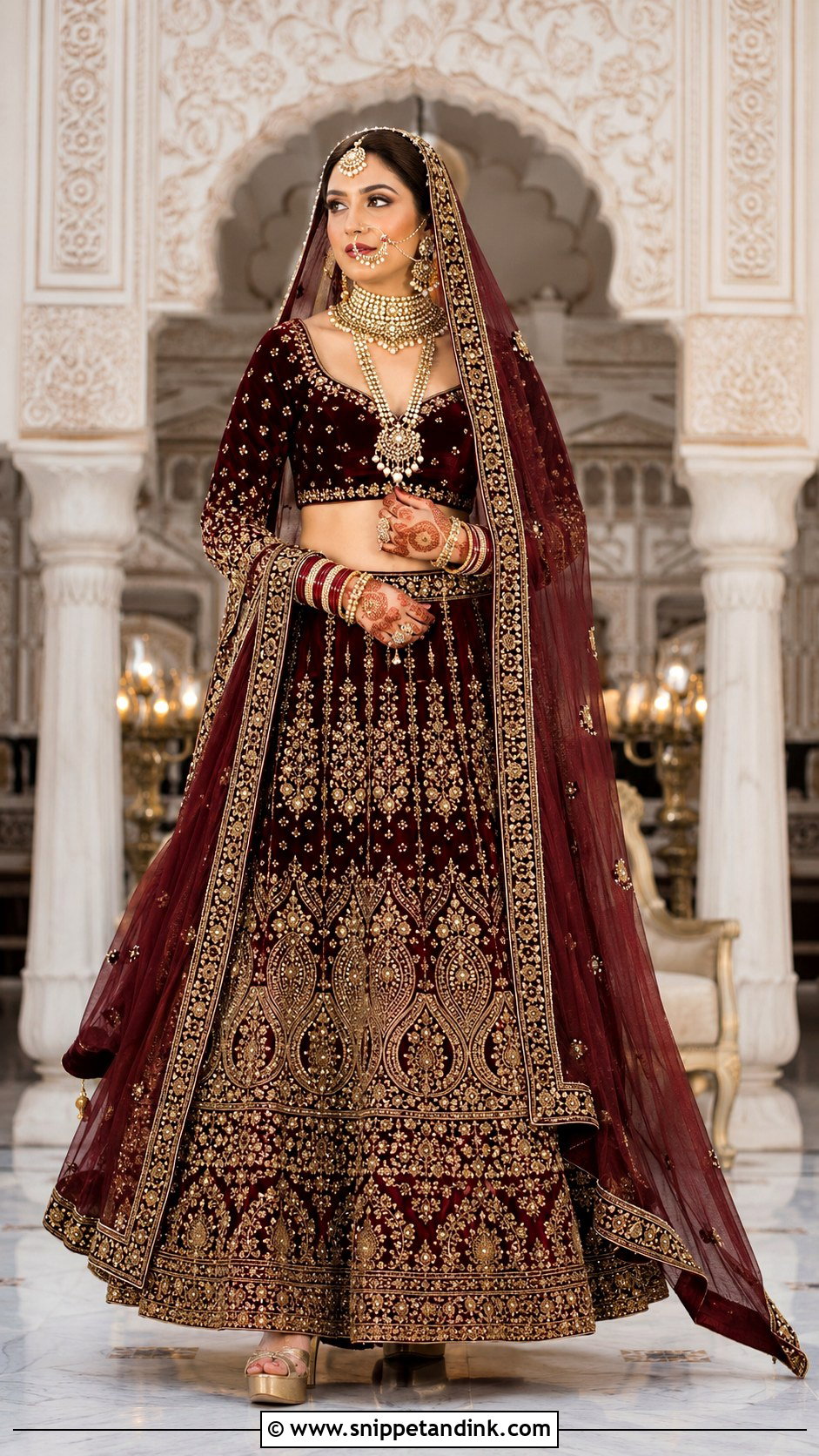
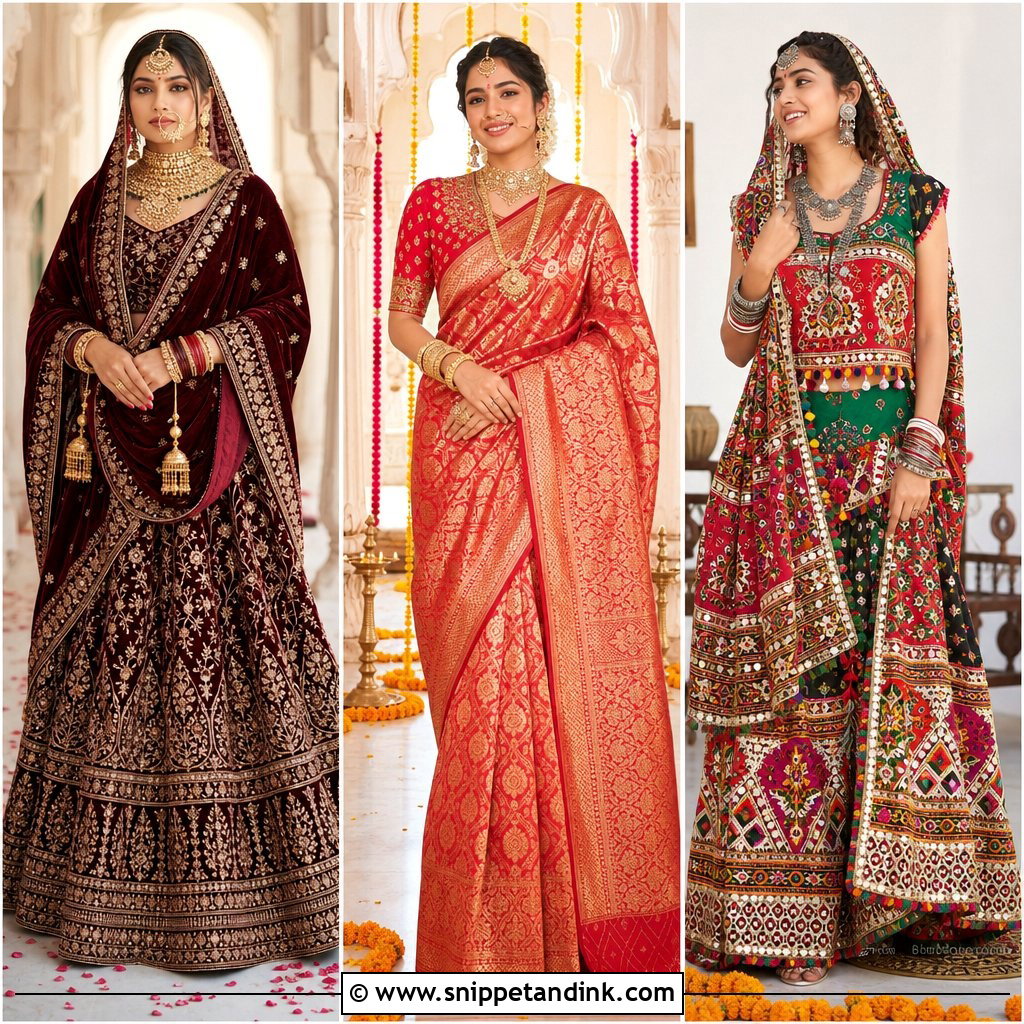
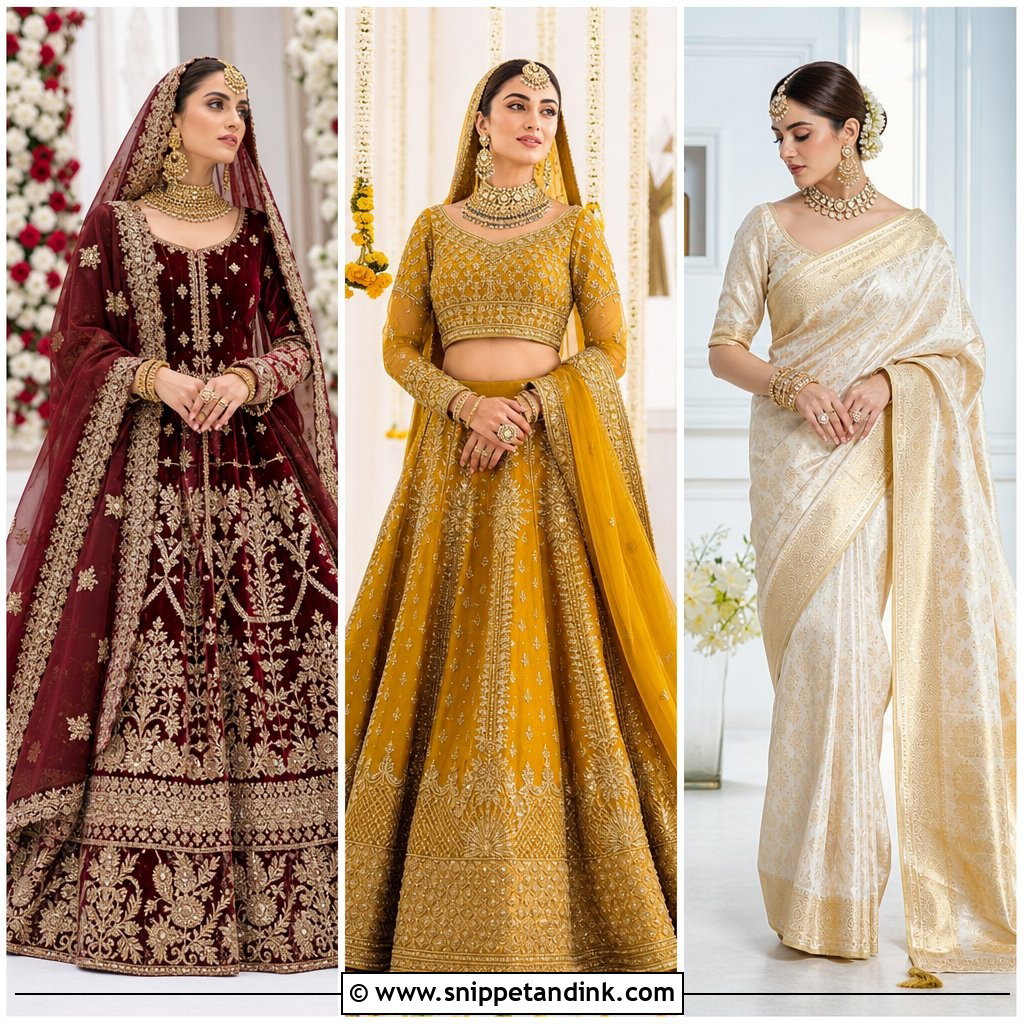
Velvet has its own depth, which is why a maroon velvet lehenga doesn’t need embroidery on every inch, and why I suggest it mostly for evening or winter ceremonies. In a warm hall it gets hot quickly. Antique gold borders, a coordinated blouse and a softer net or organza dupatta keep it rich without piling on weight. Kundan jewellery, a statement nath, stacked bangles and gold platforms or cushioned juttis finish it, and a sleek bun with fresh flowers sits well against the colour. One fitting detail: velvet shows every pin mark and press line, so ask the tailor to secure the dupatta through the blouse lining, not the velvet face. If the skirt is heavily worked, keep the blouse neckline plain.
3. Pink Floral Indian Bridal Lehenga
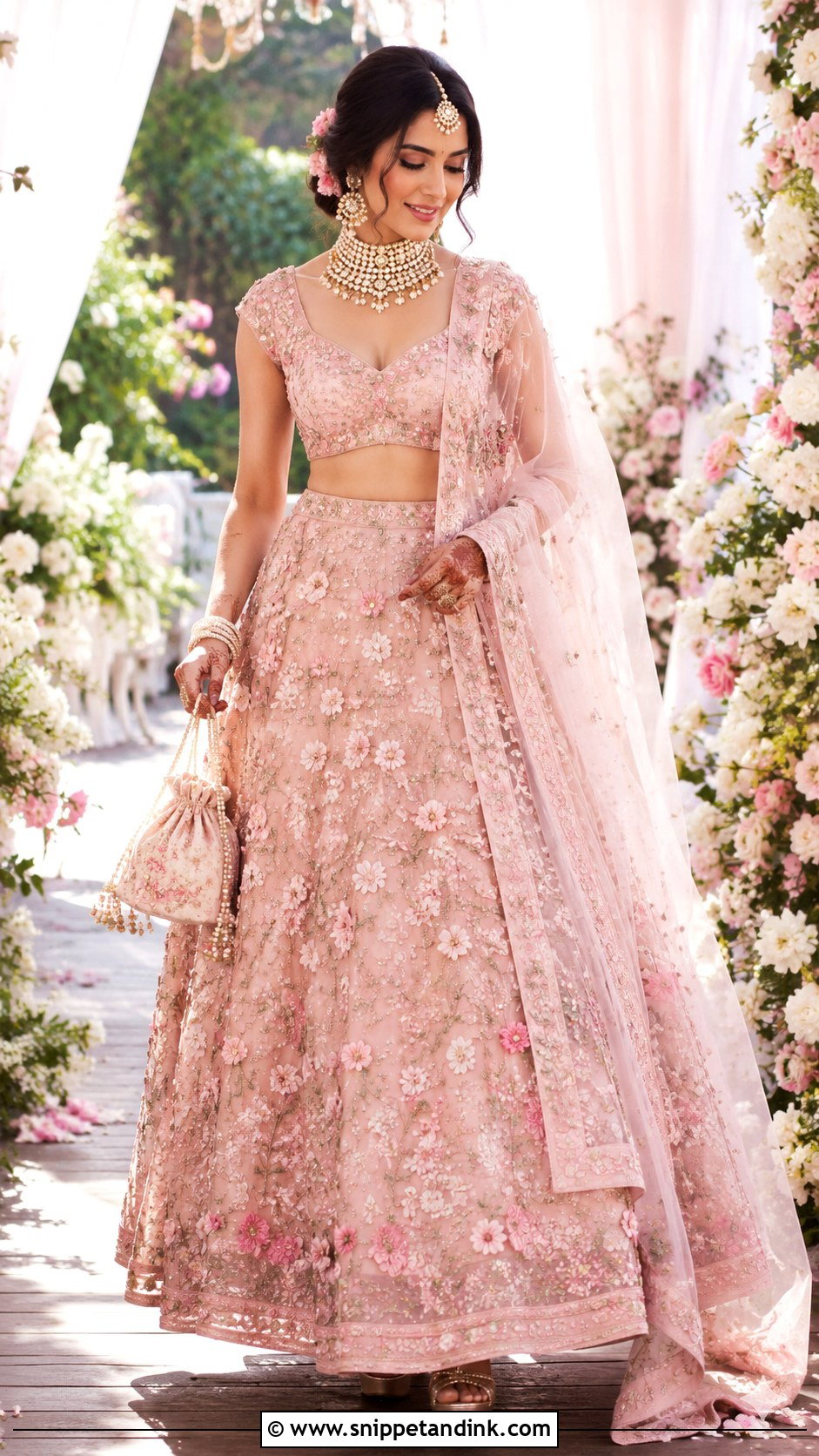
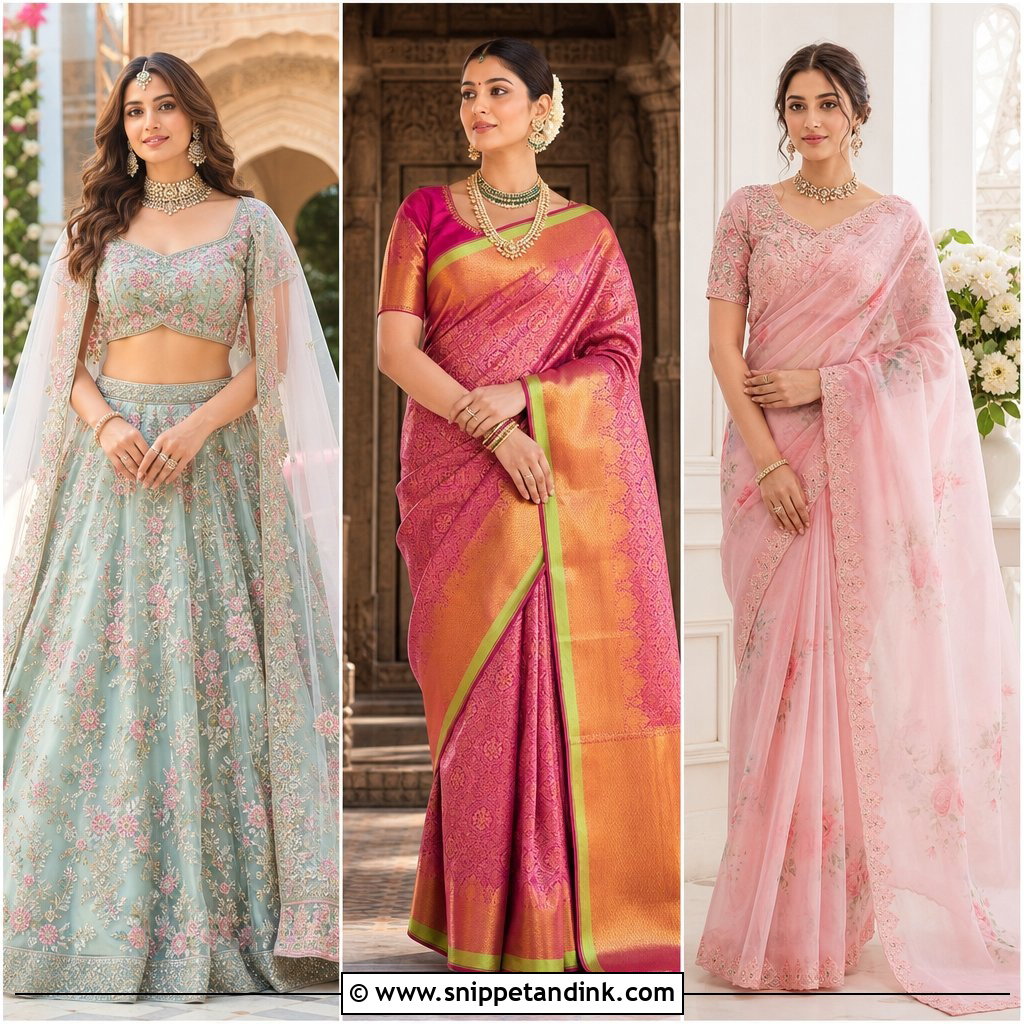
Blush, rose and dusty pink with floral embroidery suit daylight, a garden ceremony or an engagement. Look for embroidered vines, raised flowers or a little sequin work, paired with a fitted short-sleeve blouse and a sheer dupatta with a narrow border. Pearl, polki or diamond-style jewellery keeps the palette light, and metallic block heels and a small potli finish it. My caution with pale pink is the camera: in bright sun it can wash out next to warm skin. One deeper accent, such as emerald beads, a berry lip or a contrasting border on the dupatta, gives the eye somewhere to land. Loose waves or a low floral bun suit the mood.
4. Ivory And Gold Indian Bridal Lehenga
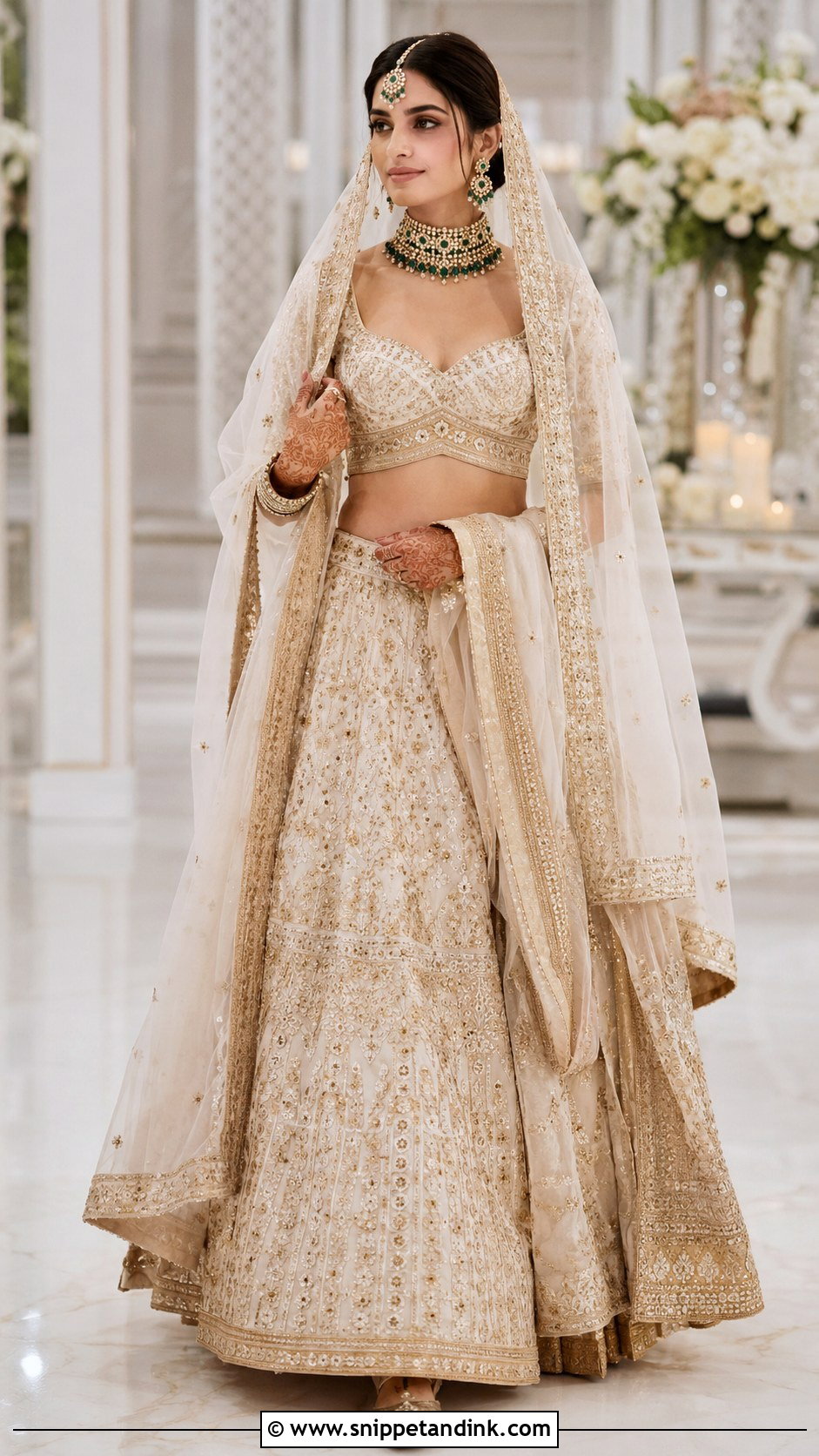
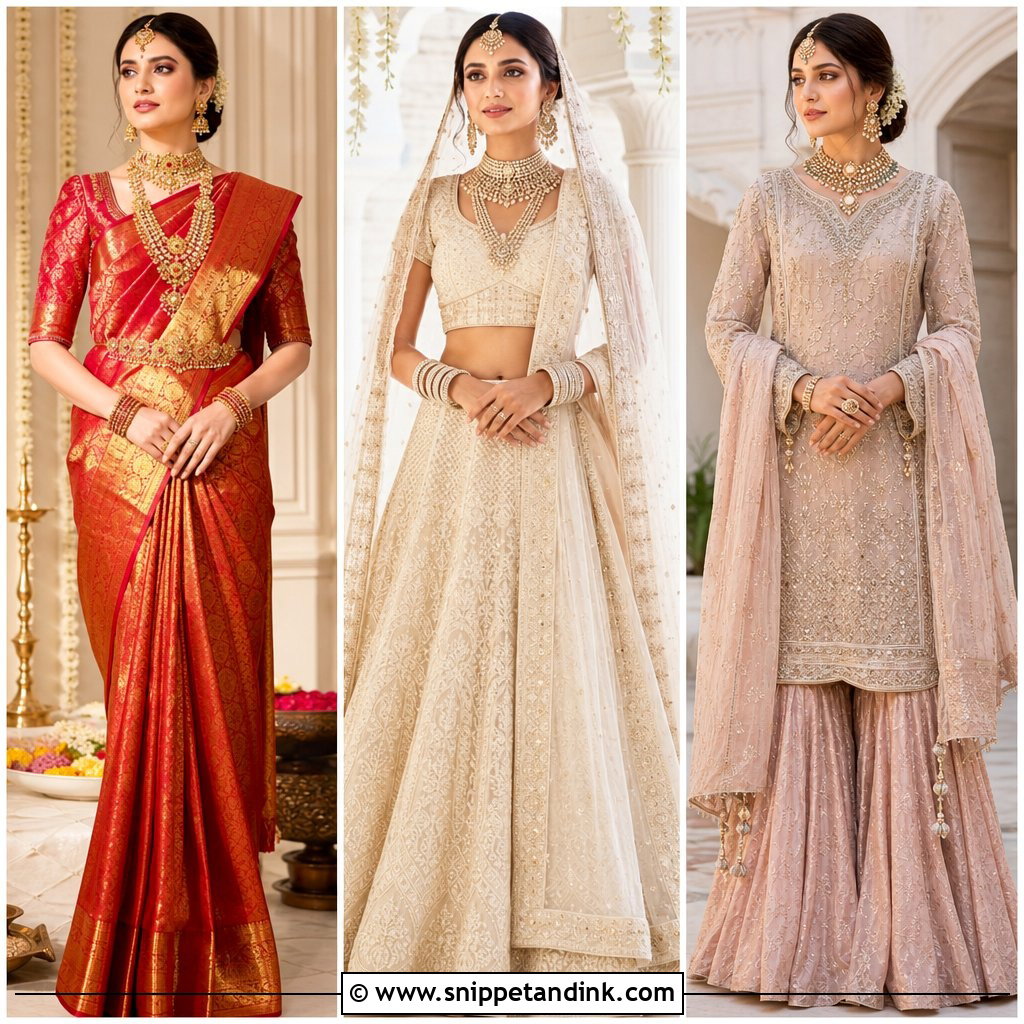
Ivory and gold is the quiet alternative to red, and the embroidery has to work harder because it sits on a pale base. Metallic threadwork, mirror details, pearls or tonal embroidery all show up; very fine tone-on-tone work can disappear completely in photos. A structured blouse with a square, sweetheart or modest scoop neckline gives shape. Edge the dupatta in gold, and if the ceremony calls for it, add a second veil with a slightly heavier border. Emeralds give contrast, pearls keep it monochrome, and gold heels or embellished juttis stay hidden under the skirt. The risk I always test for is transparency. Ivory net and georgette can turn see-through under strong light, so insist on a full lining and stand under daylight and a camera flash at the trial before you sign off.
5. Pastel Blue Indian Bridal Lehenga
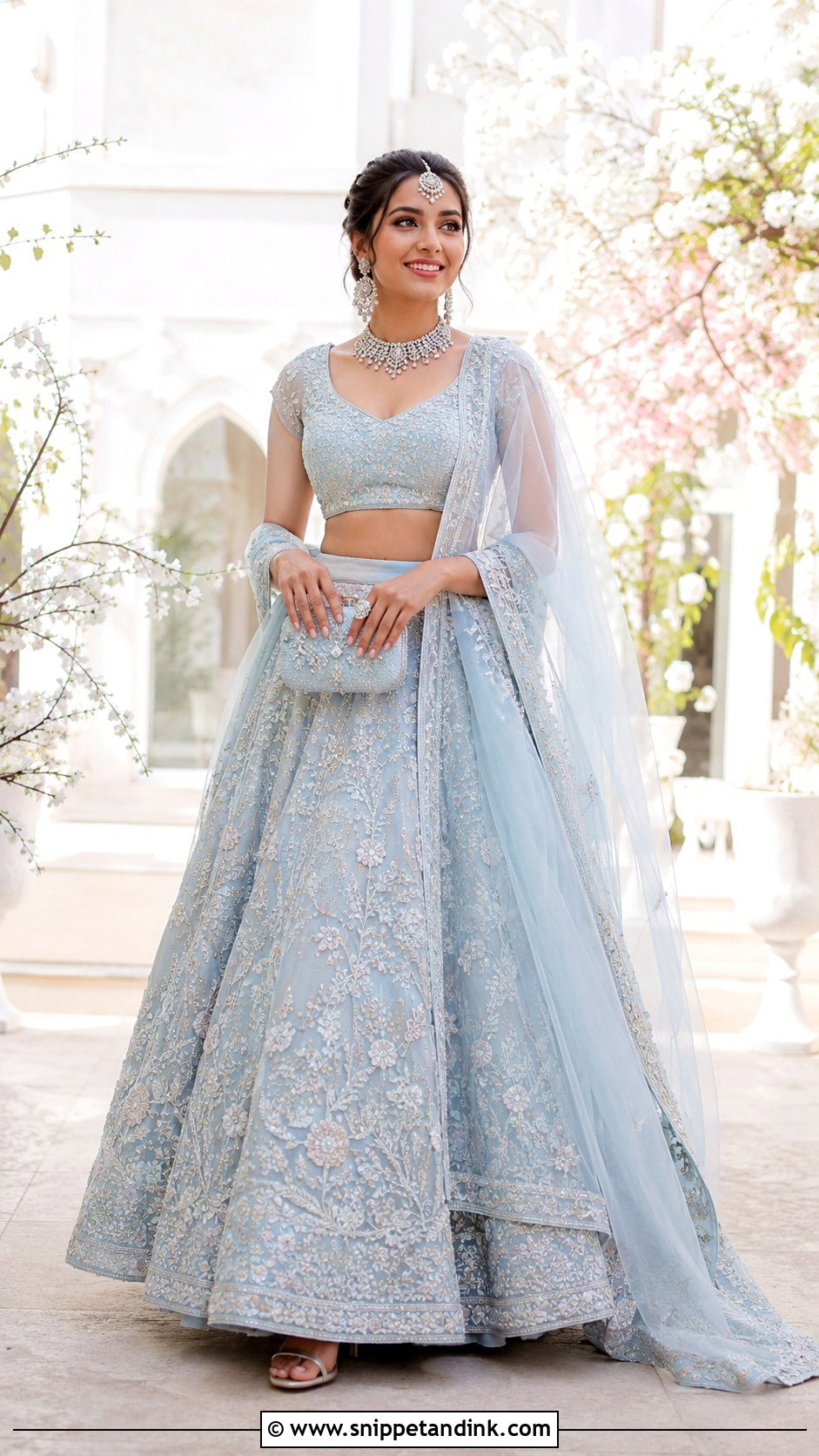
Powder blue is a lovely choice for a morning wedding or an outdoor engagement, and silver threadwork, pearls, sequins or pale florals all show well on it in natural light. Keep the blouse matching and choose a tulle or organza dupatta that moves easily. Diamond-style earrings, a delicate necklace, a slim maang tikka, silver heels and a beaded clutch suit the colour, along with soft makeup and a cool pink lip. Where brides go wrong with blue is mixing pastels: a mint dupatta, a lilac blouse and a blue skirt start to look like three outfits. Stay inside one blue family. If you want definition, navy piping or sapphire-coloured stones add it without breaking the palette.
6. Green Indian Bridal Lehenga For Mehndi
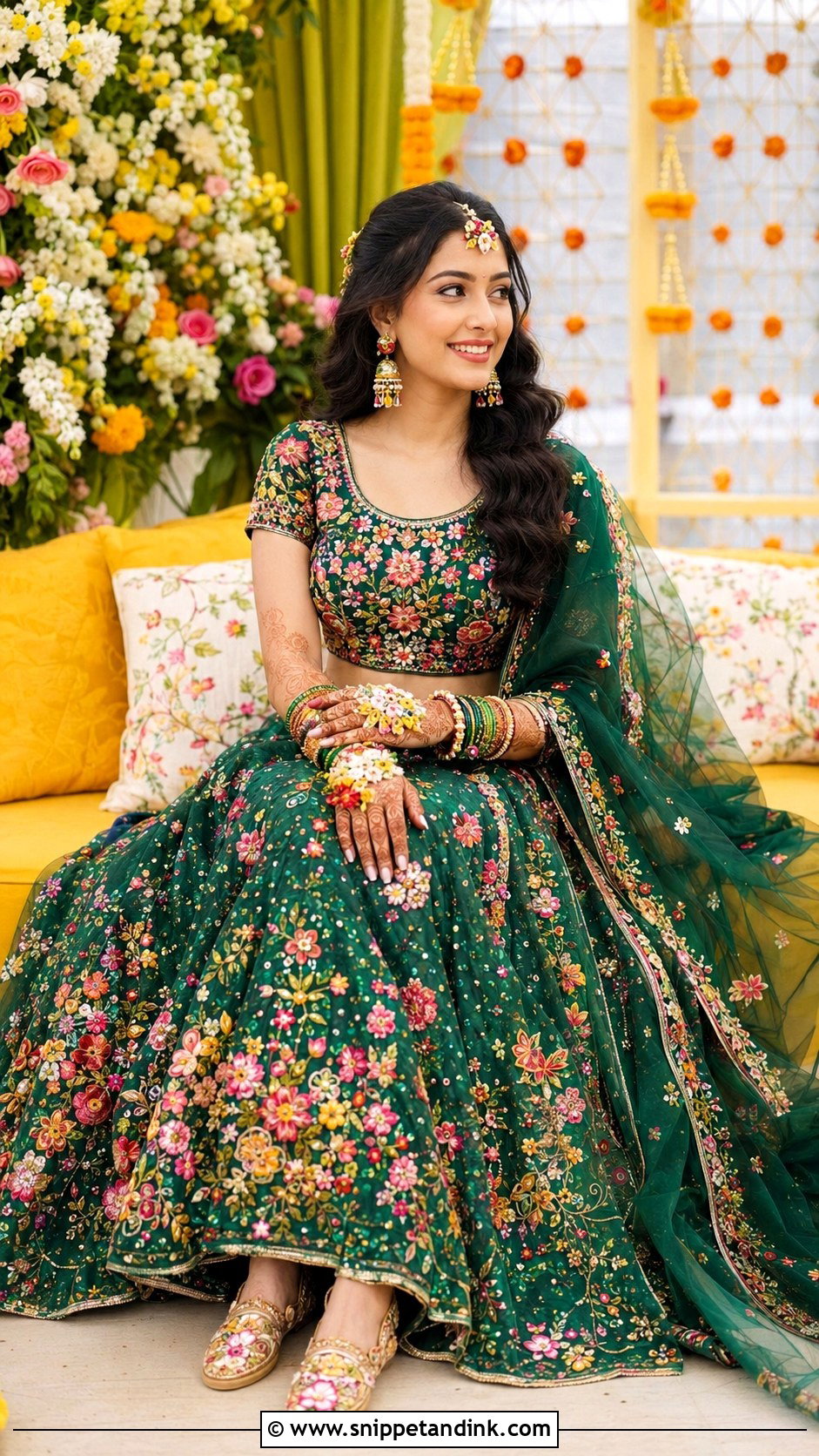
Green suits the mehndi, and the shade can follow the time of day: emerald for evening, pistachio or mint for an afternoon in a garden. Choose georgette or light silk with gota, mirror work or colourful embroidery so the skirt moves without dragging. The practical problem at a mehndi is your hands and arms. You’ll sit for a long time with wet paste on both, so sleeves need to end above the elbow and the dupatta has to drape well away from the hands, giving the artist room to work. Floral jewellery, jhumkas, stacked bangles and cushioned juttis complete it. If you plan to dance once the paste has set, a detachable cape is far easier than a pinned dupatta.
7. Yellow Indian Bridal Lehenga For Haldi
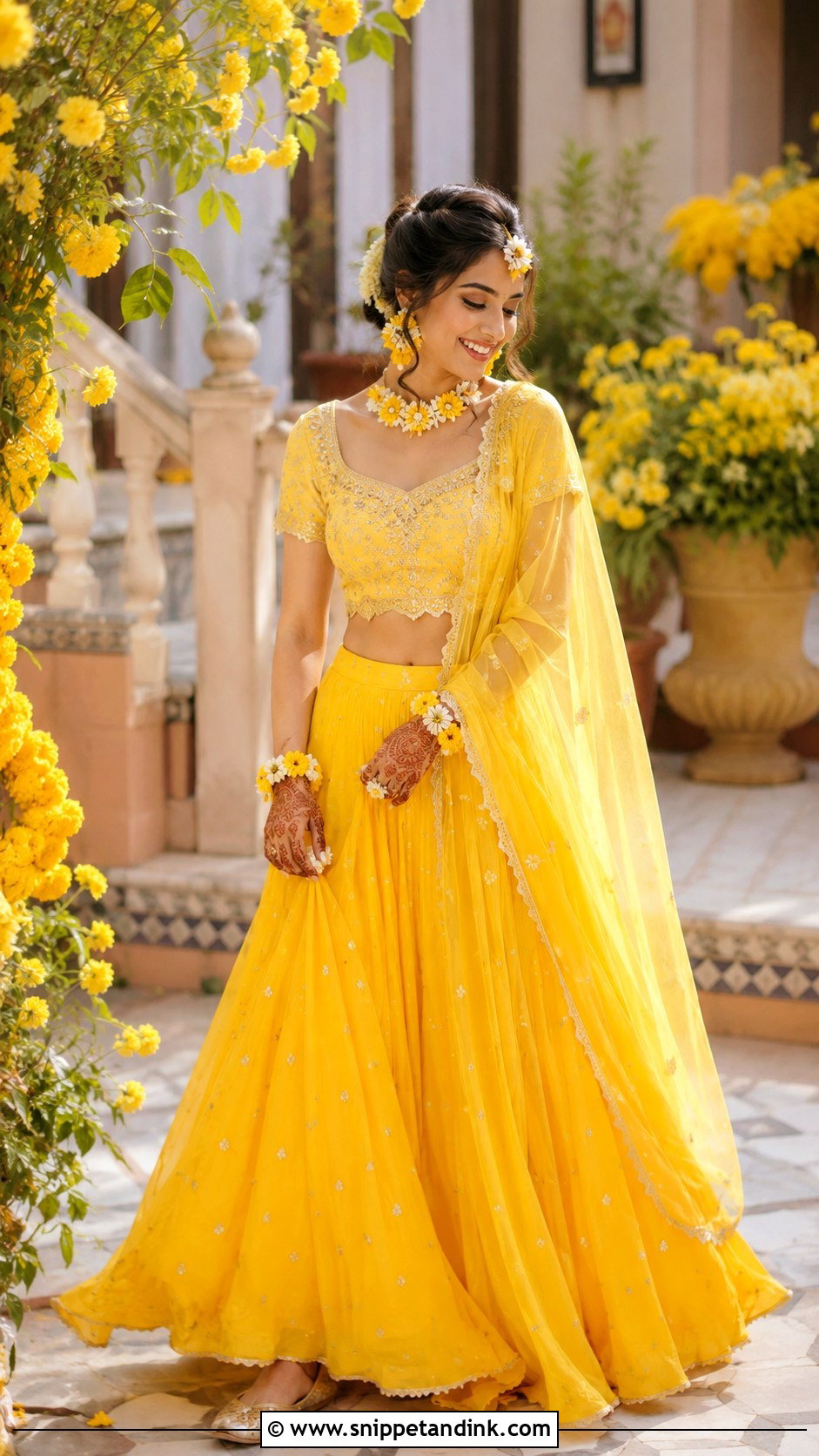
Haldi is the one function where I tell brides not to wear anything precious. Turmeric paste stains silk and pale fabric, often for good, so pick cotton-silk, chanderi, georgette or organza in a yellow you won’t mind marking. Short sleeves, a comfortable neckline and a secure blouse closure matter more than embellishment here. Swap the pinned veil for a sheer dupatta, a cropped cape or a floral shoulder drape. Flower jewellery, small earrings, flat juttis and fresh flowers in a braid or bun keep it light, and orange, pink or green accents give the yellow some depth. Skip trailing hems and fiddly hooks; you’ll be sitting low while people apply paste.
8. Orange Bandhani Indian Bridal Lehenga
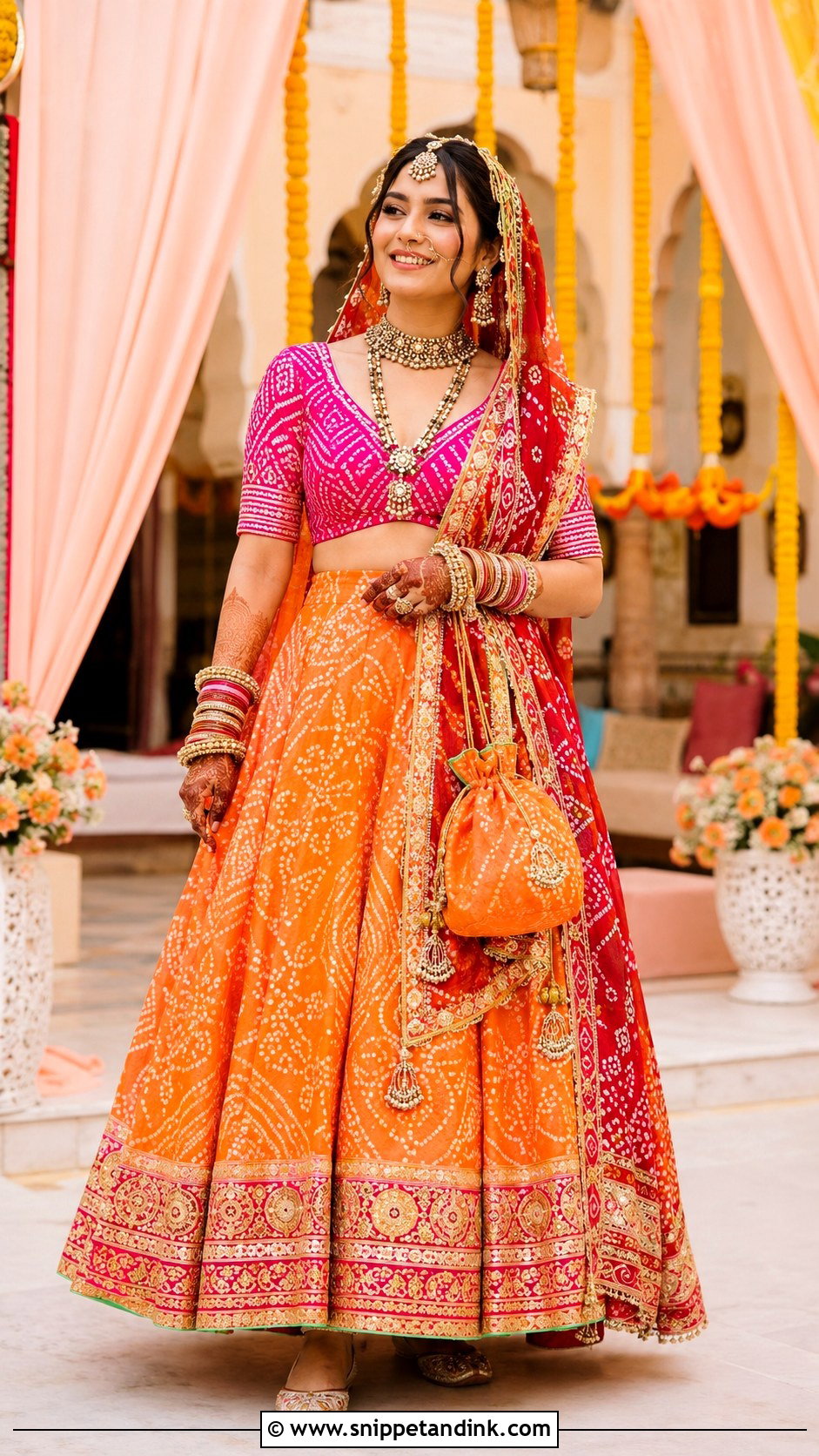
An orange Bandhani lehenga has a lot of character before you add a single accessory. Bandhani is tie-dye: the fabric is pinched and tied into tiny dots before dyeing, so the pattern has a slightly irregular, handmade texture. Rust, saffron, coral or bright orange with a gota or zari border works, set against a red, pink or green blouse so the pieces read separately. Wear the matching Bandhani dupatta over the head and a lighter drape on the shoulders. Gold jewellery, a borla or maang tikka, bangles, a potli and embroidered juttis finish it. Because the print is already busy, I pare the accessories back and spend the effort on a clean waist and a well-fitted blouse instead.
9. Banarasi Silk Indian Bridal Saree
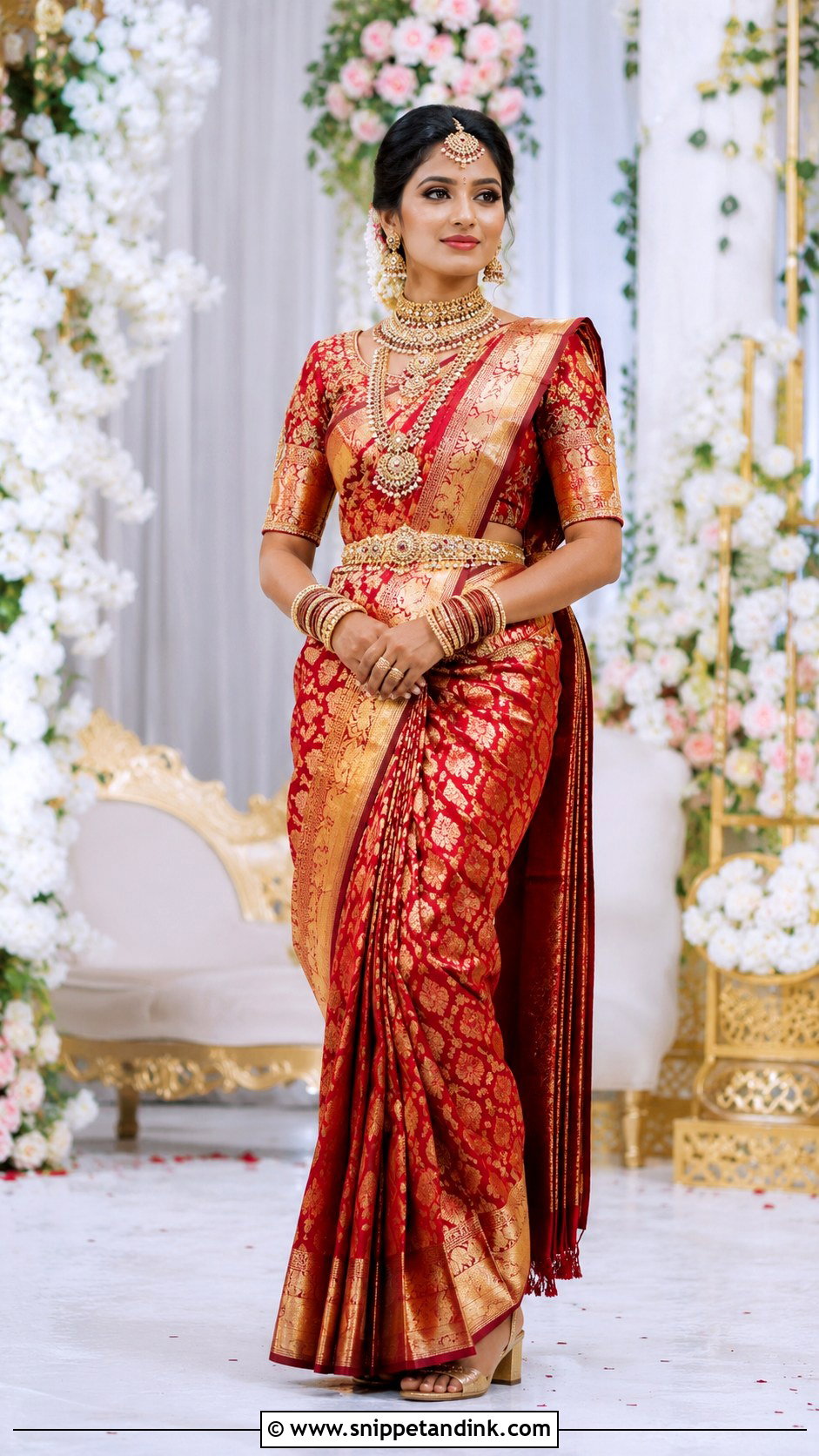
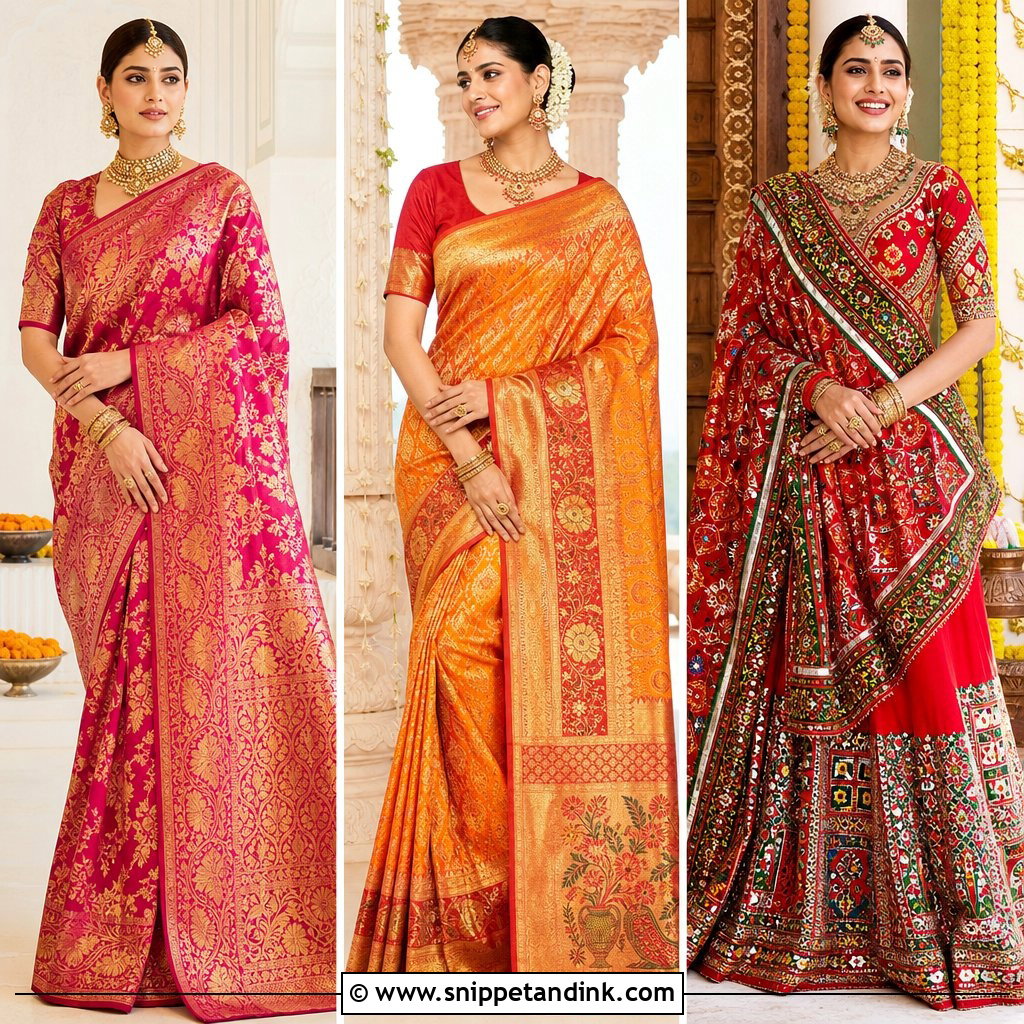
Banarasi silk is woven, not embroidered, so the pattern is in the cloth itself and the saree drapes heavier and more structured than a printed silk. Deep red, maroon, magenta, emerald and royal blue are classic; gold and pink combinations feel lighter for a daytime ceremony. I pair it with a fitted brocade blouse that supports the drape without bulk, then a waist belt, layered gold or kundan necklaces, jhumkas, bangles, a maang tikka and comfortable heels. If you add a veil, keep it light and clear of the pallu, which is the best part of the saree. Ask your draper for secure pleats and hidden pins at the shoulder and waist. A low bun with flowers suits it, and the blouse will pair with other sarees long after the wedding.
10. Kanjivaram Silk Indian Bridal Saree
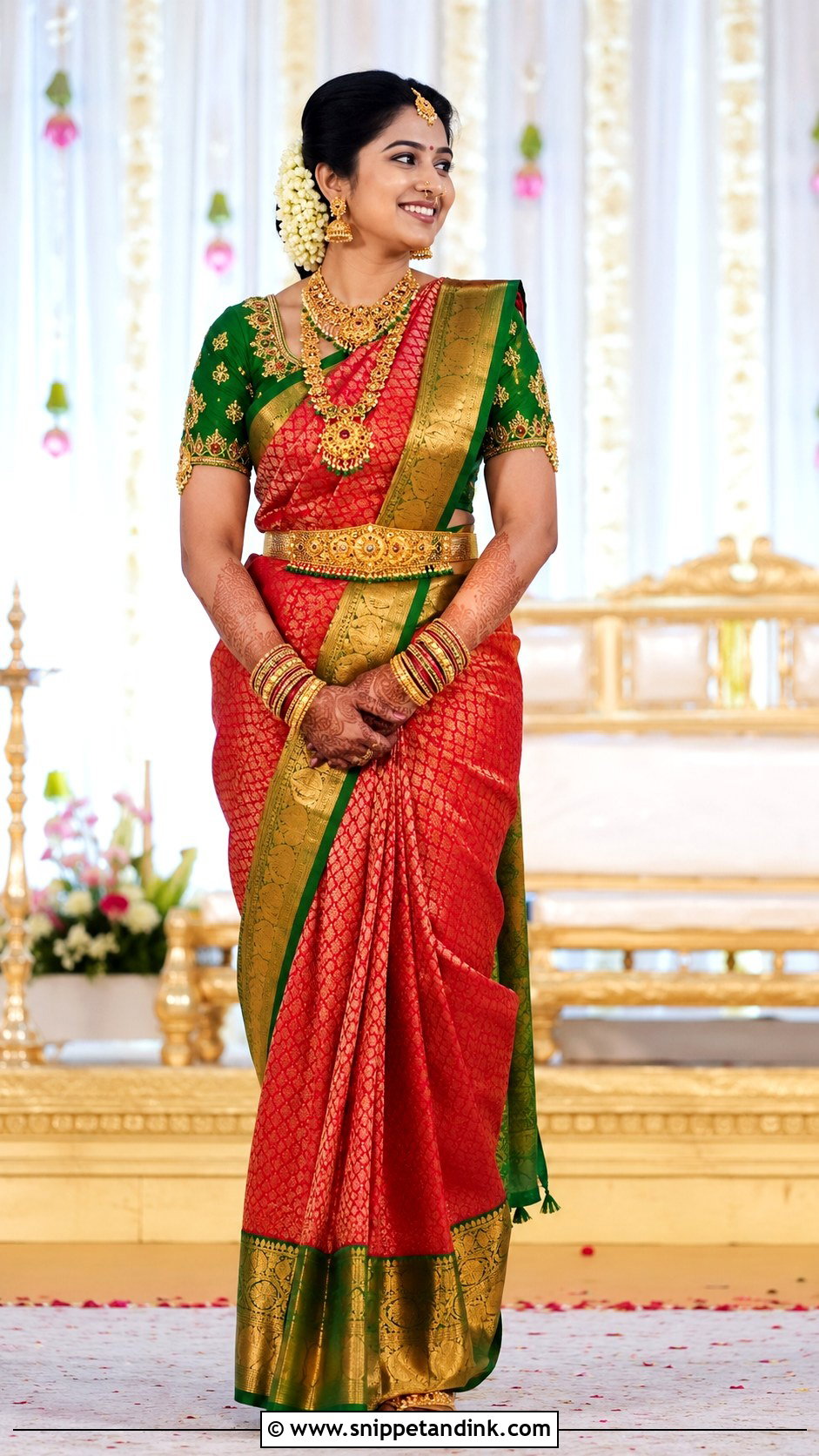
A Kanjivaram silk saree is heavy, crisp silk with a contrasting border, and it holds pleats almost architecturally, which is why it anchors so many a South Indian bridal look. Red and gold, green and pink, or purple and orange give strong contrast. Wear it with a tailored silk blouse, secure the pleats so the border stays visible, and add a long temple necklace, choker, jhumkas, waist belt, armlets, bangles and hair ornaments with a flower-covered braid or bun. The weight is the honest drawback. A full bridal Kanjivaram can be tiring through a long standing ceremony, so lift a few before you choose. Have the blouse cut with enough armhole room for armlets, then practise walking and sitting in the whole outfit before the day.
11. Bengali Indian Bridal Saree
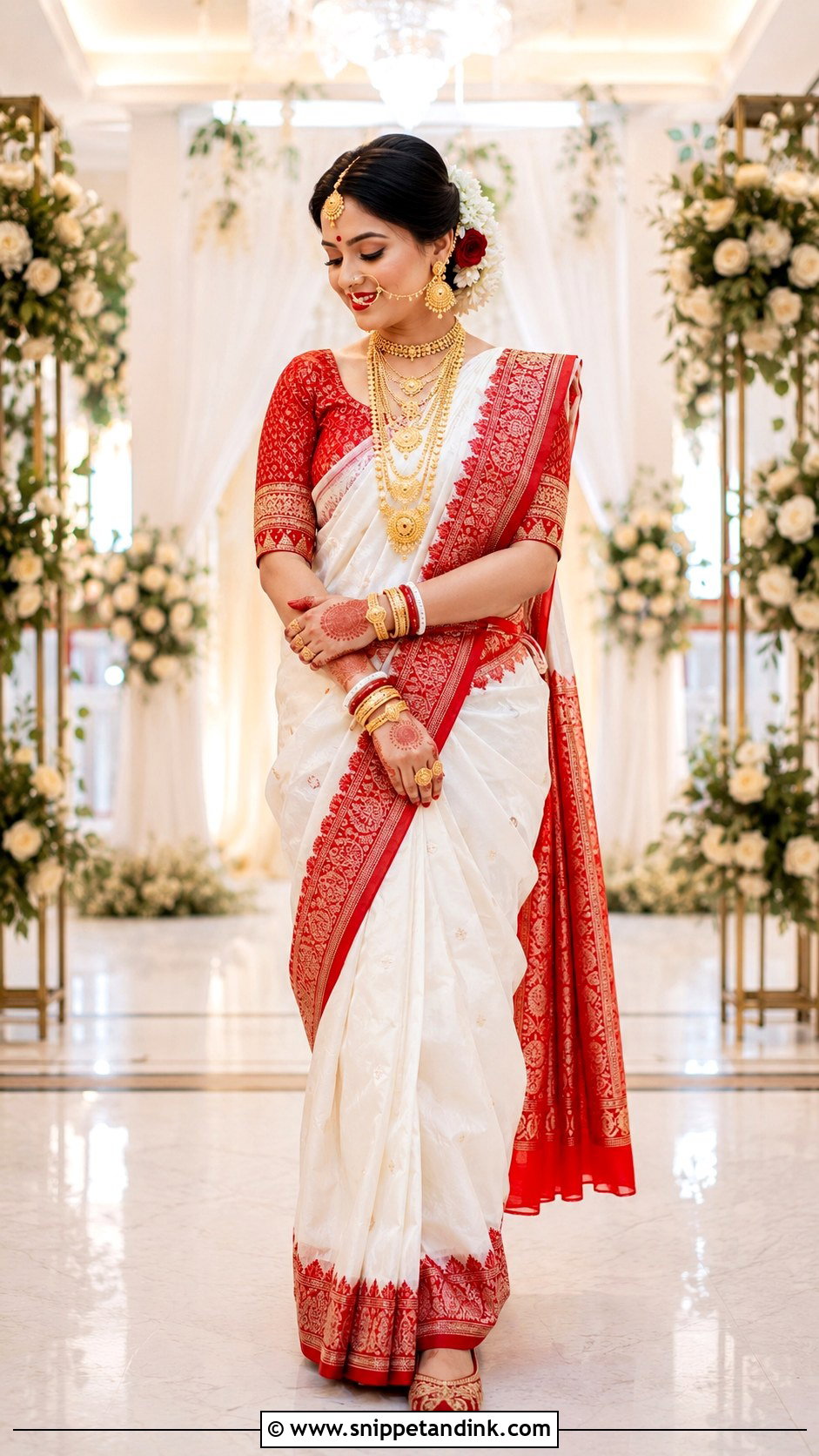
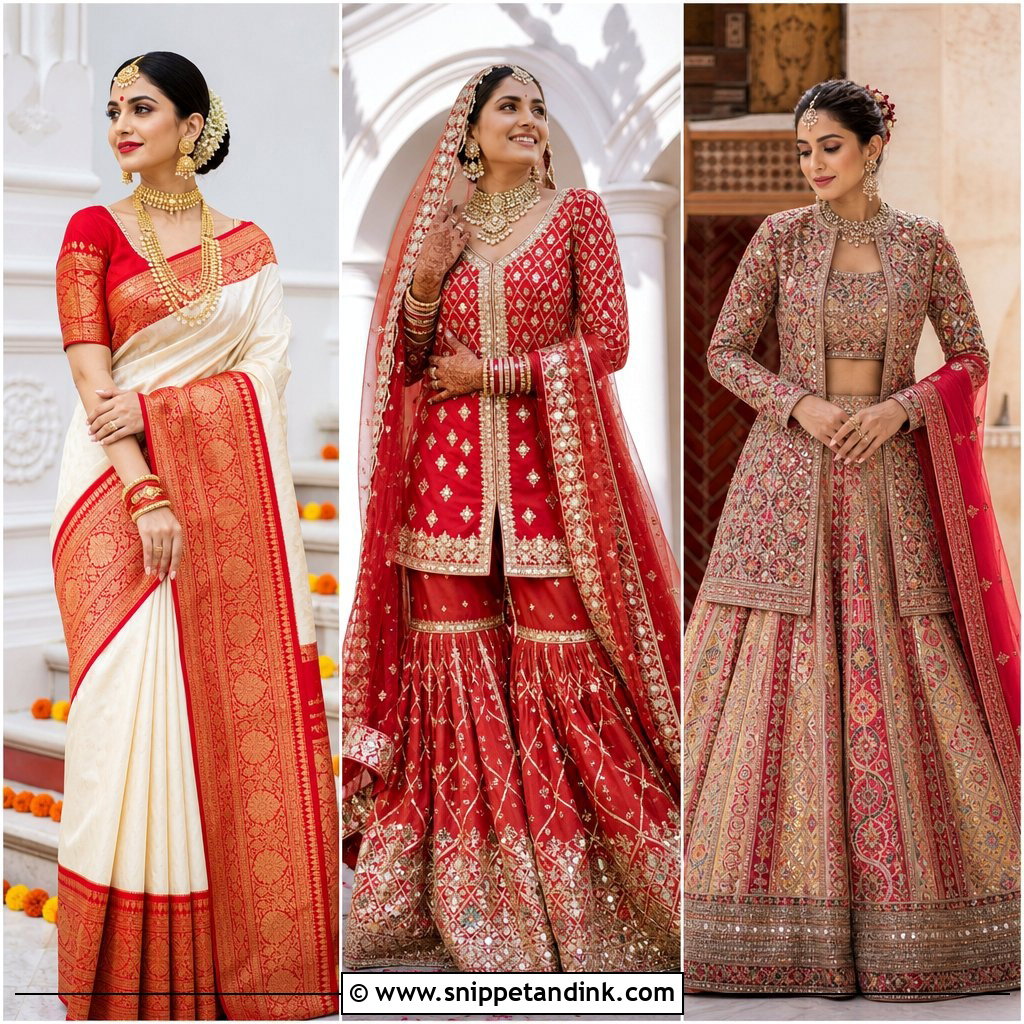
A white or cream saree with a broad red border and a red blouse gives a Bengali-inspired wedding look, and a Banarasi weave or rich silk makes it formal enough for the ceremony. Gold necklaces, earrings, bangles, a nath and a forehead ornament complete it, with red or gold footwear and a neat bun with red-and-white flowers. Defined eyes and a strong red lip are traditional. The forehead decoration varies by family, so ask before anyone paints it. My main fitting job here is the pallu: it needs pinning so the border falls cleanly. Keep the styling grounded in the family’s custom rather than adding everything at once, which is what makes it look like a costume.
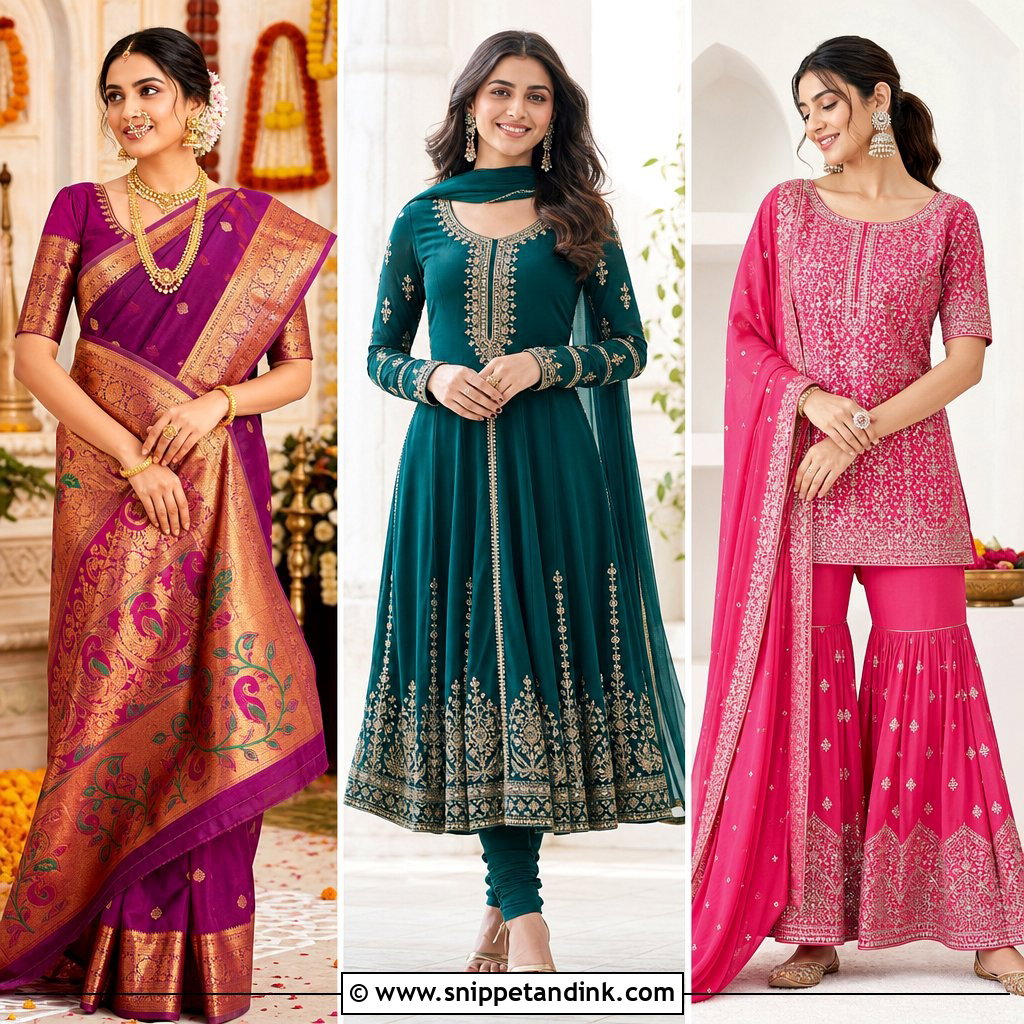
12. Paithani Indian Bridal Saree
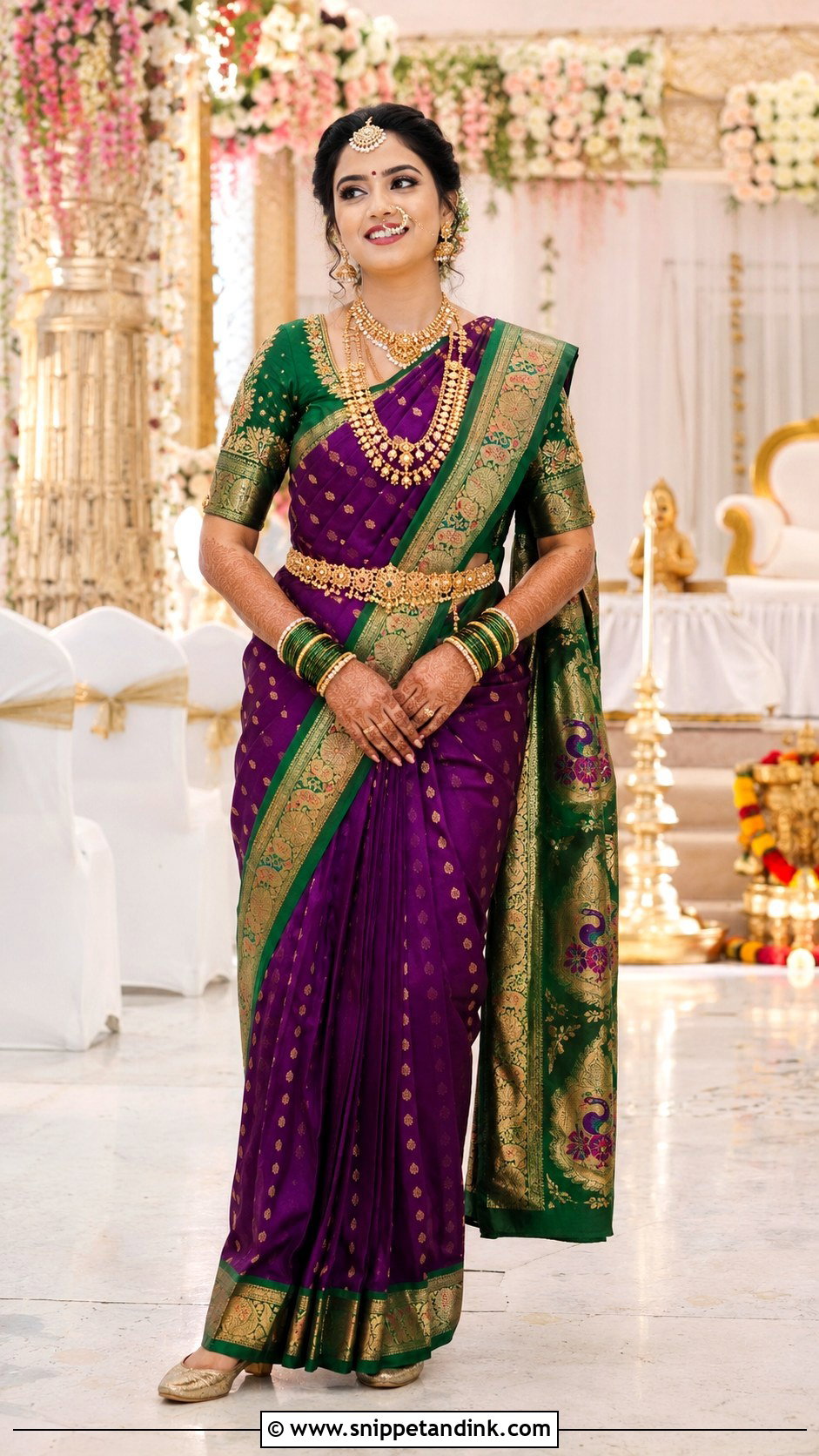
Paithani is known for its pallu, which often carries woven peacock or floral motifs, so the styling should leave that end of the saree on show. This Maharashtrian bridal outfit works in green, purple, magenta or golden yellow with a blouse in a complementary colour. The drape itself depends on family custom, so ask before booking a draper. Layered gold necklaces, earrings, green bangles, a nath, a waist belt and embellished flats or low heels finish it, with a centre-parted bun and flowers. Lustrous silk slips as you walk, which is why I pin it from underneath. The blouse should fit closely but let you breathe. A big veil or too much jewellery only hides the border.
13. Gujarati Panetar And Gharchola Bridal Saree
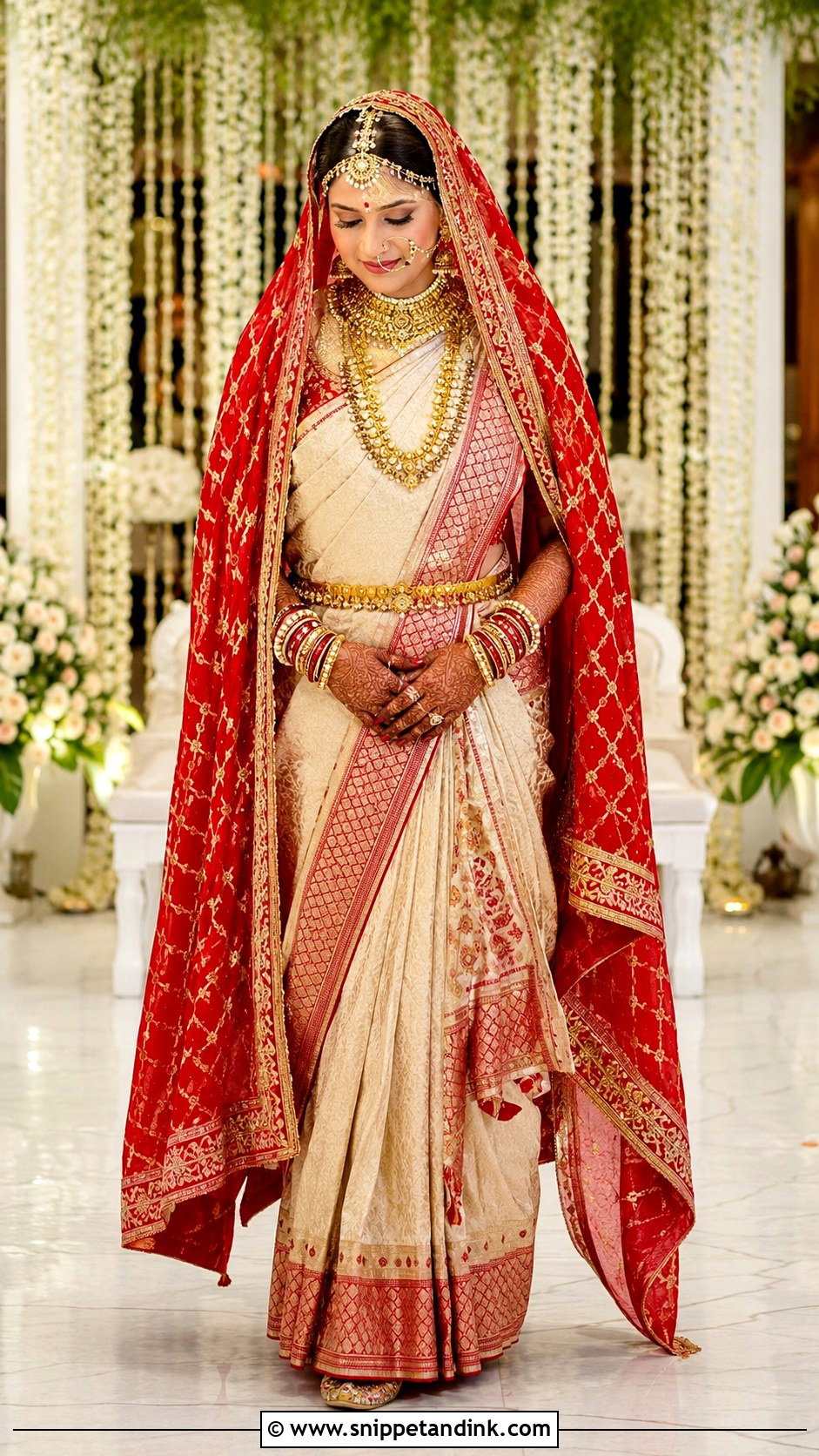
Two textiles are layered in this Gujarati look. The Panetar is the light saree with red detailing, and the patterned red Gharchola goes over the head or shoulders on top of it. Choose a blouse that lies flat under both, then add gold or kundan necklaces, earrings, a maang tikka, a nath, bangles, a waist belt and cushioned footwear. With two fabrics pinned over each other, the drape gets heavy fast, so I keep jewellery light around the shoulders where the pins have to grip. Book a draper who has done this look before, and keep the hair flat and secure under the top layer. The exact draping differs between communities and households, so take your family’s guidance seriously.
14. Kerala Kasavu Indian Bridal Saree
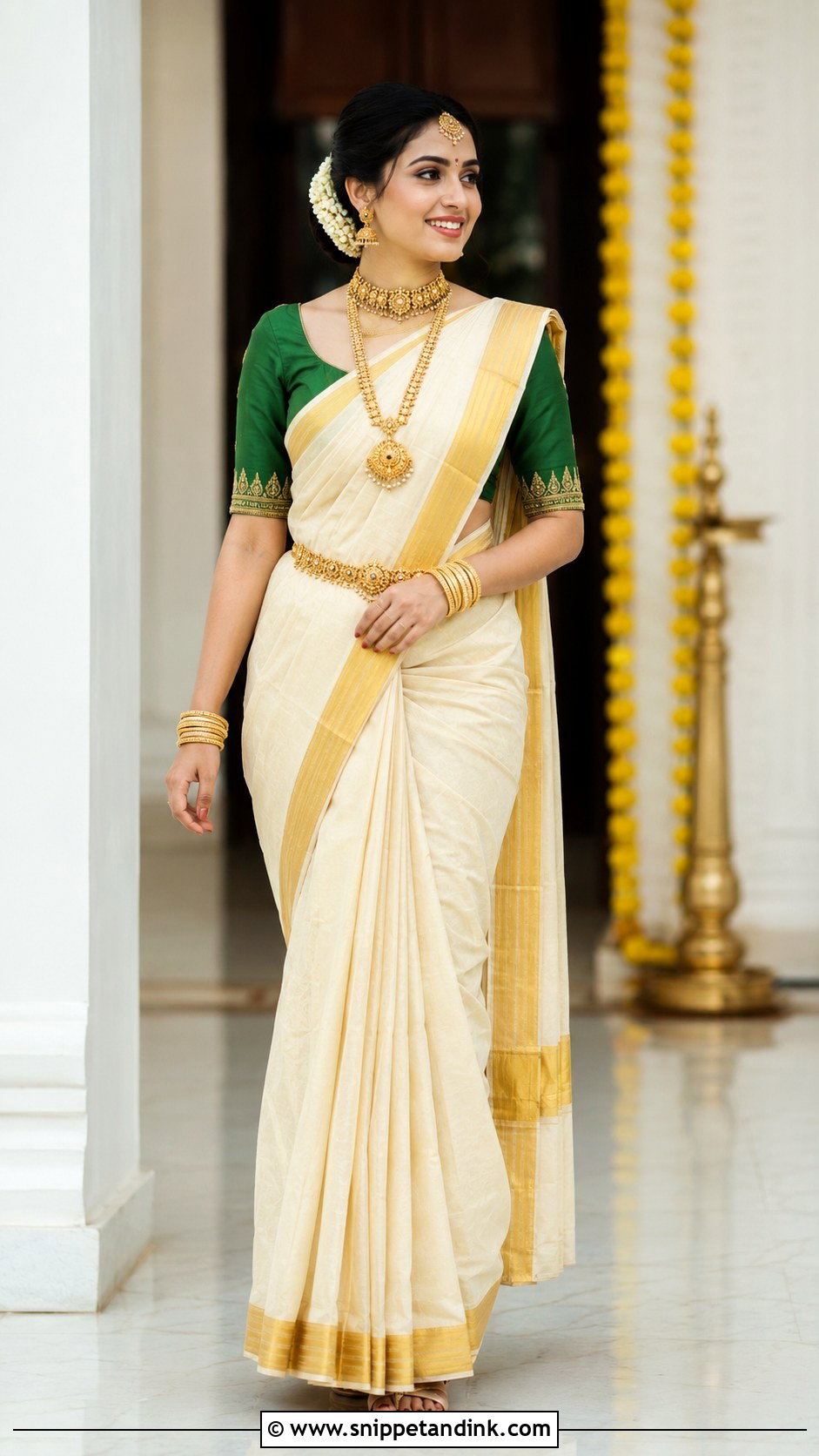
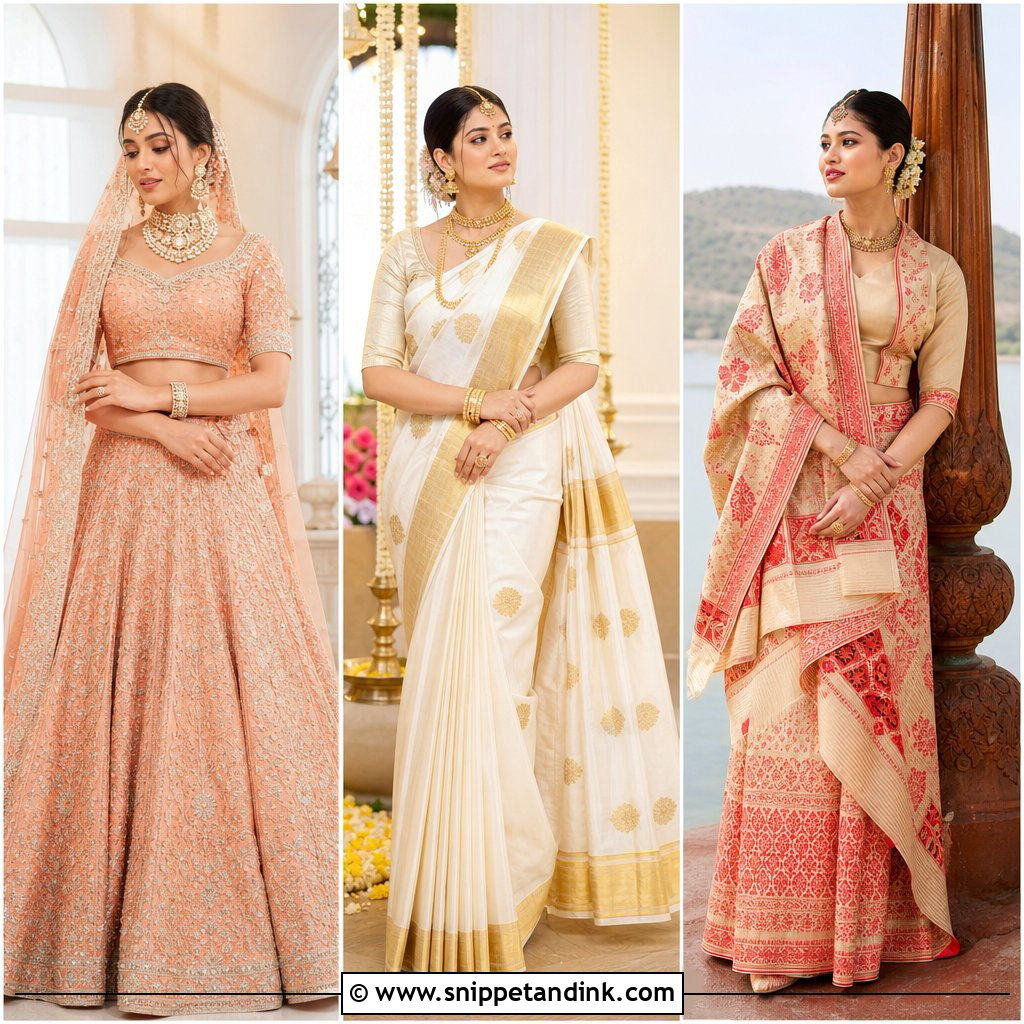
The Kasavu is a cream handloom saree with a gold border, and its plainness is the point. With so little colour, every pleat and every line shows, so the draping has to be precise. Pair it with a gold, green, red or cream blouse depending on how much contrast you want, and either keep it minimal or build up with a temple choker, long necklace, jhumkas, bangles and a slim waist belt. Jasmine in a low bun or braid is classic. Gold sandals or low block heels stay out of the way. Match the underskirt closely to the cream so no shade line shows through, and if you want colour, use one touch, such as a red lip or green-stone jewellery.
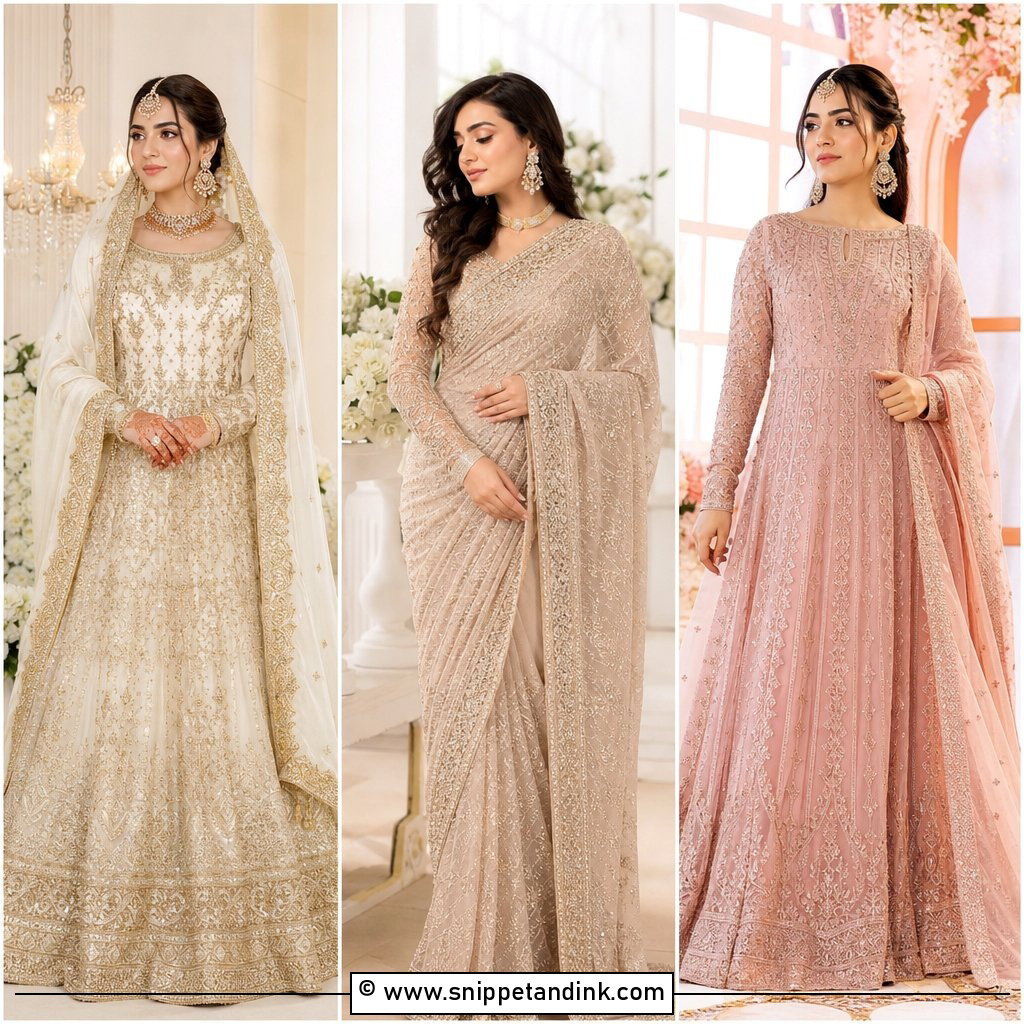
15. Punjabi Indian Bridal Sharara
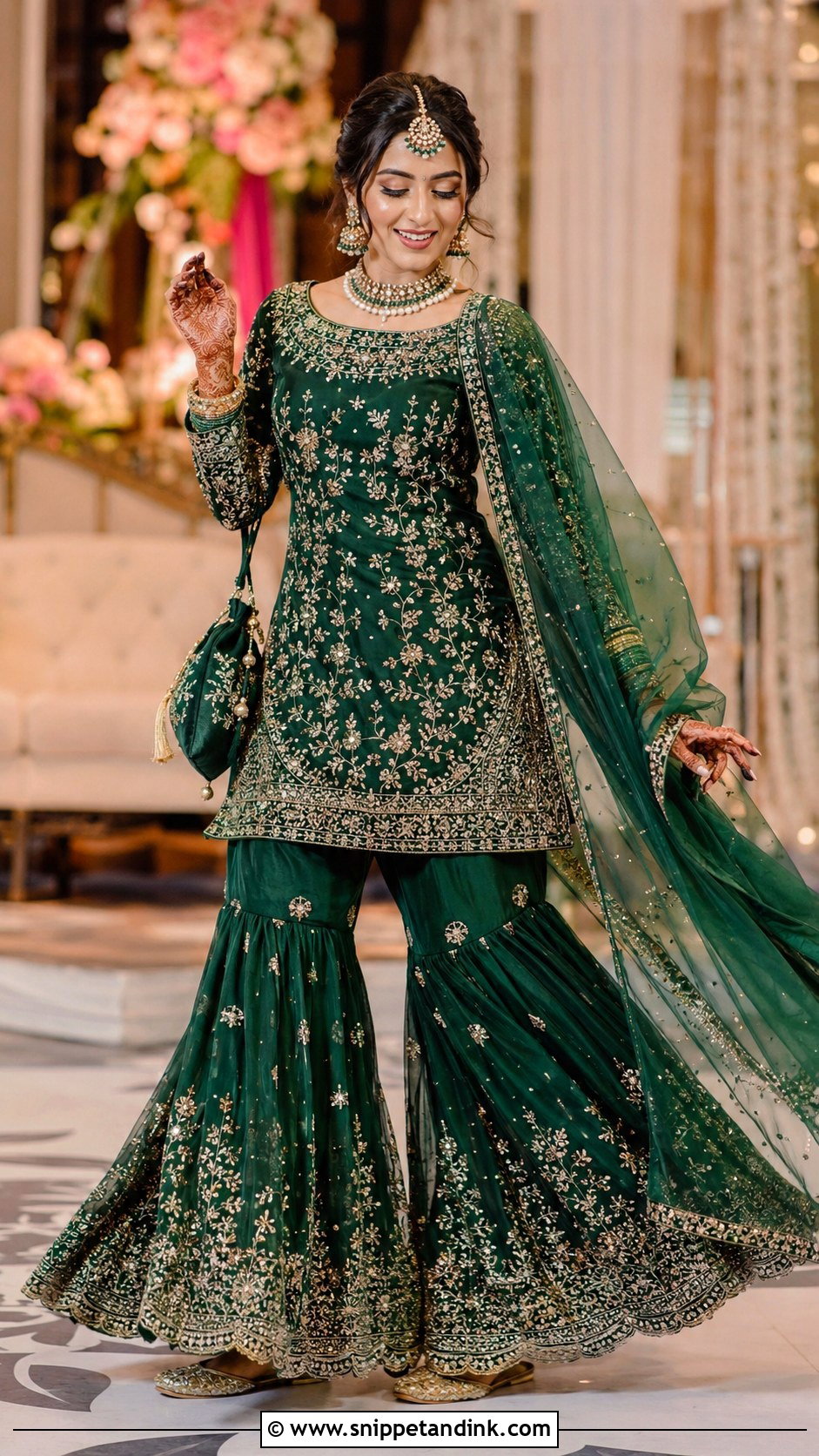
For brides who dread a heavy skirt, the sharara is the answer I suggest most often: wide flowing pants, a short embroidered kurti and a coordinated dupatta. Deep maroon, emerald, fuchsia, ivory and antique gold read formal, while brighter shades suit a mehndi or sangeet. Add a passa, jhumkas, a choker, bangles, a potli and embroidered juttis. Hem length is the fitting detail that matters: the kurti should finish just above the fullest part of the flare, otherwise the proportions look squat. Keep the top fitted since the legs already carry the movement, and pin the dupatta over one shoulder or across both arms so it stays put while you dance.
16. Indian Bridal Anarkali Suit
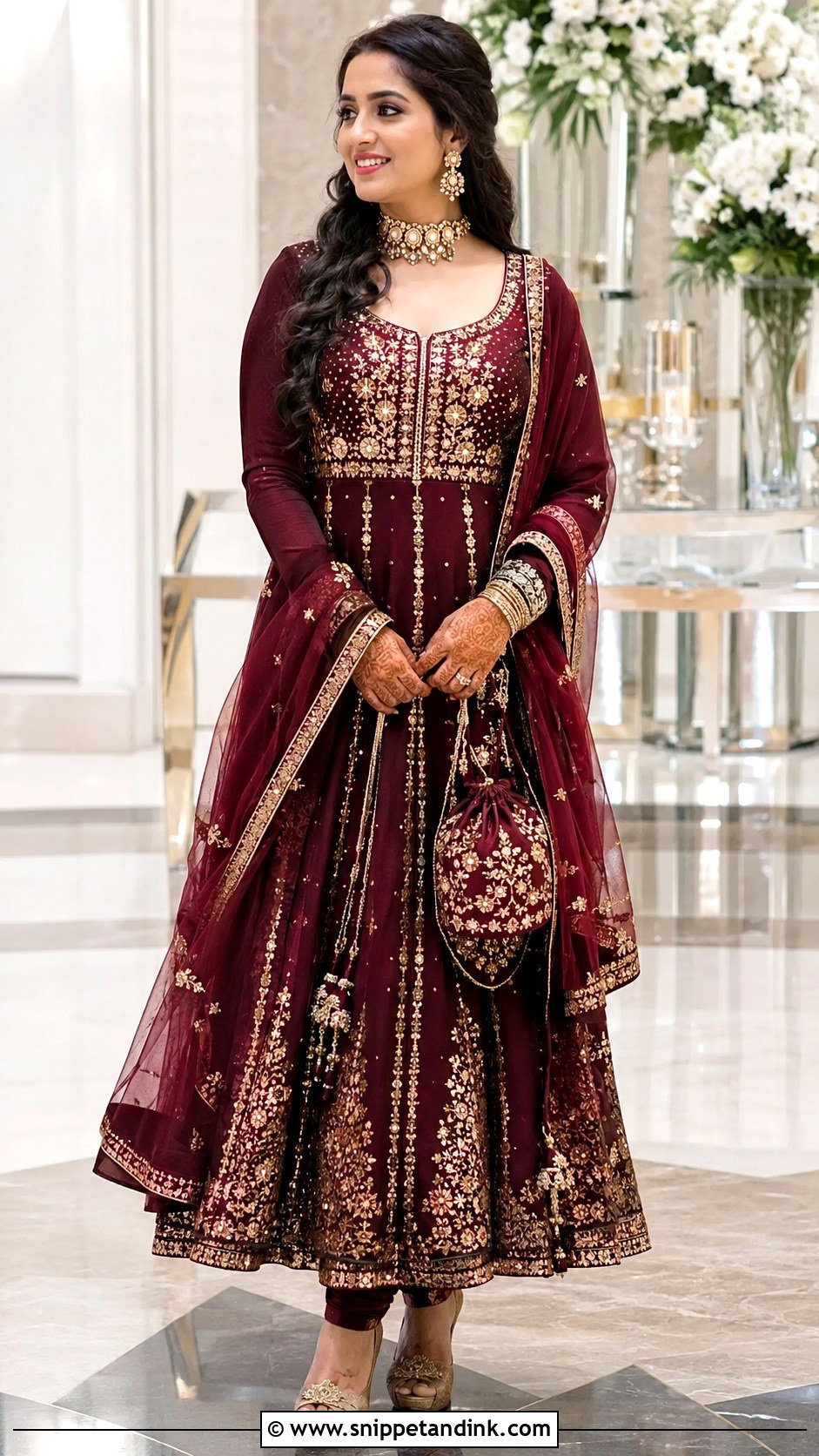
A floor-length bridal Anarkali gives coverage and a long line, and it is much easier to move in than a lehenga. Silk, brocade or velvet suit winter; embroidered georgette is cooler. Red, wine, navy, green and gold feel formal, while blush and ivory are softer. Wear it with fitted churidar, a decorative dupatta, a choker, drop earrings, bangles and a small potli, and hem it in your actual heels. On a petite frame, a flare that starts too low can swallow you; a defined waist seam fixes that. Fitted sleeves and a higher neckline add coverage if you want it. If the dress is heavily worked, keep the dupatta light.
17. Indian Bridal Saree Gown
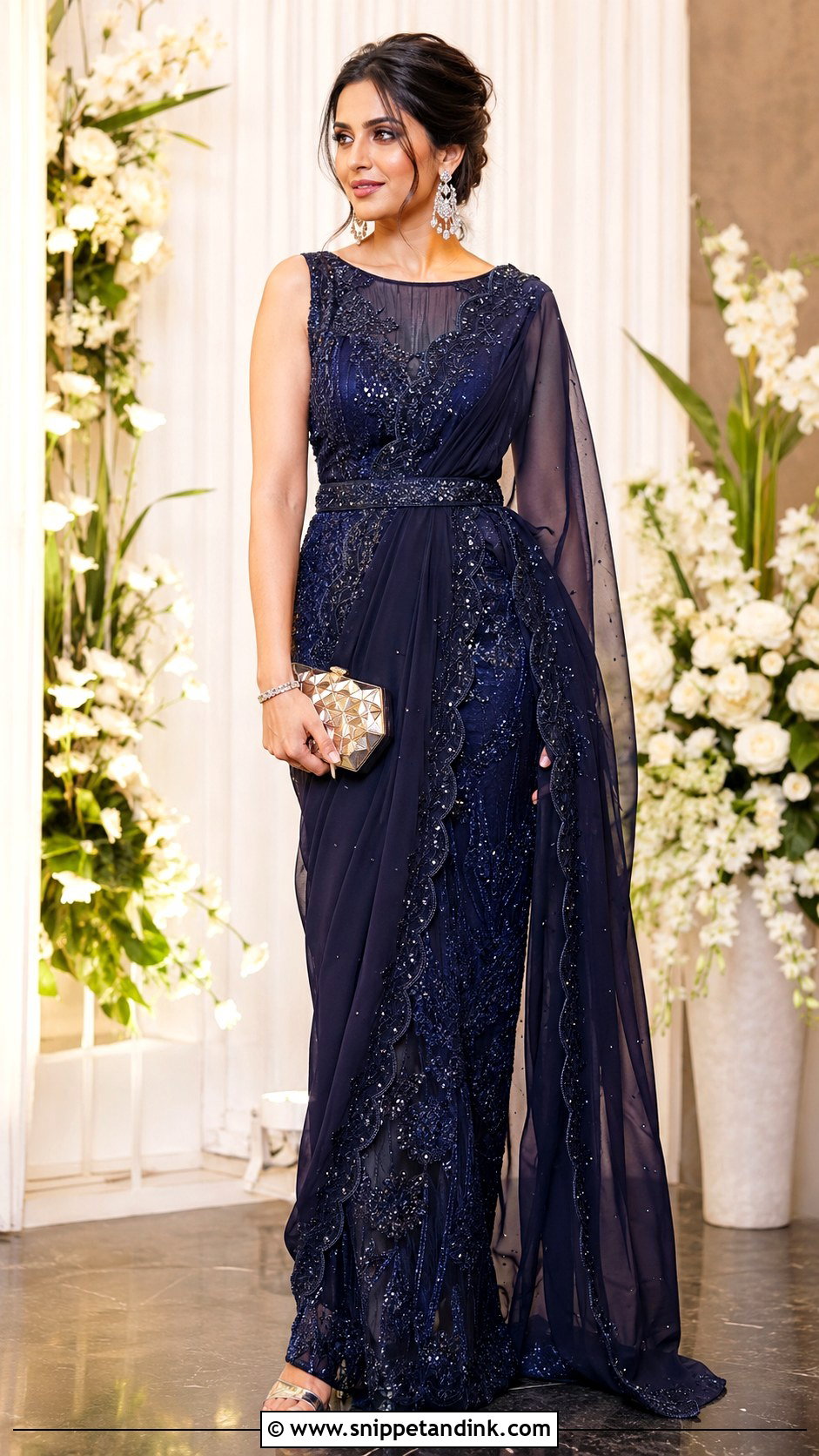
The saree gown is a dress with the drape stitched in, which means no pleats to come loose and no draper needed on the day. Choose a defined waist, an attached pallu and a blouse-style bodice with some Indian detailing. Jewel tones, metallic neutrals, deep red and midnight blue suit a reception or cocktail evening. Statement earrings, a bracelet, a clutch and sleek heels are plenty, and a belt can hold the drape in place at the waist. Skip the necklace if the bodice is dense. Before buying, walk, sit and turn in it. A badly cut attached pallu pulls the whole bodice sideways, and you’ll spend the night tugging it straight.
18. Indian Bridal Cape Lehenga
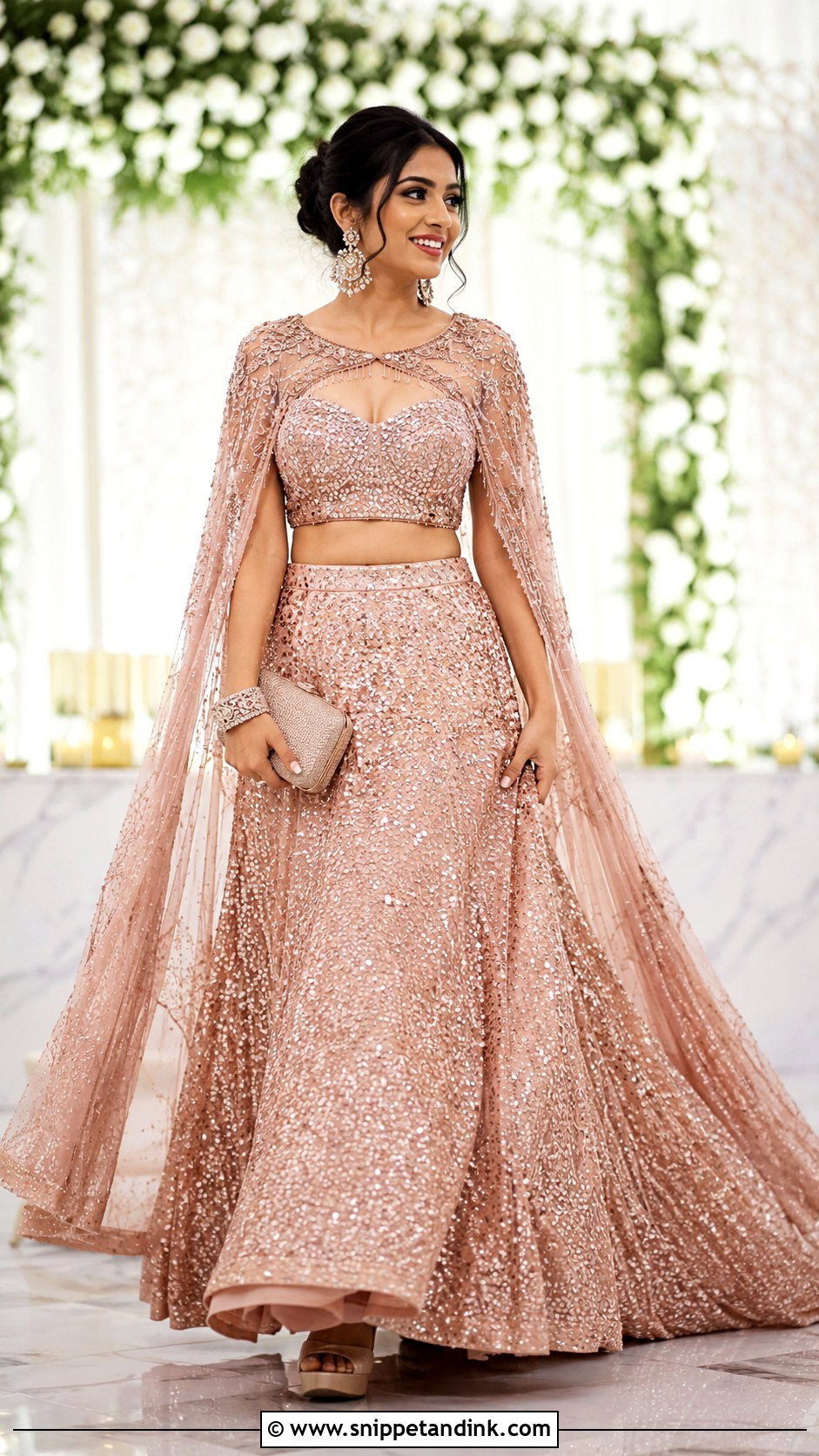
A cape lehenga keeps the skirt and blouse but swaps the dupatta for a sheer shoulder cape, a one-sided drape or a long embellished overlay. I like it for the sangeet or reception because there’s no pleating to manage and nothing to slip off a shoulder. Wear it with chandelier earrings, a bracelet, a statement ring, a clutch and platform heels, with the hair in a sleek bun or soft waves depending on the cape’s neckline. If the cape is worked around the shoulders, leave the necklace off; they’ll fight. Keep the hem clear of the floor so nobody steps on it, and check every attachment point before you dance through a crowded room.
19. Indian Bridal Jacket Lehenga
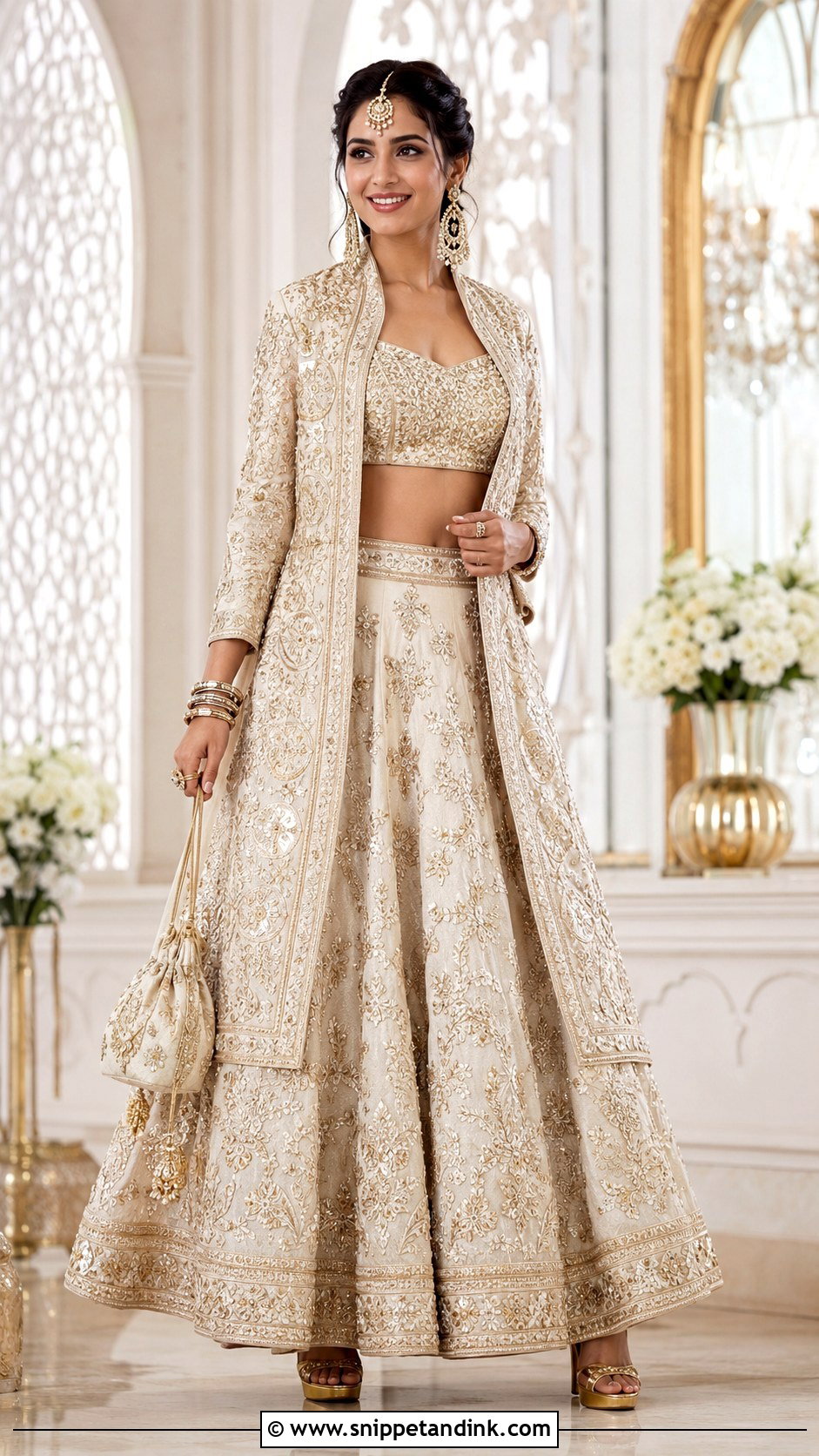
A long embroidered jacket over a skirt and blouse adds structure and covers the arms, which some brides want for a ceremony or a cold evening. Ankle length looks most formal, and just below the knee is easier to walk in. Velvet and brocade suit cooler weddings; organza, net and light silk work in warm venues. A matching set reads streamlined, and a contrasting jacket frames the skirt. Earrings, a maang tikka, bangles, a potli and block heels finish it. Wear the jacket open if you want the blouse and waist embroidery to show, and keep the skirt fairly plain so the whole thing isn’t too heavy. At fittings, raise your arms above your head. A jacket that’s tight across the back will tear at the seam the first time you dance.
20. Indian Bridal Reception Gown
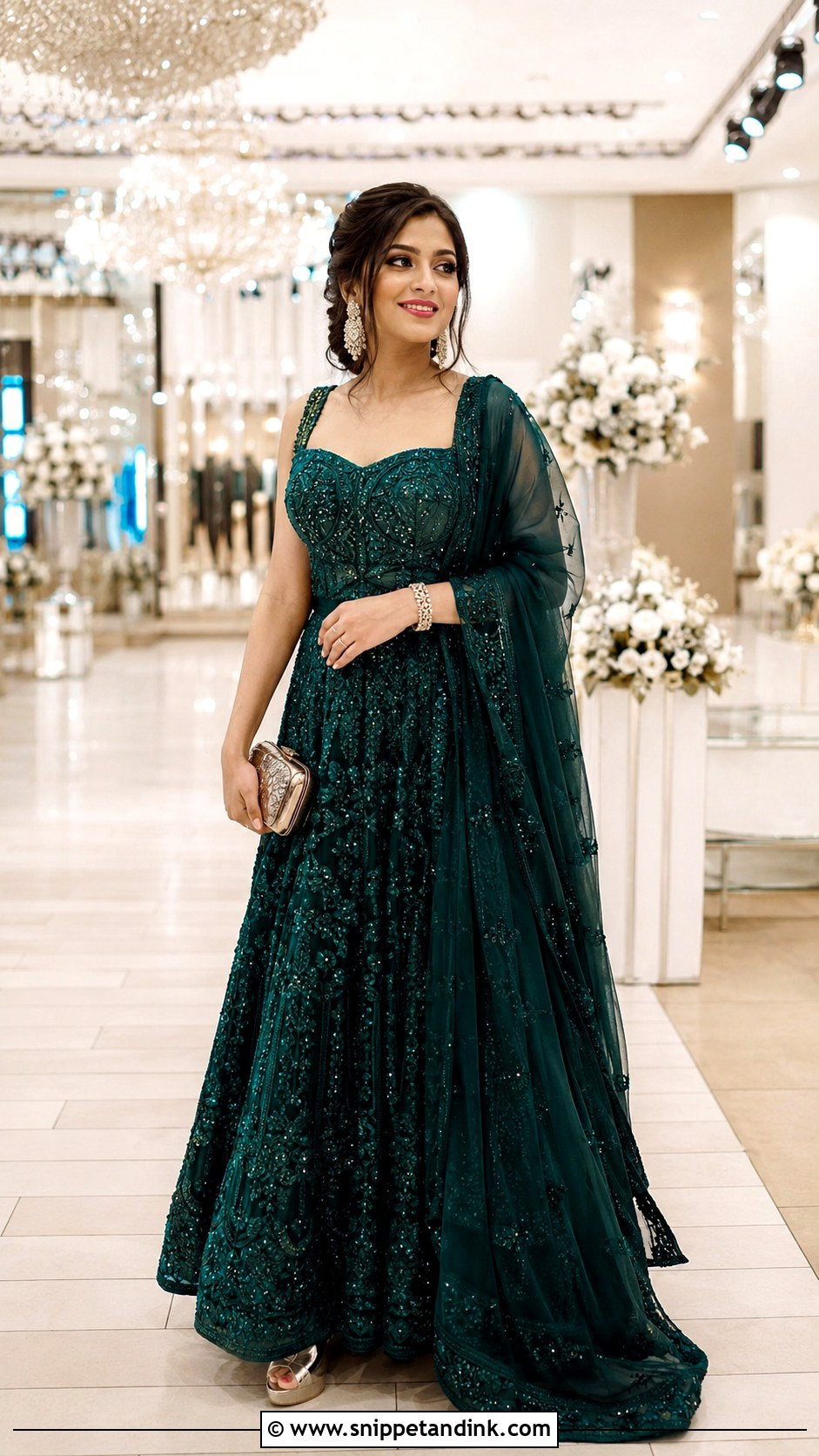
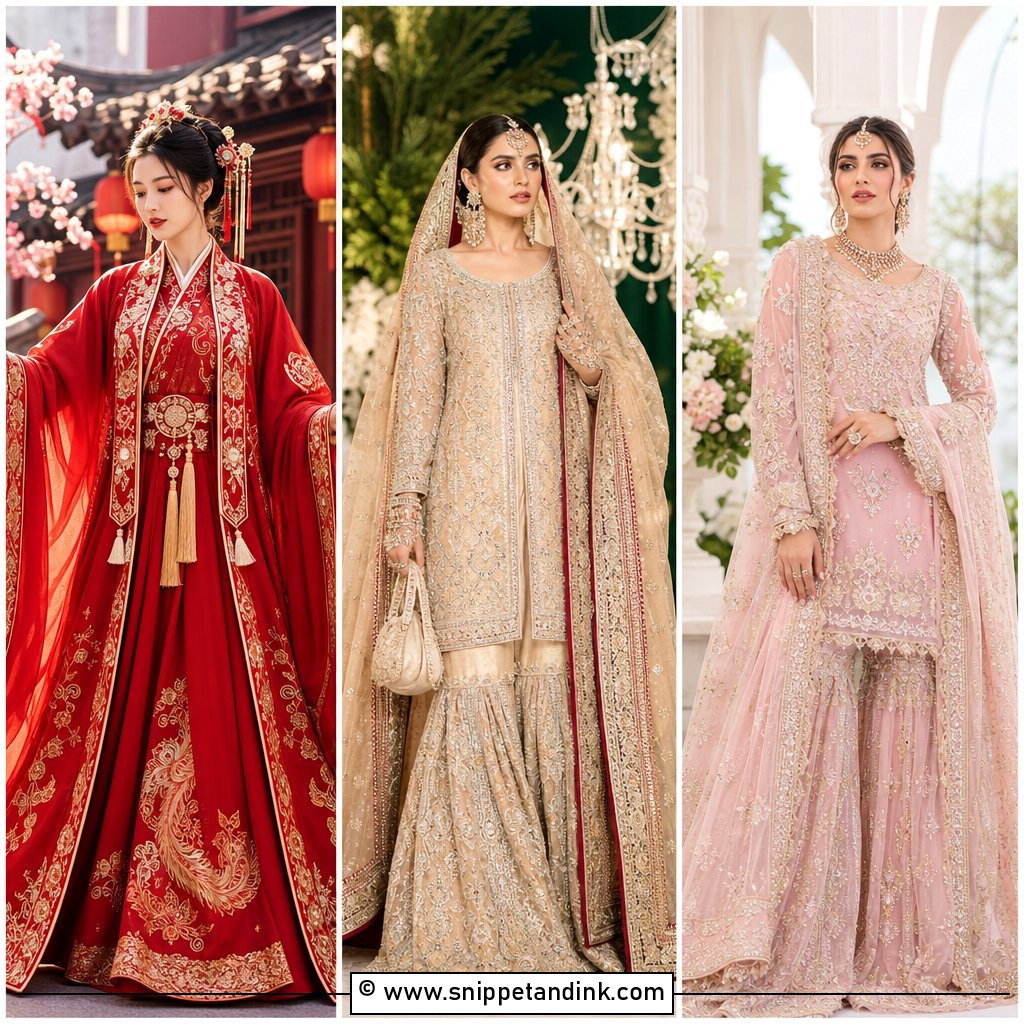
The reception gown is the bride’s chance to look different from the ceremony, usually in an A-line, fit-and-flare or flowing floor-length shape with Indian embroidery, beading, sequins or an attached drape. Champagne, silver, navy, emerald, burgundy and rose gold all suit evening light. Statement earrings, a bracelet, a compact clutch and stable heels are enough; add a necklace only if the neckline is plain. A sleek bun looks polished, and waves are softer. If there’s a train, ask for a bustle, a wrist loop or a detachable section. The test I run is simple: greet a line of guests, sit, stand and dance without touching the hem. If you can’t, it needs work.
Ordering Custom Lehengas With Room for Two Fittings
Heavily hand-embroidered bridal wear takes months, not weeks, and turnaround varies a lot between designers and seasons. I tell brides to place the main ceremony order around five or six months out if they can, and to ask the designer directly how long production and alterations take. Lighter pre-wedding outfits can usually come later.
Plan for at least two fittings. The first fixes the blouse, which is where most problems hide: a back that gapes when you lift your arms, or hooks that strain when you sit. The second should be a dress rehearsal, with the dupatta pinned, the jewellery on and the shoes you’ll actually wear. Bring whoever will drape you on the day if you can, so they see how the fabric behaves.
Questions worth asking the designer
- How much does the finished skirt weigh, and can the can-can or lining be lightened?
- Is there spare seam allowance in the blouse if my measurements change?
- Is the zari real metal thread or a polyester alternative? It changes how you store it.
- Who handles alterations after delivery, and how close to the wedding will they still take work?
Storing Silk and Zari Once the Wedding Is Over
Most of these pieces are heirlooms, and how you put them away in the first week decides how they look in ten years. Air the outfits for a day before packing, have any food or turmeric marks seen to by a dry cleaner who handles bridal silk, and never put them back in the plastic garment bag they came in. Plastic traps moisture.
I wrap lehengas and sarees in soft muslin or old cotton, with acid-free tissue between the folds of heavy embroidery so the metal thread doesn’t rub against itself. Refold silk sarees along different lines every few months; silk left on one fold can crack along it. Keep perfume and deodorant off the fabric, since they discolour zari, and store everything away from damp walls and direct sun.
Comfort Is What Shows in the Photos
A good bridal wardrobe balances what the outfits mean to your family with what you can comfortably wear for hours. Start with the silhouette that feels natural on your body, then weigh fabric, weather, venue, jewellery, shoes and how long each event runs. A regional saree can honour family tradition, while a lehenga, sharara, Anarkali or gown each gives you a different amount of movement. Do at least one full fitting with every piece of jewellery and the exact shoes. A bride who isn’t fighting her clothes looks relaxed in every picture, and that matters more than any trend.
You'll Like These Ideas:


Leave a Reply