
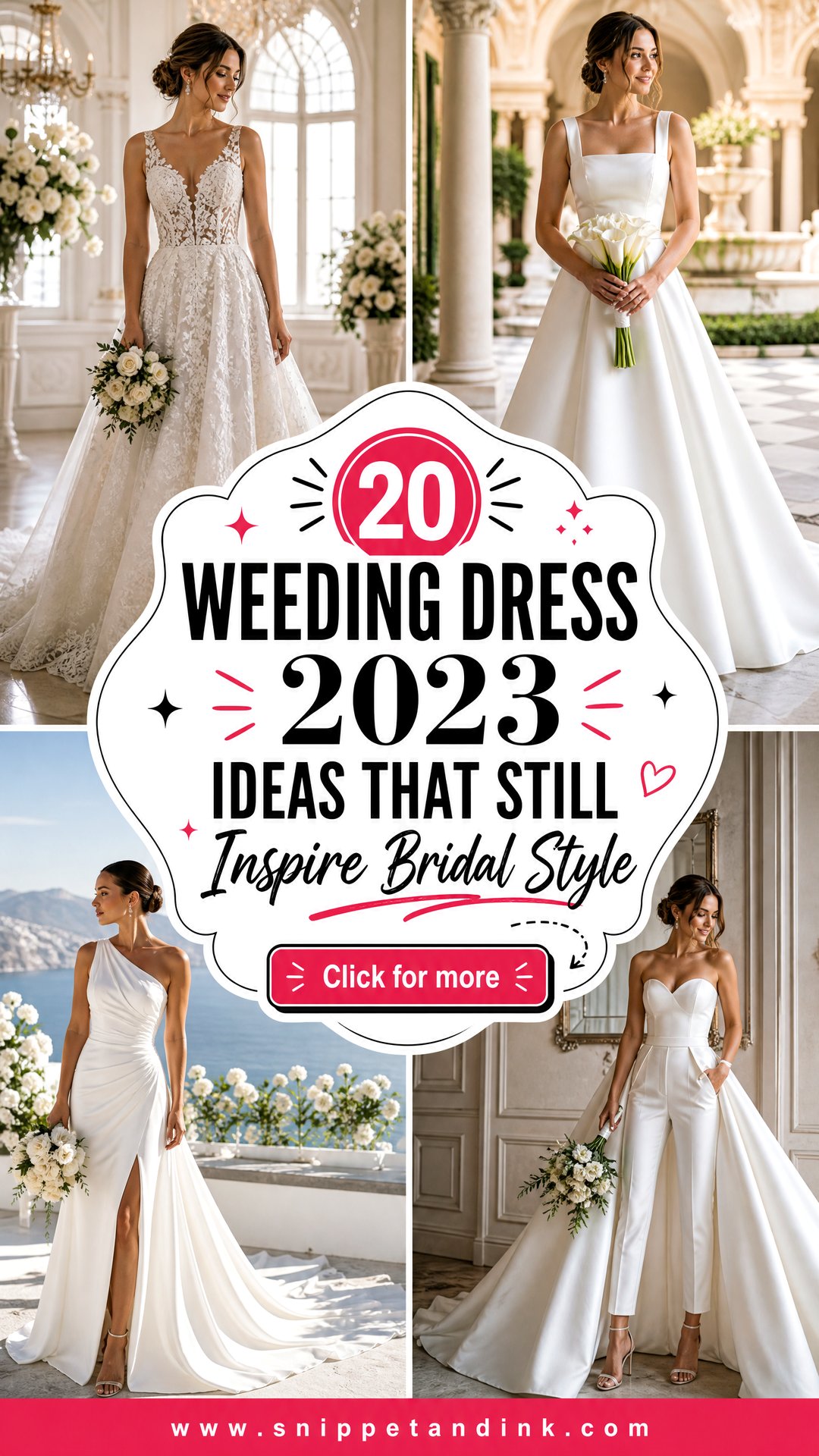
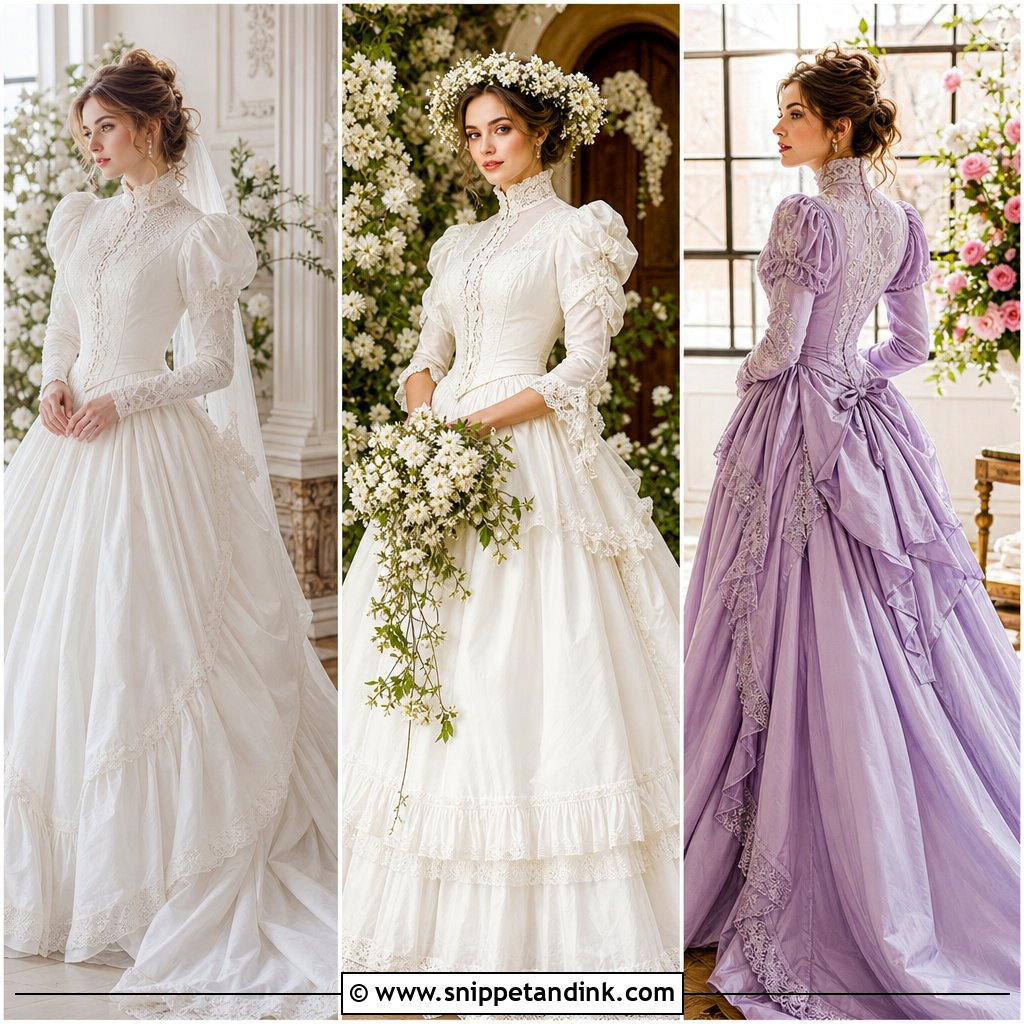
The gowns of 2023 are still worth studying, because most of what brides asked for that year hasn’t gone anywhere: romantic lace, very clean minimal cuts, statement sleeves, three-dimensional flowers, visible corsetry and dresses that change between ceremony and party. Shorter hems, a hint of colour, sharp tailoring and vintage shapes all had their moment too. When I fit a bride, the questions are always the same no matter the trend: does it suit the venue, does it sound like her, and can she wear it comfortably from the vows to the last song? Accessories come after. Below are twenty complete looks with the fitting notes I’d give for each, and for a wider set of gowns from the same season, browse these 20 Weeding Dress 2023 Ideas as well.
Nine Months Out: How a Bridal Gown Timeline Really Runs
Most of these gowns are made to order, and the biggest surprise for many brides is how long that takes. Manufacturers usually need several months to produce a dress after the order is placed, and then alterations need their own window. Here’s the schedule I work back from:
- Nine to twelve months before: shop and order. Earlier if you’re marrying in peak season or want a designer with long production times.
- Four to six months after ordering: the gown usually arrives. Check it the day it lands for damage and the right size.
- Two to three months before: first alteration fitting. Bring your actual shoes and underwear.
- Four to six weeks before: second fitting for adjustments, bustle and any detachable pieces.
- One to two weeks before: final fitting and collection, ideally with the person who will help you dress.
If you’re short on time, buy off the rack or choose a gown in stock. Rush fees for made-to-order dresses exist, but they’re not always possible and add cost.
1. Lace A-Line Wedding Dress
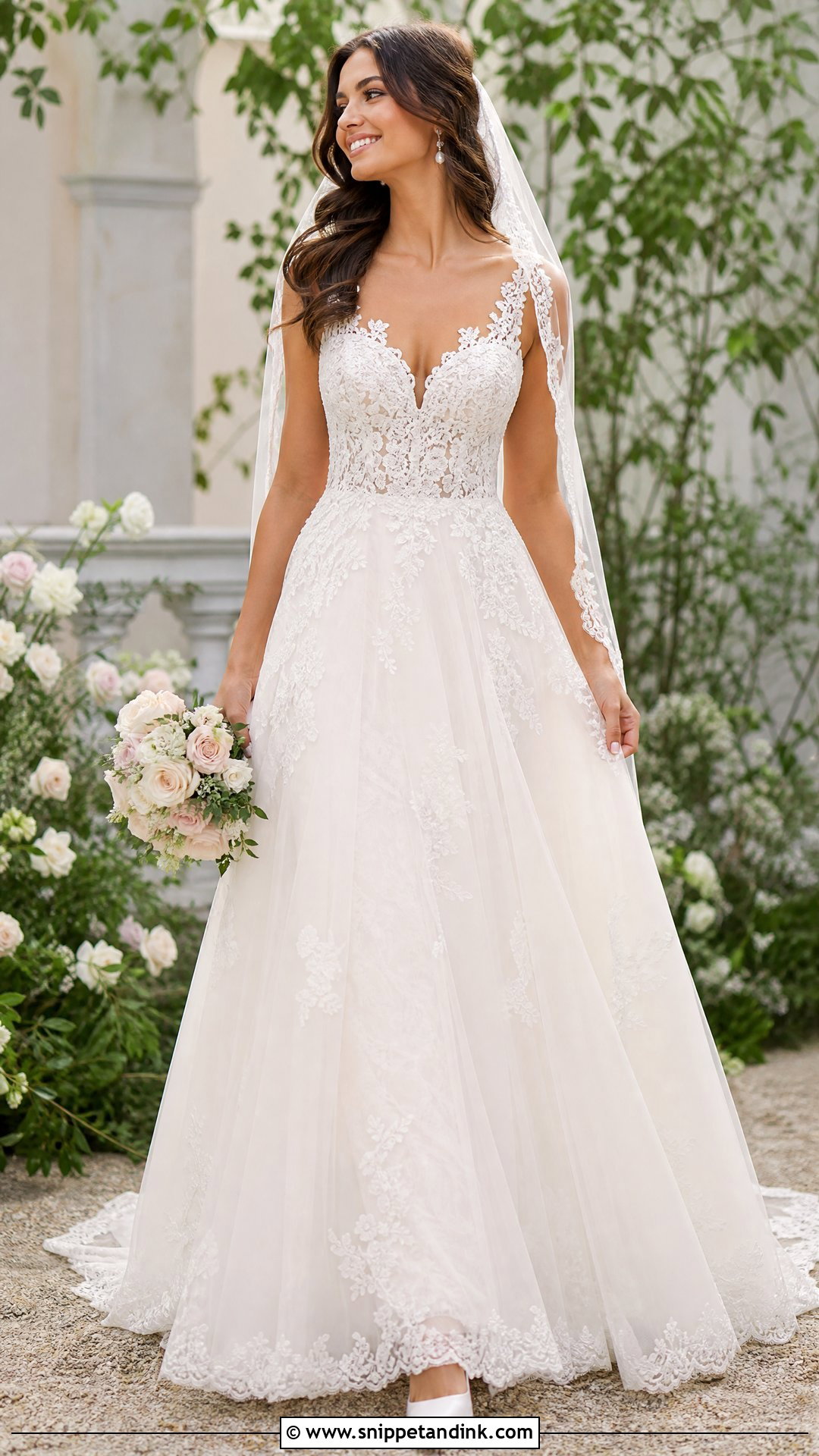
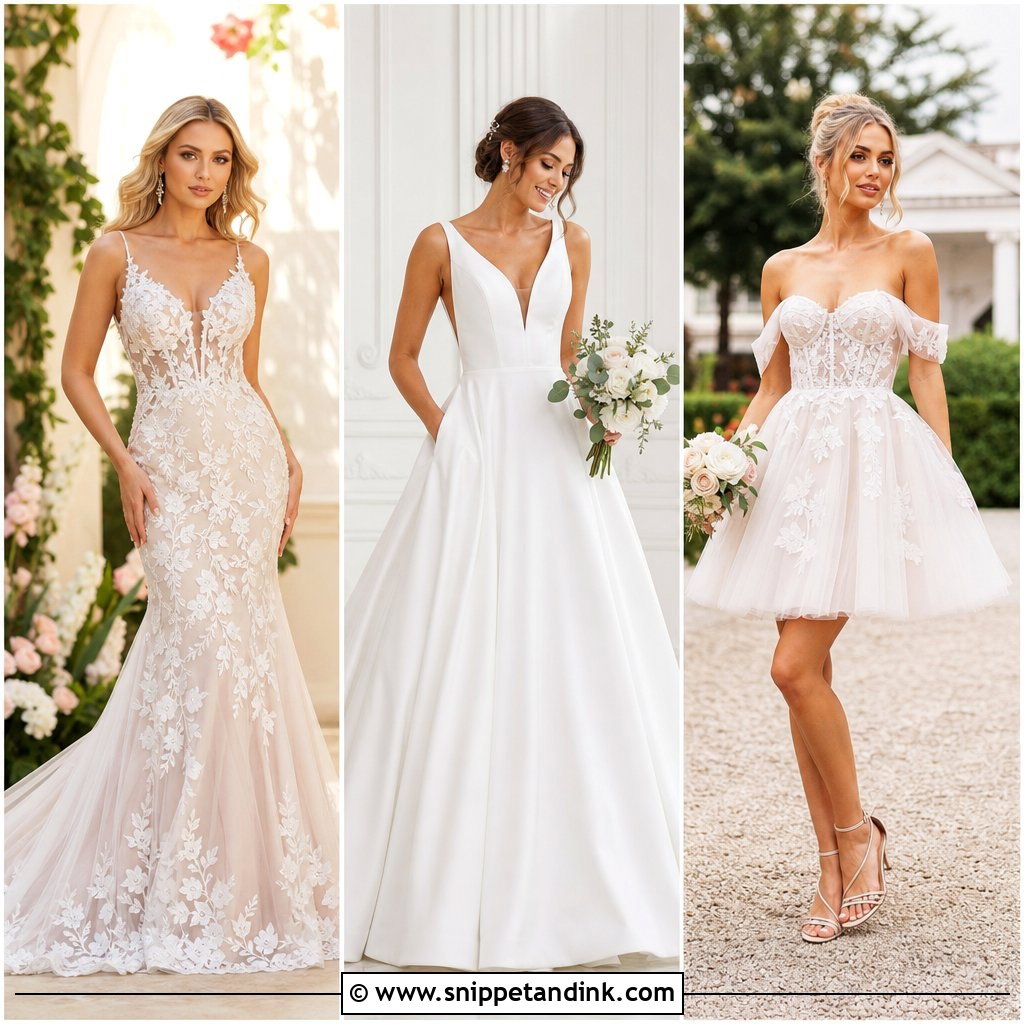
Lace A-lines are the most forgiving silhouette I fit: the bodice holds the waist and the skirt skims everything below it. Watch the lining colour. A champagne or nude lining makes floral lace stand out in photos, while ivory on ivory can flatten the pattern into one pale block. Pointed ivory pumps, pearl drops and a fingertip veil with a matching lace edge, over a low chignon that anchors the comb. With very detailed lace I keep the bouquet restrained and the clutch plain satin.
2. Satin Ball Gown Wedding Dress
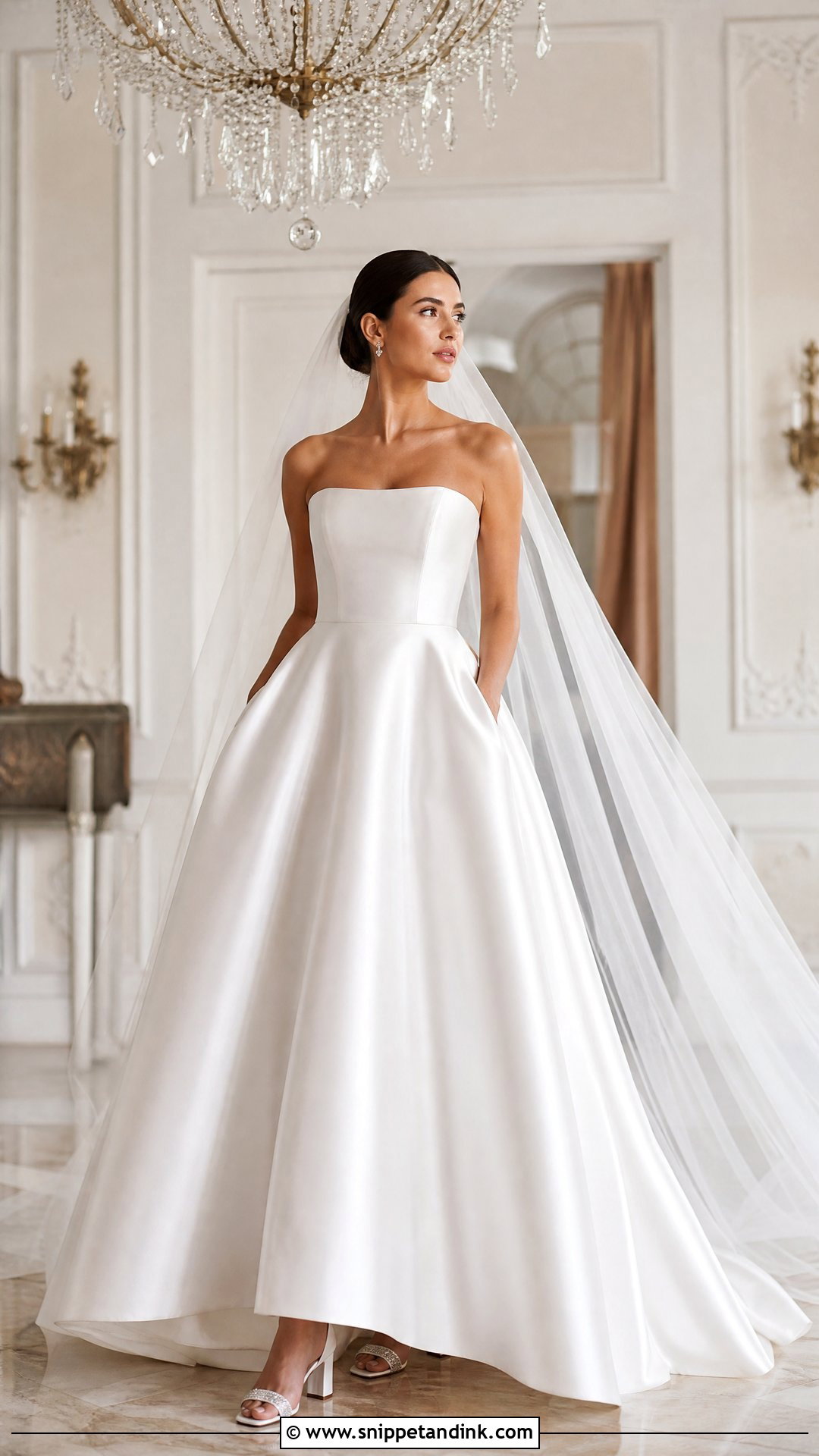
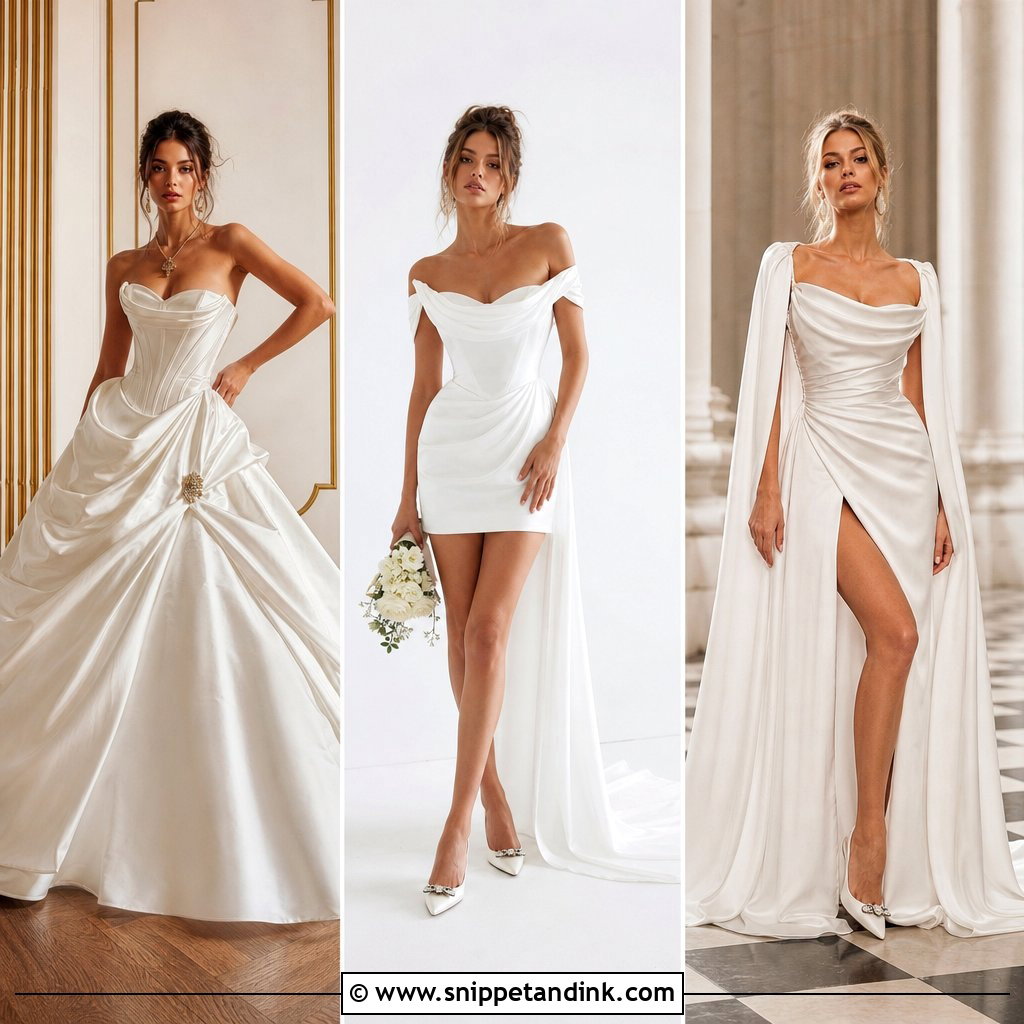
A satin ball gown needs almost nothing added, because the fabric and the skirt are the whole point. Decide on support first: wide straps or a properly boned strapless bodice. Satin shows every pucker at the seams, so the bodice fit has to be exact. Crystal studs, ivory block heels to carry the weight of the skirt, and a cathedral veil for the entrance. Keep the bouquet compact. Two things I always ask the shop about are hidden pockets and the bustle, because a full satin train without a bustle you can work in two minutes is a problem at the reception.
3. Off-the-Shoulder Wedding Dress
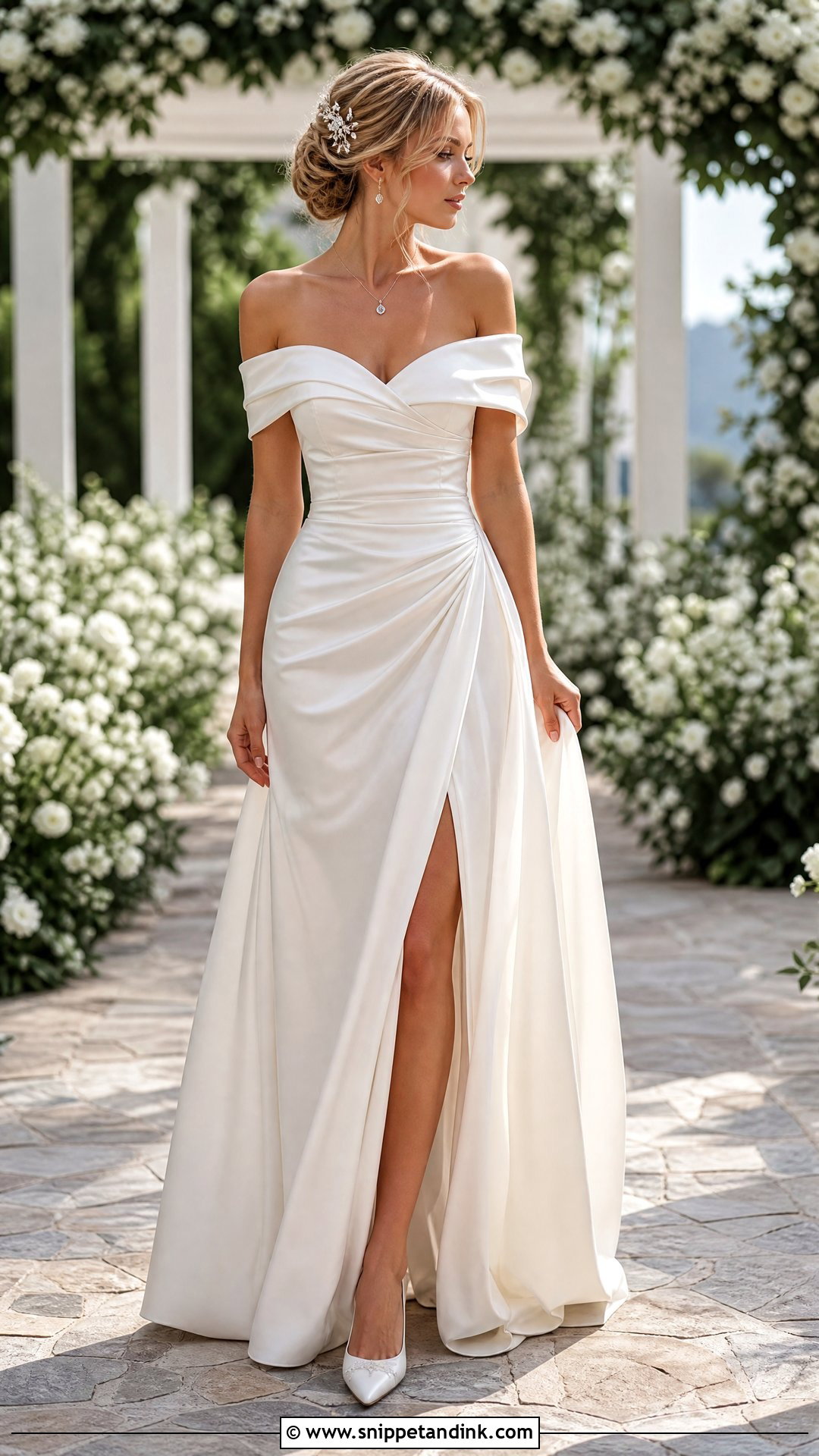
Off-the-shoulder necklines show the collarbone and shoulders, which is why they photograph so softly. The engineering is in the bodice: it has to grip so the sleeves don’t slide down or ride up. Tulle suits outdoors, crepe a modern venue. A delicate pendant, crystal pins and pointed heels in ivory or pale champagne, with hair swept back. The thing I check at every fitting is arm movement. Off-the-shoulder sleeves pin your arms down a little, and if you can’t raise them to hug someone, the sleeves need to be placed higher before the final fitting.
4. Long Sleeve Lace Wedding Dress
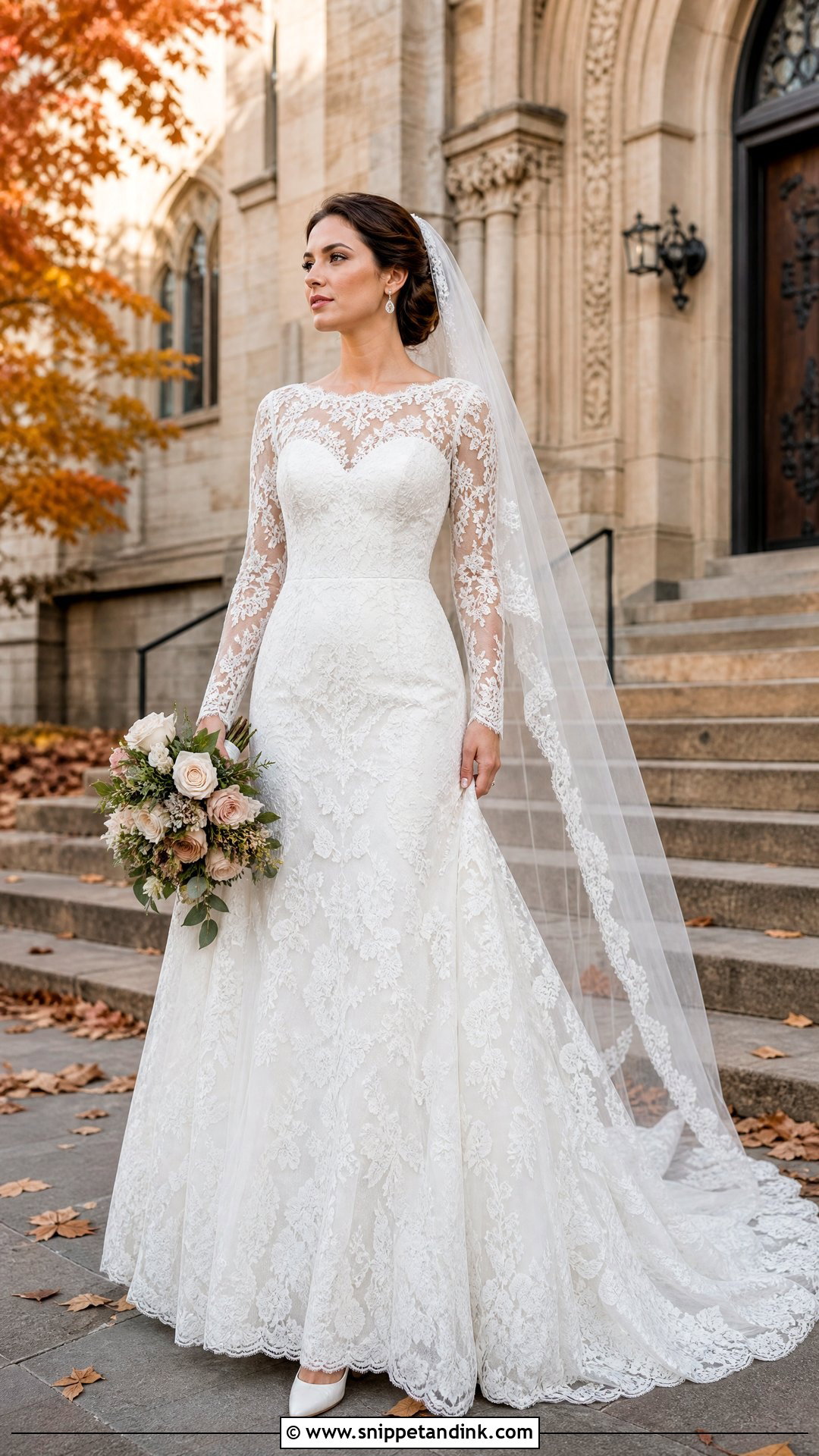
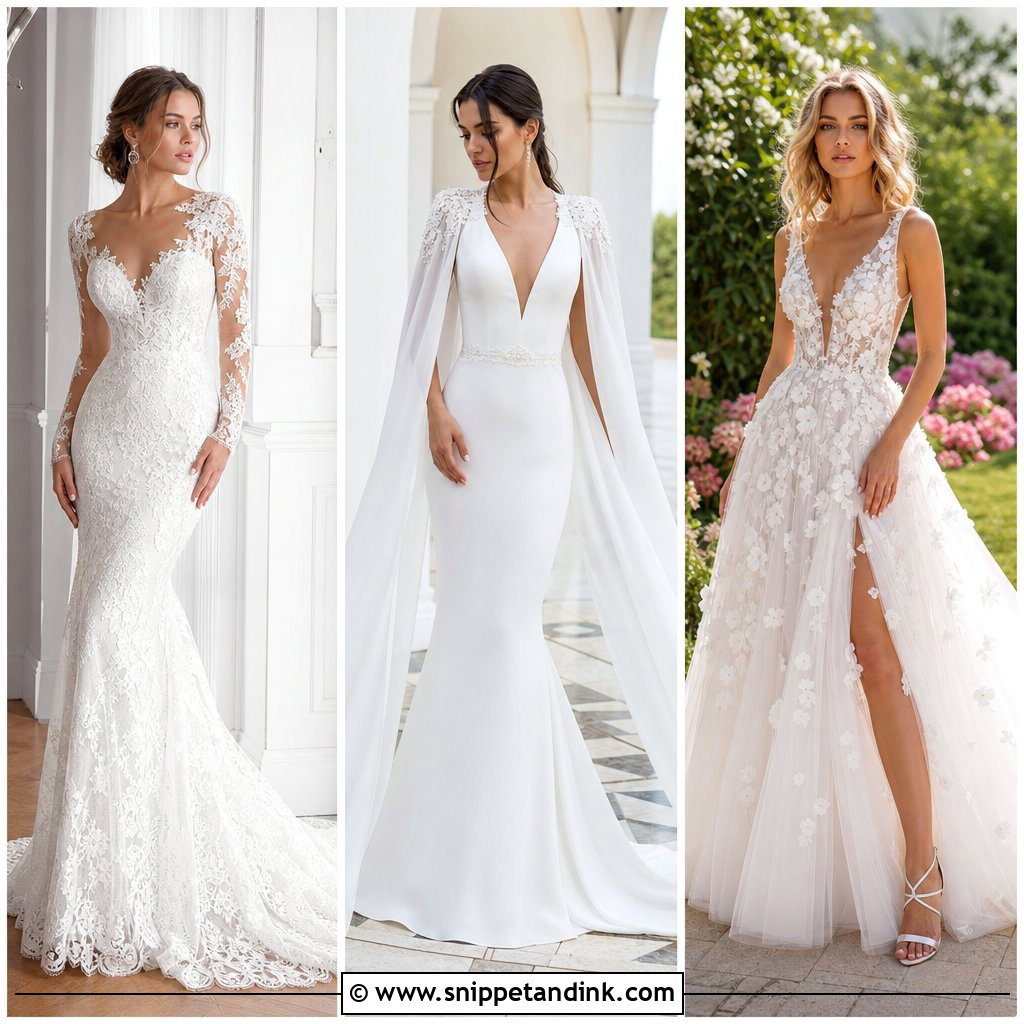
Long lace sleeves suit autumn and winter, and the best ones are set on fitted illusion sleeves so the lace looks like it sits on the skin. A defined waist and gently flared skirt keep the coverage from feeling heavy. Satin pumps, pearl earrings and a smooth chapel veil. Sleeves cut too tight at the armhole are the most common complaint I hear by evening, so I make sure there’s room to lift a glass and dance. For an outdoor ceremony, add an ivory wool coat that comes off just before the aisle.
5. Minimalist Crepe Wedding Dress
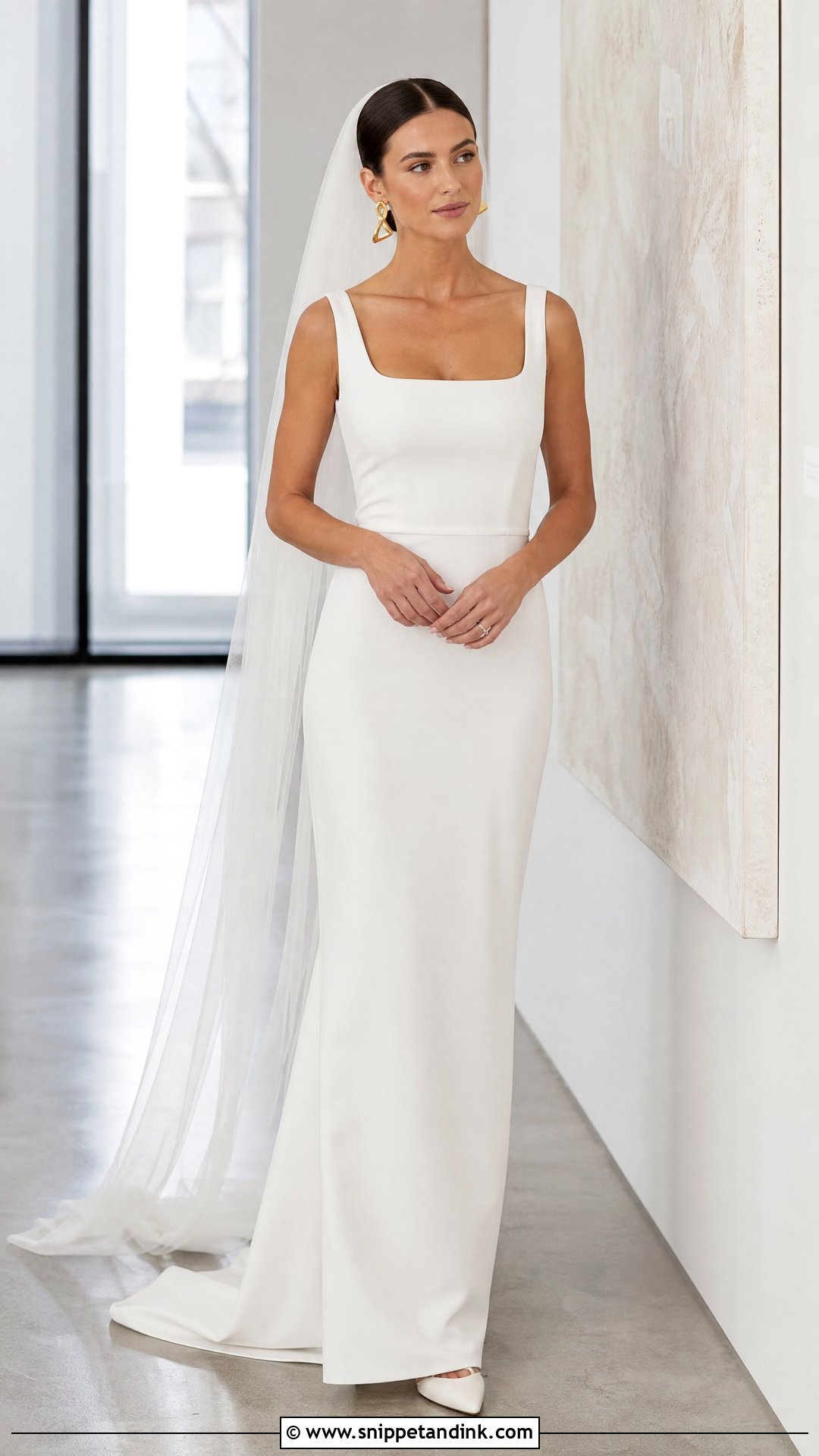
Minimal crepe gowns look simple and are anything but. Every seam shows, there’s no lace to hide a slightly off dart, and the fabric must be heavy enough to skim rather than cling. A square neck, defined waist and column skirt suit city ceremonies and modern spaces. Architectural earrings, a structured mini bag and pointed pumps, with a low ponytail or centre-parted bun. A long plain veil adds ceremony drama and comes off for the party. Budget for good alterations and no-line underwear; with this dress they matter more than any accessory.
6. Square Neck Wedding Dress
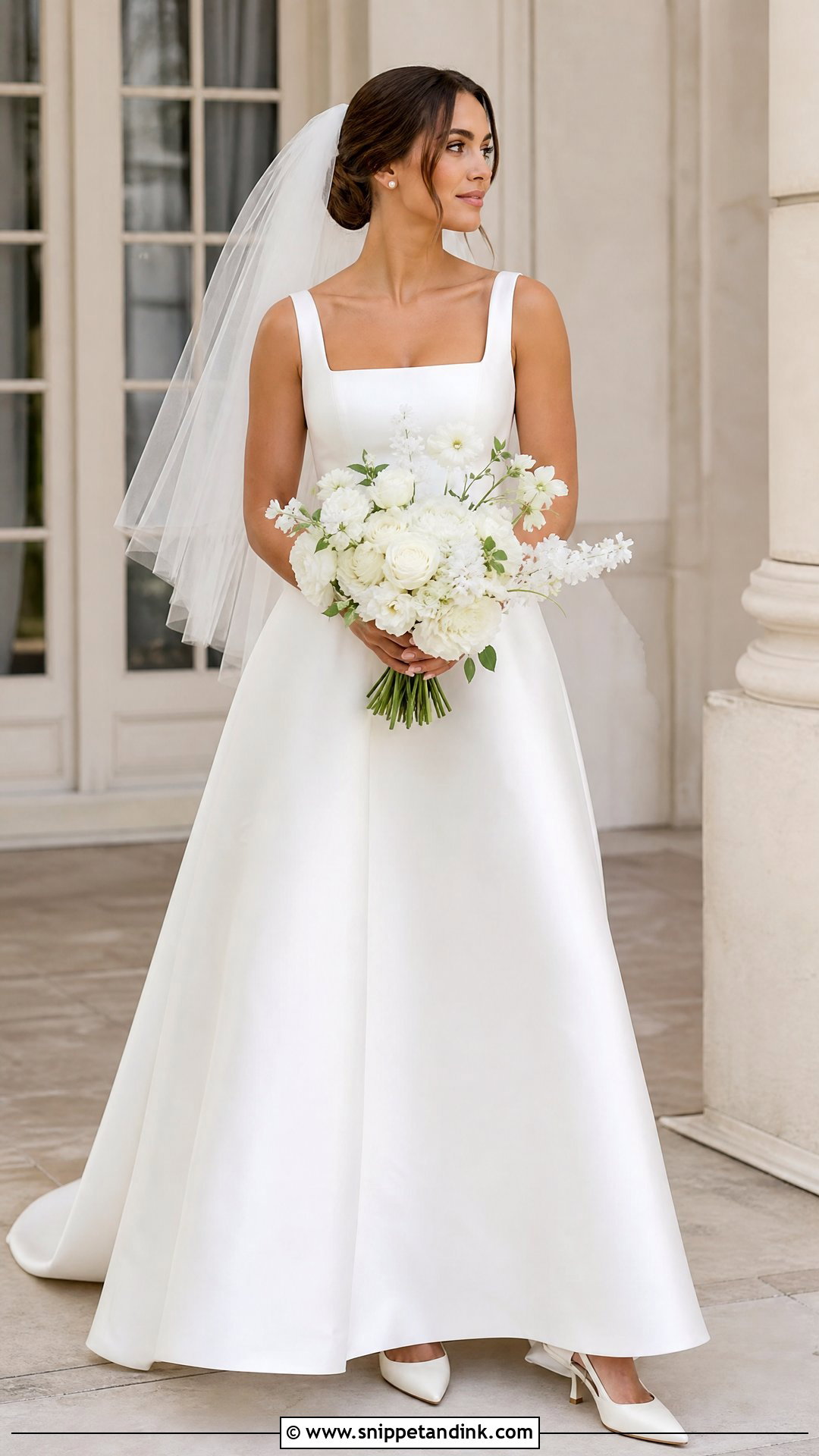
Square necklines bring a subtle vintage feel and suit almost every bust size, which is why I see them chosen so often. Wide straps, a fitted bodice and an A-line or column skirt work best. Matte satin gives structure, crepe gives movement. Pearl studs, ivory slingbacks and a shoulder-length veil, with a neat bun or face-framing waves. Visible waist seams or light corsetry add definition if you want it. The straight edge doesn’t need a necklace; earrings, a textured bouquet or a slim bracelet are enough.
7. Corset Bodice Wedding Dress
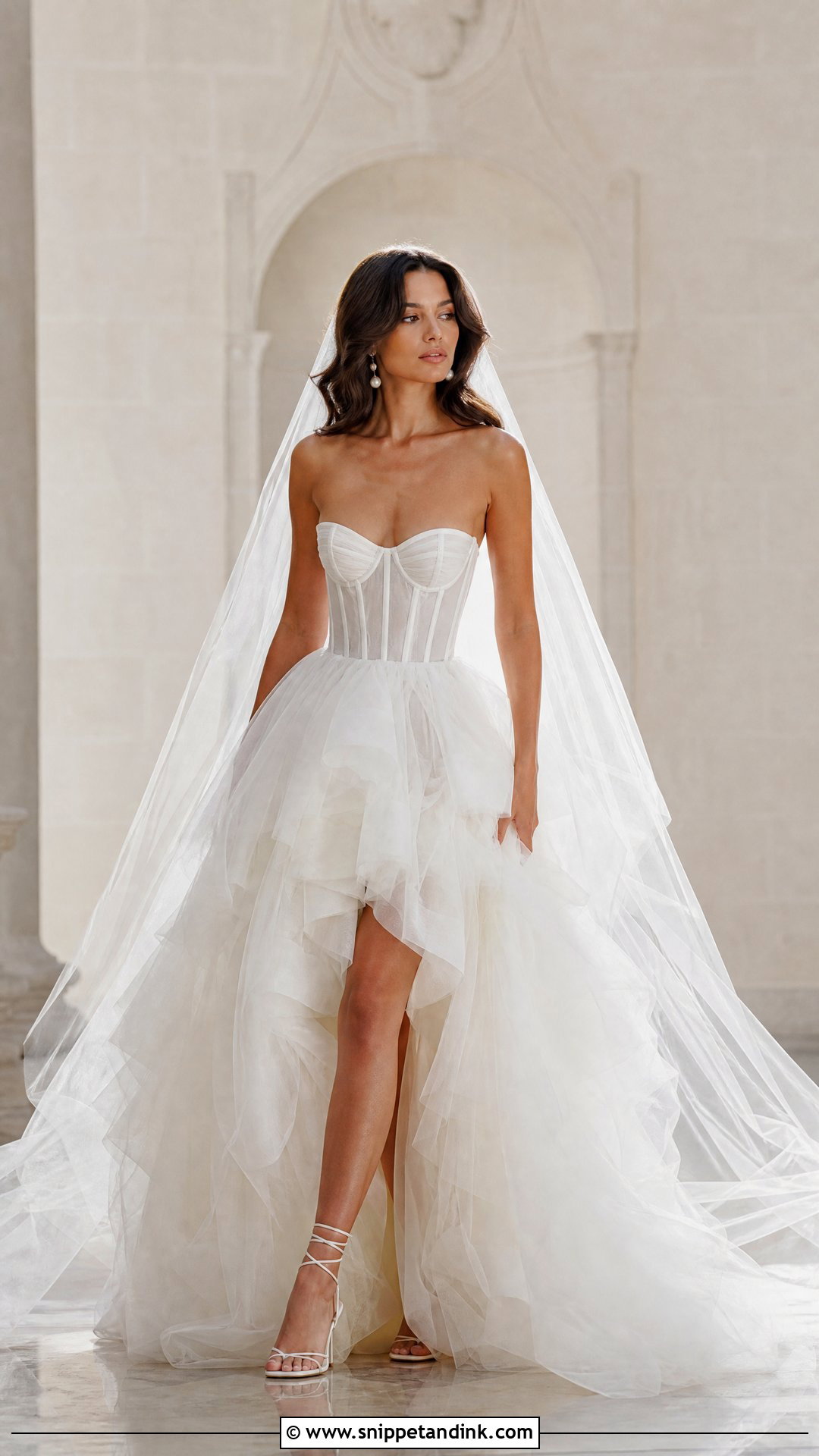
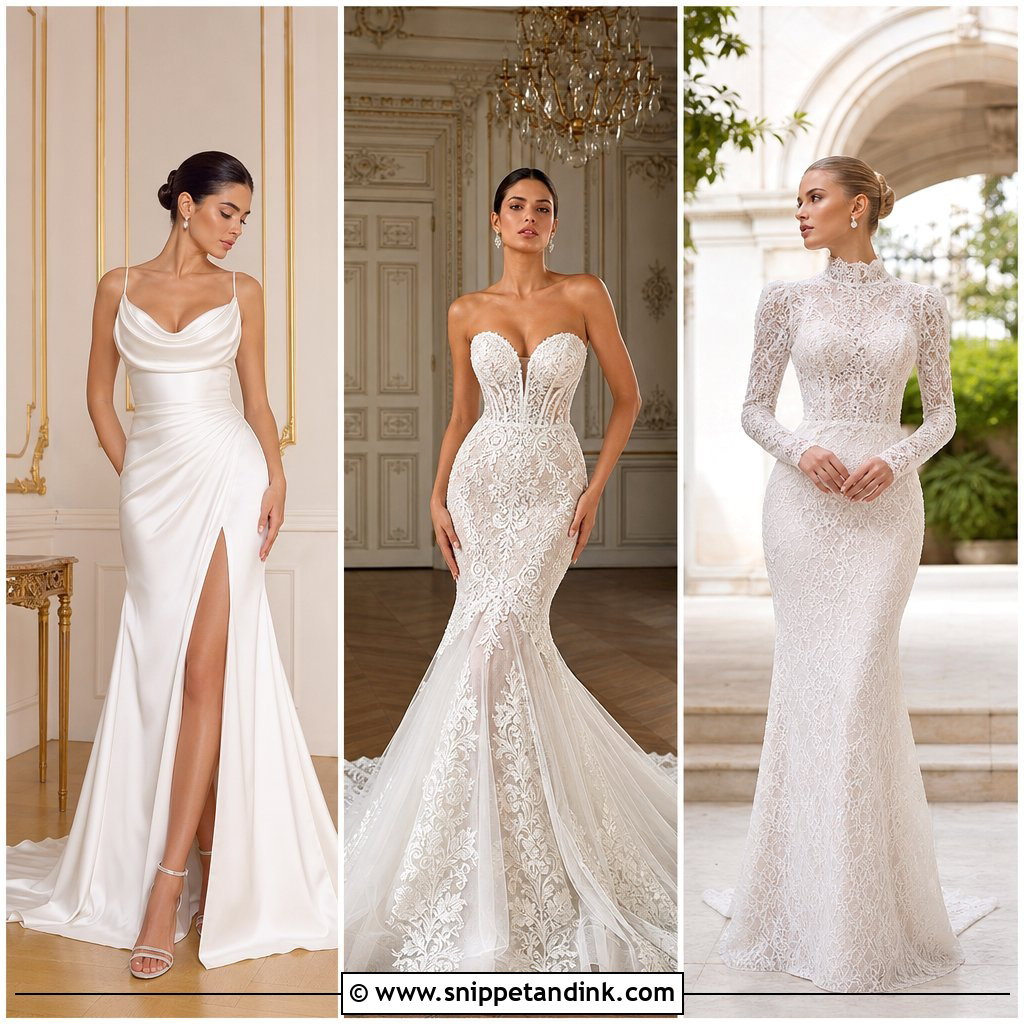
Corset bodices look structured because they are, and the support should come from internal boning, not just decorative seams on the outside. I check the boning at the first fitting by having the bride sit, bend and breathe deeply; if she can’t, it’s too tight, no matter how good it looks standing. A draped satin or layered tulle skirt balances the sculpted top. Pearl drops, strappy heels and a sheer veil without a heavy border. Soft waves stop it looking rigid. Exposed boning or sheer panels need quiet accessories.
8. 3D Floral Wedding Dress
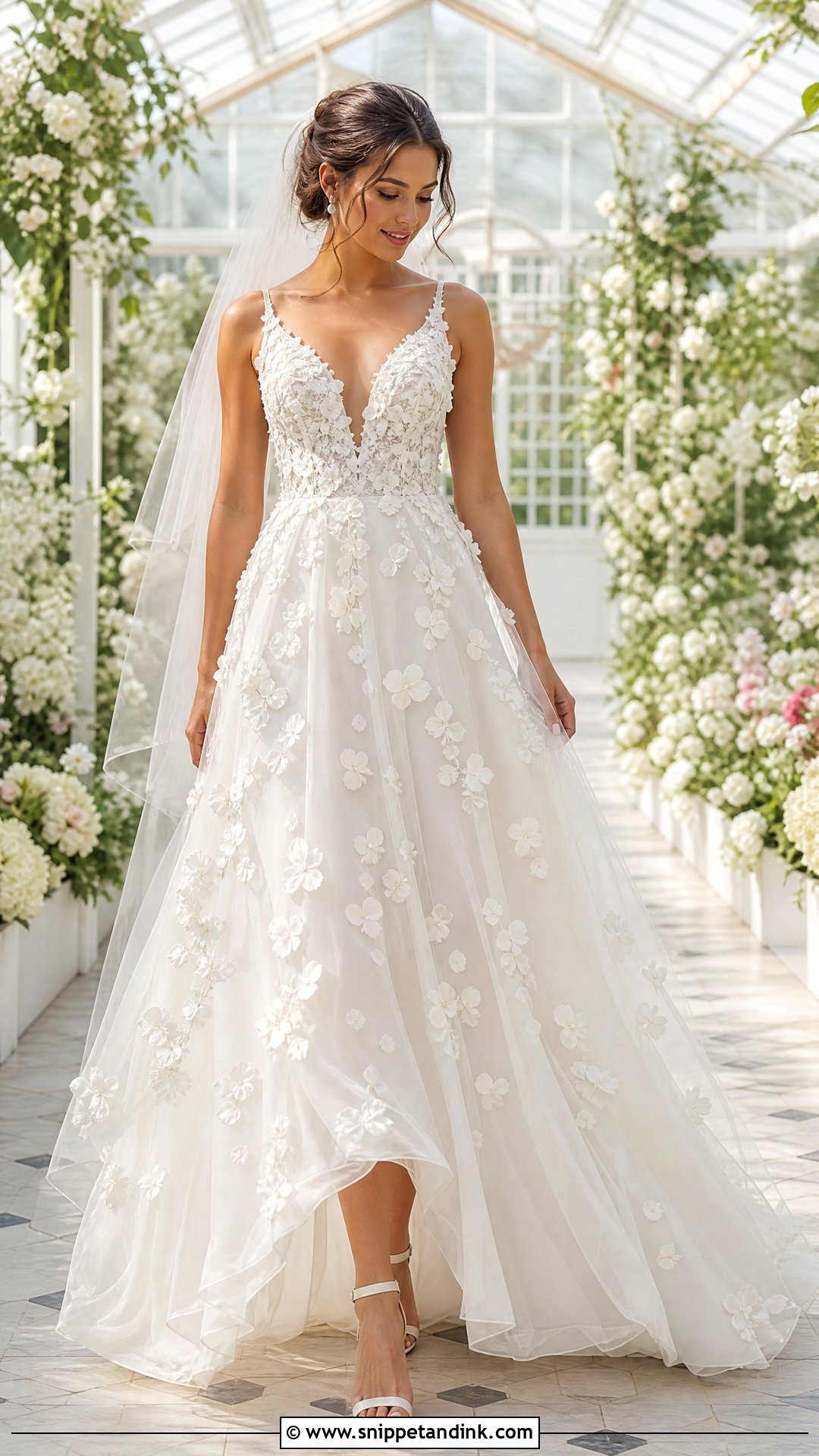
Three-dimensional flowers are best when they’re dense at the bodice and scatter down the skirt, which gives the dress a direction and keeps a smaller frame from being swallowed. Pearl earrings, satin ankle-strap heels and a plain tulle veil. A loose low bun keeps the bodice visible. The bouquet should stay to one or two colours. One practical check: run your hand under the arms and around the waist, because appliqués there can scratch as you move, and loose ones snag on veils. Gardens and conservatories suit this best.
9. Detachable Sleeve Wedding Dress
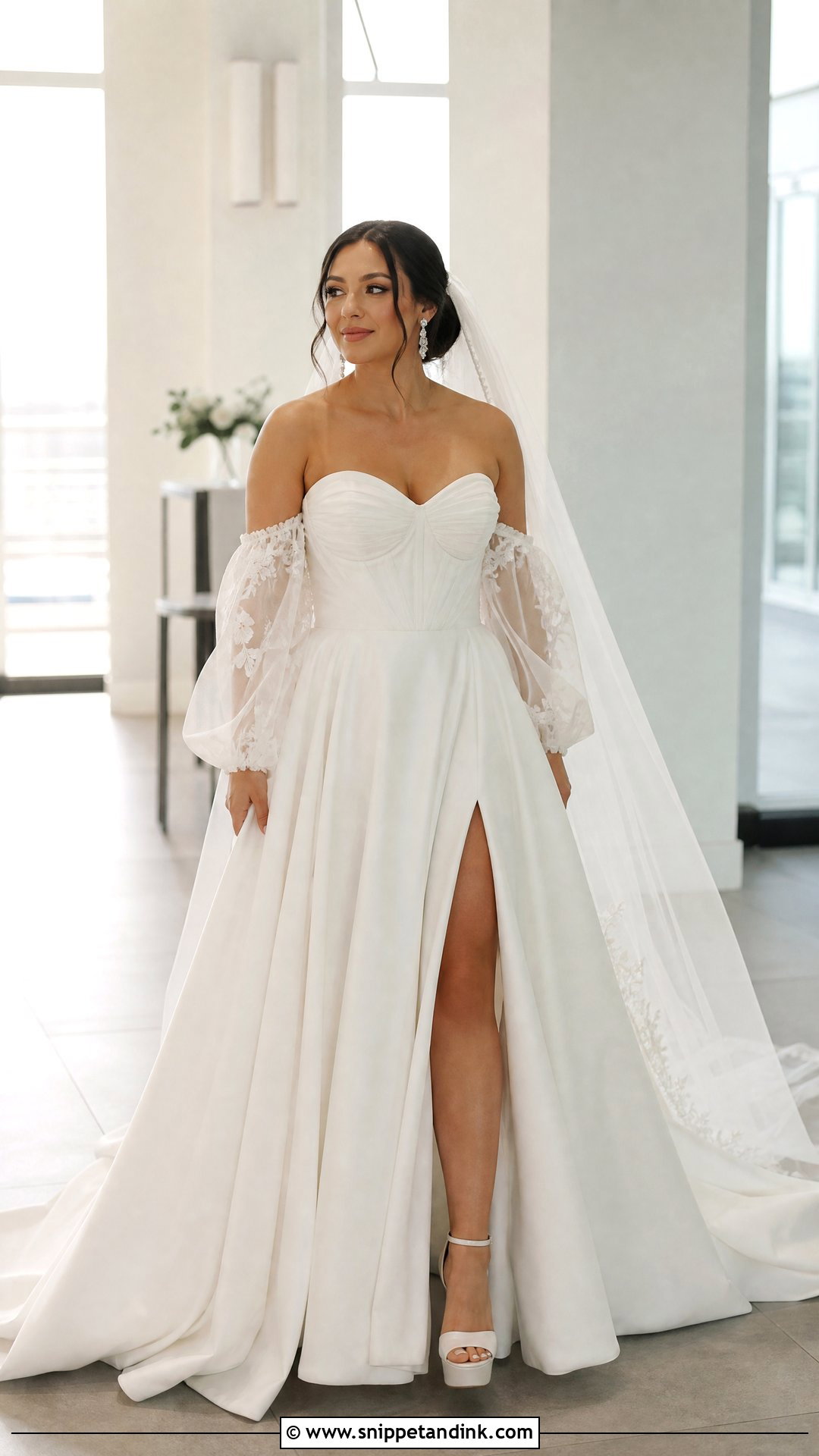
Detachable sleeves give you two looks without a complete outfit change. Fitted lace or puffed tulle sleeves for the ceremony, then off for a clean strapless party dress. A structured bodice is essential, since it has to hold up alone once the sleeves are gone. Crystal studs, ivory platform heels and a light cathedral veil, swapped later for a jewelled comb. I test the fastenings at every fitting; buttons or hooks that need a second person to undo are fine, as long as that person knows how. It suits weddings where the ceremony is more formal than the party.
10. Detachable Overskirt Wedding Dress
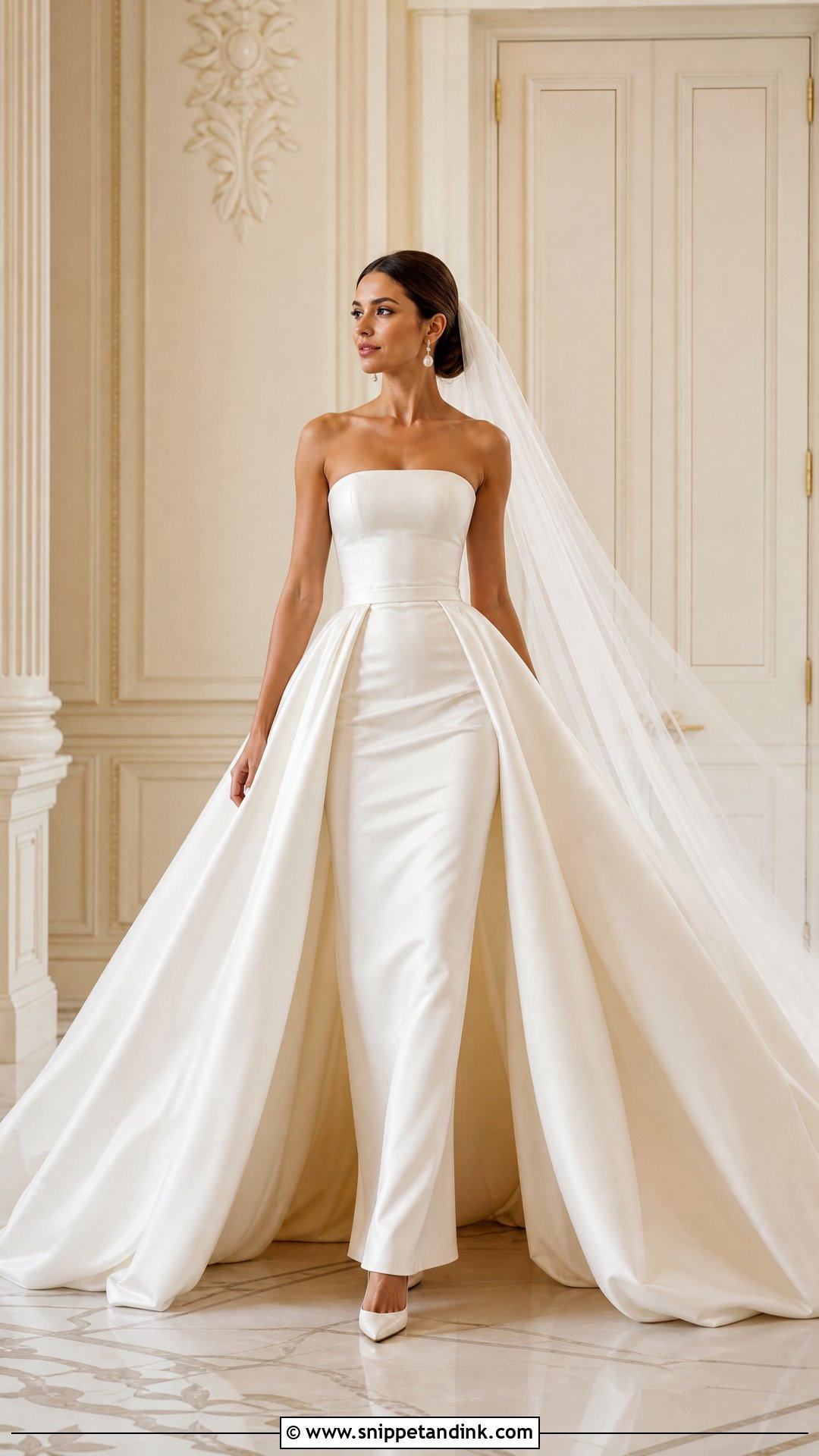
A detachable overskirt gives you a full skirt for the aisle and a column for the dance floor. The overskirt sits on a fitted gown, satin or tulle on top, and comes off before the reception. Cathedral veil, pearl earrings and pointed heels for the ceremony; comfortable block heels and a metallic clutch later. The waistband is the weak point, so I check it lies flat with no lump at the join. Have your tailor show a bridesmaid how to remove it and fold it for storage, so it doesn’t end up in a heap on a chair.
11. Pearl Embellished Wedding Dress
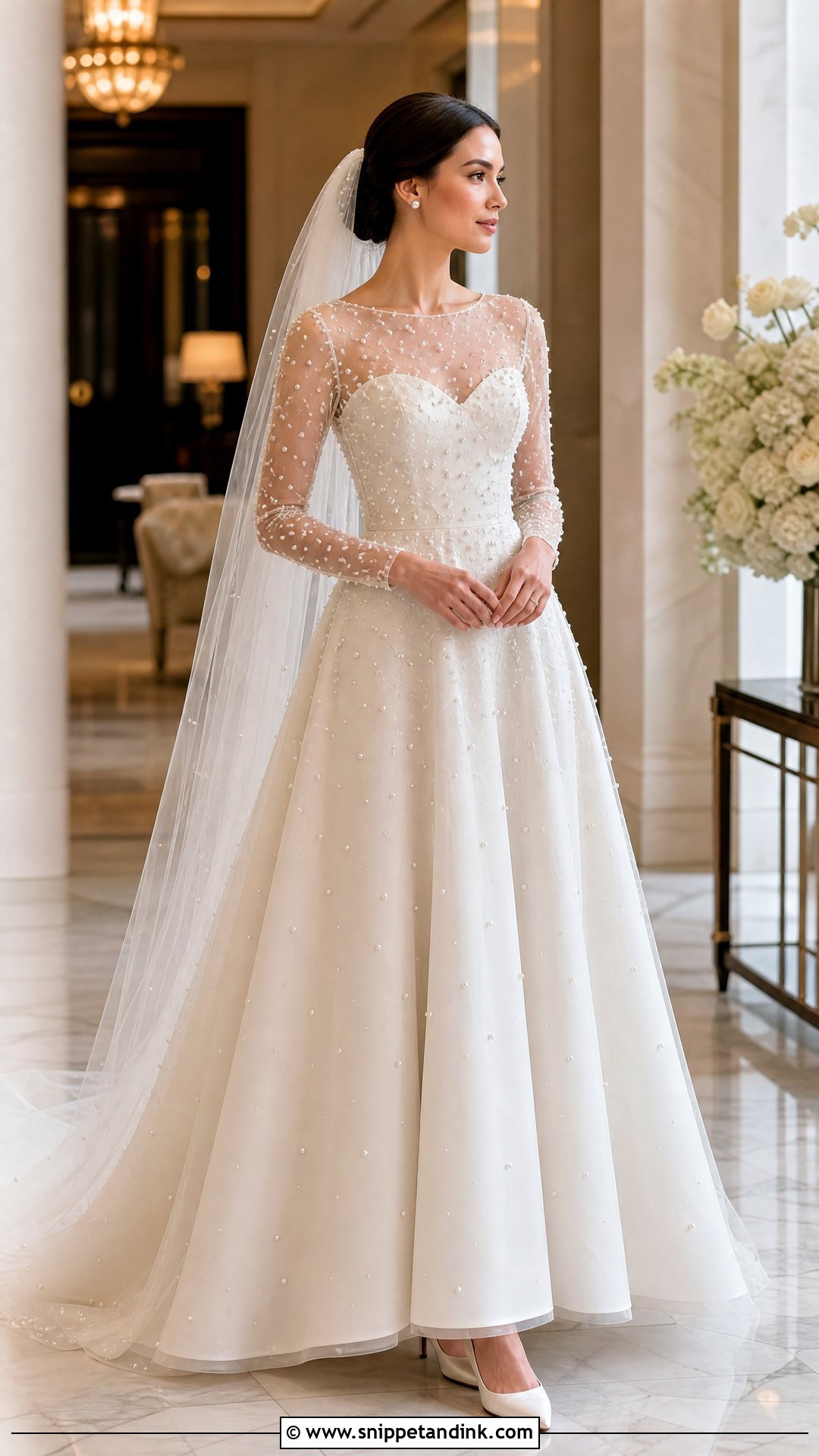
Pearls give a gown richness without the glitter of sequins. Scattered across a sheer overlay, clustered at the neckline or running down the sleeves, they need a simple column or A-line underneath. Pearl studs, satin pumps and a plain veil; I check that the veil edge won’t catch on the beading, because tulle snags easily on pearls. A smooth low bun or polished waves tucked behind the ears. Don’t mix pearls with lots of crystals. Before the wedding, look over the embellishment for loose threads and pack a small kit with matching thread.
12. High Neck Wedding Dress
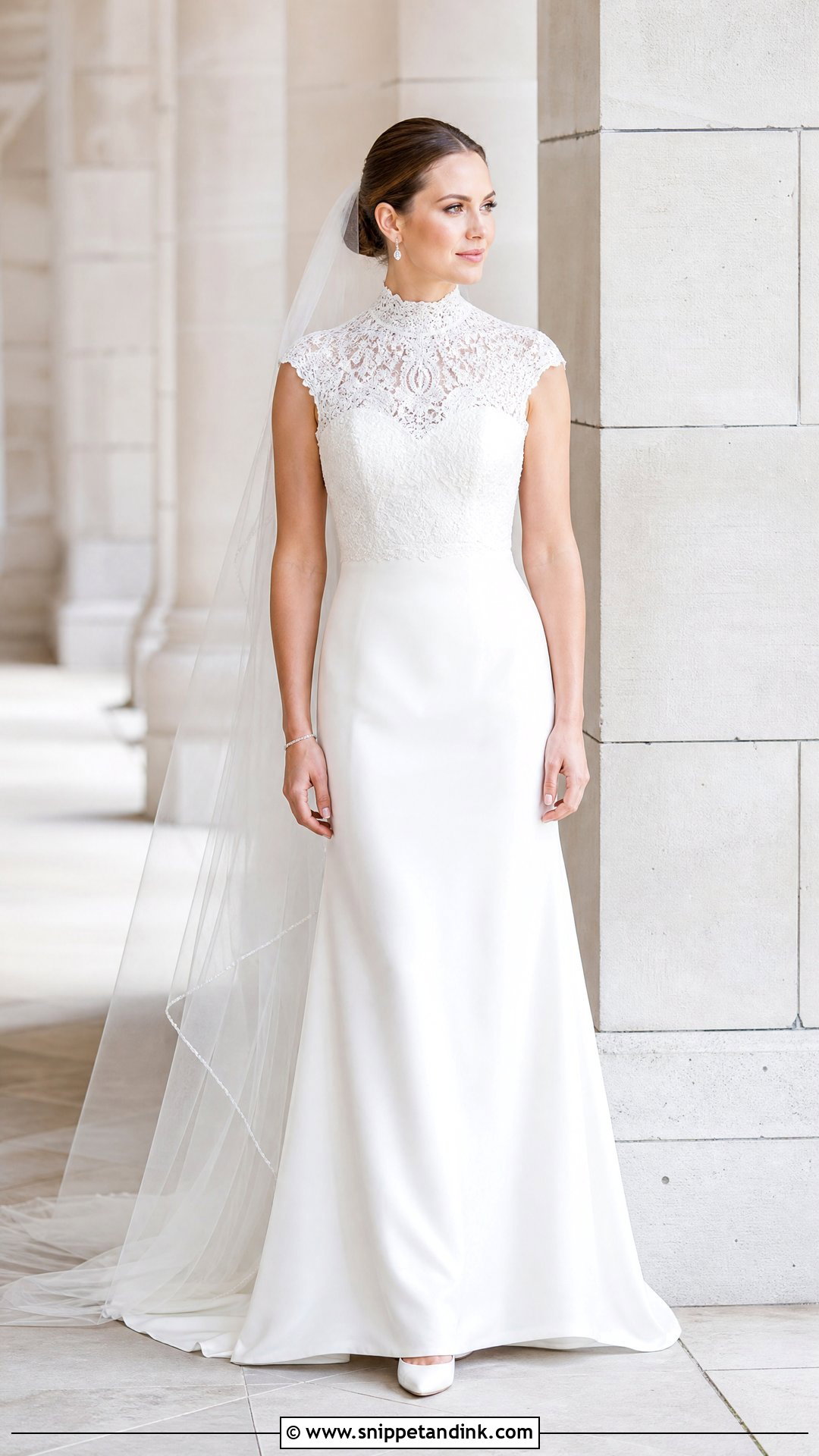
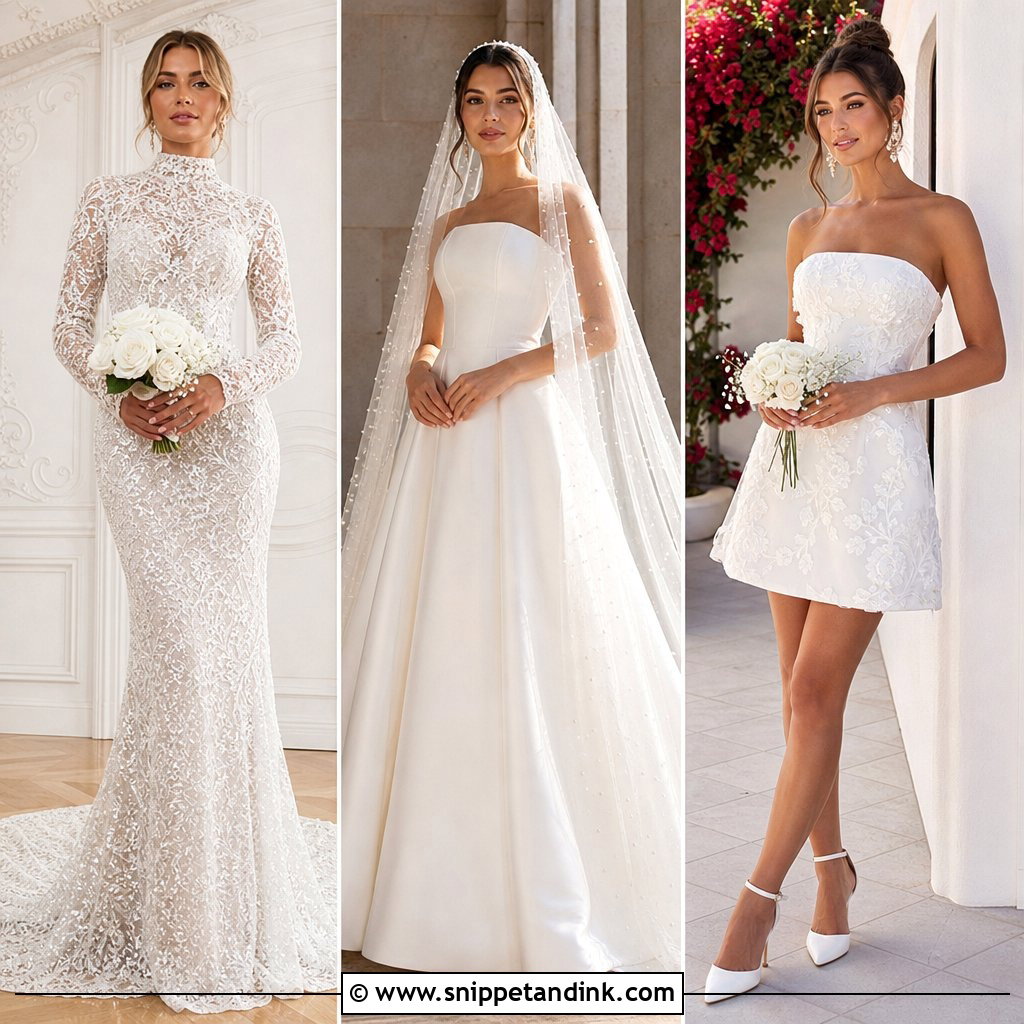
A high neck gives coverage and a long line from chin to waist. Lace illusion is romantic; smooth crepe is modern. A fitted bodice and slim A-line skirt stop the top from feeling heavy. Skip the necklace; delicate earrings, a narrow bracelet and pointed closed shoes are enough. A clean bun or high ponytail shows the neckline. Attach the veil under the hairstyle so it doesn’t hide the detail. I always ask brides to sit down and turn their head during fittings, because a collar that’s fine standing can dig into the jaw when seated at dinner.
13. One-Shoulder Wedding Dress
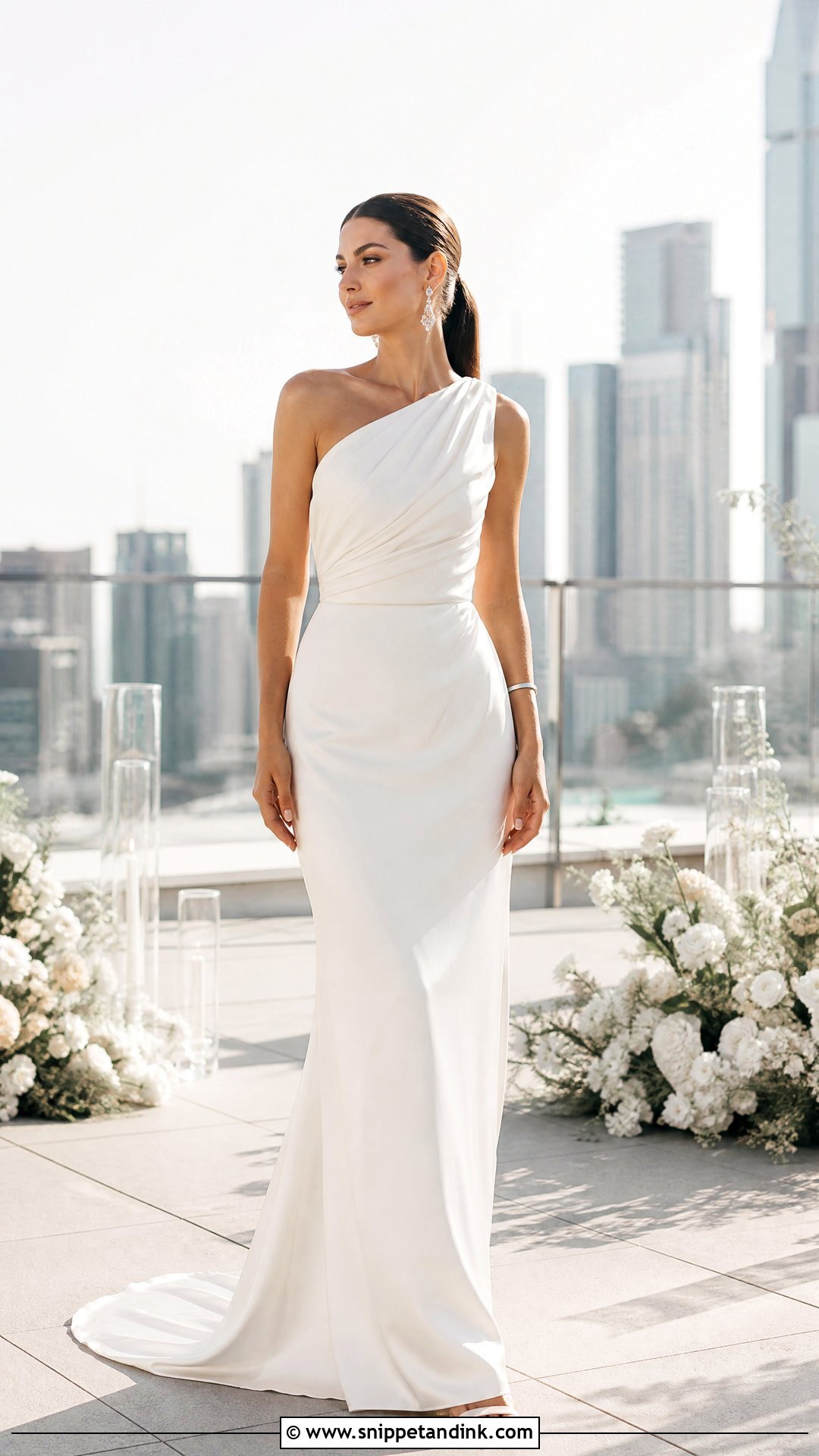
A one-shoulder gown is modern but rooted in classical draping. Soft folds across the bodice and a column or gently flared skirt keep the line clean. The neckline is the focus, so no necklace: small crystal earrings, a slim cuff and minimal ivory sandals, with a low side bun or sleek ponytail. A sculptural comb can balance the asymmetry better than a veil. The alteration point is the shoulder strap; it must be fitted to sit firmly without pulling the bodice sideways, especially when you lift the bouquet. Rooftops and destination weddings suit it.
14. Puff Sleeve Wedding Dress
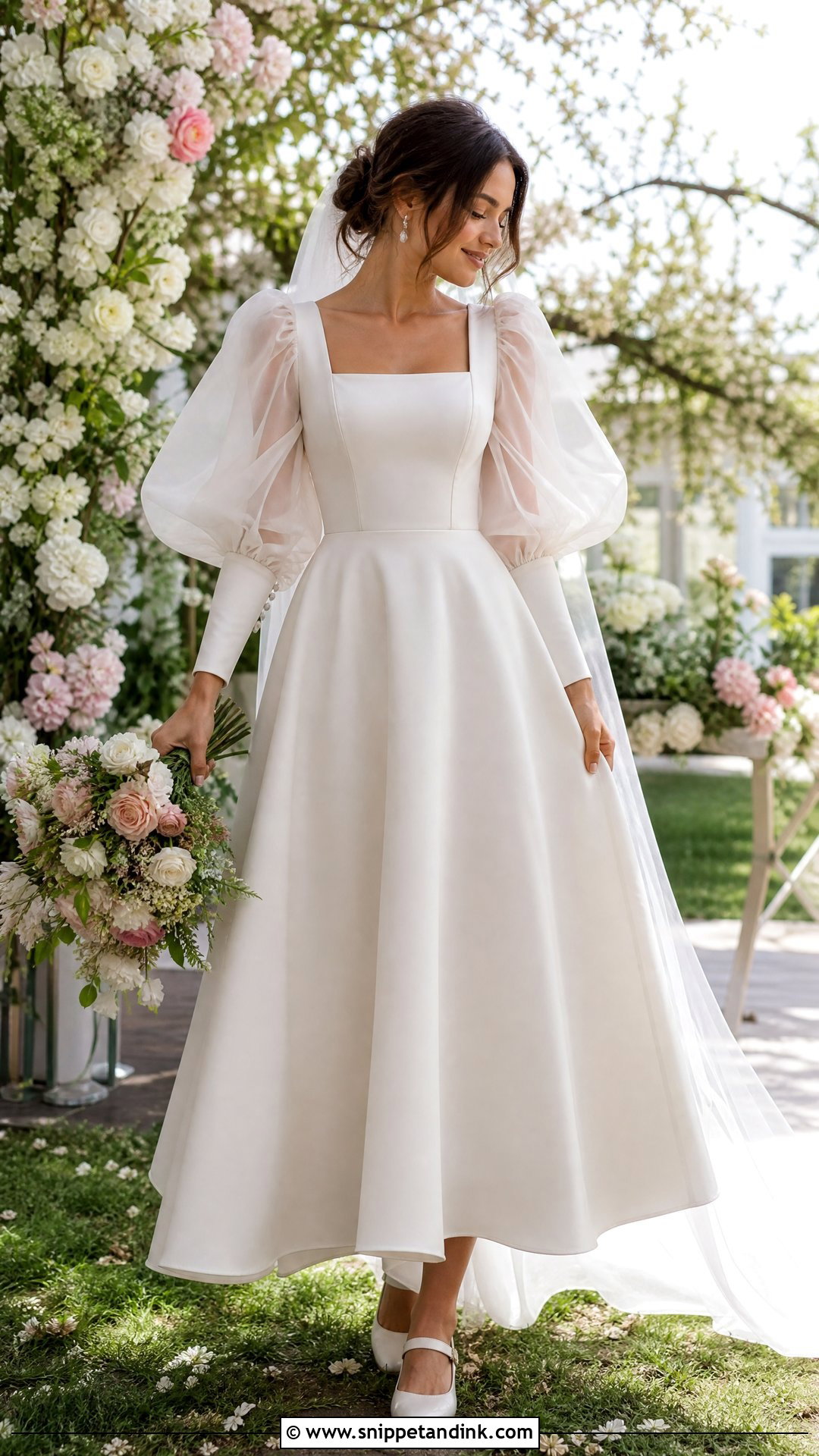
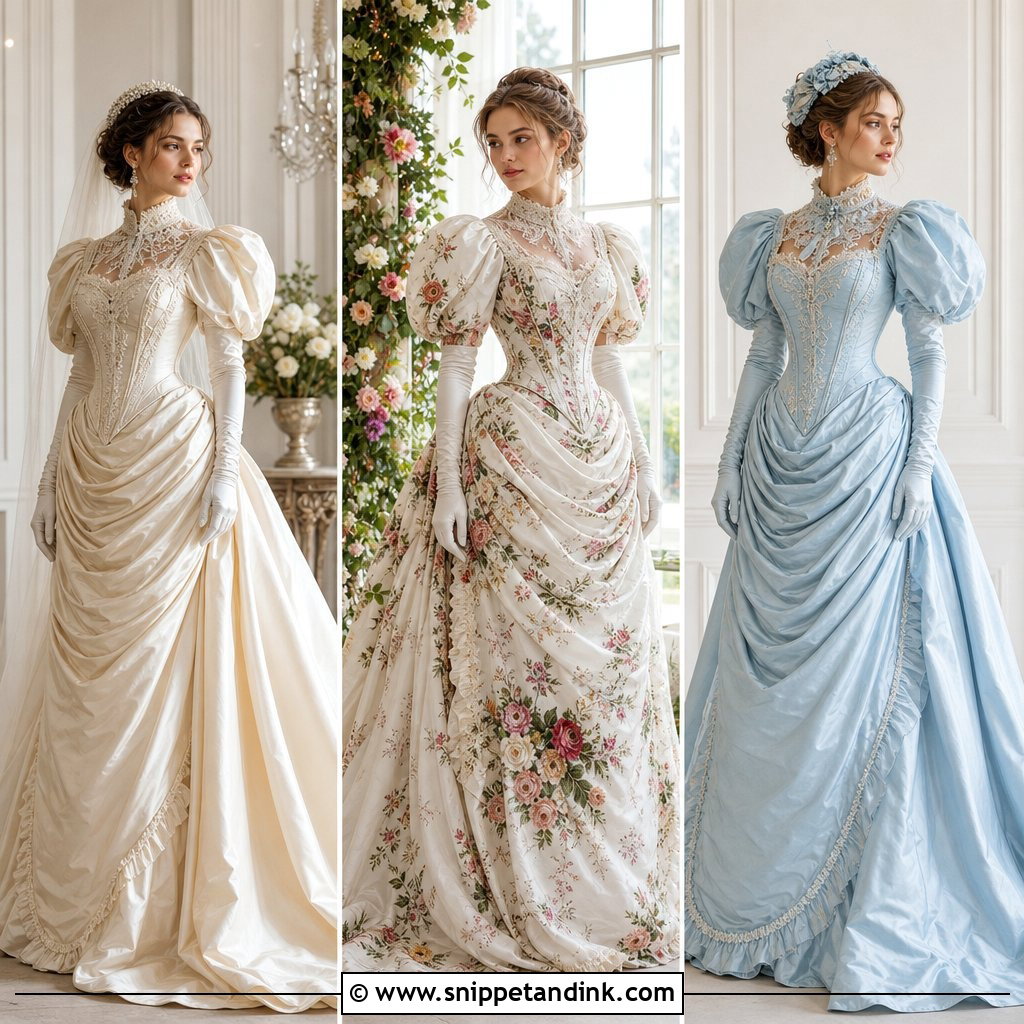
Puff sleeves add volume and a clear vintage feel, and I keep them sheer so they float rather than overpower. Organza with fitted cuffs is my usual choice. A structured square-neck bodice and a flowing A-line balance them. Pearl earrings, ivory Mary Janes and a simple veil under a loose bun, with a small delicate bouquet. Removable puffs give you a sleeveless reception look. Move your arms in the fitting and check the cuffs don’t cut in. Organza creases when crushed in a car, so a quick steam before photos helps.
15. Slip Wedding Dress
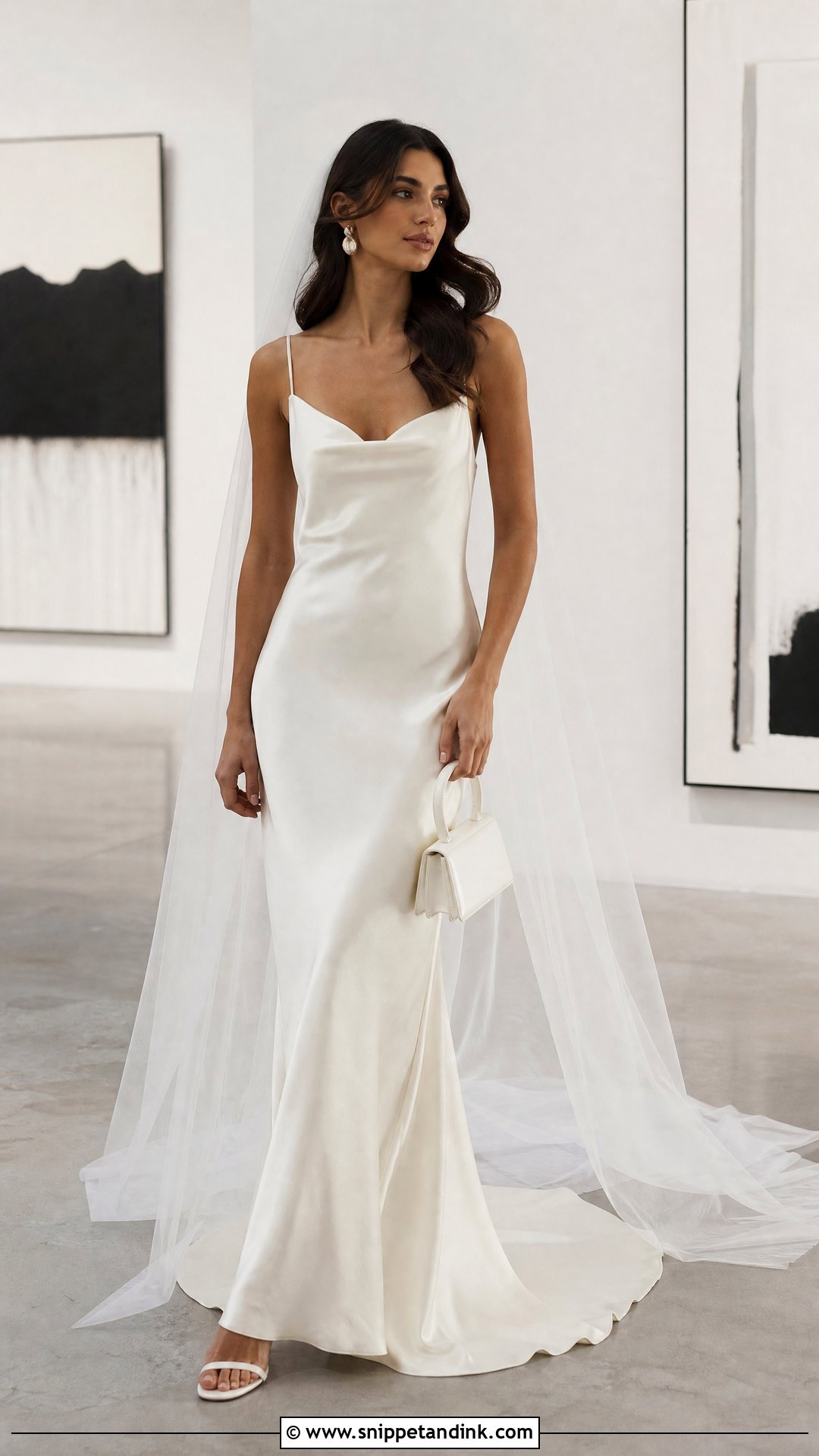
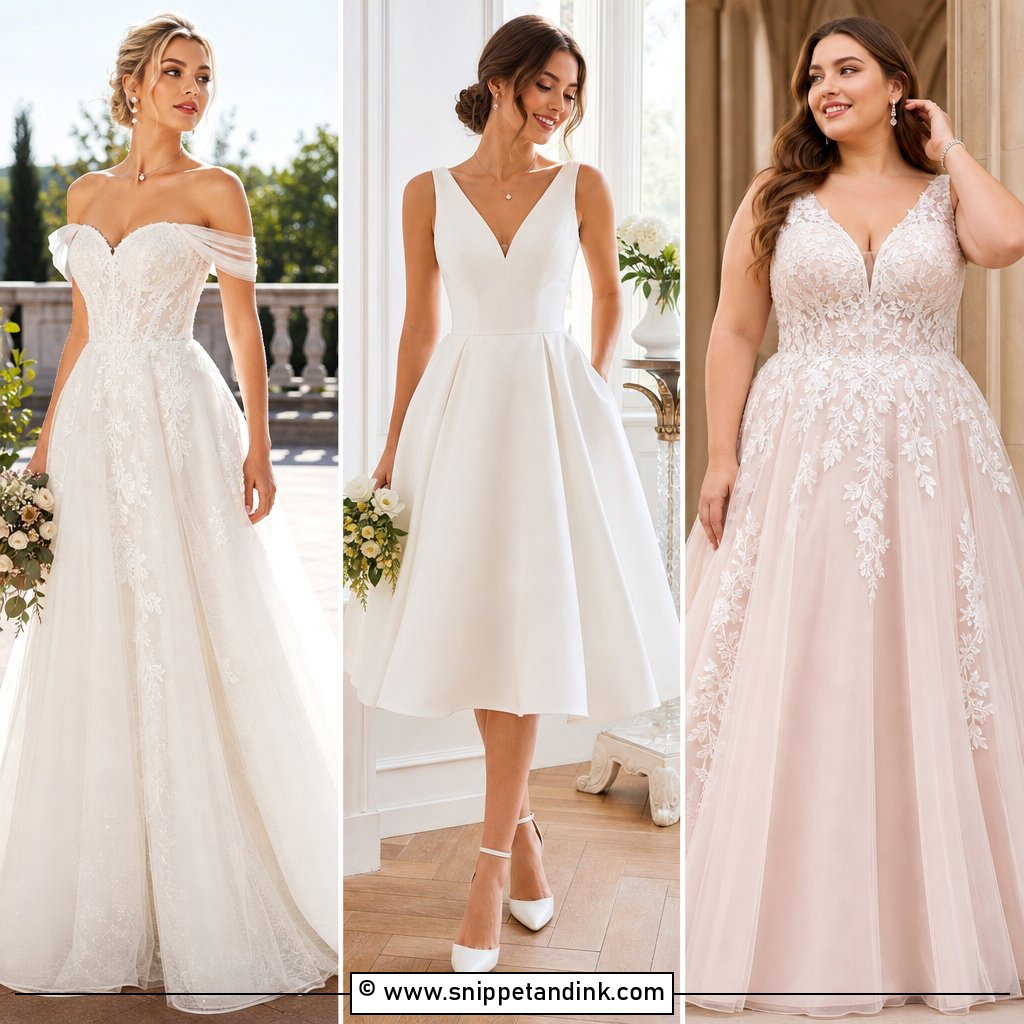
A bias-cut satin slip skims the body, which is exactly why it’s unforgiving. The bias cut stretches slightly with wear, and thin satin shows underwear lines and any texture beneath it. I look for adjustable straps or an inner support layer. Delicate slingbacks, sculptural earrings and a small structured bag. A long plain veil gives the ceremony drama against such a simple dress. Polished waves or a low knot, depending on formality. A tailored white blazer works for arrival photos or cool evenings. Courthouses, restaurants and galleries suit it.
16. Tea Length Wedding Dress
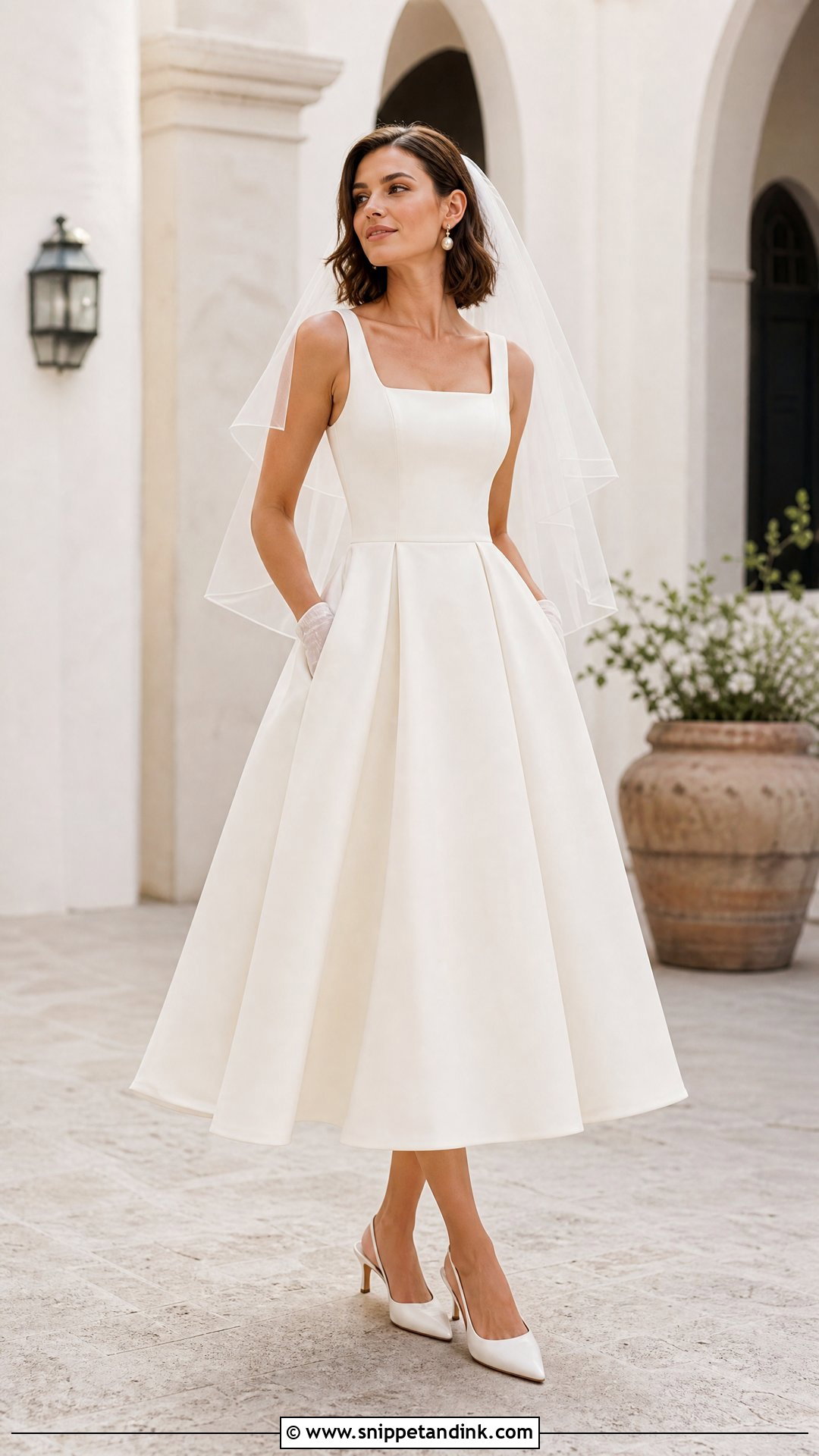
Tea length keeps the bridal feel while freeing your feet, and the hem point matters more than with any other length. I mark it while the bride stands in her shoes, usually just below the widest part of the calf, and check it stays level when she walks. The shoes are on show, so pointed pumps, embellished slingbacks or refined block heels. Pearl earrings, short gloves and a birdcage or shoulder-length veil, with a polished updo. A cropped jacket or fitted cardigan for cool weather.
17. Mini Wedding Dress
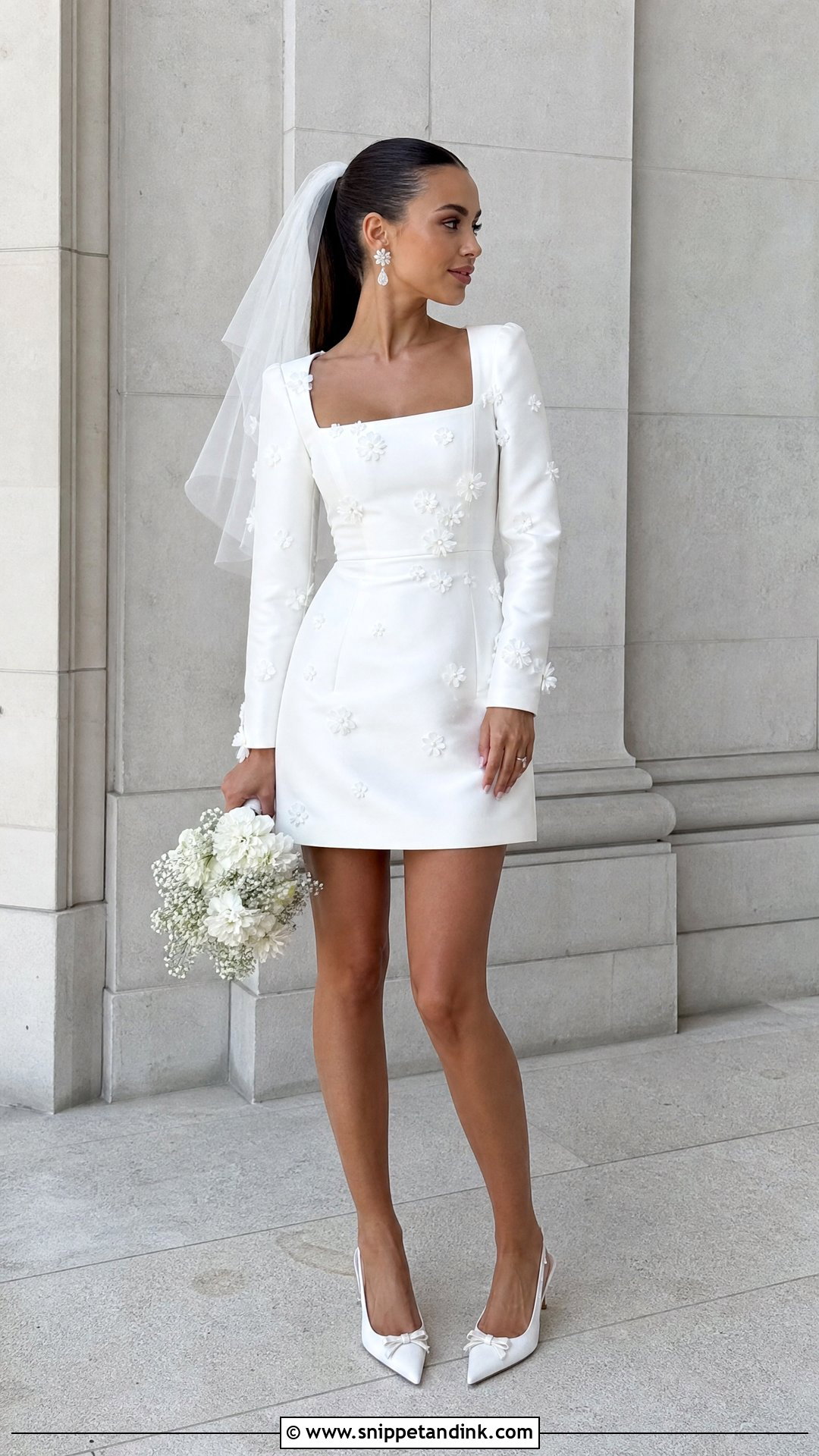
A mini is playful and best balanced with more coverage on top, such as a structured bodice or tailored long sleeves. A square neck, a bow, feather-light trim or small floral appliqués give it bridal detail. Pointed slingbacks, statement earrings and a short veil, then embellished flats or bridal trainers for dancing. A mini bag and sleek ponytail finish it. I have brides sit, walk and raise their arms in front of a mirror, since a mini rides up when seated. It suits courthouses, destinations, rehearsal dinners and second looks, and it can absolutely be the main dress.
18. Blush Pink Wedding Dress
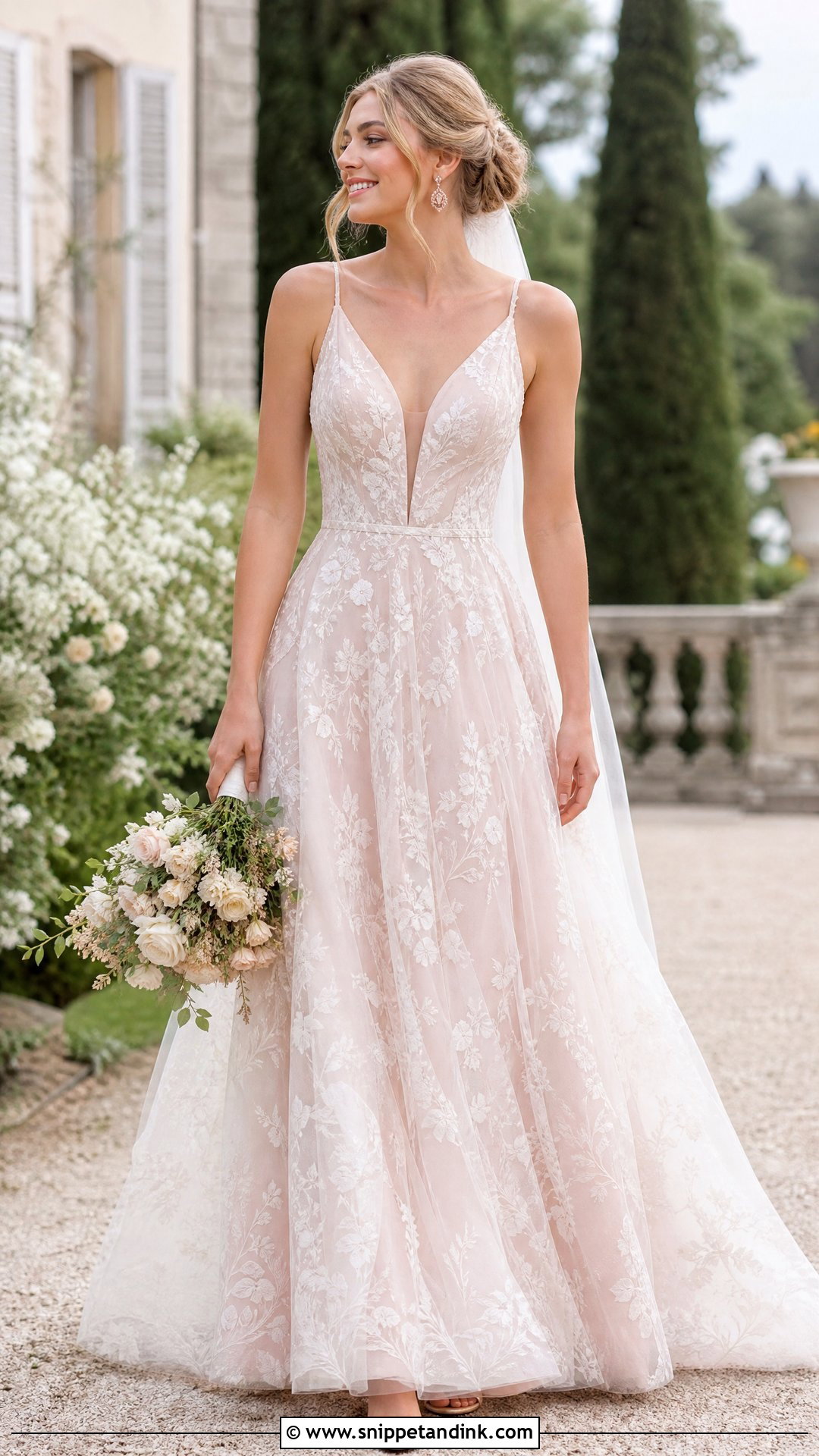
Blush works best as a whisper: a pale rose or pink-champagne lining under ivory tulle or lace. An A-line and fitted bodice keep it from turning sweet. Champagne heels, rose-gold earrings and a plain ivory veil, with neutral makeup and a loose low bun so there isn’t pink everywhere. Flowers in cream, muted peach and greenery suit it. Look at the dress in daylight and indoor light before buying; blush can disappear into white outdoors and go peachy under warm bulbs. It’s a personal alternative to bright white.
19. Vintage Inspired Wedding Dress
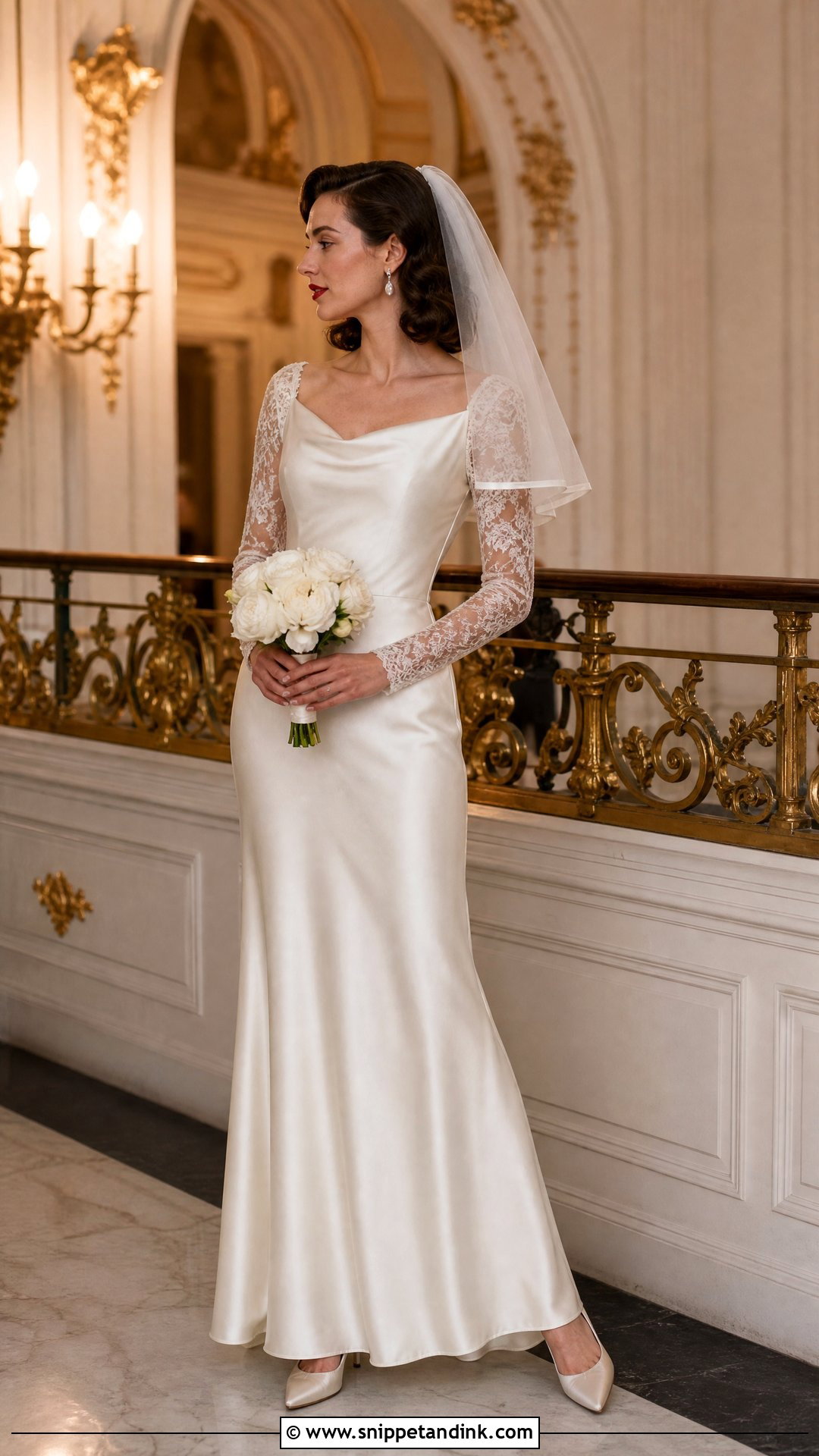
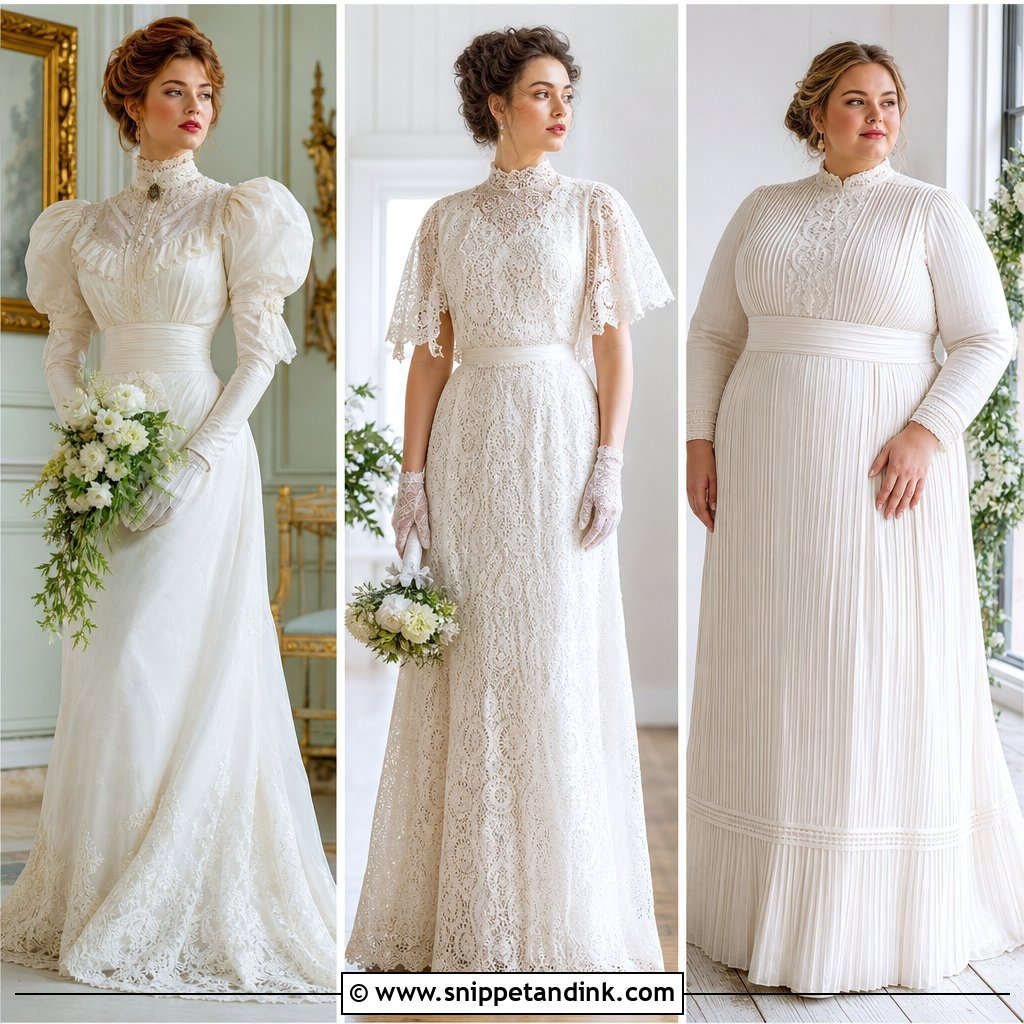
Vintage-inspired gowns look current when they reference one era, not three. A 1930s bias-cut skirt, a 1950s tea-length shape or Victorian lace sleeves, then keep the rest simple: pearl drops, satin pumps and a neat veil. A soft chignon suits ornate lace; polished waves suit fluid satin. Heirloom jewellery adds meaning, but check clasps and settings first. With a true antique gown, I’d have a specialist look at the fabric before any alterations or cleaning, since old silk can split along fold lines.
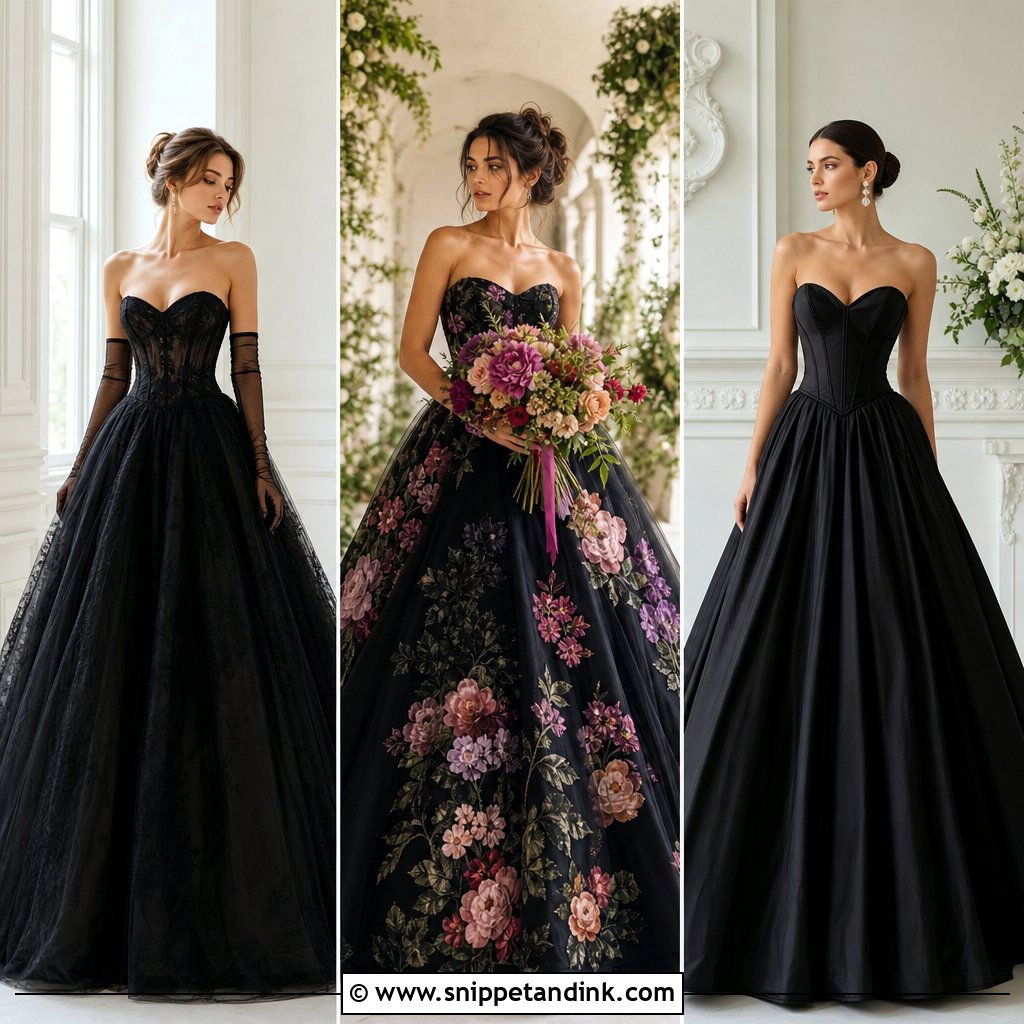
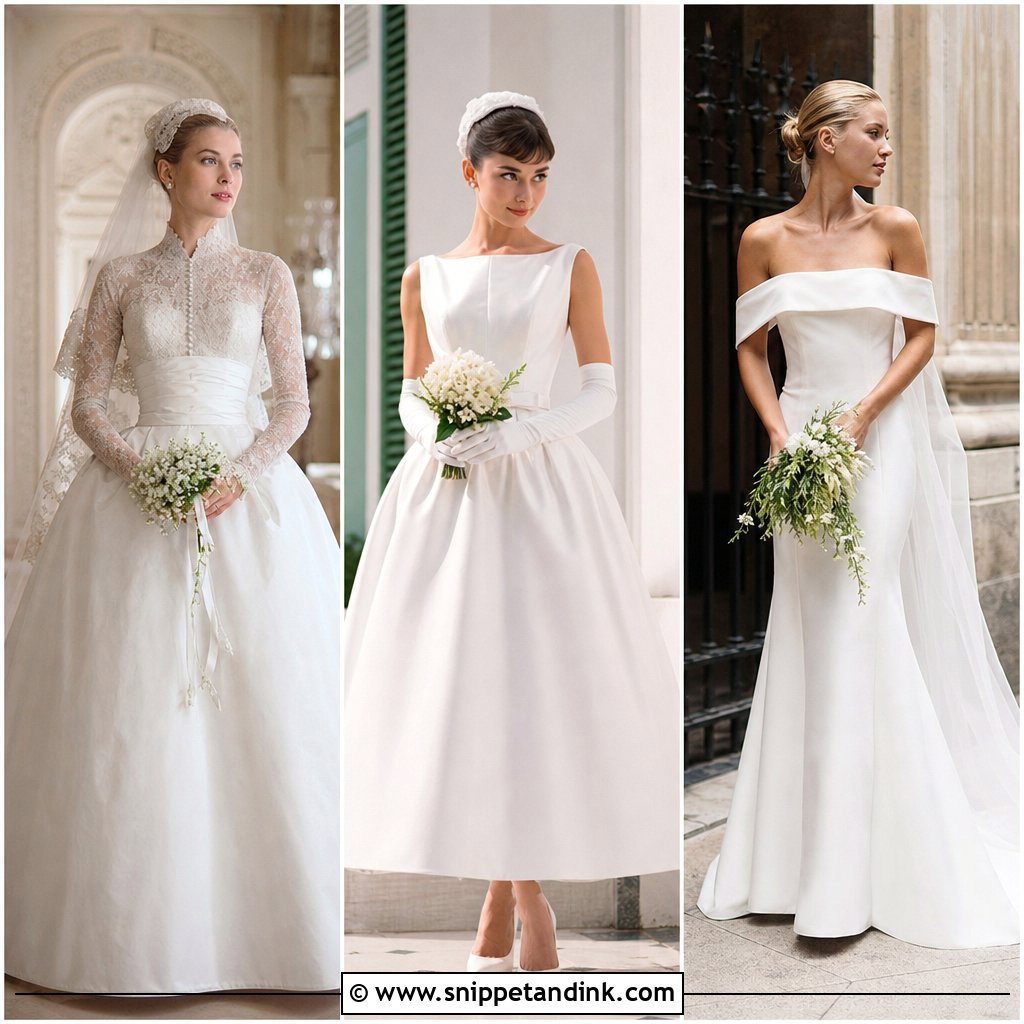
20. Bridal Jumpsuit With Overskirt
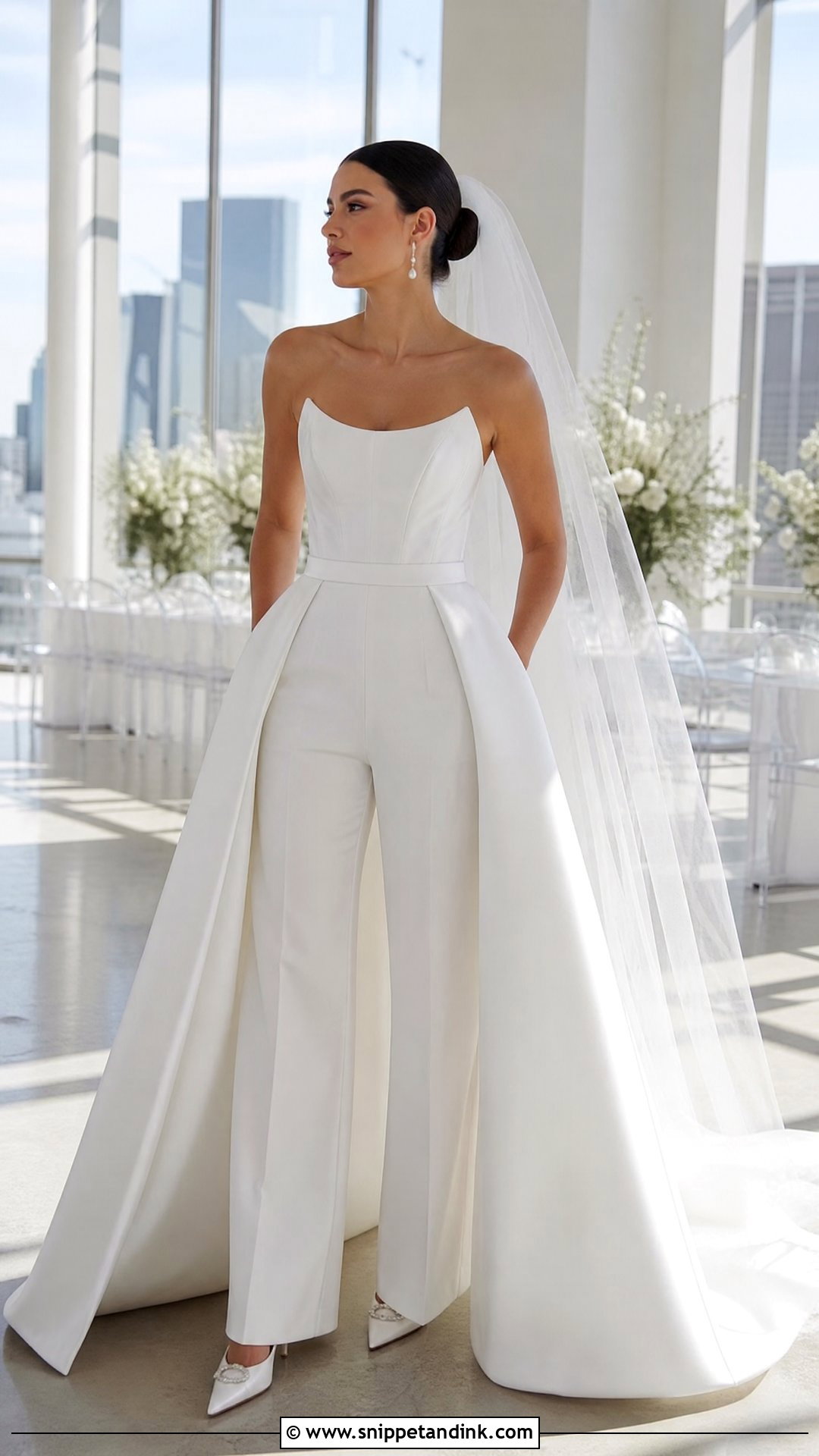
A bridal jumpsuit with a removable overskirt gives you the ceremony entrance and the freedom of trousers. A tailored white jumpsuit with a defined waist, structured bodice and wide legs, then a full satin overskirt on top. Pointed pumps, crystal earrings and a long veil or modern headband, with a sleek bun. The trousers should nearly skim the floor in your shoes. Jumpsuits fit differently sitting down, so I check the crotch and seat while the bride sits; a jumpsuit that pulls when seated is uncomfortable all evening.
Buying a 2023 Gown Secondhand or Off the Sample Rack
Many of the dresses above now turn up at sample sales and on resale sites, which is a good way to get a designer shape for less. I’d check a few things before paying:
- Colour: ivory and white can yellow with age and storage, especially at folds. Look at the gown in daylight, not just in photos.
- Hem and train: a worn gown often has dirt or fraying at the hem. Small amounts clean or trim out; deep staining may not.
- Seam allowance: ask whether the side seams have room to let out. Many gowns can go down a size or two easily but only up a little.
- Embellishment: count any missing beads or appliqués and ask if spares came with the dress.
- Sample sizes: sample gowns are often in one standard size and have been tried on many times, so check zips and hooks carefully.
Then budget for professional cleaning and alterations on top of the purchase price. A secondhand gown that fits perfectly after tailoring looks just as good as a new one.
One or Two Details Carry a Whole Gown
2023 showed how wide bridal fashion had become, from lace and ball skirts to minis, colour and jumpsuits. Start with a silhouette you can move in and that suits the venue’s formality. Then add shoes, jewellery, hair, veil and any seasonal layer. Resist putting every trend on one dress; one or two details look more considered. Above all, walk, sit, lift your arms and dance in it before the final fitting. Good tailoring and comfortable accessories can make even a simple gown look exceptional.
You'll Like These Ideas:






Leave a Reply