
Shweshwe brings colour, heritage and a lot of personality to South African wedding fashion, and as a stylist I treat it differently from almost any other bridal fabric. It is a printed cotton with real body, so it holds a structured mermaid line, a layered ball skirt or a modest long-sleeve cut without much help. The hard part is balance: the dress has to honour what the print means to your family while still feeling like yours. Below are twenty outfits I’d happily put a bride in, each with the doek, shoes and jewellery that keep the print in charge. Where your family or elders hold specific dress customs, ask them first and design around their answer.

Buying Real Shweshwe and Prepping It for the Tailor
Before any of these silhouettes can work, the fabric has to be right. Genuine shweshwe is an indigo or coloured cotton printed by a discharge method, where the pattern is bleached out of dyed cloth, and it arrives heavily starched. That starch is why it feels stiff and smells distinctive off the roll. It washes out, and the cloth softens noticeably, so I never let a tailor cut it straight from the shop.
- Pre-wash every metre in cold water, then iron it while still damp. Cotton shrinks, and a fitted bodice cut from unwashed fabric can tighten after its first clean.
- Buy more than the pattern asks for. Shweshwe rolls tend to be narrower than standard dressmaking cotton, and matching a motif down the centre front or across seams eats fabric quickly.
- Check the reverse. Authentic cloth carries a trademark stamp on the back, and the print looks crisp on the face while the back stays mostly plain.
- Buy all the fabric for one outfit from the same batch. Dye lots vary, and two shades of blue sitting side by side show clearly in photographs.
When I brief a tailor, I bring a photo of the silhouette, the washed fabric, and a note of where the bride wants the strongest motif to land. That last point saves more dresses than anything else.
1. Blue Shweshwe Fit And Flare Wedding Dress
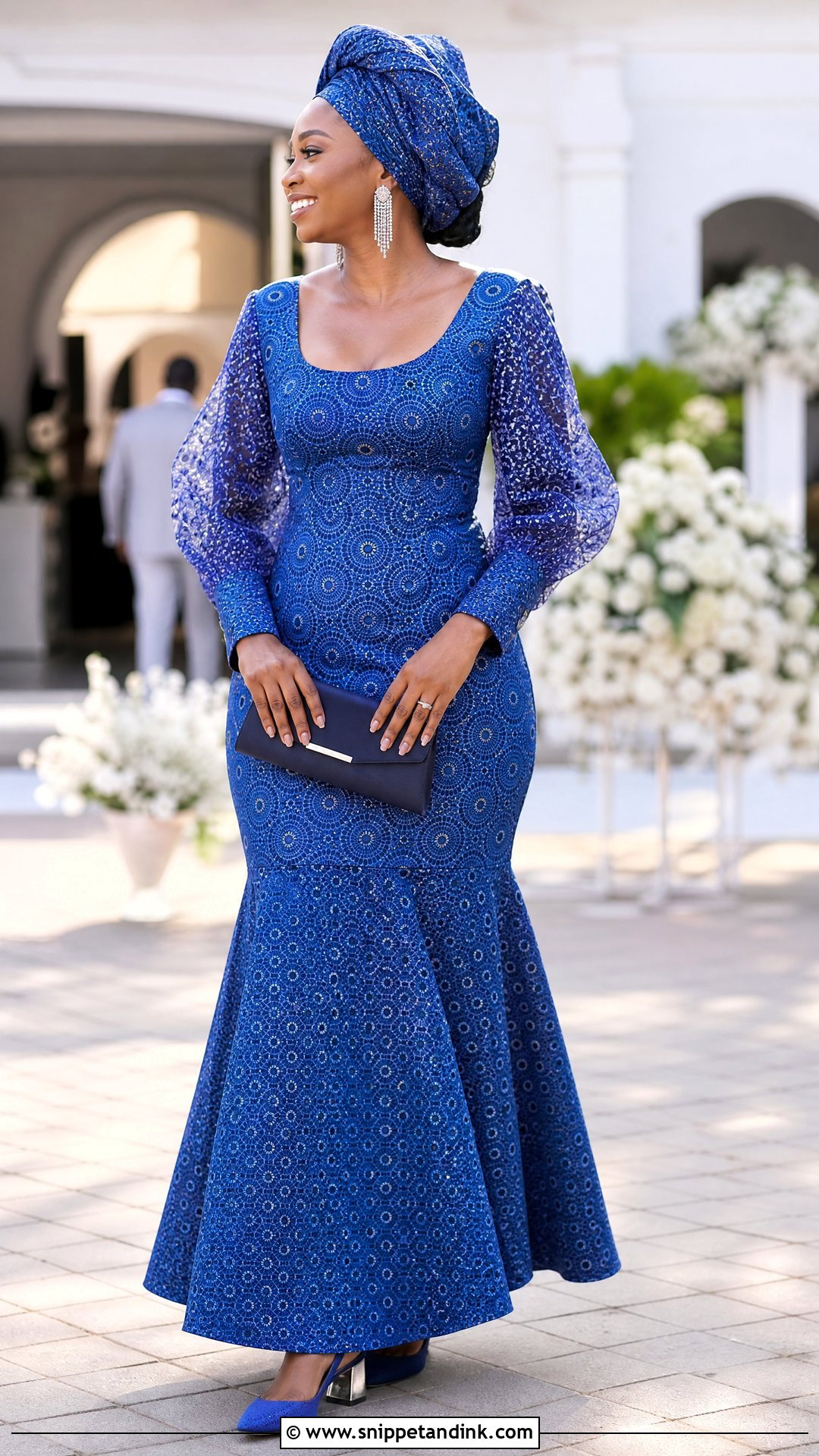
Classic blue in a fitted bodice and gently flared skirt is the shape I reach for first with brides who are new to the fabric. The flare starts low enough to show a defined waist but leaves room to walk and dance properly, which matters because starched shweshwe has little give. A sweetheart or modest V-neck can be chosen to suit the ceremony and how much coverage you want. Repeat the blue in the doek, keep jewellery to silver drops and a slim bracelet, and carry a structured navy clutch. On grass, wear low block heels or decorated flats; stilettos sink. A softly defined eye and a berry lip are enough here.
2. Royal Blue Shweshwe Mermaid Wedding Dress
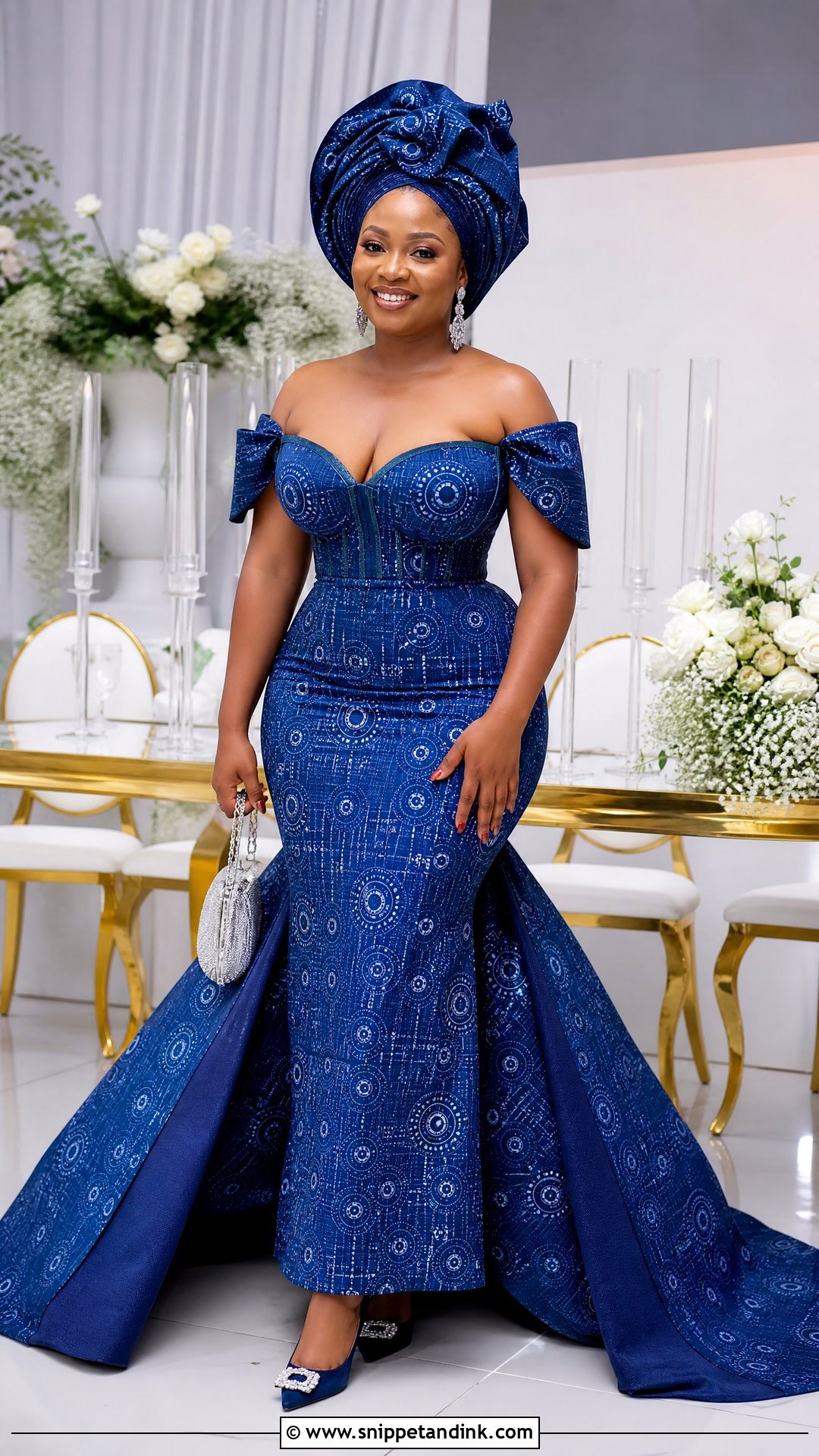
A royal blue mermaid is the most dramatic shape on this list, and the one I’m most careful fitting. It has to sit smoothly through bodice, waist and hips before it flares near the knee, and with a stiff cotton every wrinkle across the hip shows the pattern pulling. I always have the bride sit, walk and dance at the second fitting; if she can’t, we add a back slit or a softer lower panel. A small detachable train gives ceremony impact without dragging all day. Keep extra beading to the neckline or waist when the print is strong, and pair a structured matching headwrap with crystal earrings and a compact silver bag. Pointed navy pumps suit an indoor hall; outdoors, swap them for steady block heels.
3. Red Shweshwe Peplum Wedding Dress
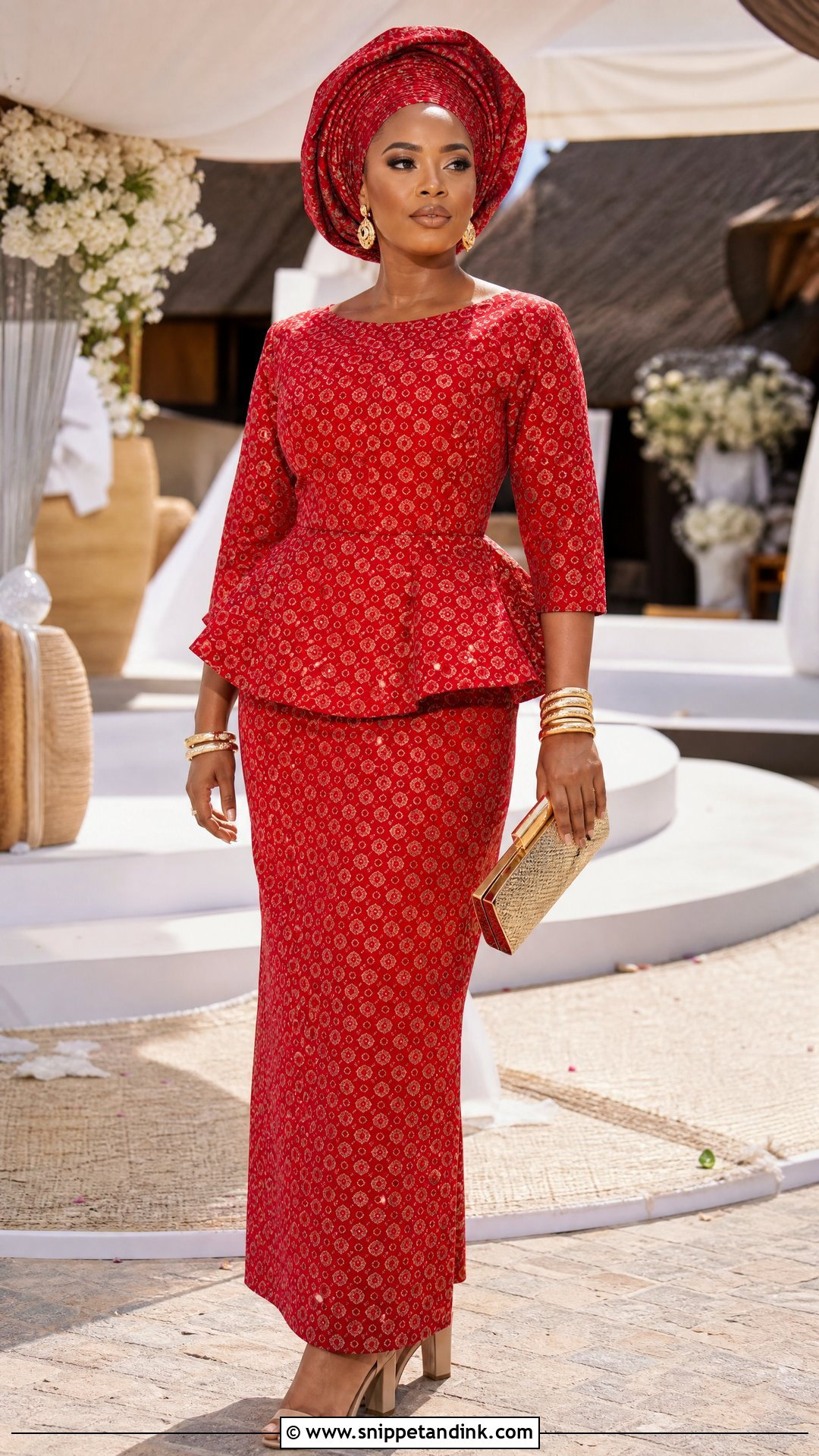
Red is a confident colour, and a peplum wedding dress gives it a formal, tailored outline. The peplum marks the waist, and I pair it with either a straight ankle-length skirt or a floor-length one with a back vent. A fitted three-quarter sleeve covers the arms and balances the flare at the hip. The detail I fuss over is motif placement: I ask the tailor to centre the print down the front before cutting, because a peplum magnifies any lopsided repeat. Style it with a red doek, gold studs, stacked bangles and a simple metallic clutch, with gold or neutral block sandals. A narrow beaded belt at the seam adds definition if you want it.
4. Cream And Brown Shweshwe Ball Gown
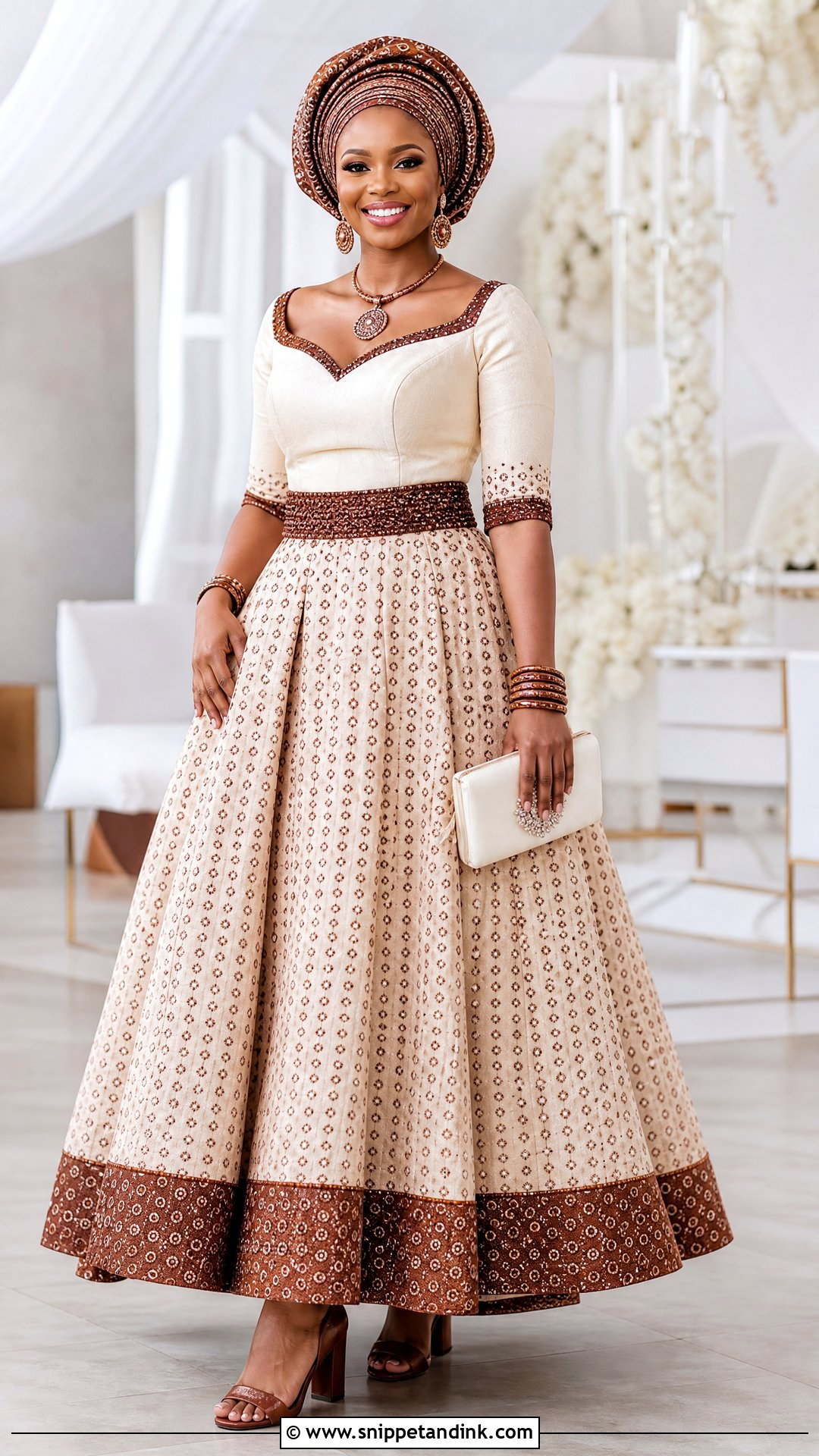
Cream and brown is the quiet option, and it suits a bride whose family wedding will already be full of bright colour. I like a fitted cream bodice over a full patterned skirt, with a square neckline, elbow sleeves and a little brown beading at the waist. Repeat the darker tone in the doek or a small structured headpiece, then add bronze earrings, a cream clutch and brown block heels. Hidden pockets in the skirt are a real comfort, as long as the tailor sets them into a seam so they don’t bulge. Neutral shades read well in daylight and against plain decor. Share swatches with the groom and immediate family before anything is cut, so the outfits relate while yours still stands apart.
5. Green Shweshwe Layered Wedding Dress
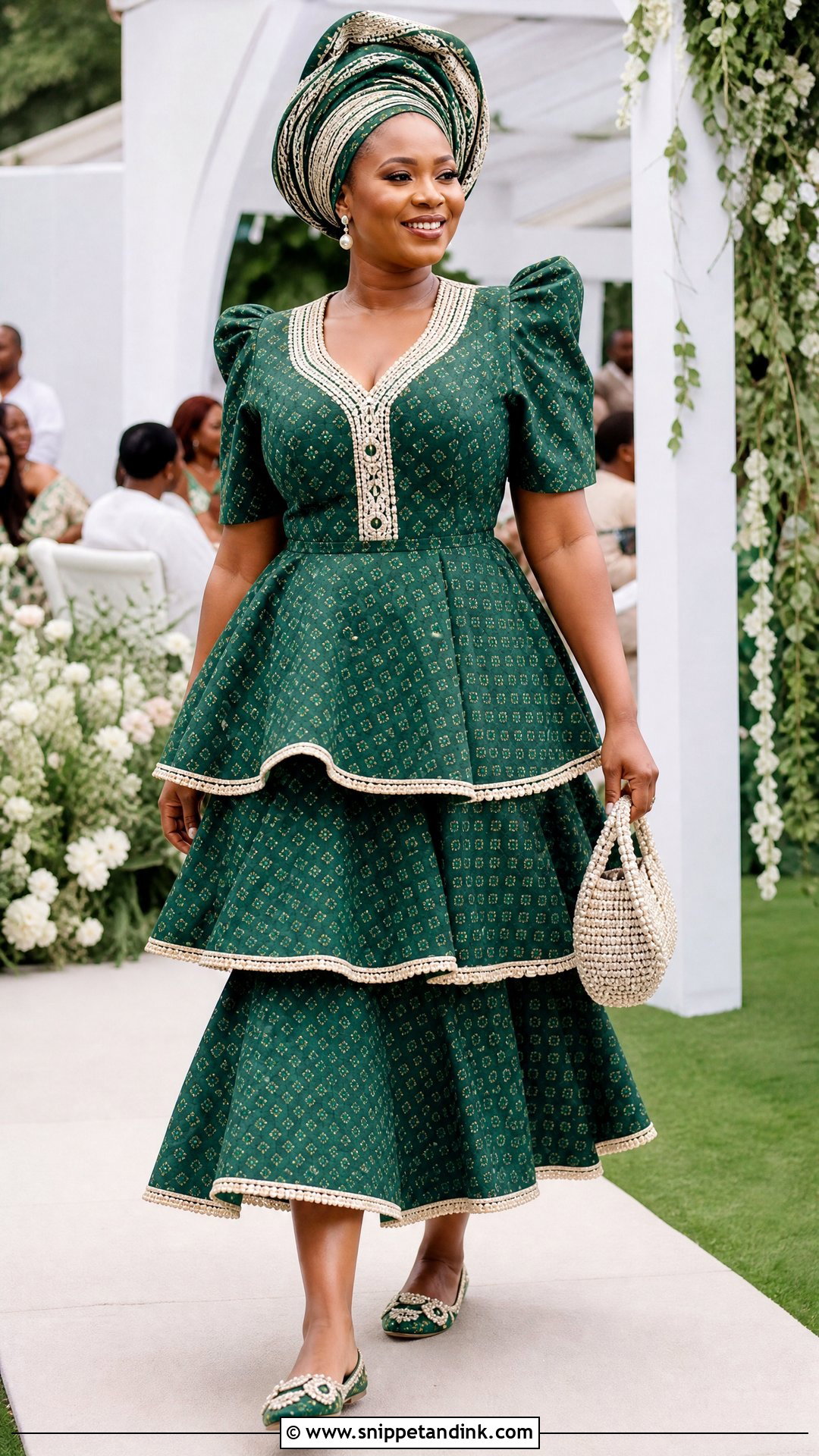
Deep green layered into a floor-length gown has a ceremonial weight to it. I keep the bodice neat and limit the skirt to two or three graduated tiers, because more than that and the print disappears into folds. Shweshwe tiers stand away from the body more than chiffon would, so I check the side view in a mirror at every fitting. A green and cream doek, pearl earrings and a small beaded bag finish it, with low closed-toe heels or embellished flats for long hours on your feet. A sheer neckline panel adds support while keeping the open look. My favourite request here is a detachable top tier: grand for the ceremony, lighter for the reception.
6. Navy Shweshwe And White Lace Wedding Dress
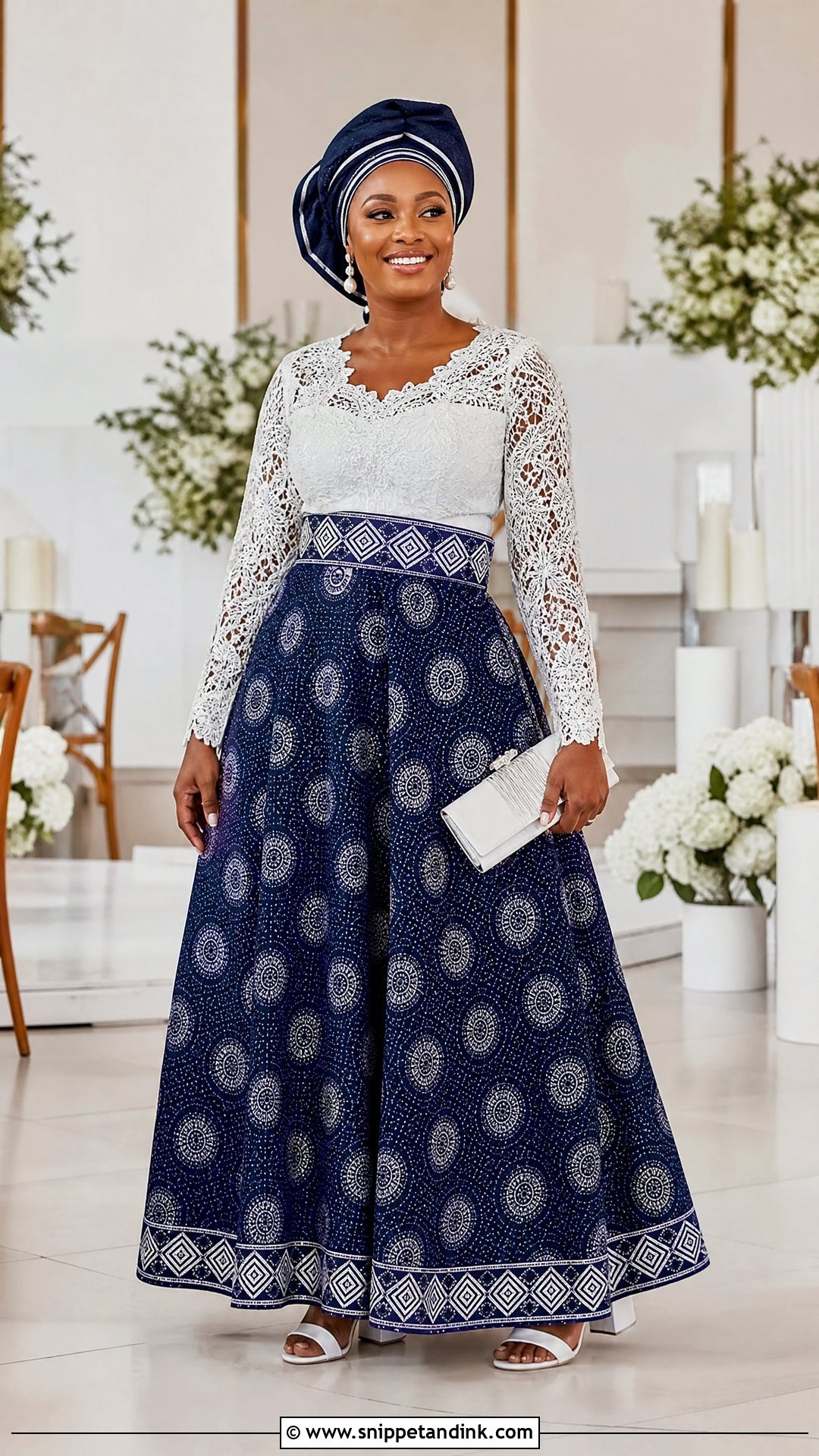
White lace softens navy shweshwe and gives a fusion bride a way to honour both traditions in one dress. I put lace across the upper bodice and sleeves, then bring shweshwe in at the waist, skirt and covered buttons, usually in a full A-line rather than a heavy ball gown. Pick lace with a clear, medium-scale motif; fine lace fights with the small shweshwe repeat and both look busy. I also match the lining to the bride’s skin tone or to the white, never a stark contrast. A navy doek edged in white, pearl drops, white block heels and a structured navy clutch complete it.
7. Turquoise Shweshwe Off Shoulder Wedding Dress
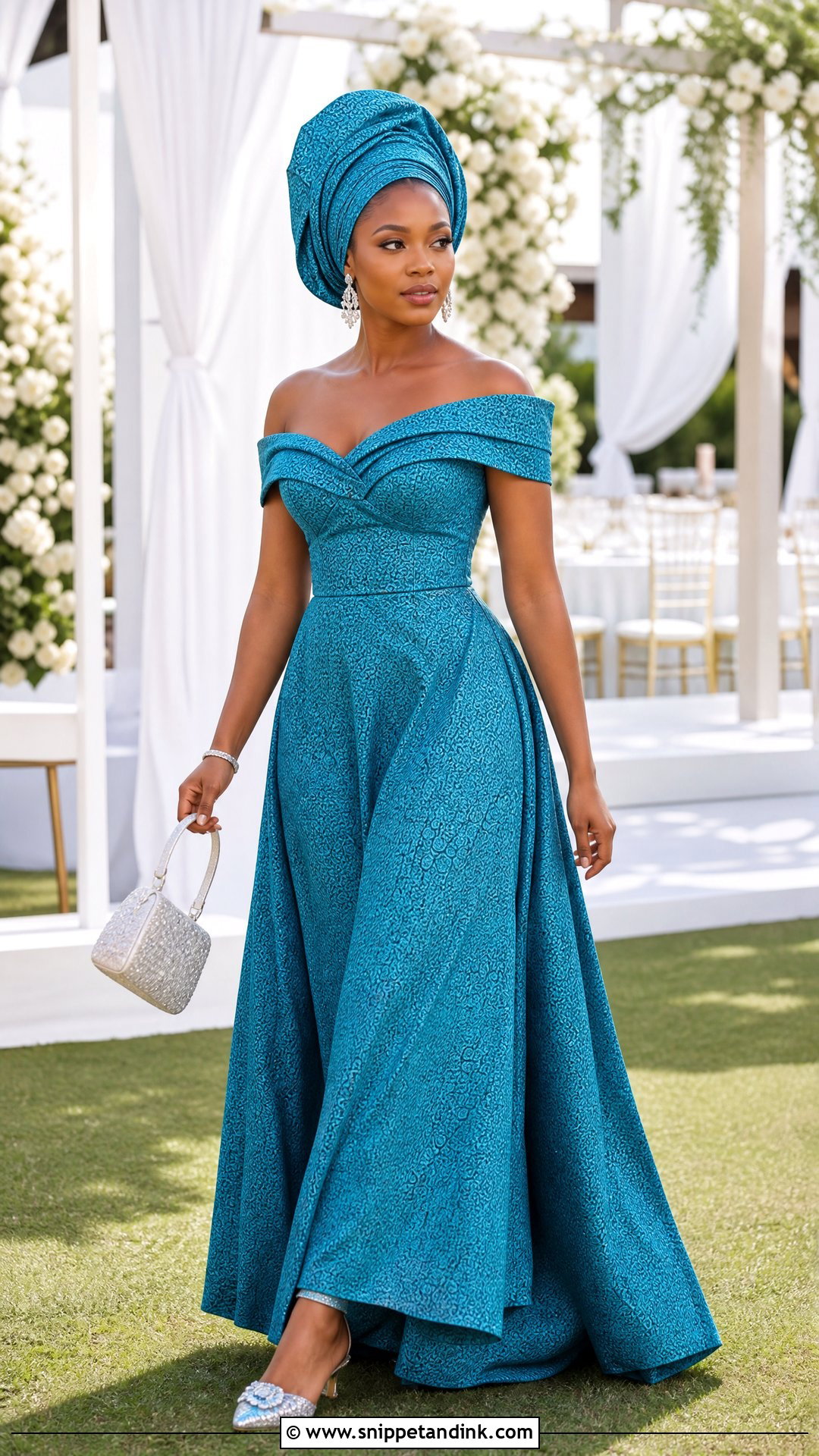
Off the shoulder in Turquoise Shweshwe is bright and joyful, but it only works with proper engineering. A folded neckline shows the shoulders while the fitted waist and flowing skirt keep things balanced. Because cotton doesn’t cling the way stretch fabrics do, I insist on internal boning and, if needed, discreet straps; otherwise the neckline creeps down every time you hug someone. Wear the turquoise headwrap a little higher at the front, add sculptural silver earrings and a small white bag, and choose silver block heels or embellished flats so no new colour enters. A detachable shoulder wrap covers you for formal family moments or a cool evening. Beadwork at the waist only, please, not across the whole bodice.
8. Blue And Yellow Shweshwe Wedding Dress
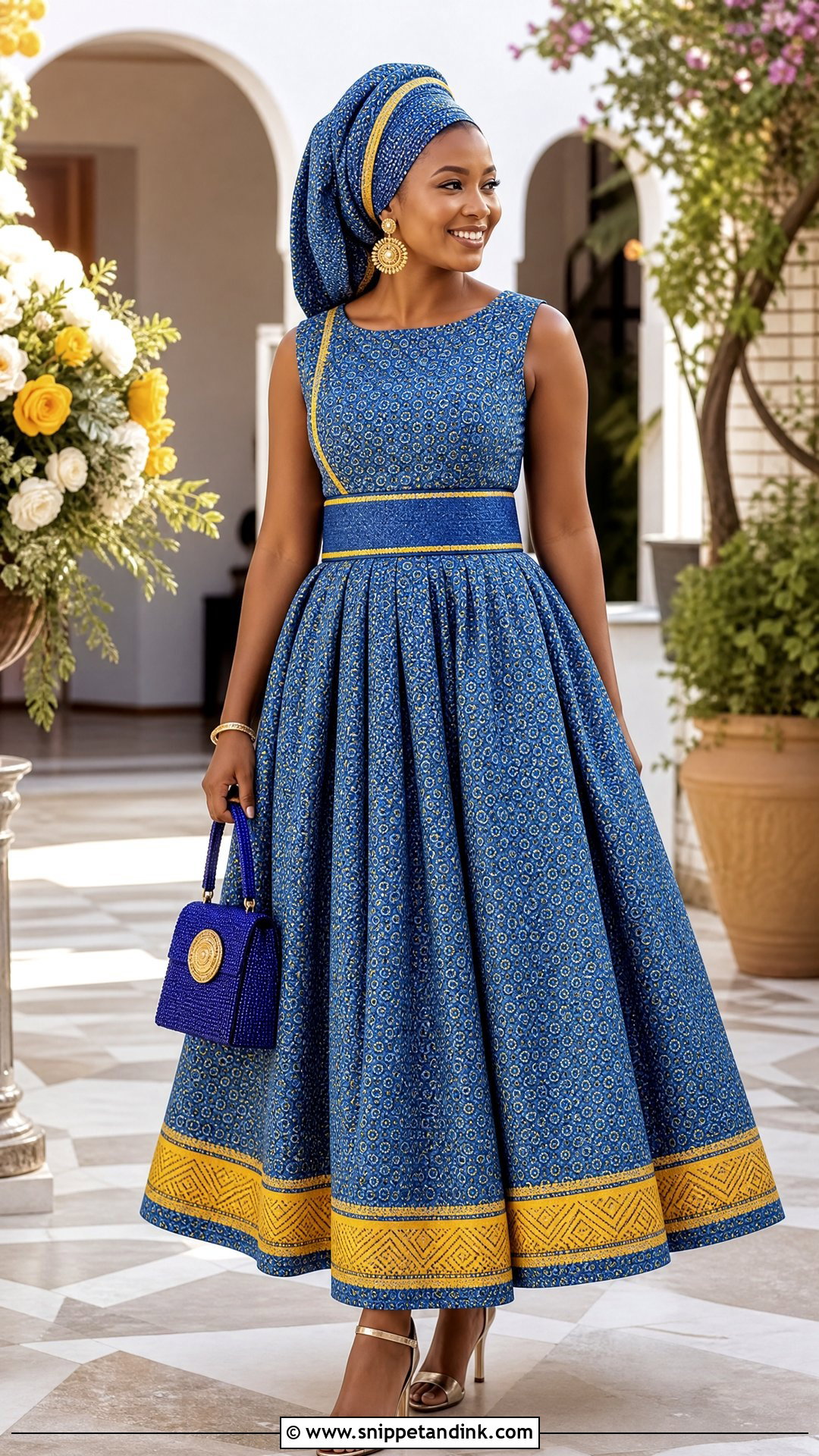
Blue and yellow is lively and easy to spot across a crowded group photograph, which is exactly why the shape needs restraint. I build it on a fitted sleeveless bodice, a defined waistband and a full tea-length or floor-length skirt. When a print carries several motifs, put the largest on the skirt and a smaller coordinating pattern on the bodice; that controlled mix looks intentional rather than accidental. A blue doek with a narrow yellow border, simple gold earrings and a structured cobalt bag are plenty. Yellow shoes are fun, but I usually steer brides to neutral gold heels. The groom can echo the pairing in a pocket square or shirt trim.
9. White Wedding Dress With Shweshwe Trim
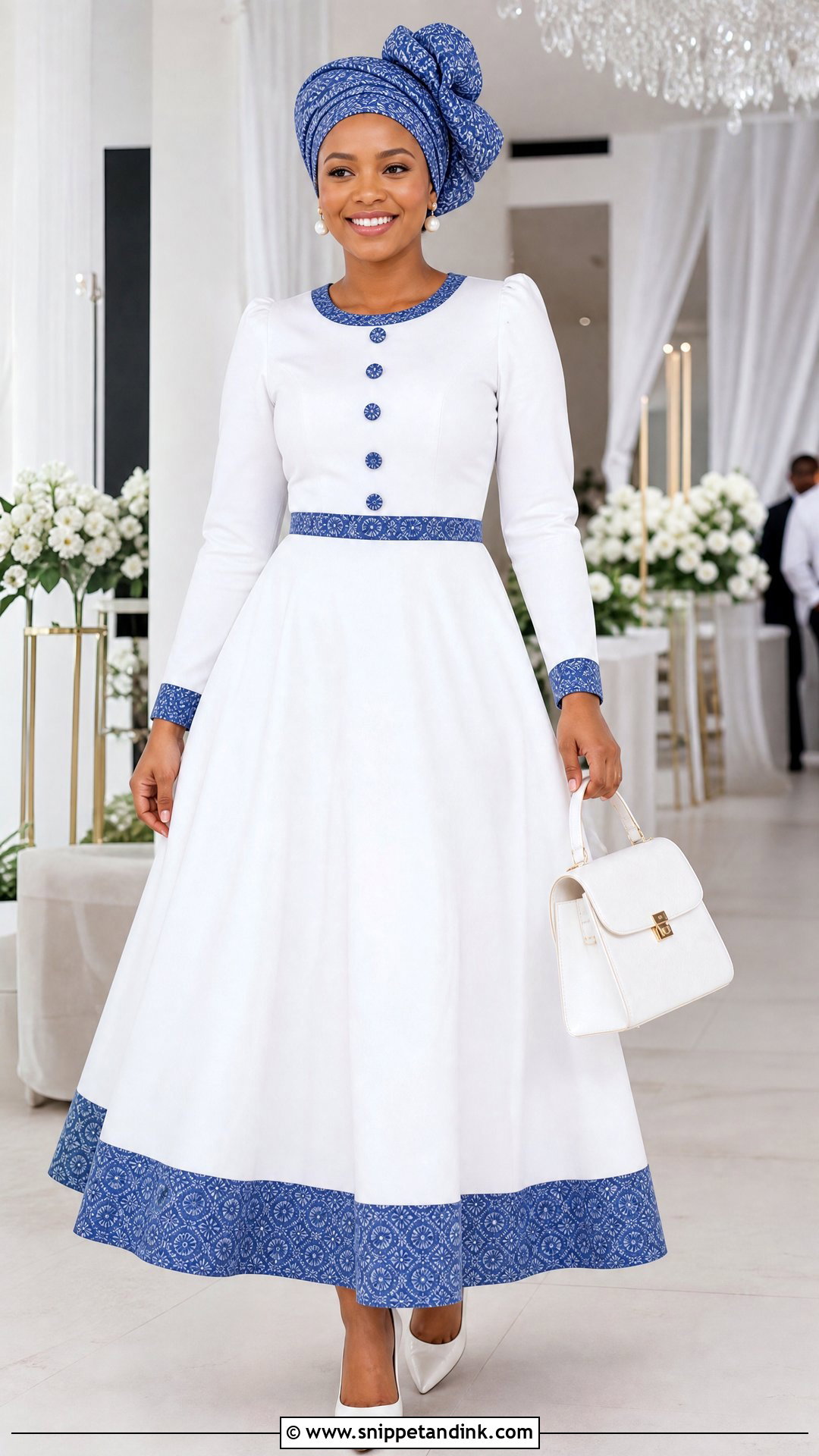
A white gown with Shweshwe trim is how I introduce the print to a bride who wants heritage in small doses. Start with a clean A-line or fit-and-flare, then add patterned fabric along the neckline, waist, cuffs and hem, with covered shweshwe buttons down the back. A detachable printed overskirt gives you two looks: full for the traditional ceremony, plain white for the reception. The risk I check for is mismatched whites. Fabric, lining, shoes and bag can each lean ivory or blue-white, and the camera catches the clash even when your eye doesn’t. Finish with a matching printed doek, white pumps, pearl earrings and a structured white bag.
10. Burgundy Shweshwe Long Sleeve Wedding Dress
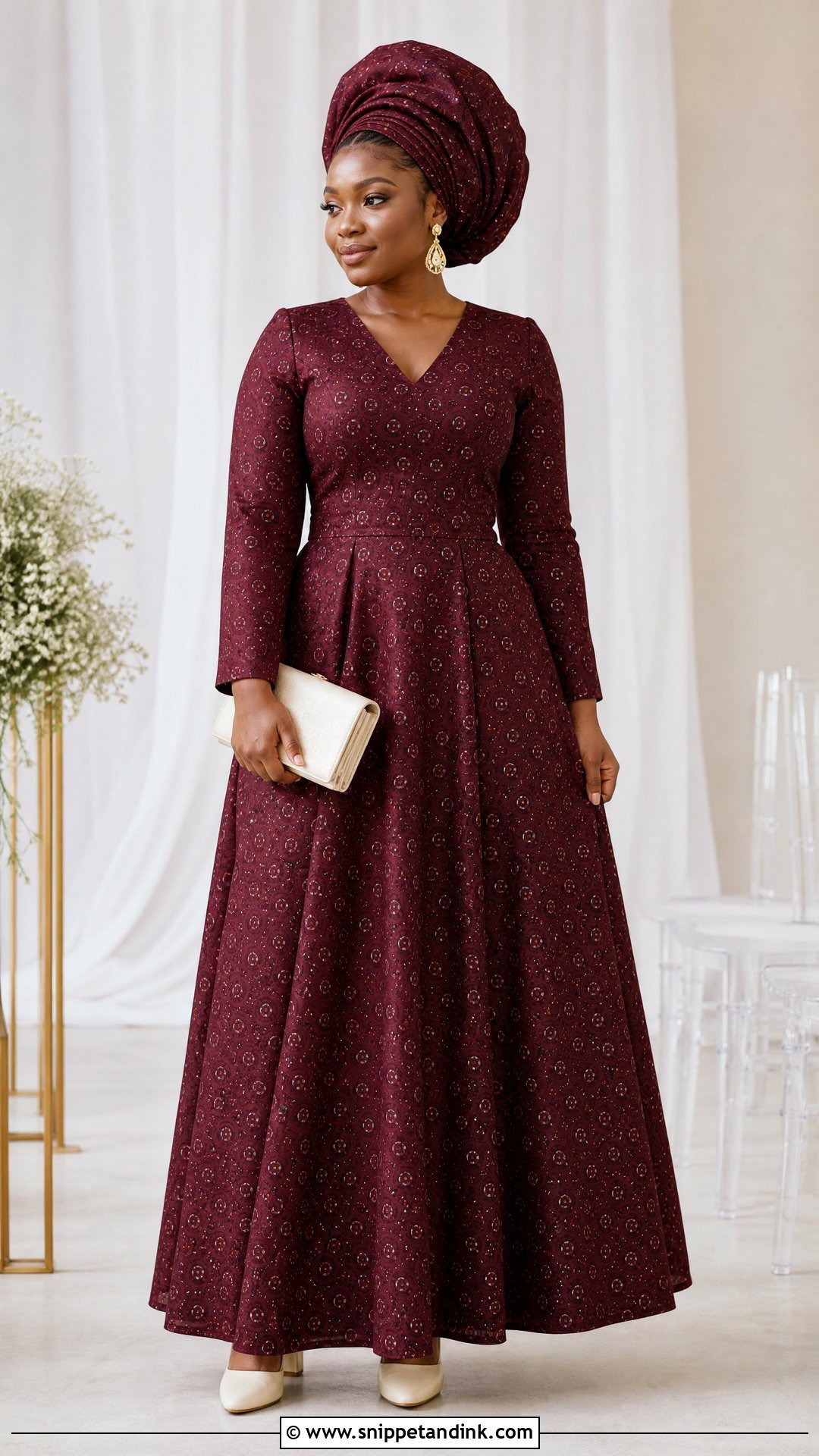
Burgundy reads rich and formal, so I suggest it for cooler-season weddings. A floor-length dress with fitted long sleeves, a defined waist and a softly flared skirt keeps you warm without looking heavy. Choose a modest V-neck, or a high round neckline with a small keyhole. Shweshwe’s starch can feel scratchy on the inner arm over a long day, so I ask for a smooth lining in the sleeves and properly finished seams. Add a burgundy doek, gold drops, a compact cream or metallic bag and closed-toe block heels. A matching capelet handles an outdoor ceremony and comes off indoors. Keep embellishment to neckline and cuffs.
11. Pink Shweshwe Drop Shoulder Wedding Dress
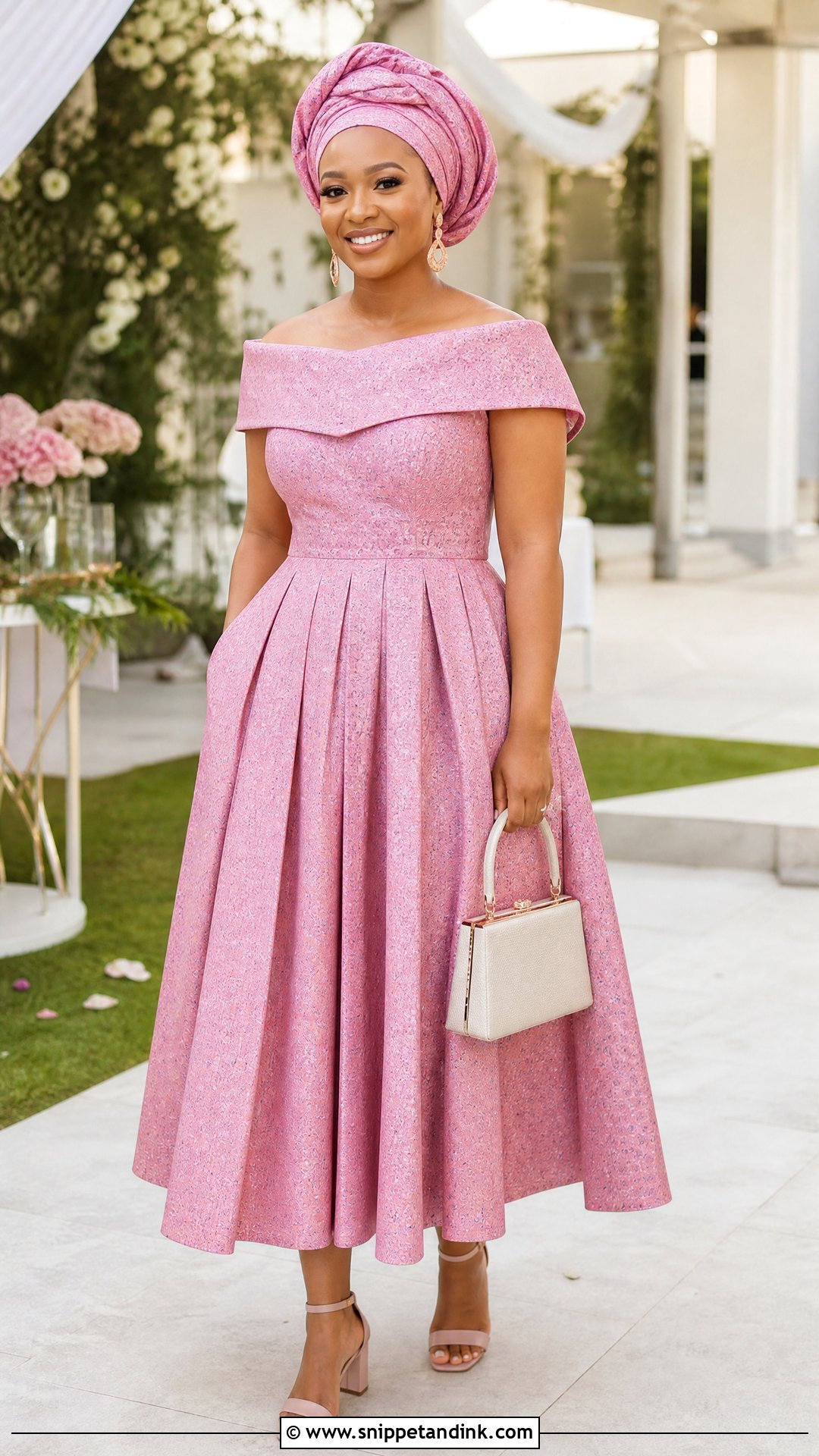
A pink drop-shoulder dress is soft but still gets noticed. The neckline is the engineering point: it needs a supportive fitted bodice and a wide fold that sits securely across the shoulders, and I test it by having the bride lift both arms. A full skirt with gentle pleating moves well without piling bulk at the waist. Pair a matching pink doek with pearl or rose-gold earrings, a small cream bag and nude or metallic block heels. If you want drama, a removable bow or short train can clip on at the back, kept in proportion to your height. Neutral makeup with a berry-pink lip suits it, and so does a garden or a bright room with plenty of daylight.
12. Black And White Shweshwe High Low Dress
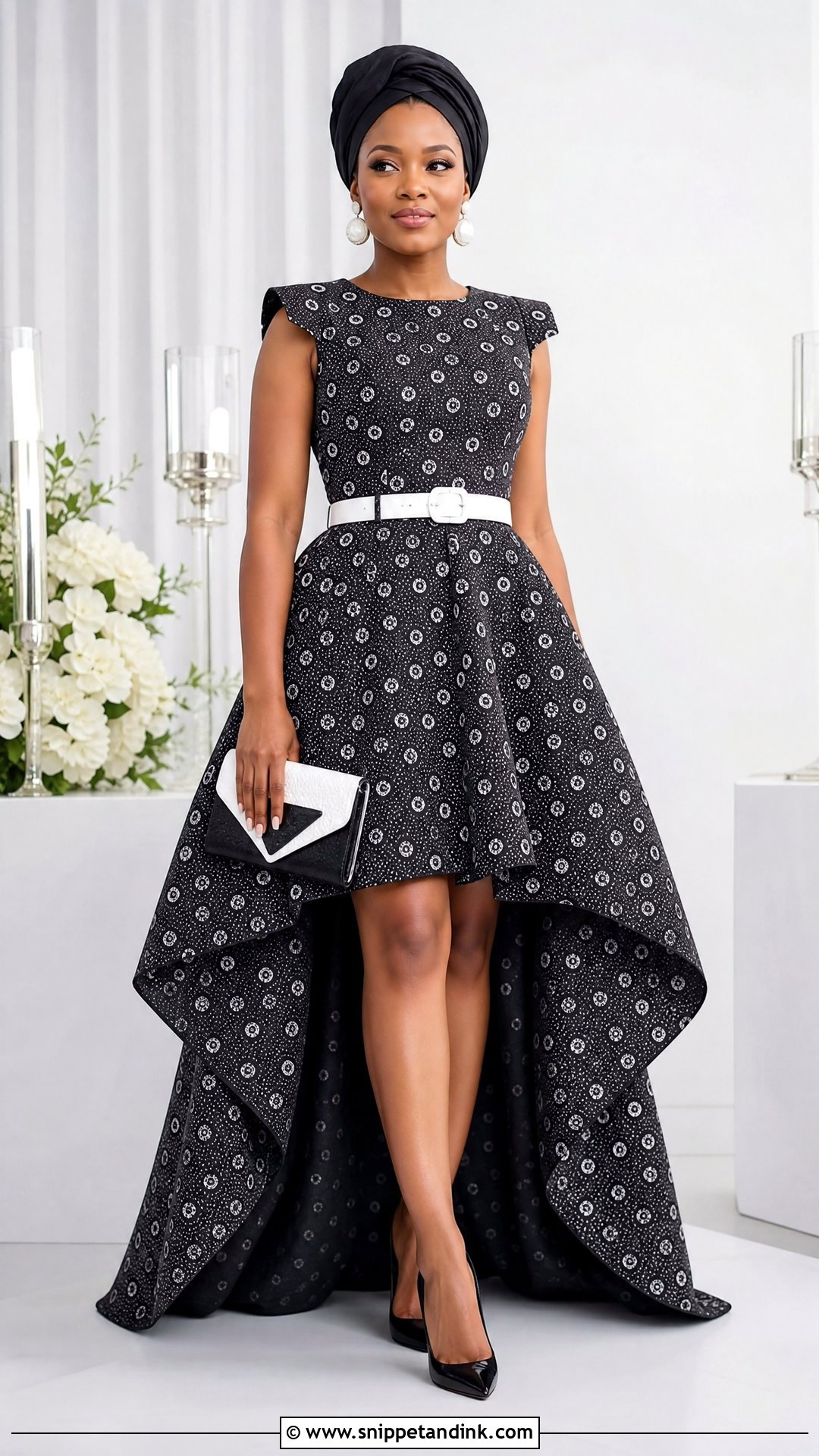
Black and white in a high-low cut is a modern choice for a reception change, a guest or a bride’s second outfit. The shorter front shows the shoes and the longer back gives formal movement, but I keep the hem drop controlled so the graphic print doesn’t turn chaotic. A structured bodice helps. Add a black headwrap, white statement earrings, a small monochrome clutch and pointed black pumps or ankle-strap heels. For a big dance floor I sew a hidden loop under the back hem so you can lift it, and I check the heel height is one you can actually move in. A slim white belt sharpens the waist.
13. Orange Shweshwe Tiered Wedding Dress
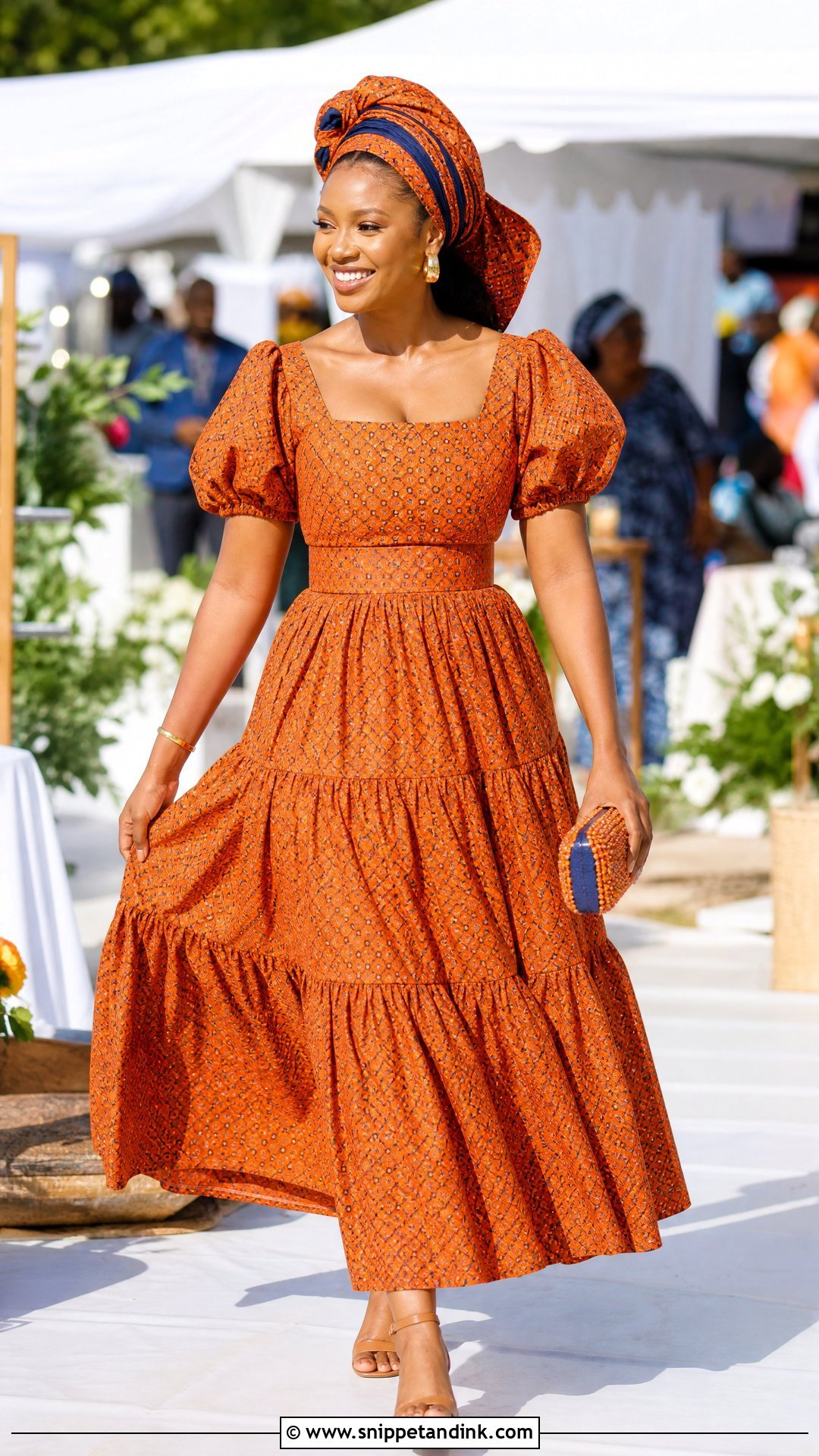
Orange shweshwe turns playful in a tiered maxi dress, and the fitted, simple bodice keeps it from looking like a costume. I stop at two broad tiers and balance them with a square neckline and short puff sleeves. Skip neckline ruffles; the skirt already supplies the movement. A wide waistband in a solid colour from the print breaks up the pattern and defines the figure. Style it with an orange and navy doek, gold hoops, a woven or beaded clutch and tan block-heel sandals for daytime. For a coordinated family, the bride wears full length and bridesmaids wear simpler midis cut from the same or a related orange print.
14. Purple Shweshwe Cape Sleeve Wedding Dress
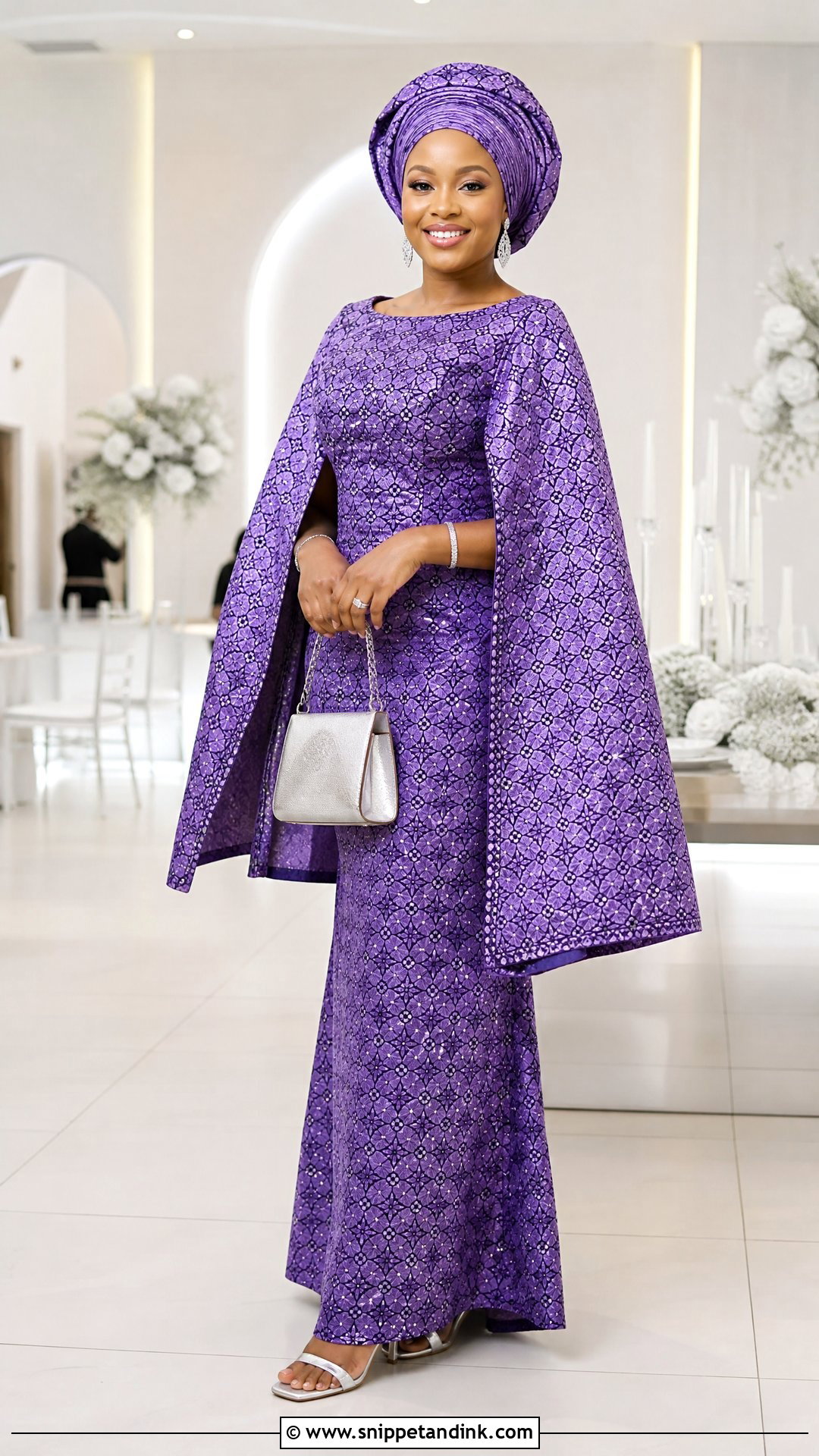
Purple with flowing cape sleeves looks regal, and the cape changes how I plan the whole dress. Extra fabric at the shoulders needs a streamlined floor-length skirt below, or the silhouette turns top-heavy. The cape can start at the back neckline and fall to the elbow, wrist or hem, depending on formality. Shweshwe is heavier than chiffon, so a long cape pulls on the neckline; I keep beadwork light there and anchor the cape to the shoulder seams. Pair a neatly wrapped purple doek with silver earrings, a grey or metallic bag and pointed silver flats or low heels. Make it detachable, or short enough to eat and dance in. From the back it gives the photographer a lot to work with.
15. Beaded Shweshwe Column Wedding Dress
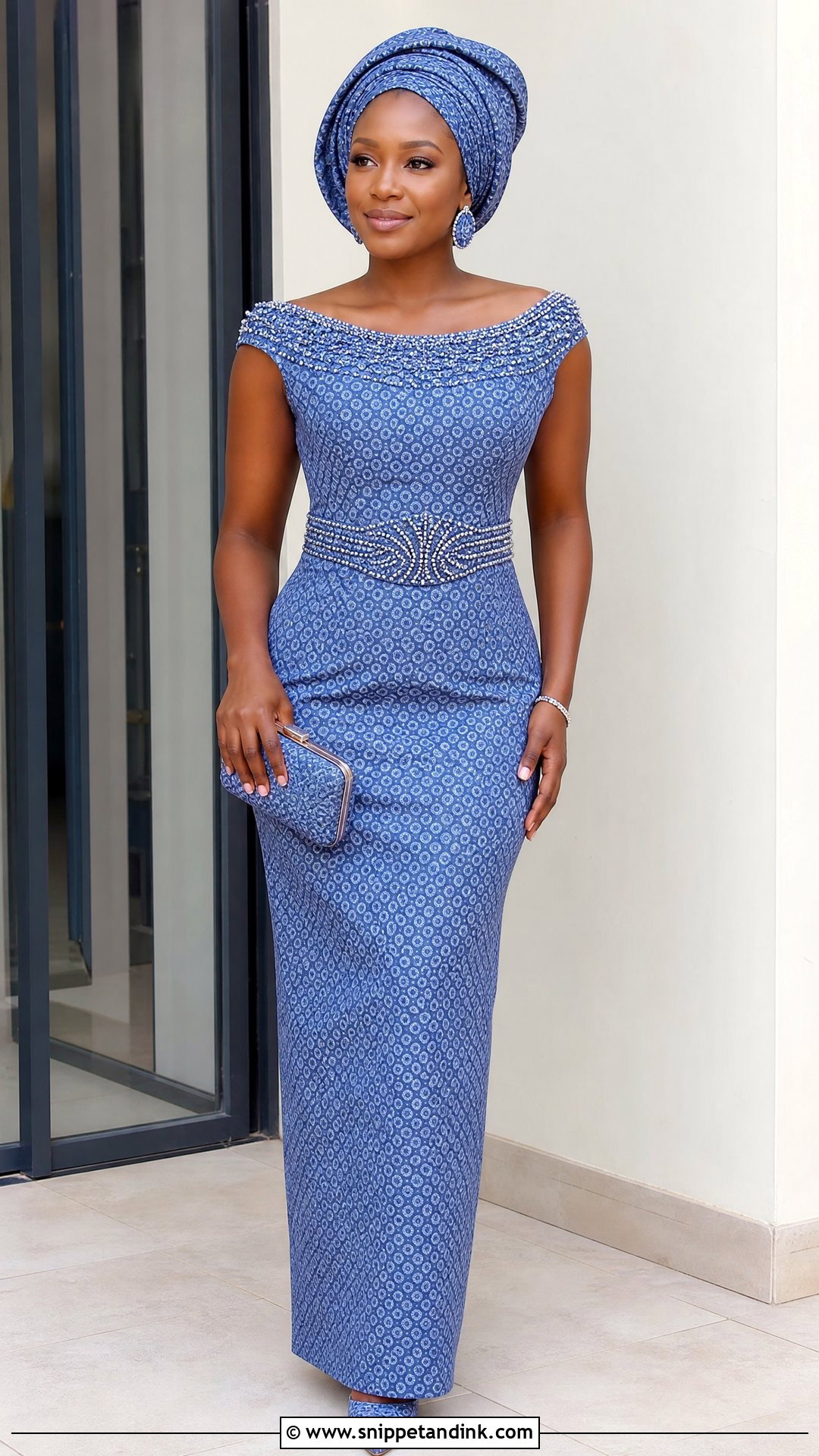
A column dress gives a long, clean line with almost no volume, so the print does all the work. I look for a pattern with vertical or evenly repeated motifs, which reinforces the length; a scattered print breaks it up. Hand-applied beads at the neckline, shoulders and waist lift the fabric without hiding its design. The fit should skim, not grip: tight cotton across the hips and knees creases badly the moment you sit. I always add a back vent or side slit for walking. Finish with a coordinated doek, beaded earrings, a slim bracelet, a small box clutch and low pointed heels or dressy flats. Because the tailor can adjust neckline, sleeve, waist and structure, this one suits a wide range of bodies.
16. Shweshwe Wedding Dress With Tulle Skirt
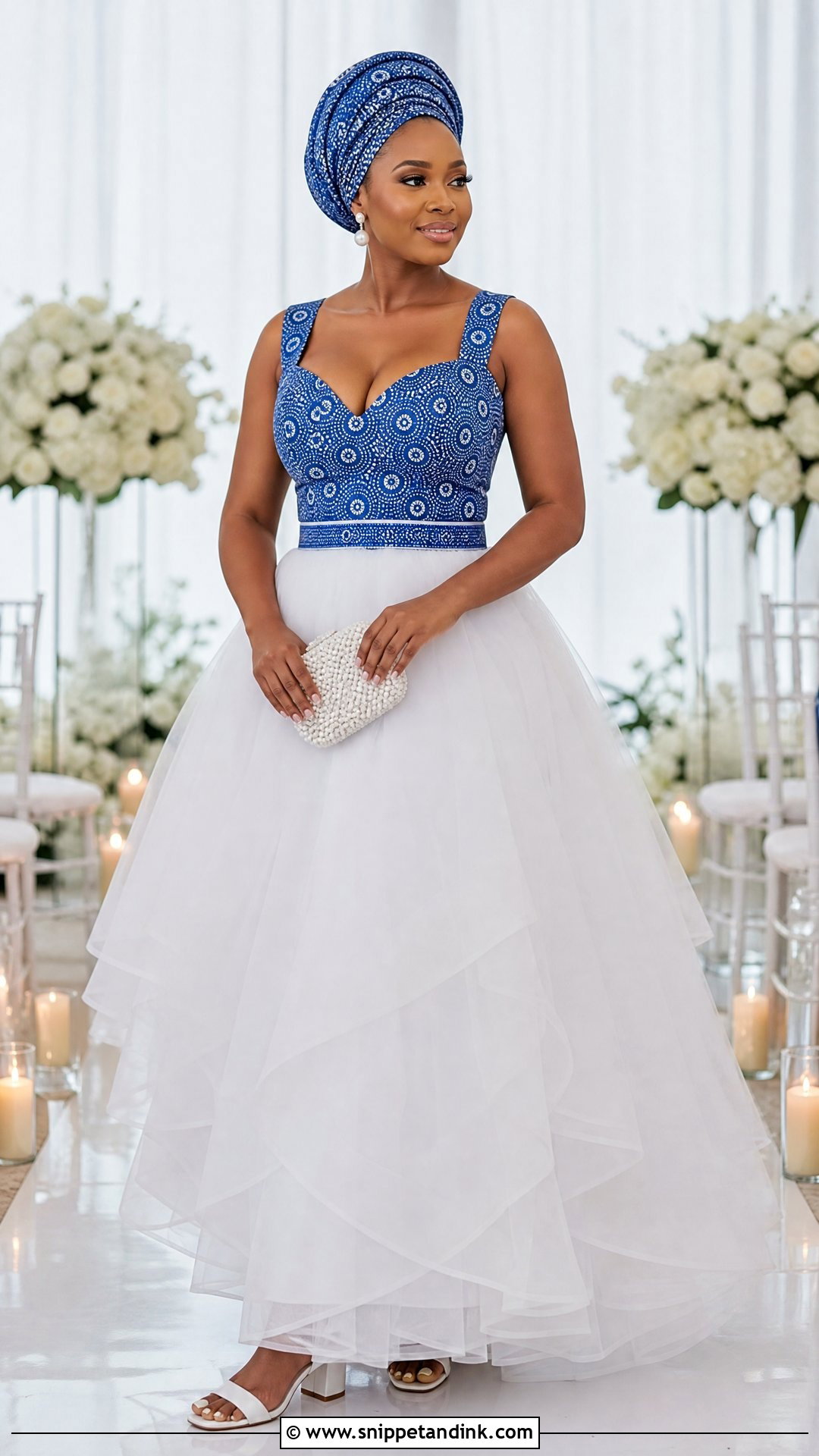
A shweshwe bodice over a tulle skirt pairs crisp print with soft bridal texture, and it’s one of my favourite ceremony gowns. Give the bodice wide straps or short sleeves for support, because tulle’s weight hangs off it. The tulle can be white, navy, blush or a shade lifted straight from the print. A shweshwe waistband and a narrow printed border near the hem tie the two materials together. I specify several light layers rather than one bulky skirt, especially for a bride who plans to dance, and an opaque, smooth lining. Add a matching doek, pearl earrings, a beaded clutch and comfortable block heels. You get ball-gown presence and the print still leads.
17. One Shoulder Shweshwe Wedding Dress
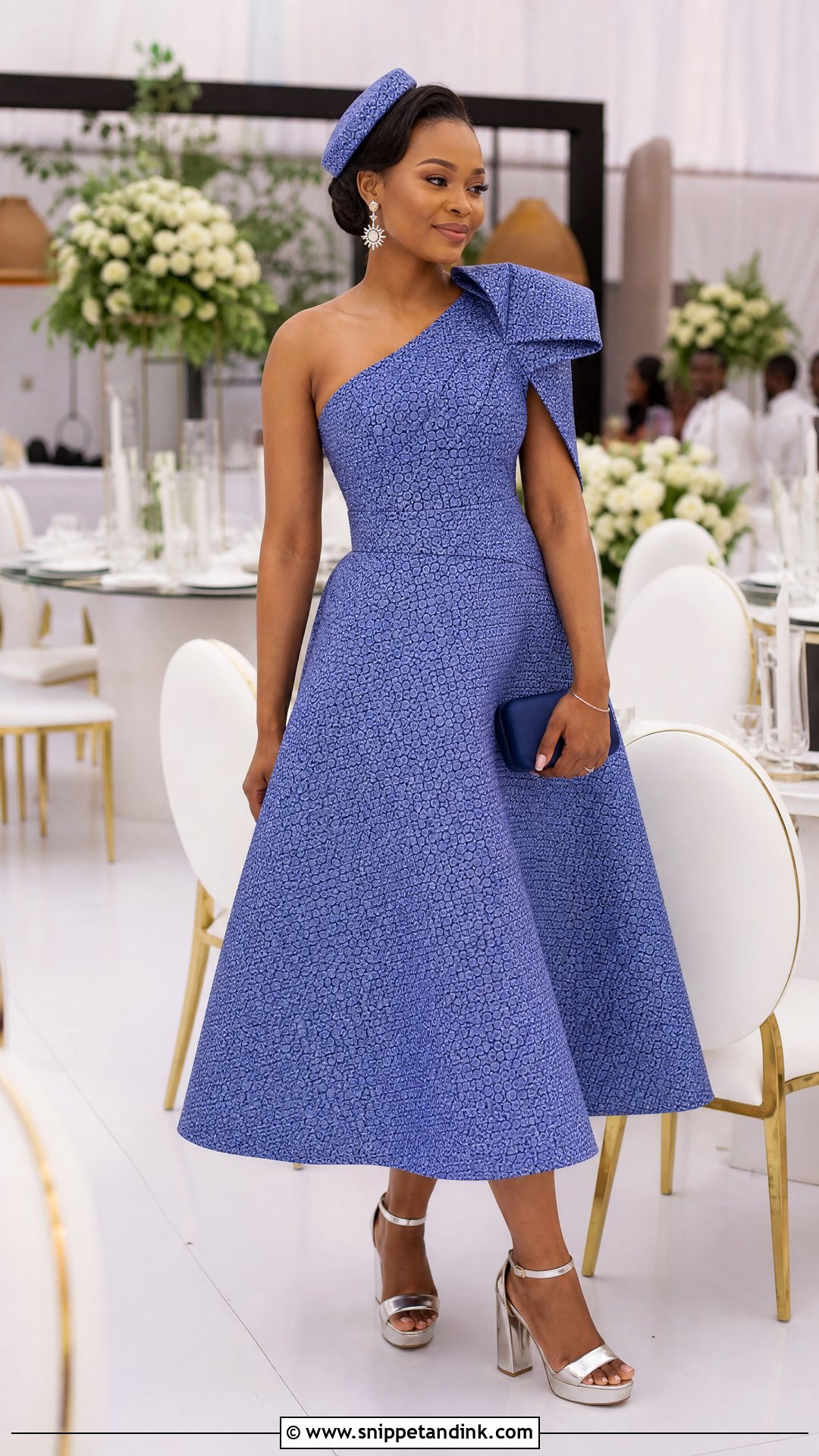
One shoulder gives an asymmetrical line that needs very little decoration. The shoulder can carry a structured fold, a fabric bow or a short draped panel, balanced by a fitted waist and clean A-line skirt. I ask the tailor to cut the print so it follows the diagonal; a pattern running straight across an angled bodice looks off. Internal support is not optional on a full-length gown, and I test it with a long hug and a few dance steps. If a matching doek competes with the shoulder detail, swap it for a smaller coordinated headpiece. Wear one statement earring on the open side, a slim bracelet, a solid clutch and metallic block heels.
18. Plus Size Shweshwe Wrap Wedding Dress
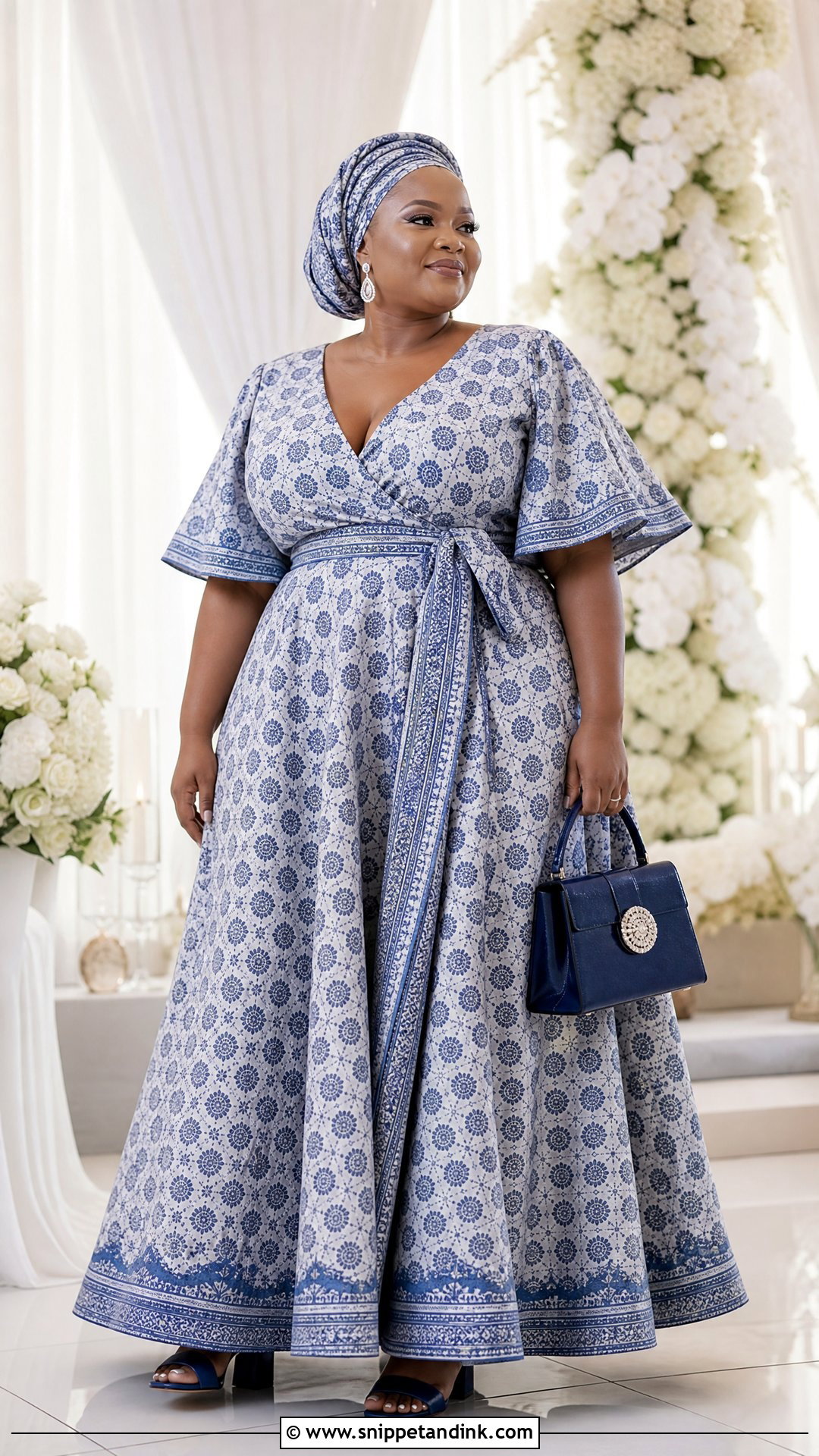
A wrap-inspired dress gives a plus-size bride definition, adjustability and easy movement. I always use a secure faux-wrap bodice rather than a true tie closure; a real wrap gapes and slides open after a few hours of greeting guests. A wide waistband and flowing A-line skirt keep the shape smooth. Pick elbow-length flutter sleeves or fitted three-quarter sleeves depending on the season. Set the waist where you’re most comfortable, not where a standard size chart puts it, and get your undergarments sorted before the fittings so the measurements hold. A breathable lining makes the cotton easier to wear all day. Add a matching doek, medium drop earrings, a structured bag and wide-fit block heels or decorated flats.
19. Shweshwe Jacket And Dress Wedding Outfit
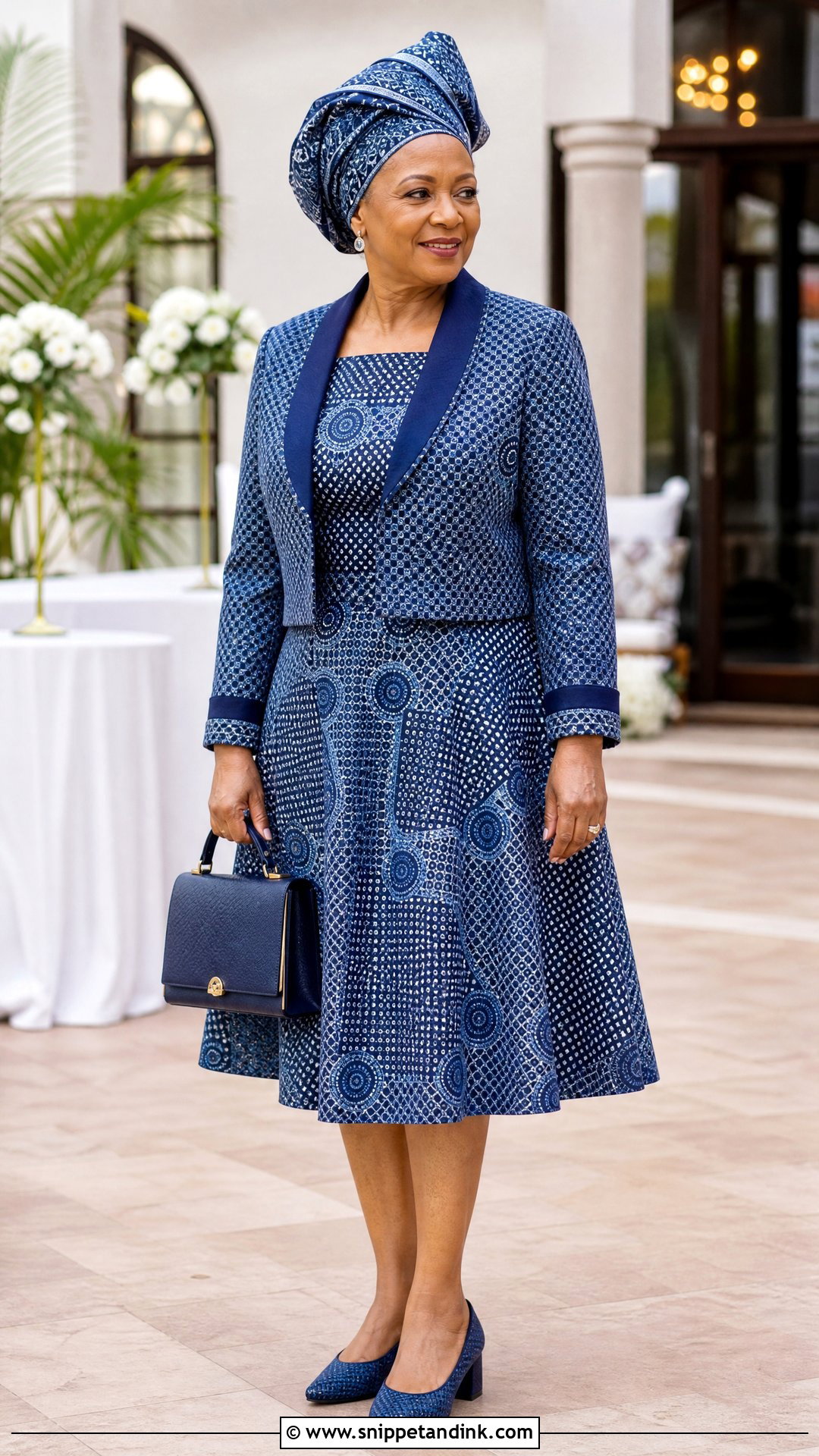
A shweshwe jacket over a matching dress suits the mother of the bride, an older guest, or a bride who wants layered coverage. Start with a sleeveless or short-sleeve A-line midi, then add a cropped fitted jacket in the same print, contrasting panels or a solid colour pulled from the fabric. The length is what I watch: the jacket should end close to the natural waist, because a longer one cuts the dress in half and shortens the wearer. Button it for formal photographs and take it off when the afternoon warms up. A neat doek or structured hat, understated earrings, a top-handle bag and low block heels finish it.
20. Shweshwe Bridesmaid Midi Dress
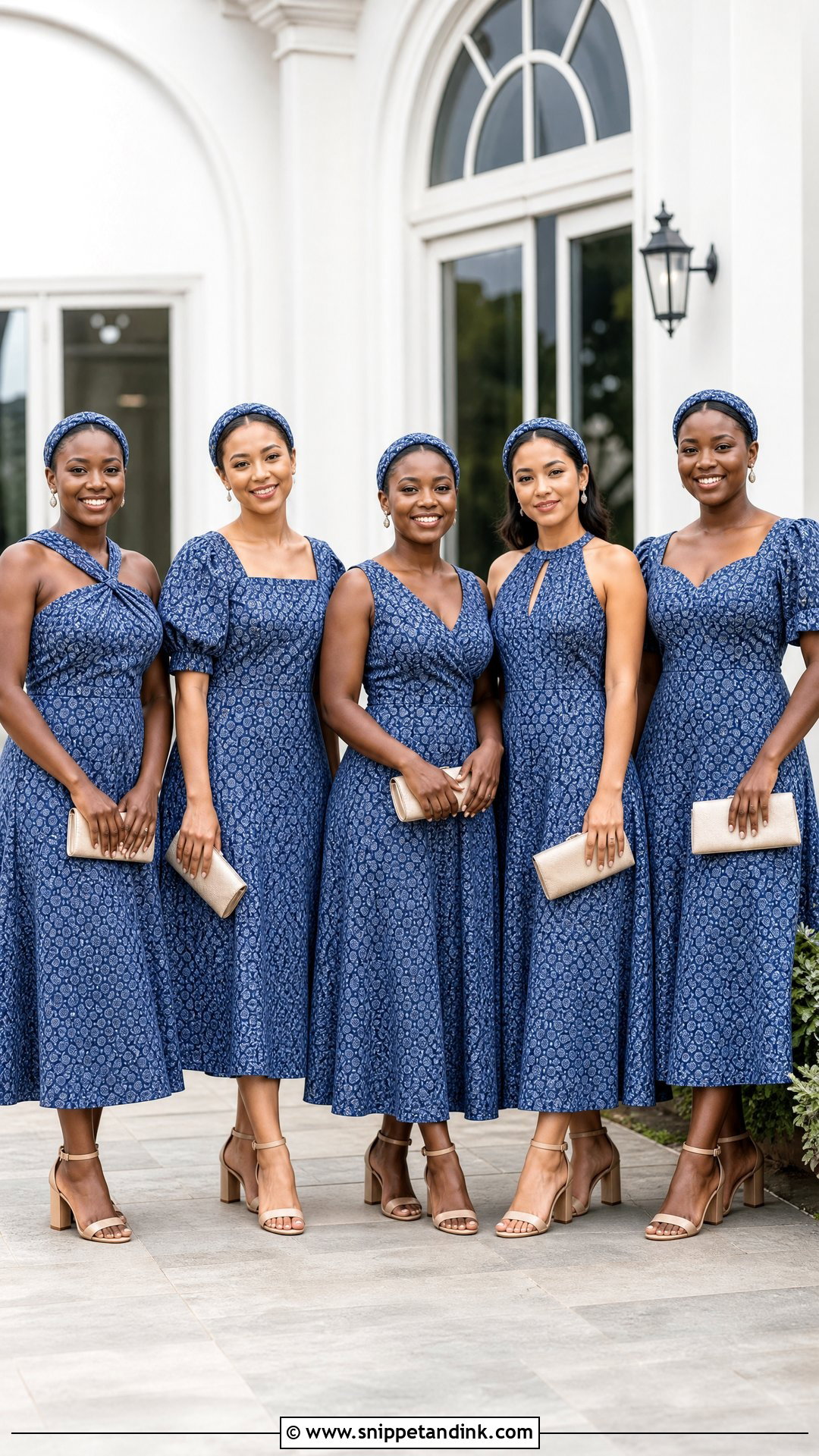
Matching shweshwe midis give a bridal party one clear look while letting everyone stay comfortable. Choose one fabric, then let each bridesmaid adjust neckline or sleeve to her own body. A fitted bodice, defined waist and softly flared midi skirt is the base I use. Simple doeks or headbands, small earrings, neutral clutches and block-heel sandals keep the group tidy. I don’t force identical accessories if they don’t fit or don’t suit someone; coordinating usually looks more natural than duplicating. The bride separates herself with a longer skirt, different colour placement, added beadwork or a grander headwrap.
Creases, Indigo Bleed and Storing the Dress Afterwards
Washed shweshwe is softer and more comfortable, but it creases where you sit, especially across the lap of a fitted skirt. I steam the dress the morning of the wedding rather than the night before, hang it rather than folding it into a car, and remind the bride that a few creases by the reception are normal cotton behaviour, not a fault.
Darker indigo prints can still release a little dye in the first washes. Keep a white lace bodice, a pale lining or cream shoes away from damp shweshwe, and never let a wet doek rest on a white collar.
After the celebration
- Hand wash or use a gentle cold cycle, inside out, with a mild detergent and no bleach.
- Dry in the shade; strong sun fades indigo faster than you’d expect.
- Remove beaded belts, detachable trains and capes before washing, and spot clean beadwork by hand.
- Store it on a padded hanger in a cotton bag, not plastic, so the fabric can breathe and any leftover moisture escapes.
Many brides wear their shweshwe again for family occasions, and a dress that’s been cared for this way softens and looks better with every wear.
Fittings, Elders and the Print You Love
One fabric can carry a whole wedding: a mermaid for the bride, midis for her friends, a jacket set for her mother. What makes any of these outfits work is the same every time. It has to fit, let you move through a long day of greeting and dancing, and say something about your place in the celebration. Build the doek, shoes, jewellery and bag as one look rather than a set of competing pieces. Respect the customs of both families. And give an experienced tailor enough time, with fittings booked well ahead, because shweshwe rewards careful cutting and punishes a rush.
You'll Like These Ideas:


Leave a Reply