
Wearing your mother’s wedding gown ties you to a family story, but it still has to feel like your dress when you walk in it. The ideas below run from careful restorations to full redesigns, and which one suits you depends less on taste than on what the gown can physically take: its fabric, its seam allowances, how it was built and how much it means to your mom. When I first look at an heirloom dress with a bride, I sort every possible change into two piles, reversible and permanent, and the permanent pile always gets talked through with Mom before anyone picks up scissors.

Reading an Heirloom Gown Before You Fall for an Idea
Before we talk necklines, I want to know what condition the dress is really in. A gown that has spent years in a cardboard box or a plastic bag rarely survives unchanged, and the problems decide which ideas below are open to you.
- Yellowing or browning: often oxidised body oils or old sugar stains from a spilled drink that were invisible when it was packed. A specialist cleaner can lift a lot of it, but rarely all.
- Shattered silk: old silk can split in fine lines along folds. Fabric doing this cannot hold a fitted alteration and is better used for trims.
- Dry, crumbling lining or netting: common and usually replaceable, so it should not put you off.
- Rust marks at hooks and pins: these set over time and may need a decorative cover rather than removal.
- Seam allowances: generous ones mean the dress can be let out; narrow ones mean extra fabric will have to come from somewhere else in the gown.
Try it on early, even if it doesn’t fit, and walk around in it. You’ll learn more about what bothers you in ten minutes of wearing it than in weeks of scrolling.
1. Daughter in Mom’s Original Wedding Dress
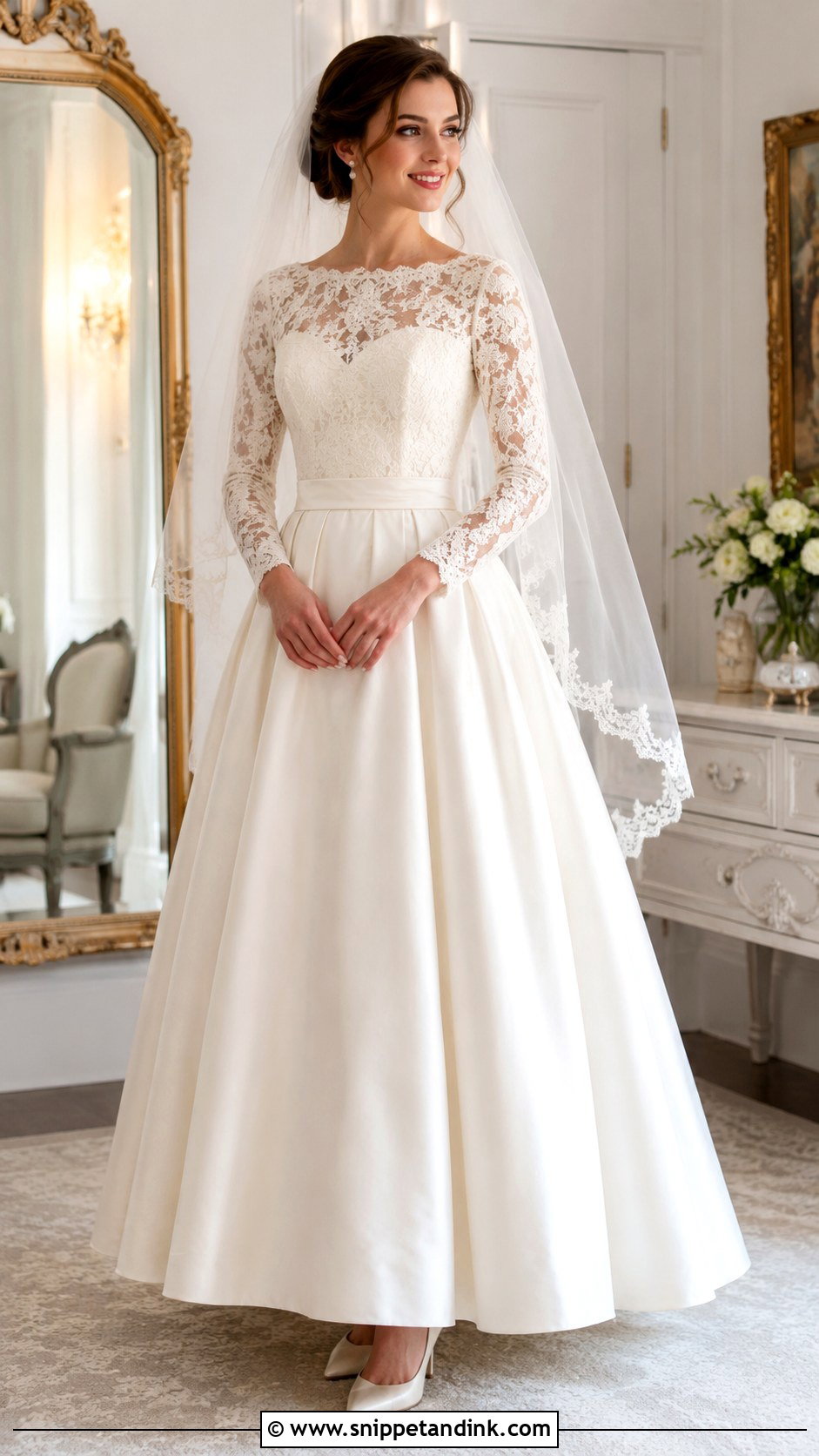
Sometimes the strongest choice is to wear it exactly as she did. A specialist clean, a gentle steam and fitting work at the seams can bring a gown back without changing its character, so keep the puff sleeves or the high lace neck if they are the reason you love it. I keep the accessories quiet here: pearl studs, ivory pumps, a gathered veil and a small, tight bouquet. Before any resizing, I turn the dress inside out and check how much fabric sits in the seam allowances, because older gowns were often cut generously and can be let out by an inch or more without touching the lace.
2. Daughter in Mom’s Wedding Dress With Modern Sleeves
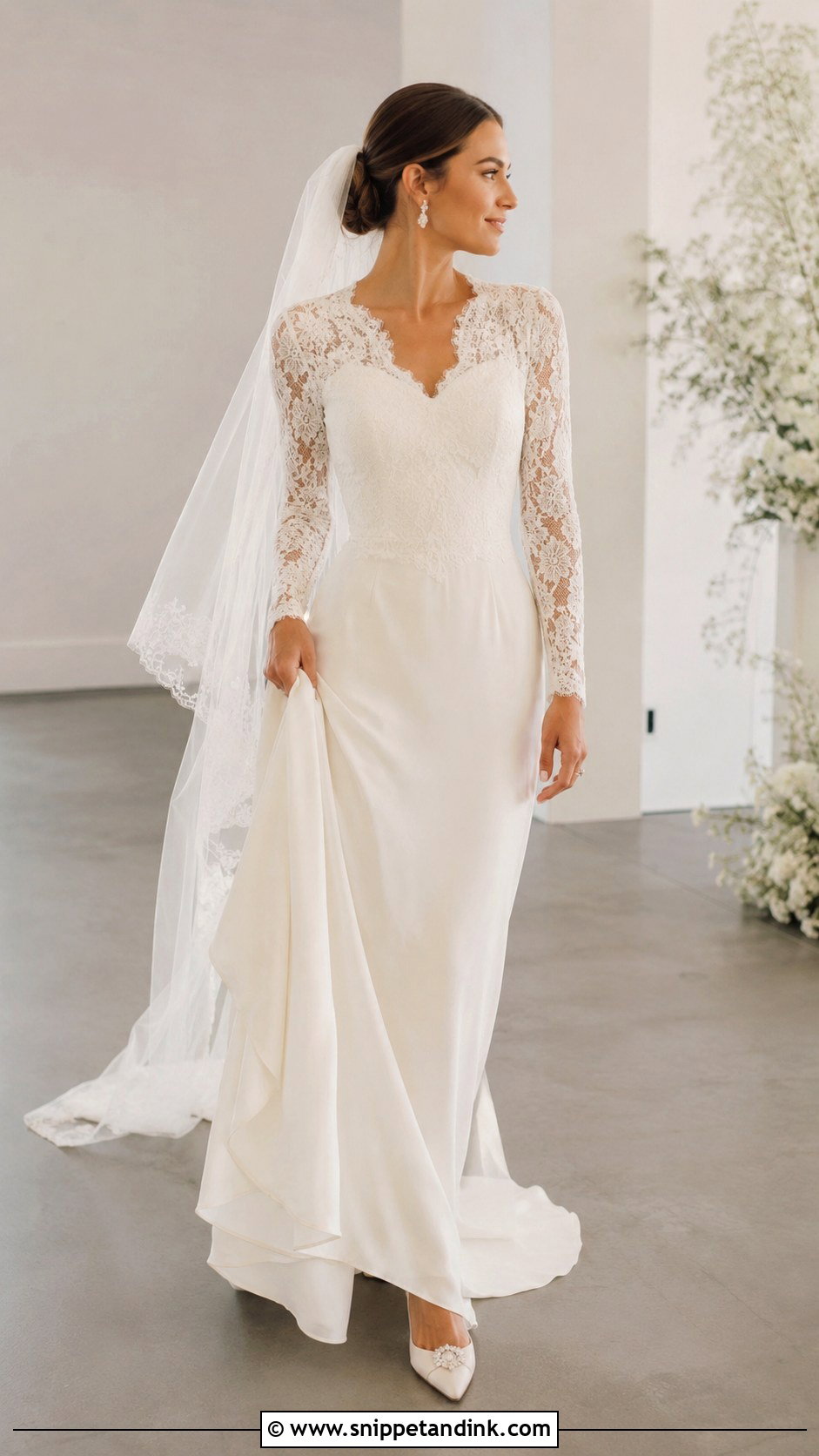
Big eighties puff sleeves are usually the first thing a daughter wants gone, and they are also a hidden fabric store. A good seamstress can recut them into fitted lace sleeves, small cap sleeves or sheer sleeves with a narrow cuff, which slims the silhouette while keeping Mom’s material in the dress. If the original lace is brittle, she’ll float it over new supportive tulle so the old threads aren’t carrying any strain. I like a fingertip veil and a low bun with this version, since a longer veil hides the very sleeves you paid to rework.
3. Daughter in Mom’s Sleeveless Wedding Dress
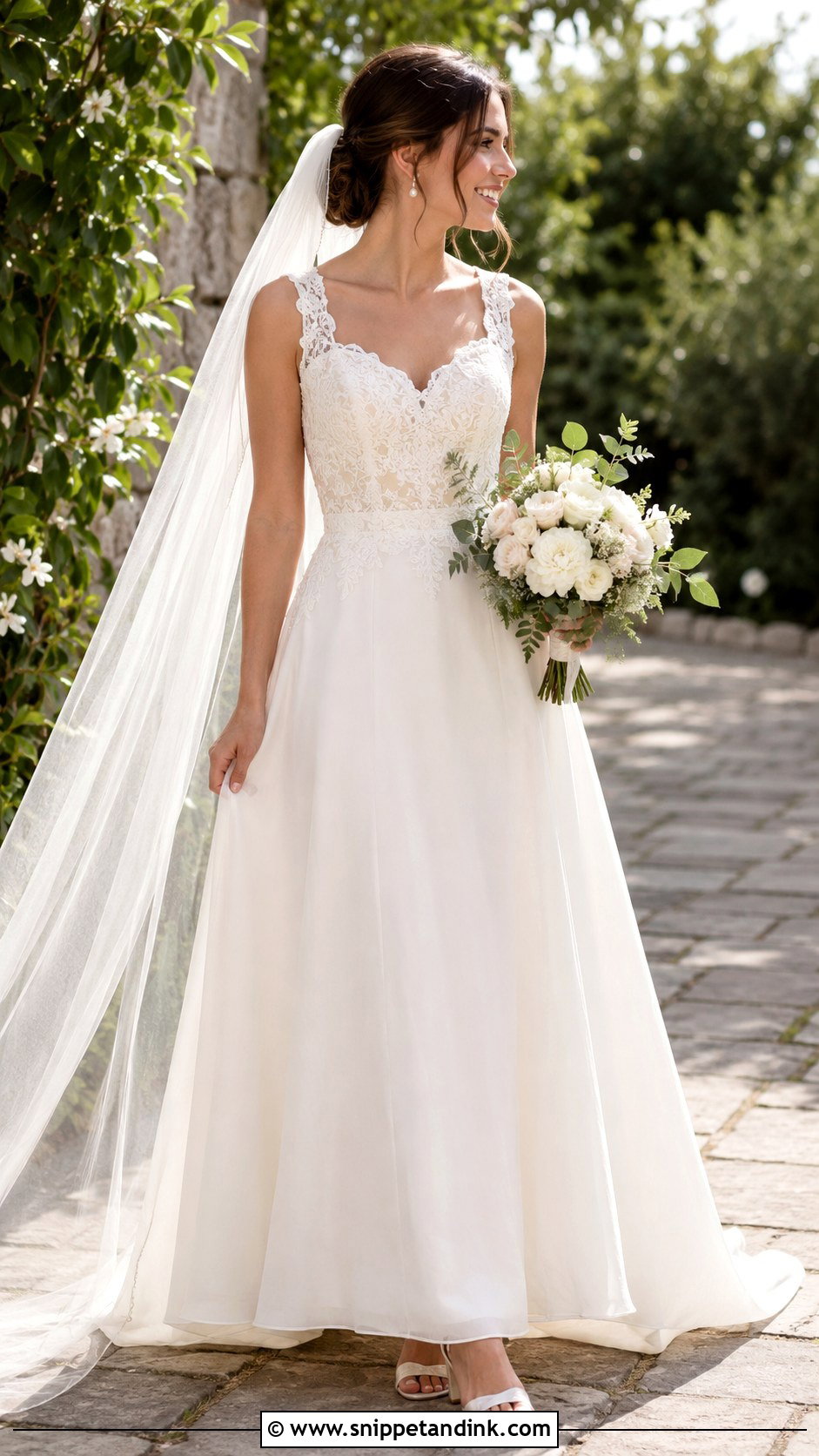
Taking the sleeves off entirely is the quickest way to make a heavy heirloom feel like summer. The bodice usually needs wide straps added for support, and lace from the removed sleeves can trim the neckline or the waist. I tell every bride the same thing before work starts: keep every scrap in a labelled bag. That spare lace can become gloves, a bouquet wrap or a little bag later. Finish with pearl drops, a sleek updo and block-heel sandals if you’ll be on grass.
4. Daughter in Mom’s Off-the-Shoulder Wedding Dress
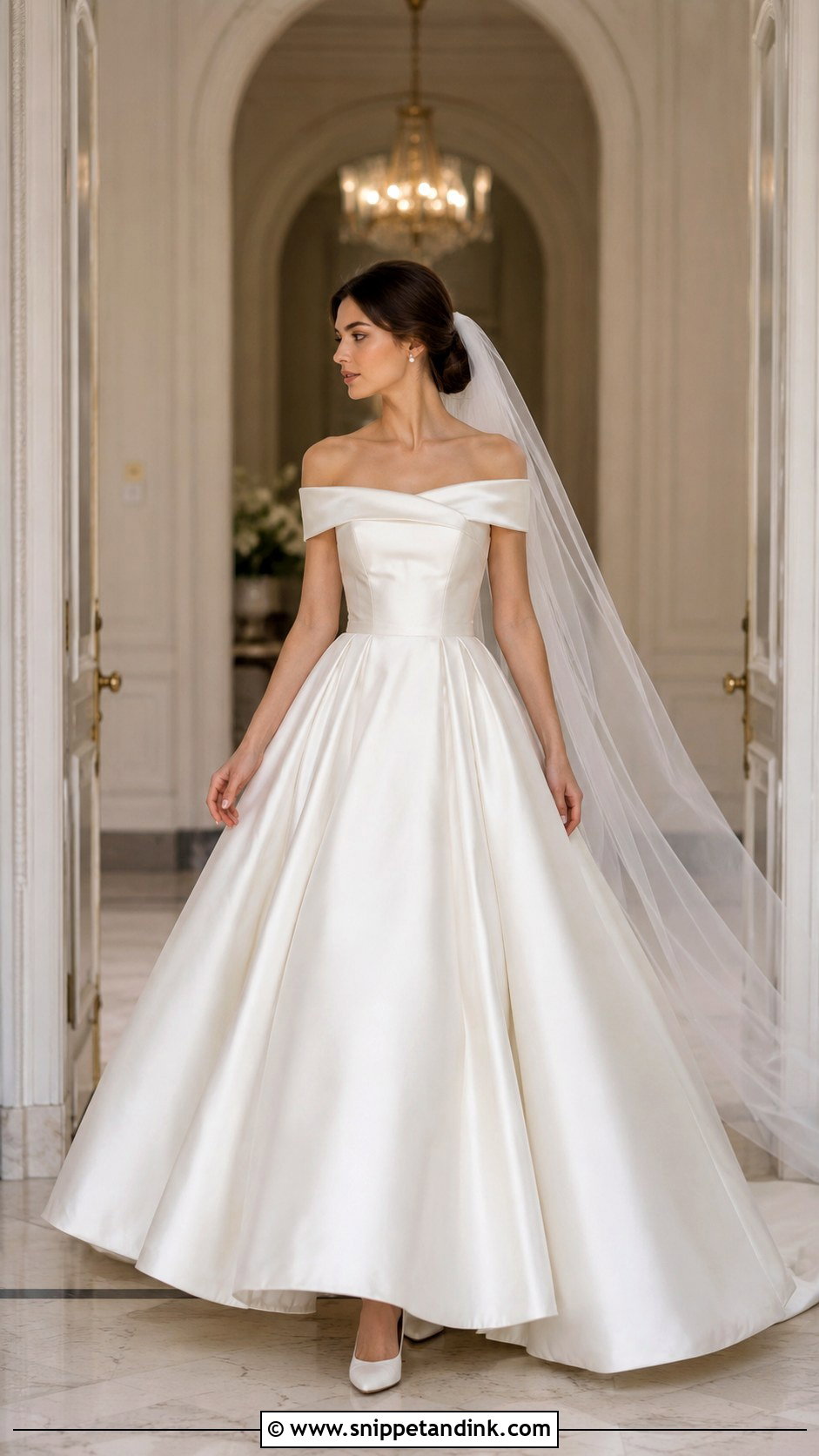
Can a high-neck gown become off-the-shoulder? Often yes, provided there is enough lace or satin in the upper bodice to fold over into a structured band along the collarbones. The catch is support. Without the high neck holding things up, the bodice relies entirely on boning, cups and a firm silicone-backed elastic, so I ask the seamstress exactly what she’ll build in. Keep the skirt full or trim some volume to balance a slimmer top, then add pearl studs, a low chignon and a veil set beneath the hair. At the fitting, hug someone and lift your arms; that is where an off-the-shoulder line slips.
5. Daughter in Mom’s Sweetheart Neckline Wedding Dress
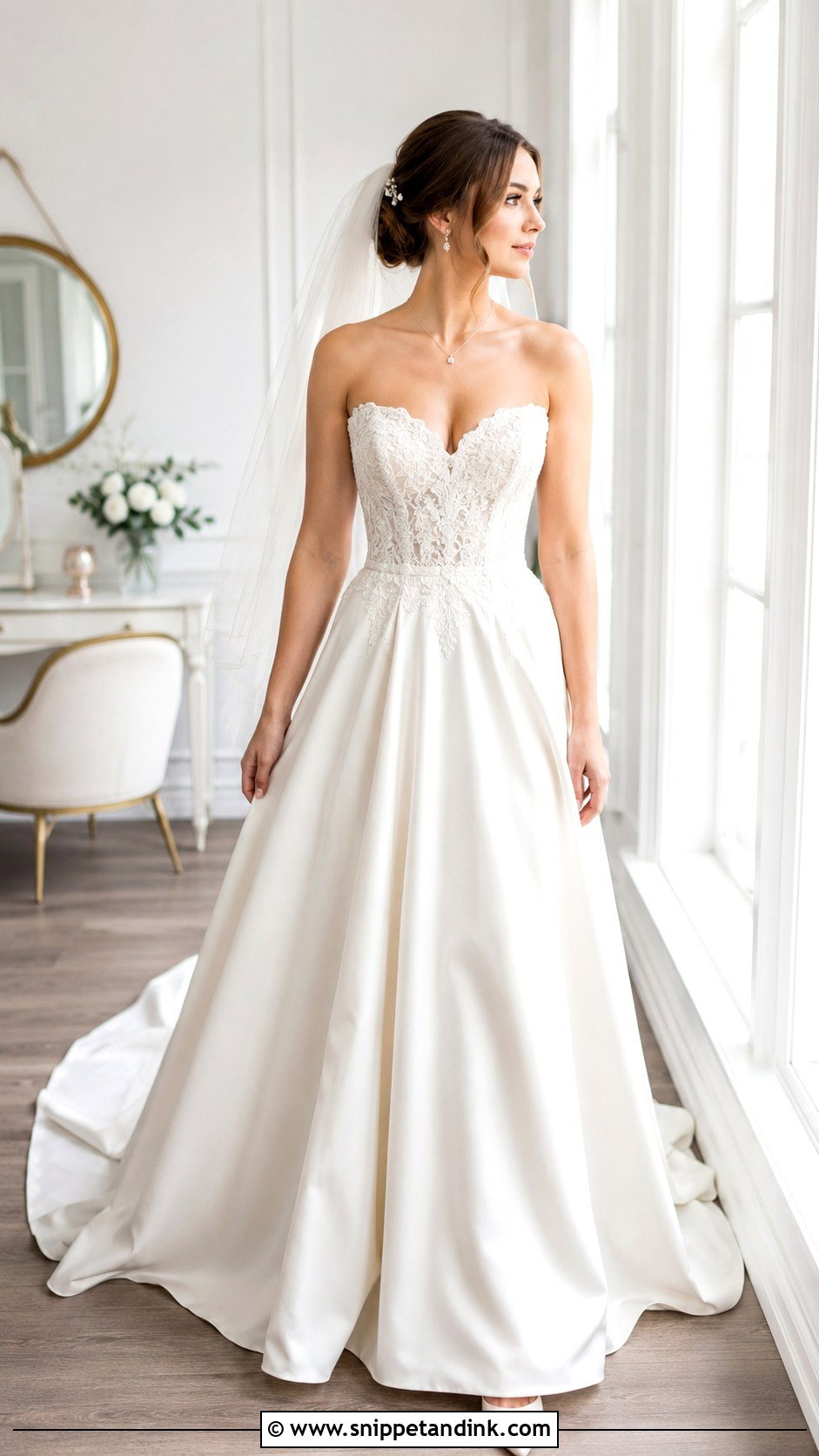
A sweetheart line is one of the kindest ways to soften a stiff straight neckline or a tall lace panel, and it leaves most of the gown untouched. The vintage appliqués can be lifted and resewn around the new curve, which hides the cut edge and makes the change look original. I pair it with a fine pendant, pearl hairpins and a plain tulle veil. If you want more coverage, an illusion-tulle layer above the sweetheart works well. During fittings, look at the bodice in a side mirror, because a sweetheart that gapes shows at the profile first.
6. Daughter in Mom’s Square Neck Wedding Dress
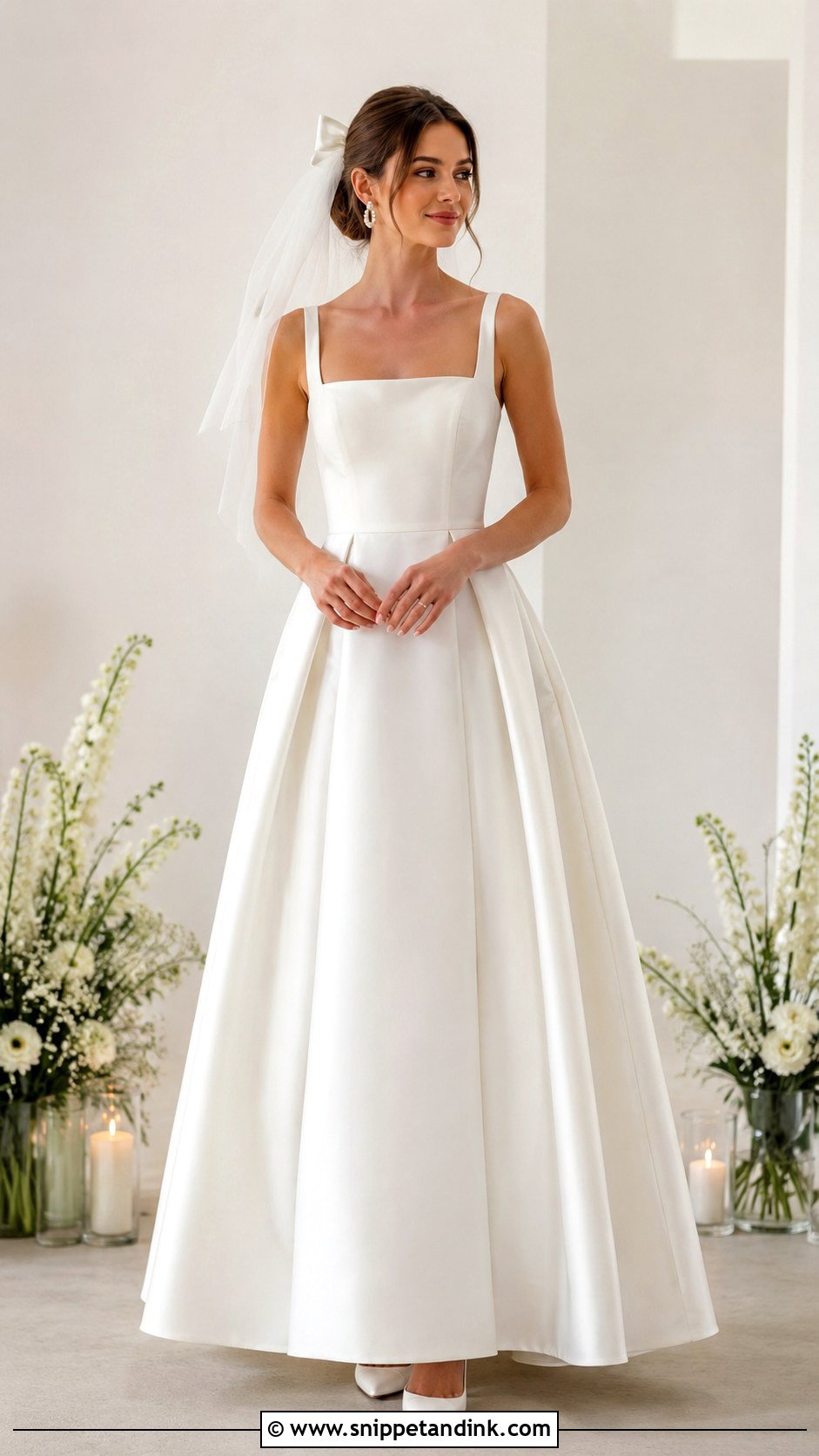
Square necklines need fabric with body. Satin, mikado and heavier lace hold that clean corner; a soft chiffon will collapse at the points and look tired by the first dance. Short sleeves or wide straps balance the shape, and a narrow waistband cut from spare gown fabric gives the original skirt a sharper line. I’d keep the jewellery small here, pearl hoops at most, because the neckline already frames the face. If Mom’s lace edged the old neckline, ask for it to be moved along the new square so her detail stays where everyone looks first.
7. Daughter in Mom’s V-Neck Wedding Dress
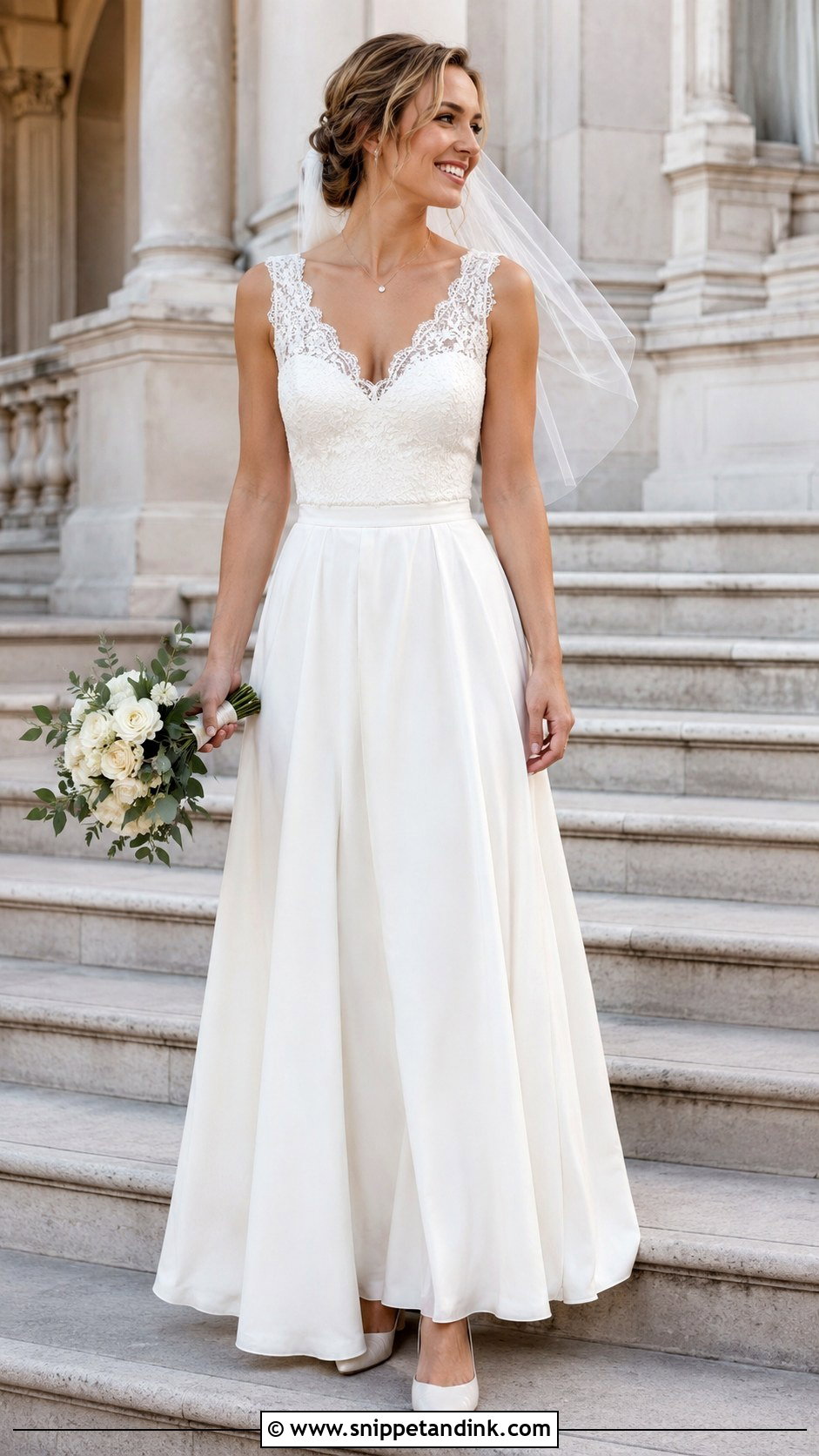
Opening a covered vintage bodice into a V makes the whole dress feel lighter. You set the depth, and a panel of sheer tulle can sit inside the V for security. Original lace trim reapplied along both sides of the opening is what keeps it looking like Mom’s gown rather than a new one. A fitted waist and an A-line skirt balance the V, especially if her skirt was generously full. My fitting test is simple: bend forward, sit, reach for a glass. If the V moves when you do, it needs a hidden stay or a tulle backing.
8. Daughter in Mom’s Lace A-Line Wedding Dress
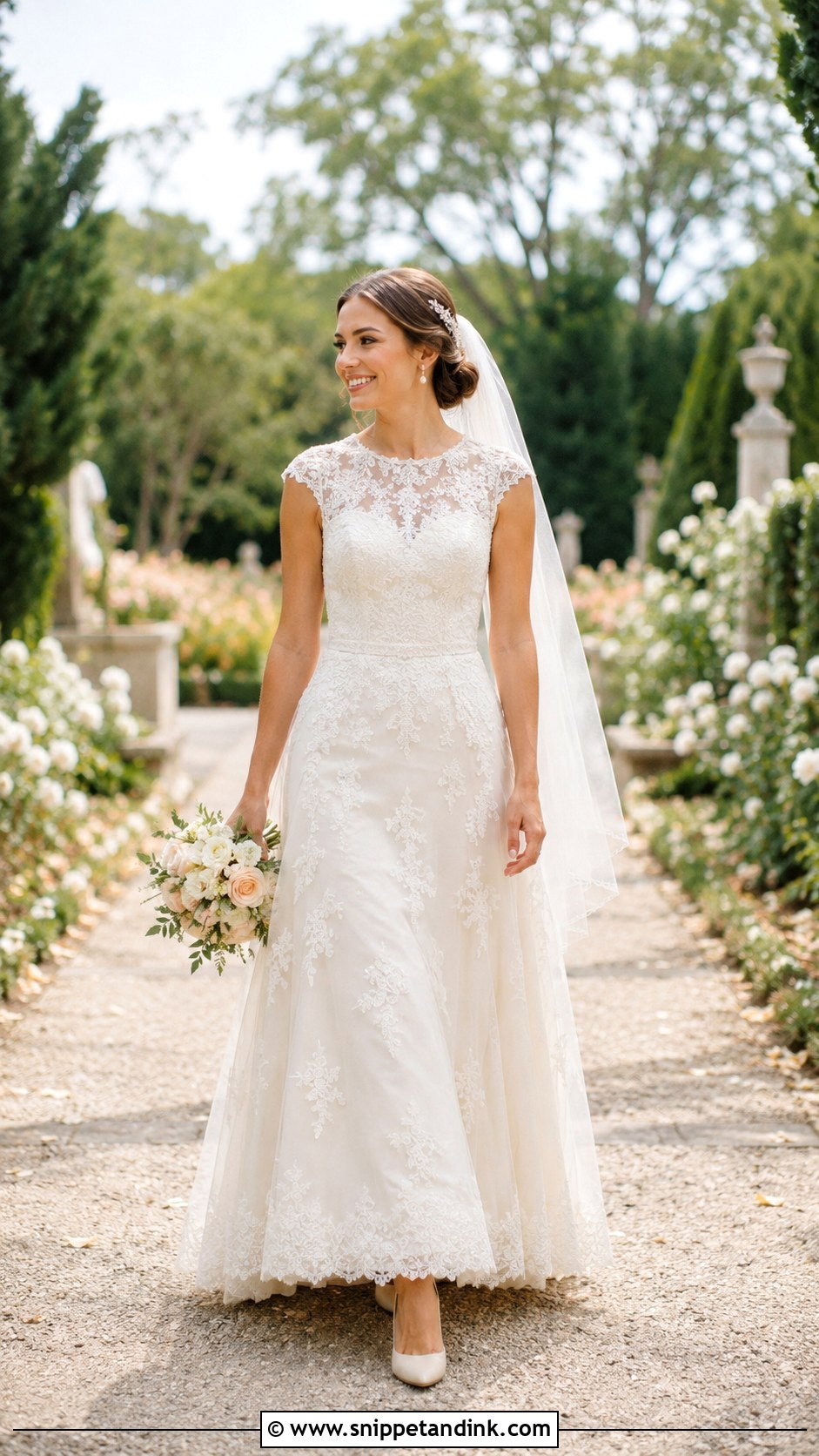
Most heirloom gowns convert well to an A-line because the shape forgives older patterning. A very full vintage skirt often has several layers of netting that can be removed, which takes out weight without flattening the silhouette. Keep the original lace across the bodice and scatter a few matching appliqués down the skirt so the two halves read as one. Watch the colour, though. Lace that has mellowed to cream will make bright new white tulle look blue, so I compare any new fabric against the old in daylight by a window before it’s ordered.
9. Daughter in Mom’s Fitted Wedding Dress
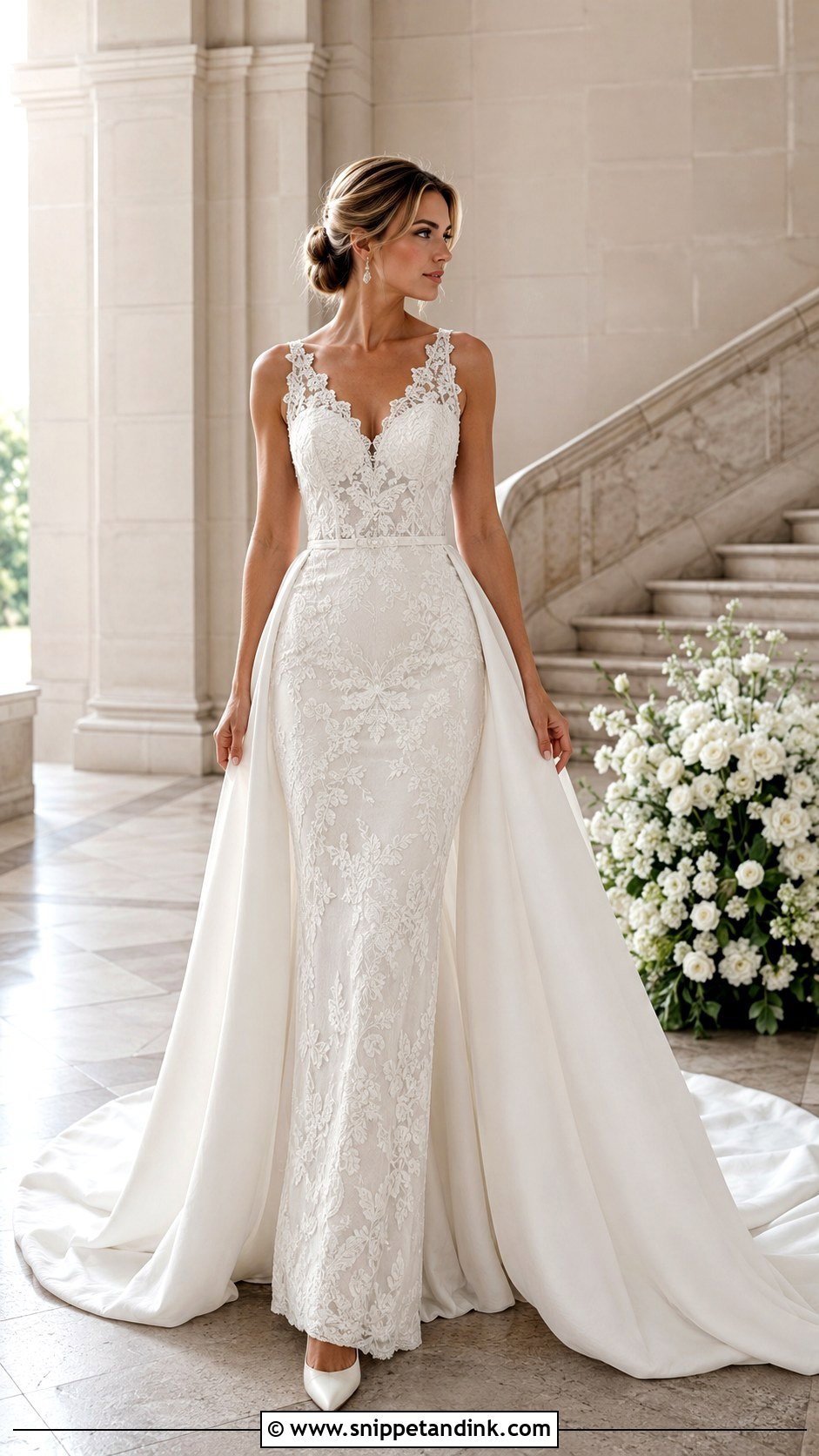
Reshaping a full gown into a fitted column is the most ambitious change on this list. The designer narrows the skirt, recuts the side seams and uses extra fabric to reinforce the bodice, with original lace placed at the neckline or along the hips and hem. A detachable overskirt can give back ceremony volume and come off later. My caution: aged silk and satin can split along the grain under tension, so every panel should be inspected before cutting. A new lining that takes the strain matters more on this version than any other.
10. Daughter in Mom’s Tea-Length Wedding Dress
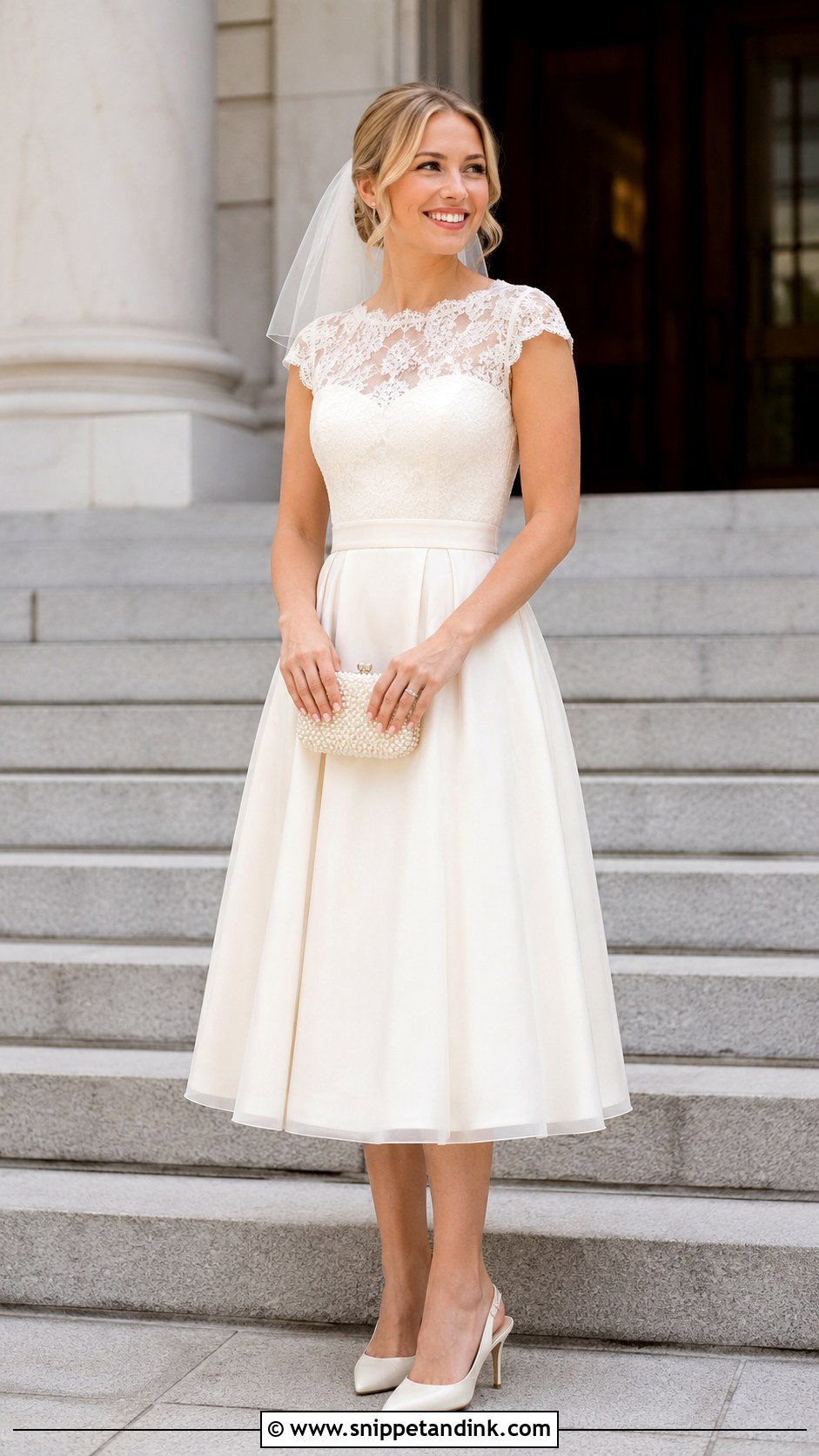
Taking a long heirloom up to tea length suits a courthouse ceremony, a daytime wedding or a reception change. With the hem landing between knee and ankle, your shoes become part of the dress, so slingback pumps and a small pearl clutch keep it neat. Lace cut from the lower skirt can be sewn back along the new hem so the alteration looks deliberate. Never let anyone cut before you’ve seen three or four pinned lengths with your actual shoes on. Two inches either way changes the proportions more than people expect.
11. Daughter in Mom’s Mini Wedding Dress
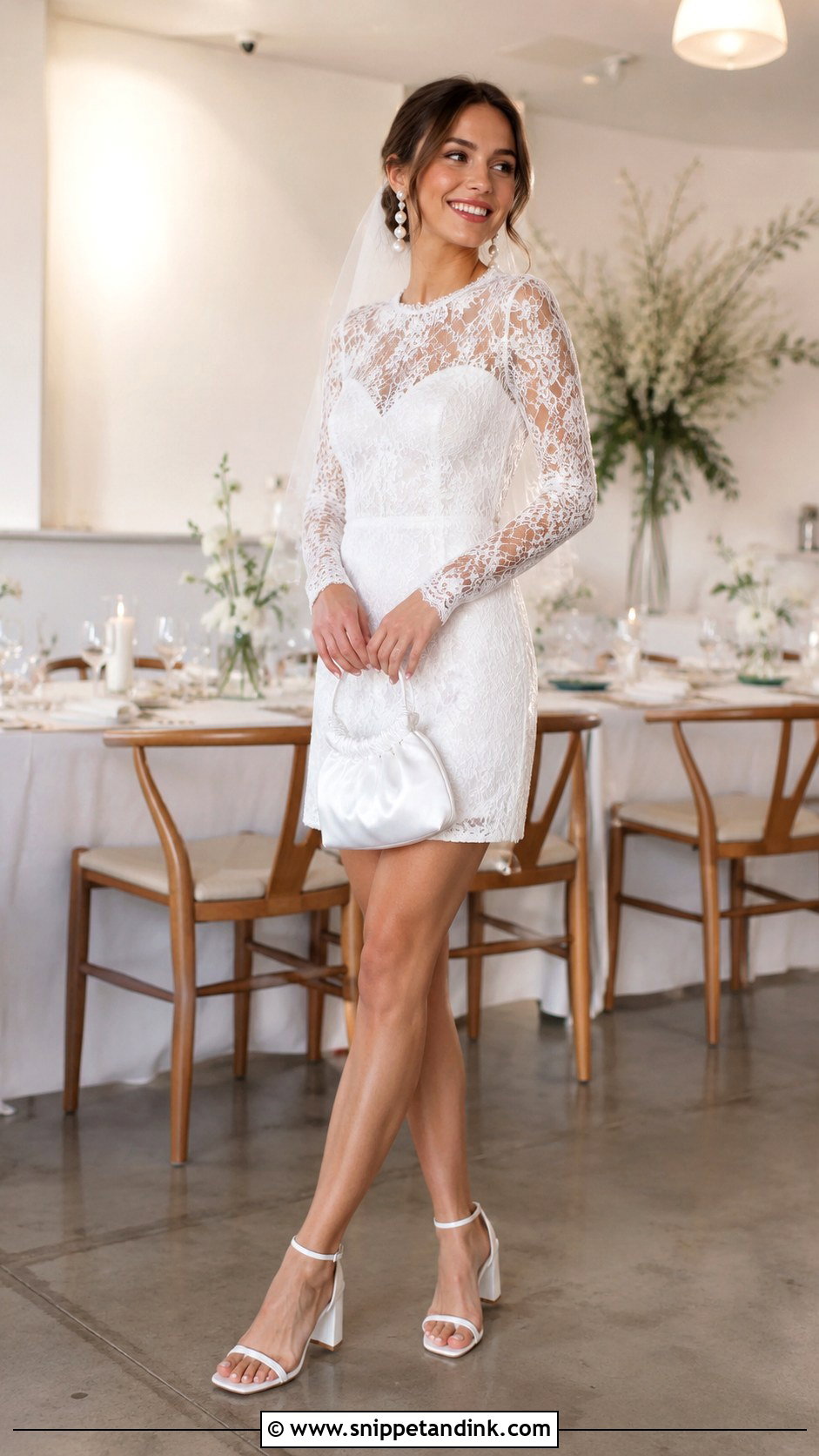
A mini makes sense when the lace bodice is lovely but the skirt is stained, torn or simply too heavy to wear all night. Keep the meaningful embellishment near the neckline and waist and give the new hem a clean finish above the knee. I balance a short hem with some coverage on top, a fitted long sleeve or a wider strap, because a very short skirt with an unsupported bodice tips toward costume. Pack block-heel sandals and a small satin bag, and keep the offcuts for accessories or another family keepsake instead of binning them.
12. Daughter in Mom’s Two-Piece Wedding Dress
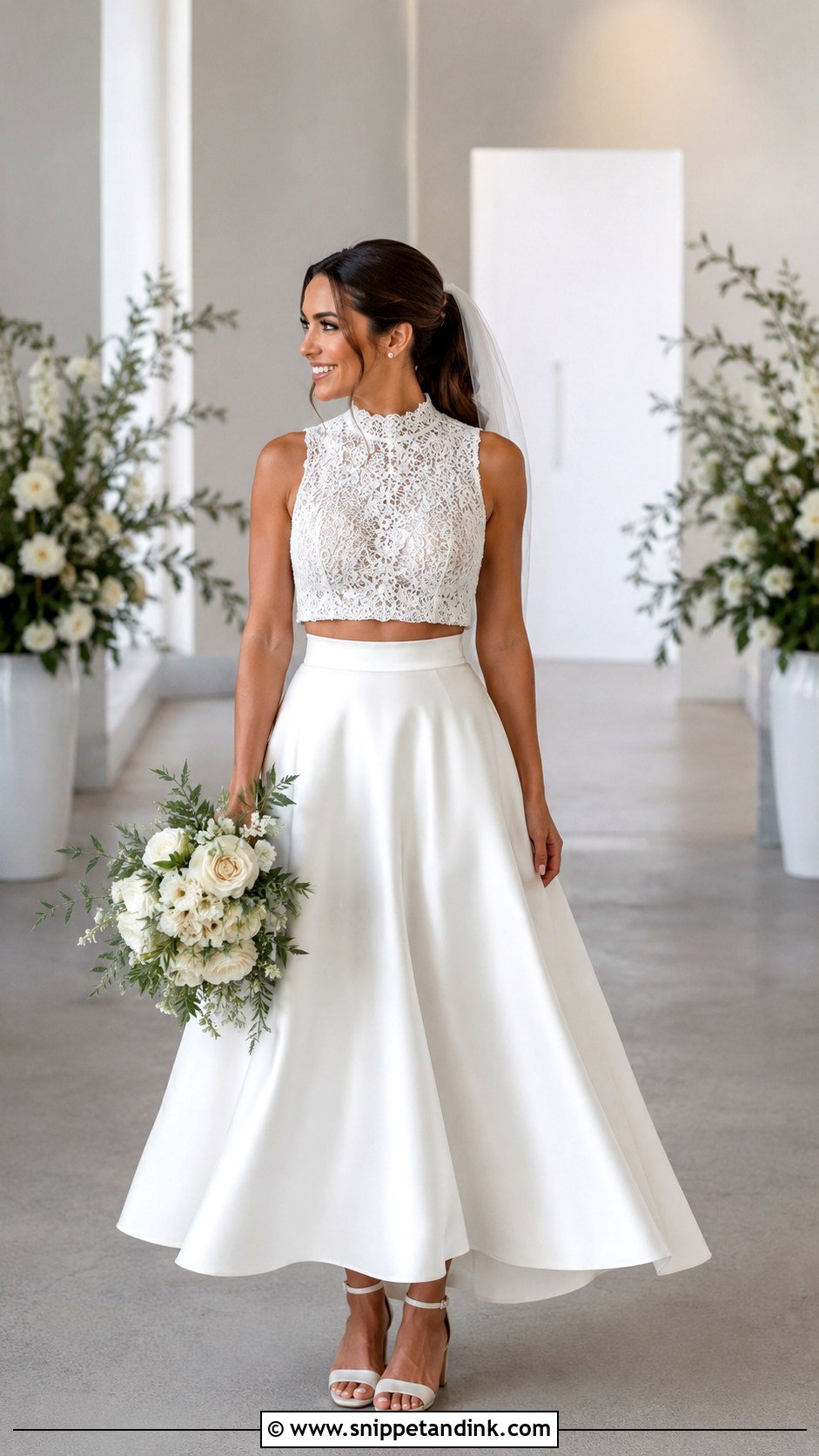
When a gown can’t be worn as it was, splitting it into separates is a clever way to use an heirloom gown anyway. The lace bodice becomes a fitted top, and the skirt’s satin or tulle is recut into a high-waisted A-line. Keep the gap between the pieces narrow so it reads as bridal. Older fabric frays at new edges, so I ask for fragile areas to be lined and every closure reinforced. The real test is whether the two pieces look made for each other; matching the whites exactly is what makes or breaks it.
13. Daughter in Mom’s Wedding Dress With Detachable Overskirt
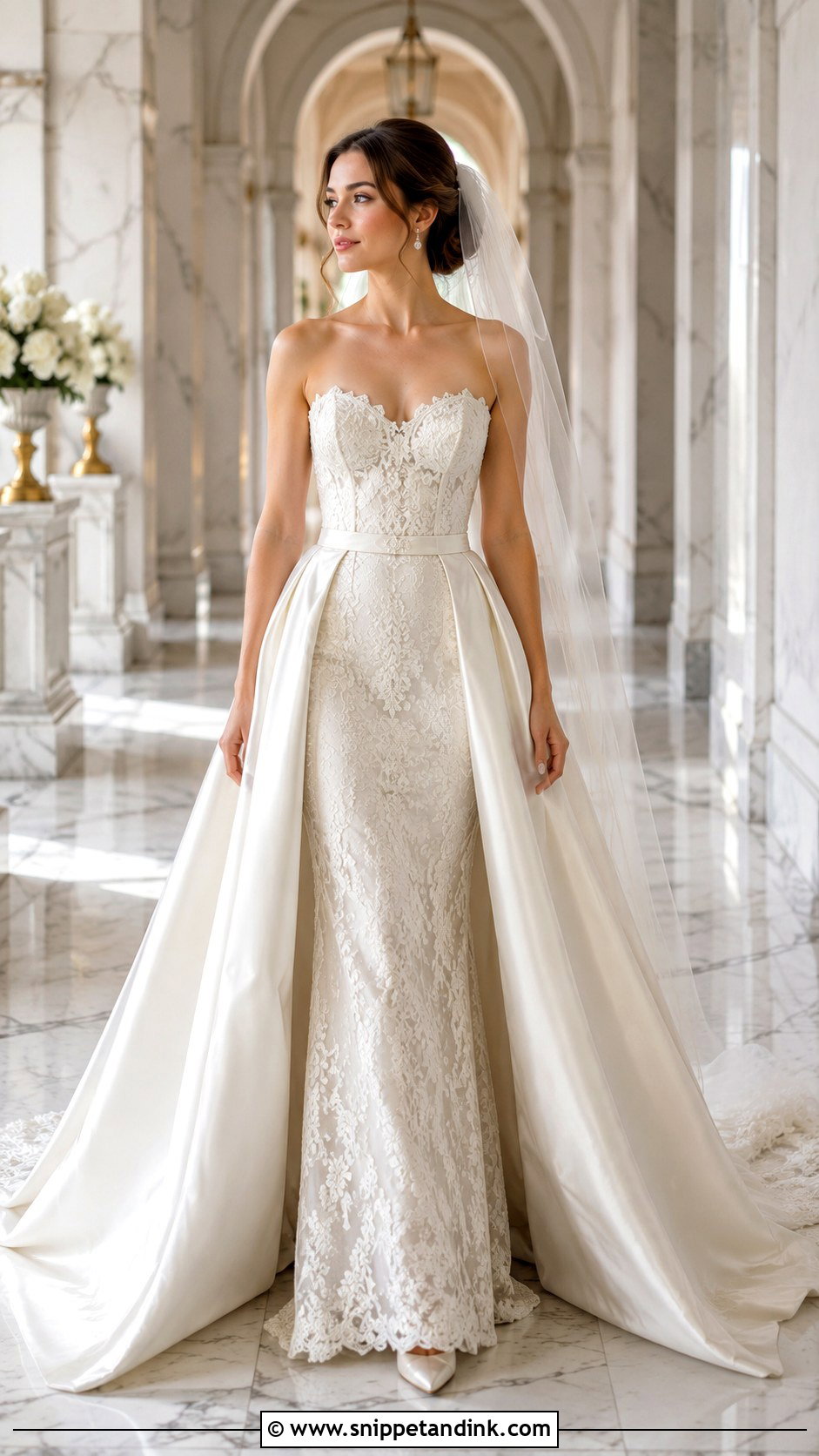
If the gown has enough sound fabric, you can get two looks from it. The base dress is shaped from Mom’s bodice and a slim section of the skirt, and the remaining fabric becomes an overskirt for the ceremony. That gives you the big entrance and then easy movement for dancing. Ask for the closures to be hidden under the waistline, hooks or snaps rather than ties, and practise taking the overskirt off with whoever will help you. On the day it should take two minutes, not a bathroom crisis.
14. Daughter in Mom’s Wedding Dress With Removable Sleeves
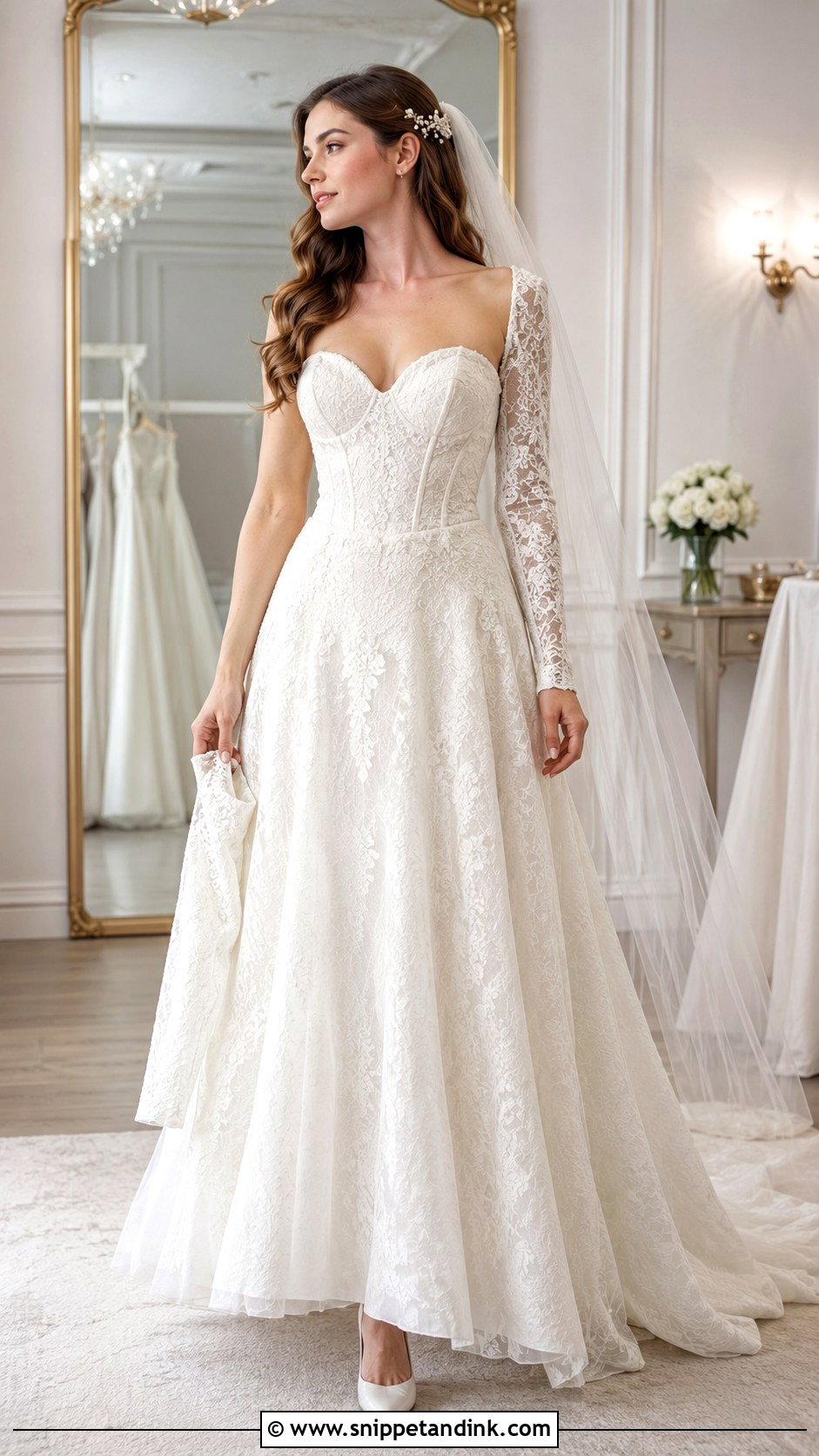
Removable sleeves keep one of Mom’s most recognisable details while letting you cool off later. The original lace sleeves are detached, reshaped and fixed back with hidden snaps or elastic over a bodice with wide straps or a sweetheart line. What I check is the armhole: once the sleeves come off, it has to look finished, not like something is missing. Insist on a mock-up in cheap fabric before anyone cuts the vintage lace. A pearl comb, a soft tulle veil and ivory pumps finish both versions.

15. Daughter in Mom’s Wedding Dress With Bridal Cape
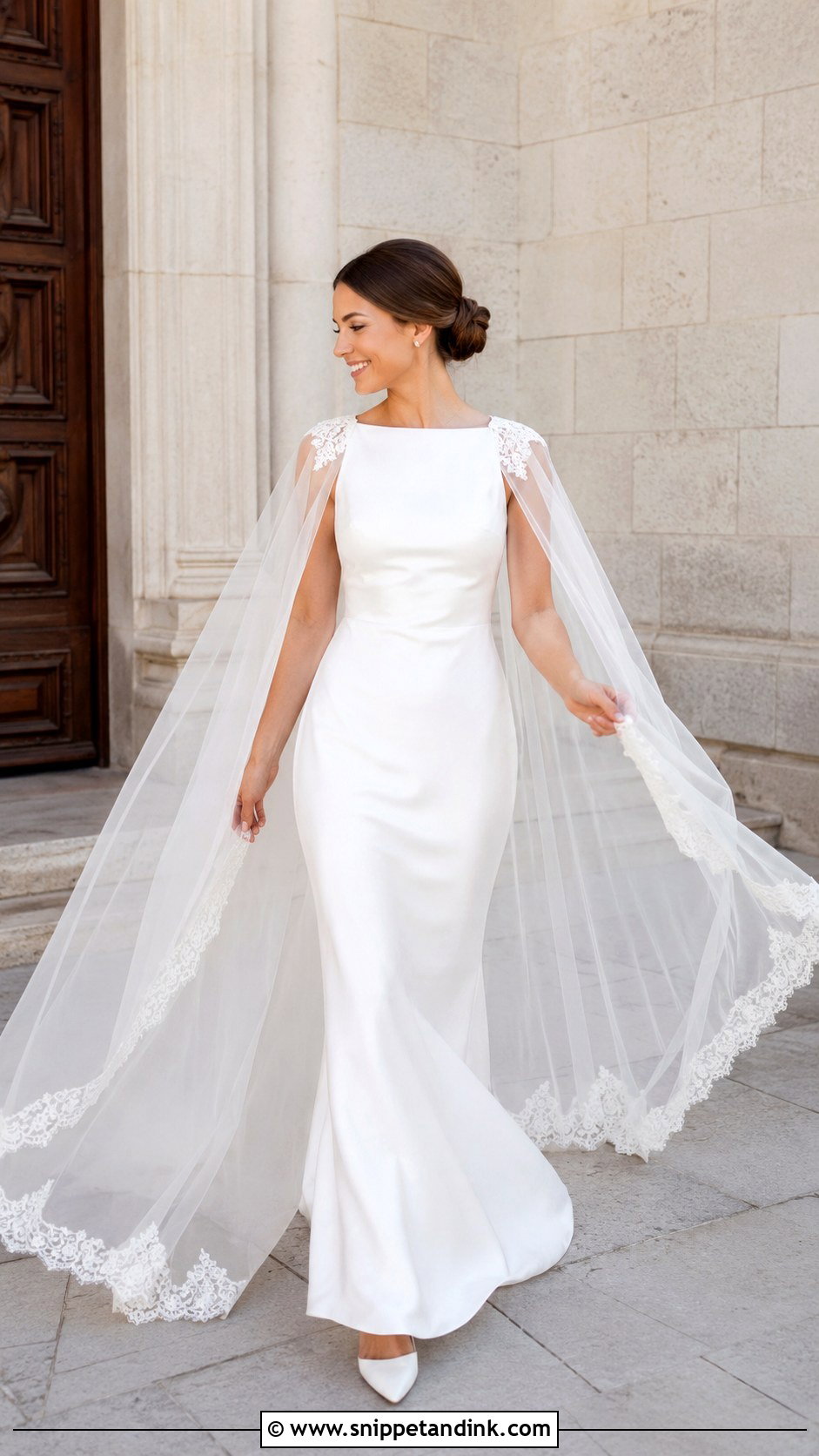
A cape changes the look without touching the gown at all, which makes it the safest update here. A light tulle cape keeps things soft, and lace salvaged from an old veil adds texture. Underneath, keep the heirloom dress plain, with a fitted bodice and a clean skirt. The detail I check is the cape’s neckline: it should lie flat and never drag across beading, buttons or raised appliqués, because that friction pulls threads loose over a long day. It can replace the veil or come off after the ceremony.
16. Daughter in Mom’s Wedding Dress With Vintage Veil
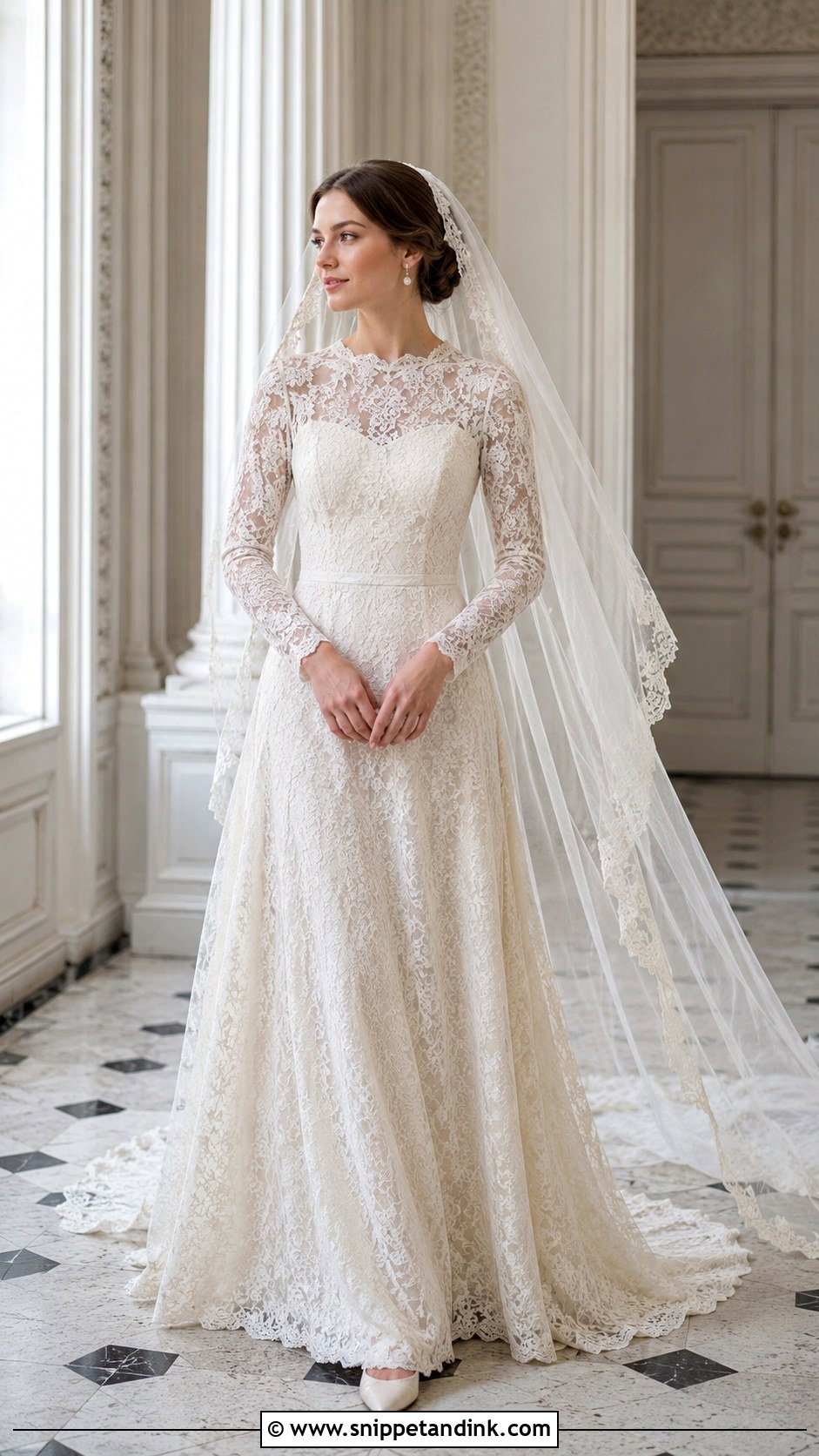
If Mom’s veil survived too, wearing both gives you the most coordinated heirloom look. Have a specialist examine the tulle, the comb, the edging and any lace first; old nylon tulle can go brittle and tear at a tug. Small holes can be mended, and fragile sections can sometimes be moved onto fresh tulle. Keep the gown tailoring subtle so dress and veil still belong together. I skip a busy necklace when the neckline is detailed. Fresh flowers and modern makeup are usually enough to stop the look tipping into a recreation of her photos.
17. Daughter in Mom’s Wedding Dress With Pearl Accessories
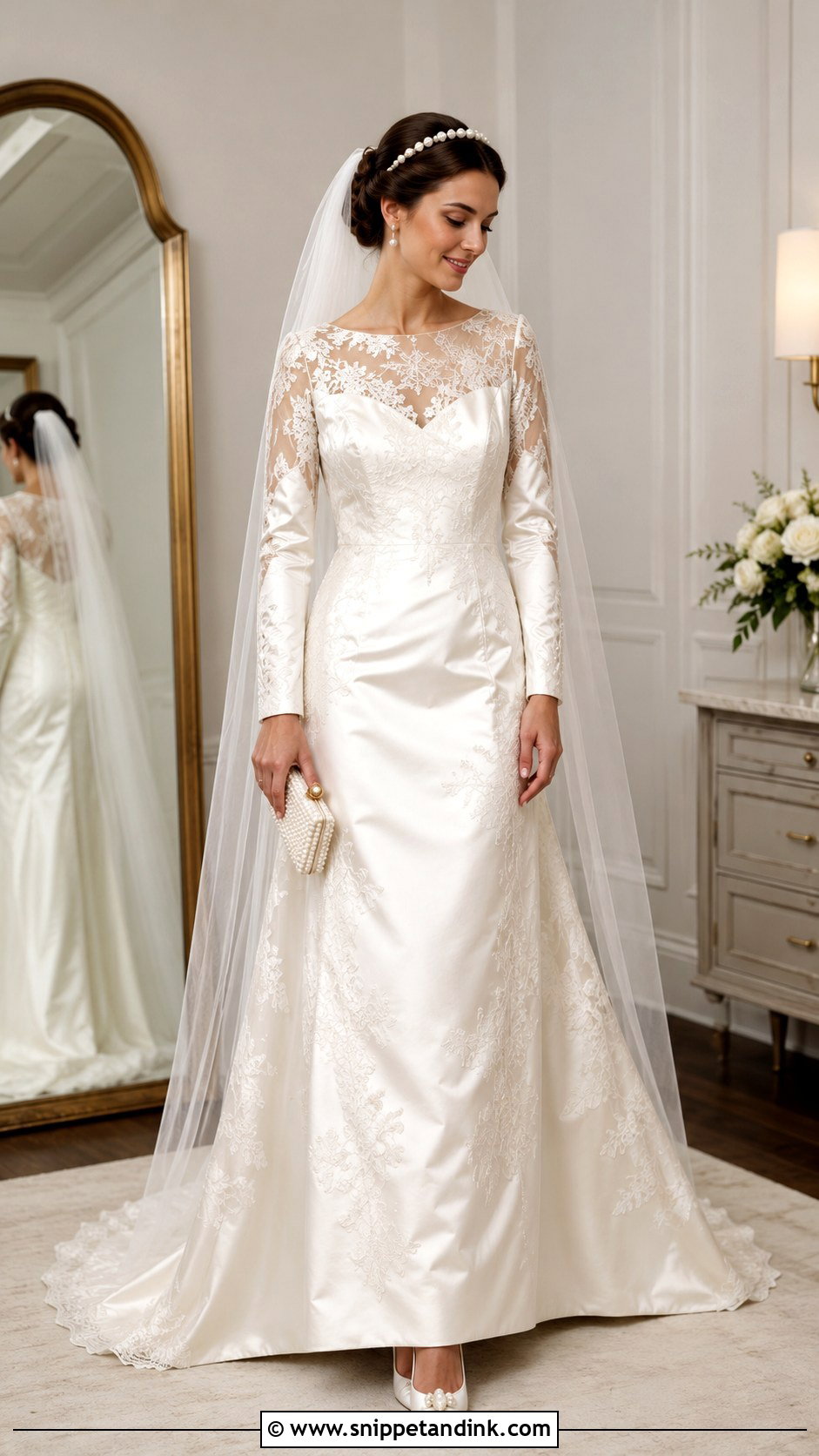
Pearls suit an heirloom gown because most vintage dresses already carry them in the beading. Start with the restored dress and add no more than two or three pearl pieces: drop earrings, a slim hairband, perhaps a shoe clip. A plain veil keeps them from competing with Mom’s embellishment. One thing I always ask at restoration is to save any loose pearls that drop off during cleaning. They can be stitched onto a clutch or a hair comb, which keeps even the smallest original details in the outfit.
18. Daughter in Mom’s Wedding Dress With Bow Back
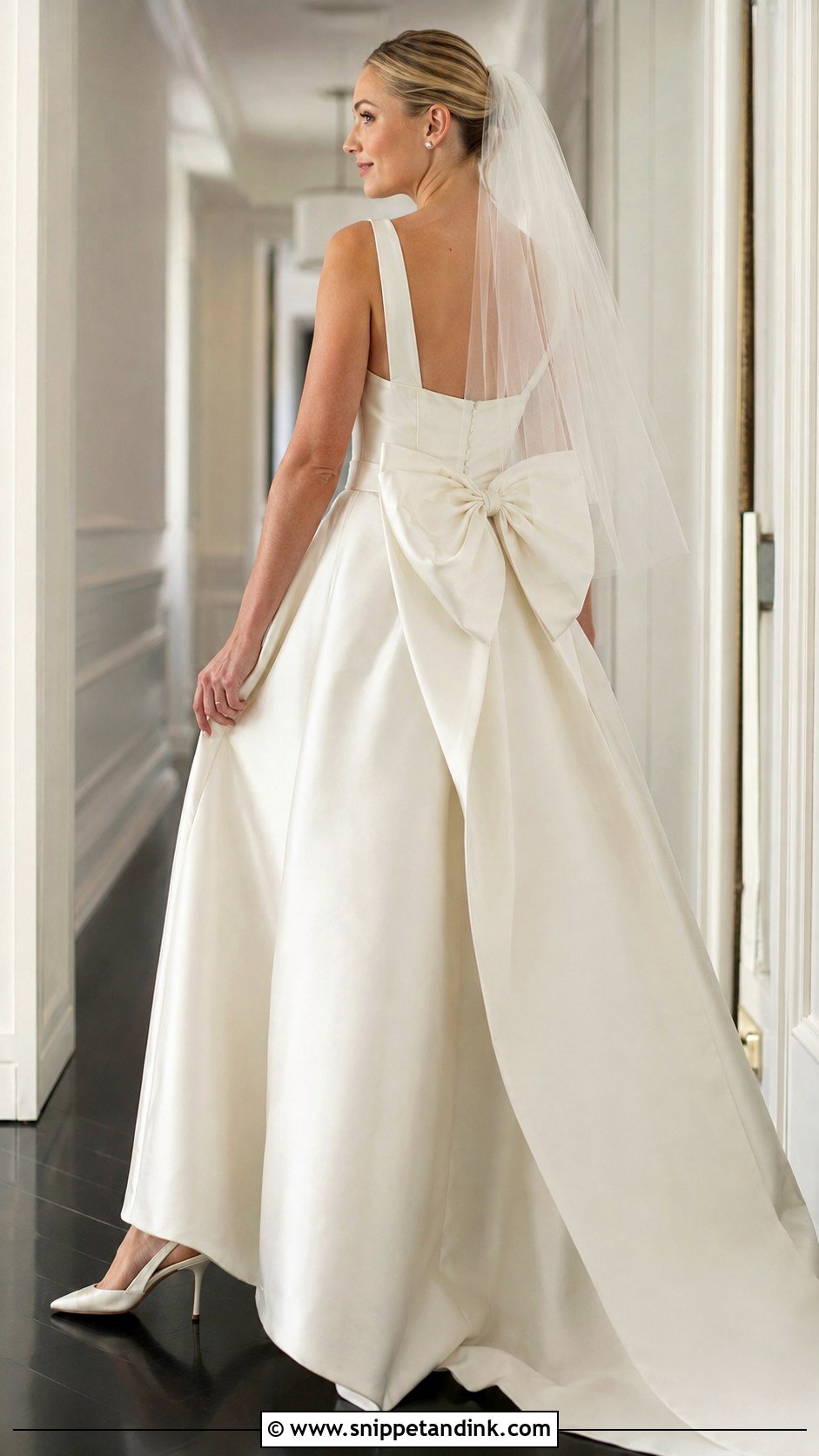
A bow at the back waist is a smart home for spare satin from big sleeves, a train or an inner skirt layer. Keep the front quiet, a square or scoop neckline, so the back gets the attention. The scale matters most: a wide skirt can carry a large bow, while a slim dress needs a smaller, cleaner one or it looks like packaging. If you want options, ask for it to be detachable. Set the veil above the bow and make it light enough that the bow shows as you move.
19. Daughter in Mom’s Wedding Dress With Colorful Shoes
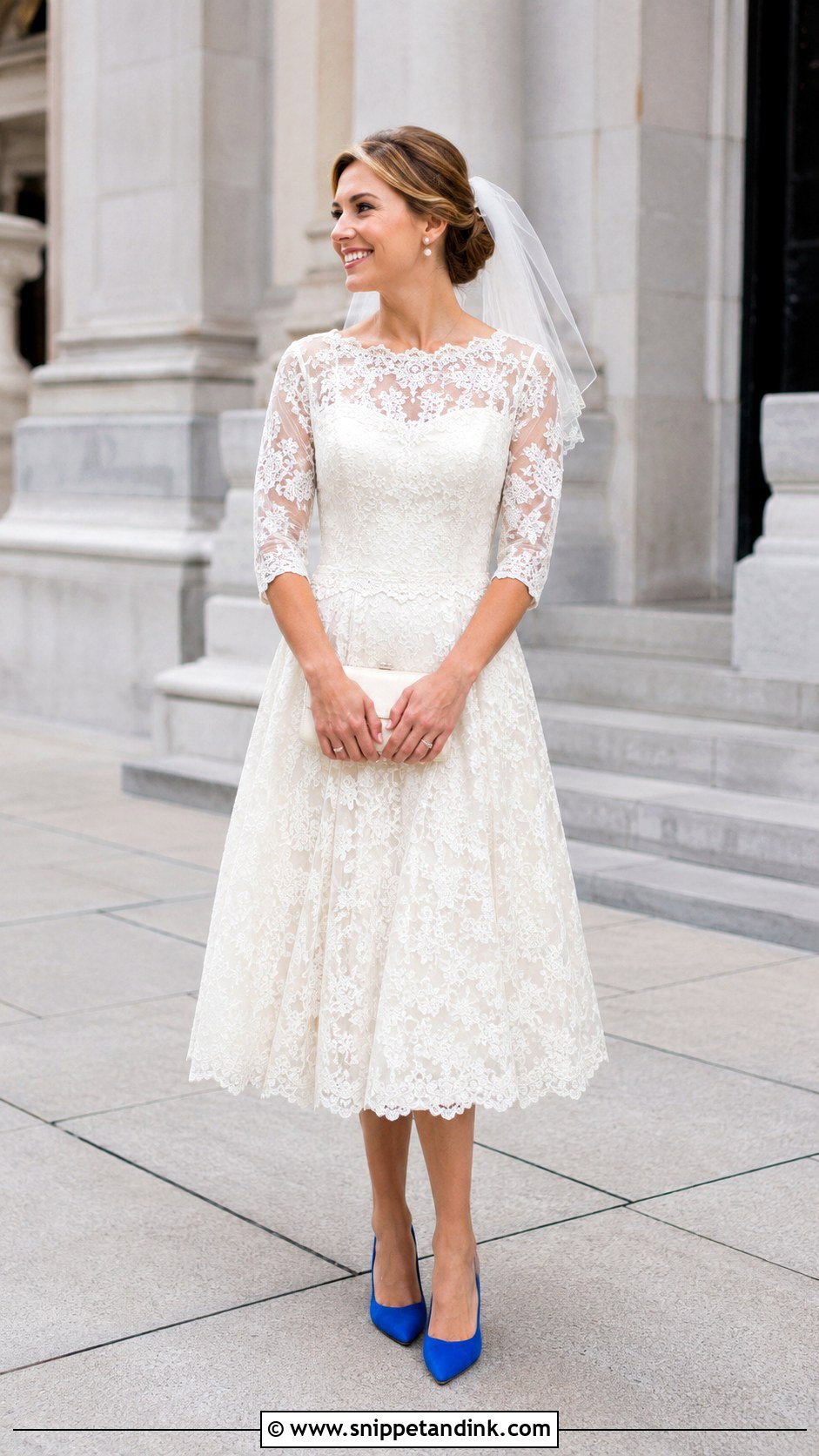
Coloured shoes are the easiest personal touch on a preserved gown because nothing about the dress has to change. Wear Mom’s lace or satin as it is with a shoe in your palette, blush or sage or blue, and a tea-length or slightly raised front hem so they actually show. Block heels suit lawns; pointed pumps suit a ballroom. I make brides bring the exact shoes to every fitting, because heel height sets the hem and even changes how you stand in the dress.


20. Daughter in Mom’s Wedding Dress for a Reception Look
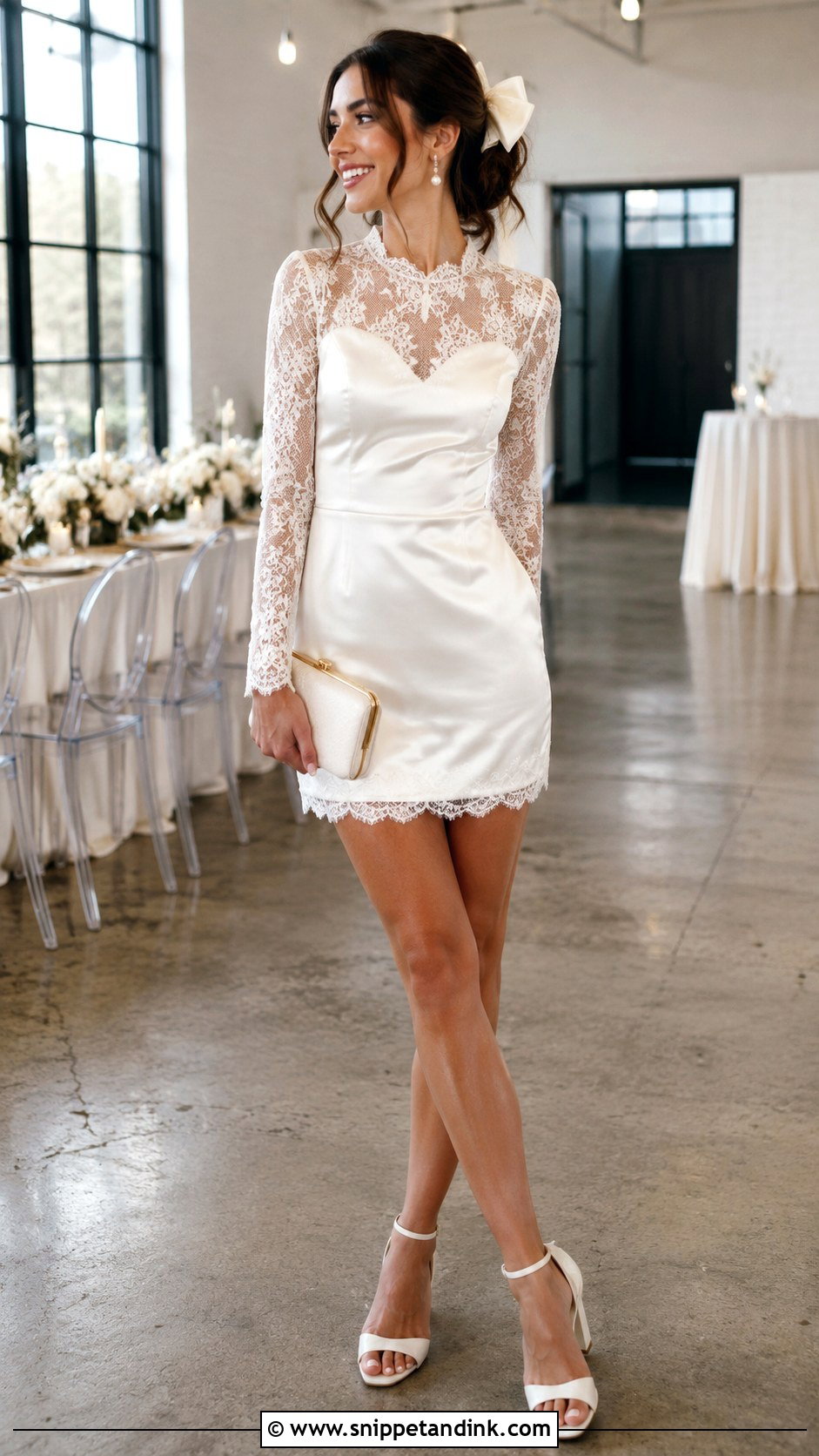
If you’ve fallen for a different ceremony gown, Mom’s dress can still have its own moment as the reception outfit. It can be shortened or simplified into a knee-length lace dress, a fitted satin midi or a sleeveless mini, whichever the fabric allows. Stable block heels, pearl earrings and a compact clutch keep you free to move, and a hair bow or short veil keeps it bridal after the ceremony pieces come off. Have delicate closures reinforced, because dancing tests a vintage zip harder than an aisle does. You get a new gown and a treasured family piece in one day.
How Much Time a Reworked Vintage Dress Really Needs
Redesigning an older gown takes longer than altering a new one, because the seamstress is solving problems as she opens it up. For a restoration with light fitting, I’d start around six months out. For a full redesign, a new neckline, a two-piece or a shortened skirt, nine to twelve months is more comfortable.
- Specialist cleaning first, since stains and fabric weakness only show properly after it.
- A consultation where the seamstress opens a seam and tells you what the fabric will tolerate.
- A mock-up in calico or cheap fabric for any change that involves cutting.
- Two or three fittings, with your real shoes and undergarments every time.
- A final pressing and collection about two weeks before the wedding.
The Conversation With Mom That Should Come First
Some mothers want the dress worn exactly as it was; others are delighted to see it cut into something new. You won’t know which until you ask, and it’s far easier to have that talk before a quote arrives. I suggest bringing her to the first consultation so she hears what the fabric can and can’t do from the person who will do the work.
It also helps to agree on what happens to the leftovers. Spare lace, buttons and the original label can go back to her, be made into something for a sister, or be stored with your own dress afterwards. Settling that early keeps a sentimental project from turning into an awkward one.
Making Her Gown Yours Without Losing What She Loved
The right version of Mom’s gown is the one you feel easy in and she still recognises. Get the fabric inspected, agree on every permanent change together and book a seamstress who has handled vintage before. Restore it as it is, reshape it, shorten it for the party or split it into separates. Shoes, veils and removable layers can do a lot of the personalising without a single cut. Whatever you choose, it should look like your taste carrying her story forward, not a copy of a photograph from decades ago.
You'll Like These Ideas:




Leave a Reply