
Guests ask me a version of the same question before every wedding season: how do I look polished without upstaging the couple, and still survive a ceremony, a three-course dinner and a dance floor? The answer usually lives in the fabric and the cut, more than the label. A well-made dress in the right weight for the season does most of the work; shoes you can stand in and a bag that holds a phone and lipstick do the rest. These twenty designer shapes are the ones I’d put in front of a guest, from garden-party midis to black-tie gowns, with my notes on how each behaves once you’re actually wearing it.
What Cocktail, Formal and Black Tie Ask of a Guest Dress
Invitation wording is the first thing I read with a guest, because it narrows the dress shapes before we even look at color. These are the usual expectations, though couples sometimes add their own notes, and those always win:
- Casual or garden: a day dress or midi in cotton, linen blends or light chiffon; block heels or flats.
- Cocktail: knee to midi length in a dressier fabric like satin, crepe or jacquard.
- Formal or black-tie optional: a refined midi or a floor-length gown; both are acceptable.
- Black tie: floor-length is the safe answer, or a very polished midi only if you know the crowd.
- Religious ceremonies: plan for covered shoulders and a skirt at or below the knee, even if the reception is more relaxed.
Color has its own rules. White, ivory and pale champagne belong to the bride unless the couple says otherwise. Some cultures also avoid all black or all red at a wedding, so a quick question to the couple or a family member saves an awkward day.
1. Floral Designer Midi Dress
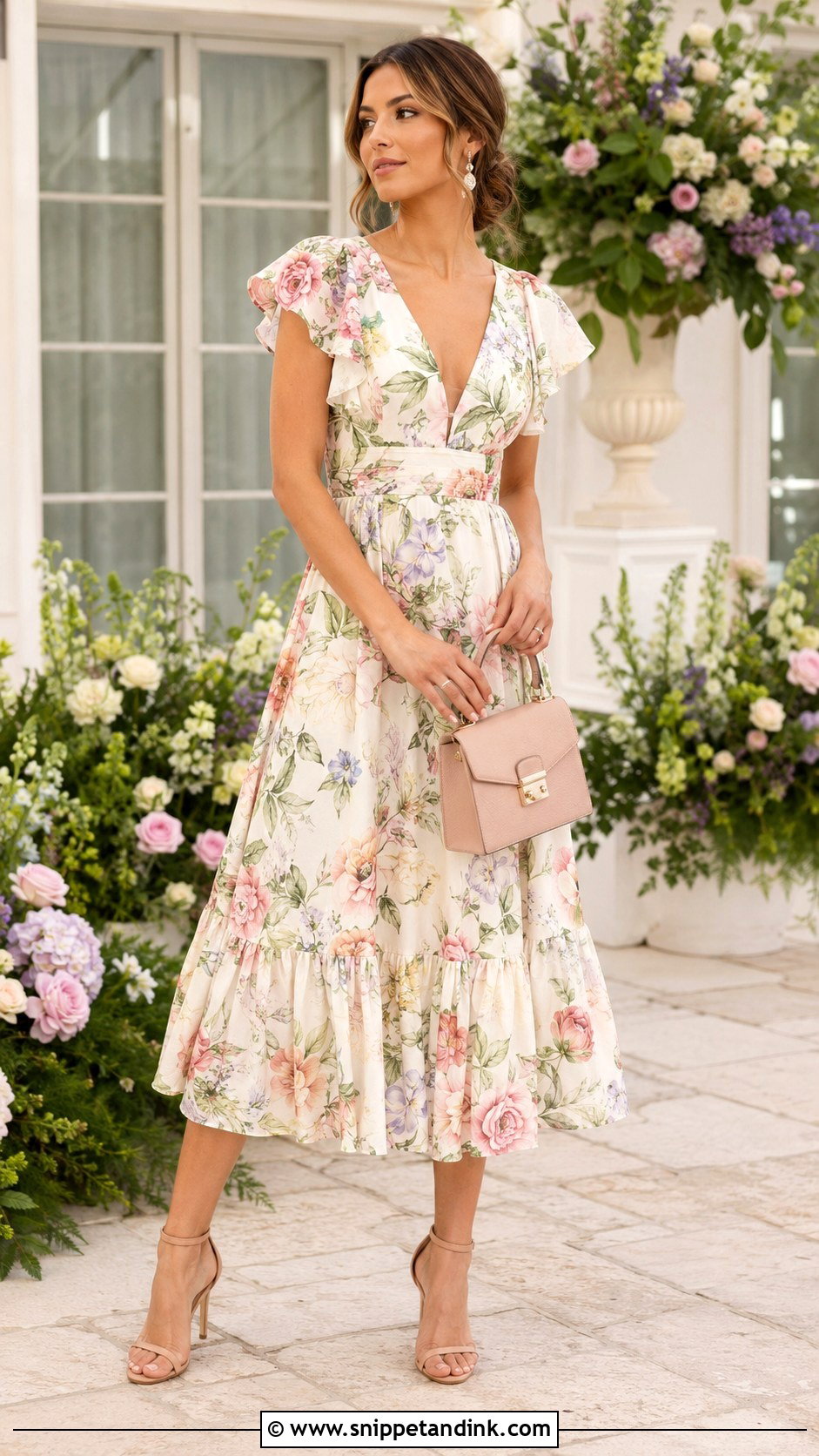
A floral midi is the safest daytime guest dress I know, and the print scale decides whether it looks expensive. Small to medium blooms on a clear background read refined; oversized prints can swamp a petite frame and clash with the wedding flowers in group photos. A fitted waist and flutter sleeves move well. I’d pair it with nude, blush or metallic ankle-strap heels; the strap matters on a lawn, where slip-ons get left behind. Pack a cropped jacket for an outdoor ceremony that runs cool.
2. Silk Designer Slip Dress
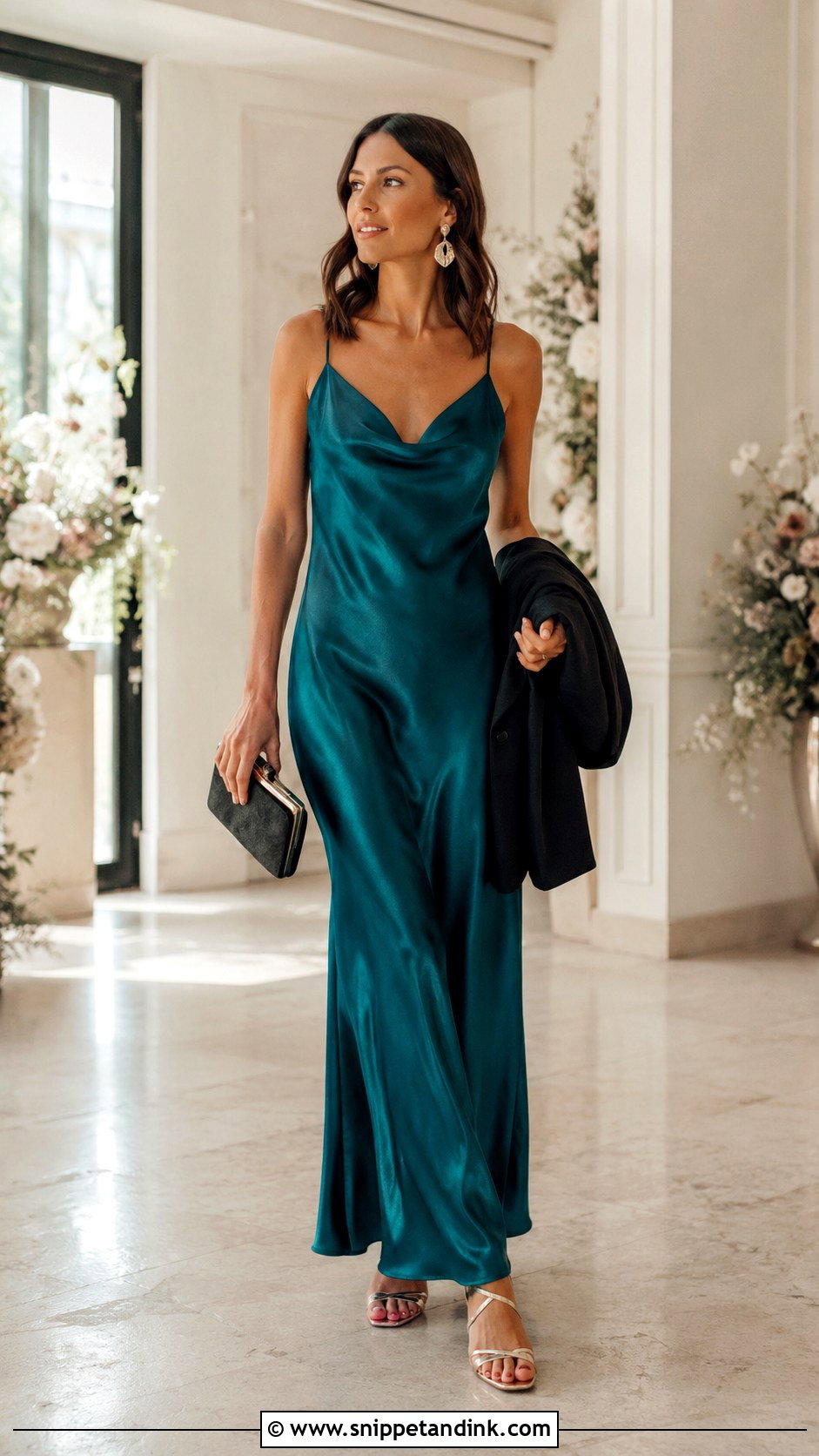
Bias-cut silk is unforgiving in an honest way: it shows every line underneath it. That’s why I try a slip dress on with the exact undergarments first, ideally laser-cut or bonded ones in your skin tone. Jewel tones like sapphire, emerald and plum give it evening weight. Silk also marks with water and creases where you sit, so I’d avoid very pale shades if you’ll be seated for a long dinner. A tailored blazer or cashmere wrap covers the shoulders for the ceremony and comes off later. Metallic sandals and sculptural earrings are enough.
3. One-Shoulder Designer Maxi Dress
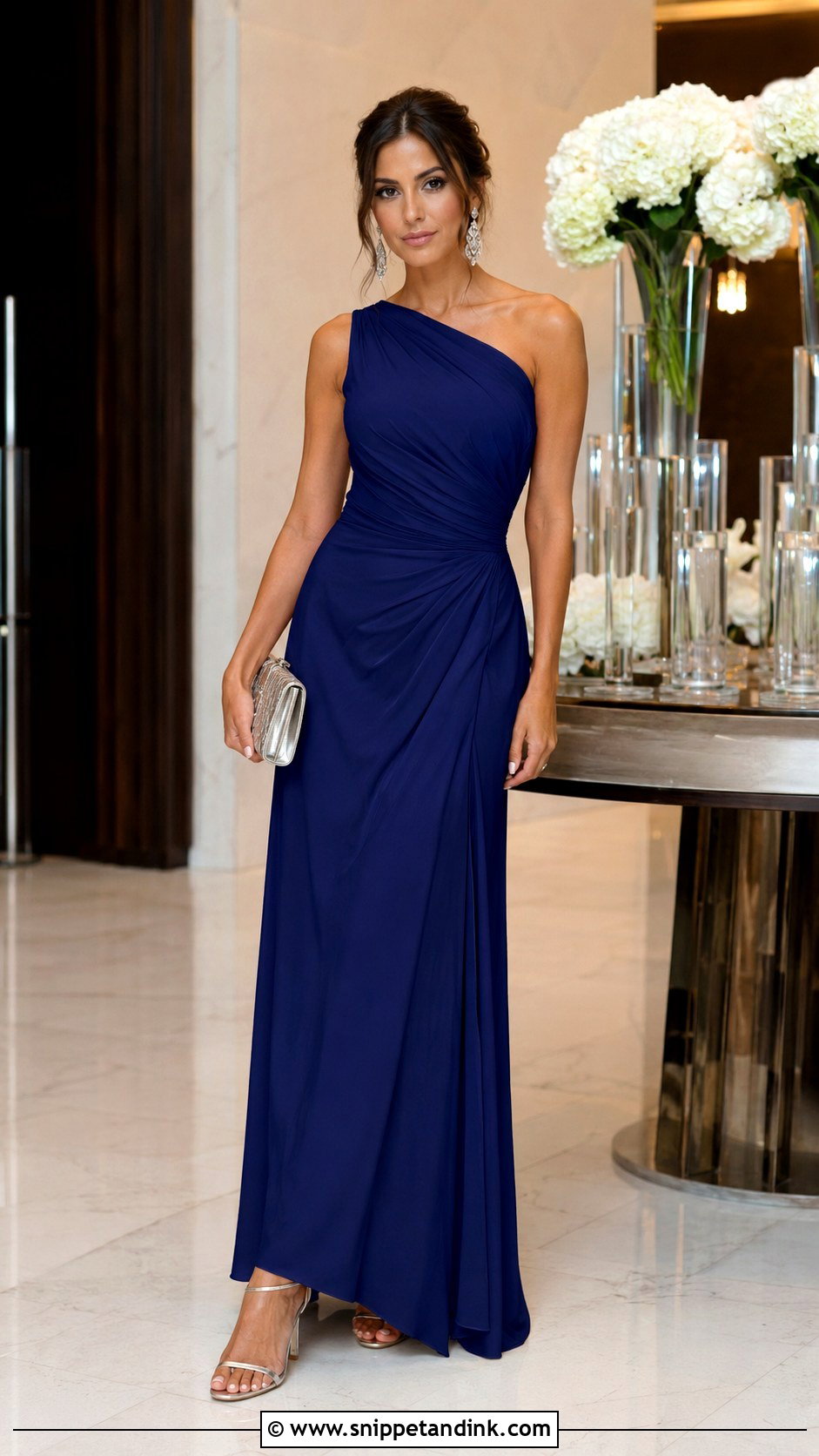
One shoulder is a formal neckline that needs nothing else at the neck. Satin and crepe hold the asymmetry crisply; chiffon softens it. Berry, rich blue, forest green and terracotta look confident without straying into bridal territory. The fit check I insist on: raise both arms and hug someone. If the single strap lifts or the bodice gapes on the bare side, it needs taking in. Keep the jewelry to a cuff or drops, put your hair up, and hem the dress to your chosen heels, especially if there are stairs or grass.
4. Pleated Designer Midi Dress
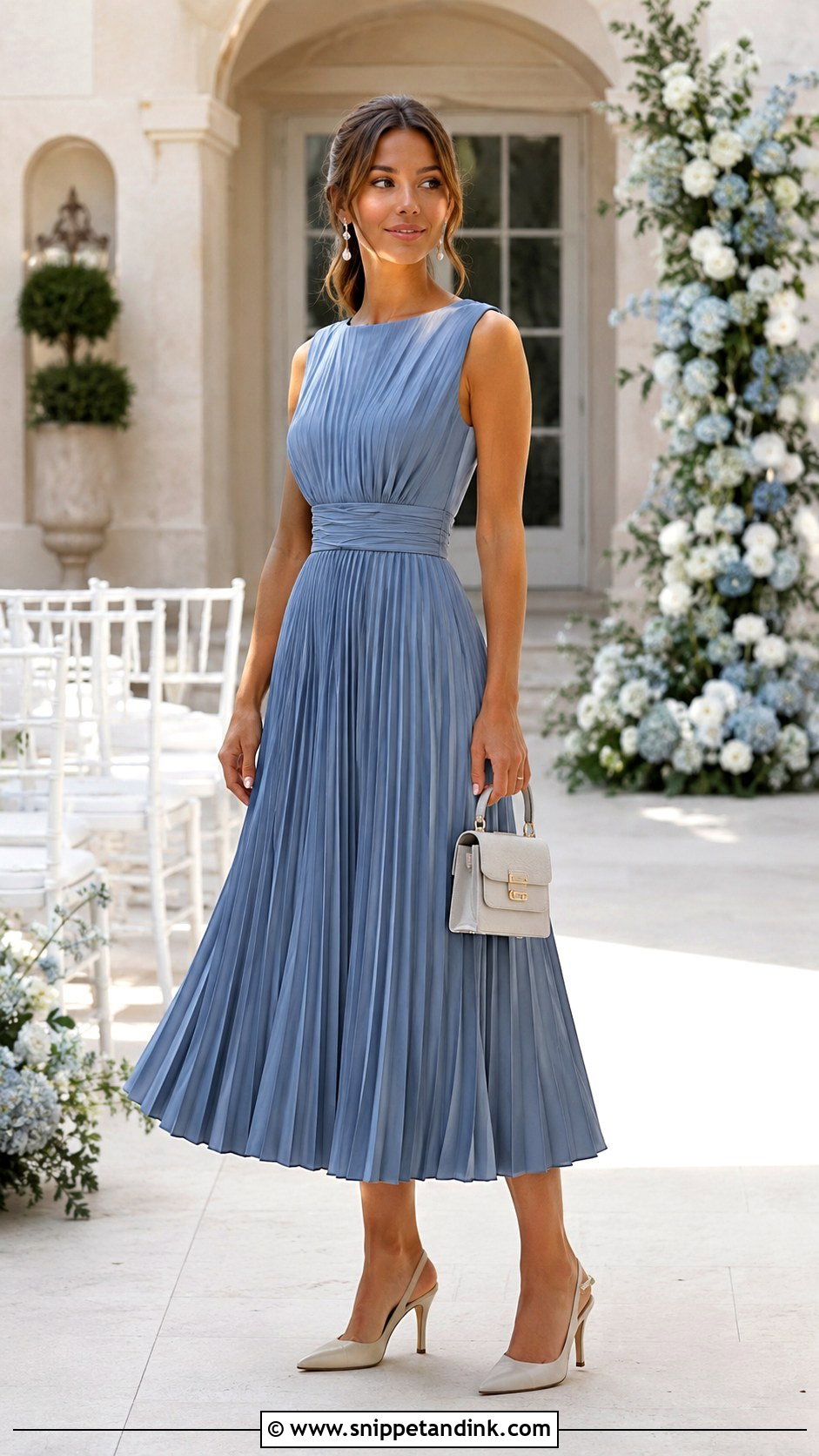
Fine pleats give texture without a print, and they forgive a long day better than most fabrics, because polyester pleating springs back after sitting. A pleated designer midi dress with a defined waist and modest neckline in dusty blue, soft green or mauve is easy for afternoon and cocktail dress codes. One warning: pleats can add volume at the hip, so a waist seam that sits at your natural waist matters. Pointed slingbacks indoors, block heels outdoors, and pearl drops or thin gold hoops.
5. Designer Wrap Dress
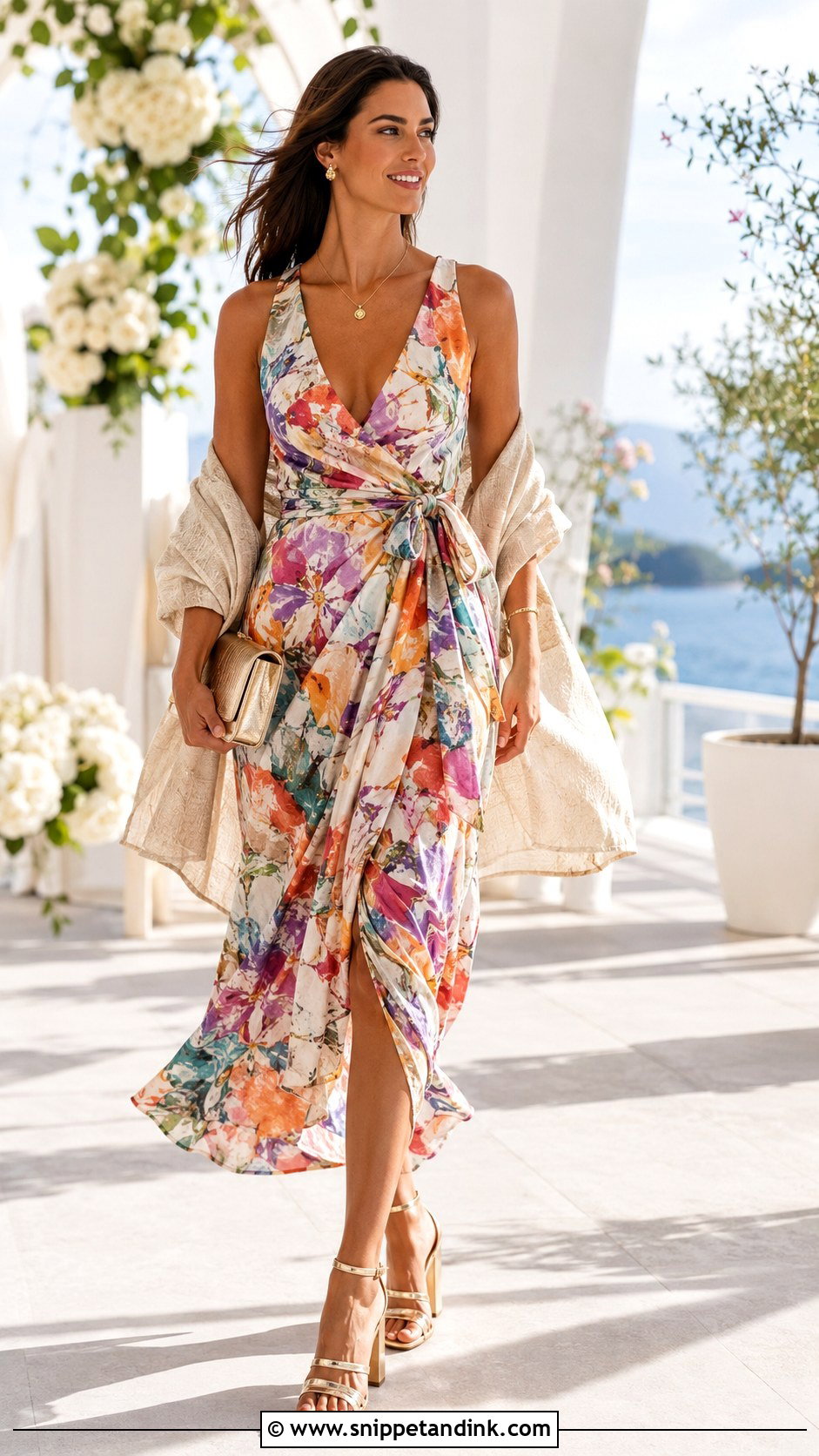
A wrap dress adjusts to you, which is why I recommend it to guests who are between sizes or expecting some bloating after dinner. Silk, satin or a good crepe all drape well. The weak point is the neckline: it can open when you sit or lean, so I’d test it seated and use a strip of fashion tape at the cross-over. Block heels and a woven clutch for daytime; slimmer heels and metallic for evening. A light wrap covers the shoulders without hiding the waist tie.
6. Off-Shoulder Designer Gown
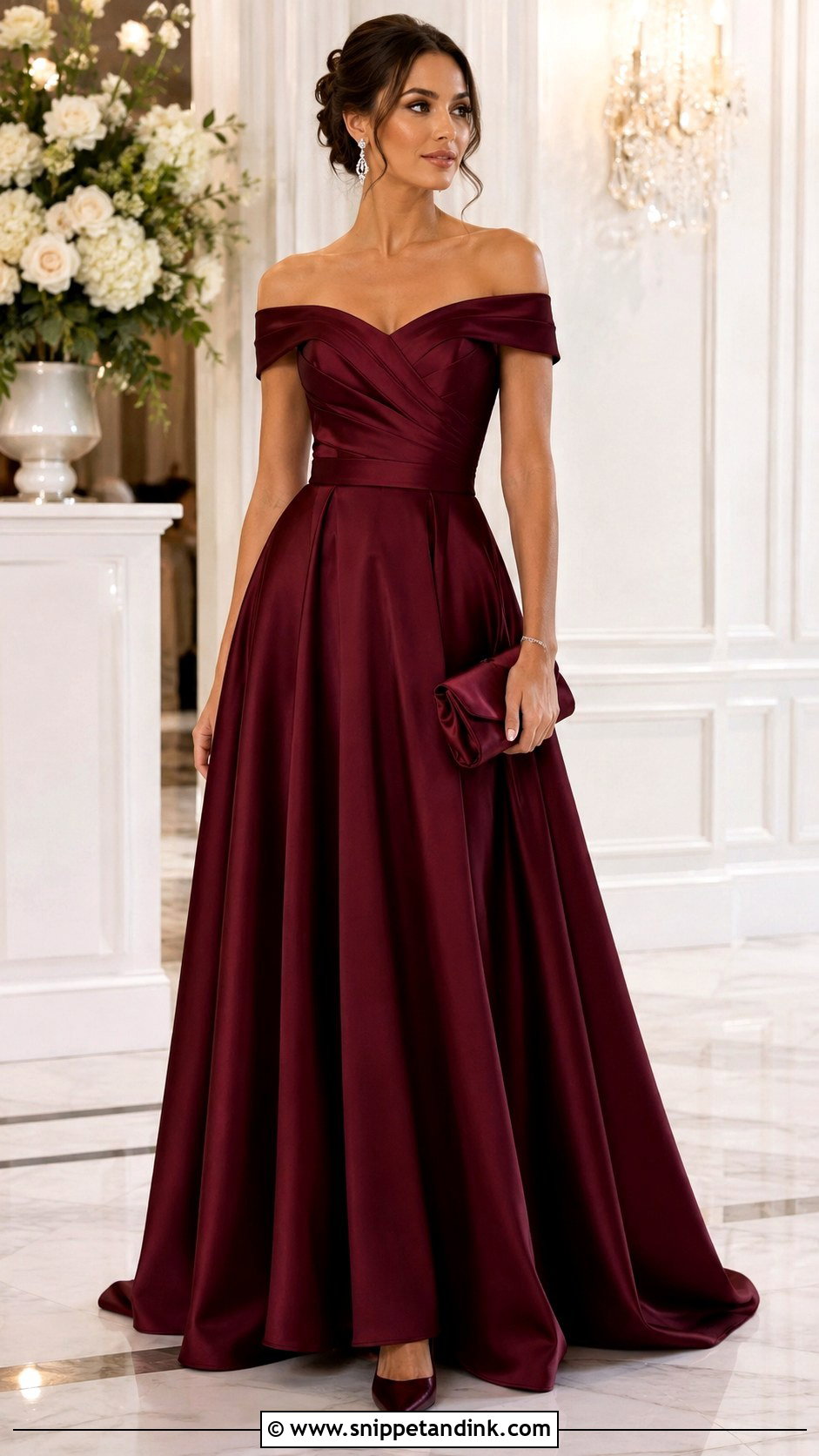
Off-shoulder gowns frame the face and collarbone for ballroom and black-tie events, but the neckline must stay put. A structured bodice with built-in boning or a supportive strapless bra is non-negotiable; I’d decide on the bra before buying the dress, not after. Raise your arms in the fitting room: if the neckline slides up toward your upper arms, it’s too loose. Deep rose, navy, burgundy and dark green work at night. Sparkling drops, a satin clutch and hair up or swept to one side keep the shoulders clear.
7. Designer Column Dress
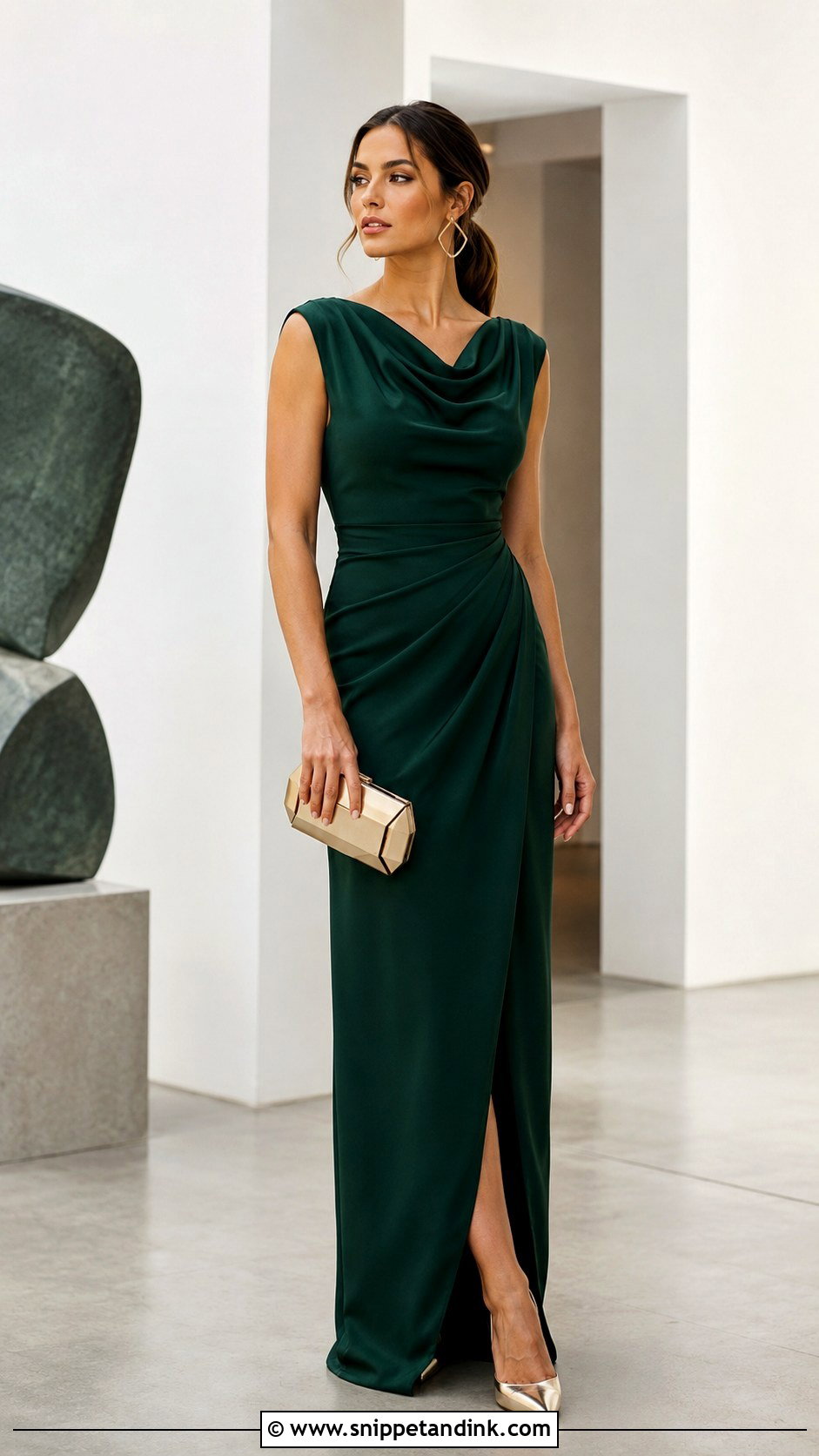
Column dresses suit guests who like clean lines, but a true column needs a slit or a back vent so you can walk and climb steps; test your full stride before buying. Details like a draped neckline, gathered waist or sculptural shoulder keep it from looking plain. Avoid white, ivory and champagne unless the couple asks for them. Pointed heels, a geometric clutch and one pair of statement earrings finish it. A low bun keeps it sleek; soft waves relax it for a less formal room.
8. Designer Cape Dress
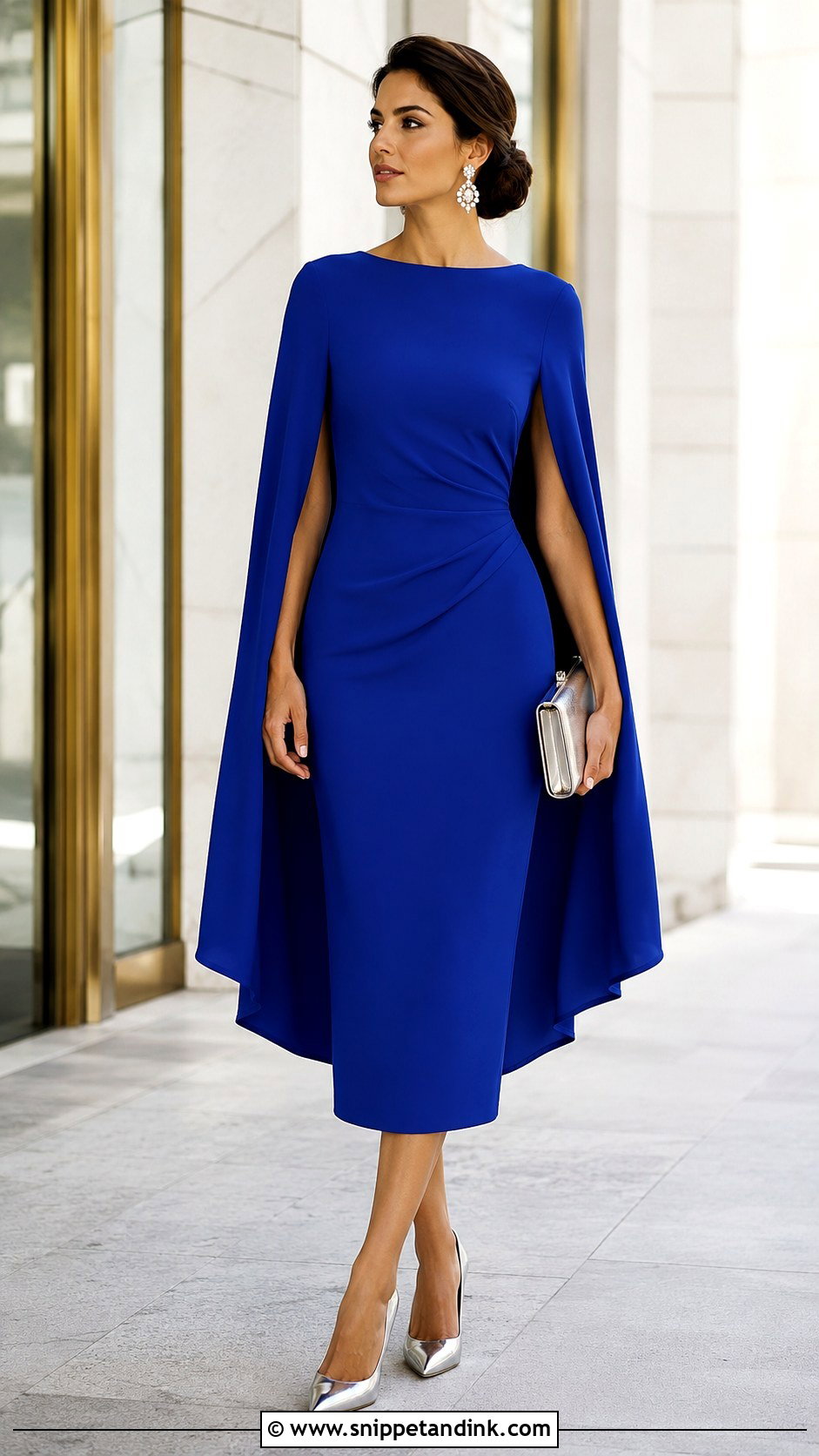
A cape dress gives covered arms without a jacket, which makes it my suggestion for religious ceremonies or cool seasons. The cape should fall cleanly from the shoulder in smooth crepe; extra volume makes the upper body look wider. Cobalt, plum, forest green and raspberry look rich in photos. Choose earrings that stay visible under the fabric, and leave the necklace off, since the cape already frames you. One practical point: lifting a glass or hugging in a cape takes practice, so try those moves at the fitting.
9. Satin Designer Cowl-Neck Dress
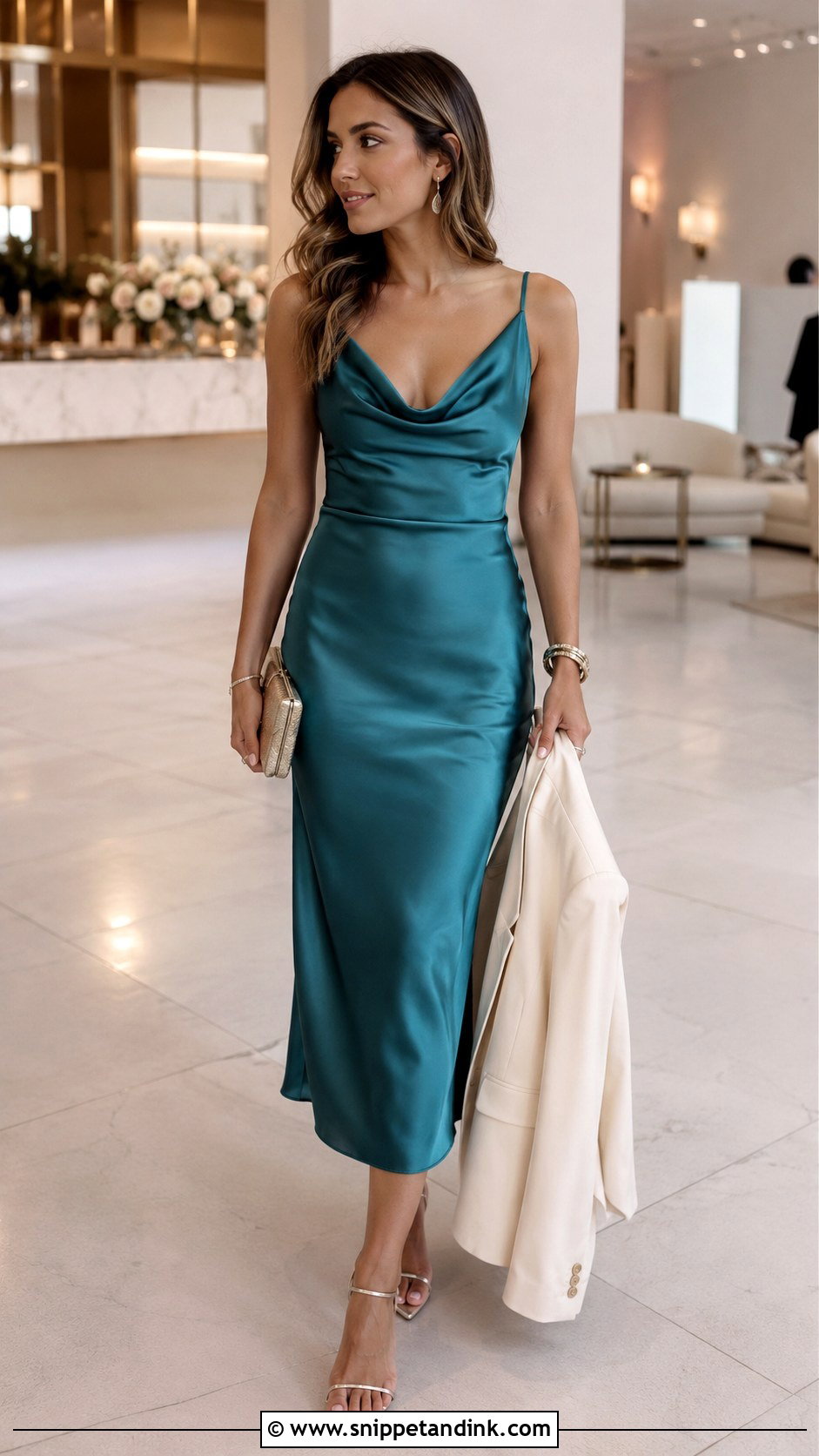
Satin shows light and creases, and a cowl neck adds drape that moves with you. A satin designer cowl-neck dress looks best in saturated colors like teal, aubergine, copper or rose; very pale satin washes out in flash photos and highlights every wrinkle. The cowl can dip forward when you bend, so a discreet stitch or a small weight in the fold keeps it in place. Wear a blazer for the ceremony, remove it later, and choose smooth undergarments.
10. Designer Lace Midi Dress
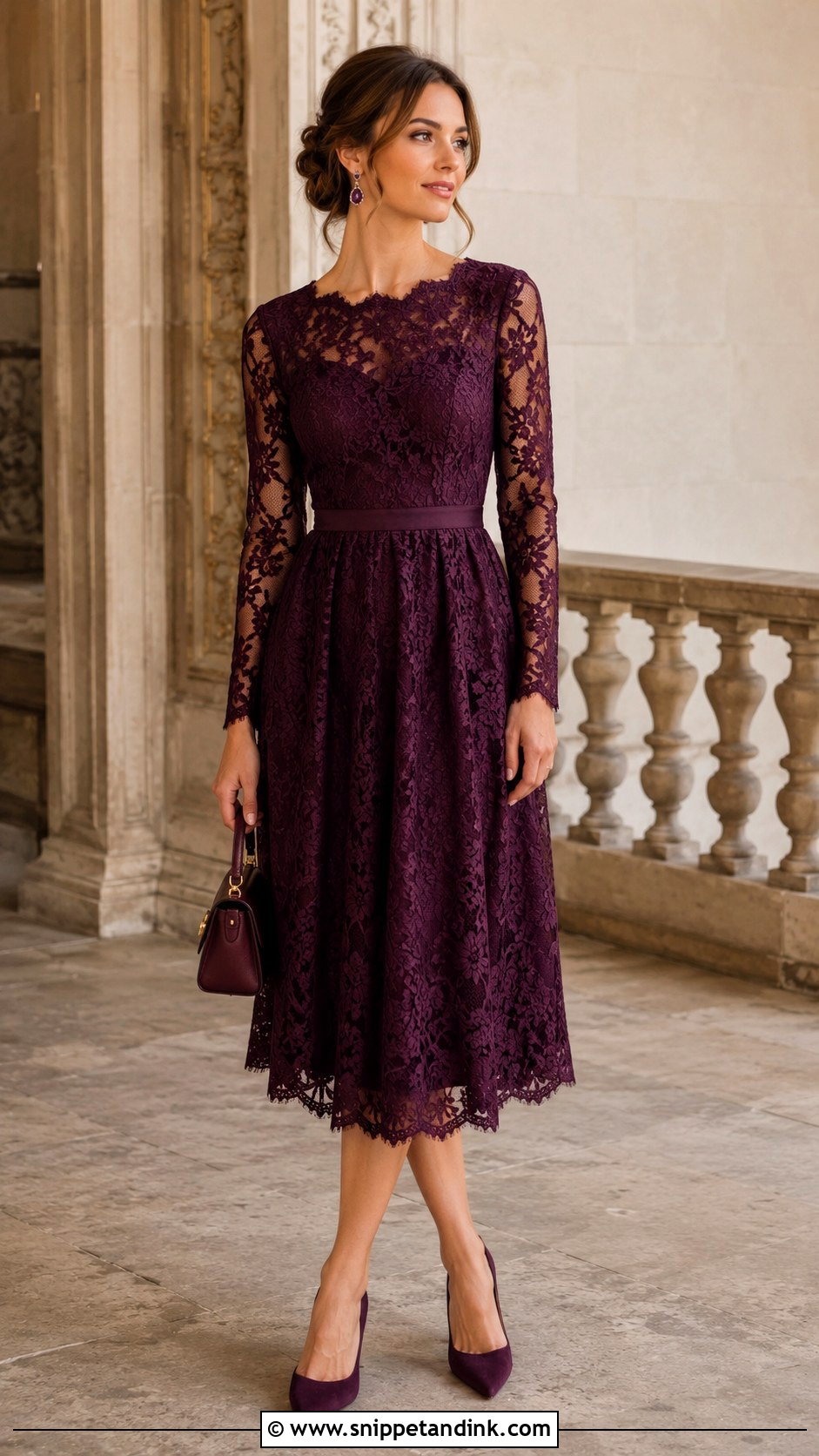
Lace looks current when the cut is clean and the color clearly isn’t bridal. Jewel tones, muted pastels or dark shades keep it on the guest side of the line. Check the lining first: cheap lining under good lace is what makes a dress look dated. Enough room across the shoulders matters, because lace has little give. Suede or satin pumps, a top-handle bag and gemstone earrings suit it; keep shoes plain, since the fabric already has detail. Bring a wrap if the sleeves are sheer and the venue is a cool historic building.
11. Designer Halter-Neck Maxi Dress
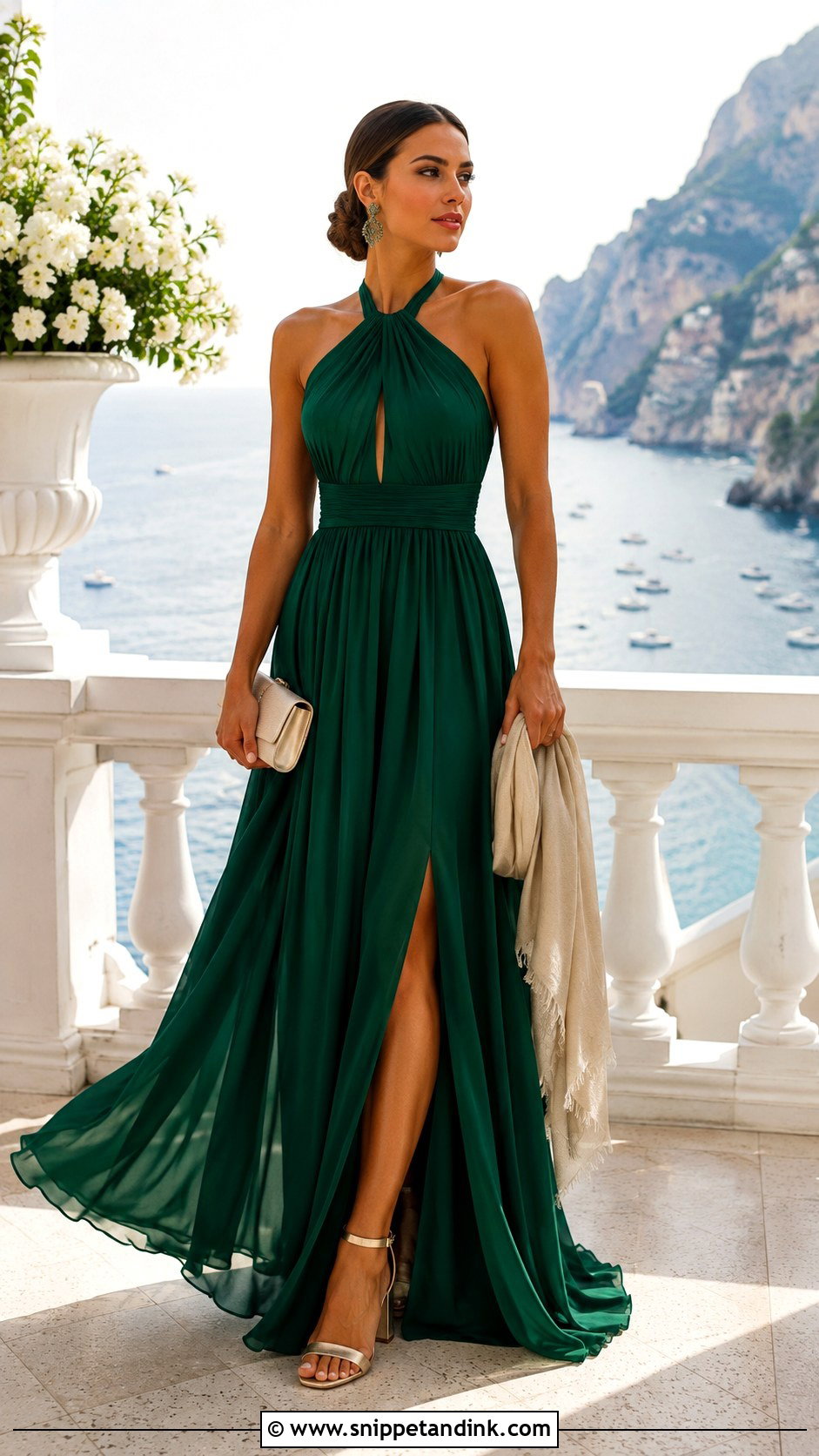
A halter maxi suits warm-weather weddings, rooftops and coastal venues. It draws attention to the shoulders, so the neck strap needs to sit comfortably; a thin tie can dig in by the second hour, and a wider band spreads the weight. Chiffon, silk or light crepe all work. Hem it to clear the ground in your actual shoes. I’d skip the necklace and wear statement earrings, with hair up in a bun, braided updo or ponytail. A tailored wrap gives ceremony coverage.
12. Designer Ruffle Maxi Dress
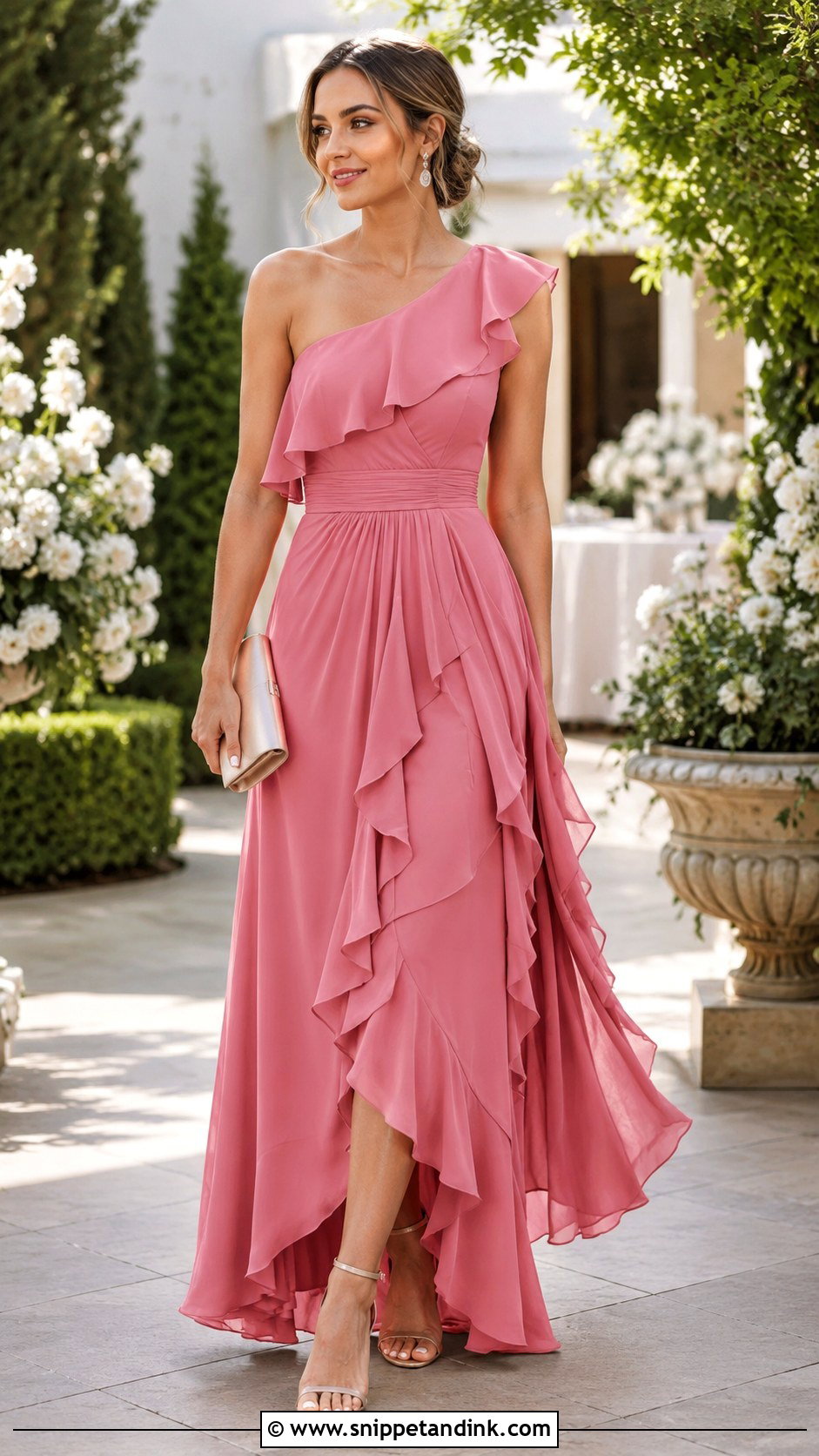
Ruffles work when they’re placed in one area: one shoulder, the neckline or the skirt. Covered head to toe, they overwhelm most frames and read young. A rich solid color or a controlled botanical print keeps it grown-up. I’d keep the accessories streamlined, slim heels and small drops, and the hair close to the head if the skirt is full. Watch the hem at outdoor venues; tiered ruffles pick up grass and gravel quickly.
13. Designer Asymmetrical Hem Dress
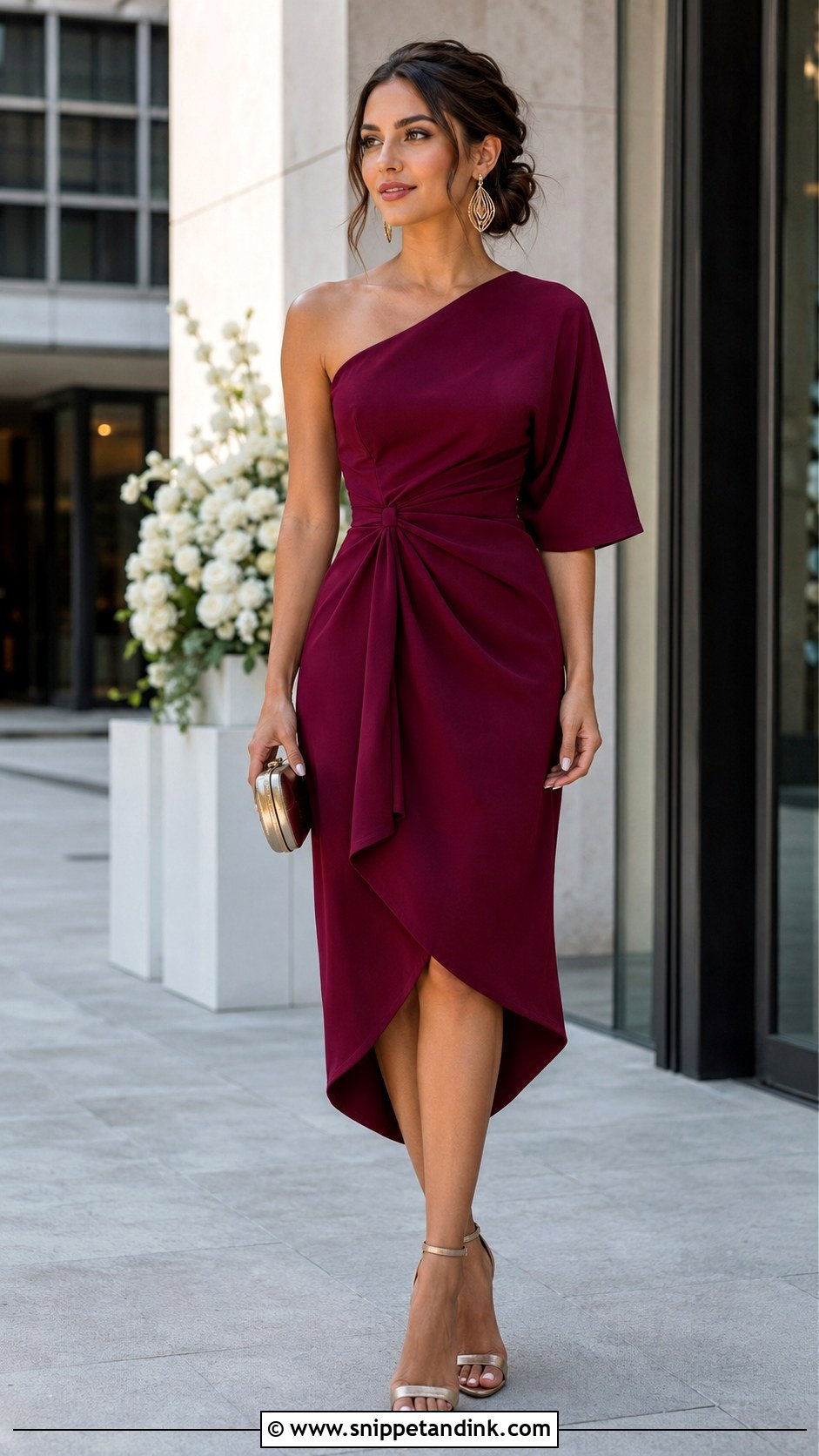
A high-low hem shows off your shoes, so spend on them. On a designer wedding guest dress like this, I’d keep the difference between front and back modest; an extreme high-low looks dated and flips up when you sit. A fitted bodice or one-shoulder neckline makes the asymmetry look intentional. Ankle-strap heels and a clutch that picks out one color from the fabric. Sit down in it before buying, since the short front can ride up more than you expect.
14. Designer Velvet Midi Dress
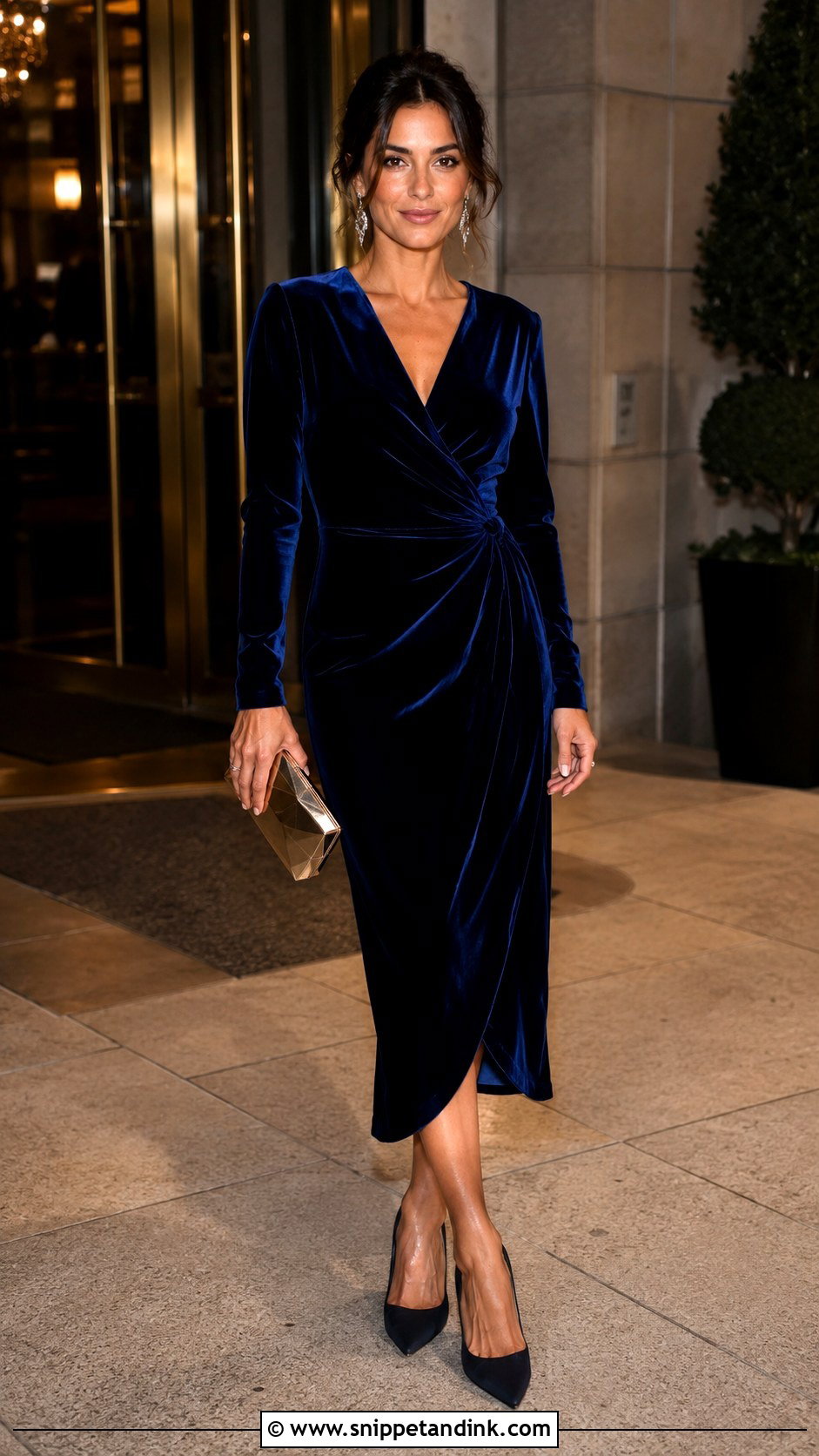
Velvet belongs to fall and winter, and a designer velvet midi dress in burgundy, midnight blue, deep teal or plum gives warmth and depth. Velvet adds visual bulk, so a streamlined wrap, column or fit-and-flare shape works better than anything gathered. Never iron velvet directly; steam it from the inside to keep the pile from flattening. Suede or metallic pumps, a structured clutch, and a coat for travel that you check on arrival.
15. Designer Chiffon Gown
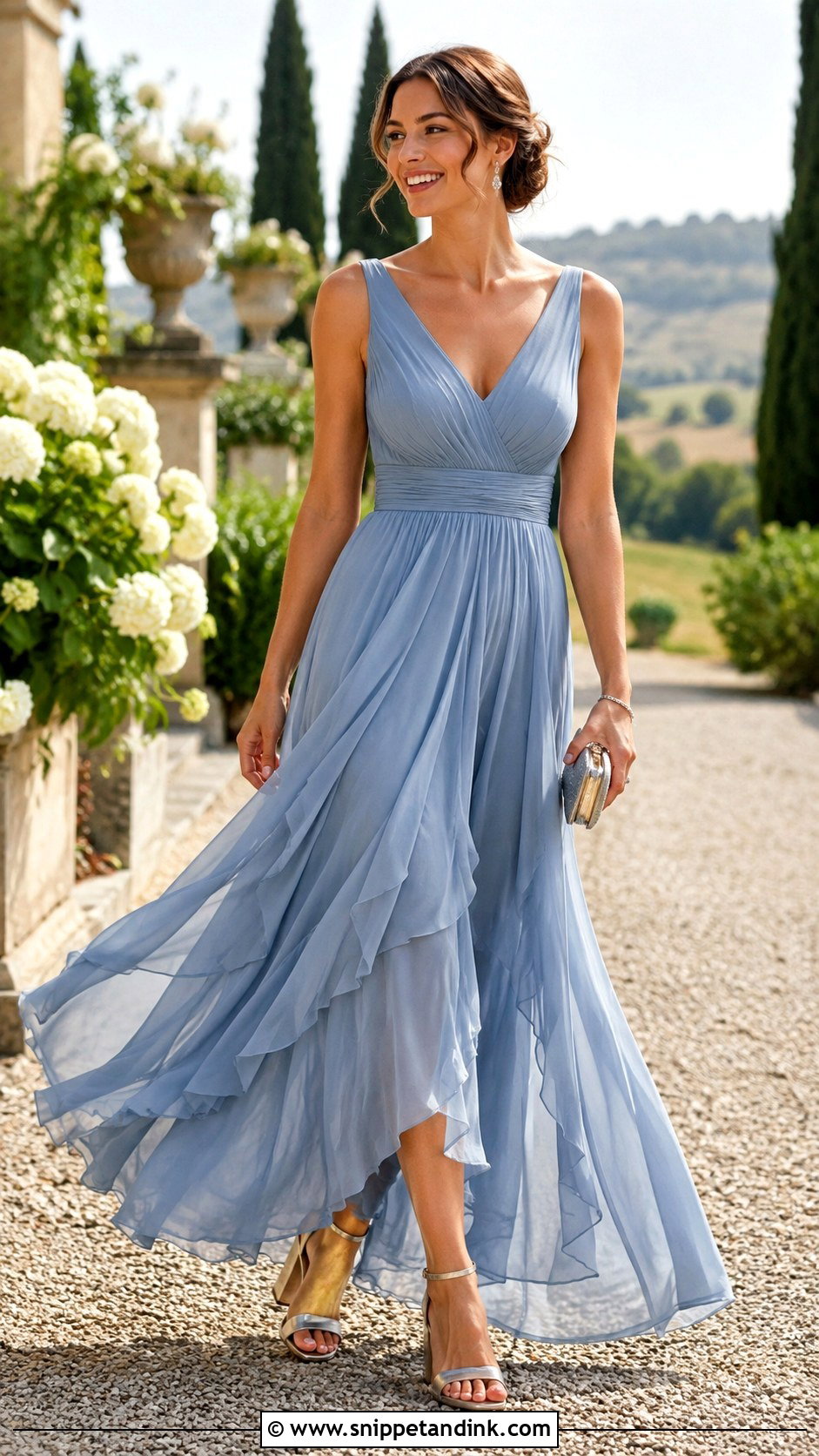
Chiffon moves like nothing else outdoors, which is exactly why it’s a garden and vineyard favorite. The bodice should be lined and the skirt layered so it doesn’t go sheer in sunlight; I always check that by holding the dress up to a window. A defined waist keeps all that floaty fabric from looking shapeless. Deep pastels, jewel tones or a soft floral print suit it. Block heels or dressy wedges beat stilettos on grass and gravel. A softly pinned updo matches the movement.
16. Designer Long-Sleeve Maxi Dress
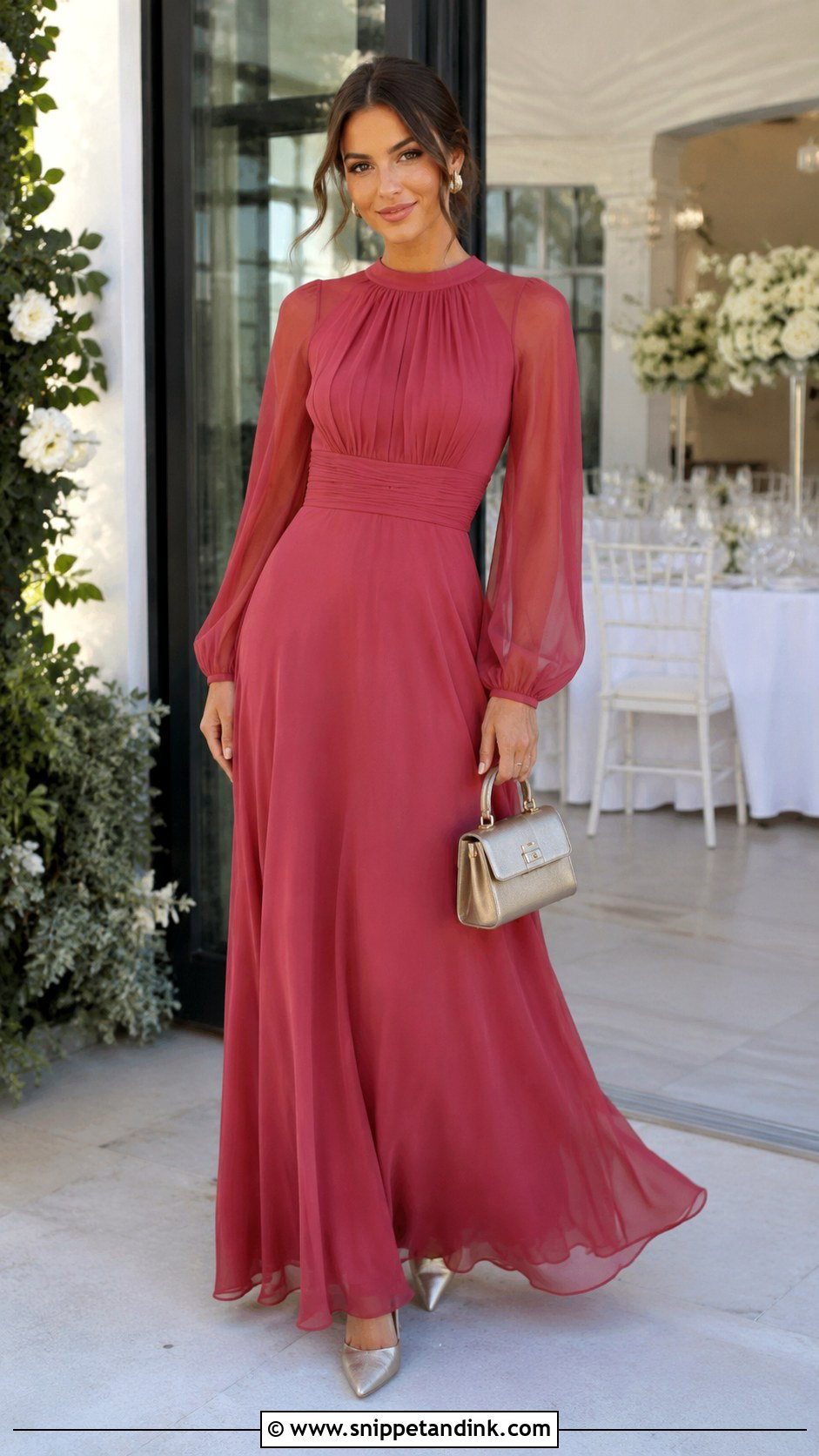
Long sleeves handle conservative dress codes, cold ceremonies and air-conditioned ballrooms, and they help when a wedding runs from afternoon into night. Sheer chiffon, fine lace or light crepe sleeves keep the dress from feeling heavy. A defined waist and flowing skirt balance the coverage on top. Make sure the sleeve allows you to bend your elbow and lift a fork without pulling at the shoulder seam. Neutral accessories with a print, a metallic clutch or textured shoe with a solid.
17. Designer Sequin Midi Dress
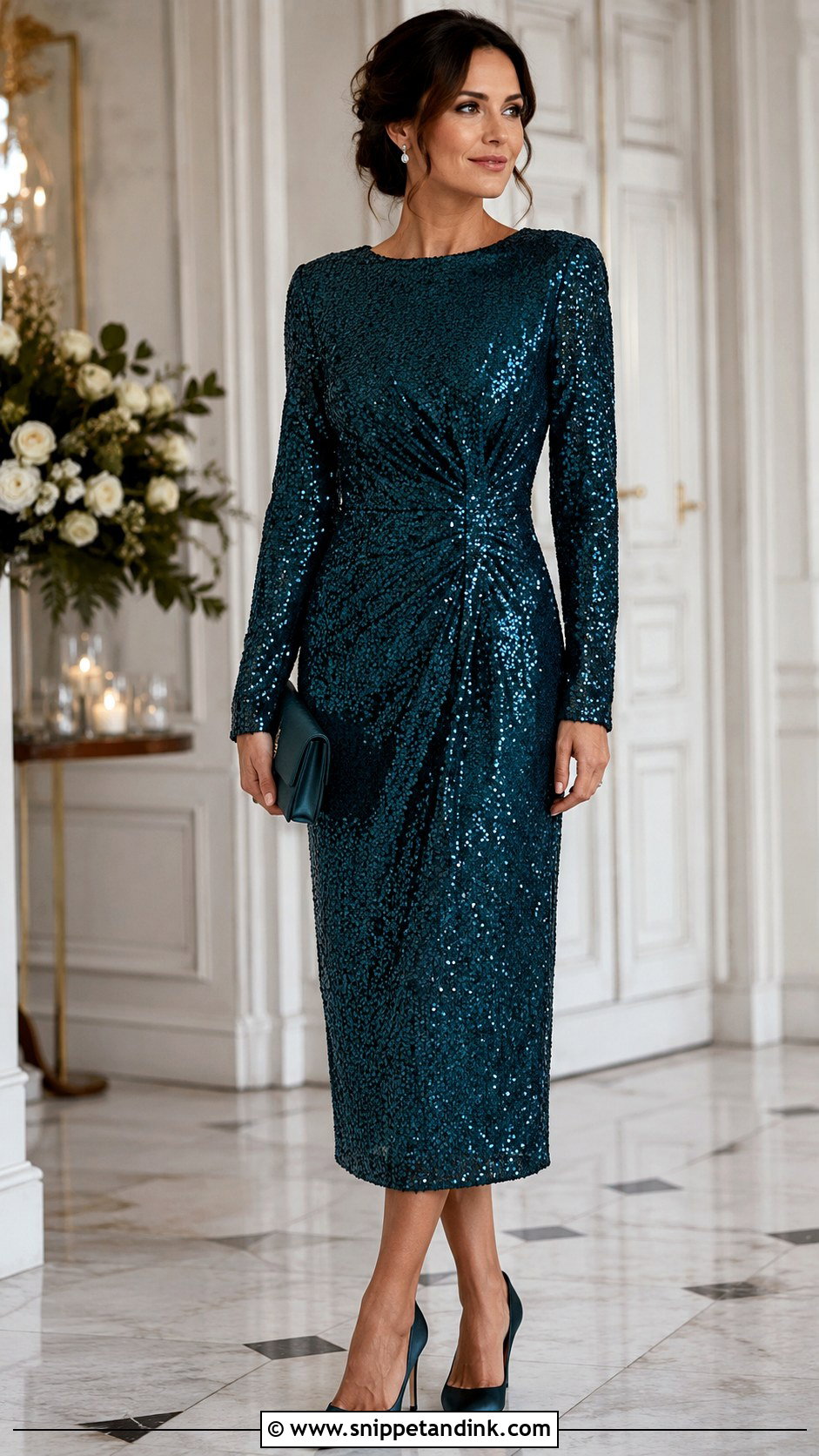
Sequins at a wedding need restraint. Small tonal sequins or a matte finish on a dark jewel base look polished; high-shine sequins can look like performance wear. I’d also check the inside of the arms and the underarm seam, since sequins there scratch through a long evening. Pick one sparkling element, the dress, and keep shoes, bag and earrings plain. Sequins suit evening and formal events, not casual daytime ceremonies.
18. Designer Drop-Waist Dress
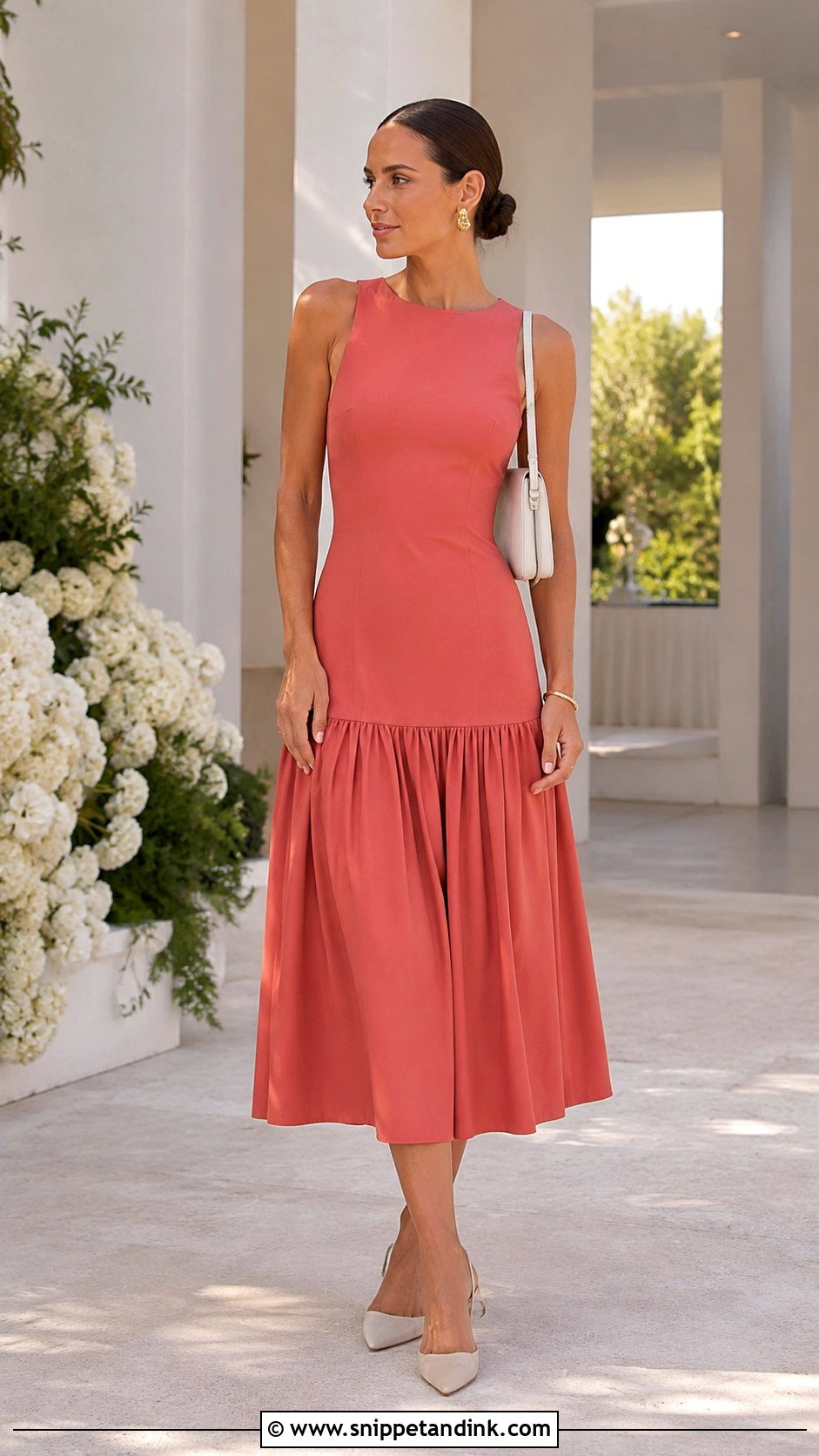
A drop waist moves the seam down to the hip, which lengthens the torso and suits straight or athletic figures well. It’s less kind to curvy hips, where the seam can land at the widest point; try it on before committing. Satin, structured crepe or polished cotton at midi length keeps it modern. Pointed slingbacks continue the long line. Keep accessories small, since the proportion is already distinctive and oversized pieces tip it toward costume.
19. Designer Jacquard Cocktail Dress
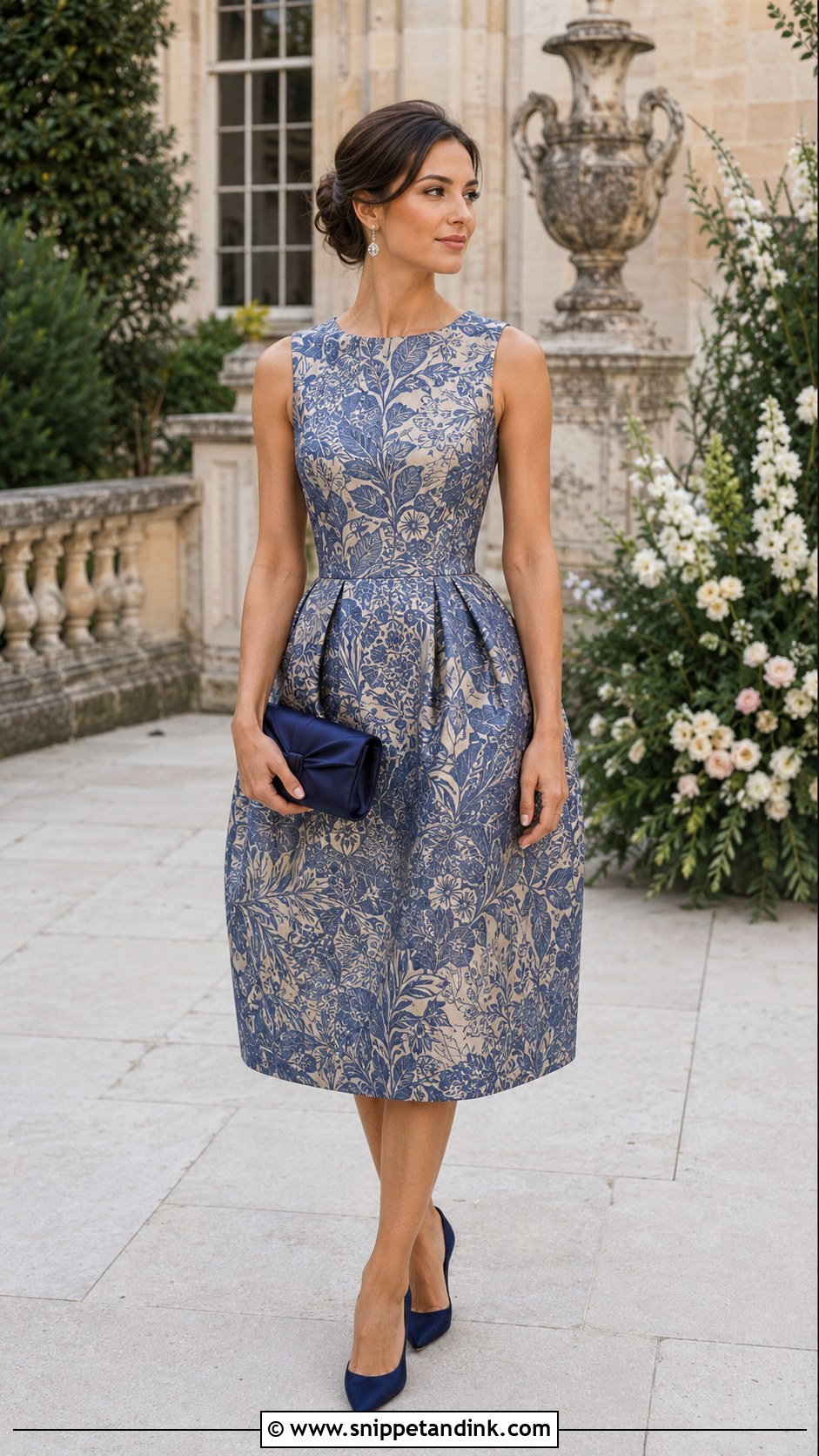
Jacquard has its pattern woven in, so a designer cocktail dress in it needs no added decoration. The fabric’s stiffness gives a fitted bodice and shaped skirt real structure, which looks sharp but has no stretch; check that you can sit and breathe comfortably after dinner. Botanical or abstract motifs with subtle metallic thread catch reception lighting. Keep colors controlled so texture leads. A close-fitting jacket suits a full skirt better than an oversized coat.
20. Designer Draped Jersey Gown
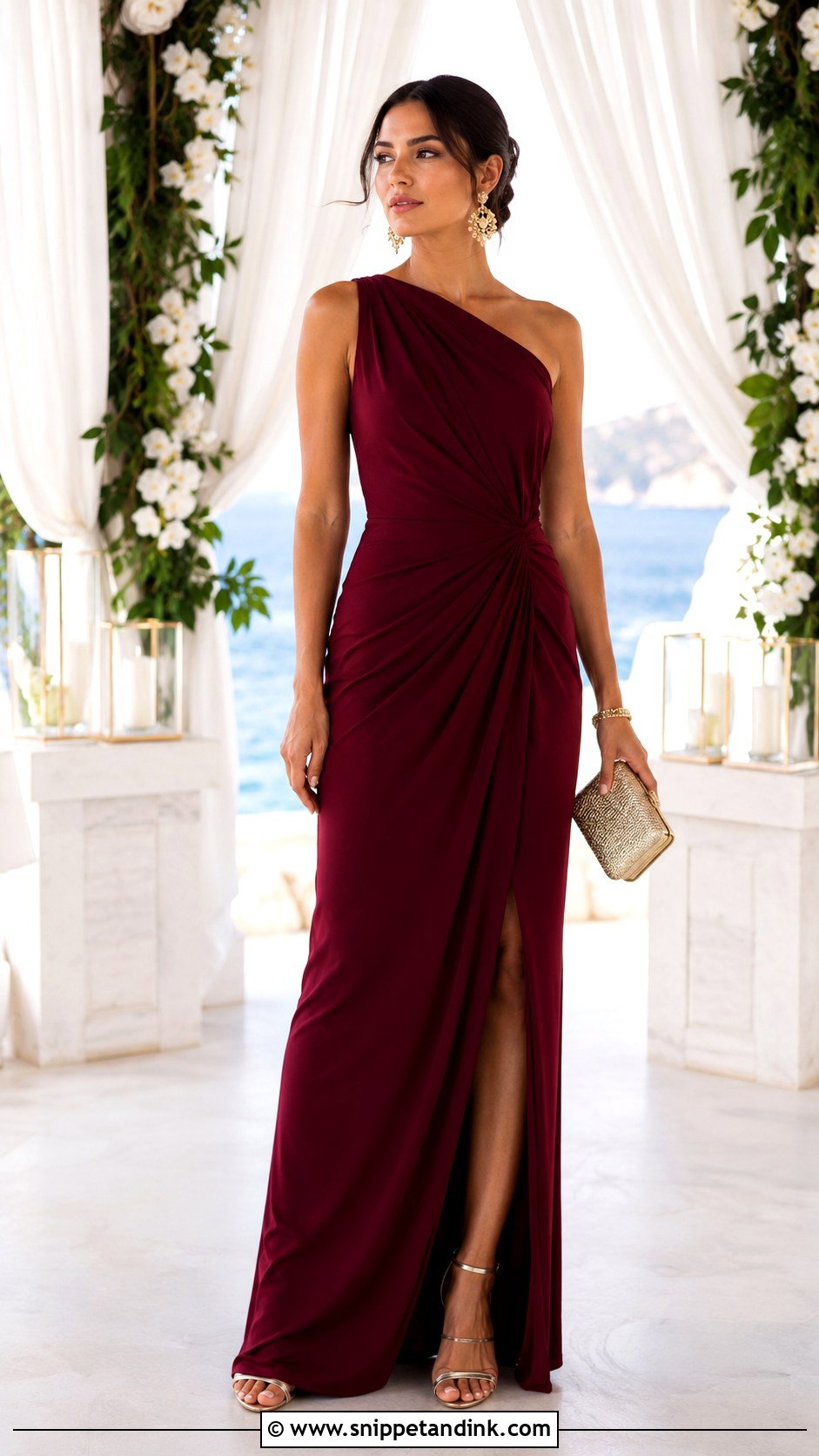
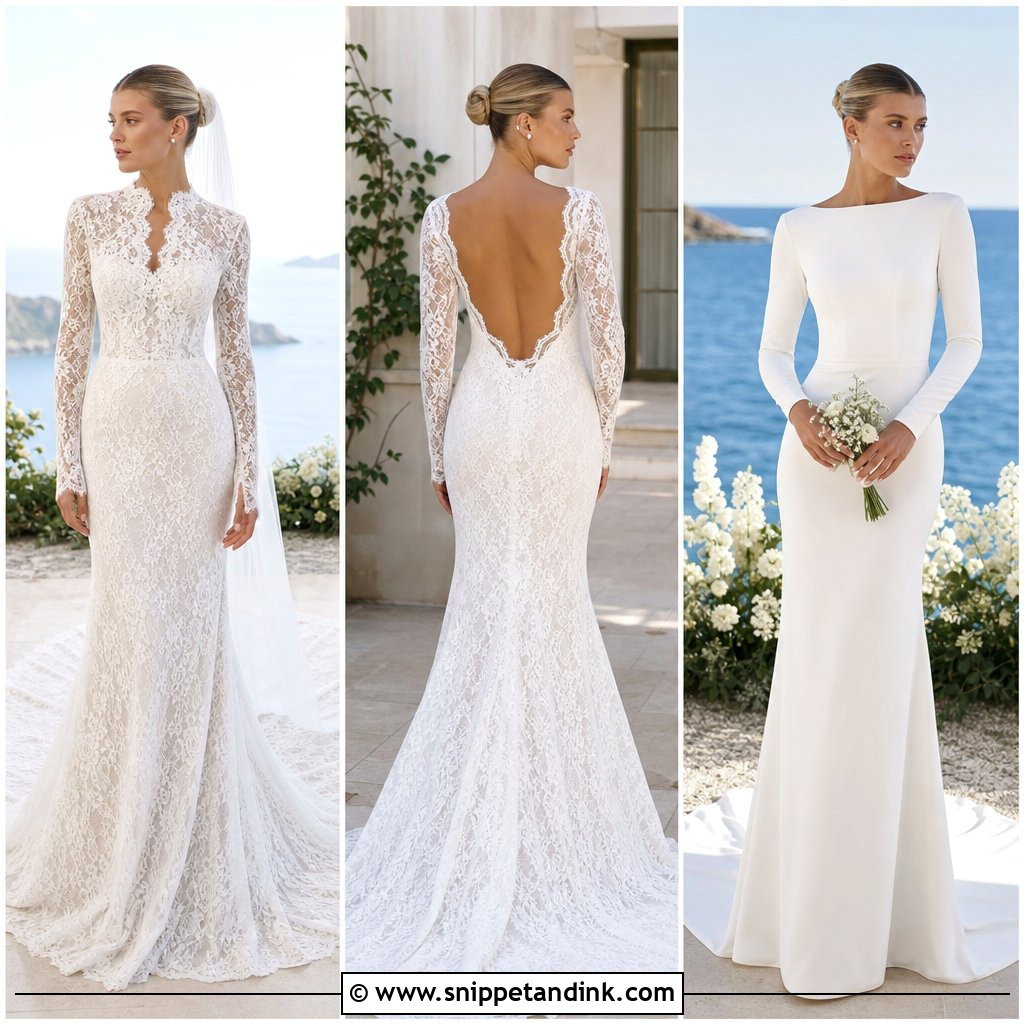
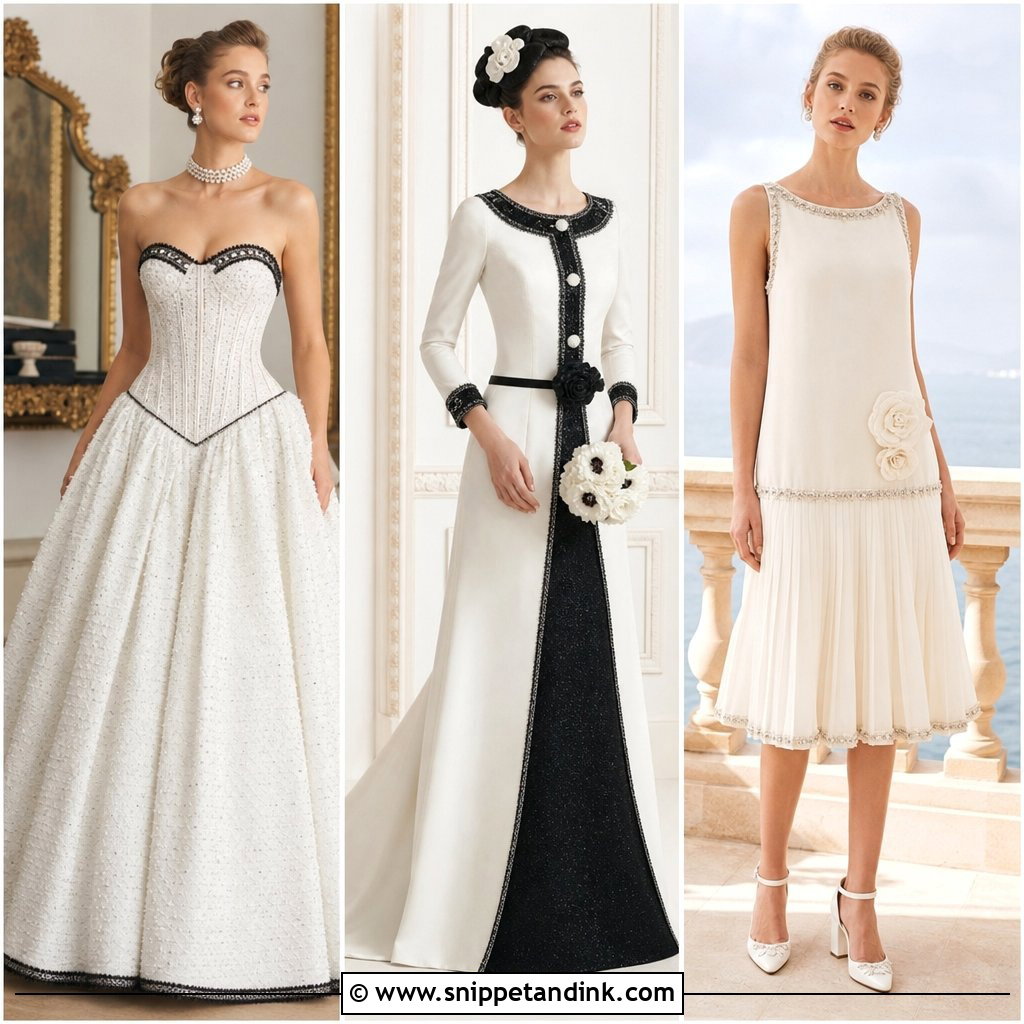
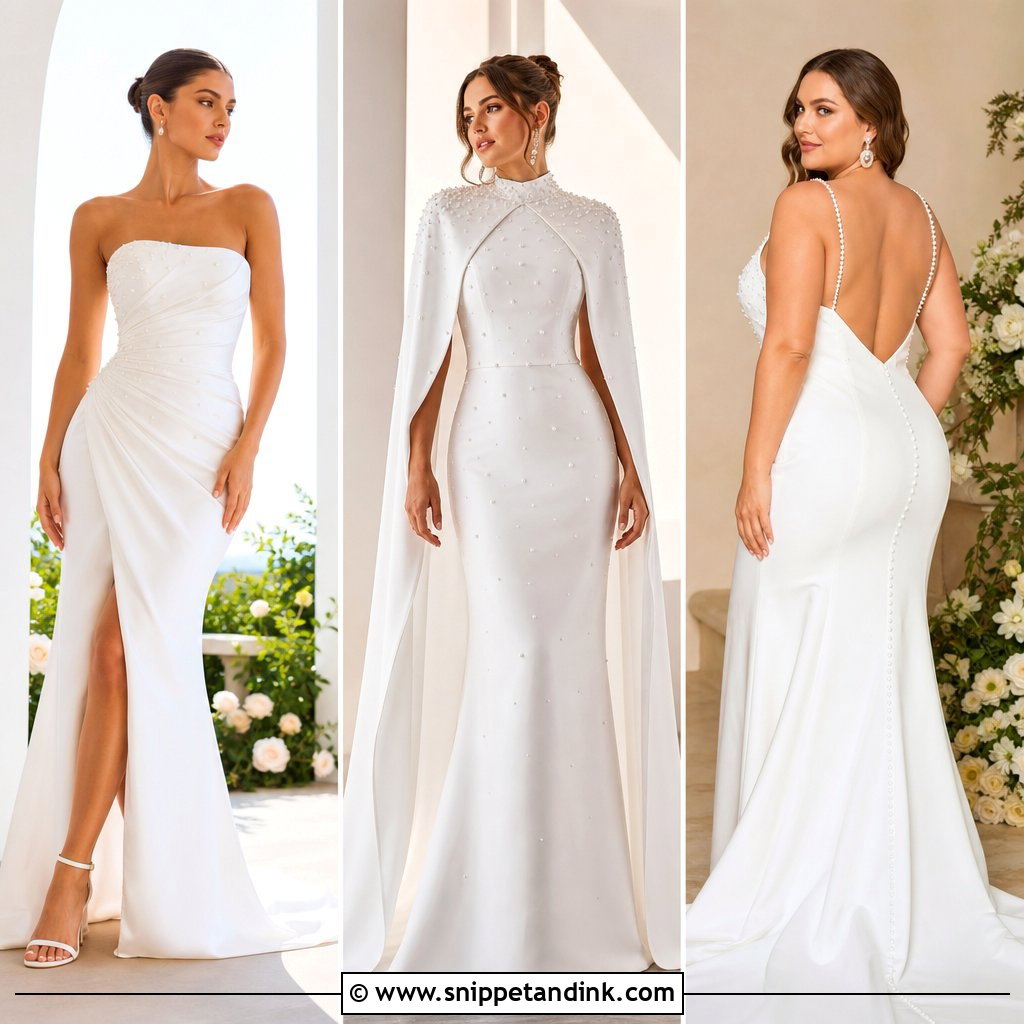
A draped jersey gown is the most comfortable formal dress on this list, and I recommend it to guests with a long day of travel and dancing ahead. It packs without creasing, which helps at destination weddings. The fabric needs real weight and a full lining, or it clings and shows every line. Soft gathering at the waist, hip or shoulder creates shape. Check that a side slit isn’t too high when you sit. Smooth supportive undergarments, slender heels and statement earrings finish it.
Where Designer Quality Actually Shows
A higher price doesn’t always mean a better dress, so I look past the label to the construction. Turn it inside out in the fitting room and check these:
- A full lining in a breathable fabric, not just a half slip under the skirt.
- Enclosed or neatly finished seams, and a zip that lies flat without puckering.
- Fabric content on the label: silk, wool crepe and good viscose drape and breathe better than stiff polyester.
- Enough seam allowance to let out or take in, which a tailor will need.
Renting, Buying and Altering
Renting makes sense for a black-tie gown you’ll wear once; buying makes sense for a midi or cocktail dress you’ll rewear at other events. If you buy, budget for a hem and a small take-in at the waist or straps. Those two alterations make a mid-range dress look made for you, and they’re usually quicker than people expect, as long as you leave a week or two before the wedding.
Test the Dress in Daylight, Seated and With Your Arms Up
A good guest dress starts with the venue, the season and the formality the couple has asked for. Designer fabric and construction help, but how you style it matters as much: shoes you can stand in, jewelry that suits the neckline, undergarments that disappear, and a bag that holds what you need. Before you commit, walk, sit, raise your arms and look at the color in both daylight and indoor light. Then make it yours with the accessories you already love.
You'll Like These Ideas:





Leave a Reply